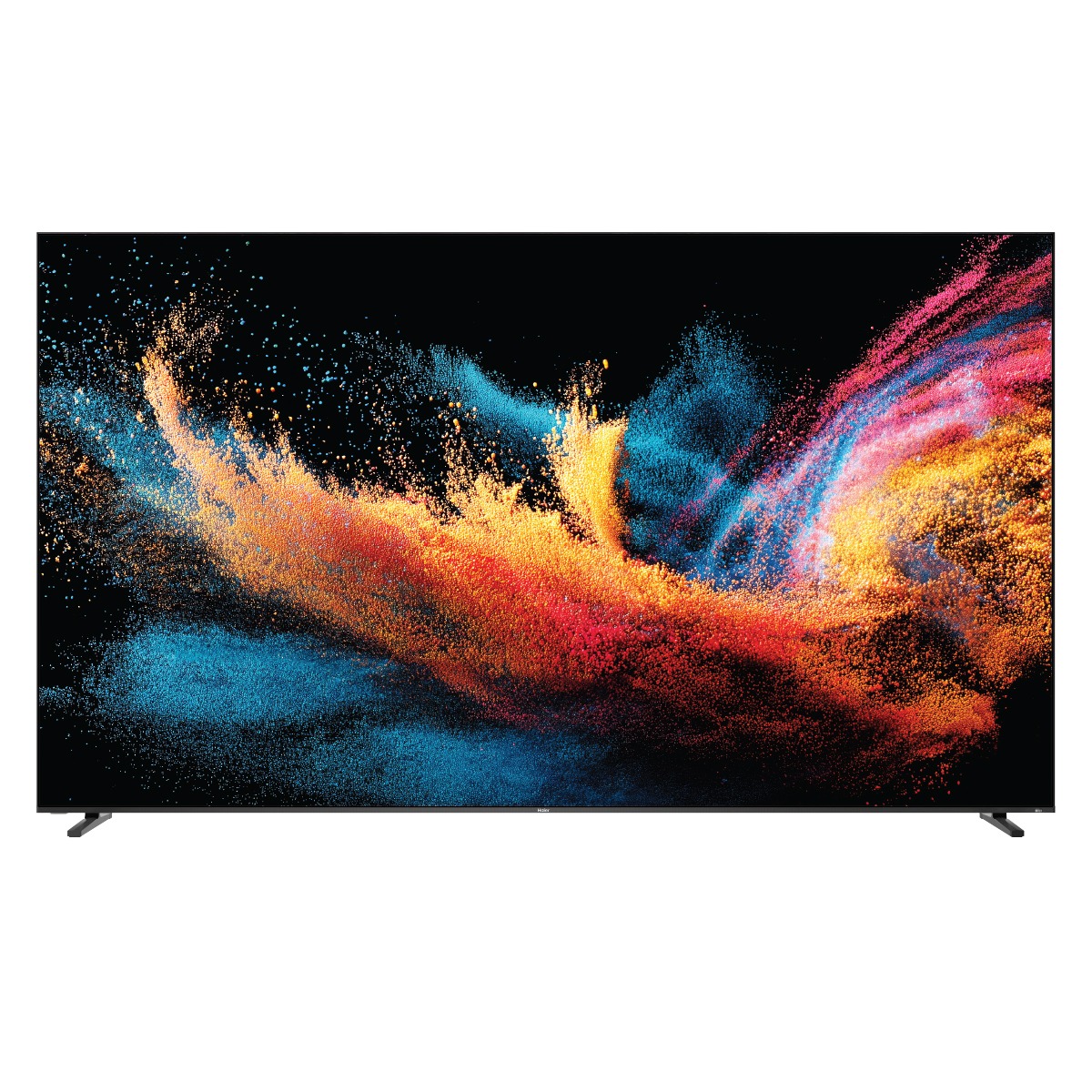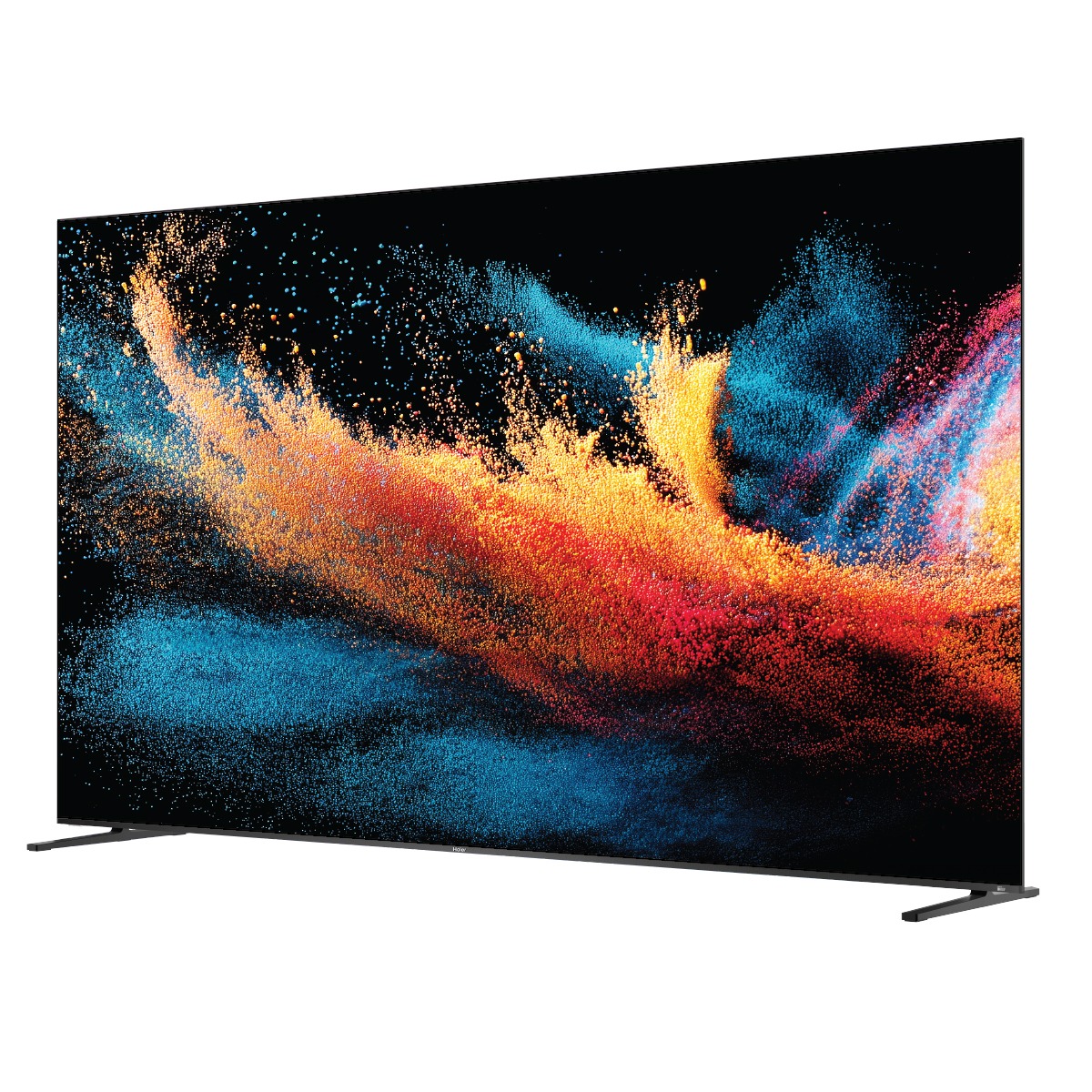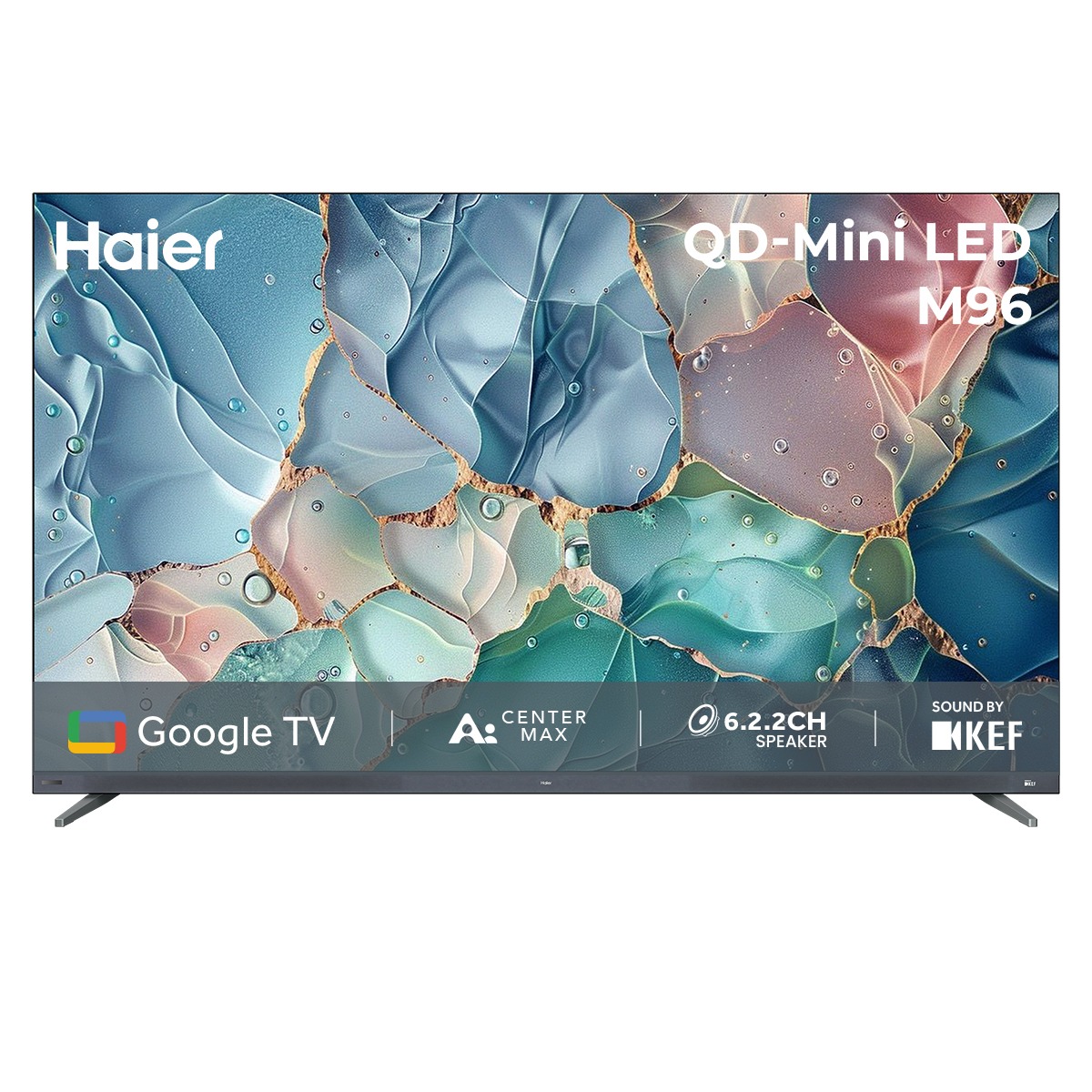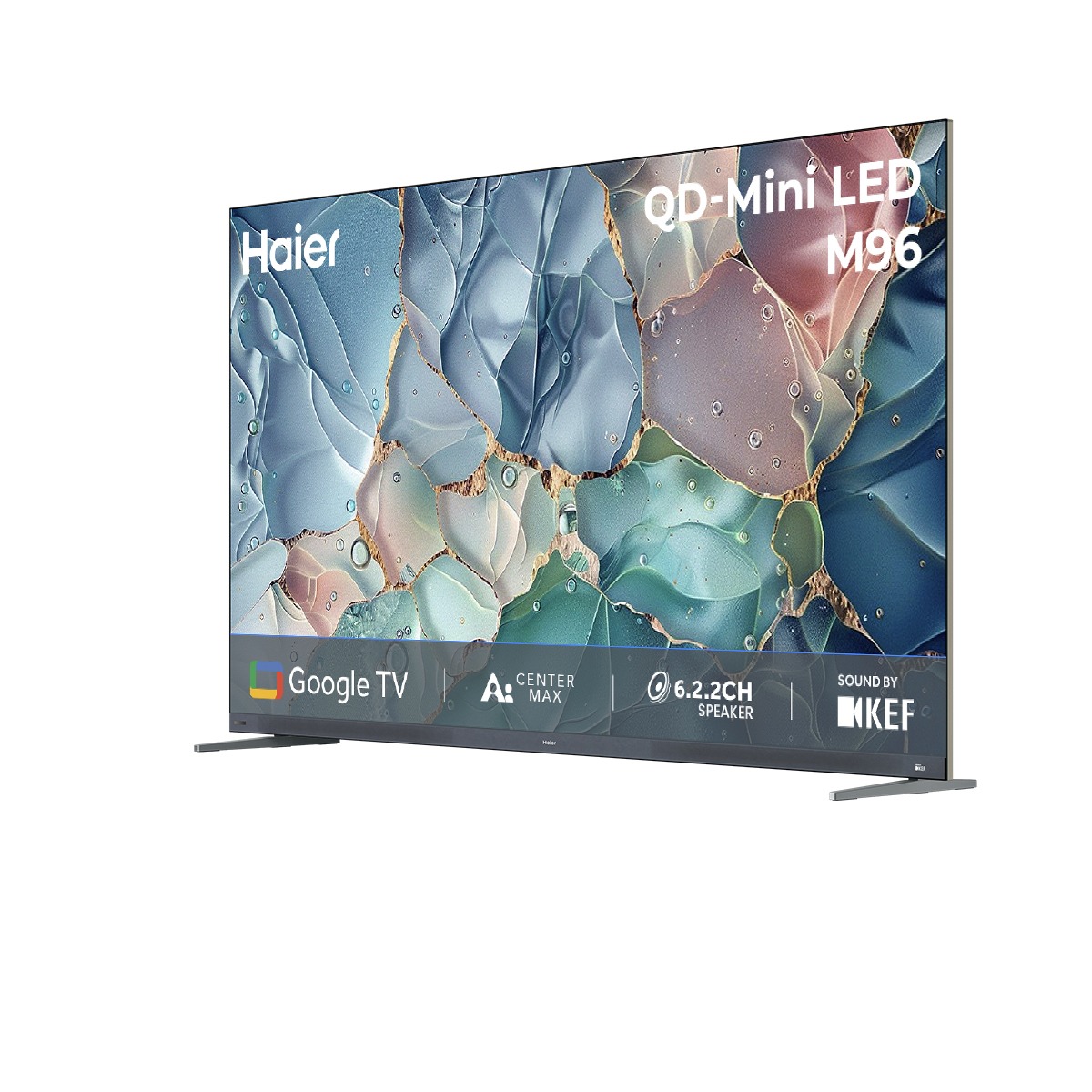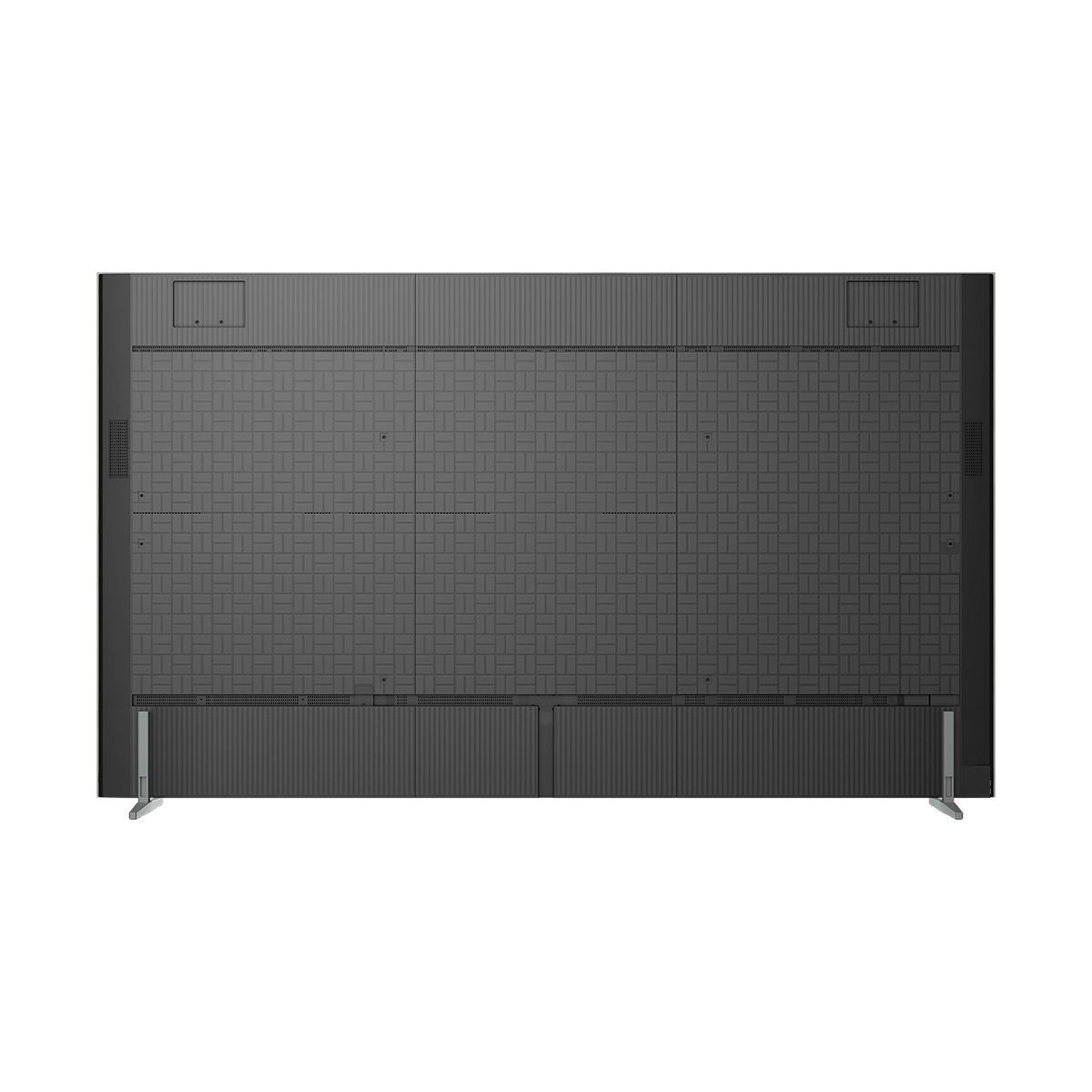
Blaupunkt has expanded its smart TV portfolio in India with the introduction of a new QLED Google TV range. The brand has confirmed that bookings for the models will begin tomorrow, exclusively on Flipkart. Available in various screen sizes, the new series focuses on delivering enhanced sound, sharper visuals, and intuitive features to modern Indian households.
Premium QLED series with Dolby Audio and Google TV
Blaupunkt’s new QLED Google TV
The latest QLED 4K lineup includes 50-inch, 55-inch, and 65-inch models, designed to offer a high-end viewing experience. These TVs support 1.1 billion colours, wide color gamut, and HDR10 to deliver vibrant visuals.
For audio, the 55-inch and 65-inch variants feature a four-speaker setup with 70W output, while the 50-inch comes with dual speakers and 50W output. Dolby Atmos and Dolby Digital Plus certifications aim to replicate cinema-like surround sound. The design also gets an upgrade with a sleek, bezel-less metallic finish. These TVs run on Google TV OS and support Google Assistant, Chromecast, and access to over 10,000 apps.
Compact QLED series for budget buyers
Targeting value-conscious users, the 32-inch and 40-inch models come with QLED screens, Android TV OS, and Dolby MS12 audio. The 32-inch has HD Ready resolution, while the 40-inch offers Full HD. Both models produce 48W sound output through two speakers. Features like voice search, built-in Chromecast, and HDMI/USB ports make these TVs suitable for smaller homes without compromising functionality.
Price and availability
The new QLED series goes live on Flipkart on 13th June 2025. Prices are set at Rs 10,999 (32″), Rs 15,499 (40″), Rs 27,999 (50″), Rs 31,999 (55″), and Rs 44,999 (65″). Buyers can also avail a 10% instant discount using SBI credit cards.
For more daily updates, please visit our News Section.
According to a recent report, Vivo will announce the Vivo X Fold 5 and Vivo X200 FE next month (July) for the global market. At present, the company is teasing the key features of the Vivo X Fold 5 in China, as it is set to launch first in the country on June 25. However, the brand has yet to officially reveal the existence of the X200 FE. Recent reports have claimed that the X200 FE will be a compact flagship phone, similar to the recently unveiled OnePlus 13s. Ahead of the expected launch, the device has appeared on the Geekbench benchmarking platform, revealing its chipset, RAM, and OS version.
Vivo X200 FE Geekbench listing
As can be seen, the upcoming Vivo X200 FE, with the model number V2503, has appeared in Geekbench’s database. The listing reveals that the device is powered by the Dimensity 9300 Plus chipset, 12GB of RAM, and Android 15.
The name of the chip is not explicitly mentioned in the Geekbench listing. However, the CPU configuration and GPU details that have surfaced through the listing confirm that the device is indeed equipped with the D9300+. The device scored 2,067 and 6,808 points in Geekbench 6’s single-core and multi-core tests, respectively.
Vivo X200 FE price, color options (rumored)
A recent report claimed that the Vivo X200 FE and X Fold 5 will be announced globally on July 10 and will be available for purchase by July 17. These devices are likely to be priced at Rs 54,999 and Rs 1,39,999, respectively. The X200 FE is expected to arrive in two configurations: 12GB+256GB and 16GB+512GB. It may come in gray and yellow shades.
Vivo X200 FE specifications (rumored)
Vivo S30 Pro Mini
According to reports, the Vivo X200 FE will be based on the Vivo S30 Pro Mini, which debuted last month in China. It is expected to feature a 6.31-inch LTPO OLED 1.5K 120Hz screen, a 50-megapixel front camera, and a 50-megapixel (Sony IMX921, OIS) + 8-megapixel (ultra-wide) + 8-megapixel (IMX882, periscope) triple camera unit, a Dimensity 9300+ chip, and a 6,500mAh battery with 90W fast charging.
For more daily updates, please visit our News Section.
Vivo has released a couple of high-resolution images of the Vivo X Fold 5 foldable phone, which is set to launch on June 25 in China. Additionally, one of the posters shared by the brand mentions all the key features of the device that the company has officially confirmed so far. It also confirms that it packs the largest battery on a foldable phone. Here’s a look at the details shared by the brand.
Vivo X Fold 5’s officially confirmed details summarized
Vivo X Fold 5Vivo X Fold 5 key features
Vivo’s Vivo President of Product Huang Tao, claims that the Vivo X Fold 5 will break the Vivo X Fold 3’s record of being the world’s lightest foldable phone, which weighs 219 grams. Reports suggest that it will weigh around 209 grams. It will also be one of the slimmest foldable phones as per reports, its thickness will be 4.3mm and 9.3mm in the unfolded and folded states, respectively.
Under the hood, the X Fold 5 houses a 6,000mAh Blue Ocean battery, which is said to be the most efficient battery in any foldable. This is also the largest battery seen on a foldable phone. Vivo has integrated fourth-generation silicon-carbon anode technology with up to 12 percent silicon content, and it is the company’s first to adopt second-gen semi-solid-state battery tech, enabling it to function even at minus 30 degrees Celsius.
Vivo X Fold 5Vivo X Fold 5Vivo X Fold 5
The Vivo X Fold 5 is also said to be the first to come with triple protection, featuring water resistance at IPX8 and IPX9 levels, dust resistance with IP5X certification, and full operational durability even at minus 20 degrees Celsius. This makes it one of the most rugged and versatile foldables built for all-weather use.
The device will also cater to photography enthusiasts with a unique periscope telephoto lens, supporting both long-range zoom and telephoto macro shots. It enables full-focus portrait capabilities for a versatile imaging experience.
What stands out further is its unprecedented Apple ecosystem integration. Vivo claims the X Fold 5 is the first Android phone to connect seamlessly with Apple Watch, AirPods, iPhone calls, messages, and iCloud services. It also supports multi-device file transfer and productivity workflows with Mac, creating a highly connected environment for hybrid users.
For more daily updates, please visit our News Section.
Qualcomm and MediaTek are expected to unveil their flagship chipsets for next-generation flagship phones in September this year. While the US-based chip manufacturer is expected to announce the Snapdragon 8 Elite 2 through its 2025 Snapdragon Summit, which will be held between Sept. 23 to 26, MediaTek is said to announce the Dimensity 9500 earlier than Qualcomm’s event. Yesterday, reliable tipster Digital Chat Station revealed the Geekbench scores of the Snapdragon 8 Elite 2; today, he is back with the benchmark scores of the D9500.
Dimensity 9500 Geekbench scores revealed
Dimensity 9500 Geekbench scores tipped
According to DCS, the Dimensity 9500 scores over 3,900 in single-core and exceeds 11,000 in multi-core tests on Geekbench 6. This is a significant leap from the Dimensity 9400’s 2,900+ and 9,200+ scores, respectively. The chip also features the new Immortalis-Drage GPU, which brings architectural changes for better ray tracing performance with reduced power draw. A previous report revealed that the D9500 is capable of achieving over 4 million score on AnTuTu benchmarks.
Recent reports have revealed that the Dimensity 9500 will be designed on TSMC’s N3P process, the third-generation 3nm node, offering enhanced power efficiency and improved performance. The CPU features a newly designed all-big-core layout with an 8-core structure: 1 Travis core, 3 Alto cores, and 4 Gelas cores. Both Travis and Alto are based on Arm’s new Cortex-X9 line, while Gelas cores come from the new Arm A7 series. This marks a clear departure from the Cortex-X4 cores used in the Dimensity 9400.
Dimensity 9500 (AI-generated image)
The Dimensity 9500 is also said to come with 16MB of L3 cache and 10MB of system-level cache to improve data throughput. It will support 4-channel LPDDR5x RAM at 10,667Mbps and UFS 4.1 storage via a 4-lane interface, making it suitable for demanding workloads like 8K video and multitasking.
Speculations are rife that the Vivo X300 series debuting in September will be the first to feature the Dimensity 9500. The Find X9 series launching in the same month will also pack the same chip.
For more daily updates, please visit our News Section.
The third major smartphone release from Nothing is just weeks away, and as expected, the pre-launch narrative is equal parts controlled leaks and calculated confusion.
The device is set to launch on July 1, but the shape, features, and positioning of Phone (3) still aren’t entirely clear. Depending on which leak or official teaser you read, it’s either a continuation of the brand’s affordable-premium formula or its first attempt at a proper flagship.
Either way, this one isn’t just about specs. In typical Nothing fashion, a lot of attention is focused on design, interface minimalism, and maybe artificial intelligence in 2025. Here’s what we know all about Nothing Phone (3).
For a brand that has leaned so heavily on design for differentiation, it was surprising when Nothing publicly claimed it has “killed” the Glyph interface.
These unique LED lighting strips have become synonymous with the brand, along with a transparent back panel. And they also doubled as notification indicators, charging status lights, and camera fill lighting.
Nothing Phone 1 with Glyph interface
However, Nothing seems to have realized that the Glyph interface has become more of a niche feature than a mainstream one. That’s likely why the company has now publicly confirmed that it’s killing the Glyph interface for the Phone (3).
Instead, the device may have a more customizable programmable LED panel, like on the Asus ROG Phone 9. Based on recent teasers, this could support not just basic glyph-like alerts, but potentially icons and animations as well.
2. Design
When it comes to design, the Phone (3) is a big departure from its predecessor. The full design recently surfaced in a leak with the expected transparent aesthetic. But there seem to be more changes than similarities.
Notably, there’s no Glyph interface, and the rear now features a trio of cameras arranged in a rather unconventional layout. It’s a bold, polarizing look at first glance—but whether users warm up to it is another question entirely.
3. Specifications
As for the specs, the Phone (3) is said to feature a 6.7-inch LTPO AMOLED display, likely with a 120Hz refresh rate. The camera setup reportedly includes a 50MP main sensor, along with ultrawide and telephoto lenses.
Performance is probably the most debated aspect of the upcoming device. Carl Pei, CEO of Nothing, has previously stated that the Phone (3) will be a flagship offering, so it’s natural to expect a Snapdragon 8-series processor, or possibly even a MediaTek Dimensity chip.
What’s interesting here is that Nothing has always prioritized delivering stable performance over chasing top-of-the-line specs. So, we wouldn’t be surprised to see the Phone (3) powered by a previous-generation flagship chip rather than the absolute newest one.
According to reports, all of this will be backed by a 5,000mAh battery, an upgrade from the 4,700mAh unit in the Phone (2). Charging capabilities are expected to include 50W wired and 20W wireless charging.
4. The Essential Key and Android 15
Software-wise, the device is expected to launch with Android 15 layered with Nothing OS 3.0 or 3.2, depending on final build timing. Pei has suggested this release of the OS will carry a “cleaner” look with AI integration baked into the experience.
Nothing calls its vision for AI “Essential Space,” a system-level interface that helps users manage screenshots, recordings, and context-aware tasks. The company is already experimenting with AI on its earbuds, using integrations like ChatGPT to provide voice-controlled assistants.
But as with much of what Nothing promises, the extent of AI’s practical value remains unclear. Until we see it in action, it’s hard to say whether this will be genuinely helpful or just surface-level branding.
5. Will the Phone (3) Really Be a Flagship?
If the early signs are anything to go by, the Nothing Phone (3) will continue the company’s core philosophy: minimalist design, functional aesthetics, and a deliberately pared-back software experience. But what’s less clear is how the company intends to define “flagship.”
At the higher end of the market, competition is fierce and increasingly defined by camera performance, AI integration, display quality, and long-term software support.
While Nothing’s design is distinctive, the absence of confirmed high-end features like a telephoto lens, variable refresh rates above 120Hz, or real-time AI photo processing could keep it a step below true flagships from Samsung, OnePlus, or Apple.
6. Pricing and Availability
The Phone (3) is set to debut on July 1, 2025, just ahead of Samsung’s summer Galaxy Unpacked event. As for the price, the base 12GB RAM and 256GB storage model of the Phone (3) is reportedly priced at $799 (approximately Rs 68,320).
This is basically a $100 (around Rs 5,560) price hike compared to the same variant of the Nothing Phone 2. Whereas, the higher-end 16/512GB model will cost $899 or some Rs 77,500. Last but not least, the Phone (3) will be available in Black or White color options.
For more daily updates, please visit our News Section.
Redmi has officially announced the upcoming launch of two performance-centric devices—the K80 Ultra smartphone and the K Pad compact tablet. The K80 Ultra will rival the likes of other performance-driven flagship phones, such as the iQOO Neo 10 Pro+ and the OnePlus Ace 5 Ultra, in the home market. On the other hand, Redmi’s gaming tablet will rival the likes of the Lenovo Legion Y700 (Gen 4), Red Magic Gaming Tablet 3 Pro, and iPad Mini.
Redmi K-series gaming tablet to rival the iPad mini
Redmi K80 Ultra and K Pad are launching this month in China
Alongside the Redmi K80 Ultra, the Redmi K Pad will be the company’s first flagship tablet. Like the iPad Mini, it will be a compact offering equipped with an 8.8-inch 3K LCD panel from CSOT, supporting a 165Hz refresh rate and a 16:10 aspect ratio. It will be powered by the same Dimensity 9400+ platform, making it Redmi’s most powerful tablet to date. The device will also have support for 67W fast charging and bypass charging.
Redmi K80 Ultra set to redefine the 3K segment
Redmi K80 UltraRedmi K80 Ultra
The Redmi K80 Ultra is expected to feature the powerful Dimensity 9400+ chipset. It may be backed by a massive 7,400mAh battery and support for 120W fast charging, making it one of the most performance-focused smartphones in its segment.
Redmi’s China marketing head, Wang Teng Thomas, has referred to the Redmi K80 Ultra as the most luxurious performer in the 3,000 Yuan (~$420) segment. He also confirmed that the device will offer upgrades in various departments, such as display, haptics, sound quality, and design. Recently, he revealed that the K80 Ultra’s fingerprint sensor works with oily fingers, indicating that it is equipped with an ultrasonic in-screen fingerprint sensor
Redmi is expected to hold a launch event by the end of this month in China to unveil these two devices. Xiaomi is also said to be working on the launch of the Xiaomi Mix Flip 2. It remains to be seen whether the new clamshell will debut alongside the new Redmi products.
For more daily updates, please visit our News Section.
Xgimi has officially launched its latest portable projector lineup, the MoGo 4 Series, in global markets. The new series includes the MoGo 4 and the higher-end MoGo 4 Laser. Xgimi introduced both models earlier this year in China under the Play 6 series name.
The MoGo 4 Series projectors are compact enough to fit in a bag and include a built-in battery for true portability. Both models also earned the iF Design Award 2025.
MoGo 4 Specifications
The standard MoGo 4 projects in 1080p Full HD with 450 ISO Lumens of brightness. It supports image sizes up to 120 inches. The device includes dual 6W Harman/Kardon speakers and an integrated 360-degree adjustable stand. It also features Google TV with licensed Netflix support.
Xgimi has added creative options with Magnetic Creative Filters that snap onto the lens. The projector comes with a Sunset filter, while Ripple, Dreamscape, and Lunar filters are sold separately. Filters can be changed by waving a hand in front of the lens, thanks to built-in gesture controls. The MoGo 4 also functions as a Bluetooth speaker with reactive lighting effects.
The built-in battery supports up to 2.5 hours of video playback or 6 hours of music. The optional PowerBase Stand doubles video playback time to 5 hours.
MoGo 4 Laser Specifications
The premium MoGo 4 Laser introduces triple-laser technology in a portable form. It delivers 550 ISO Lumens brightness, covers 110% of the BT.2020 color gamut, and achieves a 1000:1 native contrast ratio. The Laser model includes all four Magnetic Creative Filters in the box.
It also features an upgraded design with brushed aluminium side rails and a transparent illuminated base. Like the standard model, it runs Google TV with Netflix, supports automatic keystone correction and focus, and works with the PowerBase Stand.
Both projectors include HDMI ARC, USB, Bluetooth 5.1, and Wi-Fi 5 for content streaming and device integration. Xgimi is also promoting additional accessories such as the Outdoor Screen, which provides a wrinkle-free 70-inch display that sets up in 60 seconds.
Pricing and Availability
The MoGo 4 is priced at £509/$449 on Xgimi.com and Amazon, while the MoGo 4 Laser costs £679/$719. The MoGo 4 bundle with PowerBase Stand is available for £579/$494, and the MoGo 4 Laser bundle, which includes the PowerBase Stand and Outdoor Screen, is priced at £799/$809.
For more daily updates, please visit ourNews Section.
The Galaxy Z Fold 7 is just around the corner and will be the thinnest foldable Samsung has ever made. Marketed as an “ultra” foldable, Samsung is now teasing the imaging capabilities of the phone. But don’t expect megapixel headlines just yet — official sensor specs are still under wraps.
Instead, Samsung is focusing heavily on AI-powered image processing for the Z Fold 7. The brand has recently shifted more attention toward Galaxy AI than traditional hardware upgrades to improve the overall user experience — and the same approach seems to apply to its latest foldable’s camera system.
“More than just a tool for capturing images, coupled with enhanced AI-powered features, the Galaxy camera is now part of the intuitive interface that turns what users see into understanding and action,” says Samsung.
While the brand hasn’t explained exactly how these AI features will work, its language suggests something similar to “Real-Time Visual AI,” previously announced and powered by Gemini. Essentially, your phone camera won’t just capture — it will understand.
As for hardware, a recently leaked image hinted at a 200MP main sensor for the Z Fold 7. However, Samsung’s latest teaser suggests the other lenses — ultrawide, telephoto, and selfie — may remain unchanged. That wouldn’t be surprising, given that Samsung took a similar route with the last two Galaxy S-series flagships, pushing AI integration further while keeping sensor specs largely the same.
With Android 16-based One UI 8 expected on board, we anticipate more teasers to be unveiled about this Snapdragon 8 Elite-powered foldable as we inch closer to the launch.
If you’re tired of constant pings, app overload, and endless screen time, Summer 2025 might be the perfect time for a digital detox. Feature phones have been making a comeback in recent years, with some models even getting more stylish. Now, we’ve rounded up three standout options that consist of a flip phone, special edition variants, and more. So let’s check it out.
TCL Flip 4 5G: A Classic Flip With Modern Power
TCL Flip 4 5G
The TCL Flip 4 5G brings the charm of a clamshell design with the speed of 5G. Featuring a 3.2-inch main display and a 1.77-inch cover screen, it’s ideal for quick checks and calls. With a Snapdragon 4s Gen 2 chip, KaiOS 4.0, 2GB RAM, and access to basic apps like YouTube and Google Maps, it’s perfect for light users. The 3000mAh battery offers over two days of usage. At just $79.99 via T-Mobile, it’s one of the most value-packed feature phones available in the US today.
HMD 150 Music & HMD 130 Music: Loud, Long-Lasting, and Made for Tunes
HMD’s new Music series includes two affordable phones built around one core feature, big speakers. Both the HMD 130 Music and HMD 150 Music sport a 2.4-inch QVGA screen, a large speaker grille on the back with a 2W speaker, and a tactile keypad up front. These phones are made for music lovers, offering wired and wireless FM radio, Bluetooth 5.0 support for wireless headphones, and microSD expansion up to 32GB.
HMD 150 Music & HMD 130 Music
The 130 Music is the more affordable option at ₹1,899 and skips the camera, while the 150 Music (₹2,399) adds a QVGA rear shooter, which brings access to scan-and-pay UPI functionality. Both feature removable 2,500mAh batteries with up to a month of standby, UPI support, a flashlight, and physical music controls. Whether you want a basic music phone or a dependable backup, these models hit the sweet spot.
Please Note: When you buy something using the links in our articles, we may earn a small commission at no cost to you.
HMD Barbie Phone: Stylish Throwback
HMD Barbie Phone
For fans of nostalgia and fashion, the Barbie Phone by HMD blends retro design with iconic Barbie flair. Its pink flip body hides a 2.8-inch internal and 1.77-inch outer display, and comes with 64MB RAM, 128MB storage (expandable), and a VGA camera. While the specs are modest, the design is a conversation starter. At $129.99, it’s more of a collector’s or lifestyle pick, but it works well as a minimalist everyday device too.
Fujifilm India has launched the FUJIFILM X-HF1 digital camera. It is priced at Rs. 76,999, but can be bought on Amazon.in for Rs. 69,999. The camera comes in Black, Charcoal Silver, and Silver.
The X-HF1 weighs 240 grams and has a 3:4 aspect ratio rear LCD monitor, designed for vertical photos and videos. It also includes an optical viewfinder that gives a traditional film camera feel.
The camera features a 2-in-1 mode, which lets users combine two vertical photos or videos into one composition. This can be done either in the camera or through the X half mobile app. The app also allows editing of the 2-in-1 images by adjusting the dividing line or switching image positions.
The X-HF1 has a 1-inch back-illuminated sensor and a 32mm F2.8 prime lens (35mm equivalent). It supports 13 Film Simulations, including REALA ACE. It also offers three new filters: Light Leak, Halation, and Expired Film. Users can add a Grain Effect for a film-like texture. A Date Stamp option is available to add dates to the bottom right corner of images and videos.
The camera also includes a Film Camera Mode. In this mode, users select a film simulation and set the number of shots. Images cannot be viewed until all shots are taken. After each shot, the frame advance lever must be wound manually. Once the roll is complete, images can be developed and shared using the X half app.
For more daily updates, please visit our News Section.
Nubia has officially launched the Nubia Pad Pro for global markets, following its debut in China earlier this year. The tablet enters the premium Android slate segment with high-end hardware, a slim all-metal build, and modern productivity features.
Nubia Pad Pro Specifications
The Nubia Pad Pro features a 10.9-inch IPS LCD panel with a resolution of 2880 x 1800 pixels, resulting in a sharp 309 PPI density. The display supports a 144Hz variable refresh rate and an 840Hz touch sampling rate, which should deliver responsive performance for gaming and multitasking. It is a 10-bit panel certified for ZREAL True Color HD, promising rich and accurate colors for both productivity and media consumption.
Under the hood, the Pad Pro is powered by the Snapdragon 8 Gen 3 chipset, paired with LPDDR5X RAM and UFS 4.0 storage. The tablet can be configured with up to 16GB of RAM and up to 1TB of storage. Nubia claims an AnTuTu score of 2.32 million for the device, aided by a six-layer heat dissipation system featuring thermal gel, copper foil, and graphene.
The tablet comes pre-installed with Android 15, topped with Nubia’s MyOS 15.0 interface. Its software enables cross-terminal interconnection for smooth interaction with smartphones, PCs, and other devices. The Pad Pro can also function as a wireless secondary display for PC setups.
The camera setup is fairly minimal. On the rear, the Pad Pro sports a 13MP camera, while the front houses a 20MP sensor optimized for video calls and selfies.
Inside the slim 7.3mm chassis, Nubia has packed a large 10,100mAh battery. It supports 66W fast charging over USB Type-C. The Pad Pro weighs just 523 grams, making it highly portable for its class.
In terms of audio, the tablet features a quad-speaker setup with DTS:X Ultra sound effects. Connectivity options cover Wi-Fi 7, Bluetooth 5.4, USB Type-C, and NFC. Nubia also offers a 78-key magnetic keyboard accessory that provides a laptop-style typing experience with 1.3mm key travel, a glass touchpad, and an adjustable tilt mechanism. The keyboard is sold separately for $110.
The Nubia Pad Pro is offered in three configurations.
8GB+256GB variant: $419 Global, £359 in the UK, and €419 in the EU
12GB+256GB variant: $489 Global, £429 in the UK, and €489 in the EU
16GB+512GB variant: $599 Global, £499 in the UK, and €579 in the EU
Pre-orders are now live, offering a $20 discount and a free protective case valued at $34 for orders placed before June 24. Open sales begin on June 24.
For more daily updates, please visit ourNews Section.
Samsung is racing to bring its 2nm chipmaking tech to primetime. According to a Korean report, the company’s System LSI and Foundry divisions are now in full prototype production of the Exynos 2600, the next-generation mobile processor expected to power the Galaxy S26 early next year. More importantly, its notoriously tricky 2nm Gate-All-Around (GAA) process is finally starting to yield results, quite literally.
Earlier this year, Samsung’s 2nm yields hovered around a worrying 30%. But after months of aggressive R&D, the company is now targeting yields above 50% without compromising performance.
That’s a critical step, though still short of the 70% threshold typically required for cost-effective mass production. The clock is ticking: Samsung needs to lock in stable yields fast if it wants to avoid the production delays that dogged the Exynos 2500.
Risk production of the Exynos 2600 is slated to begin by year’s end, following the current full prototype production phase that is helping Samsung refine both performance and yield. This stage serves as a critical proving ground before mass production ramps up just two or three months ahead of the Galaxy S26’s February launch. The stakes are high.
For Samsung’s System LSI unit, the Exynos 2600 represents a shot at revitalizing the Exynos brand after years of reliance on Qualcomm chips. For Samsung Foundry, it is the first real-world showcase of its 2nm GAA technology, with global clients watching closely.
Rumors suggest Samsung is also courting Qualcomm to fab Snapdragon 8 Elite 2 chips for Galaxy phones using its 2nm process, though nothing is confirmed. Meanwhile, TSMC already started taking 2nm wafer orders in April, adding urgency to Samsung’s efforts.
If Samsung can nail this transition, it could finally shake its reputation for lagging behind TSMC at the bleeding edge of chip manufacturing. For now, all eyes are on how Exynos 2600 performs on the path to mass production.
In related news, Samsung’s System LSI unit is facing a major shake-up after years of losses. The company is considering whether to merge it with Foundry, fold it into the MX division, or pursue an independent overhaul. Merging with Foundry seems the most likely path, though it could unsettle key clients. The review was prompted by the Exynos 2500’s failure to secure a Galaxy S25 slot, which impacted both LSI and Foundry revenues. The final decision is expected soon.
For more daily updates, please visit ourNews Section.
Samsung just dodged a major legal blow over its Galaxy S22 lineup. A Seoul court has ruled on a class-action lawsuit filed by nearly 1,900 users who accused the company of hiding performance throttling tied to its Game Optimizing Service (GOS). The verdict is in, but it’s not what plaintiffs hoped for.
On June 12, 2025, the Seoul Central District Court dismissed the claims of 1,882 Galaxy S22 owners, each seeking 300,000 won (roughly $221) in damages. The plaintiffs alleged that Samsung misled buyers by promoting the S22’s gaming power, all while secretly capping performance through GOS.
For those unfamiliar, GOS is a software layer that throttles frame rates and responsiveness in high-performance games to control power consumption and overheating—especially critical for the S22’s Exynos variants, which were less power-efficient. Although GOS has been around since the Galaxy S7, Samsung made it mandatory in the S22 series, removing previous workarounds. That move triggered a backlash, as many felt the phone didn’t deliver the compute Samsung had advertised.
After more than three years in court, the judge acknowledged Samsung’s ads may have given users the impression of limitless performance, even though GOS placed real limits on certain demanding tasks. Still, the court ultimately sided with Samsung, ruling that the plaintiffs couldn’t prove financial loss or real impact.
One key point: the court said GOS only affects a small number of high-performance games and doesn’t interfere with most apps or daily usage. Without proof that users regularly relied on affected apps—or that they would have chosen a different phone if they’d known about GOS—the case didn’t hold up.
The court also rejected the idea that Samsung broke consumer protection laws by failing to disclose GOS, concluding that the feature likely wasn’t critical enough to influence the average buyer’s decision. In a final blow, the plaintiffs were ordered to cover all litigation costs, adding insult to injury. Samsung did eventually respond to the controversy back in 2022 with a software update that allowed users to adjust GOS settings.
In an incredible real-world twist, Samsung’s Galaxy S25 Ultra has saved a life. A new report has surfaced about how the flagship Android smartphone acted as a shield by protecting a soldier from shrapnel. While durability tests are common, this unexpected turn of events showcases the S25 Ultra’s impressive build quality.
This Galaxy S25 Ultra Saved a Life
The South Korean tech giant’s top smartphone was credited with saving the life of a Ukrainian soldier. During the ongoing conflict between Russia and Ukraine, the soldier was caught in a bombardment that sent shrapnel flying. However, the Ukrainian soldier survived after the Galaxy S25 Ultra acted as an armor plate, preventing the shrapnel from passing through.
Samsung Galaxy S25 Ultra saves Ukrainian soldier’s life by blocking shrapnel
Looking at the picture, we can see a sizeable hole being punched through the display, which still has pieces of the shrapnel. After acting as a titanium shield, the Samsung Galaxy S25 Ultra was left completely inoperational. The picture of the damaged Galaxy S25 Ultra recently surfaced on the Samsung Ukraine community forum. Reports claim that the Android flagship was barely three weeks old. But it still managed to save the user from a fatal blow.
In a positive twist, a local Samsung representative reportedly reached out to this soldier and offered to repair the life saving Galaxy S25 Ultra free of charge. Although, this is still unconfirmed at the moment. To recall, the Galaxy S25 Ultra features a titanium chassis along with Corning Gorilla Glass Armor 2 for added protection.
Tech accessories maker Jsaux has launched a Kickstarter campaign for its latest portable display solution, the FlipGo Horizon. This new product builds on the company’s previous FlipGo series and aims to turn any laptop into a flexible triple-screen workstation.
FlipGo Horizon Specifications
The FlipGo Horizon adds two additional 1080p displays to a laptop, giving users the flexibility to position them in landscape or portrait mode, or use a combination of both, depending on their workflow needs. Each display delivers a maximum brightness of 300 nits, offers full coverage of the sRGB color gamut, and provides a wide 170-degree viewing angle.
The design is compact, with each display weighing 820 grams, while the Snap Stand weighs 950 grams. According to Jsaux, the system remains easy to carry, making it suitable for professionals who require a portable multi-screen setup for working on the go.
The setup uses Jsaux’s patented Snap-Lock system for quick, secure magnetic attachment of each screen. It avoids clamps or adhesives, so the laptop remains free of physical stress or damage. The laptop sits on the Snap Stand, where the magnetic arms can be adjusted to fit different laptop sizes.
Jsaux offers two stand options tailored for different needs. The Snap Stand acts as a basic magnetic frame for the displays and supports versatile configurations. It allows building a horizontal triple-display setup ideal for editing tasks, a dual-vertical plus one horizontal layout suited for document work, or a stacked display mode that works well for coding and research.
The Snap Stand Pro takes this concept further by acting as a full docking station. It integrates an internal hub that connects to the laptop via a single cable. The hub supports power delivery, USB expansion, Gigabit Ethernet, and dual-screen output. This allows even laptops with limited ports, such as M1, M2, and M3 MacBooks, to drive the entire triple-screen system with ease.
The system also includes the SnapMag Module, which expands the stand’s versatility. The module supports MagSafe, 1/4-inch screw, and cold shoe mount compatibility, letting users attach an iPhone, iPad, external lights, or other accessories to the setup.
According to Jsaux, the FlipGo Horizon targets professionals, freelancers, creators, and remote workers who want to boost productivity without sacrificing mobility. The company includes a tactical backpack in the package to help users carry the system easily.
Pricing and Availability
The FlipGo Horizon is now live on Kickstarter. The base version with Snap Stand starts at a Super Early Bird price of $359. The version with Snap Stand Pro is available for $399. Both versions are available in limited quantities during the campaign, which runs until July 27.
For more daily updates, please visit ourNews Section.
Samsung is reportedly gearing up for a mid-July Unpacked event featuring its seventh-generation foldables: the Galaxy Z Fold 7, Flip 7, and Flip 7 FE. The company has already begun teasing the book-style Fold 7 as its thinnest and most advanced foldable yet. In the latest development, the phone has surfaced on the FCC certification platform, confirming a key detail — its chipset.
Samsung Galaxy Z Fold 7 CAD renders by OnLeaks and AndroidHeadlines
According to the listing, the phone will be powered by the SM8750 chipset, which corresponds to the Qualcomm Snapdragon 8 Elite. This brings a notable performance boost over last year’s Galaxy Z Fold 6, which featured the Snapdragon 8 Gen 3. The new chip is also significantly more power-efficient, which is especially important since the Z Fold 7 is rumored to retain the same 4,400 mAh battery as its predecessor. For reference, Samsung took a similar approach with this year’s Galaxy S25 Ultra, which managed better runtime despite identical battery capacity compared to the S24 Ultra.
One caveat: the Z Fold 7 runs One UI 8 based on Android 16 (as confirmed by Geekbench), which is still in early development. So, users shouldn’t expect fully optimized performance or battery life in the initial months after launch.
The FCC listing also confirms support for 5G, Ultra-Wideband (UWB), and Wi-Fi 7, ensuring top-tier connectivity. Wireless charging and reverse wireless charging are also present.
For context, the Z Fold 7 is expected to share its foundation with the South Korea-exclusive Z Fold SE, which measures 4.9mm when unfolded. However, recent leaks suggest the Z Fold 7 could be even slimmer — possibly just 4.5mm in its unfolded state.
It’s worth noting that FCC certification is specific to the U.S. market, meaning it only reflects the variant being sold there. So, while the FCC confirms a Snapdragon-powered Fold 7 for the U.S., it doesn’t rule out the possibility of Exynos 2500 being used in other markets. That said, a previous report from South Korea suggests the Exynos variant will be exclusive to Samsung’s home country — good news for most global users.
Casio could be working on a premium addition to its G-Shock lineup. The MR-G watch is in a Black DLC Titanium finish, which may carry an exorbitant price tag. With only 500 pieces available worldwide, this limited edition timepiece blends cutting-edge materials with the rugged legacy of the G-Shock brand. So let’s check it out.
Casio MR-G G-Shock: A Casio Collector’s Dream?
The news arrives from a fresh leak that revealed that the upcoming Casio MR-G is a new special edition of the Casio MRG-B5000 series. It could carry the MRG-B5000B model number and have a brand new design with a black DLC-coated titanium finish. This Casio watch could even include a tsuiki-style artisanal hammer finishing on the bezel, which makes it a first for the series to feature an armor inspired texture.
Casio MR-G G-Shock Black Titanium
Casio might only make around 500 units of the MRG-B5000B, making it great for collectors as well. Owing to its limited numbers and special design, the watch could be an ultra-premium watch that could have a ¥935,000 price tag in Japan (roughly about 6,000 US Dollars). Considering how this model is a high-end G-Shock, we can expect other features like Bluetooth Sync, Solar charging, sapphire crystal, and Multi-Band 6.
The upcoming MRG-B5000B will likely be announced soon, so stick around for more. In related news, Casio just launched the G-Shock GBX100S surfing watch in Europe with tide tracking. Earlier this month, the brand’s MR-G Kurogane-Iro G-Shock also features premium titanium and Samurai inspired designs as well.
For more daily updates, please visit our News Section.
A recent dive into one of Samsung’s own apps has uncovered two new wireless earbuds: the Galaxy Buds Core and the Galaxy Buds 3 FE. With whispers of their imminent arrival, let’s look at what’s Samsung got in store for its budget-friendly earbud fans.
The folks at Android Authority recently tore into the Galaxy Buds Controller app (Wear OS version 1.0.08.38) and found references to two unreleased earbuds: the Galaxy Buds Core (SM-R410) and the Galaxy Buds 3 FE (SM-R420). While the Galaxy Buds Core has been on the radar for a while, spotted on certification sites including BIS, Nemko, and the FCC, the Galaxy Buds 3 FE is a fresh surprise.
This marks its first appearance, hinting Samsung might skip the expected Galaxy Buds 2 FE name and jump straight to Galaxy Buds 3 FE to align with its flagship Galaxy Buds 3 and Buds 3 Pro models, streamlining the naming convention.
Details on features remain scarce, as the app leak didn’t spill any specs. However, earlier reports suggest the Galaxy Buds Core could pack a 500mAh battery in its charging case and 60mAh per earbud—bigger than the Galaxy Buds FE’s 479mAh case. So potential buyers can expect a longer backup. The Galaxy Buds Core is said to replace the 2023 Galaxy Buds FE as Samsung’s most affordable TWS offering, while the Buds 3 FE might target a slightly higher tier, possibly with enhanced features like improved active noise cancellation or AI integrations seen in the Buds 3 Pro.
Support pages for the SM-R410 are already live on Samsung’s portals in India, Russia, Turkey, and the UAE, signaling a launch could be near, potentially at a July 2025 Unpacked event alongside new foldables and smartwatches.
For more daily updates, please visit our News Section.
After months of testing, the stable version of Android 16 is finally here, but it’s not available to all eligible devices just yet. The update is currently rolling out to select Google Pixel phones and tablets and will gradually cover devices from other Android brands over the coming weeks and months.
Android 16 update is available to these devices
Google Pixels are typically the first to receive the newest version of the Android OS, and this year is no exception. The Android 16 update has begun rolling out to eligible Google Pixel devices. Here’s the complete list:
Pixel 6, 6 Pro, 6a
Pixel 7, 7 Pro, 7a
Pixel 8, 8 Pro, 8a
Pixel 9, 9 Pro, 9 Pro XL, 9 Pro Fold, 9a
Pixel Fold
Pixel Tablet
If you have any of these devices, the Android 16 update might be available for download. To check for the latest update, navigate to Settings > System > Software update and hit the Check for updates button. If the update is available, tap Download and install; otherwise, check back again later.
What’s new in Android 16?
Whether or not your device has received the update, it’s important to understand what the upgrade has to offer. We have compiled a list below that includes the most significant changes in Android 16.
1. Live Updates
Android 16 introduces “Live Updates”, allowing users to track activities like food delivery, ride-shares, and navigation directly on the notification panel or lock screen without opening the app.
This feature works similarly to Apple’s Dynamic Island. Many Android brands, including Xiaomi, Oppo, and OnePlus, have already implemented their versions of Dynamic Island on their phones. More recently, it has also arrived on Samsung devices with the One UI 7 update. Now, the feature is natively baked into Android 16 as Live Updates.
2. Advanced protection
It’s Google’s most robust, unified security suite for mobile devices. It’s not a single security feature but a suite of strong security features that can be activated in a few taps to enable multiple layers of defense, protecting you from online attacks, harmful apps, unsafe websites, scam calls, and other harmful activities.
Enabling Advanced Protection automatically activates critical security features, including Device Theft Protection, App Protection, Theft Protection, Web Protection, USB Protection, and more. This feature enforces a “defense-in-depth” strategy, ensuring that all security layers remain active and cannot be individually disabled.
3. Better app compatibility and productivity on larger devices
Android 16 also brings the much-needed Adaptive Apps feature, which allows apps to automatically adjust their layouts and functionality to fit various screen sizes, including foldables, tablets, and large displays. It addresses the issue where apps previously did not scale well on larger screens.
In collaboration with Samsung, Google has developed a desktop windowing feature that’s packed into Android 16. It allows users to run multiple apps in resizable, movable windows, similar to a desktop OS like Windows, enhancing productivity on larger-screen devices.
4. A refreshed look with Material 3 Expressive
Android 16 debuts the new Material 3 Expressive design, featuring rounder app icons, new color accents, a redesigned settings menu, updated fonts, and sleeker media controls. These changes make the interface look more modern and visually appealing.
5. Battery Health indicator
Among the most valuable additions is “Battery health,” but the specific functionality depends on the Pixel model you own.
Battery health (Pixel 6a and newer)
All Pixel 6 and newer models get a “battery health” section in the Settings > Battery. It includes help articles like “Avoid extreme temperatures” and moves “Charging optimization” options to the bottom of this page.
Battery capacity (Pixel 8a and newer)
If you have a Pixel 8a or newer model, you will get a “Battery capacity” option in the Battery > Battery health after upgrading to Android 16. It shows the estimated percentage of the charge the battery can currently hold compared to a new standard battery.
The Battery health sections also show one of these battery health statuses:
Normal: Battery capacity is within normal limits.
Reduced: Battery reached capacity is below 80% (Google recommends considering a battery replacement).
Unavailable: Can’t determine your battery status.
Battery health assistance (Pixel 6a and newer)
There’s also a new Battery health assistance available on Pixel 6a and newer devices running Android 16. This feature is designed to manage your battery’s long-term health and performance.
According to Google, this feature works by adjusting “battery’s maximum voltage in stages that start at 200 charge cycles and continue gradually until 1000 charge cycles to help stabilize battery performance and aging.” It also adjusts the phone’s charging speed based on adjusted capacity.
Android 16 is currently rolling out Google Pixels, but it won’t be long before other brands start rolling it out to their devices. Visit our Android 16 section regularly for the latest updates.
OnePlus has started rolling out the OxygenOS 15.0.0.830 update for the OnePlus 13R in India. The update is being released in batches through an incremental OTA rollout.
OnePlus 13R
The update brings several new features and improvements. In gaming, a new Game Camera lets users take live screenshots and record flashback clips during gameplay. For communication and interconnection, the update adds remote control support for Windows PCs, allowing users to access and control their PC files from the phone. The cellular network algorithm has also been improved to offer smoother network connections.
In multimedia, a Speaker Cleaner feature has been added to help maintain speaker performance. This can be found under Phone Manager, Tools, More, Accessibility & convenience, and Speaker Cleaner.
For apps, a new Drag & drop feature is now available. It allows gesture-based actions on images and text in third-party apps. Users can enable this under Settings, Accessibility & convenience, and Drag & drop.
Several system improvements are also included. Users can now perform fuzzy searches with spaces in Settings and search for app names to manage them directly. The responsiveness of the floating bar in floating windows has been improved, along with smoother animations when exiting the Quick Settings and Notification drawer. Apps can now be opened from quick functions even when the screen is locked. Stacked notifications now show a summary of undisplayed notifications and their sources. The display order of search results in Settings has been optimized. The color effect of the navigation bar background and app icons has been improved for better consistency. The June 2025 Android security patch is also included in this update to strengthen system security.
The update content may vary by region. Users in India can report device issues through the OnePlus Community App under Bug Report or by dialing *#800# to access the feedback tool. Users can check for updates by going to Settings > System > System Update.
We use cookies on our website to give you the most relevant experience by remembering your preferences and repeat visits. By clicking “Accept”, you consent to the use of ALL the cookies.
This website uses cookies to improve your experience while you navigate through the website. Out of these, the cookies that are categorized as necessary are stored on your browser as they are essential for the working of basic functionalities of the website. We also use third-party cookies that help us analyze and understand how you use this website. These cookies will be stored in your browser only with your consent. You also have the option to opt-out of these cookies. But opting out of some of these cookies may affect your browsing experience.
Necessary cookies are absolutely essential for the website to function properly. This category only includes cookies that ensures basic functionalities and security features of the website. These cookies do not store any personal information.
Any cookies that may not be particularly necessary for the website to function and is used specifically to collect user personal data via analytics, ads, other embedded contents are termed as non-necessary cookies. It is mandatory to procure user consent prior to running these cookies on your website.