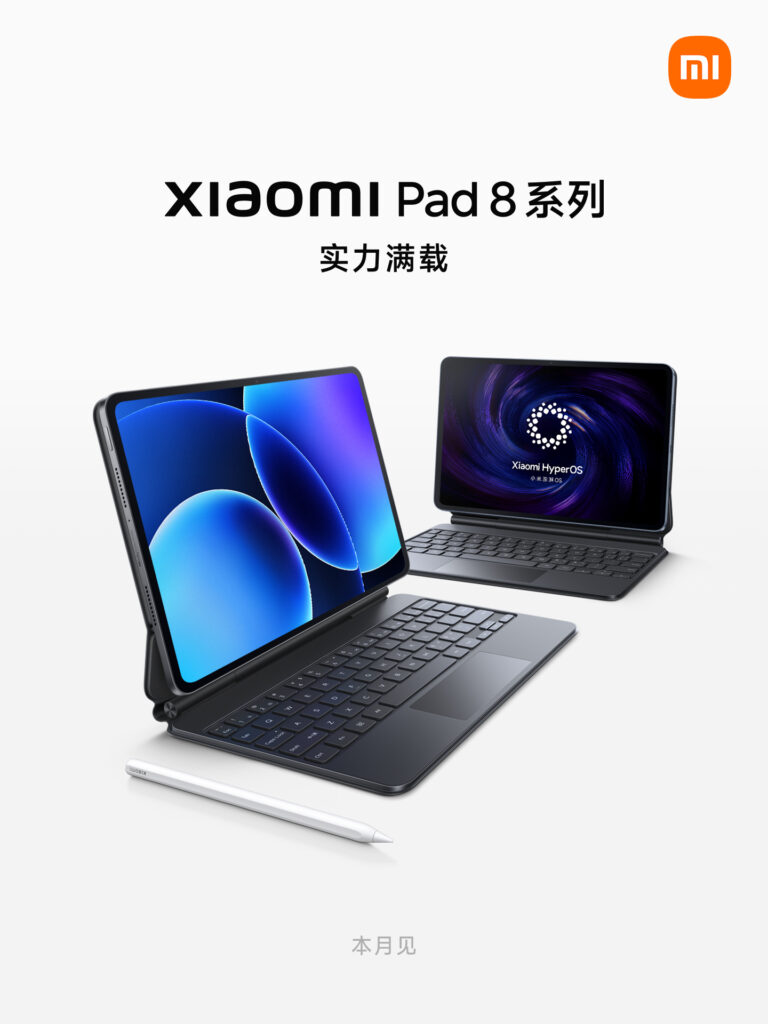
The Xiaomi 17 series of flagship phones will debut later this month in China. The following poster, which confirms the arrival of the Xiaomi Pad 8 series, suggests that it may go official alongside the Xiaomi 17 lineup. While there is no official confirmation yet, the Pad 8 series is expected to include a standard and a Pro version. Ahead of the launch, the Xiaomi Pad 8 Pro has seemingly surfaced on Geekbench.
Xiaomi Pad 8 series launching soon
Xiaomi Pad 8 series teaser
The Xiaomi Pad 8 series poster reveals that the tablet will feature slim bezels around its 11.2-inch display. Similar to last year’s Pad 7 series, both the Xiaomi Pad 8 and Pad 8 Pro are expected to come with the same screen size.
The Pad 8 series will ship with the latest HyperOS 3-based Android OS. While the rest of the specs are under wraps, the image confirms that the tablet will come with support for accessories like a keyboard and a stylus.
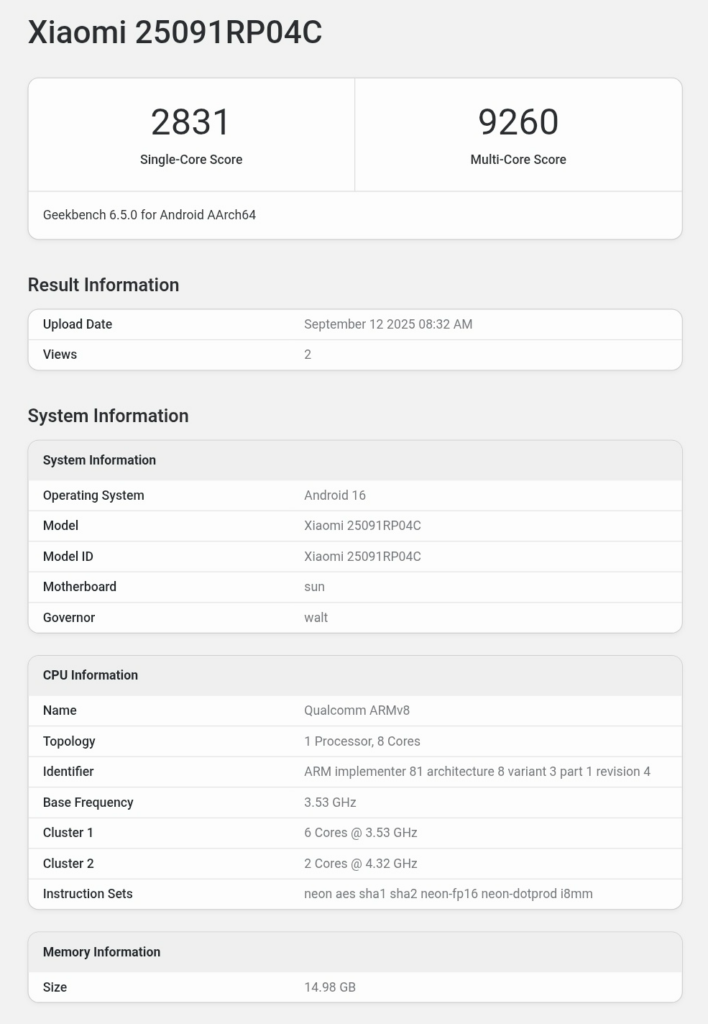
Xiaomi Pad 8 Pro Geekbench listing
Xiaomi Pad 8 Pro Geekbench listing
The Xiaomi Pad 8 Pro, which reportedly bears the model number 25091RP04C, surfaced on Geekbench recently. The listing reveals that the Pro edition will come equipped with the Snapdragon 8 Elite chipset, 16GB of RAM, and Android 16. The device scored 2831 and 9260 in the single-core and multi-core tests, respectively.
In related news, the Xiaomi 17 series is speculated to debut on Oct. 26 in China. The lineup will have four models, such as the Xiaomi 17, Xiaomi 17 Pro, and Xiaomi 17 Pro Max. The Pro models are officially confirmed to feature a large secondary display on the back. All three will debut as the world’s first phones powered by the Snapdragon 8 Elite Gen 5 SoC.
For more daily updates, please visit our News Section.
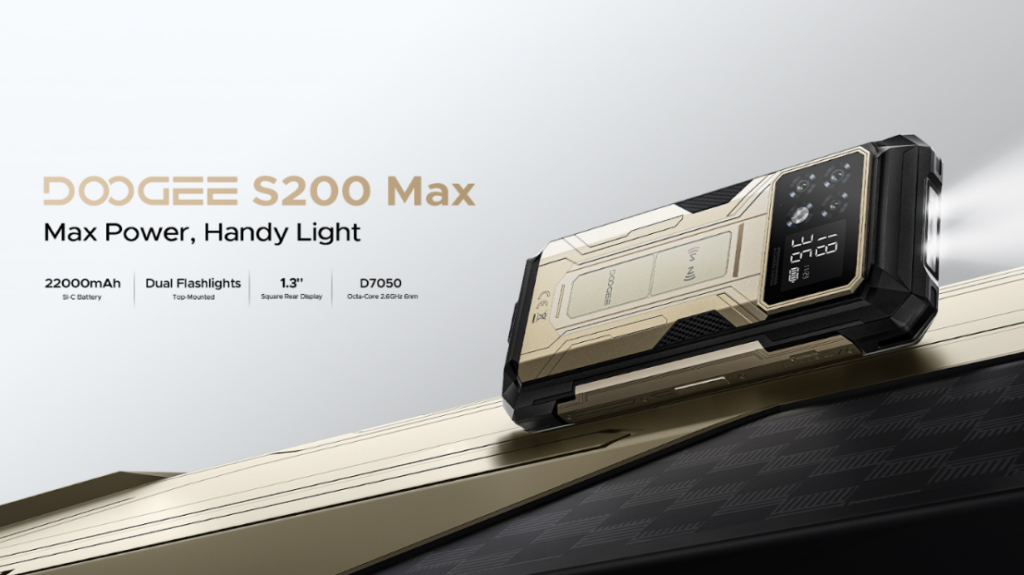
DOOGEE has officially announced the launch of its latest rugged smartphone, the S200 Max, a new flagship in the S200 series. Known for producing durable smartphones, DOOGEE has taken things a step further with this device by combining extreme durability, advanced performance, and survival-ready tools.
Part of the DOOGEE S200 Series
The S200 Max joins the S200, S200X, and S200 Plus in the brand’s rugged lineup. While the earlier models focused on durability and solid performance, the S200 Max is designed as the flagship powerhouse of the family. DOOGEE has also confirmed that the S200 Ultra is coming soon, which will bring even higher performance, futuristic mecha-inspired lighting, and larger storage options.
Bold Mecha-Inspired Design
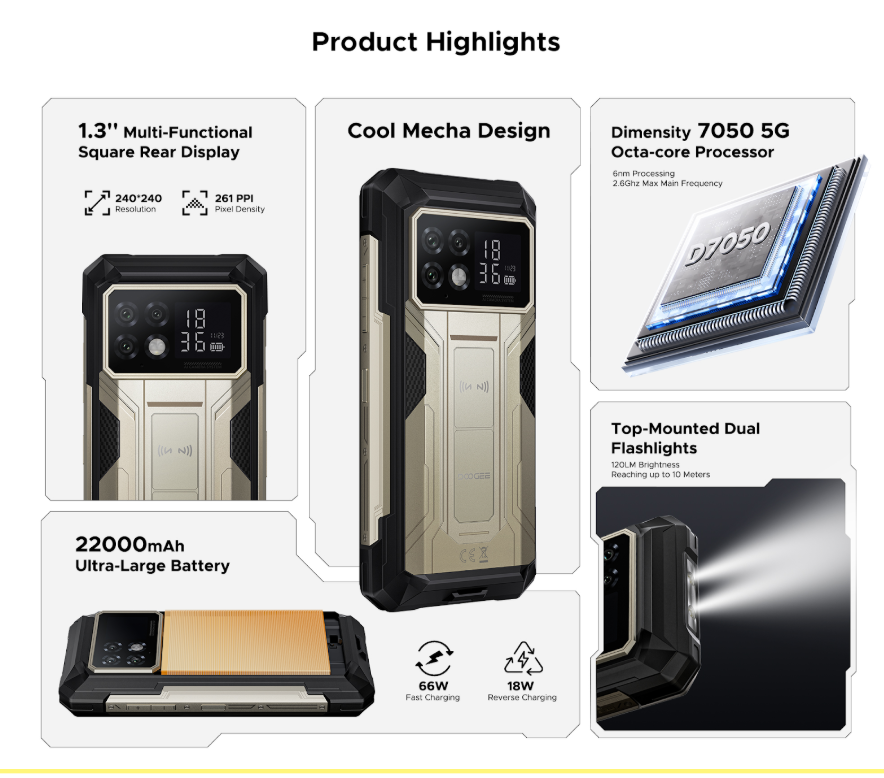
The S200 Max continues DOOGEE’s focus on rugged durability. Its body features a bold, mecha-style design with sharp contours and reinforced edges. The phone is IP68 and IP69K certified, meaning it is both dustproof and waterproof, and also carries the MIL-STD-810H rating for drop resistance. This makes it a strong choice for outdoor professionals, adventurers, and users working in tough environments.
Massive 22,000mAh Battery
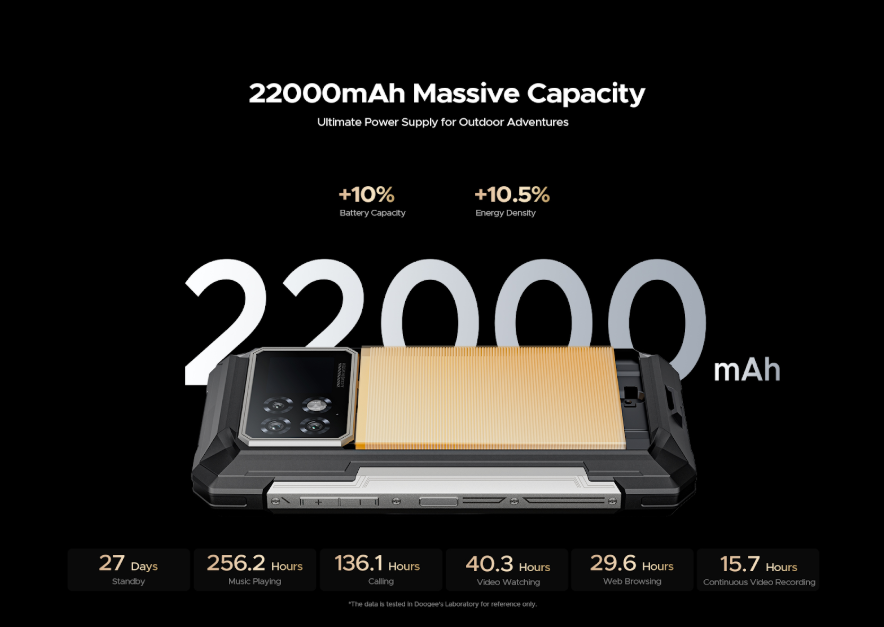
One of the most striking features of the S200 Max is its 22,000mAh Silicon-Carbon battery, one of the largest in the rugged smartphone market. This huge capacity ensures days of use on a single charge. The device supports 66W fast charging, helping to refill the battery more quickly despite its size. It also includes 18W reverse charging, which allows the phone to act as a power bank for other devices.
Dual High-Power Flashlights
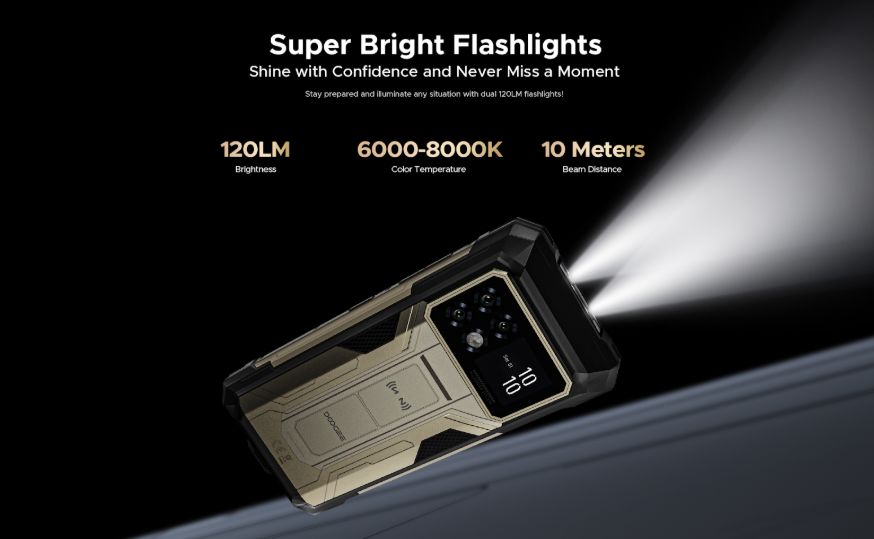
The S200 Max is also equipped with dual top-mounted LED flashlights. These lights deliver up to 120 lumens of brightness and a 10-meter beam range. This makes the phone not just a communication device but also a practical tool for camping, night work, emergencies, and search-and-rescue operations.
Dual Displays for More Functionality
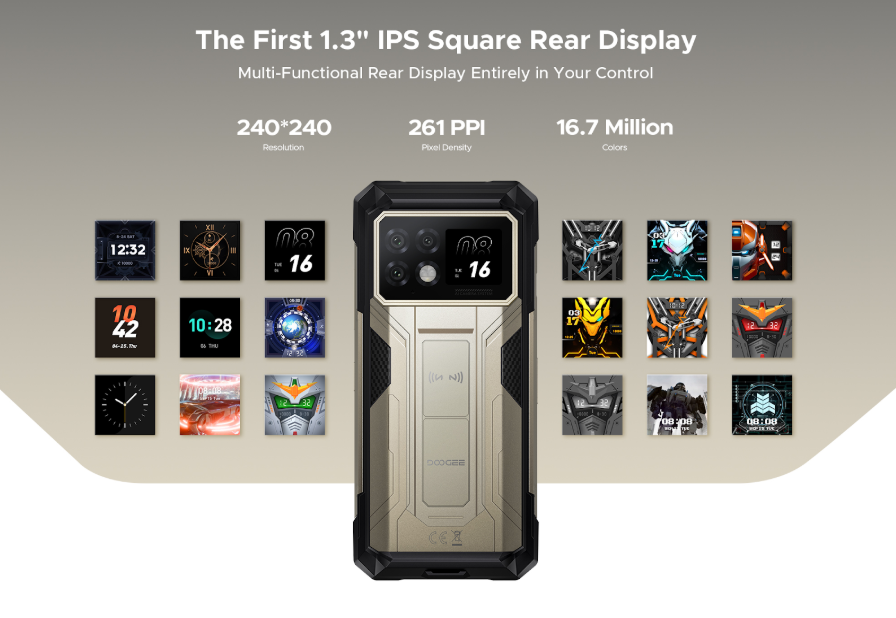
For the first time in a DOOGEE smartphone, the S200 Max includes a rear 1.3-inch IPS display in addition to its main screen. The main display is a 6.72-inch FHD+ IPS screen with a smooth 120Hz refresh rate. The smaller rear display is designed for quick information, such as the time, customizable messages, or animated dials, giving users an innovative new way to check essentials without turning on the main screen.
Powerful Performance Setup
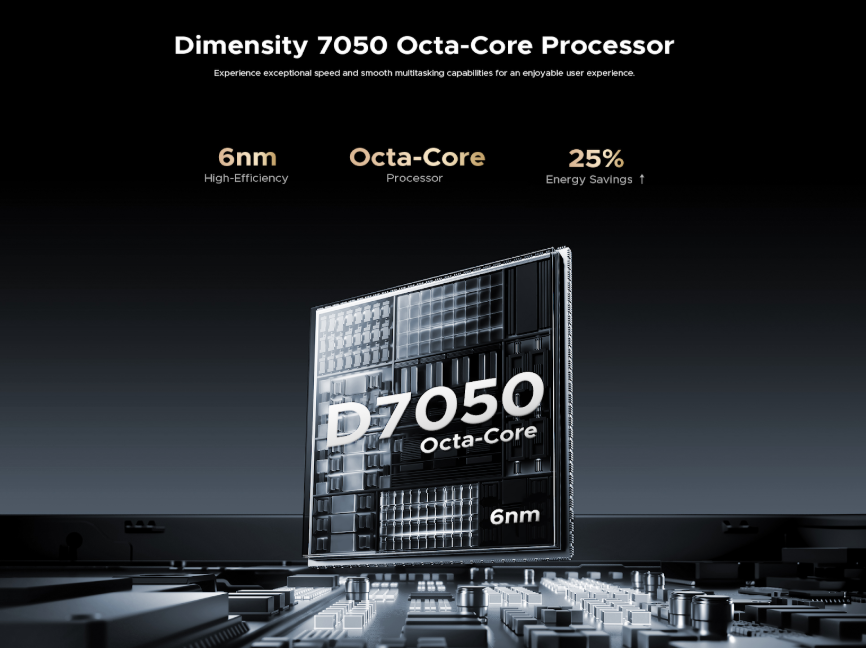
Under the hood, the phone runs on the MediaTek Dimensity 7050 5G octa-core chipset, built on a 6nm process. It comes with 16GB RAM, expandable up to 36GB, and 512GB of internal storage. This hardware combination ensures smooth multitasking, reliable performance, and enough storage for demanding users.
Advanced Camera Capabilities
For photography, the DOOGEE S200 Max features a 108MP AI main camera on the rear, designed to capture sharp, detailed images. On the front, a 32MP selfie camera provides clear and bright selfies. These cameras make the phone useful not only for rugged use but also for high-quality content creation.
Comparison Within the Series
S200 → Entry-level rugged phone for basic needs.
S200X → Better design and performance than the base model.
S200 Plus → Larger memory and improved multitasking.
S200 Max → Flagship with huge battery, rear display, dual flashlights, and maximum durability.
S200 Ultra (upcoming) → Will deliver even more power, futuristic design, and advanced storage.
Discounts and Availability:
DOOGEE S200 Max is now officially available at a special launch price of $447.99 through the official store, alongside the S200 Plus at $423.99. Buyers can also enjoy 20% off across the S200 Series using the code KOLS200, along with a 30-day quality assurance benefit.
For those shopping on Amazon, the S200 Max is listed at $519.99 after applying a 35% discount code (S200MAXDEAL), making it easier for global customers to grab the rugged flagship at a reduced price.
DOOGEE S200 Max is more than just a rugged smartphone; it is a complete survival tool. With its giant battery, mecha-style design, dual flashlights, rear display, and reliable performance, it is built for adventurers, professionals, and power users who demand the most from their devices. By combining cutting-edge specs with practical features, DOOGEE has redefined what a rugged smartphone can be.
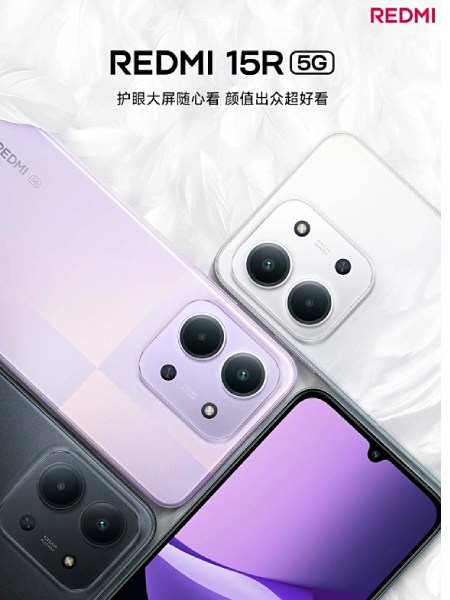
Xiaomi has officially launched the Redmi 15R 5G in China today through its own online mall. It joins the existing line of Redmi 15 phones and comes with a large battery, a slim build, and hardware that should appeal to budget buyers. Here are the complete details.
Redmi 15R 5G Specifications
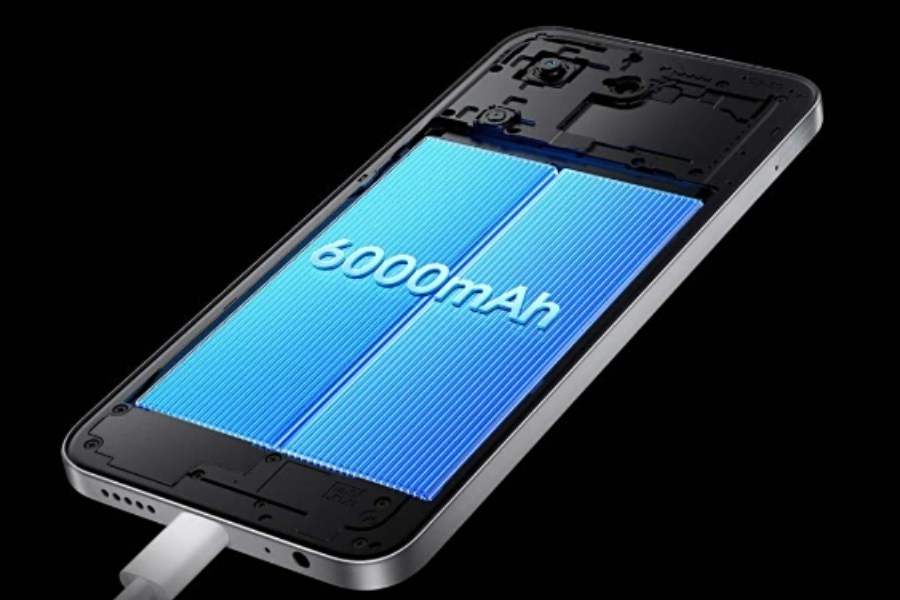
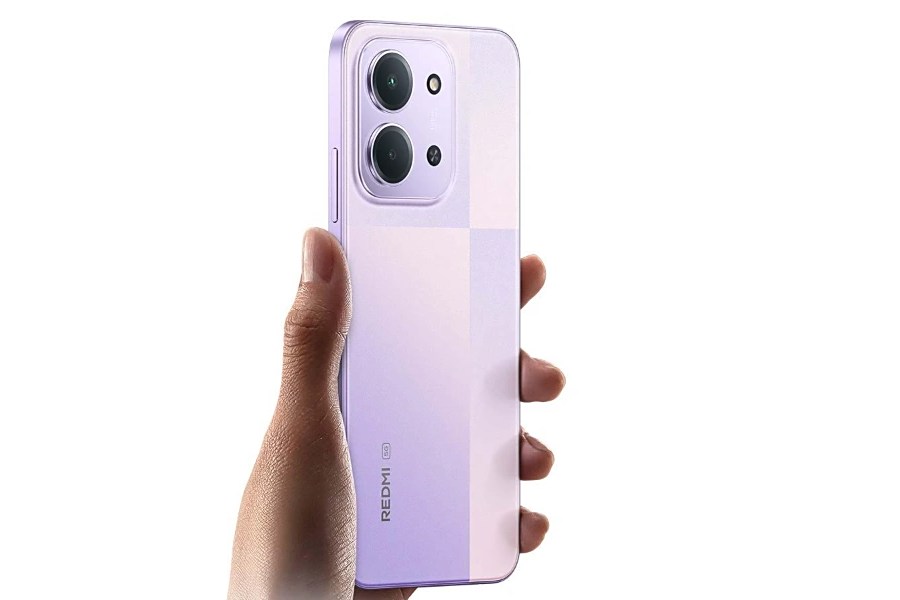
The Redmi 15R 5G stands out first for its size and build. Xiaomi says the phone has a slim 7.99mm profile at its thinnest point and weighs 205 grams. For a device carrying a 6000mAh battery, the numbers are great. It comes in four finishes: Cloud White, Lime Green, Twilight Purple, and Star Rock Black.
On the front, the Redmi 15R features a 6.9-inch waterdrop display that supports up to a 120Hz refresh rate. Peak brightness reaches 810 nits with HBM, and the panel is compatible with Wet Touch 2.0, which allows the screen to register touches even with wet fingers.
Under the hood, the Redmi 15R 5G runs on MediaTek’s Dimensity 6300 processor, built on TSMC’s 6nm process. Xiaomi claims the phone can remain “continuously smooth for 48 months,” though such long-term promises usually depend on usage. The rear camera setup is simple, with a single 13-megapixel sensor that supports HDR and basic scene optimizations.
The 6000mAh graphite battery is promoted as lasting up to 1.9 days on a single charge. The phone ships with HyperOS 2, Xiaomi’s software skin based on Android 15, and includes accessibility features like an extra-large font mode and boosted speaker output up to 200 percent. It also has a 3.5mm headphone jack for users who still prefer wired audio.
Price and Availability
The Redmi 15R 5G starts at 1,099 yuan (around $150) for the 4GB + 128GB model. Here’s the complete pricing breakdown:
4GB + 128GB: 1,099 yuan (around $150)
6GB + 128GB: 1,599 yuan (around $220)
8GB + 128GB: 1,699 yuan (around $235)
8GB + 256GB: 1,899 yuan (around $260)
12GB + 256GB: 2,299 yuan (around $315)
For more daily updates, please visit our News Section.
Rogbid has introduced a new smartwatch as part of its Health Season lineup. Dubbed Rowatch 11S, the device aims to make health tracking and smart features more accessible for everyday users. The Rowatch 11S is designed as an entry-level ECG smartwatch, blending convenience, style and advanced functionality into a compact form factor. Here’s a look at the specifications, features, and price of the device.
Rowatch 11S specifications and features
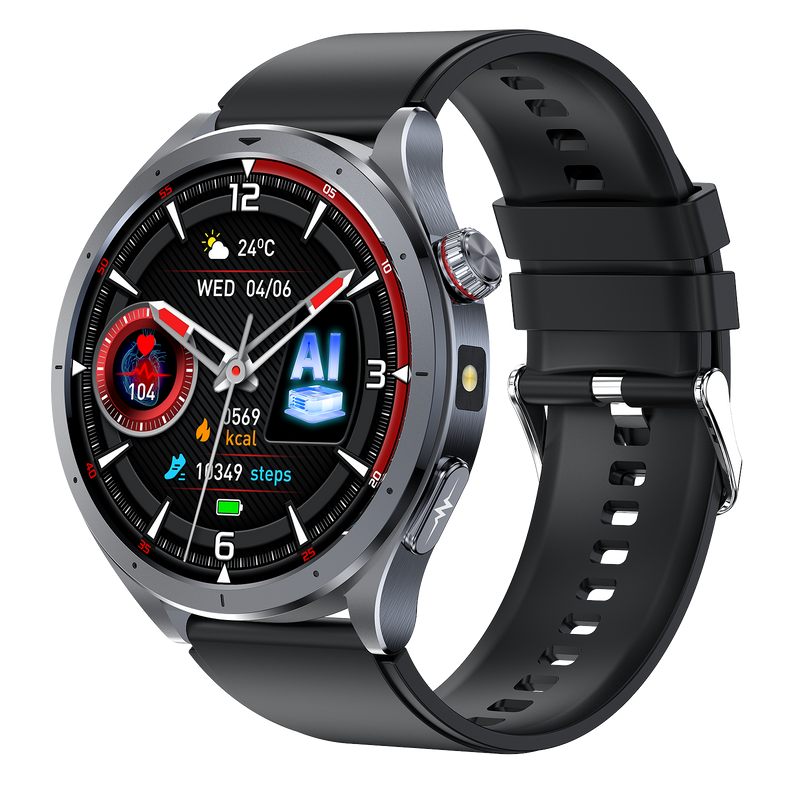
Rogbid Rowatch 11S with ECG support
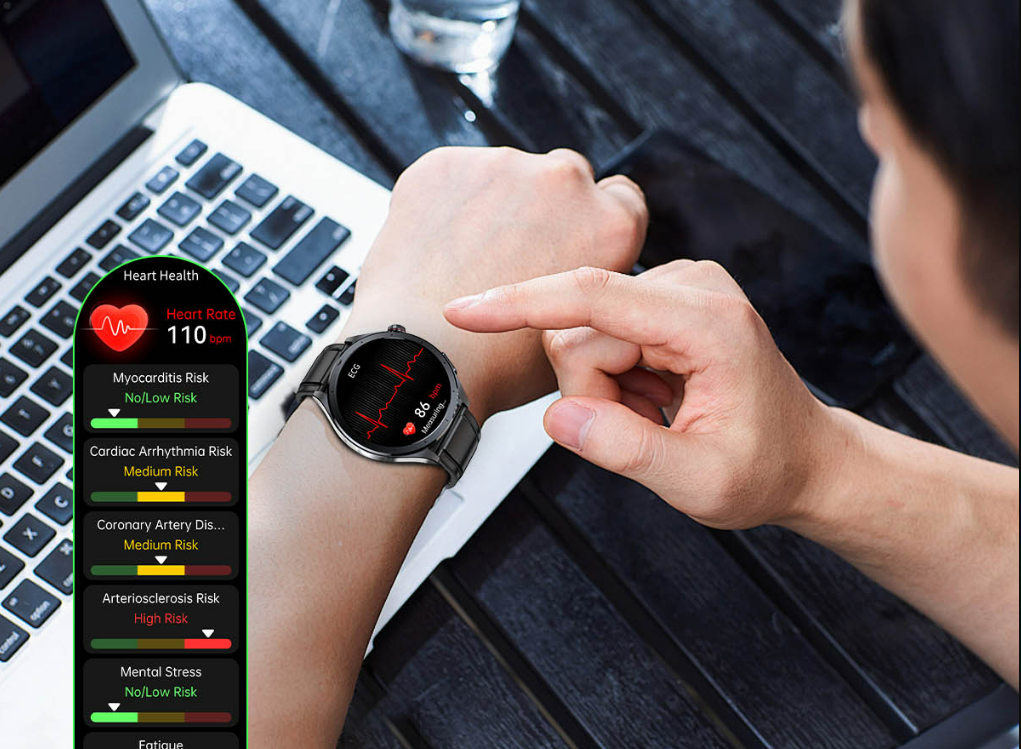
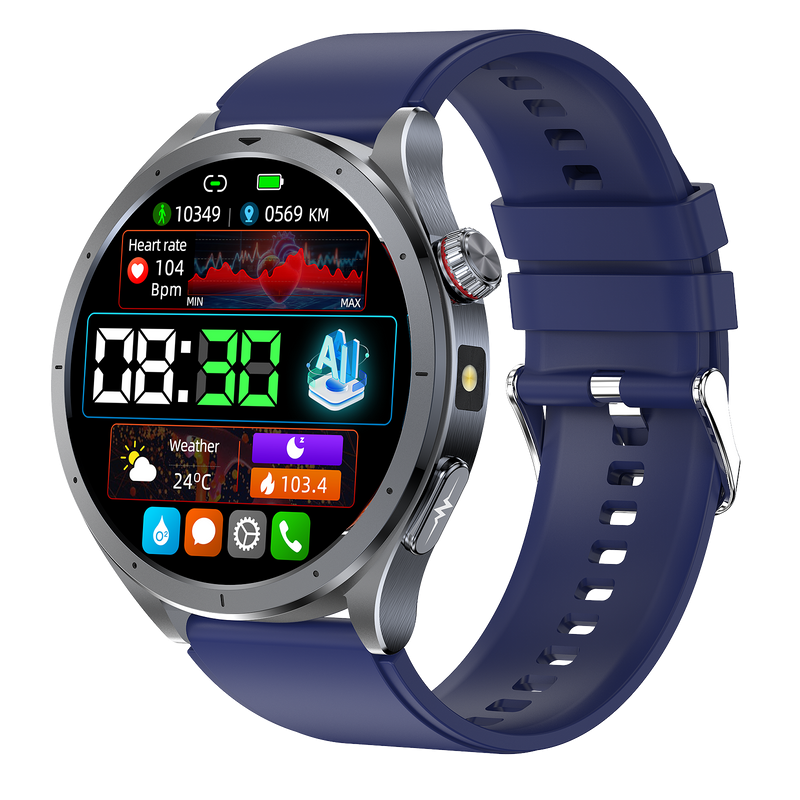
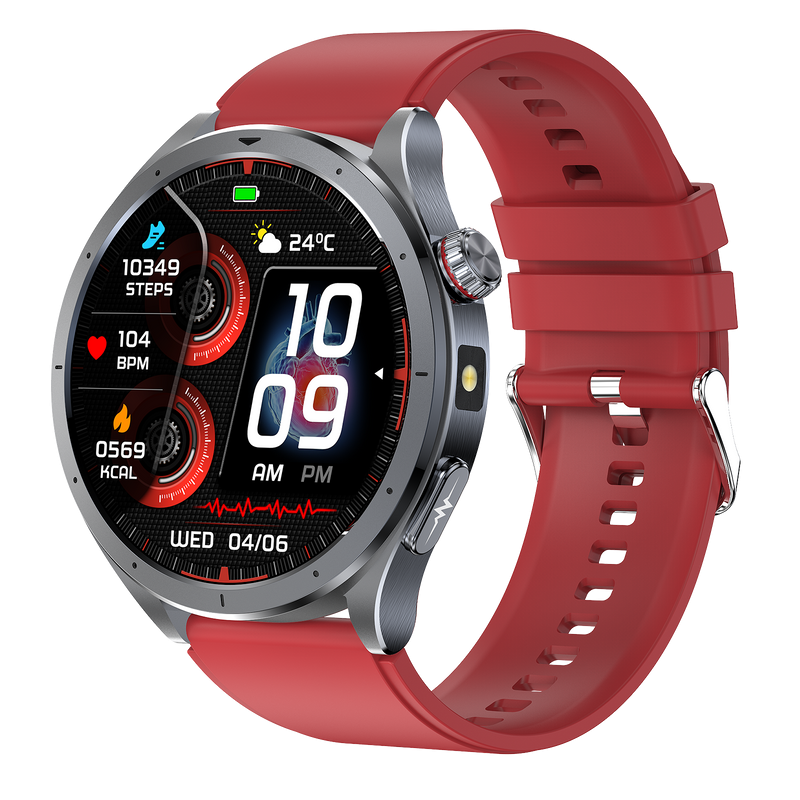
The Rogbid Rowatch 11S comes with a 1.53-inch LCD HD display that offers clear visuals and smooth touch response. On the design side, it includes a rotating crown and a dedicated ECG touch sensor. A small LED flashlight is positioned on the right, making the watch more practical for daily use. For durability, it comes with an IP68 dust and waterproof rating, and it is powered by a 450mAh battery that supports long-lasting usage.
For health tracking, the Rogbid Rowatch 11S supports ECG measurements with one-touch access to micro health checks. Alongside this, it supports heart rate, blood oxygen, blood glucose, metabolic equivalent (MET) and body temperature monitoring, allowing users to keep track of their physical condition in real time.
The smartwatch also integrates AI GPT functionality, offering smart assistance for tasks along with AI-driven watch faces for personalisation. With an in-built microphone and speaker, it supports Bluetooth calling and message notifications, helping users stay connected without needing to reach for their phone.
Rowatch 11S price and availability
The Rogbid Rowatch 11S is officially listed on the company’s store for $39. It is available in three colours: black, blue and red. Customers can purchase it directly from the Rogbid official store.
For more daily updates, please visit our News Section.
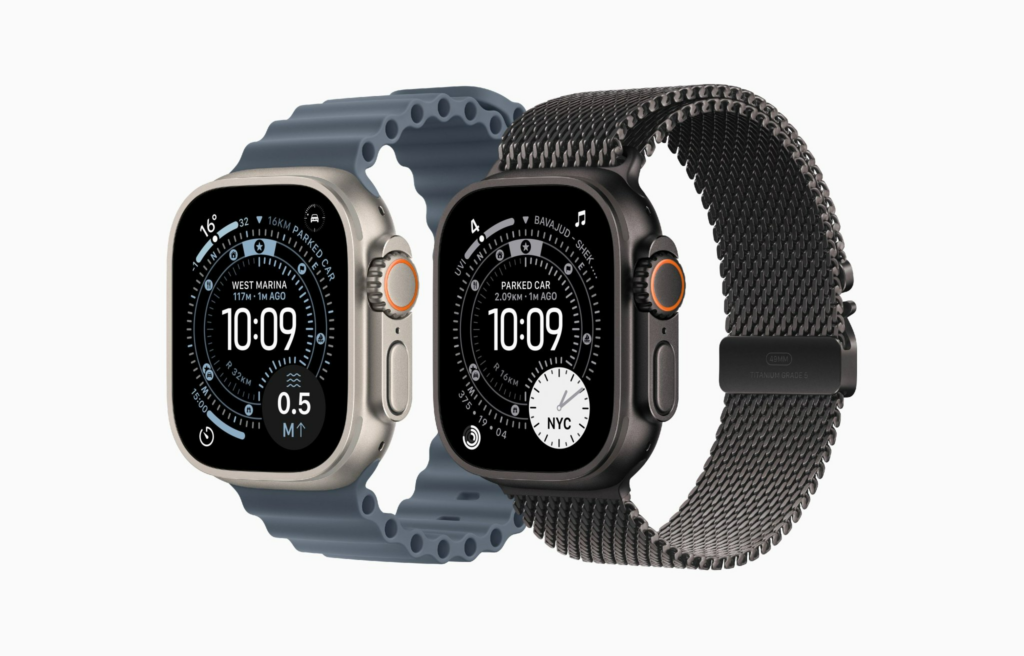
Ingram Micro India is one of the platforms through which the latest Apple devices can be purchased. The retailer platform has outlined the pricing and financial schemes for those looking forward to purchasing the iPhone 17 series, iPhone Air, Watch Ultra 3, Watch Series 11, Watch SE 3, and AirPods Pro 3. The offers include instant cashback, no-cost EMI options, exchange bonuses and a special buyback program.
Cashback, EMI and buyback schemes
iPhone 17 Pro series
Customers purchasing the iPhone 17 are eligible for Rs 6,000 instant cashback along with six-month no-cost EMI options on ICICI and SBI bank cards.
The iPhone 17 Pro, iPhone 17 Pro Max and iPhone Air are available with Rs 4,000 instant cashback and similar EMI benefits. The “iPhone for life” plan offers buyers the choice of paying 75% of the cost over 24 months, with the remaining 25% either paid later or covered by an assured buyback at the 24th month.
Apple Watch Ultra 3 carries an instant cashback of Rs 3,000, the Apple Watch Series 11 has Rs 2,500, and the Apple Watch SE 3 comes with Rs 2,000 cashback, all paired with six-month no-cost EMI. AirPods Pro 3 buyers receive Rs 2,000 instant cashback and the same EMI option.
Loan and exchange offers
Apple Watch Ultra 3
Loan partners include Bajaj Finance, HDB Financial, HDFC Bank, ICICI Bank, IDFC First Bank and TVS Credit. Customers can avail of up to 24 months of no-cost EMI on the iPhone 17 and AirPods Pro 3, and up to 16 months on Apple Watches. Exchange benefits are also part of the package, with up to Rs 7,000 bonus on the iPhone 17 series and iPhone Air, and up to Rs 2,000 on Apple Watch Ultra 3 and Series 11.
Ingram Micro India will kick off the sales of the new Apple devices starting Sept. 19.
For more daily updates, please visit our News Section.
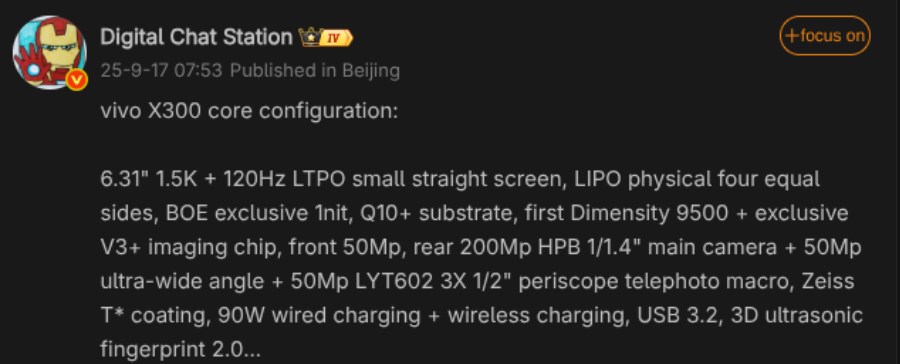
Vivo has started teasing its upcoming X300 series phones. Earlier this week, the company confirmed that the phones will run on MediaTek’s latest Dimensity 9500 chipset, paired with its in-house V3+ imaging chip. Now, a new leak from tipster Digital Chat Station provides what appears to be a comprehensive spec sheet for the device.
According to the leak, the Vivo X300 will feature a 6.31-inch LTPO display with a 1.5K resolution and 120Hz refresh rate. The panel reportedly comes with BOE’s exclusive Q10+ substrate and support for brightness as low as 1 nit. The display will have minimal and equal bezels all around.
On the performance side, the Dimensity 9500 is expected to provide flagship-level processing, while the V3+ imaging chip will handle computational photography tasks.
The camera setup will include a 200MP main sensor (HPB, 1/1.4-inch), a 50MP ultra-wide, and a 50MP periscope telephoto macro lens (Sony LYT602, 3x optical, 1/2-inch). The system is said to come with Zeiss T coating*. On the front, there’s a 50MP selfie camera.
As for the battery and charging specs, the Vivo X300 is said to have a 6000mAh battery and support for 90W wired fast charging, along with wireless charging support. Other hardware details mentioned in the leak include USB 3.2 and 3D ultrasonic fingerprint 2.0 for under-display biometric authentication.
Vivo X300 (Leaked Specifications)
Feature
Details
Display
6.31-inch LTPO small straight screen, 1.5K resolution, 120Hz refresh rate
In a year filled with minor upgrades across the premium TV market, TCL has introduced a major shift with its new SQD-Mini LED technology. Debuting on the flagship X11L series, this proprietary backlight solution moves beyond the limitations of traditional Mini LED and RGB-Mini LED setups. TCL positions SQD-Mini LED as a long-overdue evolution that resets the standards for brightness, color accuracy, and slim form factors.
What is SQD-Mini LED?
SQD-Mini LED stands for Super Quantum Dot Mini LED. It is TCL’s next-generation Mini LED backlight system that uses a single-chip pure white light source in combination with its custom Super Quantum Dot materials. The company also pairs this with a new “Butterfly Wing Huayao” LCD layer that enhances viewing angles, controls reflections, and improves panel durability.
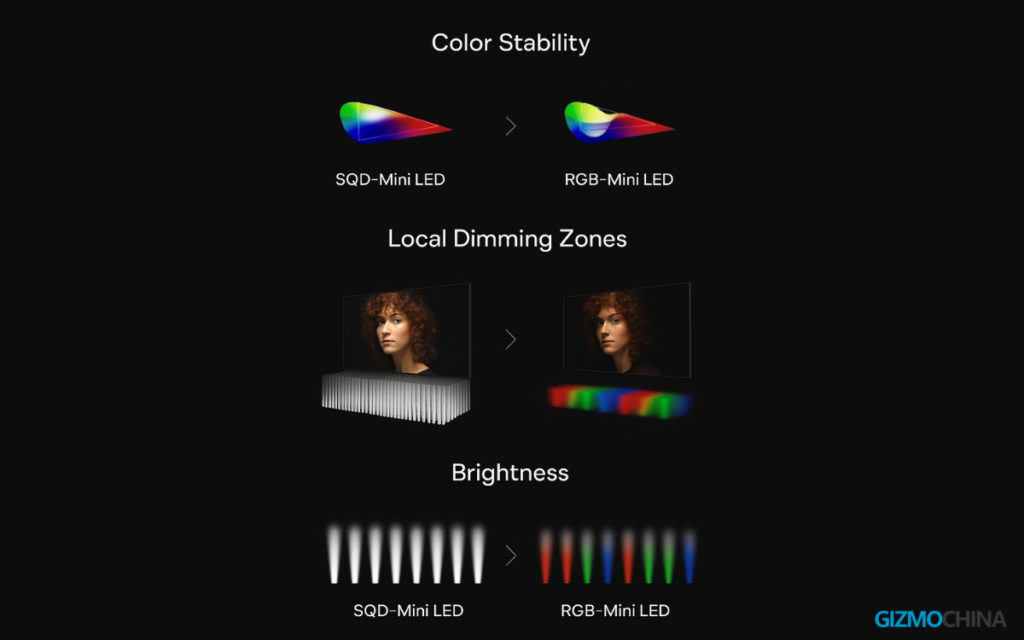
Instead of combining red, green, and blue LEDs to simulate white light like RGB-Mini LED does, SQD-Mini LED emits pure white light directly through quantum dot conversion. This change simplifies the light source structure, reduces optical interference, and results in cleaner, more stable output across all colors and brightness levels.
Decade-Long Bottleneck Solved
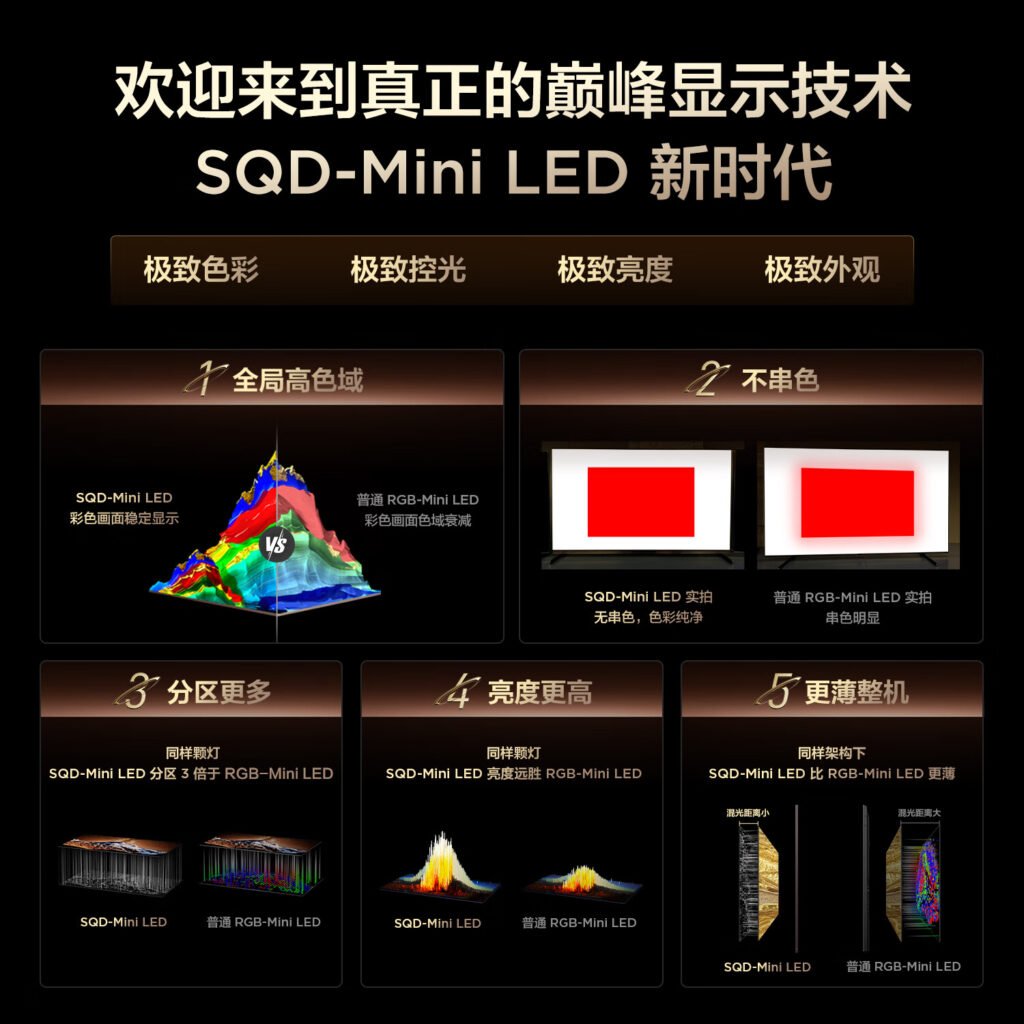
RGB-Mini LED technology has typically achieved around 94-97% BT.2020 color coverage. That limitation has been in place for nearly a decade. SQD-Mini LED moves past this barrier with 100% BT.2020 global color coverage. This ensures that content appears with full saturation and fidelity regardless of brightness or color mix, solving issues like color shift and haloing that often affect RGB-based backlights.
TCL claims that its SQD-Mini LED tech reproduces scenes with richer detail and more consistent tones, even in fast-moving or high-contrast visuals. The technology is designed to maintain color accuracy whether users are watching HDR movies, animations, or dynamic sports content.
Precision Light Control and Brightness
TCL uses a single white-light LED per local dimming zone in its SQD-Mini LED structure. This allows the company to fit more backlight zones into the same space without increasing heat or power requirements. The 98-inch X11L TV features 20,736 dimming zones, currently the highest among Mini LED TVs in its class.
The design also improves contrast precision. TCL pairs the hardware with its in-house Mosaic backlight control algorithm, which enhances frame-by-frame dimming accuracy. A new light-field tower structure helps avoid light leakage and creates uniform illumination across the screen.
TCL’s implementation enables the panel to achieve a peak brightness of 10,000 nits using its Brilliant XDR tech. This makes the display suitable for all high-end HDR formats, including Dolby Vision, HDR10+, and IMAX Enhanced, with tone mapping handled at full luminance.
Engineering an Ultra-Thin Display
TCL has reduced the optical distance (OD) required for backlight diffusion by using its optimized white-light path and Super Quantum Dot conversion layer. This allows the panel to reach a thickness of just 2 cm, making it the thinnest Mini LED TV TCL has produced.
The company partnered with industrial designer Chris Lefteri to create a minimalistic, clean chassis with concealed cable routing and a symmetrical rear design. The ultra-thin frame supports both flush wall mounting and tabletop setups.
Why This Matters
SQD-Mini LED gives TCL a technical lead in display backlighting. The simplified white-light structure enables higher color fidelity, better brightness control, and thinner designs, all while keeping manufacturing complexity lower than RGB-based alternatives.
For users, this translates to more accurate visuals, cleaner HDR reproduction, and modern design. For the industry, SQD-Mini LED sets a new benchmark that may pressure competitors to rethink how they approach Mini LED architecture.
TCL has not just introduced another flagship display; it has challenged a decade-long status quo in backlight technology. SQD-Mini LED marks a clear move away from incremental changes and signals TCL’s intent to lead the next phase of premium TV development.
For more daily updates, please visit our News Section.
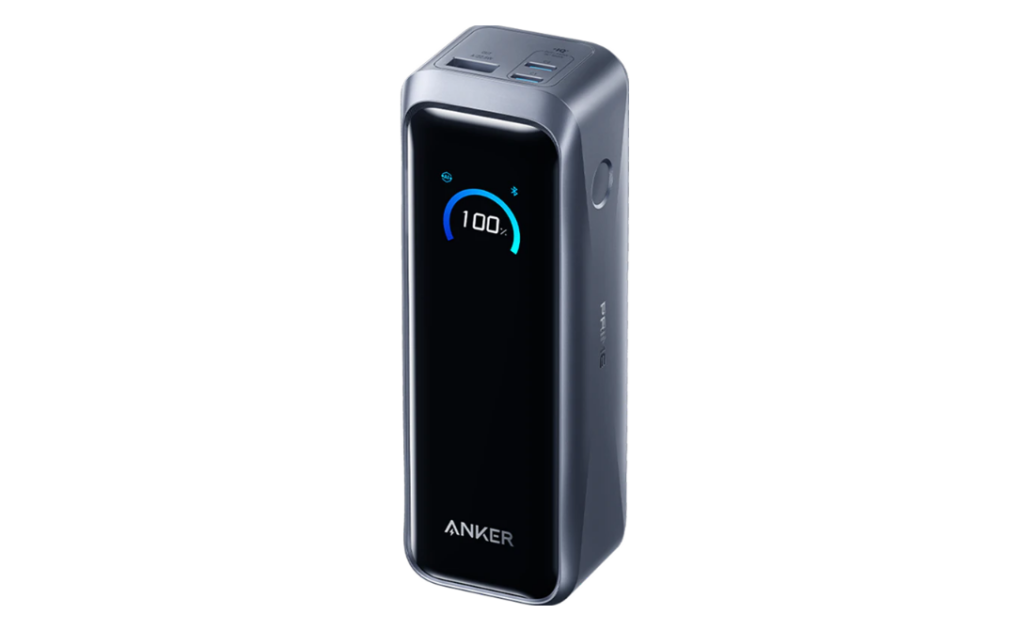
Anker is preparing to launch its latest accessory, the Prime Power Bank (20K, 220W), which the company describes as “soda-can sized.” Despite the compact frame, the device promises serious output and is already being spotted on Anker’s regional websites ahead of release.
The power bank, model A110B, first leaked in June but has since been listed as “coming soon” in the UK and Germany. The German product page suggests a retail price of €149.99. Anker is pitching it as the smallest 20,000 mAh power bank capable of delivering a total output of up to 220W, with support for charging three devices at once.
It includes two USB-C ports—each able to push out 140W—and a USB-A port for broader compatibility. On the input side, it supports up to 100W charging, meaning it can refill quickly when connected to a high-power adapter. The unit also works with Anker’s upcoming Prime Charging Base, allowing it to dock and recharge seamlessly.
A TFT display on the front shows charging stats in real time, and Bluetooth pairing with the Anker app gives users more detailed monitoring options.
Rumors point to a rollout later this year, possibly in late September for the US market and mid-October for Europe. In China, Anker is also said to be preparing a special Black Myth: Wukong edition, which could appeal to collectors.
For frequent travelers or professionals juggling multiple devices, the mix of portability, speed, and app integration could make it one of the most practical charging accessories of 2025.
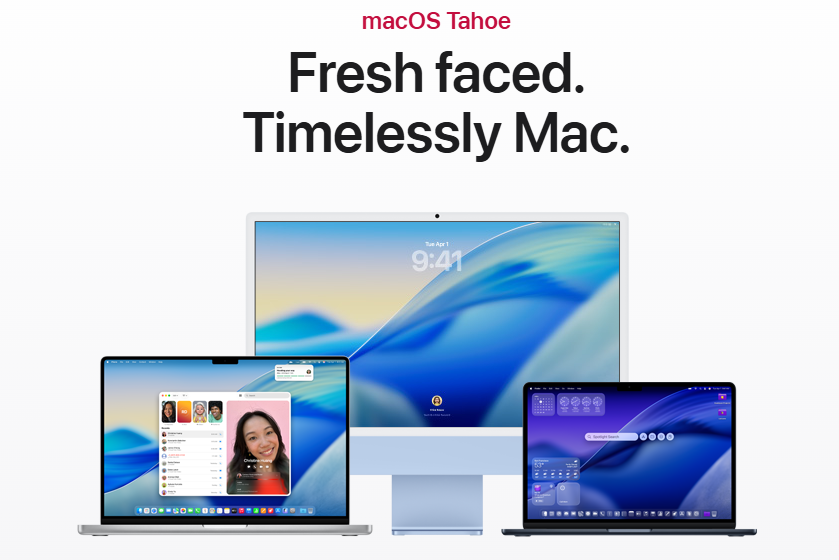
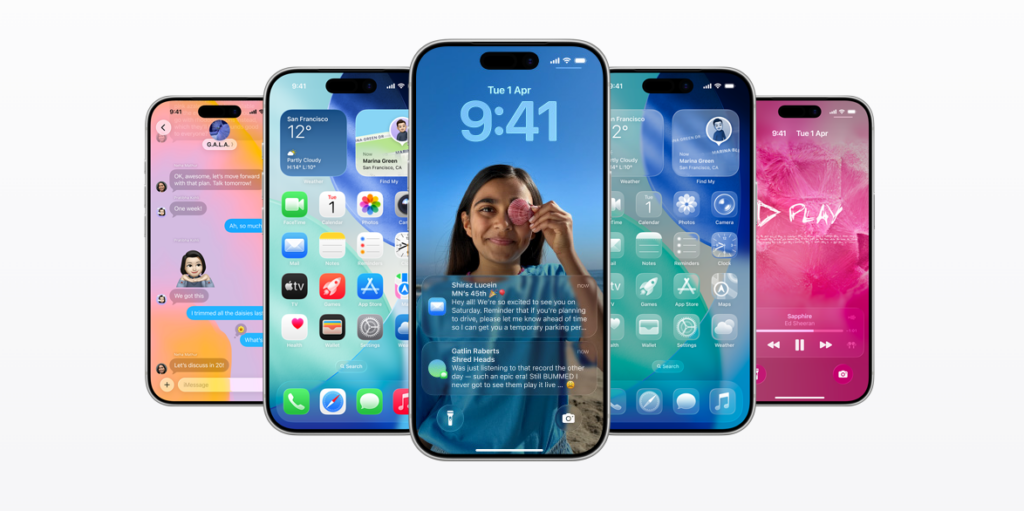
Apple has started rolling out its latest desktop update, macOS Tahoe 26. The release, which arrived alongside iOS 26 and iPadOS 26, is available as a free download for M-series Macs and a handful of Intel systems such as the 2019 Mac Pro and 2020 MacBook Pro.
The most noticeable change is the look. Apple is calling the new style Liquid Glass. It gives the OS a lighter feel, with translucent windows, refreshed icons, and smoother transitions. It isn’t a total overhaul of the interface, but enough to make the Mac desktop feel modern again. Spotlight also gets a big bump in functionality. Beyond basic search, it can now send messages, run Siri Shortcuts, open apps side by side, and even dig into cloud storage services like OneDrive or Google Drive.
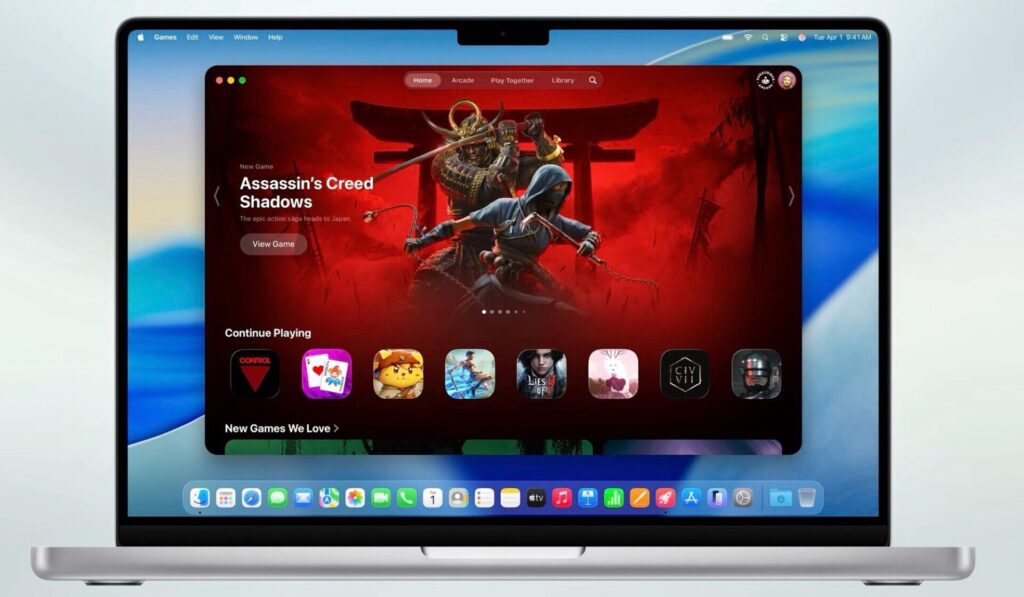
Gaming is another area Apple is pushing harder. A new Apple Games hub serves as a central launcher, bringing together titles from different stores and Apple Arcade. There’s also an in-game overlay for messaging and quick settings, and a battery-saver mode aimed at longer sessions on laptops. Underneath it all sits Metal 4, the company’s latest graphics framework. Its MetalFX tech can use AI to generate extra frames, a move similar to Nvidia’s DLSS, which should make demanding titles run more smoothly.
Other tweaks include more customizable quick settings, modeled on the iPhone’s Control Center. It may not grab headlines, but it makes day-to-day use more flexible.
With Tahoe, Apple is giving Macs a fresh coat of paint while also signaling a stronger interest in gaming. The update strikes a balance between style and performance, and the inclusion of older Intel machines means more users can try it out from day one.
A fresh leak has given us an early look at the Galaxy S26 Ultra, Samsung’s top-end model expected to launch in early 2026. The photo, showing the device inside a protective case, reveals some telling details about what Samsung might keep — and what it could refine — in its next top-of-the-line flagship.
The image comes from tipster @UniverseIce, who shared it on X (formerly Twitter). The photo shows the S26 Ultra in a hybrid-style case with a transparent back and rubberized edges. Whether it’s an official Samsung accessory or a third-party design isn’t clear, but it offers enough hints to back up earlier renders.
The rear panel continues the Ultra’s familiar setup: four cameras, a laser autofocus sensor, and a flash. These sit inside a raised rectangular island, giving the phone a clean look compared with the floating-lens style used on some past Galaxy models. The case’s clear back would allow buyers to show off the phone’s finish, while the dark sides provide grip and protection. The corners of the phone also appear slightly more rounded than on the S25 Ultra, matching what an earlier leak had suggested.
Galaxy S25 Ultra (left) vs S26 Ultra (right)
From the front, the device sticks to Samsung’s usual flagship blueprint — slim bezels and a centered punch-hole selfie camera. While it doesn’t scream “redesign,” the refinements could point to slightly better optics once the phone launches.
The S26 Ultra is expected to debut in January. While leaks so far suggest Samsung is sticking with a familiar formula, subtle changes in design and functionality may help it compete with Apple’s just-released iPhone 17 Pro models, or at least give Galaxy fans a reason to consider upgrading. For now, the case leak offers the clearest glimpse yet of what’s to come.
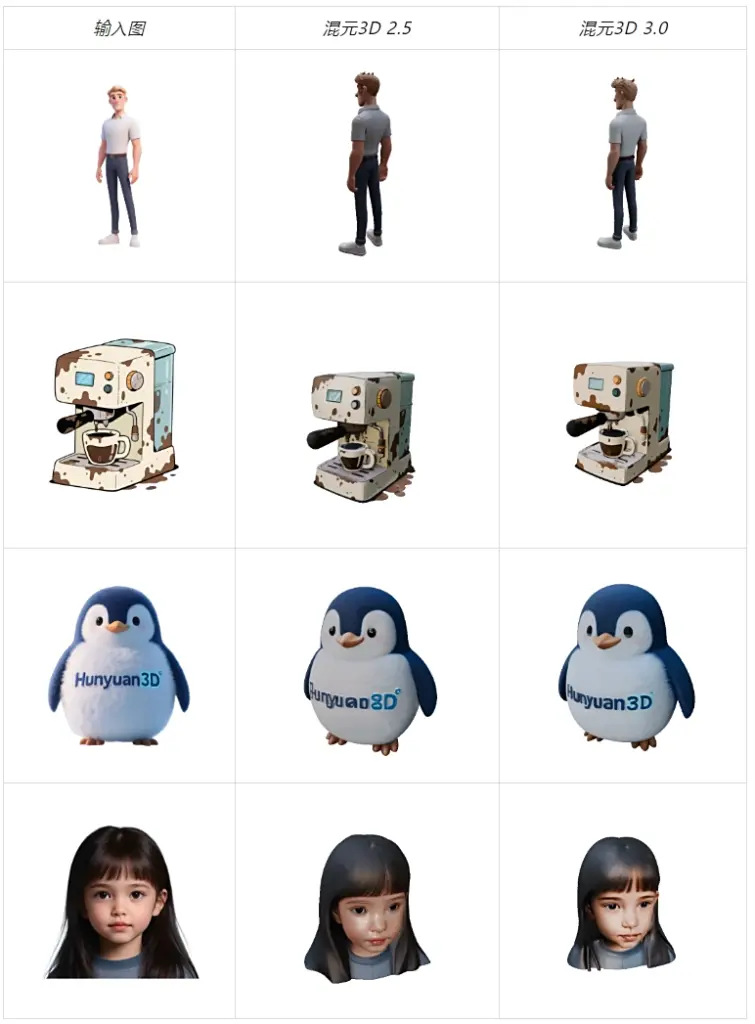
Remember when creating realistic 3D models meant weeks of painstaking work by skilled artists? Well, Tencent just threw that playbook out the window with the latest 3.0 version of Hunyuan 3D, and honestly, the results are pretty mind-blowing.
What Makes This Different?
Most AI 3D generators feel like they’re throwing digital clay at a wall and hoping something decent sticks. Hunyuan 3D 3.0 takes a completely different approach with something called “3D-DiT”, think of it as having a master sculptor who starts rough and gradually adds finer and finer details.
Instead of trying to generate everything at once (which usually leads to wonky-looking results), this system builds models layer by layer. It starts with basic shapes, then keeps refining until you get something that actually looks… well, real.
The Numbers Are Ridiculous
We’re talking about three times better precision than before, support for up to 36 billion voxels (that’s a lot of tiny 3D pixels), and resolution that can go up to 1536³. But here’s the kicker: it’s completely free to use.
Finally, Characters That Don’t Look Like Aliens
Anyone who’s played around with AI-generated 3D models knows the struggle: faces that look slightly off, bodies with weird proportions, poses that scream “I was made by a robot.” Tencent seems to have cracked this code.
The new system generates human characters that actually look human. Facial features sit where they’re supposed to, skin textures look believable, and poses flow naturally instead of looking like mannequins arranged by someone who’s never seen a person move.
Smart Problem-Solving
Here’s where it gets really clever: the system can figure out what should be there even when it can’t see it. If you’re generating a character who’s partially turned away or behind an object, the AI makes educated guesses about the hidden parts based on what it does see. No more bizarre gaps or impossible anatomy.
And textures? They actually wrap around objects properly now. No more skin that looks painted on or fabric that defies physics.
Built for Everyone (Seriously)
Tencent could have easily charged premium prices for this technology. Instead, they’re giving it away free through their Hunyuan 3D platform. For developers who want to integrate it into their own projects, there’s a cloud API available too.
If you’re a professional who needs more advanced features, they’re also testing Hunyuan 3D Studio, a full production suite that handles everything from UV mapping to rigging. It’s invite-only for now, but you can apply through their platform.
The Open-Source Promise
In a move that’ll make developers everywhere happy, Tencent plans to open-source a version called Hunyuan 3D Omni. This will give researchers and companies even more control over the generation process, perfect for when you need something very specific rather than just “make me a cool character.”
Why This Matters
Look, we’ve seen plenty of AI tools promise to revolutionize creative work, and most fall short when you actually try to use them. But Hunyuan 3D 3.0 feels different. The combination of actually good results, zero cost, and accessibility could genuinely democratize 3D modeling.
Whether you’re an indie game developer working on a shoestring budget, a digital artist exploring new possibilities, or just someone who thinks creating 3D stuff sounds fun, the barrier to entry just got obliterated.
Sometimes the most exciting tech advances aren’t the flashiest ones; they’re the ones that just work really, really well.
In related AI news, Baidu has recently released PP-OCRv5, a compact optical character recognition model that surpasses larger models in benchmark tests. The company has also unveiled the Ernie X1.1 deep thinking model, which it claims outperforms DeepSeek R1 in reasoning and comprehension tasks.
For more daily updates, please visit our News Section.
TCL has launched its first smart door knob, the K1, as part of its expanding smart home product lineup. The K1 supports multiple access methods and features a fast fingerprint sensor powered by AI. It is priced at $79 in the United States.
TCL K1 Smart Lock Specifications
The TCL K1 smart lock unlocks in just 0.3 seconds using a built-in AI-enhanced fingerprint sensor. The system learns and adapts over time, improving recognition accuracy with repeated use. In addition to fingerprint access, users can unlock the door using a password, the TCL smart app, or a physical key.
TCL has equipped the K1 smart door knob with several privacy-focused features designed to give users full control over access and data security. All data is stored locally on the device, with no reliance on cloud syncing or third-party servers, ensuring sensitive information stays private.
Using the companion app, users can generate temporary passcodes, set access schedules, and monitor real-time entry logs. The app enables flexible access management, making it easy to customize who can enter and when.
The K1 supports smart modes, including Privacy Mode, which locks the door from the inside for admin-only access; Passage Mode, which keeps it unlocked during high-traffic periods; and Auto-Lock, which automatically secures the door after closing.
The device runs on four AAA batteries and promises up to 12 months of operation. It supports an operating temperature range of -25°C to 70°C. The build uses aerospace-grade aluminum alloy and has a brushed metal finish. The door knob weighs approximately 1.2kg and measures 17.5cm x 21cm x 8cm.
TCL has rated the K1 with IP53 ingress protection, making it resistant to dust and light splashes. It is designed for use in homes, offices, and garages.
In related news, TCL has recently launched the Q9M RGB-Mini LED TVs with up to 2000 nits brightness and AI-powered features, and also introduced the Q10M Ultra RGB-Mini LED TV, boasting peak brightness of up to 9000 nits.
For more daily updates, please visit our News Section.
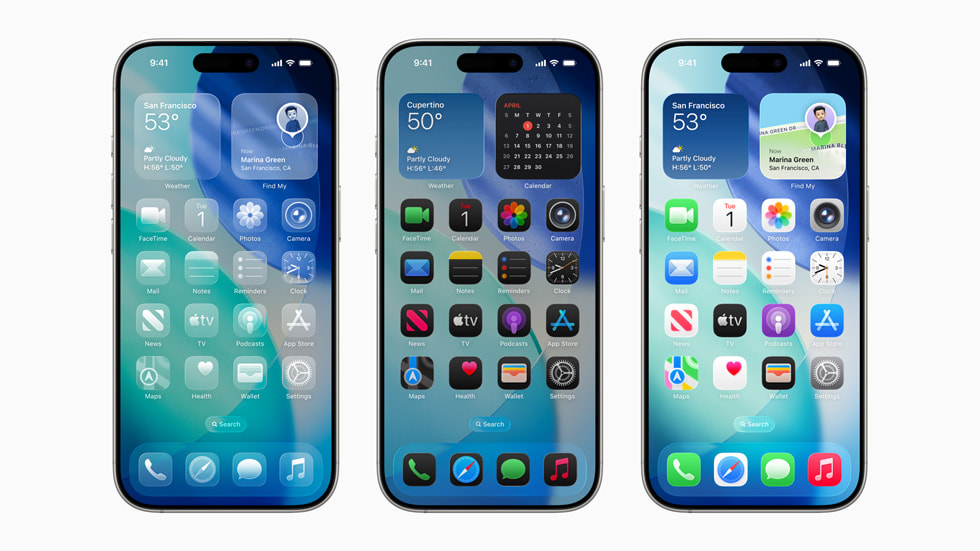
Apple’s iOS 26 is here with its most ambitious redesign in years, introducing “Liquid Glass” visuals, a redesigned camera app, and more AI features. But despite the hype, you might want to think twice and hold off on the update. From battery drain to confusing new UI elements, here’s everything you should consider.
Battery Drain & Overheating Issues
Shortly after the update rolled out, iPhone users began reporting unusually fast battery depletion. Many say their phones lose 20 to 40% battery charge within just an hour after a full charge. Overheating during regular use is also a common complaint. Apple claims this is partly due to background tasks like indexing and data re-optimization, but for people who rely heavily on their iPhones throughout the day, this kind of battery behavior can be a dealbreaker.
Massive Update Size & Storage Demands
Before moving to iOS 26, your iPhone likely needs to pass through iOS 18.7 if you haven’t already. Beyond that, iOS 26 requires a substantial amount of free space for download, unpacking, and installation. Users are being warned to free up at least 10GB of space. If your phone has limited storage or many large apps/data, this process can become frustrating and time-consuming. The download size alone is over 6GB, so this could be an issue for users who’ve nearly maxed out their iPhones.
UI Redesign
The “Liquid Glass” design is Apple’s new aesthetic translucent elements, dynamic visuals, and bold changes. But not everyone is happy. Key controls in apps like Camera have been moved, labels hidden in sub menus, and familiar features are less directly accessible. Users say this makes navigation less intuitive, particularly for longtime iPhone users.
Camera App Overhaul Could Be Jarring
Apple iOS 26: Visual Intelligence
The Camera app in iOS 26 has been redesigned in a way that hides previously visible toggles and options. For example, features like Live Photos or Exposure controls now live deeper in menus instead of being immediately visible. Users report that this increases friction when trying to adjust settings quickly. If you often use your Camera in manual or semi-manual mode, this change might frustrate you.
Bugs, Incomplete Features & Mixed Developer Feedback
As with many major OS updates, not all features are polished at launch. There are reports of CarPlay issues, Face ID problems, camera failures, and connectivity glitches. Some users feel that aspects of iOS 26 feel like beta software instead of a polished public release. Developers especially point out usability trade-offs in the redesign.
Final Verdict: Hold Off on iOS 26 Unless You’re Ready for These Changes
If your iPhone is your daily driver and you need reliability, battery life, and no surprises, it might be smarter to wait a few weeks. Let others report bugs, updates stabilize, and Apple patch the rough edges. But if you are looking to update:
Make sure your device is backed up
Free up plenty of storage (more than 10GB)
Charge overnight, and avoid gaming immediately after updating
Try toggling off controversial features (like some of the Liquid Glass / redesigned camera toggles) for better familiarity.
Upgrades are exciting, but sometimes patience gives you a better version from the start.
For more daily updates, please visit our News Section.
London-based startup Nothing is preparing to launch its first AI-native products in 2026. The move comes on the heels of a $200 million Series C funding round that pushed the company’s valuation to about $1.3 billion.
The round was led by Tiger Global and joined by investors including Qualcomm Ventures, GV, Highland Europe, EQT, Latitude, I2BF, Tapestry, and Indian entrepreneur Nikhil Kamath. Nothing has seen rapid momentum since its founding in 2020, reporting 150% sales growth in 2024 and crossing $1 billion in cumulative revenue by early 2025.
The company’s next step is building devices where AI isn’t just an add-on but the core of the experience. The first lineup is expected to cover phones, audio gear, and smartwatches. According to Pei, the goal is an operating system that adapts to individuals rather than offering the same interface for everyone.
Instead of a single OS experience, Nothing is aiming for what Pei calls “a billion personalized experiences.” That could mean an AI layer that handles routine tasks, anticipates needs, and blends more naturally into daily use.
“The system will handle the non-essential for us, allowing us to focus on what truly matters, which will be different for every person. Unlike today’s one-size-fits-all solution, a billion different operating systems will be rendered for a billion different people,” the company said on its community forum.
While details are still scarce, the roadmap goes well beyond current products. Nothing has floated the idea of bringing its AI-driven OS to smart glasses, humanoid robots, and even electric vehicles in the future.
Pei frames the shift as an effort to make technology “amplify human potential” rather than simply add features. With fresh funding and a bold strategy, Nothing is betting that AI-native hardware will help it stand out in an increasingly crowded consumer tech market.
Vivo‘s next generation of flagship smartphones has just surfaced in a set of new teasers. The company has confirmed some features of the upcoming Vivo X300 series, confirming MediaTek’s flagship processor, the brand’s in house imaging chip, and more. So let’s check it out.
Next-Gen Vivo X300 Phones Bring Cinematic 4K Portrait Video & Dimensity 9500
Vivo X300 Series will feature the Dimensity 9500
MediaTek just announced the launch event, which will unveil the Dimensity 9500 chipset. This is the same chip that will power the new Vivo X300 and Vivo X300 Pro. To recall, the last gen Vivo X200 lineup was powered by the Dimensity 9400 SoC. The latest flagship MediaTek chipset achieved an impressive AnTuTu score that crossed 4 million points. Apart from this, both flagships were also teased with the Cinematic Portrait video recording feature, which will support 4K resolution capture at 60fps.
Powering the cameras of the Vivo X300 Pro is the company’s self developed V3+ ISP. Meanwhile, the standard Vivo X300 recently surfaced on the GeekBench platform. It was seen carrying the Dimensity 9500 along with 16GB of RAM. This premium phone can also be seeing run on the Android 16 OS. Looking at its scores, the device managed to achieve 3,177 points in the single core test and 9,701 points in the multi core test.
Vivo X300 Pro V3+ Imaging Chip
Based on what we know so far, the Vivo X300 series aims to rival Apple’s new iPhone 17 lineup with an AirDrop like file sharing feature that allows for a more seamless experience with Mac PCs and iPads. While we still don’t have an official launch date, the Vivo X300 series is rumored to be unveiled on 13th October 2025.
For more daily updates, please visit our News Section.
Casio could be getting ready to launch brand new G-Shocks from its upcoming Full Metal series. Three new models have just been leaked, showcasing the watches’ premium design and even revealing hefty price tags. So here’s everything we know so far.
New Casio G-Shock Full-Metal Lineup Leaked
The latest leak arrives from the popular Casio blog, Great G-Shock World. This revealed the full design of these watches along with their dedicated model numbers and pricing. Casio’s new Full-Metal G-Shocks include the GMW-B5000BT-1, GMC-B2100BT-1A, and GM-B2100BT-1A. The GMW-B5000BT-1 is a digital watch, while the other two are analog. As the name suggests, all three models feature a full metal body, including a metallic strap and frame.
Casio G-Shock Full Metal GMW-B5000BT-1, GMC-B2100BT-1A, and GM-B2100BT-1A Watches
The GMW-B5000BT-1 will reportedly sell for around 88,000 yen, which is around 600 US Dollars. Meanwhile, the hybrid G-Shock GM-B2100BT-1A will also cost the same. The GMC-B2100BT-1A model will be the most expensive out of the lot, selling for around 107,800 yen (roughly 736 US Dollars). Looking at these watches, there is a distinct dual tone design with the silver finish on the strap and body, while the bezel uses black ion-plated stainless steel.
The report claims that the new Casio G-Shock Full Metal series will launch in Japan sometime next month, although an exact date is still unknown. There is also no info regarding a wider global release as of right now. In related news, Casio just introduced the Edifice EFK-10 Automatic watch lineup in India with a Forged Carbon build. Meanwhile, the European market just got the Casio G-Shock x Hokusai collaboration.
For more daily updates, please visit our News Section.
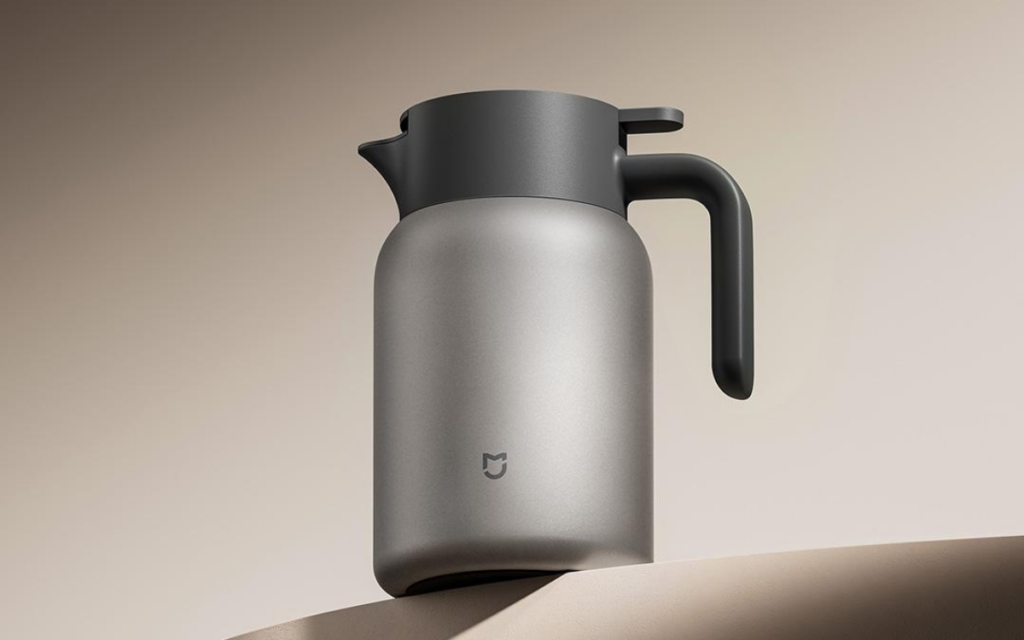
Xiaomi has launched the Mijia Titanium Thermos 1.2L on its Youpin crowdfunding platform. The campaign begins on September 22, with a crowdfunding price of 369 yuan ($52).
Mijia Titanium Thermos Specifications
The thermos features a double-layer construction made of pure titanium. Xiaomi uses ≥99% purity titanium for both the inner liner and outer shell, excluding the lid, spout, and handle. The material is lightweight, corrosion-resistant, and naturally antibacterial. It resists heavy metal leaching and supports safe, long-term use for drinking water and tea.
The flask has a 1200mL capacity, making it suitable for solo or shared use. It comes with a TA1-grade pure titanium tea infuser, which separates tea leaves or herbs from the liquid. The infuser is detachable and easy to clean, allowing users to brew a range of teas such as white tea, black tea, puer, or flower blends.
Xiaomi includes a press-to-pour mechanism that supports one-handed operation. The spout uses a lever design for smooth flow and includes a beak-shaped outlet that prevents splashing and helps block dust. It also features a dual pressure-release valve that ensures safe use by automatically releasing internal steam during pouring or lid opening.
The thermos keeps hot drinks at or above 50°C for up to 12 hours and cold drinks at or below 14°C for the same duration. Xiaomi tested the insulation performance in controlled lab environments. It comes with a silicone base at the bottom that enhances grip and stability during use.
The product also meets extended neutral salt spray testing standards, confirming its durability against corrosion. The integrated handle fits smoothly into the flask’s design, offering a stable grip for everyday use.
In related news, Xiaomi recently launched a smart neck pillow with heating, massage, and phone connectivity. The company also quietly unveiled a room heater capable of increasing ambient temperature by 16°C in just one hour.
For more daily updates, please visit our News Section.
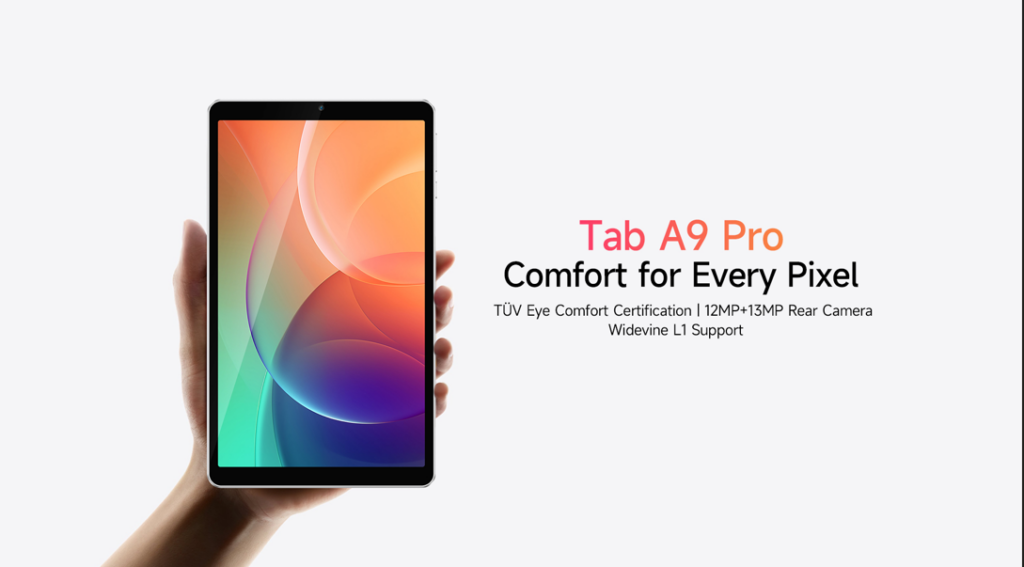
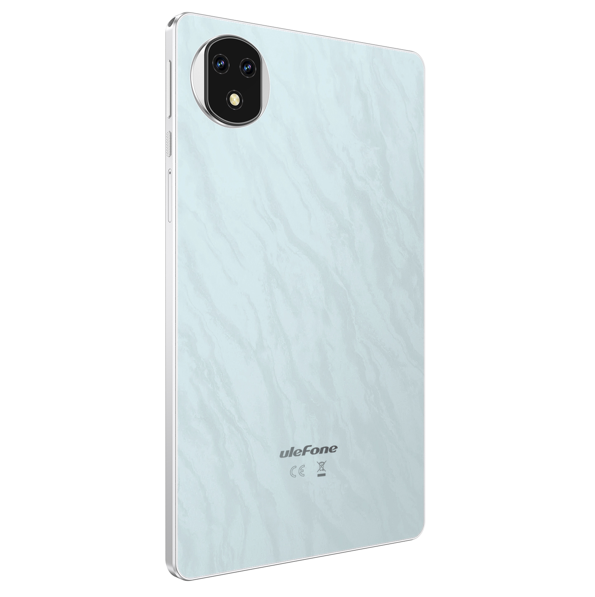
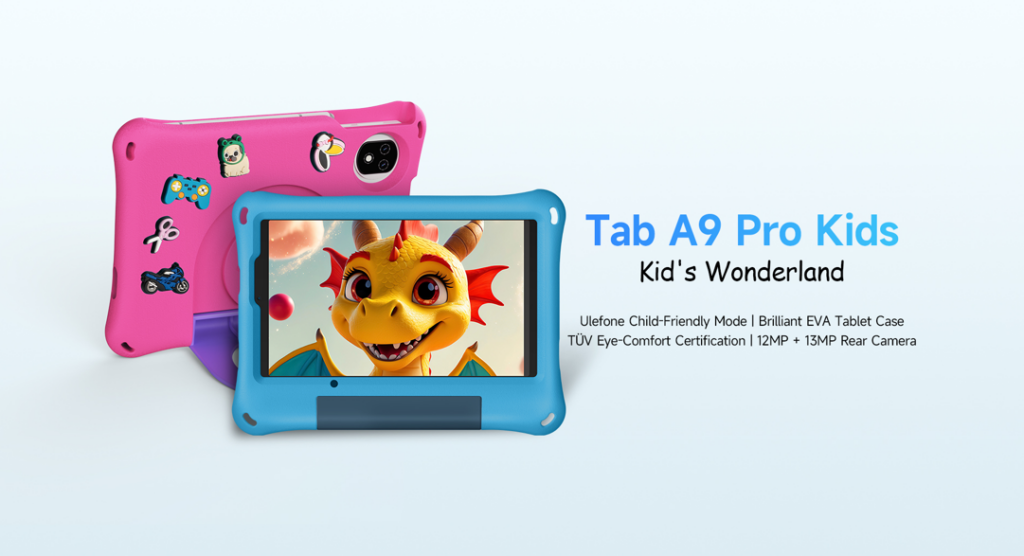
Ulefone has officially launched two new tablets, the Tab A9 Pro and the Tab A9 Pro Kids, designed to deliver an affordable and eye-friendly digital experience. Both models were made available globally on September 15, 2025, through AliExpress, the Ulefone official store, and other online platforms. With starting prices of $99.99 for the Tab A9 Pro and $109.99 for the Tab A9 Pro Kids, these tablets aim to provide strong performance, portability, and safety at an accessible cost.
TÜV Eye-Care Certified Display
At the heart of both tablets is an 8.68-inch display with a 90Hz refresh rate, ensuring smooth visuals for everyday tasks, video streaming, and reading. The screen comes with TÜV Eye-Comfort Certification, which significantly reduces harmful blue light emissions. This helps minimize eye strain, making it suitable for students, professionals, and especially children who spend long hours using digital devices. The lightweight and portable design also makes it convenient to carry anywhere.
Performance and Hardware
Both the Tab A9 Pro and Tab A9 Pro Kids are powered by the MediaTek Helio G91 processor, paired with 4GB RAM and 128GB of internal storage. This setup is capable of handling multitasking, online learning, entertainment, and casual gaming with ease.
Battery life is supported by a 5040mAh unit, offering up to 300 hours of standby time and 26 hours of 4G LTE talk time. In addition, the dual stereo speakers provide an immersive sound experience for music, movies, and video calls.
Camera System
The dual-camera setup on the back includes a 12MP main camera and a 13MP ultra-wide camera. This allows users to capture portraits, landscapes, and general photography with good clarity. While not positioned as a professional camera device, it provides enough versatility for everyday usage, family moments, and learning activities.
Entertainment and Multimedia
Multimedia consumption is enhanced through the dual stereo speakers, which deliver richer sound for movies, music, and online classes. Combined with the eye-care display and smooth refresh rate, both models offer a comfortable digital experience for extended use.
Tab A9 Pro Kids – Designed for Children
The Tab A9 Pro Kids variant comes with the same technical specifications as the standard model but adds a child-focused design and features. It includes a durable EVA colorful protective case, a capacitive stylus, and pre-installed child-oriented apps. A dedicated safe digital environment ensures kids can learn and play without exposure to harmful content. Parents also have access to parental controls, allowing them to manage access and create a secure online space.
Availability
Both models were launched on September 15, 2025, and are now available globally on Ulefone’s website, AliExpress, and official online stores.
The Tab A9 Pro is well-suited for business tasks, study, and entertainment, while the Tab A9 Pro Kids provides a safe and engaging learning device for children. With affordable pricing, strong hardware, and TÜV-certified displays, the Tab A9 series offers excellent value in the budget tablet market.
OpenAI has unveiled GPT-5-Codex, its latest AI system designed to assist software engineers. Positioned as the successor to earlier Codex tools, the new release offers deeper integration, faster performance, and tighter safety measures aimed at preventing misuse.
GPT-5-Codex builds on OpenAI’s previous work with Codex CLI and the cloud-based Codex, but brings a broader set of features. The tool can handle autonomous code reviews, flag potential flaws, and support developers in everyday tasks such as building websites or generating documentation.
Integration is a key focus. GPT-5-Codex works across terminals, IDEs like VS Code, GitHub, cloud services, and even the ChatGPT mobile app. It’s available to subscribers of ChatGPT Plus, Pro, Business, Edu, and Enterprise, signaling OpenAI’s intent to position the tool for both individual developers and organizations.
In VS Code
Performance has also taken a leap. OpenAI reports up to a 90% cut in completion times for new tasks and follow-ups in cloud-based workflows. All activity runs inside a sandboxed environment, with network access and external tools disabled by default. Developers can choose to enable those features when needed, for example, to let the model search the web or iterate on projects more independently.
OpenAI notes that GPT-5-Codex carries a “high capability” rating in areas like biology and chemistry—domains where misuse could have serious consequences. To address that risk, the company has added new safeguards designed to detect and block attempts to override commands or push the system toward harmful applications.
For developers, GPT-5-Codex means faster workflows and fewer bottlenecks in everyday development. Its speed, accuracy, and cross-platform availability may help teams prototype, debug, and ship projects more efficiently. At the same time, OpenAI’s emphasis on guardrails reflects a broader challenge in AI: balancing innovation with responsibility.
If widely adopted, GPT-5-Codex could set new standards for how developers collaborate with AI, shaping not just productivity but also expectations for safety in advanced coding tools.
Xiaomi has launched the Mijia Smart Neck Pillow Massager on its Youpin crowdfunding platform in China. The retail price is set at 369 yuan ($52), while the crowdfunding campaign starts on September 22 with a special launch price of 259 yuan ($36).
Mijia Neck Pillow Massager Specifications
The Mijia Smart Neck Pillow Massager aims to deliver a customizable massage experience while providing ergonomic neck support. It uses a soft, fabric-wrapped build that includes a removable and washable cover for easy maintenance.
The pillow integrates a 3D five-zone neck support structure that conforms to the natural curvature of the cervical spine, distributing pressure evenly and improving long-term comfort.
Xiaomi equips the device with two massage heads powered by a low-noise brushless motor. The massage mechanism simulates human hand movements using techniques such as pushing, pulling, pressing, rotating, and kneading.
It supports forward and reverse rotation and features three adjustable intensity levels. According to the company, the motor maintains a noise level as low as 45 dB(A).
The device includes SPA-grade thermal heating and a built-in NTC sensor that ensures stable, even warmth across the upper neck. The large-area heating function covers the entire back of the neck to help relieve stiffness and improve blood circulation.
Xiaomi enables real-time control of its neck pillow massager through the Mi Home app. The device connects easily via NFC, streamlining the setup process. Once connected, users can choose from six preset massage modes and three customizable user-defined modes. The app allows for fine-tuned adjustments to massage duration and intensity, and it also includes DIY customization features for a tailored experience.
The device includes two usage modes, allowing for both quick massages and extended sessions. Its built-in battery powers up to 100 minutes of continuous operation. The lightweight and ergonomic design makes the massager suitable for both home and travel use.
We use cookies on our website to give you the most relevant experience by remembering your preferences and repeat visits. By clicking “Accept”, you consent to the use of ALL the cookies.
This website uses cookies to improve your experience while you navigate through the website. Out of these, the cookies that are categorized as necessary are stored on your browser as they are essential for the working of basic functionalities of the website. We also use third-party cookies that help us analyze and understand how you use this website. These cookies will be stored in your browser only with your consent. You also have the option to opt-out of these cookies. But opting out of some of these cookies may affect your browsing experience.
Necessary cookies are absolutely essential for the website to function properly. This category only includes cookies that ensures basic functionalities and security features of the website. These cookies do not store any personal information.
Any cookies that may not be particularly necessary for the website to function and is used specifically to collect user personal data via analytics, ads, other embedded contents are termed as non-necessary cookies. It is mandatory to procure user consent prior to running these cookies on your website.