Dangbei has released the RX10, a new mid-range projector that integrates a flexible stand and automated setup features. The device is currently listed on JD.com in China for 5,499 yuan (roughly $818) and is positioned as a portable option for home video projection.
The gimbal allows for 225 degrees of vertical tilt, meaning you can point the lens directly at a wall or tilt it all the way back to project onto a ceiling. The unit weighs 2.1kg and is constructed from glass, polycarbonate, resin, and carbon steel.
Because it is designed to be moved around a room, it includes standard automated setup features. It uses auto-focus, obstacle avoidance, and automatic keystone correction to square up the image if you bump the device or change the projection angle.
Internally, the RX10 uses a 0.33-inch DMD chip. It outputs a native 1080p resolution, though it will accept a 4K input signal. The light source is an ALPD 2 laser, which the company states puts out 1,200 CVIA lumens (or 1,200 ISO lumens). It features a fixed-focus lens with a standard 1.2:1 throw ratio.
The projector runs on a MediaTek MT9669 processor with 3GB of RAM and 32GB of storage. The software is Dangbei OS 5.0, an Android-based system that handles HDR10 and HLG decoding, alongside MEMC motion compensation. For wireless connections, it includes Wi-Fi 6 and Bluetooth 5.0.
In terms of ports, there is one HDMI 2.1 port and one USB 2.0 port on the back. The HDMI port supports eARC, allowing you to run audio to an external soundbar or receiver. If you just want to use the built-in audio, the projector has two 6W speakers housed inside the gimbal base. They are angled upward by 15 degrees to prevent sound from bouncing directly off the table surface.
Power is supplied by a 110W wall adapter, with the projector pulling about 90W during use. There is also a power bank mode that lets you run the projector off a portable battery. The catch is that the power bank needs to support at least a 45W output via the PD protocol, and you have to buy Dangbei’s specific USB-C adapter cable to actually use the feature.
Xiaomi has introduced the Smart Door Lock 5C, a new piece of smart home hardware currently on pre-sale in China for 659 yuan (roughly $98). It is a standard smart lock that focuses on physical security hardware and multiple entry methods, including integration with Xiaomi’s existing device ecosystem.
The lock is built around a C-class straight-in lock cylinder. To prevent tampering, Xiaomi placed the clutch mechanism entirely inside the main lock body. This means that if the exterior panel is broken off or the outside handle is forced down, the internal mechanism keeps the door secured. On the inside, there is a physical deadlock knob. The door automatically locks when closed, and lifting the handle engages an additional locking mechanism.
For entry, the lock relies primarily on a semiconductor fingerprint scanner located on the handle. According to Xiaomi, the scanner reads prints in half a second and updates fingerprint data over time to maintain accuracy. It also includes a duress fingerprint setting. You can register a specific finger that will unlock the door while silently sending an alert to an emergency contact.
If you prefer not to use biometrics, the lock supports standard PIN codes, temporary passwords, and virtual passwords that allow you to type random numbers around your actual PIN to hide it from anyone watching. It can also be unlocked using a traditional mechanical key, Bluetooth, or NFC via compatible Xiaomi phones, smart watches, and fitness bands.
The device connects to the Mi Home app and supports Xiaomi HyperOS Connect. When paired with a Bluetooth Mesh gateway, the lock can trigger smart home routines, such as turning off the air conditioning when you leave the house. Internal sensors monitor the hardware and send remote alerts to your phone if the door is left open, if an incorrect PIN is entered multiple times, or if someone attempts to remove the front panel.
The lock runs on four standard AA alkaline batteries, which are rated for up to 12 months of use. If the batteries run low, an emergency button allows for a few final unlocks. If the batteries die completely, you can plug a standard power bank into a USB-C port on the exterior to temporarily power the lock and get inside. The lock comes in a sandblasted Starry Black finish and is rated to operate in temperatures from -25°C to 70°C.
In related news, Xiaomi has recently launched the Mijia Pressurized Steam Iron with 500kPa pressure and 135°C steam, along with a new 600L refrigerator featuring an automatic ice maker and dual cooling system.
For more daily updates, please visit our News Section.
TVs have become astonishingly thin, bright, and smart, but their audio performance still tends to be fairly average. That’s where premium soundbars come in. In 2026, the best options aren’t merely slim speaker boxes meant to make dialogue louder.
They offer real height channels for Dolby Atmos, wireless surrounds, room calibration, multiroom music, smarter voice enhancement, and enough bass to make a blockbuster feel appropriately irresponsible.
The right choice depends on what you value most: maximum cinematic immersion, a minimalist single-bar setup, easy rear-speaker placement, or tight integration with your TV brand. These are the best soundbars and home-theater alternatives to consider right now.
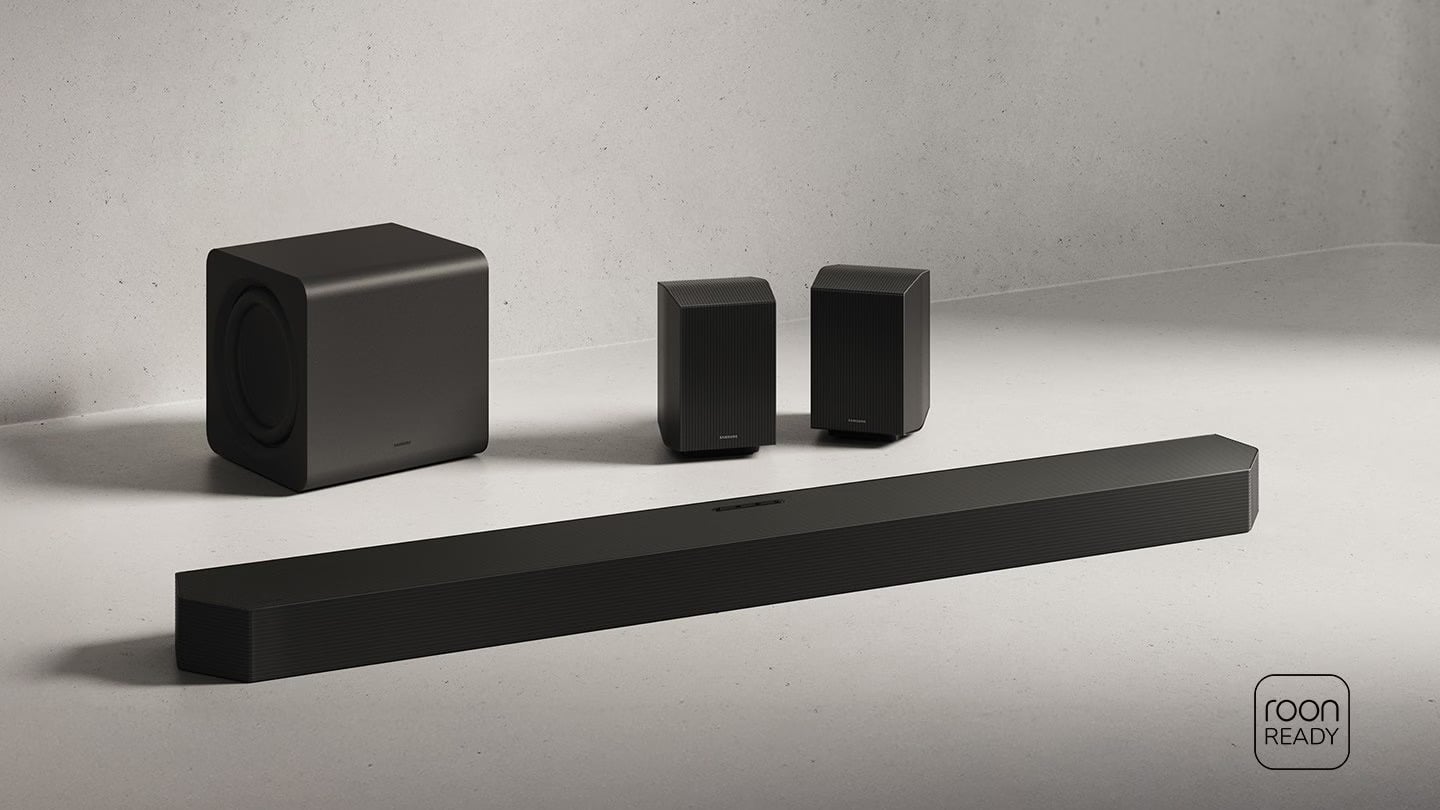
The Samsung HW-Q990H is the all-in-one answer for someone who wants a full home-theater experience without assembling an intimidating rack of separate components. It is an 11.1.4-channel system with a main soundbar, wireless subwoofer, and wireless rear speakers included in the box. That means it has dedicated channels for front, side, rear, and overhead sound, not just virtual processing trying to convince you sound is behind your couch.
The headline features are exactly what you would expect from Samsung’s flagship: Dolby Atmos, DTS:X support through HDMI eARC, two HDMI inputs with 4K/120Hz passthrough, Adaptive Sound, Game Mode Pro, and room-tuning through SpaceFit Sound Pro. There is also Active Voice Amplifier Pro, which adjusts dialogue based on the noise in your room, an increasingly useful feature for households with loud air conditioners, pets, or people who somehow always start talking during the important scene.
For Samsung TV owners, Q-Symphony remains the biggest reason to buy. It lets compatible Samsung TVs and sound devices work together instead of muting the TV speakers once the soundbar is connected. The HW-Q990H can pair with compatible Samsung TVs and, depending on the TV generation and supporting devices, expand a Q-Symphony system with Music Frames or Music Studio speakers. That creates a flexible, unusually broad soundfield.
At $1,699.99, it is expensive, but it includes the subwoofer and rear speakers that competitors often sell separately. For a buyer starting from nothing, that makes Samsung’s package particularly compelling.
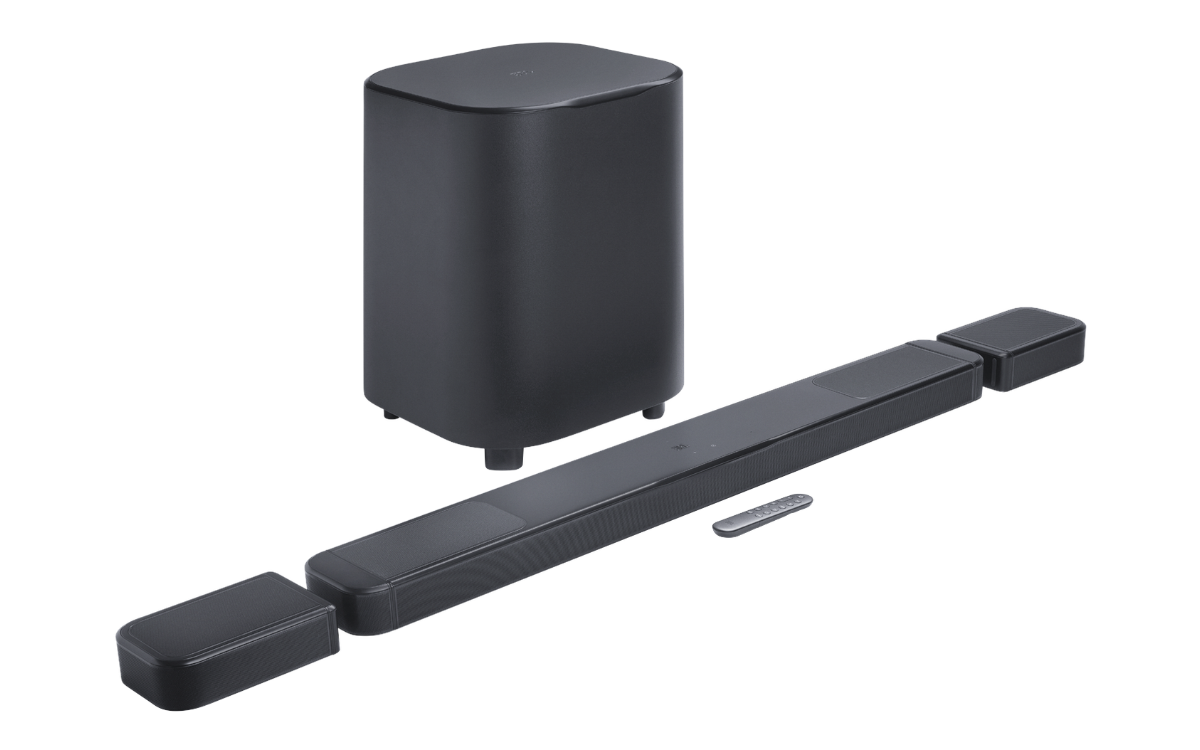
The JBL Bar 1300XMK2 takes a clever approach to rear speakers: it makes them detachable. Pull the wireless speakers off either end of the soundbar, put them behind your seating position, and you have a proper surround setup without permanently running power cables to the rear of the room.
It is another ambitious 11.1.4-channel system, with six up-firing drivers across the bar and detachable speakers, a 12-inch wireless subwoofer, and a claimed 1,570 watts of maximum output. More importantly, it supports both Dolby Atmos and DTS:X, so it is built for people who want enveloping effects from movies, games, and compatible streaming content.
JBL also has a few genuinely practical tricks. The detachable rear speakers can become portable Bluetooth speakers, and its Broadcasting feature lets you carry one or both into another room while continuing to hear whatever is playing on TV. There is even a Night Listening mode that mutes the main soundbar and subwoofer so you can use the detached speakers for quieter, closer listening.
It is priced at $1,699.95 and lands directly against Samsung’s flagship. Choose it if you value a cleaner, more adaptable room setup and actually like the idea of portable surround speakers. Choose Samsung if Q-Symphony and a more deeply integrated Samsung ecosystem matter more.
The Sonos Arc Ultra is for buyers who want seriously upscale Atmos performance but do not want a subwoofer and rear speakers dominating the room on day one. Its major innovation is Sound Motion, a compact dual-membrane woofer system designed to create deeper bass without making the soundbar enormous.
The Arc Ultra supports a 9.1.4 spatial audio experience, uses 14 Sonos-engineered drivers, and includes Dolby Atmos, HDMI eARC, Wi-Fi, Bluetooth, AirPlay 2, Trueplay room tuning, and four levels of AI-powered Speech Enhancement. It is also exceptionally well positioned for expanding later: add a Sonos Sub and Era 300 rear speakers when you want a more complete surround system.
Sonos’ software remains a major selling point. Setup is straightforward, multiroom music is excellent, and the app offers useful tuning controls. The Arc Ultra can also swap TV audio to one or two Sonos Ace headphones.
At $1,099, it is not cheap for a soundbar alone. But it is arguably the most elegant route to premium sound for people who prioritize industrial design, music streaming, and easy whole-home expansion.
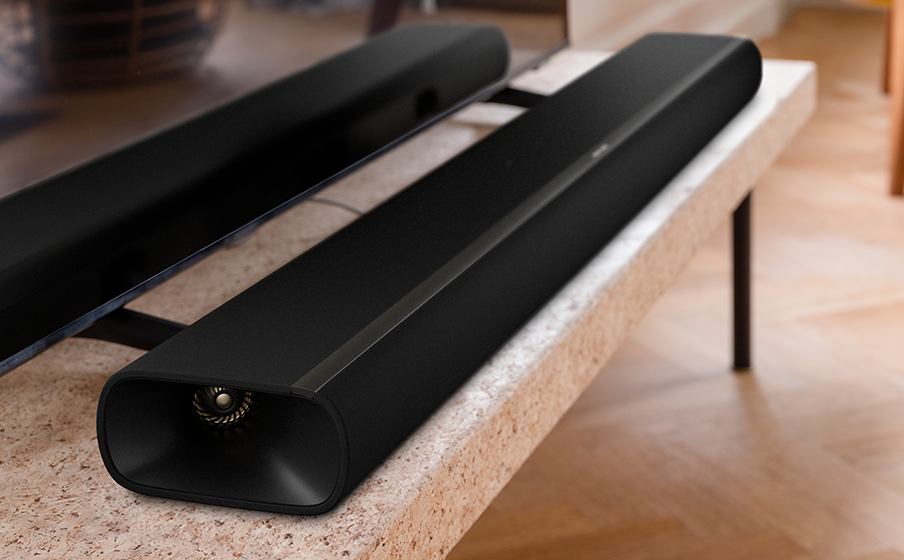
The Harman Kardon Enchant 1100 is the choice for someone who wants a premium soundbar that looks as refined as it sounds. Its minimalist design hides an 11-driver setup with two up-firing channels, Dolby Atmos, DTS:X, MultiBeam processing, and PureVoice dialogue enhancement.
Unlike the Samsung and JBL systems, this is a standalone bar: no included subwoofer or rear speakers. That naturally limits its low-end impact and surround separation compared with a full package, but it also makes the Enchant 1100 far easier to place in a living room where clutter is unacceptable.
It supports HDMI eARC, one HDMI input, HDR10 and Dolby Vision passthrough, Wi-Fi, Bluetooth, AirPlay, Chromecast, and Spotify Connect. At 45.2 inches wide, it is also a good fit for larger TVs without becoming visually overwhelming. It is priced at $999.95.
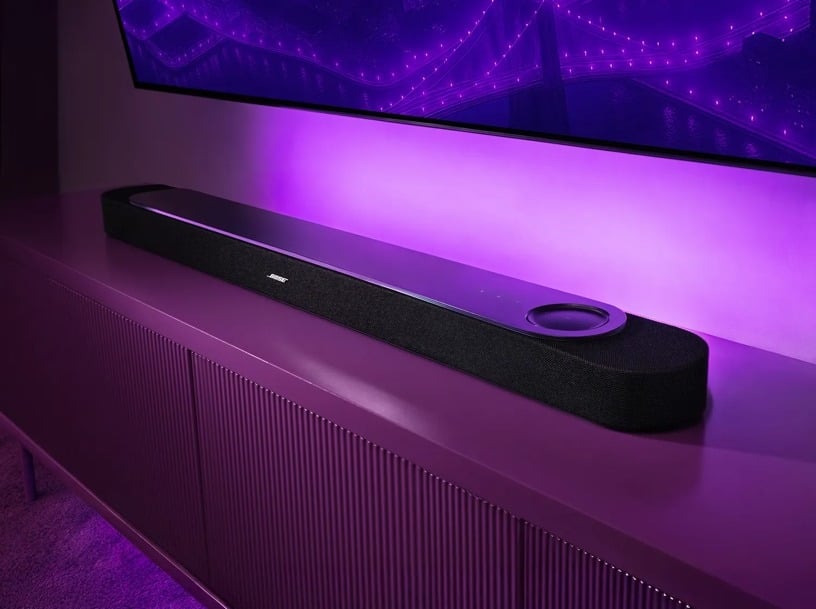
The Bose Lifestyle Ultra Soundbar is another premium standalone option, focused on elegant design and big sound from one bar. It uses a 5.1.2 configuration, Dolby Atmos, PhaseGuide speakers, TrueSpatial processing, CleanBass technology, and SpeechClarity for dialogue.
It lacks the channel count and included rear speakers of the Samsung or JBL packages, but Bose’s appeal is simplicity. It offers Wi-Fi, Bluetooth 5.3, AirPlay 2, Google Cast, Spotify Connect, Alexa, and app-based control in a polished package that looks at home almost anywhere.
Priced at $1,099, it is best for someone who wants richer, more cinematic TV audio without turning their living room into an equipment showcase.
The TCL Q85H Q Class is the value pick for buyers who want a complete Dolby Atmos system without spending flagship money. It is a 7.1.4-channel package with a main soundbar, wireless subwoofer, and wireless surround speakers. At $599.99 on sale, down from $899.99, it costs far less than the Samsung and JBL systems while still including the components needed for real surround sound.
The system supports Dolby Atmos and DTS:X, with up-firing speakers in the soundbar and wireless surrounds for height effects. TCL also includes a built-in center channel for dialogue, built-in tweeters for high-frequency detail, and Ray Danz technology with acoustic reflectors to widen the front soundstage.
The wireless subwoofer uses a 6.5-inch driver and Bass Boost technology. It will not deliver the same low-end output as JBL’s much larger 12-inch subwoofer, but it should offer a major improvement over a standalone soundbar. TCL lists up to 860 watts of total audio power.
TCL includes HDMI eARC, an HDMI input, digital optical audio, USB audio playback, Bluetooth 5.1, AirPlay 2, and the TCL Home app. The Q85H also supports TCL TV Ready and Roku TV Ready integration. Its AI Sonic Auto Room Calibration adjusts the system for the room, while preset modes cover standard, movie, music, voice, game, and sports listening.
For more daily updates, please visit our News Section.
Honor has added another mid-range phone to its lineup, aimed at people who care more about battery life than anything else.
The Turbo 5G has launched in the Eurasia region. It’s powered by Qualcomm’s Snapdragon 6 Gen 4 chipset and sits firmly in the mid-range. In Geekbench 6, it typically scores around 1,070 in single-core and about 3,060 in multi-core.
You get a 6.79″ AMOLED screen with Full HD+ resolution and a 120Hz refresh rate. The camera setup is straightforward: a 50MP main sensor and 5MP ultrawide on the back, plus a 16MP selfie camera up front.
It comes in an 8GB RAM + 256GB storage configuration. The real highlight is the massive 8,560mAh battery with 80W wired fast charging. Despite that, it weighs 196g, lighter than handsets with 5000mAh batteries. It also carries an IP69 rating for dust and water resistance, so it should handle rougher everyday use better than most phones in this price range. Colour options are black, green, and orange.
Software-wise it ships with MagicOS 10 based on Android 16. In the Eurasia market the starting price is 33,990 rubles (roughly 2,716 yuan or $411 at current rates).
The big battery, solid charging speed, and strong IP69 protection are clearly the main selling points here. The Snapdragon 6 Gen 4 will handle daily tasks fine, but endurance and durability seem to be what Honor is pushing with this one.
Honor hasn’t said anything yet about wider global availability or how many years of software updates buyers can expect. For now, the Turbo 5G just gives people in the Eurasia region another option if they want a large battery and proper water resistance. More pricing and availability details should follow as it rolls out further.
Xiaomi has started taking blind reservations for a new television, the Xiaomi TV S Pro RGB-Mini LED 2027 Ultra. As the name indicates, the television uses RGB-Mini LED backlighting, which is a different approach from the standard QD-Mini LED panels the company has used previously.
Xiaomi is not the only company making this transition. Earlier this month, Huawei also launched its first RGB-Mini LED television, the Vision Smart Screen 6 SE RGB, indicating a growing industry shift toward the technology among major display manufacturers.
To understand the change, it helps to look at how current Mini LED TVs work. Most mainstream Mini LED sets on the market use a backlight made entirely of blue LEDs. To get red and green light, the TV passes that blue light through a quantum-dot film or a phosphor layer.
This method is relatively cost-effective and allows manufacturers to pack in a high number of local dimming zones. However, the system only controls brightness. It cannot adjust the color of the light source itself, which can sometimes result in light loss, oversaturated colors, or a hazy blooming effect around bright objects on the screen.
RGB-Mini LED changes the hardware at the backlight level. Instead of using only blue LEDs and a filter, each local dimming zone contains individual red, green, and blue LED chips. This setup allows the television to control three different variables: the specific dimming zone, the overall brightness, and the exact mix of red, green, and blue light being emitted at the source.
The new Xiaomi television is expected to be formally announced alongside other upcoming hardware, including the Mix 5 Fold smartphone and the Xring O3 chip.
Currently, the reservation period is open in China from August 22 until September 1, 2026. Customers can reserve the TV at physical Xiaomi Stores with a 100 yuan ($14.88) deposit. The reservation includes a promotional bundle consisting of a Xiaomi Sound 3.1 soundbar and a three-month Xiaomi Video VIP membership.
In related news, Xiaomi has recently launched the Mijia Pressurized Steam Iron with 500kPa pressure and 135°C steam, along with a new 600L refrigerator featuring an automatic ice maker and dual cooling system.
For more daily updates, please visit our News Section.
If you are in the market to get a GPS tracker, remember that getting one means two purchases, not just one. Theres the hardware you see on the product page, plus theres the subscription that decides what the thing actually costs you. Keeping that in mind, on a couple of the models below, 12 months of service costs more than eight AirTags!
That is also the reason why this list is split in the manner below.
Bluetooth tags charge you once and then never again, but they only know where your bag is when somebody else’s phone walks past it. Cellular GPS trackers report their own position over 4G from anywhere with signal, and they bill you monthly forever. Neither is better. They answer different questions, and buying the wrong type is the most common mistake people make here.
For cars, trailers and equipment
Everything in this section needs a paid plan. And there’s no way around it, because the device is talking to a cell tower on your behalf every few seconds, and somebody has to pay for that SIM. The plan price matters more than the sticker price, so that’s what we’ve led with.
The 4,240mAh battery is the argument. LandAirSea rates it at three to four times the runtime of their own 54, and because the unit sleeps when it hasn’t moved for a while, a trailer parked for three weeks isn’t burning through anything. IP67, strong internal magnet, roughly six feet of positional accuracy. There’s an unconditional lifetime warranty on defects, which almost nobody in this category offers.
Plans start at $9.95 a month, but only if you prepay two years up front. Month-to-month is $19.95. Here’s the thing about that spread: the cheap rate is $119 a year and the flexible rate is $239, so the prepay decision costs more than the tracker does. Work out whether you’ll still want this in 2028 before you pick.
If you’d rather skip the SIM plan altogether, Bluetooth trackers rely on other people’s phones to report a location for free.
The drawback: there’s no offline mode at all. Stop paying and you own a magnetic paperweight.
Same magnet, same IP67 housing, same three-second update rate when it’s moving, and up to six months of standby if you leave it in sleep. It’s the one to buy if the tracker lives on a car you drive regularly and can pull the unit off to charge without much thought.
The drawback: you’re giving up most of the Overdrives battery for a device on the same subscription. If the thing’s going somewhere awkward to reach, the extra capacity is worth paying for.
This one does something the others don’t. It can remotely cut the starter circuit so a stolen vehicle doesn’t restart once it’s switched off. For a work van or anything left at a job site overnight, thats a genuinely different proposition from knowing where your van went.
The drawback: the kill switch means hardwiring, and hardwiring means a proper installation. This isnt the magnetic-box-under-the-bumper experience.
The size is the appeal. It’s small enough to go in a backpack, a bike frame bag, or a glovebox, and it isn’t fussy about what it’s attached to.
The drawback: at $18.95 a month on the rolling plan it’s the most expensive service here, and it’s close to Overdrive’s month-to-month rate for less hardware. Annual billing brings it down. Check what the current annual figure is before you commit, because the gap between the two is large.
If your car is a 1996 or newer and you just want trip logs without stuckon hardware, an OBD-II unit is easier.
Bouncie plugs into the diagnostic port and runs about $8 a month, updating every 15 seconds while you drive. It only reports when the ignition is on, so it won’t help you find a car that’s already been towed.
Vyncs bills annually at $99, which works out cheaper than most monthly plans if you’re certain you’re keeping it.
For luggage, keys and wallets
Different technology entirely. These are Bluetooth tags with no SIM and no monthly fee, and they find things by borrowing the phones of strangers. Coverage is the whole game, and it’s decided by how many devices are in the network.
All major US carriers and every large international airline now permit Bluetooth trackers in checked bags. The practical value isn’t that the tag recovers your suitcase. It’s that you walk to the desk able to say the bag last pinged in Terminal C twenty minutes ago, which is a different conversation from the one that starts with nobody knowing anything.
The second generation arrived in January with a new chip that stretches Ultra Wideband range to roughly 1.5x the original. At a baggage carousel with 40 black suitcases on it, that’s the feature that matters. The Find My network is around two billion devices, which is not a number any rival is close to.
List is $29, and it has been sitting at $24 for a single or $89 for a four-pack through August, which works out around $22 a tag.
The drawback: don’t buy this to track a car. An AirTag only updates when an Apple device passes it, so in a rural area or overnight you can go hours between pings. For a stolen vehicle thats not a tracker.
UGREEN FineTrack Air: the cheaper way onto Find My
Apple opened the Find My network to other manufacturers, and UGREEN’s FineTrack Air tags sit on it exactly the way an AirTag does. They come in packs of four, the cell is userreplaceable and rated at 2 years, and the per tag cost undercuts Apple by a wide margin. If you want a tag on every suitcase rather than one on the bag you care about, this is the cheaper route to the same map.
We covered the wallet-card version of the FineTrack line when it launched in July.
The drawback: iOS only, with no Android fallback whatsoever. Buy these for an iPhone household or not at all.
$29.99 for one, $99.99 for four. It has UWB precision finding like the AirTag, a metal loop moulded into the body so you don’t need to buy a case for it, and SmartThings Find behind it at over 300 million Galaxy devices.
Network density is strongest across Asia, where Galaxy share is highest, and that’s a real advantage if you fly those routes.
The drawback: Samsung phones only. Not Android generally. A Pixel or a OnePlus can’t use it as a daily tracker, which makes it a poor gift unless you know exactly what the recipient carries.
Google Pixel Tag: worth waiting for if you’re on Android
Google announced it in August alongside the Pixel 11 and fold, and it’s the first properly first-party Android answer to the AirTag.
$29 for one, $99 for four. UWB plus Bluetooth Channel Sounding, IP67, a user-replaceable CR2032 that should run about a year, and the Find Hub network at more than a billion Android devices. It works with Android 9 and up, so it isn’t a Pixel exclusive the way SmartTag2 is a Samsung exclusive.
The drawback: you can’t buy one yet. It goes on sale on November 11. If you need something before a trip in September, that settles it.
We put the three head to head when it launched:Pixel Tag vs AirTag vs Galaxy SmartTag2.
Wallet cards, because a round tag doesn’t fit
A wallet needs something card-shaped. The SPOTMINDERS Wallet Tracker PRO is Apple MFi certified and shows up in Find My alongside your other Apple gear, and there’s a cheaper MFi smart card if you only wat the basics.
Pets are a cellular problem, not a Bluetooth one. A dog that has gone over a fence is exactly the situation where waiting for a stranger’s phone to wander past fails, so the AirTag-on-the-collar approach people suggest is the wrong tool. You want live location.
Around $50 for the hardware and $5 a month if you commit annually, rising to about $10 if you don’t. Live tracking updates every two to three seconds and it clips onto a collar you already own rather than replacing it.
Over three years the total cost lands well under the premium collar systems, which is the comparison most buyers never actually run.
The drawback: it’s a lump on the collar. On a cat or a very small dog it’s noticeable in a way the collar-integrated options aren’t.
Fi Series 3 builds the tracker into the collar itself and goes months between charges rather than days, which is the strongest argument for it. You pay for that, both up front and monthly.
Jiobit is the small one at roughly 18 grams, so it’s the pick for a cat or a toy breed, but it runs about seven days per charge and needs a Life360 membership at $8.33 to $14.99 a month depending on how long you sign up for. Neither is a bad device. Both cost meaningfully more than Tractive over three years, and unless you specifically need the battery life or the size, that’s hard to justify.
What we’d actually recommend
Tracking a car you own, left outdoors: the Overdrive, on the two-year plan if you’re honest with yourself about keeping it. Tracking a bag: AirTag 2 on iPhone, SmartTag2 if the house is Galaxy, and wait until November if you’re on a Pixel and not travelling before then. Tracking a dog: Tractive, annual billing.
Run the three year number before you buy anything in the first section.
A $19.95 monthly plan is $718 over that period, and that changes which tracker is expensive.
Android 17 is proof that Motorola is taking serious steps towards improving its software rollout. It was the first third-party brand to announce the Android 17 beta program in February, and later became the first non-Google brand to kick off stable Android 17 rollout.
The Motorola Edge (2025) and Motorola Signature were the company’s first phones to be blessed with a stable Android 17 release. The rollout then expanded to more phones. If you’ve been waiting for the update on your Motorola phone or wondering whether it’s eligible, we’ve got you covered. This post has everything you may need to know about Android 17 for Motorola phones.
Note: We’ll update the post periodically to make sure the information are up-to-date. You can bookmark the page to visit later for more updates.
Motorola phones eligible for Android 17 update: Confirmed list
Motorola Signature series
Motorola Signature
Motorola Razr series
Motorola Razr 70 Ultra
Motorola Razr 70 Plus
Motorola Razr 70
Motorola Razr Ultra 2026
Motorola Razr+ 2026
Motorola Razr 2026
Motorola Razr Fold 2026
Motorola Razr Fold 2025
Motorola Razr 60 Ultra
Motorola Razr 60s
Motorola Razr 60d
Motorola Razr 60
Motorola Razr Ultra 2025
Motorola Razr+ 2025
Motorola Razr 2025
Motorola Razr 50 Ultra
Motorola Razr+ 2024
Motorola Edge series
Motorola Edge 2026
Motorola Edge 70 Pro+
Motorola Edge 70 Pro
Motorola Edge 70 Max
Motorola Edge 70 Fusion+
Motorola Edge 70 Fusion
Motorola Edge 70
Motorola Edge 2025
Motorola Edge 60 Stylus
Motorola Edge 60 Pro
Motorola Edge 60 Fusion
Motorola Edge 60
Motorola Edge 50 Ultra
Motorola Moto G series
Moto G Stylus 2026
Moto G Power 2026
Moto G Play 2026
Moto G 2026
Moto G 2025
Moto G Power 2025
Moto G Stylus 2025
Moto G Max
Moto G87
Moto G86
Moto G86 Power
Moto G77
Moto G77 Power
Moto G67
Moto G57
Moto G57 Power
Moto G47
Moto G37
Moto G37 Power
While it’s an official list published in an official blog post (in Spanish), it may not be complete. Some phones are missing from the list, including the Edge 50 Neo and Edge 60 Neo. Both devices have been guaranteed five major Android upgrades, and that makes them eligible for Android 17.
There are a few more devices that should be on the list as per the existing update policy. We believe Motorola will still release the update to those missing devices from the list, without a prior announcement.
When will your Motorola phone receive Android 17?
Unlike other brands, Motorola doesn’t really publish a release schedule. So, there’s no way you can predict when your phone is going to get the next software upgrade, Android 17. Motorola, if you’re reading this, that’s not encouraging at all. You should provide users with a detailed rollout schedule, so they stop checking for updates without a clue.
Motorola devices with beta releases already out typically receive a stable update in the next few weeks. Remaining users can regularly check for updates via Settings or visit our Motorola section to know when the update arrives.
Motorola Android 17 update: Major changes and new features
The Android 17 update for Motorola phones brings visual and functional upgrades to Live Updates. The UI element is now integrated into the camera cutout in the middle (previously on the left side of the status bar), similar to Apple’s Dynamic Island. Motorola has also expanded its compatibility to work with most of your day-to-day apps.
Motorola has updated the Settings page UI, which now looks more like Pixel UI. There are new status bar icons, a new volume interface, and new icons for Wi-Fi, cell tower, and battery. There’s also a new Classic Control Center. The HelloUI app drawer now features improved background blur, a create folder button, and removed app titles. The apps now appear in a 3×3 grid instead of 2×2, and they appear tinted.
Android 17 also introduces new clock faces, typography, and style options for a more personalized lock screen experience. However, there’s still no depth effect feature. Motorola has made it easier to take screenshots (now a three-finger swipe-down gesture) or enable split-screen (now a three-finger swipe-up gesture). Among the new Android 17 features are a Landscape Stereo, Qira AI assistant, Enhanced HDR Brightness, and Battery health. You can read more about the upcoming changes in detail on this page.
Details on a new Beats over-ear headphone from Apple have started popping up online before any official announcement.
According to MacRumors, the Beats 360 has shown up on a few e-commerce sites, including Amazon UK. It’s thought to be the same product previously spotted under the B518 codename in the macOS Tahoe 26.7 update.
Unlike the current Beats Studio Pro, the 360 has a more rounded look. The earcups and headband use mesh fabric similar to what’s on the AirPods Max. Both the earcup pads and headband pads are replaceable. You get Performance Knit pads out of the box, with UltraPlush pads available as an upgrade.
Colour options so far include pink, black, sky blue, and cloud white. Extra pad colours like green and navy blue will also be available, so you can mix and match if you want.
On the feature front, the Beats 360 offers adaptive active noise cancellation that adjusts to your surroundings and how you’re wearing them. Official wording claims the ANC can be up to 1.75 times stronger than the Studio Pro. Inside is a custom high-fidelity acoustic platform that focuses on low distortion, solid bass, and clear full-range sound. It also supports personalised spatial audio with dynamic head tracking. The earcups use acoustically optimised memory foam to help with fit and seal.
There’s AI-trained call noise cancellation paired with a beamforming mic setup. Interestingly, this is Beats’ first sweat- and water-resistant over-ear model, with an IPX4 rating. It works with both Android and Apple devices and supports one-touch pairing.
Controls on the back of the earcups include a volume rocker, multi-function button, power button, and listening mode button. The headphones fold for storage and are rated for all-day battery life. A ripstop fabric protective case comes in the box, while extra pads, a USB-C cable, and a power adapter are sold separately.
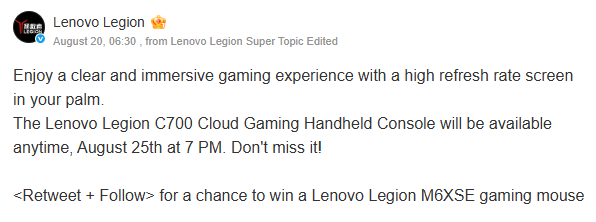
Lenovo is getting ready to launch a new lightweight handheld aimed squarely at cloud gaming and game streaming.
The company has confirmed that the Legion C700 will drop on August 25 in China. Unlike most Windows handhelds that try to run heavy games locally, this one is built for streaming and cloud play, so it can stay much more portable.
Official teasers say the C700 works with Tencent START cloud gaming. Games like Black Myth: Wukong can hit up to 60 FPS with end-to-end RTT latency under 10ms. Lenovo has also baked in its own streaming software with deep optimizations that try to feel as close as possible to playing on a regular gaming platform.
On the hardware side, it packs a 7.82″, 120Hz IPS LCD screen. The whole thing weighs about 556 grams and is only 14.9 mm thick, nearly 300 grams lighter than your typical Windows handheld. Controls include a TMR sensor joystick (the kind that resists drift), Hall-effect linear triggers for finer input, an omnidirectional D-Pad, two back buttons, and a pair of small shoulder buttons. Everything can be custom-mapped.
It runs Lenovo’s own streaming software. You get one-click streaming plus offline and high-speed streaming modes. There’s also a custom management centre that lets you pull up widgets for real-time performance monitoring and quickly tweak controller settings, fan speed, and screen options. From the performance widget you can fine-tune stick sensitivity, remap buttons, and switch game modes on the fly.
Full pricing, processor details, and the rest of the specs are expected to drop during the August 25 launch event.
Compaq, the popular PC brand that was widely known in the late 1990s, was acquired by HP in 2002. HP gradually phased out the Compaq branding from its PC business during the early 2010s. In recent years, the Compaq name has returned to the consumer electronics market through brand licensing partners, with the focus largely on budget and entry-level Android devices in emerging markets, particularly Latin America and some Asian markets.
In recent years, the brand has also entered the smartphone segment with entry-level models such as the Q6 and Q3 and has now added a new tablet to its lineup, the Compaq QTab Ultra 12.6.
Compaq QTab Ultra 12.6 specifications and features
Compaq QTab Ultra 12.6
The Compaq QTab Ultra 12.6 features a 12.6-inch InCell AMOLED display with a 1600 x 2560 pixel resolution. The large panel is aimed at entertainment as well as productivity tasks such as studying, drawing, and working with documents.
The tablet runs Android 15 and supports 5GHz Wi-Fi, Bluetooth 5.0, GPS and USB-C with OTG support. It also has an 11,000mAh battery, with Compaq claiming up to 500 hours of standby time and around six hours of continuous use. It supports 18W fast charging.
Compaq QTab Ultra 12.6
The QTab Ultra 12.6 also comes with a stylus pen and protective case in the box, while an external keyboard can be used for a more laptop-like setup. The tablet comes with 12GB of RAM and 512GB of internal storage, while a microSD card slot allows users to expand storage by up to 2TB.
The tablet is designed to be a more versatile option for users who want a large screen for media consumption and creative work. However, the product listing does not disclose the chipset or camera specifications, so those details remain unclear.
The Compaq QTab Ultra 12.6 is listed in Mexico for MXN 8,499 (~$503) and is available to purchase through Compaq’s Mexican website. As seen above, the retail package includes a protective case, stylus, power adapter, and charging cable alongside the tablet. There is currently no information about its availability in other markets.
For more daily updates, please visit our News Section.
Early sales numbers for Xiaomi’s new REDMI flagship series are in, and they’re a bit of a mixed bag. Digital blogger @RDObservation, who keeps a close eye on the Chinese smartphone market, says the REDMI K100 Pro series managed about 95% of the first-week sales volume of the older REDMI K90 series (counting launch night plus the next seven days).
Looking at the individual models tells a clearer story. The regular REDMI K100 Pro sold roughly 70% of what the K90 managed in the same period. The higher-end K100 Pro Max, on the other hand, did much better, reaching around 135% of the K90 Pro Max’s sales.
This lines up with an earlier update from Lu Weibing (Xiaomi Group Partner and President, head of the Mobile Phone Division, and General Manager of the Xiaomi brand). On August 12 he shared that the K100 Pro Max’s first-day sales hit 150% of its predecessor’s figure, based on data up to midnight on August 11.
The K100 Pro and Pro Max officially launched on the evening of August 11. The Pro runs the newer Snapdragon 8 Elite Gen 5 V chip, while the Pro Max gets the more capable 8 Elite Gen 5. Both pack big batteries (8,580mAh on the Pro and 9,070mAh on the Pro Max) and Bose-tuned speakers. After subsidies, the series starts at 3,199 yuan (~€412) in China.
The Pro Max’s stronger showing suggests buyers are especially interested in the top-spec version with the bigger battery and more powerful chip. Even though the overall series came in a little under the previous generation’s first-week numbers, the Max’s clear outperformance points to healthy demand at the premium end.
These percentages give us an early read on how the new K100 series is landing with customers. Absolute unit numbers haven’t been shared, so the relative figures are all we have for now.
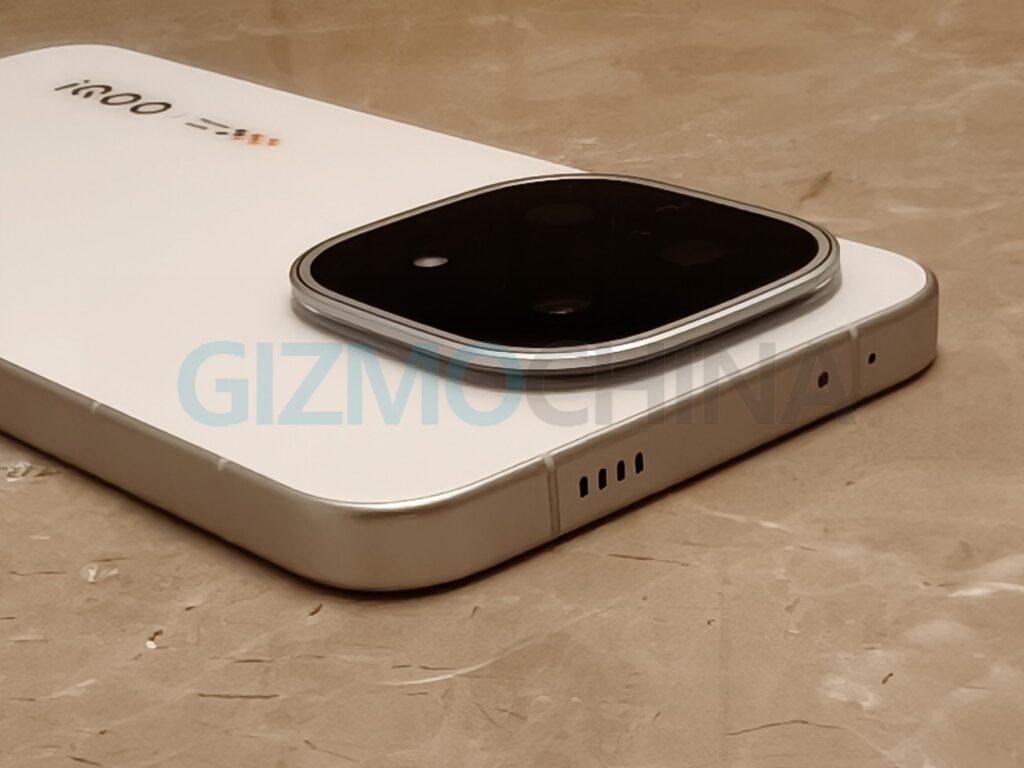
Digital Chat Station has shared a new update on iQOO’s next flagship lineup, and this time we have a launch month attached. According to the tipster, the iQOO 16 and a new iQOO mini tablet will launch in September. Both devices are expected to be among the first products to be powered by Qualcomm’s sixth-generation Snapdragon 8 Elite chipset.
Earlier this month, the same source shared details of the iQOO 16. It is expected to feature a 6.85-inch 2K+ display with a 165Hz refresh rate. The panel is said to use next-generation Samsung display technology and will have a flat design. The phone could also get a new rear design, with a small square camera module placed in the upper-left corner.
iQOO 15
The camera setup is expected to be one of the phone’s main upgrades. It reportedly features a 50MP main camera with a 1/1.3-inch sensor and an F1.68 aperture; a 50MP ultra-wide camera could join it with an F2.0 aperture, and a 50MP periscope telephoto camera with a larger 1/1.95-inch sensor and an F2.65 aperture.
iQOO’s tablet with Snapdragon 8 Elite Gen 6
At the same time, iQOO is also working on a compact performance-focused tablet. As mentioned earlier, it’s said to be powered by a sixth-gen Snapdragon 8 Elite processor, and could feature a 2.8K OLED display with a high refresh rate, slim bezels, and a metal unibody design.
The tablet is also rumored to have a square camera module on the back. Interestingly, the camera section could also house a built-in cooling fan for better thermal management.
iQOO Pad 6 Pro
Neither device has been officially confirmed by iQOO yet, so the September launch window should still be treated as a rumor.
Still, the repeated leaks about the chipset, displays, cameras, and designs suggest that both devices could be getting close to launch. More details, including the exact launch date and pricing, are likely to emerge as September gets closer.
For more daily updates, please visit our News Section.
Nothing has officially confirmed that its next major software release, Nothing OS 5.0, will be introduced on August 25th. The announcement event is set to take place at 11:00 AM BST (3:30 PM IST), where the brand is expected to reveal the release timeline and highlight major upgrades and new features.
The timing of the announcement suggests Nothing is planning a quicker release for Nothing OS 5.0. Last year, it introduced Nothing OS 4.0 on September 16th, but the new software is coming at least three weeks earlier.
Nothing might follow up with an open beta release shortly after the announcement event, much like it did last year with Nothing OS 4.0.
While we don’t know when Nothing will begin the stable rollout of Nothing OS 5.0, it’s almost certain that it will happen earlier than last year. We’re expecting an early November release.
With weeks still to go for the public rollout, you might want to check whether your Nothing phone is eligible for this major upgrade.
Which Nothing phones will get the Nothing OS 5.0 update?
Nothing Phone (4b)
Nothing Phone (4a)
Nothing Phone (4a) Pro
Nothing Phone (3)
Nothing Phone (3a)
Nothing Phone (3a) Lite
Nothing Phone (3a) Pro
Nothing Phone (2a)
Nothing Phone (2a) Plus
Nothing CMF Phone 2 Pro
Only three phones, Phone (1), Phone (2), and CMF Phone 1, haven’t made the cut to the list. They have already received the number of major Android OS updates promised at launch.
A new all-in-one PC and a handful of accessories are now part of Asus’ lineup in India, covering everyday computing, productivity, and gaming. The VM240 AiO leads the new range with a space-saving design aimed at home and office setups.
The Asus VM240 AiO features a 24-inch display with adjustable tilt support and a slim 22mm stand. It comes with up to an AMD Ryzen 5 40 processor and up to 512GB of PCIe Gen 4 SSD storage.
For video calls, the system includes a 1080p webcam with a physical privacy shutter, while dual front-facing 2W speakers with Dirac audio handle sound for meetings, music and streaming. AI-powered noise cancellation is also included to reduce background sounds during calls.
The all-in-one PC measures 22mm at its stand and is designed for everyday tasks such as browsing, learning, office work and entertainment. The VM240 AiO is priced at Rs 66,990 (~$700) in India. Asus says the AMD Ryzen 5 variant will become available around mid-September.
The Asus Jelly75 Keyboard KD201 is priced at Rs 8,999 (~$95) and features hot-swappable keys, a gasket-mounted design and three connectivity options: Bluetooth, 2.4GHz wireless and wired. It can connect with up to five devices.
The Asus Wireless Mouse MD105 costs Rs 1,799 (~$20) and supports Bluetooth 5.0 and 2.4GHz connectivity across up to three devices. It also offers 1,200, 1,600 and 2,400 DPI settings, along with an ergonomic design and near-silent clicks.
The Asus Marshmallow Keyboard and Mouse Combo CW200 costs Rs 4,199 (~$45) and supports up to three devices, multiple operating systems and a dedicated Copilot key. Meanwhile, the ROG HDMI Cable LHR60 is priced at Rs 999 (~$10), offering 48Gbps bandwidth, 8K at 60Hz and 4K at 144Hz support. It also supports HDMI VRR for compatible gaming devices, including the PS5 and Xbox Series X|S.
The VM240 AiO, MD105, CW200 and ROG HDMI Cable are available through Asus’ online and retail channels, while the Jelly75 will go on sale from August 31. Asus is also offering doorstep replacement for accessories under warranty across more than 17,000 pin codes in India.
Vivo has just hit the T5 Pro with another price hike in India, and this one is the biggest yet. The 8GB + 128GB version has jumped from ₹35,999 to ₹41,999, while the 8GB + 256GB model has gone from ₹39,999 to ₹46,999. That’s an increase of up to ₹7,000 in one go, which is more than double the size of the earlier ₹3,000 bumps.
Interestingly, as of writing, the 8GB + 128GB variant is still listed on Amazon for ₹39,999 instead of the new ₹41,999. If you’re interested, it might be worth checking quickly before the seller updates the price.
Quick recap of the journey so far: the phone launched in April at ₹29,999 (8GB + 128GB) and ₹33,999 (8GB + 256GB). It got a ₹3,000 hike in June, another ₹3,000 in July, and now this third one. The base model is now ₹12,000 more expensive than at launch, and the higher-storage version is ₹13,000 costlier.
Vivo hasn’t said anything officially about why the price is climbing again. The most likely reason is the same one hitting the whole industry right now: rising DRAM and NAND memory costs, largely driven by heavy demand from AI data centres. Previous hikes on this phone were more restrained, so this bigger jump stands out.
At these new prices, the T5 Pro has shifted into a higher bracket than the one it started in. It’s now sitting closer to phones like the iQOO Neo 10 and OnePlus Nord 6, even though the hardware itself hasn’t changed at all. Anyone who held off buying after launch is now looking at a noticeably more expensive phone for the exact same specs.
These repeated increases show how tight memory supply continues to squeeze smartphone pricing in India. Quite a few brands have made similar moves across their ranges in recent months. For the T5 Pro specifically, three hikes in a row have clearly changed its value equation compared to when it first went on sale.
So how do you put the words Robot and Phone together? It was hard for me to visualize such a product, until I saw it at MWC this year. Then I was thinking, ok a prototype then. But, now it has become a mass-produced product. This is crazy! Anyway, the phone market is kind of boring these years, no matter how this phone really performs, the HONOR Robot Phone does bring a bit of interesting stuff. We just got this one, and this article is just a first impression. Stay tuned if you want to see a comparison with maybe the DJI Pocket 4P. And since this phone is not sold globally, you can buy it from Geekwills.com.
First, let’s talk about the form factor. There are four cameras, the main camera, also the one with the gimbal, is a 200MP, 1/1.28 inch sensor, F1.6. Then there is also 200MP telephoto lens, 50MP ultrawide, and a 50MP front camera, specs are very good.
The main camera can be used as it is, tucked in the camera module, with a lens cover to protect it. But if you do want to use it this way, you must wipe the lens cover often for sure. Then if you use it with the gimbal, you need to slide the cover to the side first, otherwise there will be a notice to remind you.
When the gimbal is fully extended, it does tip the balance over a little bit. HONOR must know it, so there is a special case, a magnetic ring and a lanyard to support a better experience. The magnetic ring is better than most out there, because it can shape into more angles.
The robot camera can also do more things, such as dance with the music, or track human movement while streaming. This unlocks a lot more potential than the pocket cameras.
Image Quality
You must be very curious about the image quality and gimbal performance, right? We did some tests, just like how we use the pocket cameras.
Please check the demo comparision in the video
When I walk with the camera, the stabilization is very good. When I put it side by side with the DJI 4P, I can’t see any wobble or image shaking from HONOR. Then I run, it still performs well, only slightly less stable than the DJI.
Now when it comes to the image quality, there is a slight pity, the video specs top at 2.8K 120FPS. But if you tuck the camera away, it can shoot at 4K 120FPS. So when I compare the footage of 2.8K 30FPS and 4K 30FPS, you can clearly see the stabilization is better with the gimbal out, but the image quality and dynamic range are better from 4K 30FPS. Honestly, I wasn’t expecting this. And I hope there will be an OTA to top it up to 4K, because I see the 4K option is in gray in the settings, not completely invisible.
And since HONOR is working with ARRI on color science, there are all the cinematic tones in the collection, you can choose the best film look you want.
It’s Still A Phone
Now it is still a phone that we can use daily. In that form, it is smaller than all the Ultra and Pro-level phones. But it is indeed heavier, even heavier than the Ultra phones. With the camera module being heavier, you really have to do some brain power training.
Other than that, I still think this phone is really well built. It feels like a carefully engineered masterpiece. I think most people will like it.
Then it comes with Snapdragon 8 Elite Gen5, 12GB+512GB, or 16GB+1TB. Battery capacity 7060mAh. Despite the limited space, the battery is still big. But of course, the gimbal would consume more power, so let’s see how the battery life goes.
Summary
So this is the HONOR Robot Phone, it is truly an engineering masterpiece. There are still some limitations, but we can’t deny that it does bring some fresh stuff to the robot, pocket camera, and phone markets. We will bring you the full review soon.
Honor just dropped the official spare-parts prices for its new Robot Phone. The phone went on sale August 18 (a few days after its August 12 launch). The 12GB + 512GB version starts at 9,999 yuan (about €1,270), while the 16GB + 1TB model is 12,999 yuan (around €1,650). Barely a week later, Honor has already published the full list of replacement parts on its official channels.
Screen assembly: 979 yuan (€124) if you catch the discounted rate, or 1,379 yuan (€175) at the regular price
Battery: 319 yuan (€40)
Back cover: 379 yuan (€48)
The motherboard is where it gets painful. Replacing the one in the 12GB + 512GB model will set you back 4,599 yuan (€584). Go for the higher-end 16GB + 1TB version and you’re looking at 6,599 yuan (€838).
Camera modules vary a lot. The front camera is a relatively painless 149 yuan (€19). On the rear side, the 50 MP ultrawide is 199 yuan (€25), the 200 MP periscope telephoto jumps to 879 yuan (€112), and the 200 MP main rear camera is the real wallet-buster at 3,079 yuan (€391).
That high price for the main camera makes sense once you remember what Honor put in there. The Robot Phone is the first phone with a titanium-alloy gimbal system. It’s built with aerospace-grade titanium, is 65% smaller than typical gimbal designs, and uses the first titanium-alloy gimbal that can spin up to 360 degrees per second. Pair that with a 200MP 1/1.28″ sensor and you can see why the module costs so much to replace.
These official prices give owners a clear idea of what repairs will cost once the warranty runs out. Labor will still be extra, of course, depending on where you get it fixed. The list also drives home just how much engineering went into that camera system, and what the long-term ownership costs might look like for this rather unique flagship.
A high-end Xiaomi device has shown up in benchmark testing. It offers an early look at what is expected to become the next flagship under the Poco brand.
A Xiaomi phone with the model number 26077PC53G has appeared in the Geekbench database. According to tipster Abhishek Yadav, this is the upcoming Poco F9 Ultra. The listing shows it’s powered by Qualcomm’s Snapdragon 8 Elite Gen 5 chipset paired with an Adreno 840 GPU. In the test it scored 2,980 in single-core and 10,030 in multi-core. The phone is also confirmed to come with 16GB of RAM and run Android 16.
These numbers put it firmly among the current top performers in Android. Previous rumors suggest the Poco F9 Ultra is basically a global rebranded version of the REDMI K100 Pro Max, though with a slightly smaller 8,050mAh battery. The display is expected to be a 6.9″ AMOLED panel with a 1200 × 2608 resolution, 185Hz refresh rate, and peak brightness up to 4,500 nits.
On the camera side, the phone is rumored to pack a 200MP main sensor with optical image stabilization, a 50MP periscope telephoto, a 50MP ultrawide, and a 32MP front camera. These specs line up with the high-end positioning of recent Redmi K-series Pro Max models that usually get adapted for international markets under the Poco name.
No official announcement or pricing details have been shared yet. The Geekbench appearance does confirm that development is well advanced and that the device is already going through performance validation. Once it launches, the Poco F9 Ultra is expected to compete in the premium segment by offering flagship-level processing power, a high-refresh-rate display, and a versatile camera system at a price aimed at people who want strong performance without paying the absolute top flagship rates.
More details should emerge as the phone gets closer to its official reveal.
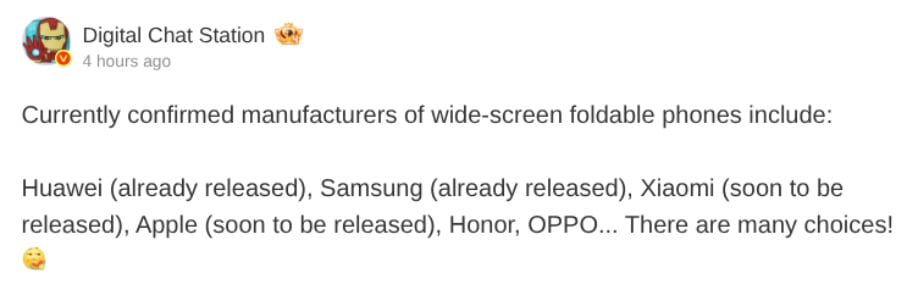
A new leak lists the phone makers currently working on wide-screen foldables — phones that open into a shorter, wider display instead of the usual tall shape. Tipster Digital Chat Station shared the details on Weibo.
Huawei is furthest along. It already sells the Pura X, which folds sideways into a wide display. It later added the Pura X Max, a larger version with newer hardware.
Samsung has also released a wide foldable. The redesigned Galaxy Z Fold 8 has a shorter, wider shape; meanwhile, the company is selling the tall book-style foldable under Z Fold 8 Ultra branding.
Xiaomi hasn’t launched its version yet. But the company is working on the Xiaomi Mix Fold 5, and leaked images in fact show a 4:3 display, wider than the company’s past foldables. The device will ship with HyperOS 4 out of the box.
Apple is also preparing to enter the category, with its first model being the wide foldable itself. According to previous reports, the first foldable iPhone will feature a 7.6-inch inner screen and a smaller cover display, much like the same wide, book-style design as its rivals. The launch is expected around September.
Huawei Pura X Max
Reportedly, Honor and Oppo are also working on wide-screen foldables. Honor’s foldable is said to be in testing with a Snapdragon 8 Elite Gen 6 chip and a 7,000mAh battery. Oppo’s Find N7 is tipped for a Q1 2027 launch with a 6,500mAh battery.
Word on the street is that Vivo is still to explore this category.
None of these details are confirmed, and launch plans can change. But the leak shows how many companies are now working on this design. What started with one Huawei phone has turned into a format most major brands are building toward.
For more daily updates, please visit our News Section.
According to the leak, the chip with model number SM8950 will be called the Snapdragon 8 Elite Gen 6. Meanwhile, the other chip, SM8975, will be called the Snapdragon 8 Elite Extreme Gen 6.
Qualcomm itself confirmed dual flagship chips for 2026, but their actual names are still under wraps from the maker. Meanwhile, previous leaks attributed the higher-tier version as the Snapdragon 8 Elite Gen 6 Pro.
Nonetheless, both chips are expected to use TSMC’s 2nm process, Qualcomm’s first flagship mobile chip built on this node. The previous generation, the Snapdragon 8 Elite Gen 5, used a 3nm process. A smaller node usually means better performance and lower power use.
Snapdragon 8 Elite Gen 6 series specifications (rumored)
As for the core layout, the standard 8 Elite Gen 6 is expected to use 2+3+3 Oryon cores, along with a shared 16MB L2 cache and an Adreno 845 GPU. The GPU is said to include a six-slice design, 12MB of GMEM, and 6MB of system-level cache, plus support for LPDDR5X memory and UFS 5.0 storage.
On the other hand, the big brother could feature an Adreno 850 GPU carrying 18MB of dedicated GMEM. That’s roughly a 50% jump in GPU bus width and memory capacity over the Gen 5. It’s also rumored to support LPDDR6 memory alongside LPDDR5X, and some reports point to peak clock speeds near 5GHz, which would be a first for a smartphone chip.
Qualcomm has already confirmed that this year’s Snapdragon Summit will take place from September 22nd to 24th in Hawaii, where the chips are expected to be unveiled in full. That’s earlier than the event’s usual October date.
Releasing two separate flagship chips is a change for Qualcomm, which has usually released just one main flagship SoC each year. A standard option and a more powerful variant could give phone brands more room to set devices apart by price and performance.
The Snapdragon Summit is still about a month away, so more leaks are likely before then. Details on the camera systems, GPU, and CPU core layout for both chips could surface in the coming weeks, ahead of Qualcomm’s official announcement.
For more daily updates, please visit our News Section.
We use cookies on our website to give you the most relevant experience by remembering your preferences and repeat visits. By clicking “Accept”, you consent to the use of ALL the cookies.
This website uses cookies to improve your experience while you navigate through the website. Out of these, the cookies that are categorized as necessary are stored on your browser as they are essential for the working of basic functionalities of the website. We also use third-party cookies that help us analyze and understand how you use this website. These cookies will be stored in your browser only with your consent. You also have the option to opt-out of these cookies. But opting out of some of these cookies may affect your browsing experience.
Necessary cookies are absolutely essential for the website to function properly. This category only includes cookies that ensures basic functionalities and security features of the website. These cookies do not store any personal information.
Any cookies that may not be particularly necessary for the website to function and is used specifically to collect user personal data via analytics, ads, other embedded contents are termed as non-necessary cookies. It is mandatory to procure user consent prior to running these cookies on your website.







 The 4,240mAh battery is the argument. LandAirSea rates it at three to four times the runtime of their own 54, and because the unit sleeps when it hasn’t moved for a while, a trailer parked for three weeks isn’t burning through anything. IP67, strong internal magnet, roughly six feet of positional accuracy. There’s an unconditional lifetime warranty on defects, which almost nobody in this category offers.
Plans start at $9.95 a month, but only if you prepay two years up front. Month-to-month is $19.95. Here’s the thing about that spread: the cheap rate is $119 a year and the flexible rate is $239, so the prepay decision costs more than the tracker does. Work out whether you’ll still want this in 2028 before you pick.
The 4,240mAh battery is the argument. LandAirSea rates it at three to four times the runtime of their own 54, and because the unit sleeps when it hasn’t moved for a while, a trailer parked for three weeks isn’t burning through anything. IP67, strong internal magnet, roughly six feet of positional accuracy. There’s an unconditional lifetime warranty on defects, which almost nobody in this category offers.
Plans start at $9.95 a month, but only if you prepay two years up front. Month-to-month is $19.95. Here’s the thing about that spread: the cheap rate is $119 a year and the flexible rate is $239, so the prepay decision costs more than the tracker does. Work out whether you’ll still want this in 2028 before you pick.
 This one does something the others don’t. It can remotely cut the starter circuit so a stolen vehicle doesn’t restart once it’s switched off. For a work van or anything left at a job site overnight, thats a genuinely different proposition from knowing where your van went.
The drawback: the kill switch means hardwiring, and hardwiring means a proper installation. This isnt the magnetic-box-under-the-bumper experience.
This one does something the others don’t. It can remotely cut the starter circuit so a stolen vehicle doesn’t restart once it’s switched off. For a work van or anything left at a job site overnight, thats a genuinely different proposition from knowing where your van went.
The drawback: the kill switch means hardwiring, and hardwiring means a proper installation. This isnt the magnetic-box-under-the-bumper experience.
 Apple opened the Find My network to other manufacturers, and UGREEN’s FineTrack Air tags sit on it exactly the way an AirTag does. They come in packs of four, the cell is userreplaceable and rated at 2 years, and the per tag cost undercuts Apple by a wide margin. If you want a tag on every suitcase rather than one on the bag you care about, this is the cheaper route to the same map.
We covered the wallet-card version of the FineTrack line
Apple opened the Find My network to other manufacturers, and UGREEN’s FineTrack Air tags sit on it exactly the way an AirTag does. They come in packs of four, the cell is userreplaceable and rated at 2 years, and the per tag cost undercuts Apple by a wide margin. If you want a tag on every suitcase rather than one on the bag you care about, this is the cheaper route to the same map.
We covered the wallet-card version of the FineTrack line  $29.99 for one, $99.99 for four. It has UWB precision finding like the AirTag, a metal loop moulded into the body so you don’t need to buy a case for it, and SmartThings Find behind it at over 300 million Galaxy devices.
Network density is strongest across Asia, where Galaxy share is highest, and that’s a real advantage if you fly those routes.
The drawback: Samsung phones only. Not Android generally. A Pixel or a OnePlus can’t use it as a daily tracker, which makes it a poor gift unless you know exactly what the recipient carries.
$29.99 for one, $99.99 for four. It has UWB precision finding like the AirTag, a metal loop moulded into the body so you don’t need to buy a case for it, and SmartThings Find behind it at over 300 million Galaxy devices.
Network density is strongest across Asia, where Galaxy share is highest, and that’s a real advantage if you fly those routes.
The drawback: Samsung phones only. Not Android generally. A Pixel or a OnePlus can’t use it as a daily tracker, which makes it a poor gift unless you know exactly what the recipient carries.
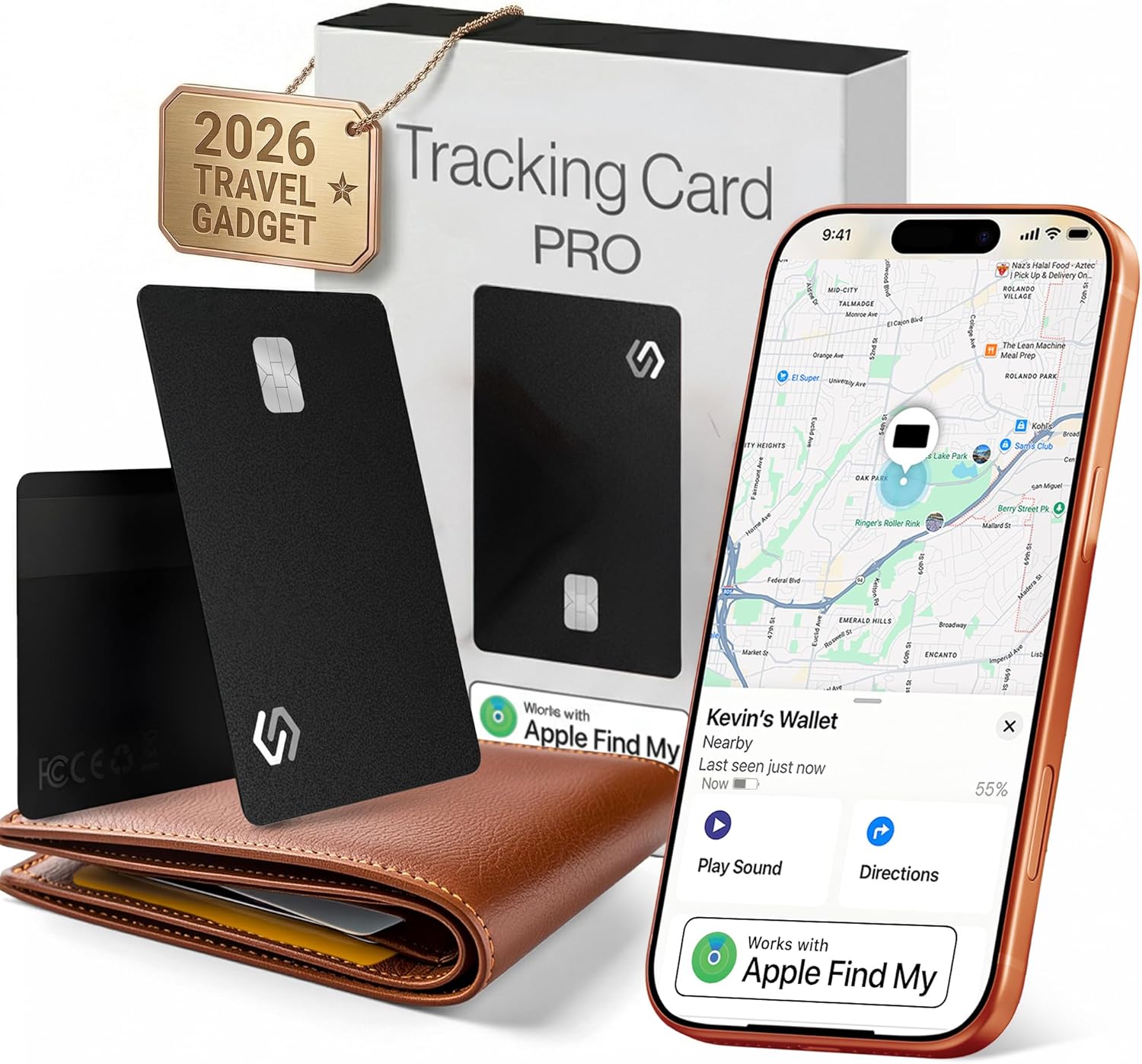 A wallet needs something card-shaped. The
  Around $50 for the hardware and $5 a month if you commit annually, rising to about $10 if you don’t. Live tracking updates every two to three seconds and it clips onto a collar you already own rather than replacing it.
Over three years the total cost lands well under the premium collar systems, which is the comparison most buyers never actually run.
The drawback: it’s a lump on the collar. On a cat or a very small dog it’s noticeable in a way the collar-integrated options aren’t.
Around $50 for the hardware and $5 a month if you commit annually, rising to about $10 if you don’t. Live tracking updates every two to three seconds and it clips onto a collar you already own rather than replacing it.
Over three years the total cost lands well under the premium collar systems, which is the comparison most buyers never actually run.
The drawback: it’s a lump on the collar. On a cat or a very small dog it’s noticeable in a way the collar-integrated options aren’t.