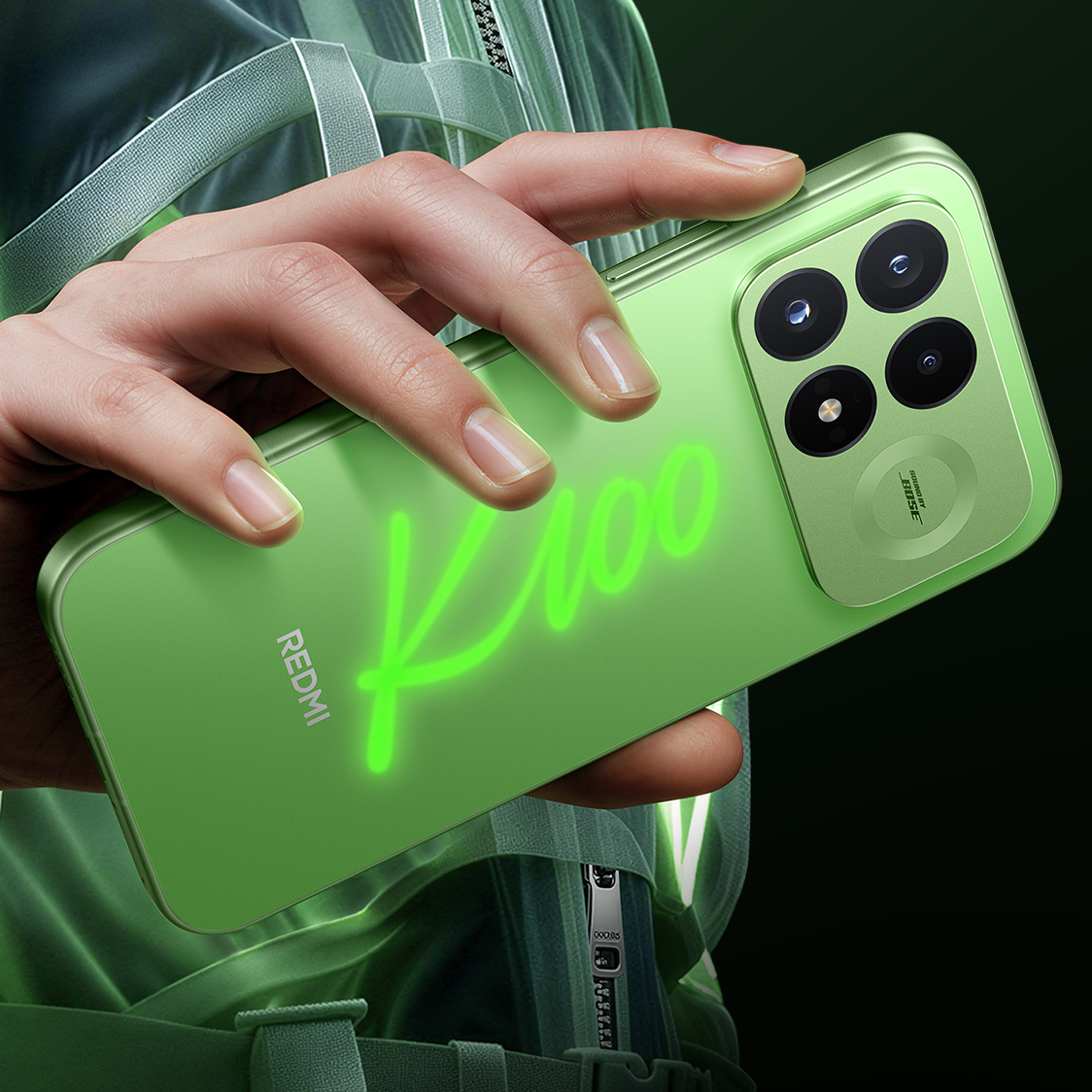
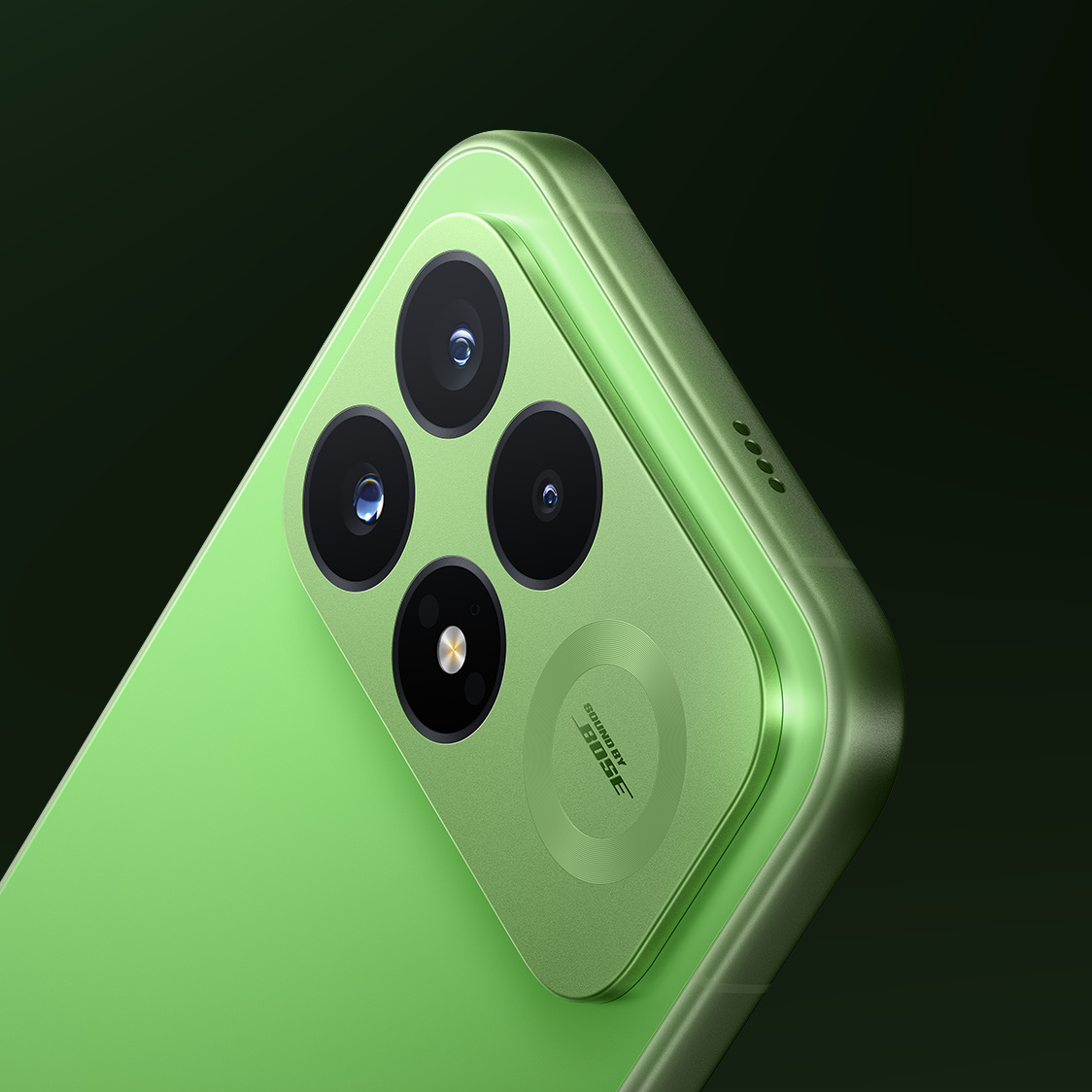
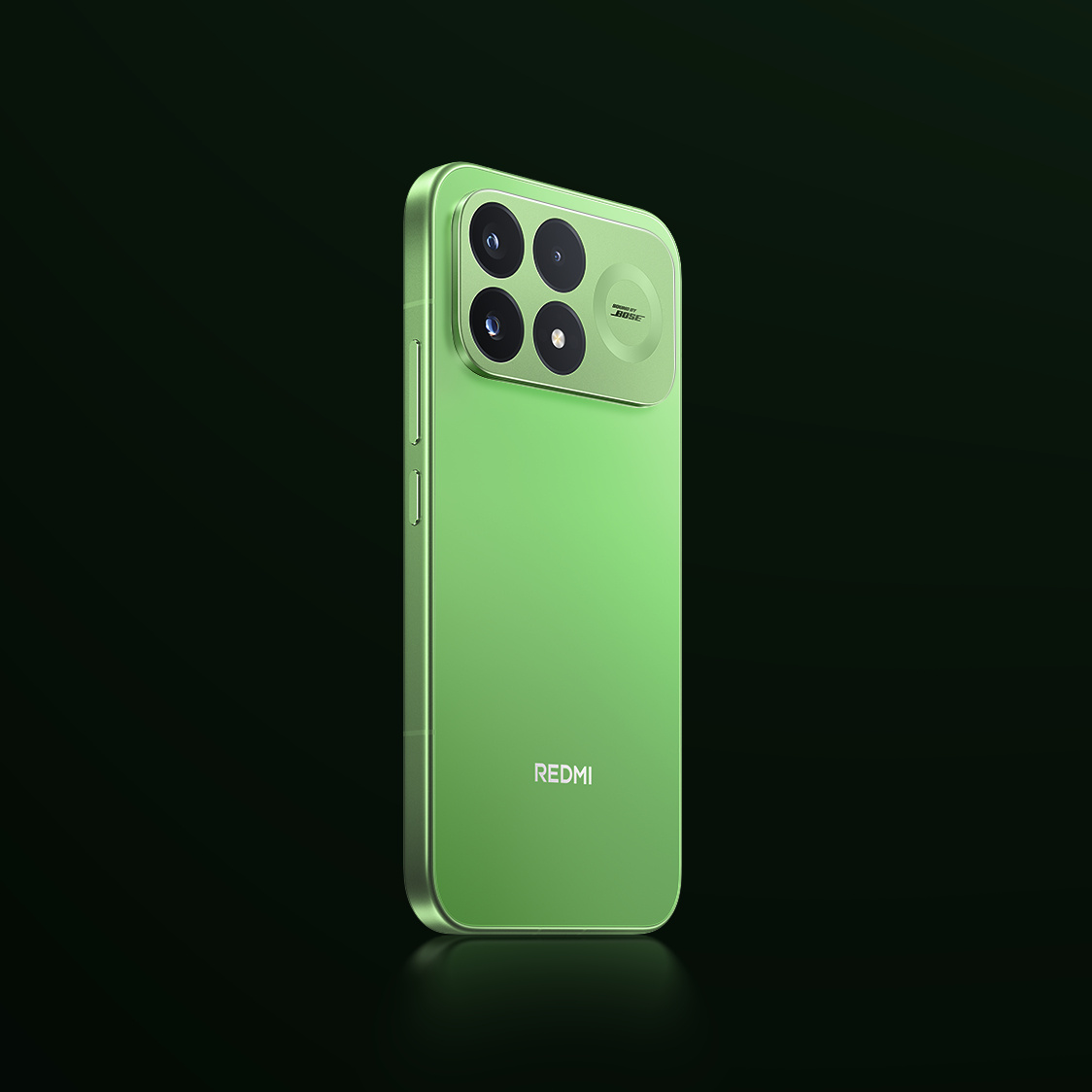
A new leak suggests Redmi is working on multiple smartphones with 10,000mAh batteries. The information comes from tipster Digital Chat Station, who claims Redmi currently has three different phones in testing with batteries of this size.
While that number might sound extreme, it’s no longer unprecedented. Devices like the Honor Power 2 and Realme P4 Power already have cells this big.
What is changing is how comfortable brands seem to be with the idea. More companies are starting to treat ultra-large batteries as a viable selling point for new phones. Vivo has already teased its first entry, the Vivo Y600 Pro, and its sub-brand iQOO is reportedly working on one as well.
For Redmi, one of the rumored devices is said to belong to the Redmi Note 17 series, likely the Redmi Note 17 Pro Max.
The global model might feature a smaller cell
However, a recent report claims the global version of the Redmi Note 17 Pro Max may feature a slightly smaller 9,210mAh battery, possibly to comply with EU safety regulations. The handset is still expected to support 100W fast charging. This would be necessary to make a battery of this size practical for daily use.
The same model is also said to feature a 200-megapixel Samsung HP5 primary camera and an 8-megapixel OmniVision OV8F10 ultra-wide sensor. For selfies, it is expected to include a 32-megapixel Samsung S5KKDS front-facing camera.
Honor Power 2 Battery Size
Other hardware details include a metal frame, an optical in-display fingerprint sensor, and a 1.5K LTPS display with a high refresh rate.
The devices are still in testing, so nothing is confirmed yet. But taken together with what we’re already seeing from brands like Honor and Realme, it’s clear that 10,000mAh is no longer an outlier; it’s becoming part of the conversation.
For more daily updates, please visit our News Section.
Infinix GT 50 Pro is now official, with Infinix pushing it as a gaming-first device and the next step after the GT 30 Pro. The phone is also being positioned as the base of a wider GT Ecosystem, which includes accessories built around mobile gaming.
At its core is the MediaTek Dimensity 8400 Ultimate chip, built on a 4nm process and clocked up to 3.25GHz. It is paired with a Mali-G720 MC6 GPU, 12GB LPDDR5X RAM, and up to 512GB of UFS 4.1 storage. Infinix has also added its own N1 network chip to stabilise connections and reduce lag during online gameplay. The device runs Android 16 with XOS 16, with three years of OS updates and five years of security support.
One of the more noticeable additions is the set of shoulder triggers. These pressure-sensitive buttons support light and heavy presses, along with sliding gestures. Each trigger can be mapped to four different controls, and sensitivity can be adjusted across 10 levels. Outside of games, they double up as shortcuts for actions like screenshots or screen recording.
The phone features a 6.78-inch AMOLED display with a 1.5K resolution of 1208 x 2644 pixels and a 144Hz refresh rate. It also supports 330Hz touch sampling and up to 2800Hz instant touch sampling. Brightness peaks at 4500 nits, and the panel is protected by Gorilla Glass 7i.
Cooling is handled through a liquid system that uses a micro-pump and ceramic heat pump to circulate coolant at 6.5ml per minute. There is also an optional external cooler, the GT Magcharge Cooler 2.0, which adds 12W thermoelectric cooling and supports wireless bypass charging to reduce heat during use.
On the camera side, the phone includes a 50MP main sensor with OIS and EIS, an 8MP ultra-wide lens, and a 13MP front camera. All cameras support up to 4K 60fps video recording.
Other features include stereo speakers with Dolby Atmos, an in-display fingerprint sensor, IR blaster, IP64 rating, and a 6500mAh battery with 45W wired, 30W wireless, and 10W reverse charging.
Pricing & availability
The phone comes in Black Abyss, Red Blaze, and Silver Glacier. Pricing starts at Rp 6,999,000 ($406) for the 256GB model and goes up to Rp 7,999,000 ($464) for the 512GB version. It will go on sale in Indonesia from April 25.
For more daily updates, please visit our News Section.
OnePlus has started revealing key details about the upcoming OnePlus Ace 6 Ultra ahead of its official debut in China on April 28. The latest teasers focus heavily on battery endurance, charging speeds and gaming performance, hinting that the device is being positioned as a serious option for power users and mobile gamers.
Massive battery and fast charging focus
OnePlus Ace 6 Ultra battery
The OnePlus Ace 6 Ultra is confirmed to feature a huge 8,600mAh Glacier Battery (silicon-carbon) paired with 120W fast charging support. According to the brand, the phone is designed to deliver strong endurance even during demanding gaming sessions. OnePlus claims the device can deliver up to 7.44 hours of continuous gaming at 165Hz high frame rate settings on a single charge. The company also says that charging the phone for just 10 minutes can provide enough power for around two hours of gaming.
The teasers also reveal that the smartphone will introduce Oppo’s self-developed Glacier Battery energy chip for the first time. OnePlus China President Li Jie said the chip improves power efficiency and low battery management, allowing the phone to maintain better stability when the battery percentage drops.
Compared to phones that do not use this chip, OnePlus claims it can deliver battery endurance equivalent to an additional 200mAh capacity under regular temperatures. In extreme cold conditions of around -20°C, the system is said to release power equivalent to an extra 700mAh capacity. The chip is also expected to help extend battery lifespan, with OnePlus claiming up to five years of long-term durability.
Apart from the battery-focused upgrades, the OnePlus Ace 6 Ultra is expected to target gamers with several flagship-level features. The device is confirmed to use the MediaTek Dimensity 9500 chipset and a 6.78-inch 165Hz OLED display developed jointly with BOE. OnePlus claims this is the best display ever used in the Ace series in terms of gaming and visual quality.
The shared promotional material also highlights features such as a 3D ultrasonic fingerprint scanner, dual 1115W symmetrical speakers and IP66, IP68, IP69 and IP69K water and dust resistance ratings. The phone is also said to feature Oppo Crystal Shield glass protection with improved scratch and drop resistance.
Previous reports have revealed that it will ship with up to 16GB of RAM and 1TB of storage and will be available in Metal Storm and Ace Awakening shades. For photography, it Is expected to feature a 16-megapixel front camera and a 50-megapixel (main) + 8-megapixel (ultra-wide) dual-camera setup.
For more daily updates, please visit our News Section.
Honor used its recent gaming-focused launch event to introduce a new high-power charger alongside its laptops, including the Honor WIN H9. The accessory is called the Honor WIN 360W GaN Adapter, and it’s priced at 499 yuan (~ $75) in China.
The adapter is designed primarily for Honor’s WIN H9 gaming laptop, but it can likely be used for other compatible gaming laptops too. The thing to note is that it uses a traditional DC barrel connector instead of USB-C. There are no official converters from Honor itself, but you should be able to find one easily on a marketplace.
Honor WIN 360W GaN Adapter Specifications
At 360W, this sits on the higher end of laptop charging solutions. What stands out more is how Honor is trying to make that power more manageable in terms of size and weight.
The adapter measures 85 x 85 x 33mm, which is relatively compact for something delivering this level of output. And it weighs around 420 grams.
Honor says the charger uses a mix of GaN (gallium nitride) and SiC (silicon carbide) materials. These have become more common in recent years, especially in higher-end chargers, because they allow for better efficiency and heat management without increasing size.
The company also mentions “automotive-grade technology,” although it hasn’t gone into detail about what that specifically involves. It likely refers to durability or thermal handling, which are important for devices that run under heavy loads for extended periods.
Another detail is that Honor is selling the adapter separately, rather than limiting it to bundled laptop purchases. This makes it useful for people who want a replacement charger or need an additional one for travel, assuming it is compatible with their device.
The Vivo V70 is one of the most popular premium mid-range smartphones right now, offering an excellent triple camera setup, a bright screen, and reliable performance. It also features a massive 6,500mAh battery with 90W fast charging support. Overall, it’s a solid phone in the INR 50-60K price segment. However, the Vivo V70 is far from being the only showstopper in this price segment. There are compelling options that can go head-to-head with this Vivo phone.
The Oppo Reno 14 Pro features a more robust camera than the Vivo V70. Its triple rear camera setup includes a 50MP primary sensor, a 50MP periscope lens with a higher 3.5x optical zoom, and a 50MP ultrawide sensor. The Oppo phone primarily benefits from a much higher resolution ultrawide camera and better optical zoom.
The Reno 14 Pro also delivers faster performance as the Dimensity 8450 chipset outperforms the Vivo V70’s Snapdragon 7 Gen 4. The smartphone also features a larger screen and supports 50W wireless charging.
The Vivo X200T has an upper hand in almost every aspect compared to the Vivo V70. However, it’s priced a little higher at INR 59,999, but with ongoing offers, you can easily bring the price down to around INR 52,000, making it a no-brainer choice over the V70.
The smartphone features a much better rear camera setup, including a 50MP primary sensor, a 50MP periscope lens with 3x optical zoom, and a 50MP ultrawide unit with a wider field of view. It’s been developed in partnership with Zeiss to deliver more accurate colors, optical precision, and specialized portrait effects.
Furthermore, the Vivo X200T delivers significantly higher performance and power efficiency, thanks to the powerful Dimensity 9400 Plus SoC. The device also excels in screen size and Wi-Fi capabilities, and it supports wireless charging. Plus, the X200T also promises an additional major OS upgrade.
If performance and battery backup are your primary concerns, the OnePlus 15R delivers big. It’s equipped with a flagship-grade Snapdragon 8 Gen 5 chipset that outperforms the Snapdragon 7 Gen 4 in the Vivo V70 by a significant margin. Plus, its Oryon cores are also more power efficient.
The bigger screen on the OnePlus 15R makes it more appealing for media consumption, and to ensure it lasts longer, there’s a massive 7,400mAh battery beneath, which can easily last the entire day, even on heavy usage. The camera remains a weak link, as the device lacks a telephoto shooter.
iQOO smartphones are designed to unlock maximum performance, and the iQOO 15R is no different. It’s likely to perform better than the OnePlus 15R, even though both phones share the same Snapdragon 8 Gen 5 chipset. Obviously, both phones deliver superior performance to the Vivo V70.
The iQOO 15R packs a 7,600 mAh battery and supports 100W wired charging, both of which are better than the V70. The inclusion of Wi-Fi and Bluetooth v6.0 makes it more future-proof for connectivity, but, like the OnePlus 15R, the camera may be underwhelming. It also lacks a telephoto shooter, and the selfie camera has a lower resolution, too.
While the Galaxy S25 FE’s spec sheet doesn’t outperform the Vivo V70’s, the smartphone maintains an edge in several areas that matter. Also, it’s the only solid non-Chinese device in this price segment.
Unlike the Vivo V70, the Galaxy S25 FE has an LTPO panel that can save some power, and the screen is also bigger. Software is a key advantage of the Galaxy device, as it promises three additional major OS upgrades, while also offering a cleaner OS experience. Performance-wise, the Samsung phone has an edge as the Exynos 2400 is snappier than the 7 Gen 4 on the Vivo V70.
The S25 FE features three rear cameras: a 50MP primary sensor, an 8MP telephoto shooter with 3x optical zoom, and a 12MP ultrawide shooter. The selfie camera is 12MP. The battery capacity is smaller, but it’s offset by adding support for wireless charging.
Motorola looks set to expand its Moto G lineup once again. Just three months after the Moto G67 and G77 launched, early signs of a new model, the Moto G87, have started to show up online.
Schematics of the phone have appeared on official support pages, offering a look at the design and a few early details. A European retailer has also listed the device, revealing some more information and giving us a rough idea of what to expect.
The phone supports expandable storage via a hybrid SIM slot, with microSD support going up to 2TB. That is a big plus for users who work with large media files.
More concrete information comes from an Italian retailer, Epto, which has listed the Moto G87 in two variants, both with 8GB RAM and 256GB storage. The listed price is €406.89. That places it slightly above the Moto G77 and G67, suggesting it will sit somewhere in between or just above them in the lineup.
Color options also seem to be a focus this time. The retailer listing mentions Pantone Overture Gray and Pantone Blue Atoll. A firmware leak hints at more finishes, including Arctic Seal, Black Olive, Nile, and Shaded Spruce, so there could be a wider range at launch.
Under the hood, the Moto G87 carries the codename “Naples” and is tied to the MT6835 platform. That points to a MediaTek Dimensity 6000 series chip, though the exact version is still unclear. Based on previous models, performance should land in familiar mid-range territory.
There is still no word on display, cameras, or battery, but the early details suggest a focus on practicality. With official pages already live and retail listings in place, a full launch does not seem too far off.
Xiaomi did not launch a horizontally foldable smartphone in 2025, but speculation suggests the company could introduce one this year. At present, there is no clarity on whether the device will be called the Xiaomi 17 Fold, Xiaomi Mix Fold 5, or Xiaomi Mix Fold 6. According to a report by Ximitime, a key detail about the upcoming foldable phone has surfaced through Mi Code.
Xiaomi 17 Fold’s chipset details surface online
Xiaomi MIx Fold 4
According to the report, an upcoming Xiaomi device internally designated as Q18 and carrying the codename “Lhasa” has appeared in Mi Code’s database. The report further claims that the device with model number 2608BPX34C, which previously surfaced in the IMEI database, could be linked to the Lhasa / Q18 device.
What makes this listing interesting is that the device has reportedly been spotted alongside references to the Xring O3 chipset, which is believed to be Xiaomi’s upcoming in-house processor. The Xring O3 chip is expected to succeed the first-generation Xring O1 chipset, which powered the Xiaomi 15S Pro in 2025.
Reports from May had suggested that the launch of the Xiaomi 17 Fold had been delayed. Based on current speculation, the device could now break cover sometime in early July.
Xiaomi 17 Max specifications (rumored)
At the same time, Xiaomi is also said to be working on the Xiaomi 17 Max, which may launch in China in May. According to reports, the device could feature a 6.9-inch flat OLED display with a 1.5K resolution and may be powered by the Snapdragon 8 Elite Gen 5 chipset.
The Xiaomi 17 Max is expected to arrive with up to 16GB of LPDDR5X RAM and up to 1TB of UFS 4.1 storage. It is also tipped to pack a battery with around 8,000mAh capacity along with support for 100W wired and 50W wireless charging.
For photography, it will have a 50-megapixel front camera, and a 200-megapixel Samsung HPE main camera, a 50-megapixel ultra-wide lens, and a 50-megapixel periscope telephoto camera on the backAdditional expected features include an X-axis linear motor and a dual symmetric 1115 speaker setup.
For more daily updates, please visit our News Section.
Back in March, Xiaomi introduced its MiMo-V2-TTS speech synthesis model, which focuses on detailed control over tone, emotion, and speaking style. The company said at the time that it could handle everything from natural conversations to singing, with support for multiple Chinese dialects.
Now, Xiaomi is updating that work with a system that covers both how machines speak and how they listen. The company has announced the MiMo-V2.5-TTS series alongside MiMo-V2.5-ASR, together as a “full-link” voice model setup for what it calls the agent era.
The output models
On the synthesis side, the MiMo-V2.5-TTS series includes three different models, all available through Xiaomi’s MiMo Open Platform for a limited time at no cost. Each model shares a common framework for style instructions, audio tag controls, and text understanding, but they target slightly different use cases.
The base MiMo-V2.5-TTS model comes with a set of prebuilt voices and allows detailed adjustments to speech rate, tone, and emotion.
Meanwhile, the MiMo-V2.5-TTS-VoiceDesign lets users generate entirely new voice timbres using just a short input sentence.
The third option, MiMo-V2.5-TTS-VoiceClone, is about reproducing a specific voice with a small number of samples, while maintaining consistency across different styles and instructions.
A big part of Xiaomi’s pitch here is how the model interprets instructions. Instead of relying on structured parameters, users can describe how a voice should sound in plain language, almost like directing a voice actor. For more complex use cases, like game characters or audio dramas, the system also supports layered script-style inputs where character traits, scenes, and dialogue can be adjusted independently without breaking consistency.
The models also introduce inline audio tags, which allow users to control emotion or delivery at specific points within a sentence. These tags can be mixed within the same text and are claimed to work across both Chinese and English.
The input model
On the input side, Xiaomi is releasing MiMo-V2.5-ASR as an open-source model. According to Xiaomi, the speech recognition system here is designed to handle less predictable, real-world scenarios, including bilingual conversations, regional dialects, and noisy environments.
The ASR model supports several Chinese dialects such as Wu, Cantonese, Minnan, and Sichuanese, while also performing well in complex English scenarios. It can switch between Chinese and English without requiring preset language tags, and it’s capable of recognizing song lyrics even when music and vocals are mixed together.
The model also targets situations with multiple speakers, such as meetings, and can transcribe overlapping conversations with a level of separation. Xiaomi says it can maintain accuracy even in high-noise environments or when dealing with far-field audio pickups.
Another detail here is how the system handles punctuation and structure. Instead of outputting raw text that needs cleanup, MiMo-V2.5-ASR includes native punctuation based on both phonetics and context. As a result, the transcripts are usable without the need for much post-processing.
In terms of performance, Xiaomi claims the model reaches state-of-the-art or near state-of-the-art results across several benchmarks, including bilingual recognition, dialect handling, and code-switching scenarios.
The TTS models are accessible through Xiaomi’s platform and can also be tested in MiMo Studio, while the ASR model is available with open-source weights and code for direct use or further customization.
For more daily updates, please visit our News Section.
Honor has introduced refreshed mid-range laptops for 2026: the Honor Notebook X14 Plus and X16 Plus. At the center of both machines is Intel Core Ultra 5 325, which Honor says can deliver up to 52W of performance. This is paired with 16GB of LPDDR5X RAM clocked at 7467 MT/s and a 1TB SSD, plus an extra slot for storage expansion.
Moreover, both the X14 Plus and X16 Plus pack an 80Wh battery, with a claimed runtime of up to 14 hours. Charging is handled via a 65W adapter, and there’s also support for 60W reverse wired charging.
Size is the primary difference
The differences between the two models mostly come down to size and display options. The X14 Plus is the more compact option, weighing around 1.27kg and measuring 14.9mm thick. It comes with a 14-inch display that can go up to a 2880×1800 resolution with a 120Hz refresh rate, while a more basic FHD panel is also available.
The X16 Plus, on the other hand, stretches things out with a 16-inch panel and a slightly heavier 1.64kg body. Its higher-end configuration offers a 2560×1600 resolution at 120Hz. Both laptops use so-called “eye-protection” LCD panels, which typically means reduced blue light and flicker controls.
Despite the size difference, the overall design language is quite similar. Both models use a metal chassis and keep things relatively thin, at 14.9mm for the X14 Plus and 15.9mm for the X16 Plus. The keyboards are full-size and backlit, with slightly deeper key travel on the larger model (1.6mm vs 1.5mm).
The I/O option includes two USB-C 3.2 Gen2 ports, two USB-A ports, an HDMI 2.1 port, and a 3.5mm headphone jack. Wireless connectivity includes Wi-Fi 6E, Bluetooth 5.1, and even NFC support.
The Honor Notebook X14 Plus and X16 2026 also have dual speakers, dual microphones, a fingerprint sensor integrated into the power button, and a 720p webcam.
Price and Availability
In terms of price, it starts at 5,999 yuan (~ $878) for the X14 Plus with a Full HD display, with availability beginning April 30. A higher-resolution version will follow in May at 6,499 yuan (~ $952).
The X16 Plus starts slightly higher at 6,199 yuan (~ $910), with its higher-end variant priced at 6,699 yuan (~ $980) and launching earlier on April 30.
For more daily updates, please visit our News Section.
iQOO is reportedly working on a new flagship phone powered by the Dimensity 9500 chip for the Chinese market. While there is no clarity on the phone’s final moniker, it is said that it could be an iQOO 15 series device. Today, reliable tipster Digital Chat Station shared a new Weibo post revealing details about the alleged device.
Key details leaked
According to the leak, the device could be the final sub-brand model in its lineup to adopt the new flagship processor. While it appears to be a Neo 11 series phone, people in the comments section are claiming it could launch as the iQOO 15T. But a recent report claimed that the iQOO 15T will have a built-in cooling fan, but DCS has denied the inclusion of this feature on the iQOO phone that he leaked today. Therefore, readers are advised to wait for further reports for more details about the device.
According to the leak, the device could be the final sub-brand model in its lineup to adopt the new flagship processor. While it appears to be a Neo 11 series phone, some users in the comments section speculate that it could launch as the iQOO 15T. However, a recent report claimed that the iQOO 15T would feature a built-in cooling fan, a detail that Digital Chat Station has reportedly denied for the device mentioned in today’s leak. Therefore, readers are advised to wait for further reports for more clarity about the handset.
On the front, the device is expected to feature a 6.83-inch flat OLED panel with a 2K resolution and an ultrasonic in-screen fingerprint sensor. It is also tipped to pack a massive single-cell battery with a rated capacity of 7,845mAh, which could be marketed as an 8,000mAh battery.
For durability, the device is expected to feature a metal middle frame and carry IP68 and IP69 ratings for dust and water resistance. The tipster also claims the phone may include a 200-megapixel primary camera, although the camera specifications are reportedly not finalized yet. The handset is currently expected to debut in May.
Oppo is reportedly preparing to enter the handheld smart imaging device category with a new gimbal camera project. According to a report by China’s Blue Whale Media, the company has internally started work on a dedicated product that could take on popular pocket-sized cameras from brands already active in this segment.
Oppo’s Fuyao gimbal project enters development
Oppo gimbal camera (AI-generated image)
Citing people familiar with the matter, the publication reported that Oppo has internally approved a handheld gimbal camera project carrying the codename “Fuyao”. The product is expected to launch in the fourth quarter of this year.
Reports suggest that the Find X10 series will debut in October, and there’s a possibility that its first gimbal could be unveiled at the same event. The company is said to be investing significant resources into the category, with its imaging expertise believed to be one of the key reasons behind the move.
The report also claims that other smartphone brands are preparing similar products. vivo is said to have started development of its own handheld gimbal camera project late last year, and the first model has reportedly already completed the prototype moulding stage. Meanwhile, Honor has already entered the category through its ecosystem platform. At the same time, Vivo is also said to be working on a vlogging camera, which may debut with Vivo X500 series in September.
Industry analysts believe smartphone makers entering this market could change the competitive landscape dominated by brands such as DJI and Insta360. Their advantage lies in imaging algorithms, AI-driven processing, supply chain control and strong offline retail presence. These strengths may help them bring advanced camera experiences into compact handheld products at competitive pricing.
Market data from IDC reportedly shows that global shipments of handheld smart cameras, including gimbal, action and panoramic cameras, reached 16.65 million units in 2025. The segment also recorded strong annual growth, with gimbal cameras emerging as the fastest-growing category. DJI reportedly held around 62 per cent market share, while Insta360 accounted for nearly 12 per cent.
For more daily updates, please visit our News Section.
Poco has launched the Poco C81 and Poco C81x in India as its latest budget-focused 4G smartphones. The new models bring upgrades in areas such as display refresh rate, battery capacity, and software experience while targeting users looking for affordable everyday smartphones with long-term software support.
Poco C81, C81x specifications and features
Poco C81
The Poco C81 features a 6.9-inch HD+ display, while the Poco C81x comes with a slightly smaller 6.88-inch HD+ screen. Both panels support a 120Hz refresh rate for smoother scrolling and animations. The displays also include TÜV Rheinland certifications for reduced blue light and flicker protection. Poco has also added Wet Touch Technology 2.0, which is designed to improve touch response even when fingers are damp or oily.
Powering both devices is the Unisoc T7250 octa-core processor paired with LPDDR4X RAM and UFS 2.2 storage. The Poco C81 is available with 4GB RAM and 64GB storage, while the C81X comes with 3GB RAM and 64GB storage. Storage can also be expanded up to 2TB via microSD card. The Poco C81 runs Android 16 with Xiaomi HyperOS 3, whereas the C81X ships with Android 15-based HyperOS 2.
Poco C81x
For photography, both smartphones include a 13-megapixel rear camera system and an 8-megapixel front camera. The camera app supports features such as HDR, Night Mode, AI Sky, portrait effects, and document scanning. Both phones can also record 1080p videos at 30fps.
The Poco C81X packs a 5,200mAh battery, while the Poco C81 houses a larger 6,300mAh unit. Both support 15W fast charging and reverse charging support. Additional features include dual-band Wi-Fi, Bluetooth 5.2, IP52-rated splash resistance, a side-mounted fingerprint scanner, and a 3.5mm headphone jack.
Poco C81, C81x price in India, availability
The Poco C81x is priced at Rs 9,999 for the 3GB+64GB model, while the Poco C81 costs Rs 10,999 for the 4GB+64GB variant. While the C81x come in shades like Crystal Black and Ice Blue, the C81 can be bought in colors like Sunset Gold, Elite Black, and Sky Blue. Both smartphones will go on sale in India via Flipkart starting April 27.
For more daily updates, please visit our News Section.
OnePlus is scheduled to announce the OnePlus Nord CE 6 and OnePlus Nord CE 6 Lite smartphones on May 7 in India. A couple of days ago, the brand confirmed several key details about the Nord CE 6. Now, it has released a new press statement confirming additional details about the phone. Here’s a look at everything known about the device so far.
OnePlus Nord CE 6 specifications
OnePlus Nord CE 6
As revealed officially, the OnePlus Nord CE 6 will arrive in three shades: Fresh Blue, Lunar Pearl, and Pitch Black. On the back, it features a 50-megapixel main camera with dual-axis OIS support. On the front, it has a 32-megapixel selfie camera, and both cameras are capable of recording 4K videos.
The Nord CE 6 will come preloaded with OxygenOS 16 based on Android 16 and will offer several AI-driven editing features, including AI Portrait Glow, AI Perfect Shot, AI Eraser, AI Unblur, AI Reflection Eraser, AI Detail Boost, and AI Reframe. It will also include built-in video and music editing tools. For audiophiles, the device will feature dual speakers.
On the front, the phone sports a 6.78-inch AMOLED panel that delivers a 1.5K resolution, a 144Hz refresh rate, and 3840Hz PWM dimming. Under the hood, it will feature the Snapdragon 7s Gen 4 chipset along with a Touch Reflex chip that enables a 3200Hz touch sampling rate. The device will also include a vapour chamber cooling system with an area of over 33,000mm².
The Nord CE 6 will house a massive 8,000mAh battery with support for 80W fast charging and 27W reverse charging. In terms of durability, the handset will feature IP66, IP68, IP69, and IP69K ratings, along with MIL-STD-810H military-grade certification.
As for the Nord CE 6 Lite, the brand has already confirmed that it will feature a 6.72-inch 144Hz LCD panel, a Dimensity 7400 Apex chipset, and a 7,000mAh battery. The device will be available in Hyper Black and Vivid Mint shades.
For more daily updates, please visit our News Section.
Casio has launched the G-LIDE GBX-H5600 series in Japan, introducing advanced features and a lighter design to its G-Shock lineup. The series includes two models, the GBX-H5600-1 and the GBX-H5600-2. These watches cater to fitness enthusiasts and active users with features designed for workouts and outdoor activities.
Casio G-LIDE GBX-H5600 Specifications
Casio added a heart rate monitor and accelerometer to the G-LIDE series for the first time. These sensors support users in tracking heart rate, steps, and distance, while also providing detailed workout analysis. The watches also measure post-sleep recovery, blood oxygen levels, and breathing exercises. This data can be analyzed through the Casio Watches app, which pairs the device with a smartphone using Bluetooth.
The GBX-H5600 watches offer robust activity tracking capabilities. They monitor multi-sport activities such as running and walking. The watches can store up to 100 workout logs, showing pace, calories burned, maximum heart rate, and more. The training analysis tools include cardio load assessment and other advanced metrics.
Casio designed the watches with outdoor and water activities in mind. The G-LIDE GBX-H5600 series includes a tide graph display with data from over 3,300 global surf locations. Sunrise and sunset times, moon phase data, and 200-meter water resistance make these watches suited for coastal sports like surfing.
Casio reduced the weight of the GBX-H5600 models by using bio-based resin and carbon-reinforced materials. These materials make the watches 12 grams lighter than their predecessor, the DW-H5600. The lightweight construction does not compromise durability, maintaining the shock resistance G-Shock is known for.
The watches feature a high-resolution MIP LCD for clear, high-contrast visibility even in direct sunlight. Solar-assisted charging supports timekeeping, while USB charging powers features like the heart rate tracker. The battery lasts up to 35 hours with activity tracking, one month in watch mode, and 11 months in power-saving mode.
The GBX-H5600-1 features a black band and translucent bezel, while the GBX-H5600-2 comes in a blue variation. The watches are now listed in Japan, with a global release expected soon. These are priced at ¥44,000 ($275) and will go on sale in May.
In related news, Casio has recently introduced the new G-Shock GW-BX5600, featuring an MIP display and up to 22 months of battery life.
For more daily updates, please visit our News Section.
Honor has unveiled its latest gaming laptop, the 2026 Win H7, at the WIN gaming laptop launch event. The announcement was accompanied by the launch of the Win H9 laptop.
Honor Win H7 Specifications
The Honor Win H7 features Intel‘s Core i7-14650HX processor with 16 cores, 24 threads, and a turbo frequency of 5.2GHz, delivering robust performance for gaming and tasks like video editing. It is equipped with Nvidia GeForce RTX 5060 or RTX 5070 GPUs, offering support for ray tracing, DLSS 4, and AI-enhanced acceleration for modern AAA games.
The performance of the laptop is boosted by Gaming Turbo X technology, featuring power profiles like Rampage Mode, which delivers up to 205W of combined CPU and GPU power.
For cooling, the laptop comes with a triple-fan inward-blowing thermal system, which Honor calls the Dongfeng Cooling Engine. The cooling system reduces thermal throttling during extended use and operates quietly using intelligent noise controls.
The Honor Win H7 features a 16-inch IPS LCD display with a 2560 x 1600 resolution, 16:10 aspect ratio, 180Hz refresh rate, and 3ms response time for smooth gameplay. It offers 100% sRGB coverage, 500 nits peak brightness, and TÜV Rheinland-certified low blue light and flicker-free technology for comfortable viewing.
The laptop comes with 16GB of DDR5 RAM at 5600MT/s, expandable via additional slots, and 1TB of PCIe SSD storage with dual M.2 slots for upgrades.
The Win H7 features a full-size backlit keyboard with 1.5mm key travel, anti-ghosting, and a dedicated key for switching performance modes. For connectivity, it includes USB-C with Power Delivery and DisplayPort, USB-A ports, HDMI 2.1, and an RJ45 Ethernet port, along with Wi-Fi 6 and Bluetooth 5.1 support.
For power, the laptop features an 80Wh battery with fast charging via a 260W adapter, reaching 70% in 30 minutes, and supports 100W USB-C PD charging.
Pricing and Availability
Honor has priced the i7-14650HX + RTX 5060 configuration at 9,199 yuan ($1,348), while the i7-14650HX + RTX 5070 configuration costs 10,499 yuan ($1,538).
For more daily updates, please visit our News Section.
Honor has launched its latest gaming laptop, the Honor Win H9 Gaming Laptop 2026, in China. Sales begin on May 6 at 10:00 AM.
Honor Win H9 Gaming Laptop Specs
The Win H9 Gaming Laptop features a 16-inch 2560 x 1600 IPS LCD display with a 16:10 aspect ratio, 300Hz refresh rate, 500 nits peak brightness, and 100% DCI-P3 color gamut. It includes TÜV Rheinland-certified low-blue-light and flicker-free technologies for eye comfort, and a 3D anti-motion-sickness feature that reduces motion sickness symptoms by up to 58%.
Honor equips the laptop with up to an Intel Core Ultra 9 290HX Plus processor, featuring 24 cores, 24 threads, and a max clock speed of 5.5GHz. It also offers the Intel Core Ultra 7 251HX processor for slightly lower specs. For graphics, it supports up to an Nvidia GeForce RTX 5070 Ti GPU with 12GB of GDDR7 VRAM and 140W power, alongside options for the RTX 5070 and RTX 5060 for mid-range performance.
The Win H9 Gaming Laptop includes up to 32GB of DDR5 RAM with a clock speed of 6400MT/s and a 1TB PCIe SSD for storage. Honor also provides dual M.2 slots for future storage upgrades. The device features Honor’s new Dongfeng cooling engine, which supports up to 270W of combined thermal output using multiple fans and optimized air channels.
The laptop features a 92Wh battery with up to 9 hours of office use and fast charging that reaches 60% in 30 minutes. It includes an RGB backlit keyboard with 1.5mm key travel and anti-ghosting, a large touchpad, and a performance mode shortcut key.
For connectivity, the laptop offers Thunderbolt 4, USB-C 3.2 Gen2, multiple USB-A ports, HDMI 2.1, an Ethernet port, and a 3.5mm headphone jack. It supports Wi-Fi 6 and Bluetooth 5.1 for wireless connections and includes dual speakers with Nahimic audio, dual microphones, and a 1MP front-facing camera for video calls.
The Win H9 Gaming Laptop will ship with Windows 11 Home Edition. The chassis measures 26.8mm in thickness and weighs approximately 2.34-2.38kg.
Pricing and Availability
The Win H9 Gaming Laptop starts at 11,999 yuan ($1,800) with the Ultra 7 251HX processor and RTX 5060. The top model, featuring the Ultra 9 290HX Plus processor, RTX 5070 Ti, 32GB RAM, and a 1TB SSD, is priced at 18,499 yuan ($2,775), with a launch price of 17,999 yuan ($2,700).
DJI is expanding its more affordable drone lineup with a new Lito series, aimed at beginners and casual users who want something easy to fly without giving up too much in terms of features. The focus here is to keep things simple, keep them portable, and still offer enough capability to make aerial photography worthwhile.
DJI Lito X1
The lineup includes two models. The Lito 1 is positioned as the more accessible option, while the Lito X1 steps things up slightly with better hardware and more advanced safety features. Both are lightweight, coming in under 249 grams, and feature foldable designs that make them easy to carry around.
Both drones support DJI’s O4 transmission system, offering a stable 1080p video feed, and there is optional 4G support for better connectivity. Quick takeoff is another highlight, cutting down the wait time before you can actually start flying. They can also track and retrace flight paths in well-lit environments, which should help beginners feel a bit more confident.
Battery life is solid for the segment. The standard Intelligent Flight Battery is rated for up to 36 minutes, while an extended option can push that to around 52 minutes. The omnidirectional vision system actively avoids obstacles like cliffs, and walls, making the drones beginner-friendly. The Lito X1 also adds a forward-facing LiDAR sensor for improved depth sensing and more precise obstacle detection.
DJI Lito 1
The Lito 1 uses a 1/2-inch 48MP sensor that can capture 8K photos and 4K/60fps video. The Lito X1, however, is where things get more interesting. It steps up to a larger 1/1.3-inch sensor (with the same resolution) and adds support for 4K/60fps HDR video, 4K/100fps slow-motion recording, and 10-bit D-Log M.
There are also plenty of software features like subject tracking, quick-shot modes, time-lapse, and panoramas. Taken together, the Lito series feels like a push to make entry-level drones a bit more capable, without making them harder to use.
Pricing and availability:
Pricing in China starts at 1,999 yuan for the Lito 1, with bundles going higher depending on the controller. In Europe, the Lito 1 is priced at €339, with the Fly More Combo (DJI RC-N3) at €479. The Lito X1 starts at 2,488 yuan in China, while European pricing begins at €419, going up to €579 for the Fly More Combo with the DJI RC 2 controller.
Both the drones are already available for order through where-to-buy and authorized retailers.
Honor is taking a slightly different approach to highlight battery performance this time. Instead of the usual lab tests or screen-on time claims, the company decided to stage something a bit more visual and, honestly, more entertaining.
The newly launched Honor 600 series comes with a strong focus on battery life, especially in its Asian variants, which pack a 7,000mAh silicon-carbon battery. European models get a slightly smaller 6,400mAh unit, but even that is still above what Apple and Samsung have ever used in their flagship phones.
To show what that larger battery can do, Honor’s team came up with an unusual demo. They removed the batteries from three phones, the Honor 600 Pro, an iPhone 17 Pro, and a Samsung Galaxy S26, and used them to power small RC cars. The idea was simple. Let them run and see which one lasts the longest.
Unsurprisingly, the Honor-powered car kept going well after the others stopped. The iPhone dropped out first, followed by the Galaxy, which managed to hold on a bit longer. The whole thing is presented with a bit of humor too, with labels like “First to Retire” and “Persistent Challenger” added for effect.
Of course, this is not a perfect real-world comparison. Smartphone battery life depends on more than just capacity. Software optimization, display efficiency, and thermal control all play a role. But raw capacity is what Honor is highlighting, and this demo does a good job of showing that.
For those curious, the Honor 600 Pro is built around the 3nm Snapdragon 8 Elite chipset and a 6.57-inch AMOLED panel that can reach a peak brightness of 8,000 nits. It runs MagicOS 10 based on Android 16 and is promised to receive up to six years of OS updates.
As for imaging, Honor has paired a 200MP main camera with a 50MP 3.5x telephoto, a 12MP ultrawide, and a 50MP front camera. The overall design appears to take some inspiration from the iPhone 17 Pro models, particularly in the orange finish. Even so, it stands out as a strong mid-range Android option, with slim and symmetrical bezels, a very bright display, flagship-level performance, and long battery life.
Honor unveiled the MagicBook Pro 14 and MagicBook Pro 16 (2026) series during its Win gaming laptop and product launch event.
MagicBook Pro 14 & 16 2026 Specs
Both laptops feature 3rd-gen Intel Core Ultra processors, including the Core Ultra 5 338H, X7 358H, and X9 388H, with Turbo X optimization technology. Both laptops use integrated Intel Arc GPUs, which support XeSS 3.0 and AI-powered acceleration.
Honor has equipped the MagicBook Pro 16 with a 16-inch 3K resolution display (3072 x 1920) and a 165Hz refresh rate. The screen includes a 3ms response time, 100% DCI-P3 color gamut, and TÜV Rheinland eye comfort certifications.
The MagicBook Pro 14 has a 14.6-inch 120Hz OLED display with a higher 3120 x 2080 resolution and a 3:2 aspect ratio. Honor claims the display provides up to 700 nits of peak brightness and a high 1,000,000:1 contrast ratio.
The laptops include a 92Wh battery, which offers up to 16.7 hours of typical use on the MagicBook Pro 14 and 15.3 hours on the MagicBook Pro 16. Both laptops support 100W GaN fast charging, which charges them fully in approximately 68 minutes. Honor has added reverse charging support, allowing the laptops to act as power banks for smartphones and other devices at up to 80W.
The MagicBook Pro 14 and 16 feature 32GB LPDDR5x RAM (9600 MT/s), 1TB SSDs, and dual M.2 SSD slots for expandable storage. For connectivity, these include Thunderbolt 4, USB-C, USB-A, HDMI 2.1, Wi-Fi 6, and Bluetooth 5.1.
Honor uses MagicOS to enhance smart features on the laptops. The laptops include AI tools like document summarization, cross-device collaboration, smart file search, and YOYO Assistant. Both devices have a full-size backlit keyboard, glass pressure-sensitive trackpads, and a fingerprint-enabled power button.
Pricing and Availability
Both laptops are available in stylish color options, including Moonlight White, Starry Gray, and Celadon Green.
As for pricing, the MagicBook Pro 14 is priced between 8,799 yuan ($1,320) for the base model and 10,799 yuan ($1,620) for the highest configuration.
The MagicBook Pro 16 starts at 8,999 yuan ($1,350 USD) for the base model and goes up to 10,999 yuan ($1,650 USD) for the top-end variant.
For more daily updates, please visit our News Section.
Nothing has unveiled a new AI-driven feature called Essential Voice for its smartphones, aiming to improve the overall voice typing experience. The update focuses on making dictated text cleaner and easier to read while also adding translation and smart shortcut features. The company has also confirmed the first batch of devices that will receive the feature.
Essential Voice aims to improve voice typing
Essential Voice
Essential Voice is designed to go beyond regular speech-to-text tools that often capture pauses, repeated words, and unnecessary fillers. Instead of converting speech exactly as spoken, the system refines sentences in real time to produce more polished text for messages, emails, and quick notes. The feature can be activated through the keyboard or the dedicated Essential Key available on supported Nothing smartphones.
The company says the tool supports more than 100 languages with automatic language detection. Users can also ask the system to instantly translate dictated text into another language while speaking. Another addition is the ability to create personalized shortcuts for commonly used phrases, names, or addresses. For example, saying the name of a favorite restaurant can automatically insert its saved address into the text.
Nothing has also stated that future updates will introduce context-aware suggestions so the feature can adapt depending on whether a user is typing a message, writing a work email, or performing a search.
The company added that audio recordings are encrypted during processing and are not stored permanently on its servers after the text is generated. This approach is aimed at addressing privacy concerns linked to cloud-based voice processing systems.
For more daily updates, please visit our News Section.
We use cookies on our website to give you the most relevant experience by remembering your preferences and repeat visits. By clicking “Accept”, you consent to the use of ALL the cookies.
This website uses cookies to improve your experience while you navigate through the website. Out of these, the cookies that are categorized as necessary are stored on your browser as they are essential for the working of basic functionalities of the website. We also use third-party cookies that help us analyze and understand how you use this website. These cookies will be stored in your browser only with your consent. You also have the option to opt-out of these cookies. But opting out of some of these cookies may affect your browsing experience.
Necessary cookies are absolutely essential for the website to function properly. This category only includes cookies that ensures basic functionalities and security features of the website. These cookies do not store any personal information.
Any cookies that may not be particularly necessary for the website to function and is used specifically to collect user personal data via analytics, ads, other embedded contents are termed as non-necessary cookies. It is mandatory to procure user consent prior to running these cookies on your website.