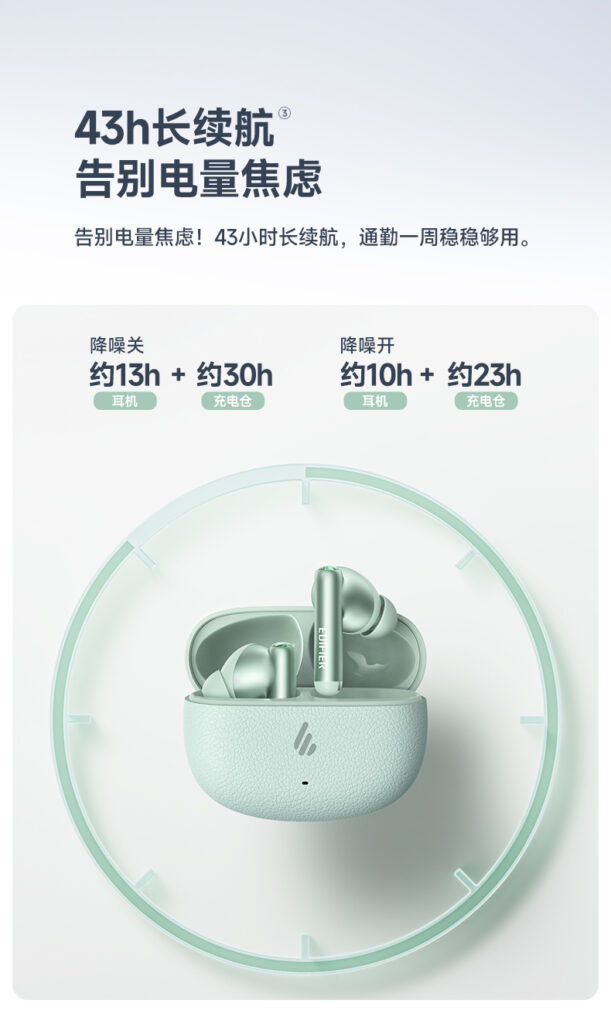
Edifier has launched the Lolli Pro SE wireless earbuds in China, offering a long list of high-end features at just CNY 249 (~$35/€30). That price puts them well below competitors like the OnePlus Buds 4 ($99.99) and even budget models from bigger brands.
The earbuds use a conventional stem-style design with antibacterial silicone tips and come in Cloud White, Mint Green, Ice Kite Purple, and Secret Night Blue. They also carry an IP55 rating for dust and water resistance, meaning they can handle splashes of fresh water like raindrops. While only available in China for now, a wider release is expected, possibly under a different name.
Detailed specifications:
On the spec side, the Lolli Pro SE supports Bluetooth 6.0, dual device connectivity, and a 0.06s low-latency gaming mode. There’s active noise cancellation (up to 48dB), three microphones per earbud for clearer calls, and Hi-Res Audio Wireless certification with LDAC and spatial audio support. It can also cancel out wind noise of up to 21 km/h. The Edifier Connect app enables real-time translation in 21 languages.
Battery life is another strong point. The earbuds last up to 10 hours with ANC on (13 hours off), while the case extends that to 33 hours with ANC on (43 hours off). It also supports faster charging for a quick refill. A 15-minute charge gives 4 hours of playback, which, just like the battery life, is more than what many higher-priced rivals manage.
With these specs, the Lolli Pro SE offers a feature set closer to flagship earbuds but at a fraction of the cost. More details about international availability may surface during IFA 2025.
Samsung’s revamped Quick Share interface is no longer limited to Galaxy devices. Google has started rolling out the updated design to other Android phones, according to a report from Android Authority.
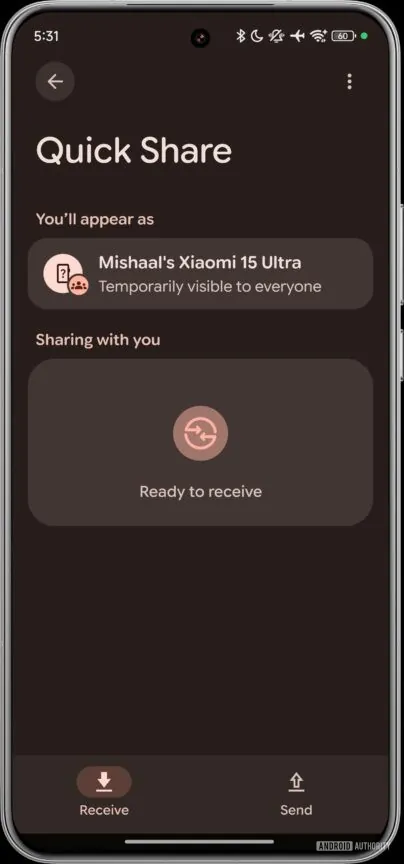
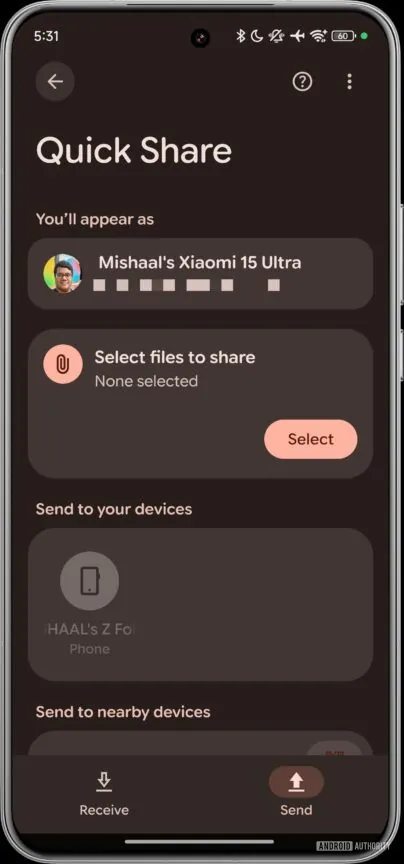
With One UI 8.0, Samsung replaced the old pop-up Quick Share menu with a full-screen layout. The new interface introduces two tabs — Send and Receive — making file transfers easier to understand and manage. This same design is now appearing on select non-Samsung Android devices, though availability varies by region and phone model.
Old “Send” screen
The Send tab lets users preview files before sharing, while the Receive tab makes it clearer how to accept incoming transfers. The update builds on last year’s merger of Nearby Share and Quick Share, which unified Android’s wireless sharing under a single system.
New “Send” screen
Quick Share now works across all Android brands, Windows devices, and Chromebooks — and Google is even exploring support for Apple’s ecosystem. For people who juggle multiple phones and PCs in their daily life, Quick Share has proven to be a big relief: it’s fast, secure, and built right into Android. The convenience of sharing a file without even touching the receiving device is now getting an upgrade with this quality-of-life redesign.
It’s not yet clear whether older Samsung devices running One UI 7 will see the redesign, but the wider rollout shows Google and Samsung’s ongoing effort to make file sharing on Android simpler and more consistent.
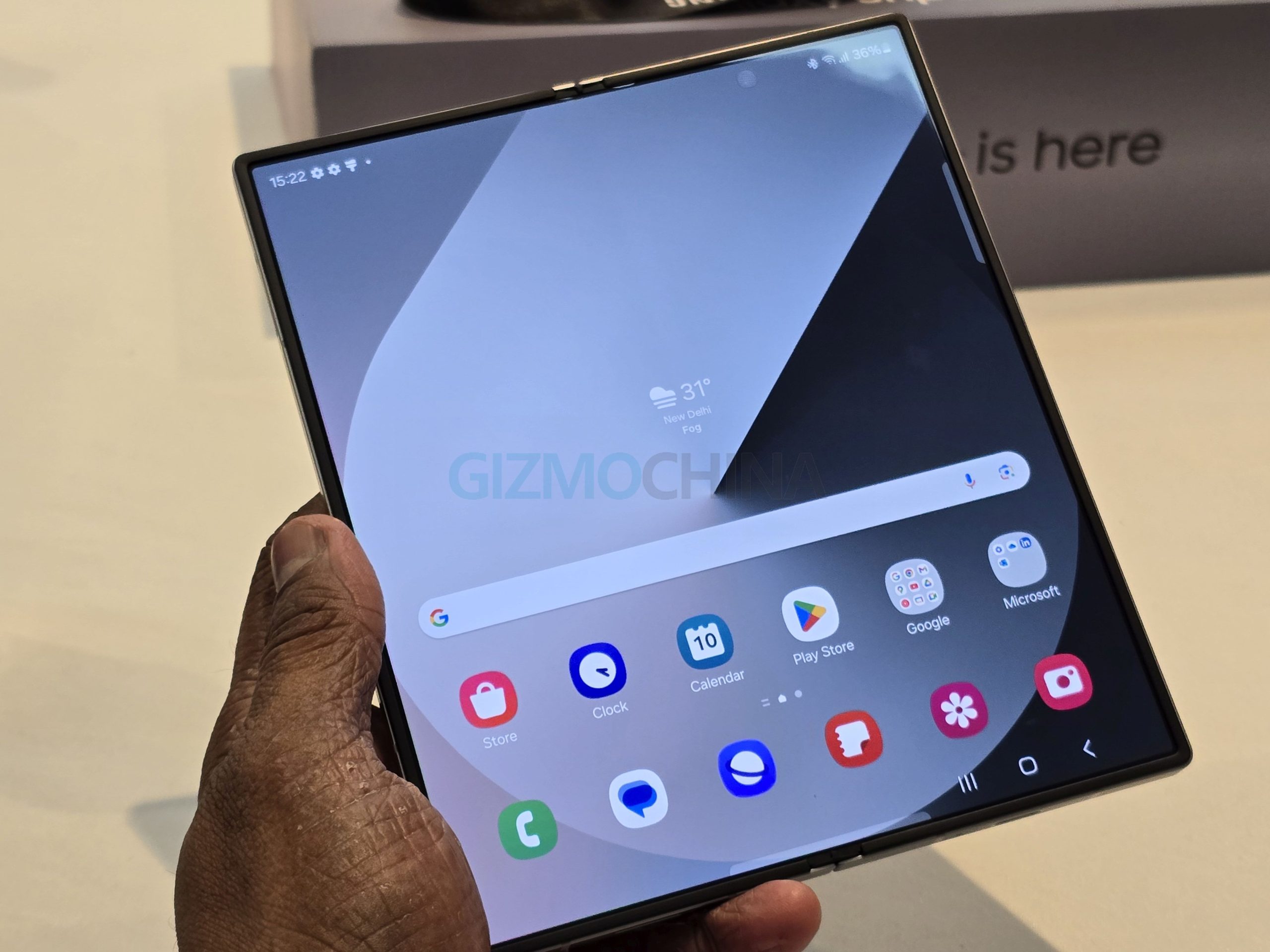
Samsung’s Galaxy Z Fold 7 is the company’s most refined foldable to date. It comes with a Snapdragon 8 Elite chip, a slimmer frame, a 200-megapixel camera, and that familiar book-style design. But just because Samsung has been leading the foldable race doesn’t mean it’s the only option worth your attention.
There are a bunch of really good alternatives from Google, Honor, and Oppo, while even Samsung’s own Galaxy Z Fold 6 from last year is still relevant if you want something a little cheaper. So here’s a breakdown of the best Galaxy Z Fold 7 alternatives you can buy in 2025.
It might sound obvious, but the first real alternative to the Fold 7 is actually Samsung’s own Galaxy Z Fold 6. You can still get last year’s model through carriers and retailers for a couple of hundred dollars less.
For the price, you’ll get a 7.6-inch AMOLED inner display, a Snapdragon 8 Gen 3 chip, and a 4400mAh battery. Its design is slightly chunkier at 239g, and the camera’s top out at 50 megapixels instead of 200, but for most people, these differences shouldn’t be deal-breakers.
If you’re not chasing the absolute best specs, the Fold 6 offers nearly the same multitasking chops and durability as the Fold 7. Plus, you still get support for the S-Pen that Samsung ditched on its successor. The Fold 6 is also immune to 7 years of software updates.
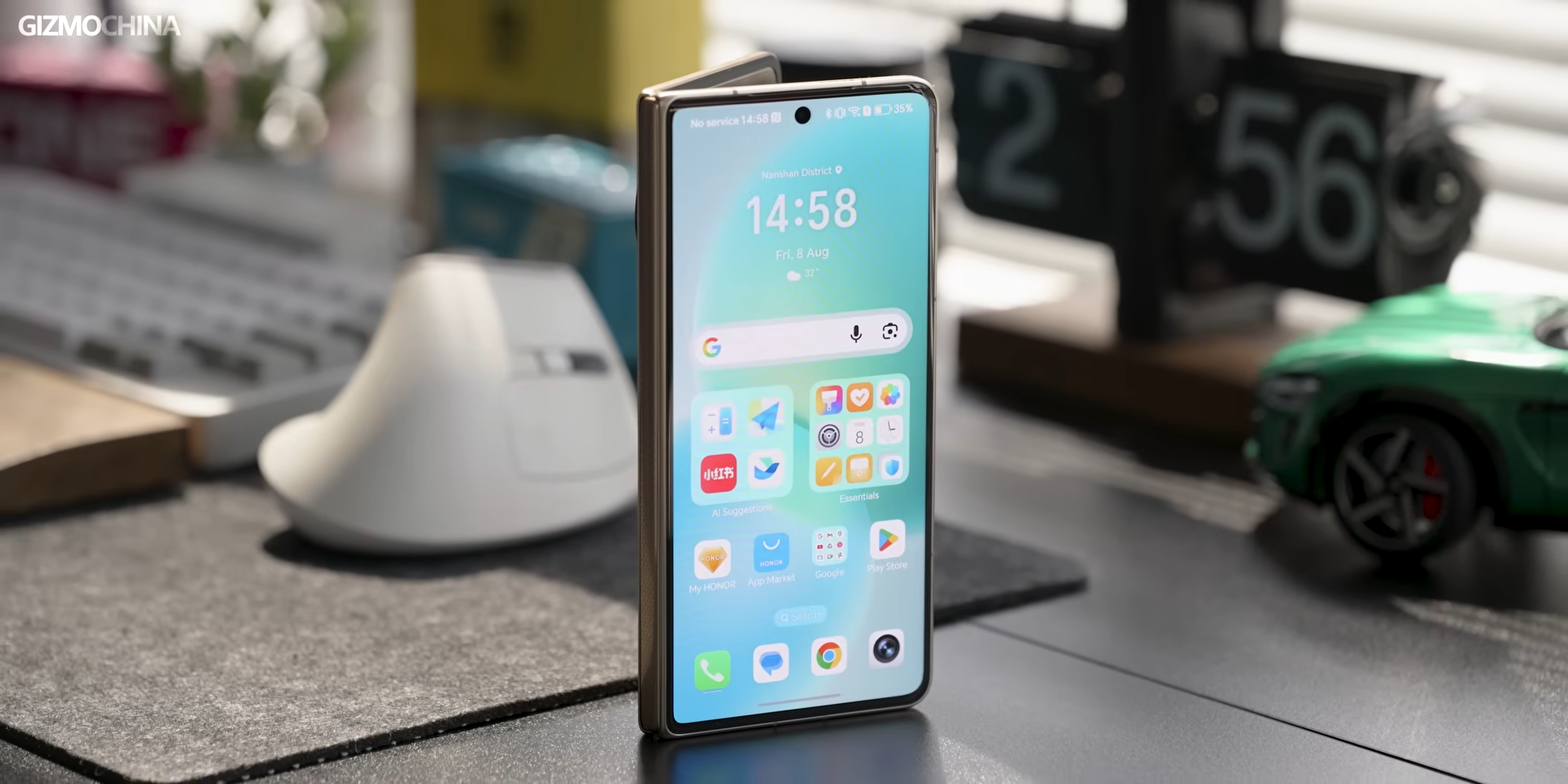
2. Honor Magic V5
Honor Magic V5
It shouldn’t come as a surprise if we say that Honor is building some of the most polished foldables out there. The Magic V5 is perhaps the strongest Galaxy Z Fold 7 rival right now.
It features a “Super Armored” inner screen rated at Mohs level 4, which should hold up better against scratches than Samsung’s softer plastic layer. The Magic V5 also has a brighter screen that can reach 5,000 nits peak brightness.
On the camera front, the foldable gets a 50MP main, 64MP periscope telephoto with 3x zoom, and a 50MP ultrawide.
Depending on the region, you also get either a 5820mAh or a 6100mAh cell, which is far bigger than Samsung’s 4400mAh pack. That means the Magic V5 should last noticeably longer than Samsung’s alternative.
There are trade-offs, though. Honor’s MagicOS 9 skin isn’t as clean or polished as Samsung’s One UI, and the foldable is not available as widely as the Fold 7. But if you can get your hands on one, this is the foldable for people who want all-day battery life without compromise.
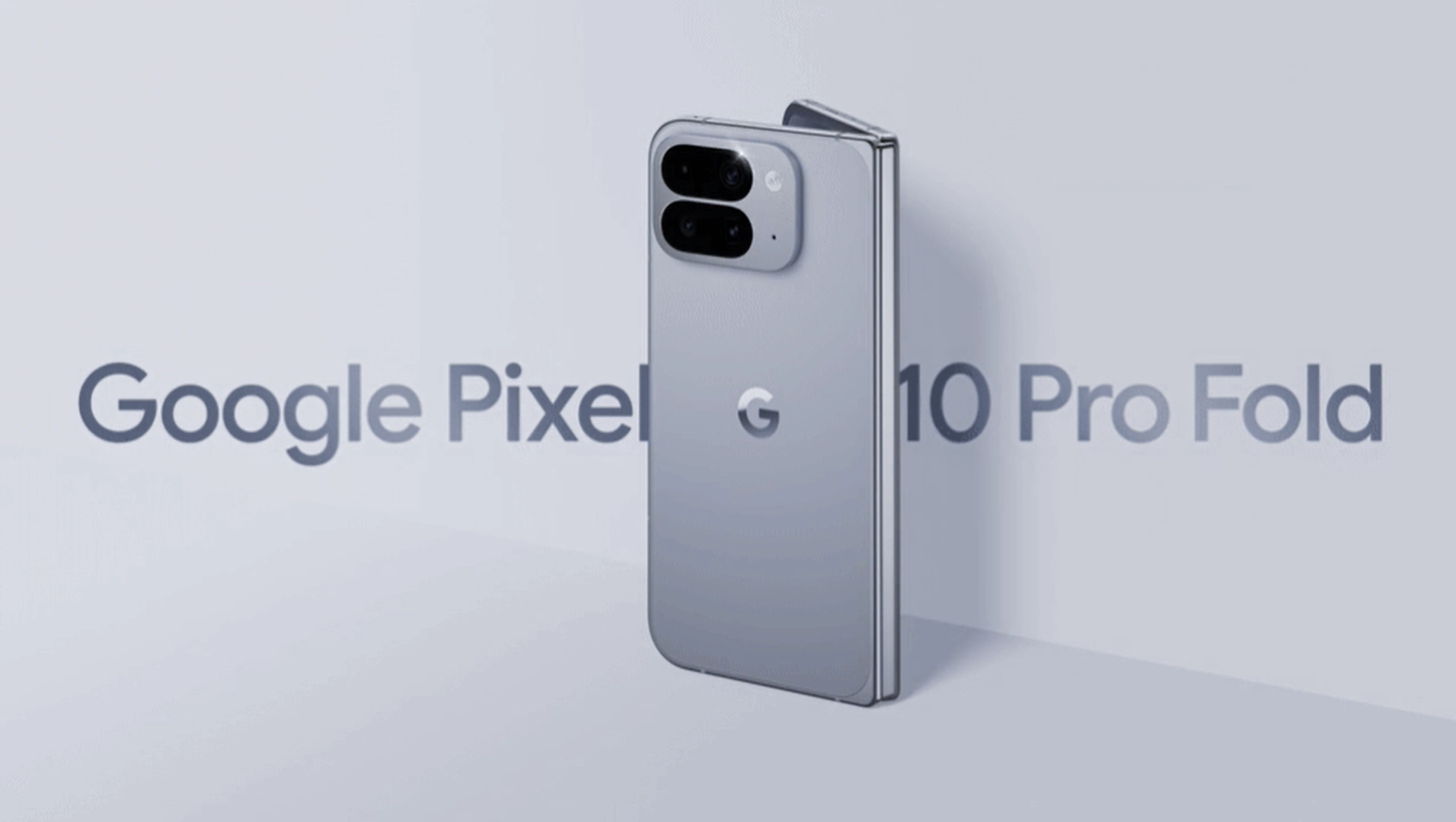
3. Google Pixel 10 Pro Fold
Google’s third-generation foldable, the Pixel 10 Pro Fold, is here to do what Pixels do best: software magic.
At first glance, it matches the Z Fold 7 in size, an 8-inch foldable display with a 6.4-inch cover screen. But it’s heavier, tipping the scales at 258 g.
Its rear camera setup includes a 48MP main, 10.8MP 5x telephoto, and 10.5MP ultrawide. They may not sound as leading as Samsung’s 200MP shooter, but Google’s Ultra-HDR, Pixel Shift, and AI-assisted zoom make them feel flagship-level.
The foldable also has a few other camera tricks like “Best Take” and “Zoom Enhance”. The Pixel 10 Pro Fold also brings unique extras like satellite SOS, a 5,015 mAh battery with bypass charging, and Qi2 wireless charging. Its Mohs level 5-rated inner display is tougher than Samsung’s, too.
Most importantly, the Pixel experience on a foldable feels like Android the way Google intended: fluid multitasking, smart split-screen, and seamless integration with AI features. If you care about software over hardware flex, this is the one.
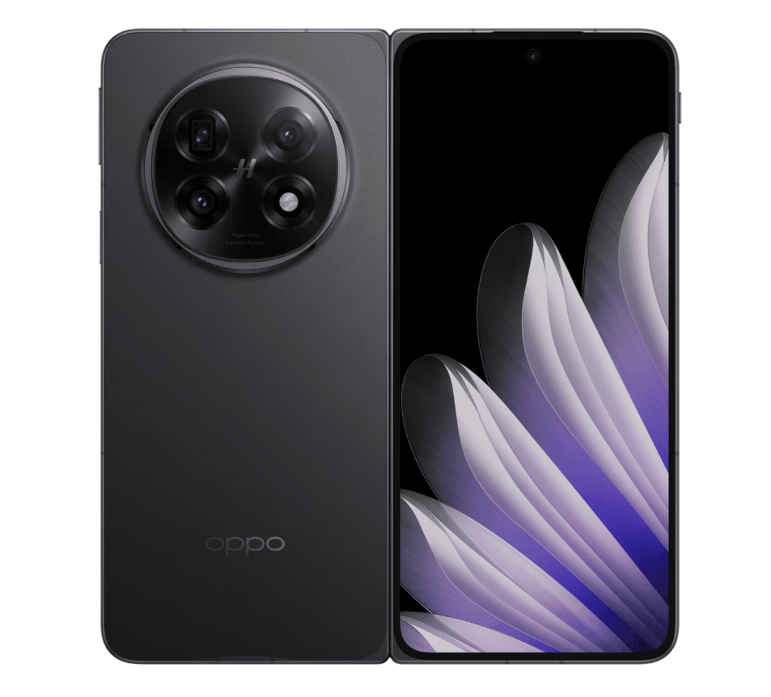
4. Oppo Find N5
Oppo’s Find N5 is one of the most feature-rich foldables around, but it’s not widely available. It’s sold in China, parts of Southeast Asia, and Mexico, but there’s no US or European launch. If you can import one, though, it’s seriously impressive.
The Find N5 has one of the biggest batteries in a foldable (5,600 mAh) with 80W wired charging and 50W wireless. That’s way beyond Samsung’s conservative charging speeds. Its displays are also calibrated for creators, with Dolby Vision, HDR10+, and HDR Vivid support, plus stylus compatibility on both the inner and outer screens.
The rear camera setup on the Find N5 includes a 50MP main, 50MP telephoto, and 8MP ultrawide. The setup might not feel (or sound) as good as Samsung’s, but the company has partnered with Hasselblad for extra camera optimization.
The hinge and build feel also premium as Oppo uses titanium alloy in the frame. There’s even satellite connectivity on some models.
The real downside of this device is its limited availability, and ColorOS might not be everyone’s favorite skin. Still, for people who want a stylus-ready foldable with pro-level media chops, the Find N5 is a hidden gem.
The US-China trade war is once again putting pressure on the global chip industry, and this time two of South Korea’s biggest names are in the spotlight. Samsung and SK Hynix face fresh restrictions that could complicate their operations in China, one of their key markets.
The US Commerce Department said it will revoke licenses that previously allowed Samsung and SK Hynix to bring in US-made chipmaking equipment for their Chinese plants. The decision, which takes effect in 120 days, doesn’t shut down their factories but does block them from upgrading or expanding with new American tools.
That’s a big deal for Samsung’s NAND flash operations in Xi’an — a site that reportedly accounts for around 40% of its global output — as well as for SK Hynix’s DRAM production. Both companies still focus on older chips in China (28nm and above), while keeping advanced nodes at home in South Korea and in the US.
Why it matters
Washington says the move is about national security, aiming to slow China’s semiconductor progress and keep cutting-edge tools out of potential military use. But for Samsung and SK Hynix, it creates long-term uncertainty: they won’t be able to replace broken machines or bring in the latest equipment from US suppliers.
The move also builds on export controls first introduced in 2022, which came with temporary waivers to avoid disrupting the global supply chain. Now, with those waivers being pulled, the balance could tilt. Chinese equipment makers may gain ground, and US rival Micron could benefit as well.
Both Samsung and SK Hynix reportedly employ more than 20,000 people in China, and will now need individual license approvals if they want to import new gear. According to Reuters, approvals are far from guaranteed. South Korea’s trade ministry is already in talks to try and soften the blow, but the bigger picture is clear: the US wants to shift advanced chip production away from China.
For Samsung, the timing is awkward. While the company is preparing for the Galaxy Tab S11 launch at IFA 2025, its semiconductor division faces a tougher road ahead in navigating the geopolitical storm.
Tecno is gearing up to unveil a new slim 5G smartphone in India. While the company has confirmed the arrival of the Pova Slim 5G, it appears that the device could align with the Spark Slim concept showcased earlier this year at MWC 2025. Details on its pricing and specifications have already surfaced, and now the company has revealed its attractive ultra-thin design.
Tecno has officially described the Pova Slim 5G as the world’s slimmest 3D curved display 5G smartphone. Scheduled to launch on Sept. 4, it will be sold via Flipkart in India.
It is designed with an ultra-thin body while maintaining essentials for everyday use. The phone will feature what Tecno calls a “Too Slim To Be True” design with a Dynamic Mood Light that reacts to calls and notifications, adding a personalized touch to the user experience.
Tecno Pova Slim 5G
The rear of the phone features a sleek horizontal camera module with two lenses placed on either side. An integrated LED strip curves around both cameras and connects across the middle, creating a futuristic light effect that adds character to the design.
While Tecno hasn’t confirmed the core specs of the device, it has revealed that the device will be equipped with Eila AI, which will have support for multiple languages. It will also feature other AI-driven capabilities, such as an AI Writing Assistant and Circle to Search. It will also have no network communication features, which allow users to make phone calls via Bluetooth.
Meanwhile, a recent report revealed that Tecno’s upcoming slim smartphone could measure 5.95mm in thickness and may arrive at a price of around Rs 80,000. This would put it in direct competition with premium devices from Samsung and Apple. Expected specifications include a 6.78-inch AMOLED display with a 144Hz refresh rate, a 50-megapixel rear camera, and a 5,200mAh battery.
For more daily updates, please visit our News Section.
If you’re thinking about buying a new iPhone, especially the iPhone 16 series, now might be the worst possible time to hit that buy button. Not because the iPhone 16 is bad, it’s actually quite good, but because the iPhone 17 is coming. And what we’ve seen and heard so far suggests it’s shaping up to be a far more significant upgrade than we’ve seen in years. Here’s why it’s smart to wait just a week more.
Image source: Tom’s Guide
iPhone 17 Series Is Just Over a Week Away
Apple has already confirmed a September 9 event. That’s when the iPhone 17 lineup, including the much-hyped iPhone 17 Air, is expected to debut. Based on years of precedent, pre-orders will likely open that same week, with units shipping shortly after.
What this means is simple: the iPhone 16 will become yesterday’s news in less than a month. Even if you’re not interested in the newest models, waiting a little longer could get you a better deal on the current ones. Apple and carriers typically slash prices or roll out trade-in incentives as soon as the new models are announced.
iPhone 17 May Be the Biggest Design Shift Since iPhone X
Apple doesn’t redesign its phones often, but when it does, it matters. This year, it’s not just tweaking the edges or repositioning the camera bump; it’s going thinner. Much thinner.
The new iPhone 17 Air is expected to clock in at under 6.5mm thick, thinner than any iPhone ever, including the famously slim iPhone 6. It’s not a “Plus” replacement either. This is a mid-tier device sitting between the base iPhone 17 and the 17 Pro, with a 6.6-inch display, a reworked single-lens camera system, and a completely new aesthetic. If Apple nails the balance of weight, power, and battery life, this might be the iPhone that defines the next generation.
And if you’re eyeing a Pro model? Those are also getting a makeover with a horizontal camera layout, a potential aluminum-glass hybrid chassis, and vapor chamber cooling, something Android flagships have used for years, finally coming to iPhone.
Every Model Gets 120Hz and Major AI Upgrades
The most frustrating distinction between standard and Pro iPhones has been the 120Hz display. That changes with the iPhone 17 series. Apple is expected to bring 120Hz refresh rates to even the base iPhone 17 and the new iPhone 17 Air, ending the 60Hz limitation. However, LTPO-based adaptive ProMotion with Always-On Display is still likely to remain exclusive to the Pro models, according to recent supply chain leaks.
AI is also a major play. iOS 26 will bring “Apple Intelligence” across the board, but the iPhone 17’s upgraded A19 and A19 Pro chips (built on TSMC’s improved 3nm process) will push performance and efficiency even further. Some models will include 12GB RAM for better multitasking, and Apple’s first in-house modem chip will debut in the iPhone 17 Air.
You Might Pay the Same (or Just a Bit More) for Way More Phone
Even if the iPhone 17 lineup sees a modest $50 price bump, which is likely, you’d be getting a ton more in return: upgraded front and rear cameras (including 24MP selfies and 48MP ultra-wides), better thermal performance, redesigned chassis, higher RAM, and possibly 8K video recording in the Pro Max model.
And if rumors are true, Apple may double base storage from 128GB to 256GB. That alone could justify a small price hike. So if you’re planning to pay $799-$999 for an iPhone 16 or 16 Pro right now, know that you’re likely getting less for more.
Final Words
The iPhone 16 is solid, the new Camera Control button, Apple Intelligence support, and A18 chip are welcome additions. But none of it feels like a leap forward. If you upgrade now, you’re buying into a cycle that’s about to reset.
The iPhone 17 looks like the start of something new: lighter designs, better screens, stronger cameras, faster AI. Whether you’re in for the base model or the titanium-trimmed Pro Max, it makes more sense to wait. Because if you buy now, you’ll either regret missing the new stuff or miss out on the markdowns.
For more daily updates, please visit ourNews Section.
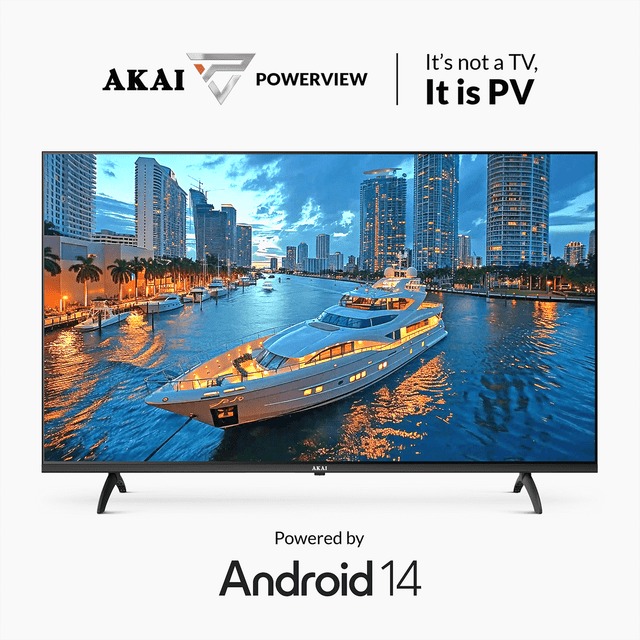
AKAI has launched the PowerView Series in India, a new range of televisions powered by Google TV on Android 14. The series includes a 32-inch HD Ready model, a 43-inch 4K version, and a 75-inch QLED display, along with 50-inch, 55-inch, and 65-inch 4K options.
The TVs run on the MediaTek MT9603 chipset and support HDR10, Dolby Vision, HLG, and MEMC. The 43-inch and larger models feature 4K resolution at 3840×2160, 120Hz refresh rate with Game Mode, and Dolby Atmos sound. The 32-inch model has a 1366×768 panel with a 3000:1 contrast ratio, 1.5GB RAM, and 8GB storage. From 43 inches upward, the TVs come with a 1200:1 contrast ratio, 2GB RAM, and 32GB storage.
Android 14 on Google TV brings Dynamic Colour Correction, font customization, multi-language subtitles, voice search through Google Assistant, and faster app access. The TVs also work with other Google devices and support gesture controls. Miracast and New Cast provide low-latency casting from smartphones, with Miracast not available on the 32-inch version.
Audio formats supported include Dolby Digital and Dolby Digital Plus across the lineup, with Dolby Atmos starting at 43 inches. Connectivity includes three HDMI ports on most models, two on the 32-inch, along with two USB ports, a LAN port, and a 3.5mm jack. Chromecast, parental controls, Fast Boot, and a built-in tuner are also provided.
Pricing & availability
The PowerView 32-inch model is priced at ₹13,990, while the 4K models start at ₹28,490 for the 43″ model. It will be through offline retailers and on akaiindia.in.
For more daily updates, please visit our News Section.
Redmi has launched the Pad 2 Play Bundle, a special edition of the Redmi Pad 2 that comes with a protective case and stylus. The tablet is paired with a light blue rugged silicone case, which includes a yellow handle that doubles as a kickstand and a slot for the yellow stylus.
The Pad 2 features an 11-inch 2.5K matte glass display with a resolution of 2560 × 1600 at 274 ppi. The screen uses AG nano-texture to reduce 97 percent of light interference for clearer visibility indoors and outdoors. It is triple-certified by TÜV Rheinland for low blue light, flicker-free, and circadian-friendly performance. The display supports 1.07 billion colors, a 90Hz AdaptiveSync refresh rate, and a 360Hz touch sampling rate, with 240Hz available when using the stylus. Brightness is rated at 500 nits typical and 600 nits in outdoor mode.
The device is powered by the MediaTek Helio G100-Ultra processor on a 6nm process, with a CPU configuration of 2xA76 at 2.2GHz and 6xA55 at 2.0GHz, along with a Mali-G57 MC2 GPU. It comes with 4GB of LPDDR4X RAM and 128GB of UFS 2.2 storage, expandable up to 2TB. The operating system is Xiaomi HyperOS 2, which includes call sync, network sync, and shared clipboard features.
Battery capacity is 9000mAh, supporting up to 17 hours of video playback, 22 hours of reading, 234 hours of music, and 86 days of standby. Charging is supported at 18W through USB-C PD2.0 and QC2.0, though no adapter is included.
The rear camera is 8MP with f/2.0 aperture and 1080p video at 30fps. The front camera is 5MP with f/2.2 aperture and also supports 1080p video. Audio is provided by quad speakers with Dolby Atmos and Hi-Res Audio certification.
Connectivity options include Wi-Fi 5, Bluetooth 5.3, and USB 2.0. Sensors include an accelerometer, virtual ambient light sensor, and hall sensor.
Pricing
The Redmi Pad 2 Play Bundle is priced at £179 in the UK and €199.90 in Europe.
For more daily updates, please visit our News Section.
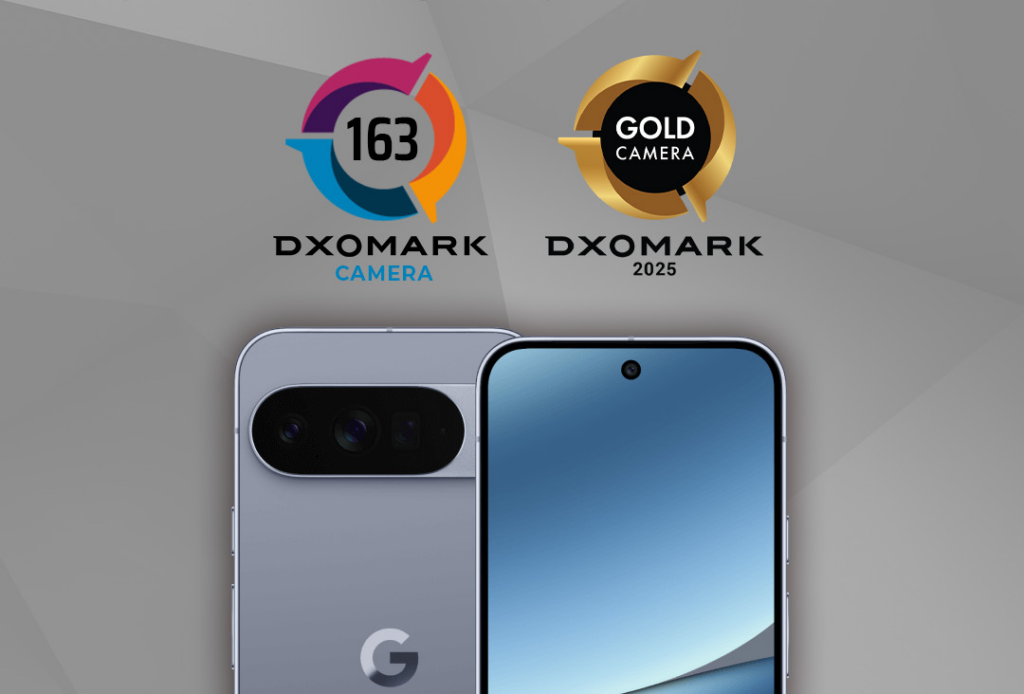
The main camera scored 173, showing good exposure, wide dynamic range, and accurate white balance. Colors are natural and noise is mostly under control. Testers noted some flare in outdoor shots. Bokeh scored 160, with reliable subject isolation but visible depth artifacts in fine details like hair. The ultra-wide camera achieved 158, offering detailed results with a wide 13mm field of view, though some noise was seen in indoor lighting. Telephoto reached 141, capturing good detail at its 5x native zoom but showing a loss of detail and texture at medium-range zoom.
Video Results
Video scored 160, with the main camera at 171. Recordings showed stable exposure, good dynamic range, and natural skin tones. Ultra-wide video scored 145, giving strong results in daylight and a wide field of view, but quality dropped in low light. Telephoto video scored 118, offering high detail at 5x but lower quality at shorter zoom levels, with noticeable jumps when switching modules. Stabilization worked well when stationary, but walking shots showed some shake.
Use Case Scores
Outdoor: 176
Indoor: 165
Portrait: 143
Lowlight: 138
Zoom: 134
Pros and Cons
Pros: Wide dynamic range, accurate exposure, natural skin tones, controlled noise in bright light, reliable autofocus, and strong detail at 5x telephoto. Cons: Noise in low light, flare in outdoor images, weaker mid-range zoom detail, and visible shake in walking videos.
Conclusion
The Pixel 10 Pro XL delivers consistent photo and video quality, with accurate exposure and balanced detail across most categories. Low light and mid-range zoom still fall short of the top rivals, but overall, it ranks among the best all-around smartphone cameras. It fits the description of a jack of all trades, offering balanced and dependable performance even if it does not lead in any single area.
For more daily updates, please visit our News Section.
OnePlus has started rolling out the OxygenOS 15.0.0.851 update for the OnePlus Open in India and North America. The rollout is incremental, with a small group of users receiving it first, followed by a wider release in the coming days. The update is listed as build number CPH2551_15.0.0.851(EX01).
OnePlus Open
What’s New in the Update
Animations and multitasking
The update improves animations when opening, moving, or resizing floating windows. Split View is now more flexible, as users can adjust the ratio of two apps by dragging the divider. On the recent tasks screen, swiping down on an app preview now changes its lock status.
Private Safe upgrades
Private Safe gets several new options. Users can now share images and videos stored in it, customize album covers, and sort files by time. Files can also be added directly under the “Other files” category.
Notifications in landscape
Notifications received in landscape mode now appear as simplified banners to reduce interruptions. Swiping down on a banner opens the app in a floating window. Tapping a button on a banner also opens the app in floating view instead of full screen. The position of banner notifications has been adjusted to further limit distractions.
Connectivity
A new BeaconLink feature lets users send text, image, and voice messages to nearby devices without internet access. It can be enabled from Settings > Mobile network > BeaconLink.
System security
The August 2025 Android security patch is included to improve device security.
For more daily updates, please visit our News Section.
Lenovo is set to showcase the Legion Go 2 at IFA 2025 in Berlin from September 5 to September 9. The device was first shown in prototype form at CES 2025 alongside the Legion Go S, but Lenovo has not provided updates since then.
Legion Go 2 via Evan Blass on X
Ahead of the official announcement, reliable tipster Evan Blass has shared the promotional video of the Legion Go 2 via X, revealing its design, as well as key details.
Lenovo Legion Go 2 via Evan Blass
As per the video, the Legion Go 2 features an 8.8-inch Lenovo PureSight OLED display with a 144Hz refresh rate and variable refresh rate support. The detachable Legion Truestrike controllers have been redesigned for comfort and flexibility. It also includes six programmable buttons, with two placed on the edge of the right controller and two sets across the rear of both controllers. The video also confirms a fingerprint scanner built into the power button, which was not included in the original Legion Go.
Lenovo Legion Go 2 FPS mode
The Legion Go 2 supports different play modes, including tablet mode, console mode with a separate charging connector that is sold separately, and FPS mode for shooter-style play.
The device runs on AMD’s Ryzen Z2 Extreme processor, the same chip used in the Asus ROG Xbox Ally X. It is an 8-core 16-thread APU that has 3x Zen 5 processors and 5x Zen 5c processors. The Zen 5 cores are capable of boosting up to 5 GHz, with a base clock speed of 2 GHz. As for the GPU, the chip has 16 graphics cores onboard, based on AMD’s RDNA 3.5 architecture, capable of boosting up to 2900 MHz.
Additionally, the Legion Go 2 has a new excimer coating that makes the device more durable, resistant to fingerprints, and easier to clean. Cooling is handled by Legion Coldfront technology, which pulls air in from the back and vents heat out from the top.
Lenovo will also offer accessories, including a Legion Go dock and a Legion Go sling bag for carrying the device. Pricing and release details are expected to be announced during IFA 2025.
For more daily updates, please visit our News Section.
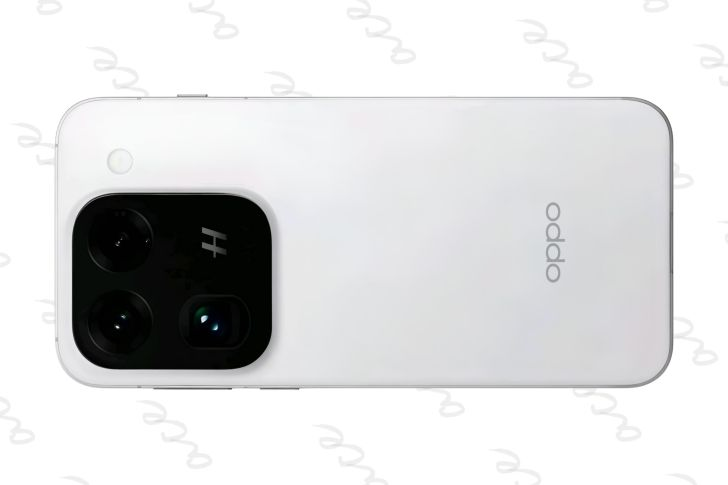
Oppo’s next flagship is starting to take shape. The Find X9 Pro has just surfaced on China’s 3C certification database, giving us an early look at what the company is preparing ahead of its expected Q4 2025 launch.
Oppo Find X9 Pro mock render
The 3C filing lists two model numbers — PLG110 and PLG120. These are believed to be the standard Find X9 Pro and a possible Satellite Edition, following the naming pattern of last year’s Find X8 Pro.
Both models are listed with Oppo’s VCB80ACH power brick, confirming support for 80W wired charging. That’s the same as the X8 Pro, so no major upgrade in raw charging speed this time. However, earlier leaks suggest Oppo could compensate with much larger batteries, potentially going as high as 7,500mAh.
Beyond charging, the Find X9 Pro is tipped to feature a slim-bezel LIPO OLED panel, likely measuring 6.78 inches with 1.5K resolution and a 120Hz refresh rate. Powering the device could be MediaTek’s upcoming Dimensity 9500 chip, aimed squarely at the high-end segment.
On the camera side, Oppo may equip the phone with a 200MP Samsung HP5 periscope telephoto lens, paired with a 50MP main sensor (Sony LYT-828) and a 50MP ultrawide (Samsung JN5).
The Find X9 Pro is expected to launch in Q3 2025, with a starting price around $999. The vanilla Find X9 should arrive alongside it, sharing many of the same specs while running Android 16 with ColorOS 16 out of the box. With its display, charging features, and ambitious camera setup, Oppo is positioning the Find X9 Pro as a direct challenger to flagships like the iPhone 17 and Samsung’s Galaxy S26 series.
TCL looks set to unveil a new addition to its NxtPaper lineup at IFA 2025, but the phone has already appeared online. An early listing on Amazon Germany revealed details about the TCL NxtPaper 60 Ultra 5G ahead of its expected debut on September 5. Surprisingly, Amazon Germany is already taking pre-orders ahead of the official launch.
According to the listing, the device will feature a gigantic 7.2-inch FHD+ NxtPaper display with a 120Hz refresh rate. TCL’s NxtPaper tech is designed to reduce glare and blue light, giving the screen a more eye-friendly, paper-like appearance.
Other specs include 12GB of RAM, 256GB of storage, and Android 15 out of the box — an unusual move since Android 16 rolled out in June. The phone will ship in Nebula Black, unlocked with 5G support. Following the footsteps of Apple and Samsung, TCL only includes a USB-C cable in the box, skipping a power adapter. Battery capacity wasn’t mentioned, though the listing highlighted “long-lasting” performance.
The NxtPaper 60 Ultra seems aimed at the premium mid-range segment – the Amazon Germany listing asks for €479.99. That would put it up against phones like the Samsung Galaxy S24FE, though its larger 7.2-inch display makes it stand out for reading and productivity.
TCL has been pushing its NxtPaper technology as a unique alternative to standard OLED and LCD panels. Previous devices, such as the TCL 60 XE NxtPaper 5G, also emphasized visual comfort and occasionally included stylus support — something TCL could expand on at IFA.
Since the Amazon listing doesn’t go into much detail on the internals, readers can check a Colombian e-commerce listing that includes the full specifications.
ASUS has announced the TUF Gaming BE9400, a WiFi 7 router built to deliver up to 9400Mbps tri-band throughput with stable performance. It features ultrawide 320MHz channels, 4096-QAM, and Multi-Link Operation (MLO) to improve efficiency across devices. The router covers up to 2,500 square feet and is designed to meet the demands of gaming, streaming, and smart homes.
WiFi 7 performance with MLO
The BE9400 uses MLO to combine or alternate between the 2.4GHz, 5GHz, and 6GHz bands. This reduces latency, strengthens stability, and ensures consistent speeds. It supports high-speed gaming, smooth 4K streaming, and multiple connected devices without signal drops. WiFi 7 AiMesh support extends this performance across larger homes.
Four 2.5G ports and gaming optimization
The router includes three 2.5G LAN ports and one 2.5G WAN port for multi-gig wired performance. One LAN port is optimized for gaming traffic, giving players smoother online sessions. OpenNAT simplifies port management, while one-tap Mobile Game Mode ensures low latency on smartphones. Support for USB 4G and 5G mobile tethering provides backup connectivity when needed.
Smart network control and security
The ASUS Router app allows users to set up and manage networks easily. Smart Home Master enables dedicated SSIDs for IoT devices, VPNs, kids, or MLO networks. Up to 30 VPN clients can connect with support for WireGuard, OpenVPN, and IPSec.
For security, the router includes AiProtection and safe browsing features, providing commercial-grade protection. Built to TUF standards, the BE9400 is made for durability and long-term use, making it suitable for households that need reliable, high-speed connectivity. The Asus TUF Gaming BE9400 is scheduled to go on sale by the end of October 2025.
In other news, Microsoft has confirmed the ROG Xbox Ally and Ally X handhelds will launch on October 16, 2025, but US pricing and pre-orders remain delayed due to tariffs. European prices are set at €599 and €899, while US prices have fluctuated between $499.99 and $599.99 for the Ally and around $899.99 for the Ally X, with placeholder listings adding confusion.
Whether seeking the latest AI-powered flagship or a reliable budget-friendly smartphone, Google’s Pixel lineup offers versatile options across price brackets in 2025. Pixels bring Google’s exclusive Android experience with a software first focus over hardware, impressive cameras, and cutting edge features. So here’s a guide that helps buyers navigate the Pixel family to find the right device to suit their needs and budget.
Pixel 10: Starting at $799 for 128GB, 6.3-inch display, robust AI, and triple cameras.
Pixel 10 Pro: Starting at $999 for 128GB, with a 120Hz OLED display and superior camera tech.
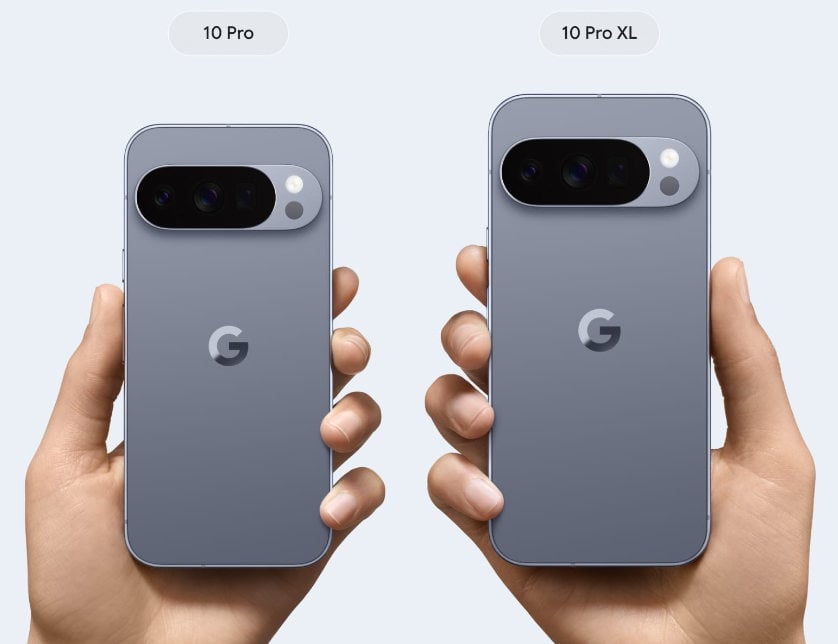
Pixel 10 Pro XL: Larger 6.8-inch screen and bigger battery, pricing begins at $1,199.
Pixel 10 Pro Fold: Flagship foldable device at approximately $1,799, combining power with innovation.
These models come with seven years of OS and security updates, making them future-proof investments for most users.
2. Pixel 9 Series: Best Value Flagship
Google Pixel 9 Pro XL
While Google did bring some notable changes to the Pixel 10, one could argue that the upgrades were still incremental when comparing it to the Pixel 9 series. The 2024 flagships still hold up with Google AI features, top tier cameras, and decent performance without the burden of a hefty price tag.
Pixel 9: Around $799 for 128GB, a compact and polished design, and a solid AI chipset. Although, you can typically find it for around $499.
Pixel 9 Pro: Retailing for approximately $999, with enhanced camera sensors and display quality. As of right now, the Pixel 9 Pro goes for just under $600 in the US.
Pixel 9 Pro XL: Nearly identical to the Pixel 9 Pro, but with a larger screen and faster charging. You can find this premium phone for around $660.
3. Pixel a Series: Budget Contenders
Google Pixel 9a
Google offers the Pixel experience on a budget with the Pixel a lineup. The Pixel 9a is the newest in the series, while there are also older models like the Pixel 8a. These come with more affordable prices and consistent software support.
Pixel 9a: The budget-friendly option was announced with a $499 starting price, offering great cameras and a clean Android experience. Now, it can retail for under $400.
Pixel 8a: Originally retailing for under $400, you can find the Pixel 8a online for around $220.
4. Honorary Mentions
Google Pixel 8 Pro
Though slightly older, Pixel 8 and Pixel 8 Pro remain excellent smartphones widely available from various US retailers and online platforms. The base model from Google’s 2023 flagship lineup can be purchased for around $250, while the Pixel 8 Pro sometimes goes for around $300.
For more daily updates, please visit our News Section.
Luxury smartphone customizer Caviar has unveiled its latest limited-edition lineup ahead of Apple’s September 9 iPhone 17 launch. The company introduced the Stealth Collection, featuring two highly exclusive camera-less smartphones: the iPhone 17 Air Stealth Carbon and the iPhone 17 Pro Max Stealth Titan.
Design Details
The iPhone 17 Air Stealth Carbon is based on the upcoming iPhone 17 Air, which is expected to be Apple’s thinnest iPhone to date. Caviar has gone a step further by removing the rear cameras and replacing the back panel with a carbon fiber shell. The result is a device that weighs less than any iPhone Caviar has previously released. Caviar will produce only 19 units of the Air Stealth, and each phone will feature an engraved serial number.
iPhone 17 Air StealthiPhone 17 Air Stealth
The design of the Air Stealth Carbon emphasizes minimalism and privacy. Caviar has removed all camera modules to eliminate potential security risks associated with imaging hardware. The carbon body is shaped to offer a lightweight yet premium feel, targeting users who prioritize discretion and simplicity over traditional smartphone features.
Caviar also introduced the iPhone 17 Pro Max Stealth Titan. This model is designed for professionals who work in high-security environments. Like the Air Stealth, the Stealth Titan eliminates all cameras and features a reinforced carbon body. The design uses a darker tone and strict lines to reflect a more formal aesthetic. This version also comes in a limited edition, with 19 units available globally.
iPhone 17 Pro Max Stealth TitaniPhone 17 Pro Max Stealth Titan
The company is also offering a variant of its earlier iPhone 16 Pro design, now adapted for the iPhone 17 Pro series, called the Stealth Titan Gold. This model swaps the standard casing for a titanium shell with a golden PVD coating. It removes both front and rear cameras to meet secure-site requirements. Caviar has limited this edition to 99 units.
Pricing and Availability
Prices start at $8,630 for the iPhone 17 Air Stealth Carbon and $8,910 for the iPhone 17 Pro Max Stealth Titan. Caviar has opened pre-orders on its website and provides luxury packaging with a certificate of authenticity.
In related news, Caviar has recently unveiled a weapon-inspired iPhone 17 collection featuring gold detailing, with prices starting at $9,415. The brand has also introduced Altair, a luxury padel racket priced at $8,070, adorned with 18K gold accents.
For more daily updates, please visit ourNews Section.
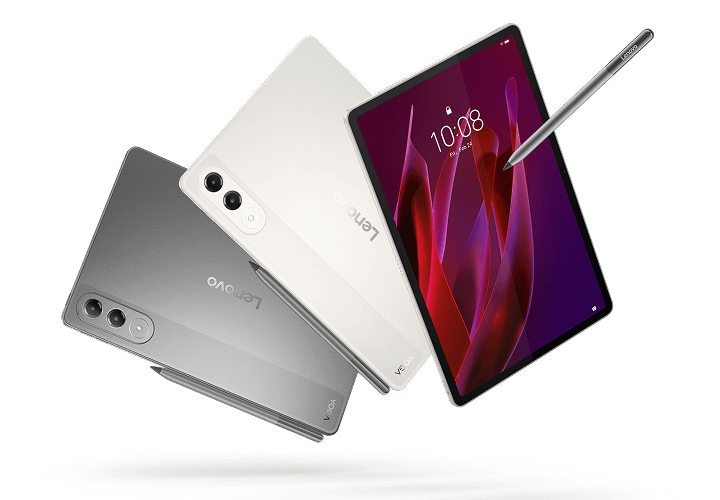
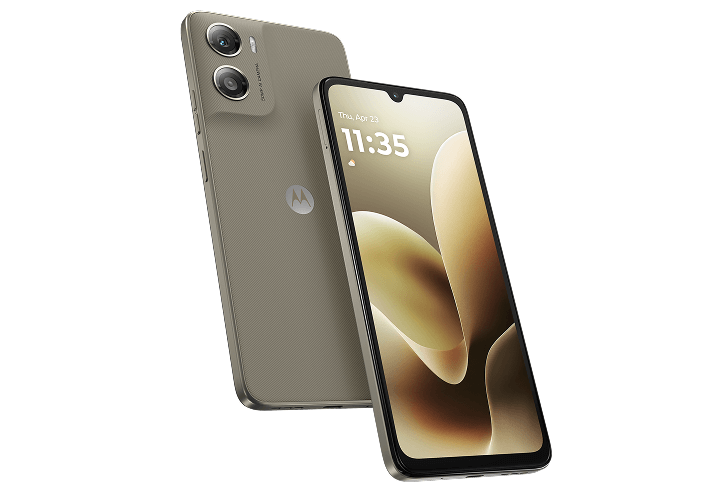
A major new leak has offered us a glimpse of Lenovo’s next wave of tablets and Motorola smartphones. The company is working on a new Lenovo IdeaPad Plus and Yoga Tab, along with Motorola’s Edge 60 Neo, Moto G06, and Moto G06 Power. All of these might debut during the upcoming IFA 2025 event, so let’s check them out.
Lenovo & Motorola’s Full Tablet & Smartphone Lineup for IFA 2025 Leaked
Lenovo IdeaPad Tab Plus
In a long thread of tweets about upcoming Lenovo branded products, Evan Blass confirmed that the Yoga Tab and IdeaPad Plus will be debuting alongside the new ThinkPads and Rotating Display Concept Laptop at the IFA. Looking at the leaked renders, we can see two tablets with a dual tone design. One of these has a single rear camera, while the other may have dual rear cameras. Both models can also be seen with a stylus and a magnetic keyboard case accessory.
Motorola Edge 60 Neo
Motorola is planning on unveiling three new smartphones. The brand has already revealed multiple models from its Edge 60 lineup, with the upcoming Edge 60 Neo likely rounding off the series. It will be positioned directly below the base Edge 60, arriving as an affordable option. It can be seen in vibrant colors like orange, cyan, and gray. While the specs are still at large, the front has a punch hole cutout for the selfie camera and the rear has a triple camera setup.
Moto G06
The other two models are the Moto G06 and G06 Power. Both appear identical in terms of design, with dual cameras on the rear and a waterdrop notch selfie camera on the front. The Moto G06 Power can be seen in green and light brown, while the base model is confirmed in the brown color (might include orange and blue versions as well).
For more daily updates, please visit our News Section.
Samsung’s next flagship, the Galaxy S26 Edge, is starting to take shape ahead of its expected January 2026 launch. A new certification confirms the phone will get a welcome battery bump, but its ultra-slim design ambitions may not go as far as early rumors suggested.
Bigger battery confirmed
According to a listing spotted on China’s 3C database, the Galaxy S26 Edge (model SM-S947) will pack a 4,200mAh battery. The unit, filed under the code EB-BS947ABY, has a rated capacity of 4,078mAh. That’s a modest step up from the 3,900mAh cell inside the Galaxy S25 Edge, which launched earlier this year for around $1,000.
The upgrade could help address one of the S25 Edge’s biggest criticisms — endurance. The S25 Edge delivered only average screen-on time. A larger battery could give the S26 Edge an advantage over Apple’s rumored iPhone 17 Air, which is expected to carry a capacity as low as 2,900mAh. Apple is also rumored to be working on AI-powered resource management to stretch battery life, but raw capacity will still play a big role.
No silicon-carbon breakthrough
Early speculation suggested Samsung might adopt silicon-carbon battery tech, which could have allowed for a thinner 5.5mm profile while increasing capacity. However, the 3C certification makes it clear the S26 Edge is sticking with traditional lithium-ion. That likely means the phone will remain close to the S25 Edge’s 5.8mm thickness rather than rivaling Apple’s rumored 5.65mm design.
The shift also implies a potential weight increase compared to its predecessor, unless Samsung offsets it with lighter materials or other design tweaks.
With this certification now in place, the S26 Edge’s battery capacity and chemistry are essentially confirmed. While the upgrade should improve runtime, the lack of next-gen battery tech signals that Samsung’s “beyond slim, beyond light” vision won’t advance much further this generation.
Microsoft is rolling out Bluetooth LE Audio support in Windows 11, bringing a noticeable boost to wireless sound quality on laptops and PCs. The update, available on Windows 11 version 22H2 and newer, promises clearer calls and richer music playback for users with compatible earbuds.
Unlike Bluetooth Classic, which relies on the older SBC codec, LE Audio uses the more efficient LC3 codec. This allows for super wideband audio at 32kHz, producing crisper and more natural sound. The upgrade will be especially useful for video calls, gaming chat, and music streaming, where clarity matters most.
Microsoft says apps like Teams are already taking advantage of the change. Teams now supports Spatial Audio, which positions voices based on where people appear on screen, creating a more realistic meeting experience.
Devices that benefit
The improvements will be most noticeable when Windows 11 laptops are paired with compatible earbuds. For example, Samsung’s Galaxy Buds 2 Pro, Buds 3, and Buds 3 Pro all support LE Audio, as do newer models like Sony’s WF-1000XM6. Paired with laptops that support LE audio , users can expect clearer calls, smoother streaming, and lower latency in games.
One of LE Audio’s big advantages is efficiency. It maintains high quality at lower bitrates, which reduces power consumption and latency compared to traditional Bluetooth profiles like A2DP or HFP. Keep in mind that not all PCs that support Bluetooth LE technology also support LE Audio. Here’s how you can check if your Windows 11 device supports Bluetooth LE Audio.
With this update, Windows 11 closes the gap with rivals like Apple, whose AirPods Pro 2 (paired with an Apple device) have long been seen as a gold standard for wireless audio. As more earbuds adopt LE Audio in the months ahead, Microsoft’s implementation could help make the technology the new default for PCs.
Samsung Electronics has added a new 37-inch model to its ViewFinity S8 (S80UD) lineup, sitting between the existing 32-inch and 43-inch versions. The monitor is built for work environments, giving users more space, better readability, and improved comfort during long hours.
The 37-inch ViewFinity S8 has a 16:9 aspect ratio with UHD resolution. Compared to the 32-inch version, the extra five inches give more room to work while keeping details sharp. Text is easier to read, making documents clearer and reducing strain. The larger display also makes it better for sharing content in meetings or working with teammates on the same screen.
Samsung has designed the monitor with user comfort in mind. It is TÜV Rheinland-certified as an Ergonomic Workspace Display, which means it helps reduce eye fatigue during tasks like text editing and documentation. The Intelligent Eye Care feature is also TÜV-certified and includes eye saver mode and flicker-free technology to cut down on blue light and strain.
For creative work like video editing, the 37-inch display offers both precision and space. Users can view subtle details more easily and keep multiple windows, folders, or video sources open side by side, which makes editing and organizing smoother.
The monitor supports multitasking with a built-in KVM switch, picture-by-picture (PBP), and picture-in-picture (PIP). Users can connect two devices and control them with one keyboard and mouse, display separate inputs at once, or overlay one screen on another. It also comes with a USB-C port that supports 90W charging, data transfer, and a built-in LAN port for Ethernet connectivity.
Setup is simple with the Easy Setup Stand that locks in place without tools in about 10 seconds. The ergonomic stand allows height adjustment, tilt, and swivel so users can set the best angle.
Samsung also announced the 37-inch Odyssey G7 (G75F) gaming monitor at Gamescom 2025. It features a 1000R curved 4K UHD display, a 165Hz refresh rate, and 1ms (GTG) response time for smooth, immersive gameplay.
We use cookies on our website to give you the most relevant experience by remembering your preferences and repeat visits. By clicking “Accept”, you consent to the use of ALL the cookies.
This website uses cookies to improve your experience while you navigate through the website. Out of these, the cookies that are categorized as necessary are stored on your browser as they are essential for the working of basic functionalities of the website. We also use third-party cookies that help us analyze and understand how you use this website. These cookies will be stored in your browser only with your consent. You also have the option to opt-out of these cookies. But opting out of some of these cookies may affect your browsing experience.
Necessary cookies are absolutely essential for the website to function properly. This category only includes cookies that ensures basic functionalities and security features of the website. These cookies do not store any personal information.
Any cookies that may not be particularly necessary for the website to function and is used specifically to collect user personal data via analytics, ads, other embedded contents are termed as non-necessary cookies. It is mandatory to procure user consent prior to running these cookies on your website.