Honor‘s next foldable has already been teased before, showcasing its premium design. But the latest details reveal that it’s not all about looks with the Magic V Flip 2. The fresh teaser from the company has revealed the rear camera on the flip phone, which could make it a great competitor to Samsung’s Galaxy Z Flip 7.
Honor Magic V Flip 2 Could Outshoot Samsung’s Foldables with 200MP Camera
For those unaware, the Magic V Flip 2 is the latest foldable from Honor that recently had its storage and color options revealed. Notably, the tech brand is bringing in known designer Jimmy Choo to co-design one Blue variant of the device. Flip phones, as a fashion accessory and style piece, have become a trend now, so this isn’t surprising. But the clamshell foldable format is usually seen as a more affordable/cutdown version of the notebook style devices like the Galaxy Z Fold 7.
Honor Magic V Flip 2
However, Honor is packing an impressive camera system on the Magic V Flip 2 that could outperform the Galaxy Z Flip 7 and even compete with the Z Flip 7. The teaser showcases the device with dual rear cameras, which include a 200MP main camera and a 50MP ultra wide angle lens. This would have its main sensor be on par with the Z Fold 7’s 200MP sensor. It remains to be seen if the image sensor is just as large, but we can expect a flagship grade camera system.
Based on what we know so far, the Honor Magic V Flip 2 will make its debut in China on 21st August 2025. Despite its form factor, the model will be powered by a large 5,500mAh battery pack that could support 80W wired fast charging. The main screen is expected to be a 6.8-inch 120Hz LTPO OLED display with a 2520 x 1080 resolution. While processor details are still unknown, it is rumored to pack the Snapdragon 8s Gen 4 or Snapdragon 8 Gen 3 SoC.
For more daily updates, please visit our News Section.
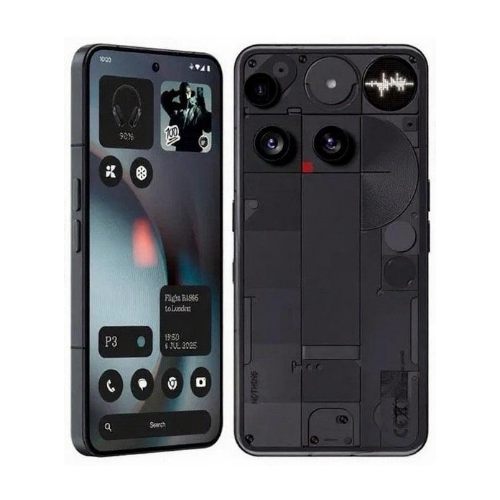
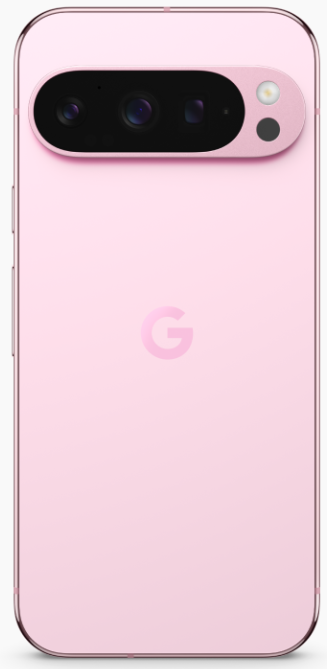
Nothing Phone (3) and Google Pixel 9 Pro represent two very different approaches to Android flagships, one focusing on bold design, value, and fast hardware, while the other emphasizes AI-driven features, advanced cameras, and long-term software support. This comparison is important because it highlights the choice between a style-packed, performance-heavy phone and a software-first, future-proof device.
The Nothing Phone (3) carries forward its bold transparent design with customizable LED lights (Glyph interface), offering a futuristic appeal. It also brings Gorilla Glass 7i on the front and Victus on the back, paired with an aluminum frame, ensuring solid durability. The Pixel 9 Pro, in contrast, opts for a more minimalistic yet premium look, using Gorilla Glass Victus 2 both front and back, which is slightly more durable against scratches and drops. Both devices are IP68 certified, but the Nothing Phone’s LED-backed design makes it more unique in terms of aesthetics, while the Pixel leans toward classic elegance.
Verdict: For durability and minimalism, Pixel 9 Pro feels slightly more refined, but the Nothing Phone (3) wins for those wanting standout style with its LED-driven design.
Display Quality:
Nothing Phone (3) offers a 6.67-inch OLED panel with HDR10+, 120Hz refresh rate, and a peak brightness of 4500 nits, making it one of the brightest in its class. Pixel 9 Pro counters with a smaller 6.3-inch LTPO OLED display, also 120Hz, but maxing out at 3000 nits. While Pixel has higher resolution density (~495 ppi vs ~460 ppi) and better color calibration with LTPO efficiency, the Nothing Phone takes the edge in brightness and visual punch, especially outdoors.
Verdict: Pixel 9 Pro is better for sharpness and color accuracy, but Nothing Phone (3) takes the win for extreme brightness and immersive size.
2. Specifications
Google Pixel 9 Pro
Performance:
The Nothing Phone (3) runs on Snapdragon 8s Gen 4, paired with up to 16GB RAM and UFS 4.0 storage. This chipset offers strong gaming and multitasking efficiency but sits slightly below the flagship Snapdragon 8 Gen 4. Pixel 9 Pro uses Google’s Tensor G4, built for AI-driven tasks and Google’s ecosystem optimization. While Tensor chips are not industry leaders in raw performance, they excel at AI features such as photo enhancements and live translations.
Verdict: Nothing Phone (3) edges out in raw performance and faster storage, but Pixel 9 Pro is better optimized for AI-driven tasks and long-term software integration.
Battery and Charging:
Nothing Phone (3) includes a larger 5150mAh (international) or 5500mAh (India) battery with 65W wired charging, 15W wireless, and reverse wireless. Pixel 9 Pro has a 4700mAh battery with 27W wired charging, 21W wireless, and supports bypass charging for gaming or prolonged use. Nothing’s faster charging makes it more convenient, while Pixel prioritizes efficiency with battery health management.
Verdict: Nothing Phone (3) is superior for users needing bigger capacity and faster wired charging, but Pixel 9 Pro’s smarter charging options and bypass charging make it better for long-term durability.
3. Camera
Nothing Phone 3
Main and Secondary Lenses:
Nothing Phone (3) features a triple 50MP setup with wide, ultrawide, and 3x telephoto, delivering balanced versatility. Pixel 9 Pro, however, elevates imaging with its 50MP wide, 48MP ultrawide, and 48MP 5x telephoto, alongside advanced software like Pixel Shift, Best Take, and Zoom Enhance. While Nothing Phone offers consistency, Pixel’s image processing and higher zoom capabilities give it the upper hand, especially in challenging light and long-range shots.
Verdict: Pixel 9 Pro is ahead with superior zoom and software processing, making it the better all-rounder for photography.
Selfie Camera:
Nothing Phone (3) packs a sharp 50MP selfie shooter capable of 4K@60fps recording, catering to vloggers and content creators. Pixel 9 Pro uses a 42MP ultrawide front camera, with enhanced AI features and HDR, producing more natural tones and wider group selfies. The Pixel sacrifices resolution but gains in color science and field of view.
Verdict: Nothing Phone (3) is better for detail-rich selfies and video recording, while Pixel 9 Pro is ideal for more natural, AI-enhanced group or ultrawide selfies.
4. Pricing
Google Pixel 9 Pro
At around $799, the Nothing Phone (3) delivers flagship-grade hardware with standout design at a lower cost. The Pixel 9 Pro, priced at $1000, justifies its premium with AI features, superior software updates, and advanced camera tools. For budget-conscious buyers, the Nothing Phone offers more value, while Pixel caters to those who prioritize long-term support and cutting-edge software.
Verdict: Nothing Phone (3) wins on value for money, but Pixel 9 Pro justifies its higher price with exclusive features and longer software support.
5. Conclusion
Google Pixel 9 Pro
The Nothing Phone (3) stands out with its Glyph LED interface, extreme brightness, faster charging, and a high-resolution selfie camera, making it a practical yet stylish choice. The Pixel 9 Pro, however, shines with unique extras like satellite SOS, UWB support, skin temperature sensor, and unmatched AI camera processing, alongside 7 years of updates.
Verdict: Choose the Nothing Phone (3) if design, value, and fast charging matter most. Go for the Pixel 9 Pro if long-term updates, advanced AI features, and superior photography are priorities.
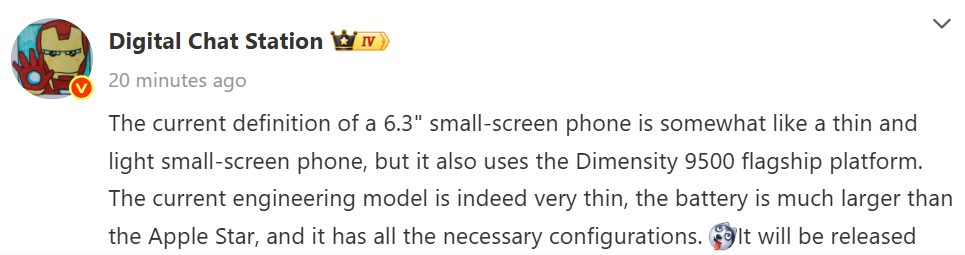
Honor is expected to unveil the Magic 8 and Magic 8 Pro in October of this year. Recent reports have revealed that the series may include a compact edition tentatively dubbed the Magic 8 Mini. In a new Weibo post, reliable tipster Digital Chat Station has leaked details about its display, chipset, and launch timeframe.
Honor Magic 8 Mini specifications leaked
Honor Magic 8 Mini leak by DCS
According to the tipster, the alleged Honor Magic 8 Mini will be equipped with a 6.3-inch OLED panel. While the Magic 8 and 8 Pro are expected to feature the Snapdragon 8 Elite 2 chipset, the Mini edition could house the Dimensity 9500 SoC.
He added that the current engineering prototype of the Honor Magic 8 Mini is very thin despite housing a big battery and all the necessary specs. As far as the launch timeframe is concerned, the Magic 8 Mini likely won’t arrive alongside the main Magic 8 series; instead, the launch is expected sometime in the first half of next year.
In related news, Honor is also working on a Dimensity 8500 phone. While the exact moniker of the device is not known yet, it is expected to pack a huge 10,000mAh battery. It remains to be seen whether it will be called the Honor Power 2 or something else.
Furthermore, this week, the brand will unveil the much-anticipated Honor Magic V Flip 2 in China. Set to launch on Aug. 21, the Snapdragon 8 Gen 3-powered device will feature a 5,500mAh battery, the largest ever seen on a flip phone. It is also confirmed to support 80W wired and 50W wireless charging.
For more daily updates, please visit our News Section.
Meizu recently confirmed that the Meizu 22 flagship phone will be announced this month in China. Today, Meizu Group CEO Huang Zhipan shared the first official camera samples of the upcoming Meizu 22. Additionally, a leaked shot of the device has surfaced, revealing a redesigned rear panel.
Meizu 22 camera samples
Meizu 22 camera sample
The leaked watermark details confirm that the Meizu 22 is equipped with a 24mm main sensor with f/1.6 aperture and a 72mm telephoto sensor with f/2.4 aperture. This setup enables the phone to achieve an effective 3x optical zoom. While the official camera samples have surfaced, the exact megapixel count is yet to be revealed.
Meizu 22 camera sample
Meizu 22 to sport a redesigned look
The leaked image of the phone reveals that it will feature a square-shaped rear module housing three to four sensors, replacing Meizu’s earlier vertical arrangement. The phone is said to incorporate a flat mid-frame for a sharper profile, while the display reportedly features the industry’s narrowest 1.2mm symmetrical bezels for a striking front design. With a body width of around 71mm, it is targeting the small flagship category while maintaining high-end performance.
Meizu 22 leaked shot
The Meizu 22 is expected to feature the Snapdragon 8 Elite platform. Battery capacity is said to be around 5,500mAh, supported by 80W wired fast charging. Other possible flagship features include ultrasonic fingerprint recognition, IP68 dust and water resistance, and AMOLED panels with up to 2K resolution and adaptive LTPO refresh rates.
While the Meizu 21 series included a standard and Pro model, recent reports suggest that there will only be a Meizu 22, meaning there won’t be a Pro edition.
For more daily updates, please visit our News Section.
After launching the Honor X9c 5G in July, Honor has officially launched the Honor X7c 5G in India. The budget-friendly 5G phone comes with a Snapdragon chipset, a 50-megapixel rear camera, a big battery, and a slim design. Let’s take a detailed look at its specifications, features, and pricing.
Honor X7c 5G specifications and features
The Honor X7c 5G features a 6.8-inch LCD FHD+ 120Hz display with a 20.1:9 aspect ratio, up to 850nits peak brightness, and aluminosilicate glass protection. The device runs Android 14 with a layer of MagicOS 8.0 on top.
Under the hood, the device is equipped with the Snapdragon 4 Gen 2 chipset. It comes with 8GB of RAM paired with 256GB of internal storage. A 5,200mAh battery with 35W Honor SuperCharge keeps the phone powered throughout the day.
Its dual rear camera setup includes a 50-megapixel main sensor with an f/1.8 aperture and a 2-megapixel depth sensor. On the front, there is a 5-megapixel camera for selfies and video calls. For security, it features face unlock and a side-facing fingerprint sensor.
Connectivity features include 5G, 4G LTE, Wi-Fi 802.11 a/b/g/n/ac (2.4GHz and 5GHz), Bluetooth 5.0, GPS, and USB Type-C. It also comes with a 3.5mm headphone jack. It is an IP64-rated device, which measures 8.24mm in thickness and weighs around 193 grams.
Honor X7c 5G price and availability
The Honor X7c 5G is offered in a single variant of 8GB RAM and 256GB storage. It comes in multiple color options including Forest Green and Moonlight White. Inclusive of offers, the phone is priced at Rs 14,999 and is scheduled to go on sale via Amazon on Aug. 20. Buyers can also benefit from up to 6 months of no-cost EMI.
For more daily updates, please visit our News Section.
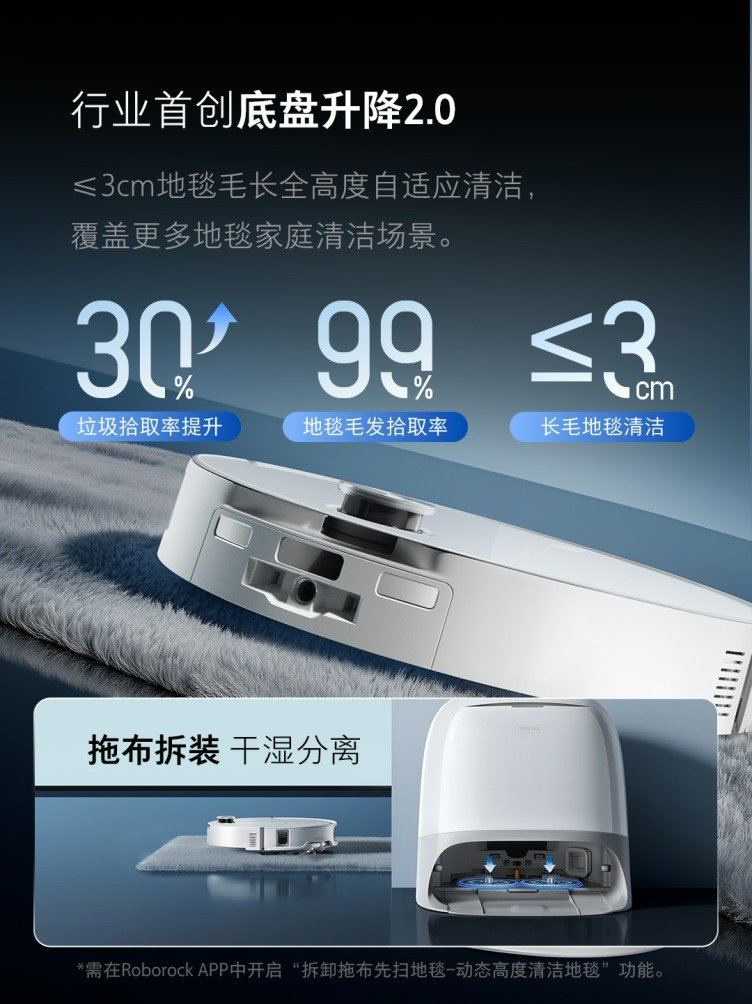
Roborock Technology has unveiled its latest sweeping and mopping robot, the P20 Ultra Plus, in China. According to the company, the new model represents a system-level cleaning innovation with several first-in-class features. Designed to address common household cleaning challenges, the device incorporates advanced technology for sterilization, carpet care, and low-space coverage.
Roborock P20 Ultra Plus specifications and features
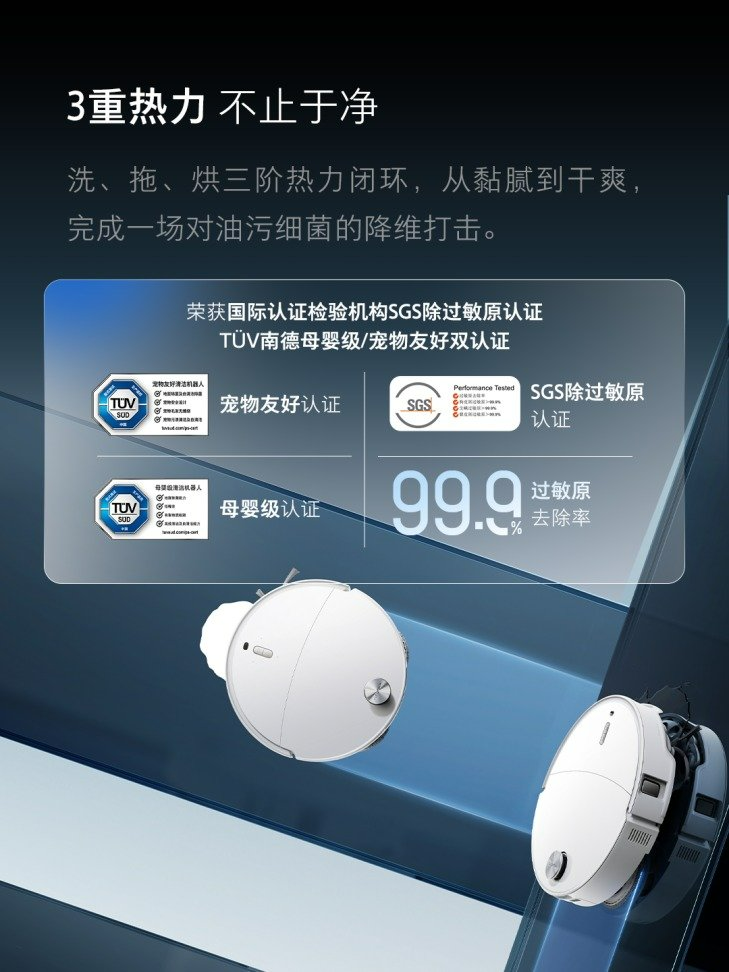
The Roborock P20 Ultra Plus integrates a triple thermal cleaning process, combining 100°C cloth washing, 60°C pressurized hot mopping, and 55°C continuous drying. This cycle ensures effective stain removal and a 99.99 percent sterilization rate while preventing odors and mold formation. Its upgraded Chassis Lift 2.0 allows adaptive height adjustment up to 2cm, enabling the robot to overcome thresholds and clean long-pile carpets up to 3cm.
The device is only 7.98cm thick, making it suitable for cleaning under beds, sofas, and cabinets. It employs 25,000Pa suction power paired with a zero-tangle brush system to manage dust, hair, and pet fur. Certification from SGS and TÜV SÜD also assures safe use for families with children or pets. Additional functions include remote video monitoring, pet detection, and smart interaction through Roborock’s RRmind GPT system, as well as Apple Home compatibility.
Roborock P20 Ultra Plus price and availability
The Roborock P20 Ultra Plus is priced at 4,299 Yuan (~$600) in China. It is now available through major e-commerce platforms in the country.
For more daily updates, please visit our News Section.
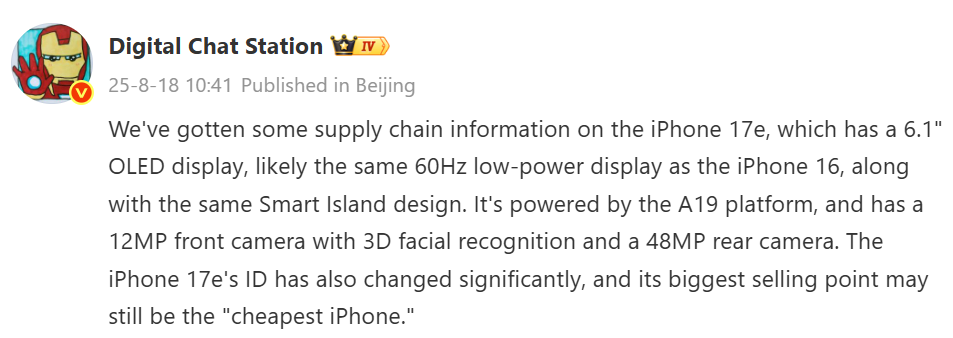
In September, Apple will unveil the iPhone 17 series globally and it is expected to announce the iPhone 17e next year. Like the iPhone 16e, which debuted earlier this year, the iPhone 17e is expected to arrive as the most affordable phone in the iPhone 17 series. A new leak, courtesy of tipster Digital Chat Station, has revealed the key specifications of the iPhone 17e.
iPhone 17e specifications (rumored)
iPhone 17e specifications leaked
Based on the information obtained from the supply chain, DCS claimed that the iPhone 17e will be equipped with a 6.1-inch OLED display, most likely the same 60Hz low-power panel used on the iPhone 16. It will reportedly carry the same Dynamic Island design and be powered by the Apple A19 chipset.
For cameras, the front is said to include a 12-megapixel sensor with 3D facial recognition, while the rear may house a 48-megapixel main camera. The overall design is expected to see significant changes, but the biggest highlight of the iPhone 17e could once again be its positioning as the most affordable iPhone in the lineup.
iPhone 16e receives a good reception
iPhone 16e
According to a research report from Consumer Intelligence Research Partners (CIRP) for the June 2025 quarter, the iPhone 16e has established itself as a strong performer in Apple’s lineup. This was the first full quarter of results for the 16e, which was launched in February as a replacement for the long-running iPhone SE. The 16e has proven to be far more popular than its predecessor, easing earlier concerns that it might be priced too high for bargain hunters while offering too few specifications for higher-end buyers.
Instead, the iPhone 16e not only captured demand from existing SE customers but also drew sales away from older legacy models such as the iPhone 15 and 14. In the June 2025 quarter, the 16e accounted for 11 percent of all iPhone sales in the US, more than doubling the SE’s share of just 5 percent in the same quarter a year earlier. Meanwhile, legacy models dropped sharply from 28 percent of unit sales in June 2024 to just 15 percent this quarter, showing how the 16e has reshaped Apple’s lower-tier sales mix.
Based on the iPhone 16e’s strong sales performance, the iPhone 17e can be expected to continue as Apple’s most affordable yet widely appealing iPhone option.
For more daily updates, please visit our News Section.
China has officially entered the legal AI arms race. Last Friday, researchers unveiled the “Xiao Baogong Legal Content Model,” a specialized artificial intelligence system that’s been fed an absolutely staggering diet of legal documents: over 200 million court judgments and 4.2 million laws and regulations. It’s the country’s first large-scale vertical legal AI model, and it represents a significant escalation in how governments are thinking about AI-powered legal services.
Dual-engine approach to legal AI
The timing isn’t coincidental. While China has been developing competitive general-purpose models like DeepSeek and systems from Baidu, Alibaba, and ByteDance, the country has also been particularly aggressive about creating highly specialized AI systems designed for specific industries and use cases. The Xiao Baogong model, developed by Professor Wang Yanling’s team at South China Normal University, represents this parallel track of vertical specialization.
What makes this system particularly interesting is its “dual-engine structure” that combines a general large language model with a specialized vertical model. Think of it as having both broad conversational abilities and deep, specific expertise in Chinese law. The researchers have also incorporated legal knowledge graphs and Retrieval-Augmented Generation (RAG) techniques, basically, ways to make sure the AI can trace its reasoning back to specific legal documents and precedents.
This isn’t just an academic exercise. The model has already passed algorithm registration with China’s Cyberspace Administration, meaning it’s cleared for real-world deployment. And the applications the researchers have in mind are decidedly practical: administrative reconsideration (think appeals of government decisions), prosecutorial oversight, and contract compliance.
Solving China’s legal desert problem
The bigger picture here is about access to justice. China has a significant legal services problem; its 700,000 practicing lawyers are heavily concentrated in wealthy eastern cities, leaving vast swaths of the country, particularly rural western regions, with little to no legal representation. Some counties don’t even have a single law firm. An AI system that can provide basic legal guidance and document analysis could theoretically help bridge this gap, offering a form of “democratized” legal service.
The real test is still ahead
But there are obvious questions about how this will work in practice. Legal AI systems have a well-documented tendency to “hallucinate”, generating plausible-sounding but completely fabricated legal citations and precedents. The researchers claim their system addresses this through its knowledge graph structure and emphasis on traceable, verifiable responses. The real test will be whether it can maintain that accuracy when deployed at scale.
There’s also the matter of legal nuance. While 200 million cases sounds impressive, the law isn’t just about pattern matching; it requires understanding context, weighing competing interests, and making judgment calls that even human experts disagree on. The system’s “dynamic learning mechanism,” which allows it to improve based on real-world feedback, suggests the researchers understand this challenge.
What’s perhaps most significant is that China is positioning this as more than just a research project. The launch at the “Xiao Baogong Cup” Legal Empirical Analysis Essay Competition, alongside a forum on building AI + Law laboratories, signals a coordinated push to move from academic exploration to widespread implementation.
Whether this focused approach to vertical AI specialization, alongside China’s broader general-purpose model development, proves more effective than relying primarily on general models for specialized tasks remains to be seen.
But one thing is clear: the global race to deploy AI in critical public services has just gotten a lot more interesting.
For more daily updates, please visit ourNews Section.
Realme has officially confirmed that the Realme 15 series will debut in September in China. Leaks suggest that the lineup will include three models: the Realme 15, Realme 15T, and Realme 15 Pro. Since the standard and Pro models have already been released in India, their specifications are known, while recent reports have revealed the key details of the upcoming Realme 15T.
Realme 15 series teaser released for China
Realme 15 series September China launch
According to the official teaser poster, the Realme 15 series will feature a dual-curved display and a curved back panel, with a triple camera setup faintly visible. In July, Realme launched the global versions of the Realme 15 and 15 Pro, which also went on sale in India. These devices came with IP65/68/69 water resistance, a 6.8-inch micro-curved display offering 1.5K resolution, a 144Hz refresh rate, 4608Hz PWM dimming, and peak brightness of 1800 nits.
The Realme 15 is powered by the Dimensity 7300+ processor, while the Pro variant runs on the Snapdragon 7 Gen 4 chip. For cameras, the Pro edition features a 50-megapixel front-facing sensor and a dual-camera setup on the back with a 50-megapixel primary and a 50-megapixel ultra-wide lens. The Realme 15, on the other hand, offers a 16-megapixel front camera along with a rear dual setup comprising a 50-megapixel main sensor and an 8-megapixel secondary lens. Both models pack a 7,000mAh battery supported by 80W fast charging.
Realme 15T specifications (rumored)
Realme 15T leak
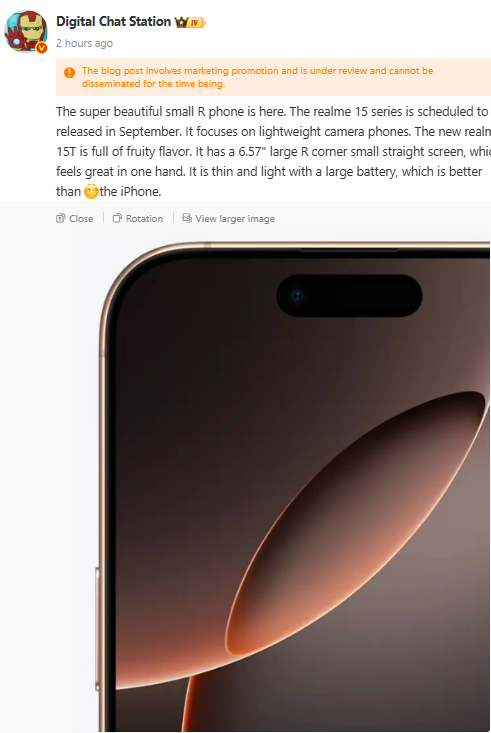
According to tipster Digital Chat Station, the Realme 15T will feature a 6.57-inch flat display, wide rounded edges and a slim design aimed at easier one-handed use. Despite its slim profile, it is expected to come with a large battery, making it a notable option in its category.
A recent X post from tipster Abhishek Yadav on X revealed that the Realme 15T’s screen will deliver 2,200 nits of peak brightness. The device will be powered by the MediaTek Dimensity 6400 Max chipset. In terms of cameras, the phone is said to include a 50-megapixel rear sensor and a 50-megapixel front camera. Measuring 7.79mm in thickness, it is also expected to feature a 7,000mAh battery with support for 80W fast charging.
For more daily updates, please visit our News Section.
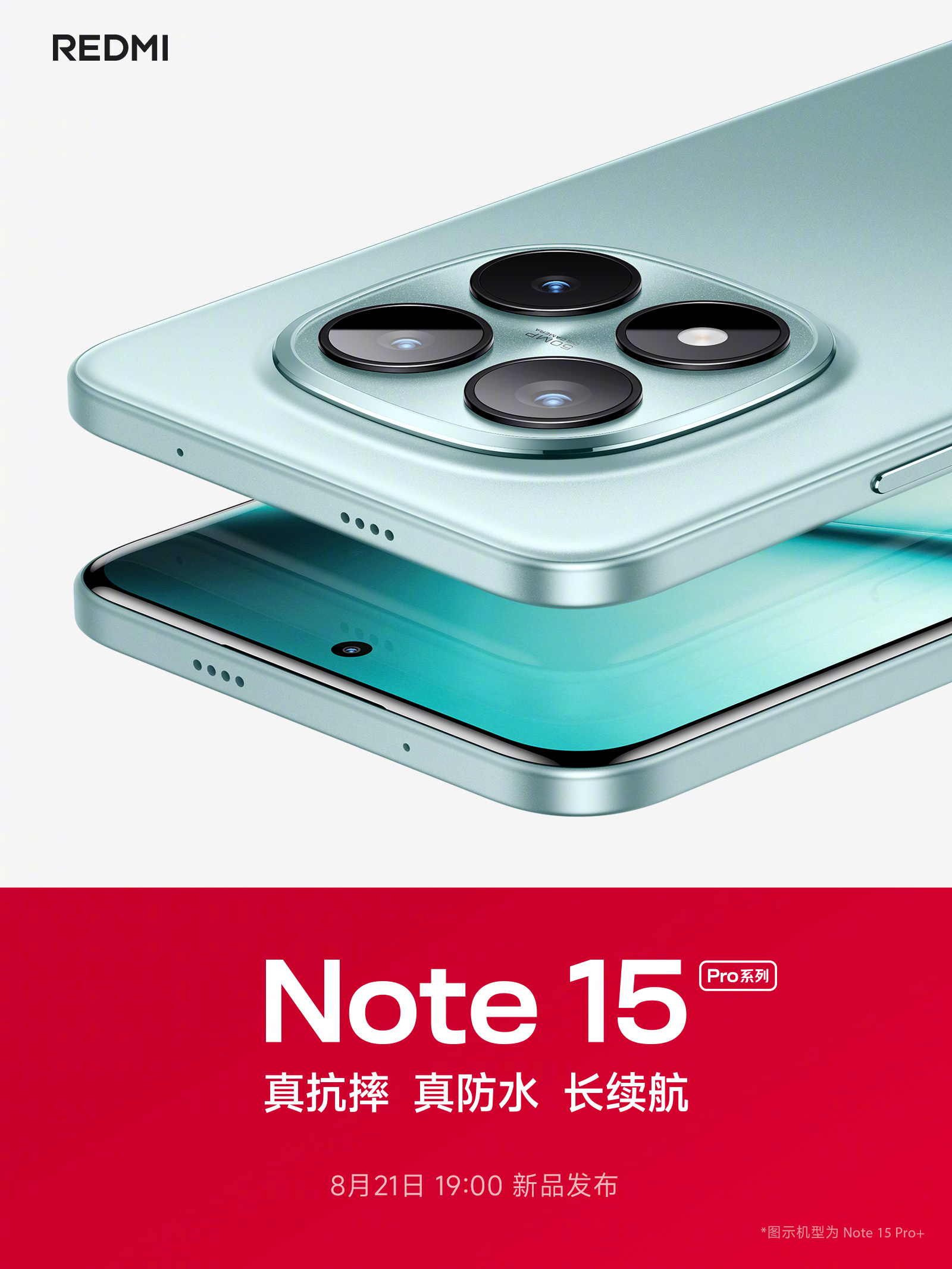
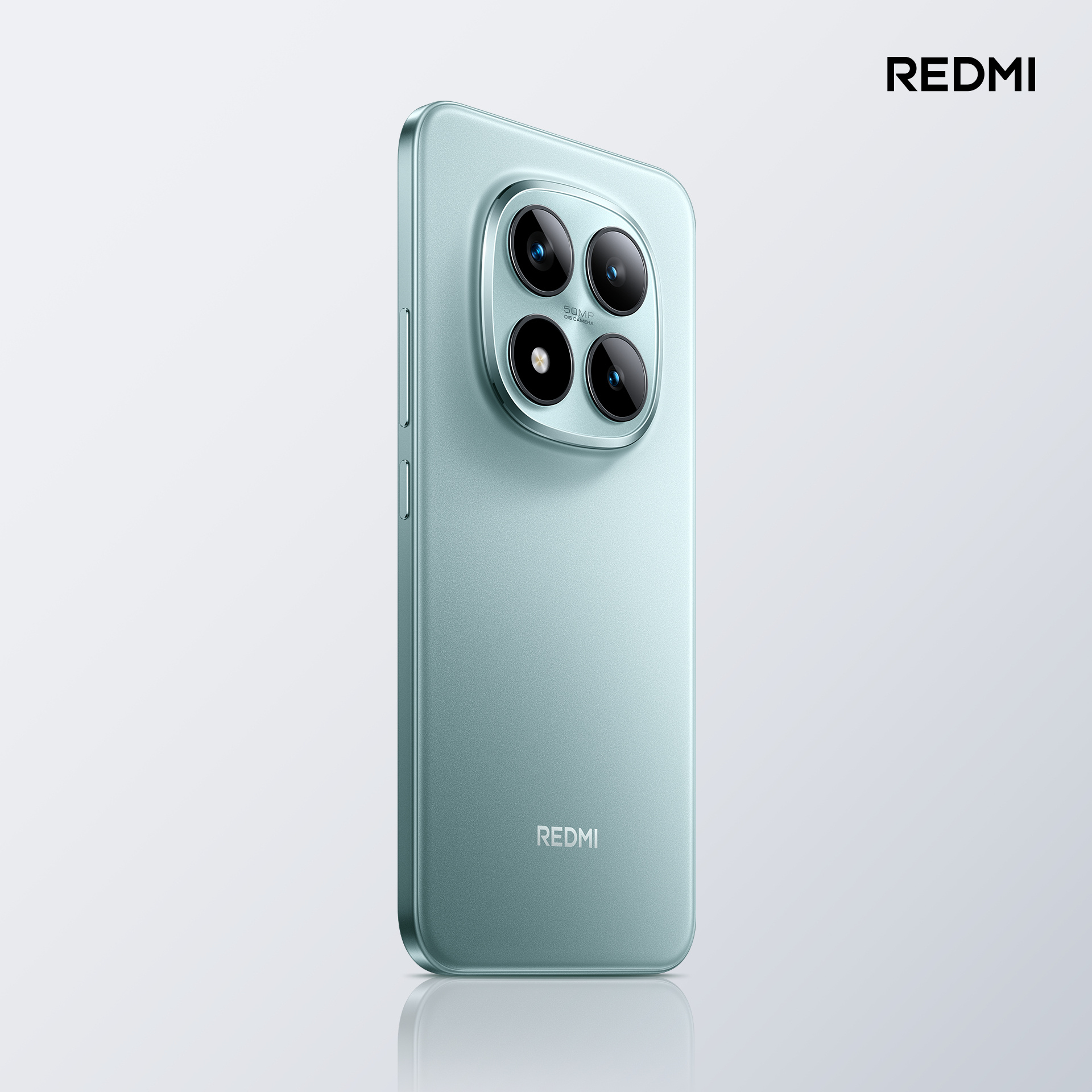
The launch date of the Redmi Note 15 Pro+ has been officially confirmed. Today, the brand announced on its Weibo handle that the device will debut on August 21 in China. Since only the Pro+ edition’s launch date has been mentioned, it is likely that the Redmi Note 15 Pro and Note 15 will also be unveiled on the same day. Here’s a look at the official images and key details of the Pro+ shared by the brand.
The Redmi Note 15 Pro+ is being positioned as a device that combines design finesse with durability. According to the brand, it is Redmi’s first phone to feature a symmetrical micro-curved design on both the front and back, giving it a more refined appearance and a comfortable in-hand feel.
Redmi claims that achieving this design required advanced glass processing techniques and significant investment, making it a feature usually reserved for flagship devices. On durability, the Note 15 Pro+ introduces what Redmi calls its strongest dual-side protection system to date. It features Xiaomi’s Crystal Glass on the front for enhanced screen protection, paired with a lightweight yet strong fibreglass back that improves resistance to bending and impacts.
The company claims this setup provides up to ten times better drop resistance compared to conventional designs and highlights that it is the first in the industry to pass a granite surface drop test from 2 metres, repeated 50 times. The focus, therefore, is on combining a sleek, premium form factor with enhanced toughness for everyday reliability.
Redmi Note 15 Pro+ specifications (rumored)
The brand has not yet disclosed the technical specifications of the Redmi Note 15 Pro+. However, rumors suggest that the device may feature a quad-curved OLED display with 1.5K resolution support, along with a triple camera system that includes a 50-megapixel primary sensor and a 50-megapixel telephoto lens. It is expected to be powered by the upcoming Snapdragon 7s Gen 4 chipset, paired with up to 16GB of RAM. The phone is also tipped to house a large 7,000mAh battery with support for 90W fast charging and run on HyperOS 2.0 based on Android 15. It is also expected to support satellite connectivity.
For more daily updates, please visit our News Section.
Asus is rolling out Android 16 testing for its latest gaming phones, giving ROG Phone 9 and 9 Pro users a chance to try the next big software update ahead of schedule. Owners of the two models can now enroll directly from their device. The process is simple: head to Settings > System > System update, tap the gear icon, and select Enroll in Android preview program. Once accepted, the phone pulls in the beta build over the air.
But there’s an important caveat — beta software is likely to include bugs, and once you jump in, there’s no easy way to go back to Android 15. That means testers are effectively locked in until the stable Android 16 release, which Asus is targeting for early 2026.
Despite the flagship specs, Asus is only promising two Android upgrades: Android 16 and Android 17. The cheaper ROG Phone 9 FE, which launched earlier this year, isn’t included in the beta program but will follow the same update cycle. Compared to Samsung and Google’s seven-year update commitment, Asus’ two-year window feels limited — especially for flagships priced at nearly €1,000.
Should you try it?
The beta gives users an early look at Android 16’s tweaks, including better gaming optimizations and battery efficiency improvements. Still, the lack of a rollback option makes this a risky choice for anyone relying on their phone as a daily driver. For those who don’t mind the bugs, it’s a chance to be among the first to see what Android 16 brings to Asus’ gaming lineup.
China’s smart glasses market is heating up fast. A new forecast from IDC suggests shipments could hit 2.9 million units in 2025, up 121% year-on-year, as lower prices and AI features drive demand.
Xiaomi Mijia Smart Audio Glasses
In the first quarter alone, 494,000 units were shipped — up 116% compared to last year. Audio and audio-capturing models led the pack with 359,000 units, almost triple the previous year’s number. IDC points to falling prices, a stronger supply chain, and growing consumer interest as key factors. Average prices have dropped from several thousand yuan to around 1,000 yuan (~$140), opening the door to a wider audience.
Who’s leading
Xiaomi and Huawei remain strong players in online sales, while smaller firms are pushing features such as real-time translation and health tracking. Huawei, Alibaba, and ByteDance are also investing heavily, adding pressure to the market. AI-powered glasses have been the main growth driver so far, reportedly making up 78% of Q1 shipments. Offline sales are growing too, up 75% year-on-year.
IDC expects even stronger numbers in the second half of 2025 thanks to seasonal sales peaks. Analyst Wang Haoyu predicts smart glasses could soon move beyond early adopters into fitness, business, and accessibility markets. With growth outpacing global rivals like Meta’s Ray-Ban glasses, China could set the pace for what some are calling the “Hundred Lens War” in 2026.
Xiaomi’s Redmi Note lineup looks set for another big refresh, with the upcoming Redmi Note 15 Pro+ making an early appearance on Geekbench. The leak offers the first solid hint at what’s inside the device, ahead of its expected August 2025 launch in China.
Snapdragon 7s Gen 4 at the core
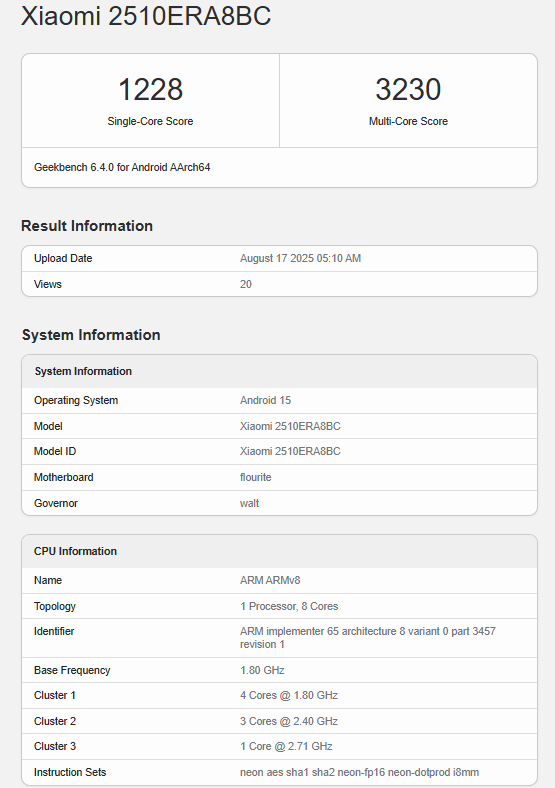
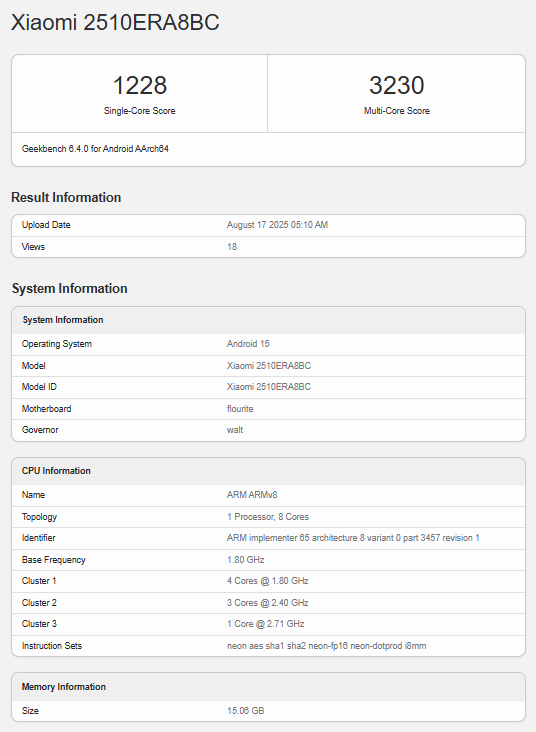
A device carrying the model number 2510ERA8BC, believed to be the Redmi Note 15 Pro+, was recently listed on Geekbench 6.4.0. The phone notched up 1,228 points in single-core and 3,230 points in multi-core tests. The benchmark listing also confirms a CPU layout of 1x 2.71GHz core, 3x 2.40GHz cores, and 4x 1.80GHz cores — a configuration that points to the Snapdragon 7s Gen 4, an unannounced chip from Qualcomm.
This marks a step up from the Snapdragon 7s Gen 3 found in the Note 14 Pro+. The tested unit also carried 16GB of RAM and ran on Android 15.
Xiaomi has been promoting the Note 15 Pro series as the next “Little King Kong,” highlighting tougher build quality this time around. Teasers so far have pointed to stronger drop resistance, full waterproofing, and an overall design made to withstand rough handling — possibly backed by an IP68/IP69 rating.
Other rumored specs include a 6.67-inch 1.5K AMOLED display, a 50MP main camera with OIS, and a 7,000mAh battery with 90W fast charging. The series will replace the Note 14 Pro lineup that launched in September 2024 starting at CNY 1,399 (~$195), so Xiaomi is expected to keep pricing aggressive again.
If the leaks hold true, the Redmi Note 15 Pro+ could be officially unveiled in late August 2025 in China, before potentially expanding to global markets later. With its blend of performance upgrades and rugged durability, the device looks set to square off against rivals like the Samsung Galaxy A57 5G in the crowded mid-range segment.
Xiaomi has launched a comprehensive HyperOS update for the 15 Ultra in China, bringing crucial camera improvements and system-wide refinements that address user complaints while introducing new functionality. The update, version 2.0.215.0.VOACNXM, represents the culmination of extensive internal testing and optimization efforts.
What’s fixed in this update?
Following rigorous testing in closed beta build 2.0.212.0, Xiaomi has successfully resolved the persistent viewfinder filter display issue that frustrated photographers and content creators. The bug, which caused camera filters to disappear from the viewfinder in specific shooting conditions, had been a significant pain point.
The public release, weighing 918MB, delivers substantial improvements across multiple areas. Camera functionality receives the most significant attention, with enhanced night mode performance that promises better low-light photography results. The update also refines 4K/60fps video recording, addressing previous stuttering and quality inconsistencies.
System performance gains include intelligent landscape app management, enabling fluid transitions between horizontally-oriented applications. This enhancement reduces jarring interruptions during multimedia consumption, gaming sessions, and productivity tasks. The update intelligently handles app launches and exits in landscape mode.
Security improvements accompany the feature enhancements, with August 2025 patches ensuring protection against latest vulnerabilities. The update also resolves synchronization issues with Xiaomi’s Mi Body Composition Scale, strengthening the company’s ecosystem integration.
However, ongoing beta testing reveals persistent challenges across the HyperOS platform. Multiple issues remain unresolved, including photo album crashes on the Xiaomi 14 Pro, notification panel glitches, and QQ floating window malfunctions. Desktop wallpaper rendering delays and fingerprint animation bugs continue affecting user experience. These issues are currently under review in beta builds and are expected to be resolved in upcoming updates.
In related news, Xiaomi is preparing for the global launch of its MIJIA Smart Air Purifier 6, designed to tackle allergens, odors, and pathogens. Meanwhile, the company has also introduced the Redmi A27U Type-C 2026 monitor with 4K HDR support and 90W USB-C charging.
For more daily updates, please visit ourNews Section.
Xiaomi is expanding its smart home range with a new air purifier. The latest home appliance is the MIJIA Smart Air Purifier 6, which is the successor to the MIJIA Air Purifier 5 from last year. Now, this model has been listed on the brand’s global website, hinting at an imminent release. We also get a look at some of its specs and features, so let’s check it out.
Xiaomi’s Latest Smart Air Purifier 6 Brings Healthier Air
The Chinese tech giant’s new MIJIA Smart Air Purifier 6 surfaced on the global website, carrying the AC-M25-SC product number. As per the listing, the product is designed to clean out the air with a five stage air purification process that removes allergens like pollen, while also removing odors and formaldehyde.
Xiaomi MIJIA Smart Air Purifier 6
Furthermore, the filtration system uses an activated carbon filter and UV radiation, as well as various sensors that can map temperature and humidity, along with PM2.5 and PM1 sensors, and a dust sensor. The Xiaomi MIJIA Smart Air Purifier 6 measures 250 x 250 x 550 millimeters and even houses a display on the front. It is capable of a CADR of 443 m³ per hour.
As of right now, this smart air purifier is only listed on the Xiaomi global website. In other words, there is still no information regarding its pricing and regional availability. However, we can expect more information from the brand to surface soon.
For more daily updates, please visit our News Section.
The Samsung Galaxy S25 Ultra is proving to be the undisputed king of premium smartphones. The Ultra tag is typically reserved for a brand’s top of the line model with cutting edge hardware, optimized software, and advanced features. While Samsung’s rivals have an edge in many ways, the S25 Ultra has still pulled out ahead.
Samsung Galaxy S25 Ultra Crushes the Competition
According to known tipster Ice Universe, the Samsung Galaxy S25 Ultra managed to beat every other Ultra model in the market. This isn’t by a close figure, but rather, a large margin. The S25 Ultra outsold all of the other devices combined. Three major Chinese brands competed with Samsung with their own Ultra phones.
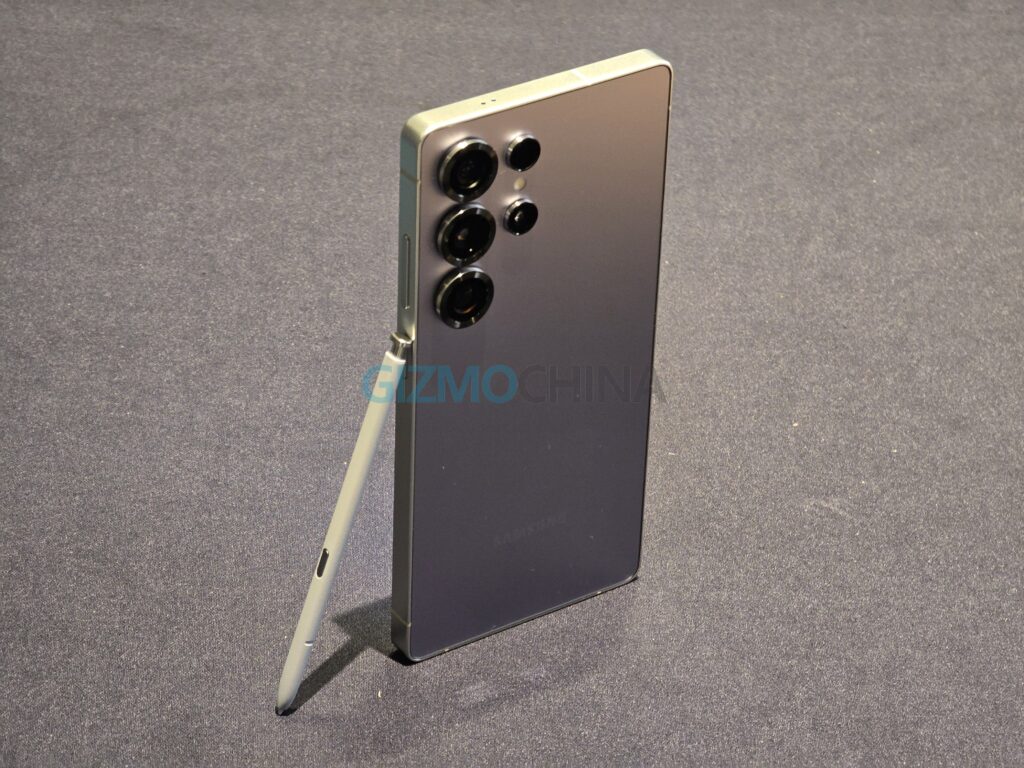
Samsung Galaxy S25 Ultra with S Pen
By the end of June 2025, the Xiaomi 15 Ultra led the pack with over 586,000 units sold, while the Vivo X200 Ultra saw over 219,900 units. Lastly, over 210,000 units of the Oppo Find X8 Ultra were shipped during this time. However, the Galaxy S25 Ultra took the dominating lead with 8,390,000 units sold. So all of these flagships combined stood no chance against Samsung’s top flagship.
This can be attributed to the company’s strong global presence, unlike its Chinese competitors. The X200 Ultra, Find X8 Ultra, and Xiaomi 15 Ultra can be seen as more advanced devices in many ways when compared to the S25 Ultra, especially when you talk about camera or battery technology. However, Samsung took a different direction, sticking to a slimmer (skipping the large camera module) and more refined design.
Redmi is expected to announce the launch date of the Redmi Note 15 series tomorrow (Aug. 18) in China. The upcoming lineup is tipped to include three models – the Redmi Note 15, Note 15 Pro, and Note 15 Pro+. Ahead of the official unveiling, the alleged Pro+ variant, identified by the model number 2510ERA8BC, has surfaced on Geekbench, offering insight into its hardware.
Redmi Note 15 Pro+ Geekbench listing
The device was recently seen on China’s 3C certification platform and has now appeared on Geekbench. While the listing does not explicitly mention the chipset name, the CPU and GPU specifications indicate that the Note 15 Pro+ could be powered by an overclocked version of the Snapdragon 7s Gen 3.
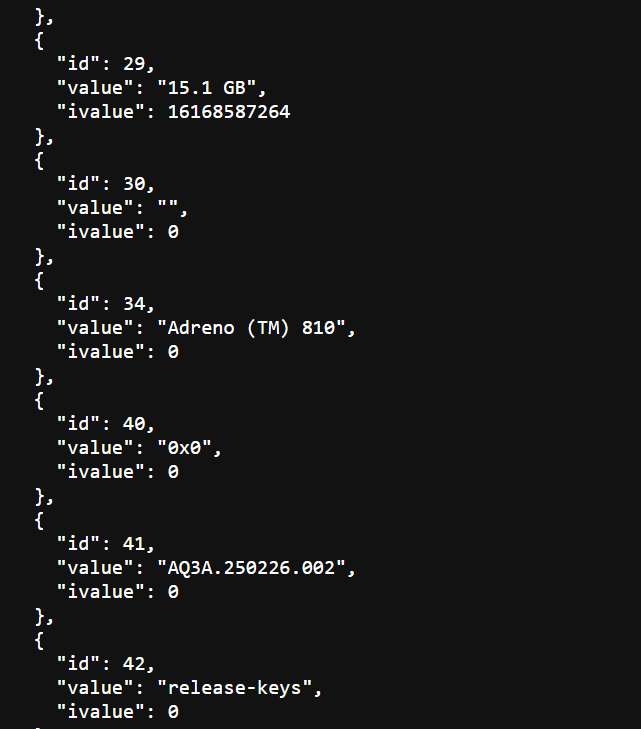
The listing reveals that the chipset features a prime core running at 2.71GHz, alongside three cores at 2.40GHz and four efficiency cores at 1.80GHz. It is also paired with the Adreno 810 GPU. These figures are largely identical to the Snapdragon 7s Gen 3, though the higher clock speed on the prime core suggests that this upgraded version may be marketed as the Snapdragon 7s Gen 4.
Alongside the chipset, the benchmark shows the Redmi Note 15 Pro+ with 16GB of RAM and Android 15. The handset managed to score 1,228 points in the single-core test and 3,230 points in the multi-core test.
As per other reports, the Redmi Note 15 Pro+ is expected to feature a quad-curved OLED panel that supports a 1.5K resolution and a 7,000mAh battery with 90W charging support. Its rear camera setup may include a flagship-grade 50-megapixel primary camera and a 50-megapixel telephoto sensor. It is also said to have a variant that offers satellite connectivity.
For more daily updates, please visit our News Section.
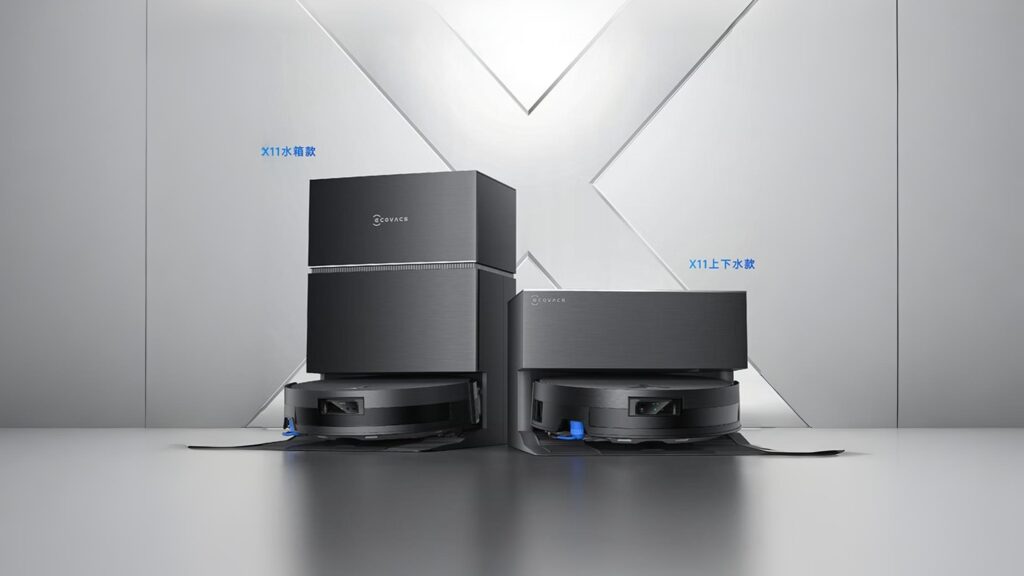
Ecovacs has launched its latest robot vacuum and mop, the Deebot X11, in the Chinese market. The base variant with a water tank is priced at 5499 yuan ($765), while the model with both water inlet and drainage capabilities is available for 5899 yuan ($822). Both these variants are now available on JD.com.
Ecovacs Deebot X11 Specifications
The Deebot X11 introduces several first-in-industry technologies aimed at improving suction power, mopping efficiency, and automation. It features a 6400mAh soft-pack power battery and supports “PowerBoost” instant charging. According to the company, the robot can recharge 6% in just three minutes during cleaning sessions, allowing it to cover large homes of up to 1000m² or perform deep cleaning cycles across smaller zones.
Ecovacs has equipped the X11 with its patented Ozmo Roller 2.0 system. This system uses an eight-nozzle spray mechanism, a 200 RPM roller mop, constant pressure scrubbing, and real-time dirty water recovery. The company claims this four-step process ensures the mop is continuously rinsed with clean water to prevent streaking and secondary contamination. The antibacterial nylon brush supports mop lifting and enables flexible edge cleaning.
For vacuuming, the X11 uses Ecovacs’ Blast system, which delivers up to 24,800Pa of suction power with a 15L/s airflow, driven by a custom-built 60W fan. According to the company, this setup is 2.4 times more efficient than standard robot vacuums. It also includes ZeroTangle 3.0 anti-tangle technology, which relies on wind-blade side brushes to dislodge hair and minimize clogging.
Mobility is powered by the TruePass four-wheel adaptive drive system. This hardware-based solution enables the robot to cross 24mm obstacles with increased stability, eliminating dependence on software-only climbing logic. The robot stands at 98mm in height and supports precise edge cleaning with the TruEdge 3.0 roller system.
For navigation, it relies on the upgraded Aivi 3D 3.0 vision system with dual structured light sensors. This setup enhances object recognition and low-clearance navigation.
The X11 pairs with an all-in-one base station that supports ten automated functions. These include auto dustbin emptying, auto water refill and drainage, 63°C hot water mop washing, hot air drying, detergent dispensing, base cleaning, and high-temperature antibacterial soaking. The station supports up to 150 days of hands-free operation.
For more daily updates, please visit ourNews Section.
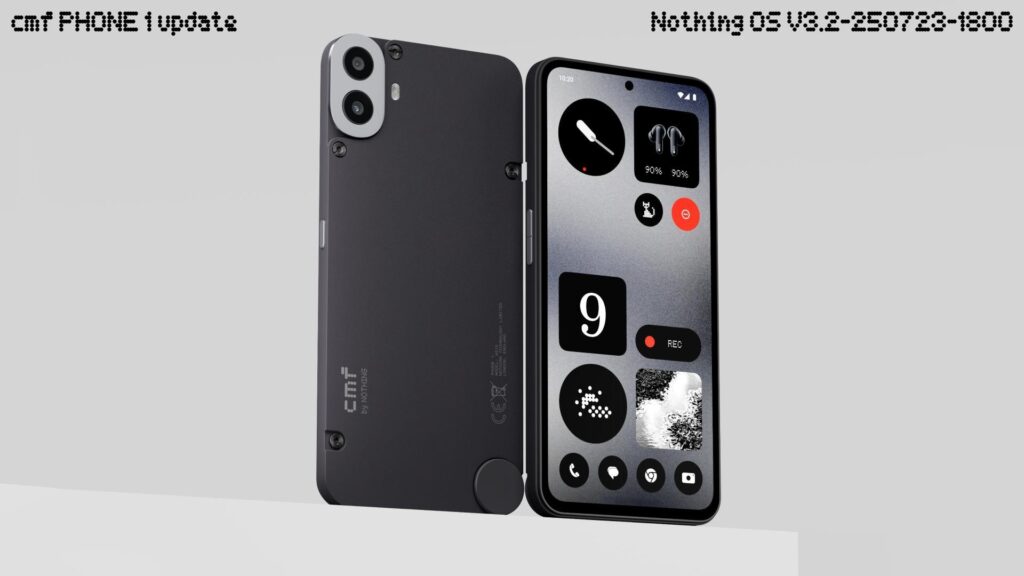
The CMF Phone 1 has started receiving the Nothing OS update V3.2-250723-1800. The new software focuses on widget improvements, camera stability, bug fixes, and system performance. It also includes the August 2025 security patch.
Widget Updates
Shared widgets now support more sticker types. The Countdown widget gets a new Recurring option along with additional shape choices. Pedometer and Screentime widgets now support sharing.
Camera and App Fixes
Users can now select a default gallery for photo previews in Camera settings. Camera stability has been improved. The update fixes Bluetooth call issues on Telegram that appeared when connected to certain watches and earbuds. It also resolves Inter font display problems in apps like Instagram, Subito, and others.
System Improvements
The update installs the August security patch. System stability has been enhanced and performance has been optimised.
Notes for Users
During the upgrade, devices may heat up or consume more power than usual. This is temporary and will return to normal once the update is complete.
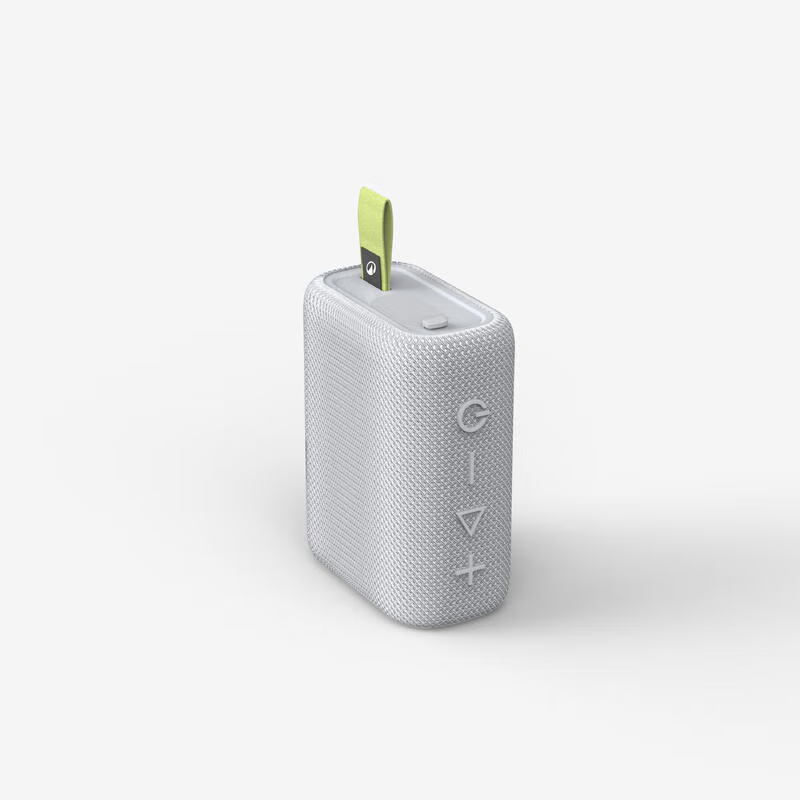
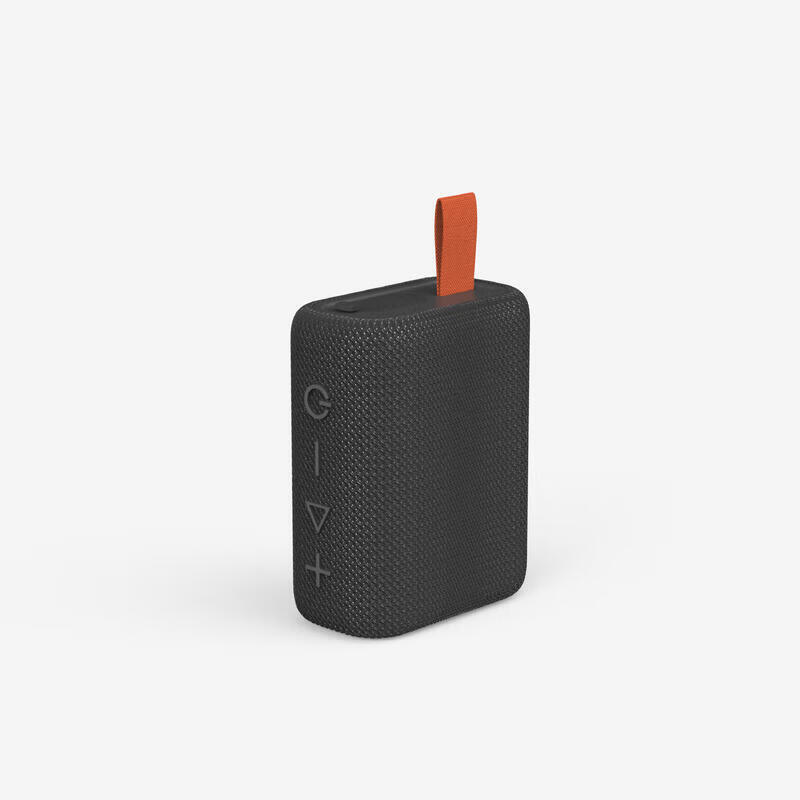
Decathlon, the French sportswear and outdoor gear retailer, has launched a new portable Bluetooth speaker called the PS100. The device is available on JD.com for 199 yuan ($28) in China and sells internationally for £24.99. It comes in Black and White color options and is positioned as an affordable, durable companion for outdoor activities.
Decathlon PS100 Bluetooth Speaker Specs
The PS100 features a compact and lightweight design, weighing just 220 grams. It includes a carrying strap for easy transport and raised physical buttons for playback and volume control. Decathlon has equipped the speaker with a 1500mAh battery that supports up to 10 hours of continuous playback. The device charges via USB-C in approximately 2 to 3 hours.
The speaker supports Bluetooth 5.3 and can pair with a second unit for stereo playback. Decathlon has implemented a straightforward control method that lets users switch devices easily.
The PS100 delivers 5 watts of audio output, offering clear sound and a good range for casual listening. While the sound performance is modest, Decathlon targets it at users who need a durable and portable speaker for outdoor activities.
The speaker carries an IPX7 rating for water and dust resistance. It can withstand immersion in water up to one meter and is designed for use in various environments, such as rain, beach outings, or next to the shower. This makes it suitable for hiking, camping, or yoga by the water.
Decathlon also emphasizes repairability as a core feature of the speaker. The battery and USB-C port cover can be replaced by users with basic tools, and customers also have the option to get help from a Decathlon workshop if needed.
We use cookies on our website to give you the most relevant experience by remembering your preferences and repeat visits. By clicking “Accept”, you consent to the use of ALL the cookies.
This website uses cookies to improve your experience while you navigate through the website. Out of these, the cookies that are categorized as necessary are stored on your browser as they are essential for the working of basic functionalities of the website. We also use third-party cookies that help us analyze and understand how you use this website. These cookies will be stored in your browser only with your consent. You also have the option to opt-out of these cookies. But opting out of some of these cookies may affect your browsing experience.
Necessary cookies are absolutely essential for the website to function properly. This category only includes cookies that ensures basic functionalities and security features of the website. These cookies do not store any personal information.
Any cookies that may not be particularly necessary for the website to function and is used specifically to collect user personal data via analytics, ads, other embedded contents are termed as non-necessary cookies. It is mandatory to procure user consent prior to running these cookies on your website.