Advertisement

Bose x Lisa Ultra Open Limited Edition Earbuds Announced with a Special New Design

Bose has just announced its latest collaboration for a new limited edition earbuds. The company is bringing a special edition Bose × LISA Ultra Open Earbuds, working with the popular K-pop star. These earbuds will officially go on sale this weekend, so here’s what we know.

Bose × LISA Ultra Open Earbuds: What does it offer?

The known audio brand has worked with artists before and this continues this tradition with Lisa this time around. The Bose × LISA Ultra Open Earbuds and Bose × LISA Ultra Open Earbuds: Crystal Edition have just been announced with her signature chrome star on the charging case. This design is featured in a glossy black color. Bose will sell this limited edition earbuds for 399 US Dollars.

Bose × LISA Ultra Open Earbuds

The company is hosting the immersive Bose × LISA Pop-up Boutique in Los Angeles on Saturday (between 10th and 11th May), with first sales kicking off on May 12 after the pop up event. Buyers can purchase it from the brand’s official website. Buyers can either purchase this model or enter a sweepstakes where 25 winners can win a flight to Los Angeles to meet LISA in person and receive one set of Bose x LISA Ultra Open Earbuds: Crystal Edition.

Apart from the unique aesthetic, the Bose × LISA Ultra Open Earbuds offer the same specs and features as the regular Bose Ultra Open Earbuds. So you’re still getting a cuff shaped design that goes around the ear. The open ear design allows users to still aware of their surroundings and promises up to 7 hours of battery life. One of its notable features includes multipoint connection that lets it connect to two Bluetooth sources at the same time.

For more daily updates, please visit our News Section.

Don’t miss a thing! Join our Telegram community for instant updates and grab our free daily newsletter for the best tech stories!

Xiaomi QLED TV FX Pro 2025 Series with Fire TV OS, HDR10+ & 120Hz Game Booster Now Official

Xiaomi has launched its QLED TV FX Pro Series 2025 in India with 43-inch and 55-inch models. Both TVs run Fire TV OS and come with a voice-enabled remote that includes a dedicated Alexa button and quick access to Prime Video, Netflix, and Amazon Music. They will be available from May 14 on Amazon.in, Mi.com, and offline partners.

Xiaomi QLED TV FX Pro Series 2025

The TVs feature a 4K (3840 x 2160) QLED display with quantum dot technology, 1.07 billion color depth, and DCI-P3 wide color gamut. They support HDR10+ for better contrast and brightness. Filmmaker Mode is included to turn off picture processing like noise reduction and motion smoothing. Viewing angle is 178 degrees.

Xiaomi QLED TV FX Pro Series 2025

The 43-inch model comes with 30W speakers, while the 55-inch has 34W speakers. Both support Dolby Audio, DTS-HD, and DTS Virtual:X. For performance, they run on a quad-core Cortex A55 processor with Mali-G52 MC1 GPU, 2GB RAM, and 32GB storage. The Game Booster feature pushes refresh rates up to 120Hz for smoother gameplay, although the default display refresh rate is 60Hz. MEMC support is also included.

Xiaomi QLED TV FX Pro Series 2025

Connectivity options include dual-band Wi-Fi (2.4GHz / 5GHz), Bluetooth 5.0, AirPlay, Miracast, 3 HDMI ports (2.0 & 2.1, one with ARC), 2 USB ports, 3.5mm audio jack, Ethernet, and antenna inputs.

Pricing & availability

The 43-inch QLED TV FX Pro is priced at ₹27,999 ($329), while the 55-inch model costs ₹39,999 ($469). As part of the launch offer, Xiaomi is giving a ₹2,000 discount for purchases made using HDFC Bank cards. Sale starts on May 14 on Amazon.in, Mi.com, and offline stores.

For more daily updates, please visit our News Section.

Stay ahead in tech! Join our Telegram community and sign up for our daily newsletter of top stories!

Is Samsung’s Galaxy Z Fold 7 the slimmest foldable phone yet?

Samsung is all set to release its next generation of premium foldable smartphones soon. The lineup consists of the Galaxy Z Fold 7 and Galaxy Z Flip 7. Rumors and reports have already revealed plenty of details regarding both models. While Samsung is the market leader in foldable phones, Chinese OEMs have pushed the boundaries in terms of innovation. But a fresh leak has hinted at Samsung swinging back with the thinnest ever foldable phone.

Samsung Galaxy Z Fold 7: Is it getting the biggest generational upgrade?

The news arrives from a known tipster Ice Universe, who shared a tweet that revealed details regarding the Galaxy Z Fold 7. He claimed that the South Korean tech giant plans to launch the slimmest foldable phone in the market, taking on the Oppo Find N5. The Galaxy Z Fold 7 will reportedly measure just 3.9mm in thickness when unfolded and 8.9mm when folded.

Samsung Galaxy Z Fold 7 CAD renders by OnLeaks and AndroidHeadlines
Samsung Galaxy Z Fold 7 leaked CAD renders

Ice Universe further adds that the Z Fold 7 will pack a 4,400mAh battery pack and the Galaxy Z Flip 7 has a 4,300mAh cell. This is in line with one of our recent reports based on a UL Demko certification. Apart from this, the tipster stated that the base version of the Galaxy S26 will also “continue to be thin.” Another report claimed that the production for the Galaxy Z Fold 7 and Galaxy Z Flip 7 have started earlier than expected ahead of the July launch.

Samsung’s Galaxy Z Fold 7 model did surface in another leak last month, which also confirmed that it could be the slimmest foldable ever. In other words, it will beat even the Oppo Find N5. But that report claimed that the Z Fold 7 would only measure 8.2mm in thickness. This is all the information we have at the moment, so stick around for more.

For more daily updates, please visit our News Section.

Tech enthusiast? Get the latest news first! Follow our Telegram channel and subscribe to our free newsletter for your daily tech fix! ⚡

Samsung Galaxy S25 Edge Confirmed for May 13 Launch with 200MP Camera and Slim Design

Samsung has officially confirmed the global launch of the Galaxy S25 Edge for May 13, 2025. The company also announced that the phone will feature a 200MP main camera with the ISOCELL HP2 sensor, and promises that it offers more than just a slim profile. The S25 Edge was first showcased at the Galaxy Unpacked event earlier this year.

Samsung Galaxy S25 Edge

As per previous reports, the Galaxy S25 Edge will be Samsung’s thinnest and lightest phone in recent years, measuring just 5.84mm thick and weighing around 162 grams. The device will feature a titanium alloy frame and a ceramic back, paired with ultra-thin 1.32mm bezels and a central punch-hole selfie camera. It will run on One UI 7, built on Android 15, and include Samsung’s Galaxy AI tools like Audio Eraser and Auto Trim.

Samsung Galaxy S25 Edge - Titanium Silver
Samsung Galaxy S25 Edge – Titanium Silver

It will come in Titanium Jet Black, Titanium Silver, and Titanium Icy Blue, and pricing in Europe starts at €1,249 for the 256GB variant. US buyers can already pre-reserve the device with a $50 Samsung credit. The launch event, titled “Beyond Slim,” will be livestreamed worldwide at 9:00 a.m. KST.

The phone’s display is expected to reach up to 2,600 nits brightness and support Gorilla Glass Victus 2 protection. Under the hood, it uses the Snapdragon 8 Elite for Galaxy processor, fabricated on a 3nm process and capable of reaching 4.47GHz speeds. It’s also expected to include a wide vapor chamber for thermal management.

Storage options will reportedly top out at 512GB, with no 1TB model planned. Wireless charging may be excluded, and battery capacity is smaller than other S25 models, potentially affecting endurance. The Edge will support seven years of software updates and include standard connectivity options such as Wi-Fi 7, Bluetooth 5.4, USB-C 3.2, and IP-rated durability. Sales are expected to begin May 30 in the US, with limited production of 40,000 units.

(Source)

Huawei Takes on Windows and macOS with HarmonyOS for PCs

At today’s HarmonyOS Computer Technology and Ecosystem Communication Conference, Huawei officially unveiled HarmonyOS for PCs. With this, Huawei has fully entered the HarmonyOS era for its entire range of consumer devices. From phones and tablets to smartwatches, smart displays, and now computers.

Like its smartphone counterpart, HarmonyOS for PC is designed from the ground up. According to Huawei, the HarmonyOS for PC is built on what it calls the “Harmony base,” which includes the Harmony kernel, Ark engine, StarShield security architecture, ArkTS, ArkUI, and DevEco development tools. 

HarmonyOS for PCs is a self-contained platform

In short, the OS is intended to be a self-contained platform independent of Android or Windows. It’s a path Huawei chose since it began developing HarmonyOS in response to U.S. trade restrictions.

Security and privacy were focal points in today’s presentation. HarmonyOS for PC reportedly features real-name developer authentication, app store signature verification, and strict permissions for screen recording and screenshots. There is a super privacy mode that disables the camera, microphone, and location access system-wide. 

On top of that, Huawei is introducing chip-level full-disk encryption, claiming that even if a hard drive is removed, files remain inaccessible without unlocking the screen.

As for productivity, Huawei says its new “HarmonyOS Office” experience enables seamless cross-device collaboration, unified accounts, multi-device sync, and HarmonyOS AI-assisted interactions. 

Enterprise solution

Enterprise customers are also part of the plan. Huawei says it will offer business-oriented solutions built around the HarmonyOS base, supported by two cloud platforms—the Enterprise Application Center and Enterprise Business Deployment Cloud—along with management, security, and productivity tools.

Huawei confirmed that HarmonyOS for PC will be officially released on May 19. It remains to be seen how the OS will perform in practice, what kinds of devices will support it first, and whether third-party developers will embrace yet another platform in an already fragmented software landscape.

For more daily updates, please visit our News Section.

Stay ahead in tech! Join our Telegram community and sign up for our daily newsletter of top stories!

(Source 1, 2)

Purported Vivo S30 Mini Pro to launch this month, key details emerge

Recent reports have revealed that Vivo is preparing to launch a mini phone under its S-series lineup in China. While the official moniker of the device is not known yet, it is likely to be called the Vivo S30 Pro Mini, a cheaper alternative to the Vivo X200 Pro Mini flagship phone that debuted in October 2024 in China. Here’s a look at what to expect from its specifications.

Vivo S30 Pro Mini key details tipped

Vivo S30 Pro Mini specs leak

As per the above Weibo post by reliable tipster Digital Chat Station, the alleged Vivo S30 Pro Mini will feature a 6.3x-inch OLED flat display with a 1.5K resolution. Its battery size could be between 6,500mAh and 7,000mAh capacity. It further states that the S30 Pro Mini will have support for 100W wired charging and wireless charging.

Vvio S30 Pro Mini leak

The other Weibo post by DCS reveals that the device is expected to launch in China in May. The phone will come in a variety of vibrant colors, and the frame has a premium, iPhone-like feel that adds to its visual appeal.

Despite its slim and lightweight build, the standout feature of this device is its massive battery — the largest seen so far in any compact phone, and by a significant margin. It will be larger than the OnePlus 13T’s 6,260mAh battery. DCS also revealed that the device will be equipped with a 50-megapixel Sony IMX882 periscope telephoto camera. It seems that the device could be equipped with a metal middle frame.

DCS added that Vivo is also introducing a high-profile collaboration with a popular celebrity group, adding an element of cultural buzz to the launch. On the imaging side, the entire lineup is said to feature the same periscope telephoto lens found on the Vivo X200s, paired with Fuji-style image filters that have already received positive feedback from users.

Vivo S30 to feature periscope camera

This indicates that the Vivo S30 could also be equipped with a 50-megapixel Sony IMX882 periscope camera.  Per a previous report, the device will feature a 6.67-inch OLED 1.5K screen and the upcoming Snapdragon 7 Gen 4 chip.

As per a previous report, the Vivo S30 Pro Mini will feature the Dimensity 9400e chipset, a 50-megapixel selfie camera, and a 50-megapixel triple camera setup. It is likely that the device will get rebranded as the Vivo X200 FE in India. A recent report revealed that the FE model will debut in the country.

For more daily updates, please visit our News Section.

Stay ahead in tech! Join our Telegram community and sign up for our daily newsletter of top stories!

Sony WH-1000XM6 Headphones Leak Reveals Key Features and Launch Date

Sony’s upcoming WH-1000XM6 headphones have leaked ahead of their official launch. A listing on Amazon Spain briefly went live, revealing the full specs, pricing, and a launch window set between May 14 and 16, 2025.

Sony WH-1000XM6

As per the Amazon Spain listing, the WH-1000XM6 will use Sony’s new QN3 noise cancellation processor, which is seven times faster than the QN1 found in the WH-1000XM5. It features a total of 12 microphones for real-time adaptive noise cancelling, adjusting based on surrounding sound, pressure, and how the headset is worn. The headphones also include Adaptive NC Optimizer, which fine-tunes noise reduction automatically.

They support wireless Hi-Res Audio via LDAC and use Edge-AI-powered DSEE Extreme to restore compressed audio files in real time. The sound output covers a frequency range of 4 Hz to 40,000 Hz, using optimized carbon fiber dome speakers. Audio codecs supported include SBC, AAC, LDAC, and LC3.

For voice calls, the WH-1000XM6 includes a six-microphone beamforming system with AI-based wind noise reduction for better clarity in noisy conditions. The headset features touch controls, wear detection, smart ambient sound mode, and a talk mode that allows conversations without removing the headset.

Battery life is up to 30 hours on a full charge. A quick 3-minute charge provides up to 1 hour of playback. The headphones charge via USB Type-C and also support wired audio through a 3.5mm jack. They are compatible with Bluetooth 5.3, offer multipoint connectivity, and can be customized through the Sony Sound Connect app.

The design includes an adjustable, asymmetrical headband with padded ear cushions for comfort during long use. The headset is foldable for easier storage and comes in three colors: Black, Platinum Silver, and Midnight Blue. It weighs 254 grams.

In the box, buyers will get the headphones, a carrying case, a USB-C charging cable, and a 1.2-meter 3.5mm audio cable. The price is set at $449.99 in the US. The official release date is expected to be May 15, 2025.

For more daily updates, please visit our News Section.

Tech enthusiast? Get the latest news first! Follow our Telegram channel and subscribe to our free newsletter for your daily tech fix!

(Source 1, 2, via)

Poco F7 surfaces on FCC with live image, hints at global launch

The Poco F7 is gearing up to join the F7 Pro and F7 Ultra, which launched on March 27. The base model has already appeared on India’s BIS platform, confirming its arrival in the Indian market. It has now surfaced on the FCC database with the model number 25053PC47G, along with a live shot of the front—hinting at a global release. The live shot suggests the phone has a flat display, similar to the predecessor.

The Poco F7 is expected to be a rebadged version of the Redmi Turbo 4 Pro, launched in China this April, which comes with a 6.83″, 1.5K AMOLED display, aluminum middle frame, glass back, and a dual camera setup on the back. The display uses a wider 19.5:9 aspect ratio compared to the 20:9 ratio of the F6 and most other Android phones on the market.

The FCC listing confirms that the Poco F7 will support multiple 5G bands, Wi-Fi 802.11ax/be, Bluetooth, and NFC. It will run Xiaomi’s HyperOS 2.0 based on Android 15.

As for performance, the Redmi Turbo 4 Pro is powered by the Snapdragon 8s Gen 4 chipset—an upgrade over the 8s Gen 3 found in the Poco F6. The Turbo 4 Pro packs a 7,550 mAh battery, which is speculated to be the case for the Indian variant of the F7. However, the global variant is expected to include a slightly smaller 6,550 mAh battery. Both models are likely to support 90W fast charging.

The camera system seems unchanged from the Turbo 4 Pro: a 50MP + 8MP setup on the rear, paired with a 20MP selfie shooter. The main sensor on the Redmi Turbo 4 measures 1/1.95″, which is acceptable for a performance-centric mid-range device. For context, the Poco F6 is currently listed in Flipkart for Rs 21,999.

Don’t miss a thing! Join our Telegram community for instant updates and grab our free daily newsletter for the best tech stories!

For more daily updates, please visit our News Section.

(Source)
Oppo Reno 14 seemingly spotted with Dimensity 8350 chipset on Geekbench

Recently, the Oppo Reno 14 Pro, which is said to have the PKZ110 model number, was spotted on the Geekbench benchmarking platform. The listing suggested that it could be equipped with the upcoming Dimensity 8450 chipset. In a new development, the standard Reno 14 has seemingly emerged on Geekbench. It appears that the device will feature the same chip that powered the Reno 13 from last year.

Alleged Oppo Reno 14 Geekbench listing spotted

Oppo Reno 14 Geekbench
Oppo Reno 14 Geekbench listing

A new Oppo smartphone with the model number PLA110 has appeared on Geekbench. The chipset that powers the device includes a prime core that works at 3.35GHz, three performance cores operating at 3.20GHz, and four efficiency cores clocking at 2.20GHz.

To recall, the Reno 13 came equipped with the Dimensity 8350. Essentially, the Dimensity 8350 and Dimensity 8300 have the same CPU and GPU, but the former comes equipped with the Star Speed Engine that optimizes system performance and enhances efficiency, particularly in areas like gaming and scene transitions.

There’s a possibility that the Oppo PLA110 could be the Reno 14 with the Dimensity 8350 chip onboard. The Geekbench listing further reveals that the device is equipped with 16GB of RAM and runs on Android 15, which is most likely to have a layer of ColorOS 15.

Oppo Reno 14
Oppo Reno 14

For those who don’t know, the Oppo Reno 14 series is all set to debut on May 15 in China. Reports suggest that it will have a 6.59-inch OLED LTPS 1.5K 120Hz screen, a 50-megapixel front camera, a 50-megapixel triple camera setup equipped with a telephoto lens, a battery of around 6,000mAh capacity, and 80W charging.

Oppo has already confirmed that the Reno 14 will be available in multiple options, such as 12GB+256GB, 12GB+512GB, 16GB+256GB, 16GB+512GB, and 16GB+1TB. It will arrive in three shades: Mermaid White, Reef Black, and Sumer Green.

For more daily updates, please visit our News Section.

Stay ahead in tech! Join our Telegram community and sign up for our daily newsletter of top stories!

(via)

itel Alpha 2 Pro launched in India with AMOLED screen, Bluetooth calling for Rs 2,199 (~$26)

itel has announced a new smartwatch dubbed the Alpha 2 Pro in India. Successor to last year’s Alpha Pro, the new smartwatch is tailored for Indian users who seek durability, smart features, and affordability in one package. Here’s a look at the Alpha 2 Pro’s specifications, features, and pricing.

itel Alpha 2 Pro specifications and features

The itel Alpha 2 Pro is designed to match the needs of users who prefer a blend of style and ruggedness. Its 1.96-inch AMOLED display delivers high clarity with a resolution of 466 x 466 pixels and peak brightness of 1000 nits—ensuring visibility even under bright sunlight. It supports Always-On Display for quick glances and features a premium metallic frame for an elevated look.

For those who stay active, the smartwatch includes 100 sports modes, providing wide coverage for different workout routines. There are also over 150 watch faces available to personalise the look of the device. The 300mAh battery delivers between 12 to 15 days of standby time, adding to the watch’s overall convenience. Bluetooth calling is enabled through a single-chip solution, allowing call alerts, recent call history access, and a built-in dial pad for quick communication.

itel Alpha 2 Pro
itel Alpha 2 Pro

The Alpha 2 Pro supports essential smart functions, positioning it as a reliable travel and lifestyle companion. The watch is IP68-certified for water and dust resistance, making it suitable for everyday use and outdoor environments.

itel Alpha 2 Pro price in India, availability

The itel Alpha 2 Pro is now available at retail outlets across India for Rs 2,199 (~$26). It comes in three elegant colours: Midnight Blue, Copper Gold, and Dark Chrome.

For more daily updates, please visit our News Section.

Stay ahead in tech! Join our Telegram community and sign up for our daily newsletter of top stories!

Honor 400, 400 Pro launch date confirmed

Honor has officially announced that its Honor 400 and 400 Pro smartphones will launch on May 22, 2025, kicking off in Malaysia, per a recent social media teaser. Packed with 200MP cameras, Snapdragon chips, and fast charging, these devices are expected to hit the mid-range and premium markets with rumored price tags of €499 and €799, respectively.

After days of teasers hinting at a Malaysia debut, Honor confirmed the Honor 400 series launch date via a post on X, spotlighting “Next-Gen AI Imaging”. The event’s exact location is still under wraps, but more details should drop soon. The Honor 400 series, following the China-exclusive 300 series, marks a global push, with the 400 Lite already out in Austria.

Rumored specifications of the Honor 400 and 400 Pro:

The Honor 400 sports a 6.55-inch 1.5K 120Hz AMOLED display with 5,000 nits brightness, a Snapdragon 7 Gen 3 chip, 8GB RAM, and 256/512GB storage. There’s a 200MP main camera, 12MP ultrawide, and 50MP selfie cam pair with a 5,300mAh battery supporting 66W charging. Priced at €499, it’s a strong mid-range contender.

The Honor 400 Pro steps up with a 6.7-inch 1.5K display, Snapdragon 8 Gen 3, 12GB RAM, and 512GB storage. Its camera array includes a 200MP main with OIS, 50MP telephoto, 12MP ultrawide, and a 50MP selfie with a depth sensor. A 5,300mAh battery with 100W charging and IP68/IP69 ratings rounds it out, priced at €799.

Both models, running MagicOS 9.0 based on Android 15, are expected to launch in Europe and India by June. While leaked renders point to a switch to a flat design, many of the internals—including the chipset and battery—seem to be carried over from their predecessors. Although we can’t directly compare the leaked European pricing with the Chinese pricing of the Honor 300 series, we can certainly keep an eye on the teasers as we approach the May 22 launch.

Tech enthusiast? Get the latest news first! Follow our Telegram channel and subscribe to our free newsletter for your daily tech fix!

For more daily updates, please visit our News Section.

(Source)
Tecno HiOS 15 update detailed ahead of launch in India

Tecno is preparing to release its latest Android-based custom OS, HiOS 15, designed to deliver smarter, faster, and more India-focused smartphone experiences. The update, previewed by the brand itself, brings significant changes across performance, AI integration, and user personalisation, aiming to make smartphones more intuitive for Indian users.

Tecno HiOS 15 – Designed with India in mind

Tecno HiOS 15
Tecno HiOS 15

HiOS 15 has been built around the core idea of making smartphones intelligent, responsive, and culturally relevant. Tecno has partnered with Sarvam AI, known for its strong Indian language models, to bring real value to day-to-day tasks using artificial intelligence. Ella, Tecno’s voice assistant, has been upgraded with Hindi support and will soon support Bengali, Tamil, Gujarati, and Marathi. Features like real-time call translations, summaries, smart auto-answer, and AI-powered noise suppression make Ella a versatile personal assistant.

On the performance front, HiOS 15 introduces major under-the-hood optimizations. It has reduced pre-installed apps by 40%, refined the animation engine, and added features like MemFusion 3.0 for smoother multitasking and Wireless Mic Mode for on-the-go announcements. Privacy has been strengthened with “Blank Data” and AI-powered blurring tools to keep sensitive information safe in screenshots.

The new OS update includes AI-driven photography and editing tools such as AI Eraser 2.0, Image Extender, and AI Sharpness Plus. Users can edit, expand, and sharpen photos directly on their devices, even without internet access. Additional features include an AI wallpaper generator, Vogue Portraits, and document assistance tools that convert handwritten notes into editable files.

HiOS 15 also includes a redesigned control panel, smoother animations, and Picture-in-Picture support. With minimal bloatware and India-first AI features, Tecno is clearly pushing for a refined, user-centric experience with this update.

For more daily updates, please visit our News Section.

Stay ahead in tech! Join our Telegram community and sign up for our daily newsletter of top stories!

OnePlus Ace 6 series to feature Snapdragon 8-series chip, 7,800mAh battery

By the end of the year, OnePlus is expected to unveil new numbered-series and Ace-series flagship phones in China. There’s a possibility that the OnePlus 14, with the Snapdragon 8 Elite 2, may go official in October this year. Likewise, the Ace 6 and Ace 6 Pro may break cover by December this year. Well before the launch, reliable tipster Digital Chat Station has leaked the key specifications of one of the Ace 6 series phones.

OnePlus Ace 6 / 6 Pro key details tipped

According to the tipster, a OnePlus phone that’s expected to launch by the end of this year will feature a flat display. Since he has mentioned it will be a performance-focused offering, it appears that he could be talking about the Ace 6 or 6 Pro.

He added that the device is currently being tested with a new silicon battery of around 7,800mAh capacity. Under the hood, it will be equipped with a Snapdragon 8-series chipset.

The Ace 6 and Ace 6 Pro phones are expected to succeed the Ace 5 and Ace 5 Pro, which debuted with Snapdragon 8 Gen 3 and 8 Elite chipsets in December 2024. Therefore, it is likely that the Ace 6 and Ace 6 Pro may feature the Snapdragon 8 Elite and 8 Elite 2 chipsets, respectively. The other details of the device are under wraps.

At present, the brand seems to be focused on the launch of the new Ace 5 series models, which are expected to debut this month (May) in China. MediaTek will unveil the Dimensity 9400e chipset in the coming week, and the Ace 5 Racing Edition is said to be the first phone to feature it.

The brand is also expected to unveil the Ace 5 Supreme Edition alongside the Racing Edition. The Supreme model, which is also being dubbed the Ace 5 Ultra, may feature the Dimensity 9400 Plus chipset. While the Ace 5 Ultra may remain exclusive to China, a rebranded or tweaked version of the Racing Edition may get released as the OnePlus Nord 5 globally.

A tweaked version of the Ace 5 was released as the OnePlus 13R in India. Therefore, it is likely that India may receive the OnePlus 14R has a rebranded or tweaked version of the Ace 6.

For more daily updates, please visit our News Section.

Stay ahead in tech! Join our Telegram community and sign up for our daily newsletter of top stories!

Oppo Reno 14, Reno 14 Pro design, configurations revealed ahead of May 15 launch

Oppo is all set to announce the Reno 14 series of smartphones on May 15 in China. The event will also see the arrival of two other products, the Oppo Pad SE tablet and the Enco Clip TWS earbuds. Ahead of the launch, the brand has started receiving pre-orders for the Reno 14 series. The official listing has not only revealed the design but also confirmed the configurations of the Reno 14 and 14 Pro.

Oppo Reno 14 series revealed

Oppo Reno 14 color options

The official images show that the Reno 14 will be available in black, green, and white. On the other hand, the Reno 14 Pro will come in shades like black, purple, and white.

For the first time in the history of the Reno series, distinguishing the standard from the Pro variant has become challenging. According to reports, the Reno 14 is likely to be the more compact model equipped with a 6.59-inch display. In contrast, the Reno 14 Pro may sport a larger 6.83-inch screen. Notably, the third camera on the Pro version appears different, possibly indicating the presence of a periscope zoom lens.

The Reno 14 and Reno 14 Pro will be available in multiple configurations, such as 12GB+256GB, 12GB+512GB, 16GB+512GB, and 16GB+1TB. However, the standard model will also come in an additional 16GB+256GB version.

Oppo Reno 14 Pro color options

According to reports, the Reno 14 will feature the Dimensity 8350 chip, whereas the Pro version could feature the upcoming Dimensity 8450. Both phones may pack a battery of around 6,000mAh and support 80W charging. The series will run on ColorOS 15-based Android 15.

At present, there is no information about the Reno 14 series’ global launch. However, it might debut in June or July in markets outside of China.

For more daily updates, please visit our News Section.

Stay ahead in tech! Join our Telegram community and sign up for our daily newsletter of top stories!

Why Big Battery Phones Are a Big Deal in 2025?

Battery life has always been one of the biggest limitations in smartphones. As devices have become thinner, faster, and more capable, users have often been left juggling between performance and power. But 2025 marks a turning point. 

We are now seeing a wave of smartphones pushing battery capacities well beyond the 6,000mAh mark, not just in rugged or budget devices, but across mainstream and even foldable segments. This is largely thanks to advancements in silicon-carbon battery technology, which is reshaping how battery capacity is approached.

battery life

1. Battery Anxiety Is Real

Whether you’re a gamer, a creator, or just someone who relies on their phone throughout the day, chances are you’ve experienced battery anxiety. The rise of 5G, high refresh rate displays, AI-powered apps, and heavier multitasking has pushed power demands to new heights. Even with fast charging, it’s not always convenient to plug in during a busy schedule. This is why bigger batteries are no longer a niche feature, they’re becoming a practical necessity.

2. Realme’s 10,000mAh Concept Breaks New Ground

This week, Realme unveiled a concept smartphone featuring a 10,000mAh battery in a surprisingly slim 8.5mm body that weighs just 212 grams. It achieves this feat using silicon-anode battery tech, delivering an energy density of 887Wh/L.

That’s a huge leap over the traditional lithium-ion designs still used by most phones. Combined with Realme’s “Mini Diamond Architecture,” which houses the world’s narrowest Android motherboard (just 23.4mm wide), the phone supports 100W fast charging and improved safety via a triple cold press process to prevent battery swelling.

But this isn’t just a Realme moment, it’s part of a much broader shift across the industry.

3. The Silicon-Carbon Revolution

The move to silicon-carbon anodes represents one of the most significant battery upgrades in recent memory. This material offers much higher energy density, better thermal stability, and faster charging potential. Most importantly, it allows manufacturers to pack more power into slimmer bodies, enabling high-capacity batteries in devices that previously couldn’t handle them.

This has already translated into real-world products. Xiaomi, for instance, has aggressively adopted this tech. Its recent launch, the Redmi Turbo 4 Pro, comes with a 7,550mAh battery, a number once unthinkable for a sleek, performance-oriented phone. Several of Xiaomi’s upcoming devices are expected to cross the 6,500-7,000mAh range without compromising on thickness or weight.

Other Android manufacturers, including Vivo, iQOO, Oppo, Infinix, and Realme, are also ramping up their battery capacities in both midrange and flagship lines. This technology has even begun to transform the foldable market, especially flip phones.

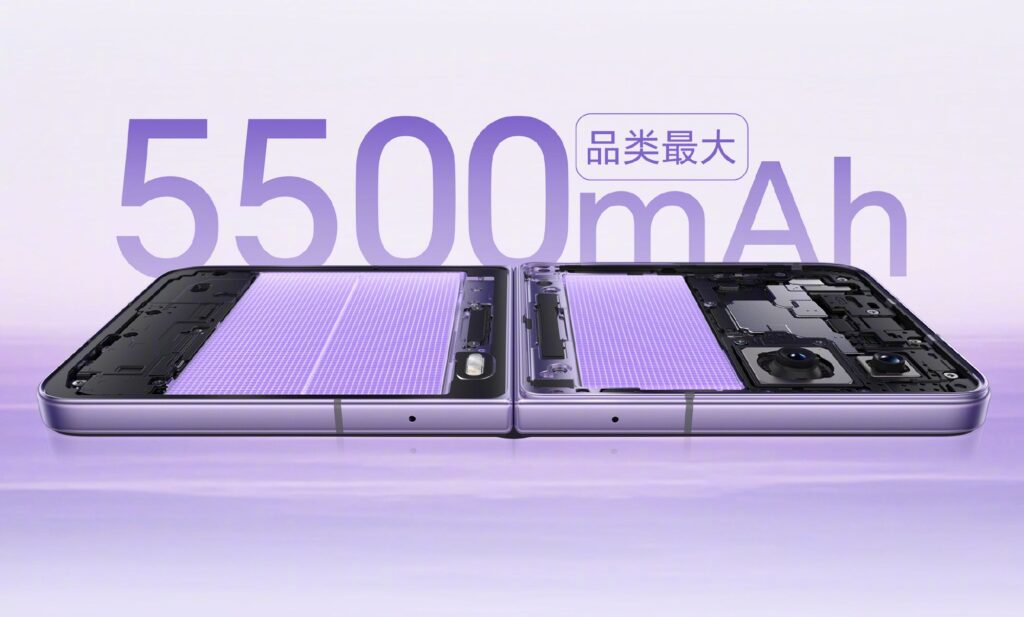
Until 2023, most flip-style foldables struggled with sub-4,000mAh cells due to their compact internal layout. But in 2024 and 2025, we’ve seen new flip models launch with significantly larger batteries, thanks to silicon-carbon advancements.

4. Apple and Samsung: Still Catching Up

Interestingly, Apple and Samsung have yet to embrace silicon-carbon batteries in their flagship lines. While both brands have focused on software optimization and custom silicon to extend battery life, actual battery capacities have remained relatively modest.

With other manufacturers now pushing past 6,000mAh without bulk, the pressure is mounting. The hardware ceiling has shifted, and users are starting to expect more than software tricks to get them through the day.

5. Why It All Matters

Big battery phones aren’t just a checklist item anymore. They represent a real improvement in quality of life, especially for users who rely on their devices for content creation, gaming, or AI-driven tasks. With edge AI, on-device video editing, and larger displays becoming standard, the demands on battery life will only increase.

Thanks to silicon-carbon technology and smart internal design, we’re no longer forced to choose between battery life and form factor. The battery race is heating up and in 2025, it’s clear that bigger really is better.

For more daily updates, please visit our News Section.

Stay ahead in tech! Join our Telegram community and sign up for our daily newsletter of top stories! 💡

iQOO Neo 10 Pro+ design revealed, launch imminent

iQOO unveiled the Neo 10 and Neo 10 Pro, powered by the Snapdragon 8 Gen 3 and Dimensity 9400 chipsets, respectively, in China in December 2024. Now, the brand is gearing up to unveil the Neo 10 Pro+ in the home market. Starting today, the brand is receiving pre-orders for the device through different online retailer platforms. The official listing gives the first look at the phone’s design.

iQOO Neo 10 Pro+ coming soon

iQOO Neo 10 Pro+ first look

The overall design of the iQOO Neo10 Pro+ is consistent with the existing Neo 10 models available in China. At the back, it features a prominent dual-camera module within a rectangular frame. The inclusion of “OIS” beside one of the lenses confirms support for optical image stabilization.

The glass back showcases a bold pixelated checkerboard pattern that shifts from a deep blue at the bottom to a lighter shade towards the top, giving the phone a dynamic and tech-inspired look.

The flat side frame of the Neo 10 Pro+ has a brushed metallic finish. Branding is minimal yet prominent, with “NEO” and “Snapdragon” clearly visible near the bottom rear panel.

iQOO Neo 10 Pro+ specifications (rumored)

Reports have revealed that the iQOO Neo 10 Pro+ will have a 6.82-inch flat OLED panel that will offer a 2K resolution and an ultrasonic in-screen fingerprint sensor. The phone will run on OriginOS 5-based Android 15.

According to reports, the device will feature a 50-megapixel primary camera with OIS support. It will be joined by a 50-megapixel ultra-wide lens. For selfies, the device is equipped with a 16-megapixel camera on the front.

The iQOO Neo 10 Pro+ will be powered by the Snapdragon 8 Elite chipset, up to 16GB of LPDDR5x RAM, and up to 1TB of UFS 4.1 storage. The Neo 10 Pro+ was recently spotted on AnTuTu with an impressive 3.3 million score. It will house a 7,000mAh battery with 120W fast charging. The device is expected to be priced at around 3,000 Yuan (~$415) in China.

For more daily updates, please visit our News Section.

Stay ahead in tech! Join our Telegram community and sign up for our daily newsletter of top stories!

Gmktec Evo-X2 Mini PC launched with Ryzen AI Max+ Pro 395, 128GB RAM, 2TB SSD, Wi-Fi 7 & more

Gmktec has unveiled its most ambitious mini PC to date with the launch of the Evo-X2, a high-performance desktop aimed at AI developers, creators, and multitasking pros. Priced at 14,999 yuan (roughly $2,070), the Evo-X2 is compact in form but packed with serious hardware meant to rival even high-end workstations.

Gmktec EVO-X2 Mini PC

Gmktec Evo-X2 Specifications

It features AMD’s latest Ryzen AI Max+ Pro 395 processor, built on the Zen 5 architecture with 16 cores and 32 threads. It comes with a maximum boost clock of 5.1GHz, 64MB of L3 cache, and is fabricated on TSMC’s 4nm process. The chip supports a peak power draw of 140W and includes an XDNA 2-based NPU that delivers 50 TOPS on its own, contributing to a total AI performance of up to 126 TOPS. According to Gmktec, this setup offers 2.2x faster AI inferencing in LM Studio compared to Nvidia’s RTX 4090.

The Evo-X2 sports integrated Radeon 8060S graphics based on the RDNA 3.5 architecture. It equips 40 compute units, 2,560 stream processors, and supports up to four 8K 120Hz displays through HDMI 2.1, DP 2.0, and dual USB4 ports. In real-world use, it pushes up to 280fps in games like CS2 and League of Legends at 1080p, making it a capable machine for esports as well.

It comes with 128GB of LPDDR5x memory running at 8000MHz. While the RAM is soldered and not user-upgradable, it supports GPU memory virtualization with up to 96GB allocated as shared graphics memory, an advantage for running large AI models locally.

For storage, the Evo-X2 features dual M.2 PCIe 4.0 slots with support for up to 8TB capacity. It includes a dual-fan vapor chamber cooling system with a triple heat pipe layout and supports three performance modes: Silent, Balanced, and Performance. It also sports RGB lighting with 13 customizable effects.

Connectivity-wise, it equips Wi-Fi 7, Bluetooth 5.4, and a 2.5GbE Ethernet port. The I/O is comprehensive: up front, it includes a 40Gbps USB-C, two USB-A ports, an SD card reader, and a 3.5mm audio jack. On the rear, it features HDMI 2.1, DP 2.0, another USB-C (40Gbps), multiple USB-A ports, a second audio jack, and power input.

The mini PC comes housed in a premium aluminum chassis designed using recycled materials and developed in collaboration with Red Dot Award-winning designers. The Evo-X2 ships with Windows 11 Pro (license not included), and Gmktec backs it with a 3-year warranty and lifetime tech support.

For more daily updates, please visit our News Section.

Stay ahead in tech! Join our Telegram community and sign up for our daily newsletter of top stories! 💡

Kodak Luma 500 portable projector launched with Google TV, 150 ANSI lumens & 10,500mAh battery

Kodak has officially introduced the Luma 500 FHD Ultra Smart Pico Projector, a compact and feature-rich portable projector designed for both indoor and outdoor use. Manufactured by C+A Global, the new model sports a sleek, palm-sized body and weighs just 544 grams, making it easy to carry around for impromptu movie nights or glamping setups.

Kodak Luma 500

Kodak Luma 500 Specifications

It features a native 1080p Full HD resolution with support for HDR and 4K input, delivering sharp visuals on a maximum screen size of up to 150 inches from a projection distance of approximately 3.8 meters. The projector uses DLP technology and offers a 1.2:1 throw ratio, though its low 150 ANSI lumens brightness means it performs best in dimly lit settings.

The Luma 500 comes with Google TV 11 built-in, offering access to over 400,000 movies and shows across 10,000+ apps, including Netflix, Prime Video, YouTube, and Disney+. It supports Google Assistant for hands-free voice commands and sports pre-installed streaming apps for a plug-and-play experience.

Kodak Luma 500

The projector equips a 10,500mAh built-in battery rated for up to 2 hours of continuous playback and offers multiple connectivity options such as Wi-Fi, Bluetooth, HDMI, and USB. It also comes with auto-focus, keystone correction, and multiple projection modes to simplify setup and optimize viewing from various angles.

The device includes a tripod for better placement flexibility and delivers a 30ms input latency at 60Hz when connected via HDMI, making it viable for casual gaming as well. The Kodak Luma 500 is available now on Amazon for $699.99 in both black and white color options.

In related news, BenQ’s latest short throw projector lands in the US with high brightness and built-in speakers, while Anker introduces the Nebula X1, a water-cooled 4K projector built for outdoor use.

[affiliate_genie_cta]

For more daily updates, please visit our News Section.

Stay ahead in tech! Join our Telegram community and sign up for our daily newsletter of top stories! 💡

(Via)

Motorola Razr 60 Ultra Launching in India on May 13 with Snapdragon 8 Elite and Triple 50MP Cameras

Motorola has confirmed that the Razr 60 Ultra will launch in India on May 13. It is being promoted as the world’s most powerful flip phone and includes several first-in-segment features.

Motorola Razr 60 Ultra

The phone runs on the Snapdragon 8 Gen Elite chipset with on-device AI. It has 16GB LPDDR5X RAM and 512GB UFS 4.1 storage. On AnTuTu, it scores over 2.7 million points.

It features a triple 50MP camera setup on the back, making it the world’s first flip phone with three 50MP cameras. The system is Pantone-validated and includes OIS. The front camera is also 50MP. The design includes a redesigned titanium hinge for better durability and fewer creases. The phone has Gorilla Glass Victus 2 protection and is IPX8-rated for water resistance.

Razr 60 Ultra

It comes with a large external display that supports touch interaction. The Razr 60 Ultra also supports fast wireless charging and includes dual stereo speakers. Moto AI 2.0 is built in and allows users to interact with the phone with just a glance or simple voice prompts.

In terms of materials, Motorola is using Alcantara and FSC-certified wood for the back panel. It is the first smartphone to offer these finishes. Color options include Pantone-validated shades like Rio Red, Scarab Green, and Wood Brown. These are the exact features of the Razr 60 Ultra that was recently introduced globally, so we expect other specifications to remain the same as well.

Motorola Razr 60 Ultra features

The Motorola Razr 60 Ultra (Global) has a 7-inch internal FlexView pOLED LTPO display with a resolution of 1224×2992 pixels. It supports a 1–165Hz refresh rate, Dolby Vision, and reaches up to 4,000 nits brightness. The outer screen is a 4-inch QuickView pOLED LTPO panel with a 1272×1080 resolution, the same 1–165Hz refresh rate, 3,000 nits peak brightness, and is protected by Corning Gorilla Glass Ceramic.

It runs on the Snapdragon 8 Gen Elite chip built on a 3nm process, with an Adreno 830 GPU. The phone includes 16GB LPDDR5X RAM and 512GB UFS 4.1 storage. It ships with Android 15 and supports Dual SIM (eSIM + nano).

The rear camera setup includes a 50MP main sensor with f/1.8 aperture and OIS, along with a 50MP ultra-wide lens with f/2.0 aperture. The front camera is also 50MP with an f/2.0 aperture. Audio features include stereo speakers, Dolby Atmos, and USB Type-C audio.

It supports 5G SA/NSA, Dual 4G VoLTE, Wi-Fi 6E (2.4GHz/5GHz) with MIMO, Bluetooth 5.4, GPS, USB Type-C, and NFC. It has a 4700mAh battery with 68W TurboPower fast charging and 30W wireless charging.

(Source)

Sony Xperia 1 VII Set to Launch May 13 with Snapdragon 8 Gen Elite, Android 15, and Classic Sony Design

Sony has confirmed its next Xperia product launch will take place on May 13, 2025, where it is expected to unveil the Xperia 1 VII.

The phone will run on the Snapdragon 8 Gen Elite Mobile Platform, as confirmed by Sony earlier this year. A Geekbench listing (model number XQ-FS54) shows the device will come with 12GB of RAM and Android 15. The same model was recently certified by the US FCC, which listed its dimensions as 162 x 74.5 x 8.5mm. It will retain a 5000mAh battery (4850mAh minimum), matching its predecessor.

Sony Xperia 1 VII

The display is expected to be a 6.5-inch 4K OLED, similar to past Xperia 1 models. Camera specs include a 48MP main sensor with OIS, a 12MP ultra-wide lens, a 12MP periscope telephoto (70–200mm variable zoom), and a 12MP front camera. The Xperia launch event will start at 11 AM JST (7:30 AM IST) and will be streamed live.

From previous leaks, the Xperia 1 VII keeps Sony’s signature tall design with a flat frame. The right side houses the power, volume, and shutter buttons, while the left side is clean. The phone retains features most flagships have dropped, including a 3.5mm headphone jack, microSD card slot, and dual front-facing speakers. It also has a USB-C port and a triple-camera array vertically stacked on the back.

Benchmark results for the Xperia 1 VII include a 2,967 single-core and 9,017 multi-core score, consistent with Snapdragon 8 Gen Elite performance. Reports suggest that the global launch may take place a few months after the initial release.

For more daily updates, please visit our News Section.

Tech enthusiast? Get the latest news first! Follow our Telegram channel and subscribe to our free newsletter for your daily tech fix!

(Source)