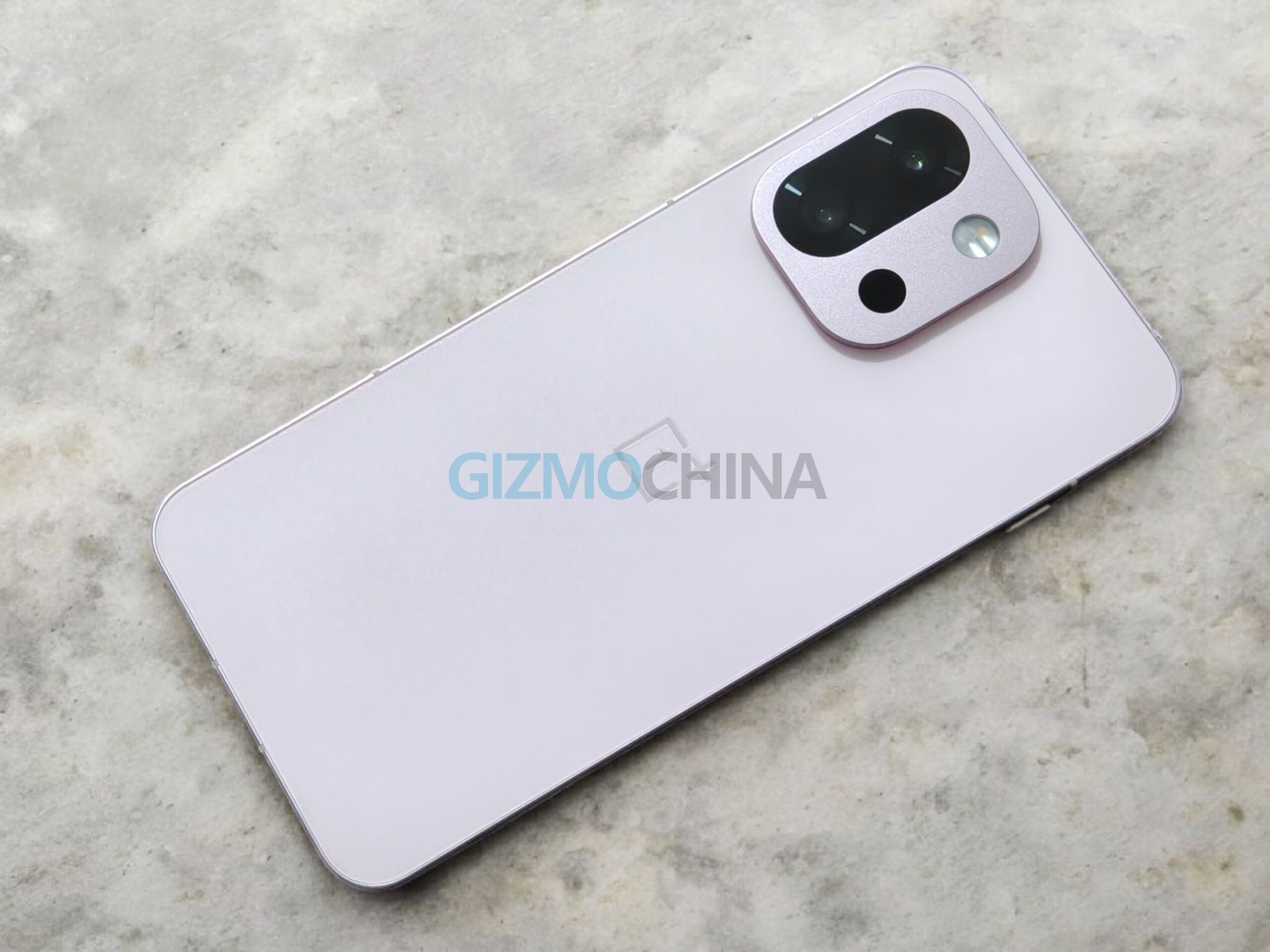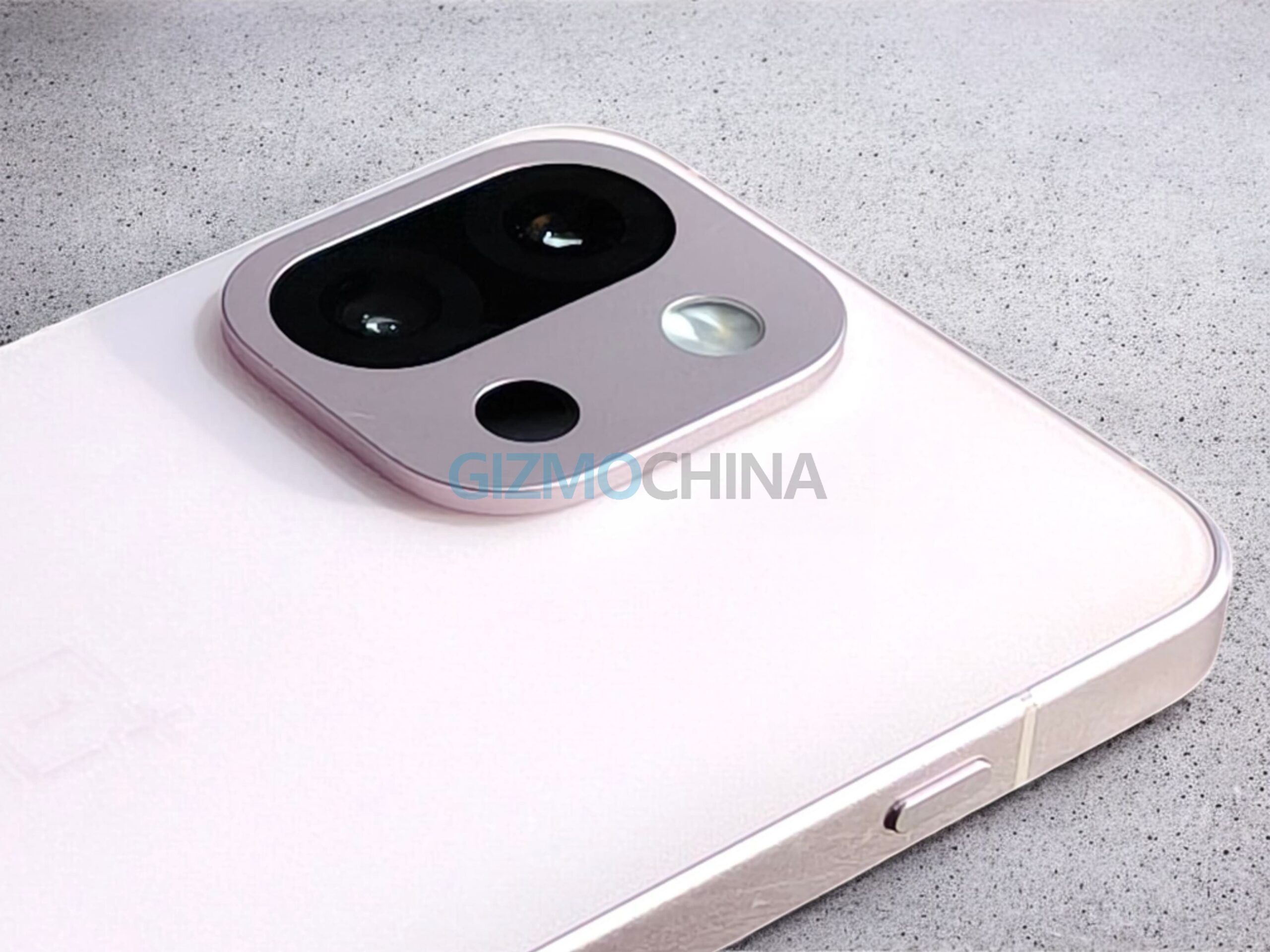
The upcoming Oppo Find X8s and Find X8s Plus have been available for pre-orders since last week in China. Today, the brand updated the product pages of both phones with official renders of their different color variants. Here is a look at the design of both phones.
Oppo Find X8s, Find X8s Plus design revealed
Oppo Find X8s Oppo Find X8s+
The Oppo Find X8s will be available in four shades: Cherry Blossom Pink, Moonlight White, Island Blue, and Starry Black. The phone will be available in multiple configurations, such as 12GB+256GB, 12GB+512GB, 16GB+256GB, 16GB+512GB, and 16GB+1TB.
The below-shown poster released by the brand has confirmed the key specifications of the Find X8s. As it is known, the X8s will be a compact flagship phone equipped with a 6.32-inch OLED panel with 1.25mm slim bezels on all four sides. Under the hood, it will feature the Dimensity 9400 Plus chipset and a 5,700mAh battery with 80W wired and 50W wireless charging support. The device will run on ColorOS 15-based Android 15.
Weighing only 179 grams, the Find X8s, equipped with an IP68/69-rated dustproof and water-resistant chassis, will have a thickness of 7.73mm. The brand is yet to reveal the camera configurations of the X8s.
Oppo Find X8s key specs
The Find X8s Plus will arrive in shades like Hyacinth Purple, Moonlight White, and Starry Black. It will be available in four configurations: 12GB+256GB, 12GB+512GB, 16GB+512GB, and 16GB+1TB. While it is expected to feature the Dimensity 9400 Plus chip, the brand is yet to reveal its core specifications. Nevertheless, it is expected to be an incremental upgrade over the existing Find X8, which debuted in October 2024 in China. So, the X8s+ is likely to borrow many of its specs from the X8.
Both devices also feature the new push-type “Magic Cube” key that replaces the Alert Slider. The X8s duo along with the X8 Ultra, Pad 4 Pro, Watch X2 Mini, and Enco Free 4 are expected to debut on April 10 in China.
For more daily updates, please visit our News Section.
MediaTek is taking a page out of Qualcomm’s playbook and prepping a strategic move in the sub-flagship space. What was once expected to be the Dimensity 9350 is now likely launching under a new name: Dimensity 9400e. It’s a rebranding move that suggests MediaTek wants this chip to feel a lot closer to the company’s flagship lineup rather than just another entry in the mid-high tier Dimensity 9300 family.
According to a consistent string of leaks from trusted Chinese tipster Digital Chat Station, the Dimensity 9400e isn’t just a marketing rehash. It’s expected to deliver genuine performance gains—enough to warrant a “9300++” label, which is a subtle nod that it goes beyond even the already-enhanced Dimensity 9300+.
Performance: Familiar Core Layout, Pushed Harder
At the heart of the Dimensity 9400e is reportedly the same core configuration that powers the 9300 and 9300+: one Cortex-X4 prime core, three additional Cortex-X4 performance cores, and four Cortex-A720 cores. That’s eight performance-oriented cores and zero efficiency cores—MediaTek is sticking with its all-big-core CPU design here, a bold strategy first seen with the 9300.
The difference this time? Clock speeds. The 9400e is rumored to push those frequencies even further than the 9300+, which already bumped the prime Cortex-X4 to 3.4GHz. That alone could deliver measurable gains in burst performance and sustained multitasking. Expect benchmark scores that outpace the Snapdragon 8s Gen 3 and possibly challenge Qualcomm’s upcoming 8s Gen 4 chip—its own rebranded sub-flagship effort.
Graphics, AI, and Efficiency
While there’s no official word on GPU changes, the Dimensity 9400e is expected to retain the Immortalis-G720 GPU, which proved capable in the 9300 series, especially with its 46% improved ray tracing support. AI performance could see incremental boosts too, potentially through better tuning of MediaTek’s APU 790 and improvements to its “NeuroPilot” architecture.
Efficiency is also part of the story. The Dimensity 9400e could be fabricated on TSMC’s 4nm process node, similar to its predecessors. While exact details are still unclear, any improvements in power tuning or thermal management could make a noticeable difference—especially in a chip that prioritizes performance across all cores.
Phones and the Bigger Picture
The Dimensity 9400e is expected to power a number of performance-centric mid-premium Android phones launching later this year. Leading the charge could be the OnePlus Ace 5V—a device tipped to pack a massive 7,000mAh battery and a flat 1.5K display. This is likely to be the successor to the Ace 3V, which itself was rebranded as the Nord 4 for global markets. It’s a safe bet that the Ace 5V could eventually launch outside China under the Nord 5 moniker.
Realme is also reportedly interested in using the 9400e, making this chip a real contender in the upper-midrange space where value and performance intersect.
Calculated Counter to Qualcomm
MediaTek’s decision to rename the 9350 to Dimensity 9400e seems to echo Qualcomm’s own rebranding of the Snapdragon 8s Gen 4 (previously tipped as the 8s Elite). Both companies are blurring the lines between flagship and sub-flagship categories, offering near-top-tier performance in phones that won’t necessarily carry four-digit price tags.
It’s a smart move. For MediaTek, the Dimensity 9400e could help maintain momentum after the success of the 9300 series and show that it’s not just Qualcomm that can play the high-performance game. It also sets the stage for a more crowded, more competitive premium mid-range smartphone market in 2025.
No official launch date has been announced yet, but if the leaks are any indication, MediaTek is nearly ready to pull the trigger. And if the performance and efficiency gains materialize as expected, the Dimensity 9400e might just be the sub-flagship chip to watch this year.
Meanwhile, MediaTek is also set to launch the Dimensity 9400+ on April 11th, which has already surfaced on various benchmark charts.
For more daily updates, please visit our News Section.
Qualcomm has officially announced a launch event on 2 April, hinting at the arrival of a flagship product. While the company has not explicitly confirmed the name, multiple reports strongly suggest that this will be the Snapdragon 8s Elite / 8s Gen 4 chipset.
Snapdragon 8s Elite / Snapdragon 8s Gen 4 specifications: What to expect?
The upcoming Snapdragon 8s Elite / Snapdragon 8s Gen 4 chipset is expected to be manufactured using TSMC’s 4nm process and will feature an all-big-core CPU architecture. The CPU configuration consists of one Cortex-X4 core clocked at 3.21GHz, three Cortex-A720 cores at 3.01GHz, two Cortex-A720 cores at 2.80GHz, and two Cortex-A720 cores at 2.02GHz. This setup ensures high performance across various workloads.
For graphics, the Snapdragon 8s Gen 4 is set to include the Adreno 825 GPU, a slightly scaled-down version of the Adreno 830 found in the Snapdragon 8 Gen 4. The chipset will also incorporate 6MB of system-level cache (SLC) and 8MB of L3 cache to enhance efficiency.
Benchmark scores suggest that the processor will achieve over 2 million points on AnTuTu, positioning it between the Snapdragon 8 Gen 2 and Snapdragon 8 Gen 3 in terms of performance.
Expected devices and availability
Several smartphone brands are preparing to integrate this new chipset into their upcoming devices. The first batch of models featuring the Snapdragon 8s Gen 4 is expected to debut in April, including the Redmi Turbo 4 Pro, iQOO Z10 Turbo Pro, Xiaomi Civi 5 Pro, and Oppo K13 Pro. Among them, the Z10 Turbo Pro is likely to be the first to launch with this processor.
In the global market, the Poco F7 may debut as the first Snapdragon 8s Elite / 8s Gen 4 phone. It is believed to be a rebranded version of the Redmi Turbo 4 Pro. The Xiaomi Civi 5 Pro is also expected to get rebadged as the Xiaomi 15 Civi in India.
For more daily updates, please visit our News Section.
Qualcomm is back at it again. After launching the Snapdragon 8s Gen 3 as a slightly watered-down version of its flagship chip last year, the company is now preparing for the next iteration—Snapdragon 8s Gen 4.
If history is anything to go by, this new chip should land somewhere between Qualcomm’s top-tier Snapdragon 8 Gen 4 and the mid-range Snapdragon 7 series, offering premium performance without the full flagship price tag.
So, what can we expect? While Qualcomm hasn’t officially revealed anything yet, there are some educated guesses we can make based on past releases and industry trends.
One of the biggest shifts in Qualcomm’s chipset lineup has been the introduction of its custom Oryon cores, designed to compete with Apple’s high-performance silicon. But don’t expect them here.
If anything, the 8s Gen 4 is likely to continue using stock ARM cores rather than Qualcomm’s in-house solution. That alone sets it apart from the premium-tier Snapdragon 8 Gen 4, which will be pushing the Oryon branding hard.
That’s not necessarily a bad thing. Qualcomm’s ARM-based cores have been solid performers, and sticking with them likely helps them keep costs down.
At the heart of the Snapdragon 8s Gen 4 is a new CPU core arrangement that leans on a single Cortex-X4 prime core clocked at 3.21GHz. This is backed by three Cortex-A720 performance cores running at 3.01GHz, two more A720 cores at 2.80GHz, and two efficiency-focused A720 cores at 2.02GHz.
Notice something missing? The Cortex-A520 cores that handled efficiency in previous generations are nowhere to be found, replaced by a full lineup of A720 cores.
2. Same 4nm Process, But More Efficiency?
Qualcomm’s been sticking with TSMC’s 4nm process for a while now, and there’s little reason to believe that will change with the 8s Gen 4. While the move to 3nm would have been ideal for improved power efficiency, that technology is still expensive and reserved for only the absolute best chips.
Instead, Qualcomm is likely optimizing the existing 4nm process to squeeze out better thermal performance and efficiency, even if the raw power numbers might not be a dramatic leap from last year’s model.
3. GPU
The GPU side of things sees a minor downgrade from its flagship counterpart. While the Snapdragon 8 Elite packed the Adreno 830, the 8s Gen 4 is expected to feature the Adreno 825. Qualcomm has a habit of slightly tweaking its GPUs for cost efficiency, and while the specifics of the Adreno 825 aren’t confirmed, expect it to be a capable performer for mobile gaming. However, don’t expect it to match the absolute top-tier performance of the flagship Snapdragon 8 Elite.
Memory and cache improvements are also worth noting. The 8s Gen 4 comes with 6MB of system-level cache (SLC) and 8MB of L3 cache—small but notable upgrades that should help in scenarios where multiple apps are running simultaneously.
4. AI and Camera Capabilities
AI has been the buzzword of every chipset launch in the last couple of years, and the 8s Gen 4 will likely be no different. While there’s no word on exactly how the AI performance will compare to the current flagship, we can expect upgrades in on-device AI processing, particularly in image recognition, voice commands, and real-time language translation over the predecessor.
Camera improvements could be another area where we see subtle but important changes. Qualcomm’s image signal processors (ISPs) have been among the best in the industry, and while the 8s Gen 4 won’t match the premium Snapdragon 8 Elite, it should still deliver solid computational photography improvements. Think better low-light performance, improved HDR processing, and possibly even 8K video recording support.
5. Where Does It Fit?
At the end of the day, the Snapdragon 8s Gen 4 is all about positioning. Qualcomm wants to provide a step up from the mid-range without cannibalizing its flagship sales. That makes it a strong option for brands looking to make premium-feeling phones without crossing into true high-end pricing.
Phones powered by the 8s Gen 4 will likely target a specific segment of users—those who want flagship-like performance but don’t necessarily care about having the absolute best GPU, camera, or AI capabilities. Think of devices in the $500–$700 range, where brands like Xiaomi, OnePlus, and iQOO thrive.
6. Should You Care?
That depends. If you’re using a Snapdragon 8s Gen 3 phone or even something from the previous generation, the improvements here may not be game-changing. However, if you’re looking for an upgrade and don’t want to shell out for a top-tier Snapdragon 8 Gen 4-powered device, this could be the sweet spot.
As always, the real-world performance will depend on how manufacturers implement the chip—thermals, software optimizations, and cooling solutions will all play a role.
For more daily updates, please visit our News Section.
OpenAI recently upgraded ChatGPT’s image-generation feature with the 4o image-generation model, where it not only generates an image from a text description but can also modify an existing one based on a text description. A special feature introduced as part of this development is the ability to generate Ghibli-style pictures based on a photo the user uploads.
As the CEO reveals, it’s a resource intensive process
The latter quickly became a trend where everyone started converting their selfies into “Ghibli-fied” images for their social media. But, as you may have already noticed, you’re rather lucky if you get it right within the daily limit. While you just have to upload your photo and ask something simple like “make it a Ghibli-style photo” or “Make it Ghibli art”, it often responds with “I wasn’t able to generate the image because the request didn’t follow our content policy”. It also generates totally different images sometimes, and it feels like it’s not willing to generate what you want.
Well, the sudden increase in traffic has put a significant load on the servers, and in the words of CEO Sam Altman, “we are refusing some generations that should be allowed; we are fixing these as fast we can.” Initially, it was meant to be open to ChatGPT’s Plus, Pro, Team, and free users at the same time, but they had to impose some rate limits due to the strong demand. Nonetheless, Altman also mentioned that they are working on making this process more efficient and hope that the wait won’t be too long.
As of writing, I can generate up to three Ghibli-style images per day as a free tear user. It also takes significantly more time than generating an image with a text description. So it looks like this Ghibli-style image generation is much more resource-intensive than standard image generation. As the CEO noted, “Our GPUs are melting.” It’s a great feature to have, and we hope they find ways to make it more efficient soon.
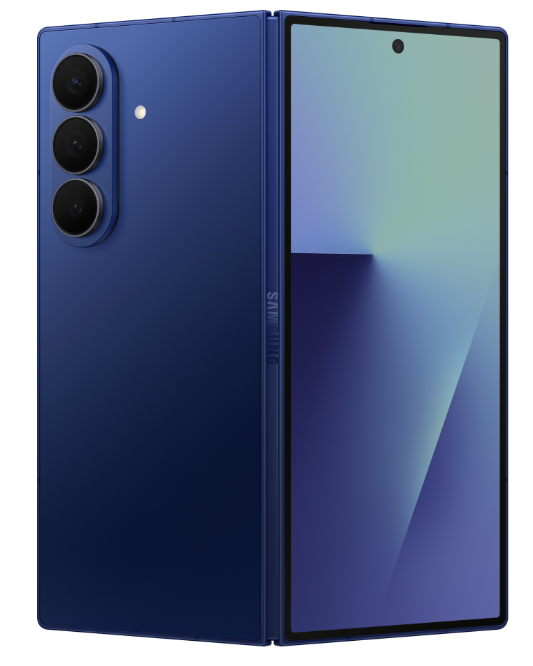
Samsung’s annual smartwatch refresh is on the horizon, and a new leak has all but confirmed that the Galaxy Watch 8 is in the works and will be launched in 2025. Following the Galaxy Watch 7 and Watch Ultra debut in mid-2024, the tech giant is expected to unveil its next wave of wearables alongside its foldable phones around July or August. A recent firmware leak has now given us our first solid hint at what’s coming.
Image: Samsung
Test firmware for the Galaxy Watch 8 has been spotted
X user @theonecid spotted a test firmware, which includes model numbers for the Galaxy Watch 8. The Bluetooth variants clock in as SM-L320 and SM-L330, tied to firmware versions L320XXU0AYC4/L320OXM0AYC4, while US LTE models appear as SM-L325U and SM-L335U, linked to L325USQU0AYC6/L325UOYM0AYC. These follow Samsung’s predictable naming pattern—think SM-L310 and SM-L315 for the Watch 7—making it a safe bet these are the real deal.
Though specs remain under wraps, the leak signals that Samsung is almost done with the Galaxy Watch 8 models. With the Watch 7’s upgraded health sensor and AI-driven wellness and sleep tracking, expectations are high for the Watch 8 to refine these strengths. Could we see even smarter fitness tracking features or a sleeker design? More details should surface as we inch closer to the launch.
Last year’s upgrades were a hit, which combined cutting-edge health-tracking features with user-friendly AI features. The Watch 8 will likely refine those aspects, potentially syncing its reveal with the Galaxy Z Fold 7 and Flip 7. For now, this firmware leak is a compelling teaser, promising another standout smartwatch from a brand that’s mastered the wearable game.
HP will release its Omen MAX gaming laptop in China on March 31 at 9 PM. The device is priced at ¥18,999 ($2,618), with a discount bringing it down to ¥16,999 (~$2,350). Aimed at gamers and content creators, the laptop combines high-end components in a 16-inch form factor.
The Omen MAX features Intel’s 24-core Ultra 9-275HX processor and NVIDIA’s RTX 5080 GPU with a maximum power of 175W. It comes with 32GB of DDR5 RAM (5600MT/s) and a 1TB PCIe 5.0 SSD. HP claims a combined CPU and GPU power draw of over 250W (75W CPU + 175W GPU), supported by a dual-fan cooling system. The thermal setup includes heat pipes, a vapor chamber covering 61% of the motherboard, and a hybrid liquid metal compound, which improves heat transfer compared to traditional thermal paste.
The display is a 16-inch 2560×1600 IPS panel with a 240Hz refresh rate, 500 nits peak brightness, and full sRGB coverage. It also supports a variable refresh rate (VRR) to minimize screen tearing during gameplay.
Connectivity options include two Thunderbolt 4 ports (40Gbps, 100W PD), two USB-A 10Gbps ports, HDMI 2.1 (supporting up to 8K at 60Hz), a 2.5G Ethernet port, and support for Wi-Fi 7 and Bluetooth 5.4.
For security, the laptop has a Full HD IR camera for Windows Hello login, along with a physical privacy shutter. The design is minimal, finished in black, with an emphasis on performance rather than aesthetics. HP has not shared details on the laptop’s weight or thickness.
The laptop is also available to pre-order in markets outside of China, with prices starting from US$1,899.99.
For more daily updates, please visit our News Section.
Hisense has introduced its 2025 ULED TV lineup, featuring the U6, U7, U8, and U9 series, with an expanded selection of 100+ inch screen options. The new models offer improved picture quality and performance, catering to movie enthusiasts, gamers, and sports fans at various price points.
The 2025 ULED series includes AI-driven adjustments that automatically optimize picture quality. The U9 series uses the Hi-View AI Engine X from the ULED X lineup, while the U7 and U8 series feature the Hi-View AI Engine Pro. These processors refine contrast, color accuracy, and motion clarity in real-time.
Key improvements include enhanced local dimming and Quantum Dot technology, resulting in deeper blacks, richer colors, and better brightness. For gamers, features like AI-driven motion processing, up to 165Hz refresh rates, and Dolby Vision Gaming are included. AI-enhanced audio processing improves Dolby Atmos sound.
The U9 series, now with a 65-inch model in addition to 75 and 85-inch options, uses the Hi-View AI Engine X to optimize brightness, contrast, and color. It also includes AI 4K Upscaler, AI Super Resolution, AI Noise Reduction, AI Local Dimming, AI HDR Upscaler, and AI Depth Enhancer. The series has improved peak brightness, an Ultra LR panel to reduce reflections, and a wide viewing angle. Audio features include CineStage X Surround, Dolby Atmos, and DTS Virtual X, creating a 4.1.2 or 5.1.2 multi-channel sound.
The U8 series, with the Hi-View AI Engine Pro, offers high picture quality, smooth motion, and immersive audio. It includes peak brightness up to 5000 nits, expanded local dimming, and Quantum Dot technology. A 165Hz refresh rate, MEMC, and fast response times are included. Dolby Vision, Dolby Vision IQ, HDR10+, and IMAX Enhanced provide high-quality visuals, and an 82W Dolby Atmos 4.1.2 multi-channel sound system provides immersive audio.
The U7 series, aimed at gamers and sports fans, features MiniLED Pro technology and a 165Hz refresh rate. It includes 165Hz Game Mode Ultra, Game Booster 288 Hz, VRR, ALLM, Dolby Vision Gaming, and FreeSync Premium Pro. An AGLR-Antiglare low reflection panel and upgraded Dolby Atmos audio with 60W 2.1.2 multi-channel sound are also featured.
The U6 series brings MiniLED technology to more affordable TVs, integrating Fire TV and Alexa Voice Remote. It features Dolby Vision, Dolby Atmos with a 2.1 built-in subwoofer, HDR10+ Adaptive, ALLM, VRR, a 144Hz refresh rate, Game Mode Pro, FreeSync Premium, and Wi-Fi 6.
All models support HDMI eARC, Wi-Fi 6E, and compatibility with Amazon Alexa, Google Assistant, and Apple HomeKit. The 2025 ULED lineup will be available later this year, providing large-screen entertainment with strong performance across different budgets.
Pricing & availability
The U9 will be offered in a new, smaller 65-inch size, along with 75-inch and 85-inch versions. Previous reports indicated that the 75-inch and 85-inch models would be priced at $2,999 and $3,999 in the US, respectively. While the TV is expected to launch later this year, Hisense has not yet announced a specific release date.
For more daily updates, please visit our News Section.
ASUS has listed the ROG Zephyrus M16 Air 2025 gaming laptop on JD.com at a price of ¥23,999. The device will be available for preorder starting March 31. It is aimed at users who need high-end performance in a portable form factor, weighing 1.95kg and measuring 1.49cm in thickness.
ROG Zephyrus M16 Air 2025
The laptop comes in Eclipse Gray and Platinum White, made from CNC-machined aircraft-grade aluminum. The lid features a customizable “Space-Time Rift” LED matrix with seven RGB zones and 15 lighting themes. The 16-inch OLED Nebula Display delivers a 2.5K resolution, 240Hz refresh rate, 0.2ms response time, and 500 nits of brightness. It supports Dolby Vision and offers 100% DCI-P3 color coverage. ASUS also includes a two-year burn-in warranty for the display.
The M16 Air is equipped with Intel’s Core Ultra 9-285H (16-core) processor and NVIDIA’s RTX 5080 GPU with a 130W TGP. It has 32GB of LPDDR5X memory and a 1TB PCIe 4.0 SSD, with room for storage upgrades through dual M.2 slots. Cooling is managed by the Glacier Cooling 3.0 system, which uses liquid metal thermal paste, dual Arc Flow fans, and vapor chambers.
The laptop includes two Thunderbolt 4 ports (40Gbps, 100W PD), HDMI 2.1 (8K@60Hz), two USB-A ports (10Gbps), a UHS-II SD card reader, and WiFi 6E. A dedicated square power port features temperature monitoring to help manage heat.
Additional features include a six-speaker Dolby Atmos audio system, RGB backlit keyboard with 1.7mm key travel, and a 90Wh battery with 100W fast charging over USB-C.
Availability The ROG Zephyrus M16 Air 2025 will be available in China from March 31, with international availability expected in the following months. The laptop is listed for ¥23,999 (~US$3,307) on the ASUS China website and JD.com.
For more daily updates, please visit our News Section.
Recent leaks suggest a major camera upgrade for the Sony Xperia 1 VII, along with an unexpected nod to the Walkman brand. A trusted insider from the Xperia community has now dropped some interesting information, suggesting Sony’s 2025 flagship—possibly launching in May or June—could pack a much-improved telephoto. Unfortunately, the US availability remains uncertain.
Sony Xperia 1 VI
Xperia 1 VII to use a ~1/2″ telephoto sensor
The leaks come from Esato forum user spektykles, a respected source among Xperia fans. In a recent post, spektykles hinted that the Xperia 1 VII’s telephoto sensor will jump to “~1/2” in size—a notable leap from the 1/3.5” Exmor RS sensor in the Xperia 1 VI. Notably, that tilde means it’s an estimate.
But even so, it’s likely to be larger, and a larger sensor promises sharper images and better low-light performance. While chatter about all three rear cameras getting Exmor T sensors swirls, this telephoto tidbit feels like a solid step up. It also aligns with Sony’s imaging legacy. Whether it’ll outshine rivals mastering computational photography remains the big question. The brand is also rumored to be working on a number of 200MP and 100MP sensors, and according to a previous report, one of them will be used inside a future Xperia flagship.
In a separate post, spektykles wrote, “welcome back, Walkman,” alongside the old Sony Ericsson “liquid energy” logo. Is this a hint at a full-fledged Xperia Walkman phone revival—echoing the W-Series from yesteryear—or just a spruced-up Sony Music Center app?
The logo could be a nostalgic wink or a deliberate misdirect. Given the context of Xperia 2025 rumors, it’s tempting to dream of a music-centric flagship, but details are vague. For now, we are left piecing together whether Sony is blending cutting-edge cameras with a retro audio comeback.
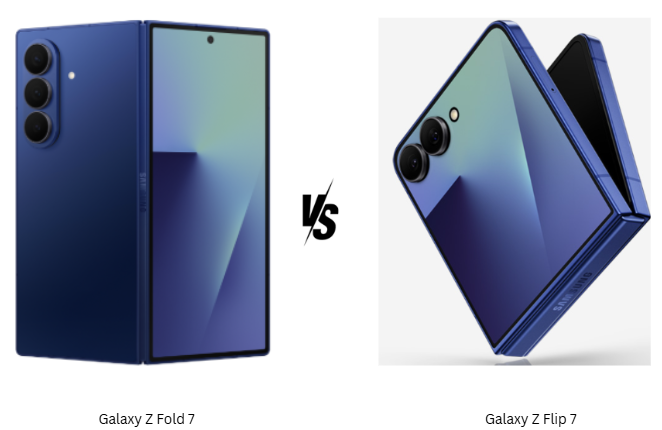
Samsung may be getting ready to flip the script on foldable phones, literally. A newly approved patent from the United States Patent and Trademark Office reveals a design for a foldable smartphone that can bend both inward and outward, thanks to a 360-degree hinge mechanism. If realized, this could mark a radical departure from the current industry standard.
The future of foldables might ditch the cover screen entirely
The patent imagery, brought to life by tipster @xleaks7 and spotted by GSMArena, shows a single flexible display that folds both ways, eliminating the need for a separate cover screen. That’s a big deal. Today’s foldables rely on outer displays for quick tasks while keeping the main screen safely tucked away. But Samsung’s new approach could deliver a truly seamless, all-in-one display that adapts to the user’s needs, no matter how it’s folded.
To make this possible, Samsung is developing a flexible ultra-thin glass (UTG) display supported by a layered structure of flexible polymers and adhesive. The hinge system features dual folding axes and a unique lattice-style support plate that allows the screen to bend in both directions while maintaining structural integrity.
Interestingly, the design also includes a small exposed display strip beneath the rear cameras, giving users access to notifications and basic functions even when the device is folded shut. It’s a clever touch, one that keeps functionality front and center without compromising the design.
It seems smartphone giants are fully embracing foldables and aren’t afraid to get experimental. Just recently, Huawei introduced the Pura X, a flip phone that folds sideways instead of vertically. It opens to reveal a wider 16:10 display that stretches to 6.3 inches, blurring the line between clamshell and tablet.
It’s clear that form factors are evolving fast, and Samsung’s 360-degree design might just be the boldest take yet. Of course, for now, it’s all still on paper, but it’s a tantalizing glimpse into what might be coming next in the foldables race.
For more daily updates, please visit our News Section.
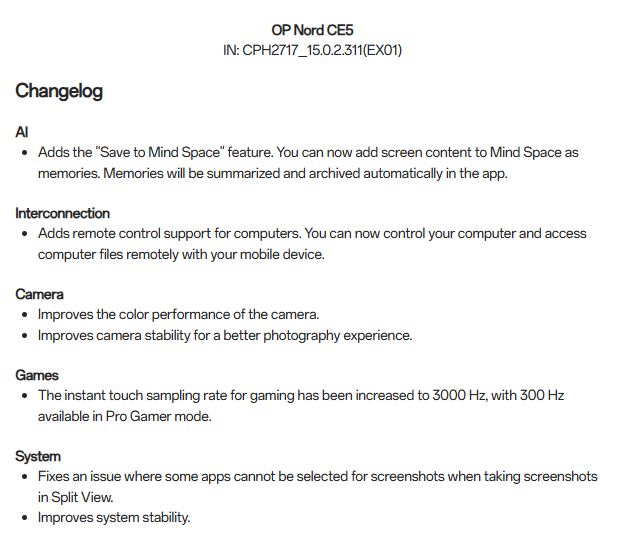
OnePlus has started gradually rolling out the OxygenOS 15.0.0.701 update for the OnePlus Nord 4, beginning with users in India. The update version, CPH2661_15.0.0.701(EX01), includes changes related to interface layout, system performance, privacy features, and connectivity.
Users can now resize folders on the home screen to 1×2 or 2×1 by dragging them. The update also brings smoother animations for notifications and Quick Settings. Third-party widgets in 2×2 and 4×2 formats have been adjusted to better fit the 4×6 home screen layout.
The March 2025 Android security patch is included in the update, aimed at improving overall system security. For privacy settings, the process of resetting the privacy password has been changed. Users will now be prompted to link their privacy password to their OnePlus account, allowing them to reset it through the account if they forget it.
Wi-Fi switching and mobile data roaming have also been improved for a more stable connection when moving between networks.
The update is being released in stages, with a small group of users receiving it first. A wider rollout will follow in the next few days. OnePlus users in India can report any problems with the update through the OnePlus Community App by going to the “Bug Report” section in their profile. Alternatively, they can dial *#800# to access the feedback tool and submit issues directly.
For more daily updates, please visit our News Section.
Lenovo’s Legion Go S, the first third-party handheld console to launch with Valve’s SteamOS, is now available for preorder at $549.99—$50 more than its original announced price. Initially announced at CES 2025 as a $499.99 Steam Deck competitor, the device will ship on May 25 via Best Buy, with Lenovo confirming the revised pricing to The Verge.
Originally priced between Valve’s $399 LCD Steam Deck and the $549 OLED model, the Legion Go S now matches the Steam Deck’s price, putting it in direct competition with Valve’s established handheld. Despite this, the Legion Go S offers several advantages over the Steam Deck OLED, including Hall effect joysticks, adjustable triggers, and a variable refresh rate display. Whether these features will persuade customers to choose this third-party SteamOS handheld over Valve’s own remains to be seen.
The Legion Go S features an 8-inch LCD display with a resolution of 1920 x 1200, a 16:10 aspect ratio, and a 120Hz refresh rate. The screen supports 10-point touch, VRR (variable refresh rate), and covers 97% of the DCI-P3 color gamut. Unlike the original Legion Go, the handles are non-removable. The device weighs 740 grams—lighter than the 854-gram Legion Go.
Buyers can choose between AMD’s Ryzen Z2 Go or Z1 Extreme processors. The device supports up to 32GB of LPDDR5X memory and up to 1TB of PCIe Gen 4 SSD storage, compatible with both 2242 and 2280 form factors. As for software, it comes with Valve’s SteamOS pre-installed. The console is also available in a Windows version. The SteamOS variant will come in purple, while the Windows version will be available in white.
The Legion Go S includes two USB4 ports with DisplayPort 1.4, Power Delivery 3.0, and data transfer speeds up to 40Gbps. Other features include a microSD card slot, 3.5mm audio jack, dual 2W speakers, Bluetooth 5.3, and Wi-Fi 6E.
For more daily updates, please visit our News Section.
Xiaomi 15 Ultra Global Edition is a premium smartphone offering top-tier performance, cutting-edge camera technology, and a stunning display. Powered by the Snapdragon 8 Elite processor, it features Leica optics, a massive 6000mAh battery, and Xiaomi Hyper OS 2, making it a standout in the flagship segment.
Price and Availability
Xiaomi 15 Ultra Global Edition, Black (16GB RAM + 512GB storage) is priced at $1,199.00 and is currently in stock, with only 10 units available. It is exclusively available at Geekwills and, due to Xiaomi’s policy, can only be shipped within Europe.
Stunning 2K Display
The 6.73-inch 2K UltraVision OLED display (3200 x 1440) delivers sharp visuals with a 120Hz refresh rate for smooth performance. HDR10+, Dolby Vision and a peak brightness of 3200 nits ensure a vivid viewing experience.
Powerful Performance
Equipped with Snapdragon 8 Elite, LPDDR5X RAM, and UFS 4.1 storage, the Xiaomi 15 Ultra guarantees seamless multitasking and gaming. Xiaomi’s Dynamic Performance Scheduling 4.0 optimizes power efficiency, while the Hyper Battery Management System extends battery life.
Leica Camera System
The Leica-powered quad-camera setup includes a 50MP primary sensor (Sony LYT-900), a 200MP periscope telephoto lens (Samsung HP9), a 50MP floating telephoto (IMX858), and a 50MP ultra-wide lens. Optical stabilization and advanced image processing ensure stunning photography and video recording.
Long-Lasting Battery & Fast Charging
A massive 6000mAh battery supports 90W wired charging and 50W wireless charging, ensuring all-day power. Wireless reverse charging adds extra convenience.
Premium Build & Audio
With stereo speakers, a high-dynamic 4-MIC array, and an IP68 rating for dust and water resistance, the Xiaomi 15 Ultra is built for durability and an immersive experience.
Dreame has launched its flagship hair dryer, the Miracle Pro, and it’s going all in on premium hair and scalp care. It’s priced at 3,699 yuan (around $510), with a limited-time launch offer of 2,899 yuan (approximately $400), and is now available for pre-order on JD.com in China.
Dreame Miracle Pro Specifications
The device features a built-in essential oil atomizer that sets it apart from conventional dryers. It comes equipped with an ultra-high-frequency system that vibrates at 175,000 times per second, effectively atomizing hair care oils into ultra-fine 7-micron particles. These particles are then infused into the airflow, allowing deep delivery of nutrients into each hair strand. This technology enables users to experience salon-level hydration and repair treatments right at home.
It also equips dual nano red light therapy technology, covering wavelengths of 633nm and 1064nm. This system targets scalp health, promoting blood circulation, repairing the scalp barrier, and fortifying hair roots. The red light function also offers antibacterial support, helping maintain a clean and balanced scalp environment.
To ensure precise heat management, the Miracle Pro sports NTC intelligent temperature control that monitors temperature 500 times per second. It maintains a consistent and scalp-friendly 40°C, protecting hair follicles from heat damage while still delivering effective drying performance.
The dryer comes with the ability to generate 600 million negative ions, significantly reducing frizz, smoothing hair, and enhancing shine for a silky finish. It also features Dreame’s self-developed 130,000 RPM high-speed motor, which produces strong and stable airflow, allowing for fast and efficient drying without compromising hair health.
In related news, Portronics also recently launched the Zifro high-speed hair dryer in India, featuring a 1600W output, 110,000 RPM brushless motor, and 22 m/s airflow for fast, efficient drying. It includes Intelligent Temperature Control, Negative Ion Technology to reduce frizz, and a real-time display for precise settings. The lightweight dryer also offers customizable airflow, low-noise operation, and a magnetic nozzle for versatile styling.
For more daily updates, please visit our News Section.
Xiaomi’s smart home brand, Mijia, has released its new Hidden Smart Curtains in China, focusing on discreet integration and quiet automation. The curtains are priced at ¥599 ($82). They can be purchased via Xiaomi Stores, JD.com, Tmall, and other platforms.
Xiaomi Mijia Hidden Smart Curtains features
The curtain system uses a compact motor unit just 5.5cm tall, designed to fit inside curtain boxes for a hidden appearance. It operates at under 30dB and can handle curtain weights up to 50kg using a 1.5N·m torque motor. The movement speed is 8cm per second, with three adjustable speed settings.
The curtains can be controlled via the Xiaomi Home app, voice commands, a remote control, scheduled automation, or manual pull. Users can configure single or dual-curtain setups and set partial opening percentages. Integration with Xiaomi HyperOS enables automation with other smart devices—such as lights turning on when curtains open.
Xiaomi is offering free professional installation, with no need for pre-installed tracks. However, the system only supports straight rails and may require adjustments for certain curtain styles, such as eyelet curtains. L-shaped and U-shaped tracks are not supported.
This launch aligns with Xiaomi’s broader push toward minimal, integrated smart-home solutions. The product targets urban users who value both functionality and clean aesthetics.
For more daily updates, please visit our News Section.
Corning, the company behind the screen protection found on most smartphones, has introduced its latest innovation, the Gorilla Glass Ceramic. The new glass is designed to improve drop resistance and reduce cracked screens without compromising clarity.
As the name suggests, Gorilla Glass Ceramic incorporates ceramic materials, which Corning claims make it more impact-resistant than traditional aluminosilicate glass. According to the company, the material can withstand 10 consecutive one-meter drops onto surfaces replicating asphalt (180-grit sandpaper). But it’s not the toughest option Corning has.
Gorilla Glass Ceramic might not be the toughest Corning has
That title still belongs to Gorilla Glass Armor 2, which Corning says can survive drops from 2.2 meters onto a concrete-like surface. The distinction matters—concrete generally absorbs less impact than asphalt, making Armor 2 the more durable choice. For those unaware, Armor 2 also uses ceramic materials.
Corning hasn’t detailed which brands will adopt Gorilla Glass Ceramic, but the company confirmed that a Motorola device featuring the new glass will launch in the coming months. However, it stopped short of naming the specific model.
For now, Gorilla Glass Ceramic seems to be positioned as a mid-tier alternative—more durable than standard aluminosilicate glass, but not quite at the level of Armor 2.
For more daily updates, please visit our News Section.
Backbone, in collaboration with Xbox, has released the Backbone One: Xbox Edition, a mobile controller designed to turn smartphones into portable Xbox consoles. Launched on March 27, 2025, the device is priced at $109.99 and is available exclusively through Backbone.com (with global shipping) and Best Buy. Stock is limited. The Xbox Edition is $10 more than the standard and PlayStation editions and is aimed at Xbox users who want mobile access to console-style gaming.
Backbone One: Xbox Edition features
The controller features Xbox’s signature translucent green design with ergonomic grips, precision thumbsticks, and tactile buttons. It includes a dedicated Xbox button: a single press opens the Xbox guide or library, a double press captures gameplay, and holding it triggers secondary in-game functions.
The device comes with a one-month Xbox Game Pass Ultimate trial for new members, giving access to titles like Halo Infinite and Forza Horizon 5 through Xbox Cloud Gaming. It also supports Xbox Remote Play, allowing users to stream directly from their console. Setup is simple—connect the controller, open the Xbox app, and select a console.
The Backbone App also works with Apple Arcade, Steam Link, and other controller-compatible mobile games, expanding access to a wide range of titles across platforms. The Game Pass trial is valid until March 31, 2028, and is limited to new subscribers. After the trial, standard subscription charges apply unless canceled. Regional restrictions on games and streaming may affect access.
Pricing and Availability
The Backbone One: Xbox Edition is priced at $109.99, with limited availability.
For more daily updates, please visit our News Section.
Focal has announced the Bathys MG, its upcoming Bluetooth headphones, scheduled for release in April 2025. The headphones use magnesium drivers with “M”-shaped domes, aimed at delivering detailed bass and treble. These drivers are made in France.
The Bathys MG includes active noise cancellation with three modes: Silent, Soft, and Transparent. Microphones are built in to help maintain sound clarity in different environments. A USB-DAC mode is included, supporting high-resolution audio playback up to 24-bit/192kHz.
The design is based on Focal’s Clear MG model and includes a Chestnut finish, backlit logo, and a combination of aluminum and magnesium materials. The headphones are designed to be lightweight. A leather headband and foam earpads are included for comfort.
Battery performance varies by mode: 30 hours in wireless mode, 35 hours in wired jack mode, and 42 hours in USB-DAC mode. Fast charging provides up to 5 hours of playback from a 15-minute charge.
Connectivity options include Bluetooth 5.2 and access to the Focal & Naim app. The app allows users to adjust EQ settings, change noise cancellation modes, and take a hearing test. The headphones do not have internal storage; playback is supported via Bluetooth and USB-DAC.
Price and Availability
The Bathys MG headphones are expected to launch in April 2025. Retailers in Europe have listed the product at €1,199. More information is available on the official product page.
For more daily updates, please visit our News Section.
As someone who reviews a lot of tech products and constantly takes photos of gadgets both indoors and occasionally outdoors, I’m always looking for great lenses that can keep up with my workflow.
I’m a tech reviewer and a casual photographer currently using the Sony ZV-E10, and I got the Viltrox AF 25mm f/1.7 Air for review in its Sony E-mount version. It promises bright optics in a featherweight body.
After a few weeks of real-world use—from shooting product shots on my desk to capturing scenes outside for context—I can confidently say this lens punches way above its price tag.
What’s in the Box?
Unboxing the Viltrox 25mm f/1.7 Air is a pretty straightforward affair. Here’s what you get in the box:
AF 25mm f/1.7 lens
Plastic bayonet-style lens hood
Front lens cap (Viltrox branded)
Rear lens cap (Viltrox branded)
Soft storage bag
User manual
Warranty card
Design and Build Quality
Right out of the box, the Viltrox 25mm f/1.7 Air lives up to its name. It feels almost toy-like at first, tipping the scale at just around 170 grams. As someone who is used to using heavier lenses, handling this lens feels like a bit of an adjustment.
But after an afternoon spent moving between review setups and casual shooting outside, I realized just how liberating that weight reduction can be. My shoulder thanked me. The barrel is mostly plastic, and while it doesn’t exude luxury, the construction feels solid enough. The metal mount adds confidence that this isn’t a throwaway piece of kit.
One trade-off that quickly becomes apparent is the lack of weather sealing. You must be careful when using it in extreme weather conditions. Another quirk is the missing aperture ring. It threw me off initially—I kept reaching for something that wasn’t there. But after a day, using the camera’s command dials became second nature.
The lens hood? Basic plastic. It does the job, though attaching it can feel a bit fiddly. More interesting is the built-in USB-C port on the lens barrel for firmware updates. Viltrox gets major points here—no fiddly docks or rear-cap contraptions.
Autofocus Performance
Autofocus on this lens is crisp and responsive. It locks onto subjects quickly during both product shoots and quick outdoor sessions. In tricky indoor lighting, like inside my review setup with LED panels, it holds its own. Of course, it’s not a super-premium lens, so there are moments when it hunts slightly before locking focus.
The focusing motor is generally quiet, but if you’re extremely close to the lens, you can hear it working. Step back a little, and that sound disappears, making it unobtrusive in most real-world situations. Eye and face detection on my Sony ZV-E10 worked seamlessly, and capturing quick moments felt smooth and effortless.
Image Quality and Rendering
Image quality is where this lens becomes more than just a budget-friendly pick. At 25mm on APS-C (roughly a 38mm full-frame equivalent), it straddles the line between wide and standard, making it incredibly versatile. I used it not only for product and lifestyle shots but also for capturing landscapes and street scenes during casual photo walks.
Wide open at f/1.7, center sharpness is excellent. My shots of gadgets under studio lighting came out crisp and vivid. The corners are softer wide open, especially noticeable when photographing flat lay setups. But stop down to f/2.8 or f/4, and things tighten up nicely.
What really caught my eye was the color rendering and contrast. There’s a modern, slightly punchy look to the images—vivid without going over the top. Shooting toward bright product lighting or studio LEDs, I saw minimal flare or ghosting, thanks to the lens’s multi-layer coatings. There’s some mild pincushion distortion, but it’s subtle and easily corrected. Vignetting is present at f/1.7, but by f/4 it’s mostly gone.
The bokeh? Surprisingly good for a lens this compact. The 9-blade aperture creates pleasingly round highlights, and busy backgrounds—whether it’s a cluttered desk or a park scene—melt away without distracting harsh edges. While it’s not in the same league as a 50mm or 85mm lens for dreamy portraits, for an almost-standard prime, it delivers better-than-expected subject separation.
For video, the Viltrox 25mm f/1.7 Air doesn’t disappoint. Paired with my Sony ZV-E10’s stabilization, I captured smooth product b-roll and walk-and-talk footage outdoors. The autofocus transitions were silent and fluid. Focus breathing was minimal—rack focusing from a product in the foreground to the background didn’t cause any noticeable jumps. On a small gimbal, the lens’s featherweight build made balancing a breeze.
Value
Now, let’s talk value. At around $176, this lens offers tremendous bang for the buck. Compared to first-party Sony lenses that retail for much more, the Viltrox holds its own surprisingly well. The official Sony alternatives may win on build quality and additional features like custom switches and full weather sealing, but in terms of everyday shooting performance, the Viltrox keeps up—and sometimes even outperforms.
Final Thoughts
After weeks of use, the Viltrox 25mm f/1.7 Air has become my go-to lens for product photography and casual video shoots. It’s the lens I reach for when I just want to quickly shoot tech reviews or grab content outdoors without overthinking gear choices. Sure, it’s missing features that lens snobs might crave. But if you’re after a lightweight, affordable prime that delivers sharp images, smooth autofocus, and solid video performance without breaking the bank, this lens is hard to beat.
In a world where camera gear prices seem to climb higher and higher, the Viltrox AF 25mm f/1.7 Air feels refreshingly accessible. It’s not just a budget lens; it’s a smart, considered piece of kit that enhances your shooting experience.
Whether you’re new to the E/Z-mount system, a content creator who needs a reliable lens for product shots, or someone who values portability without sacrificing quality, this lens deserves a serious look. I didn’t expect to fall for it as hard as I did, but here we are. For less than $200, it’s proof that good things really do come in small, affordable packages.
You can purchase this lens from Viltrox’s official website for $176.00, but it’s currently available at a discounted price of just $149.60.
We use cookies on our website to give you the most relevant experience by remembering your preferences and repeat visits. By clicking “Accept”, you consent to the use of ALL the cookies.
This website uses cookies to improve your experience while you navigate through the website. Out of these, the cookies that are categorized as necessary are stored on your browser as they are essential for the working of basic functionalities of the website. We also use third-party cookies that help us analyze and understand how you use this website. These cookies will be stored in your browser only with your consent. You also have the option to opt-out of these cookies. But opting out of some of these cookies may affect your browsing experience.
Necessary cookies are absolutely essential for the website to function properly. This category only includes cookies that ensures basic functionalities and security features of the website. These cookies do not store any personal information.
Any cookies that may not be particularly necessary for the website to function and is used specifically to collect user personal data via analytics, ads, other embedded contents are termed as non-necessary cookies. It is mandatory to procure user consent prior to running these cookies on your website.