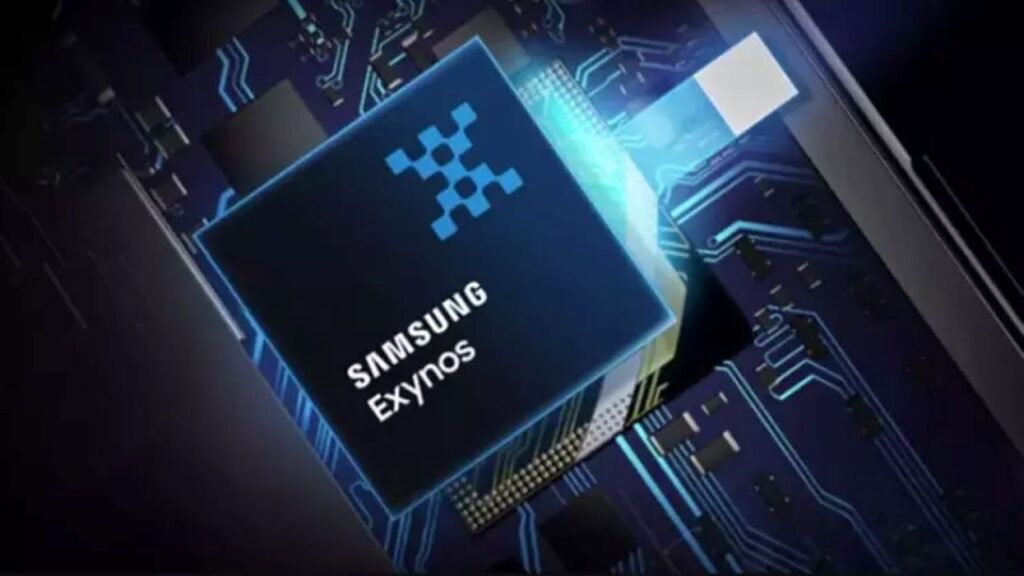
Samsung is trying its best to push the boundaries of chip technology with its Exynos 2600, now in mass production. Expected to power the Galaxy S26 series in 2026, this chip could mark a historic milestone as the first 2nm smartphone SoC.
The South Korean giant has kicked off prototype mass production of the Exynos 2600, built on its “cutting-edge” SF2 2nm process, aiming to make it the world’s first 2nm smartphone chip. According to a report out of South Korea, the chip is set to drive the Galaxy S26 and S26+, expected to launch around February 2026, while the Galaxy S26 Ultra will likely stick with a standard Snapdragon 8 Elite 2, not the custom “For Galaxy” variant used in past flagships. This follows Samsung’s pattern, as seen with the Galaxy S24 series, where the Ultra model relied on a Snapdragon chipset.
The Exynos 2600’s journey isn’t without hurdles. Samsung is said to be targeting a 50% yield rate for its SF2 node, up from 40% reported earlier, but full-scale production requires yields above 60%—a goal not expected until late 2025. Last year’s Exynos 2500 faced similar yield issues on the SF3 node, delaying its debut to the Galaxy Z Flip 7 in mid-July, while the large-screen Galaxy Z Fold 7 is confirmed to use the Snapdragon 8 Elite. Speculations suggest the SF2 node is a rebadged version of SF3 (SF3P), raising concerns about potential delays if yields don’t improve.
How the Exynos 2600 stacks up against rivals like the Snapdragon 8 Elite 2 and MediaTek Dimensity 9500 remains unclear. The Exynos 2500 lagged in benchmarks, and Samsung’s System LSI and Foundry divisions are under pressure to ensure the 2600 delivers competitive performance and efficiency. Success could bolster Samsung’s foundry ambitions and reduce reliance on Qualcomm.
The Red Magic Gaming Tablet 3 Pro made its official debut in China yesterday (11th June 2025). Alongside this gaming tablet, the company also confirmed this model’s global launch as the Red Magic Astra. But that’s not all, as the company also released the Shadow Blade 3 that aims to level up your gaming experience with a console-like controller setup.
Red Magic Shadow Blade 3: Upgrade Your Mobile Gaming Setup
Gaming tablets and gaming smartphones typically offer cutting edge hardware like advanced processors and an ultra smooth display for a better gaming experience. You might even find some nifty design features like shoulder triggers to make controls more intuitive. But the Red Magic Shadow Blade 3 adds physical buttons and joysticks that make it mimic a controller.
Red Magic Shadow Blade 3 Controller
This enables your mobile device to offer a console-like experience. The Shadow Blade 3 isn’t exclusive to just the Red Magic Gaming Tablet 3 Pro, and supports devices of various sizes. In other words, you can use it on the 9-inch Red Magic Gaming Tablet 3 Pro or even smaller smartphones. It even supports Red Magic’s new smartphone cooling accessories as well. Looking at its design, we can see programmable buttons, linear motors, RGB lighting, and micro switches.
As of right now, the Shadow Blade 3 controller is currently on sale in the Chinese market for 599 yuan or roughly about 83 US Dollars. Unfortunately, the company has yet to confirm the global release for this gaming accessory. In related news, Sony also just announced its first wireless fighting game controller for the PS5 with its Project Defiant.
For more daily updates, please visit our News Section.
Google’s Pixel 10 series is rumored to include a somewhat unique charging feature: Qi2 wireless charging with magnetic capabilities. Leaks suggest the Pixel 10 series could join the HMD Skyline as the only Android phones with proper Qi2 support, complete with a new “Pixelsnap” accessory lineup.
Back in January, Google hinted at future Qi2 support, and now a leak from Android Authority, based on credible marketing materials, confirms the Pixel 10 and Pixel 10 Pro will embrace Qi2.2, including the optional magnets that enable seamless attachment of accessories. This move brings Google closer to Apple’s MagSafe ecosystem, which has popularized magnetic chargers and stands since the iPhone 12.
Image: Google
The Pixel 10 series will reportedly use the ConvenientPower CPS4041 chip, supporting up to 60W wireless charging with the Magnetic Power Profile (MPP), though Google may cap speeds for efficiency or thermal reasons.
Under the “Pixelsnap” brand, Google is set to launch at least three accessories: the Pixelsnap Charger, a standard magnetic charging setup; the Pixelsnap Charger with Stand, likely combining charging with a phone stand; and the Pixelsnap Ring Stand, designed to prop up the device.
While details are sparse, trade listings spotted by the source mention the charger (codenamed STN4) in “Rock Candy” (black) and “Mist” (white) color options. The Pixelsnap Charger with Stand could be a highlight of the Pixel 10 series, especially with rumors of a new Hub Mode that transforms the Pixel 10 into a smart display during charging, similar to Apple’s StandBy Mode.
Vivo is gearing up to release a bunch of new gadgets in the Indian market. This includes the compact Vivo X200 FE and the flagship Vivo X Fold 5 foldable models. But ahead of the official release, the pricing details and Indian sales date have been leaked. So here’s what we know.
Vivo X200 FE, Vivo X Fold 5: Indian price and when these go on sale
Vivo S30 Pro Mini
The latest information arrives from tipster Sanju Choudhary, who shared the details on X (Formerly Twitter). Looking at his tweet, both the Vivo X Fold 5 and the Vivo X200 FE will reportedly have their first open sale kick off on 17th July 2025. To recall, the upcoming compact budget flagship and the premium foldable device are expected to debut in the global market on 10th July 2025.
On the other hand, the Chinese release has been officially confirmed for June 25. The tipster further adds the Indian pricing for the Vivo X200 FE and Vivo X Fold 5. Vivo’s X200 FE model carries a 54,999 INR (roughly 643 US Dollars) price tag for one of its storage configurations, while the Vivo X Fold 5 would cost around 139,999 INR (roughly 1636 US Dollars). Sanju claims that the Vivo X200 FE might even be sold for under 49,999 INR with special launch offers in India.
Vivo X Fold 5 – White
For those unaware, the X200 FE model is rumored to be a rebranded version of the Vivo S30 Pro Mini model, which was recently launched in China. This is all the information that we have at the moment, so stick around for more. You can also click here to check out our Vivo X200 FE roundup.
For more daily updates, please visit our News Section.
Samsung is acting fast this year with One UI 8 development — something it lacked pretty badly with the previous version. The brand has already kicked off the One UI 8 beta program for select Galaxy devices, and the stable release is also confirmed to arrive much earlier than the usual timeline. Here’s everything you need to know about One UI 8, including the release timeline, eligible devices, and the latest changes.
One UI 8 release timeline
Samsung hasn’t announced a release date for One UI 8. However, it has confirmed that the new version will begin rolling out to eligible devices “this summer.” That means anything between June and September.
The brand has also confirmed that the upcoming Galaxy Z Fold 7 and Galaxy Z Flip 7 will be the first devices to come with stable One UI 8. Although the launch date remains undisclosed, reports suggest that these foldables will be released in July 2025.
While the One UI 8 release date has not been confirmed, it’s pretty clear that the update will arrive much earlier than last year. This isn’t very surprising, as Google has already released the stable version of Android 16, and it shouldn’t take more than a few weeks for other brands to release the update with their custom skins (such as One UI) on the top.
The stable release is at least a month away, but you can get early hands-on with the newest software via the One UI 8 beta program. The prerequisites are: you must have a Galaxy S25 model and that you’re living in a supported region (read more about it here).
One UI 8 doesn’t bring major changes like One UI 7, but still, there are many useful additions and improvements to look forward to. Here are the major highlights of One UI 8.
1. Enhanced productivity and multitasking
One UI 8 brings a dedicated full screen layout for Quick Share. Tapping on the icon in the Quick Settings panel triggers the “Ready to receive” action. There’s also a “Send” tab that allows you to send files without needing to use a different app.
The split screen has become more useful with the latest changes. You can now stretch one app to as much as you want, previously limited to around 70% of the screen. When you tap the minimized app, it takes the larger space, and the other app gets minimized.
Samsung Dex also gets nice upgrades. It now allows users to change the screen resolution. The display rotation can also be tweaked, which is particularly helpful when you want to use a monitor vertically.
2. Personalization and automation
The update brings new dynamic live wallpapers that change the colors based on the time. They are usually bright and colorful during the day and gradually transition to a darker theme as the sun sets. Although not a major thing, it’s a nice quality-of-life improvement.
One UI 7 introduced significant changes to modes and routines, and the new version builds upon that. It brings new routines, such as Cold weather alert, Morning briefing, and Umbrella reminder.
The latest changes make it easier to customize a Profile Card by displaying the full layout while making changes.
3. Redesigned and smarter apps
One UI 8 brings meaningful changes to many apps, making them more useful, easier to use, and offering a cleaner look. Take the Gallery app, for example: it automatically sorts screenshots into categories such as Boarding passes, Coupons, Shopping, and Locations for quicker access.
The downloaded files in the My Files app now allow you to filter files based on the app from which they were downloaded. There are also some UI changes. The categories are now compact, making room for more content on the screen. The Weather app has also been updated with smoother animations and features hyper-realistic backgrounds.
The Reminder app receives a fresh, modern look, with categories displayed prominently at the top of the home screen in rounded boxes. The app now suggests templates or past reminders as you type, speeding up the process. There’s also a new toolbar that lets you add checkmarks, media, date, location, and assign reminders to categories directly from the input area.
The Calendar app isn’t left out, as it also gets several meaningful upgrades. It now features a cleaner, modern look with deeper black backgrounds for improved eye comfort. It’s now integrated with the Reminders app, and as a result, you can now create reminders directly from the Calendar app. This simplifies task and schedule management.
Another helpful feature is that you can easily reschedule reminders in the Calendar app by dragging and dropping them to new dates.
4. Privacy and accessibility
The Secure Folder gets more secure in One UI 8 with the latest features. You can now assign a different fingerprint to access the Secure Folder. You can also hide other apps within for additional protection. One UI 8 allows users to completely hide Secure Folder, which means it won’t show any notifications or appear in app suggestions.
One UI 8 also brings several accessibility improvements, such as zooming the screen with buttons, controlling mouse actions with a keyboard, magnifying the onscreen keyboard, and pairing Bluetooth hearing ads directly from Accessibility settings.
5. Other notable improvements
The Camera app now lets you customize the swipe-down/swipe-up action to open the camera controls; previously, it was limited to camera switching. One UI 8 also makes it easier to connect multiple Bluetooth audio devices by allowing other users to scan the QR code to join the audio.
Users can now control all alarms in a group directly from a Home screen widget. Also, they can add existing alarms to groups. The Samsung Health app gets a nice addition that lets you challenge friends to fitness goals. The app also reminds you to have good, provided that you have set it up already.
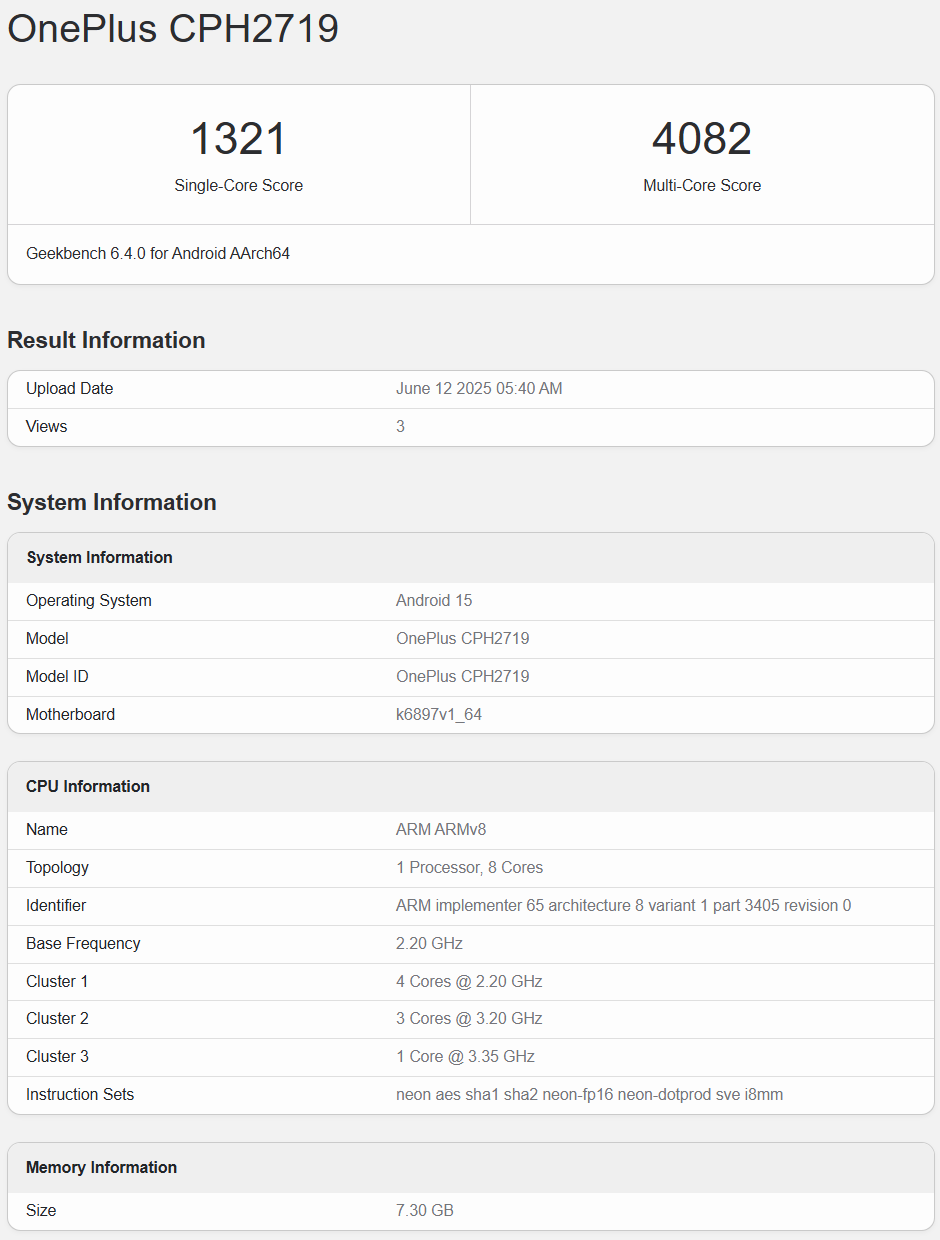
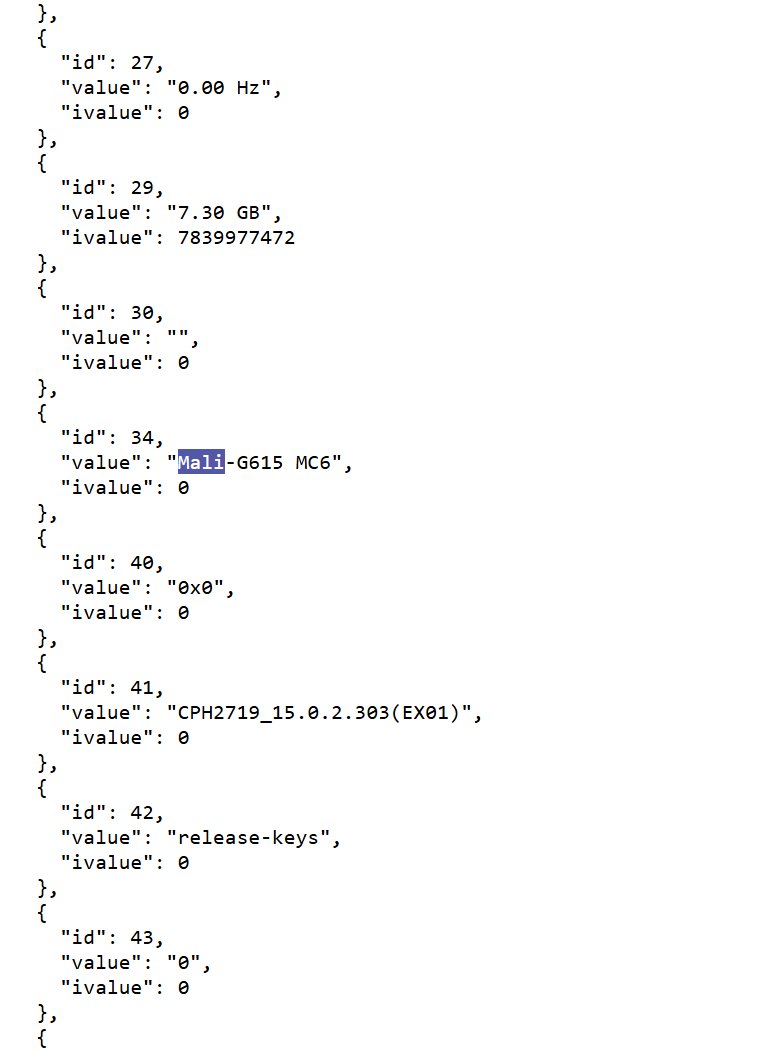
OnePlus Nord CE 5 GeekbenchOnePlus Nord CE 5 Geekbench’s source code
As can be seen above, an upcoming device with model number CPH2719 has appeared in Geekbench’s database. According to reports, the model numbers CPH2719 and CPH2717 are associated with the Nord CE 5.
The listing reveals that the OnePlus Nord CE 5 is powered by the Dimensity 8350v chipset. As usual, the chipset’s name is not mentioned in the listing. However, the CPU configuration and GPU information (via source code) that have surfaced through the listing confirm the inclusion of the said chip.
The Nord CE 5 has been found to be equipped with 8GB of RAM and Android 15. In the single-core and multi-core tests, the device scored 1,321 and 4,081 points, respectively.
OnePlus Nord CE 5 specifications (rumored)
OnePlus Nord CE 5 image by SmartPrix
As per reports, the OnePlus Nord CE 5 will arrive with a 6.7-inch flat OLED panel that supports an FHD+ resolution and a 120Hz refresh rate. Under the hood, the device is expected to feature the Dimensity 8350 chip and a 7,100mAh battery with 80W charging. It is expected to arrive in an 8GB+256GB configuration.
For photography, the device may come equipped with a 16-megapixel selfie camera. Its back panel could be equipped with a 50-megapixel main camera with OIS support and an 8-megapixel ultra-wide lens. The device is expected to run on OxygenOS 15-based Android 15.
For more daily updates, please visit our News Section.
More than four years after the surprising acquisition, Nothing’s CEO Carl Pei has finally explained why the company bought smartphone startupEssential, founded by Android creator Andy Rubin, in early 2021.
In a newly published seven-minute video on the company’s YouTube channel, Pei detailed the rationale behind the deal and why Nothing ultimately never used the Essential name, even though that was the original intention.
According to Pei, the team had seriously considered launching its product line under the Essential brand. He called the name “simple” and “elegant,” which led Nothing to purchase all of Essential’s brand assets, including trademarks, the Essential.com domain, and official social media handles.
Essential Phone (1) was closer to being real?
But despite the effort and resources involved, the Essential name was dropped just a few weeks later. Pei said the team realized that using the name could confuse consumers, since Essential had already been associated with a previous smartphone company. “We don’t want to confuse the market that this is a revival [of the Essential brand],” he said.
Pei declined to disclose how much Nothing paid for the acquisition, citing a confidentiality agreement.
Interestingly, “Stone” was another name the company briefly considered before settling on “Nothing.” Pei noted that, like “Nothing,” “Stone” was intentionally ambiguous. But in the end, he argued that brand names aren’t what define a tech company’s success. “Apple is just a fruit,” he said, adding that it was the product quality that ultimately matters.
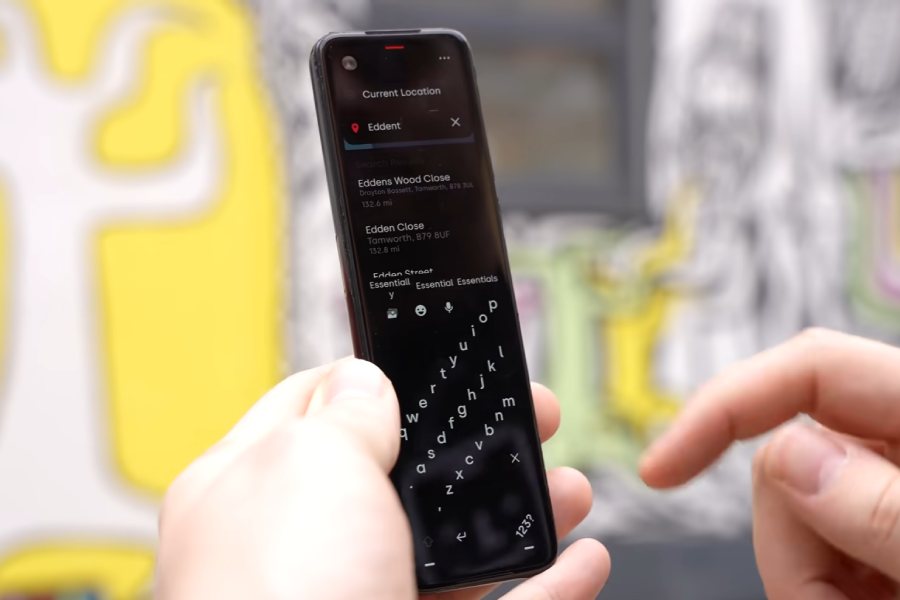
The video also offered a rare look at the long-abandoned Project Gem, a narrow, candy bar–shaped prototype phone developed by Essential that never made it to market. The device featured an unusually tall 4:1 screen and a vertically stretched keyboard layout.
Even though Nothing never used the Essential name in the way it first imagined, elements of the brand may have quietly returned. The Nothing Phone (3a) and Phone (3a) Pro feature a physical button labeled the “Essential Key,” which activates a software hub called “Essential Space.” This seems like a smart way to use the Essential name, or at least, that’s what we think.
For more daily updates, please visit our News Section.
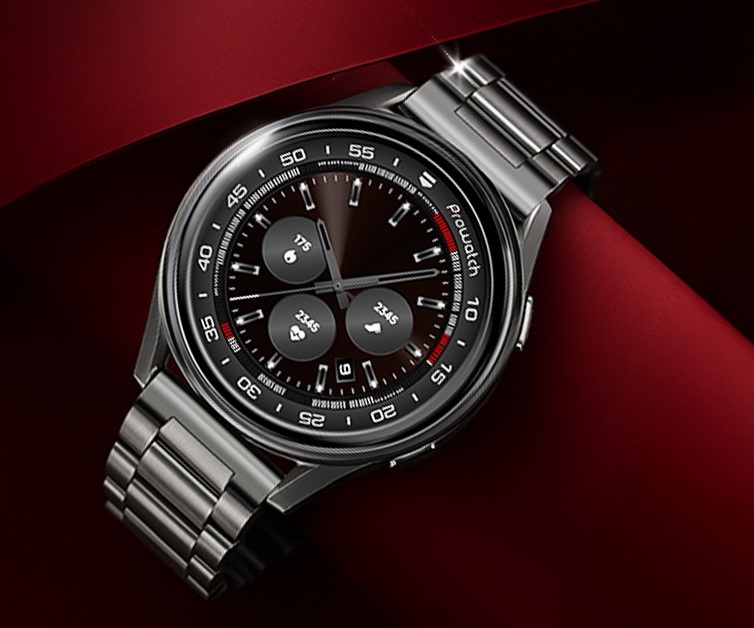
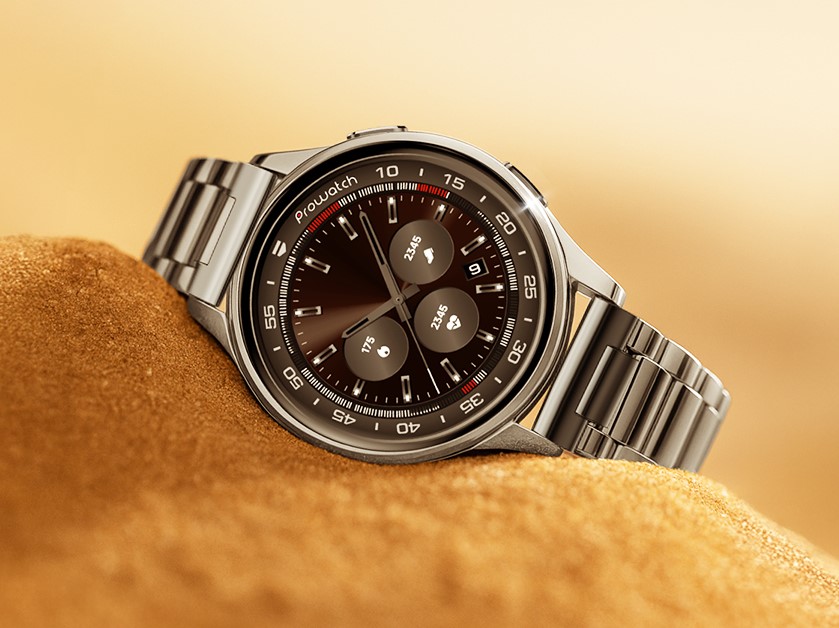
Lava has launched the Prowatch Xtreme, its latest premium smartwatch focused on durability and fitness. It features an AMOLED display, built-in GPS, and a robust aluminum alloy frame with IP68 water resistance. Read on for a detailed look at its specifications and standout features.
Lava Prowatch Xtreme specifications and features
Lava Prowatch Xtreme
The Lava Prowatch Xtreme smartwatch is equipped with a 1.43-inch AMOLED screen offering a resolution of 466 x 466 pixels, 326 PPI density, 500 nits brightness, and Always-On Display support, protected by Corning Gorilla Glass 3. It features a sandblasted aluminium alloy body that is lightweight yet rugged, with an IP68 rating for dust and water resistance.
Powered by the ATD3085C chipset and Bluetooth 5.3, it supports seamless Bluetooth calling, quick reply messages, and 8–10 days of battery backup (5 hours calling, 17 hours GPS). Health features include an HX3960 PPG sensor for heart rate and SpO₂ monitoring, VO₂ Max, HRV, smart sleep tracking, body energy monitoring, and 110+ sports modes. It also offers Intelligent Exercise Recognition and six structured running courses.
Lava Prowatch Xtreme
The Explorer Suite adds a barometer, altimeter, compass, and AQI monitoring for outdoor tracking. A 6-axis G-sensor enables precise motion tracking. Google Fit and Health Connect support provide centralized access to health data, while productivity tools include event reminders, Pomodoro timer, Find My Watch & Phone, world clock, and gesture controls. Lastly, it is compatible with both Android and iOS devices.
Lava Prowatch Xtreme price in India, availability, and offers
The Prowatch Xtreme goes on sale on June 16 exclusively via Amazon. It comes in three strap styles: Silicone (Rs 4,499), Nylon (Rs 4,699), and Metal (Rs 4,999). Launch day prices are Rs 3,999, Rs 4,199, and Rs 4,499, respectively. Additionally, it comes with a 2-year warranty.
Buyers can also avail Rs 1,000 additional discount on select bank cards. Nylon and Metal variants will include a complimentary silicone strap.
For more daily updates, please visit our News Section.
OnePlus’ first compact flagship, the OnePlus 13s, officially goes on sale in India today. It debuted last week as the most affordable Snapdragon 8 Elite phone with a starting price of Rs 49,999, which is inclusive of offers. Here’s a look at the price, offers, and specifications for those looking forward purchasing the 13s.
OnePlus 13s price in India, color options
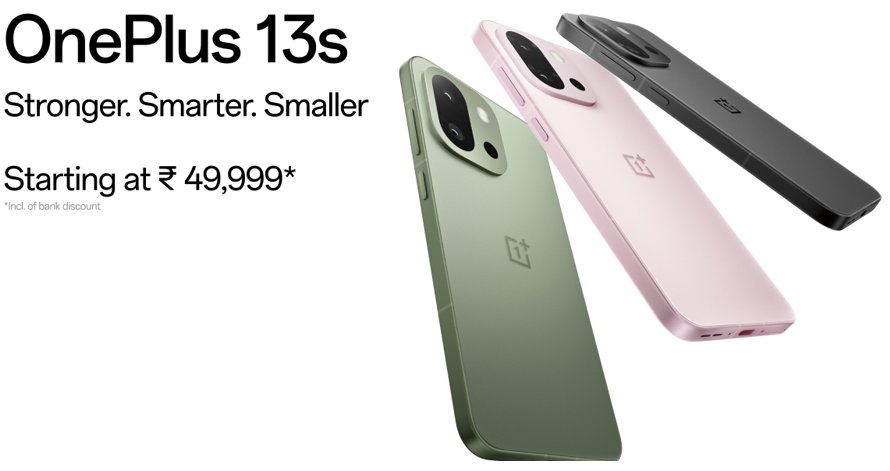
The OnePlus 13s starts at Rs 54,999 for the 12GB RAM + 256GB storage variant, while the 12GB + 512GB option is priced at Rs 59,999. Buyers can purchase the device online via OnePlus.in, OnePlus Store app, Amazon.in, and through offline outlets including OnePlus Experience Stores, Croma, Reliance Digital, Bajaj Electronics, Vijay Sales and more. The device comes in multiple color options, although OnePlus has not yet disclosed their exact names officially. It comes in three shades: Black Velvet, Pink Satin (256GB version only), and Silk Green.
SBI Credit Card holders can claim an instant discount of Rs 5,000, effectively bringing the price down to Rs 49,999 and Rs 54,999 for the two variants. Buyers also get access to no-cost EMI options — up to 9 months on select credit cards and up to 15 months on consumer finance at mainline stores.
Those trading in eligible OnePlus or select other brand smartphones can get up to Rs 5,000 as an exchange bonus. Customers buying the OnePlus 13s before July 1, 2025, get a free 180-day phone replacement plan for hardware faults. There’s also a lifetime display warranty covering green line issues and a 3-year battery protection plan via the Red Cable Club for purchases made before July 14. Easy Upgrade Program buyers can own the phone by paying 65% upfront with 24-month EMI, along with 35% assured buyback for ICICI Bank cardholders. New Jio postpaid users can also save up to Rs 2,250 on select plans.
OnePlus 13s specifications
OnePlus 13s
The OnePlus 13s features a 6.32-inch 1.5K AMOLED LTPO display with a 120Hz refresh rate, peak brightness of 1600 nits. It is powered by the Snapdragon 8 Elite chipset, a 5,850mAh battery with 80W charging, LPDDR5X RAM and UFS 4.0 storage.
On the front, there’s a 32-megapixel selfie camera with autofocus support. Its rear panel has a 50-megapixel main camera with OIS support and a 50-megapixel telephoto camera with 2x optical zoom. It runs OxygenOS 15-based on Android 15, and offers other features, including an in-display fingerprint sensor, dual speakers with Dolby Atmos, and IP65 dust and water resistance.
For more daily updates, please visit our News Section.
Oppo is preparing to launch its new K-series smartphone, the Oppo K13x, in India, and fresh information has surfaced detailing its rugged construction and internal durability tech. According to the company, the Oppo K13x features a structural design inspired by nature, enhanced by aerospace-grade materials, and certified tough under military-grade testing conditions.
Oppo K13x durability explained
Oppo K13x
According to the company, the Oppo K13x, inspired by the resilience of sea sponges, incorporates an internal shock-absorption system made of elastic, impact-diffusing materials. These create buffer zones between essential parts and the phone’s rigid frame. The design mimics the porous structure of sponges, effectively dispersing stress and protecting internal components from damage caused by accidental drops.
An aluminium alloy inner frame, the same type used in high-performance aircraft, forms the phone’s skeleton. This AM04-grade alloy offers improved structural strength over previous generations, while a plastic middle frame helps balance weight and comfort.
The Oppo K13x carries the MIL-STD 810-H shock resistance certification, confirming its ability to withstand harsh impacts and vibrations. Additional durability recognition comes from SGS Military Standard Certification and the SGS Gold Drop-Resistance Certification, which verify its performance in lab-simulated drop scenarios. Here’s a video released by Oppo to showcase how the K13x holds up to real-world durability tests.
Its screen is protected by Crystal Shield glass, rated to offer 160% better impact resistance compared to standard materials. The phone is also bundled with an anti-drop case for extra protection right out of the box.
With IP65 certification, the K13x can handle dust and low-pressure water jets, making it suitable for use in unpredictable conditions. Water-resistant seals protect essential ports, while features like Splash Touch and Glove Touch ensure usability even in rain or with wet hands.
Oppo K13x
Available in Midnight Violet and Sunset Peach, the K13x balances durability with visual appeal. It’s been drop-tested on granite surfaces and across all angles, proving it can handle everyday mishaps without compromising on performance or comfort.
A recent leak revealed that the Oppo K13x may launch by the end of June with a starting price of Rs 12,999.
For more daily updates, please visit our News Section.
Infinix’s latest gaming-centric smartphone, the GT 30 Pro, is officially available for purchase in India starting today. The phone’s launch was previously confirmed by the company through its online channels. The GT 30 Pro aims to make a mark in the mid-range gaming segment by offering a combination of immersive display tech, customisable design, and a new thermal system designed for demanding use.
Infinix GT 30 Pro price in India
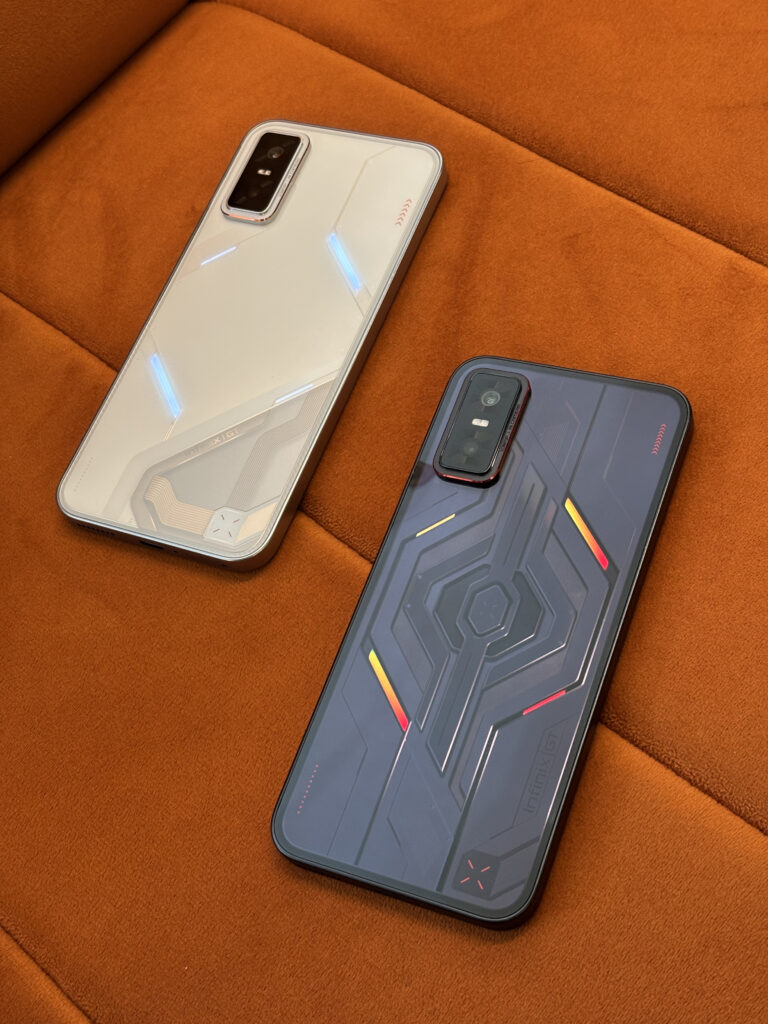
Infinix GT 30 Pro in Dark Flare and Blade White
The Infinix GT 30 Pro is available starting June 12 through Flipkart and select offline retailers. The smartphone comes in two configurations — 8GB RAM with 256GB storage at Rs 24,999 and 12GB RAM with 256GB storage at Rs 26,999. For launch day, buyers can get the 8GB version for a special price of Rs 22,999. The available color options are Dark Flare with RGB LED lights and Blade White with white LED lights.
ICICI Bank cardholders are eligible for an instant Rs 2,000 discount, and a similar value is offered as an exchange bonus for those opting not to use a card.
Additionally, the GT Gaming Kit, which includes a MagCase and a magnetic cooling fan, is sold separately for Rs 1,999 but can be bundled at Rs 1,199 when purchased with the phone.
Infinix GT 30 Pro specifications and features
The Infinix GT 30 Pro features a 6.78-inch AMOLED screen that supports a 1.5K resolution, a 144Hz refresh rate, and supports HDR. The display is protected by Corning Gorilla Glass 7i and reaches up to 4,500 nits of peak brightness. It is powered by the MediaTek Dimensity 8350 Ultimate processor paired with a Mali-G615 GPU. It includes up to 12GB LPDDR5X RAM and 256GB UFS 4.0 storage.
A key focus of the GT 30 Pro is gaming, with features such as shoulder triggers, bypass charging, and a revamped cooling system that includes a vapour chamber and thermal layers. It runs XOS 15 based on Android 15 and supports two years of OS updates and three years of security patches. One of the major highlights of the phone is that it is equipped with gaming shoulder triggers for enhanced gaming experience.
Camera hardware includes a 108-megapixel main sensor, an 8-megapixel ultrawide lens, and a 13-megapixel front-facing camera. The phone is equipped with a 5,500mAh battery and supports 45W wired, 30W wireless, 10W reverse wired, and 5W reverse wireless charging. Other highlights include dual speakers, Wi-Fi 6, NFC, IR Blaster, and an in-display fingerprint sensor.
For more daily updates, please visit our News Section.
Vivo has confirmed through its social media handle in China that a major launch event will take place on June 25 at 7pm (local time). The company will unveil its next-generation foldable phone along with a new pair of wireless earbuds. The centre of attention will be the Vivo X Fold 5, teased with the tagline “lighter and stronger,” indicating substantial progress in design and performance.
Vivo X Fold 5: What’s known so far
Vivo X Fold 5 launch date
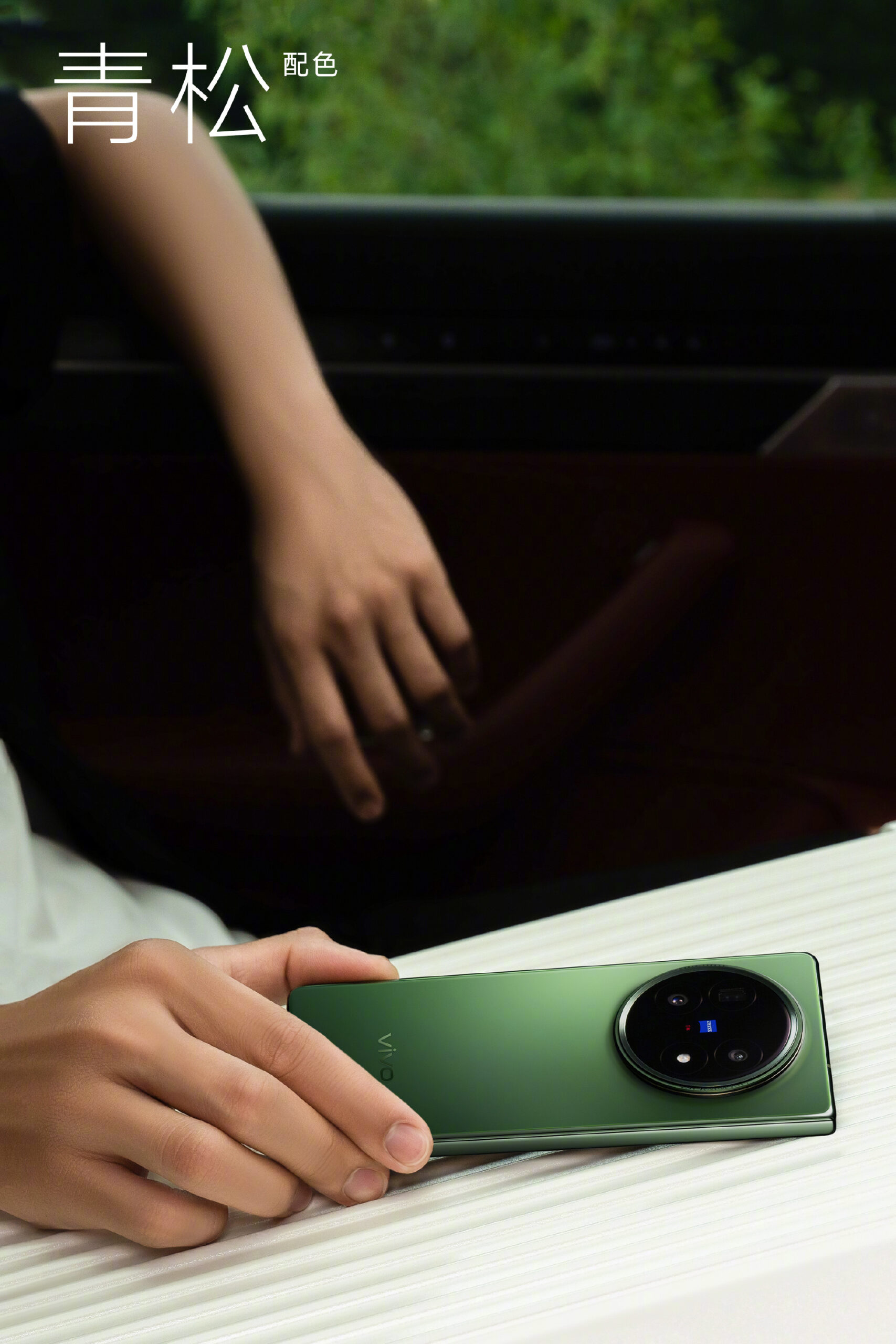
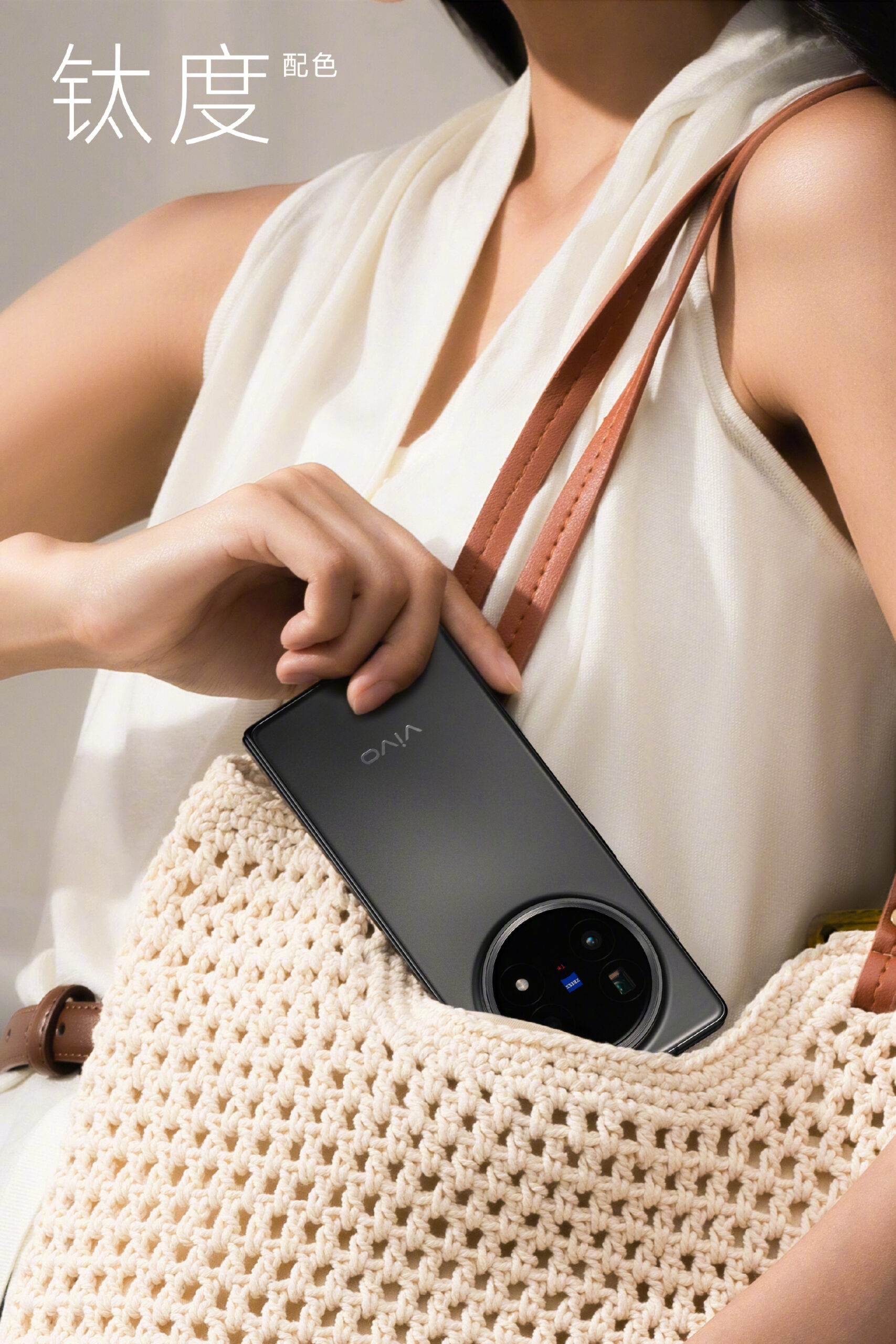
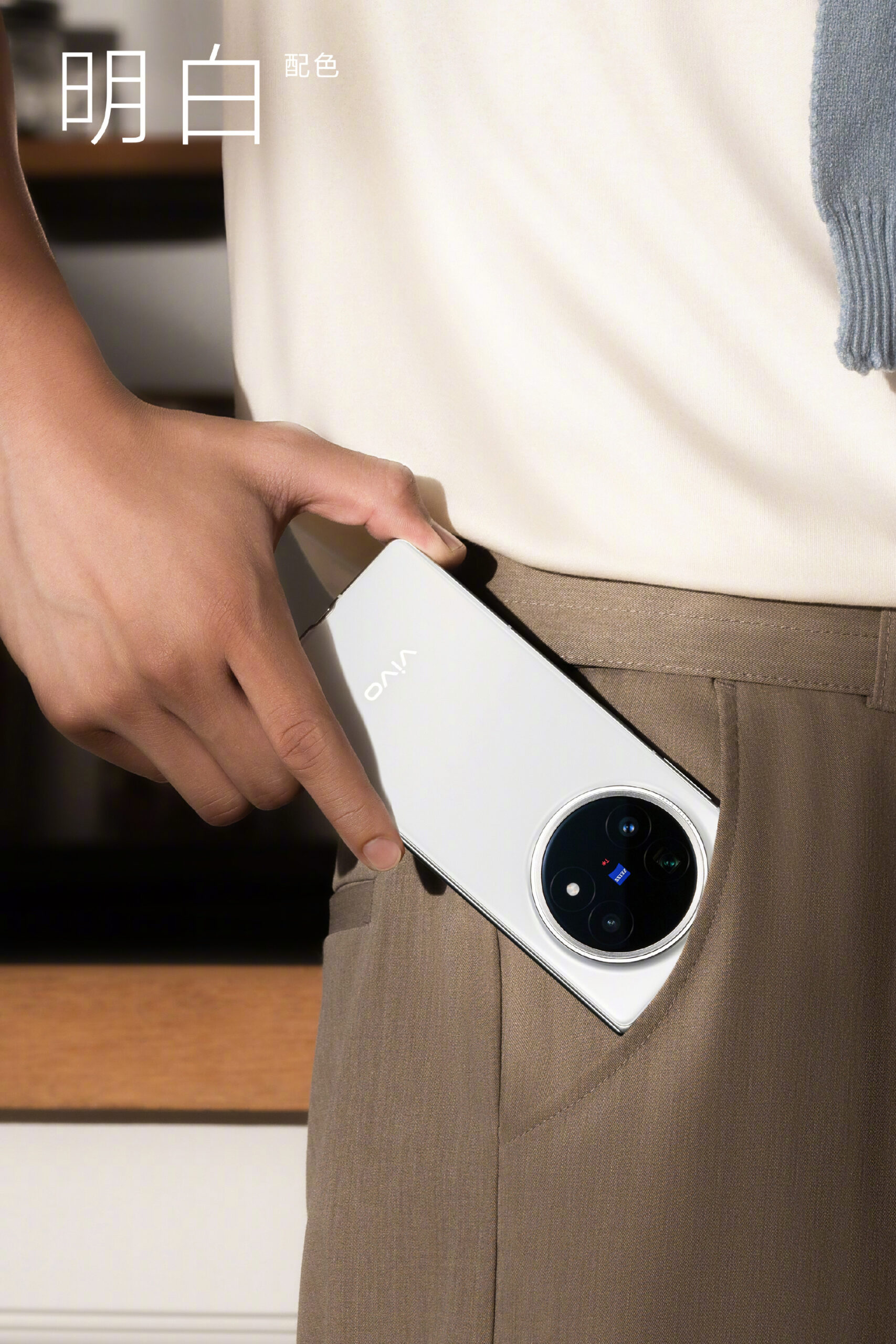
The Vivo X Fold 5 is expected to become the lightest large-format foldable phone yet, weighing under 209 grams. The device will be available in three colors: Pine Green, White, and Titanium, with a Zeiss-branded circular camera module. As far as design is concerned, the official images suggest that it won’t be significantly different from its predecessor. However, it does include a new physical button on the left side instead of a mute switch.
Vivo X Fold 5 – Pine GreenVivo X Fold 5 – TitaniumVivo X Fold 5 – White
As per reports, the X Fold 5 features an 8.03-inch inner screen and a 6.53-inch cover screen—both equipped with 8T LTPO panels and full-brightness high-frequency PWM dimming. The phone also carries an IPX9 rating for water resistance and an IPX5 rating for dust resistance.
The Vivo X Fold 5 is likely to be powered by the Snapdragon 8 Gen 3 chipset and a 6,000mAh battery. It is expected to support 90W wired and 30W wireless charging. On the rear, it may house a triple camera setup: an OIS-enabled Sony 50-megapixel IMX921 main sensor, a 50-megapixel ultra-wide lens, and a 50-megapixel IMX882 periscope telephoto lens with 3x zoom. Even with its ultra-thin profile—folded thickness just under 5mm on one side—the phone aims to deliver high-end imaging performance.
One of the major highlights of the Vivo X Fold 5 is its full compatibility with Apple’s ecosystem. The X Fold 5 supports iCloud login, AirPods pairing with custom animation and in-phone controls, and Apple Watch health data sync via the Vivo Health app.
Vivo TWS Air 3 Pro launch date
The launch event will also feature the debut of the Vivo TWS Air3 Pro, a semi-in-ear ANC earphone offered in standard and long battery variants, available in Starry Black and Vitality White.
For more daily updates, please visit our News Section.
G-Shock has launched two new models under its G-Steel line in India — the GM-110D-8A and GM-110BD-1A9. These timepieces combine signature toughness with a refined metallic design. As revealed through official Casio sources, the new entries aim to strike a balance between rugged durability and sophisticated aesthetics suited for both daily wear and demanding conditions.
G-Shock GM-110D-8A specifications and features
G-Shock GM-110D-8A G-Shock GM-110BD-1A9
The GM-110D-8A features a stainless steel band with a one-touch 3-fold clasp and a case built from resin and stainless steel. It maintains the standard G-Shock durability with shock and magnetic resistance and is water-resistant up to 200 metres. Measuring 51.9 x 48.8 x 19.9 mm and weighing 168 grams, the model features a full auto-calendar (up to 2099), a 1/100-second stopwatch, a countdown timer, five daily alarms (including snooze), and world time across 31 time zones.
The LED backlight is customizable with auto light and afterglow features. Timekeeping includes both digital and analog formats with 12/24-hour options, and battery life is approximately 3 years on two SR927W cells.
G-Shock GM-110BD-1A9 specifications and features
The GM-110BD-1A9 carries nearly identical specifications, but it sets itself apart with black ion plating on the bezel and band, and a gold-accented dial. It delivers the same shock-resistant, magnetic-resistant construction and water resistance, along with identical timekeeping functions and battery life. The build quality and design details cater to users who prefer a bold, modern look paired with dependable performance.
G-Shock GM-110D-8A, GM-110BD-1A9 price in India, availability
The GM-110D-8A comes in a classic silver-tone finish and is priced at Rs 21,995, while the GM-110BD-1A9 carries a more premium Rs 26,995 price tag. Both are available at exclusive Casio and G-Shock outlets across India. Each watch features a stainless steel strap with a one-touch clasp and supports wrist sizes from 150 to 205 mm.
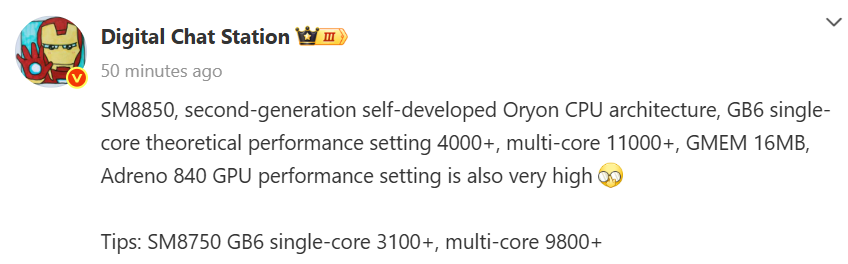
Qualcomm will hold the 2025 Snapdragon Summit between Sept. 23 and 26 this year. Likely, the US-based chipmaker will take off covers from the Snapdragon 8 Elite 2, which will power the next-generation flagship phones. A new Weibo post by reliable tipster Digital Chat Station reveals that this upcoming SoC will bring impressive upgrades in processing and graphics power.
Snapdragon 8 Elite 2: Major upgrade in CPU and GPU performance
As per the leak, the Snapdragon 8 Elite 2 will introduce Qualcomm’s second-generation Oryon CPU architecture. On Geekbench 6, the chipset is reportedly targeting over 4,000 points in single-core tests and upwards of 11,000 points in multi-core scores. Compared to the first-gen Snapdragon 8 Elite, which scored around 3,100 and 9,800, respectively, the new chip promises a significant jump in performance.
The platform is also expected to feature a 16MB GMEM cache and an upgraded Adreno 840 GPU, designed to handle demanding visuals and graphics-heavy applications with ease. These upgrades suggest a focus on performance efficiency and better thermal control for future flagship devices.
Snapdragon 8 Elite 2
The Snapdragon 8 Elite 2 is rumored to have a 2+6 CPU structure with a maximum clock speed of up to 5GHz, offering significant improvements over its predecessor. Expected to be built with TSMC’s third-generation 3nm process, the CPU to have a base frequency of 4.4GHz, slightly higher than the 4.32GHz of the previous generation.
Based on previous patterns, Xiaomi is likely to be the first brand to launch phones powered by this chipset—specifically the Xiaomi 16 and Xiaomi 16 Pro. Other early adopters could include the OnePlus 15, iQOO 15, 15 Pro, Honor Magic 8 series, Realme GT 8 Pro, Nubia Red Magic 11 series, and Redmi K90 series.
The Oppo Find X9 Ultra and Vivo X300 Ultra arriving next year are expected to feature the new chip. However, it is unclear whether the Xiaomi 16 Ultra will feature the Snapdragon chip or the company’s in-house Xring SoC.
For more daily updates, please visit our News Section.
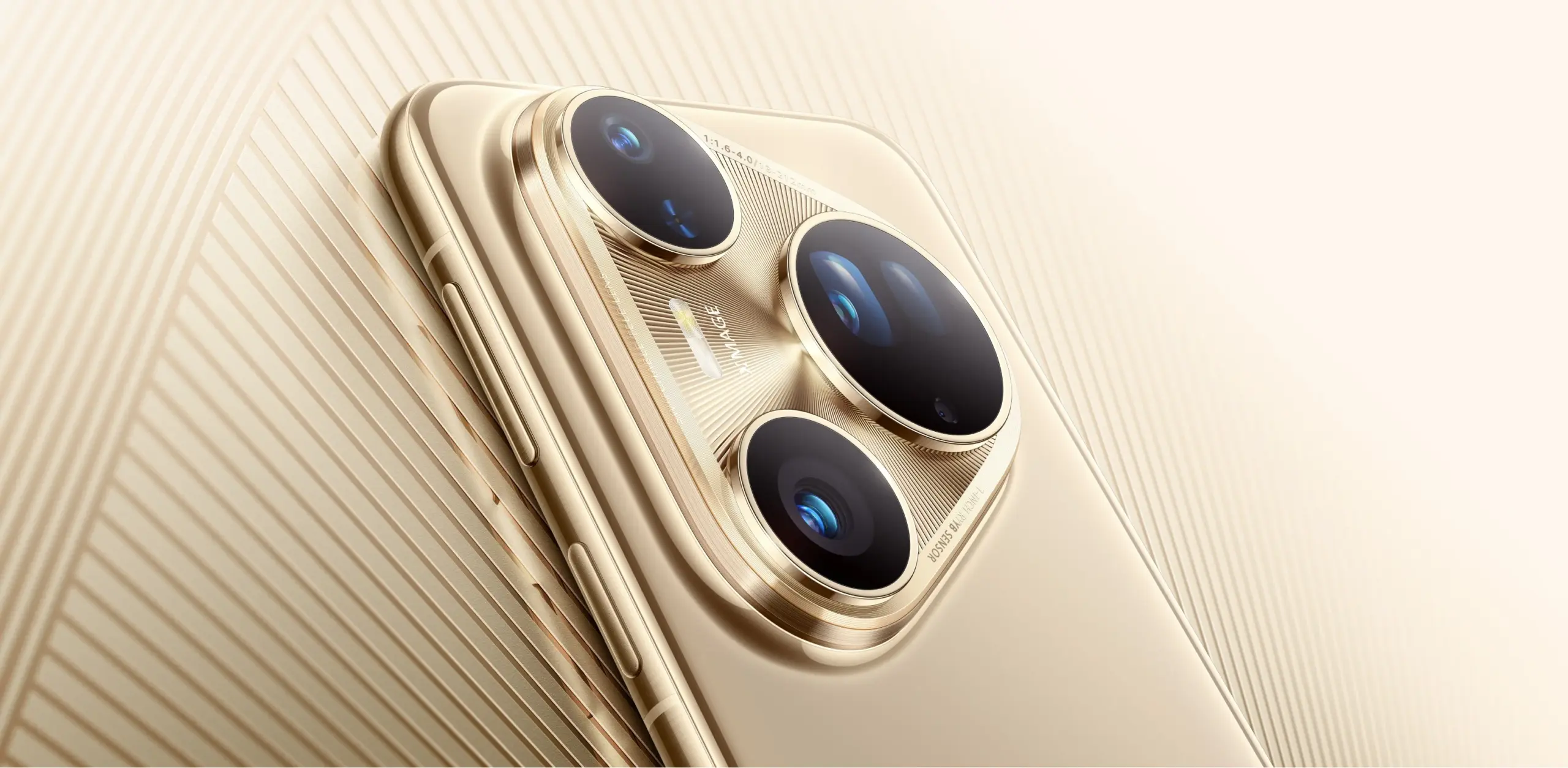
Huawei’s latest Pura 80 series has officially arrived in China, and this year’s lineup is all about pushing imaging technology forward while improving the overall user experience. The four new models, Pura 80, Pura 80 Pro, Pura 80 Pro+, and Pura 80 Ultra, bring the brand’s most advanced camera hardware to date, along with bigger batteries, better displays, and more versatile satellite connectivity.
Huawei Pura 80 Pro+
This is not just a routine upgrade. The Pura 80 series builds on Huawei’s imaging-first strategy, once driven by the P series and now fully rebranded under the Pura name. And while we still don’t know what chips power these phones (Huawei continues to stay mum), the hardware is ambitious across the board. Here is everything you need to know.
All four Pura 80 models share a sleek design language, with the Pro and Ultra models getting a touch more flair. The Pura 80 sticks to a 6.6-inch flat OLED panel, while the Pro, Pro+, and Ultra bump it up to a 6.8-inch curved OLED. The panels all support LTPO 1-120Hz adaptive refresh rates, 10-bit color depth (1.07 billion colors), HDR Vivid certification, and a peak local brightness of 3000 nits.
Second-generation Kunlun Glass is used across the range for added durability, and the entire series is IP68/IP69 rated for water and dust resistance. The Ultra takes it a step further with a unique “sun-pattern” rear finish and gold accents that subtly highlight its flagship positioning.
2. Big batteries for a long-lasting experience
If there is one practical area where Huawei clearly listened to user demand, it is battery life. The base Pura 80 comes with a 5600mAh battery that supports 66W wired and 50W wireless charging. The Pro, Pro+, and Ultra models all bump battery capacity to 5700mAh and support 100W wired and 80W wireless charging, plus 18W reverse wired and wireless charging.
Charging speeds are now among the fastest in the premium segment, which is especially welcome on devices focused so heavily on photography and AI-powered processing.
3. Imaging: where Huawei still plays to win
While the base Pura 80 has an impressive setup, including a 50MP main sensor with a variable aperture and a 12MP periscope telephoto (5.5x optical), the Pro, Pro+, and Ultra models leave no doubt that Huawei still aims to lead the smartphone camera race.
Both the Pura 80 Pro and Pro+ adopt a 1-inch 50MP main sensor with a variable f/1.6–f/4.0 aperture, optical image stabilization, and an updated image processing pipeline. These are backed by a 48MP telephoto camera capable of 4x optical zoom and tele-macro shots, a 40MP ultra-wide sensor, and a 1.5MP multispectral sensor that helps with color accuracy and depth mapping.
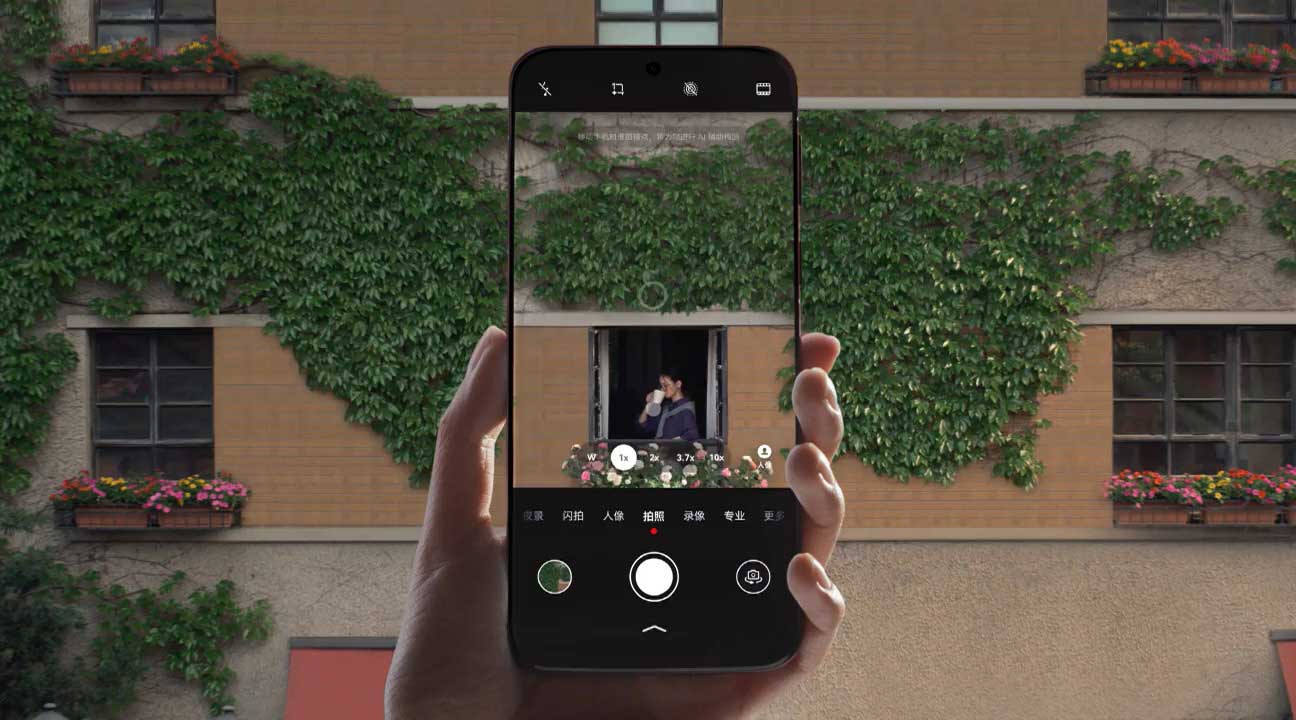
The Ultra takes the biggest leap with a dual-focal-length switchable periscope telephoto system. This innovative module allows users to switch between two native optical zoom levels: 3.7x and 9.4x, both using a 1/1.28-inch sensor for superb image quality across the zoom range. Huawei claims the Ultra’s main 50MP sensor also delivers 16EV of dynamic range, the highest ever recorded in a smartphone camera, with up to 15x higher dynamic range than the Pura 70 Ultra.
Beyond the numbers, Huawei is adding more computational photography tools to its lineup this year. New shooting modes include Nature, Film, Movie, and Cartoon presets, along with a real-time video fusion feature that improves highlight retention and tone mapping in difficult lighting.
4. Satellite messaging: smarter, faster, and two-way
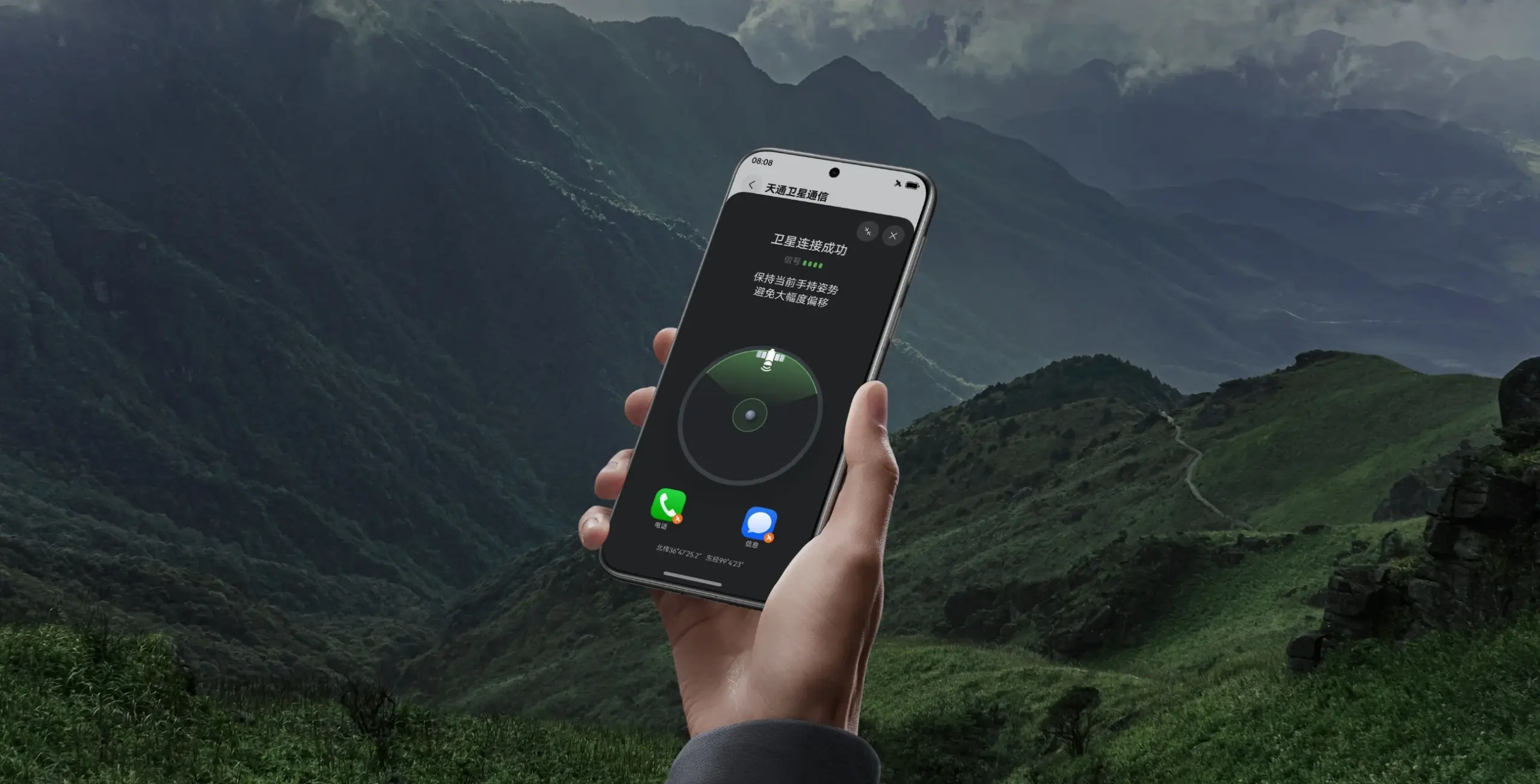
Huawei was one of the first brands to adopt satellite messaging on its consumer smartphones, and the Pura 80 series evolves this capability further. The Pura 80 and Pura 80 Pro support two-way Beidou satellite messaging, allowing not just text but also photo transmission.
The Pro+ goes a step further with dual satellite system support (Beidou + Tiantong), enabling more consistent satellite lock-on and improved reliability during emergencies. Users no longer need to manually align the phone for transmission, the system intelligently manages satellite selection and connectivity.
5. Software smarts and AI integration
All Pura 80 models run HarmonyOS 5.1 and include Huawei’s Xiaoyi AI assistant. Huawei is pushing more AI-driven features this year, such as AI anti-peeping alerts, AI-based file transfer (AI Teleportation), and AI noise reduction for calls.
The Ark Engine, a new optimization framework in the Pro and Ultra models, is claimed to deliver up to 36% better performance than the previous generation, though Huawei has not disclosed the exact chipset in use. Expect these phones to run on updated in-house Kirin silicon or possibly new SMIC-manufactured 7nm or 5nm chips.
6. Pricing and availability
Huawei has already begun taking orders for the Pura 80 Pro and Pro+ in China, with the Ultra launching slightly later. The base Pura 80 will be available in July.
The Pura 80 series demonstrates that Huawei still sees imaging innovation as its key differentiator in a crowded smartphone market. The introduction of dual-focal-length telephoto on the Ultra model, along with continued use of 1-inch sensors and big batteries, makes the Pura 80 lineup a compelling option for mobile photographers and tech enthusiasts alike.
That said, the absence of any mention of 5G support or global availability remains a limitation for now, as these phones are likely to remain China-first products unless Huawei can overcome ongoing geopolitical restrictions.
Still, even in this limited scope, the Pura 80 series shows that Huawei is far from done reinventing the smartphone camera experience, and it will be fascinating to see how other brands respond in the coming months.
For more daily updates, please visit ourNews Section.
Samsung’s next batch of smartwatches is just a few weeks out from going official. The Galaxy Watch 8 series is expected to debut alongside the company’s latest foldables at its July Unpacked event.
If you’ve been keeping up, Samsung’s smartwatch strategy has followed a pretty predictable rhythm over the years. Two models per generation, usually offered in multiple sizes, and both Bluetooth and LTE variants.
Typically, there’s a standard model and a fancier Classic version with a beloved rotating bezel. But last year, Samsung skipped the Watch 7 Classic entirely and went with the more rugged Watch Ultra instead.
Now, if the leaks are to be believed, Samsung might be hitting rewind. The Galaxy Watch 8 lineup is rumored to bring back the Classic model with the physical rotating bezel. It’ll reportedly launch alongside the regular Watch 8.
So, what exactly can we expect from this year’s wearables? Here’s everything we know so far.
There’s nothing official from Samsung just yet, but thanks to a steady stream of leaks and renders, we’ve already got a pretty solid idea of what’s coming.
Design-wise, the Galaxy Watch 8 series is getting a major makeover. Both the regular and Classic models are expected to adopt a “squircle” shape, just like the rugged Galaxy Watch Ultra.
And this design shift isn’t just speculation, either. References to the new shape have popped up in Samsung’s One UI 8 firmware, and we have also had a good look at the Watch 8 Classic, thanks to the high-quality CAD renders.
Galaxy Watch 8 Classic CAD render
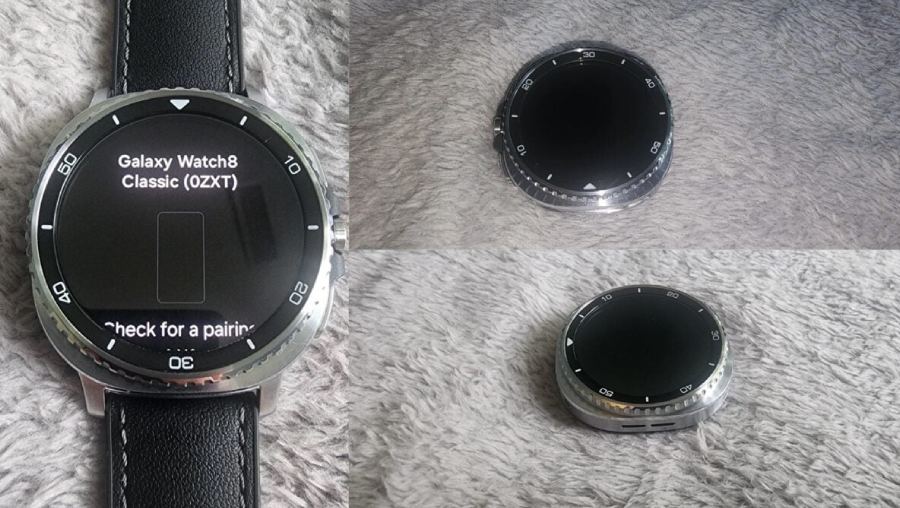
More recently, the Watch 8 Classic surfaced in a few real-life images, which confirms the Watch Ultra’s squircle design and return of a physical rotating bezel. It has three buttons on the right side and a speaker grill on the left.
Galaxy Watch 8 Classic live images
There appears to be a change in the strap system as well. Based on the leaked photos, the Watch 8 Classic doesn’t use the same strap connectors as older models. As a result, your old Galaxy Watch bands might not fit the new hardware.
2. AI, Health Features, and the Usual Speculation
Samsung itself has been hinting at “AI-powered” upgrades across its Galaxy ecosystem, and that likely includes the upcoming Galaxy smartwatches as well.
In a recent shareholder call, the company teased that an upcoming Galaxy Watch will feature an “innovative design and enhanced health-related features.” That could mean anything, but AI integration seems like a safe bet, given the industry-wide push in that direction.
Last year’s Galaxy Watch 7 introduced some AI-backed coaching tools, so it wouldn’t be surprising to see Samsung double down. We might see more personalized training plans, adaptive workout recommendations, or AI-generated health summaries that draw from multiple sensor inputs.
The Galaxy Watch 8 may also include non-invasive blood glucose monitoring. Samsung officially announced this feature in January, so it’s plausible to expect it in the upcoming Watch 8 series. There are also rumors that Samsung will introduce an “antioxidant index” as part of its Samsung Health suite.
3. Software Changes
As with most annual updates, the new smartwatches will launch with a refreshed version of Wear OS. There’s not a lot we know about the new OS, but it’s said to bring Samsung’s new “Now Bar” feature from phones to wearables.
If true, the Now Bar will act as a persistent, interactive widget that displays quick information and controls on the screen.
4. So, who is this for?
If you’re still using a Galaxy Watch 4 or earlier, the Galaxy Watch 8 series could be a meaningful upgrade. Between better sensors, a slightly improved battery, and updated software, there’s enough here to justify a switch, especially if you’ve missed the rotating bezel.
But if you’re coming from a Watch 6 or 7, the upgrades might feel incremental. Slight design refinements, an efficiency-focused processor, and some AI-driven software features don’t amount to a full generational leap.
As we move closer to the official launch, more concrete details will likely emerge. But based on what we know so far, the Galaxy Watch 8 looks like a careful generational evolution.
For more daily updates, please visit ourNews Section.
Apple just released iOS 26 with a new “Liquid Glass” design and some fresh features—one of which aims to extend battery life through intelligent resource management. However, it doesn’t come without a catch: users may notice a dip in performance while the system tries to save power. Apple was previously rumored to be working on an AI-powered battery management feature, which appears to be this “Adaptive Power” function.
Unlike the controversial UI redesigns, this could actually be a meaningful upgrade for the iPhone 17 lineup—if it’s done right. The iPhone 16 packs a 3,561mAh battery, and its successor, the iPhone 17, isn’t widely expected to feature a significantly larger one. In fact, the 5.5mm-thin iPhone 17 Air is rumored to include a battery as small as 2,800mAh.
To put that into perspective, the 5.8mm Galaxy S25 Edge—featuring the latest and most efficient Snapdragon 8 Elite chip—packs a relatively larger 3,900mAh battery. This “razor-thin” Android, unlike the other models in the S25 lineup, delivers mediocre battery life at best. You can learn more about the S25 Edge’s battery situation here.
While Apple has the advantage of deep software-hardware integration, and thus better power efficiency, the Air model’s battery capacity will likely still lag behind the base variant. That’s where the new AI-powered Adaptive Power feature could become essential for the iPhone 17 Air.
This feature may also help other iPhone 17 models maintain their lead in battery life, especially as most Chinese smartphone makers are already offering 6,000mAh+ batteries, thanks to silicon-carbon battery tech—which Apple has yet to adopt.
That said, the effectiveness of this AI-based resource management remains to be tested in real-world use, and we’re looking forward to evaluating it.
The Honor Magic V5, expected to launch by the end of June as the successor to the Magic V3, has now appeared on China’s 3C certification platform—revealing a key detail.
According to the listing (via Xpertpick), two models—Honor MTN-AN00 and MTN-AN80—support 80W fast charging, which is an upgrade over the 66W support seen on the Magic V3. This listing also reaffirms rumors of the phone’s imminent launch in China.
To recall, the Magic V3 featured a 5,150mAh silicon-carbon (Si/C) battery. The upcoming Magic V5 is rumored to pack a 6,100mAh unit, thanks to advancements in battery tech. Paired with a more efficient chipset, this should translate to longer battery life and less downtime from charging.
The Magic V5 was also recently spotted in the Geekbench database, confirming the presence of the Snapdragon 8 Elite chip—a step up from the Snapdragon 8 Gen 3 used in the V3. The phone scored over 3,000 and 9,000 in single- and multi-core tests, respectively.
What makes the Magic V5 even more exciting is the rumored 4,400mAh battery on the upcoming Galaxy Z Fold7—the same as its predecessor. In contrast, Honor seems to be pushing the boundaries on both battery size and design.
While the Magic V3 measured 4.35/4.4mm when opened and 9.2/9.3mm when closed, the Magic V5 is rumored to go under 9mm when closed. For comparison, the Oppo Find N5, currently the slimmest foldable, comes in at 8.9mm. If the rumors hold true, Honor could reclaim its title as the maker of the slimmest book-style foldable. We’re excited to see how this plays out.
Poco has begun teasing the Poco F7, which is expected to launch globally by the end of June. In the latest news, the phone has surfaced on Geekbench, revealing its chipset and a somewhat underwhelming performance.
The Poco F7 scored 1937 and 6021 in Geekbench’s single-core and multi-core tests, respectively. It is powered by the Snapdragon 8s Gen 4 chip, which also runs the recently released iQOO Neo 10. For perspective, the iQOO device scored 2093 and 6836 in the same tests.
While the lower CPU scores don’t necessarily mean a noticeably worse user experience—since UI optimization plays a key role—they do suggest that the F7 may fall short of the Neo 10 in demanding tasks. The relatively modest results hint at two possibilities: either a conservative approach to power usage, or ongoing tuning as Poco tests different performance profiles to balance battery life and compute.
Apart from the scores, the listing also confirms the tested variant has 12GB of RAM. To recall, the Poco F6 came with 8GB or 12GB RAM options and was powered by the Snapdragon 8s Gen 3—so we can expect incremental improvements in raw performance.
According to previous rumors, the Poco F7 could feature a 1.5K OLED display with a peak brightness of 3,200 nits—a noticeable jump from the F6’s 2400-nit panel. The screen size also reportedly increases to 6.83 inches, up from 6.67 inches. As for the camera, the F7 is expected to use the 1/1.95” Sony LYT-600 as its main sensor, the same one found in the iQOO Neo 10.
While pricing details remain under wraps, you can check out a real-life image of the Poco F7 below.
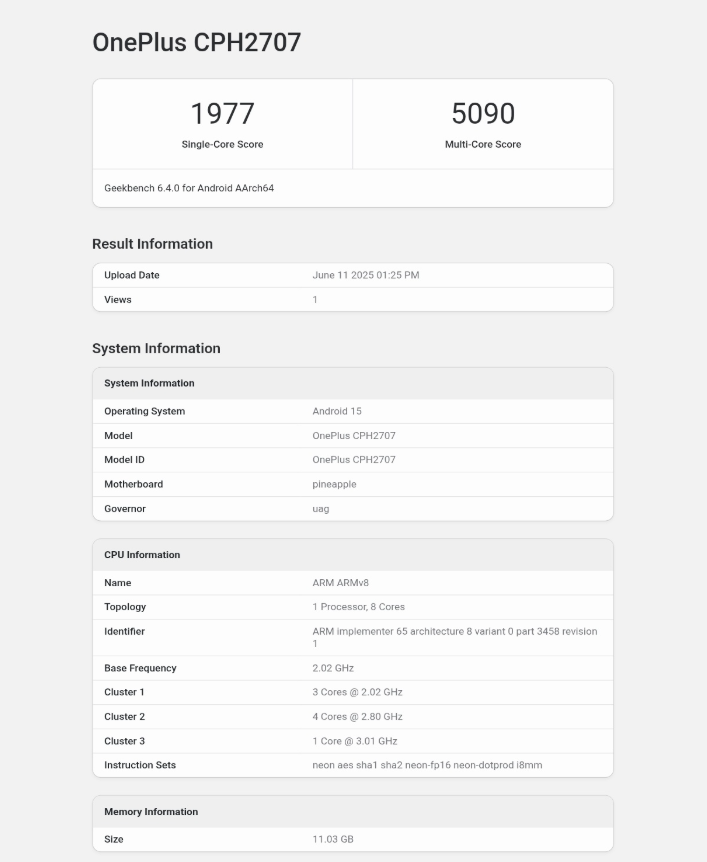
The OnePlus Nord 5 is moving closer to launch. After the global variant appeared on the UAE’s TDRA certification platform, the Indian version has now been spotted on Geekbench, revealing its processor and performance details.
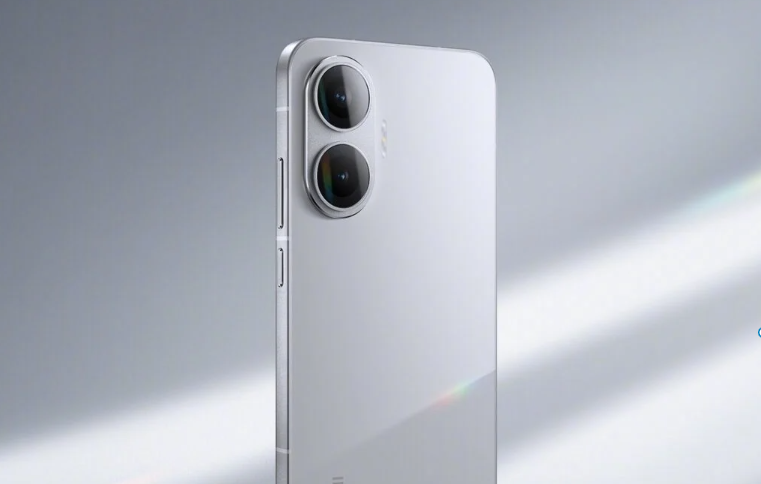
OnePlus Ace 5 Ultra
The Indian model, listed as CPH2707, scored 1977 in single-core and 5090 in multi-core tests. It will run on the Snapdragon 8s Gen 3 chip, clocked at 3.01 GHz, with an Adreno 735 GPU. The phone will come with Android 15 and offer a 12GB RAM option.
According to tipster Abhishek Yadav, the OnePlus Ace 5 Ultra has launched in China with the MediaTek Dimensity 9400e chipset, while the upcoming OnePlus Nord 5 is expected to feature a Snapdragon processor.
The global and Indian Nord 5 variants carry model numbers CPH2709 and CPH2707. The Nord CE 5 models are listed as CPH2719 (global) and CPH2717 (India). Both the Nord 5 and Nord CE 5 are expected to launch on July 8, 2025. The Nord 5 has also cleared TDRA, GCF, IMDA, and TUV Rheinland certifications. The TUV Rheinland listing confirms a 6650 mAh battery with 80W wired fast charging.
Earlier reports noted that the Nord 5 global version first appeared on the TDRA platform under model number CPH2709, hinting that its release was near. It was initially expected to be a rebranded OnePlus Ace 5 Ultra Edition. That model features a 6.83-inch AMOLED display with 1.5K resolution, 144Hz refresh rate, and 1400 nits brightness, powered by the Dimensity 9400+ chip. It also includes a 6,700mAh battery with 100W fast charging, up to 12GB RAM, 256GB storage, a 50MP main camera, an 8MP ultrawide lens, and a 16MP front camera.
More details are expected in the coming weeks ahead of the official launch.
For more daily updates, please visit our News Section.
We use cookies on our website to give you the most relevant experience by remembering your preferences and repeat visits. By clicking “Accept”, you consent to the use of ALL the cookies.
This website uses cookies to improve your experience while you navigate through the website. Out of these, the cookies that are categorized as necessary are stored on your browser as they are essential for the working of basic functionalities of the website. We also use third-party cookies that help us analyze and understand how you use this website. These cookies will be stored in your browser only with your consent. You also have the option to opt-out of these cookies. But opting out of some of these cookies may affect your browsing experience.
Necessary cookies are absolutely essential for the website to function properly. This category only includes cookies that ensures basic functionalities and security features of the website. These cookies do not store any personal information.
Any cookies that may not be particularly necessary for the website to function and is used specifically to collect user personal data via analytics, ads, other embedded contents are termed as non-necessary cookies. It is mandatory to procure user consent prior to running these cookies on your website.