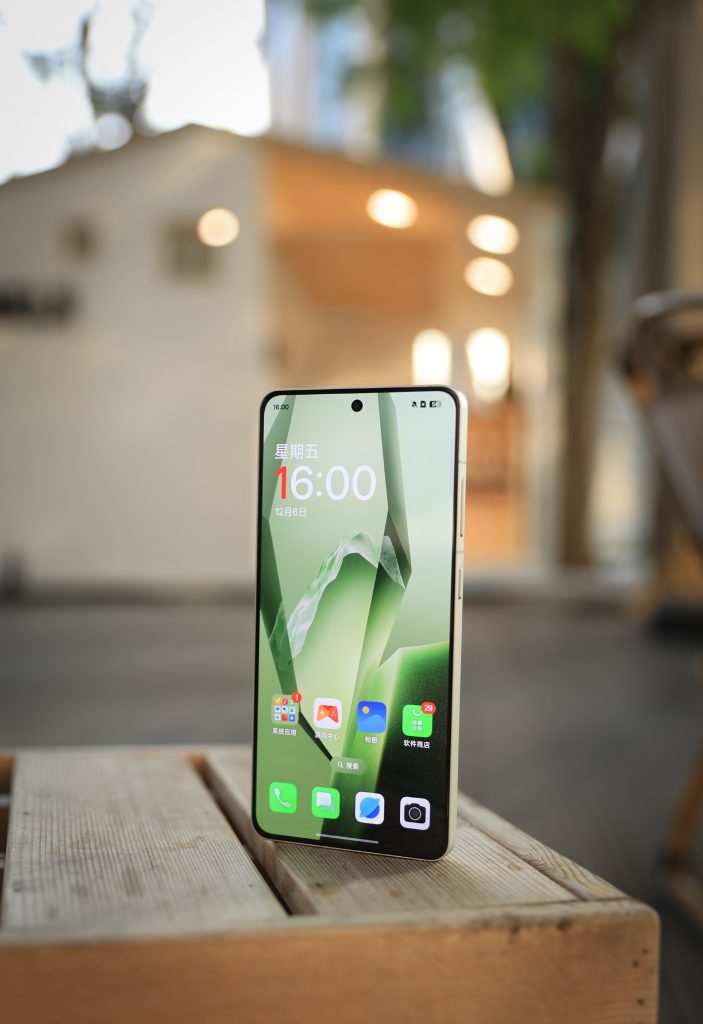
Honor teased the arrival of the Honor X9b phone in February in India, but it hasn’t gone official yet. The last teaser of the phone came out on March 12 and the official ExploreHonor X account hasn’t posted anything new after April 22. These things and along a message that seemingly came from Explore Honor Team Admin suggested that the Explorer has ceased its operations in India. However, a new development coming from Honor India reveals that the brand is active and plans to launch new phones in the coming months.
Honor to launch four new phones in India soon
To recall, Honor unveiled the Honor 9A and 9S in July 2020 and after that it did not launch any new phone in India. However, it did not completely vanish from the Indian market as it continued to launch other products like wearables and tablets. Honor officially returned to India as Honor Tech India (Explore Honor) in August 2023, marked by the announcement of its relaunch under a licensing deal with PSAV Global, led by CEO Madhav Sheth. After its return, it launched the Honor 90 in September 2023.
However, recent developments suggested that brand once again stopped its operations in India. While Sheth is now associated with brand Alcatel as well as he is a founder and CEO of NxtQuantum Shift Technologies and plans to launch new phones under “NxtQuantum” branding, he is also associated with Honor. On April 8, he posted that “he met the Honor Team to align on new strategies and the road ahead” and later added that “Honor has received approvals for launching five products in India.”
It was exciting to meet with the Honor Team to align on new strategies and the road ahead.
As mentioned above, a supposed message from Explore Honor Team Admin that surfaced last week suggested that Honor has exited India once again. However, a recent X post states that, “Honor’s isn’t going anywhere or merging with any other brand.”
Readers should note that the above message is from Honor India, not Explore Honor. The brand has clarified that it remains fully committed to the Indian market, countering recent rumors of a potential exit. The speculation, which surfaced across media and social platforms, has been dismissed by CP Khandelwal, Brand Custodian for Honor India, who confirmed via X (formerly Twitter) that “Honor India is here – and thriving.”
He also revealed that the brand is preparing to launch four new smartphones soon. Honor emphasized that India continues to be a strategic market for its global expansion, with ongoing investments in innovation and product development. The company is actively operating in India and plans to strengthen its presence further. This statement reaffirms Honor’s intent to grow alongside Indian consumers and continue offering cutting-edge technology.
For more daily updates, please visit our News Section.
The Vivo S30 series’ pre-orders are now live on Vivo’s online store in China, suggesting that the lineup will break cover on May 29. As per reports, the series will include two models, the S30 and S30 Pro Mini. Ahead of the launch, the Geekbench listings of both devices have been spotted. As usual, the Geekbench appearances have revealed their chipset, RAM, and OS.
Vivo S30, S30 Pro Mini Geekbench listings
Vivo S30 GeekbenchVivo S30 Geekbench (source code)
As can be seen above, two upcoming Vivo smartphones with model numbers V2464A and V2465A have emerged in Geekbench’s database. The former is powered by the Snapdragon 7 Gen 4, which features the Adreno 722 GPU, as per its source code. On the other hand, the latter features the Dimensity 9400e. The names of the chipsets are not specifically mentioned in the listings, but their CPU and GPU configurations hint at the inclusion of the above-mentioned chipsets.
Vivo S30 Pro Mini GeeekbenchVivo S30 Pro Mini Geekbench source code
The chipsets revealed through the Geekbench listings align with the leaks surrounding the Vivo S30 series. The benchmark listings also show that these devices are equipped with 16GB of RAM and Android 15.
The Vivo S30 scored 1251 and 3635 points in the single-core and multi-core tests, respectively. On the other hand, the S30 Pro Mini recorded 2299 and 7348 points in the single-core and multi-core tests, respectively.
Vivo S30 series
According to other reports, the Vivo S30 will feature a 6.55-inch display whereas the S30 Pro Mini will have a smaller 6.31-inch. Both OLED panels will support a 1.5K resolution and a 120Hz refresh rate. Both devices are also said to pack a 6,500mAh battery with 90W fast charging. There’s a possibility that both phones may feature a 50-megapixel + 8-megapixel + 50-megapixel (Sony IMX882, periscope) triple camera setup.
The Vivo S30 Pro Mini may get rebranded as the Vivo S30 Pro Mini globally in July. On the other hand, a tweaked version of the S30 may be released as the Vivo V60 a couple of months later.
For more daily updates, please visit our News Section.
Anker has launched the Nano Air 2, a new ultra-thin magnetic power bank, in China. The product is now available on JD.com for 229 yuan (approximately $32). It targets users looking for a slim and lightweight solution for on-the-go charging, especially those using MagSafe-compatible iPhones.
Anker Nano Air 2 Specifications
The Nano Air 2 features a compact body that measures 8.6mm in thickness and weighs 118 grams. Its dimensions are 8.6 x 70.6 x 102mm. The design uses rounded corners, a soft-touch surface, and a metallic center frame inspired by Apple’s aesthetic. The power bank comes in Snow White, Desert Gold, and Midnight Black finishes.
Anker has equipped the Nano Air 2 with a 5000mAh battery. The rated output capacity is 3000mAh at 5V. The power bank supports 20W wired fast charging via USB-C and 7.5W magnetic wireless charging. It supports iPhone models from the iPhone 12 to the iPhone 16 series. Wired charging also works with devices from Samsung, Xiaomi, Huawei, Oppo, Vivo, and various tablets, smartwatches, and earphones.
The magnetic alignment system uses a strong internal ring to attach securely to smartphones. The card-sized footprint allows the phone’s camera module to remain unobstructed during use. Users can charge their phone while holding it in hand or resting it on a flat surface.
Anker has introduced an IceFlow cooling system in this model. It includes a 3-in-1 heat dissipation structure that combines a central frame exhaust setup with thermal gel and graphene layers. The system uses dual NTC temperature sensors that monitor heat 120,000 times per hour. According to Anker, this design improves cooling efficiency by up to 300% compared to conventional setups.
In related news, Oppo has launched two new power banks featuring magnetic mounting, LED lighting, and built-in cables. Meanwhile, Xiaomi has officially confirmed the global launch of its 33W Magnetic Power Bank with a 10,000mAh capacity, revealing full specifications and details.
For more daily updates, please visit ourNews Section.
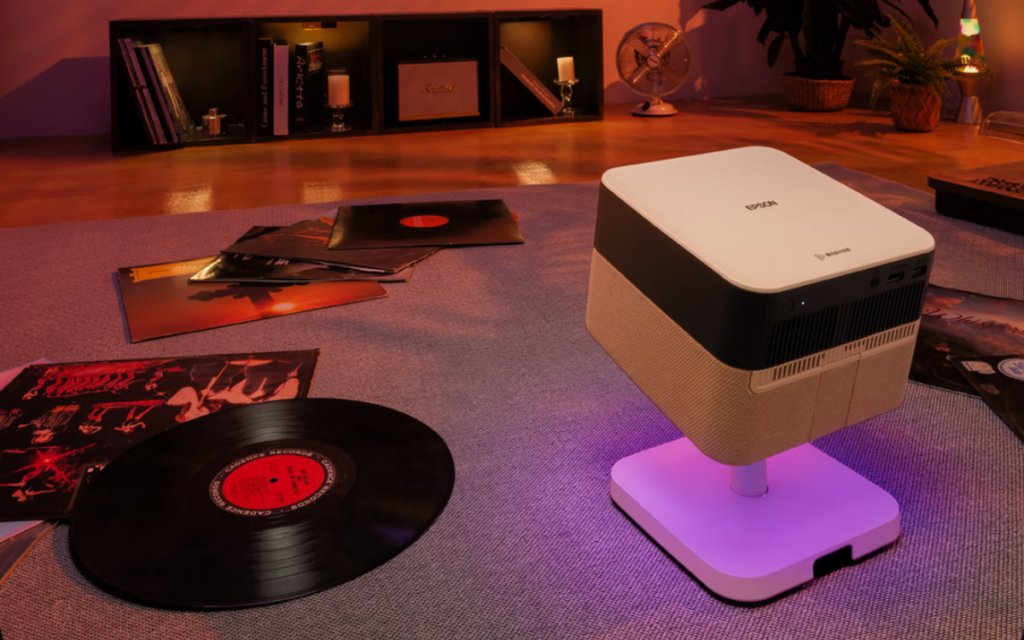
Epson has officially launched the EF-51 4K smart projector in China. The new model is now available on JD.com at a retail price of 4099 yuan ($568). The EF-51 is positioned as a hybrid device, combining a native 4K projector with built-in ambient lighting features.
Epson EF-51 Specifications
The EF-51 uses Epson’s Triple Core Engine and a three-chip, three-color 3LCD architecture to deliver full 4K resolution. It supports HDR content and reaches a brightness of up to 700 lumens. Epson claims a dynamic contrast ratio of 5,000,000:1, with frame-by-frame processing across 512 contrast zones. The projector also supports 10-bit color depth and displays over 1.07 billion colors.
Epson has introduced a new light energy recycling system in this model to improve brightness uniformity and reduce visual noise. According to the company, the system helps the projector achieve a brightness uniformity of 97.3%, maintaining consistent image quality from the center to the edges.
The EF-51 includes a built-in ambient lighting system that functions independently when the projector is not in use. Users can adjust lighting colors, brightness levels, and effects using tap-sensitive controls or via Epson’s smart companion app. The app also allows users to customize lighting modes, wallpapers, and create interactive photo walls.
The projector supports automatic keystone correction, wall detection, and frame alignment. It can project up to 100 inches and features a motorized stand with 180-degree horizontal rotation and 105-degree vertical tilt for flexible placement. For gamers, the EF-51 includes ALLM (Auto Low Latency Mode) and motion interpolation to support smooth 4K gameplay.
Epson has equipped the EF-51 with dual 6W stereo speakers tuned by professional audio engineers. It supports Dolby Audio and runs on an MT9 chipset with 2GB RAM and 64GB of internal storage. It includes HDMI, USB, and audio ports and supports voice control via AI assistant.
The projector maintains low operational noise at 23dB and meets China’s Level 2 energy efficiency standards. Epson provides a 2+1 year official warranty, including door-to-door service, free repairs, and replacement for shipping damage.
In related news, BenQ has launched the W5850 and W4100i 4K projectors in India, featuring laser and LED light sources along with Android TV support. Meanwhile, Xgimi has introduced the RS 20 series projectors with lossless 4K resolution, advanced laser optics, and gaming-focused features.
For more daily updates, please visit our News Section.
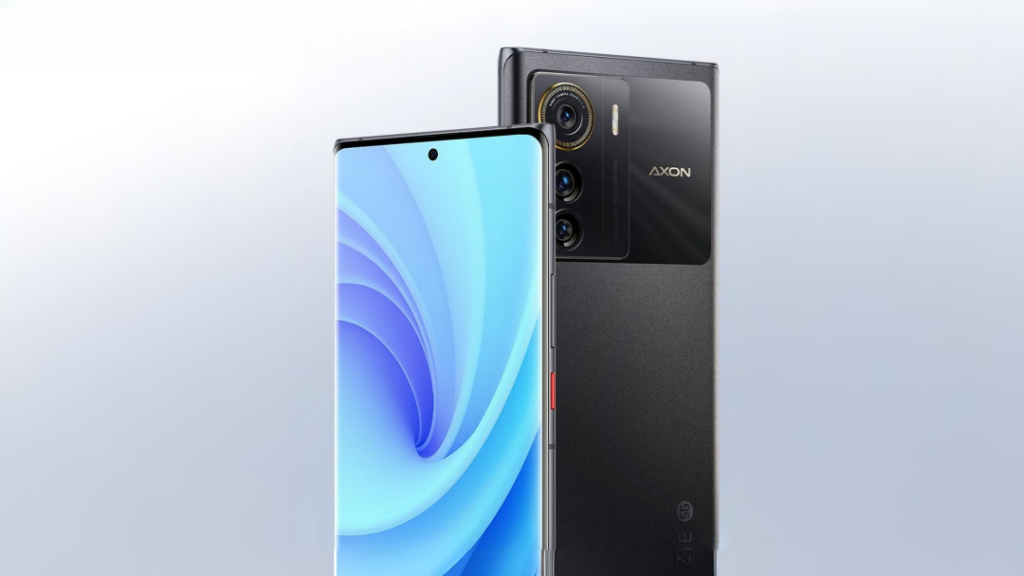
ZTE has officially launched the Axon 50 Standard Edition in China, further expanding its Axon 50 lineup following the release of the Axon 50 Ultra and Axon 50 Lite in 2023. Positioned between the two, the new model aims to offer a well-rounded experience with solid performance, refined design, and practical day-to-day usability.
ZTE Axon 50 Specifications
The Axon 50 features a 6.67-inch AMOLED display with a resolution of 2400×1080. It supports a 144Hz refresh rate, 10-bit color depth, and full coverage of the DCI-P3 color gamut. The screen reaches a peak brightness of 1000 nits and carries TÜV low blue light certification. The panel has a 72.5-degree curved edge, which enhances the viewing experience and complements the phone’s design.
Under the hood, the device is powered by the Qualcomm Snapdragon 8+ Gen 1 processor, based on TSMC’s 4nm process and clocked at up to 3.19GHz. It is paired with 12GB of LPDDR5X RAM and 512GB of fast UFS 3.1 storage, enabling responsive multitasking and high-speed app loading.
The phone runs on MyOS 12, ZTE’s custom Android skin. MyOS includes support for customizable widgets, dynamic lock screens that change based on user activity, and themed visuals.
ZTE equips the Axon 50 with a triple-camera setup. It includes a 64MP main camera with Sony IMX787 sensor and OIS, a 50MP ultra-wide camera with macro support (2cm focus), and a 50MP telephoto lens with 3x optical zoom. The phone features Lightning Capture 3.0, which boosts shutter response by 30% and improves capture success rate by 20%.
In terms of power, it features a 5000mAh battery with 80W fast charging support. ZTE claims this setup offers all-day performance without battery anxiety, especially for users on the move.
The device includes dual-frequency L1+L5 GNSS positioning with support for BeiDou’s third-gen augmentation system, offering sub-meter level accuracy. The Axon 50 also packs 13 antennas, an IR blaster compatible with multiple appliances, and a starlight AG glass back for added durability and style.
Pricing and Availability
The ZTE Axon 50 is priced at 1799 yuan (approximately $250) and is currently available for purchase on JD.com. It comes in a single 12GB RAM + 512GB storage configuration.
In related news, ZTE also recently launched the U60 Pro, a compact 5G hotspot that packs a 10,000mAh battery, Wi-Fi 7 support, NFC, and more.
For more daily updates, please visit our News Section.
The OnePlus Ace series is an exclusive lineup to China, with certain models getting a rebrand for the global market. So far, we have seen multiple models from the Ace 5 family in rumors, certifications, and benchmarks. Recently, an Ace 5 Ultra model also leaked, and now, more details have been shared by a known tipster. So here’s what we know.
OnePlus Ace 5 Ultra: Gaming phone with flagship specs
The latest information arrives from Digital Chat Station, who shared the details on Weibo. The OnePlus Ace 5 Ultra moniker was confirmed a couple of weeks earlier via retail box image. Now, the latest specs leak confirmed that it is a gaming smartphone. DCS claims that the device is focusing on gaming and esports and will sport a 144Hz display. While the company has released high 120Hz screens on its flagship phones, this would mark the first time that a OnePlus device got a 144Hz refresh rate.
OnePlus Ace 5 leaked image
Taking advantage of the high refresh rate, the Ace 5 Ultra is expected to be equipped with MediaTek’s latest and greatest Dimensity 9400+ SoC. The tipster adds that the gaming flagship will also come with a gaming core that will help improve the gaming experience. In other words, this could be a software or hardware component that reduces latency or gives more performance to the game being run. Unfortunately, that is all the information shared in this leak, so stick around for more updates.
In related news, the OnePlus Ace 5 Supreme Edition recently surfaced on the GeekBench platform with the Dimensity 9400+. Meanwhile, the Ace 5 series is expected to debut later this month and may introduce the new Dimensity 9400e chipset as well.
For more daily updates, please visit our News Section.
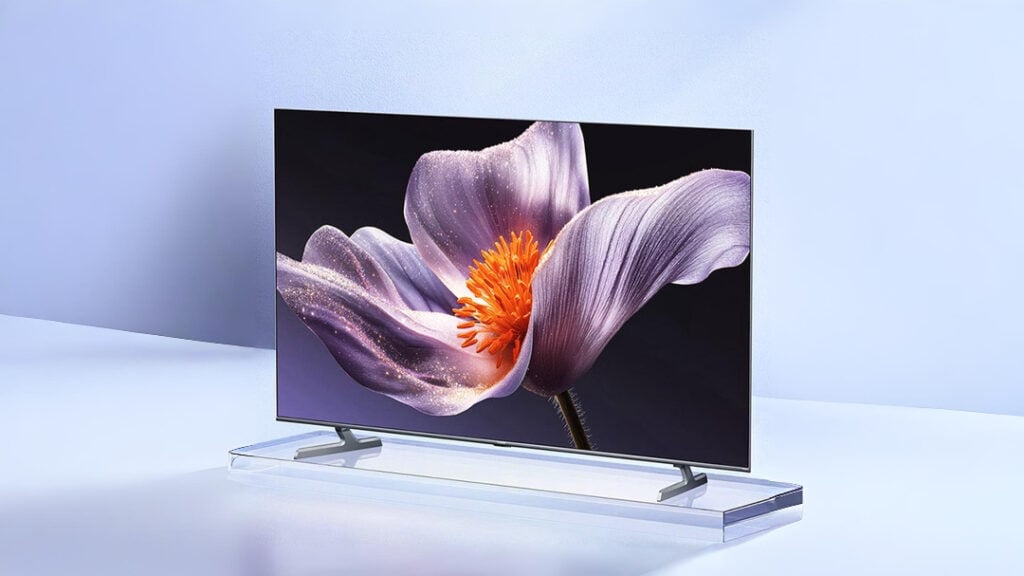
Xiaomi has officially launched its new TV S Mini LED 2025 series in China. The new models are now available for pre-sale and will go on sale starting May 22. The lineup includes four size options: 55, 65, 75, and 85 inches. Prices start at 2999 yuan ($416) for the 55-inch bare unit, while the 75-inch model tops out at 5199 yuan ($722) for the installed version. Xiaomi has not yet announced pricing for the 85-inch version.
Xiaomi TV S Mini LED 2025 Specifications
The key upgrade in this generation is the introduction of a low-reflection screen. Xiaomi claims the panel reduces surface reflectivity to just 1.8%, which helps deliver deeper blacks and higher contrast, especially in rooms with strong ambient light. The TVs use VA panels combined with Mini LED backlighting and a multi-layer optical film to improve light control and picture clarity. The number of local dimming zones scales with size, from 408 zones on the 55-inch model to 704 zones on the 75-inch model.
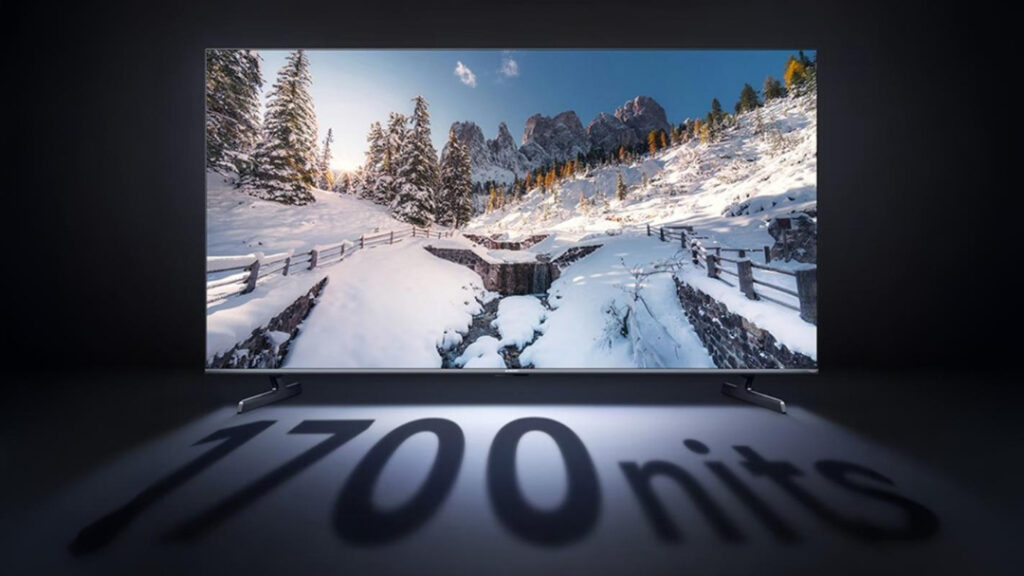
The flagship 75-inch S75 features a 4K resolution (3840×2160), peak brightness of 1700 nits, and a native 144Hz refresh rate. Users can boost the refresh rate to 288Hz in gaming mode. The TV also supports VRR and AMD FreeSync Premium Pro to reduce tearing and improve gaming performance.
Xiaomi has equipped the S75 with its second-generation Master Image Engine. The engine uses AI-based algorithms to manage local dimming, adjust contrast dynamically, and fine-tune color temperature in real time. The panel covers 94% of the DCI-P3 color gamut and comes factory calibrated to a Delta E of around 2 for color accuracy.
Inside, the TV runs on a quad-core Cortex-A73 processor with a Mali-G52 GPU, 4GB of RAM, and 64GB of internal storage. It supports WiFi 6, Bluetooth 5.2, and includes a wide range of ports: two HDMI 2.1 (one with eARC), one HDMI 2.0, AV input, LAN, optical S/PDIF, one USB 3.0, and one USB 2.0.
The audio system consists of four speakers (two tweeters and two full-range drivers) with a total output of 30W. Xiaomi has tuned the sound using Harman’s AudioEFX processing and included support for Dolby Vision and Dolby Atmos.
The TV runs HyperOS 2.0 and supports Xiaomi’s Xiao AI assistant with far-field voice commands, NFC casting, and smart home device control. The ultra-thin design and near bezel-less display support close-to-wall mounting, maintaining a clean look for modern living spaces.
In related news, Xiaomi recently launched the Mijia M40S robot vacuum-mop with 23000Pa suction, liftable LiDAR & HyperOS. Alongside, the company also launched the Mijia Wireless Floor Scrubber 4 Max with a patented edge-cleaning arm & 23,000Pa suction.
For more daily updates, please visit ourNews Section.
Acer has officially announced two new tablets from its Iconia series. The Iconia V12 and Iconia V11 are a couple of new budget tablets. These offer tall high resolution displays, big batteries, and run on the latest Android operating system. The duo will go on sale for a budget price tag, so here are all the details.
Acer Iconia V12, V11: Specs, Features, and Pricing
The Taiwanese tech giant just announced a series of new cutting edge PCs. This included the Acer Aspire 16 AI laptops, Acer Predator Orion 3000 desktop PC, Predator Helios Neo 14 AI, and Predator Triton 15 AI. But that’s not all, Acer also announced a pair of new entry level tablets, namely the Iconia V12 and Iconia V11. The Iconia V12 sports a tall 12-inch LCD panel with a 2K resolution, 16:10 aspect ratio, and 90Hz refresh rate.
Acer Iconia V12
On the other hand, the V11 has an 11-inch LCD display with a FHD+ resolution, 90Hz refresh rate, and 16:10 aspect ratio. Apart from this, the latest V12 and V11 are identical to one another. Under the hood, the new Iconia tablets are equipped with the MediaTek Helio G99 SoC, which is paired with up to 8GB of RAM and up to 256GB of internal storage. Users can even expand storage by up to 1TB via a microSD card slot.
For optics, the rear has an 8MP shooter, while the front has a 5MP selfie camera. A massive 8000mAh battery pack powers the Iconia V12 and V11, which promises up to 10 hours of battery life. Other notable features include dual stereo speakers, a slim 7.9mm body, magnetic folio case, and an optional stylus. The Acer Iconia V11 starts from 229 Euros and will go on sale in August 2025, while the Iconia V12 will start selling in July with a 289 Euros starting price tag.
For more daily updates, please visit our News Section.
We recenetly covered a rumor roundup of the Xiaomi Civi 5 Pro, talking about its design, expected features, and more. But as we get near the official release, the company shared a series of teasers that confirms much of its key specs and its sleek design. So let’s check it out.
Xiaomi Civi 5 Pro
Xiaomi Civi 5 Pro Teaser: The New Civi is Thin & Powerful
The Chinese tech giant dropped a bunch of teaser posters on its official Weibo account. After weeks of rumors, the Civi 5 Pro was finally confirmed to drop with the Snapdragon 8s Gen 4 SoC under the hood. This chip offers improvements in CPU, GPU, and AI performance. A massive 6,000mAh battery pack powers this device, which supports 67W wired fast charging.
To keep these beefy specs cooled, Xiaomi is packing the Civi 5 Pro with a dedicated heat dissipation system. On the front, the budget flagship features a 6.55-inch micro curved OLED display with ultra narrow bezels. We already know that the Xiaomi Civi 5 Pro will arrive in multiple color options, namely purple, pink, white, and black variants. But what really impresses is the design. The company makes its Civi lineup with an attractive design, and the Civi 5 Pro is no different.
Despite the large battery capacity, the Civi 5 Pro measures a slim 7.45mm in thickness. The company is set to debut the Xiaomi Civi 5 Pro sometime later this month. While an official launch date has yet to be confirmed, reports have hinted at a May 22 release. So stick around for more as we will be covering the upcoming launch event.
For more daily updates, please visit our News Section.
Acer has just announced a bunch of new PCs with cutting edge hardware. The Acer Predator Orion 3000 is a desktop PC, while the Predator Helios Neo 14 AI and Predator Triton 15 AI are powerful gaming laptops. But alongside these models, the company has also unveiled Aspire 16 AI laptops that offer impressively long battery life across latest gen Intel, AMD, and Snapdragon platforms. So let’s check it out.
Acer Aspire 16 AI launch: What makes it special?
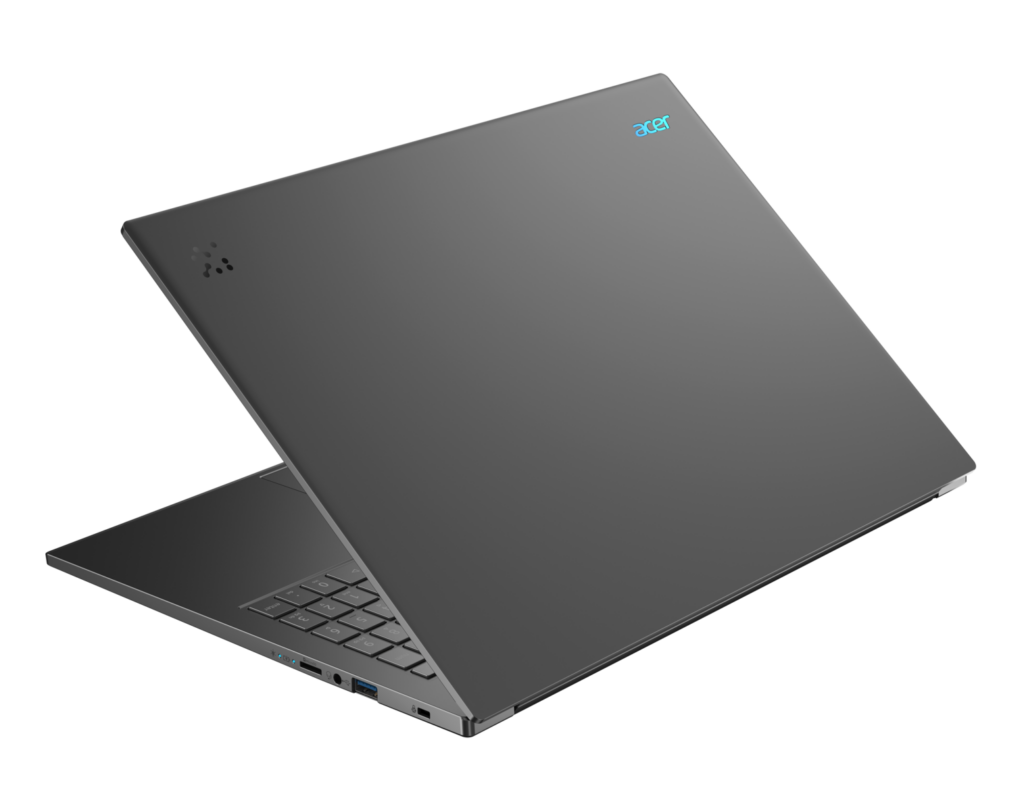
Acer has built the Aspire 16 AI with new and efficient processors that promise great battery life while not compromising on performance. The Intel variant arrived with up to a Core Ultra 7 258V, which is paired with Intel Arc graphics. Acer promises up to 26 hours of battery life on this model. Meanwhile, the AMD option features either the Ryzen AI 7 350 or Ryzen AI 5 340 processors. This is coupled with Radeon 860M and Radeon 840M, respectively.
Lastly, there is the ARM based Snapdragon version which includes the Snapdragon X platform. The most notable aspect of this model is its impressively long battery life of 27 hours. The new Aspire 16 AI sports a tall 16-inch OLED WUXGA+ display with a 120Hz refresh rate and 500 nits of peak brightness. Although, the Qualcomm option skips the OLED display for an LCD WUXGA panel that can be opted with 100 percent sRGB or 45 percent NTSC color gamut.
Acer Aspire 16 AI Laptop
All Aspire 16 AI laptop can be paired with up to 32GB of LPDDR5X RAM and 1TB of PCIe Gen4 SSD storage. These also support microSD expansion. A sizeable 65Wh battery pack powers this model. Connectivity options include USB 3.2 Type-A, USB-C, HDMI 2.1, a MicroSD slot, and WiFi 6E/7. Acer Aspire 16 AI runs on Windows 11 OS, with the AMD options featuring Microsoft’s Pluton security chip and facial recognition. The Snapdragon variant gets the basic Windows Hello.
Other notable AI powered features include PurifiedVoice, LiveArt, and Copilot+ Hotkey. Acer is set to launch the Aspire 16 AI in the Snapdragon option in July for a starting price tag of 749 Euros. On the other hand, the AMD and Intel variants will go on sale in August. Team Red options will start from 999 Euros, while the base model of Team Blue versions costs 1,049 Euros.
For more daily updates, please visit our News Section.
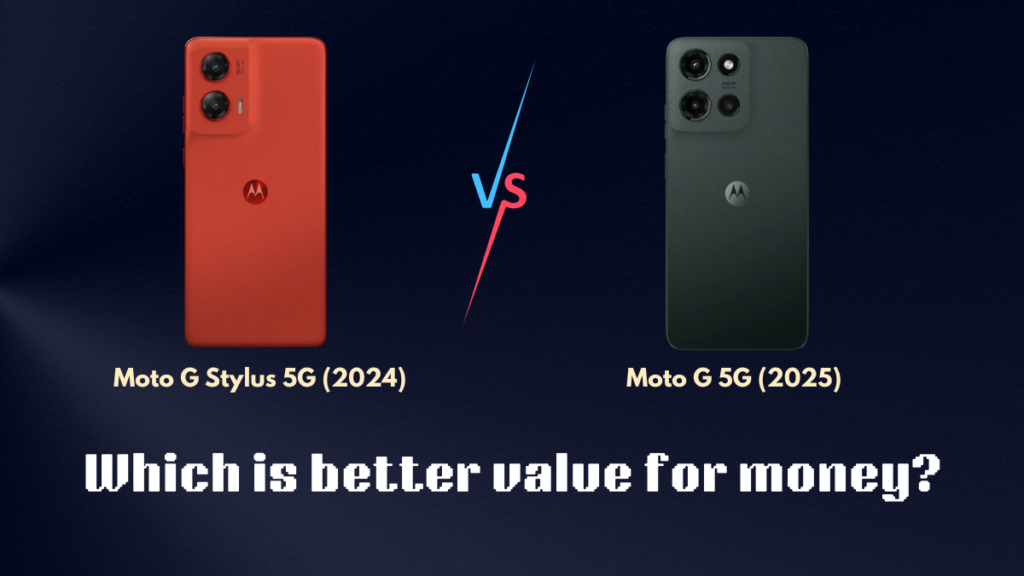
The Moto G Stylus 5G (2024) and Moto G 5G (2025) are excellent budget smartphones. They come with large screens, hefty 5,000mAh batteries, and capable chipsets that deliver smooth performance — all without breaking the bank. But which offers the best value for your money? Let’s dive into the comparison to find out.
Let’s begin with a spec sheet before we dig deeper:
Moto G Stylus 5G (2024)
Moto G 5G (2025)
Release
May 2024
Jan 2025
Dimensions Weight
162.6 x 74.8 x 8.3 mm 201 g
167.1 x 76.3 x 8.2 mm 193 g
Display
6.7″ P-OLED 1080 x 2400 pixels resolution 120Hz refresh rate
The Moto G Stylus 5G (2024) has a price tag of $299, down from its launch price of $399. The Moto G 5G (2025) saves you another $100, as it’s currently available for $199. The real question is if the 2024’s Moto G Stylus 5G justifies an additional $100 bucks, or is the latest Moto G 5G good to go? You’ll find it very soon as you go through the article.
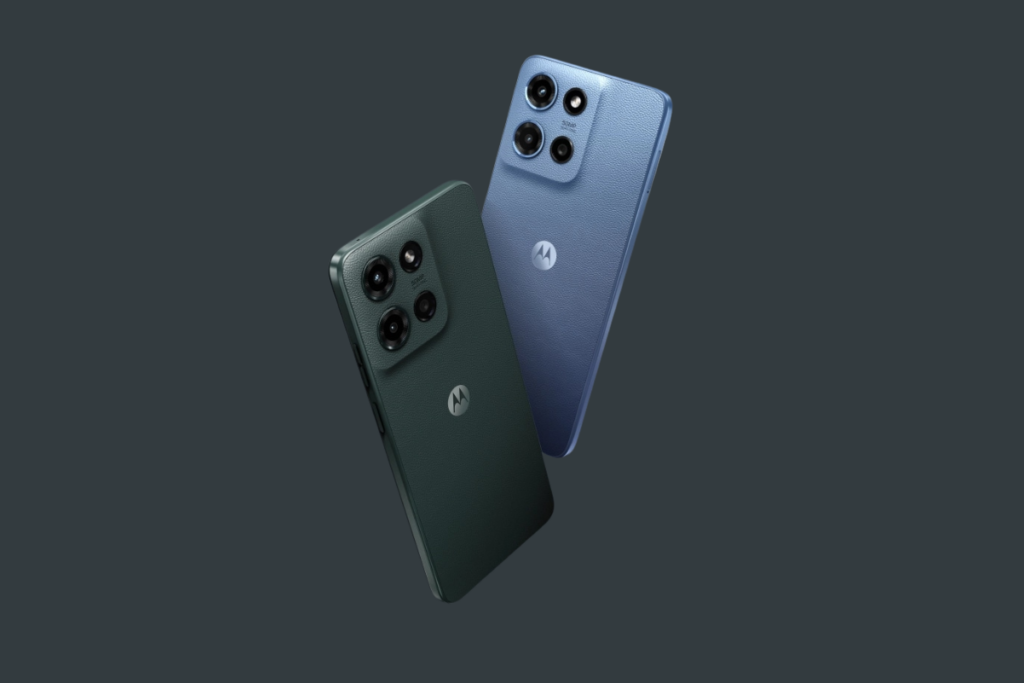
Both smartphones are widely available across the US and Canada. The Moto G Stylus comes in two color options: Scarlet Wave and Caramel Latte, and the Moto G 5G (2025) comes in Forest Gray and Sapphire Blue options.
Both Motorola phones have flat screens with hole-punch-style selfie cameras, but the Moto G Stylus has more uniform bezels compared to the Moto G 5G (2025), which has noticeably thicker bezels at the bottom. Both phones, however, offer the same leather finish on the back, adding a premium touch and better grip than a traditional glass back.
Both Motorola phones feature large 6.7-inch screens with a smooth 120Hz refresh rate, yet they have notable differences. The Moto G Stylus’ OLED screen produces more vibrant colors with greater color accuracy and clarity compared to the LCD panel on the Moto G 5G (2025). The higher 1080p resolution on the Moto G Stylus (versus 720p) further improves the viewing experience.
Camera
The 50MP primary camera on both Motorola phones captures nice, detailed shots when there’s enough light around. The Moto G Stylus 5G also does a good job with low-light shots using the 50MP primary sensor for its price. It produces detailed images with good exposure and colors with effective noise reduction.
On the other hand, the Moto G (2025) struggles with low-light images. The results are inconsistent with little details. You’d see blur and noise more often. It also has a 2MP macro camera with an underwhelming performance. The close-up shots are generally poor, lacking fine details. The Moto G (2025) also features a depth sensor, which is as good as nothing.
The 13MP ultrawide snapper on the Moto G Stylus 5G (2025) produces solid results in good lighting. The images have accurate colors, good dynamic range, and low noise. It also enables macro photography, which results in detailed images with good colors and sharpness.
The other side brings a 32MP selfie camera, which captures excellent shots for its price. The results have plenty of detail, accurate color representation, and natural skin tones. The camera also maintains a wide dynamic range. On the other hand, the Moto G 5G (2025) has a decent selfie camera performance with okay-ish color accuracy. The camera struggles to keep more than one subject in focus and often produces noisy and blurry shots in low-light environments.
Performance and software
The Moto G Stylus 5G (2024) has a Snapdragon 6 Gen 1 (4nm) at its heart, which offers higher performance and efficiency compared to the Dimensity 6300 (6nm) on the Moto G 5G (2025).
Take a look at the benchmark results below:
Geekbench v6
Moto G Stylus 5G (2024)
Moto G 5G (2025)
Single core
931
786
Multi core
2,772
2,063
AnTuTu v10
Moto G Stylus 5G (2024)
Moto G 5G (2025)
AnTuTu score
553,841
382,416
CPU
197,209
123,929
GPU
94,020
77,389
Memory
118,777
79,473
UX
143,834
101,624
3D Mark Extreme Stress Test
Moto G Stylus 5G (2024)
Moto G 5G (2025)
High score
612
383
Low score
608
381
The Moto G Stylus 5G (2025) clearly outperforms the Moto G 5G (2025) across all benchmarks. In Geekbench 6, the Stylus model posts significantly higher scores in both single-core and multi-core performance, indicating snappier everyday performance and better multitasking.
The gap widens further in AnTuTu v10, where the Moto G Stylus 5G scores over 553,000, compared to just 382,000 on the Moto G 5G. It leads in all major categories—CPU, GPU, memory, and UX—making it the better choice for gaming, app loading, and overall responsiveness.
The 3DMark Extreme Stress Test results also favor the Stylus variant, with the best loop score of 612 versus 383 on the Moto G 5G, highlighting much stronger and more stable GPU performance under sustained load.
Battery, charging, and others
Both Motorola smartphones bring 5,000mAh batteries that easily give you enough power for a full day. On light usage, you can stretch into the next day.
The phones also bring the same 30W charging speed via a USB-C port. It usually takes around an hour and 15 minutes to reach 100%.
One feature that separates the two here is the 15W wireless charging support on the Stylus model. The other device lacks wireless charging.
Moto G Stylus 5G (2024) vs Moto G 5G (2025): Conclusion
At the end of the day, both the Moto G Stylus 5G (2024) and the Moto G 5G (2025) are solid picks for budget-conscious buyers — but they’re built for slightly different users. If you’re looking for the best possible performance, a vibrant OLED display, better cameras, and perks like wireless charging, the Stylus model easily justifies its $100 premium. It’s simply more refined in nearly every area.
On the other hand, if you’re tight on budget and just need a reliable phone for everyday tasks, calls, and casual browsing, the Moto G 5G (2025) gets the job done for $199. Just don’t expect the same performance or camera quality.
Motorola Moto Razr 60 Ultra is a premium foldable flip smartphone designed for users who want top-tier performance, stylish design, and a futuristic experience in one package. Built with cutting-edge hardware and loaded with smart features, the Razr 60 Ultra is ideal for tech lovers, mobile gamers, and photography enthusiasts who demand speed, convenience, and creativity from their devices.
Price and Availability
Motorola Moto Razr 60 Ultra is now available for purchase at Geekwills, starting at $1099. It is offered in three stylish color options: red, green, and brown. This premium foldable phone combines cutting-edge features with elegant design and is ready to deliver a flagship experience.
Performance and Software
At the heart of the Moto Razr 60 Ultra is the powerful Qualcomm Snapdragon 8 Elite processor, backed by up to 16GB of LPDDR5X RAM. This ensures smooth performance across demanding tasks such as gaming, multitasking, and high-resolution video playback. The phone also features an advanced Adreno 735 GPU and a dedicated independent graphic chip, offering fast frame rates and stable visuals. Running on Android 15 with Moto MyUI 7.0, the interface is fast, customizable, and clean.
Display and Design
The inner 6.96-inch FlexView pOLED display offers a vivid viewing experience with a 120Hz refresh rate and HDR10+ support. It reaches a peak brightness of up to 3000 nits, making it great for use even under bright sunlight. The outer 4-inch screen is perfect for quick interactions and notifications. Both displays are sharp and colorful, offering fluid touch response and excellent visibility. With an IP68 rating, the device is water and dust-resistant, and Gorilla Glass Victus protection adds extra durability.
Battery and Charging
The Moto Razr 60 Ultra comes with a 4700mAh battery, providing all-day usage on a single charge. It supports 68W fast wired charging, 30W wireless charging, and even 5W reverse wireless charging, ensuring you can power up quickly and share the battery with other devices when needed.
Camera and Photography
Photography lovers will enjoy the dual 50MP rear cameras, a primary sensor with OIS and a 2x telephoto lens with PDAF and OIS for sharper zoom shots. The 32MP front camera captures sharp selfies and supports advanced facial recognition. The camera system is capable of producing bright, detailed images in both day and night conditions.
Connectivity and Extra Features
The phone supports full 5G, 4G, 3G, and 2G networks and comes with Wi-Fi 7, Bluetooth 5.4, and NFC. Unlocking is quick and secure, thanks to the side-mounted fingerprint sensor and facial recognition.
According to a new leak shared by the account HMD Meme on X, HMD Global is preparing to release the second-generation Vibe phone. The Vibe 2 appears to bean entry-level device but comes with a handful of upgrades over the original model.
HMD Vibe 2 Specifications
It will reportedly be powered by the Qualcomm Snapdragon 4 Gen 2 processor, replacing the Snapdragon 680 on the original Vibe. This will be paired with 8GB of RAM and 256GB of storage, with an option to expand it up to 512GB via microSD card.
Visually, the Vibe 2 appears to carry forward the design language HMD has been applying across its portfolio. On the front, the phone is said to sport a 6.67-inch OLED panel with FHD+ resolution, 90Hz refresh rate, and HDR10 support.
The front camera is expected to be a 50MP sensor, which would be a major upgrade over the 5MP shooter found on the original Vibe.
Around back, HMD is expected to include a dual camera setup with a 50MP primary sensor and a secondary 2MP sensor, likely for depth or macro photography. Powering all of this will be a 5000mAh battery, with support for 33W wired charging. The phone is also said to run Android 15 out of the box.
Compared to the first-generation Vibe, which shipped with a 6.55-inch 720p LCD, 3GB or 6GB of RAM, and only 10W charging for its 4000mAh battery, the Vibe 2 appears to offer improvements across the board. But it’s still clearly aimed at the lower end of the market, especially in the US, where affordable Android phones are often limited in availability and update support.
There’s no word yet on pricing or exact availability, but with leaks now surfacing, an official announcement may not be far off.
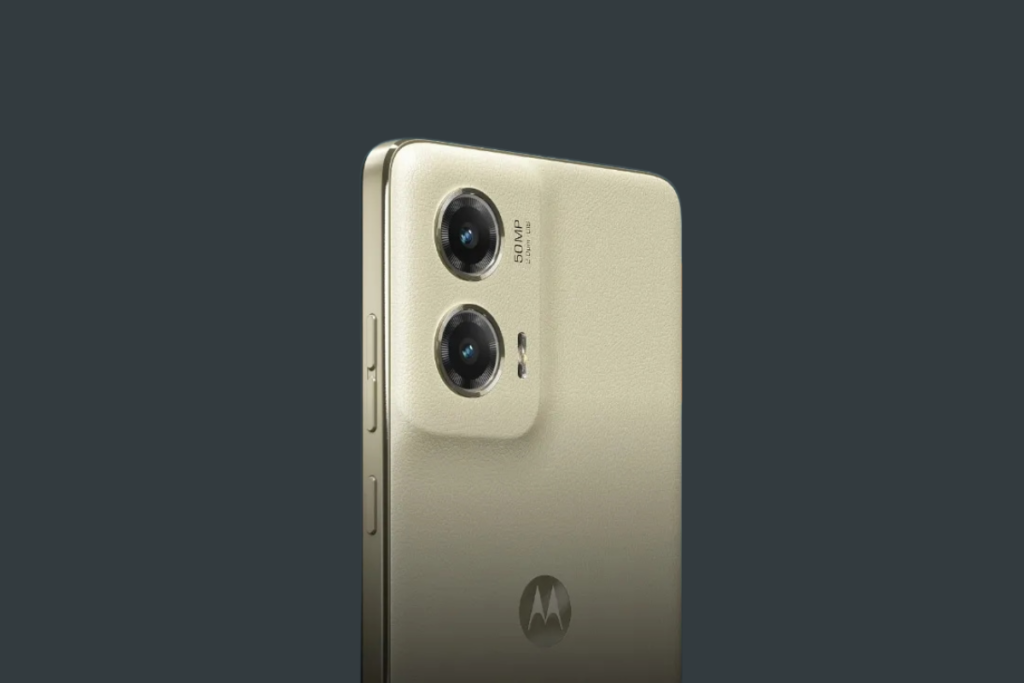
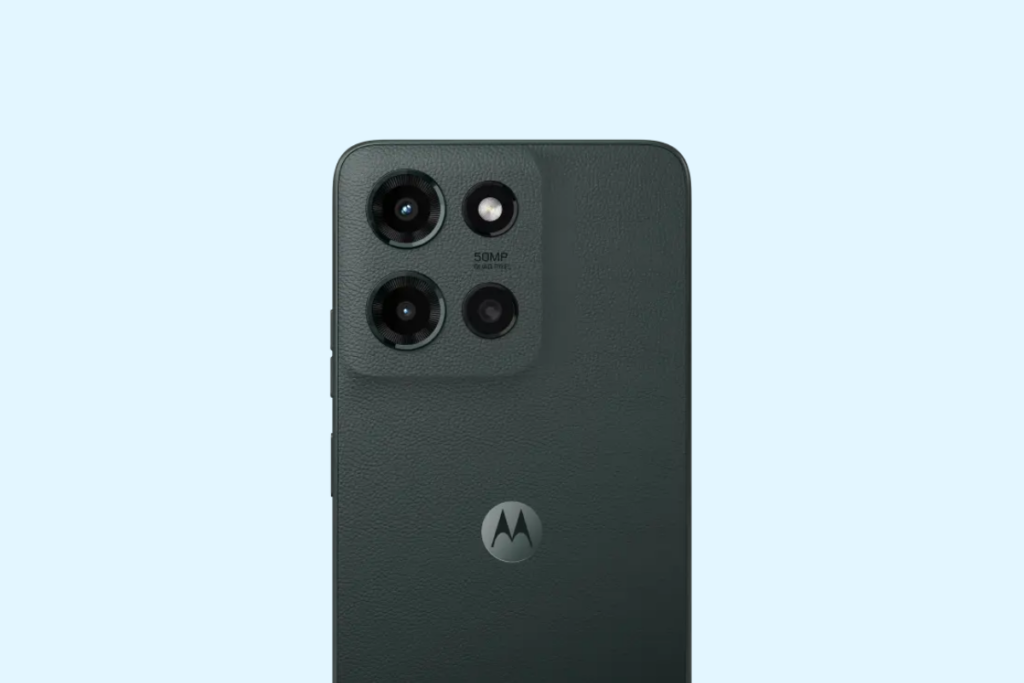
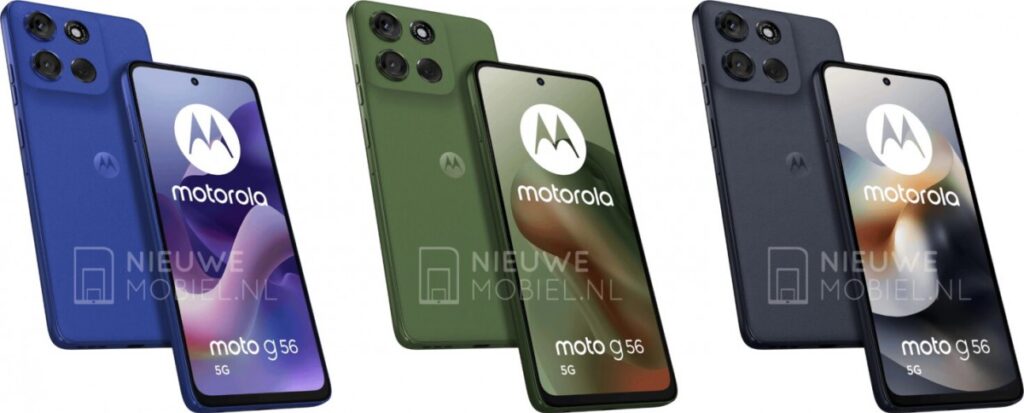
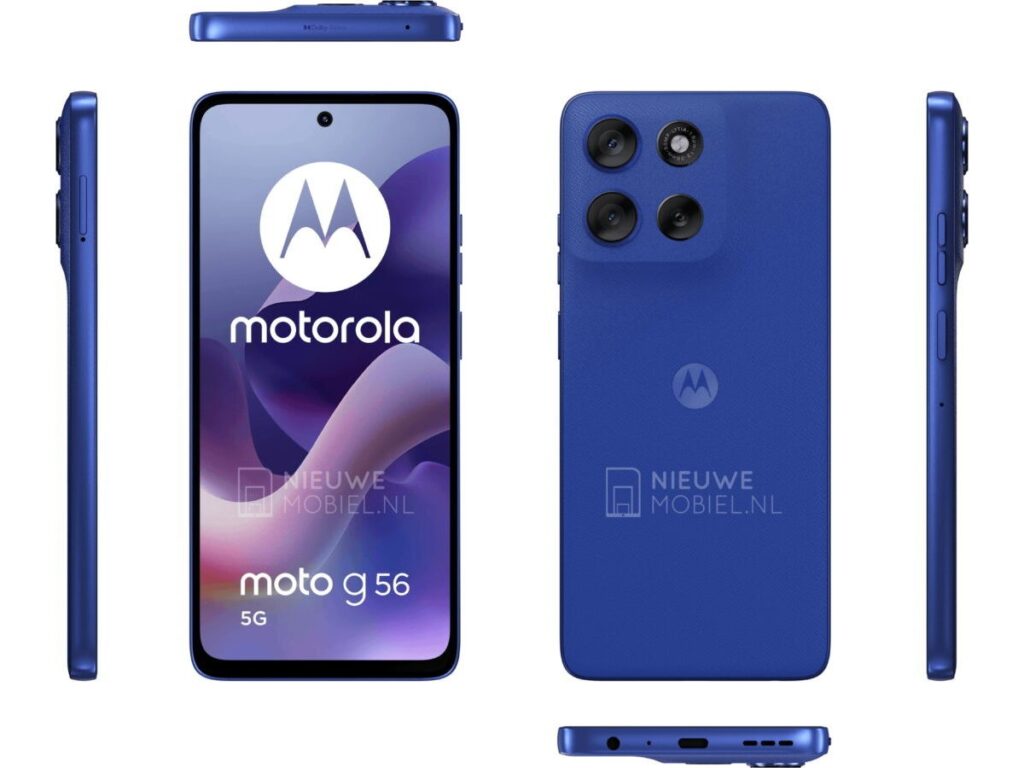
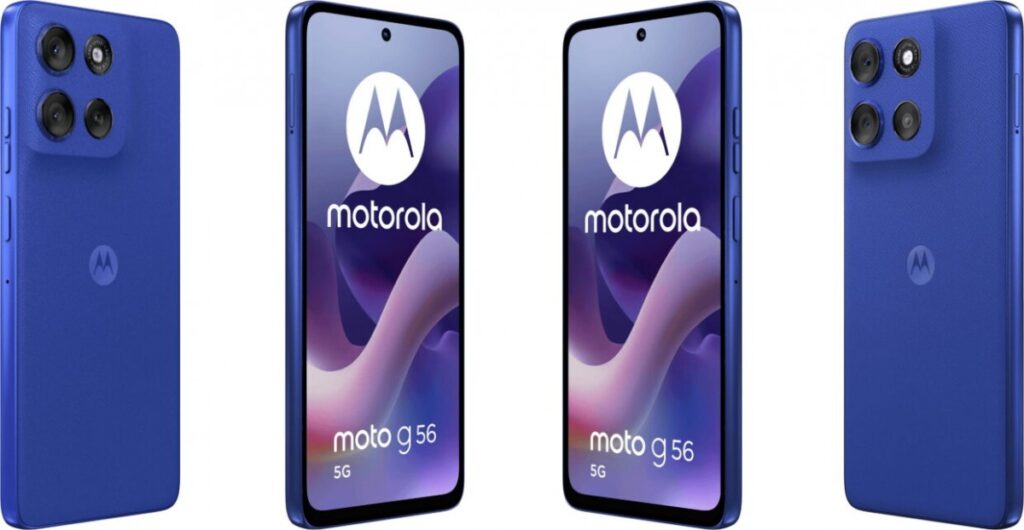
The latest leak about the Motorola Moto G56 reveals three of its four Pantone color options alongside its design. Priced at €250 for the 8GB/256GB variant, it’s set to launch soon with Android 15 and a 5,200mAh battery, per recent reports.
Motorola’s Moto G56, codenamed “Bogota,” has surfaced with fresh renders, showcasing the complete design and three vibrant Pantone colors: Black Oyster, Dazzling Blue, and Dill. Dazzling Blue steals the show with multi-angle views. While it still features a dual-camera setup, the camera housing mimics the more premium Edge series. It also retains the headphone jack from the G55—a key feature for budget-conscious buyers. Unfortunately, the bottom bezel is still quite thick and may take some time for users shifting from a more expensive device to get used to it.
The G56 reportedly boasts IP68/IP69 dust and water resistance and MIL-STD-810H durability, an upgrade over the predecessor’s water repellent design. It sports a 6.72-inch FHD+ LCD with a 120Hz refresh rate, 1,000-nit brightness, and Gorilla Glass 7i protection, up from the G55’s 6.49-inch panel. Powered by the MediaTek Dimensity 7060 SoC (vs Dimensity 7025 on the predecessor), it offers 4GB/8GB RAM and 128GB/256GB storage.
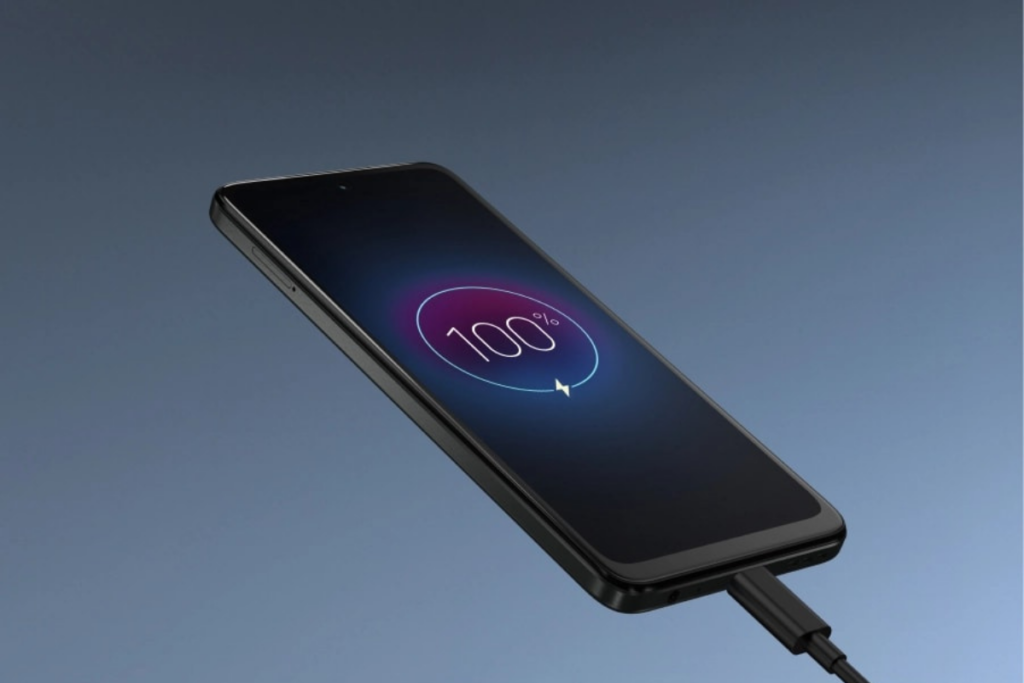
The Moto G56’s camera setup reportedly includes a 50MP Sony LYT-600 main sensor (f/1.8), an 8MP ultrawide, and a 32MP selfie shooter, a notable upgrade from the G55’s 16MP front camera. The stereo speakers are paired with Dolby Atmos, and the 5,200mAh battery supports 33W charging.
Running Android 15, the 4GB model will reportedly get one OS update and three years of security patches, while the 8GB variant secures two OS upgrades and four years of security fixes. Expected to launch soon alongside the Moto G86 5G, possibly skipping India like the G55, the G56’s refreshed design and vibrant colors make it a compelling mid-ranger.
Anker is known for its accessories and it has just announced a brand new version of the Prime power bank. The Anker Prime 20,000mAh Power Bank (200W) is getting a refresh that allows for faster charging. So here’s specs, pricing, and more.
Anker 20,000mAh Prime Power Bank: What’s new?
To recall, Anker’s Prime range of power banks are popular for their large capacities and fast charging support that can even power bigger gadgets like laptops. The newest model is basically an upgraded model that brings a notable improvement to the charging speeds. While the last model had a similar design and capacity, it only offered up to 30W of charging. So it didn’t even meet the Super Fast Charging 2.0 offered on Samsung Galaxy devices.
Anker Prime 20,000mAh Power Bank (200W)
But the latest edition upgrades this to 45W from its USB Type-C port. In other words, any model with 45W wired fast charging support will get access to their full charging potential with this accessory. Keep in mind that this speed is from the USB-C port. Technically, it does support 100W maximum output but it is only available with PD fast charging protocol.
As of right now, the Anker Prime 20,000mAh Power Bank (200W) is listed for purchase on the brand’s official website or Amazon for 129.99 US Dollars. The company has not officially announced these upgrades, but these were spotted on Reddit (Via NotebookCheck). In related news, Anker recently announced the Nebula X1 4K laser projector, which supports Dolby Vision. Back in April 2025, the brand’s Soundcore Liberty TWS 5 earbuds were officially announced with LDAC support and improved ANC.
For more daily updates, please visit our News Section.
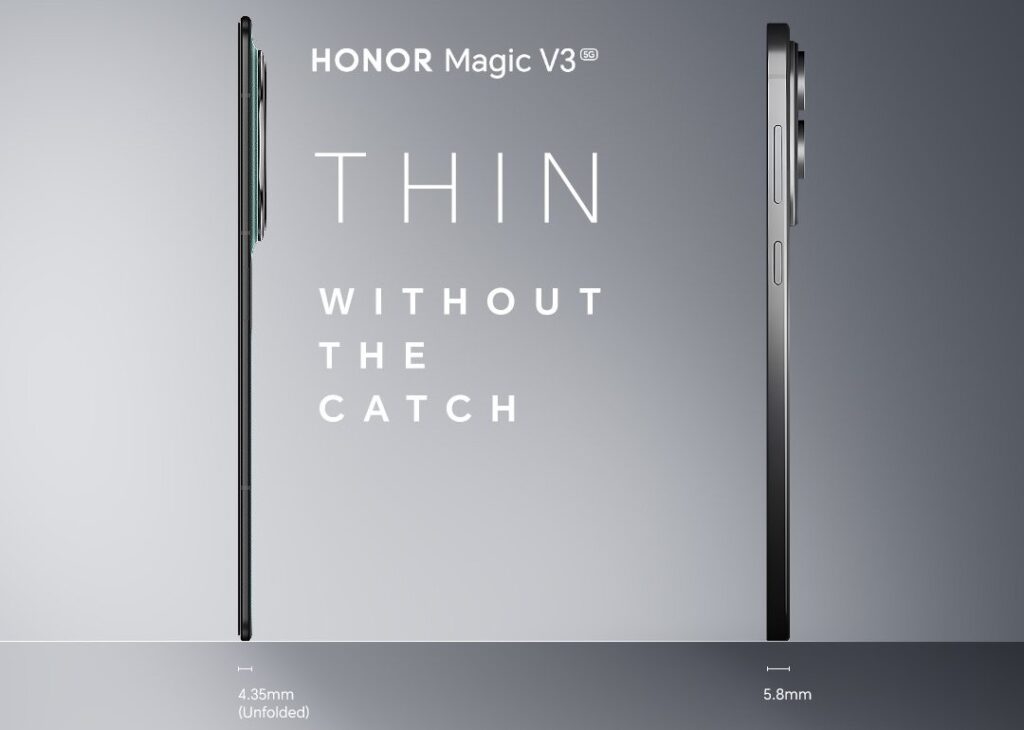
Honor is stirring the pot in the smartphone world again—this time by throwing shade at Samsung’s latest flagship. It has released a bold teaser comparing its Magic V3 foldable to the recently unveiled Galaxy S25 Edge, and it’s clearly not impressed by Samsung’s slimness claims.
Samsung touted the Galaxy S25 Edge as its thinnest phone yet, measuring just 5.8mm thick. The tagline “beyond slim” was front and center during its unveiling, backed by flagship specs like a 200MP camera, Snapdragon 8 Elite chipset, and a rather small 3900mAh battery—all packed into that ultra-thin profile.
But Honor had other ideas. In a teaser for the Magic V3, the company compared thickness—specifically the unfolded thickness of its foldable device, which comes in at just 4.35mm. That makes it noticeably slimmer than the S25 Edge.
Honor didn’t just stop at numbers. It followed up with a pointed question: “Why thin if you’re making compromises to get there?” The slogan “THIN without the catch” appeared alongside, implying that Samsung may have made trade-offs in battery capacity or other hardware areas to achieve its design goals. To emphasize the point, Honor highlighted the Magic V3’s 5150mAh battery—a significant bump over the 3900mAh unit in the S25 Edge.
Of course, the comparison isn’t entirely apples to apples. The Magic V3 is a foldable, and its unfolded thickness doesn’t reflect its closed profile. The S25 Edge, on the other hand, is a conventional slab-style phone. Still, this kind of marketing clash is becoming common in the premium segment.
Whether consumers care more about battery size, form factor, or design philosophy, this back-and-forth is a sign that competition is heating up in 2025’s flagship smartphone race.
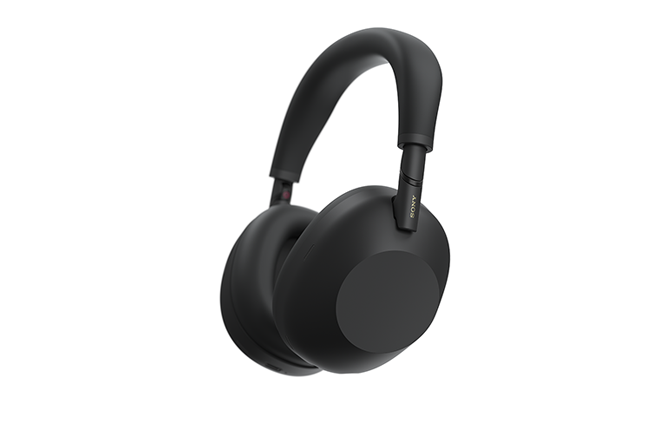
Following several leaks, Sony’s WH-1000XM6 headphones are finally here with some new and upgraded features, elevating listening experience. It’s the best time of the year to upgrade your old pair of headphones to the new Sony WH-1000XM6. It is finally time to upgrade your experience with the new Sony WH-1000XM6. You can trade in your old pair of headphones to save the maximum.
Sony WH-1000XM6 brings in an all-new HD Noise Canceling Processor QN3, bundles 12 microphones, and features Adaptive NC Optimizer. It packs better and has improved driver units to filter out the noise efficiently. It automatically filters background noise and filters important announcements in the background.
It stuns the users with premium sound crafted and mastered by sound engineers while optimizing the headphone from Sterling Sound, Battery Studios, and Coast Mastering. To better optimize the sound, the users can switch between classical and balanced sound modes. Sony WH-1000XM6 supports High-Resolution Audio and LDAC.
It offers the ability to customize the sound with a 10-band EQ or choose what’s best for the content. To improve the calling experience, the size of microphones is used with a beamforming system that distinguishes background noise and the user’s voice. Smart features include Scene-based Listening using your location and activity. It works easily with Spotify Tap, Apple Music, YouTube Music, and Amazon Music. Furthermore, features like AuraCast, Multi Point, and Auto Switch are for better accessibility and usability.
Sony’s new WH-1000XM6 offers up to 30 hours of battery life. Surprisingly, you can get 3 hours of playback with 3-minute charges.
Trade In Program – Get Instant Credit Toward Your New Pair
Sony WH-1000XM6 headphones are available in Black, Platinum Silver, and Midnight Blue and cost $449.99 USD. Their packaging is made from 100 percent paper using Sony’s Original Blended Material, which is made from bamboo, sugarcane fiber, and recycled paper.
You can trade in and grab the new WH-1000XM6 at a really special price.
Sony Upgrade Program – Sony offers direct discounts or credits when trading in older gear. You can trade in via two different options – Collect in Store, Delivery to your Door. The option is available in some selected countries. You can find the trade-in value by heading to the Sony Store
Expected Price for Old Headphones
The interested users can also trade in their old headphones at websites like eBay, Swappa, and Facebook Marketplace.
Price Estimates (as of now):
Model
Average Resale Price
WH-1000XM3
$60 – $90
WH-1000XM4
$90 – $140
WH-1000XM5
$140 – $200
Why the Sony WH-1000XM6 Is Worth Upgrading?
It’s not just about new tech — it’s about better daily experience.
Whether you’re on Zoom calls all day, flying across the country, or just blocking out noise on your commute, the WH-1000XM6 delivers smarter sound, longer comfort, and cleaner calls.
Early reviewers are already calling it Sony’s best ANC headphone yet— and given the competition from Bose and Apple, that’s saying a lot.
Where to Buy Sony WH-1000XM6
To make your upgrade even smoother, we’ve rounded up the top places to buy:
Tech moves fast, and with Sony’s WH-1000XM6, it’s clear they’ve continued to lead the pack in wireless ANC headphones. With the better tech, new innovative AI features, and better comfort, it is the best time to upgrade to Sony WH-1000XM6 headphones.
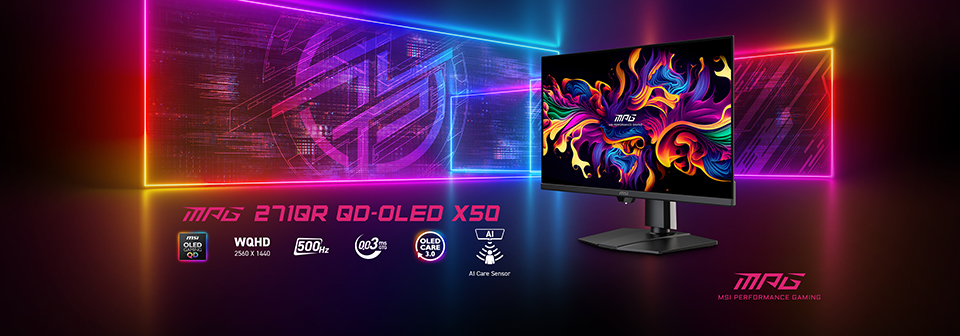
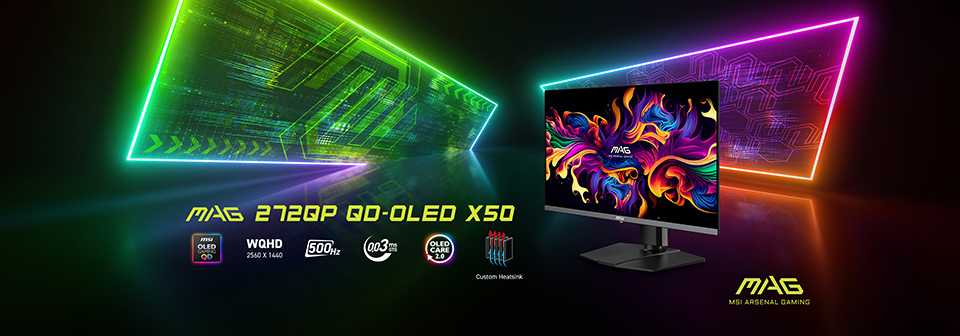
At COMPUTEX 2025, MSI introduced two new 27-inch QD-OLED gaming monitors: the MPG 271QR QD-OLED X50 and the MAG 272QP QD-OLED X50. Both models feature Samsung’s latest 3rd-gen QD-OLED panels, a 500Hz refresh rate, 0.03ms response time, and WQHD (2560 x 1440) resolution.
MSI MPG 271QR QD-OLED X50
The MPG 271QR QD-OLED X50 includes an AI Care Sensor that uses a CMOS sensor and an NPU-based chip to detect if someone is in front of the screen. It captures images every 0.2 seconds. If no user is detected, the monitor powers down or activates OLED protection features to reduce the risk of screen burn-in and save power. It also includes MSI’s AI Navigator, which gives access to all AI settings through a single menu. This setup helps maintain the screen and cuts down on energy use without needing manual adjustments.
This monitor is certified with VESA ClearMR 21000 and DisplayHDR True Black 500. The WQHD resolution offers nearly twice the pixel density of Full HD, providing sharper visuals. With true blacks, strong contrast, and smooth motion handling, it’s made for fast-paced games like first-person shooters and racing titles.
MSI MAG 272QP QD-OLED X50
The MAG 272QP QD-OLED X50 is MSI’s first esports-focused QD-OLED monitor. It shares the same core specs: WQHD resolution, 500Hz refresh rate, and 0.03ms response time. It supports 99 percent of the DCI-P3 color space and has the same VESA certifications. While it does not include the AI Care Sensor, it still offers top-tier motion clarity and fast performance, making it suitable for professional gaming setups.
Pricing & availability
The MAG 272QP QD-OLED X50 is priced at CNY 5,999 (around $829) and is available in China starting May 16. MSI has not announced the price or global availability for the MPG 271QR QD-OLED X50 yet.
A new model in the Xiaomi Pad 7 series might debut soon. The Xiaomi Pad 7S Pro first surfaced a couple of months ago, now a fresh leak has revealed its flagship positioning. This hints at some high end specs and features, so here’s everything we know so far.
Premium Xiaomi Pad 7S Pro launching soon?
The Chinese tech giant’s upcoming Pad 7S Pro was first spotted on the 3C certification back in March 2025. While the listing did not reveal a lot of details, it did confirm support for 120W wired fast charging and its 25053RP5CC model numbers. These specs already hinted at a high end tablet, but known tipster Digital Chat Station, confirmed a few more details ahead of any official announcement.
Xiaomi Pad 6S Pro
The latest info was shared on a Weibo (a Chinese microblogging website) post, where DCS claimed that the Xiaomi Pad 7S Pro is positioned as a flagship model. He further adds that the tablet supports 120W fast charging and sport a tall 12.5-inch display. The type of screen technology is still unknown, but it could be an OLED panel or at least a 2K+ resolution LCD screen. As the name suggests, the tablet is the direct successor of the Xiaomi Pad 6S Pro.
To recall, the Xiaomi Pad 6S Pro (Review) was announced back in 2024 with a 12.4-inch display with a 3.2K resolution, a 144Hz refresh rate, and 900 nits of peak brightness. Under the hood, this model featured the Snapdragon 8 Gen 2 SoC. While it wasn’t the latest processor at the time, it still offered high end performance. In other words, the Xiaomi Pad 7S Pro may arrive with either the Snapdragon 8 Gen 3 or Snapdragon 8s Gen 4. Keep in mind that this is still just speculation, so take this with a pinch of salt.
For more daily updates, please visit our News Section.
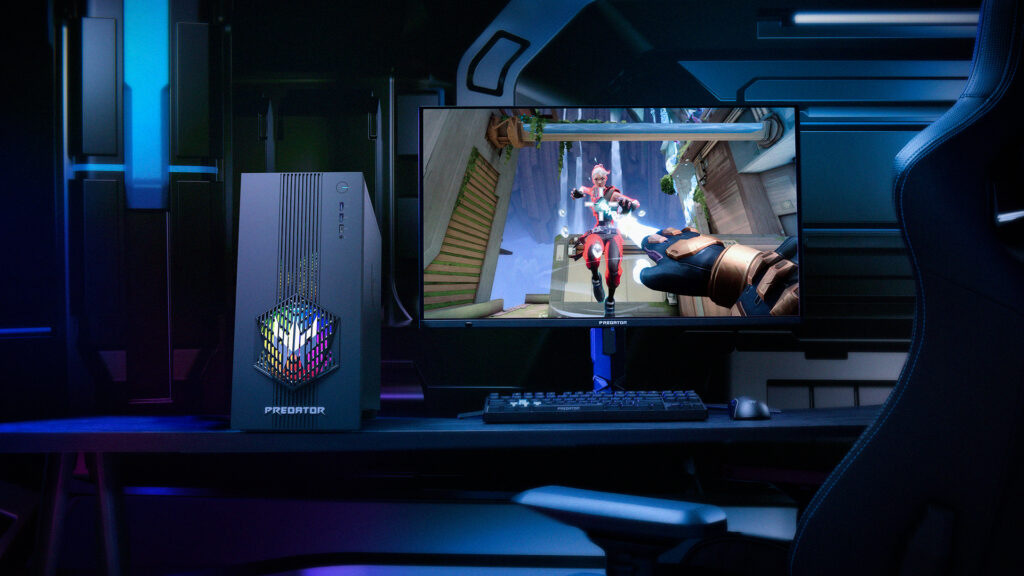
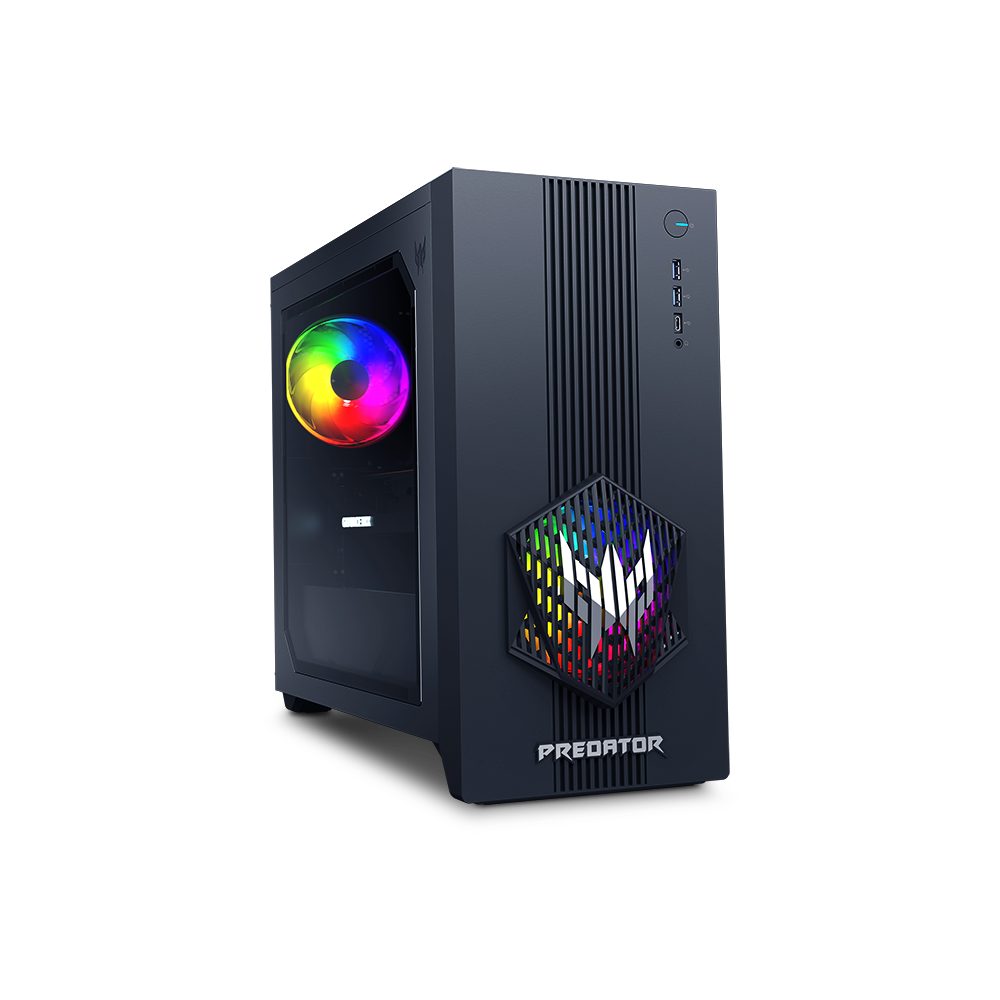
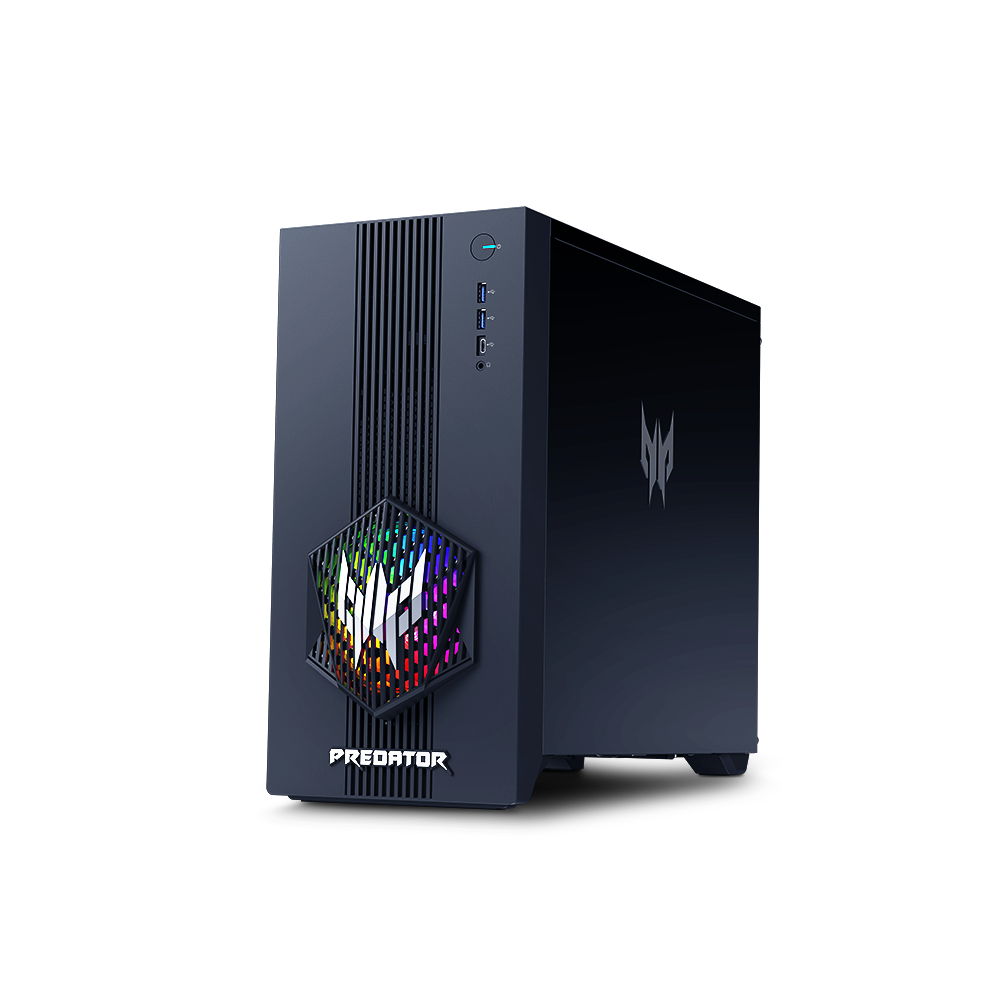
Acer has refreshed its Predator Orion 3000 desktop with new hardware and a redesigned chassis. It now comes with up to an Intel Core Ultra 7 processor 265F and an NVIDIA GeForce RTX 5070 GPU. It’s built for gamers and creators who need strong performance in a smaller form factor.
The Orion 3000 has up to 32 GB of DDR5 5600 MHz RAM. Storage includes a 2 TB NVMe PCIe Gen 4 SSD and an optional 2 TB 7200 RPM HDD. It fits into a 28-liter case with mesh panels for airflow and a tempered glass side panel.
Cooling is handled by front and rear 120 mm RGB-lit system fans, which work with a mesh-lined chassis and tempered glass side panels to maintain airflow and reduce heat buildup. The desktop supports Wi-Fi 7 and Ethernet via a Realtek 8111H LAN port. On the front, it includes two USB 3.2 Gen 2 Type-A ports, one USB 3.2 Gen 2×2 Type-C port, and audio jacks. The rear ports include four USB 2.0 Type-A, two USB 3.2 Gen 1 Type-A, three audio jacks, and a LAN port.
The Orion 3000 uses a standard 850W power supply and includes expansion slots: one PCIe 5.0 x16, one PCIe 3.0 x1, two M.2 SSD slots, and one M.2 slot for WLAN.
Pricing & availability
The Predator Orion 3000 will be available in EMEA in July 2025, starting at EUR 1,099, and in Australia in Q3 2025, starting at AUD 4,499.
Acer also launched the Predator Triton 14 AI, a lightweight laptop for creators, and the Predator Helios Neo 14 AI, a portable gaming laptop. All three devices use the latest Intel Core Ultra and NVIDIA RTX 50 Series hardware.
We use cookies on our website to give you the most relevant experience by remembering your preferences and repeat visits. By clicking “Accept”, you consent to the use of ALL the cookies.
This website uses cookies to improve your experience while you navigate through the website. Out of these, the cookies that are categorized as necessary are stored on your browser as they are essential for the working of basic functionalities of the website. We also use third-party cookies that help us analyze and understand how you use this website. These cookies will be stored in your browser only with your consent. You also have the option to opt-out of these cookies. But opting out of some of these cookies may affect your browsing experience.
Necessary cookies are absolutely essential for the website to function properly. This category only includes cookies that ensures basic functionalities and security features of the website. These cookies do not store any personal information.
Any cookies that may not be particularly necessary for the website to function and is used specifically to collect user personal data via analytics, ads, other embedded contents are termed as non-necessary cookies. It is mandatory to procure user consent prior to running these cookies on your website.