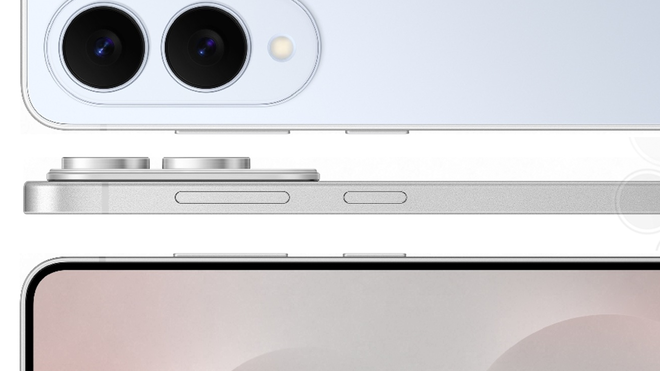
Recent rumors have pointed to POCO possibly skipping the launch of the POCO F7 Pro and POCO F7 Ultra in India. While only the base POCO F7 could be arriving in the region, a fresh rumor hints that the device could be getting a special limited edition model as well.
POCO F7 Special Edition Confirmed?
The news arrives from known tipster Paras Guglani who shared the information on X (formerly Twitter). For those unaware, the Chinese brand is currently working on the F7 series, which includes the base F7, Pro, and Ultra variants. Guglani claimed that the POCO F7 Ultra will remain exclusive to the global market. However, only the base POCO F7 is making its way to the Indian market. But it’s not all bad news since the company is reportedly planning a special edition model as well.
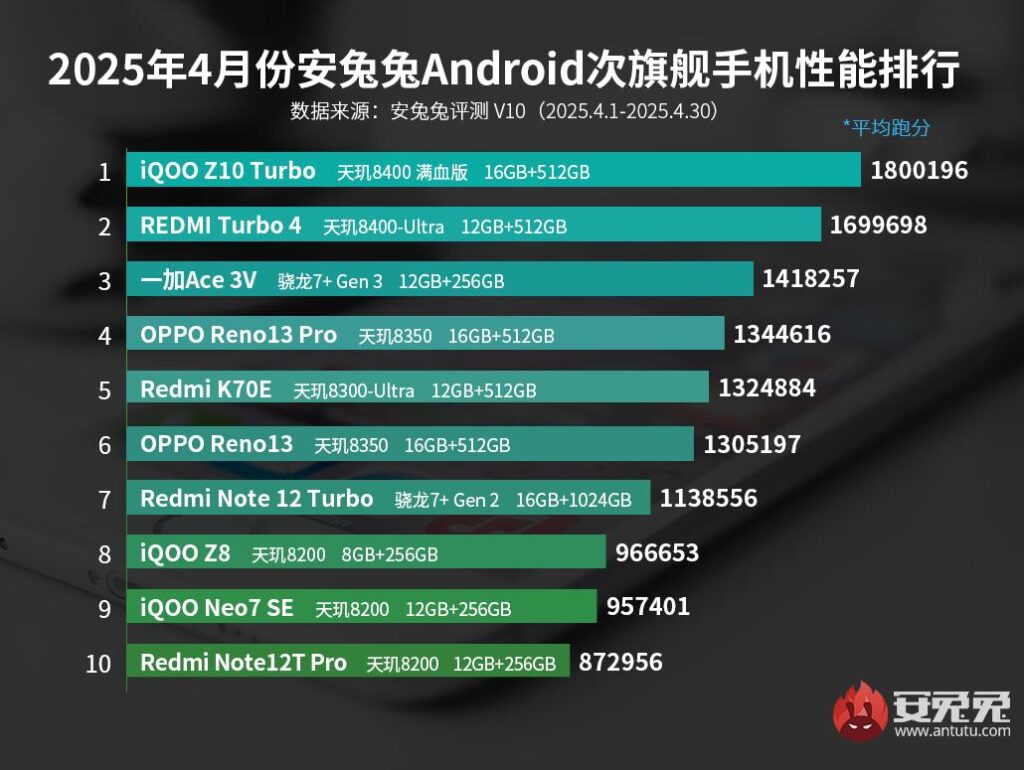
Redmi Turbo 4
To recall, the brand made a similar move to its predecessor, the POCO F6. This model was even later released in a POCO F6 Deadpool Edition as well. So there’s a chance we’ll get another superhero collaboration with the upcoming POCO F7 While finer details regarding this device are still at large, it is expected to be a rebranded version of the Redmi Turbo 4. So we can expect the POCO F7 also to sport a 6.67-inch OLED display, 1.5K resolution, 120Hz refresh rate, and up to 3200 nits of peak brightness.
Under the hood, the Turbo 4 is equipped with the Dimensity 8400 Ultra SoC, which is paired with up to 16GB of RAM and up to 512GB of internal storage. For optics, the rear has a 50MP dual camera setup, while the front has a 20MP selfie shooter. A massive 6,550mAh battery pack powers this phone, which supports 90W wired fast charging. The POCO F7 might also offer an IP66 + IP68 + IP69 rating for water and dust protection.
For more daily updates, please visit our News Section.
In recent years, foldable devices have taken the tech world by storm, combining portability with larger displays. From smartphones that unfold into tablets to laptops that transform into versatile productivity hubs, foldable devices have redefined our expectations of modern technology.
However, the horizon is expanding beyond foldables as manufacturers explore new form factors, including rollable displays, multi-fold devices, and ultra-thin smartphones. These innovations promise to offer users even greater flexibility, functionality, and style, paving the way for a transformative future in consumer electronics.
Rollable OLED Displays
Rollable OLED displays have emerged as an exciting evolution of display technology. Unlike foldables, which rely on hinges to transform their form, rollable devices use flexible displays that can extend or retract seamlessly. This approach not only enables sleek designs but also solves some of the limitations of foldable screens, such as visible creases and durability concerns.
Rollable TVs and Laptops
LG pioneered the rollable OLED movement with its 65-inch Signature OLED TV R, launched in 2019. This revolutionary TV could roll into its base, offering three viewing modes: full view, line view, and zero view.
Despite its innovation, the TV’s exorbitant $100,000 price tag limited its market reach, and LG discontinued the product in 2024. Nevertheless, the concept demonstrated the potential of rollable displays in transforming home entertainment.
In the laptop space, Samsung Display is set to mass-produce rollable OLED panels by April 2025, with Lenovo leading the charge. Lenovo’s ThinkBook Plus G6 Rollable, showcased at CES 2025, features a 14-inch display that extends vertically to 16.7 inches.
This design enhances multitasking capabilities, allowing users to stack windows or view tall spreadsheets effortlessly. While priced at a premium $3,499, the ThinkBook Plus G6 marks a significant step toward making rollable laptops a reality.
Rollable Smartphones
Rollable smartphones are an exciting evolution in mobile technology, with companies like Samsung, Tecno, Oppo, and Motorola actively advancing their rollable projects. These brands have already showcased prototypes, aiming to bring the first rollable devices to market soon. These smartphones promise to combine large, tablet-sized displays with compact, pocket-friendly designs.
For instance, Tecno’s Phantom Ultimate boasts a rollable display that extends from 6.55 inches to 7.11 inches in just 1.3 seconds, while Samsung’s prototypes feature displays expanding beyond 12 inches with under-display cameras for a seamless design. As this technology evolves, rollable smartphones have the potential to revolutionize mobile computing by combining portability with expansive screen sizes.
Multi-Fold Devices
Multi-fold devices take the folding concept further by introducing multiple hinges, enabling devices to transform into various configurations. These innovations aim to maximize screen size while maintaining compact form factors, providing a new level of versatility.
Tri-Fold Smartphones
Huawei’s Mate XT Ultimate Design, launched in September 2024, showcases the potential of tri-fold devices. With two hinges and a 10.2-inch display when fully unfolded, the Mate XT offers a tablet-like experience in a pocketable design. Despite durability concerns and a steep $2,800 price tag, Huawei’s tri-fold smartphone highlights the possibilities of multi-fold technology. Other manufacturers, such as Tecno and Samsung, are also developing tri-fold devices, with Samsung reportedly preparing to launch a tri-fold smartphone alongside its Galaxy Z Fold 7 in 2025.
Challenges and Opportunities
While multi-fold devices offer unmatched versatility, they also face significant challenges. The complexity of their designs increases the risk of wear and tear, particularly in the hinges and flexible displays. Additionally, the high production costs make these devices prohibitively expensive for most consumers. However, as manufacturing processes improve and economies of scale come into play, multi-fold devices could become more accessible, appealing to professionals and tech enthusiasts alike.
Ultra-Thin Smartphones
The race for ultra-thin smartphones, reminiscent of past trends, is making a comeback in 2025. Companies like Samsung and Apple are leading this resurgence with devices that prioritize sleekness without compromising functionality.
Samsung Galaxy S25 Edge
Unveiled at the 2025 Galaxy Unpacked event, the Galaxy S25 Edge promises to be one of the thinnest smartphones ever, measuring just 6.4mm at its slimmest point. Powered by the Snapdragon 8 Elite SoC, the device combines performance with portability. Despite its compact design, the S25 Edge features a dual-camera setup and a 3,786mAh battery, demonstrating that thinness doesn’t have to come at the expense of usability. Scheduled for a May 2025 release, the S25 Edge aims to redefine premium smartphone design.
Apple’s iPhone 17 Air
Apple is also exploring thinner designs with its rumored iPhone 17 Air. Expected to measure between 5.5mm and 6mm, this ultra-slim device could feature a 6.6-inch OLED display and Apple’s A19 chip. While the thinner profile may result in a smaller battery, Apple’s advancements in energy efficiency could offset this limitation. Positioned as a luxury product, the iPhone 17 Air reflects Apple’s strategy to appeal to style-conscious consumers.
The Appeal of Slim Devices
Ultra-thin smartphones offer a unique blend of style and portability, appealing to users who prioritize aesthetics. However, achieving such slim designs requires innovation in battery technology, thermal management, and internal component layout. Manufacturers are leveraging advances in materials and engineering to overcome these challenges, ensuring that thinner devices still deliver robust performance and durability.
The Future of Smart Devices
As rollables, multi-fold designs, and ultra-thin devices enter the market, they signal a new era of innovation. These form factors are not merely technological novelties; they represent a shift toward more adaptable, user-centric designs. Whether for work, entertainment, or everyday tasks, the next generation of devices promises to enhance functionality while pushing the boundaries of portability and design.
With continuous advancements in materials, manufacturing, and software, these new form factors are set to become integral to our digital lives. The coming years will likely see these innovations mature, becoming more affordable and accessible to the masses, ultimately redefining what we expect from our devices.
For more daily updates, please visit our News Section.
The BOULT Trail Pro features a 2.01″ 3D Curved AMOLED Display and includes Bluetooth 5.3 calling with a built-in speaker and microphone, allowing users to make calls within a 10-meter range.
The smartwatch focuses on health and fitness, offering 24/7 heart rate monitoring, blood pressure tracking, SpO2 measurement, and stress analysis. It also includes female menstrual cycle tracking, sleep monitoring, and reminders for hydration. For fitness tracking, it supports over 123 sports modes and provides detailed activity data. Users can customize the watch with more than 260 cloud-based watch faces or create their own designs.
Varun Gupta, Co-Founder of BOULT, said the Trail Pro is designed to combine style and functionality, helping users stay connected and manage their health. The watch also works with AI voice assistants like Siri and Google Assistant and includes features like SMS notifications, remote camera control, and weather updates.
Pricing & availability
The Trail Pro is water-resistant with an IP68 rating and comes in three options: Black with a silicone strap (INR 1499) and Jet Black or Silver with stainless-steel straps (INR 1699 each). It is available on BOULT’s official website, Flipkart, and Amazon.in.
In other news, OPPO has patented a new blood pressure monitoring system for smartwatches, filed with WIPO. Unlike current designs, which use an air nozzle in the watch head (e.g., Huawei’s Watch D2), OPPO’s system integrates the air path into the strap, eliminating the nozzle.
For more daily updates, please visit our News Section.
Xiaomi’s next big software update, HyperOS 2.1, is inching closer to a global rollout. After launching in China for select high-end models, reports suggest that Xiaomi is gearing up to bring HyperOS 2.1 to international users by February 2025. This means Xiaomi fans worldwide might not have to wait long for the latest software experience.
According to XiaomiTime, HyperOS 2.1’s global debut is on track for an early 2025 release, with a more specific timeline now emerging. The source indicates that Xiaomi has already developed the global firmware, and while no official announcement has been made, the update could start rolling out by the end of February.
One of the first devices expected to receive the update is the Xiaomi 14 Ultra. An internal HyperOS 2.1 build, was spotted under the firmware version OS2.0.100.0.VNAMIXM, appears to be tailored for the 14 Ultra. From there, Xiaomi is expected to gradually expand the update to more devices across different regions.
What’s new
So, what’s new with HyperOS 2.1? Xiaomi is touting a range of improvements aimed at improving user experience. The update reportedly introduces a more refined home screen with intuitive UI elements, a redesigned Control Center, and an emphasis on seamless connectivity.
The camera experience could also get better with the new update. It brings smarter AI tools, improved album management, and optimizations for better photography. Additionally, gamers might benefit from enhancements designed to deliver a more fluid and immersive experience.
With the global rollout of HyperOS 2.1 just around the corner, the real question is whether Xiaomi will make any significant tweaks to differentiate the international version from its Chinese counterpart.
For more daily updates, please visit our News Section.
Apple might be planning a major upgrade on its next generation of AirPods. A new rumor has hinted at the brand packing camera sensors on the hearables. But there’s a catch, the new AirPods won’t be using these cameras for taking pictures. Rather, it would offer a set of new functionalities.
Future Apple AirPods Rumored with Cameras
The news regarding Apple’s next gen AirPods arrives from Bloomberg’s Mark Gurman in his latest PowerOn newsletter. It seems like the Cupertino based giant is looking to add cameras to future AirPods, but these sensors won’t be taking pictures as these are expected to be IR (Infrared) sensors. Unlike traditional cameras, these won’t be used to snap pictures.
Apple AirPods Pro 2
While Gurman did not share any finer details regarding the upcoming AirPods, known analyst Ming Chi-Kuo offered more details in the past. The iPhone maker might use these sensors to measure health related metrics. This is not the first time we’ve heard of this bizarre combo since the analyst shared similar details last year. It may even use these infrared sensors for an improved spatial audio experience.
But that’s not all. The inclusion of infrared may allow the company to introduce gesture controls on the Apple AirPods. These could be air gestures that map input through hand movements. Apple could release the AirPods with the cameras could begin mass production in 2026, which could mean either a late 2026 or early 2027 launch. So it is still a while from being released. Keep in mind that this is still just speculation, so take this news with a pinch of salt for now.
For more daily updates, please visit our News Section.
Samsung’s Ultra series has consistently pushed the boundaries of smartphone innovation, offering cutting-edge technology and premium features that set it apart from the competition. From groundbreaking display advancements to AI-powered tools and versatile camera systems, the Ultra lineup has redefined what a flagship smartphone can do. In this article, we explore 10 unique features introduced by Samsung Ultra phones, starting with its massive display, that have not only elevated the user experience but also influenced the broader smartphone industry.
The Samsung Galaxy S25 Ultra flaunts a massive 6.9-inch Dynamic LTPO AMOLED 2X display with a peak brightness of 2600 nits. With a resolution of 1440 x 3120 pixels, and a 120Hz refresh rate support, the S25 Ultra delivers an immersive viewing experience. While the iPhone 16 Pro Max and Huawei Mate 70 Pro series also feature 6.9-inch displays, Samsung’s adoption of this size is likely to influence other brands to follow suit to offer such a massive display in their Ultra-branded devices.
Please Note: When you buy something using the links in our articles, we may earn a small commission at no cost to you.
2. Corning Gorilla Armor 2 with enhanced anti-reflective coating
Samsung Galaxy S25 Ultra
The Galaxy S25 Ultra is the world’s first phone to feature Corning Gorilla Armor 2, a next-generation display protection layer. This innovation enhances durability, enabling the device to withstand drops from up to 2.2 meters on rough surfaces like concrete. Additionally, Gorilla Armor 2 incorporates an anti-reflective coating that significantly reduces glare in both indoor and outdoor settings, improving visibility and usability. Its scratch-resistant properties further ensure the display remains pristine over time. It is likely that some of the next-generation flagships may feature Gorilla Armor 2.
3. ProScaler technology
Samsung Galaxy S25 Ultra
The Galaxy S25 Ultra introduces ProScaler, an AI-powered image processing technology that enhances image quality by up to 40 percent when zooming or upscaling. This feature ensures that lower-resolution content appears sharper and more detailed on the phone’s display, elevating the viewing experience for streaming, gaming, and more. While other Android phones may have their own upscaling technologies, ProScaler stands out due to its AI-driven approach and significant improvements in image quality. Likely, future Samsung flagship phones will continue to feature this technology.
4. Galaxy AI
Samsung Galaxy S25 Ultra
Samsung is a pioneer in integrating comprehensive AI-driven features into its smartphones. Available in Settings as a dedicated “Galaxy AI” section on Samsung flagships, it includes special tools like Call Assist for real-time translation, Writing Assist for text composition and improvement, Note Assist for auto-formatting and summarization, and Browsing Assist for webpage summarization and translation.
The S25 Ultra introduces new additions like Audio Eraser (removes unwanted noise from videos), Now Brief (personalized content suggestions), and Now Bar (live updates on the lock screen). Many of these features are expected to trickle down to older S-series models via the One UI 7-based Android 15 update.
5. Dual Zoom cameras
Samsung Galaxy S25 Ultra
While the Oppo Find X2 Pro from early 2020 was the first to feature a standard telephoto lens and a periscope telephoto zoom lens, the Galaxy S21 Ultra popularized this technology for a wider audience. It has become a staple feature in many flagship phones smartphones since then.
The S25 Ultra continues this legacy with a 10-megapixel telephoto camera offering 3x optical zoom and a 50-megapixel periscope camera with 5x optical zoom. These are complemented by a 50-megapixel ultra-wide lens and a 200-megapixel primary camera, making it one of the most powerful camera systems on a smartphone.
6. Space Zoom
Samsung Galaxy S25 Ultra – 100x Space Zoom
Introduced with the Galaxy S20 Ultra in 2020, Space Zoom combines optical and digital zoom to achieve up to 100x magnification. While other phones had previously featured periscope zoom lenses, Samsung’s branding and marketing helped popularize this technology, making it a standard feature in many flagship phones today.
Samsung Galaxy S25 Ultra supports 30fps 8K video recording
The Galaxy S20 series was the first to support 8K video recording at 24 frames per second, making it practical for both capturing and viewing high-resolution content. Although the Red Magic 3 introduced 8K recording in 2019, it was limited to 15 frames per second. Samsung’s implementation set a new benchmark for smartphone video capabilities. The recently launched Galaxy S25 Ultra supports 8K video recording at 30fps, just like last year’s Galaxy S24 Ultra.
8. S Pen
Samsung Galaxy S25 Ultra
Samsung remains the only brand to offer a stylus-equipped flagship phone. The S Pen, first introduced with the original Galaxy Note in 2011, has evolved to offer improved pressure sensitivity for writing, drawing, and note-taking. While the Note lineup was discontinued in 2020, the S Pen found a new home in the Ultra series, making it the spiritual successor to the Note.
However, the S25 Ultra’s S Pen has undergone a significant change: the removal of Bluetooth support, which eliminates features like remote control and Air Actions. Samsung made this decision due to low user engagement with these features, as most users primarily use the S Pen for writing and navigation.
9. DeX mode
Samsung Dex image via Wikipedia
Samsung DeX, introduced in 2017, transforms Galaxy smartphones into desktop-like environments by connecting them to external displays, keyboards, and mice. Unlike simple screen mirroring, DeX offers a true desktop experience with a taskbar, resizable windows, and optimized app support. Its seamless Android integration, focus on productivity, and evolving features like wireless DeX and DeX for PC distinguish it from similar offerings by other brands.
10. Ultra-Wide Band (UWB) technology
Samsung Galaxy S24 Ultra
The Galaxy Note 20 Ultra was the first Android phone to feature Ultra-Wideband (UWB) technology, which powers features like enhanced Nearby Share for faster file transfers, SmartThings Find for precise device tracking, and Digital Key for unlocking cars. UWB also enables smarter home integration and works with Samsung Tag for item tracking, making it a versatile addition to the Ultra lineup.
Choosing the right budget-friendly 5G smartphone can be tricky, especially with options like the Redmi 14C 5G and iQOO Z9 Lite competing in the same price range. Both devices promise impressive features like smooth displays, capable cameras, and reliable performance, making it essential to compare their strengths. This comparison highlights the key differences, helping you decide which phone suits your needs better
The Redmi 14C 5G and iQOO Z9 Lite both feature durable builds with a plastic frame and glass front, but the iQOO Z9 Lite includes a plastic back, making it slightly less premium in feel. Both phones are splash and dust resistant, though the iQOO Z9 Lite boasts an IP64 rating, offering added peace of mind for water resistance.
The Redmi 14C 5G comes with a larger 6.88-inch IPS LCD display with a 120Hz refresh rate, offering smoother visuals compared to the iQOO Z9 Lite’s 6.56-inch screen and 90Hz refresh rate. However, the Z9 Lite compensates with higher brightness levels (up to 840 nits), making it more usable in direct sunlight.
The Redmi 14C 5G’s larger display and higher refresh rate give it a competitive edge for multimedia and gaming, though the iQOO Z9 Lite’s higher brightness may appeal to those who use their phone frequently outdoors.
2. Specifications
iQOO Z9 Lite
The Redmi 14C 5G is powered by the Qualcomm Snapdragon 4 Gen 2 (4 nm) chipset, while the iQOO Z9 Lite uses the MediaTek Dimensity 6300 (6 nm). Both are capable mid-range processors, but the Redmi’s newer 4 nm architecture is more efficient, enhancing performance and battery life.
Battery-wise, Redmi offers a larger 5160mAh capacity with 18W fast charging, while the iQOO Z9 Lite has a 5000mAh battery and slower 15W charging. Redmi also supports PD charging, adding versatility for users with different adapters.
While both phones are great for day-to-day usage, Redmi’s more efficient chipset and larger battery make it the better option for heavy users.
3. Camera
iQOO Z9 Lite
Both phones feature a 50 MP main camera with PDAF for detailed shots, but the iQOO Z9 Lite adds a 2 MP depth sensor for portrait photography, which the Redmi 14C lacks. Both phones sport an 8 MP selfie camera with similar 1080p video capabilities.
The iQOO Z9 Lite’s dual-camera setup provides more flexibility for portrait photography, while the Redmi 14C focuses on simplicity with its single-camera approach.
The iQOO Z9 Lite edges out slightly in camera versatility, but for those who prioritize single-lens simplicity and sharp details, the Redmi holds its own.
4. Pricing
The Redmi 14C 5G starts at ₹9,999, making it more budget-friendly compared to the iQOO Z9 Lite at ₹10,499. Both phones deliver excellent value, but the ₹500 price difference may be significant for budget-conscious buyers.
For its price, the Redmi 14C 5G offers better performance and battery life, making it the more cost-effective choice, while the iQOO Z9 Lite is better for users seeking additional camera versatility.
5. Conclusion
Redmi 14C
Redmi 14C 5G: Larger 6.88-inch display with a 120Hz refresh rate, Snapdragon 4 Gen 2 chipset with 4 nm efficiency, a bigger 5160mAh battery, and competitive pricing.
iQOO Z9 Lite: Dual cameras with depth sensing, higher brightness (840 nits), and IP64 water resistance.
The Redmi 14C 5G stands out for performance and display quality at a lower price, while the iQOO Z9 Lite excels in camera versatility and outdoor usability. Choose based on your priorities: multimedia and gaming (Redmi) or versatility and brightness (iQOO).
The Lenovo Tab was unveiled with a budget price tag earlier this month. Now, this entry level tablet has been announced in select markets across the globe. The company has confirmed the availability of this tablet along with its specifications and pricing. So here are all the details.
Lenovo Tab Specs
The brand’s Lenovo Tab sports a tall 10.1-inch TFT LCD display with a 1920 x 1200 resolution, 400 nits of peak brightness, 72 percent NTSC color gamut, and a 60Hz refresh rate. Under the hood, the budget tablet is equipped with the MediaTek Helio G85 SoC, which is paired with 4GB of RAM and either 64GB or 128GB of internal storage. You can even expand the storage via a microSD card slot.
Lenovo Tab
For optics, you get an 8MP camera on the rear and a 5MP selfie shooter on the front. It houses a dual speaker setup, which is tuned by Dolby Atmos. There is even a 3.5mm headphone jack for added convenience. A large 5,100mAh battery pack powers the Lenovo Tab, which supports 15W wired fast charging. It offers support for WiFi 5, Bluetooth 5.3, and runs on the Android 14 OS out of the box. It measures just 7.5mm in thickness and supports arrives with an IP52 rating for water and dust resistance.
Pricing and Availability
The Lenovo Tab was originally announced with a starting price tag of 159 US Dollars and now we have its availability details. The Lenovo Tab WiFi only model will be released in Argentina, Hong Kong S.A.R. of China, Central America, Poland, South Africa, and Mexico. On the other hand, the 4G variant will go on sale in Argentina, Hong Kong S.A.R. of China, Central America, South Africa, Mexico, Vietnam, Taiwan, Singapore, India, Thailand, Malaysia, Korea, Malaysia, Philippines, Japan, Australia, Chile, Peru, Ecuador, and Colombia.
For more daily updates, please visit our News Section.
The Infinix Smart 9 HD has officially launched, offering a budget-friendly 4G smartphone experience. This entry-level device comes with a punch-hole 90Hz display, a side-mounted fingerprint sensor, and a capable MediaTek chipset. According to the brand, the Smart 9 HD has undergone rigorous testing, meeting the same standards as flagship devices. It has been subjected to 250,000 repeated drop tests with 6-sided drop protection and over 200 quality and durability tests, ensuring a robust and reliable build. Continue reading ahead to learn about its specifications, features, and price.
Infinix Smart 9 HD specifications and features
Infinix Smart 9 HD
The Infinix Smart 9 HD boasts a 6.7-inch IPS LCD screen with a 90Hz refresh rate and a peak brightness of 500 nits, ensuring smooth visuals and decent outdoor visibility. Under the hood, it is powered by the MediaTek Helio G50 chipset, paired with 3 GB LPDDR4X RAM and up to 3 GB of virtual RAM. The RAM can be expanded virtually up to 6GB or 8GB, and it offers 64 GB of eMMC 5.1 storage, further expandable via a dedicated microSD card slot.
The smartphone is equipped with a 5,000mAh battery that supports 10W charging and runs on Android 14 (Go edition), optimized for efficient performance on entry-level devices. For photography, it features a 13-megapixel rear camera with an f/1.85 aperture, autofocus, and dual LED flash for enhanced low-light shots. On the front, there’s an 8-megapixel selfie camera with an f/2.0 aperture and a front flash for better selfies in dim lighting.
The Infinix Smart 9 HD runs on XOS 14 based on Android 14 (Go edition) and comes with a range of features, including DTS-powered dual speakers, a side-mounted fingerprint sensor, and IP54 splash resistance. It also supports dual SIM cards, Wi-Fi, Bluetooth, USB Type-C, and a 3.5mm headphone jack. The device measures 165.7 x 77.1 x 8.35mm and weighs 188 grams, making it compact and lightweight.
Infinix Smart 9 HD price in India, availability
Infinix Smart 9 HD with 3GB+64GB configuration is priced at Rs 6,699. The sale date is Feb. 4 via Flipkart in India. It can be bought in shades like Mint Green, Coral Gold, Metallic Black, and Neo Titanium.
For more daily updates, please visit our News Section.
The Vivo V50 series has recently been spotted getting reports and certifications, which hinted at its imminent release. But ahead of the official announcement, a new report has revealed the launch timeline for the Vivo V50. So let’s check it out.
Vivo V50 series India launch timeline
According to a SmartPrix report, the Chinese brand is gearing up to launch the Vivo V50 in the Indian market in the third week of February 2025. This is in line with one of our earlier reports. Only the base V50 model will be dropping next month, while the higher end Vivo V50 Pro has reportedly been delayed. Based on what we know so far, the vanilla Vivo V50 could drop in India on 18th February 2025.
Vivo V50
Since the launch is right around the corner, we can expect the Vivo V50 to start getting teased by the company soon. To recall, the Vivo V40 and Vivo V40 Pro made its debut around the same time last year. However, the V50 Pro is likely arriving later on. The NCC certification from earlier this month revealed the battery, fast charging, RAM, and storage variants of the Vivo V50. This model will apparently launch in two storage configurations, namely 12GB + 256GB and 12GB + 512GB.
A massive 6,000mAh battery pack could power this device, with support for 90W wired fast charging. Rumors have suggested that the Vivo V50 might be a modified version of the Vivo S20 rather than a direct rebrand. The design of this model was also revealed in the certification, which confirms the return of the Zeiss collaboration for the rear cameras.
For more daily updates, please visit our News Section.
Nothing has been teasing the arrival of a new device for the past few days. Since the launch is set for March 4, the brand may take a few more days to reveal the name of the upcoming device. The product landing page is now live on Flipkart. Surprisingly, its URL has revealed the device’s name before its official confirmation.
Nothing Phone 3a incoming
Nothing Phone 3a name appears in Flipkart landing page URL
Nothing has a dedicated page live on its official website for its upcoming device. Clicking the “Learn More” button on the page redirects users to a landing page on Flipkart. When accessed on a PC, the status bar initially displayed a URL referencing “Nothing Phone 3a,” confirming the name of the upcoming device. However, Nothing has since rectified this slip by updating the URL. In a newer screengrab, the URL now mentions “Arcanine” instead of “Nothing Phone 3a.”
Updated URL mentions Arcanine instead of Nothing Phone 3a
This change aligns with the brand’s recent teaser, which featured an image of Arcanine, a Pokémon character. Speculations suggest that the Phone 3a carries the codename “Arcanine,” further fueling excitement about the upcoming release. At present, there is no clarity on whether the brand will launch the Nothing Phone 3a Plus alongside the 3a.
Arcanine
As per recent reports, the Nothing Phone (3a) may pack a 5,000mAh battery and come with support for eSIM. There’s a possibility that its camera setup may include a telephoto camera. Under the hood, it may feature the Snapdragon 7s Gen 3 chipset.
The other details of the Phone (3a) are under wraps. It will arrive as a successor to the Nothing Phone (2a), which debuted on March 5, 2024. Even the launch date of the predecessor is a good hint that the Phone (3a) is incoming. The Phone (2a) was priced at Rs 23,999 at launch, which suggests that the successor edition may carry a similar pricing.
For more daily updates, please visit our News Section.
iQOO launched the Neo9 and Neo9 Pro in India back in February last year. The successors were launched in China towards the end of last year as normal, but there hasn’t been much information about the availability in India. Surprisingly, the brand is preparing a new model under the Neo10 series, the Neo10R, which will launch in India ‘soon’. The confirmation comes from Nipun Marya, the CEO of iQOO India.
iQOO Neo10R back design confirmed
He made a post on Twitter yesterday stating “The game-changer is here” with a poster that includes the Neo 10R naming and reveals a two-tone design. Notably, the bottom half portion looks somewhat similar to the Neo10 and Neo10 Pro, with the dotted structure, vertical iQOO branding (unlike the Neo9 series), and the Neo branding below the camera module. Upon closer inspection, the image also confirms the previously rumored switch to a square camera island design.
To be fair, iQOO took a big shift in design in only one generation. First, the brand integrated the individual camera modules within a rectangular camera island. Now it’s opting for a much larger and conventional looking back design. While this is a design update, I personally feel like the Neo series will be losing part of its identity with this redesign. However, it could also be a strategic move to differentiate the ‘R’ model from the standard and Pro models, which, in my opinion, look more premium.
As for the performance, the company has already confirmed the use of Snapdragon 8s Gen 3. For reference, the Neo10 and Neo10 Pro (in China) equips the Snapdragon 8 gen 3 and Dimensity 9400 chips respectively. The Snapdragon 8s Gen 3 is considered a “cut-down” or scaled-down version of the Snapdragon 8 Gen 3. You can learn more about the differences here. Check out the rest of the rumored specifications here.
For more daily updates, please visit our News Section.
Earlier this month, the Poco F7 Pro and Poco F7 Ultra were recently approved by Indonesia’s SDPPI certification platform. These devices appeared with respective model numbers, such as 24117RK2CG and 24122RKC7G. Now, the F7 Pro has emerged in the database of Thailand’s NBTC certification platform, hinting at an early launch.
Poco F7 Pro NBTC certified
Poco F7 Pro NBTC certified in Thailand
As seen in the screengrab above, the Poco F7 Pro (model number 24117RK2CG) has received certification from Thailand’s NBTC. To recap, the Poco F6 Pro was listed in the NBTC database in March 2024 and officially launched in May. Based on this timeline, the F7 Pro is expected to debut in approximately two to three months, likely making its official announcement by late March or April.
Apart from getting spotted in Indonesian and Thai certification platforms, the F7 Pro has also been approved by IMDA in Singapore and TDRA in the UAE. So far, there are no Indian variants for the F7 Pro and F7 Ultra, indicating that the country may only be treated with the Poco F7. There’s a possibility that the Pro and Ultra variants may launch earlier than the F7, which is expected to feature the upcoming Snapdragon 8s Elite chipset.
Reports suggest the F7 Pro and F7 Ultra could be rebranded versions of the Redmi K80 and K80 Pro, respectively, which were announced in November 2024 in China. Therefore, the F7 Pro is expected to feature the Snapdragon 8 Gen 3, whereas the Ultra model may ship with the Snapdragon 8 Elite.
As far as the Poco F7 is concerned, it could be a rebranded version of the forthcoming Redmi Turbo 4 Pro, which is expected to debut with the Snapdragon 8s Elite in April of this year in China. The Turbo 4 Pro is also expected to offer other specs, such as a 1.5K OLED display and a 7,500mAh battery with 90W fast charging support.
For more daily updates, please visit our News Section.
Samsung shifted its focus from upgrading the hardware to improving the user experience with new and improved software features for the Galaxy S25 series. One such camera feature in One UI 7 is the ability to zoom continuously while recording a video. It makes zooming smoother, and in turn, makes the footage a lot more visually appealing.
Samsung Galaxy S25 Ultra
While the phones are yet to reach the shelves, many reviewers showcased this One UI 7 feature in advance. After seeing the new One UI 7 feature in action, I couldn’t resist the urge to grab my half-a-decade-old Poco phone and record a similar clip for you to check out.
Xiaomi Poco X3
Although I have yet to experience Samsung’s best of 2025 myself, it’s good to see I have been experiencing and enjoying at least one of the One UI 7 features for over four years now.
Other software improvements include a new and improved ProVisual Engine, which is claimed to improve image and video quality in a couple of tricky situations. It includes reducing noise in low-light video recording, and managing skin tones better in different lighting conditions.
Early tests of the phone have already been surfaced, and based on the samples I’ve seen so far, the S25 Ultra indeed does a better job at capturing skin tones. In addition, the long range zoom appears to be improved (thanks to AI). And speaking of other noticeable improvements, that’s pretty much it.
Pre-order Samsung Galaxy phones now & get up to $1,250 off + a chance to win $5,000 credit (US only) – https://howl.link/erlejlgnge89i
As for the hardware, the Galaxy S25 Ultra packs a new 50MP ultrawide (possibly an ISOCELL sensor), alongside the same 200MP main, 10MP 3x telephoto, and 50MP 5x periscope telephoto. Check out the top new One UI 7 features here. For more daily updates, please visit our News Section.
Western Digital has launched the WD Blue SN5000 NVMe SSD in India, targeting content creators and professionals. The M.2 2280 SSD is designed to improve PC performance, especially for handling multi-stream 4K videos, images, and audio.
The SSD supports AI Data Cycle’s Stages 4 and 6, providing efficient storage for AI-based content creation. It uses PCIe Gen 4 technology and Western Digital’s nCache 4.0, ensuring smooth performance for demanding tasks.
The WD Blue SN5000 offers up to 4TB of storage, doubling the capacity of its predecessor. It delivers speeds of up to 5,500MB/s, a 24% increase over the previous generation. The drive also improves file and folder copy speeds and supports multitasking with NVMe technology. It has a durability rating of up to 1,200 TBW (Terabytes Written).
The 4TB model provides sequential read and write speeds of up to 5,500MB/s and 5,000MB/s, respectively. It also offers random read-and-write IOPS of up to 690K and 900K. The SSD is compatible with systems that have an M.2 2280 port and comes with a 5-year limited warranty.
Pricing & availability
Available in capacities from 500GB to 4TB, the WD Blue SN5000 is priced between Rs. 3,199 and Rs. 26,999. It can be purchased on Amazon.in and at local IT retail stores starting today.
Google’s upcoming budget phone, the Pixel 9a, has been a hot topic in the rumor mill for quite a while now. Thanks to these rumors, we know a good amount of details about it, from its design and specs to its expected launch date. Now, a new leak has dropped what might be the most important detail yet: the price. And there’s a bit of a surprise.
Google Pixel 9a Price
According to the latest leak, the Pixel 9a will start at $499 for the 128GB model, the same as its predecessor. The 256GB variant, however, will go for $599. That’s a $40 jump over last year’s Pixel 8a 256GB model, which launched at $559.
The leak also reveals pricing for Canada, with the 128GB model at CAD 679 and the 256GB variant at CAD 809.
If these prices hold up, it looks like Google is nudging its A-series phones further into premium territory. So does the Pixel 9a deliver enough upgrades to justify the increase remains to be seen? Let’s go through what rumors tell us.
Specifications
The Pixel 9a will be powered by Google’s Tensor G4 chip, the same processor from the Pixel 9 series, paired with 8GB of LPDDR5X RAM.
It will feature a 6.3-inch OLED display with 2,700 nits peak brightness and 1,800 nits HDR brightness. The design will stick to Google’s minimalist aesthetic with clean lines and familiar Pixel styling.
On to the cameras, the rear will have a 48MP (f/1.7) main camera and 13MP ultrawide setup, combined with Google’s computational photography. Selfies will be handled by a 13MP Sony IMX712 camera.
Last but not least, the Pixel 9a is rumored to come with a 5,100mAh battery, the largest in a Pixel smartphone yet. The charging may also see a modest bump to 23W from 18W, while the wireless remains at 7.5W.
For more daily updates, please visit our News Section.
Nubia’s Red Magic has introduced a special edition of its 150W GaN charger, themed around the popular game Three Kingdoms 8. Priced at 999 yuan ($138), this version maintains the same specifications as the standard model released in October 2022, featuring a 1A + 2C + 1DC port configuration and an integrated screen.
The charger showcases Three Kingdoms 8 branding on its sides and retains the signature color touchscreen of the original model. The screen displays real-time power output, supports RGB lighting effects, and allows for dynamic wallpapers. Additionally, the charger can be integrated into a desktop setup for convenient charging.
The device supports dual-laptop charging and offers a maximum single-port output of 140W via USB-C, compliant with PD 3.1 standards. The DC port delivers up to 150W, while the USB-A port provides a maximum output of 30W. This makes it suitable for charging high-power devices like laptops and gaming consoles, alongside smartphones and other peripherals.
The charger’s versatility is further highlighted by its ability to handle multiple devices simultaneously. It supports various fast-charging protocols, including PD 2.0, PD 3.0, PD 3.1, PPS, QC 2.0, QC 3.0, and QC4+, ensuring compatibility with a wide range of devices.
In other news, Red Magic has also recently launched the Red Magic X Golden Saga Limited Edition smartphone in China, featuring 24GB RAM and 1TB storage. It shares core specs with the Red Magic 10 Pro series, including a Snapdragon 8 Elite processor and a 6.85-inch OLED display (1.5K resolution, 144Hz, 2000 nits). Unique features include a sapphire glass back, gold-plated accents, a gold VC cooling system, and carbon fiber for thermal efficiency.
The brand has not revealed any plans to launch this special edition GaN in the global market.
Samsung is rolling out the January 2025 security patch to the Galaxy A55, which includes fixes from both Google and Samsung. With this patch, Google fixes 5 critical and 24 high-level CVEs (Common Vulnerabilities and Exposures). Reportedly, two CVEs aren’t applicable for Galaxy devices.
Samsung Galaxy A55
Meanwhile, Samsung has added its won fixes to the patch, which includes 22 Samsung Vulnerabilities and Exposures (SVE) items. As reported by Sammy Fans, these are aimed at fixing issues with Samsung’s Sound Picker, Samsung Messages, Notification Manager, and Bootloader. Other than these crucial security fixes, the update also optimizes system stability for an improved user experience.
When to expect the update?
Notably, the update is rolling out in phases in some Asian countries, and the brand is expected to roll it out to devices in other regions soon. So it may take a few days to reach your device. To make sure whether you have received the update, you can navigate to ‘Software Updates’ inside ‘Settings’. Click on ‘Download and Install’ if the update is available. The update has One UI build version A556EXXS6AYAS, and the package size is reportedly around 300MB.
You should keep your phone up to date with the latest security patch, as it fixes known vulnerabilities (a weakness in the software that can be exploited by an attacker) in your device’s software, and protects your data from potential cyberattacks.
Pre-order Samsung Galaxy phones now & get up to $1,250 off + a chance to win $5,000 credit (US only) – https://howl.link/erlejlgnge89i
And if you’re waiting for the One UI 7 update, the company has recently conformed when will it rollout the update for Galaxy S series phones. Based on the track record, the Galaxy A55 should receive the One UI 7 update within 2-4 weeks of the rollout to the Galaxy S24 series.
AOC has launched its new 27-inch monitor, the Q27G2S, available on JD.com for 999 yuan ($138). The monitor features a 2K resolution and a 155Hz refresh rate, aimed at users looking for a balance of performance and affordability. A higher-refresh-rate version, the Q27G2S/D, with a 170Hz refresh rate, is also planned but not yet available.
AOC Q27G2S monitor features
The Q27G2S uses a 2560 x 1440 IPS panel with a 1ms MPRT response time, 350 nits brightness, and a 1000:1 static contrast ratio. It supports 10-bit color (8-bit + FRC) and covers 131% of the sRGB color gamut, making it suitable for general use and light content creation. The monitor includes HDR Mode, though it is less advanced than the HDR400 support in the Q27G2S/D model.
The Full Blood Edition (Q27G2S/D) offers several improvements over the Classic Edition (Q27G2S). It increases the refresh rate to 170Hz, reduces the response time to 1ms GTG, and adds HDR400 certification, boosting brightness to 400 nits in HDR mode. The sRGB color gamut coverage is slightly lower at 126%. It also supports both G-SYNC and Adaptive-Sync, making it more versatile for gaming. The DisplayPort interface is upgraded to version 1.4, compared to the Classic Edition’s DP 1.2.
Both models come with a stand that supports lift, tilt, and rotation, and they are VESA wall-mount compatible. Connectivity includes two HDMI 2.0 ports, one DisplayPort, and a 3.5mm audio output.
Both the AOC Q27G2S and Q27G2S/D models are available to buy in many regions around the globe including the US and India.
For more daily updates, please visit our News Section.
Samsung surprised everyone with the Galaxy S25 Edge. After talking about its AI innovations, at the very end of the event, it showcased the phone comparing the thickness with mockups of the Galaxy S23 and S24.
Besides the thickness, another surprise to everyone at the event was the camera setup. While previously it was expected to include a better camera setup than the base and plus models, now it seems that the phone will lack the telephoto.
The two cameras are likely to be main and ultrawide
Upon closer inspection, the lens on the top looks like an ultrawide. While the phone will reportedly be positioned between the S25 Plus and S25 Ultra, therefore it will cost anything between $1000 to $1300, it can still pack an ultrawide instead of a 3x telephoto—just like the iPhone 16. This makes more sense after looking at the iPhone 17 Air render, which includes a single camera on the back.
And regardless of positioning or the price range, it’s also important to note that a telephoto camera requires more space between the lens and sensor than a main or ultrawide with a same-sized sensor. The larger the focal length, the higher the protrusion on the camera module. Previously the phone was also rumored to pack a 200MP main camera.
Samsung indeed introduced a new lens tech that can reduce the protrusion of the camera module. However, the brand is unlikely to ditch the ultrawide for a telephoto that adds more technical challenges and cost.
Pre-order Samsung Galaxy phones now & get up to $1,250 off + a chance to win $5,000 credit (US only) – https://howl.link/erlejlgnge89i
ALOP lens tech could debut with a future Ultra model
Samsung has not upgraded the main sensor in a while. The 3x telephoto has been the same for years. The reason? Many Chinese phone makers have recently switched to folded telephoto for 3x-4x zoom range as they are using larger 50MP sensors, which increases the space requirement between the sensor and lens. Phones like the vivo X200 Pro also come with chunky camera bumps, which would ruin the look of the S series flagships.
Maybe we could finally see a sensor upgrade paired with the ALOP lens on the Ultra model. Nonetheless, these are still speculations so take them with a pinch of salt.
For more daily updates, please visit our News Section.
We use cookies on our website to give you the most relevant experience by remembering your preferences and repeat visits. By clicking “Accept”, you consent to the use of ALL the cookies.
This website uses cookies to improve your experience while you navigate through the website. Out of these, the cookies that are categorized as necessary are stored on your browser as they are essential for the working of basic functionalities of the website. We also use third-party cookies that help us analyze and understand how you use this website. These cookies will be stored in your browser only with your consent. You also have the option to opt-out of these cookies. But opting out of some of these cookies may affect your browsing experience.
Necessary cookies are absolutely essential for the website to function properly. This category only includes cookies that ensures basic functionalities and security features of the website. These cookies do not store any personal information.
Any cookies that may not be particularly necessary for the website to function and is used specifically to collect user personal data via analytics, ads, other embedded contents are termed as non-necessary cookies. It is mandatory to procure user consent prior to running these cookies on your website.