On April 23, Realme will take off the covers from the Realme GT 7 in China. It will be a performance-focused flagship equipped with the recently unveiled Dimensity 9400 Plus chipset. With a few days remaining for the launch, Realme has officially confirmed exciting new details about the GT 7’s display. The brand has revealed that the smartphone will feature a top-tier flat panel designed for performance, protection, and visual comfort.
Realme GT 7 features a flagship-grade BOE Q10 flat display
Realme GT 7 display specs
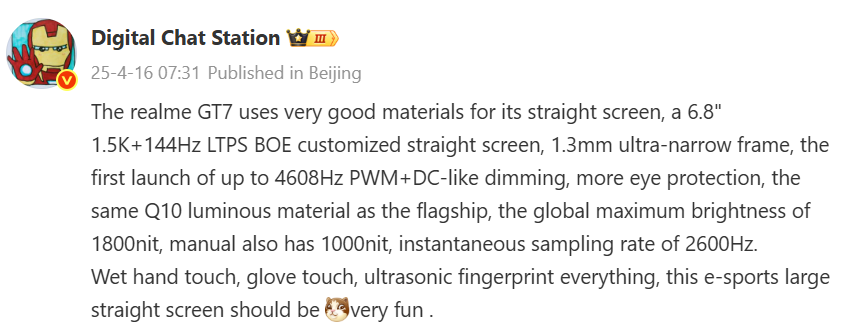
The Realme GT 7 will feature a BOE-manufactured Q10 OLED panel that supports a 1.5K resolution. According to tipster Digital Chat Station, it will be a 6.8-inch LTPS screen that offers a 1.5K resolution. With bezels measuring only 1.3mm, the GT 7 is expected to offer an edge-to-edge display experience.
Realme GT 7 display details by DCS
Realme has gone further by boosting brightness levels: the panel supports 1000 nits manual brightness, 1800 nits global peak brightness, and offers an impressive 2600Hz instantaneous sampling rate for ultra-responsive touch input. The display is protected by Realme’s own Crystal Armour Glass, improving resistance to scratches and drops.
The Realme GT 7’s display introduces the industry’s first 4608Hz high-frequency PWM dimming, far exceeding standard eye safety levels. This is paired with low SVM values for flicker-free, low-brightness viewing and DC-like dimming for comfortable, prolonged use. Additional features include an ultrasonic in-screen fingerprint scanner and wet-hand and glove touch support, making it ideal for both gaming and real-world use scenarios.
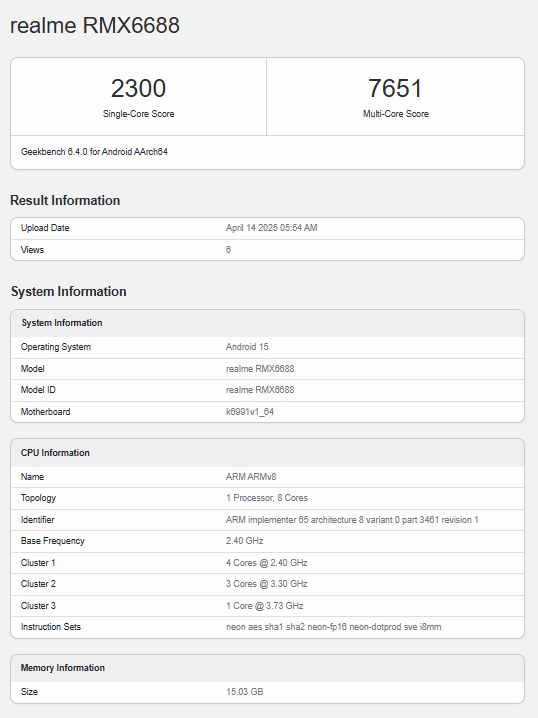
Realme GT 7 Geekbench
Shown above is a Geekbench listing of the Realme GT 7 (RMX6688). The listing reveals that it is equipped with the Dimensity 9400+ chip, 16GB of RAM, and Android 15.
Honor unveiled its cutting-edge AI-powered photo-editing tools at Cloud Next 2025 last week. The collaboration, highlighted by Eric Fang, Senior Director of Product Planning at Honor, aims to enhance smartphone experiences with advanced imaging capabilities, aligning with Honor’s ALPHA PLAN to lead the global AI device ecosystem.
Ai-powered photo editing features
The partnership builds on features like Magic Portal 2.0, now expanding with Google’s Gemini large language models to deliver innovative features. A standout is AI Outpainting from Honor’s AiMAGE suite, powered by Google’s Imagen model. This feature lets users expand photos up to twice their original size. Not to mention, it allows seamless reframing or rotating of the image post-capture. Fang calls it “a game-changer,” as it lets users capture moments without thinking much about the framing. The optimized generative fill allows the user to modify the image to match their vision.
Another highlight is AI Eraser, which simplifies photo editing by removing unwanted objects with a few taps. Leveraging Google’s Imagen technology, it fills gaps with realistic, context-aware content, minimizing chances of artifacts in the image. As Fang notes, this makes editing effortless and reliable, enhancing user accessibility.
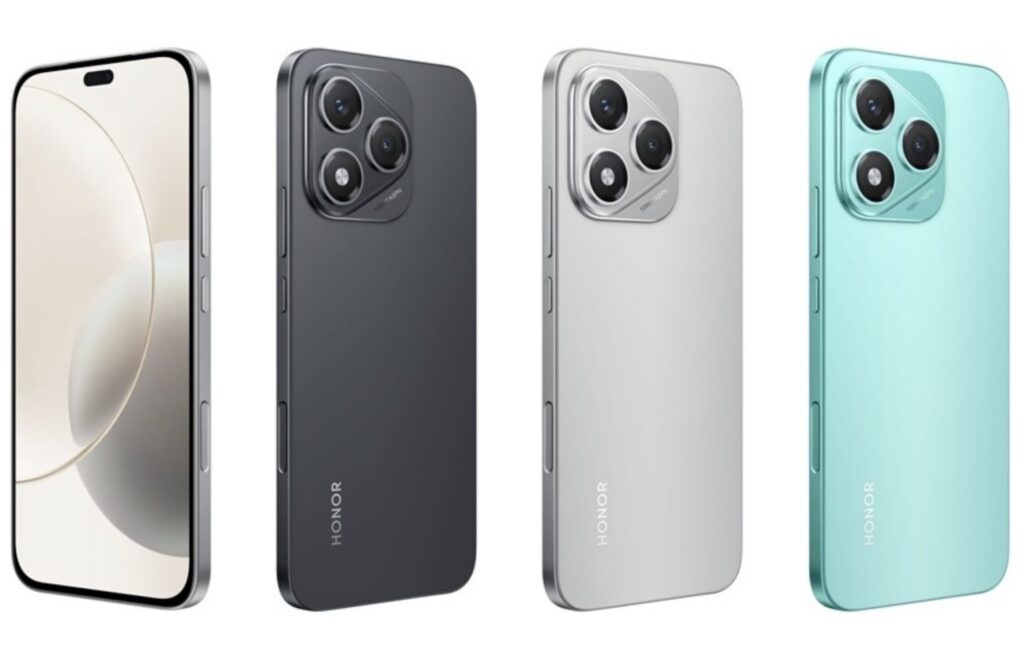
Honor 400 Lite
Honor’s commitment extends to affordability, with the recently launched Honor 400 Lite in Europe featuring AI Outpainting, AI Eraser, and AI Upscale. This move brings high-end imaging to budget devices, supported by Google Cloud’s robust infrastructure. Fang underscores that this collaboration pushes technological boundaries, creating a new AI-enhanced device standard and fulfilling the ALPHA PLAN’s vision announced in March.
By collaborating with Google, Honor aims to make these tools globally accessible, transforming how people perceive smartphone photography. This partnership not only elevates smartphone imaging but also sets a precedent for AI integration across Honor’s expanding product lineup.
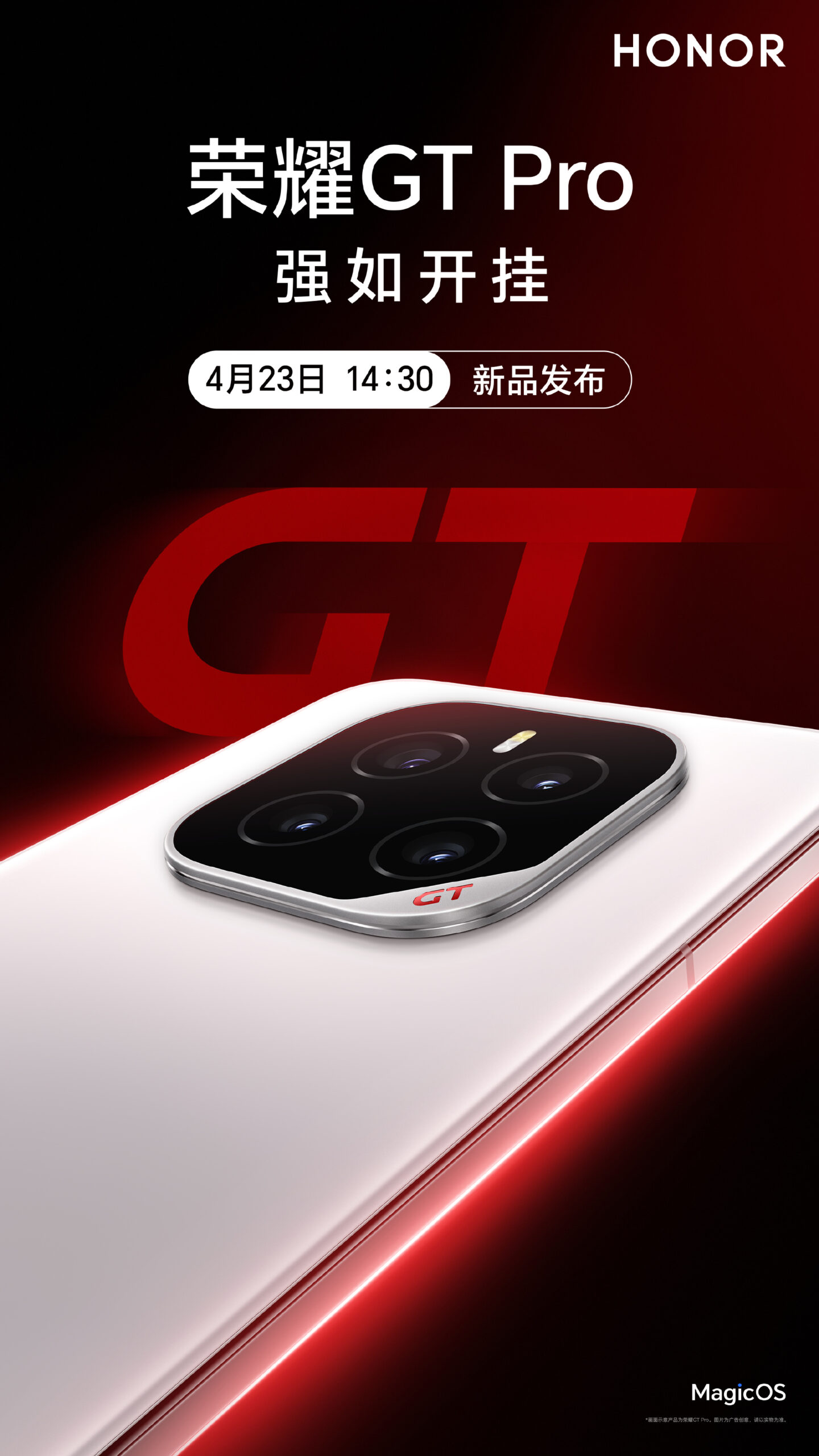
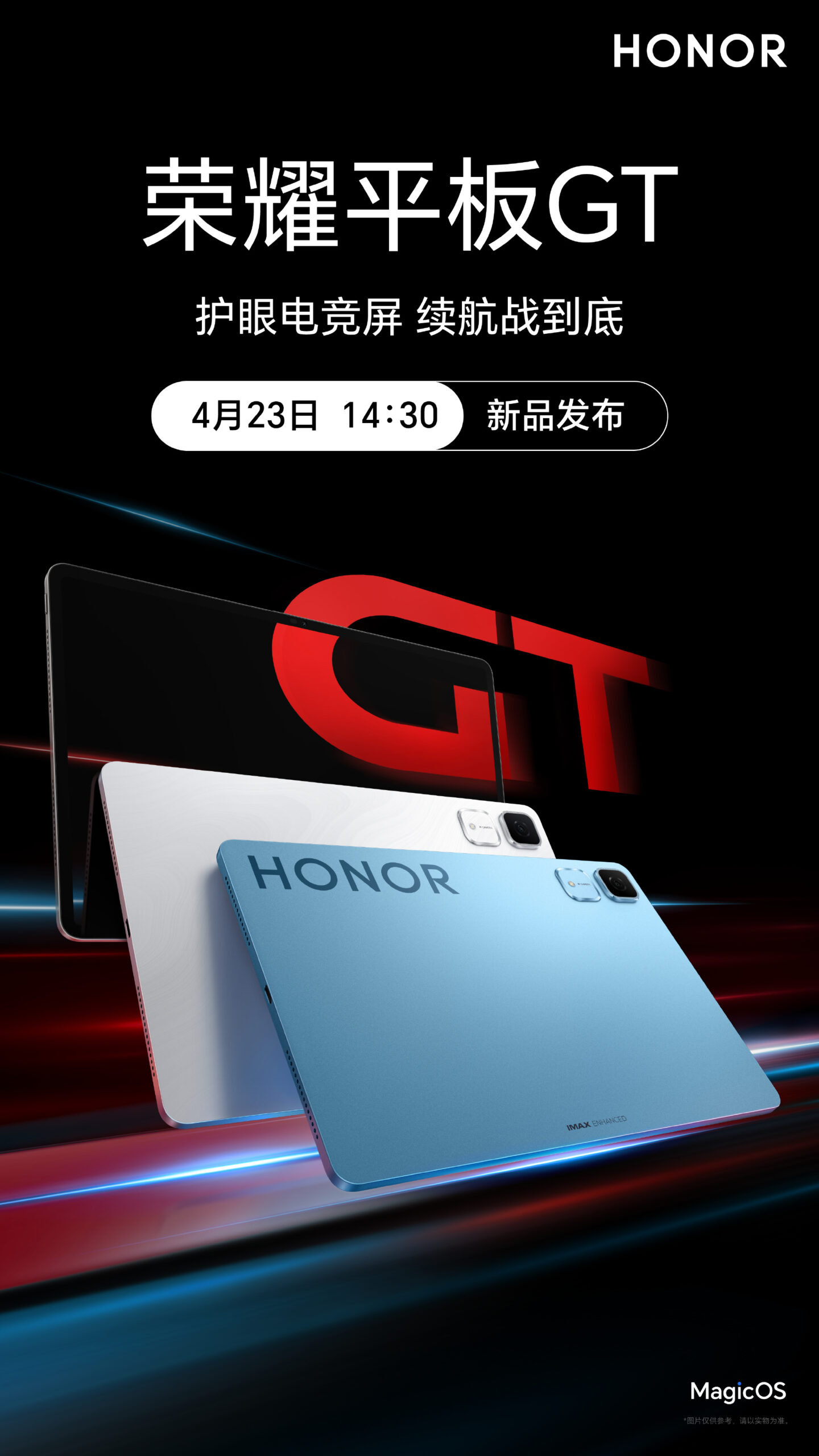
Honor has just unveiled its latest smartphone in China, the Honor Power, which comes with a massive 8,000mAh battery. Now, the brand is preparing for its next major event. As teased in new official posters, Honor is all set to introduce two GT-series devices on April 23 in China — the Honor GT Pro smartphone and a new tablet, the Honor Tablet GT.
Honor GT Pro will be a performance-focused flagship
The Honor GT Pro is designed as a high-performance smartphone aimed at gamers and power users. As per reports, it will be powered by Qualcomm’s Snapdragon 8 Elite chipset, paired with LPDDR5X Ultra RAM and UFS 4.1 storage. The phone features a flat OLED display with a 1.5K resolution, a 144Hz refresh rate, and nine-layer eye protection enhancements. The screen is said to be shielded by Honor’s reinforced Rhino glass.
The official teaser reveals a square camera module, which seems to include multiple cameras, an LED flash unit, and GT branding. The device is said to be equipped with a 50-megapixel large sensor main camera. It is also said to feature an ultrasonic in-screen fingerprint scanner and a metal middle frame.
A major highlight is the 6,000mAh+ battery, aiming to deliver long-lasting usage even under heavy load. The dual symmetrical 1216 speakers, previously praised in the Magic 7 series, make a return, offering immersive audio output. It is also expected to support dual-frequency GPS and 90W fast charging.
Honor GT Pro key details
Honor Tablet GT key specs
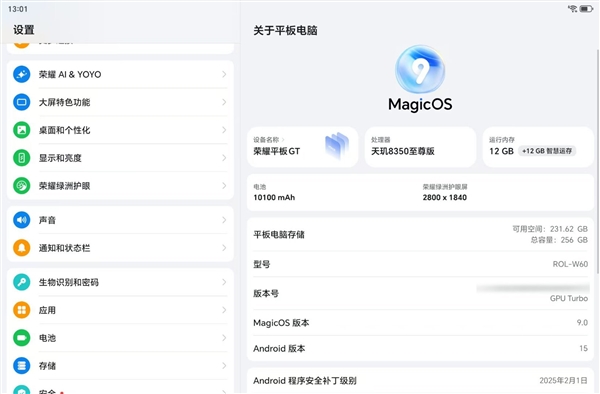
While Honor has confirmed the design of the Honor Tablet GT, it is yet to reveal its key specifications. Shown above is a screenshot that has been circulating on Chinese social platforms for some time. As can be seen, the image showcases the “About the tablet” page of a tablet with model number ROL-W60.
This tablet, believed to be the Honor Tablet GT, has a screen that supports a resolution of 2800 x 1840 pixels. Under the hood, it has the Dimensity 8350 chipset, 12 GB of RAM, and 256 GB of built-in storage. It also houses a 10,000mAh battery, supports 12GB virtual RAM, and runs on Android 15 with a layer of Magic OS 9 on top.
For more daily updates, please visit our News Section.
Qualcomm is expected to unveil the Snapdragon 8 Elite 2 chip in October this year. Several brands, including Realme, are expected to announce their flagship phones equipped with the new chip. In November 2024, the brand announced the Realme GT 7 equipped with the Snapdragon 8 Elite chip. It is likely that the Realme GT 8 Pro may debut around the same time in China. A new Weibo post by tipster Digital Chat Station has seemingly revealed the key specifications of the GT 8 Pro.
Realme GT 8 Pro key specifications tipped
According to the tipster, the engineering prototype of Realme’s Snapdragon 8 Elite 2-powered smartphone, which appears to be the Realme GT 8 Pro, features a flat OLED screen that supports 2K resolution. Like its predecessor, the GT 8 Pro will continue to feature an ultrasonic in-screen fingerprint sensor.
The GT 8 Pro’s rear camera setup will include a 200-megapixel periscope telephoto camera. The tipster also mentioned that the device will feature a metal middle frame and support 100W charging. As far as its battery is concerned, the tipster revealed that its capacity will not be less than 7,000mAh.
To recall, the Realme GT 7 Pro features a 6.78-inch micro-quad-curved Samsung AMOLED screen that offers a 1.5K resolution, a 120Hz refresh rate, and an ultrasonic in-screen fingerprint sensor. Under the hood, it has the Snapdragon 8 Elite chip and a 6,500mAh battery with 120W charging. The global version of the phone packs a smaller 5,800mAh battery.
On the front, the GT 7 Pro has a 16-megapixel snapper, and its back panel has a 50-megapixel (OIS) + 8-megapixel (ultra-wide) + 50-megapixel (3x periscope, OIS) triple camera setup. In China, the device ships with up to 16GB of LPDDR5x RAM and up to 1TB of UFS 4.0 storage.
For more daily updates, please visit our News Section.
When it comes to crushing workouts or hitting your daily step goals, the right pair of earbuds can make all the difference and JBL has just the right fitness-focused audio products. With a lineup that includes sweatproof designs, secure ear hooks, and bass-heavy sound to keep your energy up, JBL’s TWS earbuds are made for movement. Whether you’re a runner, lifter, or just someone who likes good music on the go, these picks will help you stay locked in and motivated. So here’s a list of the Best JBL TWS earbuds under $100.
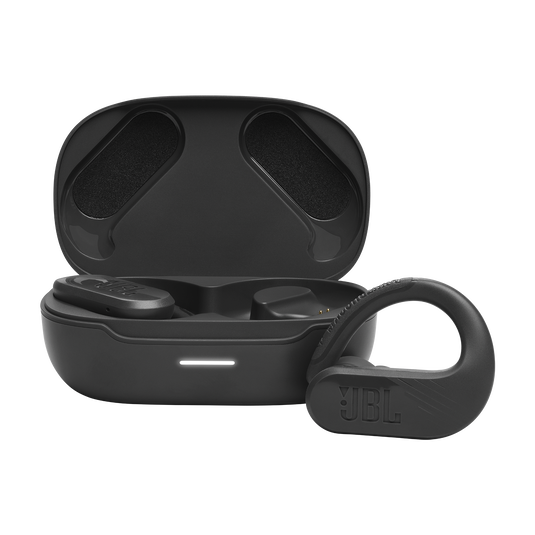
Starting off the list, we have the JBL Endurance Peak 3. You can immediately tell that these truly wireless earbuds were made for fitness enthusiasts thanks to their design. The earbuds feature a Powerhook design that is designed for an ergonomic fit. This helps secure the Endurance Peak 3 to your ears, allowing you to have a full range of motion without worrying about them possibly falling off mid workout.
The earbuds house 10mm drivers and a large battery that allows for 10 hours of audio playback from the earbuds alone, and another 40 hours when paired with the charging case. It also supports fast charging, with just 10 minutes of charging offering an hour of audio playtime. Thanks to an IP68 rating, the JBL Endurance Peak 3 can endure 30 minutes at depths of 1.5 meters of salt or fresh water. So sweat is definitely not a problem. It is currently listed for $89.95.
For those looking for earbuds with better sound dampening, the JBL Endurance Race 2 is a great pick. These offer ANC (Active Noise Cancellation) along with a Smart Ambient mode. While this doesn’t have a hook, the hearables feature an ergonomic wing with what JBL calls Twistlock tech, offering a better grip on your ears. So these can be worn while working out.
The JBL Endurance Race 2 arrives with an IP68 rating for water and dust resistance like the Endurance Peak 3 along with an IPX2 rating on the charging case as well. These house a 6.8mm dynamic driver that delivers JBL Pure Bass sound. On a single full charge, the Endurance Race 2 can enjoy 12 hours of audio playback from the earbuds, with the charging case offering another 36 hours. Thanks to fast charging, just 10 minutes of charging can offer 4 hours of playtime. You can get your hands on these for $79.95 at the moment.
If ANC is something you definitely can’t compromise on, then another option is the JBL Live Free 2. It features 11mm drivers with JBL Signature Sound. But the highlight is undoubtedly the True Adaptive Noise Cancelling (ANC) and Smart Ambient mode.
While these are not dedicated to fitness enthusiasts, the IPX5 rating implies that rain or gym sweat wouldn’t harm these earbuds. The JBL Live Free 2 can offer up to 7 hours of audio playback, with the charging case adding another 28 hours. Once again, 10 minutes of charging allows for 4 hours of playtime. These models can be purchased for $99.95.
Rounding off the list, we have the JBL Endurance Run 2 Wired. These are the only wired earphones on this list and a worthy addition for people who prefer old school. You get a flexible FlipHook that lets you wear them simply in-ear or in the behind-the-ear style. These pack 8.2mm drivers, deliver JBL Pure Bass Sound, a built-in microphone, and remote controls in the cable. The IPX5 rating ensures protection against sweat and splashes of water as well.
Notably, the earbuds also come with easy cable management thanks to the magnetic tips on the buds. They can connect to your smartphone or other device via a 3.5mm audio jack. The JBL Endurance Run 2 Wired are the cheapest model on this list and sells for just $14.95.
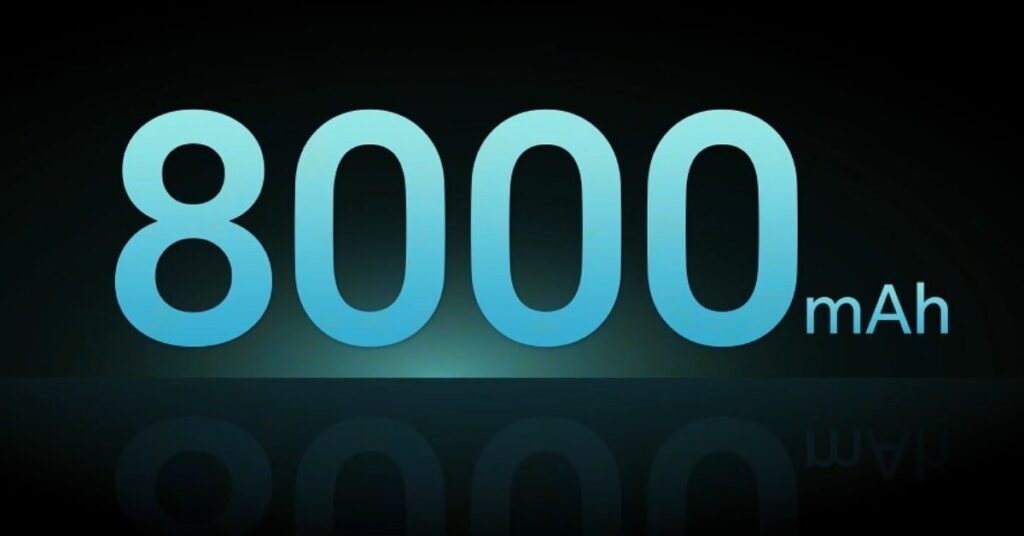
Honor’s first phone in the Power lineup is now official in China. Dubbed (of course) the Honor Power, its headline feature is a massive 8000mAh battery. That’s an insane capacity for a smartphone!
An 8000mAh battery in a phone
The company even claims that it features a larger battery than the iPad Air (2025)—29.6Wh compared to 28.93Wh. This is all thanks to silicon-carbon battery technology which has greater energy density than conventional lithium batteries. To put that in context, the Power’s battery has an impressive energy density of 821Wh/L.
Honor claims the battery can deliver:
25 hours of long-form video playback
23 hours of TikTok
Over 23 hours of navigation
14 hours of gaming
What’s even more impressive is that the company has managed to squeeze this beast into a chassis that’s less than 8mm thick, while the phone weighs just 209 grams. It also supports 66W wired fast charging which can take the phone from 3% to 100% in just 68 minutes.
Design and Aesthetics
You’ll notice a pill-shaped cutout on the front, but oddly, the phone houses just a 16MP selfie camera. On the rear, there’s a 50MP main sensor with OIS and a 5MP ultrawide shooter—a fairly basic setup.
Performance should be reliable enough, thanks to the Snapdragon 7 Gen 3 chip which is paired with up to 12GB of RAM and 512GB of storage.
In terms of design, the Honor Power looks like Honor’s own take on the latest iPhones. The camera module is clearly inspired if the pill-shaped cutout on the front doesn’t already give it away. It’s available in Snow White, Phantom Night Black, and Desert Gold.
Qualcomm Snapdragon 7 Gen 3 (4nm), up to 2.63GHz, Adreno 720 GPU
RAM & Storage
8GB / 12GB LPDDR5 RAM, 256GB / 512GB storage
OS
Android 15-based MagicOS 9.0
SIM
Dual SIM (nano + nano)
Rear Camera
50MP main (f/1.95, OIS), 5MP ultra-wide (f/2.2), 4K video recording
Front Camera
16MP (f/2.45)
Biometrics
In-display fingerprint sensor
Dimensions & Weight
163.7 × 76.7 × 8.2 mm; 209g
Audio
USB Type-C audio, stereo speakers
Connectivity
5G SA/NSA, Dual 4G VoLTE, Wi-Fi 7 (802.11be), Bluetooth 5.3, GPS (L1+L5), USB Type-C, NFC
Battery
8000mAh with 66W SuperCharge fast charging
Price and Availability
The Honor Power is currently only official in China. Here’s how the pricing breaks down:
Honor Power Variant
Price
8GB + 256GB
CNY 1,999 (~$272)
12GB + 256GB
CNY 2,199 (~$300)
12GB + 512GB
CNY 2,499 (~$340)
As part of a limited-time promo, you can grab the base 8/256GB model at just CNY 1,699.15 ($231), while the 12/256GB version goes for CNY 1,869.15 ($254), and the top-tier 12/512GB variant comes in at CNY 2,124.15 (~$289). The offer will end on April 18.
For more daily updates, please visit our News Section.
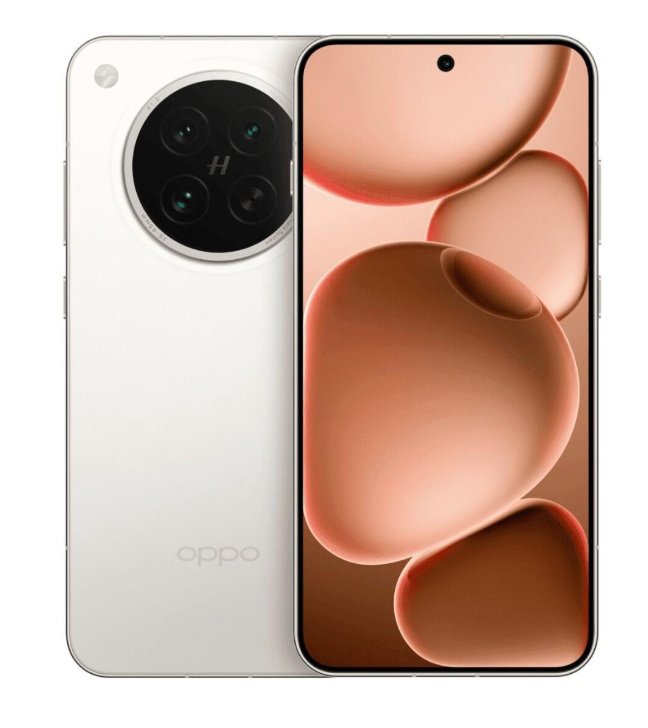
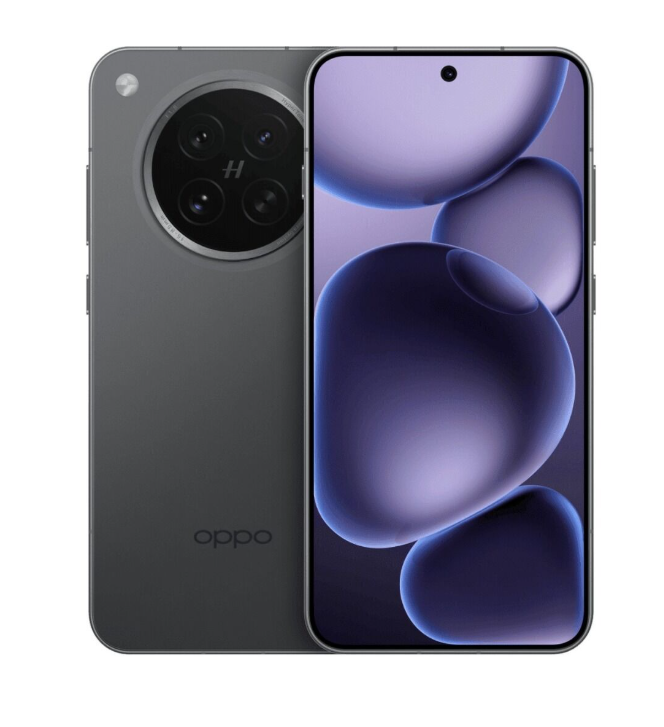
OPPO Find X8s is designed for users who want powerful performance, great cameras, and a premium display all wrapped up in one sleek smartphone. This phone offers a strong mix of cutting-edge hardware and useful features, making it a solid choice for anyone who wants a reliable Android device for daily use, gaming, photography, and entertainment.
Price & Availability:
OPPO Find X8s is now available for a starting price of $699 at Giztop. You can choose from stylish colors: Blue, White, Pink, or Black.
Smooth and Bright Display
OPPO Find X8s comes with a 6.32-inch LTPO AMOLED screen, which offers sharp and colorful images thanks to its 2640 × 1216 resolution. The display supports a smooth 120Hz refresh rate, which makes scrolling through apps and websites feel fast and fluid. With support for 100% of the DCI-P3 color gamut, the screen produces accurate and vibrant colors, which is great for watching videos, browsing photos, and even gaming.
Powerful Performance for Everyday Use
Under the hood, the Find X8s is powered by a MediaTek Dimensity 9400+ octa-core processor, paired with 12GB or 16GB of LPDDR5X RAM. This powerful combo makes sure that apps open quickly and games run smoothly without lag. Whether you are multitasking between social media and streaming, or running demanding apps, the OPPO Find X8s delivers reliable and quick performance.
Impressive Cameras for Any Moment
One of the highlights of the OPPO Find X8s is its camera system. The phone is equipped with a triple rear camera setup, which includes a 50MP Sony LYT-700 main sensor, a 50MP ultra-wide lens, and a 50MP 3x periscope telephoto lens for zoom shots. On the front, there’s a 32MP selfie camera, perfect for sharp and clear selfies or video calls.
Large Storage and Long-Lasting Battery
OPPO Find X8s offers plenty of storage options with 256GB, 512GB, or even a massive 1TB of UFS 4.0 storage, giving you space for your apps, photos, videos, and files. The 5700mAh battery ensures you have enough power to last through the day, and with 80W SuperVOOC fast charging, plus 50W wireless and 10W reverse wireless charging, topping up the battery is both quick and convenient.
Simple and Friendly Software
Find X8s runs on ColorOS 15, which is based on Android 15. This gives you a smooth, fast, and modern software experience. You also get full access to Google Play for all your favorite apps, games, books, and movies.
ASUS has brought two new PCs to the Indian market that feature a small form factor along with a small price tag. The company’s brand new ASUS V500 Mini Tower PC and ASUS S501 Small Form Factor PC are arriving to meet the basic computing needs for homes and offices. So here’s everything we know.
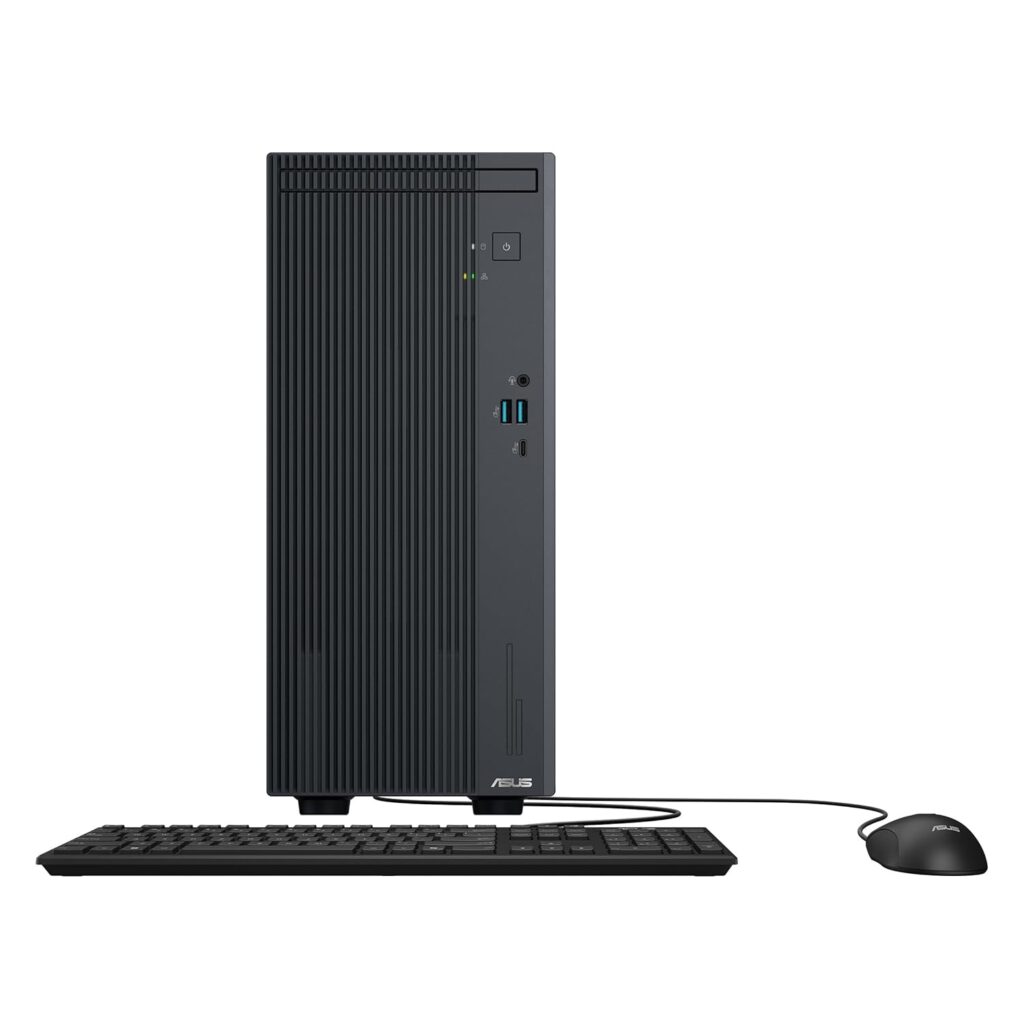
ASUS V500 Mini Tower PC
ASUS V500 Mini Tower PC
The Taiwanese tech giant’s V500 Mini Tower features a 15 liter chassis that makes it quite compact and lightweight. So it can sit comfortably in cramped spaces. It also got a military grade certification for its durability. The device can be configured with up to an Intel Core i7-13620H SoC and Intel UHD graphics. This chip is paired with up to 64GB of RAM and up to 2TB of SSD storage. The ASUS V500 Mini Tower runs on the Windows 11 OS and supports WiFi 6, Bluetooth 5.4, and multiple ports. You also get a 180W 80 Plus Bronze certified PSU under the hood.
Please Note: When you buy something using the links in our articles, we may earn a small commission at no cost to you.
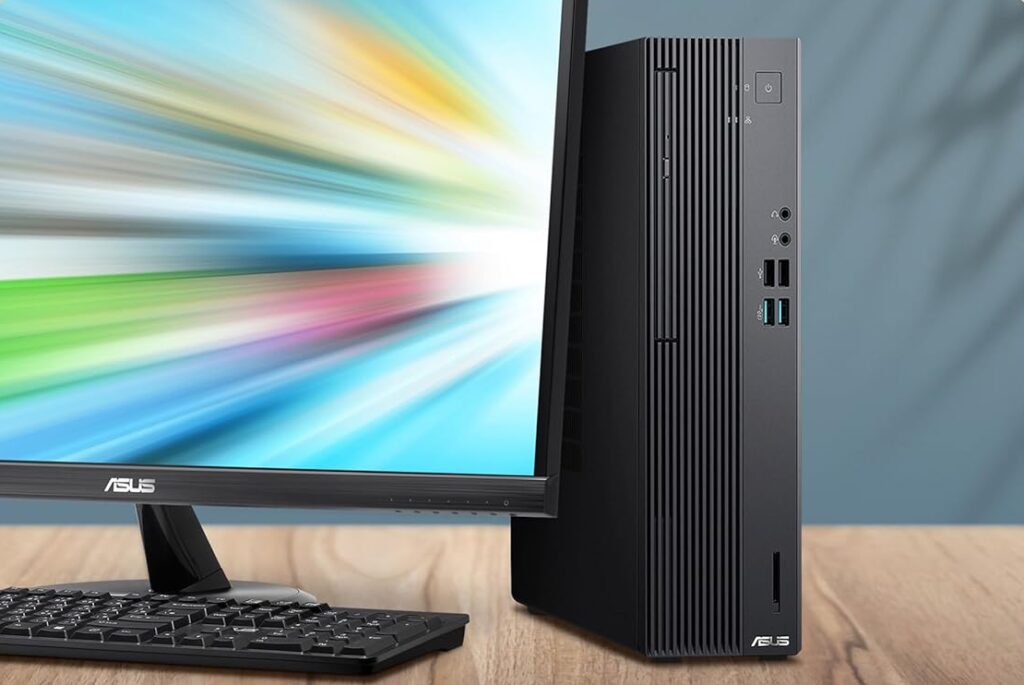
ASUS S501 Small Form Factor PC
ASUS S501 Small Form Factor PC
As the name suggests, the ASUS S501 Small Form Factor PC also has a compact build with an even smaller 8.6-liter body. It is powered by up to an Intel Core i5-14500 processor along with up to 64GB of DDR5 RAM and 512GB NVMe SSD storage. For graphics, the chipset has an integrated Intel UHD 770 iGPU. Connectivity options include WiFI 6E, Bluetooth 5.3, and I/O filled with USB Type A, HDMI, and other ports. There is also a 180W 80 PLUS Bronze PSU and Windows 11 OS.
Please Note: When you buy something using the links in our articles, we may earn a small commission at no cost to you.
Pricing and Availability
The ASUS S501 and ASUS V500 Mini are already on sale from the brand’s official website, Amazon, Flipkart, and authorized retailers. The S501 has a starting price tag of 42,990 INR, while the V500 Mini starts from 34,990 INR.
For more daily updates, please visit our News Section.
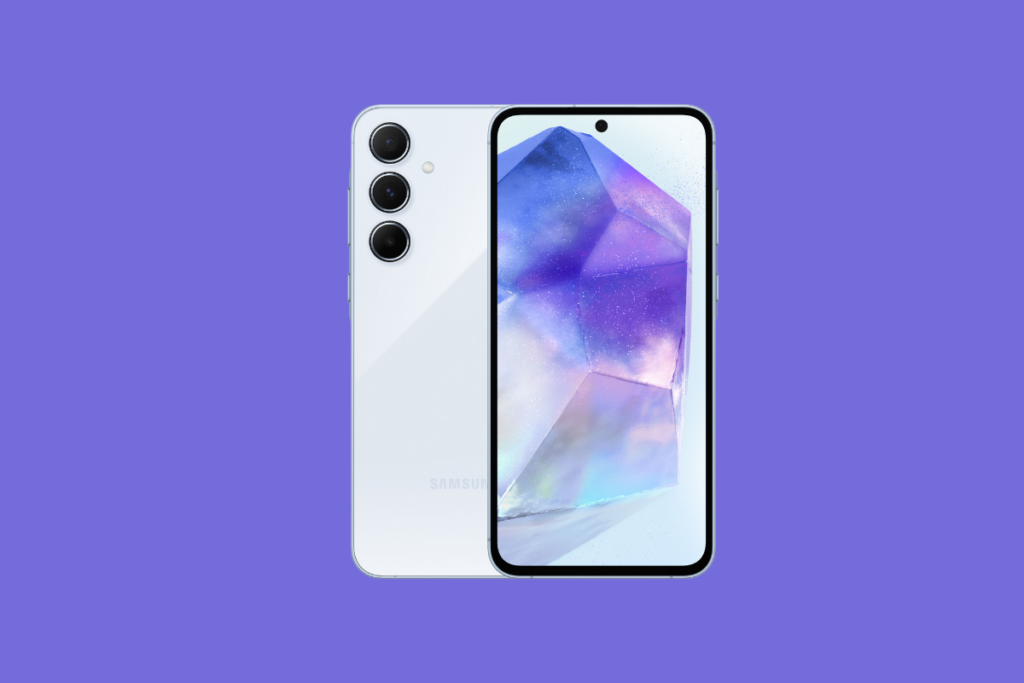
The Galaxy A55 5G is the only mid-range Samsung phone that got early access to One UI 7 software. The beta program kicked off earlier this month with the first beta release, and now we have the second beta update rolling out amid One UI 7 stable rollout chaos for high-end Galaxy phones.
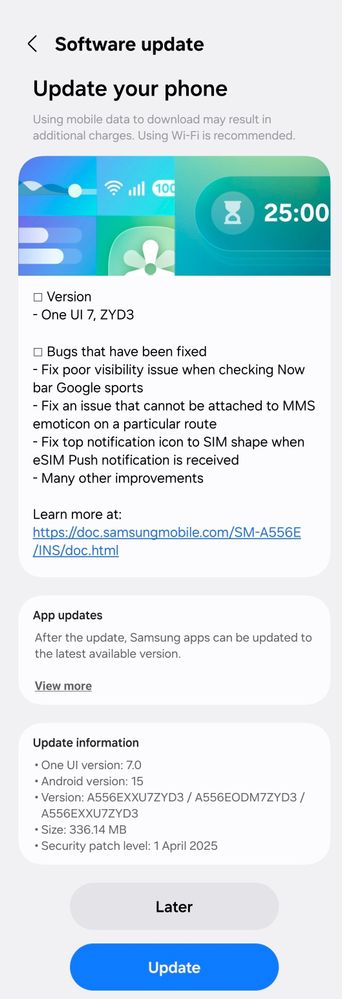
Samsung is rolling out the second One UI 7 beta update for Galaxy A55 users in India. The update comes with the firmware version A556EXXU7ZYD3 and has a download size of around 336MB. It doesn’t bring new features, but rather includes three bug fixes and many improvements.
According to the changelog, the One UI 7 Beta 2 resolves poor visibility of Google Sports in Now Bar. It also resolves an issue related to the eSIM push notification icon. With the fixes in place, the phone now shows a SIM icon when receiving push notifications about eSIM. The latest beta fixes one more issue that’s related to MMS emoticon, but doesn’t state the changes in detail. The changelog rather mentions “Fix an issue that cannot be attached to MMS emoticon on a particular route.“
Besides these three fixes, Samsung has included the April 2025 security patch to the second beta. The latest security patch addresses dozens of vulnerabilities, enhancing the overall security and privacy (read more about it here). If you have a Galaxy A55 that’s already running One UI 7 beta, check if the second beta is ready for installation by going to Settings > Software updates and hitting the Download and install button.
The stable One UI 7 rollout is ‘unstable’ right now
After a long wait, followed by a lengthy beta program, the stable One UI 7 rollout finally went live on April 7, starting with South Korea. The Galaxy S24 series got the first bite, and then it quickly expanded to the Galaxy Z Fold 6 and Galaxy Z Flip 6. Samsung took no time in expanding the stable update to more regions, including Europe and the US. However, just as when things started to look promising, the One UI 7 rollout was paused worldwide.
While not going much into the details, Samsung revealed that a critical was found in the One UI 7 Korean build for the Galaxy S24 series, Galaxy Z Fold 6, and Galaxy Z Flip 6. Samsung has assured users that it is working to resolve the issue and will resume the rollout “as soon as possible.” However, it raised serious questions on the lengthy One UI 7 beta program. Things aren’t looking promising right now, and with no clear timeline in sight for the One UI 7 resumption, it’s only frustrating Galaxy owners.
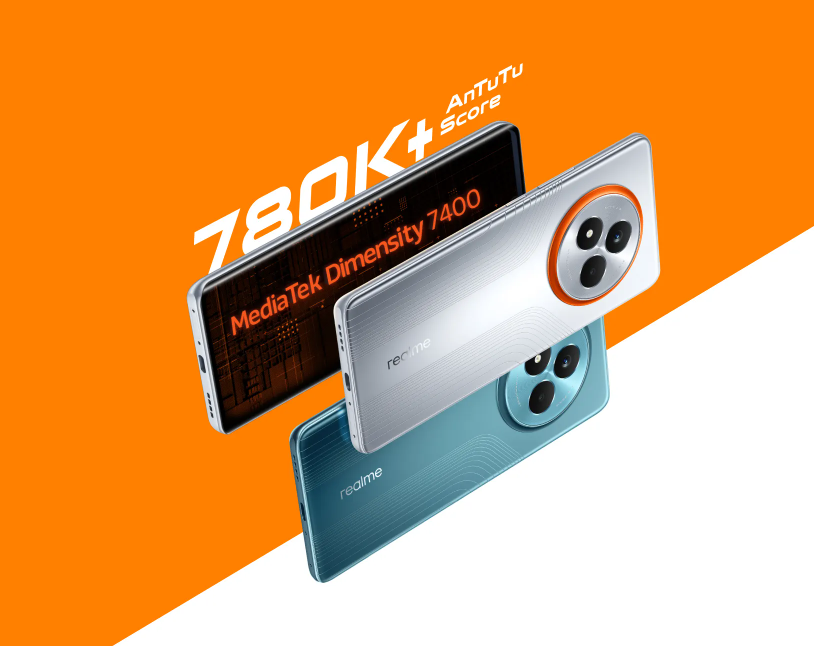
Realme has just kicked off the first sale for new smartphones from its popular Narzo lineup. The Realme Narzo 80 Pro and Narzo 80x recently made their debut in the Indian market. So now, here are all the details regarding their pricing, launch offers, and more.
Realme Narzo 80 Pro
The Realme Narzo 80 Pro was just announced in India in two colors options, namely Racing Green and Speed Silver. It is also listed in three storage configurations, so here are the details:
All three models have been announced along with a Rs 2,000 discount coupon. So this effectively brings down its price tag to around Rs 17,999, Rs 19,499, and Rs 21,499 respectively. The Chinese smartphone maker is also offering a 6 month no cost EMI option on the Realme Narzo 80 Pro. It is listed for purchase on the brand’s official website and Amazon India.
Please Note: When you buy something using the links in our articles, we may earn a small commission at no cost to you.
Realme Narzo 80x
The Realme Narzo 80x has also made its debut alongside its more expensive sibling. This model is available in two color variants as well, which includes Sunlit Gold and Deep Ocean. You can buy this budget phone in two storage configurations, so let’s check it out:
Just like the Realme Narzo 80 Pro, the company is offering a discount coupon on the Narzo 80x as well. There is a Rs 1,500 discount for both versions as a part of the introductory launch offer. So the device carries an effective price tag of Rs 11,999 and Rs 12,999 respectively. The Realme Narzo 80x is also listed on Realme.com and Amazon India, but buyers don’t get the no cost EMI option with this model.
Xiaomi is making another move toward controlling more of the silicon inside its smartphones. According to a new report from China, the company has established a dedicated chip platform department within its mobile phone product division.
The team will be led by Qin Muyun, a former Qualcomm senior director, who will directly report to Lei Jun, the founder and CEO of Xiaomi.
Xiaomi ventured into chip design with its in-house Pengpai S1 SoC back in 2017. It was an 8-core 64-bit processor based on a 28nm process. The chip debuted in the Xiaomi 5C, but the phone failed to gain traction, and the S1 line quietly disappeared from the spotlight.
Despite the initial stumble, Xiaomi is continuing its journey of smaller, specialized chips. In the past few years, the company has rolled out several self-developed components catering to various aspects of a phone.
Xiaomi Surge C1 ISP chip
For instance, its Pengpai C series is designed for imaging, the P series for fast charging, the G series for power management, the T series for signal enhancement, and the D series for display control.
These chips haven’t replaced core processors but have helped Xiaomi gradually build expertise across the hardware stack. Now it seems like the company has the confidence to build its full-stack smartphone SoC.
Xiaomi’s first mobile processor will deliver flagship-grade performance
Thanks to a report earlier this month, we might even know what Xiaomi’s first in-house smartphone processor might bring to the table.
The chip is expected to utilize an octa-core CPU configuration leveraging ARM cores. This includes one Cortex X925 core at 3.2GHz, three Cortex A725 cores at 2.6GHz, and four Cortex A520 cores at 2.0GHz.
The prime core is the same MediaTek uses in its latest Dimensity 9400 while the high-performance and efficiency cores are from a generation back. So while Xiaomi’s configuration might not compete directly with the latest flagship processors, it might offer solid performance for a sub-flagship phone.
The GPU side could be more competitive. The chip reportedly integrates an Imagination Technologies IMG DXT72 GPU at 1.3GHz, which early estimates claim may outperform the Adreno 740 in Qualcomm’s Snapdragon 8 Gen 2.
For more daily updates, please visit our News Section.
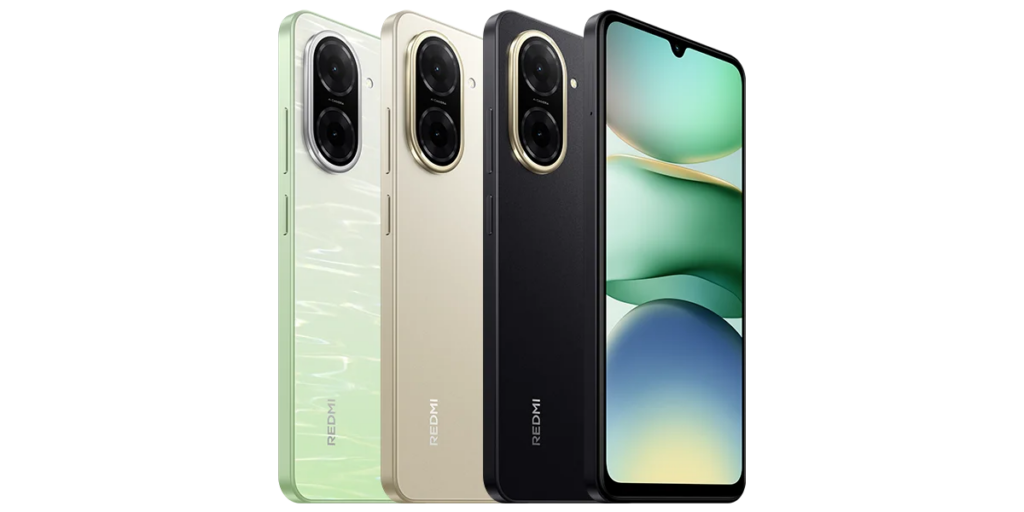
Xiaomi has just debuted a next gen budget smartphone in the Indian market. For under Rs 7000, the Redmi A5 was announced with some attractive features like an eye catching design, a big battery, and a smooth display. So here are all the details.
Redmi A5 Specs
The Chinese tech giant’s affordable new smartphone sports a tall 6.88-inch IPS LCD panel that has an HD+ resolution, a 120Hz refresh rate, 240Hz touch sampling rate, DC dimming, and TÜV Rheinland certification for eye protection. Under the hood, the Redmi A5 is equipped with the UNISOC T7250 SoC, which is paired with up to 4GB of RAM and 128GB storage. It also supports a microSD card slot for storage expansion up to 2TB.
Redmi A5
The rear has a 32MP dual camera setup, while the front packs an 8MP selfie shooter. A large 5,200mAh battery pack powers this model, which supports 15W wired fast charging. The Redmi A5 runs on the Android 15 OS out of the box. Other notable features include a 3.5mm audio jack, FM radio, a side mounted fingerprint scanner, Bluetooth 5.2, dual SIM support (nano + nano), and GPS support.
Pricing and Availability
Xiaomi’s brand new Redmi A5 was announced in multiple color option, which includes Pondicherry Blue, Just Black, and Lake Green. The blue and black has a matte finish but only the black and green variant gets a golden colored rim around its rear camera module. This model costs Rs 6,499 for the 3GB + 64GB option, while the 4GB + 128GB variant costs Rs 7,499. The Redmi A5 goes on sale on 16th April 2025, which is tomorrow. You can purchase this device from the brand’s official retail store and offline stores.
For more daily updates, please visit our News Section.
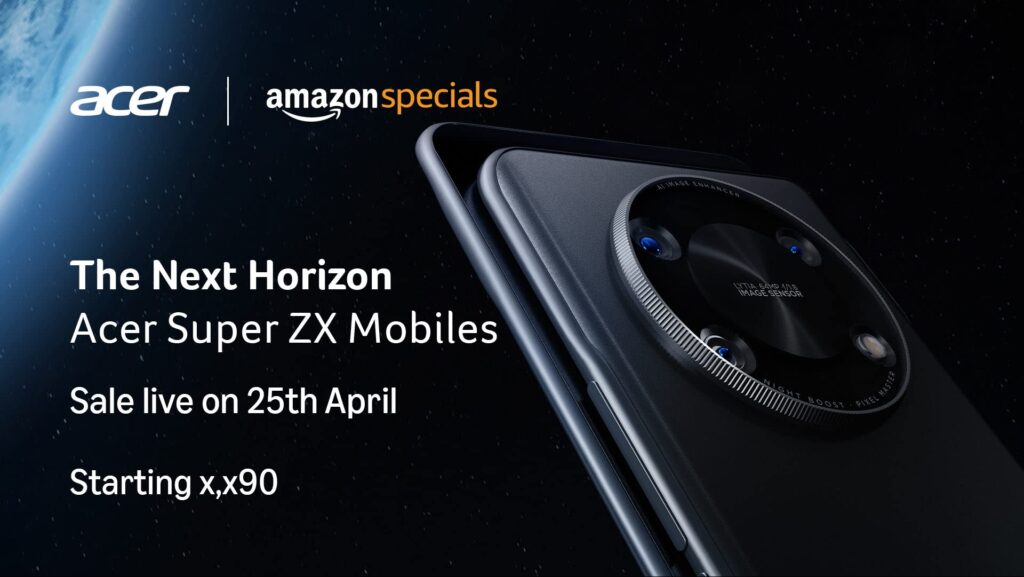
The Acer brand is finally back in the world of smartphones in India. India-based Indkal Technologies, which is licensed to design, manufacture, and distribute Acer-branded phones, has introduced the Super ZX and Super ZX Pro with competitive specs and aggressive pricing in the country. Here is a look at the specifications, features, and price of both models.
Acer Super ZX specifications
Acer Super ZX
The Acer Super ZX has a 6.7-inch LCD panel that offers an FHD+ resolution, a 120Hz refresh rate, and up to 800 nits of brightness. Under the hood, the device is equipped with the Dimensity 6300 chipset, up to 8GB of RAM, up to 256GB of storage, and a 5,000mAh battery with 33W fast charging support.
On the front, it has a 13-megapixel selfie camera and a 64-megapixel + 2-megapixel (macro) + 2-megapixel (depth) triple camera unit. This makes it the segment’s first phone to offer a 64-megapixel camera, and that too with a flagship-grade Sony IMX682 camera sensor. The phone supports 2K video recording through the front and rear (primary) cameras.
It comes with other features, such as a side-facing fingerprint scanner, dual speakers, and an IP50 rating. It measures 8.6mm in thickness and weighs 200 grams.
Acer Super ZX Pro specifications
The Acer Super ZX Pro is a more premium phone offering a 6.67-inch AMOLED FHD+ 120Hz screen with a peak brightness of 1,000 nits. It is powered by the Dimensity 7400 chipset, up to 12GB of RAM, up to 512GB of storage, and a 5,000mAh battery with 33W fast charging.
The Super ZX Pro features an impressive 50-megapixel OmniVision OV50D front-facing camera. On the back, it has a flagship-grade Sony IMX882 50-megapixel main camera, which is paired with a 5-megapixel ultra-wide lens and a 2-megapixel macro camera.
The Super ZX Pro offers other features such as an in-screen fingerprint sensor, dual speakers with Dolby Atmos, and Wi-Fi 6. In terms of build, the phone offers an IP64-rated body fitted with a glass back and weighs 182 grams.
Acer Super ZX, Super ZX Pro price
Acer Super ZX sale date
The Acer Super ZX starts at Rs 7,990 and comes in multiple variants, such as 4GB+64GB, 4GB+128GB, 6GB+128GB, 8GB+128GB, and 8GB+256GB.
On the other hand, the Super ZX Pro comes in configurations like 6GB+128GB, 8GB+128GB, 8GB+256GB, 8GB+512GB, and 12GB+512GB. It has a starting price of Rs 17,990. The Super ZX series will be available for purchase starting from April 25 via Amazon in India.
For more daily updates, please visit our News Section.
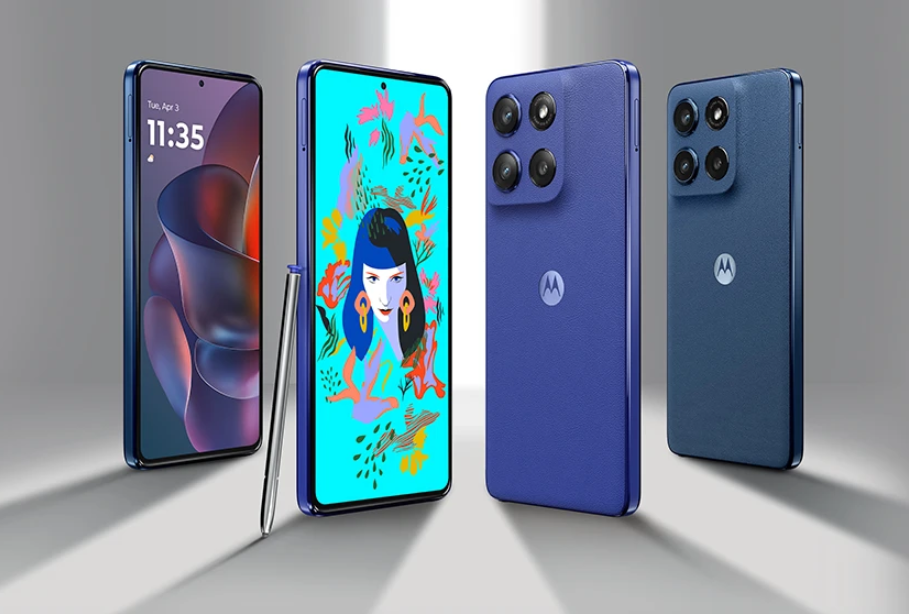
Motorola has just unveiled the Edge 60 Stylus in the Indian market, which as the name suggests, is one of the few devices that comes with a dedicated stylus. The company’s new model is a part of its latest Edge 60 series, so here are its specs, pricing, and other key details.
Motorola Edge 60 Stylus Specs
The Motorola Edge 60 Stylus sports a tall 6.7-inch pOLED display that has an FHD+ resolution, 120Hz refresh rate, Corning Gorilla Glass 3, and up to 3000 nits of peak brightness. Under the hood, it is equipped with the Snapdragon 7s Gen 2 SoC, which is paired with 8GB of RAM and 256GB of storage. The storage can be expanded by up to 1TB via a microSD card slot.
Motorola Edge 60 Stylus
For photography, the rear has a 50MP (Main) + 8MP (Ultra Wide) + macro shooter, while the front houses a 32MP selfie camera. A sizeable 5,000mAh battery pack powers this device, which supports 68W wired fast charging and 15W wireless charging as well. Out of the box, it runs on the Android 15 OS based My UX custom skin. Other notable features include stereo speakers with Dolby Atmos support, an in-display fingerprint scanner, MIL-STD-810H military grade durability, IP68 water and dust resistance, Bluetooth 5.4, NFC, and the built-in stylus.
Pricing and Availability
Motorola has launched the Edge 60 Stylus in two color options, namely PANTONE Surf the Web and PANTONE Gibraltar Sea (Vegan Leather variant). For 22,999 INR, this is the only smartphone in the segment to offer a stylus. It will go on sale on 23rd April 2025 via the brand’s official website, Flipkart, and offline retailers. There is an instant 1,000 INR bank discount for Axis Bank and IDFC First bank account holders along with some cashback offers from Jio.
For more daily updates, please visit our News Section.
Finding a high-quality smartphone that doesn’t break the bank can be challenging. In today’s market, numerous options promise top-tier performance and features, but many come with a hefty price tag.
This guide focuses on identifying the best smartphones available in the US for under $500, ensuring you get the most value for your money. We’ve curated a list of devices that balance essential features, performance, and affordability.
The selection comprises models from brands that are officially present in the US, so you need not worry about after-sales support. Each of these smartphones has been chosen for its unique strengths, ensuring there’s an option for every user’s needs and preferences within the $500 budget.
Without further ado, let’s go through these phones.
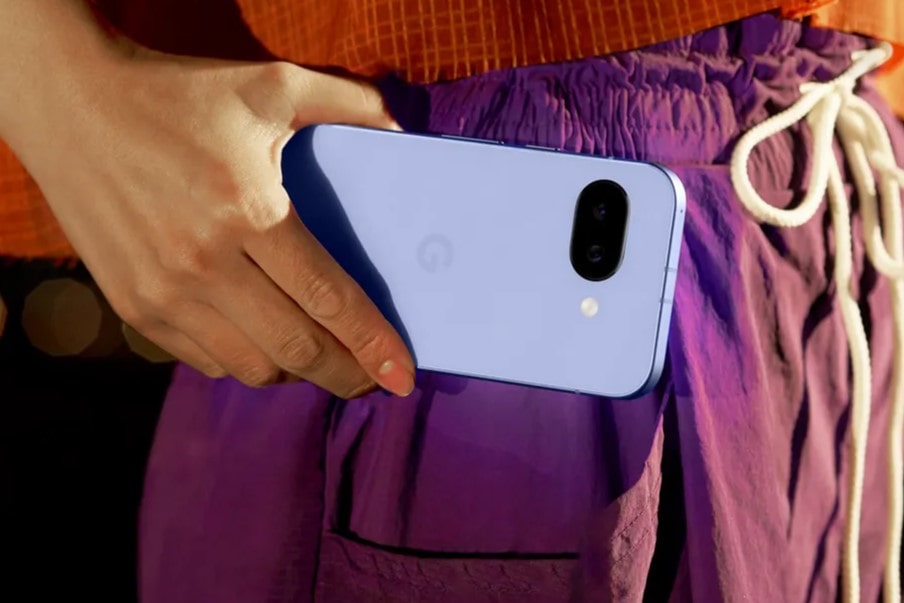
The Pixel 9a is Google’s latest budget offering. It costs the same $499 as its predecessor, the Pixel 8a.
For the same price, the newer model comes with a faster Tensor G4 chip and a slightly larger 6.3-inch display, which also happens to be brighter at 2700 nits (peak).
The device also gets a new 48MP primary camera paired with a wider f/1.7 lens. More importantly, the battery capacity gets a boost to 5,100mAh, and it also charges a bit faster at 23W.
Along with the upgraded hardware and a revamped design, the Pixel 9a also offers a clean Android experience, like any other Pixel. It supports almost all the AI features Google has to offer, along with 7 years of guaranteed major Android updates.
2. OnePlus 13R: Smooth Performance and Fast Charging
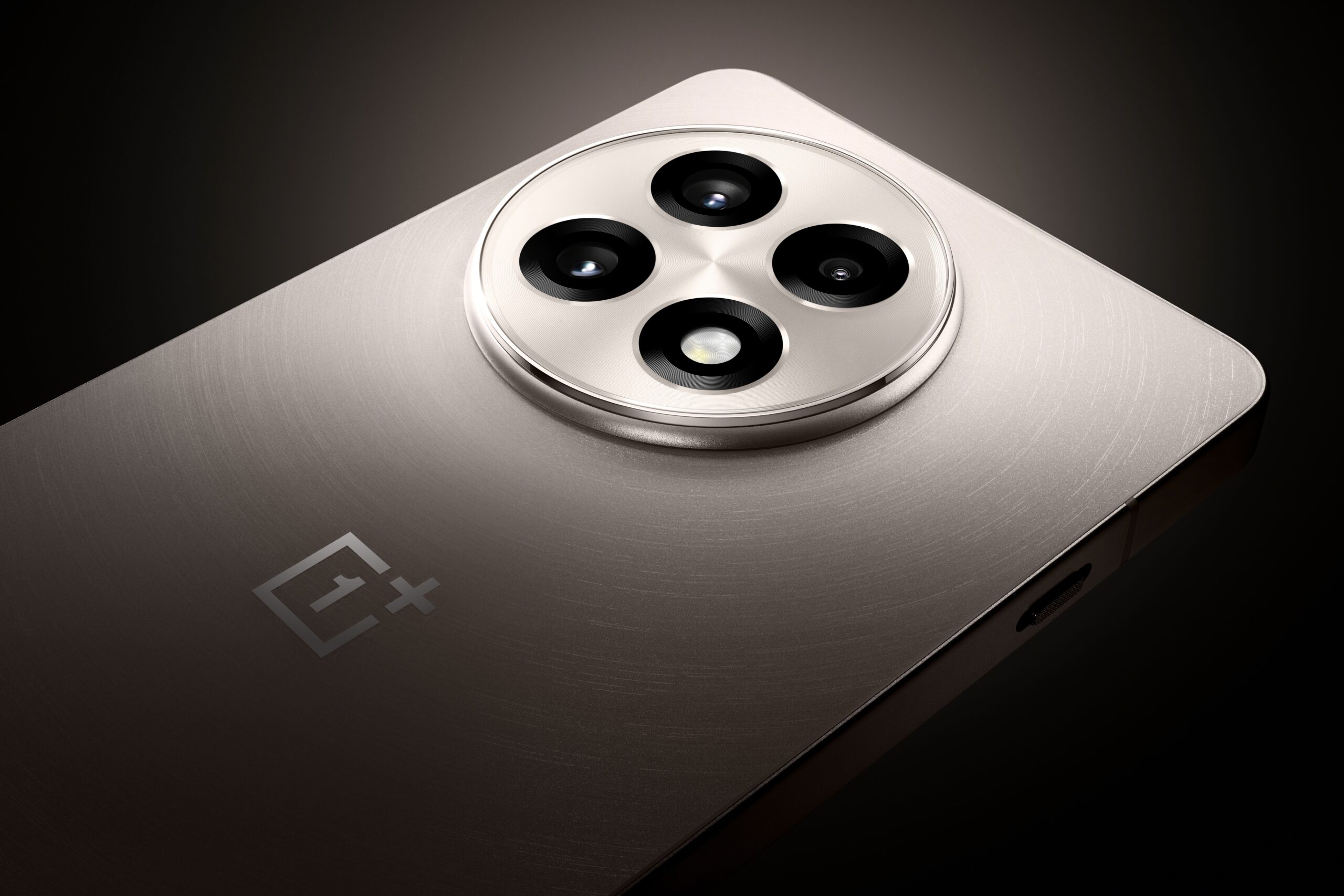
The OnePlus 13R is probably the smoothest $500 smartphone that’s officially available in the US. That’s because it is powered by a high-end Qualcomm Snapdragon 8 Gen 3 chip, paired with OxygenOS 15 and a 120Hz display.
The phone also features a triple camera system comprising a 50MP primary sensor, a 50MP 2x telephoto shooter, and an 8MP ultrawide unit. It is backed by a large 6,000mAh battery, which supports 80W wired charging.
The OnePlus 13R is compatible with all three major carriers (AT&T, T-Mobile, and Verizon) in the US. The official price tag is $599; however, the product is regularly sold at a $100 discount.
Please Note: When you buy something using the links in our articles, we may earn a small commission at no cost to you.
3. Nothing Phone (3a) Pro: Unique Design and Features
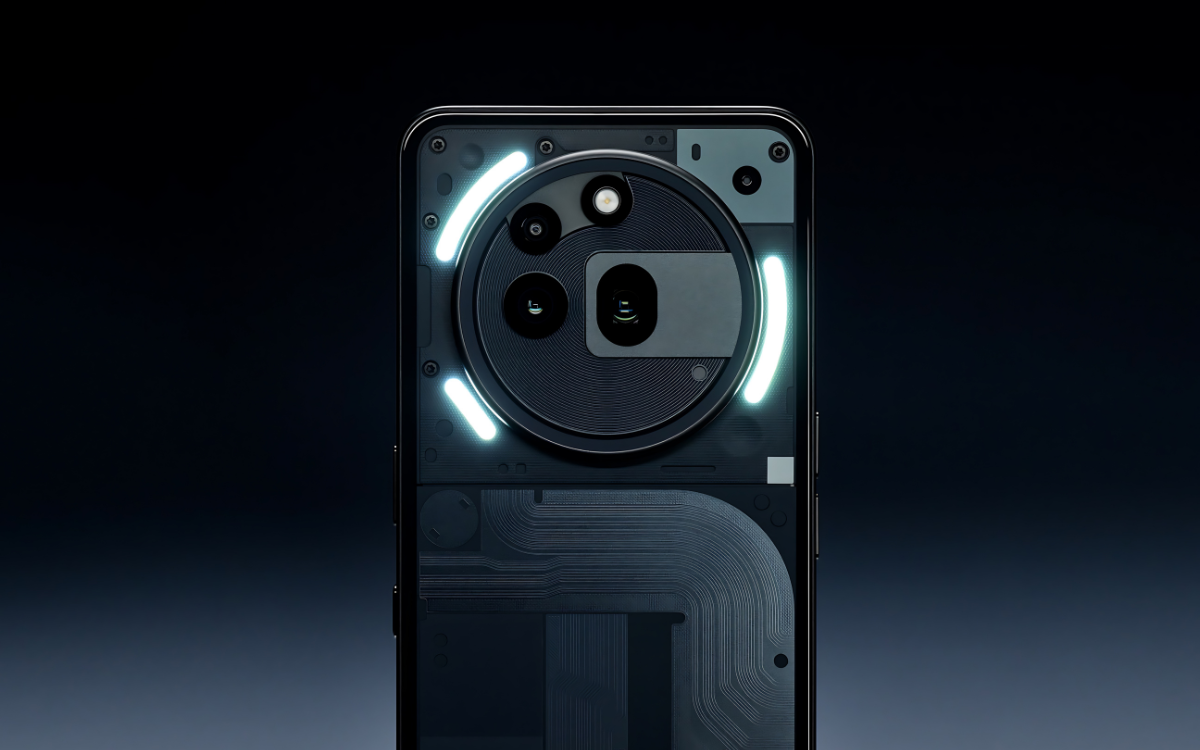
The Nothing Phone (3a) Pro is one of the most unique-looking smartphones on the market. The handset’s design is a head-turner, thanks to its transparent rear panel and Glyph LED lights.
At $459, it also delivers a capable camera setup consisting of a 50MP primary sensor, a 50MP 3x periscope telephoto unit, and an 8MP ultrawide sensor. Further, the software resembles stock Android with Nothing’s dot matrix elements and some unique first-party apps.
It is not as powerful as the previous two devices. However, it is fast enough for day-to-day activities. A 5,000mAh battery powers the device, with support for 50W wired charging.
Please Note: When you buy something using the links in our articles, we may earn a small commission at no cost to you.
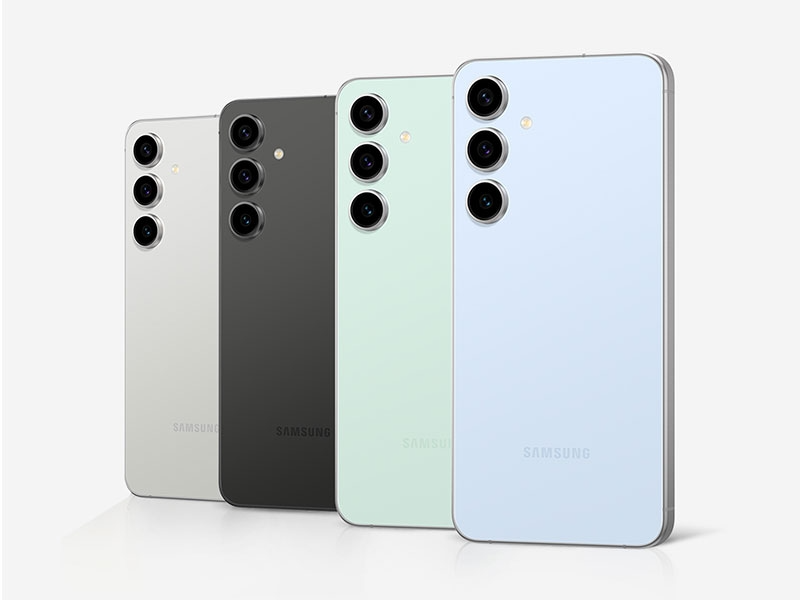
4. Samsung Galaxy S24 FE: Samsung Ecosystem Experience on a Budget
The Galaxy S24 FE is the costliest product on the list. Though it carries an official price tag of $649, it can often be found for less than $500.
The handset delivers almost everything you can expect from the expensive mainline Galaxy S series phones from Samsung, but at a lower price. You get to experience the whole suite of Samsung ecosystem features.
The device comes with all the essential features, such as a 6.7-inch 120Hz display, a 4,700mAh battery, a 50MP (wide) + 8MP (3x telephoto) + 12MP (ultrawide) triple camera setup, IP68 dust and water resistance, and an Exynos 2400e chip. Samsung even promises 7 years of major Android updates.
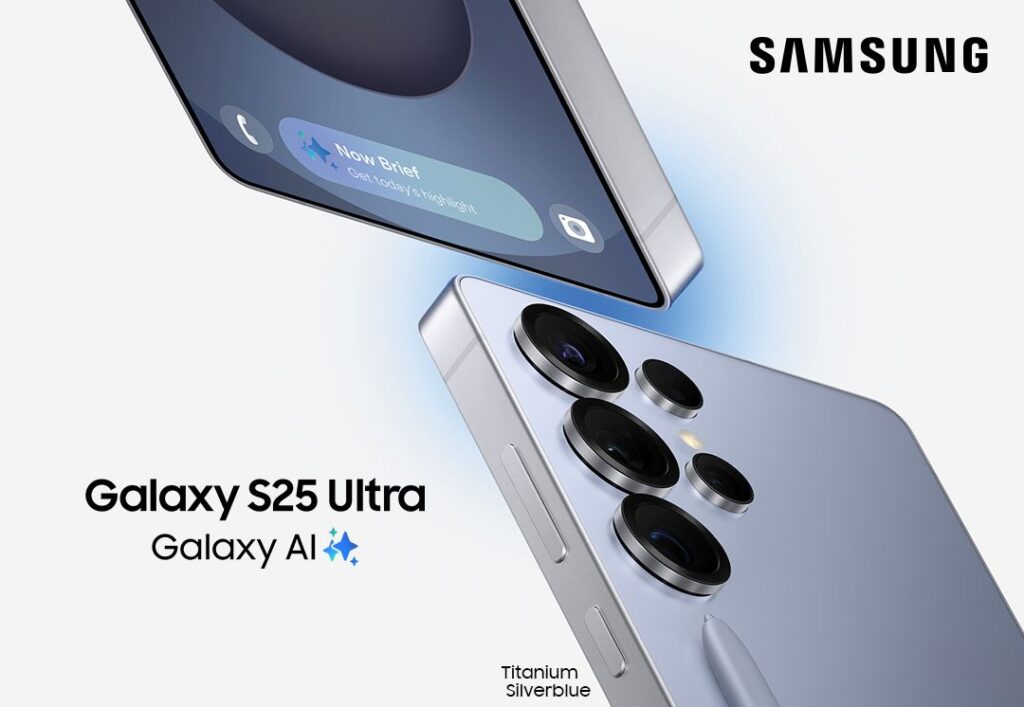
Since launch, Samsung has been offering the Galaxy S25 Ultra in three shades: Titanium Black, Titanium Whitesilver, and Titanium Silverblue. Now, it has announced a new offer for those interested in buying the Silverblue color variant. The new offer allows users to avail it with Rs 12,000 cashback.
According to Samsung, the Galaxy S25 Ultra Titanium Silverblue edition is available with Rs 12,000 instant cashback until April 30 in India. To recall, the S25 Ultra was priced at Rs 1,29,999 for the 12GB+256GB version at launch.
Apart from the Rs 12,000 cashback, buyers can also benefit from no-cost EMI starting at Rs 3,278. With the new cashback, the net effective price of the device has been reduced to Rs 1,17,999.
All the above S25 Ultra color variants are available through online and offline channels across the country. Buyers can avail the device in special shades, such as Titanium Pinkgold, Titanium Jeblack, and Titanium Jadegreen through Samsung India’s website.
Please Note: When you buy something using the links in our articles, we may earn a small commission at no cost to you.
Samsung Galaxy S25 Ultra key specifications
The Galaxy S25 Ultra has a 6.9-inch AMOLED display that offers a 120Hz refresh rate, a 2K resolution, and 2600 nits of peak brightness. Under the hood, it features the Snapdragon 8 Elite for Galaxy chipset, 12GB of RAM, up to 1TB of storage, and a 5,000mAh battery with 45W wired and 15W wireless charging.
The S25 Ultra has a 12-megapixel front camera. Its back panel has a 200-megapixel main camera with OIS, a 12-megapixel ultra-wide lens, a 10-megapixel telephoto camera with 3x optical zoom, and an OIS-enabled 50-megapixel periscope telephoto camera with 5x optical zoom. The phone comes preloaded with the One UI 7-based Android 15.
For more daily updates, please visit our News Section.
The Infinix Note 50s is all set to go official on April 18 in India. This will be the second Note 50 lineup phone to hit the Indian market after the Note 50x that debuted last month. Recent teasers have focused on its slim design and curved AMOLED screen. Today, the brand has confirmed a few more details about its chipset, battery capacity, and primary camera.
Infinix Note 50s key details confirmed
Infinix Note 50s has a 64MP main camera
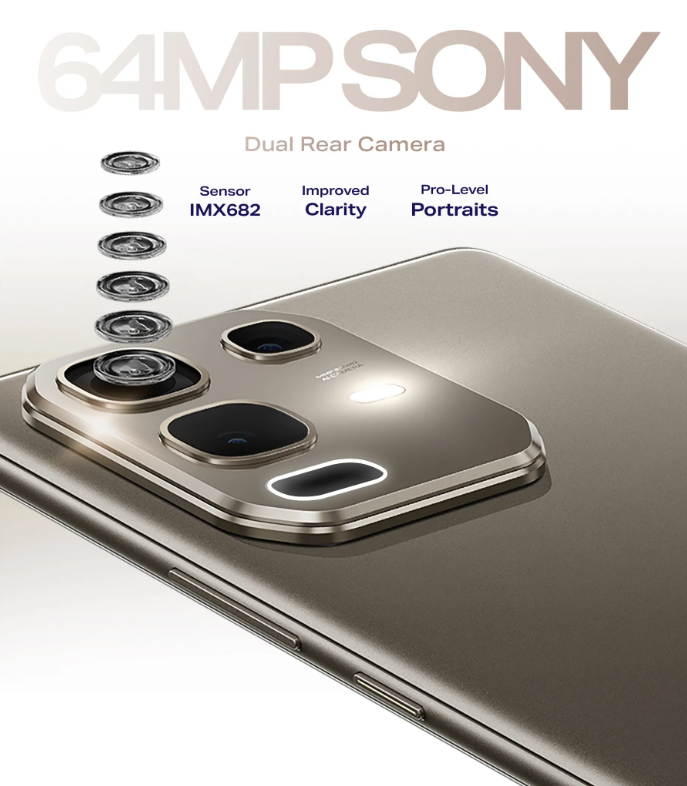
The official teaser available on the Infinix Note 50s’ Flipkart page reveals that it will feature a dual-camera setup headlined by a 64-megapixel Sony IMX682 snapper. The handset will have support for 30fps 4K video recording.
According to Infinix, the Note 50s 5G will come equipped with the Dimensity 7300 Ultimate. This is the same chip that powers the Note 50x. Talking about the capability of the chip, the company claims that it can achieve a 700K+ AnTuTu score and support up to 90fps gaming.
The brand has also revealed that the Note 50s will pack a 5,500mAh battery. However, there is no information about the fast charging capabilities of the device.
On the front, the Note 50s will feature a 144Hz curved-edge AMOLED panel. When it comes to durability, the Infinix Note 50s will offer users features like Gorilla Glass 5 protection for the display, a MIL-STD-810-certified build, and IP64-rated dust and water resistance. It will sport a slim profile of 7.6mm and claims to be India’s slimmest 144Hz display phone.
The Note 50s will arrive in three shades: Marine Drift Blue (vegan leather), Titanium Grey (metallic finish), and Burgundy Red (metallic finish). Among these, the blue edition is said to be equipped with so-called Scent-Tech technology that emits a long-lasting fragrance.
For more daily updates, please visit our News Section.
I review a lot of tech, but this is the first time I’m actually reviewing a microphone. And to be honest, I didn’t expect it to be this interesting. The Maono DM40 Pro is Maono’s latest foray into the content creator and gaming space—a market saturated with flashy RGB designs and buzzword-heavy features.
What makes the DM40 Pro stand out, though, isn’t just the RGB or the gaming aesthetics. It’s the smart mix of wireless connectivity, software features, and surprisingly clean audio performance that punches far above its price.
What’s in the Box
Unboxing the DM40 Pro is refreshingly straightforward. Here’s what you get in the box:
The microphone itself, already mounted in its shock mount and built-in pop filter
A sturdy desktop stand
A USB-C to USB-A cable for wired connection or charging
A compact USB-C wireless receiver that tucks neatly into the back of the mic when not in use
It’s a plug-and-play setup that takes less than a minute to get going.
Design & Controls
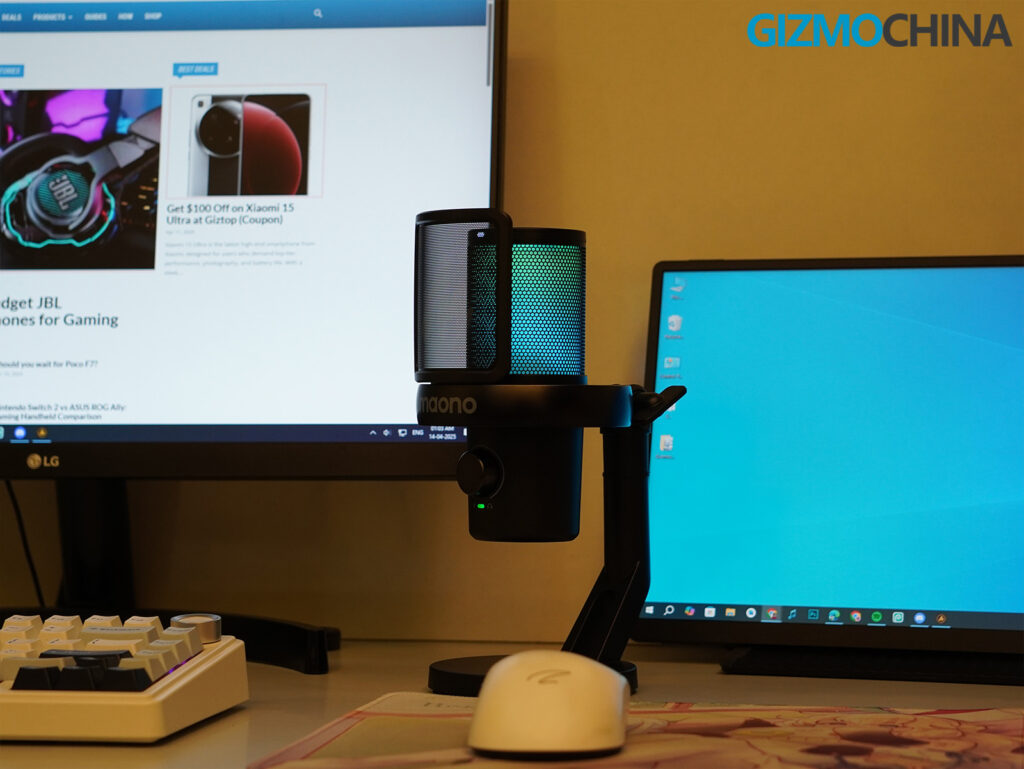
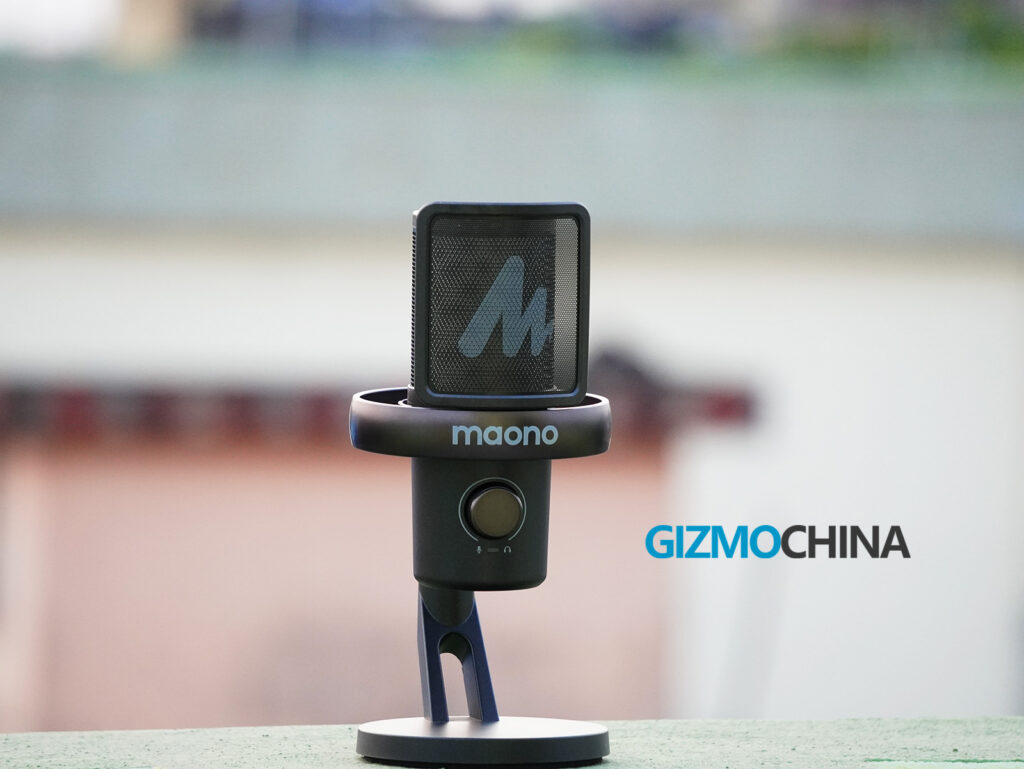
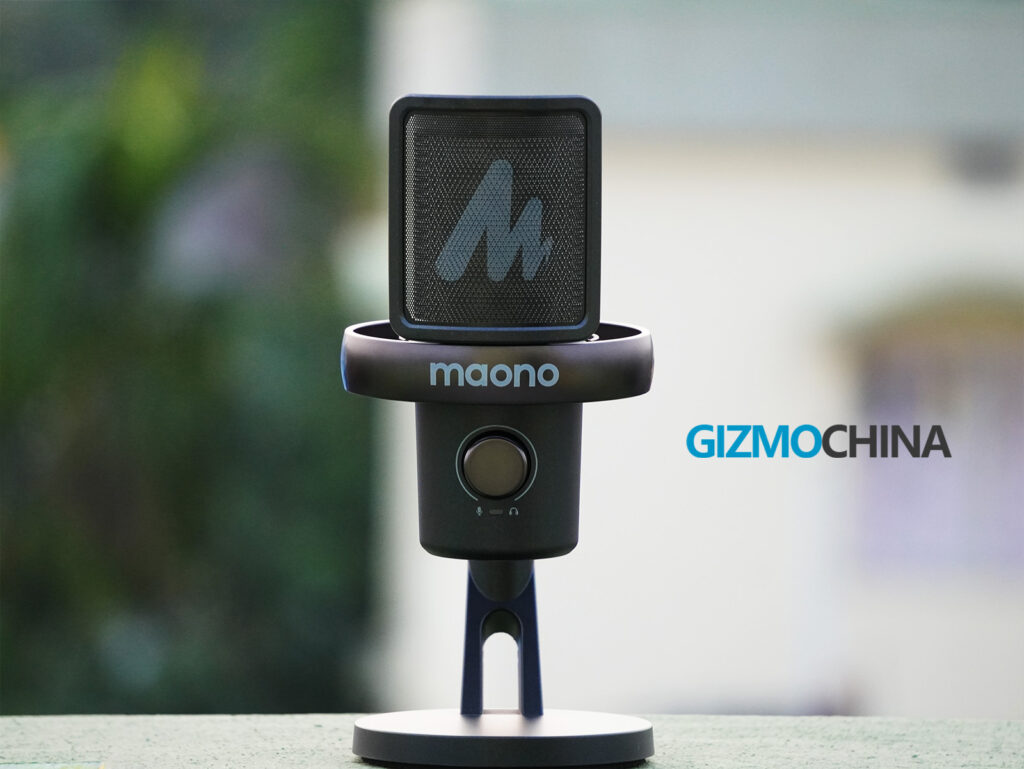
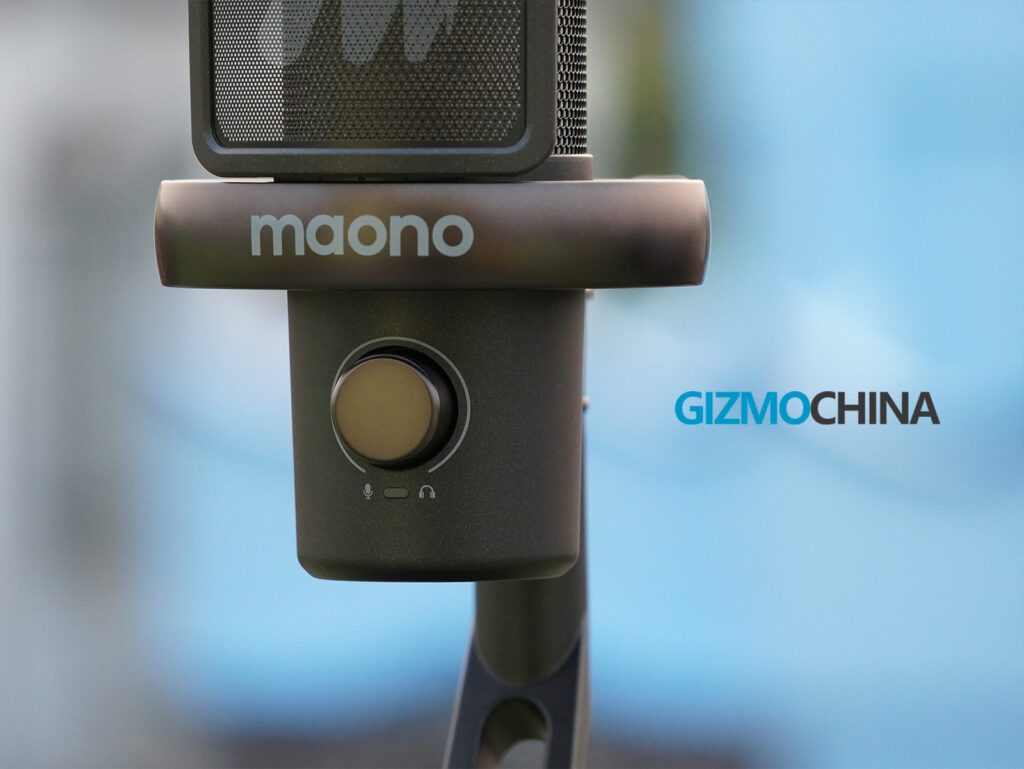
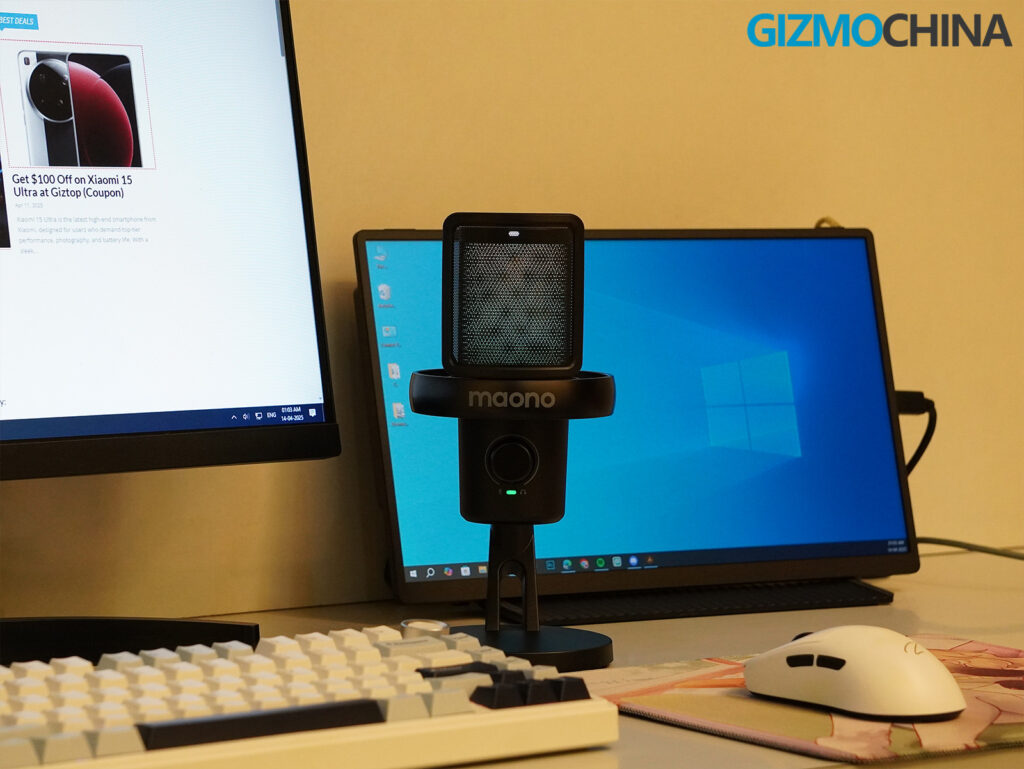
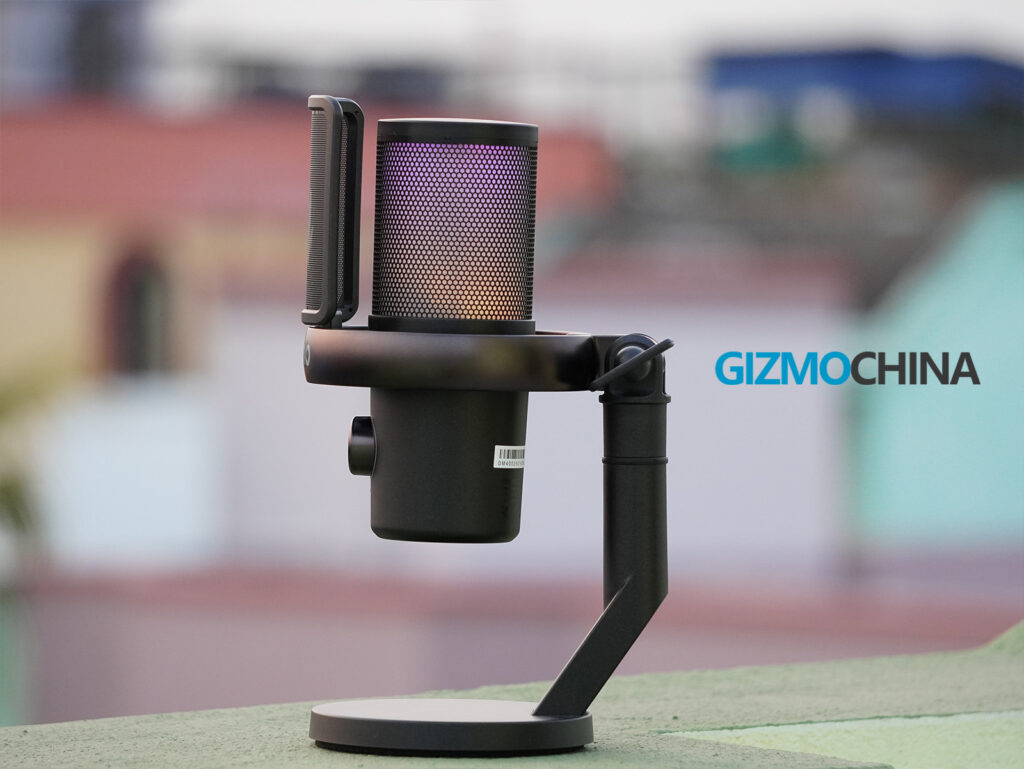
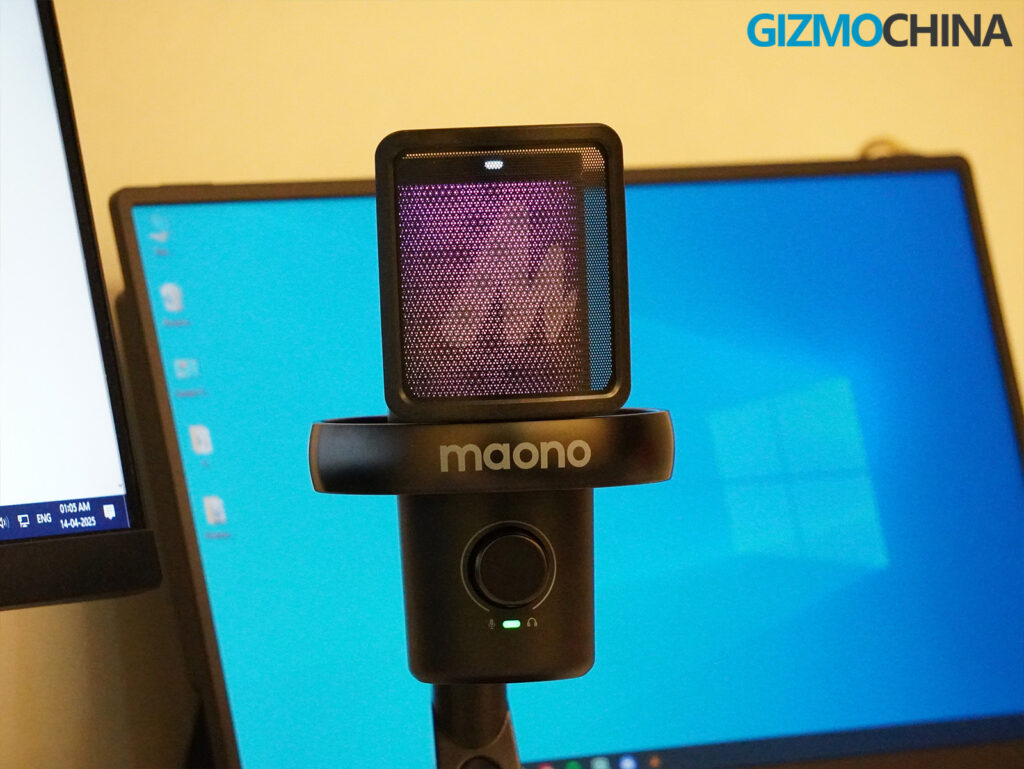
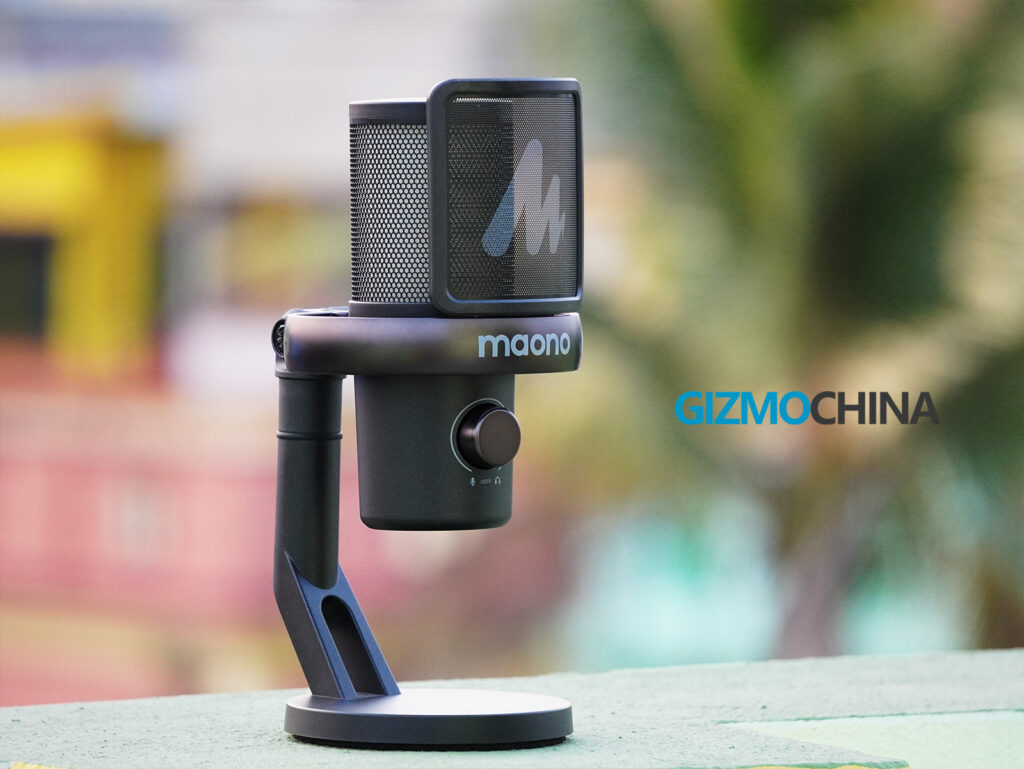
The DM40 Pro has a design that feels modern without trying too hard. I tested the matte black version, which has just enough gamer edge with its honeycomb grille and subtle RGB glow without looking like something out of a sci-fi movie.
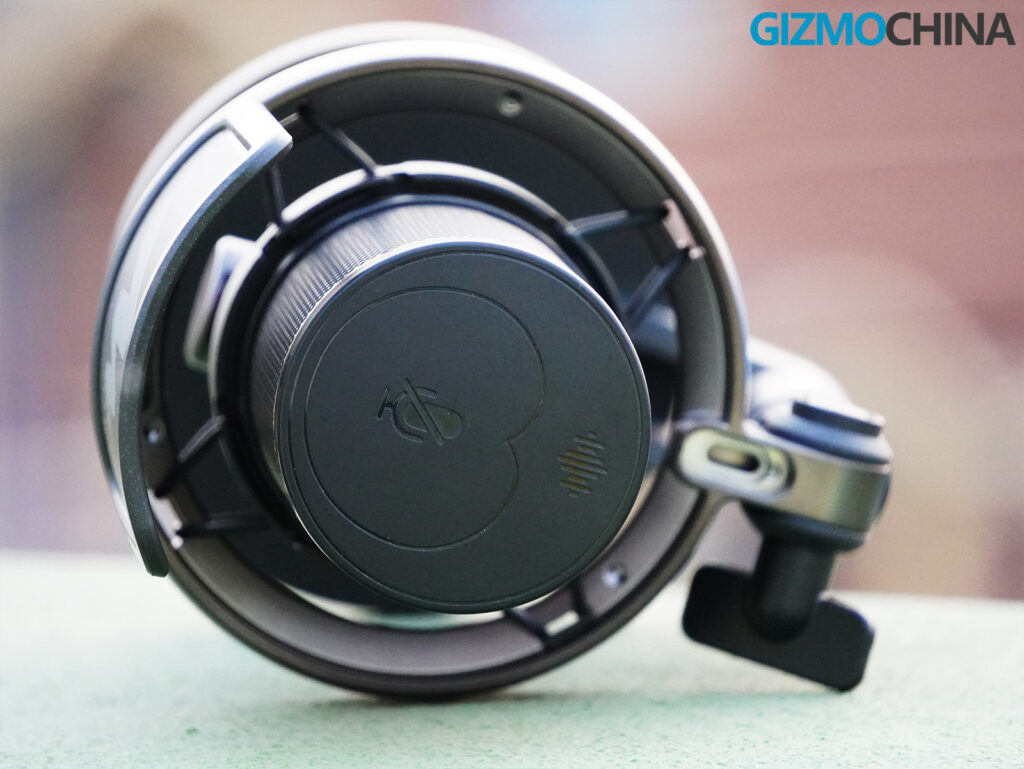
It’s compact and clean, with no garish branding or unnecessary bulk. The top portion of the grille doubles as a capacitive mute button—a simple tap mutes the mic and lights up a red indicator, which is perfect during calls or live streams when you need instant silence without fumbling for buttons.
Opposite the capacitive mute button, there’s another capacitive control dedicated to noise suppression. By default, it cycles through three levels of noise cancellation—each press increases the level of suppression. You can also customize the noise cancellation settings to suit your preferences.
Below the grille sits a gain knob that can also control headphone volume when pressed—it’s functional, though it has a bit of a wobbly feel I wasn’t expecting. On the bottom, you’ll find the USB-C port, a 3.5mm headphone jack for zero-latency monitoring, a power/RGB toggle button, and a dedicated button for toggling the headphone feature.
The base stand is stable enough for desktop use, but the mic also unscrews easily if you want to mount it on an arm. There’s a small compartment on top of the mic stand joint where you can securely place the USB-C receiver while carrying it around. Overall, it’s a compact, user-friendly build that makes a strong first impression.
Features & Connectivity
What sets the DM40 Pro apart is its dual-mode functionality. You can use it as a traditional wired USB mic or cut the cord entirely with the included 2.4GHz wireless receiver. I used both modes extensively, and honestly, I kept going back to wireless. The freedom to move the mic anywhere on my desk or even carry it to a different room without dealing with cables is liberating. Latency is negligible—Maono claims 0.02ms, and I couldn’t detect any noticeable lag during voice chat or recordings.
Battery life is outstanding. I averaged around 65-70 hours on a full charge, which meant I didn’t need to think about plugging it in for days. Even better, you can use it while charging. There’s no battery indicator on the mic or in the software, which is a bit of a miss, but the runtime is long enough that I never hit empty during use.
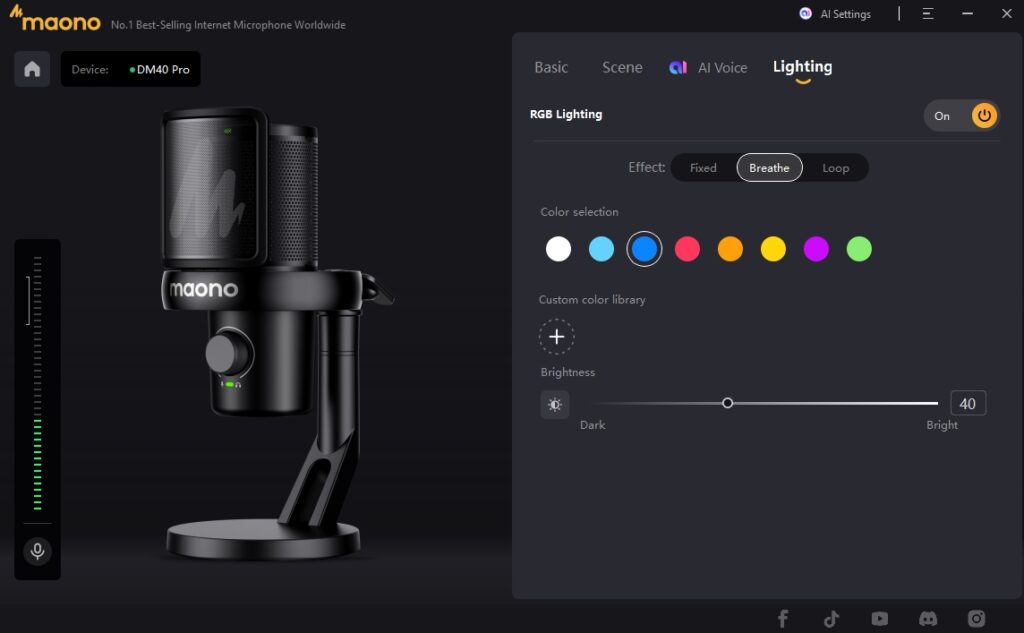
Then, there’s the RGB lighting. It’s subtle but stylish, with multiple color modes you can toggle via a button or customize in the software. If you’re not into RGB, you can shut it off completely. But if you are, it’s one of the best-implemented lighting setups I’ve seen in a sub-$100 mic.
Software
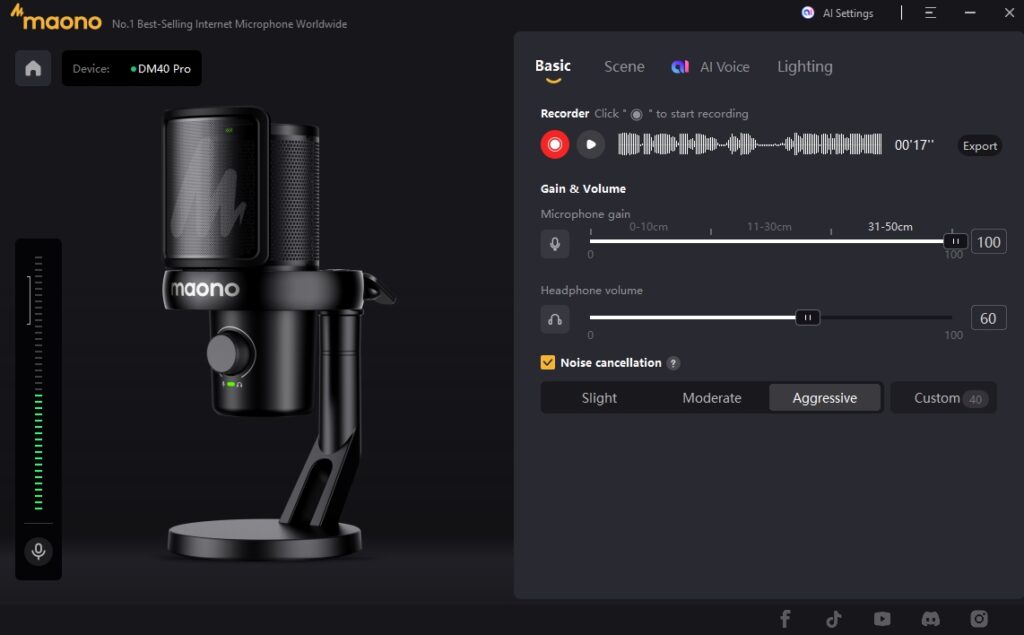
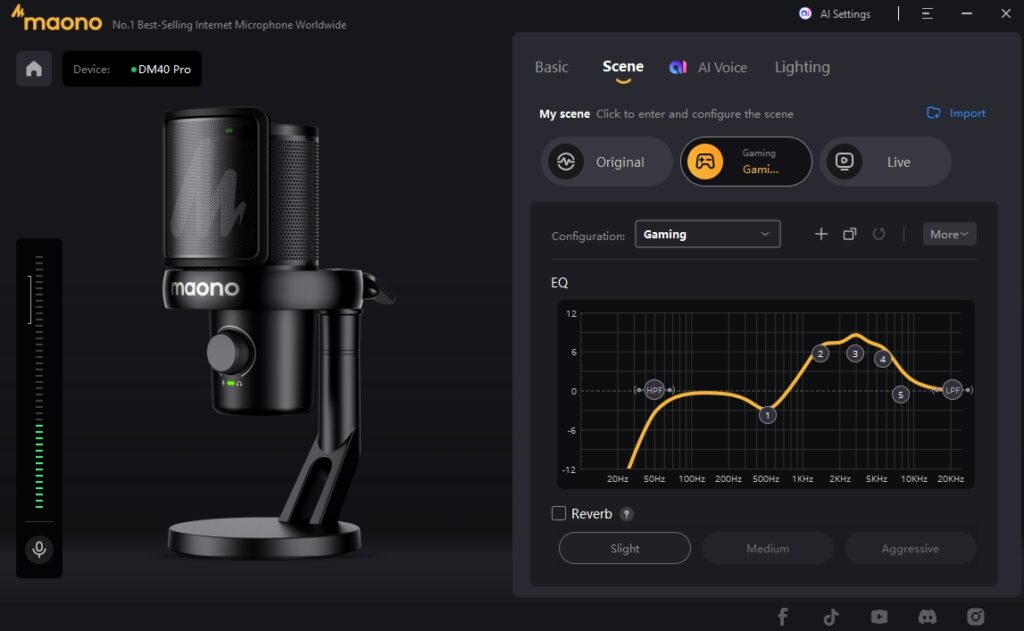
Install Maono Link, and the DM40 Pro really opens up. The app is clean, minimal, and surprisingly powerful. You can adjust mic gain, monitor volume, and noise reduction intensity with visual feedback. There’s a 5-band EQ with gaming, live, and original presets, or you can build your own profile from scratch. The reverb controls are basic but fun for creative use.
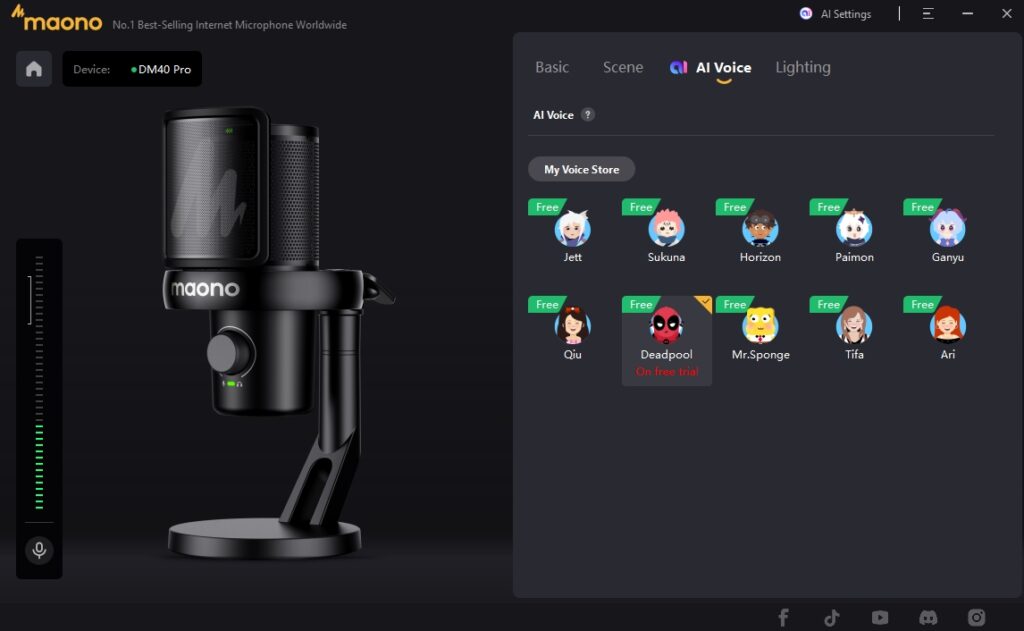
Then there’s the AI voice changer. I went into it skeptical, but Maono’s implementation is better than expected. The software includes 10 presets that radically alter your voice—everything from anime characters to gritty action-hero tones. It’s clearly a novelty feature, but one that might actually be useful for VTubers, streamers, or anyone doing character-based content. The voice changer creates a second virtual audio device, so you can easily route your processed voice into Discord or OBS.
The noise cancellation is another highlight. It’s adjustable from subtle to aggressive, and in my testing, it handled fan hum and background chatter surprisingly well. At moderate levels, it filtered out ambient sound without noticeably affecting my voice. Only at the most aggressive setting did the audio start to sound processed.
You can also control the RGB lighting through the software. It lets you customize lighting effects, switch between modes like breathing or looping, and adjust the brightness levels to your preference.
Audio Quality
The DM40 Pro sounds really, really good for its price. This is a condenser mic with a 16mm capsule and a cardioid pickup pattern, tuned for the voice frequencies that matter. Whether I was recording VO for a Podcast, hopping on a game, or just chatting in Discord, it delivered a clean, full-bodied sound with no harsh edges. There’s a warmth in the mids that gives vocals some character, and the highs are present without being shrill. Background noise is already pretty well controlled even without software filtering, thanks to the mic’s directional pattern and solid shock mount.
Plosives were well-managed, even without an external pop filter. The built-in grille design does a great job here—you can get fairly close to the mic without worrying about distorted ‘P’ sounds or clipping. Though if you’re shouting into it at max gain, some overdrive is expected.
In terms of sibilance, the mic handles ‘S’ and ‘SH’ sounds decently, but it’s not flawless. As you’ll hear in the demo, those frequencies aren’t overly sharp, but there’s definitely room for improvement in how cleanly it smooths out high-end sibilant tones.
The 24-bit/48kHz recording quality might not impress audiophile purists chasing 96kHz+ resolution, but for most creators, this is broadcast-grade clarity. Monitoring through the 3.5mm jack is immediate and clean, and being able to toggle it on and off without diving into menus is appreciated.
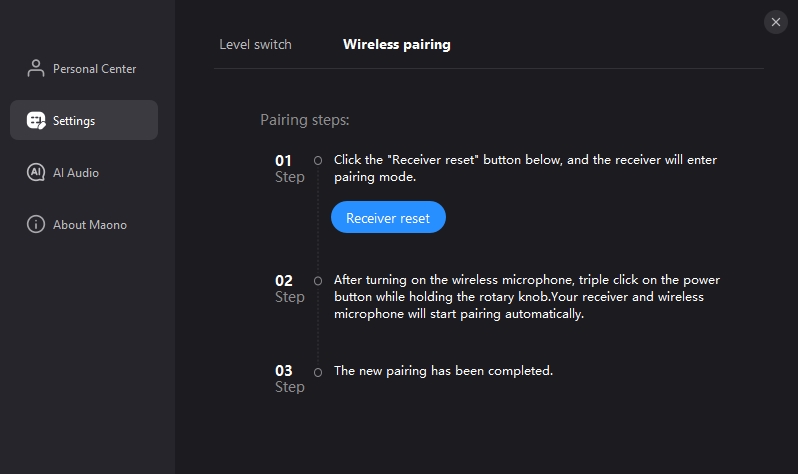
By the way, I ran into an issue a few times where the microphone couldn’t pair properly. The software instructed me to tap and hold the knob, then press the power button three times quickly—but that didn’t fix it. The mic wasn’t working with third-party software either.
Eventually, I discovered a feature in the app called Wireless Pairing. All you need to do is reset the receiver through that and then restart the mic, and it should start working normally. Just sharing this in case you run into the same problem.
Okay, now I’m sharing a few audio demos recorded with this microphone.
Maono DM40 Pro Default Settings Audio Test
Maono DM40 Pro Audio Test with Slight Noise Cancellation
Maono DM40 Pro Audio Test with Aggressive Noise Cancellation
Maono DM40 Pro Plosive Test
Maono DM40 Pro Sibilance Test
Verdict
The Maono DM40 Pro feels like a mic designed for the modern content creator—someone who wants excellent sound, wireless freedom, and customization options without breaking the bank. It’s not the flashiest mic on the market, nor is it built like a tank, but it delivers where it counts: sound quality, ease of use, and real utility.
It’s rare that I test a mic this affordable that I’d genuinely recommend to seasoned streamers, gamers, and podcasters alike. But the DM40 Pro pulls it off. If you’re looking for a versatile, wireless mic that won’t wreck your budget, this one should be at the top of your list.
The Maono DM40 Pro is available for $85.99 and can be purchased directly from the official Maono website.
We also recently reviewed the Viltrox AF 25mm F1.7 Air lens, a budget-friendly prime that delivers pro-level results—you can check out the full review as well.
For more daily updates, please visit ourNews Section.
BenQ has launched a new portable projector that aims to redefine casual home entertainment. The GV50 Smart FHD Laser projector is the latest addition to the brand’s popular GV series and is designed to deliver a truly cinematic experience. For those unfamiliar, the GV series is a lineup of portable smart projectors designed for casual home entertainment and on-the-go viewing. Here’s a look at its key specifications, features, and price of the GV50.
BenQ GV50 key specifications
BenQ GV50
The BenQ GV50 combines a sleek, portable design with advanced visual and audio features. Its standout feature is the laser light source that not only boosts brightness but also ensures a lifespan of up to 30,000 hours.
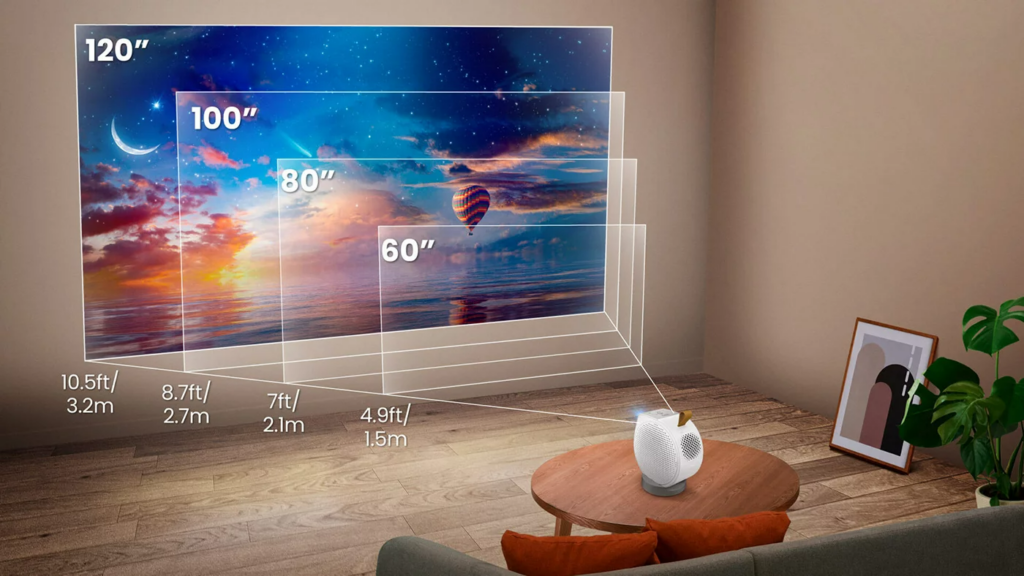
Users can enjoy vibrant 1080p visuals on a massive 120-inch screen, enhanced by BenQ’s CinematicColor technology, HDR support, and 500 ANSI lumens brightness. The built-in 18W 2.1-channel speakers provide deep bass and rich sound, eliminating the need for external audio gear.
BenQ GV50
The BenQ GV50 comes preloaded with Google TV, along with licensed Netflix access for effortless streaming. The device also features a low 22.4ms input lag, USB-C DisplayPort, and power delivery for gaming consoles like the Nintendo Switch. Intelligent autofocus, keystone correction, and obstacle avoidance make setup easy in any room. When it comes to battery life, the BenQ GV50 promises 150 minutes of video playback or 280 minutes of Bluetooth music streaming.
BenQ GV50 price in India, availability
The BenQ GV50 laser projector is available for pre-order exclusively on the BenQ e-store and Amazon. Customers can grab it at a special launch price of Rs 69,990 until April 22. Official sales begin on the same date. The device comes with two years of carry-in warranty.
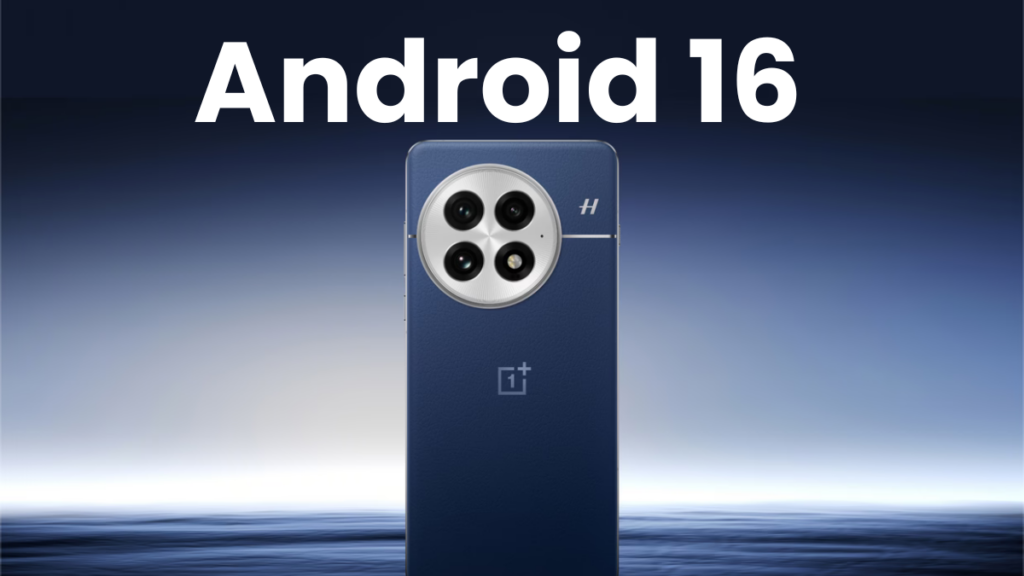
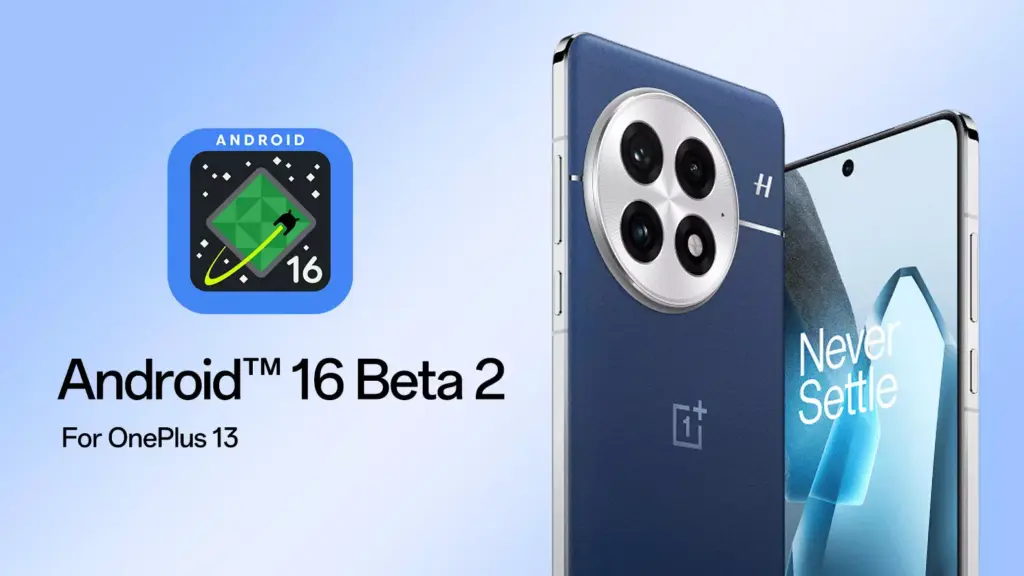
Android 16 is arriving earlier than its usual timeline, and Android brands like Xiaomi and OnePlus have already begun public beta testing of the upcoming OS. OnePlus is, in fact, the first non-Google brand to join the Android 16 beta program. The beta program, though, is currently available for the OnePlus 13.
If you own a OnePlus 13 and are eager to try Android 16 features, here’s how to get it up and running on your device.
How to install Android 16 beta on OnePlus devices
The Android 16 beta is currently available to the OnePlus 13, with Android 16 Beta 2 being the latest available version. The OnePlus 13 didn’t receive Beta 1 and jumped straight to Beta 2.
While it’s exciting to test new features and changes ahead of the stable release, there are some risks involved in it. Beta builds often come with bugs and issues. Some functionalities may not work properly, and you could experience system instability. Also, installing the beta will erase all your data, so make sure to take a complete backup first to avoid data loss.
Known issues in Android 16 Beta 2:
Unable to close the version update pop-up after upgrading to the DPP version.
Font weight settings cannot be adjusted.
Device may restart when answering a call using Bluetooth headsets.
Lag and display errors in the camera viewfinder and thumbnail in certain scenarios.
Blurry or unclear camera viewfinder in some cases.
Camera crashes when switching to Macro mode with the rear camera.
Crashes and lag after enabling Ultra Steady mode.
Display error in the camera viewfinder during video recording in specific scenarios.
Screen may freeze when tapping the accessibility shortcut button on the home screen.
Lag observed when locking the screen.
OnePlus says carrier devices (TMO/VZW) are not compatible with Android 16 Beta 2. Also note that your current software version must be 15.0.0.703 or below to upgrade to Android 16 Beta 2. If you’re on a higher version, you’ll need to downgrade first. OnePlus also recommends charging your device above 30% and keeping at least 4GB of free storage for a smooth upgrade.
Now, let’s explore the methods for installing Android 16 beta.
Method 1: Via Local OTA Update (for EU & IN only)
This method only works for OnePlus users from India or EU countries. NA users should follow the second method instead.
Step 1: Ensure that your important data is backed up (IMPORTANT!).
Step 2: Download the correct ROM update package for your OnePlus 13:
Have you tried Android 16 on your OnePlus 13? Let us know your experience in the comments. Also, do visit our Android 16 section regularly for the latest news and developments.
We use cookies on our website to give you the most relevant experience by remembering your preferences and repeat visits. By clicking “Accept”, you consent to the use of ALL the cookies.
This website uses cookies to improve your experience while you navigate through the website. Out of these, the cookies that are categorized as necessary are stored on your browser as they are essential for the working of basic functionalities of the website. We also use third-party cookies that help us analyze and understand how you use this website. These cookies will be stored in your browser only with your consent. You also have the option to opt-out of these cookies. But opting out of some of these cookies may affect your browsing experience.
Necessary cookies are absolutely essential for the website to function properly. This category only includes cookies that ensures basic functionalities and security features of the website. These cookies do not store any personal information.
Any cookies that may not be particularly necessary for the website to function and is used specifically to collect user personal data via analytics, ads, other embedded contents are termed as non-necessary cookies. It is mandatory to procure user consent prior to running these cookies on your website.