Acer expanded its gaming handheld lineup with the new Nitro Blaze 8 and Nitro Blaze 11. Back in September 2024, the Nitro Blaze 7 launched as a powerful handheld gaming console. But now, the brand is taking things a step further with the Blaze 11. So let’s see how the Nitro Blaze 11 stands out among the competition.
Acer is gearing up to showcase the latest Nitro gaming handhelds during CES 2025. Before getting into the details, there is one notable aspect that makes the Nitro Blaze 11 unique and that is its display. As the name suggests, the Nitro Blaze 11 sports a giant 10.95-inch WQXGA display with a 144Hz refresh rate, 500 nits of peak brightness, 10 point touch panel, and AMD FidelityFX Super Resolution.
At this size, it is more akin to the iPad, which has always been a popular choice for mobile gamers. Most gaming handhelds in the market right now usually offer a display size of around 7 to 8 inches. This includes the Steam Deck (7.4-inch), Nintendo Switch (7-inch), and ROG Ally X (7-inch), among other options. A larger screen helps offer a more immersive experience even in a portable form factor.
2. Performance
The processors that power these new handheld gaming consoles determine their battery life and even the gaming experience. Acer does not disappoint with the AMD Ryzen 7 8840HS, which powers the Nitro Blaze 11. This is a powerful mobile processor that also powers laptops as well.
It is paired with the Radeon 780M, which is an RDNA 3 based GPU. You also get 16GB of RAM and up to 2TB of SSD storage. So apart from a tall display, you’re also getting near laptop level performance on the Nitro Blaze 11. A sizeable 55Wh battery pack powers the handheld console, which supports 100W USB Type-C charging.
3. What else is special?
This is a Windows gaming handheld that runs on Windows 11 Home. Buying this console also gets you access to Free PC Xbox Game Pass for 3 months. There’s a bunch of physical buttons as well as hall effect sticks and hall effect triggers, which are resistant to stick drift and other issues that typically plagues a controller. For audio, users get a twin 2W speaker setup. Just like the Nintendo Switch, the Nitro Blaze 11 brings detachable controllers and a front camera for video calls and streaming enthusiasts.
Samsung is gearing up to expand its mid-range lineup with two new phones – the Galaxy A56 and Galaxy A36. Samsung’s support page for both devices (with model number ‘SM-A566B/DS’ and ‘SM-A366B/DS’) are now live in France.
It indicates that Samsung is going to launch the devices soon in the country, and probably, in other regions like the US and India as well. The ‘DS’ in the model name could refer to dual-SIM support.
Galaxy A56 support page
While the support pages don’t reveal much about the devices, they have already appeared on benchmark and certification platforms revealing some key details.
Galaxy A56 & A36: here’s what to expect
The Galaxy A56 could come with an interesting redesign. Previously revealed CAD renders show that the phone will come with a vertical pill-shaped rear-camera design, something unique in the recent offerings from Samsung as well as its competitors. On the front, the phone packs a flat display that apparently has slightly slimmer bezels than the Galaxy A55. The ‘Key Island’ is also present on the top right of the phone.
According to the Geekbench listing, the phone comes with Android 15. So you can expect One UI 7. Speaking of hardware, it packs the Exynos 1580 chip, the successor of the Exynos 1480 that powers the Galaxy A55. As for the performance improvement, the new chip is built on a new node, with ARMv9 CPU cores and double the GPU hardware. Specifically, the chip is fabbed on Samsung’s third-generation 4nm EUV FinFET process.
Samsung has shifted to a three-cluster design for the CPU – one prime Cortex-A720 core (2.9GHz), three big A720 cores (2.6GHz) and four A520 (1.95GHz). This alone represents a major performance boost compared to the 1480, which used ARMv8 cores. While the Galaxy A55 scores around 1150 and 3400 in Geekbench, the A56 scored 1341 and 3846.
Other improvements include faster (at least on paper) 45W charging, up from 25W of the predecessor.
Galaxy A36 support page
As for the Galaxy A36, previous reports hint at a similar redesign for the camera module. The phone is also rumored to be slightly smaller than its predecessor, with a 6.64″ display down from 6.6″. According to The Tech Outlook, this phone could be powered by Qualcomm’s Snapdragon 6 Gen 3 or Snapdragon 7s Gen 2 chipset. it should offer power efficiency improvement over the Exynos 1380 of its predecessor.
Overall, you should expect a new design and improved performance and power efficiency from the new A series devices.
LG has just debuted two new products from its xboom lineup of audio products. The models include the new xboom by will.i.am Speakers and xboom Buds. As the name suggests, the brand is collaborating with the renowned pop artist will.i.am to announce this lineup.
LG xboom by will.i.am Speakers
Ahead of the CES 2025 event, LG unveiled the xboom by will.i.am, which is a new line of audio products. The first of the lot is the xboom speakers, which brings audio tuned by will.i.am and also features LG’s signature Xboom sound. The lineup of speakers includes multiple models like the xboom Bounce, Grab, and Stage 301. These bring innovative features that are powered by AI.
LG xboom Grab by will.i.am speakers
The first is AI Sound which can analyze audio tracks and seamlessly switch between sound profiles to accentuate the melody, rhythm, or vocals. Thanks to AI Lighting, the speakers’ house bar lights that pulse in multicolored sync with audio playing. AI Calibration lets the speakers recognise the surrounding environment to tune the audio. The xboom Bounce is a portable model that features top firing passive radiators, dual tweeters, a woofer, and an IP67 rating for water and dust resistance.
LG xboom Stage 301
On a single full charging, it can last for up to 30 hours. Meanwhile, the xboom Grab is a slightly cutdown version of the Bounce and is basically a travel friendly Bluetooth speakers. Despite its compact size, LG managed to pack dual passive radiators for a more dynamic bass. Once again you get IP67 rating but with military grade rating on its body. These speakers can also last for up to 20 hours.
Lastly, there is the xboom Stage 301 party speaker that is perfect for parties or other social gatherings. It has a 6.5-inch woofer and dual 2.5-inch midrange drivers. There is also IPX4 water resistance, and a replaceable battery, which can offer up to 11 hours of battery life. This variant is more in line with LG’s 2023 line of XBOOM XL7S & XL5S portable party speakers.
xboom Buds
Alongside these Bluetooth speakers, the South Korean brand also announced the xboom Buds. It is a pair of in-ear truly wireless earbuds with a hook design for a better fit in your ear. LG’s new xboom Buds houses graphene drivers along with Active Noise Cancellation (ANC) and support for LE Audio Auracast.
LG xboom Buds
The last feature allows users to listen to open audio streams in public as well as access to multi device connectivity support. On a single full charge, the LG xboom Buds offer up to 30 hours of audio playback. For physically active users, the earbuds offer an IPX4 rating for water and dust resistance.
Availability
LG has yet to confirm the pricing and availability of these new audio products. However, we can expect the hearables to debut later this year. The brand will showcase the xboom by will.i.am series at CES 2025, which kicks off on 9th January 2025.
Dell just shared a massive announcement in the form of a fresh rebranding. But this change isn’t limited to just a few models, rather, the brand’s entire lineup of laptops is getting revamped. Dell is bringing a lot of changes to its iconic and popular devices. So here’s a quick explanation of what’s new.
One of the reasons for this massive change across the Dell family of laptops is to streamline the entire lineup while also simplifying them. The brand’s Latitude and Inspiron series have been iconic for years alongside the XPS series of premium notebooks. But the new shift would help make their price category more apparent at a single glance.
A great example of this is the Pro and Premium variants. The ‘Dell Pro’ series of laptops are basically the older Latitude family, while the ‘Dell Premium’ is a rebadged version of the XPS line. Further expanding on this, the Dell Pro lineup will now include devices with the Latitude name through Dell Pro Plus and even Dell Pro Premium products. Notably, these changes are even including the company’s Alienware series of gaming notebooks.
So to make things clear, Dell isn’t launching new products and is just revamping the existing lineup. You could even call this a simple refresh or remake of their existing branding.
2. Some of these sound familiar
Dell Pro Premium Laptops 13-inch and 14-inch variants
While some of the new names are more streamlined, a few are quite familiar while others are a bit more confusing. So let me break it down for you:
XPS – Dell Premium
Inspiron Plus – Dell Plus
Inspiron – Dell (base)
Latitude – Dell Pro (Pro Plus, Pro Premium)
Precision – Dell Pro Max (Pro Max Plus, Pro Max Premium)
Expanding on this, the Pro Max series sounds like an Apple branding move but basically signifies its commercial variants of the Precision series. This will replace the older 3000, 5000, and 7000 series to make better sense to the customers. Similarly, the 2-in-1 series of laptops are now a part of the Dell Plus series. The “Premium” moniker will simply showcase the brand’s top end models with either the most powerful specs or ultrabooks.
3. And then there’s Alienware
Alienware Area 51 Desktop PC
Even the Alienware family are also a part of the revamp. These changes include both the gaming laptop and even the gaming desktop PCs. Looking at the notebooks first, the Alienware Area-51 with the Alienware Area-51 16-inch and 18-inch laptops. With this announcement, it is clear that Dell is looking to take the gaming PC market by storm. These will pack cutting edge specs and features like the Intel Core Ultra 9 275HX processor, up to 64GB of RAM, and a max storage capacity of a whopping 12TB.
‘Alienware Area-51’ branding has been expanded to include desktop PCs as well. The first from this lineup is the new flagship gaming PC, which is a full sized 90L tower that brings next gen hardware like Nvidia’s RTX 5000 series of GPUs and Intel Core Ultra 9 285K processor. All of these hefty specs also draw a large amount of power with a near 900W power draw.
The Belkin PowerGrip, designed for iPhones, is blurring the lines between casual smartphone snapshots and professional-level photography. This innovative accessory, which went official during CES 2025, seamlessly blends power and ergonomics, transforming your iPhone into a camera that’s both comfortable to hold and ready to capture stunning images.
1. Belkin PowerGrip elevates photography experience on an iPhone
Bekin PowerGrip
Imagine a power bank that not only charges your iPhone but also enhances your photography experience. That’s precisely what the Belkin PowerGrip delivers. This MagSafe-compatible device features a unique DSLR-style grip, providing a comfortable and secure hold reminiscent of traditional cameras. This clever design addresses a common frustration with smartphone photography: the awkwardness of holding a thin, flat device for extended periods. The PowerGrip’s ergonomic grip ensures a steadier hold, reducing camera shake and resulting in sharper images.
But the PowerGrip offers more than just a comfortable grip. It houses a powerful 10,000mAh battery, providing ample power to keep your iPhone charged throughout your photography adventures. The 7.5W MagSafe wireless charging ensures effortless power delivery, while the inclusion of USB-C ports allows you to charge other devices simultaneously. And with a built-in retractable USB-C cord, you’ll never have to worry about forgetting your charging cable.
One of the major features of the PowerGrip is its physical shutter button. Connected via Bluetooth, this button provides a tactile and responsive shooting experience, eliminating the need to rely on the on-screen controls or the often-fiddly volume buttons. This seemingly small addition significantly enhances the overall photography experience, making it feel more akin to using a dedicated camera.
2. PowerGrip vs. Dedicated Photography Kits for Xiaomi 14 Ultra and Vivo X100 Ultra
Xiaomi 14 Ulra Photography Kit
While smartphone manufacturers like Xiaomi and Vivo offer dedicated photography kits with external lenses and filters, the Belkin PowerGrip takes a different approach. It prioritizes ergonomics, extended battery life, and ease of use, making it a versatile tool for both casual photographers and enthusiasts.
The Xiaomi 14 Ultra and Vivo X100 Ultra kits, with their 67mm adapter rings, cater to those seeking advanced creative control with interchangeable lenses. However, this comes with the added bulk and inconvenience of carrying extra equipment. The PowerGrip, on the other hand, offers a streamlined and portable solution.
Unlike the Xiaomi and Vivo kits designed for specific phone models, the PowerGrip is compatible with any MagSafe-enabled iPhone. This broader compatibility makes it a more accessible and future-proof option for a wider range of users.
SmallRig FilMov Vivo X100 Ultra Photography Kit
The PowerGrip may work with any Android phone that supports wireless charging and comes with a compatible MagSafe charging case. However, there is no clarity on it from the brand.
The Belkin PowerGrip is more than just a power bank; it’s a game changer for iPhone photography. Its ergonomic grip, physical shutter button, and extended battery life elevate the mobile photography experience, making it more comfortable, convenient, and enjoyable. Whether you’re a casual photographer or a seasoned enthusiast, the PowerGrip is a valuable accessory that unlocks the true potential of your iPhone camera.
3. Belkin PowerGrip: Price and Availability
Belkin PowerGrip
The Belkin PowerGrip will be available in a vibrant array of colors to suit your personal style, including Powder Blue, Sandbox, Fresh Yellow, Pepper, and Lavender. While the exact price is yet to be announced, Belkin has indicated that the PowerGrip will be available for purchase starting in May 2025.
Amazfit, a brand owned by Zepp Health, is known for its smartwatches. The company used to offer exciting products at affordable prices.
However, the brand’s product lineup got complicated in recent years with many more models and price hikes. This along with increased competition resulted in the company losing its market share.
The brand started correcting itself a year ago by minimizing its product portfolio. The Amazfit Active was the first watch beginning this new chapter for the brand.
Now, at CES 2025, this wearable gets a successor. The newer model improves upon its predecessor by keeping the price even lower.
The Amazfit Active 2 costs only $100 and brings many meaningful changes. It comes with a circular dial, unlike the Apple Watch-lookalike original which was priced at $150 at launch. It essentially replaces the older GTR series.
Let’s go through what makes this smartwatch a compelling option in the budget category.
The Amazfit Active 2 sports a circular dial mimicking classic watches. It has a stainless steel bezel with hour and minute markings.
The wearable comes in two flavors: Standard ($100) and Premium ($130). The former is paired with a leather strap and a sapphire glass. Whereas the latter arrives with a silicone strap and a tempered glass.
The watch flaunts a 1.32-inch AMOLED display with a peak brightness level of 2000 nits. The screen offers a resolution of 466 x 466 pixels and 353 PPI.
It has two buttons, a microphone, and a speaker. It is water resistant up to 5 ATM.
2. Packed with Sensors
The Amazfit Active 2 is equipped with the company’s BioTracker 6.0 PPG biometric sensor. This sensor is found inside the more expensive T-Rex 3 rugged smartwatch.
The sensor stack of the wearable includes accelerometer, gyroscope, compass, altimeter, ambient light, and temperature. It also supports 5 satellite positioning systems (GNSS).
3. Plethora of Sports and Health Features
The Amazfit Active 2 supports 164 sports modes. Users can create training templates and customize interval training. It also offers turn-by-turn navigation for outdoor activities.
The wearable can be paired with other peripheral workout devices, like heart rate belt, running power meter, cycling power meter, cycling speedometer, and cycling cadence meter.
Further, the data can be synchronized with third-party fitness apps, such as Strava, Adidas Running, TrainingPeaks, Komoot, Relive, Google Fit, and Apple Health.
Common health features offered by the watch include monitoring of heart-rate, blood oxygen level, temperature, stress, and sleep.
4. Convenient Lifestyle Features
The Amazfit Active 2 is compatible with both Android and iOS. It pairs via the Zepp App over Bluetooth 5.2.
It has all the essential features, such as app notifications, call alerts, camera control, weather, music playback control, voice memos, and more. There’s also support for Zepp Flow AI-powered voice control in select regions.
In some regions, the wearable also offers support for contactless payments via Zepp Pay.
5. Exceptional Battery Life
Despite packing a ton of features, the Amazfit Actice 2 is rated to last for up to 10 days under typical usage scenario. Even under heavy usage, it is touted to last for up to 5 days.
The watch houses a 270mAh battery and charges via a magnetic charger.
Nothing is rumored to be working on three new smartphones for launch in 2025. The flagship model of the line will unsurprisingly be the Phone (3), while the Phone (3a) and (3a) Plus will target the mid-range and premium mid-range territory.
Now, one among these three smartphones has surfaced on BIS (Bureau of Indian Standards) and UL Demko certifications. It’s not clear yet which phone the model number belongs to, but the 91Mobiles report suggests it could be the Phone (3a) or the Nothing Phone (3a) Plus.
New Nothing phone secures BIS, UL Demko certifications
The BIS listing, as usual, reveals little about the phone other than its model number and approval for launch in India. However, the sighting on UL Demko shows that the phone has a 4290mAh battery capacity. This might be the rated capacity, but Nothing will likely advertise it as 5000mAh.
According to reports, the Nothing Phone (3a) series will introduce some significant upgrades. The Nothing Phone (3a) is expected to include a telephoto camera, while the Plus model could take it a step further with a periscope telephoto lens. This would be a first for Nothing’s mid-range lineup. Both models are also rumored to support eSIM technology.
Additionally, the series might see a switch from MediaTek to Qualcomm. Both the Phone (3a) and (3a) Plus are expected to be powered by the Snapdragon 7s Gen 3 chipset, which should offer better performance and efficiency compared to the previous generation.
Both the Nothing Phone (2a) and (2a) Plus are currently positioned as mid-range devices priced under ₹30,000 in India. If Nothing maintains this strategy, we can expect the upcoming models to target a similar price bracket.
While the certification listings provide early insight into the upcoming devices, more details are needed to confirm the full specifications and features of the Nothing Phone (3a) series.
OnePlus has recently launched the OnePlus Ace 5 series of smartphones in China. Before that, the brand unveiled the OnePlus 13 in October 2024 for the home market. A new leak, courtesy of tipster Digital Chat Station, reveals the existence of a new compact-sized OnePlus flagship. Although the tipster has not confirmed the device’s moniker, he believes that it could be the OnePlus 13 Mini or OnePlus 13T.
OnePlus 13 Mini / OnePlus 13T in the works
Previous reports suggested that OnePlus is developing a compact flagship phone, which was initially rumoured to belong to the Ace 5 series. However, a new leak from Digital Chat Station, who is known for reliable leaks, indicates that this mysterious device is internally referred to as part of the numbered series. Given its high-end positioning and compact size, DCS speculates that the phone could debut as the OnePlus 13T or perhaps the OnePlus 13 Mini, reflecting its “mini” form factor.
OnePlus 13 Mini / OnePlus 13T leaked specifications
According to the tipster, the OnePlus 13 Mini has a 6.31-inch LTPO OLED with narrow bezels on all four sides. The screen will have a 1.5K resolution and a short-focus in-screen fingerprint sensor.
The rear camera setup may include a 50-megapixel Sony IMX906 main camera, an 8-megapixel ultra-wide lens, and a 50-megapixel periscope telephoto camera with 3x optical zoom. However, the tipster is unsure whether the final product will have the same camera specs.
Under the hood, the OnePlus 13 Mini will have the Snapdragon 8 Elite, like the OnePlus 13. The leak also claims it will have a metal middle frame and a glass back. The rest of the specs of the phone remain unclear.
Similarities with Oppo Find X8 Mini
Several reports have also revealed that Oppo may launch the Oppo Find X8 Mini alongside the Find X8 Ultra in March of this year in China. The tipster responded by stating that the OnePlus 13 Mini will differ from the X8 Mini in areas such as photography and chipset.
The Find X8 Mini rumors have revealed that it will feature the Dimensity 9400 chipset. A recent leak claimed that it will have a 50-megapixel IMX9-series main camera and a 50-megapixel high-quality periscope zoom lens in its triple camera setup. The device is also said to support wireless charging. Its other specs include a 6.31-inch LTPO OLED panel with a 1.5K resolution, a metal middle frame, and a glass back.
itel has introduced the itel A80 entry-level smartphone in India, catering to the sub-Rs 7,000 segment with a host of impressive features. Designed to balance style, performance, and affordability, the A80 is an all-rounder for budget-conscious buyers. From a smooth 120Hz refresh rate to IP54 water resistance, the A80 offers advanced features rarely seen in its price range.
itel A80 specifications and features
itel A80
The itel A80 has a sleek and glossy design, measuring just 8.54mm in thickness. Its 6.67-inch HD+ punch-hole display, with a resolution of 720 x 1600 pixels, offers vibrant visuals. The screen supports a 120Hz refresh rate and a maximum brightness of 500 nits, ensuring smooth and bright viewing experiences. The display features a 90 percent screen-to-body ratio and a dynamic bar, enhancing user interaction.
For photography, the A80 is equipped with a 50-megapixel Samsung rear camera featuring Super HDR for detailed and vivid captures, even in low light. It also includes a unique ring notification light and an LED flash. On the front, there is an 8-megapixel camera for clear selfies and video calls.
Powered by the Unisoc T603 octa-core processor, the itel A80 ensures smooth multitasking and efficient performance. The phone includes 4GB RAM, expandable virtually by an additional 4GB, and 128GB of internal storage, which can be expanded up to 2 TB with a microSD card. A 5,000mAh battery with Type-C charging and Ultra Power Saving Mode ensures extended usage on a single charge.
Other features include a side-mounted fingerprint sensor for secure access, face unlock, and Smart Link+ for enhanced connectivity. Running on itel OS 14, based on Android 14 Go, the A80 offers an optimised, user-friendly experience. With an IP54 rating, it also boasts protection against dust and water.
itel A80 price in India, availability
The itel A80 is priced at Rs 6,999 and is available in three colours: Sandstone Black, Glacier White, and Wave Blue. It can be purchased through retail stores across India. The brand is offering a free screen replacement within 100 days of purchase.
Some earlier reports suggested that the Xiaomi 15 Ultra might launch in January 2025. However, Xiaomi executives have refuted these claims, affirming that the 15 Ultra will launch in February, mirroring the schedule of its predecessor, the Xiaomi 14 Ultra. A new leak has now emerged, shedding light on the potential launch timeframe for both China and global markets.
Xiaomi 15 Ultra launch timeframe (rumored)
Xiaomi 15 Ultra’s launch timeframe tipped
According to tipster Experience More, the Xiaomi 15 Ultra is expected to follow a launch strategy similar to that of the Xiaomi 14 Ultra. It may debut domestically in China by late February, with a global unveiling shortly after at the Mobile World Congress (MWC). This suggests a near-simultaneous global release with only a few days separating the two events. To recall, the Xiaomi 14 Ultra was launched in China on Feb. 22 and was introduced to the global market three days later at MWC 2024.
According to a Weibo post by tipster Digital Chat Station, the Xiaomi 15 Ultra has secured all three required certifications in China. One of its key features is the support for the Tiantong satellite calling function as standard for all variants. Additionally, the top-tier variant will support Beidou satellite text messaging. DCS also claims that the 15 Ultra will be unveiled in February.
The Snapdragon 8 Elite chipset will power the Ultra edition, like the Xiaomi 15 and 15 Pro. Its display is expected to be a 2K resolution OLED panel with a refresh rate of up to 120Hz, delivering a smooth and immersive visual experience. The phone will likely house a large 6,000mAh battery, supporting 90W wired fast charging and 50W wireless charging.
Reports have revealed that the Xiaomi 15 Ultra’s quad-camera setup includes a 50-megapixel main sensor with an f/1.63 aperture and a 1-inch LYT-900 CMOS. Complementing this is a 200-megapixel Samsung HP9 periscope telephoto lens, a 50-megapixel telephoto lens, and a 50-megapixel ultra-wide lens. We expect this advanced configuration to provide full-focus macro shooting and a 100x AI fusion zoom, enabling the capture of crisp and detailed images from both close and far distances. For an enhanced photography and videography experience, the Xiaomi 15 Ultra may also come with an external camera handle, designed for better handling and convenience during shooting.
Samsung has officially locked in January 22, 2025, for its Winter Unpacked event, where we’re likely to see the unveiling of the much-anticipated Galaxy S25 lineup.
This year, the event will take place in San Jose, California. The company started sending out invitations on January 6, just as CES 2025 kicks off in Las Vegas.
The event is expected to introduce more than just new phones. Samsung is placing a heavy emphasis on AI and claims this will “change the way Galaxy users interact with the world.”
If the AI enhancements we saw last summer with the Galaxy Z Fold 6 are anything to go by, the new Galaxy S devices might bring even more impressive tools and smarter user experiences.
When and Where to Watch
Samsung’s first Unpacked event for 2025 will be livestreamed on January 22 at 1:00 p.m. ET / 10:00 a.m. PT. You can tune in via the Samsung Newsroom, Samsung.com, or the company’s YouTube channel.
What to Expect – The Galaxy S25 Line
Samsung appears to be staying true to its signature design language for the S25 series, keeping significant visual overhauls off the table. Based on leaked renders, the phones will look familiar but come with refinements that should make them feel noticeably better in hand.
The Galaxy S25 Ultra is expected to sport rounded corners in place of the sharp-edged design of the S24 Ultra. While those sharp corners gave the S24 Ultra a sleek and professional look, they also tended to make extended use uncomfortable. The softer edges of the S25 Ultra should improve grip and overall handling.
The Ultra variant is also expected to continue Samsung’s use of premium materials, featuring a titanium back panel, while the standard S25 and S25+ will likely settle for aluminum frames. As with previous Ultra models, an embedded S Pen is almost certainly returning, housed neatly at the bottom of the device.
Display upgrades are part of the package for the S25 series, especially the Ultra. According to leaks from Ice Universe, the S25 Ultra will pack a 6.86-inch screen – marginally larger than its predecessor’s 6.8 inches.
Despite the larger display, the overall width of the phone will shrink slightly to 77.6mm, compared to the S24 Ultra’s 79mm. Samsung has reportedly shaved the bezels down to just 2.3mm, resulting in a higher screen-to-body ratio that maximizes the viewing experience.
Along with this, the Ultra’s display will reportedly feature second-generation Corning Gorilla Armor Glass, offering improved durability and anti-reflective properties. The core display specs – a 120Hz LTPO panel and 1440p resolution – are expected to remain unchanged.
A major shift might be happening under the hood. All S25 models, including the base and Plus versions, are tipped to ship with Qualcomm’s Snapdragon 8 Elite processor globally, bypassing Samsung’s usual regional split between Snapdragon and Exynos chips.
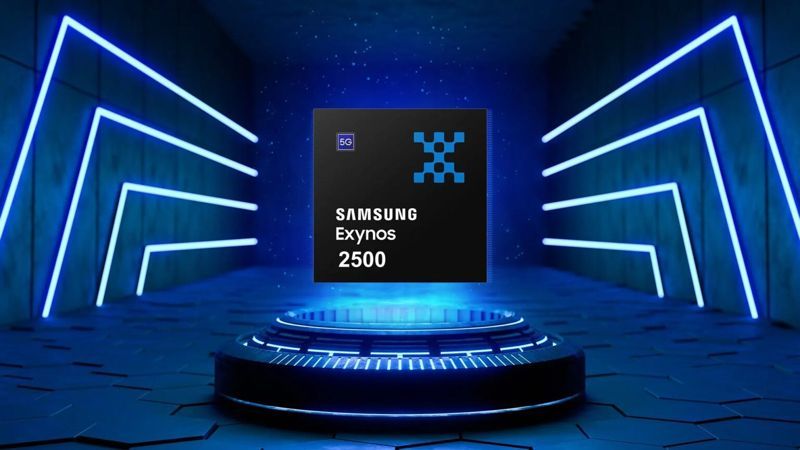
According to reports, production issues with the Exynos 2500 have forced Samsung to stick with Snapdragon across the board.
The S25 is likely to stick with a 4000mAh battery, while the S25+ could feature 4900mAh, and the S25 Ultra should maintain its 5000mAh capacity. Charging speeds will likely stay at 25W for the S25 and 45W for the S25+ and Ultra. One big change, though, could be that the S25 series is rumored to adopt Qi2 wireless charging.
A Possible New Addition to the Lineup
While the focus remains on the three primary models, rumors suggest Samsung could unveil a fourth device at Unpacked. It won’t be an S25 FE but potentially a Galaxy S25 Slim – a thinner, lighter device designed to rival Apple’s rumored iPhone 17 Air. Even the Unpacked event teaser shows four distinct devices, lending weight to this speculation.
Tablets have become an essential gadget for many, bridging the gap between smartphones and laptops. Whether for entertainment, productivity, or education, choosing the right tablet can significantly impact your experience. With so many options available, it’s easy to feel overwhelmed. Here’s a comprehensive guide on what to consider when buying a tablet.
Before diving into specifications, determine why you need a tablet. Are you looking for a device for casual browsing, streaming videos, or reading eBooks? Or do you need something powerful for work, designing, or gaming? Identifying your primary use case will help narrow down the features you need and avoid overspending on unnecessary specifications.
For instance, students may prioritize affordability and note-taking capabilities, while professionals might need a device with a robust processor and stylus support. Gamers, on the other hand, should look for high refresh rates and strong graphics performance.
2. Operating System
The operating system plays the most crucial role in your tablet’s functionality and ecosystem compatibility. The three main options are iOS, Android, and Windows. Apple’s iPads offer a seamless ecosystem for those already using Apple products. They excel in app variety, build quality, and regular updates.
Android tablets come in various price ranges, offering customization and flexibility. They’re great for users who prefer Google services or want budget-friendly options.
Tablets running Windows, like the Microsoft Surface line, function as hybrid devices with full desktop capabilities and are ideal for professionals who need productivity tools. Choose an operating system based on your familiarity and the ecosystem of devices you already own.
3. Display Quality
When it comes to the display, size and panel type play a key role. Tablet screens typically range from 7 to 13 inches. Smaller screens offer greater portability, while larger ones are ideal for productivity and immersive media experiences.
For resolution, look for at least Full HD (1920×1080), though higher resolutions like 2K or 4K offer sharper visuals. AMOLED and OLED screens provide better contrast and vibrant colors compared to LCDs. And also choose a higher refresh rate screen atleast 90Hz or 120Hz if you are a gamer or artist.
4. Connectivity and Accessories
Modern tablets often come in two variants: Wi-Fi and optional cellular connectivity. Decide if you need LTE or 5G support for internet access on the go.
If you’re into drawing, note-taking, or productivity, ensure the tablet supports accessories like styluses or detachable keyboards. These can greatly enhance the tablet’s versatility.
5. Performance
The performance of a tablet determines how smoothly it can handle tasks. A powerful processor and sufficient RAM are crucial for multitasking and running demanding applications. High-end tablets use processors like Apple’s M-series chips, Qualcomm’s Snapdragon 8 series, Intel Core i5/i7, or Snapdragon X Elite chipsets, which are perfect for heavy-duty tasks.
Budget models may use mid-tier processors that are suitable for basic tasks. For casual use, 3-4GB of RAM is sufficient, while gamers, designers, and multitaskers should aim for 6GB or more.
6. Storage Options
Storage capacity is an important factor, as tablets come with various options, typically starting at 32GB and going up to 1TB. For basic usage, 64GB is usually sufficient. If you plan to store a lot of apps, games, or media files, 128GB or more is advisable. Some Android tablets offer expandable storage via microSD card slots, providing more flexibility.
7. Conclusion
Selecting the right tablet involves a careful evaluation of your specific needs, preferences, and budget. By considering factors such as purpose, operating system, performance, and connectivity, you can choose a device that complements your lifestyle and enhances productivity. Remember, the ideal tablet is one that seamlessly integrates into your daily routine, offering both functionality and convenience.
Xiaomi has introduced the Mijia Smart Dumbbells, an innovative fitness device aimed at enhancing home workouts with smart features and efficiency. It is launching on January 8 via crowdfunding, priced at 99 yuan ($14). Let’s check out its key specs.
Xiaomi Mijia Smart Dumbbells Specifications
The dumbbell equips high-precision six-axis motion sensors, including a three-axis gyroscope and a three-axis accelerometer, to ensure accurate movement tracking. This advanced sensor technology captures every motion with exceptional accuracy, making your exercise data reliable and precise.
It sports an ergonomic handle with a 32mm diameter and an anti-slip matte finish, providing a secure and comfortable grip. The design incorporates a quick-release mechanism for adjustable weights, allowing you to switch between 1kg and 2kg setups effortlessly by adding or removing the 0.5kg detachable weight blocks (sold separately).
The Mijia Smart Dumbbells feature an intelligent LED dot-matrix display that provides real-time updates on exercise metrics, including repetitions, duration, and calories burned, directly on the handle, allowing you to focus on your workout without the need for manual tracking.
The smart dumbbell offers long-lasting performance with a hidden battery compartment housing two AAA batteries, supporting up to 177 days of usage. It also boasts a stylish hourglass-inspired design with a sleek beige finish, combining aesthetics with functionality.
The dumbbells seamlessly integrate with the Mi Home app, taking fitness tracking to the next level. Through the app, users can access professional body-shaping and aerobic workout video courses led by certified trainers. The courses are further enhanced with real-time voice guidance and encouragement, creating an immersive and motivating workout experience.
The app also allows users to customize training modes, intensities, and goals based on their fitness level and personal preferences. Additionally, the Mi Home app provides advanced data management, storing workout history in the cloud and generating comprehensive reports. Users can analyze their progress across weekly, monthly, and yearly dimensions, ensuring a structured and scientific approach to fitness.
The dumbbells are available in two configurations. The 2kg version (1kg x 2) is priced at 99 yuan ($14), while the set version (1kg x 2 dumbbells + four 0.5kg weight blocks) is priced at 158 yuan ($22).
Xiaomi has launched the Xiaomi Public Network Walkie-Talkie Mini on its Youpin platform, which features nationwide 4G walkie-talkie capabilities. It comes with an introductory price of 179 yuan ($24). This release follows the recent launch of the Sports Walkie-Talkie. Let’s check out its key specs.
Xiaomi Public Network Walkie-Talkie Mini Specifications
The walkie-talkie features a lightweight design, weighing just 35g, making it easy to carry throughout the day with minimal effort. It is paired with a dedicated earphone (11g) designed for comfort and versatility, featuring a 180° adjustable ear clip for both ears. Its three-color LED indicator provides clear status updates, while its dual-layer clip ensures a firm attachment to clothing.
This product supports nationwide 4G communication, enabling a staggering 5,000 km effective communication distance. It is compatible with China Mobile, China Unicom, and China Telecom 4G networks, ensuring seamless connectivity across regions. Moreover, it includes a free one-year data plan, eliminating additional platform fees during the initial usage period.
The device equips a robust 470mAh battery, delivering up to 43 hours of standby time and 25 hours of continuous use, ensuring reliable performance for extended communication needs. It also comes with an IP54 protection rating that offers resistance against dust and water, safeguarding the device in diverse environments.
It supports multiple communication methods, including one-on-one and group conversations. The walkie-talkie also facilitates real-time voice communication and quick group formation through its intuitive interface, allowing users to connect and collaborate instantly. The included app enables device activation, management, and group configuration, with added functionalities like OTA firmware updates for enhanced usability.
Additionally, it comes with a voice-operated system for managing functions such as group switching and power queries. The product is tailored for industries such as hospitality, automotive, and personal care, offering versatility and ease of use in fast-paced environments.
Vivo debuted the X200 series of flagship smartphones in China. The lineup consists of the Vivo X200, Vivo X200 Pro, and Vivo X200 Pro Mini. But a new entry in the series called the Vivo X200S is set to launch soon. So here’s everything we know about this upcoming model.
One of the first reports of the Vivo X200S surfaced back in November 2024 with rumors still going around. While none of these has confirmed its design, it will likely follow a similar design philosophy as the other three X200 series models. So the rear will likely have a large circular camera module surrounded by a glass panel and metallic frame.
It should bring an IP rating for water and dust resistance for better protection against the natural elements. Not a lot is known about this phone, but the Vivo X200S could arrive with major design changes. This could include a redesign of the lens ring surrounding the rear cameras.
The first rumor revealed a bunch of key specifications like its display. On the front, it sports a 6.67-inch flat LTPS OLED screen with a 1.5K resolution. We can also expect a high refresh rate as well. So this device might be more in line with the base X200. A previous leak claims that the phone would house an ultrasonic in-display fingerprint scanner as well.
2. Specifications
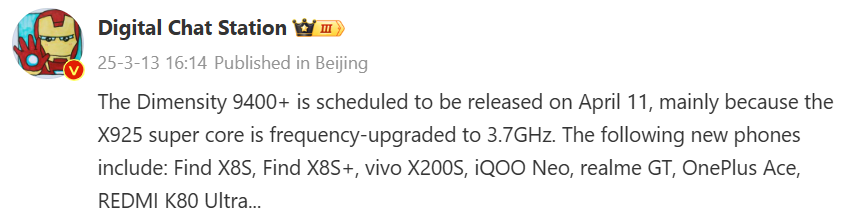
According to known tipster Digital Chat Station, the Vivo X200S is equipped with the Dimensity 9400 Plus chipset. To recall, the rest of the Vivo X200 series models arrive with the regular Dimensity 9400. So it would likely offer slightly better performance than the rest. This device will likely also be priced somewhere between the Vivo X200 and Vivo X200 Pro.
For photography, the Vivo X200S is expected to feature a triple camera setup that may include a 50MP primary camera along with a periscope telephoto shooter and ultra wide angle lens. It is unclear if this variant would come with Zeiss lenses like the other X200 series smartphones.
Unfortunately, the exact capacity of its battery is still unknown, but the X200S would likely pack a high-capacity silicon battery that promises better durability and efficiency just like the other three models. Just like the X200 Pro and X200 Pro Mini, fast charging for both wired and wireless modes could also make a return here.
3. Rumored Launch Timeline
As of right now, the launch timeline for the Vivo X200s is still at large. However, the brand may debut the phone around six months after the X200, which was first unveiled back in October 2024. So it could arrive as a flagship model with mid-cycle refresh around April 2025. This is still speculation at the moment, so take this news with a pinch of salt and stick around for more updates.
Noise, a leading name in the Indian wearable market, has introduced its latest flagship true wireless earbuds, the Noise Air Buds 6. The earbuds are developed in collaboration with Bragi and promise a premium audio experience with features like Active Noise Cancellation (ANC), advanced voice control, and exceptional battery life. Let’s check out its key specs.
The Noise Air Buds 6 are powered by 12.4mm drivers, delivering crisp audio quality with deep bass. They offer Active Noise Cancellation (ANC) of up to 32dB, providing an immersive sound experience by reducing ambient noise.
These earbuds are equipped with quad-mic Environmental Noise Cancellation (ENC), ensuring superior call clarity in noisy environments. For gamers, they sport ultra-low latency of 50ms, delivering a lag-free gaming experience. With IPX5 water resistance, the Noise Air Buds 6 offer durability to withstand light rain and sweaty workouts, making them a versatile companion for everyday use.
The Noise Air Buds 6 comes equipped with cutting-edge features developed in collaboration with Bragi, including hands-free voice control that allows users to issue commands like “ANC on” or “Volume up” for effortless interaction. They also feature Super Hearing mode, enabling users to toggle between transparency mode for situational awareness and ANC for complete isolation.
These earbuds sport advanced customization options through the Noise BudsLink app, allowing users to adjust EQ settings, personalize touch controls, and manage preferences with ease. They also come with Google Fast Pairing for instant, hassle-free connectivity and sport in-ear detection for auto-play and pause functionality, delivering a seamless and intuitive user experience.
The earbuds feature context-aware sound for clearer calls and automatic volume adjustment based on the environment. They also come with multipoint connectivity, enabling seamless device switching for enhanced multitasking.
The Air Buds 6 comes with an impressive battery life, offering up to 50 hours of total playtime on a single charge, including charges from the case. Additionally, they feature Instacharge technology, which provides a quick boost of 150 minutes of playback time with just a 10-minute charge.
2. Pricing and Availability
Noise Air Buds 6 are priced at an introductory rate of Rs. 2,999, making them an excellent value-for-money option. They are available in Pebble Grey, Sage Blue, and Charcoal Black colors. The earbuds is now up for pre-order and will go on sale starting tomorrow and can be purchased from gonoise.com, Flipkart.com, and Amazon.in.
In related news, OnePlus recently launched the Buds Ace 2, featuring 12.4mm drivers, Active Noise Cancellation (ANC), dual-device support, and up to 43 hours of playback. Meanwhile, Nubia introduced the LiveFlip open-ear earbuds, equipped with 15mm drivers, ENC noise reduction, and a 40-hour battery life.
Qualcomm announced the Snapdragon 8+ Gen 1 in mid-2022. Since then, the chipmaker has had many new high-end chipsets, which makes this 2022’s flagship chip feel like an outdated one, but is it really so? We’ll dive into the nitty-gritty of the Snapdragon 8+ Gen 1 to see if it’s still a solid choice or if spending some extra cash for a newer chip will make more sense in 2025.
Snapdragon 8+ Gen 1 spec sheet:
Release Date
May 2022
Process Node
4nm (TSMC)
CPU
1 x Cortex-X2 @ 3.2 GHz 3 x Cortex-A710 @ 2.75 GHz 4 x Cortex-A510 @ 2.0 GHz
GPU
Adreno 730
Gaming
Snapdragon Elite Gaming Unreal Engine 5 support Variable Rate Shading Pro Volumetric Rendering Adreno Frame Motion Engine
NPU
Hexagon NPU
Memory
Up to 24 GB LPDDR5 @ 3200 MHz
Storage
UFS 3.1
Camera
Triple 18-bit Spectra ISP Up to 200MP single camera 108MP single camera @ 30fps with ZSL 64MP + 36MP dual camera @ 30fps with ZSL 36MP + 36MP + 36MP triple camera @ 30fps with ZSL *ZSL = Zero Shutter Lag
Should you buy a Snapdragon 8+ Gen 1 phone in 2025?
Qualcomm could have actually skipped the Snapdragon 8+ Gen 1, but one major mistake in the Snapdragon 8 Gen 1 forced the company to bring the Plus version. It was the lack of thermal efficiency that Qualcomm was able to fix by switching from Samsung’s 4nm process to TSMC’s 4nm. This resulted in 30% better power efficiency.
The Snapdragon 8+ Gen 1 boasts a powerful CPU. It includes a Cortex-X2 prime core clocked at 3.2GHz, three Cortex-A710 performance cores at 2.75GHz, and four Cortex-A510 power-efficiency cores at 2GHz. For gaming and other graphics-intensive tasks, it has an Adreno 730 GPU.
Let’s get down to real-world usage. For everyday tasks like browsing, media consumption, and social media apps, the Snapdragon 8+ Gen 1 rocks like any other flagship chipset. I have had absolutely zero lag, even when using multiple apps parallelly. The overall experience was smooth.
To evaluate the gaming capabilities of the Snapdragon 8+ Gen 1, we tested multiple games on the ROG Phone 6 Pro, and the results were fantastic. The device smoothly runs PUBG Mobile, Call of Duty: Mobile, and Genshin Impact at consistent 60fps. Even at higher settings, the performance was consistent. Overall, I was impressed with the gaming performance offered by Snapdragon 8+ Gen 1.
One key omission from this Snapdragon chip is ray tracing support that enhances visual realism by offering lifelike lighting effects and dynamic shadows. Apart from that I think the Snapdragon 8+ Gen 1 has enough to satisfy the gaming needs of most people.
Connectivity is another crucial part of a chip, and I find nothing to complain about. It has all the necessary connectivity features, plus fast Wi-Fi (up to 3.6Gbps) and mobile data connection (up to 10Gbps). The chipset has triple 18-bit ISPs and supports up to 200-megapixel single cameras. The maximum video recording is capped at 8K at 30fps.
The Snapdragon 8+ Gen 1 is still powerful enough to smoothly run modern apps and games, thanks to high-performance CPU and GPU. It smoothly handles everyday tasks without any lag. Even the highly resource-intensive games, such as PUBG, Call of Duty, and Genshin Impact, run without any noticeable lag.
Snapdragon 8+ Gen 1 can be more lucrative if you can find great deals that significantly bring down the price.
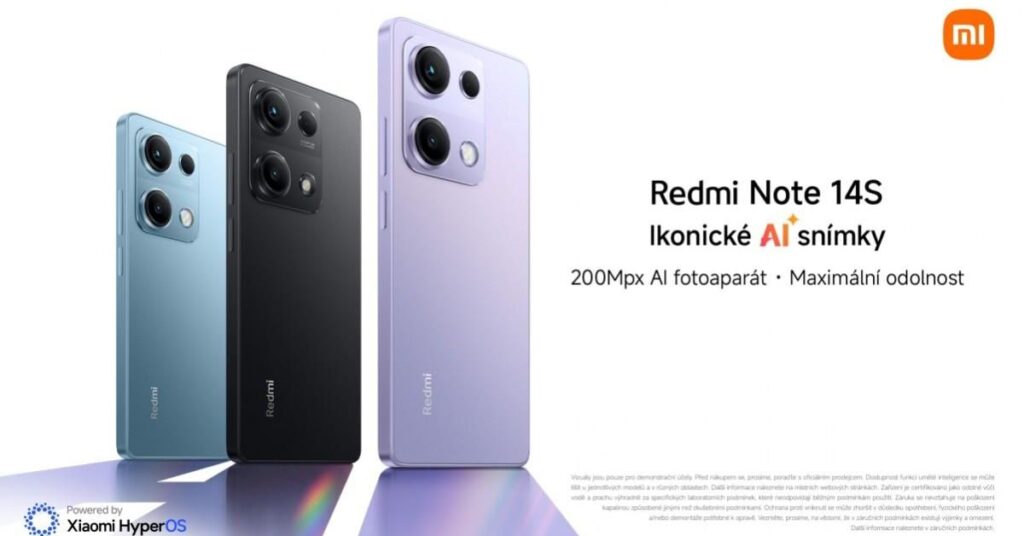
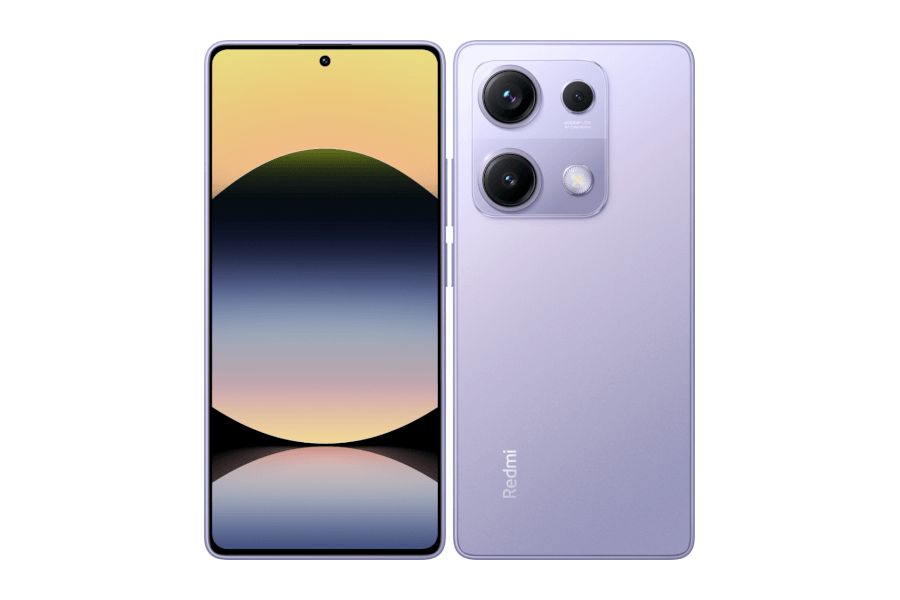
Redmi Note 14 Pro Plus is a smartphone designed to impress with its cutting-edge technology and premium features. From its stunning camera setup to its robust performance capabilities, this phone redefines what you can expect from a modern smartphone.
Exceptional Camera Performance
Capture every moment with incredible clarity using the Redmi Note 14 Pro Plus’s advanced triple camera system. The 50MP Ultra HD primary camera boasts an impressive 1/1.55-inch sensor and 2.0μm fusion pixel technology, delivering stunning photos even in low-light conditions. It features Optical Image Stabilization (OIS) for shake-free shots and a wide f/1.6 aperture for better depth and detail.
Complementing the primary camera is a 50MP telephoto lens with 2.5x optical zoom and a minimum focusing distance of 50cm, perfect for close-ups and portraits. The 8MP super wide-angle lens with a 120° field of view ensures you can capture expansive landscapes with ease. Additionally, the 20MP front camera delivers sharp and detailed selfies.
Stunning Display and Design
The phone features a 6.67-inch 1.5K eye-protection display with a resolution of 2712 x 1220. With 12-bit color depth and a contrast ratio of 5,000,000:1, the visuals are vibrant and lifelike. The display also supports a refresh rate of up to 120Hz and a touch sample rate of up to 2160Hz, providing smooth and responsive performance. The under-screen fingerprint unlock adds a sleek and secure touch to its design. With IP68 dust and water resistance, the Redmi Note 14 Pro Plus is built to withstand the elements.
Powerful Performance
Powered by the Qualcomm Snapdragon 7s Gen 3 processor, the Redmi Note 14 Pro Plus ensures fast and efficient performance, whether you’re gaming, streaming, or multitasking. With storage options up to 512GB and RAM configurations up to 16GB, you’ll have all the space and speed you need for your apps, photos, and files.
Long-Lasting Battery Life
The massive 6200mAh battery ensures the phone lasts throughout the day, even with heavy usage. The 90W fast charging capability lets you recharge quickly, minimizing downtime. Whether you’re working or playing, this phone keeps up with your lifestyle.
Software and Connectivity
Running on Xiaomi HyperOS based on Android 14, the Redmi Note 14 Pro Plus offers a smooth and intuitive user experience. It supports a wide range of connectivity options, including 5G and 4G bands, ensuring seamless communication and internet access.
Deal and Availability
The Redmi Note 14 Pro Plus is now available at an unbeatable price of just $279 on Geekwills. This limited-time offer gives you the chance to own a feature-rich smartphone at an incredible value.
Key Specs:
Processor: Qualcomm Snapdragon 7s Gen 3
Storage: Up to 512GB
RAM: Up to 16GB
Display: 6.67-inch, 2712 x 1220 resolution, 1.5K, 120Hz refresh rate
OnePlus is gearing up to unveil its highly anticipated flagship smartphone series, the OnePlus 13, tomorrow in both India and global markets. The series will comprise two models: the OnePlus 13 and the OnePlus 13R.
The landing page for the OnePlus 13 series is now live on Amazon India, building excitement for the imminent launch. Ahead of the official unveiling tomorrow, tipster @yabhishekhd has shared an exclusive update regarding the OnePlus 13 smartphone. According to the tipster, a reliable source has revealed that the OnePlus 13 will carry a box price of Rs 70,999 for the 12/256GB variant. However, it is anticipated that the actual selling price of this variant could be Rs 64,999.
Prior to this revelation, similar price ranges for the OnePlus 13 in the Indian market were tipped, suggesting a launch price between ₹67,000 and ₹70,000. It has also been revealed that the OnePlus 13 will be available in two storage configurations: 12/256GB and 16/512GB. In contrast, the OnePlus 13R is expected to be offered in a single 12/256GB storage variant in the global market.
Tomorrow’s official launch event will provide all the detailed information regarding the specifications, pricing, and availability of the upcoming OnePlus 13 series.
The OnePlus 13 is expected to be powered by the cutting-edge Snapdragon 8 Elite processor, ensuring top-tier performance and efficiency. The device is also rumored to feature a robust 6,000mAh battery to provide ample power throughout the day, along with IP68/IP69 water and dust resistance for enhanced durability. Other specifications are expected to align closely with the Chinese variant of the device, which was launched in October 2024.
KOORUI, a recognized player in the display industry, will introduce its latest products at CES 2025. The company invites attendees to Booth #35609 in South Hall 2 of the Las Vegas Convention Center to view its new lineup and advancements in display technology.
A key highlight of KOORUI’s showcase is the G7, a consumer-grade monitor with a 750Hz refresh rate, the first of its kind. This model is designed to meet the needs of competitive gamers, offering smooth visuals for fast-paced games. It features a TN panel enhanced with QD film for improved color performance, achieving a DCI-P3 95% color gamut. The G7 includes a 24.5-inch FHD screen, 0.5ms response time, and HDR 400 certification. KOORUI plans to begin mass production in 2025, with a global launch to follow.
KOORUI G7 Specifications:
Display Type: TN
Screen Size: 24.5 inches
Resolution: FHD
Color Gamut: DCI-P3 95%
Refresh Rate: 750Hz
Response Time: 0.5ms
HDR: HDR 400
In addition to the G7, KOORUI will display other models, such as the OG32UK—a 480Hz UHD gaming monitor—and the GS49UK, a 49-inch DQHD ultra-wide monitor with a high refresh rate. KOORUI will also feature a range of cost-effective monitors designed for bulk procurement.
We use cookies on our website to give you the most relevant experience by remembering your preferences and repeat visits. By clicking “Accept”, you consent to the use of ALL the cookies.
This website uses cookies to improve your experience while you navigate through the website. Out of these, the cookies that are categorized as necessary are stored on your browser as they are essential for the working of basic functionalities of the website. We also use third-party cookies that help us analyze and understand how you use this website. These cookies will be stored in your browser only with your consent. You also have the option to opt-out of these cookies. But opting out of some of these cookies may affect your browsing experience.
Necessary cookies are absolutely essential for the website to function properly. This category only includes cookies that ensures basic functionalities and security features of the website. These cookies do not store any personal information.
Any cookies that may not be particularly necessary for the website to function and is used specifically to collect user personal data via analytics, ads, other embedded contents are termed as non-necessary cookies. It is mandatory to procure user consent prior to running these cookies on your website.