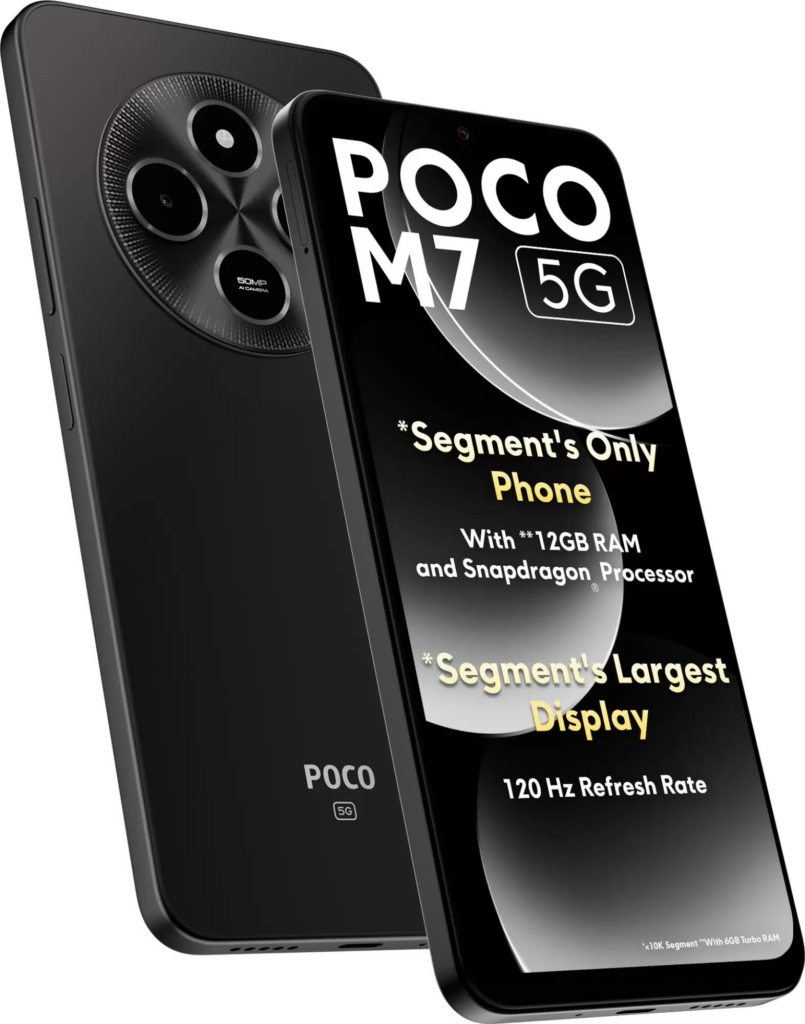
Just last week, the POCO M7 5G officially made its debut in India with its first sales kicking off soon after. However, just a few days after the release, the company officially released the POCO M7 5G Airtel exclusive edition. So here’s what is different about this model.
POCO M7 5G Airtel Exclusive Edition Pricing
The Chinese smartphone maker’s POCO M7 5G Airtel edition was just announced for 9,249 INR. This is inclusive of all offers, making it more affordable than the standard POCO M7 which starts from 10,499 INR. But as the name suggests, this model will be locked exclusively to the Airtel network and won’t work with other telecom operators. The brand will kick off sales for this model on 13th March 2025 at 12PM IST via Flipkart, a popular e-commerce platform in India.
Poco M7 5G in Satin Black
Similar to the other variants, the POCO M7 5G also comes in three color options, namely Mint Green, Satin Black, and Ocean Blue. The POCO M7 5G sports a tall 6.88-inch HD+ display with a 120Hz refresh rate and 600 nits of peak brightness. Under the hood, it is equipped with the Qualcomm Snapdragon 4 Gen 2 SoC. You get a 50MP dual camera setup on the rear and an 8MP selfie shooter on the front.
A large 5,160mAh battery pack powers this device, which supports 18W wired fast charging. This device runs on the Android 14 OS based HyperOS custom skin out of the box with 2 years of promised OS updates. Other notable features include 5G networking, GPS, Bluetooth 5.4, USB Type C port, and dual band WiFi.
For more daily updates, please visit our News Section.
Google has long been rumored to be working on a new budget Pixel smartphone. This upcoming model is expected to be the Pixel 9a, which recently had its global and Indian launch timeline revealed. But ahead of any official announcement, the Pixel 9a was spotted on a fresh leak, revealing some official looking renders along with marketing and promo materials.
Google Pixel 9a Promo Materials Leaked
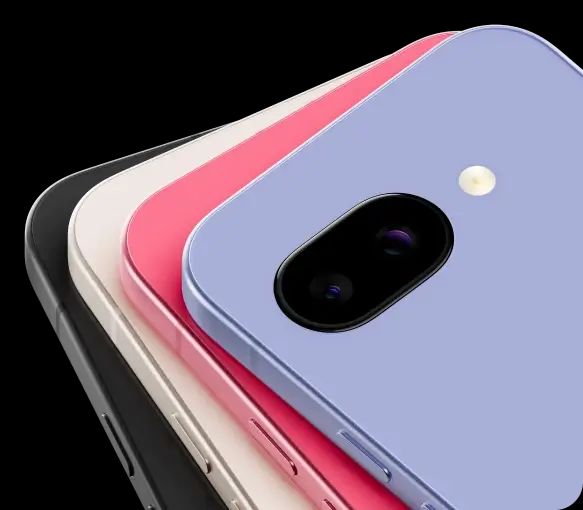
Google Pixel 9a
The latest leak arrives from known tipster @evleaks, who shared various images on X (formerly Twitter). Looking at these images, we can see the Pixel 9a may arrive in four color options, namely Porcelain, Peony, Iris, and Obsidian. This is also in line with one of our previous reports. But apart from this, the tipster also shared marketing images that could be used in online advertisements.
These showcase different features like the Gemini AI being used to perform certain actions. One of the images also highlights an important design element, which is the IP68 rating. In other words, the device will offer a dustproof body that can even survive submersion in water. The model is expected to be a compact phone, owing to its small 6.3-inch OLED display (Rumored). But despite its relatively affordable price tag, it will still pack the Google Tensor G4 chipset like its bigger siblings.
For those unaware, the Google Pixel 9a is set to make its global debut on 19th March 2025, with its Indian release expected to follow a day after. Just recently, the official Pixel 9a cases were also revealed, while the front design was also revealed thanks to another render leak. You can also click here to see 5 major upgrades that Google is bringing on the Pixel 9a, over the previous models.
For more daily updates, please visit our News Section.’
There’s no match to Samsung in terms of software support. The brand offers seven years of Android OS updates to its high-end devices like the Galaxy S24 and S25 series — the best on any Android device. Only Google provides the same software support to its Pixel devices. However, the gap widens when it comes to mid-range and cheaper models.
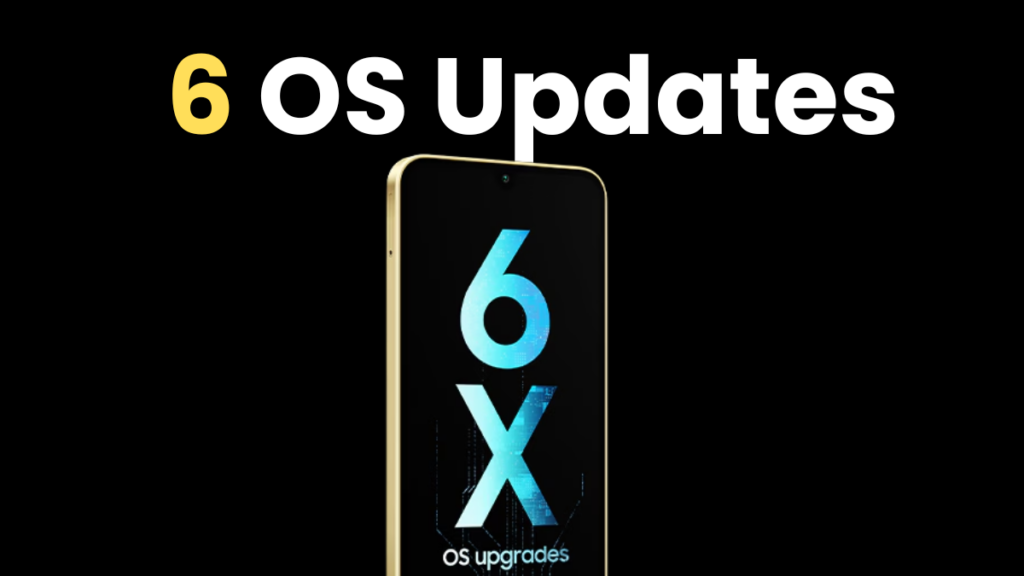
Samsung now offers six years of major updates to some recently launched cheaper models — and it’s a big thing. Longer software support has long remained exclusive to expensive devices, but Samsung is narrowing that gap. In fact, newer cheaper models promise longer software support than not-so-old flagships. Take the Galaxy S23, for example, it was launched in 2023 but only gets four major Android updates, while the $130 Galaxy M16 5G will get two additional OS updates.
So, you can enjoy longer software support without the hefty price tag of a flagship phone. Here’s a list of Galaxy phones that promises six major Android OS updates.
Samsung phones eligible for six major Android updates
Galaxy A56 5G
Galaxy A36 5G
Galaxy A26 5G
Galaxy A17 5G
Galaxy A16
Galaxy A16 5G
Galaxy M56 5G
Galaxy M36 5G
Galaxy M16 5G
Galaxy F56
Galaxy F36
Galaxy F16
All of these Galaxy smartphones will receive six years of One UI and Android updates, as well as six years of security patches.
The Galaxy A56, A36, A26, and M16 come with One UI 7, based on Android 15, out of the box. This means these phones will receive OS updates until Android 21. The Galaxy A16 and A16 5G, however, will get one less Android update since these devices boot Android 14 out of the box.
Samsung’s software support over the years
Samsung was once criticized for its consistent software updates, with most devices receiving only two Android updates. However, the brand has significantly improved in recent years, and it’s now one of the best in the industry for long-term software support.
2022 was a major shift in that regard when Samsung announced four years of OS updates for flagships and many mid-range phones. This made Samsung one of the best brands for long-term software support, though it was still behind Google, which was offering an extra year of Android updates.
Last year, Samsung took another big step when it announced the Galaxy S24 series with a whopping seven years of major updates, matching Google Pixel’s. With this move, Samsung became the obvious choice for anyone seeking longer software support from a non-Google brand. Mid-range Galaxy phones, though, didn’t receive much appreciation from Samsung in that regard until the Galaxy A16 arrived last year with six major OS updates promised. The new software update policy then expanded to many new mid-range Galaxy devices.
The extended software support for cheaper Galaxy models puts other Android brands in a tough spot. Most Android brands, except Google and Samsung, provide up to four Android updates. Only Oppo offers five Android updates, and that too is reserved for its premium phones. Samsung’s offering six major OS updates to cheaper models makes it a lucrative deal for those who prefer longer software support. It could be a key reason for switching to Samsung while also putting pressure on other brands to provide better software support.
Vivo has officially unveiled the Y300i, its latest addition to the Y series, in China. As the successor to last year’s Y200i, the new model brings incremental upgrades, including a sizable battery, 5G support, and a high-refresh-rate display—all at a competitive price point. Let’s go through details here.
Vivo Y300i Specifications
At first glance, the Y300i looks like a classic budget Vivo phone, featuring a 6.68-inch HD+ LCD panel. The screen refreshes at 120Hz refresh rate and has a 5MP front-facing camera in a hole-punch cutout.
Under the hood, the Y300i runs on the Snapdragon 4 Gen 2 chipset, a 4nm octa-core processor with a combination of Cortex-A78 and Cortex-A55 CPUs. The graphics are handled by Adreno 613 GPU.
The SoC is paired with up to 12GB of RAM which can be expanded virtually up to 24GB. Storage options go up to 512GB with UFS 2.2 technology, though there’s no word on expandable storage.
On the imaging front, the Y300i sports a 50MP rear camera with an f/1.8 aperture and LED flash, but there’s no mention of an ultrawide or additional sensors. For security, there’s a side-mounted fingerprint scanner integrated into the power button.
Fueling the device is a massive 6500mAh cell which supports 44W fast charging. Connectivity-wise, the phone checks all the necessary boxes. It has 5G (SA/NSA), Dual 4G VoLTE, Wi-Fi ac, Bluetooth 5.1, GPS, NFC, and a USB-C port. Vivo has also retained stereo speakers and a USB-C audio setup, but lacks 3.5mm headphone jack.
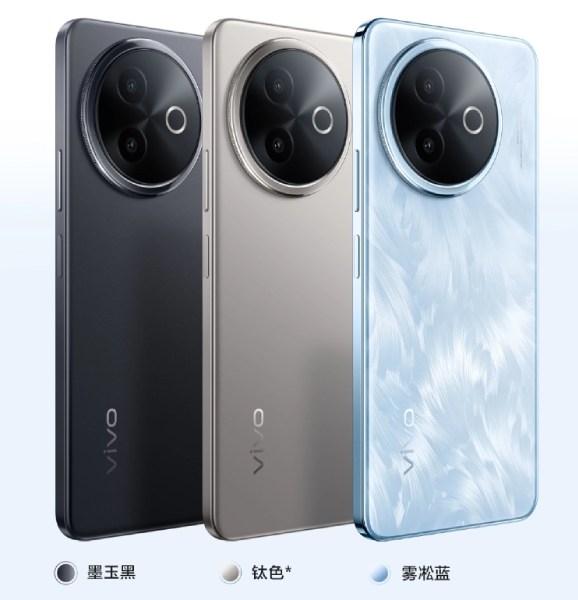
The Y300i comes in three color variants—Jade Black, Titanium, and Rime Blue. The design is relatively slim for a big-battery phone, measuring around 8.09mm to 8.19mm in thickness and weighing approximately 205-206g depending on the color.
Pricing and Availability
The Vivo Y300i is available in three variants:
8GB RAM + 256GB storage – CNY 1499 (~₹18,000)
12GB RAM + 256GB storage – CNY 1599 (~₹19,200)
12GB RAM + 512GB storage – CNY 1799 (~₹21,600)
Pre-orders begin today, and sales will start in China from March 14. There’s no word yet on international availability.
For more daily updates, please visit our News Section.
Last month, Realme introduced the Realme P3 Pro and Realme P3x in India. Last week, it began teasing the arrival of the P3 Ultra. Today, the brand confirmed that the device will launch on March 19, alongside the standard Realme P3. Additionally, several key details about both smartphones have been officially revealed.
Realme P3 Ultra to feature flagship-level specifications
Realme P3 Ultra launch date
The Realme P3 Ultra is expected to be the most powerful device in the P3 series. It will debut as the world’s first phone powered by the Dimensity 8350 Ultra chipset, which has achieved an impressive 1.45 million points on AnTuTu. The SoC will be paired with LPDDR5x RAM and UFS 3.1 storage. The smartphone is designed for gaming enthusiasts as it offers a 2500Hz touch sampling rate and 90fps gameplay support.
Under the hood, the Realme P3 Ultra will pack a 6,000mAh unit paired with 80W AI Bypass charging. The device is also confirmed to feature a 6050mm² VC cooling system and support 4K 60fps video recording,
Realme P3 key details confirmed
Realme P3 to feature Snapdragon 6 Gen 4 chipset
The standard Realme P3 will offer a 120Hz AMOLED display with a peak brightness of 2000 nits. It is set to feature the Snapdragon 6 Gen 4 processor, a 6,000mAh battery, and 45W fast charging. The device will support 90fps gameplay in BGMI and include an IP69 rating for enhanced durability. An aerospace-grade cooling system is also part of the package, making it a reliable choice for gaming and daily use.
Speculation suggests that the P3 could be a rebranded version of the Realme Neo 7x 5G, which recently launched in India. While pricing details remain unconfirmed, the P3 Ultra is expected to be positioned under Rs 30,000, while the P3 could arrive around Rs 20,000.
For more daily updates, please visit our News Section.
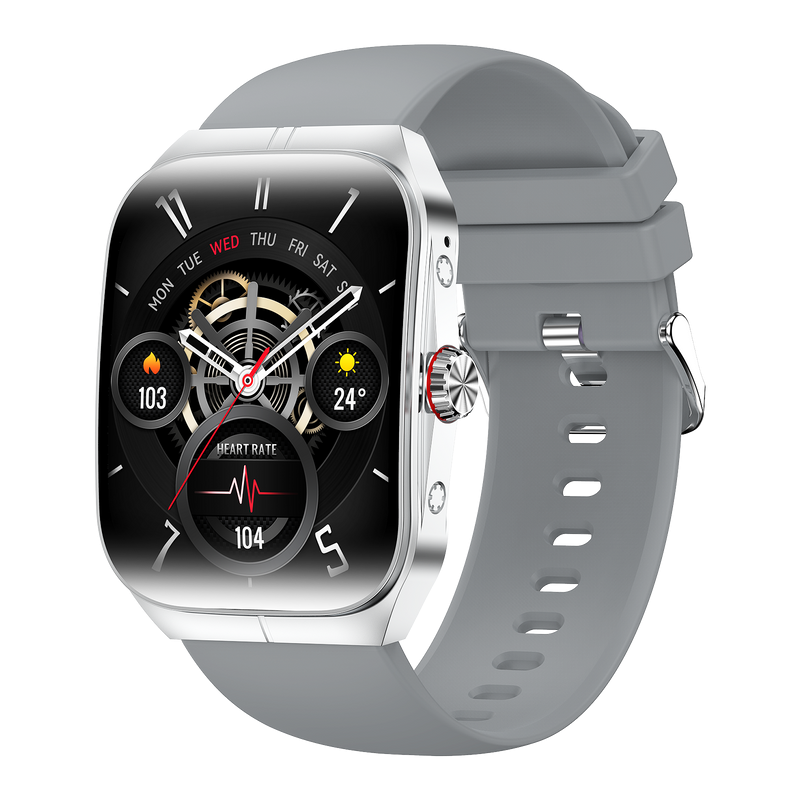
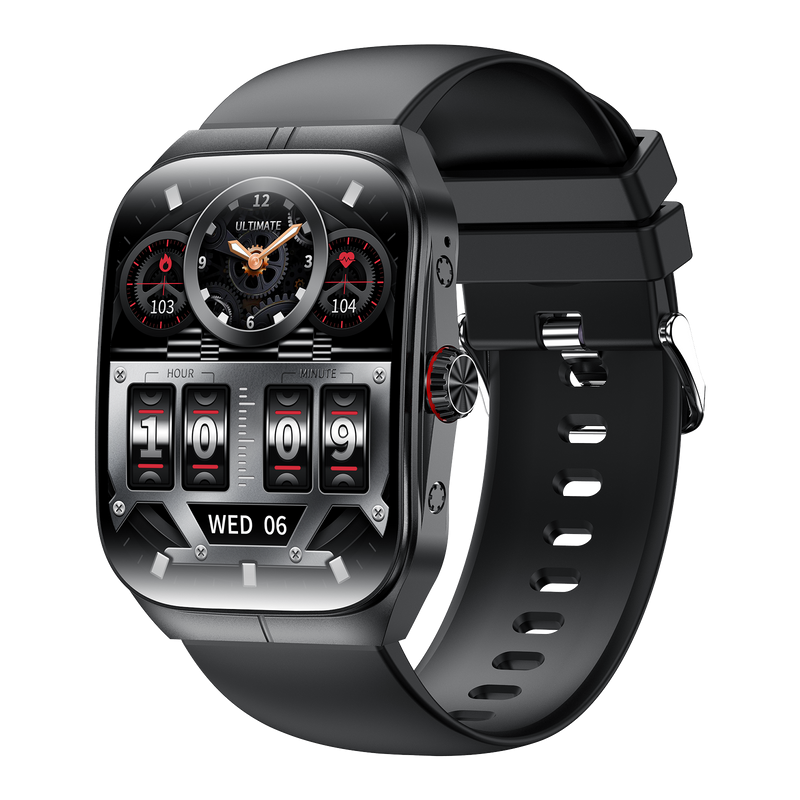
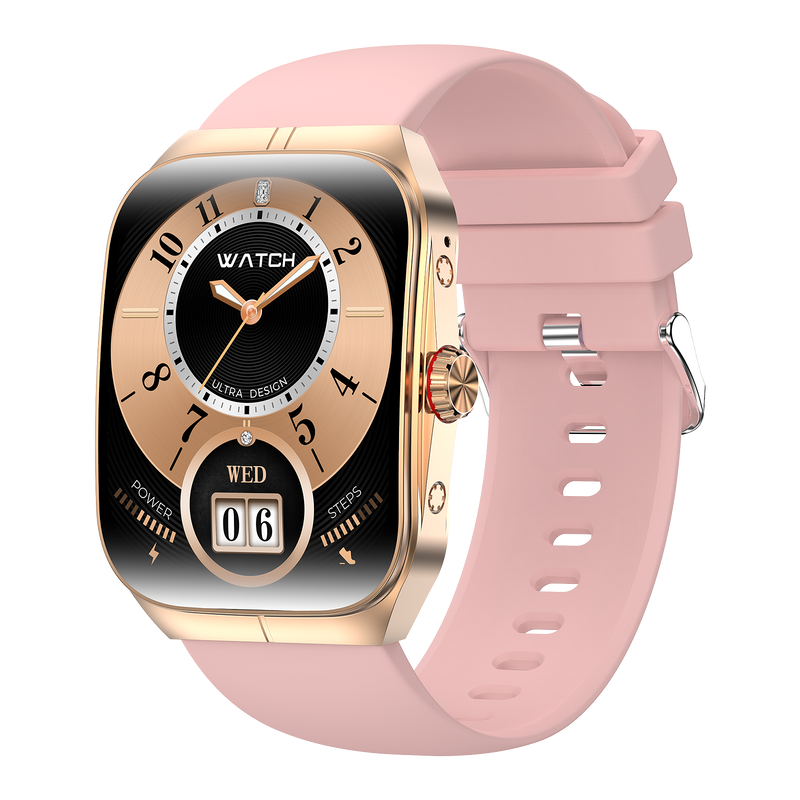
Rogbid has introduced its latest budget-friendly smartwatch, the Rogbid Infinity, offering an array of features at an affordable price. The wearable comes with a premium design, an AMOLED display, health tracking capabilities, and Bluetooth calling. Here’s a look at what’s in store for the buyers of the Rogbid Infinity.
Rogbid Infinity specifications and features
The Rogbid Infinity features a 1.95-inch AMOLED display with a resolution of 410 x 502 pixels and 1000 nits peak brightness. Its 3D curved dial and full-metal body enhance durability while giving it a stylish look. A rotating crown on the side allows smooth navigation.
Designed for fitness and wellness, the Rogbid Infinity supports real-time blood pressure monitoring, heart rate tracking, blood oxygen measurement, sleep analysis, and stress tracking. It includes over 100 sports modes, and when paired with a smartphone, it can utilize GPS for precise workout tracking. Additionally, it syncs with Google Fit and Apple Health for seamless data integration.
The Rogbid Infinity also offers Bluetooth calling, enabling users to make and receive calls directly from their wrist. It features a built-in microphone and speaker, along with smart notifications, music and camera controls, NFC access control, and a Find My Phone function. The device is rated IP68, making it resistant to dust, sweat, and splashes.
Equipped with a 400mAh battery, the smartwatch delivers up to 10 days of usage on a single charge. In standby mode, it can last up to 30 days, making it a reliable companion for daily wear.
Rogbid Infinity price and availability
The Rogbid Infinity is listed for $29.99 on the company’s official store. It can be purchased in shades such as Classic Black, Glacier Gray, and Rose Gold.
For more daily updates, please visit our News Section.
iQOO is gearing up to unveil the Z10 Turbo-branded smartphones in China. Previous reports claimed that the lineup, which is expected to debut in April, will feature two models: the Z10 Turbo and Z10 Turbo Pro. However, Chinese tech bloggers claim that the Z10 Turbo will have a variant dubbed the iQOO Z10 Turbo Endurance Edition.
iQOO Z10 Turbo variants 3C certified, spotted on Geekbench
Vivo V2452A and V2452GA 3C certified in China
Reports have claimed that the iQOO Z10 Turbo and Z10 Turbo Pro have model numbers V2452A and V2453A, respectively. A new development reveals that the Z10 Turbo has a variant with the model number V2452GA. This phone is believed to be the iQOO Z10 Turbo Endurance Edition.
As seen on the 3C certification platform in China, the V2452A and V2452GA smartphones have recently been approved. Both devices were spotted with a 90W fast charger. The V2452A model was previously listed in Geekbench’s database with the Dimensity 8400 chip. Now, the Z10 Turbo Endurance (V2452GA) has also been benchmarked on Geekbench.
Vivo V2452GA spotted on Geekbench
The CPU and GPU details (via source code) that have surfaced through V2452GA’s Geekbench listing reveal that it is also equipped with the Dimensity 8400 chipset and 12 GB of RAM. According to a Chinese tipster, this Endurance Edition model will have a 7,000mAh battery with 120W fast charging, despite being spotted with a 90W fast charger in 3C’s database. He added that the regular Z10 Turbo (V2452A) will house a larger 7,500mAh battery with 90W fast charging.
Apart from these models, the iQOO Z10 Turbo Pro will be positioned higher as it will feature the upcoming Snapdragon 8s Elite chipset. A recent leak claimed that it will pack a 7,000mAh battery with 120W charging support.
For more daily updates, please visit our News Section.
Roborock unveiled the Roborock P20 Pro, equipped with key features like chassis lifting and AI obstacle avoidance backed in August 2024. Now, the brand has unveiled a new robot vacuum cleaner dubbed the Roborock P20 Ultra in China. The new model offers a sleek, ultra-thin design and a host of advanced features aimed at delivering a superior cleaning experience. It is designed to tackle common cleaning challenges while offering smart functionality for modern households.
Roborock P20 Ultra key features
Roborock P20 UltraRoborock P20 Ultra
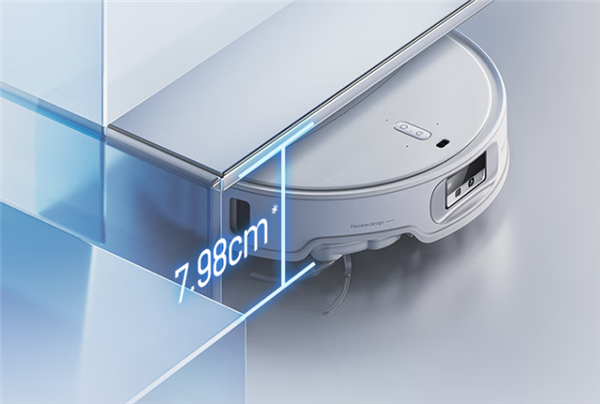
One of the major highlights of the Roborock P20 Ultra is its 7.98cm ultra-thin body, made possible by a dual-perspective LDS system. This design allows the robot to effortlessly navigate under furniture, beds, and other low-clearance spaces, ensuring no area is left untouched. The LDS system also enhances navigation accuracy, preventing the robot from getting lost or stuck. In open areas, the LDS remains elevated for better environmental awareness and thorough cleaning.
For cleaning performance, the P20 Ultra introduces an industry-first 0-tangle system, which uses a four-step process to prevent hair entanglement, making it ideal for pet owners. The main brush features 45° angled bristles and widened silicone blades, paired with 22,000Pa suction power for efficient debris pickup. The side brush adopts a spiral design with soft silicone ribs to minimize tangling and ensure full edge and corner coverage.
Roborock P20 UltraRoborock P20 Ultra
The Roborock P20 Ultra enhances its mopping performance with 12N pressure hot water mopping, 30 adjustable water levels, and dual spinning mops rotating at 200 RPM. This advanced system effectively removes tough stains while achieving a 99.99% sterilization rate, meeting maternal and infant-grade certification standards. Additionally, the vacuum can automatically adjust its cleaning direction to target dirt trapped in floor gaps.
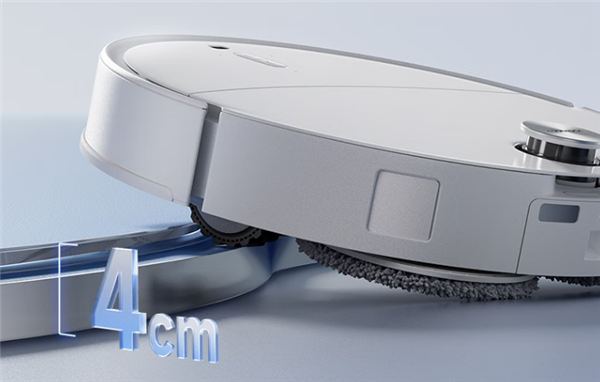
With a 4cm obstacle clearance and self-rescue functionality, the P20 Ultra handles thresholds and carpets with ease. Its brush and mop lifting features prevent carpet wetting and enable quiet mopping. The robot also incorporates Reactive AI obstacle avoidance, combining RGB cameras, structured light, and height sensors to recognize 108 types of objects in 26 categories for precise navigation.
Roborock P20 Ultra price and availability
The RoborockP20 Ultra is priced at 3,999 Yuan (~$550) for the standard version and 4,599 (~$635) Yuan for the auto-water-refill model. It is now available for pre-order on major e-commerce platforms. The robot vacuum cleaner comes in a sleek white design, blending seamlessly with modern home aesthetics.
For more daily updates, please visit our News Section.
Xiaomi recently confirmed that it will soon launch a new Civi-branded phone, which will be a compact-sized balanced flagship featuring major upgrades. Now, a new leak from tipster Digital Chat Station has revealed details about an upcoming Xiaomi smartphone that could push the boundaries of thin and lightweight design. It appears that the tipster may have spilled details about what appears to be the upcoming Xiaomi Civi 5 Pro.
Xiaomi Civi 5 Pro key details tippped
Alleged Xiaomi Civi 5 Pro’s key details leaked
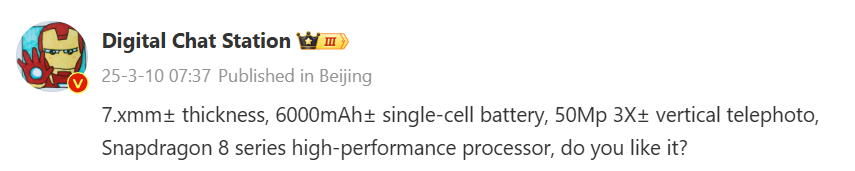
According to the leak, the alleged Xiaomi Civi 5 Pro will have a body thickness of around 7mm and house a single-cell 6000mAh battery—one of the largest seen in such a slim device. It is expected to be powered by a high-performance Snapdragon 8 series chipset, offering flagship-level performance.
While the tipster has not explicitly mentioned the chipset’s name, reports surrounding the Civi 5 Pro claim that it will feature the forthcoming Snapdragon 8s Elite chipset. The leak also states that the Civi 5 Pro’s rear camera setup may include a 50-megapixel periscope telephoto lens with 3x optical zoom.
Other compact flagship models, such as the Xiaomi 15 (Chinese variant), which packs a 5,410mAh battery, have a thickness of approximately 8.08mm, while the Vivo X200 Pro Mini, which includes a 5,700mAh battery, measures 8.15mm. This suggests that the Xiaomi Civi 5 Pro will be significantly thinner while offering a larger battery. To recall, the Civi 4 Pro from last year featured a 4,700mAh battery housed inside a 7.5mm body.
Previous reports have claimed that the Civi 5 Pro will arrive with a glass build and feature a circular camera module at the top-left corner. The front side of the phone will have a curved-edge screen equipped with dual selfie cameras and an ultrasonic in-screen fingerprint scanner. It is likely that the device will be priced at around 3,000 Yuan (~$415). Speculations are rife that the device will be rebranded as the Xiaomi 15 Civi in India.
For more daily updates, please visit our News Section.
Last year, iQOO unveiled the iQOO 13 in October, followed by the Neo 10 and Neo 10 Pro in November in China. A fresh leak from tipster Smart Pikachu has surfaced, shedding light on iQOO’s upcoming flagship smartphones. The leak reveals that the iQOO 15 and iQOO Neo 11 series, which will debut by the end of 2025, will introduce several notable upgrades. Continue reading ahead to learn what to expect from iQOO’s next-generation flagships.
iQOO 15 series
iQOO 15 series and Neo 11 lineup details leaked by tipster Smart Pikachu
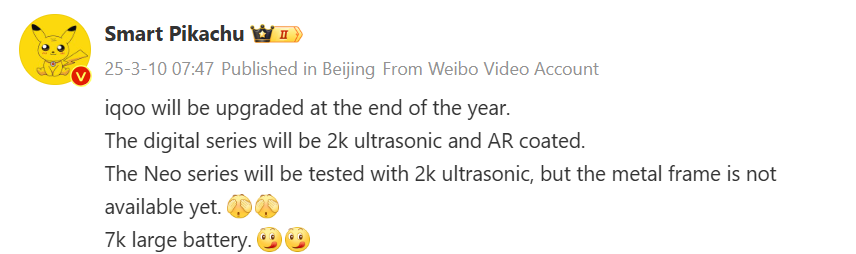
According to the leak, the iQOO 15 series will be equipped with a 2K resolution display featuring an ultrasonic in-screen fingerprint scanner and AR (anti-reflective) coating. A recent leak by DCS revealed that the iQOO 15 Pro will feature a flat 6.85-inch 2K LTPO OLED panel, likely sourced from Samsung, incorporating LIPO technology. The device is also said to feature a 7,000mAh battery, making it one of the largest in an iQOO flagship. The device is also expected to feature a periscope telephoto camera. At present, there is no concrete information about the display and battery sizes of the standard iQOO 15.
As per previous leaks, the iQOO 15 lineup is expected to include two models: the standard iQOO 15 and the iQOO 15 Pro. iQOO might skip the “iQOO 14” name due to cultural beliefs associated with the number 4 in some Asian regions. Under the hood, the series is likely to be powered by the Snapdragon 8 Elite 2, which is set to debut in October 2025. Both models are also expected to launch in the same month.
iQOO Neo 11 series
According to the new leak, the Neo 11 series is currently being tested with a 2K resolution screen integrated with an ultrasonic in-screen fingerprint sensor. To recall, the previous generation featured an ultrasonic fingerprint, but the screen supported only a 1.5K resolution. The new leak further states that the Neo 11 series will pack a 7,000mAh battery; it is unclear whether it will have a metal middle frame.
The latest details of the Neo 11 series, shared by Smart Pikachu, align with last month’s leak, which claimed that the lineup would continue with a flat display and support for 100W fast charging. As the successors to the Neo 10 and Neo 10 Pro, which launched in November 2024, the upcoming models are expected to debut around the same time this year. Reports suggest that the standard iQOO Neo 11 could feature the Snapdragon 8 Elite, while the Neo 11 Pro may be equipped with the Dimensity 9500 chipset.
For more daily updates, please visit our News Section.
Several reports have claimed that iQOO is planning to launch the Z10 series of smartphones in India. Today, well-known tipster Digital Chat Station released a Weibo post to share key specifications of the entire lineup, which includes four models: the Z10x, Z10, Z10 Turbo, and Z10 Turbo Pro. The post also suggests a launch timeline for the different variants, with the Turbo series set to debut first, followed by the Z10X model later in the year.
iQOO Z10 Turbo, Z10 Turbo Pro specifications and launch timeframe
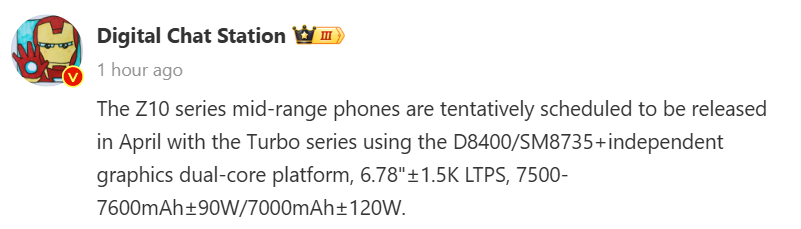
According to the leak, the Z10 Turbov and Z10 Turbo Pro are expected to launch in April. These devices will be powered by the Dimensity 8400 and the upcoming Snapdragon 8s Elite (SM8735) chipsets, respectively. Both devices will be equipped with a dedicated display chip and a 6.78-inch LTPS screen with a resolution of around 1.5K.
While the Turbo model will pack a 7,500–7,600mAh unit with 90W charging, the Turbo Pro edition is said to have a 7,000mAh battery with 120W fast charging.
iQOO Z10x and iQOO Z10 key specifications
The Z10X variant is reported to feature an LCD panel and is likely to feature a new MediaTek chipset. Unlike the Turbo models, this device is expected to launch in the third quarter of the year.
Meanwhile, the standard Z10 model will incorporate the upcoming Snapdragon 7 Gen 4 (SM7750) and an OLED display with a 1.5K resolution. The tipster did not mention the launch timeline of the Z10, but it is likely that it may break cover alongside the Z10x.
For more daily updates, please visit our News Section.
Samsung and Nothing have both introduced their latest mid-range smartphones, the Galaxy A56 and the Nothing Phone (3a) Pro, respectively. While both devices cater to a similar segment, they take different approaches to design, performance, and user experience. Let’s break down the differences and see which one might be the better choice for you.
Design & Display
Samsung sticks to its tried-and-tested design language with the Galaxy A56, featuring a flat 6.7-inch FHD+ Super AMOLED display with a 120Hz refresh rate. It reaches up to 1,900 nits peak brightness, making it highly visible outdoors, and is protected by Corning Gorilla Glass Victus+. The device boasts an IP67 rating for dust and water resistance, ensuring better durability than its competitor.
On the other hand, Nothing continues its unique transparent aesthetic with the Phone (3a) Pro. It features a slightly smaller 6.77-inch AMOLED display but offers an impressive 3,000 nits peak brightness, making it one of the brightest screens in the mid-range segment. It also supports HDR10+ for better contrast and color reproduction. The device features an IP64 rating, which is slightly inferior to the Galaxy A56 in terms of water resistance but still offers decent protection.
Performance & Software
Samsung’s Galaxy A56 is powered by the Exynos 1580 chipset, built on a 4nm process, and paired with the AMD Xclipse 540 GPU. This setup offers solid performance for everyday tasks and gaming. Samsung has also equipped the device with a larger vapor chamber for improved thermal management.
In contrast, the Nothing Phone (3a) Pro opts for Qualcomm’s Snapdragon 7s Gen 3 chipset. While efficient, it slightly lags behind the Exynos 1580 in raw performance. However, Nothing OS 3.1, based on Android 15, delivers a clean, bloat-free experience that may appeal to those who prefer stock Android.
Samsung promises six years of Android OS and One UI updates, making the Galaxy A56 a long-term investment. Nothing, on the other hand, offers only three years of major Android updates but matches Samsung with six years of security patches.
Cameras
Both phones offer solid camera hardware, but Nothing takes a more ambitious approach. The Galaxy A56 features a 50MP main sensor with OIS, a 12MP ultra-wide camera, and a 5MP macro lens. It supports 10-bit HDR recording and an improved Nightography mode for better low-light shots. Samsung also introduces the ‘Best Face’ feature, which helps users select the best facial expressions in group photos.
Nothing ups the ante with its 50MP main sensor with OIS, an 8MP ultra-wide lens, and a 50MP 3x periscope telephoto camera with up to 60x digital zoom. The 3a Pro also offers a higher-resolution 50MP front camera, compared to the Galaxy A56’s 12MP selfie shooter. If zoom photography is a priority, the Nothing Phone (3a) Pro is the better choice.
Battery & Charging
Both phones house a 5,000mAh battery, but charging speeds differ. The Galaxy A56 supports 45W fast charging, which is fast but slightly slower than the 50W charging offered by the Nothing Phone (3a) Pro. Nothing claims its device can charge from 0 to 50% in just 19 minutes, and to 100% in under an hour. However, the Nothing Phone (3a) Pro lacks wireless charging, something Samsung also omits in the Galaxy A56.
Additional Features
Samsung includes an in-display fingerprint scanner, stereo speakers, and NFC. The Galaxy A56 also benefits from Samsung’s enterprise-grade security with features like Knox and a special Enterprise Edition that gets an extra year of security updates.
Nothing stands out with its Glyph Interface, which adds customizable LED notifications that can sync with apps like Uber, Zomato, and more. The new Essential Key below the power button offers quick access to the AI-powered Essential Space, providing a unique productivity tool for users who like quick note-taking and voice recording.
Pricing & Availability
The Samsung Galaxy A56 is priced at $499.99 for the base 8GB + 128GB model, while the Nothing Phone (3a) Pro starts at around $360 for the 8GB + 128GB model, making it significantly more affordable.
Verdict: Which One Should You Buy?
If you want a long-term device with better software support, stronger durability (IP67), and a more refined ecosystem, the Samsung Galaxy A56 is the better pick. Its AMOLED display, optimized performance, and security features make it a reliable choice, especially for enterprise users.
However, if you prefer a unique design, brighter display, better telephoto zoom, and faster charging, then the Nothing Phone (3a) Pro is a great alternative, especially at a much lower price.
Ultimately, it comes down to priorities: Samsung offers stability and longevity, while Nothing brings innovation and affordability to the table.
For more daily updates, please visit our News Section.
Samsung is expected to fully unveil its slim Galaxy S25 Edge next month, following earlier teases at the S25 series launch event and more recently at MWC. While the company is keeping most details under wraps, leaks have started to fill in some of the blanks.
A new leak from reliable tipster Ice Universe claims to reveal the phone’s dimensions and pricing. According to the leak, the Galaxy S25 Edge will weigh 162 grams and measure just 5.84mm thick—significantly slimmer than the standard S25’s 7.2mm, though not any lighter.
The weight of Galaxy S25 edge is confirmed, 162g, 5.84mm thick, and the price is similar to that of S25+. If the price is similar, which would you choose, S25+ or S25 edge?
As for pricing, the tipster suggests it will be “similar” to the S25 Plus, which starts at $999. That doesn’t necessarily mean an identical price tag, but it gives us a solid ballpark estimate.
What we know so far
Alongside the specs, Ice Universe also shared a front render of the S25 Edge, revealing ultra-slim bezels—allegedly as thin as those on the S25 Ultra. The display is said to measure 6.65 inches.
Internally, the phone is expected to run on Qualcomm’s Snapdragon 8 Elite, just like its S25 siblings. The camera setup, however, is more stripped down—just two sensors on the back: a 200MP primary and a 12MP ultrawide, with no telephoto lens in sight.
Powering it all will be a 3,900mAh battery with 25W wired charging support, and the phone is rumored to come in Light Blue, Black, and Silver color options.
As mentioned earlier, the S25 Edge is expected to launch in April, though a previous report suggests it might not hit shelves until May, with an initial production run limited to just 40,000 units.
Samsung, of course, hasn’t confirmed any of this. But if the leaks are accurate, the S25 Edge will be Samsung’s thinnest premium smartphone in years—and maybe one of the sleekest flagships on the market.
For more daily updates, please visit our News Section.
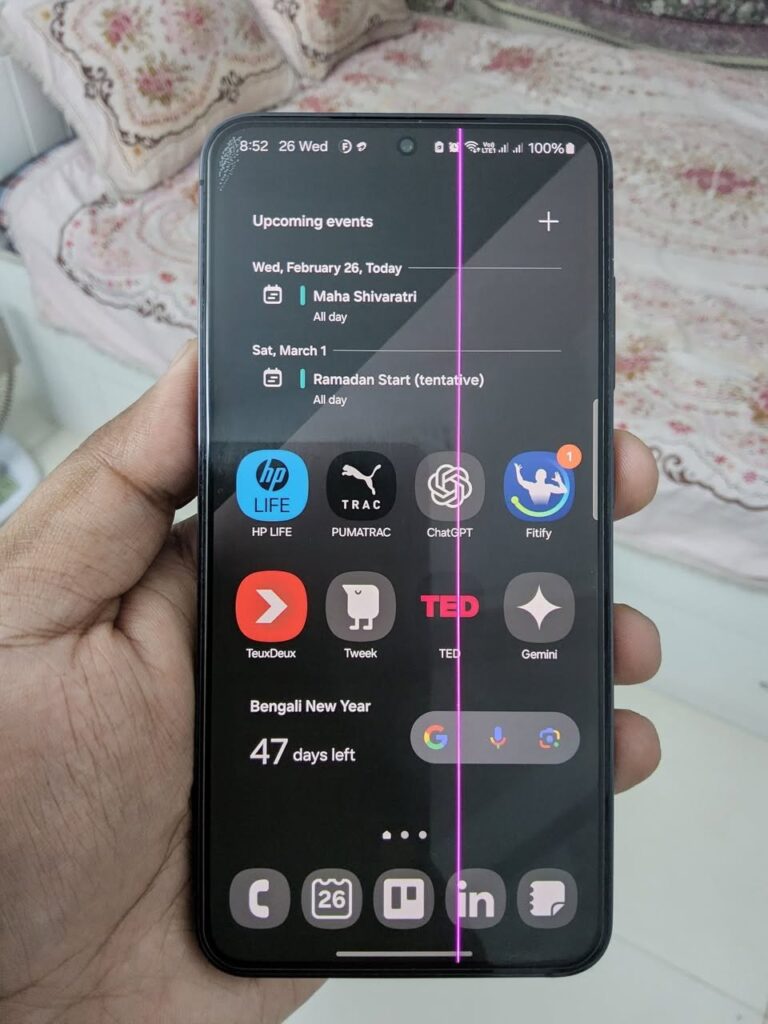
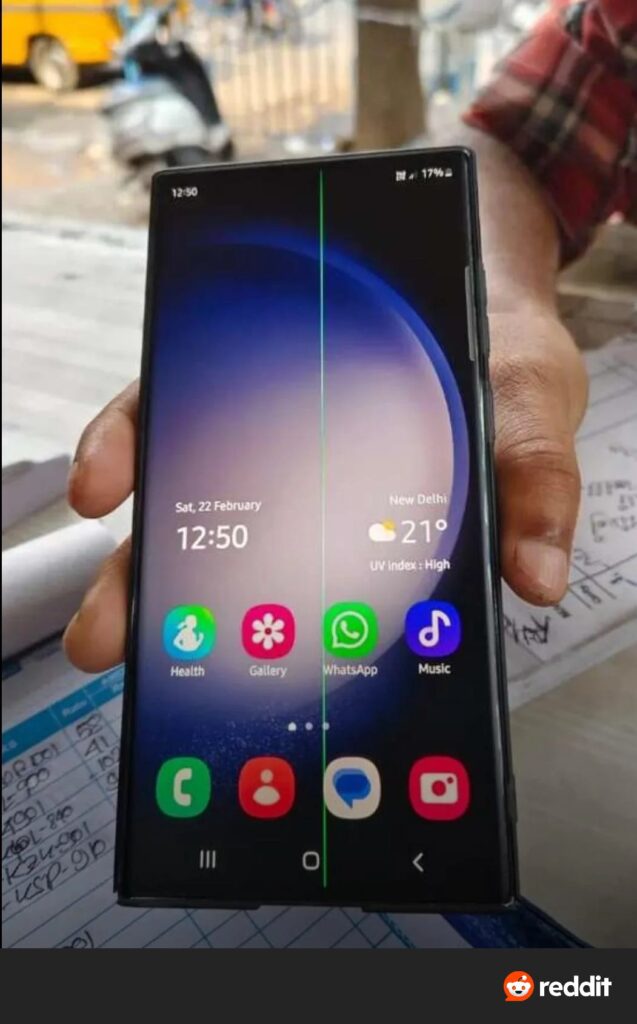
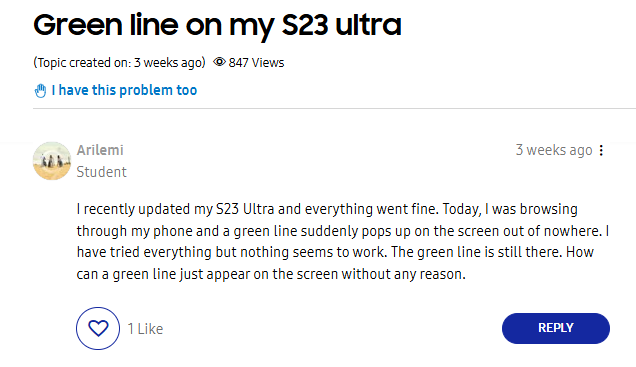
Multiple Galaxy S23 Ultra users have recently reported the green line issue on their devices. In the latest news, X user @SamsungSWUpdate shared images of the base Galaxy S23 and S23 Ultra affected by the issue.
Galaxy S23Galaxy S23 Ultra
In many cases, the affected users reported that the phones didn’t have any physical damage or external factors like drops or water exposure. Almost all of the instances I came across on social media platforms and the community forum specifically mentioned that the issue occurred soon after an update.
This has left many users frustrated, especially since Samsung’s free screen replacement campaign for such issues has ended.
While @SamsungSWUpdate didn’t reveal anything about when or how the issue occurred, a post from December 2024 on the community forum notes, “I updated the software on my Galaxy S23 yesterday night and I went to sleep after. Today morning I wake up to green line on my screen.” It reportedly happened after updating to the November security patch.
A part of a more recent post from February on the community forum includes, “I was browsing through my phone and a green line suddenly pops up on the screen out of nowhere. I have tried everything but nothing seems to work. The green line is still there.” This one is a Galaxy S23 Ultra, and the issue appeared soon after installing an update (although the user didn’t mention which update it was).
Based on my research, most of the affected devices require a display replacement, while it’s not very difficult to guess that the reason isn’t an inappropriate use of the device.
It’s a shame that brands are promising nearly a decade of software updates, yet many users are, quite reasonably, choosing to avoid them. Not installing security patches also means compromised security of their data.
Notably, the green line isn’t a Samsung exclusive issue. Several OnePlus devices faced the issue last year, and the company also addressed the “green line” display issue on some of its AMOLED phones with a “Green Line Worry-Free Solution”, that includes a lifetime warranty for affected devices, free screen replacements, and research and development of enhanced display technology to prevent future occurrences. It remains to be seen how Samsung responds to this issue.
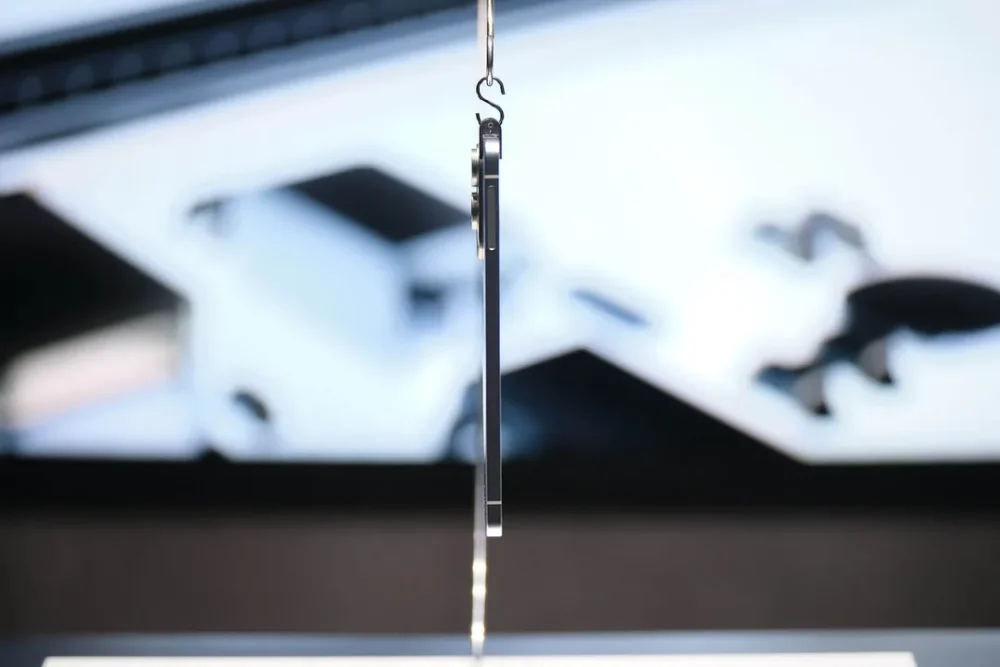
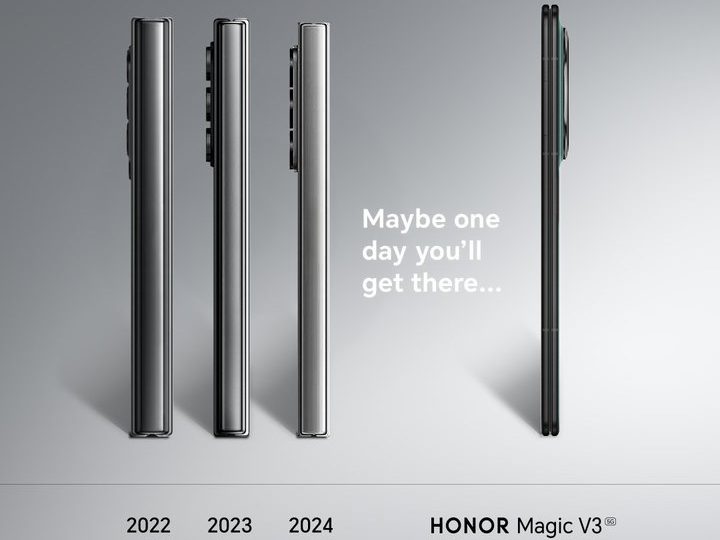
Samsung has already teased its ultra-thin Galaxy S25 Edge. Now, Honor is stepping into the same arena for bar phones. According to a recent leak from Weibo tipster Digital Chat Station, the brand is reportedly developing a 6.3-inch (which is considered to be compact) phone, which is also “ultra-thin”. The brand has already made multiple headlines with its super slim book-style foldables, so it will be interesting to see how thin this compact phone gets and how it impacts the durability.
Samsung Galaxy S25 Edge
A new trend in the smartphone market?
This development signals a new trend in the smartphone market, where brands are prioritizing compact, slim, and lightweight design once again. Nonetheless, DCS didn’t reveal much about the phone apart from the display size.
Rumors suggest Samsung’s Galaxy S25 Edge measures just 5.84mm in thickness, weighs 162 grams, and will retail at $999. Despite its premium design, Samsung is reportedly producing only 40,000 units initially. This cautious approach highlights the niche appeal of ultra-thin devices as of now.
Honor’s development is expected to motivate other Chinese brands to start working on slim devices, which would potentially lead to the development of more innovative and consumer-friendly products.
The Chinese smartphone makers have already adopted the Si/C battery tech, which packs much higher energy density than traditional Li-ion batteries and consumes less internal volume while offering the same capacity.
You probably have noticed the recent boom in battery capacity, where 6000 mAh capacity (up from 5000 or 5,500mAh) has become a new standard. The upcoming Honor X60 GT is rumored to pack a whopping 8000 mAh battery. Not to mention, this new battery tech also serves as an advantage when designing slimmer and more compact phones. You don’t have to compromise on the battery capacity as much.
While there’s no specific information about the use of Si/C battery inside the upcoming slim and compact Honor device, it seems likely.
That said, the slim and compact phone from Honor could come with a reasonably higher battery capacity than the Galaxy S25 Edge or could be significantly slimmer than that, as there’s no word on Samsung’s adoption of the new battery technology. More information will likely surface as we inch closer to the launch.
Samsung’s latest One UI 7 beta update for the Galaxy Z Fold 6 and Galaxy Z Flip 6 comes with a notable fix: the Now Bar pill finally shows up for media playback, which isn’t the case for the Galaxy S25 and S24 series. While the update for the latest foldables doesn’t introduce major changes, it resolves the Now Bar functionality, which makes this development worth a headline.
Image: Samsung
Now Bar functions:
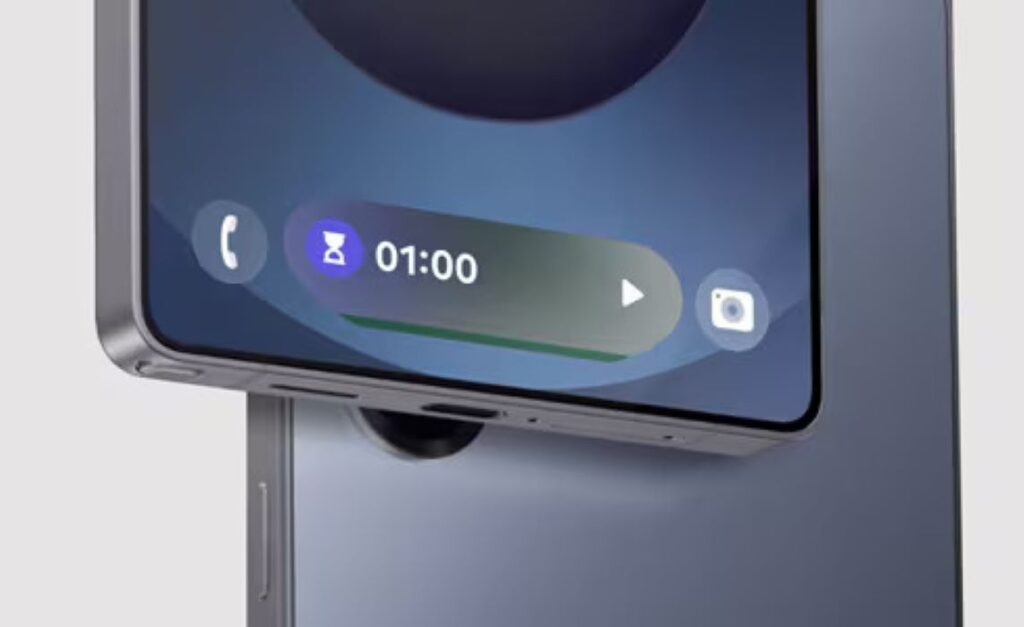
For those unfamiliar, the pill-shaped Now Bar widget displays ongoing activities like timers, music playback, and food delivery tracking as a pill-shaped widget in the status bar and on the lock screen.
However, on devices like the Galaxy S25 series and some A-series phones running One UI 7, the Now Bar pill for media playback does not show up on the status bar. This bug also affects the Galaxy S24 series running the One UI 7 beta, where the media playback widget doesn’t even appear in the notifications shade. Not to mention, users of the series using the beta update have no other option but to access it through the expanded quick panel.
In contrast, the Galaxy Z Fold 6 and Galaxy Z Flip 6 running One UI 7 beta have no such limitations. On these foldables, the Now Bar and media playback widget function as intended and offer easy access to media controls. This improvement is a welcome change, and we expect the S25 series to get the necessary fixes soon.
According to the source, some of the new Galaxy AI features seen on the Galaxy S25 series are absent from this update on the 6th generation foldables. Some of the new AI features will remain exclusive to the latest models? Well, it’s still in beta, and only time will tell if the previous speculations were right. We’ll share more information as soon as it becomes available.
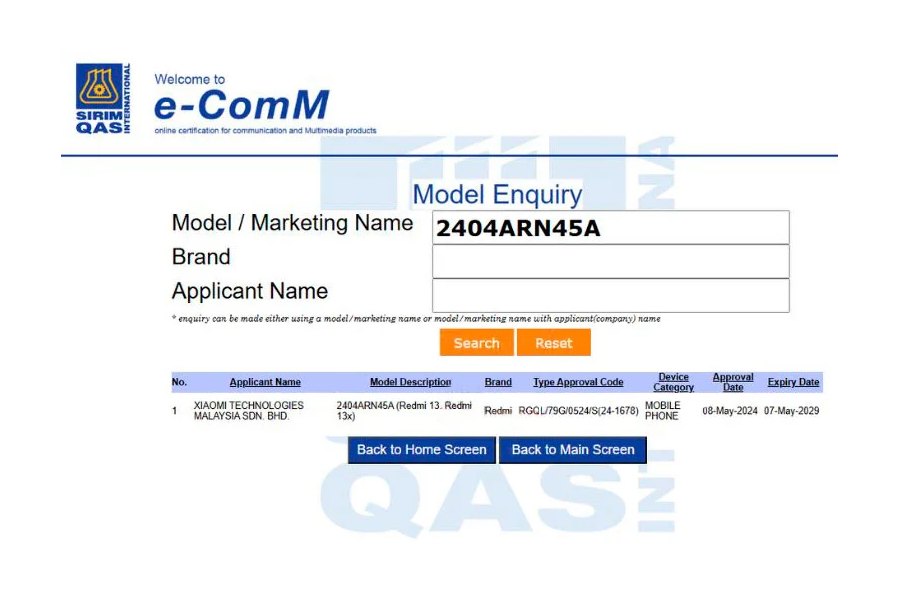
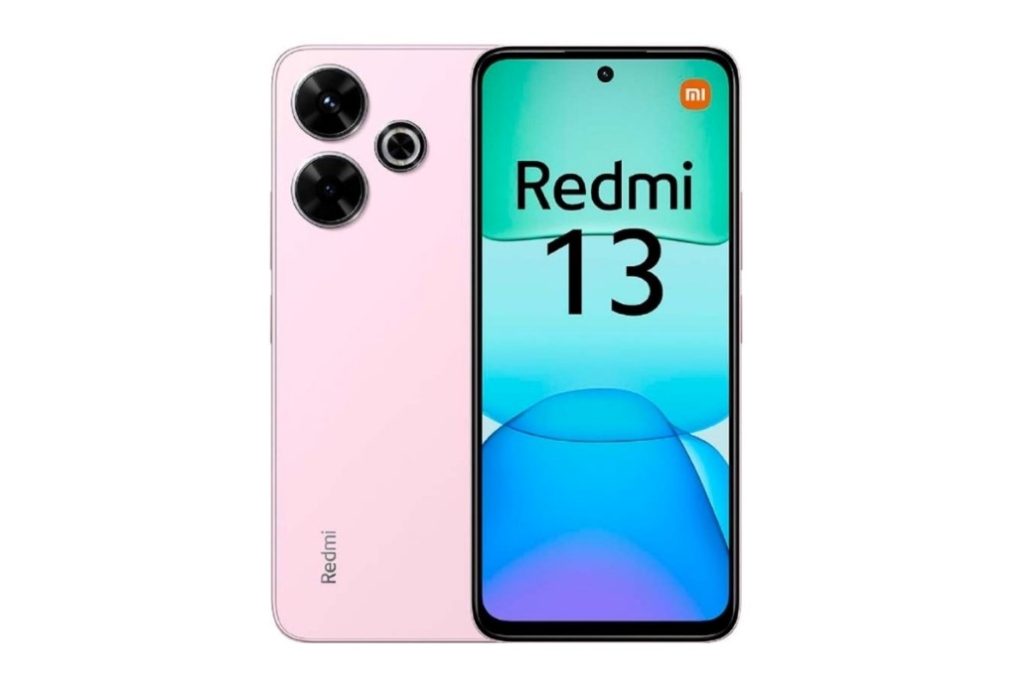
Xiaomi’s upcoming Redmi 13X has just surfaced in Malaysia’s SIRIM certification database, suggesting that the device’s official debut could be right around the corner. This listing follows the smartphone’s earlier appearance in GSMA’s telecom database back in January.
What’s interesting here is that the Redmi 13X appears to carry the same model number as the Redmi 13 4G. Even the SIRIM certification itself mentions both names under the same model number confirming that the two phones are essentially identical.
This wouldn’t be the first time Xiaomi has rebranded an existing phone with a new name though. The company has a track record of repackaging older devices.
Take the Redmi Note 11 SE, for example — launched in India in 2022, it was essentially a rebadged Redmi Note 10S from the previous year. So, the Redmi 13X following a similar pattern isn’t exactly surprising.
What can you expect from Redmi 13x?
If the rumored specs hold true, the Redmi 13X will sport a 6.79-inch IPS LCD display with a Full HD+ resolution and a 90Hz refresh rate. Powering the phone is expected to be MediaTek’s Helio G91 Ultra chipset, which should offer adequate performance for day-to-day use.
In the camera department, the device is tipped to feature a 108MP main sensor and a 13MP front-facing camera for selfies. A sizable 5,030mAh battery with 33W fast charging support is also on the cards, ensuring it can comfortably last through a full day’s use.
While Xiaomi hasn’t announced an official launch date yet, regulatory sightings like this often mean the Redmi 13X’s arrival could be just weeks away.
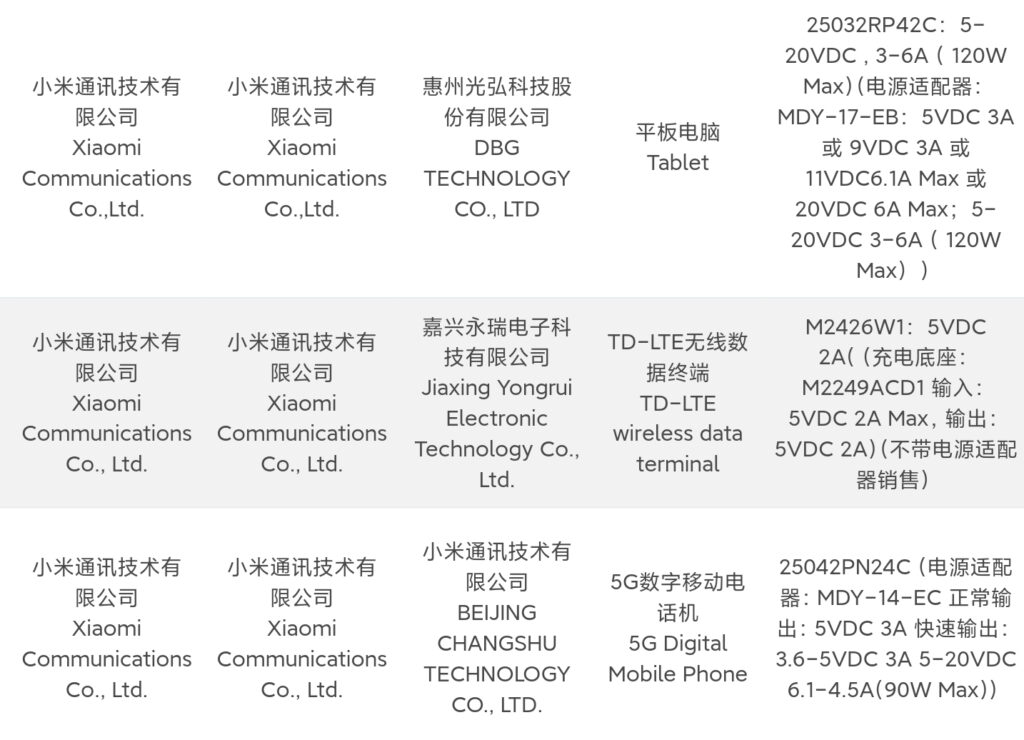
Xiaomi may introduce a new smartwatch, as indicated by a recent 3C certification listing in China. The device, identified by model number M2426W1, is possibly linked to the current Watch S4 series (M2424W1) but includes upgraded features. The certification confirms eSIM support and compatibility with a 10W charger (5V/2A).
Xiaomi has not confirmed the device’s branding, but eSIM support typically indicates a higher-end model, suggesting it could be an iterative update to the Watch S4 or a new variant like a “Watch S4 Pro.”
The smartwatch is expected to launch alongside two other devices: a new tablet rumored to feature a high-end OLED display and Xiaomi’s second-generation clamshell-style foldable smartphone.
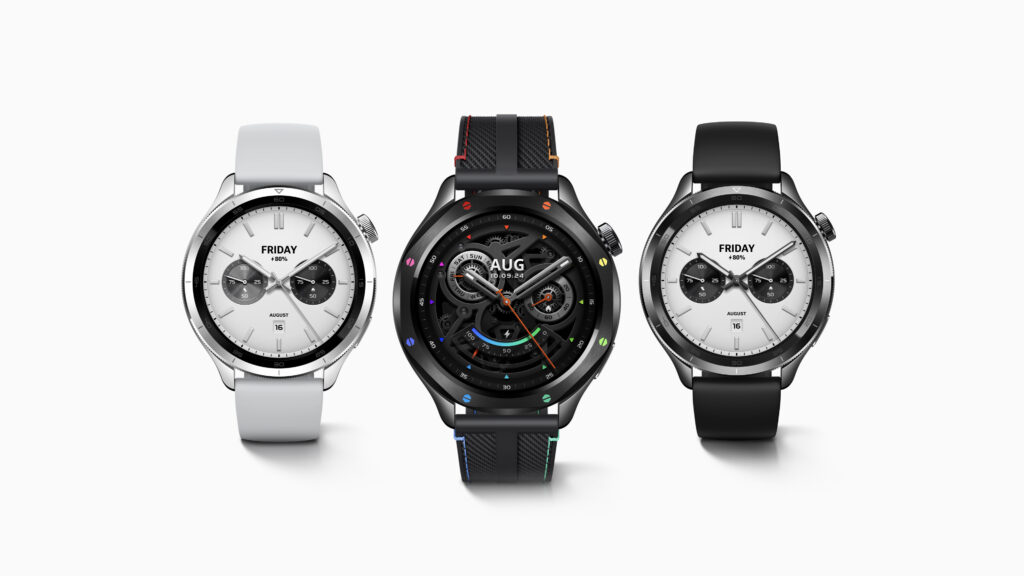
The current lineup of smartwatches by Xiaomi includes the Watch S4 and the Watch S4 Sports. The brand recently introduced the Watch S4 in the global market. It has a 1.43-inch AMOLED display (466 x 466, 326 ppi, 60Hz) with 1500 nits brightness for clear visibility. It offers a 15-day battery life, with a 5-minute charge providing 2 days of use. It monitors heart rate (98% accuracy), blood oxygen, stress, and sleep. The watch also has a One-Tap Insights feature that generates a health report in 60 seconds.
In other news, Xiaomi has also introduced the Smart Band 9 Pro, featuring a narrow-edge AMOLED display with a 77% screen-to-body ratio, 1200 nits brightness, and a 336 x 480 resolution. It is powered by a 350mAh battery, it offers up to 21 days of usage on a single charge. The band includes built-in GNSS for precise outdoor tracking and supports over 150 fitness modes.
For more daily updates, please visit our News Section.
Spring is a season of renewal, and there’s no better way to welcome the warmer days than with a fresh Casio watch. We compiled a short list of watches that feature classic designs, adding a touch of elegance and practicality to your wardrobe. So here’s a look at why Casio watches are the must-have accessory for spring and how they can elevate your style this season.
Just last week, Casio officially announced its Spring 2025 G-Shock collection. Within this new series, the company announced the Oasis of Day and Night collection which includes four models, namely Casio GA-110AS-2AJF, GA-2100AS-5AJF, GA-2100AS-2AJF, and the GA-110AS-5AJF. These G-Shock watches draw inspiration from the light and water in desert landscapes, evoking the enchanting midsummer sun.
There are two color options (Biege and Dark Gray) for the two different variants. The classic GA-110AS models have the iconic bulky and rugged design with a sparkling water like aesthetic, while the GA-2100AS versions have a translucent skeleton dial and vapor-deposited indexes.
2. Casio G-Shock x Li-Ning & Baby-G x Chums
Casio recently collaborated with known Chinese sportswear Li-Ning and outdoor lifestyle brand Chums for a G-Shock and a Baby-G watch models. The first is the G-Shock DW-5600LICH25-5PFL which features the iconic square design but adds a touch of military aesthetic. It has a beige resin case that is complemented with a removable camouflage-patterned fabric strap.
On the other hand, the Baby-G BA-110XLICH25-7PFL has a completely different design philosophy with more playful and lighter colors. It has a frosted white resin case that includes hints of purple and blue and a layered dial that has metallic pink and silver accents. You can also see a subtle Chums branding on the dial.
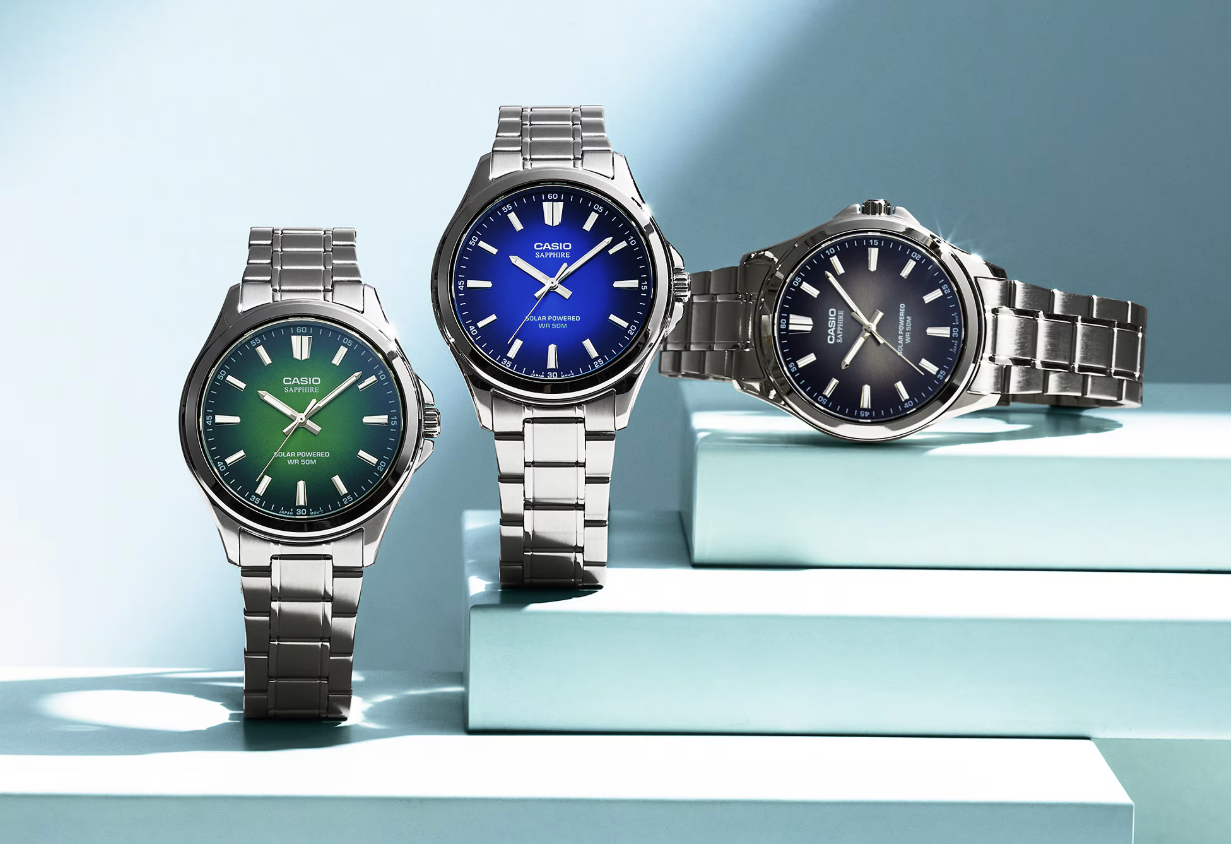
3. Casio MTS-S100 Series With Sapphire Crystal
Moving to a more elegant selection of watches, you get the brand new Casio MTS-S100 series. The aspect that sets these watches apart is the premium design that blends the a metal body with sapphire crystal glass that has an anti-glare coating for scratch resistance and clear visibility.
These also have Casio’s Tough Solar technology that aids battery life by recharging via ambient lighting. Furthermore, the dials use a vapor deposition process for a gradient color transition. You can buy this model in four elegant color options, namely green, blue, gray, and brown. The Casio MTS-S100 series can be paired with either stainless steel or leather. Each of the four versions also offers 50 meter water resistance as well.
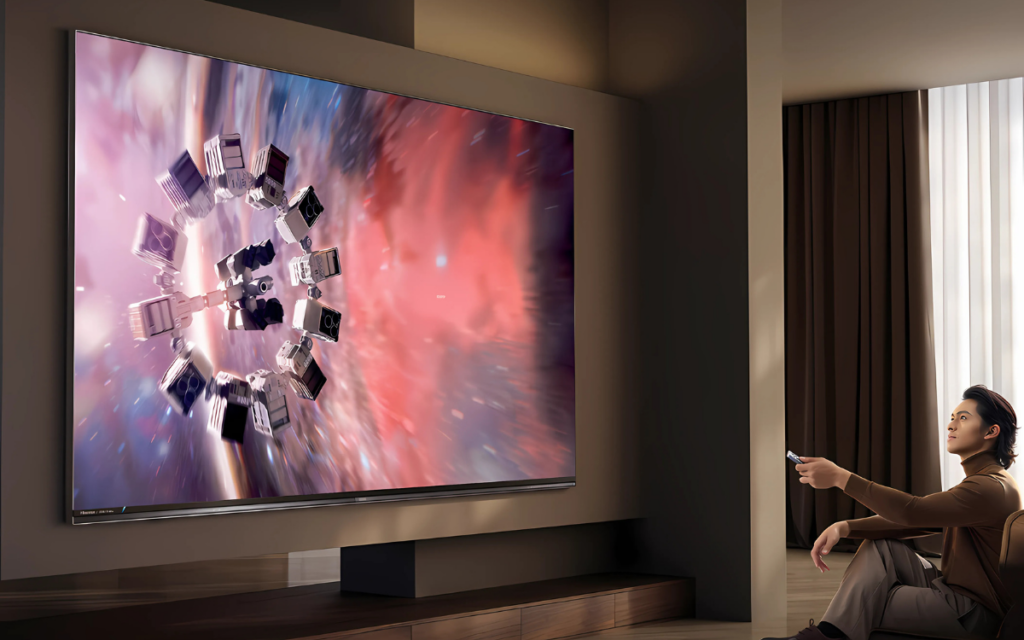
Hisense is pushing the boundaries of display technology with its newly launched E8Q and E8Q Pro series TVs, which promise an ultra-smooth 330Hz system-level refresh rate, AI-driven visual optimization, and premium audio tuned by Devialet. With aggressive pricing starting at 7,499 yuan (~$1,040), these Mini LED-powered displays aim to deliver an uncompromised entertainment experience.
Hisense E8Q and E8Q Pro Specifications
At the core of the E8Q and E8Q Pro series is Hisense’s proprietary Obsidian Screen technology, designed to deepen blacks while reducing reflections for a more immersive viewing experience. The standard E8Q features an Obsidian Screen Pro, while the E8Q Pro steps it up with an Obsidian Screen Ultra, ensuring crisper contrast and superior light control.
These ULED TVs are built for fast action, supporting a 330Hz system-level refresh rate, one of the highest available on a consumer television. Whether it’s competitive gaming or high-speed sports, motion clarity is taken to the next level, aided by AI motion compensation that minimizes blur. The E8Q series also packs Hisense’s U+Mini LED Halo Control System, optimizing brightness and local dimming for enhanced HDR visuals.
Under the hood, the E8Q runs on the Xinxin AI Picture Quality Chip H6, while the E8Q Pro gets an upgrade to the H7 processor. These chips drive AI-powered enhancements like AI Light and Color Control, ensuring precise adjustments to brightness and color accuracy in real time. The E8Q Pro, in particular, boasts 6120 local dimming zones and XDR Pro technology, enabling an astounding 8500-nit peak brightness for HDR content that pops off the screen.
Gaming is a clear priority, with both models featuring four full-bandwidth HDMI 2.1 ports capable of delivering 4K at 170Hz. They are FreeSync Premium Pro-certified, eliminating screen tearing and ensuring a fluid gaming experience, even at high frame rates.
Audio performance isn’t an afterthought here. Hisense has partnered with Devialet to equip the E8Q with a 4.1-channel speaker system, while the E8Q Pro takes it further with a 4.1.2-channel Devialet Cinema Sound setup. The result? Room-filling audio with deep bass and crisp highs, enhanced by Dolby Atmos and IMAX Enhanced certification. Hisense’s AI spatial sound optimization further fine-tunes the output based on room acoustics.
Both models run on Android 14, providing a streamlined interface packed with AI-powered features like DeepSeek AI, which dynamically optimizes visuals based on content. The E8Q comes with 4GB of RAM and 64GB of storage, while the Pro variant bumps storage up to 128GB, ensuring smooth performance and ample space for apps.
Aesthetically, Hisense sticks to a sleek, Bauhaus-inspired design. The E8Q sports a razor-thin 44mm chassis, while the E8Q Pro is just 46mm thick, with an 8mm wall-mount gap that allows them to blend seamlessly into any space. With Pantone Color Certification and Dolby Vision IQ support, these displays promise pro-grade color accuracy straight out of the box.
Pricing and Availability
The Hisense E8Q series starts at 7,499 yuan (~$1,040) for the 65-inch model, while the 75-inch variant is priced at 9,999 yuan (~$1,385). The 85-inch version comes in at 12,999 yuan (~$1,800), and the largest 100-inch model costs 22,999 yuan (~$3,180).
Meanwhile, the Hisense E8Q Pro lineup offers a 75-inch model for 13,599 yuan (~$1,885), an 85-inch variant at 17,999 yuan (~$2,490), and a 100-inch version priced at 27,999 yuan (~$3,870).
For more daily updates, please visit our News Section.
We use cookies on our website to give you the most relevant experience by remembering your preferences and repeat visits. By clicking “Accept”, you consent to the use of ALL the cookies.
This website uses cookies to improve your experience while you navigate through the website. Out of these, the cookies that are categorized as necessary are stored on your browser as they are essential for the working of basic functionalities of the website. We also use third-party cookies that help us analyze and understand how you use this website. These cookies will be stored in your browser only with your consent. You also have the option to opt-out of these cookies. But opting out of some of these cookies may affect your browsing experience.
Necessary cookies are absolutely essential for the website to function properly. This category only includes cookies that ensures basic functionalities and security features of the website. These cookies do not store any personal information.
Any cookies that may not be particularly necessary for the website to function and is used specifically to collect user personal data via analytics, ads, other embedded contents are termed as non-necessary cookies. It is mandatory to procure user consent prior to running these cookies on your website.