Well-known tipster Digital Chat Station has shared a fresh leak that hints at the display specifications of an upcoming iQOO 15 series device. While the tipster has not explicitly mentioned whether it pertains to the standard iQOO 15 or the Pro variant, the size of the panel suggests it could be the latter. The leak offers insight into the screen technology and potential enhancements over previous models.
iQOO 15 Pro display specifications (rumored)
iQOO 15 Pro display specifications
Several Chinese tech bloggers have recently claimed that flagship phones launching by the end of this year will incorporate displays manufactured by Samsung. The latest leak indicates that the iQOO 15 Pro may feature a flat 6.85-inch 2K LTPO OLED display, likely sourced from Samsung Display. The panel is also expected to incorporate LIPO (Low-Temperature Polycrystalline Oxide) technology, which could improve power efficiency and overall display performance.
This aligns with an earlier claim by tipster Smart Pikachu, who had suggested that the Pro model would come with a flat OLED panel offering 2K resolution, eye protection features, and an ultrasonic in-display fingerprint scanner.
Apart from display advancements, the previous leak also hinted at a 7,000mAh battery, which would be one of the largest in an iQOO flagship. Additionally, the device is expected to include a periscope telephoto camera, though specific details about its optical zoom capabilities remain unknown. The series is likely to be powered by the Snapdragon 8 Elite 2, which is set to debut in October 2025.
iQOO 15 series to feature two models
The iQOO 15 series is expected to consist of two models— a standard iQOO 15 and the iQOO 15 Pro. This marks a shift from the previous generation, where only one model was released. Reports also suggest that iQOO may skip the “iQOO 14” moniker due to cultural superstitions around the number 4 in some Asian markets.
For more daily updates, please visit our News Section.
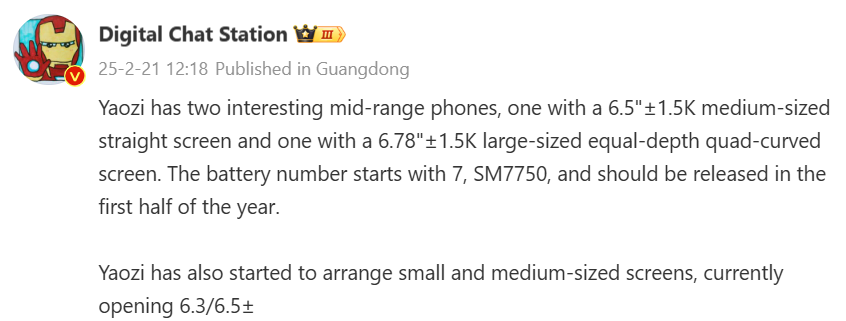
In a previous leak, reliable tipster Digital Chat Station revealed the display specifications of the alleged Honor 400 and 400 Pro smartphones. Today, the tipster is back with a new leak about an Honor phone. While he has not specified the name of the device, it could be referring to the Honor 400 Pro.
DCS’ previous leak suggested that the Honor 400 series will have two models. One of them will feature a 6.5-inch flat OLED panel with a 1.5K resolution, whereas the larger model may arrive with a 6.78-inch quad-curved screen with ultra-thin bezels on all four sides. The leak also claimed that both phones would be powered by the upcoming Snapdragon 7 Gen 4 (SM7550) chipset and pack a battery with around 7,000mAh capacity.
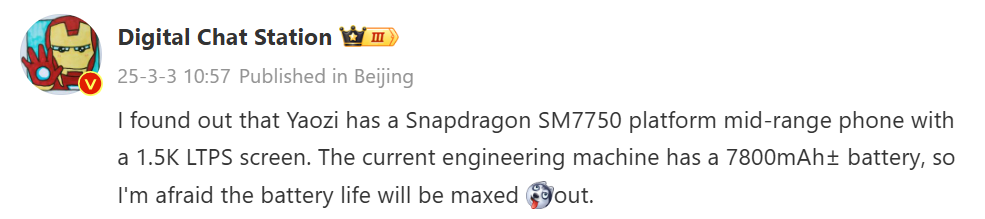
The latest leak (shown above) states that an Honor phone featuring the Snapdragon 7 Gen 4 chip will come with a 1.5K resolution LTPS panel. He added that the current engineering prototype of the device packs a 7,800mAh battery.
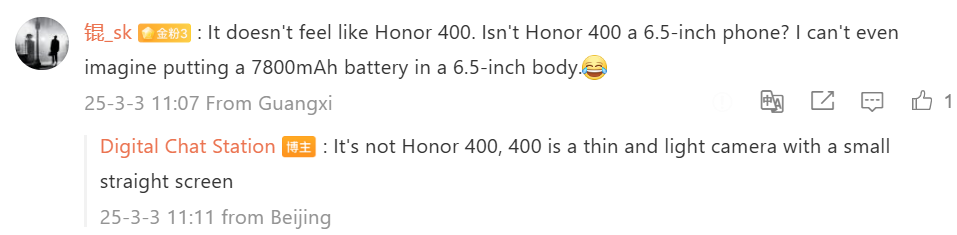
He further mentioned in the comments section of the same Weibo post that this leak is not about the Honor 400, as it is a compact, lightweight phone with a flat display—indirectly hinting that the above-mentioned phone has a larger display with a curved design.
While other details of the Honor 400 series are under wraps, it is expected to go official in China by May of this year. It is speculated that the 400 lineup will face competition from the Oppo Reno 14 series and the Vivo S21 series, which are expected to launch around the same time in China.
For more daily updates, please visit our News Section.
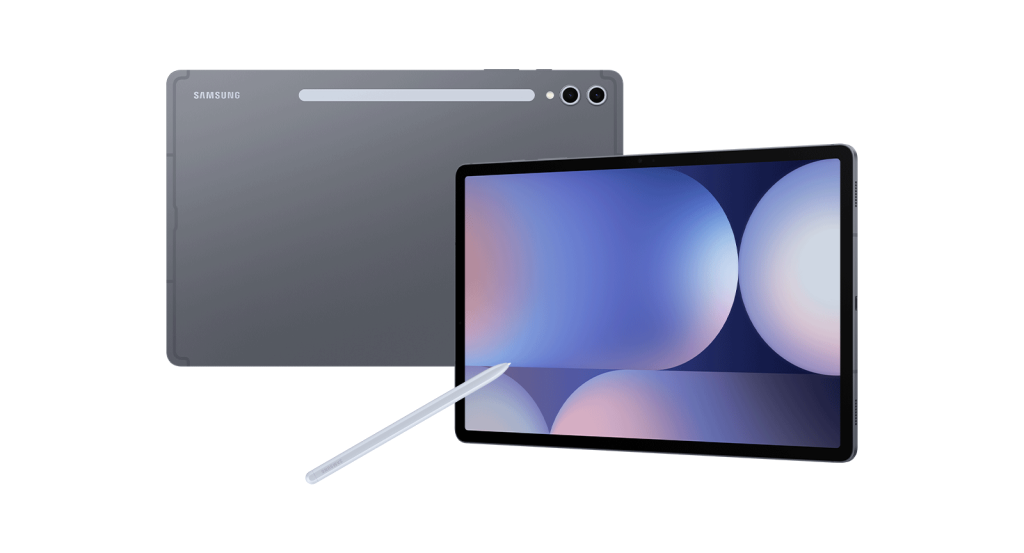
Samsung is preparing to launch its Galaxy Tab S10 FE series, and a fresh leak has provided a detailed look at the upcoming tablets. The leak, courtesy of WinFuture, reveals official renders and key specifications, highlighting features such as large displays, Exynos 1580 chipset, and 5G connectivity. The tablets are expected to launch in multiple markets soon.
The Galaxy Tab S10 FE series will include two models – the standard Galaxy Tab S10 FE and the Galaxy Tab S10 FE+. The base model will feature a 10.9-inch LCD screen with a 2304 × 1440 resolution and up to 800 nits brightness. Meanwhile, the Galaxy Tab S10 FE+ will sport a massive 13.1-inch display with a 2880 × 1800 resolution, making it the largest screen on any Samsung Android tablet.
For photography, the tablets will feature a 12-megapixel front camera and a 13-megapixel rear camera with an LED flash. Other features include Wi-Fi 6E, NFC, Bluetooth 5.3, and a fingerprint scanner. The Tab S10 FE will house an 8,000mAh battery, while the Tab S10 FE+ will pack a larger 10,090mAh unit, both supporting 45W fast charging via USB-C.
Powering the devices is Samsung’s in-house Exynos 1580 processor. The tablets will come with 8 GB of RAM and 128 GB of storage in the base variant, while the higher-end versions will offer 12 GB of RAM and 256 GB of storage. Both models will be available in Wi-Fi-only and 5G variants.
Both models will support the Samsung S Pen for writing and drawing. In terms of design, Samsung has opted for a metal chassis with an IP68 rating, making the tablets both durable and water-resistant. While Samsung has yet to officially announce pricing and availability, the tablets are expected to launch in the coming weeks in Germany and other markets in blue, grey, and silver colour options.
Both devices have bagged several certifications in recent weeks, indicating that it may launch later this month in different markets.
For more daily updates, please visit our News Section.
Lenovo has unveiled the upgraded Yoga Pro 9i Aura Edition at MWC 2025, which boasts significant improvements in display technology, performance, and AI capabilities. With its new 3.2K PureSight Pro tandem OLED display, Intel Core Ultra 9 285H Arrow Lake-H CPU, and Nvidia GeForce RTX 5070 Laptop GPU, the Yoga Pro 9i Aura Edition is a powerhouse that also happens to leverage AI for enhanced productivity and creativity.
A stunning display for consumers, paired with strong performance
The Yoga Pro 9i Aura Edition features a 16-inch 3.2K PureSight Pro tandem OLED display with a resolution of 3,200 x 2,000 pixels. The screen boasts a peak brightness of 1,600 nits and is certified for Dolby Vision HDR and VESA DisplayHDR True Black 1000.
It covers 100% of the sRGB, Display P3, and Adobe RGB color spaces, which also makes it ideal for creative professionals. A touchscreen variant is also available for those who prefer hands-on interaction.
Image: Lenovo
As a Copilot+ PC, the Yoga Pro 9i Aura Edition integrates AI into various applications. It can use AI to enhance audio, video, and photo editing workflows. Nonetheless, it’s up to the manufacturer to build on these AI capabilities.
Lenovo has already included some of its own AI tools, such as Lenovo Creator Zone and Lenovo X Power, which optimize performance and cooling. The laptop achieves a combined 130W TDP from its CPU and GPU, ensuring smooth multitasking and gaming experiences.
Under the hood, the device is powered by the Intel Core Ultra 9 285H Arrow Lake-H CPU, paired with up to 64GB of LPDDR5X-7467 RAM and 1TB of PCIe NVMe storage. Graphics are handled by the Nvidia GeForce RTX 5070 Laptop GPU with 8GB of GDDR7 VRAM, which makes it capable of handling demanding creative and gaming tasks with ease.
The Yoga Pro 9i Aura Edition includes a 5MP webcam for high-quality video calls and a six-speaker Dolby Atmos system (2x 2W tweeters and 4x 2W woofers) for immersive audio.
Ports, pricing, and availability
Connectivity options are robust, featuring Wi-Fi 7, Bluetooth 5.4, 2x USB4 Type-C ports, 1x HDMI 2.1, 2x USB 3.2 Gen1 Type-A ports, an SD card reader, and a 3.5mm combo audio jack. The laptop also houses an 84WHr battery to keep you powered throughout the day.
This beast will reportedly be available in Tidal Teal and Luna Grey color options starting June 2025, with prices beginning at €1,699. This premium laptop is a compelling choice for those seeking a blend of performance, design, and AI-driven innovation.
The Xiaomi 15 Ultra has finally been unboxed and put through its paces in a hands-on video. This highly anticipated device promises significant upgrades over its predecessor, the Xiaomi 14 Ultra, particularly in its camera system and performance.
Unboxing the Xiaomi 15 Ultra
The unboxing experience of the Xiaomi 15 Ultra feels familiar yet refined. The box features a new “Ultra” logo on the side, which is inspired by the font used for Xiaomi’s SU7 Ultra supercar. Inside, you’ll find the usual accessories: a SIM ejector tool, user manual, transparent PC case, USB-A to USB-C cable, and a 90W fast charger.
Design and specification changes:
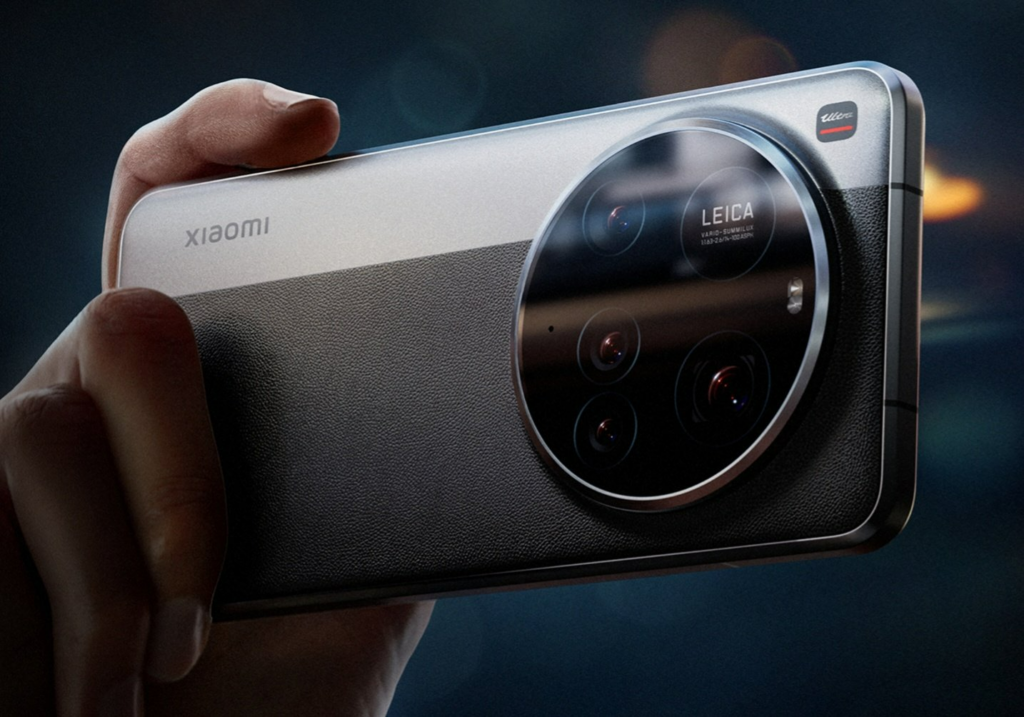
The Xiaomi 15 Ultra’s design is polarizing. The camera module, with its unconventional layout, feels like “something a second-grader would draw.” While some may argue that the design is a necessary compromise to accommodate the large sensors, others might find it visually unappealing. However, after spending some time with the device, the design grows on you, thanks to its premium build quality and ergonomic feel.
The frame extends seamlessly to the back panel, eliminating any noticeable seams and providing a comfortable grip. Xiaomi has also introduced two vegan leather editions (white and black), which exude a retro, camera-like aesthetic. The white version features curved strips on the back, while the black model sports a red ring around the camera module. Overall, the design choices are bold and distinctive.
The Xiaomi 15 Ultra’s camera system is its standout feature. It boasts a 1-inch main sensor, a 200MP telephoto camera (using Samsung’s ISOCELL HP9 sensor), and a suite of lenses coated with advanced flare-reduction technology. This 100mm telephoto lens is a game-changer for long-range zoom.
However, there are some compromises too. The variable aperture on the main camera has been removed, the ultra-wide-angle sensor has been downgraded, and the 100mm telephoto lens doesn’t support macro photography. How these changes impact real-world performance remains to be seen.
Under the hood, the phone is powered by the Snapdragon 8 Elite chip, which, paired with a large heat sink, ensures top-notch performance. The device has already been taken apart by WekiHome, and you can check it out from the inside here.
The battery has been upgraded to 6,000 mAh, a significant improvement over the previous generation. However, the charging speed remains unchanged at 90W.
The phone starts at around $889 in China, the same price as its predecessor. For those eager to get their hands on it, pre-orders are already live, and the device can be shipped globally.
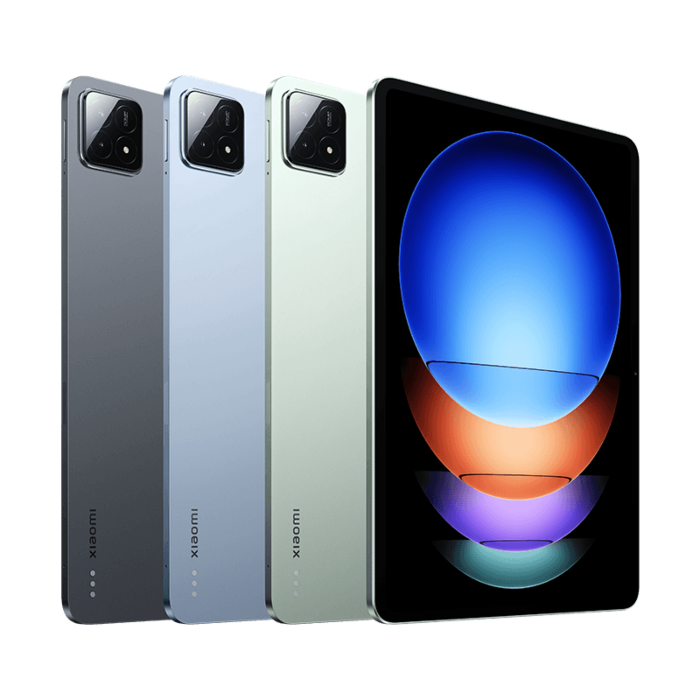
Xiaomi unveiled its Pad 7 and Pad 7 Pro tablets in China back in October 2024, and while the standard Pad 7 just made its global debut at MWC 2025, the lineup might not be done expanding.
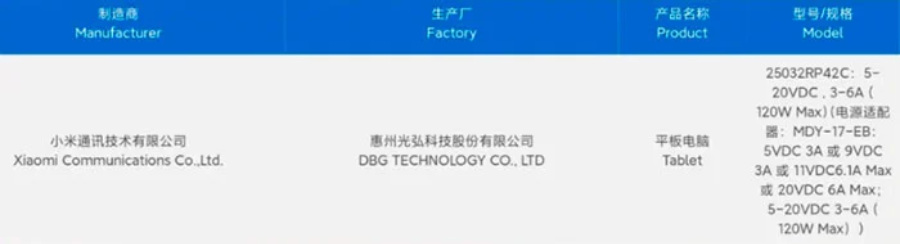
According to recent leaks, Xiaomi is working on another addition to the series, and the device has now surfaced on China’s 3C certification database.
A report from a Russian blog suggests this could be the Xiaomi Pad 7S Pro, a successor to last year’s Pad 6S Pro. The tablet appeared in regulatory filings under the model number 25032RP42C, and notably, it seems to support 120W fast charging.
However, the 3C certification doesn’t mention any cellular connectivity, suggesting this might be a Wi-Fi-only variant.
The model number—specifically the “2503”—hints at a possible March 2025 launch. Details are still scarce, but if it’s anything like the Pad 6S Pro, we can expect premium specs.
For reference, the Xiaomi Pad 6S Pro features a 12.4-inch display with a 3K resolution and a 144Hz refresh rate. It packs a dual-camera setup on the back, with a 50MP main sensor and a 2MP depth lens, while the 20MP front camera skips the 3D ToF sensor found on its Max sibling.
Under the hood, the Pad 6S Pro runs on Qualcomm’s Snapdragon 8 Gen 2, paired with up to 16GB of RAM and 1TB of storage. Powering the device is a 10,000mAh battery with support for 120W fast charging. It also marked the first Xiaomi tablet to ship with HyperOS pre-installed.
Connectivity-wise, the Pad 6S Pro includes Wi-Fi 7, Bluetooth 5.3, and a USB-C port. If the Pad 7S Pro follows in its footsteps, it could be one of the most powerful Android tablets on the market.
For now, there’s no official word from Xiaomi, but with a possible launch window after March, we might not have to wait long to find out more.
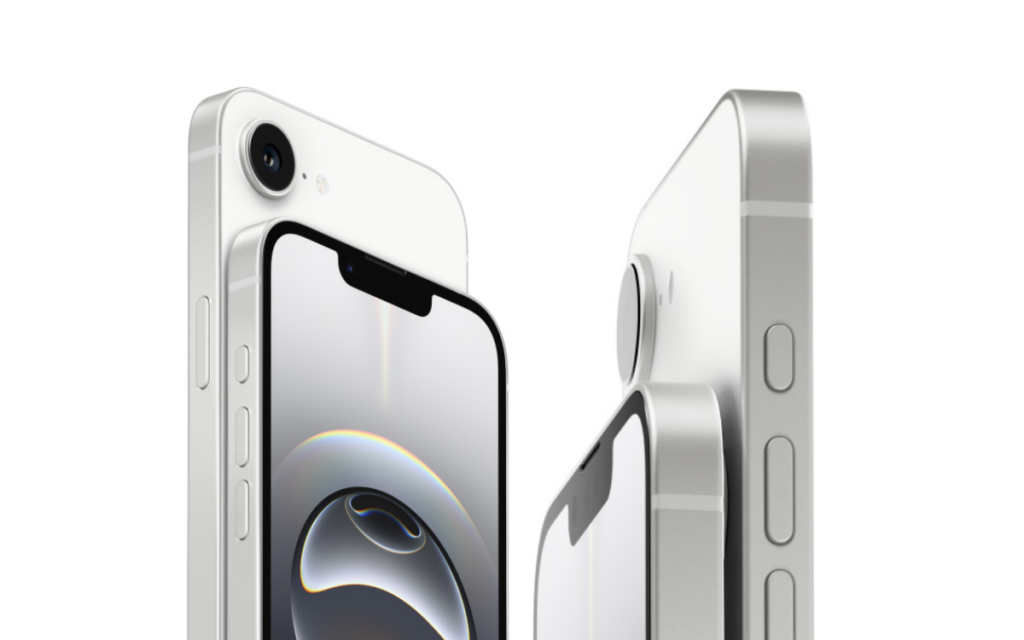
Apple’s iPhone 16e is an odd device. It exists in a strange limbo between the iPhone SE and the iPhone 16, offering an awkward mix of new and old features at a price that doesn’t quite justify its existence.
While Apple is clearly positioning the 16e as an entry-level iPhone for users who don’t need all the bells and whistles, the compromises make it hard to recommend, especially when the iPhone 15 or even the iPhone 16 are just a bit more expensive. If you’re considering the iPhone 16e, here’s why you might want to look elsewhere.
It’s Too Expensive for What It Offers
The biggest issue with the iPhone 16e is its price. Starting at $599, it sits uncomfortably close to the iPhone 15, which costs just $100 more. For that extra money, you get a brighter display, a second camera, MagSafe charging, and a more refined design.
Historically, the iPhone SE was meant to be a budget-friendly alternative to Apple’s flagship models. The 16e, however, isn’t particularly affordable, especially when compared to Android devices that offer high refresh-rate displays, multiple cameras, and better value for the same price.
No MagSafe
In 2025, MagSafe has become a standard iPhone feature. From chargers to accessories, Apple’s entire ecosystem is built around the magnetic system introduced with the iPhone 12. The iPhone 16e, inexplicably, does not support MagSafe, meaning you won’t be able to use Apple’s wireless battery packs, car mounts, or magnetic wallet attachments.
Instead, it only supports standard Qi wireless charging, which is not only slower but also lacks the convenience that MagSafe provides. This feels like a deliberate omission rather than a necessary cost-cutting measure, and it makes the 16e feel outdated right out of the box.
Notch Instead of Dynamic Island
Apple introduced the Dynamic Island with the iPhone 14 Pro, and by now, most iPhones have adopted it, except for the iPhone 16e. Instead of the more functional, interactive Dynamic Island, the 16e retains the outdated notch design.
This makes the phone feel stuck in the past, especially when even mid-range Android phones are pushing the envelope with punch-hole displays and under-display camera technology. If you’re upgrading from an older iPhone, you’re not getting Apple’s latest UI advancements, which is a serious downside.
A Single Camera That Feels Limited
While Apple touts the 16e’s 48MP main camera, it lacks the versatility of the dual-camera setup on the iPhone 15 and 16. There’s no ultra-wide lens, no macro mode, and no sensor-shift stabilization like on the standard iPhone 16.
Sure, the 16e offers a 2x zoom using sensor cropping, but that’s not the same as having a dedicated telephoto or ultra-wide option. If you care about smartphone photography, even casually, you’re much better off with the iPhone 15, which offers a wider range of shooting options and better overall camera performance.
Battery Life is Good But Not a Game Changer
Apple claims the iPhone 16e has excellent battery life, with up to 26 hours of video playback. That’s great, thanks to its C1 modem, but it’s only marginally better than the iPhone 15, which lasts around 24 hours.
For real battery-life gains, you’d need to jump to the iPhone 15 Plus or iPhone 16 Plus. If battery life is a major factor in your decision, you’re better off getting a phone that truly excels in this area rather than settling for minor improvements. Some Android phones also feature silicon-carbon batteries, offering massive capacity and ultra-fast charging.
Who is the iPhone 16e For?
That’s the million-dollar question. The iPhone 16e doesn’t seem to be aimed at existing iPhone users looking for an upgrade, it lacks key features like MagSafe, an ultra-wide camera, and Dynamic Island. It’s also not a great value for budget-conscious shoppers since $599 is still a lot of money for a phone that’s missing features found on last year’s models.
If you’re coming from an iPhone SE 3 or iPhone 11, the 16e might feel like a step up in some ways, but it also introduces compromises that make it hard to justify over an iPhone 15. And if you’re switching from Android, there are better options in this price range that offer more features and fewer limitations.
Final Verdict: Wait or Spend More
The iPhone 16e is a classic example of Apple trying to create a mid-tier product that doesn’t quite fit anywhere in its lineup. It’s not affordable enough to be a true budget iPhone, but it’s not premium enough to be a compelling alternative to the iPhone 15 or 16.
Unless you can find it at a steep discount, it’s better to either save up for an iPhone 16 or look at a discounted iPhone 15. In 2025, settling for the iPhone 16e feels like settling for less.
For more daily updates, please visit our News Section.
Just days after its debut in China, Xiaomi has officially launched the camera-focused 15 Ultra smartphone for global markets. Alongside it, the standard Xiaomi 15 is also making its international debut. While these devices share much of their DNA with the Chinese variants, there are a few notable differences.
Xiaomi 15 Ultra: Specs and Features
The biggest draw of the Xiaomi 15 Ultra is, unsurprisingly, its camera system. It packs a quad-camera setup featuring a 200MP periscope lens (100mm, f/2.6), a 50MP telephoto lens (70mm, f/1.8), a 50MP 1-inch type main sensor, and a 50MP ultra-wide lens. On the front, there’s a 32MP selfie camera (21mm, f/2.0).
Xiaomi once again teams up with Leica for professional tuning, and the device supports Ultra Dolby Vision video recording at 4K 60fps and 10-bit Log video recording across all focal lengths. It also features a four-microphone array for enhanced audio capture.
Xiaomi 15 Ultra
For photography enthusiasts, Xiaomi is offering a Photography Kit Legend Edition, which is a grip-on case with an accented red camera ring and frame, a thumb grip, a shutter button, a multifunctional 67mm filter adapter ring, and an integrated 2,000mAh battery.
The 15 Ultra sports a 6.73-inch AMOLED display with a 2K resolution, 120Hz refresh rate, and a peak brightness of 3,200 nits, supporting HDR10+ and Dolby Vision. The front is protected by Xiaomi Shield Glass 2.0, while the back is made of a special glass fiber material.
Under the hood, the phone is powered by the Snapdragon 8 Gen Elite processor, paired with up to 16GB of LPDDR5x RAM and 1TB of UFS 4.0 storage. The 5,410mAh battery is slightly smaller than the 6,000mAh one found in the Chinese variant, but charging speeds remain the same—90W wired and 80W wireless.
Other key features include Android 15-based HyperOS 2.0 out of the box, an IP68 rating for dust and water resistance, and Dolby Atmos-tuned stereo speakers.
Xiaomi 15: The More Affordable Flagship
The standard Xiaomi 15 is a more compact and budget-friendly alternative, featuring a 6.36-inch 1.5K OLED display with a 120Hz refresh rate and 3,200 nits of peak brightness.
It is also powered by the Snapdragon 8 Gen 3 Elite processor and comes with a 5,240mAh battery (smaller than the 5,400mAh battery in the Chinese model) with 90W wired and 50W wireless charging support.
For photography, the Xiaomi 15 features a 50MP LightHunter 900 main sensor, a 50MP ultra-wide lens, and a 50MP 3.2x telephoto camera. The front-facing camera is a 32MP OmniVision OV32B40 sensor.
Like its Ultra sibling, the Xiaomi 15 runs HyperOS 2.0 based on Android 15, and comes with an IP68 rating for dust and water resistance, as well as an ultrasonic fingerprint sensor.
Price and Availability
The Xiaomi 15 is available globally in Black, White, and Mint color options and starts at €1,000 for the 12/256GB variant. The 12/512GB model costs €1,100. The Xiaomi 15 Ultra starts at €1,500 for the 16GB/512GB model. Both devices will go on sale globally on March 4.
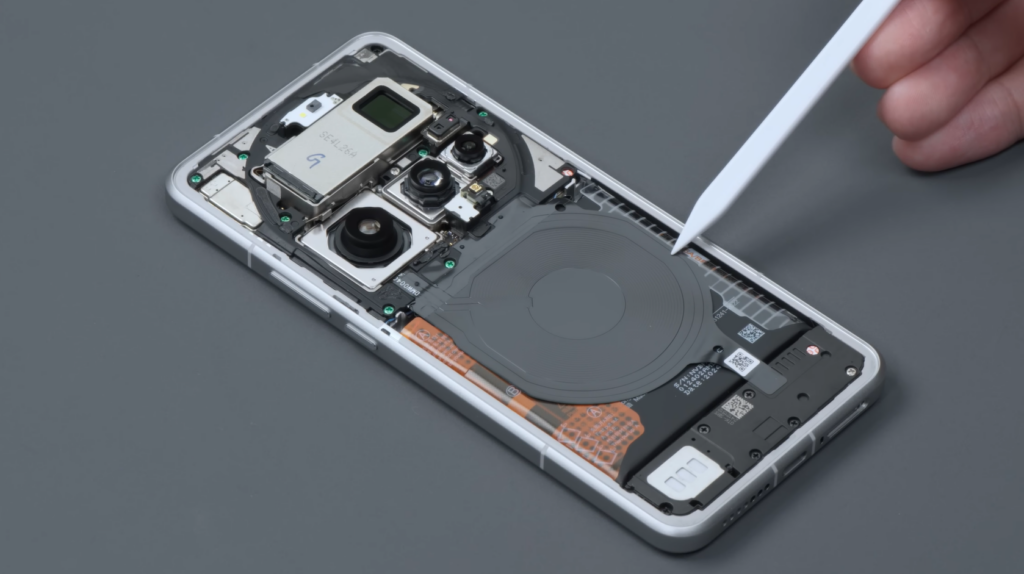
The Xiaomi 15 Ultra, the latest flagship from Xiaomi, has already undergone its first teardown, courtesy of YouTuber WekiHome. Just hours after its official launch in China, the device was disassembled to reveal the internal changes and upgrades Xiaomi has made compared to its predecessor.
The teardown highlights the significant space occupied by the new 200MP telephoto camera and other key modifications to the device’s design and components, such as the battery.
The 200MP telephoto is huge
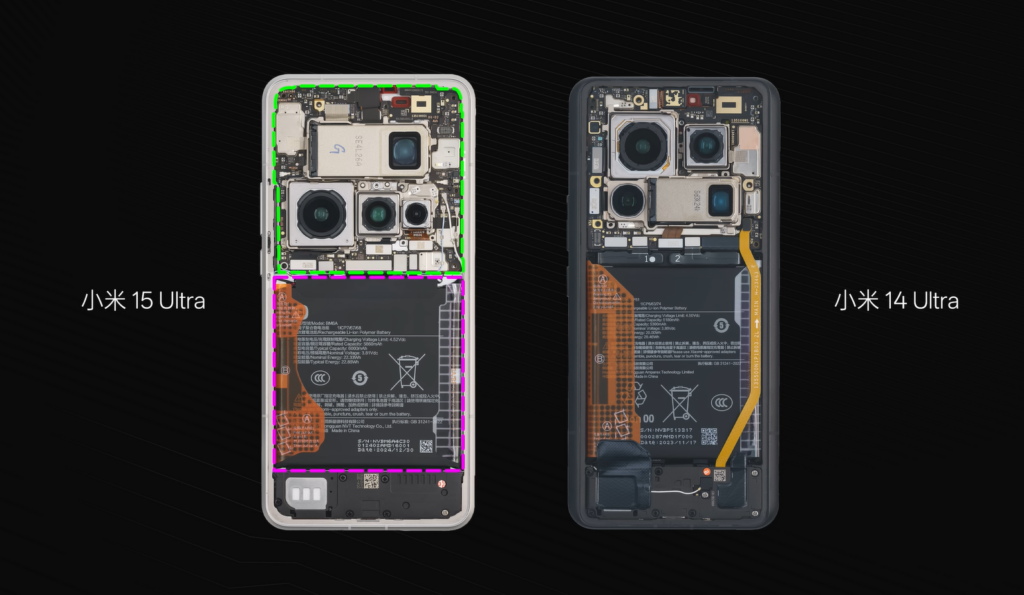
One of the most notable changes in the Xiaomi 15 Ultra is the inclusion of a massive 200MP telephoto camera, which includes the ISOCELL HP9 sensor. This periscope module takes up a significant volume inside the device, necessitating the PCB to span almost half the phone.
Despite this camera upgrade, Xiaomi has managed to maintain an overall sleek design. The Xiaomi 15 Ultra measures 9.4mm in thickness, only 0.2mm higher than that of its predecessor. Although the device remains challenging to repair due to its complex assembly, which includes numerous screws, plastic retaining parts, and, of course, adhesive.
Xiaomi has also removed the variable aperture found on the Xiaomi 14 Ultra, which allowed the camera to switch between f/1.63 and f/4.0. In its place, Xiaomi has introduced a new glass filter designed to better diffuse reflections and improve image quality.
The primary camera sensor, Sony’s LYT-900, has also seen some tweaks. The teardown reveals that Xiaomi has made several internal adjustments to optimize the performance of this sensor.
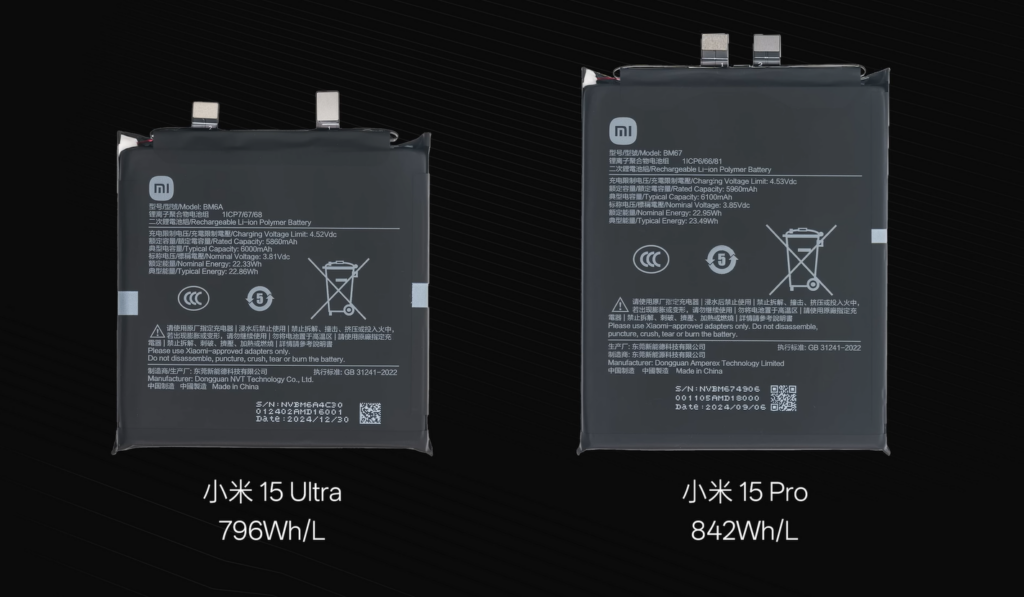
WekiHome compared the internal structure of the Xiaomi 15 Ultra and its predecessor, which provides valuable insights into the evolution of Xiaomi’s ultra flagship lineup. While the new 200MP telephoto camera and larger motherboard are standout features, the teardown also shed some light on the energy density of the new Si/C battery and compared it with the one on the predecessor.
This phone uses the Snapdragon 8 Elite chip and includes a large heat sink. So you can expect top-notch performance with resource intensive apps and games alongside great imaging and video shooting experience.
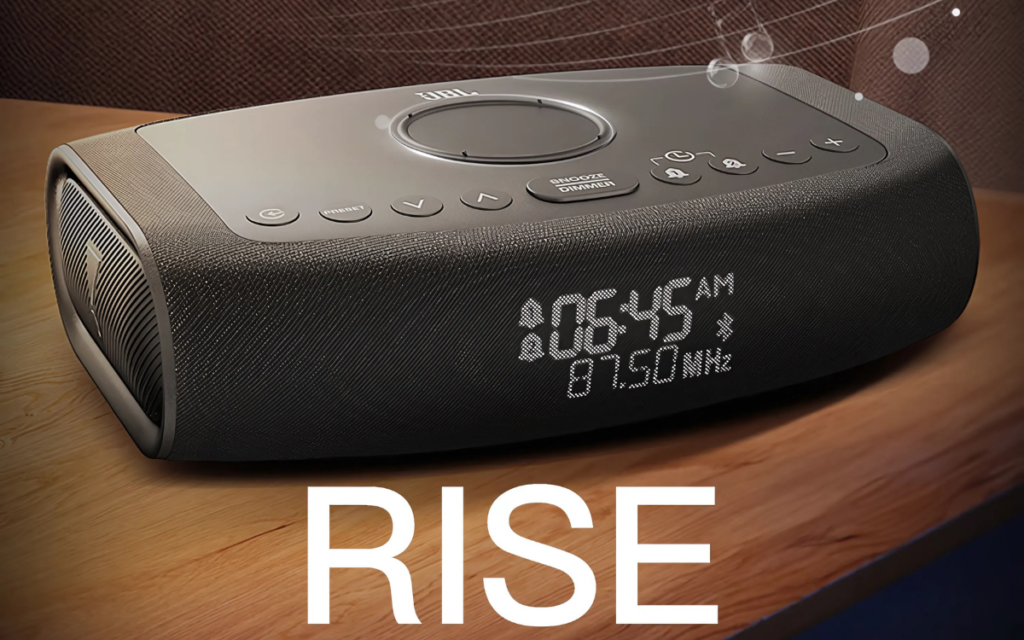
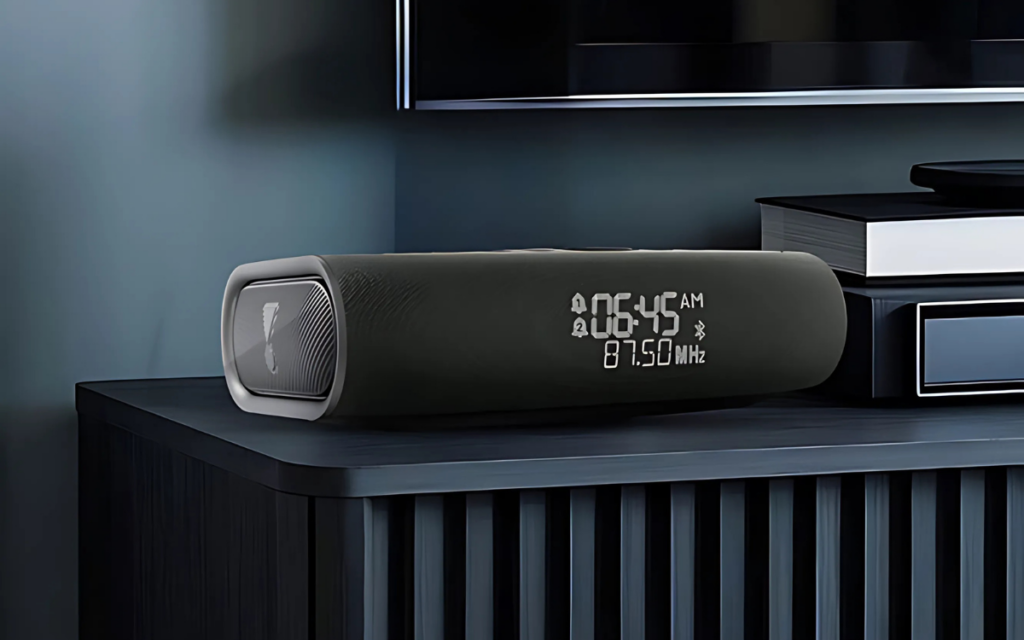
JBL has launched its Rise music alarm clock and Bluetooth speaker in China. It is priced at 999 yuan ($137) and is now up for pre-order on JD.com. Let’s check out its key specs.
JBL Rise Specifications
The JBL Rise features a sleek docking-style design that blends seamlessly into any space. It comes with an adjustable-brightness LED display with large characters for easy visibility and sports physical buttons for intuitive control.
The speaker features dual independent full-range drivers that deliver rich and dynamic audio, ensuring clear and balanced sound whether used for music, radio, or as an alarm clock. It sports Bluetooth 5.3 for a fast, stable connection with low power consumption and high-quality audio transmission. It also comes with FM radio playback, equipped with a high-efficiency metal whip antenna for clear stereo reception, along with support for three preset FM stations for quick access.
The JBL Rise equips a top-mounted 5W wireless charging module for effortless smartphone charging and sports a rear USB port for wired charging. It features a built-in AC power adapter with wide voltage compatibility (100-240V), requiring just a single power cable.
The FM tuner covers a frequency range of 87.5-108MHz, ensuring access to a variety of radio stations. In terms of dimensions, the speaker measures 218mm x 65mm x 148mm and weighs 0.75kg.
In related news, Xiaomi recently introduced the Smart Speaker Pro, featuring enhanced AI capabilities and powerful audio at an unexpectedly affordable price. Meanwhile, Blaupunkt has launched the Atomik OMG Speaker in India, boasting 75W sound output, neon lighting, and IPX6 water resistance.
For more daily updates, please visit our News Section.
But that’s not all—Honor is also rolling out new tools designed to make file sharing easier, improve smartphone photography, and help detect deepfake images and videos. Let’s get into the details here.
AI Connect
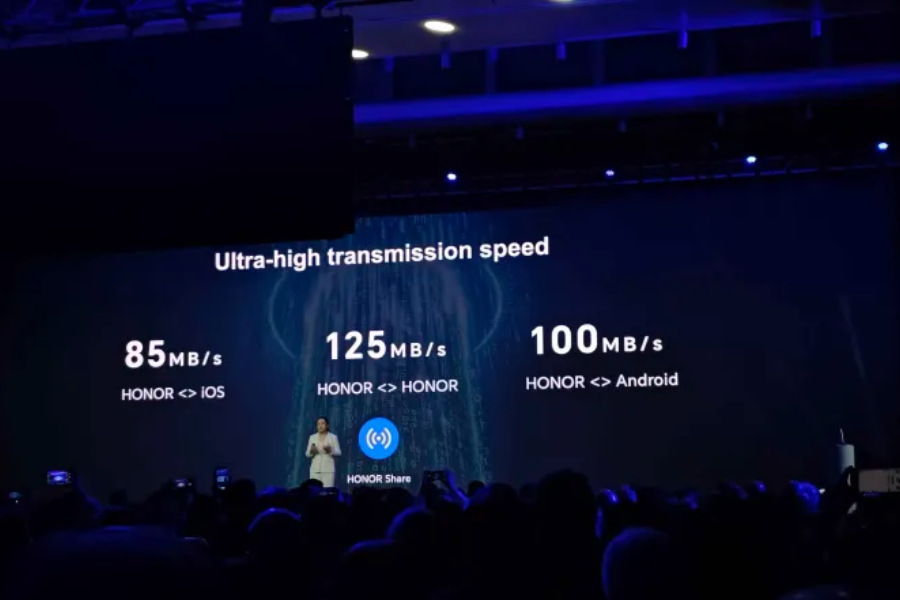
One of the more interesting features Honor announced today at MWC 2025 is AI Connect. It allows users to wirelessly transfer photos, videos, and other files between Android and iOS devices.
Honor calls it the “world’s first all-ecosystem file-sharing technology,” claiming it offers fast transfer speeds between both platforms.
According to brand, AI Connect can transfer files at 125MB/s between Honor devices, 100MB/s with other Android phones, and 85MB/s to iPhones. However, iOS users will need to install a new app called Honor Connect to enable file transfers between Honor and iPhones.
AiMAGE
Honor is also launching AiMAGE, a new branding for its AI-powered photography features. The company says AiMAGE uses a combination of on-device and cloud-based AI models to improve photo quality.
When on the device, it will use a 1.3-billion-parameter AI model that will help boost image clarity by 50%. Meanwhile, a much larger 12.4-billion-parameter model in the cloud will help improve details in telephoto shots by tapping into more computing power.
Honor is also working with partners like Google Cloud to expand these AI imaging features over time. One of the first AiMAGE features to roll out is AI Upscale, which can restore old portrait photos. Honor says this feature will roll out on the Magic 7 series —excluding Magic 7 Lite— starting in March.
AI Deepfake Detection
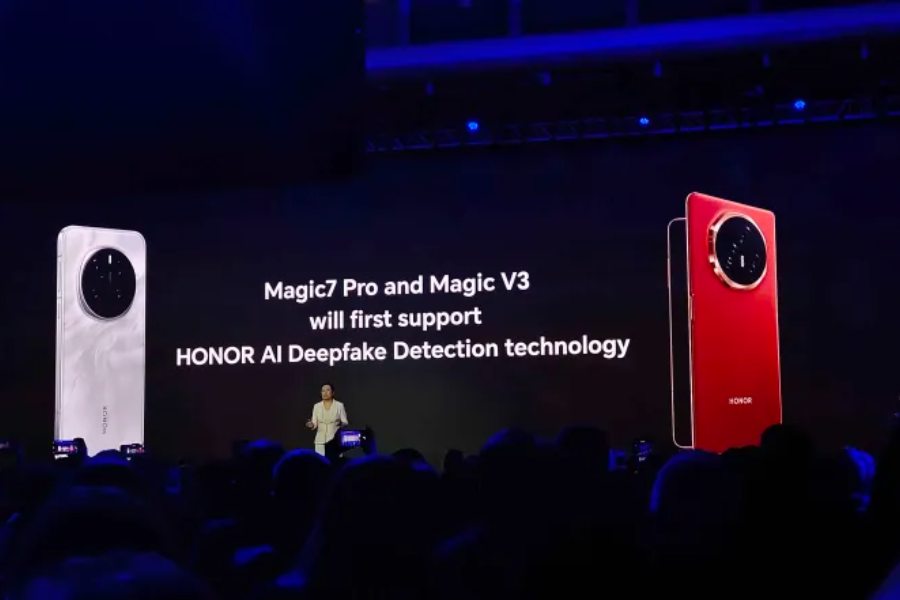
Honor is also introducing an AI Deepfake Detection tool, which is designed to help users identify altered media. The feature looks for things like pixel-level inconsistencies, unnatural edges, and even facial mismatches—such as a face that doesn’t quite align with its ears or hair.
If the system detects potential manipulation, it alerts the user so they can decide whether the content is trustworthy. Honor first previewed this feature at IFA 2024, but today, the company confirmed it will first roll out on the Magic 7 Pro and Magic V3.
For more daily updates, please visit our News Section.
At MWC 2025, Honor has unveiled its ambitious vision for the future of smartphones—introducing the world’s first AI Agentic Smartphone. This model, developed in collaboration with Google and Qualcomm, is poised to redefine the mobile experience by integrating an advanced AI agent capable of executing complex tasks independently, adapting to user preferences, and bridging the gap between human intent and digital execution.
The AI Agent
Unlike conventional voice assistants, Honor’s AI agent operates with a deeper level of contextual awareness, understanding user behavior, priorities, and real-world constraints. It doesn’t just follow commands; it anticipates needs, automates tasks, and personalizes interactions. During a live demonstration at MWC, the AI agent seamlessly made a restaurant reservation by analyzing the user’s schedule, factoring in traffic conditions, and selecting the most convenient time slot—all without requiring manual input.
Honor’s AI agent is powered by an on-device model with 1.3 billion parameters, ensuring real-time responsiveness and privacy protection. For more complex computations, it connects to the cloud-based AI Kernel, leveraging a 12.4 billion parameter model to enhance its decision-making capabilities.
The AI-First Approach
This next-generation model represents the first phase of Honor’s Alpha Plan, a long-term strategy to transition from a smartphone manufacturer to an AI device ecosystem company. With its AI-first approach, the intelligent phone adapts to user habits over time, proactively offering suggestions, optimizing battery life based on usage patterns, and even detecting potential cyber threats through AI-powered security monitoring.
Long-Term Android OS and Security Updates
In a major industry move, Honor has also committed to offering seven years of Android OS and security updates for its flagship Magic series smartphones, including bar and foldable devices. This unprecedented software support policy, starting with the Honor Magic 7 Pro, places the company among the top three global brands providing such extensive updates. The initiative not only enhances device longevity but also aligns with sustainability goals by reducing e-waste and ensuring long-term security for users.
Honor has also introduced AiMAGE, a new imaging brand that leverages AI-powered upscaling to restore old portraits, arriving on the Magic 7 Pro in March. Additionally, AI Deepfake Detection will debut on flagship models, reinforcing Honor’s focus on AI safety.
For more daily updates, please visit our News Section.
Samsung and Google are the only major Android brands that offer seven years of both platform and security updates for their phones.
Google kicked off the trend with the Pixel 8 lineup in 2023, while Samsung followed suit with the Galaxy S24 series. But even after all this time, no other manufacturers have matched their commitment—until now.
At MWC 2025, Honor announced that it will offer seven years of Android updates and security patches for its Magic series, starting with devices in European markets.
Magic 7 Pro is the first Honor phone to get seven years of updates
The Honor Magic 7 Pro (review) will be the first device to benefit from this extended support. When the phone launched in Europe this January, it was initially promised five years of updates. Now that Honor has revised the policy, the device will be good until 2032—or Android 22, if Google sticks to its yearly update cycle.
Honor says this extended commitment is part of its Honor Alpha Plan, a new strategy to transform the company from a smartphone maker into a global AI-driven device ecosystem.
“We aim to provide devices and services that meet consumer needs and go beyond their expectations,” said Honor CEO James Li in a press release. “That’s why we’ve decided to offer seven years of Android OS and security updates to the Honor Magic series.”
Beyond just software longevity, Honor says this move is a step toward sustainability, aiming to reduce e-waste by keeping devices relevant for longer.
While the Magic 7 Pro is the first to benefit, Honor confirmed the change will also apply to other flagship models and foldable phones. That said, the company made it clear that the Magic Lite series will not be included in the extended support program.
Now that Honor has stepped up its software update game, it will be interesting to see if other Android brands follow suit.
For more daily updates, please visit our News Section.
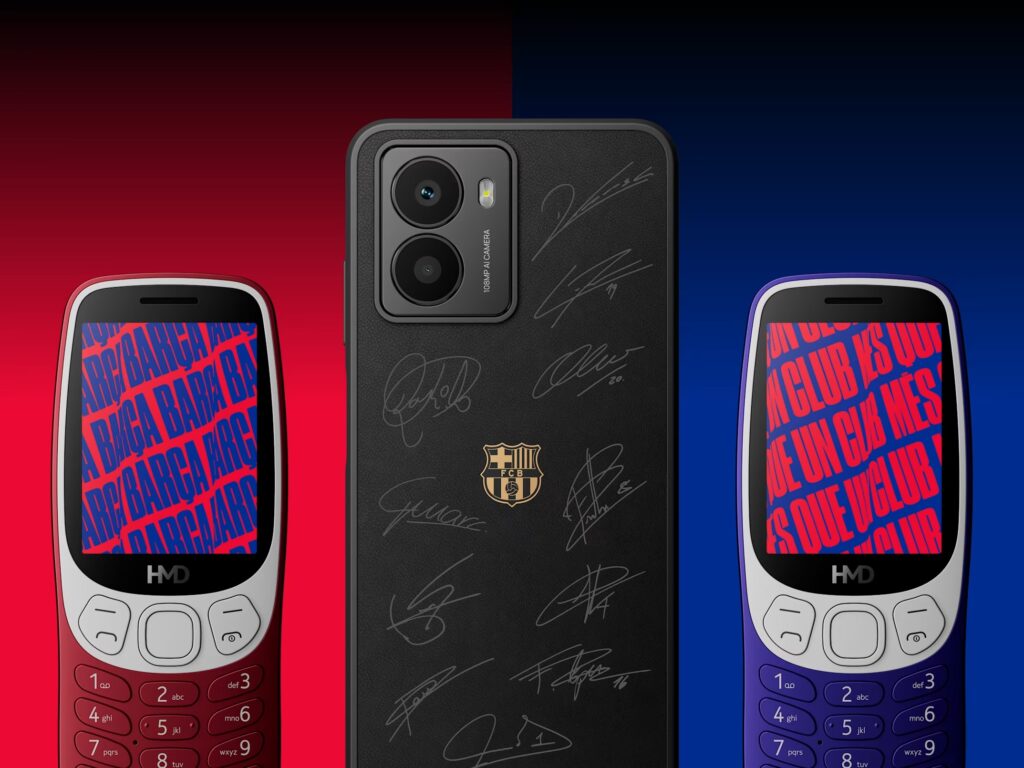
HMD has taken center stage at Mobile World Congress (MWC) 2025 with a slew of new launches, including the HMD Fusion X1, Barca-themed devices, Amped Buds, and refreshed feature phones. The Finnish brand focuses on family-friendly technology, football-inspired designs, and innovative power solutions, reinforcing its commitment to meaningful mobile experiences.
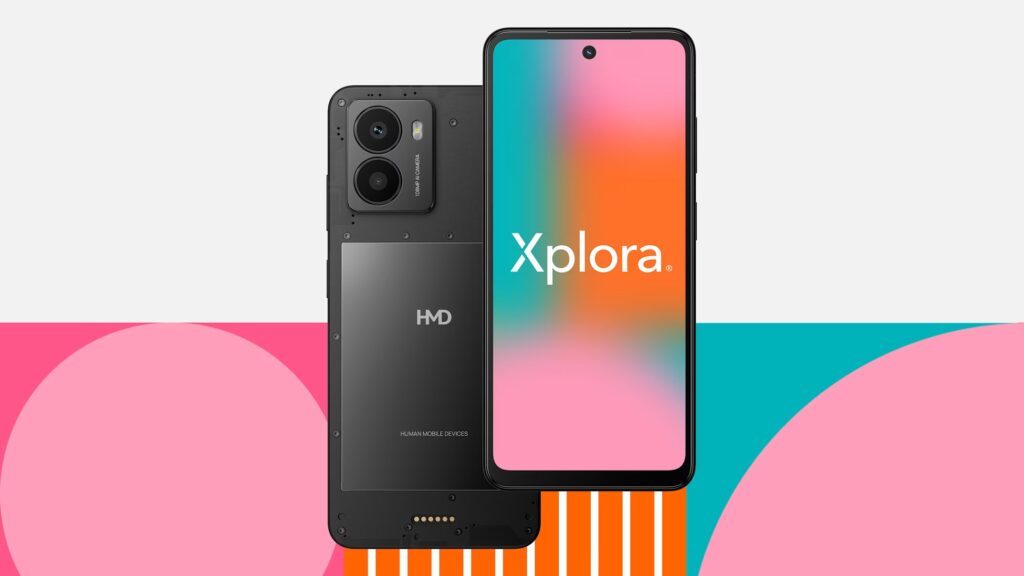
HMD Fusion X1: Teen-Friendly Smartphone
The HMD Fusion X1 debuts as the first smartphone in the company’s new family-oriented lineup. Designed in collaboration with Xplora, it equips parents with powerful tools to monitor and regulate their child’s smartphone usage. The device operates with an Xplora subscription, starting at €4.99 per month, granting access to features such as real-time location tracking at 20-second intervals, remote device management, emergency SOS, and low battery alerts.
The Fusion X1 sports a 108MP AI-powered camera, a 5,000mAh battery, and face and fingerprint unlock technology for added convenience. It runs on HMD’s modular Fusion design, allowing users to personalize their device with interchangeable Outfits that introduce additional functionality. Designed to limit distractions, it comes with a School Mode that restricts certain apps during study hours. Moreover, the device is splash-resistant with an IP54 rating, making it durable for everyday use.
HMD Barca 3210 and Barca Fusion
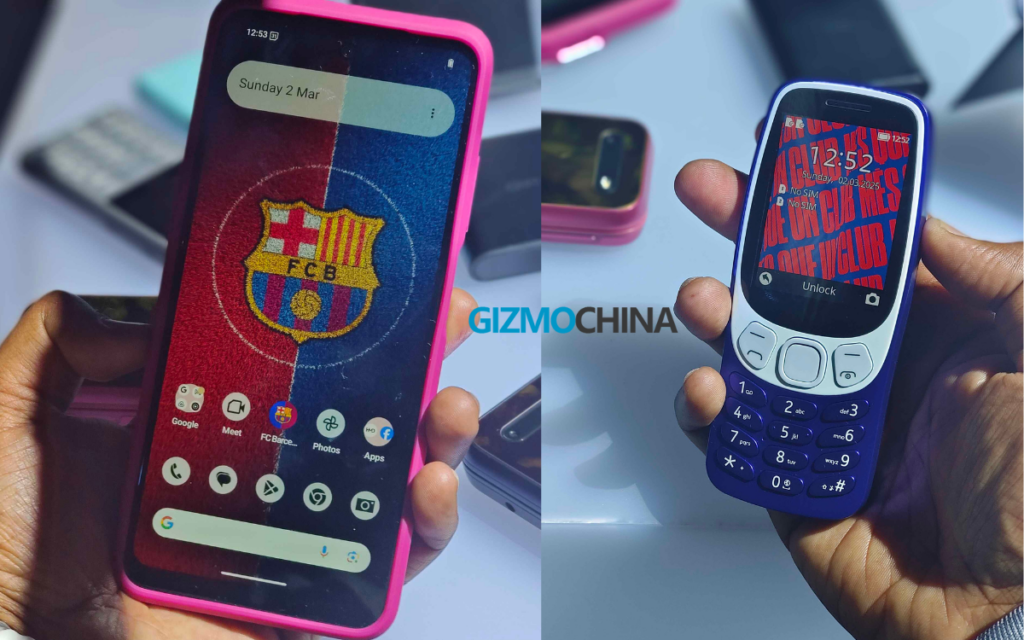
For football enthusiasts, HMD has partnered with FC Barcelona to launch the HMD Barça 3210 and HMD Barça Fusion. The Barça 3210, a classic feature phone, comes adorned with the club’s Blau and Grana colors, hidden messages from players, and even the legendary Snake game set on a virtual football pitch.
Meanwhile, the Barça Fusion is a smartphone that glows under UV light, revealing player signatures and exclusive team-themed Easter eggs. The device allows fans to wake up to motivational messages from Barça stars, adding a unique interactive experience.
HMD Amped Buds
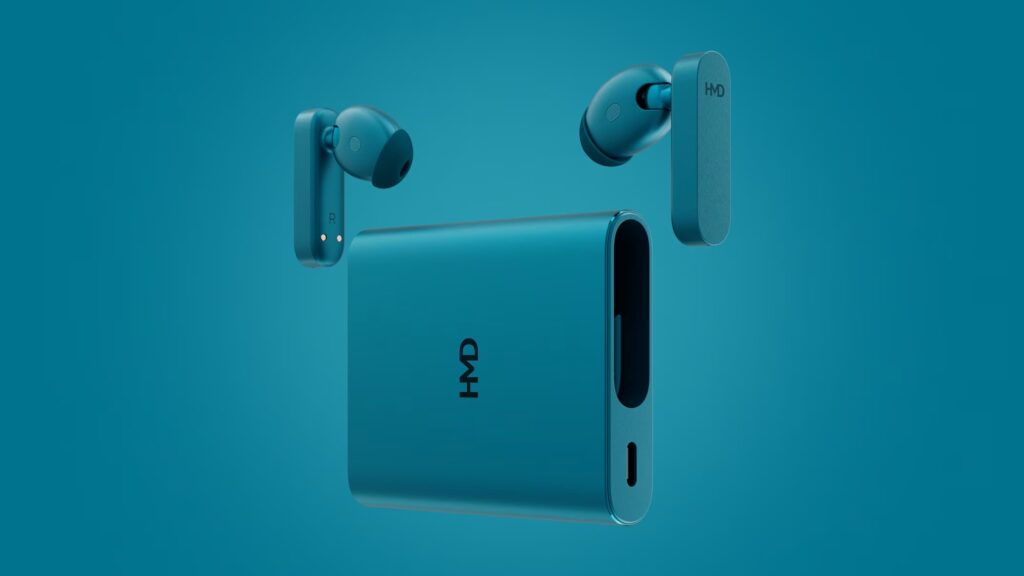
HMD expands its audio lineup with the Amped Buds, the world’s first wireless earbuds featuring a reverse-charging case. The 1,600mAh case magnetically powers compatible smartphones, ensuring users never run out of juice while on the move. The earbuds pack Active Noise Cancellation (ANC), Environmental Noise Cancellation (ENC) for crystal-clear calls, and customizable EQ settings via a dedicated app.
Available in Black, Cyan, and Pink, these buds promise up to 95 hours of playback time and come with an IPX4-rated case and IP54-certified earbuds for water and dust resistance.
HMD 130, 150 Music, and 2660 Flip
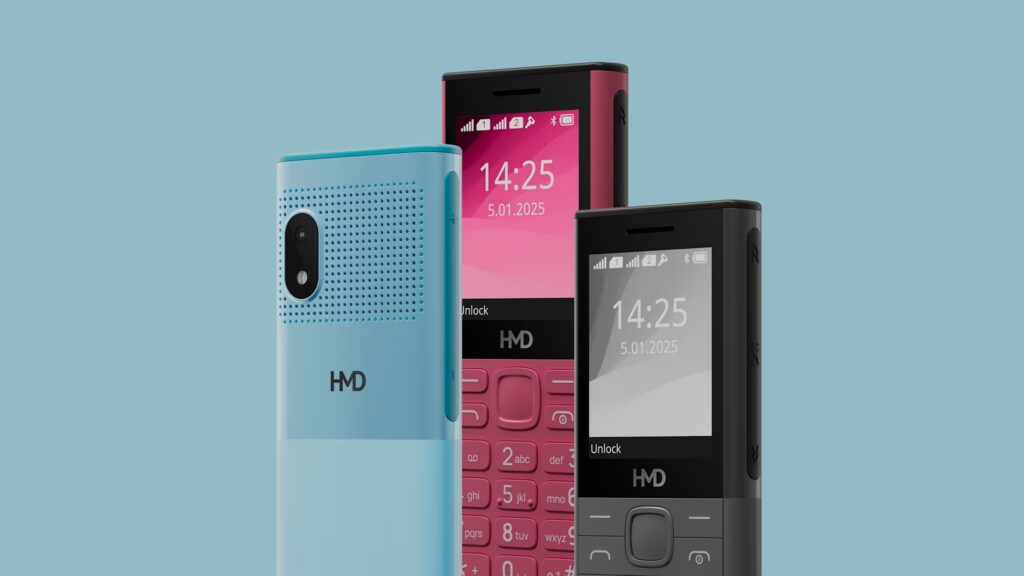
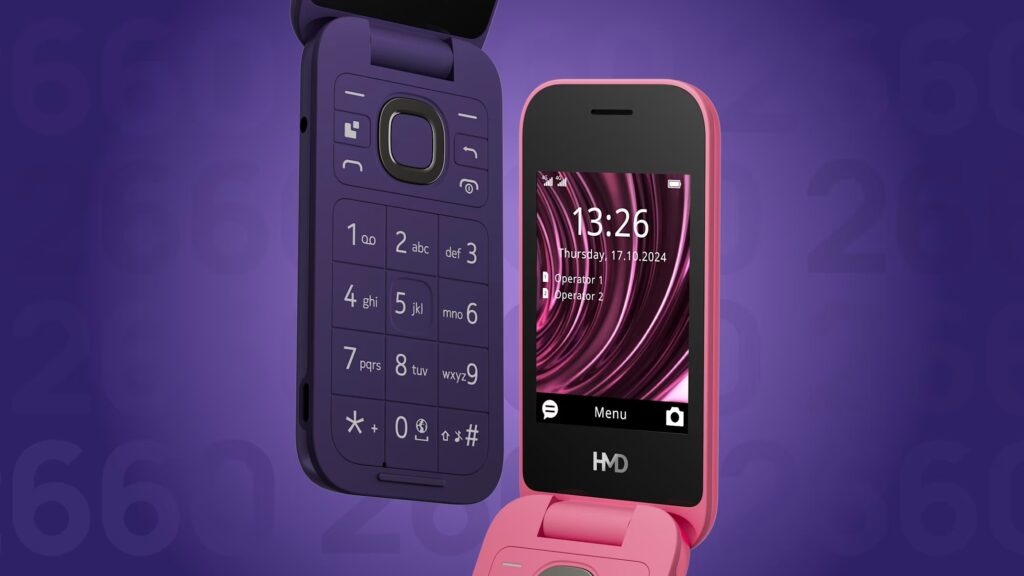
HMD continues to embrace the feature phone resurgence with the launch of the HMD 130 and 150 Music, alongside the HMD 2660 Flip. The 130 and 150 Music cater to music lovers with built-in 2W speakers, FM radio support, Bluetooth 5.0, and expandable storage via microSD cards (up to 32GB). They promise an impressive standby battery life of up to a month.
The HMD 2660 Flip, on the other hand, redefines simplicity with a 2.8-inch QVGA main display, a secondary 1.77-inch screen, large tactile buttons, and a 0.3MP camera. It also includes an emergency button for added security, making it ideal for users looking to unplug from smartphone distractions.
Pricing & Availability
The HMD Fusion X1 is priced at £229 and will be available in May 2025. The Barça 3210 lands at £79, while the Barça Fusion is set at £229. The Amped Buds are set to launch in April for £169. Meanwhile, the HMD 130 and 150 Music will retail at £29, and the HMD 2660 Flip will be available for £69.
For more daily updates, please visit our News Section.
AOC has launched a new gaming monitor called 25G10HE in the Chinese market. The monitor is priced at 649 yuan (~$90) and is now available on JD.com. Let’s check out its key specs.
AOC G10 Monitor Specifications
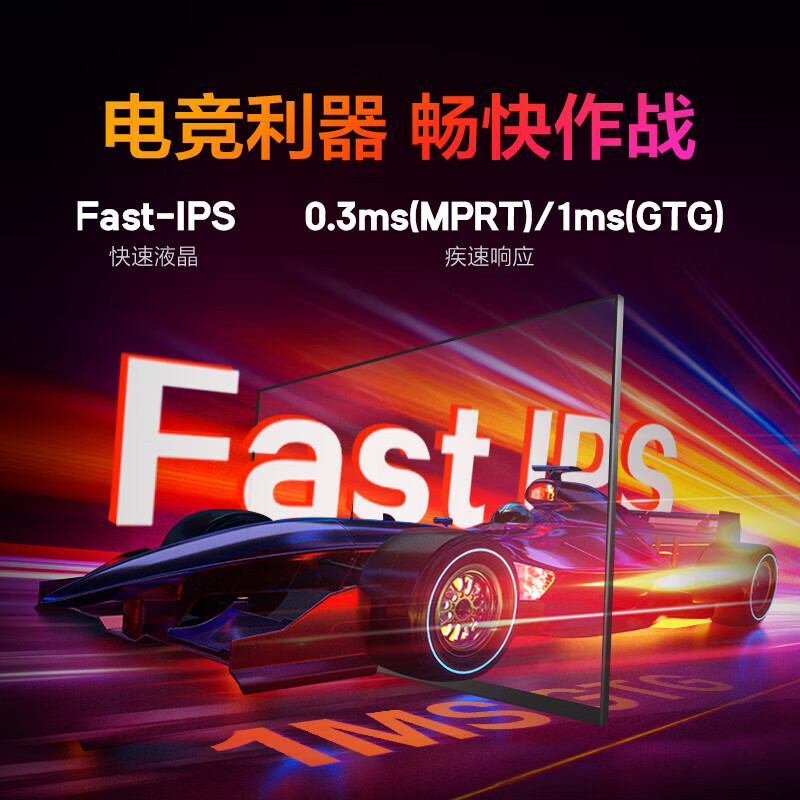
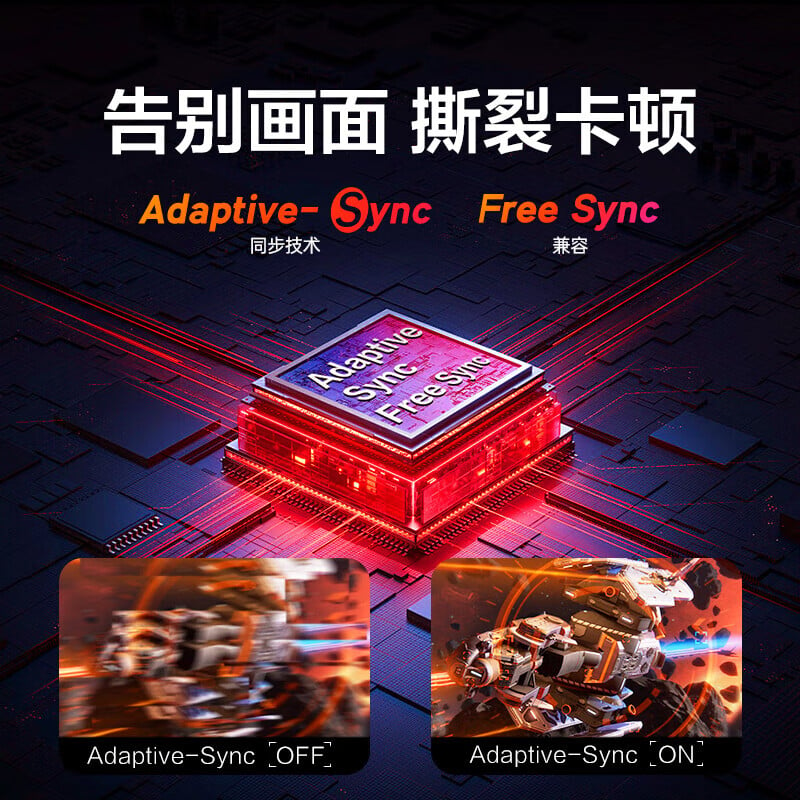
The G10 sports a 24.5-inch Fast IPS display with a 1920×1080 resolution and a 200Hz refresh rate (overclocked), ensuring smooth and responsive gameplay. It comes with Adaptive-Sync support to eliminate screen tearing and stuttering, while HDR10 enhances contrast and color accuracy. It also equips a 1 ms GTG response time and a brightness of 300 nits, delivering a crisp and immersive gaming experience.
In terms of color accuracy, the monitor features a 1000:1 static contrast ratio and 8-bit color support, ensuring vibrant and well-balanced visuals. It boasts 99% sRGB and 90% DCI-P3 coverage, professionally calibrated to a DeltaE of less than 2 for accurate color reproduction. Additionally, it comes with G-Menu software, allowing users to fine-tune color settings, brightness, and gaming profiles to suit their preferences.
For eye comfort, the monitor comes with hardware-level low blue light technology, effectively reducing harmful short-wave blue light while maintaining color accuracy. It includes four preset low blue light modes for different usage scenarios, such as multimedia, office work, reading, and browsing.
The G10HE model is equipped with multiple connectivity options, including two HDMI 2.0 ports, a DisplayPort 1.4, and a 3.5mm audio output. It supports VESA 100mm x 100mm wall mounting and offers an adjustable stand with tilt angles from -5° to 23°. Additionally, it sports a lightweight yet durable design, weighing 3.5kg with the stand and 3.1kg without.
In related news, Dell has introduced a new 27-inch UltraSharp monitor featuring 4K resolution, a 120Hz refresh rate, and low blue light technology, while Lenovo has unveiled its first 240Hz OLED gaming monitor, delivering high-performance visuals.
For more daily updates, please visit our News Section.
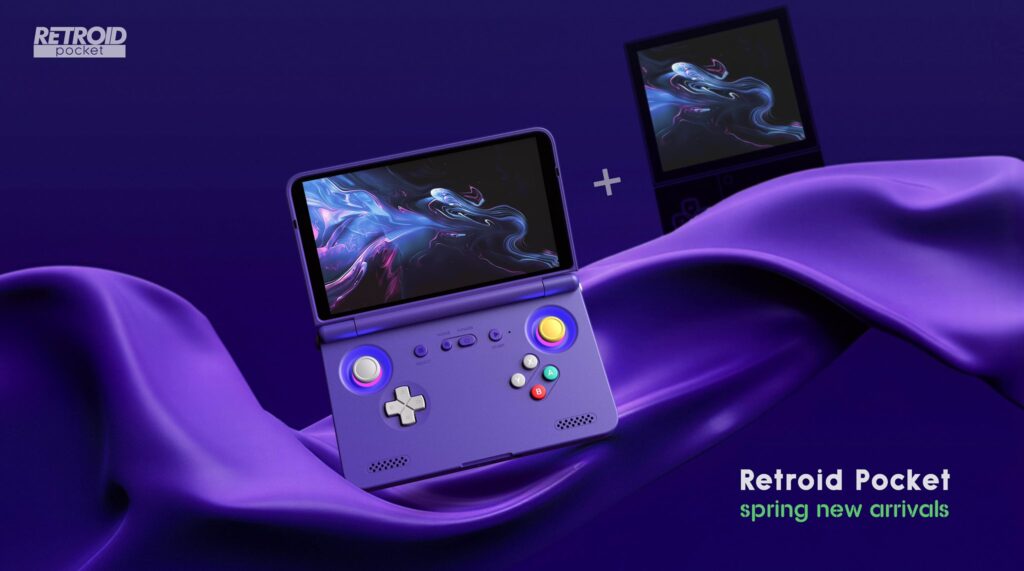
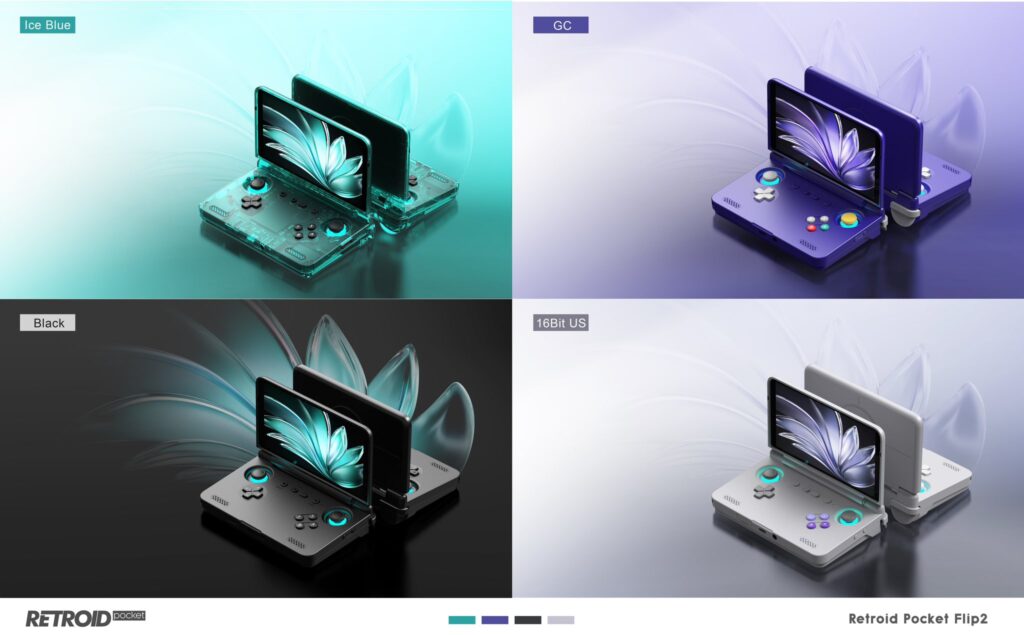
Retroid has officially introduced the Pocket Flip 2, its latest clamshell gaming handheld, bringing a series of meaningful upgrades over its predecessor. The device retains its signature foldable design but now sports a larger 5.5-inch AMOLED display with a 1080p resolution and a peak brightness of 500 nits, making it a more vibrant and practical screen for gaming on the go.
Retroid Pocket Flip 2 Specifications
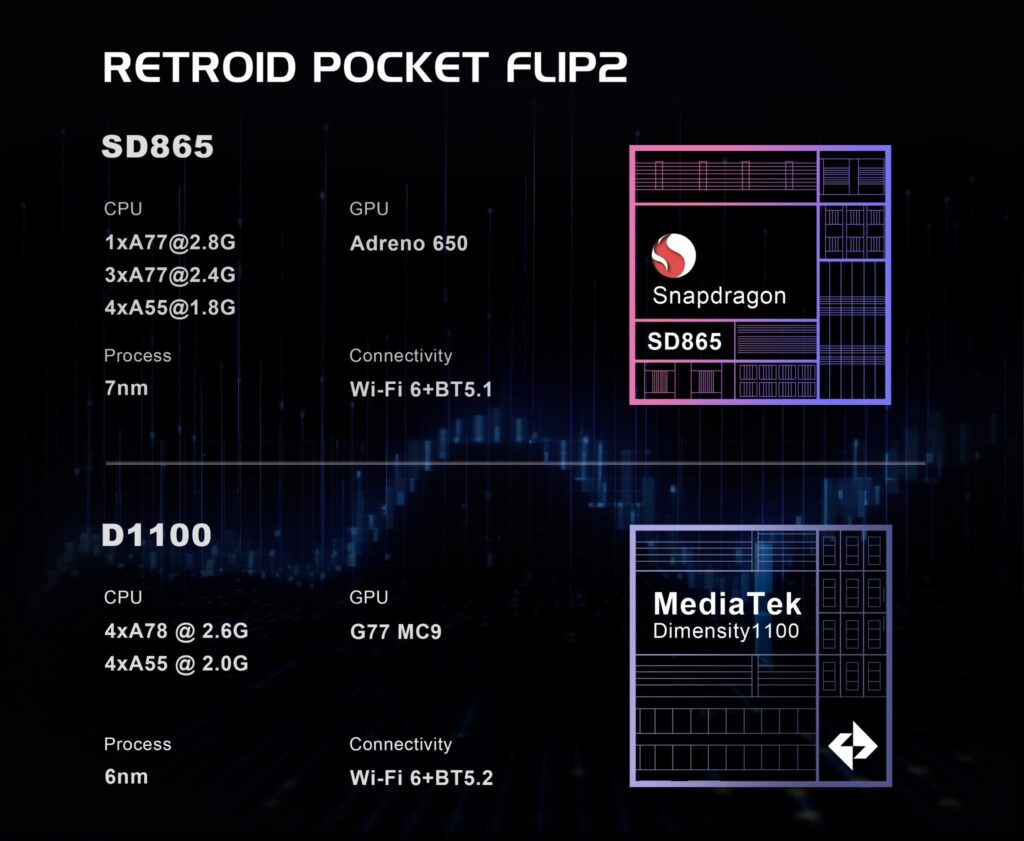
Under the hood, the Pocket Flip 2 offers two powerful processor choices: a Qualcomm Snapdragon 865 or a MediaTek Dimensity 1100, both of which significantly outperform the Unisoc T618 found in the first-gen model.
This means smoother gameplay, improved multitasking, and overall faster performance. Retroid also doubles the RAM, equipping the Flip 2 with 8GB of LPDDR4x memory, while storage gets a major boost to 128GB of UFS 3.1, offering faster load times and better efficiency.
The operating system also gets an update—while the original Flip shipped with Android 11, the new Flip 2 runs Android 13, offering better performance, security, and compatibility with the latest apps and emulators.
In terms of design, the new model is slightly larger and heavier, now weighing around 300 grams. The updated layout positions the analog sticks above the D-Pad and action buttons, making controls more ergonomic. To keep temperatures in check, the Flip 2 retains the active cooling system, preventing thermal throttling during extended gaming sessions.
Connectivity sees an upgrade as well. The Snapdragon version supports Bluetooth 5.1, while the Dimensity variant comes with Bluetooth 5.2, offering improved range and stability. Additionally, both models now support Wi-Fi 6 for faster wireless performance.
Retroid has also reworked the port layout. The Flip 2 removes the microHDMI port in favor of a USB-C DisplayPort output, enabling 1080p 60Hz external display support. It retains a microSD card slot for expandable storage and a 3.5mm headphone jack for wired audio.
Battery life remains unchanged, with a 5,000mAh cell powering the handheld. The Snapdragon version supports 27W fast charging, while the Dimensity model is limited to 18W. Pricing details have yet to be announced, but given the hardware improvements, it’s expected to be more expensive than the original, which launched at around $160. More details on availability should surface soon.
For more daily updates, please visit our News Section.
Samsung just unveiled its latest A-series lineup, and the Galaxy A26 is the most affordable of the bunch. Announced alongside the Galaxy A36 and A56, it shares some key features with its pricier siblings—like IP-rated water resistance, long-term software support, a big battery, and AI-powered features. But there are some clear trade-offs, too. Let’s break it down.
Galaxy A26 specs
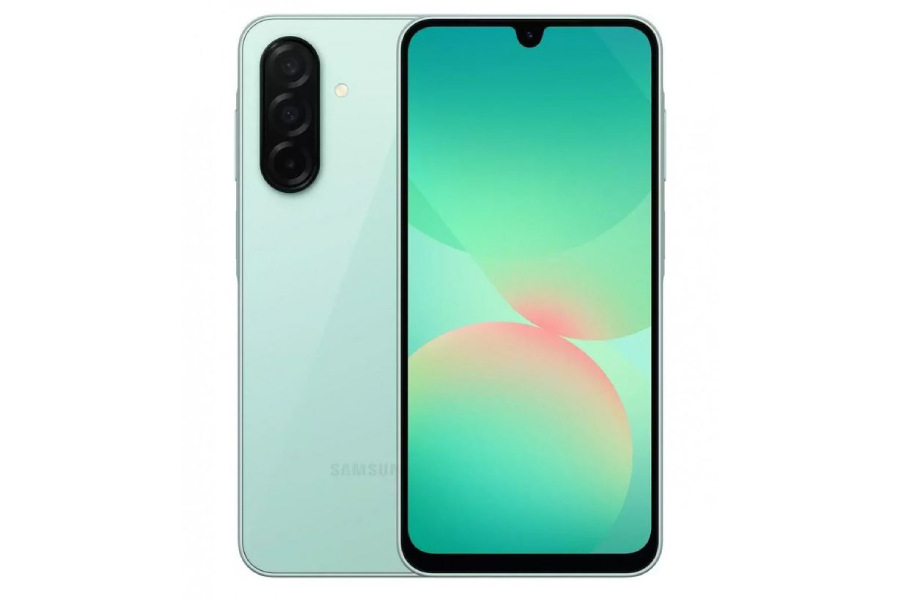
The Galaxy A26 sports a 6.7-inch OLED display with a 120Hz refresh rate and FHD+ resolution. But the first thing you’ll notice is its waterdrop-style notch—a design choice Samsung seems to reserve for its more budget-friendly A-series models, like the A16 and A06, instead of opting for a hole-punch cutout.
That notch houses a 13MP front camera, while on the back, there’s a triple-camera setup: a 50MP main sensor with OIS, an 8MP ultrawide, and a 2MP macro lens.
Powering the phone is Samsung’s in-house Exynos 1380 chip—the same processor found in last year’s Galaxy A35. It’s paired with either 6GB or 8GB of RAM and up to 256GB of storage, with support for microSD expansion.
The A26 packs a 5,000mAh battery, just like the A36 and A56, but it charges slower at 25W.
Despite being the cheapest of the trio, the A26 doesn’t skimp on software support. It ships with One UI 7 based on Android 15 and gets the same six-year update commitment as its pricier counterparts. That also means you get Samsung’s “Awesome Intelligence” AI features, like Circle to Search and Object Eraser.
Other notable features include an IP67 rating for dust and water resistance, a side-mounted fingerprint scanner, and a microSD card slot.
Price and availability
The Galaxy A26 comes in Black, Green, and White, with pricing varying by region:
USA
256GB Galaxy A26: $299.99
Europe
128GB Galaxy A26: €299
256GB Galaxy A26: €369
UK
256GB Galaxy A26: £299
Samsung’s latest budget phone keeps the essentials while cutting a few corners—but at this price, it might just be a solid deal.
For more daily updates, please visit our News Section.
Alongside the Galaxy A56, Samsung has officially launched the Galaxy A36 worldwide. The new mid-ranger gets upgrades in design, camera, and performance—plus, like the A56, it’s among the first in the A-series to feature Awesome Intelligence (AI).
Samsung Galaxy A36 Specs and Features
The Galaxy A36 sports a slightly larger 6.7-inch display (up from 6.6 inches on its predecessor), which now reaches 1,200 nits of brightness instead of 1,000 nits. It’s still a Super AMOLED panel with Full HD+ resolution, a 120Hz refresh rate, and Corning Gorilla Glass Victus+ protection.
Samsung has also trimmed the weight and thickness, bringing it down to 195 grams and 7.4mm, while retaining IP67 water and dust resistance.
Under the hood, the A36 is powered by Qualcomm’s Snapdragon 6 Gen 3, built on Samsung’s 4nm process. It runs One UI 7 on Android 15 and is promised six years of major OS and security updates, keeping it relevant until 2031.
And yes, Awesome AI is here too—bringing features like Circle to Search, Object Eraser, and AI-generated custom filters. For those unfamiliar, Awesome AI is Samsung’s branding for select AI features on its mid-range phones, bringing a slice of Galaxy AI from the flagship S-series.
Camera hardware remains unchanged from the A35, meaning it features a 50MP main sensor, an 8MP ultrawide, and a 5MP macro lens. The selfie camera, however, has been swapped for a 12MP sensor, which might seem like a downgrade from the 13MP on the A35, but it’s actually the same sensor used in the Galaxy S24 series.
A 5,000mAh battery with 45W fast charging keeps things running. Connectivity options include 5G, Wi-Fi 6E, Bluetooth 5.3, NFC, and USB-C, with support for dual SIM and eSIM.
Pricing and Availability
Despite all the upgrades, Samsung has kept the A36’s price the same as its predecessor. Here’s how the pricing breaks down across different markets:
As expected, Samsung has officially unveiled the Galaxy A56 with a refreshed design, faster 45W charging, and the company’s in-house Exynos 1580 chipset. But the real headline here is AI—or as Samsung calls it, Awesome Intelligence.
Samsung has been pushing its AI features for flagship devices like the Galaxy S25 Ultra under the Galaxy AI branding, but the A56 gets its own fork.
Awesome Intelligence, according to Samsung, is the first comprehensive mobile AI exclusively available on Galaxy A56 5G. That said, it’s not a full port of Galaxy AI—some flagship features remain exclusive to premium models.
What Awesome Intelligence (AI) features does the Galaxy A56 get?
The Galaxy A56 still packs some of the most hyped AI tools, including:
Circle to Search, a Google-powered feature that lets you search anything on-screen with a simple gesture.
Best Face, which allows you to choose the best facial expressions for up to five people from a motion photo.
Object Eraser, to remove unwanted objects from photos.
Filters, which let you generate custom filters based on the colors and style of your own images.
All these Awesome Intelligence features are baked into One UI 7, which is based on Android 15. And Samsung is offering a flagship-level software support promise for the phone—six years of Android upgrades and security patches.
A new Exynos chip, a vapor chamber, and a brighter display
At the heart of the Galaxy A56 is the Exynos 1580, paired with 8GB of RAM and either 128GB or 256GB of storage. Samsung says the phone also includes a large vapor chamber for better thermal management.
The device features a 6.7-inch Super AMOLED display with an FHD+ resolution and a 120Hz refresh rate. It boasts 1,200 nits of HBM brightness and 1,900 nits peak brightness, all protected by Gorilla Glass Victus+. The back panel also gets the Victus+ treatment, while the frame is made of aluminum.
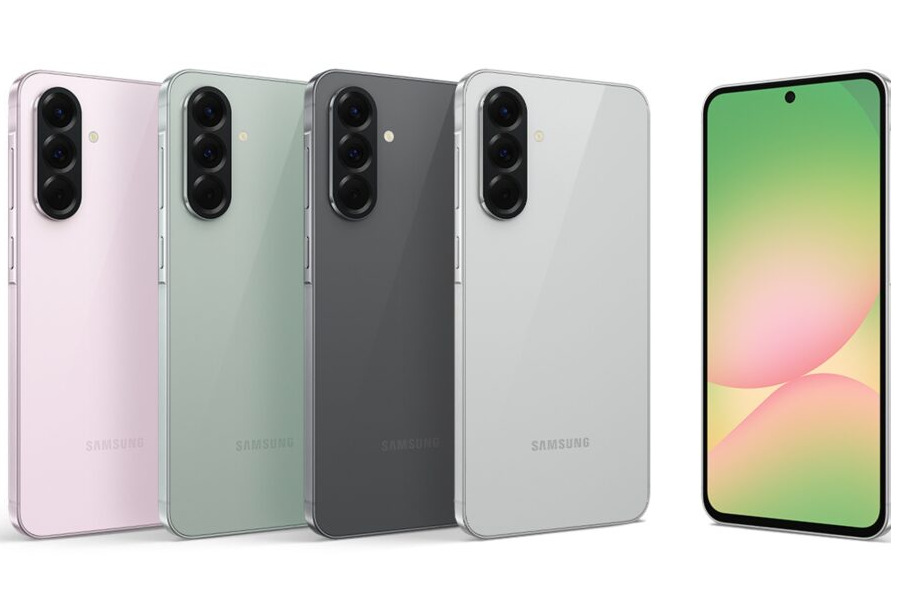
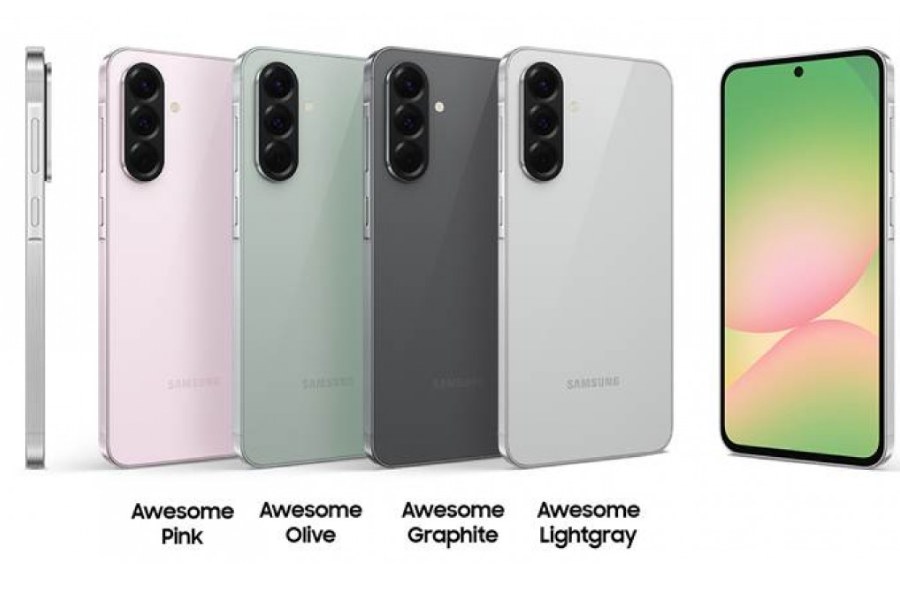
The Galaxy A56 has also received a slight design refresh compared to its predecessor. Instead of separate camera rings like on the Galaxy A55, Samsung has now switched to a pill-shaped module that houses all three lenses — a 50MP f/1.8 main, a 12MP f/2.2 ultra-wide, and a 5MP f/2.4 macro camera. On the front, there’s a 12MP f/2.2 selfie camera.
Powering everything is a 5,000mAh battery with 45W fast charging—making it Samsung’s first non-flagship phone to support this speed. According to Samsung, it can go from 0 to 100% in just 1 hour and 8 minutes.
Galaxy A56 pricing and availability
The Galaxy A56 will be available in four colors:
Awesome Pink
Awesome Olive
Awesome Graphite
Awesome Light Gray
Here’s how pricing breaks down across different markets:
USA
128GB – $499
Europe
128GB – €479
256GB – €529
UK
256GB – £499
The 128GB variant will be the only option in the US, while Europe and the UK will also get the 256GB model.
For more daily updates, please visit our News Section.
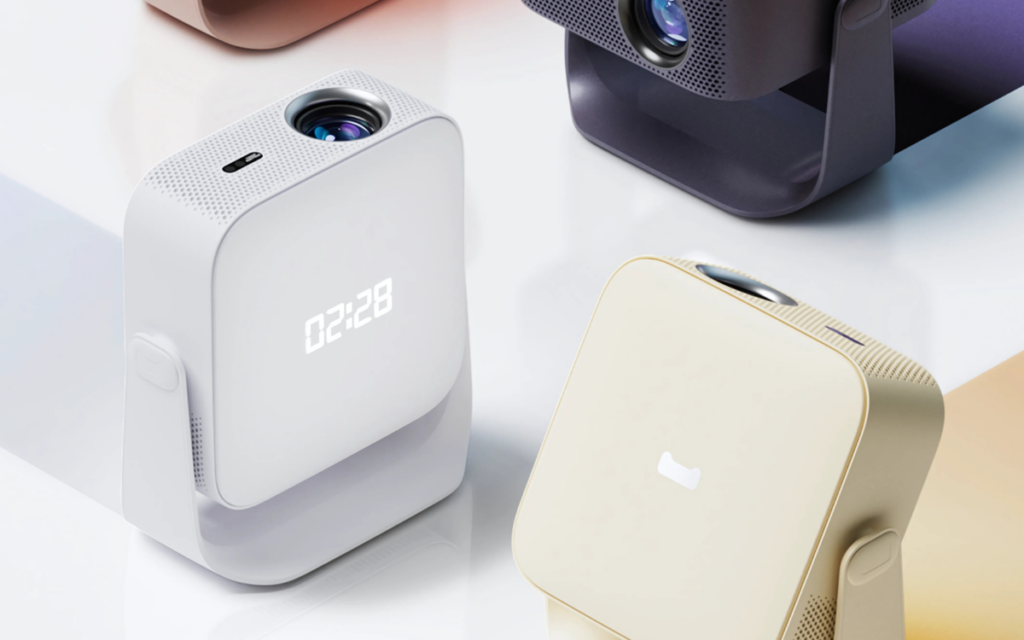
Tmall has introduced the Magic Screen C3 Air projector to the Chinese market, priced at 999 yuan ($137). During the initial sale period, it is available for 777 yuan ($106). The projector can be purchased on Tmall.
Tmall Magic Screen C3 Air Specifications
The C3 Air projector features a high-brightness light source and true 1080P resolution for clear, detailed visuals. It supports screen sizes from 40 to 120 inches for flexible viewing and includes dual symmetrical speakers for immersive sound. Powered by the SSD2381 chipset, it ensures smooth performance with 32GB of storage for app installations.
The projector features a 360-degree adjustable “C-shaped” gimbal stand for flexible projection and an ultra-thin 84mm design for portability. It also functions as a smart clock, switching modes automatically. Its sealed optical engine enhances dust resistance, reduces noise, and ensures lasting brightness, while the three-ring optical coated lens improves light transmission and maintains sharp image quality.
For seamless viewing, the C3 Air offers AI-powered enhancements, including auto-focus, keystone correction, and intelligent screen alignment for a sharp display. It also comes with AI adaptive technology that optimizes color, contrast, and sound based on the content. In terms of connectivity, it supports Wi-Fi 6 for fast connections, Bluetooth peripherals, and effortless content casting from Apple, Android, and Huawei devices via protocols like Huawei Cast+ and AirPlay.
The C3 Air runs Youku’s CoolMeow TV OS, providing access to a wide range of movies and TV shows, and supports voice control via its Bluetooth and infrared remote. Its dual-channel triple-turbine cooling system ensures silent and efficient heat dissipation for optimal performance and longevity. The projector also offers multiple viewing modes, including home theater, music speaker mode, and ambient display mode, enhancing its versatility.
In terms of ports, the projector comes equipped with USB, HDMI, and infrared interfaces, ensuring compatibility with various external devices. It comes in five colors: Mist Grey, Dream White, Hyper Yellow, Earth Brown, and Mystic Purple.
In related news, Zebronics recently launched the Zeb Pixaplay Pro 500 portable ultra-short throw projector in India, while BenQ is set to release the LH750 projector in Europe, featuring Full HD resolution and 5,000 lumens brightness.
For more daily updates, please visit our News Section.
We use cookies on our website to give you the most relevant experience by remembering your preferences and repeat visits. By clicking “Accept”, you consent to the use of ALL the cookies.
This website uses cookies to improve your experience while you navigate through the website. Out of these, the cookies that are categorized as necessary are stored on your browser as they are essential for the working of basic functionalities of the website. We also use third-party cookies that help us analyze and understand how you use this website. These cookies will be stored in your browser only with your consent. You also have the option to opt-out of these cookies. But opting out of some of these cookies may affect your browsing experience.
Necessary cookies are absolutely essential for the website to function properly. This category only includes cookies that ensures basic functionalities and security features of the website. These cookies do not store any personal information.
Any cookies that may not be particularly necessary for the website to function and is used specifically to collect user personal data via analytics, ads, other embedded contents are termed as non-necessary cookies. It is mandatory to procure user consent prior to running these cookies on your website.