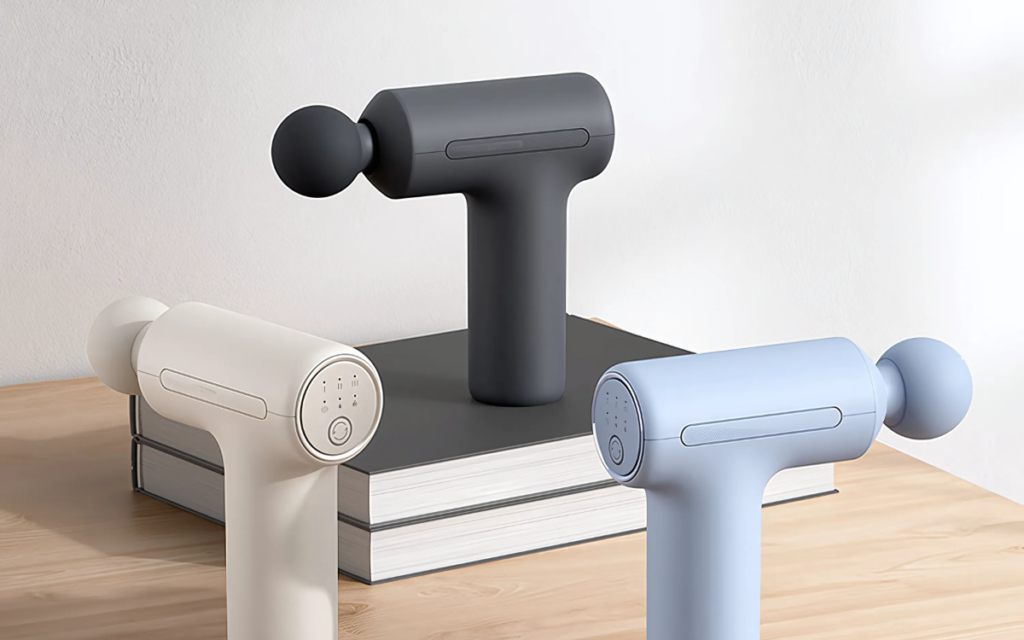
Xiaomi has introduced the Mijia Fascia Gun 3 Mini in China, following the release of the Mijia Massage Gun 3 last year. It is priced at 229 yuan ($31) and will be available starting February 12.
Xiaomi Fascia Gun 3 Mini Specifications
The Fascia Gun 3 Mini sports a dual-mode system, offering both fixed-frequency and variable-frequency massage settings. It comes with three intensity levels in each mode, allowing adjustments based on different needs. The fixed-frequency mode provides a consistent massage for pre- and post-workout relief, while the variable-frequency mode dynamically adjusts intensity for deeper relaxation.
It is equipped with a powerful brushless motor that delivers up to 12kg of thrust force, reaching 6mm deep into the fascia layers to quickly relieve muscle fatigue. Despite its strength, it operates quietly, generating as little as 40dB of noise, which is comparable to the sound of a refrigerator.
The massage gun sports an intelligent pressure-sensing LED ring, which provides real-time feedback on applied force. The indicator light changes color depending on the pressure: off when the pressure is minimal, white when the pressure is optimal, and orange when the pressure is excessive. This feature helps users maintain safe and effective massage levels without overexerting their muscles.
It comes in a lightweight, portable design, weighing only 357g, roughly the same as a can of soda. Its compact build allows it to be easily stored in a bag or even a pocket, making it convenient for use at home, in the office, during workouts, or while traveling.
For added convenience, it is equipped with an intelligent memory function, which remembers the last-used mode and intensity level, allowing users to resume their preferred settings instantly upon powering on. The device also includes three interchangeable massage heads, a flat head for general muscle relaxation, a ball-shaped head for larger muscle groups like shoulders and thighs, and a U-shaped head for targeted relief around the spine and calves.
The Fascia Gun 3 Mini features a 1900mAh lithium battery, offering up to 9 hours of use on the lowest setting and 5 hours under a 2kg load. With 15 minutes of daily use, it can last up to 30 days on a single charge. It charges via a Type-C port for added convenience.
The device features a sleek unibody design with an ergonomic grip for enhanced comfort. It comes in three stylish colors: Deep Space Gray, Light Sand, and Light Blue.
In related news, Xiaomi recently introduced the Mijia Corded Vacuum Cleaner with 600W power and 16kPa suction for just $26, along with the Xiaomi Smart Dumbbells, which feature motion sensors, an LED display, and app integration.
For more daily updates, please visit our News Section.
Lenovo has introduced four new Xiaoxin Pro models, now available for pre-order, with sales beginning February 18th in China. The lineup includes the Pro 14/16 GT AI Yuanqi Edition and the Pro 14/16 2025 Core Edition.
The GT AI Yuanqi Edition offers Intel Core Ultra 5 125H or Ultra 9 185H processors, 32GB LPDDR5x-8533 RAM, and a 1TB PCIe 4.0 SSD. The standard Pro 14/16 models use a Core 5 120H processor (similar in performance to the i5-13500H) with 24GB DDR5 RAM. All models feature a 2.8K OLED “SSR Starry Comfort Screen” (14- or 16-inch) with 1100 nits peak brightness, 100% DCI-P3 coverage, ∆E<1 color accuracy, DisplayHDR True Black 1000 certification, variable refresh rates (30–120Hz), full-spectrum dimming, and three eye-protection certifications.
The Pro 16 GT AI Yuanqi Edition includes two PCIe 4.0 SSD slots (one 2242, one 2280), an 84Wh battery, and a magnesium-aluminum chassis weighing 1.72kg. Connectivity options include two Thunderbolt 4 ports, USB-A ports, HDMI 2.1, an SD card reader, and Wi-Fi 7. Security features include an FHD infrared camera with a privacy shutter and a Time-of-Flight (ToF) sensor. The standard models do not feature dual SSD slots and have less memory.
As mentioned above, Pre-orders are open, with sales starting February 18th, though pricing details have yet to be confirmed.
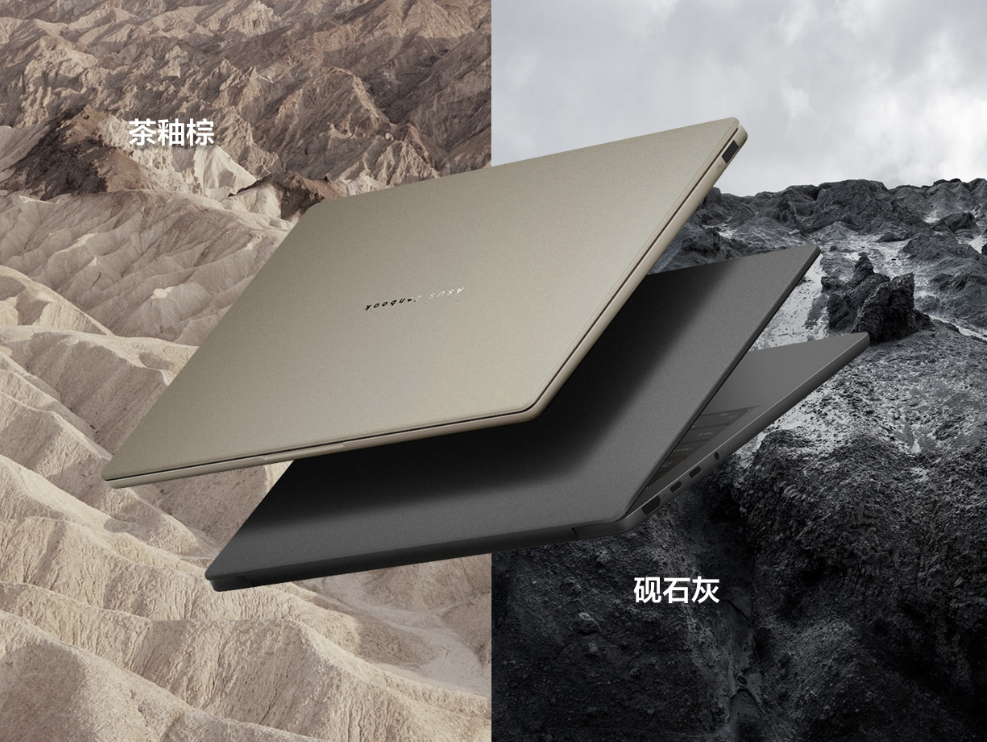
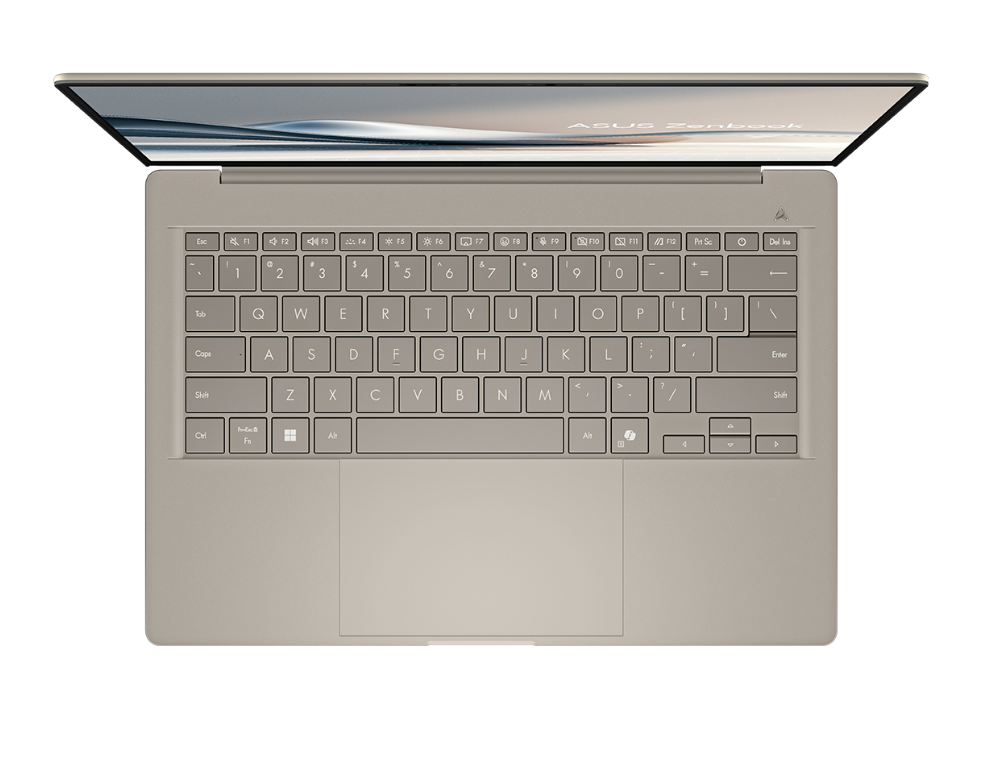
In other news, Asus has recently launched the Asus ZenBook 14 Air Snapdragon Edition is now available for pre-order on JD.com in China, with sales starting February 14th. It is an ultra-lightweight (960g), Qualcomm Snapdragon X-powered laptop made from ceramic aluminum for durability.
For more daily updates, please visit our News Section.
Samsung Galaxy S25 and Vivo X200 are two of the most exciting flagship smartphones, each excelling in different areas. Samsung focuses on software longevity and refined user experience, while Vivo pushes cutting-edge hardware and fast-charging capabilities. With differences in display technology, camera systems, and battery performance, this comparison will highlight which device suits different types of users. Whether you want a reliable long-term device or the best value for performance, understanding these distinctions will help you make an informed choice.
The Galaxy S25 has a premium glass and aluminum build with Gorilla Glass Victus 2 protection, while the Vivo X200 also features a glass front and aluminum frame but uses Schott Xensation Alpha for screen protection. The Galaxy S25’s 6.2-inch Dynamic LTPO AMOLED 2X panel is slightly smaller than the 6.67-inch AMOLED display on the Vivo X200. However, the Vivo X200 has a higher resolution (1260 x 2800) and a peak brightness of 4500 nits, compared to 2600 nits on the S25.
Both displays support 120Hz refresh rates and HDR10+, but Vivo’s Ultra HDR image support and higher brightness give it an edge for outdoor visibility. That said, Samsung’s LTPO technology is more efficient in adjusting refresh rates, which helps with power consumption.
The Vivo X200’s display is objectively brighter and sharper, making it better for HDR content, but Samsung’s LTPO tech ensures a smoother and more efficient experience.
2. Specifications
Galaxy S25
The Galaxy S25 is powered by the Snapdragon 8 Elite (3nm), while the Vivo X200 runs on the MediaTek Dimensity 9400 (3nm). Both chipsets are flagship-grade, but Qualcomm’s Snapdragon 8 Elite has shown better GPU performance and sustained efficiency, making it ideal for gaming.
In terms of battery, the Vivo X200 has a significantly larger 5800mAh (Global) / 5220mAh (Austria) battery, compared to the 4000mAh in the Galaxy S25. Vivo also supports 90W wired charging, much faster than Samsung’s 25W charging. While both support wireless charging, Vivo’s reverse wired charging is a plus.
The Vivo X200 wins in battery life and charging speed, making it ideal for heavy users. However, Samsung’s software optimizations and efficient chipset help balance out the smaller battery.
3. Camera
Vivo X200
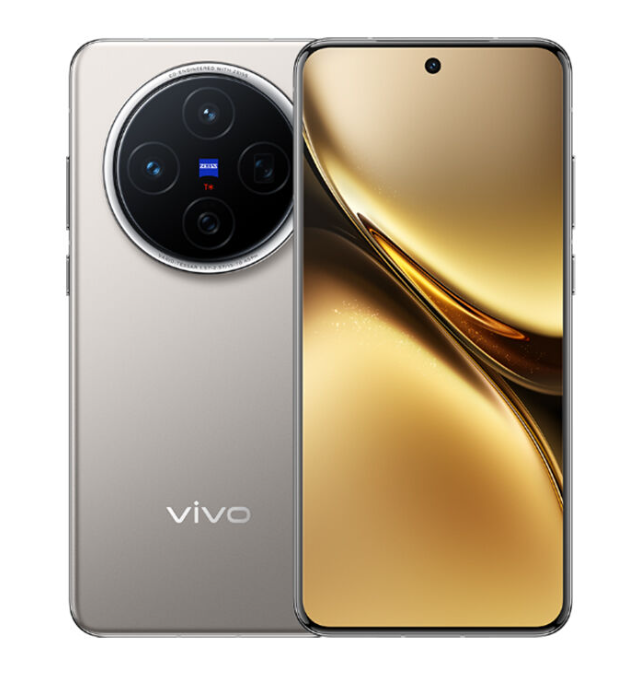
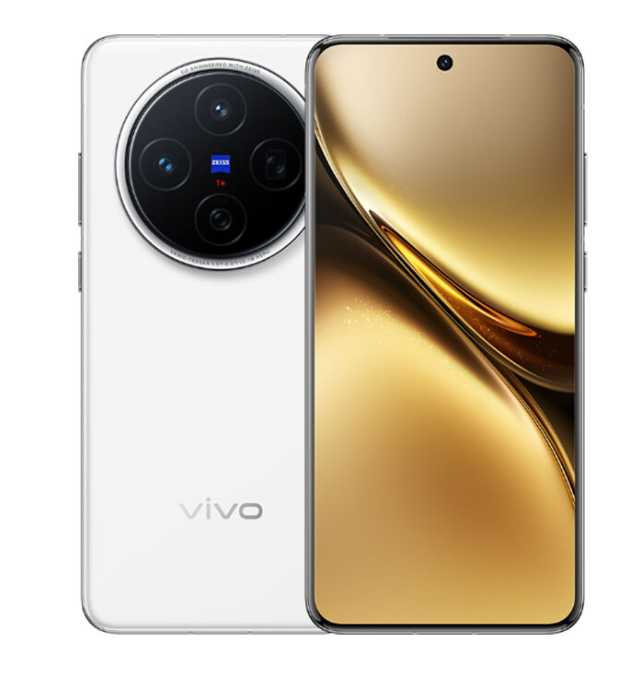
The Galaxy S25 features a 50MP wide, 10MP 3x telephoto, and 12MP ultrawide setup, while the Vivo X200 has a triple 50MP setup (wide, periscope telephoto, and ultrawide) with Zeiss optics. The 3x periscope telephoto lens on Vivo has a larger sensor and better OIS, making it superior for zoom shots.
For selfies, Samsung uses a 12MP camera, while Vivo has a 32MP ultrawide sensor, which is more versatile for group shots. Both devices shoot 4K video at 60fps, but Samsung offers 8K recording, making it a better choice for pro-level videography.
If you prefer sharp zoom and color accuracy (Zeiss optics), Vivo is the better pick. But if you prioritize video quality and software enhancements, Samsung takes the lead.
4. Pricing
The Galaxy S25 is more expensive than the Vivo X200, making Vivo a more value-for-money option. However, Samsung offers 7 years of Android updates, while Vivo only promises 4 years, which might make it worth the extra cost for long-term use.
If you want longer software support and better resale value, Samsung justifies the premium. If you want flagship hardware at a lower price, Vivo X200 is unbeatable.
Samsung Galaxy S25: Better chipset (Snapdragon 8 Elite), LTPO display for power efficiency, 8K video recording, 7 years of software updates.
Vivo X200: Brighter display (4500 nits), bigger battery (5800mAh), faster 90W charging, periscope zoom camera, Zeiss optics, and an IR blaster.
The Vivo X200 stands out in hardware, but Samsung offers long-term value and software refinements, making it better for users who plan to keep their phone longer.
The Asus ZenBook 14 Air Snapdragon Edition laptop is now available for pre-order on JD.com in China, and will officially go on sale on February 14th at 10 AM. The official price is 7499 yuan, and the price after the discount is 5999 yuan. This laptop focuses on being extremely thin and light, as well as having a long battery life. The whole machine weighs only 960g and uses ceramic aluminum material to improve durability and texture.
In terms of core configuration, the laptop is equipped with a Qualcomm Snapdragon X processor, which uses a 4nm process technology, is equipped with an 8-core CPU and a 45TOPS NPU AI engine, and supports efficient office work and smooth 4K video playback. Built-in 32GB LPDDR5X RAM and 1TB PCIe 4.0 SSD provide fast response and large-capacity storage. The 70Wh battery can support 22 hours of battery life, meeting the needs of all-day use.
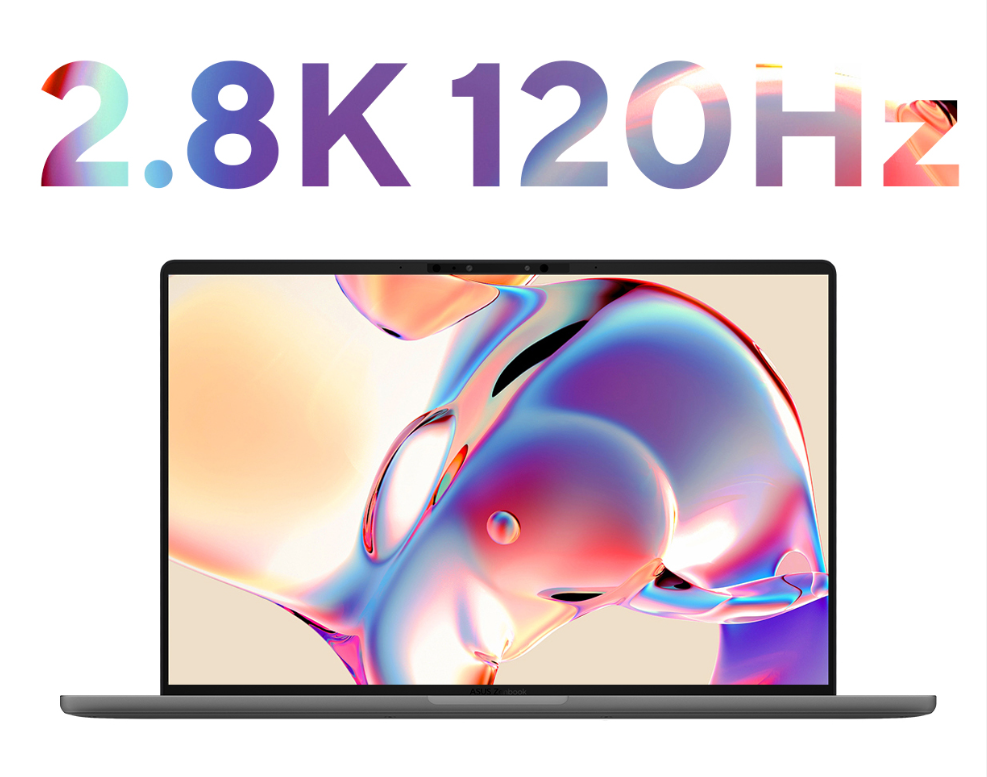
In terms of screen, the ZenBook 14 Air is equipped with a 14-inch 2.8K OLED screen with a resolution of 2880 × 1800, supports a 120Hz refresh rate, 100% DCI-P3 color gamut, and 600nit peak brightness, and has passed TUV low blue light certification. The top bezel integrates 1080P + infrared dual cameras, Dolby panoramic sound speakers, and ambient light sensing modules, which can automatically adjust the screen brightness and color temperature.
The interface is equipped with dual USB4 (40Gbps), USB-A 10Gbps, HDMI 2.1, and a 3.5mm audio port, taking into account expandability and transmission efficiency. In addition, the machine has a built-in AI assistant, which supports document summarization, AI drawing, and image recognition functions, strengthening the application of productivity scenarios.
Samsung Galaxy S25 and Oppo Find X8 are two flagship smartphones that cater to different user priorities. Samsung focuses on software longevity and ecosystem integration, while Oppo pushes hardware innovation with faster charging and higher-resolution cameras. With both devices offering top-tier performance, the comparison becomes essential for those looking to invest in a premium smartphone. This breakdown explores key differences in design, display, battery, camera, and pricing, making it easier to see which device aligns better with specific needs.
The Samsung Galaxy S25 features a Gorilla Glass Victus 2 front and back, along with an Armor Aluminum 2 frame. It is IP68-rated, making it resistant to dust and water immersion up to 1.5 meters for 30 minutes. The 6.2-inch Dynamic LTPO AMOLED 2X display offers a 120Hz refresh rate, HDR10+ support, and an impressive peak brightness of 2600 nits.
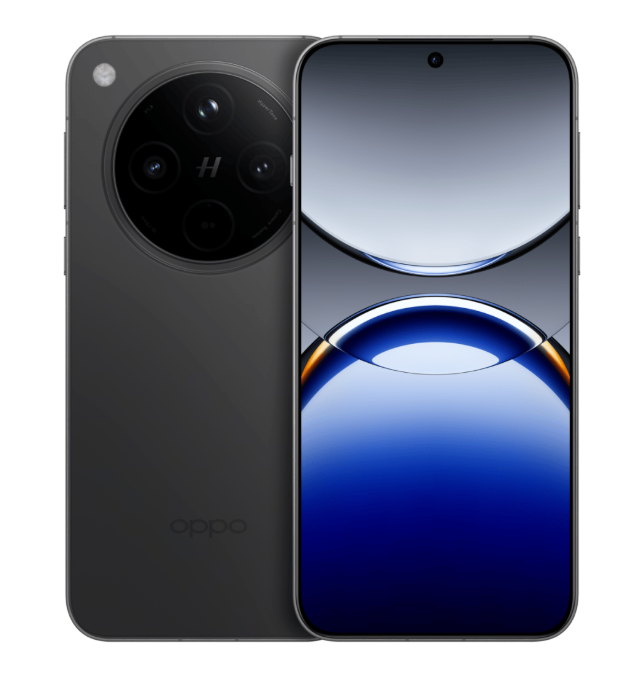
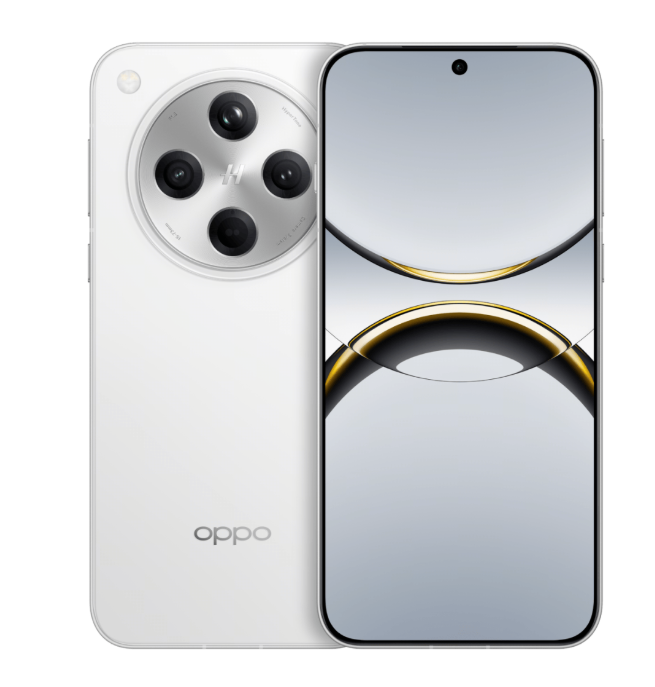
On the other hand, the Oppo Find X8 steps up with Gorilla Glass 7i protection and a more rugged IP68/IP69 rating, meaning it can withstand high-pressure water jets. The 6.59-inch AMOLED panel has a higher resolution (1256 x 2760 pixels) and an astonishing peak brightness of 4500 nits, which outshines the Galaxy S25.
While Samsung’s display is fantastic, Oppo’s higher resolution and extreme brightness levels make it a winner, especially for outdoor visibility.
2. Specifications
Galaxy S25
The Galaxy S25 is powered by the Snapdragon 8 Elite (3nm), while the Find X8 runs on the Dimensity 9400 (3nm). Both chipsets are flagship-grade, but Qualcomm’s Adreno 830 GPU is expected to perform better in gaming than Oppo’s Immortalis-G925 GPU.
Battery life is a big differentiator. The S25 houses a 4000mAh battery with 25W wired, 15W wireless, and 4.5W reverse wireless charging. The Find X8 boasts a much larger 5630mAh battery and significantly faster 80W wired and 50W wireless charging.
Samsung has a power-efficient chip, but Oppo’s massive battery and faster charging easily outclass it.
3. Camera
OPPO Find X8
The Galaxy S25 sports a 50MP main sensor, 10MP 3x optical zoom telephoto, and 12MP ultrawide camera. It supports 8K video recording, HDR10+, and advanced AI features.
The Find X8 ups the ante with a 50MP main sensor, 50MP 3x periscope telephoto, and a 50MP ultrawide sensor. It offers Hasselblad Color Calibration, Laser AF, and Dolby Vision video recording for more professional-grade output. The selfie camera is also better at 32MP, compared to Samsung’s 12MP shooter.
While both phones have great cameras, Oppo’s higher-resolution sensors and Hasselblad tuning give it an edge, especially for photography enthusiasts.
4. Pricing
The Samsung Galaxy S25 is priced at $799.99, while the Oppo Find X8 comes in at approximately $740.
Samsung commands a higher price due to brand value and longer software support (7 years of updates). Oppo, however, offers better hardware at a lower price, making it a value-for-money option.
5. Conclusion
Galaxy S25
Oppo’s display is brighter (4500 nits vs. 2600 nits) and higher resolution.
Samsung offers 7 years of software updates vs. Oppo’s 5 years.
Find X8 has a bigger battery (5630mAh vs. 4000mAh) and much faster charging.
Both have great cameras, but Oppo’s triple 50MP setup has better versatility.
Samsung has DeX support for a desktop-like experience, which Oppo lacks.
The Oppo Find X8 is better for power users who prioritize battery, display, and camera quality, while the Galaxy S25 is a safer long-term investment with better software longevity and ecosystem integration.
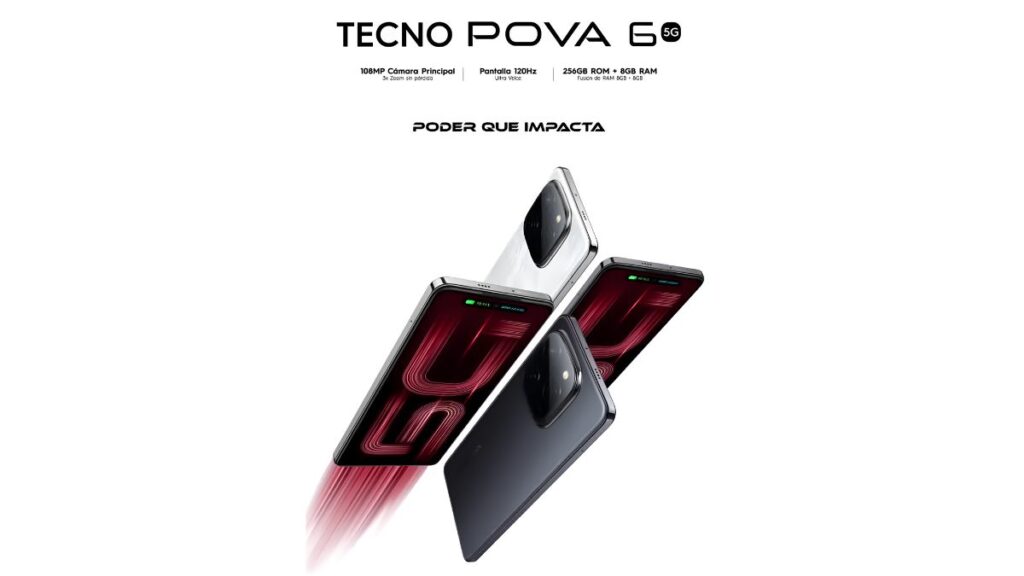
Tecno confirmed plans to launch its fifth Pova 6 series device, the Pova 6 5G, in Colombia, targeting budget-conscious users with mid-tier specs. The phone, teased via social media, emphasizes camera prowess with a 108MP primary lens (3x zoom) and triple rear cameras—though secondary sensors remain unspecified. A 120Hz display with Dynamic Port 2.0—a customizable notification interface—and 33W fast charging round-out headline features.
Hardware includes 8GB RAM (plus 8GB virtual expansion) and 256GB storage, paired with a 5,000mAh battery confirmed by FCC listings. Leaked certifications also revealed NFC support, uncommon in budget segments, and Android 14 compatibility via Google Play Console. Design cues and core specs, including a MediaTek Dimensity chip (specifics unconfirmed), mirror the Spark 20 Pro 5G, fueling speculation the Pova 6 5G is a rebadged variant for regional markets.
Tecno will offer Black and White color options but has yet to disclose pricing or a launch date. Competitiveness hinges on cost: its predecessor, the Pova 5 Pro 5G, retailed under $250, suggesting similar positioning.
In other news, Tecno is teasing a new Pova series smartphone, likely part of the Pova 7 lineup, featuring a triangular camera module with LED lighting and a boxy frame with rounded edges. While specs remain unknown, it is expected to have a triple-camera setup.
For more daily updates, please visit our News Section.
Nvidia launched the RTX 5080 and 5090 on January 30. Now a major French retailer has revealed the launch date of the RTX 5070 Ti to be February 20.
TopAchat, one of the biggest PC hardware retailers in France, has listed the cards that boast 16GB GDDR7 memory. Users can enter their email address to get notified as soon as the cards become available.
RTX 5070 Ti listed on TopAchat
The retailer has listed 6 custom GeForce RTX 5070 Ti graphics cards, all of which are set to become available at the same time. However, there isn’t any mention of the non-Ti cards yet, which are expected to arrive soon after this release.
According to the product description, the chips are based on the company’s Blackwell architecture and “offers spectacular performance”. The cards support DLSS 4 and real-time rendering with Ray-Traycing.
On the inside, the 5070 Ti cards equip the GB203-300 GPU packing 8960 CUDA cores. The GDDR7 memory provides up to 896GB/sec of memory bandwidth. In comparison, the RTX 4070 Ti packs 7,680 CUDA cores and 12GB of GDDR6X memory, and the RTX 5070 packs 6,144 CUDA cores – only marginally improved on the RTX 4070 – with the same 12GB of VRAM but upgraded to GDDR7. Both graphics cards rely on Multi Frame Generation to compete with pricier options.
In the US, the lowest price of the 5070 Ti models is reportedly $750. Given the short supply of the recently released RTX 50 series cards, I don’t expect widespread availability soon after launch. This could also lead to prices soaring well above MSRP, much like we saw with the RTX 5090.
Although the opinions about whether the RTX 5070 or 5070 Ti cards are worth the money are mixed, they seem to be the most economical option to experience DLSS 4 until the RTX 5060/5060 Ti cards arrive.
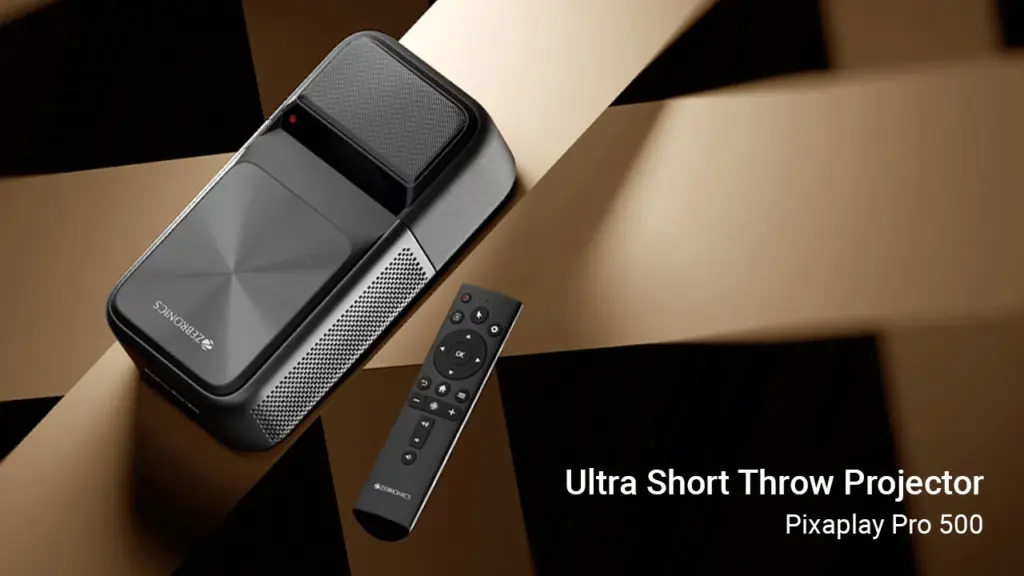
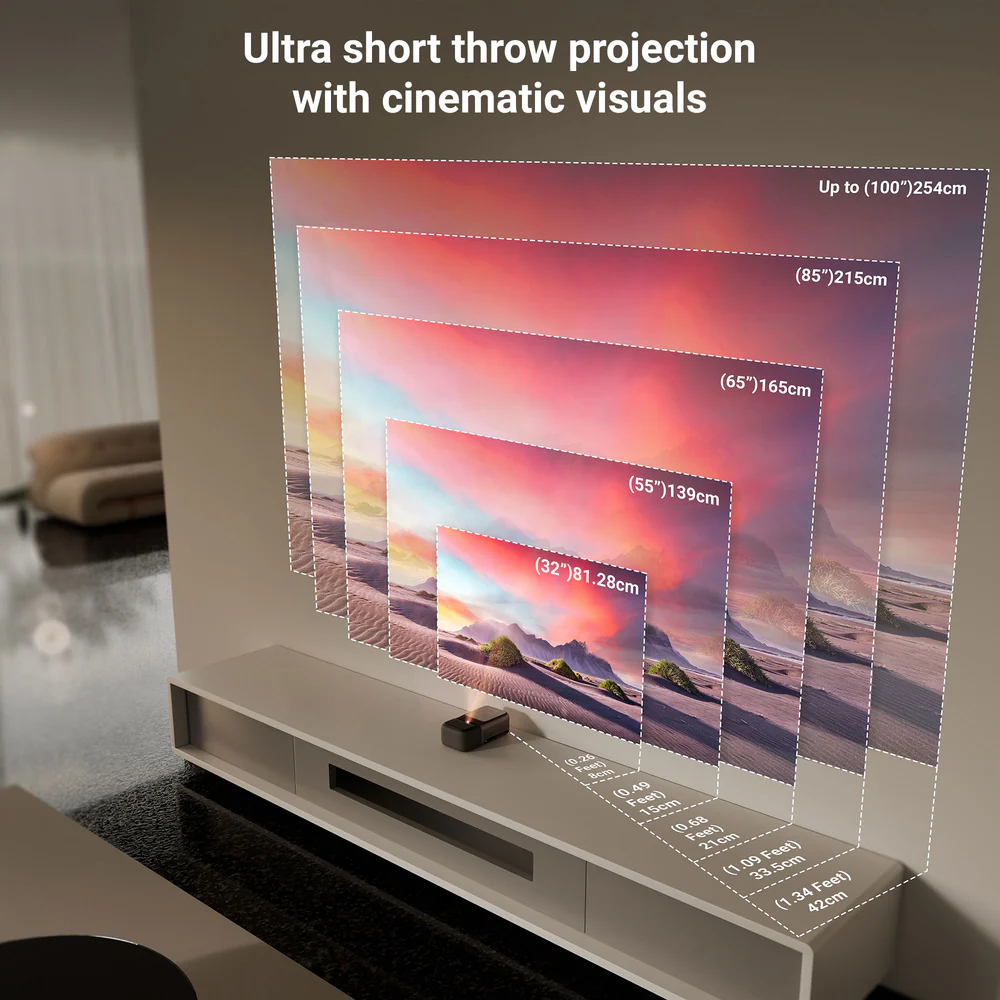
The Zebronics Zeb Pixaplay Pro 500 has just been announced for the Indian market. This is the brand’s latest projector and it follows a UST (Ultra Short Throw) format. Despite its compact and portable form factor, it offers decent specs and features. So let’s check it out.
Zebronics Zeb Pixaplay Pro 500 Specs
Zebronics Zeb Pixaplay Pro 500
The company’s new Zeb Pixaplay Pro 500 was designed to offer an immersive viewing experience while being extremely close to the wall or surface that you are projecting on. It can put out 12,500 lumens of brightness in a 1080p resolution to deliver high quality visuals and better colors. Under the hood, the Zebronics Zeb Pixaplay Pro 500 is equipped with a quad core processor that is paired with 2GB of RAM and runs Android 9 OS.
The new projector packs an LED lamp that has a promised lifespan of up to 20,000 hours. There are plenty of connectivity options as well, which include Bluetooth 5, dual band WiFi, dual USB ports, HDMI, and AUX. There is also support for Miracast and iOS screen casting features along with a built-in speaker setup, and Air Mouse support. One of its highlights is easily its design since it measures 10.4 x 21 x 6.9cm in dimensions and weighs just 756 grams.
Pricing and Availability
Zebronics Zeb Pixaplay Pro 500 was announced with an introductory price tag of 69,999 INR. It is available for purchase right now from Amazon and Flipkart in the single Metallic Gray color option. Although on the official company website, the new compact UST projector is listed on 149,999 INR. This launch also arrives mere days after the company released the Zebronics Zeb Pods O open ear wireless earbuds in the region.
For more daily updates, please visit our News Section.
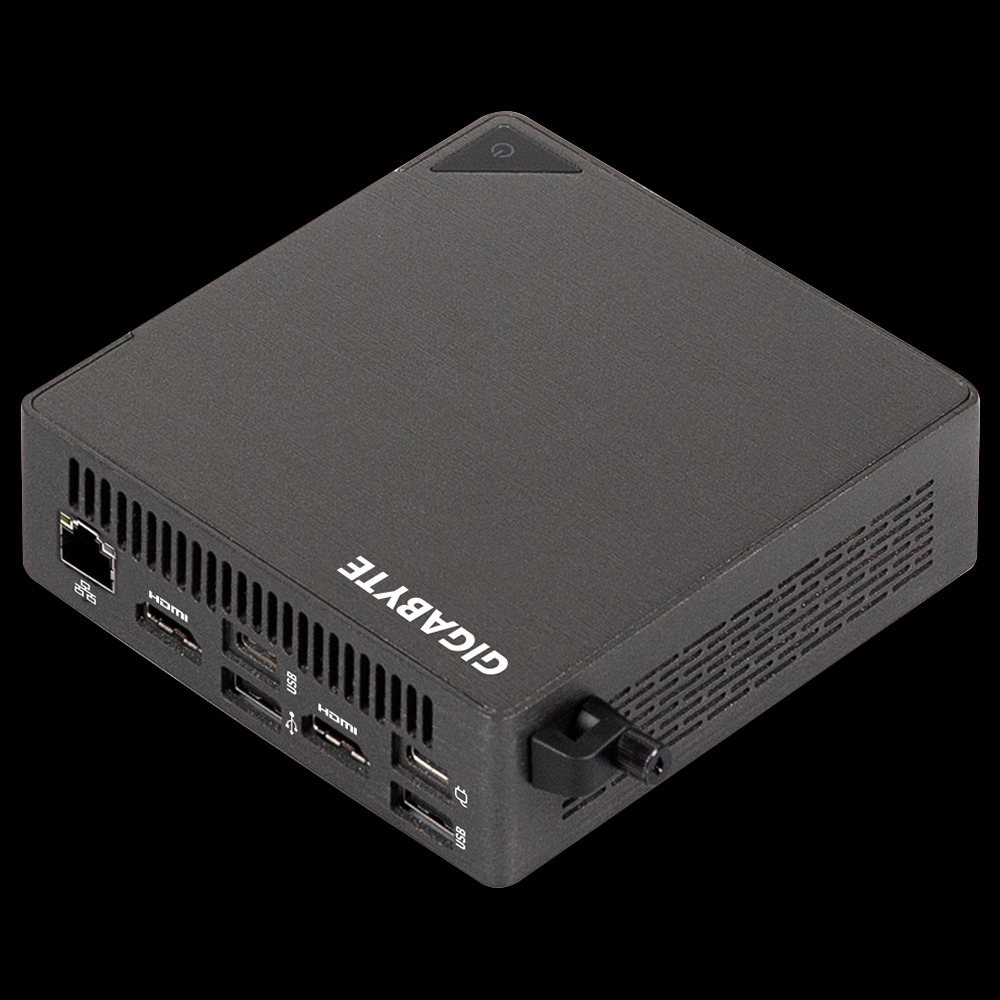
Gigabyte has launched the GB-BRU5-225H, a mini-PC powered by Intel’s 14-core Core Ultra 5 225H processor. Measuring 112.6 x 119.4 x 34.4 mm, it targets creators, professionals, and home users needing more than basic computing.
The Core Ultra 5 225H includes a neural processing unit (NPU) for AI-driven tasks and supports up to 96 GB of DDR5-6400 MHz SODIMM RAM across two slots for smooth multitasking and demanding workloads.
The mini-PC has three M.2 slots: two PCIe 4.0 x4/SATA-compatible 2280 slots for NVMe SSDs and a 2230 slot pre-installed with Intel’s Wi-Fi 6E AX210 (Wi-Fi 6E, Bluetooth 5.3).
Connectivity includes a Thunderbolt 4 port (40 Gbps, dual 8K display output, 100W power delivery), two HDMI 2.1 ports, a USB-C 3.2 Gen 2 port (with DisplayPort Alt Mode), front-facing USB 3.2 Gen 2 ports, and a 2.5 GbE Ethernet port. It supports up to four monitors and high-speed networking.
The GB-BRU5-225H supports Wi-Fi 6E and 2.5 GbE LAN, with full speeds depending on network infrastructure. The chassis allows VESA mounting behind monitors and includes a Kensington lock slot. The USB-C port also functions as a power input, reducing cable clutter. Gigabyte has not announced pricing or availability.
In other news, GIGABYTE has also recently introduced two new QD-OLED monitors, the AORUS FO27Q5P and GIGABYTE MO27U2, designed for gamers and professionals. The FO27Q5P boasts a 500Hz refresh rate, DP2.1 UHBR20 support, and VESA DisplayHDR True Black 500, making it ideal for esports. The MO27U2 features 4K resolution, a 240Hz refresh rate, and Pantone Validated color accuracy, catering to both gaming and content creation.
For more daily updates, please visit our News Section.
POCO‘s next addition to its lineup, the POCO M7 5G, seems to be nearing its launch as it recently appeared on the Google Play Console. Bearing the model number ‘24108PCE2I’ and codenamed ‘flame,’ the listing reveals the key specs and front design of the phone. Given the model number and other hints, this appears to be the Indian variant of the device.
Poco M7 5G Key Specs
According to the Google Play Console, the POCO M7 5G will be powered by the Qualcomm Snapdragon 4 Gen 2 chipset (model number ‘SM4450’). The processor features two ARM Cortex-A78 cores clocked at 2.2 GHz and six ARM Cortex-A55 cores running at 1.95 GHz. Graphics duties are handled by Qualcomm’s Adreno 613 GPU clocked at 955 MHz.
Interestingly, the device is listed with 4GB of RAM and is expected to run Android 14 out of the box. The display resolution is specified as 720 x 1640 pixels with a 320 dpi (xhdpi) density, which suggests a typical budget-friendly display configuration.
The front design image included in the listing shows a flat display, similar to the POCO M7 Pro 5G. The bezels appear thin on three sides, though the chin is slightly thicker. The selfie camera is housed in a centrally positioned punch-hole cutout. On the right side, you can spot the volume rocker and power button.
What’s Next?
While POCO hasn’t officially confirmed a launch date, the Google Play Console appearance suggests the POCO M7 5G’s release is imminent. Given the brand’s pattern, an official announcement may not be too far off. As always, more details will likely emerge in the coming days.
For more daily updates, please visit our News Section.
A fresh leak has revealed interesting details regarding an upcoming Oppo flagship smartphone that will have a compact form factor. The Find X8 Mini has just been spotted in a fresh leak that confirmed some of its key specs and its rumored launch timeline as well. So here are all the details.
Oppo Find X8 Mini: Compact Display with a new Alert button
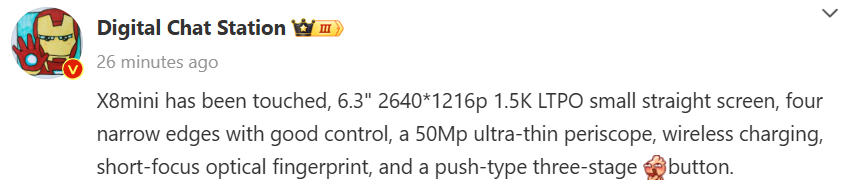
In a recent leak, it was revealed that the Chinese tech giant might be planning on ditching the iconic Alert Slider entirely, in favor of a new remappable button like the Action button found on the latest iPhones. This new alert button is reportedly also making its way to the Find X8 Mini as well. The Find X8 Ultra leak from known tipster Digital Chat Station also revealed that the Find X8 Mini might launch alongside this top end flagship.
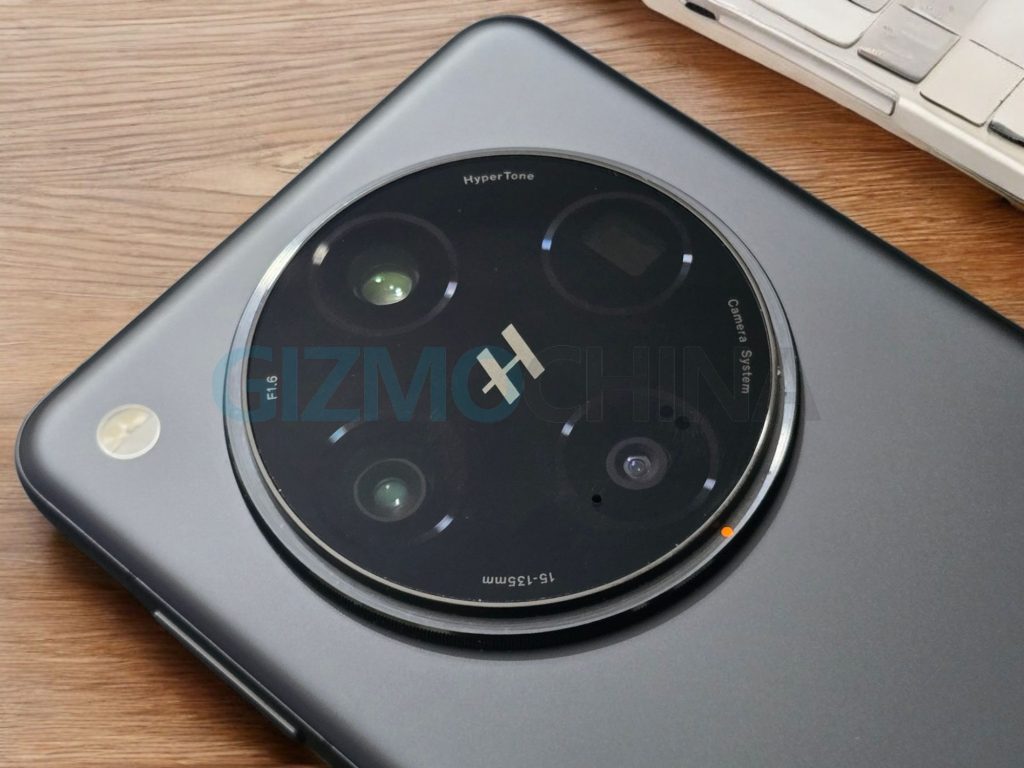
In other words, we can expect the small premium device to debut sometime in March 2025. A separate more recent leak from DCS revealed more details regarding its specifications. The Find X8 Mini could sport a 6.3-inch LTPO flat OLED display with a 1.5K resolution, and narrow bezels on all sides on the front. Meanwhile, the rear pack pack a 50MP ultra slim periscope telephoto shooter to keep the device thin.
Oppo Find X8 Pro
Other notable features include a short focus optical fingerprint scanner, wireless fast charging support, and a three stage alert button that is replacing the Alert Slider. Keep in mind that this is still just speculation at this point so take this report with a pinch of salt and stay tuned for more.
For more daily updates, please visit our News Section.
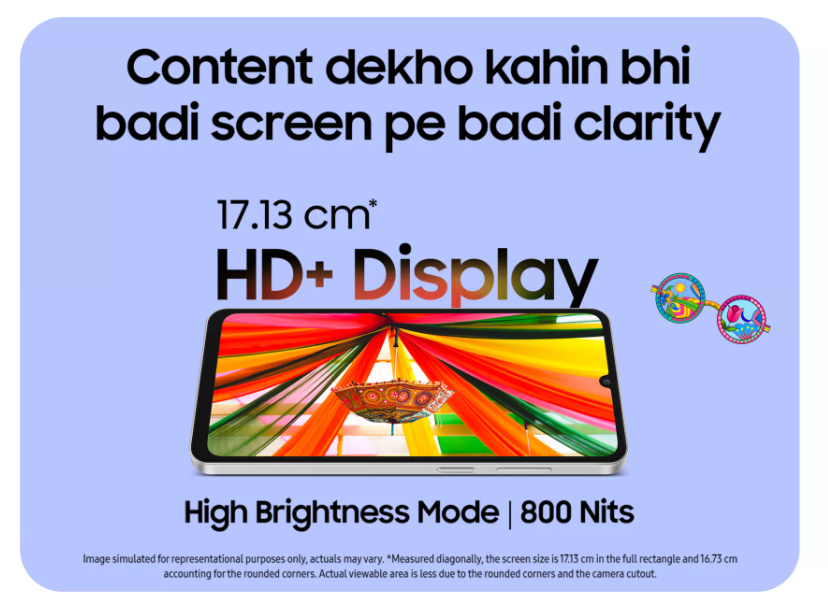
Samsung has confirmed that the Galaxy F06 5G will launch in India on February 12. As part of the company’s F series, the smartphone will be a budget-friendly 5G option priced under Rs. 10,000. Key specifications include a 6.7-inch HD+ display and a MediaTek Dimensity 6300 SoC. The device supports 12 5G bands, ensuring wide network compatibility.
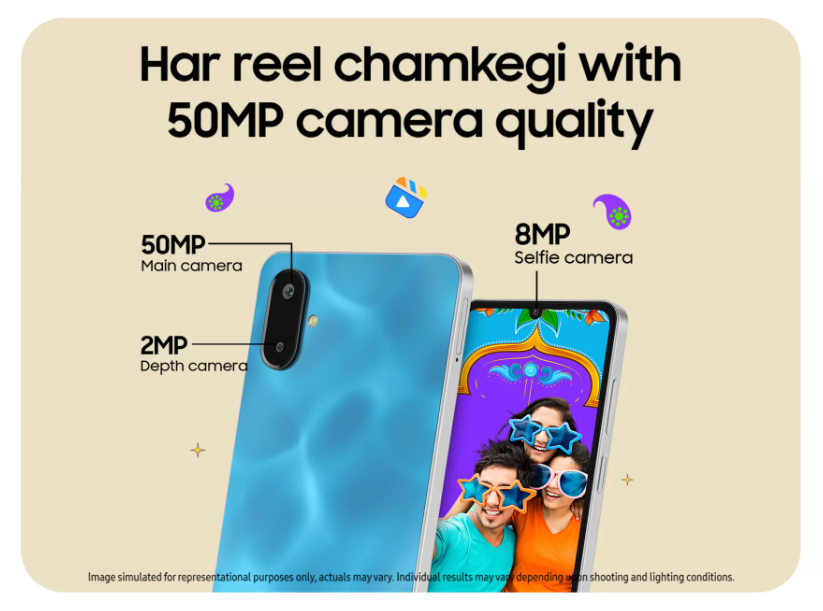
The Galaxy F06 5G features a dual rear camera setup with a 50MP primary sensor and a 2MP secondary sensor. The front camera is an 8MP unit for selfies and video calls. Other features include a side-mounted fingerprint scanner and voice focus technology. The phone is powered by a 5000mAh battery with 25W fast charging support. Samsung has confirmed four operating system updates and four years of security updates.
The design includes flat sides and a notch display. The model, designated SM-E066B/DS, appears on the Samsung India support page. Promotional material highlights the dual rear camera setup and notch display. The device is positioned as a combination of performance and style.
The Galaxy F06 5G will be available in Bahama Blue and Lit Violet. It will come in 4GB and 6GB RAM variants with corresponding storage options. Although the pricing details are still under wraps, its predecessor, the Galaxy F05 launched for INR 8,000, so we expect the F06 to also debut as a sub-10K device.
Samsung will sell the Galaxy F06 5G through Flipkart, the Samsung India online store, and select offline retail outlets. More details are expected in the coming days.
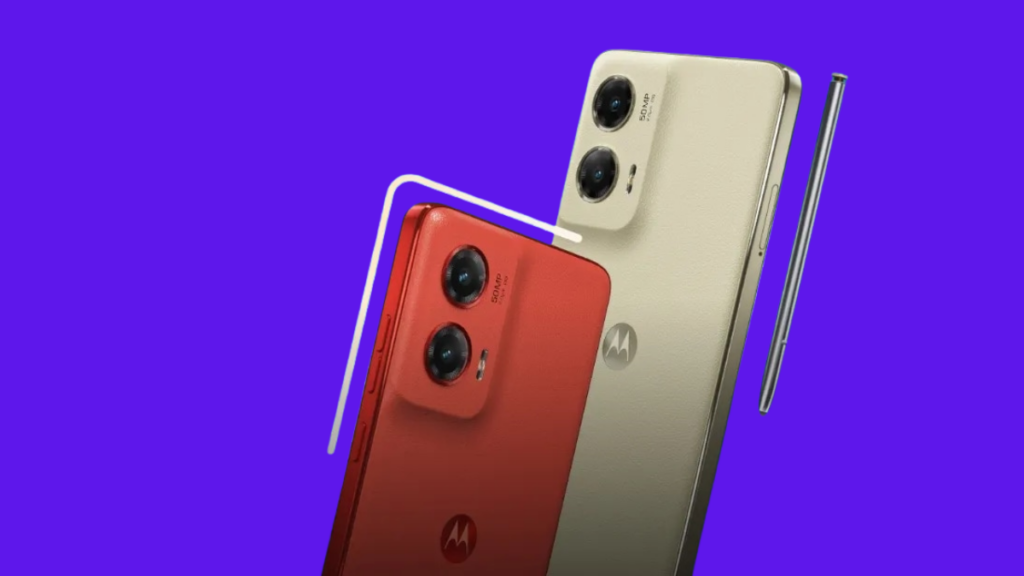
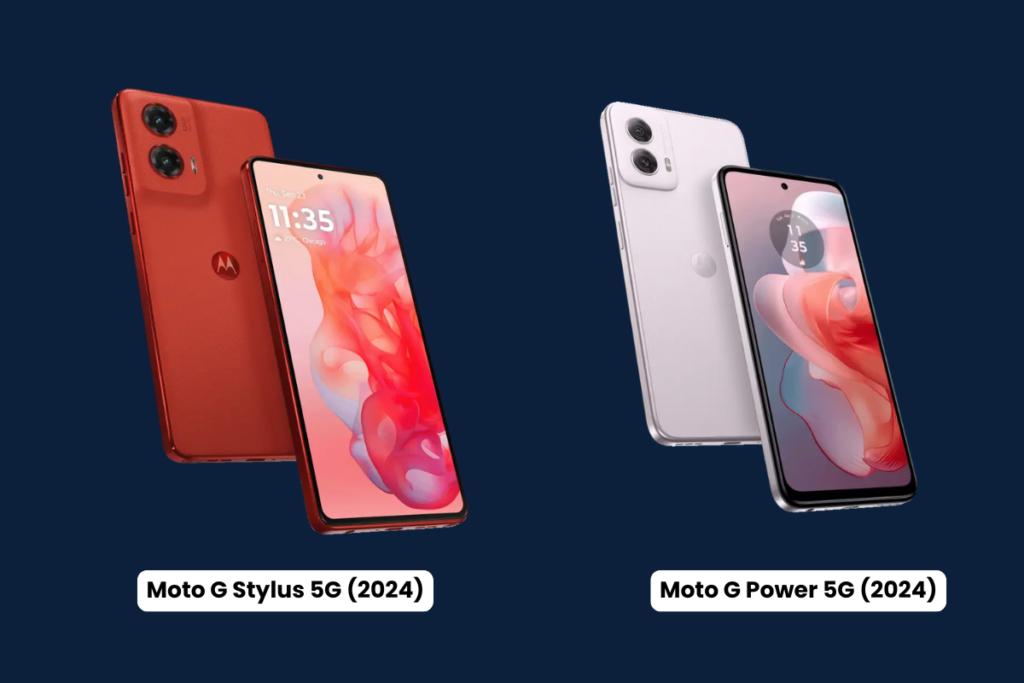
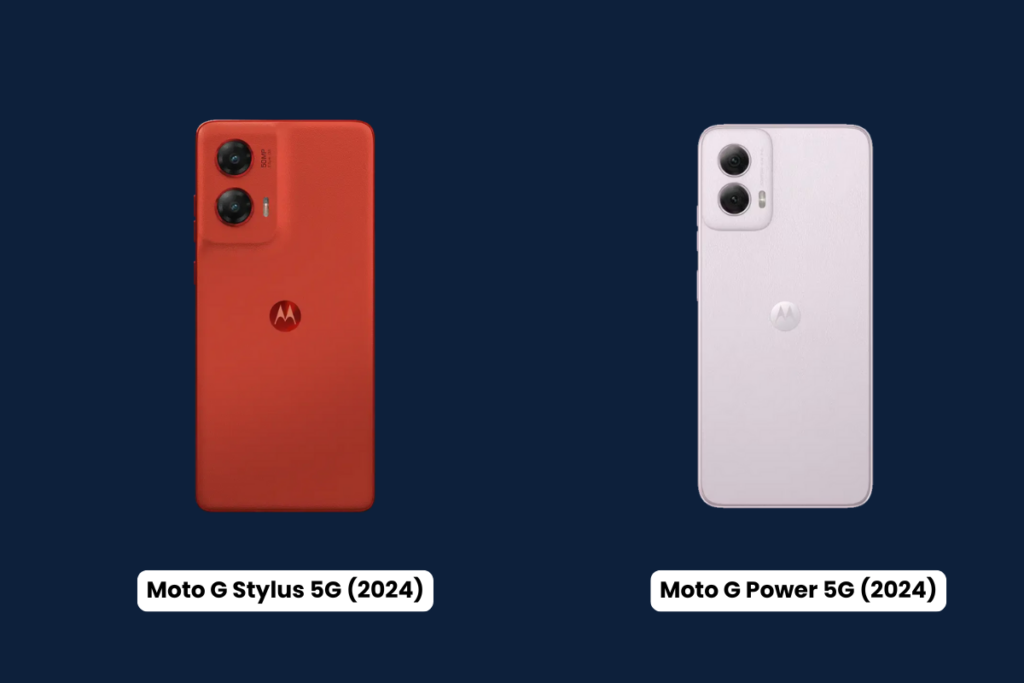
Motorola continues to dominate the budget smartphone space with its affordable Moto G Stylus and Moto G Power phones. The two lineups bring solid smartphones, such as Moto G Stylus (2024) and Moto G Power 5G (2024), that focus on affordability without compromising on essential features. While both devices offer solid features for their price, the Moto G Stylus 5G stands out as the more well-rounded option.
The Moto G Stylus 5G (2024), as the name suggests, brings a clear advantage in terms of stylus support that will benefit people who love taking handwritten notes or sketching on the go. Besides that, it brings some key advantages over its power sibling. Here are the six strong reasons to pick the Moto G Stylus 5G (2024) over the Moto G Power 5G (2024).
1. The power of stylus
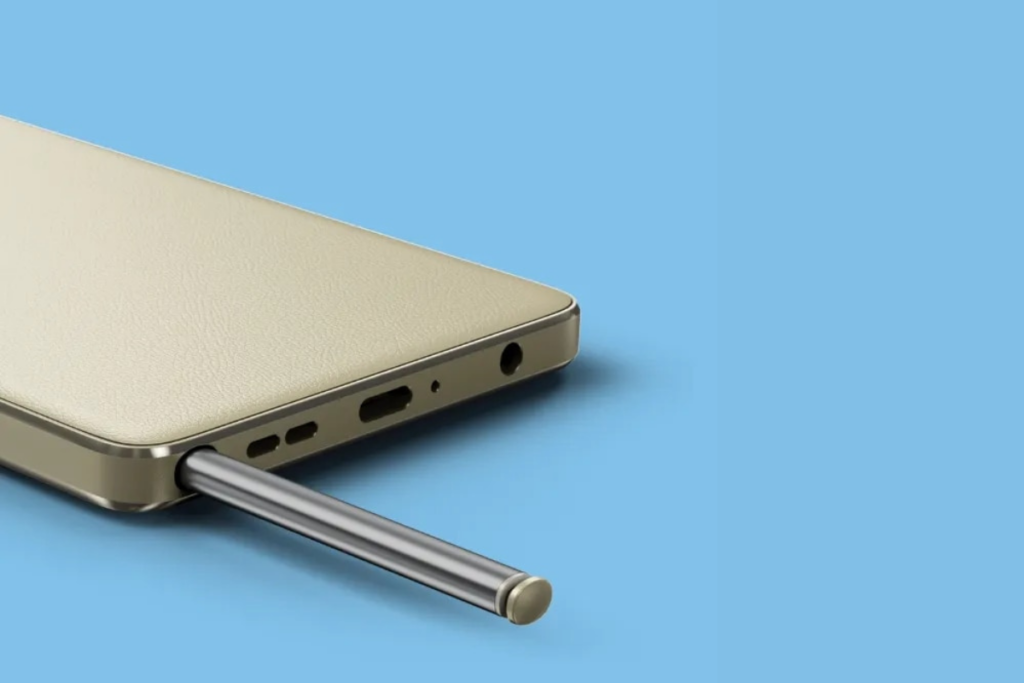
One of the biggest reasons to choose the Moto G Stylus 5G (2024) over the Moto G Power 5G (2024) is right in the name—the built-in stylus. Having a stylus smartphone not only separates you from the crowd but also adds a whole new level of functionality, such as taking quick notes, marking up documents, or sketching. It also improves touch accuracy and overall usability.
Motorola has also been improving the stylus experience to make it more intuitive and responsive, making tasks like writing, drawing, and even navigating the UI smoother and more enjoyable.
2. Premium design featuring a high-quality screen
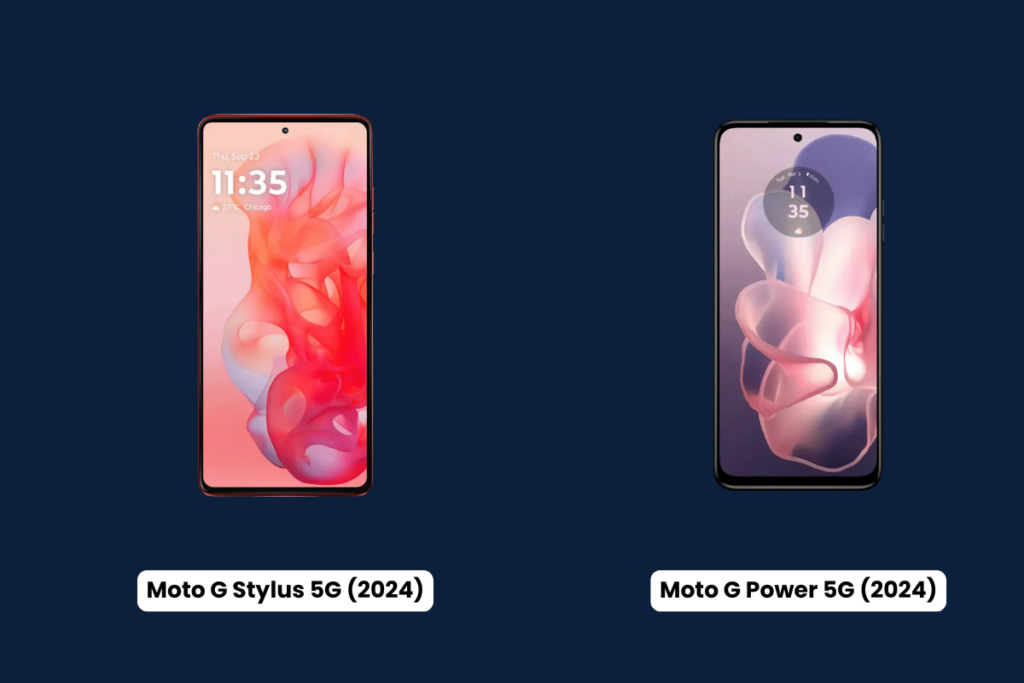
The Moto G Stylus 5G (2024) has a more premium design. The camera doesn’t look separated but blends into the side rail, improving its aesthetics. It looks more premium with slim bezels on the front and a smaller section for the selfie camera.
Beyond looks, the Moto G Stylus 5G excels in display quality. It brings a P-OLED screen, which is superior to the IPS LCD on the Moto G Power 5G. The screen sizes and resolutions remain the same on both devices, but the Stylus phone benefits from a higher screen-to-body ratio.
3. Stronger performance
The performance battle also goes into the favor of Moto G Stylus 5G (2024), thanks to Snapdragon 6 Gen 1. This Qualcomm chip is marginally better than Dimensity 7020, that’s present inside the Moto G Power 5G (2024).
Both devices smoothly handle everyday tasks like texting, browsing the internet, and scrolling social media. However, the performance may fall short when playing games like Genshin Impact and Diablo Immortal, though they can handle casual gaming. For more details, see the comparison between the Snapdragon 6 Gen 1 and Dimensity 7020.
Here are AnTuTu and Geekbench results of these Moto phones:
AnTuTu (v10) results:
Moto G Stylus 5G (2024)
Moto G Power 5G (2024)
AnTuTu score
552,164
468,343
CPU
196,612
154,841
GPU
93,736
78,374
Memory
118,417
105,305
UX
143,399
129,823
Geekbench (v6) results:
Moto G Stylus 5G (2024)
Moto G Power 5G (2024)
Single core
925
879
Multi core
2,652
2,356
4. Capture more detailed shots
The two Moto G phones have dual rear cameras, led by a 50MP primary shooter. But there are some major differences you should care about. The 50MP primary camera on the Stylus model has Quad PDAF, while the Power model has PDAF. This gives the Moto G Stylus 5G better-focusing capabilities, resulting in better motion shots.
The higher-resolution ultrawide camera on the Moto G Stylus 5G is another advantage. Plus, the extended field of view makes it more appealing for group shots. The selfie camera is also better on the Stylus model as it’s 2x the resolution of Moto G Power’s selfie camera.
With the Power model, you can record videos at up to 1080p resolution. However, the Moto G Stylus 5G supports 4K/30fps video recording with all three rear cameras. The selfie camera can also record 4K videos.
5. Better unlocking experience
Budget phones generally have a side-mounted fingerprint scanner, while more pricier phones get an in-display fingerprint sensor. While both work fast, the latter gives a premium feel and is easy to use. In our case, the Moto G Power 5G (2024) has a fingerprint scanner attached to the side/power button, while the Moto G Stylus 5G (2024) offers an in-display fingerprint sensor.
Please Note: When you buy something using the links in our articles, we may earn a small commission at no cost to you.
Moto G Stylus 5G (2024) vs Moto G Power 5G (2024): which one should you buy?
The Moto G Stylus 5G (2024) is a clear winner. It has got a better display and design, a slightly more powerful processor, and better cameras (with higher-resolution video recording). On top of everything, there’s a built-in stylus that adds a whole new level of functionality, such as taking quick notes, marking up documents, or sketching.
The Moto G Power 5G (2024) isn’t bad either. If the stylus is of no use to you and you’re okay with the cameras, the Power model might make more sense, and it’ll save you some money, too. The Moto G Power 5G (2024) is currently priced at $180, and the Moto G Stylus 5G (2024) is $250.
Moto G Stylus 5G (2024)
Moto G Power 5G (2024)
Release date
May 30, 2024
March 22, 2024
Dimensions Weight
162.6 x 74.8 x 8.3 mm 201 g
167.2 x 76.4 x 8.5 mm 190 g
Display
6.7″ P-OLED 1080 x 2400 pixels resolution 120Hz refresh rate
Xiaomi’s upcoming budget smartphone, the Redmi A5, has cleared India’s BIS certification (model 25028RN03I), alongside its rebranded variant POCO C71 (25028PC03I), signaling an imminent launch in the Indian market this month. The devices, previously mistaken for Redmi 14 4G and POCO M7 4G, have also secured FCC and EEC certifications, confirming their global rollout plans.
Unlike the Redmi A4 5G, the Redmi A5 is anticipated to offer 4G connectivity, Wi-Fi 5 with dual-band support, Bluetooth, and optional NFC, and run on Android 15 with HyperOS 2.0. Storage configurations are likely to include 3GB/64GB, 4GB/64GB, 4GB/128GB, and 6GB/128GB variants.
The Redmi A4 5G featured a 6.88-inch LCD with a 120Hz refresh rate, HD+ resolution, and a Snapdragon 4s Gen 2 processor. It housed a 50MP primary rear camera, a 5MP front camera, and a 5,160mAh battery supporting 18W fast charging. The device also included a side-mounted fingerprint scanner, 3.5mm headphone jack, FM Radio, and ran on Android 14 with HyperOS.
Given these specifications, the Redmi A5 is expected to maintain a similar display size and refresh rate, possibly with a downgrade in processing power. The camera capabilities are expected to remain the same or receive a minor upgrade. As a rebrand of the Redmi A5, the POCO C71 is also anticipated to share these features.
In other news, Realme is set to launch the C75x in Malaysia after its C75 debut in Vietnam. The phone, spotted in Malaysia’s SIRIM database, features an IP69 rating for durability and a 5,600mAh battery. It upgrades to a 120Hz display but retains a flat design. While the chipset remains unknown, it will offer 8GB RAM (expandable to 24GB) and 128GB storage.
For more daily updates, please visit our News Section.
Oppo just recently confirmed the launch date of its next gen premium foldable phone. The Find N5 model is set to debut in the brand’s home market of China on 20th February 2025. But this foldable phone isn’t alone, as it is confirmed to launch along with the new Oppo Watch X2 as well. So here are all the details.
Oppo Watch X2 Launch Date
The Chinese tech giant is set to launch its latest flagship smartphone in China on February 20 as well. When announcing its launch date, Oppo also shared an official first look at the device in a teaser image poster. This teaser revealed its full design, showcasing a round dial and display that is in line with our previous reports.
Oppo Watch X2
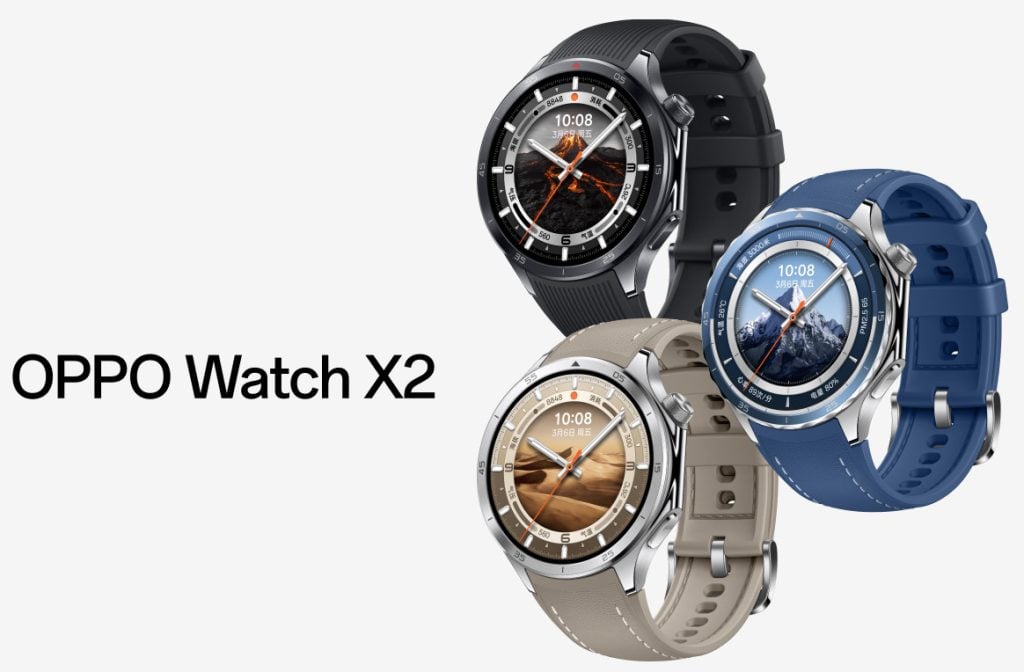
As of right now, the Oppo Find N5 and Watch X2 are also listed for pre-orders in the Chinese market. There is also a chance that this smartwatch model could be released globally as a rebranded OnePlus Watch 3 Pro. Based on what we know so far, the Oppo Watch X2 will feature a titanium bezel with teasers showcasing at least three colors options with matching straps. This includes a Silver, Blue, and Black variant.
The upcoming Oppo Watch X2 will launch with support for hypertension risk reminder function, ECG heart rate tracking, wrist temperature mapping, and various other health and sports monitoring. The smartwatch is expected to arrive in a 46mm size with an OLED display, eSIM support, around 648mAh battery pack with 10W fast charging, GPS, NFC, 5ATM, and an IP68 rating for water and dust resistance. This is all the information we have at the moment, so stick around for more.
For more daily updates, please visit our News Section.
Samsung launched its latest flagship with the entire focus on new or improved AI features. Now the Chinese smartphone makers are also trying to catch up or surpass Samsung in the AI race, thanks to China’s DeepSeek. Several OEMs including Huawei, Honor, and Oppo have already been reported collaborating with DeepSeek to make their AI assistants smarter and more capable. Now Nubia has also announced their collaboration with DeepSeek.
For those unfamiliar, DeepSeek not only showcases China’s progress in the field of AI, but it’s the biggest shake-up in the field since OpenAI’s launch of ChatGPT. DeepSeek is more efficient to operate (this is significant because big tech giants were already building nuclear power plants to power their AI servers) outperforms OpenAI’s GPT-4o in benchmarks and is open source, meaning anyone can use it.
Nubia to integrate DeepSeek in its Nebula AIOS
According to Nubia President Ni Fei (via ITHome), the company is aiming for a deeper integration of DeepSeek within its UI skin. The company has been increasingly focusing on AI integration for its phones and this collaboration might be a big step in the right direction. The official suggests that unlike other OEMs collaborating with DeepSeek, Nubia is going to “deeply embed DeepSeek into the system” which will reportedly utilize the full-scale 671 billion parameters.
Nubia Z70 Ultra
It seems like the company is looking to run the model on-device, which has a number of benefits such as no internet requirement and data privacy.
The latest flagship, the Nubia Z70 Ultra, is going to be the first to benefit from the DeepSeek integration, and the development is already in progress. This phone packs the Snapdragon 8 Elite chip, a 6150mAh Si/C battery, and supports 80W charging.
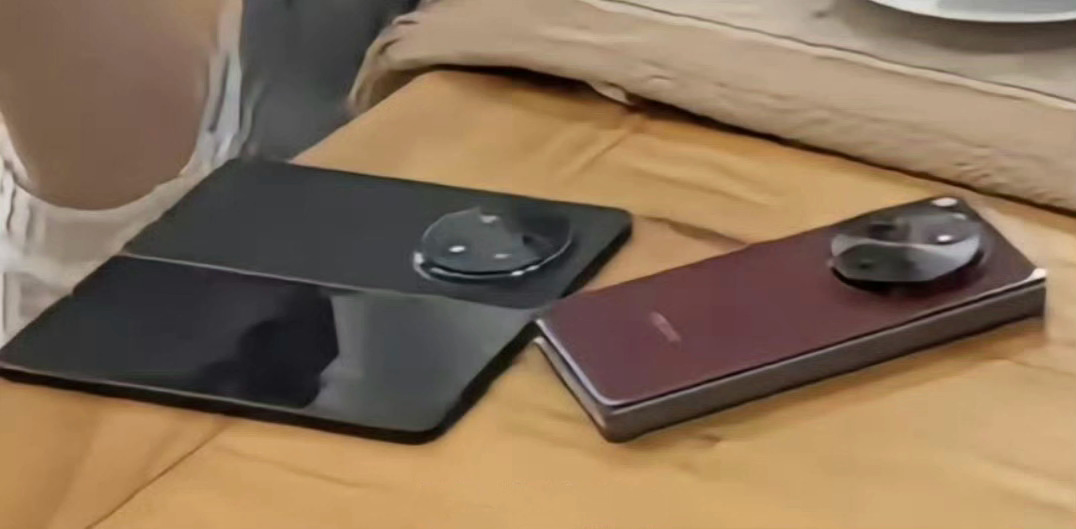
Oppo is gearing up to debut its 4th book-style foldable smartphone. The device is officially called Oppo Find N5 and it will succeed the Oppo Find N3 from late 2023.
As the new model is arriving more than a year after its predecessor, it will pack some serious upgrades. Thanks to official teasers and unofficial leaks, we know a lot about this product.
For starters, it will launch as the world’s thinnest foldable. It will be about as thin as the USB Type-C port when unfolded.
Despite its thinness, the phone is expected to house a large 5,700mAh battery. On top of that, it will support 80W wired and 50W wireless charging standards.
The Find N5 will come with not one but three IP ratings, namely IPX6, IPX8, and IPX9. Lastly, it is rumored to feature a 7-core variant of Qualcomm Snapdragon 8 Elite chip.
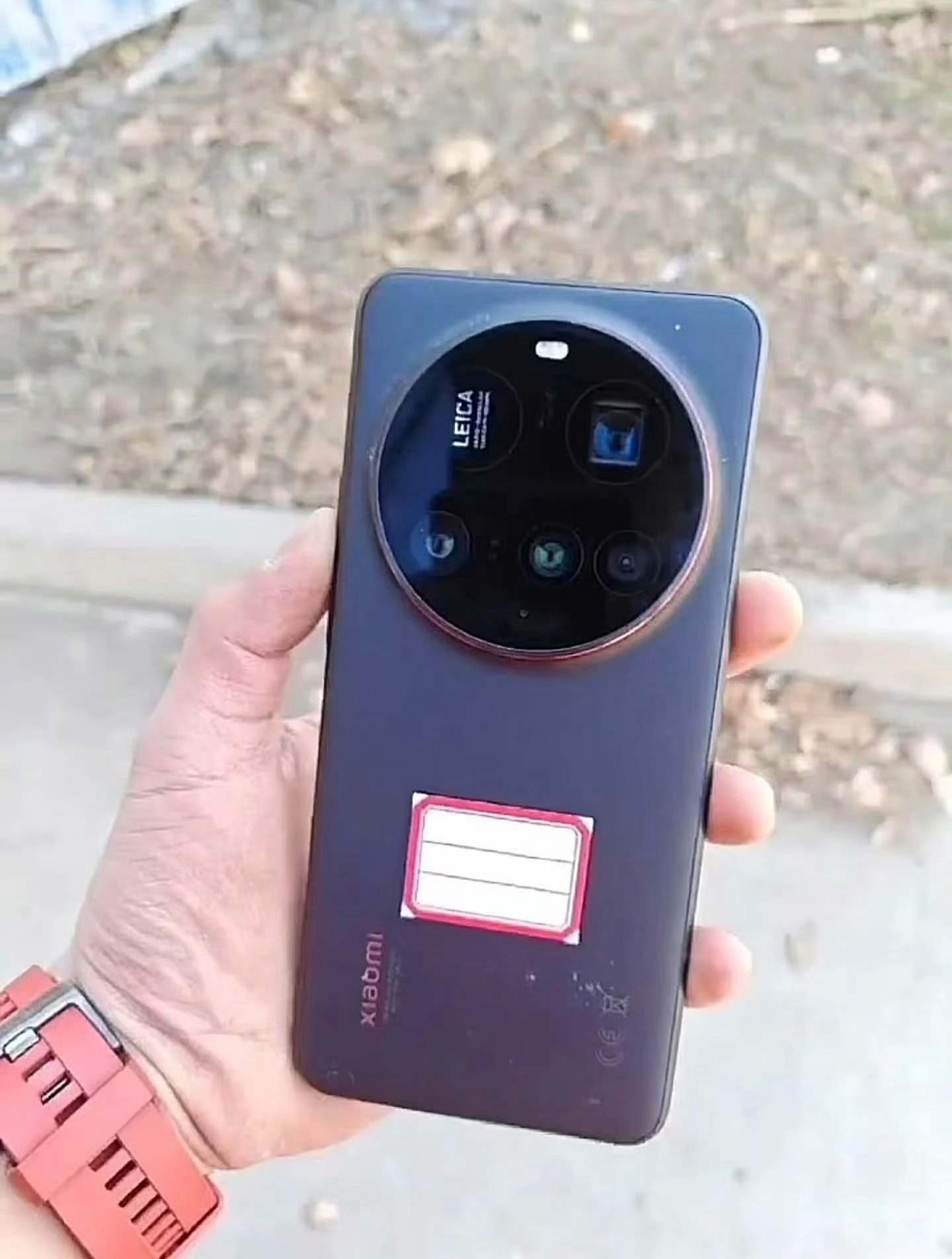
The Xiaomi 15 Ultra will be the company’s 6th Ultra smartphone. It will be more of a yearly upgrade model.
The device will retain the giant circular module from its forerunners, however, the sensors will be arranged differently. The quad-camera setup will include a 50MP Sony LYT-900 primary sensor, a 50MP Samsung JN5 ultrawide unit, a 50MP Sony IMX858 3x telephoto snapper, and a 200 Samsung HP9 4.3x periscope telephoto shooter.
It will be powered by a Qualcomm Snapdragon 8 Elite SoC. Under the hood, it is expected to pack a 6,000mAh battery and support 90W wired as well as 50W wireless charging standards.
3. iQOO Neo 10R
iQOO Neo 10R
The iQOO Neo 10R will be the latest mid-range powerhouse from the brand for India. It will house a Qualcomm Snapdragon 8s Gen 3 chipset and is expected to start at around ₹30,000 in the country.
The handset is tipped to draw energy from a 6,400mAh battery. It is said to come with a 50MP Sony LYT-600 primary camera and an 8MP ultrawide unit.
Other anticipated features include a 1.5K 144Hz OLED display, up to 12GB + 256GB memory configuration, and Funtouch OS 15 based on Android 15.
4. Vivo V50
Vivo V50
The Vivo V50 is set to arrive alone this time around. The ‘Pro’ model is expected to be released sometime later.
The device is said to be a modified version of the Vivo S20. However, unlike the S20, the V50 will have Zeiss cameras.
The handset is anticipated to feature a Qualcomm Snapdragon 7 Gen 3 chip and a 6,000mAh battery. Despite a large-sized battery, the product may have a thickness of just 7.2mm.
The phone will sport three 50MP cameras: two on the rear (wide + ultrawide) and one on the front (with autofocus). Lasty, it will flaunt a 6.67-inch 1.5K 120Hz micro-curved OLED display.
For more daily updates, please visit our News Section.
Xiaomi is reportedly working on a Snapdragon 8s Elite-powered midrange device, which packs a 6.8x” large 1.5K LTPS display. The news comes from well-known Weibo tipster Digital Chat Station, who previously hinted the presence of a Xiaomi phone with the chip and a massive 7410mAh battery.
Redmi Turbo 4 Pro specs (rumored)
He now reveals that the phone comes with a flat display design and the bezels are extremely narrow and symmetrical. For those wondering, an LTPS panel can switch between 60Hz and 120Hz to balance smoothness and power consumption based on the type of content that’s being played. Notably, it’s different from LTPO panels that support true variable refresh rates and is used in flagship devices. The middle frame and back panel could be made of metal and glass respectively, suggests the tipster.
Xiaomi Redmi Turbo 4
According to previous reports, it could be the Redmi Turbo 4 Pro. Redmi launched the Turbo 4 in January this year, which has a flat display and nearly symmetrical bezels.
Both the Redmi Turbo 4 and Turbo 3 came with a dual camera setup on the back, and the Turbo 4 Pro is also rumored to retain the 50MP + 8MP rear camera setup. The main sensor could be the 1/1.95″ Sony Lytia LYT-600, which is also a part of the Snapdragon 8s Elite-powered iQOO Neo 10R.
As for the UI experience, the Xiaomi phone will likely come with HyperOS 2.0 out-of-the-box. The phone is expected to launch in April this year, following the launch timeline of the Turbo 3.
While details about the Pro model are still scarce, we can refer to the base model to get an idea of what to expect. The Turbo 4 comes with an IP68 dust and water resistance rating, reaches 1400 nits in direct sunlight, and 3200 nits in peak brightness mode. It packs UFS 4.0 storage for faster app loading, which will likely be the case for the Pr model as well. The Turbo 4 supports 90W fast charging.
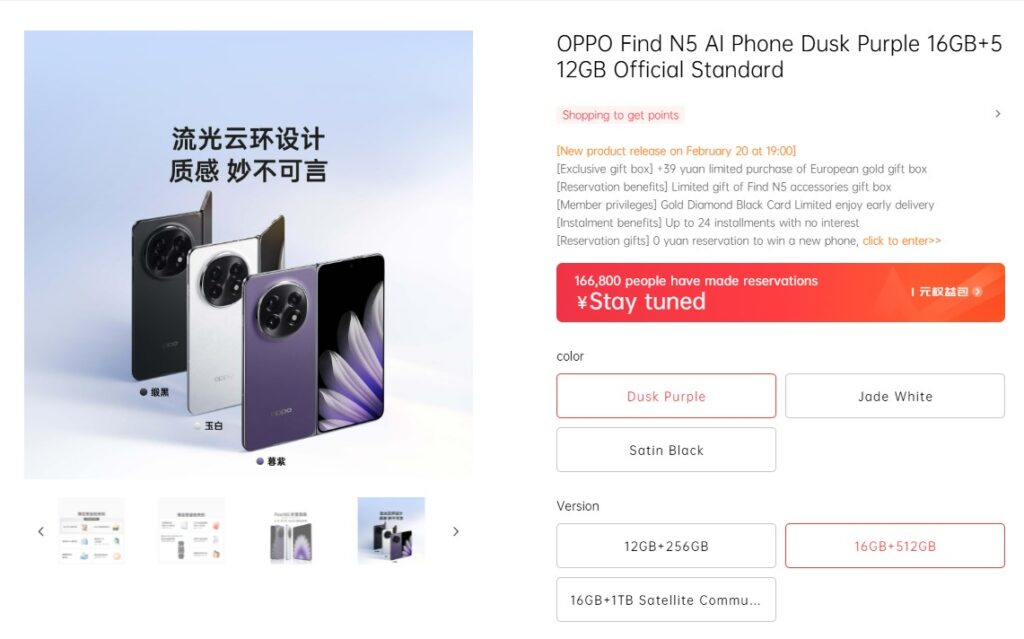
The Oppo Find N5 is all set to go official on Feb. 20 in China. The pre-order listing of the phone, which has been available for the past few days on Oppo China’s website as well as retail platforms like JD.com, has revealed new details. The updated pages confirm the RAM and storage variants of the N5.
Oppo Find N5 configurations revealed
Oppo Find N5 configurations
Shown above is a screenshot of the Oppo Find N5’s pre-order listing from Oppo China’s website. It confirms that the device will be sold in three variants: 12GB+256GB, 16GB+512GB, and 16GB+1TB. The topmost variant will support satellite connectivity.
The Find N5 will be sold in Satin Black, Jade White, and Dusk Purple shades in China. The purple variant has a leather back, whereas the remaining two feature a glass back.
The key specifications of the Find N5 include an 8.12-inch internal foldable screen, a Snapdragon 8 Elite chip, a 5,600mAh battery with 80W wired and 50W wireless charging, a 50-megapixel triple camera unit, and an IPX8-rated chassis. The device has a titanium build with a slim profile of 9.2mm in the folded state and around 4.6mm in the unfolded state.
Oppo Find N5 global launch date
Oppo Find N5 global launch date
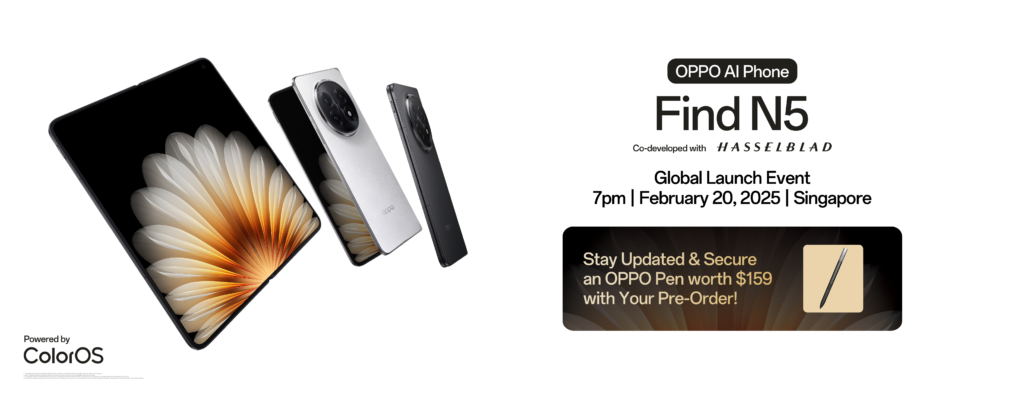
The Oppo Find N5 is scheduled to debut at 7 PM (GMT+8) on Feb. 20 globally and in the Chinese market simultaneously. The N5’s landing page is now live on Oppo’s regional websites, including Malaysia and Singapore, for pre-orders. Specifically, those who pre-order the N5 in Singapore will be able to secure an Oppo Pen stylus worth $159.
Globally, the device will be sold in two shades: Cosmic Black and Misty White. The purple edition won’t be sold globally, but it remains to be seen whether it will be made available later.
For more daily updates, please visit our News Section.
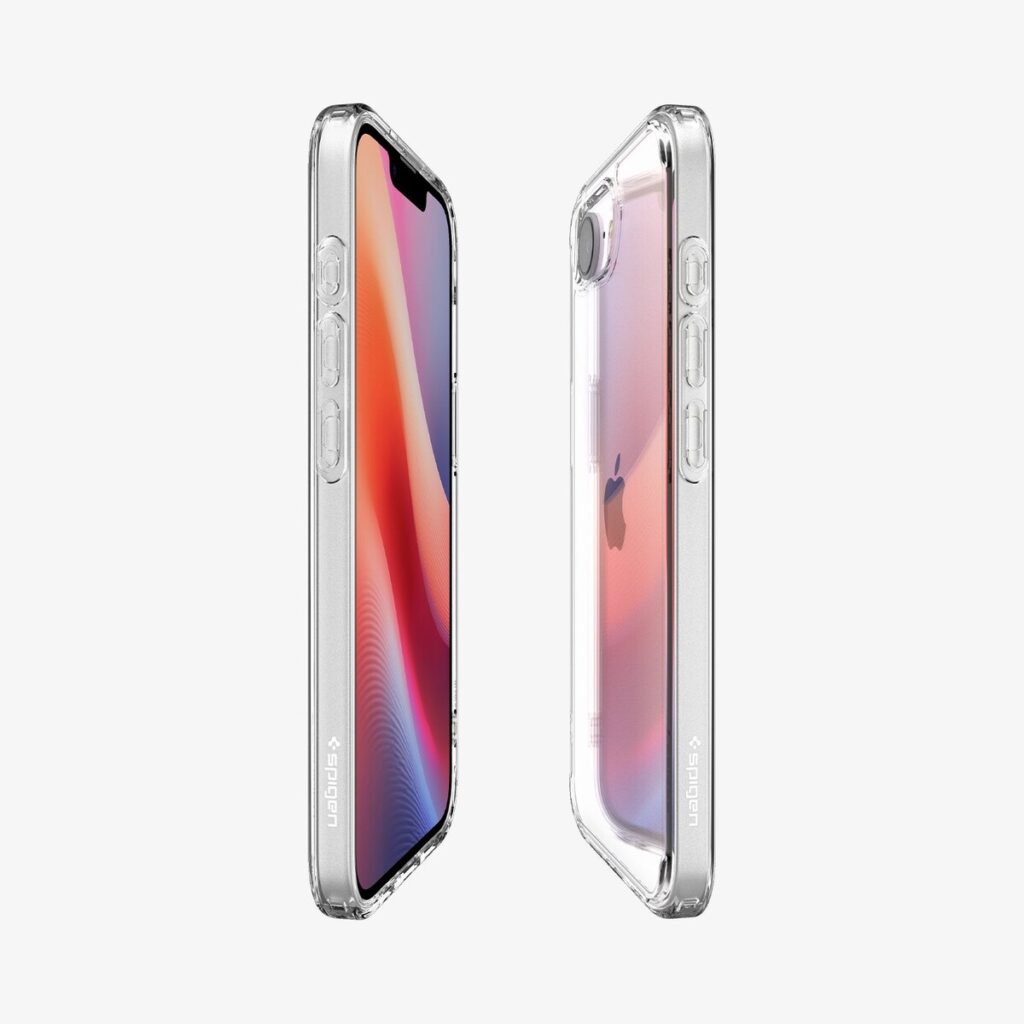
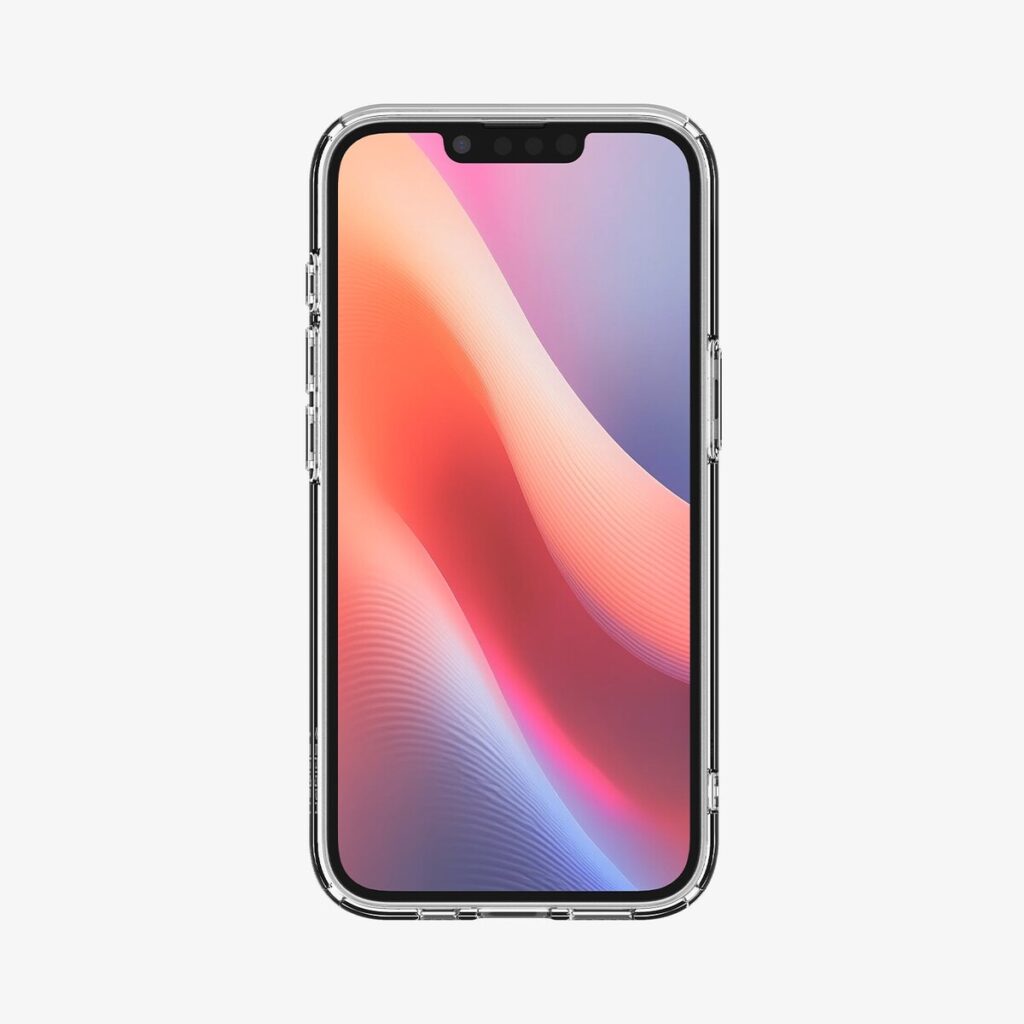
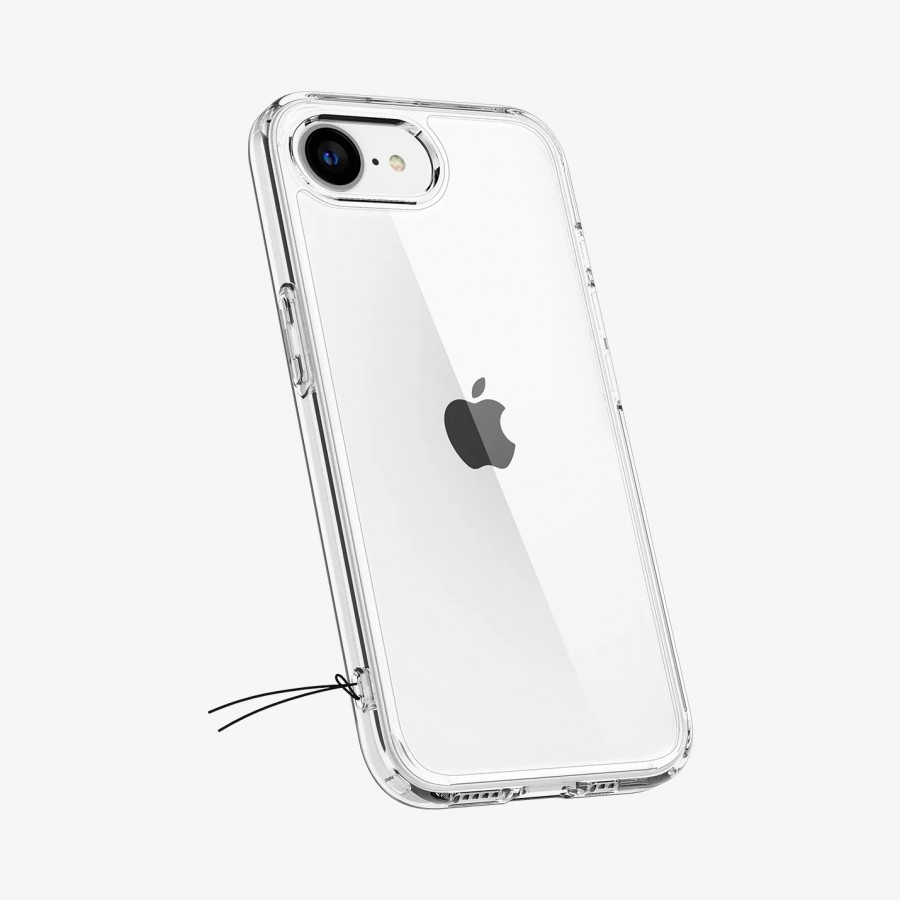
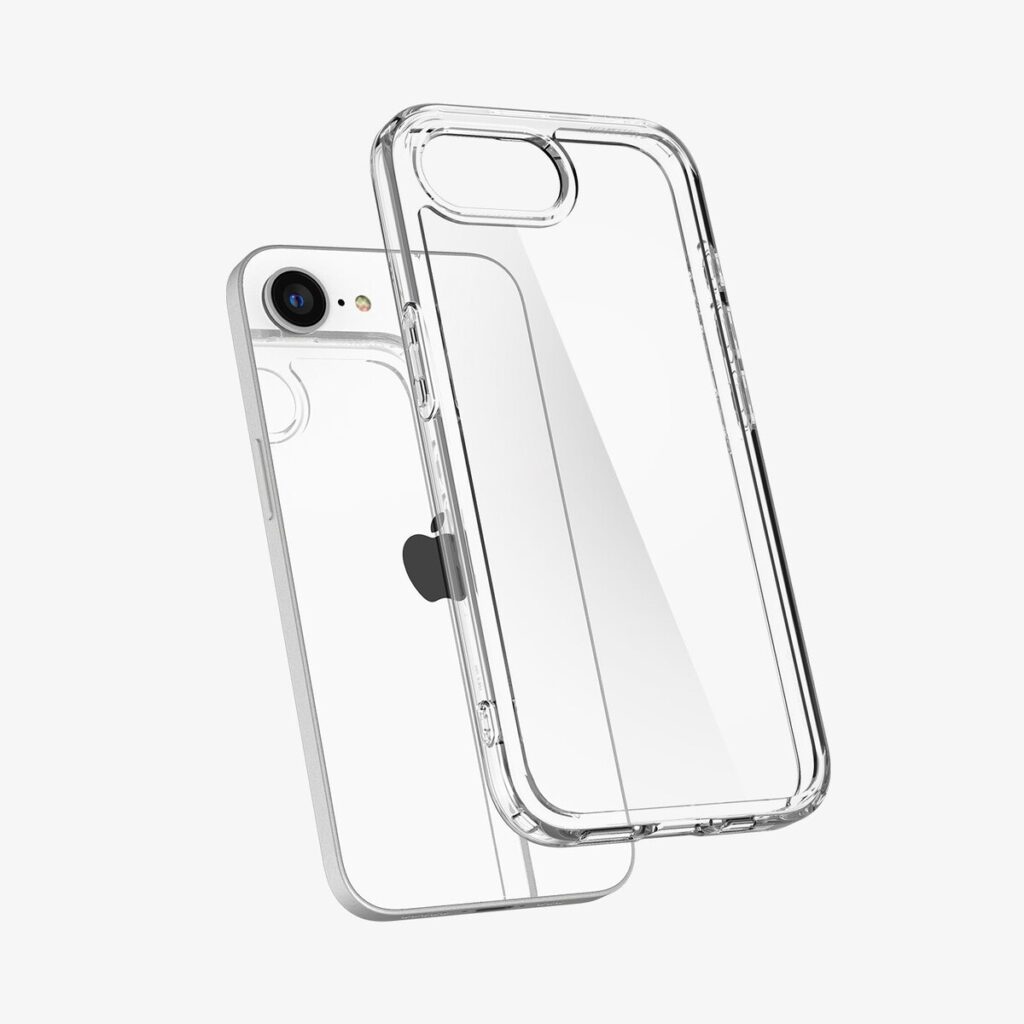
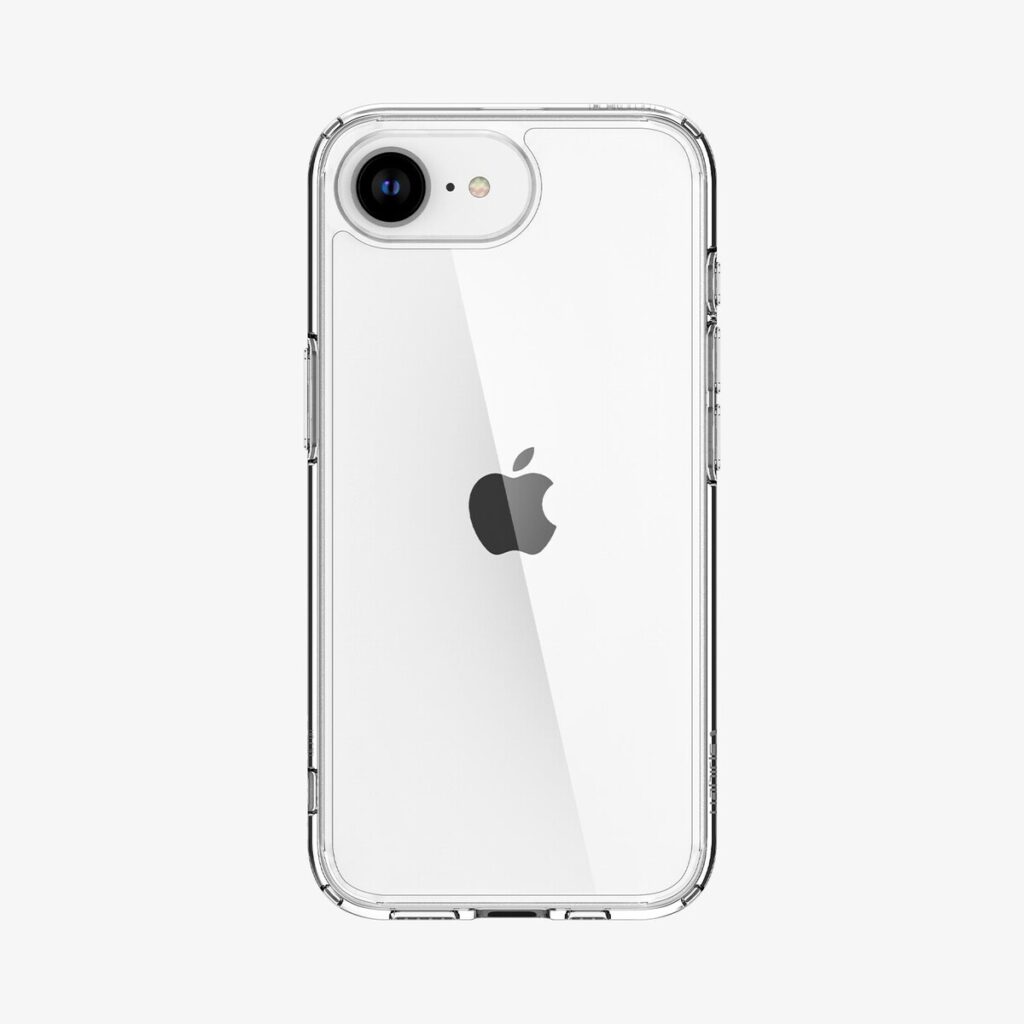
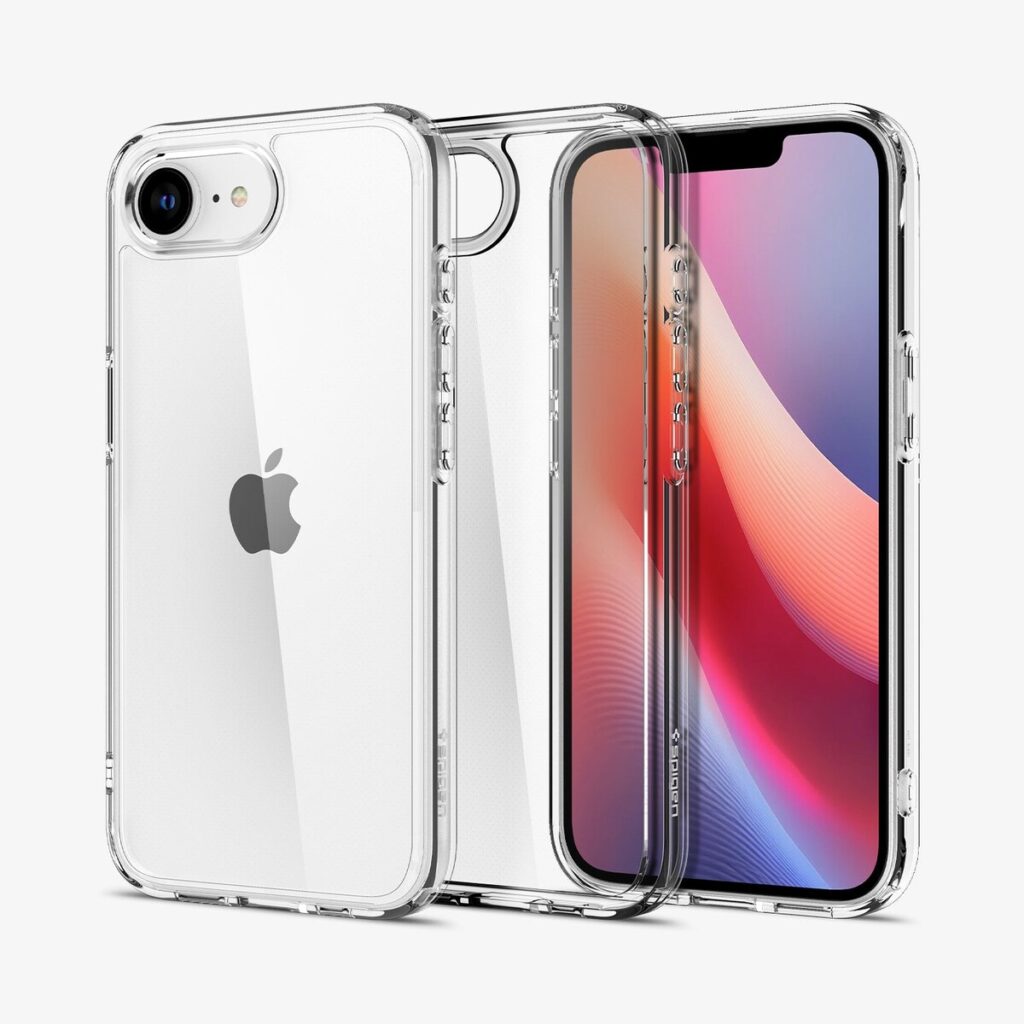
Apple is expected to launch the iPhone SE 4 as soon as this week with a couple of major changes in design and functionalities. One of them is expected to be the addition of Face ID and the removal of the home button, which will make it look a lot like the iPhone 14 from the front. Recently, case maker Spigen revealed the renders of the phone with its case, which reaffirms the previous design rumors.
iPhone SE 4 renders accidentally revealed by Spigen
Unlike the iPhone SE 2022, this upcoming model has a completely flat design, and upon closer inspection, the display appears to have reasonably slim bezels. The display is expected to measure 6.1″, much larger than the 4.7″ SE 2022. As for the color options, the model is expected to come in some fresh hues in addition to the black, white, and red color options.
On the back, however, it still packs a single camera. Even the flash and the additional sensor retain their placement and offer a very similar look to its predecessor. According to a previous rumor, the sensor inside could have a 48MP resolution. But judging from the protrusion of the module (or the lack of it) it doesn’t seem like there is a bump in sensor size. So even though it has the same resolution as the iPhone 16 and it captures images at 24MP, the images may not have the same quality as the more expensive models.
Nonetheless, a lot of it depends on the image processing, which should improve with the Apple A18 chip. Yes, the iPhone SE 4 is expected to be powered by the chip the iPhone 16 runs on. Rumors also claim the upcoming SE will support Apple Intelligence.
The SE 4 is a compact model, and it certainly looks better with the redesign. let’s see how many software features Apple adds to their most affordable iPhone of 2025.
We use cookies on our website to give you the most relevant experience by remembering your preferences and repeat visits. By clicking “Accept”, you consent to the use of ALL the cookies.
This website uses cookies to improve your experience while you navigate through the website. Out of these, the cookies that are categorized as necessary are stored on your browser as they are essential for the working of basic functionalities of the website. We also use third-party cookies that help us analyze and understand how you use this website. These cookies will be stored in your browser only with your consent. You also have the option to opt-out of these cookies. But opting out of some of these cookies may affect your browsing experience.
Necessary cookies are absolutely essential for the website to function properly. This category only includes cookies that ensures basic functionalities and security features of the website. These cookies do not store any personal information.
Any cookies that may not be particularly necessary for the website to function and is used specifically to collect user personal data via analytics, ads, other embedded contents are termed as non-necessary cookies. It is mandatory to procure user consent prior to running these cookies on your website.