Advertisement

Indonesia bans iPhone 16 sale over Apple’s investment shortfall

Apple’s iPhone 16 series, launched in early September, has already hit a significant roadblock in Indonesia. The Indonesian government recently announced a ban on the sale and even the operation of iPhone 16 models within the country.

Apple iPhone 16 Pro Max

This restriction also applies to other new Apple products, like the Watch Series 10. The decision stems from Apple’s failure to meet its agreed-upon investment commitment, a requirement for obtaining certification for device sales in Indonesia.

According to Indonesia’s Minister of Industry, Apple had pledged to invest $109 million in local infrastructure, aiming to increase its presence in the region. However, reports indicate that Apple has invested only about $95 million so far, leaving a shortfall of $14 million.

iPhone 16 is yet to receive necessary certification to be sold in the country

This has prevented the Indonesian Ministry of Industry from granting the required IMEI certification, effectively blocking Apple’s products from being legally sold in the country. For those unfamiliar, this certification is vital as it enables phones to operate with the local network; without it, the iPhone 16 models are not legally recognized and cannot access cellular networks.

In his statement, Minister Gumiwang Kartasasmita made it clear that any iPhone 16 found in operation within Indonesia is considered “illegal.” He urged citizens to report any active units and advised against purchasing iPhone 16 models from international sources, which would still fall under the ban.

Apple’s shortfall in investment has deeper implications due to Indonesia’s regulations for foreign companies. The government mandates a 40% “local component” requirement, which companies typically meet through investments in manufacturing, research, and local development.

Apple had initially proposed establishing research and development facilities to satisfy this criterion. While Apple CEO Tim Cook visited Jakarta earlier this year to discuss potential expansion plans, no new agreements have been reached, and the pending issues remain unresolved.

As a result, Apple’s failure to fulfill this commitment has placed its products at a standstill in one of Southeast Asia’s fastest-growing markets. The Indonesian authorities are awaiting Apple’s next steps, leaving consumers and potential buyers in limbo until Apple addresses the investment requirements to lift the ban.

(Source)

Nokia 110 4G (2024) Unveiled as a Budget-Friendly Feature Phone with Modern Perks

HMD Global, the custodian of the Nokia brand, is doubling down on feature phones with the latest Nokia 110 4G (2024). This stripped-down device, while reminiscent of older models, offers a few modern twists.

Nokia 110 4G (2024)

Nokia 110 4G (2024) Features

The phone features a smaller 2-inch TFT LCD screen and 4G connectivity, along with a modest 128MB RAM and 64MB storage. While these specs may seem underwhelming compared to modern smartphones, they are sufficient for basic tasks like calling, texting, and listening to music.

One standout feature is the 1,000mAh removable battery, promising long battery life. The USB-C charging port is another welcome addition, aligning the device with modern standards. The phone also boasts HD voice quality over 4G networks, ensuring clear audio during calls.

The Nokia 110 4G (2024) isn’t just about calls and texts. It comes with a basic camera, a torchlight, an FM radio, and the classic Snake game. The large, tactile keypad ensures easy operation, while the nano-patterned ceramic coating adds a touch of style.

In a world dominated by smartphones, feature phones like the Nokia 110 4G (2024) cater to a specific audience. They offer a simple, reliable, and affordable solution for those who don’t need the complexity of a high-end device.

The pricing and availability of the Nokia 110 4G (2024) are yet to be announced. It is expected to be quite affordable as the 2023 model goes for Rs. 2,499 in India, which is roughly $30.

(Source)

BenQ W2720i 4K UHD Projector Launched with 2,500 Lumens, HDR-PRO, & 30,000-Hour 4LED Durability

BenQ has unveiled its latest projector, the W2720i. This 4K UHD projector combines performance, ease of use, and durability, making it appealing to both dedicated home theater fans and casual viewers.

BenQ W2720i 4K UHD projector

A Focus on Picture Quality

The W2720i prioritizes visual quality, delivering sharp and detailed 4K UHD resolution (3840 x 2160 pixels). Its wide color range covers 90% of the DCI-P3 spectrum and 98% of Rec. 709, providing vibrant and accurate colors for an engaging viewing experience suited to movies, TV shows, and gaming.

BenQ W2720i 4K UHD projector

The projector offers an improved dynamic range with HDR-PRO technology, resulting in deep blacks and bright highlights. Supporting HDR10, HDR10+, and HLG formats, it is compatible with a broad array of content. The 2,500 ANSI lumens brightness helps maintain clear visuals even in well-lit spaces, making it versatile for different lighting conditions.

User-Centric Features

To improve user experience, BenQ includes Factory Calibration and Filmmaker Mode for accurate color reproduction. AI Cinema Mode adjusts picture settings based on ambient light, optimizing visuals in any lighting condition.

The projector’s 4LED light source is energy-efficient and also highly durable, offering up to 30,000 hours of use in Eco mode. This significantly reduces maintenance costs and ensures long-lasting performance. The quiet operation, with noise levels as low as 26 dBA in Eco mode, minimizes distractions during movie nights.

Flexible Installation and Connectivity

The W2720i supports flexible installation with lens shift and trapezoidal adjustment, fitting various room setups. Its compact, lightweight design also aids in easy setup and portability.

It features three HDMI 2.1 ports with HDCP 2.3 for high-bandwidth content, supporting resolutions up to 4K@120Hz and 8K. Additional ports, such as eARC and S/PDIF, allow for high-quality audio connections to external systems. The projector is compatible with 7.1-channel sound and Dolby Atmos for immersive audio.

Pricing and Availability

The BenQ W2720i is priced at £1,999 (~$2,592). It is expected to be made available soon for purchase.

(Source)

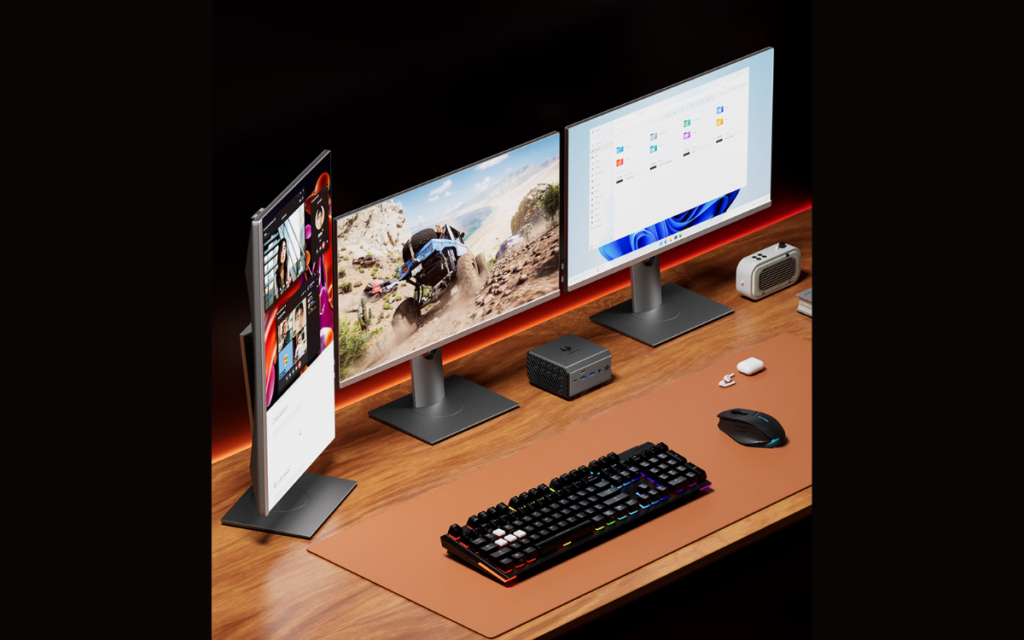
Hisense launches new 180Hz 2K 27-inch gaming monitor with Fast IPS panel, 450 nits brightness & more

Hisense has launched a new gaming monitor called 27G5K Pro in the Chinese market. The monitor is priced at 1,099 Yuan ($154) and is now available on JD.com. Let’s check out its key specs.

Hisense 27G5K Pro Monitor

Hisense 27G5K Pro Specifications

The monitor boasts a 27-inch Fast IPS flat display, with a QHD resolution of 2560×1440, ensuring vibrant visuals and sharp clarity. It has a high refresh rate of 180Hz, coupled with a rapid 1ms GTG response time, providing a seamless gaming experience free of motion blur and lag.

The color performance is exceptional, covering 97% of the DCI-P3 color gamut and 99% of sRGB, with a color accuracy of ΔE<1. It supports 10-bit color depth (8+FRC), allowing for richer and more detailed visuals. Additionally, the monitor supports HDR400, offering a peak brightness of 450 nits, enhancing the contrast between bright and dark scenes.

The panel integrates Hisense’s proprietary Ultra-Resolution Chip, which optimizes full-screen brightness and color uniformity. It also features low-blue-light technology certified by TUV Rheinland, paired with DC dimming to reduce eye strain during extended usage. The anti-glare screen ensures clear visuals, even in brightly lit environments.

For connectivity, the monitor is equipped with dual HDMI 2.0 ports, a DP 1.4 port, and a headphone output, allowing versatile connections with gaming consoles, PCs, and other devices. The adjustable stand supports tilting (-5° to 20°), swiveling (-30° to 30°), and height adjustment up to 120mm.

It can also rotate vertically (90°-92°), enabling a comfortable viewing angle for different use cases. It is also VESA 75x75mm compatible which allows for wall mounting, saving desk space.

The Hisense 27G5K Pro enhances gaming with AMD FreeSync, synchronizing the refresh rate with the graphics card to reduce tearing, stuttering, and lag. It also supports Variable Refresh Rate (VRR) and Motion Picture Response Time (MPRT), adapting to changing frame rates for smooth, flicker-free visuals.

The monitor includes several dedicated gaming modes (FPS, RTS/MOBA, RPG) that adjust visual settings for optimal performance in different genres, accessible via the OSD joystick. It also features gaming assists like a Virtual Crosshair for aiming, a real-time Refresh Rate Display, and Dark Reproduction to improve visibility in darker scenes, enhancing immersion.

HMD Sage leaks as yet another Nokia Lumia-inspired phone

HMD Global, the Finnish company behind the Nokia-branded smartphones, appears to have a new mid-range device in the pipeline. A leak from a reliable source, X user @smashx_60 (HMD Meme’s), has revealed key specifications and renders of the upcoming phone, called “Sage.”

HMD Sage Specifications 

The HMD Sage is expected to feature a 6.55-inch OLED display with Full HD+ resolution and a smooth 90Hz refresh rate.  Powering the device will likely be Unisoc’s T760 processor, the same chipset found in HMD’s recently released Crest Max. Specific RAM and storage options remain under wraps for now.

The camera department appears to be a straightforward affair. The leaks point towards a dual-camera setup on the back, with both sensors boasting 50 megapixels each. 

The tipster hasn’t shed light on the battery capacity yet, but the phone is said to come with 33W fast-wired charging support through a USB-C port. The leaks also mention an IP52 rating for dust and water resistance, a headphone jack, and NFC for contactless payments.

The design renders reveal a resemblance to the recently launched HMD Skyline, which itself takes inspiration from Nokia Lumia phones. While the overall look feels familiar, the key difference is in the rear camera module.

Unlike the Skyline‘s triple-camera setup, the Sage features a dual-camera layout. And we have the familiar HMD branding in the middle. The renders also suggest a polycarbonate frame with a matte finish on the back. The color options are rumored to include green, blue, and red.

As of now, HMD has not officially announced the Sage, and details about the launch date, pricing, and specific markets are still unknown. However, considering the leak comes from a reliable source, the device may be unveiled soon. We will keep you in the loop if any new details about the device surfaces.

OxygenOS 15: 7 features you must try

OxygenOS 15 top features

OxygenOS 15, based on Android 15, has been launched, and there are many reasons why one would upgrade to the new Android skin. In fact, it’s the best OxygenOS upgrade in recent years.

Here are the top 7 features of OxygenOS 15 you wouldn’t want to miss out on:  

1. Parallel processing

One of the most significant under-the-hood changes to OxygenOS 15 is parallel processing. It makes operations such as opening a widget or folder and switching apps feel snappier.

OxygenOS 15 smoother app switching

When you launch an app, it runs through a series of tasks before you see the app’s content. If you quickly open a different app, the device will finish the tasks for the first app before initializing for the second. This causes a little lag, which OxygenOS 15 resolves by handling them parallelly.

OnePlus is the first Android brand to introduce this feature to smartphones. Even iPhones do not have this feature.

2. AI features

OnePlus brings loads of useful AI features to OxygenOS 15. First is the AI Detail Boost, which upscales photos to 4K resolution so you can crop them without losing quality.

This feature isn’t perfect, though, so you’ll likely see a quality drop in a cropped image. However, it’s far better than not having it.

There’s also AI Unblur, which is pretty self-explanatory. It does an excellent job of improving blurred photos. However, like any other AI feature, it’s not perfect.

OxygenOS 15 AI Unblur

The latest OxygenOS software also introduces an AI Reflection Eraser that removes all glares from your photos, resulting in non-distracting shots.

OxygenOS 15 AI Reflection Eraser

The Notes app in OxygenOS 15 is also getting AI touchups with new tools like Cleanup (to remove filled pauses from a transcript0, Format (to create clean summaries), Continue Writing (to generate new content), and Tone Adjustment (to change the tone). 

OxygenOS 15 AI Notes

3. Circle to Search

Circle to Search, originally unveiled with the Galaxy S24 series, has also been introduced to many Samsung Galaxy and Google Pixels. Now, this feature is coming to OnePlus phones as well, as a part of OxygenOS 15.

OxygenOS 15 Circle to Search

For those uninitiated, Circle to Search lets you quickly search for anything on your screen by drawing a circle around it. This feature comes in handy when finding products appearing on your reels/shorts feed and anywhere on the internet.

4. Flux themes

It’s one of my favorite features of OxygenOS 15 to give a fresh look to my device instantly. Basically, these are preset themes that let you customize your lock screen, wallpaper, always-on-display (AOD), and more in a single click.

Besides Flux themes, the new Android skin also brings new wallpapers, icons, and depth effects so you can customize the lock screen your way.

5. Live Alerts

OxygenOS 14’s Smart Suggestion feature is now Live alerts. Previously, it appeared in the notification panel. In OxygenOS 15, it has been moved to the area around the front camera, similar to Dynamic Island on iPhones.

OxygenOS 15 Live Alerts

Previously, it only worked with some food delivery and cab hailing apps, but it has been improved to also support things like timers, hotspots, screen recording, music playback, and more.  

6. Share with iPhone

Sharing files from Android to iOS has been tedious. However, OnePlus is taking a step forward by introducing ‘Share with iPhone’ in OxygenOS 15, though it still requires several steps to follow.

OxygenOS 15 Share with iPhone

The iOS device needs to install and set up the O+ Connect app. The next step is to enable it on the OnePlus phone via Settings. After the iOS device accepts the file transfer request, it must be connected to the OnePlus device’s Wi-Fi.

#Bonus

This list can’t be complete without highlighting the return of the OnePlus Easter Egg in the Calculator app. When you tap “1” and “+” in Calculator and hit equals (=) you see a glorious OnePlus’s Never Settle animation.

OxygenOS 15 Never Settle easter egg

OxygenOS 15 also brings a host of other exciting visual upgrades, such as new icons and new animations for boot-up, charging, and fingerprint.

Also Read:
1. Here’s when will your OnePlus phone get OxygenOS 15 beta
2. What’s new in OxygenOS 15

Xiaomi launches an affordable selfie stick with Bluetooth remote control, a hidden tripod & more

Xiaomi has launched the Stand-Style Selfie Stick Mini Version, a compact accessory for selfie enthusiasts, vloggers, and content creators. It includes a Bluetooth remote and a hidden tripod for added functionality. It is priced at 79 yuan ($11) and is now available for purchase on JD.com. Let’s check out its key specs.

Xiaomi Stand-Style Selfie Stick Mini

Xiaomi Stand-Style Selfie Stick Mini Specifications

The Xiaomi Stand-Style Selfie Stick Mini Version comes in two color options: Deep Space Black and Milk Tea White. It is lightweight, weighing just 155 grams, making it easy to carry and convenient for travel photography. The selfie stick extends up to 520mm, allowing users to capture wide-angle shots or group photos with ease.

The telescopic rod is constructed from aluminum alloy, offering both sturdiness and a lightweight build. The device also includes a hidden phone holder and an integrated tripod, providing a stable base for various photography needs. The built-in rotating phone holder allows users to rotate their phones 90° to the left or right, enabling seamless switching between landscape and portrait modes. The holder also has an adjustable anti-slip buckle that accommodates different phone sizes, ensuring a secure grip.

The device includes a Bluetooth remote control for wireless operation, with a range of up to 10 meters when there are no significant obstacles. The remote allows users to control the shutter, take burst shots, or record short videos, depending on their phone’s capabilities. It is conveniently stored within the handle, reducing the risk of misplacement.

To ensure stability, the tripod has anti-slip foot pads, which enhance grip and reduce shake, resulting in clearer photos and videos. It also comes with an independent indicator light that provides information about the phone’s status and the remote’s battery level, ensuring users are always aware of the device’s readiness.

In August this year, Xiaomi also launched a bit premium selfie stick with a 1.6m telescopic rod, built-in tripod, Bluetooth remote, and additional features.

TCL promises brighter, cheaper, and more efficient OLED monitors

TCL‘s display manufacturing arm, CSOT, has made significant strides in inkjet-printed OLED technology, achieving a 1.5x increase in light output efficiency and preparing for mass production by the end of 2024. This breakthrough technology promises to revolutionize the OLED display industry, offering numerous advantages over traditional production methods.

TCL 8K OLED TV

TCL’s Breakthrough in Display Technology

Inkjet printing, a technique that utilizes large, precise printers to deposit organic materials onto a glass substrate, offers several benefits. It reduces material waste, enhances material efficiency, and lowers production costs. Additionally, it enables the production of flexible and curved displays, expanding the design possibilities for OLED devices.

TCL’s advancements in inkjet-printed OLED technology have led to several key improvements. The company has achieved a 50% reduction in light loss due to internal reflection, resulting in a 1.5x increase in light output efficiency. This translates to brighter and more vibrant displays, enhancing the overall viewing experience.

Moreover, TCL has significantly improved the lifespan of its inkjet-printed OLED displays. The aperture ratio, the ratio of the light-emitting area to the total panel area, has been tripled, leading to higher brightness and efficiency. Additionally, the material lifespan has been increased tenfold, ensuring long-lasting performance.

The most significant advantage of inkjet-printed OLED technology is its potential to reduce production costs. TCL claims to have achieved a 20% reduction in total manufacturing costs, making OLED displays more affordable for consumers. Furthermore, the technology’s flexible production process can shorten the product development cycle by 30%, allowing for faster innovation and quicker time-to-market.

TCL’s commitment to inkjet-printed OLED technology is evident in its recent demonstrations of various prototype products. These include a 65-inch 8K OLED, a 31-inch 4K curved OLED, and a 14-inch 2.8K laptop OLED. These displays showcase the potential of inkjet-printed OLED technology to deliver high-quality, energy-efficient, and affordable OLED displays.

As TCL gears up for mass production of inkjet-printed OLED panels, the future of OLED technology looks promising. This innovative technology has the potential to transform the display industry, bringing stunning visuals, lower power consumption, and affordable prices to a wider range of devices.

(Via)

Xiaomi takes action against a netizen for spreading false rumors

In a recent development, Xiaomi has succeeded in holding accountable an individual who spread false information and defamed the company. A netizen, identified as the user of the account “DeepSea142183002,” has publicly apologized to Xiaomi and its founder, Lei Jun, for repeatedly posting malicious and untrue statements.

Netizen Pays the Price for Slandering Xiaomi

The netizen admitted to fabricating claims about Xiaomi’s foreign ownership and intentionally provoking conflicts with other domestic companies. These actions were aimed at inciting public sentiment against the tech giant. The impact of these false statements was severe, damaging Xiaomi’s reputation and causing significant economic losses.

To rectify the harm caused, the netizen has agreed to make substantial financial compensation to Xiaomi. This latest incident highlights Xiaomi’s proactive stance against online defamation and its commitment to protecting its brand reputation.

This isn’t the first time Xiaomi has taken legal action against those who spread false information. The company has been actively pursuing legal remedies to combat online slander and misinformation. By holding individuals accountable, Xiaomi aims to deter future incidents and maintain a positive online image.

The public’s reaction to this incident has been mixed. While some netizens expressed sympathy for Xiaomi and condemned the actions of the rumor-spreader, others questioned the effectiveness of apologies and financial compensation. Some have called for stricter penalties to discourage such behavior in the future.

As technology continues to evolve and social media platforms become increasingly influential, it is crucial for individuals to exercise caution and verify information before sharing it online. Spreading false information can have serious consequences, both for the individuals involved and for the companies targeted.

Xiaomi’s proactive approach to addressing online defamation serves as a reminder to all to be mindful of the impact of their words and actions in the digital age.

Meanwhile, Xiaomi is all set to launch its upcoming flagship Xiaomi 15 series, which includes the Xiaomi 15 and 15 Pro, on October 29th.

(Via)

Samsung One UI 7: What to Expect from Android 15 on Galaxy Devices

Smartphone makers have started releasing their next gen flagship devices with Samsung also gearing up for the launch of its Galaxy S25 series. These new high end phones would offer top notch specs and features, but it’s expected to bring the latest iteration of Android as well. So here’s what we can expect from the brand’s vision of Android 15, dubbed the One UI 7.

1. An Updated Look

Samsung Galaxy S25 Ultra running One UI 7

Along with the Android 15 OS update, one of the biggest changes with the latest One UI build is the refreshes in the user interface. Samsung is planning on releasing the One UI 7 stable version in 2025 with a fresh new look. During the Samsung Developer Conference, the One UI 7 was showcased in images, which revealed changes in the control center, recently used apps menu, brand new notification panel, and much more. Even the apps themselves might also see changes, like the Gallery, Phone, Camera, Recorder, Contacts, Samsung Notes, and others.

Earlier this month, a render of the Galaxy S25 Ultra surfaced online, offering us the first look at the One UI 7. While this was just a mockup, it gave us a proper view of the new control center. Upcoming changes in the ColorOS 15 and OxygenOS 15 make it seem like an Apple iOS inspired UI design. Samsung’s One UI 7 is not taking direct inspiration but seems to have hints of iPhone’s software. You can see a split notification panel with rounded corners and transparencies.

2. New & Improved Galaxy AI?

Samsung One UI 7 upgrade improvement

Samsung is expected to launch the Galaxy S25 series with Qualcomm’s Snapdragon 8 Elite. This new processor offers massive improvements in CPU, graphics, and NPU processing. In other words, AI powered features could be better and faster than ever before and Samsung’s Galaxy AI can take advantage of these upgrades. So we can expect the return of Call Assist, Transcript Assist, Interpreter, Note Assist, Browsing Assist, Live Translate, Circle to Search, and more.

3. Best Version of One UI yet?

In one of the latest reports, it was stated that the One UI 7 could be the biggest improvement in the history of Samsung’s smartphone software. The brand is taking longer than usual to release the One UI 7 beta. But the One UI 7 is being in the oven for a long might pay off by the end. This could ensure a bug free release and greater improvements overall. Known Samsung tipster Ice Universe claims that the One UI 7 is the biggest upgrade in the history of Samsung software. There’s not only a performance boost, but also improved animations, transitions, system stability, and smoothness.

GoldenMate 8 Outlets UPS Review: Live Off Grid? At Least With a UPS

UPS Battery

In this article, the Review Team would like to talk about UPS battery and take the GoldenMate 8 Outlets UPS as an example. Just good to give it a review too as we’ve used it as our work protector for a few weeks.

GoldenMate 8 Outlets 1000AV/800W UPS Battery

So if you’ve subscribed to our channel for over a year, you must know that we’ve reviewed and kept many power stations in the studio, just for emergency and outdoor uses. But the truth is, they mostly stand by at the corner and serve as backup power. The only feature that might make them useful for indoor uses is the UPS. Well, however, compared with a single UPS, those power stations are relatively heavy and bulky, and most importantly, they would cost you much more money. So the GoldenMate 8 Outlet UPS for about 170 bucks is a great example. if you value home and office power protection for every day, and without huge backup power demands – try the UPS!
Compact & Solid Design with LiFePO4 Battery Pack

Let’s take a closer look at the GoldenMate UPS. As a portable UPS, its design is quite simple. To its credit, it comes with up to 8 AC outlets. The outlets support up to 1000VA/800W load capacity. It’s not defined as a large power backup, but GoldenMate still gives it a built-in 230 Watt-hour battery in case of emergency. So basically if not huge demands on backup power, it’s a pretty safe setup to offer personal battery backup and surge protector.

The battery material is the most important feature that distinguishes the GoldenMate from most home-use UPS systems. Unlike most others using lead-acid batteries, it’s housing a built-in LiFePO4 battery, which would be lighter and offer a longer lifespan.

Off-Grid Tests – Work station

As claimed, the battery pack inside is certified with a lifespan of over 10 years and 5000 cycles. Well, that’s a long way off for our time of use. So we couldn’t actually test out its extreme durability. But the truth is it’s really stable for the past weeks. We’ve tried and tested it with various scenarios. No matter for our network and NAS devices or even my workstation with over 600W power, it always provides uninterrupted power connectivity.

During the tests, one of my biggest concerns is whether it will save my work when the power suddenly goes out. A power outage can ruin your unsaved work, and of course, a good day as well. If it hasn’t happened to you yet, you’re in luck. But still, it’s important to note that the causes of power outages are often complex; like the aging grid, overloading, severe weather, or maybe just a mad supplier. The GoldenMate UPS system supports an extremely short conversion time of less than 20ms, so it will be fine for continuously powering up a computer.

In addition to keeping an eye on its working state, we also simply simulated some extreme damage scenarios. For example, frequent power cuts to verify its reliability. As the recorded clips show, nothing happened to the connected PC and other small devices.

Tests with Network Devices

Then to ensure that a complete workflow wouldn’t be interrupted, we used another pack of the UPS to connect up multiple small network devices such as the gateway, two routers, the NAS, and so on. Well, the network connection wasn’t broken and it just looks like the workstation now can live off-grid.

Portable Size for Various Scenarios

You may have also noticed that we didn’t hold it in one position during the weeks. It’s smaller and lighter than we expected. So when we give it a test of different scenarios, I can easily carry it wherever we need it. And the upright design also makes it take up less space than a compact PC case.

Another good point is the fan cooling for heat dissipation. We’ve never once had a problem with overheating.

LCD Info Panel

Another great bonus feature is the LCD info panel. To be honest, it’s way more useful than we imagine. It acts like a complete power station providing real-time battery, input and output data. The visible data includes input and output voltage and power, battery status, output load percentage, AVR status, and estimated battery backup runtime.

Verdict

Now the GoldenMate powers one mini PC, a full-size tower PC, a monitor, multiple mobile devices, as well as a secure camera. During more or less frequent power outages before the generator takes over, it gives me peace of mind to know I will never lose data. And it also cuts way down on the wear and tear of power surges and brownouts. The UPS has proven reliable. Now we can just free those power stations just for outdoor or car-travel uses only.

For those who live in rural or any place where the electric grid is aging, I truly recommend a UPS. The GoldenMate is just a good example. I don’t expect you to use it often, but it would be there for those moments, and help you find peace of mind. So in case you cannot find a reliable one, you can check out the GoldenMate UPS store here.

Realme GT 7 Pro: What to Expect from This Snapdragon 8 Elite-Powered Flagship

The Realme GT 7 Pro is set to launch soon as the brand’s latest flagship smartphone. It is also an anticipated launch since it arrives with Qualcomm’s brand-new Snapdragon 8 Elite chipset. So here’s everything we know about the Realme GT 7 Pro and what you can expect from this device.

1. Realme GT 7 Pro: Design & Display

Realme GT 7 Pro Mars Design revealed
Realme GT 7 Pro Mars Design

Being a high end smartphone, the Realme GT 7 Pro is set to launch with a premium design. The back panel is set to use a multi layered hot-forging AG process. The Chinese brand refers to this as the Mars Design for its orange color variant. This was built to mimic Mar’s red rugged texture. On the back, there is also a large rectangular camera island. Apart from the orange variant, there are also Star Trail Titanium and Light Domain White options.

Realme’s next gen flagship also has an IP68/69 rating for water and dust resistance and metallic middle frame. Meanwhile, the front is set to sport a tall 6.78-inch Samsung Eco² OLED Plus panel with a micro-quad-curved design. This panel offers 1.5K resolution, up to 120Hz refresh rate, 8T LTPO technology, 2600Hz touch sampling rate, 2160Hz high-frequency PWM dimming, 6000 nits of peak brightness, and Corning’s Gorilla Glass Victus 2.

2. Specifications

The Realme GT 7 Pro is set to launch in the market with Qualcomm’s Snapdragon 8 Elite SoC, which could be paired with up to 25GB of RAM and 1TB of internal storage. A massive 6,500mAh silicone based battery pack powers this device, which supports 120W wired fast charging. Realme will ship this phone with the Android 15 OS based Realme UI 6 custom skin out of the box. Other notable features include an IR blaster, Qualcomm’s ultrasonic in-display fingerprint scanner for enhanced security, USB-C port, Bluetooth 5.4, stereo speakers, and Hi-Res audio.

3. Camera

For optics, the rear has a triple camera setup that includes a 50-megapixel primary camera (1/1.56-inch sensor), which supports OIS (Optical Image Stabilization). This is paired with an 8-megapixel ultra wide angle lens (f/2.2 aperture) and a 50-megapixel periscope telephoto shooter (1/1.95-inch Sony IMX882 sensor) with 3x optical zoom. On the front, there is a 16-megapixel shooter for selfies and video calls. We can expect various AI powered features to enhance the photography experience.

4. Launch Date

Last week, the brand confirmed the launch date of the Realme GT 7 Pro. It is set to be unveiled in the Chinese market on 4th November 2024. Although, this model is also one of the first Snapdragon 8 Elite-powered smartphones to launch in India with an official release timeline being November as well. This is all the information we have at the moment, so stick around for more as we will be covering the launch event next month.

How the Galaxy Z Fold 6 Special Edition is different from regular Z Fold 6: Here are 8 major differences  

Samsung’s new Galaxy Z Fold Special Edition, released in South Korea, introduces a unique twist to their premium foldable lineup, differing from the Galaxy Z Fold 6 in several key areas. From design refinements to enhanced hardware, this limited-release model caters to users seeking a more exclusive, robust experience. Here’s a closer look at the distinct features that set the Galaxy Z Fold Special Edition apart from its regular counterpart.

ALSO READ: The 5 best foldable phones to buy in 2024

ALSO READ: Top 5 foldable phones to watch in 2025

1. Slimmer, lighter, and more refined

Samsung Galaxy Z Fold Special Edition

Samsung has designed the Galaxy Z Fold Special Edition as its slimmest foldable yet. It is engineered to be slimmer, thinner, and lighter, presenting a sleeker look and a more comfortable feel. The unfolded dimensions are slightly larger—157.9 x 142.6 x 4.9 mm—than the Galaxy Z Fold 6, which measures 153.5 x 132.6 x 5.6 mm when opened. When folded, the Special Edition measures 157.9 x 72.8 x 10.6 mm compared to the Galaxy Z Fold 6’s 153.5 x 68.1 x 12.1 mm, making it both narrower and easier to hold.

Weight-wise, the Special Edition tips the scales at 236 grams, just a hair lighter than the 239-gram Z Fold 6. However, the design choices go beyond dimensions; the Special Edition’s single color—Black Shadow—underscores its minimalist, high-end aesthetic, contrasting with the color variety available for the Galaxy Z Fold 6, which comes in navy, silver, pink, black, and white.

2. Enhanced display experience with wider aspect ratios

Samsung Galaxy Z Fold Special Edition

Samsung has made subtle adjustments to the display specifications of the Galaxy Z Fold Special Edition, aiming to improve the viewing experience. Both the internal foldable and cover screens maintain the same specifications as the Galaxy Z Fold 6 in terms of size, resolution, and display quality. The Special Edition’s foldable screen offers a 7.6-inch Dynamic LTPO AMOLED 2X with a 120Hz refresh rate, HDR10+ support, and 2600 nits of peak brightness, similar to the regular Z Fold 6.

However, a difference lies in the aspect ratio, providing a wider field of view. The Special Edition’s foldable screen adopts a 20:18 aspect ratio instead of the Galaxy Z Fold 6’s 4:3. This results in a broader, more immersive display when unfolded. The cover screen’s ratio is also more expansive at 21:9, compared to the Galaxy Z Fold 6’s 22.1:9. For users accustomed to standard slab-style smartphones, this wider cover display on the Special Edition offers a familiar experience, making it easier to manage tasks without needing to unfold the device.

3. Boosted storage and performance

Samsung Galaxy Z Fold 6

Whereas the Galaxy Z Fold 6 comes in multiple configurations, the Special Edition provides a singular high-powered option with 16GB of RAM and 512GB of internal storage. This ample memory and storage combo gives it an edge in multitasking and performance, aimed at users looking for a device capable of handling extensive tasks and intensive applications without compromise.

4. Upgraded primary camera

Samsung Galaxy Z Fold Special Edition

Samsung has enhanced the photography experience on the Galaxy Z Fold Special Edition with a significant camera upgrade. The primary sensor now boasts an impressive 200-megapixel resolution, far surpassing the 50-megapixel main sensor on the Galaxy Z Fold 6.

The rest of the camera setup remains similar across both models, with a 10-megapixel telephoto and a 12-megapixel ultrawide lens, along with under-display and cover selfie cameras. Both devices have a 10-megapixel selfie camera and a 4-megapixel under-display camera on the internal screen.

5. Other hardware specs

Samsung Galaxy Z Fold Special Edition lacks support for the S Pen

The Galaxy Z Fold Special Edition and Galaxy Z Fold 6 share key specifications, including the Snapdragon 8 Gen 3 for Galaxy and a 4,400mAh battery. Both models operate on One UI 6.1.1 with Android 15.

The Special Edition has an edge in connectivity with Wi-Fi 7 support, while the Z Fold 6 supports Wi-Fi 6E. Another major difference between both models is that the Special Edition lacks support for the S Pen stylus.

6. Comes with charger and leather case

1. Galaxy Z Fold Special Edition | 2. Leather Case | 3. 25 W PD Charger | 4. USB Connector (USB Type-C) | 5. Separator Pin
Samsung Galaxy Z Fold Special Edition box content

Unlike Samsung’s recent trend of excluding chargers and cases from retail packages, the Galaxy Z Fold Special Edition comes with a complete accessory set, including the handset, a leather case, a 25W PD charger, a USB-C to USB-C cable, and a SIM ejector pin.

7. Limited availability and pricing considerations

Samsung W25

The Galaxy Z Fold Special Edition is currently exclusive to South Korea but is expected to launch in China as well. It’s possible that the recently released Galaxy W25 foldable in China is a rebranded version of the Galaxy Z Fold Special Edition. In contrast, the standard Galaxy Z Fold 6 is widely available worldwide.

In terms of pricing, the Galaxy Z Fold 6 with 12GB RAM and 512GB storage is priced at $2,019 in the U.S. Meanwhile, the Galaxy Z Fold Special Edition, available only in a 16GB + 512GB configuration, costs KRW 2,789,600 (~$2,015).

8. Flaunts a new name, hinting at future high-end foldable

Samsung Galaxy Z Fold Special Edition

It’s worth noting that Samsung has branded this device simply as the “Galaxy Z Fold Special Edition,” refraining from attaching a generation number. This distinct naming could hint at Samsung’s intentions to present the Special Edition as a standalone device rather than just an iteration of the Galaxy Z Fold 6, possibly paving the way for future high-end, exclusive releases in the foldable series.

iPhone SE 4 specs leaks along with price and launch date

Apple is expected to launch its budget iPhone SE 4 in Q1, 2025 and rumors about the device are already circulating widely. A recent report showed the phone’s design through a leaked case image, and now tipster Jukanlosreve has revealed key specifications and an expected price range for the iPhone SE 4.

Apple iPhone SE 4 Expected Specifications

The biggest internal change could be Apple’s own 5G modem, codenamed “Centauri.” This in-house solution could improve efficiency and reduce Apple’s reliance on external suppliers for modems. 

On the display front, the SE 4 might ditch the LCD for a 6.06-inch LTPS OLED panel with a resolution of 2,532 x 1,170 and a peak brightness of 800 nits. Durability could also see a boost with the inclusion of Ceramic Shield, the same material used on the iPhone 14 series.  

For performance, Apple is likely to use the same A18 chip as in the iPhone 16 and 16 Plus. It may be paired with 8GB of LPDDR5X RAM and might even have support for Apple Intelligence features. 

Camera capabilities will remain modest, as the leak suggests the phone will have a single 48MP Sony Exmor IMX904 sensor at the back and a 12MP front-facing shooter. 

Dimensionally, the iPhone SE 4 is expected to measure 146.7 x 71.5 x 7.8mm and house a 3,279mAh battery. While smaller than some competitors, it’s a notable increment over iPhone SE 3‘s meager 2,018mAh capacity – a jump of over 62%.  

Modern features like Face ID, IP68 dust and water resistance, and support for wired (up to 20W), Qi2, and MagSafe wireless charging (up to 15W) are also expected. 

Last but not least, the leak suggests that the iPhone SE 4 could be priced between $499 and $549, though this is yet to be confirmed. The unveiling is said to be in March 2025, we’ll have all the official details then.

(Source)

Redmi Band 3 Sales Kicks Off on October 29 in China

Xiaomi is gearing up to launch the Xiaomi 15 series in its home market of China on 29th October 2024. But it appears that its budget subbrand is also planning on releasing a wearable device on the same date. The company will kick off the sales of the Redmi Band 3 tomorrow.

Redmi Band 3

The Chinese tech giant has officially announced that the Redmi Band 3 will go on sale in China on October 29 at 10 AM (Local Time in China). As the name suggests, the wearable is a new smart band from Xiaomi’s budget subsidiary. It is also the direct successor to the Redmi Band 2. The Redmi Band 3 is set to launch for enhanced user interaction. The smart wearable features a rectangular color display with a 60Hz refresh rate.

Redmi Band 3
Redmi Band 3

Its screen is surrounded by silicone straps and can be seen in multiple color options. This includes a white, pink, yellow, black, and dark gray. The upcoming smart band has also been confirmed to offer an ultra long battery life of up to 18 days. Redmi has also confirmed that it will arrive with all day health monitoring systems. So we can expect the Redmi Band 3 to launch with support for heart rate monitoring, sleep analysis, and much more.

To recall, the Xiaomi 15 series is set to be announced along with the Android 15 OS based HyperOS 2.0 custom skin, Xiaomi Pad 7 series tablets, SUV Ultra EV, and the Xiaomi Watch S4. Apart from these, the brand is also gearing up to introduce the Xiaomi Smart Band 9 Pro. All of these devices are expected to offer improved features and a more modern design compared to their predecessors. So stick around for more as we will be covering the launch event tomorrow.

OnePlus 13 Set for Global Debut Soon? Spotted in New Certification

OnePlus is all set to launch its new flagship smartphone later this week. The OnePlus 13 is a highly anticipated launch with the new high end device featuring Qualcomm’s latest Snapdragon 8 Elite SoC. But ahead of its Chinese announcement, a new certification has surfaced online, hinting at its imminent global launch.

OnePlus 13 visits SIRIM certification

oneplus 13

The Chinese brand’s new premium phone is set to launch in China on 31st October 2024. Although the smartphone was recently spotted on Malaysia’s SIRIM database (Via MySmartPrice). The device can be seen carrying the CPH2653 model number. Unfortunately, the certification does not reveal any finer details, such as specifications or features of the OnePlus 13. So it is unclear whether the global variant will have any differences compared to the Chinese version. However, it does suggest that the global release might be imminent.

Earlier today (28th October 2024), the OnePlus 13 was officially teased confirming its battery and charging speeds. A massive 6,000mAh battery pack will power the premium phone, which supports 100W wired fast charging and 50W wireless fast charging. It also houses 4 microphones to enable AI noise reduction, dual stereo speakers, WiFi and cellular switching. To showcase its camera prowess, sample shots were shared to show off the Motion Capture and Portrait quality last week.

OnePlus 13 SIRIM

Based on what we know so far, the OnePlus 13 arrives in three color options, namely Blue Moment, White Dew, and Obsidian Black. It sports a tall 2K Oriental 8T LTPO AMOLED display that offers a 120Hz refresh rate, HDR10+, and Dolby Vision. This panel also supports Glove Touch and Rain Touch 2.0 technology as well. Under the hood, the smartphone is equipped with the Snapdragon 8 Elite SoC, which is paired with up to 24GB of LPDDR5X RAM and up to 1TB of UFS 4.0 storage.

Honor Magic 7 Pro close-up image reveals detailed design elements ahead of launch

Honor is preparing to launch its flagship Magic 7 series on October 30th, and ahead of the event, closeup images shared by Weibo tipster Digital Chat Station (DCS) have revealed key design elements.

The images confirm a triple-camera setup on the rear, including a periscope telephoto lens, and a front display with micro-quad-curved glass and symmetrical bezels. Additionally, the device sports a pill-shaped cutout housing dual front cameras, likely supporting 3D face unlock. The company has already confirmed the integration of AI into its camera system for improved imaging capabilities.

More details on the Magic 7 series

The leaked images and renders show that both the standard Honor Magic 7 and Magic 7 Pro feature an octagonal rear camera module with a silver or gray border, while one render hints at a gold frame. The setup includes three camera sensors and an LED flash, with the Honor logo discreetly placed at the bottom of the rear panel.

Leaks suggest storage options of 512GB and 1TB for the Magic 7, available in Gold, White, Black, Blue, and Gray. The Pro variant might offer 256GB, 512GB, and 1TB configurations, with a more muted color palette. Rumors also point to a 1.5K OLED display for the standard model and a 2K OLED screen for the Pro, accompanied by robust battery specs, including a 5800mAh battery with 100W wired and 66W wireless charging on the Pro model.

The entire series is expected to include an ultrasonic fingerprint reader, IP68/IP69 water and dust resistance, and even satellite connectivity on the Pro model. The company has already unveiled its Android 15-based MagicOS 9.0 custom skin that will ship with the Magic 7 series.

Under the hood, the Magic 7 series will be driven by the Snapdragon 8 Elite chipset, known for its improved performance and power efficiency. With an all-big-cores design, the chip delivers a 45% increase in CPU power, a more capable NPU, and a 44% boost in efficiency compared to its predecessor, ensuring smoother multitasking and better AI integration. This chipset aims to compete directly with rival processors like the Dimensity 9400, enhancing the overall performance of the Magic 7 series.

In summary, the Magic 7 series promises a mix of cutting-edge technology, advanced AI features, and premium design.

(Source)

Honor Magic 7 “AI Eagle Eye” camera: integrates AI for superior imaging

Honor is gearing up to introduce its new flagship Magic 7 series on October 30th. The company has already revealed two striking color options—”Moon Shadow Gray” and “Morning Glow Gold”. Now the company teases its AI-driven enhancements, including an upgraded “AI Eagle Eye” imaging system. The device promises better image processing for portraits, capturing crisp shots of moving subjects.

Honor integrates AI into Magic 7’s camera system

The Honor Magic 7 series will come equipped with an AI-powered camera system. The series features a periscope lens (possibly the 50MP OV50H) on the Pro model, offering improved optical zoom capabilities. The AI integration reportedly helps enhance focus and image stabilization, ensuring sharp and high-quality shots.

It also includes features for portrait enhancements, making “moving and still, near and far” shots turn into crisp, vivid images, according to the company’s claims. This is part of the broader suite of AI functions in the Magic 7 series, ranging from smart search to real-time translation.

The company previously confirmed that the Magic 7 series will integrate its previously announced AI Defocus Eye Protection technology. Unveiled in June, this feature utilizes the display to simulate defocus glasses, creating a controlled blur in the user’s peripheral vision for improved central focus.

Rumored specifications and features

According to a rumor, the Magic 7 and Magic 7 Pro are expected to include batteries with capacities of 5650mAh and 5850mAh, respectively, both supporting 100W fast charging. Additional rumored features include ultrasonic fingerprint sensors, “YOYO assistant” for automatic operations, and Game Space for an enhanced gaming experience with real-time game management features.

Powering the Magic 7 series is the Snapdragon 8 Elite chipset, known for its efficiency and performance improvements compared to its predecessor. The chip is built on a 3nm process, offering a 45% boost in CPU performance, and a 44% improvement in power efficiency compared to its predecessor. This ensures smoother multitasking, better gaming experiences, and overall enhanced user interaction with AI functionalities.

(Source 1, 2)

iQOO 13 packs a huge 6,150mAh battery in 7.99mm slim body, fast charging details confirmed

The iQOO 13 is all set to debut on Oct. 30 in China. Ahead of the launch, the iQOO flagship is generating significant buzz with its impressive combination of a slim profile, large battery, and blazing-fast charging capabilities.

iQOO 13 battery, charging capabilities

iQOO 13 battery, charging
iQOO 13 battery and charging details

Despite measuring a mere 7.99mm thick, the iQOO 13 houses a substantial 6150mAh battery. This feat is achieved using advanced third-generation silicon anode materials, increasing battery capacity by 23 percent compared to its predecessor. The phone also utilizes cutting-edge semi-solid low-temperature battery technology, ensuring exceptional battery life even in extremely cold environments.  

To optimize power consumption for demanding tasks like high-definition video playback and navigation, the iQOO 13 employs an innovative high-efficiency cache architecture. This architecture revolutionizes the internal operation of the SoC (System on a Chip), resulting in significant power optimization and extending battery life.

IQOO has already confirmed that the iQOO 13 features a stunning 6.82-inch 2K flat display with a resolution of 3168 x 1440 pixels. It is the first to feature the BOE Q10 luminescent device, which incorporates an 8T LTPO circuit design. Developed in collaboration with BOE, this display supports a 2592Hz refresh rate at full brightness and offers a DC-like dimming solution for enhanced eye comfort.

Furthermore, the iQOO 13 pioneers the use of circularly polarized light eye protection technology. This technology employs multiple layers of specialized film to transform the screen’s light output into a circularly polarized state, similar to natural light. This hardware-level approach provides true eye protection by mimicking the properties of natural light, effectively creating a “natural light screen.”  

Under the hood, the iQOO 13 is powered by the Snapdragon 8 Elite processor and offers up to 16GB of LPDDR5x RAM and 1TB of UFS 4.0 storage. It also features an in-house Q2 gaming chip for enhanced gaming performance. It is said to feature a 32-megapixel front camera and a triple 50-megapixel camera setup on the back. It will come preloaded with OriginOS 5-based Android 15. Reports suggest that the iQOO 13 will be released globally in the first week of December.

Snapdragon 8 Elite delivers improved emulation performance for PC games with native Linux support

Following the official unveiling of Qualcomm’s Snapdragon 8 Elite, several Chinese smartphone manufacturers are gearing up to launch flagship devices powered by the new SoC. These phones will hit the Chinese market this October, with global availability expected by the end of the year or early 2025.

Qualcomm Snapdragon 8 Elite launched specs

Qualcomm touts significant performance improvements for the 8 Elite, and early benchmarks seem to confirm this. A recent 3DMark Steel Nomad Light benchmark suggests the Adreno 830 GPU surpasses the Radeon 780M, the integrated graphics card found in popular gaming handhelds like the ROG Ally X and Legion Go.

Snapdragon 8 Elite confirmed to have Linux support

Adding another layer of intrigue is the confirmation by Qualcomm’s Director of Engineering that the Snapdragon 8 Elite boasts native Linux support. 

The support will be available for the SoC from day one, certainly exciting news for the mobile game emulation scene. The current Snapdragon 8 Gen 3 already shows promise for emulating PC titles with tools like Winlator and Mobox.

In a recent demo by ETA Prime, games like Fallout 4, Bioshock Remastered, and Far Cry run at playable frame rates on the Galaxy S24 Ultra with the 8 Gen 3. With proper Linux support, the Snapdragon 8 Elite could push mobile emulation even further.

It’s essential to keep in mind that emulation often results in some performance loss compared to native experiences. However, the raw power of the Snapdragon 8 Elite, combined with native Linux support, creates opportunities for a significant advancement in mobile emulation capabilities. 

With the hardware in place, the key remaining hurdle is to convince developers to port their PC games to the Android platform. This process may take time, so for now, emulation is the best alternative for Android users to experience PC games on their Snapdragon 8 Elite phone.

(Via)