Advertisement

iQOO 13 India launch date revealed

The iQOO 13 is shedding its veil of secrecy, piece by piece. We recently saw its sleek design with a flat display and minimal bezels. Now, a leak from SmartPrix suggests it may launch in India on December 5th.

Although the leak doesn’t clarify whether this is the global launch date or if China will get it earlier, iQOO seems intent on not making its international customers wait long for its next flagship.

iQOO 13: What we know so far

Now, let’s unpack what we know so far. 

Under the hood, the iQOO 13 will sport the upcoming Snapdragon 8 Elite chip, paired with up to 16GB of RAM and 512GB of storage. The phone also made its debut on the Geekbench with the same configuration and scored even higher than the Galaxy S25 Ultra’s overclocked 8 Elite chip.

Software-wise, we are expecting the Android 15-based OriginOS 5 operating system, which recently made its official debut. 

iQOO 13 official image
iQOO 13 front design

For the cameras, it will likely have a triple 50MP setup on the rear — a main sensor, an ultrawide lens, and a telephoto lens.

But the real star of the show might be the display. iQOO has confirmed the iQOO 13 will boast BOE’s latest Q10 panel, promising a 2K resolution and a smooth 144Hz refresh rate. The Q10 display also reportedly boasts higher brightness, a longer lifespan, and lower color deviation compared to competitors.

Moreover, the battery department is said to be handled by a 6150mAh cell, which is rumored to support 100W PPS and PD charging. Leaks also suggest an IP68 rating for dust and water resistance and the phone may have a metal frame and a “Halo” light strip for added style.

As for pricing, a previous report suggested that the iQOO 13 could start at around Rs 55,000 in India.

(Source)

Xiaomi Pad 7 series tipped to feature sub-flagship specs, no OLED display for Pad 7 Pro

Xiaomi is reportedly working on its next tablet lineup, the Xiaomi Pad 7 series, which is expected to feature two models, the Xiaomi Pad 7 and Pad 7 Pro.

Some details about these devices have surfaced online over the past weeks through leaks and certifications. Now a Weibo tipster, who goes by the alias Experience More, has spiled the beans on key specifications of the tablets.

Xiaomi Pad 7 series to feature Snapdragon processors

According to the leaker, both tablets will feature an 11.16-inch screen with 144Hz refresh rate. The screen is said to be still LCD on both models, contradicting earlier rumors that the Pad 7 Pro would be the first Xiaomi tablet to feature an OLED panel.

The processor details also differ from previous leaks. Earlier reports tipped that the Xiaomi Pad 7 might come with the Snapdragon 8 Gen 2, while the Pad 7 Pro would feature the Snapdragon 8 Gen 3

The new leak, however, suggests that the Pad 7 will use a Snapdragon 7+ Gen 3, and the Pad 7 Pro will be powered by a Snapdragon 8s Gen 3. Charging speeds are expected to be 45W for the Pad 7 and 67W for the Pad 7 Pro, which aligns with details from 3C certification.

It’s important to remember that these details are unconfirmed, so it’s best to take them with a pinch of salt.

Additionally, earlier reports suggest the Pad 7 series will run HyperOS 2.0 based on Android 15 and pack a 10,000mAh battery. The tablets are likely to have a side-mounted fingerprint sensor for security. While it’s unclear if Xiaomi will offer 5G or cellular connectivity, the tablets are expected to support WiFi 7 and include a USB Type-C 3.2 port for fast data transfers.

The Xiaomi Pad 7 and Pad 7 Pro are expected to launch soon, but the exact timeline is still unknown yet.

(Source)

Motorola’s Android 15 roadmap excludes phone launched in 2024

Motorola has a reputation for lagging behind when it comes to software updates for its phones. While things haven’t exactly done a 180, the company has quietly revealed which devices will be getting the jump to Android 15, and it’s a mixed bag.

The news comes courtesy of YTechB, who dug through Motorola’s US website and found confirmations scattered across various device pages. There’s no official master list, but YTechB compiled a handy one nonetheless. It includes a sizable chunk of the Motorola lineup, spanning the Edge and Razr series alongside several Moto G models.

List of Motorola phones eligible for Android 15 update

Motorola Edge

  • Motorola Edge Plus 2023
  • Motorola Edge 2024
  • Motorola Edge 40 Pro
  • Motorola Edge 50
  • Motorola Edge 50 Fusion
  • Motorola Edge 50 Neo
  • Motorola Edge 50 Pro
  • Motorola Edge 50 Ultra

Moto G

  • Moto G Power 5G 2024
  • Moto G 5G 2024
  • Moto G Stylus 5G 2024
  • Moto G34 5G
  • Moto G35
  • Moto G45
  • Moto G55
  • Moto G75
  • Moto G85

Motorola Razr

  • Motorola Razr 2023 (Razr 40)
  • Motorola Razr Plus 2023 (Razr 40 Ultra)
  • Motorola Razr 2024 (Razr 50)
  • Motorola Razr Plus 2024 (Razr 50 Ultra)

ThinkPhone

  • ThinkPhone 
  • ThinkPhone 25

The list may seem extensive, but many phones are missing from it. For instance, the entire Moto G 2023 lineup is missing, along with the Motorola Edge 2023 and any Moto G 2022 phones. 

The most surprising omission is the Moto G Play 2024, a budget phone launched in January with Android 13. It received Android 14 this month, but its future updates remain uncertain. 

Motorola does deserve some credit for recent efforts toward improving software support. The mid-range Edge 50 Neo, launched last month, boasts five major OS updates and five years of security patches. Still, the company has a significant way to go with the budget-friendly Moto G line, which historically received only one major update. 

In contrast, competitors like Samsung offer much longer support. The Galaxy A16, for instance, comes with six years of OS and security updates, and earlier budget models have received four OS updates and five years of security patches. We hope Motorola makes an effort to further improve on this front. 

(Source | Via)

Upcoming Smartphones: Vivo X200, Honor X60, and More

The new flagship smartphone season is upon us. With the introduction of the iPhone 16 lineup, Android brands are now gearing up to debut their premium phones.

The first of which will be unveiled as early as next week from Vivo. These won’t be the only handsets arriving in the next few days.

Honor will take wraps off its latest mid-rangers. Whereas, Realme will announce yet another budget model. Finally, Infinix will bring its first-ever foldable to India.

Let’s check out all these devices one by one.

Upcoming Smartphones Next Week

1. Vivo X200 Series

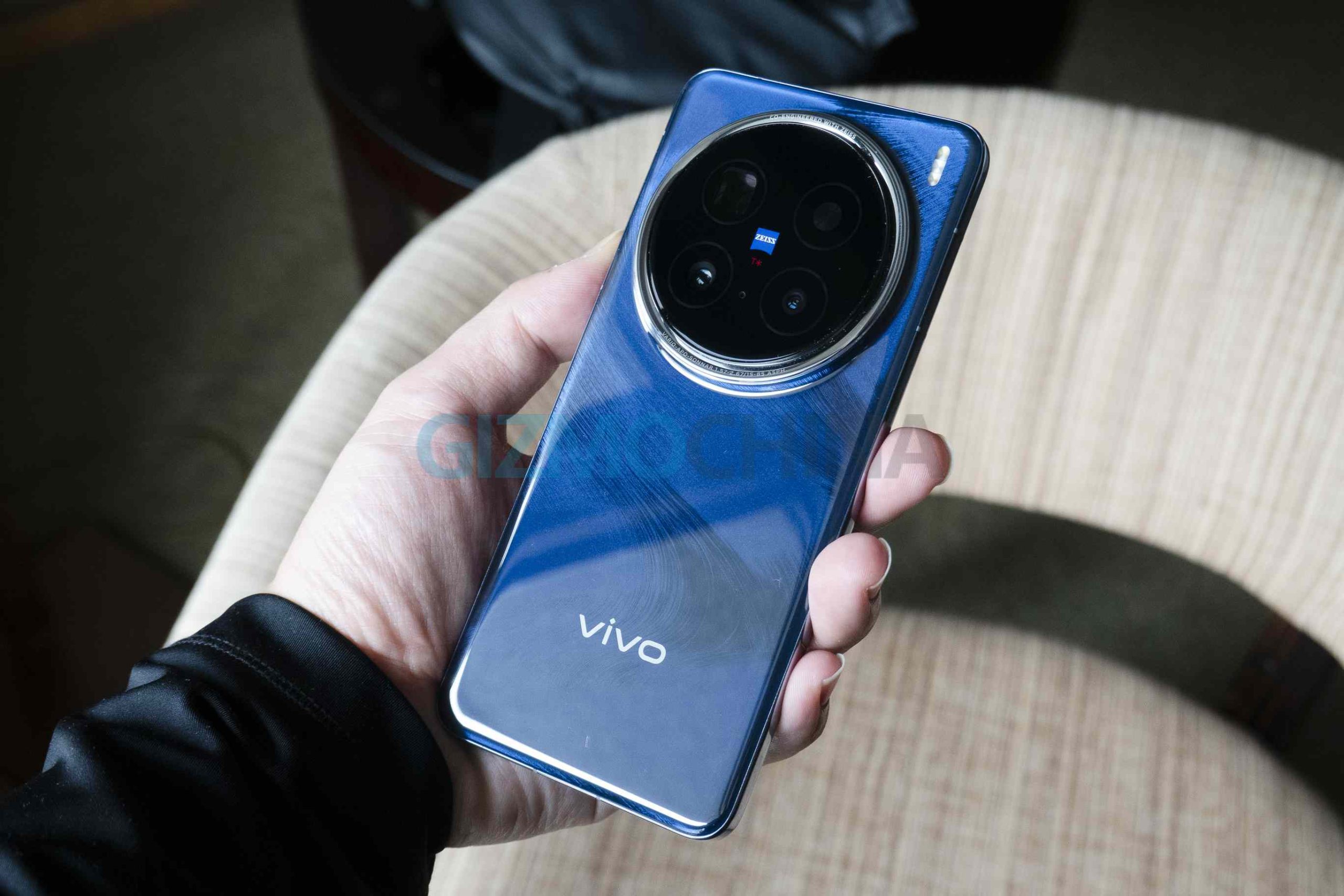
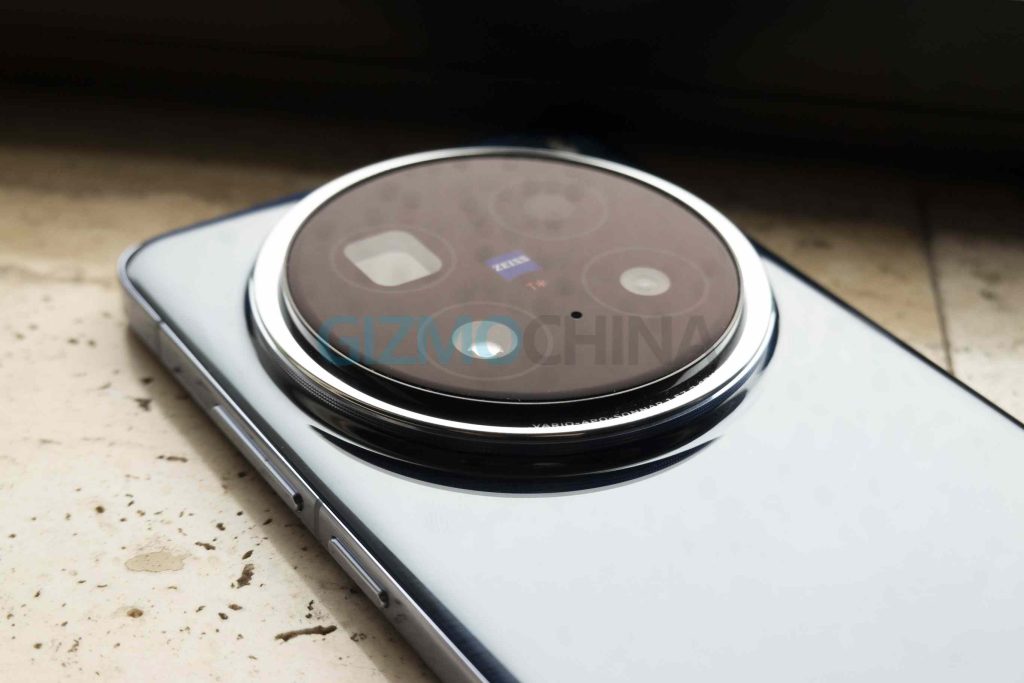
Vivo X200 Pro

The Vivo X200 series will be made official in China on October 14 (Monday). The lineup will include three devices, namely Vivo X200, Vivo X200 Pro, and Vivo X200 Pro Mini.

These phones will be the first to feature MediaTek Dimensity 9400 chipset. They will be also the first to ship with Android 15 out of the box. Unsurprisingly, they will sport Zeiss optics like their predecessors.

The three of them will come with a flat frame and a circular camera module. The Pro models will sport a new Sony LYT-818 50MP main camera. The mini will be thinner than the iPhone 16 Pro and will yet pack a larger 5,700mAh battery.

As for pricing, the X200 series is tipped to start at ¥3,999 and go all the way up to ¥6,199.

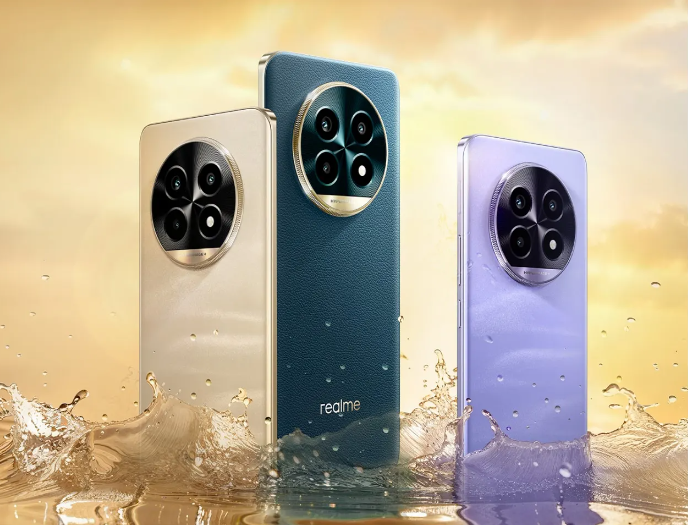
2. Realme P1 Speed

Realme P1 Speed 5G

The Realme P1 Speed is set to launch in India on October 15 (Tuesday). It will be the third model in the P1 series after P1 and P1 Pro.

The handset will be powered by MediaTek Dimensity 7300 SoC. The chipset will be paired with LPDDR5x RAM and UFS 3.1 storage.

Further, the device will come with a 120Hz OLED display, a 50MP main camera, and an IP65 rating. It will be backed by a 5,000mAh battery with support for 45W charging.

3. Honor X60 Series

Honor X60

The Honor X60 series will be announced in China on October 16 (Wednesday). There will be two devices, namely Honor X60 and Honor X60 Pro.

Both phones will feature an identical design. However, there will be a difference in their specs. Also, only the top-end variant of X60 Pro will support satellite-based messaging service.

The vanilla X60 will house a 5,800mAh battery with support for 35W charging. While the X60 Pro will be equipped with a much larger 6,600mAh battery and will support 66W charging.

Unfortunately, both of them will come with less powerful chips. They are said to arrive with MediaTek Dimensity 7025 and Qualcomm Snapdragon 6 Gen 1 mobile platforms.

4. Infinix Zero Flip

Infinix Zero Flip image

The Infinix Zero Flip will debut in India on October 17 (Thursday). For the unaware, it is the brand’s first-ever foldable phone that was unveiled globally last month.

The clamshell handset is powered by a MediaTek Dimensity 8020 SoC. It sports a 6.9-inch LTPO FHD+ 120Hz main display and a 3.64-inch cover screen.

The smartphone has a 50MP (wide) + 50MP (ultrawide) dual camera system. It draws energy from a 4,720mAh battery and supports 70W wired charging.

The product boots Android 14 and is guaranteed to receive only 2 Android updates and 3 years of security patches.

Another Samsung phone with 6 years of update surfaces in leak with just 4GB of RAM

Just days after launching the Galaxy A16 5G, Samsung appears to be prepping a 4G variant for the budget-conscious consumer. Reliable tipster Sudhanshu Ambhore has spilled the beans on the alleged 4G model, revealing its design, specs, and even the price point.

Samsung Galaxy A14 4G Specifications

Looking at the leaked renders, you’d be hard-pressed to differentiate the 4G A16 from its 5G sibling. Both appear to share the same design language, with a rectangular camera bump housing three lenses on the back and a waterdrop notch interrupting the display upfront. Color options seem to be identical too, with Black, Green, Gray, and Yellow making a reappearance.

The biggest difference, of course, lies under the hood. The 4G A16 is rumored to be powered by a MediaTek Helio G99 SoC, paired with 4GB of RAM and 128GB of storage. 

The leak also suggests 6 years of updates for the phone, like its 5G counterpart. However, given its modest specifications and the two-year-old chip, we are unsure whether the device can handle six iterations of upcoming Android versions.

The display seems to remain unchanged. We’re looking at a 6.7-inch Super AMOLED panel with a smooth 90Hz refresh rate and decent 800 nits brightness.

The camera setup also appears identical — a 50MP main sensor backed by a 5MP ultrawide and a 2MP macro lens.  On the front, a 13MP selfie camera handles video calls and captures. Keep the lights on will be a 5000mAh battery.

The rest of the spec sheet appears fairly standard. We’re looking at a side-mounted fingerprint sensor, a mono speaker, and an IP54 rating for basic dust and water resistance. Connectivity options include WiFi, Bluetooth 5.3, and a somewhat outdated USB 2.0 port. Storage options are said to start at 128GB, expandable via a microSD card.  

Price (Expected)

The most interesting takeaway from the leak is the price. The tipster claims the 4/128GB variant of Galaxy A15 4G will retail for EUR 199 (roughly USD 217).

Of course, this is all based on leaks and rumors. We’ll have to wait for an official announcement from Samsung to confirm these details.

(Source)

Tesla Cybercab: Changing the EV Game with Innovative Wireless Charging?

Tesla unveiled its innovative new Cybercab earlier today (11th October 2024). The ambitious robotaxi carries a $30,000 price tag and features a completely autonomous design with no steering wheels or pedals. While all of this sounds pretty futuristic and impressive, one innovation that stood out for me was the innovative new wireless charging technology. So what is it all about? Can it revolutionize electric vehicles? Read on to find out.

Tesla-Cybercab-design
Tesla Cybercab

1. Tesla Cybercab: What makes it special?

The American EV maker’s Cybercab features a sleek new design that borrows looks from the Cybertruck and Robovan. It is a two seater vehicle that is designed to offer a relaxing ride to passengers. This is clearly signified in Tesla’s decision to remove the steering wheel entirely. The Cybercab arrives with a gold finish on the exterior, with a light bar that houses matrix headlights.

The smart taxi also relies heavily on cameras and sensors for a 360 degree view. Its hatchback design blends comfort with a lounge-like atmosphere. Elon is clearly pushing hard on the FSD (full self driving) cars with this announcement. Musk is expecting this small EV that costs less than $30,000 to arrive sometime before 2027. So we can expect a mid to late 2026 release.

2. Induction Wireless Charging: Future of EVs?

Tesla Cybercab could be changing the game in electric vehicles. The robotaxi is the first of its kind, introducing wireless induction charging technology. Why is this so important? current gen EVs still have a wired charging format. But the new Cybercab features no physical charging port, the first Tesla car to remove it. Thanks to inductive charging, the self driving vehicle charges wirelessly using electromagnetic fields to transfer energy from a charging pad to the battery.

In the official announcement, Elon Musk casually stated “The robotaxi has no plug. It just goes over the inductive charger and charges. So, yeah, that’s kind of how it should be.” He also added that “The future has to look like the future”, and these design choices are clearly of a vehicle from the near future. Unfortunately, the launch event did not reveal any finer details like the technical specs of this robotaxi. So we are unsure about Cybercab’s battery size or how induction technology’s charging rate.

3. The Possibilities are Endless

Interesting rumors have also pointed at the induction tech possibly using mats or tracks on roads as well. All of this, in theory, could also help with the long queues at public charging stations that plague cities that have a higher adoption of EVs. There are many issues related to charging faced by EV owners.

One of the big issues also includes charging station compatibility. The infrastructure around EVs for the public includes meeting the requirements to plug and power your car. But these incompatibility problems might disappear if the entire EV segment switches to a common wireless charging standard like Qi wireless charging on smartphones. Although, it is still too early to tell since we’re still a few years from such vehicles hitting the road, but Tesla’s Cybercab does offer us a glimpse of EVs in the future.

Tesla Robovan is a self-driving 20-seat passenger/cargo vehicle that’s not for sale

Elon Musk pulled the curtain back on a new, electric, autonomous vehicle at Tesla’s “We, Robot” event in Los Angeles on Thursday night. Called the Robovan, it is a prototype that’s roughly the size of a bus and is designed for transporting people and goods within high-density areas.

According to Musk, the Robovan is capable of carrying up to 20 passengers or cargo. The Robovan also has a distinctive retro-futuristic aesthetic, like the Tesla Cybercab unveiled at the same event. 

It has a silver metallic body with black accents and is adorned with sleek strips of lighting. It looks like, to me, something Iron Man would drive if he needed a van.

It has sliding doors that open to reveal the interior, which includes seating, standing space, and tinted windows— all without a steering wheel. After Cybercab, it’s another vehicle from Tesla that’s fully autonomous in nature.

And while the robotaxi is said to get the cost of transport down to around 20 cents a mile, the Robovan is claimed to take that even further, down to just 5-10 cents a mile.

The video below shows the Robovan in action, and it certainly looks like something out of the future. However, I wouldn’t be surprised to see design changes when it becomes a reality. For instance, the Robovan has a low ground clearance, which is clearly not practical for city roads.

Musk is quite optimistic about Tesla Robovan

Musk, however, didn’t reveal much about the specifics of the van. And since it’s a prototype, details on the price, production plans, and a release date remain unclear. It will not be a cheap vehicle, though, that’s for sure. 

Musk, however, said, “We’re going to make this.” But take the statement with a bit of skepticism as Tesla has a history of missing self-imposed deadlines. Adding to the uncertainty, this is just a prototype. The final design and production timeline are far from certain. 

While the Robovan is undeniably eye-catching, it isn’t a novel concept for an autonomous van. We’ve seen similar concepts from companies like Zoox and Cruise, albeit on a smaller scale. China’s WeRide has also unveiled a comparable Robobus.

Is the OnePlus 13 Worth the Wait?

With the Qualcomm Snapdragon 8 Gen 4 (8 Elite) release being right around the corner, brands are gearing up for the launch of their flagship Android smartphones. OnePlus is one of these companies with the OnePlus 13 being its next generation premium device. But should you should wait for it? Is it worth your hard earned money? Let’s find out.

OnePlus 13 mockup render
OnePlus 13 Mockup render

1. OnePlus 13: First to Debut the Snapdragon 8 Elite?

In a recent video, Qualcomm teased the Snapdragon 8 Elite. But one of the most notable aspects of this video was the Snapdragon 8 Elite chipset being housed in what appears to be the OnePlus 13. Recently, the Xiaomi 15 series was expected to be the first to debut the new Snapdragon 8 series chipset, however, this video hints that OnePlus might be the first to do so.

To recall, the Snapdragon 8 Gen 4 was just spotted on GeekBench in two variants, with its scores being topping MediaTek’s new Dimensity 9400. So the OnePlus 13 might feature the most powerful chipset in the flagship Android category. You can even click here to check out a comparison between these powerhouse chips.

2. Improved Photography

OnePlus is expected to refine the camera system on the upcoming OnePlus 13. The new premium phone is getting a new camera module on the outside, which will house three 50-megapixel cameras. The main sensor is a 50-megapixel Sony LYT808 sensor, which is paired with two LYT600 sensors for ultra wide angle lens and a telephoto shooter that offers 3x optical zoom and higher hybrid zoom.

We can expect OIS (Optical Image Stabilization) on the main and telephoto shooter. But that’s not all, the OnePlus 13 likely continues the collaboration with known camera maker Hasselblad. So the smartphone would likely offer an enhanced telephoto shooter, top tier image processing, and AI powered functions as well.

3. Premium Design & Display

OnePlus 13 is rumored to feature BOE’s second generation Oriental screen. For those unaware, the OnePlus 12 packed the first gen Oriental panel, which offers 2.5K resolution, 4,500 nits of peak brightness, a 120Hz refresh rate, LTPO panel, 2160Hz PWM dimming, and 510 PPI pixel density. This was a tall 6.82-inch panel that also offered Dolby Vision and HDR10+ support. So its successor likely brings improvements in different aspects.

The OnePlus 12 launched with an aluminum frame on the side, while the front and back had Corning’s Gorilla Glass for protection. Combining glass and metal adds to its premium feel. The company is expected to make a notable change to the rear design, making the camera module blend into the back panel.

4. Other notable specs

The OnePlus 13 might soon take the lead in battery life on flagship smartphones. It is expected to house a massive battery, which may have a total capacity of 5,840mAh. In other words, it has a typical rating of around 6,000mAh. This would mean that the battery size of the OnePlus 13 is more than 10 percent larger than its predecessor. The large cell would support 100W wired fast charging and magnetic wireless charging.

Tesla unveils ambitious $30,000 robotaxi with no steering wheels or pedals

Tesla‘s highly anticipated robotaxi, teased for years as both “Cybercab” and “Robotaxi,” finally made a physical appearance at an event on Thursday night. 

The sleek, two-seater vehicle boasts futuristic looks and features like butterfly doors and wireless charging, but the standout feature is its lack of a steering wheel.

Tesla Cybercab launch specs price

It’s designed for a world where passengers relax and let the car handle the driving. However, there are some doubts in terms of its self-driving capabilities. Let’s get into the details. 

Cybercab steals the spotlight

First things first, the Cybercab is a real head-turner. It made its debut in a gold-finished exterior that features a light bar seemingly housing matrix headlights, reminiscent of the Cybertruck. 

And it’s not just the steering that’s missing from this guy, it doesn’t have a pedal or even a rear window. It’s designed to rely entirely on cameras and sensors for a 360-degree view of its surroundings. n fact, Tesla CEO Elon Musk made a dramatic entrance on the event stage inside the Cybercab itself.

Inside, passengers are greeted by a lounge-like atmosphere and you’ll have a ample cargo space thanks to a large hatchback trunk.

One of the most interesting features of the Cybercab is the wireless induction charging. With no charging port, it’s the first Tesla vehicle to support this technology. However, the event didn’t shed light on the technical details like the battery size of the Cybercab or how fast it charges. 

Inductive charging is a wireless method of charging electric vehicles (EVs) that uses electromagnetic fields to transfer energy from a charging pad to the battery. 

Musk says, “The robotaxi has no plug. It just goes over the inductive charger and charges. So, yeah, that’s kind of how it should be.”

Tesla Cybercab drives autonomously?

Now, let’s address the elephant in the room — the self-driving technology itself. Tesla has been promising fully autonomous driving capabilities for years, yet current models with the “Full Self-Driving (FSD)” package still require human supervision. This casts a shadow over the Cybercab’s complete lack of driver controls.

Musk assures that the Cybercab utilizes the latest Tesla AI5 computer and relies solely on camera systems. He also reiterated his intention to activate unsupervised Full Self-Driving on current models next year in specific regions. 

But to be honest, this same promise has been made annually for the past five years. Additionally, data suggests Tesla needs a significant improvement in disengagement rates (the frequency a human driver has to take control) before unsupervised driving becomes a reality. So we are not highly optimistic about Musk’s claim yet. 

Tesla Cybercab Price and Availability

As for the price and availability, Musk says that the Cybercab production would begin sometime “before 2027” and it will have a price tag under $30,000. 

Yet, we can’t ignore the fact that Tesla’s second-generation Roadster, unveiled in 2017, has yet to enter series production. So there’s no guarantee that the Cybercab won’t face a similar fate. The expectations are high, but only time will tell if Tesla and Musk can deliver on these promises.

(Source)

Oppo Find X8 Series India Storage Options & Launch Timeline Revealed

Oppo has just confirmed that the Find X8 series will be officially unveiled on 24th October 2024 in China. Now, the latest report has confirmed the Indian launch timeline for the brand’s flagship smartphones along with their storage options. So here are all the details.

Oppo Find X8 Series India Launch: Storage Options & Launch Timeline

The news arrives from a source close to the matter who shared the details with TheTechOutlook. The report claims that there are two storage configurations for the base Find X8, while the higher end Find X8 Pro variant will launch in a single storage option. For the vanilla variant, buyers can reportedly choose between either a 12GB + 256GB version or a 16GB + 512GB model. Meanwhile, the Oppo Find X8 Pro may launch in a long 16GB + 512GB option.

Oppo Find X8 Pro front
Oppo Find X8 Pro

Oppo has set the Chinese launch date for October 24, but it seems like the Indian release isn’t too far off. The report claims that the Find X8 series will be unveiled near Diwali, a major Indian festival. So its release in the region might be just under three weeks away since Diwali is on 31st October 2024 this year. Just earlier this month, the Find X8 got clearance for an Indian launch after being certified by BIS (Bureau of Indian Standards).

Oppo is expected to bring various improvements and upgrades in the new Find X8 series. These models will feature MediaTek’s newly unveiled Dimensity 9400. The Find X8 Pro was recently spotted in real life with what appears to be a dedicated camera button earlier today (11th October 2024). Notably, the Find X8 series includes the vanilla Find X8, Find X8 Pro, and Find X8 Ultra. But the top end Find X8 Ultra is only expected to debut in the first quarter of 2025. This is all the information we have at the moment, so stick around for more updates.

Honor X5b: Upcoming Budget Friendly Phone Visits Google Play Console

Honor might be planning on releasing a new budget friend smartphone in the market soon. The Honor X5b has just been certified online, hinting at an imminent global release. This is also the latest model in this particular series, so here’s what we know so far.

Honor X5b visits Google Play Console

Honor X6b Design
Honor X6b

The Chinese smartphone brand’s upcoming device was just spotted on the Google Play Console carrying the GFY-LX2P model number. In this certification, we get a glimpse of the Honor X5b along with some of its specifications. Looking at the online database, the Honor X5b can be seen with a waterdrop notch display, which is surrounded by thick bezels. The lone selfie camera is also clearly in the notch.

This model could be the successor to the Honor X5 or simply a new entry that falls right below the Honor X9b and X8b, which launched last year. Under the hood, the new Honor X5b is equipped with the MediaTek Helio G36 SoC, which is paired with 4GB of RAM. Honor’s X5b was seen on Google Play Console running on the Android 14 OS out of the box. On the display front, the display will offer a 1620 x 720 resolution (HD+) and a pixel density of 320 DPI. This certification also hints that its global launch is right around the corner.

Honor X5b
Honor X5b spotted on Google Play Console

Earlier this year, the company had quietly released the Honor X6b, which was another affordable smartphone in the series. It arrived with a 6.56-inch TFT LDC panel with an HD+ resolution and a 90Hz refresh rate. It was equipped with the MediaTek Heliop G85 SoC with up to 6GB of RAM and 256GB of internal storage. For optics, there was a 50MP dual camera setup on the rear. A sizeable 5,200mAh battery pack, which supports 35W wired fast charging. So we can expect similar specs and features on the Honor X5b as well.

iQOO 13 beats Galaxy S25 Ultra’s overclocked Snapdragon 8 Gen 4 in Geekbench

iQOO 13 is confirmed to launch towards the end of October, possibly just after the launch of the Snapdragon 8 Gen 4 chip. The company has already revealed a couple of aspects of the phone, including its design, display features, and the inclusion the Supercomputing Chip Q2 that works alongside the main processor in certain scenarios.

Today, the phone appeared on Geekbench with single-core and multi-core scores of 3072 and 9518, respectively. Compared to the Galaxy S25 Ultra’s Geekbench result that leaked a few days ago, the single-core score is almost identical, while the multi-core score is higher—the S25 Ultra scored 9080 points.

You should also keep in mind that the S25 Ultra runs an overclocked “For Galaxy” version of the chipset. The higher performance highlights the effectiveness of iQOO 13’s redesigned heat dissipation system a company official previously talked about.

Snapdragon 8 Gen 4’s core-cluster and clock speeds finally confirmed

The Geekbench listing also confirms the previously rumored 6+2 core architecture, where the latter focuses on performance. According to the listing, all six power-efficiency cores reach a clock speed of 3.53GHz, while the performance cores can go up to 4.3GHz, which is considerably higher than its predecessor.

iQOO 13 official image

Speaking of the gaming performance, the chipset was previously rumored to boast up to 56% improvement in GPU capability as compared to its predecessor.

However, while the chipset features a new core architecture, it’s too early to comment on its power efficiency solely based on the more efficient 3nm process node. That said, it’s worth noting that the phone packs a massive 6,150mAh battery (up from the iQOO 12’s 5,000mAh), ensuring a significantly longer battery life. This is paired with 100W PD/PPS charging support.

On the front, the phone features a 6.7-inch 2K AMOLED display that uses BOE’s latest luminescent material, promising higher brightness and more accurate colors.

As for the software experience, users will interact with Vivo’s Android 15-based OriginOS 5 skin, which offers smoother animations, a more functional ‘Atomic Island,’ and Vivo’s self-developed AI assistant.

(Source)

Huawei’s MatePad Pro 12.2 and MatePad 12 X hit UK & Europe store shelves with aggressive pricing

Huawei has recently launched two new tablets, the MatePad Pro 12.2 and MatePad 12 X (2024 models), both featuring 12-inch displays. The brand has now started selling the tablets in the UK and European markets.

Huawei has adopted an aggressive pricing strategy for the MatePad Pro models in Europe and the UK, offering the MatePad Pro 12.2 (OLED display) for £699.99 in the UK and €999 in Europe. The MatePad 12X is available at £549.99 for UK customers, however, the brand has surprisingly hiked the price of the tablet in some EU markets. It is currently available on Amazon Germany for €748.

1. Huawei MatePad Pro 12.2 features

Huawei MatePad Pro 12.2

The MatePad Pro 12.2 features a sleek design, weighing 508 grams and measuring just 5.5 mm thick. It has a 12.2-inch Tandem OLED PaperMatte Display with a resolution of 2800 x 1840, a 144Hz refresh rate, 2000 nits peak brightness, and a 92% screen-to-body ratio. Supporting the P3 wide color gamut and ΔE < 1 color accuracy, it delivers vibrant, true-to-life colors.

The tablet offers up to 16GB of RAM and 1TB of internal storage. Its rear camera setup includes a 13MP main lens and an 8MP wide-angle lens, while an 8MP front camera is available for video calls and selfies. It houses a 5050mAh dual-cell battery (equivalent to 10,100mAh) with 100W Huawei SuperCharge, allowing a full charge in just 55 minutes. For audio, it has eight speakers optimized for high and low frequencies.

The PaperMatte Display reduces glare by 60%, providing a paper-like writing experience with the Huawei M-Pencil (3rd Gen). This feature is ideal for artists using drawing apps like GoPaint, which supports lifelike sketching with tools for 8K canvases and over 500 layers.

2. Huawei MatePad Pro 12 X features

The Huawei MatePad 12 X comes with a 12-inch PaperMatte display that’s ultra-bright and sharp, offering 2.8K resolution (2800 x 1840 pixels) and a smooth refresh rate ranging from 30 to 144Hz. With a peak brightness of 1000 nits and P3 wide color gamut support, the screen delivers vibrant, high-quality visuals. It also features an 88% screen-to-body ratio and a practical 3:2 aspect ratio.

Powered by HarmonyOS 4.2, the MatePad 12 X provides options for either 8GB or 12GB of RAM and storage capacities of 256GB or 512GB. Camera-wise, it’s equipped with a 13MP rear camera, an 8MP wide-angle lens, and an 8MP front camera, with video recording at up to 1080p at 30 fps.

The tablet’s 10,100mAh battery supports 66W fast charging, giving you up to 14 hours of video playback on a single charge. It also includes dual-band Wi-Fi, Bluetooth 5.2, USB Type-C, and enhanced audio thanks to Huawei Sound.

(via)

Red Magic Nova Gaming Tablet: Early Access Deals accessible with a $1 pass

A couple of weeks back, Red Magic announced the global launch details of its Nova gaming tablet. This device boasts a powerful combination of a 10.9-inch 2.8K 144Hz LCD display and the latest Qualcomm processor.

Red Magic Nova Gaming tablet

Red Magic Nova Early access deal

Ahead of the official launch on October 15th, Red Magic is offering early access passes for $1. These passes grant access to the early access event and a $30 discount voucher code.

Red Magic Nova gaming tablet

The discount voucher can be used to purchase the Nova at a reduced price of €/$469 for the 12GB RAM/256GB model or €/$619 for the 16GB RAM/512GB model. However, the voucher is limited to one tablet per order and cannot be combined with other discounts. The early access passes and discount vouchers will be valid until October 31st.

Red Magic Nova gaming tablet features

The Nova tablet comes with a 10.9-inch display offering a sharp 2.8K resolution and a smooth 144Hz refresh rate. It also reaches up to 550 nits of brightness and is SGS-certified for eye protection.

Under the hood, it’s powered by the Snapdragon 8 Gen 3 Leading Edition processor, with a 3.4 GHz CPU and a 1 GHz GPU. The cooling system includes a high-speed fan and a 9-layer structure with aerospace-grade aluminum and superconducting copper for keeping temperatures in check.

In terms of connectivity, the Nova supports Wi-Fi 802.11ax and Bluetooth 5.4. The tablet has a 20MP front camera for video calls and a 50MP rear camera for photos and videos. Audio is handled by four speakers, DTS-X Ultra Sound, dual motors for haptic feedback, and three microphones.

The 10,100mAh battery promises long use, and with 80W fast charging, you can top it up quickly. It also has a USB-C port and works with various accessories like keyboards, mice, styluses, and game controllers.

(Source)

Redmi Note 14 Pro 4G surfaces, to feature MediaTek chip

Xiaomi’s Redmi Note 14 series went official last month in China and now we are waiting for these devices to make their global debut. 

While the lineup in China includes three smartphones — Redmi Note 14 5G, Note 14 Pro 5G, and Note 14 Pro Plus 5G — it looks like globally, there will be a new add-on, the Redmi Note 14 Pro 4G.

Redmi Note 14 Pro 4G incoming?

The revelation comes from a report from XiaomiTime, which seems to have found the device listing in the IMEI database. The Redmi Note 14 Pro 4G carries the model number 24116RACCG there.

While the IMEI database doesn’t reveal much on the device specifics, the report adds that the Redmi Note 14 Pro 4G has the codename “Obsidian” and will be powered by a MediaTek chip. We are not sure on the exact SoC, though. To reiterate, the Note 14 Pro 5G variant is also powered by a MediaTek chip, the Dimensity 7300 Ultra.

It’s typical of Redmi to launch 4G variants of its Note series smartphones globally. For instance, last year, the company released the Redmi Note 13 Pro 5G with a Snapdragon 7s Gen 2 chip and the Note 13 Pro 4G with a MediaTek Helio G99 Ultra chip.

The rest of the specifications of these models are quite similar. So, this year too, we can expect the Note 14 Pro 5G and 4G variants to share most specifications, aside from the chipsets. 

Interestingly, the report also suggests that the global model of vanilla Note 14 may get a Snapdragon chip, contrary to the Dimensity 7025 chip on the Chinese model. 

It will still have 5G support, but again, specific details about the chipset are under wraps. Also, the source rates this information as 90% certain, leaving room for possible changes. So we suggest you take this information with a grain of salt.

The Note 14 has also appeared on IMEI with quite a few model numbers — 24117RN76L, 24117RN76O, 24117RN76G, and 24117RN76E. It is said to have the codename “Tanzanite.”

(Via)

Redmi K80 series poised for price hike, hints Redmi executive

Recently, Wang Teng Thomas, General Manager of the Redmi brand, shared exciting insights about the upcoming Redmi K80 series, set for release at the end of the year. According to Wang, the latest Redmi flagship models have undergone significant upgrades in terms of positioning and specifications, moving beyond just performance to include enhanced features that surpass those of competitors who have already launched their products.

Redmi K80 Pro’s price may increase significantly  

To recall, the Redmi K70e, K70, and K70 Pro were priced at 1,999 Yuan (~$285), 2,499 Yuan (~$355), and 3,299 Yuan (~$465), respectively, at launch. Speculations are rife that the Redmi K80e, K80, and K80 Pro will be powered by the Dimensity 8400, Snapdragon 8 Gen 3, and Snapdragon 8 Gen 4 chipsets, respectively.

Thomas mentioned in a Weibo post that he has thoroughly reviewed the details of the upcoming flagship products from Redmi. He noted that this generation features significant upgrades in both positioning and specifications, emphasizing that it is not just about performance, but also other aspects. The “xxxx” text in the Weibo post hints at a potential price hike. According to tipster Digital Chat Station, the Redmi K80 series is expected to face a price increase, with the Pro version likely to see a significant rise.

MediaTek recently unveiled the Dimensity 9400 chip, which will be seen powering the Vivo X200 series and Oppo Find X8 lineup launching later this month in China. Soon after the announcement of the chip, Thomas confirmed that Redmi would also launch a Dimensity 9400-powered smartphone without disclosing anything else about the mysterious device. This chip may power the Redmi K80 Ultra planned for next year.

According to reports, the Redmi K80 Pro may remain exclusive to the Chinese market. As far as the Redmi K80e and K80 are concerned, these devices are likely to get rebranded as the Poco X7 Pro and the Poco F7 in 2025 for the global market.

Hisense Unveils C2 Ultra: The Ultimate 4K Mini Laser Projector for Xbox Gamers

Hisense has just introduced its most advanced tri-color laser projector, the 4K Laser Smart Mini Projector C2 Ultra, designed specifically for Xbox gamers. This new projector promises an immersive experience with a massive display ranging from 65 to 300 inches, perfect for gaming or movie nights.

Hisense Mini Projector C2 Ultra

With Auto-Low Latency Mode, MEMC technology, and Game mode, the C2 Ultra ensures ultra-smooth gameplay without lag or stutters. It supports refresh rates of up to 240 frames per second, delivering blur-free visuals that bring games to life.

The C2 Ultra also excels in picture quality, offering a 110% BT.2020 color gamut, 3000 ANSI lumens, and certifications like IMAX Enhanced and Dolby Vision. This means you get a cinematic experience with vivid colors, bright images, and no harmful blue light. It’s designed to create a stunning home theater experience, even in well-lit rooms.

Setting it up is easy too. Whether you want it on the wall, ceiling, or floor, the projector’s gimbal design and optical zoom allow for versatile installation. Plus, with split-screen gaming support, you can turn any room into the perfect space for multiplayer fun.

On the audio side, the C2 Ultra doesn’t disappoint. It features a built-in subwoofer and a 2.1-channel JBL sound system, delivering powerful bass and 3D surround sound with DTS Virtualtechnology.

Launching globally on October 10th, the C2 Ultra promises top-notch picture and sound quality, making it an exciting option for gamers and movie lovers alike.

(Source)

Oppo Find X8 Pro appears in real with Camera Control-like button, Oppo execs confirm details

Executives from Oppo have been providing insights into the Oppo Find X8 series of smartphones, set for official launch in China on Oct. 24. So far, the company has shared a lot of details about the Find X8, and now the executives have started sharing details about the Pro model. Oppo’s Chief Product Officer, Liu Zuohu (Pete Lau), took to Weibo to share key details about the Pro model.

Oppo Find X8 Pro’s to feature a dedicated camera shutter button

Oppo Find X8 Pro with its "Quick Launch" physical camera shutter button
Oppo Find X8 Pro with its “Quick Launch” physical camera shutter button

Lau stated that OPPO’s core imaging philosophy and commitment is to effortlessly capture the beauty of life. He further said that the term “effortless” conjures up a vivid picture of a user scenario in which you simply press the shutter to capture the beauty in front of you, leaving the rest to Oppo.

He revealed that the company has eliminated the unnecessary camera icon button on the lock screen of the Find X8 series. Now, when there is an exciting moment to be captured, users need to simply press the dedicated physical shutter button, without fumbling through various “sport/snapshot” modes to capture specific types of photos. For the sake of “effortlessness,” the company even challenged an impossible optical design, breaking the stereotype of bulky flagship cameras and making the photography-focused OPPO Find X8 series remarkably thin and light for the first time.

Dubbed the “Quick Launch” button (machine-translation), it is available on the right edge of the device, similar to the Camera Control button on the iPhone 16 series, as shown in the image shared by Oppo Find series product manager Zhou Yibao. However, unlike the iPhone 16’s pressable button, the Quick Launch button is a capacitive button that incorporates a linear vibration motor.

Yibao stated that three key principles guided the design of the shutter button. First, usability was paramount; the button needed to be easy to press and positioned for quick access in both portrait and landscape modes. Second, simplicity was crucial; the button’s primary function is to quickly launch the camera without any complex features, making it as straightforward to use as a volume key. Finally, aesthetics was considered; the button needed to integrate seamlessly with the phone’s design, ensuring it didn’t disrupt the device’s appearance or cause a camera shake.

(source 1, 2)

Honor X60 Pro specifications leak reveals it will be a downgrade compared to Honor X50 Pro

On Oct. 16, Honor will announce the Honor X60 series of smartphones in China. The series has two models, the X60 and the X60 Pro. Recent reports have already leaked the key specifications of the standard model, which will come equipped with the Dimensity 7025 chipset. Now, a fresh leak on Weibo, courtesy of tipster Panda is Bald, has revealed the key specifications of the Pro edition except for its camera details.

Honor X60 Pro specifications (rumored)

As per the leak, the Honor X60 Pro will feature a 6.78-inch curved-edge AMOLED screen that offers a resolution of 2700 x 1224 pixels. While it is not mentioned in the leak, it may support up to a 120Hz refresh rate.

Under the hood, the Honor X60 Pro will feature the Snapdragon 6 Gen 1, which also powered the Honor X50 last year. Honor has already confirmed that the X60 Pro will be available in multiple configurations, such as 8 GB RAM + 128 GB storage, 8 GB RAM + 256 GB storage, 12 GB RAM + 256 GB storage, and 12 GB RAM + 512 GB storage. Among these, only the 512 GB edition will support the China Mobile Beiduo satellite SMS service.

One of the major highlights of the Honor X60 Pro is that it packs a huge 6,600mAh battery, 800mAh more than the X50. Thankfully, the device will support 66W fast charging. Despite the increase in battery size, the device will have a slim profile of 7.98mm. It will measure 162.8 x 75.5mm and weigh 188 grams.

At present, there is no information about the price of the device. It will come in four shades, such as black, Basalt Gray, Burning Orange, Sky Blue, and Elegant Black.

Honor has reportedly made some changes in the product positioning of the X60 series. To recall, the X50 and X50 Pro were powered by the Snapdragon 6 Gen 1 and Snapdragon 8+ Gen 1 chipsets, respectively. The Snapdragon 6 Gen 1-powered X60 now succeeds the X50, and the X60 Pro with Dimensity 7025 will be positioned even lower. Additionally, the company may release the Honor X60 GT as a successor to the X50 Pro/X50 GT from last year.

(source)

Snapdragon 8 Elite reportedly reaches 98.5°C even in normal usage

With the MediaTek Dimensity 9400 now official, all eyes are on Qualcomm‘s upcoming powerhouse, the Snapdragon 8 Elite. 

Rumors so far suggest an impressive SoC performance, thanks to its scorching fast prime cores exceeding 4GHz speed. However, this raw power push from Qualcomm might come at a cost – quite literally, in terms of heat generation and battery life.

Over the past few weeks, we have seen benchmarks for three variants of the Snapdragon 8 Elite chips. 

The standard version appears to have a base frequency of 2.78GHz and a peak of 4.09GHz. Samsung, meanwhile, is reportedly testing two overclocked versions for their Galaxy S25 series, with speeds reaching 2.90GHz/4.19GHz and 3.53GHz/4.47GHz — that’s desktop-grade territory for a phone!

However, these numbers might do more harm than good, if a new rumor is to be believed. According to the leak, even the standard Snapdragon 8 Elite chip version might struggle with thermal management and battery efficiency.  

Snapdragon 8 Elite: Blazing performance and burning hot?

The silicon reportedly draws over 20W of power and reaches scorching temperatures of 98.5°C (209.5°F) even in normal use.

What’s particularly worrisome is that this leak supposedly came from an “official version” of the chip – albeit one from three months ago. This high power draw could explain why brands are expected to include over 6000mAh batteries in their flagship phones featuring this chip. 

There’s a glimmer of hope, though. Three months is a significant amount of development time, and Qualcomm likely made considerable progress in optimizing the chip. Hopefully, they have addressed these thermal and power issues before the official launch later this month.

(Source)