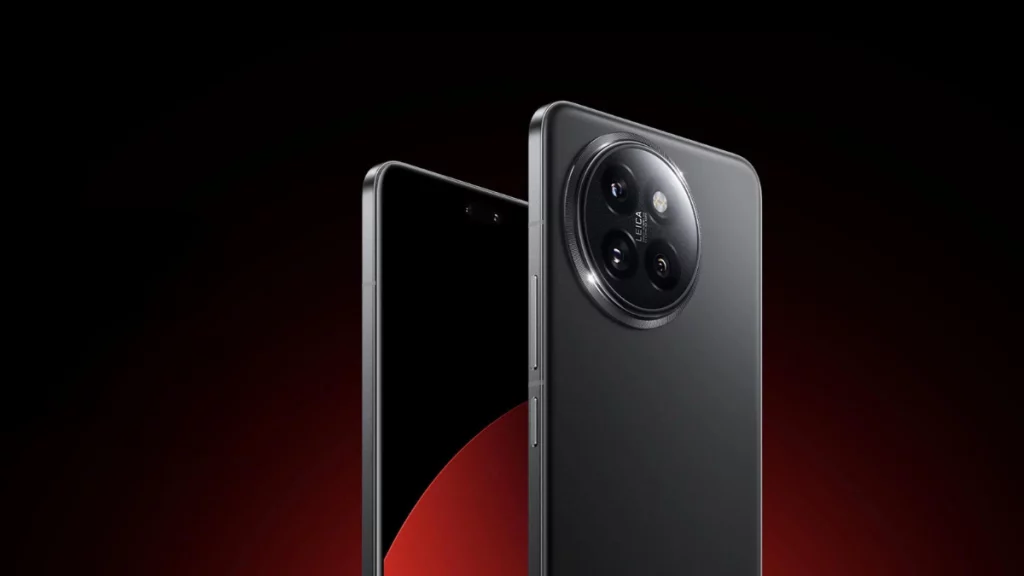
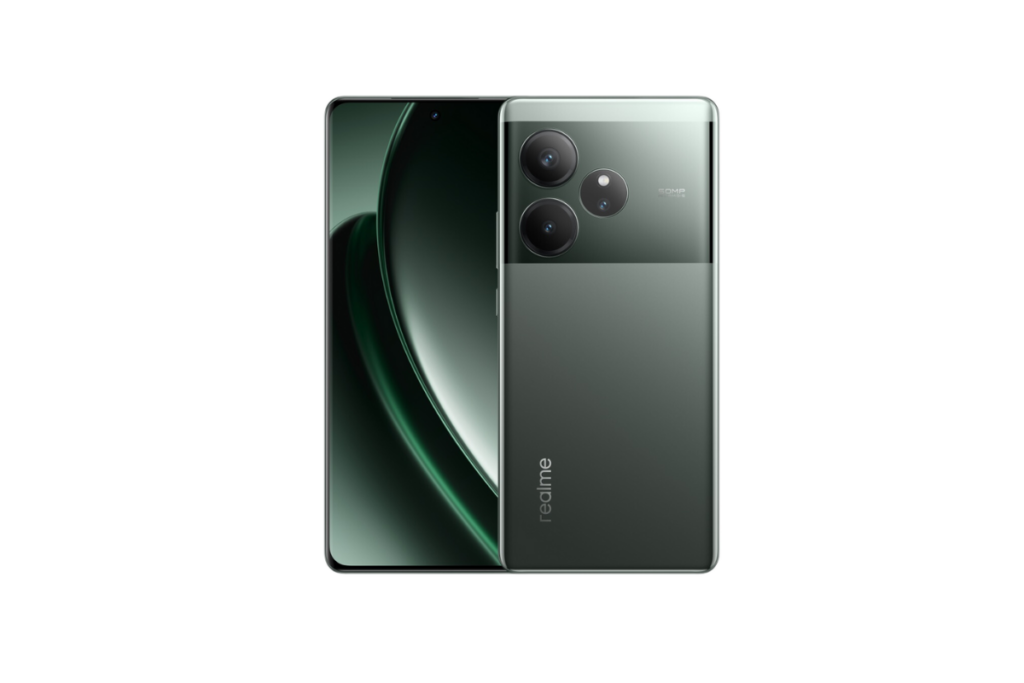
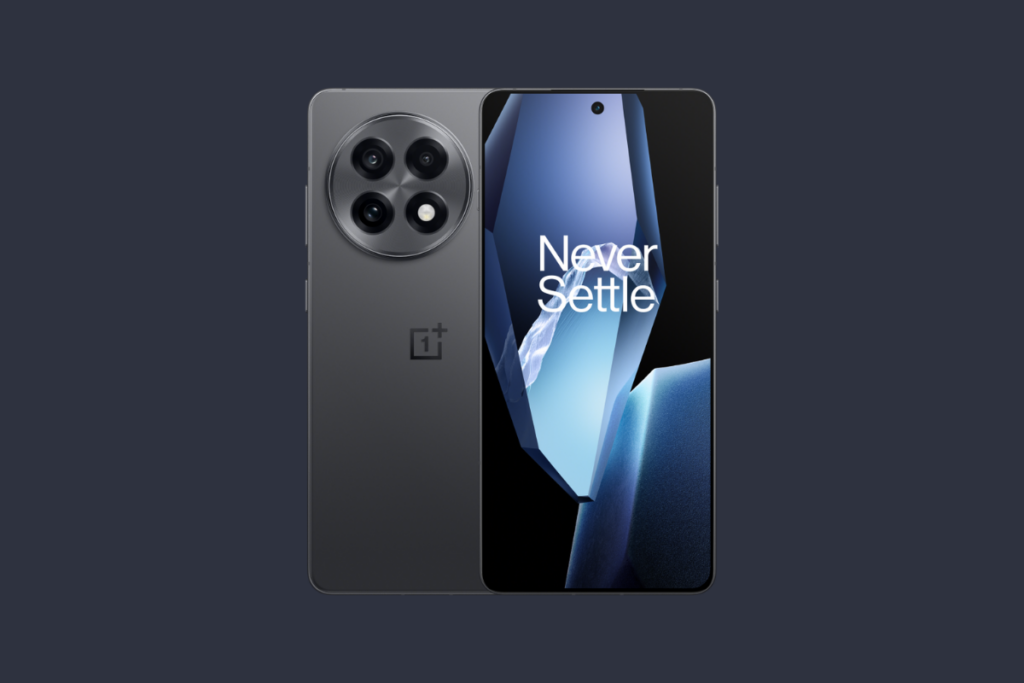
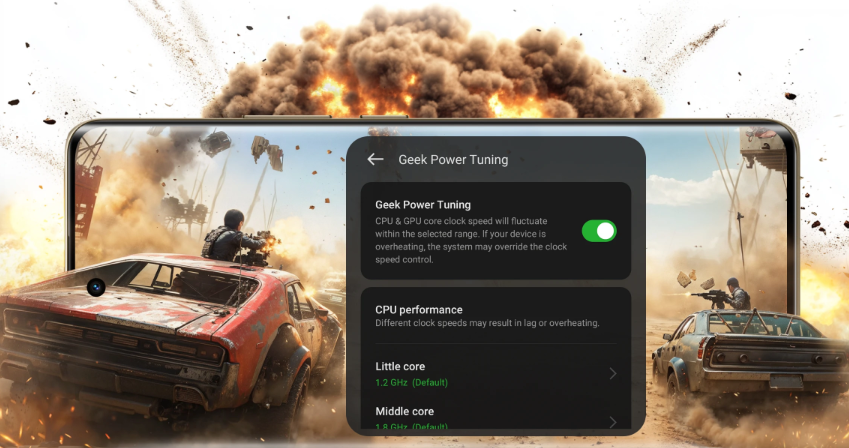
Vivo unveiled the Vivo X200 series of smartphones earlier this month in China. Its sub-brand iQOO is expected to announce the iQOO 13 later this month in the home market. While iQOO is yet to announce the iQOO 13, it has been releasing new teasers to showcase some of its front design. A recent report gave the first look at the actual device along with its display specifications. Now, a couple of new images of the iQOO 13 have emerged on Weibo, one of them showcases its front design alongside the Vivo X200 Pro Mini.
iQOO 13 compared with Vivo X200 Pro Mini
As it is known, the Vivo X200 Pro Mini is a compact flagship phone equipped with a 6.31-inch flat OLED panel. In comparison, the iQOO 13 also boasts a flat screen, albeit with a larger size of 6.82 inches. The iQOO 13’s BOE Q10 screen offers a 2K resolution, a 144Hz refresh rate, 1800 nits of peak brightness, and an ultrasonic in-screen fingerprint sensor.
The iQOO 13’s display is surrounded by ultra-thin bezels and promises an impressive screen-to-body ratio. Its bottom edge is equipped with a SIM slot, a microphone, a USB-C port, and a speaker grille. The device is equipped with flat edges like the X200 Pro Mini.
The left edge of the phone appears barren, whereas previously seen images have revealed its right side has a volume rocker and a power key. Similar to the X200 Pro Mini, we expect the iQOO 13 to ship preloaded with OriginOS 5-based Android 15. The rear design of the phone has only been teased but not revealed entirely. Since the smartphone is expected to launch by the end of this month, the brand is expected to confirm its rear design and key specifications later this week.
iQOO 13 retail box
Another image showcases the retail box of the iQOO 13, clearly teasing a BMW M Motorsport collaboration. This indicates that, like its predecessor, there will be an iQOO 13 color variant with the tri-color BMW stripes.
Baseus is a brand that has gained a solid reputation for delivering high-quality products at budget-friendly prices. The Bowie 30 Max Wireless Noise Cancelling Headphones are their latest offering, promising premium features, strong build quality, and impressive sound performance, all at a fraction of the cost of high-end competitors like Sony or Bose.
These headphones are positioned as a versatile option for casual listeners, gamers, and travelers alike, offering both comfort and powerful performance without breaking the bank. In this review, we’ll dive deep into their design, features, sound quality, and more to see if they live up to the hype.
Upon unboxing the Baseus Bowie 30 Max, you’ll find the following contents:
Baseus Bowie 30 Max Headphones
USB-C Charging Cable
3.5mm Audio Cable
User Manual
2. Design & Build Quality
The Baseus Bowie 30 Max has an elegant and minimalist design that immediately stands out. The build quality feels premium despite its budget-friendly price, thanks to a brushed aluminum headband that provides both durability and a sleek appearance. The headband is sturdy, featuring a single adjustable metal piece that ensures a flexible fit while maintaining robustness. The overall construction is lightweight, making the headphones comfortable to wear for long periods without any strain on the head.
The ear cups are large, oval-shaped, and padded with soft memory foam cushions, providing a snug and comfortable fit. This design ensures the cups completely cover the ears, offering passive noise isolation even before the active noise cancellation (ANC) is engaged. The ear cups also swivel inward and fold flat, making the headphones portable and easy to store. Although the foldability adds convenience for travel, the lack of a carrying pouch or case is a downside, as it would have been a thoughtful addition for users who frequently travel with their headphones.
The button layout on the Baseus Bowie 30 Max is thoughtfully designed for easy access and control. On the right ear cup, there is a power button located toward the bottom edge, which doubles as the Bluetooth pairing button. The button has a tactile feel, making it easy to turn on or off and pair the headphones with your device.
Below the power button, you’ll find the volume control buttons, which allow you to adjust the volume with a simple press. These buttons are also multi-functional, as a long press on the volume up button skips to the next track, while a long press on the volume down button rewinds to the previous one.
In the middle of the volume buttons is a multifunction button that lets you control playback (play/pause), answer or reject calls, and activate voice assistants like Siri or Google Assistant. The buttons provide a satisfying click, so you know when you’ve activated a function without having to look at the headphones.
The right ear cup also houses a 3.5mm headphone jack for wired playback, providing users with the option to enjoy high-res audio in wired mode, which is perfect for audiophiles who prefer lossless sound. Just below the headphone jack, you’ll find the USB-C charging port, which supports fast charging. This port is sturdy and easy to access, ensuring that charging the headphones is quick and hassle-free.
On the left ear cup, there is a dedicated button for adjusting the active noise cancellation modes. This button allows you to cycle through different ANC settings, giving you flexibility based on your environment. The ANC button is conveniently located for easy access, making it simple to adjust noise cancellation on the go.
The buttons on both ear cups are highly responsive, offering a crisp, tactile feel when pressed. This ensures that you can control the headphones intuitively, even without looking at them. Additionally, there is a small LED indicator on the right ear cup that provides visual cues for the power status, Bluetooth pairing, and charging. The LED is subtle and unobtrusive, blending seamlessly with the design.
The headphones feature a matte finish, which not only looks sleek but also prevents fingerprints from marring the surface. The headband padding is comfortable, ensuring that even after extended use, there’s no discomfort at the top of the head. The overall minimalist design, combined with practical features like foldable ear cups, makes the Baseus Bowie 30 Max a well-rounded option for users seeking a blend of style, comfort, and portability.
3. Features
The Baseus Bowie 30 Max is packed with features that elevate it beyond its budget-friendly price tag, making it competitive with more expensive models. These features cater to users looking for quality audio, comfort, and versatility, with both every day and more advanced options.
These headphones come equipped with 50mm titanium-plated super bass drivers, a significant upgrade over the 40mm drivers typically found in other budget noise-cancelling headphones. The larger drivers contribute to a more robust sound experience, especially in terms of bass response.
The headphones also offer impressive Active Noise Cancellation (ANC) with dual-microphone technology, effectively blocking out low-frequency noises like traffic or airplane engines, making it ideal for commuting and travel. While it struggles slightly with higher-pitched sounds, its ANC performance is competitive with higher-priced models.
It comes with three preset ANC modes – Commute, Indoor, and Outdoor, or fine-tune the noise cancellation level via the app’s custom slider. Additionally, the headphones feature a transparency mode, allowing external sounds to filter through for conversations or awareness of surroundings.
Another impressive feature is the head-tracking spatial audio technology. This feature enhances the listening experience by locking sound in a fixed direction, so when you move your head, the audio appears to come from the original source. This creates a more immersive experience, particularly when watching movies or playing games.
While it’s a cool feature for cinematic or gaming purposes, it might not be as appealing for regular music listeners, as it can alter the audio experience in a way that may feel unnatural.
4. Connectivity
The Baseus Bowie 30 Max supports Bluetooth 5.4, ensuring a stable connection with minimal latency. It also supports the LDAC codec, which provides a much higher bit rate (up to 990 kbps) than standard Bluetooth codecs, resulting in richer sound quality. This feature is particularly attractive for audiophiles who prefer lossless sound. Additionally, the headphones offer high-res wired playback, giving users flexibility in choosing between wired and wireless modes for better audio quality.
While the Bluetooth connection is solid, one of the drawbacks is the lack of multi-device connectivity. This means you can’t easily switch between, for example, your phone and laptop without manually disconnecting and reconnecting the headphones. For users who frequently use multiple devices, this limitation could be frustrating.
5. App and Customization
While you can control most of its features using the buttons the company also provides an app that adds a layer of functionality to these headphones, allowing users to customize the EQ settings.
The app includes several preset EQ modes such as Clear, Hi-Fi, Rock, and Custom, giving users the ability to fine-tune their audio experience. Additionally, the app features a low-latency mode, which is perfect for watching videos or gaming, as it minimizes the lag between the audio and video for a more synchronized experience.
6. Sound Quality
The sound performance of the Baseus Bowie 30 Max is impressive, especially considering its price range. It delivers punchy, deep bass without overpowering the mids and treble. The sound profile is slightly V-shaped, meaning the bass and treble are emphasized, making these headphones a great choice for listeners who enjoy bass-heavy music or dynamic sound.
Out of the box, the sound is relatively flat, but with the Bass Boost feature activated via the app, the low-end frequencies get a noticeable lift. Despite the boost, the bass remains balanced, and the mids and highs retain their clarity, making the headphones suitable for a wide range of music genres.
In ANC, I’d say it manages to cut out most noises; however, don’t expect it to match absolute flagship levels. For its price, it’s more than sufficient and works really well. The head tracking also works perfectly fine, and the low-latency mode effectively reduces latency when gaming or watching movies. While there will always be a slight millisecond delay with wireless headphones, it’s minimal.
If you’re an audiophile looking for highly detailed sound, these headphones might fall short. However, for casual listeners and bass lovers, the sound performance is excellent, especially at this price point.
7. Battery Life
Battery life is another area where the headphones excel. These headphones offer up to 65 hours of playtime with ANC and LDAC turned off, which is remarkable. Even with noise cancellation and LDAC activated, the battery life remains decent, providing ample listening time for most users.
The headphones also offer a fast charging feature, providing up to 14 hours of playback from just a 10-minute charge. This makes it ideal for users who are often on the go, ensuring they can quickly recharge and enjoy extended listening time without waiting for a full charge.
8. Final Thoughts
The Bowie 30 Max offers exceptional value for money, combining premium features like head-tracking spatial audio, LDAC support, and effective noise cancellation at an affordable price. The build quality is solid, the sound performance is impressive, and the battery life is outstanding. While there are some minor drawbacks, such as the lack of a carrying case and multi-device connectivity, the overall package is highly competitive, especially for budget-conscious consumers.
If you’re looking for a versatile pair of headphones that offer great sound quality, comfort, and advanced features without the premium price tag, the Bowie 30 Max is an easy recommendation.
9. Pricing and Availability
Baseus Bowie 30 Max Wireless Noise Cancelling Headphones, originally priced at $79.99, are available on Baseus’ official website. There’s an additional $10 discount, reducing the price to $69. This deal is valid from October 14 to November 3.
If you’re into peripherals, check out our latest review of the RAWM SA-SH01 Pro gaming mouse: lightweight, powerful, and designed for pros.
Dangbei has launched a new high-end 4K projector called F7 Pro in the Chinese market. The projector is priced at 7,999 yuan ($1126) and it is now available for purchase on JD.com. You can use coupons to bring the price down to 7,439 yuan ($1047). Let’s check out its key specs.
Dangbei F7 Pro Specifications:
Dangbei F7 Pro uses the latest three-color laser technology that eliminates speckling and colored edges commonly found in traditional laser projectors, offering improved color saturation, brightness, and comfort. It can project a screen size equivalent to eight 65-inch TVs combined.
It supports the MT9679 chip, AI OS 5.0, and features like a 360-degree adjustable gimbal, AI voice assistant, and self-calibrating picture adjustments, making the experience seamless and user-friendly.
The F7 Pro boasts 3600 lumens brightness (according to CVIA standards), ensuring a clear picture even in bright settings. It covers 110% of the BT.2020 color gamut, achieving professional-grade color accuracy with △E<1, making the colors vibrant and lifelike.
It also has TUV low blue light certification to reduce eye strain, along with zero harmful blue light, making it ideal for prolonged viewing. The projector features a Qualas 22 laser engine, boosting performance by 20%, and supports 10-bit color depth with 10.7 billion colors for enhanced image realism.
The F7 Pro features 4GB RAM and 64GB ROM for quick app installation, multitasking, and smooth video playback. It supports Dolby Audio DTS with a 750cc sound chamber for powerful low-frequency sound down to 45Hz. For connectivity, it includes Wi-Fi 6, HDMI 2.1, USB 3.0, and Bluetooth 5.2, making it compatible with gaming consoles, PCs, and streaming devices.
The projector includes AI-powered features like multiple screen interaction modes, smart whiteboard writing, and gesture-based navigation for smartphone-like operation. The remote uses light-pointing technology for precise control. It also features advanced cooling and heat dissipation, boosting durability and performance.
The projector supports AirPlay, Huawei Cast+, and Windows Miracast, ensuring easy screen mirroring from various devices. The packaging includes a custom carrying case as well.
We recently reviewed the Xgimi MoGo 3 Pro, a compact Google TV projector. You can read the full review here.
During the Oppo Developer Conference 2024, the Chinese tech giant finally released the ColorOS 15. This is Oppo’s official version of Google’s latest Android 15 OS. It arrives with new features, changes in design, and much more. So here’s a quick breakdown of everything new and exciting.
Oppo ColorOS 15
ColorOS 15: New & Improved UI
With ColorOS 15, Oppo had placed an emphasis on bringing changes to form that complement function rather than being visually appealing alone. The new ColorOS 15 is built to be light and comfortable, blending a natural and simple design. The focus is on making the easy to navigate while improving the personalization experience. Apps have improved transitions with the motion effects being refined along with responsive gestures that make navigation more fluid.
AI Features
Oppo’s latest Android skin brings deep integration of Artificial Intelligence. This allows ColorOS 15 to perform various smart tasks that help in everyday use. One of these includes Snap-and-Ask, which lets users take photos of objects or scenes and get real time information through the camera. The AI powered UI offers Virtual Avatars as well that can assist in tasks like language learning and storytelling.
ColorOS 15 can improve the photography experience via AI Image Enhancement. These are also tools that enhance image quality by removing unwanted blurs and reflections. For users in need of better productivity, there is also AI Voice Summary that can record and summarize key points from meetings or audio files to help consolidate important details. With AI Office Suite, there are also new tools for document management. Other notable AI powered features include Super Xiaobu Assistant, AI Notes, AI sign, AI translation, and AI Super Pixel.
Privacy First
Among the various upgrades, Oppo worked on improving the privacy of its devices with ColorOS 15. It has enhanced encryption through its Trusted Execution Environment (TEE), which secures data transmission between the cloud and your device. Smart Clipboard Protection and Calendar Write Permissions also give users more control over their data, to keep user’s sensitive data more private.
The latest build of ColorOS can even delete OTPs automatically after you use them. One can even restore original photos. To ensure complete security, Oppo promises that all AI processor is done in a secure environment called AI PRivate Computing Cloud.
Oppo Share with iOS
While we have talked about how the ColorOS is being inspired by Apple’s iOS, it has also brought better integration with the iPhone’s own operating system. The new ColorOS 15 from Oppo now supports wireless transfer of documents, videos, and images with an iPhone.
Better Performance
Oppo’s bringing performance upgrades with the ColorOS 15. The company claims that games and video calls on ColorOS 15 can now maintain around 116.7fps on average. Installing apps has gotten around 26 percent faster, while app now load 50 percent faster, responsiveness is getting 18 percent faster, and animations are 40 per cent more stable as well. There is even three times the efficiency in dynamic cache allocation.
A report earlier this week revealed that Redmi may be working on a compact sub-flagship smartphone. The device is expected to feature a 6.3-inch display and a large 6000mAh battery, despite its smaller size.
A new leak has now revealed details about the phone’s processor, and the tidbits if true, are quite interesting.
According to a Weibo tipster Smart Pikachu, this mini flagship from Redmi could be powered by the Dimensity 9400 chip and might be part of the Redmi K80 series, as hinted by the hashtag #redmik80 in the post.
What’s notable is that the tipster also claims that the K80 series will feature a Snapdragon 8 Elite (Extreme Edition or Gen 4) chip in a variant next year.
While we can’t confirm the accuracy of these details, if true, it would be an interesting choice by Redmi to use both Snapdragon and MediaTek flagship SoCs in the same series.
Apart from this, we do not have many details about this compact phone from Redmi. Given the limited information, it’s safe to say development is likely in its early stages.
Xiaomi’s focus currently seems to be on the imminent launch of the standard Redmi K80 series, expected to arrive next month with at least two variants – the K80 and K80 Pro.
Rumors suggest the K80 Pro will boast the Snapdragon 8 Elite, while the K80 could sport the Snapdragon 8 Gen 3. If the compact phone is indeed part of the K80 lineup, it could potentially launch alongside its bigger siblings in November.
The idea of a compact Redmi phone with a flagship processor and large battery is exciting, but it’s crucial to keep expectations in check until Xiaomi confirms it officially.
In the weeks ahead, more leaks and details might surface. For now, though, the existence and specs of this mini flagship are still speculative.
Snapdragon 8 Gen 4 will be the next flagship chipset from Qualcomm. According to reports, it could be the most powerful chip for Android devices. The chip giant has already confirmed it will have custom-built Oryon cores that might offer unparalleled performance and battery efficiency; the same CPU cores have been used in Snapdragon X Elite.
Qualcomm will unveil its next Snapdragon 8-series flagship chip at the Snapdragon Summit 2024, which begins on October 21st, though it hasn’t revealed what it will be called. Based on the current naming scheme, it should be ‘Snapdragon 8 Gen 4’. However, some recently leaked images suggest a different name: Snapdragon 8 Elite. Whatever the name, leaked benchmark data show impressive results.
Snapdragon 8 Gen 4 AnTuTu score
Snapdragon 8 Gen 4
AnTuTu score
3,133,570
CPU
702,689
GPU
1,330,057
Memory
616,268
UX
484,556
This is the leaked AnTuTu score of an unknown device, which shows serious improvements over last year’s Snapdragon 8 Gen 3, which had an AnTuTu score of 2,128,819.
Here’s how the Snapdragon 8 Gen 4 fare against Dimensity 9400 and Apple’s A18 Pro on AnTuTu:
SD 8 Gen 4
Dimensity 9400
Apple A18 Pro
AnTuTu score
3,133,570
3,007,853
1,656,821
CPU
702,689
652,381
442,868
GPU
1,330,057
1,322,761
603,580
Memory
616,268
521,453
272,713
UX
484,556
511,258
337,660
Snapdragon 8 Gen 4 outperforms both Dimensity 9400 and Apple A18 Pro on the AnTuTu benchmark. The A18 Pro has the lowest score of the three chips. However, it’s worth noting that AnTuTu uses Vulkan APIs on Android and Metal APIs on iOS.
Snapdragon 8 Gen 4 Geekbench score
Single core
Multi core
Snapdragon 8 Gen 4
3,216
10,051
On Geekbench 6, the Snapdragon 8 Gen 4 scored 3,216 points in the single-core test and 10,051 points in the multi-core test, significantly better than last year’s Snapdragon 8 Gen 3.
For comparison, the Dimensity 9400-powered Oppo Find X8 Pro has scored 2,818 and 8,847 points in single-core and multi-core tests, respectively. The iPhone 16 Pro Max sits at 3,386 single-core points and 8,306 multi-core points. The Snapdragon 8 Gen 4 outperforms the other two on Geekbench, too.
Single core
Multi core
Snapdragon 8 Gen 4
3,216
10,051
Dimensity 9400
2,818
8,847
Apple A18 Pro
3,386
8,306
Snapdragon 8 Gen 4 spec sheet
Snapdragon 8 Gen 4
Release date
October 2024 (expected)
Process node
3nm
Manufacturer
TSMC
Cores
8
CPU architecture
2 x 4.09 GHz – Oryon 6 x 2.78 GHz – Oryon
CPU max frequency
4,090 MHz
CPU bit
64-bit
GPU
Adreno 830 1150 MHz frequency
NPU
Hexagon
The Snapdragon 8 Gen 4 will reportedly be manufactured by TSMC using its 3nm cutting-edge technology for better stability and power efficiency. It will have eight cores, which might include two Qualcomm Oryon cores clocked at 4.09 GHz and six Oryon cores at 2.78 GHz.
The chip is leaked to have a maximum CPU frequency of 4,090 MHz. It might be equipped with a powerful Adreno 830, which should smoothly handle high-end games, and there will be a hexagon NPU for on-device AI tasks.
Upcoming Snapdragon 8 Gen 4 phones
These phones are expected to come with Snapdragon 8 Gen 4 (also known as Snapdragon 8 Elite):
TCL has introduced the Thunderbird U9, a new 27-inch gaming monitor in the Chinese market. The monitor is priced at 3,699 yuan ($520) and it is now up for sale on JD.com. Let’s check out its key specs.
TCL Thunderbird U9 Specifications:
The Thunderbird U9 features a 3840×2160 resolution (4K) with TCL’s FAST-HVA panel, a 165Hz refresh rate, and advanced 10-bit color depth (8-bit + FRC) for vivid visuals.
It uses Mini LED backlighting with 2,304 local dimming zones, ensuring precise lighting control, enhanced clarity, and reduced halo effects, making it ideal for gaming and content creation.
The monitor achieves a peak brightness of 1600 nits and supports HDR 1400, allowing for stunning HDR visuals that closely mimic natural light. The static contrast ratio stands at 4000:1, while the dynamic contrast ratio reaches 1,000,000:1, enhancing details in darker scenes.
It utilizes QD Quantum Dot Wide Color Gamut technology, covering 95% of the DCI-P3 color gamut and 99% of the sRGB color spectrum, delivering accurate colors suitable for both gamers and professionals.
The monitor comes with a 1ms GTG response time, ensuring minimal lag and blur during fast-paced gaming. It is compatible with both FreeSync Premium and G-Sync, allowing for tear-free gaming across a range of devices. It also has 2x3W built-in speakers.
In terms of connectivity, it includes two HDMI 2.1 ports, a DP 1.4 port, and a USB-C port with 90W power delivery and Display Stream Compression (DSC) for high-resolution connections. It also has two USB-A 3.0 ports, a USB-B 3.0 upstream port, and a 3.5mm headphone jack.
The monitor also features a tilt, pivot, and height-adjustable stand for comfort and versatility. It comes with a Light Wing back design that adds a sci-fi touch with integrated RGB lighting and a hidden headphone hook for convenient storage.
The Thunderbird U9 includes a KVM switch for controlling two PCs with one set of peripherals. It supports Picture-in-Picture (PIP) and Picture-by-Picture (PBP) modes for multitasking, along with two low blue light modes for eye protection during extended use.
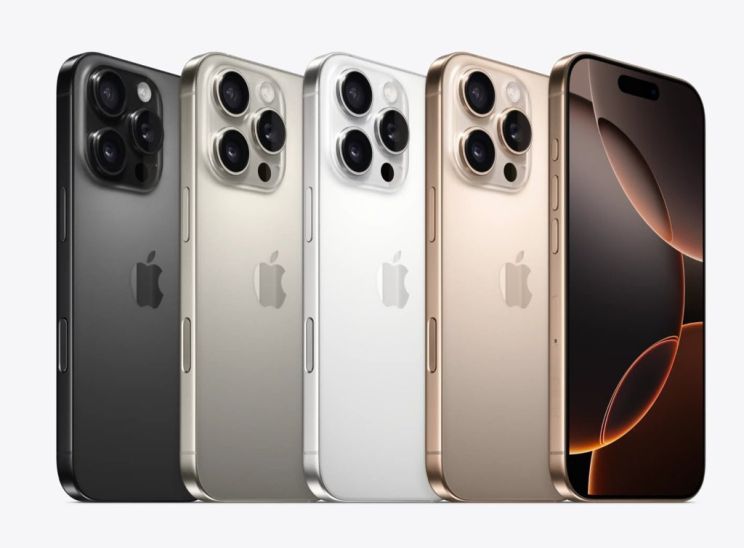
Apple released the iPhone 16 lineup with a promise of rolling out more AI features alongside some minor hardware upgrades. A recent camera test performed by DxOMark showed how the iPhone 16 Pro Max struggles to compete with some of its Chinese counterparts in maintaining details, especially with the telephoto.
Part of the reason is the 12MP resolution of the telephoto sensor, which starts to lose detail quickly after the user starts cropping into the sensor.
A 48MP telephoto for iPhone 17 Pro models
In the latest news, analyst Jeff Pu reiterated his previous claim stating that both the iPhone 17 Pro and iPhone 17 Pro Max will feature a 48-megapixel periscope telephoto, and a 24-megapixel front camera.
Using a high-resolution telephoto lens should definitely improve the level of detail in images taken beyond 5x zoom. The selfie camera on the iPhone 16 models is also 12MP, so you should expect improvements here as well.
Other than that, the main camera seems to stay the same as the iPhone 16 Pro models, which is also the same as the iPhone 15 Pro models. That said, we will need to see how much of an improvement Apple manages to offer within the 24mm-120mm focal length range (main camera) of the iPhone 17 Pro models, relying solely on enhancements in image processing.
The analyst also expects the iPhone 17 Pro models to be equipped with 12GB of RAM, up from 8GB in iPhone 16 Pro models, which could better support more complex on-device AI processing. With the iPhone 16 series, Apple opted for 8GB of RAM across all models (up from 6GB on the non-Pro iPhone 15 models), partly due to the Apple Intelligence features.
Speaking of the front of the device, the analyst believes that the iPhone 17 Pro Max will feature a “much narrowed Dynamic Island,” as a result of the device adopting a smaller “metalens” for the Face ID system. If true, this would be the first size reduction for the Dynamic Island since it debuted on the iPhone 14 Pro models in 2022.
OnePlus is gearing up to unveil the OxygenOS 15 soon. The upcoming custom skin is the brand’s take on the new Android 15 operating system. While OnePlus hasn’t revealed all of the new features on OxygenOS 15, the ColorOS 15 announcement does hint at what we can expect. So read on to find out.
Since Oppo and OnePlus are sister companies, there are plenty of similarities in not just it products but also their software. So ColorsOS and Oxygen share quite a bit of features. OnePlus’ motto with OyxgenOS 15 is ‘Speed meets AI’. With artificial intelligence becoming an everyday part of consumer electronics, the latest Android 15 skin would likely have AI integrated into its features and functions.
Recent rumors have hinted at the OxygenOS 15 offering integration of Google’s Gemini AI. This would allow it to bring access to popular photo editing tools like Magic Eraser. The new update likely includes virtual avatars, which also help in tasks like language learning, story telling, and more. AI Image Enhancement would be one of the more useful features that can help remove unwanted blurs or reflections with just a tap.
AI could also play a hand in productivity as well. OnePlus may feature AI integration in its document management tools. To save on time, there might be AI powered voice summaries, just like the ColorOS 15.
2. Revamped Design: Sprinkled with iOS Inspiration
Snapshat of OxygenOS 15 with the Dynamic Island-like Feature
OnePlus is apparently planning on revamping the entire control center of the OxygenOS 15. The custom skin could draw inspiration from Apple’s iOS and Xiaomi’s HyperOS. Swiping down from the screen’s left corner may open the notification window while swiping down from the right side would bring up the Control Center. One of the bigger visual changes may include a revamped layout that would bring a media player in a 2×2 grid, a 1×2 brightness slider, and a volume control in a 1×2 grid.
Not only that, but other elements of the UI may also get an overhaul. Just like the ColorOS 15, the latest OxygenOS build may also feature a “simpler and natural” design. The refresh in the look could make navigation easier and improve function rather than bring a bold change.
Personalization is a big aspect of Android and OxygenOS would continue OnePlus’ legacy of offering great customization. We can expect dynamic themes that may apply across the system, ranging from lock screen to wallpaper. A leaked screenshot has also revealed a Dynamic Island like feature on the screen.
3. Enhanced Performance & Gaming
OnePlus has always been big on mobile gaming and the OxygenOS 15 would likely continue the focus on this aspect to enhance performance. ColorOS was announced with the new Lightning Engine, which increased the system responsiveness by 18 percent and operational stability by 40 percent. In other words, OxygenOS could like have improved optimization that takes advantage of the new and improved hardware to bring faster load times and smoother multitasking.
Xiaomi has launched a new addition to its smart home lineup with the launch of the Mijia Smart Aroma Diffuser Set in the Chinese market. The diffuser is priced at 149 yuan ($20) and it is now available on JD.com. Let’s check out its key specs.
Xiaomi Mijia Smart Aroma Diffuser Set Specifications:
The diffuser features a compact, cylindrical design with dimensions of 74 x 74 x 122mm and a weight of 293g. It is built from high-quality PP material, ensuring durability. The diffuser comes equipped with a 135ml fragrance liquid capacity and offers a Cedar Green Tea scent, which includes a blend of top, middle, and base notes such as pear, jasmine, and cedarwood.
The diffuser’s smart fragrance control allows users to adjust intensity through three levels. Each level corresponds to a specific spray duration, ranging from 2 seconds every 10 to 20 minutes, providing flexibility based on user preferences.
The Mijia Smart Aroma Diffuser supports the Mijia App, allowing users to control fragrance diffusion and choose from 15 scent combinations. It also features 16 million colors of ambient lighting that mimics flickering candlelight, creating a soothing sensory experience.
The diffuser features microwave motion sensing technology, detecting movement up to two meters within a 120° range. It releases a three-second burst of fragrance upon detecting motion, providing an instant refresh. This feature, however, is disabled by default and can be activated through the app for more personalized use.
Additionally, the diffuser integrates with Xiaomi’s HyperOS Connect, allowing seamless connectivity with Xiaomi AI speakers and other smart devices, enabling voice control for a hands-free experience.
It supports Type-C charging, operating on a 5V input with a rechargeable lithium-ion battery. On a single charge, the device can deliver up to 50 days of operation on the lowest fragrance level, or up to six hours with the ambient light enabled. The diffuser supports low-power Bluetooth for wireless connectivity.
Xiaomi also recently introduced two new Mijia products: the Mijia Smart Blender P1, featuring 35,000 rpm speed, 13-layer noise reduction, and HyperOS, and the Mijia No-Fog Humidifier 3 (800), which offers 800mL/h humidification and a smart display.
Vivo‘s latest flagship series, the X200, has made a strong entrance into the market. The company announced today that the X200 has already generated over 2 billion yuan in sales across all channels, breaking the company’s previous first-day sales records.
It’s important to note that this figure only includes sales of the two models available today — the standard X200 and the higher-end X200 Pro. The vanilla model starts at 4,299 yuan (around $615), while the Pro has a starting price of 5,299 yuan (around $747)
Vivo X200, X200 Pro sales over 2 billion yuan in first day
Meanwhile, the X200 Pro Mini will be available starting October 25th, and given the strong initial demand, similar success is likely for the Pro Mini when it launches.
Although specific unit sales aren’t disclosed, the sheer volume of revenue suggests the X200 series is resonating with consumers. This could be attributed to several factors.
The company partnered with Zeiss for custom lenses and image tuning, and also includes its in-house V3+ imaging chipset for improved image processing. The smartphones also have equally impressive camera hardware.
The Pro model boasts a 50MP Sony LYT-818 main sensor with a large 1/1.28-inch size and a custom f/1.57 lens, a big 200MP telephoto lens, and a 50MP ultrawide camera.
While the X200 doesn’t have the Pro’s headline-grabbing 200MP sensor, it still offers a solid camera system. Its main sensor is a 50MP Sony IMX921 with a large 1/1.56″ size, paired with a 70mm telephoto lens using a 50MP IMX882 sensor and a 50MP ultrawide camera. While not quite on par with the Pro cameras, this setup should be more than enough for most users.
Oppo is gearing up to launch the Find X8 series of flagship smartphones soon. But ahead of the official announcement, the brand teased the accessories that will take advantage of the magnetic charging support on the Find X8 models. These accessories include a protective case, a new power bank, and a magnetic wireless charger. So let’s check it out.
Oppo Find X8 Series Teased with Magnetic Charging Accessories
The Chinese tech giant revealed three distinct accessories that support magnetic wireless charging technology, which is an anticipated feature on upcoming flagship smartphones. The first one that was teased is the new Oppo Mag Case, which is a protective cover that supports Magnetic Charging. In the video teaser, Oppo also teased the AirVOOC 50W Magnetic Charger along with the 80W Magnetic Power Bank as well.
Oppo Find X8 Mag Case and 80W Magnetic Power Bank
Thanks to the Magnetic Charging support, users can even attack the power bank to the back of the Oppo Find X8 series phone even as it has the Mag Case on. Recently, the company also teased another 120W SuperVOOC dual port charging brick and another power bank. So these will likely launch alongside the Find X8 and Find X8 Pro, which are set to launch in China soon.
The recently launched Honor X60 Pro has sparked interest with its upgraded battery capacity and satellite communication feature. However, a closer look at its specifications compared to the Honor X50 Pro reveals that it is actually a downgrade in several key areas. While the X50 Pro was marketed as a flagship-killer device, the X60 Pro aligns more with lower mid-range offerings. Here’s an in-depth analysis of why the X60 Pro falls short compared to the X50 Pro.
The major downgrade with the X60 Pro is its performance. It is powered by the Snapdragon 6 Gen 1 chipset, which, while capable of daily tasks, falls short of the Snapdragon 8+ Gen 1 found in the X50 Pro. The Snapdragon 8+ Gen 1 provides better gaming performance, faster processing speeds, and improved thermal efficiency, making the X50 Pro a more attractive option for power users. Additionally, the X50 Pro’s 5100 mm² vapor cooling system ensures better thermal management, which is crucial for sustained performance during demanding tasks like gaming.
The X60 Pro also has 8GB or 12GB RAM options, similar to the X50 Pro, but the storage configuration is identical across both devices. However, users of the X50 Pro can expect faster data processing and multitasking, courtesy of the superior chipset.
2. Build Quality and Durability
Both the Honor X60 Pro and the X50 Pro feature durability-focused designs, but they do so differently. The X50 Pro has a reinforced design with an ultra-deep tempered glass front for improved drop resistance, while the X60 Pro adds a new Honor Tai Chi cushioning architecture 2.0, marketed for better shock absorption.
The X50 Pro has already undergone SGS certification for comprehensive reliability, and the X60 Pro similarly passes these durability tests. However, the X60 Pro adds little to enhance durability over the X50 Pro, leaving both devices on nearly equal footing.
3. Display
Coming to the display, the X60 Pro features a 6.78-inch AMOLED display with a 1.5K resolution and a 120Hz refresh rate, just like the X50 Pro. However, the X60 Pro outshines the X50 Pro in terms of brightness and additional features. It boasts a peak brightness of 3000 nits, making it much brighter than the X50 Pro, which has a peak brightness of 1200 nits. This allows for better visibility in direct sunlight.
Additionally, the X60 Pro incorporates Honor’s Oasis Eye Protection, which supports 3840Hz PWM dimming, hardware-level low blue light, natural light eye protection, and an AI sleep-aiding display. This makes the X60 Pro’s screen easier on the eyes, especially for users who spend extended hours on their phones. The X50 Pro, while still offering a 10-bit display, 1920Hz PWM dimming, and similar 1.5K resolution, lacks the enhanced eye protection features of the X60 Pro.
4. Camera
Talking about the cameras, both models boast a 108MP primary rear camera and an 8MP front camera. While the camera hardware is similar, the X50 Pro adds an additional 2MP macro lens, giving it slightly more versatility in photography.
Honor has also been able to leverage the Snapdragon 8+ Gen 1’s improved image processing capabilities, giving the X50 Pro a noticeable edge in image quality, especially in lower lighting conditions. In contrast, the Snapdragon 6 Gen 1 in the X60 Pro does not deliver the same level of processing, which may impact photo and video performance.
5. Satellite Communication
Coming to a special feature that the X50 Pro completely lacks, the X60 Pro offers support for two-way Beidou satellite SMS communication, typically found in higher-end devices. This makes the X60 Pro one of the most affordable phones with satellite connectivity, providing a clear advantage for users needing off-grid communication.
6. Battery Life & Charging
Battery life on the X60 Pro is also a standout feature, with its 6600mAh capacity paired with 66W fast charging, allowing for longer use between charges and faster top-ups. The X50 Pro, on the other hand, comes with a 5800mAh battery and supports 35W charging. Both models are equipped for long-lasting power, but the X60 Pro certainly takes the lead here for heavy users.
7. Pricing and Positioning
The pricing difference between the two models is substantial. The Honor X60 Pro starts at 1,499 yuan ($211) for the 8GB+128GB variant, while the top-end 12GB+512GB variant with Beidou satellite SMS support is priced at 2,299 yuan ($324). In comparison, the Honor X50 Pro, priced at 2,799 yuan ($425), is positioned as an upper mid-range or flagship-killer device.
8. Final Thoughts
While Honor X60 Pro introduces some intriguing updates but lacks the robustness of the X50 Pro, particularly in processor power. For users prioritizing performance, gaming, or multitasking capabilities, the X50 Pro is a superior choice. Although the X60 Pro might appeal to users seeking better battery life and slightly newer software, it doesn’t quite measure up to the X50 Pro’s balanced performance and added features.
Samsung is gearing up for its next wave of entry-level and mid-range phones. Following the launch of the Galaxy A16, we recently saw renders of the Galaxy A36 5G. Now, the Galaxy A26 has made an unofficial appearance on Geekbench.
The smartphone made its debut on the benchmark with the model number SM-A266B. Based on Samsung’s naming scheme, this points towards the Galaxy A26, and the listing confirms it’ll be a 5G-enabled device. The interesting part lies under the hood.
The Galaxy A26 seems to feature an Exynos 1280 processor, marked by the codename S5E8825. This isn’t surprising, but what is, is the clock speed.
Galaxy A26 with higher-clocked Exynso 1280?
The Exynos 1280 typically runs at 2.4GHz for its performance cores, but the Geekbench listing suggests the A26 might be getting a slight overclock to 2.6GHz. This could be Samsung pushing the chip a bit further, or potentially a sign of a more efficient fabrication process allowing for higher speeds without overheating
Beyond the processor, the listing reveals 6GB of RAM, which seems like a reasonable starting point for a mid-range phone in 2024. Everything else remains a mystery, but hopefully, Samsung takes a page out of the Galaxy A36’s book and equips the A26 with an Infinity-O display. The Galaxy A25’s dated U-shaped notch just doesn’t cut it anymore.
Camera specs are anyone’s guess at this point. Considering the Galaxy A25 already boasts a 50MP main sensor and an 8MP ultrawide camera, it wouldn’t be a surprise to see them carried over. The same goes for the 5,000mAh battery and 25W fast charging – if it ain’t broke, don’t fix it, right?
The software side of things might be the biggest upgrade. The A26 is listed with Android 15 on Geekbench, so it could come pre-installed with it. Even better, if Samsung could offer six major Android updates, similar to the Galaxy A16.
With the Galaxy A26 still under wraps, it’s hard to say for sure when or where it’ll launch.
Vivo launched two new 20,000mAh power banks alongside the X200 series: one that supports 22.5W fast charging, while the other supports faster 45W charging.
Design and specification:
Both the power banks come in white color, a 25cm textured braided fast charging cable, and a buckle ring design. Both of them weigh 352g and have a dimension of 125mm x 73mm x 30mm.
The 45W power bank can fully charge the vivo X200 Pro mobile phone 2.8 times, the vivo X100 mobile phone 3.3 times, the vivo Pad3 1.7 times, the iPhone 16 4.3 times, and the MacBook Air once. The power banks support two-way fast charging and can charge three devices at the same time utilizing the built-in cable and the two additional ports.
In terms of speed, the 45W one can charge the vivo X200 Pro phone for 50% in 30 minutes.
For compatibility with various devices with support for different charging technologies, the power banks support PD3.0 (45W), PPS (45W), and QC2.0 (18W) alongside Vivo’s FlashCharge (44W) protocol.
The power banks also come with 13 safety protection, and can be carried on an airplane.
Input and output parameters of vivo’s 45W power bank:
Both the power banks are now on sale in China for a price tag of CNY 149 (roughly US$ 21) and CNY 199 (~US$ 28) respectively, lower than the rumored 239 Yuan and 179 Yuan price tags. Users can also get the 45W power bank for only CNY 179 (~US$ 25) when combined with one of the X200 series devices.
Apple’s brand new iPhone 16 series might be suffering from a major issue related to its battery life. Users have come forward with complaints regarding their 2024 iPhones getting their batteries drained unusually fast even when left alone. Previously, iPhone 16 Pro users faced display freezing issues, so here’s everything you need to know regarding this new problem.
Why are the batteries of the iPhone 16 models dying so quickly?
Several users of the iPhone 16 series have started complaining about battery drain issues across Reddit, Apple Support Communities, and other forums (Via 91Mobiles). All of these point to the same problem, the new iPhones dying too soon. One user stated that his iPhone 16 Pro Max lost around 15 to 20 percent of battery life within a couple of hours despite being on idle. Others also faced an identical issue with their iPhone 16s, claiming that the battery percentage drains rapidly from full charge to 60 percent.
Apple iPhone 16
Such drain wouldn’t be too surprising if the phones were being used for intensive tasks like gaming and video recording. However, the issue with these complaints is most iPhones were completely idle. One user even said that his fully charged iPhone 16 went from fully charged and unused overnight to dropping to just 18 percent by morning. Funnily enough, one person put the iPhone 16 Pro through his own experiment, comparing it to the iPhone 14 Pro.
Despite the newer and older iPhone being kept in the same settings and going through the same use, the iPhone 14 Pro only dropped to 85 percent, while the iPhone 16 Pro was at 58 percent. This is a sizeable difference in battery efficiency. It seems like Apple’s iOS might be the reason behind these issues. So updating to the newest version could fix this problem. Users have even claimed that the iOS 18.0.1 update or iPhone 18.1 beta has helped solve this problem. Unfortunately, the specific reason is still unclear. So stick around for more updates.
Honor is prepping to launch its Magic 7 series in China later this month, and a new leak just offered a sneak peek at the rear design and storage options. We’ve already seen the front thanks to a teaser from Honor’s CEO, but this leak fills in the blanks on the back.
Take a peek at Honor Magic 7 / Magic 7 Pro’s design
The leaked images, which include both real-life photos and high-quality renders, show both the standard Magic 7 and the higher-end Magic 7 Pro.
The standout feature on the back is the camera module—an octagonal island with a silver or gray border. The render shows one with a gold frame as well.
Honor Magic 7Honor Magic 7 Pro
The module is home to three camera sensors (including a periscope telephoto lens) and an LED flash. Honor is keeping its branding minimal, with its name stamped at the bottom of the rear panel.
Apart from this, another leak reveals the storage options and color choices of the smartphones. According to tipster Digital Chat Station, the vanilla Magic 7 could come in 512GB and a whopping 1TB storage variants, with a color palette of Gold, White, Black, Blue, and Gray.
The Magic 7 Pro, on the other hand, might be available in 256GB, 512GB, and 1TB configurations, sticking to a more subdued White, Black, Blue, and Gray color scheme.
This leak comes just ahead of Honor’s official unveiling of its MagicOS 9.0 operating system on October 23rd, 2024. Following that, the Magic 7 series is expected to take center stage on October 30th in China.
Although there’s no official confirmation yet, we expect the Magic 7 series to feature flagship specs, including a Qualcomm Snapdragon 8 Elite processor and a triple rear camera system.
The camera setup could include a 50MP main sensor (Omnivision OV50H), a 50MP periscope telephoto lens (Sony IMX882), and a third sensor ranging from 50MP to 200MP (Samsung HP3).
As for displays, rumors suggest the standard model will have a 1.5K OLED screen, while the Pro will sport a 2K OLED. The Magic 7 Pro could also include a 5800 mAh battery, 100W wired charging, and 66W wireless charging.
Both models are likely to come with IP68/IP69 ratings for dust and water resistance, along with an ultrasonic fingerprint reader. The Pro model might even offer satellite connectivity.
Qualcomm‘s upcoming Snapdragon 8 Elite chipset has been spotted running the AnTuTu benchmark on an unreleased Realme GT 7 Pro smartphone ahead of its official unveiling next week.
The benchmark revealed through a leaked image from OnLeaks and Smartprix shows the Snapdragon 8 Elite outperforming Apple’s A18 Bionic chip in the iPhone 16 Pro Max.
Realme GT 7 Pro AnTuTu benchmark
The leaked benchmark pits the Realme GT 7 Pro, confirmed to run on the Snapdragon 8 Elite, against the iPhone 16 Pro Max.
Set to launch later this month in China, the GT 7 Pro scored an impressive 3,025,991 points on AnTuTu, nearly doubling the 1,651,728 points from Apple’s A18 Pro. These scores are close to the MediaTek Dimensity 9400, which scored around 3,007,853 points on the same test.
Apart from AnTuTu, early leaks also suggest strong Geekbench performance for the Snapdragon 8 Elite, evidenced by scores from the recently surfaced OnePlus 13 powered by the same chipset. The OnePlus 13 achieved 3,216 and 10,051 points in Geekbench 6’s single-core and multi-core tests, respectively.
Meanwhile, the Apple A18 Pro edges out the Snapdragon 8 Elite in Geekbench’s single-core test with 3,358 points, it falls behind in multi-core performance, scoring 8,184 points.
Realme GT 7 Pro Specifications
Expect the Snapdragon 8 Elirte, the Realem GT 7 Pro is expected to feature a 6.78-inch BOE OLED display with a 120Hz refresh rate, 1.5K resolution, and a micro quad curved screen.
The smartphone has already been approved in China’s 3C certification platform with 120W charging speed. Additionally, a previous report suggests that the smartphone will have a 6000mAh battery.
As for the cameras, the device is said to have a 50-megapixel Sony IMX906, which will be paired with an 8-megapixel ultra-wide angle lens, and a 50-megapixel Sony IMX882 telephoto shooter. The latter is said to offer up to 3x optical zoom, and it will likely include higher hybrid magnification as well.
Huawei has already confirmed the Oct. 22 launch of the Nova 13 series in China. Now tipster Digital Chat Station has shared some of the specifications of the Nova 13 Pro along with its Geekbench listing.
Huawei Nova 13 and Huawei Nova 13 Pro
The phone scores 997 and 2,900 in the single-core and multi-core tests, respectively, which is surprisingly much lower than its predecessor’s scores. For context, the Nova 12 Pro achieved over 1,300 and 4,100 in the same tests.
Nova 13 Pro rumored to use Kirin 8000 chip
According to the tipster, the phone is powered by the mid-range Kirin 8000 chipset. In contrast, its predecessor used the more capable Kirin 9000s, the same chip that powers the flagship Mate 60 series.
The Huawei Nova Flip, which was released in August this year, also uses the mid-range Kirin 8000 chip, which includes a single Cortex-A77 core clocked at 2.40 GHz, three additional Cortex-A77 cores at 2.19 GHz, and four energy-efficient Cortex-A55 cores running at 1.84 GHz.
While the Geekbench listing for the Nova 13 Pro also confirms the same frequencies for all the different clusters, the scores are still lower than the flip phone. It suggests that the company is testing the device with different performance tuning to find a sweet spot between the performance and battery life.
Other specifications:
According to the Geekbench listing, the Kirin 8000 chip is paired with 12GB RAM. In addition to that, the phone packs a 1.5K quad-curved display, the same resolution as its predecessor. However, he didn’t reveal the display size.
The company’s new HarmonyOS Next operating system (independent of Android) is expected to debut alongside the Nova 13 series. However, the tipster claims it will be running on HarmonyOS 4.2.
As for the cameras, he reaffirms the previous rumors. There could be a dual 60MP + 8 MP setup on the front and a triple camera setup on the rear, including a 50MP main with variable aperture. According to previous rumors, the other two cameras could be a 12MP ultrawide and an 8MP telephoto.
The phone could also support satellite connectivity and 100W fast charging.
Motorola has not been impressive with software update distribution in recent years. It usually releases the latest Android update when many brands wrap up their rollout. However, 2024 has been a different year for the brand, as it appears to be taking things seriously.
In a big move, the American brand recently started offering five Android upgrades to select models. Though it’s not the best among Android brands, Motorola fans would really appreciate it. In a surprising turn of events, Motorola is already rolling out Android 15 beta ahead of Samsung and many other brands.
Motorola has also confirmed Android 15 availability for many of its devices. While the brand hasn’t made an official announcement, the details can be accessed via the company’s official support page.
Motorola phones eligible for Android 15 update
Motorola Razr phones:
Motorola Razr+ (2024) / Razr 50 Ultra
Motorola Razr (2024) / Razr 50
Motorola Razr+ (2023) / Razr 40 Ultra
Motorola Razr (2023) / Razr 40
Motorola Edge phones:
Motorola Edge (2024)
Motorola Edge+ (2023)
Motorola Edge 50 Ultra
Motorola Edge 50 Pro
Motorola Edge 50 Neo
Motorola Edge 50 Fusion
Motorola Edge 50
Motorola Moto G series phones:
Motorola Moto G Power 5G (2024)
Motorola Moto G Stylus 5G (2024)
Motorola Moto G 5G (2024)
Motorola Moto G85
Motorola Moto G75
Motorola Moto G55
Motorola Moto G45
Motorola Moto G35
Motorola Moto G34 5G
Other Motorola phones:
ThinkPhone by Motorola
ThinkPhone (2025)
This seems like a solid list at first glance, but you’ll quickly realize that many phones are missing. The most notable omissions are the Moto G64 and Moto G (2024). Both were released this year and were supposed to receive the Android 15 upgrade.
Please note that the above list has been curated by reviewing the device’s support pages. It’s possible that Motorola hasn’t updated support pages for many devices. So, if your device isn’t on the above list, wait for the official announcement. Meanwhile, you can check our list of Motorola Android 15 devices created based on the software update policy.
Motorola might roll out the Android 15 update quicker than last year. The reason is that the Android 15 beta is already seeding some models, including the Edge 50 Fusion, which is nearly three months ahead of the Android 14 beta.
What to expect from Android 15?
Android 15 doesn’t offer too many visual upgrades, but it strongly focuses on privacy and security. These are the new features you might see after upgrading your Motorola phone to the new OS:
1. Theft detection lock
This new feature uses AI to determine if your phone has just been snatched and locks it down to stop thieves from stealing your important data. You should enable this feature called theft detection lock the first chance you get.
In a blog post, Google revealed that this feature reduces incentives for thieves by making it difficult to set up the device again. Google says if a thief forces a reset of the stolen device, they will not be able to set it up again without knowing your device or Google account details.
2. Private space
Android 15 also introduces private space. It’s a separate space to keep important apps under an additional layer of security. All apps inside private space aren’t visible to other users and are hidden in recent apps.
This feature is already rolling out to Google Pixels with the Android 15 update, and it might also come to Motorola phones.
3. App pairs
Android 15 lets you create shortcuts for your favorite pairs of apps to open them in the split-screen mode. For example, you can create a shortcut to open YouTube and Notes in a single window.
4. App archiving
Android phones already support app archiving, which lets users uninstall an app while keeping the user data. However, this feature is only available via the Google Play Store. The upcoming Android 15 has this feature baked in, which means it will also support apps installed outside of the Google Play Store.
The app archiving feature is designed to save storage by archiving apps you don’t want to use for a short period. When you unarchive the app, you can continue where you left off without losing any data.
The next upgrade for your Motorola device will likely bundle more features and AI smarts.
We use cookies on our website to give you the most relevant experience by remembering your preferences and repeat visits. By clicking “Accept”, you consent to the use of ALL the cookies.
This website uses cookies to improve your experience while you navigate through the website. Out of these, the cookies that are categorized as necessary are stored on your browser as they are essential for the working of basic functionalities of the website. We also use third-party cookies that help us analyze and understand how you use this website. These cookies will be stored in your browser only with your consent. You also have the option to opt-out of these cookies. But opting out of some of these cookies may affect your browsing experience.
Necessary cookies are absolutely essential for the website to function properly. This category only includes cookies that ensures basic functionalities and security features of the website. These cookies do not store any personal information.
Any cookies that may not be particularly necessary for the website to function and is used specifically to collect user personal data via analytics, ads, other embedded contents are termed as non-necessary cookies. It is mandatory to procure user consent prior to running these cookies on your website.