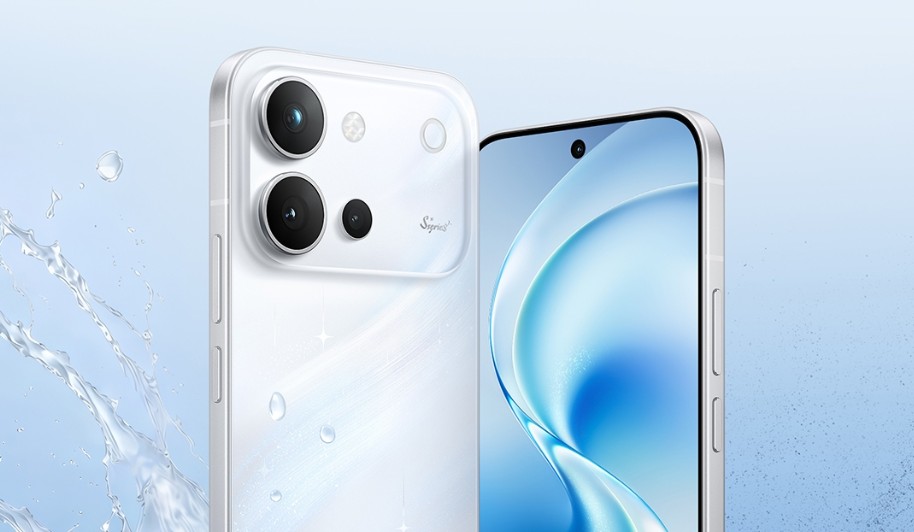
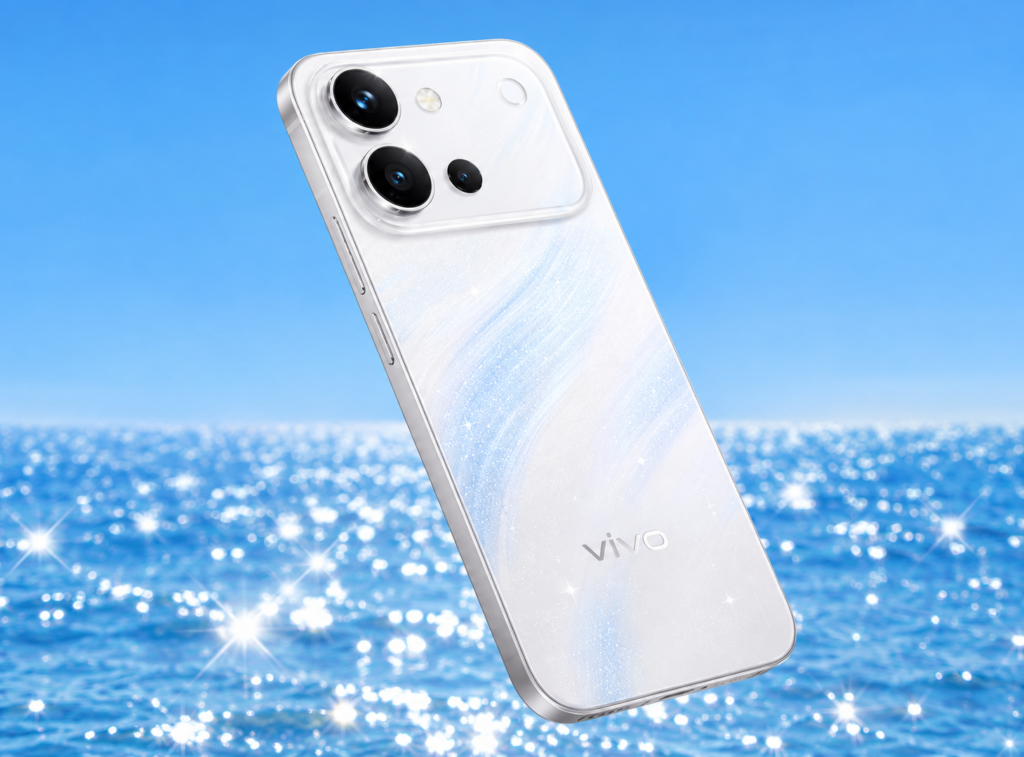
Vivo unveiled the Vivo S60 and S60e (aka V60 Vitality Edition) smartphones earlier, and now the brand has silently taken the covers off another model called the Vivo S60t. The new S-series phone has appeared on Vivo’s Chinese website with a large 7,200mAh battery, a 144Hz AMOLED display, and a versatile triple-camera setup featuring a 50MP periscope telephoto camera. It also packs a Snapdragon 7-series chipset and a slim design.
Vivo S60t specifications and features
Vivo S60t
The Vivo S60t features a 6.59-inch AMOLED display with a 2750 x 1260-pixel resolution, 10-bit color depth, P3 wide color gamut, HDR support, and a 144Hz refresh rate. The touch sampling rate reaches 300Hz in gaming mode, while the display has a 94.7% screen-to-body ratio. The phone measures 157.52 x 74.33mm, with thickness ranging from 7.79mm to 7.92mm depending on the color and weighs up to 207 grams.
Vivo S60t
Powering the phone is the Snapdragon 7 Gen 4 mobile platform, paired with 12GB of RAM and up to 512GB of storage. Vivo has equipped it with a 7,200mAh battery supporting 90W wired fast charging. The phone also supports 24GB of memory fusion and reverse charging through its USB Type-C port.
The Vivo S60t features a 50-megapixel front camera with autofocus, while its rear setup comprises a 50-megapixel primary camera with OIS, an 8-megapixel ultrawide lens, and a 50-megapixel periscope telephoto camera with OIS. Both the primary and periscope cameras support 4K video recording, while the phone can achieve up to 100x digital zoom. Vivo also highlights 4K Live capabilities and gimbal-level stabilization for smoother footage.
Vivo S60t
The handset runs OriginOS 7 based on Android 17 and features an ultrasonic single-point fingerprint sensor. It also gets stereo speakers, NFC, Bluetooth 5.4, Wi-Fi 6, an X-axis linear motor, and an infrared remote. For durability, the phone comes with IP68 and IP69 protection.
Vivo S60t price and availability
Vivo S60t
The Vivo S60t is currently listed in China in 12GB+256GB and 12GB+512GB configurations, priced at CNY 3,599 (~$540) and CNY 3,999 (~$600), respectively. It comes in Starry Sea, Early Summer Green, and Midsummer Night color options. Vivo has not announced international availability for the S60t yet.
After its global debut earlier this week, Vivo has now confirmed it will launch the X Fold 6 in India on October 6. The company shared a short video on X confirming the date, and it’s not the only device to launch. Tagging along are the Vivo S2 FE and Vivo V80.
The company first announced the V80 for October 6, while a tipster later shared its expected India pricing. Vivo then added the S2 FE, which is rumored to cost under Rs 40,000. With the X Fold 6 joining them, the event will cover a V-series phone, an S-series model, and a flagship foldable across different price ranges.
The next chapter of innovation is ready to unfold. Get ready to experience what’s next.
The teaser shows the Vivo X Fold 6 in Nebula Teal. Vivo has not confirmed whether other colors will be available in India, so we could see more options at the launch.
And…there’s more. The video also shows a Mixed Reality (MR) headset. It’s unclear whether Vivo plans to sell the headset in India or simply show it at the Vivo NEXT 2026 event. For now, there is no confirmation that it will be available to buy on launch day.
The X Fold 6 itself is not a new phone. Vivo launched it in China in June, and our comparison with the Oppo Find N6 gives a closer look at how the two foldables compare. The X Fold 6 uses the Dimensity 9500 Super Edition chip and packs a 7,000mAh battery with a 200MP main camera. It has an 8.02-inch inner display and a 6.5-inch cover screen.
In China, the phone starts at CNY 7,999 for the 12GB RAM and 256GB storage version. Vivo announced the X Fold 6 globally but did not share the price; that’s for regional launches like this.
For more daily updates, please visit our News Section.
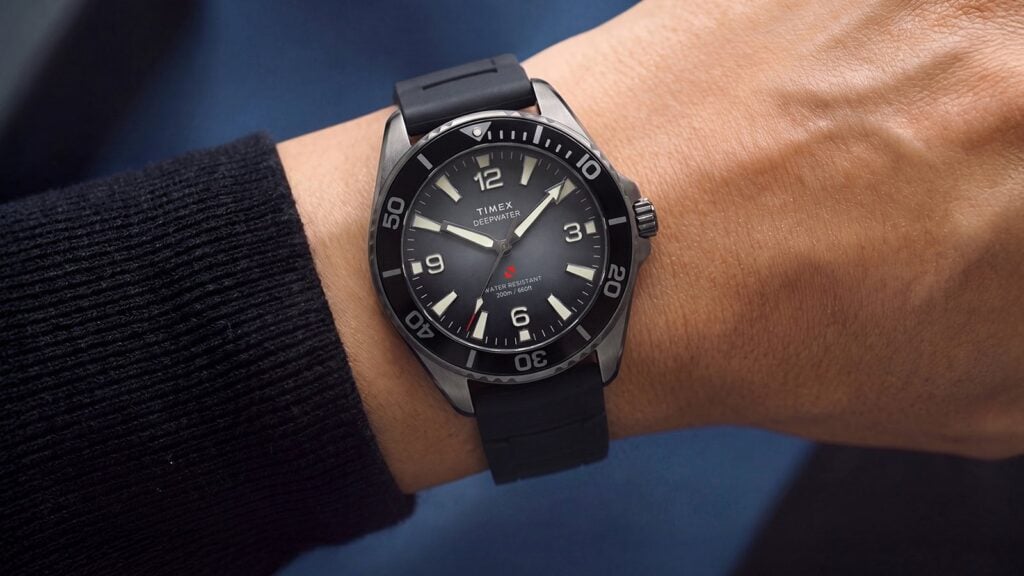
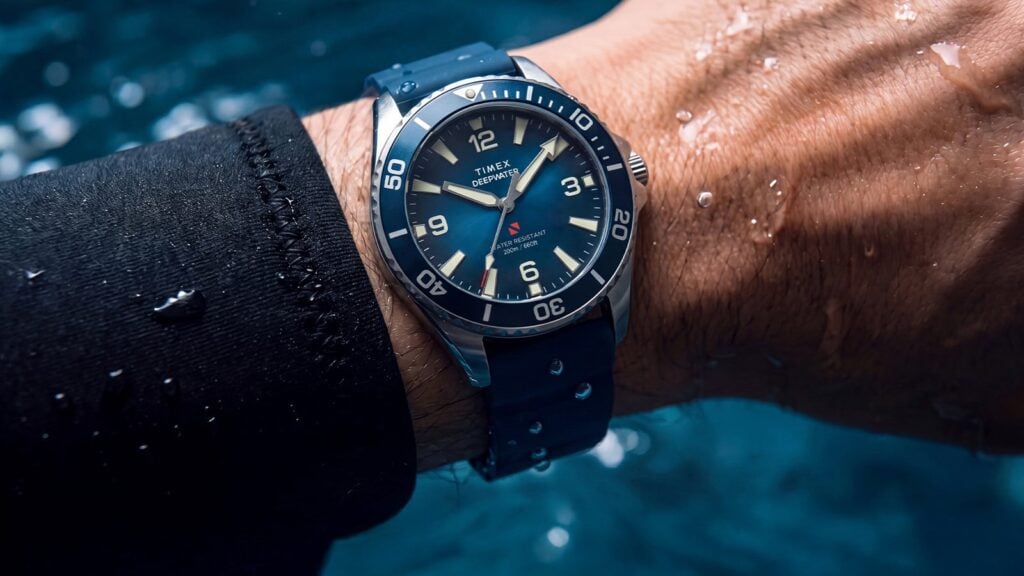
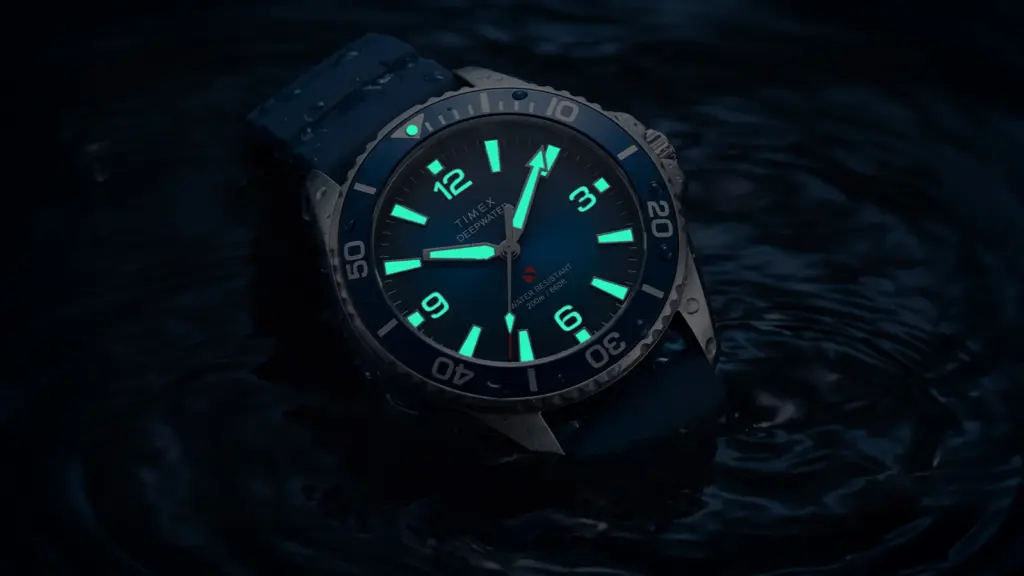
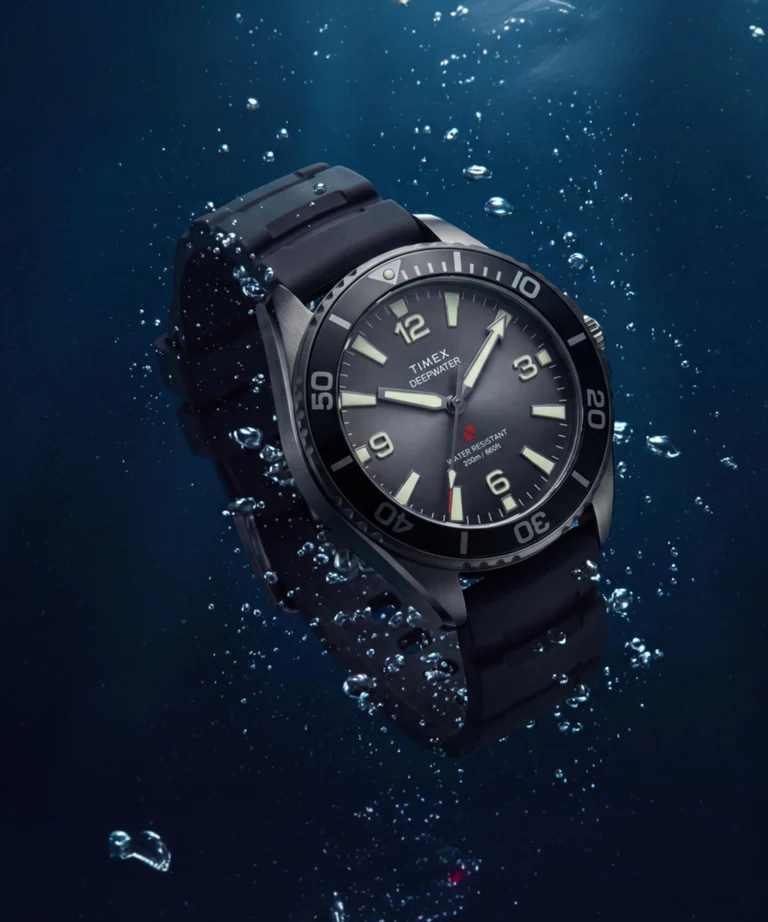
Timex has introduced two new Deepwater Arctic 200 dive watches in the US, priced at $259 and $269. Both models use battery-powered quartz movements and come equipped with sapphire crystals and ceramic bezel inserts, giving buyers some premium materials without pushing the price beyond $300.
Timex Deepwater Arctic 200 Specifications
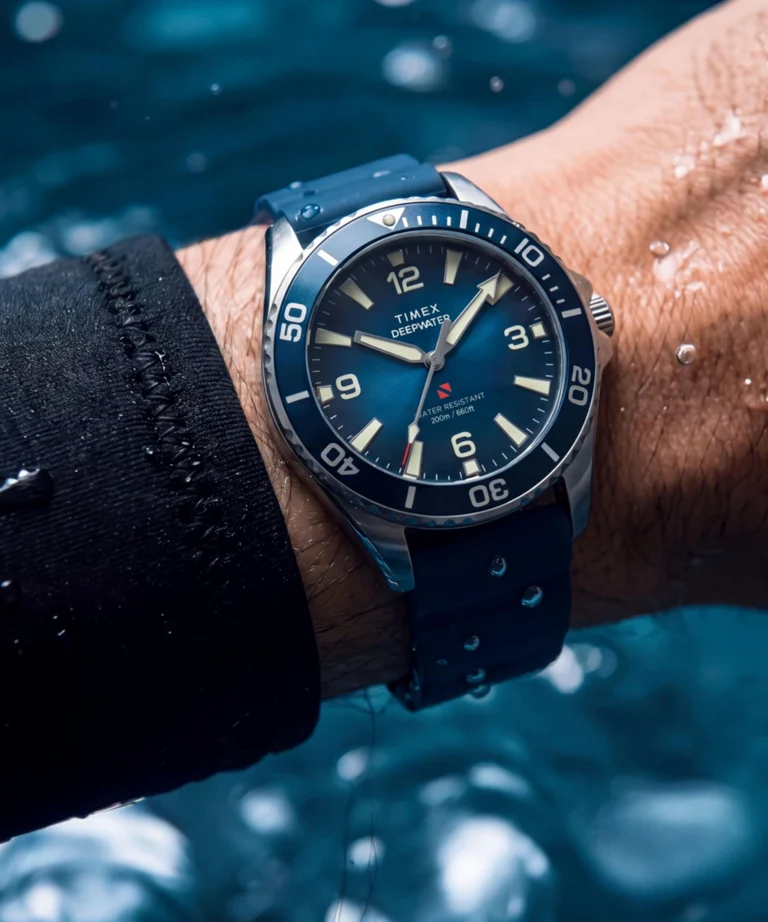
The watches share the same core dimensions. The stainless steel case measures 40.5mm in diameter, 11.5mm thick, and 47mm from lug to lug. These are moderate proportions that generally fit a wide variety of wrists. Timex is offering two distinct color options for this release.
The $259 model features a standard silver-tone brushed and polished case, a blue gradient dial, and a matching blue strap. The $269 model swaps that out for a gunmetal case finish, a black gradient dial, and a black strap.
Both versions feature a unidirectional ratcheting bezel with a ceramic inlay. Ceramic is a standard upgrade in modern watches because it resists scratches and fading much better than traditional aluminum inserts.
Where to buyTimex Deepwater Arctic 200Latest price on AmazonCheck price →
Similarly, the dial is protected by an anti-reflective sapphire crystal, which is significantly harder to scratch than standard mineral glass. The dial itself has a straightforward layout, using partial Arabic numerals at the quarter hours and Super-LumiNova on the hands and indices for visibility in the dark.
For water resistance, the Deepwater Arctic 200 is rated to 200 meters, utilizing a screw-down crown and a screw-on case back to seal the watch. It comes on a 20mm HNBR (Hydrogenated Nitrile Butadiene Rubber) strap.
HNBR is a synthetic rubber chosen because it degrades less over time from UV and chemical exposure compared to basic silicone. The strap also includes quick-release spring bars, meaning you can change it without using a spring bar tool.
Internally, the watch is very basic, running on a standard quartz analog movement powered by an SR626SW battery. Both models are available to purchase now directly through the Timex US website.
In related news, Timex has recently launched the Heritage 66 as a modern revival of its 1966 Skin Diver, while also introducing a new vintage-style analog watch in India with steel and leather strap options.
For more daily updates, please visit our News Section.
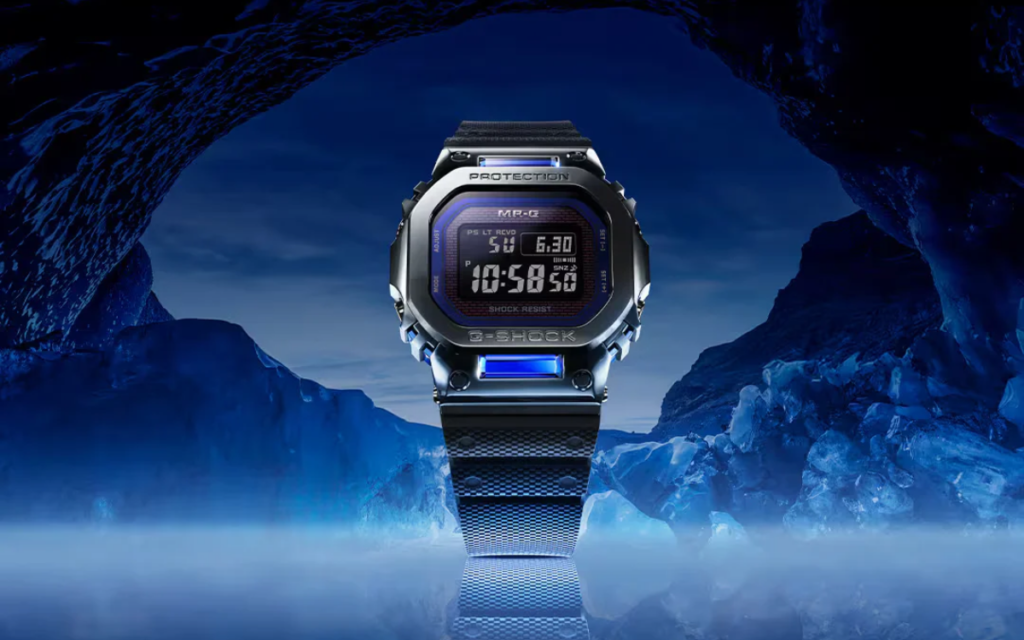
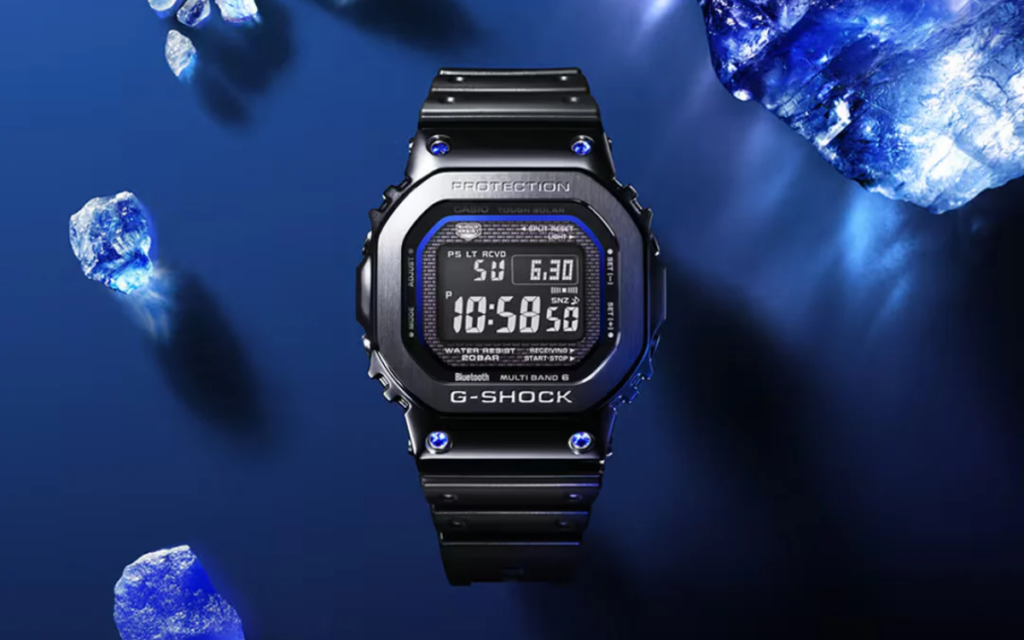
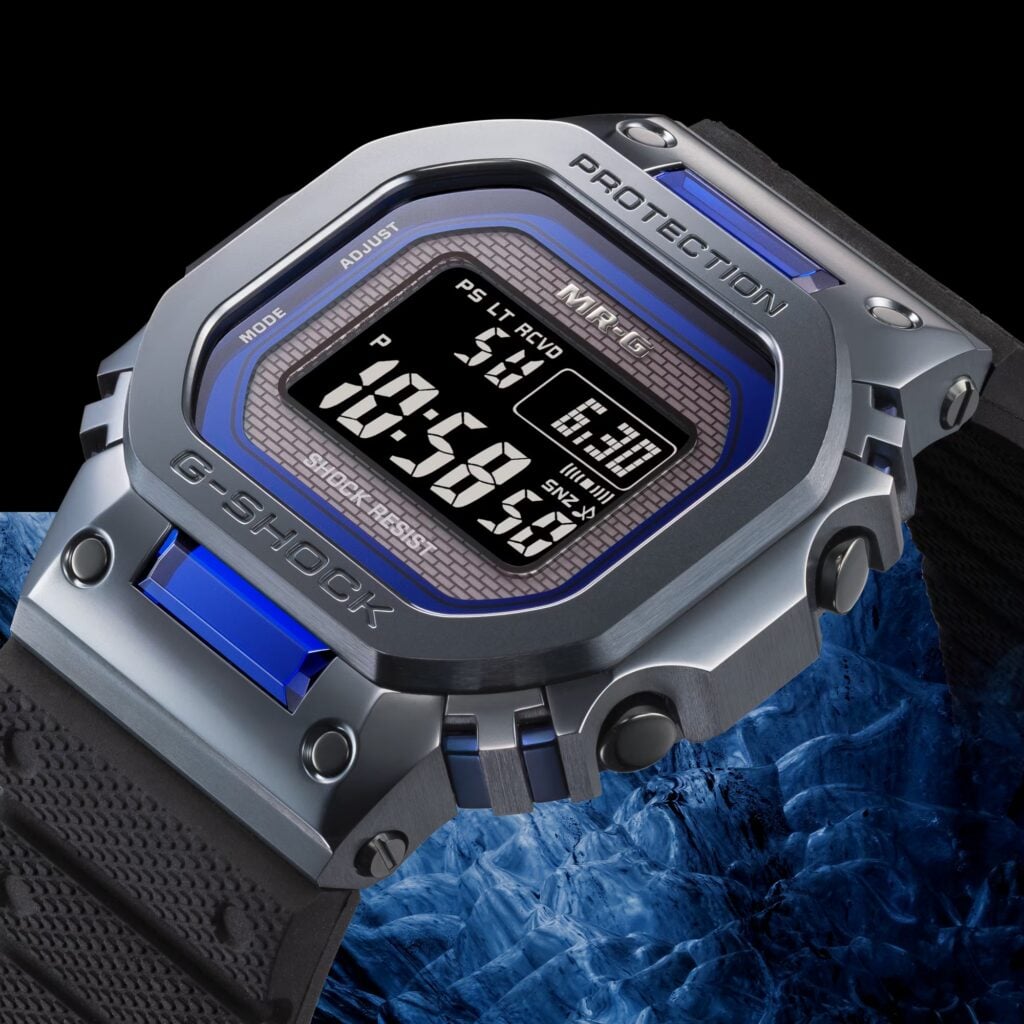
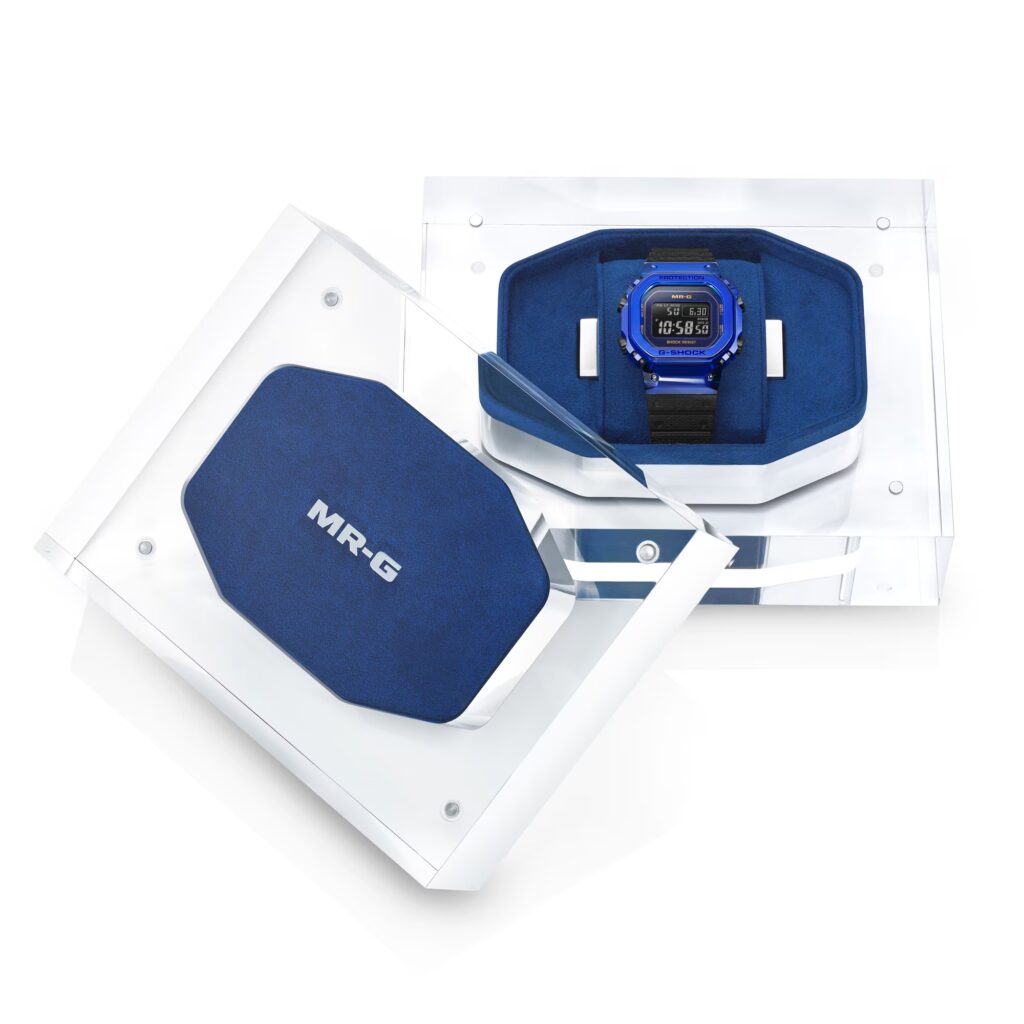
Casio is releasing two new watches to mark the 30th anniversary of its high-end MR-G line. Both models are based on the classic square G-Shock silhouette, but they integrate lab-grown blue sapphires directly into their metal bezels. The two watches, the MRG-B5000SA and the GMW-B5000SB, will be available in the US and Japan starting in late November 2026.
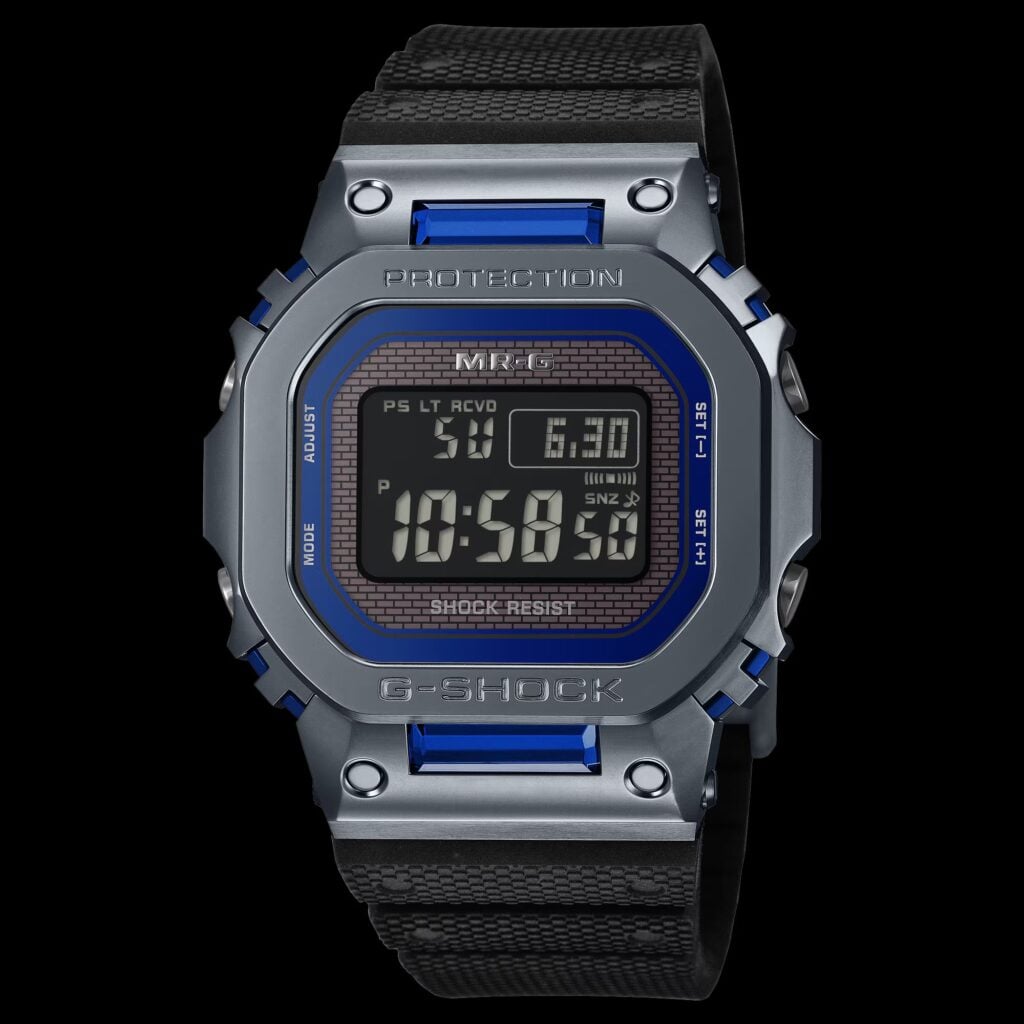
The more expensive of the two is the MRG-B5000SA-2, which costs $6,600/¥880,000 and is limited to a production run of 500 units worldwide. The defining hardware feature is the inclusion of two 2-carat lab-grown blue sapphires set into the top and bottom of the bezel.
Casio says that it opted for lab-grown stones because they offer more consistent color and clarity than natural gemstones. The watch case is made of Ti64 titanium, while the top bezel uses a cobalt-chrome alloy called Cobarion. The metal features blue ion plating to match the stones, and the watch comes with a fluoro rubber band. In total, it weighs 103 grams.
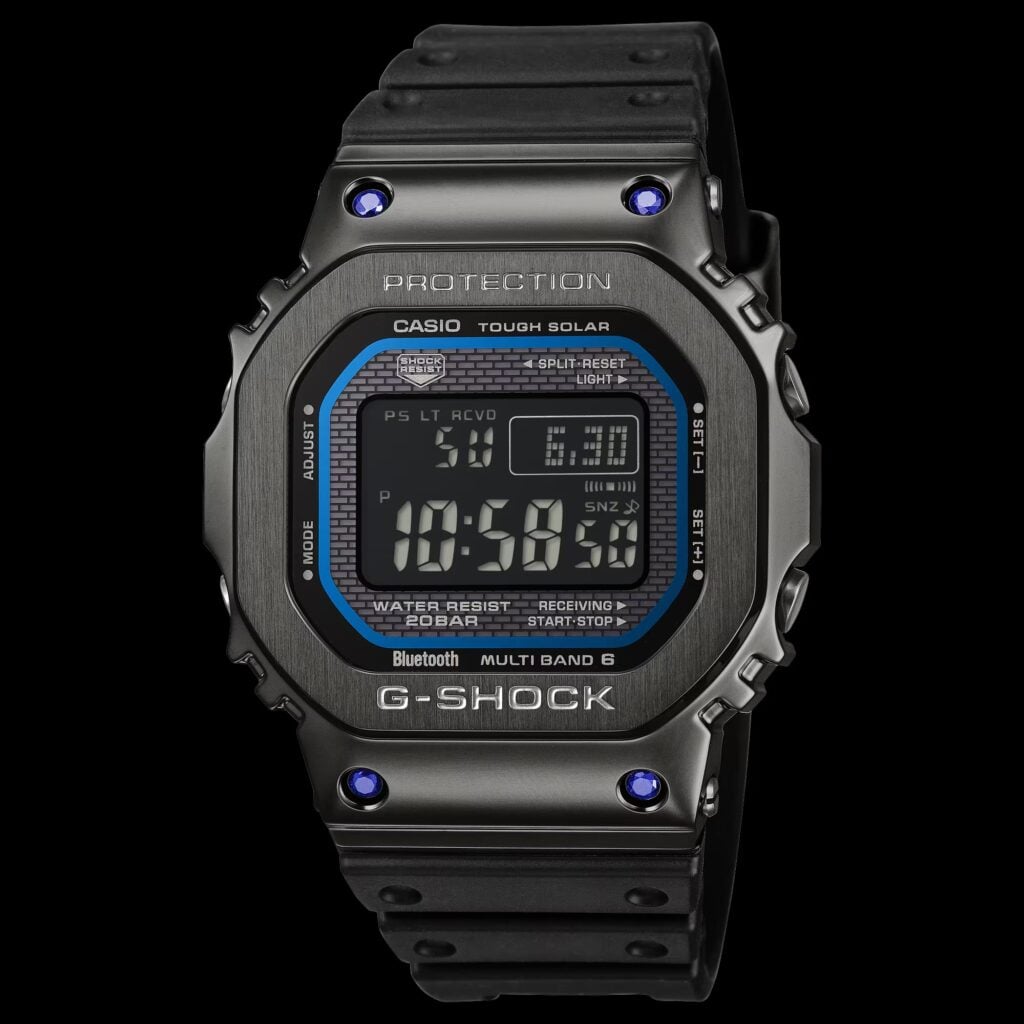
GMWB5000SB-1A2
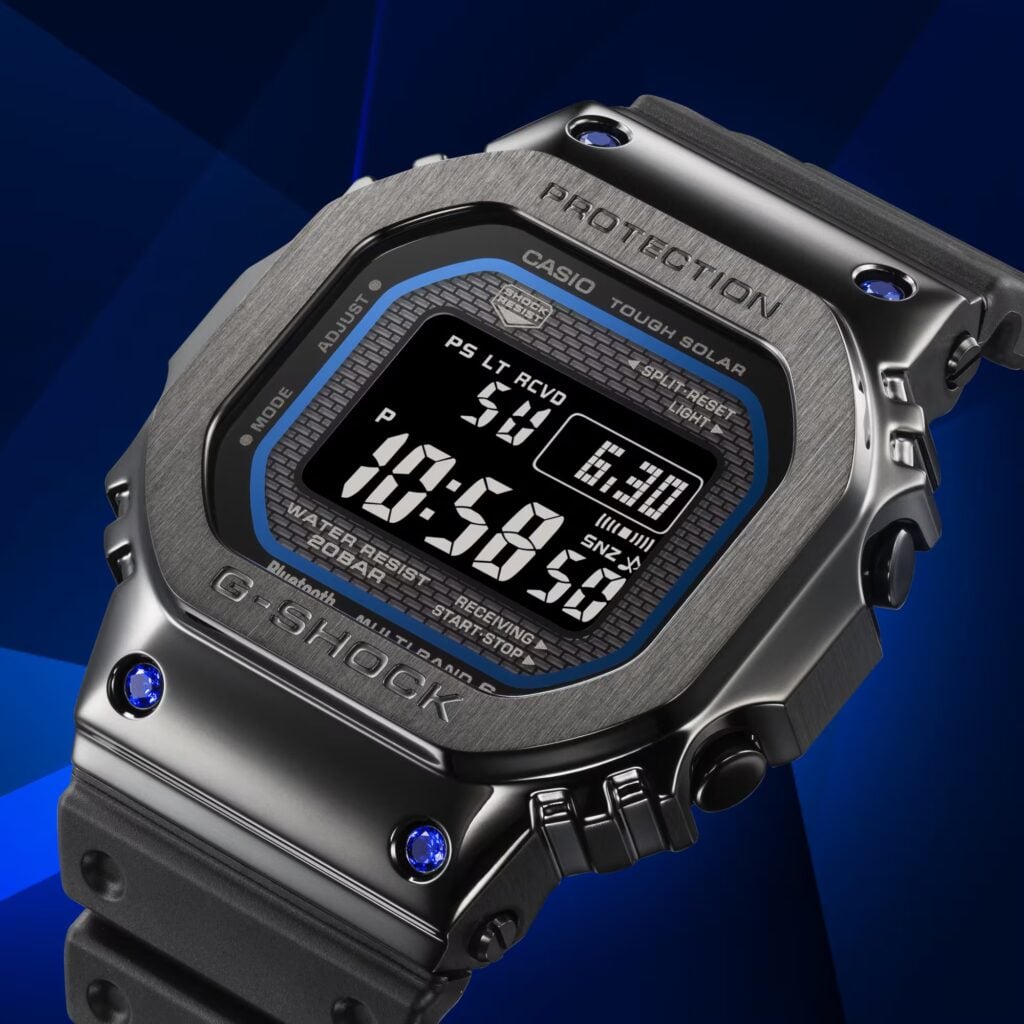
For a much lower price, Casio is also offering the GMW-B5000SB-1A2 for $770/¥110,000. Instead of titanium and Cobarion, this model uses a standard stainless steel case with a black ion-plated finish and a basic resin band, which brings the weight to 98 grams.
Where to buyCasio G-Shock MR-G watchesBrowse the range on AmazonShop now →
Rather than two large stones, this version places four smaller, round-cut lab-grown sapphires into the four dimples on the bezel. To ensure the watch maintains its standard shock resistance with gemstones embedded in the metal, Casio added stainless steel mounting bases and rubber buffers underneath each sapphire.
Internally, both watches function like standard modern connected G-Shocks. They run on Casio’s Tough Solar power system and include Multi-Band 6 for radio-controlled time calibration.
They also feature Bluetooth connectivity, allowing you to link the watch to the Casio Watches smartphone app. Through the app, you can automatically sync the time, configure world time settings for about 300 cities, set reminders, and use a phone finder tool.
Beyond the connectivity, the basic specifications are exactly what you would expect from the 5000 series. Both models have 200 meters of water resistance, a 1/100-second stopwatch, a 24-hour countdown timer, five daily alarms, and an LED backlight.
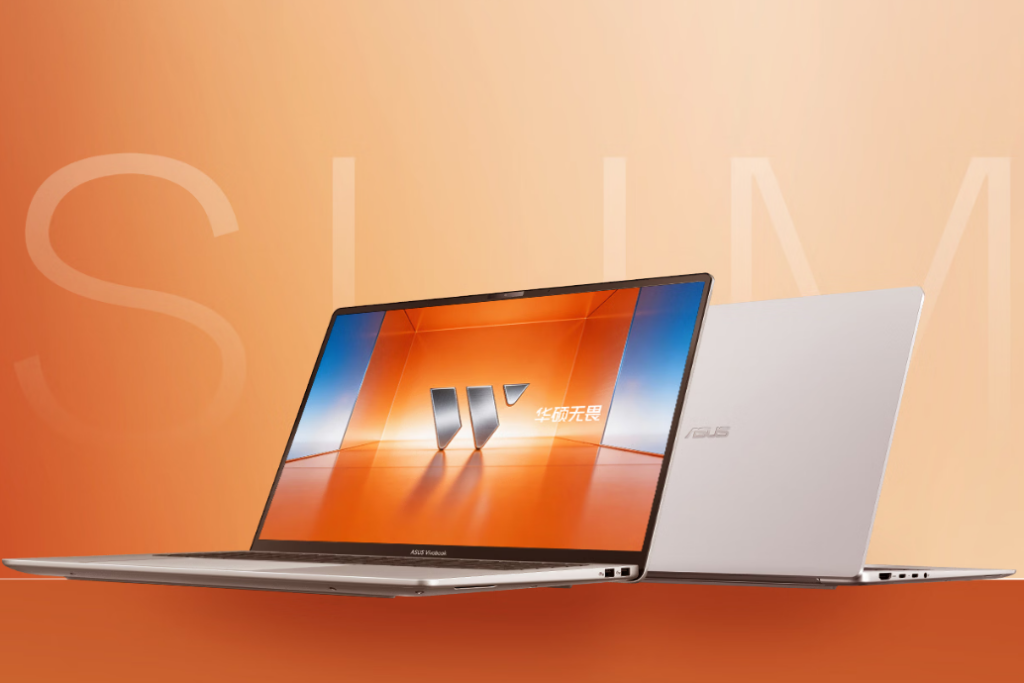
Asus has launched the 2026 Vivobook 16 Ryzen Edition, which is currently listed on the Chinese retail site JD.com for 5,999 yuan ($894). The new 16-inch laptop is built around AMD’s Ryzen 7 H 260 processor and focuses on standard hardware configurations for general use and office workloads.
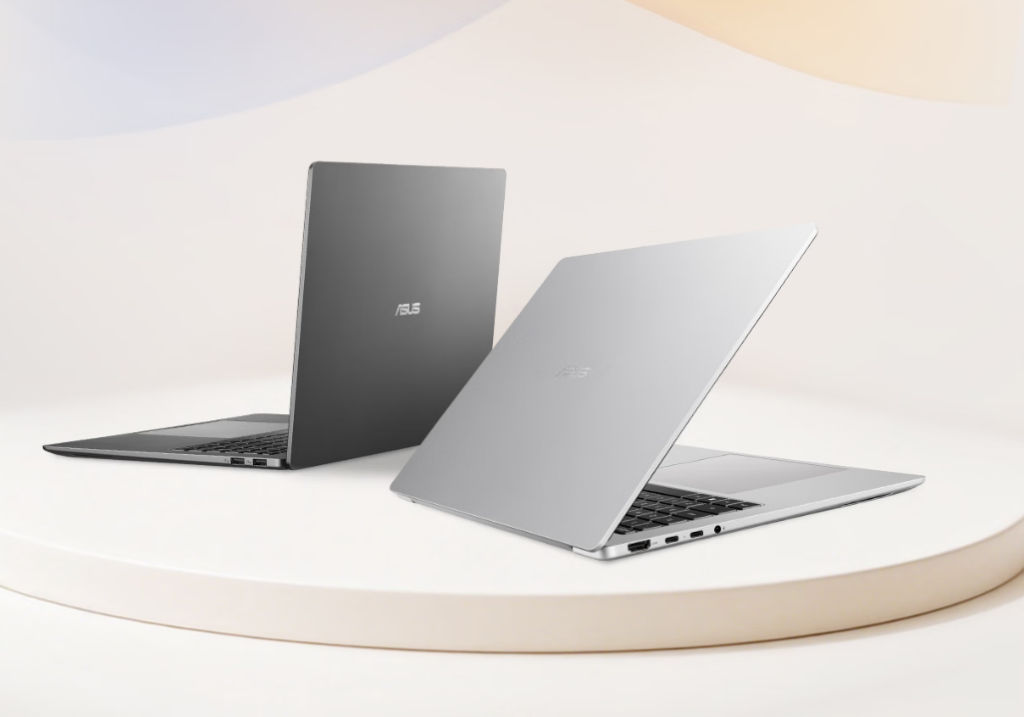
The laptop features an all-metal chassis that measures 15.9mm thick and weighs 1.69kg. It includes a 180-degree hinge and has passed MIL-STD-810H durability testing. For the display, Asus is using a 16-inch 2.5K panel with a 144Hz maximum refresh rate.
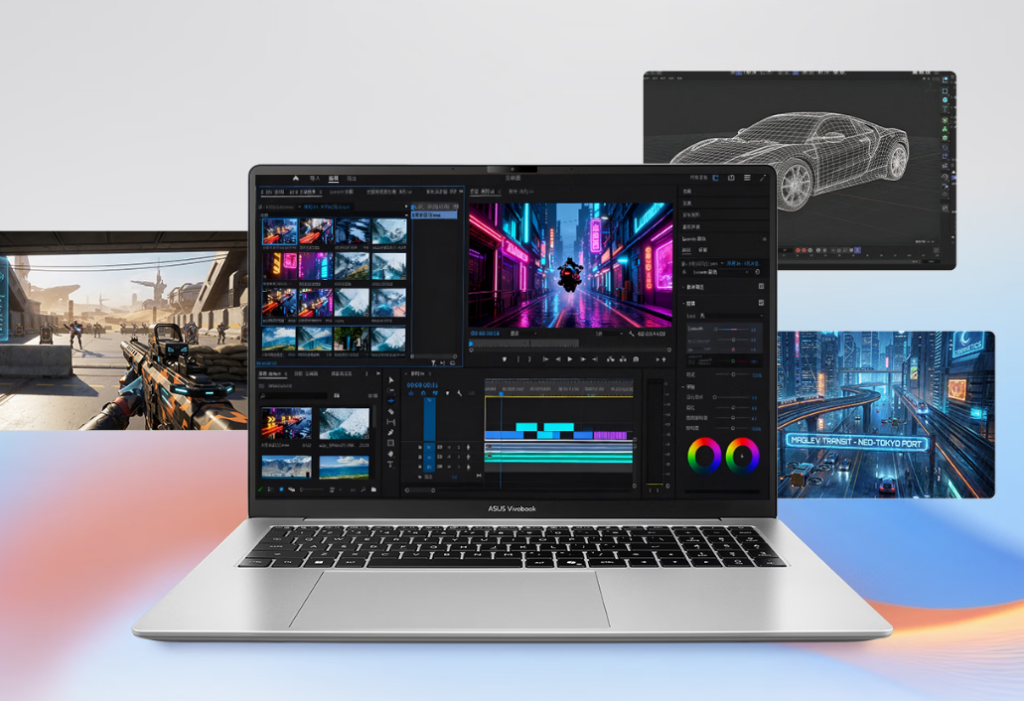
The screen supports a variable refresh rate that can drop down to 30Hz to save battery power when viewing static content. It covers 100% of the sRGB color space and has a listed peak brightness of 400 nits. Asus has also included a specific black-and-white e-book mode that adjusts the screen’s grayscale color temperature for reading text.
Internally, the Vivobook 16 is powered by the AMD Ryzen 7 H 260. This is an 8-core, 16-thread processor based on the Zen 4 architecture, manufactured on TSMC’s 4nm process. It has a boost clock of up to 5.1GHz and operates at up to 45W using Asus’s built-in cooling profiles.
Where to buyAsus Vivobook 16Browse the range on AmazonShop now →
For graphics, the laptop features integrated AMD Radeon 780M graphics based on the RDNA 3 architecture, with support for AV1 hardware encoding. It also comes with dedicated Ryzen AI hardware, with Asus claiming up to 38 TOPS of combined AI performance across the CPU, GPU, and NPU.
The base model comes with 16GB of LPDDR5 RAM and a 512GB PCIe SSD. It also features two M.2 SSD slots, allowing users to expand the total storage capacity up to 4TB by installing two 2TB drives.
Port selection includes two full-function USB-C 3.2 ports that support external displays and Power Delivery, two USB-A 3.2 ports, an HDMI 2.1 TMDS port, and a standard 3.5mm audio jack. The laptop is powered by a 70Wh battery that supports USB-C charging from 5V to 20V, meaning it can be charged using standard power banks alongside the included charger.
Additionally, the laptop also features a full-size backlit keyboard with a dedicated number pad and a large 7.1-inch touchpad with multi-finger gesture support. It equips an HD infrared camera for Windows Hello facial recognition and supports Windows Studio Effects such as automatic framing and background blur.
In related news, Lenovo has recently launched the Lecoo Pro 14 notebook with Intel and AMD processor options, 24GB of RAM, and OCuLink support for external GPUs. Meanwhile, Xiaomi has quietly raised prices across its Redmi Book Pro and Xiaomi Book Pro laptop lineups.
For more daily updates, please visit our News Section.
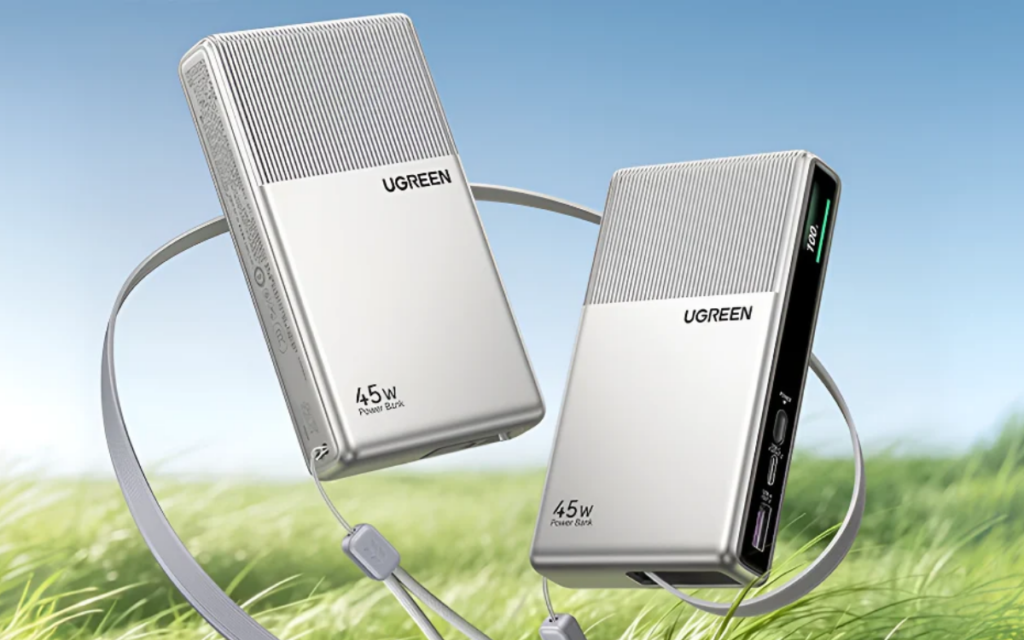
Ugreen has released the Ugreen P7 (PB792), a 20,000mAh power bank in China. It features two built-in USB-C cables and a color display. The device is currently listed on JD.com for 269 yuan ($40).
Ugreen 45W 20K Power Bank Specifications
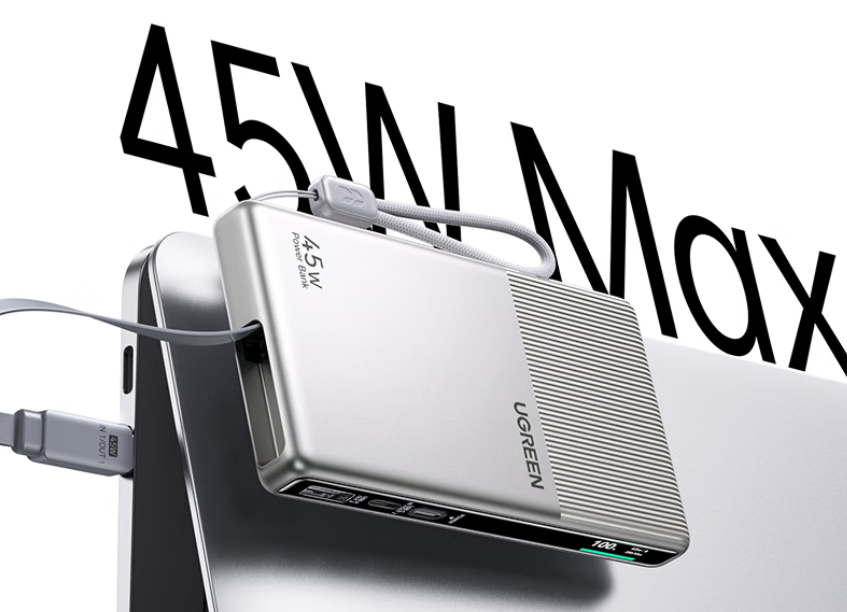
The power bank uses a 3C + 1A configuration, providing three USB-C connections and one USB-A port. Two of the USB-C connections are built directly into the device, so you do not need to carry separate cords. One is a 13cm cable that functions as a carrying strap and is rated to withstand 10,000 bends.
The other is a retractable USB-C cable made of flame-retardant TPE material that extends up to 70cm across seven length positions. Both built-in cables support up to 45W charging.
On the right side of the silver chassis, there is a standalone USB-C port supporting up to 45W and a USB-A port that outputs up to 22.5W. The device also includes a TFT color display managed by an internal Battery Management System (BMS).
This allows users to view real-time data such as battery temperature, health, charging status, remaining capacity, and cell information directly on the screen, bypassing the need for a smartphone app.
Where to buyUgreen P7 power bankBrowse the range on AmazonShop now →
The P7 uses ATL lithium-ion battery cells with a 74Wh capacity at 7.4V, which falls within standard airline travel limits. It supports up to 45W input for recharging. For output, the 45W maximum can charge a 13-inch MacBook Air M5 at up to 43W or a 2026 MacBook Neo at up to 29W.
For smartphones, it charges an iPhone 17 Pro to 69% in 30 minutes at 29W, or an iPhone 17 Pro Max to 65% at 35W. When multiple devices are plugged in at once, the total output drops to a shared 15W.
The device meets China’s 2026 national safety standards for power banks. Ugreen reports it passed durability tests including a 140°C heat chamber for 60 minutes, 2.5 tonnes of pressure, and a puncture test with a 4mm tungsten steel needle.
It includes 20 safety protections for issues like overcharging and abnormal voltage. The power bank measures 136 x 74 x 31mm, weighs 447 grams, and includes a two-year warranty.
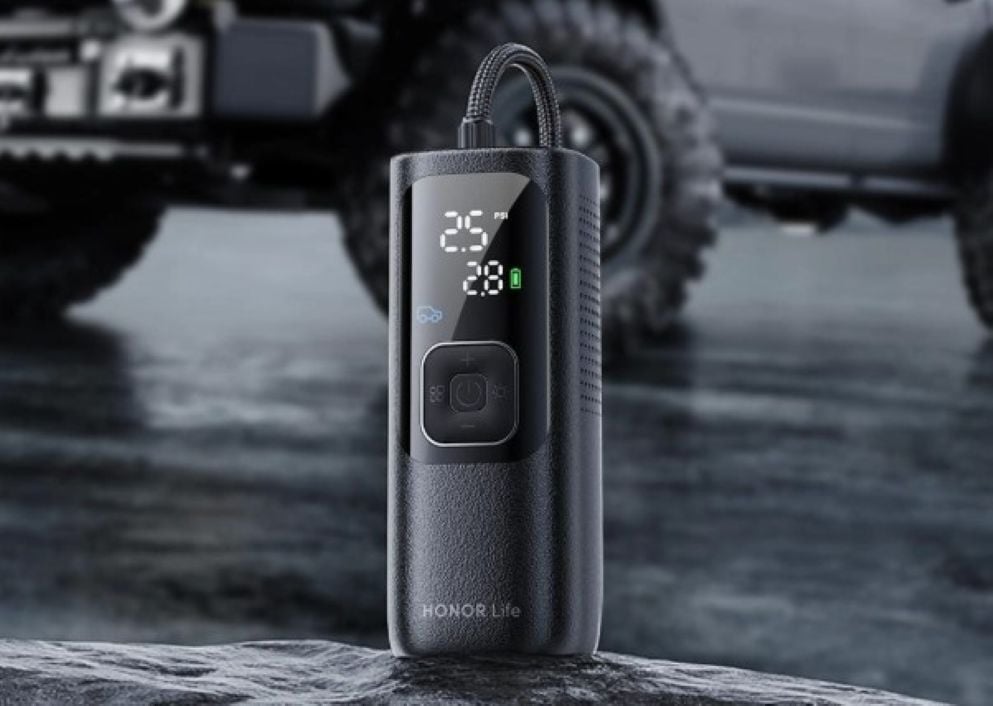
Honor just added a handy little gadget to its lifestyle lineup that’s aimed squarely at drivers, cyclists, and anyone who has ever been stuck with a flat tire or under-inflated ball. It’s called the “Honor Life Air Pump Lite” (machine-translated from Chinese), and it’s now listed on JD.com.
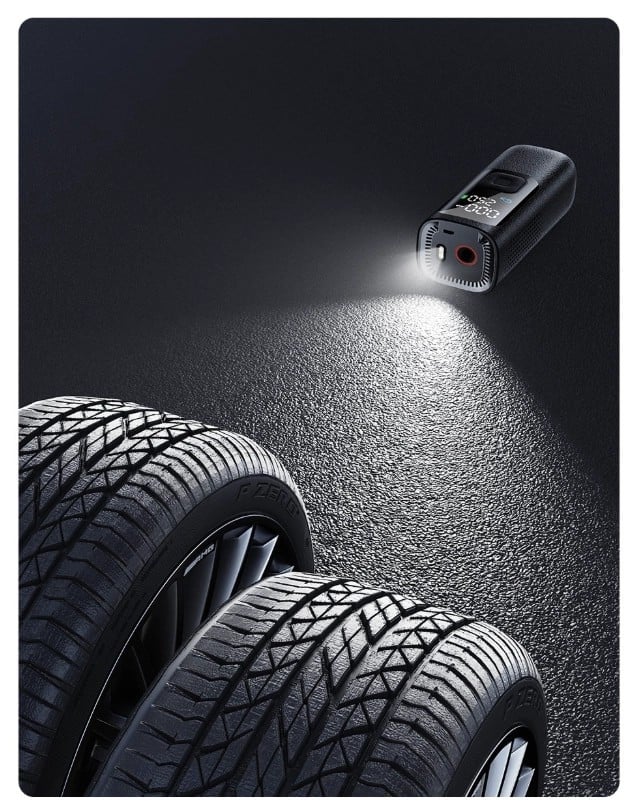
At 248 yuan (roughly $37 or €32), it’s a compact portable pump that handles tire inflation, pressure checks, and even throws in an emergency light. The whole thing is black, measures 160 × 63 × 62 mm, and weighs just 583 g, roughly the size of a 500 ml water bottle. That means it slides easily into a car door pocket or cup holder.
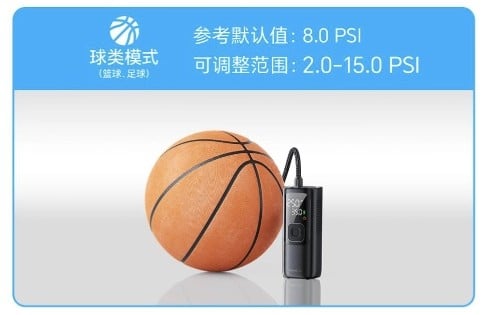
There’s a digital screen on the front that shows real-time tire pressure and lets you switch between PSI, BAR, KPA, and kg/cm². Up top you’ll find the emergency light, and inside there’s a continuous airflow cooling system to keep things from overheating while it’s running.
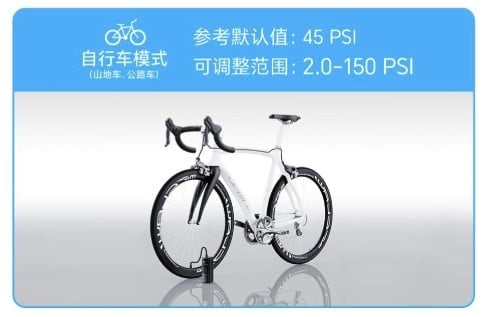
It comes with five ready-to-go modes: cars, motorcycles, bicycles, footballs, plus a custom setting. Airflow sits between 25–30 L/min, and the pressure range goes from 0.1 to 11 BAR (up to 160 PSI). Honor says it can pump up a basketball in about 17 seconds and a bike tire in 42 seconds. You can set your target pressure ahead of time and it’ll shut off automatically once it gets there. It also works for overhead inflation if you need it.
Power comes from three built-in 2500 mAh batteries with the usual protections against overvoltage, overcurrent, and overheating. One full charge should cover four car tires or around 102 basketballs. You recharge it over USB-C. In the box you get an American-style air hose, a ball needle, and a nozzle for French valves.
The “Honor Life Air Pump Lite” slots into the brand’s growing collection of everyday practical gadgets. Compact, multi-mode, and with automatic shut-off, it’s a no-fuss option if you want something smaller and simpler than a traditional compressor for keeping tires and sports gear properly inflated.
HMD is branching out beyond phones, and a new leak suggests the company is getting into portable hotspots.
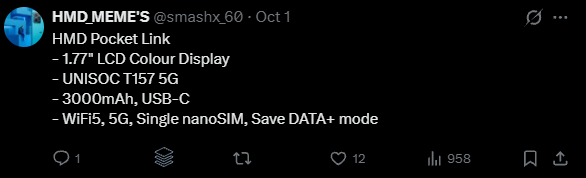
Tipster @smashx_60 on X has shared details about something called the HMD Pocket Link. It’s a compact 5G Wi-Fi hotspot that lets you share a mobile data connection with multiple devices on the go. Think of it as a pocket-sized way to turn your SIM into a wireless network for laptops, tablets, or anything else that needs internet when you’re away from Wi-Fi.
It has a small 1.77″ color LCD screen that shows the basics: signal strength, battery level, how much data you’ve used, and how many devices are connected. Inside is the Unisoc T157, an octa-core 5G chip that’s previously shown up in feature phones like the TCL T508N and Coolpad Y60 5G. It’s not a high-performance powerhouse; it’s more about efficient 5G connectivity, which makes sense for a battery-powered hotspot.
Power comes from a 3,000 mAh battery that charges over USB-C. You pop in a nano-SIM for the 5G connection and it distributes the internet over Wi-Fi 5. There’s also a “Save Data+” mode that sounds like a data-saving feature, though we don’t have full details on how it works yet.
This follows earlier rumors that HMD was working on power banks, including one with Qi2 wireless charging. Taken together, it looks like the company is expanding its accessory range.
If it does launch, the Pocket Link would give HMD a foothold in a market currently led by brands like Netgear, TP-Link, and various carrier hotspots. For travelers, remote workers, or anyone who occasionally needs to share a solid 5G connection across a few devices, a simple option from a familiar mobile brand could be handy.
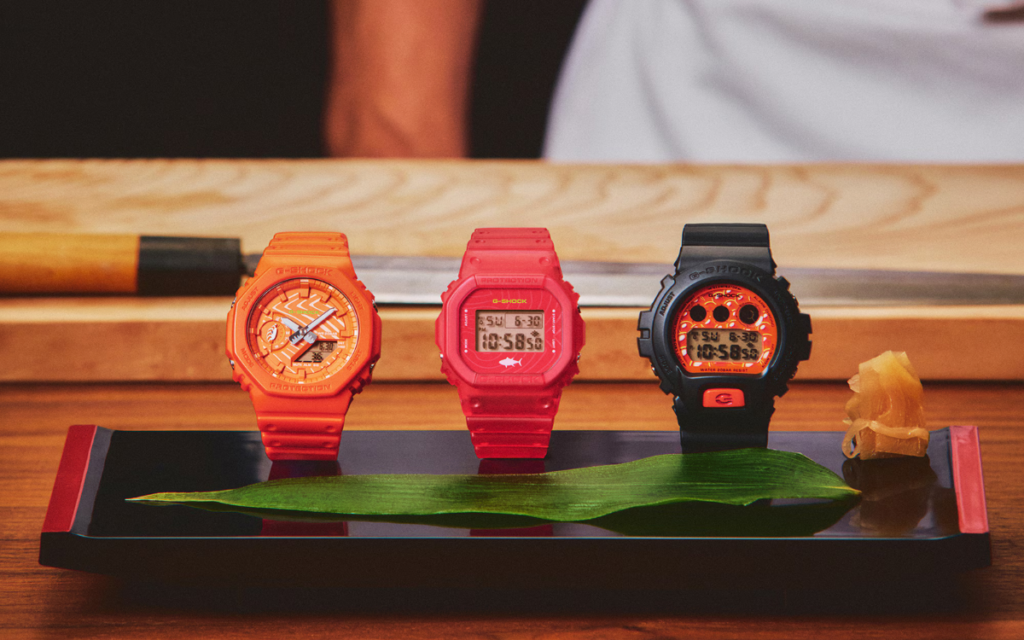
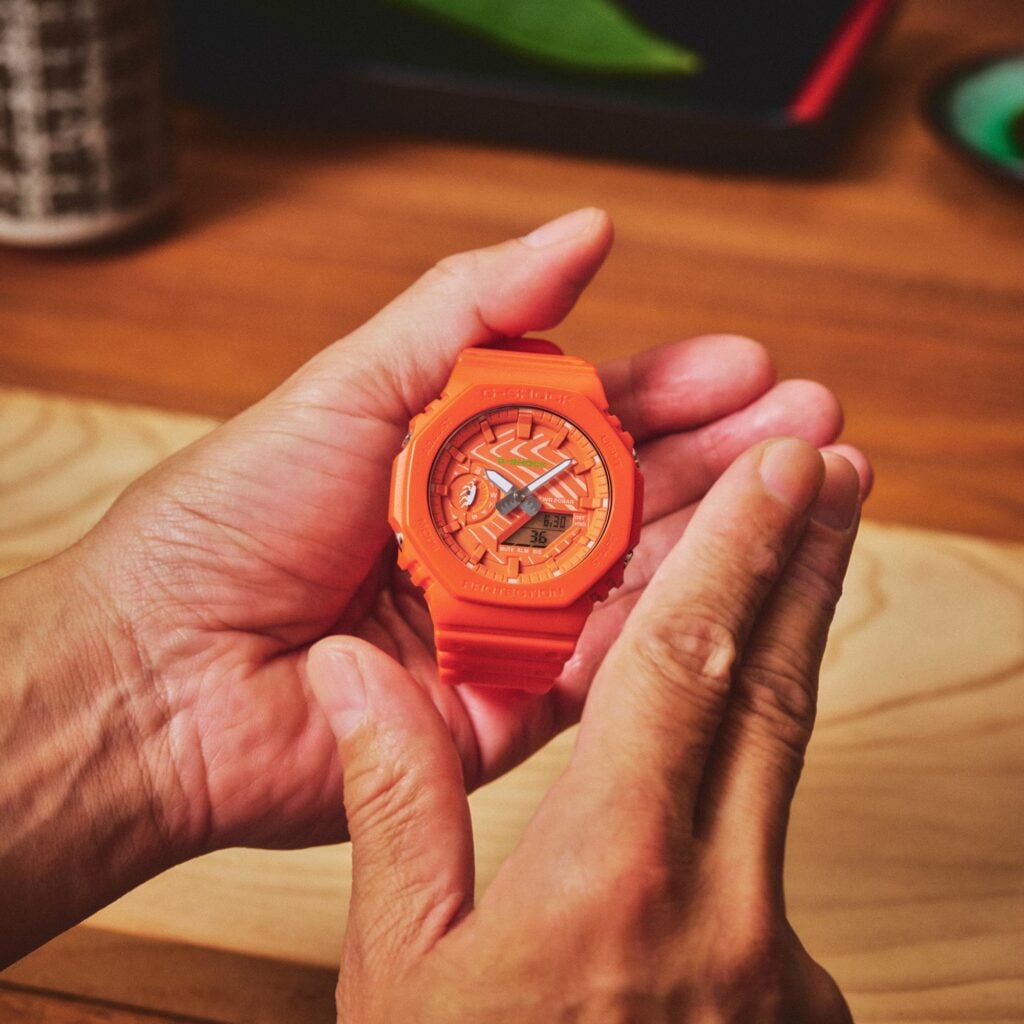
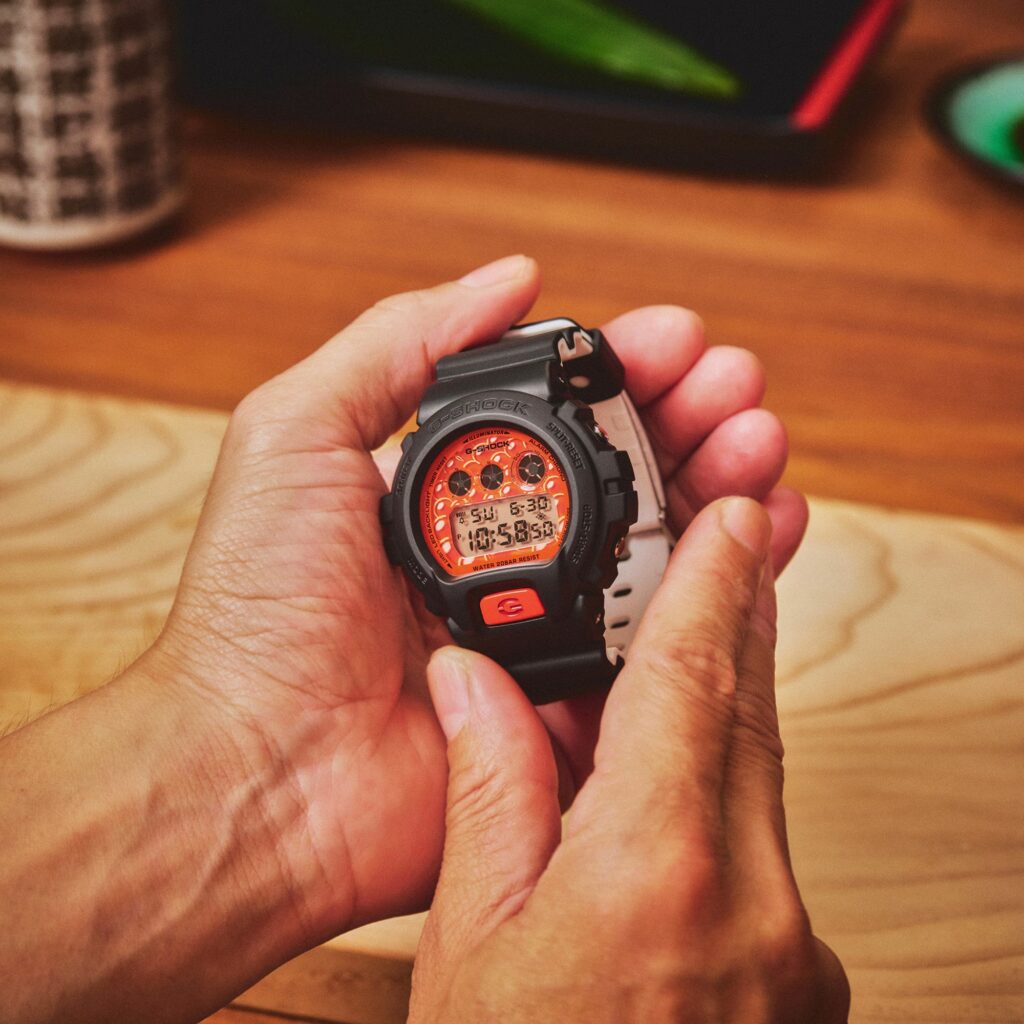
Casio has announced a new set of three G-Shock watches in Japan. Manufactured at the company’s Yamagata Casio facility, the upcoming models take standard G-Shock hardware and apply colors, materials, and textures designed to look like tuna, salmon roe, and salmon. The watches are currently available for pre-order on the Casio Japan website and are scheduled to ship later this month.
Design Details & Pricing
The first model is the DW-5600SSH-4JR, which costs ¥19,250 (around $122). It is based on the digital 5600 series and is designed around lean tuna. The watch uses a red, translucent clear resin for the case and band. The face features a printed pattern meant to look like tuna meat, alongside green accents that represent wasabi and a small tuna silhouette on the dial. The case, bezel, and band are made from biomass plastic.
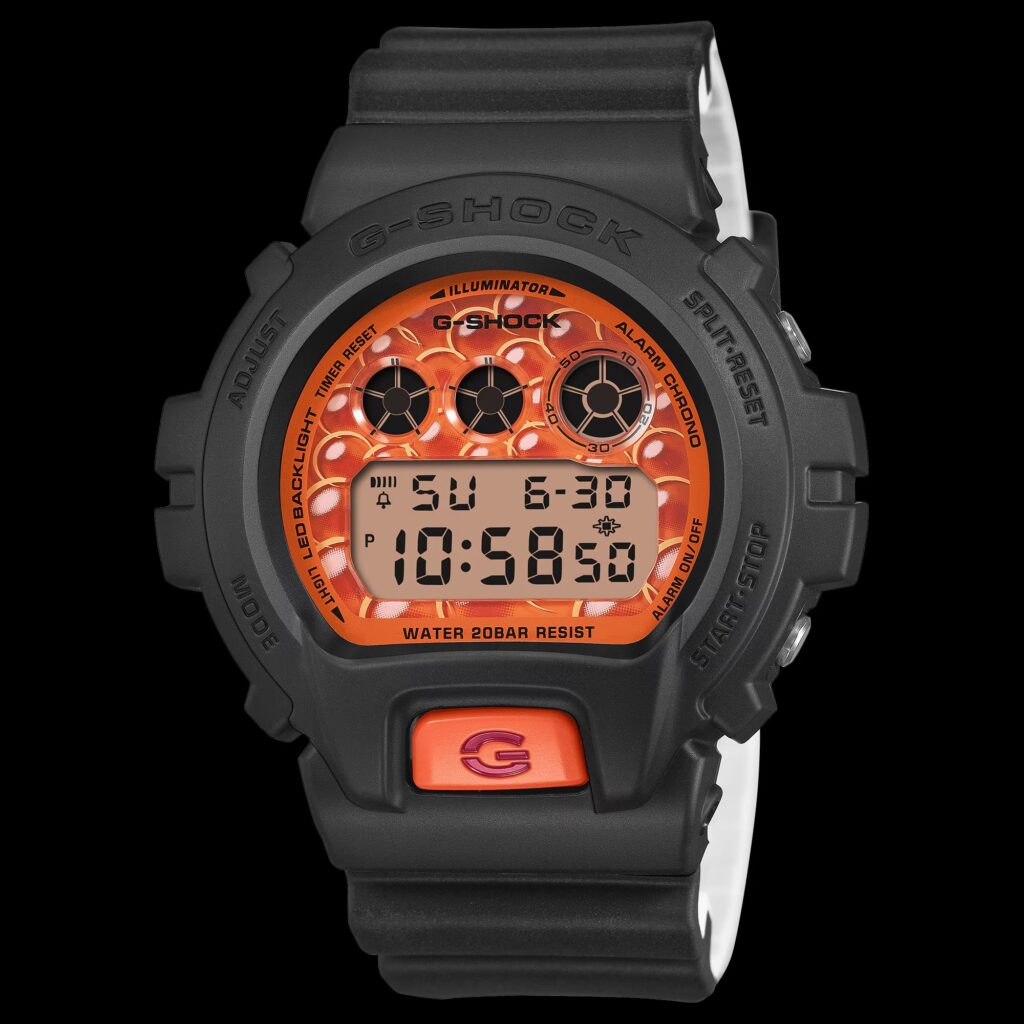
The second watch is the DW-6900SSH-1JR, priced at ¥20,350 ($128). This model uses the round 6900 case to replicate the look of an ikura gunkan-maki, or salmon roe sushi. The black bezel is meant to represent the nori seaweed wrap, while the transparent dial contains a graphical pattern of salmon roe. To complete the design, the underside of the resin band is white to represent sushi rice.
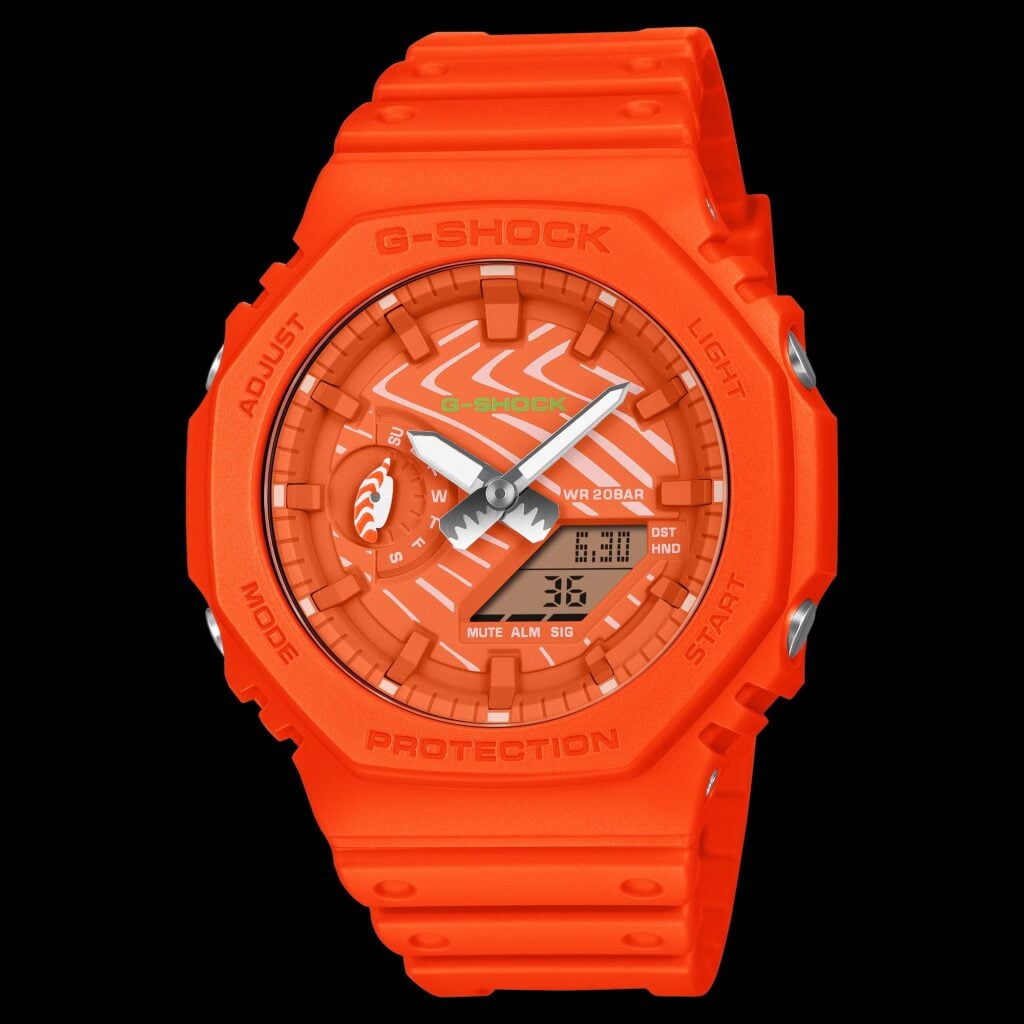
The third model in the lineup is the analog-digital GA-2100SSH-4AJR, which retails for ¥21,450 ($136). Based on fresh salmon, the watch has an orange colorway and a dial textured to look like salmon flesh. Casio has also changed the handset for this model: the hour and minute hands are shaped like Japanese kitchen knives, and the small sub-dial hand is designed to look like a piece of nigiri. This watch includes the Carbon Core Guard structure and a double LED light.
Beyond the cosmetic changes, these function as standard G-Shock watches. All three models include shock-resistant construction, 200-meter water resistance, stopwatches, timers, alarms, and LED backlights. The two digital models have an estimated battery life of five years, while the analog-digital GA-2100 is rated for three years.
Casio also included a few shared design elements across the collection. The stainless steel case backs are engraved with a Japanese teacup, which is traditionally served at the end of a sushi meal. The packaging is styled after Japanese souvenir boxes. When the watches are removed from the packaging, a printed wasabi graphic is visible underneath, except on the salmon roe model, which features a no wasabi graphic instead.
Samsung has not yet shown its 2027 flagship chip, but the Exynos 2700 is now reportedly in mass production. According to tipster Ice Universe, Samsung Electronics is making about 10% more units than it did with the previous generation.
The Exynos 2700 will reportedly be the first Samsung chip to use FOWLP-SbS, short for fan-out wafer-level side-by-side packaging. Here, the processor and memory sit next to each other under a copper-based heat path block. This lets one piece of metal pull heat away from both the application processor and the DRAM. Samsung reportedly sees this as a more efficient setup than the Exynos 2600, where a heat sink touched the chip directly.
As for the core layout, the CPU will have ten cores with two prime clusters.
First cluster: one Arm C1-Ultra core at 3.36GHz and four C1-Pro cores at 2.88GHz. This group handles sustained workloads and efficiency.
For graphics, Samsung is likely to use the Xclipse 970, built on AMD’s RDNA 5 architecture. It has 16 compute units, and you can expect GPU performance to rise by 30% to 40%. On the memory side, the chip supports LPDDR6 RAM and UFS 5.0 storage, which should raise data transfer speeds.
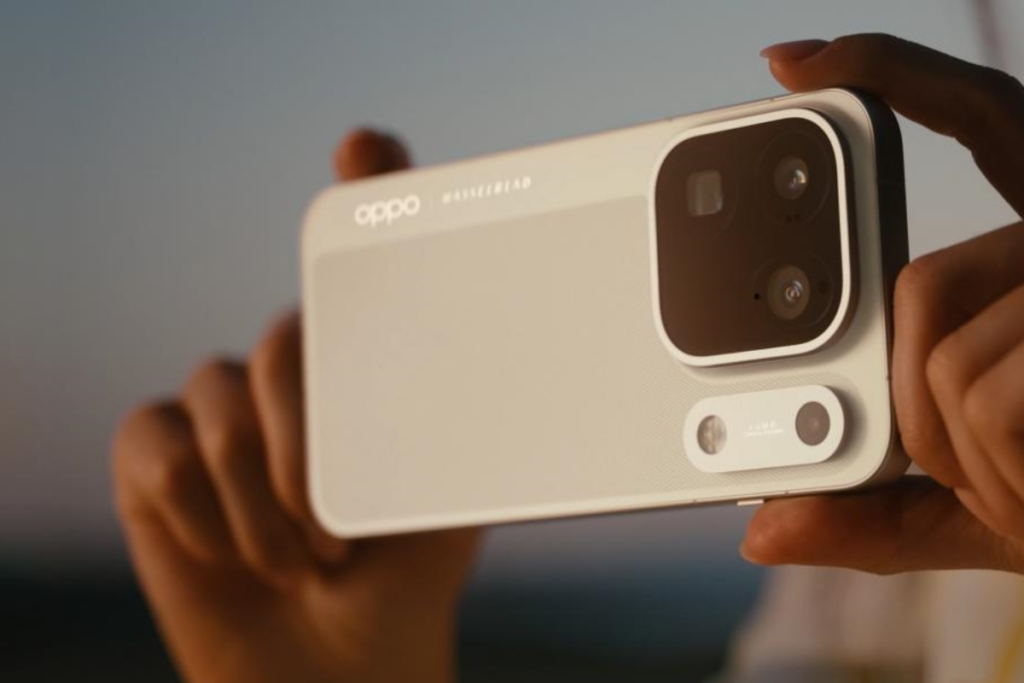
Oppo hasn’t announced a date for the international launch of the Find X10 series, but European pricing has now surfaced on the web, courtesy of a report from YTECHB. Spoiler: they sit well above what Oppo charged for the previous generation.
According to the report, the Oppo Find X10 will cost €1,399 for the 12GB RAM and 256GB storage model, and €1,599 for the 12GB and 512GB version. The Oppo Find X10 Pro Max is listed at €1,799 in a single 12GB and 512GB configuration.
We could also get a different color lineup from the Chinese models. The Oppo Find X10 is said to come in Glacier Blue, Mist Grey, and Glow Coral, while the Oppo Find X10 Pro Max reportedly gets Luna White, Titanium Grey, and Orange.
How it compares with the Find X9 series
The Oppo Find X9 launched in Europe at €999 for 12GB and 512GB, and the Oppo Find X9 Pro started at €1,299 for 16GB and 512GB. Compare like for like on storage, and the gap is wider than it first looks. The 512GB Oppo Find X10 costs €600 more than last year’s model, and the Oppo Find X10 Pro Max costs €500 more than the Oppo Find X9 Pro. The report calls it a €400 increase, but that only holds for the 256GB Oppo Find X10, which comes with half the storage.
The lineup is also smaller. An earlier report suggests Oppo will limit the lineup to Find X10 and the Find X10 Pro Max for the global market, with no standard Find X10 Pro in the mix. If that holds, the Oppo Find X10 Pro Max becomes the only high-end option you can buy outside China.
The report says the global Oppo Find X10 runs on the MediaTek Dimensity 9500 rather than the Dimensity 9600M used in the Chinese version. That doesn’t match the Geekbench entry for the global model (CPH2911), which lists the Dimensity 9600M, the same chip as the Chinese phone. One of the two is wrong, so treat the chipset claim with caution until Oppo confirms it.
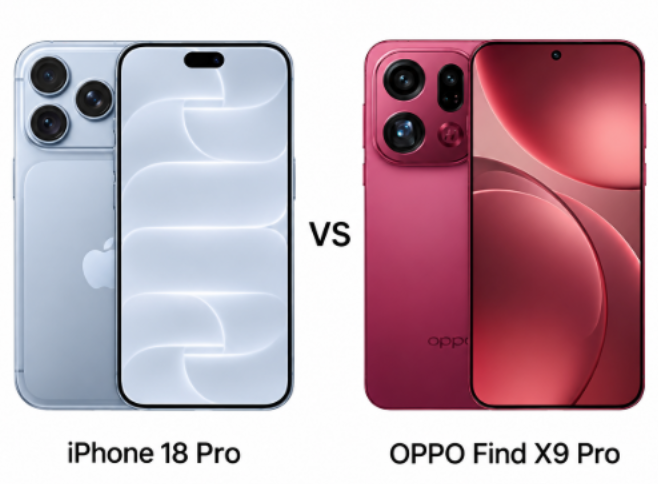
iPhone 18 Pro and OPPO Find X9 Pro represent two different approaches to flagship smartphones. Apple focuses on its latest A20 Pro chipset, advanced video recording capabilities, and a refined iOS experience, while OPPO brings a massive battery, a high-resolution periscope camera, and faster charging. Both phones offer premium displays and sophisticated camera systems, but their differences in hardware, photography, battery life, and pricing make this an interesting flagship comparison.
Major Features:
Category
iPhone 18 Pro
OPPO Find X9 Pro
Winner
Build
Ceramic Shield 2, aluminum frame, glass back
Gorilla Glass Victus 2, aluminum frame, glass back
OPPO – IP68/IP69 protection
Water Resistance
IP68 (6m for 30 minutes)
IP68/IP69 (1.5m for 30 minutes)
OPPO – Additional IP69 protection
Display
6.3-inch LTPO Super Retina XDR OLED
6.78-inch LTPO AMOLED
OPPO – Larger display
Resolution
1206 x 2622 pixels
1272 x 2772 pixels
OPPO – Higher resolution
Refresh Rate
120Hz
120Hz
Tie – Both offer 120Hz
Peak Brightness
3000 nits
3600 nits
OPPO – Higher peak brightness
Processor
Apple A20 Pro (2nm)
MediaTek Dimensity 9500 (3nm)
Apple – Advanced 2nm architecture
GPU
Apple GPU (7-core)
Arm G1-Ultra
Tie – Both feature flagship graphics
RAM
12GB
12GB/16GB
OPPO – Higher RAM configuration
Storage
256GB/512GB/1TB/2TB
256GB/512GB/1TB
Apple – Higher maximum storage
Operating System
iOS 27
Android 16, ColorOS 16
Tie – Different software preferences
Main Camera
48MP, variable aperture, sensor-shift OIS
50MP, OIS
OPPO – Hasselblad color calibration
Telephoto Camera
48MP periscope, 4x optical zoom
200MP periscope, 3x optical zoom
OPPO – Higher-resolution sensor
Ultrawide Camera
48MP, 120-degree
50MP, 120-degree
Tie – Both offer high-resolution ultrawide cameras
Selfie Camera
18MP, PDAF
50MP, PDAF
OPPO – Higher resolution
Video Recording
Up to 4K at 120fps
Up to 4K at 120fps
Apple – ProRes RAW and Apple Log 2
Battery
4056mAh / 4288mAh*
7500mAh
OPPO – Larger battery capacity
Wired Charging
50% in 15 minutes
80W
OPPO – Higher charging power
Wireless Charging
25W MagSafe/Qi2
50W
OPPO – Faster wireless charging
Reverse Charging
4.5W wired
10W wireless
OPPO – Wireless reverse charging
Connectivity
Wi-Fi 7, Bluetooth 6.0, NFC
Wi-Fi 7, Bluetooth 6.0, NFC, IR blaster
OPPO – Additional infrared port
Biometrics
Face ID
Ultrasonic fingerprint scanner
Tie – Different biometric approaches
Price/Value
Around $1,200 / ₹1,64,900
Around $1,000 / ₹1,00,000
OPPO – More hardware at a lower price
Overall
Premium Apple ecosystem and professional video features
Larger display, versatile cameras and bigger battery
OPPO – More comprehensive hardware package
*iPhone 18 Pro’s 4288mAh capacity is listed for the eSIM-only variant but remains officially unconfirmed
The iPhone 18 Pro features a premium glass-and-aluminum construction, combining Ceramic Shield 2 protection on the front with an aluminum frame and a glass back. Its familiar design is complemented by IP68 water and dust resistance, offering protection against immersion up to 6 meters. OPPO takes a similarly premium approach with Gorilla Glass Victus 2 protection, a glass back and an aluminum frame. However, its IP68/IP69 certification adds protection against high-pressure water jets. Both devices deliver flagship-grade durability, although OPPO offers more comprehensive water-resistance certification.
Display Quality
Apple equips the iPhone 18 Pro with a 6.3-inch LTPO Super Retina XDR OLED display featuring a 120Hz refresh rate, Dolby Vision and HDR10 support. Its 3000-nit peak brightness and anti-reflective coating promise excellent outdoor visibility. The OPPO Find X9 Pro features a larger 6.78-inch LTPO AMOLED panel with a 120Hz refresh rate, 1 billion colors, HDR10+ and Dolby Vision support. Its peak brightness reaches 3600 nits. OPPO also offers Ultra HDR image support, making it particularly appealing for multimedia consumption.
Verdict
The OPPO Find X9 Pro takes the display advantage with its larger screen, higher peak brightness and richer HDR support. Apple remains a compelling choice for compact flagship enthusiasts.
2. Specifications Including Battery
Performance
The iPhone 18 Pro runs on Apple’s A20 Pro chipset, manufactured using a 2nm process, paired with a 7-core Apple GPU and 12GB RAM. Its iOS 27 software experience, optimized hardware and powerful graphics architecture make it suitable for demanding applications, gaming and professional workflows. The OPPO Find X9 Pro is powered by MediaTek’s Dimensity 9500, built on a 3nm process, featuring an octa-core CPU and Arm G1-Ultra GPU. It offers up to 16GB RAM and 1TB storage. While both promise flagship performance, Apple’s silicon and software integration offer a distinct advantage for users invested in its ecosystem. OPPO provides greater memory flexibility.
Battery and Charging
Battery capacity is one of the biggest differences between these smartphones. The iPhone 18 Pro carries a 4056mAh battery in its Nano-SIM variant, while the eSIM-only version is listed at 4288mAh, although the latter capacity remains officially unconfirmed. It supports wired charging with 50% claimed in 15 minutes, alongside 25W MagSafe/Qi2 wireless charging. OPPO offers a substantially larger 7500mAh silicon-carbon battery with 80W wired and 50W wireless charging. It also supports 10W reverse wireless charging. The Find X9 Pro is clearly better equipped for extended usage, heavy gaming and frequent travel, while Apple’s charging ecosystem offers convenient wireless options.
Verdict
The iPhone 18 Pro delivers powerful processing and optimized software, but OPPO wins this category with its larger battery, faster charging, and more generous memory configurations.
The iPhone 18 Pro features a triple 48MP rear camera system comprising a variable-aperture main sensor, a 4x optical periscope telephoto camera and a 120-degree ultrawide lens. Sensor-shift stabilization and a second-generation 3D sensor-shift system further support photography. Its LiDAR scanner also assists with depth sensing. OPPO counters with a 50MP main camera, a 200MP periscope telephoto sensor offering 3x optical zoom and a 50MP ultrawide camera. Hasselblad Color Calibration, a color spectrum sensor and laser autofocus add to its imaging capabilities. OPPO’s high-resolution telephoto hardware offers greater flexibility for detailed zoom photography, while Apple’s video-oriented camera processing remains a major attraction.
Selfie Camera
Apple equips the iPhone 18 Pro with an 18MP multi-aspect ultrawide selfie camera featuring PDAF and a dedicated SL 3D sensor. It supports 4K video recording, Dolby Vision HDR, Apple Log 2 and ProRes RAW, making it particularly useful for content creators. The OPPO Find X9 Pro features a 50MP front camera with autofocus and 4K video recording at up to 60fps. Its higher resolution offers considerable potential for detailed selfies, group photographs and video calls. However, Apple’s advanced video formats, spatial audio recording and professional recording options provide a more comprehensive content creation toolkit. OPPO is attractive for selfie enthusiasts, while Apple caters to users prioritizing advanced video production.
Where to buyiPhone 18 ProLatest price on AmazonCheck price →
Verdict
OPPO offers a versatile rear camera setup with a 200MP telephoto sensor and a 50MP selfie camera. However, Apple’s professional video capabilities make the iPhone particularly appealing to creators.
4. Pricing
The iPhone 18 Pro is priced around $1,200 (₹1,64,900), positioning it firmly in the premium flagship segment. Its pricing reflects Apple’s flagship positioning, A20 Pro chipset, advanced camera technology and integrated iOS ecosystem. The OPPO Find X9 Pro is priced around $1,000 (₹1,00,000), making it considerably more affordable based on the supplied approximate pricing. Despite the lower asking price, OPPO offers a larger battery, a 200MP periscope camera, a bigger display and faster charging. The difference becomes particularly noticeable when comparing the overall hardware package. Apple commands a premium, while OPPO provides a more aggressive hardware proposition at a lower entry price.
Where to buyOPPO Find X9 ProLatest price on AmazonCheck price →
Is the price justified?
The iPhone 18 Pro’s premium is easier to justify for buyers who value Apple’s software ecosystem, long-term integration, professional video features and powerful proprietary silicon. Its higher price also reflects the appeal of Apple’s services and connected devices. However, the OPPO Find X9 Pro offers more hardware for the money, particularly with its massive battery, high-resolution camera system and faster charging technology. For buyers prioritizing specifications and everyday practicality, OPPO presents a more balanced financial proposition. Apple remains relevant for users who specifically want its software experience and advanced video tools rather than simply the highest hardware specifications.
Verdict
The OPPO Find X9 Pro offers better value for money, delivering a larger battery, versatile cameras and faster charging at a considerably lower approximate price.
5. Conclusion
The iPhone 18 Pro distinguishes itself with the A20 Pro chipset, Face ID, second-generation Ceramic Shield protection, satellite connectivity and professional video recording features, including ProRes RAW and Apple Log 2. Its integration with the wider Apple ecosystem is another important advantage.
The OPPO Find X9 Pro brings a different set of strengths, including a 200MP periscope camera, Hasselblad Color Calibration, an ultrasonic fingerprint scanner, an infrared port and a substantial silicon-carbon battery. Its 80W wired and 50W wireless charging also provide considerably more flexibility.
Both devices offer distinctive flagship experiences, but OPPO’s combination of imaging hardware, battery capacity and charging technology gives it a particularly strong practical appeal. Apple remains more attractive for users prioritizing its software ecosystem and professional video capabilities.
Verdict
Overall Winner: OPPO Find X9 Pro
The OPPO Find X9 Pro wins this comparison with its larger and brighter display, 200MP telephoto camera, significantly bigger battery and faster charging. Its lower approximate price makes the package even more appealing. The iPhone 18 Pro remains a compelling alternative for Apple ecosystem users and professional video creators, but OPPO delivers a more comprehensive hardware package and better overall value.
FAQs
1. Which phone is better for gaming?
Both offer flagship performance, but the iPhone 18 Pro’s A20 Pro chip and Apple’s optimized gaming ecosystem make it worth considering.
2. Which phone takes better zoom photographs?
The OPPO Find X9 Pro offers a 200MP periscope camera with 3x optical zoom, while Apple provides 4x optical zoom.
3. Which phone lasts longer on a single charge?
The OPPO Find X9 Pro is better equipped for longer battery life, thanks to its 7500mAh battery.
4. Is the iPhone 18 Pro worth the extra money?
It may justify the premium for users who prioritize Apple’s ecosystem, professional video tools and iOS experience.
5. Which phone is better for everyday use?
The OPPO Find X9 Pro offers extensive hardware features, while the iPhone 18 Pro suits users who prefer iOS and Apple services.
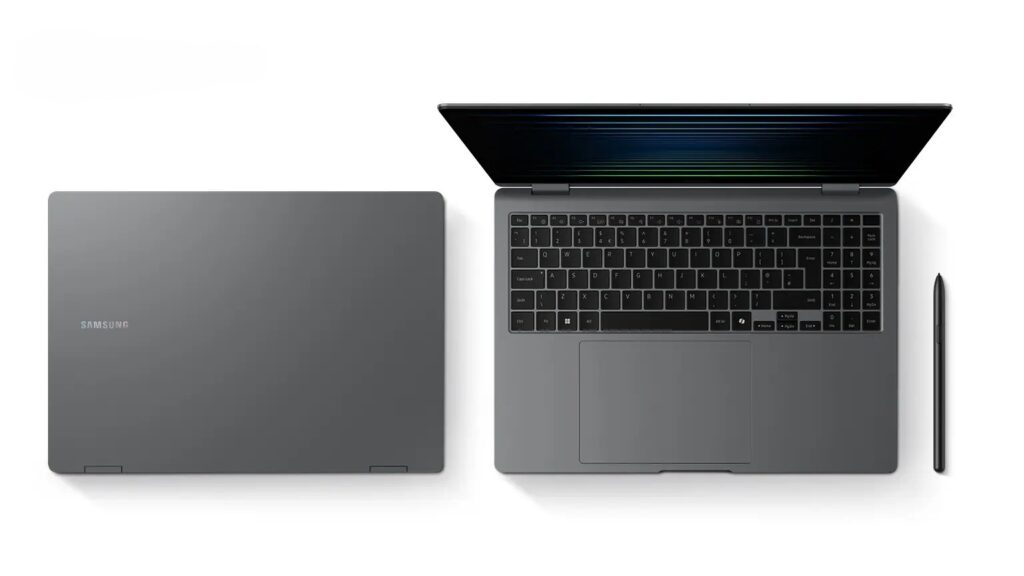
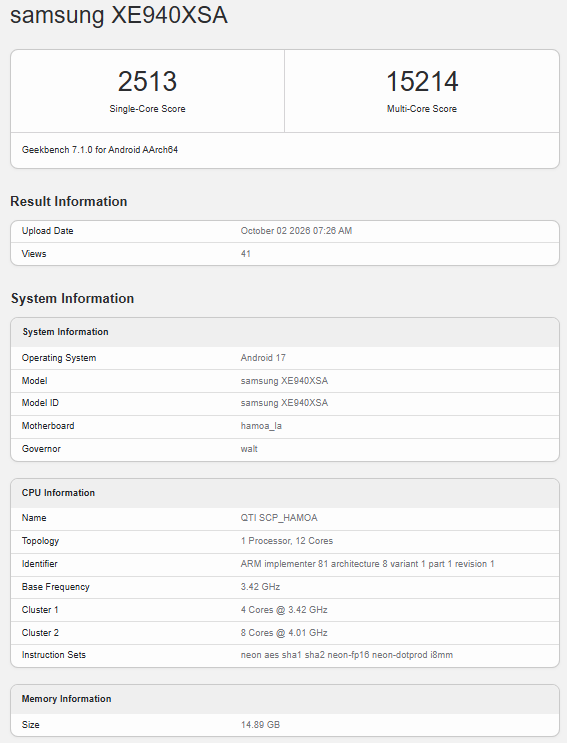
Samsung has been quietly poking around in a new direction for its laptops, and a mysterious machine just showed up in the Geekbench database that has people talking.
The device is listed as the Samsung XE940XSA, and it’s running Android 17, not Windows, not ChromeOS. That’s a big departure from the previously announced Galaxybooks. It raises a question: Is Samsung about to jump into Google’s new Googlebook category or build its own Android-powered Galaxy Book with One UI features?
Under the hood it’s packing Qualcomm’s Snapdragon X Elite (the 12-core “Hamoa” chip), paired with an Adreno X1-85 GPU and 16 GB of RAM. In Geekbench 7 it scored 2,513 single-core and 15,214 multi-core, respectable numbers that put it in the same ballpark as a lot of premium thin-and-lights.
Google only officially launched the Googlebook platform in September with machines from Acer, Asus, Dell, HP, and Lenovo. Those are desktop-style Android devices designed to work closely with phones and get long software support. The Samsung unit’s hardware lines up pretty closely with the Snapdragon-based Googlebooks already out there, which is why a lot of folks are assuming that’s what this is. Then again, Samsung’s been rumored to be working on its own Android Galaxy Books, so this could also be something more independent.
If it does make it to market, it would give Samsung a proper seat at the table in this new class of premium Android notebooks, ones aimed at people who want their laptop to feel like a natural extension of their phone and tablet. Until the company actually confirms anything, though, the XE940XSA is just an intriguing early glimpse at what Samsung’s laptop strategy might look like next.
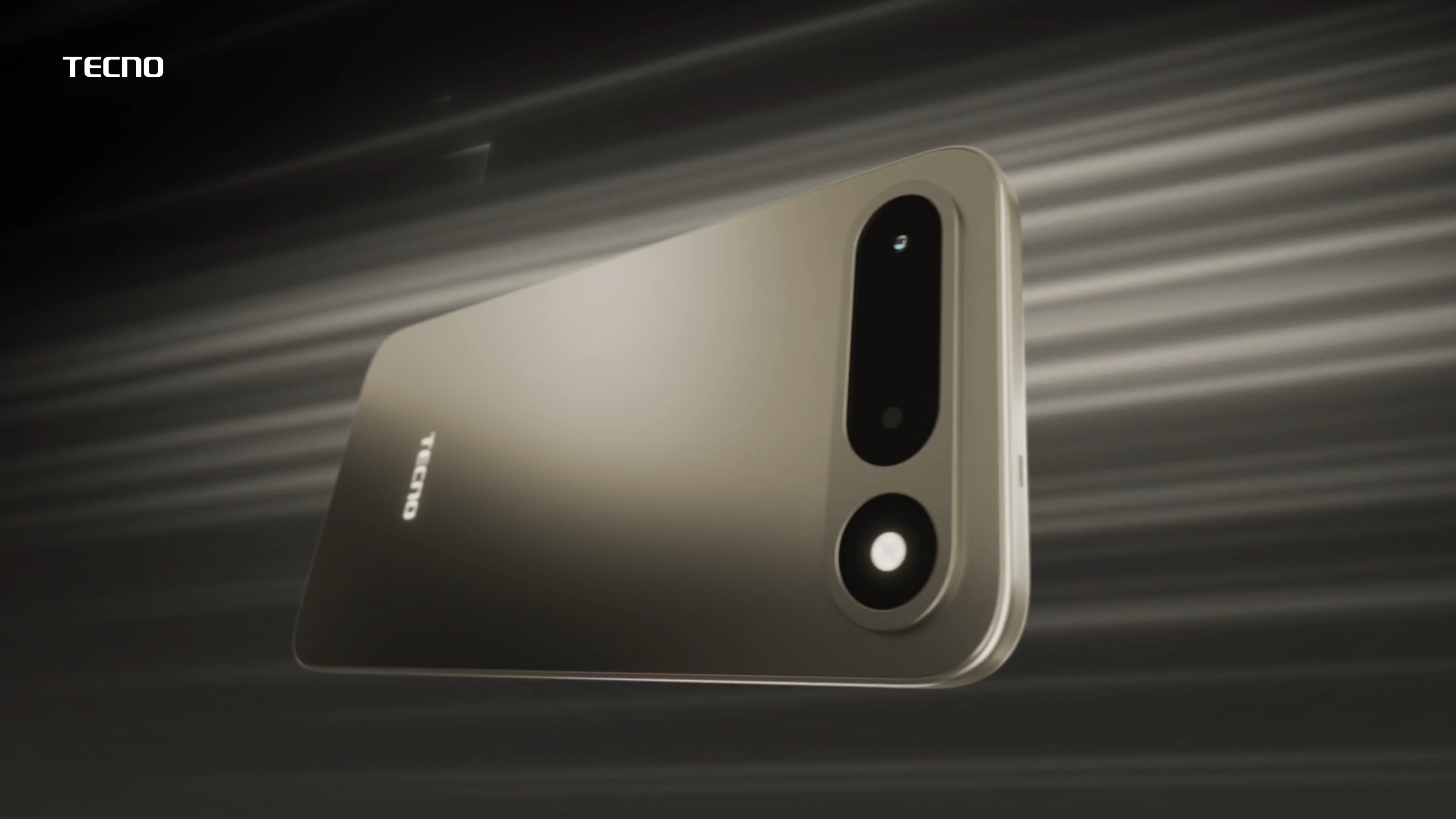
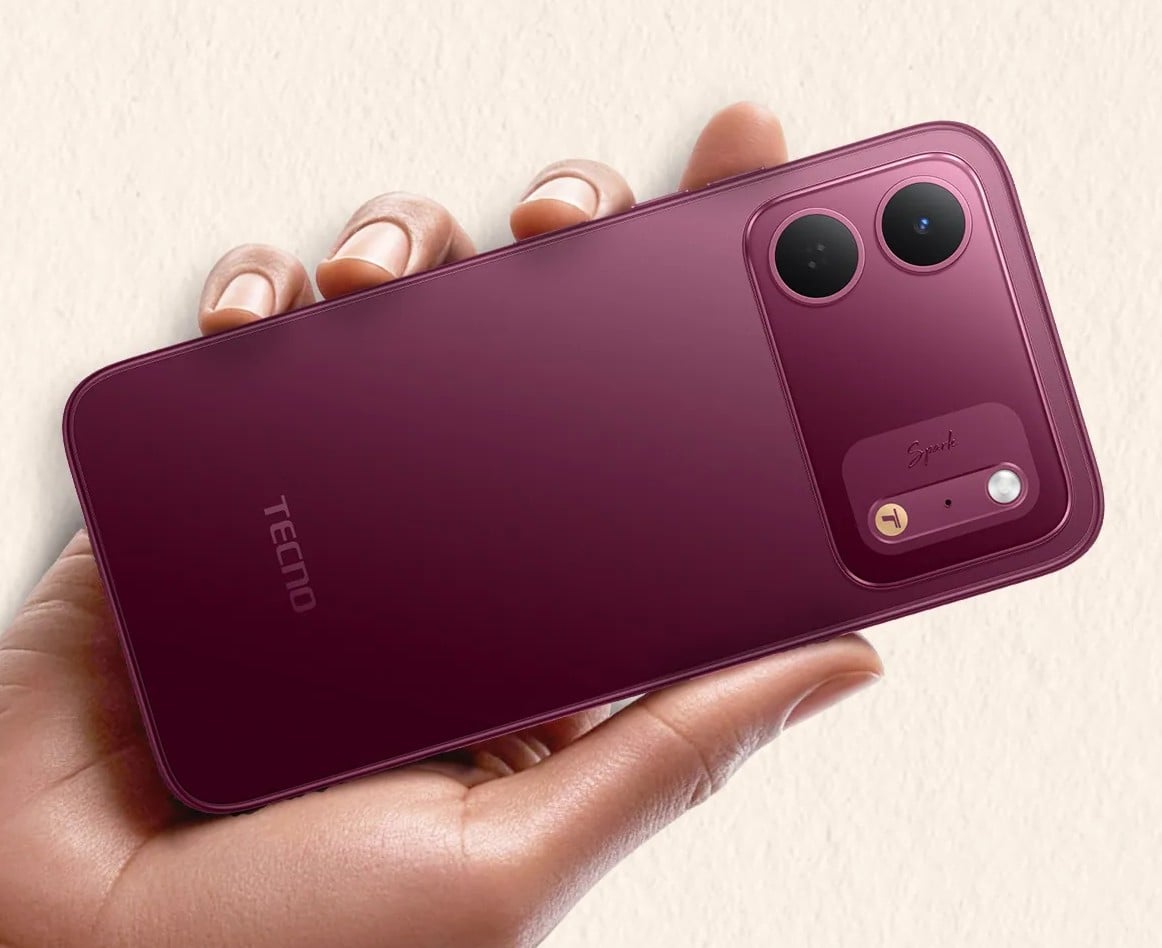
Tecno’s smartphone lineup in 2026 covers everything from entry-level models to more capable mid-range phones, but the current market is not exactly offering more for less. Prices have been going up, while the differences between models and generations are not always significant enough to make the choice straightforward.
This list focuses on the models that make the most sense right now. We have picked phones across different price points, from affordable entry-level options to the more capable Camon 50 Ultra, based on what is actually available and what each phone offers for its price.
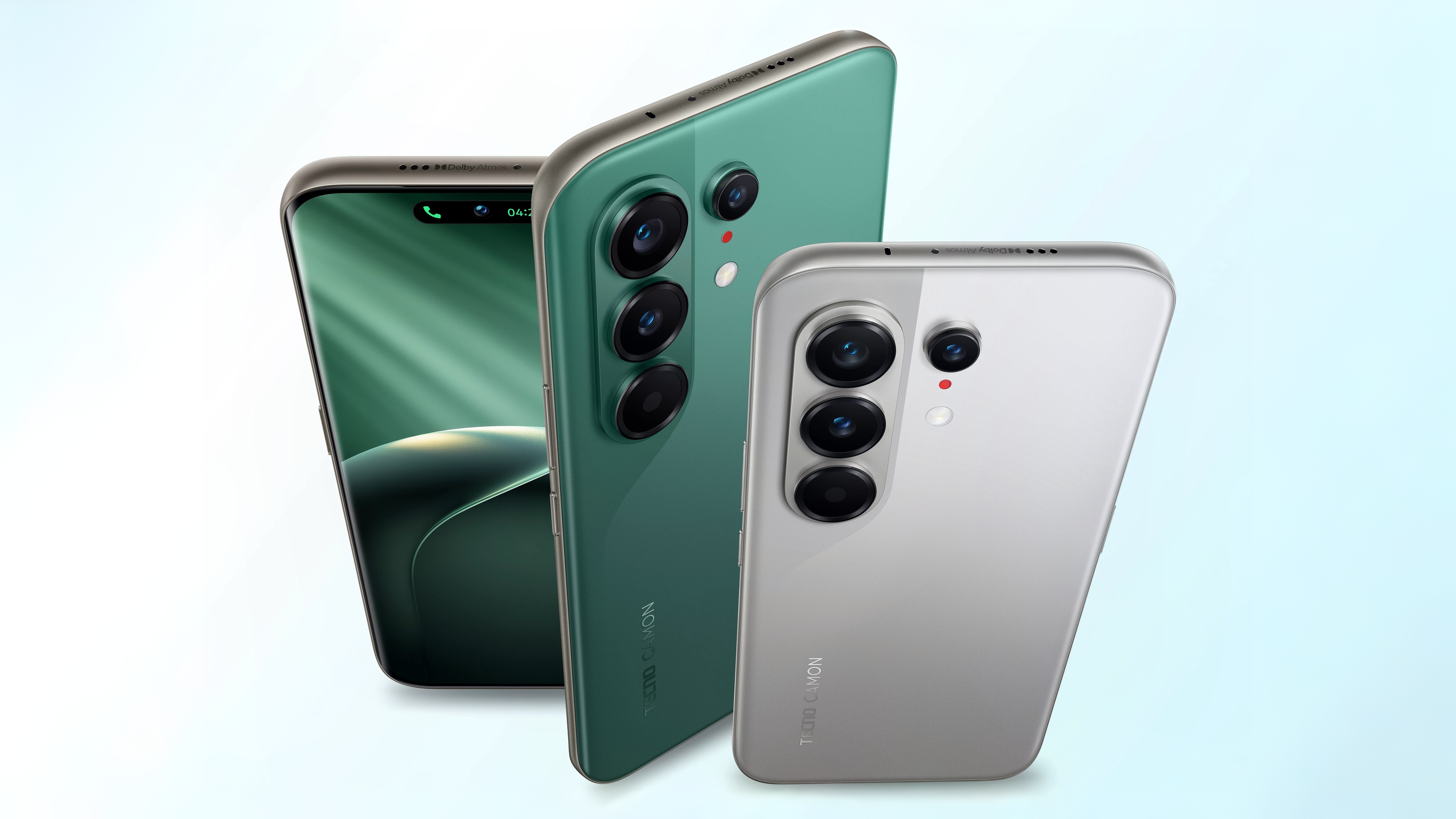
The Tecno Camon 50 Ultra stands out as a camera-focused device. It pairs a 6.78″ 1.5K curved AMOLED display with a 144Hz refresh. Powered by the MediaTek Dimensity 7400 Ultimate chipset with up to 12GB RAM and 512GB storage options, it handles everyday multitasking and light gaming competently while running Android 16-based HiOS 16 with multi-year update support.
Its imaging includes a 50MP Sony LYTIA 700C (1/1.56″) main sensor with OIS for strong low-light performance, a 50MP 3x optical telephoto lens for natural portraits and distant shots (with AI-assisted SuperZoom), an 8MP ultrawide, and a 50MP front camera capable of 4K video. Additional strengths include a large 6500mAh battery with 45W charging, stereo speakers with Dolby Atmos.
2. Tecno Spark 50 5G
The Spark 50 5G targets users seeking affordable 5G with excellent endurance. It features a 6.78″ HD+ IPS LCD with a 120Hz refresh rate. The MediaTek Dimensity 6400 (6nm) chipset, paired with up to 8GB RAM and expandable storage via microSD, delivers reliable performance for social media, streaming, light productivity, and casual gaming, all running on Android 16 with HiOS 16.
Where to buyTecno Spark 50 5GLatest price on AmazonCheck price →
Battery life is a major selling point thanks to the 6500mAh capacity and 45W fast charging, often lasting well over a full day of mixed use. The 50MP main rear camera and 8MP front camera produce decent daylight shots, while practical extras include IP64 dust/splash resistance, a 3.5mm headphone jack, side fingerprint sensor, dual SIM support, and features like FreeLink for offline communication with compatible devices. Check out our full review of the Tecno Spark 50 5G for more detailed insights and performance testing.
3. Tecno Spark Go 3
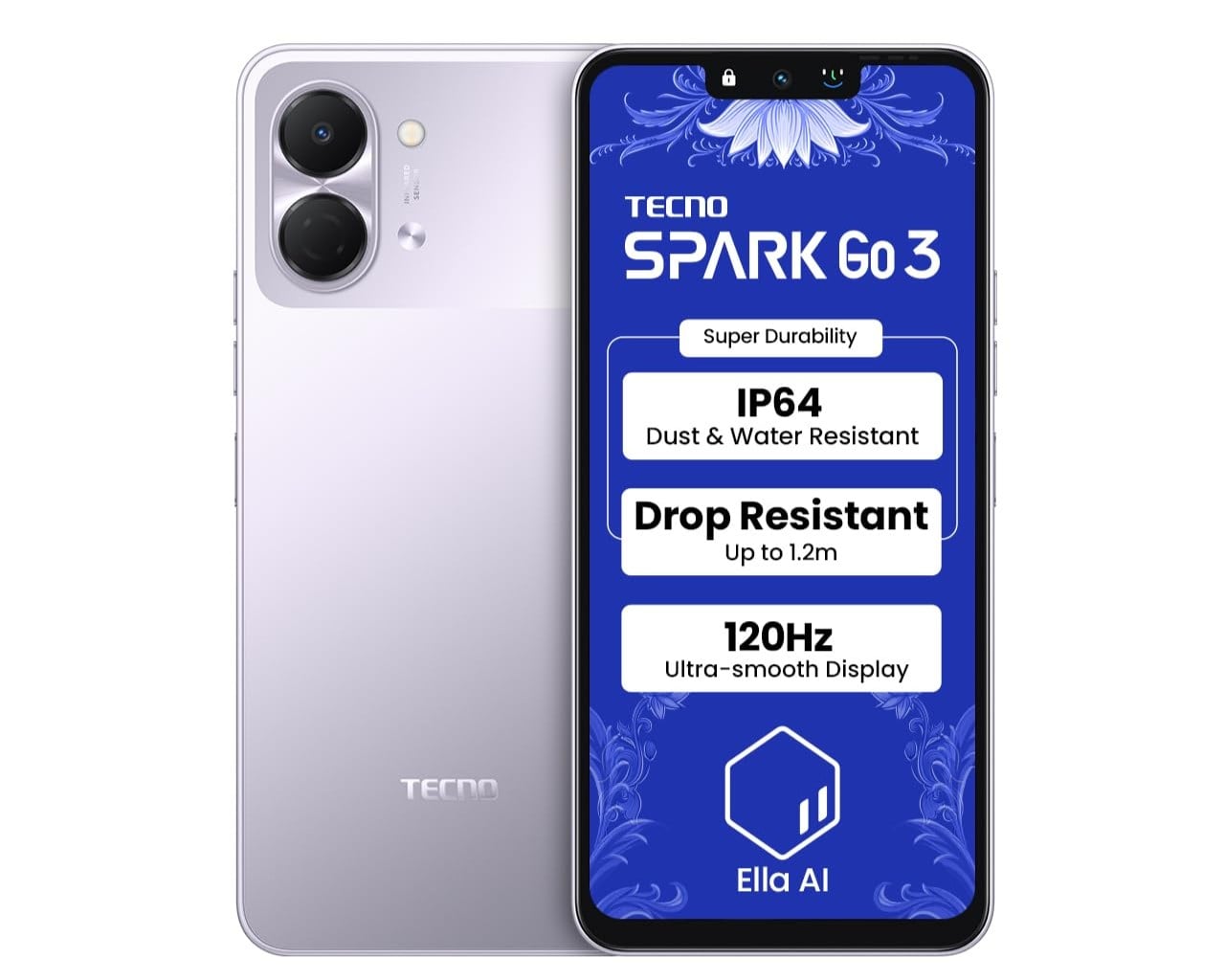
The Spark Go 3 is a pure entry-level option focused on essential daily use at a low price. It offers a 6.74″ HD+ IPS LCD with a 120Hz refresh rate and decent brightness for the segment. Powered by the Unisoc T7250 chipset with 4GB RAM (plus virtual expansion) and up to 128GB expandable storage, it handles calls, messaging, social apps, and light browsing adequately on Android 15 with HiOS 15.
A 5000mAh battery with 15W charging provides solid all-day endurance for moderate users, while the 13MP rear camera and 8MP front camera cover basic photography and video needs (including up to 2K recording on the rear). Standout practical features include IP64 dust and splash resistance, a 3.5mm jack, FM radio, side fingerprint sensor, and infrared remote. It is an accessible choice for first-time smartphone users or as a reliable secondary device.
4. Tecno Spark Go 3 Pro
It features a slightly larger 6.78″ HD+ IPS LCD with a 120Hz refresh rate. Performance comes from the MediaTek Helio G81 4G chipset, which is paired with 4GB of RAM and up to 128GB of expandable storage. The phone runs on the newer Android 16-based HiOS 16.
Durability is the key differentiator, with IP68/IP69 ratings for dust, water resistance (including high-pressure jets and limited submersion). The 5200mAh battery with 15W charging supports reliable daily use, while the 13MP rear and 8MP front cameras handle basics well.
Other notable features include a 3.5mm jack, side fingerprint sensor, infrared, and AI enhancements for calls and productivity, making it a more rugged everyday companion for users who need extra ingress protection without stepping up in price significantly.
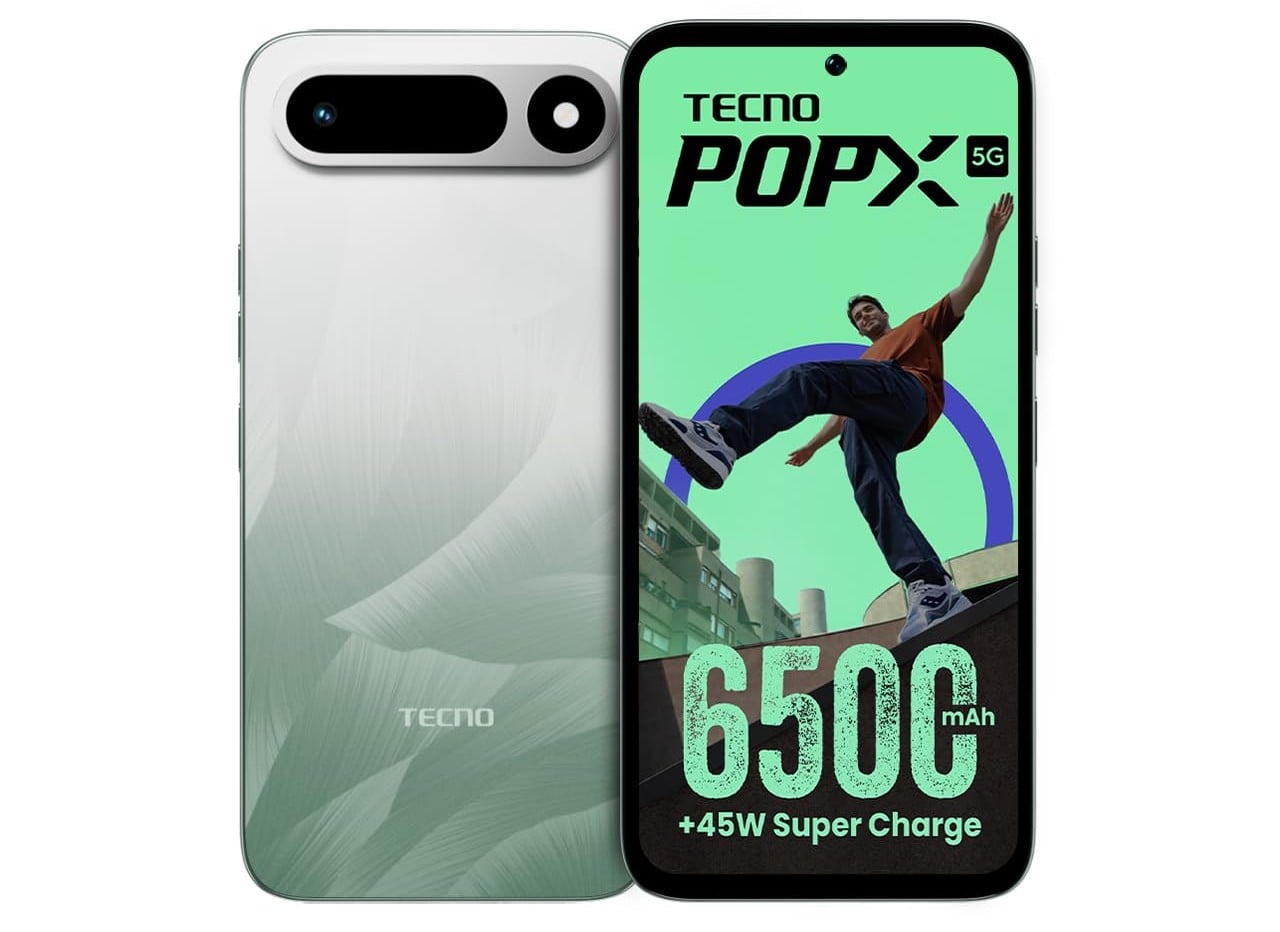
5. Tecno Pop X 5G
The Pop X 5G sits in the affordable 5G segment with a strong emphasis on battery and practical features. It uses a 6.78″ HD+ IPS LCD with 120Hz refresh rate and solid brightness for fluid scrolling and media. The MediaTek Dimensity 6400 chipset with up to 6GB RAM and 128GB expandable storage delivers smooth performance for daily tasks, streaming, and light gaming on Android 16 with HiOS 16.
A standout 6500mAh battery with 45W fast charging ensures excellent endurance and quick top-ups. The 50MP rear camera and 8MP front camera are suited for casual photography, while the design includes a distinctive horizontal aluminum camera module. Additional strengths include IP64 dust/splash resistance, a 3.5mm jack, FreeLink offline communication, dual SIM, and expandable storage, positioning it as a practical budget 5G phone.
Ugreen has launched a new color e-ink case for the Pro iPhones in China. Called the Ugreen Magic E-ink Screen Case, it really is what the name suggests — a case and second screen.
Back-mounted phone accessories are becoming more common. Dockcase’s Selfix case gave the iPhone 17 Pro a second screen for taking selfies with the main camera, while Xteink makes small e-readers that attach to iPhones through MagSafe. Ugreen’s case is simpler. Its screen displays a chosen image rather than a camera preview or reading content.
How the e-ink screen works
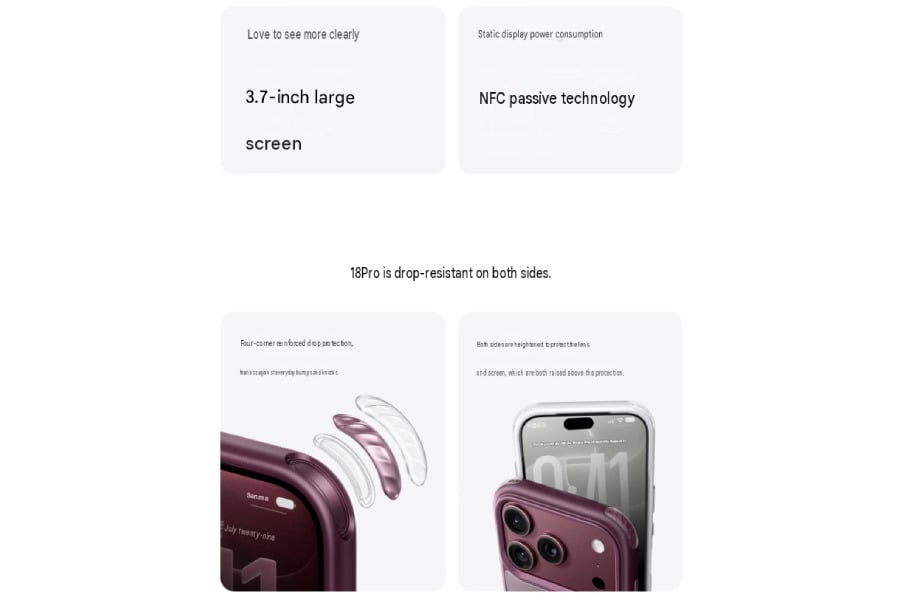
The case has a 3.7-inch color e-ink display with six particle colors: black, white, red, yellow, blue, and green. Ugreen says the panel remains clear in bright light. You can select an image from your gallery through the Ugreen App or create a custom one, then send it to the case.
Updating the display takes around 20 seconds to upload and another 20 seconds to refresh, so changing an image takes about 40 seconds in total.
The phone transfers the image to the case through NFC, using only a small amount of power during the process. Once the image is displayed, the screen does not need power to keep it there. It also stays visible when the phone is turned off.
If you do not want the case’s NFC antenna active, you can long-press the button on the right side to disconnect it. Ugreen says this will not interfere with contactless card tapping or phone payments.
Colors, materials, and protection
The case comes in matte black, fog white, and burgundy. It combines TPU, PC, and microfiber, along with a metal camera button and a separate NFC button on the side.
For added drop protection, Ugreen has added airbag-style cushioning to all four corners. The case’s edges sit around 1mm above the phone’s screen and 0.7mm above the camera lenses, helping keep both areas away from surfaces when the phone is placed down or carried in a bag.
It is available for purchase in China for 279 yuan (~ $40). Ugreen has not said whether the Magic E-ink Screen Case will be released outside China.
For more daily updates, please visit our News Section.
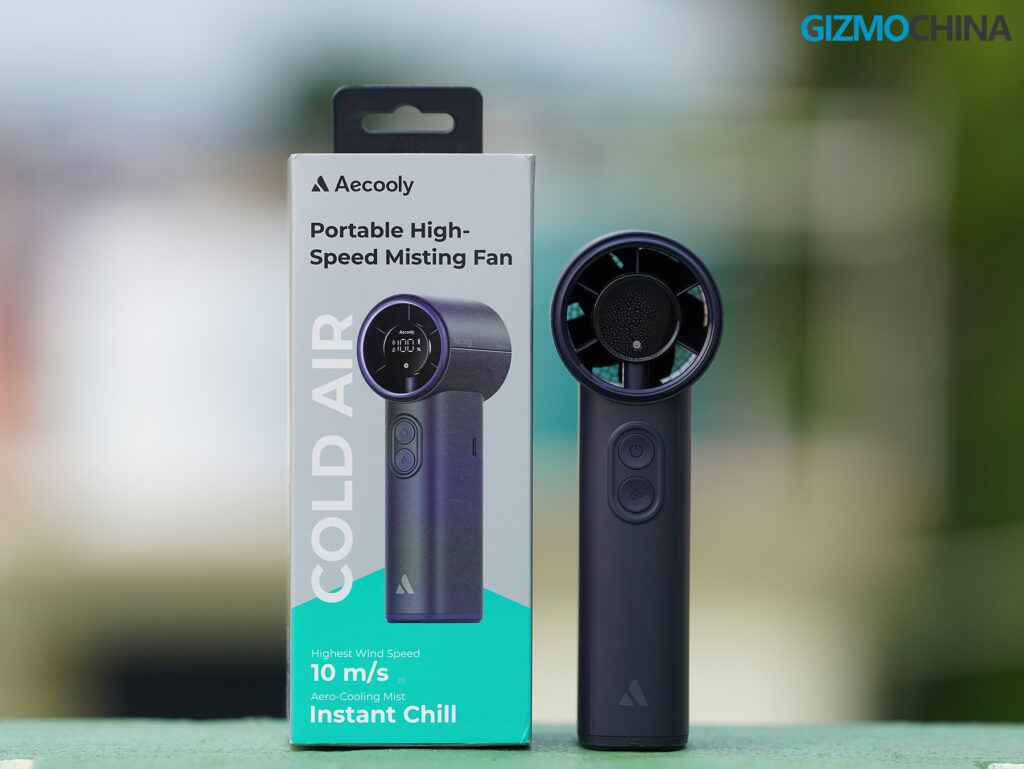
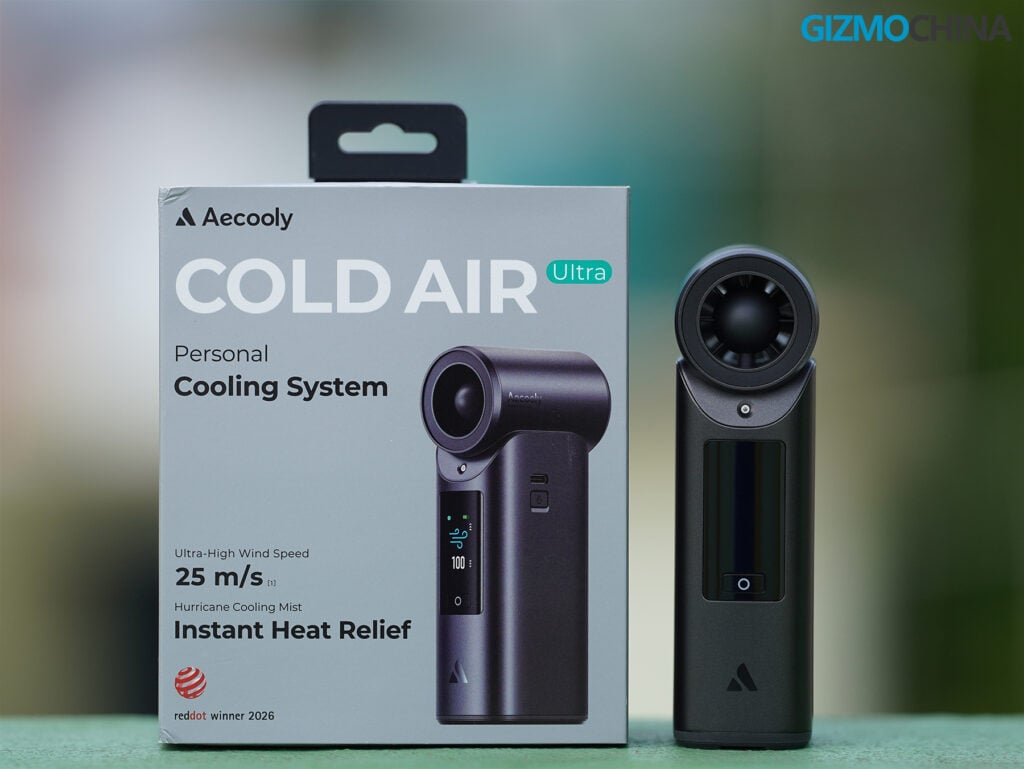
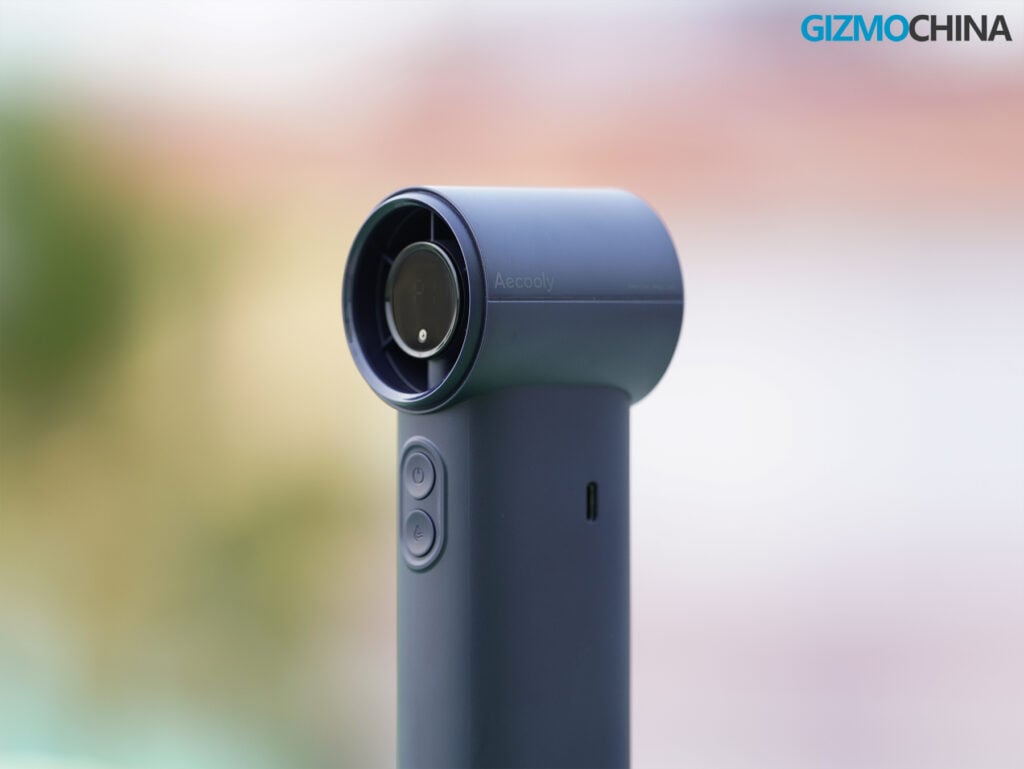
Handheld fans are nothing new, but Aecooly is trying to make them considerably more useful with its Cold Air series. Instead of simply blowing ambient air at your face, both the Aecooly Cold Air and Cold Air Ultra combine high-speed airflow with a built-in misting system designed to provide more immediate relief in hot weather.
I have been using both models for around two weeks, which happened to coincide with India’s unpredictable monsoon weather. Some days have been humid, while clear days can still become uncomfortably hot. These conditions gave me plenty of opportunities to test both fans outdoors and around the house.
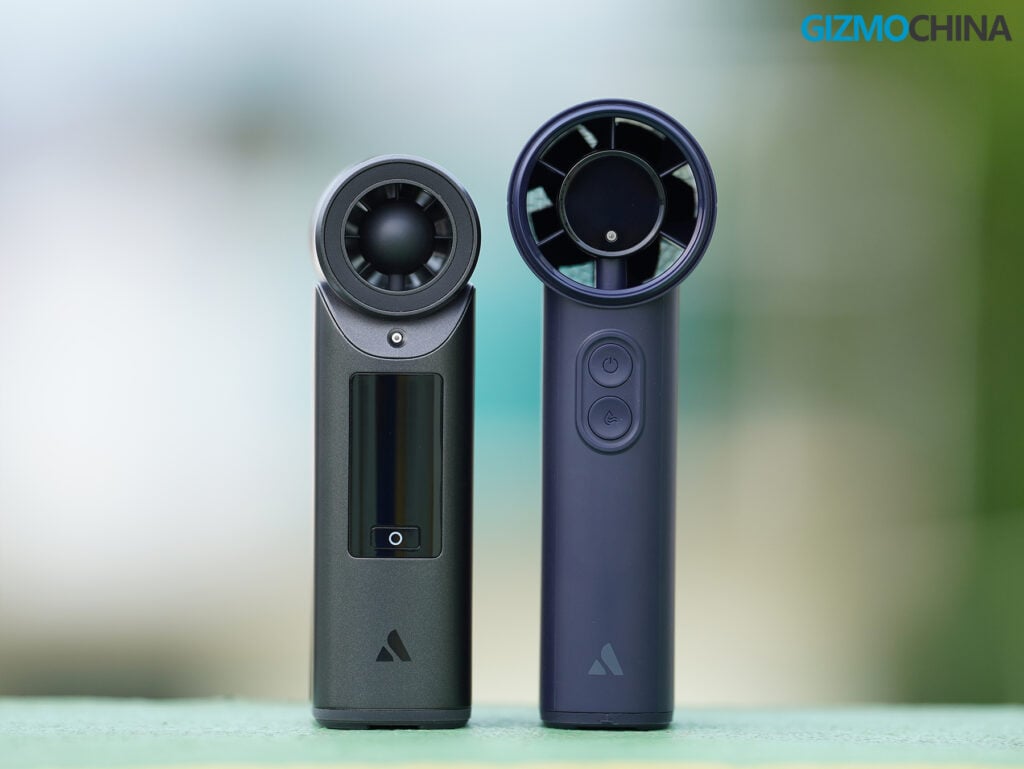
While the two products share the same basic idea, my experience with them has been surprisingly different. The $39.99 Cold Air focuses on portability, quieter operation, and comfortable personal cooling. The $79.99 Cold Air Ultra is considerably more powerful and doubles as a portable air duster.
Design and Build Quality
Both fans use ABS and PC bodies, but they feel quite different in the hand.
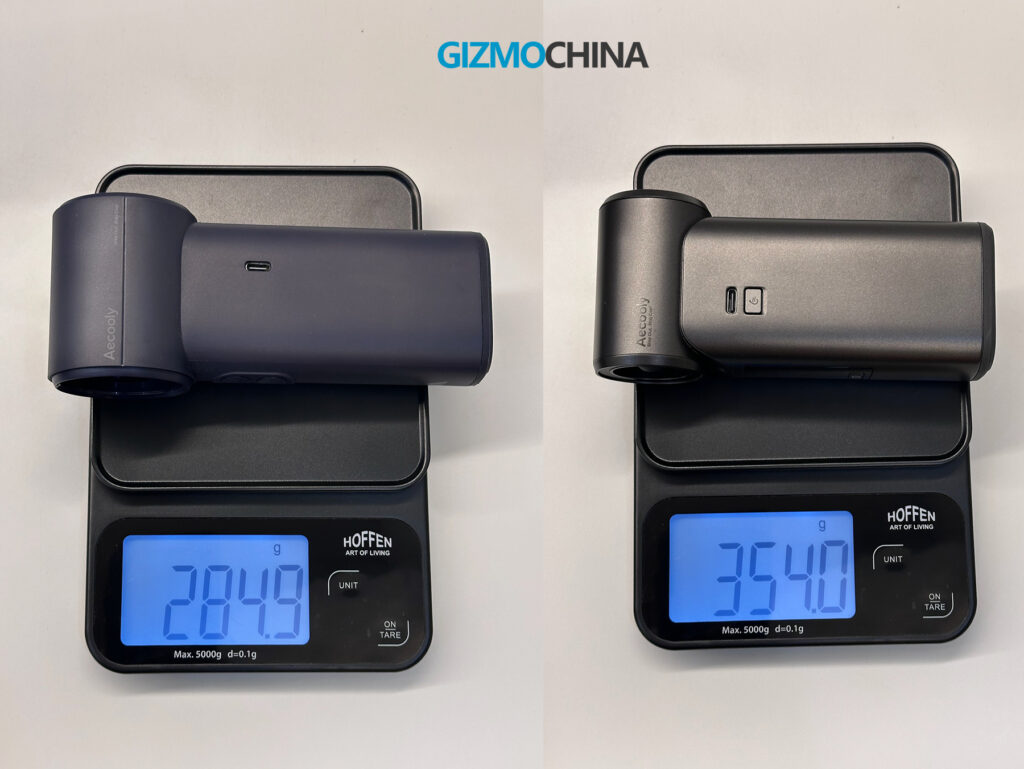
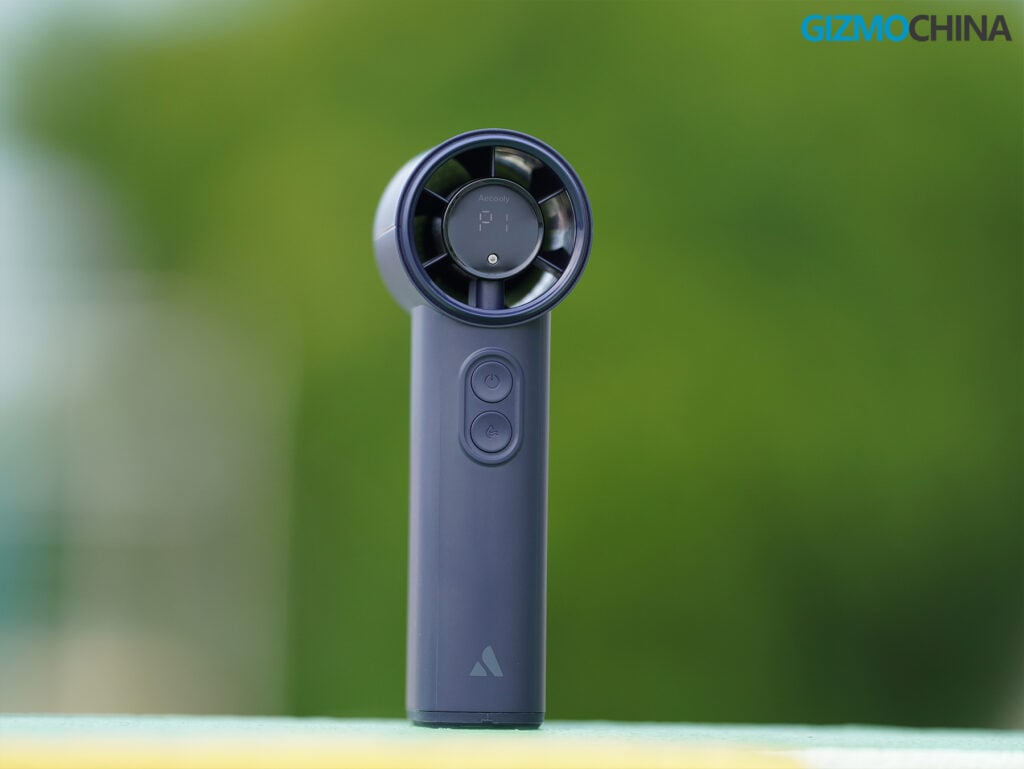
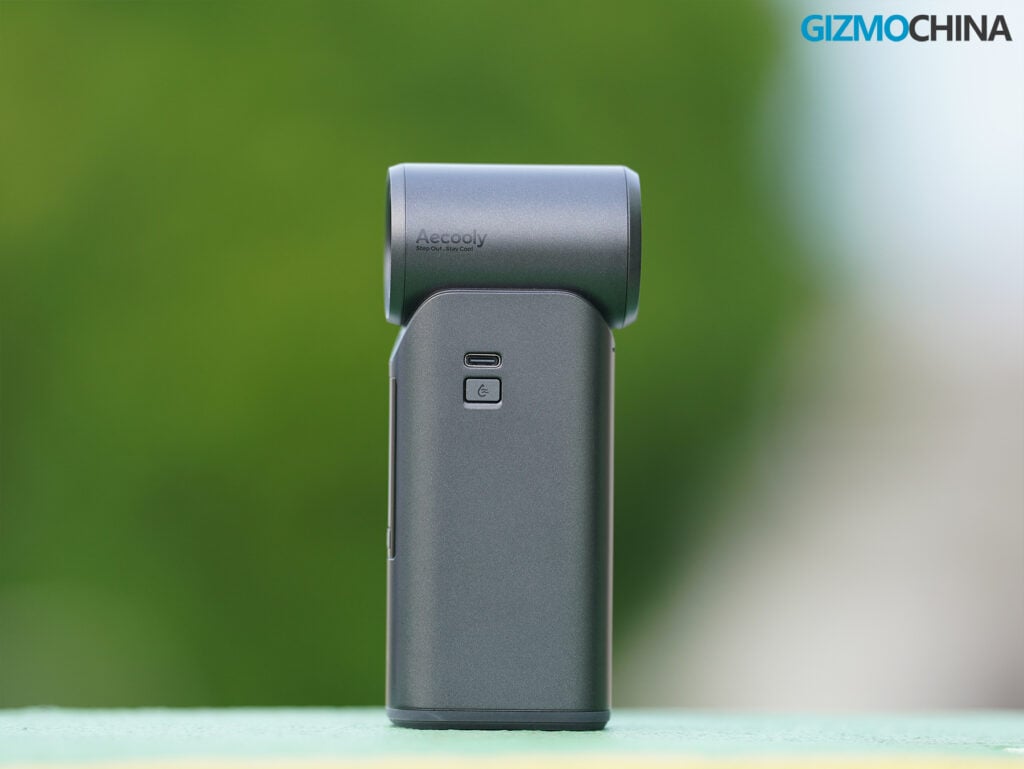
The Cold Air is the taller of the two, measuring 153 x 63.6 x 52 mm. However, at 285 g, it is also noticeably lighter than the Ultra. Its relatively slim handle is easy to grip, and I found it comfortable enough to carry around for extended periods.
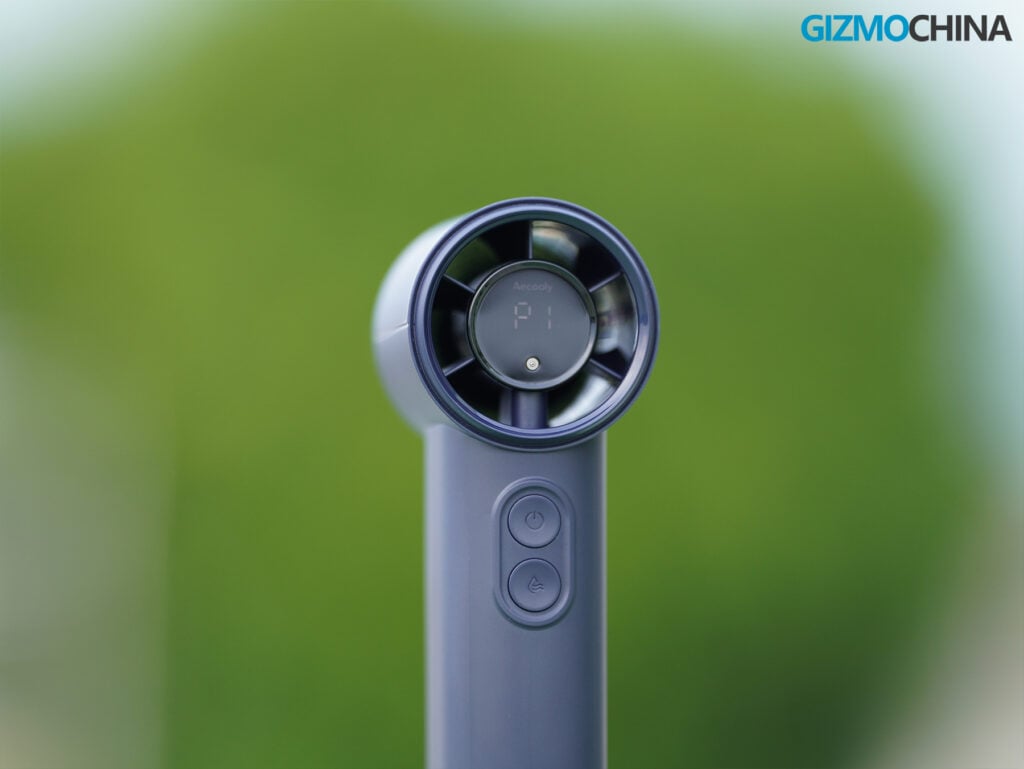
The upper section houses a large circular fan, while a small digital display shows the current fan speed and remaining battery percentage. Controls for adjusting the fan speed and activating the mist function are positioned on the handle.
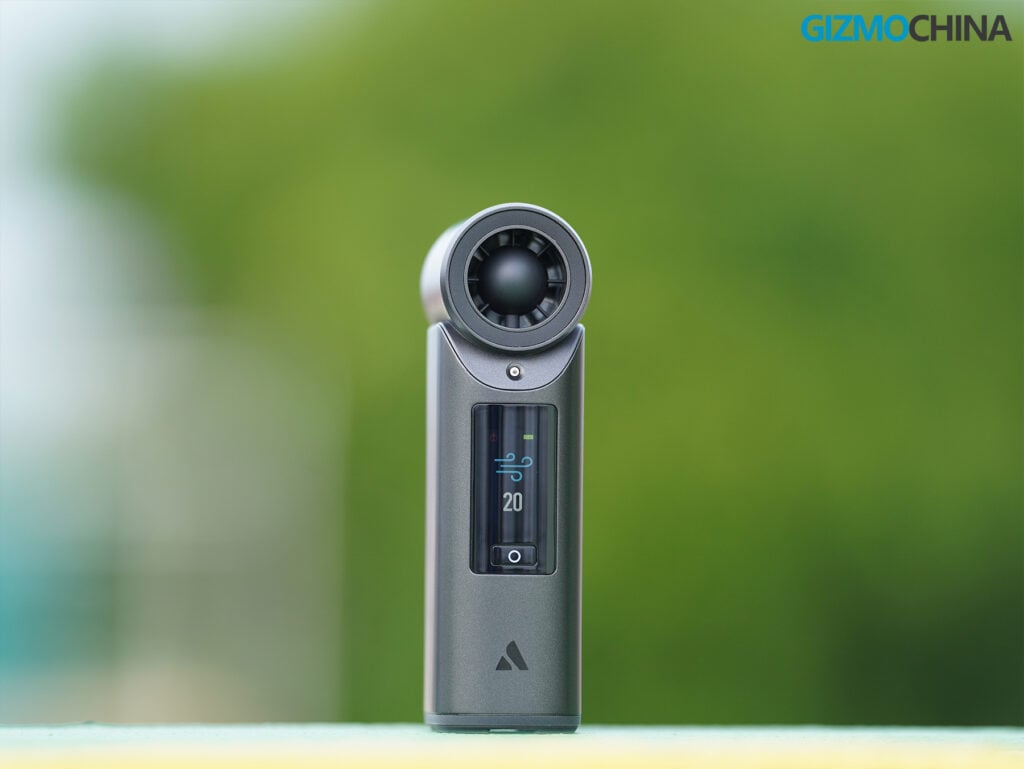
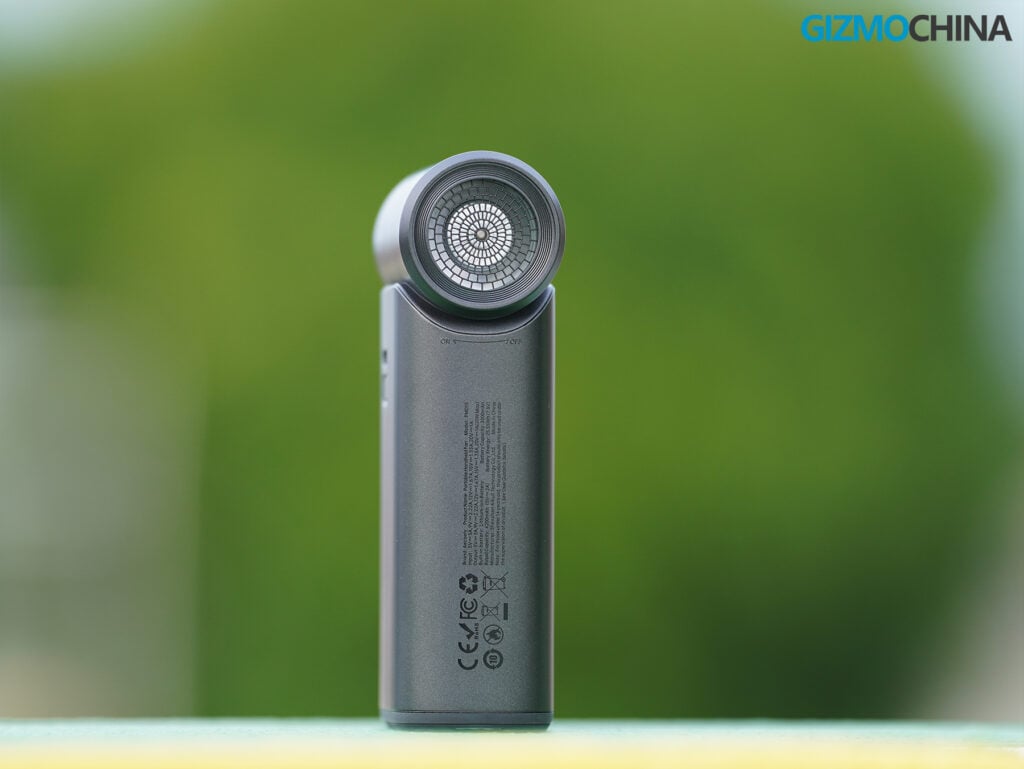
The Cold Air Ultra takes a different approach. It measures 140.4 x 63 x 41 mm, making it shorter and more compact, but its extra weight is immediately noticeable. My unit weighed 354 g on the scale, slightly higher than the 345 g stated on the official listing. Either way, it feels denser and more substantial in the hand compared to the regular Cold Air.
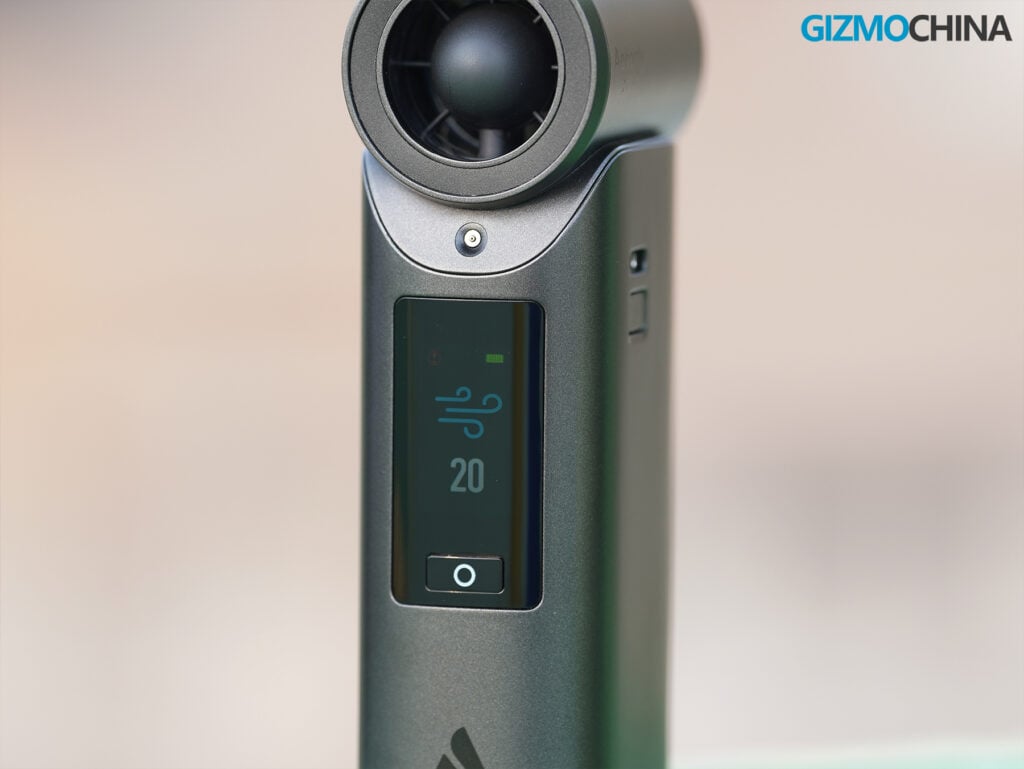
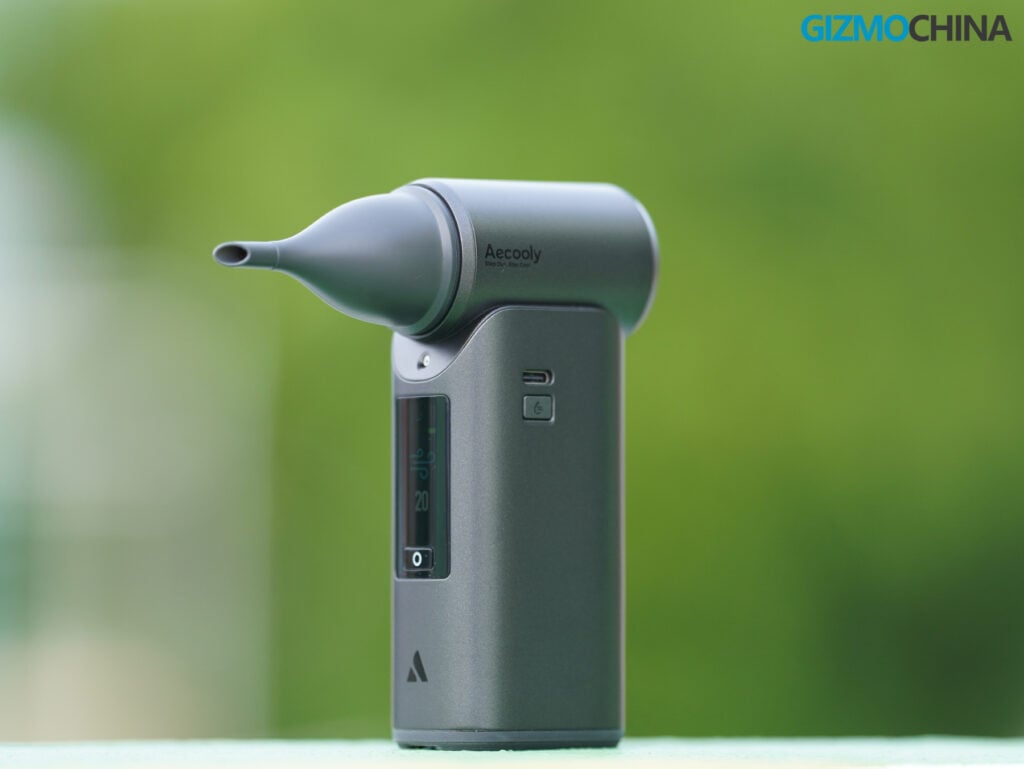
Its design also looks considerably more premium. The front features a large color touchscreen integrated into the handle, providing information about fan speed, battery status, and operating mode. The display also serves as part of the speed-control system.
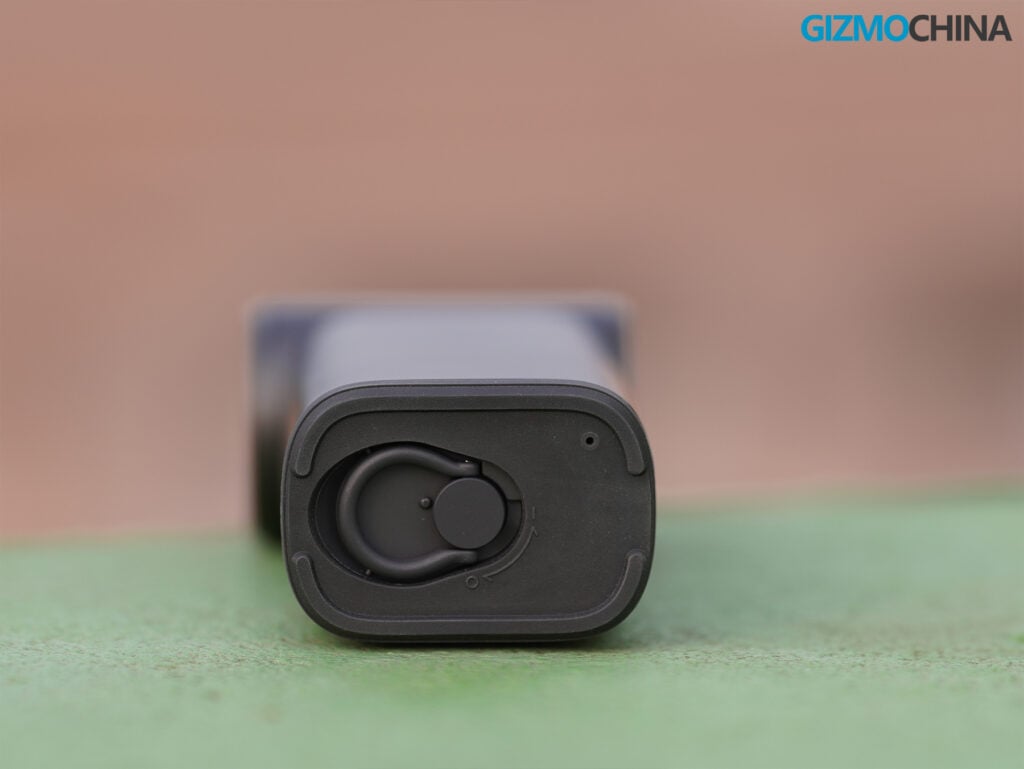
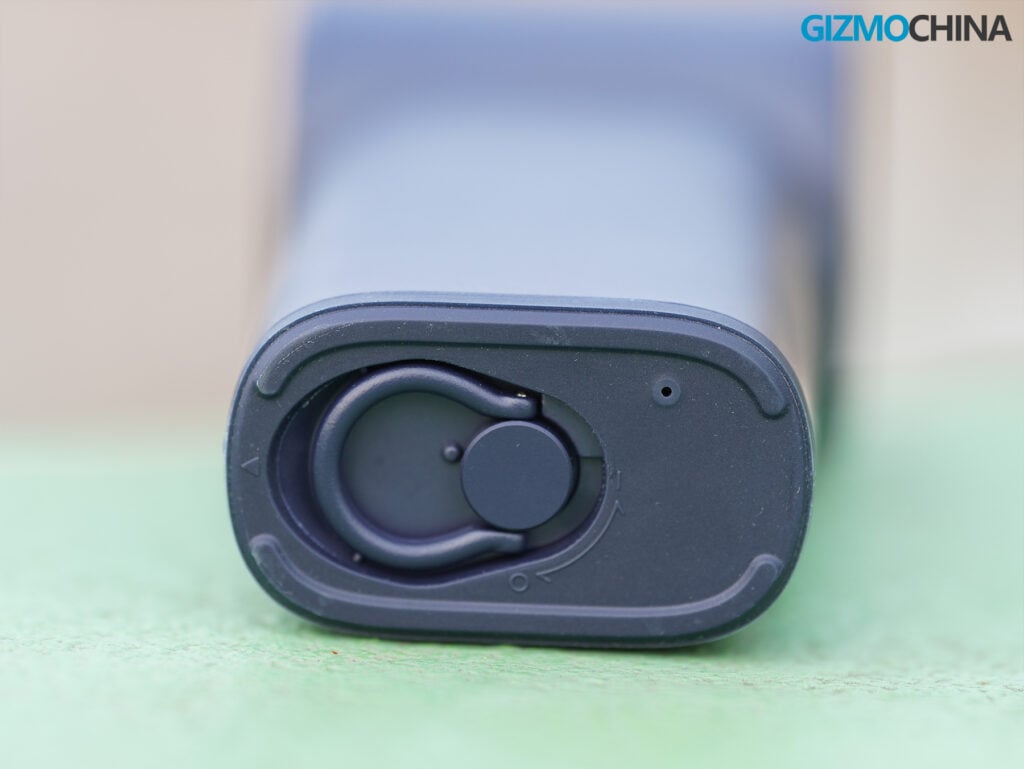
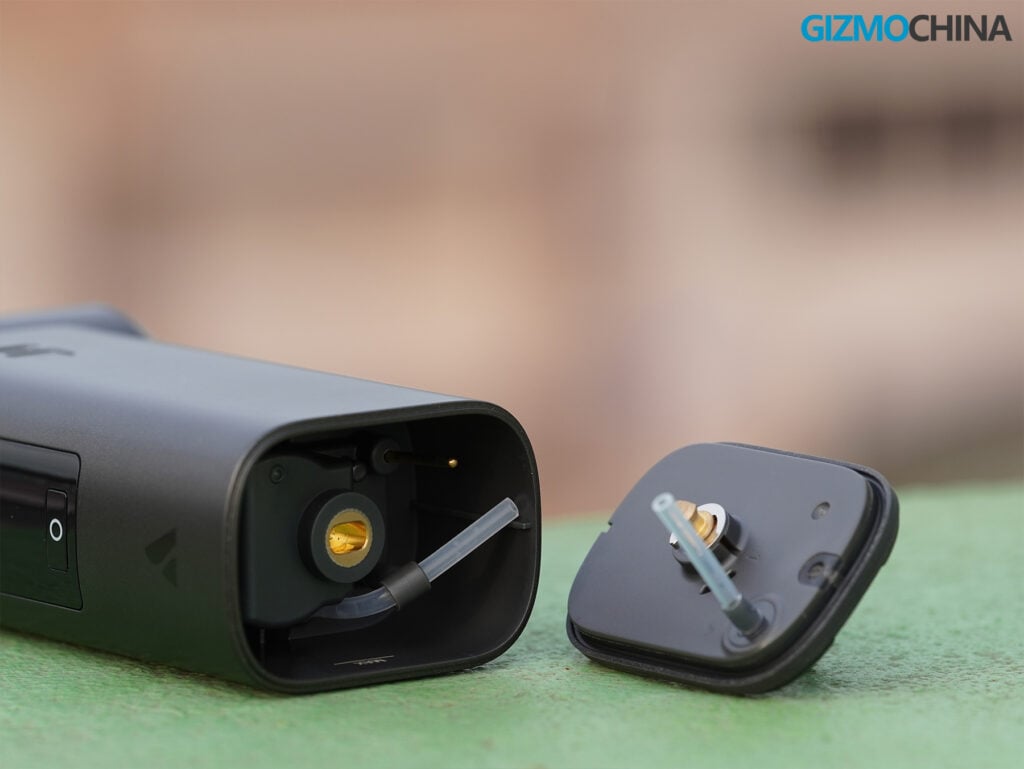
Both models have an integrated water reservoir for the misting system. Accessing it involves rotating the locking mechanism at the bottom and opening the tank for refilling. The implementation is neat because there is no external water bottle hanging off either fan.
Both also include lanyards, which are particularly useful when carrying the fans outdoors.
Cold Air: The Better Everyday Companion
After using both fans, I found myself preferring the regular Cold Air whenever I wanted something to carry around.
Its biggest advantage isn’t raw performance. Instead, it is how comfortable and unobtrusive it is.
The fan offers five speed settings and uses a motor rated for up to 12,000 RPM. Aecooly lists a maximum wind speed of around 9.5 to 10 m/s, or approximately 33 ft/s.
Those numbers are considerably below the Ultra, but that isn’t necessarily a disadvantage for personal cooling.
At lower settings, the Cold Air produces a gentle breeze that feels comfortable against the face. Even at level five, I found the airflow strong enough to cool myself without becoming overly aggressive.
This became one of the biggest differences between the two products during actual use. The Ultra can move an enormous amount of air, but I don’t always want that much airflow directly against my face. The Cold Air feels more natural for prolonged personal use.
Noise is another advantage. Aecooly rates it at ≤51 dB on low speed, and in practice, I found the Cold Air relatively quiet. I would be much more comfortable using it in a library, airport, office, or other quiet environment than the Ultra.
Its lighter 285 g body further strengthens that advantage. If I were heading outside and could take only one of these fans, the Cold Air would usually be my choice.
Cold Air Ultra: Significantly More Powerful
The Cold Air Ultra is a completely different beast when it comes to performance.
Aecooly rates its high-speed motor at up to 70,000 RPM. Maximum wind speed is rated at 25 m/s, or roughly 82 ft/s.
The difference compared with the Cold Air is immediately noticeable.
Even at the default 20 setting, the Ultra produces surprisingly strong airflow. Push it toward its maximum setting, and it becomes extremely powerful.
Where to buyAecooly Cold Air UltraLatest price on AmazonCheck price →
There is a downside: noise.
Aecooly rates the Ultra at ≤65 dB at lower speeds. In practice, it is noticeably louder than the regular Cold Air, even at relatively low settings. At higher speeds, the noise becomes prominent enough that I would avoid using it in quiet environments.
It can also feel a little too aggressive when pointed directly at your face at high speed. That’s where the regular Cold Air’s gentler airflow actually becomes an advantage.
The Ultra fights back with much finer control. Instead of five levels, it provides 100 speed levels. You can gradually adjust the output from 1 to 100 using the touchscreen, while the physical control provides quick jumps through 20, 40, 60, 80, and 100.
This makes it easy to find a comfortable middle ground without being restricted to a handful of presets.
Mist Cooling Makes a Real Difference
The feature that separates these fans from conventional handheld models is Aecooly’s Mist Chill system.
Both use a high-pressure micro-pore atomization system with a 0.25 mm nozzle and an eight-channel flow splitter. Rather than spraying large droplets of water, the system produces a fine mist that mixes with the airflow.
Each water fill is rated for up to eight minutes of mist operation.
Aecooly claims the Cold Air can produce a temperature reduction of as much as 14.4°F in 10 seconds, while the company advertises an 18°F drop in 10 seconds for the more powerful Ultra.
Those are manufacturer claims under controlled conditions, so I wanted to see what happened in real-world use.
With the Cold Air Ultra, I measured a surface temperature of approximately 99°F before testing. After using the fan with mist at high speed for a few seconds, the reading dropped to around 88°F. That’s an approximately 11°F reduction.
I later repeated a similar test with the regular Cold Air. My initial reading was around 97.5°F. After using the fan and mist system, I recorded approximately 86.5°F, once again representing an 11°F reduction.
These shouldn’t be interpreted as reductions in core body temperature. They are short-term surface readings and can vary considerably depending on ambient temperature, humidity, measurement distance, airflow, and the amount of mist applied.
Still, the immediate cooling sensation is unmistakable. More importantly, both fans provided noticeable heat relief during my testing.
The Ultra Has Another Trick: Cleaning
Cooling isn’t the only reason to consider the Cold Air Ultra.
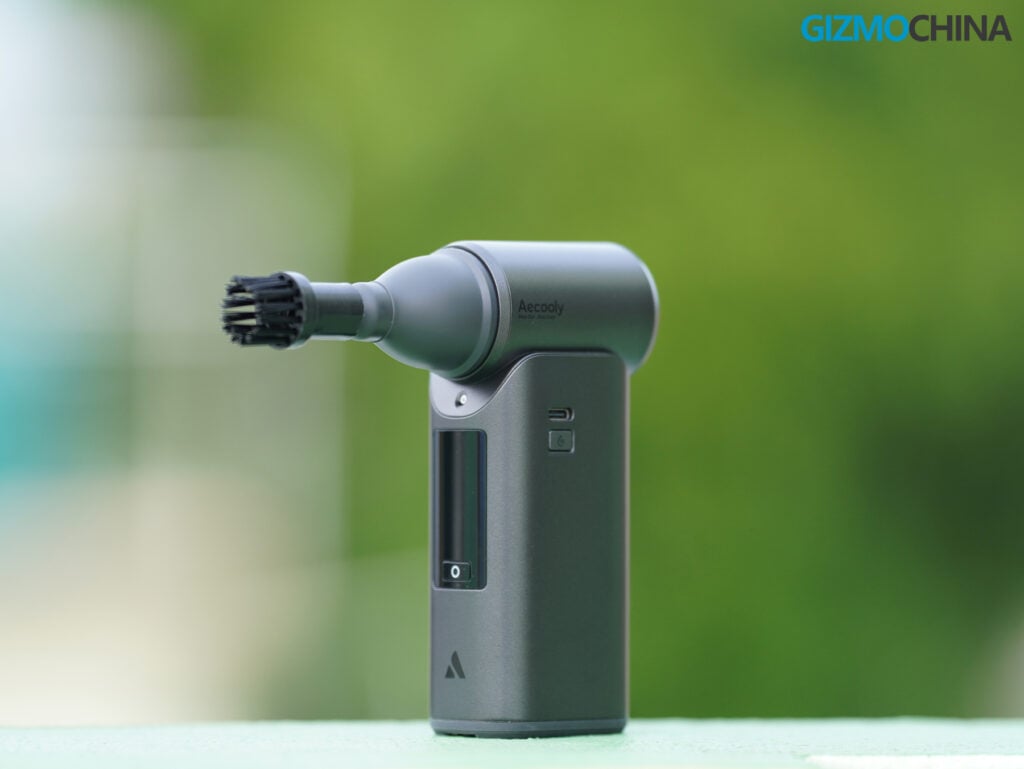
Aecooly includes two magnetic nozzle attachments that transform the powerful fan into a portable air duster.
One attachment incorporates a removable brush. It allows you to loosen dust while simultaneously blowing it away, which makes it useful for keyboards, vents, and similar equipment.
The narrower attachment concentrates the airflow into a smaller area. I found the concept particularly useful for blowing small particles out of tight spaces where the standard wide airflow would be less effective.
This is where the Ultra’s 25 m/s maximum airflow becomes useful for something beyond cooling.
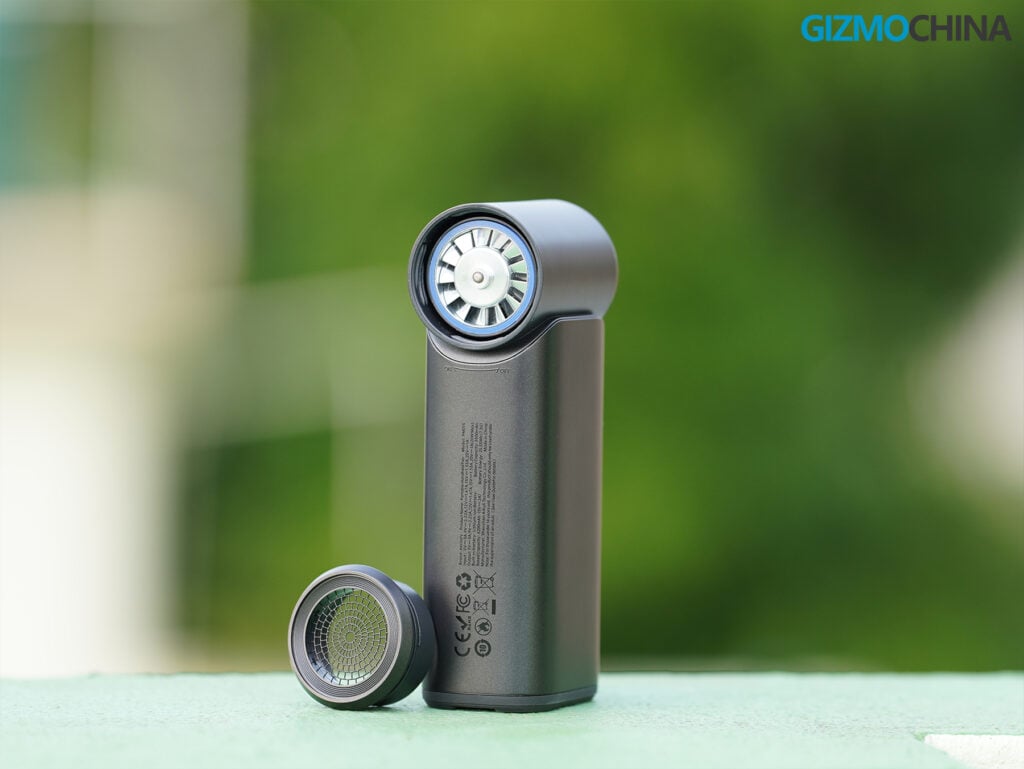
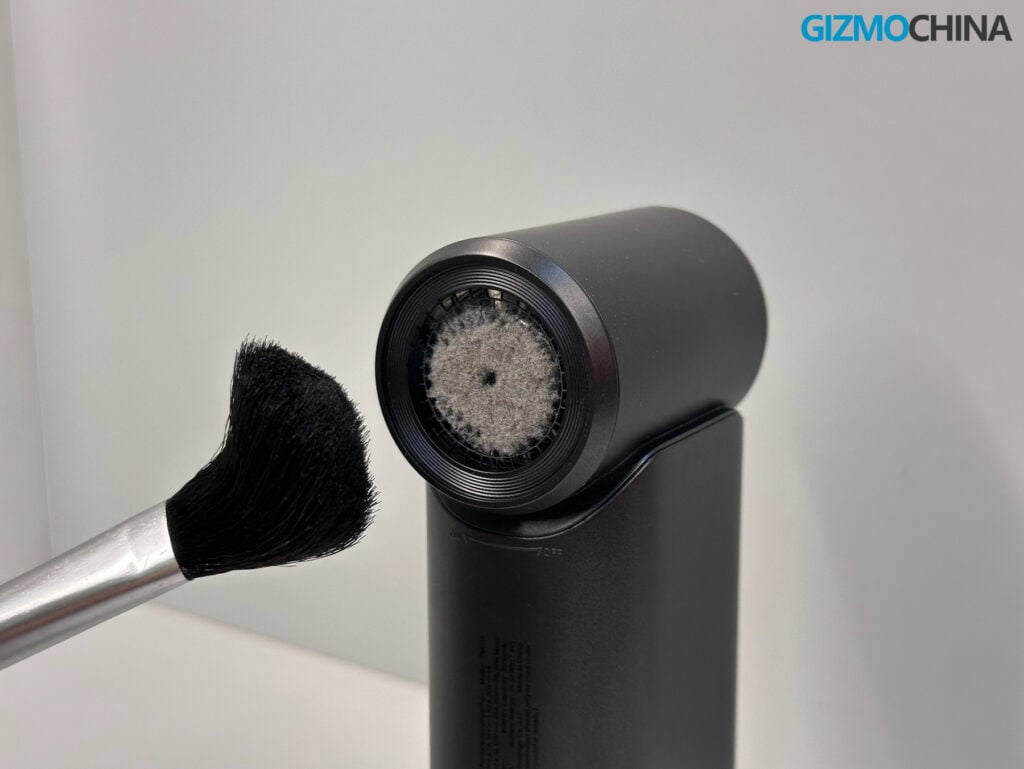
The air intake can also be opened for easier maintenance, which is particularly useful if you regularly use the Ultra as an air duster. Dust can gradually collect around the intake and fan blades, so having direct access makes cleaning much easier. The package also includes a small cleaning brush, which you can use to remove dust from the intake area and the fan itself.
The regular Cold Air also features a removable, washable intake mesh. Removing the mesh activates an automatic cutoff for safer cleaning. However, it lacks the Ultra’s dedicated air-duster nozzles, so its primary purpose remains personal cooling.
Battery life and charging
Battery capacity is another area where the two products take different approaches.
The Cold Air packs a 4,500 mAh battery and lasts around 16-18 hours at lower fan speeds.
The Cold Air Ultra uses a much larger 7,000 mAh battery and can run for up to 10 hours at lower speeds. However, its much more powerful motor draws considerably more power, especially when running continuously at or near 100% speed.
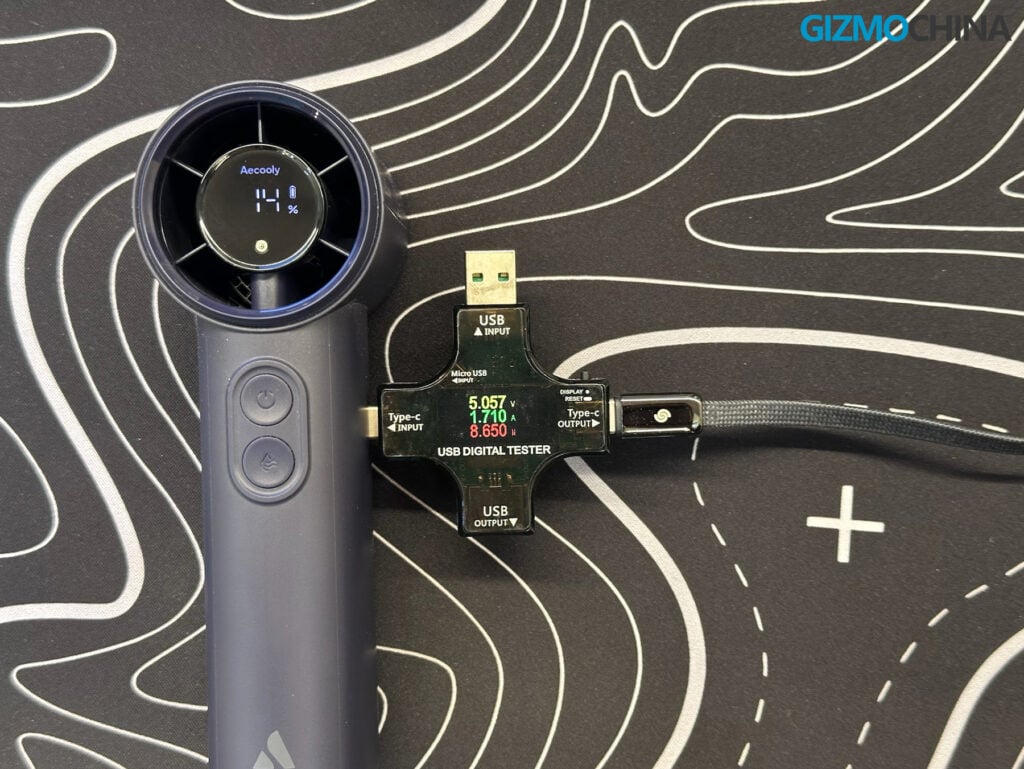
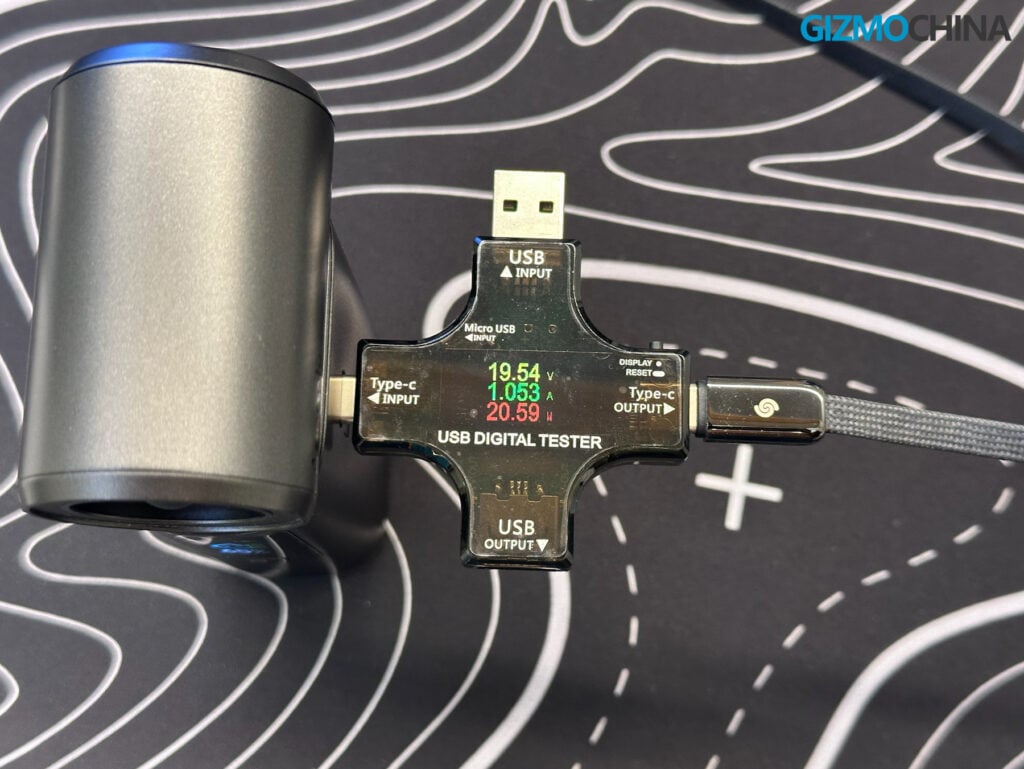
Both models charge over USB-C. The Cold Air supports 10W charging and takes around 3.5 hours for a full charge. During my testing, I measured around 8.6W while charging, which is fairly close to its rated 10W input. The Ultra supports faster 20W charging, and I was able to hit the full 20W during my testing. It takes approximately 2.5 hours to fully charge.
The Ultra has another useful trick up its sleeve. Its USB-C port supports reverse charging, allowing me to use the fan’s 7,000 mAh battery as an emergency power bank for my phone or other USB-powered devices.
Which One Should You Choose?
Despite sharing the same Cold Air branding and mist-cooling concept, these fans ended up serving different purposes during my testing.
The regular Cold Air is the model I would pick for everyday personal cooling. At 285 g, it is easier to carry, its airflow feels gentler against the face, and it is substantially quieter. Five speed settings are enough for its intended purpose, while the mist function provides an impressive cooling boost when the weather becomes uncomfortable.
Its claimed 20-hour low-speed battery life is another major advantage for travel, although actual endurance will naturally depend on fan speed and mist usage.
The Cold Air Ultra is for someone who values performance and versatility over portability.
Its 70,000 RPM motor and 25 m/s maximum airflow are in another league compared with the standard model. The 100-level speed adjustment provides much finer control, while the touchscreen gives it a more premium feel.
The magnetic cleaning nozzles also turn the Ultra into something more than a personal fan. Being able to use the same device to cool yourself and then clean a keyboard or blow debris out of a narrow space gives it genuine additional utility.
That versatility comes at the cost of weight and noise. At 354 g, the Ultra feels noticeably heavier, and its high-speed airflow can be louder and more aggressive than I would want for casual face cooling.
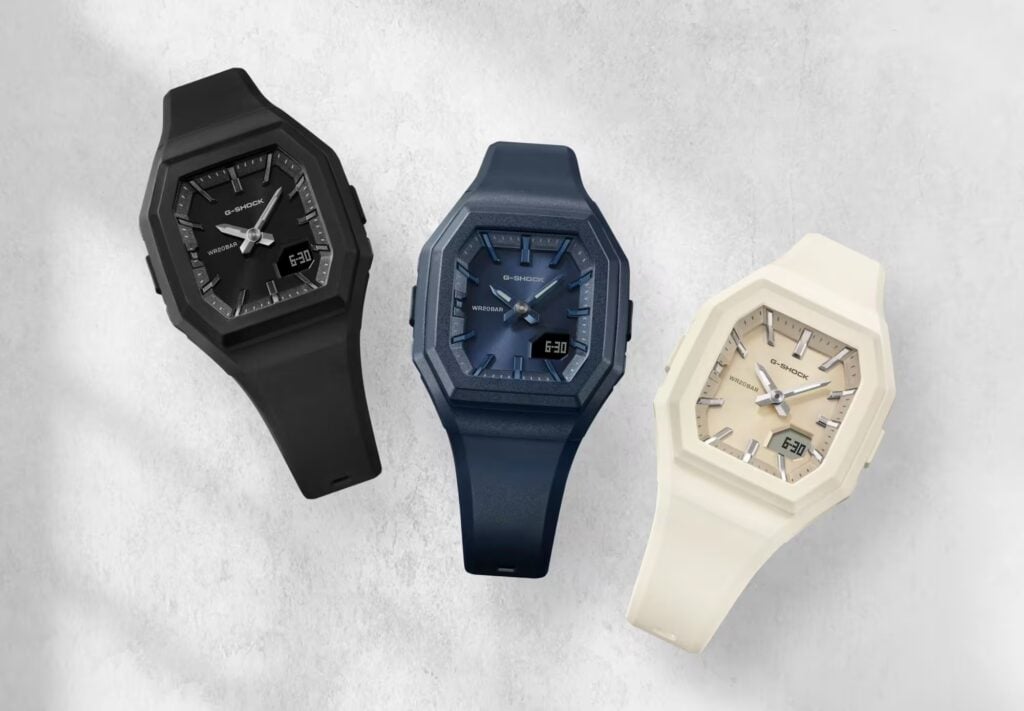
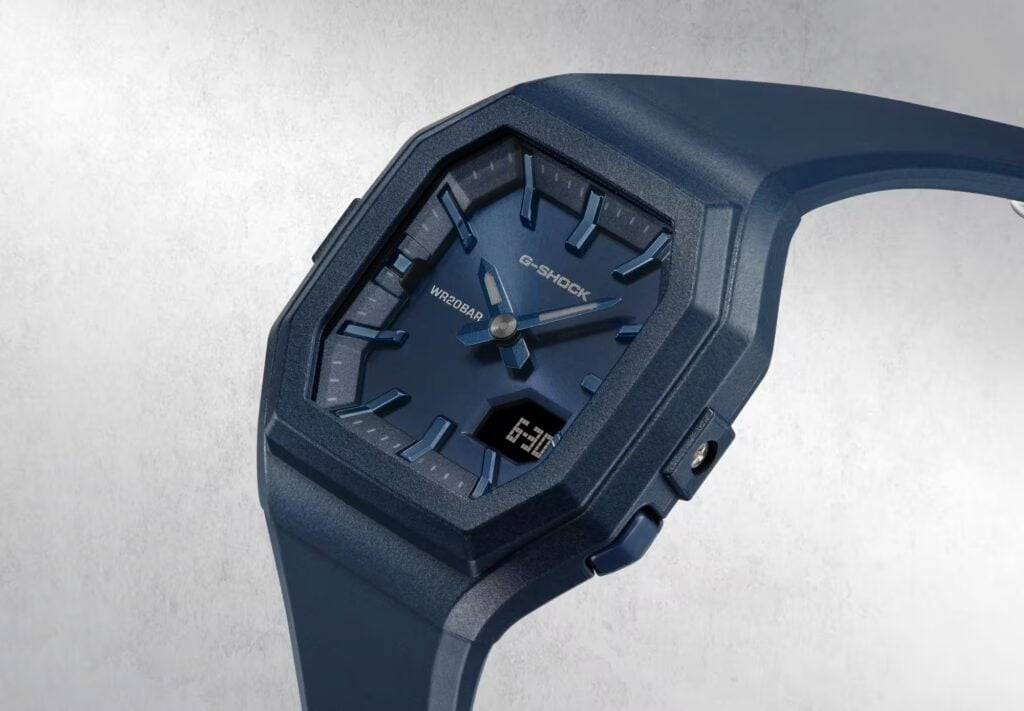
Casio has announced the GMA-S160, a new series of analog-digital watches. The lineup is now available for pre-order through the Casio Japan website for ¥20,900 ($132), which includes tax.
Casio GMA-S160 Specifications
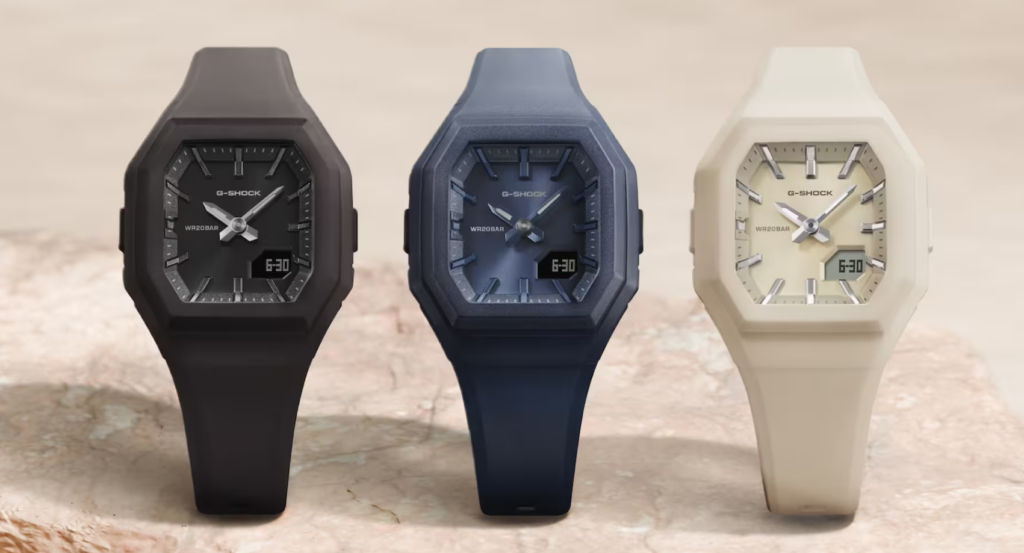
The series launches with three standard color options: black (GMA-S160-1BJF), navy (GMA-S160-2BJF), and white (GMA-S160-7AJF). The primary update with this release is a reduction in overall size, providing an option for users who prefer a smaller case profile than the company’s standard models.
The GMA-S160 measures 40.7 x 35.7 x 10.8 mm and weighs 31 grams. To achieve these dimensions, Casio says that it optimized the internal component structure, resulting in a module that is slimmer and more compact than the existing GMA-P2100 series. The exterior design utilizes a matte finish across the bezel and band, which is paired with a metallic watch face and metallic hardware on the buckle and band loop.
For the construction materials, Casio is using bio-based resin for key components in both the bezel and the band. The GMA-S160 retains the standard durability specifications associated with Casio’s hardware. The watches feature a shock-resistant construction and are rated for 200 meters of water resistance.
The display is a hybrid format, using two analog hands to indicate the hour and minute, while a digital screen displays the seconds, date, day of the week, and AM/PM status.
The internal software includes standard timekeeping functions. It features a dual time mode, a one-second stopwatch with a 59-minute and 59-second capacity, and a full auto-calendar. It also includes the hand-shift function, which temporarily moves the analog hands out of the way to provide a clear view of the digital display.
For low-light visibility, the watch is equipped with a double LED system that lights up both the analog dial and the digital screen. The device is powered by a CR1025 battery, which has an estimated lifespan of three years.
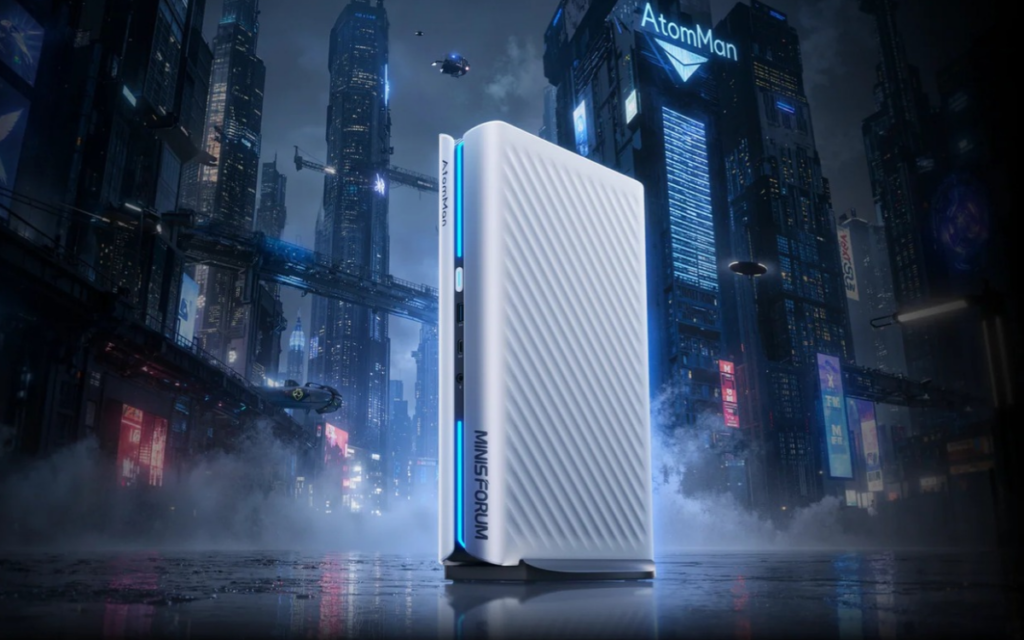
Minisforum has announced a new all-AMD configuration of its AtomMan G1 Pro mini PC, which was previously launched with an Nvidia GeForce RTX 5060 GPU. The new version swaps the Nvidia graphics for a Radeon RX 9060 XT and pairs it with an AMD Ryzen 9 8945HX processor. It is currently available to order for $1,759 with 32GB of RAM and a 1TB SSD.
The Ryzen 9 8945HX is a 16-core, 32-thread chip that boosts up to 5.4 GHz. By pairing it with the Radeon RX 9060 XT, Minisforum is offering a system with 16GB of VRAM. That extra video memory is a practical inclusion for users who need more headroom for higher-resolution gaming textures or memory-heavy tasks like 3D rendering and video editing, offering a different hardware profile than the RTX 5060 version of the same machine.
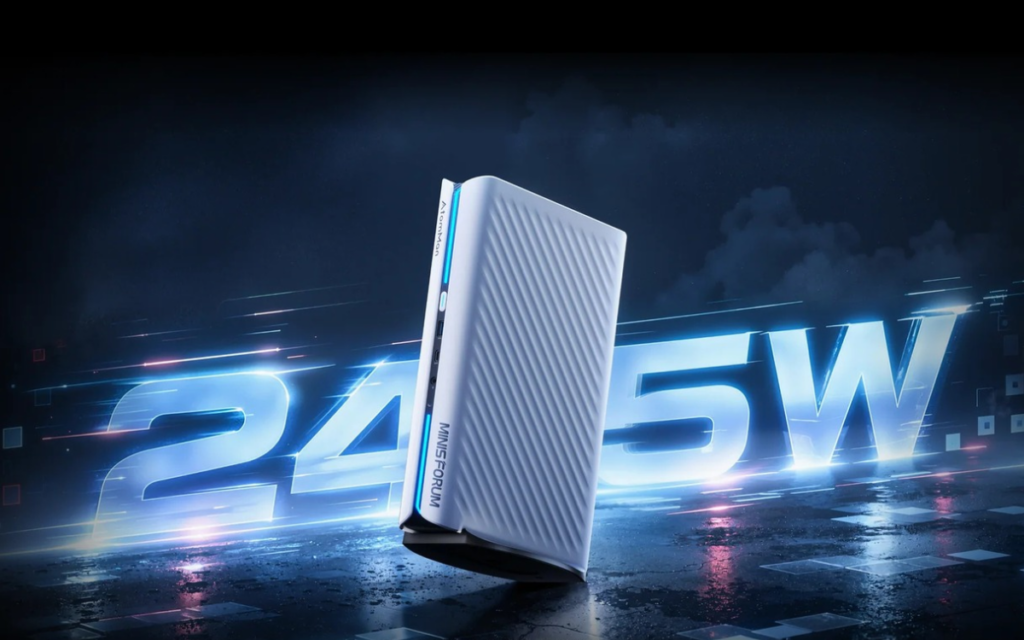
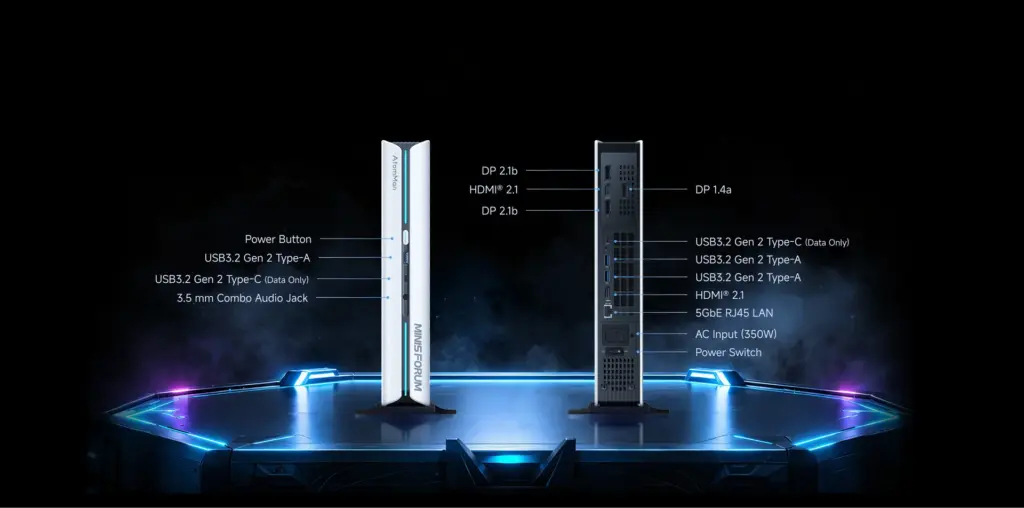
For cooling, the system is designed to handle a combined power draw of up to 240W under load, with 140W allocated to the GPU and up to 100W for the CPU. Minisforum has also fitted the mini PC with an internal 350W power supply to support the hardware. This eliminates the need for a bulky external power brick, helping keep the setup cleaner and reducing cable clutter around the desk.
Inside, the system is fairly upgradeable for its size. It uses standard DDR5 SO-DIMM slots that support up to 96GB of memory running at 5200MHz. Storage is handled by two PCIe 4.0 M.2 slots, which can accommodate up to 8TB of total NVMe storage if you decide to swap the drives later.
Where to buyMinisforum AtomMan G1 ProLatest price on AmazonCheck price →
The port selection covers the standard requirements for a modern desktop setup. Networking is handled by a 5GbE Ethernet port, along with built-in Wi-Fi 7 and Bluetooth 5.4.
For display outputs, the RX 9060 XT model includes two HDMI 2.1 ports, one DisplayPort 1.4a, and one DisplayPort 2.1b, which allows for up to four monitors. There are also several USB-A and USB-C 3.2 Gen 2 ports on the front and back.
The AMD-equipped AtomMan G1 Pro is available to order now, with the company estimating that units will begin shipping in late October.
In related news, Gmktec has recently launched the Evo-X5 Pro Mini PC with up to 192GB of unified memory, a Ryzen AI Max+ Pro processor, and support for up to 24TB of storage.
For more daily updates, please visit our News Section.
Xiaomi has released the Redmi 17C 5G in India, following its initial launch in Singapore in August. The new budget smartphone is built around two key hardware priorities: a very large display and a high-capacity battery. Like most devices in this price bracket, it balances these features with a few practical compromises in other areas.
Redmi 17C 5G Specifications
The device features a 6.9-inch LCD with a 120Hz adaptive refresh rate and 1600 x 720 (HD+) resolution. It also supports DC dimming and TÜV Rheinland-certified eye comfort and blue light reduction.
Inside, the Redmi 17C 5G runs on a MediaTek Dimensity 6300 processor. This is a 6nm chip designed for basic daily tasks and 5G connectivity. The phone is available with either 4GB or 6GB of LPDDR4X RAM, and both configurations come with 128GB of UFS 2.2 internal storage. If you need more local space, there is a microSD card slot that supports up to 1TB.
To keep the large screen running, Xiaomi has included a 6,000mAh battery. The battery is rated to maintain at least 80% of its original capacity after 1,000 charge cycles. The phone supports 33W fast charging, and the required 33W adapter is included in the box. It also supports 10W reverse wired charging for topping up smaller accessories.
The camera hardware is standard for the segment. The rear setup features a 50MP main camera with an f/1.8 aperture, alongside a basic auxiliary lens. The front display houses an 8MP camera for video calls and selfies. Both the front and rear cameras are limited to 1080p video recording at 30 fps.
Where to buyRedmi 17C 5GLatest price on AmazonCheck price →
On the software side, the phone ships with Xiaomi’s HyperOS 3. The operating system integrates several of Google’s current AI tools, including Gemini Live, Circle to Search, and various image generation features.
Physically, the phone measures 7.99mm thick and weighs 211 grams. It includes an IP64 rating for basic dust and splash resistance, a side-mounted fingerprint scanner, and a 3.5mm headphone jack. It also features Wet Touch screen technology designed to register inputs when the display or the user’s hands are damp.
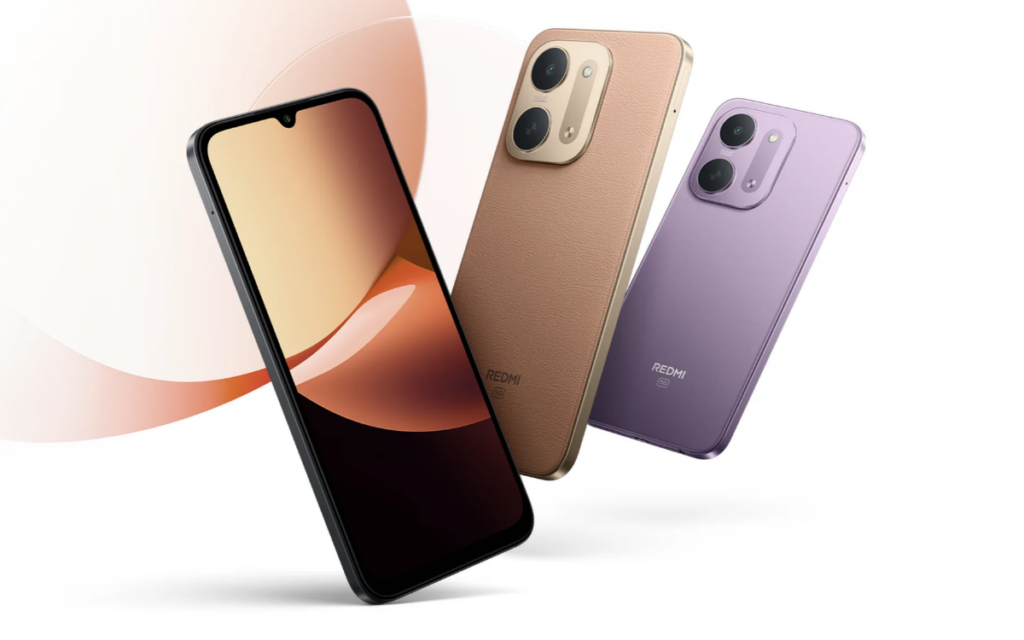
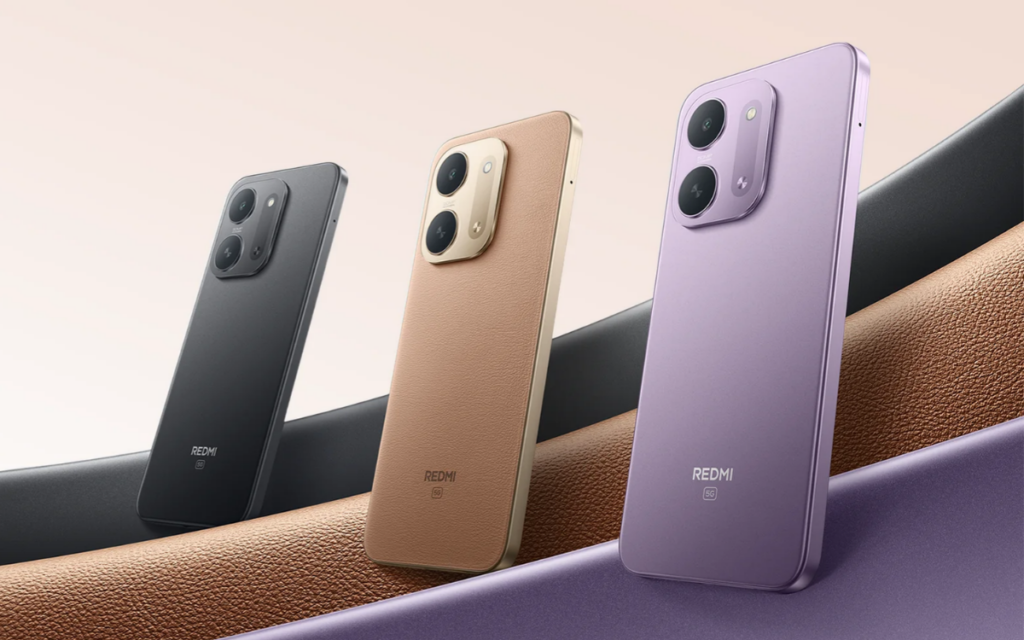
The Redmi 17C 5G will be available starting October 7th through mi.com, Amazon India, and standard offline retailers. It comes in three colors: Dark Night, Purple Dawn, and a Coffee Brew option that uses a textured vegan leather back. The 4GB RAM model costs ₹20,999, and the 6GB RAM version is priced at ₹22,999.
For more daily updates, please visit our News Section.
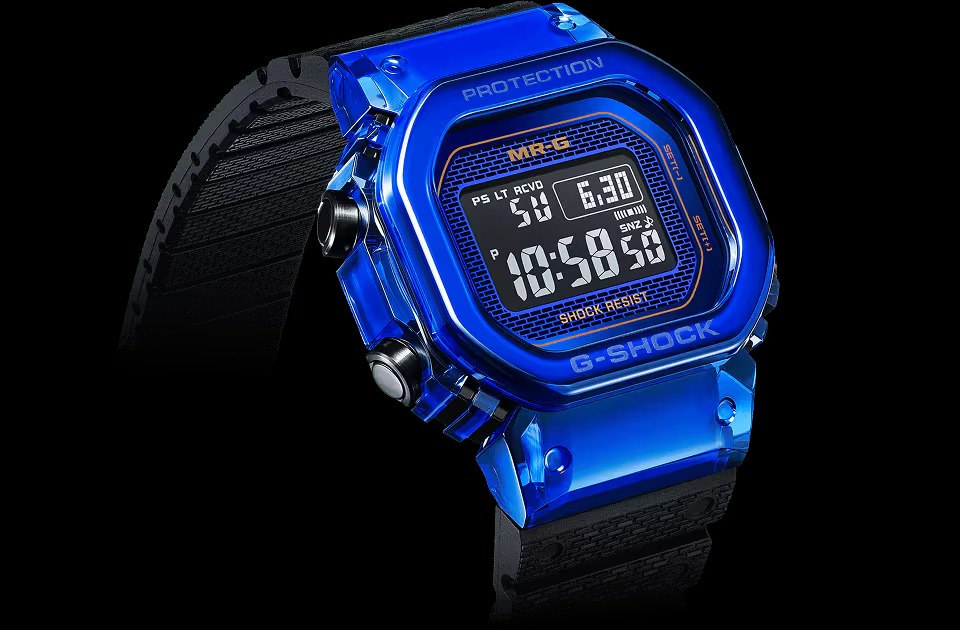
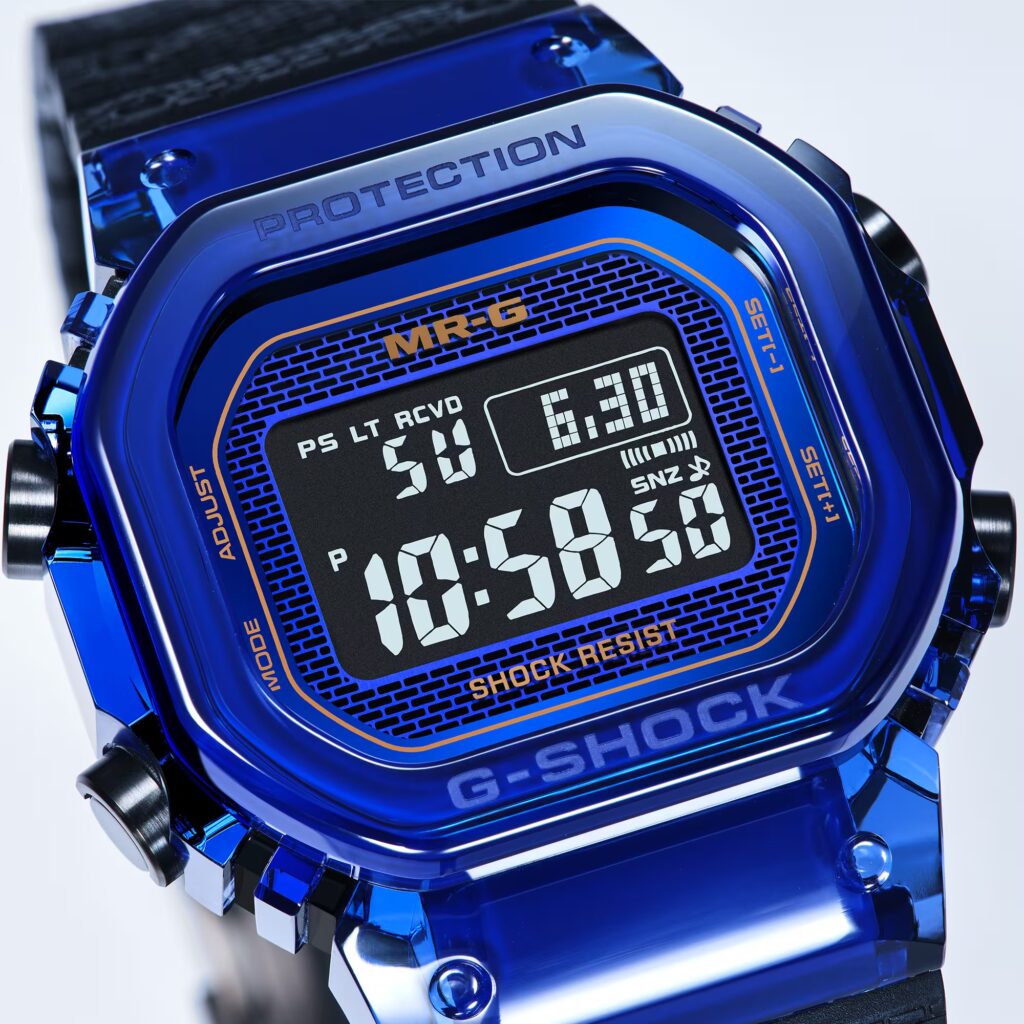
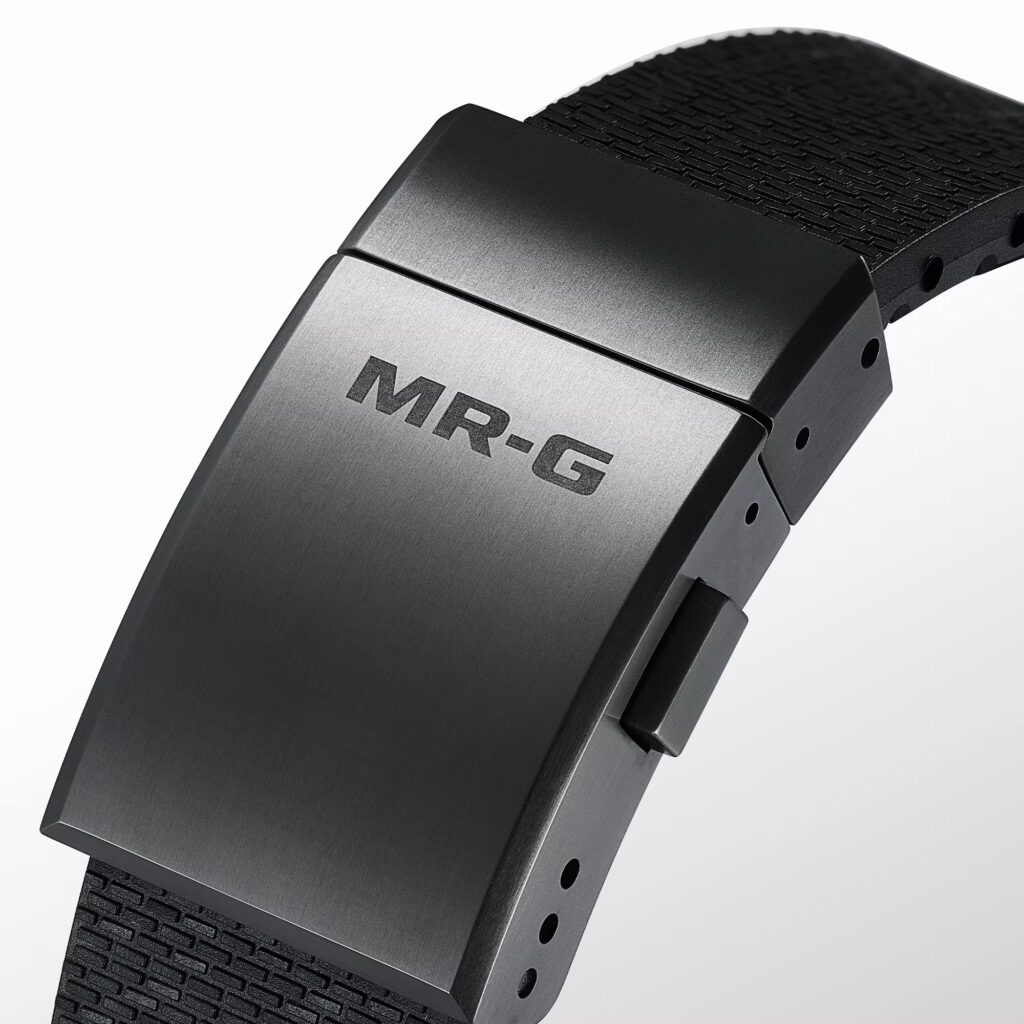
Casio has announced a new addition to its MR-G watch series, the MRG-D5000 Blue Sapphire, to mark the 30th anniversary of the product line, and to be honest, the new timepiece looks absolutely gorgeous.
The watch is listed on the Casio US website for $80,000, with interested buyers currently able to register for an opportunity to purchase one. It is also scheduled to launch in Japan in December 2026 for ¥11,000,000, including tax.
Design Details
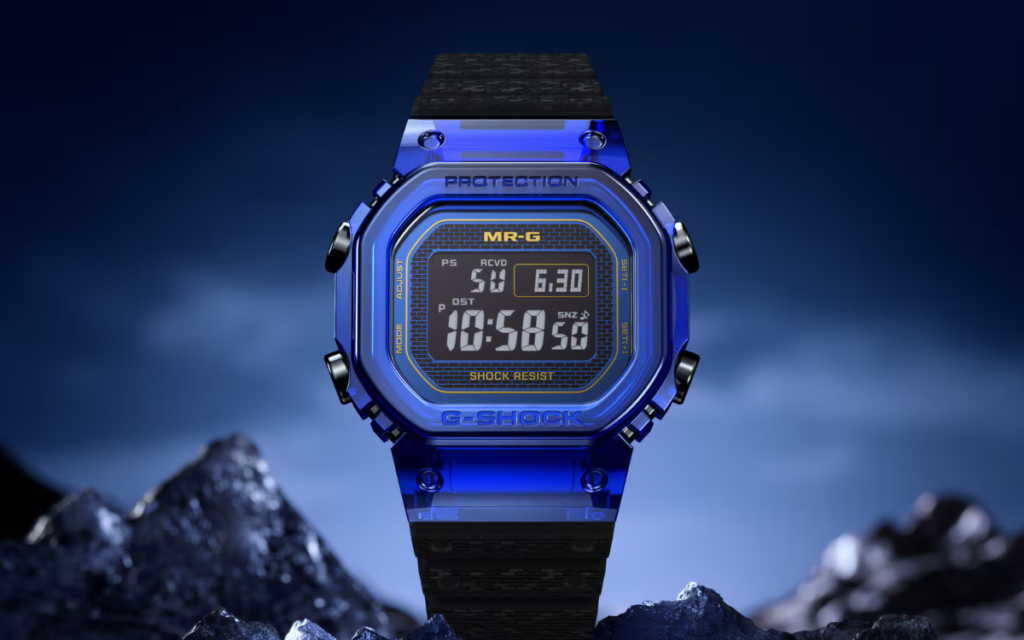
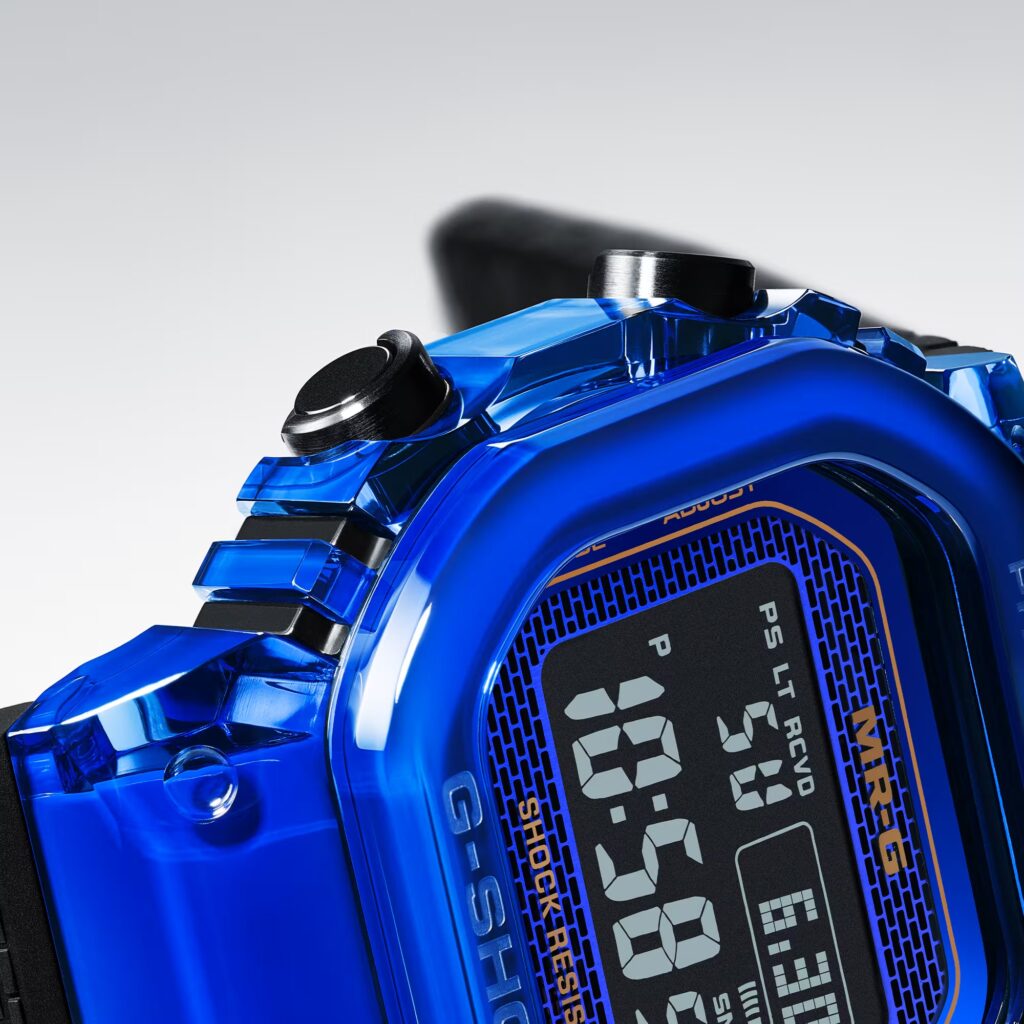
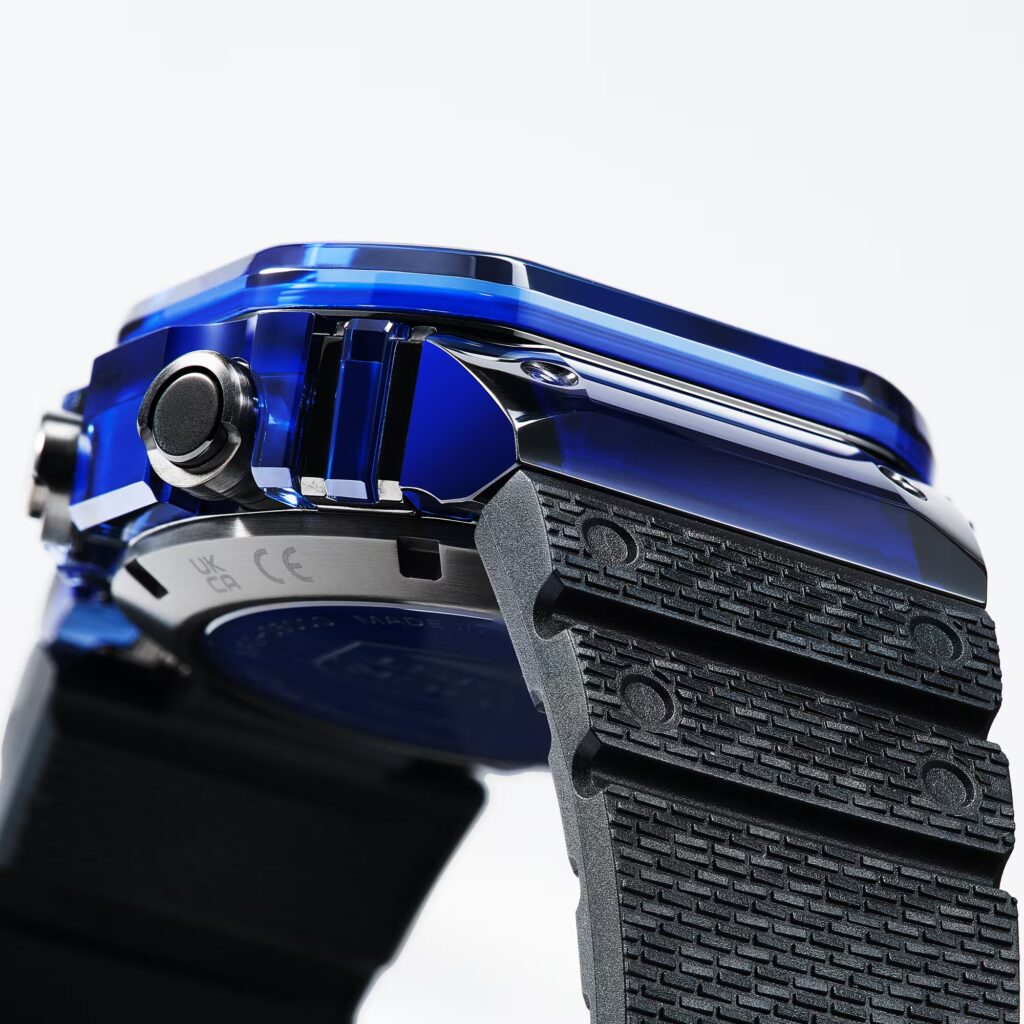
This watch features an exterior case built using blue sapphire crystal. Because sapphire is rigid and can be prone to shattering under direct impact, the company implemented a specific Multi-Guard Structure to maintain the shock resistance the brand is known for.
The sapphire crystal is paired with titanium components that have been treated with a diamond-like carbon (DLC) coating. This combination keeps the watch’s weight at 121 grams. Its dimensions are 51.1 x 43.2 x 16.5 mm. The face design includes a blue brick pattern, and the watch is fitted with a Dura Soft rubber strap that secures via a newly designed one-touch three-fold clasp.
Where to buyCasio G-Shock MR-GBrowse the range on AmazonShop now →
Internally, the MRG-D5000 operates on the Tough Solar power system, which reliably converts light into energy to keep the device running. The rechargeable battery provides up to 11 months of operation under normal conditions without light exposure, and up to 22 months when stored in the dark with the power-saving function enabled.
For time accuracy, the watch uses Multi Band 6 technology. This allows it to receive radio-controlled time calibration signals up to six times a day from stations in Japan, North America, the UK, Germany, and China.
The watch includes 200-meter water resistance, a 1/100-second stopwatch, a 24-hour countdown timer, and world time functionality covering 38 time zones. It also features five daily alarms, an automatic calendar, and a white LED backlight for visibility in low light.
Casio is limiting the production of the MRG-D5000 Blue Sapphire to 20 units worldwide. Each watch will feature a screw-lock back plate engraved to indicate its limited-edition status and will be shipped in specialized packaging.
We use cookies on our website to give you the most relevant experience by remembering your preferences and repeat visits. By clicking “Accept”, you consent to the use of ALL the cookies.
This website uses cookies to improve your experience while you navigate through the website. Out of these, the cookies that are categorized as necessary are stored on your browser as they are essential for the working of basic functionalities of the website. We also use third-party cookies that help us analyze and understand how you use this website. These cookies will be stored in your browser only with your consent. You also have the option to opt-out of these cookies. But opting out of some of these cookies may affect your browsing experience.
Necessary cookies are absolutely essential for the website to function properly. This category only includes cookies that ensures basic functionalities and security features of the website. These cookies do not store any personal information.
Any cookies that may not be particularly necessary for the website to function and is used specifically to collect user personal data via analytics, ads, other embedded contents are termed as non-necessary cookies. It is mandatory to procure user consent prior to running these cookies on your website.