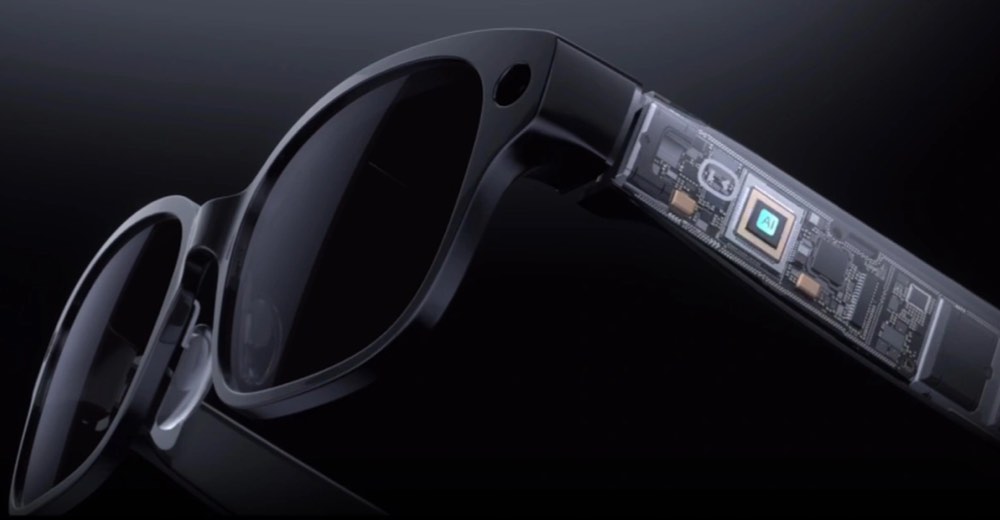
At the 2024 Baidu World Conference, Baidu officially launched its Xiaodu AI Glasses, presenting them as the “world’s first AI glasses equipped with a native Chinese language model.”
Designed by Baidu’s hardware division, Xiaodu Technology, these glasses showcase Baidu’s advanced Ernie language model and are geared towards integrating AI into wearable technology for the Chinese-speaking audience and challenge the popularity of Meta’s Ray-Bans.
Specifications
The Xiaodu AI Glasses weigh just 45 grams and come equipped with a 16MP ultra-wide-angle camera with AI stabilization, enabling smooth and stable first-person perspective photography. These glasses also feature a four-microphone array to effectively capture sound and open-ear anti-leakage speakers that deliver clear audio, allowing users to engage in an immersive, hands-free experience.
The glasses support six core functionalities: real-time Q&A through walk-and-ask queries, calorie recognition, object identification through an encyclopedia feature, audio-visual translation, and intelligent reminders. They are also equipped with AI anti-shake technology for photos and videos, enabling users to document their experiences seamlessly.
In terms of battery life, the Xiaodu AI Glasses offer up to 56 hours on standby and can run over 5 hours of continuous audio playback. The glasses are equipped with rapid-charging technology, enabling a full charge in just 30 minutes, making them a practical option for daily use.
The Xiaodu AI Glasses run on the DuerOS AI native operating system and are anticipated to support seamless integration with popular Baidu applications like Baidu Maps and Baike, further enhancing the user experience with Baidu’s services.
Pricing & Availability
Baidu has confirmed that the Xiaodu AI Glasses will officially launch in the first half of 2025, with an expected retail price of under 2,100 yuan (approximately $290).
In related news, Apple has begun work on a smart glasses project, codenamed “Atlas,” aiming to reshape wearable tech with a true AR experience. The project, led by Apple’s Product Systems Quality team, is currently in the research phase, gathering insights from internal focus groups. Apple aims to launch a lightweight, stylish model that initially integrates with the iPhone, leveraging its processing power, with a long-term goal of fully standalone smart glasses. However, high-quality standards mean the release maybe five years away. Meanwhile, Apple plans to release the Vision Pro 2 by 2025 or early 2026, featuring an upgraded M5 chip for improved AR capabilities.
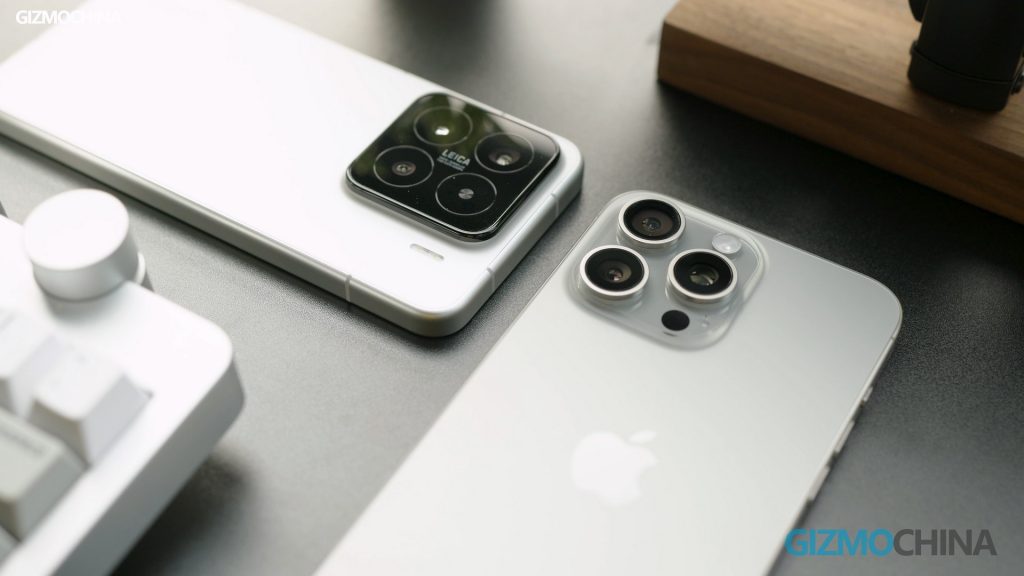
The Xiaomi 15 could very well be one of the only compact flagship smartphones that will launch in India. If this is true, then this model could be the only true competitor to the Apple iPhone 16 and the upcoming Samsung Galaxy S25 in the region. So here’s everything that you need to know.
1. Why Xiaomi 15 is among the few compact phone options
The small form factor in the premium smartphone segment isn’t as popular as the taller screened models. However, there are still those who prefer more compact form factors. While Apple removed the mini variant, its base option has a size similar to the base Galaxy S series model. There have been recent announcements for devices with relatively smaller screens in the Chinese market, but these are not available in India.
2. Other Competitors?
The Vivo X200 series introduced the new Vivo X200 Pro Mini. This was a well-received move from the brand, however, a fresh report has revealed that only the X200 and X200 Pro versions are arriving in India. In our recent comparison, we found that the Xiaomi 15 and Vivo X200 Pro Mini have distinct marketing behind their names but are similar packages.
As of right now, the Xiaomi 15 is the only new compact flagship phone that will be available in the Indian market. There is also the vanilla Oppo Find X8. However, this model sports a 6.59-inch AMOLED panel, which makes it more in line with your typical flagship phones.
3. What does the Xiaomi 15 Offer?
One of the notable aspects of the Xiaomi 15 is the 6.36-inch LTPO OLED display with a 120Hz refresh rate, HDR10+, Dolby Vision, 1.5K resolution, and 3200 nits of peak brightness. This is a high end display, although, it’s a lot more easier to wield. But despite its compact form factor, the device packs cutting edge technology. The model is equipped with the Snapdragon 8 Elite SoC, which is paired with up to 16GB of RAM and 1TB of internal storage.
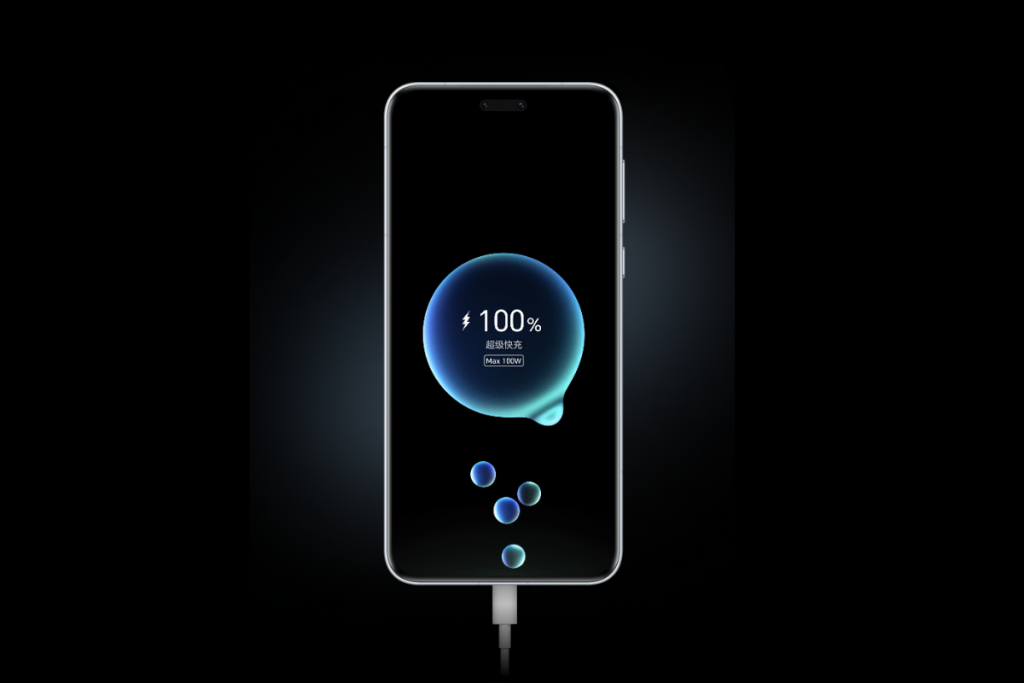
This model blends glass and aluminum for a premium design that comes with shatterproof glass. For optics, there are three 50MP image sensors on the rear for the main, telephoto, and wide angle lens. Meanwhile, the front houses a 32MP selfie shooter. The Xiaomi 15 packs a large 5,400mAh battery pack, which supports 90W wired fast charging and 50W wireless fast charging.
This is a notable upgrade over the 4,610mAh on its predecessor, the Xiaomi 14. Other notable features include stereo speakers, an ultrasonic in-display fingerprint scanner, an IP68 rating for water and dust resistance, and the Android 15 OS based HyperOS 2.0 custom skin out of the box.
Currently, only two brands offer fully gaming-focused phones: Asus and Nubia’s Red Magic. While other brands have launched performance-driven phones with gaming capabilities featuring dedicated display chips for enhanced graphics, these phones often resemble regular smartphones in appearance. In contrast, Asus and Nubia’s offerings are fully gaming-focused and deliver a complete gaming experience.
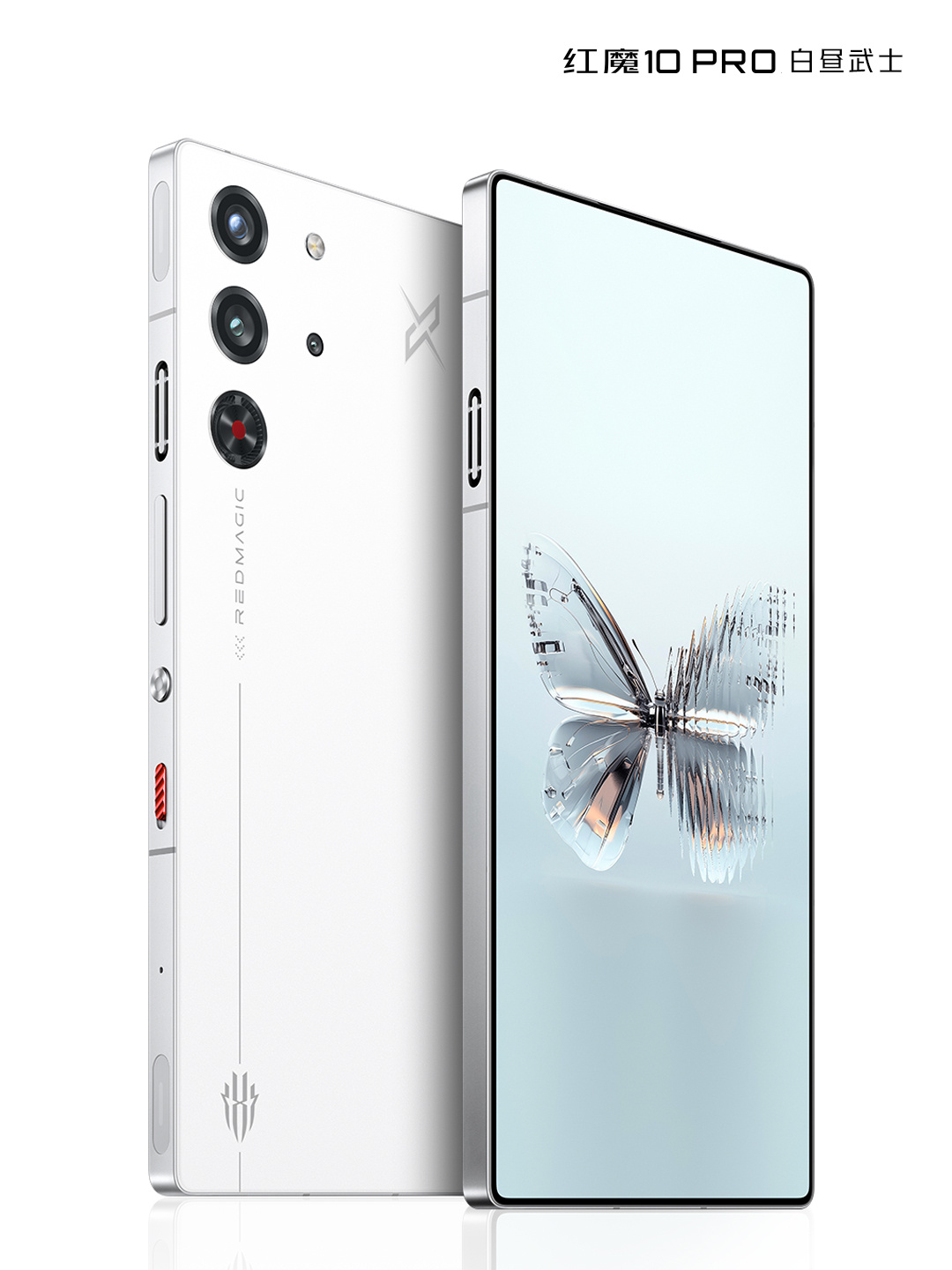
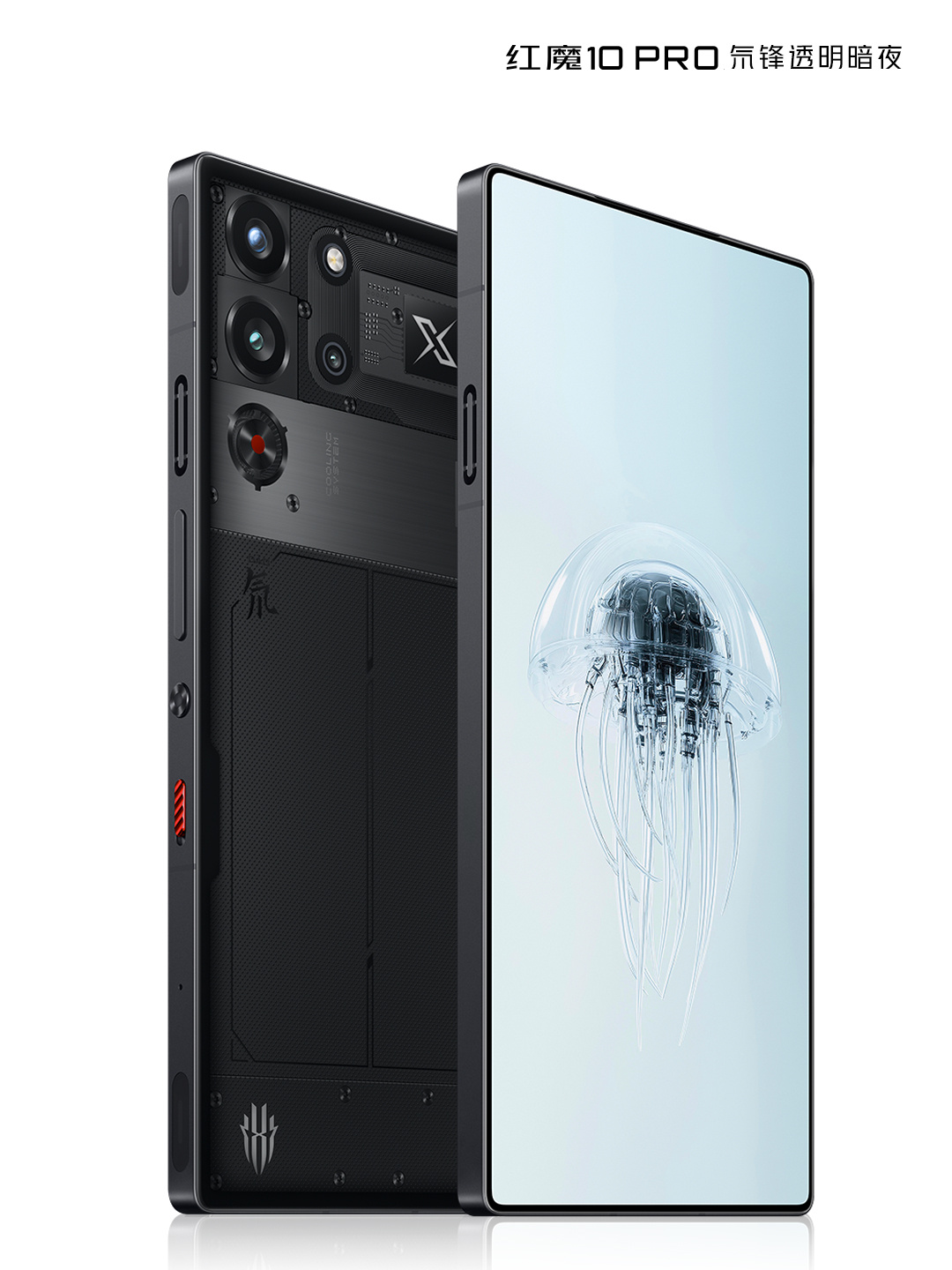
Both brands are gearing up to unveil Snapdragon 8 Elite-powered gaming phones. The ROG Phone 9 series by Asus is set to arrive later this month, while the Red Magic 10 Pro series is poised to be the world’s first phone to feature Qualcomm’s most powerful mobile platform. Here’s a look at what makes the Red Magic 10 Pro stand out from the crowd when it comes to gaming.
The Red Magic 10 Pro boasts a stunning 6.85-inch AMOLED display with a 144Hz refresh rate and 1.5K resolution. This combination delivers buttery-smooth visuals with vibrant colors and sharp details, bringing your games to life. The ultra-slim bezels, measuring only 1.25mm, maximize screen real estate with a 95.3 percent screen-to-body ratio, providing an immersive, distraction-free gaming experience.
What makes the display different is the absence of a camera punch-hole. Equipped with an under-display camera, it offers a very impressive full-screen experience.
2. Unrivalled Performance
Red Magic 10 Pro series – Knight Black
At the heart of the Red Magic 10 Pro lies the Snapdragon 8 Elite, Qualcomm’s latest and most powerful chipset. With Nubia’s self-developed R3 chip for enhanced graphics, up to 24 GB of RAM, and 1 TB of storage. The company has already confirmed that the device will have the faster LPDDR5x Ultra RAM and UFS 4.0 Pro. Therefore, this powerhouse ensures blazing-fast performance, enabling seamless gameplay even in the most demanding titles.
Red Magic’s renowned ICE 12.0 cooling system takes thermal management to the next level. It features a built-in turbofan, multiple layers of graphene, and a vapor chamber, working in tandem to dissipate heat efficiently. This translates to sustained peak performance during marathon gaming sessions, preventing throttling and ensuring a smooth, lag-free experience.
3. Gamer-Centric Design
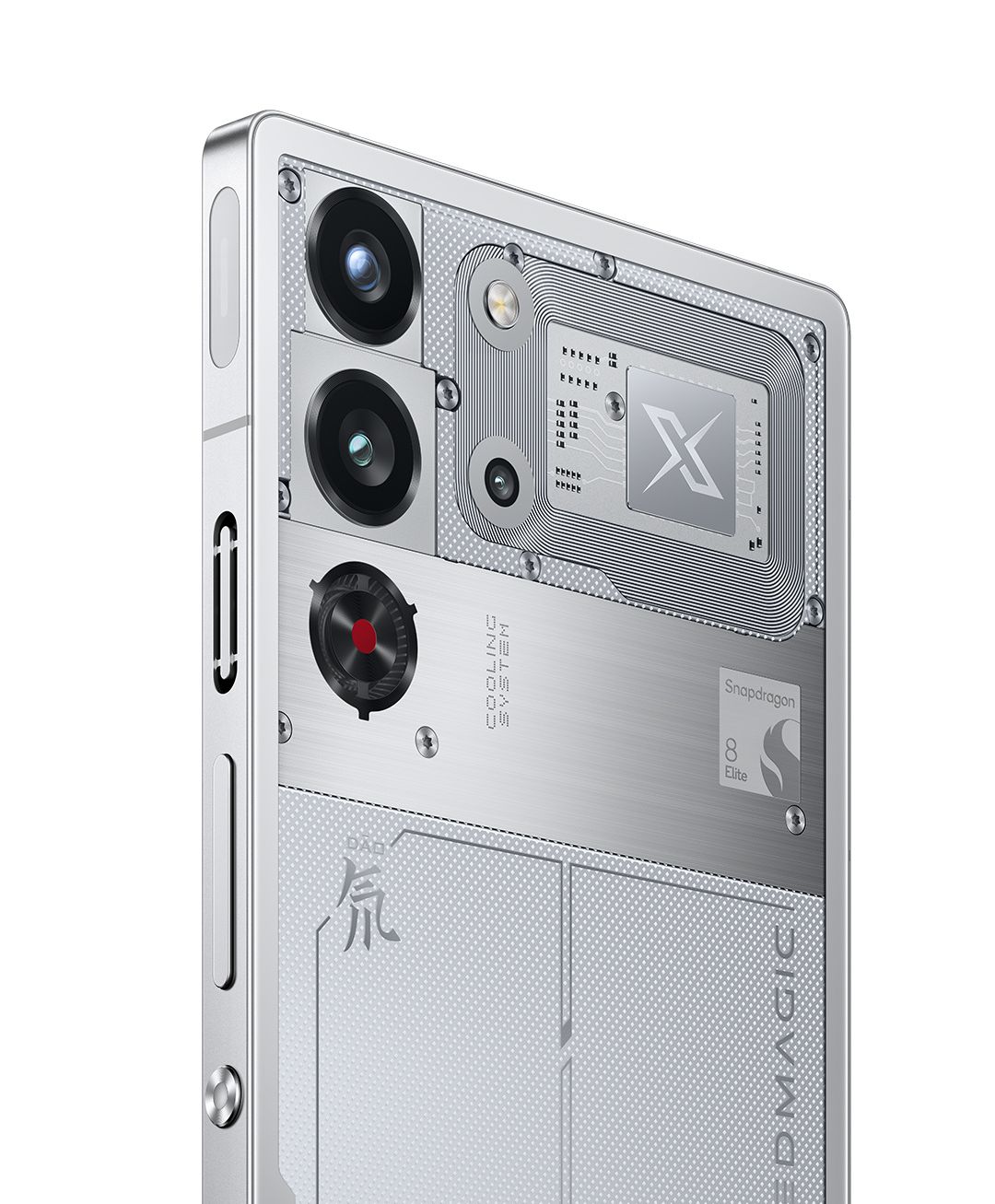
Red Magic 10 Pro series – Deuterium Transparent Silver Wing
Red Magic understands that gamers demand more than just powerful specs. The 10 Pro incorporates dedicated shoulder triggers, providing console-like control and precision. The device also features customizable RGB lighting, allowing gamers to personalize their setup and express their style. RGB lighting even illuminates the air vents on the left and right, enhancing the immersive gaming experience.
A red-colored mode switcher on the right edge allows users to switch to Gaming Mode for elevated performance while gaming. The device equips gamers with shoulder buttons for landscape orientation gaming and an X-axis linear motor for 4D in-game vibrations, thereby enhancing tactile feedback during gameplay.
The Deuterium Transparent Black and Deuterium Silver Wang color editions offer a glimpse into the device’s internal components, such as the Snapdragon 8 Elie cap. This unique design element sets it apart from other gaming smartphones and appeals to tech enthusiasts. Another interesting point about the phone’s design is that it has a completely flat back panel, meaning there is no protrusion for the camera module.
4. Gargantuan Battery
Red Magic 10 Pro series – Deuterium Transparent Black
The Red Magic 10 Pro packs a monstrous 7,050mAh silicon-carbon battery, aptly nicknamed the “Bull Demon King.” This massive power source ensures that you can game for hours on end without worrying about running out of juice. Despite packing a gargantuan battery, the phone maintains a slim profile of 8.9mm. The 3C certification of the device has revealed that it will offer 120W fast charging. No other gaming phone offers such a battery and charging combination.
Nubia has also incorporated advanced battery technology, including ETT tunnel technology and a next-generation silicon-carbon negative electrode, to maximize efficiency and lifespan. Combined with Magic Cube AI power management, the Red Magic 10 Pro intelligently optimizes power consumption to deliver an impressive battery life, even with the demanding Snapdragon 8 Elite at the helm.
5. Gaming Optimized Software
Red Magic 10 Pro series – Deuterium Transparent Silver Wing
Red Magic phones come with a gaming-optimized operating system known as Red Magic OS. Built on top of Android 15, this custom OS enhances the gaming experience with features like Game Space, a dedicated gaming hub for organizing games and customizing settings. It offers various performance modes to optimize CPU and GPU usage, advanced cooling management to prevent overheating, and customizable controls including shoulder triggers for a console-like feel. The OS also includes 4D Shock with an X-axis linear motor for immersive haptic feedback and game enhancement tools like screen recording, frame rate monitoring, and customizable RGB lighting, making it a comprehensive platform for mobile gamers.
When two flagship phones hit the market with nearly identical price tags and high-end specs, consumers are left with the tough choice of deciding which is the better investment. Here, we compare the Oppo Find X8 Pro and Vivo X200 Pro across a range of essential parameters to help you make an informed choice. Both phones bring impressive features to the table, including top-tier displays, powerful chipsets, and stunning camera systems, but let’s see how they stack up in every aspect to find out which is the better buy.
Design & Build Quality
Design and Durability Both the Oppo Find X8 Pro and Vivo X200 Pro exude premium build quality, sporting glass fronts and backs with sturdy aluminum frames. Both devices are IP68/IP69 certified, making them resistant to water and dust for up to 1.5 meters for 30 minutes, which is ideal for users seeking durability. However, the Oppo Find X8 Pro includes Corning Gorilla Glass Victus 2 for enhanced screen protection, while the Vivo X200 Pro comes with scratch-resistant glass, which may be slightly less durable in terms of drop resistance.
Aesthetics The screen-to-body ratios of both phones are quite close, with the Vivo X200 Pro achieving a slightly higher 90.3% over the Oppo’s 89.8%. This slight edge gives the Vivo a more immersive look. The phones share similar dimensions and weights, so in hand feel is nearly identical.
Verdict: Oppo Find X8 Pro wins by a slight margin due to its superior Gorilla Glass Victus 2 protection.
Display
Specs and Quality Both devices use a 6.78-inch LTPO AMOLED panel with 1 billion colors, 120Hz refresh rates, and HDR10+ support, offering vibrant colors and smooth transitions. Oppo takes it a step further with Dolby Vision support, which provides a better dynamic range and enhanced viewing experience for HDR content. The peak brightness is also impressive on both phones, reaching 4500 nits, making them easily viewable in bright sunlight.
Resolution and Density While the screen sizes are identical, there’s a slight difference in resolution: the Oppo has a 1264 x 2780 resolution (450 PPI), while the Vivo comes with 1260 x 2800 pixels (452 PPI). The difference is negligible to the human eye, so both displays offer comparable sharpness.
Verdict: Oppo Find X8 Pro edges out slightly with Dolby Vision support for enhanced HDR content.
Performance
Processor and Graphics Under the hood, both phones are powered by the MediaTek Dimensity 9400 chipset, built on a 3nm process, paired with an Immortalis-G925 GPU. This configuration is powerful enough to handle heavy multitasking, gaming, and AI-driven applications with ease. Both models also support UFS 4.0 storage for faster data read/write speeds, which translates into quicker app load times and seamless performance.
RAM and Storage Options The Oppo and Vivo provide a similar range of configurations, with 12GB or 16GB of RAM and storage options going up to 1TB. Notably, Oppo offers a slightly broader range of options with a 512GB variant that includes 12GB of RAM, giving users a bit more flexibility.
Verdict: Equal in terms of raw performance, as both are powered by identical hardware.
Software & OS
Operating System Both devices run on Android 15 but with different UI customizations: Oppo’s ColorOS 15 and Vivo’s OriginOS 5. Each OS has its unique flavor, with ColorOS 15 being widely appreciated for its user-friendly interface and smooth animations, while OriginOS 5 shines in customization options, particularly in the Chinese market.
Updates and Ecosystem Oppo has a strong track record for timely global updates, which could give it an edge for international users. Vivo’s software updates are usually prompt as well but might have a focus on the Chinese market.
Verdict: Oppo Find X8 Pro has a slight edge globally due to ColorOS’s reputation and broader international support.
Camera Systems
Main Cameras The Oppo Find X8 Pro features a quad-camera system, including four 50MP lenses with various focal lengths. Vivo opts for a triple-camera setup, with a 50MP wide sensor, a 200MP periscope telephoto lens, and a 50MP ultrawide lens. Vivo’s 200MP telephoto lens is exceptional, delivering sharp, detailed zoom shots that surpass the Oppo’s capability. However, Oppo’s Hasselblad Color Calibration ensures accurate color reproduction, which is excellent for enthusiasts.
Selfie Camera Both phones house a 32MP selfie camera capable of 4K video recording at 30/60fps. Vivo offers an ultrawide lens (20mm), which is advantageous for group selfies and wide-angle shots.
Video Recording While both models support Dolby Vision HDR and 10-bit video, Vivo takes the lead with support for 8K recording at 30fps, making it a superior choice for those who prioritize video capabilities.
Verdict: Vivo X200 Pro takes the lead with its high-resolution telephoto sensor and superior video capabilities.
Battery Life & Charging
Battery Capacity The Vivo X200 Pro has a slight advantage in battery capacity, offering 6000 mAh compared to the Oppo’s 5910 mAh. This difference may provide an extra hour or two of usage, especially for users engaged in heavy tasks like gaming or video recording.
Charging Speed Oppo supports 80W wired and 50W wireless charging, while Vivo has a faster 90W wired charge but slower 30W wireless charging. For users who prefer wireless charging, Oppo is the better option, while Vivo excels with faster wired charging.
Verdict: Vivo X200 Pro wins slightly with its higher battery capacity and faster wired charging speed.
Connectivity
Both phones are similar in connectivity options, with Wi-Fi 7, Bluetooth 5.4, NFC, and satellite connectivity support (optional in Vivo). However, Oppo’s USB Type-C 3.1 may offer slightly faster data transfer speeds compared to Vivo’s USB 3.2.
Verdict: A slight advantage for Oppo if USB speed is essential.
Speakers & Audio
Both models feature stereo speakers, though Vivo also boasts Hi-Res audio support with 24-bit/192kHz audio quality. Neither device includes a 3.5mm jack, so Bluetooth connectivity quality is crucial, and both support aptX HD for high-quality audio over Bluetooth.
Verdict: Vivo X200 Pro takes the lead with Hi-Res audio for audiophiles.
Security & Biometrics
Oppo and Vivo have under-display fingerprint scanners, but Vivo’s ultrasonic scanner is generally faster and more accurate than Oppo’s optical solution.
Verdict: Vivo X200 Pro wins with the ultrasonic scanner.
Price & Value
The prices for both models are close, with slight regional variations. Given Vivo’s superior camera, larger battery, and Hi-Res audio, it arguably offers slightly more value, especially for media creators. However, Oppo’s ColorOS support and ecosystem might appeal more to international users.
Verdict: Vivo X200 Pro offers more value for media-focused users, while Oppo Find X8 Pro may appeal to a broader international audience.
Accessories & Ecosystem
Oppo offers a more established ecosystem with wearables, smartwatches, and a strong international accessory lineup. Vivo, while competitive in China, has a less extensive global ecosystem.
Verdict: Oppo Find X8 Pro is the better choice for those invested in an ecosystem of compatible accessories.
Final Verdict:
Both phones are stellar flagship options, but your choice may depend on your priorities:
Choose the Oppo FindX8 Pro if you prioritize international software support, a reliable ecosystem, Dolby Vision on display, and enhanced Gorilla Glass protection.
Opt for the Vivo X200 Pro if you want a superior camera system, higher battery capacity, and faster charging, making it ideal for photographers and content creators.
Vivo X200 Pro slightly edges out in features, while Oppo Find X8 Pro may appeal to a wider international audience seeking an established ecosystem and balanced performance.
With the announcement of Qualcomm’s Snapdragon 8 Elite, brands have begun unveiling their latest generation of flagship smartphones. These are high end models with a premium price tag. So now, here’s a list of all the flagship models that are equipped with last year’s Snapdragon 8 Gen 3, which cost under Rs 70,000 in India.
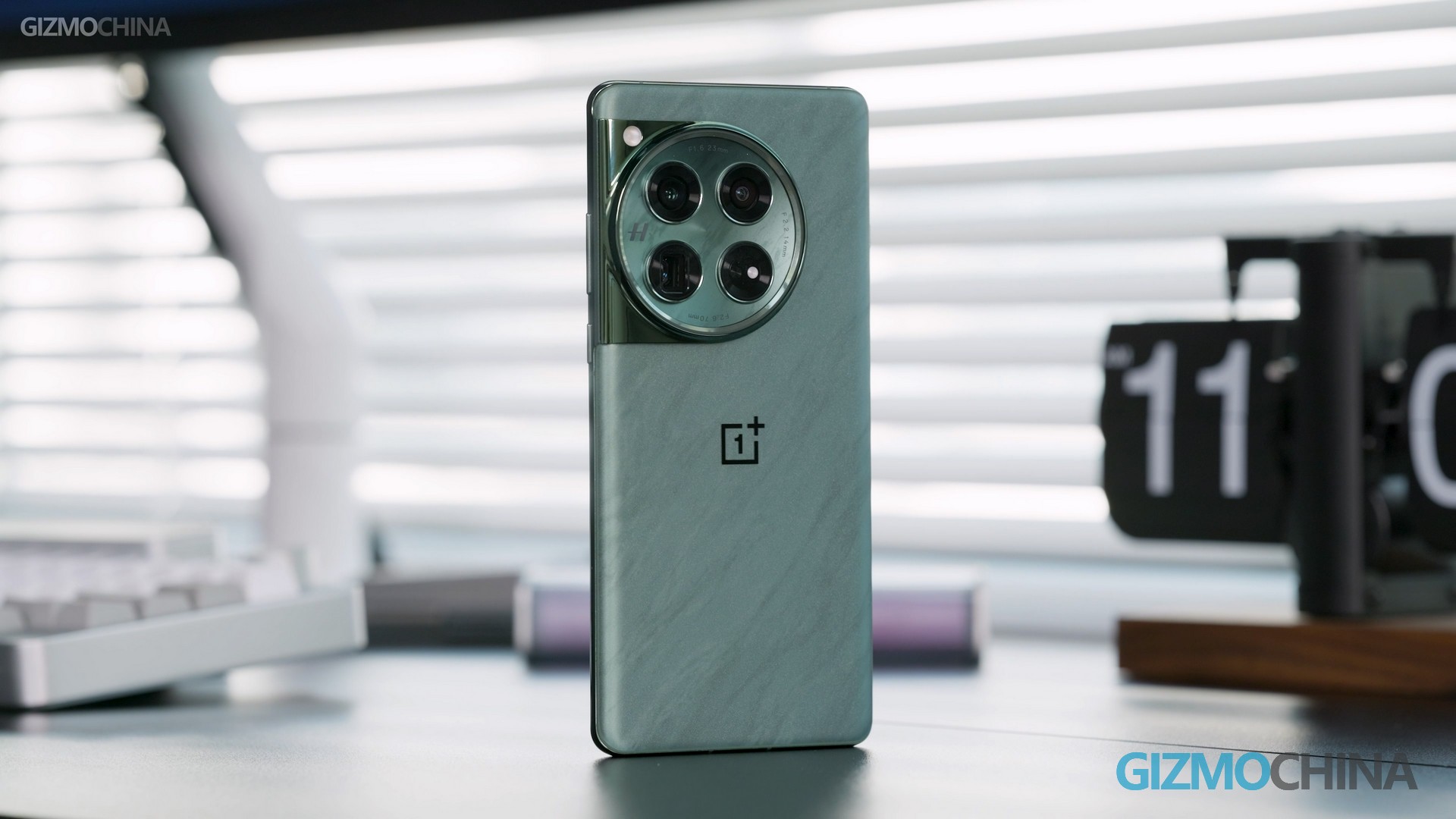
First on this list is the predecessor of the newly unveiled OnePlus 13. As of right now, the OnePlus 12 is listed for 64,999 INR on Amazon India for the 16GB + 512GB variant. So for just around 770 US Dollars, you get some top notch specs and features. It sports a tall 6.82-inch LTPO AMOLED display that offers a 120Hz refresh rate, HDR10+, 4500 nits of peak brightness, and 2K+ resolution. Under the hood, it is equipped with the Snapdragon 8 Gen 3 SoC, with a large 5,400mAh battery, 100W wired fast charging and 50W wireless fast charging support. The rear has a triple 50MP camera with Hasselblad lenses. The OnePlus 12 also offers a premium glass and metal design with an IP65 rating.
2. Xiaomi 14
The Xiaomi 14 is the only flagship model in this list with a compact form factor. It isn’t as tiny as the Galaxy S24 but it sports a 6.36-inch LTPO OLED panel with a 120Hz refresh rate, 3000 nits of peak brightness, and 1.5K resolution. The model is equipped with the Snapdragon 8 Gen 3 and is powered by a 4,610mAh battery pack with 90W wired fast charging and 50W wireless fast charging. The rear has a 50MP triple camera setup with Leica lenses. Similar to the OnePlus 12, this flagship also blends metal and glass for a premium build. It is currently listed on Amazon for 49,999 INR for the 12GB + 512GB storage configuration.
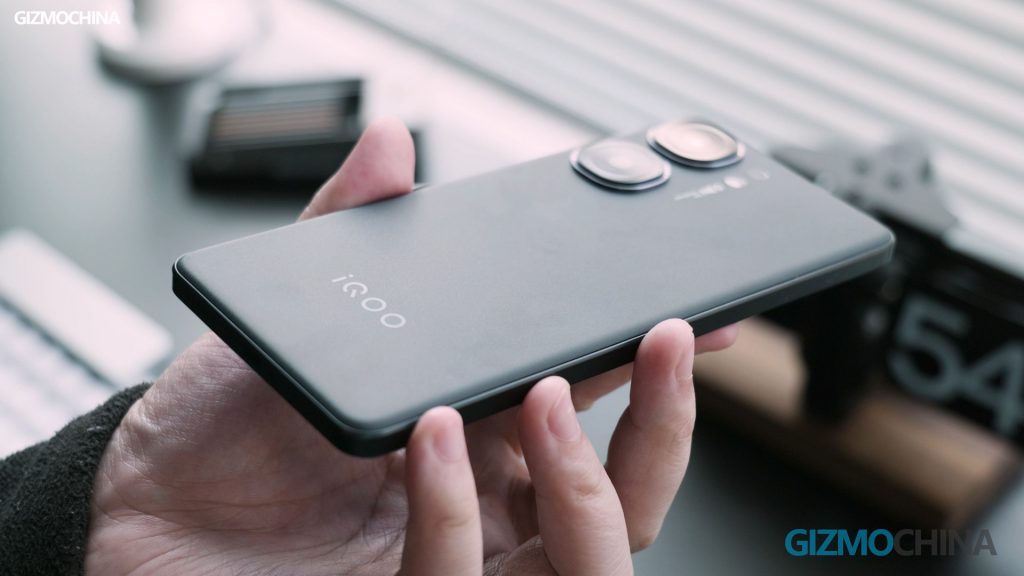
3. iQOO 12
The iQOO 12 costs about the same as the Xiaomi 14. It is listed for 52,999 INR on Amazon India, but this is only for its 12GB + 256GB option. However, the device features a tall 6.78-inch LTPO AMOLED screen with a 144Hz refresh rate, 3000 nits of peak brightness, 1.5K resolution, and more. Under the hood, it is equipped with the Snapdragon 8 Gen 3 SoC. A large 5,000mAh battery pack powers this model with support for 120W wired fast charging. The premium glass and metal body returns here with a triple 50MP camera being featured on the iQOO 12 as well.
Honor Magic 7 Pro has finally arrived, bringing flagship-grade specifications. One of its key highlights is the Snapdragon 8 Elite chip, which promises huge performance and efficiency upgrades.
The Magic 7 Pro starts at $800 (roughly Rs. 67,500) and goes up to $930 (roughly Rs. 78,000) for the top-end model, putting it in close competition with some popular Android phones such as the Samsung Galaxy S24 Ultra, which is currently available for $1200 (roughly Rs 100,000). Despite a lower price tag, the Honor Magic 7 Pro beats the more premium Galaxy S24 Ultra in many ways.
Here are four reasons to pick Honor Magic 7 Pro over Galaxy S24 Ultra:
1. Unmatched performance and efficiency
Qualcomm’s Snapdragon 8 Elite fuels the Honor Magic 7 Pro. It’s the most powerful chip for Android devices and brings huge improvements over the Snapdragon 8 Gen 3 chipset fitted inside the Galaxy S24 Ultra.
The Snapdragon 8 Elite has a 45% faster CPU and a 40% faster GPU than the Snapdragon 8 Gen 3. It’s also 44% more power-efficient. These are massive upgrades that no other Snapdragon chip has received so far.
So, the bottom line is that the Snapdragon 8 Elite-powered Honor Magic 7 Pro is faster and more efficient than the Galaxy S24 Ultra powered by Snapdragon 8 Gen 3.
2. More battery and lesser charging time
The Galaxy S24 Ultra packs a 5,000mAh battery, which should last for at least a day. However, the Honor Magic 7 Pro will offer more screen-on time, thanks to a larger 5,850mAh battery.
Another advantage of having the Honor Magic 7 Pro is a significantly shorter charging time. It supports 100W of wired charging and 80W of wireless charging. In contrast, the Galaxy S24 Ultra only supports 45W of wired charging and 15W of wireless charging. So, if the charging duration matters a lot to you, the Honor device might be a solid buy.
3. More secure face authentication
The Honor Magic 7 Pro uses 3D face unlock, which allows you to unlock the device even in a low-light environment. The Galaxy S24 Ultra, on the other hand, uses a less secure 2D face unlock mechanism, which might not work in all lighting conditions.
For those uninitiated, 3D face authentication utilizes various sensors and algorithms to create a detailed three-dimensional map of a user’s face, making it much harder to spoof compared to traditional 2D facial recognition methods.
4. Better stereo speakers
While both the Honor Magic 7 Pro and Galaxy S24 Ultra have dual stereo speakers, the Honor smartphone’s speakers are louder and clearer at a higher volume.
Another critical thing to note here is the speakers’ location. On the Galaxy S24 Ultra, you get a bottom-firing speaker and an earpiece speaker located at the top of the device. Honor Magic 7 Pro’s speakers have a different placement, though. It has one at the bottom and one at the top in an alternate fashion.
So, these were four strong reasons to pick the Honor Magic 7 Pro over the Samsung Galaxy S24 Ultra. Which one of these two would you choose for your next smartphone upgrade? Share your thoughts in the comments below.
The foldable phone market, once touted as the future of mobile technology, appears to be hitting a snag. According to the Chinese publication 163.com, a major smartphone brand has reportedly paused its development of large-screen foldables. The brand’s identity remains undisclosed, however.
Although the foldable market generated early excitement, it remains a niche segment. Profitability in this space has largely been limited to established players like Huawei and Samsung, while other manufacturers, including the unnamed brand, are still exploring the viability of the form factor.
It’s difficult to sell foldable phones, apparently
Xiaomi offers a case in point. Its recently launched Mix Flip has seen strong sales, with lifetime sales expected to surpass 460,000 units by year-end. This success contrasts sharply with the Mix Fold 4, a larger foldable model, which has struggled to reach even 100,000 units.
Meanwhile, another Chinese brand, Oppo, has clearly postponed the launch of its latest foldables, the Find N5, by a year. And it’s still uncertain uncertain if the devices will debut in 2025.
Transsion, a major player in overseas markets, also appears to be cooling on foldables. Their recent launches – the Tecno Phantom V Fold 2 / Flip 2 and Infinix Zero Flip – seem like a last hurrah, as reports suggest the brand has halted further development on foldable phones.
These developments come amidst a broader slowdown in the Chinese foldable market. According to IDC’s latest report, shipments for Q3 2024 reached 2.23 million units, representing only a 13.6% year-on-year increase. This pales in comparison to the explosive growth witnessed over the past two years.
The foldable phone market undeniably holds promise. However, the recent pause by a major player and the stagnant growth in China suggest manufacturers need to address key hurdles like affordability and durability before foldable can truly take flight in the smartphone world.
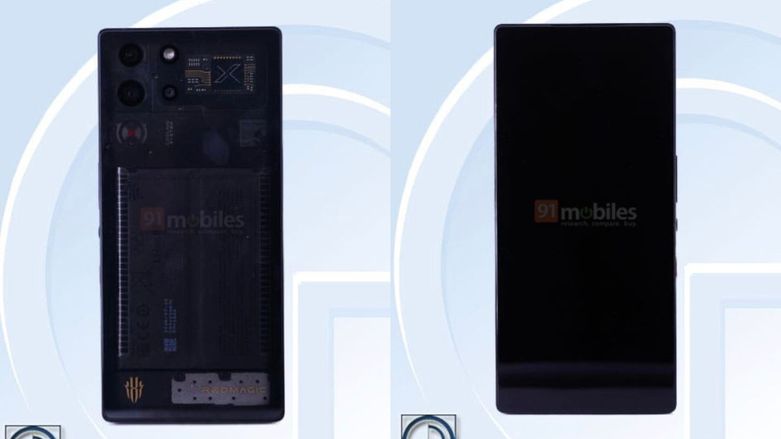
Nubia is gearing up to launch its flagship series of gaming smartphones in China soon. But ahead of its official announcement, live images of the Red Magic 10 Pro+ model and its battery specs have been revealed through a certification listing.
Red Magic 10 Pro+ Design Revealed via TENAA
The upcoming gaming phone was spotted on China’s TENAA certification (Via 91Mobiles). Looking at the database, we can see the front and rear design of the Red Magic 10 Pro+. It features flat edges, a thin body, minimal bezels, a full display on the front, and a transparent panel on the rear. You can even see the camera sensors along with the LED flash module on the top left on the back.
Red Magic 10 Pro+
Just recently, the Red Magic 10 Pro series had its full design revealed through promotional images (teasers also confirmed the Deuterium Transparent Dark Night and Deuterium Transparent Silver color options). So these renders are also in line with the previous teasers. One notable aspect of this device that is visible in these live images is the camera modules, which sit flush in the rear panel and don’t protrude from the back. The TENAA listing online has also confirmed the battery details of the Red Magic 10 Pro+.
It houses a dual battery design with one being a 3,100mAh and the other featuring a 3,450mAh capacity. In total, this amounts to a total battery capacity of 6,550mAh. This is a major upgrade over last year’s Red Magic 9 Pro+ which housed a 5,500mAh battery pack. Previous rumors also hinted at the device featuring a sizeable 7,050mAh cell. This model is confirmed to launch with the Snapdragon 8 Elite SoC, which is paired with a BOE display with a 1.5K resolution and a 144Hz refresh rate.
The Moto G Power 5G (2025) is rapidly making its way through various certification platforms, with key details about the upcoming device now emerging. Following the success of the Moto G Power 5G (2024), which launched exclusively in North America in March this year, the 2025 version is expected to follow a similar timeline with a potential debut in early 2025 and a broader regional rollout.
Moto G Power 5G 2025 (render)
This Motorola device has been spotted on the FCC (via 91mobiles), TUV Rheinland, and UL Demko certifications, which have revealed several crucial specifications, including battery capacity, charging capabilities, and design features. Here’s a breakdown of the information that’s been uncovered so far.
Moto G Power 2025 spotted on multiple certifications:
The FCC listing confirms that the Moto G Power 5G (2025) will carry the model number XT2515-1. Interestingly, the listing also includes additional models under the numbers XT2515-2, XT2515-3, and XT2515V, and confirms that the models are for different markets and there will be no other differences among them.
The listing also confirms a broad range of connectivity options for the Moto G Power 5G (2025), including 5G support, 4G LTE, Wi-Fi 2.4GHz and 5GHz, Bluetooth BR/EDR/LE, and NFC. Additionally, the phone will feature GNSS, FM, and WPT (wireless power transfer) capabilities. This ensures that the Moto G Power 5G (2025) will offer robust connectivity and versatility for users around the world.
The listing also reveals support for wireless charging. Significant in context, the UL Demko Certification listing reveals the Moto G Power charger will support a max 20W charging speed output. For reference, the G Power (2024) supports 15W wireless and 30W wired charging.
The listed battery has a 4850mAh rated capacity (with a typical capacity of 5000mAh), which is the same as the predecessor. While the battery capacity remains consistent, a more efficient chipset could still offer an improvement in battery life.
A previously leaked render of the phone has already revealed its front and back design, which you can check out here.
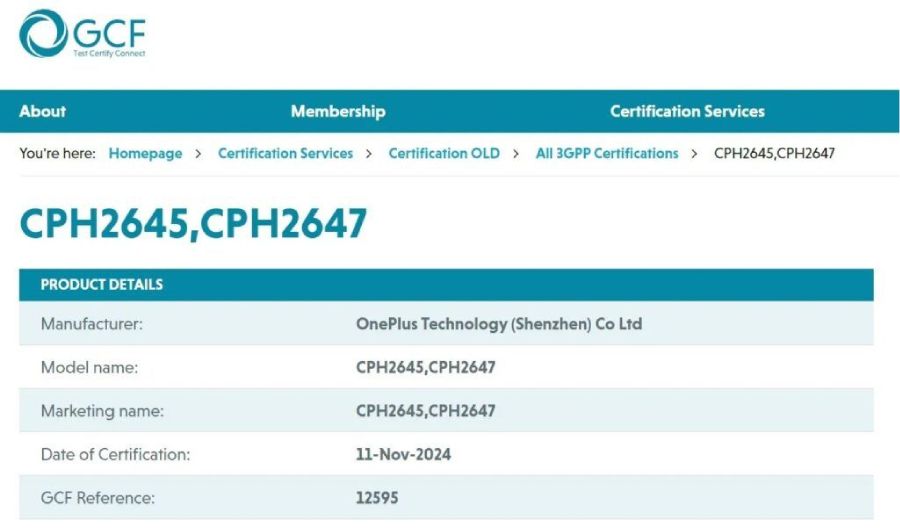
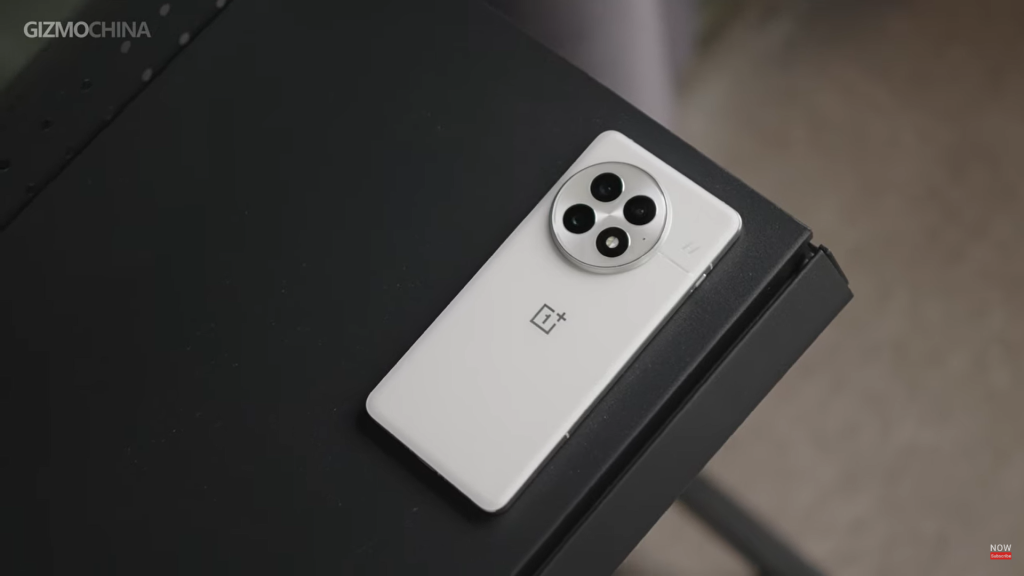
The OnePlus 13 garnered much attention with its recent launch in China, but rumors of its more affordable sibling, the OnePlus 13R, are starting to gain traction now. The phone was recently spotted on the Global Certification Forum (GCF) website, hinting at an imminent release.
The GCF listing, discovered by MySmartPrice, reveals the model number CPH2645 for the OnePlus 13R. It also confirms a broad range of connectivity options, including 2G GSM, 3G WCDMA, 4G LTE (both FDD and TDD), and 5G.
The 5G support includes a wide array of bands—n1, n2, n3, n5, n7, n20, n28, n38, n40, n48, n66, n77, and n78—ensuring compatibility with most global networks.
Beyond connectivity, details about the OnePlus 13R are still under wraps. However, based on rumors and past trends, we can make some educated guesses.
OnePlus 13R: Expected Specifications
The OnePlus 13R is expected to feature a 1.5K resolution display, though its exact size is still unknown. Given that the OnePlus 12R offered a 6.78-inch display, a similar size seems likely.
Likewise, rumors suggest that the OnePlus 13R will run on the Qualcomm Snapdragon 8 Elite SoC. Its camera setup may include a 50MP Sony IMX906 main sensor paired with a 50MP Samsung JN1 telephoto lens—an upgrade from the OnePlus 12R, which had a 50MP Sony IMX890 main camera alongside a lower-resolution ultra-wide and macro sensor.
The OnePlus 13R might also pack a larger 6,000mAh battery, up from the 5,500mAh unit in the OnePlus 12R.
There’s speculation that the OnePlus 13R could be a rebranded version of the upcoming OnePlus Ace 5, which is expected to launch in China before the end of the year. The strategy aligns with OnePlus’s past practices of releasing R-series phones as rebranded versions of their Ace line.
With its GCF certification, a global launch for the OnePlus 13R looks imminent. We’ll keep you posted on any new updates.
Xiaomi is working on a new POCO X7 Pro smartphone. This is a mid range smartphone model and a fresh report hints that this device could be the first ever HyperOS 2.0 powered phone in India. The Xiaomi 15 was the first smartphone with this Android 15 OS based custom skin in China, but the POCO X7 Pro might be the first in India.
POCO X7 Pro: What to expect
The news arrives from a SmartPrix report, quoting a source close to the matter. While the Xiaomi 15 was just announced in China with HyperOS 2.0, the brand’s latest flagship smartphone is only expected to launch in India around March 2025. So, the POCO X7 Pro might be dropping in the country ahead of the Xiaomi 15. To recall, the POCO X6 Pro was announced in India back in January 2024, so the POCO X7 Pro would likely launch in a similar timeline.
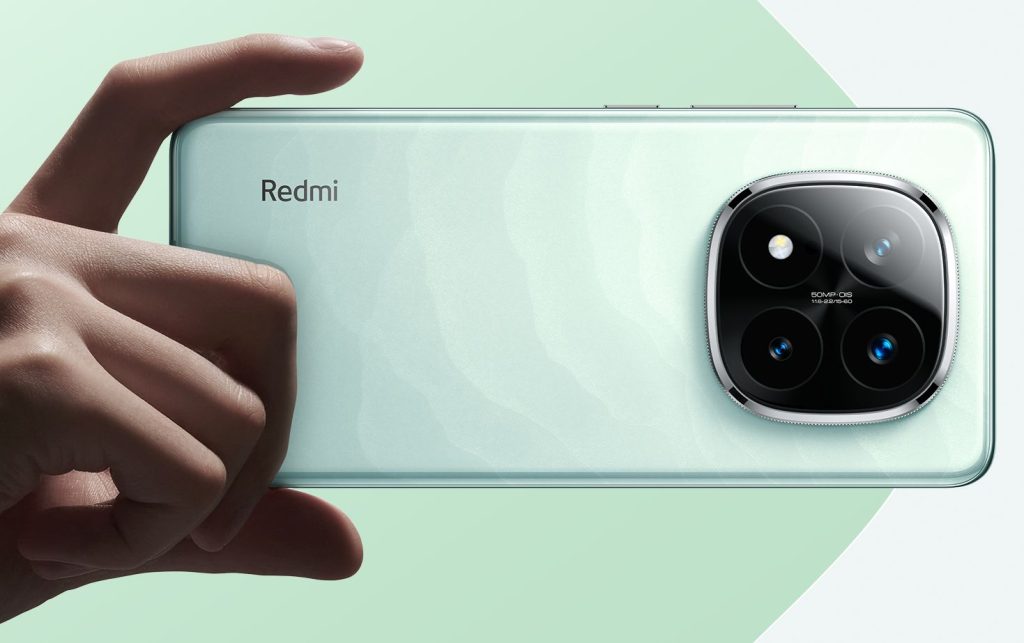
Redmi Note 14 Pro+
Based on what we know so far, the POCO X7 is possibly a renamed Redmi Note 14 Pro. In other words, the POCO X7 Pro might be a rebranded Redmi Note 14 Pro+ model. Xiaomi recently confirmed the December launch timeline for the Redmi Note 14 series. So it won’t be surprising if the POCO X7 and POCO X7 Pro arrive a month later in the Indian market. Xiaomi has launched multiple variants of the same phone with slight differences from its various sub-brands in the past.
If the POCO X7 Pro is a rebranded Note 14 Pro+, then we can expect a 6.67-inch AMOLED display with a 1.5K resolution and a 120Hz refresh rate on the front. Meanwhile, the rear may offer a 50MP (Main) + 50MP (Telephoto) + 8MP (Ultrawide). Similar to the Note 14 Pro+, the POCO X7 Pro may be equipped with the Snapdragon 7s Gen 3 SoC as well. A massive 6,200mAh battery pack could power this model, which supports 90W wired fast charging.
While the iQOO 13 is yet to make its global debut, iQOO is already preparing for the launch of its next-generation premium mid-range devices, the iQOO Neo10 series, in China. Although a specific launch date has not been announced, the Neo10 series is generating excitement among gaming enthusiasts.
iQOO Neo9 Pro
iQOO Neo10 series possibly includes iQOO 13’s SuperComputing Chip Q2
iQOO Neo product manager, known on social media as @Neo_Beta, has shared a key detail about the new lineup, confirming that the Neo10 series will feature its self-developed gaming chip. Although he didn’t reveal any specific information about the secondary chip, the mention of a “stronger dual-core performance” hints at the adoption of the iQOO 13’s SuperComputing Chip Q2. As the name suggests, this is iQOO’s second generation of the Q series secondary chip, which reportedly is more power efficient and more capable.
The iQOO Neo 10 is expected to feature the Snapdragon 8 Gen 3 SoC, while the Pro model might come equipped with the new MediaTek Dimensity 9400 SoC. Both models recently appeared on China’s 3C certification listings and are reported to support 120W fast charging.
Judging from the performance of the Neo9 Pro, the upcoming devices should be capable of handling almost all the heavy titles without breaking the bank.
For those unfamiliar, the SuperComputing chips offer two primary benefits: upscaling game rendering resolution (known as super-resolution) and achieving up to 144fps in supported frame-capped games (through game frame interpolation). While enabling these features increases power consumption, they provide a high-performance experience that stands out in this price segment.
Additional features and specifications
The phone will feature a 6.78-inch flat display built with 8T LTPO technology. It features a 1.5K resolution and a 144Hz refresh rate, enabling fluid visuals and rapid response times essential for gaming.
The iQOO Neo10 Pro could offer a robust memory configuration, with options for up to 16GB of RAM and 512GB of internal storage, which ensures ample space for gaming, media, and other intensive applications.
In terms of power, the Neo10 Pro is expected to feature a battery capacity above 6x00mAh, coupled with support for 120W fast charging. This combination promises extended usage with minimal downtime, allowing users to recharge quickly and get back to their activities. Additionally, the phone will include a Goodix Ultrasonic Fingerprint sensor, an upgrade over the under-display optical unit of the Neo9 series.
After a successful launch in China, Oppo is all set to bring its flagship Find X8 series on November 21st, comprising the Find X8 and Find X8 Pro, to global audience. Let’s dive into what to expect from these smartphones as they head to international markets, including India.
Oppo has equipped the Find X8 and Find X8 Pro with impressive displays that offer vibrant colors and high refresh rates for a premium viewing experience. The Find X8 sports a 6.59-inch 1.5K AMOLED flat screen with ultra-narrow 1.45mm bezels, providing a seamless visual experience, while the Find X8 Pro comes with a slightly larger 6.8-inch LTPO micro-curved AMOLED screen.
Both displays support a 120Hz adaptive refresh rate for smooth scrolling and gaming, alongside up to 4500 nits peak brightness, ensuring excellent visibility even in bright sunlight. The displays are also protected by Oppo Crystal Shield glass on both the front and back, enhancing durability.
2. Performance
Both the Find X8 and Find X8 Pro are powered by MediaTek’s latest Dimensity 9400 SoC. Built on a 3nm architecture, this chipset promises enhanced power efficiency and performance, making it ideal for handling demanding tasks, from gaming to multitasking. The devices come with up to 16GB of LPDDR5X RAM and UFS 4.0 storage options up to 1TB, ensuring smooth performance and ample storage for all user needs.
3. Dual Periscope Camera
One of the standout features of the Find X8 series is the world’s first dual periscope camera system, allowing both devices to offer impressive zoom capabilities. The Find X8 has a triple 50MP camera setup, including a 3x periscope telephoto lens, while the X8 Pro ups the ante with a quad-camera setup, featuring dual 50MP periscope lenses for 3x and 6x optical zoom.
This dual periscope system uses Oppo’s new Triple Prism Fold Reflection technology, which not only enhances zoom quality but also reduces the camera’s weight and thickness, achieving a sleek design with minimal lens protrusion.
The Find X8 and X8 Pro also integrate a Quick Button for instant access to the camera, allowing users to capture moments effortlessly with a simple tap.
4. Advanced Camera Software
Oppo has introduced advanced imaging technologies like AI-backed Telescope Zoom and the HyperTone Image Engine to enhance the camera experience. The HyperTone engine processes RAW sensor data to optimize image quality across different lighting conditions, ensuring clear images with balanced highlights, shadows, and mid-tones. The AI-powered Telescope Zoom allows for digital zoom up to 120x, with AI models applied across different zoom ranges to maintain clarity and detail, even at extreme distances.
Videography on the Find X8 series is also elevated with support for Dolby Vision, capturing over a billion colors for vivid, true-to-life videos. The camera system has 12-bit processing to produce smooth, vibrant visuals with precise brightness and contrast adjustments, enhancing the viewing experience. Additionally, the series comes with 4-mic Spatial Audio which can capture immersive soundscapes to complement the rich visual quality.
Oppo has also partnered with Hasselblad and introduced a dedicated Hasselblad mode that brings medium-format quality and color science to the Find X8 series. This collaboration enhances color accuracy, dynamic range, and allows users to choose focal lengths between 24mm to 135mm, providing a premium photography experience.
5. Battery Life
The Find X8 series doesn’t fall short on battery power either. The Find X8 is equipped with a 5630mAh battery, while the X8 Pro has a slightly larger 5910mAh battery. Both devices support 80W SuperVOOC fast charging and 50W wireless charging, alongside 10W reverse wireless charging, offering convenience and flexibility for on-the-go users.
6. Global Availability and Expected Pricing
Following the October 31st release in China, Oppo has begun teasing the global launch of the Find X8 series, including in India. The prices in China range from approximately $600 for the base variant of the Find X8 to $1000 for the top-tier Find X8 Pro Satellite Edition. However, the global pricing will be more expensive.
Oppo is also rumored to launch its upper-midrange Reno 13 series soon, with global variants recently spotted. Check out this article for more details on the expected launch timeframe of these devices.
For serious gamers who value precision, speed, and customization, the VGN F1 PRO Max JOJO Co-branded Version Gaming Mouse offers an impressive array of features to enhance performance and comfort. Lightweight yet durable, this gaming mouse is engineered with advanced technology that caters to both competitive gaming and casual gameplay, ensuring responsive, lag-free control. The VGN F1 PRO Max JOJO Co-branded Version Gaming Mouse is available for $79.99 at Geekwills.
Advanced Sensor for Precision Tracking
At the core of the VGN F1 PRO Max is the powerful PAW3395 sensor, which brings unmatched tracking capabilities with 650 IPS (inches per second) tracking speed and 50G acceleration. This sensor enables smooth, precise movements, allowing you to react instantly in high-pressure situations. Coupled with an ultra-fast 4K polling rate, this sensor delivers real-time accuracy, which means each click and movement is registered immediately, giving you an edge in your games. This precision level is complemented by the golden black mamba microswitch, customized by VGN, which provides a smooth and tactile click response, preventing accidental double clicks and ensuring accuracy with every click.
Nordic Master Chip for Seamless Connectivity
The VGN F1 PRO Max JOJO Co-branded Version incorporates the high-performance Nordic master chip. Known for its power efficiency and robust connectivity, this flagship-level chip provides fast, stable, and efficient performance. You’ll experience reliable connectivity across both Bluetooth and Smart Speed Wireless, with minimal interruptions.
Smart Speed Wireless Technology
The Smart Speed Wireless Technology in this mouse enhances connectivity by reducing latency and ensuring interference-resistant performance. This technology allows you to switch easily between the 2.4GHz wireless mode and wired connections, offering the flexibility to adapt to different gaming setups without compromising on responsiveness.
VGN HUB Self-Developed Driver for Customization
To help you make the most out of your VGN F1 PRO Max, the VGN HUB Self-Developed Driver offers customization options for gamers who want to personalize their gameplay experience. With this driver, you can adjust button functions, sensitivity levels, and lighting effects to create the perfect setup for your preferences and style.
Lightweight Design and Extended Battery Life
Weighing only 55g, the VGN F1 PRO Max JOJO Co-branded Version is designed for effortless handling, reducing wrist strain, and increasing control. Despite its lightweight frame, it houses a long-lasting 800mAh battery that provides up to 130 hours of use on a single charge. The mouse also comes with a magnetic RGB charging base, making it easy to recharge and continue gaming with minimal downtime.
Key Specs:
Sensor: PAW3395 with 650 IPS tracking speed and 50G acceleration
DPI: 26,000 DPI
Polling Rate: 4K
Weight: 55g
Connections: Bluetooth, Wired, and 2.4GHz Smart Speed Wireless Technology
Chip: Nordic Master Chip for fast and efficient connectivity
Battery Life: Up to 130 hours on a full charge with 800mAh battery
Additional Features: Customizable settings via VGN HUB Driver, magnetic RGB charging base
With cutting-edge technology and customizable options, the VGN F1 PRO Max JOJO Co-branded Version Gaming Mouse is a valuable addition to any gaming setup, providing the performance and comfort needed to stay ahead of the competition.
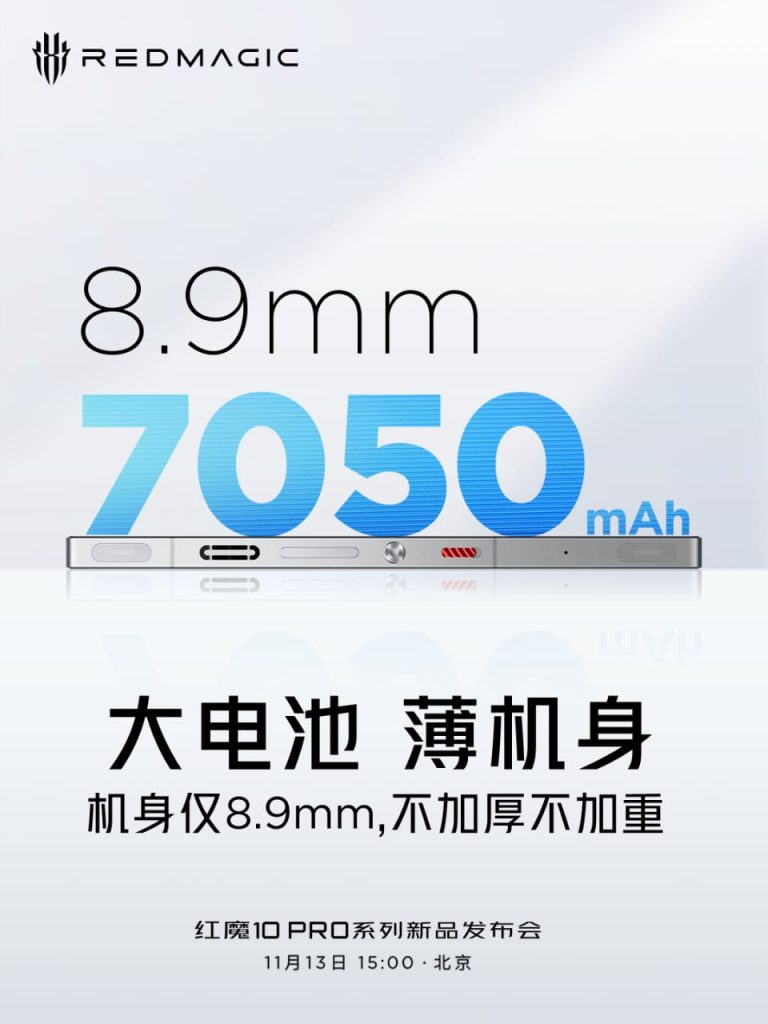
The Red Magic 10 Pro is set to launch on November 13, and ahead of its release, Red Magic has been steadily revealing some of the device’s standout features, including its design and powerful specifications. Today, the company confirms that the Red Magic 10 Pro will house a massive 7050mAh battery while maintaining a slim profile, measuring just 8.9mm in thickness.
Red Magic touts the new phone as “more powerful but not thicker,” emphasizing that despite the increased battery capacity, the phone’s overall size and weight remain unaffected.
Key features and technology behind the 7050mAh “Bull Demon King” battery
The Red Magic 10 Pro’s impressive battery capacity is further complemented by advanced power management technology. Red Magic describes the battery as a “Bull Demon King” battery, which uses three core technologies: ETT tunnel technology, next-generation silicon-carbon negative electrode battery technology, and Magic Cube AI power management. These innovations are designed to optimize battery performance, ensuring prolonged battery life and efficient energy usage without compromising the phone’s slim design.
In line with the “more powerful but not thicker” theme, Red Magic’s engineering has allowed for a larger battery without adding to the device’s weight or thickness. While the exact weight has not been disclosed, the 8.9mm thickness confirms that the Red Magic 10 Pro will retain a sleek profile suitable for comfortable, extended use.
Advanced specifications of the Red Magic 10 Pro
The Red Magic 10 Pro series will feature some of the latest in gaming and performance technology. Equipped with the Snapdragon 8 Elite processor and Red Magic’s proprietary Red Core R3 gaming chip, the phone is poised to deliver top-tier performance. Early benchmarks indicate a running score exceeding 3.11 million, underscoring its gaming prowess.
Supporting its power-heavy features, the phone comes with LPDDR5X Ultra memory with a frequency of up to 9600Mbps, and UFS 4.0 PRO storage, delivering high-speed data access essential for mobile gaming. The Pro+ model will push limits even further with a memory combination of 24GB RAM and 1TB storage, ideal for users with intensive gaming and multitasking needs.
Heat management is a priority for gaming phones such as this one. This device features a 10-layer cooling system, which we have already covered in detail.
In summary, the Red Magic 10 Pro series promises to blend battery life, slim design, and high performance, making it a compelling choice for mobile gamers. With Android 15, 100W fast charging, and a seamless, full-screen design, Red Magic’s latest device sets the bar high for gaming smartphones.
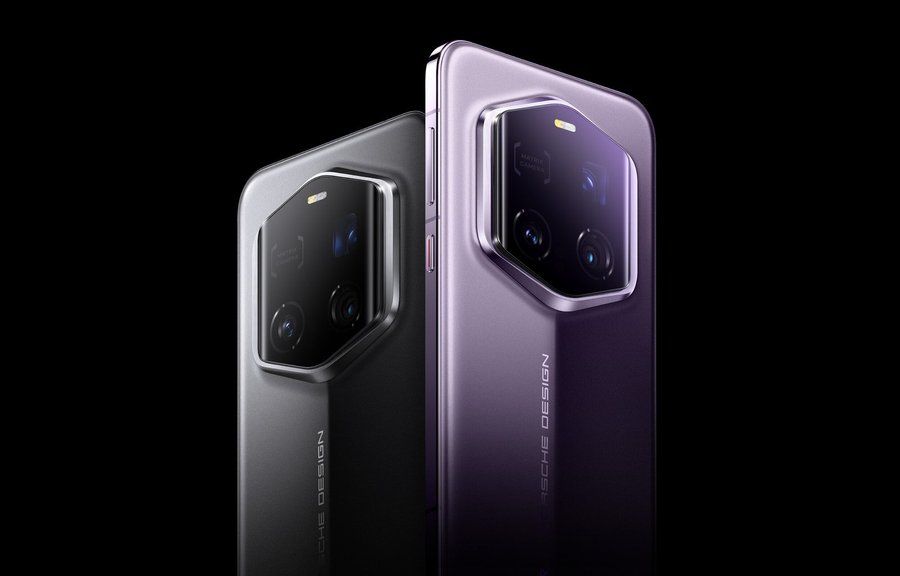
Honor announced the Honor Magic 7 and Magic 7 Pro in October in China, both powered by the latest Snapdragon 8 Elite chipset. During the launch event, the company confirmed that it would unveil the more advanced Magic 7 RSR Porsche Design in December of this year in China. Today, tipster Digital Chat Station shared a post on Weibo revealing the major specifications of this device.
Honor Magic 7 RSR Porsche DesignHonor Magic 7 RSR Porsche Design MIIT certified in China
In the above leak, DCS has shared specifications of an upcoming Snapdragon 8 Elite phone. While he has not revealed the name of the device explicitly, it seems that he could be referring to the forthcoming Magic 7 RSR Porsche Design.
As per the leak, the Magic 7 RSR Porsche Design will feature a 6.8-inch LTPO display with a quad-curved design. The display will offer a 1.5K resolution and a 120Hz refresh rate. The front camera setup includes a 50-megapixel AON (Always-On) sensor and ToF 3D facial recognition.
The rear camera system boasts an OIS-enabled 50-megapixel OmniVision OV50K main sensor with a 1/1.3-inch variable aperture, a 50-megapixel ultra-wide-angle camera, and a 200-megapixel 3x periscope telephoto lens with a 1/1.4-inch sensor and OIS support. The device will run on Magic OS 9-based Android 15.
The Magic 7 RSR Porsche Design will support 100W and 80W fast charging. While the leaker has not mentioned the battery size of the device, it appears that it could pack the same 5,850mAh battery that powers the Magic 7 Pro.
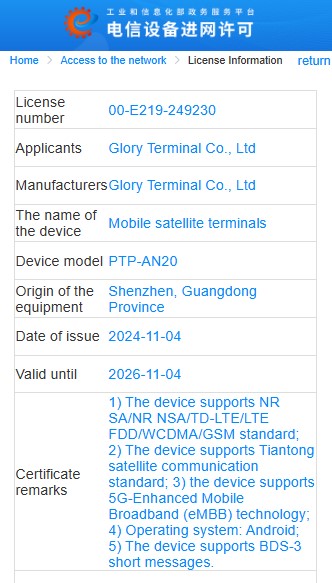
The Magic 7 RSR Porsche Design will also arrive with other features, such as a single-point ultrasonic fingerprint sensor, and an IP68/IP69 rating for water and dust resistance. The CMIIT certification of the device (PTP-AN20 model number) has revealed that it will support dual satellite connectivity with TianTong (real-time voice calling) and BeiDou (two-way messaging) satellites. The company has already confirmed that the device will be available in two shades, Provence Purple and Agate Gray. It is speculated that the Porsche Design variant will be in two configurations, such as 24GB+512GB and 24GB+1TB.
As ASUS gears up for the global launch of its latest gaming-centric smartphone series, the ROG Phone 9 lineup, scheduled for November 19, a Geekbench ML listing offers a glimpse into its performance and specifications.
These early details underscore ASUS’s commitment to pushing the boundaries in mobile gaming hardware, with improvements in processing power, machine learning capabilities, and RAM to cater to the demands of gamers and tech enthusiasts alike.
Geekbench ML listing highlights
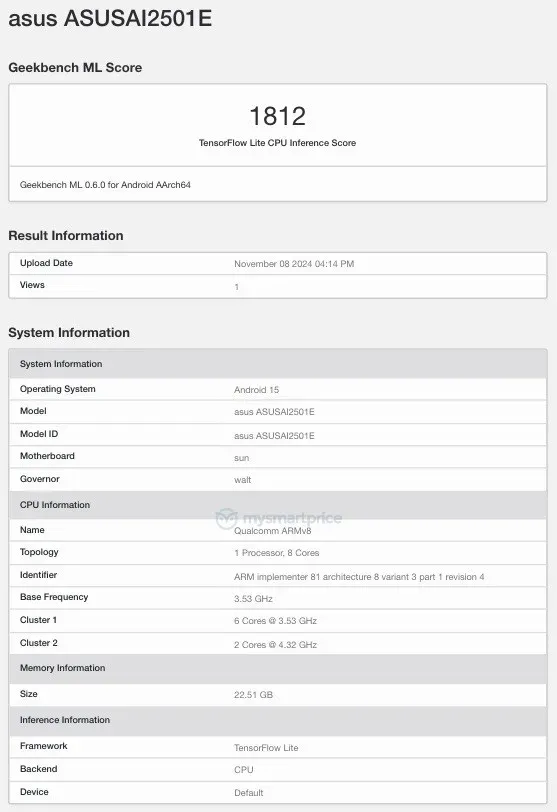
The Geekbench listing reveals that the ROG Phone 9/9 Pro carries the model number ASUSAI2501E. The device runs on Qualcomm’s latest Snapdragon 8 Elite processor, a chipset with the second-generation Oryon CPU and an upgraded Adreno GPU.These enhancements are expected to deliver a seamless gaming experience, sharper visuals, and improved power efficiency.
According to the Geekbench results, the ROG Phone 9 series will include up to 24GB of RAM and will launch with Android 15 out of the box. The substantial memory allocation positions it as one of the few smartphones equipped to handle heavy titles and multitasking.
The device scored 1,812 on the Core ML Neural Engine Inference test, indicating its potential for handling machine learning tasks effectively, which could enhance AI-driven features in gaming and device optimization.
Additional hardware and design details
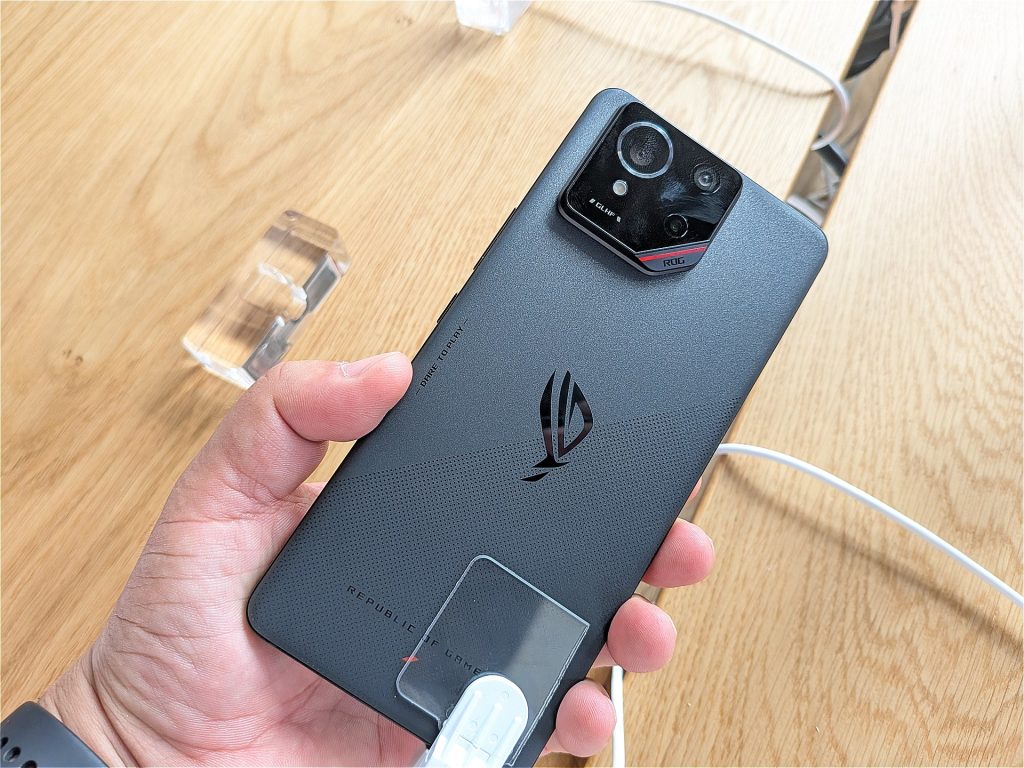
The ROG logo on the back lacks RGB lighting this time but is accompanied by an “AniMe Vision” LED panel, featuring ASUS’s new ROG text. This combination of design elements adds to the phone’s gaming appeal while also bringing a unique visual element to its rear panel. The series was previously rumored to feature a 185Hz display.
The device is also equipped with pressure-sensitive AirTriggers on its right side, a feature that has been highly appreciated by gamers in previous ROG Phone models for enhancing control precision in mobile games. ASUS has teased the inclusion of AI-driven capabilities in the ROG Phone 9 series, suggesting a smarter, more customized gaming experience through real-time adjustments and optimizations.
While specific battery capacity details are not yet disclosed, ASUS’s partnership with Qualcomm’s energy-efficient Snapdragon platform suggests that the ROG Phone 9 may offer extended battery life, potentially surpassing the endurance of its predecessor, the ROG Phone 8 Pro.
Recently, Oppo unveiled the Oppo Pad 3 Pro tablet with the Snapdragon 8 Gen 3 Leading Version chip onboard. Recently, a new leak on Weibo has revealed details about the non-Pro version of the tablet. The leak also gives a hint about its launch timeframe.
Oppo Pad 3 specifications (rumored)
Oppo Pad 3 leak bY DCS
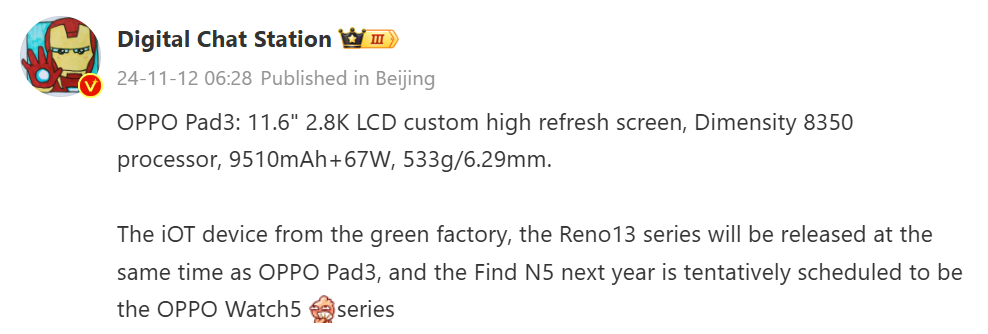
DCS reports that the Oppo Pad 3 will feature an 11.6-inch LCD panel with a 2.8K resolution and a high refresh rate. The yet-to-be-official Dimensity 8350 chipset will power the device. Recent reports speculate that the same chip will power the Reno 13 Pro.
The Pad 3 is expected to pack a 9,510mAh battery with 67W fast charging support. The device will measure 533 grams and have a slim profile of 6.29mm.
Additionally, the tipster mentions that this device is part of Oppo’s IoT lineup. Oppo reportedly plans to launch this device alongside the Reno 13 series. To recall, the same source previously revealed that the Reno 13 series is tentatively scheduled to launch on Nov. 25 in China.
DCS also claimed that the Oppo Watch 5 series will be announced next year alongside the Find N5 foldable phone. For those who don’t know, rumors surrounding the Snapdragon 8 Elite-powered foldable device have revealed that it may go official in the first quarter of 2025.
In related news, the Oppo Reno 13 series is also coming to the global market soon. A new report has revealed that the Reno 13 and Reno 13 Pro have bagged a few certifications, indicating that it may debut in January 2025.
Reliable tipster Digital Chat Station recently shared a tentative launch date of Nov. 25 for the Oppo Reno 13 series in China. The lineup is expected to include two models: the Reno 13 and the Reno 13 Pro. It appears that the Reno 13 series will also debut in markets outside of China, as the global versions of both phones have received important certification, indicating an imminent launch.
Oppo Reno 13 series receives IMDA certification
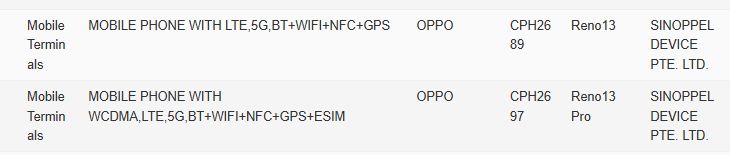
Oppo Reno 13, Reno 13 Pro IMDA certified in Singapore
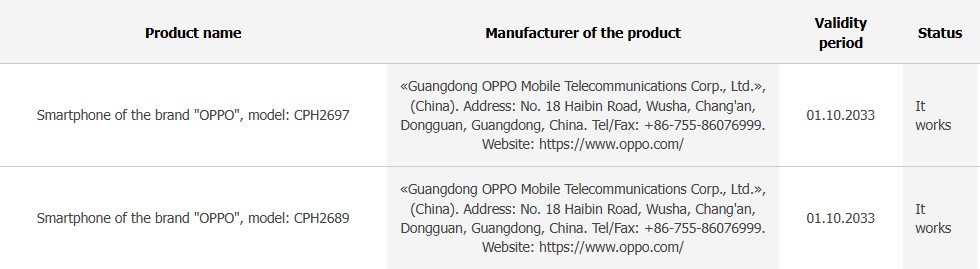
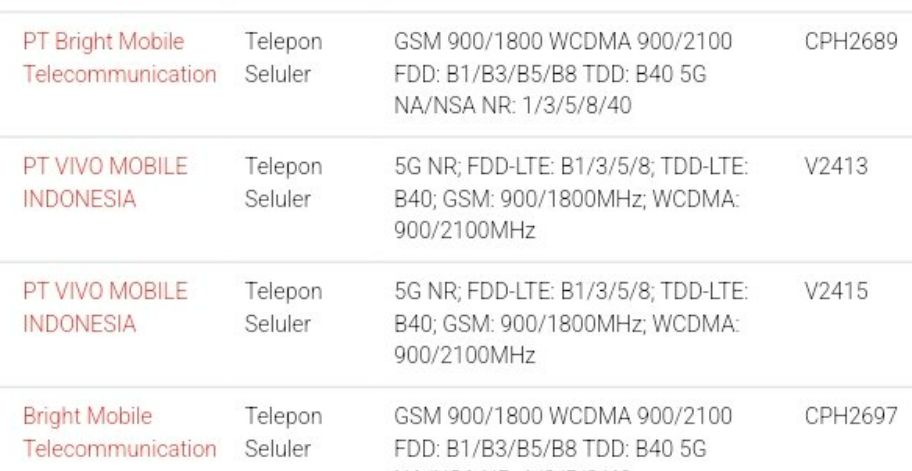
As seen in the above screenshot, the Reno 13 and the Reno 13 Pro have appeared in the database of Singapore’s IMDA certification platform. The standard version has the model number CPH2689, whereas the Pro variant has the model number CPH2697. These model numbers were previously seen in the databases of Europe’s EEC and Indonesia’s TKDN. However, it is only through the IMDA certification that their final monikers have been confirmed.
The IMDA listings only reveal the connectivity features of both devices. Interestingly, it also reveals that the Pro model will come with eSIM support.
Oppo Reno 13 series EEC certified in Europe
Oppo Reno 13, Reno 13 Pro TKDN in Indonesia
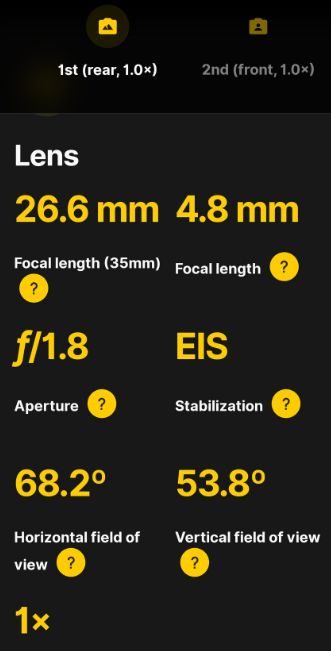
Additionally, the Reno 13 has also emerged in Camera FV-5’s database, revealing that it is equipped with a 50-megapixel primary camera on the back. It has a 26.6mm focal length and an f/1.8 aperture. The listing also suggests that the Reno 13 has a 50-megapixel front-facing camera with a 22.2mm focal length and an f/2.0 aperture.
Oppo Reno 13 Camera FV-5 listing
The Reno models launched in the global market bear the same design as their Chinese counterparts. However, the Chinese versions generally have slightly different and better specifications compared to their global counterparts. Recent reports have claimed that the Chinese variant of the Reno 13 Pro will be the world’s first phone to feature the upcoming Dimensity 8350 chipset. Whether the same device will be sold globally is unclear.
To recall, the Reno 12 series was spotted in IMDA’s database in May, and it went official on June 29, 2024, in Singapore. Similarly, the older Reno 11 and Reno 11 Pro were spotted in IMDA’s database in November 2023 before going official on Jan. 27, 2024, in Singapore. Therefore, it is likely that the Reno 13 series may debut in January 2025 in Singapore and other global markets.
Redmi has already launched its Note 14 series, while its close competitor, Realme, is set to release the Realme 14 series early next year—and it appears they’re adding a new member to the lineup.
According to a report from 91mobiles, Realme is planning to introduce a Realme 14 Pro Lite 5G, a fresh addition since the brand hasn’t previously included a Pro Lite device in its number series.
With each of these getting a successor—and the addition of a Pro Lite model in the 14 series—the lineup could become even more crowded and confusing for users.
Realme 14 Pro Lite 5G details
Nonetheless, the report reveals that the Realme 14 Pro Lite 5G, set for the Indian market, carries the model number RMX990.
The device will offer four RAM and storage options: 8GB/128GB, 8GB/256GB, 12GB/256GB, and 12GB/512GB. And it will be available in Emerald Green, Monet Purple, and Monet Gold—colors already seen in Realme’s current lineup.
As a new addition, the Realme 14 Pro Lite’s exact price and specifications are still unclear. But its name already indicates it could be a more affordable option than the standard 14 Pro smartphone. So we can at least expect an AMOLED display and Android 15-based Realme UI out of the box.
Realme is rumored to launch the 14 series in India in 2025, but the initial release is expected to focus on only the Realme 14 Pro and Realme 14 Pro+. So the company may release the Realme 14 Pro Lite separately at a later date alongside other Realme 14 series devices. We will keep you updated on any new details we get of the upcoming smartphones. Stay tuned.
We use cookies on our website to give you the most relevant experience by remembering your preferences and repeat visits. By clicking “Accept”, you consent to the use of ALL the cookies.
This website uses cookies to improve your experience while you navigate through the website. Out of these, the cookies that are categorized as necessary are stored on your browser as they are essential for the working of basic functionalities of the website. We also use third-party cookies that help us analyze and understand how you use this website. These cookies will be stored in your browser only with your consent. You also have the option to opt-out of these cookies. But opting out of some of these cookies may affect your browsing experience.
Necessary cookies are absolutely essential for the website to function properly. This category only includes cookies that ensures basic functionalities and security features of the website. These cookies do not store any personal information.
Any cookies that may not be particularly necessary for the website to function and is used specifically to collect user personal data via analytics, ads, other embedded contents are termed as non-necessary cookies. It is mandatory to procure user consent prior to running these cookies on your website.