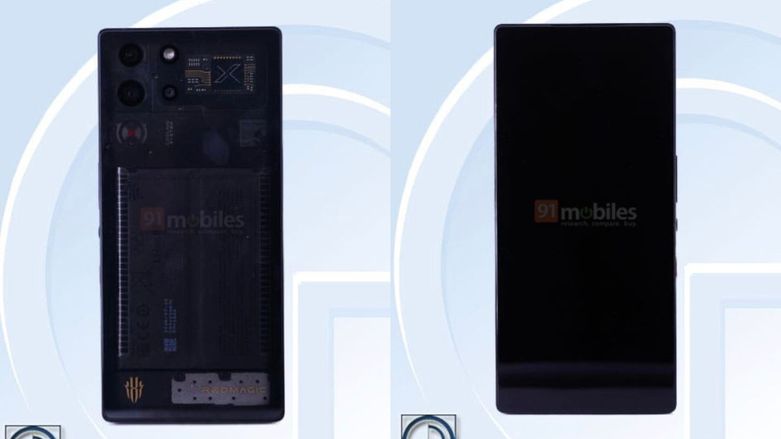
Nubia is gearing up to launch its flagship series of gaming smartphones in China soon. But ahead of its official announcement, live images of the Red Magic 10 Pro+ model and its battery specs have been revealed through a certification listing.
Red Magic 10 Pro+ Design Revealed via TENAA
The upcoming gaming phone was spotted on China’s TENAA certification (Via 91Mobiles). Looking at the database, we can see the front and rear design of the Red Magic 10 Pro+. It features flat edges, a thin body, minimal bezels, a full display on the front, and a transparent panel on the rear. You can even see the camera sensors along with the LED flash module on the top left on the back.
Red Magic 10 Pro+
Just recently, the Red Magic 10 Pro series had its full design revealed through promotional images (teasers also confirmed the Deuterium Transparent Dark Night and Deuterium Transparent Silver color options). So these renders are also in line with the previous teasers. One notable aspect of this device that is visible in these live images is the camera modules, which sit flush in the rear panel and don’t protrude from the back. The TENAA listing online has also confirmed the battery details of the Red Magic 10 Pro+.
It houses a dual battery design with one being a 3,100mAh and the other featuring a 3,450mAh capacity. In total, this amounts to a total battery capacity of 6,550mAh. This is a major upgrade over last year’s Red Magic 9 Pro+ which housed a 5,500mAh battery pack. Previous rumors also hinted at the device featuring a sizeable 7,050mAh cell. This model is confirmed to launch with the Snapdragon 8 Elite SoC, which is paired with a BOE display with a 1.5K resolution and a 144Hz refresh rate.
The Moto G Power 5G (2025) is rapidly making its way through various certification platforms, with key details about the upcoming device now emerging. Following the success of the Moto G Power 5G (2024), which launched exclusively in North America in March this year, the 2025 version is expected to follow a similar timeline with a potential debut in early 2025 and a broader regional rollout.
Moto G Power 5G 2025 (render)
This Motorola device has been spotted on the FCC (via 91mobiles), TUV Rheinland, and UL Demko certifications, which have revealed several crucial specifications, including battery capacity, charging capabilities, and design features. Here’s a breakdown of the information that’s been uncovered so far.
Moto G Power 2025 spotted on multiple certifications:
The FCC listing confirms that the Moto G Power 5G (2025) will carry the model number XT2515-1. Interestingly, the listing also includes additional models under the numbers XT2515-2, XT2515-3, and XT2515V, and confirms that the models are for different markets and there will be no other differences among them.
The listing also confirms a broad range of connectivity options for the Moto G Power 5G (2025), including 5G support, 4G LTE, Wi-Fi 2.4GHz and 5GHz, Bluetooth BR/EDR/LE, and NFC. Additionally, the phone will feature GNSS, FM, and WPT (wireless power transfer) capabilities. This ensures that the Moto G Power 5G (2025) will offer robust connectivity and versatility for users around the world.
The listing also reveals support for wireless charging. Significant in context, the UL Demko Certification listing reveals the Moto G Power charger will support a max 20W charging speed output. For reference, the G Power (2024) supports 15W wireless and 30W wired charging.
The listed battery has a 4850mAh rated capacity (with a typical capacity of 5000mAh), which is the same as the predecessor. While the battery capacity remains consistent, a more efficient chipset could still offer an improvement in battery life.
A previously leaked render of the phone has already revealed its front and back design, which you can check out here.
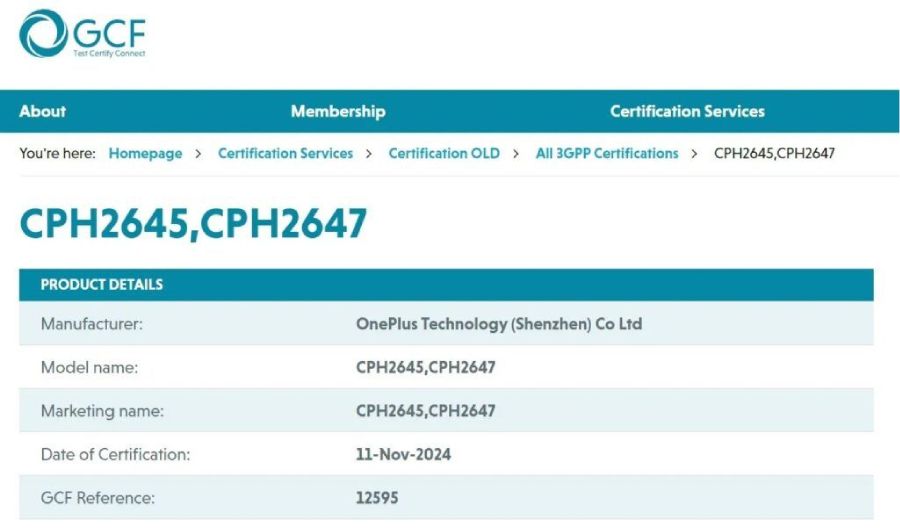
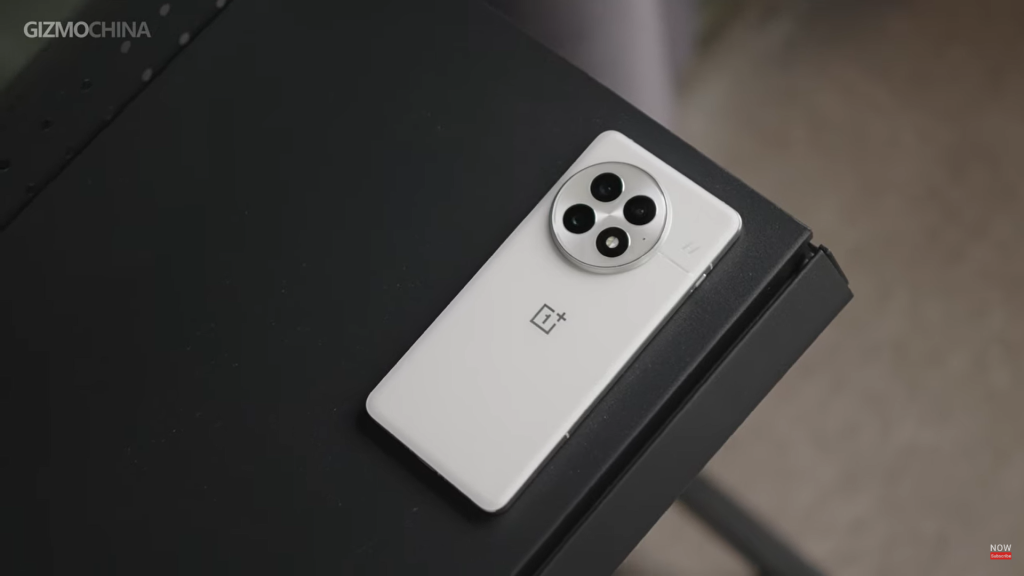
The OnePlus 13 garnered much attention with its recent launch in China, but rumors of its more affordable sibling, the OnePlus 13R, are starting to gain traction now. The phone was recently spotted on the Global Certification Forum (GCF) website, hinting at an imminent release.
The GCF listing, discovered by MySmartPrice, reveals the model number CPH2645 for the OnePlus 13R. It also confirms a broad range of connectivity options, including 2G GSM, 3G WCDMA, 4G LTE (both FDD and TDD), and 5G.
The 5G support includes a wide array of bands—n1, n2, n3, n5, n7, n20, n28, n38, n40, n48, n66, n77, and n78—ensuring compatibility with most global networks.
Beyond connectivity, details about the OnePlus 13R are still under wraps. However, based on rumors and past trends, we can make some educated guesses.
OnePlus 13R: Expected Specifications
The OnePlus 13R is expected to feature a 1.5K resolution display, though its exact size is still unknown. Given that the OnePlus 12R offered a 6.78-inch display, a similar size seems likely.
Likewise, rumors suggest that the OnePlus 13R will run on the Qualcomm Snapdragon 8 Elite SoC. Its camera setup may include a 50MP Sony IMX906 main sensor paired with a 50MP Samsung JN1 telephoto lens—an upgrade from the OnePlus 12R, which had a 50MP Sony IMX890 main camera alongside a lower-resolution ultra-wide and macro sensor.
The OnePlus 13R might also pack a larger 6,000mAh battery, up from the 5,500mAh unit in the OnePlus 12R.
There’s speculation that the OnePlus 13R could be a rebranded version of the upcoming OnePlus Ace 5, which is expected to launch in China before the end of the year. The strategy aligns with OnePlus’s past practices of releasing R-series phones as rebranded versions of their Ace line.
With its GCF certification, a global launch for the OnePlus 13R looks imminent. We’ll keep you posted on any new updates.
Xiaomi is working on a new POCO X7 Pro smartphone. This is a mid range smartphone model and a fresh report hints that this device could be the first ever HyperOS 2.0 powered phone in India. The Xiaomi 15 was the first smartphone with this Android 15 OS based custom skin in China, but the POCO X7 Pro might be the first in India.
POCO X7 Pro: What to expect
The news arrives from a SmartPrix report, quoting a source close to the matter. While the Xiaomi 15 was just announced in China with HyperOS 2.0, the brand’s latest flagship smartphone is only expected to launch in India around March 2025. So, the POCO X7 Pro might be dropping in the country ahead of the Xiaomi 15. To recall, the POCO X6 Pro was announced in India back in January 2024, so the POCO X7 Pro would likely launch in a similar timeline.
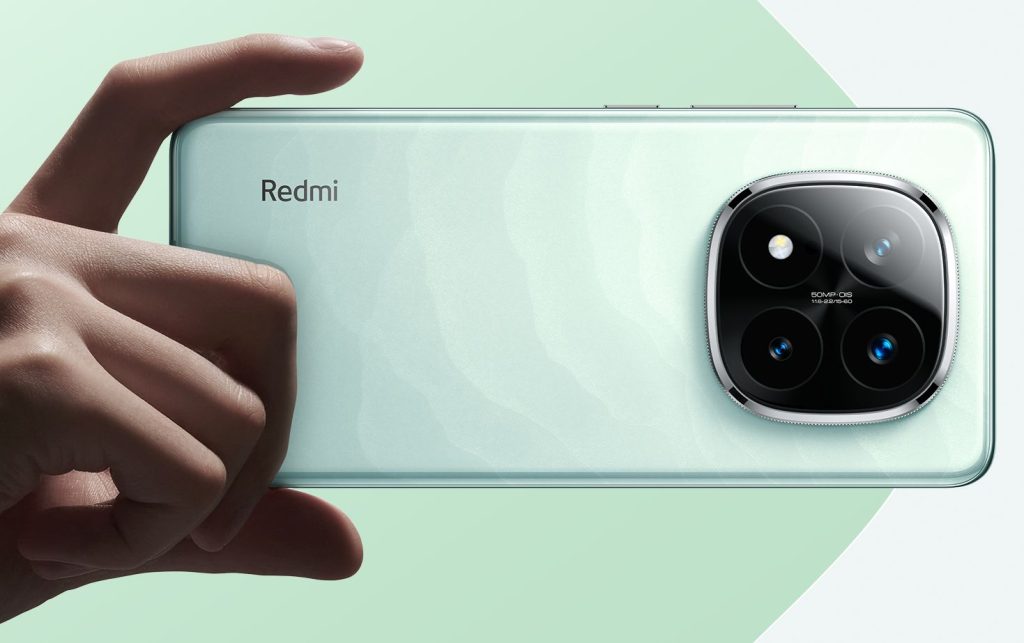
Redmi Note 14 Pro+
Based on what we know so far, the POCO X7 is possibly a renamed Redmi Note 14 Pro. In other words, the POCO X7 Pro might be a rebranded Redmi Note 14 Pro+ model. Xiaomi recently confirmed the December launch timeline for the Redmi Note 14 series. So it won’t be surprising if the POCO X7 and POCO X7 Pro arrive a month later in the Indian market. Xiaomi has launched multiple variants of the same phone with slight differences from its various sub-brands in the past.
If the POCO X7 Pro is a rebranded Note 14 Pro+, then we can expect a 6.67-inch AMOLED display with a 1.5K resolution and a 120Hz refresh rate on the front. Meanwhile, the rear may offer a 50MP (Main) + 50MP (Telephoto) + 8MP (Ultrawide). Similar to the Note 14 Pro+, the POCO X7 Pro may be equipped with the Snapdragon 7s Gen 3 SoC as well. A massive 6,200mAh battery pack could power this model, which supports 90W wired fast charging.
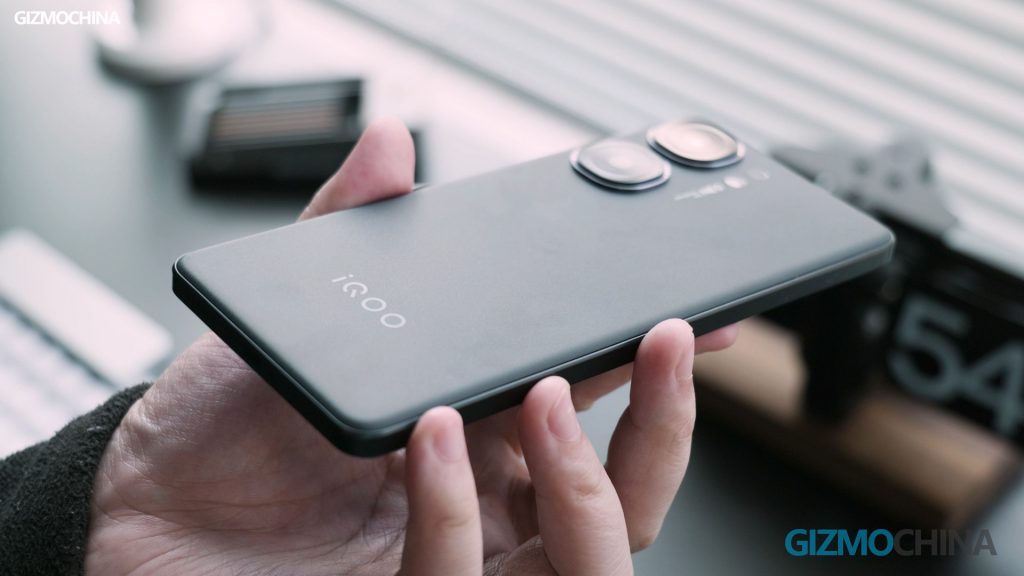
While the iQOO 13 is yet to make its global debut, iQOO is already preparing for the launch of its next-generation premium mid-range devices, the iQOO Neo10 series, in China. Although a specific launch date has not been announced, the Neo10 series is generating excitement among gaming enthusiasts.
iQOO Neo9 Pro
iQOO Neo10 series possibly includes iQOO 13’s SuperComputing Chip Q2
iQOO Neo product manager, known on social media as @Neo_Beta, has shared a key detail about the new lineup, confirming that the Neo10 series will feature its self-developed gaming chip. Although he didn’t reveal any specific information about the secondary chip, the mention of a “stronger dual-core performance” hints at the adoption of the iQOO 13’s SuperComputing Chip Q2. As the name suggests, this is iQOO’s second generation of the Q series secondary chip, which reportedly is more power efficient and more capable.
The iQOO Neo 10 is expected to feature the Snapdragon 8 Gen 3 SoC, while the Pro model might come equipped with the new MediaTek Dimensity 9400 SoC. Both models recently appeared on China’s 3C certification listings and are reported to support 120W fast charging.
Judging from the performance of the Neo9 Pro, the upcoming devices should be capable of handling almost all the heavy titles without breaking the bank.
For those unfamiliar, the SuperComputing chips offer two primary benefits: upscaling game rendering resolution (known as super-resolution) and achieving up to 144fps in supported frame-capped games (through game frame interpolation). While enabling these features increases power consumption, they provide a high-performance experience that stands out in this price segment.
Additional features and specifications
The phone will feature a 6.78-inch flat display built with 8T LTPO technology. It features a 1.5K resolution and a 144Hz refresh rate, enabling fluid visuals and rapid response times essential for gaming.
The iQOO Neo10 Pro could offer a robust memory configuration, with options for up to 16GB of RAM and 512GB of internal storage, which ensures ample space for gaming, media, and other intensive applications.
In terms of power, the Neo10 Pro is expected to feature a battery capacity above 6x00mAh, coupled with support for 120W fast charging. This combination promises extended usage with minimal downtime, allowing users to recharge quickly and get back to their activities. Additionally, the phone will include a Goodix Ultrasonic Fingerprint sensor, an upgrade over the under-display optical unit of the Neo9 series.
After a successful launch in China, Oppo is all set to bring its flagship Find X8 series on November 21st, comprising the Find X8 and Find X8 Pro, to global audience. Let’s dive into what to expect from these smartphones as they head to international markets, including India.
Oppo has equipped the Find X8 and Find X8 Pro with impressive displays that offer vibrant colors and high refresh rates for a premium viewing experience. The Find X8 sports a 6.59-inch 1.5K AMOLED flat screen with ultra-narrow 1.45mm bezels, providing a seamless visual experience, while the Find X8 Pro comes with a slightly larger 6.8-inch LTPO micro-curved AMOLED screen.
Both displays support a 120Hz adaptive refresh rate for smooth scrolling and gaming, alongside up to 4500 nits peak brightness, ensuring excellent visibility even in bright sunlight. The displays are also protected by Oppo Crystal Shield glass on both the front and back, enhancing durability.
2. Performance
Both the Find X8 and Find X8 Pro are powered by MediaTek’s latest Dimensity 9400 SoC. Built on a 3nm architecture, this chipset promises enhanced power efficiency and performance, making it ideal for handling demanding tasks, from gaming to multitasking. The devices come with up to 16GB of LPDDR5X RAM and UFS 4.0 storage options up to 1TB, ensuring smooth performance and ample storage for all user needs.
3. Dual Periscope Camera
One of the standout features of the Find X8 series is the world’s first dual periscope camera system, allowing both devices to offer impressive zoom capabilities. The Find X8 has a triple 50MP camera setup, including a 3x periscope telephoto lens, while the X8 Pro ups the ante with a quad-camera setup, featuring dual 50MP periscope lenses for 3x and 6x optical zoom.
This dual periscope system uses Oppo’s new Triple Prism Fold Reflection technology, which not only enhances zoom quality but also reduces the camera’s weight and thickness, achieving a sleek design with minimal lens protrusion.
The Find X8 and X8 Pro also integrate a Quick Button for instant access to the camera, allowing users to capture moments effortlessly with a simple tap.
4. Advanced Camera Software
Oppo has introduced advanced imaging technologies like AI-backed Telescope Zoom and the HyperTone Image Engine to enhance the camera experience. The HyperTone engine processes RAW sensor data to optimize image quality across different lighting conditions, ensuring clear images with balanced highlights, shadows, and mid-tones. The AI-powered Telescope Zoom allows for digital zoom up to 120x, with AI models applied across different zoom ranges to maintain clarity and detail, even at extreme distances.
Videography on the Find X8 series is also elevated with support for Dolby Vision, capturing over a billion colors for vivid, true-to-life videos. The camera system has 12-bit processing to produce smooth, vibrant visuals with precise brightness and contrast adjustments, enhancing the viewing experience. Additionally, the series comes with 4-mic Spatial Audio which can capture immersive soundscapes to complement the rich visual quality.
Oppo has also partnered with Hasselblad and introduced a dedicated Hasselblad mode that brings medium-format quality and color science to the Find X8 series. This collaboration enhances color accuracy, dynamic range, and allows users to choose focal lengths between 24mm to 135mm, providing a premium photography experience.
5. Battery Life
The Find X8 series doesn’t fall short on battery power either. The Find X8 is equipped with a 5630mAh battery, while the X8 Pro has a slightly larger 5910mAh battery. Both devices support 80W SuperVOOC fast charging and 50W wireless charging, alongside 10W reverse wireless charging, offering convenience and flexibility for on-the-go users.
6. Global Availability and Expected Pricing
Following the October 31st release in China, Oppo has begun teasing the global launch of the Find X8 series, including in India. The prices in China range from approximately $600 for the base variant of the Find X8 to $1000 for the top-tier Find X8 Pro Satellite Edition. However, the global pricing will be more expensive.
Oppo is also rumored to launch its upper-midrange Reno 13 series soon, with global variants recently spotted. Check out this article for more details on the expected launch timeframe of these devices.
For serious gamers who value precision, speed, and customization, the VGN F1 PRO Max JOJO Co-branded Version Gaming Mouse offers an impressive array of features to enhance performance and comfort. Lightweight yet durable, this gaming mouse is engineered with advanced technology that caters to both competitive gaming and casual gameplay, ensuring responsive, lag-free control. The VGN F1 PRO Max JOJO Co-branded Version Gaming Mouse is available for $79.99 at Geekwills.
Advanced Sensor for Precision Tracking
At the core of the VGN F1 PRO Max is the powerful PAW3395 sensor, which brings unmatched tracking capabilities with 650 IPS (inches per second) tracking speed and 50G acceleration. This sensor enables smooth, precise movements, allowing you to react instantly in high-pressure situations. Coupled with an ultra-fast 4K polling rate, this sensor delivers real-time accuracy, which means each click and movement is registered immediately, giving you an edge in your games. This precision level is complemented by the golden black mamba microswitch, customized by VGN, which provides a smooth and tactile click response, preventing accidental double clicks and ensuring accuracy with every click.
Nordic Master Chip for Seamless Connectivity
The VGN F1 PRO Max JOJO Co-branded Version incorporates the high-performance Nordic master chip. Known for its power efficiency and robust connectivity, this flagship-level chip provides fast, stable, and efficient performance. You’ll experience reliable connectivity across both Bluetooth and Smart Speed Wireless, with minimal interruptions.
Smart Speed Wireless Technology
The Smart Speed Wireless Technology in this mouse enhances connectivity by reducing latency and ensuring interference-resistant performance. This technology allows you to switch easily between the 2.4GHz wireless mode and wired connections, offering the flexibility to adapt to different gaming setups without compromising on responsiveness.
VGN HUB Self-Developed Driver for Customization
To help you make the most out of your VGN F1 PRO Max, the VGN HUB Self-Developed Driver offers customization options for gamers who want to personalize their gameplay experience. With this driver, you can adjust button functions, sensitivity levels, and lighting effects to create the perfect setup for your preferences and style.
Lightweight Design and Extended Battery Life
Weighing only 55g, the VGN F1 PRO Max JOJO Co-branded Version is designed for effortless handling, reducing wrist strain, and increasing control. Despite its lightweight frame, it houses a long-lasting 800mAh battery that provides up to 130 hours of use on a single charge. The mouse also comes with a magnetic RGB charging base, making it easy to recharge and continue gaming with minimal downtime.
Key Specs:
Sensor: PAW3395 with 650 IPS tracking speed and 50G acceleration
DPI: 26,000 DPI
Polling Rate: 4K
Weight: 55g
Connections: Bluetooth, Wired, and 2.4GHz Smart Speed Wireless Technology
Chip: Nordic Master Chip for fast and efficient connectivity
Battery Life: Up to 130 hours on a full charge with 800mAh battery
Additional Features: Customizable settings via VGN HUB Driver, magnetic RGB charging base
With cutting-edge technology and customizable options, the VGN F1 PRO Max JOJO Co-branded Version Gaming Mouse is a valuable addition to any gaming setup, providing the performance and comfort needed to stay ahead of the competition.
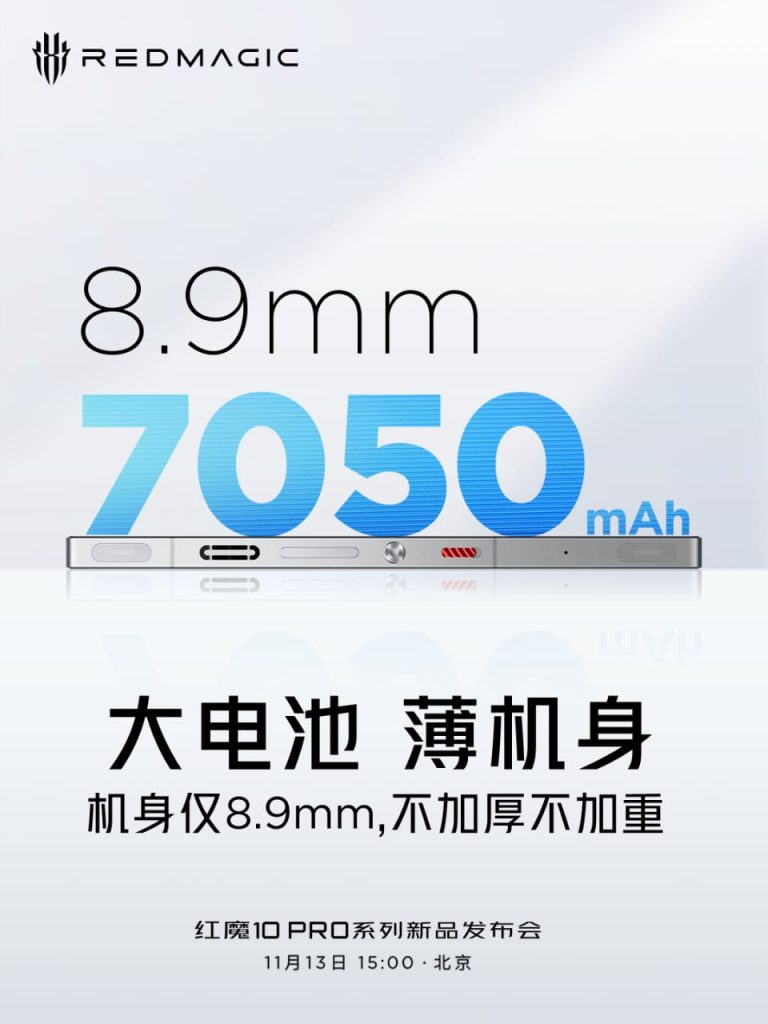
The Red Magic 10 Pro is set to launch on November 13, and ahead of its release, Red Magic has been steadily revealing some of the device’s standout features, including its design and powerful specifications. Today, the company confirms that the Red Magic 10 Pro will house a massive 7050mAh battery while maintaining a slim profile, measuring just 8.9mm in thickness.
Red Magic touts the new phone as “more powerful but not thicker,” emphasizing that despite the increased battery capacity, the phone’s overall size and weight remain unaffected.
Key features and technology behind the 7050mAh “Bull Demon King” battery
The Red Magic 10 Pro’s impressive battery capacity is further complemented by advanced power management technology. Red Magic describes the battery as a “Bull Demon King” battery, which uses three core technologies: ETT tunnel technology, next-generation silicon-carbon negative electrode battery technology, and Magic Cube AI power management. These innovations are designed to optimize battery performance, ensuring prolonged battery life and efficient energy usage without compromising the phone’s slim design.
In line with the “more powerful but not thicker” theme, Red Magic’s engineering has allowed for a larger battery without adding to the device’s weight or thickness. While the exact weight has not been disclosed, the 8.9mm thickness confirms that the Red Magic 10 Pro will retain a sleek profile suitable for comfortable, extended use.
Advanced specifications of the Red Magic 10 Pro
The Red Magic 10 Pro series will feature some of the latest in gaming and performance technology. Equipped with the Snapdragon 8 Elite processor and Red Magic’s proprietary Red Core R3 gaming chip, the phone is poised to deliver top-tier performance. Early benchmarks indicate a running score exceeding 3.11 million, underscoring its gaming prowess.
Supporting its power-heavy features, the phone comes with LPDDR5X Ultra memory with a frequency of up to 9600Mbps, and UFS 4.0 PRO storage, delivering high-speed data access essential for mobile gaming. The Pro+ model will push limits even further with a memory combination of 24GB RAM and 1TB storage, ideal for users with intensive gaming and multitasking needs.
Heat management is a priority for gaming phones such as this one. This device features a 10-layer cooling system, which we have already covered in detail.
In summary, the Red Magic 10 Pro series promises to blend battery life, slim design, and high performance, making it a compelling choice for mobile gamers. With Android 15, 100W fast charging, and a seamless, full-screen design, Red Magic’s latest device sets the bar high for gaming smartphones.
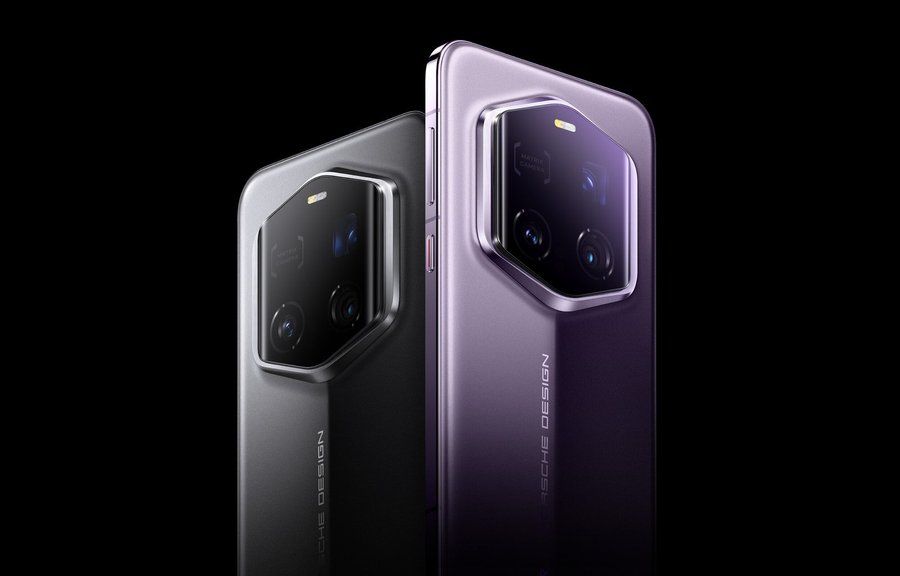
Honor announced the Honor Magic 7 and Magic 7 Pro in October in China, both powered by the latest Snapdragon 8 Elite chipset. During the launch event, the company confirmed that it would unveil the more advanced Magic 7 RSR Porsche Design in December of this year in China. Today, tipster Digital Chat Station shared a post on Weibo revealing the major specifications of this device.
Honor Magic 7 RSR Porsche DesignHonor Magic 7 RSR Porsche Design MIIT certified in China
In the above leak, DCS has shared specifications of an upcoming Snapdragon 8 Elite phone. While he has not revealed the name of the device explicitly, it seems that he could be referring to the forthcoming Magic 7 RSR Porsche Design.
As per the leak, the Magic 7 RSR Porsche Design will feature a 6.8-inch LTPO display with a quad-curved design. The display will offer a 1.5K resolution and a 120Hz refresh rate. The front camera setup includes a 50-megapixel AON (Always-On) sensor and ToF 3D facial recognition.
The rear camera system boasts an OIS-enabled 50-megapixel OmniVision OV50K main sensor with a 1/1.3-inch variable aperture, a 50-megapixel ultra-wide-angle camera, and a 200-megapixel 3x periscope telephoto lens with a 1/1.4-inch sensor and OIS support. The device will run on Magic OS 9-based Android 15.
The Magic 7 RSR Porsche Design will support 100W and 80W fast charging. While the leaker has not mentioned the battery size of the device, it appears that it could pack the same 5,850mAh battery that powers the Magic 7 Pro.
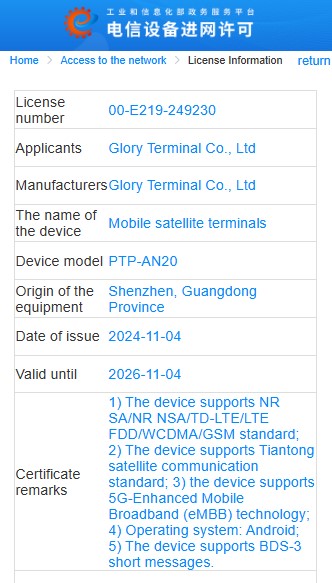
The Magic 7 RSR Porsche Design will also arrive with other features, such as a single-point ultrasonic fingerprint sensor, and an IP68/IP69 rating for water and dust resistance. The CMIIT certification of the device (PTP-AN20 model number) has revealed that it will support dual satellite connectivity with TianTong (real-time voice calling) and BeiDou (two-way messaging) satellites. The company has already confirmed that the device will be available in two shades, Provence Purple and Agate Gray. It is speculated that the Porsche Design variant will be in two configurations, such as 24GB+512GB and 24GB+1TB.
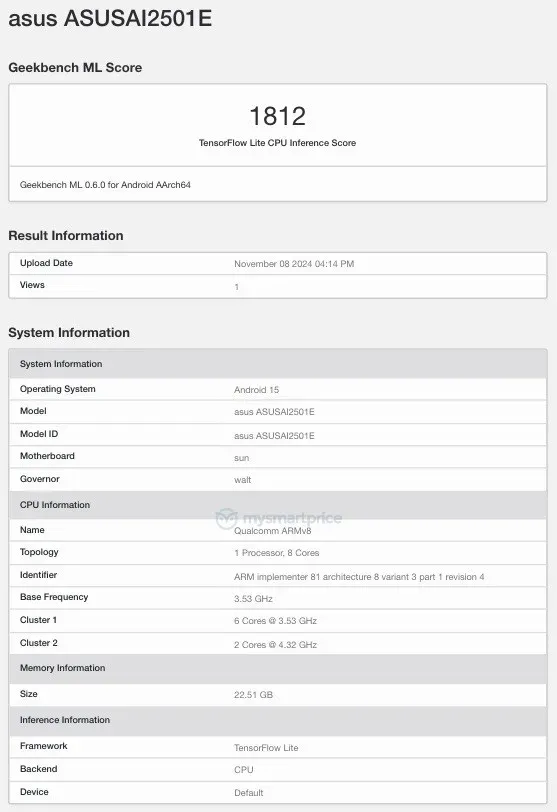
As ASUS gears up for the global launch of its latest gaming-centric smartphone series, the ROG Phone 9 lineup, scheduled for November 19, a Geekbench ML listing offers a glimpse into its performance and specifications.
These early details underscore ASUS’s commitment to pushing the boundaries in mobile gaming hardware, with improvements in processing power, machine learning capabilities, and RAM to cater to the demands of gamers and tech enthusiasts alike.
Geekbench ML listing highlights
The Geekbench listing reveals that the ROG Phone 9/9 Pro carries the model number ASUSAI2501E. The device runs on Qualcomm’s latest Snapdragon 8 Elite processor, a chipset with the second-generation Oryon CPU and an upgraded Adreno GPU.These enhancements are expected to deliver a seamless gaming experience, sharper visuals, and improved power efficiency.
According to the Geekbench results, the ROG Phone 9 series will include up to 24GB of RAM and will launch with Android 15 out of the box. The substantial memory allocation positions it as one of the few smartphones equipped to handle heavy titles and multitasking.
The device scored 1,812 on the Core ML Neural Engine Inference test, indicating its potential for handling machine learning tasks effectively, which could enhance AI-driven features in gaming and device optimization.
Additional hardware and design details
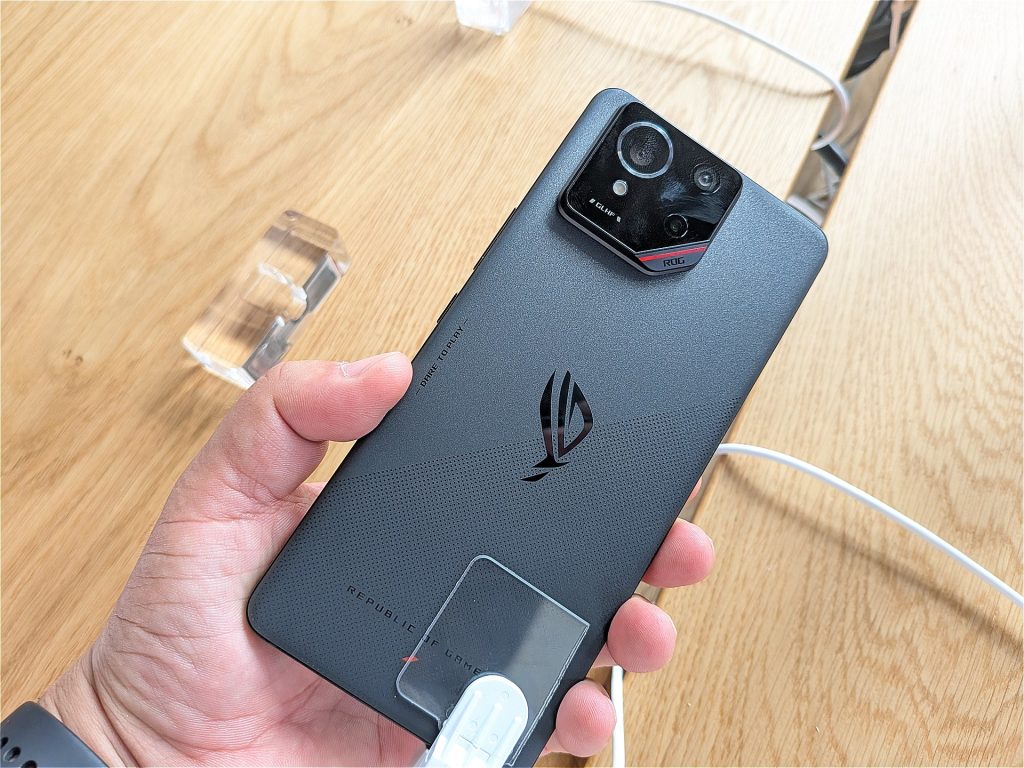
The ROG logo on the back lacks RGB lighting this time but is accompanied by an “AniMe Vision” LED panel, featuring ASUS’s new ROG text. This combination of design elements adds to the phone’s gaming appeal while also bringing a unique visual element to its rear panel. The series was previously rumored to feature a 185Hz display.
The device is also equipped with pressure-sensitive AirTriggers on its right side, a feature that has been highly appreciated by gamers in previous ROG Phone models for enhancing control precision in mobile games. ASUS has teased the inclusion of AI-driven capabilities in the ROG Phone 9 series, suggesting a smarter, more customized gaming experience through real-time adjustments and optimizations.
While specific battery capacity details are not yet disclosed, ASUS’s partnership with Qualcomm’s energy-efficient Snapdragon platform suggests that the ROG Phone 9 may offer extended battery life, potentially surpassing the endurance of its predecessor, the ROG Phone 8 Pro.
Recently, Oppo unveiled the Oppo Pad 3 Pro tablet with the Snapdragon 8 Gen 3 Leading Version chip onboard. Recently, a new leak on Weibo has revealed details about the non-Pro version of the tablet. The leak also gives a hint about its launch timeframe.
Oppo Pad 3 specifications (rumored)
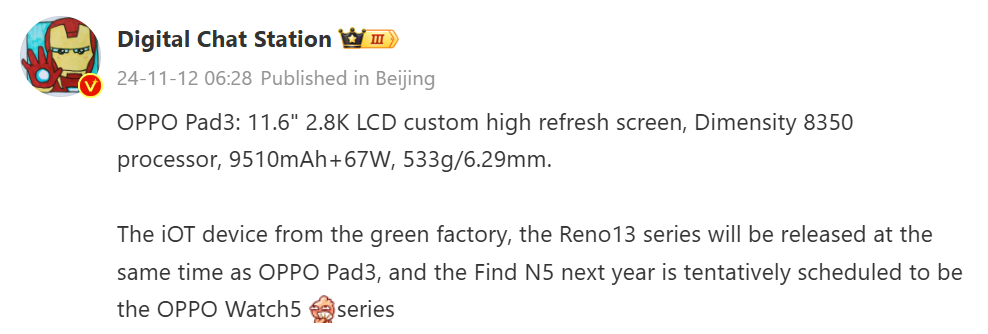
Oppo Pad 3 leak bY DCS
DCS reports that the Oppo Pad 3 will feature an 11.6-inch LCD panel with a 2.8K resolution and a high refresh rate. The yet-to-be-official Dimensity 8350 chipset will power the device. Recent reports speculate that the same chip will power the Reno 13 Pro.
The Pad 3 is expected to pack a 9,510mAh battery with 67W fast charging support. The device will measure 533 grams and have a slim profile of 6.29mm.
Additionally, the tipster mentions that this device is part of Oppo’s IoT lineup. Oppo reportedly plans to launch this device alongside the Reno 13 series. To recall, the same source previously revealed that the Reno 13 series is tentatively scheduled to launch on Nov. 25 in China.
DCS also claimed that the Oppo Watch 5 series will be announced next year alongside the Find N5 foldable phone. For those who don’t know, rumors surrounding the Snapdragon 8 Elite-powered foldable device have revealed that it may go official in the first quarter of 2025.
In related news, the Oppo Reno 13 series is also coming to the global market soon. A new report has revealed that the Reno 13 and Reno 13 Pro have bagged a few certifications, indicating that it may debut in January 2025.
Reliable tipster Digital Chat Station recently shared a tentative launch date of Nov. 25 for the Oppo Reno 13 series in China. The lineup is expected to include two models: the Reno 13 and the Reno 13 Pro. It appears that the Reno 13 series will also debut in markets outside of China, as the global versions of both phones have received important certification, indicating an imminent launch.
Oppo Reno 13 series receives IMDA certification
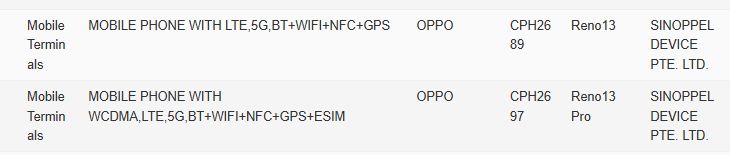
Oppo Reno 13, Reno 13 Pro IMDA certified in Singapore
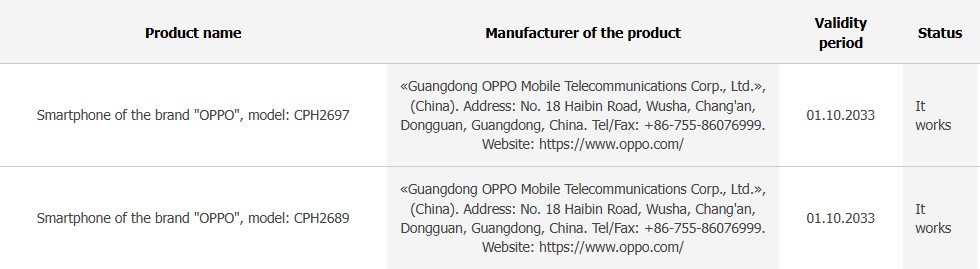
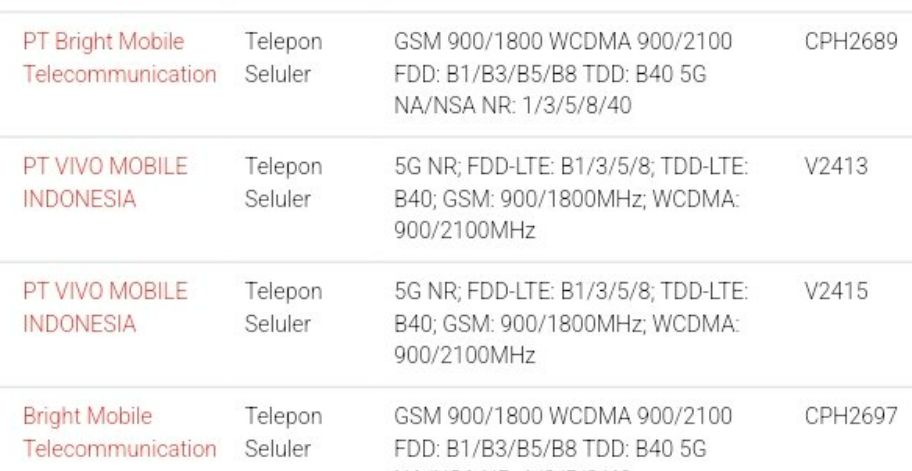
As seen in the above screenshot, the Reno 13 and the Reno 13 Pro have appeared in the database of Singapore’s IMDA certification platform. The standard version has the model number CPH2689, whereas the Pro variant has the model number CPH2697. These model numbers were previously seen in the databases of Europe’s EEC and Indonesia’s TKDN. However, it is only through the IMDA certification that their final monikers have been confirmed.
The IMDA listings only reveal the connectivity features of both devices. Interestingly, it also reveals that the Pro model will come with eSIM support.
Oppo Reno 13 series EEC certified in Europe
Oppo Reno 13, Reno 13 Pro TKDN in Indonesia
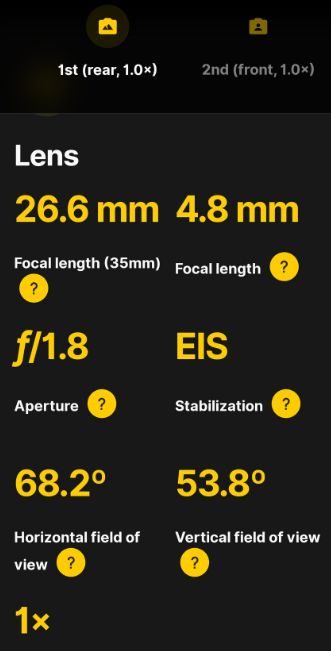
Additionally, the Reno 13 has also emerged in Camera FV-5’s database, revealing that it is equipped with a 50-megapixel primary camera on the back. It has a 26.6mm focal length and an f/1.8 aperture. The listing also suggests that the Reno 13 has a 50-megapixel front-facing camera with a 22.2mm focal length and an f/2.0 aperture.
Oppo Reno 13 Camera FV-5 listing
The Reno models launched in the global market bear the same design as their Chinese counterparts. However, the Chinese versions generally have slightly different and better specifications compared to their global counterparts. Recent reports have claimed that the Chinese variant of the Reno 13 Pro will be the world’s first phone to feature the upcoming Dimensity 8350 chipset. Whether the same device will be sold globally is unclear.
To recall, the Reno 12 series was spotted in IMDA’s database in May, and it went official on June 29, 2024, in Singapore. Similarly, the older Reno 11 and Reno 11 Pro were spotted in IMDA’s database in November 2023 before going official on Jan. 27, 2024, in Singapore. Therefore, it is likely that the Reno 13 series may debut in January 2025 in Singapore and other global markets.
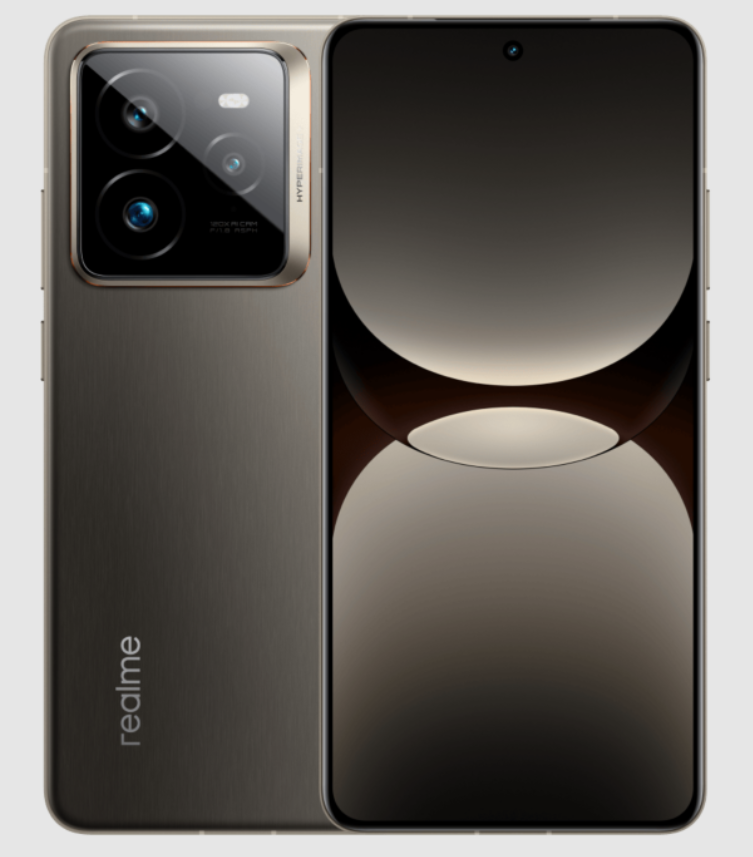
Redmi has already launched its Note 14 series, while its close competitor, Realme, is set to release the Realme 14 series early next year—and it appears they’re adding a new member to the lineup.
According to a report from 91mobiles, Realme is planning to introduce a Realme 14 Pro Lite 5G, a fresh addition since the brand hasn’t previously included a Pro Lite device in its number series.
With each of these getting a successor—and the addition of a Pro Lite model in the 14 series—the lineup could become even more crowded and confusing for users.
Realme 14 Pro Lite 5G details
Nonetheless, the report reveals that the Realme 14 Pro Lite 5G, set for the Indian market, carries the model number RMX990.
The device will offer four RAM and storage options: 8GB/128GB, 8GB/256GB, 12GB/256GB, and 12GB/512GB. And it will be available in Emerald Green, Monet Purple, and Monet Gold—colors already seen in Realme’s current lineup.
As a new addition, the Realme 14 Pro Lite’s exact price and specifications are still unclear. But its name already indicates it could be a more affordable option than the standard 14 Pro smartphone. So we can at least expect an AMOLED display and Android 15-based Realme UI out of the box.
Realme is rumored to launch the 14 series in India in 2025, but the initial release is expected to focus on only the Realme 14 Pro and Realme 14 Pro+. So the company may release the Realme 14 Pro Lite separately at a later date alongside other Realme 14 series devices. We will keep you updated on any new details we get of the upcoming smartphones. Stay tuned.
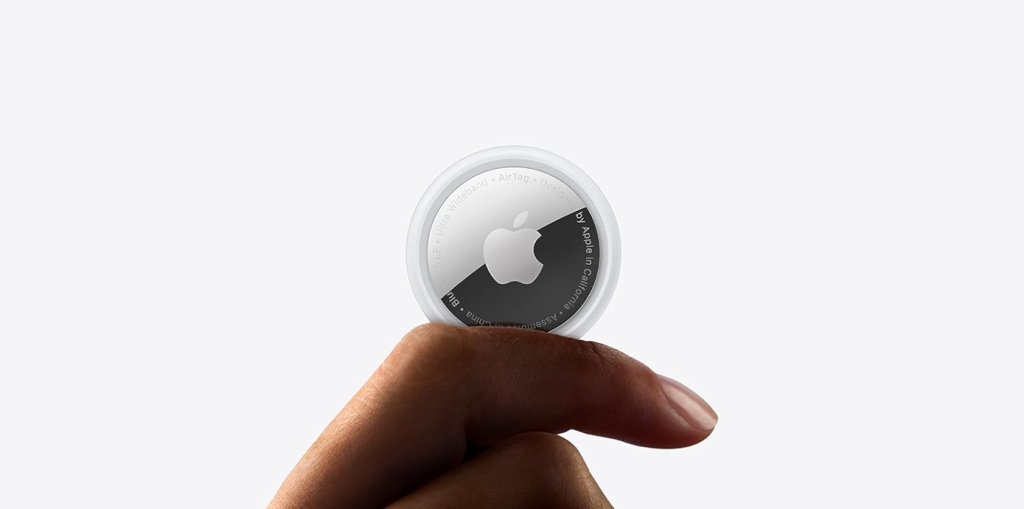
As the festive season is nearing, the discounts have started appearing on popular consumer electronics. Following a discount on Beats headphones the previous week, Amazon has discounted the Apple AirTag 4, which is now retailing for $70 for a pack of four Apple AirTags.
Apple AirTags, with its Ultra Wide Band wireless protocol, has become a useful utility to track items. It can work with any iPhone and can work even if any iPhone or Apple device comes within 25 feet of the periphery of the AirTag. However, the Apple Air Tag only works if it gets in contact with the UWB network of any device.
The users can track these on iPhones with proper directional arrows and a distance meter. All these features make it easy for the user to track the lost item without any major hassle. With IP67 water and dust resistance, a replaceable battery that lasts up to a year, and customizable engraving options, AirTag is both practical and personal. AirTag also prioritizes privacy and security, employing encrypted location data and sending alerts to users if an unknown AirTag is moving with them, safeguarding against unwanted tracking.
Apple AirTags are quite in demand due to their several uses and benefits. However, there are some caveats, like that it only works with iPhones and doesn’t come with a point of attachment for connecting keys or any other things. The user has to reply on third-party accessories to make it compatible with the keychain.
It is up for grabs at a discounted price of $70 with a $30 discount. Usually, it retails for the price of $100 in the US.
Keep track of and find your items alongside friends and devices in the Find My app
Simple one-tap setup instantly connects AirTag with your iPhone or iPad
Play a sound on the built-in speaker to help find your things, or just ask Siri for help
Precision Finding with Ultra Wideband technology leads you right to your nearby AirTag on select iPhone models. Precision Finding compatible with iPhone 11, iPhone 11 Pro, iPhone 11 Pro Max, iPhone 12, iPhone 12 mini, iPhone 12 Pro, and iPhone 12 Pro Max.
Find items farther away with the help of hundreds of millions of Apple devices in the Find My network
Please Note: When you buy something using the links in our articles, we may earn a small commission at no cost to you.
Apple’s upcoming iPhone 17 Air, anticipated to be the brand’s next ultra-slim model, has encountered an unexpected setback. Initially, Apple aimed to introduce a high-density battery to achieve a thinner profile, but the iPhone 17 Air is now expected to debut with increased thickness.
According to Naver user yeux1122, Apple has faced challenges in developing this high-density battery, forcing the company to abandon its ultra-slim design goal.
iPhone 17 Slim mock render
Battery limitations force Apple to rethink the iPhone 17 Air’s design
Originally envisioned as Apple’s thinnest iPhone since the 6.9mm iPhone 6, the iPhone 17 Air was designed to surpass this benchmark by using a battery with a thinner substrate. However, manufacturing difficulties and high production costs have led Apple to modify its plans. As a result, the iPhone 17 Air is now expected to exceed 7mm in thickness, falling short of its initial ultra-thin promise.
This development raises questions about the relevance of the iPhone 17 Air if it doesn’t significantly reduce thickness compared to existing models. For instance, the current iPhone 16 Plus which is expected to replace the Air is 7.8mm thick, so a minor reduction may not be enough to make the 17 Air stand out.
Despite this change, the iPhone 17 Air is still expected to deliver significant upgrades in display, performance, and camera. It’s likely to feature ProMotion technology with a 120Hz refresh rate, an upgraded 48MP camera sensor, and improvements in front camera resolution from 12MP to 24MP. Additionally, Apple plans to integrate its self-developed 5G modem.
Apple isn’t alone in facing these challenges. Samsung is reportedly experiencing similar issues with its own upcoming ultra-slim model, the Galaxy S25 Slim, slated for release in early 2024. Reports indicate Samsung has encountered hurdles with battery density, which was intended to enable a slimmer design without compromising battery life.
Consequently, the Galaxy S25 Slim may also end up thicker than planned, although Samsung is reportedly using a new battery technology. Due to these constraints, Samsung may limit the initial release quantities of the Galaxy S25 Slim.
More rumors are on the horizon, and we’ll keep you posted with the latest updates. In the meantime, you can explore our iPhone 17 Air roundup for all the details on what’s known so far about this radical “slim” iPhone.
Samsung may have led the 3nm race with its Gate-All-Around (GAA) process, but the production yields from this process have yet to meet satisfactory levels, if a new leak coming out of Korea is to be believed.
A report from Naver reveals that Samsung initially set an ambitious target of 70% yield for both its first- and second-generation 3nm GAA processes. However, this goal now appears far out of reach.
Reportedly, the first iteration, dubbed “SF3E-3GAE,” is faring comparatively better, with yields hovering around 50-60%. While this is closer to the target than its younger sibling, it still falls short of the level needed to make the technology commercially attractive.
This shortfall seems to be a key reason behind the lack of new clients adopting Samsung’s 3nm GAA process. Qualcomm’s decision to manufacture the Snapdragon 8 Elite exclusively on TSMC’s 3nm “N3E” architecture is a case in point.
It keeps getting worse…
The outlook for Samsung’s second-generation 3nm process (dubbed SF3-3GAP), however, is even grimmer. The report suggests its yield rates are just 20%, less than a third of the initial target.
This lack of progress could further undermine confidence in Samsung’s 3nm offering, and could potentially drive even South Korean clients toward TSMC’s more established 3nm technology.
Samsung’s 3nm GAA technology might be turning into a bit of a headache. This could explain why the company seems to be shifting resources and talent towards its upcoming 2nm node.
Rumors suggest that an unnamed Exynos chipset, codenamed “Ulysses,” is being developed using the “SF2P” technology. This chip is expected to debut in a future Galaxy S model, possibly the S27 in 2027.
It remains to be seen, however, if Samsung can overcome these hurdles and establish its 3nm technology as a viable alternative. If not, the future of the company’s next flagship Exynos 2500 SoC could also be in doubt.
Redmi is expected to unveil its K80 and K80 Pro smartphones in China later this month. These devices are expected to launch globally as rebranded models in the Poco F7 series.
The Redmi K80 will likely be branded as the standard Poco F7, while the K80 Pro may take on the Poco F7 Ultra name.
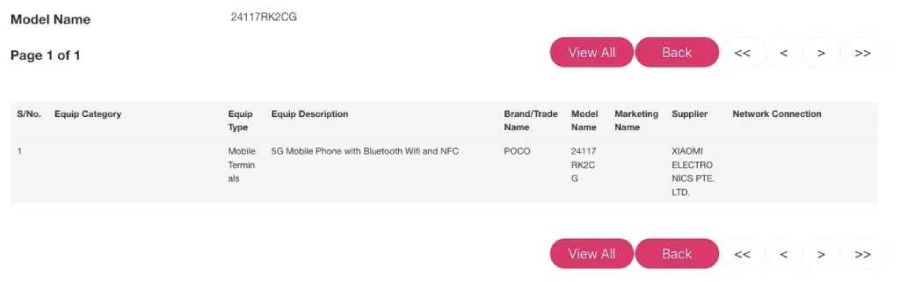
Recently, the Poco F7 appeared on Singapore’s IMDA certification website, hinting at a global release soon. The device is listed with model number 24117RK2CG, where the “G” suffix indicates it’s a global model.
As usual, the listing doesn’t reveal any specs but confirms 5G connectivity. It also shows support for standard features like Bluetooth, Wi-Fi, and NFC. Before this, both the Poco F7 Pro and Poco F7 Ultra models appeared on the IMEI database.
Poco F7 Pro: What we know so far
The Redmi K80 is expected to be powered by the Snapdragon 8 Gen 3 SoC, and based on the historical relationship between the two brands, the Poco F7 Pro is likely to follow suit.
Likewise, we are expecting an OLED panel on the front with a 2K resolution and 120Hz refresh rate. It may also house a substantial 6000mAh battery. Recently, the Redmi K80 appeared on China’s 3C certification site, showing 120W charging, which the Poco F7 Pro will likely match.
Alleged Redmi K80
An alleged real-life image of the Redmi K80 has also surfaced in a report, revealing a redesigned look with a circular camera island. It’s still unclear if the Poco F7 Pro will adopt the same design.
While the official launch date for the Poco F7 Pro hasn’t been confirmed, the IMDA certification hints that it’s just around the corner. With the Redmi K80 series expected to debut in China later this month, a global launch for the Poco F7 Pro and Poco F7 Ultra is likely to follow soon after.
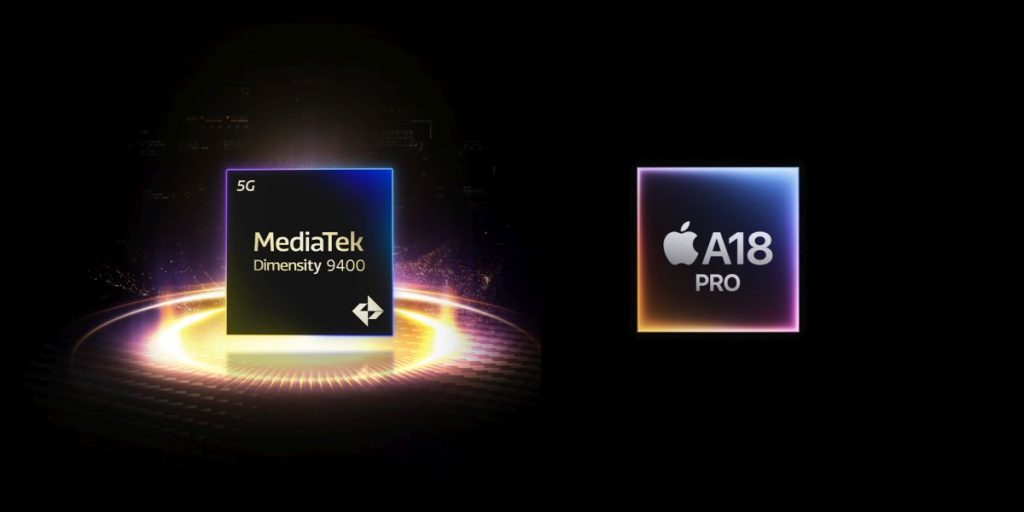
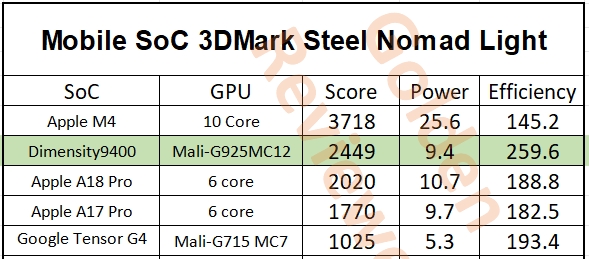
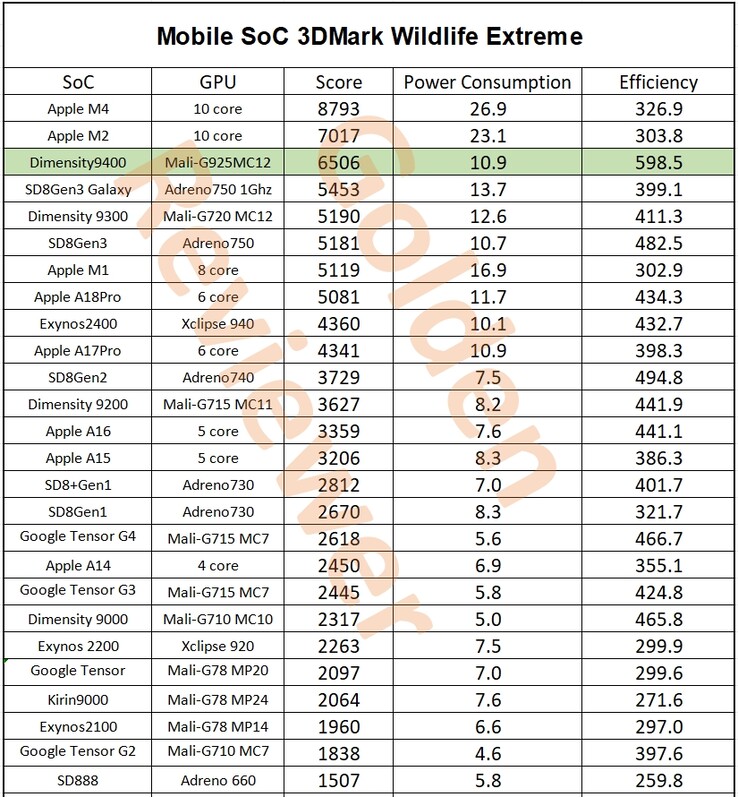
In a recent performance comparison by Golden Reviewer, MediaTek‘s latest flagship chipset, the Dimensity 9400, has demonstrated impressive GPU capabilities, potentially setting a new standard in graphics performance for flagship Android devices.
MediaTek Dimensity 9400 vs Apple A18 Pro
Although MediaTek has generally trailed behind Apple’s A-series chips and Qualcomm’s Snapdragon lineup in overall performance, the Dimensity 9400 is proving to be a fierce competitor in the GPU arena. The 12-core Arm Immortalis-G925 GPU embedded in the Dimensity 9400 chipset showcased both power and efficiency in various GPU tests, surpassing Apple’s A18 Pro GPU in specific metrics.
Detailed breakdown of Golden Reviewer’s tests
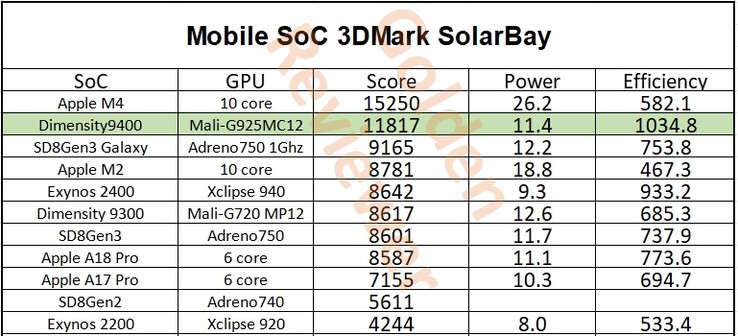
The tests examined the Dimensity 9400’s graphics performance against Apple’s A18 Pro, focusing on 3DMark benchmarks. In the Solar Bay ray-tracing test, the Dimensity 9400 scored an impressive 11,817 points while drawing 11.4 watts of power. In comparison, Apple’s A18 Pro recorded a lower score of 8,587 while consuming slightly less power at 11.1 watts. This gives the Dimensity 9400 an approximate 30% efficiency edge over the A18 Pro—a remarkable feat, especially in a competitive landscape dominated by Apple’s GPU prowess.
Other tests yielded similar results. On 3DMark’s Steel Nomad Light and WildLife Extreme tests, the Dimensity 9400 consistently scored higher than the A18 Pro while drawing less power, establishing around a 40% efficiency advantage. These outcomes underscore the Dimensity 9400’s potential to outperform the A18 Pro in high-intensity graphics tasks, making it a solid choice for gaming and other GPU-demanding applications on Android devices.
Additional Information on the Dimensity 9400 and A18 Pro
The Dimensity 9400’s GPU enhancements represent a significant leap from its predecessor, the Dimensity 9300. Its 12-core Arm Immortalis-G925 GPU offers a 40% boost in ray-tracing performance and a 41% increase in peak performance. Additionally, it integrates MediaTek’s HyperEngine technology, designed to enhance super-resolution and visual quality, particularly for gaming. This combination of improvements makes the Dimensity 9400 a top-tier choice in the premium Android market, catering to users who prioritize high-quality graphics and efficient performance.
Apple’s A18 Pro, while outperformed in these specific GPU tests, is still a formidable chipset. Its six-core GPU boasts a nearly 40% improvement over the previous iPhone 15 series, enhancing its ability to handle gaming and computational photography. Despite the Dimensity 9400’s lead in the GPU benchmarks, the A18 Pro remains competitive, particularly when it comes to overall performance, including CPU efficiency and multitasking capabilities.
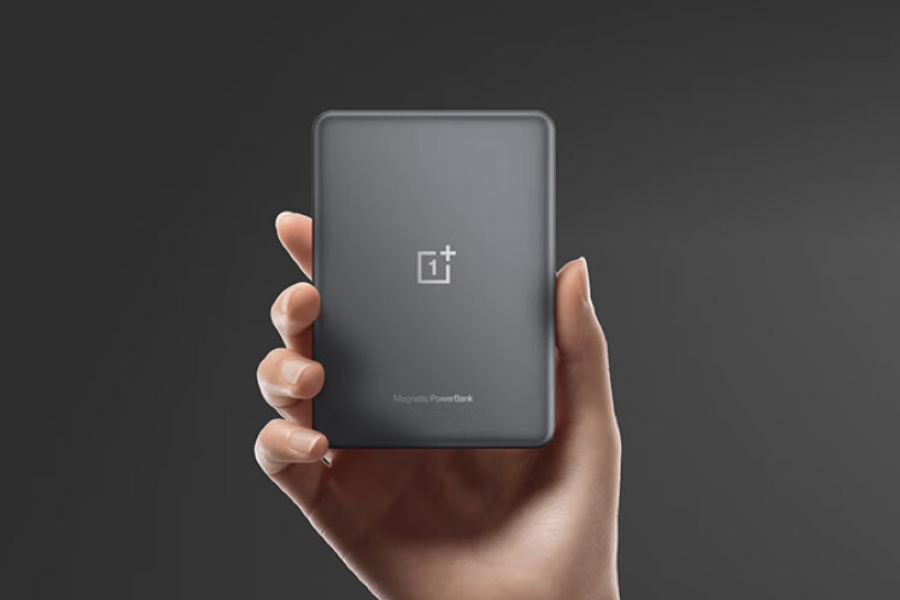
OnePlus officially launched its latest magnetic power bank alongside the new OnePlus 13 smartphone a couple of weeks back in China. Aptly named the OnePlus Magnetic Power Bank, it’s now finally available for purchase on the mainland. Let’s get into specifications, features, and price details here.
OnePlus Magnetic Power Bank Specifications
The power bank itself is a dark, minimalist affair. You can see the familiar OnePlus logo on the front, alongside the words “Magnetic Power Bank”, leaving no doubt about its function. It’s a wireless battery pack that you can attach to the back of your phone.
Following the current trend of ultra-thin profiles, OnePlus claims the power bank can “easily fit into a wallet.” Made from a seemingly sturdy 5 series aviation aluminum, it weighs a mere 120g and measures a mere 0.88 cm at its thinnest point.
While it seems tailor-made for the new OnePlus 13 with its flat bottom that avoids camera blockage, the power bank’s magnetic capabilities extend beyond OnePlus phones. It utilizes NTC resistors for active temperature control and, perhaps most notably, supports wireless charging for iPhones.
There are four small lights on the bottom to indicate the remaining power, while a button on the side allows users to activate the power bank. With a capacity of just 5000mAh, however, it can’t fully charge the OnePlus 13’s larger 6000mAh battery in one go. The company itself is advertising it as a companion for traveling.
Price and Availability
The OnePlus Magnetic Power Bank is priced at 149 yuan (around $21). Interestingly, OnePlus’ parent company, Oppo, also unveiled a similar magnetic power bank with identical specifications on the same day. Both power banks offer 5000mAh capacity, wireless charging for various devices, and a lightweight design for portability. They are likely the same product but with different branding.
Realme GT 7 Pro is a high-performance smartphone designed for users who seek both power and premium features. With its impressive hardware and advanced features, this device is built for multitasking, gaming, photography, and fast connectivity. The Realme GT 7 Pro is available starting at $619.00 and can be purchased from Giztop.
Sleek Display and Design
The Realme GT 7 Pro features a stunning 6.78-inch Samsung Eco² OLED display, known for its energy efficiency and vibrant colors. With a 120Hz refresh rate, this screen ensures smooth visuals, ideal for gaming, video playback, and seamless navigation. It boasts an astounding 2600Hz touch sampling rate for ultra-responsive touch sensitivity. The display reaches a peak brightness of 6000 nits, making it easily viewable even under direct sunlight, and it supports 2160Hz PWM dimming to reduce eye strain during extended use.
Powerful Performance with Snapdragon 8 Elite SoC
Under the hood, the Realme GT 7 Pro is powered by the Qualcomm Snapdragon 8 Elite octa-core processor, paired with either 12GB or 16GB of LPDDR5X RAM. This combination delivers outstanding speed and efficiency, making it capable of handling even the most demanding applications, games, and multitasking needs. Running on Realme UI 6.0, based on Android 15, the device provides an intuitive and smooth user experience with updated features and enhanced security.
Advanced Camera System for Photography Lovers
Photography enthusiasts will appreciate the Realme GT 7 Pro’s camera setup. The triple rear camera system includes a 50MP primary Sony IMX906 sensor with OIS, a 50MP periscope telephoto lens with OIS and 3x optical zoom, and an 8MP ultra-wide-angle lens with a 122-degree field of view. Together, these sensors capture sharp, clear, and vibrant images, even in low light. On the front, there’s a 16MP camera for high-quality selfies and video calls.
Ample Storage and Battery Capacity
The Realme GT 7 Pro offers substantial storage options with choices of 256GB, 512GB, and 1TB UFS 4.0 storage. This ensures ample space for apps, photos, and files without the need for external storage. Powering the device is a 6500mAh battery, providing extended usage time, and it supports 120W Supervooc fast charging, which quickly recharges the battery so you can get back to your tasks without delays.
Enhanced Cooling and Gaming Mode
For gamers, the Realme GT 7 Pro is equipped with a diamond ice core cooling system that uses aerospace-grade cooling gel, tempered VC, and 3D graphene layers. Covering 4129mm², this cooling technology ensures stable performance even during extended gaming sessions. The dedicated GT Mode 3.0 optimizes gaming experience with enhanced image quality, faster loading times, dynamic sound, and 4D in-game vibrations.
Other Notable Features
The Realme GT 7 Pro includes an under-display fingerprint sensor for secure and fast unlocking. It supports Dolby Atmos audio, delivering immersive sound for movies, music, and games. With 5G connectivity, users can enjoy fast internet speeds for downloading, streaming, and browsing. The device also supports dual SIM cards, with one card designated for 4G when both are in use.
We use cookies on our website to give you the most relevant experience by remembering your preferences and repeat visits. By clicking “Accept”, you consent to the use of ALL the cookies.
This website uses cookies to improve your experience while you navigate through the website. Out of these, the cookies that are categorized as necessary are stored on your browser as they are essential for the working of basic functionalities of the website. We also use third-party cookies that help us analyze and understand how you use this website. These cookies will be stored in your browser only with your consent. You also have the option to opt-out of these cookies. But opting out of some of these cookies may affect your browsing experience.
Necessary cookies are absolutely essential for the website to function properly. This category only includes cookies that ensures basic functionalities and security features of the website. These cookies do not store any personal information.
Any cookies that may not be particularly necessary for the website to function and is used specifically to collect user personal data via analytics, ads, other embedded contents are termed as non-necessary cookies. It is mandatory to procure user consent prior to running these cookies on your website.