Advertisement

Xiaomi 15, 15 Ultra to launch globally, 15 Pro will be China-exclusive: Read codenames, model numbers

Xiaomi is reportedly working on the Xiaomi 15 series of smartphones for the Chinese market. New leaks have emerged on Weibo, shedding light on fresh details about the Xiaomi 15 and 15 Pro. Here’s a look at the latest information available.

Xiaomi 15 series: What to expect

In June, tipster Experience More highlighted that Xiaomi typically uses mythological figures as codenames for its numbered series flagship phones. The Xiaomi 15 Pro, codenamed “Haotian,” references the supreme god in ancient Chinese mythology, suggesting strong confidence in the device’s capabilities. At that time, the tipster mentioned the Xiaomi 15 Pro (O2 – shortened codename, 24101PNB7C) would be exclusive to the Chinese market, while the Xiaomi 15 and 15 Ultra would be available globally.

In a new Weibo post, the same tipster revealed more details: the Xiaomi 15 (O3-shortened codename, 24129PN74C) is codenamed “Dada,” while the Xiaomi 15 Pro retains the codename “Haotian.”

The Snapdragon 8 Gen 4 chipset will make its debut in the Xiaomi 15 series in October. The design of the 15 and 15 Pro remains mostly unchanged, featuring a small flat screen and a slightly curved display for both phones, respectively. A recent report revealed that there could be a slight change in the rear camera design.

In addition to the usual performance upgrades, the series will boast ultrasonic in-screen fingerprint sensors, a large battery, a periscope telephoto lens, and enhanced water resistance. Notably, there is significant anticipation for the debut of Xiaomi’s new HyperOS 2.0, alongside the impressive hardware specifications of the Xiaomi 15 series.

The Xiaomi 15 Ultra is unlikely to launch this year. Most likely, the device will feature the Snapdragon 8 Gen 4 and launch in the first half of 2025. It is said to have “O1” as its shortened codename.

Vivo X200 Ultra / Pro to feature 200MP periscope telephoto camera

Vivo is expected to unveil the Vivo X200 series of smartphones in the coming months in China. The X200 and X200 Pro are expected to go official in October of this year, whereas the X200 Ultra may go official in the first half of 2025. Today, reliable leaker Digital Chat Station published a Weibo post to share information about the X200 series’ periscope telephoto camera.

Vivo X200 series to feature 200MP periscope camera

While the leak does not specify the name of the device, the emoji used in the Weibo post suggests that he could be talking about one of the Vivo X200 series phones.

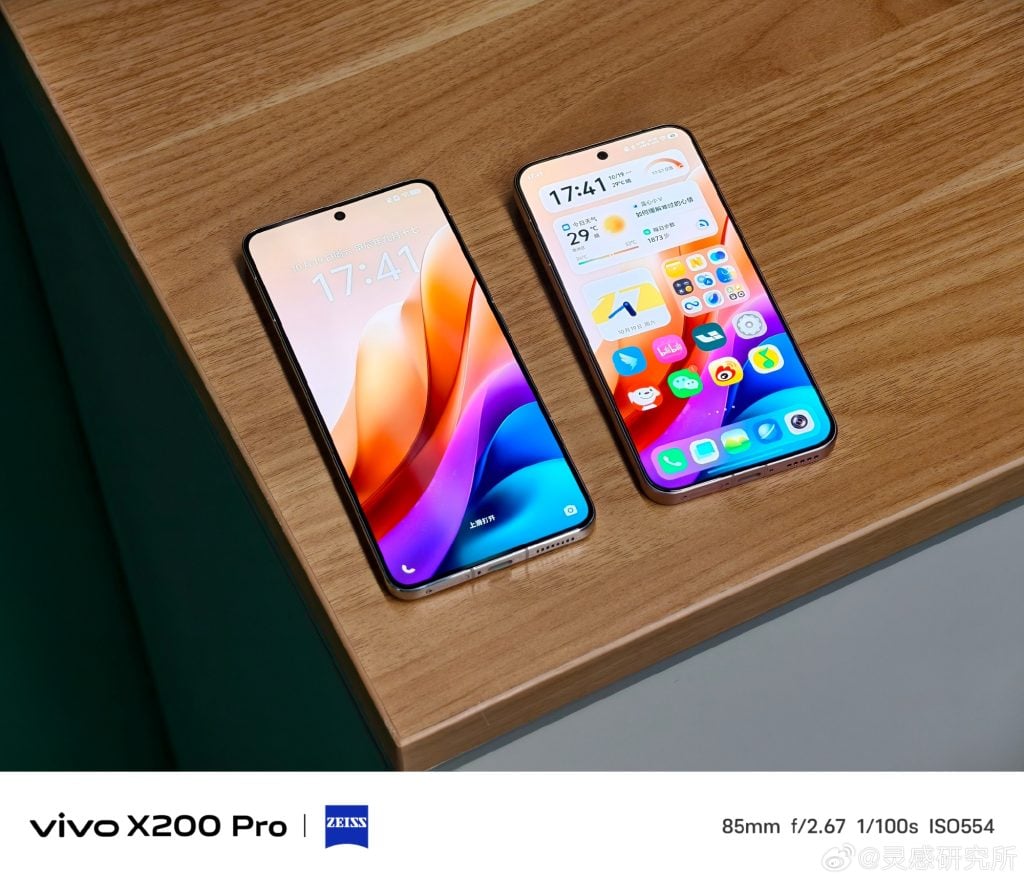
As per the leak, the Vivo X200 Pro will feature a 200-megapixel sensor with a 1/1.4-inch size, an f/2.67 aperture, and an 85mm focal length. It will have the same Samsung S5KHP9 periscope telephoto camera currently available on the Vivo X100 Ultra. It is unclear whether the tipster is indicating that the Vivo X200 Pro will inherit the X100 Ultra’s periscope camera or if the X200 Ultra will continue to feature it.

Reports have claimed that the Vivo X200 will be a compact flagship smartphone featuring a 6.4-inch or 6.5-inch flat OLED panel. Conversely, reports suggest that the X200 Pro will have a larger OLED screen, featuring micro curvature on all four sides. Like the X200, the Pro will also support a 1.5k resolution and a 120Hz refresh rate. The X200 and X200 Pro are expected to feature the Dimensity 9400 chipset.

On the other hand, the X200 Ultra may come equipped with the Snapdragon 8 Gen 4 SoC. It is likely to arrive with a 2K 120Hz OLED screen. At present, there is no clarity about the other specs of the device.

Raytheon Launches New 4K 160Hz Gaming Monitor with First-Day Discount

Raytheon‘s new gaming monitor, the DU27F160L will be available for purchase starting tomorrow, July 22nd, on JD.com. This 27-inch display boasts a sharp 4K resolution (3840 x 2160) with a 160Hz refresh rate, ideal for gamers seeking smooth, high-definition visuals.

The monitor has an IPS panel with 99% sRGB and 95% DCI-P3 color gamut coverage

The DU27F160L features a Fast IPS panel with a brightness of 400 nits, offering vibrant colors and wide viewing angles. To further enhance the visual experience, the monitor boasts 99% sRGB and 95% DCI-P3 color gamut coverage, ensuring accurate color reproduction.

Gamers will also appreciate the monitor’s 1ms (GTG) grey-to-grey response time, minimizing ghosting and blurring during fast-paced action sequences. Compatibility with G-Sync and FreeSync technology prevents screen tearing for a smoother overall experience.

The ergonomic stand allows for tilt, lift, swivel, and pivot adjustments, providing a comfortable viewing position for extended gaming sessions. In terms of connectivity, the DU27F160L comes equipped with 2 HDMI 2.1 ports, 1 DP 1.4 port, and a 3.5mm headphone jack for connecting your peripherals.

Raytheon is offering a limited-time discount on the DU27F160L during its launch day sale on July 22nd. The price is set at 1589 yuan (approximately $218 USD).

(Via)

Redmi K70 Ultra breaks 2024 sales record in just 3 hours in the first sale

On July 19, Redmi unveiled the Redmi K70 Ultra along with the Xiaomi Mix Fold 4 and Mix Flip foldable phones in China. On the next day (July 20), the brand carried out the first sale of the phone. Soon after making it available for purchase, the company confirmed that the performance-focused K70 Ultra received an outstanding response from the market.

Redmi K70 Ultra sales

Redmi K70 Ultra first sale result

Redmi released the above poster to confirm the remarkable success of the first sale of the Redmi K70 Ultra. The device has swiftly become a sales champion, breaking the 2024 first-sale record within just three hours of its launch. This impressive achievement highlights the K70 Ultra’s strong appeal and demand among consumers. Furthermore, it has secured the top position in sales across all price segments on all online platforms.

The Redmi K70 Ultra is priced at 2,599 for 12GB+256GB variant. The 12GB+512GB, 16GB+512GB, and 16GB+512GB editions of the phone are priced at 2,899 Yuan (~$400), 2,899 Yuan (~$440), and 3,199 Yuan (~$495), respectively. It comes in three shades, such as Ink Feather (black), Clear Snow (white), and Ice Glass (purple).

The Redmi K70 Ultra Champion Edition, which has a Lamborghini-inspired design and 24GB+1TB configuration, is priced at 3,999 Yuan (~$550). The special edition variant will be made available or purchase in China in the coming days.

Redmi K70 Ultra specifications

The Redmi K70 Ultra has a 6.67-inch OLED 8T LTPS panel that offers a 1.5K resolution and a 144Hz refresh rate. The device is powered by the Dimensity 9300+ chip and D1 graphics chip, LPDDR5x RAM, UFS 4.0 storage, and a 5,500mAh battery with 120W fast charging support.

The K70 Ultra has a 20-megapixel camera for selfies. On the back, it has a Sony IMX906 50-megapixel main camera with OIS support, an 8-mgeapixel ultrawide lens, and a 2-megapixel macro camera. It offers other specs, such as dual speakers, an x-axis linear motor, an in-screen fingerprint scanner, an IR blaster, a metal frame, and an IP68-rated chassis.

Netflix Doubles down into Gaming, with over 80 Games in Development and a Focus on Fan Engagement

During a recent financial conference call, Netflix executives revealed an impressive pipeline of over 80 games currently under development. This news comes alongside insights into Netflix’s gaming strategy, which prioritizes learning from past experiences and keeping users engaged between seasons of their favorite shows.

Netflix will create a stronger library of titles using a data-driven approach

Netflix is taking a data-driven approach to improve its gaming offerings. By analyzing the successes and failures of their initial game launches, they aim to create a stronger library of titles. A key focus will be on games based on popular Netflix intellectual property (IP). This leverages the existing fanbase and allows for deeper connections between the shows and the games. Interactive narrative games, a format where Netflix has seen significant traction, will also continue to be a priority.

Looking beyond simply filling the gaps between seasons, Netflix sees games as a powerful tool for fan engagement. The company hinted at using games to introduce new characters, storylines, and plot points that could then be incorporated into future seasons or movies. This creates a more interwoven experience, allowing fans to delve deeper into the worlds they love. By offering these experiences, Netflix is aiming to keep users glued to the platform and strengthen the overall entertainment experience.

(Via)

Xiaomi SU7 Ultra FAQs: Xiaomi’s upcoming Flagship will Debut the World’s First Second-gen Kirin Battery

Xiaomi‘s latest “SU7 Answering Questions” episode sheds light on the SU7 Ultra Prototype, user connectivity, and car ownership.

The SU7 Ultra Prototype boasts impressive in-house development, featuring a Xiaomi-designed super motor and co-developed track-level battery tech. It also debuts the world’s first second-generation Kirin battery. Xiaomi plans to integrate these technologies into future mass-produced cars after the prototype’s New Zealand challenge this October.

Drivers can switch between Xiaoai and Siri commands.

CarPlay users can rest easy – Xiaomi’s voice assistant Xiaoai remains active for voice wake-up. Drivers can switch between Xiaoai and Siri commands for a smooth user experience. The “IVI” mark on the panoramic roof simply indicates designated installation points for a roof rack. Xiaomi reminds users to prioritize safety and follow guidelines when installing a roof rack.

Xiaomi’s lab data confirms the car’s impressive downforce at high speeds. Comparisons to other models’ downforce data at different speeds might be misleading. While non-refundable after 7 days, the worry-free service package’s benefits transfer to the next car owner.

Policy details can be accessed through the Xiaomi Auto app after car activation and insurance confirmation. Powering down involves going to “Settings” while restarting requires pressing the brake, locking the car, or using the start/stop button. A system reboot can be done by holding both steering wheel roller buttons for 10 seconds.

(Via)

ONEXPLAYER ONEXFLY gaming handheld Upgrades to AMD Ryzen 7 8840U

ONEXPLAYER has introduced an upgraded version of its ONEXFLY gaming handheld, now featuring the AMD Ryzen 7 8840U processor for improved performance.

ONEXPLAYER ONEXFLY

ONEXPLAYER ONEXFLY gaming handheld specs:

The new ONEXFLY is powered by the AMD Ryzen 7 8840U CPU, which boasts 8 cores, 16 threads, and a maximum clock speed of 5.1GHz, ensuring smooth gaming experiences without lag. Weighing just 599g, the ONEXFLY is highly portable, making it convenient for gaming on the go. It also features customizable RGB Flight Wing emblems that can display your name, adding a personal touch to the device.

For audio, the ONEXFLY is equipped with Harman AudioEFX Dual Speakers, delivering clear sound. Its 48.5Wh battery supports long gaming sessions, reducing the need for frequent recharging. The OneXConsole Game Center allows users to adjust power consumption and CPU settings, and monitor game data in real-time for optimal performance. The device features a 7-inch display with a 120Hz refresh rate, offering clear and vibrant visuals.

The ONEXFLY has LPDDR5x memory and an NVMe SSD, providing fast load times and efficient multitasking. Its design includes antibacterial Musashi Paint for a comfortable grip and added hygiene.

Key Specifications

  • Processor: AMD Ryzen 7 8840U, 8-core, 16-threads, 3.3GHz base frequency, 5.1GHz turbo frequency
  • Graphics: AMD Radeon 780M, 2700MHz, 12 CU
  • Memory: LPDDR5X 7500MHz, 16GB / 32GB options
  • Storage: M.2 PCIe 4.0 NVMe, 7109MB/s read speed, 6316MB/s write speed
  • Display: 7-inch, 1920×1080 resolution, 100% sRGB, 120Hz refresh rate
  • Weight: Approximately 599g
  • Dimensions: 263.6mm x 98.25mm x 22.6mm
  • Battery: 48.5Wh capacity
  • Charging: 65W GaN Charger included
  • Interfaces: USB-C 4.0 x 2, USB-A 3.0 x 1, 3.5mm audio jack, Micro SD 4.0 x 1
  • Speakers: Harman AudioEFX Dual Speakers
  • Software/System: OneXConsole, Windows 11
  • Lighting: RGB, 9 modes, 30+ lighting effects

Pricing & availability

The upgraded ONEXFLY is priced at $999, which includes 32GB of RAM and 1TB of storage. The 2TB storage version is priced at $1,099.

Samsung says you shouldn’t wear Galaxy Ring near magnets or during weightlifting

Samsung Galaxy Ring is set to go on sale starting from July 24. While you might already know its specifications (if not, check out our launch article), there is one important detail you might have missed. That is, Samsung is advising against wearing the Galaxy Ring in certain situations or near specific objects.

According to Samsung’s official support page, the wearable should be kept away from magnets. The page specifically states that “certain features, like step counting, may not work properly if you’re holding a magnet or a magnetic object in the hand wearing the ring.” So, if you work around magnetic fields or simply enjoy playing with fridge magnets, take note of this.

Samsung also recommends removing the Galaxy Ring during weightlifting and other exercises involving machines. The reasoning is twofold: to protect the ring itself and to prevent hand injuries. 

The support page mentions that wearing the ring during weightlifting “could cause hand injuries,” implying that the ring might get caught or damaged during strenuous exercise.

It’s worth noting that similar recommendations have been made for other wearable rings, such as the Oura ring. According to Tech Radar, the Oura ring support page doesn’t explicitly mention magnets, but it does recommend “considering removing” the ring in situations with high friction, including weightlifting.

These limitations highlight the nascent stage of smart ring technology. While they offer features like fitness tracking and other functionalities, these devices might require lifestyle adjustments compared to traditional wearables like smartwatches.

As the market for wearable technology continues to expand, consumers need to carefully consider the limitations and care instructions associated with these devices.

Buy Galaxy Ring on Amazon

 If you’re considering the Galaxy Ring, make sure to read the support documents thoroughly and watch reviews that may highlight its drawbacks. Understanding these limitations can help you get the most out of the device and avoid any potential damage or disrupted functionality.

iFlytek launches T30 Ultra AI Learning tablet with 14.7″ 3K display, industry-first Nearlink AI Stylus

iFlytek has launched its latest AI Learning tablet, the T30 Ultra, distinguishing itself with several industry-first features. Central to its appeal is the Nearlink AI stylus, integrated directly into the device, which offers a high degree of pressure sensitivity and magnetic wireless charging, enhancing the user’s writing and interaction experience.

iFlytek T30 Ultra

iFlytek T30 Ultra Specifications:

The T30 Ultra sports a 14.7-inch display, boasting a 3K Ultra HD resolution, 120Hz refresh rate, and a rich color spectrum of 1.07 billion colors. This screen is designed for eye comfort, featuring a micronano-class paper-like large eye protection screen with hardware-level low blue light and DC dimming-free technology. It also includes anti-glare and circadian-friendly lighting adjustments to reduce eye strain during prolonged use.

The device also features a flagship AI smart quad camera system, designed to enhance recognition and correction capabilities. This system includes a 16-megapixel automatic flip dual camera, an 8-megapixel front camera, and a 2-megapixel posture camera, ensuring clear visuals and enabling posture monitoring for healthy learning habits.

The device is powered by iFlytek’s Spark large model, which has been recognized as one of the “smartest” Chinese large models. Additionally, iFlytek has collaborated with Huawei to build the domestic computing platform “Star One,” further enhancing the device’s capabilities.

In terms of performance, the device is equipped with 12GB of RAM and 1TB of storage, allowing for ample space to store educational content and applications. For English language learners, the T30 Ultra offers a robust set of AI-powered features. Students can receive AI-powered one-on-one English essay corrections, including basic corrections, in-depth analysis, full-text analysis, and writing suggestions. The machine also provides targeted corrections based on current essay requirements.

Additionally, the T30 Ultra supports AI one-on-one English-speaking practice, free question-answering, and intelligent programming assistance. Parents will appreciate the included parental education assistant, providing valuable insights into their child’s learning progress.

The T30 Ultra goes beyond simply presenting information. It features AI-enhanced lessons developed by iFlytek, which utilize AI-generated questions to stimulate critical thinking at key moments. The machine can diagnose a student’s learning level and implement a personalized “diagnose-learn-practice-test” process to solidify understanding.

For younger learners, the T30 Ultra includes a collection of picture books authorized by Oxford University Press. This curated selection covers 6 series and 15 levels, offering 188 English original picture books suitable for early childhood and elementary education.

Pricing and Availability

The iFlytek AI Learning Machine T30 Ultra is available for purchase now in China on JD.com, starting at 11,699 yuan ($1,609). The device is not yet available for purchase outside of China.

ViewSonic LX700-4K RGB projector unveiled; offers 240Hz refresh rate for gaming

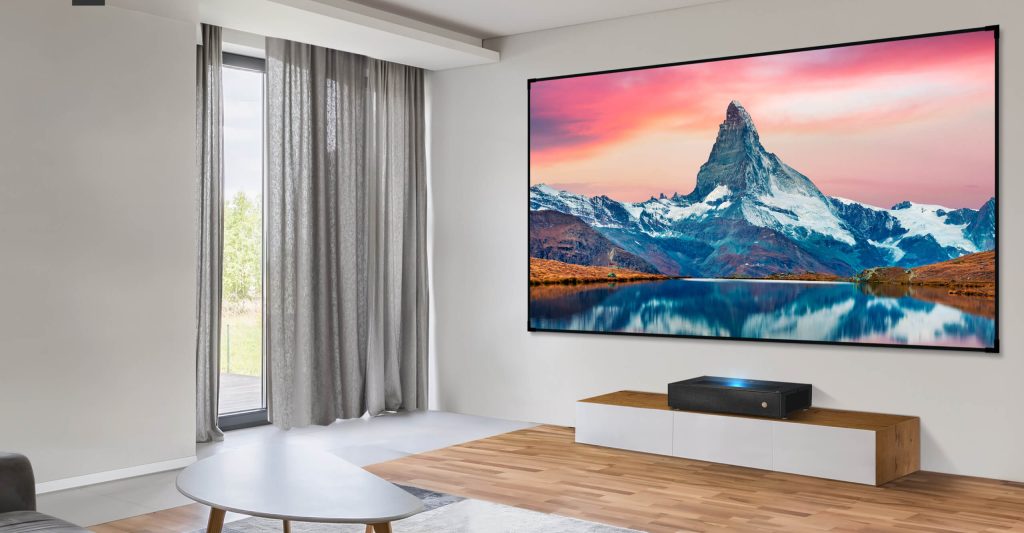
ViewSonic has introduced the LX700-4K RGB projector, designed to offer advanced home entertainment options. This is the first ceiling-mounted home projector with RGB laser technology, which promises improved color accuracy and visual performance.

ViewSonic LX700-4K RGB projector

ViewSonic LX700-4K RGB projector

The LX700-4K RGB covers 100% of the BT.2020 color range, offering vibrant and accurate colors. True 4K UHD resolution with HDR/HLG support ensures sharp, detailed images, while a high contrast ratio powered by a 0.65-inch DMD chip reveals deep blacks for a true cinema experience.

ViewSonic LX700-4K RGB projector

The LX700-4K RGB offers flexible installation with 1.6x zoom, vertical lens shift, and keystone correction for perfect image alignment. It projects a massive 300-inch screen, dwarfing typical OLED TVs.

Beyond movies, the projector excels in gaming with support for QHD 1440p at 120Hz, ideal for Xbox and PlayStation. Ultra-fast input, a 240Hz refresh rate, and a microsecond-level response time deliver smooth, lag-free gameplay.

Currently, the brand has not announced the pricing and market availability details of the LX700-4K RGB projector.

Check out the ViewSonic LX700-4K UHD 3500 Lumens Laser Projector on Amazon.

In related news, BenQ has released its own gaming-focused projectors in the market called the BenQ TK710 and TK710STi. Both models feature native 4K UHD resolution (3,840 x 2,160 pixels), 3,200 lumens brightness, and a lifespan of up to 20,000 hours. They support HDR game modes with 4.2 ms input lag at 1080p/240Hz and 16.7 ms at 4K/60Hz. Prices are $1,799 for the TK710 and $1,999 for the TK710STi.

(Source)
Lenovo Xiaoxin Pad Pro 12.7 (2025) tablet to launch on July 27: Here’s what we know so far

Lenovo has officially announced the upcoming release of its Xiaoxin Pad Pro 12.7 tablet for 2025. The device is set to launch on July 27, 2024, at 2:00 PM Chinese local time. Lenovo has shared some details about the tablet, so let’s go through them.

The Xiaoxin Pad Pro 12.7 2025 will come in two variants: a standard model and a Comfort Soft Light Edition. Both versions will feature a Dimensity 8300 processor and a 2.9K 144Hz display, measuring 12.7 inches.

Lenovo has also confirmed the memory configurations for these tablets. The standard Xiaoxin Pad Pro 12.7 2025 will be available in three options: 8GB RAM with 128GB storage, 8GB RAM with 256GB storage, and 12GB RAM with 256GB storage.

The Comfort Soft Light Edition, on the other, is limited to two configurations: 8GB RAM with 128GB storage and 8GB RAM with 256GB storage. All models will have LPDDR5X RAM and support for microSD card expansion for additional storage. But only the 256GB model will feature UFS 4.0 storage.

Battery life is a standout feature of the tablet, with Lenovo claiming an impressive 79.6 days on standby, thanks to the 10,200mAh battery. Although real-world usage may differ, this suggests the tablet can handle extended use without frequent recharging. The device also supports 45W fast charging.

On the software side, the tablet will include ZUI 16, Lenovo’s custom user interface. ZUI 16 is designed to enhance productivity with features like cross-screen keyboard and mouse support, cross-device clipboard pasting, and a suite of connectivity options, including a file transfer station, application transfer station, and device hub station.

Both versions will be available in gray and green color options. As the launch date approaches, we are expecting more details about camera specifications, and additional features to come out.

Snapdragon X makes inroads with 6.5% Geekbench share in first month

Qualcomm‘s foray into the Windows on Arm (WoA) laptop market with the Snapdragon X series has garnered significant attention since its launch on June 18th. 

Data from performance testing platform Geekbench reveals over 81,000 tests conducted globally in the past month, with 6.5% stemming from Snapdragon X devices. While this trails established players like Intel and AMD, it’s a respectable showing for a newcomer.

The Snapdragon X’s standout feature is its energy efficiency, heavily promoted by both Microsoft and major PC manufacturers. Benchmark tests consistently show laptops powered by the Snapdragon X achieving over 15 hours of battery life, which is impressive.

Snapdragon X Elite

Additionally, Snapdragon X laptops are the first devices certified for Microsoft’s Copilot+ productivity suite, potentially offering improved workflow features.

However, the Snapdragon X launch hasn’t been without its hiccups. The highly anticipated Windows Recall feature was scrapped before release due to privacy and security concerns. 

Snapdragon X Elite notebooks also faced compatibility issues with apps due to their ARM architecture, and their integrated graphics performance lags behind Intel’s Arc offerings. Software developer support for the processor’s on-device AI processing also remains in its infancy, limiting the Snapdragon X’s AI capabilities.

Despite these challenges, the arrival of Snapdragon X presents a positive development for consumers. Similar to how Apple’s M-series chips disrupted the laptop market, the Snapdragon X pushes established players like Intel and AMD to innovate and deliver more powerful notebooks.

While the Snapdragon X currently doesn’t meet the needs of power users, we remain hopeful that Qualcomm will continue to make advancements. If the platform can address its existing issues, the future of the notebook processor market could see a compelling three-way battle for dominance.

Chinese researchers showcase tiny solar-powered drones that could theoretically stay in the air forever

Researchers at Beihang University in China are developing a solar-powered drone that could theoretically stay in the air indefinitely. Mingjing Qi and his colleagues developed a simple circuit that scales up the voltage produced by solar panels significantly and this was integrated into a tiny drone prototype.

Solar-powered Drone

Drones are becoming increasingly deployed for a wide variety of activities. They have simply revolutionized the tech space with their versatility. However, the seemingly limited flight time available for most of these models limits their versatility. Active research is however ongoing to develop a tiny solar-powered drone that can fly forever theoretically.

The latest drone is an aerial robot weighing 4 grams and powered by solar panels. The panels can produce extremely high voltage power that can keep the drone airborne indefinitely. It features an unusual electrostatic motor in combination with its tiny solar panels. The model is a prototype that is as small as a hummingbird and was recorded to have operated for only one hour. The researchers at the heart of the solar-powered drone claim that their approach could produce insect-sized drones that can stay in the air indefinitely.

Tiny drones remain a fascinating attraction for many applications and help to deliver greater depth. They can be deployed for communications, reconnaissance, search-and-rescue operations, and so on. These are however hampered by the poor battery life. Solar-powered models on the other hand still struggle to generate enough power to make them self-sustaining.

As the solar-powered drones are scaled down in size, their solar panels become smaller, thus reducing the amount of energy available. The scaled-up voltage of the solar panels, according to Qi, was between 6,000 and 9,000 volts. They also innovatively chose an electrostatic motor for the drone unlike what is obtained in electric vehicles, quadcopters, and robots. The electrostatic propulsion system was used to power a 10-cm rotot.

There are no clear details yet when the tiny solar-powered aerial robot prototype will transit into a production model. The optics however remain bright as the researchers may be on the cusp of a great technological milestone.

MOD Berlin electric bike with up to 145 kilometers range and customizable design unveiled

MOD has launched the Berlin electric bike with an impressive range. The MOD Berlin electric bike has a range of up to 90 miles (145 km) and can be customized to suit individual tastes.

MOD Berlin electric bike

The MOD Berlin is designed as a commuter electric bicycle that can also be used for off-road trips. The e-bike has a 750W hub motor with a torque sensor that can achieve a maximum speed of 45km/h. The 90-mile range of the MOD Berlin is achieved when using the bike’s dual-battery setup. It has a wide saddle and hydraulic disc brakes to assure the rider’s safety.

The MOD Berlin has an S3 Color Display that provides ride information in real time. You can also control the settings via the dashboard. The e-bike features five riding modes namely Eco, Boost, Turbo, Cargo, and Fit. The modes correspond to various riding scenarios such as commuting, cruising, or navigating a trail.

The MOD Berlin is compatible with the Snap-On accessories and this enables the rider to customize the bike. Using the Snap-On, you can add a basket, bench seat, or trunk bag. The MOD Berlin is also compatible with the Lumos Ultra Smart Helmet. The Lumos Ultra Smart Helmet allows the rider to synchronize the turn signal and brake lights and it is controlled via the handlebars.

MOD Berlin electric bike

In terms of pricing, the MOD Berlin has a starting price of $2,499 and the company is already receiving pre-orders. Furthermore, MOD is offering a discount of $300 up till July 30. The smart helmet can be ordered for $119. The prices of the Snap-On accessories are between $24 and $189.

Fujifilm X-M5 camera rumored to launch later this year as a compact and affordable alternative to the X100VI

A new leak indicates that the Fujifilm X-M5 camera could be released later this year. The Fujifilm X-M5 is being propped as a compact and affordable alternative to the Fujifilm X100VI and is a refresh of the X-M1.

There has been a raft of rumors of late relating to an upcoming Fujifilm camera. The rumors hinted at the return of the X-A camera lineup as a mid-level compact APS-C vlogging camera that omits EVF. However, a new leak indicates that there could be a more premium offering in the form of the X-M5, sporting the same retro look as the X100VI. It is also rumored that the new camera comes with several improvements from previous models including enhanced rangefinder capabilities.

Recently it was also rumored that a previous camera line was being readied to return as a new vlogging camera with IBIS and similar hardware as the X-S20 which is currently available in some retail platforms. It was also speculated that the X-A8 could be coming as the successor to the X-A7. The rumors and leaks are now pointing to the impending release of the Fujifilm X-M5, which is a more powerful model than the X-A lineup. There are no specifics of the new model but it is expected to retain much of the optics of the X-M1 while sporting a more compact design.

It is therefore being speculated that the Fujifilm X-M5 will feature the same hardware components as the X-S20 including a 26.1MP X-Trans CMOS 4 sensor and an X Processor 5. This could also result in up to 20fps in the burst mode and 6.2K open-gate video up to 60fps. The model is also speculated to feature an articulating screen and 7-stop, 5-axis in-body image stabilization.

The specs sheet so far indicates that the X-M5 could come as a formidable and less-expensive alternative to the X100VI, atop its expected better performance. There are no specifics yet on the release date although it is expected to be in the last quarter of 2024.

(via)

AYANEO Retro Power Bank with 12,000mAh capacity and 45W charging launched for $39.99

AYANEO has released its first power bank and it comes in retro styling. The AYANEO Retro Power Bank comes in a 12,000mAh battery and delivers up to 45W charging speed. The release of the power bank is coming eight months after it was announced and AYANEO has released several products since then.

AYANEO Retro Power Bank

AYANEO has an expanding collection of handheld gaming devices and has just released the Pocket EVO and Pocket DMG. The AYANEO Retro Power Bank can recharge devices at 45W across a range of amp and wattage combinations. It has two USB-C ports but the power bank can only recharge at 45W peak speed via the USBC1 port.

When both USB ports are engaged simultaneously, the power bank outputs 15W for one device and 30W for another. The power bank is designed such that it is possible to view the charging status for any of the two connected devices being recharged. It has a built-in OLED screen with a length of 0.91 inches across and a resolution of 32 x 128 pixels. The power bank has dimensions of 98 x 81 x 21.9 mm and a weight of 238g. The power bank comes in an SNES-inspired finish underlining its retro design.

AYANEO Retro Power Bank

Pricing & Availability

The AYANEO Retro Power Bank can be purchased directly via the AYANEO e-commerce platform for $39.99. It is expected that the availability of the power bank will subsequently extend to retail platforms like Amazon.

Gamesir launches X3 Pro Aurora Stretch Handle mobile controller with hall joystick, cooling fan & more

Gamesir has unveiled the X3 Pro Aurora Stretch Handle mobile controller, a feature-rich controller designed for mobile gaming enthusiasts. The controller boasts several highlights along with a built-in cooling module.

It is priced at 469 yuan (roughly $65) on JD.com and is currently available for pre-order with the first sale set for August 19. Let’s check out its key specs.

Gamesir X3 Pro Aurora Stretch Handle

Gamesir X3 Pro Aurora Stretch Handle Specifications:

The X3 Pro Aurora Stretch Handle features Kailh micro-switch buttons, promising a crisp and responsive feel with a 3 million press lifespan. Gamers can further personalize their experience with five included “elite accessories” for customizing the D-pad, joystick heads, and ABXY buttons.

The gamepad also boasts a custom Hall joystick with a 5 million cycle lifespan, which Gamesir claims uses an electromagnetic field to prevent drift, a common issue with traditional joysticks.

X3 Pro Aurora Stretch Handle comes with an integrated cooling module. This detachable module features a 4000mm² heat dissipation area and a 12W fan to keep your phone cool during intense gaming sessions.

The fan position can be adjusted to target specific heat zones on your phone for optimal cooling. The module can be powered simultaneously with the gamepad while playing, or independently if you only need cooling.

The gamepad is equipped with dual-vibration motors for immersive feedback and a six-axis gyroscope for motion control in compatible games. It also includes a 3.5mm headphone jack for connecting wired headphones while gaming.

The X3 Pro Aurora Stretch Handle utilizes a stretchable design, allowing it to accommodate various mobile devices measuring between 97.5mm and 180mm, including phones with large camera modules.

The gamepad connects via a Type-C interface and boasts compatibility with Android, HarmonyOS, iPhone 15 series devices, and PCs (requires a separate cable for wired connection). Additionally, Bluetooth connectivity is implied but details are not yet confirmed.

Android 15: The Last OS Upgrade for These Vivo and iQOO Phones

Vivo iQOO Android 15 final update

Google has already released the fourth beta of Android 15, which means we’re close to the stable release. The upcoming version of Android OS has many exciting features and enhancements, making us eagerly wait for the official release. Sadly, it will be the final OS update for many Vivo and iQOO phones.

Here, I’ll bring you the list of Vivo and iQOO phones that will receive Android 15 as their last major OS update, though they will continue receiving security updates for a while.

Android 15 Will Be the Final OS Upgrade for These Vivo and iQOO Phones

  • Vivo V30 Lite
  • Vivo V29 Pro
  • Vivo V29e
  • Vivo V29
  • Vivo V29 Lite
  • Vivo V27 Pro
  • Vivo V27
  • Vivo V27e
  • Vivo T2 Pro
  • Vivo T2
  • Vivo T2x
  • Vivo Y200 Pro
  • Vivo Y200e
  • Vivo Y100 4G
  • Vivo Y58
  • Vivo Y38
  • Vivo Y28s
  • Vivo Y18
  • Vivo Y18e
  • Vivo Y03
  • iQOO 11 Pro
  • iQOO 11
  • iQOO Z7 Pro
  • iQOO Z7s
  • iQOO Z7
  • iQOO Z7x
  • iQOO Neo 7 Pro
  • iQOO Neo 7

This is not the official list by any means. We have prepared it by analyzing the software update policy for every Vivo and iQOO device and the past rollouts.

Please note that the above only includes those Vivo and iQOO phones that will receive Android 15 as their last OS update. In case you want to check out the complete list of Android 15 eligible devices, read this post.

Vivo’s flagship X series phones typically get up to three Android upgrades, whereas the popular V and T series phones get two OS updates. The more affordable Y-series phones only get a single OS upgrade. iQOO phones typically get up to two Android updates.

When Will Vivo Start Rolling Out Android 15?

Android 15 is still under development, but we are far closer to the stable release, as the fourth beta has already recently gone live. This is the final scheduled beta for Google Pixels, though Google may still release .x patches.

Google hasn’t revealed an official date for the Android 15 release, but it’s expected to be released next month at the Made by Google event alongside the Pixel 9 series. These newest Pixels will be the first phone to ship with the latest OS.

Once the stable build is out, smartphone companies start polishing their custom skins (such as Funtouch OS) to work with the new OS. It usually takes a few weeks, and then the brand starts distributing the stable build.

Last year, Android 14 was released in October, and Vivo started rolling it out to their eligible devices in the same month. This year, we may see it rolling out as soon as next month, with the worst case being October.

We’re still weeks away from the stable Android 15 release, but it’s already available for testing for select devices via the beta program. Currently, it’s only available for Vivo X100 and iQOO 12. However, it should gradually expand to more and more devices in the coming weeks.

You can check out our step-by-step guide on how to install Android 15 beta on your device.

What to Expect From Android 15?

1. Theft Detection Lock

A recent helpful update to the Find My Device network allowed users to find their lost Android devices using a crowdsourced network of over a billion Android devices. This feature is also available to older Android devices, but what Android 15 will bring will make thieves think twice before stealing your phone.

The new OS brings a Theft Detection Lock feature that automatically locks the device when someone snatches your phone and runs away. The device automatically detects unusual motion and locks the device upon observing suspicious movements or activities.

If the thief manages to run away with your phone and perform a factory reset, he will need the same Google account to set up the device. Otherwise, the device won’t work.

2. Private Space

Private space is another handy addition to Android 15 that allows users to store their super-secret apps or files under an additional layer of protection. Users can use a different Google account and lock for better security.

All your actions inside the private space are unknown to other users. They can’t even see the apps in the recent apps or see your private space downloads. It’s a secure place to hide finance and dating apps.

3. Satellite Connectivity

Android 15 “extends platform support for satellite connectivity.” It provides support for SMS, MMS, and native RCS apps to use satellite connectivity for sending and receiving messages. The OS also adds some UI elements to ensure a consistent user experience.

All Android 15 phones may not support satellite connectivity as they will likely require special chip and carrier support. 

4. App Archiving

Apple iPhone users remember this feature as “Offloading apps.” This feature allows you to uninstall unnecessary apps while keeping the user data around. There won’t be any data loss; you can continue where you left off after reinstalling/unarchiving the app.

Android already has app archiving via the Google Play Store. It lets you archive and restore apps through the Google Play Store. However, Android 15 integrates this feature at the OS level, allowing users to archive/restore apps, even those installed outside of the Google Play Store.

5. Partial Screen Sharing

Until Android 14, when you screen share or record, the other person can see anything appearing on your screen, including incoming notifications and other details.

Android 15 resolves this issue by introducing partial screen sharing. It allows users to choose an app for screen sharing or recording. Only the app’s content is shown in the video, and nothing else, such as notifications.

6. High-Quality Webcam Mode

You can use your Android phone as a webcam for your computer. It’s a great feature, but the only drawback is the worst video quality. Android 15 resolves this by introducing a high-quality webcam mode.

You’ll be able to activate this webcam mode by tapping a new “HQ” symbol in the webcam preview. It turns off any power optimizations you’ve applied, which could increase battery consumption.

Which Vivo or iQOO phone do you have and what are your thoughts on Android 15? Let us know in the comment section below.

Xiaomi Redmi Monitor G Pro 27 with 180Hz refresh rate gets a massive discount JD.com

The Xiaomi Redmi Monitor G Pro 27 launched earlier this year, is now available at a limited-time discount of 1100 Yuan ($151), reducing its price to 1899 Yuan ($261). Initially launched at 1999 Yuan ($275), the monitor typically retails for 2999 Yuan ($412), making this a substantial savings opportunity.

Redmi-Display-G-Pro-27

Xiaomi Redmi Monitor G Pro 27 Specifications:

The monitor features a 27-inch 2K Fast IPS panel from BOE. It comes with a staggering 180Hz refresh rate and 1ms GTG response time (with Overdrive enabled) which minimizes motion blur and ghosting – crucial factors for competitive gaming.

The display features MiniLED technology which utilizes 4608 LED beads across 1152 individually controlled zones, enabling the monitor to achieve a peak brightness of 1000 nits and superior contrast. This translates to deep blacks, vibrant colors, and a more immersive HDR (High Dynamic Range) experience. Additionally, FreeSync technology is on board to eliminate screen tearing for a fluid gaming experience.

For color accuracy, the Redmi Display G Pro 27 boasts 100% sRGB, 99% DCI-P3, and 97% Adobe RGB coverage. This is further enhanced by a 10-bit color depth and a ΔE<2 color accuracy rating, ensuring professional-grade color fidelity. The display also comes with TÜV certification for low blue light emission.

The gaming monitor features a sleek design with minimal bezels for an immersive view. The black and white color scheme is accented by white baffles on the back and customizable circular RGB backlighting to enhance the gaming ambiance.

The Redmi Display G Pro 27 provides a versatile connectivity suite with dual DisplayPort 1.4 and HDMI 2.0 ports, an audio output, and a joystick for navigating the on-screen display (OSD). The monitor prioritizes user comfort with an adjustable stand and VESA mount compatibility. Xiaomi offers a 3-year warranty for added peace of mind.

iPhone 17 series leak reveals a new Slim model, and ProMotion support across the board

It’s no secret that Apple‘s next major smartphone refresh is the iPhone 16 series, expected to land sometime in September 2024. However, the rumor mill for the iPhone 17 lineup is already churning, and today’s leak brings some interesting details.

Tipster Ice Universe shared on Weibo that the iPhone 17 series will include four models, but with a twist — the iPhone 17 Slim will replace the iPhone 17 Plus. So the lineup will consist of the iPhone 17, 17 Pro, 17 Pro Max, and the new 17 Slim.

The standard iPhone 17 and 17 Pro will feature a 6.27-inch screen, while the Slim and Pro Max will have 6.65-inch and 6.86-inch screens, respectively. The standout feature is that all models in the iPhone 17 lineup will support a 120Hz ProMotion refresh rate and LTPO technology.

This would bring the standard iPhone models in line with the Pro models in terms of display technology. Additionally, the familiar Dynamic Island design is set to continue.

iPhone 17 series specification (translated via Google Images)
Camera improvements are also on the horizon, especially for the Pro models. These are rumored to feature a triple 48MP camera system, including primary, telephoto, and ultra-wide lenses, along with a time-of-flight sensor. 

Details about the camera setup for the standard iPhone 17 and 17 Slim are scarce, but the base model is expected to have a dual-camera system.

For performance, the iPhone 17 and 17 Slim are said to be powered by Apple’s A19 Bionic chip, while the Pro models will feature the more powerful A19 Pro, expected to be built on TSMC’s advanced 3nm process. The entire lineup is expected to adopt a Qualcomm Snapdragon modem for cellular connectivity.

Other notable features include a universal USB-C port, Face ID, an aluminum frame for the standard models, and a titanium frame for the Pro variants.

iPhone 17 Slim leak
Image: MacRumors

As for the price, the iPhone 17 is rumored to start at $799, while the iPhone 17 Slim might come with a hefty price tag of around $1299, making it the most expensive model in the lineup. This means it will be pricier than the iPhone 17 Pro and Pro Max, which are expected to be priced at $1099 and $1199, respectively.

Last but not least, the leak mentions the iPhone 17 series launch in September 2025. But it’s essential to approach these leaks with caution, as details about devices this far out from release are subject to change. 

Along with the iPhone 17 series, the tipster also shared details about the iPhone SE 4, which we’ve covered in a separate article.