Advertisement

Realme GT 6 (China) vs Realme GT 6 (Global): What’s the difference?

Just yesterday, Realme finally announced the Realme GT 6 in China after days of teasers. It arrived as the latest flagship smartphone model from the brand but carries the same moniker as another device from Realme that was released for the global market. So what’s the difference between the Chinese and Global variants? Is the Realme GT 6 (China) better than the Realme GT (Global)?

Realme GT 6 China vs Realme GT 6 Global
Realme GT 6 (China) vs Realme GT 6 (Global)

1. Realme GT 6 (China) vs Realme GT 6 (Global): True Flagship Specs

There are plenty of differences between the two versions of the Realme GT 6. One of the most notable ones is the chipset that powers the device. In the global market, the Realme GT 6 is equipped with the Qualcomm Snapdragon 8s Gen 3 SoC.

This processor is often seen in the affordable flagship or flagship killer category. On the other hand, the Realme GT 6 in China was launched with the Snapdragon 8 Gen 3, which is the most powerful chip from Qualcomm. Most ultra premium Android flagship phones feature this chip. The Chinese version has a larger 5,800mAh battery pack, and the global model gets a 5,500mAh cell. Both of these support 120W wired fast charging.

2. Same Name, Different Bodies

The Chinese brand released the Realme GT 6 in the global market with a sleek design that offers a mirror finish on the camera module. It packs a plastic frame and plastic rear panel. These materials were likely to cut costs and make it more affordable.

However, the Chinese model has an aerospace grade aluminum middle frame and glass back. The dual tone design returns but with a raised camera module. An IP65 rating is offered on both variants for water and dust resistance. You get a Corning Gorilla Glass Victus 2 in the GT 6 (Global) while the GT 6 (China) offers Crystal Armor glass.

The differences are obvious from the rear, although, the front are practically identical. Both versions sport a tall 6.78-inch LTPO AMOLED display with FHD+ resolution, a 120Hz refresh rate, HDR, 1 billion colors, and 6000 nits of peak brightness. It is worth mentioning that the Chinese GT 6 has a BOE S1+ AMOLED Pro XDR panel.

3. Camera

Looking at the duo, you can immediately tell that the Realme GT 6 in China only has two image sensors on the back, compared to the three on the global version. The Chinese variant features a 50MP Sony IMX890 sensor with OIS and an 8MP ultra wide angle lens on the back and the front houses a 16MP selfie shooter.

For the global markets, the Realme GT 6 has a 50MP Sony LYT-808 sensor with OIS, an 8MP IMX355 112° ultra-wide camera, and a 50MP Samsung JN5 telephoto camera. You also get a 32MP Sony IMX615 sensor for selfies and video calls. So while the Realme GT 6 in China packs higher end primary sensor, the global model is more versatile.

4. Pricing

Realme officially unveiled the GT 6 in the global market with a starting price tag of 600 Euros (roughly 650 US Dollars) in Europe and 40,999 INR in India (roughly 490 US Dollars). In China, you get the Realme GT 6 for a starting price of 2,799 Yuan (roughly 385 US Dollars). This makes it a great deal in the brand’s home market.

Samsung Galaxy Z Fold 6 Debuts With 7 Years Of Software Support, AI Features, And New Hardware

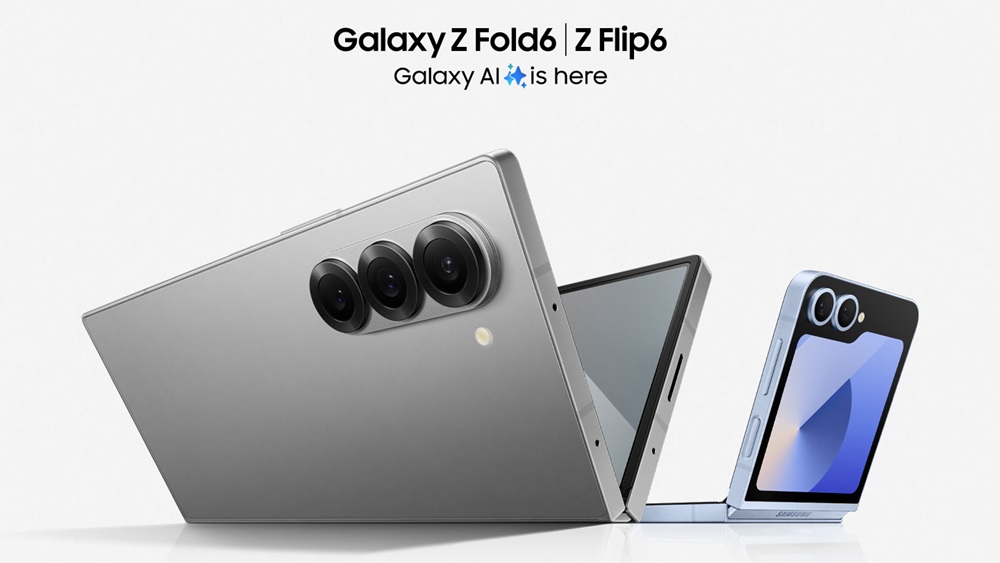
Samsung held its second Galaxy Unpacked event of the year today. As expected, the South Korean brand unveiled a host of new products including the sixth-generation Galaxy Z foldables, Watch Series 7, and the much-awaited Galaxy Ring. The Galaxy Z Fold 6 arrives as the successor to last year’s Z Fold 5. The latest offering packs incremental upgrades with a slightly tweaked design compared to its predecessor. Read on to know what it offers out of the box. 

Samsung Galaxy Z Fold 6 specs 

The Samsung Galaxy Z Fold 6 comes with a boxier design and a pill-shaped camera island on the back panel. Dimensions-wise, the device measures 153.5mm x 68.1 x 12.1mm when folded and 153.5mm x 132.6mm x 5.6mm when unfolded. It weighs 239 grams compared to 253 grams on its predecessor. The foldable phone is IP68-certified dust and water-resistant. The South Korean brand says that the latest foldable phone is equipped with enhanced Armor Aluminium and Gorilla Glass Victus 2 making it the most durable Z-series device yet. 

In terms of display, the Samsung Galaxy Z Fold 6 features a 7.6-inch internal and a 6.3-inch external screen with dynamic AMOLED 2x panel with a 120Hz refresh rate. The bear a resolution of 2160 x 1856 pixels whereas the latter will feature 2376 x 968 pixels respectively. The front also has a slightly taller aspect ratio surrounded by thin bezels.

On the photography front, the Samsung Galaxy Z Fold 6’s triple rear camera setup comprises a 50MP f/1.8 main sensor with OIS, a 12MP ultra-wide-angle lens, and a 10MP telephoto unit with 3x zoom. The external screen has a 10MP selfie snapper whereas the internal display has an integrated 4MP sensor. The foldable phone is capable of recording up to 8K videos. The Z Fold 6 comes with features like Photo Assist, Portrait Studio, and Insta Slow-mo.

Under the hood, the Samsung Galaxy Z Fold 6 is equipped with a Snapdragon 8 Gen 3 processor clocked at 3.39GHz. It packs up to 12GB RAM and 512GB storage. The graphics are supported by Ray Tracing. The device draws its power from a 4,400mAh battery unit with support for 25W charging. The foldable phone also features an upgraded cooling system for heat dissipation. Software-wise it ships with Android 14 and comes loaded with a host of Galaxy AI features like Note Assist, Sketch to Image, a fully integrated Gemini app, and more. Just like the S24 series, the Z Fold 6 is also eligible for 7 years of OS updates and security patches. 

Connectivity options on the device include USB 3.2 Gen 1 Type-C port, WiFi-6E, Bluetooth 5.3, NFC, UWB, and more. 

Samsung Galaxy Z Fold 6 pricing

The Samsung Galaxy Z Fold 6 is up for pre-orders starting today with sales commencing from July 24. It comes in Silver Shadow, Pink, and Navy colors. The device starts at $1,899 for the 12GB + 256GB variant. The 12GB + 512GB and 12GB + 1TB RAM and storage configurations are priced at $2,019 and $2,259 respectively.

Moto G85 5G Brings 120Hz Curved pOLED Display Under Rs 20,000 In India

The Moto G85 5G smartphone has been announced in India today. It arrives as the successor to last year’s G84 with significant upgrades. The latest offering from the Lenovo-owned brand has been launched at an aggressive price tag in the country. It already debuted in the global markets last month. Read on to learn what it has in store for us.

Moto G85 5G specifications and features

The Moto G85 5G boasts a 6.67-inch pOLED 10-bit display with curved edges. It bears an FHD+ resolution and offers a 120Hz refresh rate and 1,600 nits peak brightness. The screen is integrated with a fingerprint scanner and it’s shielded by Gorilla Glass 5. Design-wise, the phone has a slim profile and it is offered in three color options with a vegan leather back panel. The rear has a squarish camera module that elevates slightly from the back panel.

On the imaging front, the Moto G85 5G features a 50MP Sony LYT-600 main sensor with support for OIS. There is an 8MP ultra-wide-angle lens that can also work for macro shots. The smartphone has a 32MP front-facing selfie snapper. 

Under the hood, the Moto G85 5G is equipped with a Snapdragon 6s Gen 3 processor. It packs up to 12GB RAM and 256GB storage. The device is backed by a 5,000mAh battery unit with support for 30W charging. Software-wise, it ships with Android 14 OS and is eligible for two years of OS upgrades. 

The Moto G85 5G is priced at Rs 17,999 and Rs 19,999 for the 8GB + 128GB and 12GB + 256GB variants. It is offered in Olive Green, Cobalt Blue, and Urban Grey colors. Axis Bank cardholders can avail Rs 1,000 instant discount on the purchase. The smartphone will be available for purchase from Flipkart, offline stores, and the brand’s website starting July 16.

Xiaomi 14 series will be the first to get HyperOS 2 update

A leaked screenshot shows Xiaomi 14 with HyperOS 2.0.240703 software version. Xiaomi launched the device with HyperOS last year. It is reported that the Xiaomi 14 is being tested with the HyperOS 2 operating system. It indicates that the software version could be released soon.

Internal testing of HyperOS 2 is set to begin in August

HyperOS 2 is expected to be another successful custom skin from Xiaomi on top of Android. HyperOS has already attracted the attention of many Android users since it was released.

According to industry sources, HyperOS 2.0 will make significant improvements on top of HyperOS. It will solve some glaring issues of the previous version and offer a series of exciting new features.

Xiaomi’s latest flagship, the Xiaomi 14 series, will likely get the HyperOS 2 update first. According to a report, internal testing of HyperOS 2 will begin in August.

The upcoming Xiaomi 15 series, which is expected to launch around late October, will come with HyperOS 2 out of the box. Speaking of the global version of HyperOS 2, it is expected to debut in late December or early next year. Alongside Xiaomi 14 series devices, the Redmi K80 series, and Poco F6 series will be one of the first to get the update.

Unfortunately, the company has not revealed any specific improvements that they are working on. However, it is safe to say that the update will aim to improve the system functions to make it more fluent and improve the overall user experience. It is expected that the update will bring further enhancements to the system animations and include some AI features.

For people unfamiliar with Xiaomi’s HyperOS, it comes with a significantly lighter footprint and occupies significantly less storage space on user devices. For reference, HyperOS occupies only 9.14 GB as compared to 12.53 GB of a recent MIUI version. HyperOS also offers a relatively simpler user interface. Xiaomi has greatly focused on keeping a minimalist experience with its now custom skin.

Google Pixel Watch 3 Leak! Display Upgrades, Slim Bezels, & Two Display Sizes

Google‘s next gen Pixel series smartwatch could address the criticism its predecessors faced. A massive leak claims that the Pixel Watch 3 will launch with upgrades in display, battery life, and more. Sources close to the matter have revealed various details about the upcoming smartwatch, so let’s check it out.

Google Pixel Watch 3: What are the new upgrades?

The sources shared the information with AndroidAuthority offering us a glimpse at the Pixel Watch 3. Early rumors hinted at the smartwatch arriving in two size variants, which is backed in this leak as well. The smart wearable comes in 41mm and 45mm sizes. These two display sizes will be available on both cellular and WiFi options. The larger version could be dubbed the Pixel Watch 3 XL.

Google Pixel Watch 3
Google Pixel Watch 3 (41mm) & Google Pixel Watch 3 (45mm)

Some of the aspects that many users of the original Pixel Watch complained about were the display and battery life. However, the Pixel Watch 3 could address this with thinner bezels, measuring just 4.5mm (compared to 5.5mm on its predecessor). Apart from this, the screen is getting a higher 2000 nits of peak brightness. To recall, the Pixel Watch 2 only offered up to 1,000 nits of peak brightness. The UWB support, originally expected to arrive on the Pixel Watch 2, may debut on the Pixel Watch 3.

This is in line with one of our previous reports where the smartwatch visited the FCC certification. With UWB, the next gen Pixel Watch 3 supports Find My Device. Other functionalities may include a Digital Car Key as various carmakers already support this technology. Lastly, Google is expected to launch the new smartwatch in multiple color options like Silver, Black, and Gold cases that are paired with Hazel, Obsidian, Porcelain, and Rose Quartz.

Lava Blaze X announced in India: Big battery, 120Hz AMOLED display, & more for Rs 14,999

Lava has officially announced the new Blaze X in the Indian market. The device arrives as a new premium offering from the company, bringing a sleek design with capable specs. The Blaze X features a curved design, a 120Hz AMOLED display, and more. So let’s check it out.

Lava Blaze X Specs

The brand’s new Blaze X sports a tall 6.67-inch curved AMOLED display that offers FHD+ resolution, 120Hz refresh rate, and 800 nits of peak brightness. Under the hood, it is equipped with the MediaTek Dimensity 7050 SoC, which is paired with up to 8GB of RAM and 256GB of internal storage. This device also supports up to 8GB of virtual RAM expansion. Lava’s Blaze X runs on the Android 14 OS out of the box.

Lava Blaze X
Lava Blaze X

A large 5,000mAh battery pack powers this device, which supports 33W wired fast charging. For optics, the Blaze X features a 64-megapixel primary camera with a 2-megapixel macro sensor. On the front, you get a 16-megapixel shooter for selfies and video calls. Other notable features include an in-display fingerprint scanner, face unlock, stereo speakers with Dolby Atmos, Bluetooth 5.2, and WiFi 6.

Pricing and Availability

Lava has announced the Blaze X in two color options in India, namely Titanium Gray and Starlight Purple. You can buy this device in three storage configurations, namely 4GB + 128GB, 6GB + 128GB, and 8GB + 256GB. The 4GB variant costs 14,999 INR, while the 6GB and 8GB options are priced at 15,999 INR, and 16,999 INR respectively. There is also a special launch offer for the Blaze X, offering a 1,000 INR discount on all storage configurations. First sale of the smartphone goes live in India on 229th July 2024. It will be exclusively sold via Amazon during its Prime Day sale and Lava’s official website.

OnePlus working on a mid-range phone with a huge battery?

OnePlus recently launched the Nord CE 4 Lite and is gearing up to unveil the Nord 4 as well. But it seems like another mid-range smartphone is also in the works, which packs a humongous battery pack. OnePlus has crossed the 6,000mAh mark in the past, and now, the brand could bring a 7,000mAh battery powered device.

OnePlus Phone with a Massive 7,000mAh Battery

Upcoming Nord 4

The news arrives from known tipster Digital Chat Station, who shared the information on Weibo (a Chinese microblogging website). This leak claims that the Ouga Group is working on a 7,000mAh battery pack. For those unaware, the Ouga Group is the combined research and development lab of OnePlus and Oppo. The largest battery found on any OnePlus phone was the Ace 3 Pro model, which packed a sizeable 6,100mAh battery.

However, the upcoming phone with this large battery isn’t a part of the brand’s flagship or flagship killer lineup. Rather, it will debut as a mid range handset. Digital Chat Station adds that the phone is still in the early stage of development. In other words, the launch is still a while away. Considering it’s a mid range model, it should be a part of the company’s popular Nord series. But this is still just speculation at this point.

OnePlus

The tipster claimed that it isn’t just a 7,000mAh phone but Ouga could also be working on the 6,500mAh cell for another smartphone. This model is expected to employ new battery tech that uses silicon materials. Glacier Battery technology features a silicon-carbon anode that offers 23.1 percent higher energy density when compared to graphite batteries. Meaning, the battery can be smaller in size for the same capacity. That’s all the information we have at the moment, so stick around for more updates.

Redmi K70 Ultra is confirmed to be released this month

Redmi officially announced today that the Redmi K70 Ultra will be released this month. Pre-orders are now open and users will also get a Redmi Smart Band 2 with every pre-order. The K70 Ultra is claimed to be the company’s “most perfect work so far”.

Redmi is focusing on the gaming experience

To offer the best possible gaming experience, the company has reportedly focused on improving three aspects – the raw performance capability, a balance between the frame rate in a game and the energy efficiency, and a self-developed super-frame super-resolution functionality, that most likely involves rendering the game at a lower resolution than the device’s native resolution, and then upscaling it to native resolution. It helps improve the gaming experience without using much resource.

According to the teaser, the phone is equipped with the MediaTek Dimensity 9300+ chip and will use the C8+ luminous material jointly developed by Xiaomi x TCL Huaxing. The luminous efficiency of the panel reportedly reaches the “strongest level in the industry” and the pixel life is increased by more than 100%. Wang Teng, Xiaomi China’s Vice President of Marketing and General Manager of the Redmi brand, confirmed that the Redmi K70 Ultra will be the first to launch this new generation 1.5K display, which is said to offer the best eye protection in the industry.

Alongside the improvement in panel quality, the display borders are also expected to be thinner than the predecessor.

According to previous leaks, the phone scores 2242 points, and 7237 points in Geekbench single and multi-core test respectively. It achieves a 2.22 million score on AnTuTu and can run “Genshin Impact” in 1.5K + 120Hz mode. Alongside the Dimensity 9300+, the device also equips an independent graphics chip.

The phone packs a 5500mAh battery and supports 120W fast charging. Speaking of external build and design, the phone could come with a metal middle frame and glass back. Just like the predecessor, the phone will come with the IP68 dust and water-resistant rating just as the Redmi K60 Ultra.

Alleged Oppo Find X8 could come with a flat display and a larger telephoto sensor

Oppo is expected to launch the Find X8 series in Q4 this year. A rumor claims that the Oppo Find X8 could be powered by the Dimensity 9400 chipset. It also hints that the phone could equip a 1.5K flat display instead of a curved one offered by its predecessor. The phone can also pack a larger main sensor from Sony.

The rumor comes from the well-known Weibo tipster Digital Chat Station. Without mentioning the model name he revealed that the Dimensity 9400 powered flagship will come with a 6.5″ 1.5K display with 120Hz refresh rate. He also mentioned that the screen is sourced from a Chinese display maker. Currently, the prototype doesn’t have a quad-curved design on the front. It hints that the phone could come with a flat display, which will be a major shift in design as compared to the Oppo Find X7.

Speaking of cameras, the phone packs three lenses on the back – a 50MP Sony IMX9 series main sensor, a 50MP ultrawide, and a 3x periscope telephoto. The large circular camera system will also have a Hasselblad branding. Although DCS didn’t mention the model name of the phone in his post, the comments speculate that it will be the Oppo Find X8. The information DCS shared is also in line with most of the previous leaks about the phone.

The tipster responded to comments in the comment area, saying that the current prototype equips a “pure straight screen” and doesn’t have a quad-curved glass.

According to a previous report, the 3x periscope telephoto module is expected to equip the IMX882 (1/1.95 inches) sensor. The telephoto module may come with an equivalent focal length of 73mm and an aperture of f/2.65. The Realme 13 Pro+ and OnePlus 13 are also expected to adopt the same sensor for the telephoto.

We previously reported that the Oppo Find X8 could come with a total of three models, one more than the Find X7 series. Specifically, there will be the Oppo Find X8 Pro, and the Oppo Find X8 Ultra is expected to be released separately (in Q1 2025), similar to recent Xiaomi flagships.

Motorola Phones That Won’t Get Android 15 Update

Motorola Android 15 update - Ineligible devices

Android 15 is still under development, although several smartphone brands are already distributing the beta build, allowing users to get an early look at the new OS. Unfortunately, Motorola isn’t as excited as its users, and therefore, it’s always late to the software update party.

Google, Xiaomi, OnePlus, Oppo, and Nothing are among the brands that have announced Android 15 beta. Motorola is yet to join the party, and we aren’t expecting it to happen anytime soon, if past rollouts are anything to go by.

If you are eagerly waiting for the Android 15 update, make sure you have the right Motorola smartphone that is eligible for the upgrade. Review the list below to see which Motorola phones won’t get the update.

Motorola Android 15 Ineligible Devices List

[Motorola Razr series]

  • Motorola Razr (2022)
  • Motorola Razr 5G
  • And older Razr phones

[Motorola Edge series]

  • Motorola Edge 30 Fusion
  • Motorola Edge 30 Neo
  • Motorola Edge (2022)
  • Motorola Edge+ 5G UW (2022)
  • Motorola Edge 30 Pro
  • And older Edge phones

[Motorola Moto series]

  • Motorola Moto G84
  • Motorola Moto G73
  • Motorola Moto G54
  • Motorola Moto G53
  • Motorola Moto G54 Power
  • Motorola Moto G23
  • Motorola Moto G14
  • Motorola Moto G13
  • Motorola Moto G Stylus 5G (2023)
  • Motorola Moto G Stylus (2023)
  • Motorola Moto G (2023)
  • Motorola Moto G Power 5G
  • Motorola Moto X40
  • And older Moto phones

Motorola, like any other smartphone brands, hasn’t yet published an official list of Android 15-supported devices. The above list is an unofficial one which we’ve prepared after analysing the software update policy for each smartphone.

Motorola doesn’t have a good software policy. However, the brand has recently made changes to its software policy to better compete with Samsung, OnePlus, and other brands. Most of its high-end phones are now eligible for three OS updates.

Motorola also offers three Android updates to select mid-range phone as well. But their budget Moto series only get one big upgrade. Its competitors, Samsung and Google, have recently changed their update policy to offer a whopping seven years of Android updates to their flagship phones.

Also Read: 10 Amazing Features Coming to Android 15

When Will Motorola Start Rolling Out Android 15?

It’s July 2024, and Motorola still hasn’t finished its Android 14 rollout. This is not just the case with Android 14; the same story follows every year.

Software updates have never been a plus point for Motorola, and the brand hasn’t done serious work to improve them. Coming to Android 15, it’s in the platform stability phase right now, which is the final phase of development before the stable version is released.

The official timeline doesn’t reveal the release date or month. However, speculations are that it will arrive alongside the Pixel 9 series at the Made by Google event on August 13th. Last year, the Android 14 was released in October. So, in all likelihood, the new OS should get a stable version by October.

Motorola is yet to announce the Android 15 beta program for any of its phones, and we aren’t expecting it until later this year. As for the stable update, it’s likely to start rolling out in late December or early 2025.

Whenever the update arrives, the Razr 40 and Edge 50 series are likely to be among the first Motorola phones to get the Android 15 update, which will then gradually roll out to the remaining models.

Android 15: What to Expect?

The last two iterations — Android 13 and Android 14 — haven’t been impressive in terms of new features and upgrades. But Android 15 is bringing a host of new features and enhancements, as well as some AI smartness.

Among the big upgrades to Android 15 is the support for satellite connectivity. The new OS provides support for SMS, MMS, and preloaded RCS apps to use satellite connectivity for sending and receiving texts even if there are no cell towers nearby.

Google has greatly improved smartphone location tracking. The new Find My Device can leverage the network of over a billion Android devices to help you find your lost device. This is already rolling out to Android devices, but Android 15 takes it to another level by adding a Theft Detection Lock feature.

If someone snatches your Android device and runs away, the device automatically detects the motion and locks it. The best part is that the device requires logging in to the same Google account to set it up after a factory reset. Otherwise, it won’t work.

There’s a new “Private Space” feature in Android 15 to protect your files and apps you want to keep secretly. You can set a different lock factor for your Private Space and use a different Google account.

Everything you do inside your Private Space is unknown to other users. The apps you open won’t be visible in the recent apps, and all your downloads will stay there. This is a useful feature to protect finance and other critical apps. 

Another helpful feature in Android 15 is app pairs. You’ll be able to create app pairs to quickly open your favorite apps in split-screen mode. You’ll be able to create a shortcut for your favorite app combos. This feature is only coming to wide screen devices (tablets, foldables), as mentioned on the official website.

The new OS also brings partial screen sharing. It lets you screen share or record a single app rather than the entire screen. So, with Android 15, you can be sure that the other person isn’t looking at other apps on your device.

So, which Motorola smartphone do you have, and what are your expectations from Android 15? Do let us know your thoughts in the comment section below.

More on Android 15:
1. When Is Android 15 Coming to Your Smartphone?
2. Here’s the Complete List of Android 15 Eligible Devices

TSMC becomes trillion-dollar company: Artificial Intelligence revolution behind the giant’s rise

The rise of artificial intelligence is causing major shifts on Wall Street, with Taiwan Semiconductor Manufacturing Company (TSMC) recently achieving a significant milestone by joining the elite trillion-dollar market capitalization club. This accomplishment places TSMC among the world’s top technology giants and highlights the growing importance of the semiconductor industry.

TSMC’s Market Surge

TSMC’s market capitalization briefly surpassed Tesla’s, making it the seventh most valuable technology company globally. The company’s shares have seen a remarkable increase, trading above the 50-day moving average of $158.00 and reaching a new 52-week high of $192.80. Year-to-date, TSMC shares have gained nearly 80%.

Growth of the Semiconductor Industry

The semiconductor industry has become the leading sector, driven by the increasing demand for chips used in AI technologies. Global semiconductor sales are projected to reach $611.2 billion in 2024, with a 16% increase in sales expected for that year, followed by a 12.5% increase in 2025. This surge in demand is largely due to advancements in generative AI, which require sophisticated and powerful chips.

The U.S. government has recognized the critical role of semiconductors in the modern economy, providing substantial financial support to boost domestic chip manufacturing. The Biden administration has allocated tens of billions of dollars for constructing chip factories in the U.S., aiming to strengthen technological infrastructure and reduce reliance on foreign manufacturers.

Analyst Insights and Investor Considerations

Analysts have raised their price targets for TSMC ahead of its second-quarter earnings report, with Morgan Stanley predicting an increase in TSMC’s full-year sales forecast. TSMC’s effective “hunger marketing” strategy suggests tight foundry supply in 2025, encouraging customers to recognize the company’s value. The anticipated increase in wafer prices due to AI advancements further strengthens TSMC’s position. For investors, key considerations include revenue growth, profitability, and valuation compared to peers. 

The AI boom is reshaping Wall Street, with TSMC’s entry into the trillion-dollar club marking a significant milestone. The semiconductor industry’s growth, driven by AI demand, highlights the crucial role of companies like TSMC and Nvidia in the global market.

Related:

(via)

TSMC 2nm chip trial production to begin much sooner than expected

TSMC will reportedly begin the trial production of 2nm chips next week, which will be first adopted by Apple for the iPhone 17 series and other Apple devices. Notably, the trial production is beginning significantly earlier.

TSMC

Previously the trial production was expected to begin in Q4 (in October or later). This is interpreted as an attempt to speed up production in order to secure a stable yield before mass production. For those unfamiliar, the trial production is where the company tests out the planned production line processes to be used, ahead of mass production.

TSMC first demonstrated its 2nm fabrication process back in December last year.

Trial production will be carried out at TSMC’s Baoshan plant in northern Taiwan. The equipment necessary for the 2nm production has already been brought into and installed at the Baoshan plant since the second quarter.

The iPhone 15 Pro models equip the A17 Pro chipset, which is fabricated using TSMC’s 3nm process. This process allows more transistors to be packed into a smaller space, thereby improving performance and efficiency as compared to the predecessor. Apple’s M4 chip recently debuted with the new iPad Pro, which uses an enhanced 3nm fabrication process.

Getting a good enough yield rate (the percentage of chips that pass quality-control checks) is generally one of the biggest challenges for new process notes. Back in April last year, the 3nm chips from TSMC had a yield rate of around 50%.

Apple was previously believed to reserve the entire production capacity of TSMC’s 3nm chips for the A17 Pro and M3 chip. It could repeat with TSMC for the 2nm production capacity as well. A report from May last year says that the company was working on reserving all the production capacity of 2nm chips as well.

TSMC is expected to apply gate all around (GAA) technology starting with the 2㎚ processes, which will improve performance and power efficiency. TSMC also plans to introduce back-side power supply (BSPR) technology with the 2nm chips.

(Source)

GC Daily: MediaTek Outgrowing Qualcomm Snapdragon in 5G Smartphone Market, Huawei Mate 70 series to equip a 1″ main sensor

Samsung’s probably going to throw us a curveball with the Galaxy Z Fold lineup, while Huawei’s could cook up something extraordinary in the camera department. Meanwhile, Redmi’s making waves in the 5G market, and Apple’s pushing the boundaries of VR with some AI wizardry.

More details on the above stories are in today’s roundup below.


Galaxy Z Fold 6 Ultra is on indefinite hold by Samsung, says a report

Samsung‘s upcoming Galaxy Unpacked event in Paris is set for today, and the Galaxy Z Fold 6 is expected to be the star of the show. However, rumors about a thinner, possibly larger-screened variant, the Z Fold 6 Ultra (or Z Fold 6 Slim), have been circulating for some time. Today, a new leak suggests that the Fold 6 Ultra project might be on indefinite hold, dashing those hopes.

Read more


Huawei Mate 70 series to equip a 1″ main sensor and a new Kirin chip

The Huawei Mate 70 series is expected to be launched towards the end of 2024 with a new Kirin chipset. According to a rumor, the camera performance of the Mate 70 is significantly improved as compared to the last three generations.

Read more


Redmi 13 5G launched in India

Yesterday, Xiaomi held a launch event introducing multiple new devices to the Indian market, including the Redmi 13 5G smartphone. This new device is the successor of the widely successful Redmi 12 5G and comes with many upgrades.

Read more


Apple’s VR headset could turn your 2D images into 3D with AI in near future

Apple has released the visionOS 2 Beta 3 for the developers. The OS version is designed with augmented reality (AR) and virtual reality (VR) devices and their requirements in mind. Developers can participate in the test by opening Settings, going to Software Updates, clicking on the option for beta updates, and enabling developer beta.

Read more


🔥 More Top Stories You Might Have Missed

MediaTek Outgrowing Qualcomm Snapdragon in The 5G Smartphone Market

Nothing OS 2.6 update out for Phone (2); Offers New features, Game mode improvements & bug fixes

OnePlus Nord 4 India pricing leaks a week before launch

Is Redmi 13 5G really better than Redmi 12 5G?

OpenAI CEO Sam Altman’s Latest Venture is Thrive AI, a Personalized Wellness ‘Health Coach’

A new health company called Thrive AI Health is aiming to revolutionize wellness through artificial intelligence. Co-founded by Arianna Huffington and OpenAI CEO Sam Altman, Thrive AI leverages AI to create a personalized “health coach” tailored to your specific needs. This coach analyzes various aspects of your life, including sleep, diet, fitness,stress, and social interactions, to offer data-driven recommendations.

The health data will be accessible through a smartphone app or a virtual assistant

Leading the company is DeCarlos Love, who previously spearheaded the fitness and health experience at Fitbit. Thrive AI plans to train its AI coach using a combination of scientific research, medical data, and collaborations with institutions like Stanford University School of Medicine. Their vision is to create a comprehensive health data platform accessible through a smartphone app or a virtual assistant integrated with Thrive’s existing products. This system will learn your behavior patterns and offer real-time health advice.

Thrive AI positions itself as a more mindful approach to health management. They emphasize making personalized health coaching accessible to everyone while tackling health inequalities. Security and user privacy are a priority, with Dr. Gbenga Ogedegbe, an expert in health equity, serving as an advisor. Additionally, they pledge to base recommendations on peer-reviewed research and give users complete control over the information used to personalize their experience.

(Via)

Unihertz Reveals Camera Details for Upcoming Jelly Max Phone, Features a 100MP Primary Sensor

Unihertz has unveiled the camera details for their upcoming Jelly Max compact phone. The triple-camera system boasts a powerful 100-megapixel OVA0B sensor in the main camera, capturing a lot of detail in photos.

The camera phone also has an 8-MP telephoto lens with 3.4x optical zoom

Photography enthusiasts will also appreciate the dedicated 8-megapixel telephoto lens with 3.4x optical zoom for crisp close-ups of distant subjects. Rounding out the system is a 32-megapixel GD1 front-facing camera, perfect for selfies and video calls.

Visually, the Jelly Max retains the “translucent exploration version” design of its predecessor, with the rear fingerprint sensor positioned beneath the camera module on the back cover. It’s important to note that while the official Weibo account confirms the Jelly Max shares the same screen size (5.03 inches) and resolution (1520 x 720) with the Qin 3 Ultra phone, they emphasize that these are not identical displays.

(Via)

qdc Unveils Two New Additions to the UC1 Type-C Headphone Cable Series, Starting at 580 Yuan ($80)

The qdc UC1 Type-C headphone cable series is announcing two new additions to its lineup. Users can now choose from a 1.5-meter cable with a 0.78 pin connector or a 1.5-meter cable with the standard qdc pin connector, both offering the same functionality as the existing 1.8-meter qdc pin version.

The cable features an inbuilt USB audio decoder and DSP headphone tuning tech

The qdc UC1 Type-C cable boasts premium construction with 4C silver-plated copper mixed material, ensuring excellent signal transmission for clear, uninterrupted audio. Gone are the days of adapters; this cable features a universal Type-C connector for seamless plug-and-play compatibility with smartphones, tablets, and computers.

For an elevated audio experience, the qdc UC1 Type-C cable incorporates a built-in USB audio decoder and DSP headphone tuning technology. This powerful combination delivers superior sound quality, supporting high-resolution audio with sampling rates up to 192kHz and 16/24 bits. Additionally, the headphone amplifier is specifically tuned for qdc headphones and offers impedance adaptation for optimal performance across the entire range.

Crystal-clear communication and versatile control are a breeze with the integrated low-noise microphone. This microphone is perfect for calls, recording sessions, karaoke battles, and even gaming. Three multi-function buttons provide convenient control over volume, music playback (pause/play, skip songs), and easy access to the previous song.

The qdc UC1 Type-C series caters to user preference by offering three configurations, all available for purchase on the official website and flagship stores at 580 yuan each:

  • 1.8-meter cable with microphone and qdc pin (existing version)
  • 1.5-meter cable with microphone and qdc pin (new)
  • 1.5-meter cable with microphone and 0.78 pin (new)

Music lovers looking to bundle their qdc headphones with a cable can take advantage of a special offer. When purchasing a qdc UC1 Type-C cable alongside qdc headphones, the price of any cable version drops to a more affordable 380 yuan.

(Via)

Insta360’s New Flow Pro AI Mobile Stabilizer is Priced at 899 Yuan ($123), Features Apple’s DockKit Technology

Insta360 has unveiled their new Flow Pro AI mobile stabilizer, boasting improved iPhone compatibility and tracking features. Priced from 899 yuan (around $123 USD), the Flow Pro offers several upgrades over the standard Flow model.

The Flow pro also has a new tracking indicator light

The key addition is Apple‘s DockKit technology, enabling seamless pairing with iPhones via NFC and native tracking within the iPhone camera app and compatible third-party iOS apps. This is a first for a three-axis gimbal.

Flow Pro also introduces a tracking indicator light and expands its tracking capabilities to include 360° horizontal continuous tracking. Other features remain consistent with the standard Flow, including Depth Tracking 3.0 technology,one-step quick shooting, a built-in selfie stick, and a tripod.

The Flow Pro can handle phones weighing up to 300g and offers a 10-hour battery life with built-in power bank functionality for your phone. It utilizes a smart wheel control for easy switching between shooting modes like automatic,follow, pan-follow, and FPV.

(Via)

Xiaomi’s Mijia All-Effect Air Purifier Ultra Enhanced Edition with HyperOS goes on sale in China

Xiaomi unveiled the Mijia All-Effect Air Purifier Ultra Enhanced Edition last week, boasting a 10-level composite deep purification system that tackles 95 different types of air pollutants. This feature-rich purifier is now up for sale in China for 5799 Yuan ($797). Let’s check out its key specs.

Xiaomi Mijia All-Effect Air Purifier Ultra Enhanced Edition

Mijia All-Effect Air Purifier Ultra Enhanced Specifications:

The air purifier is designed to address four major “indoor pollution high purification demand scenarios” commonly faced by Chinese households. These include new home formaldehyde removal, health anxiety mitigation, air purification for mothers and babies, and odor elimination.

The core of the purifier lies in its 10-level composite deep purification system. This system incorporates a unique oxygen dissolution layer to break down pollutants and convert them into harmless substances. Additionally, a high-precision PM1 filter layer effectively removes ultrafine particles as small as 0.08-0.09 microns.

The air purifier boasts a next-generation “formaldehyde decomposition” feature. This innovative technology utilizes a catalytic formaldehyde decomposition filter core to decompose formaldehyde into water and carbon dioxide, eliminating the need for frequent filter replacements. Furthermore, a special research oxygen dissolution layer effectively tackles secondhand smoke, kitchen odors, and other unpleasant smells.

The Mijia Ultra Enhanced Air Purifier prioritizes germ elimination with a full-frame light curtain and UV ultraviolet module that continuously kills bacteria and viruses. This ensures the air purifier maintains a clean filter core and promotes overall air quality.

For pet owners, the air purifier features a “pet-specific filter layer” that effectively removes pet dander allergens and pet odors. This filter layer is designed to work in conjunction with the overall purification system to create a cleaner and more comfortable living environment for pet owners

The air purifier integrates seamlessly with Xiaomi’s smart home ecosystem. Users can leverage the Mi Home app to monitor air quality data, set personalized purification modes, and connect the purifier to other smart home devices for automated scenarios using HyperOS Connect. It also supports voice control functionality through the Xiao Ai voice assistant.
The air purifier is designed for long-term use with a super durable filter group featuring ultra-low attenuation and a long lifespan. The full-effect composite filter boasts a 24-month lifespan, while the carbon array filter offers a 36-month lifespan, minimizing replacement frequency. The daily average cost is estimated to be around 0.68 yuan for the full-effect composite filter and 0.46 yuan for the carbon array filter.

Unisoc T760 5G SoC unveiled in India; will soon be onboard budget 5G smartphones

Unisoc has recently unveiled a new 5G-enabled SoC called the Unisoc T760 for budget-range devices.

UNISOC T760

Unisoc T760 specs:

The T760 uses a 6nm EUV manufacturing process, featuring an octa-core CPU with four Cortex-A76 cores for performance and four Cortex-A55 cores for efficiency. An ARM Mali-G57 MC4 GPU supports smooth graphics and gaming.

The T760 includes a Neural Processing Unit (NPU) with 3.2 TOPS processing power, enhancing AI features like facial recognition and camera functions. Unisoc reports an average AnTuTu V10 score of 510,000.

The T760 supports displays up to Full HD+ resolution at a 120Hz refresh rate and QHD+ displays at 60Hz. Camera support includes sensors up to 64MP and quad-camera setups, enhanced by Unisoc’s Vivimagic 6.0 imaging engine and Acutelogic 3A technology for better photo and video quality.

Battery efficiency is a key feature, with Unisoc claiming a 37% reduction in power consumption during 5G data use and an 18% reduction in 5G standby, leading to longer battery life.

Connectivity options for the T760 include support for NSA/SA 5G networks, GSM, WCDMA, TDD-LTE, FDD-LTE, and advanced navigation systems like GPS, Glonass, Beidou, and Galileo. It also offers Wi-Fi 802.11ac, Bluetooth 5.0, FM radio support, and memory configurations up to 32GB of LPDDR4X RAM with storage options of EMMC 5.1 and UFS 3.1.

Availability

Unisoc’s new chipset will power upcoming budget smartphones in India, providing more options for consumers looking for cost-effective 5G devices. This SoC is already onboard many Chinese smartphones like the Nubia Mavericks 5G and Coolpad COOL 60, and is expected to power the upcoming HMD smartphones.

(Source)

Realme Buds Air 6 Royal Violet color option launching on July 15 in India

Realme has introduced a new color for its Buds Air 6, Royal Violet, to the Indian market. This comes after the initial release of Flame Silver and Forest Green color options back in May.

Realme Buds Air 6 Royal Violet

Pricing and Availability

The Royal Violet Buds Air 6 will be available from July 15th on Flipkart and the Realme India website. It is not confirmed if it will be on Amazon. This new color option is expected to be priced similarly to the existing ones, which are currently going for Rs 3,299. Specifications will remain the same.

Realme Buds Air 6 specs:

The Realme Buds Air 6 features a stem design with slightly angled earbuds and silicone ear tips. They are IP55-certified for water resistance and include smart touch controls for various functions.

The Realme Buds Air 6 is equipped with 12.4mm drivers and a dynamic bass boost for clear bass. They are Hi-Res Wireless audio certified and support LHDC 5.0 audio decoding to maintain sound quality during streaming. They feature 50dB active noise cancellation and adaptive noise cancellation that adjusts to the environment. Each earbud has three microphones for clear call quality, and there is a 55ms low latency mode for better performance.

The Realme Buds Air 6 offers up to 40 hours of battery life, with 10 hours of use from the earbuds alone when ANC is off. They also support Google Fast Pair for easy connectivity.

In related news, Xiaomi has recently debuted the Redmi Buds 5C earphones in India, featuring 12.4mm titanium drivers, 40dB hybrid active noise cancellation, and a transparency mode. They come in a pebble-shaped case with a 480mAh battery, providing up to 36 hours of use, while the earbuds offer 7.5 hours of usage.

(Source)