Advertisement

Samsung skips the Plus model in the future Galaxy S25 series

Samsung is making a major change to its Galaxy S lineup! Recently, the team at Android Headlines has been sharing new details about Samsung’s future devices. It seems that Samsung might ditch the Plus model from the Galaxy S25 series.

While leaks have confirmed the existence of a regular Galaxy S25 and a Galaxy S25 Ultra, Galaxy S25 Plus did not make an appearance. The model numbers of the upcoming Samsung phones are: SM-S931B/DS, SM-S938B, SM-S938U, SM-S938N, and SM-S9380. Regular Galaxy S25 and the S25 Ultra are here but unfortunately the S25 Plus is missing.

Initial leaks for Galaxy S24 series, back in July 2023, pointed towards a traditional three-model lineup with the S24, S24+, and S24 Ultra. However, recent leaks suggest a potential shift in Samsung’s tradition, with only two models coming up in the S25 lineup. The company seems dissatisfied with the sales rates of the S24 Plus, leading to the decision to drop the S25 Plus model.

Earlier, Samsung used a better display in the S24+ compared to the regular S24. While both the S23 and S23+ featured 1080 x 2340 resolution screens, this year, the Plus model boasted a higher resolution display (1440 x 3120). Despite this, it appears users still are not convinced enough to go for the Plus model.

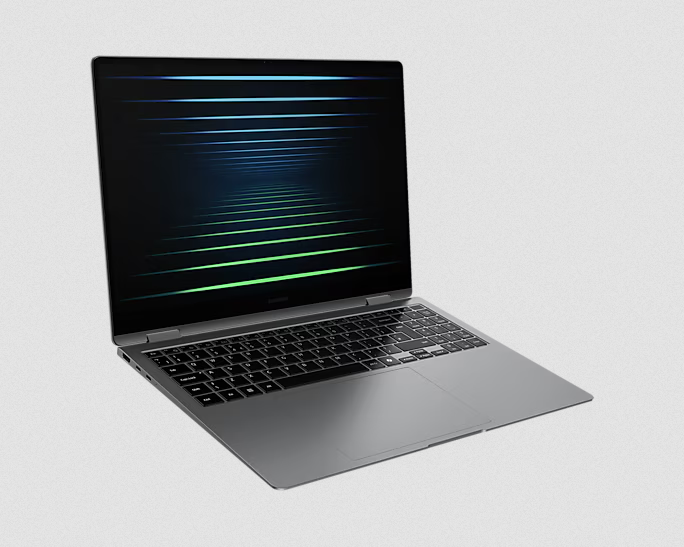
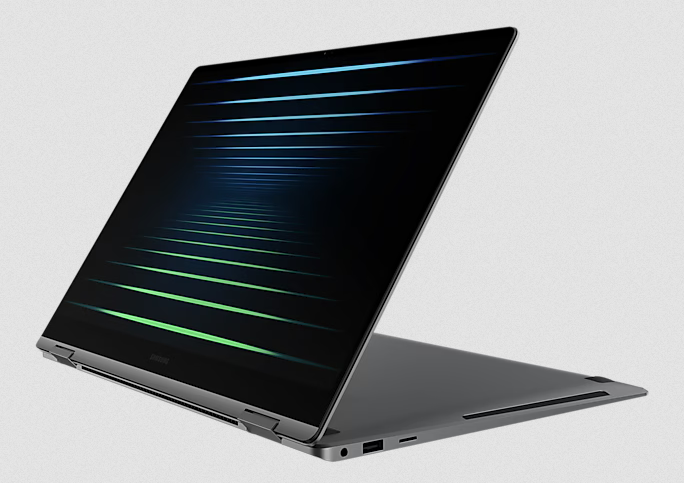
Samsung Galaxy Book4 Ultra Goes On Sale In India: Check Bank Discount And Exchange Offer

Samsung quietly released the Galaxy Book4 Ultra in India recently. However, the exact availability and discounts were not revealed at that time. That changes now, as the laptop is now available for purchase along with bank and exchange offers. The latest offering joins the Galaxy Book4 series that debuted earlier in March this year in the country. Read on to know the details below. 

Samsung Galaxy Book4 Ultra goes on sale

Samsung Galaxy Book 4 Ultra

The Samsung Galaxy Book4 Ultra can be purchased from the brand’s official website and select offline retail stores like Croma. The laptop comes in two configurations – Core Ultra 7 with 16GB RAM and RTX 4050 and Core Ultra 9 with 32GB RAM and RTX 4070. These are priced at Rs 2,33,990 and Rs 2,81,990. It comes in Moonstone Grey colors. 

HDFC Bank credit and debit cardholders can avail discounts up to Rs 12,000. This will make the laptop’s base and top configurations available for Rs 2,21,990 and Rs 2,69,990. Additionally, Samsung is also offering an exchange bonus of Rs 10,000 depending on the condition and base value of the trade-in model. 

The Samsung Galaxy Book4 Ultra sports a 16-inch dynamic AMOLED touchscreen display bearing a WQXGA+ resolution and a 120Hz refresh rate. It is equipped with AKG-tuned quad-speakers and Dolby Atmos. The hardware details of the device are mentioned above. Both models come with 1TB SSD storage. The laptop also features a heat dissipation system. There is a backlit keyboard and a fingerprint scanner. The laptop is backed by a 76Wh battery cell that is claimed to last 21 hours and supports fast charging. The Galaxy Book4 Ultra runs on Windows 11 OS with various AI features. It seamlessly connects with other Galaxy devices. 

Redmi 13 5G: What to expect from Xiaomi’s next budget offering?

Redmi’s number series has established itself in the budget smartphone market by offering essential features at affordable prices. The next model in the line is the Redmi 13 5G which is set to launch in India on July 9th at noon.

Like its predecessors, it promises to offer 5G connectivity for a budget-conscious audience. But what can you expect from this phone? Let’s take a closer look at the specifications and features we know so far of the Redmi 13 5G.

Design and Display

So the company has revealed the design of the Redmi 13 5G in its launch announcement teaser. The device closely follows its predecessor with a clean, flat back design and flat edges. It features three protrusions on the back: two for camera sensors and one for a ring light. The Redmi 13 5G will be available in two color options: Light Blue and Light Pink, both with a glass back finish.

Redmi 13 5G

The Redmi 13 5G is expected to have a large IPS LCD display, likely around 6.7 inches. While the screen size will offer enough room for watching videos or playing games, it won’t offer the same level of contrast, color accuracy, or viewing angles as the AMOLED displays. But that is to be expected from a budget offering. Fortunately, the device will come with Corning Gorilla Glass 3 protection to guard against accidental drops.

Processor

The Redmi Note 13 5G is confirmed to be powered by the Qualcomm Snapdragon 4 Gen 2 processor, the same one used in its predecessor, the Redmi 12 5G. 

Snapdragon 4 Gen 2 is designed to be affordable while providing basic 5G capabilities. So don’t expect it to deliver blazing-fast performance, but it can handle your everyday tasks, light gaming, and social media browsing adequately.

In terms of software, unlike the Redmi 12 5G, which ran on MIUI 14, the new Redmi 13 5G will come with the company’s new HyperOS skin. RAM options will probably be 6GB or 8GB, with 128GB or 256GB of storage.

Camera

The camera system on the Redmi 13 5G is likely to be a dual-lens setup. The main sensor will probably be around 50MP, accompanied by a macro or depth sensor. While it might capture decent photos in good lighting conditions, don’t expect exceptional image quality or low-light performance. The front-facing camera will probably be around 8MP, sufficient for basic selfies and video calls.

Battery and Charging

Redmi 13 5G

The company has confirmed that the Redmi 13 5G will feature a 5030mAh battery, similar to last year’s model, which had a 5000mAh battery. This should provide a full day’s use on a single charge for most users, with moderate usage possibly stretching the battery life to two days. However, the fast charging capability will see a small improvement, increasing from 18W to 33W.

Price and Availability

Specific pricing details for the Redmi 13 5G haven’t been revealed yet. However, considering its expected specifications and Redmi’s budget focus, it should be priced competitively in the budget 5G smartphone segment. We are expecting it to launch in the sub-12K price range in India. 

However, unlike its predecessor, the upcoming Redmi 13 5G is said to only launch in China and India. POCO, another sub-brand of Xiaomi, is also expected to rebrand the Redmi 13 5G as the POCO M7 5G in the Indian market. 

All in all, the Redmi 13 5G is a smartphone focused on delivering 5G connectivity at an affordable price. It features a large display, a capable processor for everyday use, and a basic camera system. However, those looking forward to its launch should also be aware of its limitations — the display might not be the sharpest, the camera system may struggle in low light, and the performance won’t be top-notch.

Panasonic releases 60x super-zoom Lumix FZ80D camera with 20-1200mm lens

Panasonic has introduced the new Lumix FZ80D camera, featuring an impressive 60x superzoom capability. This bridge-type camera (DSLR-like) offers several upgrades over the 2017 Lumix FZ80, including an electronic viewfinder, touchscreen, and USB-C port.

Lumix FZ80D comes with an 18 MP sensor, sized at 1/2.3 inches (6.2 x 4.6mm). It features a 3.58-215mm F/2.8-5.9 zoom lens, providing a focal view equivalent to 20-1200mm.

Panasonic Lumix FZ80D is priced at $478. It features a maximum resolution of 4896 x 3672 with an image ratio of 4:3. The camera boasts 18 effective megapixels out of its 19-megapixel sensor photo detectors. The ISO range is auto-adjustable from 80 to 3200, expandable up to 6400. For focusing, it has a normal range starting at 30 cm (11.81 inches) and a macro focus range of 1 cm (0.39 inches).

Lumix FZ80D includes a 3-inch screen and an electronic viewfinder with a resolution of 2,360,000 dots. It supports video recording at 3840 x 2160 resolution at 30p with 100 Mbps, and 1920 x 1080 resolution at 60p with 28 Mbps. You can visit Panasonic’s official website here.

Apple could again start powering non-pro iPhones with the latest chip

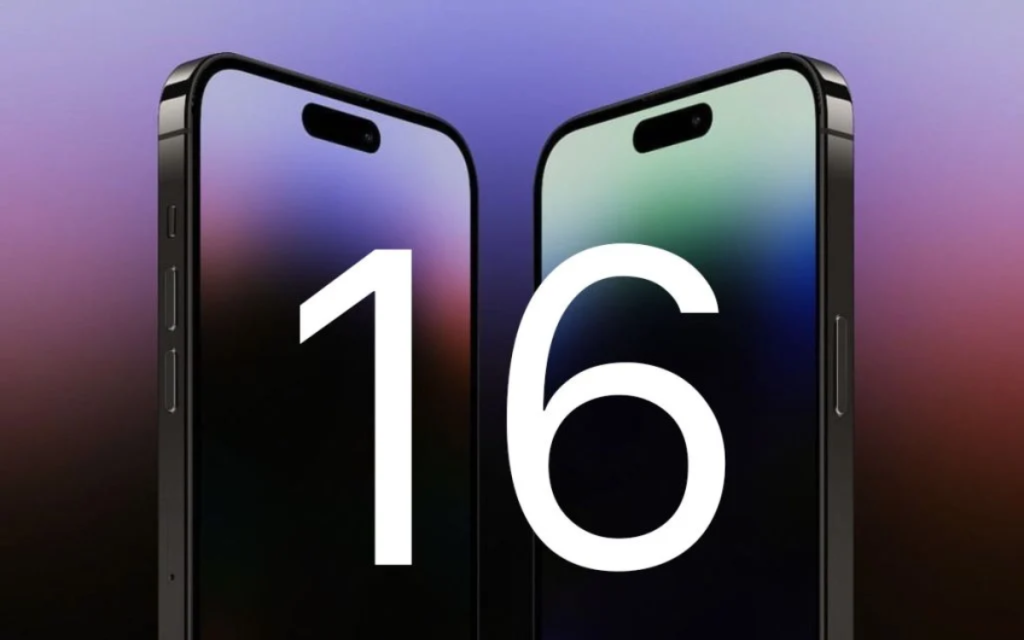
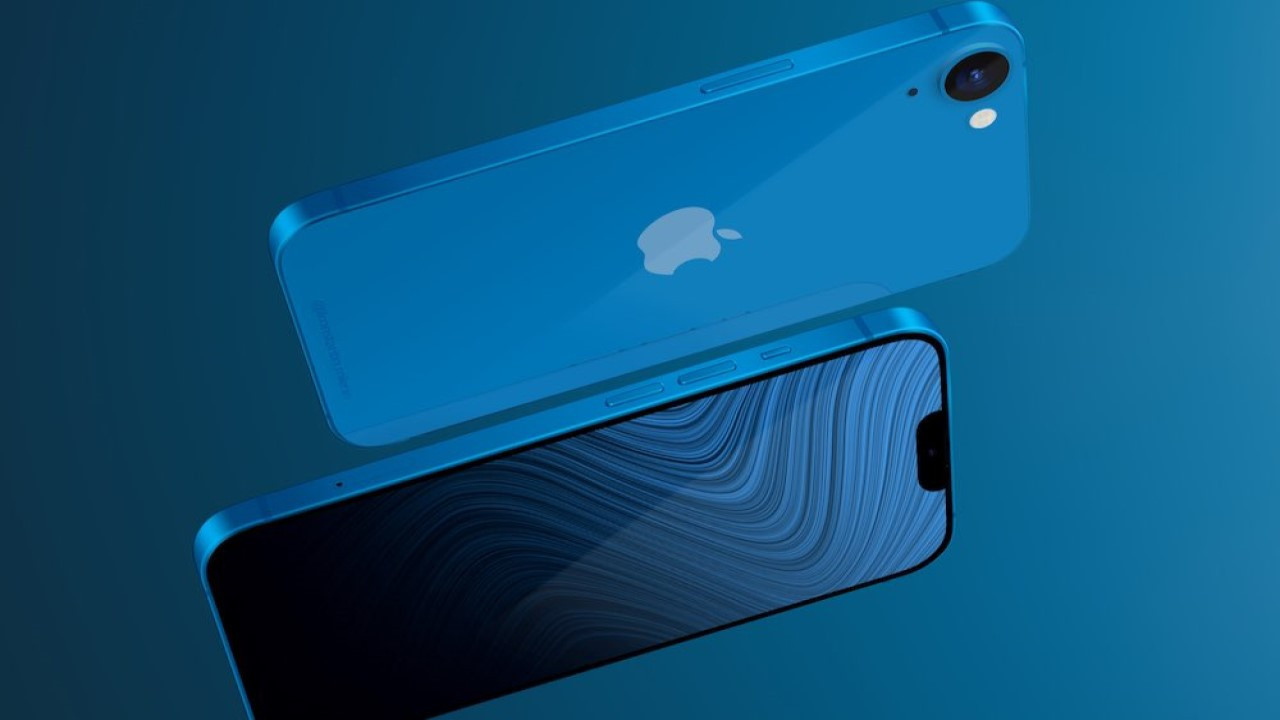
Apple is set to launch the iPhone 16 series in September. Now a rumor says that the non-Pro iPhone 16 models will also get the latest and most capable A series chip, the Apple A18 Pro.

For those unfamiliar, Apple started using generation-old Bionic chips on non-Pro iPhones starting with the iPhone 14 series. With the iPhone 15 series, Apple also added a ‘Pro’ branding to the chipset for the Pro models.

However, the latest rumor says that even the non-Pro iPhones will use the latest A-series chip (possibly named A18 Pro). The news comes from @Nicolás Alvarez on X who discovered relevant codes in Apple’s backend. The codes reveal that all four iPhone 16 models will be powered by an A18 Pro chip.

Apple Intelligence could be the reason behind the decision

The A15 Bionic was capable enough to run the basic features in iOS without an issue. However, this isn’t the case anymore. iOS 18 integrates Apple Intelligence, which requires the phone to run some AI features natively on the device. While these features are also noted as basic AI features, the NPUs in the older chips aren’t capable enough to accomplish the tasks. As a result, only the Pro models of the iPhone 15 series (with the A17 Pro chip) support Apple Intelligence.

The A18 Pro chip will reportedly come with a more capable NPU as compared to the A17 Pro from last year. It could result in a noticeable difference in AI performance between the two chips. It could also repeat what we are seeing with the iPhone 15 series when it comes to the implementation of Apple Intelligence in the future. This could be the reason why Apple has decided to power all the iPhone 16 models with the new chip.

Galaxy Watch 7 series’ Exynos W1000 chip will launch apps 2.7x faster

Samsung is about to announce several new products including the Galaxy Watch 7 series, sixth generation foldable, and redesigned Galaxy Buds 3 series. Ahead of the Galaxy Unpacked event, Samsung has announced a new Exynos chip, that is expected to power the Galaxy Watch 7 series.

The Exynos W1000 chip is much more capable than the predecessor

The Exynos W1000 is built on Samsung’s 3nm GAA process and the chipset brings a 3.7x faster multi-core performance and 3.4x faster single-core performance. The company claims that the new chip will launch apps 2.7x faster and will also switch between them smoothly as compared to the predecessor.

It is also reported that the Exynos W1000 will be more power efficient as compared to the Galaxy Watch 6 series’ 5nm-based Exynos W930 chipset. According to the company, “the Exynos W1000 redefines expectations of how often you have to charge your smartwatch.”

The newly announced Exynos W1000 equips a total of 5 CPU cores – 1 x Cortex-A78 clocked at 1.6GHz and 4 x Cortex-A55 clocked at 1.5GHz. This is paired with Mali-G68 MP2 GPU, which supports up to qHD (960×540) and 640×640 resolution displays. This chipset can utilize up to 32GB of eMMC storage and LPDDR5 memory. The chip uses the Fan-Out Panel Level Packaging (FO-PLP) for better heat dissipation and smaller size. For reference, the Exynos W930 chip comes with a dual-core 1.4GHz Cortex-A55 CPU.

Besides getting more capable, the new chipset is also smaller in size, which allows the Watch 7 series to secure more space for your battery. The higher battery capacity paired with the lower power consumption should result in a longer battery life for the upcoming Galaxy Watch 7 series. The new chip also packs a 2.5D always-on display (AOD) engine, that enables “an enhanced display and watch faces with rich details.” Elements of the AOD user interface become clearer and easier to grasp at a glance with this development.

Honor MagicPad 2 debuts in July 12, comes with gorgeous 3K 144 Hz OLED display

Honor has officially announced the upcoming release of the Honor MagicPad 2! Previously, we shared the news about Honor’s new MagicPad tablet. Now, Honor has confirmed that the MagicPad 2 will debut on July 12.

While the full spec sheet isn’t available yet, Honor has revealed some key display features of the MagicPad 2. The tablet will boast a 12.3-inch OLED display with a 3K resolution and a 144 Hz refresh rate. A teaser image shared by Honor shows the tablet’s sleek and thin design.

The 3K resolution on a 12.3-inch screen promises an incredibly sharp viewing experience. Additionally, the Honor MagicPad 2 is expected to feature 4320 Hz PWM dimming. High-frequency dimming, which was first introduced in the Honor Magic 6 series, ensures a flicker-free like display, making it healthier for your eyes.

The Honor MagicPad 2 is expected to be unveiled alongside Honor Magic V3. Honor also released teaser images for the Magic V3 today. Both devices are anticipated to be highly premium offerings. Honor Magic V3 is a foldable phone that will feature Snapdragon 8 Gen 3 chipset. The upcoming phone will feature a 50 MP main camera and a 3.5x zoom telephoto camera. Additionally, it has been previously revealed that the phone will have satellite connectivity. While details about the MagicPad 2 are still limited, we now know that the tablet will be officially unveiled on July 12.

Portronics Iron Beats II launched in India: Massive party speakers with built-in karaoke

Portronics is the latest brand in India to hop on the party speaker bandwagon in India. The company is no stranger to audio products with a wide portfolio ranging from TWS to speakers. But its newest announcement takes it up a notch with a big 250W wireless party speaker that is dubbed the Iron Beats II.

Portronics Iron Beats II Specs

The Iron Beats II isn’t as portable as your usual Bluetooth speakers but it was designed to be wheeled around. The trolly handle and wheels make it easy to move around. Adding to its “party” aesthetics is the large circular RGB LED lighting on the front. It has a massive 250W output that promises deep bass from its 8-inch subwoofer along with 3-inch and 2-inch mid-speakers.

Portronics Iron Beats II

You also get to tweak the audio with bass and treble controls on the integrated control panel on the top of the Iron Beats II, but you also get a handy IR remote control. Connecting to Portronics’ new wireless party speakers is made easy with Bluetooth 5.3, Aux, and USB. TWS connectivity is also supported on these speakers, which allows you to pair two speakers together for a more immersive experience. Buyers can personalize their audio experience with built-in EQ modes. A wireless karaoke mic is bundled with the Iron Beats II, allowing you to host karaoke sessions at your parties.

On a single full charge, Portronics claims that the party speakers offer up to 6 hours of playtime. The new Iron Beats II is currently on sale for an introductory price tag of 15,999 INR (roughly 1,868 US Dollars) from the brand’s official website with a 1 year warranty. It can even be bought from Amazon India, Flipkart, and leading retail stores starting today (3rd July 2024).

Galaxy Buds 3 Pro real-life image revealed thanks to a new leak

Previously there were rumors that Samsung has opted for an “AirPods-like” design language for its upcoming Galaxy Buds 3 series TWS earphones. Samsung is about to launch the new product at the Galaxy Unpacked event next week. However, real-life images of the Galaxy Buds 3 Pro have already been revealed thanks to X tipster Roland Quandt. You can check out the design from the images below.

Galaxy Buds 3 Pro comes with a stem that is longer than the AirPods

As you can see, the new earphone from Samsung has ditched its traditional bean-shaped design for one with a long stem. The stem seems to be considerably longer than that of the AirPods Pro 2.

A Korean source speculated that this design change is due to the need for more internal volume, which lets the company increase the battery capacity and even fit more components inside. Previous reports also hint that the Galaxy Buds 3 series will be able to utilize some of the capabilities of Galaxy AI. The addition of new features could be a reason behind the design change that possibly allows the company to fit more or more capable components inside the earbuds.

An image of the base Galaxy Buds 3 (along with the charging case) leaked last month. These buds feature a stem-like design, but the stem appears slightly shorter than that of the Pro model. The standard version was shown in silver, revealing a unique angular design for the stem. For the Pro model, only parts of the design are visible, and upon closer inspection, it doesn’t seem like the stem is rounded either.

Nonetheless, these are leaked images and could represent one of the designs Samsung experimented with. Therefore, we may or may not see this exact design when Samsung officially reveals the product next week.

OnePlus 12R Levels Up Gaming & Animations with Latest OxygenOS Update

The OnePlus 12R is now receiving a major update to OxygenOS 14.0.0.810 in India. The new update for the OnePlus 12R will expand to other regions soon.

OnePlus 12R

The firmware version for this update is IN: CPH2585_14.0.0.810(EX01), and it is being released in small batches initially, with a broader rollout expected soon. Users can report any issues via the OnePlus Community Thread.

OnePlus 12R OxygenOS 14.0.0.810 update changelog

Animations:

  • Smoother Animations: Improved animations for opening and closing apps. New transition animation when pulling down Quick Settings and dragging app icons on the Home screen.
  • Blur Effects: Added Gaussian blur effects for opening and closing app icons. New transition animations for Home screen and clock widgets.

Gaming:

  • Stability: Improved gaming stability.
  • Bug Fix: Fixed issue where the screen might turn black during gameplay.

System:

  • Music Controls: Music controls can now be displayed in Fluid Cloud.
  • Storage Management: Fixed issue where system data used too much storage space.
  • Security: Integrated June 2024 Android security patch.
  • NFC Payments: Fixed issue preventing NFC-enabled payments.
  • Volume Control: Fixed issue with volume sliders appearing simultaneously.
  • Icon Overlap: Fixed issue with overlapping icons on the Home screen and Recent tasks screen.

Touch Control:

  • Faster Response: Improved response time for app icons on the Home screen.
  • Enhanced Responsiveness: Better touch control responsiveness when opening and closing apps.

The update is being released in small batches to ensure stability. Users can manually check for the update by going to the settings page, selecting “About This Phone,” and clicking the blue ribbon at the top. To report bugs, users can dial *#800# and choose the bug submission option.

(Source)
Moto G85: Upcoming mid-range phone with curved pOLED display drops in India on July 10

Motorola is bringing a new mid-range smartphone in India from its popular G series. The Moto G85 debuted in Europe last week as a rebranded Moto S50 Neo, and it’s now arriving in the Indian market as well. We have an official release date for this device and hints at its key specs and features.

Moto G85 India launch set for July 10

On its official website and Flipkart, the company shared teasers of the upcoming device showcasing its July 10 launch date. Those teaser posters confirmed a bunch of its features, confirming that it is identical to the European version of Moto G85. You get a tall 6.67-inch curved pOLED display on the front that offers FHD+ resolution, a 120Hz refresh rate, 360Hz touch sampling rate, and up to 1600 nits of peak brightness.

Moto G85 5G

Keeping up with most smartphones in this price segment, the rear features a 50-megapixel primary camera (Sony LYT-600 sensor), along with an 8-megapixel ultra wide angle lens. For selfies and video calls, there is a 32-megapixel shooter on the front. The Moto G85 packs the new Snapdragon 6s Gen 3 SoC, which is paired with 8GB or 12GB of RAM and 128GB or 256GB of internal storage. Motorola promises two years of Android updates and three years of security updates (Android 14 OS out of the box).

Sticking with the trend, the Moto G85 is also wrapped in a vegan leather finish at the back. Its body is rated with an IP52 for water and dust resistance. There are three color options to choose from, namely Cobalt Blue, Urban Grey, and Olive Green. A sizeable 5,000mAh battery pack powers this device, which supports 30W wired fast charging. Moto G85 drops on July 10 in India with offline availability confirmed via retail stores apart from Flipkart and Motorola India website.

Galaxy Z Flip 6 detailed images & specs tipped ahead of launch

Samsung will launch the Galaxy Z Fold 6 and Flip 6 along with the Galaxy Ring and Galaxy Watch 7 series in the upcoming Galaxy Unpacked event that is scheduled for July 10. However, we already know some of the details about the new products thanks to numerous leaks and rumors. The latest one is about the Galaxy Z Flip 6 specifications.

Galaxy Z Flip 6 images (leaked)

On the other hand, tipster Evan Blass has revealed detailed images of the Galaxy Z Flip 6. As you can see, the design is very similar to its predecessor. The ring around the rear camera modules on the Flip 6 appears thicker and more pronounced. The display borders also seem to have the same thickness.

An upgraded main sensor and a new chip

While the Galaxy Z Flip 6 looks similar to the predecessor from the outside, the internals reportedly offer some upgrades. The news comes from Ishan Agarwal who claims that the Z Flip 6 will be equipped with a 6.7-inch screen, same as the predecessor. It could be the same Dynamic AMOLED 2X panel. Not to mention, it will offer a FHD+ resolution (1080 x 2640) and a 120Hz refresh rate.

Speaking of the cameras, the rear setup will likely include a 50MP main camera with an aperture of F1.8 and a 12MP ultrawide with an aperture of F2.2. The predecessor comes with a 12MP main sensor, so you can expect some improvements here. The front camera could also be upgraded from 10MP to 32MP this time for more detailed shots.

When it comes to performance, the phone will be powered by the Snapdragon 8 Gen 3 chipset, the same as the Galaxy S24 Ultra. The chipset will be paired with 12GB of RAM and 256GB/512GB of UFS 4.0 storage. For reference, the Z Flip 5 comes with 8GB of RAM and the same storage type and options.

Surprisingly, the source claims that the phone could get slightly thicker at 7.4mm. For context, the Galaxy Z Flip 5 is measured at 6.9mm. This could be due to the larger sensor or the slightly bigger battery. The phone will pack a 4000mAh battery, which is 300mAh higher than the predecessor’s. The phone will reportedly offer the same 25W charging speed as the predecessor.

CMF Phone 1 spotted on Geekbench & NBTC certification website revealing key details

CMF by Nothing has announced the launch of the CMF Phone 1 for both Indian and global markets on July 8. The phone recently received NBTC certification, revealing key details ahead of its release.

CMF Phone 1 NBTC

The NBTC certification confirms that CMF by Nothing will launch a smartphone with the model number A015, named “Phone 1,” featuring 5G connectivity. No additional specifications were disclosed, but the certification makes it pretty clear that the brand plans to launch this device in Thailand as well.

The CMF Phone 1 with model number A015 has also appeared on Geekbench, scoring 1016 in single-core tests and 2630 in multi-core tests. The listing indicates the phone will have an octa-core processor, 6GB of RAM, a Mali-G615 MC2 GPU, and a peak clock speed of 2.50GHz. As we already know, this is the Dimensity 7300 processor. Lastly, the listing confirms Android 14 is the operating system onboard the device.

Other than these details, the device was recently revealed to feature a 50MP Sony primary camera with 2x in-sensor zoom and a secondary portrait camera. The phone will not have Optical Image Stabilisation (OIS).

Nothing CMF Phone 1

We can expect the device to offer a 6.67-inch sAMOLED display with a center-aligned punch-hole and a Full HD+ resolution paired with a 120Hz refresh rate. The display is said to support HDR10+ with a peak brightness of 2,000 nits.

Other than that, the phone will have a 5000mAh battery, an in-display fingerprint scanner, and bottom-firing speakers.

In other news, the brand is set to release the CMF Buds Pro 2 on July 8. These earbuds will offer 50 dB active noise cancellation (ANC) and dual drivers for HiFi sound quality. Additionally, they will feature ChatGPT integration, enabling users to interact with the AI chatbot through a gesture.

(Source)

OnePlus 11 Major OxygenOS update rolling out with 1.05 GB worth of changes

OnePlus has released the OxygenOS 14.0.0.810 update for OnePlus 11 users in India. This update, with firmware version IN: CPH2447_14.0.0.810(EX01), is 1.05 GB in size and includes new features, bug fixes, and the June 2024 security patch. A global rollout is expected soon.

OnePlus 11 OxygenOS 14.0.0.810 update changelog

Touch Control

  • Faster App Icons: App icons on the Home screen respond more quickly to taps.
  • Improved App Animations: Animations for opening and closing apps are smoother.
  • Quick Settings Transition: A new transition animation for pulling down Quick Settings.
  • Optimized Animations: Animations for dragging app icons on the Home screen are improved.

Animation Upgrades

  • Gaussian Blur Effects: New blur effects when opening and closing app icons on the Home screen.
  • Widget Animations: New transition animations for Home screen widgets, including clock widgets.
  • Improved Widget Display: Better display for Home screen widgets.

Security

  • Calendar Permissions: Calendar permissions are granted at a minimum level for better security.
  • Clipboard Privacy: Improved Clipboard privacy function to prevent unauthorized access to private information.

Gaming Enhancements

  • Gaming Stability: Fixes to improve gaming stability.
  • Black Screen Fix: Resolves an issue where the screen might turn black during gameplay.

System Updates

  • Lock Screen Pattern: Option to hide the track when drawing the Lock screen pattern.
  • Music Controls: Music controls can now be displayed in Live Alerts.
  • Security Patch: Includes the June 2024 Android security patch.
  • Volume Control Fix: Fixes an issue with the volume slider in Quick Settings and the physical volume button appearing simultaneously.

The update is being released in small batches to ensure stability. Users can check for the update manually by going to the settings page, selecting “About This Phone,” and clicking the blue ribbon at the top. To report bugs, users can dial *#800# and select the bug submission option.

(Source)
GC Daily: Pixel 9 series might offer an AI feature like Microsoft Recall, Next AirPods to equip infrared cameras

In today’s edition of tech roundup, we look at how Google’s upcoming Pixel 9 series is rumored to feature an AI function similar to Microsoft’s Recall, promising enhanced user experiences.

Huawei continues to focus on smart car technologies, steadfast in its decision not to manufacture its own cars.

If you’re in the market for a mid-range smartphone, check out the top alternatives to the OnePlus Nord CE 5G.

Finally, get a sneak peek at the next-generation AirPods, which might come equipped with infrared cameras for enhanced spatial audio.

Additional details on these stories and more are below.


Pixel 9 series might offer an AI feature like Microsoft’s Recall

Everyone loves and uses the AI features offered in Google‘s Pixel phones. Recently, Google introduced Gemini alongside Google Assistant on Android phones. Now, Google is preparing to roll out a feature similar to Microsoft’s Recall.

Read more


Huawei insists on not making cars but offering smart car technologies to carmakers

Huawei has always insisted on not making cars, but developing technologies to continue to help car companies to offer good cars to people. Back in 2020, Ren Zhengfei, the CEO of Huawei, stated the company does not plan on making its own cars.

Read more


7 Best OnePlus Nord CE 5G Alternatives You Can Consider

OnePlus Nord CE 5G was released in June 2021 and quickly became a popular choice among buyers. It was one the best mid-range phones at that time. However, smartphone brands have released many devices with better specs at a similar price point since its launch.

If you’re thinking of buying the OnePlus Nord CE 5G, make sure to check out these 7 best alternatives that offer more value for the money to make a better purchase decision.

Read more


Next-generation AirPods to equip infrared cameras for enhanced spatial audio and more

Apple analyst Ming-Chi Kuo revealed Apple’s plans regarding its next-generation AirPods which are expected to be launched in 2026. According to him, Apple is planning to integrate infrared cameras with the next generation of AirPods.

Read more


🔥 More Top Stories You Might Have Missed

OnePlus Pad Pro goes on sale as the world’s first Snapdragon 8 Gen 3 tablet

OnePlus recently held a launch event in China to unveil a range of new products, including the OnePlus Ace 3 Pro, the Pad Pro tablet, the Watch 2R, and the Buds 3. Starting today, the Pad Pro is available for purchase for 2,799 Yuan. It is speculated that the Pad Pro will be released with the OnePlus Pad 2 moniker in the global market.

The OnePlus Pad Pro marks its debut in the tablet market in China. It is the first-ever tablet to feature the Snapdragon 8 Gen 3 chipset. It supports cross-system interaction with MacOS/Windows devices through HuanTian account and internet connectivity, facilitating easy screen sharing and interconnection with other devices.

OnePlus Pad Pro
OnePlus Pad Pro

The OnePlus Pad Pro comes in multiple options, such as 8GB+128GB for 2,899 Yuan (~$398), 8GB+256GB for 3,099 Yuan (~$426), 12GB+256G for 3,399 Yuan (~$468), and 16GB+256GB for 3,799 Yuan (~$522). It comes in Space Gray and Khaki Green shades.

OnePlus Pad Pro specifications (rumored)
The OnePlus Pad Pro is a metal-bodied tablet that features a 12.1-inch IPS LCD panel. It supports 2120 x 3000 pixels resolution, a 7:5 aspect ratio, a 144Hz refresh rate, and 900 nits of peak brightness, it runs on ColorOS 14.1-based Android 14. Under the hood, it has the Snapdragon 8 Gen 3 chip, LPDDR5x RAM, UFS 3.1 / UFS 4.0 storage, and a 9,150mAh battery with 67W fast charging support.

For photography, the OnePlus Pad Pro has a 13-megapixel rear camera with LED flash and an 8-megapixel front camera. While it lacks support for cellular connectivity, it offers other connectivity options, such as Wi-Fi, Bluetooth, and NFC. Lastly, it has quad speakers for audiophiles.

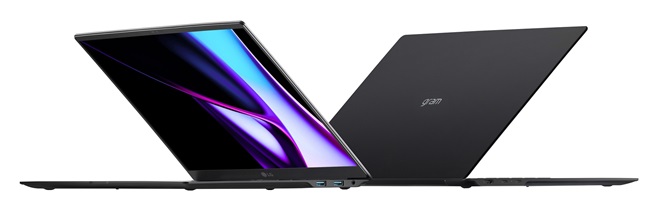
LG Unveils a White Version of the gram SuperSlim 2024 Laptop with Intel Ultra 5 CPU, Starting at $1,399 (10,205 Yuan)

LG has unveiled a white version of their ultra-light LG gram SuperSlim 2024 laptop (model 15Z90ST-G.AAW4U1) for the US market. This featherweight laptop weighs in at a mere 990 grams, making it ideal for those who value portability.

The laptop features 16GB of RAM, 512GB SSD and a 15.6-inch OLED display

Under the hood, the LG gram SuperSlim 2024 packs an Intel Ultra 5 125H processor, 16GB of memory, and a 512GB solid-state drive for snappy performance and ample storage. Originally priced at US$1,399.99 (approximately RMB 10,205), it’s currently available at a discounted price of US$799.99 (approximately RMB 5,831).

LG gram SuperSlim

The visual experience is delivered by a stunning 15.6-inch FHD OLED display. This high-quality screen boasts 100% DCI-P3 color gamut coverage, ensuring vibrant and accurate colors. It also meets the DisplayHDR True Black 500 standard, promising exceptional contrast and deep blacks.

Despite its slim profile, the LG gram SuperSlim 2024 is equipped with a built-in 60Wh battery. LG claims this translates to up to 20.5 hours of local video playback on a single charge – perfect for extended use on the go.

For connecting peripherals, the laptop offers two USB4 ports on the left side and a USB 3.2 Type-C port along with a 3.5mm audio jack on the right side.

(Via)

Xiaomi 14T Pro NBTC certified, may launch in August

Last week, the Xiaomi 14T bearing the 2407FPN8EG model number was approved by Thailand’s NBTC authority. Now the same certification platform has approved the Xiaomi 14T Pro, indicating that the 14T series will be launching soon in Thailand.

Xiaomi 14T Pro NBTC certified

Xiaomi 14T Pro NBTC listing

As shown in the image above, the NBTC has certified the Xiaomi 14T Pro, model number 2407FPN8EG. While the listing does not provide detailed specifications for the device, it strongly indicates that the launch of the Xiaomi 14T Pro could be imminent.

To recall, the Xiaomi 13T received approval from the NBTC authority by the end of July last year, followed by the 13T Pro in early August. Both devices were subsequently announced for the global market by late September. The NBTC’s approval of the Xiaomi 14T and 14T Pro nearly a month earlier than their predecessors suggests that the 14T series will likely launch sooner, possibly by late August or early September.

Xiaomi 14T Pro specifications (rumored)

The Xiaomi 14T Pro is said to be a tweaked version of the Redmi K70 Ultra, which is expected to launch later this month in China. It is speculated that the 14T Pro will come equipped with better cameras than the K70 Ultra. The Camera FV-5 listing of the 14T Pro suggests it could be equipped with a 50-megapixel primary camera on the back and a 32-megapixel camera on the front.

The 14T Pro’s OLED panel may offer a 1.5K resolution and a 144Hz refresh rate. Under the hood, it may feature the Dimensity 9300+ chipset and a 5,500mAh battery with 120W fast charging support. Like its predecessor, the 14T Pro may offer up to 16 GB of LPDDR5x RAM and up to 1 TB of UFS 4.0 storage. In addition, it is expected to feature a metallic frame and an IP68-rated chassis.

TECNO Spark 20 Pro 5G Quick Review: Deserves to Be a Classic Model For The Popular Series

So this time we got the latest TECNO Spark 20 Pro 5G. Before the pricing got truly revealed, some rummers suggested that the phone is at flagship-level pricing. While we’re not convinced that TECNO was going to be this radical with the Spark Series, the design and look shown in its leaked images, however, left me not entirely sure if it’s a budget model. But now

Now all information is public. TECNO is still TECNO. Tecno Spark 20 Pro 5G doesn’t betray this popular series. Let’s do a quick unboxing and see how it looks, then we will talk about the camera and performance.

Unbox

The Spark 20 Pro 5G also comes in the iconic orange box, open the box and you will find the warranty card and manual for the phone, inside the package there is also a clear case, a 33W charger and an A to C cable.

What surprised me was a pair of earphones with Type-C connector. I tried them out, it was comfortable to wear and the sound quality was better than I expected.

Desgin

We got both the green and white versions, and there are some differences between these two in visual and touch. The green one has an Alcantara-like back cover with a surrounding gold edge for the camera island.

The white version on the other hand, is designed with a special texture on the inside.

It’s hard for me to say which one looks better, but if I were to choose, I’d definitely go for the green version as it’s virtually fingerprint-free.

If you take a closer look at the phone, you’ll notice that the frame almost completely wraps around the phone, and I I think that’s the best looking angle of the phone.

The design of the camera module has become more rounded, and if you look closely you can see that there is a textured ring around it. Compared to its predecessor, this 5G version is clearly more design-oriented. Of course, just like the frame, the glossy trim around the camera is also made of plastic.

Going back to the front of the phone, it uses a FHD+ LCD screen with 120Hz support, which is a nice display. To my surprise, although it uses a LCD panel, the brightness is also not bad.

Another highlight of this phone, in terms of audio and video experience is that, it supports Dolby Atmos, there is a speaker test at the end of the video so you can compare between them carefully.

The Spark 20 Pro 5G weighs about 202g, SO, when I hold it in my hand I feel he weight is more moderate, combined with the rounded curves on the screen and the frame, it feels very nice in the hand.

Obviously, the phone is larger in size, which for me is a very good size. For users with small hands, it can be a bit difficult to use this phone with one hand.

I have also summarized some other highlights, you can pause and check them out in detail.

Performance

The new Spark 20 Pro 5G uses a 5G Soc, the MediaTek 6080, this is the right choice in budget phone, as MediaTek’s SOC is better than Qualcomm in this range. I did some tests which you can pause and take a closer look.

In terms of gaming, mainstream games are not much of a problem and it can run them smoothly at 60fps. For some graphically demanding games such as Genshin Imapct, you can also get good frame rates after lowering the graphical settings.

Carmer

The Spark 20 Pro 5G uses the same main camera as the Spark 20 Pro, I have shot some samples you can pause and take a look.

In real life, the HDR performance is good and the white balance is more accurate, you can take very clear and sharp photos when there is enough light. As a budget 5G model, the samples shot here is pretty impressive.

In terms of video recording, the main camera supports 2K 30fps and 1080p 60fps, while the selfie camera gets a bit of a boost with support for up to 2K 30 fps. I also took some samples with the selfie camera here. The nature tone feature brings a wonderful representation for portrait shooting. This is probably something you’d hardly experience on other brands’ budget phones.

Battery & Charging

This phone also uses a 5000mAh battery. For daily uses, it can last for about 9-10 hours.

The phone supports 33W charging and it takes about 75 minutes to fully charge the battery. This performance is certainly quite enough for daily use.

Conclusion

So, This is a quick review of SPARK 20 Pro 5G, I think it will be a strong contender in the budget 5G phone market. The single comment that keep poping into my head may be appropriate to conclude the quick review: It doesn’t look like a ‘Entre level’.

HUAWEI FreeBuds 6i Review: A Qualified Successor to The Well-regarded Series

The FreeBuds series has always been one of HUAWEI’s most popular product lines. The FreeBuds i Series even is more affordable and has features that will fit well with most people’s daily use. The FreeBuds i Series have also recently been updated to the sixth generation. Let’s take a quick look at what the FreeBuds 6i has to offer and what has been upgraded.

Design & Wearing Comfort

This time around, the FreeBuds 6i still comes in three colorways: black, white, and purple. whereas the FreeBuds 5i’s purple would be more like blue, the 6i’s purple is the real deal. But unfortunately we only get our hands on the white version. The surface is free of speckles and resembles a pebble – Never go wrong with a glossy design.

The changes to the earbuds themselves are much smaller than the changes to the earbud case. the FreeBuds 6i is almost indistinguishable from the 5i. It still has the HUAWEI logo printed in the most noticeable place. The weight will be 0.5g heavier than the 5i, but it’s hard to notice when wearing it. After many iterations, the comfort of the FreeBuds doesn’t need to be wondered about anymore. I don’t have any problems wearing them for long periods of time anyway.

Sound Quality

The driver of the Huawei FreeBuds 6i has gotten a bit bigger than its predecessor. It comes with an 11mm Quad-magnet Dynamic Driver, which makes the low-frequency performance more surging and powerful, and the mid- and high-frequency more crispy and detailed. According to the website, the 11 mm quad-magnet dynamic drivers are 50% more powerful and Hi-Res certified, producing as low as 14 Hz of punchy bass.

This design is not only suitable for bass lovers but also satisfies users with high demands for vocal and instrumental details. In addition, FreeBuds 6i has Hi-Res AUDIO WIRELESS certification, which is able to restore more details of the music so that every note can be reproduced realistically. For actual listening, it handles well with various music types and reproduces them with good sound stage, which obviously far exceeds my expectation for a pair of budget wireless earbuds.

Noise Cancellation

Noise cancellation is one of the highlights of the FreeBuds 6i. The earphones are equipped with Huawei’s latest active noise cancellation technology, which is designed to effectively cancel out external noises through a dual-microphone feed-forward and feedback design. They call it Intelligent Dynamic ANC 3.0. Average full-range noise cancellation is 27 dB, with ultra-wide ANC frequency up to 5kHz. At least now based on my wearing experience, I would say the gap between the i series and the Pro series has been narrowed quite well.

After using it for a while, this mid-size eartips meet my needs very well. It’s worth noting that the FreeBuds 6i also features a well-done transparent mode for noting ambient sounds. Simply long press on the earbuds to switch to the Transparent Mode. Ambient sound can be heard clearly in this mode, which is much better than a similar budget earbuds, the Redmi Buds 5 Pro.

Operation & Connections

The FreeBuds 6i operates with the most common touch controls. A long press to switch the noise canceling mode, a double-tap to play or pause the music, and a swipe up or down to control the volume. This is a common way to operate wireless earbuds. Although it’s also pretty easy to maneuver, the squeeze control would be something we’d prefer to see. After all, tapping earbuds is not the most comfortable way for listening, and it’s easy to cause misoperations.

The FreeBuds 6i uses BlueTooth V5.3, which supports Pop-up Pair and dual-device connectivity. Other than the Bluetooth version upgrade, the connection is not much different from the 5i. After all, the 5i already has pretty stable connectivity with good latency.

Battery Life

With ANC on it keeps playing music for 5 hours, which will be an hour shorter than the battery life of the 5i. But with ANC OFF, the 6i will last another half hour longer than the 5i, at 8 hours. If you add up with the case of the earbuds, the overall battery life of the 6i is much longer, up to 35 hours of continuous music playback. Indeed, for daily use, the battery life is very impressive.

Charging the FreeBuds 6i is much faster, taking only 40 minutes to fully charge the earbuds and only 1 hour to fully charge the case. So you have the need to use earbuds for a long time, choosing the 6i will be much better than the 5i.

Verdict

The FreeBuds 6i is a competent successor. It improves in almost every aspect. Intelligent Dynamic ANC 3.0, in particular, is the best noise-canceling earbuds of any mid-range earbuds I’ve ever used. Because the Freebuds Pro doesn’t get updated every year, the FreeBuds 6i is supposed to be the newest, and probably the best, In- ear headphone for now.