Advertisement

Huawei Vision Smart Screen 6 SE RGB launches with flagship RGB-MiniLED technology at a fraction of the usual price

Huawei has unveiled the Vision Smart Screen 6 SE RGB, introducing its first television with RGB-MiniLED backlighting. The new lineup aims to bring display technology that was previously limited to premium flagship TVs to a much lower price segment while offering advanced color performance, high refresh rates, and HarmonyOS features.

Huawei Vision Smart Screen 6 SE RGB specifications and features

Huawei Vision Smart Screen 6 SE RGB-
Huawei Vision Smart Screen 6 SE RGB

The Huawei Vision Smart Screen 6 SE RGB is available in 55-inch, 65-inch, and 75-inch sizes. It adopts a new RGB-MiniLED backlighting system that replaces the conventional single-color LED approach with independently controlled red, green, and blue LEDs.

Combined with Huawei’s self-developed light and color control chip and RGB image processing technology, the TV delivers 105% BT.2020 color gamut coverage, 94-bit color precision, and up to 66% richer color reproduction than conventional MiniLED TVs. A focusing lens system also helps reduce blooming for improved contrast and cleaner highlights.

Huawei Vision Smart Screen 6 SE RGB

The TV features a 4K panel with an 8ms response time, a native 120Hz refresh rate, and motion enhancement technology that increases the effective refresh rate to as high as 300Hz. Huawei says the panel uses a 24-core light-emitting control chip that improves color efficiency by 10%, while the latest LCD panel increases overall light efficiency by 21%. The display also offers a 178-degree viewing angle and carries TÜV Rheinland certifications for low blue light and flicker-free viewing.

The lineup is powered by a quad-core processor with two Cortex-A73 and two Cortex-A53 CPU cores, paired with 3GB of RAM and 64GB of storage. It ships with HarmonyOS 4.3 and supports 4K Super Casting, Harmony AI features, and integration with other Harmony ecosystem devices, including smart door locks.

The 75-inch model also comes equipped with a 100W speaker system. Connectivity options include two HDMI 2.1 ports, USB 3.0, USB 2.0, Ethernet, AV input, digital RF, S/PDIF, and HDMI CEC support.

🔌 You’ll NeedThe 75-inch model needs a rated wall mount — check its load capacity before buying. Check TV wall mount price on Amazon →

Huawei Vision Smart Screen 6 SE RGB price and availability

The Huawei Vision Smart Screen 6 SE RGB is now available in China. The 55-inch model is priced at 3,499 yuan (~$520), while the 65-inch and 75-inch versions cost 4,699 yuan (~$700) and 5,799 yuan (~$860), respectively.

For more daily updates, please visit our News Section.

Stay ahead in tech! Join our Telegram community and sign up for our daily newsletter of top stories!

Casio launches two new Baby-G BG-169GD watches with 90s grunge-inspired design

Casio is expanding its Baby-G lineup in Japan with the launch of the new BG-169GD-1 and BG-169GD-7. Both models are priced at ¥12,650 ($80), are currently available for pre-order, and will go on sale later this month, featuring a design that draws inspiration from the revived late-1990s and early-2000s grunge aesthetic.

Casio Baby-G BG-169GD watches

Design Details

From a design perspective, the new models retain the familiar compact, round chassis of the standard BG-169. The main physical updates are cosmetic. Casio has opted for a matte finish across the resin bezels and bands, utilizing a gradation of faded gray tones instead of the bright, high-contrast colors often associated with the Baby-G line.

The watches also keep the series’ standard wire front protectors across the display. Measuring 45.9 x 42.6 x 16.4 mm and weighing 43 grams, the watches remain relatively lightweight and unobtrusive on the wrist.

In terms of durability, the hardware meets Casio’s usual baseline standards. The display is covered by mineral glass, and the resin case provides the standard shock resistance expected from the brand.

Both models also feature 200-meter water resistance, making them fully functional for swimming and basic water activities. Power is handled by a standard CR1616 battery, which Casio states should last approximately three years before needing a replacement.

🔌 You’ll NeedThe CR1616 battery is rated to last about three years, so keeping a spare on hand avoids a dead watch later. Check CR1616 watch battery price on Amazon →

The internal software features are standard for Casio’s digital lineup. The watches include world time functionality covering 29 time zones across 30 cities, a 1/100-second stopwatch, a countdown timer, and five daily alarms. The digital display is lit by a white LED backlight for visibility in low light.

Interestingly, Casio has kept a few legacy features intact on these models. The watches include a Telememo function that can store up to 25 names and phone numbers directly on the device memory. There is also a Day Counter feature that allows users to input up to five target dates and track the remaining days.

In related news, Casio has recently launched limited-edition Oceanus watches with retro-inspired gradient dials, alongside three new dress watches available with leather or stainless steel straps.

For more daily updates, please visit our News Section.

Stay ahead in tech! Join our Telegram community and sign up for our daily newsletter of top stories!

(Casio 1,2)

Casio launches three rugged Master of G watches with striking Horizon Gold design

Casio is adding three new models to its rugged Master of G watch lineup this August. The new releases, spanning the Mudman, Mudmaster, and Gravitymaster sub-brands, are currently up for pre-order in Japan.

All three share a unified color scheme that Casio refers to as Master in Horizon Gold, which consists of light yellow gold ion-plated bezels, brown metal accents, and dark brown bands manufactured from bio-based resin.

Casio GR-B300H-5A, GG-B100XMH-5A, GW-9500MH-5

Design & Pricing Details

The most expensive of the trio is the Mudman GW-9500MH-5, priced at ¥63,800 ($404). It is a fully digital watch that utilizes Casio’s duplex LCD, a display technology that overlays a digital compass on top of the standard time and measurement readouts to improve legibility.

Casio Mudman GW-9500MH-5

Internally, it relies on Casio’s Tough Solar power system and Multi-Band 6 for automatic radio-controlled time calibration. It includes a Triple Sensor setup for measuring compass bearing, altitude, barometric pressure, and temperature, all protected by a dust- and mud-resistant Carbon Core Guard structure.

Coming to the next model, the Mudmaster GG-B100XMH-5A is priced at ¥60,500 ($383). It switches to an analog-digital hybrid display and features a stainless-steel bezel paired with a carbon fiber-reinforced resin case. Unlike the Mudman, it is powered by a standard CR2025 coin-cell battery rather than a Tough Solar charging system.

Casio Mudmaster GG-B100XMH-5A

However, it upgrades the sensor array by adding a 3-axis step counter to the compass, altimeter/barometer, and thermometer. It also features Bluetooth connectivity, allowing users to sync the watch with the Casio Watches smartphone app for automatic time adjustment, location memory, and mission log tracking.

The final model is the Gravitymaster GR-B300H-5A, priced at ¥49,500 ($314). Geared toward aviation use cases, it drops the environmental sensors in favor of a straightforward, analog-only dual-time display.

Casio Gravitymaster GR-B300H-5A

It features a rotary disc indicator at the 9 o’clock position to show alarm status and battery levels. It brings back the solar charging seen on the Mudman while retaining the Bluetooth app connectivity of the Mudmaster for features like flight logging.

Availability

All three watches maintain Casio’s standard 200-meter water resistance and shock-proof construction. These are currently available for pre-order in Japan ahead of their official retail release later this month.

In related news, Casio has recently launched the limited-edition Oceanus Retro Tone Collection with eye-catching gradient dials, alongside two new affordable solar-powered Edifice EFS-S660 chronographs.

For more daily updates, please visit our News Section.

Stay ahead in tech! Join our Telegram community and sign up for our daily newsletter of top stories!

(Casio 1,2,3)

Casio launches new limited-edition Oceanus watches with stunning retro gradient dials

Casio has announced two new limited-edition watches for its Japan-exclusive Oceanus lineup, scheduled to ship later this August. The new models, the OCW-S400RL-8A and the OCW-T2600RL-3A, are part of the company’s Retro Tone Collection.

Casio Retro Tone Collection Oceanus watches

Design & Pricing Details

Rather than introducing new smart features, Casio is focusing on specific manufacturing techniques for the dials, bezels, and straps, while keeping its standard solar and radio-syncing technology inside.

Both watches feature a titanium case and a half-matte gradient dial. To achieve this specific finish without blocking the solar panels underneath, Casio uses a three-step production process: silver vapor deposition, a color coating, and gradient pattern printing. This method allows enough light to pass through to the Tough Solar charging system, which can power the watches for about five months on a full charge under normal use, or up to 22 months in power-saving mode.

Casio Retro Tone Collection Oceanus watches

The higher-end model of the two is the OCW-S400RL-8A, priced at ¥165,000 ($1,046) and limited to 300 units. It sits in the thinner Manta series, weighing 38 grams with a 9.2mm thickness. It features a gray dial and a sapphire crystal bezel ring that has been laser-treated to give it a frosted, matte texture. For timekeeping, it uses both Bluetooth to sync with the Casio Watches smartphone app and Multi Band 6 radio signals to automatically adjust the time depending on your location.

Casio Retro Tone Collection Oceanus watches

The second watch, the OCW-T2600RL-3A, costs ¥115,500 ($732) and is limited to 500 units. It has a green dial and skips the Bluetooth connectivity, relying entirely on the Multi Band 6 radio signals for automatic time adjustment. It is slightly thicker at 10.7mm and weighs 49 grams.

Instead of the titanium bracelets usually found on Oceanus watches, both models come with cowhide leather straps sourced from Tochigi Leather, a Japanese tannery. The straps are made using a traditional vegetable tanning process, meaning they are designed to break in and naturally change color with regular wear.

🔌 You’ll NeedSolar charging means no charger is needed, but the vegetable-tanned leather strap will need care as it breaks in. Check leather watch strap conditioner price on Amazon →

Availability

Casio is currently accepting pre-orders for both watches through its Japanese website, with sales scheduled to begin later this month.

In related news, Casio has recently unveiled the Pro Trek PRJ-B001EX-1 with an innovative strap that doubles as a storage pouch, alongside two new affordable solar-powered Edifice EFS-S660 watches.

For more daily updates, please visit our News Section.

Stay ahead in tech! Join our Telegram community and sign up for our daily newsletter of top stories!

(Casio 1,2)

Galaxy S27 Ultra to get inkjet lens printing across all three rear cameras

Reports suggest the Galaxy S27 Ultra will keep and expand a specialized manufacturing technique that first showed up on the current Ultra, with the goal of better image quality and a more compact camera module.

According to industry sources, Samsung Electronics and Samsung Electro-Mechanics are rolling out the inkjet lens printing process more widely on the Galaxy S27 Ultra. Instead of the usual anti-reflective films, they’re using a precise application of matte ink delivered through inkjet printing.

Film has traditionally done the job of soaking up stray light that causes flare and ghosting, but it also adds extra thickness inside an already cramped lens stack. Matte ink applied via inkjet printing does the same light-blocking work while taking up far less space.

Samsung first used this approach on the Galaxy S26 Ultra and now plans to apply it to three rear camera modules on the S27 Ultra. The specific lens layers involved are the L3 Tele, L3 Wide, and L6 Wide. Just like before, only one lens layer in each module gets the ink treatment. The rest stick with conventional film. This selective approach lets Samsung balance better optics, manufacturing yields, cost, and long-term reliability.

This refinement comes alongside a bigger change to the S27 Ultra’s camera setup. Recent reports say the S27 Ultra will switch to a triple rear-camera arrangement: a 200MP main sensor, a 50MP ultrawide, and a single 50MP 5x periscope telephoto, dropping the 3x telephoto. The Galaxy S27 Pro is expected to share the same main and ultrawide sensors but pair them with a 12-megapixel 3x telephoto instead. Both models are also said to get a 16-megapixel front camera.

By freeing up even a few micrometers inside each module, the inkjet process gives the engineers a bit more breathing room. That extra space can be used for better optical image stabilization, or simply keeping the camera bump under control. It’s a small but meaningful step toward improving the camera performance on the Galaxy S27 Ultra.

Don’t miss a thing! Join our Telegram community for instant updates and grab our free daily newsletter for the best tech stories!

For more daily updates, please visit our News Section.

(Source: ZDNET)

Motorola Edge 70 Neo with compact design, Android 17 could be coming soon

When Motorola unveiled the Edge 70 Max in India last month, it appeared to be the last device in the series, as the lineup already includes multiple models, such as the Edge 70, Edge 70 Fusion, Edge 70 Pro, and Edge 70 Pro+. A new development suggests that the company is not done with the lineup yet, as it could be working on a Neo-branded phone.

Motorola Edge 70 Neo spotted for the first time

The above screengrab from the Lenovo forum site reveals that Motorola has opened registrations for the Android 17 beta program in India, and the listing specifically mentions the unannounced Motorola Edge 70 Neo, confirming the device’s existence for the first time. While Motorola has not officially announced the smartphone yet, its appearance on the company’s official beta testing forum suggests that its launch could be close.

Given that the device is already associated with Android 17 beta testing, there’s a good chance the Edge 70 Neo could debut with Android 17 out of the box, although Motorola has not confirmed this yet. It remains to be seen whether the device goes official later this month or in September.

India also appears to be one of the first markets to receive the Motorola Edge 70 Neo, as the company is specifically recruiting users in the country for its Android 17 beta program. At present, no information is available about the device’s specifications.

Motorola Edge 60 Neo

Previously released Neo models, such as the Edge 60 Neo and Edge 50 Neo, have featured compact designs. While the Edge 60 Neo has a 6.36-inch display, the Edge 50 Neo sports a 6.4-inch screen. Therefore, the Edge 70 Neo could also arrive with a similarly sized display.

(source|via)

The best feature phones of 2026

Smartphones can do a lot in 2026. But not all of it is helping people get things done in time. In fact, it’s the opposite for many. That’s exactly why a growing audience is looking for a digital detox rather than access to everything in the device they carry with them throughout the day.

If you have also wished for a simple device that keeps you connected without the distractions, then here are a few good options to choose from right now.

1. HMD Terra M

The HMD Terra M is a compact, rugged smart feature phone built for professionals involved in critical field work. It includes a 2.8-inch glove-friendly touchscreen, a high-output loudspeaker, and can handle drops of up to 1.8 metres.

One of the standout features of this phone is its programmable push-to-talk and emergency keys. The two fully programmable keys offer instant access to your preferred push-to-talk app or custom shortcuts, giving you one-touch control in the field. It packs a 2,510mAh battery that is rated for up to 10 days of standby time.

There are also dual flashlights. The powerful white flashlight can light up trails at night, while the red LED torch provides night readability and helps preserve dark-adapted vision during low-light operations.

The HMD Terra M is priced at £179.99 in the UK and €199.99 in the Eurozone, and is available via HMD Secure corporate sales, channel partners, and select enterprise distributors

2. Nokia 235 4G (2nd Edition) and Nokia 215 4G (2nd Edition)

Launched earlier last month, the Nokia 215 4G (2nd Edition) and Nokia 235 4G (2nd Edition) are rolling out across select global markets, including India and parts of Europe, where HMD feature phones are traditionally distributed.

Both phones retain the classic Nokia feature phone design language, with one key difference: the 235 4G (2nd Edition) includes a 2-megapixel rear camera, while the Nokia 215 4G (2nd Edition) does not. The 215 4G (2nd Edition) still packs a front-facing camera.

They feature 2.8” QVGA IPS displays, S30+ operating system, and a 1,450mAh battery. HMD claims up to 10 hours of talk time and 12 days of standby. 4G connectivity brings the usual modern features to these Nokia-branded devices, including crystal-clear calls, cloud-based apps like YouTube, a news feed, and video calling through HMD’s Express Chat app.
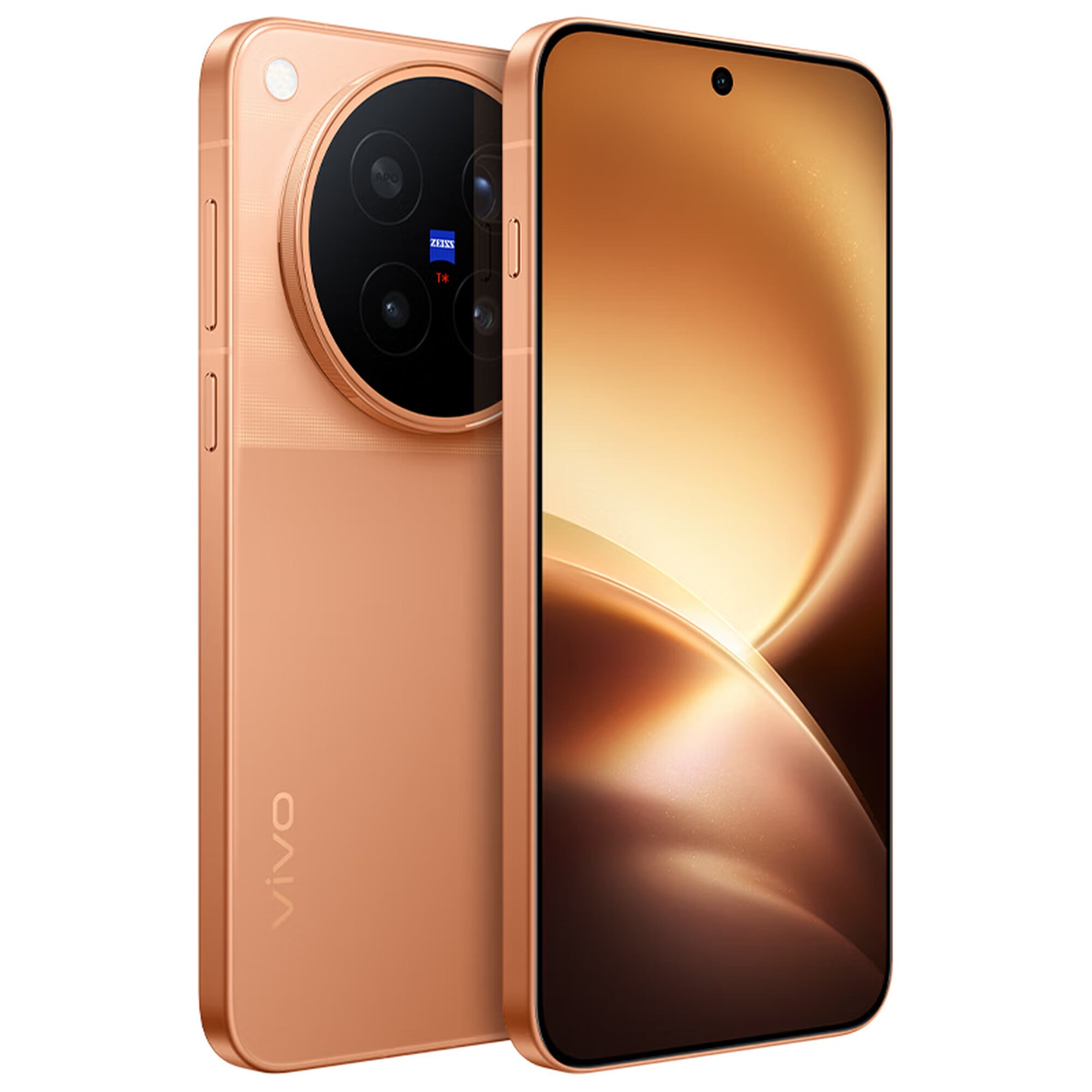
3. Light Flip

The Light Flip is a super-minimal 5G flip phone with a 2.8-inch OLED display with a 480 x 640 resolution. It runs on LightOS, a custom stripped-down version of Android built specifically to block social media, web browsers, and infinite-scroll apps. This makes it a great choice for people looking for a digital detox. It’s powered by a MediaTek MT8873 octa-core processor, paired with 6GB of LPDDR4X RAM and 128GB of UFS 2.2 storage.

Alongside 5G, it supports Wi-Fi 6 and Bluetooth 5. Users can also take advantage of dual SIM functionality through a physical nano-SIM and an eSIM.

There is a 50-megapixel rear camera that captures 12-megapixel images, something we don’t see often on feature phones.

4. HMD 110 4G

The HMD 110 4G is a simple feature phone with a 2.4” QVGA display and a QVGA rear camera with LED flash. It achieves HD call quality over 4G networks, while the ceramic gradient coating on the polymer body adds a nice visual touch. It’s also based on the S30+ operating system.

The brand claims up to 10 hours of talk time and up to 15 days of standby time, thanks to a 1,450mAh removable battery. There is a USB Type-C port for charging. It even offers access to some modern features, such as YouTube, YouTube Music, live widgets for daily weather forecasts and news updates through the Cloud Phone Service.

It’s available globally across Europe, the UK, Australia, New Zealand, Latin America, Africa, the Middle East, and select Asian territories, including India. A few regional prices include £39.99 (UK) and ₹2,599 (India).

In India, the phone comes with a built-in app for secure UPI transactions, which is a feature many users would otherwise miss.

5. HMD Touch 4G

The HMD Touch 4G is for those who want to stay away from distractions but still want a few smart, essential features. It’s based on RTOS Touch, a custom, lightweight real-time operating system designed for compact hybrid devices.

The Cloud Phone Service provides access to YouTube, cricket results, news, weather, and more through cloud apps, while the Express Chat App allows communication with friends and family on Android or iOS via text, voice, or even video call. So it utilizes 4G only to keep you connected, not distracted.

The phone packs a 3.2-inch QVGA touchscreen protected by 2.5D cover glass, a 1,950mAh battery, 0.3MP selfie, 2MP main camera, and a rear LED flash. It relies on the Unisoc T127 processor, 128MB of internal storage, and 64MB of RAM, and supports microSD cards of up to 32GB.

The HMD Touch 4G is currently available in India for ₹4,199, with a rollout to European markets such as the UK, Germany, and France expected at a later date.


Don’t miss a thing! Join our Telegram community for instant updates and grab our free daily newsletter for the best tech stories!

For more daily updates, please visit our News Section.

Edifier launches Airpulse A80V near-field Hi-Fi speaker with 100W output

Edifier today launched a new active near-field Hi-Fi speaker in China called the Airpulse A80V. It’s an upgrade over the original A80, and while it keeps the things people liked about that model, Edifier has reworked the mid-bass driver for fuller, more rounded low-end output. The company has also added Savitech Hi-Fi USB audio decoding and a 3.5mm AUX input, so you get more ways to plug things in.

Edifier Airpulse A80V Specifications

On the power side, the A80V pushes out 10W+10W to the left and right tweeters and 40W+40W to the left and right mid-bass drivers, all with limited distortion. 

It has a horn-loaded aluminum ribbon tweeter that stretches smoothly up to 40kHz, and because the ribbon design combines the diaphragm and voice coil into one piece, you get fast transient response and low phase distortion. 

The mid-bass unit is 4.5 inches with an all-cast aluminum bracket, a hardened aluminum alloy diaphragm, and a 30mm voice coil.

Edifier Airpulse A80V Specs

Inside, Edifier is using two Texas Instruments TAS5754M Class D amplifiers to handle the amplification, one per driver type, and both can process digital signals at sampling rates up to 192kHz. 

For inputs, you’re getting RCA line-in and 3.5mm AUX (through a Texas Instruments PCM1802 ADC that supports up to 96kHz/24-bit), plus Toslink optical and USB-C digital inputs that go up to 216kHz sampling and can handle 192kHz/24-bit audio. Connectivity includes Bluetooth 5.1, which supports courtesy of a Qualcomm QCC3031 chip with aptX HD support, so wireless listening shouldn’t feel like a downgrade from wired.

Build and specs

Design-wise, the cabinet is built from 18mm MDF lined with wave-shaped sound-absorbing cotton to cut down on resonance and stray standing waves. There’s also a SUB OUT port if you want to add a subwoofer for bigger rooms. 

🔌 You’ll NeedIt includes a SUB OUT port, so a matching subwoofer extends bass in larger rooms. Check powered subwoofer price on Amazon →
Edifier Airpulse A80V Launch Specs Price

The speaker is rated between 52Hz-20kHz frequency response, with a signal-to-noise ratio of at least 90dB(A) on both channels. Each pair weighs 9.3kg, and the cabinets measure 140 x 255 x 238mm.

Price and availability

The Edifier Airpulse A80V is already available for purchase in China for 2,879 yuan (about $402). There’s no word on its global availability yet.

For more daily updates, please visit our News Section.

Stay ahead in tech! Join our Telegram community and sign up for our daily newsletter of top stories!

Asus’ new Chromebook packs Google AI, 12.5-hour battery, and military-grade durability

A new Chromebook has arrived for users looking for a simple, cloud-first laptop experience. Asus has unveiled the Chromebook CX15 in India, bringing Google AI-powered features, ChromeOS, and a lightweight design to students, young professionals, and first-time laptop buyers. The launch also marks Asus first Chromebook rollout through offline retail stores in the country.

Asus Chromebook CX15 specifications and features

Asus Chromebook CX15

The Asus Chromebook CX15 runs ChromeOS and is deeply integrated with Google’s ecosystem, allowing users to access AI-powered tools across work, study, and entertainment. Buyers also receive a three-month Google AI Pro membership, which includes premium Gemini features across Gmail, Docs, Sheets, and Gemini Notebook, along with 5TB of cloud storage. The package also includes Google Flow for AI video creation, advanced editing tools in Google Photos, Nano Banana image generation, and YouTube Premium Lite.

The laptop features a 15.6-inch Full HD IPS NanoEdge display with 300 nits of brightness, an anti-glare coating, and an 87 percent screen-to-body ratio for a more immersive viewing experience.

The Chromebook is powered by the Intel Processor N50, paired with 8GB of LPDDR5 RAM and 128GB of eMMC storage. ASUS says the hardware is designed for web browsing, online classes, document editing, video calls, and other cloud-based workloads.

Weighing 1.59kg, the Chromebook CX15 meets MIL-STD-810H military-grade durability standards and comes in a Pure Grey finish inspired by traditional Japanese washi paper. Asus claims the laptop can deliver up to 12.5 hours of battery life on a single charge and bundles a 45W USB Type-C charger in the box. Security features include the Titan C security chip, automatic ChromeOS security updates, and a physical webcam privacy shutter.

🔌 You’ll NeedAt 15.6 inches and MIL-STD-810H tested for daily campus carry, a padded sleeve protects it in a bag. Check laptop sleeve case price on Amazon →

Asus Chromebook CX15 price and availability

Asus Chromebook CX15

The Asus Chromebook CX15 is priced at Rs. 47,990 (~$500) and is now available through ASUS Exclusive Stores, ROG Stores, the ASUS eShop, Reliance Digital, and other authorized retail partners across India.

For more daily updates, please visit our News Section.

Stay ahead in tech! Join our Telegram community and sign up for our daily newsletter of top stories!

This new desktop 3D printer packs 105% more print space without going pro

Bambu Lab is officially establishing its presence in India with the launch of a new desktop 3D printer aimed at creators, educators, designers, and small businesses. The company has introduced the A2L, its largest open-bed desktop 3D printer so far, while reinforcing its long-term commitment to one of the world’s fastest-growing maker communities.

Bambu Lab A2L arrives with a much larger build volume

Bambu Lab A2L
Bambu Lab A2L 3D printer

Although Bambu Lab is formally introducing its brand in India now, its products have already been available in the country through authorized channel partners for nearly two years. The A2L, which went on sale in India earlier this week, is designed for users who need more space than conventional desktop 3D printers can provide. It features a 330 × 320 × 325 mm build volume, delivering 105 percent more printable space than standard 256 mm-class machines. The larger print area allows users to create bigger models, print multiple parts simultaneously, and complete projects without splitting them into separate sections.

The printer is also equipped with several technologies designed to improve print quality and reliability. Adaptive Vibration Compensation automatically adjusts performance based on toolhead movement and changing bed loads, while built-in granular dampers reduce vibration during high-speed printing. A closed-loop PMSM servo extruder continuously monitors filament flow to detect feeding issues before they affect print quality. Additional monitoring systems include nozzle clog detection, nozzle clumping detection, tangled spool detection, and filament run-out detection. Despite its larger footprint, the A2L operates at less than 49 dB in Silent Mode.

Beyond 3D printing, the A2L supports optional Blade Cutting and Pen Drawing modules, allowing users to cut materials such as leather, fabric, and stickers or convert the machine into a precision drawing tool. It also supports multiple Automatic Material System units for multi-color printing with intelligent filament management. The printer integrates with Bambu Studio, the MakerWorld model library, and the Bambu Handy mobile app for remote monitoring and control.

🔌 You’ll NeedA 3D printer is useless without filament — grab a PLA spool to start your first print. Check PLA filament spool price on Amazon →

The Bambu Lab A2L is priced at Rs. 48,999 (~$515), while the A2L Combo costs Rs. 65,999 (~$690) in India through the company’s authorized channel partners.

For more daily updates, please visit our News Section.

Stay ahead in tech! Join our Telegram community and sign up for our daily newsletter of top stories!

These OnePlus devices won’t receive ColorOS 17 (Android 17) update

OnePlus ColorOS 17 update ineligible devices

OnePlus has confirmed that the next major OS upgrade for its devices will come with the ColorOS 17 skin instead of OxygenOS 17. The rollout is expected to begin in the coming weeks, but unfortunately, the update won’t reach many OnePlus devices.

The OxygenOS 16 update, based on Android 16, was the last major upgrade for many OnePlus devices, and therefore, they aren’t eligible for future major upgrades, including ColorOS 17. The list includes flagship phones such as the OnePlus 11R, 10R, and 10 Pro, as well as a couple of Nord series phones.

Take a look at the list below to find out if you will need a hardware upgrade soon.

List of OnePlus devices that are not eligible for the ColorOS 17 update

This list has been prepared after carefully reviewing the software update policy for every OnePlus device, and so it must be accurate.

OnePlus flagship phones

  • OnePlus 11R
  • OnePlus 10R
  • OnePlus 10T
  • OnePlus 10 Pro

OnePlus Nord series

  • OnePlus Nord 3
  • OnePlus Nord CE 4
  • OnePlus Nord CE 4 Lite

OnePlus Pad series

  • OnePlus Pad
  • OnePlus Pad Go

To keep the list short and relevant, we’ve only included OnePlus devices that received the OxygenOS 16 update but are not eligible for ColorOS 17.

If your OnePlus device is on the list above, it may be time to start thinking about an upgrade. The device should still receive security patches for a while, but it won’t have access to the newest features, visual upgrades, and AI capabilities that come with major upgrades.

There are some excellent OnePlus phones in the market, promising up to four major OS upgrades. Most recent flagship phones are covered by that promise, and it also extends to some Nord phones. That means you don’t need to spend a premium just to get long-term software support. Click here to check the full list of OnePlus phones that promise four major Android upgrades.

We’ll keep updating you with the latest details in our OnePlus section. Remember to visit the page from time to time, or join our Telegram channel to receive instant alerts.

Xiaomi Pad 9 Pro and Pad 8S Pro clear key regulatory hurdle, launch imminent

The Xiaomi Pad 9 received 3C certification in China a couple of weeks ago. Following up, two new Xiaomi tablets have now made their way into China’s MIIT database. 

The models listed are 2612CRPFFC and M367FC, and if a Weibo post is to go by, they are the Xiaomi Pad 9 Pro and Pad 8S Pro, respectively. 

Xiaomi Pad 9 Pro / Pad 8S Pro MIIT certification

The certification shows the Pad 9 Pro supports up to 67W in charging. In comparison, the Pad 9 caps out at a maximum of 45W.

The M367FC, meanwhile, supports up to 120W charging, and that lines it up with everything we’ve likely already heard about the Xiaomi Pad 8S Pro. According to the previous report, the tablet will feature a 12.5-inch 3.2K LCD screen, a 12,000mAh battery, a 32MP front camera, and a 50MP main camera paired with a 2MP secondary sensor. 

Meanwhile, a separate leak shows the parts of the Pad 8S Pro About screen, and it’s shown running the company’s in-house XRING O3 chipset. It also confirms the above-mentioned specs, and the tablet will run on HyperOS 4 based on Android 17. 

Xiaomi Pad 8s Pro Specs
Xiaomi Pad 8S Pro

As for the standard Pad 9, the tablet is tipped with a Snapdragon 8s Gen 4 chip, the same 45W charging speed as the outgoing Pad 8, and a battery bump to 9,720mAh. 

Nothing here confirms a launch date, but clearing MIIT is usually one of the last regulatory steps before a device goes on sale in China. Given how close together these certifications are landing, you can probably expect Xiaomi to talk about both tablets alongside its next flagship phone launch rather than as a standalone event. We will keep you in the loop for anything new we learn.

For more daily updates, please visit our News Section.

Stay ahead in tech! Join our Telegram community and sign up for our daily newsletter of top stories!

(Source 1, 2)

Oppo A7 Pro Max vs Redmi Note 17 Pro Max: Which Battery Beast Offers Better Value?

Oppo has officially raised the bar for battery capacity in mid-range smartphones with the launch of the Oppo A7 Pro Max 5G in China. Debuting as the brand’s first phone to sport a massive 10,000mAh Glacier Battery, Oppo has timed this launch right before Xiaomi unveils its highly anticipated competitor, the Redmi Note 17 Pro Max 5G.

While Redmi prepares for the official launch in China and global markets, the specifications of the global edition of the Redmi Note 17 Pro Max have already leaked via official-looking promo material. The Chinese variant of the Note 17 Pro Max is expected to share identical core specifications with its global counterpart, barring a potentially larger battery capacity for the Chinese market.

Oppo A7 Pro Max vs Redmi Note 17 Pro Max

Here is a detailed head-to-head comparison between the Oppo A7 Pro Max and the Redmi Note 17 Pro Max to see which battery behemoth offers the better overall package.

6Verdict

The Oppo A7 Pro Max 5G is a targeted engineering achievement for power users who put absolute battery life above all else. With a colossal 10,000mAh silicon-carbon battery squeezed into an 8.57mm body, fast 27W reverse charging, and a solid IP69K build, it stands as an ultimate power station smartphone.

However, looking at the complete hardware package, the upcoming Redmi Note 17 Pro Max 5G delivers a more balanced all-around experience. While its 9,210mAh battery is slightly smaller than Oppo’s, it compensates across almost every performance metric, offering a significantly faster chipset, superior display brightness and eye protection, versatile 4K cameras with an ultra-wide sensor, faster 100W charging, and modern AI software features.

For more daily updates, please visit our News Section.

Stay ahead in tech! Join our Telegram community and sign up for our daily newsletter of top stories!

Next

Huawei Mate 90 Pro Max may retain side-mounted fingerprint in 2026, key specs leak

Huawei’s Mate 90 series has previously been tipped to launch in September, separate from the Mate XT2 tri-fold. A new Weibo leak has now revealed the key specs of the Huawei Mate 90 Pro Max. 

The leak confirms the Mate 90 Pro Max will run on the Kirin 9050 Pro based on the “logical folding” architecture that Huawei teased a while ago. Instead of packing more transistors into a smaller area the traditional way, Huawei is stacking circuits into a 3D structure, effectively trading spatial miniaturization for what it calls time miniaturization. 

Compared to the Kirin 9030 Pro in last year’s Mate 80 series, transistor density has reportedly increased by 53.5%, chip area shrunk by 37.5%, and power consumption at matching performance drops by 41%. This should lead to better performance and efficiency.

Huawei Mate 90 Pro Max Specifications (Expected)

On the display side, the maker is reportedly using a 6.9-inch dual-layer OLED panel at 1.5K resolution. It will have LTPO for adaptive refresh rates and large rounded corners on a flat screen. 

The leak says the battery capacity will range from 6800mAh to 7000mAh, paired with 100W fast charging and WiFi 7 support. The software side will be handled by the new HarmonyOS 7, which brings a new assistant called Xiaoyi along with added gaming features and a gaming console layer built into the OS that Huawei says will keep getting updates over time.

On cameras, the rear setup could include a 200MP main sensor, a 40MP ultra-wide camera, a 50MP dual-telephoto pair, and a third-generation red maple color camera, with a 15MP ultra-wide front camera and 3D face recognition for unlocking. 

Design-wise, it’s expected to feature a new square camera module. However, the new Mate may not have an ultrasonic fingerprint scanner this generation either, as it’s said to feature a side-mounted biometric like the Mate 80 series.

Huawei hasn’t confirmed a launch date for the Mate 90 series yet; instead, it’s holding a launch event tomorrow for new Mate PCs and the GT 7 smartwatch.

For more daily updates, please visit our News Section.

Stay ahead in tech! Join our Telegram community and sign up for our daily newsletter of top stories!

(Source)

Oppo A7 Pro Max launches with a mammoth 10,000mAh battery and all-new Snapdragon 4 Gen 5

Oppo has announced the Oppo A7 Pro Max 5G, a new addition to its A-series lineup that focuses on battery life without compromising on modern features. The device is the company’s first smartphone to pack a 10,000mAh battery, while also introducing Qualcomm’s latest Snapdragon 4 Gen 5 chipset. Read on to learn more.

Oppo A7 Pro Max specifications and features

Oppo A7 Pro Max
Oppo A7 Pro Max

The Oppo A7 Pro Max is the world’s first phone to feature the all-new Snapdragon 4 Gen 5 mobile platform, built on TSMC’s 4nm process. It features an octa-core CPU with two Cortex-A78 cores clocked at up to 2.4GHz and six Cortex-A55 cores running at up to 2.0GHz, paired with the Adreno G629 GPU. The handset comes with LPDDR4X RAM and UFS 3.1 storage.

On the front, the phone sports a 6.78-inch flexible AMOLED display with an FHD+ resolution of 2772 × 1272 pixels, a 120Hz adaptive refresh rate, 10-bit color, and up to 1,800 nits of peak brightness. It also supports a 330Hz touch sampling rate in select gaming scenarios.

Oppo A7 Pro Max cameras

The A7 Pro Max features a 50-megapixel front-facing camera, while the rear houses a 50-megapixel primary camera with OIS, a 2-megapixel monochrome sensor, a notification LED, and an LED flash. Both the front and rear cameras support up to 1080p video recording.

It goes without saying that the biggest highlight is its 10,000mAh Glacier Battery, which uses Oppo’s proprietary spherical silicon-carbon battery technology. It supports 80W SuperVOOC fast charging, 80W UFCS charging, and 27W reverse charging.

🔌 You’ll NeedIt supports 80W SuperVOOC charging, but you need Oppo’s own charger to hit that speed. Check Oppo 80W SuperVOOC charger price on Amazon →
Oppo A7 Pro Max colors

Other notable features include an in-display optical fingerprint sensor, stereo speakers with up to 300% volume, NFC, an IR blaster, Wi-Fi 5, IP66, IP68, IP69, and IP69K ratings, an AI-powered outdoor mode 2.0, and ColorOS 16-flavored Android 16.

Oppo A7 Pro Max price and availability

The Oppo A7 Pro Max comes in Wave Rider, Orange Glow, and Mountain Black color options. It is priced at 2,199 Yuan (~$325) for the 8GB+128GB model, 2,699 Yuan (~$400) for the 12GB+ 56GB variant, and 2,999 Yuan (~ $445) for the 12GB+512GB version. The phone is now available in China, and there are speculations that this phone may get rebranded as the Oppo F35 Pro in India.

For more daily updates, please visit our News Section.

Stay ahead in tech! Join our Telegram community and sign up for our daily newsletter of top stories!

Poco M8 Power launches in India with a massive 8,000mAh battery

Xiaomi’s subsidiary Poco today announced its new Poco M8 Power smartphone in India. It is a big-battery phone with 8000mAh capacity that Poco claims delivers up to three days of power.  

You’d expect an 8,000mAh cell to make a phone feel like a brick, but Poco has kept things surprisingly trim here. The back panel is plastic, with a wide camera bar running across the width of the phone that houses two circular cutouts for the camera and flash, plus the Poco logo. Despite all that battery inside, the phone comes in at just over 8.4mm thick and weighs around 220 grams.

Poco M8 Power

Poco M8 Power Specifications 

Up front, you get a 6.9-inch FHD+ AMOLED panel running at 120Hz, with peak brightness hitting 1,800 nits and 960Hz PWM dimming to ease eye strain in low light. 

Poco also claims the screen covers the full DCI-P3 colour range. Gorilla Glass 7i sits on top, and the phone carries IP65 protection against dust and light splashes. 

Poco M8 Power box contents

Inside, you get a Snapdragon 4 Gen 4 chip paired with LPDDR4X RAM and UFS 2.2 storage. You get 45W wired charging support, and the phone can even reverse-charge other gadgets at 22.5W.

🔌 You’ll NeedIt supports 45W wired charging, so a 45W-or-faster charger is needed to actually hit that speed. Check 45W GaN fast charger price on Amazon →

On the back, you’re getting a 50MP main camera, while an 8MP shooter handles selfies. Both cap out at 1080p video. Software-wise, the phone ships on HyperOS 3 over Android 16, and Poco is promising four years of OS updates and six years of security patches. You also get an IR blaster and AI tools like Circle to Search along for the ride.

Price and availability

Poco M8 Power

The Poco M8 Power starts at Rs 24,999 for the 6GB/128GB variant, while the 8GB/128GB model costs Rs 27,999. Poco is also throwing in bank offers worth Rs 3,000 on top to sweeten the deal. Sales kick off on August 7, 2026, exclusively through Flipkart.

For more daily updates, please visit our News Section.

Stay ahead in tech! Join our Telegram community and sign up for our daily newsletter of top stories! 💡

Redmi K100 Pro early hands-on shows how the Snapdragon 8 Elite Gen5V handles gaming

Redmi just confirmed that the K100 Pro is the first phone to run the Snapdragon 8 Elite Gen5V, a trimmed-down cousin of the chip that’s inside the K100 Pro Max. Now that the phone is out in the wild ahead of its official reveal, tipster Digital Chat Station (DCS) has shared an early hands-on look at how it actually performs. 

Start with the chip itself. The 8 Elite Gen5V keeps the same TSMC N3P process and 4.6GHz dual-core Oryon setup as the standard chip, so the CPU side is untouched. 

Snapdragon 8 Elite Gen 5 V-series

The Adreno 840 GPU is where things are different. While the clock speed is the same, Qualcomm has trimmed the slice count from three to two and Graphics Memory (GMEM) shrinks from 18MB to 12MB. On paper, that reportedly puts benchmark scores at roughly 90% of the full 8 Elite Gen5.

Redmi K100 Pro gaming performance with new Snapdragon 8 Elite Gen5V chip

You’d expect that cut to show up in games, but DCS says it barely does. Since the CPU wasn’t touched, frame rates in popular titles are as high as the full 8 Elite Gen 5. 

In Honor of Kings, DCS claims the K100 Pro averaged 144fps while drawing just 4W. Game for Peace hit 183fps at 4.5W, and Delta Force reached 185fps at 4.7W. Even Genshin Impact held a steady 60fps average, with only minor dips during heavy combat.

Redmi K100 Pro Gaming Snapdragon 8 Elite Gen5V

The K100 Pro also has the D2 discrete graphics chip and 185Hz RGB OLED screen found on the pricier K100 Pro Max, and DCS notes that its super-frame-rate performance and latency come close to matching that phone despite the smaller 6.59-inch panel. 

None of this is official yet. Redmi has confirmed the chip and launch date of August 11, but hasn’t detailed the Gen5V’s gaming performance itself, so treat DCS’s numbers as an early, unofficial preview until Redmi shares its own figures.

For more daily updates, please visit our News Section.

Stay ahead in tech! Join our Telegram community and sign up for our daily newsletter of top stories! 💡

2026 LG AI TV lineup launches with 25 ultra-large models, including a 115-inch Mini LED flagship

LG has unveiled its 2026 AI TV lineup in India, introducing a broad range of premium televisions across Mini LED, OLED, Micro RGB, Mini RGB, Nano 4K UHD, and Smart AI TV categories. Headlining the portfolio is the company’s largest-ever 115-inch QNED evo Mini LED TV for the Indian market. Read on to know more about the new lineup.

LG 2026 AI TV lineup

LG 2026 AI TV lineup unveiled

The new lineup is led by the QNED evo Mini LED series, which is available in screen sizes ranging from 43 inches to 115 inches. The flagship model features Dynamic QNED Color Pro, Precision Dimming Ultra, and Motion Booster with refresh rates of up to 330Hz, while select models also support 165Hz Variable Refresh Rate (VRR) and Auto Low Latency Mode for gaming. Powered by the Alpha 8 AI Processor Gen3 on select variants, the QNED lineup starts at Rs 52,990 (~$556).

LG has also refreshed its OLED evo family with the G6, C6, and B6 series. The flagship G6 and C6 models feature the Alpha 11 AI Processor Gen3, Hyper Radiant Color Technology, Brightness Booster Ultra, Dolby Vision, Dolby Atmos, NVIDIA G-Sync, AMD FreeSync Premium, and support for up to 165Hz VRR. The OLED B6 uses the Alpha 8 AI Processor Gen3 while retaining Perfect Black and Perfect Color certification. Pricing starts at Rs 1,19,990 (~$1,260) for the OLED evo C6 series, Rs 1,47,490 (~$1,549) for the OLED B6, and Rs 2,14,990 (~$2,257) for the OLED evo G6.

The company’s new Micro RGB evo and Mini RGB evo LCD TVs introduce TÜV Rheinland-certified High Purity RGB Spectrum Display technology. The 100-inch Micro RGB evo (MRGB96) delivers Triple 100% Color Coverage across BT.2020, DCI-P3, and Adobe RGB colour spaces, while the Mini RGB evo series combines Tandem LED technology with Precision Dimming and the Alpha 8 AI Processor Gen3. The Mini RGB evo lineup starts at Rs 1,28,990 (~$1,354), whereas the 100-inch Micro RGB evo is priced at Rs 12,99,990 (~$13,650).

For buyers seeking more affordable large-screen options, LG has expanded its Nano 4K UHD lineup with screen sizes ranging from 43 inches to 98 inches. These TVs feature the Alpha 7 AI Processor Gen9, Nano Detail Enhancer, HDR10 Pro, and Dolby Atmos support. The Nano 4K UHD series starts at Rs 38,990 (~$409).

LG has also introduced the Smart AI TV (LB65) series in 32-inch and 43-inch sizes. The lineup is powered by the Alpha 5 AI Processor Gen9 and includes Dolby Atmos, AI-powered personalization, webOS 26, Google Gemini integration, Microsoft Copilot support, LG Gaming Portal, and five years of webOS updates. Pricing starts at Rs 19,990 (~$210). The new TV lineup is now available across India through LG’s retail channels.

For more daily updates, please visit our News Section.

🔌 You’ll NeedAt 115 inches this TV is too large for most stands — a rated wall mount is the safer fit. Check TV wall mount price on Amazon →

Stay ahead in tech! Join our Telegram community and sign up for our daily newsletter of top stories!

Honor Robot Phone full specs out a week before launch

You’ve already seen the Honor’s Robot Phone robotic arm pop out of the box and heard what the camera is capable of. A new leak from tipster Digital Chat Station now fills in the rest of the spec sheet.

Honor Robot Phone Specifications

Start with the display. Honor is using a 6.3-inch LTPO panel with a 2640 x 1216 resolution, and it’s a flat screen rather than a curved one. Its brightness will reportedly peak at 6,800 nits, and Honor might also add an AR anti-reflective film to keep the screen readable in direct sunlight.

Under the hood, you get the Snapdragon 8 Elite Gen 5, paired with a 7,060mAh battery and a 120W charging adapter in the box. That’s larger than the 6,000mAh figure that showed up in earlier leaks, so the battery capacity appears to have changed as the phone neared launch.

Honor Robot Phone preorders

Honor is also using a trio of its self-developed chips in the Robot Phone. The device has a C1 chip to handle RF signal enhancement, E2 to manage power efficiency, and H1 to run the imaging pipeline for the gimbal camera. 

The main sensor is a 200MP, 1/1.28-inch unit at f/1.6 with a 23mm focal length, mounted on the gimbal arm. Next to it is a 200MP periscope telephoto with a 1/1.4-inch sensor, f/2.6 aperture, and 2.7x optical zoom.

With the August 12 launch date already confirmed, this leak looks like one of the last spec details to surface before the official reveal. The gimbal camera has been the headline so far, but the display and battery numbers round out a fuller picture of the phone.

For more daily updates, please visit our News Section.

Stay ahead in tech! Join our Telegram community and sign up for our daily newsletter of top stories! 💡

(Source)

Lava Probuds Xplore 25° TWS earbuds launches with built-in display, 50hr playback time

Lava has launched the Probuds Xplore 25°, claiming it to be India’s first true wireless earbuds with a built-in display and a pop-up mechanism. The new addition to the company’s Pro series is aimed at users looking for a combination of unique design, gaming-focused features, and everyday convenience. The earbuds also offer long battery life, quad microphones with ENC, and dual-device connectivity.

Lava Probuds Xplore 25° specifications and features

Lava Probuds Xplore 25°

The Lava Probuds Xplore 25° stands out with its pop-up fidget mechanism and an integrated 1.69-inch TFT color display, allowing users to access key information without reaching for their smartphone.

🔌 You’ll NeedThe pop-up display is a moving part on the case, so a silicone sleeve helps guard it from drops. Check silicone earbuds case protector price on Amazon →

For audio, the earbuds are equipped with 10mm dynamic drivers, while a quad-microphone setup with Environmental Noise Cancellation (ENC) is designed to improve voice clarity during calls. Gamers also get a 35ms ultra-low latency mode for a more responsive gaming experience.

Lava Probuds Xplore 25°

The earbuds support Bluetooth 5.3 and dual-device pairing, making it easier to switch between connected devices. They also carry an IPX4 splash resistance rating to withstand sweat and light splashes.

On the battery front, Lava claims the Probuds Xplore 25° can deliver up to 50 hours of total playback with the charging case. The company also says a 10-minute quick charge provides up to 4 hours of playback.

Lava Probuds Xplore 25° price and availability

The Lava Probuds Xplore 25° is priced at Rs 1,999 (~$21) and is now available through retail outlets across India. It comes in Cosmic Black, Charcoal Grey, and Ivory White color options. The brand is also offering its Over-the-Counter Replacement (OTCR) service for its buyers.

For more daily updates, please visit our News Section.

Stay ahead in tech! Join our Telegram community and sign up for our daily newsletter of top stories!