Advertisement

Vivo X300e vs Xiaomi 17T Pro: Which Flagship Phone Should You Buy?

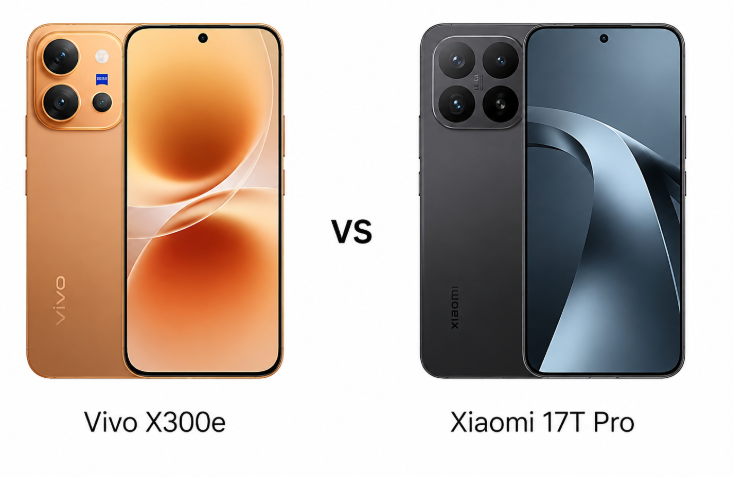
Vivo X300e and Xiaomi 17T Pro take different approaches to the flagship smartphone experience. Vivo emphasizes battery endurance, selfie photography, and Snapdragon performance, while Xiaomi pushes camera versatility, display technology, and faster charging. The real question is whether Xiaomi’s broader feature set is worth paying more. 
Major Features:

CategoryVivo X300eXiaomi 17T ProWinner
Build & ProtectionGlass body, aluminum frame, IP68/IP69Gorilla Glass 7i, aluminum frame, IP68Vivo — stronger water protection
Display144Hz AMOLED, HDR, 5000-nit peak144Hz AMOLED, Dolby Vision, HDR10+, 3500-nit peakXiaomi — richer display features
ProcessorSnapdragon 8 Gen 5Dimensity 9500Xiaomi — higher-end overall package
RAM & StorageUp to 12GB + 512GBUp to 16GB + 1TBXiaomi — more memory and storage
Main Camera50MP, OIS, 1/1.56″50MP, OIS, 1/1.31″Xiaomi — larger sensor
Telephoto50MP periscope, 3x optical zoom50MP periscope, 5x optical zoomXiaomi — longer optical zoom
Ultrawide8MP with autofocus12MPXiaomi — higher-resolution ultrawide
Selfie Camera50MP autofocus, 4K32MP, 4K HDR10+Vivo — higher-resolution AF selfie
VideoUp to 4KUp to 8K, 4K 120fpsXiaomi — much stronger video
Battery7200mAh7000mAhVivo — larger capacity
Wired Charging90W100WXiaomi — faster charging
Wireless ChargingNo50WXiaomi — wireless charging support
Reverse ChargingReverse wired22.5W reverse wiredXiaomi — faster reverse charging
Price/ValuePriced around $700 / ₹68,200Priced around $900 / ₹75,000Vivo — lower entry price
OverallStrong battery and selfie packageMore complete flagship packageXiaomi — more versatile overall
Disclaimer: Specs are based on available data. Actual performance may vary. Verify details from official sources before buying.

1. Design and Display

Build and Feel

The Vivo X300e uses a glass front and glass back with an aluminum frame, giving it a premium and refined appearance. Its IP68/IP69 rating provides particularly strong protection against dust and water, making it well suited to users who want durability without compromising on a polished design. Xiaomi uses Gorilla Glass 7i on both sides with an aluminum frame and IP68 protection. The Xiaomi 17T Pro feels more rugged and premium, while the Vivo X300e has a slightly more elegant character.

Display Quality

Both smartphones feature AMOLED displays with a 144Hz refresh rate, ensuring smooth scrolling, animations and gaming. Vivo offers 1B colors, HDR support and an impressive 5000-nit peak brightness. Xiaomi counters with Dolby Vision, HDR10+, 3840Hz PWM dimming and a 3500-nit peak brightness. Xiaomi’s display is therefore more feature-rich for movies and HDR content, while Vivo’s higher peak brightness is particularly appealing for outdoor visibility.

Verdict

Xiaomi wins with its Dolby Vision, HDR10+, advanced PWM dimming and more comprehensive multimedia features.

2. Specifications Including Battery

Performance

The Vivo X300e is powered by the Snapdragon 8 Gen 5 and comes with up to 12GB RAM and UFS 4.1 storage. Xiaomi uses the Dimensity 9500 and offers up to 16GB RAM with as much as 1TB storage. Both processors target flagship-level performance and should handle demanding games, multitasking and intensive applications comfortably. Xiaomi has the advantage for users who want maximum memory and storage flexibility.

Battery and Charging

Vivo packs a larger 7200mAh battery with 90W wired charging and reverse wired charging. Xiaomi uses a 7000mAh battery but supports faster 100W wired charging, 100W PPS, 50W wireless charging and 22.5W reverse wired charging. Vivo should appeal to users prioritizing battery capacity, while Xiaomi’s charging versatility feels considerably more premium.

Verdict

Xiaomi wins because it combines strong battery capacity with faster wired charging, wireless charging and broader memory configurations.

3. Camera

Main and Secondary Lenses

The Vivo X300e features a 50MP OIS main camera, a 50MP 3x periscope telephoto and an 8MP ultrawide camera with autofocus. Zeiss optics further strengthen its photography credentials. Xiaomi features a larger 50MP main sensor, a 50MP 5x periscope telephoto and a 12MP ultrawide camera. The longer optical zoom and larger primary sensor give Xiaomi a stronger setup for detailed photography, especially at distant subjects. Its Leica lens system also adds to the premium imaging package.

Selfie Camera

Vivo has a 50MP autofocus selfie camera capable of 4K video recording. This is a notable advantage for users who frequently take selfies or record themselves. Xiaomi uses a 32MP front camera with 4K recording and HDR10+ support. Although Xiaomi offers advanced video features, Vivo’s higher-resolution autofocus camera is more appealing for detailed front-facing photography.

Verdict

Xiaomi wins overall thanks to its larger main sensor, 5x optical zoom, stronger ultrawide camera and significantly more advanced video capabilities.

4. Pricing

The Vivo X300e is priced around $700, which is approximately ₹68,200 based on the supplied pricing. The Xiaomi 17T Pro is priced around $900, while its supplied Indian price is approximately ₹75,000. This makes Vivo the more affordable option, although the difference between the supplied Indian prices is relatively modest. Xiaomi therefore targets buyers willing to spend more for a broader flagship feature set, while Vivo offers a more accessible entry point.

Is the Price Justified?

The Vivo X300e offers strong value with a Snapdragon 8 Gen 5 processor, 7200mAh battery, 3x periscope camera, Zeiss optics and a 50MP autofocus selfie camera. Xiaomi’s higher price is justified by its stronger camera hardware, Dolby Vision display, 100W charging, 50W wireless charging and higher memory and storage options. The Xiaomi package feels more complete for buyers seeking flagship-level versatility.

Verdict

Vivo wins on value, while Xiaomi justifies its higher price with a broader and more capable feature set.

Disclaimer:
Prices are approximate and may vary based on country, region, launch timing, and applicable taxes. Always check whether the listed price is for a China unit or a global/international variant when purchasing.

5. Conclusion

The Vivo X300e stands out with its 7200mAh battery, 50MP autofocus selfie camera, Snapdragon 8 Gen 5 chipset, Zeiss optics and IP68/IP69 protection. It is particularly attractive for buyers who prioritize battery endurance, selfies and value. The Xiaomi 17T Pro brings a more comprehensive flagship package with Dolby Vision, 3840Hz PWM dimming, Leica optics, a 5x periscope camera, 8K video recording, 100W wired charging, 50W wireless charging and up to 1TB storage.

Verdict

Xiaomi 17T Pro is the better overall smartphone for buyers seeking the strongest combination of camera versatility, display technology, charging and storage. The Vivo X300e remains an excellent alternative for those prioritizing battery capacity, selfie photography and lower pricing. For buyers willing to pay more for broader flagship capabilities, Xiaomi offers the more complete package.


FAQs

1. Which phone is better for gaming?
The Xiaomi 17T Pro is better suited to demanding gaming, with its Dimensity 9500 chipset and higher RAM options.

2. Which phone takes better zoom photos?
The Xiaomi 17T Pro offers better long-range photography thanks to its 5x optical periscope zoom.

3. Which phone has better battery endurance?
The Vivo X300e has the larger battery, making it the stronger choice for users prioritizing maximum capacity.

4. Is the Xiaomi 17T Pro worth its higher price?
Yes, for buyers wanting advanced cameras, faster charging, wireless charging and greater storage flexibility.

5. Which phone should you buy overall?
Choose Xiaomi 17T Pro for flagship versatility; choose Vivo X300e for lower cost and a larger battery.

Disclaimer: Prices, specifications, and availability may vary by region and retailer. Recommendations in this article are based on editorial opinion, feature-based value, and market positioning at the time of writing. Readers are advised to do their own research before making a purchase.

Read More:

Caviar unveils ultra-luxury iPhone Ultra with a $18,840 sterling silver makeover

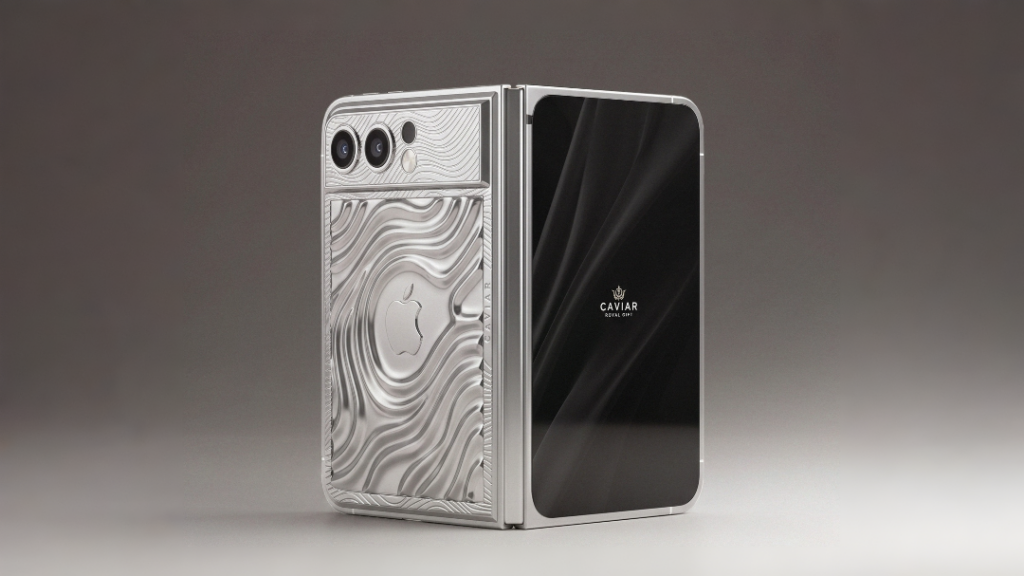
Apple isn’t expected to officially unveil its highly anticipated foldable iPhone Ultra until next month, but luxury customization brand Caviar is already showing off what the device will look like, at least what it will look like wrapped in nearly twenty thousand dollars worth of sterling silver.

Caviar Liquid Metal iPhone Ultra

Design Details

Caviar has announced Liquid Metal, a new custom chassis designed specifically for the upcoming foldable iPhone Ultra. Joining seven other pre-existing designs on the company’s roster, the Liquid Metal variant replaces the phone’s standard exterior with a custom panel crafted entirely from 925 sterling silver.

According to the company, the design is meant to evoke the look of fluid metal frozen in motion. The silver is shaped into a heavy sculptural relief and finished with a high mirror polish, creating a rippling effect across the back of the device that shifts depending on how the light hits it. The standard Apple logo has also been swapped out for a three-dimensional version, also cast in sterling silver.

Unlike many of Caviar’s previous custom jobs, which often feature excessive jewels, gold filigree, or fragments of meteorites, the Liquid Metal design relies solely on the raw material and its reflective properties. It’s a slightly more modern approach to ultra-luxury tech, leaning closer to a piece of contemporary metal sculpture than a traditional piece of jewelry.

Pricing and Availability

Naturally, this level of customization comes with an exorbitant price tag. The Liquid Metal iPhone Ultra starts at $18,840 for the base 256GB model, and Caviar is limiting production to just 17 pieces worldwide. The device ships in branded packaging that includes a signature 24K gold-plated Caviar key.

While Caviar’s renders and physical mockups give us a very clear look at the dimensions and hinge structure of the upcoming foldable, the underlying hardware remains unconfirmed by Apple. We will have to wait for Apple’s official keynote next month to see the standard, non-silver iteration of the iPhone Ultra.

In related news, Caviar has recently launched ultra-luxury Ray-Ban smart glasses featuring gold, silver, and crocodile leather finishes, alongside an ultra-luxury Galaxy Z Fold 8 collection adorned with cinematic icons and 24K gold accents.

For more daily updates, please visit our News Section.

Stay ahead in tech! Join our Telegram community and sign up for our daily newsletter of top stories!

Tecno Pova 8 Pro vs Realme 16x 5G: Which Offers Better Value?

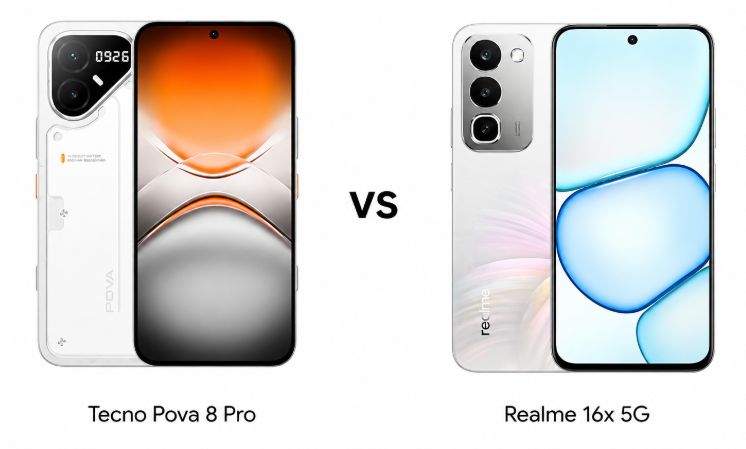
Tecno Pova 8 Pro and Realme 16x 5G target different segments, with Tecno focusing on performance, display quality and premium features, while Realme emphasizes affordability and battery life. This comparison looks at their design, specifications, cameras, pricing and overall value. 

Major Features:

CategoryTecno Pova 8 ProRealme 16x 5GWinner
Display6.78-inch AMOLED, 144Hz, HDR, 4500 nits peak6.81-inch IPS LCD, 144Hz, 1200 nits HBMTecno — AMOLED and higher brightness
Resolution1208 × 2644 pixels720 × 1570 pixelsTecno — Much sharper panel
ProtectionGorilla Glass 7i, IP68/IP69KPanda-1681, IP65, MIL-STD-810HTecno — Stronger water protection
PerformanceDimensity 7400 Ultimate, up to 12GB RAMDimensity 6300, up to 6GB RAMTecno — Much faster chipset
StorageUp to 512GBUp to 256GB + microSDTecno — Higher internal capacity
Main Camera50MP, OIS, dual-pixel PDAF50MP, autofocusTecno — OIS and better focusing
Secondary Camera8MP ultrawideNoneTecno — More versatile setup
Selfie Camera13MP8MPTecno — Higher resolution
Battery6500mAh7000mAhRealme — Larger capacity
Charging45W wired, 50W reverse, bypass charging45W wired, 45W PPS, 7W reverseTecno — More charging features
AudioStereo speakers, Dolby Atmos, Hi-ResSingle loudspeakerTecno — Better audio setup
NFCYesNoTecno — NFC included
InfraredYesNoTecno — IR blaster included
ConnectivityWi-Fi 6, Bluetooth 5.4Wi-Fi 5, Bluetooth 5.3Tecno — Newer wireless standards
SoftwareAndroid 16, HiOS 16Android 16, Realme UI 7.0Tie — Both run Android 16
Price/ValuePriced around $530 / ₹50,000Priced around $310 / ₹26,000Realme — Much cheaper
OverallMore powerful and feature-richMore affordable and battery-focusedTecno — Superior overall hardware
Disclaimer: Specs are based on available data. Actual performance may vary. Verify details from official sources before buying.

5. Design and Display

Build and Feel

The Tecno Pova 8 Pro offers a more premium and feature-rich design, with IP68/IP69K protection, an in-display fingerprint scanner and a distinctive Matrix display on the rear. The Realme 16x 5G has IP65 protection, MIL-STD-810H compliance and drop resistance, giving it a practical durability advantage. However, Tecno’s combination of stronger water protection and its more unusual rear design makes it feel more distinctive and better equipped for users who want something beyond a conventional smartphone.

Display Quality

The Pova 8 Pro is far ahead in display technology. Its AMOLED panel supports a 144Hz refresh rate, HDR, 1B colors and up to 4500 nits peak brightness. Realme also offers 144Hz, but its IPS LCD panel has a much lower resolution and lower brightness. Tecno therefore delivers deeper blacks, richer colors, better contrast and sharper visuals. For gaming, streaming and everyday multimedia, the AMOLED panel feels substantially more premium and enjoyable.

Verdict

Tecno wins with its superior AMOLED display, stronger protection and more distinctive design.

4. Specifications Including Battery

Performance

The Tecno Pova 8 Pro has a major performance advantage with the 4nm MediaTek Dimensity 7400 Ultimate, Mali-G615 graphics and configurations reaching 12GB RAM and 512GB storage. The Realme 16x 5G uses the 6nm Dimensity 6300 with Mali-G57 graphics and up to 6GB RAM with 256GB storage. Tecno is consequently better suited to demanding games, multitasking and heavier applications. Its newer chipset and higher memory ceiling also make it the more convincing choice for buyers planning to keep the phone for several years.

Battery and Charging

Realme carries a larger 7000mAh battery, giving it an advantage for users who prioritize endurance. Both phones support 45W wired charging, but Tecno adds 50W reverse wired charging and bypass charging. These extras make the Pova 8 Pro more useful for gaming and charging other devices, although Realme remains the better option when maximum battery capacity is the priority.

Verdict

Tecno wins for performance and charging versatility, while Realme wins battery capacity.

3. Camera

Main and Secondary Lenses

The Tecno Pova 8 Pro has the more versatile camera system. Its 50MP primary camera includes dual-pixel PDAF and OIS, while an additional 8MP ultrawide camera expands shooting flexibility. The Realme 16x 5G also has a 50MP primary camera with autofocus, but it lacks an ultrawide lens and OIS. Tecno’s setup is therefore better suited to landscapes, group photography and steadier handheld shooting. OIS should also help produce more stable results in lower-light situations and while recording video.

Selfie Camera

Tecno continues its advantage with a 13MP front camera, compared with the 8MP selfie camera on Realme. Both support video recording, but the higher-resolution Tecno camera should offer more detail for selfies and video calls. For users who regularly use the front camera, the Pova 8 Pro feels like the more complete package and offers greater flexibility for casual photography.

Verdict

Tecno wins with OIS, an ultrawide camera and a higher-resolution selfie camera.

2. Pricing

The Tecno Pova 8 Pro is priced around $530 / ₹50,000, while the Realme 16x 5G is priced around $310 / ₹26,000. Realme is therefore considerably cheaper, making it attractive for buyers working with a tighter budget. However, the price gap also reflects a significant difference in hardware. Tecno offers a better AMOLED display, faster chipset, stronger camera setup, higher memory options and additional connectivity and gaming features.

Is the Price Justified?

The Pova 8 Pro’s higher price is justified for buyers who want a substantially more capable smartphone rather than simply a large-battery device. Realme offers better budget value, particularly for everyday users who prioritize battery life, expandable storage and basic performance. Its lower asking price makes it easier to recommend for cost-conscious buyers, while Tecno provides stronger value for users who will actually use its additional hardware.

Verdict

Realme wins on affordability and value, while Tecno offers substantially more hardware for the premium.

Disclaimer:
Prices are approximate and may vary based on country, region, launch timing, and applicable taxes. Always check whether the listed price is for a China unit or a global/international variant when purchasing.

1. Conclusion

The Tecno Pova 8 Pro stands out with its AMOLED 144Hz display, rear Matrix display, Dimensity 7400 Ultimate chipset, OIS, ultrawide camera, IP68/IP69K protection, NFC, infrared port and bypass charging. These features give it a considerably more enthusiast-focused character. The Realme 16x 5G counters with a 7000mAh battery, microSD expansion, MIL-STD-810H compliance, drop resistance and a much lower price. It is clearly designed around practicality and affordability rather than maximum specifications.

Verdict

Tecno Pova 8 Pro is the better overall smartphone for buyers prioritizing performance, display quality, cameras and premium features. Realme 16x 5G is the better choice for budget-focused users who mainly want long battery life and everyday reliability. For buyers who can afford the difference, Tecno provides enough additional capability to make the upgrade worthwhile.


FAQs

1. Which phone is better for gaming?
The Tecno Pova 8 Pro is better for gaming thanks to its stronger chipset, higher RAM options and 144Hz AMOLED display.

2. Which phone takes better photos?
The Tecno Pova 8 Pro offers better photography flexibility with OIS and an ultrawide camera.

3. Which phone lasts longer on one charge?
The Realme 16x 5G has the larger battery, making it better suited to users prioritizing maximum battery endurance.

4. Which phone offers better value for money?
The Realme 16x 5G offers stronger value for budget buyers because it costs substantially less while retaining 5G and 45W charging.

5. Which phone should you buy overall?
Choose the Tecno Pova 8 Pro for a more powerful, feature-rich experience; choose Realme for lower cost and battery capacity.

Disclaimer: Prices, specifications, and availability may vary by region and retailer. Recommendations in this article are based on editorial opinion, feature-based value, and market positioning at the time of writing. Readers are advised to do their own research before making a purchase.

Read More:

Portronics launches affordable LCD writing pads for kids with colorful doodles and app support

Portronics has expanded its lineup of consumer electronics in India with a new series of LCD writing pads aimed specifically at children. The new Ruffpad series includes three animal-themed models, the Dino 8.5, Teddy 8.5, and PupX 10, designed to give kids a reusable digital canvas for drawing, doodling, and handwriting practice without burning through reams of paper.

Portronics Ruffpad LCD writing pads

Specifications

All three models feature multicolor LCD screens that respond to an included stylus, creating rainbow-colored lines based on pressure. They are built with basic eye protection in mind, utilizing displays that emit no blue light.

Portronics has also included standard quality-of-life features for this hardware category: a one-tap erase button to quickly clear the screen, and a physical screen-lock toggle to prevent accidental deletions when a child is in the middle of a drawing.

The lineup is split by screen size and exterior design. The Ruffpad Dino 8.5 and Teddy 8.5 both feature 8.5-inch displays. The Dino model is housed in a green, dinosaur-shaped chassis and runs on a replaceable CR2016 coin-cell battery.

The Teddy variant adopts a bear-inspired design and steps up to a CR2025 battery. For users who need a bit more room to draw, the Ruffpad PupX 10 offers a larger 10-inch screen. It features a puppy-themed design complete with floppy-ear handles for easier carrying, and also runs on a CR2025 battery.

While the tablets themselves are offline, standalone devices, Portronics is bridging the gap to smartphones with the companion Ruffpad App. Available on iOS and Android, the app allows parents to scan, save, and share their kids’ notes or doodles before the physical screen is wiped clean.

Pricing and Availability

The pricing is positioned firmly in the budget category, making them viable options for travel distractions or basic educational tools. The Ruffpad Dino 8.5 is available for Rs. 499 ($5.21), the Teddy 8.5 for Rs. 599 ($6.26), and the larger PupX 10 for Rs. 749.

All three models come with a 12-month warranty and are available now through the Portronics website, Amazon India, Flipkart, and various offline retail stores.

In related news, Portronics has launched the Toad Fold wireless mouse with a foldable design for easy travel, alongside a new 160W wireless air duster that reaches 130,000 RPM.

For more daily updates, please visit our News Section.

Stay ahead in tech! Join our Telegram community and sign up for our daily newsletter of top stories!

(Portronics 1,2,3)

Realme 16x vs Poco M8 Power: Which Phone Gives More for $300?

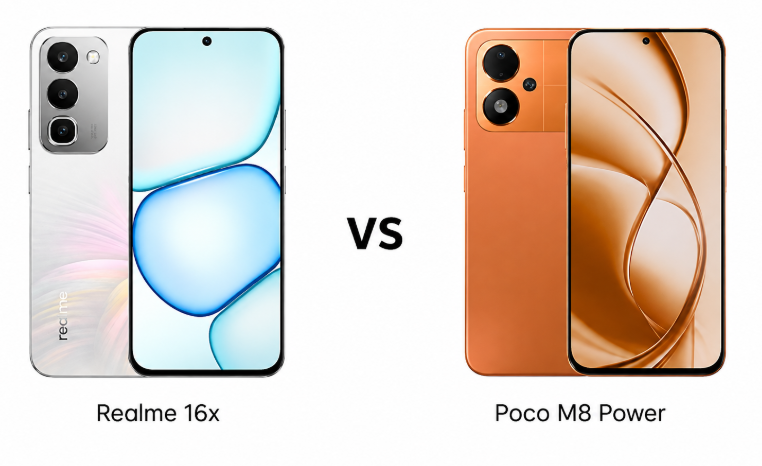
Realme 16x and Poco M8 Power take different approaches to the budget 5G segment. Realme focuses on durability, a fast 144Hz display and gaming-friendly features, while Poco pushes a larger battery, AMOLED screen and richer hardware. Here’s how the two compare on display, performance, cameras, battery and value.

Major Features:

CategoryRealme 16xPoco M8 PowerWinner
Display6.81-inch 144Hz IPS LCD, 1200 nits6.99-inch 120Hz AMOLED, 1800 nitsPoco — AMOLED and sharper resolution
BuildIP65, MIL-STD-810H, drop resistanceIP65Realme — stronger durability features
PerformanceDimensity 6300, up to 6GB RAMSnapdragon 4 Gen 4, up to 8GB RAMPoco — better chipset and RAM options
StorageUp to 256GB, shared microSD slotUp to 128GB, dedicated microSD slotRealme — higher maximum storage
Rear Camera50MP AF, 1080p up to 60fps50MP PDAF, 1080p 30fpsRealme — better video capability
Selfie Camera8MP, 1080p 30fps8MP, 1080p 30fpsTie — similar specifications
SpeakersSingle loudspeakerStereo speakersPoco — better multimedia audio
Battery7000mAh8000mAhPoco — larger capacity
Charging45W, 7W reverse, bypass charging45W, 22.5W reversePoco — stronger reverse charging
ConnectivityWi-Fi 5, Bluetooth 5.3, no NFCWi-Fi 6, NFC, IR blasterPoco — broader connectivity
Software SupportAndroid 16, up to 2 major updatesAndroid 16, up to 4 major updatesPoco — longer software support
Price / ValuePriced around $300 / ₹26,000Priced around $250 / ₹25,000Poco — more features for less
OverallRugged design and 144Hz displayAMOLED, bigger battery and richer featuresPoco — stronger all-round package
Disclaimer: Specs are based on available data. Actual performance may vary. Verify details from official sources before buying.

1. Design and Display

Build and Feel

The Realme 16x combines a glass front with a plastic frame and back, plus IP65 protection, MIL-STD-810H compliance, drop resistance and an RGB notification light. The Poco M8 Power also carries IP65 protection and adds stereo speakers with an under-display fingerprint sensor. Realme feels more rugged and practical, while Poco has a more premium multimedia-oriented character.

Display Quality

The Realme 16x uses an IPS LCD with a 144Hz refresh rate and up to 1200 nits HBM brightness. Poco takes a significant step ahead with an AMOLED panel, 120Hz refresh rate, 1080p resolution, Gorilla Glass 7i and up to 1800 nits peak brightness. Realme’s higher refresh rate helps scrolling, but Poco’s AMOLED panel delivers deeper blacks, stronger contrast and sharper visuals.

Verdict

Poco wins the display category with its AMOLED technology, higher resolution, stronger brightness and Gorilla Glass 7i. Realme’s 144Hz panel is smooth, but Poco feels considerably more premium for entertainment and everyday viewing.

2. Specifications Including Battery

Performance

The Realme 16x uses the MediaTek Dimensity 6300 with up to 6GB RAM, while the Poco M8 Power uses the Snapdragon 4 Gen 4 with up to 8GB RAM. Both offer UFS 2.2 storage, but Poco has a dedicated microSD slot. The Snapdragon platform and additional RAM make Poco better suited to multitasking and sustained everyday use.

Battery and Charging

Realme packs a 7000mAh battery with 45W wired charging, 7W reverse wired charging and bypass charging. Poco goes further with an 8000mAh battery, 45W charging and 22.5W reverse wired charging. Charging speeds are identical, but Poco’s larger battery and stronger reverse charging make it more attractive for heavy users who prioritize endurance.

Verdict

Poco wins on overall specifications with more RAM, a larger battery, stronger reverse charging and dedicated storage expansion. Realme’s bypass charging is useful for gaming, but Poco offers the broader hardware package.

3. Camera

Main and Secondary Lenses

Both smartphones feature 50MP primary rear cameras with autofocus, but Poco specifies a 26mm equivalent lens, a 1/2.76-inch sensor and PDAF. Realme supports 1080p recording at up to 60fps, giving it an advantage for video flexibility. Poco is limited to 1080p at 30fps, although its PDAF system should help with focusing during everyday photography.

Selfie Camera

Both phones use an 8MP f/2.0 front camera capable of 1080p video at 30fps. Neither offers a higher-resolution selfie sensor or additional front-facing lens. For video calls, basic portraits and social-media selfies, the two should provide broadly similar capabilities, with neither establishing a major hardware advantage.

Verdict

Realme wins narrowly because its main camera supports 1080p recording at 60fps. Poco offers PDAF and more detailed sensor specifications, but Realme provides greater video flexibility.

4. Pricing

The Realme 16x is priced around $300, or approximately ₹26,000, while the Poco M8 Power is priced around $250, or approximately ₹25,000. Poco therefore undercuts Realme on price while offering a larger battery, an AMOLED display, more RAM, and several additional hardware features.

Is the Price Justified?

Realme’s higher price can be justified by its 144Hz refresh rate, ruggedness features, bypass charging and 60fps rear video recording. However, Poco offers considerably more display technology and battery capacity while also adding stereo speakers, NFC and an infrared port. Its hardware package feels stronger for buyers prioritizing features per rupee.

Verdict

Poco offers better value for money because its lower stated price comes with an AMOLED display, larger battery, more RAM, stereo speakers and broader connectivity. Realme makes more sense for buyers prioritizing ruggedness and bypass charging.

Disclaimer:
Prices are approximate and may vary based on country, region, launch timing, and applicable taxes. Always check whether the listed price is for a China unit or a global/international variant when purchasing.

5. Conclusion

The Realme 16x differentiates itself with a 144Hz display, MIL-STD-810H compliance, drop resistance, RGB notification light, bypass charging and 60fps rear video recording. The Poco M8 Power counters with AMOLED technology, Gorilla Glass 7i, stereo speakers, NFC, an IR port, dedicated microSD expansion and substantially stronger reverse charging.

Verdict

Poco M8 Power is the stronger overall choice for most buyers, combining a better display, larger battery, more RAM and richer features at a lower stated price. Realme 16x remains appealing for ruggedness, 144Hz smoothness and bypass charging.

Disclaimer: Prices, specifications, and availability may vary by region and retailer. Recommendations in this article are based on editorial opinion, feature-based value, and market positioning at the time of writing. Readers are advised to do their own research before making a purchase.


FAQs

1. Which phone is better for gaming, Realme 16x or Poco M8 Power?
Poco M8 Power is better for gaming, thanks to its Snapdragon chipset, higher RAM options and larger battery.

2. Does Realme 16x take better photos than Poco M8 Power?
Realme 16x has an advantage for video recording, supporting 1080p at 60fps compared with Poco’s 30fps limit.

3. Which phone has better battery life?
Poco M8 Power should last longer between charges because its 8000mAh battery exceeds Realme 16x’s 7000mAh capacity.

4. Which phone offers better value for money?
Poco M8 Power offers stronger overall value with its AMOLED display, larger battery, stereo speakers and higher RAM options.

5. Should you buy Realme 16x or Poco M8 Power?
Choose Poco M8 Power for overall hardware value; Realme 16x suits buyers prioritizing durability and bypass charging.

Read Mind:

Nokia 300 Charge launches with a big 3700mAh battery for a feature phone

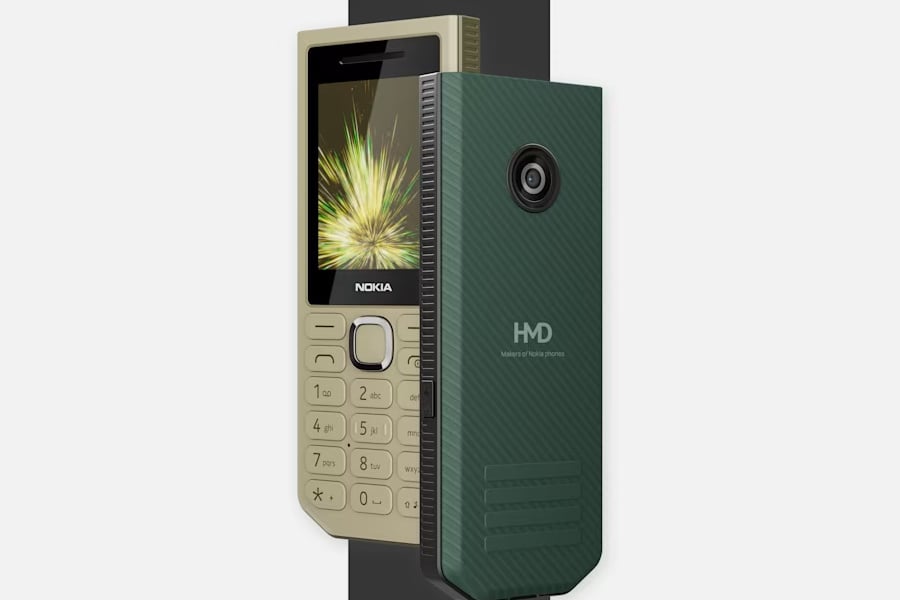
HMD has launched the Nokia 300 Charge feature phone globally. There’s nothing fancy about it. No smart assistant, no big camera, no touchscreen tricks. What you get instead is a phone built to last as long as possible.

The Nokia 300 Charge packs a 3,700mAh battery, a huge number for a feature phone, with a USB-C port for charging. HMD says the device offers up to 40 days of standby time and 37 hours of continuous talk time. 

Nokia 300 Charge COlors

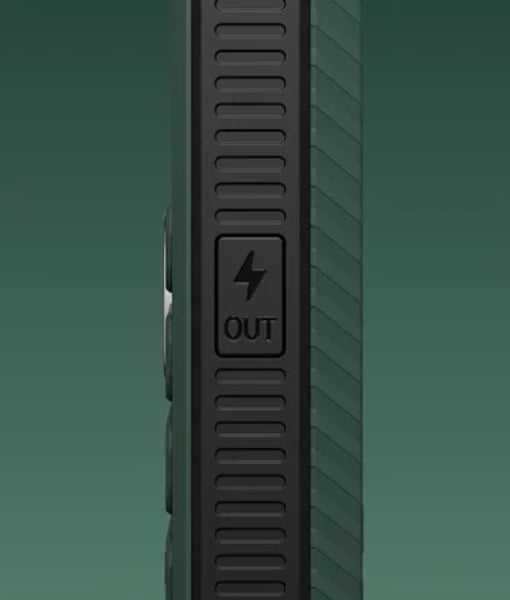
There’s a neat trick tied to that big battery, too. The phone has a dedicated “Out” button on the side. Press it, and the Nokia 300 Charge switches on 10W reverse charging, so you can top up other compatible devices. 

It’s a similar idea to what HMD tried with the Nokia 123 Shield, another rugged, no-frills phone HMD launched with a focus on battery life over features.

🔌 You’ll NeedWith a 3,700mAh cell and USB-C charging, a proper wall charger gets you back to full much faster than a basic brick. Check Nokia USB-C fast charger price on Amazon →

Nokia 300 Charge Specifications

On the spec sheet, the Nokia 300 Charge measures 136.6 x 55 x 14.94mm and weighs 138g. It has a 2.4-inch LCD screen running at 320 x 240 resolution, a Unisoc SC6531E chip, and the S30+ operating system, the same chip and software combo found on the Nokia 123 Shield. Meanwhile, RAM and storage sit at just 4MB each. 

Nokia 300 Charge Launch Specs Price

As for connectivity, the phone only supports 900MHz and 1800MHz bands on 2G networks. That puts it in the same bracket as older Nokia feature phones, though HMD has been steadily adding USB-C ports across the lineup, following the shift it made with the Nokia 6310, 5310, and 230 a couple of years back.

HMD is selling the Nokia 300 Charge in three colors: sandstone, green, and black. Pricing is set at 2,190 Philippine pesos, which works out to roughly $38. 

There’s no word yet on when the phone will reach markets beyond the Philippines, but the company already lists the device on its global site, so the wait shouldn’t be long. 

Don’t miss a thing! Join our Telegram community for instant updates and grab our free daily newsletter for the best tech stories!

For more daily updates, please visit our News Section.

Poco F9 series finally has a global launch date

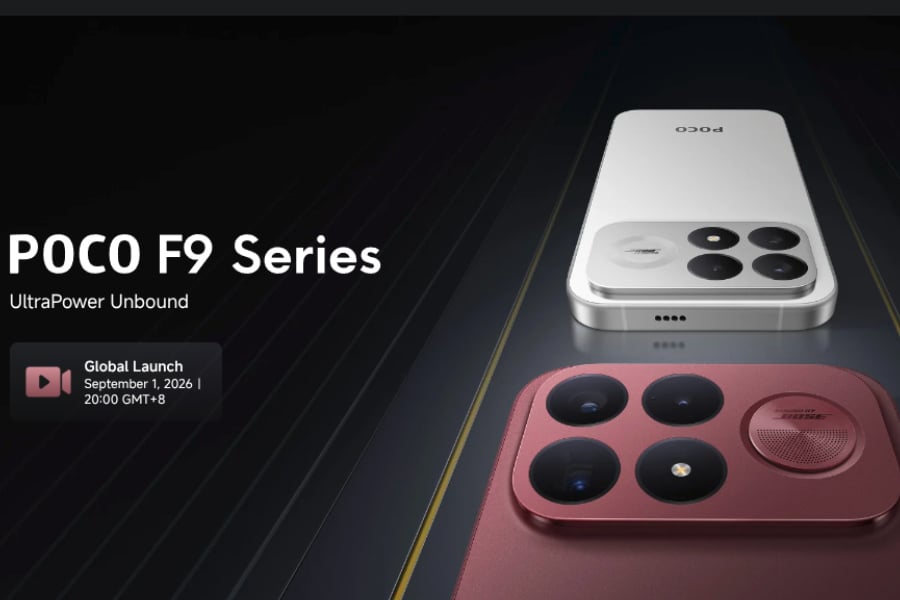
Poco has officially shared the global launch date for its new Poco F9 series. The phone that has been leaking for months will now launch globally on September 1.

The lineup reportedly includes two models: the Poco F9 Pro and the Poco F9 Ultra. Like its predecessor, the company is not releasing a standard model this time either.

Poco F9 series global launch date

The two phones are rebranded versions of the Redmi K100 Pro and Redmi K100 Pro Max, which already launched in China. Both are expected to use the Snapdragon 8 Elite Gen 5, including the gaming-focused V-series variant that debuted on the Chinese models.  

Luckily for us, a previous report has already revealed the specs of both phones along with the price.

Poco F9 Pro / F9 Ultra Specifications

The Poco F9 Pro is expected to feature a 6.59-inch QHD+ Plastic OLED display with a 185Hz refresh rate, while the F9 Ultra could get a larger 6.85-inch 2608 × 1200 panel. Both displays are reportedly developed with TCL CSOT, with Xiaomi contributing to the design and materials.

Both phones are tipped to use the Snapdragon 8 Elite Gen 5 chipset, with up to 16GB RAM and 512GB storage. The F9 Pro could pack a 6,330mAh battery, while the F9 Ultra may get an 8,050mAh cell. Both are expected to support 100W wired charging and USB PD.

Poco F9 series
Poco F9 series

For cameras, the F9 Pro may feature a 50MP main camera with OIS, an 8MP ultrawide and a 50MP 3x telephoto with OIS. The F9 Ultra could add a 50MP ultrawide and 50MP 5x telephoto. Both phones are expected to have 32MP selfie cameras and 8K video recording.

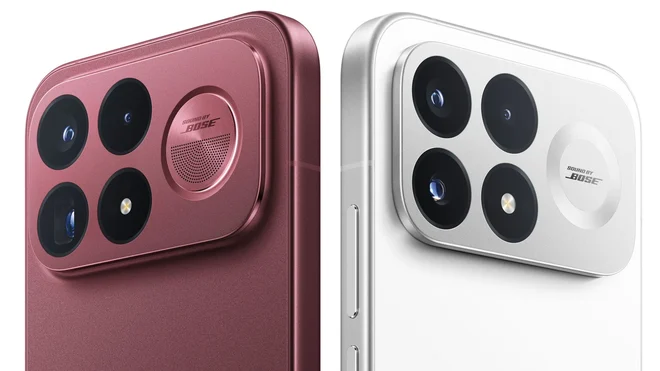
Other rumored features include Bose-tuned speakers, IP69 certification, and metal frames. The F9 Ultra could also have an LED notification ring around the camera module. 

The F9 Pro could start at €799 (~$920) for 12GB+256GB, while the F9 Ultra may start at €999 (~$1,150) for 16GB+512GB.

For more daily updates, please visit our News Section.

Stay ahead in tech! Join our Telegram community and sign up for our daily newsletter of top stories!

Xiaomi announces AI Cube mini-PC with XRING O3, O100, and D100 to run LLMs locally

If you’ve been following the AI space closely, you likely know about Xiaomi’s growing suite of text, code, and voice LLMs. Now, the company has announced an in-house device to run these models, the Xiaomi AI Cube. 

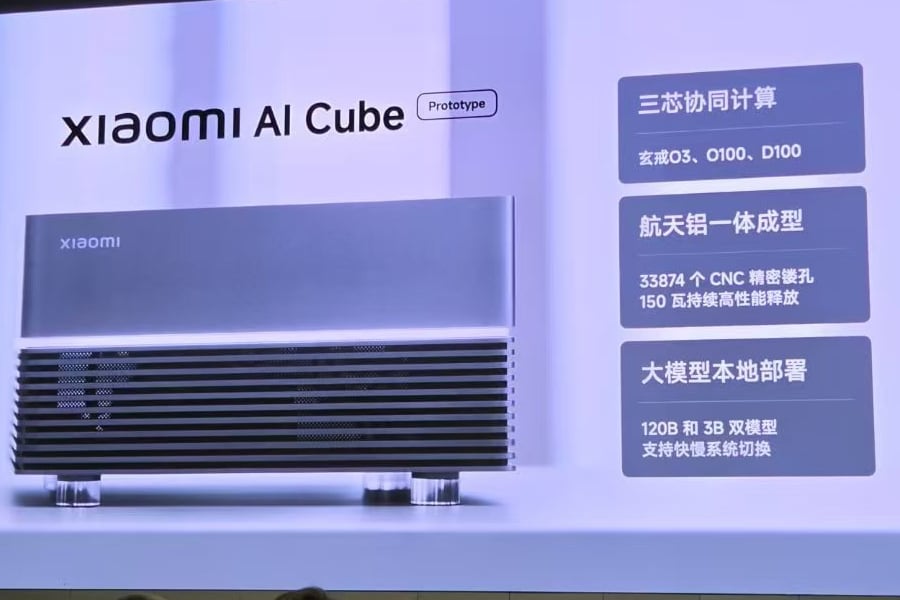
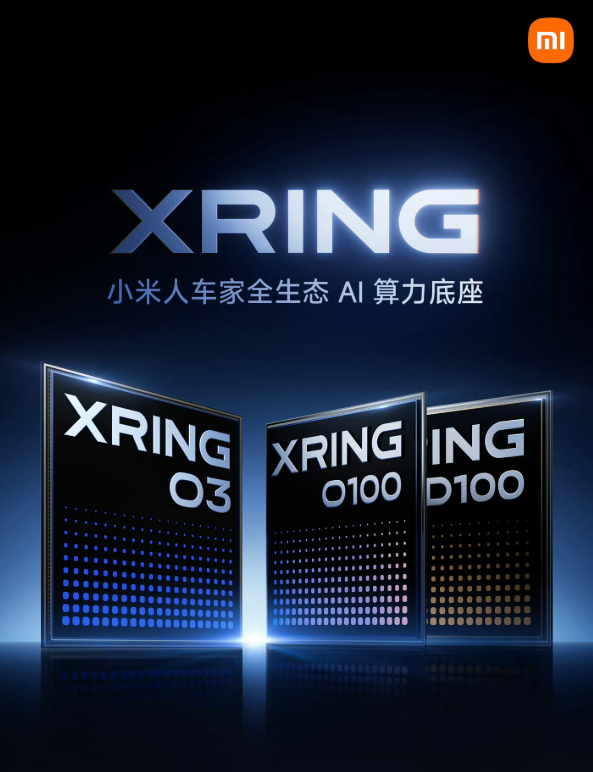
It’s a prototype mini-PC built on three proprietary chips. Unveiled at today’s XRING Chip Technology Communication Conference, the device is powered by Xiaomi’s newly introduced XRING O3, XRING O100, and XRING D100 chips

Xiaomi AI Cube Announcement

Xiaomi AI Cube is powered by XRING SoCs

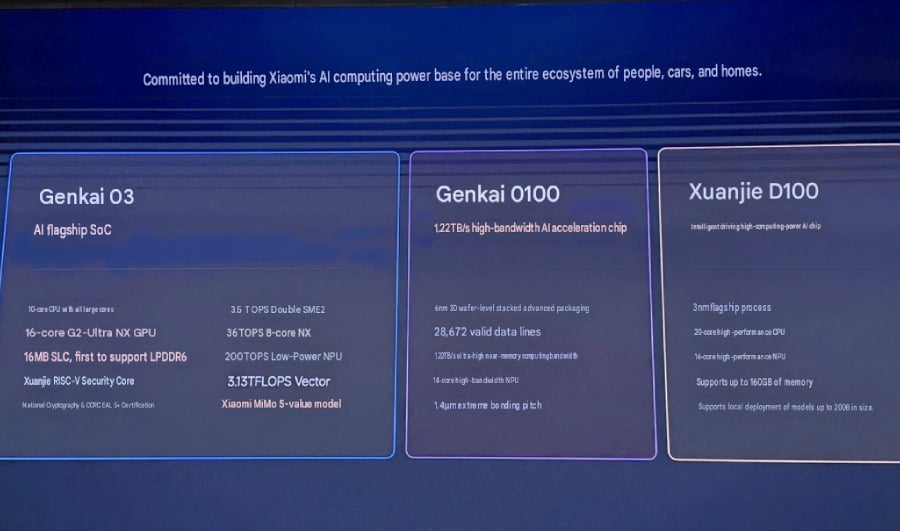
The XRING O3 is the main AI SoC inside the Cube. It has a 10-core all-big-core CPU layout, a 16-core G2-Ultra NX GPU, and a 200 TOPS low-power NPU. 

The XRING O100 is a high-bandwidth AI acceleration chip, built on 6nm 3D wafer-level stacking. It has 28,672 effective data lines and supports near-memory computing bandwidth of up to 1.22TB/s. 

Xiaomi AI Cube chips
Image: Machine Translated (XRING replaced by Genkai / Xuanjie in translation)

The XRING D100 is a 3nm chip meant for intelligent driving workloads, with a 20-core high-performance CPU, a 16-core high-performance NPU, and support for up to 160GB of memory.

On the outside, the AI Cube uses an aerospace-grade aluminum unibody casing with 33,874 CNC precision cutouts, and it can sustain up to 150W of continuous power.

The point of the hardware is local deployment of large models, ranging from 3B up to 120B parameters, with a toggle to switch between fast and slow system modes depending on the task. That puts it in similar territory to the Tiiny AI Pocket Lab, which also runs 120B-parameter models locally in a small form factor, though Xiaomi is using its own chips instead of third-party silicon.

This is still a prototype. Xiaomi hasn’t given a release date or price, so it’s unclear whether the AI Cube becomes an actual product or stays a technical demonstration.

For more daily updates, please visit our News Section.

Stay ahead in tech! Join our Telegram community and sign up for our daily newsletter of top stories!

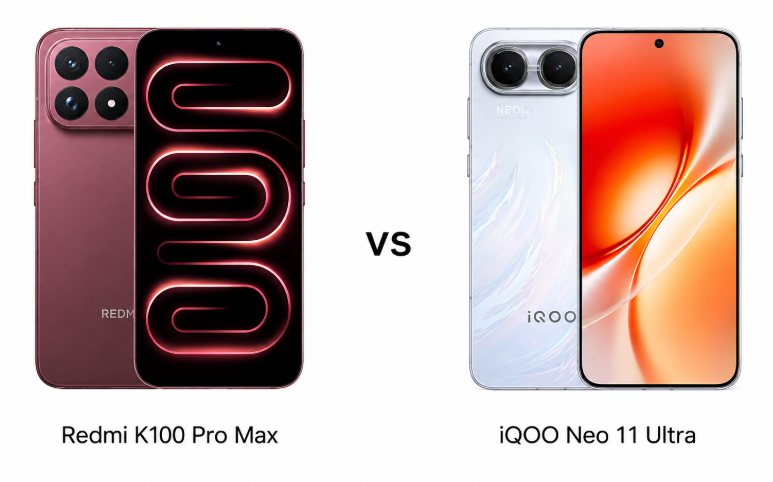
Redmi K100 Pro Max vs iQOO Neo 11 Ultra: Which Flagship Is Better?

Redmi K100 Pro Max and iQOO Neo 11 Ultra take different approaches to the flagship smartphone formula. Redmi focuses on an all-round premium experience with a 200MP camera, 5x periscope zoom and wireless charging, while iQOO targets performance enthusiasts with a powerful Dimensity chipset and a lower price. Here’s how the two compare across design, performance, cameras, battery and value.

Major Features:

CategoryRedmi K100 Pro MaxiQOO Neo 11 UltraWinner
BuildGlass front, aluminum frame, IP68/IP69Glass front, aluminum frame, IP68/IP69Tie — Both offer premium, durable builds
Display6.9-inch AMOLED, 185Hz, Dolby Vision, HDR10+, 4500 nits peak6.83-inch AMOLED, 144Hz, 1440p, 4500 nits peakRedmi — Higher refresh rate and broader HDR support
PerformanceSnapdragon 8 Elite Gen 5, up to 16GB RAM, UFS 4.1Dimensity 9500M, up to 16GB RAM, UFS 4.1Redmi — Strong flagship performance and optimisation
StorageUp to 512GBUp to 512GBTie — Same maximum storage
Main Camera200MP wide with OIS50MP wide with OISRedmi — Higher-resolution primary camera
Telephoto50MP periscope, 5x optical zoom, OISNo dedicated telephotoRedmi — Much more versatile zoom capability
Ultrawide50MP, 102°8MPRedmi — Significantly stronger ultrawide
Selfie Camera32MP, 4K video16MP, 1080p videoRedmi — Higher resolution and 4K recording
Battery9070mAh9100mAhiQOO — Slightly larger capacity
Wired Charging100W100WTie — Same charging speed
Wireless Charging50WNot specifiedRedmi — Adds fast wireless charging
AudioBose-tuned 2.1 stereo, Dolby AtmosStereo speakersRedmi — More advanced audio system
ConnectivityWi-Fi 7, Bluetooth 6.0, NFC, IRWi-Fi 7, Bluetooth 5.4, NFC, IRRedmi — Newer Bluetooth standard
PricePriced around $700 / ₹63,000Priced around $500 / ₹50,000iQOO — Much lower price
Overall ValueMore features at a premiumFlagship hardware at a lower priceiQOO — Better value for performance-focused buyers
Disclaimer: Specs are based on available data. Actual performance may vary. Verify details from official sources before buying.

1. Design and Display

Build and Feel

The Redmi K100 Pro Max and iQOO Neo 11 Ultra both combine glass fronts with aluminum frames and offer IP68/IP69 protection, giving them a reassuring premium and durable character. Redmi adds Bose-tuned stereo audio, Dolby Atmos and a more elaborate 2.1 speaker system, making its multimedia experience particularly appealing. Both also feature ultrasonic in-display fingerprint scanners.

Display Quality

Redmi uses an AMOLED panel with 68 billion colors, a 185Hz refresh rate, Dolby Vision, HDR Vivid, HDR10+ and BT.2020 support. iQOO counters with a sharper 1440p AMOLED display, 1 billion colors, 2160Hz PWM dimming and similarly impressive peak brightness. The Redmi display feels more feature-rich for gaming and HDR content, while iQOO’s higher resolution makes text and fine details look cleaner.

Verdict

Redmi wins for its faster refresh rate, broader HDR features and superior speaker setup. iQOO offers higher resolution, but Redmi delivers the more complete entertainment-focused display package.

2. Specifications Including Battery

Performance

The Redmi K100 Pro Max is powered by the Snapdragon 8 Elite Gen 5, paired with UFS 4.1 storage and up to 16GB RAM. iQOO uses the Dimensity 9500M with the same UFS 4.1 storage and RAM ceiling. Both are flagship-grade platforms, but Redmi’s Snapdragon chip gives it a particularly strong appeal for demanding gaming, sustained performance and broad software optimisation.

Battery and Charging

Battery capacity is almost identical, with Redmi offering 9070mAh and iQOO 9100mAh. Both support 100W wired charging, but Redmi goes further with 50W wireless charging, 27W reverse wired charging and 22.5W reverse wireless charging. That makes Redmi considerably more flexible for users who rely on multiple charging methods and accessories.

Verdict

Redmi takes this round with a stronger overall performance proposition and significantly more versatile charging. iQOO has excellent endurance, but Redmi offers a more complete flagship hardware package.

3. Camera

Main and Secondary Lenses

Redmi has a major advantage in camera hardware, featuring a 200MP primary sensor with OIS alongside a 50MP periscope telephoto offering 5x optical zoom and OIS. Its 50MP ultrawide also provides substantially more flexibility than iQOO’s 8MP ultrawide. iQOO instead uses a 50MP main camera with OIS and a basic 8MP ultrawide, with no dedicated telephoto lens.

Selfie Camera

The difference continues on the front. Redmi’s 32MP selfie camera supports 4K video recording, while iQOO’s 16MP front camera is limited to 1080p at 30fps. Redmi is therefore better equipped for detailed selfies, video calls and creator-focused front-camera recording. iQOO’s simpler setup should still handle everyday photography, but it is clearly less ambitious.

Verdict

Redmi is the clear winner thanks to its 200MP main camera, dedicated 5x periscope telephoto, stronger ultrawide and higher-resolution 4K selfie camera. iQOO’s camera system feels notably less versatile.

4. Pricing

The Redmi K100 Pro Max is priced around $700 or ₹63,000, while the iQOO Neo 11 Ultra is priced around $500 or ₹50,000. That creates a sizeable price gap, with iQOO positioned as the more aggressive value-focused flagship. Redmi’s premium is easier to justify for buyers who specifically want advanced cameras, wireless charging and its broader multimedia package.

Is the Price Justified?

At around ₹50,000, the iQOO Neo 11 Ultra offers excellent value, particularly for users prioritising flagship-level performance, a high-resolution display and a large battery. Redmi demands considerably more, but the additional cost brings a much more capable camera system, wireless charging, better audio hardware and broader connectivity features.

Verdict

iQOO wins on pure value because its lower price delivers flagship performance and excellent battery life. Redmi is worth the premium for buyers who want stronger cameras and a more complete feature set.

Disclaimer:
Prices are approximate and may vary based on country, region, launch timing, and applicable taxes. Always check whether the listed price is for a China unit or a global/international variant when purchasing.

5. Conclusion

The Redmi K100 Pro Max stands out with its 200MP camera, 5x periscope telephoto, 50W wireless charging, Bose-tuned 2.1 stereo audio and exceptionally fast 185Hz AMOLED display. iQOO’s strengths are different: its sharper 1440p panel, 9100mAh battery and flagship Dimensity platform make it particularly attractive to performance-focused users. Both also provide IP68/IP69 protection and ultrasonic fingerprint scanners.

Verdict

Redmi is the more complete flagship, offering substantially stronger cameras, charging versatility and multimedia features. iQOO is the smarter value choice, delivering powerful hardware at a much lower price without major compromises in core performance.


FAQs

1. Which phone is better for gaming?
The Redmi K100 Pro Max has a slight edge with its Snapdragon 8 Elite Gen 5 chipset and 185Hz display.

2. Which has better camera zoom?
The Redmi K100 Pro Max is better, offering a dedicated 50MP periscope telephoto camera with 5x optical zoom.

3. Which phone has better battery life?
Both offer excellent endurance with around 9,000mAh batteries, making either suitable for heavy daily use.

4. Which offers better value for money?
The iQOO Neo 11 Ultra offers stronger value because it delivers flagship performance at a significantly lower price.

5. Which phone should you buy?
Choose Redmi for cameras and features; choose iQOO if lower cost and flagship performance matter most.

Disclaimer: Prices, specifications, and availability may vary by region and retailer. Recommendations in this article are based on editorial opinion, feature-based value, and market positioning at the time of writing. Readers are advised to do their own research before making a purchase.

Read More:

Xring O3 launches with 5.22M AnTuTu score and LPDDR6, Xiaomi 18 Fold preorders go live

Xiaomi has unveiled three new in-house chipsets for different parts of its technology ecosystem. The lineup includes the flagship Xring O3, AI-focused Xring O100, and intelligent-driving Xring D100. The Xring O3 stands out with a claimed AnTuTu score of 5.22 million, making it the first mobile SoC to cross the 5-million mark.

Xring O3 brings a major performance boost

Xiaomi 18 Fold confirmed
Xiaomi 18 Fold confirmed to launch in September

Built on a 3nm process, the Xring O3 features a 10-core CPU that delivers up to a 60% performance improvement. It also introduces the 16-core G2-Ultra NX GPU, with graphics performance claimed to be up to 85% higher and power efficiency improved by 64%. Xiaomi says the chipset scored 5.22 million points on AnTuTu, making it the first mobile SoC to cross the 5-million mark.

The Xring O3 is also Xiaomi’s first mobile chip with LPDDR6 memory support, offering bandwidth of up to 113.8GB/s. For AI workloads, it delivers 200 TOPS of tensor performance and 3.13 TFLOPS of vector performance, while NPU performance has increased by 45%. AI acceleration is distributed across the CPU, GPU, ISP, DPU, and ADSP, with static latency rated at 82ns. Xiaomi says development took 459 days.

XIaomi 18 Fold preorders
XIaomi 18 Fold preorders go live in China

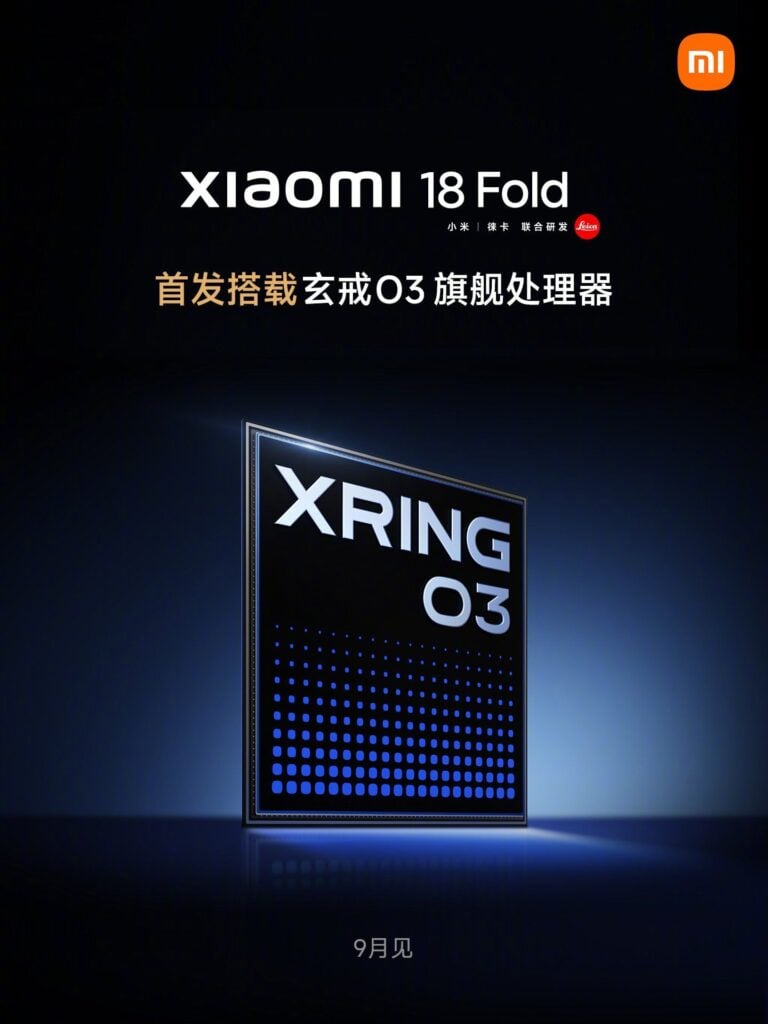
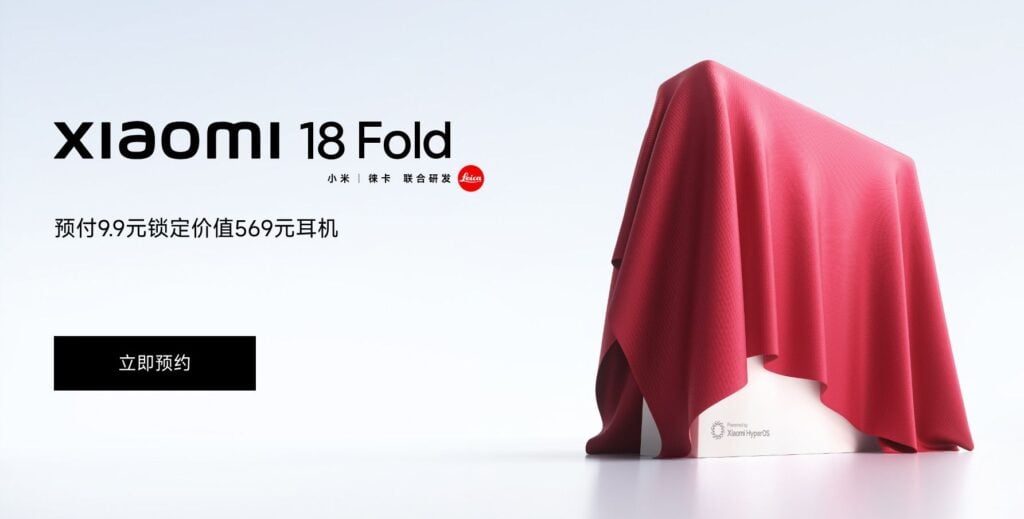
Xiaomi has also confirmed that the Xring O3 will power the Xiaomi 18 Fold and Pad 9 Pro Max, both of which are scheduled to launch in September in China. Readers can visit this post to know more about these devices. Ahead of the launch, the company has already started receiving pre-orders of the 18 Fold, which will sport a wide foldable design.

Xring O100 and D100 target AI and cars

Xiaomi Xring series
Xiaomi Xring series

The Xring O100 is built on a 6nm process and uses a near-memory AI architecture designed to reduce memory bottlenecks. It combines vertical chip and memory stacking with millions of high-speed vertical channels to provide bandwidth of up to 1.22Tbps. Xiaomi expects the chipset to be used for on-device AI across phones, cars, and robots.

The Xring D100 focuses on intelligent driving. It is Xiaomi’s first domestic 3nm intelligent-driving AI chip, featuring a 20-core CPU and 16-core NPU. It supports up to 160GB of unified memory and can run AI models with up to 200 billion parameters locally. Development is complete, with commercial availability planned for 2027.

What do you think about Xiaomi’s new chip lineup, especially the Xring O3’s claimed performance?

For more daily updates, please visit our News Section.

Stay ahead in tech! Join our Telegram community and sign up for our daily newsletter of top stories!

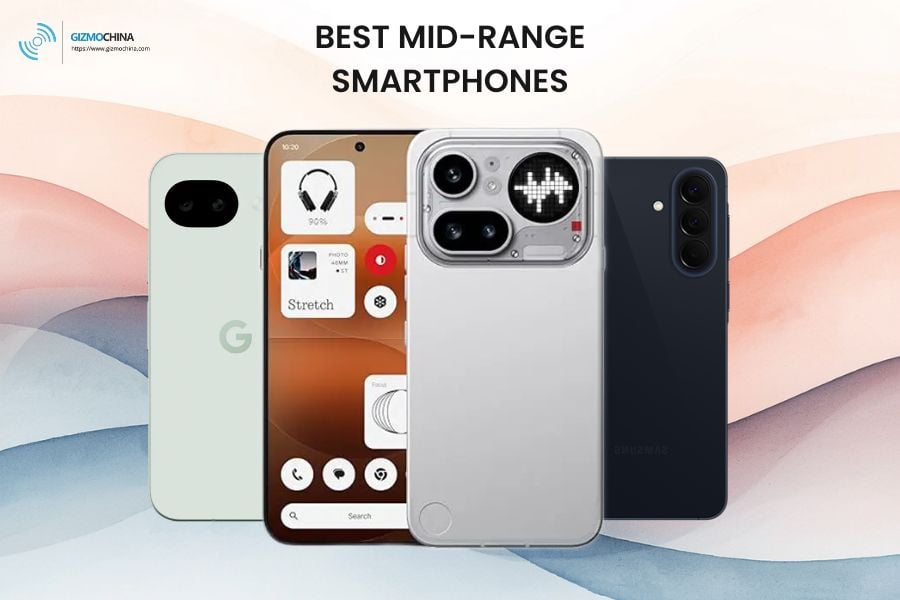
5 Best Mid-Range Phones of 2026

This is a script we write every year — listing the best mid-range smartphones you can buy. And there’s a reason we come back to it every year. Mid-range has always been the segment where brands trickle down flagship features, performance, and design choices into something that covers what most people actually need day to day, without a hefty price tag. 

This year, though, the story’s a little different. Our usual pattern is to find out the phones that are aggressively priced and offer the best bang for the buck. But 2026 threw a wrench into that formula. 

Best Mid-Range Smartphones

The global memory chip shortage, driven largely by AI data centers hoovering up DRAM and NAND supply, has pushed component costs up across the board, and mid-range devices have taken a real hit. Samsung reportedly pushed for as much as a 100% price hike on LPDDR5X memory, and brands everywhere from India to Europe have quietly raised prices on phones that used to sit comfortably under $500. 

So this year, mid-range stretches a bit further up the price ladder than it used to, and some of the phones below cost more than you might expect for the category. What hasn’t changed, fortunately, is the value proposition. You can still expect bright OLED screens, big batteries, and reliable cameras. 

Here are the five best mid-range phones you can get in 2026.  

1. Google Pixel 10a

Google-Pixel-10a-launch-specs-price

You know the Pixel formula by now, and Google didn’t mess with it much this year. The Pixel 10a starts at $499 and offers a 6.3-inch OLED display running at 120Hz with a Tensor G4 chip, 8GB of RAM, and a 5,100mAh battery. 

The camera setup keeps the same 48MP main sensor and 13MP ultrawide from last year’s model, and you also get a loyal seven years of OS and security update promise. The brand also launched the Pixel 10a with recycled cobalt, copper, gold, and tungsten making up more than a third of the phone’s weight.

Nothing here will wow you in a spec sheet comparison, and the design is basically a repeat of the 9a. But if you want a phone you can buy once and stop thinking about for years, this is it.

2. Nothing Phone (4a) Pro

Nothing Phone (4a) Pro

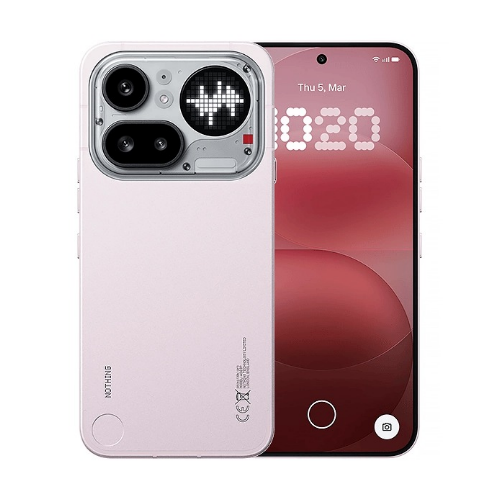
Nothing has never been shy about wanting its phones to look different, and the Nothing Phone (4a) Pro is no exception. It swaps the brand’s usual plastic build for an aluminum unibody frame, adds a 6.83-inch AMOLED display that hits 144Hz, and carries over the circular Glyph Matrix from the pricier Phone (3), scaled down to 137 individually addressable LEDs on the back. 

Under the hood, it is powered by a Snapdragon 7 Gen 4 chip with 8GB of RAM and 128GB of storage. Nothing is asking $499 for all this. 

The camera experience isn’t as consistently impressive as what you get from Google’s Pixel lineup, and battery life isn’t its strongest point either. Still, if you care about having a phone that feels a little less generic, the Nothing Phone (4a) Pro is an easy one to recommend.

3. Samsung Galaxy A57 5G

Samsung-Galaxy-A57-5G

Samsung’s Galaxy A series has quietly become one of the strongest choices in the mid-range segment, and the Galaxy A57 continues that trend.

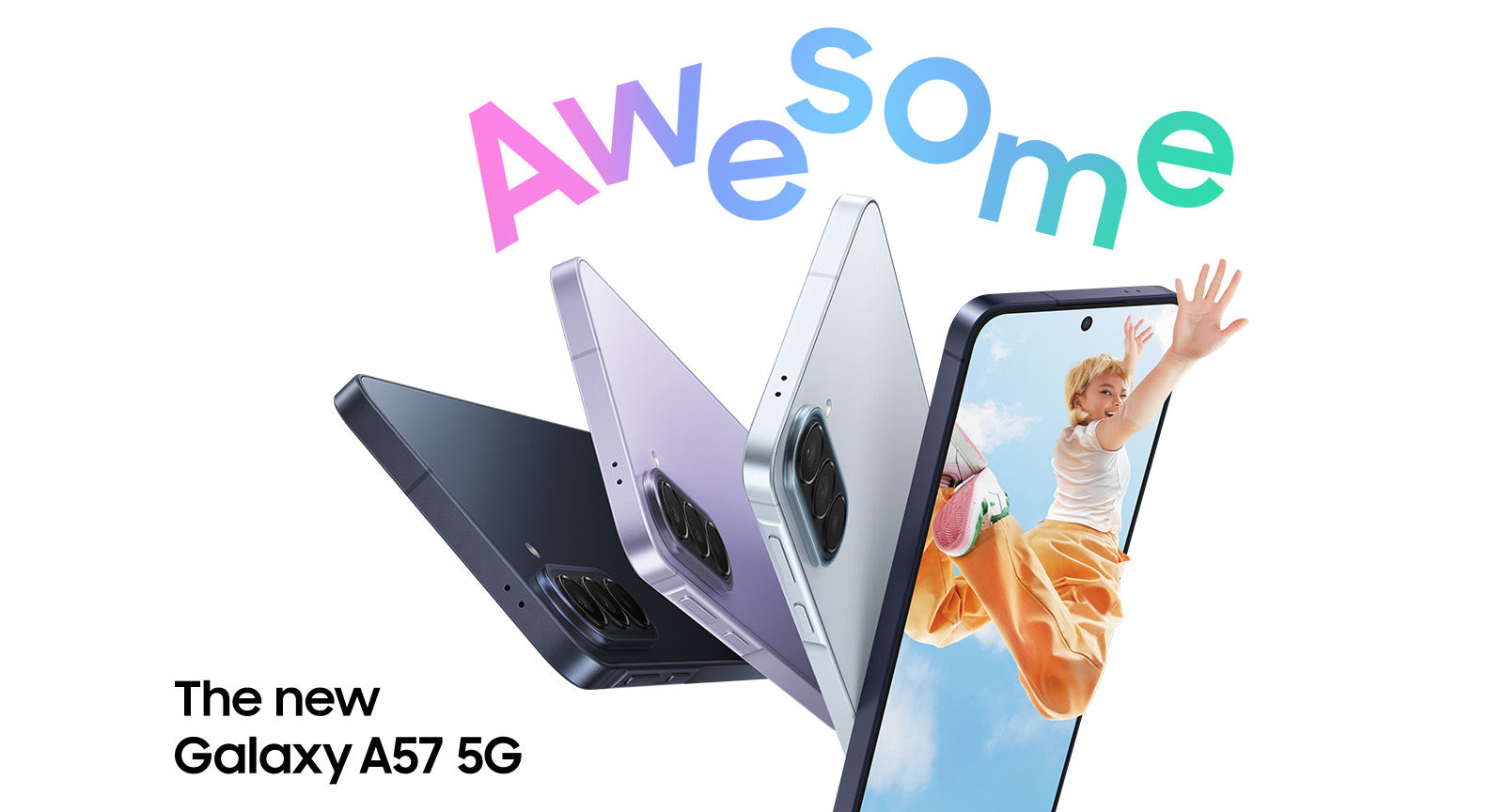
The A57 stands out because it feels more expensive than it actually is. Samsung has given it a slim design and a premium-looking glass-and-metal build, while also improving the hardware over the previous-generation A56.

It has a 6.7-inch Super AMOLED Plus display at 120Hz, a 5,000mAh battery with 45W charging, IP68 water and dust resistance, and a 50MP main camera backed by a 12MP ultrawide and 5MP macro lens. 

It is a particularly good choice if you already use Samsung devices. One UI makes you right at home, Samsung’s ecosystem is easy to work with, and the company is offering six years of OS upgrades and security patches. A recent teardown even scored the Galaxy A57 highly for repairability.

The downside is that it isn’t the most exciting phone for gaming. If raw performance is your priority, there are better options in this list.

4. Motorola Edge 70 Fusion

Motorola Edge 70 Fusion

Motorola’s Edge Fusion lineup has always been about finding the sweet spot between price and features, and the Edge 70 Fusion is just that. It gives you enough hardware that you won’t feel like you’re settling.

The phone packs a 6.7-inch pOLED display with a 144Hz refresh rate, 5200 nits peak brightness, a Snapdragon 7s Gen 4 chip, and a large 5,200mAh battery with 68W fast charging. The camera setup is led by a 50MP main sensor with optical image stabilization, joined by a 13MP ultrawide camera.

Motorola also keeps the Edge 70 Fusion relatively slim and light, and it also has an IP68 rating for dust and water resistance. Its main weakness is software support. 

Motorola has improved in this area, but it still doesn’t match Google’s seven-year commitment or Samsung’s six years of updates. Still, it’s an option you can consider if you want a good screen and battery life for entertainment. 

5. OnePlus Nord 6

OnePlus Nord 6 5G
OnePlus Nord 6

If the Pixel 10a is the sensible choice and the Nothing Phone (4a) Pro is the one you buy with your heart, the OnePlus Nord 6 is the phone for people who just want things to be fast.

It is powered by Qualcomm’s Snapdragon 8s Gen 4 chipset, paired with up to 12GB of RAM, giving it considerably more performance headroom than most phones in this price range. 

The phone also has a 6.78-inch AMOLED display with a 165Hz refresh rate, while its 9000mAh battery gives it plenty of endurance. OnePlus supports that battery with 80W fast charging, so even when you do run it down, you don’t have to leave it plugged in for long.

The camera system isn’t the main reason to buy the Nord 6, and its design isn’t as distinctive as Nothing’s either. But that’s fine. OnePlus wants you to spend the money on performance and battery with the Nord 6.

The biggest catch with buying a OnePlus phone in 2026 comes down to availability. Since OnePlus has pulled out of almost every international market except India, the Nord 6 is really only a practical choice if you live there.

For more daily updates, please visit our News Section.

Stay ahead in tech! Join our Telegram community and sign up for our daily newsletter of top stories!

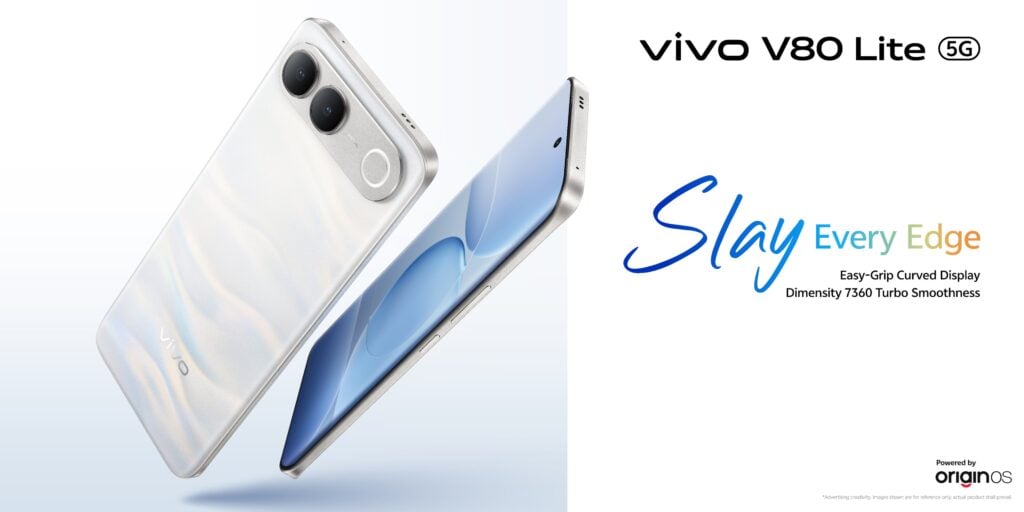
Vivo V80 Lite 5G launches with 120Hz curved display, 7,050mAh battery, 50MP dual cameras

The Vivo V80 Lite 5G has gone official in Pakistan. It combines a curved display, large battery with a mid-range chipset, a 50-megapixel dual camera setup, and an attractive appeal. Continue reading ahead to learn more in detail about the V80 Lite.

Vivo V80 Lite 5G specifications and features

Vivo V80 LIte 5G
Vivo V80 LIte 5G

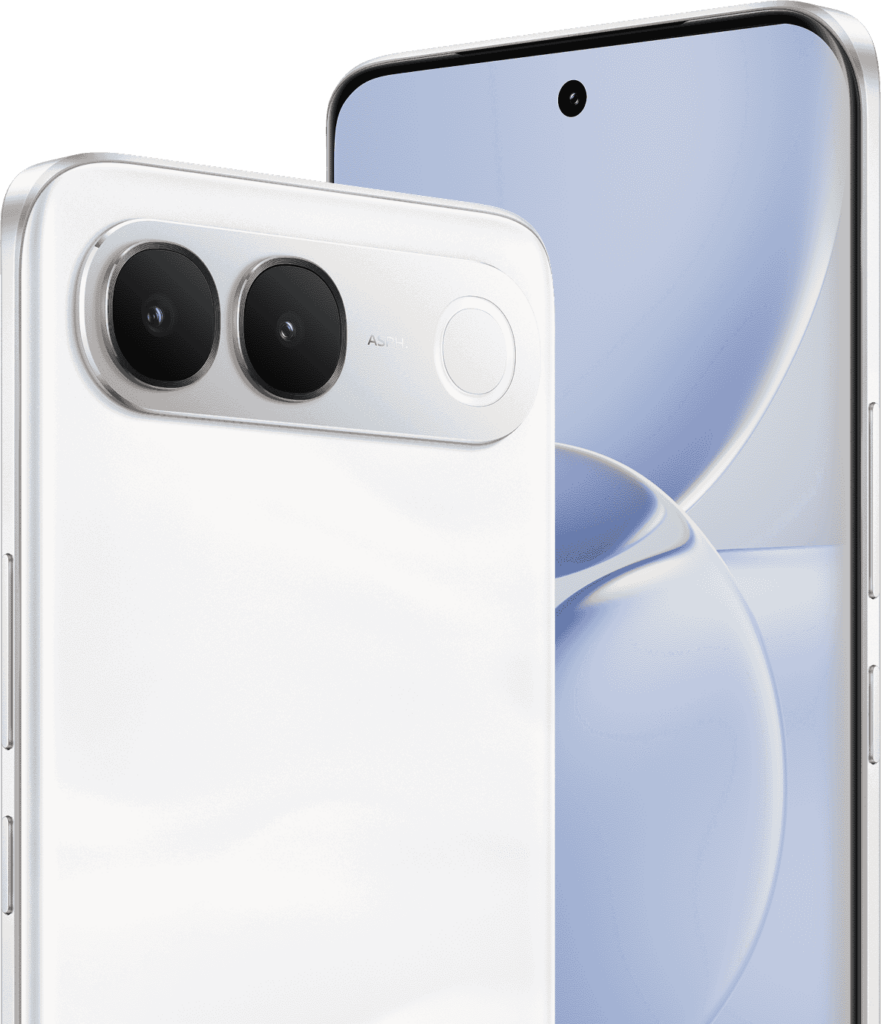
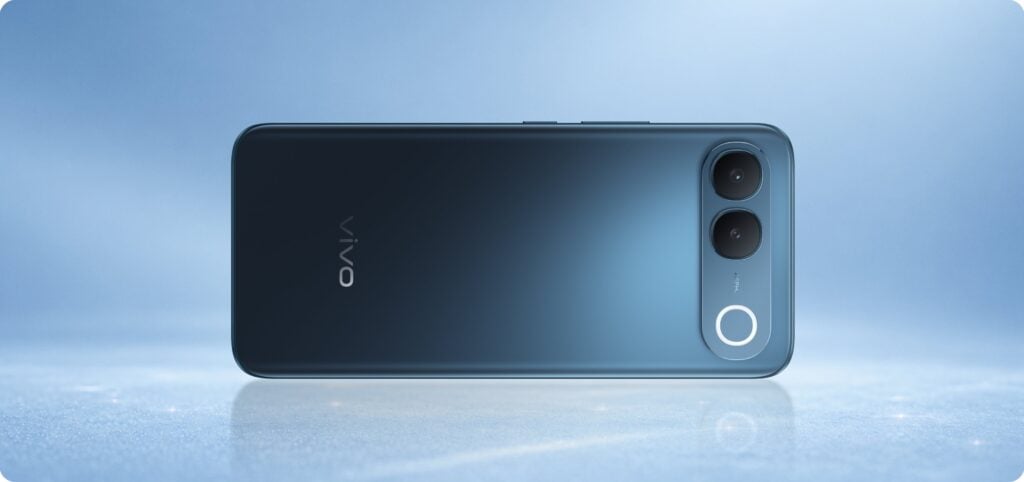
The Vivo V80 Lite 5G has an attractive design as it flaunts a curved AMOLED display on the front and a horizontal rear camera bar. It carries a 50-megapixel Sony IMX852 main camera, 2-megapixel bokeh camera, and a ring LED flash. On the front, it has a 32-megapixel front camera.

Vivo V80 Lite 5G
Vivo V80 Lite 5G

The phone has a 6.83-inch 1.5K AMOLED display with a 120Hz refresh rate, 449ppi density and up to 3,000 nits of peak brightness. It runs OriginOS 6 based on Android 16 and includes symmetrical stereo speakers and an in-display fingerprint sensor.

Power comes from the 4nm MediaTek Dimensity 7360-Turbo. The phone gets 8GB of LPDDR4X RAM with 128GB or 256GB of UFS 3.1 storage, plus up to 8GB of extended RAM.

Vivo V80 Lite 5G
Vivo V80 Lite 5G

A 7,050mAh battery powers the phone with 44W charging. The handset also packs other features, such as bypass charging, Bluetooth 5.4, dual-band Wi-Fi, and USB 2.0 Type-C. Durability features include IP68 and IP69 ratings, five MIL-STD-810H certifications and drop testing across seven surfaces.

Vivo V80 Lite 5G price and availability

In Pakistan, the 8GB+128GB version costs PKR124,999 (~$450), while the 8GB+256GB model is priced at PKR145,999 (~$525). Buyers can choose from color variants, such as Sapphire Blue and Silk White.

VIvo V80 Lite 5G launch date

Readers should note that the Vivo V80 Lite 5G is essentially a rebranded Vivo S2 sold in India. Vivo also has a separate V80 Lite 5G with a 10,000mAh battery for Southeast Asian markets such as Malaysia, while Bhutan is expected to get the S2-based V80 Lite soon.

For more daily updates, please visit our News Section.

Stay ahead in tech! Join our Telegram community and sign up for our daily newsletter of top stories!

Xiaomi’s new fish tank with LCD display now up for crowdfunding

The Mijia Smart Fish Tank 2 Pro from Xiaomi is now up for crowdfunding, following the pre-order rollout Xiaomi kicked off last week. The campaign runs till August 31 on Xiaomi Youpin, with a crowdfunding price of 599 yuan (~ $90).

The tank’s water circulation system is the main upgrade here. According to Xiaomi, water passes through several layers of filter media in a set order, so impurities get caught step by step instead of slipping through from backflow or dead spots in the flow. 

The bio-filter cartridge uses a U-shaped water path to make the water travel farther through the filter. This gives beneficial bacteria more time to interact with the water, improving purification. It also has a separate layered filter box that first catches fish waste and leftover food, while several layers of filter cotton trap smaller particles and help drain the collected debris.

Above that sits a multi-functional water inlet chamber, which uses a multi-stage flow guide to push water evenly through the filters. The chamber also has a 5W waterproof expansion port, so you can pull the chamber out and slot in accessories like a UV lamp or heating rod without rearranging anything else.

The pump runs on an all-copper four-pole brushless motor with low-magnetic-loss circular silicon steel plates, giving it more power and a stronger flow rate. Xiaomi widened the inlet grille, impeller channel, and pump chamber clearance to keep debris from clogging things up, and paired a low-resistance ceramic shaft with sound-insulating cotton and a fully sealed motor to cut down on noise.

A built-in display and smarter controls

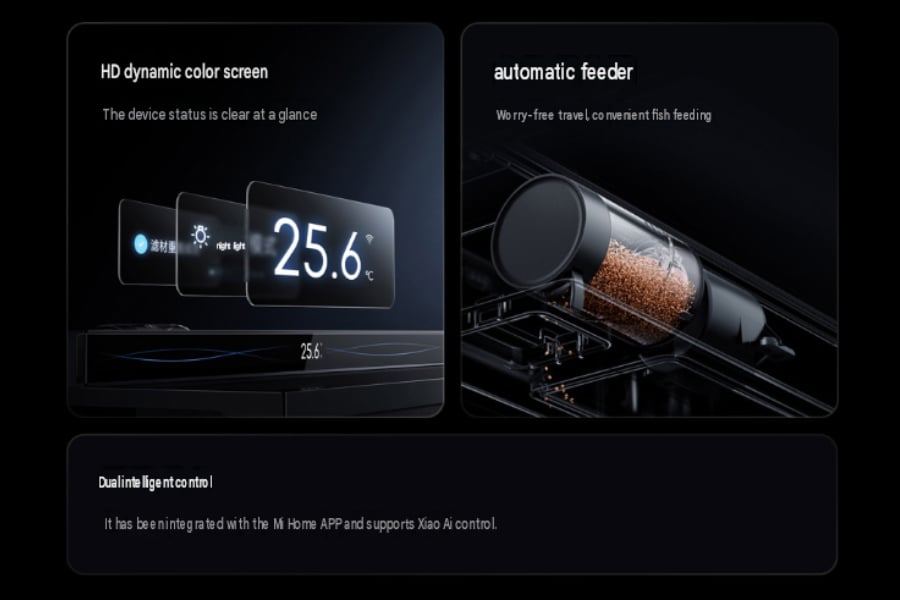
On the front, you get a 1.47-inch color LCD that shows water temperature, equipment status, and any alerts, so you don’t need to open the app just to check on things. The tank also ships with an automatic feeder that works in manual or smart mode. And if anything goes wrong, the Xiao Home app sends a notification right away.

Mijia Smart Fish Tank 2 Pro Display

Through the app, you can feed your fish remotely, adjust the water pump, monitor temperature, and set the tank to shut off automatically when the lid opens. Xiao Ai voice control also lets you turn the lights on and off with a single command. 

Based on how long the tank has been running, plus the fish species and headcount you enter, the system automatically tunes lighting, filtration, and overall operation to match. It’s a step up from the original Mijia Smart Fish Tank, which launched with a simpler filtration setup and no LCD readout.

For more daily updates, please visit our News Section.

Stay ahead in tech! Join our Telegram community and sign up for our daily newsletter of top stories!

(Source)

Official: Vivo X500 series confirmed for September with cinema-grade video capabilities

Vivo has officially confirmed that the X500 series will arrive in September in China, with three models in the lineup: the X500, X500 Pro, and X500 Pro Max. This also confirms that Vivo is skipping the X400 branding and moving directly from the X300 generation to X500. The number four is commonly avoided in parts of East Asia, including China, because its pronunciation is associated with death, a practice known as tetraphobia.

The company is positioning the upcoming generation around major camera and video upgrades, with a particular focus on bringing cinema-grade video capabilities to its flagship lineup.

Vivo X500 series focuses on cinema-grade video

Vivo X500 series first details confirmed
Vivo X500 series’ first details confirmed

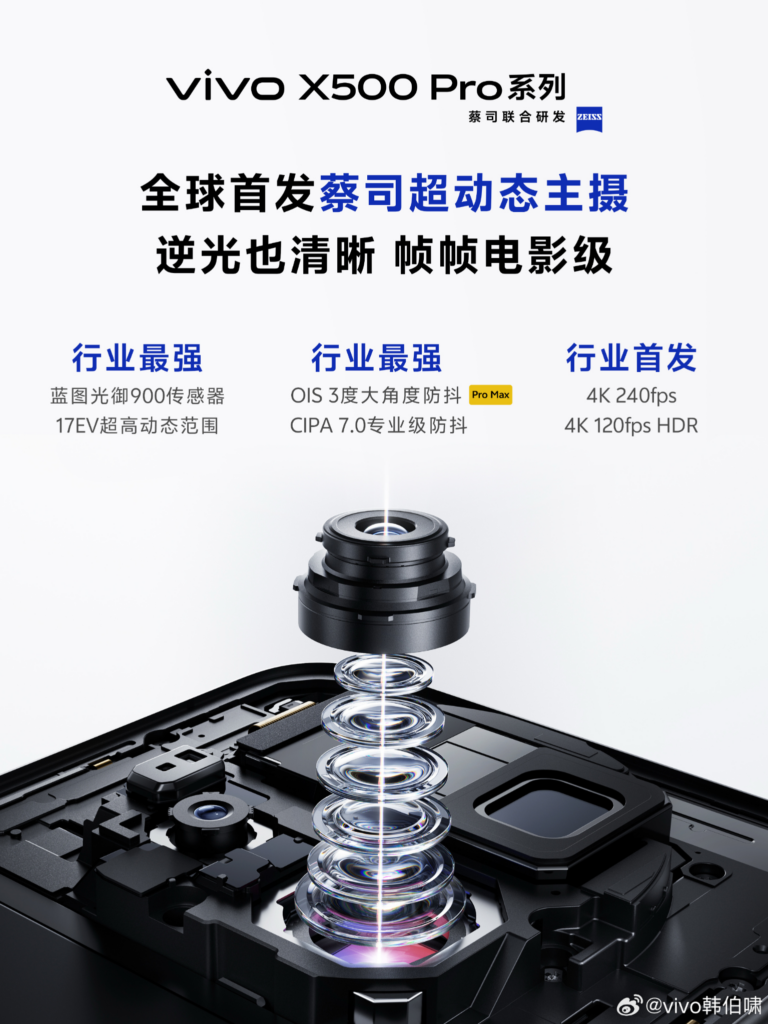
Vivo Product Manager Han Boxiao revealed that the X500 series is being developed as a major imaging upgrade, with video receiving particular attention. The company says the Pro models will feature a Zeiss Super Dynamic main camera, jointly defined by Vivo’s BluePrint imaging team and Sony. The camera uses the new BluePrint Guangyu 900 sensor, which is a 50-megapixel 1/1.28-inch unit designed around high dynamic range.

The sensor can deliver up to 17EV of dynamic range, which Vivo describes as the highest in the industry. This capability is also being brought to video, allowing each frame to retain a wider range of highlights and shadows, particularly in challenging backlit scenes. The X500 Pro series will also support 4K 240fps slow-motion recording and 4K 120fps HDR video with direct HDR output.

The main camera supports 3° OIS with gimbal-level stabilization, while CIPA 7.0 professional stabilization is also part of the setup. Vivo is targeting steadier footage without requiring a dedicated gimbal, with the 3° OIS system specifically highlighted for the Pro Max.

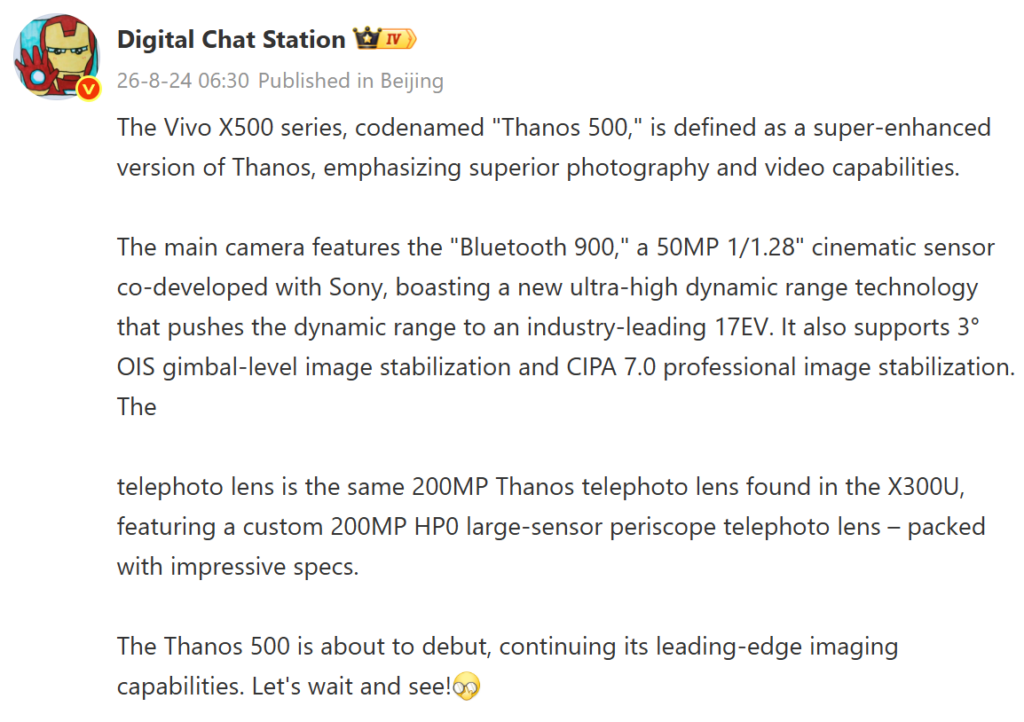
Tipster Digital Chat Station has added more details about the camera hardware. According to the leak, the X500 series carries the internal codename “Thanos 500” and will retain a strong focus on both photography and video. The lineup is also expected to inherit the 200-megapixel “Thanos” telephoto camera from the Vivo X300 Ultra, using a custom large-format 200MP HP0 sensor and periscope lens.

For more daily updates, please visit our News Section.

Stay ahead in tech! Join our Telegram community and sign up for our daily newsletter of top stories!

Exynos 2700’s Geekbench AI listing shows much higher CPU clock speeds than last time

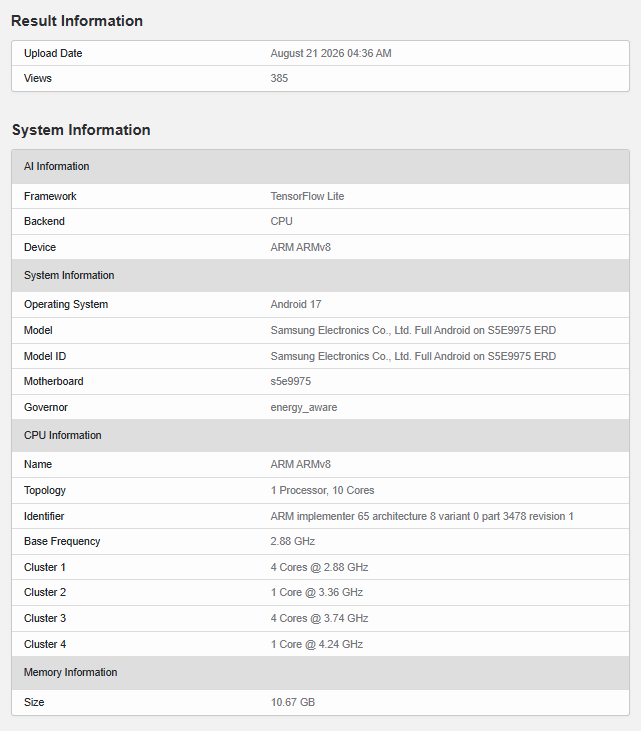
Samsung’s next-generation flagship chipset has shown up in a Geekbench AI test, and the most interesting bit is the clock speeds. The numbers are much higher, and more believable, than the previous Geekbench CPU listing. The engineering sample still uses the same 1+4+1+4 quad-cluster setup we saw before, but every cluster is now running faster.

Back in April the clocks were capped between 2.30 and 2.88 GHz across all four clusters. This latest result is the first solid data point that gets close to the 4.3–4.6 GHz range currently occupied by Qualcomm’s latest Snapdragon 8-series peak clocks, with the prime core hitting 4.24 GHz.

The CPU identifier string (implementer 65, part 3478) matches the earlier low-clock run, so it looks like the same test platform. That part number (0xD96 in hex) lines up with Arm’s still-unannounced “Canyon” core, which is widely believed to be the C2-Ultra, the follow-up to the C1-Ultra used in the Exynos 2600.

Just like the previous Geekbench 6 leak, the new entry carries the S5E9975 ERD tag, shows about 10.67 GB of usable RAM, and is running an Android 17 build. All of that points to the same engineering reference device simply running at unlocked frequencies rather than a new hardware revision. Because Geekbench AI is focused on on-device machine-learning performance, we don’t get the usual single-core or multi-core CPU scores, but the device info panel still shows the full CPU layout and clock speeds.

The Exynos 2700 is expected to be built on Samsung’s second-generation 2 nm process (SF2P) and is tipped for the Galaxy S27 series, which is still about half a year away. As with any engineering sample, the clocks and other numbers we see here might not be final retail silicon.

Arm hasn’t officially confirmed the core name yet, and the identification is based on the part-number match rather than any formal announcement. We’ll need more listings closer to mass production before we get a clearer idea of how the chip will actually perform in finished phones.

Don’t miss a thing! Join our Telegram community for instant updates and grab our free daily newsletter for the best tech stories!

For more daily updates, please visit our News Section.

(Source: Geekbench)

Timex launches two new affordable Weekender watches with classic dials and quartz movement

Timex has released a scaled-down version of its Weekender New England watch in the US, reducing the case size to 34mm. The new models are available now directly through the company’s website, offering a straightforward quartz option for buyers who prefer a more compact fit on the wrist.

Timex Weekender New England watches

Pricing

There are two specific variants included in this launch. The first is the TW2Y86500, which features a silver-tone case paired with a green leather strap, priced at $139. The second model, the TW2Y86600, comes with a gold-tone case and a black leather strap for a slightly higher price of $149.

Design Details

Aside from the color differences, both watches share the exact same dimensions: a 34mm case diameter, a 39.5mm lug-to-lug distance, and a 9mm thickness. The cases are constructed from low-lead brass and feature a mixed brushed and polished finish.

Visually, Timex is keeping the design highly functional. Both models have a cream-colored dial marked with standard, full Arabic numerals. To help with visibility in the dark, these models feature luminescent in-fill on the hands. The dial itself is covered by a standard mineral crystal, which provides basic scratch and heat resistance for everyday wear.

The Weekender line is generally known for its easily swappable straps, and these new New England models maintain that with an 18mm slip-thru design. This format allows users to pull the strap out and slide a new one in without needing a spring bar tool.

The included double-layered straps are made from what Timex describes as sustainable eco-friendly leather. The bands are sized to fit wrist circumferences ranging from 5.3 to 7.5 inches (135 to 190mm).

🔌 You’ll NeedThe 18mm slip-thru strap is swappable without tools, so a spare leather band is an easy upgrade. Check quick release leather watch strap price on Amazon →

Internally, the watches run on a standard quartz analog movement powered by an SR626SW battery. Water resistance is rated at 50 meters. In practical terms, this means the watch can handle light splashes or brief swimming, but Timex explicitly says it is not built for snorkeling or poolside diving.

In related news, Timex has recently launched two Expedition Pioneer Automatic watches with Miyota movements and sapphire crystals, while Casio has launched a new G-Shock watch in the US with heart rate tracking, solar charging, and tide forecasts.

For more daily updates, please visit our News Section.

Stay ahead in tech! Join our Telegram community and sign up for our daily newsletter of top stories!

(Timex 1,2)

Leaked Xperia 10 VIII promo image reveals rear design ahead of launch

A first promotional image of Sony’s next mid-range Xperia phone has popped up just days before it’s expected to be unveiled.

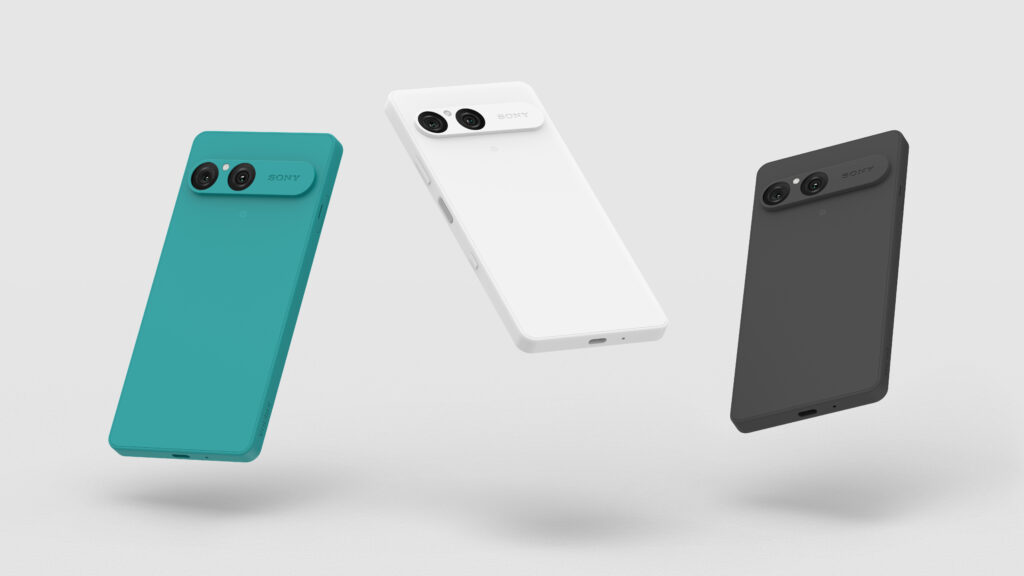
After Sony announced a launch event for Tuesday, a design leak spotted by Android Headlines gives us an early look at what seems to be the Xperia 10 VIII. The image shows the back of the phone in a promotional setting.

Sony last refreshed the camera module on the Xperia 10 series with the seventh-generation model last September, and not much appears to have changed this time around. From the rear, the Xperia 10 VIII looks very similar to its predecessor. The horizontal camera island with dual sensors and the Sony logo is still there. The main difference is a small color tweak: last year’s pure white has been swapped for a slightly greenish-shimmering white.

Apart from the design, details are still pretty thin. A recent Geekbench listing points to the same Snapdragon 6 Gen 3 processor and 8GB of RAM that powered the Xperia 10 VII. So far there haven’t been any solid leaks about the cameras, display, battery, or other specs. Early signs suggest this might be a fairly conservative update focused more on refining things than making big hardware jumps.

For reference, the Xperia 10 VII came with a 50MP main camera (1/1.56″), a 13MP ultrawide (1/3.0″), and a modest 8MP selfie camera. Battery capacity was also on the modest side at 5,000mAh. On the plus side, the phone stayed nice and compact: its 6.1-inch 19.5:9 FHD+ display is smaller than the standard Galaxy S26’s 6.3″ screen, and it weighed just 168g.

Sony’s event on Tuesday should give us the full picture: complete specs, pricing, and availability. Until then, the leaked image and the Geekbench listing are the clearest look we’ve got at the next Xperia 10 phone. The familiar design and mid-range chipset suggest Sony is sticking with continuity for this year’s mid-tier offering.

Don’t miss a thing! Join our Telegram community for instant updates and grab our free daily newsletter for the best tech stories!

For more daily updates, please visit our News Section.

(Source)

Timex launches two Expedition Pioneer Automatic watches with Miyota movement & sapphire crystal

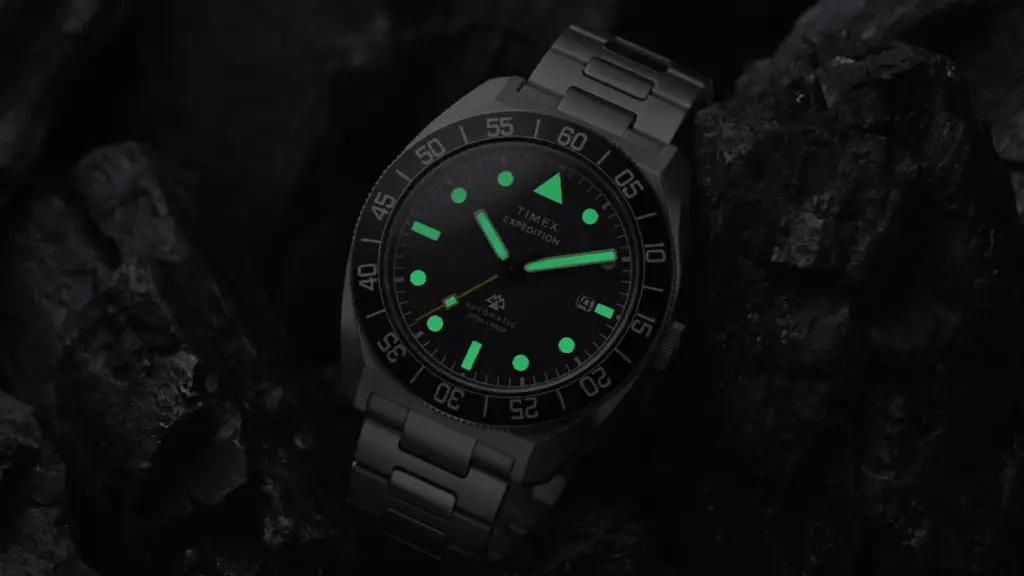
Timex has released the Expedition Pioneer Automatic in the US, shifting its long-running outdoor watch series into a slightly higher hardware tier. While the Expedition line is typically known for its budget-friendly, battery-powered quartz models, this new release opts for a mechanical automatic movement and upgraded case materials.

Timex Expedition Pioneer Automatic watches

Design Details

The new Expedition Pioneer Automatic is built around a 41mm stainless steel case with brushed and polished finishes. It measures 14mm thick with a 48mm lug-to-lug distance, which gives it a standard, substantial fit on most wrists. 

Inside, Timex is using the Miyota 8215, a reliable Japanese automatic movement that winds itself using the natural motion of the wearer’s wrist. The internal mechanics are visible through an exhibition window on the case back, which is made of sapphire crystal.

Timex Expedition Pioneer Automatic watches

On the front, the dial is protected by another sapphire crystal, this time treated with an anti-glare coating. This is a step up from the mineral glass or acrylic often found on standard Timex models, offering much better scratch resistance.

Timex Expedition Pioneer Automatic watches

The watch is rated for 200 meters of water resistance, making it suitable for swimming and recreational scuba diving. It also features a rotating top ring for measuring elapsed time, a date window at 3 o’clock, and luminous hands and hour markers for improved visibility in low-light conditions.

Timex Expedition Pioneer Automatic watches

Pricing and Availability

Timex is offering the watch in two distinct configurations. The first, priced at $429, pairs a blue dial with a matching blue bezel. It comes with a 20mm brown natural leather strap and quick-release spring bars, allowing for tool-free strap changes.

The second configuration costs $459 and features a black dial with a black bezel. Instead of leather, it comes with a matching stainless-steel bracelet secured by a deployant clasp.

🔌 You’ll NeedThe Miyota 8215 automatic movement stops within 40 hours if left unworn — a watch winder keeps it running. Check single watch winder automatic price on Amazon →

Both models are available to purchase now from the Timex US website.

In related news, Casio has recently launched a new Pro Trek watch in the US with a glowing dial, solar charging, and a carabiner attachment, alongside a new G-Shock model with heart rate tracking, solar charging, and tide forecasts.

For more daily updates, please visit our News Section.

Stay ahead in tech! Join our Telegram community and sign up for our daily newsletter of top stories!

(Timex 1,2)

SJCAM C400 Review: A Versatile 3-in-1 Action Camera for Everyday Creators

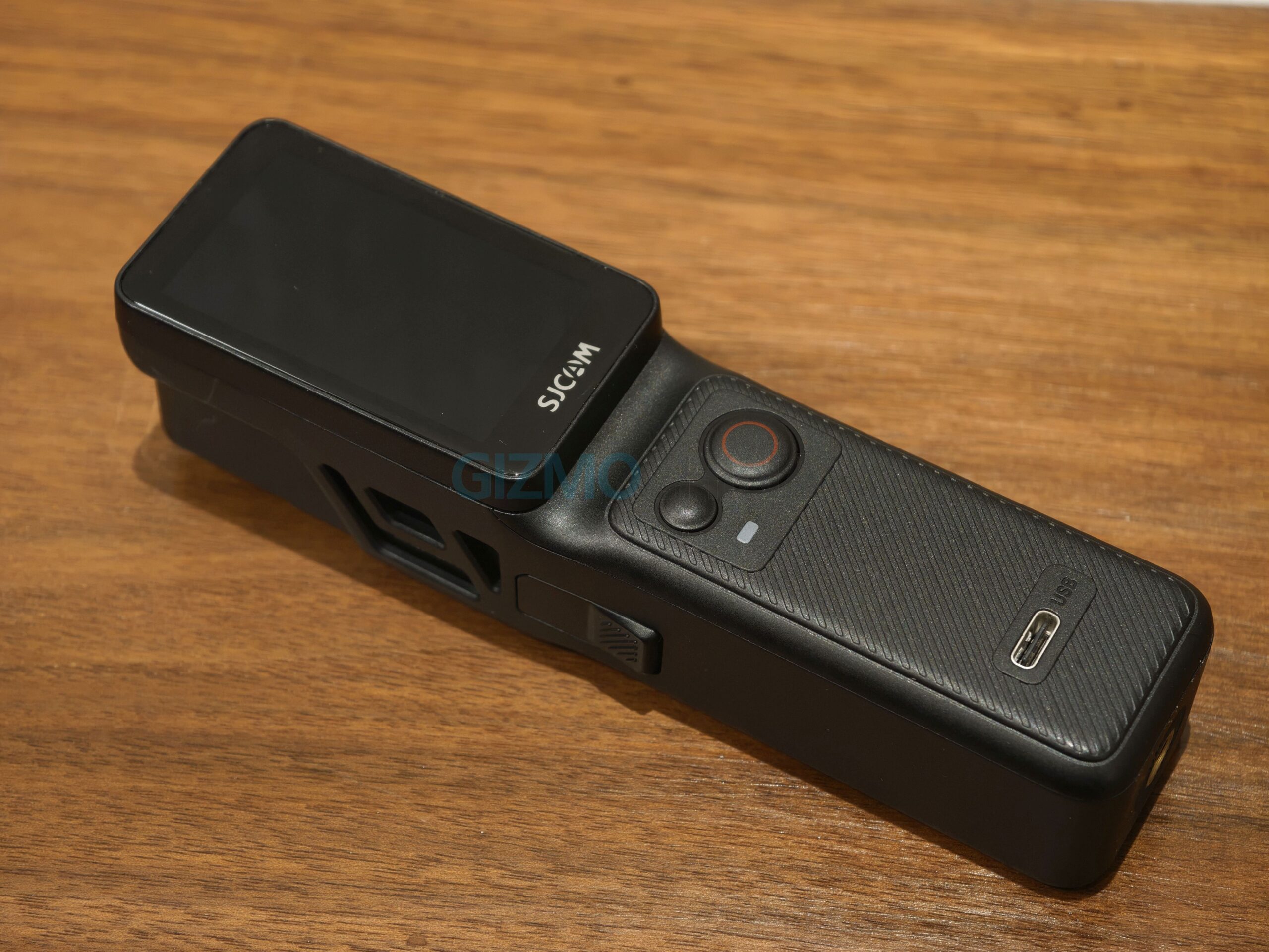
The SJCAM C400 takes a different approach to the action-camera market. Instead of simply shrinking down a conventional action camera, it combines a tiny detachable camera with a battery grip that doubles as a larger monitor and wireless controller. The result is a versatile setup aimed at casual vloggers, travelers, and everyday creators.

It records in 4K, features six-axis gyro stabilization, has a rotating touchscreen, and can deliver up to seven hours of claimed battery life with its grip. It also comes with a generous selection of mounting accessories. However, the C400 isn’t without compromises, particularly when you push it beyond casual shooting.

7Verdict

SJCAM C400
SJCAM C400

The SJCAM C400 is an interesting alternative to conventional action cameras because it focuses as much on versatility and convenience as it does on recording specifications.

The detachable 54g camera is genuinely useful, the battery grip makes handheld shooting more comfortable, and the large rotating display gives you a much better view when recording. The wireless remote functionality and generous selection of accessories further strengthen its appeal.

There are compromises. 4K is limited to 30fps, low-light performance isn’t its strongest area, and the lack of external microphone support limits its appeal to more serious vloggers. The absence of native waterproofing also means you’ll need the supplied case for water-based activities.

Still, the C400 makes sense for casual vloggers, travelers and everyday creators who value portability, long battery life and flexibility. It isn’t trying to be the most advanced action camera available. Instead, its appeal lies in giving you several ways to use one small camera without having to buy a collection of additional accessories.

If convenience and versatility matter more to you than flagship-level stabilization and image quality, the SJCAM C400 is worth considering.

For more daily updates, please visit our News Section.

Stay ahead in tech! Join our Telegram community and sign up for our daily newsletter of top stories!

Next

Casio launches new G-Shock watch in the US with heart rate tracking, solar charging & tide forecasts

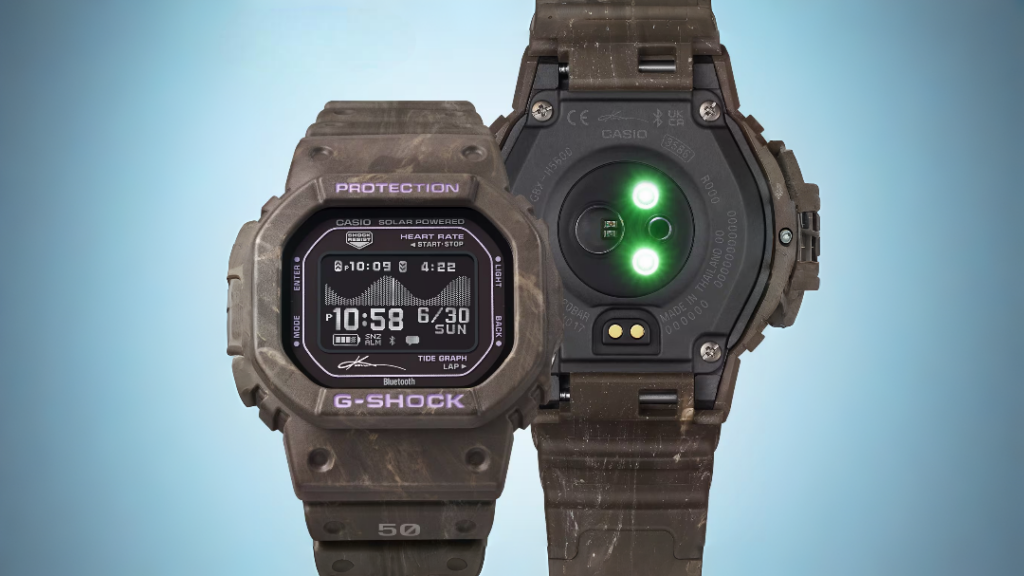
Casio has introduced a new fitness-focused G-LIDE G-Shock to the US market, following its initial launch in Japan last month. The GBX-H5600KI-5, priced at $370, is the fourth signature watch designed with professional surfer Kanoa Igarashi. It is available now through the Casio US website and combines standard digital watch features with modern health tracking and surf-specific data.

Casio G-LIDE GBX-H5600KI-5 smartwatch

Design Details

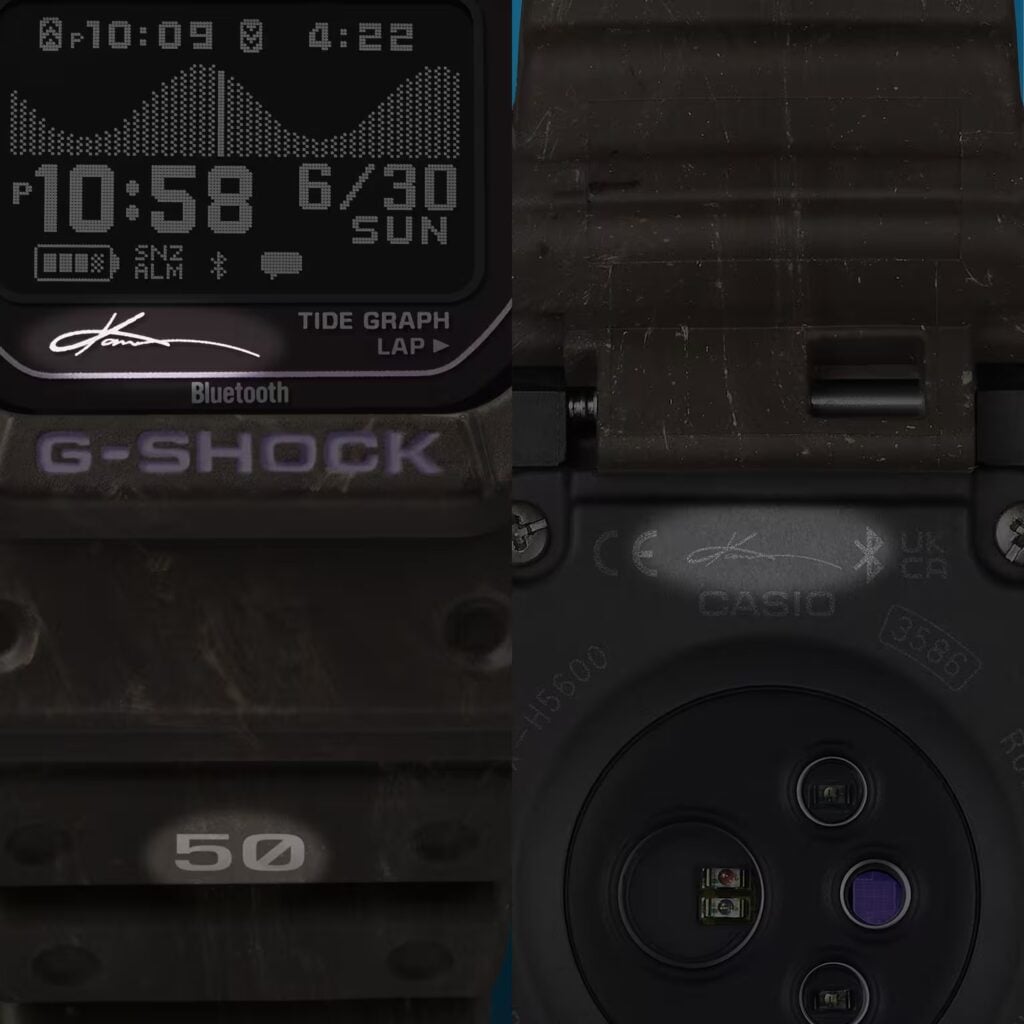
In terms of design, the watch uses a brown, mixed-color bio-based resin for its bezel and band. Casio says the color is meant to resemble the coastal cliffs of Portugal, and because of the manufacturing process, the exact pattern on each watch varies. The display is a Memory in Pixel (MIP) LCD, which is standard for fitness watches that need to remain visible in direct sunlight and underwater.

The company also reduced the weight compared to its previous heart-rate model, the DWH5600. By using a carbon fiber-reinforced resin case back, this new model weighs 47 grams, about 18 grams lighter, which makes it a bit more practical for daily wear and workouts.

On the hardware side, the watch includes an optical sensor for heart rate and blood oxygen monitoring, plus a three-axis accelerometer to track steps, distance, and speed. Casio is using Polar’s algorithms to process this data, providing metrics on cardio load, energy sources used during workouts, and sleep recovery stages.

For surfing, the watch provides tide graphs and moon phase data. You can store 50 preset locations directly on the device or use the companion Casio Watches smartphone app to select from roughly 3,300 global tide points.

The Bluetooth connection to a phone also handles automatic time syncing, activity log transfers, and basic notifications for calls, emails, and social media. Battery life depends heavily on how the watch is used, relying on a hybrid system of USB and solar charging.

If you leave the heart rate monitor running continuously during an activity, it lasts about 35 hours. In standard watch mode without heart rate tracking, it runs for about a month, and a power-saving mode can extend that to 11 months.

In related news, Casio has launched a new Pro Trek watch in the US with a glowing dial, solar charging, and a carabiner attachment, alongside new Baby-G watches with a removable module and glittery retro design.

For more daily updates, please visit our News Section.

Stay ahead in tech! Join our Telegram community and sign up for our daily newsletter of top stories!

(Casio)