Advertisement

New BYD Song PLUS DM-i Model unveiled in China with tail mark adjustment and engine upgrade

In the latest release of the “Road Motor Vehicle Manufacturer and Product Announcements” catalog of China, a noteworthy addition has caught the attention of automotive enthusiasts. The report gives details of the new BYD Song PLUS DM-i model, marking the 383rd batch of announcements.

The new version keeps the same overall design as the previous one but makes noticeable changes to the rear details and swaps the “BUILD YOUR DREAMS” logo for the “BYD” emblem. Despite these changes, the vehicle stays the same size, measuring 4775mm long, 1890mm wide, and 1670mm tall, with a wheelbase of 2765mm.

source: BYD

The latest BYD Song PLUS DM-i model now features the “BYD472QC” engine while keeping its 1.5-liter plug-in hybrid setup. However, the engine’s maximum power output has decreased slightly from 81 kilowatts to 74 kilowatts. In contrast, the electric motor in the new model shows an increase in power, capable of delivering up to 160 kilowatts compared to the prior model’s 145 kilowatts.

For prospective buyers, the pricing structure remains competitive and diverse, catering to varying preferences and needs. The existing Song PLUS DM-i Honor Edition, priced at 129,800 yuan, offers a range of options including the 71km luxury model, 110km flagship model, 110km flagship PLUS, 150km flagship PLUS, and 150km flagship PLUS 5G, with prices ranging up to 169,800 yuan.

This comprehensive update highlights BYD’s commitment to innovation and responsiveness to market demands, positioning the new Song PLUS DM-i model as a compelling choice.

Related:

(via)

Huawei Watch Fit 3 could disappoint Chinese users due to potential lack of WeChat app

Huawei recently announced the Watch Fit 3 in the global market. The watch sports a sleek design with a 1.82-inch AMOLED display, 1500 nits brightness, and a 77.4% screen-to-body ratio. It promises up to 10 days of battery life. With a starting price of €160, it positions itself as a competitive option in the smartwatch market.

Huawei Watch Fit 3

Early Unboxings Reveal Missing Fan-Favorite Feature

The smartwatch is scheduled to launch in China on May 15th. However, just days before its official China release, the Huawei Watch Fit 3 has hit a snag with fitness tracker enthusiasts. According to Weibo tipster “Uncle who looks at the mountain”, stores unpacking the smartwatch revealed it doesn’t come with the highly anticipated WeChat smartwatch app pre-installed.

Huawei-Watch-Fit-3-may-lack-wechat

This news comes as a blow, considering the dedicated WeChat smartwatch app launched in July 2022. Developed by the WeChat team itself, it boasted features specifically designed for smartwatch users, including voice-to-text messaging, viewing images, voice replies, and even animated emoticon support.

Netizens, eager to ditch their phones for on-wrist communication, expressed disappointment on forums like Pollen Club, with some commenting “there is still no WeChat.” This frustration likely stems from the Watch Fit 2‘s experience. Internal testing reportedly included the WeChat app, but optimization issues ultimately led to its cancellation.

Despite the setback, there’s a glimmer of hope. The leaked information only suggests the app isn’t pre-installed. Here are two possibilities: Huawei might deliver the WeChat app through an over-the-air (OTA) update after launch. This approach would allow for further optimization and bug fixes before deployment. Alternatively, the retail version hitting shelves on May 15th in China could come pre-loaded with the app.

However, the lack of confirmed WeChat support casts a shadow over the launch. With WeChat being a dominant communication platform in China, its absence on a smartwatch can be a significant drawback for many users.

RELATED:

(Via)

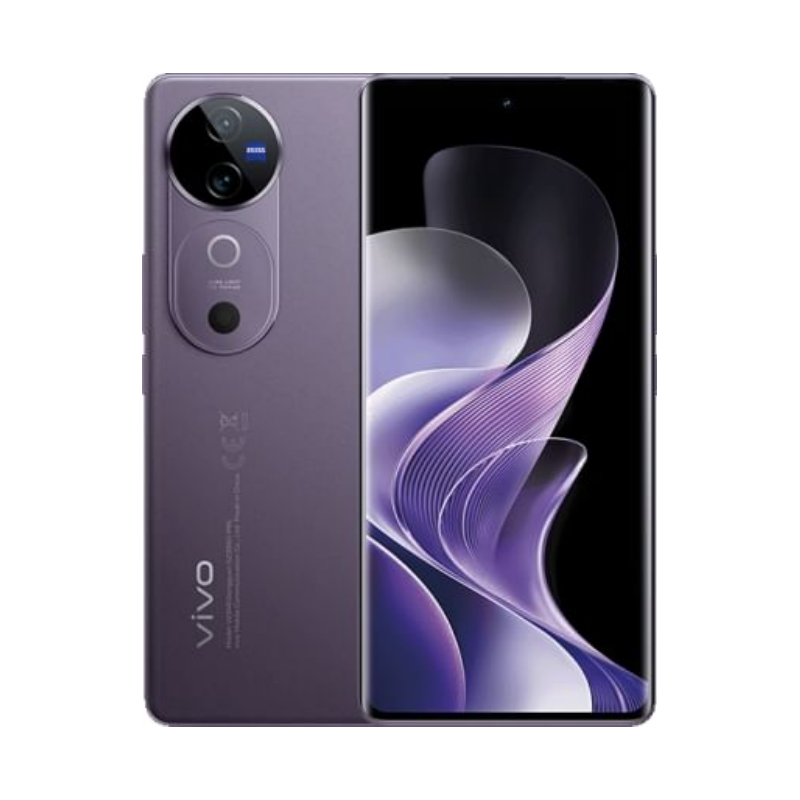
Vivo X100s & X100s Pro launched with Dimensity 9300+ SoC, 100W fast charging & 1″ camera sensor

Earlier today, Vivo held a launch event to debut the Vivo X100 Ultra smartphone in China. Along with the Ultra model, the brand has also unveiled the Vivo X100s and X100s Pro smartphones as well. These new phones feature the new and improved Dimesnity 9300+ processor, instead of the Dimensity 9300 featured on the X100 and X100 Pro. This newly launched chip has a higher boost clock speed of 3.4GHz, as well as improved APU which provides a 10% boost in on-device AI tasks.

Vivo X100s Pro

Vivo X100s & X100s Pro specs & features:

The Vivo X100s and X100s Pro both feature a 6.78-inch LTPO AMOLED display (flat display on the X100s and curved display on the X100s Pro) that delivers a crisp 2800 x 1260 resolution with a 120Hz refresh rate. The displays offer a 93.43% screen-to-body ratio, 3000 nits peak brightness, as well as 1.07 billion colors and 100% coverage of the DCI-P3 color gamut.

As mentioned above, both smartphones feature a Dimensity 9300+ processor with up to 16GB of LPDDR5X RAM and up to 1TB of UFS 4.0 storage. Vivo has included the new V3 imaging chip in the X100s Pro, while the X100s retains a V2 chip.

For optics, the X100s Pro features a triple camera setup with a 50 MP f/1.75 main camera (one-inch sensor), paired with a 50MP f/2.5 Zeiss APO super-telephoto camera (4.3x optical zoom) and a 50MP f/2.0 ultra-wide-angle camera. On the other hand, the X100s offers a 50MP f/1.57 main camera, paired with a 64MP f/2.57 telephoto camera with 3x optical zoom and a 50MP f/2.0 ultrawide lens. Both camera systems are capable of 100x digital zoom. The Pro model offers up to 8K video recording, while the non-Pro model is limited to 4K. As for selfies, both models feature a 32MP front camera with a f/2.0 lens.

The X100s is equipped with a 5100mAh battery, while the Pro model features a larger 5400mAh unit. The Pro model comes with the option of 100W wired and 50W wireless charging, while the vanilla variant comes with only 100W wired charging support. Both models have received an IP69 rating, indicating strong resistance to high-temperature water jets, on top of the standard IPX8 rating for submersion.

Pricing & availability

The vivo X100s and X100s Pro come in Titanium, White, and Black/Dark Gray colors, with the standard version also offering a Green variant. Pricing is listed below.

Vivo X100s Pro:

  • 12GB RAM + 256GB storage: 4999 yuan ($961)
  • 16GB RAM + 512GB storage: 5599 yuan ($774)
  • 16GB RAM + 1TB storage: 6199 yuan ($857)

Vivo X100s:

  • 12GB RAM + 256GB storage: 3999 yuan ($553)
  • 16GB RAM + 256GB storage: 4399 yuan ($608)
  • 16GB RAM + 512GB storage: 4699 yuan ($650)
  • 16GB RAM + 1TB storage: 5199 yuan ($719)

RELATED:

Pixel 8a vs Pixel 8: Should You Go For The Latest Mid-Ranger Or The Older Flagship?

Last week, Google quietly announced the Pixel 8a. The phone arrives with significant upgrades compared to its predecessor, i.e. the Pixel 7a.

The search giant’s mid-range Pixel-A series offerings are slightly toned-down versions of the flagship non-Pro number series devices. The latest Pixel 8a borrows the same design language, processor, and notably the longer software support policy from the more premium Pixel 8. 

Pixel 8a vs Pixel 8: which one makes sense?

There are only slight differences between the Pixel 8a and Pixel 8. However, the main differentiating factor between the two phones is in terms of pricing.

Additionally, the Pixel 8 is also nearly six months old now (as of writing this article). It is often found at discounted prices during sales. This begs the question of whether it makes sense to purchase the latest mid-ranger Pixel or the premium offering. 

In this article, we have compared everything between the Pixel 8a and Pixel from specifications to pricing that should help you make the correct buying decision. 

1. Design and display

The Pixel 8a and Pixel 8 have identical designs with rounded corners and a horizontal bridge housing two cameras inside a pill-shaped cutout. The former is IP67 certified whereas the latter has an IP68 rating for dust and water resistance. The Pixel 8’s front and back panels are shielded by Gorilla Glass Victus which is stronger than the Gorilla Glass 3 protecting the Pixel 8a’s front fascia. 

The display specs are similar on both the Pixel 8a and 8. Although the screen size on the two phones is 6.1 and 6.2 inches, both have an OLED panel with FHD+ resolution, 2,000 nits peak brightness, a 120Hz refresh rate, and support for HDR10. 

2. Camera

The camera is where the Pixel 8a is different compared to the Pixel 8. The latest mid-range has a 64MP 1/1.73″ main sensor with f/1.9 aperture, dual-pixel PDAF and OIS support. There is a 13MP ultra-wide-angle lens. It is capable of recording up to 4K videos at 60fps. Up front also, the device features a 13MP selfie snapper. 

On the contrary, the Pixel 8’s dual camera setup comprises a 50MP 1/1.31 main with f/1.7 and a 12MP ultra-wide sensor. There is a 10.5MP front-facing snapper. This camera hardware is comparatively better than the one on the Pixel 8a.

Anyways, both phones come with features like Best Take, Auto HDR, Ultra HDR, Audio Erase, and more. 

3. Hardware

The Pixel 8a and Pixel 8 are powered by Google’s in-house Tensor G3 processor. Both pack 8GB RAM and are offered in 128GB and 256GB storage options. The Pixel 8a is backed by a 4,492mAh battery with support for 18W wired and 7.5W wireless charging. On the other hand, the Pixel 8 runs on a larger 4,575mAh cell with support for faster 27W wired and 18W wireless charging. 

Software-wise, both the Pixel 8 and Pixel 8a are eligible for seven years of OS updates and security patches. 

4. Pricing and availability 

The Pixel 8a carries a price tag of $499 / EUR 549 / Rs 52,999 and $559 / EUR 609 / Rs 59,999 for the 128GB and 256GB variants respectively. Meanwhile, the same configurations of the Pixel 8 retail at $438 / EUR 599 / Rs 75,999 and $694 / EUR 749 / Rs 82,999 respectively. That makes the device a lot cheaper than the latest mid-range offering. 

5. Verdict

In our opinion, it doesn’t make any sense to go for the latest Pixel 8a over the six-month-old Pixel 8. This is mainly due to the difference in prices of both devices. The mid-range A-series model has a slightly toned-down camera sensor even though the megapixel count is higher. The Pixel 8 has a larger battery along with fast charging support. Barring this, everything is the same across the board. 

We would also recommend waiting for the Pixel 9 series which is due to arrive this fall with an entirely new design language.


Related:

ASUS Debuts TX98 Gaming Keyboard: Compact, Feature-Packed, and Water Resistant

ASUS launched their Tianxuan TX98 gaming keyboard, boasting a space-saving 98-key layout that retains all essential functions and a numeric keypad.

The mechanical switches have a 100-million keystroke lifespan

The TX98 features vibrant RGB lighting with 16.8 million colors and Aura Sync technology, customizable through Altron software with preset lighting effects like ocean current, ripple, and starry night.

Picture 2

For durability, the keyboard utilizes RGB optical mechanical switches with a 100-million keystroke lifespan and supports full-key rollover and anti-ghosting for accurate key registration during intense gaming sessions. It comes in two switch options: red for linear keystrokes and blue for a tactile typing experience with a clicky bump. The TX98 is built to withstand spills and dust with its IP57 water and dust resistance. It also employs a Gasket structure with sound-absorbing pads and additional pillars to minimize vibration and noise.

The keycaps are made from ABS plastic using a two-color injection molding process, which ASUS claims offers better longevity and easier cleaning compared to traditional ABS keycaps. Uniquely, the TX98 has a removable upper cover, allowing for easy customization of the keyboard’s look. It also features dedicated multimedia control keys and function key combinations for quick access to desired actions.

The ASUS Tianxuan TX98 gaming keyboard comes in red and blue switch options, both priced at 499 yuan (around $75).

RELATED:

(Via)

This $300,000 Ferrari 430 Scuderia Spider 16M Comes with a Special Apple iPod Touch

We all know Ferrari to be synonymous with high performance, stunning aesthetics, and exclusivity. But the limited-edition 430 Scuderia Spider 16M has another unique feature – an Apple iPod Touch. This is pure collector’s edition bliss!

The iPod Touch was Apple Carplay before it even became a thing

Launched in 2008 to celebrate Ferrari’s 16th Formula One Constructors’ Championship win, the 430 Scuderia Spider 16M offered open-air exhilaration alongside its powerful engine and gorgeous design. But unlike other Ferraris that prioritize focused driving with minimal distractions, this limited model came with a surprising extra – a 16GB iPod Touch nestled in an Alcantara leather case.

It’s interesting to note that not all 499 units of the 16M sported the iPod Touch. Some came equipped with traditional Becker Cascade radios, adhering to Ferrari’s traditional aversion to in-car distractions. The iPod Touch docked in the center console, pre-dating the widespread adoption of Apple CarPlay. Ferrari, known for their driver-centric philosophy, has historically avoided touchscreens, opting for physical controls on the dashboard. This approach has softened in recent models like the Roma and 812 Superfast, which now incorporate central touchscreens.

While Apple offered a 32GB iPod Touch back then, the 16M came with the 16GB model, leading some to jokingly suggest Ferrari’s frugality considering the car’s hefty $313,350 price tag (around ¥2.269 million). Another theory suggests Ferrari’s choice of the 16GB version was a deliberate nod to the “16” in the car’s name.

With Apple discontinuing the iPod Touch in 2022, as its functions have been seamlessly integrated into the iPhone, this limited-edition Ferrari serves as a unique time capsule – a reminder of a bygone era of in-car entertainment.

RELATED:

(Via)

U.S. predicted to win the semiconductor war against China, will triple Semiconductor manufacturing capacity by 2032 says report

A recent report by the Semiconductor Industry Association (SIA) and Boston Consulting Group (BCG) reveals significant projections for the U.S. semiconductor industry by 2032. The findings suggest a remarkable growth trajectory, driven by strategic policies and industry investments.

According to the report, the United States is poised to triple its domestic semiconductor manufacturing capacity over the next decade. This surge is expected to elevate the U.S. share of global chip manufacturing capacity from 10% in 2022 to 14% by 2032.

Several factors contribute to this anticipated growth. The enactment of the Chips and Science Act in 2022 is noted as a pivotal step in bolstering U.S. chip manufacturing capacity. Additionally, strategic investments by industry giants like Taiwan Semiconductor Manufacturing Co (TSMC) in building a 2-nanometer plant in Arizona, with a planned investment of US$65 billion, further solidify the U.S.’s position in the semiconductor landscape.

source: Wikipedia- president Biden signing the bill

The Chips and Science Act has changed the game for the US

The Chips and Science Act has facilitated industry investments, crucial for semiconductor growth. Without this legislation, the U.S. would have captured only 9% of global capital expenditures (capex) by 2032, compared to the projected 28% with the Act in place.

While the report highlights significant growth prospects, it also underscores the importance of supply chain resilience. It warns that industrial policies could create bottlenecks, increasing supply chain risks. Hence, there’s a call for targeted, distributed, and market-based investments to enhance resilience.

The report also talks about the worldwide efforts to strengthen semiconductor industries. Initiatives such as the CHIPS Act in the U.S., the European CHIPS Act, and China’s IC Industry Investment Fund are notable incentives driving global semiconductor investments.

Looking ahead, the report emphasizes the necessity for additional government policy actions to address supply chain vulnerabilities and fortify the U.S. semiconductor industry. Recommendations include expanding critical CHIPS Act incentives, promoting free trade, investing in scientific research, and broadening the STEM talent pipeline.

The CHIPS Act incentives have already spurred substantial investments in the U.S. semiconductor industry. Over 80 new projects across 25 states have been announced, totaling nearly $450 billion in private investments. These projects are anticipated to create over 56,000 jobs in the semiconductor ecosystem, further bolstering the U.S. position in the global semiconductor landscape.

Related:

(via)

Epson launches CH-TW5750 projector with 2700 lumens, 1080P resolution, Android 11 & more

Epson recently unveiled its new CH-TW5750 projector, boasting true color reproduction, high brightness, and smart features. The projector is priced at 4299 yuan (around $594) and is now up for pre-sale on JD.com. Let’s delve into its key specs.
Epson CH-TW5750 Projector

Epson CH-TW5750 Projector Specifications:

The projector is equipped with 3LCD display technology and Epson’s self-developed C2FINE (Crystal Clear Fine Technology) to deliver sharp, clear, and natural pictures with no speckles or rainbow artifacts. It also supports 10-bit color depth, 6-channel color adjustment for personalized color temperature and saturation adjustments, and boasts a DUV value approaching 0 for purer and more vibrant colors.

The CH-TW5750 features 3 pieces of 0.61-inch polysilicon active matrix chips, achieving a native 1080P resolution and a brightness of 2700 lumens under ISO standards. This ensures bright and vivid images even in well-lit environments. Additionally, the projector supports 1.2x optical zoom for flexible placement and a 35,000:1 high dynamic contrast ratio for clear details in dark parts and bright colors in bright parts.

The CH-TW5750 is equipped with Android 11.0 operating system and comes with 64GB of storage space. It supports AI voice functions and Tencent Aurora TV OS, offering a user-friendly interface and smooth operation. The projector also features a sleep mode to automatically power down after extended periods of inactivity and a time magnifying glass function.

The projector’s design is sleek and modern, with a brushed metal lens protection module that not only protects but also adds to the aesthetic appeal. The smart remote control allows easy navigation and operation, enhancing the overall user experience.

The CH-TW5750 utilizes diffuse reflection technology to project light, making it easier on the eyes and reducing fatigue. It also boasts a long light source life of 7500 hours in ECO mode, translating to up to 6 years and 7 months of usage for 3 hours a day. Additionally, Epson offers a 3-year whole machine warranty and a 3-year light source warranty for peace of mind.

RELATED:

MediaTek unveils Dimensity 8250 5G SoC with APU 580 for improved AI performance

MediaTek has launched the Dimensity 8250, a new chipset targeting premium mid-range smartphones. This is essentially a refreshed version of the Dimensity 8200, with the main improvements coming in the field of AI.

Dimensity 8250

The 4nm chip boasts an octa-core CPU with a single high-performance Arm Cortex-A78 core clocked at 3.1GHz. It also integrates a Mali-G610 MC6 GPU for smooth visuals and an APU 580 for enhanced AI processing.

The Dimensity 8250 boasts impressive camera capabilities, supporting high-resolution sensors up to 320MP and stunning 4K 60fps HDR video recording. It seamlessly drives high refresh rate displays, reaching 120Hz for WQHD+ resolutions and an incredible 180Hz for Full HD+ displays.

Connectivity is top-notch with a fully integrated 5G modem delivering download speeds of up to 4.7Gbps. It supports the latest WiFi 6E standard and Bluetooth 5.3. The chipset also includes support for India’s NavIC navigation system alongside global options like GPS, BeiDou, Glonass, Galileo, and QZSS.

The OPPO Reno 12 is rumored to be the first smartphone to pack this powerful chipset. We can expect this chip to also power other future mid-range devices as well.

RELATED:

Vivo X100 Ultra Launched In China With 200MP Periscope Lens, Two-Way Satellite Communication, Snapdragon 8 Gen 3, And More

Vivo announced the X100 and X100 Pro smartphones in China in November last year. Surprisingly, the brand did not announce the X100 Pro+ model. After a lot of speculations, leaks, and rumours, Vivo has unveiled three new devices in the X100 series. These include the X100 Ultra, X100s, and X100s Pro. As the name suggests, the Ultra is the top-of-the-line model with flagship-grade cameras in the entire lineup. In this post, read on to know what the device offers out of the box. 

Vivo X100 Ultra specifications and features

Beginning with the display, the Vivo X100 Ultra has a 6.78-inch curved E7 AMOLED screen with a resolution of 3200 × 1440 pixels. It features a 120Hz refresh rate, 3,000 nits peak brightness, and Dolby Vision support. The device is equipped with an ultrasonic fingerprint scanner for fast and secure unlocking. The smartphone has the same design as the standard and pro X100 with a circular protruding camera module. It has passed IP69 and IP68 ratings for dust and water resistance. 

In the photography department, the Vivo X100 Ultra sports triple Zeiss-branded rear cameras. The setup comprises a 50MP main Sony LYT-900 one-inch sensor with a 23mm focal length. The ultra-wide-angle unit is 50MP with a 14mm focal length and a 116-degree FoV. The phone has a 200MP 1/1.14-inch HP9 periscope telephoto lens with a focal length of 85mm. It also has a floating design that enables clicking macro shots with details. The camera comes with a host of professional modes along with five focal length selections (24, 28, 35, 50, 85mm) and adjustable aperture from f/0.95 to f/16. There is also a portrait master mode onboard. 

The Vivo X100 Ultra also features the company’s V3 imaging chipset. It is capable of recording 4K videos at 120fps and 4K at 60fps with HDR Dolby Vision enabled. There is a 50MP front-facing selfie camera. 

Under the hood, the Vivo X100 Ultra is equipped with a Snapdragon 8 Gen 3 processor. It packs up to 16GB RAM and 1TB storage. There is a 3D VC cooling system onboard for heat dissipation. The smartphone draws its power from a 5,500mAh battery unit with support for 80W wired and 30W wireless charging. It runs on OriginOS 4 based on Android 14. 

The Vivo X100 Ultra also comes with two-way satellite communication. There is an X-Axis linear motor, studio-grade microphone, stereo double speaker, and more. 

Vivo X100 Ultra pricing

The Vivo x100 Ultra starts at CNY 6,499 (~$898) for the base 12GB + 256GB variant. The  16GB +512GB is priced at CNY 7,299 (~$1,009). The top-end 16GB +1TB configuration carries a price tag of CNY 7,999 (~$1,105). The smartphone comes in Titanium, White, and Space Grey colors. 

Related:

Realme GT Neo 6 vs Redmi Turbo 3: So which Snapdragon 8s Gen 3 phone wins?

The $290 Realme GT Neo 6 and $276 Redmi Turbo 3 are arguably the most compelling mid-range phones right now. They both come in an accessible price bracket and bring features like Qualcomm’s latest Snapdragon 8s Gen 3 processor for flagship-level performance. 

Redmi Turbo 3 vs Realme GT Neo 6

Even on other aspects, the devices are so similar that it can be challenging to decide between them. So it is a no-brainer for us to write a comparison between them for these two. Let’s start. 

1. Processor and Performance

The highlight of both these smartphones is their performance. With the sub-flagship Snapdragon 8s Gen 3 chip under the helm, you can expect them to easily handle your daily and demanding tasks like gaming. 

Both the devices have vapor chamber cooling for effective thermal management, while Realme has also thrown in a bunch of software features like Geek Performance Panel 2.0 that lets you customize CPU and GPU frequencies and an AI Burning Mode for a more versed gaming experience. 

In fact, Realme claims that the GT Neo 6 can play Genshin Impact in native 1.5K resolution. There are no such claims from Redmi’s end but expect similar if not better performance from it. Both phones are available in up to 16GB of RAM and 1TB of storage. 

2. Display

Realme GT Neo 6

The display size is nearly identical, with both phones sporting around 6.7 inches AMOLED panel with 120Hz refresh rate. But Realme has a complete edge in this regard. 

It has a flagship-grade 8T LTPO panel with variable refresh rate support from 0.5 to 120Hz, 2160Hz PWM Dimming, Greenfield AI protection, and a bunch of other features to reduce eye fatigue. 

There’s more — GT Neo 6’s screen is rated for a peak brightness of 6000 nits. That’s even higher than flagships like Samsung Galaxy S24 Ultra or iPhone 15 Pro Max. 

However, that’s just the peak it can achieve. For normal contents, the brightness maxes out at 1000 nits. 

In comparison, Redmi promises 2600 nits of peak brightness, 1920Hz PWM dimming, and a 12-bit color depth compared to 10-bit on Neo 6. Xiaomi is offering Corning Gorilla Glass Victus protection, while the Neo 6 has even better Victus 2. 

Design and Build

Design is a subjective choice. While some may like the sleek, uniform look of the Redmi Turbo 3, others might prefer the dual-tone design of the Realme GT Neo 6. But from the front, they should offer a similar visual experience with minimal bezels and a centrally-aligned punch-hole cutout. 

Realme GT Neo 6

As for the build, both of them have plastic frames and backs and a similar level of ingress protection — IP65 on Realme and IP64 on Redmi. The latter is available in Black, Green, Titanium, and a special Harry Potter edition whereas you can get the Neo 6 in Silver, Green, Purple, and a special “Perfect World” animation edition. 

3. Camera

While neither phone has the most advanced camera systems on the market, they offer capable setups for capturing everyday moments. 

Redmi Turbo 3

They both have a dual-camera setup on the back with a primary 50-megapixel sensor and an 8MP ultrawide lens. For selfies, you get a 20MP shooter on Turbo 3 and a 32MP shooter on Neo 6. 

Now how well they perform depends on their software optimization and post-processing. So it’s recommended to check out some reviews to get a better idea of the cameras.

4. Battery and others

The Realme GT Neo 6 takes the lead in battery capacity with a 5500mAh battery compared to the Redmi Turbo 3’s 5000mAh. This translates to longer battery life on a single charge for the Realme phone. Even the charging is faster on Neo 6 with 120W support compared to 90W on Turbo 3.

Both phones run on the latest iteration of Android 14. However, the user experience will differ depending on the custom UI layered on top.

Realme UI is known for its customization options and vibrant aesthetics, while HyperOS from Xiaomi offers a feature-rich experience with equally good customization options.

Other features of the devices include an under-display fingerprint sensor, stereo speakers, a USB Type-C 2.0 port, WiFi 6, and Bluetooth 5.4 support.

5. Price and Availability

Below are the prices of Realme GT Neo 6 and Redmi Turbo 3 all available variants: 

MemoryRealme GT Neo 6Redmi Turbo 3
12GB + 256GBCNY 2099  (~$290)CNY 1,999 (~$276)
12GB + 512GBCNY 2,299 (~$317)
16GB + 256GBCNY 2399  (~$331)
16GB + 512GBCNY 2699 (~$373)CNY 2,499 (~$345)
16GB + 1TBCNY 2999 (~$414)CNY 2,799 (~$386)

Both these devices are currently only available in China with no details on global availability yet. 

6. So who wins?

For most users, the Realme GT Neo 6 offers a better display, longer battery life, and faster charging, justifying its slightly higher price tag. However, if you prioritize pure value or prefer a specific design or UI like HyperOS, the Redmi Turbo 3 is a no-brainer at all. 

In the end, the choice is yours and we recommend you go through reviews of each device that could point out their pros and cons to make an informed decision.

Related:

SoftBank-backed Arm plans to make AI Chip, targeting 2025 launch

There is a new competitor in the field of Artificial Intelligence. Arm Holdings, under the umbrella of SoftBank Group, is gearing up to enter the growing field of AI chip development. The move comes as part of SoftBank CEO Masayoshi Son’s ambitious vision to invest $64 billion to position the conglomerate as a leader in artificial intelligence.

Arm, a UK-based company renowned for its chip designs, plans to roll out its first AI chip products by 2025. To kickstart this initiative, Arm will establish a dedicated AI chip division, aiming to unveil a prototype as early as spring 2025. Mass production is slated to commence in the fall of the same year, with contract manufacturers handling the process.

Funding for this venture will be shouldered by Arm, with significant contributions expected from SoftBank. Negotiations are underway with prominent semiconductor manufacturers, including Taiwan Semiconductor Manufacturing Corp (TSMC), to secure production capacity.

source:arm.com

Looking ahead, there’s speculation that once the mass production system is established, Arm’s AI chip business could potentially be spun off and integrated under the SoftBank umbrella.

The strategic move by Arm comes amidst a broader push by SoftBank to diversify its portfolio and reduce dependence on dominant players like Nvidia. CEO Masayoshi Son’s vision involves leveraging AI, semiconductor, and robotics technologies to revolutionize various industries, fueling innovation and growth.

The market outlook for AI chips appears promising, with analysts forecasting significant growth, potentially exceeding $200 billion by 2032. SoftBank sees this as a prime opportunity to capitalize on increasing demand and circumvent the limitations posed by existing players.

Financially, SoftBank is on the path to recovery, aiming to bounce back from previous losses. With ample cash reserves at its disposal, the conglomerate is well-positioned to support its ambitious investment plans across various sectors, including AI, data centers, and renewable energy.

However, the endeavor is not without risks. SoftBank has a track record of adapting to technological shifts, but significant investments always come with uncertainties, testing the mettle of SoftBank’s strategic vision.

Related:

Deal: Redmi 12 5G Available Under Rs 10,000 With A Coupon Offer For Limited Period

The Redmi 12 5G (review) smartphone debuted in August last year. The phone has been widely successful in India achieving various sales records. It packs impressive specifications at a budget price tag. The Redmi 12 5G was launched at a starting price tag of Rs 11,999 for the base 4GB + 128GB RAM and storage configuration. Now, it can be grabbed at a cheaper price, thanks to a coupon offer. Read on to know all the details below. 

Redmi 12 5G available under Rs 10,000 in India

The Redmi 12 5G can be purchased under the Rs 10,000 price tag on Amazon. The e-commerce platform is offering a coupon of Rs 1,250. This brings down the original price of the 4GB + 128GB variant from Rs 11,999 to Rs 10,749. Additionally, SBI, ICICI, and HDFC Bank credit cardholders can avail Rs 750 instant discount. This makes the Redmi 12 5G available for Rs 9,999 which is an attractive deal.

The discount is applicable on only the 4GB + 128GB variant. It is valid on all three colour options i.e. Jade Black, Pastel Blue, and Moonstone Silver. The coupon offer seems to be for a limited period, hence if you’re looking to purchase the Redmi 12 5G base variant, now is the right time. 

The Redmi 12 5G has a 6.78-inch FHD+ display with a 90Hz refresh rate. It features a dual camera setup of a 50MP main sensor and a 2MP macro unit. The phone is powered by a Snapdragon 4 Gen 2 chipset. It is backed by a 5,000mAh battery unit with support for 18W fast charging. 

Related:

Sony Xperia 1 VI Expected Features: Look out for the upcoming flagship photography phone

Sony is set to unveil its latest gen flagship smartphone, the Xperia 1 VI, soon. This device is a flagship grade model that aims to offer a peak photography experience via cutting-edge camera hardware on smartphones. So here are all of its expected features and more.

Sony Xperia 1 VI

1. Sony Xperia 1 VI: LYTIA cameras all the way

Since Sony Xpera’s are known for their camera prowess, let’s talk about the image sensors first. A recent leak confirmed that all three cameras on the rear of the Sony Xperia 1 VI will be LYTIA sensors. The main camera is a 48-megapixel YT800 sensor (24mm, 1/1.4-inch), along with a 50-megapixel LYT600 ultra wide angle lens (16mm, 1/1.2-inch), and a 50-megapixel LYT500 telephoto shooter (85-170mm or 7x zoom, 1/2.9-inch).

These are notable upgrades over its predecessors since the resolution of the ultra wide and telephoto is now 50-megapixel. This is up from the last gen model’s 12-megapixel sensors. The camera is expected to also offer Zeiss T* coating. Its primary camera is rumored to feature “Exmor T for mobile”, which is likely based on the LYT800 sensor.

2. Specs: Chip, Battery, & More

Under the hood, the Xperia 1 VI will likely be equipped with the Snapdragon 8 Gen 3. A large 5,000mAh battery pack is expected to power this device, which would support fast charging as well. One notable aspect Sony is focusing on is the audio department. Not only do you get a 3.5mm headphone jack but the upcoming device may even offer Hi-Res Audio, Hi-Res wireless, 360 Reality Audio, LDAC, and DSEE Ultimate.

To improve outdoor camera performance, the Xperia 1 VI is slated to house a dedicated vapor chamber to help maintain performance for extended periods of use. This would help keep thermals in check of the flagship grade hardware too.

3. Design & Display

For the display, the Xperia 1 VI is expected to sport an OLED panel that offers a 19.5:9 aspect ratio. Based on what we know so far, the screen is 1.5x brighter than the Xperia 1 V. The new device may offer 2K resolution, a 120Hz refresh rate, and BRAVIA HDR technology as well as a 240Hz touch sampling rate.

The same report also revealed more details regarding the design of the new high-end phone. Apparently, Sony is bringing a frosted texture glass panel that has fine slits on the sides to allow for better grip. Color options may include a black and a platinum silver variant.

4. Cheaper than the last one?

A recent rumor pointed at the Sony Xperia 1 VI being slightly more affordable than the Xperia 1 V. Leaked code points at the device possibly costing 39,990 New Taiwan Dollars or around 1,227 US Dollars. This is about 5 percent cheaper than its predecessor, which was priced at 41,990 New Taiwan Dollars on launch. The Xperia 1 V launched in the US For 1,399 US Dollars.

So the newer model might be cheaper than the last by over 100 US Dollars. Leaks had claimed that Sony could offer Xperia 1 VI owners with one year of free Sony Pictures movie streaming along with access to up to five Sony movie titles remastered with IMAX video and DTS sound. The brand will be unveiling the Xperia 1 VI on May 15, so stick around for more as we will be covering the launch.

RELATED:

Xiaomi official responded to SU7 brake failure issue: “a misidentification by the software”

Wang Hua, the general manager of the Public Relations Department of Xiaomi Group, issued a statement in response to the Xiaomi SU7 brake failure.

Xiaomi SU7

The issue has reportedly been fixed

For those unfamiliar with the matter, in the early morning of May 9, an SU7 car was towed to the Changsha Service Center. The store staff checked the car and informed us that there was no mechanical failure/damage to the braking system. After running the “self-inspection” program, the brake failure prompt disappeared and the vehicle appeared to function normally.

Wang Hua stated that it was indeed a misidentification by the software. He further added that the issue has been fixed and there is no need to panic regarding the safety of the car. He contacted an engineer from the Automotive Department to fix the problem. Here’s what happened to the car.

The main braking system of the Xiaomi SU7 was misidentified by the software

After analysis, it was confirmed that the system of the vehicle’s main brake controller (DPB/BCP) was “misidentified and degraded”. It triggered the backup braking method, and the auxiliary brake controller (ESP/BCS) started responding directly to provide braking and deceleration for the vehicle. At the same time, the vehicle’s large screen also prompted a failure of the braking system.

During the use of the backup braking system, the ESP draws the DPB brake fluid to increase the braking pressure for the wheels to stop the vehicle. Because the brake fluid was drawn away from the DPB by the ESP, the pressure of the brake master cylinder decreased rapidly, and the driver could feel it while pedaling.

Because the braking system switches between primary and secondary, the original cylinder pressure value of the main brake comes down to 0. However, the SU7 never lost all braking force. Fortunately, the ESP took control of the situation and there was no loss of control of the vehicle.

Although the car went back to normal, the user was offered a return/exchange of the car. Xiaomi Auto was also willing to cover the expenses incurred due to the return/exchange of the vehicle.

Related:

(Source)

Viewsonic launches LX700-4K projector with tri-color laser, 4K resolution, 240Hz refresh rate, ideal for Xbox gaming

Viewsonic has unveiled the LX700-4K in the Chinese market, a high-end projector boasting impressive specs for both cinephiles and gamers. The projector is priced at 9999 Yuan ($1,382) and is now up for pre-sale on JD.com. Let’s delve into its key specs.

Viewsonic LX700-4K Projector

Viewsonic LX700-4K Projector Specifications:

This projector is equipped with Nichia’s original laser module, which ensures high-quality image reproduction with a contrast ratio of 300:1 and delivers 2500 ANSI lumens brightness, ensuring vivid and bright images even in well-lit rooms. The device boasts a 110% BT.2020 color gamut, which provides a wide range of colors, closer to what the human eye can perceive, enhancing the overall realism and depth of images.

LX700-4K Ultra comes with a 0.65 DMD display chip and a 4K native optical glass lens, which together contribute to higher image quality and resolution. It supports various resolutions and refresh rates including 1080P at 240Hz, 1440P at 120Hz, and 4K at 60Hz, making it highly versatile for different types of content from fast-paced sports to high-definition movies. The low latency of 4.2ms is ideal for gaming, ensuring a responsive experience when playing on consoles like the Xbox, for which this projector is specially certified.

For added flexibility, the projector features a 1.6x lossless optical zoom and a -15% vertical lens shift, allowing it to be adjusted to fit different room sizes and shapes without compromising image quality. It also includes a ±30° four-way keystone correction for image alignment and can even project in a curved format, enhancing the options for setup in various environments.

The LX700-4K Ultra is designed with a focus on user comfort and environmental durability. It features TUV-certified eye protection to reduce eye strain during long viewing sessions and is IP6X dustproof, enhancing its longevity and performance stability. Its ECO mode promotes energy efficiency and extends the lamp life, which is important for reducing maintenance and usage costs.

The projector also supports HDR10 and HLG, enhancing the dynamic range which allows for better depiction of light and dark scenes, thus providing a richer and more detailed viewing experience. Additionally, the Dynamic Black technology and enhanced color tuning capabilities ensure deep blacks and vibrant colors, essential for viewing high-quality cinematic content.

For audio, the LX700-4K Ultra comes equipped with a 15W high-quality speaker system that delivers clear and powerful sound that moves in sync with the on-screen action, negating the need for external amplifiers. It is also equipped with HDMI eARC, allowing for high-quality digital audio transmission and making it simple to connect to external sound systems.

The projector is also built for ease of use and integration into smart home systems, featuring HDMI CEC functionality, motorized screen and curtain control via 12V trigger output, and versatile connectivity options including multiple HDMI ports and USB power supply.

The sleek, dustproof design and powerful cooling system ensure that the projector operates efficiently and quietly, making it an excellent choice for creating a comfortable and immersive home theater environment.

RELATED:

Galaxy Z Fold6 FE to launch next year, with a bulky design again


We know that Samsung will introduce several devices in its new Fold6 fold series. It is expected that Samsung will unveil three different devices: the Galaxy Z Fold6, Fold6 Ultra, and Fold6 FE. In fact, some spec leaks about the Galaxy Z Fold6 series had surfaced earlier.

Samsung keeps the Fold6 FE for a later time

Samsung took the leadership of the foldable smartphone market by introducing one of the first foldable smartphones. However, they are currently lagging behind in design innovation. Chinese smartphone manufacturers come up with much more compact foldable phones. On the other hand, Samsung has stuck to a similar design philosophy for years, and we can say that their foldable phones are not very easy to hold in hand.

According to a recent report by ITHome, Korean tech media The Elec claims that users might not be satisfied with the design of the Galaxy Z Fold6 FE. In addition, Samsung is reportedly considering postponing the launch of the Galaxy Z Fold6 FE. We expect only the Z Fold6 and Z Flip6 to be unveiled at the upcoming Samsung event. Galaxy Z Fold6 FE seems to be reserved for the following year.

Samsung may be postponing the release of the Z Fold6 FE to introduce a thinner foldable device. For example, while the thickness of the Huawei Mate X3 is 11.8mm, the Z Fold5 is 13.4mm when folded. Considering Samsung’s history with the Galaxy S series, delaying the Z Fold6 FE design is not that surprising actually. For instance, Galaxy S23 was introduced in February 2023, while Galaxy S23 FE was introduced in October 2023. Samsung usually reserves “FE” devices for later releases.

Related:

These Realme Phones Will Get Realme UI 6.0 (Android 15) Update

Realme UI 6.0 (Android 15) Eligible Phones

Android 15 development is in full swing, with multiple developer previews and beta releases already out for the testers. These early builds have revealed many exciting features of the new OS, such as satellite connectivity, Find My Device network, and App Archiving (more on this later). We might see more new features in Android 15 as Google releases more and more beta builds.

Android 15 seems a pretty exciting upgrade, much more than the last two iterations – Android 13 and Android 14. It’s still in the development and testing phase, which will last for a few more months before Google announces the stable build. While you wait for the public release, it’s important to ensure that your Realme smartphone is ready for the next major OS upgrade.

So, here are all the Realme phones that will get the Android 15-based Realme UI 6.0 update.

Realme Phones Eligible for the Realme UI 5.0 (Android 15) Update

  • Realme GT 5
  • Realme GT 5 240W
  • Realme GT 5 Pro
  • Realme GT 3
  • Realme GT 2
  • Realme GT 2 Pro
  • Realme GT 2 Explorer Master Edition
  • Realme GT Neo 6
  • Realme GT Neo 6 SE
  • Realme GT Neo 5
  • Realme GT Neo 5 SE
  • Realme GT Neo 5 240W
  • Realme 12
  • Realme 12+
  • Realme 12x
  • Realme 12 Lite
  • Realme 12 Pro
  • Realme 12 Pro+
  • Realme 11 4G
  • Realme 11 5G
  • Realme 11x 5G
  • Realme 11 Pro
  • Realme 11 Pro+
  • Realme 10 Pro
  • Realme 10 Pro+
  • Realme P1
  • Realme P1 Pro
  • Realme Narzo 70
  • Realme Narzo 70x
  • Realme Narzo 70 Pro
  • Realme Narzo 60
  • Realme Narzo 60x
  • Realme Narzo 60 Pro
  • Realme C67 4G
  • Realme C65 4G
  • Realme C65 5G

This is not the final list by any means as the brand hasn’t yet announced the list of Android 15 supported devices. However, we already know the software update policy for most Realme phones. We have factored in the company’s past update rollouts in preparing this list.

If your device is not on the list, worry not. Wait for the official list before you consider upgrading to a new smartphone to enjoy the latest Android features.

Realme UI 5.0: When Will It Start Rolling Out?

Android 15 is currently through the beta phase, which will last until June 2024, as per the official timeline. Once the platform stability phase kicks in, Google stops adding new features and rather focuses on resolving bugs and making final adjustments for the final release.

While Google hasn’t yet announced a release date for Android 15, everyone is expecting it to arrive around the same time as last year, that means in October.

After the stable release arrives, smartphone companies take a little more time to refine their custom skins (Realme UI in the case of Realme) which can take a few weeks.

If you get lucky, you may get an early taste of Android 15 months before the official release by participating in the beta program. Last year, the Chinese brand announced the Android 14 beta for the GT 2 Pro in May. Around the same time, we can see the Android 15 beta announcement for select premium Realme phones. While the stable Android 14 update started rolling out around December. 

What’s New in Android 15?

These are the biggest changes that have been discovered in Android 15 so far:

Find My Phone Network

Find My Phone is getting a pretty significant update in the new OS. All Android 15 phones can ping each other via Bluetooth and contribute to the network to help someone find their lost device. The nearby Android device part of Find My network can pick up Bluetooth signals from the broadcasting device and upload the encrypted location details to Google’s servers, which can be decrypted by the broadcasting device owner.

Satellite Connectivity Support

Android 15 adds support for satellite connectivity. This means you’ll be able to send texts to your friends even if you don’t have cell towers nearby, as long as you have access to the open sky. The new OS supports satellite connectivity for SMS apps and preinstalled RCS apps. In other words, this feature on Android 15 will not be limited to emergency uses only.

App Archiving

The app archiving feature lets you uninstall apps while keeping the user data around. So, the next time you reinstall the app, you can continue where you left off.

Google already has the app archiving feature through the Google Play Store. This means you can archive and restore apps only through the Play Store. But Android 15 removes this restriction by allowing any apps to be archived, including those installed outside the Play Store. 

Battery Health

Android 15 could bring the “Battery Health” feature, which users have been requesting for a very long time. This feature tells the remaining battery capacity – an important metric that can help users replace the battery at the right time.

Although Google hasn’t confirmed Battery Health as an upcoming feature in Android 15, we might see it in one of the upcoming beta releases.

Notification Cooldown

Android 15 introduces the “Notification Cooldown” feature to stop people from getting overwhelmed by too many notifications from the same app. This feature lowers the volume of successive notifications from the same app.

Partial Screen Sharing

Partial screen sharing is a useful and privacy-focused addition to Android 15 that allows users to share and record a single app rather than the entire screen. So, you don’t have to worry even if you mistakenly open a secret app while sharing your screen.

Don’t forget to check out our list of top 10 best features coming to Android 15 for a detailed look at the new OS.

Which Realme smartphone do you have? And what are your expectations from Android 15? Do share your thoughts in the comments below.

More on Android 15:
1.
Android 15 adds audio sharing to multiple devices via Bluetooth Auracast
2. Android 15’s latest update brings satellite connectivity support at OS level
3. Android 15 lets you find your smartphone even when it is powered off
4. Android 15’s “Notification Cooldown” tackles notification overload

Huawei Watch GT 4: New Pink & Blue Colors Drop in China soon

Huawei is getting ready to host a new launch event in its home market of China. During this conference, a bunch of upcoming products are expected to be unveiled. But that’s not all, the company has teased that the Huawei Watch GT 4 will also arrive in fresh new colors.

Huawei Watch GT 4 soon comes in Pink and Blue

The Chinese tech giant will be holding the Huawei Summer Full Scenario product launch event between May 15 to May 20. Huawei’s Eyewear 2 Square Frame is set to be announced at this event later this week. But the Watch GT 4 wearable is also getting two new color options. The smartwatch will soon be available in the Pink option for the 41mm while the 46mm option gets the new Blue variant.

Huawei Watch GT 4

To recall, the Watch GT 4 is currently available in Green, Brown, Gray, and Black versions. It sports a 1.32-inch AMOLED display that has a 466 x 466 resolution and 352 PPI. The screen supports always on display with 5ATM water resistance. The smartwatch supports Bluetooth 5.2 connectivity. On a single full charge, the 41mm offers 7 days battery life, while the 46mm can last for up to 14 days.

The device offers dual band GNSS for accurate location tracking and support for over 100 sports modes. Buyers can even track sleep, physical activity, sleep, and female menstrual cycle. So stick around for more as we will be providing more updates and covering the launch event.

RELATED:

Xiaomi unveils new “People Presence Sensor” with millimeter-wave, 3 years of battery life

Xiaomi today launched a new sensor on its Youpin crowdfunding platform called the “Xiaomi People’s Presence Sensor.” The sensor promises accurate detection of people’s presence without requiring installation or plugging in. 

Xiaomi People Presence Sensor

Its official release is scheduled for May 15th, with a starting price of 119 yuan. So let’s get into its details here. 

Xiaomi People Presence Sensor Specifications

The key difference between this sensor and Xiaomi’s previous “Mijia Human Body Sensor 2S” appears to be the inclusion of a “low-power millimeter wave radar.” 

The technology offers a wider detection angle of 130 degrees and can dynamically sense human presence within a 6-meter range, with static detection reaching 4 meters. 

Xiaomi People Presence Sensor

Notably, the sensor is advertised as being able to accurately detect people even when they are not moving, as long as there is constant lighting.

In terms of technical specifications, the sensor is powered by a single CR2450 button battery, which Xiaomi claims can last up to 3 years. It features built-in magnets for easy attachment to furniture and comes with an adhesive base for additional installation flexibility. 

You can connect the device with the Mijia App which allows you to view 24-hour light intensity curves and set up smart linkages with other compatible devices.

Now, you might be wondering how this sensor could be useful for you. It can be great for things like smart home automation. 

For instance, you can set up lights to turn on automatically when the sensor detects someone entering a room, offering a welcoming and hands-free experience.

Conversely, lights can be programmed to switch off when the sensor no longer detects people in the room, helping save energy. Plus, the sensor could work with a smart thermostat, adjusting temperature settings based on occupancy to ensure comfort and efficiency.

Related: