Samsung has officially announced that the Galaxy M35 5G will be available in India starting July 17. Initially, it was believed that Galaxy M35 5G will launch during the Amazon Prime Day sales on June 20 and 21. However, Samsung confirmed the launch date as July 17 as per Samsung’s Twitter post. Galaxy M35 5G had already launched in other regions and is now making its debut in India.
Galaxy M35 5G India
The Galaxy M35 5G will launch in India on July 17 and will also be available up for sale during Amazon India’s Prime Day Sales. An Amazon banner confirms that the Galaxy M35 5G will come in three color options: Light Blue, Grey, and Dark Blue.
We expect Galaxy M35 5G to feature the Exynos 1380 chipset. It will have a massive 6000 mAh battery and support 25W charging. The phone will come with 8GB of RAM and 256GB of storage, and it will receive OneUI updates for four years.
The Galaxy M35 5G boasts a 50MP main camera, an 8MP ultra-wide-angle camera, and a 2MP macro camera. On the front, it features a 6.6-inch AMOLED display with a 120Hz refresh rate and a brightness of 1000 nits.
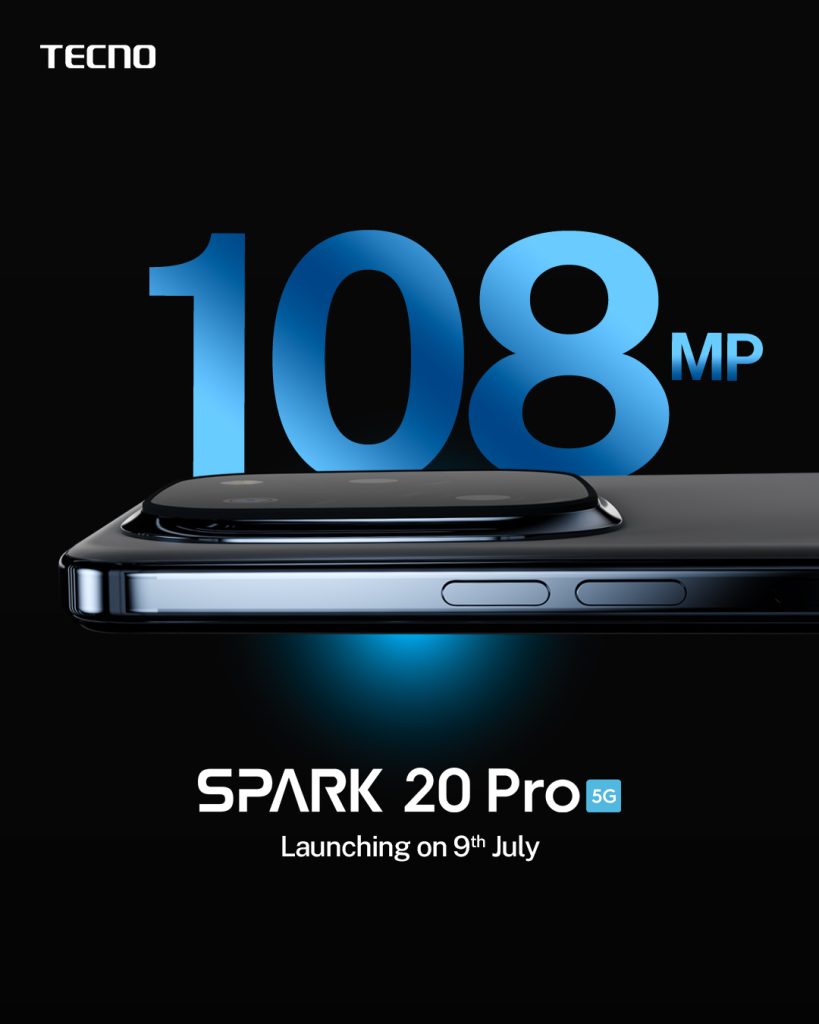
We previously reported that Tecno Spark 20 Pro 5G will be available in India, with some marketing details having been leaked. Now, TECNO has officially confirmed the India launch date as July 9.
The phone was previously teased with the tagline “5G KA Champion”. The Amazon page for the upcoming TECNO phone is now live, indicating that the first sales will kick off on Amazon India. Although the phone is currently listed as “Coming soon” on Amazon, TECNO has confirmed via their Twitter account that the official launch date is July 9. The phone will feature 8GB of RAM and options for either 128GB or 256GB of storage.
Tecno Spark 20 Pro 5G launch date
Tecno Spark 20 Pro 5G will be powered by the MediaTek Dimensity 6080 5G chipset. It boasts a 6.78-inch 120Hz display, a 108MP main camera, and a 2MP macro camera. The phone is equipped with a 5000mAh battery and supports 33W fast charging. It will come preloaded with Android 14.
Stay tuned for more updates on the Tecno Spark 20 Pro 5G as we get closer to the launch date!
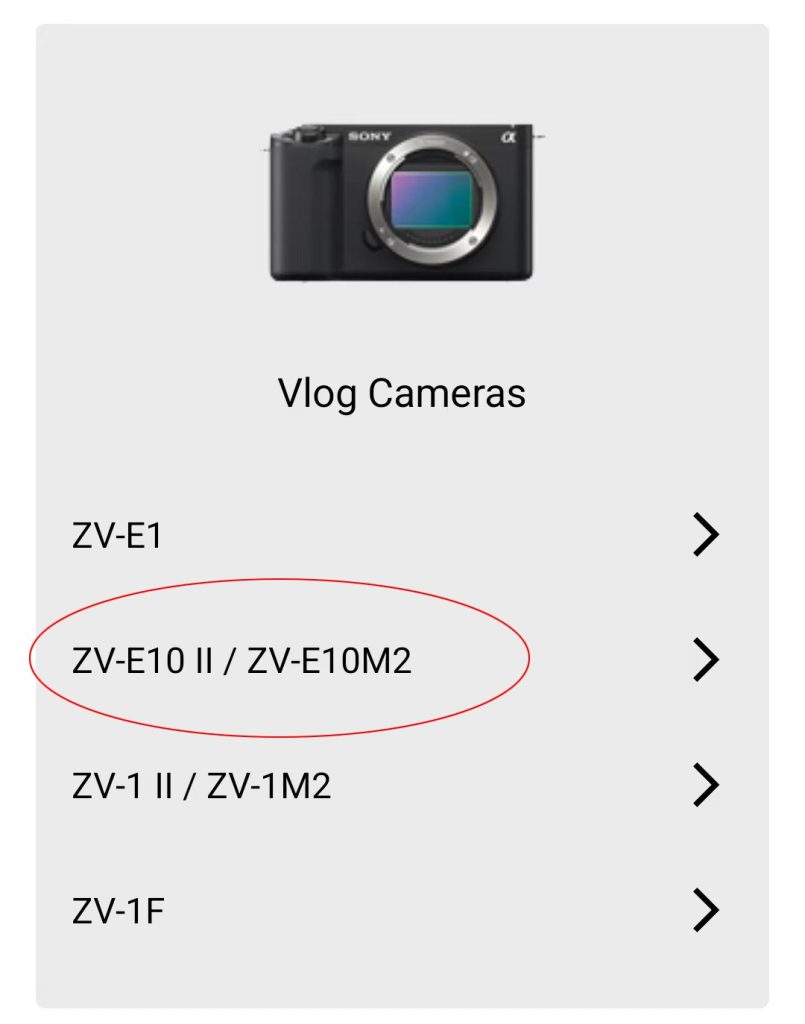
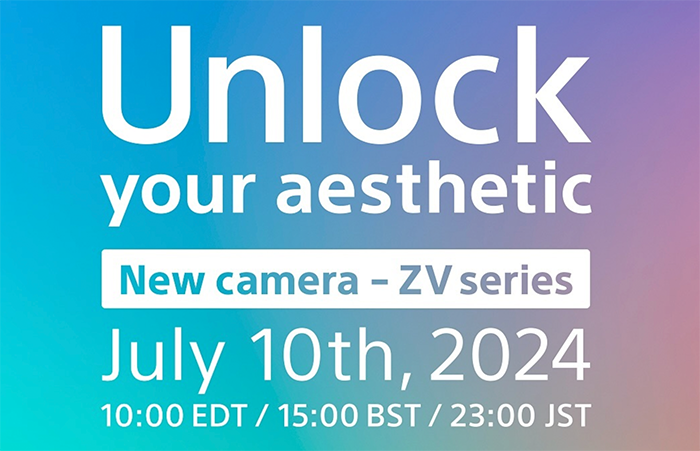
Sony has recently updated their official App Creator, and the upcoming vlog camera ZV-E10 II has now appeared on the list, confirming the camera’s existence. Last week, SonyAlphaRumors claimed that the camera would launch on July 10th. Now, the publication has also leaked an official teaser indicating that a new ZV camera is on the way.
According to Andrea Pizzini, the ZV-E10 II will ditch the ZV-E10’s 1020mAh battery for the much beefier NP-FZ100 with a capacity of 2280mAh. This is the same battery used in the popular A6700, effectively doubling the shooting time for vloggers on the go.
The increased battery size comes with an additional benefit – a larger grip. This addresses a common pain point with the original ZV-E10, which some users found difficult to hold comfortably for extended periods. The ZV-E10 II’s larger grip promises a more secure and stable hold.
While official specs remain under wraps, rumors suggest the ZV-E10 II will pack a 26MP APS-C CMOS sensor, similar to the one found in the A6700. This upgrade promises improved image quality and overall performance compared to the previous generation. Additionally, Sony might introduce AI-powered features specifically designed for vloggers. This could translate to better autofocus, especially when switching between the subject and the vlogger themself.
Alongside the camera, Sony is also expected to launch a new E-mount 16-50mm F/3.5-5.6 OSS II zoom lens. This versatile kit lens seems tailor-made for vloggers, offering a wide zoom range perfect for capturing various shots, from sweeping landscapes to detailed close-ups. The inclusion of Optical SteadyShot (OSS) promises smooth, shake-free footage – essential for handheld vloggers who are constantly on the move.
Sony will also launch a new high-end FE 85mm F/1.4 GM II lens, though its release date seems less certain.
Various PC makers have recently unveiled their latest notebook offerings that feature Qualcomm’s new Snapdragon X Elite and X Plus processors. These chips were touted to offer impressive battery life, and now, we can see the Snapdragon X series powered Surface Laptops pitted against newer MacBooks with some impressive results.
Is Snapdragon X Plus better than M3 in efficiency?
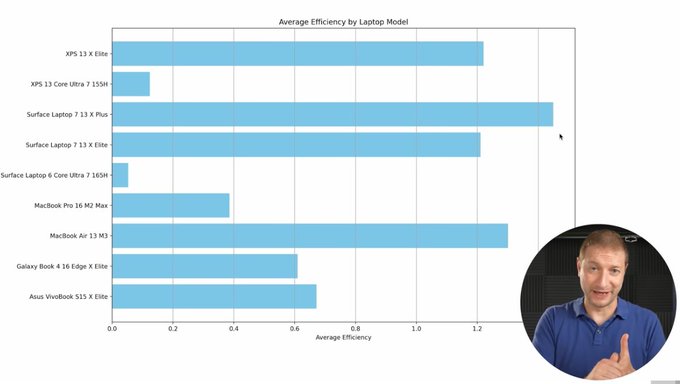
In a battery life and efficiency test from Alex Ziskind on YouTube, we get a fair idea of how the new Snapdragon chips perform in the real world. He approached the test with realism in mind to get a more accurate representation of what we can expect from these laptops. This test included coding, listening to music, and even certain intensive tasks. Alex took into account the different battery sizes of the laptops.
In the initial efficiency test measuring “Battery Drain vs Work Done”, the M2 MacBook Air was the most efficient, while the M3 MacBook Pro and M2 Max variants also saw impressive performance. On the other hand, the Surface Laptop 7th Edition outperformed other Snapdragon X Elite and X Plus powered laptops like the ASUS Vivobook S 15, Dell XPS 13, and Galaxy Book 4 16 Edge. It is worth noting that this efficiency test was more focused on intensive tasks that pushed the CPU cores.
In the automated workflow test to recreate a more realistic scenario, Ziskind reran the test playing YouTube videos occasionally, between writing and running the codes. This was a prolonged test with all laptops set to high performance. Surface Laptop 7 13 (X Plus) led the pack with the highest average efficiency, with the M3 MacBook Air 13 being the runner up.
The Snapdragon X Elite variant of the Surface Laptop 7 13 came in third, and performance much better than the Galaxy Book 4 Edge 16 and VivoBook S 15. Keep in mind that this is still just a test from a person who codes, so expect different results depending on casual use and other tasks. You can click here to check out our previous coverage of the Snapdragon X Plus, where it outperforms the M2 and M3 chips in Cinebench.
AI is rapidly advancing, and now it’s possible to generate videos from stable images, a process known as image-to-video creation. With stable diffusion, AI can create videos out of still images. New AI models can create text-to-video based on your prompts. OpenAI’s Sora, for instance, can create highly realistic videos. Check out OpenAI’s Sora and computer-generated videos using the provided link.
Text to video – AI generated image by OpenAI
While AI-powered video creation is a game-changer, many AI-based media generation tools currently limit the number of videos you can make. AI requires significant processing power, making running the AI models locally on your device sounds like a better idea.
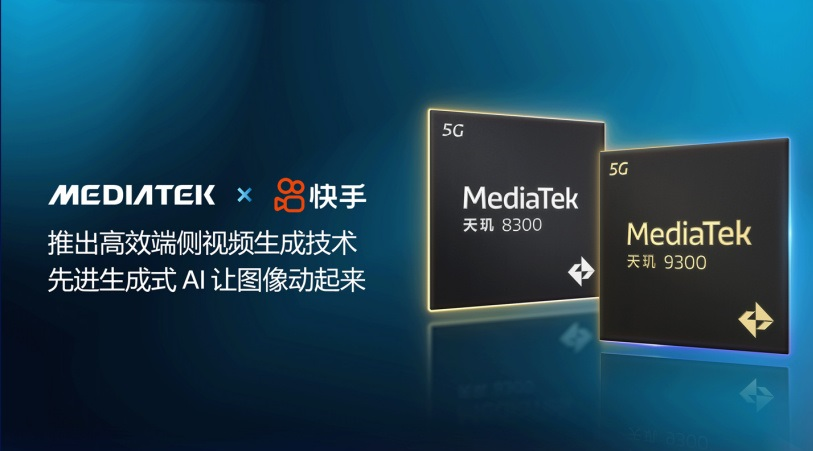
MediaTek & Kwai
According to a recent ITHome news article, MediaTek may introduce on-device AI video creation for its Dimensity 9300 and 8300 chipsets. The NPU in these chipsets will enable video generation from stable images. MediaTek was rumored to unveil video creation at MWC 2024, and now a collaboration between Kwai and MediaTek has been revealed. Kwai is a video-sharing platform and editor similar to TikTok and CapCut.
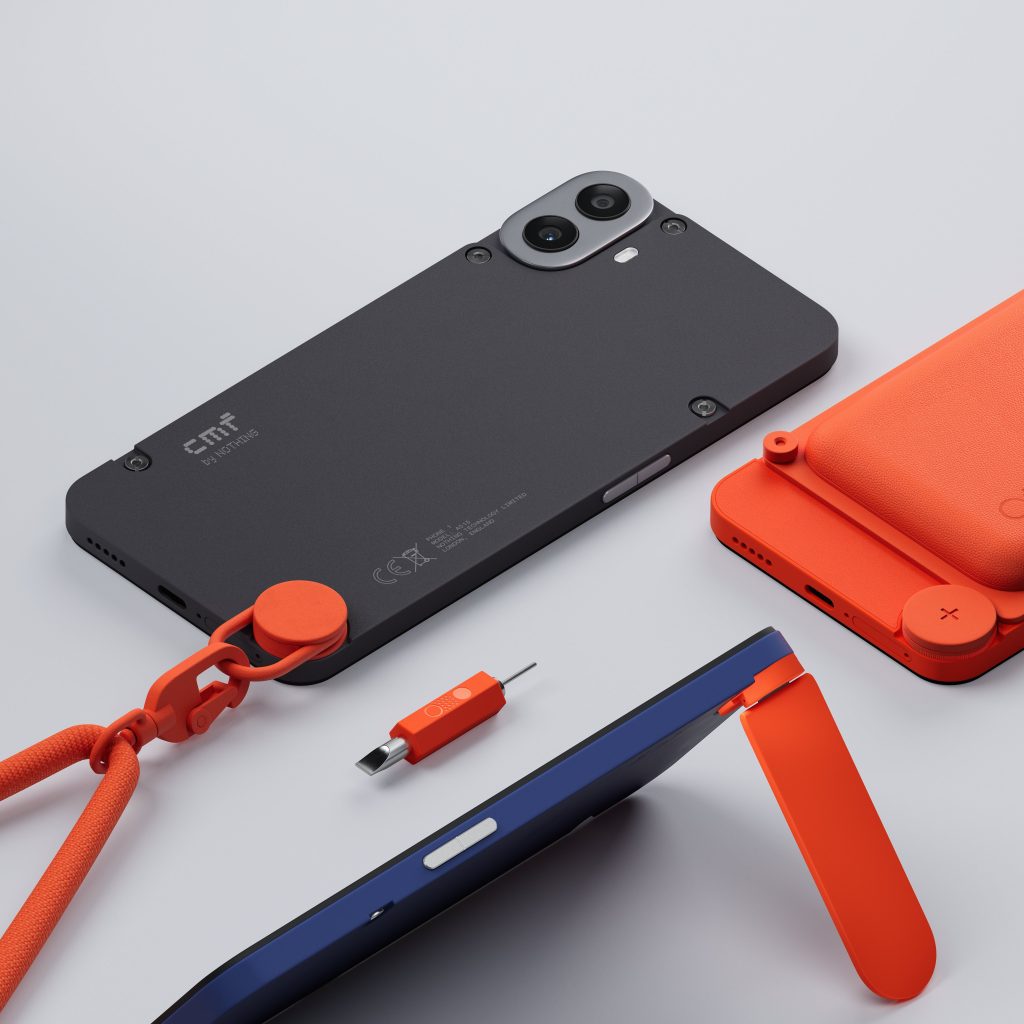
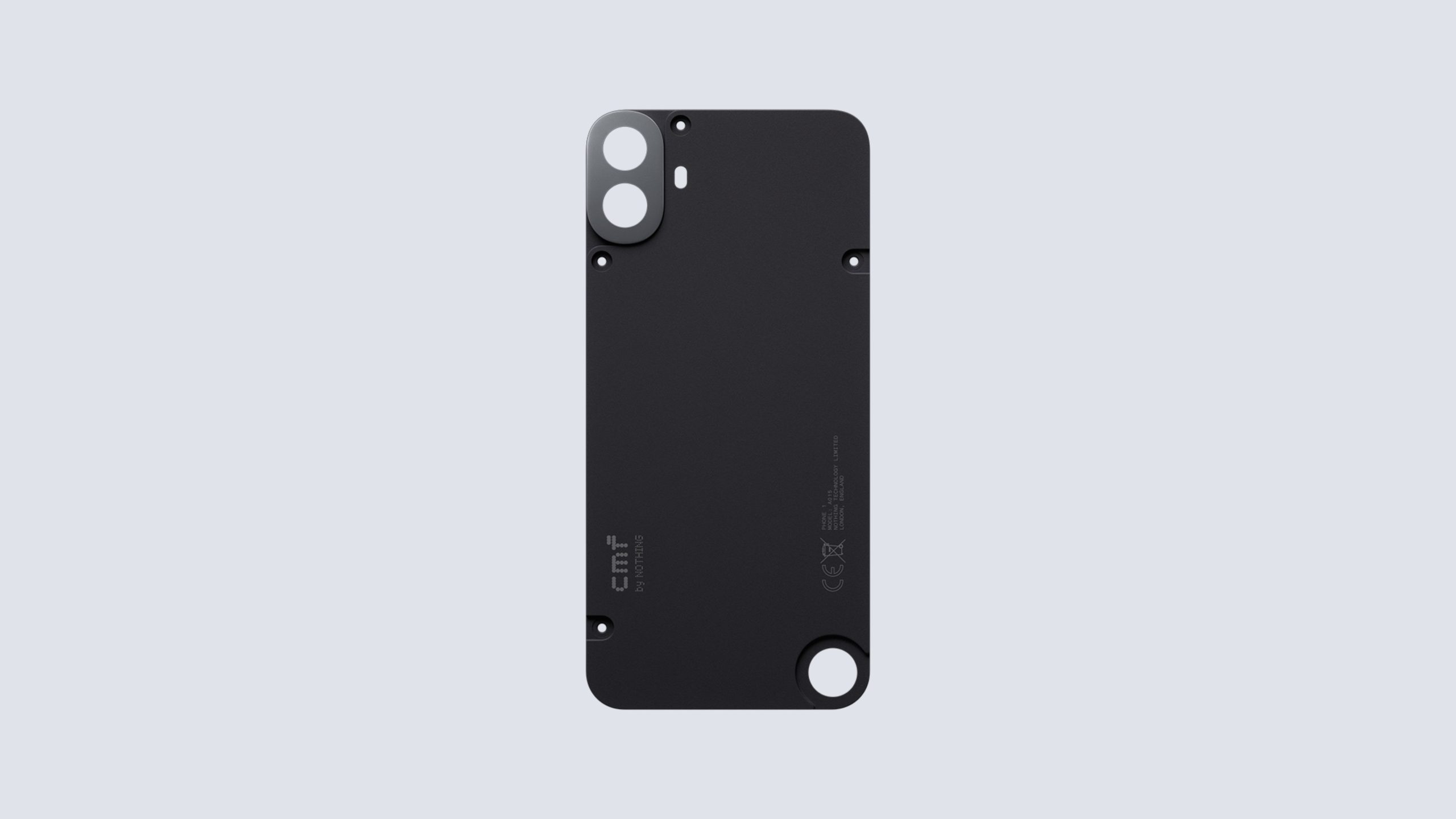
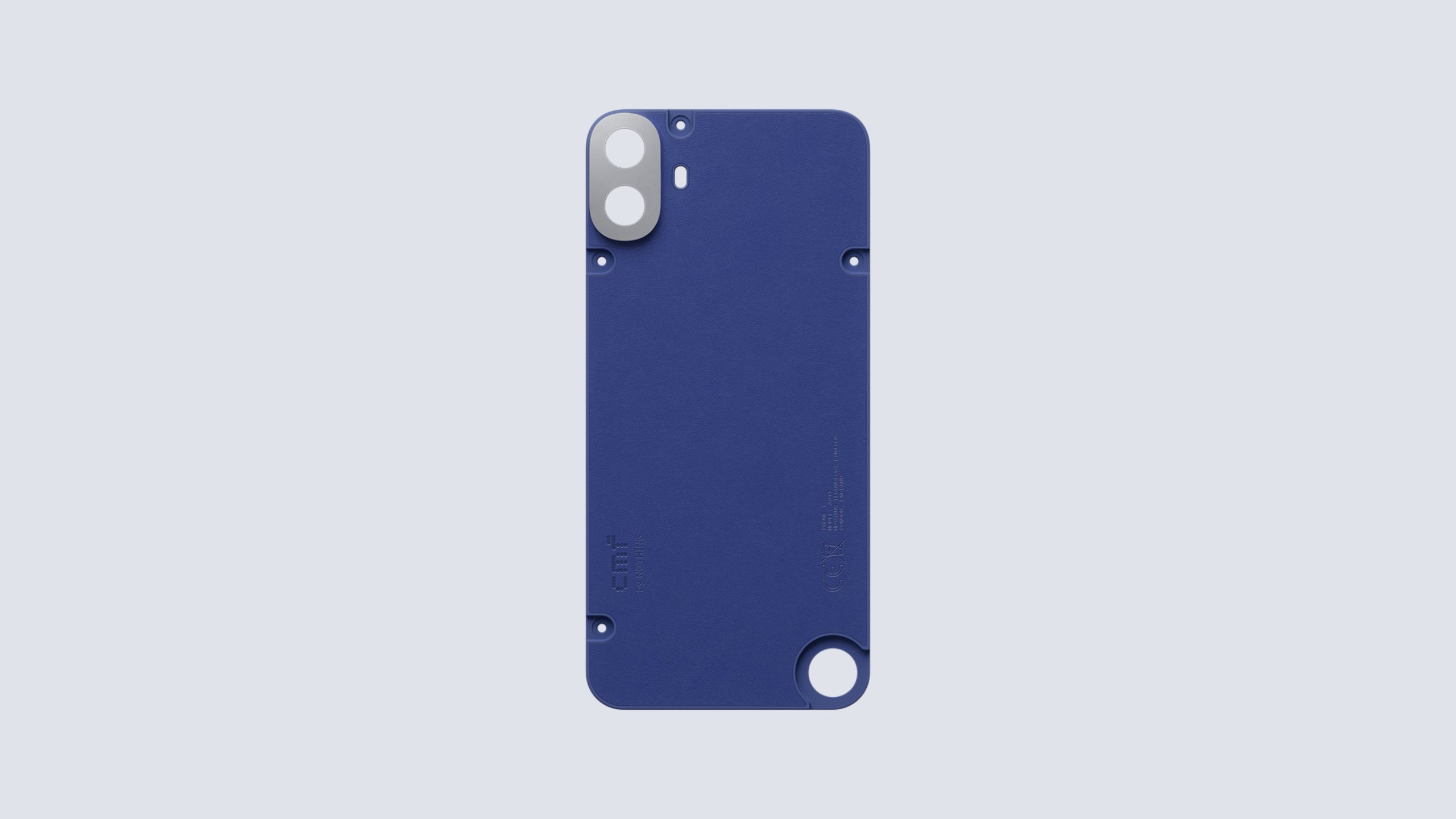
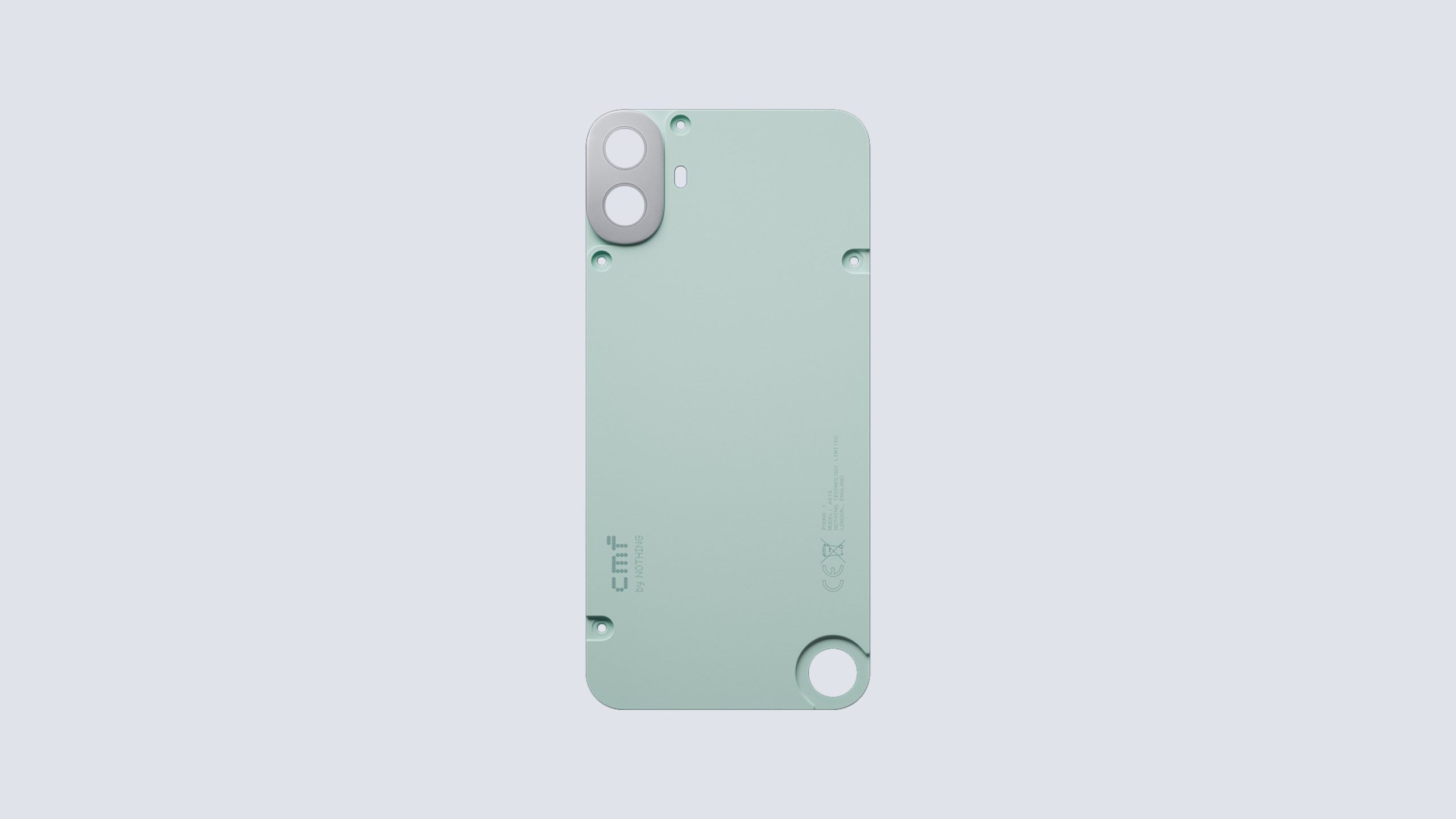
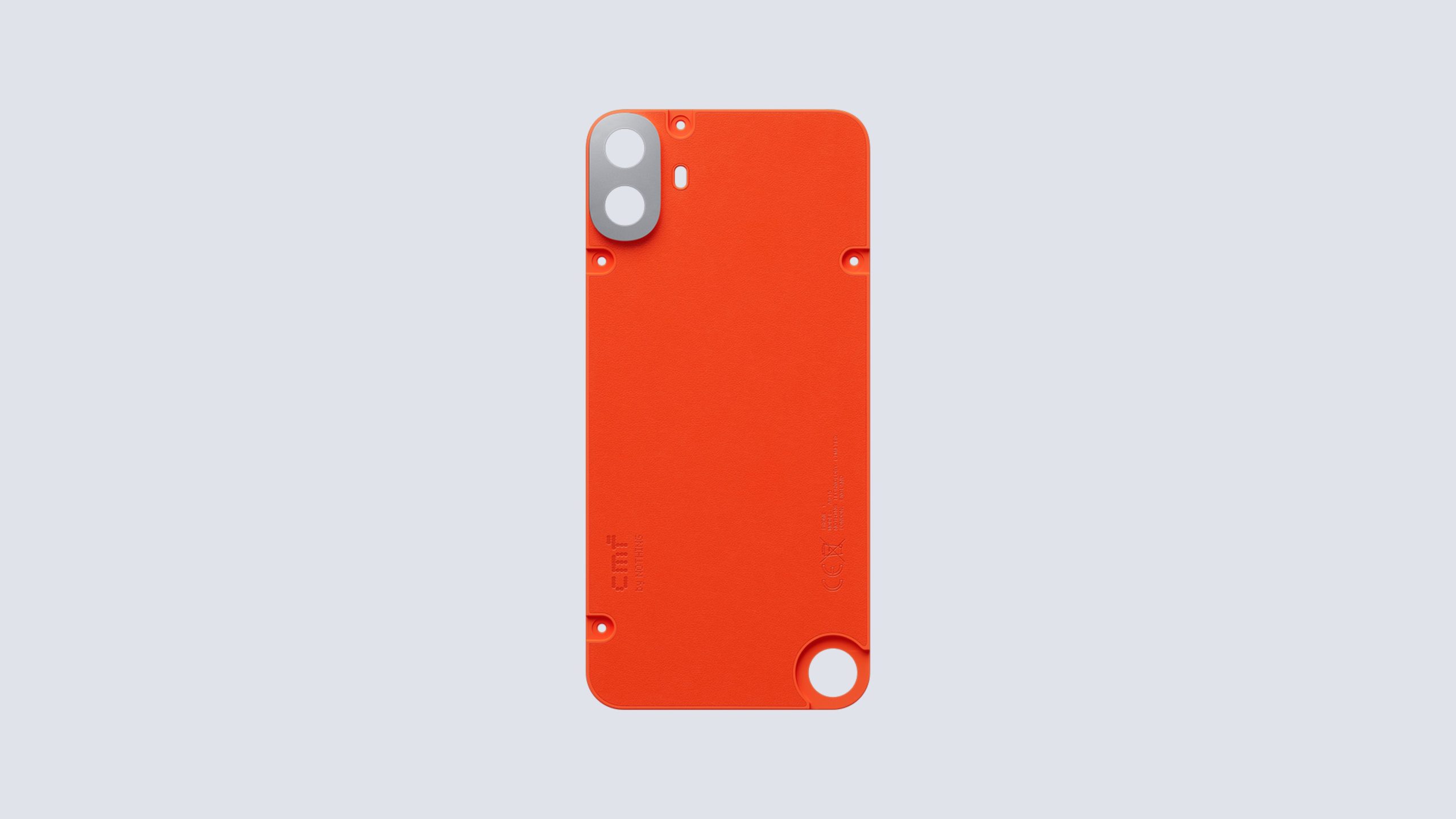
CMF by Nothing is prepared to launch its first smartphone on July 8 called the CMF Phone 1. This new device is expected to debut in the sub-INR20K range in India. Ahead of the launch, the brand has officially revealed its complete back design, while a separate (now deleted) leak from Yogesh Brar has confirmed its front design.
The leaked front image of the device confirms some of the rumored specs, like the device featuring a MediaTek Dimensity 7300 processor, along with 8GB RAM and an option to expand the RAM virtually. The storage options will start at 128GB. For optics, the device will have a 50 MP primary (rear) and a 16 MP front camera, while the display will measure 6.67 inches, use AMOLED technology, and come with moderate bezels. Lastly, the device will be powered by a 5,000mAh battery and operate on Nothing OS 2.6.0 out of the box.
The back of the device will have options to add attachments such as a kickstand, a hook to attach a strap to the device, and what appears to be either a power bank or a wallet for your credit cards. The back cover will be removable and will come with four color options: black, blue, light green, and orange. The SIM ejector tool will double as a screwdriver head to help change the back and add the attachments.
In other news, the brand will launch the CMF Buds Pro 2 on July 8. These earbuds will provide 50 dB active noise cancellation (ANC) and dual drivers for HiFi sound quality. Moreover, they will include ChatGPT integration, allowing users to interact with the AI chatbot via a gesture.
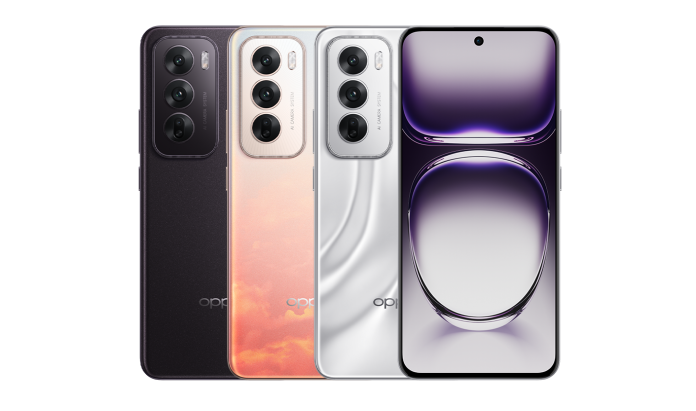
Oppo is bringing its Reno 12 series to India, with a launch scheduled for July 12th. The series includes two models – the Oppo Reno 12 and the Oppo Reno 12 Pro. Since these smartphones have already been launched globally, we’re familiar with their specifications. Let’s take a quick look at them.
Oppo Reno 12, Reno 12 Pro Specifications
Both smartphones boast a large 6.7-inch FHD+ display with a 120Hz refresh rate, built with a flexible AMOLED panel. Oppo describes this display as “Quad-Micro Curved Infinite View,” which translates to slim bezels and an impressive 93.5% screen-to-body ratio.
Reno 12 Pro
The Reno 12 Pro comes in Sunset Gold and Space Brown, featuring a two-toned back panel. The upper part uses Oppo Glow technology for a smudge-resistant finish, while the lower half sports a glossy look with the Oppo branding. The vanilla model is available in Sunset Peach, Matte Brown, and Astro Silver.
For durability, Oppo says the smartphone has “All-Round Armour protection technology” for improved drop and impact resistance. The chassis is made from a high-strength alloy for added sturdiness. Both devices are IP65-rated for dust and water resistance.
Reno 12
Powering the Oppo Reno 12 series is the MediaTek Dimensity 7300 system-on-chip. This hardware is complemented by Oppo’s suite of AI features, including AI Clear Face, AI Writer, AI Recording Summary, and AI Eraser 2.0.
Both models pack a 5000mAh battery with support for 80W SUPERVOOC wired charging, promising a full charge from 0% in just 46 minutes.
In terms of cameras, the Oppo Reno 12 Pro leads with a triple-camera setup: a 50MP Sony LYT-600 primary sensor with optical image stabilization (OIS), a 50MP telephoto camera using the Samsung JN5 sensor for 2x zoom, and an 8MP Sony IMX 355 ultra-wide-angle lens.
The standard Oppo Reno 12 replaces the telephoto with a 2MP macro lens but keeps the 50MP primary sensor and the 8MP ultra-wide-angle lens. For selfies, the Pro model features a 50MP camera, while the standard model sports a 32MP sensor.
Lava has officially announced that the Blaze X 5G smartphone will launch in India on July 10th at 12 PM IST.
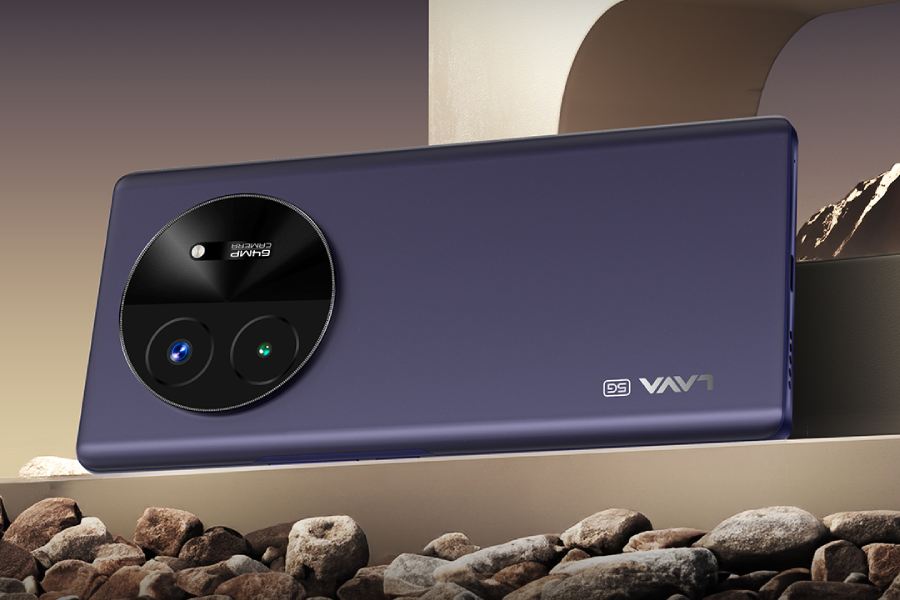
The company released a teaser announcing the launch which also gives us a peek at the design of the phone. The Blaze X 5G features a dual rear camera setup housed in a circular module.
The primary camera will be a 64MP sensor, as revealed by the engraving on the module. And it will be accompanied by a secondary camera and an LED flash.
The bottom edge of the phone has a USB Type-C port, speaker grille, and SIM card tray. The power button and volume rockers are on the right side, while the display has a centered punch-hole cutout for the front-facing camera. Speaking of the display, the Blaze X 5G is expected to be the cheapest 5G smartphone from Lava to feature a curved AMOLED panel.
Lava has also confirmed that the Blaze X 5G will come with three memory options: 4GB, 6GB, and 8GB. Each will come with support for virtual RAM expansion of up to 8GB. The phone will be available in two colors: Grey and Dark Violet.
Additionally, Amazon has confirmed that the Blaze X 5G will be available for purchase at the upcoming Amazon Prime Day Sale starting from July 20th. Based on what we know so far, we can expect the smartphone to be priced under Rs 20,000 in the Indian market.
While the teaser revealed some key details about the Blaze X 5G, Lava remains tight-lipped on other specifications like the processor, battery capacity, and software version. We can expect the company to reveal these details closer to the launch date.
Google is apparently planning on exporting its Pixel series of smartphones to the US and Europe from India. It is looking to establish the region as a key export hub with its commercial production set to kick off soon from two of its contract manufacturing partners.
Is India a new manufacturing hub for Google?
According to a MoneyControl report, sources have stated that the production will be carried out through Foxconn and Dixon subsidiary Padget Electronics. Trial production has already begun in Tamil Nadu (South Indian State) with Foxconn, which is a major manufacturer of Apple devices as well. The source close to the matter added that Dixon is set to add Google to its customer list in the second half of the year through its partnership with Compal. It will be sharing production with Foxconn.
The base variant of the Pixel phones will be made by Dixon Technologies, while Foxconn will be responsible for the higher-end Pro variants. Google has yet to make any official announcement, but this could go official sometime in the second half of this year. The report adds that it plans on shipping India made Pixel phones to the European market first. These same units would also address demand in the US later on.
India as an export hub would help diversify its manufacturing and the region offers low labor costs along with local incentives. This news also arrives following the company’s announcement to unveil the Pixel 9 series arriving ahead of its typical Pixel launch cycle. Google’s next gen flagship is set to launch on 13th August 2024, over its original October-November announcement. Real life images of the Pixel 9 also surfaced recently, showcasing the device in a Pink color option. More reports regarding this should surface soon, so stick around for more.
After the successful launch of Snapdragon X Elite, many laptops have started incorporating this high-efficiency, high-performance chip. The manufacturers like Asus, Samsung, and Microsoft Surface now offer versions equipped with the Snapdragon X Elite. You can check out the previously unveiled Snapdragon X Elite laptops here.
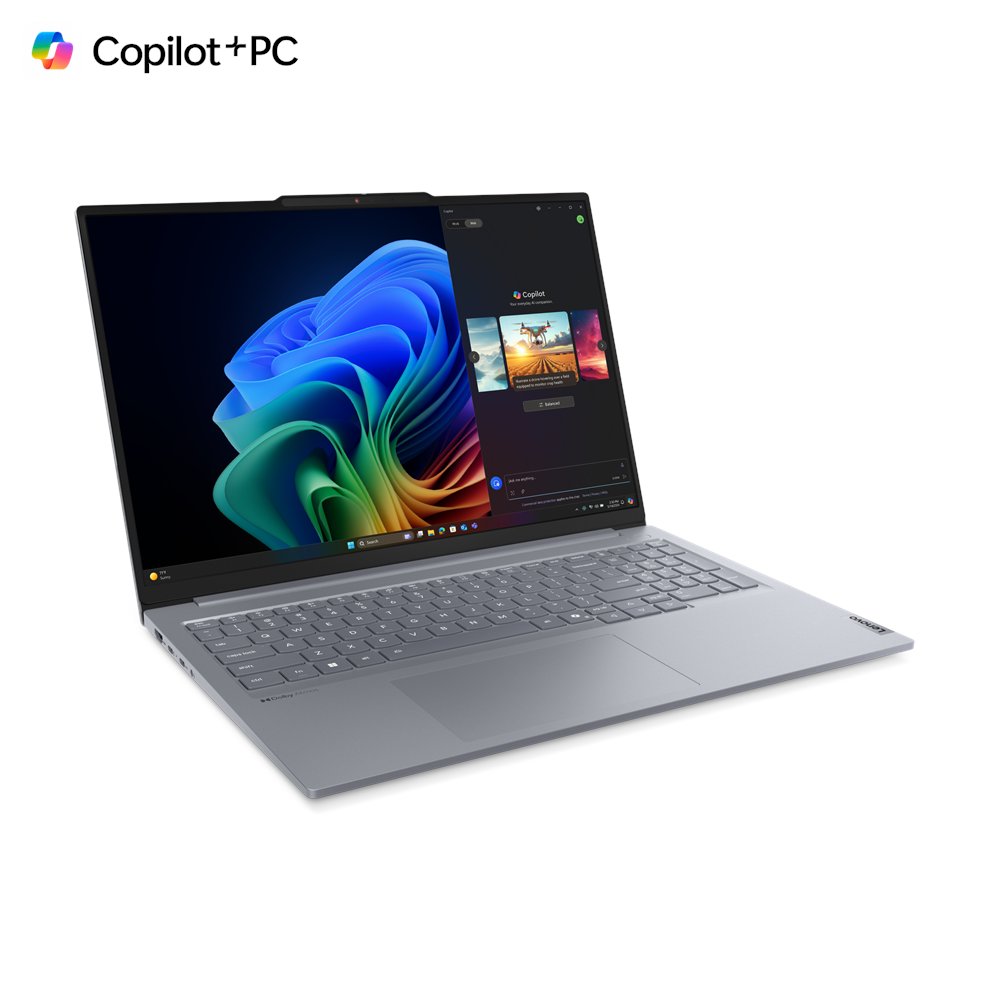
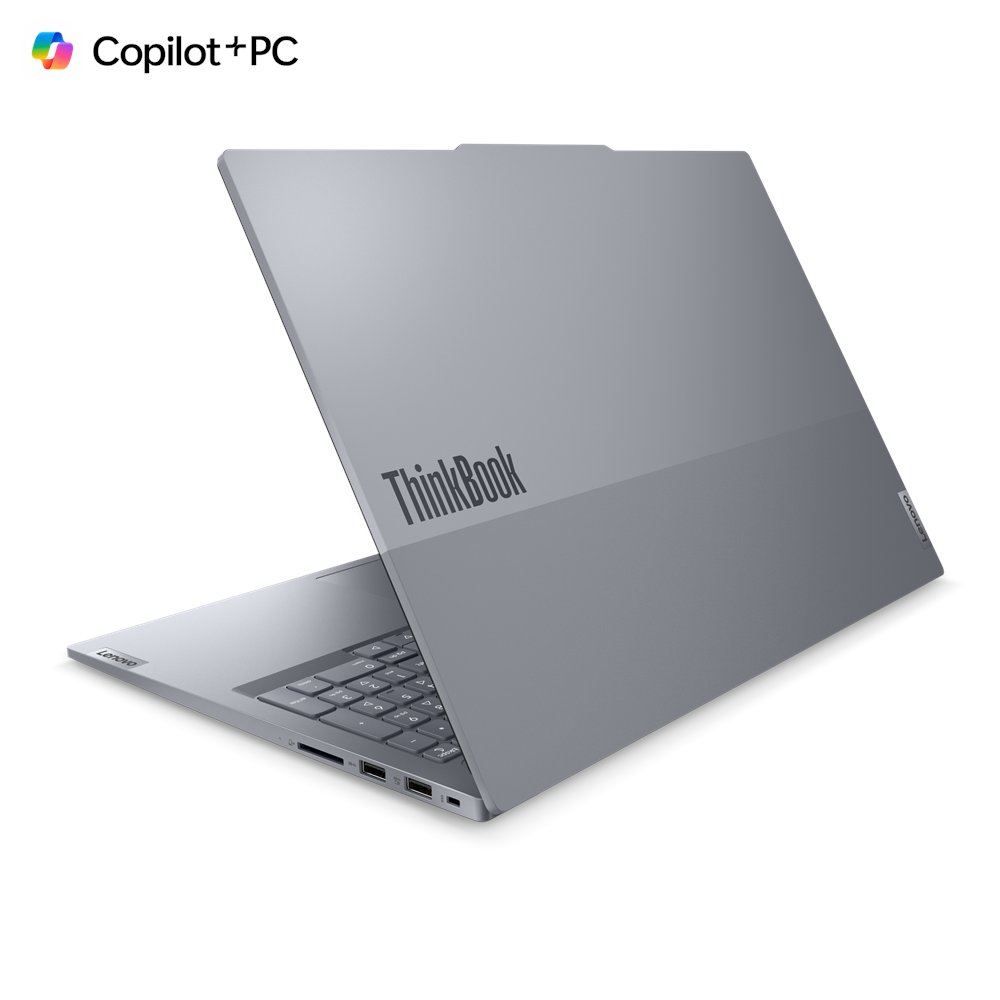
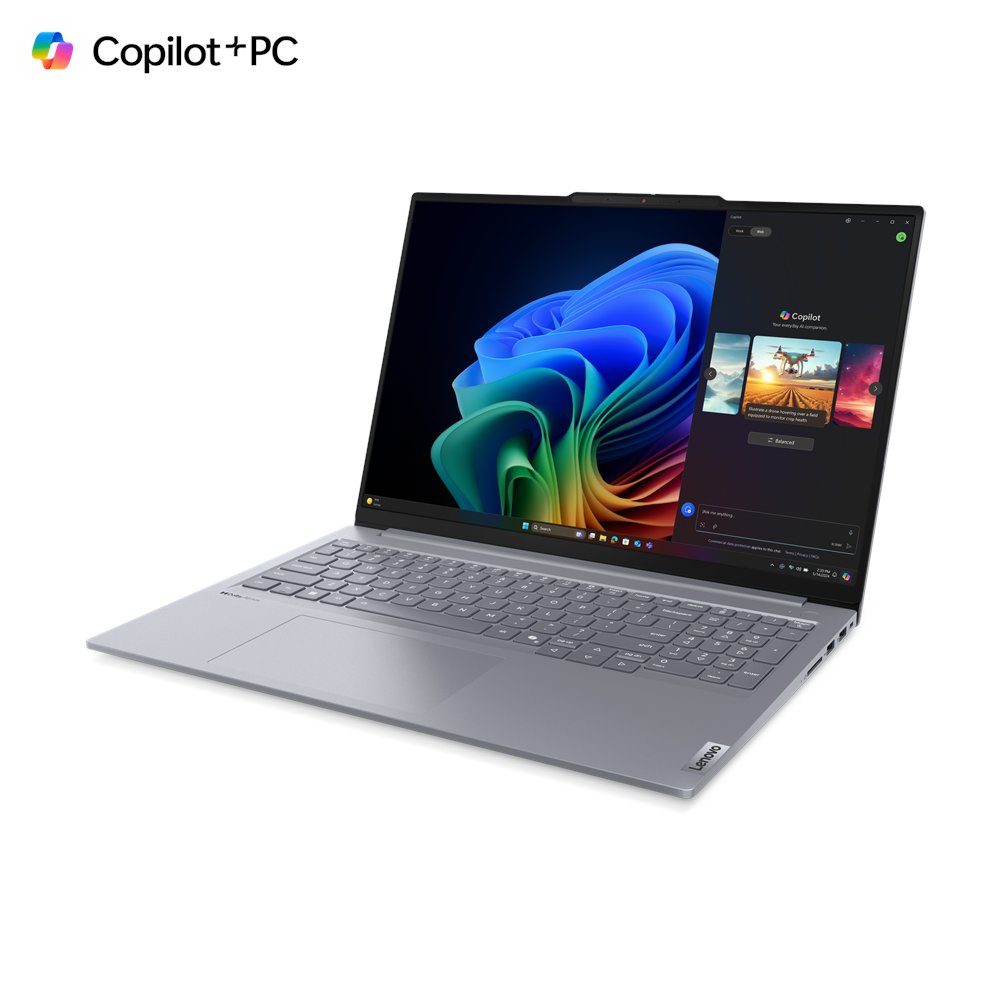
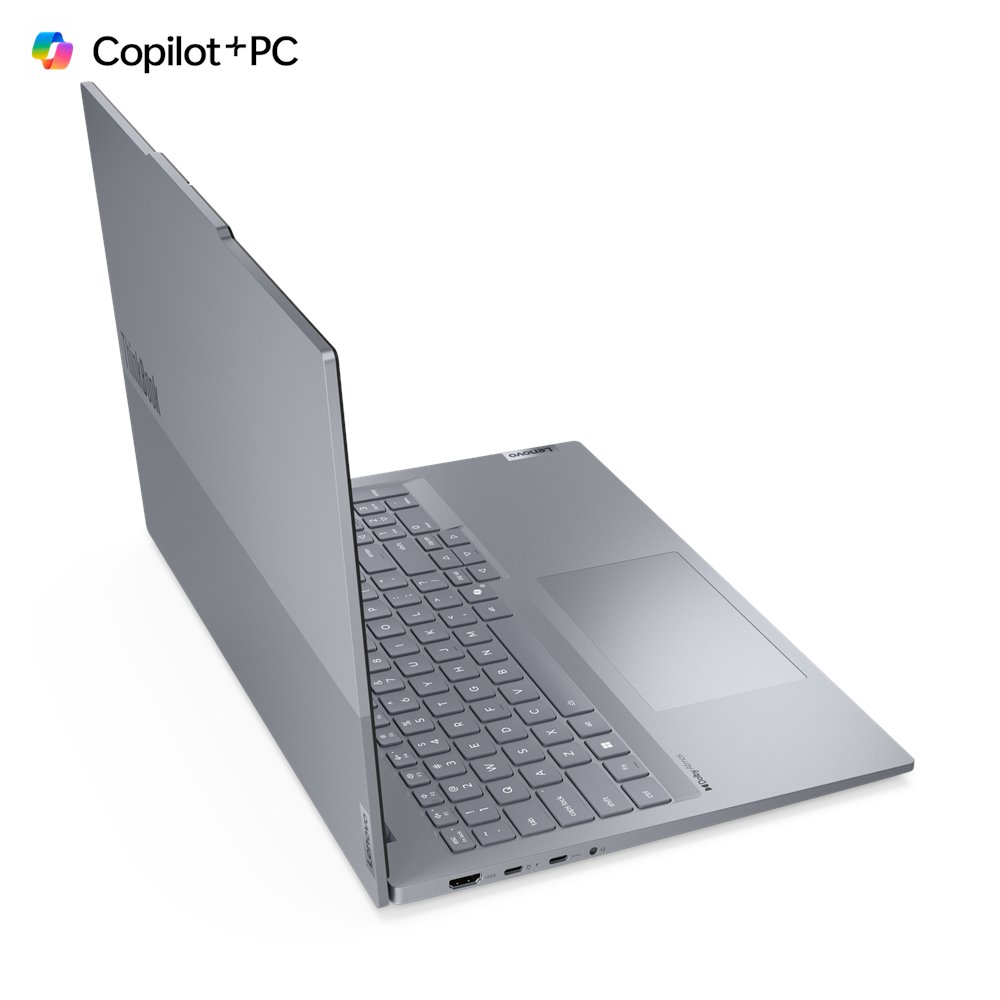
Lenovo seems poised to join the Snapdragon X Elite journey, with leaked render images of their new 16-inch ThinkBook surfacing online. It retains the classic ThinkBook style. While the marketing name for the upcoming laptop isn’t confirmed, previous leaks suggested it might be called the ThinkBook Gen 7.
The upcoming ThinkBook model will feature the familiar classic ThinkBook design. Photos reveal it will include 2x USB-A, 2x USB-C, HDMI, a 3.5mm headphone jack, and an SD card slot. These images of the ThinkBook 16 were shared on Twitter by WalkingCat.
Though it may not has the fastest GPU among all ARM processors, the recently released Snapdragon X Elite offers a very efficient and high performance CPU. With the Snapdragon X Elite, many companies have quickly launched their new products. More Windows laptops with ARM CPUs might appear in the near future. The X Elite actually beats some of the ARM processors by Apple.
Just a week before Samsung‘s next Galaxy Unpacked event, detailed specifications of the upcoming Galaxy Z Fold 6 and Galaxy Z Flip 6 have been leaked. The leak comes courtesy of Evan Blass, a well-known tech leaker, who shared marketing images of both phones in his Substack newsletter.
The leaked information sheds light on some key improvements, including a brighter screen for the Fold 6 and a bigger battery, and better cooling for the Flip 6. There’s also good news on the durability front for both phones.
Galaxy Z Flip 6
The Galaxy Z Flip 6 retains the same display sizes as its predecessor – a 3.4-inch cover screen and a 6.7-inch main foldable display. The main screen offers Full HD+ resolution and 120Hz variable refresh rate while the cover screen has 720 x 748 pixels resolution and runs at 60Hz.
The bigger news for the Flip 6 lies under the hood. It’s expected to pack a 4,000mAh battery, up from the 3,700mAh battery in the Z Flip 5. This should translate to improved battery life. Additionally, the Flip 6 will reportedly be the first phone in the series to feature a vapor chamber cooling system, which should help manage heat better during demanding tasks.
The camera setup on the Flip 6 sees an upgrade to a 50MP primary sensor, while the 12MP ultrawide sensor and the 10MP selfie camera remain unchanged.
Galaxy Z Fold 6
As for the Fold 6, it has a 6.3-inch cover screen and a 7.6-inch main foldable display. Both displays offer a 120Hz refresh rate and a peak brightness of up to 2,600 nits, matching the Galaxy S24 Ultra.
The Fold 6 is expected to be slightly lighter than its predecessor, weighing in at 239g compared to the Fold 5’s 253g and it will have the same 4,400mAh battery as its predecessor.
The camera system remains unchanged as well, with a 50MP primary sensor, a 12MP ultrawide sensor, and a 10MP telephoto sensor with 3x optical zoom. It also keeps the same dual front-facing cameras – a 10MP sensor on the cover screen and a 4MP sensor on the main display.
Shared Specs
In terms of durability, both the Galaxy Z Fold 6 and Z Flip 6 are expected to boast an IP48 rating for dust and water resistance. While this isn’t quite as good as the IP68 rating found on many high-end smartphones, it’s a significant improvement over the IPX8 rating typically seen on foldable phones. The phones have frames made of Armor Aluminium and the display will be protected by Corning Gorilla Glass Victus 2.
Moreover, both foldable will be powered by the Snapdragon 8 Gen 3 processor, paired with 12GB of RAM and offering storage options of 256GB and 512GB. The Fold 6 might also have a 1TB storage variant.
They will run Android 14 with Samsung’s One UI 6.1.1 on top which has Galaxy AI baked into it. Users will be able to use features like Circle to Search, Interpreter Mode, and Notes Summarization. But there’s no mention of any new AI features for foldables that were rumored earlier.
Other shared features include a side-mounted fingerprint reader, stereo speakers, dual-SIM support, and connectivity options like 5G (sub-6GHz), Wi-Fi 6E, Bluetooth 5.3, NFC, and a USB 3.2 Gen 1 Type-C port. However, Samsung DeX support is expected to be exclusive to the Galaxy Z Fold 6.
In today’s edition of this newsletter, we’ll explore a range of exciting announcements, from Amazfit’s integration of advanced AI in their smartwatches to Red Magic’s latest high-performance gaming phone. We’ll also delve into Google’s ambitious plans for chip development and OnePlus’s upcoming summer event.
Additional details on these stories and more are below.
The new Zepp OS 4 update introduces several features, including OpenAI’s GPT-4o multi-modal and multilingual model. The update covers various Amazfit smartwatches, such as the Cheetah, Balance, Active, Falcon, and T-Rex Ultra.
Red Magic, known for its high-performance gaming phones, has released its latest model, the Red Magic 9S Pro series. This new phone aims to improve mobile gaming with top-notch specifications and smart AI features.
A report out of Taiwan claims that Google has partnered with TSMC and has already made some progress in the development of the Tensor G5. Notably, the Tensor G5 will use TSMC’s 3nm process. Google is also reportedly investing in independent research and development of its chips.
The OnePlus Summer launch event is set to take place later this month. The details about the upcoming devices remain a mystery at the moment but the brand will eventually reveal in the coming days. To recall, last year’s Summer launch event was about Nord-branded devices, including smartphones and TWS earphones.
A fresh new leak from Weibo tipster Digital Chat Station has shed light on the Xiaomi 15 Pro’s battery and charging capabilities. The phone reportedly comes with a 5400mAh battery and supports 100W charging for wired and wireless options.
The tipster mentioned in the post comments that the engineering prototype of the Xiaomi 15 Pro currently uses 120W wired charging. However, this faster option might not be available in the final product due to thermal management concerns.
Digital Chat Station also explained the choice of battery capacity. According to the tipster, a 5400mAh battery is a deliberate decision to keep the phone slimmer and lighter.
While this capacity might seem lower compared to some competitors, the tipster notes that the battery has a higher energy density. For example, the Realme GT 7 Pro is rumored to have a 6000mAh battery, but the Xiaomi 15 Pro’s higher energy-density battery design should offer improved efficiency.
There’s more we know about the Xiaomi 15 Pro, thanks to the steady streams of leaks over the previous months. The display is expected to be a 2K resolution micro-curved panel with an ultrasonic fingerprint sensor for biometrics.
The camera system will include three lenses including a 50MP main sensor with a large aperture, a 50MP ultrawide lens, and a 50MP periscope lens with 3x optical zoom.
The main camera will reportedly use an OmniVision OV50K sensor with innovative TheiaCel technology for superior low-light performance and dynamic range. Additionally, the camera module design may get a slight makeover as the flash unit is said to be positioned outside the main housing.
As for the processor, the device will debut with the Snapdragon 8 Gen 4 chip. However, there have been rumors that phones with the 8 Gen 4 might cost more due to the chip’s expensive manufacturing process. While there haven’t been specific reports about the Xiaomi 15 Pro’s price yet, it’s possible that the phone could be more expensive if these rumors are true.
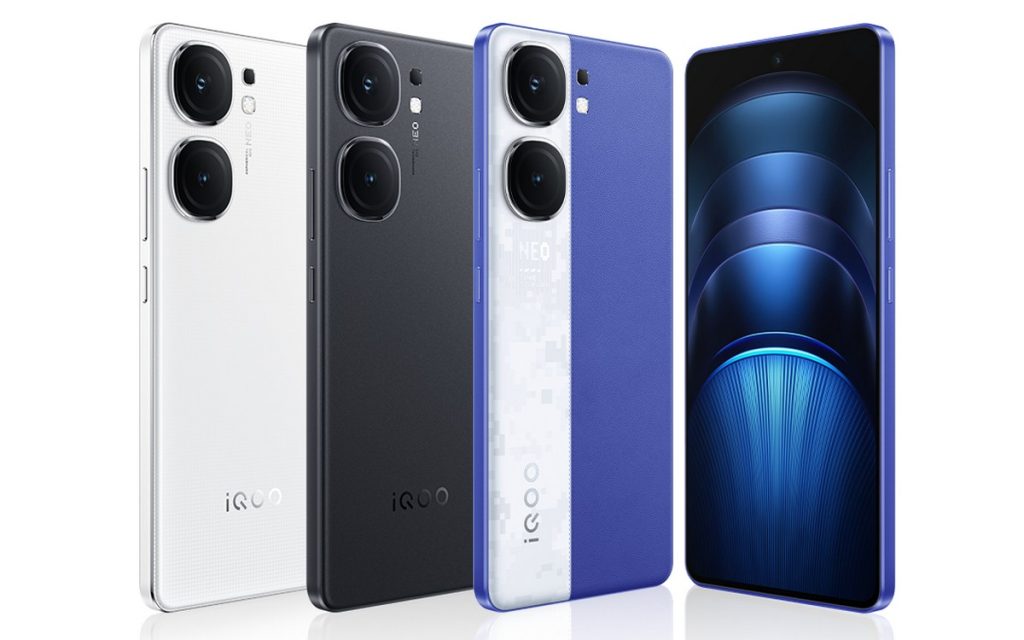
iQOO is all set to launch the iQOO Neo 9S Pro+ on July 11 in China. The event will see the arrival of multiple products, such as the iQOO Watch GT, the iQOO TWS Ti earbuds, and the 1TB variant of the iQOO Pad 2 Pro. Before the launch, the brand has been teasing out the key features of the Neo 9S Pro+. It has released the following image to showcase its design and color options.
iQOO Neo 9S Pro+ design, color options
iQOO Neo 9S Pro+
The overall design of the Neo 9S Pro+ is identical to other Neo 9 series of smartphones. It has a flat display and a dual camera setup on the back. The phone will be available in black, white, and blue-white dual-tone dubbed “Buff Blue” in China. The brand is currently receiving reservations of the device through its multiple retailer platforms, including its official website, in China. There is no clarity on whether the device will be released outside of the home market.
iQOO Neo 9S Pro+ specifications (expected)
The iQOO Neo 9S Pro+ is expected to feature a 6.78-inch OLED display that offers a 1.5K resolution, a 144Hz refresh rate, and an ultrasonic in-screen fingerprint sensor. It will run on OriginOS 4-based Android 14. It will come equipped with a 16-megapixel front camera and a rear-facing 50-megapixel + 50-megapixel dual-camera system.
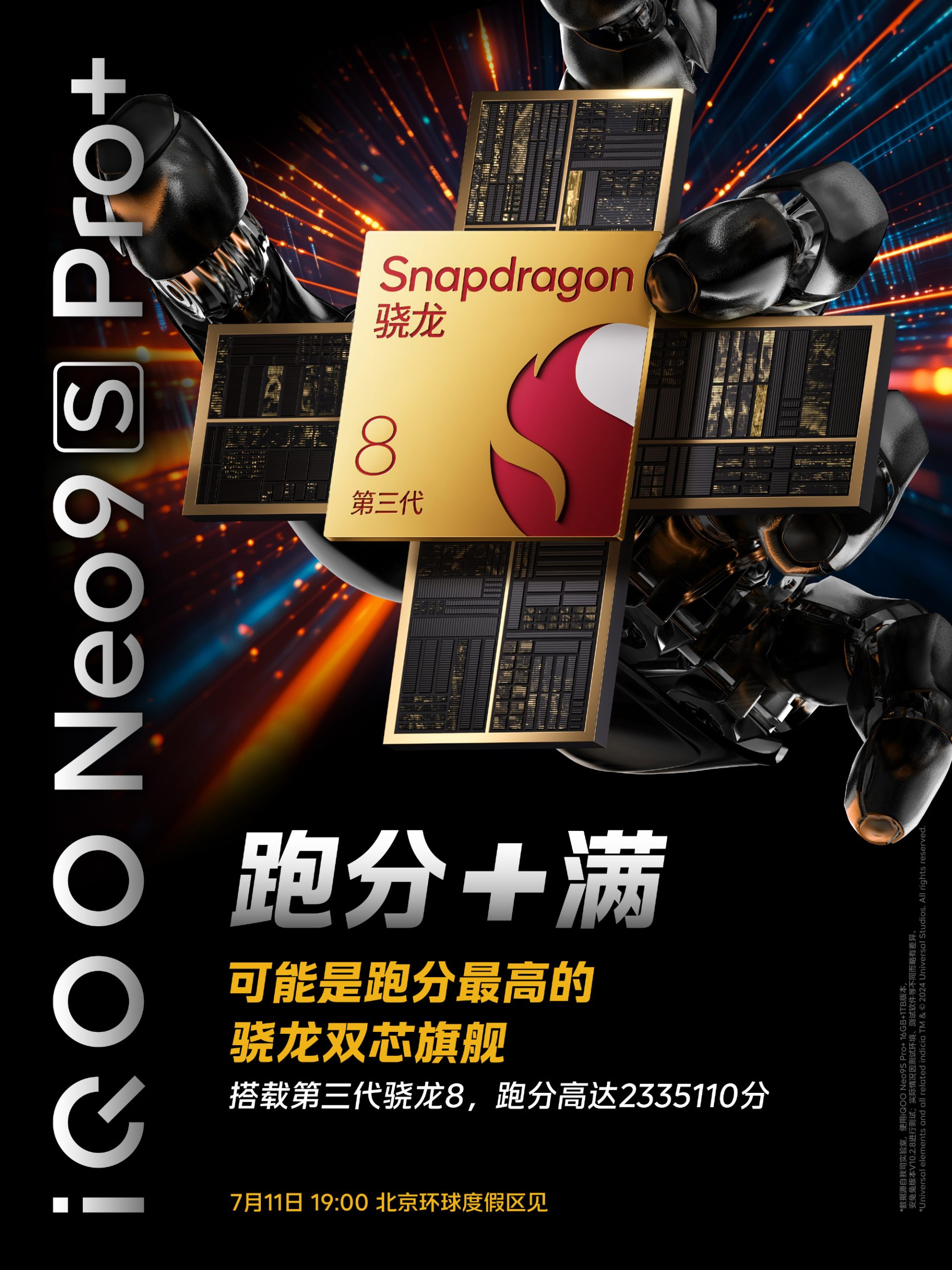
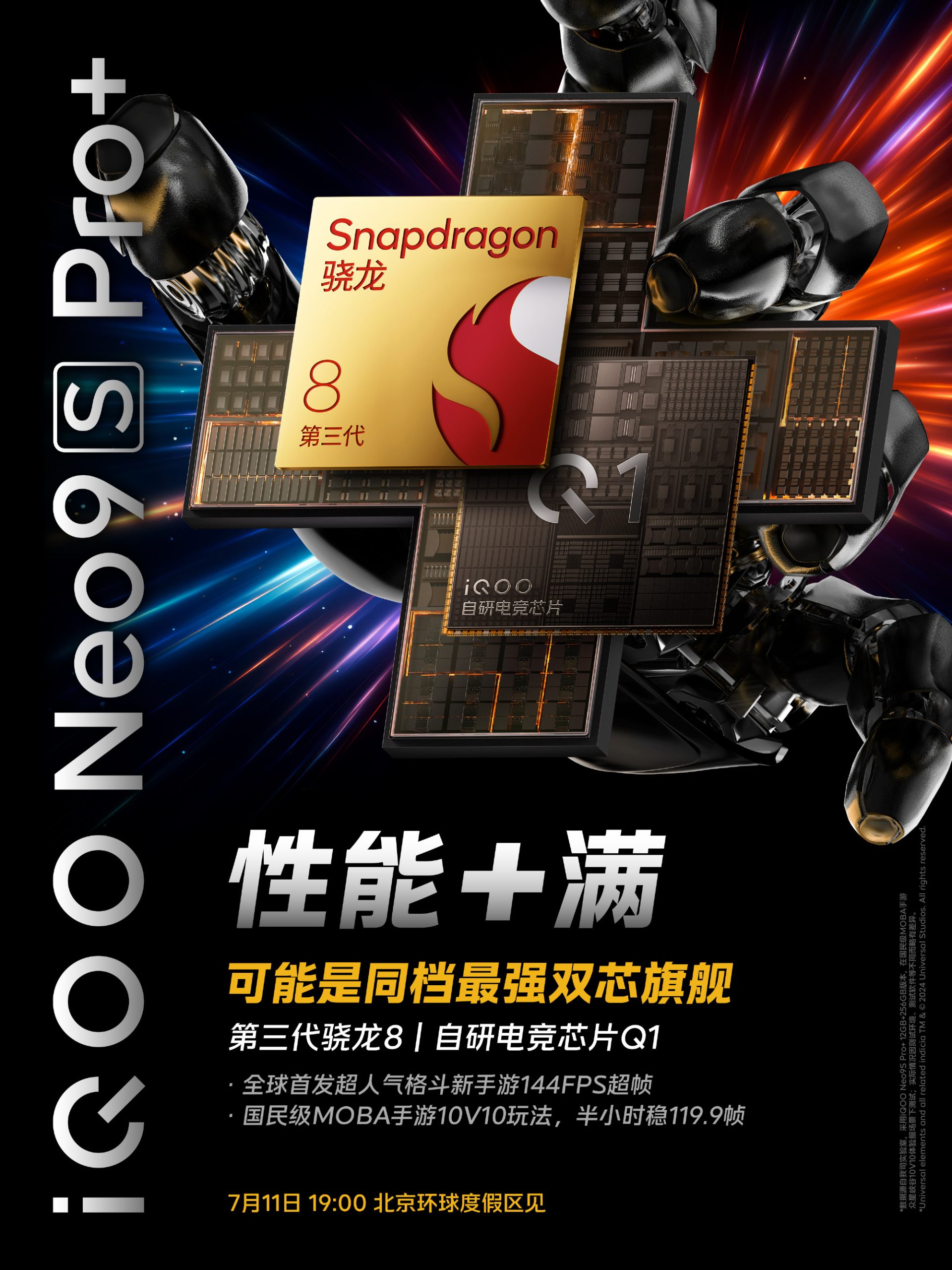
The Neo 9S Pro+ features the Snapdragon 8 Gen 3 chipset. It may ship with up to 16 GB of LPDDR5x RAM, up to 1 TB of UFS 4.0 storage, and a 5,500mAh battery with 120W fast charging.
The company confirmed that the device achieved an impressive score of 2,335,110 on the AnTuTu benchmarks. It also revealed that the device can run a highly popular fighting game at a super frame rate of 144 fps. Additionally, it can handle the new 10v10 gameplay mode of a national-level MOBA mobile game, Star Canyon, maintaining a stable 119.9 frames for half an hour.
Honor is all set to announce the Honor Magic V3 series of foldable phones in China on July 12. At the same event, the company will take off covers from the MagicBook Air 15 laptop and the MagicPad 2 tablet. Ahead of the launch, the company has confirmed a few details about the tablet. Here is a look at what to expect from the device.
Honor MagicPad 2 design
Honor MagicPad 2
The official images of the Honor MagicPad 2 show that it will arrive in black, white, and blue shades. The IMAX Enhanced mentioned on the back of the device promises HDR capability, offering greater detail, brighter highlights, and a wider color gamut for a more cinematic viewing experience. The absence of metal contact points on the device suggests that the device may offer keyboard connectivity via Bluetooth.
The round camera module houses a single camera and an LED flash. On the front, it features slim bezels around its 12.3-inch screen.
Honor MagicPad 2 specifications (rumored)
Honor MagicPad 2
According to tipster DCS, the Honor MagicPad 2 features a 12.3-inch OLED panel that offers a 3K resolution, a 144Hz refresh rate, and ultra-high frequency eye protection dimming. As per previous leaks, the device will come equipped with the Snapdragon 8s Gen 3 chipset.
The top variant of the MagicPad 2 will offer 16 GB of RAM and 1 TB of storage. Unfortunately, there is no information available about the cameras, battery, or charging capabilities of the device.
Smartphones now feature backs made of polycarbonate, glass, leather, and ceramic. The shift from metal to these materials is due to various reasons, such as reduced signal interference, lower weight, improved heat dissipation, increased design flexibility, and better wireless charging compatibility, However, a new leak indicates that OnePlus is planning to launch a smartphone with a metal back, adding a touch of creativity. This phone appears to be the upcoming OnePlus Nord 4.
OnePlus Nord 4 design
OnePlus recently confirmed that it will hold its next launch event on July 16 for the global market. The event is expected to see the arrival of multiple products, such as the OnePlus Nord 4, the OnePlus Watch 2R, and the OnePlus Buds 3 Pro. Reports have claimed that the Nord 4 will be a rebranded version of the Snapdragon 7+ Gen 3-powered OnePlus Ace 3V, which debuted in China a couple of months ago.
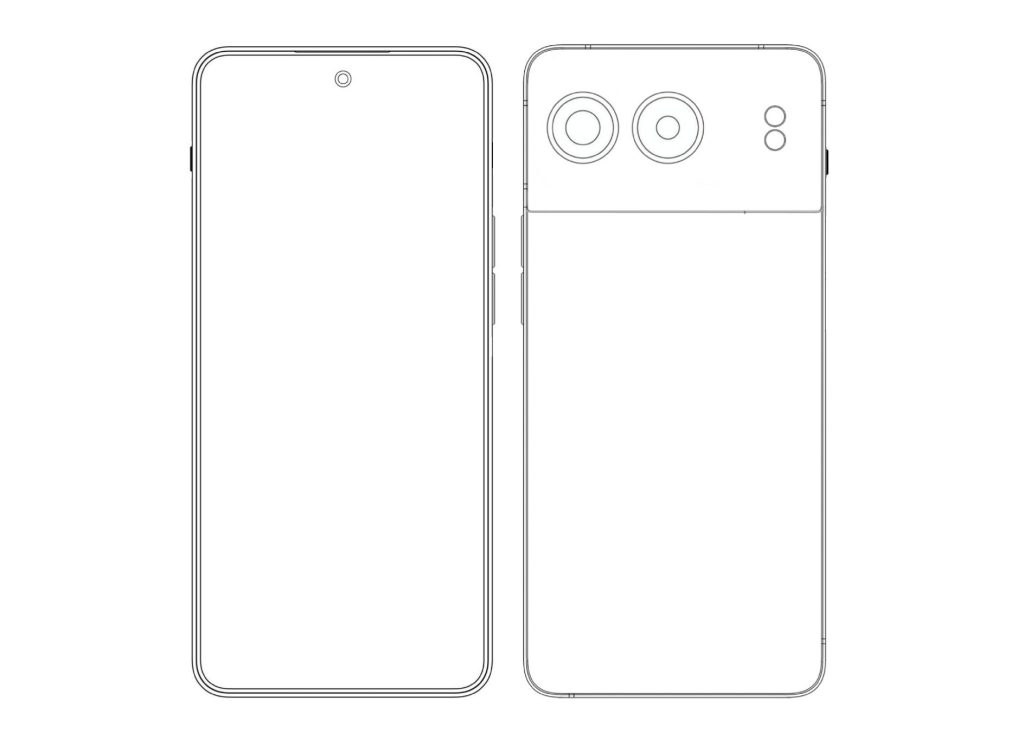
Alleged OnePlus Nord 4 schematic by DCS
Today, tipster Digital Chat Station shared a schematic via his Weibo handle, revealing an upcoming OnePlus phone with the Snapdragon 7+ Gen 3 chip for the global market. This implies that he may have unveiled the design of the OnePlus Nord 4. He claimed that the camera decoration is made of glass, while the rest of the body, including the middle frame, is a one-piece metal construction. The device features a dual-camera system arranged horizontally.
OnePlus Nord 4 leaked image by tipster Sanju
The schematic is identical to the real-life image of the OnePlus Nord 4 shared by tipster Sanju. The specifications mentioned by the tipster are an exact match with China’s Ace 3V. So, the Nord 4 could be a rebranded Ace 3V with a renewed back panel. We still need to see if the Nord 4 offers different specifications from its Chinese counterpart.
OnePlus Nord 4 specifications (rumored)
The OnePlus Nord 4 is expected to feature a 6.74-inch OLED display with a 1.5K resolution, a 120Hz refresh rate, and 2150nits peak brightness. The Snapdragon 7+ Gen 3-powered phone may ship with up to 16 GB of LPDDR5x RAM, up to 512 GB of UFS 4.0 storage, and a 5,500mAh battery with 100W fast charging.
It may arrive with a 16-megapixel front camera and a 50-megapixel (Sony IMX882 with OIS) + 8-megapixel (IMX335 ultra-wide) dual-camera setup on the back. In addition, it is expected to feature dual speakers, an IR blaster, and ColorOS 14-based Android 14.
Last month, Realme unveiled the Realme GT 6 with the Snapdragon 8s Gen 3 and a curved-edge display for the global market. Now, the brand is all set to announce the Realme GT 6 on July 9 in China. With a Snapdragon 8 Gen 3 chip and a flat display onboard, it will be a different device as compared to its global version. Ahead of the launch, the device, which bears the RMX3800 model number, has bagged approval from China’s TENAA certification platform, revealing its full specifications and images.
Realme GT 6 design
ReaRealme GT 6 TENAA images
The Realme GT 6’s images show that it has a flat AMOLED display on the front. The brand pairs the flat screen with a metal frame. The back panel of the phone has a rectangular camera module that houses a dual-camera setup and a ring LED flash.
Realme GT 6 specifications (rumored)
Realme GT 6 Moon Explorer Edition
The Realme GT 6’s AMOLED screen measures 6.78 inches and offers 1280 x 1264 pixels resolution. According to reports, the BOE S1+ screen of the GT 6 supports a 144Hz refresh rate and up to 6,000 nits of brightness. It has an in-screen fingerprint scanner for added security.
The Snapdragon 8 Gen 3-powered phone will arrive in China with 8 GB /12 GB / 16 GB / 24 GB of RAM. It will be offered with 128 GB / 256 GB / 512 GB / 1 TB of storage. The company has already confirmed that the device will pack a 5,800mAh battery with 120W fast charging support.
The GT 6 will have a 16-megapixel camera on the front. Its back panel has a 50-megapixel primary camera and an 8-megapixel lens, probably for ultrawide shots. Speculation suggests that the Sony IMX890 could serve as the primary camera on the device. The phone measures 162.02 x 76.07 x 8.43mm and weighs 206.7 grams. Shown above is the official image of the Moon Exploration Edition of the Realme GT 6, which features a glass back and aerospace-grade aluminium middle frame.
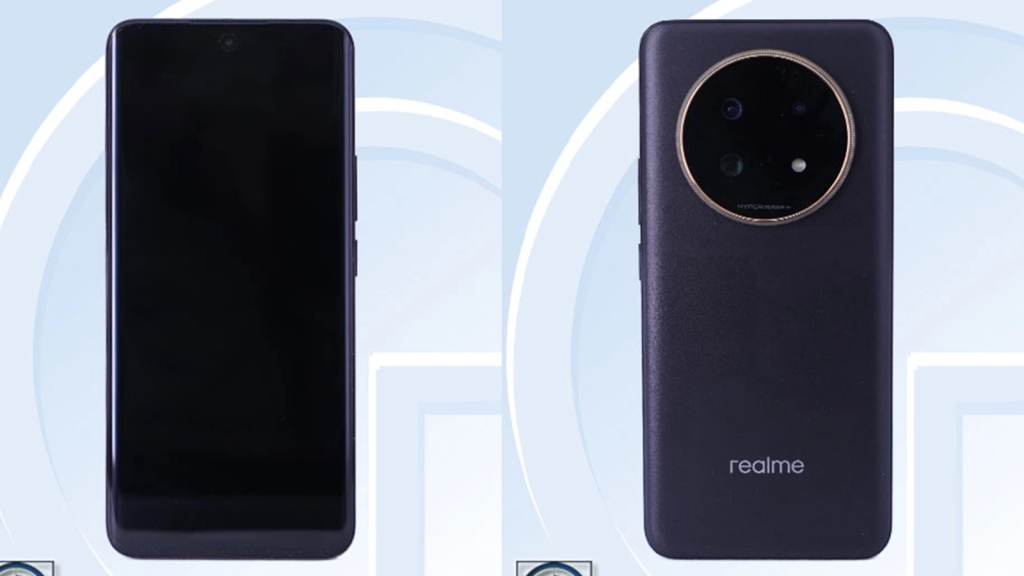
Earlier this week, Realme began teasing the Realme 13 Pro series of smartphones in India. There is a possibility that the Realme 13 Pro and 13 Pro+ may debut in the latter half of this month (July) in China. This is because the 13 Pro+ has appeared in China’s TENAA certification platform database with all of its specifications and images.
Realme 13 Pro+ design
The Realme 13 Pro+ has appeared with model number RMX3920 in TENAA’s database. The phone’s images reveal a curved-edge OLED screen on its front. On the back, it continues to feature a round camera module with three cameras and an LED flash unit inside. The bottom portion of the camera module carries the engraved “Hyperimage+” text.
Realme 13 Pro+ specifications (rumored)
The Realme 13 Pro+’s TENAA listing reveals that it has a 6.7-inch curved-edge AMOLED screen that offers an FHD+ resolution of 2412 x 1080 pixels and an in-screen fingerprint scanner. On the front, it has a 32-megapixel selfie camera. Its back panel has a 50-megapixel + 8-megapixel + 50-megapixel triple camera unit.
Under the hood, it has a 2.4GHz octa-core processor. This chip could be the Snapdragon 7s Gen 2 or 7s Gen 3 chipset. The device will be available with 6 GB / 8 GB / 12 GB / 16 GB of RAM and 128 GB / 256 GB / 512 GB / 1 TB of storage in China. It is very likely that all the RAM and storage options may not be announced at the launch. The device packs a 5,050mAh (rated value) battery.
According to reports, the rear camera setup of the Realme 13 Pro+ has a Sony IMX890 primary camera and a 50-megapixel Sony IMX882 periscope telephoto camera with 3x optical zoom. The phone’s screen is expected to support a 120Hz refresh rate. Most likely, it will run on Realme UI 5-based Android 14. Additionally, the phone may support 80W fast charging. In India, the device is expected to come in 8GB+128GB, 8GB+256GB, 12GB+256GB, and 12GB+512GB variants and color options, such as Monet Gold and Emerald Green.
It’s only been a few days since the Amazon Prime Day Sales began offering mammoth discounts on your favorite devices. However, the repercussions of the biggest summer sale event are already being felt, with some extraordinary discounts on popular consumer electronic items. After a $250 coupon on the Galaxy S24 Series Phone, Amazon is offering the Galaxy Buds 2 Pro forthe price of $150. Meanwhile, the Samsung Galaxy Tab S9+ is available for a price of $250.
Galaxy Buids 2
The Samsung Galaxy Buds 2 Pro price is not the lowest we have found this year; it went down to $119 in the month of May, but that was on the occasion of the Spring Sale. Considering the Galaxy Buds 2 Pro specifications and features,$150 is still a good price to consider the earbuds. Usually, the Galaxy Buds 2 Pro retails for $230. It is still an $80 discount.
The recently introduced Galaxy Tab S9+ is now retailing for $799, but users can get an additional $50 off with a beige variant. At an effectiveprice of $749, its’s a great opportunity to get hands-on the newly launched tablet from Samsung. The official retail store at Samsung.com is retailing the same model at a price of $900.
As we are heading towards the launch of the Samsung Galaxy Fold 6/Flip 6, and the anticipated Galaxy Ring, it is worth signing up at the Samsung site with your email and name for $50 instant Samsung Credit and goodies worth $1500+.
It isn’t easy to get back the same Spring Sale discounts at this time of the year. There was a $120 discount on the Galaxy S24 Ultra a couple of months ago, while the Galaxy Watch 6 was available at a $190 discount.
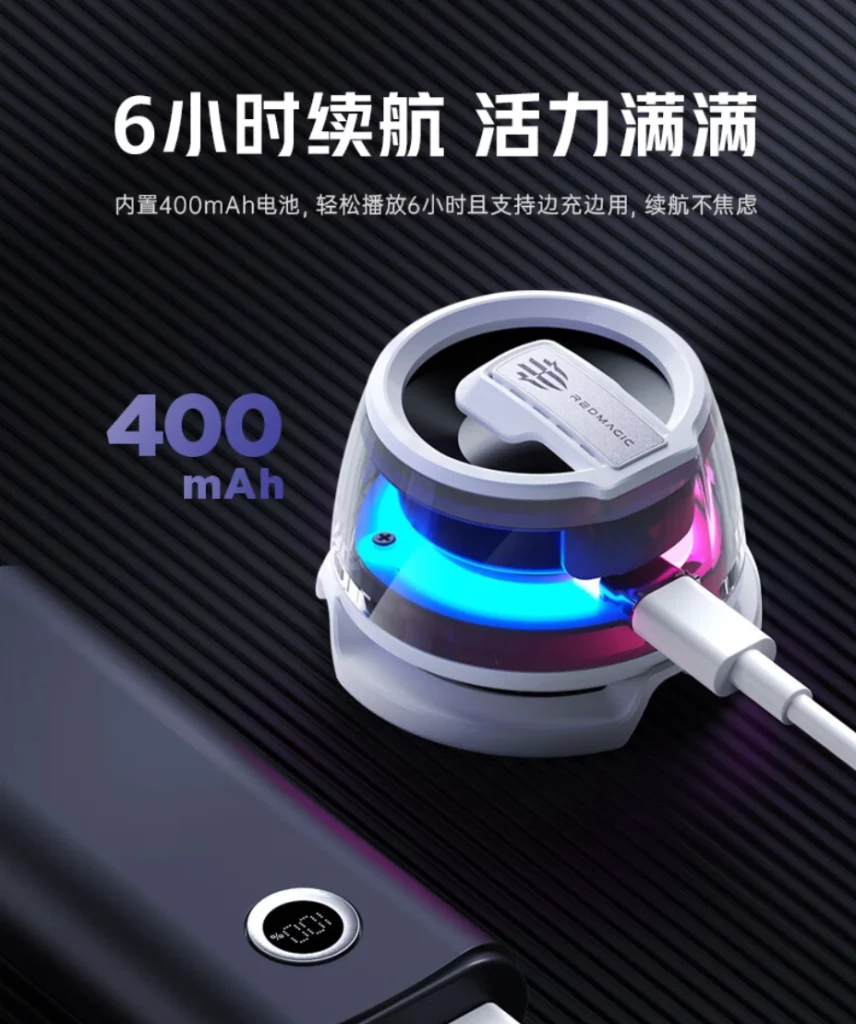
Red Magic‘s magnetic speaker is here! This tiny powerhouse boasts a “cyber-transparent” design with built-in RGB lighting effects, adding a touch of flair to your audio experience. A built-in strong magnetic module (with included stickers) allows it to easily attach to any magnetic surface. It is dubbed a “small steel cannon”.
The tiny speaker delivers 3W of power
The Red Magic magnetic speaker packs a punch despite its size. Weighing just 62 grams, it’s the perfect size to toss in your bag and take anywhere. Don’t let its size fool you though – this speaker delivers 3W of power and utilizes a 40mm full-range sound unit. The official claims promise balanced three-band audio with impressive bass for a well-rounded listening experience.
The speaker boasts a long-lasting battery life. Enjoy up to 6 hours of continuous playback on a single charge with the built-in 400mAh battery (some promotional materials might say 5000mAh). Plus, you can keep the music going with charging while using functionality.
Versatility is another key feature of the Red Magic magnetic speaker. It adapts to your needs with two modes: game mode and music mode. Switch between them depending on the situation. Game mode offers lower latency for intense gaming sessions, while music mode prioritizes richer sound quality for enjoying your favorite tunes. The Bluetooth 5.3 chip ensures seamless connection to various devices. Connect it to your phone, tablet, computer, game console, or any other Bluetooth-enabled device and enjoy your audio on the go.
The Red Magic magnetic speaker is a multi-purpose device. Take it with you for sports, camping, home use, or gaming sessions. It even doubles as a handy mobile phone holder, making it a convenient companion for various activities. It is now available for purchase, priced at 109 yuan (around $16.5 USD), with an introductory discount dropping the price to just 99 yuan ($14 USD).
We use cookies on our website to give you the most relevant experience by remembering your preferences and repeat visits. By clicking “Accept”, you consent to the use of ALL the cookies.
This website uses cookies to improve your experience while you navigate through the website. Out of these, the cookies that are categorized as necessary are stored on your browser as they are essential for the working of basic functionalities of the website. We also use third-party cookies that help us analyze and understand how you use this website. These cookies will be stored in your browser only with your consent. You also have the option to opt-out of these cookies. But opting out of some of these cookies may affect your browsing experience.
Necessary cookies are absolutely essential for the website to function properly. This category only includes cookies that ensures basic functionalities and security features of the website. These cookies do not store any personal information.
Any cookies that may not be particularly necessary for the website to function and is used specifically to collect user personal data via analytics, ads, other embedded contents are termed as non-necessary cookies. It is mandatory to procure user consent prior to running these cookies on your website.