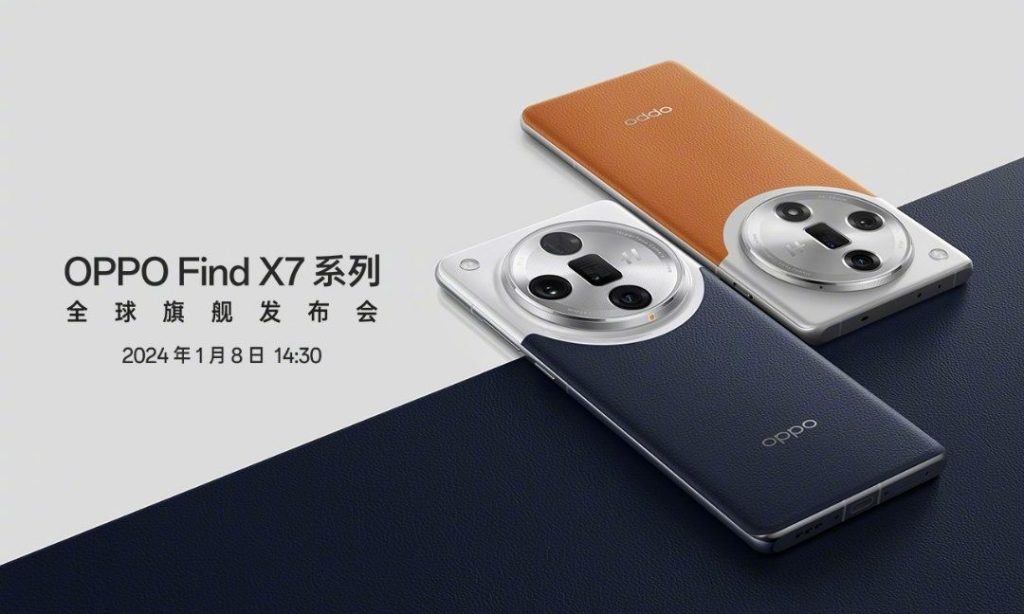
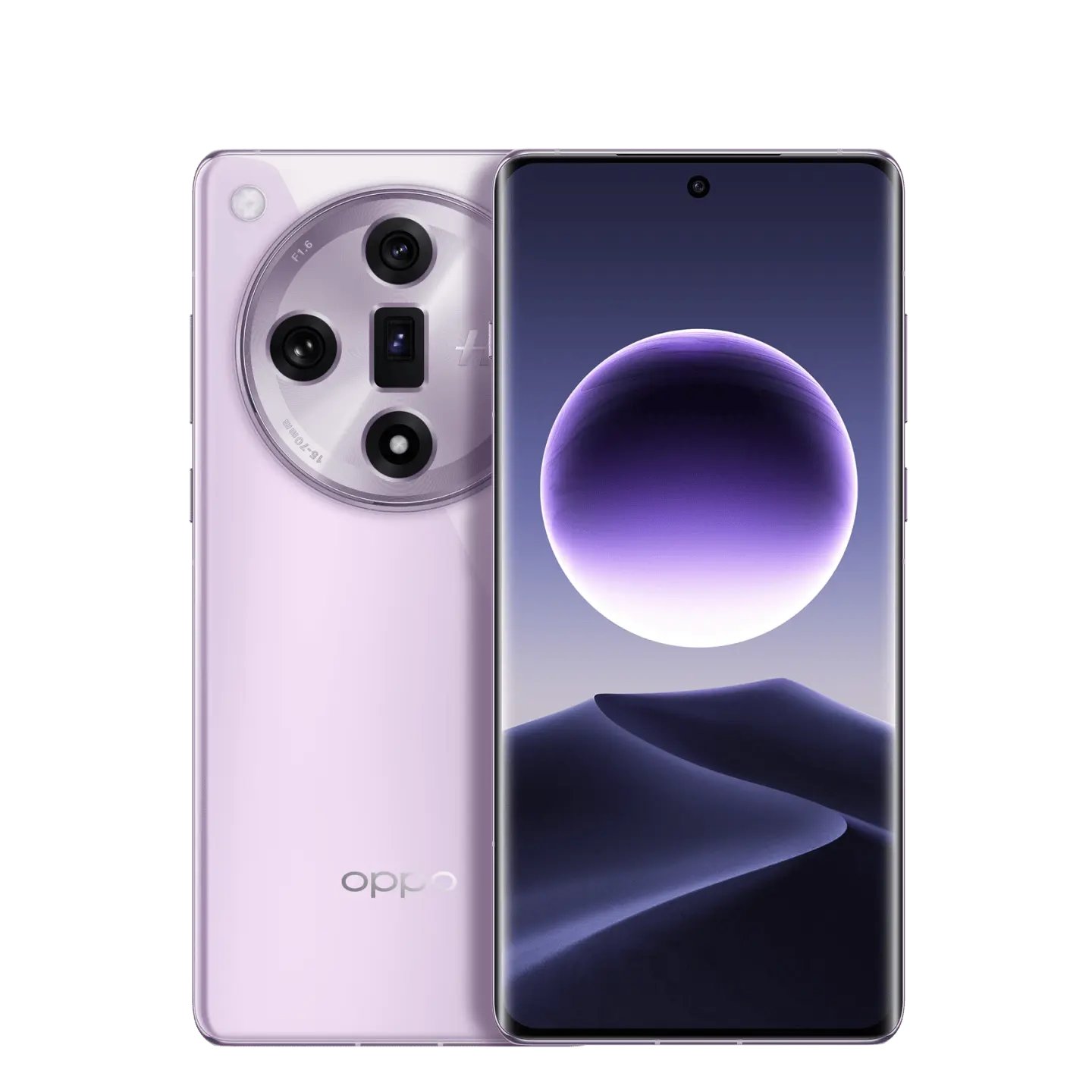
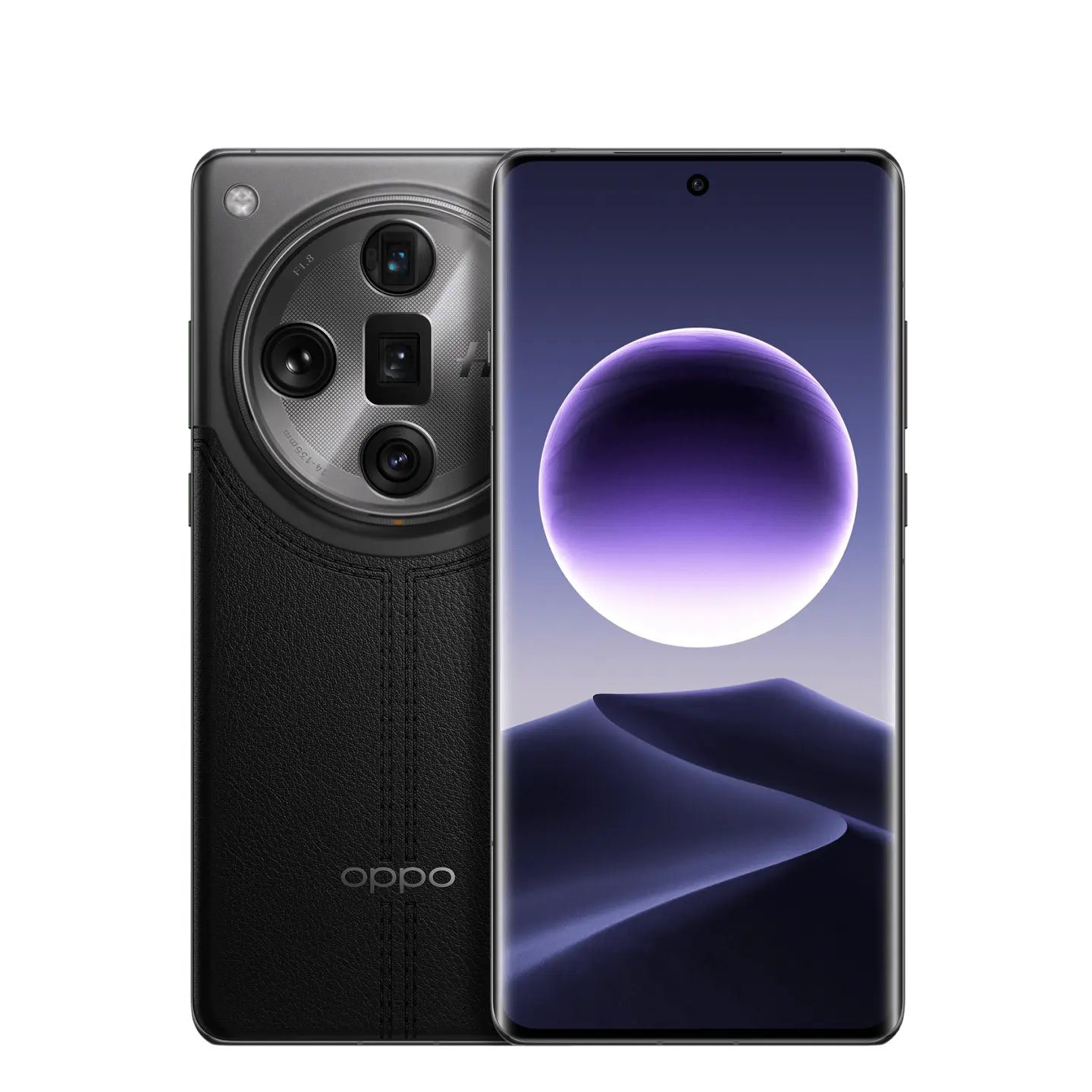
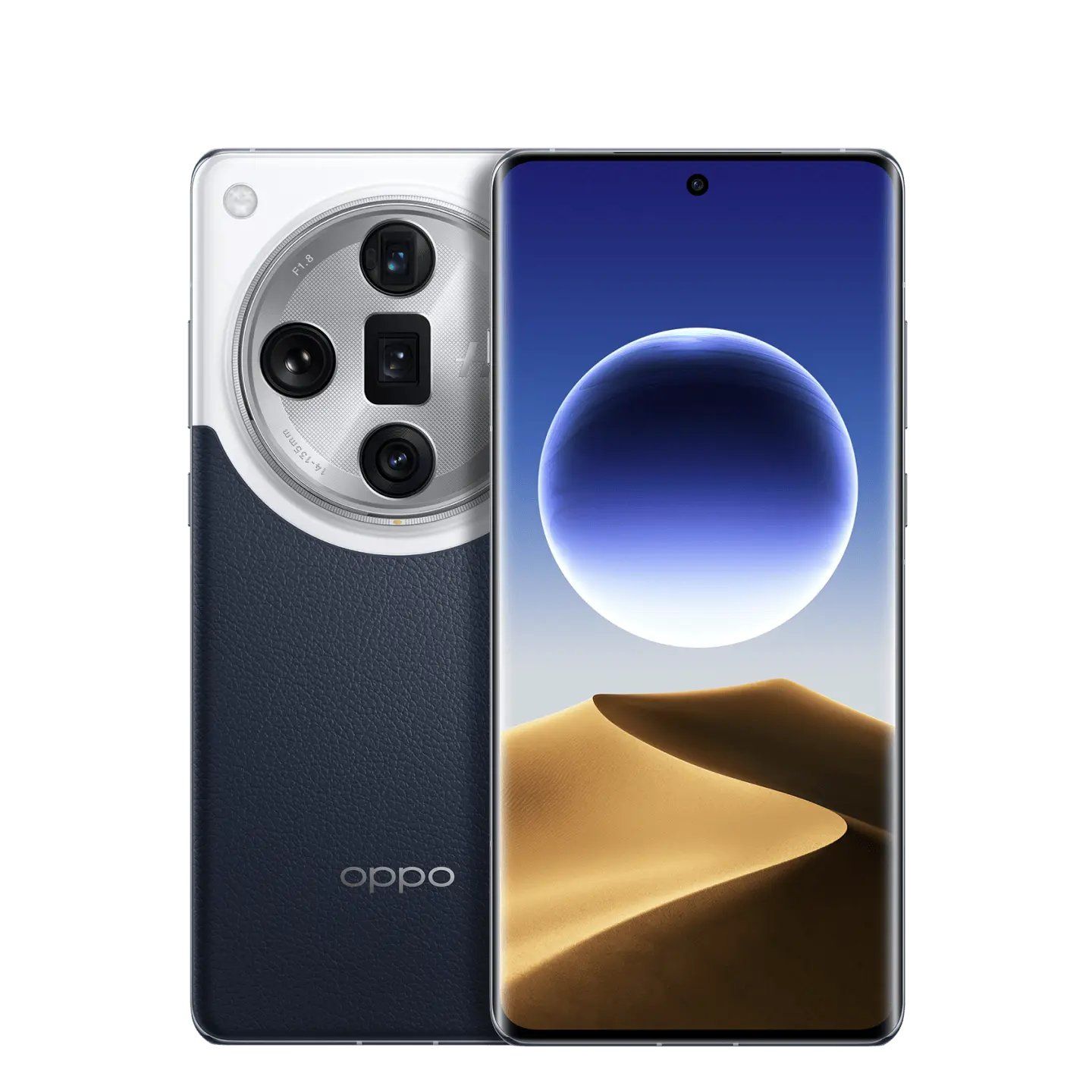
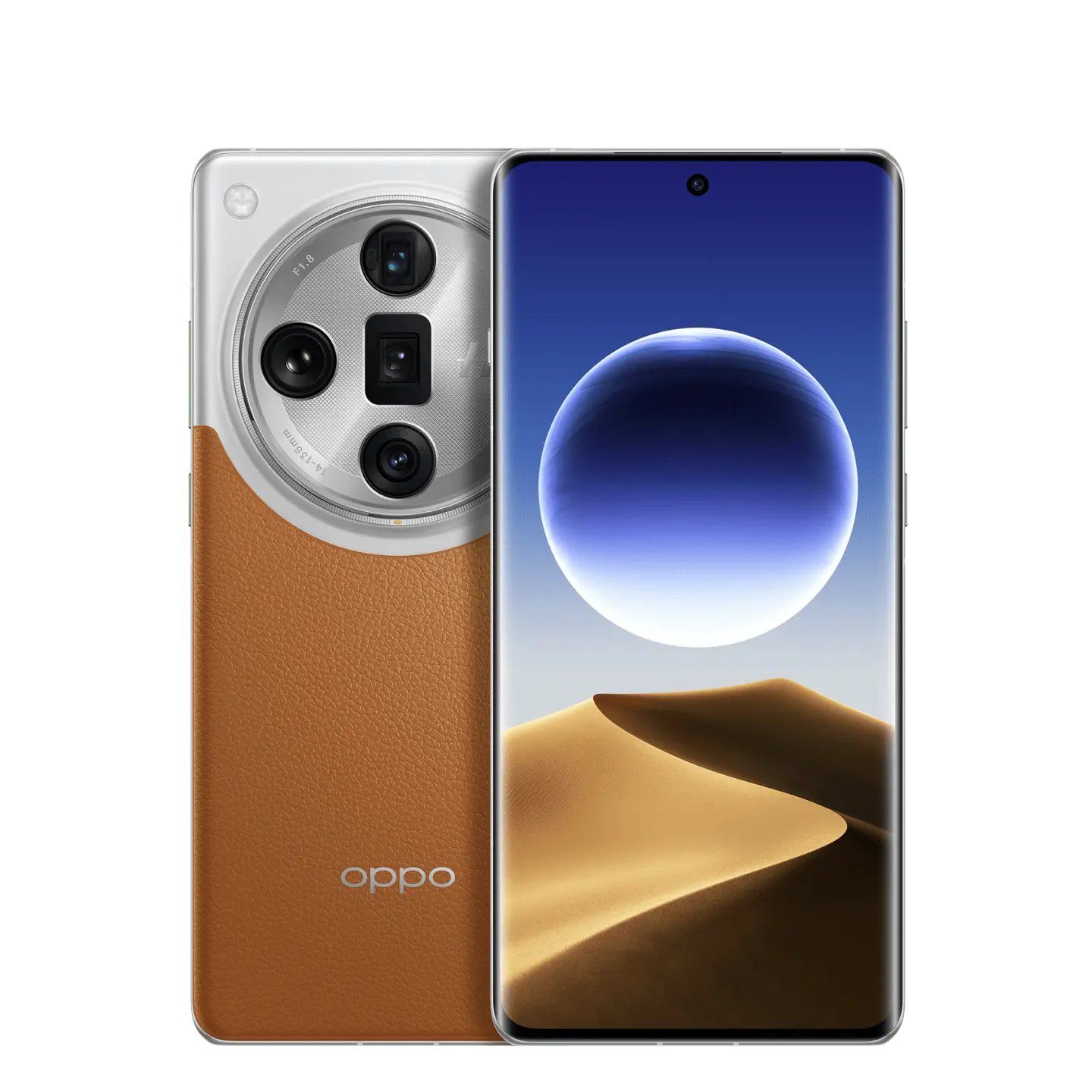
Oppo has officially confirmed that it will unveil the Find X7 series of smartphones at 2:30 pm (local time) on Jan. 8, 2024, in China. In addition, the Find X7 and Find X7 Ultra smartphones are now listed on Oppo China’s online store for reservations. The official listings have confirmed the configurations and color options of both smartphones well ahead of the official announcement.
Oppo Find X7 series launch date
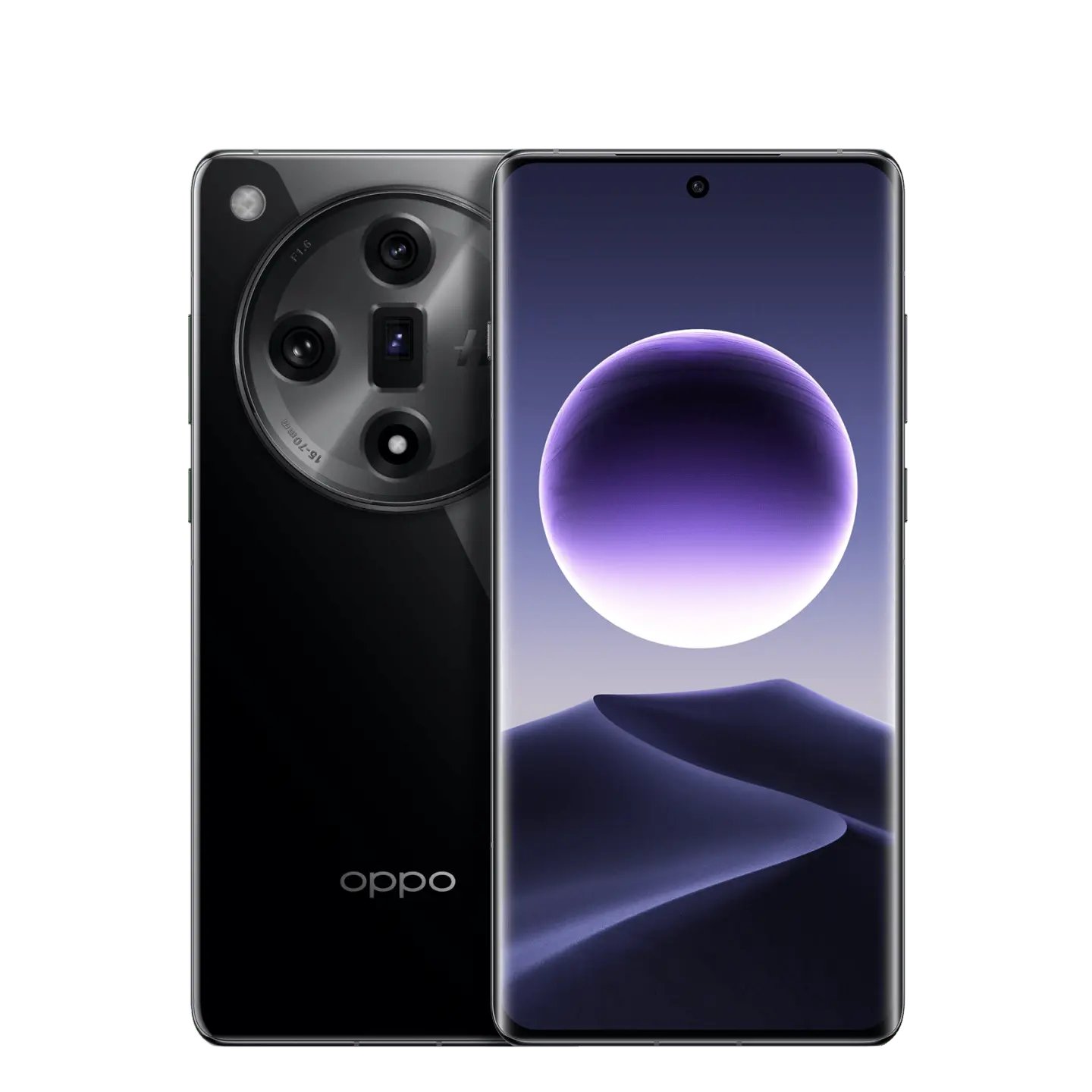
Oppo Find X7
Reports have revealed that the Find X7 will come equipped with the Dimensity 9300 chipset. The official listing reveals that it will come in four configurations, such as 12 GB RAM + 256 GB storage, 16 GB RAM + 256 GB storage, 16 GB RAM + 512 GB storage, and 16 GB RAM + 1 TB storage.
The Find X7 will be available in four shades, such as Starry Sky Black, Sea and Sky, Desert Moon Silver, and Smokey Purple.
Oppo Find X7 Ultra
The Find X7 Ultra is expected to come equipped with the Snapdragon 8 Gen 3 SoC. It will be available in three variants, such as 12 GB RAM + 256 GB storage, 16 GB RAM + 256 GB storage, and 16 GB RAM + 512 GB storage.
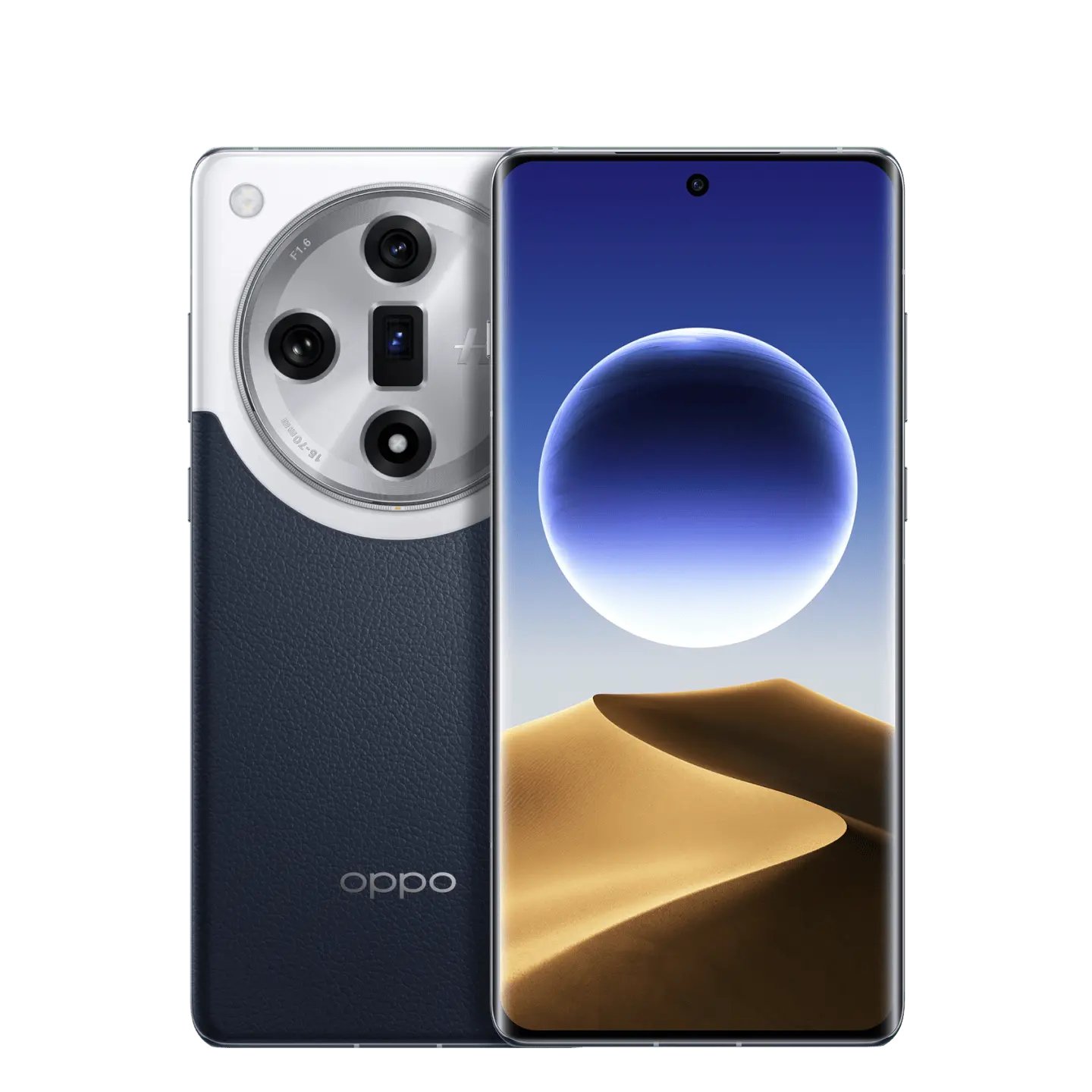
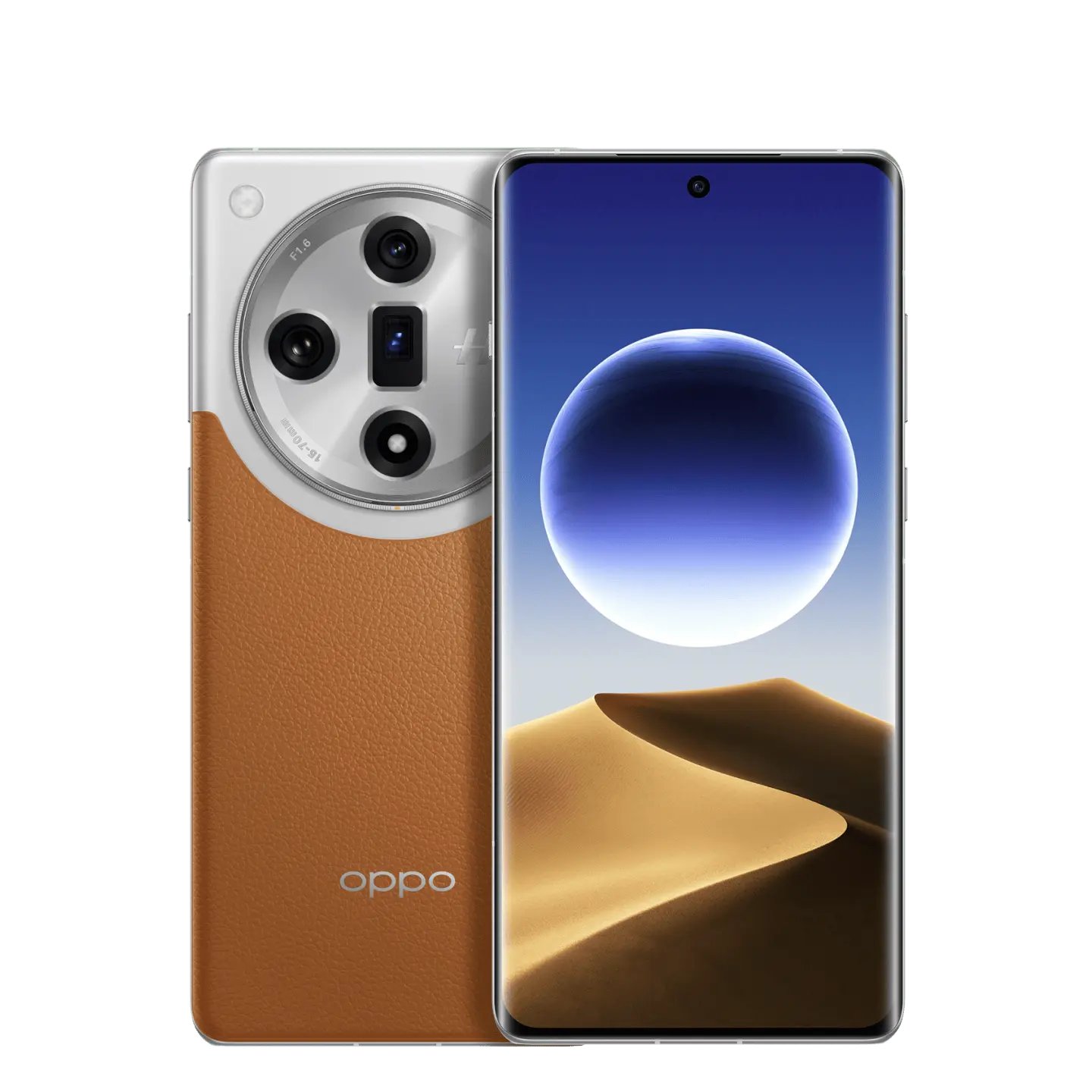
Find X7 Ultra: Pine Shadow InkFind X7 Ultra: Sea and SkyFind X7 Ultra: Desert Moon Silver.
When it comes to color options, the Find X7 Ultra will come in choices such as Pine Shadow Ink, Sea and Sky, and Desert Moon Silver.
The Find X7 and Find X7 Ultra have a similar design, with the front featuring a punch-hole display with curved edges and a dual-tone back panel with a massive camera module. The Find X7 has a triple-camera unit, whereas the Find X7 Ultra has a quad-camera system. The Ultra variant will be the world’s first smartphone to feature dual periscope telephoto cameras. In addition, it will also be the first-ever phone to feature the one-inch Sony LYT-900 50-megapixel camera sensor as the primary snapper.
It is said that there will be a third device called the Oppo Find X7 Ultra Satellite Communication Version, which will come with support for two-way satellite communication. The rest of its specs will be identical to the Find X7 Ultra.
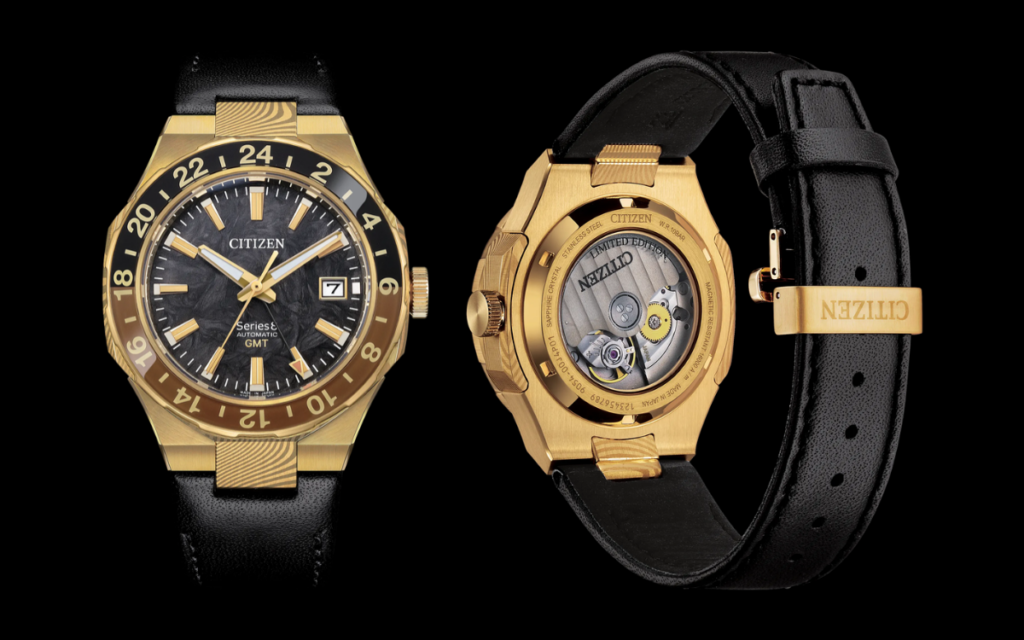
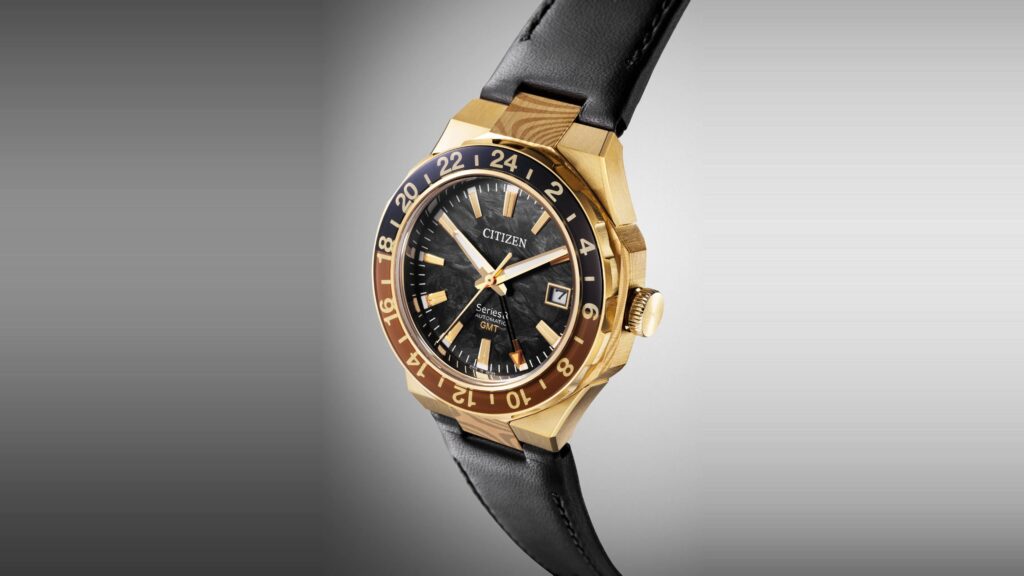
Citizen has officially released the Series8 880 GMT (model NB6092-01E) in the United States. The mechanical watch is currently available for purchase directly through the company’s US website and is priced at $2,195. Citizen is manufacturing a limited run of this specific model, capping production at exactly 1,400 unnumbered pieces globally.
Citizen Series8 880 GMT Specifications
The exterior of the watch is built around a 41-millimeter stainless steel case. Citizen is using a mix of materials and finishes for this model, specifically a gold-tone damascus pattern combined with black-tone stainless steel. The watch face features a black forged carbon dial.
Because forged carbon is manufactured by compressing small, chopped pieces of carbon fiber and resin under high pressure, the resulting marbled pattern is inherently different on every dial produced. This means no two watches in the 1,400-piece run will look exactly the same.
The dial is covered by an anti-reflective sapphire crystal to prevent scratching and reduce glare, and it includes standard luminous markers for visibility in the dark.
Inside the case, the Series8 880 GMT runs on Citizen’s caliber 9054 automatic movement. Because it is a mechanical watch, it does not use a battery. Instead, it relies on an internal oscillating weight that winds the mainspring as the wearer moves their arm throughout the day. When fully wound, the movement provides a 50-hour power reserve.
In terms of functionality, the watch includes standard hours, minutes, and seconds hands, along with a date window located at the 3 o’clock position. It also features a dedicated GMT hand, which allows the wearer to track the time in a second time zone simultaneously.
For everyday durability, the watch is built with internal magnetic resistance to prevent interference from common electronic devices like laptops and smartphones, which can easily disrupt mechanical movements.
It also carries a water resistance rating of 100 meters (10 Bar). This rating means the watch can handle swimming, showering, and snorkeling, though it is not intended for diving. The hardware comes paired with a grey leather strap that secures to the wrist using a fold-over clasp with hidden push buttons.
Black Friday 2026 brings some attractive discounts on portable speakers from Bose, Marshall and Beats. From the compact Bose SoundLink Micro to the powerful SoundLink Plus and Marshall Emberton III, several popular models are now available at reduced prices on Amazon.
If you are planning to upgrade your audio setup or looking for a Christmas gift, these deals are worth checking out. However, not every discount represents an all-time low, so it is worth looking beyond the percentage savings before making a purchase.
Some of these deals are particularly interesting when compared with their previous pricing. The Bose SoundLink Flex (2nd Gen) at $99 matches its tracked lowest price for certain colour options, while the Blue Dusk version drops further to $89.
The Beats Pill at $94.95 is another attractive deal, bringing a popular portable speaker below the $100 mark. The Bose SoundLink Plus at $179 is also worth considering.
Marshall Emberton III: A Discount Worth Considering
The Marshall Emberton III stands out with its $89.99 Black Friday price. Originally launched at $179.99, it offers a more accessible entry into Marshall’s portable speaker lineup.
However, buyers should be careful with inflated reference prices. The Emberton III has previously appeared at substantially lower prices, so comparing its current deal against its actual retail history gives a more realistic picture of the savings.
At $89.99, it is still an interesting option for anyone who appreciates Marshall’s signature styling and wants a compact Bluetooth speaker.
Which Speaker Should You Buy?
The Bose SoundLink Flex (2nd Gen) is a strong all-round choice. Its IP67 rating provides water and dust resistance, and its floating design makes it particularly useful around pools and during outdoor activities. It offers up to 12 hours of battery life, although its sound customisation options are relatively limited.
The Beats Pill is another practical choice, especially for people who want a compact speaker with IP67 protection. Meanwhile, the Bose SoundLink Micro suits buyers who prioritise portability, while the larger SoundLink Plus is worth considering for those who want a bigger speaker.
If design is equally important as sound, the Marshall Emberton III deserves attention. Its compact build and distinctive retro-inspired styling make it an appealing everyday speaker.
Best Christmas Gifts From These Black Friday Deals
These speakers also make excellent Christmas gifts for music lovers. The Beats Pill is a good pick for someone who enjoys taking music everywhere, while the Bose SoundLink Flex makes a practical gift for travellers and outdoor enthusiasts. For someone who appreciates classic styling, the Marshall Emberton III is an attractive option. If you want to spend a little more, the Bose SoundLink Plus offers a larger speaker experience.
Should You Buy Now or Wait for Cyber Monday?
Amazon’s Black Friday sale runs through November 30, 2026, so there is still time to grab these offers. However, additional discounts could appear around Cyber Monday, making it worth keeping an eye on prices if you are not in a hurry.
Bose also has a price-match provision extending through December 25, subject to its terms and conditions. This offers some additional reassurance for eligible purchases.
Note: Prices and availability are subject to change. Amazon deals may end earlier or remain available beyond the advertised Black Friday sale period.
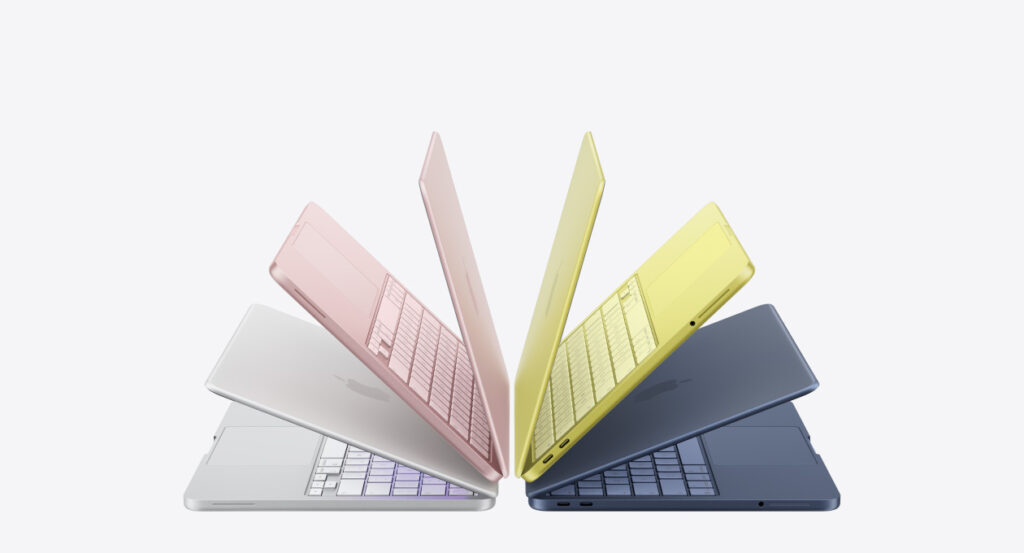
Shoppers looking for an affordable way into the Mac ecosystem have a timely opportunity. Amazon has cut the 13-inch MacBook Neo in colors including Blush, Indigo, and Silver down to $599, roughly a 14% discount that brings it close to its original launch price and among the lowest figures seen since release.
The MacBook Neo debuted earlier this year at $599 as Apple’s entry-level laptop. Mid-year, the company raised the starting price to $699, citing sharply higher costs for memory and storage components driven by surging demand from AI data centers. The current Amazon deal effectively restores access at the lower figure for select configurations during the holiday sales period.
Under the hood sits the Apple A18 Pro chip, the same high-end silicon that powered the iPhone 16 Pro series. It features a 6-core CPU and 5-core GPU. Notebookcheck’s review awarded the machine an 86% “Good” rating, highlighting solid everyday performance, long battery runtimes under moderate loads, and completely silent operation thanks to its fanless design.
In testing, CPU performance landed only about 6% behind a MacBook Air 13-inch with the M3 chip, with overall system performance nearly matching it. That makes the Neo well-suited for web browsing, social media, YouTube, documents, and school or light office work.
Key specifications include a 13″ Liquid Retina IPS display (2408 x 1506 resolution) with 500 nits of brightness, a 36.5 Wh battery, a 1080p webcam, two USB-C ports (one supporting higher speeds and DisplayPort), and a 3.5 mm headphone jack. Apple includes a 20W USB-C charger. The aluminum chassis is available in several colorful finishes and feels consistent with more expensive MacBooks.
There are clear trade-offs. Memory (8 GB unified) and storage are soldered and not user-upgradeable. The base model lacks a backlit keyboard, and the limited ports may require adapters for some users. Graphics performance trails even the older M1 MacBook Air, so it is not intended for gaming or heavier creative workloads.
For students, casual users, or anyone seeking a quiet everyday Mac, the current pricing makes the Neo an appealing option while the deal lasts.
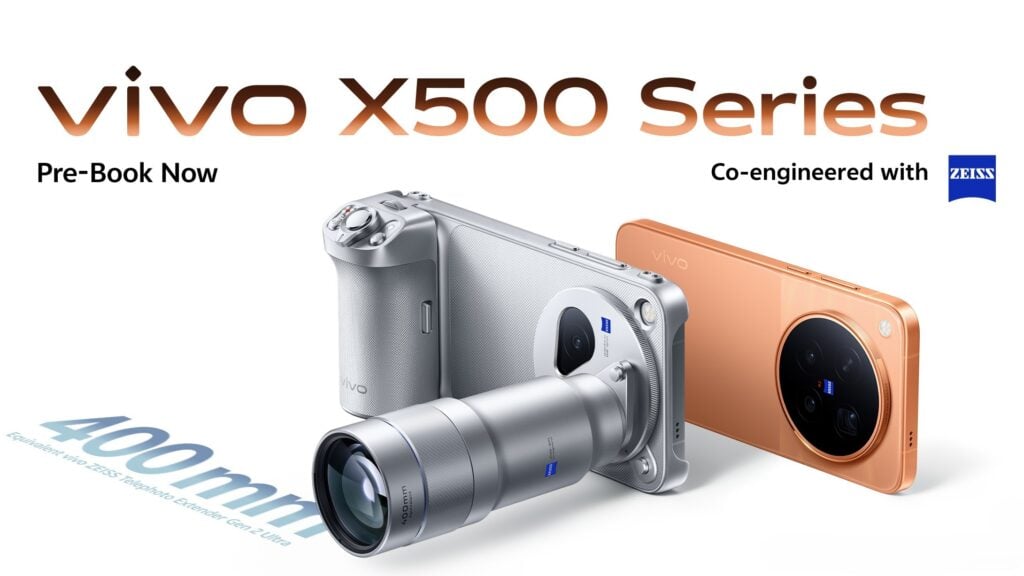
Vivo has expanded its flagship smartphone lineup in India with the X500 series. Both the X500 Pro and X500 Pro Max bring upgraded ZEISS-tuned cameras, MediaTek’s latest flagship chipset, and a new software experience with OriginOS 7. While the Pro Max focuses on long-range photography and extended battery life, the standard Pro offers much of the same flagship experience in a more compact form factor.
The Vivo X500 Pro is priced at Rs 1,49,999 for the 12GB + 256GB variant. The X500 Pro Max starts at Rs 1,64,999 for the same configuration, while its 12GB + 512GB variant costs Rs 1,79,999. Both models come in Eternal Black and Apex Orange colour options and will go on sale on December 3 through Vivo’s online store, Flipkart, Amazon, and offline retailers. Pre-bookings are now open.
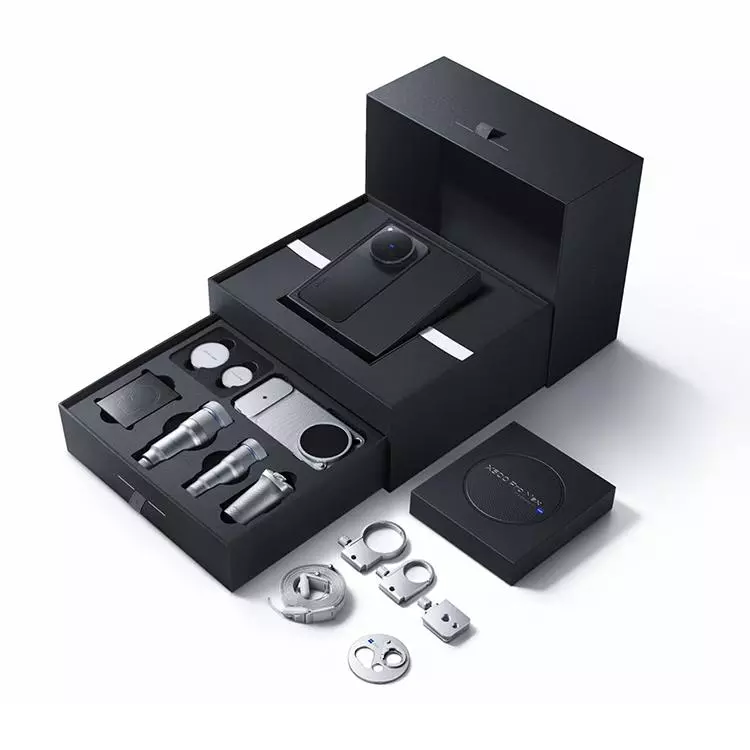
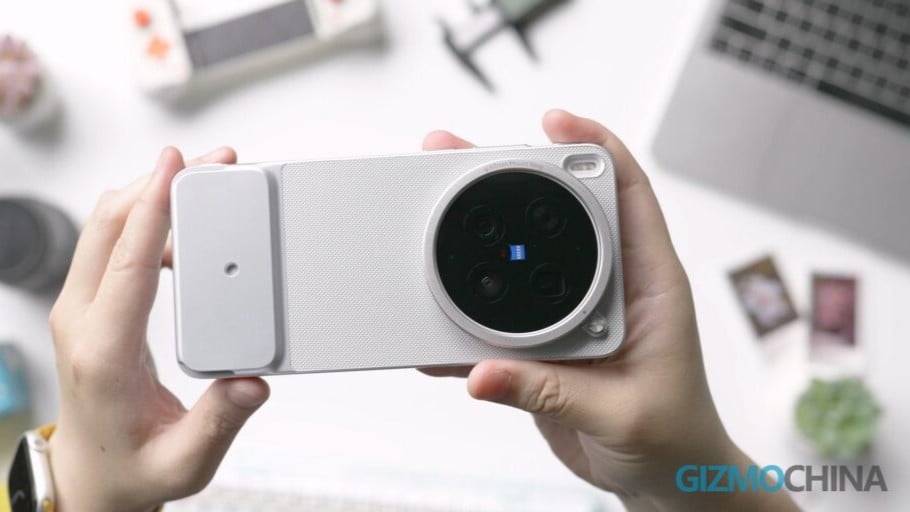
The X500 Pro Max also has a Photographer Kit priced at Rs 2,29,999. It includes the 12GB + 512GB variant, the 200mm ZEISS Telephoto Extender Gen 2, and the 400mm Gen 2 Ultra. There’s no bundled Photographer Kit for the Pro model. However, it is compatible with the 200mm lens, which users can purchase separately for Rs 15,999.
Both phones feature IP68 and IP69 ratings, and the MediaTek Dimensity 9600 Pro chipset. However, their displays differ considerably. The Pro Max gets a 6.85″ 2K LTPO AMOLED panel with a 144Hz refresh rate, while the Pro has a smaller 6.36″ 1.5K LTPO AMOLED display with the same refresh rate.
The camera hardware is another key difference. The X500 Pro Max features a 50MP main camera, a 50MP ultrawide camera, and a 200MP ZEISS APO telephoto shooter.
The X500 Pro retains the same main and ultrawide cameras but replaces the 200MP telephoto sensor with a 64MP unit. Both support CIPA 7.0 stabilization and advanced subject tracking, while the main camera supports native 4K 240fps slow-motion recording.
Both models run OriginOS 7 based on Android 17, bringing desktop-style multitasking through Origin Workbench, AI-powered cross-app interactions, and improved connectivity with Apple devices.
Battery capacity is another major difference. The Pro Max packs a 7,800mAh battery, compared to 6,510mAh on the Pro. Both support 90W wired and 40W wireless charging.
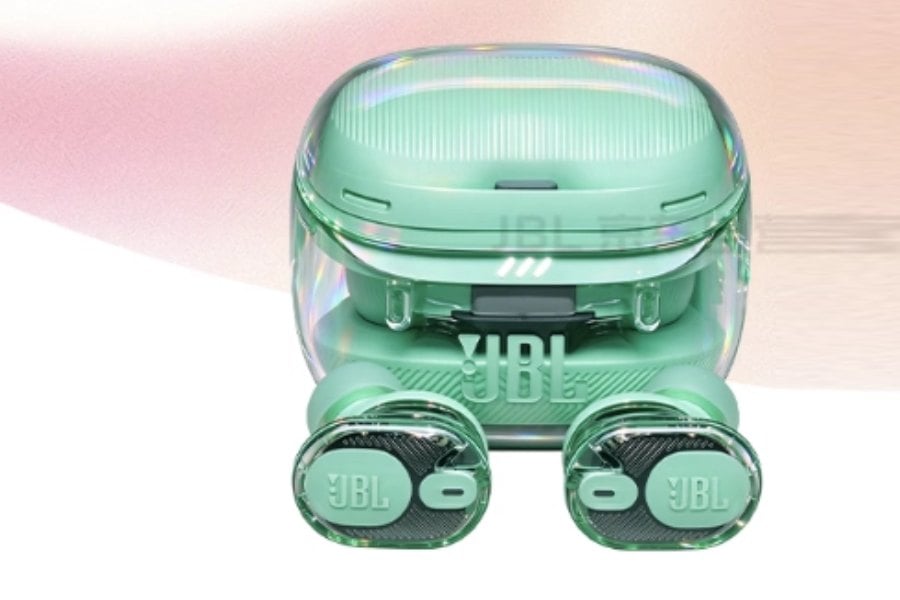
JBL is giving its latest wireless earbuds a slightly different look in China. The new JBL Tune Buds 3 come with a semi-transparent design that reveals parts of the charging case’s internals, while the earbuds themselves get a matching clear finish. The styling gives them a more distinctive appearance than the usual glossy plastic earbuds, and JBL is offering three color options.
You can choose the buds in Deep Black, Moon White, and Jade. The white version has a subtle sheen on the case lid.
This isn’t JBL’s first experiment with translucent finishes in China. The company previously introduced the Tourmaline Red special edition of the Soundgear Clips in October, following an Emerald Green version in May. The Tune Buds 3 bring a similar treatment to a more conventional pair of wireless earbuds.
Each earbud weighs around 5.9g, while the charging case comes in at 40g. They also carry an IP54 rating for dust and water resistance.
Underneath the transparent shell, each earbud houses a 10mm dynamic driver with a dual-layer composite polymer diaphragm. The Harman audio team has tuned the sound for balanced frequency response and low distortion. JBL also includes Personi-Fi 3.0, which lets users personalize the listening experience.
The Tune Buds 3 also has active noise cancellation that uses four microphones to monitor surrounding sounds in real time. The system can reduce low-frequency noise as well as mid- and high-frequency sounds, adjusting to changes in the environment. The microphones have a sensitivity rating of -38 dBV/Pa at 1kHz.
The earbuds can play music for up to 12 hours with noise cancellation turned off, or 10 hours with ANC enabled. Those figures are for the earbuds alone, while the charging case extends total playback time to 48 hours.
A full charge takes around two hours, but you don’t always need to leave them plugged in that long. A quick 10-minute charge provides up to four hours of playback. For wireless connectivity, the Tune Buds 3 use Bluetooth 6.0.
JBL Tune Buds 3 price and availability
The JBL Tune Buds 3 are listed on JD.com in China, with sales scheduled to begin on December 3. The initial price is 729 yuan (approximately $109).
JBL has not announced availability or pricing for other markets. For now, the translucent earbuds appear to be a China-focused launch.
Updated 25 Nov 2026 · Labels: Confirmed = official or a certification · Leak = supply chain, renders, prototype parts or a tipster · Rumour = a single unconfirmed report
At a glance
iPhone 20 Pro
iPhone 20 Pro Max
What it is
Apple’s 20th-anniversary iPhone, the successor to the iPhone 18 Pro (Leak)
Same, the larger model (Leak)
Name
“iPhone 20” is reported. Apple may skip “iPhone 19”. Not confirmed
Same
Codename
V73 (Leak)
V74 (Leak)
Expected launch
September 2027 (Leak)
September 2027 (Leak)
Expected price
No leak yet. The iPhone 18 Pro costs $1,199 in the US (256GB)
No leak yet. The iPhone 18 Pro Max costs $1,299 in the US (256GB)
Display
About 6.41-inch, about 2686 × 1236, about 460 ppi (Leak, test units)
About 6.96-inch, about 2912 × 1340, about 460 ppi (Leak, test units)
Design
Glass front that curves on all four sides, glass back, metal frame (Leak)
Same (Leak)
Front camera and Face ID
Under the display, a punch-hole or a Dynamic Island: leaks disagree
Same
Buttons
Solid-state, with no moving parts (Leak)
Same (Leak)
Chip
A21 Pro, second-generation 2nm (Leak)
A21 Pro (Leak)
Main camera
Apple’s own stacked LOFIC sensor (Leak) · 200MP (Rumour)
Same
Battery
Silicon-anode cells (Leak). No capacity leak yet
Same
What changed recently
23 Nov: reports say Samsung, Xiaomi and Oppo are working on curved-glass flagships that follow the iPhone 20 Pro. Story
21 Nov: a tipster says Apple tests four prototypes: two with curved glass and two flat ones as a fallback. Bezels measure about 1mm. A video claims a 200MP main camera (Rumour). Story
16 Nov: a second video shows the quad-curved front glass, with a Dynamic Island-style cutout. Story
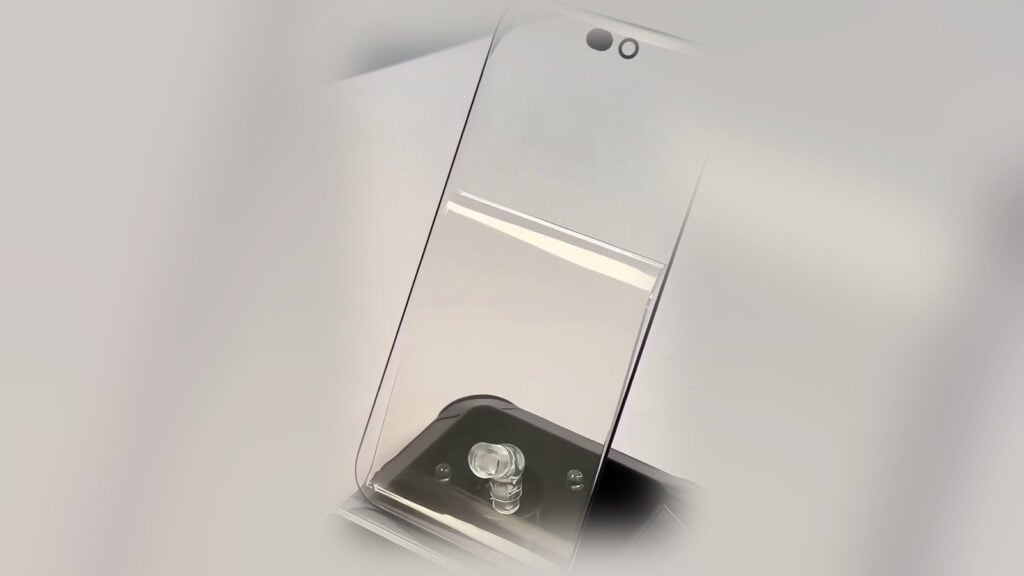
14 Nov: a tipster shows an approved 3D quad-curved cover glass sample on video. Story
iPhone 20 or iPhone 19: what is it called?
Apple has not named it.
“iPhone 20”: reports say Apple skips “iPhone 19” to mark 20 years of the iPhone. Apple did the same in 2017, when it skipped the iPhone 9 for the iPhone X. Our 24 May story
“iPhone 19”: one tipster calls the 2027 Pro models “iPhone 19” and says the name is tentative. Our 29 Jun story
Design: the quad-curved display
The glass: the front glass curves gently on all four sides. It hides most of the metal frame, so the phone looks almost borderless (Leak). The back is glass too (Leak).
Physical samples: two videos show a quad-curved front glass sample, with rounded corners and an even, very thin black border (Leak, 14 and 16 Nov). Our 14 Nov story
Bezels: about 1mm, and the curve makes them hard to see from the front (Leak).
The panel: a custom Samsung OLED. It may drop the polarizer layer, which makes the screen thinner (Leak, April). Our 25 Apr story
Not final: a tipster says Apple tests two curved and two flat prototypes. Earlier reports said Apple worked with Samsung and LG to fix brightness loss at the curved edges.
Display size: iPhone 20 Pro Max
iPhone 20 Pro (leaked)
iPhone 20 Pro Max (leaked)
iPhone 18 Pro
iPhone 18 Pro Max
Size
About 6.41-inch
About 6.96-inch
6.3-inch
6.9-inch
Resolution
About 2686 × 1236
About 2912 × 1340
2622 × 1206
2868 × 1320
Pixel density
About 460 ppi
About 460 ppi
460 ppi
460 ppi
The sizes come from test units, so they can change (Leak, September and November). Our 21 Sep story
Front camera and Face ID: the leaks disagree
No cutout: a May concept render video put the front camera and Face ID under the display (Rumour).
Punch-hole: a September leak from test units showed a punch-hole cutout (Leak).
Dynamic Island: the November glass samples have a pill-and-circle cutout. A 21 Nov report says the Dynamic Island stays, maybe smaller, because under-display cameras are not ready (Leak).
Still in testing: under-display Face ID and an under-display front camera (Leak, 12 Nov).
The latest leaks point to a Dynamic Island. Treat it as open.
Buttons
The side, volume, Action and Camera Control buttons are tipped to go solid-state: pressure sensors and haptic motors, with no moving parts. They stay where they are today (Leak). Our 12 Nov story
For reference: in the US, the iPhone 18 Pro launched at $1,199 and the Pro Max at $1,299, both for 256GB. Our launch story calls this a price increase over previous generations.
Memory costs: a report says Apple pays Samsung about 33% more for RAM from Q1 2027, which makes another price hike for the 2027 iPhones a realistic possibility. Our 21 Sep story
Our view, from the facts above: the iPhone 20 Pro is about ten months away, and its front design is not settled. If you need a phone now, the iPhone 18 Pro is on sale. Wait only if the new design is the point for you, and expect the price to stay high.
When does the iPhone 20 come out? Leaks point to September 2027. Apple has not confirmed it.
Will it be called iPhone 20 or iPhone 19? Reports say iPhone 20, for the iPhone’s 20th year. One tipster still uses “iPhone 19” as a tentative name. Apple has not named it.
What is the quad-curved display? A front glass that curves gently on all four edges, so the frame almost disappears from the front. Two videos of glass samples show it.
How big is the iPhone 20 Pro Max? About 6.96 inches, as leaked from test units. The iPhone 18 Pro Max has a 6.9-inch display.
Does the iPhone 20 Pro have a Dynamic Island? Leaks disagree. The latest glass samples show a Dynamic Island-style cutout.
How much will the iPhone 20 Pro cost? No price has leaked. The iPhone 18 Pro starts at $1199 in the US.
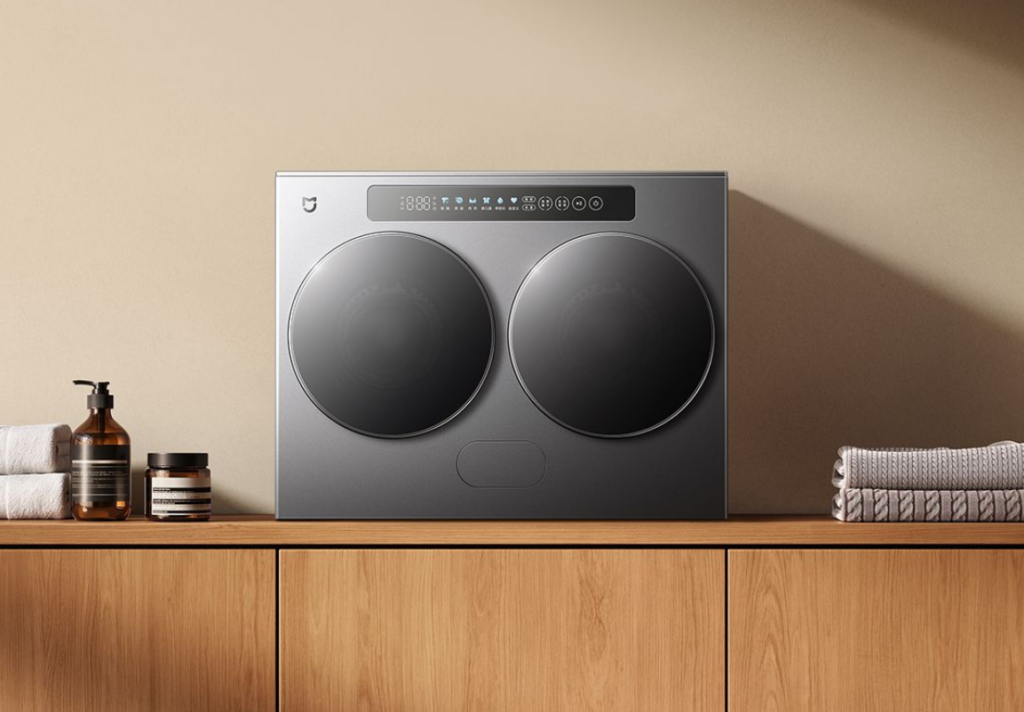
Xiaomi has launched the Mijia Health Wash Pro 2kg Dual-Drum Washer-Dryer in China, designed to wash small and delicate garments separately. It is priced at 2,199 yuan ($330) after government subsidies, down from its suggested retail price of 2,999 yuan ($450).
Mijia Health Wash Pro Washer-Dryer Specs
The device features a dual-drum design with a total washing capacity of 2kg and a drying capacity of 1kg, both evenly split between the two drums. This means each drum can handle 1kg of washing and 0.5kg of drying.
To make this practical for separating items like socks and undergarments, or baby clothes and silk, Xiaomi built independent water circulation systems and drying ducts for each drum. This physical separation is intended to prevent cross-contamination between the two loads.
Internally, the washer uses a direct-drive motor to regulate drum speed and reduce fabric wear. The drums have a 228mm diameter, which provides a longer tumbling path for the clothes. Xiaomi’s testing indicates a protein stain removal ratio of 1.87 and a bloodstain removal ratio of 1.92.
For daily use, the machine includes a dual-channel automatic detergent dispenser. The 200ml compartments are self-cleaning and hold enough detergent to last roughly a month of typical use, automatically adjusting the dosage to limit residue.
The software includes 34 specific stain-removal programs, alongside a 40-minute quick wash-and-dry cycle for lightweight items. For drying, it uses moisture sensors to stop the cycle when clothes are dry, and includes a 40°C low-temperature mode for sensitive fabrics like silk.
If a cycle finishes and the clothes are left inside overnight, a fresh-air circulation system turns on automatically to prevent odors and inhibit bacterial growth. The machine also includes high-temperature sterilization and a 95°C drum cleaning cycle, carrying specific hygiene certifications for maternal, infant, and underwear care.
Physically, the unit is 438mm deep and has a flat front profile. It does not require wall drilling for installation and can be placed on the floor, on a counter, or stacked on top of a standard washing machine.
Because it is a Xiaomi product, it integrates directly into the company’s smart home ecosystem. It connects to the Mijia app, supports HyperConnect, and responds to Xiao AI voice commands, including commands issued from compatible Xiaomi vehicles.
In related news, Xiaomi has recently introduced a new Mijia Heated Blanket that allows couples to set their preferred temperatures independently.
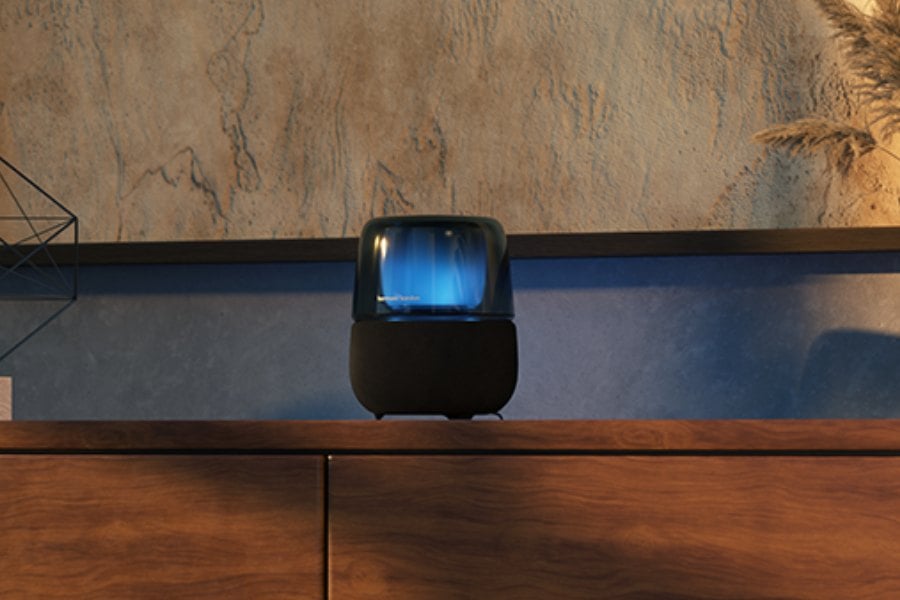
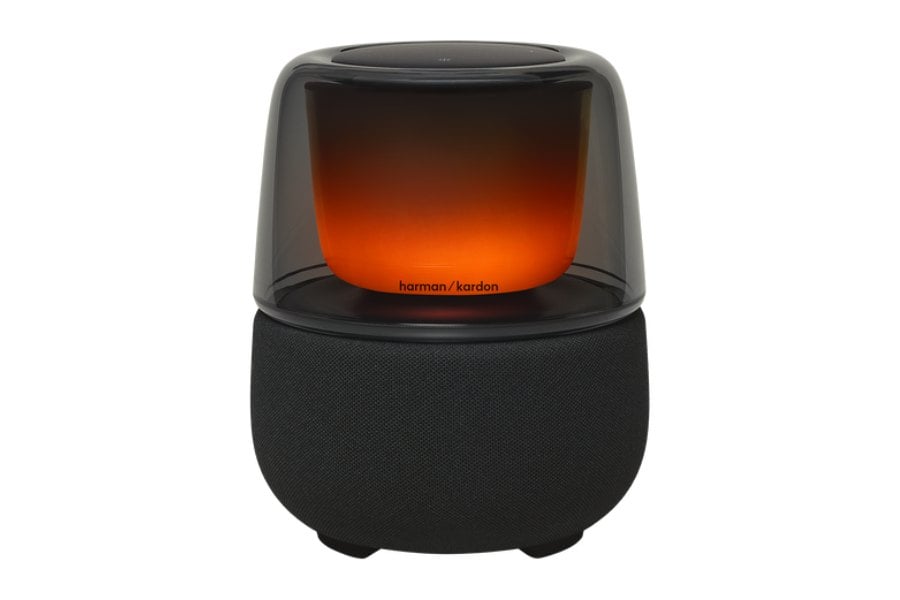
Harman Kardon is bringing back one of its more recognizable speaker designs. The new Allure 2 combines a transparent dome with a fabric-covered body and a circular light ring that reacts to music. It is a familiar look for anyone who remembers the original Allure from 2017, although the new model gets updated connectivity and app controls.
The speaker has launched in Japan, where it goes on sale today. Unlike portable Bluetooth speakers, however, the Allure 2 is meant to stay plugged in. It measures 166 x 166 x 203mm and weighs 2.2kg, with no built-in battery for taking it outside or moving it around without a power outlet.
Harman Kardon Allure 2 specifications and features
Inside the dome-shaped speaker are three 38mm full-range drivers and an 89mm downward-firing subwoofer. The system delivers 60W RMS output, split into two 30W channels, with a frequency response of 40Hz to 20kHz (-6dB). Harman Kardon has also equipped it with AI Sound Boost, which analyzes audio in real time to reduce distortion and improve bass response.
The audio isn’t the only part that changes with your music. It has a 360-degree ambient light ring that runs around the speaker, reacting to whatever is playing.
You can adjust its brightness, colors, and lighting effects through the Harman Kardon One app, which also provides access to the equalizer settings.
It’s a more visual approach than what you’d get from a conventional wireless speaker, particularly if you plan to use it in a living room or as part of a desk setup.
For connectivity, you get a newer Bluetooth 5.4 standard with dual device connectivity. The Allure 2 also supports Auracast, allowing it to synchronize playback with other compatible Harman Kardon speakers.
You can also pair two Allure 2 units for stereo playback, although Harman Kardon hasn’t published a complete list of compatible speakers for its Auracast feature.
The new speaker sits below the company’s more powerful Aura Studio 5, which launched in China last year with 160W output and projection lighting. Harman Kardon has also used recycled materials in the speaker’s construction, including recycled plastic, aluminum, and neodymium magnets in its drivers. The packaging uses FSC-certified paper and soy-based ink.
Price and Availability
The Harman Kardon Allure 2 costs 34,100 yen (approximately $213) in Japan, including tax. It is available in black through the Harman International Japan online store.
Harman Kardon is using an open-price model, meaning individual retailers can decide their own selling prices. There is no word yet on pricing or availability in other markets.
The Vivo X500s could be another example of Vivo getting more out of MediaTek’s flagship chips than other phone makers. The company is reportedly testing the phone with the new Dimensity 9600 Pro, but the interesting part is that Vivo will also get its own customizations for the processor.
The X500s is still an engineering prototype, so the final hardware and software details are not confirmed yet.
The Dimensity 9600 Pro is manufactured using a 2nm process and has an eight-core CPU arranged in a 2+3+3 configuration. It has two C2-Ultra cores running at up to 4.55GHz, while three C2-Pro cores operate at 4.35GHz and another three run at 3.1GHz. The processor also packs 34.5MB of total cache, with support for LPDDR6 memory and UFS 5.0 storage.
Vivo has already customized MediaTek’s flagship chips
Vivo isn’t new to this kind of collaboration. The company previously worked with MediaTek on the Vivo X Fold6, which became the first phone to use the Dimensity 9500 Super Edition.
Rather than simply using the standard processor, both companies tuned it around the demands of a foldable phone, particularly multitasking, multi-window use, and on-device AI.
The resulting improvements were quite specific. The peak NPU performance increased by 111% over the previous generation, while power consumption dropped by 56%. The X Fold6 also handled offline voice transcription seven times faster, with text summarization and AI-powered Q&A running 20% faster.
The X500s is a different proposition, though. Unlike the foldable, it has a conventional straight-screen design with an emphasis on photography. That means Vivo’s latest chip customizations could target image processing, gaming, and on-device AI.
There is no word yet on exactly what Vivo has changed in the Dimensity 9600 Pro. Since the X500s is still in the engineering prototype stage, some hardware and performance details could also change before the phone reaches the market.
A 7,000mAh battery is quickly becoming the new benchmark for Android phones, with manufacturers increasingly moving beyond the traditional 5,000mAh capacity. The extra capacity means longer screen time, more gaming, and fewer charging breaks.
Here are some of the best phones with 7,000mAh or larger batteries available or launching in European markets in 2026.
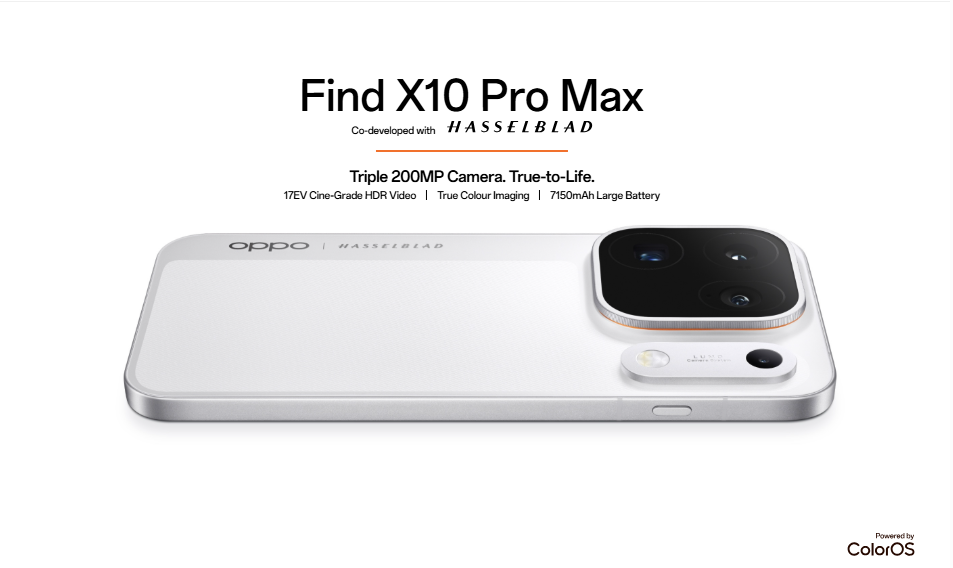
OPPO Find X10 Pro Max
The OPPO Find X10 Pro Max combines a large battery with flagship-grade hardware and an impressive camera setup. Its European variant packs a 7,150mAh battery, paired with the MediaTek Dimensity 9600 Pro chipset and 12GB of RAM.
The phone features a 6.78″ AMOLED display with a 120Hz refresh rate and a versatile rear camera system comprising three 200MP sensors for the main, ultrawide, and telephoto cameras. It supports 80W wired and 50W wireless charging, making it one of the most capable options in this list.
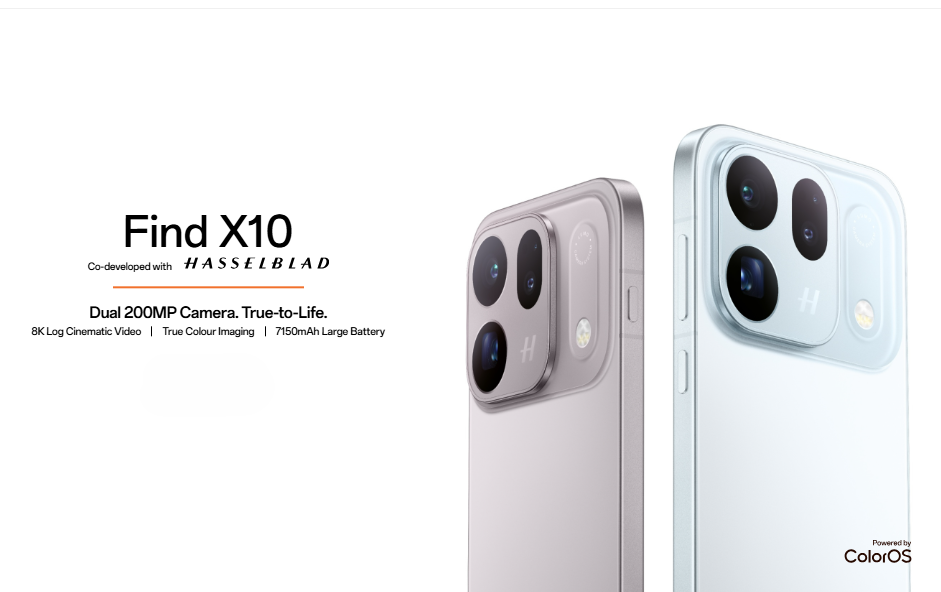
OPPO Find X10
If you want a slightly more compact alternative, the standard Find X10 also packs a 7,150mAh battery in its European configuration. It runs on the MediaTek Dimensity 9600M chipset and features a 6.59″ AMOLED display with a 120Hz refresh rate.
The phone comes with 12GB of RAM and 512GB of storage, along with 80W wired and 50W wireless charging. It retains much of the premium experience of the Pro Max while offering a smaller form factor.
Motorola Signature 27
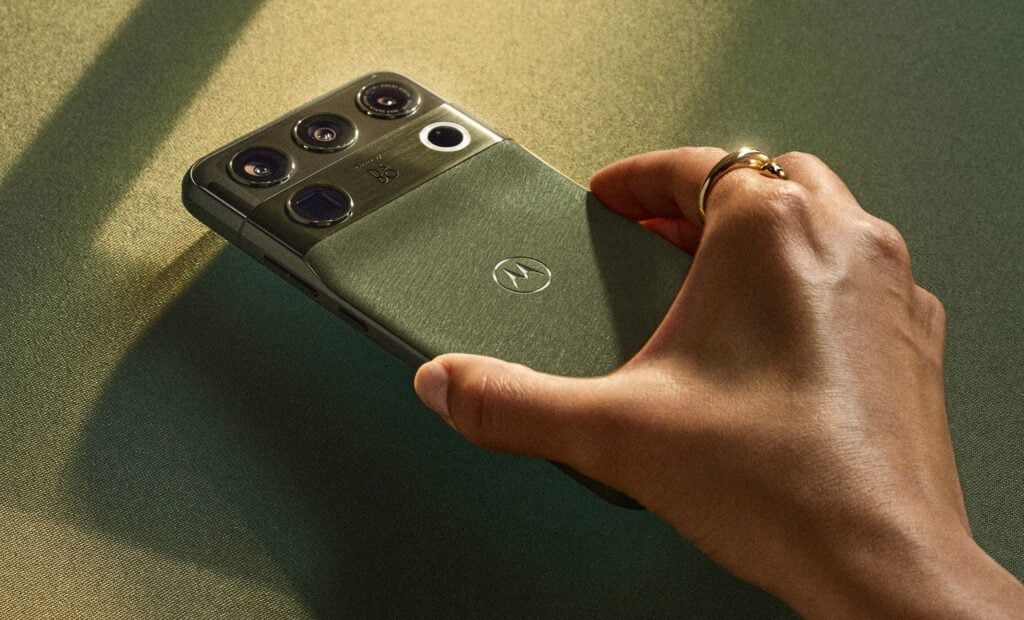
Motorola’s Signature 27 is a premium flagship powered by Qualcomm’s Snapdragon 8 Elite Extreme Gen 6 chipset. It features a 7,000mAh battery in most markets, supported by 90W wired and 50W wireless charging.
However, there is an important regional difference. The German variant comes with a smaller 5,500mAh battery, while other European markets receive the larger 7,000mAh configuration.
The phone also offers a premium camera system, a high-end display, and IP68/IP69-rated protection, making it one of the more feature-packed options in this list.
Xiaomi 18 Pro Max
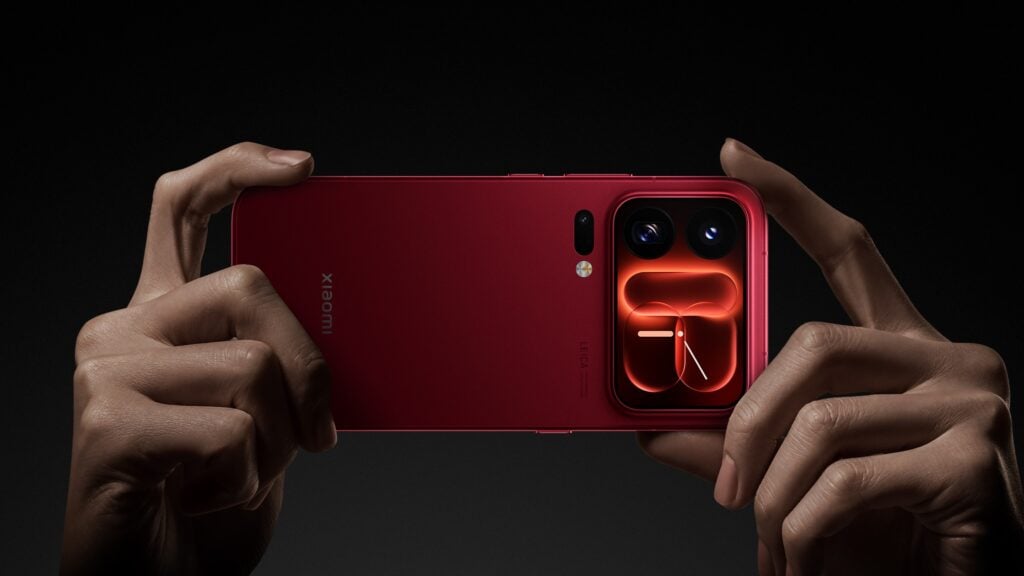
The Xiaomi 18 Pro Max brings a 7,050mAh silicon-carbon battery to the flagship segment. It is powered by the Snapdragon 8 Elite Extreme Gen 6 chipset and supports 100W wired and 50W wireless charging.
Its other highlights include a 6.9″ 120Hz AMOLED display, a 200MP Leica main camera, a 200MP telephoto camera, and a 50MP ultrawide shooter. The phone also features a secondary 2.9″ AMOLED display on the back and IP68-rated protection.
OPPO A7 Pro 5G
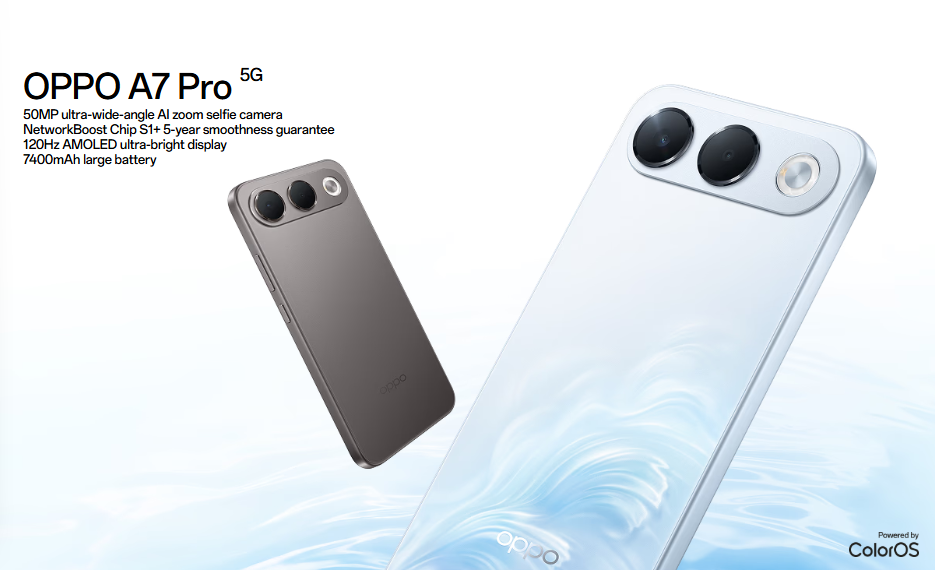
For buyers who don’t need flagship-level performance, the OPPO A7 Pro 5G offers an even larger 7,400mAh battery at a more accessible level. It is powered by the MediaTek Dimensity 6360 MAX chipset and features a 6.57″ FHD+ AMOLED display with a 120Hz refresh rate.
The camera setup includes a 50MP rear camera and a 50MP autofocus selfie camera with a 100-degree field of view. It also supports 80W SUPERVOOC wired charging, making it an interesting option for buyers who prioritize battery life over raw performance.
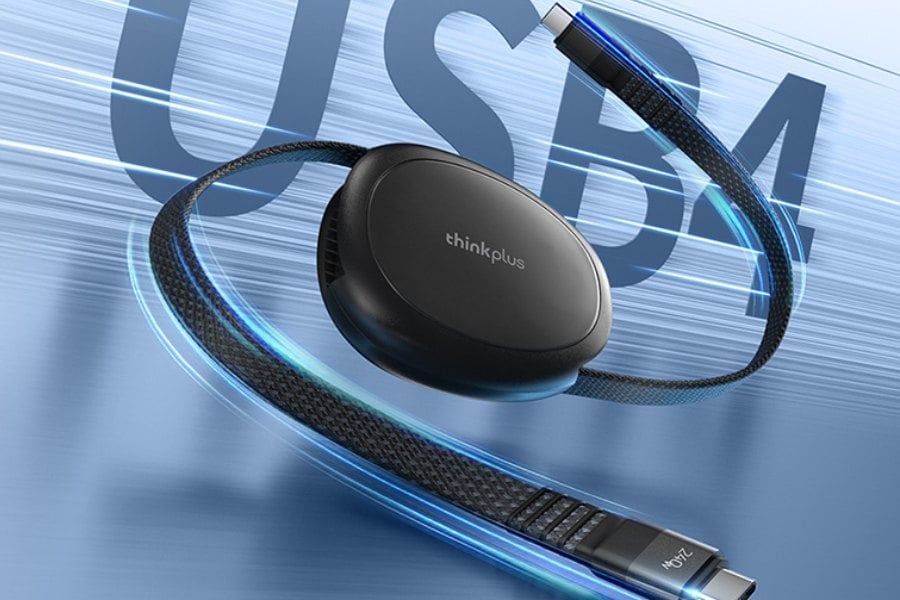
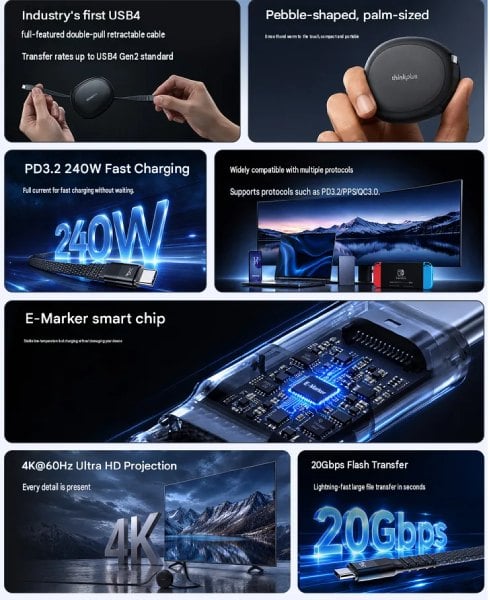
Retractable USB-C cables are convenient, but they don’t always offer the bandwidth and charging power needed for laptops and other demanding devices. Lenovo‘s latest thinkplus accessory tries to solve that problem with a cable that combines 240W charging, 20Gbps data transfer, and 4K video output in a retractable design.
The thinkplus USB4 Full-Featured Retractable Data Cable is now available on Lenovo’s official Chinese website for 149 yuan (~$22). That’s considerably more than the thinkplus Qingfeng 240W retractable cable, which arrived last August for 69 yuan (~$10). The higher price brings USB4 connectivity and video output alongside high-power charging.
Lenovo calls it the first full-featured USB4 cable with a dual-pull retractable design. It supports PD 3.2 charging at up to 240W, data transfer speeds of up to 20Gbps, and video output at 4K resolution and 60Hz. That means the same cable can charge a compatible laptop, transfer large files, or connect it to an external display.
Lenovo thinkplus USB4 cable design and lengths
Rather than winding the cable around a separate spool, Lenovo houses it inside a pebble-shaped case that fits in the palm. Both ends can be pulled out independently, with four locking lengths available: 0.3 meters, 0.6 meters, 1 meter, and 1.2 meters.
The shorter setting works for keeping a desk setup tidy, while the longer options give you more room when using a laptop or phone on a sofa, bed, or inside a car.
The cable itself uses a flat braided construction, measuring 10.1mm wide and 2.2mm thick. Lenovo combines 3D two-color braiding with a 48-spindle high-density weave. The USB-C connectors also have reinforced braided tails to reduce stress around the connection points.
Lenovo claims it has passed more than 10,000 bend tests and over 20,000 plug-and-unplug cycles. The complete accessory weighs around 102 grams.
Inside the connector, there’s an E-Marker chip that identifies the cable’s supported capabilities so connected devices and chargers can negotiate an appropriate power level. Alongside PD 3.2, the cable supports PPS and QC 3.0 charging protocols.
Labels: Confirmed = official, a certification or a regulatory listing · Leak = supply chain, renders or a tipster · Rumour = a single unconfirmed report
What we know at a glance
Vivo X500 Ultra
What it is
Vivo’s next camera flagship. It sits above the X500 Pro Max, which is the top X500 model today.
Expected launch
March or April 2027, in China (Confirmed: a Vivo vice president gave this window on 21 Sep)
Global version
A global model, V2660, is listed in the IMEI database, plus a Jovi X500 Ultra (J2613) for Brazil (Confirmed: database listing). No global date yet.
Expected price
No price leak yet. The X300 Ultra launched in China at CN¥6,999 (12GB + 256GB).
Chip
Snapdragon 8 Elite Extreme Gen 6 (Leak)
Display
6.85-inch flat BOE LTPO panel, 2K+, 144Hz (Leak)
Rear cameras
50MP + 50MP + 200MP (Leak). The 200MP camera is expected to be the periscope telephoto.
Selfie camera
50MP (Leak)
Battery
About 7,000 to 8,000mAh (Leak; reports differ)
US release
No US plans reported. Vivo’s flagship phones rarely reach the US. Our 16 Nov story
10 Nov: a tipster described an Ultra phone, very likely this one, with a 50MP Sony LYT-L910 main camera (1/1.28-inch), the same sensor in the ultrawide, and an HPU periscope lens. Story
7 Nov: a tipster said the phone is in normal refinement and expects a March or April launch. Story
Release date
Expected : March or April 2027 in China. This is Vivos own window. Huang Tao, a Vivo vice president, gave it after the X500 launch event on 21 Sep. Our 22 Sep story
A tipster has repeated the same window since (19 Oct, 7 Nov).
For comparison: the X300 Ultra launched in China on 30 Mar 2026. Story
Older claim: in February, a tipster said the Ultra could launch earlier than expected; our story guessed late 2026 or January 2027. Vivo’s window replaced that claim. Story
Price
No price leak yet.
Predecessor: the X300 Ultra launched at CN¥6,999 for 12GB + 256GB in China (launch price). In September, Vivo raised its China prices. The base model now costs CN¥7,499 (current price). Price rise story
The X500 Pro Max, the model the Ultra sits above, starts at CN¥6,999 (12GB + 256GB) in China. Story
Our view: with the X300 Ultra’s own price going up, don’t expect the X500 Ultra to start below CN¥7,000.
Specs: display, chip and battery
Chip: Snapdragon 8 Elite Extreme Gen 6 (Leak, repeated since 19 Oct). Earlier leaks in April and September used the name Snapdragon 8 Elite Gen 6 Pro. The other X500 models use MediaTek chips. Story
Display: a 6.85-inch BOE LTPO panel with 2K+ resolution and 144Hz (Leak). It is flat, with even bezels and large rounded corners.
Battery: the leaks disagree. One said about 7,000mAh (19 Oct), another about 8,000mAh (22 Oct), and the latest says 7,000 to 8,000mAh (2 Nov). The X300 Ultra has 6600mAh.
Unlocking: a 3D ultrasonic fingerprint sensor (Leak).
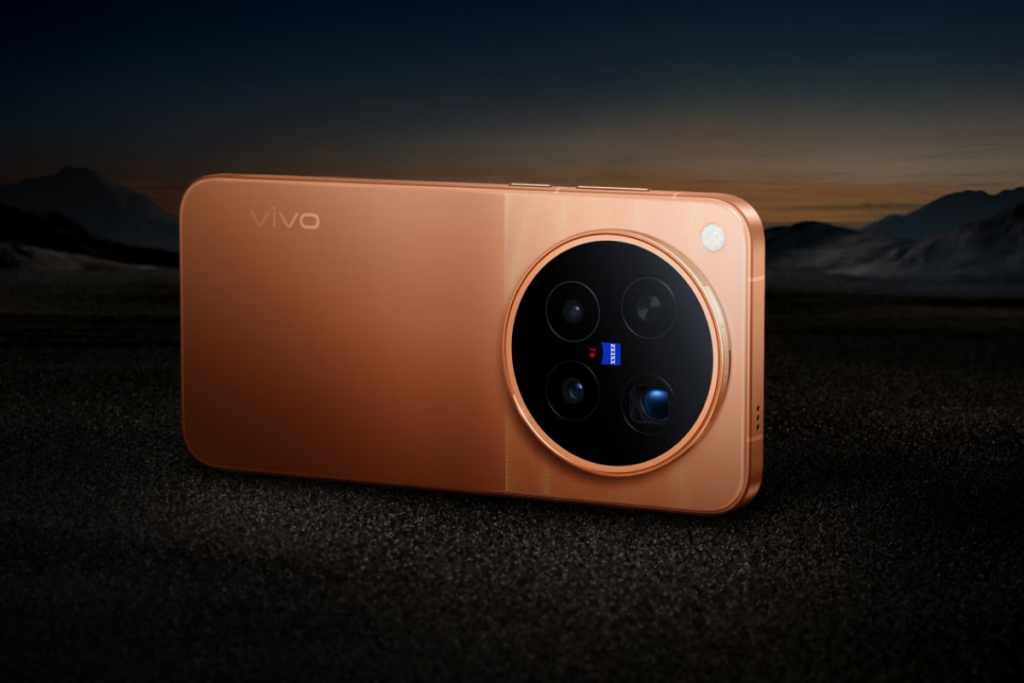
Pictured: the Vivo X500 Pro Max.
Cameras
The latest leaks point to three rear cameras: 50MP + 50MP + 200MP (Leak, 2 Nov and 7 Nov).
Main: 50MP Sony LYT-L910, 1/1.28-inch, with LOFIC for wider dynamic range, at a 35mm focal length (Leak). Vivo also tested a 200MP 1/1.12-inch main sensor. The latest leaks favor the 50MP one.
Ultrawide: 50MP, the same Sony LYT-L910 sensor (Leak, 10 Nov).
Telephoto: a 200MP periscope (Leak). The sensor size is still open:
July: three sizes in testing: 1/1.12, 1/1.3 and 1/1.4-inch;
22 Oct: 1/1.2-inch, larger than the X300 Ultra’s 1/1.4-inch. Story
No 10x lens: a 2 Jun leak said Vivo was testing a 10x periscope. A later June report said Vivo dropped it for one 200MP periscope with in-sensor zoom (as recapped in our 17 Jul story). Story
Selfie: 50MP (Leak).
What Vivo says: its imaging will improve a lot over the X500 Pro Max, and the phone targets professional creators (Vivo vice president, per our 7 Nov story).
Global and US availability
Global: a global model (V2660) and a Jovi model for Brazil (J2613) appeared in the IMEI database. That points to a launch outside China, but not to dates or countries. Story
Doubt: a 6 Nov report said Vivo’s Ultra had been tipped for changes to its global plans, though it was still in development for 2027. Story
US: no US release has been reported.
Vivo X500 Ultra vs X300 Ultra
X500 Ultra (expected)
X300 Ultra
Launch (China)
March or April 2027
30 Mar 2026
China price
No leak
CN¥6,999 launch · CN¥7,499 now (12GB + 256GB)
Chip
Snapdragon 8 Elite Extreme Gen 6
Snapdragon 8 Elite Gen 5
Display
6.85-inch, 2K+, 144Hz, flat
6.82-inch, 2K, 144Hz
Main camera
50MP Sony LYT-L910, 1/1.28-inch, 35mm
200MP Sony LYTIA 901, 35mm
Ultrawide
50MP Sony LYT-L910
50MP, 14mm
Telephoto
200MP periscope, 1/1.2-inch (latest leak)
200MP Samsung HP0, 1/1.4-inch, 85mm
Battery
About 7,000 to 8,000mAh
6,600mAh
Charging
No leak
90W wired, 40W wireless
Software at launch
No leak
OriginOS 6 on Android 16
Should you wait or buy the X300 Ultra? Our view:
Wait if you want the larger telephoto sensor and the biggr battery. The launch is four to five months away.
Buy the X300 Ultra if you want its 200MP main camera now. Don’t expect a discount soon: its China price went up in September.
Samsung is bringing health features first seen on the Galaxy Watch 9 and Galaxy Watch Ultra 2 to the Galaxy Watch 8 and Galaxy Watch 8 Classic through a One UI 9 Watch update. The package includes Vitals, Heart Health Score, Daily Cardio Load, and Fitness Index, plus upgraded Sleep Coaching and Sleep Apnea tools. The rollout began in mid-November, though availability varies by region.
What the One UI 9 Watch health update adds
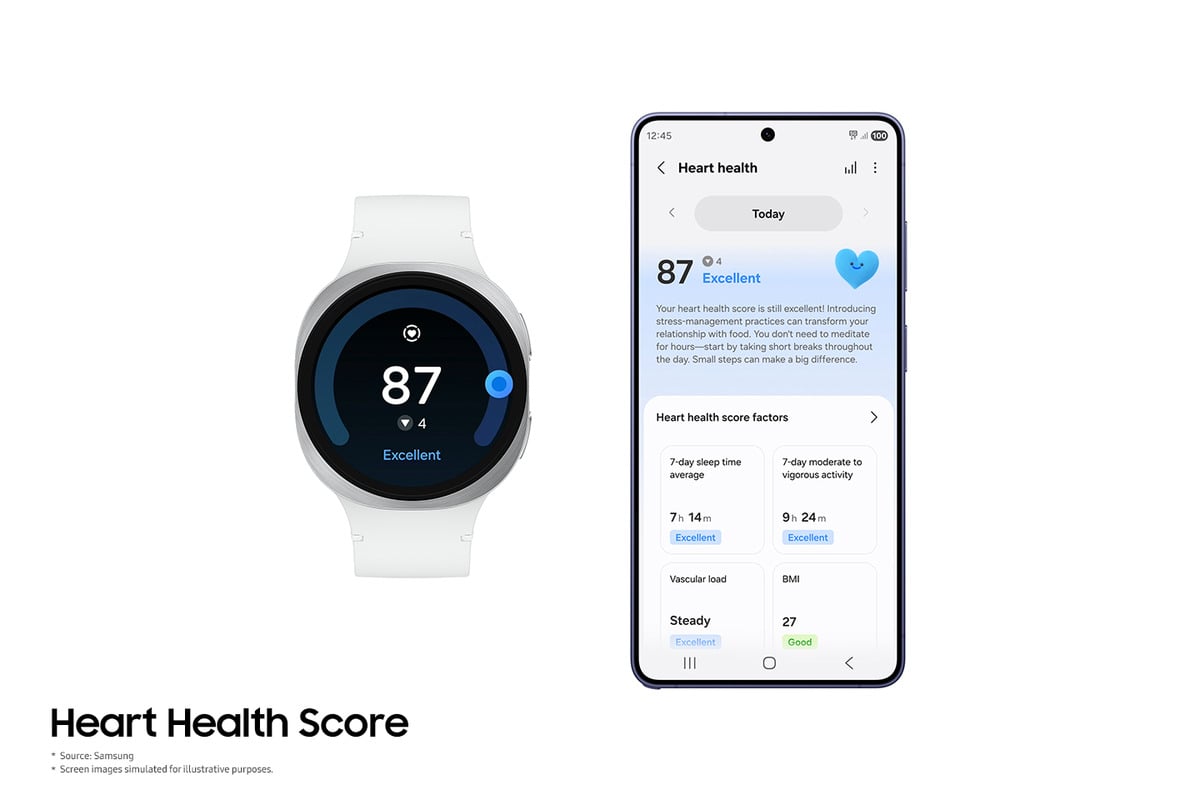
Heart Health Score on the Galaxy Watch 8
They reach the Galaxy Watch 8 and Galaxy Watch 8 Classic through the watch software and the Samsung Health and Samsung Health Monitor apps, after debuting on the Galaxy Watch 9 and Galaxy Watch Ultra 2. Vitals tracks five overnight signals: heart rate, heart rate variability, respiratory rate, skin temperature, and blood oxygen saturation. It builds a personal baseline and can flag notable deviations. Heart Health Score rolls sleep, activity, and other indicators into one figure. Neither feature is intended to diagnose or treat a medical condition.
Daily Cardio Load measures the strain workouts and daily activity place on the heart and suggests a load range for exercise and recovery, while Fitness Index combines several metrics into one overview and can recommend matching workouts.
Sleep Coaching can start with three days of sleep data from the past two weeks, with weekly guidance that adapts as patterns change. The upgraded Sleep Apnea feature received US FDA clearance in July 2026 and approval from Korea’s Ministry of Food and Drug Safety in October 2026. It uses AI to review how often breathing disruptions occur per hour of sleep and sorts results as minimal, occasional, or frequent. Results appear in the Samsung Health Monitor app after two valid nights within a 10-day period.
The update also adds a Portrait Watch Face that recognizes people in photos and arranges the clock around them, plus Compass waypoints and Track Back to retrace a route. Samsung says the One UI 9 Watch rollout began in mid-November, with availability varying by country, model, and carrier. Some tools need a separate Samsung Health or Samsung Health Monitor app update. The drop comes as Samsung leans on software to support current watches, after reports it may skip a 2027 Galaxy Watch hardware refresh.
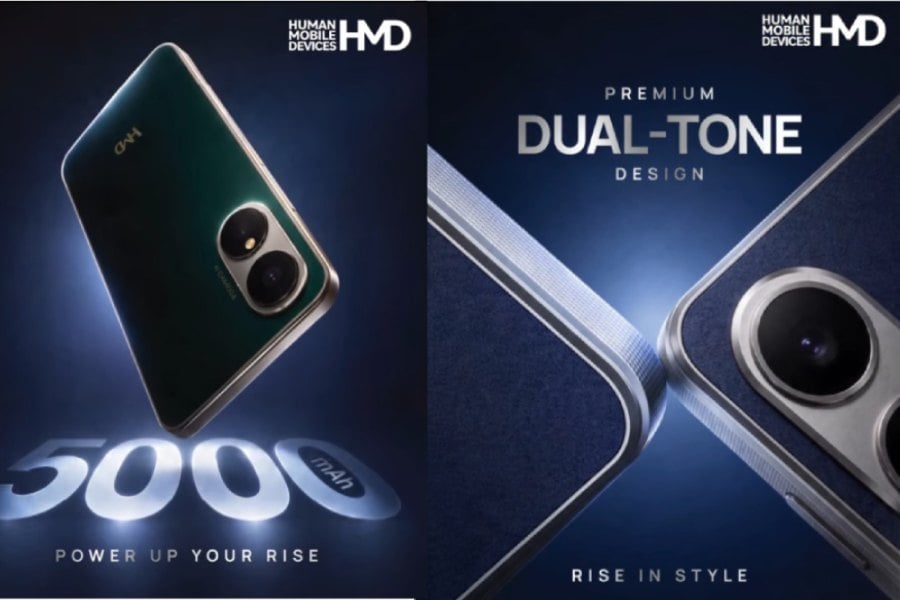
HMD is working on a new budget phone called the HMD Rise. Tipster smashx_60 shared its full specifications on X today. The phone is expected to launch in India through Flipkart. HMD has not confirmed a launch date or a price; however, it has shared first teasers.
The hardware suggests HMD is keeping costs down rather than trying to compete with more capable budget phones. The Rise reportedly uses the Unisoc SC9863A, an older entry-level processor that also powers the HMD Key 2.
The phone is expected to run Android 16 Go. This is Google’s lighter version of Android, built for devices with limited memory and storage.
HMD Rise Specifications
The HMD Rise reportedly has a 6.52-inch HD+ IPS LCD. It comes with 4GB of RAM and either 64GB or 128GB of internal storage. There is also a microSD card slot with support for cards up to 128GB.
The camera hardware is basic, even by budget phone standards. You get a 13MP main camera and a tiny 0.08MP secondary sensor on the back, while a 5MP camera handles selfies. Keeping the lights on is a 5,000mAh battery, although its 10W charging support means refilling it could take a while.
Other reported features include an IP52 rating, Bluetooth 5.2, FM radio, and a 3.5mm headphone jack. HMD is also said to be offering two years of security patches and a free display replacement. The phone reportedly uses recycled materials and will come in green and blue color options.
The HMD Rise also makes for an interesting comparison with the HMD Arc 2, which launched in Thailand earlier this year. Both phones reportedly have the same 6.52-inch HD+ display, but the Arc 2 uses the newer Unisoc T603 processor. It also runs Android 14 Go, while the Rise is listed with the newer Android 16 Go.
HMD has not announced the Rise yet, and neither the company nor Flipkart has revealed its price or launch date. The leaked specifications point to another basic Android Go phone, with software support and everyday essentials doing more of the selling than its hardware.
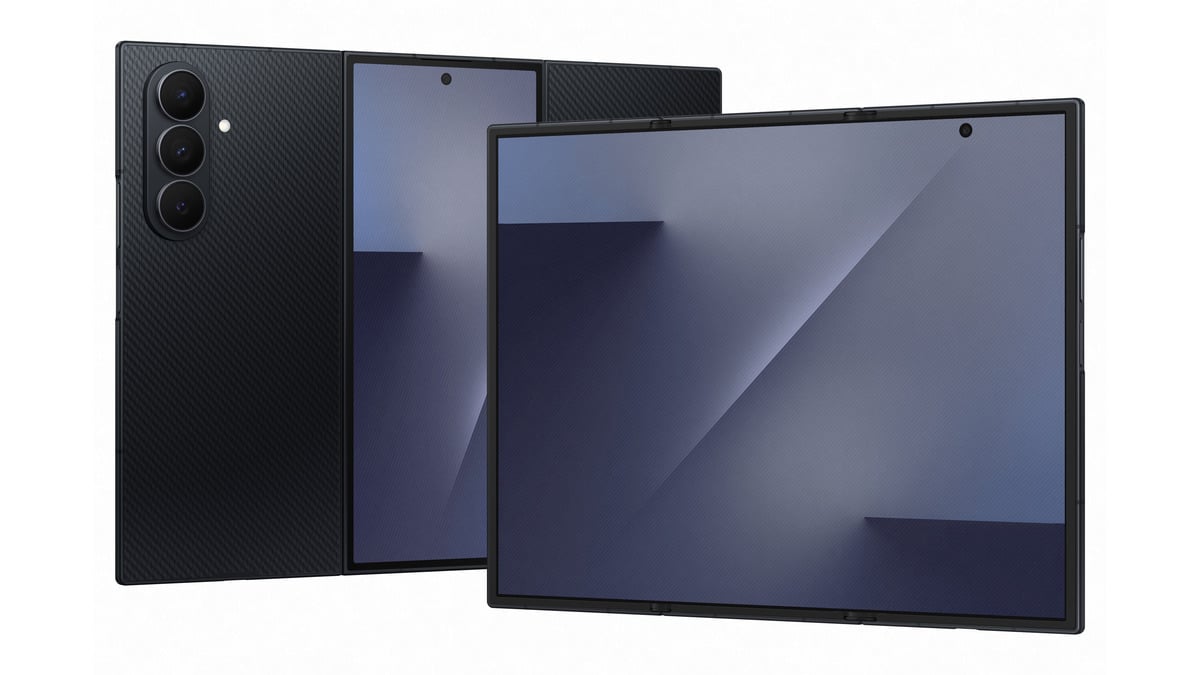
Dutch outlet GalaxyClub reports that Samsung is developing the Galaxy Z TriFold 2 under the Q9m codename, with a 2027 launch expected alongside the Galaxy Z Fold 9. The same report suggests the sequel may again be limited, possibly to markets such as South Korea and the US. Samsung has not confirmed the device, the timing, or the markets.
Q9m codename points to a 2027 launch with the Fold 9
Original Samsung Galaxy Z TriFold
According to GalaxyClub, the upcoming tri-foldable carries the Q9m name, following the original Galaxy Z TriFold, which was developed as Q7m alongside the Galaxy Z Fold 7 (Q7). The H9 and Q9 codes the site had already tied to the next book-style foldables now also appear in recent Galaxy Z Fold 9 IMEI listings for SM-F981U and SM-F986U. That pattern is why it expects the Galaxy Z TriFold 2 to arrive with the Fold 9 lineup in the summer of 2027, around Samsung’s usual foldable Unpacked event.
GalaxyClub is more cautious on availability. It says Samsung usually gives fully global models a distinct codename, as it did with the Galaxy Z Fold 8 (H8) and Galaxy Z Fold 8 Ultra (Q8), while a letter added to a parent code has marked limited models such as the Q6a Galaxy Z Fold Special Edition and the first TriFold. The site therefore thinks the Q9m device may again skip a wide global launch, and is not counting on a European release. The original Galaxy Z TriFold went on sale in South Korea on December 12, 2025, at about $2,500, then reached China, Taiwan, Singapore, and the UAE later that month. The US followed on January 30, 2026, at $2,899, and Samsung discontinued the phone a few months later after limited batches sold out.
Earlier reports, including a March tip from Korean leaker yeux1122, pointed to a thinner, lighter Galaxy Z TriFold 2 with a revised hinge and a mid-2027 window. Other rumors suggest a more durable body and a similar price, though those claims remain unverified. The Q9m leak mainly strengthens the case that a second tri-foldable is part of Samsung’s 2027 foldable plan, without locking down the markets or the final design.
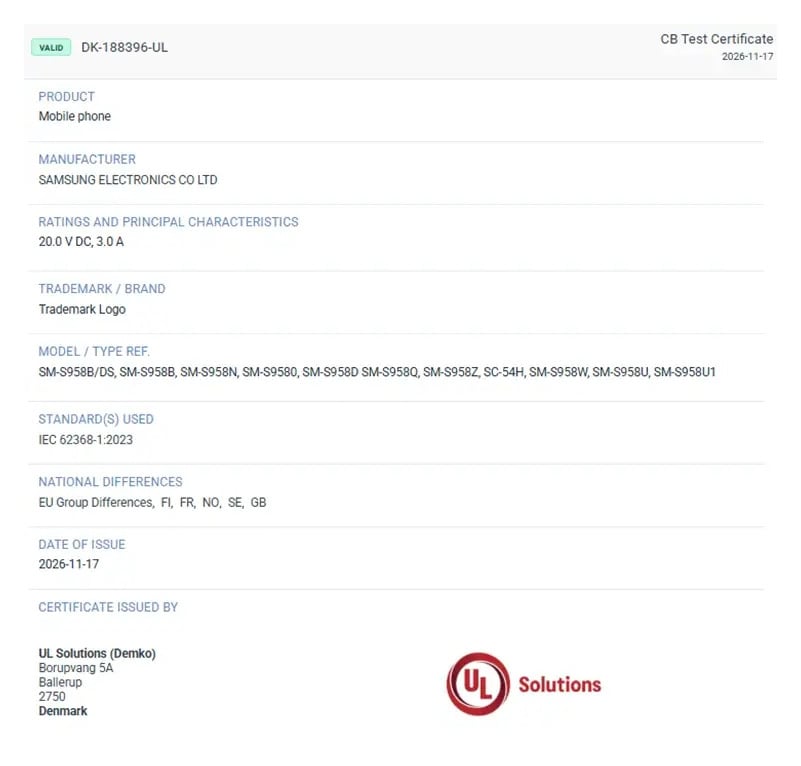
A new CB test certificate has corroborated 60W wired charging on the upcoming Galaxy S27 Ultra, the same peak speed Samsung introduced on the Galaxy S26 Ultra. Issued on November 17, 2026, by UL Solutions (Demko) in Denmark, the filing covers the SM-S958 family and a long list of regional models, rather than a jump to a higher wattage.
Galaxy S27 Ultra CB certification details
Galaxy S27 Ultra CB test certificate
Certificate DK-188396-UL, as spotted by AndroidTreasure, is marked valid and describes the product only as a mobile phone from Samsung Electronics. The rated input is 20.0V DC at 3.0A, or 60W, matching the S26 Ultra. That figure does not point to 5A charging, which would require a cable with an E-Marker chip. The phone was tested to IEC 62368-1:2023, with national differences for the EU group, Finland, France, Norway, Sweden, and the UK. The certificate does not list a charger accessory or a wireless charging rating.
The type list includes SM-S958B/DS and SM-S958B for international markets, SM-S958N for South Korea, SM-S9580 for China, SM-S958W for Canada, and SM-S958U and SM-S958U1 for US carrier and unlocked units. Japan is covered by SM-S958D, SM-S958Q, SM-S958Z, and SC-54H, which is likely NTT Docomo’s model code.
This is not the first 60W signal. China’s 3C certification already listed the S27 Ultra and the S27 Pro at the same wired ceiling in September. A later battery filing tied the Ultra to the EB-BS958DBY cell, and a TUV certification put the rated capacity at 5,534mAh, or about 5,700mAh typical. That would be a clear step up from the S26 Ultra’s 5,000mAh typical cell, so a 60W peak may not mean a quicker charge on its own. An earlier tip still holds that a revised charging curve could let the S27 Ultra charge a little faster than the S26 Ultra despite the larger battery, though that remains unconfirmed.
The S27 series is still expected in early 2027, and the S27 Pro has already appeared on Geekbench. Samsung has not confirmed the commercial name, the charging speed, or a launch date, so this CB certificate is another regulatory checkpoint rather than a full spec sheet.
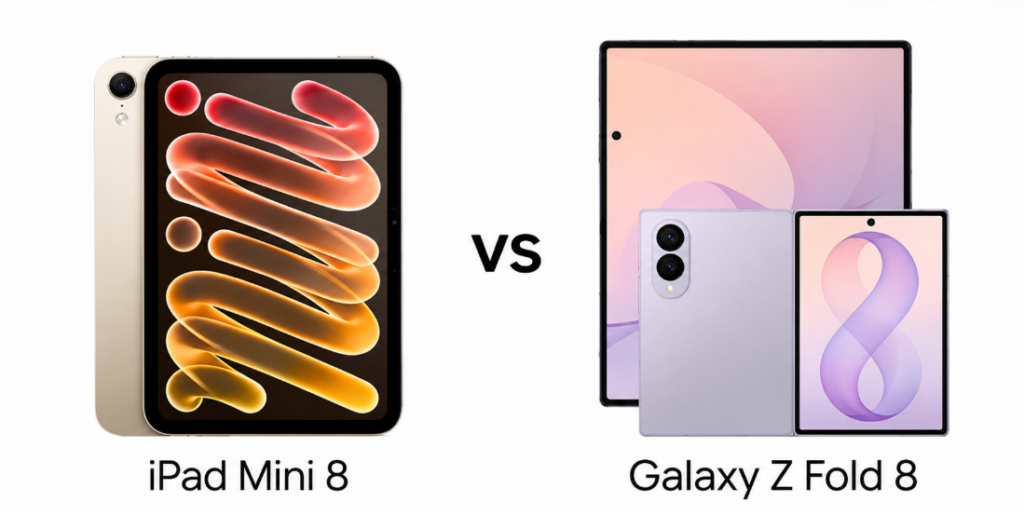
A $700 tablet or a $1900 foldable phone that opens into a tablet-like screen? The iPad Mini 8 and Samsung Galaxy Z Fold 8 make for an unusual comparison, but both target users who want a bigger screen without carrying a full-sized tablet. The interesting question is whether Samsung’s foldable is worth the premium or if Apple’s dedicated tablet remains the smarter buy.
Major Features:
Category
iPad Mini 8
Galaxy Z Fold 8
Main display
8.5-inch OLED, 120Hz
7.6-inch Dynamic AMOLED 2X, 120Hz
Cover display
—
5.5-inch AMOLED, 120Hz
Resolution
1512 × 2316
2448 × 1848
Processor
Apple A20 Pro (2nm)
Snapdragon 8 Elite Gen 5 (3nm)
Operating system
iPadOS 27.2
Android 17, One UI 9
RAM
12GB
12GB / 16GB
Storage
128GB / 256GB / 512GB
256GB / 512GB / 1TB
Rear cameras
12MP
50MP + 50MP
Front cameras
12MP ultrawide
10MP inner + 10MP cover
Battery
4,900mAh
4,800mAh
Wired charging
50% in 30 minutes
45W, 63% in 30 minutes
Wireless charging
—
20W
Connectivity
Wi-Fi 7, Bluetooth 6.0
Wi-Fi 7, Bluetooth 6.0, NFC, UWB
Protection
IP67
IP48
Stylus support
Yes
—
Price
Around $700 / ₹83,000
Around $1,900 / ₹1,80,000
Design and Display
Build and Form Factor
The iPad Mini 8 features an aluminium frame, glass front and IP67 protection. Its conventional tablet design and stylus support make it suitable for reading, note-taking, gaming and everyday productivity. It makes more sense for people who already own a smartphone and want a dedicated portable tablet.
The Galaxy Z Fold 8 offers a foldable design with Armor Aluminum construction and IP48 protection. Its cover screen works like a regular smartphone, while the inner display provides a larger workspace. It is more practical for people who want smartphone convenience without giving up a larger screen.
Display Quality
Apple equips the iPad Mini 8 with an 8.5-inch Super Retina XDR OLED display, a 120Hz refresh rate and up to 1,200 nits brightness. Its 3:2 aspect ratio is particularly useful for reading, browsing and note-taking.
Samsung offers a 7.6-inch Dynamic LTPO AMOLED 2X inner display with a 120Hz refresh rate, HDR10+ and up to 3,000 nits peak brightness. The additional 5.5-inch cover display makes it more flexible.
The iPad suits dedicated tablet use, while the Fold is better for switching between smartphone and larger-screen experiences.
The iPad Mini 8 runs on Apple’s 2nm A20 Pro chipset with 12GB RAM and up to 512GB storage. iPadOS 27.2 provides a tablet-focused experience suited to gaming, creative applications and productivity. It is a sensible choice for users who primarily need a compact tablet.
The Galaxy Z Fold 8 uses the Snapdragon 8 Elite Gen 5 processor, with up to 16GB RAM and 1TB storage. Android 17, One UI 9, multitasking features and Samsung DeX make it better suited to users who want smartphone convenience alongside desktop-style productivity.
Connectivity
Both support Wi-Fi 7 and Bluetooth 6.0. Apple offers USB-C 3.1 Gen 2 with DisplayPort, while Samsung provides USB-C 3.2, NFC, UWB and built-in cellular connectivity. The iPad requires its cellular variant for mobile connectivity, making the Fold 8 more convenient as a standalone device. Existing smartphone users may find Apple’s tablet connectivity sufficient, though.
The iPad Mini 8 features a 12MP rear camera with autofocus and 4K video recording at 60fps. Its 12MP ultrawide front camera is useful for video calls, but the single rear camera limits photographic versatility. It is better suited to document scanning and occasional photography than serious camera use.
Samsung offers a 50MP primary camera with OIS and a 50MP ultrawide lens. It also supports 8K video recording at 30fps. The two 10MP selfie cameras, positioned on the inner and cover displays, provide additional flexibility. The Fold 8 makes more sense for users who regularly capture photos and videos.
Audio Experience
Both devices offer stereo audio experiences without a 3.5mm headphone jack. Samsung includes stereo speakers, while Apple uses Acoustic Display technology. Both are suitable for streaming and entertainment, but the Fold’s smartphone-oriented design makes it more convenient for watching content on the move. The iPad is better suited to dedicated tablet viewing sessions.
Battery and Charging
The iPad Mini 8 packs a 4,900mAh battery with wired charging that reaches 50% in approximately 30 minutes.
Samsung includes a 4,800mAh silicon-carbon battery with 45W wired charging, reaching 63% in around 30 minutes. It additionally supports 20W wireless charging and 4.5W reverse wireless charging.
Their similar battery capacities do not necessarily translate into similar endurance. The iPad makes more sense for dedicated tablet sessions, while Samsung’s wireless and reverse wireless charging offer greater convenience for users with multiple devices.
Pricing and Value
The iPad Mini 8 is priced around $700 (approximately ₹83,000), while the Samsung Galaxy Z Fold 8 is priced around $1,900 (approximately ₹1,80,000). The significant difference reflects their fundamentally different designs and capabilities.
Is the Price Justified?
The iPad Mini 8 offers better value for anyone who already owns a smartphone and wants a dedicated compact tablet. The Fold 8 costs substantially more, but its ability to function as both a smartphone and tablet makes the premium more understandable for users who prioritise convenience. Buying the iPad alongside a separate smartphone can still be considerably cheaper.
Conclusion
The iPad Mini 8 stands out with its A20 Pro chipset, dedicated iPadOS experience, stylus support and more accessible price. The Galaxy Z Fold 8 counters with its foldable AMOLED display, Snapdragon processor, versatile cameras, Samsung DeX and wireless charging.
Final Verdict
The Galaxy Z Fold 8 can replace a compact tablet for users who want an all-in-one device, but it cannot completely replicate the dedicated tablet experience. The iPad Mini 8 remains the smarter purchase for existing smartphone owners who want a capable, affordable second screen. Ultimately, the choice depends on whether tablet functionality or smartphone-and-tablet convenience matters more.
Disclaimer: Prices, specifications, and availability may vary by region and retailer. Recommendations in this article are based on editorial opinion, feature-based value, and market positioning at the time of writing. Readers are advised to do their own research before making a purchase.
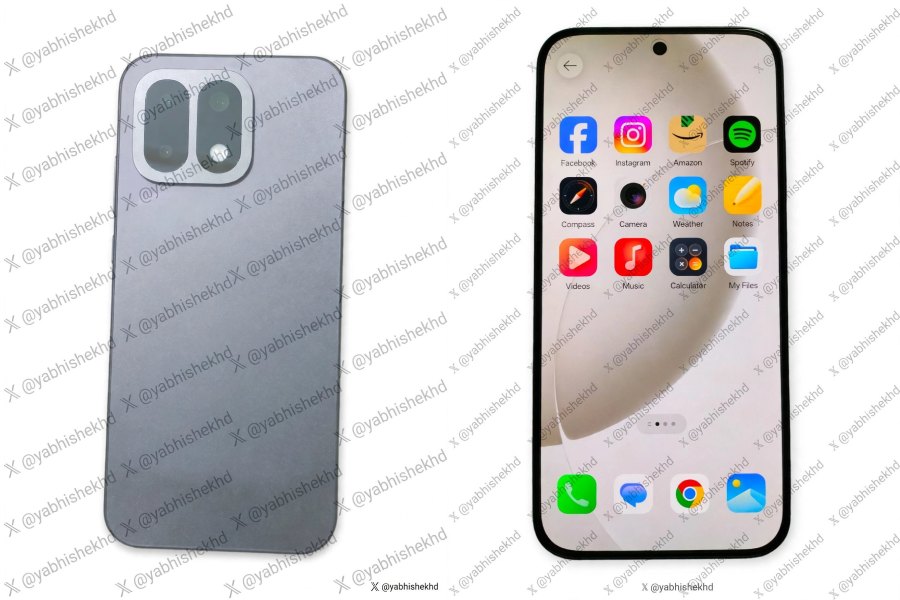
The Realme 17 Pro has been making headlines time and again. A report in the first week of November revealed the specs of the phone, and now its first live photos are on the social platform X, thanks to tipster Abhishek Yadav.
Realme isn’t making a dramatic change to the rear design. The 17 Pro retains the square camera island seen on its predecessor, although the lenses have been rearranged. There are two pill-shaped openings inside the module, with an LED flash positioned underneath. The back has a matte dark finish, while the sides are completely flat.
The front is less revealing, but the images show slim bezels surrounding the display and a centered punch-hole cutout for the selfie camera.
The biggest change may be inside. The phone is tipped to pack a 10,000mAh battery with support for up to 65W USB-C charging. The Realme 16 Pro has a 7000mAh by comparison, and faster 80W charging support.
Realme 17 Pro specifications
Per reports, the Realme 17 Pro will retain a 144Hz AMOLED display. The processor is reportedly the MediaTek Dimensity 7300, a 4nm chip introduced in May 2024. It has four Cortex-A78 performance cores clocked at up to 2.5GHz and four Cortex-A55 efficiency cores running at 2.0GHz.
The camera setup is still unclear. The front camera could drop from 50MP on the Realme 16 Pro to 32MP on the new model. There is also no confirmation that Realme will retain the 200MP main camera from its predecessor.
Realme has yet to announce the 17 Pro, so the design and specifications could still change before launch. For now, the live photos offer the first look at the phone, while the rumored 10,000mAh battery remains its most interesting feature.
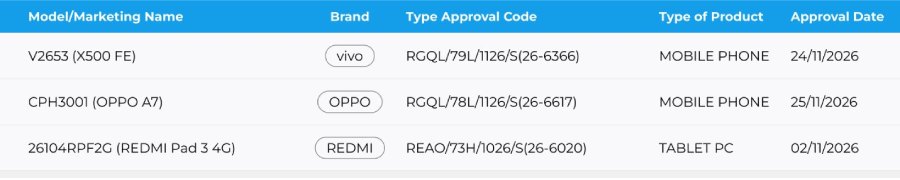
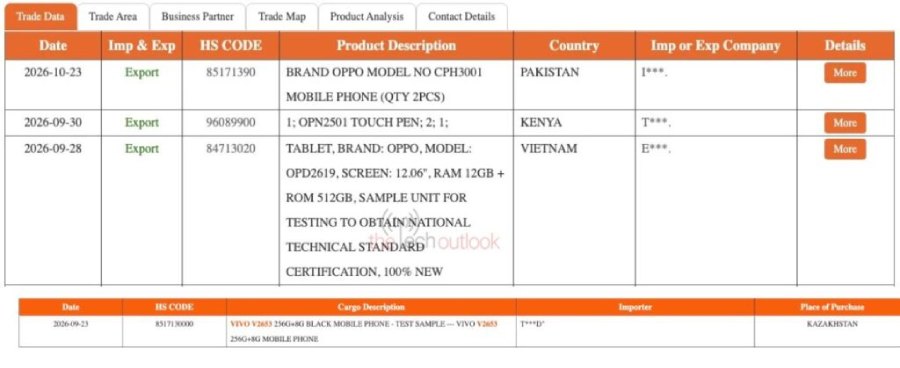
The Vivo X500 FE has added another certification. After clearing Singapore’s IMDA register earlier this month, the phone has now appeared on Malaysia’s SIRIM database. The Oppo A7 showed up on the same platform a day later. Both phones also turned up on the NBD import and export database.
Vivo X500 FE and Oppo A7 SIRIM listings
The Vivo X500 FE carries the model number V2653. Meanwhile, the Oppo A7 has the model number CPH3001.
The same model numbers appear on the NBD database. NBD doesn’t list marketing names for either phone. The SIRIM entries do so. They confirm that V2653 is the Vivo X500 FE and CPH3001 is the Oppo A7.
There is a little more information about the Vivo device. Its NBD listing mentions 8GB of RAM and 256GB of storage, along with a Black color option. This is likely just one configuration, so other memory variants and colors may also be available at launch.
The Oppo A7 listing is less revealing. Apart from identifying the model number, the NBD database indicates Pakistan as its intended sales market.
Vivo X500 FE has already passed several certifications
The V2653 model number isn’t entirely new. Before its latest appearance on SIRIM, the phone had already surfaced on SDPPI, TKDN, EEC, IMDA, and SGS certification platforms.
Its earlier IMDA listing confirmed support for 5G connectivity, WLAN, Bluetooth, and NFC. The IMEI database has also mentioned two model numbers, V2653 and V2654, suggesting that Vivo may be preparing multiple versions of the phone.
A third device on the SIRIM certification is the Redmi Pad 3 4G, listed with model code 26104RPF2G. Likewise, the NBD also lists a tablet from Oppo with the model number OPD2619, which comes with a 12.06″ display and a 12/512GB configuration.
There’s no confirmation from either brand on when and where the devices will go official. We will keep you posted on it.
Casio is adding a few new rectangular watches to its lineup. According to listings spotted on the Vietnamese retailer site G-Shock Hai Phong, the company is preparing to launch the new MTP-B190 series in January 2027. The watches are expected to debut in Japan first, with a global rollout likely happening later in the year.
Edited
Design Details
The new series features three specific models: the MTP-B190G-3BV, the MTP-B190RG-2BV, and the MTP-B190SG-3BV. All three share a rectangular stainless steel case and a 7-row metal strap, giving them a traditional dress watch appearance.
The differences between the models come down to the color options and finishes. The MTP-B190G-3BV has a gold ion-plated case and strap paired with a green dial. The MTP-B190RG-2BV switches to a rose gold finish with a blue dial. Lastly, the MTP-B190SG-3BV uses a two-tone silver and gold case and strap, also with a green dial. The dials themselves are straightforward, featuring Roman numeral indexes and a standard three-hand analog setup for the hours, minutes, and seconds.
Internally, the watches run on Casio’s 5361 module. It is a standard quartz movement that keeps time with an accuracy of ±20 seconds per month. They are powered by an SR626SW battery, which will last for about three years before you need to replace it. For daily wear, the watches include mineral glass over the dial and have a water resistance rating of 50 meters, meaning they can handle basic splashes or rain without issue.
In terms of size, the watches measure 41.0 by 31.5 millimeters and are 8.1 millimeters thick. They weigh 98 grams. This makes them relatively compact and slim, which is typical for this style of rectangular watch. The weight should make them noticeable on the wrist without feeling overly heavy during a normal day.
Currently, there is no official pricing available, as the retailer listings did not include a final cost. However, Casio’s MTP line is generally known for being budget-friendly, so these will likely be positioned as affordable options for people looking for a metal, rectangular watch. We will have to wait until closer to the January 2027 launch to get the exact retail price and confirmation on wider availability.
In related news, Casio has launched its Luxe Black G-Shock GBM2100LXB-1A2 in the US, featuring solar charging and Bluetooth connectivity.
We use cookies on our website to give you the most relevant experience by remembering your preferences and repeat visits. By clicking “Accept”, you consent to the use of ALL the cookies.
This website uses cookies to improve your experience while you navigate through the website. Out of these, the cookies that are categorized as necessary are stored on your browser as they are essential for the working of basic functionalities of the website. We also use third-party cookies that help us analyze and understand how you use this website. These cookies will be stored in your browser only with your consent. You also have the option to opt-out of these cookies. But opting out of some of these cookies may affect your browsing experience.
Necessary cookies are absolutely essential for the website to function properly. This category only includes cookies that ensures basic functionalities and security features of the website. These cookies do not store any personal information.
Any cookies that may not be particularly necessary for the website to function and is used specifically to collect user personal data via analytics, ads, other embedded contents are termed as non-necessary cookies. It is mandatory to procure user consent prior to running these cookies on your website.