Casio has updated its US watch lineup this month with the release of the MTP-B185 series. If you are looking for a straightforward, square-faced analog watch without any smart features, step trackers, or charging cables, these four new models fit that exact description.
Design Details
The new release includes three silver-tone stainless steel models and one gold-tone version. The differences between the three silver models come down entirely to the dial color. The MTPB185D-2A1V has a dark navy blue dial, the MTPB185D-2A2V uses a lighter ice blue, and the MTPB185D-7AV features a standard silver or white sunburst finish. The fourth model, the MTPB185G-9AV, pairs a champagne gold dial with a gold ion-plated case and band.
On the hardware side, Casio is keeping things uniform across the board. All four watches share the exact same case dimensions, measuring 40mm long, 32.5mm wide, and 7.3mm thick. At 7.3mm, they are relatively thin, which should allow them to slide easily under a shirt cuff. They weigh 80 grams, a standard weight for a stainless steel watch of this size, making them noticeable but not overly heavy on the wrist.
The feature set is as basic as it gets for an analog watch. The dial features a standard three-hand time display and a small date window. The watch face is covered by mineral glass, which is typical for this price bracket and offers standard scratch resistance, though it will not be as durable as sapphire crystal.
For water resistance, the MTP-B185 series is rated at 50 meters, or 5 bar. In practical terms, this means the watches can handle rain, hand washing, and light swimming, but they aren’t built for diving or high-pressure water activities. The stainless steel bands feature an adjustable clasp designed to fit wrist sizes ranging from 150 to 205 mm.
Pricing and Availability
Pricing is kept firmly in the budget category. The three silver models, the navy blue, ice blue, and silver sunburst, are priced at $100 each. The gold ion-plated version costs slightly more at $120 to account for the surface treatment. All four models are currently available for purchase in the US.
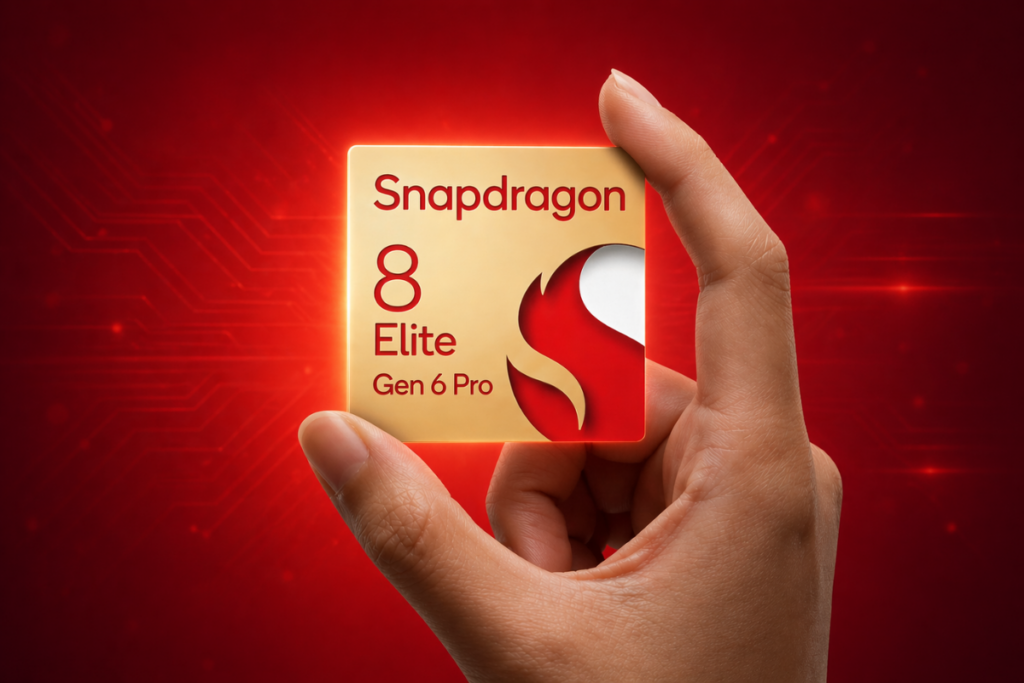
It looks like Qualcomm is testing two versions of the next Snapdragon flagship: a standard model that supports LPDDR5X memory and a higher-end “Pro” variant with faster LPDDR6 memory. Both versions share the same core clock speeds, so the big difference comes down to memory type. The Pro model also brings UFS 5.0 storage support, giving it enough power to handle almost anything you can throw at it.
This chipset is expected to be the most powerful 2nm Android SoC so far, targeting premium “Ultra” flagships coming in 2027. It’ll be manufactured on TSMC’s advanced 2nm process, which should bring solid gains in both performance and battery efficiency compared to previous generations.
The catch is likely the price. The top-tier Pro version could cost manufacturers over $300 per unit. That’s why Qualcomm is offering this flexible approach: brands can choose the more affordable LPDDR5X version for slightly cheaper flagships or go all-in with LPDDR6 for maximum bandwidth and better on-device AI performance.
Early block diagrams show the usual high-end layout, with a stronger GPU (rumored to be the Adreno 850 in the Pro) and solid multi-core performance. As usual, we’ll probably see binned versions later on, possibly with 7-core CPU setups for different price points.
Overall, this dual-version strategy feels like a smart response to the rising costs in the premium segment. The LPDDR6 models will go after the absolute top-tier buyers, while the LPDDR5X versions could bring near-flagship experiences to a slightly wider audience.
We should hear more official details later in 2026. If the rumors hold up, the Snapdragon 8 Elite Gen 6 Pro looks set to power the next wave of truly high-end Android phones, balancing raw power with the practical realities manufacturers are facing right now.
Amazfit has unveiled the new Balance Ultra smartwatch, targeting athletes and outdoor enthusiasts with a premium design, advanced GPS capabilities, and long battery life. The smartwatch combines a titanium alloy body, sapphire crystal protection, and extensive fitness tracking features in a rugged package.
Premium Design and Display
The Amazfit Balance Ultra features a Grade 5 titanium alloy case and sapphire crystal glass for added durability. The watch measures 44.8mm x 44.8mm, weighs 57g without the strap, and comes in Black and Black-Brown color options.
On the front, it sports a 1.5-inch AMOLED display with a 480 × 480 resolution and a peak brightness of up to 3,000 nits. The bright display is designed to remain visible even under strong sunlight, making it suitable for outdoor activities.
Long Battery Life and Rugged Durability
A 780mAh battery powers the smartwatch. Amazfit claims up to 30 days of battery life under typical use and up to 15 days with heavy usage. The watch can also deliver up to 50 hours of GPS tracking in precision mode, while power-saving GPS modes can extend usage significantly further.
The Balance Ultra carries a 10 ATM water-resistance rating and has been tested against impacts, vibration, temperature shocks, and extreme weather conditions, making it suitable for demanding environments.
Health Monitoring and Fitness Features
The smartwatch includes 24/7 heart rate monitoring, blood oxygen (SpO₂) tracking, skin temperature measurement, stress monitoring, sleep analysis, and women’s health tracking. It can also provide alerts for abnormal heart rates, low blood oxygen levels, and high stress.
For fitness enthusiasts, the watch supports more than 180 sports modes and features built-in GPS for independent workout tracking. It also includes dual-band GPS support, compatibility with six satellite positioning systems, offline maps, route navigation, HYROX training support, and post-race analysis tools.
Software and Availability
Running Zepp OS 6, the Balance Ultra offers 64GB of internal storage and supports popular fitness platforms including Strava, TrainingPeaks, Komoot, adidas Running, and Intervals. icu. The watch also features a built-in LED flashlight with white, red, and SOS modes.
Amazfit Balance Ultra is priced at 4,299 yuan in China and is currently available through JD.com. Global pricing is listed at approximately $600, positioning it as a premium smartwatch for outdoor adventures and advanced fitness tracking.
In classic Nothing fashion, the company just dropped another cryptic teaser. Just hours after confirming they’re skipping a new CMF smartphone in 2026 because of rising component costs, Nothing’s official X account posted a single mysterious character: “(b)”. The timing feels far from random, and fans are already speculating it’s a hint at something new coming to the main smartphone lineup.
The teaser follows co-founder Akis Evangelidis’ candid explanation that skyrocketing RAM and storage prices made a proper successor to the CMF Phone 2 Pro nearly impossible without raising prices or cutting corners, something the budget-focused brand didn’t want to do.
Instead of going silent, Nothing quickly shifted gears with this teaser. The teaser has sparked speculation about a possible Nothing Phone (4b). It would sit alongside the recently launched Phone (4a) and (4a) Pro, potentially filling a gap in their mid-range lineup. Interestingly, Nothing hasn’t released a full flagship Phone (4) this year, keeping the Phone (3) as their current top model while focusing more on the accessible “a” series.
A “b” variant would be new territory for the brand: they’ve mostly stuck to regular numbers and “a” suffixes until now. Some people think it could be a refreshed mid-ranger with upgrades like a better Glyph interface, improved cameras, or stronger battery life. Others are keeping their options open, wondering if it might not even be a phone, maybe a new audio product (like earbuds or headphones) under a “b” series.
Either way, this is pure Nothing: playful, minimalist teasers that get the community guessing and talking. With reports of softer-than-expected sales for the Phone (3) in some markets, leaning harder into smart mid-range options makes a lot of sense, especially with the current component price challenges.
It feels like more clues are coming soon. One thing’s for sure: Nothing is not planning to slow down. Whether it’s a Phone (4b) or something totally unexpected, the next few weeks should be interesting.
Portronics has released a new portable charger in India, the Aero 10. It is a 10,000mAh power bank that supports 20W charging and features an integrated USB-C cable. The device is positioned as a straightforward utility accessory for users who want to avoid carrying separate charging cables for their daily electronics.
Portronics Aero 10 Specifications
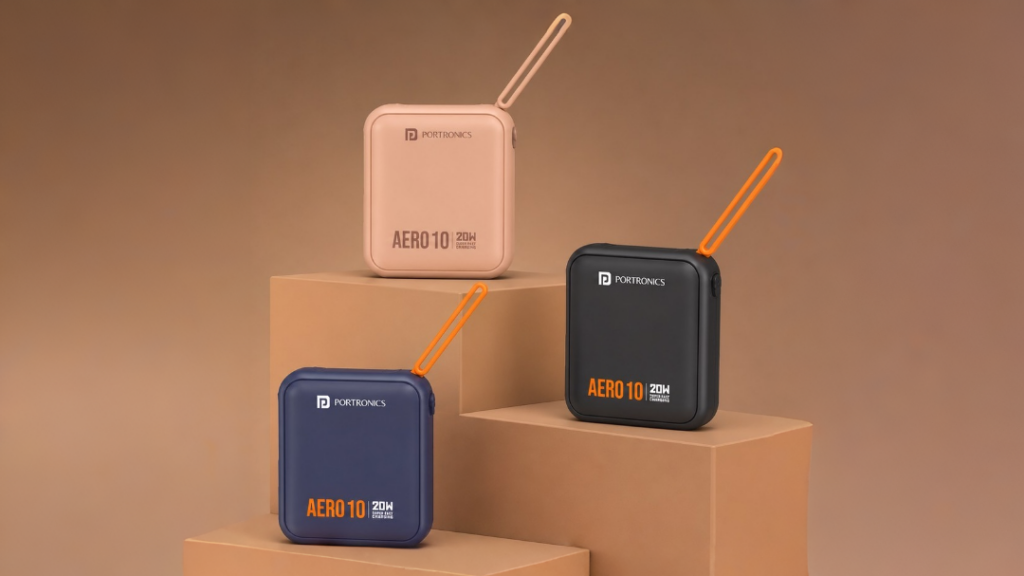
Instead of the usual rectangular slab design common to most power banks, the Aero 10 uses a square shape with rounded corners and a standard matte exterior. It weighs 245 grams, which is typical for a 10,000mAh battery pack, and is small enough to fit into most pockets or small bag compartments without taking up much space. Portronics is selling the device in three standard colors: Black, Navy Blue, and Mocha.
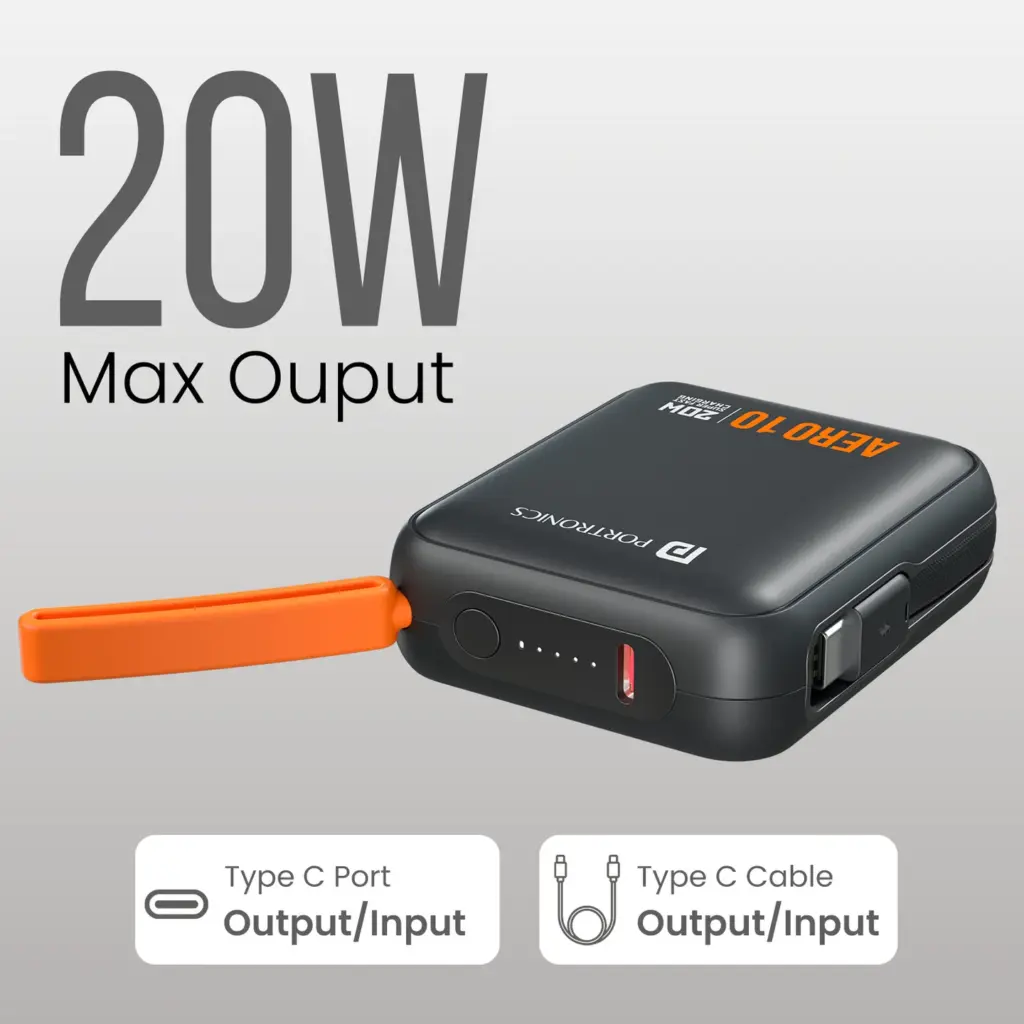
The power bank comes with a built-in, flat-braided USB-C cable. This cable handles both power output to charge your devices and power input to recharge the power bank itself. It also physically loops into the chassis to act as a lanyard for carrying. In addition to the integrated cable, there is a standard USB-C port on the device, which also supports two-way charging. This dual setup allows users to plug in a second cable and charge two devices simultaneously.
Regarding performance, the Aero 10 maxes out at 20W via USB Power Delivery (PD). While 20W is not particularly fast compared to the higher-wattage chargers available today, it is sufficient for standard fast charging on most modern Android smartphones, as well as smaller accessories like wireless earbuds, tablets, and smartwatches. It will not be adequate for charging larger hardware like laptops.
Pricing and Availability
The Portronics Aero 10 is available now in India. The official retail price is listed at Rs. 2,499 ($26), but it is currently available at a launch price of Rs. 1,249 ($13).
It can be purchased through the Portronics website, Amazon India, Flipkart, and physical retail stores. The power bank comes with a standard 12-month manufacturer warranty.
In related news, Ugreen has recently introduced a 45W 10,000mAh smart power bank featuring a built-in USB-C cable and color display, while Portronics launched a 20,000mAh power bank with 35W fast charging, integrated cables, and an LED display.
For more daily updates, please visit our News Section.
AISpeech has introduced a new dedicated voice recorder in China, the TalkNote Flagship AI Recording Card, priced at 1,299 yuan (around $192). The device is designed to handle audio recording, transcription, and cloud syncing in a form factor small enough to fit inside a wallet or a standard office badge holder.
AISpeech TalkNote Specifications
Physically, the TalkNote measures 86 x 55 x 4.5 mm and weighs 43 grams, giving it the approximate footprint of a credit card. It features a grey finish and includes a small 0.95-inch AMOLED display. The screen is straightforward, used primarily for checking battery life and current recording status rather than navigating complex menus.
For audio capture, the device relies on a five-microphone array consisting of four omnidirectional microphones and a single bone-conduction microphone. According to AISpeech, this hardware combination allows for clear voice pickup within a five-meter radius, with a maximum effective range of eight meters. It also utilizes onboard noise reduction to filter out ambient background sound in busy environments.
The device comes with built-in 4G, alongside standard Wi-Fi and Bluetooth. AISpeech includes lifetime free 4G data specifically for cloud synchronization. This allows the device to automatically upload audio files to the cloud as soon as a recording session ends, meaning users don’t have to manually transfer files to a computer or phone via the included USB-C port. The device is powered by a 750mAh battery, which the company says provides up to 45 hours of continuous recording and 60 days of standby time.
On the software side, the TalkNote is built around automated transcription. It supports 25 foreign languages and 57 Chinese dialects, and it can automatically switch between Chinese and English during a conversation. AISpeech claims a transcription accuracy rate of up to 98% under supported conditions. Once the audio is uploaded, the companion software can generate meeting summaries, identify different speakers, and extract action items.
The device comes with 64GB of internal storage and includes a three-month subscription to AISpeech’s OfficeClaw platform, which manages the AI-generated notes and tasks.
In a pretty big surprise for the AI world, China’s Zhipu AI’s latest model, GLM-5.2, just grabbed the top spot in one of the most respected creative coding benchmarks out there.
On June 19, 2026, Design Arena announced on X that GLM-5.2 has taken the #1 position in their single-round HTML web design leaderboard (non-agent category). The platform, basically the world’s first big crowdsourced benchmark where real people blindly vote on AI-generated designs, says it beat out Claude Fable 5, along with the Opus 4.6 and 4.7 versions. That’s a solid five-place jump from its predecessor, GLM-5.1, landing it with an Elo score around 1360 in the Code Categories arena.
What makes this win stand out is how the model actually designs. It’s apparently excellent at clean layouts, pulling in images from CDNs, typography, visual hierarchy, and those nice subtle animations that make a site feel alive. It also plays really nicely with popular libraries like Chart.js and Three.js. According to the results, it boosted its win rate by about 6 percentage points this time around.
One interesting detail: GLM-5.2 leans heavily on Tailwind CSS (showing up in 91% of its designs) and Font Awesome (51%). By comparison, Fable 5 only used Tailwind in about 57% of its sessions, which might explain some of the practical gaps people noticed.
Beyond the design quality, the pricing is a breath of fresh air. GLM-5.2’s API runs around $1.40 per million input tokens and $4.40 for output, way more affordable than Fable 5’s $10/$50. Plus, it’s an open-weights model under the MIT license with a solid 1M-token context window, which means teams can run it locally and tackle bigger, longer projects without being locked into a proprietary service.
Design Arena’s approach gives these results real weight: millions of votes from actual creators focused on real aesthetics and usability, not just synthetic tests. This isn’t just a win for web design; it puts GLM-5.2 among the strongest open models across broader coding benchmarks too.
For the AI community, this feels like another sign that Chinese labs are moving fast in specialized creative areas. While Claude Fable 5 is a strong player, GLM-5.2’s mix of strong performance, low cost, and openness could make it a go-to choice for a lot of web development teams going forward.
OpenAI may be getting ready to launch its next-generation AI model, GPT-5.6, as early as next week, according to reports circulating among testers and AI enthusiasts. While the company has not officially confirmed the model, growing speculation suggests that GPT-5.6 could bring major improvements in reasoning, coding, and long-context understanding.
The rumored lineup is expected to include GPT-5.6 Mini, GPT-5.6 Standard, and GPT-5.6 Pro. Several OpenAI Pro subscribers have claimed they already received access to a newer model through GPT-5.5 Pro, fueling speculation that OpenAI is quietly testing GPT-5.6 before a public launch.
AI- generated image for representation only
Users Claim ChatGPT Suddenly Feels Smarter
The latest wave of rumors began when many ChatGPT users reported noticeable improvements in the platform’s performance. Testers on X claimed the AI appeared more capable in reasoning, coding, and creative tasks.
Developer Anshu Chimala shared side-by-side comparisons of AI-generated landing pages and said the outputs were significantly better than previous versions. Other early testers reported that the model required fewer corrections and delivered stronger first-attempt results.
Several users also suggested that the AI now spends more time thinking before responding, leading to higher-quality outputs despite slower generation speeds.
source: x.com/anshuc/
Improved Reasoning and Problem-Solving
One of the biggest rumored upgrades is a major improvement in reasoning capabilities. Early feedback suggests GPT-5.6 can better understand complex instructions, plan multi-step tasks, and solve difficult problems with fewer mistakes.
Testers reported that projects which previously required multiple revisions and 20 to 40 minutes of work can now be completed more efficiently. While some front-end web development limitations reportedly remain, users describe the model as showing deeper understanding and more reliable decision-making.
According to leaked information, OpenAI may have increased an internal reasoning parameter known as “Juice Value” from 768 to 960, potentially contributing to stronger performance.
Larger Context Window Could Reach 1.5 Million Tokens
Another major rumor centers on a substantial context window upgrade. Reports suggest GPT-5.6 could expand the maximum context length from 1 million tokens to 1.5 million tokens.
If accurate, the increase would allow the model to process larger codebases, longer conversations, extensive research documents, and more complex workflows within a single session. Developers could benefit from improved memory and continuity when working on large projects.
Stronger Coding and Agent Capabilities
Coding performance appears to be one of the primary areas of improvement. Early testers claim GPT-5.6 delivers better code understanding, stronger planning abilities, and more reliable execution across multi-step development tasks.
Some reports suggest the model performs particularly well in agent-based coding workflows and software development benchmarks. Testers also highlighted improvements in SVG generation, 3D design creation, and robotic simulation tasks.
According to several users, GPT-5.6 Pro may outperform some competing models in coding-related benchmarks, although results vary depending on the specific test.
Higher Quality Comes With Slower Responses
Not all feedback has focused on speed. Some testers reported that GPT-5.6 takes considerably longer to complete demanding tasks.
In one example, developer Conor Dart used the model to create a browser-based 3D game with physics simulation and camera controls. The generation process reportedly took more than an hour but produced significantly better results than previous versions.
source: x.com/Conor_D_Dart/
Benchmarker Chris compared GPT-5.6 Pro against GPT-5.5 Extra High and found that while GPT-5.6 generated higher-quality outputs, it required substantially more time to finish the task. This has led many testers to conclude that OpenAI may be prioritizing reasoning quality over raw speed.
Competition in the AI Race Continues
The rumored release comes at a time of intense competition in the AI industry. Chinese AI models such as GLM-5.2 and Anthropic’s latest systems are pushing the boundaries of coding and agent performance.
Reports indicate OpenAI may respond not only with stronger models but also with more aggressive pricing. Some sources claim OpenAI’s current token costs are already significantly lower than Anthropic’s, and further reductions could increase pressure across the AI market.
Industry observers believe a combination of lower costs and improved performance could help OpenAI strengthen its position among developers and enterprise customers.
Possible Launch Date Emerges
Several rumors point to June 25 as a possible launch date. Some testers believe OpenAI is currently conducting stealth A/B testing through GPT-5.5 Pro, allowing the company to gather real-world feedback before a wider rollout.
Prediction market traders have also shown growing confidence in a release during the week of June 22 to June 28, with some forecasts assigning high probabilities to a launch within that period.
OpenAI Has Not Confirmed the Reports
Despite the growing excitement, OpenAI has not officially confirmed the existence of GPT-5.6, its specifications, pricing, or launch schedule.
Most of the current information comes from social media reports, alleged leaks, early tester feedback, and industry speculation. Until OpenAI makes an official announcement, all details regarding GPT-5.6 should be treated as unconfirmed.
If the rumors prove accurate, GPT-5.6 could represent a significant step forward for OpenAI’s AI platform. Early reports point to stronger reasoning, better coding performance, larger context windows, and improved agent capabilities. While the model may take longer to generate responses, testers suggest the trade-off could be worth it for users seeking higher-quality results. For now, the AI community is waiting to see whether OpenAI officially unveils GPT-5.6 in the coming days.
With just days to go before the big reveal, OnePlus is getting everyone talking about its upcoming budget smartphone, the N6.
Positioned as a more wallet-friendly option below the Nord series, the phone (model CPH2955) seems to prioritize real-world usability over flashy specs. It recently popped up on Geekbench, confirming it’s powered by MediaTek’s Dimensity 6300 chipset, an octa-core processor with two performance Cortex-A76 cores (up to 2.4 GHz) and six efficiency-focused A55 cores, paired with a Mali-G57 MC2 GPU.
In the tests, it scored around 780 in single-core and 2,000 in multi-core while running Android 16 with 6GB of RAM. Nothing mind-blowing, but sufficient for everyday tasks like scrolling through social media, streaming, and light multitasking. These scores are also right in line with what we’ve seen from the Dimensity 6300 in other phones.
The real star here is the battery. OnePlus has already confirmed an 8,000 mAh monster, apparently the biggest in the ₹15,000–₹25,000 range. The company claims you can get up to three days of typical use out of it, and they’re promising the battery will stay healthy for up to seven years. It supports 45W SuperVOOC fast charging, so when you do need to top up, it won’t take forever.
The phone is set to launch in India on June 30, 2026, in black and green colors, with sales going live on Amazon. While we still don’t have the full specs (especially the display and cameras), the early signs point to a phone that focuses on reliable daily performance, smooth OxygenOS 16, and that massive battery life.
This feels like a smart move from OnePlus. Instead of trying to compete on flagship features, they’re doubling down on what actually matters to a lot of regular users.
We’ll know a lot more once the official event happens, but right now the N6 is looking like a solid, no-nonsense pick for anyone who wants long-lasting battery life and decent performance without breaking the bank.
Lenovo has introduced the new Aurora GH15 Gaming Headset, expanding its Aurora gaming ecosystem with a feature-packed wireless headset designed for gamers and multimedia users. It combines RGB lighting effects, multiple connectivity modes, low-latency wireless performance, and a detachable microphone in a foldable design.
RGB Lighting Designed for Lenovo’s Aurora Ecosystem
One of the standout features of the Lenovo Aurora GH15 is its RGB lighting system. The headset supports Aurora lighting synchronization, allowing users to match lighting effects with compatible Lenovo Legion laptops, keyboards, and mousepads. Through Lenovo’s Aurora software, users can customize lighting effects and synchronize them across devices with a single click.
The lighting can react dynamically during gaming sessions, music playback, and system startup, creating a more immersive desktop setup for gamers.
Gaming-Focused Audio Performance
The Lenovo Aurora GH15 is equipped with 40mm dynamic drivers that are tuned for gaming and entertainment. According to Lenovo, the headset offers a wide soundstage and precise directional audio, helping players identify footsteps, gunfire, and other in-game sounds more accurately.
The custom acoustic chamber is designed to improve low-frequency impact while maintaining clear vocals and detailed high-frequency sounds. This makes the headset suitable for competitive titles such as PUBG and Counter-Strike 2, where positional audio plays an important role.
Ultra-Low Latency Wireless Connectivity
For gamers who prioritize responsiveness, the GH15 supports 2.4GHz wireless connectivity with latency as low as 25ms. This helps reduce the delay between on-screen actions and audio playback, providing a smoother gaming experience.
The headset is designed to maintain a stable wireless connection and can operate within a range of up to 10 meters in an open environment without obstacles.
Quad-Mode Connectivity for Multiple Devices
Lenovo has equipped the Aurora GH15 with four connection methods, making it compatible with a wide range of devices.
Users can connect through Bluetooth for smartphones and tablets, while the 2.4GHz USB wireless mode is aimed at PC gamers looking for low-latency performance. A 2.4GHz Type-C wireless adapter adds compatibility with devices such as smartphones, tablets, and the Nintendo Switch. For traditional connectivity, the headset also supports a 3.5mm wired connection, allowing continued use even when the battery runs out.
The headset also supports quick switching between connected devices, reducing the need for repeated pairing.
Detachable ENC Microphone for Clear Communication
The Aurora GH15 features a 360-degree detachable microphone that can be adjusted to different angles for better voice pickup. Lenovo has also included ENC (Environmental Noise Cancellation) technology, which helps reduce background noise during calls and multiplayer gaming sessions.
When the microphone is not required, users can simply remove it, making the headset cleaner and more convenient for everyday use.
Comfortable and Portable Design
Lenovo has focused on long-term comfort with the GH15. The headset features a high-strength stainless-steel headband and soft protein leather ear cushions designed to reduce pressure during extended gaming sessions.
Its lightweight ergonomic construction and breathable ear pads help minimize heat buildup, while the foldable design makes the headset easier to store and carry in backpacks or laptop bags.
Battery and Charging
The headset is powered by a built-in 1000mAh battery that supports extended gaming and media playback sessions. Charging is handled through a USB Type-C port, offering convenient and modern connectivity.
Combined with its wireless modes and portable design, the GH15 is positioned as an all-around headset for gaming, entertainment, and daily use.
Lenovo Aurora GH15 Specifications
Specification
Details
Model
Lenovo Aurora GH15
Colors
Black, White
Driver Size
40mm Dynamic Drivers
Frequency Response
20Hz – 20kHz
Impedance
32Ω ±15%
Sensitivity
96 ±3dB @ 1kHz
Connectivity
Bluetooth, 2.4GHz USB Wireless, 2.4GHz Type-C Wireless, 3.5mm Wired
Wireless Latency
As low as 25ms
Wireless Range
Up to 10 meters
Microphone
360° Detachable Microphone
Noise Cancellation
ENC Call Noise Reduction
RGB Lighting
Aurora Sync RGB Lighting
Battery Capacity
1000mAh
Charging Port
USB Type-C
Design
Foldable Ergonomic Design
Headband Material
Stainless Steel
Ear Cushions
Protein Leather
Price
249 Yuan
Availability
The Lenovo Aurora GH15 Gaming Headset is currently available in China through JD.com with a retail price of 249 yuan. The headset is offered in both Black and White color variants and is aimed at gamers looking for RGB lighting, low-latency wireless audio, and versatile multi-device connectivity in an affordable package.
Accessory maker Ugreen announced a 12.5mm compact 45W GaN charger in China a few days ago. It has a single USB-C port that can charge the iPhone 17 Pro from 0 to 67% in about half an hour.
Ugreen has today introduced a new and bigger version of the charger, called the Nexode Air 65W with two USB-C and one Type-A port. It remains compact, measuring just 14.5 mm, and the looks aren’t much different from its 45W sibling.
The top part at the front has striped lines, while the Ugreen and 65W Nexode Air branding is below it. What makes this charger truly compact is its foldable plug, which makes it easy to fit into pockets or a small pouch in your sling bag. Despite the added power and extra ports, the charger remains relatively slim, measuring 84.3mm x 53.3mm and weighing around 108 grams.
Ugreen Nexode Air 65W Specifications
As for technical specifications, the USB-C1 port supports 65W output, the USB-C2 port delivers 30W, while the USB-A port caps at 22.5W. And as is obvious, the power is distributed if you use two or three ports in conjunction.
As such, the USB-C1 maxes out at 45W regardless of the mix. The USB-C2 and USB-A deliver 20W and 15W when paired with C1, while without it, the two ports individually offer 15W output.
The charger supports a wide range of charging standards, including USB Power Delivery (PD), PPS, Quick Charge (QC), FCP, and SCP. It also accepts a 100V-240V input, allowing it to work in different regions with the appropriate plug adapter.
The Nexode Air 65W is priced at 129 yuan, or some $20 in conversion, and Ugreen is offering an 18-month warranty. You can buy it from the Chinese e-commerce platform JD.com. In comparison, the 45W Nexode Air retails at 109 yuan ($16).
Xiaomi has officially confirmed HyperOS 4 will be unveiled in July or August 2026, starting with China; the global announcement typically follows a few weeks later. Leaks point to the Xiaomi 17 series and Redmi K90 series forming the first beta batch, with the stable rollout expected to reach older devices around October 2026. Current flagships are already moving to Android 17 through the interim HyperOS 3.3 update.
Android 17 has just landed on Google Pixels, and it will soon start rolling out to Xiaomi devices. However, this will be a much bigger upgrade for Xiaomi devices as the new HyperOS 4 skin reportedly offers a significant software and architectural overhaul rather than an incremental yearly upgrade.
Besides major under-the-hood changes, the upcoming HyperOS 4.0, based on Android 17, is expected to introduce a host of visual upgrades, an interactive lock screen island, deeper contextual AI productivity features, and stronger privacy and security capabilities. So, there’s a lot to look forward to in terms of new features and capabilities.
Now, if you have a Xiaomi phone, you may be wondering when the update will roll out. So, we’ve created this comprehensive HyperOS 4 post that covers eligible devices, release date, new features, and everything else you need to know.
This page is part of our Xiaomi hub, where every Xiaomi, Redmi and POCO rollout is tracked in one place. Following other brands too? See the Android Update Tracker for Samsung, OnePlus, OPPO, Vivo and more.
Which devices will get HyperOS 4?
Note: Xiaomi has yet to publish an official list of HyperOS 4-supported devices. Our list is compiled from Xiaomi’s software update policies and is updated as new devices are confirmed.
In short: every recent Xiaomi flagship back to the Xiaomi 13T, the Redmi Note 14, 15 and 17 series, the Redmi K90 series, and POCO’s F6-to-F8 and X6-to-X8 lines, plus recent Redmi Pad and POCO Pad tablets,, are in line for HyperOS 4.
We maintain the complete, device-by-device list on a single page and update it as eligibility changes.
While an exact release date hasn’t been announced, Xiaomi has officially confirmed that the HyperOS 4 will be unveiled in July or August. This likely refers to the China launch, while the global announcement may follow after a few weeks.
As always, there will be a beta program first before the stable version rolls out to the public. Leakster Digital Chat Station has revealed the phones that will be a part of the first batch of the HyperOS 4 beta program in China. This includes:
Xiaomi 17
Xiaomi 17 Pro
Xiaomi 17 Pro Max
Xiaomi 17 Ultra
Xiaomi 17 Max
Redmi K90
Redmi K90 Pro Max
Redmi K90 Pro Max Champion Edition
Last year, Xiaomi unveiled HyperOS 3 in China in August, followed by a global launch in September. It will likely follow the same timeline this year for HyperOS 4, so we can expect the global rollout to begin in October 2026.
Meanwhile, the groundwork has already started: on July 15, Xiaomi began rolling out HyperOS 3.3, an interim update that moves current flagships like the Xiaomi 17 series to Android 17 ahead of HyperOS 4’s arrival. Don’t expect new features from it, the visual overhaul and headline additions are reserved for HyperOS 4 itself.
As for which phone debuts the new software, it may not be the Xiaomi 18 series first:- Xiaomi’s upcoming foldable, tipped to run HyperOS 4 out of the box, could beat it to launch.
What to expect from HyperOS 4?
While the official launch is still a few weeks away, several leaks have surfaced online, revealing what’s to come. They suggest Xiaomi is focusing heavily on a “Zero-Legacy” framework built on Android 17. Under this framework, Xiaomi is aggressively purging old legacy code and SDKs to reduce system bloat.
Xiaomi is reportedly rewriting core system applications and frameworks using Rust and Flutter to improve memory safety, background optimization, and cross-device UI consistency. This will also help the software achieve lower RAM usage, faster boot times, and reduced animation stutters.
The company offered a glimpse of its liquid-glass design in HyperOS 3, which is expected to be integrated more deeply into HyperOS 4, featuring fluid aesthetics, glossy overlays, frosted-glass transparency, and advanced bounce animations. A leak suggests Xiaomi could extend the partnership with Leica to introduce the Leica-inspired color palette in HyperOS 4.
Several leakers say Xiaomi could integrate a privacy screen feature that narrows the viewing angle, similar to how Privacy Display works on the Galaxy S26. The difference is that Samsung’s implementation uses hardware, while Xiaomi is reportedly trying to achieve the same via software. It will be exciting to compare both.
Furthermore, HyperOS 4 is expected to feature smarter cross-device multitasking, highly optimized background task management, and deeper contextual AI productivity features for daily workflows.
In addition to these features and many more we still don’t know about, the next major upgrade for Xiaomi devices will include many features and upgrades from the development team at Google. This appears to be an exciting update package, and like you, we can’t wait to test it out.
More recent leaks put numbers on the overhaul: early test figures suggest HyperOS 4 could improve overall system smoothness by around 40 percent, increase background app retention by 35 percent, and cut idle memory use by a quarter. The Liquid Glass design is said to come in two styles, Transparent and Soft and Xiaomi’s on-device AI models, including MiMo and the Miclaw agent, are expected to power offline document summarization, translation and image editing, with cross-device file transfers up to three times faster.
We’ll keep you posted as we receive fresh details.
In a refreshingly honest move, Nothing’s sub-brand CMF has decided to skip launching a new phone in 2026. Fans hoping for a successor to the well-liked CMF Phone 2 Pro will have to wait a bit longer.
The main reason? Skyrocketing memory prices. Nothing co-founder Akis Evangelidis confirmed that the team had been working on a follow-up, but rising costs for DRAM and storage made it tough to deliver a meaningful upgrade without pushing the price much higher, something that would go against CMF’s whole budget-friendly identity.
For context, the CMF Phone 2 Pro (launched in 2025) was praised for offering good value: a MediaTek Dimensity 7300 Pro chipset, a 120Hz AMOLED display, decent cameras, and solid battery life, all for around €259 or ₹18,999. But reports show memory prices jumped over 90% in early 2026, largely because of massive demand from AI data centers. That made the numbers just not add up.
Evangelidis put it pretty straightforwardly: “We’d rather be upfront about that than ship something we’re not proud of.” It’s a refreshing bit of transparency in an industry that often rushes out half-baked updates.
This isn’t just a CMF problem either. The main Nothing brand is feeling the same pressure: CEO Carl Pei has talked about memory costs nearly doubling and affecting phones like the Phone (4a). Across the board, brands are slowing down launches or rethinking their entry-level and mid-range plans to keep things affordable.
That said, CMF isn’t going quiet. They’ve already teased new products and even completely fresh categories coming later in 2026. Meanwhile, tipster Yogesh Brar has hinted that the shelved project might resurface as something like a “Nothing Phone (4a) Lite,” possibly launching as soon as next month. That could give them more pricing flexibility in the mid-range (around ₹25,000 and above).
For now, the current CMF Phone 2 Pro might stay a strong recommendation for longer than expected. And we’ll be keeping an eye on what Nothing and CMF drop next.
Gmktec is preparing to release the Evo-X3, a new compact mini PC aimed heavily at local AI workloads and creative professionals. Slated for a global launch on June 29, the Evo-X3 shares much of its underlying hardware with the recently released Evo-X2 but introduces a few key hardware and software additions designed for users who need more scalability.
What to expect?
Inside the PS4-sized chassis, the Evo-X3 is powered by the AMD Ryzen AI Max+ 395 APU. This chip features 16 cores and 32 threads built on AMD’s Zen 5 architecture, alongside integrated Radeon 8060S graphics based on RDNA 3.5. GMKtec is offering the system with up to 128GB of 8000MHz LPDDR5X memory and up to 4TB of storage via dual PCIe 4.0 M.2 slots.
The main hardware change from the previous model is the OCuLink (PCIe Gen4 x4) connection. The integrated Radeon graphics are fine for standard use, but the OCuLink port allows you to connect an external RTX 40 or 50-series GPU. This gives the PC a straightforward upgrade path if you need to handle heavier 3D rendering or compute tasks later on.
On the software side, GMKtec is bundling the Evo-X3 with its Claw+Wrangler AI ecosystem. The company is leaning hard into the concept of the local AI workstation, positioning the 128GB RAM configuration as a way to run massive language models, like the 235 billion parameter Qwen3, entirely offline.
To handle the thermal load of the 140W APU, the Evo-X3 uses a triple heat-pipe cooling system with dual fans, which the company claims can maintain performance without excessive noise. Connectivity includes WiFi 7, Bluetooth 5.4, and a 2.5GbE LAN port.
Design-wise, the X3 opts for a graphite gray chassis with clean surfaces and side-integrated ventilation. It is noticeably slimmer and appears optimized strictly for vertical placement to minimize its desk footprint, resembling a compact enterprise node rather than a gaming rig.
Early access registration for the Evo-X3 opens on June 22nd, which includes a minor $20 discount, ahead of the full launch on June 29th. Gmktec hasn’t announced the exact pricing for the X3 yet. However, given that the similarly equipped Evo-X2 currently sells for around $2,000, the X3 is expected to land in a similar premium price bracket.
In related news, Peladn has recently unveiled the HO5 Mini PC featuring AMD’s Ryzen AI 9 HX 470 processor and an OCuLink port, while Minisforum has introduced its Panther Lake-powered M2 Pro and MS-03 mini PCs with up to 180 TOPS of AI performance.
For more daily updates, please visit our News Section.
Samsung is gearing up to refresh its popular M-series with the new Galaxy M47 5G, aimed squarely at budget-conscious buyers in India who want a modern look.
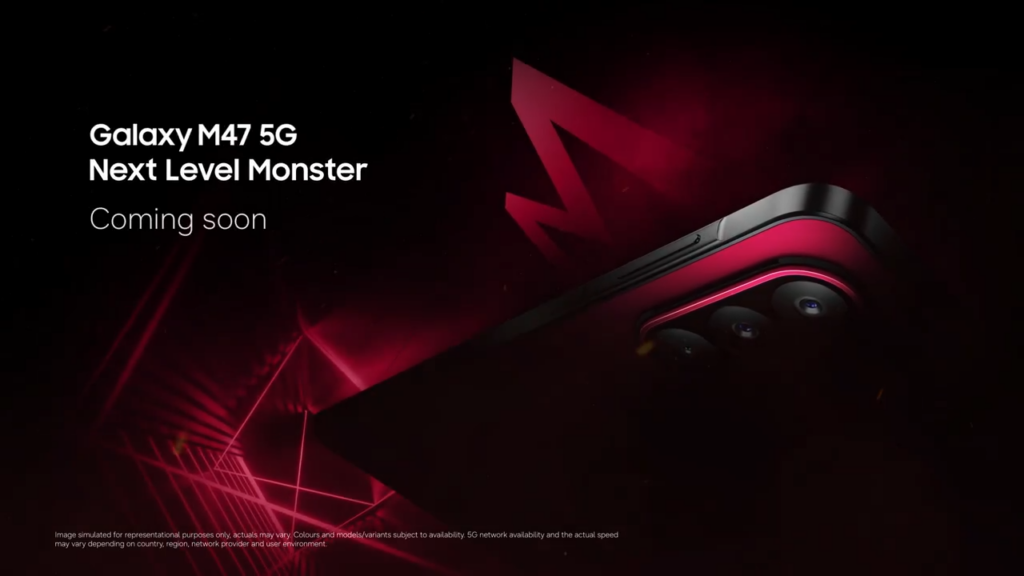
The company has already started building excitement by dropping teaser videos on X. From what we can see, the phone looks pretty premium, especially in that matte Red/Maroon finish on the back, paired with a black frame. There’s a pill-shaped camera island with matching red accents, and the triple rear camera setup sits in a slightly updated module compared to the M36 5G. Samsung is calling it the “Next Level Monster,” which suggests they’ve made some meaningful upgrades in performance, gaming, multitasking, and overall durability.
While the full specs are still under wraps, a Geekbench listing (for model SM-M476B) gives us a good peek inside. It looks like the M47 will be powered by Qualcomm’s Snapdragon 6 Gen 3 chipset, come with 8GB of RAM, and run Android 16. That should translate to smooth everyday use, decent multitasking, and respectable gaming for this price range.
Other leaks point to a 6.7-inch FHD+ 120Hz flat AMOLED display, a 50MP main camera with OIS, and a 5,000–6,000mAh battery. Samsung is also likely to offer solid long-term software updates.
The Galaxy M47 5G will land on Amazon India and Samsung’s official website sometime soon. It’ll aim to go head-to-head with phones from iQOO, REDMI, and others in the crowded mid-range space. Samsung’s plan seems to be winning people over with a nice mix of style and reliable performance.
As more details drop in the coming days, it’ll be interesting to see how this one shapes up. If the final phone delivers on these promises, it could be a strong contender for anyone looking for value in the Indian market.
The global smartwatch market keeps growing steadily. Shipments are up modestly, and people are willing to pay a bit more for newer models packed with better health tracking, AI features, and connectivity options.
According to Counterpoint Research, global smartwatch shipments grew 4% year-on-year in the first quarter of 2026. At the same time, the average selling price jumped 6%, thanks to more advanced sensors, AI capabilities, 5G RedCap, satellite connectivity, and a general shift toward premium devices.
Apple continues to lead the pack worldwide with a 23% market share. The company also saw the fastest growth among the top brands, with shipments rising 21% compared to last year. Analyst Anshika Jain pointed out that the Apple Watch SE 3 has been a big hit, pulling in new users with its more affordable price and upgraded health features like better sleep tracking, mood monitoring, and arrhythmia detection.
China is turning into one of the strongest growth markets, with smartwatch shipments jumping 15% year-on-year. Huawei dominates there with roughly 40% market share, followed by Imoo and Xiaomi. Huawei’s success comes from offering watches across many price ranges, tight integration with its HarmonyOS ecosystem, and a strong focus on health features like sleep tracking, emotional wellbeing, and arrhythmia detection. Government subsidies on electronics have also helped boost upgrades and wider adoption.
Thanks to its strong performance in China, Huawei holds a solid 17% global market share, putting it in second place overall.
As AI and smarter sensors become standard, smartwatches are clearly moving toward more intelligent, health-focused devices. The market still has good momentum, especially in key regions, but companies will have to navigate supply issues and pricing challenges as competition heats up.
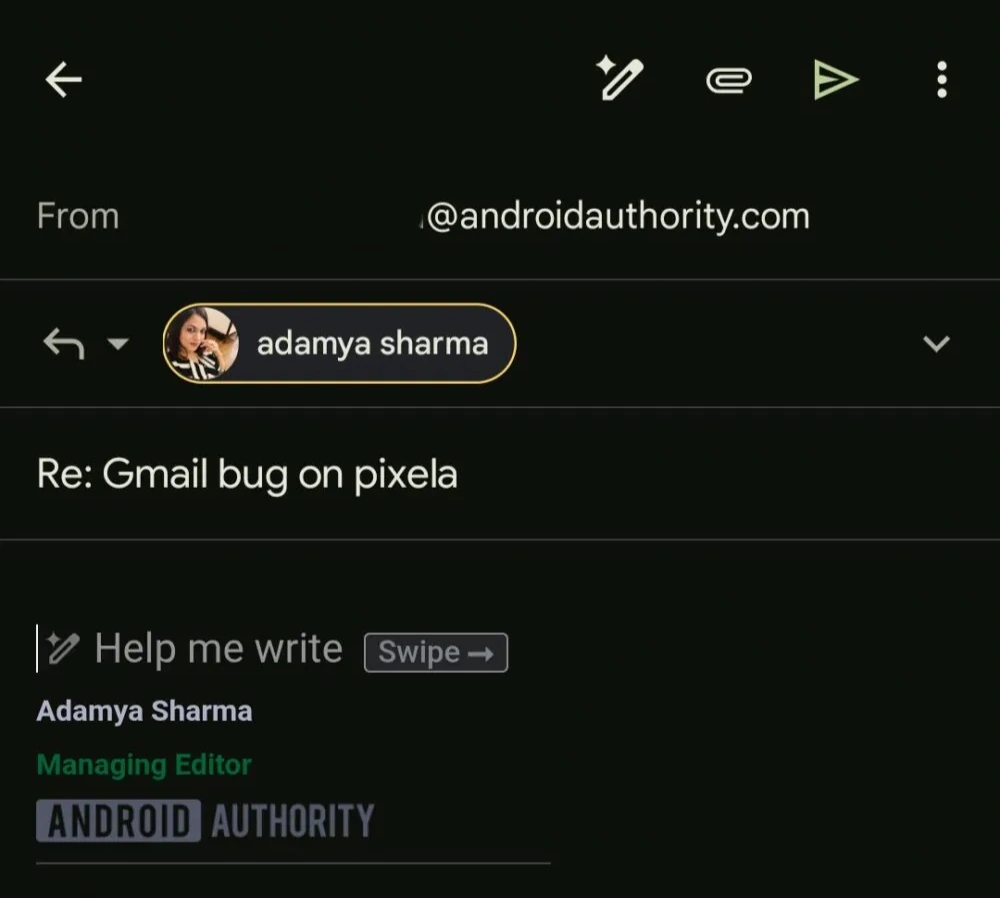
Google’s latest Pixel flagships are running into a frustrating software bug that’s breaking one of the most basic things you do on a phone: replying to emails.
According to reports from Android Authority and plenty of complaints on Reddit, Pixel 10 Pro XL and Pixel 10 Pro Fold owners are hitting this weird issue in the Gmail app. When you tap to reply to an email, the AI-powered “Help me write” feature (powered by Gemini) jumps in and completely blocks the on-screen keyboard (Gboard) from appearing. Instead, you’re stuck looking at the AI suggestion box with almost no easy way to type normally.
On the Pixel 10 Pro XL, there’s a clunky workaround: you can tap the keyboard hide button in the bottom-left corner and then keep tapping the reply field until the keyboard finally shows up. But it’s worse on the Pixel 10 Pro Fold. The cursor disappears in the reply field, taps do nothing, and you’re basically forced to use the AI tool.
The bug seems linked to recent updates and Google’s strong push to promote the AI writing assistant in Gmail. Normally, “Help me write” is something you can choose to use, but on these affected Pixels it overrides regular typing. Interestingly, Android Authority couldn’t reproduce the problem on other Android phones like the vivo X300 FE or OnePlus 15, and the iOS version of Gmail works fine.
This popped up not long after Google’s June 2026 Pixel Drop, which brought Android 17 and deeper AI features to the Pixel 10 series. While tools like Gemini are meant to make life easier, this glitch shows how tricky it can be to blend smart AI features with the simple, reliable stuff we all expect.
A lot of users are venting on forums and looking for fixes. Some have found temporary relief by turning off certain Gemini options in the Gmail settings. Google hasn’t commented officially yet, but with so many reports coming in, a software patch is probably on the way.
Samsung is apparently making solid progress on its next in-house flagship chipset. According to reports, the company is getting serious about using more Exynos processors in its premium Galaxy S phones. This is a step in their ongoing effort to rely less on outside chipmakers while improving performance and efficiency.
In a recent briefing, Samsung executive Park Yong-in (President and Head of the System LSI Business) confirmed that development of the Exynos 2700 is “proceeding without setbacks.” He made it clear they want to use it in their top-tier smartphones. While he didn’t name specific models, most people expect it to power the Galaxy S27 series, which should arrive in early 2027.
This is one of the strongest official hints we’ve gotten about the Exynos 2700 so far. It’s expected to go up against Qualcomm’s Snapdragon 8 Elite Gen 6 (or whatever the next high-end chip is), and Samsung will probably stick with its usual dual-chip strategy: using Exynos in some regions and Snapdragon in others.
On the technical side, there are some promising improvements. Unlike the previous generation, the Exynos 2700 is expected to use a side-by-side (SBS) layout where the processor and DRAM sit together on the same substrate. A special Heat Path Block (basically a better heat sink) will cover both, which should bring better thermal management, up to 30-40% higher memory bandwidth, improved efficiency, and more consistent performance when the phone is working hard.
Samsung has had some past struggles with Exynos chips in flagships, things like manufacturing yields and overheating, which is why they weren’t used everywhere. The new chip, built on an enhanced 2nm process, is aiming to finally close the gap with Qualcomm, especially in single-core speed, while potentially doing even better in multi-core and sustained tasks.
Challenges like high manufacturing costs and Qualcomm’s strong ecosystem still exist. As the Galaxy S27 lineup comes together, how well the Exynos 2700 performs will be a major factor in Samsung’s ability to deliver great flagships that are also profitable.
Motorola Edge 70 Pro and Google Pixel 10a target buyers looking for a premium smartphone experience without stepping into flagship pricing. While Motorola focuses on high-end hardware, fast charging, and versatile cameras, Google leans heavily on software optimization, long-term support, and computational photography. Choosing between them comes down to whether hardware advantages or software refinement matters more in daily use.
Major Features:
Category
Motorola Edge 70 Pro
Google Pixel 10a
Winner
Design
Eco-leather back, IP68/IP69, MIL-STD-810H
Aluminum frame, IP68
Motorola – More premium and durable build
Display
6.78-inch AMOLED, 144Hz, 5200 nits
6.3-inch P-OLED, 120Hz, 3000 nits
Motorola – Smoother and brighter display
Resolution
1272 × 2772, 450 ppi
1080 × 2424, 422 ppi
Motorola – Sharper panel
Processor
Dimensity 8500 Extreme
Tensor G4
Motorola – Stronger raw performance
RAM & Storage
Up to 12GB RAM, UFS 4.1
8GB RAM, UFS 3.1
Motorola – Faster storage and more memory
Software Support
3 Android upgrades
7 Android upgrades
Pixel – Much longer software support
Main Camera
50MP OIS
48MP OIS
Pixel – Superior image processing
Ultrawide Camera
50MP
13MP
Motorola – Higher-resolution ultrawide
Telephoto Camera
50MP periscope, 3.5x zoom
None
Motorola – Dedicated optical zoom
Selfie Camera
50MP AF
13MP
Motorola – Higher detail and autofocus
Video Recording
Up to 4K 120fps
Up to 4K 60fps
Motorola – More advanced video options
Battery
6500mAh
5100mAh
Motorola – Larger battery
Charging
90W wired, 15W wireless
30W wired, 10W wireless
Motorola – Much faster charging
Connectivity
Wi-Fi 7, Bluetooth 5.4
Wi-Fi 6E, Bluetooth 6.0
Motorola – Wi-Fi 7 support
Extra Features
Reverse wireless charging, Smart Connect
Satellite SOS, Pixel AI features
Tie – Different strengths
Price
Around $400 / ₹39,000
Around $500 / ₹50,000
Motorola – Better value
Disclaimer: Specs are based on available data. Actual performance may vary. Verify details from official sources before buying.
The Motorola Edge 70 Pro delivers a more premium appearance with its eco-leather rear panel, slim profile, and IP68/IP69 protection. It also carries MIL-STD-810H certification, adding an extra layer of durability for users who spend time outdoors. The design feels modern and stylish while remaining practical for everyday handling.
The Google Pixel 10a takes a more straightforward approach with an aluminum frame and plastic back. Its build quality remains solid, and the IP68 rating ensures reliable protection against water and dust. The compact form factor makes it easier to use with one hand, which many users may prefer for daily convenience.
Display Quality
Motorola clearly prioritizes display specifications. Its 6.78-inch AMOLED panel supports a 144Hz refresh rate, HDR content, and an extremely bright 5200-nit peak brightness. The higher resolution and smoother refresh rate create a more immersive experience for gaming and media consumption.
Google’s 6.3-inch P-OLED display offers excellent color accuracy and HDR support with a 120Hz refresh rate. While not as impressive on paper, Google’s display tuning is known for delivering a natural and consistent viewing experience.
Verdict
The Pixel 10a wins for compact usability, but the Edge 70 Pro offers the more impressive overall package thanks to its premium finish, stronger durability credentials, larger screen, higher resolution, and significantly superior display specifications.
Buyers who want to see how these two stack up against other options should browse our list of budget-friendly phone picks.
2. Specifications Including Battery
Performance
The Motorola Edge 70 Pro is powered by the MediaTek Dimensity 8500 Extreme paired with UFS 4.1 storage and up to 12GB RAM. The combination delivers excellent responsiveness, faster app loading, and stronger multitasking capabilities. Users who frequently game or run demanding applications will appreciate the additional performance headroom.
Google’s Tensor G4 focuses more on AI-driven experiences than raw speed. Every day performance remains smooth, and Google’s software optimization keeps the interface fluid. However, UFS 3.1 storage and lower memory options place it behind Motorola in pure hardware capability.
Battery and Charging
Battery life is a major strength for Motorola. The 6500mAh battery is among the largest in the segment and is paired with ultra-fast 90W wired charging, along with wireless and reverse wireless charging support.
The Pixel 10a’s 5100mAh battery remains respectable and should comfortably last a full day. However, its 30W charging feels considerably slower compared to Motorola’s solution.
Verdict
The Edge 70 Pro takes a clear lead in specifications. Faster storage, more memory options, stronger performance potential, a larger battery, and dramatically faster charging make it a more capable hardware-focused smartphone.
3. Camera
Main and Secondary Lenses
Motorola equips the Edge 70 Pro with an unusually versatile triple-camera setup consisting of 50MP wide, 50MP ultrawide, and 50MP periscope telephoto cameras with 3.5x optical zoom. The inclusion of a dedicated telephoto lens significantly expands shooting flexibility, especially for portraits and distant subjects. Video recording is also impressive with support for 4K at up to 120fps.
The Pixel 10a relies on a dual-camera system featuring a 48MP main camera and a 13MP ultrawide sensor. While the hardware appears less ambitious, Google’s image processing remains one of the strongest in the industry. Features such as Best Take, Ultra HDR, and Pixel Shift help produce consistently excellent photos.
Selfie Camera
Motorola’s 50MP autofocus selfie camera offers higher resolution and greater versatility. It is particularly useful for detailed selfies and video calls.
Google’s 13MP ultrawide selfie camera provides a wider field of view, making group selfies easier, though image detail is lower.
Verdict
The Edge 70 Pro wins on hardware versatility and zoom capability, while the Pixel 10a remains highly competitive through software processing. Users seeking maximum camera flexibility will likely find Motorola more appealing.
4. Pricing
The Motorola Edge 70 Pro is priced around $400 (₹39,000), while the Google Pixel 10a is priced around $500 (₹50,000). This creates a noticeable price gap of roughly $100 or ₹11,000 between the two devices.
At its price point, Motorola delivers flagship-style features such as a 144Hz display, periscope telephoto camera, 6500mAh battery, 90W charging, UFS 4.1 storage, and wireless charging. The specification sheet feels unusually generous for the segment and competes with devices that often cost considerably more.
Google’s higher price is largely justified by its software strengths. Buyers receive seven years of Android upgrades, exclusive Pixel AI features, strong camera processing, and a clean Android experience. These advantages may hold long-term value for users who keep phones for many years.
Verdict
From a pure value-for-money perspective, the Edge 70 Pro delivers more hardware for less money. The Pixel 10a justifies its premium through software longevity rather than specifications.
Disclaimer: Prices are approximate and may vary based on country, region, launch timing, and applicable taxes. Always check whether the listed price is for a China unit or a global/international variant when purchasing.
5. Conclusion
The Motorola Edge 70 Pro stands out with its 144Hz AMOLED display, 6500mAh battery, 90W charging, UFS 4.1 storage, and rare periscope telephoto camera. It is clearly designed for buyers who prioritize powerful hardware and feature-rich specifications.
The Google Pixel 10a differentiates itself through seven years of Android updates, Tensor-powered AI capabilities, advanced computational photography, Satellite SOS support, and Google’s highly optimized software experience. These strengths make it particularly attractive for users who value long-term reliability and software support.
Verdict
Motorola Edge 70 Pro is the stronger overall choice for most buyers. It offers a superior display, faster performance, better charging, a larger battery, and a more versatile camera system while costing less.
Google Pixel 10a remains an excellent option for users who prioritize software updates, AI features, and Google’s camera processing, but the Edge 70 Pro provides the more compelling overall value in this comparison.
Disclaimer: This comparison is based on the specifications provided and is intended for general informational purposes. Actual performance, camera results, battery life, and overall experience may vary depending on real-world usage, software updates, and individual preferences.
Choosing between the Samsung Galaxy A27 and Redmi 15 is not as simple as comparing specifications. Both devices target budget-conscious buyers, but they focus on different priorities. Samsung aims to deliver a more premium experience with long-term software support, while Redmi focuses on battery life and affordability. The comparison becomes important for users looking for the best balance of performance, cameras, display quality, and overall value in the sub-$300 smartphone segment.
Major Features:
Category
Samsung Galaxy A27
Redmi 15
Winner
Display
Super AMOLED, 120Hz
IPS LCD, 144Hz
Samsung – Better colors and contrast
Protection
Gorilla Glass Victus+
Gorilla Glass 3
Samsung – Stronger glass protection
Build
Glass back
Plastic back
Samsung – More premium design
Performance
Snapdragon 6 Gen 3
Snapdragon 6s Gen 3
Samsung – Faster chipset
Graphics
Adreno 710
Adreno 619
Samsung – Better gaming performance
Software Support
6 major Android upgrades
1 major upgrade
Samsung – Longer updates
Main Camera
50MP with OIS
50MP
Samsung – OIS improves photos
Secondary Cameras
Ultrawide + Macro
Auxiliary lens
Samsung – More versatile setup
Video Recording
4K@30fps
1080p@30fps
Samsung – Higher video quality
Selfie Camera
12MP AF
8MP
Samsung – Sharper selfies
Battery
5000mAh
7000mAh
Redmi – Much larger battery
Charging
25W
33W
Redmi – Faster charging
Reverse Charging
No
18W
Redmi – Extra convenience
Audio
Standard
Hi-Res Audio
Redmi – Better audio support
Extra Features
Samsung DeX
IR Blaster
Samsung – More useful feature
Price
Around ₹22,000
Around ₹15,000
Redmi – Better affordability
Disclaimer: Specs are based on available data. Actual performance may vary. Verify details from official sources before buying.
The Samsung Galaxy A27 feels noticeably more premium thanks to its Gorilla Glass Victus+ protection on both the front and back. The overall construction gives it a more refined look, and the inclusion of eSIM support adds extra flexibility for modern users. Samsung also brings DeX support, which is uncommon in this price segment and adds productivity value.
The Redmi 15 uses a plastic back and frame with Gorilla Glass 3 on the front. While the IP64 rating matches Samsung’s splash resistance, the overall build feels more focused on practicality than premium appeal. The device is designed for users who prioritize durability and battery capacity over aesthetics.
Display Quality
Samsung’s 6.7-inch Super AMOLED panel delivers deeper blacks, richer colors, and better contrast. The 120Hz refresh rate keeps animations smooth while maintaining excellent image quality. The display feels more vibrant for streaming, gaming, and everyday use.
Redmi counters with a larger 6.9-inch IPS LCD and a faster 144Hz refresh rate. The higher refresh rate helps scrolling feel exceptionally fluid, but the LCD panel cannot match AMOLED’s color depth and contrast.
Verdict
The Galaxy A27 wins this section. Redmi offers a bigger and smoother display on paper, but Samsung’s AMOLED panel, stronger materials, and premium features create a more polished daily experience.
2. Specifications Including Battery
Performance
The Galaxy A27 is powered by the Snapdragon 6 Gen 3 built on a more efficient 4nm process. Combined with the Adreno 710 GPU, it delivers stronger overall performance for multitasking, gaming, and long-term use. Samsung also promises up to six major Android upgrades, making the device a safer long-term investment.
The Redmi 15 uses the Snapdragon 6s Gen 3, which is capable for everyday tasks but sits a tier below Samsung’s chipset. Basic gaming, social media, and video streaming run smoothly, but demanding workloads reveal the performance gap.
Battery and Charging
Battery life is where Redmi makes a strong statement. The massive 7000mAh battery easily outlasts most competitors and can comfortably stretch into a second day for many users. Its 33W charging is also slightly faster, and the addition of 18W reverse charging increases versatility.
Samsung’s 5000mAh battery remains dependable and sufficient for a full day of usage, though it cannot compete with Redmi’s endurance.
Verdict
The Galaxy A27 delivers better performance and software longevity, while Redmi dominates battery life. For power users and long-term ownership, Samsung feels more balanced, but heavy travelers may prefer Redmi’s enormous battery.
3. Camera
Main and Secondary Lenses
Samsung takes a clear lead in camera hardware. The 50MP primary camera includes optical image stabilization (OIS), helping produce sharper photos and steadier videos, especially in low light. The addition of an ultrawide camera provides more flexibility for landscapes and group shots, while 4K video recording enhances content creation capabilities.
The Redmi 15 also features a 50MP primary camera, but it lacks OIS and is paired only with an auxiliary sensor. Daylight photos should remain respectable, but the overall camera system is less versatile. Video recording is limited to 1080p, which places it behind Samsung.
Selfie Camera
Samsung continues its advantage with a 12MP autofocus selfie camera. Autofocus helps maintain sharper facial details and improves consistency across different shooting conditions.
The Redmi 15 uses an 8MP front camera that is suitable for video calls and casual social media uploads, but lacks the detail and flexibility offered by Samsung.
Verdict
The Galaxy A27 is a stronger camera phone. Better stabilization, an ultrawide lens, 4K recording, and a higher-quality selfie camera make it a more complete photography package.
4. Pricing
The Redmi 15 is priced around $150 (₹15,000), while the Samsung Galaxy A27 is priced around $260 (₹22,000). The price difference is significant, placing Samsung roughly ₹7,000 higher than Redmi.
At its price point, Redmi delivers impressive value. Buyers receive a large 144Hz display, a huge 7000mAh battery, 33W charging, and a modern Snapdragon chipset. For users focused on essential smartphone functions and battery endurance, the value proposition is difficult to ignore.
Samsung’s higher price brings meaningful upgrades rather than cosmetic improvements. The AMOLED display, stronger chipset, superior cameras, OIS, DeX support, and six years of major software updates all contribute to a more premium ownership experience. These are advantages that continue to matter long after purchase.
Verdict
Redmi offers stronger value for budget-focused buyers, while Samsung justifies its higher price through better hardware quality, cameras, performance, and software support.
Disclaimer: Prices are approximate and may vary based on country, region, launch timing, and applicable taxes. Always check whether the listed price is for a China unit or a global/international variant when purchasing.
5. Conclusion
The Samsung Galaxy A27 stands out with its Super AMOLED display, Gorilla Glass Victus+ protection, OIS-equipped camera system, Samsung DeX support, and exceptional software update commitment. These features make it feel closer to a mid-range smartphone than an entry-level device.
The Redmi 15 focuses on practicality. Its standout features include a huge 7000mAh battery, 33W charging, 18W reverse charging, 144Hz refresh rate, and a significantly lower purchase price. It is designed for users who prioritize endurance and affordability above everything else.
Verdict
Samsung Galaxy A27 is the better overall smartphone. It delivers a superior display, stronger performance, better cameras, longer software support, and a more premium experience. Buyers planning to keep their phone for several years will likely find the extra cost worthwhile.
Redmi 15 remains an excellent choice for value seekers. Those who want maximum battery life and the lowest possible price without sacrificing modern features will find it difficult to beat. However, for the most complete package, the Galaxy A27 comes out ahead.
Disclaimer: This comparison is based on the specifications provided and is intended for general informational purposes. Actual performance, camera results, battery life, and overall experience may vary depending on real-world usage, software updates, and individual preferences.
We use cookies on our website to give you the most relevant experience by remembering your preferences and repeat visits. By clicking “Accept”, you consent to the use of ALL the cookies.
This website uses cookies to improve your experience while you navigate through the website. Out of these, the cookies that are categorized as necessary are stored on your browser as they are essential for the working of basic functionalities of the website. We also use third-party cookies that help us analyze and understand how you use this website. These cookies will be stored in your browser only with your consent. You also have the option to opt-out of these cookies. But opting out of some of these cookies may affect your browsing experience.
Necessary cookies are absolutely essential for the website to function properly. This category only includes cookies that ensures basic functionalities and security features of the website. These cookies do not store any personal information.
Any cookies that may not be particularly necessary for the website to function and is used specifically to collect user personal data via analytics, ads, other embedded contents are termed as non-necessary cookies. It is mandatory to procure user consent prior to running these cookies on your website.