Advertisement

Samsung rolling out One UI 6.1 update to older Galaxy smartphones and tablets by the end of March

The Samsung Galaxy S24 series comes with all the bells and whistles you expect on a flagship smartphone in 2024. But what really caught everyone’s attention were the Galaxy AI features. Samsung introduced these features on their latest Android 14 skin, One UI 6.1

Samsung Galaxy One UI 6.1 Update

Later, the company confirmed Galaxy AI’s availability on older Galaxy smartphones and tablets sometime in March. In an official announcement, Samsung has now confirmed that the rollout of One UI 6.1 to older Galaxy devices will begin by the end of March 2024. 

The company has shared a list of Samsung Galaxy devices that will receive the One UI 6.1 update. You can check the eligible devices below.

One UI 6.1 Eligible Devices

The One UI 6.1 update is slated for release on the following Galaxy devices:

  • Galaxy S23
  • Galaxy S23+
  • Galaxy S23 Ultra
  • Galaxy S23 FE
  • Galaxy Z Flip 5
  • Galaxy Z Fold 5
  • Galaxy Tab S9
  • Galaxy Tab S9+
  • Galaxy Tab S9 Ultra

As aforementioned, the major highlight of the update is the suite of Galaxy AI features it will bring to these devices. These features include:

  • Circle to Search: With this feature, you can circle an object or area on-screen to find more information.
  • Generative Edit: Users can remove unwanted elements from photos, reposition objects within images, and adjust perspectives for a more refined composition.
  • Live Translate: It will provide real-time translation for voice calls within supported apps.
  • Note Assist (for Samsung Notes): It will summarize text within the Samsung Notes app and can even apply certain formatting styles to the summary.

Related:

iQOO Z9 Turbo CMIIT certified, key specifications before rumored April launch

iQOO is working on the iQOO Z9, iQOO Z9x, and iQOO Z9 Turbo smartphones for the Chinese market. As per reports, these devices will come equipped with the Snapdragon 7 Gen 3, the Snapdragon 6 Gen 1, and the Snapdragon 8s Gen 3 (tentative name) chipsets, respectively. A device bearing the model number V2352A has been listed in the database of China’s MIIT certification platform for the past few days. Today, tipster Digital Chat Station revealed that the said device will break cover as the iQOO Z9 Turbo in China.

iQOO Z9 Turbo key specifications (rumored)

iQOO V2352A CMIIT
iQOO V2352A CMIIT certified

According to today’s leak by DCS, the Snapdragon 8s Gen 3-powered Z9 Turbo will have a flat display that produces a 1.5K resolution. He also revealed that the device has a 6,000mAh battery and a short-focus in-display fingerprint sensor.

As per other reports, the iQOO Z9 Turbo will have a 6.78-inch OLED panel that offers a 144Hz refresh rate and a 2160Hz PWM dimming. The device is expected to feature 16 GB of LPDDR5x RAM and 1 TB of UFS 4.0 storage.

The Z9 Turbo is likely to arrive with support for 80W fast charging. On the back, the device is likely to feature a 50-megapixel dual-camera system. It is expected to come preloaded with OriginOS 4.0-based Android 14. It is speculated that the Z9 Turbo will hit the Chinese market in April.

Some reports have claimed that iQOO is also working on the Snapdragon 8s Gen 3-powered Neo series phone dubbed the Neo 9s or Neo 9 Racing Edition. DCS claimed that the arrival of the said has been postponed and it appears that it may not feature the SD8sG3 chip.

RELATED:

OpenAI will avail Sora to the public within 2024 and it could be just “a few months”

OpenAI unveiled its groundbreaking text-to-video tool, Sora, last month that can generate realistic-looking 1080p videos. Currently, it is only available to a handful of filmmakers and creators who are testing it to find out vulnerabilities and fixing them, ensuring it is safe before they roll it out to the public. In an interview with the Wall Street Journal, OpenAI’s chief technology officer Mira Murati informed that they are aiming to launch Sora to the public before 2025 and that it could even happen within “a few months”.

OpenAI’s aim for Sora is serving creators with a tool that they can “edit and create with”

Image: OpenAI

Unlike the video showing Will Smith eating spaghetti that was unveiled just one year ago, Sora generated content in “hyperrealistic” (except for some weird representation of hands and fingers) and OpenAI CTO says they won’t serve this tool to the public before they ensure it’s safe to do that. Notably, Sora-generated videos will also be watermarked just like many other text-to-image generation tools.

When asked about how this tool might affect the jobs of creators in the future, CTO Murati said that their aim is to serve this text-to-video generation model as a tool to help creators in their work instead of replacing them.

“You know, the way that I see it is this is a tool for extending creativity and we want people in the film industry, creators everywhere, to be a part of informing how we develop it further and also how we deploy it. And also, you know, what are the economics around using this model when people are contributing data and such.”

Speaking of data, when asked about what data they have used to train Sora, she didn’t go much further but just said it is “publicly available and licensed data.” It could be videos from YouTube, Facebook, Instagram, and similar platforms.

Notably, Sora doesn’t include audio in the generated clips and OpenAI reportedly has plans to integrate audio in the future. Although, it might not be Sora but an even better version of it with a different name. Just like DALL-E, you will need to pay to be able to use the model and OpenAI CTO Murati said that the aim is to

Meanwhile if you are wondering how to use Sora AI, know that the access is still limited.

Related:

Samsung launches Galaxy A55 & Galaxy A35 in India, Check specs, price, & offers

Samsung has just unveiled the Galaxy A55 and the Galaxy A35 in the Indian market following their European release. These devices arrive with some notable specs and features like Gorilla Glass Viictus+ and Samsung Knox Vault, which are typically available in its flagship grade devices. So let’s have a look at its design, specs, pricing, and offers.

Samsung Galaxy A55, Galaxy A35: Design & Display

The South Korean tech giant is bringing certain design changes to the two models. For the first time ever, the Galaxy A55 is getting a metallic frame, while the Galaxy A35 comes equipped with premium glass on the back. To recall, these weren’t available on the mid-range models’ predecessors. Samsung is even offering an IP67 rating on the Galaxy A55 and Galaxy A35 for water and dust resistance. This means that they can withstand submersion into 1 meter of fresh water for up to 30 minutes. The Gorilla Glass Victus+ offers protection on the front and back.

Both Galaxy A series smartphones sport a tall 6.6-inch Super AMOLED display that offers full HD+ resolution and a 120Hz refresh rate. The adaptive refresh rate also helps in maximizing battery efficiency. The Vision Booster feature helps improve visibility even under bright sunlight and the Eye Comfort Shield enables eye protection for the user’s eyes.

Samsung Galaxy A55, Galaxy A35: Specifications

The Galaxy A55 has been announced with the Exynos 1490 SoC, which is based on a 4nm process. This chipset is paired with up to 12GB of RAM and 256GB of internal storage. On the other hand, the Galaxy A35 is equipped with the Exynos 1380 processor that is coupled with up to 8GB of RAM and 256GB of internal storage. These handsets are powered by a massive 5,000mAh battery pack that offers 25W wired fast charging. The Galaxy A55 and Galaxy A35 also run on the Android 14 OS based One UI 6.1 custom skin out of the box.

Samsung Galaxy A35

Samsung has released the two devices with its proprietary security feature, which is the Samsung Knox Vault. This is also the first time the Galaxy A series has received the added protection, which is a hardware based system. Samsung’s latset smartphones feature Dolby engineered stereo speakers as well. The brand is also using AI to enhance the photography experience on the two devices.

The Galaxy A55 features a 50-megapixel primary camera that offers OIS (Optical Image Stabilization), 12-megapixel ultra wide angle lens, and a 5-megapixel macro shooter. Meanwhile, the Galaxy A35 features a 50-megapixel main sensor that is paired with an 8-megapixel ultra wide angle shooter, and a 5-megapixel macro camera. On the front, the Galaxy A55 houses a 32-megapixel selfie shooter, while the Galaxy A35 has the 13-megapixel selfie camera.

Samsung Galaxy A55, Galaxy A35: Pricing, Offers, & Availability

Samsung has released the Galaxy A55 and Galaxy A35 in the Indian market in multiple storage and color variants. The two models are available in Awesome Lilac, Awesome Iceblue, and Awesome Navy color options. So here are the pricing:

Samsung Galaxy A55

  • 8GB+128GB – 36,999 INR (roughly $447)
  • 8GB+256GB – 39,999 INR (roughly $483)
  • 12GB+256GB – 42,999 INR (roughly $519)

Samsung Galaxy A35

  • 8GB+128GB – 27,999 INR (roughly $338)
  • 8GB+256GB – 30,999 INR (roughly $374)
Samsung Galaxy A55
Samsung Galaxy A55

Samsung is even offering bank cashback of 3,000 INR on HDFC, OneCard, and IDFC bank card holders along with 6 months no cost EMI options. The devices come with YouTube Premium for free for two months and Microsoft 365 Basic + 6 months of Cloud storage. The Galaxy A55 and Galaxy A35 are available for purchase from the brand’s official website as of right now, while sales on online platforms kick off on 18th March 2024.

RELATED:

Purported Xiaomi 14 Lite certified by India’s BIS, likely to launch soon

Recently, a Xiaomi phone with model number 24053PY09C was approved by China’s MIIT authority. Rumors are rife that this device could be the upcoming Xiaomi Civi 4. As it is known, Xiaomi’s Civi phones are confirmed for the Chinese market. A new development suggests that a rebranded version of the device may be heading to the Indian market with the Xiaomi 14 Lite moniker.

Alleged Xiaomi 14 Lite receives BIS certification

Alleged Xiaomi 14 BIS certified

A new device bearing the model number 24053PY09I has appeared in the database of India’s BIS authority. The model number is similar to the CMIIT-certified 24053PY09C phone, which is believed to be the Civi 4. Therefore, it appears that a rebranded version of the Civi 4 may be planned for the Indian market.

To recall, a tweaked version of the Xiaomi Civi 2 was released on the global market with the Xiaomi 13 Lite moniker. Hence, there is a possibility that the Civi 4’s rebranded or tweaked version may be released in India with the Xiaomi 14 Lite branding.

To recall, Xiaomi launched the Xiaomi 11 Lite NE 5G back in October 2021. However, it has launched a “Lite”-branded smartphone this year. However, successor models, such as the Xiaomi 12 Lite and Xiaomi 13 Lite, were released in other markets, but they were skipped for India. Finally, the brand could be bringing back a Lite-branded 14-series phone to the Indian market.

As far as specs are concerned, the Xiaomi Civi 4 will have a curved-edge OLED display with a 1.5K resolution, a 120Hz refresh rate, and a dual front-facing camera with LED flash. On the back, it is expected to feature a Lecia-engineered 50-megapixel main camera with OIS support. It will pack a 5,000mAh battery with 90W fast charging.

RELATED:

Snapdragon 8 Gen 4 may support LPDDR6; Apple A18 Pro likely to use LPDDR5T

Qualcomm is set to launch its new flagship mobile chipset, the Snapdragon 8 Gen 4, at the upcoming Snapdragon Summit in October. As the event draws near, leaks and rumors regarding the features and capabilities of the SoC continue to surface.

According to a new report from the South Korean news outlet Ajunews, the Snapdragon 8 Gen 4 might become one of the earliest mobile SoCs to support LPDDR6 memory. In contrast, Apple’s A18 Pro chipset is said to use LPDDR5T memory.

Snapdragon 8 Gen 4 LPDDR6

However, the same report says that there could be challenges in mass-producing the LPDDR6 module this year, possibly delaying its availability until 2025.

Despite this uncertainty, Ajunews suggests there’s a chance that LPDDR6 could be integrated into Qualcomm’s Snapdragon 8 Gen 4 AP to meet the growing demand for on-device AI capabilities. However, it’s best to take this information with a pinch of salt at the moment.

LPDDR6 is expected to offer improved speed and power efficiency compared to the current LPDDR5 standard. As aforementioned, the improved performance is said to be particularly useful in handling the AI tasks in the upcoming smartphones.

While Apple’s A18 Pro chipset is expected to rely on LPDDR5T memory, there are reports stating that Apple is exploring ways to store LLMs on NAND flash memory. This would allow iPhones even with limited RAM to still perform on-device AI tasks. 

LPDRR5T is currently the fastest RAM available in smartphone SoCs with theoretical speeds of up to 9.6 Gbps. 

As for Qualcomm, it remains to be seen whether the company will opt for LPDDR6 or stick with LPDDR5T RAM for its upcoming SoC. In related news, the forthcoming SoC, along with Dimensity 9400 and A18 Pro, has recently appeared in Geekbench.

Related:

(Source)

Google Play Console reveals Poco C61 is likely a rebranded Redmi A3

Earlier this week, Poco launched its X6 Neo smartphone in India. However, it seems the company is gearing up for another release in its budget-centric C series with the Poco C61. The smartphone has now appeared on the Google Play Supported Devices list, hinting at an imminent arrival. 

Poco C61 Google Play Console

The listing reveals the model number of the smartphone as 2312BPC51H and also confirms the name, Poco C61. However, that’s pretty much all the information available from Google’s listing for the moment. 

Before this, the Poco C61 also received Bluetooth SIG certification and was spotted on the BIS certification database with the same model number as in the Play Store listing. And interestingly, the device shares its model with the Redmi A3 — 23129RN51H — in all the certifications, suggesting the Poco C61 will likely be a rebrand.

Redmi A3 Specifications

Xiaomi launched the Redmi A3 in the Indian market last month. The device comes with a 6.7-inch LCD screen, HD+ resolution, and a 90Hz refresh rate. Under the hood, it runs on a MediaTek Helio G36 chipset along with up to 6GB of LPDDR4x RAM and 128GB of eMMC 5.1 storage.

In terms of software, you get Android 13-based MIUI 14 out of the box. The phone sports an 8MP rear camera along with a 0.08MP secondary sensor, and a 5MP selfie camera on the front.

Moreover, typical to most budget smartphones, the Redmi A3 includes a 3.5mm headphone jack and a dedicated MicroSD card slot. There’s also a side-mounted fingerprint sensor and a USB Type-C port for charging.

For connectivity, it offers dual SIM support, 4G, dual-band WiFi, Bluetooth 5.3, and GNSS. Last but not least, keeping the lights on is a 5,000mAh battery and supports 10W charging.

Related:

(Via)

Realme GT Neo 6 BIS certified, likely to launch with Snapdragon 8s Gen 3 in Q2 2024

Realme is reportedly working on two new smartphones, the Realme GT Neo 6 and the Realme GT Neo 6 SE for the Chinese market. These devices are said to be equipped with the Snapdragon 8s Gen 3 (tentative name) and the Snapdragon 7+ Gen 3 chipsets, respectively. It appears that the GT Neo 6 will also be released in India soon, as it has received approval from the BIS authority in India.

Realme GT Neo 6 coming soon to India

Realme RMX3851 certified by the BIS authority in India

Last month, a Realme phone with model number RMX3851 was spotted in the database of the Geekbench benchmarking platform. The device was found to be equipped with the upcoming Snapdragon 8s Gen 3 chipset. Reliable Chinese leaker Digital Chat Station claimed several times that the Realme GT Neo 6 will come equipped with the Snapdragon 8s Gen 3 SoC. Therefore, the RMX3851 model number appears to belong to this smartphone. It is speculated that the Chinese variant of the device has the RMX3850 model number.

The Realme RMX3851 was recently spotted in the databases of Indonesia’s TKDN and Europe’s EEC certification platforms. Now, the same device has received approval from the BIS authority in India. The BIS listing is a good hint that the country will finally receive a new GT Neo-series phone after the Realme GT Neo 3 and GT Neo 3T, which debuted in 2022.

As per the Geekbench listing, the Realme GT Neo 6 will have a Snapdragon 8s Gen 3 chip, 16 GB of RAM, and Android 14. It is said to feature an OLED panel that offers a 1.5K resolution and a 144Hz refresh rate. The device is also said to come with other specs, such as 24 GB of LPDDR5x RAM, 1 TB of UFS 4.0 storage, and 100W charging. As per its appearance on camera-fv5’s database, it will feature a 50-megapixel main camera with OIS support. Unfortunately, its other details are under wraps.

RELATED:

(via)

Alleged Meizu 21x with 5,500mAh battery could be in works, key details emerge

Meizu recently unveiled the Meizu 21 Pro flagship phone equipped with the Snapdragon 8 Gen 3 chip in China. It is being said that this is the last smartphone from the brand. However, a new leak, courtesy of tipster Digital Chat Station, reveals that Meizu is preparing to launch a powerful smartphone.

Meizu 21x could be in the works

It can be seen in the above screenshot that a new Meizu battery with model number BA468 has been approved by the 3C certification platform in China. It has a rated value of 5,400mAh, which suggests that its typical value could be 5,500mAh.

A new Meizu phone is in the works

Following the appearance of the aforementioned 3C listing, DCS shared a post on Weibo revealing key specifications of an upcoming smartphone without explicitly naming it. The emoji used by the leaker strongly suggests that he might be referring to a brand-new Meizu phone.

Meizu is developing a new phone with a midrange Snapdragon AI chipset, according to DCS’ Weibo post. The leaker said that the device is equipped with a flat display and is backed by a BA466 with a 5,400mAh (rated) / 5,500mAh (typical) size. He also revealed that they will be accompanied by a UP2033 power adapter that supports 66W fast charging.

In the past, the brand released phones spanning different price ranges in the Chinese market. However, over the past year, it has restricted its product line to exclusively launching flagship smartphones powered by the Snapdragon 8-series. Since the tipster has claimed that the device has a midrange chip, the device may likely feature the Snapdragon 7+ Gen 3 SoC.

As far as the moniker of the device is concerned, the mysterious Meizu phone could be a new addition to the Meizu 21 series. Some Weibo users claim that the device will be called the Meizu 21x when it breaks cover in the Chinese market.

RELATED:

OnePlus Ace 3V is launching next week with Snapdragon 7+ Gen 3 onboard

From the beginning of this week, OnePlus started teasing the arrival of the OnePlus Ace 3V for the Chinese market. The brand has already revealed the front design of the phone. Today, it released two posters to confirm its launch timeframe and the chipset that it will come equipped with. Here is a look at all the new details of the Ace 3V revealed by the brand.

OnePlus Ace 3V design

OnePlus Ace 3V teaser image
OnePlus Ace 3V teaser

Yesterday’s image (the last image in this post) revealed that the OnePlus Ace 3 has a flat display with slim bezels. It also revealed that the device has an alert slide on its left spine. Shown above is a new poster of the Ace 3V, which confirms that the device will have a flat frame, which appears to be made from plastic.

The image reveals that the Ace 3V will have a violet variant, which reminds us of the recently announced Electric Violet edition of the OnePlus Ace 3 / 12R. The image also suggests that it will have a refreshed design for the rear camera module.

OnePlus Ace 3V’s chipset

OnePlus Ace 3V chipset

The above poster confirms that the OnePlus Ace 3V will be powered by the Snapdragon 7+ Gen 3, which suggest that it will offer top-notch performance. The new chip is set to debut on March 18 in China. It goes without saying that the Ace 3V will be the world’s first phone to feature it.

OnePlus Ace 3V

In terms of other specs, the Ace 3V is said to feature an OLED panel that offers a 1.5K resolution, a 120Hz refresh rate, and an in-screen fingerprint scanner. It is said to have 16 GB of RAM, 512 GB of storage, a 5,500mAh battery with 100W charging, a 16-megapixel front, a 50-megapixel dual-camera system, dual speakers, and an IR blaster. Globally, the device is likely to carry the OnePlus Nord 4 moniker.

RELATED:

Vivo X Fold 3 Pro camera samples leak out ahead of launch

Vivo appears to be getting ready to introduce the Vivo X Fold 3 series foldable smartphones soon. The series is reported to include two devices: Vivo X Fold 3 and the X Fold 3 Pro. The performance numbers of the Vivo X Fold 3 recently emerged on AnTuTu, and now, Xinhua News Agency has leaked the camera samples of the Vivo X Fold 3 Pro.

As per the camera samples, the X Fold 3 Pro will feature a primary camera with f/1.68 aperture and a 23 mm equivalent focal length. The telephoto camera onboard the device will have an f/2.57 aperture along with 70 mm equivalent focal length.

Earlier reports indicate that the primary camera of the X Fold 3 Pro will sport an OV50H OmniVision 50-megapixel lens, boasting an f/1.68 aperture. This will be complemented by an OV64B 64-megapixel periscope telephoto camera, offering 3x optical zoom, a 70mm focal length, and the capability for telephoto macro photography.

Judging from the images provided, the telephoto camera shows good detail even at high levels of zoom. The low-light photography also appears to be quite good.

According to previous reports, the Vivo X Fold 3 Pro is rumored to include a 6.53-inch OLED cover panel and an 8.03-inch foldable OLED display. Both screens are expected to support resolutions of 2748 x 1172 pixels and 2408 x 2200 pixels, respectively, and will feature ultrasonic in-display fingerprint scanners. Running on OriginOS 4-based Android 14, the device will be powered by a Snapdragon 8 Gen 3 chipset, offering up to 16GB of RAM and 1TB of storage. It will likely be equipped with a 5,800mAh battery supporting 120W wired and 50W wireless charging, along with the Vivo V3 chip. Additional features may include an IR blaster, dual speakers, an X-axis linear motor, a glass back, and a water-resistant chassis.

RELATED:

(Source)

Google DeepMind’s SIMA is Training to Become Your New In-Game Teammate, Here’s How

Get ready for a new kind of gaming buddy! Google DeepMind has introduced SIMA, a large language model being trained to become your in-game teammate. Is this what AI was meant for? Sounds about right.

The AI companion will perceive elements of both the map and the gameplay

SIMA, which stands for “Scalable, Instructable, Multiworld Agent,” is currently under development, but it has the potential to revolutionize the way we play games. Unlike traditional AI companions, SIMA won’t simply be another NPC character. This model is designed to be a cooperative teammate, understanding your actions and adapting its own accordingly. Imagine getting a co-op buddy in Borderlands who lets you loot first before doing it themselves. How cool would that be?

To achieve this, SIMA works on a combination of natural language processing and image recognition. This allows it to perceive the 3D game world and respond to your instructions and actions. To train this AI teammate, Google has partnered with eight game developers, including big studios behind titles like No Man’s Sky and Valheim.

Through these collaborations, SIMA is learning the fundamentals of gameplay – from basic actions like turning left and climbing ladders to utilizing menus and maps. While complex tasks like resource gathering and camp building are beyond its current capabilities, Google expects SIMA’s skillset to expand significantly in the future. It won’t be long before gamers can use a Google AI game buddy to fill up the third slot in their Apex Legends Lobby.

RELATED:

(Via)

A Touch Bar on the Side of iPhones and iPads? New Apple Patent Mentions a Device-Edge Display

Apple has been granted another patent by the United States Trademark and Patent Office (USPTO) for a rather weird iPhone and iPad design. It incorporates a touchscreen display on the side of the device. This is very reminiscent of the Touch Bar previously featured on MacBook Pro models, but with a wider range of functionalities, we’re hoping.

This could be a really good and a really bad idea at the same time

The side display would serve multiple purposes. It could display control buttons and user interfaces, offer status information like battery life and weather, and even provide additional control options. Imagine adjusting the volume or skipping songs on your iPhone through a dedicated display on the side, cutting down the need for physical buttons AND the primary display. Kind of like those dedicated play/pause/skip buttons on old Nokia phones, but modernized.

One example showcases a music player interface displayed on the side, complete with song titles, lyrics, and controls for volume and playback. This could suggest Apple’s intent to build a sleeker and more minimalist design in the future, something to complement their foldable devices if they ever bring one to the market.

The real innovation lies not just in a simple side display, but in its ability to adapt to context. Rather than simply replacing physical buttons with virtual ones, the side screens would be reconfigurable, displaying controls and information relevant to the current activity. This opens doors for a more personalized user experience. It will also be literal hell if the smartphone is dropped, adding another thing to worry about if this patent makes its way onto a future device.

While the official release timeline for this technology remains unknown (and will likely stay like this in the near future), this patent reminds us how companies like Apple are continually trying to build the next big thing in smartphones, considering how we are hitting new ceilings of smartphone design. For instance, check out Apple’s handheld device patent here, which is supposed to let the users control home devices with just gestures.

RELATED:

(Via)

The 2024 Summer Game Fest will be Held on June 7, Expect Big Announcements for Big Games

The Summer Game Fest (SGF) is returning to Los Angeles on June 7th, 2024. Hosted by industry veteran Geoff Keighley (who has hosted many game conferences in his career), this two-hour event is sure to pack a thrilling showcase of upcoming games to fuel the excitement of players worldwide.

In 2023, Sony announced Spider-man 2 and FF7 Rebirth at SGF

The cancellation of E3 has left a void for major gaming announcements, and SGF has stepped up to fill it. In 2023, the festival delivered a powerful punch, featuring over 30 games, with 7 exciting world premieres. Titles like “Sonic: Superstar,” “Prince of Persia: The Lost Crown,” and “Obide” fueled the anticipation of gamers everywhere.

Summer Game Fest

SGF has also become a key platform for major publishers like Sony. Last year, “Marvel’s Spider-Man 2” and “Final Fantasy 7 Rebirth” unveiled their release dates during the event, demonstrating Sony’s significant investment in the festival. Notably, these games could have been revealed at a dedicated Sony press conference, yet they chose the broader reach of SGF.

The festival’s reputation for unveiling major announcements extends beyond release dates. Trailers for highly anticipated titles like “Death Stranding Director’s Cut” and “Elden Ring” were first shown at SGF, solidifying its position as a must-watch event. With Summer Game Fest 2024 just around the corner, gamers can expect another jam-packed evening filled with world premieres, and hopefully a big, big announcement that can keep everyone powering through the rest of the year. We can only hope so!

RELATED:

(Via)

Lenovo Legion Tab gaming tablet with SD 8+ Gen 1, 8.8-inch QHD+ 144Hz display announced globally

Lenovo has finally decided to make its Legion branded gaming tablets available globally to capitalize on the growing mobile gaming market. The new tablet is simply called the Lenovo Legion Tab, which is a rebranded version of the Legion Tab Y700 2023 model (China exclusive).

Lenovo Legion Tab specs & features:

The Legion Tab boasts an 8.8-inch display, which might be on the smaller end of consumer tablets, however, the size makes it desirable for gaming since it is relatively easier to control compared to the bigger tablets. Add in the fact that Lenovo has provided a QHD+ resolution PureSight gaming panel with a 144Hz refresh rate makes it quite ideal for gaming. The panel is decently bright at 500 nits (typical) and covers the DCI-PC color gamut.

Lenovo Legion Pad

Design-wise, the tablet measures 208.54 x 129.46 x 7.6 mm, weighs 350 grams, and comes with a metal finish for its back as well as the sides. To improve gaming emersion, Lenovo has integrated a haptic system on the tablet. As for sound, the tablet has a dual speaker setup onboard tuned with Dolby Atmos.

Lenovo Legion Y700 2023 Gaming Tablet

The tablet has a Qualcomm Snapdragon 8+ Gen 1 processor onboard, which isn’t the latest and greatest, however, it is a powerful flagship-grade chip unleashed with the help of Legion ColdFront: Vapor thermal solution, which is essentially an oversized vapor chamber. The tablet features 12GB of LPDDR5X RAM and 256GB onboard storage, with the option of expanding it up to 1TB through a microSD card. It features a 6550mAh battery, which is decent considering its size, as well as 45W fast charging through a USB Type-C port using Qualcomm Quick Charge 3.0 technology. The second USB-C port offers DisplayPort 1.4 functionality for external display support.

Our previous testing of the Legion Tab Y700 2023 tablet (review video) has revealed that it is capable of running PUGB Mobile at a constant 90 FPS and Genshin Impact at a stable 60FPS. That being said, this tablet might be the perfect device to pair with something like Boosteroid, which is a cloud gaming platform meant for devices like smartphones, tablets, etc. If you own an Xbox Game Pass subscription, you can play games like Deathloop, Dishonored series, Gears 5, Ghostwire: Tokyo, and many others on this tablet through Boosteroid.

Lenovo Legion Tab

You can even hook it up with a mouse and keyboard or controller and use it like a PC. For software, the Legion Tab offers will ship with Android 13 onboard, however, the brand says it will provide Android 14 and Android 15 updates, along with security updates up to 2028. The tablet will also have a gaming assistant software onboard that will help with toggling performance modes, turning on screen recording, and bypass charging among other features.

For optics, the Legion Tab has a 13MP primary camera and a 2MP macro camera on the back, while the front of the device features an 8MP selfie camera. For connectivity, the tablet supports Bluetooth 5.3 and Wi-Fi 6E.

Pricing & availability

The Lenovo Legion Tab is set to launch in the EMEA region (Europe, the Middle East, and Africa) and Asia starting March 2024, with a price point beginning at EUR 599.

RELATED:

(Source)

This $8000 Caviar iPhone 15 Pro is Inspired by the Apple Vision Pro’s Design

For iPhone 15 Pro owners seeking a bolder aesthetic (not to say that the iPhone 15 design is lacking in any way), luxury brand Caviar unveils a limited-edition modification inspired by Apple’s recently unveiled Vision Pro headset. These customized iPhones make use of the Vision Pro’s sleek curves, circular accents, and signature orange highlights, offering a whole new take on the standard design of the device. However, the space-age inspiration stops at aesthetics. Read ahead to find out.

The 1TB Pro Max version is priced at a staggering $9,560

The price tag reflects the exclusivity of the device. The customized iPhone 15 Pro starts at a staggering US$8,060, with the 1TB Pro Max reaching an even higher US$9,560. Caviar also offers modification services for existing iPhones at a slightly lower US$5,910, but with only 99 slots available, these iPhones are sure to disappear fast. After all, there’s a market for everything, and Caviar wouldn’t be designing these phones if there was no one buying them.

Caviar iPhone

Caviar is no stranger to out-of-the-box makeovers. They have also previously launched a Samsung S24 Ultra with a mechanical watch and a 24K gold dragon. At this point, the company is known for their extravagant customizations, like the $60,000 Valentine’s Day iPhone that was adorned with diamonds and gold – and even a heart-shaped AirTag. A little over the top, but the company is trying to carve a niche for itself.

While some may scoff at the hefty price tag for a purely cosmetic modification, Caviar’s creations clearly cater to a very small market of tech enthusiasts who value exclusivity and audacious design. These limited-edition iPhones blur the line between smartphones and art pieces, and rest assured, people will definitely ask questions about your iPhone.

RELATED:

(Via)

Research Team in China is Now 3D-Printing Aircraft Parts, Starting with 1.5m-long Landing Gear

When 3D printers first started becoming mainstream, no one would’ve thought that people would 3D print aircraft components out of all things. However, it actually happened. Wuhan, China, is at the forefront of this achievement, producing the world’s first 3D-printed “piston rod axle” for landing gear.

The 3D Printing machine integrates casting, forging and milling – all of it!

This massive T-shaped component is visually indistinguishable from its traditionally made metal counterpart, measuring 1.5 meters long and weighing 240 kg. The key lies in overcoming a 3D-printing hurdle: creating parts prone to cracks. Professor Zhang Haiou’s team at Huazhong University cracked the code in 2019 with a new 3D printing machine that integrates casting, forging, and milling. This overcomes limitations by bridging the gap between traditional manufacturing processes.

China 3D Printing

The benefits are more than just substantial. Professor Haiou says that there’s a 90% material reduction compared to traditional methods, leading to significant cost savings and environmental advantages. Testing confirms the 3D-printed parts are even stronger than traditionally made components. Rigorous testing has confirmed its resilience.

This achievement marks a major milestone. Currently, only a few countries can produce large aircraft landing gear. Wuhan Tianyu Intelligent Manufacturing, the company behind the innovation, is the first to 3D-print such a critical part.

Wuhan Tianyu is a leader in 3D printing, with a history of collaborating with industry giants. This innovation has the long-term potential to completely revolutionize aircraft manufacturing by offering a more cost-effective and environmentally friendly approach. It will be hard to convince people to fly in a 3D-printed aircraft one day, that’s for sure. But so was the case with the first passenger flight in 1914. Let’s hope one day, 3D-printed aircraft are safe enough for commercial flights.

RELATED:

(Via)

Acemagic F2A mini-PC with an Intel Core Ultra processor, 32GB RAM launched

The Acemagic F2A mini-PC has been launched with a generous discount regime. The F2A is equipped with a powerful Intel Core Ultra processor backed by 32GB of RAM and up to 1TB of storage. Customers can get a product with either an Intel Core Ultra 5 125H or Core Ultra 7 155H processor.

Acemagic F2A mini-PC

Features

The new Acemagic F2A mini-PC with the Intel Meteor Lake architecture with 14 or 16 CPU cores. The Intel Core Ultra 7 155H processor has a more powerful Arc iGPU and higher CPU cores across all but its two low-power efficiency cores. There is a minimal $100 difference in prices for the two models, with both coming with 32GB of DDR5 RAM and 1TB of PCIe 4.0 internal storage.

The Acemagic F2A features 2 HDMI ports, a USB 3.2 Gen 2 Type-A and a USB 3.2 Gen 2 Type-C ports. It also comes with a 3.5mm audio jack, one DC-in port, and one LAN interface. The new Acemagic mini-PC supports WiFi 7 connectivity and its housing dimensions are 150 x 150 x 78mm.

Acemagic F2A mini-PC

Pricing & Availability

The Acemagic F2A mini-PC is offered at a starting price of $1,099 for the Core Ultra 5 125H model and $1,199 for the Core Ultra 7 155H version. There are several discount options for buyers based on the time of purchase. The ACEAIPC20, ACEIPC30, and ACEIPC40 coupons correspond to 20%, 30%, and 40% discounts respectively. Acemagic says the coupon codes are limited to the first 20, 50, and 100 users. The implication of the discount regime for the Acemagic F2A is that it is possible to purchase a unit for as low as $659.40. The product reverts to its original price after the coupon codes are exhausted.


RELATED:

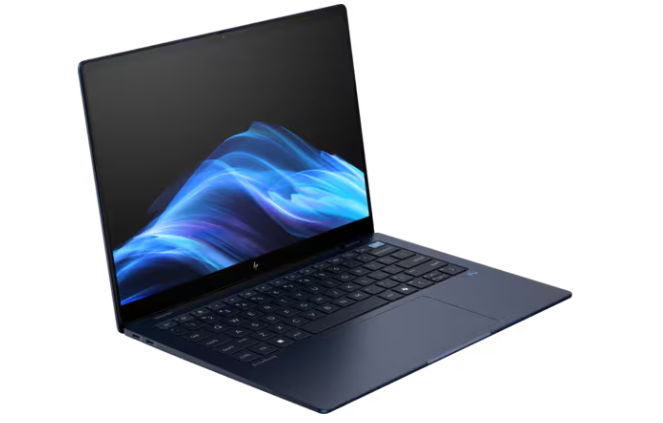
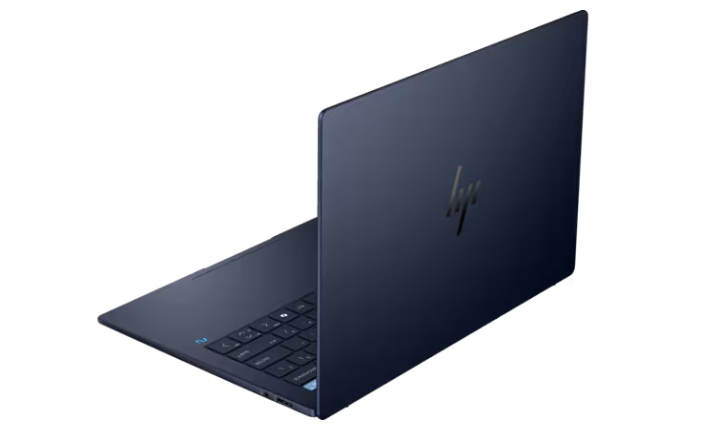
The Rumored Fourth-Generation iPhone SE: Will It Break the Cycle of Rapid Value Depreciation?

Apple’s affordable iPhones are a tempting choice for tech enthusiasts worldwide, offering impressive performance for the price. However, recent reports from SellCell suggest that the redesigned iPhone SE 4 may not hold its resale value as well as Apple’s premium flagship devices. Here are the details….
The iPhone SE’s Resale Value Problem: Why It Loses Value Faster Than Other iPhones

Apple products are known for holding their value well, but a recent report reveals that iPhone SE models depreciate faster than other iPhone lines. For example, the third-generation SE, released in 2022, lost 42.6% of its value within the first month, compared to only 18.7% for the iPhone 13. This rapid depreciation could affect the appeal of the iPhone SE as an investment. While these devices offer excellent features, their resale potential may be lower than other models.

Apple products are known for holding their value, but a recent report shows iPhone SE models depreciate faster than other iPhones. The 2022 iPhone SE lost 42.6% of its value in the first month, compared to 18.7% for the iPhone 13. This raises concerns about the iPhone SE’s investment appeal. The possible features of iPhone SE4 will be like this

  • Display:
    • 5.7 0r 6.1-inch Liquid Retina LCD Display
    • Design similar to the iPhone XR (with a notch)
  • Processor:
    • Apple A15 Bionic (used in the iPhone 13 series)
  • Camera:
    • Single 12MP rear camera, similar to previous SE models
    • Improved front-facing camera
  • Battery
    • Around 3000 mAh, offering a noticeable improvement over the previous SE model
  • Storage:
    • 128GB, and 256GB options
  • Other:
    • 5G Connectivity
    • Touch ID (in the home button)
    • IP67 water and dust resistance
    • Variety of color options

RELATED:

Hisense S59 series Smart TV with 120Hz refresh rate & AI far-field voice control launched

Hisense has unveiled its S59 series TV in China. The Hisense S59 series TV is available in three sizes: 65, 75, and 85 inches. You can control various film sources through the intelligent motion detection system. The TV also presents every frame smoothly for a more balanced picture output.

Hisense S59 series Smart TV

The Hisense S59 series supports 1.07 billion color displays and comes with a 130% color gamut coverage. The display also supports 120Hz refresh rate. It has a Delta E of approximately 1.06 and each unit of the TV is factory calibrated. The new Hisense TV supports AI intelligent far-field voice control and multiple dialect recognition. It also accomplishes instant recognition for a seamless performance in that aspect. There are three HDMI interfaces in the S59 series TV, as well as single interfaces for Coaxial, Antenna, USB-A 3.0, and USB-A 2.0. The TV features an RJ45 network port.

In terms of memory capacity, the Hisense S59 series TV is equipped with 4GB of RAM and 64GB of storage. There are two built-in speakers on the TV with a total power output above 60W and a 2.1-channel setup.

Hisense S59 series Smart TV

Pricing

The Hisense S59 series TV is priced in China at 2,999 yuan ($417) for the 65-inch model, 3,99 yuan ($556) for the 75-inch version, and 5,549 yuan ($772) for the 85-inch model. The product can be purchased directly from retail platforms in China including JD.com. There are no global availability details yet for the Hisense S59 series TV at this time. However, it is expected that the new Hisense product will be available in several overseas markets subsequently.

Related: