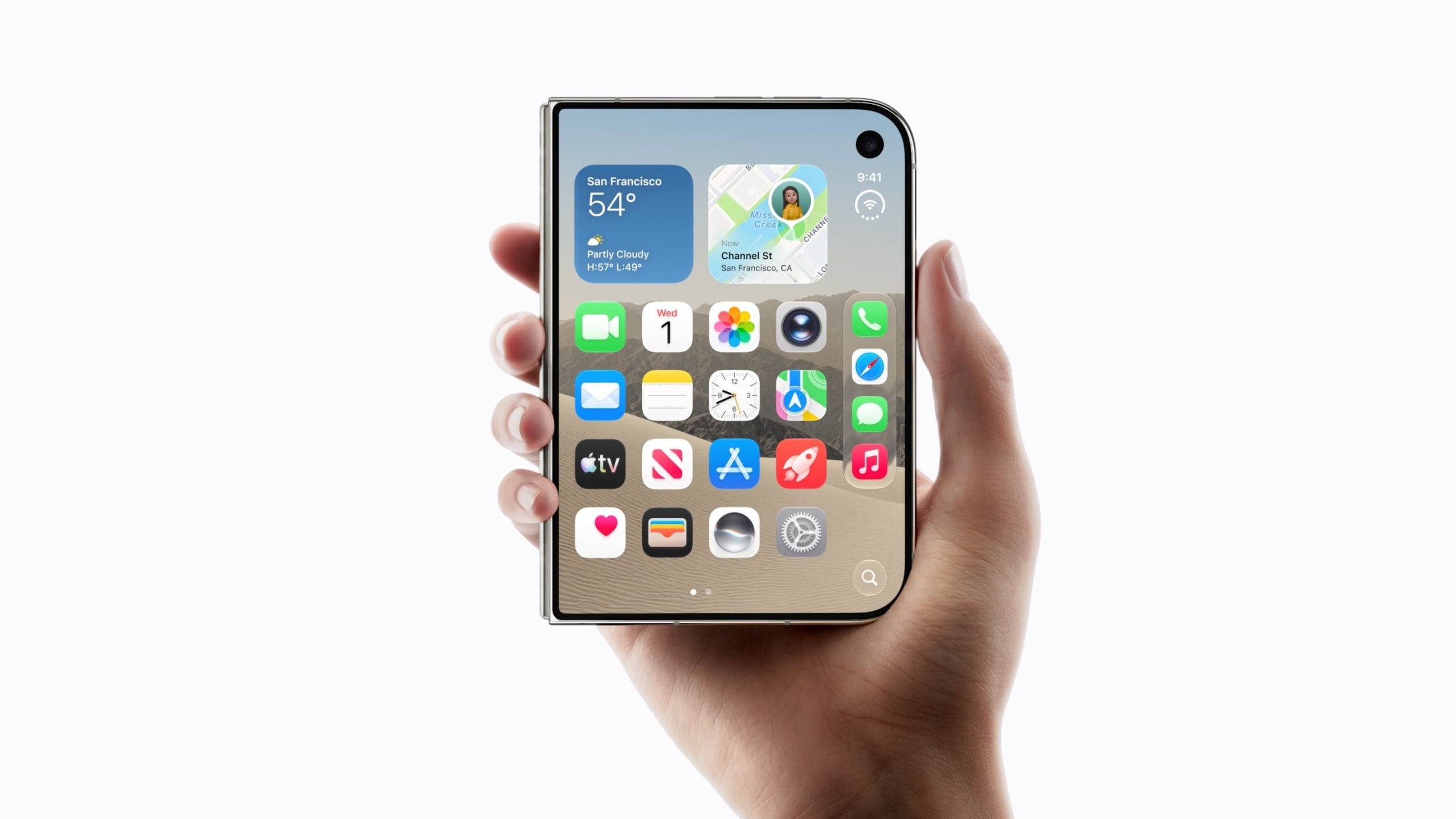
The Galaxy Z Fold 8’s sales figures have gone up sharply in recent weeks, and the credit goes to the iPhone Duo. There are a growing number of complaints from Apple’s foldable users around spotty quality assurance and screen cracking, and that has likely shifted some of the buyers to Samsung’s Galaxy Z Fold 8.
According to a report from Korean publication Herald Business, the Galaxy Z Fold 8 sales increased by more than 20% in a week after the iPhone Duo started shipping last week. It is an even better increase for the Galaxy foldable than the one that happened last month — about a 10% uplift on a week-to-week basis when people finally saw Apple’s first foldable and its hefty pricing.
Samsung is looking to make the most of this moment as it extends the subscription for the New AI Subscription Club until the end of November. This upgrade program lets you trade in your old device and get a new one every 1, 2, or 3 years. As a part of this upgrade program, Galaxy foldable owners (Fold8, Fold8 Ultra and Flip8) are promised a 50% buy-back value for the 1-year plan, 40% for the 2-year plan (50% for a Flip upgrade), and 25% for the 3-year plan.
Additionally, Samsung is running a “Galaxy End of the Year Fiesta” campaign until December 31, which unlocks in-store shopping perks.
Despite multiple complaints, Apple continues to see strong demand for the iPhone Duo and is unable to fulfill that due ongoing memory and chip shortages. The has officially announced that Duo units affected by the inner screen cracking problems are eligible for a free replacement, even if that’s not covered under the AppleCare+ plan. However, early hardware defects have directed some potential buyers towards Samsung’s foldable. The South Korean giant will reportedly invest heavily in the new form factor in 2027.
Rumors are rife that Huawei may soon unveil the Nova 17 lineup in China. Ahead of the expected launch, well-known tipster Digital Chat Station has shared new details on the Nova 17 series’ display, cameras, and chipset. Here’s a look at the details that have emerged in the latest leak.
Huawei Nova 17 series leaked specs
According to the tip, the series is evaluating dual OLED sizes: a 6.68-inch 1.5K panel and a larger 6.84-inch 1.5K panel. Those sizes line up with the standard and Pro models, which could be the Nova 17 and Nova 17 Pro. This means that the display sizes and resolution may remain unchanged as compared to the previous generation.
The leak suggests that the Nova 17 Pro may feature a 200-megapixel ultra-large or large main sensor. The new main is suspected to be GalaxyCore’s GCB0H, with related reporting pointing to a GCB0H5 unit around the 1/1.56-inch class. For context, the Nova 16 used a 50-megapixel main with a 50-megapixel RYYB periscope telephoto, while the Nova 16 Pro and Ultra stepped up to a 200-megapixel wide main plus a 50-megapixel ultrawide and a 50-megapixel periscope telephoto with OIS.
The telephoto side on the Nova 17 Pro appears to be a 50-megapixel 1/2.5-inch SC5000CS sensor from SmartSens. The same tip also mentions a multispectral lens for better color accuracy. Together, the main, tele, and multispectral combo paints the series as a camera-forward, lightweight all-rounder. However, it is unclear whether the standard Nova 16 will get a 200-megapixel main camera and a telephoto camera.
For silicon, Digital Chat Station only names a new 8-series chip platform, with the final Kirin branding still TBD. Related rumors suggest it could be the yet-to-be-announced Kirin 8050, though that name remains unconfirmed alongside the broader 8-series tip.
The Huawei Nova 17 series is expected to launch by the end of this month in China. It is expected to rival the likes of the Oppo Reno 17 series, Honor 700 series, and Vivo S70.
Which Huawei Nova 17 camera upgrade matters more to you, the 200MP GCB0H main or the 50MP SmartSens telephoto? Let us know in the comments below.
Samsung’s early Black Friday period is live in the UK, and one of the bigger smartphone offers is a £250 drop on the Galaxy S26. According to Samsung’s official UK announcement, the discount is available if you buy through Samsung.com or a Samsung Experience Store by 17 November 2026. Their Black Friday Price Promise also kicked in on 4 November.
The Galaxy S26 is part of Samsung’s 2026 flagship lineup and comes with Galaxy AI features, including Photo Assist, which lets you move, resize, or remove objects from photos, plus other AI editing tools. On Samsung’s UK site, the 256GB model with 12GB of RAM is currently showing at £709, down from £959, so it’s sitting under the £750 mark ahead of the main Black Friday rush. Even though the formal early-access window started on 4 November, this particular S26 discount has actually been available since 28 October.
The Price Promise is worth noting. If you buy an eligible product from Samsung’s direct channels and then find it cheaper at one of the selected online retailers between 4 November and 1 December, you can claim the difference. You’ll need to submit the claim by 8 December with proof of the lower price, and it has to meet Samsung’s full terms.
It’s not just phones, either. Selected tablets, including Galaxy Tab S12 models, are discounted by up to £140 with the BLACK1 code. The Galaxy Watch9 is £50 off with code BFW, and there are further savings on earbuds, laptops, and TVs, all with their own conditions and end dates.
The Galaxy S26 deal is still available through Samsung’s UK online store and Experience Stores. Just double-check the final price for the storage and colour you want, plus any trade-in value or extra promo conditions, before you order.
Carl Pei just confirmed it on X: Nothing’s first AI-native product is coming in December. He called it “a tool, but one built with the personality and care that have come to define a Nothing product.” And the key detail is that it lacks a screen. Pei was pretty clear about that part: this thing “couldn’t have been an app.”
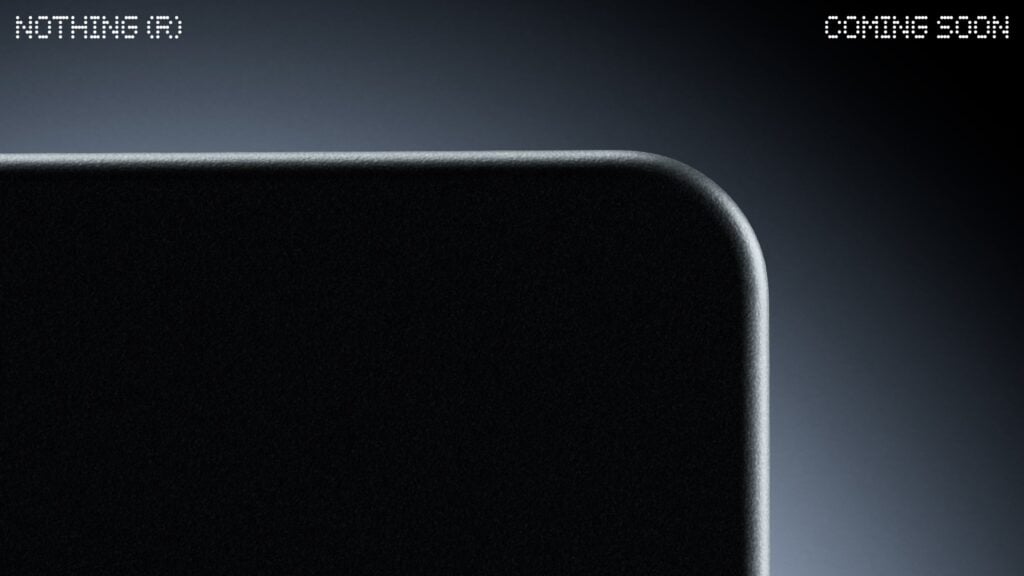
That’s pretty much all we know right now. No form factor, no features, no price, no exact date. Just a vague teaser image with the Nothing logo and a black rounded corner, and Pei’s insistence that this is something different.
This isn’t a total surprise, though. A little over a year ago, Pei talked about Nothing’s plans for AI-native devices and their own AI operating system. What’s interesting is the deliberate decision to skip a display entirely. That already puts it in a different category from phones or most of the AI gadgets we’ve seen so far.
Pei also used the post to take a jab at the rest of the industry. He thinks everyone’s still chasing some kind of “iPhone moment” with pendants, pins, glasses, and companions, and that hunting for “the iPhone of AI today is a dead end.”
There have been earlier rumors about Nothing looking into AI smart glasses (including a possible camera-free version) and shifting more toward AI accessories in general. Nothing hasn’t confirmed whether those reports are connected to this December device, though.
Screen-free AI hardware isn’t brand new territory. We’ve already seen attempts like the Humane AI Pin and Friend, and OpenAI is reportedly working with Jony Ive on some kind of AI smart speaker. Nothing’s version could just be another data point in that still-forming category.
For now, the product is mostly defined by what it doesn’t have, a screen, and by Pei’s claim that it’s an actual tool, not just software pretending to be hardware.
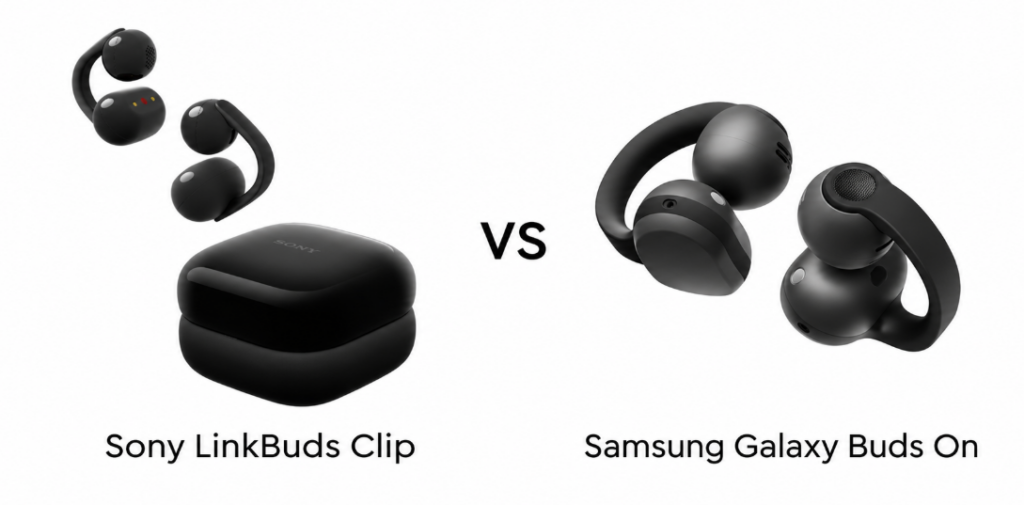
Sony LinkBuds Clip and Samsung Galaxy Buds On bring a refreshing change to the wireless earbuds market with their unique open-ear clip-on designs. Moving away from traditional in-ear earbuds, both offer a different listening experience focused on comfort, convenience and everyday usability. While they share a similar design philosophy, there are plenty of differences worth exploring, from their build and audio capabilities to battery life and connectivity. So, which one deserves a place in your ears? Let’s take a closer look.
VPU, Touch, IR, Accelerometer, Gyroscope, Hall Sensor
Samsung – More specified sensors
Compatibility
Bluetooth-compatible smartphones
Android 12 or higher, 1.5GB+ memory
—
Price (Approx.)
$230 / ₹25,000
$229 / ₹20,000
Samsung – Lower estimated Indian price
Disclaimer: Specs are based on available data. Actual performance may vary. Verify details from official sources before buying.
Design and Comfort
Build & Fit
The Sony LinkBuds Clip features a lightweight, open-ear clip-on design that sits around the ear without entering the ear canal. Each earbud weighs approximately 6.4g, and Sony includes removable Air Fitting Cushions to help improve stability and personalise the fit. Its rounded design also gives it a relatively subtle, accessory-like appearance.
The Samsung Galaxy Buds On follows a similar approach, using a flexible band that wraps around the ear to keep the earbuds secure. Each earbud weighs 6.65g, making it slightly heavier than Sony’s offering. Samsung has also used ear-shape data and ergonomic design adjustments to distribute pressure more evenly. Both models come with compact charging cases, although Samsung’s case is marginally lighter at 41g.
Controls & Usability
Sony offers customisable tap controls through its Sound Connect app, while Samsung provides touch controls and convenient Galaxy device integration.
Verdict
Sony has a slight advantage in weight, while Samsung focuses on pressure distribution and secure fitting. Both offer promising designs for extended listening, although comfort will ultimately depend on individual ear shape.
Sound Quality
Driver Performance, Bass, Mids, Highs
The Sony LinkBuds Clip features a 10mm driver designed for open-ear listening, while the Samsung Galaxy Buds On comes with an 11.3mm TwinBoost speaker. Samsung has an advantage in driver size, but a larger speaker does not automatically guarantee better sound quality.
Sony focuses on balanced audio reproduction, with its sound tuning designed to maintain clarity across vocals, instruments and everyday content. Samsung’s TwinBoost technology is designed to deliver a richer listening experience, particularly important in an open-ear design where bass can be more challenging to reproduce. However, neither model creates the isolation of conventional in-ear earbuds, so deep bass performance should not be expected to match sealed designs.
Codec Support & Audio Features
Sony supports SBC and AAC codecs, alongside DSEE upscaling and a customisable 10-band equaliser. Samsung supports SSC, SSC UHQ, AAC, SBC and LC3, offering more codec options, particularly for compatible Galaxy devices.
Verdict
Samsung has the advantage in speaker size and codec variety, while Sony offers useful audio customisation and DSEE enhancement. Actual listening performance will depend on tuning rather than specifications alone.
ANC and Transparency Modes
Noise Cancellation Quality
Neither the Sony LinkBuds Clip nor the Samsung Galaxy Buds On offers traditional Active Noise Cancellation (ANC). Both use open-ear designs that leave the ear canal unobstructed, allowing users to hear music while remaining aware of their surroundings. This makes them suitable for outdoor walks, running and everyday activities where environmental awareness matters more than blocking background noise.
Sony offers three listening modes: Standard, Voice Boost and Sound Leakage Reduction. Voice Boost makes spoken content easier to hear in noisy environments, while Sound Leakage Reduction helps minimise audio escaping from the earbuds. For calls, Sony combines AI-based voice pickup technology with a bone conduction sensor to improve voice clarity.
Samsung takes a slightly different approach with automatic volume adjustment based on surrounding noise. It also features Audio Leakage Reduction and Intelligent Clear Call, which combines three digital microphones, a Voice Pickup Unit and machine-learning processing to improve voice pickup and reduce background noise.
Verdict
Samsung offers a more extensive collection of intelligent call and volume features, while Sony provides useful listening modes and dedicated voice pickup technology. Neither is suitable for users who specifically need strong ANC.
The Sony LinkBuds Clip offers up to 9 hours of music playback on a single charge and up to 37 hours with its charging case. It also supports quick charging, providing approximately one hour of playback from just three minutes of charging. For calls, the earbuds offer up to 4 hours of continuous communication.
The Samsung Galaxy Buds On delivers slightly better endurance, offering up to 9.5 hours of music playback and up to 38 hours with the case. Talk time reaches 5.5 hours on the earbuds and up to 25 hours with the case. Samsung therefore has a small advantage in both music playback and calling endurance.
Sony uses Bluetooth 5.3 and supports multipoint connectivity, allowing connections to two devices simultaneously. Samsung moves ahead with Bluetooth 6.2 and supports SSC, SSC UHQ, AAC, SBC and LC3 codecs. However, multipoint support is not established in Samsung’s published specifications.
Verdict
Samsung wins in battery endurance and Bluetooth generation, while Sony offers confirmed multipoint connectivity and convenient quick charging.
Pricing
The Sony LinkBuds Clip is priced at approximately $230 (₹25,000), while the Samsung Galaxy Buds On comes in at around $229 (₹20,000).
At the estimated Indian prices, Samsung appears to offer better overall value. It brings Bluetooth 6.2, a larger TwinBoost speaker, IP54 protection, additional codecs and slightly longer battery life at a lower expected price. Its hands-free controls and Galaxy ecosystem features also add to its appeal for compatible smartphone users.
Sony, however, has its own advantages, including multipoint connectivity, DSEE audio enhancement, a customisable 10-band equaliser and quick charging. These features make it a reasonable alternative for users who prioritise connectivity flexibility and audio customisation.
Verdict: Samsung is the more attractive option on price and specifications, while Sony needs to appeal through its software features and everyday convenience.
Disclaimer: Prices are approximate and may vary based on country, region, launch timing, and applicable taxes. Always check whether the listed price is for a China unit or a global/international variant when purchasing.
Conclusion
The Sony LinkBuds Clip stands out with its lightweight construction, DSEE audio enhancement, multipoint connectivity and three dedicated listening modes. Its customisable 10-band equaliser, quick charging and AI-assisted call technology also make it a well-rounded option for everyday listening.
The Samsung Galaxy Buds On brings a different set of strengths, including its 11.3mm TwinBoost speaker, Bluetooth 6.2, IP54 protection and automatic volume adjustment. It also offers Intelligent Clear Call, Head Gestures, Quick Voice Memo and hands-free access to Gemini Live on compatible Galaxy devices. These additions make it particularly interesting for users who want more than basic music playback.
Verdict
Overall, the Samsung Galaxy Buds On looks like the stronger all-round package, offering newer connectivity, slightly better battery life, additional smart features and a lower estimated Indian price. The Sony LinkBuds Clip remains a compelling alternative for users who value multipoint connectivity, DSEE and quick charging.
At approximately ₹5,000 less, Samsung has the more convincing value proposition. However, Sony still deserves consideration, especially for users who frequently switch between devices.
Disclaimer: Prices, specifications, and availability may vary by region and retailer. Recommendations in this article are based on editorial opinion, feature-based value, and market positioning at the time of writing. Readers are advised to do their own research before making a purchase.
Scalpers who stocked up on Apple’s first foldable iPhone hoping for big profits are instead taking some pretty steep losses. Prices on the secondary market have collapsed much faster than most of them expected.
The iPhone Duo went on sale about a week ago after months of heavy speculation. A lot of resellers, often called scalpers in China, bought units at high prices or in bulk, counting on limited early supply to create the kind of scarcity premiums they’ve seen with past flagship launches. That bet hasn’t paid off. Demand cooled off pretty quickly once the phones actually reached buyers.
Reports from local merchants describe a sharp turnaround. Problems with the hinge and software that still feels incomplete have dampened interest. Resale prices dropped fast, turning what was supposed to be a profitable product into losses on almost every unit. A merchant at Hangzhou’s Yigao Digital City said nearly all the scalpers dealing in the iPhone Duo are now losing money. Industry chatter claims some of the more experienced operators have lost tens of thousands or even hundreds of thousands of yuan (1 USD = 6.67 yuan) on their stockpiles. In this climate, anyone still breaking even is seen as the lucky exception.
Information about new devices spreads almost instantly across social media and review channels, so the old information gaps that used to let resellers profit from scarcity have mostly closed. Supply also improved faster than many expected, which further shrank the window for big markups. Analysts and local dealers note that the high starting price already limited the number of genuine buyers, so once the initial wave of curiosity passed, resale demand basically dried up.
Scalpers who treated the iPhone Duo as a near-certain scarcity play have paid a visible price, reinforcing that speculative hoarding in today’s transparent digital market carries a lot more downside than it used to.
Asus has launched the Zenbook 14 in India with Intel, AMD and Snapdragon options across three SKUs. Pricing starts at Rs 1,36,990 (~$1,448) and climbs through FHD+ and 3K OLED display tiers. The slim 14-inch notebooks go on sale today at Asus Exclusive Stores, the Asus E-shop and major retail partners.
Asus Zenbook 14 specifications and features
Asus Zenbook 14
The entry UX3480QA uses a Snapdragon X X1 26 100 chip with up to 45 TOPS of NPU performance and a 14-inch FHD+ (1920×1200) 60Hz OLED panel without touch. It packs a 50Wh battery and weighs 1.10kg. The UX3480KA moves to an AMD Ryzen AI 7 345 with up to 50 TOPS, keeps the FHD+ 60Hz OLED and adds touch plus stylus support at the same weight and battery size.
At the top, the UX3480AA runs an Intel Core Ultra 9 386H with up to 50 TOPS and a 14-inch 3K (2880×1800) 120Hz Lumina OLED touch display rated up to 1100 nits HDR with 100% DCI-P3. It ships with 16GB LPDDR5X, a 512GB SSD, a 70Wh battery and a 1.30kg chassis. All three include Windows 11 Home with lifetime Microsoft Office Home 2024, Wi-Fi 6E, an FHD IR camera, a backlit keyboard with a Copilot key, USB-C fast charge claiming about 50% in 30 minutes, MIL-STD-810H durability and Ceraluminum finishes from 1.39cm thin in Arctic Blue, Komodo Coral and Zabriskie Beige, with Asus quoting up to 33 hours of battery life.
Asus Zenbook 14 price and availability
Asus Zenbook 14
In India, the Snapdragon UX3480QA costs Rs 1,36,990 (~$1,448), the AMD UX3480KA is Rs 1,56,990 (~$1,659) and the Intel UX3480AA is Rs 1,67,990 (~$1,775). No-cost EMI starts from Rs 7,611 per month for up to 18 months, while low-cost EMI starts from Rs 6,471 for up to 24 months.
The laptops are available from Asus Exclusive Stores, the Asus E-shop, Amazon, Croma, Reliance Digital, Vijay Sales and authorised partners. Asus has also launched the ZenMouse MD202 at Rs 6,999 (~$74), billed as the world’s first Ceraluminum mouse with Bluetooth and 2.4GHz for up to four devices, track-on-glass support, USB-C charging and a claim of 16 hours from a one-minute charge.
With three chip camps and two OLED tiers on the same 14-inch chassis, which Zenbook 14 SKU would you pick for India? Let us know in the comments below.
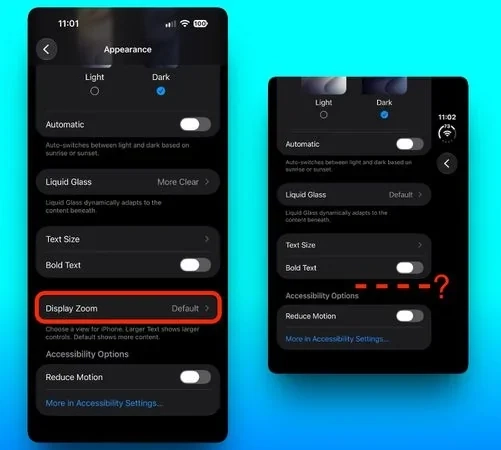
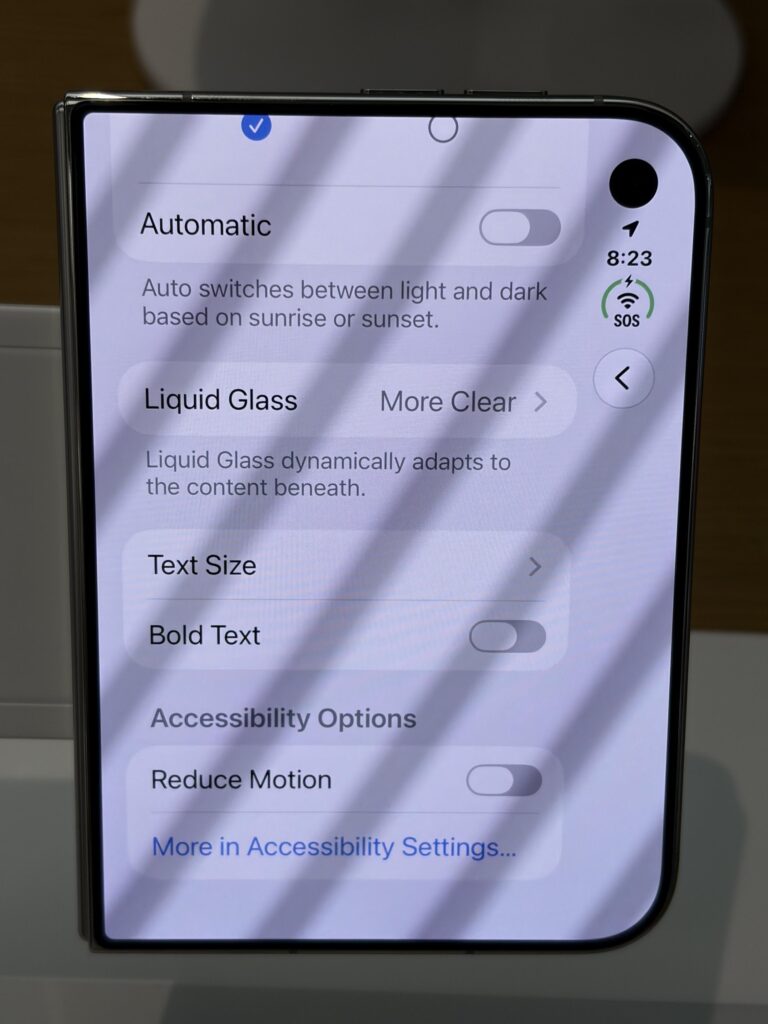
Owners of Apple’s first foldable iPhone are running into a pretty annoying limitation: if you want to change how big the text and icons look, you have to wipe the entire phone and start over.
During the initial setup on the iPhone Duo, you get an “Appearance” screen with three options: Default, Medium, or Large. These options control the size of text and system icons. On every other iPhone, you can change this Display Zoom setting whenever you want in Settings. On the Duo, that option simply vanishes once setup is done.
The issue first popped up on Reddit and was later covered by MacObserver and MacRumors. One user, u/earthdog, reached out to Apple Support, and a senior advisor confirmed there’s currently no menu or toggle to change the scaling after the initial choice. The only way around it is to erase all content and settings, restart the phone, and go through the whole setup process again so the Appearance options reappear.
MacRumors checked and found the Display Zoom control is still missing even on the latest software, iOS 27.2. This restriction only affects the foldable model. It’s not clear yet whether Apple deliberately locked the setting (maybe because of the folding display) or if it’s just a software bug. Outlets have asked Apple for comment, but so far the company hasn’t said whether the option will come back in a future update.
For most people who are happy with their first choice, this might not be a big deal. But if you later decide you’d rather have bigger or smaller elements on screen, after using the phone for some time, you’re stuck with a full reset that wipes apps, data, and all your personalization.
Vivo has started teasing the X500 series in India, indicating that its latest flagship lineup is preparing for a domestic debut. The phones first arrived in China in September and made their way to Europe last month. With the series also reaching Southeast Asian markets, Vivo has now published an Indian landing page showcasing the X500 series alongside the Watch GT 2, which appears to be its first smartwatch for the Indian market.
Vivo X500 series teasers begin in India
Vivo X500 series teaser
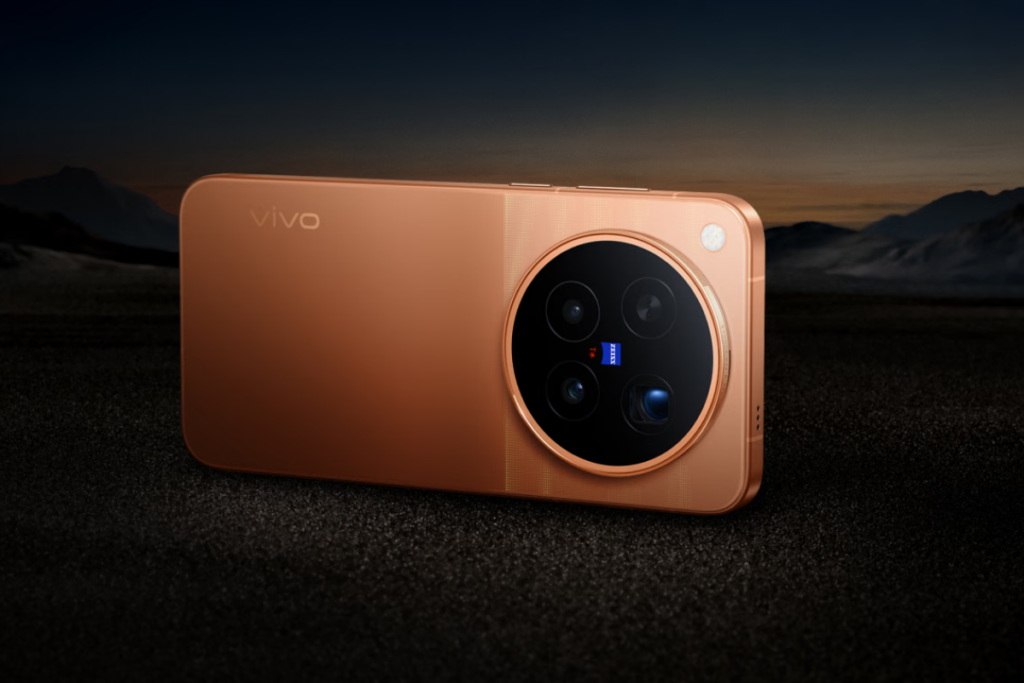
The newly published teaser showcases the Vivo X500 series with ZEISS branding and a sunset-themed background. It seemingly highlights the Vivo X500 Pro Max with a prominent circular camera module, accompanied by a large telephoto accessory marked 400mm Equivalent. This appears to be the Vivo ZEISS Telephoto Extender Gen 2 Ultra, designed to offer extended zoom capabilities with compatible X500 models.
Interestingly, the teaser also features a smartwatch alongside the smartphone and camera accessory. The footnote confirms that it is the Vivo Watch GT 2, which has so far remained limited to China. Its possible appearance indicates that Vivo could introduce the wearable alongside its flagship phones in India. The watch offers a 2.07-inch display, health tracking features and more than 100 sports modes.
Vivo X500 series’ launch timeframe
Vivo launched the X500, X500 Pro and X500 Pro Max in China on September 21, followed by their European debut on October 27. The lineup has also started reaching Southeast Asian markets, including Malaysia, while the Philippines is among the markets lined up for availability.
For India, a recent report suggested that the X500 series would debut by the end of November. The lineup is expected to include all three models, with the Pro Max leading the range through its 200-megapixel ZEISS APO telephoto camera and support for a 400mm-equivalent telephoto extender.
November 2026 is expected to bring several notable smartphone launches, with Motorola, Oppo, Honor, and Vivo preparing new devices for different market segments. From flagship Snapdragon processors and advanced periscope cameras to large batteries and ZEISS-tuned imaging systems, the upcoming lineup has plenty to look forward to.
Some of these phones are expected to debut in China before reaching India, while others are targeting the Indian market directly. Here are five upcoming smartphones to watch in November 2026.
Motorola Signature 27
Launch: November 5
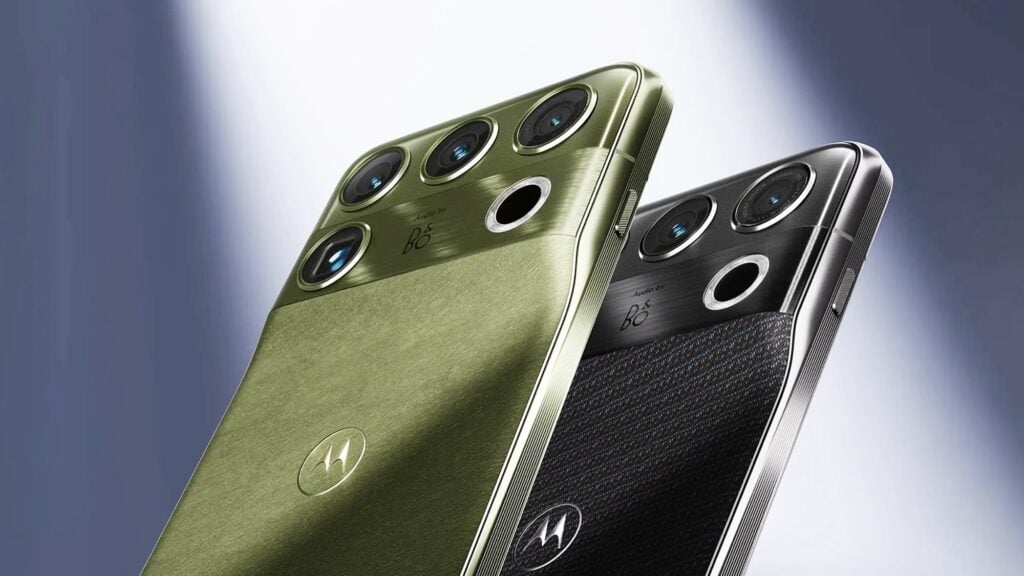
The Motorola Signature 27 is scheduled to launch in the US on November 5. It will feature Qualcomm’s Snapdragon 8 Elite Extreme Gen 6 chipset, a 50-megapixel Sony LYTIA main camera and a 200-megapixel periscope telephoto camera with up to 100x Super Zoom. Other highlights include Bang & Olufsen audio, ArcticMesh cooling and seven years of OS upgrades. More details.
Oppo Reno 17 series
Launch: Later this month, China
Oppo has confirmed that the Reno 17 series will debut in China this month. The lineup is expected to include the Reno 17 and Reno 17 Pro. Leaks suggest Snapdragon 7 Gen 4 and Dimensity 8550 processors, respectively, alongside 50-megapixel periscope cameras.
The Pro model could also feature a 200-megapixel main camera and a 7,000mAh battery. The same event will also see the arrival of the Pad Air 6 and Oppo Watch 5.
Honor 700 series
Honor 600 Pro
Expected: Later this month, China
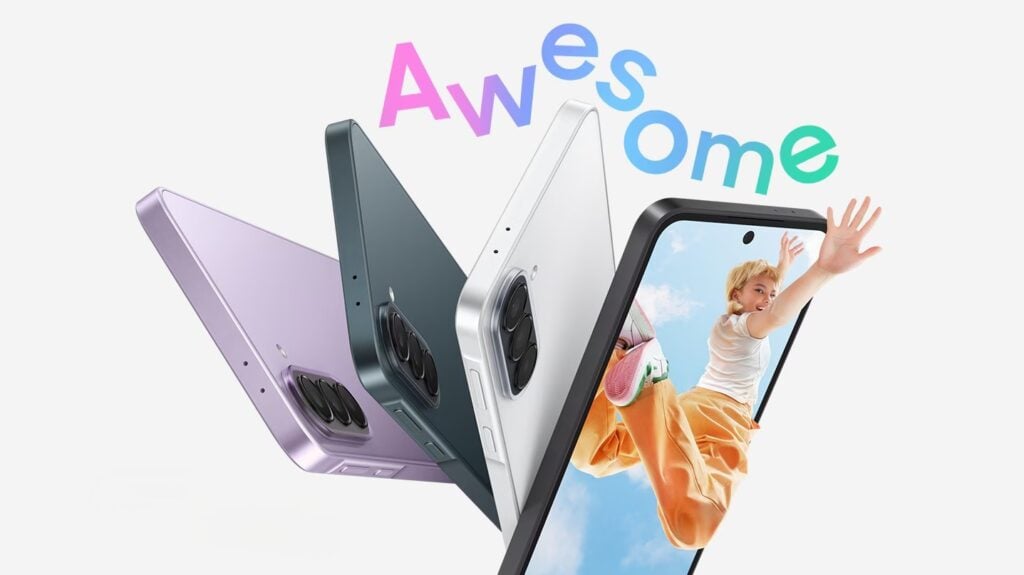
Honor is expected to introduce the Honor 700 series this month, potentially comprising the Honor 700 Vitality Edition, Honor 700 and Honor 700 Pro. The standard model could feature the Snapdragon 8s Gen 4, while the Pro may get the Snapdragon 8 Gen 5. Other expected highlights include a 200-megapixel main camera, a rear display and a 9,000mAh battery. See the latest certification details.
Vivo S70 series
Vivo S60t
Expected: Later this month, China
Vivo is expected to launch the S70 series in China this month. The Vivo S70 is tipped to feature a Snapdragon 8s Gen 4 chipset, a 6.59-inch 1.5K LTPS OLED display and a 64-megapixel Sony LYT-610 periscope camera. It could also support a 200mm telephoto extender, making it the first S-series phone with this accessory.
Vivo X500 series
Vivo X500 Pro Max
Expected: November end, India
Vivo is expected to bring the X500 series to India by the end of November, comprising the X500, X500 Pro and X500 Pro Max. The Pro Max is expected to lead with a 200-megapixel periscope camera, 60fps autofocus tracking and 4K cinematic slow-motion recording at up to 960fps. All three models are expected to feature ZEISS-tuned cameras, with Indian pricing yet to be announced.
The Vivo X500 series was announced last month in Europe, and its heading to Southeast Asian markets in the next few days.
For a long time now, the popular Galaxy A phones have stuck with 5,000 mAh batteries. That looks like it’s about to change with the upcoming Galaxy A38. Recent reports suggest the phone will pack a noticeably bigger cell, one of the more meaningful shifts we’ve seen in this lineup for a while.
According to Dutch site GalaxyClub, the Galaxy A38 is expected to use a battery rated at 5,882 mAh. That’s likely to be marketed as a typical 6,000 mAh capacity, 20% more than the battery size of the Galaxy A37 and earlier A30-series phones going all the way back to the A31. If the numbers hold, it would be the biggest battery yet in a Galaxy A phone sold in Europe. Reports also say it won’t be using silicon-carbon tech.
Outside of the bigger battery, most of the rest of the hardware seems set to stay pretty familiar. Earlier leaks point to the same camera setup as the A36 and A37: 50 MP main, 8 MP ultrawide, 5 MP macro, and a 12 MP selfie camera. Charging is widely expected to stay at the same 45 W wired speeds as the current model.
Details on the Galaxy A58’s battery are still unclear, though it’s expected to get a similar bump and maybe even the same cell.
Samsung is expected to launch the Galaxy A38 alongside the A58 sometime in March or April 2027. Pricing in this series has been climbing. The A36 started at €379 in 2025, the A37 launched at €429 earlier this year and later went up to €469. The A38 is expected to land closer to the €500 mark.
A meaningful jump in battery life alone could make a real difference for Galaxy fans. As always with pre-launch reports, none of this is official until Samsung confirms the details or more concrete evidence emerges closer to the expected spring 2027 launch.
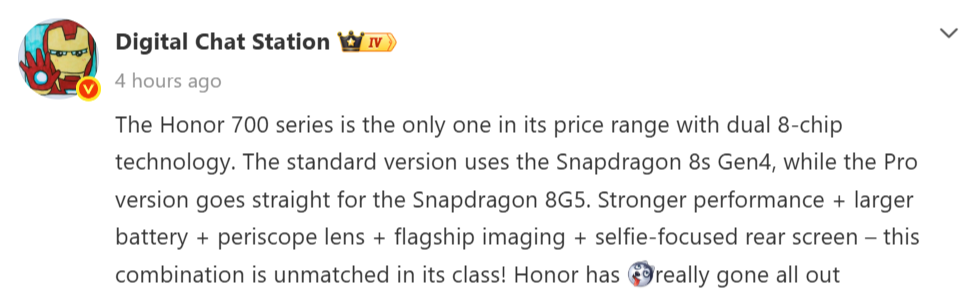
Honor is expected to unveil the Honor 700 series in China this month. The lineup will compete with the Oppo Reno 17 and Vivo S70 series, which are also expected to arrive around the same time. A new leak from tipster Digital Chat Station has revealed the processors, suggesting Honor is preparing a powerful lineup.
Honor 700 series tipped to use Snapdragon 8-series chips
According to Digital Chat Station, the standard Honor 700 will use the Snapdragon 8s Gen 4, while the Honor 700 Pro will feature the Snapdragon 8 Gen 5. The tipster describes this as dual 8-chip technology, with both phones using Qualcomm’s Snapdragon 8-series platforms and the Pro getting the more powerful option.
These processors could give Honor an edge over some upcoming rivals. The standard Oppo Reno 17 is tipped to use the Snapdragon 7 Gen 4, while the Reno 17 Pro may feature the Dimensity 8500 Super. The Vivo S70 is also said to use the Snapdragon 8s Gen 4, placing it closer to the standard Honor 700. Oppo has confirmed a November debut for the Reno 17 series, while the Vivo S70 is also expected this month.
Previous leaks point to a 6.57-inch 1.5K OLED display and a 1.72-inch secondary screen on the back. The camera setup could include a 200-megapixel main sensor, while the Pro may add a 50-megapixel periscope telephoto camera. Both phones are also tipped to support a 200mm telephoto extender, as detailed in our earlier report.
The series could pack batteries rated at around 9,000mAh, with the Pro reportedly supporting 50W wireless charging. All three models have cleared 3C certification with up to 80W wired charging. These details build on an earlier camera and battery leak. If accurate, Honor could combine flagship-grade performance with versatile zoom photography and long battery life. Which feature interests you most? Share your thoughts in the comments.
RedMagic 12 Pro and Honor Win 2 represent two different approaches to flagship smartphone design. Both pack the same next-generation Snapdragon chipset, high-refresh-rate AMOLED displays, active cooling and substantial batteries. However, their differences in camera hardware, display technology, charging capabilities and pricing make this comparison particularly interesting for buyers choosing between a gaming-focused powerhouse and a more versatile flagship.
Disclaimer: Specs are based on available data. Actual performance may vary. Verify details from official sources before buying.
2. Design and Display
Build and Feel
The RedMagic 12 Pro features a premium glass-and-aluminum construction, Gorilla Glass 7i protection on both sides and an aviation-grade aluminum frame. Its built-in cooling fan is an unusual addition, especially considering its IP68/IP69 protection. The pressure-sensitive gaming zones further reinforce its gaming-oriented identity, making the phone feel purpose-built for demanding mobile gaming sessions.
The Honor Win 2 also combines an aluminum frame with integrated cooling fans, but takes thermal management further with two built-in fans. Its IP68/IP69K rating provides excellent protection against dust and water. Although it lacks the RedMagic’s dedicated pressure-sensitive gaming zones, its overall construction feels more focused on balancing gaming hardware with everyday flagship usability.
Display Quality
Both phones feature 185Hz AMOLED displays, offering exceptionally smooth animations and responsive gaming experiences. However, the Honor Win 2 takes the lead with its larger 6.89-inch panel, higher 1440p resolution, 497ppi density and Dolby Vision support. Its 5920Hz PWM dimming also provides an additional advantage for users sensitive to display flickering.
The RedMagic 12 Pro counters with a sharp 6.85-inch AMOLED panel, HDR10 support and an impressive peak brightness of 5000 nits. However, the Honor’s higher resolution and broader HDR capabilities make it the more impressive multimedia display.
Verdict
The Honor Win 2 wins the display comparison with its higher resolution, Dolby Vision, advanced PWM dimming and larger screen. RedMagic remains competitive, but Honor offers the more complete viewing experience.
3. Specifications Including Battery
Performance
Both smartphones feature Qualcomm’s Snapdragon 8 Elite Extreme Gen 6, manufactured on a 2nm process, alongside the Adreno 850 GPU. This puts them on equal footing in terms of core processing hardware, with enough performance headroom for demanding games, intensive multitasking and high-end applications. Their integrated cooling systems should also help maintain performance during extended workloads.
The RedMagic 12 Pro combines its chipset with UFS 4.1 Pro storage, while the Honor Win 2 uses standard UFS 4.1. Both offer configurations reaching 16GB RAM and 1TB storage. RedMagic’s dedicated gaming controls and active cooling make it particularly appealing to competitive players, whereas Honor’s dual-fan arrangement offers an interesting alternative for sustained performance.
Battery and Charging
The Honor Win 2 packs a substantial 10,100mAh silicon-carbon battery, comfortably exceeding the RedMagic 12 Pro’s already impressive 8,400mAh capacity. Both support 80W wireless charging, but Honor increases wired charging to 100W compared with RedMagic’s 80W. This combination gives Honor a clear advantage in battery endurance and charging flexibility.
Both smartphones also support reverse wireless charging, while wired reverse charging reaches 27W on Honor and 22.5W on RedMagic. The larger battery makes the Honor Win 2 particularly attractive for extended gaming, travel and heavy daily usage. RedMagic still offers excellent endurance, but Honor provides more battery headroom.
Verdict
The Honor Win 2 takes the performance and battery section overall. Although both share the same chipset, its larger battery, faster wired charging and dual-fan cooling make it the more compelling all-round package.
4. Camera
Main and Secondary Lenses
The Honor Win 2 has a significant advantage in camera hardware, featuring a 200MP primary sensor with a relatively large 1/1.4-inch sensor size, PDAF and OIS. Its 12MP ultrawide camera includes autofocus, providing additional flexibility for close-up photography and wider compositions. It also supports 4K video recording at 60fps with gyro-EIS and OIS.
The RedMagic 12 Pro features a 50MP primary camera with a 1/1.56-inch sensor, multidirectional PDAF and OIS. Its secondary 50MP ultrawide camera offers substantially higher resolution on paper, while video recording extends to 8K at 30fps and 4K at 120fps. However, Honor’s larger primary sensor and higher-resolution main camera give it the more promising photography setup, while RedMagic offers stronger headline video specifications.
Selfie Camera
The Honor Win 2 features a 50MP front camera capable of recording 4K video, making it considerably more versatile for selfies, video calls and content creation. Its higher resolution also provides greater flexibility when cropping images, although actual image quality will depend on processing and sensor performance.
The RedMagic 12 Pro uses a 16MP under-display selfie camera, prioritising an uninterrupted full-screen experience over front-camera quality. It supports 1080p video recording at up to 60fps. While this implementation looks cleaner during gaming and media consumption, Honor is clearly the better choice for selfie photography, video calls and social media content.
Verdict
The Honor Win 2 wins the camera comparison with its 200MP primary sensor, autofocus ultrawide and 50MP 4K selfie camera. RedMagic’s 8K recording and 4K 120fps capabilities remain notable advantages for video enthusiasts.
5. Pricing
The RedMagic 12 Pro is priced around $940 / ₹90,000, while the Honor Win 2 is priced around $800 / ₹78,000. This creates a meaningful price difference between two smartphones sharing the same flagship chipset and similarly ambitious gaming hardware. Despite costing more, the RedMagic does not offer a clear advantage in overall hardware versatility.
The Honor Win 2 delivers a higher-resolution display, substantially larger battery, faster wired charging and significantly more capable camera hardware at a lower asking price. RedMagic’s UFS 4.1 Pro storage, dedicated gaming controls and distinctive gaming-focused design help justify some of its premium, but these advantages cater to a narrower audience.
The Honor Win 2 is the clear value winner. At approximately ₹78,000, it delivers a more versatile flagship experience while undercutting the RedMagic 12 Pro by around ₹12,000.
Disclaimer: Prices are approximate and may vary based on country, region, launch timing, and applicable taxes. Always check whether the listed price is for a China unit or a global/international variant when purchasing.
6. Conclusion
The RedMagic 12 Pro stands out with its 520Hz pressure-sensitive gaming zones, UFS 4.1 Pro storage, under-display selfie camera, 8K video recording and dedicated gaming-oriented software experience. Its uninterrupted display and specialised gaming controls make it particularly attractive to enthusiasts who prioritise competitive mobile gaming and immersive gameplay.
The Honor Win 2 counters with two integrated cooling fans, a 10,100mAh battery, 200MP primary camera, 50MP 4K selfie camera, Dolby Vision display and broader connectivity features, including Bluetooth 6.3 and NavIC support. These additions make it a more complete flagship, particularly for users who want gaming performance without sacrificing photography, battery endurance or everyday functionality.
Verdict
Overall Winner: Honor Win 2. It offers a better display, more capable cameras, larger battery, dual-fan cooling, and stronger value for money. The RedMagic 12 Pro remains the specialist choice for dedicated mobile gamers, but Honor wins as the more complete flagship smartphone.
Disclaimer: Prices, specifications, and availability may vary by region and retailer. Recommendations in this article are based on editorial opinion, feature-based value, and market positioning at the time of writing. Readers are advised to do their own research before making a purchase.
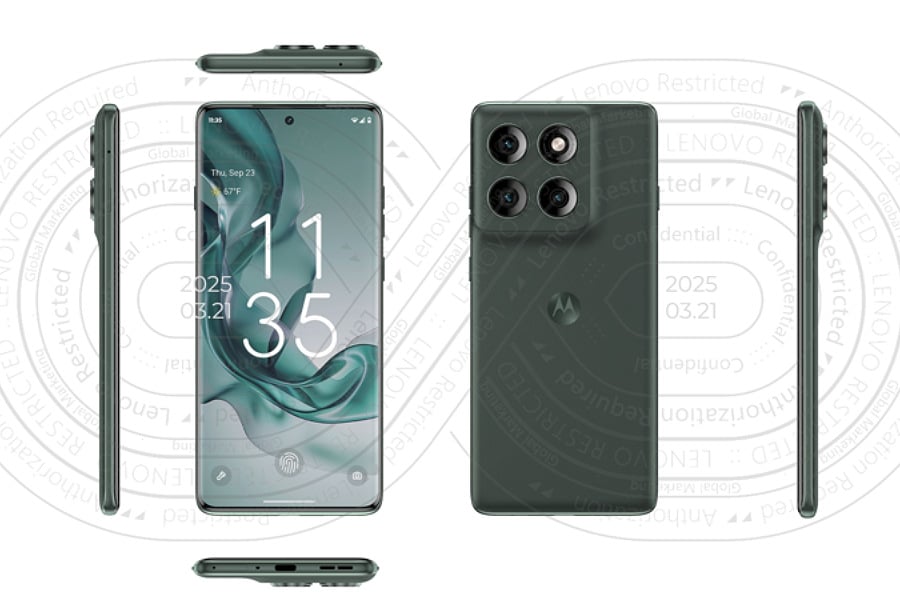
Motorola may be preparing to bring back the One series. A phone listed as the “moto one” has appeared in the Wireless Power Consortium (WPC) database, revealing its design and wireless charging details.
The listing gives the device model number XT2771-1 and confirms support for 15W Qi wireless charging. This is the first time the phone has surfaced publicly, though Motorola has not yet confirmed it. The name and launch plans could still change before its release.
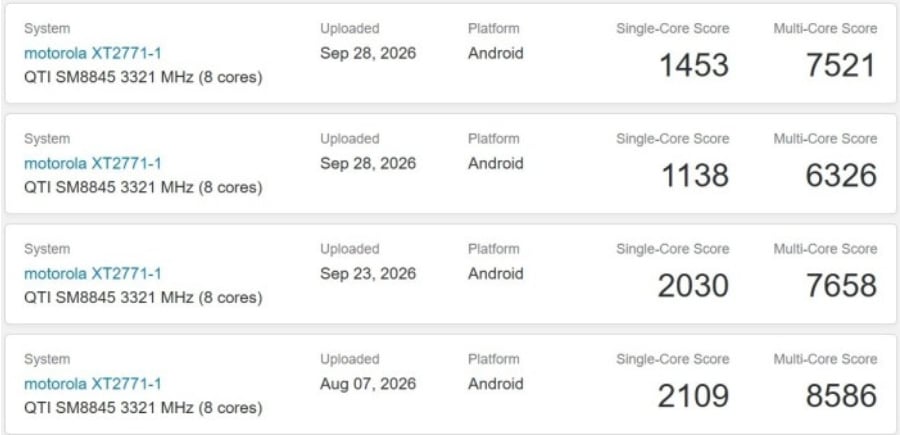
The XT2771-1 has also appeared in Geekbench, where it showed up in four separate benchmark records. All results suggest the device runs on a Snapdragon 8 Gen 5 chipset, 12GB of RAM, and Android 16. Its best run recorded 2,109 points in single-core and 8,586 points in multi-core testing.
Those numbers are fairly close to what other phones get with the same chip. For instance, Motorola’s own Moto X70 Ultra scored 2,634 in single-core and 7,475 in multi-core in its Geekbench run last November. It also had 16GB of RAM.
The Moto One trails it in single-core performance but scores higher in multi-core testing. However, these are early benchmark results, so the difference may not mean much. Pre-release phones often run unfinished software, and scores can change before a device reaches the market.
What’s interesting here is the name. Motorola introduced its One series in 2018 as an upper mid-range smartphone lineup. The Snapdragon 8 Gen 5 is a considerably more powerful chip than what we would typically associate with that series. Motorola could be bringing the name back for a higher-end device, although “moto one” may simply be a placeholder rather than the final retail name.
The WPC listing also confirms 15W wireless charging, which is the standard Qi charging rate. There is no information about wired charging speeds yet.
Beyond these details, most of the phone remains a mystery. Its display size, battery capacity, camera hardware, and pricing are still unknown. The device will likely appear in more certification databases before launch, potentially revealing additional specifications. We’ll update the story as more information becomes available.
The PlayStation Black Friday 2026 sale is now live on the PlayStation Store in India. Sony kicked things off early on November 4, and the deals run all the way through November 30. Indian players can already grab discounts of up to 75% on thousands of PS5, PS4 and PS VR2 games, expansions and add-ons.
According to the official PlayStation Blog, the promotion covers games, DLC and expansions across the catalog. Sony also notes that discounts and percentages may differ by region, so Indian prices will not always match what you see in the US or Europe.
The sale is not static either. A fresh batch of titles joins on November 16, while some offers leave early, with certain discounts ending on November 20. If something on your wishlist is already marked down, it may be smart to grab it sooner rather than later.
PlayStation Store Black Friday deals and prices
PlayStation Black Friday
The PlayStation Store India Black Friday page has plenty of standout prices. First-party favorite ASTRO BOT drops to Rs 2,839 (~$30) from Rs 3,999 (~$42), a 29% cut. DEATH STRANDING 2: ON THE BEACH Deluxe now costs Rs 3,099 (~$33), down 38% from Rs 4,999 (~$53).
Marvel’s Wolverine Digital Deluxe, which we covered ahead of its big State of Play showcase, is available for Rs 4,311 (~$46) instead of Rs 5,599 (~$59). That is a 23% saving on one of the year’s biggest PS5 exclusives.
Sports fans get some of the steepest cuts. NBA 2K27 Deluxe Edition is down 55% to Rs 3,374 (~$36) from Rs 7,499 (~$79), while UFC 6 Ultimate Edition sells for Rs 5,249 (~$55), down 30% from Rs 7,499 (~$79).
Action and horror picks are well represented too. 007 First Light Deluxe Edition is half off at Rs 2,399 (~$25) from Rs 4,799 (~$51), and SILENT HILL: Townfall costs Rs 2,399 (~$25), down 20% from Rs 2,999 (~$32). CONTROL Resonant Digital Deluxe also gets a 20% cut to Rs 3,199 (~$34) from Rs 3,999 (~$42).
For players who like long-haul worlds, Diablo IV Standard is 40% off at Rs 2,496 (~$26) instead of Rs 4,160 (~$44). Dune: Awakening Deluxe drops 30% to Rs 4,078 (~$43) from Rs 5,827 (~$62).
These savings come at a welcome time, as console and game prices have kept climbing, a trend that even sparked a class-action lawsuit over PS5 price hikes. You can find more of our console coverage in our PS5 section.
Which game are you picking up in the PlayStation Black Friday 2026 sale? Let us know in the comments.
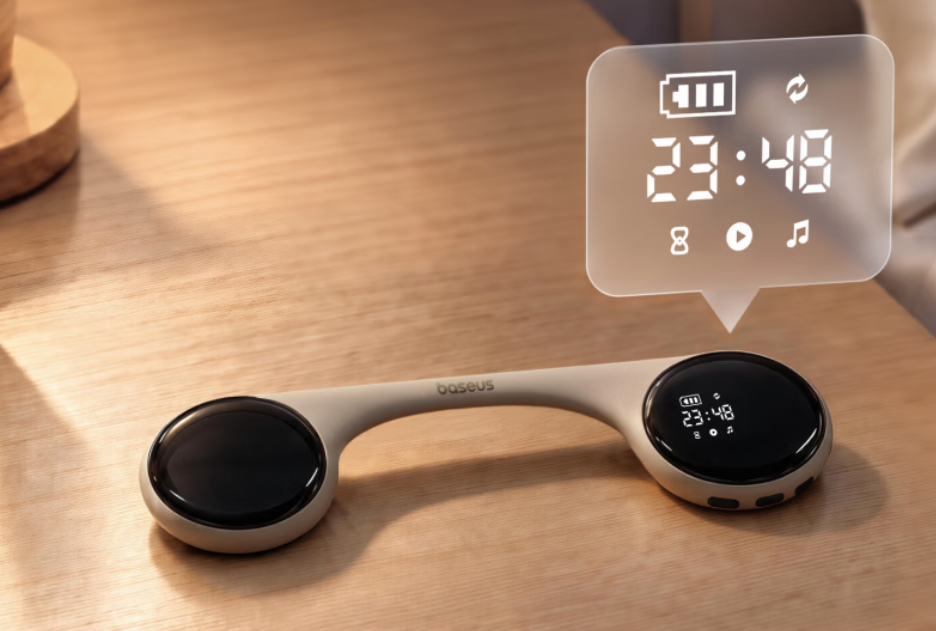
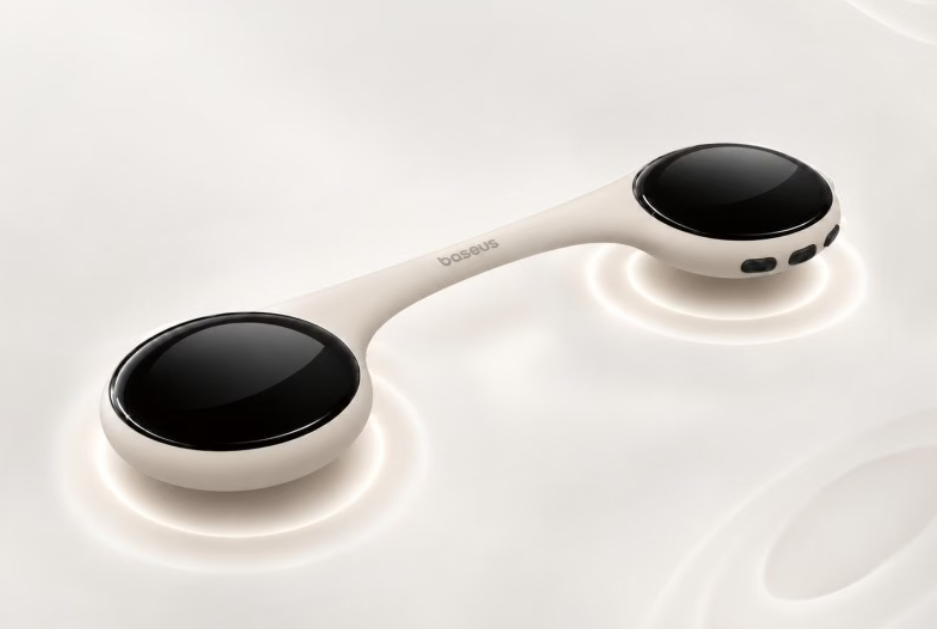
Baseus has launched a new audio device in China aimed at a very specific use case: listening to audio in bed without wearing earbuds or bothering the person next to you. The Baseus Sleep SK1 is a flat Bluetooth speaker designed to slip directly under your pillow. It is currently listed on JD.com for 184 yuan, which converts to roughly $28.
Baseus Sleep SK1 Specifications
If you are putting electronics under your head, the physical dimensions are the most important factor. The SK1 is 14mm thick, 16.5cm long, and weighs 44 grams. It has a flat profile so it shouldn’t create a noticeable lump under your pillow, even if you sleep on your side or move around during the night.
The casing has a matte finish and is made from fire-resistant materials, which is a practical safety inclusion for a battery-powered device that will be sandwiched in bedding. There is also a small digital display on the side that shows the time in a 24-hour format, the remaining battery life, and the current operating mode.
Instead of standard speaker drivers pushing air into the room, the SK1 uses a micro-vibration transmission system. It features symmetrical dual vibration drivers that send sound waves through the pillow.
This directional audio approach means you hear the sound clearly when your head is down, but audio leakage is kept to a minimum to avoid waking up a partner or roommate. Baseus says that this works best with pillows that are less than 8 cm thick, though you can adjust the volume if your pillow is thicker.
The device supports Bluetooth 6.0 connectivity for streaming music, podcasts, and audiobooks from your phone. It also features an offline mode for phone-free listening.
The companion app offers over 100 white noise tracks, including rain, campfire sounds, and ASMR, along with 30-120 minute sleep timers and up to 10 customizable alarms. Its directional audio technology is designed to wake you without disturbing others.
The speaker packs a 300mAh battery that delivers over 10 hours of continuous playback. It charges through a USB-C port and takes approximately two hours to reach a full charge.
Xiaomi has released the Mijia Smart Waist Massager 2 on its Youpin crowdfunding platform in China. It is priced at 379 yuan ($56) during the crowdfunding campaign, while its suggested retail price is 499 yuan ($74).
The device is a straightforward iteration of the company’s previous massager, focusing on practical hardware upgrades, including a larger battery and more massage heads designed to cover the lower back and upper hips simultaneously.
Mijia Smart Waist Massager 2 Specifications
The massager features four massage heads, compared to just two on the first-generation model, increasing the total massage coverage area to 46,500 square millimeters. It combines two massage techniques, with one pair of heads handling broad kneading while the other delivers targeted acupressure.
The kneading heads are arranged at different heights to follow the natural contours of the lower back and hips, while the acupressure heads extend 8mm outward to deliver deeper pressure to muscle groups instead of merely massaging the skin’s surface.
Alongside the physical massage mechanisms, the device features a dual-sided heating system with three adjustable temperature settings. The front side applies heat to the lower back with a 15,000mm² coverage area, while the reverse side can be used to warm the abdomen if the user turns the cushion around.
When the electronics are turned off, the device functions as a standard lumbar support cushion. It is constructed using slow-rebound memory foam and covered in a standard skin-friendly fabric.
Like most products in the Mijia ecosystem, the massager connects to the Mi Home app. The software allows users to switch between seven preset massage modes, configure three custom modes, adjust heat levels, and set session timers ranging from two to 30 minutes.
For users who prefer manual controls, or for older users who might not want to use a smartphone app, Xiaomi has included large physical buttons on the side of the unit.
The internal battery has been upgraded to a 3,150mAh cell, up from the 2,400mAh battery found in the previous version. It charges via USB-C and provides up to 110 minutes of runtime per charge.
The Mijia Smart Waist Massager 2 is available in Light Sand and Dark Gray, and it operates at a noise level of 50dB(A) or lower to minimize distractions.
In related news, Xiaomi has recently launched the Mijia Shoe Washing Machine through crowdfunding for around $110 and introduced a new portable hair dryer featuring a 110,000 RPM motor and 10 drying modes.
Casio has announced two new watches in its Oceanus Manta series for the Japanese market. The OCW-S40PW-7A and OCW-S7000PW-7A are available for pre-order now and will begin shipping later in November 2026.
Edited
Pricing and Design Details
Both watches share the same basic design, built around a white mother-of-pearl dial. Because mother-of-pearl is a natural material, the dial changes its appearance depending on the angle of the light.
Casio matched this with a pearl-white sapphire crystal bezel ring and added simple blue accents on the hands and the logo. The cases and bracelets are made of titanium with a titanium carbide coating to prevent scratches.
Both models also share a few core hardware features. They have dual-curved sapphire crystal glass with an anti-reflective coating, 10 ATM water resistance, and Casio’s Tough Solar charging system. The solar battery allows the watches to run for about five months on a full charge in the dark, or up to 17 to 19 months if the automatic power-saving mode is active.
The OCW-S7000PW-7A is the larger of the two, measuring 47.5 x 42.8 x 9.5 mm and weighing 83 grams. It is priced at ¥236,500 ($1,492). This version includes Bluetooth, allowing it to connect to the Casio Watches smartphone app.
Through the app, the watch automatically corrects the time, helps you find your phone, and lets you manage world time settings for about 300 cities. It also has a tachymeter and a 24-hour stopwatch. For timekeeping without a phone, it uses Multiband 6 radio-controlled technology, which syncs with radio signals in Japan, North America, Europe, and China.
The OCW-S40PW-7A is a smaller model, measuring 33.8 x 29.7 x 8.7 mm and weighing 44 grams. It costs ¥198,000 ($1,249). It drops the Bluetooth connectivity and the tachymeter, but it still uses the Multiband 6 radio-controlled system to automatically keep the time accurate.
If radio signals are unavailable, both watches default to standard quartz accuracy of ±15 seconds per month. The S40 includes a standard world time function for 24 cities and features a fine-adjustment titanium bracelet.
In related news, Casio has recently launched the new G-Shock GBM-2100LXB-1A2 with a blacked-out steel bezel and solar charging, alongside two new Baby-G BGA-10 watches featuring a clever color-changing dial mechanism.
The ASUS ZenScreen Smart MS27UC, a 27-inch 4K monitor that doubles as a Google TV, is $199 at Amazon US, $100 off its $299 list price. It’s a smart buy if you want one screen for work and streaming and mostly watch SDR content. HDR fans and creative pros should look elsewhere.
Yes. This monitor launched in the US in late 2024 at $449.99, so $199 is less than half what early buyers paid. ASUS’s own US page now lists it at $299, and Amazon’s $199 is 33% under that.
It is also the lowest price in the last 90 days, about 34% below its usual price over that stretch. For a 4K IPS panel with Google TV, a remote and 90 W USB-C built in, that is a strong price.
Price now
$199
List price
$299
You save
$100 (33%)
Price as of
4 Nov 2026, 19:19 IST
Product prices and availability are accurate as of the date/time indicated and are subject to change.
What you get
4K IPS panel: The 27-inch 3840 x 2160 screen covers 99% sRGB with 178° viewing angles. Text looks sharp for work, and colours hold up from the sofa.
Google TV: Over 10,000 apps, a remote, and Chromecast and Miracast casting turn it into a small TV without a streaming stick. Wi-Fi and Bluetooth 5.2 are on board.
90 W USB-C: A single cable can power and drive most laptops. HDMI, DisplayPort, and two USB hubs cover everything else.
Built-in speakers: Two 5 W Harman Kardon-tuned speakers handle casual viewing and calls, though the 60 Hz refresh rate rules it out for serious gaming.
What users like and what they don’t
Liked:
A genuinely good-looking monitor.
Google TV runs fast and is easy to use, with plenty of entertainment apps.
Port selection and cable management earn steady praise.
SDR picture quality and brightness are solid for everyday use.
Google Assistant, Google Home, and Cast support tie it neatly into a Google setup.
Don’t like:
HDR is weak despite the DisplayHDR 400 badge, and reviewers generally advise against buying it for HDR content.
There is no webcam or microphone.
The stand won’t rotate to portrait.
It favors streaming over the features high-end creative work needs.
A few found it pricey at launch, a complaint this deal largely answers.
How it compares
Samsung 32” Smart Monitor M7 (M70F) 4K UHD Display, Samsung Vision AI, Smart TV Apps, Gaming Hub, USB-C, HDMI and USB-A: Want a bigger screen? Samsung’s M7 offers 32 inches of 4K with streaming apps and Samsung’s Gaming Hub, though it runs Samsung TV Plus instead of Google TV.
SAMSUNG 32-Inch M5 (M50F) Series FHD Smart Monitor with Streaming TV, Speakers, HDR10, Gaming Hub, Multiple Ports, Worko ($269.66 on Amazon US): Samsung’s M5 gives you 32 inches and Gaming Hub, but its 1080p panel gives up the sharpness that makes the ASUS good for work.
Rival prices on Amazon US as of 4 Nov 2026. Product prices and availability are accurate as of the date/time indicated and are subject to change.
Should you buy it?
Buy it now if you want a sharp 4K desk monitor that also streams Google TV, especially in a small room or dorm. Skip it if you care about HDR, need a webcam, want portrait mode, or do color-critical creative work.
Following the recent launch of the Peanuts Snoopy Ski T80 digital watches, Timex has further expanded its collaboration with the Peanuts franchise with the new Peanuts x Timex Weekender Puffy Coat watch.
It is available now in the US for $189 through the company’s official website.
Design Details
The watch is built on the standard Timex Weekender platform. It features a polished silver-tone case made from low lead brass, measuring 40mm in diameter and 10mm in height, with a lug-to-lug distance of 47.5mm. The dial is navy blue and uses cream-colored full Arabic numerals for timekeeping.
The central graphic shows Snoopy dressed in a red puffer coat and a winter hat. To match this color scheme, Timex included a 20mm blue natural leather strap accented with red side stitching. Additionally, the caseback includes an engraved illustration of the wider Peanuts cast.
The watch also comes with Timex’s signature Indiglo backlight, which lights up the dial at the press of the crown. Beyond improving nighttime readability, the illumination reveals a hidden falling snow pattern behind the Snoopy graphic.
The hands and hour markers also feature luminous coatings, allowing them to remain visible in dim lighting without switching on the backlight.
Internally, the watch relies on a standard battery-powered quartz analog movement, utilizing a CR2016 battery. The dial is protected by a mineral crystal glass.
The watch weighs 54.27 grams and carries a water resistance rating of 50 meters. This rating means it can survive splashes, rain, or light swimming, though Timex specifies it should not be used for snorkeling or diving, and the crown should not be pressed while submerged to maintain the water seal.
We use cookies on our website to give you the most relevant experience by remembering your preferences and repeat visits. By clicking “Accept”, you consent to the use of ALL the cookies.
This website uses cookies to improve your experience while you navigate through the website. Out of these, the cookies that are categorized as necessary are stored on your browser as they are essential for the working of basic functionalities of the website. We also use third-party cookies that help us analyze and understand how you use this website. These cookies will be stored in your browser only with your consent. You also have the option to opt-out of these cookies. But opting out of some of these cookies may affect your browsing experience.
Necessary cookies are absolutely essential for the website to function properly. This category only includes cookies that ensures basic functionalities and security features of the website. These cookies do not store any personal information.
Any cookies that may not be particularly necessary for the website to function and is used specifically to collect user personal data via analytics, ads, other embedded contents are termed as non-necessary cookies. It is mandatory to procure user consent prior to running these cookies on your website.