Advertisement

BenQ launches new 240Hz gaming monitor with 27-inch 1440p QD-OLED panel

BenQ has launched the MOBIUZ EX271QMZ, a 26.5-inch gaming monitor priced at $499.99 in the US and ¥104,200 in Japan. It features a third-generation QD-OLED panel and is now available through BenQ’s US and Japanese websites.

BenQ MOBIUZ EX271QMZ

BenQ MOBIUZ EX271QMZ Specifications

The monitor features a 2560 x 1440 (WQHD) resolution, a 240Hz refresh rate, and a 0.03ms gray-to-gray response time. For color and brightness, it covers 99% of the DCI-P3 gamut and outputs 200 nits of typical brightness in SDR, with a peak of 400 nits in HDR10.

Because OLED panels carry a risk of burn-in over time, BenQ has included several hardware and software features to mitigate panel wear. Physically, the monitor uses a graphene film to help disperse heat.

On the software side, it includes a suite of standard OLED protections: Pixel Refresh, Pixel Shift, an Idle Dimmer, and Logo Dimming. BenQ has also added a feature called Brightness Flow, which adjusts pixel brightness based on the scene to reduce the flickering sometimes caused by the Auto Baseline Limiter (ABL) found in OLED displays.

For display settings, BenQ offers Fantasy, Sci-Fi, and Realistic color modes, with over 120 game-specific profiles available through its Color Shuttle software. It also includes a built-in crosshair, FPS counter, and blur reduction.

BenQ MOBIUZ EX271QMZ

For connectivity, it includes two HDMI 2.1 ports, one DisplayPort 1.4, and a headphone jack. The monitor has a built-in power supply, basic dual 2W speakers, and an adjustable stand that supports tilt, swivel, and 100mm of height adjustment.

🔌 You’ll NeedFull 1440p at 240Hz over HDMI 2.1 needs a certified 48Gbps cable to avoid dropped frames. Check 48Gbps HDMI 2.1 cable price on Amazon →

Alongside the EX271QMZ, BenQ announced two IPS monitors. The EX271QM has a 320Hz refresh rate, and the EX271QP has a 260Hz refresh rate. Both IPS models share the same 99% P3 color coverage and include the same art style color modes, but with a standard 1ms response time.

In related news, Lenovo has recently launched an affordable 34-inch WQHD curved gaming monitor with a 240Hz VA panel, along with a budget-friendly 27-inch gaming monitor featuring a 1500R curved VA panel and a 240Hz refresh rate.

For more daily updates, please visit our News Section.

Stay ahead in tech! Join our Telegram community and sign up for our daily newsletter of top stories!
(BenQ)

QCY launches affordable T13 Pro earbuds with 50dB ANC, 13mm drivers & 49h battery life

QCY has launched its new T13 Pro true wireless earbuds in China. It is priced at 99 yuan (around $14) and is now listed on JD.com.

QCY T13 Pro

QCY T13 Pro Specifications

The T13 Pro features 50dB ANC powered by six microphones, with adaptive noise cancellation that adjusts based on ear shape and fit. The QCY app offers six noise-control modes, while the microphones also reduce background and wind noise during calls, with wind resistance rated up to 35km/h.

For audio playback, the T13 Pro features 13mm polymer-diaphragm dynamic drivers designed to deliver stronger bass and 19% higher high-frequency resolution than the standard T13. It also supports 360-degree spatial audio and offers multiple EQ presets through the companion app.

QCY T13 Pro

Each earbud weighs 4.5 grams and features a curved design meant to distribute pressure across the ear. They have an IPX4 water-resistance rating, meaning they can handle light rain and sweat. The retail package includes three sizes of silicone ear tips.

For connectivity, the T13 Pro features Bluetooth 6.0 with support for connecting to two devices simultaneously. It also offers a 45ms low-latency mode for gaming and touch controls for playback, calls, and ANC.

QCY T13 Pro

The earbuds feature 40mAh batteries, while the USB-C charging case packs a 450mAh cell. They offer up to 11 hours of playback or 49 hours with the case when ANC is off, dropping to 8.5 and 38.5 hours respectively with ANC enabled. It also features fast charging and a 10-minute top-up provides 1.5 hours of listening.

The QCY T13 Pro is compatible with both iOS and Android devices and is available in two colors: Moonlight White and Ice Sea Blue.

In related news, Edifier has recently launched new wired gaming earbuds featuring Hi-Res Audio and hybrid triple drivers.

For more daily updates, please visit our News Section.

Stay ahead in tech! Join our Telegram community and sign up for our daily newsletter of top stories!
(JD)

TECNO Pova 8 5G Review: 8000mAh Battery + Dot-Matrix Deco – Be The One standing out

Introduction

In today’s smartphone market, where most devices look and feel the same, truly eye-catching releases are few and far between. But when I got my hands on the TECNO Pova 8 5G – model number LK6 – it genuinely threw a few pleasant surprises my way. As the latest addition to TECNO’s Pova lineup, this phone has already turned heads with its massive 8000mAh battery and the distinctive Alive Matrix dot‑matrix display on the rear.

Design & Build

On paper, the official weight is 225 grams – which doesn’t sound too bad, right? But consider this: the iPhone 17 Pro tips the scale at 240 grams, so this phone is only a hair lighter than that heavyweight. In hand, it feels solid and substantial – you definitely know it’s there. The body is 8.8mm thick, which isn’t exactly slim, but given the 8000mAh battery packed inside, I have to say TECNO’s engineers did a commendable job keeping it under control.

The retail box is well-stocked: you get a transparent silicone case, a 45W charger, a USB cable, and a SIM ejector tool – nothing missing. In an age where chargers are often sold separately, this is a welcome touch. The clear case is decent quality, and once it’s on, you can still clearly see the back design – which is where this phone gets really flashy.

The single most attention-grabbing element is undoubtedly the Alive Matrix dot‑matrix screen embedded in the rear camera module. What is it? It’s a tiny LED dot‑matrix panel at the bottom of the camera bump. Think of it as a miniature notification board – when a call comes in, it lights up with a custom pattern; while charging, it shows an animated progress bar; and incoming notifications trigger their own flashing effects. You can even DIY your own patterns and text – I tried a scrolling “HELLO” effect. It’s not exactly life-changing, but it sure drew some “wow” reactions when I showed it to friends.

This design inevitably invites comparisons with Nothing Phone’s Glyph interface. But honestly, the dot‑matrix approach feels more retro‑digital – like an old‑school electronic watch. Some might call it a gimmick, but I think when every brand is fighting over camera module designs, carving out a differentiated feature in that exact spot shows TECNO actually put some thought into it. In terms of sheer distinctiveness, they absolutely nailed it.

The phone also carries an IP64 water‑resistance rating and MIL‑STD‑810H military‑grade certification. I’m not about to dunk it in water or drop it from a height on purpose, but knowing it can handle an unexpected rain shower or a tumble off the table does give extra peace of mind.

Display

Up front, you get a 6.76‑inch IPS LCD with a 1080×2344 resolution – sharp enough for everyday viewing. The headline spec is the 144Hz refresh rate. And yes, the fluidity is immediately noticeable when swiping through home screens or scrolling through social feeds. That said, I did observe that the system dynamically drops the refresh rate to around 90Hz in certain scenarios – presumably to save power. Even with an 8000mAh battery, every drop counts, right?

Colour performance is where IPS LCD naturally falls short of AMOLED – blacks aren’t as deep, contrast is more modest, and dark‑mode content can look a bit washed out. On the plus side, there’s a feature I genuinely appreciate: wet‑touch support. After washing your hands or in rainy weather, the screen still responds accurately even with damp fingers – a small but genuinely useful detail.

One downside: there’s no 3.5mm headphone jack. I’ve mostly switched to Bluetooth earbuds, but every now and then, I miss the convenience of plugging in wired earphones.

Performance

The MediaTek Dimensity 7100 chipset isn’t a flagship killer, but it’s no slouch either. Built on a 6nm process with an 8‑core architecture, it handles daily tasks with ease – scrolling through Douyin (TikTok), browsing shopping apps, chatting on WeChat, or keeping a dozen browser tabs open – I rarely encountered any stutter. The 8GB of LPDDR5X RAM and 256GB of UFS 2.2 storage are generous for this price tier, and the microSD card slot (supporting up to 1TB) is a bonus for media hoarders.

We ran a quick test with Genshin Impact – and unsurprisingly, it’s not a gaming powerhouse. Maxed‑out graphics led to noticeable frame drops and rising temperatures. Simply put, the Dimensity 7100 is a capable mid‑range chip: fine for everyday use, playable for games, but don’t expect it to rival Snapdragon 8‑series flagships.

Battery Life

What does 8000mAh actually mean in real life?

I ran a dedicated test: starting at 8 AM with a full charge, I used the phone normally throughout the day – WeChat chats, about 1.5 hours of short‑video scrolling, 2 hours of YouTube, roughly 40 minutes of Honor of Kings, two dozen photos, and around 6 hours of screen‑on time total. By the following evening before bed, the battery still had 23% left.

The feeling is liberating – you no longer scramble for a charger before leaving home, no longer ask restaurant staff for a power bank, and no longer panic when the battery dips to 20%. This battery truly cured my charging anxiety.

TECNO claims the cell retains over 80% capacity after 2,000 charge cycles – roughly five to six years with a single daily charge. I can’t verify that right now, but it’s reassuring to hear.

Charging speeds: 45W wired fast charging takes about 35 minutes to go from 0 to 50%, and a full 0‑100% charge takes nearly 1.5 hours. Not the fastest out there, but given the sheer capacity, it’s acceptable. Additionally, it supports 30W wireless charging and 10W reverse wired charging – handy for topping up earbuds or a smartwatch in a pinch.

Camera

The main camera is a 50‑megapixel Sony LYT600 sensor with an f/1.8 aperture. In good daylight, it produces very pleasing shots – colours lean towards the vibrant side, making food and landscape photos pop, perfect for sharing straight to social media without editing. The 50MP resolution also gives you enough detail to crop in without losing too much clarity.

TECNO Pova 8 5G – Camera UI

However, note that there’s no ultra‑wide lens on this phone. What looks like a third camera bump is actually the Alive Matrix dot‑matrix display – so for wide‑angle scenes, you’ll have to step back a few paces. The front‑facing camera is a 13‑megapixel wide‑angle lens; selfies are decent, and the beauty algorithm is fairly natural – TECNO has solid experience in this area.

Verdict

The TECNO POVA 8 5G is a phone that knows its audience and delivers where it matters most. Its massive 8,000mAh battery is the undisputed star — easily powering through two days of moderate use and outlasting most flagships by a comfortable margin, though the 225g weight is a predictable trade-off. The 6.76-inch 144Hz IPS display offers smooth scrolling and decent brightness, while the customizable Alive Matrix LED back panel adds a dose of personality rarely seen at this price point. Camera performance from the 50MP main sensor is serviceable in good light but struggles in low-light scenarios — if photography is your priority, look elsewhere. The Dimensity 7100 5G chip handles daily tasks and gaming without breaking a sweat, and TECNO’s two-year OS upgrade commitment adds long-term value. The POVA 8 5G isn’t trying to be a flagship killer — it’s a battery-first device with character, and for users who prioritize endurance over camera prowess, it’s an easy recommendation.

JBL Pulse 6 debuts with 40W sound, IP68, Bluetooth 6.0 & a futuristic illuminated handle

JBL has introduced the Pulse 6, the newest model in its line of portable Bluetooth speakers known for their built-in LED lighting. The speaker is launching first in China with a price tag of 2,499 yuan ($370). It is also listed on the JBL Cambodia website.

JBL Pulse 6

JBL Pulse 6 Specifications

On the outside, the Pulse 6 keeps the transparent cylindrical design of older models but adds an illuminated handle to the top. Given that the speaker weighs 1.49kg and measures 131.7 x 264.1 x 106.4mm, the handle makes it noticeably easier to pick up and move around.

JBL Pulse 6

The transparent casing covers a 360-degree LED lighting system that syncs with whatever audio is playing. You can choose from 16 different lighting patterns using the JBL One app, which also includes basic EQ controls. For durability, the speaker has an IP68 rating, meaning it is fully protected against dust and can handle being submerged in water.

Inside, the audio setup consists of a 30W RMS woofer and a 10W RMS tweeter, providing a total output of 40W. JBL says the frequency response is between 42Hz and 20kHz. The speaker also uses an audio algorithm that JBL calls AI Sound Boost, which is designed to analyze the music in real-time to prevent distortion when you turn the volume up.

For connectivity, the Pulse 6 supports Bluetooth 6.0 with SBC, AAC, and LC3 codecs, along with Auracast for pairing with compatible JBL speakers. It also features a built-in DAC and USB-C port for lossless audio playback from Mac or Windows PCs.

JBL Pulse 6

The Pulse 6 packs a 34Wh battery with up to 12 hours of playback, while Playtime Boost can add around two hours. It supports 15W USB-C charging and takes about 4.5 hours to fully charge. It also features a low-light mode and a timer-based Sunset Mode.

In related news, JBL has recently unveiled the Live Buds 4 and Live Beam 4 in India.

For more daily updates, please visit our News Section.

Stay ahead in tech! Join our Telegram community and sign up for our daily newsletter of top stories!
(JBL 1,2)

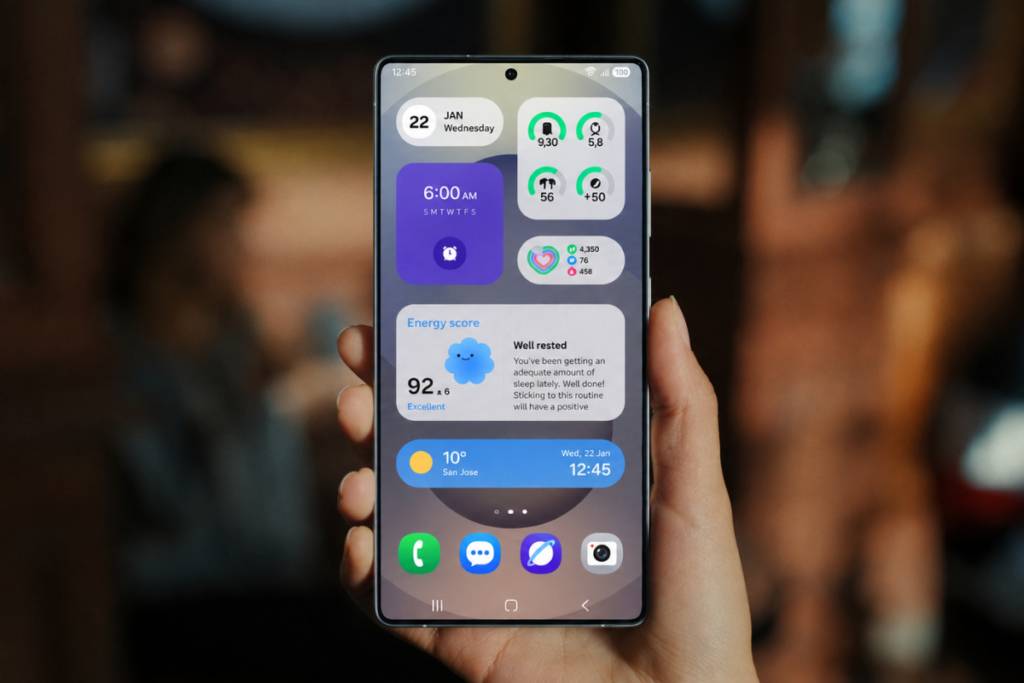
Samsung One UI 9.0 update: Here’s everything you need to know

Samsung One UI 9.0

One UI 9.0 is a major upgrade for Samsung devices that’s built on top of Android 17. It debuted in July on the latest foldable phones, namely the Galaxy Z Fold 8, Galaxy Z Fold 8 Ultra, and Galaxy Z Flip 7. Soon, the update will start rolling out to older Galaxy devices.

If you’re rocking a Samsung Galaxy and wondering whether your device is eligible for the One UI 9.0 update, when the update will arrive, or what new features to expect, you’ve come to the right place. This post has everything you may need to know about One UI 9.0.

Which Galaxy devices are eligible for the One UI 9.0 update?

One UI 9

Galaxy S series

  • Galaxy S26, S26+, S26 Ultra
  • Galaxy S25, S25+, S25 Ultra, S25 Edge, S25 FE
  • Galaxy S24, S24+, S24 Ultra, S24 FE
  • Galaxy S23, S23+, S23 Ultra, S23 FE

Galaxy Z series

  • Galaxy Z TriFold
  • Galaxy Z Fold 7, Z Flip 7, Z Flip 7 FE
  • Galaxy Z Fold Special Edition
  • Galaxy Z Fold 6, Z Flip 6
  • Galaxy Z Fold 5, Z Flip 5

Galaxy A, M, F series

  • Galaxy A57, A56, A55, A54
  • Galaxy A37, A36, A35, A34
  • Galaxy A27, A26, A25, A24
  • Galaxy A17 (4G/5G), A16 (4G/5G), A15 (4G/5G)
  • Galaxy A07 (4G/5G), A06 5G
  • Galaxy M56, M55, M55s, M54
  • Galaxy M47
  • Galaxy M36, M35, M34
  • Galaxy M17, M17e, M16, M15
  • Galaxy M07, M06
  • Galaxy F70e
  • Galaxy F56, F55, F54
  • Galaxy F36, F34
  • Galaxy F17, F16, F15
  • Galaxy F07, F06

Galaxy Tab series

  • Galaxy Tab S11, Tab S11 Ultra
  • Galaxy Tab S10 Lite, Tab S10 Plus, Tab S10 Ultra
  • Galaxy Tab S10 FE, Tab S10 FE+
  • Galaxy Tab S9, Tab S9+, Tab S9 Ultra
  • Galaxy Tab S9 FE, Tab S9 FE+
  • Galaxy Tab S6 Lite (2024)
  • Galaxy Tab A11, Tab A11+
  • Galaxy Tab Active 5, Tab Active 5 Pro

Galaxy XCover series

  • Galaxy XCover 7
  • Galaxy XCover 7 Pro

Samsung has yet to publish an official list. The one above is based on the company’s existing software update policy; therefore, you can count on it.

If your Galaxy device is on the list, it’s almost guaranteed to receive the One UI 9.0 update. But when can you expect the update? Read the following section to find out.

When will your Samsung Galaxy receive the One UI 9.0 update?

Samsung is closely following last year’s One UI 8.0 timeline for the One UI 9.0 release. The beta program was announced in May, followed by the debut of the stable version on the latest foldable phones in July. In fact, the One UI 9.0 beta expansion is following a similar pattern as well.

The brand is most likely to follow a similar rollout schedule going forward. So, we can expect the stable rollout to begin sometime in September. Initially, it will be released for high-end models like the Galaxy S26 series, Galaxy Z Fold 7, and Galaxy Z Flip 7.

Once the rollout begins, Samsung doesn’t spend much time to expand the update to mid-range and affordable devices. If things continue to move smoothly, all eligible devices should receive the update by the end of this year.

One UI 9.0 update: New features and major upgrades

Samsung phone running One UI 9

One UI 8.5 has already brought major design upgrades, and therefore, One UI 9.0 looks too familiar. Instead, the latest build focuses heavily on advanced Galaxy AI integration, a redesigned Quick Panel, and a more productive experience for foldable users.

Galaxy AI Gets Smarter and More Capable

  • Now Nudge: A contextual assistant that monitors on-screen actions and gives you helpful prompts at the right moment.
  • My FanCam: It’s a new AI feature that lets users turn a wide shot into a subject-tracking clip right in the Gallery. It supports cropping and reframing to any aspect ratio.
  • Voice Photo Assist: It lets users describe image edits aloud, and the AI handles the rest. Users see a side-by-side view to compare the original and edited images.
  • Samsung Internet: The browser now features an integrated “Ask AI” side panel powered by Perplexity AI for rapid search and summaries.
  • Now Brief: It gets more personal and helpful. With the latest upgrades, you can now build briefing cards tailored specifically to your personal interests. Cards now feature integrated action buttons to help you jump right into an active task without opening the respective app manually.

Visual and Interface Changes

  • Revamped Quick Panel: Now features independent, ticker slides for brightness and volume, plus a resizable media player.
  • Optimized Wallpaper Layouts: Automatically repositions lock screen wallpaper subjects so they do not overlap with widgets, and uses generative AI to fill empty spaces naturally.
  • Condensed Navigation: Replaces text descriptions with clean titles and swaps the bottom bars for floating pill-shaped bars to maximize viewable screen space.

Enhanced Productivity

  • Three-App Split Screen: One UI 9.0 expands multi-window capabilities to support running three apps side by side seamlessly.
  • Samsung Notes: Adds a decorative tape tool to conceal text or straighten crooked handwritten lines, alongside new pen styles.
  • Overlay Game Booster: Allows users to tweak hardware settings on the fly without minimizing the game.

Security and Privacy

  • AI Assistant Activity: Offers a clear view of every app action your AI assistants have taken on your behalf, so you can keep an eye on what app actions were performed and exactly when they happened.
  • Browser Protection: When you accidentally access a malicious website through Samsung Browser, it will alert you just in time.
  • Advanced Auto Blocker: It blocks high-risk apps and lets users review extensive data regarding blocked background installations.

We’ll update this post regularly with the latest information. You can bookmark the page or join our Telegram channel to never miss an update.

The Best Power Banks with Built-in Cables in 2026

We’ve all been there: you pack your bag for a long day, remember to grab your power bank, but realize later that you forgot the charging cable. It’s a common frustration, especially now that our phones, tablets, and laptops all rely on us keeping them topped up.

Fortunately, accessory manufacturers have started to address this by building the cables directly into the power banks themselves.

Having an integrated cable means one less thing to remember and one less cord getting tangled in your bag. If you’re looking to simplify your everyday carry, here is a look at some of the most practical and reliable power banks with built-in cables available right now.

1. Anker Laptop Power Bank

Anker-Laptop-Power-Bank1

If you frequently work from coffee shops or travel often, the Anker Laptop Power Bank is a very capable option. It has a large 25,000mAh capacity, which is right at the limit of what is generally allowed on commercial flights. It provides a total output of 165W, meaning it can easily handle larger devices.

The model comes with dual retractable cables that feel sturdy enough for regular use, with each cable supporting up to 100W output and charging a 16-inch MacBook Pro to 50% in around 30 minutes. It also includes a smart display that shows your current battery level and charging speeds.

Price: $119.99

2. Baseus EnerFill FC41 Power Bank

For those who want a high-capacity battery but prefer a slightly different design approach, the Baseus EnerFill FC41 is a solid alternative. It offers the same airline-friendly 25,000mAh capacity and a very capable 145W total output.

Instead of a retractable mechanism, Baseus uses two built-in braided USB-C cables that are designed to double as a carrying strap. It’s a simple, functional design choice that makes the battery easier to hold.

The primary cable can output 140W, making it suitable for most modern laptops. It also supports pass-through charging, so you can plug the power bank into the wall and charge your devices at the same time.

Price: $79.99

3. Baseus EnerFill FC11 Power Bank

Not everyone needs to charge a laptop on the go. If you just want something to keep your phone alive during a long day out, the Baseus EnerFill FC11 makes a lot of sense. It features a 10,000mAh capacity, which is usually enough to charge an average smartphone about two times.

It weighs just 363g and is slim enough to fit comfortably in a jacket pocket or a small bag. Despite its small size, it still includes dual built-in USB-C cables and can output 45W. That’s enough power to fast-charge most current smartphones, including the iPhone 17 and Samsung Galaxy S25 series.

Price: $35.99

4. Baseus PicoGo AM52 Power Bank

The Baseus PicoGo AM52 offers a hybrid approach to charging. It’s a 10,000mAh power bank that supports the new Qi2.2 standard, allowing it to magnetically attach to the back of compatible phones (like the iPhone 16 and 17) for 25W wireless charging.

However, wireless charging isn’t always the most efficient option. For times when you need power quickly, the PicoGo also features a built-in USB-C cable capable of 45W wired charging.

Baseus has included an aluminum heat-dissipation body to help manage the temperatures that usually come with magnetic charging.

Price: $69.99

5. Xiaomi 67W Power Bank 10000

Xiaomi’s 67W Power Bank is a straightforward, well-designed 10,000mAh battery. It features a single integrated USB-C cable made from flexible TPU, which tucks neatly into a storage slot to form a small lanyard loop.

The power bank supports 67W output, which is great for fast-charging phones and smaller tablets. Equally useful is its 65W input speed; if you have a compatible wall charger, you can recharge the power bank itself from zero to full in just over an hour. It also includes a digital display and supports low-current charging for smaller accessories like wireless earbuds.

Price: €24.99

6. Cuktech CP24 Dual Power Bank

While USB-C has become the standard, many people still own older iPhones or accessories that require a Lightning cable. The Cuktech CP24 is designed specifically for this mixed-device reality. It’s a 20,000mAh battery that includes two built-in cables: one 40W USB-C cable and one MFi-certified Lightning cable.

This makes it a very practical choice for households or friend groups that use different types of devices. You can charge a newer USB-C device and an older Lightning device at the same time without needing to carry adapters. It supports 40W charging speeds, which is adequate for phones and tablets, and it meets standard airline regulations for travel.

Price: $49.99

For more daily updates, please visit our News Section.

Stay ahead in tech! Join our Telegram community and sign up for our daily newsletter of top stories!
Lenovo’s new rollable laptop grows screen sideways

Lenovo is known for experimenting with screens that bend and grow. New renders have surfaced online showing a rollable laptop codenamed Project Swan, and this one expands horizontally instead of the usual up-and-down stretch.

Windows Latest shared the images yesterday, and the palm rest gives away that the device is part of Lenovo’s ThinkBook series. That tracks with how Lenovo has positioned its past rollable machines, including the ThinkBook Plus Gen 6, which launched last year with a similar office-first pitch.

Lenovo Project Swan

Closed up, Project Swan looks like a normal laptop. You get a centered webcam at the top of the display and two USB-C ports on the left edge. The images don’t show the right side, so ports on that side remain a mystery for now. Flip it around, and you’ll spot a two-tone rear panel with cutouts on both sides. 

According to a report, Project Swan uses guide rails to tuck away extra screen when you don’t need it. Once you want more room, motors pull the hidden section of the flexible OLED panel out from both sides at once. To make space for those rails, the hinge sits shorter and more centered than what you’d find on a regular ThinkBook.

There’s a software detail worth noting too. The renders don’t show a Copilot key anywhere on the deck, but the taskbar does show the Recall icon active near the system tray.

Lenovo also showed a ThinkBook Modular AI PC concept and shipped the ThinkBook Plus Gen 7 Auto Twist with its motorized hinge this year. Project Swan still looks like early-stage hardware, so don’t expect pricing or a release date just yet. Given how quickly Lenovo’s other rollable concepts have gone from leak to stage demo, though, an official reveal may not be far off.

For more daily updates, please visit our News Section.

Stay ahead in tech! Join our Telegram community and sign up for our daily newsletter of top stories!

(Source)

POCO M8 Power vs Vivo Y500: Which Budget Smartphone Offers Better Value?

Choosing between the POCO M8 Power and Vivo Y500 comes down to priorities. Both smartphones target the affordable segment with AMOLED displays, large silicon-carbon batteries, stereo speakers, and Android 16. However, they approach value differently. The POCO M8 Power focuses on performance, long software support, and connectivity, while the Vivo Y500 emphasizes display quality, durability, and camera hardware. Here’s a detailed comparison to help you decide.

Major Features:

CategoryPOCO M8 PowerVivo Y500Winner
Display7.0-inch AMOLED, 120Hz, 1800 nits6.83-inch AMOLED, HDR, 120Hz, 5000 nits peakVivo – Sharper HDR display
Build & ProtectionIP65, Gorilla Glass 7iIP68/IP69, MIL-STD-810HVivo – Better durability
ProcessorSnapdragon 4 Gen 4Unisoc T7300POCO – Faster chipset
SoftwareAndroid 16, 4 OS upgradesAndroid 16POCO – Longer software support
RAM & StorageUp to 8GB/128GB, microSDUp to 8GB/256GBVivo – More storage
Rear Camera50MP50MP + auxiliaryVivo – More versatile setup
Selfie Camera8MP32MPVivo – Sharper selfies
Battery8000mAh, 45W, PD3.0, reverse charging8100mAh, 44W, bypass chargingPOCO – Better charging features
ConnectivityWi-Fi 6, NFC, IR BlasterWi-Fi 5, Bluetooth 5.4POCO – More connectivity options
Price/ValueAround $250 / ₹25,000Around $250 / ₹22,000Vivo – Better value pricing

Design and Display

Build and Feel

Both smartphones feature modern flat designs with AMOLED displays and under-display fingerprint scanners. The Vivo Y500 stands out with its IP68/IP69 rating and MIL-STD-810H compliance, offering significantly stronger resistance against water and dust than the POCO M8 Power’s IP65 certification. For users who frequently travel or spend time outdoors, Vivo’s durability provides extra peace of mind. Meanwhile, the POCO counters with Gorilla Glass 7i protection and practical additions such as an infrared blaster and optional NFC, making everyday usage slightly more versatile. Both feel contemporary, but Vivo clearly prioritizes protection while POCO balances durability with useful hardware extras.

Display Quality

The display is another area where both phones perform well, but the Vivo Y500 has a noticeable advantage. Its AMOLED panel delivers a sharper 1260 x 2800 resolution, HDR support, and an impressive peak brightness of up to 5,000 nits, making outdoor visibility excellent. The POCO M8 Power also offers a smooth 120Hz AMOLED display with 1,800 nits peak brightness and Gorilla Glass protection, producing vibrant colors and fluid animations. However, Vivo’s higher pixel density and HDR capabilities provide a richer viewing experience for streaming and gaming. The difference may not be dramatic indoors, but it becomes easier to appreciate in brighter environments.

Verdict

The Vivo Y500 delivers the stronger display and more premium durability, making it the better choice for multimedia users. The POCO M8 Power remains appealing thanks to Gorilla Glass protection, NFC, and infrared support, but Vivo takes this category overall.

Specifications Including Battery

Performance

Performance favors the POCO M8 Power thanks to Qualcomm’s Snapdragon 4 Gen 4 chipset. The newer processor delivers stronger CPU efficiency and a noticeably better Adreno GPU than the Vivo Y500’s Unisoc T7300 with Mali-G57 graphics. Combined with four promised Android version upgrades, the POCO also offers better long-term software value. Vivo provides up to 256GB storage in higher variants, which benefits users needing extra space, but overall processing power and future software support remain stronger on the POCO. Everyday tasks run smoothly on both, yet heavier multitasking and gaming are likely to feel more comfortable on the Snapdragon-powered device.

Battery and Charging

Battery life is excellent on both smartphones. The Vivo Y500 includes a slightly larger 8,100mAh silicon-carbon battery, while the POCO M8 Power carries an equally impressive 8,000mAh unit with 45W charging. Charging speeds are nearly identical, although POCO adds PD3.0 compatibility and 22.5W reverse wired charging, making it more flexible for charging accessories or another phone. Vivo responds with bypass charging, which helps reduce heat during gaming sessions. Both comfortably deliver multi-day endurance, but POCO offers a slightly more versatile charging package.

Verdict

The POCO M8 Power wins thanks to its faster chipset, longer software support, better graphics performance, and more feature-rich charging system. Vivo’s slightly larger battery is excellent, but POCO provides the more balanced long-term ownership experience.

Camera

Main and Secondary Lenses

On paper, both smartphones feature a 50MP primary camera capable of HDR photography and 1080p video recording. However, Vivo supplements its main sensor with an auxiliary camera for additional shooting assistance, while the POCO relies on a single-camera setup. Image quality is expected to remain competitive in daylight, producing detailed photos with balanced colors. Neither device targets advanced photography enthusiasts, but both should satisfy casual users. The hardware differences are relatively small, meaning image processing and software optimization are likely to play a bigger role than sensor count in everyday photography.

Selfie Camera

The selfie camera is where Vivo establishes a clear advantage. Its 32MP front-facing sensor captures significantly more detail than the POCO M8 Power’s 8MP camera, making it better suited for selfies, social media uploads, and video calls. Both phones support 1080p video recording, but Vivo’s higher-resolution sensor should produce sharper facial details and better cropping flexibility. Users who frequently rely on the front camera are likely to appreciate this upgrade immediately.

Verdict

The Vivo Y500 is the stronger camera phone overall, primarily because of its superior 32MP selfie camera and additional rear sensor. POCO delivers dependable photography, but Vivo offers a more complete imaging experience for everyday users.

Pricing

The POCO M8 Power is priced around $250 (approximately ₹25,000), while the Vivo Y500 is priced around $250 (approximately ₹22,000). Although both occupy a similar global price bracket, Vivo arrives at a noticeably lower estimated Indian price, making it more accessible. The POCO justifies its premium with the Snapdragon chipset, four Android upgrades, Wi-Fi 6, NFC, infrared blaster, and Gorilla Glass 7i. Vivo, meanwhile, delivers stronger durability, a sharper display, and a much better selfie camera for less money. Both represent strong value, but they appeal to different buyer priorities rather than competing on specifications alone.

Verdict

The Vivo Y500 offers better value for buyers focused on display quality, durability, and cameras at a lower price. The POCO M8 Power justifies its slightly higher cost with stronger performance, better connectivity, and longer software support.

Conclusion

The POCO M8 Power distinguishes itself with the Snapdragon 4 Gen 4 processor, four major Android updates, Wi-Fi 6, Gorilla Glass 7i, infrared blaster, NFC support, and flexible reverse charging. These features make it a practical choice for users who prioritize longevity and everyday performance. The Vivo Y500 counters with an excellent HDR AMOLED display, IP68/IP69 certification, MIL-STD-810H compliance, an 8,100mAh battery, bypass charging, and a significantly better 32MP selfie camera. Both smartphones are highly competitive, but they excel in different areas. One focuses on performance and software reliability, while the other emphasizes durability, multimedia, and imaging.

Verdict

Choose the POCO M8 Power for stronger overall performance, longer software support, and better long-term value. Choose the Vivo Y500 if display quality, rugged protection, selfie photography, and a lower purchase price matter more. Both are compelling options, but the better choice depends on which strengths align with daily usage.

Read More:

Minimal Phone 2 swaps e-ink for 3.92-inch OLED, retains QWERTY keyboard

Minimal has just announced the Minimal Phone 2, and if you followed the original QWERTY phone, you’ll notice the biggest change right away: the screen. The company is swapping the low-distraction, grayscale E-Ink (e-paper) screen of the original model for a proper OLED display. The Phone 2 retains the QWERTY keyboard,  though. 

Minimal Phone 2 Announce

You can back the Minimal Phone 2 on Kickstarter right now, and pricing starts at $599. Here’s how the tiers break down:

  • 8GB RAM + 256GB storage: $599 
  • 8GB RAM + 512GB storage: $675 
  • 12GB RAM + 512GB storage, Founder’s Edition: $899 

Minimal Phone 2 Specifications

The phone measures 122.6 x 72 x 9.48 mm, so it stays pocketable despite the full keyboard underneath the screen. You get the standard version in Onyx or Pearl, while the pricier Founder’s Edition comes only in Ember. 

Up front, you’re looking at a 3.92-inch OLED panel running at 1080 x 1240 resolution with a 90Hz refresh rate, plus a 20MP selfie camera. Flip it over, and you’ll find a 50MP f/1.8 main camera handling the photo duties.

Minimal Phone 2 Specs

Under the hood, Minimal has gone with a MediaTek Dimensity 8300 chip — good enough for daily tasks without pushing the phone into flagship pricing. Battery capacity sits at 3000mAh, and you can charge it at 27W wired or 15W wireless. The phone runs Minimal OS, the company’s own layer built on top of Android.

You also get Bluetooth 5.4, NFC, Wi-Fi 6E, a side-mounted fingerprint reader, and dual SIM support with one physical slot and one eSIM. Minimal kept the 3.5mm headphone jack too, along with dual speakers and dual microphones. The USB-C port on the bottom supports DisplayPort output and USB-C audio, so you can hook the phone up to a monitor if you need to.

Minimal Phone 2 QWERT keyboard

The campaign has already blown past its funding goal, pulling in more than $800,000 from over 1,200 backers. So, this one is shipping. You can still back the project on Kickstarter.

For more daily updates, please visit our News Section.

Stay ahead in tech! Join our Telegram community and sign up for our daily newsletter of top stories!
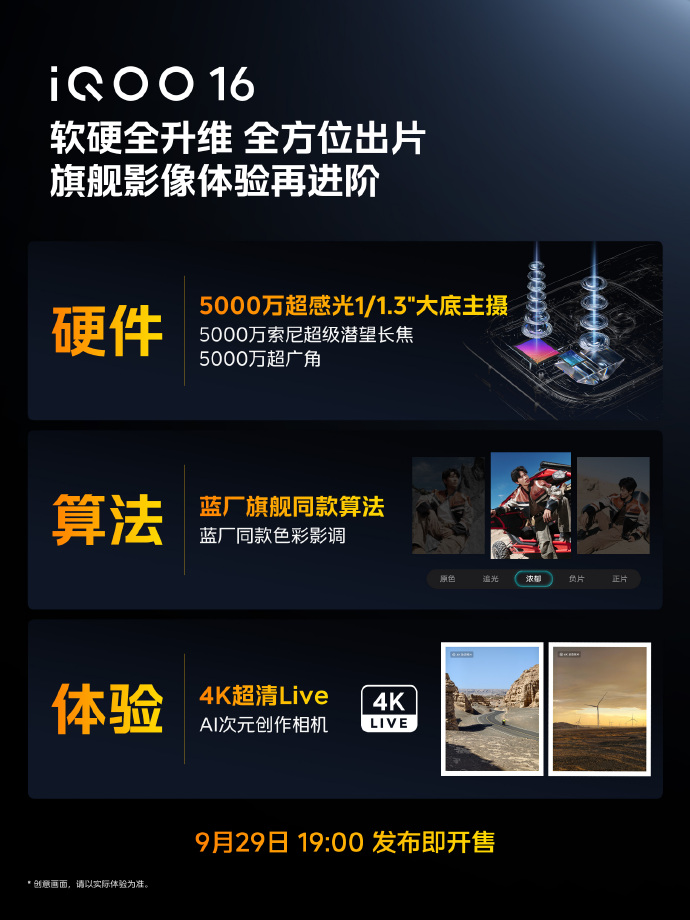
Vivo X500 may stand apart from Pro models with a new camera layout

A new leak has shed more light on the upcoming Vivo X500 series, including the standard model’s design and display. The information also gives us an early look at how Vivo could differentiate the X500 from its Pro siblings.

Vivo X500 design and display details

According to Digital Chat Station, the Vivo X500 Pro series will feature a cantered, large circular camera module on the rear. The Pro models are expected to come in two screen sizes, around 6.37 inches and 6.85 inches, with extremely narrow bezels on all four sides. The displays will reportedly have larger corner radii for a more comfortable look and feel.

The standard Vivo X500, meanwhile, is said to take a different approach. It could feature a large circular camera module positioned in the upper-left corner instead of the centered design expected on the Pro models. The phone is also tipped to feature a roughly 6.59-inch flat display, placing it between the two rumored Pro screen sizes.

The standard Vivo X500 is rumored to debut with MediaTek’s Dimensity 9600, while the X500 Pro and X500 Pro Max could use the higher-end Dimensity 9600 Pro. The series is also expected to offer displays with 1.5K or 2K resolution and refresh rates of up to 144Hz.

For photography, the Pro models are tipped to feature a 50-megapixel Sony main camera with LOFIC technology. The technology is designed to improve dynamic range, helping preserve more detail in challenging lighting conditions such as backlit scenes and night photography.

Current speculation points to a September debut, although Vivo has yet to confirm an official launch date. Meanwhile, global variants of the X500 series have been gradually securing certifications, suggesting that the international launch may not be far away.

For more daily updates, please visit our News Section.

Stay ahead in tech! Join our Telegram community and sign up for our daily newsletter of top stories!
iQOO Neo 11 Ultra full specifications emerge via premature listing

A new iQOO smartphone carrying model number V2573A has surfaced in China Telecom’s product library. The listing belongs to the upcoming iQOO Neo 11 Ultra, which is set to debut alongside the iQOO Z11S next week. Here’s a look at what the listing has revealed.

iQOO Neo 11 Ultra specifications (rumored)

iQOO Neo 11 Ultra China Telecom listing

According to the listing, the iQOO Neo 11 Ultra measures 163.42 x 75.88 x 8.6mm and weighs 225 grams. The phone is expected to feature a metal middle frame with a glass or fiberglass rear panel, depending on the variant. On the front, it will reportedly sport a 6.83-inch 2K Visionox F2 OLED display with a flat design.

The phone is listed with MediaTek’s MT6993M chipset. A recent Geekbench appearance suggests that this could be a tweaked version of the existing Dimensity 9500, with one fewer GPU core than the standard version. The Neo 11 Ultra is also set to pack a massive 9,100mAh battery. Its support for 100W wired charging was previously revealed through 3C certification. There is no wireless charging support on the device.

For photography, the iQOO Neo 11 Ultra is expected to feature a dual-camera setup on the back, comprising a 50-megapixel primary sensor with optical image stabilization and an 8-megapixel secondary camera. A 16-megapixel front-facing camera is expected to handle selfies and video calls. As per other reports, the phone will also feature an ultrasonic in-screen fingerprint sensor, an X-axis linear motor and an IP68/69-rated dust and water resistant body.

The China Telecom listing shows the phone in 8GB+256GB, 12GB+256GB, 12GB+512GB, 16GB+256GB, and 16GB+512GB configurations. It is expected to arrive in Light White, Shadow Black, and Wind Chaser color options. Pricing information has not surfaced yet.

The iQOO Neo 11 Ultra is scheduled to launch in China on Aug.18 alongside the iQOO Z11s. However, there is currently no information confirming whether the phone will make its way to other markets.

For more daily updates, please visit our News Section.

Stay ahead in tech! Join our Telegram community and sign up for our daily newsletter of top stories!
(via)

Galaxy S26 FE fully leaks ahead of launch with Exynos 2500 and 4,900mAh battery

Samsung’s next Fan Edition phone is shaping up to be a pretty familiar mix of last year’s flagship tech and a design that fits right in with the current S26 family, according to a detailed new leak.

The Galaxy S26 FE is expected to show up in early September, giving the S26 series a mid-year refresh. Leaked official-looking images and a data sheet point to a phone that looks consistent with the main S26 line while sticking with proven hardware. Colors are said to include Graphite (dark gray), Pistachio (light green), and Blueberry (light blue).

The screen is a 6.7-inch Dynamic AMOLED 2X panel with a 2340 × 1080 resolution. Typical brightness hits 1,200 nits and can climb to 1,900 nits in high-brightness mode, with a max 120 Hz refresh rate.

Power comes from the Exynos 2500, the same ten-core chipset that was in last year’s Galaxy S25 series. It’s paired with 8 GB of RAM and either 128 GB or 256 GB of storage. On the camera side, you get a 50 MP main sensor (f/1.8, OIS), a 12 MP ultra-wide (f/2.2), and an 8 MP telephoto with 3x optical zoom (f/2.4). Up front there’s a 12 MP selfie camera (f/2.2). Video tops out at 8K30 on the main camera and 4K60 across the setup.

Connectivity covers Bluetooth 5.4, Wi-Fi 6, NFC, dual nano-SIM, and eSIM. It has an IP68 rating for dust and water resistance. The battery is a 4,900 mAh silicon-carbon unit that supports 45 W fast charging and is claimed to last up to 50 hours of typical use, with a rating of 1,200 charge cycles under EPREL standards. The phone measures 7.4 mm thick and weighs 193 g. It’ll ship with Android 17 and Samsung’s One UI.

Earlier reports put the official starting price at around €799. Some analysts have pointed out that the Galaxy S26+ is already available for less in certain markets and offers a stronger overall package in display, storage, and cameras. Still, the S26 FE keeps Samsung’s usual approach of giving people a more affordable way into the flagship experience, with only modest upgrades over its predecessor.

Don’t miss a thing! Join our Telegram community for instant updates and grab our free daily newsletter for the best tech stories!

For more daily updates, please visit our News Section.

(Source: WinFuture)

Motorola Edge 70 Max Review: Flagship Performance Meets Motorola’s Largest-Ever Battery

Motorola has taken a different approach with the Edge 70 Max. While it is the most powerful smartphone the company has launched under the Edge series, it is not intended to replace the more premium Motorola Signature. Instead, Motorola has positioned the Edge 70 Max as a performance-focused flagship for users who care more about raw power, battery life, and display quality than flagship-grade photography. Starting at Rs 54,999, it enters a competitive segment occupied by the iQOO 15R and OnePlus 15R, while the Motorola Signature, priced from Rs 64,999, caters to buyers looking for a more premium camera experience and longer software support despite sharing the same Snapdragon 8 Gen 5 chipset. After using the Edge 70 Max as my daily driver, here’s what it gets right and where it falls short.

5Verdict – A performance-first flagship

Motorola Edge 70 Max

The Motorola Edge 70 Max successfully establishes itself as Motorola’s most powerful Edge-series smartphone yet. Rather than competing directly with the company’s own Signature model, it focuses on delivering flagship-grade performance, a gorgeous Quad HD+ display, dependable battery life, premium build quality, and a clean software experience.

That said, there are compromises. The lack of a protective case in the box feels disappointing at this price, the software support could be more competitive, the 8GB variant currently misses out on Motorola Qira AI features, and users seeking the best cameras should look at the Motorola Signature instead.

If your priorities revolve around performance, multimedia consumption, battery life, and a clean Android experience, the Edge 70 Max is an excellent choice. However, if cameras and long-term software support matter more, spending the extra money on the Motorola Signature or considering alternatives such as the OnePlus 15R may prove worthwhile.

For buyers who want a flagship that prioritizes speed over everything else, the Motorola Edge 70 Max delivers a well-rounded experience that is easy to recommend.

For more daily updates, please visit our News Section.

Stay ahead in tech! Join our Telegram community and sign up for our daily newsletter of top stories!
Next

Timex launches five new Q Timex Marbella watches with retro designs & textured dials

Timex has added a new model to its Q lineup. The Q Timex Marbella is a quartz watch that leans heavily into the 1970s integrated bracelet trend, and it is available in the US. The company is offering the new watch in two distinct case sizes, 34mm and 40.5mm, with a total of five different color and finish combinations.

Timex Q Timex Marbella watches

Design Details

The design of the Marbella is straightforward and industrial. Both sizes feature a stainless steel case paired with a circular-brushed bezel. The bezel includes visible bolt details and polished edges, which is a familiar look for vintage sports watches. The dials have a textured finish and use applied indices, while the hands and hour markers are filled with a luminescent material so you can read the time in the dark.

The smaller 34mm version measures 9mm in thickness and features a 12mm lug width. Timex offers three variants, including a gold-tone model with a champagne dial and a two-tone silver-and-gold version with a silver dial, both priced at $229. The silver-tone model with a matching silver dial is slightly cheaper at $209.

The larger 40.5mm models are slightly thicker at 9.5mm and have a 15mm lug width. This size is currently available in two options. The first is a two-tone case with a textured black dial for $239. The second is a standard silver-tone model featuring a blue dial, which is priced at $219.

Internally, there are no surprises. All five of the new Marbella watches run on a standard battery-powered quartz analog movement, specifically using an SR626SW battery. The face is protected by a standard mineral crystal rather than sapphire glass.

Additionally, the watches have a water resistance rating of 50 meters. This means they can handle rain, washing your hands, or light swimming, but they are not built for diving or snorkeling.

🔌 You’ll NeedThe stainless steel bracelet may need links removed for a proper fit — a link removal tool makes it a quick DIY job. Check watch link removal tool price on Amazon →

The Q Timex Marbella collection is now listed on the Timex website. Some models are available for immediate purchase, while others are up for pre-order, with a few currently showing as out of stock.

In related news, Timex has recently launched three new Waterbury Classic watches featuring textured dials, along with a new vintage-inspired dress watch with a sleek rectangular case and leather strap.

For more daily updates, please visit our News Section.

Stay ahead in tech! Join our Telegram community and sign up for our daily newsletter of top stories!
(Timex 1,2,3,4,5)

Xiaomi 18 leak reveals five colors, confirms 2nm Snapdragon chip

A new leak by Digital Chat Station reveals the color options for the Xiaomi 18. According to it, the device will be available in five color options: Black, White, Pink, Blue, and Red. Moreover, DCS claims that the phone has the same square camera module in the upper left corner as its predecessor. 

Xiaomi 18 colors

The leak also covers the chip. The Xiaomi 18 is expected to be among the first phones to use Qualcomm’s Snapdragon 8 Elite Gen 6 platform, built on TSMC’s 2nm process. 

The Snapdragon 8 Elite Gen 6 is tipped to have a self-developed Oryon CPU in a 2+3+3 octa-core layout, a shared 16MB L2 cache, and an Adreno 845 GPU. The chip also supports LPDDR5X memory. 

What else do we know

As for the camera, the Xiaomi 18 might replace the triple 50MP setup on the Xiaomi 17 with a Leica dual 200MP system — a large main sensor paired with a 200MP periscope telephoto lens. Both the pixel count and telephoto range will reportedly increase compared to the previous generation.

Xiaomi 17 in Pine Green

As for the pricing, the Xiaomi 18 might start above 5,499 yuan, more than 1,000 yuan higher than the Xiaomi 17’s 4,499 yuan starting price. Xiaomi Group president Lu Weibing has addressed the pricing pressure directly, pointing to rising memory costs as the main factor. He expects those costs to remain elevated at least through the end of 2027, possibly extending into 2028, suggesting this price increase isn’t limited to the Xiaomi 18 alone.

For more daily updates, please visit our News Section.

Stay ahead in tech! Join our Telegram community and sign up for our daily newsletter of top stories!

Boat launches CineHead F1 and F1 Pro 1080p projectors with Google TV & Dolby Audio

Boat has launched two new smart projectors in India: the CineHead F1 and CineHead F1 Pro. The latest models expand the company’s projector lineup alongside the M1, which was introduced earlier this year.

Boat CineHead F1 Pro

Boat CineHead F1 and F1 Pro Specs

From a hardware perspective, the CineHead F1 and F1 Pro share a baseline set of display specifications. They output video at a native 1080p resolution while supporting 4K input, and both are capable of projecting an image ranging from 40 to 120 inches. The primary distinction between the two models comes down to brightness and audio capacity.

🔌 You’ll NeedIt projects up to 120 inches, so a portable screen will sharpen the image far more than a bare wall. Check projector screen price on Amazon →
Boat CineHead F1
Boat CineHead F1

The higher-end CineHead F1 Pro outputs 500 ANSI lumens and includes a 10W speaker system with Dolby Audio. The standard CineHead F1, meanwhile, is rated at 300 ANSI lumens and features a 6W speaker setup. Both projectors utilize a fully sealed, dust-proof optical engine, which the company says will provide up to 30,000 hours of lamp life.

Boat CineHead F1 Pro

Internally, the F1 series is powered by a MediaTek processor, paired with 2GB of RAM and 32GB of onboard storage. The inclusion of Google TV 5.0 (with the F1 specifically running on Android 14 for TV) means you have direct access to the Google Play Store, allowing for native downloads of standard streaming applications.

The included remote has dedicated Netflix and YouTube hotkeys, as well as a built-in microphone for Google Assistant voice commands. The projector also supports Google Cast and wireless screen mirroring, allowing you to stream content from smartphones and laptops.

To assist with physical setup, Boat has equipped both models with auto-focus, auto-keystone correction, and intelligent obstacle avoidance, which automatically adjust the image when the projector is moved. It also features a built-in adjustable stand that helps position the projection at the desired angle.

Boat CineHead F1
Boat CineHead F1

For connectivity, the F1 series includes dual-band Wi-Fi (2.4GHz and 5GHz), Bluetooth 5.1, a single USB port, an AUX port, and one HDMI port. The HDMI connection supports both ARC and eARC, allowing you to route audio directly to external soundbars or speaker systems using a single cable.

Pricing and Availability

The Boat CineHead F1 Pro is available for Rs. 32,999 through Boat’s website, Amazon India, Flipkart, and select retail stores. The standard CineHead F1 will launch later this month, with pricing yet to be announced.

In related news, Xiaomi has recently launched the affordable Redmi Projector 5 Pro with a 120Hz refresh rate, 1,000 CVIA lumens, and Dolby Audio, alongside the Redmi Projector 5, which features 1080p resolution and a built-in gimbal.

For more daily updates, please visit our News Section.

Stay ahead in tech! Join our Telegram community and sign up for our daily newsletter of top stories!

Lava launches new entry-level smartphone with Unisoc chip and military-grade durability

Lava is going after budget shoppers in India again with the new Lava Smart 4. It’s an entry-level phone running Android Go and is available for under Rs. 10,000 in the country. Let’s walk through full specs and price details in this article. 

Lava Smart 4 Launch Specs price

Lava Smart 4 Specifications 

The Smart 4 has a 6.56-inch HD (960 x 540 px) LCD screen, and even at this price, Lava has given it a 90Hz refresh rate. Powering the display is a 1.6GHz Unisoc SC9863A octa-core chipset with an IMG8322 GPU, paired with 3GB of RAM and 32GB of storage. 

That’s not a lot of storage, but you can expand it up to 512GB with a microSD card if you need more room for photos and apps. It’s a similar setup to what Lava used on the Yuva Star, another budget phone the company launched with the same Unisoc chip.

🔌 You’ll NeedWith just 32GB built in, a 512GB microSD card gives this phone room to actually be useful. Check 512GB microSD card price on Amazon →
Lava Smart 4 Specs

For cameras, you get an 8MP rear shooter with LED flash and a 5MP front camera for selfies and video calls. The phone packs a 5000mAh battery with 10W charging. 

Lava has also given the Smart 4 a side-mounted fingerprint scanner, a 3.5mm headphone jack, FM radio, and even military-grade durability certification (MIL-STD-810H), which is a nice touch for a phone at this price. You also get dual 4G VoLTE, Wi-Fi, Bluetooth 4.2, GPS, and a USB Type-C port.

Price and Availability

You can pick up the Lava Smart 4 in Konark Gold or Ajanta Grey colors for Rs. 8,499. It’s available through Lava’s offline retail outlets and service provider networks, and stores are also offering financing options if you’d rather pay it off over time.

For more daily updates, please visit our News Section.

Stay ahead in tech! Join our Telegram community and sign up for our daily newsletter of top stories!
(Via)

Snapdragon X2 Elite vs Apple M5: Benchmark scores and spec sheet

Snapdragon X2 Elite vs Apple M5

The Snapdragon X2 Elite is a high-performance chipset that offers significant upgrades over its predecessor. CPU and GPU performance have risen sharply, and so has AI performance. The transition to a 3nm node addresses the first-gen’s weakness, while also delivering excellent power efficiency.

With major upgrades, the Snapdragon X2 Elite rivals some of the most powerful chips in the market, including the Apple M5. Both chips deliver top-tier performance with a strong focus on battery backup. It’s interesting to see how these two chips fare against each other. Can the Snapdragon X2 Elite finally outclass Apple’s long-standing domination in single-core performance?

Note: There exists multiple variants of Snapdragon X2 Elite. For this comparison, we’ll focus on the top version of X2 Elite (X2E-90–100) compared with the standard Apple M5 (10 core CPU/10 core GPU).

Let’s begin with the spec sheet.

Snapdragon X2 Elite (X2E-90–100)Apple M5 (10 core CPU/10 core GPU)
AnnouncedSeptember 2025October 2025
Process Node3nm (TSMC)3nm (TSMC)
Total CPU Cores18 Cores10 cores
Core Configuration12 x 5.0 GHz Prime cores
6 x 3.4 GHz Performance cores
4 x 4.6 GHz Super cores
6 x 3.0 GHz Efficiency cores
Total Cache53 MB24.4 MB
GPUQualcomm Adreno X2-90 GPU
up to 1.85 GHz
Apple M5 10-core GPU
NPU PerformanceQualcomm Hexagon NPU
up to 80 TOPS
16-Core Neural Engine
Memory Bandwidth228 GB/s153 GB/s
Memory TypeLPDDR5x (up to 9523 MT/s)LPDDR5x (up to 9600 MT/s)
SSD/NVMe InterfaceDual PCIe 5.0Proprietary Apple Fabric
Cellular ModemSnapdragon X75 5G modem
up to 10 Gbps download speed
up to 3.5 Gbps upload speed
Wi-FiQualcomm FastConnect 7800
Wi-Fi 7, Wi-Fi 6E, Wi-Fi 6
Apple N1
Wi-Fi 7, Wi-Fi 6E, Wi-Fi 6
BluetoothBluetooth v5.4Bluetooth v6

Snapdragon X2 Elite vs Apple M5: Benchmark score

Cinebench 2026 CPU score

Snapdragon X2 Elite vs Apple M5 - Cinebench 2026

The single-thread CPU test in Cinebench 2026 measures the absolute raw performance of a processor’s architecture without any software-based amplification. It forces the benchmark to run on exactly one virtual pipeline, allowing users to compare different chip designs on a completely level playing field.

Apple still maintains the lead in the single-thread/single-core performance. The M5 scores 731 points, while the Snapdragon X2 Elite manages 676 points. That’s a little over 8% increase for the Apple chip. However, multi-threaded scores tell a completely different story.

With 6459 points, the Snapdragon X2 Elite is significantly ahead of the Apple M5 (3680 points) in the multi-threaded CPU performance test.

Snapdragon X2 Elite (X2E-90–100)Apple M5 (10-core)
Single Thread676731
Multiple Threads64593680

Geekbench CPU score (v6.7)

Snapdragon X2 Elite vs Apple M5 - Geekbench score

Geekbench also confirms that the Apple M5 leads the single-core CPU test, scoring 4226 points against the Snapdragon X2 Elite’s 4037. Qualcomm’s chip bounces back strongly in the multi-core test, as we saw in the Cinebench test.

In the multi-core CPU test, the Snapdragon X2 Elite achieved 20,544 points. In contrast, the Apple M5 scores just over 17K. That’s a solid 18% boost for the Qualcomm chip.

Snapdragon X2 Elite (X2E-90–100)Apple M5 (10-core)
Single core40374226
Multi cores2054417313

Both Cinebench and Geekbench tell the same story: the Apple M5 has an edge in the single-core CPU performance, and the Snapdragon X2 Elite rocks the multi-core performance.

We’ll update the post with more benchmark data as we receive them from our team. You can bookmark the page to check back later.

Feel free to join our Telegram channel to know about the latest headlines, exciting launches, and top innovations.

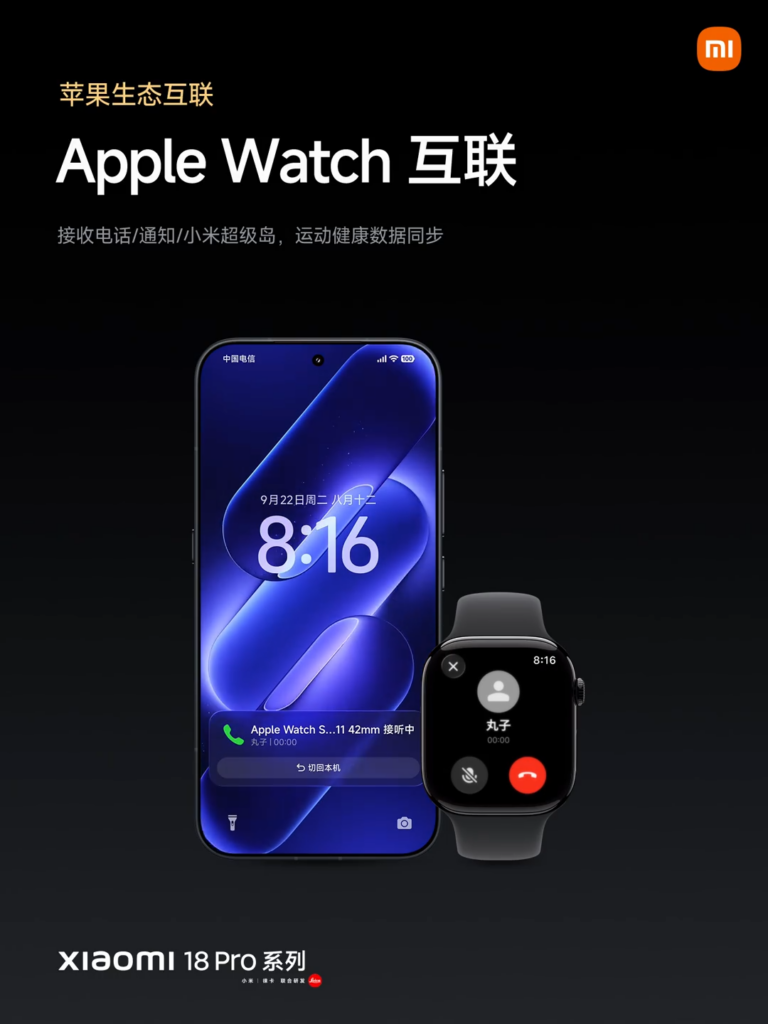
Xiaomi 18 Pro launch timeframe leaks for India; it’s coming with rear display

The Redmi Note 17 only just launched in India, and a new leak already lays out what’s coming next. Tipster Abhishek Yadav has shared Xiaomi and Redmi’s India launch plans for the rest of 2026, and the schedule covers three separate launches between September and December.

Redmi 17 and Note 17 Pro Max launch by September 

The leak claims that the Redmi 17 series might launch in India on September 5. The line has both 4G and 5G models featuring the same 6.9-inch HD+ LCD with a 120Hz adaptive refresh rate. 

Both devices pack a 7,500mAh battery with 45W fast charging and 22.5W wired reverse charging. The camera specs include a 50-megapixel AI dual rear camera and an 8-megapixel front-facing camera.

Redmi Note 17 5G
Redmi Note 17 5G

The two phones differ in chipset. The Redmi 17 5G is powered by the Snapdragon 4 Gen 5, while the Redmi 17 (4G) has the Helio G91-Ultra chip.

After the entry-level models, Xiaomi is expected to launch the Redmi Note 17 Pro series on either September 18 or 20. That’s a few weeks after the standard Redmi Note 17 launched in India with an 8,000mAh battery, a Snapdragon 4 Gen 4 chip, and a 120Hz AMOLED display starting around Rs 24,999. 

Xiaomi 18 Pro series by December

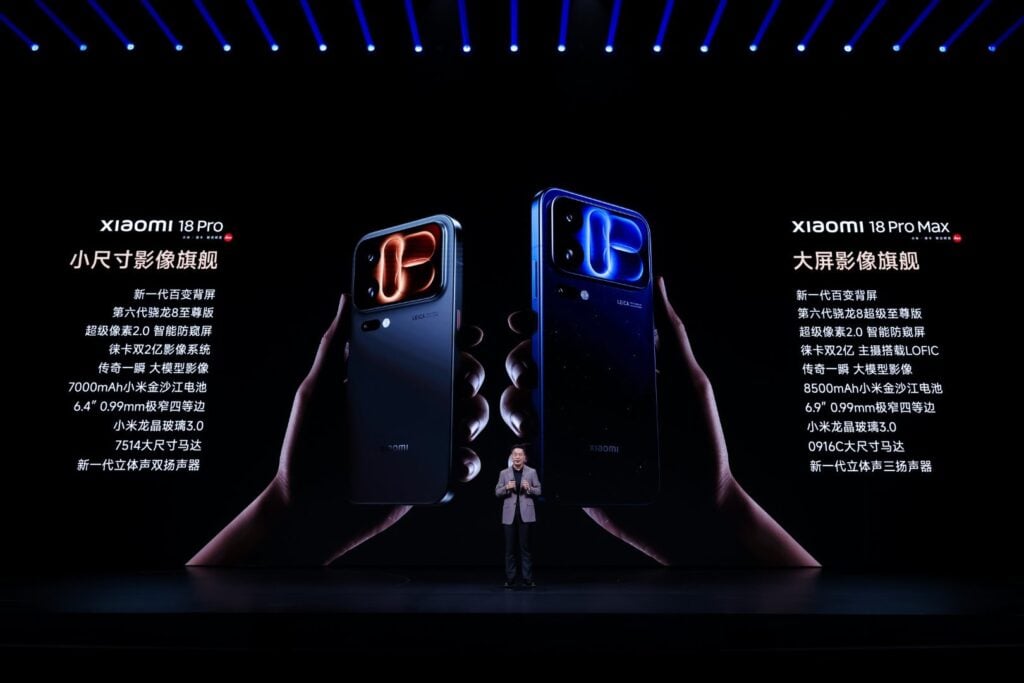
The leak also suggests an India launch for the Xiaomi 18 Pro series by December. It’s expected to include a secondary display on the back, a feature carried over from the previous generation. 

According to reports, the Xiaomi 18 Pro’s rear display could grow in size compared to the Xiaomi 17 Pro, along with dual 200-megapixel cameras and a Snapdragon 8 Elite Gen 6 chip. 

None of this is official yet, so treat the dates as estimates until Xiaomi confirms them closer to each launch.

Source: Abhishek Yadav on X

For more daily updates, please visit our News Section.

Stay ahead in tech! Join our Telegram community and sign up for our daily newsletter of top stories!
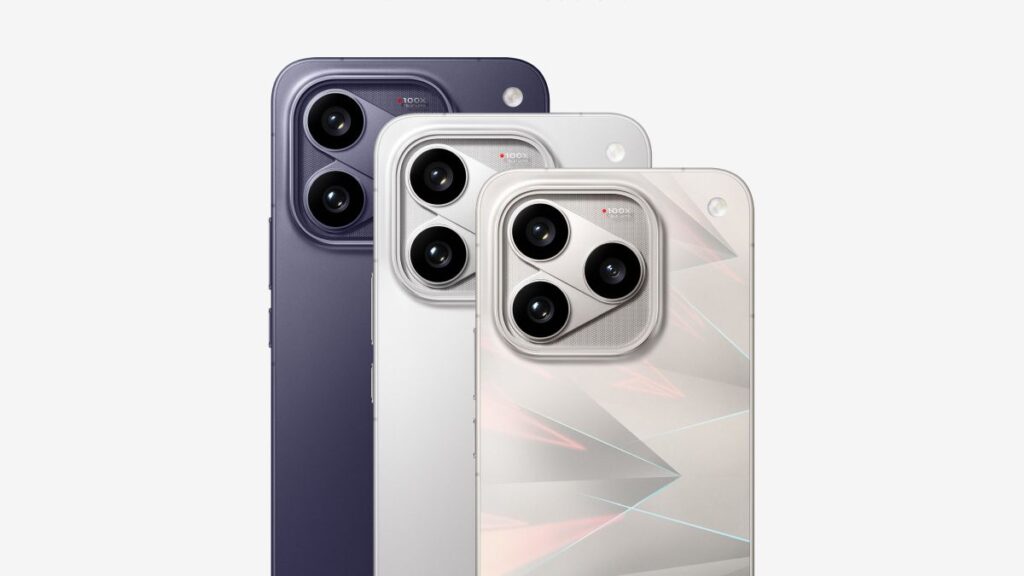
Vivo X300 FE sees another price hike in India, now starts at ₹89,999

Vivo has quietly bumped up the price of its compact flagship again, so anyone still thinking about buying one is looking at a noticeably higher tag than what was advertised a few months ago.

The X300 FE launched in May at ₹79,999 for the 12GB + 256GB version and ₹89,999 for the 12GB + 512GB model. Then in July, it went up once, to ₹86,999 and ₹96,999. Now there’s a second hike of another ₹3,000, taking the 12GB + 256GB to ₹89,999 and the 12GB + 512GB to ₹99,999 on Flipkart and Vivo’s website.

As of writing, Amazon is still listing the two variants at their previous prices of ₹86,999 and ₹96,999. That means the base model is now ₹10,000 more expensive than at launch on Flipkart and Vivo’s website, with no extra hardware to show for it.

Vivo is reportedly adding a new 8GB + 256GB option at ₹84,999, which becomes the cheapest way into the X300 FE range. At the same time, the regular X300 has basically disappeared from the Indian market. It launched at ₹75,999 back in December, but it’s been out of stock on Flipkart, Amazon, and vivo’s own site for weeks, and there’s no sign of it coming back. For all practical purposes, it’s discontinued.

For context, here’s what you’re actually getting. The X300 FE is a compact flagship built around a 6.31-inch LTPO AMOLED display (1.5K resolution, 120Hz, peak brightness up to 5,000 nits). It’s powered by the Snapdragon 8 Gen 5 chipset with LPDDR5X RAM and UFS 4.1 storage. The battery is a hefty 6,500mAh unit that supports 90W wired and 40W wireless charging.

🔌 You’ll NeedThe X300 FE supports 90W wired charging, so a compatible 90W adapter is worth having for full-speed top-ups. Check Vivo 90W GaN charger price on Amazon →

With the X300 FE now starting at ₹89,999 and the X300 Pro having taken its own ₹10,000 jump to ₹1,19,999, the brand no longer has a flagship option in that original sub-₹80,000 space the X300 used to fill.

For anyone planning to get the Vivo X300 FE, it might be a good time to check Amazon before the price is updated there as well. And if you’re looking for a better-value option in Vivo’s lineup that still carries a premium tag, the X200T could be worth checking out. You can still find it for around ₹59,999, and it comes with a Dimensity 9400+ chipset, a triple 50MP Zeiss camera setup, a 6,200mAh battery with 90W wired charging, plus five years of OS updates and seven years of security patches.

Don’t miss a thing! Join our Telegram community for instant updates and grab our free daily newsletter for the best tech stories!
For more daily updates, please visit our News Section.

(Source: Vivo, Flipkart, Amazon | Smartprix)