Advertisement

A YouTuber bought the Samsung Galaxy S26 Ultra early for $3300, here are real-life images

A tech YouTuber in Dubai has skipped the usual waiting game and picked up the Samsung Galaxy S26 Ultra before it’s even official.

Dubai-based creator Sahil Karoul says he bought the phone from a local retail shop in the city’s main electronics market. It’s not something you see often, but thanks to the YouTuber’s luck, he is now sharing videos of the real Galaxy S26 Ultra before anyone else in the industry.

This Galaxy S26 Ultra ain’t cheap

The biggest surprise might be the price. Karoul claims he paid $3,300 for the device. No, the Galaxy S26 Ultra won’t cost that much officially. It’s expected to start at around $1,299 for the base 256GB model. Paying more than double the rumored retail price is likely just the cost of being first.

In his videos, the phone looks production-ready rather than like a prototype. Karoul places it alongside several other high-end devices, including the Galaxy S25 Ultra, Vivo X300, Oppo Find X9 Pro, and iPhone 17 Pro Max.

Karoul also ran a series of benchmark tests on the device. On AnTuTu, the phone reportedly scored 3,720,219 points. In Geekbench, it posted scores of 3,648 on the single-core test and 10,898 on the multi-core test.

Meanwhile, the 3DMark Wild Life Extreme Stress Test showed a best loop score of 6,849 with 53.2 percent stability. As always, early benchmark results should be taken with some caution, especially when the software may not yet be final.

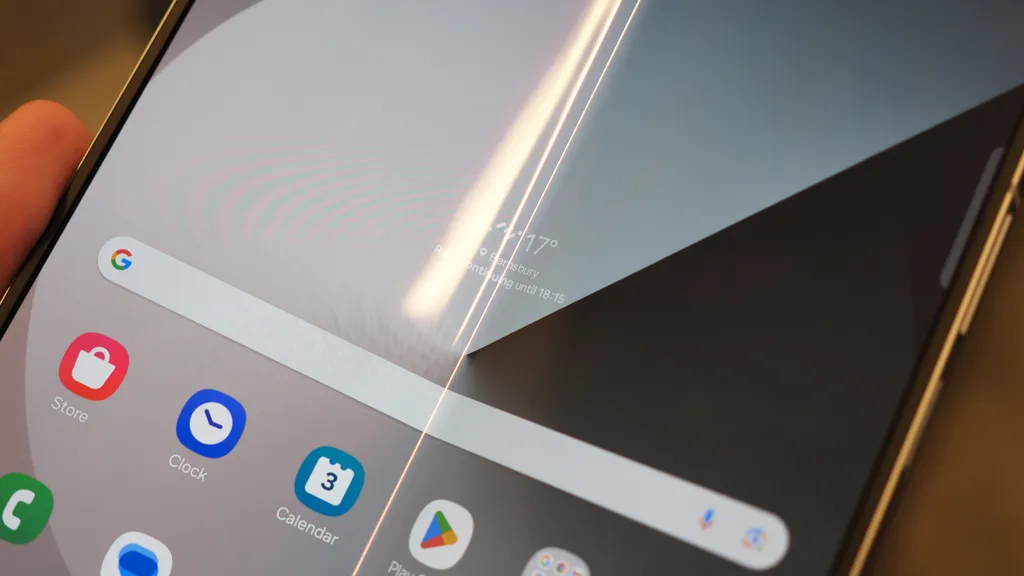
The YouTuber also demonstrated the Galaxy S26 Ultra’s most hyped feature — the Privacy Display — in a live demo. In line with Samsung’s claims, it shifts the viewing angles from the sides to prevent anyone nearby from peeking at your screen.

For now, Samsung hasn’t commented publicly on the situation. Official details will likely arrive at Samsung’s next Unpacked event on February 25, 2026.

Stay ahead in tech! Join our Telegram community and sign up for our daily newsletter of top stories!

For more daily updates, please visit our News Section.

(Source)

Galaxy S26 Ultra’s ‘Privacy Display’ looks surprisingly practical in hands-on demo

An early hands-on video, reportedly from Dubai where a retailer began selling units ahead of schedule, gives us a hands-on look at what Samsung calls its new “Zero-peeking privacy”. The feature is expected to be formally introduced on February 25, with retail availability tipped for March 11.

The video demonstrates how the feature works in real-world conditions. Instead of relying on a traditional privacy screen protector, the S26 Ultra builds the functionality directly into its AMOLED panel. Once enabled through the settings menu, the display dynamically narrows its viewing angles.

From straight on, everything looks normal. But tilt the phone even slightly to the side, and the screen darkens significantly. At more extreme angles, it can appear nearly black. It’s not a perfect blackout like some aggressive privacy filters, but it’s enough to make shoulder surfing far more difficult.

For everyday use, that could actually matter more than headline specs. Think reading private messages on the metro, checking banking apps in a café, entering passwords at the airport, or even browsing work documents near colleagues. It’s a small feature on paper, but one that solves a very real annoyance. Leaks also suggest Samsung may allow more granular control, possibly enabling privacy mode on a per-app basis.

Under the hood, Samsung is reportedly using what it calls FlexMagic Pixel OLED technology to achieve the effect. Interestingly, while most premium displays compete on wider viewing angles, Samsung appears to be intentionally limiting them, at least when you want it to.

Beyond the privacy feature, reports of exclusive online-only color options have also surfaced, adding to the pre-launch buzz. If this implementation works as smoothly as it appears in the early footage, the Galaxy S26 Ultra’s “Zero-peeking privacy” feature could end up being one of its most practical upgrades. Not flashier cameras. Not more brightness. Just smarter control over who gets to see your screen.

And honestly, that might be something more people appreciate than they expect.

Tech enthusiast? Get the latest news first! Follow our Telegram channel and subscribe to our free newsletter for your daily tech fix!

For more daily updates, please visit our News Section.

(Source)

iPhone 18 Pro could get another selfie camera upgrade in 2026

According to a new tip from Chinese leaker WhyLab, the iPhone 18 Pro and iPhone 18 Pro Max could feature upgraded front-facing cameras. The leak claims that both Pro models may switch to 24MP selfie sensors. If that happens, it would be another step up in resolution. The iPhone 17 lineup moved to 18MP front cameras, ending Apple’s long run with 12MP sensors that stretched from the iPhone 11 through the iPhone 16 lineup.

A jump to 24MP would likely improve detail in selfies and video calls, and could also help with portrait shots and low-light performance. That said, WhyLab described the information as a strong possibility rather than confirmed specifications, so it’s still too early to treat this as final.

Previous reports from JP Morgan and supply chain sources have also mentioned the possibility of a 24MP front camera for the iPhone 18 Pro models. If accurate, it would fit Apple’s usual pattern of gradual hardware upgrades rather than major one-year leaps.

On the design front, big changes don’t appear to be on the table. However, the Dynamic Island could reportedly become smaller. Some recent leaks suggest Apple may reduce the width of the cutout by around 35%, possibly by moving certain Face ID components, such as the IR flood illuminator, under the display. This would result in a slimmer pill-shaped cutout while keeping the core TrueDepth system intact.

Earlier rumors suggested Apple might experiment with a top-left punch-hole camera or fully under-display Face ID, but those claims have since been questioned, with some reports blaming translation errors for the confusion. For now, a smaller centered Dynamic Island seems to be the more consistent expectation.

There’s still plenty of time before the iPhone 18 series launches. likely in September 2026, and plans can always change. But if these early leaks are accurate, Apple’s next Pro models could continue focusing on steady improvements to the front camera experience.

Stay ahead in tech! Join our Telegram community and sign up for our daily newsletter of top stories!

For more daily updates, please visit our News Section.

(Source)

Here’s a good look at Honor Magic V6, packs 7,150mAh battery with 120W charging

The Honor Magic V6 will be officially next week at the Mobile World Congress (MWC) 2026. Ahead of the official debut, Winter Olympic champion Xu Mengtao was recently seen carrying Magic V6’s striking red variant (via). At the same time, tipster Bald Panda has leaked the battery capacity and charging capacities of the foldable phone.

Honor Magic V6’s design

Based on early images, the Honor Magic V6 continues the company’s established foldable design language. The rear camera module retains the familiar octagonal shape seen in previous models, although a notable change this time is a more symmetrical layout for the camera arrangement.

The Magic V6 also appears to maintain a strong focus on an ultra-thin and lightweight form factor, which has been a defining feature of the series. Shown below is another image that gives a good look at the V6’s design.

Honor Magic V6’s key specifications tipped

Honor Magic V6 image

According to the above-mentioned tipster, the Magic V6 will come in shades like white, black, and gold, apart from the red edition shown in the images above. He further revealed that the V6’s topmost edition will house a massive 7,150mAh battery, making it the largest battery seen on a foldable phone.

Under the hood, the Magic V6 will feature the Snapdragon 8 Elite Gen 5 chipset. Its massive battery will have support for 120W wired and wireless charging. Its rear-mounted triple camera setup is rumored to feature a 200-megapixel primary camera, an ultra-wide lens, and a periscope telephoto sensor with 3x optical zoom.

The Magic V6’s other expected features include wireless charging, full waterproofing, support for Beidou satellite communication, and a side-facing fingerprint sensor. While the dimensions of the V6 are not known yet, it is said to be thinner and lighter than the previous generation, which measured around 4.1 to 4.2mm when unfolded, 8.8 to 9mm when folded, and weighed 217 / 222 grams.

For more daily updates, please visit our News Section.

Stay ahead in tech! Join our Telegram community and sign up for our daily newsletter of top stories.

Honor X6d 5G launches with 90Hz display, 50MP camera, and 5260mAh battery

Honor has launched the Honor X6d 5G in the Middle East, strengthening its affordable 5G portfolio. The device arrives with a large display, a Dimensity 6-series chipset, 50-meagpixel primary camera, and a big battery. Here’s a closer look at its full specifications, features, pricing, and availability details.

Honor X6d 5G specifications and features

Honor X6d 5G

On the front, the Honor X6d 5G features a 6.75-inch TFT LCD panel with 720 x 1600 pixels resolution and a 90Hz refresh rate. The screen offers up to 450 nits typical brightness and integrates eye comfort features such as dynamic dimming. The panel is protected by aluminosilicate glass and adopts rounded corners.

The Honor X6d 5G is powered by the MediaTek Dimensity 6300 processor paired with an ARM G57 MC2 GPU. It is offered with up to 6GB of RAM and up to 256GB of storage. The handset runs Android 16 with MagicOS 10 on top, although the company has not yet detailed its future software update roadmap.

The X6d packs a 5260mAh battery, supporting 15W wired charging through a USB Type-C port. For photography, the rear setup consists of a 50-megapixel main camera with an f/1.8 aperture and a QVGA secondary sensor, supporting up to 1080p video recording and 10x digital zoom. The front houses a 5-mgeapixel camera capable of recording 1080p videos.

Honor X6d 5G

Additional features include dual Nano SIM slots with 5G support, Wi-Fi 802.11ac, Bluetooth 5.3, a 4.5mm audio jack, a side-mounted fingerprint sensor, and NFC in select models. In terms of design, the phone measures 7.89mm in thickness, with a weight of approximately 186 grams.

Honor X6d 5G price and availability

The Honor X6d 5G comes in Ocean Cyan and Midnight Black colour options. It is available in three memory variants: 4GB+128GB, 4GB+256GB, and 6GB+256GB, starting at around $150 in the Middle East.

For more daily updates, please visit our News Section.

Stay ahead in tech! Join our Telegram community and sign up for our daily newsletter of top stories.

Samsung regains top spot in global DRAM market in Q4 2025: Omdia

Samsung Electronics reclaimed its position as the world’s largest DRAM manufacturer in the fourth quarter of 2025. Data from market research firm Omdia showed that Samsung achieved a 36.6% share of the global DRAM market by revenue after generating $19.1 billion in sales between October and December. This marked a 40.6% increase from the previous quarter.

Samsung-Semiconductors-HBM4

SK Hynix, Samsung’s closest competitor, recorded a 32.9% market share during the same period. The company reported $17.2 billion in DRAM revenue, up 25.2% quarter-on-quarter. The global DRAM market reached $52.47 billion in Q4 2025, representing a 30% increase compared to the third quarter.

Samsung’s return to the top came one year after losing the lead to SK Hynix in Q1 2025. The company attributed its growth to strong sales of high-value products, including HBM3E (5th-generation High Bandwidth Memory) and DDR5, which are widely used in AI computing and data centers.

Samsung benefited from a 40% increase in average selling prices (ASP) for DRAM due to rising market prices and higher demand for premium server memory products.

Micron Technology, the third-largest player, saw its market share decline to 22.9% in the fourth quarter, down from 25.8% in Q3. China’s CXMT accounted for 4.7% of the market.

Samsung plans to strengthen its leadership by expanding its production of advanced DRAM products such as HBM4 and high-capacity DDR5 memory. The company also aims to meet growing demand for low-power, high-performance DRAM like LPDDR5X in mobile and automotive applications.

For more daily updates, please visit our News Section.

Stay ahead in tech! Join our Telegram community and sign up for our daily newsletter of top stories! 💡

(Via)

LG launches 1.12kg Gram 14 laptop in Japan with 72Wh battery and Ryzen AI chips

The new additions to the LG Gram 14 series were first previewed ahead of CES earlier this year, but they’re now officially available for pre-order in LG’s home market. As the smallest option in the broader 2026 Gram family, which also includes 15-, 16-, and 17-inch models, the 14-inch versions continue to focus on portability above all else.

At just 1.12 kg, the new Gram 14 remains one of the lightest laptops in its class. The chassis measures 15.7 mm thick, which keeps it slim enough for daily commuting or travel without feeling fragile. LG has built its reputation on this balance, and that doesn’t seem to be changing.

Big battery in a small body

What stands out more than the weight, though, is the battery. Every configuration includes a 72Wh cell, which is fairly large for a 14-inch laptop this thin. LG hasn’t published detailed runtime figures yet, but on paper, it should comfortably handle a full workday under typical use.

The display is a 14-inch IPS panel with a 1920×1200 resolution, 60Hz refresh rate, and up to 350 nits brightness. It’s not trying to compete with high-refresh gaming panels, but it should be perfectly fine for productivity, browsing, and media.

Under the hood, LG is using AMD’s latest Ryzen AI 400-series processors (based on the Gorgon Point platform). Entry models come with the Ryzen AI 5 435, 16GB of LPDDR5X RAM, and a 512GB PCIe 4.0 SSD. Higher-end versions step up to the Ryzen AI 7 450 and can be configured with up to 32GB of RAM.

Pricing in Japan starts at JPY 215,820 (roughly $1,392), while the top-tier configuration reaches JPY 349,800 (around $2,255). As always, regional pricing doesn’t directly translate to other markets, so global pricing could look different.

Intel Panther Lake-based versions are expected to join the Gram 14 lineup later in 2026, likely under different model numbers. That gives LG flexibility depending on regional demand and performance preferences.

Global availability details should become clearer in the coming months.

Stay ahead in tech! Join our Telegram community and sign up for our daily newsletter of top stories!

For more daily updates, please visit our News Section.

(Source: LG)

Grand Theft Auto 6 price leak fuels fears of higher launch cost

Rumors around the launch price of Grand Theft Auto 6 have resurfaced after a retailer webpage showed a possible price for the upcoming game. Although Rockstar Games has not confirmed any pricing details, the listing has triggered discussions among gamers about whether the next GTA could arrive with a higher-than-usual cost.

GTA 6 price surfaces via online listing

GTA 6 price leaks

A product page spotted on the online retailer Loaded (via) showed Grand Theft Auto 6 listed at approximately $124.19 for the Xbox Series X and Series S version. The same page also shows a separate PC listing priced around $84.19, even though Rockstar has not officially confirmed a PC launch alongside console platforms. Both versions are currently marked with a notify option rather than an active purchase button, suggesting that these prices may be placeholders rather than final retail figures.

Retailers sometimes upload estimated pricing early to prepare their systems for preorders or to monitor consumer interest before official announcements are made. Since Rockstar Games and parent company Take-Two Interactive have not revealed any pricing details so far, these numbers should be treated cautiously. The presence of a PC listing is also notable, as the developer has not officially committed to releasing the game on that platform at launch.

Speculation about a higher price largely stems from the growing cost of developing large-scale games. Modern open-world titles demand advanced graphics technology, complex AI systems, and ongoing online support, all of which increase production expenses. As industry pricing trends gradually shift upward, some analysts believe Grand Theft Auto 6 could set a new benchmark for standard edition pricing.

However, Rockstar’s previous blockbuster titles launched at traditional AAA price points and generated additional revenue through online modes and extended content support. Until the company confirms details, the reported $99.99 figure remains unverified. For now, the safest assumption is that pricing discussions are based on speculation rather than confirmed information.

Grand Theft Auto 6 was supposed to launch in May this year. However, an update released by the brand a couple of months ago revealed it will go official in November 2026.

For more daily updates, please visit our News Section.

Stay ahead in tech! Join our Telegram community and sign up for our daily newsletter of top stories.

Oppo Find X9s won’t be releasing in this major market

A recent report revealed that Oppo may launch the Dimensity 9500s-powered Find X9s in India in the second quarter of this year. According to a recent Weibo post by tipster Experience More, this phone won’t be launching in China, which is a major market for the brand.

Oppo Find X9s: What to expect

Oppo Find X9s will not release in China

According to the tipster, the Oppo Find X9s will not be released in China, as it is meant for Indian and other markets. As mentioned above, this phone will be powered by the recently unveiled Dimensity 9500s chip.

This new chip is a slightly toned-down version of the existing Dimensity 9500, which powers the Find X9. Therefore, the tipster claims that the X9s is a downgraded version of the Find X9.

The Find X9s rumors have revealed that it will feature a 6.59-inch OLED 1.5K 120Hz display, a 32-megapixel front camera, and a 50-megapixel (main) + 50-megapixel (ultra-wide) + 50-megapixel (Samsung JN5 or Sony LYT-700 3x periscope) triple camera unit. It will house a 7,025mAh battery with 100W charging, but it is said to lack support for wireless charging.

It is also speculated that the X9s may not be on par with the X9. The device may ship with 12GB of RAM and 256GB or 512GB of internal storage.

Oppo Find X9s Pro in works for China

The brand is also said to be working on the Oppo Find X9s Pro for China. According to reports, it may arrive with a compact form factor featuring a 6.3-inch OLED 1.5K 120Hz display equipped with an ultrasonic in-screen fingerprint sensor.

Its rear camera setup is expected to feature a Samsung HP5 200-megapixel main camera, a 50-megapixel ultra-wide lens, and a Samsung HP5 200-megapixel periscope telephoto camera. For selfies, it may feature a 50-megapixel front camera. This phone is said to have a Dimensity 9500 chip and a battery of around 7,000mAh capacity. It may support 80W wired and 50W wireless charging.

The Find X9s Pro is expected to debut along with the Find X9 Ultra in March in China.

For more daily updates, please visit our News Section.

Stay ahead in tech! Join our Telegram community and sign up for our daily newsletter of top stories.

Samsung’s 6G trial hits 3Gbps using ultra-dense 256-port base station

Samsung has taken another step toward 6G, this time with an outdoor trial that hints at what the next generation of wireless could look like.

In a joint announcement on February 20, 2026, Samsung Electronics, KT Corporation, and Keysight Technologies confirmed they had successfully tested what’s known as eXtreme MIMO (X-MIMO) in the 7 GHz band. The test took place outdoors at Samsung’s R&D campus in Seoul, using a prototype 6G base station equipped with 256 digital antenna ports.

According to the companies, the setup achieved peak downlink speeds of up to 3 Gbps to a single test device.

That number stands out, especially considering that many real-world 5G users rarely see sustained speeds anywhere near 1 Gbps. While peak speeds in controlled trials don’t always reflect everyday performance, the results suggest Samsung is making steady progress in mid-band 6G research.

What makes this different?

The trial focused on the 7 GHz spectrum, which is being considered as a candidate band for 6G because it offers more bandwidth than traditional sub-6 GHz 5G frequencies, while still providing better range than millimeter wave.

The key technology under test, X-MIMO, pushes antenna density much further than current 5G massive MIMO systems. Samsung says the prototype packed roughly four times the antenna elements of typical 5G base stations, but without significantly increasing physical size.

In practical terms, that allows the base station to transmit multiple data streams simultaneously. During the trial, eight parallel data streams were sent from the 256-port system, boosting throughput while maintaining usable coverage.

Mid-band frequencies like 7 GHz are often described as a middle ground. They can handle more data than the 3.5 GHz bands commonly used in 5G, but they don’t suffer from the extreme range limitations of mmWave.

It’s important to keep the timeline in perspective. 6G standards are not finalized, and 3GPP releases that define much of the global mobile framework are expected to evolve gradually over the coming years.

That said, outdoor demonstrations like this move the conversation beyond theoretical modeling. Testing in real-world conditions, even controlled campus environments, provides data that can shape future infrastructure design.

Don’t miss a thing! Join our Telegram community for instant updates and grab our free daily newsletter for the best tech stories!

For more daily updates, please visit our News Section.

(Source: Samsung)

New leak hints at OnePlus 15s comeback with camera changes

Back in January, tipster Yogesh Brar claimed that the OnePlus 15s, a compact flagship phone and successor to last year’s OnePlus 13s, was almost cancelled for India. This phone is supposed to be based on the OnePlus 15T, which is expected to launch soon in China. Now, the same source is back to claim that the OnePlus 15s is in the works again.

OnePlus 15s back in works

OnePlus 13s alternatives
OnePlus 13s

According to the tipster, the OnePlus 15s is in development again but with changed optics. However, he did not divulge more details about it. To put this into context, the OnePlus 15T is said to feature a 200-megapixel or 50-megapixel main camera accompanied by a 50-megapixel telephoto camera, and it may not feature an ultra-wide lens.

When the tipster claims changed optics, there is a possibility that the 15T may feature a 200-megapixel main camera, while the 15s could have a 50-megapixel primary sensor. At present, this is just an assumption, and it is advisable to wait for further reports to see what the 15s will offer.

It has been over two months since the OnePlus 15R was unveiled in December, and the company has not launched any new phones. It is unclear whether the brand has any device to launch in March, as Brar previously claimed that the Nord 6, which was supposed to launch in that month, has been delayed.

While the OnePlus 15T is expected to hit the Chinese market, the 15s could be planned for the second quarter of the year. Rumors have revealed that the 15T will be a Snapdragon 8 Elite Gen 5-powered device equipped with a 6.32-inch OLED 1.5K 165Hz display, up to 16GB of LPDDR5x RAM, up to 1TB of UFS 4.1 storage, and a battery of around 7,500mAh with 100W wired charging and wireless charging support.

For more daily updates, please visit our News Section.

Stay ahead in tech! Join our Telegram community and sign up for our daily newsletter of top stories.

(source)

Vivo V70 vs OnePlus Nord 5: Which Phone Actually Gives More for Your Money?

Choosing between the Vivo V70 and OnePlus Nord 5 isn’t just about specs; it’s about deciding what kind of smartphone experience matters more. One focuses on premium design, advanced cameras, and flagship-like polish, while the other pushes aggressive performance and value that’s hard to ignore in its price segment. Both look strong on paper, but they target very different users. This comparison breaks down the real differences to help buyers understand which phone actually fits their needs before spending their money.

Please Note: When you buy something using the links in our articles, we may earn a small commission at no cost to you.

Major Features:

FeatureVivo V70OnePlus Nord 5Winner
BuildGlass front, aluminum alloy frame, glass/fiber back, IP68/IP69Glass front & back, plastic frame, IP65Vivo V70 — stronger build and higher protection
DisplayAMOLED, 120Hz, HDR10+, 1800 nits HBM, 5000 nits peakSwift AMOLED, 144Hz, HDR10+, 1400 nits HBM, 1800 nits peakTie — Vivo brighter, Nord smoother
ChipsetSnapdragon 7 Gen 4Snapdragon 8s Gen 3Nord 5 — more powerful chipset
GPUAdreno 722Adreno 735Nord 5 — stronger graphics performance
Storage TypeUFS 4.1UFS 3.1Vivo V70 — faster storage standard
Rear Cameras50MP wide + 50MP periscope + 8MP ultrawide50MP wide + 8MP ultrawideVivo V70 — extra telephoto lens
Selfie Camera50MP AF50MP AFTie — same resolution and AF
Video RecordingRear 4K@60fps, Selfie 4K@30fpsRear 4K@60fps, Selfie 4K@60fpsNord 5 — higher selfie video frame rate
Battery6500mAh5200mAh (EU) / 6800mAh (Global)Tie — depends on market version
Charging90W wired80W wiredVivo V70 — faster charging
FingerprintUnder-display ultrasonicUnder-display opticalVivo V70 — ultrasonic sensor advantage
Price (Approx.)₹50,000₹34,000Nord 5 — significantly lower price

Please Note: When you buy something using the links in our articles, we may earn a small commission at no cost to you.

1. Design and Display

Build and Feel

The Vivo V70 focuses on a more premium construction with an aluminum alloy frame, stronger water resistance, and a cleaner flagship-style finish. It feels more refined thanks to better materials and attention to detail, especially with the Zeiss branding and polished design language. The OnePlus Nord 5 keeps things practical with a glass back and plastic frame, offering durability but slightly less premium appeal. The higher IP rating on the Vivo also adds confidence for long-term use. In everyday handling, the Vivo feels closer to flagship territory, while the Nord 5 prioritizes utility and comfort over luxury.

Display Quality

Both phones use AMOLED panels with smooth refresh rates, but their focus differs. The Vivo V70 emphasizes brightness and HDR impact, delivering punchier highlights and better outdoor visibility. The Nord 5 counters with a faster 144Hz panel, which feels smoother during gaming and fast scrolling. Color output is strong on both, though Vivo’s tuning looks more cinematic while OnePlus leans toward sharper motion clarity.

Verdict

Vivo V70 wins for premium feel and display brightness, while Nord 5 suits users who value ultra-smooth visuals and a practical design approach.

2. Specifications Including Battery

Performance

The biggest gap appears in raw performance. The OnePlus Nord 5 uses the Snapdragon 8s Gen 3, which clearly targets high-end gaming and heavy multitasking. Apps open faster, sustained performance is stronger, and GPU power gives it a noticeable edge for demanding users. The Vivo V70’s Snapdragon 7 Gen 4 is efficient and smooth for daily use, but it sits more in the upper mid-range category. Storage speed also favors Vivo with UFS 4.1, helping loading times feel quick despite lower chipset power. Overall, Nord 5 feels built for performance enthusiasts, while Vivo aims for balanced efficiency.

Battery and Charging

Vivo’s large 6500mAh battery and 90W charging deliver excellent endurance and quick top-ups, making it ideal for heavy daily usage. Nord 5 offers up to 6800mAh in some markets, but charges slower at 80W. Both include bypass charging, which gamers will appreciate.

Verdict

Nord 5 leads in raw speed, but Vivo V70 feels more balanced with better efficiency and faster charging support.

3. Camera

Main and Secondary Lenses

The Vivo V70 clearly positions itself as the camera-focused option. Its triple-camera setup includes a dedicated periscope telephoto lens with optical zoom, giving it real versatility for portraits and distant subjects. Zeiss optics also help with color consistency and image character, producing photos that feel more polished. The Nord 5 keeps things simpler with a dual-camera system focused on reliable everyday shots. While its main sensor performs well in good light, the lack of a telephoto lens limits creative flexibility. Vivo’s setup simply feels more complete for users who enjoy photography beyond casual snapshots.

Selfie Camera

Both devices feature high-resolution 50MP selfie cameras with autofocus, delivering sharp and detailed results. The Nord 5 supports higher frame rate video recording, which may appeal to vloggers, while Vivo’s selfie tuning leans toward natural tones and balanced exposure.

Verdict

Vivo V70 wins decisively for camera versatility and zoom capability, while Nord 5 delivers dependable results but remains more basic overall.

4. Pricing

Vivo V70 sits around ₹50,000, while the OnePlus Nord 5 is priced near ₹34,000. This creates a clear positioning difference: Vivo targets premium mid-range buyers, whereas Nord 5 focuses on performance-driven value. At its price, the Nord 5 offers flagship-level processing power, making it extremely attractive for gamers and power users. The Vivo V70 justifies its higher cost with better build quality, stronger camera hardware, higher durability rating, and faster charging. The decision depends largely on priorities, performance per rupee versus an all-round premium experience.

Is the Price Justified?

Nord 5 feels like a strong value for performance seekers. Vivo V70, however, feels justified for users who prioritize cameras, display brightness, and premium design touches.

Verdict

Nord 5 wins on pure value, while Vivo V70 justifies its premium through features that feel closer to flagship phones.

Disclaimer:
Prices are approximate and may vary based on country, region, and applicable taxes.

5. Conclusion

Vivo V70 stands out with Zeiss-tuned cameras, a periscope zoom lens, stronger water resistance, and a bright flagship-style display. It feels designed for users who want a premium all-rounder without stepping into ultra-premium pricing. The OnePlus Nord 5 focuses on performance and fluidity, combining a powerful chipset with a high refresh rate display and competitive pricing. It targets users who care more about speed and smoothness than camera experimentation. Both devices support long-term software updates, making them safe choices for multi-year usage.

Final Verdict

Overall, the OnePlus Nord 5 is the better choice for most users because it delivers significantly stronger performance, a smoother everyday experience, and excellent value at a much lower price, making it the smarter long-term buy. 

Vivo V70 remains a better pick only for users who prioritize a more premium feel and versatile camera setup, but for pure balance of price, power, and practicality, the Nord 5 stands out as the overall winner.

Read More:

Leaked promo material confirms Galaxy S26 Ultra’s battery capacity isn’t changing

Posters that surfaced online ahead of the February 25 Unpacked event show Samsung claiming up to 31 hours of video playback on a single charge. That’s the exact same figure the company advertised for the Galaxy S25 Ultra.

While advertised playback time doesn’t technically confirm the battery capacity, it does make a larger cell unlikely. The new Snapdragon 8 Elite Gen 5 is rated for notable efficiency gains, with improvements in CPU and GPU power efficiency, better sustained SoC power savings, and stronger performance per watt for AI tasks. In theory, that means the chip should draw less power for everyday workloads compared to last year’s model.

Video playback in particular is a relatively light, steady task that doesn’t push peak performance limits. If the processor is indeed more efficient, matching last year’s 31-hour figure strongly suggests the battery capacity remains at 5,000mAh.

Charging doesn’t look dramatically different either

The posters highlight 0 to 75 percent in 30 minutes, which again mirrors last year’s Ultra. There have been whispers of a move to 60W wired charging, up from 45W on the S25 Ultra, but if the real-world time to 75 percent hasn’t changed, the difference may be more technical than practical. Thermal limits and battery longevity tuning often cap the visible gains from higher wattage. In other words, if you were expecting a major battery leap, this may not be it.

That said, the leaked materials do confirm a few other details. The rear camera setup appears largely unchanged on paper: a 200MP main sensor, 50MP ultrawide, 50MP 5x periscope telephoto, and a 10MP 3x telephoto. The front camera is listed at 12MP with autofocus.

Samsung is also promoting a new “Privacy Display” feature, which reportedly reduces screen visibility from side angles. It’s one of the few new additions being highlighted in the early marketing material.

On paper, the S26 Ultra looks more like a refinement than a dramatic overhaul. Whether optimization in One UI 8.5 makes up for the lack of bigger numbers is something we’ll find out once real-world testing begins.

Don’t miss a thing! Join our Telegram community for instant updates and grab our free daily newsletter for the best tech stories!

For more daily updates, please visit our News Section.

(Source)

Apple Killed Titanium After 2 Years: Was the Premium Ever Worth It?

Apple introduced titanium as the signature material for the iPhone 15 Pro and Pro Max in 2023. The company marketed it as a revolutionary step in design, highlighting its strength, reduced weight, and premium feel.

Two years later, Apple has replaced titanium with aluminum for the iPhone 17 Pro and Pro Max. The decision raises questions about whether titanium was ever worth the hype or just another marketing gimmick.

iphone 15 Pro and Pro Max

1. Why Apple Went Titanium in the First Place

Apple chose titanium to differentiate its Pro lineup. Titanium provided a stronger and lighter alternative to stainless steel, reducing the iPhone 15 Pro’s weight by 19 grams. The material also delivered better resistance to scratches and dents, which appealed to customers who valued durability. For many, titanium’s association with high-performance industries like aerospace and luxury watches added to its allure.

Apple used Grade 5 titanium for the iPhone 15 Pro series, an alloy known for its strength and corrosion resistance. To address titanium’s poor thermal conductivity, Apple paired it with an internal aluminum mid-frame to improve heat dissipation. At the time, this dual-material approach seemed like an innovative solution that balanced premium aesthetics with functional performance.

2. The Problems That Killed Titanium

Titanium came with significant trade-offs that quickly became apparent. Its poor thermal conductivity created overheating issues during gaming, fast charging, and other demanding tasks. As Apple introduced more powerful chips like the A17 Pro, heat management became a critical challenge. This limitation undermined the performance benefits Apple aimed to deliver with its flagship devices.

Production challenges also made titanium less practical. Machining titanium required specialized tools, slower production speeds, and resulted in higher scrap rates. These factors drove up manufacturing costs. While the material itself added only $30-$40 to production, the iPhone 15 Pro’s $400 price premium over the base iPhone 15 relied heavily on titanium as a justification. The combination of high costs and limited benefits made titanium difficult to sustain as a flagship material.

3. Why Aluminum is a Better Fit for the iPhone 17 Pro

Apple’s return to aluminum for the iPhone 17 Pro addresses many of the issues titanium created. Aluminum conducts heat far better than titanium, making it a better choice for managing the heat generated by the new A19 Pro chip and the vapor chamber cooling system. This change improves thermal performance and allows Apple to include a larger battery.

Aluminum also reduces production complexity. It is easier to machine, faster to produce, and more cost-effective at scale. The material aligns better with Apple’s environmental goals, as aluminum has a smaller carbon footprint than titanium. Apple’s partnerships with low-carbon aluminum smelters and its efficient recycling processes make aluminum a sustainable choice for the company’s carbon neutrality targets.

Aluminum also enables new design possibilities. Unlike titanium, which limits anodization options, aluminum allows for a broader range of colors. The iPhone 17 Pro introduces new finishes, including dark blue and orange, which were not feasible with titanium. This change gives Apple more flexibility to appeal to users who value customization.

4. Was Titanium Ever Worth It?

Titanium provided real benefits, but they were marginal for most users. While it improved durability and reduced weight, these advantages mattered less to people who used protective cases. The higher price and the thermal challenges outweighed its benefits. Apple’s decision to abandon titanium after just two years suggests that the material was more about marketing than long-term performance or practicality.

Titanium is not disappearing entirely. Apple now uses titanium exclusively for the ultra-thin iPhone Air, where its strength is critical for maintaining structural integrity in a 5.6mm-thick device. However, for the Pro lineup, aluminum offers a more balanced combination of performance, cost, and sustainability.

5. The Verdict: Materials Matter Less Than Experience

The shift from titanium to aluminum highlights a broader reality in smartphone design. Materials matter, but user experience matters more. Battery life, thermal performance, and ecosystem integration have a greater impact on daily use than the frame material. Aluminum solves the problems that titanium created, making it the practical choice for Apple’s latest Pro models.

Titanium may have been marketed as a futuristic material, but its real-world impact was limited. Apple’s decision to replace it with aluminum reflects a focus on functionality and sustainability over flash. For the iPhone 17 Pro, aluminum is not a step backward, it is a step in the right direction.

For more daily updates, please visit our News Section.

Stay ahead in tech! Join our Telegram community and sign up for our daily newsletter of top stories! 💡

Single character in AI-generated script wipes developer’s entire hard drive

A developer’s routine cleanup task reportedly turned into a disaster after a small mistake in AI-generated code wiped an entire drive.

The incident, first described in a Reddit post, involved code generated by ChatGPT Codex (version 5.3). The user had asked for a simple PowerShell script to remove Python pycache folders. Instead, the script ended up deleting the contents of the user’s F: drive, including project files and Docker data.

What went wrong

According to the post, the issue came down to a subtle escaping problem in the path string. The generated script used a backslash () to escape quotation marks. That approach can work in certain command-line contexts, but things get messy when PowerShell calls cmd.exe via cmd /c. In this case, the escaping didn’t behave as intended. The path variable was effectively reduced to just \, which Windows interprets as the root of the current drive.

Combined with rmdir parameters for silent, recursive deletion, the command reportedly ran without prompting for confirmation. The result: everything under the drive’s root directory was removed.

It wasn’t a complex exploit or some obscure bug, just a small mismatch in how different Windows shells handle escaping.

The episode highlights a growing trend sometimes referred to as “vibecoding”. For simple tasks, that can save time. But when commands interact directly with the file system, small errors can escalate quickly.

PowerShell and cmd.exe don’t interpret escaping the same way. In native PowerShell, the correct escape character is typically the backtick (`), not a backslash. Mixing the two environments introduces edge cases that aren’t always obvious, even to experienced users.

There’s also the broader Windows command-line reality: destructive commands like rmdir or Remove-Item -Recurse -Force don’t necessarily include built-in safety checks unless explicitly configured to prompt.

The developer reportedly managed to recover some data from backups, but much of the drive’s contents were lost.

Incidents like this don’t mean AI coding tools are inherently unsafe. They do, however, reinforce a basic rule: always review generated scripts carefully. Running commands in a sandboxed directory first, or removing force/silent flags during testing, can help avoid worst-case scenarios.

AI can speed up workflows. But when it comes to file operations, a single misplaced character can still have outsized consequences.

Don’t miss a thing! Join our Telegram community for instant updates and grab our free daily newsletter for the best tech stories!

For more daily updates, please visit our News Section.

(Source)

Vivo V70 Elite vs iQOO Neo 10: The Winner Will Surprise You (Amazon Discounts)

Choosing between the Vivo V70 Elite and iQOO Neo 10 isn’t just about specs; it’s about deciding what matters more in daily use: flagship camera polish or raw performance value. Both phones come from the same ecosystem but target very different buyers, with one focusing on a premium experience and the other pushing aggressive performance at a lower price. This comparison breaks down the real differences that actually impact gaming, photography, and long-term usability, helping buyers understand which phone truly fits their priorities.

Amazon Deals

Vivo V70 Elite is currently available with pre-sale offers, dropping from an original price of ₹55,000 to around ₹52,000, along with exchange benefits of up to ₹42,000, plus bank offers and no-cost EMI options. Meanwhile, the iQOO Neo 10 (8GB + 256GB) is listed at a discounted price of ₹36,998, down from ₹38,000, with exchange offers of up to ₹35,000, alongside additional bank discounts and no-cost EMI deals, making both phones more attractive for buyers looking for extra savings.

Please Note: When you buy something using the links in our articles, we may earn a small commission at no cost to you.

Please Note: When you buy something using the links in our articles, we may earn a small commission at no cost to you.

Major Features:

FeatureVivo V70 EliteiQOO Neo 10Winner
Build QualityGlass + aluminum frame, IP68/IP69Plastic build, IP65Vivo V70 Elite — more premium and durable
DisplayAMOLED, 120Hz, higher peak brightnessAMOLED, 144Hz, smoother refreshiQOO Neo 10 — better for gaming smoothness
ProcessorSnapdragon 8s Gen 3Snapdragon 8s Gen 4iQOO Neo 10 — newer & faster chipset
PerformanceFlagship-level smoothStronger gaming performanceiQOO Neo 10 — higher raw power
Battery6500mAh, 90W charging7000mAh, 120W chargingiQOO Neo 10 — bigger battery + faster charge
Main Camera50MP + 50MP periscope + 8MP50MP + 8MPVivo V70 Elite — far more versatile camera system
Selfie Camera50MP AF32MPVivo V70 Elite — sharper selfies
Software SupportAndroid 16, up to 4 upgradesAndroid 15, up to 3 upgradesVivo V70 Elite — longer support
Storage OptionsUFS 4.1 (all variants)UFS 4.1 (higher variants)Vivo V70 Elite — more consistent
Price (Approx)₹55,000₹32,000–₹37,000iQOO Neo 10 — massive value advantage
Overall ValuePremium flagship feelPerformance-focused bargainiQOO Neo 10 — better overall value

1. Design and Display

Build and Feel

The Vivo V70 Elite focuses on a premium experience with a glass build, aluminum alloy frame, and stronger water resistance ratings, giving it a more flagship-like identity. The overall design feels refined and polished, aimed at users who value aesthetics alongside durability. The iQOO Neo 10 takes a more performance-first approach with a simpler build and practical materials, which helps keep the cost lower while still offering decent protection. The difference in construction clearly reflects the target audience; one prioritizes elegance, while the other leans toward utility and gaming-focused durability.

Display Quality

Both devices use AMOLED panels with vivid colors and HDR support, but their tuning differs. The Vivo V70 Elite emphasizes brightness and cinematic visuals, making media consumption feel richer and more premium. Meanwhile, the iQOO Neo 10 pushes higher refresh rates and advanced PWM dimming, which feels smoother for gaming and scrolling. The display experience on Vivo feels more balanced overall, while iQOO clearly targets speed and responsiveness.

Verdict

Vivo V70 Elite wins for premium display experience and build quality, while iQOO Neo 10 suits users wanting a fast, gaming-oriented screen.

2. Specifications Including Battery

Performance

The Vivo V70 Elite runs on the Snapdragon 8s Gen 3, delivering flagship-level performance that comfortably handles multitasking, camera processing, and heavy apps. The iQOO Neo 10 steps ahead with the newer Snapdragon 8s Gen 4, giving it stronger raw power and better sustained gaming performance. Everyday users may not notice a massive gap, but gamers and power users will appreciate the extra headroom. The software experience also differs, with Vivo focusing on smoother refinement and iQOO leaning toward aggressive performance tuning.

Battery and Charging

Battery capacity clearly favors the iQOO Neo 10 with a larger cell and faster 120W charging, making it more practical for long gaming sessions and quick top-ups. Vivo’s battery is still large and efficient, with 90W charging providing fast enough speeds for most users. Both include bypass charging, which is a useful feature for reducing heat during heavy use. iQOO feels more future-proof for heavy usage patterns.

Verdict

iQOO Neo 10 wins for raw performance and battery value, while Vivo V70 Elite focuses more on balanced flagship-level optimization.

3. Camera

Main and Secondary Lenses

The Vivo V70 Elite clearly targets photography enthusiasts with a triple-camera setup, including a high-quality periscope telephoto lens and Zeiss optics. This gives it stronger versatility for portraits and zoom shots, producing more flagship-style results. The iQOO Neo 10 keeps things simpler with a dual-camera system that focuses on reliability rather than flexibility. While the main sensor performs well in good lighting, the lack of a dedicated telephoto lens limits creative shooting options. Vivo’s camera system feels more complete and premium in real-world use.

Selfie Camera

Vivo again takes the lead with a higher-resolution autofocus selfie camera and Zeiss tuning, delivering sharper portraits and more detailed video calls. The iQOO Neo 10’s selfie camera is capable but more standard, aimed at casual usage rather than content creation. The difference becomes noticeable when shooting videos or selfies in varied lighting conditions.

Verdict

Vivo V70 Elite wins comfortably for cameras, offering more versatility and a stronger flagship photography experience.

4. Pricing

Vivo V70 Elite is priced around ₹55,000, placing it in the premium flagship segment where users expect strong design, cameras, and polished software. The iQOO Neo 10 comes in at approximately ₹32,000, making it significantly more affordable while still offering high-end performance hardware. This price gap changes the comparison entirely. Vivo sells a premium experience, while iQOO focuses on delivering maximum specifications per rupee. For buyers prioritizing gaming and speed, the iQOO price feels extremely aggressive and difficult to ignore.

Is the Price Justified?

Vivo’s pricing is justified mainly by its camera hardware, build quality, and overall flagship polish. iQOO, however, offers outstanding value for performance-focused users who do not need advanced camera versatility. One feels like a lifestyle flagship, while the other feels like a performance bargain.

Verdict

iQOO Neo 10 wins on value for money, while Vivo V70 Elite justifies its higher price through premium features.

Disclaimer:
Prices are approximate and may vary based on country, region, and applicable taxes.

5. Conclusion

Vivo V70 Elite stands out with Zeiss-powered cameras, a premium build, stronger water resistance, and a more photography-focused approach. It targets users who want a balanced flagship experience that feels refined in everyday use. The iQOO Neo 10 focuses on pure performance, offering a newer chipset, faster charging, and a large battery that makes it ideal for gaming and heavy multitasking. Both phones include modern extras like stereo speakers, bypass charging, and AMOLED displays, but their priorities are clearly different.

Final Verdict

Overall, the iQOO Neo 10 is the better choice for most users because it offers stronger performance, a larger battery, faster charging, and significantly better value for money at a much lower price. It feels like a smarter all-around purchase for gaming, heavy usage, and long-term performance. The Vivo V70 Elite still stands out with its premium build and superior camera system, making it a better option only for users who prioritize photography and flagship styling over raw performance and value.

Read More:

The Best Wireless Earbuds Under $100 You Can Buy Right Now

Finding great wireless earbuds under $100 is easier than ever. Brands are now delivering premium features like active noise cancellation, Hi-Res audio, and long battery life at prices that won’t break the bank.

Whether you’re looking for crisp sound, clear calls, or long-lasting performance, these earbuds offer excellent value. Here’s a roundup of the best wireless earbuds you can buy for under $100.

1. EarFun Air Pro 4+

EarFun Air Pro 4 Plus earbuds

The EarFun Air Pro 4+ delivers a flagship-like experience at an affordable price. It uses a dual-driver system with a FeatherBA balanced armature and a 10mm dynamic driver to produce strong bass and clear treble. The QuietSmart 3.0 ANC reduces noise by up to 50dB, ensuring a distraction-free listening experience.

These earbuds include support for LDAC and Qualcomm Snapdragon Sound, enabling high-quality, low-latency audio. The AI-powered real-time translation and Nano Side-Fitted Acoustic Architecture (NSAA) enhance functionality and sound clarity. With 54 hours of battery life and IP55 water resistance, the EarFun Air Pro 4+ stands out as one of the best options under $100.

Price: $99.99

Please Note: When you buy something using the links in our articles, we may earn a small commission at no cost to you.

Please Note: When you buy something using the links in our articles, we may earn a small commission at no cost to you.

2. OnePlus Buds 4

OnePlus-Buds-4

The OnePlus Buds 4 deliver balanced sound and premium features. Its dual-driver system combines an 11mm woofer and a 6mm tweeter, delivering deep bass and vibrant mids. These earbuds are Hi-Res Audio certified and support LHDC 5.0, ensuring high-quality sound.

The earbuds feature adaptive noise cancellation that blocks up to 55dB of noise. OnePlus includes a gaming mode with 47ms latency, making these a strong pick for gamers. With 30 hours of total playtime and IP55 water resistance, the OnePlus Buds 4 is a versatile and reliable choice.

Price: $99.99

Please Note: When you buy something using the links in our articles, we may earn a small commission at no cost to you.

Please Note: When you buy something using the links in our articles, we may earn a small commission at no cost to you.

3. Baseus Inspire XP1

The Baseus Inspire XP1 (full review) offers advanced sound and a sturdy build. It uses Sound by Bose and Dolby Audio technology to create a rich, immersive listening experience. Adaptive noise cancellation supports up to 55dB noise reduction, while the ergonomic design provides a comfortable fit for extended use.

These earbuds feature a six-microphone array that ensures clear calls in noisy environments. The XP1 provides 45 hours of battery life and Bluetooth 6.1 for stable, low-latency connections. Frequent discounts make the Baseus Inspire XP1 an excellent deal for users who want premium features at an affordable price.

Price: $109.99 (Sale Price: $89.99 with Code)

Please Note: When you buy something using the links in our articles, we may earn a small commission at no cost to you.

4. Sony WF-C710N

Sony WF-C710N Earbuds

The Sony WF-C710N offers impressive noise cancellation and dependable performance. Equipped with dual noise sensors, it effectively blocks background noise, while its 5mm driver and DSEE technology restore detail to compressed audio files for enhanced sound quality.

The earbuds offer up to 30 hours of battery life, with 8.5 hours on the earbuds and 21.5 hours from the charging case. Sony includes IPX4 water resistance, making these earbuds suitable for workouts or light rain. Multipoint connectivity and the comfortable design make the WF-C710N a dependable choice for everyday use.

Price: $89.99

Please Note: When you buy something using the links in our articles, we may earn a small commission at no cost to you.

Please Note: When you buy something using the links in our articles, we may earn a small commission at no cost to you.

5. Anker Soundcore Liberty 5

The Soundcore Liberty 5 offers exceptional sound quality and features at an affordable price. It features Dolby Audio for an immersive listening experience, while Adaptive ANC 3.0 dynamically adjusts noise cancellation every 0.3 seconds. Its wool-paper diaphragm drivers ensure crisp highs and rich, deep bass.

The Liberty 5 offers up to 12 hours of playtime on a single charge and extends to 48 hours with the charging case. It also features fast charging and a quick 10-minute charge gives you five hours of listening time. With IP55 water resistance and personalized sound settings through the HearID 4.0 feature, these earbuds are perfect for users seeking durability, long battery life, and excellent sound quality.

Price: $99.99

Please Note: When you buy something using the links in our articles, we may earn a small commission at no cost to you.

6. Soundpeats H3

The Soundpeats H3 combines a premium design with excellent sound quality. It uses a triple-driver system, including a 12mm dynamic driver and two balanced armatures, to deliver studio-grade sound with deep lows, clear mids, and crisp highs.

The earbuds support LDAC, aptX Lossless, and Hi-Res Wireless Audio for high-quality streaming. The PeatsAudio app offers EQ customization, while AI ANC with four modes and six microphones improves noise reduction and call clarity. With 37 hours of battery life and IPX5 water resistance, the H3 is a top-tier option for under $100 during sales.

Price: $129.99 (Sale Price Often Below $100)

Please Note: When you buy something using the links in our articles, we may earn a small commission at no cost to you.

Please Note: When you buy something using the links in our articles, we may earn a small commission at no cost to you.

For more daily updates, please visit our News Section.

Stay ahead in tech! Join our Telegram community and sign up for our daily newsletter of top stories! 💡

Galaxy S26 Ultra outpaces iPhone 17 Pro Max by nearly 20% in Geekbench

With just days to go before Samsung’s next Unpacked event, a new benchmark result for the Galaxy S26 Ultra has surfaced online, and it’s impressive.

The recent Geekbench 6 listing shows the S26 Ultra posting a single-core score of 3,852 and a multi-core score of 11,738. Samsung typically tunes its custom Snapdragon chips slightly higher than the standard versions found in other Android phones, and that “for Galaxy” tuning appears to be paying off.

A noticeable multi-core jump

The most interesting part of the leak isn’t just the raw number, it’s the gap. If we compare these results to early scores attributed to the Apple iPhone 17 Pro Max, powered by the A19 Pro, the unreleased S26 Ultra appears to have pulled ahead in multi-core performance. The iPhone’s leaked numbers hover around the high 9,000 range in multi-core testing, while the S26 Ultra is approaching 11,700. That’s a sizeable margin — roughly 19–20% in synthetic multi-core tests.

Single-core performance remains much closer, which isn’t surprising. Apple’s chips have traditionally been strong in single-threaded workloads, and the two devices are nearly neck-and-neck there. In theory, those gains should benefit multi-threaded workloads such as rendering, exporting, and intensive gaming.

Big gains over the S25 Ultra?

Compared to the Samsung Galaxy S25 Ultra, the jump is significant. The predecessor typically scored in the low 3,000s for single-core and around 9,700–10,000 in multi-core. That means the S26 Ultra could be delivering over 30% gains in multi-core performance year over year.

Of course, benchmarks only tell part of the story. Real-world performance depends on thermal management, sustained performance, GPU capability, and software optimization. A high peak score doesn’t always mean improved performance in every task.

Samsung is set to unveil the S26 lineup at its February 25 Galaxy Unpacked event, where we’ll likely get confirmation of final specs, regional chipset details, and pricing. The Ultra model is also rumored to include slightly faster wired charging, proper Qi2 support for easier alignment on a wireless charging pad, and new privacy-focused display tech, alongside incremental camera upgrades.

For now, these Geekbench scores add fuel to the pre-launch hype. We won’t have to wait long to see how it holds up outside of synthetic tests.

Stay ahead in tech! Join our Telegram community and sign up for our daily newsletter of top stories!

For more daily updates, please visit our News Section.

(Source: Geekbench)

Sony 16MP partially stacked sensor rumor hints at 4K 240fps video

According to a report from TheNewCamera, Sony is testing a 16-megapixel partially stacked CMOS sensor designed with video performance in mind. While this is still at the prototype stage, the rumored specifications suggest Sony is prioritizing speed and low-light performance over sheer resolution, a move that would make sense for successors to cameras like the Sony FX3 and the long-awaited Sony A7S III refresh.

What “partially stacked” actually means

Sony has used fully stacked sensors in high-end models like the Sony A1, which offer extremely fast readout speeds but come at a higher cost. A partially stacked design sits somewhere in between.

In simple terms, some of the circuitry, including analog-to-digital components, is placed beneath the photodiodes. That improves readout speed compared to traditional backside-illuminated sensors, without the full expense of a fully stacked architecture.

The result should be faster video performance with fewer rolling shutter artifacts, but at a more realistic price point.

The most eye-catching rumor is support for oversampling from nearly 5K down to 4K, combined with readout speeds reportedly capable of up to 240 frames per second.

If accurate, that could mean 4K 240fps recording in certain modes, a significant jump from the 4K 60fps limits on the current FX3. For filmmakers and hybrid shooters, that kind of frame rate opens up new slow-motion possibilities without relying on external recorders or workarounds.

The sensor is also said to feature large 7.2μm pixels, which would naturally benefit low-light performance. That’s in line with Sony’s A7S philosophy: fewer megapixels, but better high-ISO results and cleaner video output.

Other rumored features include full-pixel dual-phase detection autofocus, potentially operating at high frame rates, along with DCG-HDR support for improved dynamic range. Active stabilization with minimal crop is also mentioned.

When could we see it?

Timeline speculation points to a possible cinema-line update in Q2 2026, with a potential A7S IV arriving later in the year or slipping into early 2027. Pricing rumors place a new FX3 II in the $3,500–$4,000 range, with the A7S IV potentially targeting around $3,000.

For now, it’s one to watch, especially for shooters who prioritize low-light performance and slow motion over megapixel counts.

Don’t miss a thing! Join our Telegram community for instant updates and grab our free daily newsletter for the best tech stories!

For more daily updates, please visit our News Section.

(Source)

Casio G-Shock Mudmaster GG-B100X Watches Launch in the UK with Carbon Fiber Bezel and Rugged Outdoor Sensors

Casio has launched three G-Shock Master of G Mudmaster GG-B100X watches in the UK. The models are the GG-B100X-1A, GG-B100X-1A3, and GG-B100X-1A9. These watches are part of a five-version GG-B100X series that was announced in February 2025.

Design and Durability

The Mudmaster series is made for professionals working in extreme conditions, including rescue teams and rangers. The watches have a carbon fiber-reinforced resin case that protects against impact while staying lightweight. The bezel uses three layers of fine resin with carbon fiber inserts. Sealed buttons and mud filters keep out dust and mud. The case back is stainless steel, and the back cover uses impact-resistant glass-fiber-reinforced resin.

The design takes inspiration from jerrycans mounted on off-road vehicles. Key components of the case and strap use bio-based resin made from renewable organic resources.

Technical Features

The watches include a quad sensor system with a digital compass, altimeter/barometer, thermometer, and pedometer. This setup monitors environmental changes and tracks activity patterns during land missions.

Bluetooth connects the watch to smartphones for automatic time setting through the G-SHOCK app. The Mission Log function automatically records altitude data from the watch and route data from your smartphone. The Super Illuminator feature provides automatic double LED lighting for visibility in the dark.

The GG-B100XM-1A variant has a silver-tone stainless steel bezel with a brushed finish that resists scratches and reduces light reflections.

Pricing and Availability

The three models are available now at Casio’s UK online store for £349 each. In EU countries, the GG-B100X-1A and GG-B100X-1A3 will retail between €399 and €419. Two other models, the GG-B100XM-1A and GG-B100XMB-1A, are listed as coming soon in the UK.

For more daily updates, please visit our News Section.

Stay ahead in tech! Join our Telegram community and sign up for our daily newsletter of top stories!

(via: Notebookcheck)