Xiaomi has released its 8H Find smart cloud-sensing suspended electric bed in China. The 8H Find suspended electric bed comes in a frameless design and features a wider bed surface for greater coverage. The beveled design of the bed makes the bedboard to be slim and delicate. It has a smart warm light strip at the bottom of the bed for added beauty.
Features
The Xiaomi 8H Find smart cloud-sensing suspended electric bed frame offers a variety of smart connections. You can use the Mijia App, Xiaoai Voice, and remote control to operate the bed. The app allows you to raise the back of the bed in the morning and automatically adjust it to the waking state.
There are 8 comfort modes in the Xiaomi 8H Find smart suspended electric bed. These include anti-snoring, zero gravity, TV, reading, e-sports, plane, and yoga modes. The bed allows angular movements up to 60 degrees at the back and 40 degrees for the legs. It has a built-in motor with a single thrust of 600kg that allows for step-less adjustment of the bed. The operational sound generated by the Xiaomi 8H Find smart suspended electric bed is less than 45 decibels.
The Xiaomi 8H Find smart cloud-sensing suspended electric bed comes in three mattress options. The options are a 15cm thick Schcott natural pure latex mattress, a 20cm thick fully supported spring latex sleep mattress, and a 25cm thick MZ1 zero-degree cotton mattress. The three mattress options offer depth to a wide variety of uses for the smart electric bed.
Pricing & Availability
The Xiaomi 8H smart cloud-sensing suspended electric bed is priced in China starting at 2,799 yuan (~$393). It is available from retail platforms across the country and could subsequently be released in some overseas markets.
The Hisense Mural TV R8 is now available in China. The new Hisense TV is available in 65-inch and 75-inch sizes. The TV R8 comes with a 37.4mm ultra-thin body and a wall mounting that is better integrated into the home.
Features
The Hisense Mural TV R8 delivers a 95% DCI-P3 wide color gamut and features ambient light sensors, as well as an original painting display algorithm. The self-developed algorithm offers artistic paintings with realistic textures and full colors. The TV uses a high-fog, low-reflectivity, matte-textured screen for optimal ambient light performance. Its U+ super image quality engine and upgraded ULED X image quality sensing technology are part of the highlights of the new Mural TV R8.
In terms of sound delivery, the Hisense Mural TV R8 delivers sound clarity, excellent layering, and detail. It has a 72W sound output with 10 sound units. It has a 2.7-liter large sound cavity volume with Dolby Atmos support. The model is also equipped with the unique secret key of the Hisense TV ULED.
Pricing & Availability
The Hisense Mural TV R8 is priced in China at 9,999 yuan (~$1,403) for the 65-inch model and 12,999 yuan (~$1,824) for the 75-inch model. The TV R8 is available from retail platforms across the country. There is no global availability information for the Hisense Mural TV R8 at this time. It is however expected that the TV would find its way into a sprinkling of overseas markets.
Nvidia, the California-based AI chip giant, has announced a delay in the launch of its highly anticipated China-focused AI chip, H20. Initially slated for release on November 16, the company has pushed the launch to the first quarter of the following year, with insiders suggesting a potential unveiling in February or March. The setback is reportedly linked to challenges faced by server manufacturers in seamlessly integrating the H20 chip into their systems.
Anonymous sources, citing confidentiality concerns, revealed that Nvidia has refrained from commenting on the delay. The H20 chip is part of Nvidia’s strategic move to comply with new U.S. export regulations, reflecting the company’s efforts to maintain a foothold in the Chinese market after facing restrictions on certain product shipments. The delay has resulted in a 1.9% drop in Nvidia’s shares, impacting the market on a shortened U.S. trading day.
In addition to H20, Nvidia is concurrently developing two other chips, L20 and L2, designed to adhere to the updated U.S. export rules. While the launch of L20 is reportedly unaffected and proceeding as scheduled, no information is available regarding the status of the L2 chip.
Nvidia’s A800 and H800 chips were introduced as alternatives for Chinese customers in November 2022, following the initial ban on exports of advanced microchips and equipment to China. These new chips, including H20, L20, and L2, incorporate Nvidia’s latest AI features, albeit with adjusted computing power to align with the stringent U.S. regulations.
The delayed H20 chip launch poses a potential setback for Nvidia, whose GPUs traditionally dominate the AI market. The U.S. export restrictions have opened opportunities for competitors like Huawei to secure orders that might have otherwise gone to Nvidia. Notably, Chinese tech giant Baidu has reportedly placed a substantial order for Huawei AI chips, possibly anticipating future procurement challenges from Nvidia due to U.S. restrictions.
Nvidia, having reported a remarkable tripling of revenue in the September quarter, issued a cautionary note, indicating that sales in regions affected by export restrictions are expected to “decline significantly” in the current quarter.
As the company navigates these challenges, the spotlight remains on the forthcoming releases of L20 and L2 chips, which are pivotal to Nvidia’s strategy in adapting to the evolving landscape of U.S.-China trade relations.
After much waiting, the successor of the Anbernic RG35XX console has finally arrived with improvements to the chipset, RAM, and battery life. The new console is called the Anbernic RG35XX Plus and can run 15+ emulator platforms with support for PSP and ported games. Keep reading to know more about the console.
Anbernic RG35XX Plus specs:
The Anbernic RG35XX Plus, available in transparent black, gray, and white, boasts a compact design with dimensions measuring 11.7cm in length, 8.1cm in width, and 2.2cm in height, and a weight of 0.186kg. Powering this handheld console is the Allwinner H700 quad-core ARM Cortex-A53 processor clocked at 1.5GHz. It features a 3.5-inch IPS screen with full viewing angles, OCA full lamination, and a resolution of 640×480.
Running on the Linux operating system, the device offers 64GB of internal storage via TF/MicroSD, expandable up to 512GB. The console supports 2.4/5G WIFI (802.11a/b/g/n/ac) and Bluetooth 4.2, providing multilingual options like Chinese, English, Japanese, Korean, and Spanish.
Equipped with a high-fidelity speaker, dual card slots for TF cards, and a 64GB SD card pre-loaded with 5000+ games, users also have the option to upgrade to a 64GB+128GB SD card with 10000+ pre-installed games. Charging is facilitated with a 5V/1.5A input and compatibility with C2C chargers. Additional features include support for 2.4G wireless and wired controllers, Bluetooth handle connection, HDMI output to TV, vibration motor, WIFI online pairing, and streaming capabilities.
The package includes a USB charging cable, a gift box, a user manual, and a screen protector. The Anbernic RG35XX Plus offers a compact and feature-rich gaming experience with its diverse set of specifications and functionalities.
Pricing & availability
You can now purchase the Anbernic RG35XX for a price of $57.99, which includes a 64 GB MicroSD card. Alternatively, the gaming handheld is available for $72.99, offering a package with both 64 GB and 128 GB MicroSD cards for its dual MicroSD card slots.
Realme enthusiasts using the Realme GT5 in China are in for a treat as the long-awaited public beta version of realme UI 5.0 x Android 14 has finally arrived after two months of development and early adoption testing.
Key Points to Note:
Exclusive for Realme GT5 Users: The public beta registration is open exclusively for users of the Realme GT5 version sold in China. Stay tuned for official notifications regarding adaptation plans for other models.
For Experienced Users: The public beta version is designed for experienced users with a good understanding of mobile phone systems. Keep in mind that system stability may be lower than the official version, so apply carefully after considering your needs.
Backup Your Data: While user data won’t be cleared during the upgrade, it’s strongly recommended to back up data before flashing the device to the early adopter version.
App Compatibility: Update all applications to the latest versions in the software store before upgrading to the early adopter version due to potential compatibility issues with Android 14.
Storage Space Requirement: Ensure your phone has more than 15GB of internal storage space to avoid upgrade failure.
Phone Requirements: The phone should not be rooted, and the battery should be above 60% during the upgrade.
Update Highlights:
Ubiquitous Service: Introduces Fluid Cloud interaction form and a smart car space for seamless cross-end services.
Smart and Efficient: Adds a transfer station for easy content transfer, content extraction capability, smart cutout function, and upgrades to the intelligent meeting assistant.
Smart Internet: Optimizes portable workbench synchronization, My Device to Device Space, mobile phone relocation, and service framework capabilities.
Security and Privacy: Adds privacy watermark, optimizes photo and video permission management.
Performance Optimization: Enhances system stability, application startup speed, and animation smoothness.
Aquatic Design: Upgrades aquatic color system, adds aquatic theme system ringtones, and optimizes system dynamics.
Humanistic Care: Introduces a carbon footprint public welfare information screen and updates the system customized input method.
System Optimization: Addresses issues with WeChat in the sidebar, negative screen disappearance, camera lagging, and overall system performance.
For those eager to dive into the new features, the public beta channel opens on November 28, 2023, at 11:00 am.
The brand name Formovie may not ring a bell but it is a renowned international brand owned by Fengmi (Chongqing) Innovation Technology Co., Ltd. Xiaomi is a shareholder in the parent company and in fact, Fengmi is the manufacturer of Xiaomi’s lineup of laser smart projector. The Formovie Laser TV C3 has now launched for the Indian market. The projector is distributed by Aytexcel Pvt Ltd. in India.
Features
The Formovie Laser TV C3 boasts an impressive array of features, including an Advanced Laser Phosphor Display (ALPD) for enhanced color precision. It also features 400 nit brightness, 4K resolution, and an adjustable image size ranging from 80 to 120 inches. This makes it an ideal choice for movie enthusiasts seeking a visual experience beyond the ordinary.
The new laser projector also boasts superb audio with Dolby Audio, DTS-HD, and two 15-watt large-cavity speakers, delivering an immersive sound experience. The projector supports 4K HDR10+ for unparalleled picture quality, a high 3000:1 contrast ratio, and the ability to reproduce 1.07 billion colors, ensuring a vivid and true-to-life display. The MEMC global motion technique eliminates motion blur, providing a smoother viewing experience.
The Formovie Laser TV C3 comes equipped with the FengOS system. It also features an Amazon 4K Fire Stick Max which ensures seamless navigation between intelligent services and functions, including OTT video and game entertainment.
Design-wise, the Formovie Laser TV C3 features an ultra-thin, borderless full-screen design, prioritizing a more immersive giant-screen viewing experience. The projector also incorporates visual health monitoring, addressing concerns related to eye care and direct light sources.
Pricing & Availability
The Formovie Laster TV C3 carries an all-inclusive price tag of Rs 2,40,000 (~$2879) with an optional Formovie 100-inch Fresnel Screen combo at Rs 3,90,000 ($4678). The Formovie Laser TV C3 is now available on the official Formovie India website.
Samsung continues to expand its product lineup, catering to every budget with a range of phones. While the company is gearing up for the Galaxy S24 series, it also introduces affordable models like the Galaxy A05. Now, a new addition to these models is the Galaxy A15 5G, featuring a notable characteristic that we usually associate with “high-end” phones. Here are the details…
Samsung’s Galaxy A15 5G Shines with OLED, Priced at Just $139
Although Samsung is the world’s largest smartphone manufacturer, the company is more than just that; it has a complex structure with various departments. One such department is Samsung Display, responsible for producing screens for both Samsung and competitors like Apple, giving the company a unique position in the tech world.
It seems that Samsung Display has managed to reduce costs so significantly that even entry-level phones will soon come with OLED displays. The first example of this is the Galaxy A15 5G. The company had already surprised everyone by using OLED displays in the Galaxy A1X and A2X models earlier this year. However, there has been silence on this front since those models.
Now, a market chain in the United States that sells technological products, Walmart, has revealed the features of the Galaxy A15 5G, including its OLED display, in a listing. According to the information, the phone’s launch price will be $139, approximately 4,000 TL. Despite this low price, it will feature a 6.5-inch FHD+ AMOLED display.
On the processor side, the phone will be equipped with a MediaTek chipset, likely the Dimensity 6100 Plus, although it’s not confirmed. It will also have 4 GB RAM and expandable 128 GB internal storage via a MicroSD card.
The Galaxy A15 5G, expected to attract attention with its camera performance, comes with a triple setup: a 50-megapixel main camera, a 5-megapixel wide-angle lens, and a 2-megapixel macro camera. On the front, there’s a 13-megapixel selfie camera. The potential battery size is 5,000mAh, and it supports 25W fast charging. The exact release date is unknown, but it is expected to hit shelves shortly after Samsung’s announcement in the coming days.
AOC has introduced a range of new monitors designed to meet the needs of both gamers and professionals. Following the announcement of the AOC Aegis Q27G4, a 2K IPS gaming monitor with a 180Hz refresh rate, the brand has now launched the AOC Q27G3ZN. This new model is targeted at individuals seeking an even higher refresh rate panel.
AOC Q27G3ZN monitor specs:
The AOC Q27G3ZN is a 27-inch IPS monitor with QHD resolution and a high refresh rate of up to 260Hz for smooth gameplay. It features native 8-bit color depth, covering 99% of the sRGB color space and 92% of the DCI-P3 color space. The monitor offers 350 nits of typical brightness and peaks at 450 nits for VESA DisplayHDR 400 certification. With a 1 ms GTG response time and 0.5 ms MPRT, it minimizes motion blur during fast-paced gaming.
The monitor’s ergonomic stand allows for pivot, tilt, swivel, and height adjustment. Connectivity includes two HDMI 2.0 ports, DisplayPort 1.4, and a headphone jack. It is AMD FreeSync Premium certified with Adaptive-Sync technology and holds VESA DisplayHDR 400 certification. Gaming features include AOC’s G-Menu, MBR, Low Input Lag, Shadow Control, and various Game Modes.
Pricing and availability details of the monitor are currently under wraps. In the meantime, check out the AOC U27P3UB 4K IPS monitor that comes with an ergonomic arm that provides improved flexibility and adjustability to the monitor.
Meizu, the Chinese smartphone manufacturer, is on the lookout for a new Chinese name for its Flyme OS. The company announced on November 9 that it would seek public suggestions for a new name for its operating system.
After gathering potential names, Meizu has now launched a voting campaign to select the final choice.
Meizu to give Flyme OS a new Chinese name
The campaign consists of a total of 32 names and four rounds of voting. The first round of voting is now open, where users will vote among 32 names.
The 16 names with the highest number of votes will be promoted to the next round. This process will continue until there are four finalists.
The final round of voting will be held at a press conference, where users will vote for their preferred name from the list of four finalists. The name with the most votes will be the new Chinese name for Flyme OS.
The first round of voting is now open in the Meizu community. Each user can only vote once per round. The first round of voting will close today at 23:59:59 (GMT +8).
As of the publication of this article, 5316 people have participated in the voting. While we were unable to look for the vote count of each name, major Chinese media have reported that more than half of the users voted for the name “无界” or “Unbounded” (translated).
This name is considered to be logical as Meizu launched the slogan “New Generation, Unbounded Ecosystem” for Flyme OS 10. The name is also fitting for Meizu’s goal of creating a “borderless” ecosystem.
Reports from domestic media say that Meizu has also applied to register the trademarks of “Unbounded Car” and “Unbounded Mobile Phone”.
The company will announce the final name for Flyme OS at a press conference in the coming weeks. We will keep you updated on it.
The biggest challenge of maintaining a home or office space is keeping it neat and clean. Cleaning up does take a lot of time and energy, which is unfortunately not something most of us have in abundance in our busy daily lives.
Using a robot vacuum and mop machine is the best way to ensure that your office or living space stays clean all the time, without having to spend much time or effort.
If you’re in search of a robot vacuum/mop machine, then today we’re here with a detailed review of one of the most popular options out there, the Narwal Freo Robot Vacuum and Mop.
Narwal Freo Review
Design and Build
The Narwal Freo Robot Vacuum and Mop’s design is very traditional and works similarly to most other robot vacuum/mop machines out there.
For starters, there’s the actual robot vacuum/mop unit and the base for the robot to dock and charge itself. Measuring 17.1 x 14.6 x 16.3 inches, the base unit is on the larger side, which means it’s not easy to hide away the base unit in your living space; you’ll need to “dedicate” some space for it.
Despite its size, the base station does look sleek and modern, thanks to its curvy design and quality-inspiring build/paint finishing. There’s also a speaker built into the base, with voice guidance for when the robot is stuck somewhere or in case the base needs to be refilled with clean water.
Apart from working as a charging station for your robot, the base unit also has two removable containers: a 4.5 liter one for clean water and a 4 liter for dirty water. Once the robot finishes cleaning, it can dock itself, remove the dirty water, and fill itself with clean water for the next cleaning cycle.
The dock station features an LED touchscreen display for easy operation and status updates. The display provides real-time information about the robot’s cleaning progress, water tank levels, and any maintenance alerts. The station also has two grips on both sides to pick it up when needed.
There’s also a slot in the clean water tank where you can add the floor cleaner of your choice. There’s a 31-ounce detergent included in the initial retail packaging, and you can opt to purchase further replacements from Narwal’s official site or Amazon for $40.
Now, talking about the actual robot, the bottom of the robot features a pair of triangle-shaped mops that rotate to clean the surface, a vacuum port to suck in the dust and other tiny particles, a 480ml dustbin, as well as the sensors needed to map/navigate through the surrounding area. The robot’s body is made from impact-resistant plastic, while its internal components are well-protected from dust and debris.
Measuring just 3.1 inches in height, it effortlessly glides beneath furniture and into tight spaces, ensuring thorough cleaning throughout your home.
The dual-brush vacuum system effectively tackles stubborn messes. The brushes are strategically positioned to maximize dirt pickup, ensuring that even the most embedded debris is removed from your floors. The vacuum system is equipped with a powerful suction motor that has a maximum suction power of 3000Pa and delivers impressive cleaning performance.
Setup and Functionality
When it comes to setting up the Narwal Freo, you can either use it only with the base station or have the robot/base station pair with your smartphone and control the options from there as well.
You are supposed to have the robot unit docked at the base station while using the Freo for the first time. On the first boot, you’ll be prompted with a QR code that needs to be scanned using your phone to launch an authorization URL. Within the URL, you will get a code, which then has to be entered on the base unit using the touchscreen to complete the setup process.
Once the initial setup is completed, you can then use the base unit’s touchscreen to select cleaning modes, play around with the settings, schedule cleaning jobs, etc.
In case you wish to have the controls on your smartphone, then you can utilize the Freo mobile application. Apart from offering the features as seen on the base’s touchscreen, you also get options to enable target areas for cleaning using the mobile app.
To use the mobile app, you’ll first have to create a user account and make sure that the robot and your device are connected to the same WiFi network. Moreover, do keep in mind that the robot unit only supports 2.4GHz WiFi.
When you use the Narwal Freo with the mobile application for the first time, it automatically maps the surroundings and creates rooms. Once the auto-generated mapping is completed, you can then edit it to merge/split rooms to be more accurate.
With rooms being mapped, it becomes quite easy for you to identify rooms/areas that require frequent cleaning instead of having the robot clean the entire area at all times. Moreover, you can also set no-go zones for the robot to avoid cleaning those areas. The mobile application also lets you select the floor types, which helps the robot modify its settings for maximum efficiency/power.
The Freo mobile app does make it convenient to operate the robot. However, mapping the rooms or modifying the path can become a bit cumbersome at times, which is largely due to the app optimization and can be improved in the future.
Features
The Narwal Freo Robot Vacuum is packed with features and a suite of advanced sensors. Below is a quick rundown of all the features of the machine.
Auto Mop Washing/Drying: The Narwal Freo Robot Vacuum has an auto-clean function for the mop. This means that you do not have to go through the hassle of removing the mop to clean/dry them. After every use, both the mops are spun and washed inside the robot module. Moreover, the mops are also dried at varying temperatures up to 40 degrees Celsius, thus avoiding any foul smell or bacteria growth.
LiDAR-based navigation: The Freo robot uses LiDAR sensors for navigation, which makes it easier to map and move around your home/office space even in pitch-dark conditions.
Auto Solution Dispensing: You can add cleaning solution/detergent to the clean water container, which is then mixed with the clean water at an optimal rate for the best efficiency.
Cliff Sensors: Cliff sensors prevent the robot from falling down stairs or over ledges. These sensors detect drops in elevation and trigger the robot to change direction accordingly.
Auto Docking Station Cleaning: Once docked, the robot unit cleans itself and then cleans the docking station as well. Thus, you do not have to worry about the daily cleaning of the robot or the station.
Various Cleaning Modes: The Narwal Freo Robot has five different cleaning modes to choose from, namely: Freo Mode, Vacuum While Mopping, Vacuum then Mop, Vacuum-only, and Mop-only.
DirtSense Technology: When using the “Freo Mode” for cleaning, the robot intelligently analyzes the robot itself and the surface it’s working on. It periodically checks if the mops are dirty and cleans itself when necessary. Moreover, it also analyzes the surface it’s on to tweak the power output and lift its vacuum brush or mop for the most effective cleaning. It can also sense if the surface is still dirty after cleaning once, and if required, repeat the process as well.
Cleaning Performance
The Narwal Freo’s vacuuming performance is generally good, but it is not the best on the market. On hard floors, the Freo does a good job of picking up dust and debris. However, on carpet, it can struggle to pick up larger pieces of debris, such as pet hair. Sometimes the robot gets stuck in the carpet too, and you have to pick it up from there and place it at the base station. The Freo has two suction modes, which is helpful for adjusting its performance based on the type of floor you are cleaning.
But when it comes to mopping it works great. It has a dual mop system that rotates to scrub the floor effectively. The Freo also has a self-cleaning mop, which means that you don’t have to worry about washing the mop pads after each use. However, with mopping, I felt it takes quite a bit of time and could be faster.
The Narwal Freo uses a LiDar sensor to navigate your home. The LiDar sensor is very accurate, and the Freo does a good job of avoiding obstacles. The Freo also has a mapping feature, which allows you to create custom cleaning zones and set no-go zones. The robot was also capable of working without any hiccups in dark conditions. While the Narwal Freo’s LiDAR sensor and obstacle sensors generally provide accurate navigation, there have been instances where the robot has gotten stuck or lost its way. This may require occasional user intervention to correct its path.
The robot has a battery life of up to 120 minutes. This is enough time to clean most homes in one go. The Freo will also automatically return to its base station to recharge when it is running low on battery.
It is a relatively quiet robot vacuum. It is quieter than many other robot vacuums on the market. This makes it a good choice for people who live in apartments or who have pets.
One issue I had with the robot is that if you relocate the docking station once the robot is out of it, then the robot doesn’t seem to detect the new location of the station. The mobile app and the docking station will warn you that the docking station cannot be found.
The only solution to this problem is to remap the entire room again if you relocate the dock.
Final Verdict
The Narwal Freo Robot Vacuum is one of the best vacuum robots you can get for your home/office daily cleaning requirements.
The 3000Pa suction motor, LiDar sensor, intelligent features, etc. make it a great product as a robot cleaner.
However, it’s not a flawless product.
For starters, the mobile application could be way better. Features such as mapping of rooms as well as 2D/3D view of the rooms could be improved. There’s also fine-tuning needed for the overall app’s performance and responsiveness.
Also, the AI features supported by the robot can be improved for better room mapping, faster cleaning, and to auto-analyze the docking station location.
While it might not be the absolute leader in vacuuming performance, especially considering its relatively higher price, the Narwal Freo still stands out as a top pick for those looking for a versatile robot cleaner that excels in both vacuuming and mopping tasks. In my view, I definitely recommend it, but I do feel that a more competitive pricing would make it an even more attractive choice.
Disclaimer: The opinions expressed in this Narwal Freo review are solely mine, reflecting my personal experiences. There has been no editorial input from Narwal.
The Hyundai Ioniq 5, a shining star in the electric vehicle (EV) market, continues to capture attention in the United States. With over 28,000 units sold up to October this year, the 2024 model subtly tweaks its formula of success.
The entry-level Hyundai Ioniq 5 has a decent 220 miles of range
The latest iteration, the 2024 Hyundai Ioniq 5, remains technically similar to its predecessor, but adds a sprinkle of new safety and convenience features. These improvements come with a small price hike. The base model, the SE with a Standard Range battery, now starts at $41,650, a modest $200 increase from the 2023 version. This price adjustment is consistent across various trims, except for the SEL trim, which surprisingly sees a $200 price reduction.
Despite these price shifts, the Ioniq 5 remains an attractive option for EV enthusiasts. The entry-level version promises a respectable 220 miles of range, while the higher battery capacity versions offer up to 303 miles for rear-wheel drive and 260 miles for all-wheel drive.
A standout feature of the Ioniq 5 is its fast charging capability. It can recharge significantly in just 18 minutes under optimal conditions, a convenience that can’t be understated in today’s fast-paced world.
However, the price increase, especially for the high-end Limited trim which sees a $750 jump, raises questions. Is the price reflective of the evolving market, or does it hint at an increasing cost of EV technology? This increment might be a small indicator of the challenges automakers face in balancing advanced features with affordable pricing in the EV sector.
The Ioniq 5, with its range of trims and pricing, seems to cater to a broad spectrum of consumers. Whether it’s the cost-conscious buyer or the tech-savvy enthusiast, Hyundai appears to be striving to offer something for everyone in the 2024 lineup.
In recent developments, ByteDance, the conglomerate behind the popular app TikTok, has opted for a strategic shift in its approach to the gaming industry. Amid a market that is increasingly challenging, ByteDance is reducing its workforce in its main gaming unit, impacting numerous projects and potentially changing the landscape of the gaming sector in China.
The Chinese company is pulling out of numerous gaming projects
ByteDance’s flagship gaming studio, Nuverse, has decided to halt most of its ongoing projects that are yet to be launched. This decision reflects the intensive process and regulatory challenges involved in bringing new games to the lucrative yet highly regulated Chinese market. Nuverse’s choice to sell the rights to games such as ‘Crystal of Atlan’ and ‘Earth: Revival’ underscores the shifting priorities within the company.
This restructuring comes at a time when the Chinese gaming market, once a burgeoning field for technology giants, is showing signs of stagnation. Regulatory measures, including strict playtime limitations for minors and rigorous game approval processes, have contributed to this slowdown. These regulations have dampened the previously vibrant atmosphere for game development and release in the country.
The layoffs at ByteDance are significant, with the gaming unit previously boasting nearly 2,000 employees. While some may find opportunities within other ByteDance divisions, the overall impact is a reduction in workforce, with compensation packages reflecting years of service.
This move by ByteDance, China’s most valuable startup, signals a recalibration in its business strategy. Initially, the company aggressively pursued gaming as a diversification strategy from its social media revenue, primarily from Douyin, the Chinese counterpart of TikTok. This included major acquisitions like Moonton Technology, aiming to establish a presence in Southeast Asia’s gaming market. However, the recent decision to scale back and even offload some of its gaming ventures points to a new direction, possibly influenced by the challenging market conditions and stiff competition from industry leaders like Tencent and NetEase.
Tesla‘s latest iteration of the Model 3, nicknamed “Highland,” isn’t just a mere facelift of its popular electric vehicle; it represents a significant leap in pedestrian safety. Among its upgrades, such as a classier interior and a quieter ride, the most striking addition is the “Active Hood” feature, aimed at safeguarding pedestrians during collisions.
The car’s hood elevates in case of an impact to protect the pedestrian
This innovative safety mechanism is designed to activate during impacts with pedestrians at speeds between 30 and 52 kilometers per hour. When a collision is detected, the rear part of the hood elevates by approximately 80 millimeters, acting as a protective cushion for the pedestrian’s head. This not only showcases Tesla’s commitment to safety but also highlights an often-overlooked aspect of vehicle design: pedestrian protection.
Moreover, the Model 3’s safety arsenal doesn’t end there. Another hidden gem is the addition of metal hooks on the lower part of the doors, ensuring they remain aligned during crashes, thereby enhancing the structural integrity of the vehicle. This thoughtful design choice underscores Tesla’s holistic approach to safety, addressing both occupants and external parties.
Interestingly, the Model 3 also tackles driver safety with a novel feature – the “Driver Drowsiness Warning.” Utilizing the cabin-facing camera, this system monitors the driver’s yawns and blink rate, alerting them of potential fatigue. This proactive approach to driver alertness could be a game-changer in preventing accidents caused by drowsiness.
Although these features are currently available in European models, they are expected to be included in the North American versions soon.
Giztop is giving a massive discount on the Xiaomi 13 Ultra. The premium phone which generally retails for $1199 is now available for a discounted price of $799 only. Please note that this is a limited-time offer.
Xiaomi 13 Ultra features a 6.73-inch QHD+ LTPO E6 AMOLED display with 120Hz refresh rate, 480Hz touch sampling rate, HDR10+, peak brightness of 1900nits, 12bit colors, and Dolby Vision. It is powered by the latest Qualcomm Snapdragon 8 Gen 2 processor and comes with 12GB / 16GB LPDDR5X RAM and 256GB / 512GB / 1TB internal storage options.
The smartphone is fueled with a 4900mAh battery and supports 90W wired fast charging, 50W wireless charging, and 10W reverse wireless charging.
It features a quad 50MP rear camera setup with a Sony IMX989 50MP primary lens, a 50MP ultra-wide lens, a 50MP periscope lens, and a 50MP telephoto lens. The camera features a Leica Vario-Summicron 1-inch variable aperture, f/1.8-f/3.0, and advanced tracking tech that helps you take better snaps of fast-moving objects. For your selfies, you have a 32MP sensor in the front.
Other interesting features include Android 13-based MIUI 14, in-display optical fingerprint sensor, NFC, Wi-Fi 6, etc. Xiaomi 13 Ultra supports Google mobile services, and OTA updates, and comes with a pre-installed Google Play store.
You can now buy the Xiaomi 13 Ultra 5G phone for a starting price of $799. Please note that the phone comes in Black, White, and Green color variants.
Protecting our personal information has become more challenging than ever in today’s digital age. With the prevalence of social media, smartphones, mobile apps, and data leaks, it has become easier than ever to learn everything about someone. This is a serious concern for many of us, especially a significant threat for younger individuals. Recently, the police issued a warning to parents who use iPhones, urging them to disable the NameDrop feature.
Police Recommend Disabling New iPhone Function
With the introduction of iOS 17, accompanying the iPhone 15, Apple has brought many innovations into our lives. One of these is the NameDrop feature, a new and fast way to share contact information. This feature, introduced with the iOS 17.1 update, allows you to share your information by bringing your iPhone or Apple Watch close to another person’s Apple device. However, experts express concerns about this feature and the potential problems it may cause.
The U.S. police department, emphasizing the vulnerability of young users, warned parents that “your child’s contact information can easily be obtained by others.” To prevent potential disasters, they strongly advised disabling the NameDrop feature. Here are the steps to disable the NameDrop feature:
Go to Settings to disable the “NameDrop” feature.
Click on the General option.
Go to AirDrop.
Disable the “NameDrop” feature by turning off the switch under the Merge Devices heading.
As of now, Apple has not provided any official statement regarding this matter. However, details such as the requirement for the lock screen to be active for the feature to be used may convince that Apple is secure enough in terms of security
Huawei has announced a partnership with Chinese automaker Changan Automobile to establish a new company focused on developing intelligent driving systems and components for smart connected vehicles.
Under the terms of the agreement, Huawei will contribute its core technology and resources from its Intelligent Vehicle Solution business to the new entity. Changan Automobile, in turn, will invest in the joint venture, with an equity stake of up to 40%.
The specific investment details, including the equity ratio, amount, and duration, will be finalized through further discussions between the two parties.
The new company will target a broad range of smart car technologies, encompassing automotive intelligent driving solutions, intelligent car cabins, smart car digital platforms, intelligent vehicle clouds, AR-HUD, and smart car lights. Huawei will provide its expertise and assets in these areas, ensuring the joint venture’s technological prowess.
Industry insiders suggest that this joint venture marks a significant step towards the independence of Huawei’s smart car unit. By establishing a separate entity, Huawei can attract additional investment and expertise from Changan Automobile, fostering a more robust and sustainable business model.
Huawei’s partnership with Changan Automobile is not new. The two companies have collaborated closely in the past, culminating in the launch of the EV brand Avita in November 2023.
Avita’s current lineup includes two models, the Avita 11 and the Avita 12, both equipped with Huawei’s full suite of intelligent vehicle solutions.
The partnership between Changan and Huawei signals a new chapter in the automotive industry, one that is driven by innovation, collaboration, and a shared vision for a smarter, more connected future. As the two companies embark on this transformative journey, we can expect to witness groundbreaking advancements in smart driving technologies.
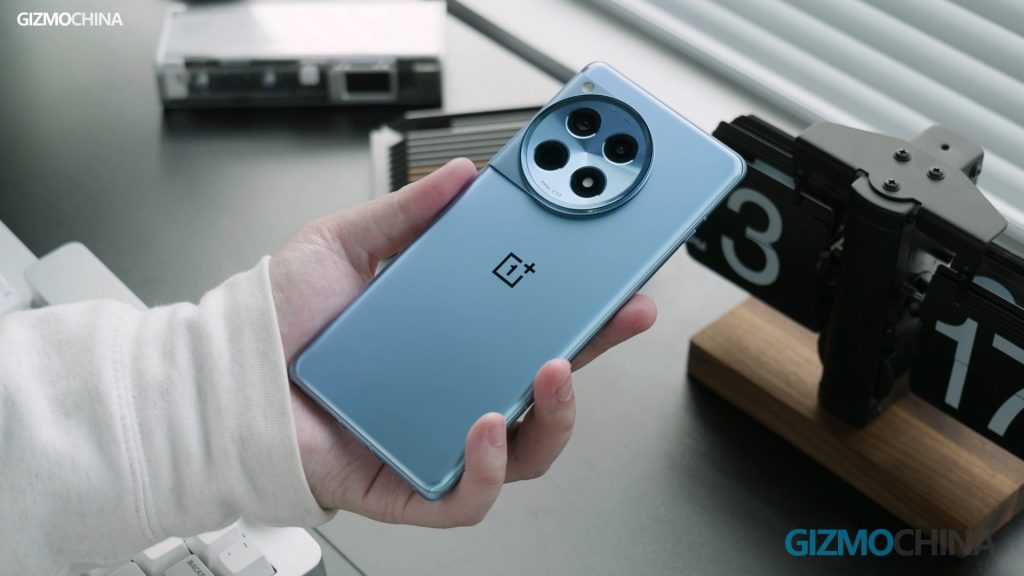
Earlier today, OnePlus announced that it will launch the OnePlus 12 in China on December 5. The brand also gave us a first official look at the upcoming number series flagship. OnePlus also dropped a teaser on its official Weibo handle revealing the RAM and storage capacity of the next-generation offering. Now, the company has put up a dedicated page of the OnePlus 12 on its official website in the global markets.
OnePlus 12 global launch confirmed
The microsite of the OnePlus 12 does not reveal the launch date of the smartphone in the global markets. However, it confirms that the device will arrive in a Green color option that has a marble-like pattern design. The half-pill-shaped protruding camera module houses three sensors including a periscope lens. The phone has a slim profile. It’s likely that OnePlus will tease key specifications and features of the upcoming flagship on the dedicated page as well as on the company’s social handles.
Previously, a tipster had revealed that the OnePlus 12 may debut in the international markets in January 2024. To recall, the upcoming offering’s predecessor i.e. the OnePlus 11 was launched globally in February this year.
In other news, OnePlus shared on Weibo that the OnePlus 12 will pack 24GB LPDDR5X RAM and 1TB UFS 4.0 storage. It is already confirmed to be powered by a Snapdragon 8 Gen 3 processor. Other features that will be present on the upcoming flagship include a 6.8-inch BOE X1 display with 2K resolution, 2,600 nits peak brightness, a Sony LYT 808 main camera, and HyperTone camera system.
WhatsApp is finally bringing back a highly requested feature on the WhatsApp Web and Desktop. Users will soon be able to access View Once photos and videos outside of their mobile devices again.
WhatsApp View Once returns to Web and Desktop
For those unaware, you previously had access to View Once media. But as of November 2022, the social media company decided to remove this feature from its official browser platform and PC app. The feature was taken down over privacy reasons last year. However, it is finally making a return on all major platforms again. View Once was recently spotted for Web and Desktop following a recent update.
According to a WABetaInfo report, WhatsApp Web and Desktop users have had the View Once feature working. It seems like the functionality became functional again after updates to the desktop client and the website. This feature seems to be working on both the Windows and macOS builds of the WhatsApp Desktop. To elaborate the feature, View Once basically lets you send pictures and videos that are only limited to a single view.
In other words, once a person clicks on the View Once message in the chat, the media will disappear and can not be accessed again. While previously you could take a screenshot if it was a picture, the company released an update that made screenshots ineffective. WhatsApp recently also added Email verification to further enhance the security measures.
The Redmi brand of the Xiaomi group is set to introduce its next-gen flagship smartphones. These devices are collectively called the Redmi K70 series.
The company has been teasing the features of these phones for the last few days. Also, we have been hearing about them for quite a while through leaks.
The Redmi K70 series is scheduled to launch in China on November 29 (Wednesday). It will be announced at a press conference which will kickstart at 7 PM local time (GMT+8).
The event will be live-streamed on Weibo and other leading Chinese video streaming platforms.
The smartphones will be accompanied by multiple ecosystem products, such as Redmi Book 14/16 2024, Redmi Watch 4, and Redmi Buds 5 Pro.
2. Redmi K70 Series Design
The Redmi K70 series will arrive with a completely new design. The phones will have a flat frame body.
Further, they will house the largest camera module ever on a Redmi smartphone. The pro model will have a metal frame. As of writing this article, It is not known if the frame on the other two handsets will use the same material.
The volume rocker and the power key will be located on the right edge of the devices. While the top side will sport an IR blaster, and the bottom part will consist of a USB Type-C port as well as a speaker grille.
These phones will be available in at least two colors each.
3. Redmi K70 Series Specifications
As of writing this story, only a few things are known about Redmi K70 and Redmi 70 Pro. On the other hand, almost everything regarding Redmi K70e is out. So let’s discuss about it first.
The Redmi K70e will come with a 6.67-inch OLED display with a resolution of 2712 x 1220 pixels and a 120Hz refresh rate. The panel will offer 12-bit color depth (software-based) and 1200 nits peak brightness level.
The device will be powered by a MediaTek Dimenisty 8300-Ultra chip paired with LPDDR5x RAM and UFS 4.0 storage. On the software front, it will boot HyperOS based on Android 14.
The handset will feature a 16MP selfie camera and a triple camera system on the rear comprising a 64MP OmniVision OV64B primary sensor, an 8MP ultrawide unit, and a 2MP macro snapper.
Finally, it will be backed by a 5,500mAh battery with support for 90W charging.
On the other hand, the Redmi K70 and the Redmi K70 Pro will be powered by Snapdragon 8 Gen 2 and Snapdragon 8 Gen 3 chipsets, respectively. They will also ship with Android 14-based HyperOS.
Both of them are expected to have the same 50MP OmniVision OV50E primary sensor and an 8MP ultrawide unit. The third camera on the vanilla variant will be a 2MP unit. Whereas, the pro version will sport a 50MP OmniVision OV50D 2x telephoto shooter.
The duo will carry support for 120W wired charging. But the vanilla model is said to house a 5,000mAh battery as opposed to a 5,120mAh battery inside the pro variant.
4. Redmi K70 Series Expected Price
The Redmi K70 series will most likely cost about the same as the Redmi K60 series or slightly more expensive.
For comparison, the Redmi K60e, the Redmi K60, and the Redmi K60 Pro started at ¥2,199, ¥2,499, and ¥3,299, respectively, at launch.
In the last few days, a host of Samsung phones including the S21 series, Z Fold 5, Z Flip 5, A34 5G, S23 FE, and A54 have received the stable OneUI 6.0-based Android 14 update. It’s evident that the latest software version has been rolling out to eligible devices in quick succession. Now two more devices of the South Korean brand specifically in the Galaxy A series are getting the update. Notably, one of the phones is a budget offering. Read on to know more below.
Samsung Galaxy A73, A14 5G getting Android 14
The two Galaxy A series phones receiving the current OneUI 6.0-based Android 14 update are the Galaxy A73 5G and Galaxy A14 5G. Users in multiple regions are reporting that the latest software version for the Galaxy A73 5G has the firmware number A736BXXU5DWK2. The update also includes the November security patch and it weighs 3GB in size. The smartphone was launched last year.
Another Galaxy A series device to get the latest software update is the Galaxy A14 5G which is a budget offering in the sub-$200 segment. The build version for the device is A146BXXU2CWK9 and the update is roughly 1.8GB in size. It also brings the November security patch. The Galaxy A14 5G debuted in the global markets earlier this year.
It goes without saying that the latest OneUI 6.0-based Android 14 update is rolling out to the Samsung Galaxy A73 5G and A14 5G in a phased manner. Hence, not everybody may get it and it might take a few days to become available to users in all markets.
The latest Android 14 update is said to be the biggest from the brand. It comes with UI changes including a redesigned quick settings panel, enhanced home screen, and more.
We use cookies on our website to give you the most relevant experience by remembering your preferences and repeat visits. By clicking “Accept”, you consent to the use of ALL the cookies.
This website uses cookies to improve your experience while you navigate through the website. Out of these, the cookies that are categorized as necessary are stored on your browser as they are essential for the working of basic functionalities of the website. We also use third-party cookies that help us analyze and understand how you use this website. These cookies will be stored in your browser only with your consent. You also have the option to opt-out of these cookies. But opting out of some of these cookies may affect your browsing experience.
Necessary cookies are absolutely essential for the website to function properly. This category only includes cookies that ensures basic functionalities and security features of the website. These cookies do not store any personal information.
Any cookies that may not be particularly necessary for the website to function and is used specifically to collect user personal data via analytics, ads, other embedded contents are termed as non-necessary cookies. It is mandatory to procure user consent prior to running these cookies on your website.