Advertisement

The Controversy Surrounding China’s Regulations on Anonymous Social Media Accounts

The Chinese government’s recent crackdown on anonymous social media accounts has sparked controversy and debate among influencers and legal experts alike. Major social media platforms, including Tencent Holdings’ WeChat, ByteDance-owned Douyin, Kuaishou Technology, and Bilibili, have announced that influencers with at least half a million followers must display their true identities online.

The move comes as part of China‘s efforts to tighten its grip on the world’s largest internet market. In July, the Cyberspace Administration of China introduced a set of 13 rules designed to increase the management of “self-media” accounts, which publish news and information but are not affiliated with the government.

China
Credits: Clint Patterson

While some argue that the new policy will help regulate online content and eliminate “dangerous commentary,” others worry that it will expose influencers to cyberbullying and violate their privacy. Take, for example, the case of Tianjinguxia, a popular Weibo finance sector influencer with more than seven million followers. He has openly denounced the policy, stating that he would rather abandon his account than have his personal information displayed online.

Legal experts also weigh in on the matter. Lao Dongyan, a law professor at Beijing’s prestigious Tsinghua University, asserts that mandatory exposure of personal identity online raises the potential for cyberbullying and adds more pressure to social media users when expressing their thoughts and opinions.

While the government’s efforts to regulate online content are commendable, it is essential to strike a balance between public safety and individual privacy. As social media continues to play a significant role in our lives, it is crucial to protect the rights of influencers and users alike.

RELATED:

(Via)

Edifier TWS1 Air earbuds with Adaptive Noise Cancellation launched in China for 218 Yuan ($30)

Edifier has introduced the TWS1 Air Bluetooth earbuds in China, which are now available on e-commerce platforms. Priced at 218 yuan ($30), these earbuds are equipped with a suite of advanced features tailored for an enhanced auditory experience.

Edifier TWS1 Air Earbuds

Edifier TWS1 Air Earbuds Key Features:

At their core, the TWS earbuds boast Adaptive Noise Cancellation technology, utilizing Qualcomm’s ANC system to dynamically adjust noise-cancellation in real-time, providing a customized experience that adapts to the user’s ear shape. They offer five noise-cancellation modes including a deep noise cancellation of up to -42dB, a comfortable mode for reducing voices and background noise, and a wind noise resistance mode, all aimed at delivering consistent quietness across various environments.

The earbuds house a 10mm composite diaphragm which is designed to deliver a rich and detailed sound profile, from deep bass to transparent treble, ensuring that every note and detail is heard. The aptX protocol support ensures high-definition music playback, complementing the earbuds’ acoustic capabilities.

For gamers, the TWS1 Air promises a low latency mode that enhances the gaming experience by enabling precise audio cues and movements. This is facilitated by the latest Bluetooth 5.2 technology, which also allows seamless switching between single and dual-ear use and features in-ear detection that pauses and plays the audio based on whether the earbuds are being worn.

The TWS1 Air boasts a significant battery life, providing up to 5.5 hours of playback on a single charge and up to 22 hours when combined with the charging case, with noise-cancellation turned off. With the noise-cancellation feature on, users can still enjoy a substantial 14 hours of battery life.

These earbuds come with an IP54 dust and water resistance rating, making them suitable for exercise and outdoor activities without fear of damage from sweat or splashes. They can be customized and tracked through the Edifier Connect app, which offers additional features and settings to tailor the listening experience. The earbuds’ touch-sensitive controls allow users to manage functions such as answering calls, switching modes, and controlling playback conveniently.

RELATED:

(Via)

TCL T7G Max 85-inch 144Hz 4K TV launched in China for 6619 Yuan ($905)

TCL is a global consumer electronics company known for its range of products, including televisions, smartphones, home appliances, and audio devices. They offer a variety of options to meet different customer needs, striving to provide reliable and accessible technology solutions to enhance everyday life.

Earlier today, TCL introduced its high-performing T7G Max 4K TV to the Chinese market, priced at 6619 Yuan ($905). Let’s delve into the specs of this TV.

TCL T7G Max 4K TV

TCL T7G Max 4K TV Key Features:

TCL’s T7G Max 4K TV comes with an 85-inch display along with 4K resolution and 144Hz refresh rate for exceptionally smooth visuals. The TV also features “Full Array Hundred-Level Zone Dimming” for precise brightness control, enhancing the viewing experience.

The TV offers a peak brightness of 1100 nits and a wide 96% DCI-P3 color gamut. This ensures vibrant and dynamic visuals from various viewing angles, supported by a 178-degree perspective.

TCL has integrated advanced technologies to focus on eye comfort as well. These include 16-bit ambient light sensing and 65,000 levels of brightness adjustment for eye protection. Additionally, features like MEMU stabilization and PWM dimming have been incorporated to improve motion and create a more natural viewing experience.

The T7G Max TV is equipped with the powerful Quadcore Lingyao M2 chipset, 4GB of RAM, and 64GB of internal storage. It also features TCL’s TXR picture quality enhancement engine for optimized visual performance.

On the audio front, it comes with a 2.1 channel setup, including a 20W subwoofer and a total power output of 50W. It utilizes Dolby Atmos technology to deliver immersive and rich sound quality.

In terms of connectivity, the TV offers four HDMI 2.1 ports, USB ports, and other options, making it a versatile hub for various devices. The TV’s dimensions with the stand are 1890mm x 400mm x 1165mm. Without the stand, it measures 1890mm x 73mm x 1089mm.

RELATED:

(Via)

IQUNIX Tilly 60 mechanical keyboard with full metal design launched in China for 1599 Yuan ($218)

IQUNIX has introduced the Tilly 60 Super series mechanical keyboards, known for their combination of aesthetics and functionality. These keyboards feature an all-metal design and are priced at 1599 Yuan ($218).

The keyboards come in two layouts: WK with 62 keys and HHKB with 61 keys and have a durable aluminum alloy shell along with a storage box and a media control knob on the top that enhances their sleek design.

IQUNIX-Tilly-60-Keyboard

IQUNIX Tilly 60 Keyboard Key Features:

The keyboards aren’t just about good looks; they come with a built-in lithium battery of 3000mAh capacity, ensuring prolonged usage time. Connectivity options are versatile, with support for wired, 2.4G, and Bluetooth connections, ensuring seamless compatibility with various devices. The wired and 2.4G modes stand out with a 1000Hz polling rate, promising quick response times that can be especially advantageous for gamers.

Speaking of gaming, the hot-swappable feature on these keyboards is worth mentioning. Users have the flexibility to choose between the Jade Shaft and the Jade Esports Shaft. The former is praised for its wear resistance, self-lubrication, and low noise characteristics, marking IQUNIX’s introduction of a full POK material linear shaft.

With usage over time, the Jade Shaft is said to become smoother. On the other hand, the Jade Esports Shaft is designed for esports enthusiasts, featuring a specially tuned esports shaft based on the Jade Shaft, aimed at enhancing input accuracy and keypress feel during intense gaming sessions.

The keyboards measure 48mm x 20mm x 302mm in dimensions and weigh approximately 1100g. They come with a one-year warranty, and the package includes several accessories such as a data cable, a key puller, a 2.4GHz receiver, an adapter, a warranty card, a precaution card, and a lubricant kit.

The Tilly 60 keyboards are compatible with multiple operating systems including Windows, macOS, iOS, and Android, thereby broadening their appeal to a wider user base. While they lack backlighting, their other features and build quality make them a promising choice for individuals seeking a reliable and stylish mechanical keyboard.

In September, IQUNIX also released the ZONEX 75 keyboard featuring an aluminum body and a substantial 6000mAh battery. The keyboard was available for purchase at $260.

RELATED:

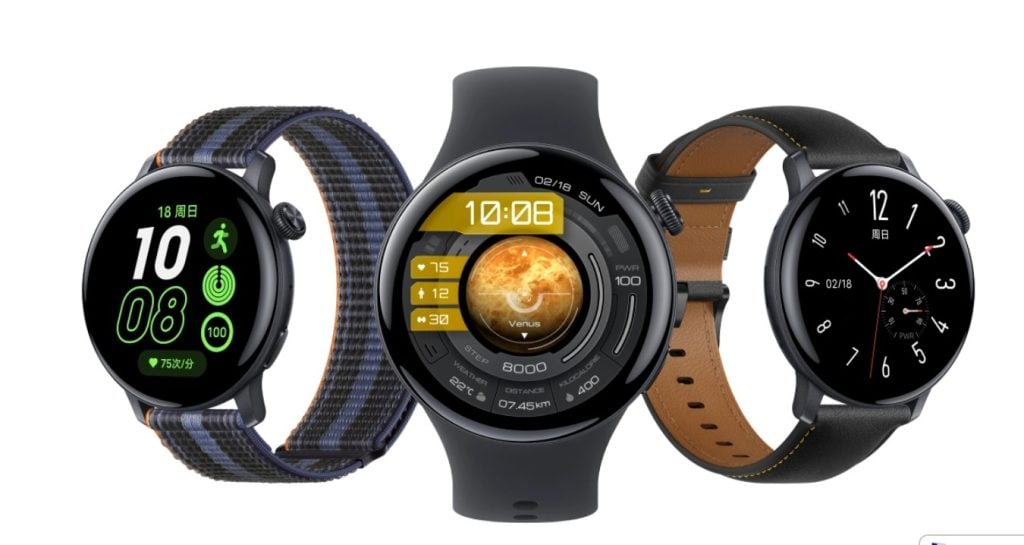
OnePlus Watch 2 picks Bureau of Indian Standards certification, could launch with the OnePlus 12

The OnePlus Watch 2 is on the horizon, set to make its debut at the end of 2023 or in early 2024. It’s the follow-up to the OnePlus Watch of 2021, and it’s generating considerable interest.

OnePlus Watch 2 BIS

Now, the OnePlus Watch 2, bearing the model number “OPWWE231,” has made an appearance on the Bureau of Indian Standards (BIS) certification site in India. This certification suggests that OnePlus might be gearing up for a swift release. While an exact launch date hasn’t been officially confirmed, prior leaks point to an early 2024 launch, possibly coinciding with the OnePlus 12 debut.

OnePlus Watch

So far, it is said that the OnePlus Watch 2 will be powered by Qualcomm’s Snapdragon W5 Gen 1 chipset. It is also expected to have a circular AMOLED screen with a couple of user-friendly buttons to make navigation easy. Multiple health and fitness-centric features along with fast charging are also expected to be onboard.

The highly anticipated addition is the adoption of Wear OS, replacing the custom RTOS-based operating system. By incorporating Wear OS, users gain access to a wide array of apps, including Google Play, WhatsApp, and Google Assistant, among others. The absence of Wear OS was a significant factor contributing to the lackluster performance of the original OnePlus Watch. Consequently, customers are eagerly awaiting the OnePlus Watch 2, hoping that the brand will rectify this mistake.

(via)

Dell P3424WEB curved monitor with webcam, microphones & KVM switch unveiled

Dell has unveiled a new curved monitor with several decent features. The Dell P3424WEB is designed for use in professional environments and offers a wide and curved display. It is well-suited for video conferencing and offers good playback quality even in less-than-bright environments.

Features

The new Dell P3424WEB has a 2K QHD webcam, two microphones, and a 3440 x 1440 pixels resolution. The screen size is 34 inches and it has a 60Hz display refresh rate. The IPS panel has a radius of 38cm and a 99% sRGB color space coverage. The screen can be adjusted via tilting, rotation, and height. It has a VESA mount (100 x 100 mm) accessory as well.

The P3424WEB is Microsoft Teams and Zoom-certified and it offers HDMI, DP, and USB-C connectivity options. When connected via USB-C, the monitor can supply up to 90W power. It can thus be connected with a single cable to compatible laptops or mini PCs. The curved monitor is a USB hub with three USB 3.2 Type A, one USB 3.2 Type C, and a KVM switch. The KVM switch allows for seamless switching between image sources.

Pricing & Availability

The Dell P3424WEB curved monitor is available from the Dell online shop for $949.99 in the US. Dell is offering financing offers for the monitor. The package includes a power cable, a DP-to-DP cable (1.8m), one USB 3.2 Gen 1 Type C-to-C cable (1.8m), and one USB 3.2 Gen 1 Type A-to-B upstream cable (1.8m).

RELATED:

OmniVision’s OV50H sensor gains favor among Chinese smartphone makers, challenging Sony

OmniVision, a company originally founded by Chinese students in Silicon Valley in 1995, initially gained recognition through its groundbreaking CMOS image sensors. Their claim to fame came with the introduction of the world’s first single-chip color CIS sensor in 1997.

Despite an early lead in the market, OmniVision faced challenges post-2011 when they couldn’t meet Apple’s extensive order demands, resulting in Apple switching to Sony sensors starting with the iPhone 4S. However, OmniVision’s acquisition by Visionox marked a transformation into a domestic sensor supplier, aligning with the broader trend among Chinese smartphone brands to strengthen their domestic supply chains.

Camera Sensor

OmniVision’s OV50H: The New Favorite Among China’s Smartphone Giants

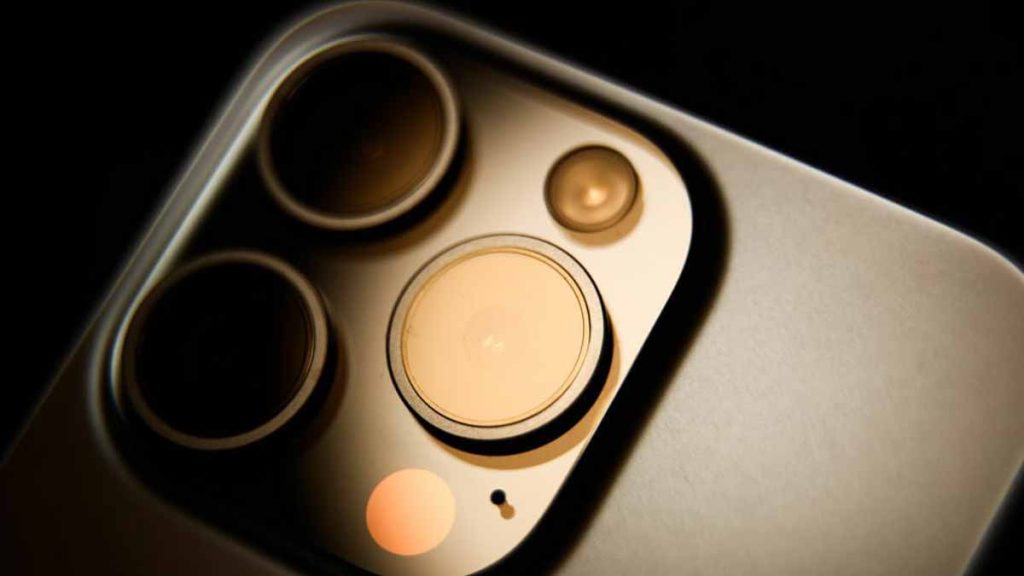
OmniVision made a significant impression at CES 2022 by unveiling a 200-megapixel CMOS sensor, known as OVB0B, which set a record for the world’s smallest pixel size at 0.61μm and featured a large 1/1.28-inch sensor. Now, OmniVision is creating buzz with its OV50H sensor, boasting a 1/1.3-inch size, 50 million pixels, and 1.2μm pixel size, demonstrating its exceptional quality.

This sensor has reportedly exceeded expectations and is drawing interest from several Chinese smartphone manufacturers. This resurgence reflects a broader trend of Chinese smartphone brands strengthening their domestic supply chains, potentially posing a challenge to market leaders like Sony and Samsung.

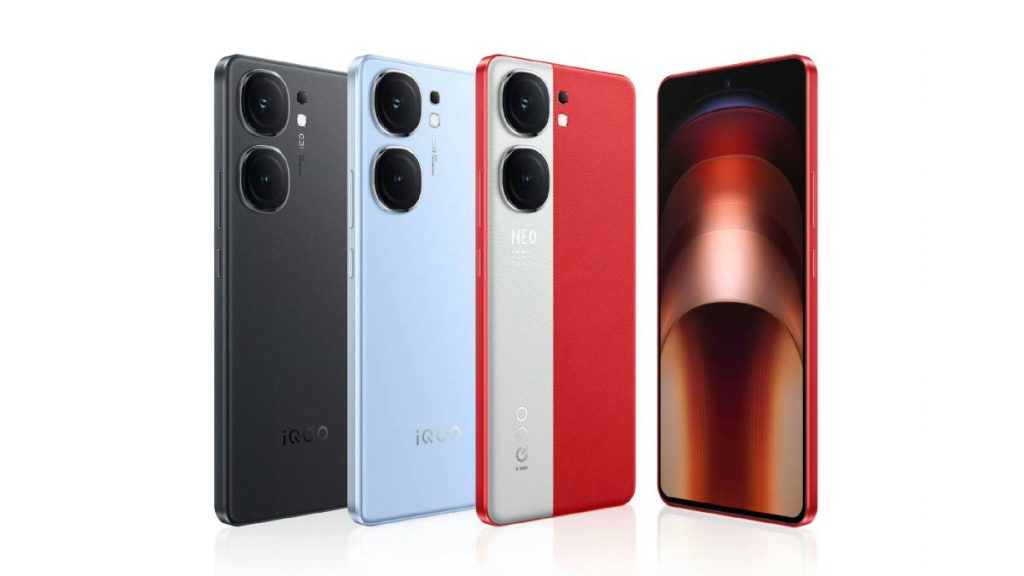
OmniVision’s comprehensive CIS sensor lineup, including main, telephoto, wide-angle, and front-facing sensors, is expected to be adopted by numerous domestic manufacturers, indicating a possible shift in the market. If we talk about recent upcoming launches then the iQOO 12 and Vivo X100 series are expected to feature OmniVision sensors.

This adoption highlights the ongoing price pressures in the market and underscores the competitive advantage that OmniVision’s technology offers to smartphone manufacturers seeking high-quality and innovative camera sensor technology.

Simultaneously, other Chinese entities, such as Huawei, are also venturing into self-developed CMOS image sensors, creating an environment favorable to domestic production. Meanwhile, there are rumors that Hynix is exiting the sensor industry due to financial struggles.

RELATED:

(Via)

Sharkoon SKILLER SGK20 affordable mechanical gaming keyboard launched

Sharkoon has introduced the SKILLER SGK20 gaming keyboard, built with the needs of both gamers and typists in mind. In terms of design, the SKILLER SGK20 stands out with its minimalist and compact three-block layout, making it an ideal fit for various setups. An integrated cable channel underneath the keyboard helps maintain a neat and clutter-free workspace.

Sharkoon SKILLER SGK20

The SKILLER SGK20 offers a choice between two types of switches: red or brown, both sourced from the reputable manufacturer Huano. Red switches provide quick and quiet keystrokes, making them suitable for avid gamers. On the other hand, brown switches, with a perceptible actuation point, cater to typists and occasional gamers. Regardless of your choice, both switch types offer a remarkable 20-million keystroke lifespan.

Notably, the SKILLER SGK20 features RGB illumination. What sets it apart is the level of customization it offers. Users can personalize the RGB illumination through downloadable software, adjusting color, intensity, and brightness. The software also includes 18 pre-programmed lighting effects. Customizations can be saved in different lighting profiles, offering flexibility for users. Additionally, the software allows the creation of up to 20 game profiles, bundling personal settings and macros.

Price & availability

The SKILLER SGK20 comes at a competitive price of €39.90 via retailers like Amazon.

*Please Note: When you buy something using the links in our articles, we may earn a small commission at no cost to you.

RELATED:

(Source, via)

Lenovo ThinkPad X1 Fold 16″ laptop hits store shelves

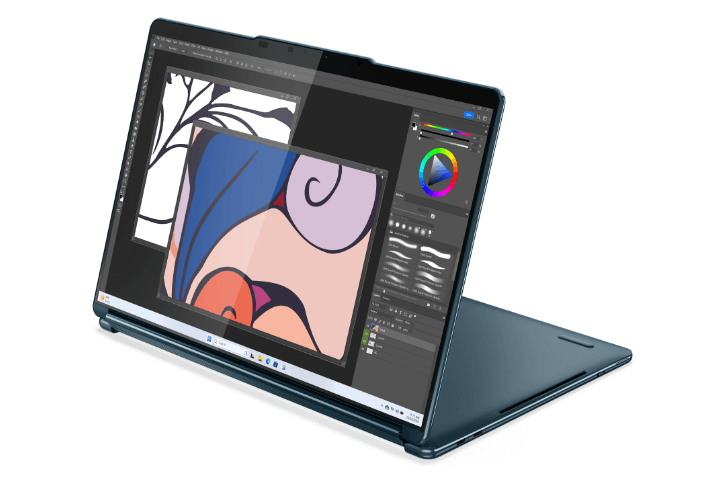
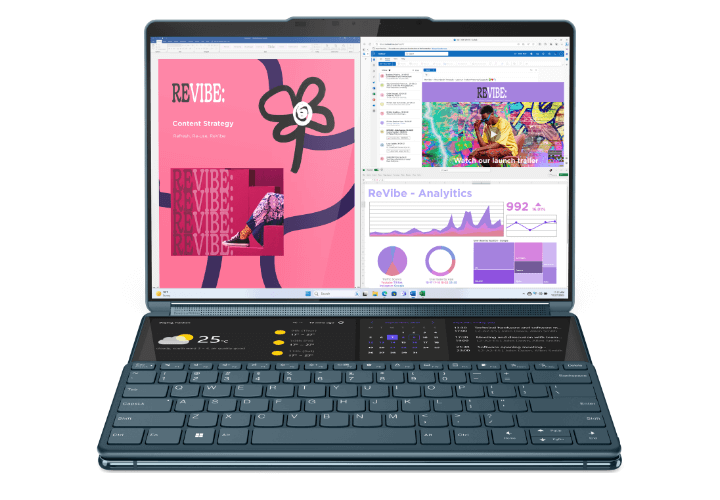
At this year’s IFA event, Lenovo unveiled the second-generation ThinkPad X1 Fold PC. The brand has finally made the laptop available, starting with the US market. Interested customers in the US can now buy the 16.3″ ThinkPad X1 Fold starting from US$2,499. Here’s everything you need to know about this device.

Lenovo ThinkPad X1 Fold Gen 2

Lenovo ThinkPad X1 Fold specs

The Lenovo ThinkPad X1 Fold boasts an impressive 16.3-inch foldable Samsung OLED display, sporting a resolution of 2024 x 2560 pixels. This display offers 600nit brightness, DCI-P3 color coverage, Dolby Vision support, and On-cell Touch functionality, with added support for a stylus.

When folded, the device transforms into a 12-inch display, and it can be seamlessly paired with a Bluetooth keyboard, delivering a laptop-like experience. In contrast, the original X1 Fold featured a 13.3-inch display that reduced to 8 inches when folded.

Lenovo ThinkPad X1 Fold Gen 2

The Lenovo Next-Gen ThinkPad X1 Fold comes with a choice of 12th-generation Intel Core U9 processors, which includes options for i5 and i7 CPUs. It has an integrated Intel Iris Xe graphics card. You can get up to 1TB of storage with its PCIe Gen 4 SSD, and it supports a maximum of 32GB of LPDDR5 RAM.

It also includes an Intel Visual Sense controller and a 5-megapixel IR resolution webcam for video conferencing. This camera is capable of auto-framing, regardless of the tablet’s orientation, be it in landscape, portrait, or laptop mode.

Lenovo ThinkPad X1 Fold Gen 2

Connectivity options include three USB Type-C ports, with two supporting Thunderbolt 4. Lenovo has also introduced the choice of a Nano-SIM tray for 5G Sub 6 connectivity with LTE support. The laptop houses three speakers equipped with Dolby Atmos technology.

Furthermore, the device now offers a full-sized keyboard with a haptic touchpad, connected via Bluetooth 5.2 and rechargeable through a USB Type-C port. Lastly, the laptop comes with MIL-STD-810H durability certification.

RELATED:

(Source)

Apple Warns Indian Opposition Politicians of ‘State-Sponsored Attacks’

Indian opposition politicians have recently received warnings from Apple that their accounts may be under attack by state-sponsored actors. These alerts have caused a stir in India’s political arena, leading to speculation about who may be behind them. Here are the details…

Indian Opposition Politicians Share Evidence of State-Sponsored Attacks

Several Indian opposition politicians say they have received emails from Apple warning them that they may be targeted by state-sponsored attackers trying to hack their iPhones. This has sparked a flurry of accusations and concerns among Indian politicians. Politician Mahua Moitra shared her Apple warning on social media, along with a pointed message directed at the government, accusing it of involvement in the state-sponsored attacks.

India Smartphone export

There is good reason to be concerned about state-sponsored surveillance and cyberattacks in India. In 2021, it was revealed that the phone numbers of Indian journalists and politicians were on lists targeted by the NSO Group’s Pegasus spyware. The opposition accused the government of involvement, citing the intrusive nature of such surveillance.

Tech minister Ashwini Vaishnaw did not deny that India had access to Pegasus, but he pointed out that not all of the listed numbers had been compromised. He also mentioned that Indian law allows for legal interception of communications, which adds to the complexity of the situation.

Minister Ashwini Vaishnaw criticized Apple’s warnings, saying that the information provided is vague and non-specific. He suggested that the notifications might be based on incomplete or imperfect data, and that this could lead to false alarms. While his criticism has valid points, it is still unclear whether the warnings are accurate.

Only Apple knows what incidents led to the issuance of these state-sponsored attack alerts, and the company has refused to provide any further details. Apple says that disclosing this information could help attackers adapt their tactics and evade detection in the future.

RELATED:

(via)

Anker Triple Display 14-in-1 USB-C Hub launched for the European market

Chinese accessories manufacturer Anker recently launched the Triple Display USB-C Hub (14-in-1) in the US and UK. The Anker Triple Display 14-in-1 USB-C Hub allows you to connect up to three monitors and has an assortment of ports. The company has now launched the model in several European markets.

Anker 14-in-1 USB-C hub

Features

The Anker Triple Display USB-C Hub (14-in-1) delivers 80W pass-through charging and has a Gigabit Ethernet plus 5Gbps USB-C ports. The gadget is powered through a 100W USB-C input with 14 interfaces available for use. There are also three USB-A ports (@ 5Gbps) and two USB 2.0 (@ 480Mbps) ports. There are two HDMI ports and a VGA port for connecting to an external monitor. The VGA ports support 1080p resolution with a 60Hz refresh rate while the HDMI outputs 4K@60Hz and 4K@30Hz displays.

Anker Triple Display 14-in-1 USB-C Hub

The maximum resolution of the Anker Triple Display USB-C Hub drops to 1080p@60Hz when all three displays are active simultaneously. The hub lacks support for multi-display extended mode on macOS systems, however. The gadget also features microSD and SD card slots and audio in/out ports. It has dimensions of 15 x 5.4 x 1.7 cm.

Anker Triple Display 14-in-1 USB-C Hub

Pricing & Availability

The Anker Triple Display 14-in-1 USB-C Hub can be purchased in France, Germany, or Italy for €79.99 (~$84). There is an in-page coupon on the Anker website that is valid until November 5 and offers a 20% discount on the product. There is no availability information for the Anker Triple Display USB-C Hub (14-in-1) in other EU markets at this time.

RELATED:

(source)

Nothing OS 2.0.4 rolls out for Phone (2) fixing speaker volume bug

Last month, Nothing began the Open-beta testing of the Nothing OS 2.5 on the Phone (2), which is based on the newly launched Android 14. However, users of the device will have to wait a bit more for the stable update as the brand has begun seeding the Nothing OS 2.0.4 update for the Phone (2).

Nothing Phone (2) Nothing OS 2.0.4

This new update comes with some new features, however, the improvements and bug fixes are the main focus here as it appears that Nothing has managed to fix the speaker volume bug. You can find the complete changelog below.

Nothing OS 2.0.4 update changelog

What’s new

  • New Photos widget, allowing you to display your favourite photos on your home or lock screen.
  •  Updated the widgets library interface to now display Nothing widgets in categories.
  • Added the option to hide app icons in the app drawer. Simply swipe right in the app drawer to reveal the hidden app icons.

Improvements & Bug fixes

  • Made processing improvements for scenes with bright back lighting.
  • Improved zoom consistency between previewed footage and captured footage.
  • Improved speaker volume for specific scenarios.
  • Optimised sound when simultaneously connecting to a smart watch and earbuds via Bluetooth.
  • Updated to Google’s October Security Patch.

The update will be distributed in phases, so Indian Nothing Phone (2) owners can expect to receive it in the coming days. Alternatively, you can manually check for the update by going to Settings, then selecting System, followed by System update, and finally, Download and Install.

RELATED:

(source)

Google is developing a tech that will make your ANC earbuds capable of monitoring your heart rate

The tech space is on a spree of development with a raft of innovative products and features introduced. A new report indicates that Google is tinkering with the possibility of adding heart-monitoring capability to ANC earbuds.

Google

Currently, a pair of wireless earbuds does not have heart rate monitoring capabilities. Google says it is possible that ANC earbuds could monitor your heart rate on the go without any additional sensors. The Audioplethysmography tech sends out a low-intensity ultrasound signal from the earbud’s speaker. Thereafter the microphones on the earbud pick up the response. This then enables the earbuds to analyze the heart rate. There are a series of mathematical principles underpinning the technology and these were highlighted in the research article.

The possibility of having wireless earbuds having heart rate monitoring features is an exciting one. It offers the opportunity for persons averse to wearing smartwatches and the ability to measure their heart rate on the go. There are lots of mechanical watch enthusiasts unwilling to exchange their traditional timepieces for a tech-rich smartwatch. The technology will utilize hardware already present in current wireless earbuds and will not require any significant changes. It may just require a software update for the heart rate monitoring functionality to be activated.

There are no indications yet when the new heart rate monitoring feature will be available in ANC earbuds. The tech will however have to go through all the layers of regulatory approval before it is cleared for commercial use.

RELATED:

(via)

Cubot KingKong 8 rugged smartphone with a bright flashlight and a large battery unveiled

The KingKong 8 is the latest rugged smartphone offering from Cubot. It comes with two additional LEDs that make it deliver a powerful flashlight. It also offers extended battery life and several other impressive features.

Cubot KingKong 8

Features

The maximum brightness capability of the new Cubot KingKong 8 is 6,000 lumens while the battery has a capacity of 10,600mAh. The smartphone is 20mm thick and measures 169.9 x 80.2 mm. It weighs 0.382kg and is powered by the MT8788 chipset. There are four Cortex A73 cores combined with four Cortex A53 cores in the model. The KingKong 8 has a RAM capacity of 6GB and an internal storage of 256GB. The storage is expandable but there is a tradeoff between extra storage and having a dual SIM setup.

Cubot KingKong 8

The Cubot KingKong 8 is a rugged smartphone but lacks 5G capability. It has a 6.53-inch screen with a resolution of 1612 x 720 pixels. It has a 48MP main camera and a 16MP front-facing camera. The smartphone’s GNSS module supports GPS, GLONASS, and Galileo functionality. Both 2.4GHz and 5.0GHz Wi-Fi networks are also supported on the Cubot KingKong 8. Being a rugged smartphone, the KingKong 8 is certified IP68 and IP69K and also supports NFC. The phone runs on Android 13 and has a fingerprint sensor on the side.

Pricing & Availability

The Cubot KingKong 8 is available for purchase in Europe via AliExpress for €235 (~$248). It is already specified that the model ships to Germany. There will be price differentials that could depend on the destination.

Related:

Separating Work and Personal Life with WhatsApp’s Latest Alternate Profile Feature

WhatsApp is undoubtedly the world’s most popular instant messaging application today. However, this popularity brings along some risks. For instance, when someone adds you on WhatsApp, they can see your profile picture, stories, and status. Some of this information may not be suitable for professional settings. Fortunately, WhatsApp’s Alternate Profile feature aims to address these issues. Here are the details…

WhatsApp’s Latest Feature: Alternate Profiles for Privacy

WhatsApp Alternate Profile aims to provide users with the privacy they desire. This feature, which the company has been working on for some time, allows users who set their account to private to create a secondary profile. With this, only a selected secondary profile picture is visible to the other person, keeping your personal information private.

WhatsApp Alternate Profile

This way, you can keep both your spouse happy and present a more professional image in the business world using the same profile. Unfortunately, the feature is still quite new and in the development stage. Therefore, it is currently unclear how it will work or what you need to do to allow others to see your primary profile.

Of course, this feature has sparked some debates. Some users find WhatsApp’s Alternate Profile feature useful, while others believe it could cause problems in both professional and personal relationships. Some even prefer to label this feature as “aiding scammers” and “destroying relationships.” In the end, how you use it is entirely up to you.

It’s worth noting that this feature is different from the Multi-Account Support feature, which was recently introduced, allowing you to use two WhatsApp accounts on a single device. In this case, you are not using two separate accounts but different profiles associated with your account.

RELATED:

(via)

Mercedes Benz’s AMG Electric Concept Car may have 1000 Horsepower at Reveal

Eight years ago, Mercedes dipped its toes into the world of electric performance cars with the SLS AMG Electric Drive. It was more of a whisper than a roar, with only nine cars ever making it to customers. But times have changed, and it looks like Mercedes is gearing up for a full-fledged electric assault.

Each motor weighs merely 53 pounds but delivers almost 500hp

It all starts with the AMG.EA platform, a platform that’s set to shake the EV market. Spied testing recently, the platform is primed for a 2025 launch. While the specifics remain a closely-guarded secret, reports suggest that we’re looking at a game-changer. Mercedes’ recent acquisition, Yasa, spilled the beans on the car’s insane specs. We’re talking about an electric motor that weighs a mere 53 pounds but delivers a jaw-dropping 480 horsepower and 590 pound-feet of torque. And get this—there will be two of these motors. Do the math, and you’re staring at close to 1,000 horsepower, not too far off from AMG One’s 1,049 horsepower.

Mercedes

What’s crazy is that this sedan could churn out torque numbers that reach a staggering 1,000 pound-feet, delivering instant acceleration. This could make the term “family sedan” synonymous with “supercar-like performance.”

The AMG.EA platform isn’t just a rival to internal combustion engines; it could also set new benchmarks within the electric performance car sector. For perspective, BMW has the tech for a 1,341-horsepower EV but is holding back for its future M models, which are projected to have around 700 horsepower.

As we look towards an electrified future, Mercedes seems intent on making sure performance doesn’t take a backseat. If the AMG.EA platform delivers on its promises, the idea of a 1,000-horsepower family sedan might just become the new normal. Is this overkill or the natural evolution of the electric car? Either way, it looks like Mercedes is pulling out all the stops.

And so, as we inch closer to 2025, it’s clear that the electric future will be anything but dull. Stay tuned for more EV-centric conversations at Gizmochina!

RELATED:

(Via)

The New Lectric XPeak Electric Bike has Four-inch Wide Tires & a Front Suspension Fork

While e-bikes have become synonymous with city commutes and leisure rides in the park, Lectric has decided to throw a curveball into the industry with its newest model, the XPeak. This e-bike isn’t just a new product; it’s a paradigm shift for Lectric, a brand predominantly associated with urban electric folding bikes.

The Stealth M24 motor barely makes any noise while operating

Gone are the foldable frames, replaced by a rugged structure that echoes the aesthetic of a mountain bike. The Minnesota-based company designed the XPeak with adventure enthusiasts in mind, equipping it with all-terrain capabilities. Its front suspension fork and four-inch wide fat tires signal its readiness to tackle more than just paved roads.

Electric

Performance-wise, the XPeak isn’t lacking either. A 750-watt hub motor with a peak output of 1,310 watts powers this beast. What does that mean in layman’s terms? A top speed of 28 mph and the flexibility to operate in Class 1, 2, or 3 modes. The Stealth M24 motor even operates silently, ensuring your off-road experience isn’t disturbed by mechanical whirring.

When it comes to convenience, the XPeak has an edge. The 48-volt, 14-ampere-hour battery isn’t just integrated into the frame, but it’s also removable for easy charging. And for those days when you don’t feel like pedaling? The e-bike has a thumb throttle that basically turns it into a mini electric motorbike. Add to that a seven-speed derailleur drivetrain and hydraulic disc brakes, and you’ve got yourself a ride that’s reliable and safe. Speaking of safety, this e-bike has undergone rigorous ISO M4210-10 testing, meeting the quality standards of even premium brands.

RELATED:

(Via)

YouTube Announces Global Efforts On Cracking Down On Ad Blockers

Let’s be honest – YouTube ads are annoying for most of us as they interrupt the viewing experience. The popular video-sharing platform lets users enjoy the content for free. The only solution to ad-free viewing along with other benefits is getting a paid YouTube Premium subscription. However, there are plenty of ad-blocking tools that let viewers bypass the ads. This is all set to end as YouTube has confirmed that it is expanding the crackdown on ad-blockers. 

YouTube confirms crackdown on ad-blockers

YouTube started blocking ad-blockers earlier this year as a part of its small experiment. The popular video-sharing platform is now intensifying its global effort to take a stance against the practice of blocking ads via various tools. Despite receiving backlash from users during the small experiment, YouTube aims to convince users to either go for a Premium subscription or disable ad-blockers. 

In a statement to The Verge, YouTube Communications Manager Christopher Lawton said “The use of ad blockers violates YouTube’s Terms of Service. Ads support a diverse ecosystem of creators globally and allow billions to access their favorite content on YouTube.”

If a user uses ad-blockers, they will get a notice that says “video playback is blocked unless YouTube is allowlisted or the ad blocker is disabled”. Users will also be prompted to allow ads or try YouTube Premium. Additionally, the video-sharing platform will warn that the video player will be blocked entirely if users continue to use ad-blockers after three videos. 

YouTube’s stance on ad blockers is understandable considering that ad revenue is the biggest source of revenue for the platform. The company introduced 30-second unskippable ads to its TV app earlier this year and also experimented with longer but less frequent ad breaks on TV. 

Related:

Urban Consumers are Pushing Southeast Asia’s Digital Economy Amid Slow Growth

The digital arena in Southeast Asia is feeling the heat, and not just from its tropical climate. While the internet economy is still growing, the pace has slackened considerably. Recent research from Google, Temasek Holdings, and Bain & Co suggests the internet economy will grow only 11% this year to hit $218 billion, the slowest rate since 2017. That’s – a little concerning.

Over 70% of online spending is thanks to the top 30% high-value users

But that’s not the entire story. What’s truly interesting is the unequal distribution of this digital spending. Over 70% of all online spending comes from the top 30% high-value users, who are primarily concentrated in big cities. In simpler terms, if you’re an internet company targeting the Southeast Asian market, you’re likely fishing in a small, albeit wealthy, pond.

Commerce

In a region that’s home to more than 650 million people, why is the digital economy so skewed towards the urban elite? One reason could be rising inflation and interest rates, making consumers more cautious with their wallets. But that doesn’t entirely explain the digital divide. The investment climate also mirrors this caution. Private funding for companies in Southeast Asia has nosedived to a six-year low. Investors who hopped on the Southeast Asia bandwagon five to seven years ago are now seeing only a 4% return on average, a far cry from the 50% in China and 40% in the U.S.

So, where does that leave internet giants like Grab, Sea, and GoTo? Facing intense competition in urban markets while still struggling to tap into the vast yet untapped rural consumer base. With e-commerce estimated to reach just $186 billion by 2025, these companies may have to rewrite their growth strategies.

The digital landscape in Southeast Asia is more than just numbers and percentages; it’s a tale of a growing divide, a challenge to innovators, and a test for investors. And for now, it’s the big cities taking home the lion’s share of the digital pie.

RELATED:

(Via)

Infinix Hot 40i Spotted On TDRA Certification

Infinix is reportedly working on the Hot 40 series comprising of the Hot 40 and Hot 40i models. Both are expected to arrive as the successors to the Hot 30 and Hot 30i respectively. Last month the Infinix Hot 40 duo passed the FCC certification site. Now, the Hot 40i has appeared on the TDRA certification in UAE. It hints at an imminent launch of the smartphone in the country. 

Infinix Hot 40i bags TDRA certification

On UAE’s TDRA certification, the Infinix Hot 40i is listed with the model number X6528B. It has an equipment registration number ER25671/23. The device is categorized as a mobile phone and the certification is valid till October 30, 2026. Apart from this, the TDRA listing does not reveal any additional details of the smartphone. 

Meanwhile, the Infinix Hot 40i surfaced on FCC with the same model number as the TDRA certification. The former revealed more details including a schematic of the smartphone. It has a squarish camera module housing two sensors and an LED flash unit. The power and volume rocker buttons are located on the right side. The certification also mentioned the device with 8GB RAM and 128GB storage. However, we can expect more configurations at launch. 

Apart from the Infinix Hot 40i, the Hot 40 is listed on FCC with 4G LTE support, triple rear cameras, and support for 33W fast charging. It will be offered in a Starlight Black color option. 

Related:

Via