Advertisement

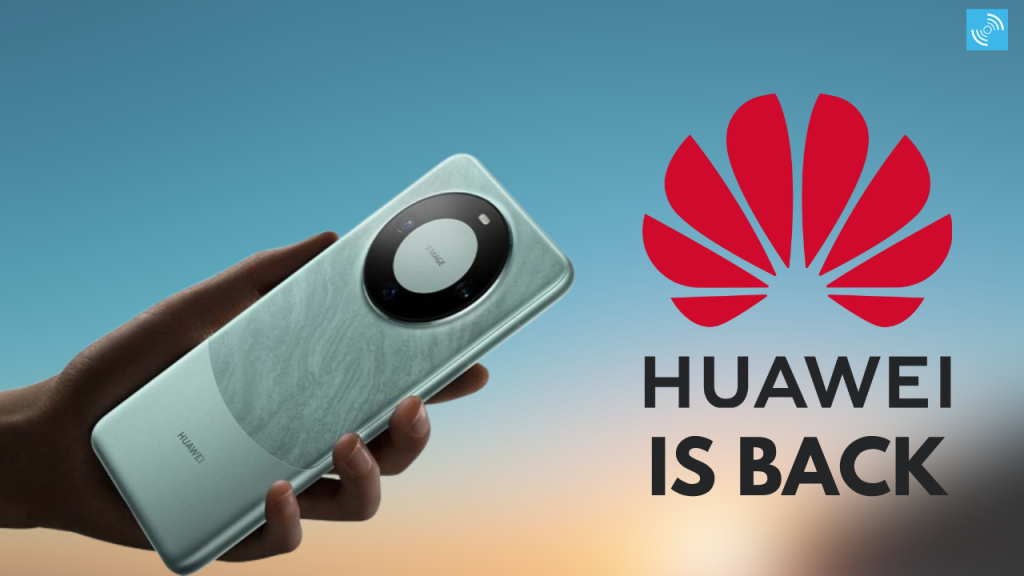
Huawei founder Ren Zhengfei encourages talent development amid US sanctions

In a recent speech published by Huawei Technologies, the company’s founder and CEO, Ren Zhengfei, emphasized the importance of nurturing talent and maintaining technological leadership amidst ongoing US sanctions. Ren’s speech, delivered on July 28th, urged the tech giant to prioritize talent development over financial gains.

Ren stated, “Huawei will save talent, not US dollars.” This statement underscores the company’s commitment to fostering internal expertise and innovation. He encouraged Huawei to focus on leading in specific business areas globally while expanding the boundaries of research and development.

Despite relinquishing day-to-day management to the board of directors, Ren Zhengfei continues to play a pivotal role as a spiritual leader within the company. His daughter, Sabrina Meng Wanzhou, serves as the rotating chairman from April to September.

Huawei’s journey has been marked by US sanctions, beginning in 2019. Nevertheless, the company remains a symbol of China’s technological prowess and its pursuit of self-sufficiency. Premier Li Qiang’s recent visit to the company, during which Ren stood beside him, underscores Huawei’s significance in China’s tech landscape.

Ren emphasized that the primary motivation for talented workers should be passion rather than material rewards. He also stressed that individuals do not excel in all aspects of business from the outset, highlighting the importance of time and experience in honing one’s talents. “In time, you will see who becomes a leader. It’s a natural process,” Ren remarked.

This speech comes in the wake of Huawei’s recent release of the premium Mate 60 series smartphones. This release is noteworthy as it follows a three-year gap since the company’s last 5G-equipped handset launch. The difficulty in achieving this milestone is amplified by the escalated trade restrictions imposed by the United States.

Ren Zhengfei’s message underscores Huawei’s commitment to talent development and technological leadership despite facing ongoing US sanctions. The company remains resilient in its pursuit of excellence, as evidenced by the recent launch of its Mate 60 series smartphones.

Related:

(via)

Apple and ARM Cement Decades-Long Partnership

The collaboration between ARM and Apple is going strong. Apple has long used ARM technologies in its A-series Bionic processors, which it has used in iPhones. However, the launch of the M-series processors took this collaboration to a new level. Now, a new agreement has been signed between the two companies. Apple has signed a new deal with ARM that is “expected to extend beyond 2040”. Here are the details…

Apple Signs New Agreement with ARM That Extends Beyond 2040

Apple has signed a new agreement with ARM that extends beyond 2040. The deal, which was disclosed in ARM’s IPO filing, is expected to be worth billions of dollars. The companies’ chips are used in a wide range of devices, from smartphones and tablets to laptops and servers. Apple is one of ARM’s largest customers, using its chips in all of its iPhone, iPad, and Apple Watch devices.

Apple and ARM

The new agreement ensures that Apple will continue to have access to ARM’s latest chip designs, which will be critical for the company’s future products. The deal is also a major victory for SoftBank, ARM’s parent company. SoftBank had been hoping to sell ARM to Nvidia, but the deal was blocked by regulators in the United States and the European Union.

The new agreement with Apple gives SoftBank a major source of revenue as it prepares to take ARM public. The terms of the deal were not disclosed, but it is likely that Apple will pay ARM a significant royalty for each chip that it uses. The deal is also likely to include provisions that give Apple some say in ARM’s future development.

RELATED:

(via)

200MP primary camera confirmed for Honor 90 5G ahead of Indian launch

Honor‘s return to the Indian market will be heralded by the introduction of the Honor 90 5G smartphone. While the precise launch date remains undisclosed, the brand has begun hinting at its features on Amazon India. Ahead of the official launch, the brand has now confirmed that just like the global model, the Indian Honor 90 smartphone will also feature a 200MP primary camera.

Honor 90 camera

Honor shared the news through a tweet from their HTech account, confirming the 200MP camera. This camera is likely to be Samsung’s 200MP ISOCELL HP3 sensor, found in phones like the Realme 11 Pro+. Interestingly, despite the powerful camera, the global version of the phone can’t record video in 4K at 60fps or 8K. It’s expected that this limitation will also apply to the Indian version.

Honor 90 specs

The Honor 90 boasts a 6.7-inch FHD+ OLED screen with a speedy 120Hz refresh rate for smooth visuals. Running under the hood is the Snapdragon 7 Gen 1 processor, and you can choose configurations with a hefty 12GB of RAM and a spacious 512GB of storage.

Honor 90

For power, it packs a robust 5,000mAh battery, complemented by rapid 66W fast charging support. In the photography department, the 200MP main camera is accompanied by a 12MP ultra-wide-angle lens and a 2MP macro lens. On the front, there’s a high-resolution 50MP camera for great selfies and video calls.

Leaks suggest that the device will have a starting price of around Rs 35,000 and we can expect it to launch on September 21.

RELATED:

(Source)

XREAL Air 2 and Air 2 Pro AR Glasses launched in China, pricing starts at $342

XREAL has introduced its XREAL Air 2 series AR glasses in China, featuring two models: the XREAL Air 2 and XREAL Air 2 Pro.

XREAL Air 2

XREAL Air 2 Key Features:

The XREAL Air 2 comes with an improved display, ergonomics, and audio, although preserving its original design. The device uses Sony’s 0.55-inch Micro-OLED microdisplay with 4032ppi pixel density, a 21% rise from the earlier version. The optical engine, Jinghong Ruiying 3.0, ensures improved color accuracy across different brightness levels. The glasses have received TÜV Rheinland certifications for color accuracy, eye comfort, low blue light, and no flicker.

Visually, the Air 2 now offers a red variant and seven different stickers for personalization. It has also been ergonomically optimized, using materials like magnesium alloy to make it lighter by 10% at 72g. More weight has been moved to the temple for balanced pressure distribution, and it now features a “zero-pressure air cushion nose pad”. In audio, it showcases the X-Spatial Sound 2.0, which provides better mid-low-frequency sounds. It also incorporates features to prevent sound leakage, ensuring privacy.

XREAL Air 2 Pro Key Features:

The XREAL Air 2 Pro’s unique feature is its electrochromic lenses. These lenses can be adjusted for various light levels, making them suitable for home, travel, and outdoor scenarios. This model, according to XREAL, is the first augmented reality glasses to be mass-produced using electrochromic technology.

On the software side, the XREAL Beam, introduced in June, is now in its testing phase. This will come pre-loaded with apps from Bilibili and iQiyi, eliminating the need for separate TV subscriptions. The Beam acts as an “air mouse” for interaction, letting users point and control apps.

Pricing and Availability

In terms of pricing, the XREAL Air 2 is set at 2499 RMB ($342), while the Pro version is 2999 RMB ($410). A combo of XREAL Air 2 and XREAL Beam is priced at 3298 RMB ($451). The models are now up for pre-order and sale on Tmall and JD.com.

RELATED:

(Via)
Upcoming Samsung Galaxy Buds Spotted In Live Image On A Certification Site

Samsung did not announce a TWS earphone this year at its Galaxy Unpacked events in February and August. The South Korean brand has typically launched new Galaxy Buds annually since the last few years. As per a past report, Samsung is rumored to be working on a new Galaxy Buds which is tipped to be an FE model. Now the next-generation audio device has surfaced on a certification website. 

Upcoming Samsung Galaxy Buds spotted on a certification website 

The next-generation Samsung Galaxy Buds have been listed on Radio Research Agency (RRA) certification site in Korea. It has model number SM-R400N which was also stated in previous report. The device was certified on August 22, 2023. The certification listing also reveals a live image of the Galaxy Buds giving us a first look at the upcoming offering. It’s worth noting that the listing does not mention the name of upcoming TWS earphones from Samsung. 

As per the live image, Samsung seems to be going back in time for the upcoming Galaxy Buds in the design aspect. They don’t have the same design language as the models unveiled in recent years. In fact, the TWS earphones have an in-ear design similar to the Galaxy Buds and Buds+. They also seem to be larger in size than the recent Galaxy Buds 2 and Buds 2 Pro which have a round design. The next-generation Galaxy Buds are seen with a matte finish instead of gloss and a rubber coating on the lower half. The earphones also seem to have a wing (kind off like a shark fin) for a comfortable fit. 

It remains to be seen when Samsung announces new Galaxy Buds. Most likely, they will debut alongside the Galaxy S23 FE. The past report says that the upcoming offering may be called the Galaxy Buds 3 or an FE version. The South Korean brand has not announced a non-pro Galaxy Buds since the Buds 2 in 2021. 

Related:

Via

Android 14 Could Be Released on October 4th, Along with the Pixel 8 Series

The countdown to Google’s long-awaited Android 14 has officially begun. The new version was initially expected to be released in August, as was Android 13. However, the company surprised everyone by delaying the release. In the meantime, new beta builds were released, and the latest, Beta 5.2, was released last week. So, when will Android 14 be release? This question was recently answered. Here ae the details…

Android 14 will be released on the same day as the Google Pixel 8 series

According to the leakster Mishaal Rahman, Google has not yet finished working on Android 14, so it has delayed the release of the stable version to the Google event on October 4. Google’s newest products, including the Pixel 8 series, are expected to be introduced at the event. If the claim is true, Android 14 will be released to users at this launch.

However, it is worth noting that even world-renowned smartphone manufacturers were expecting the new version in September, or even yesterday. OnePlus, one of these companies, recently announced that its OxygenOS 14 interface, based on the new build, will be generally available by the end of this month.

The delay in the release of Android 14 has somewhat disrupted the plans of smartphone manufacturers. This is due to Google’s decision to deviate from its previous stable Android beta processes and general release dates.

RELATED:

(via)

Xiaomi 13T, 13T Pro To Get Four Years Of OS Updates And Five Years Of Security Patches

Yesterday, Xiaomi announced that it will unveil the Xiaomi 13T and Xiaomi 13T Pro smartphones in Berlin on September 26. These will arrive as the successors to the Xiaomi 12T and 12T Pro respectively. The specifications of the upcoming offerings have already surfaced on the internet in recent times. Now ahead of the launch, a Xiaomi executive has revealed an important detail about the Xiaomi 13T duo that should probably excite customers interested in the upcoming devices. 

Xiaomi 13T to get longer software support

Xiaomi’s Communications Director Daniel Desjarlais took to Twitter to share the announcement. He revealed that the upcoming Xiaomi 13T and Xiaomi 13T Pro will receive four versions of Android software updates and five years of security patches. The executive adds that it is a significant enhancement to the company’s commitment to providing exceptional software support. If the Xiaomi 13T duo ship with pre-installed Android 13 OS out of the box, they will be eligible for Android 14, 15, 16, and 17 OS versions. 

This is indeed good news for Xiaomi fans and those interested in the upcoming Xiaomi 13T series. Extended software update makes users stick to their devices for a long period. The Chinese brand is not typically known for its longer software support, however, it upped its game with the Redmi K60 Ultra confirmed to get four OS and five years of security updates. While this is a step in the right direction, it’s also worth noting that Xiaomi isn’t the fastest when it comes to delivering newer software updates. 

It remains to be seen whether Xiaomi will offer a longer software support policy for other devices in its portfolio. Android OEMs have been steadily increasing the duration of software support, thanks to Samsung, OPPO, OnePlus, Vivo etc. A recent report also revealed that search giant Google aims to deliver five years of OS updates for its Pixel devices powered by Tensor chipset. 

Related:

Xiaomi Watch 2 Pro renders & key specs leak

It looks like Xiaomi has a few watches in the works expected to launch in the coming months. A recent leak revealed some specs of the upcoming Xiaomi Watch S3. Now, another report has surfaced (via MySmartPrice) with specs and renders of the Xiaomi Watch 2 Pro.

Xiaomi Watch 2 Pro

Xiaomi Watch 2 Pro leaks

Based on leaked renders, Xiaomi is opting for a circular design for their upcoming smartwatch, a departure from the square design seen in the Xiaomi Watch 2. This new smartwatch will offer at least two stylish color options.

The first option combines a silver body with a brown leather strap, while the second choice features an all-black aesthetic with a matching black strap. On the watch’s side, you’ll find two buttons alongside a rotating crown for navigation. The smartwatch’s body will be constructed from stainless steel, offering a polished finish for the leather strap version and a brushed gun-metal finish for the black variant.

According to the report, the Xiaomi Watch 2 Pro is expected to come with a 1.43-inch high-resolution round AMOLED display. This display will have an always-on feature and will offer exclusive watch face options.

Furthermore, there will be Bluetooth and 4G LTE versions of the smartwatch available. In terms of health-related features, it will include body composition analysis, sleep tracking, SpO2 tracking, and the usual sports modes commonly found on Xiaomi watches.

Earlier, the smartwatch was noticed in the IMEI database under the model number M2233W1. It’s anticipated to offer eSIM connectivity and might run on the Wear OS 3 operating system. This choice of operating system is consistent with its predecessor, the Mi Watch, which was introduced in November 2019 and also used Google’s Wear OS.

RELATED:

(Source)

XPeng Motors Sets Sights on European Expansion in 2024

XPeng Motors, the prominent Chinese electric vehicle (EV) manufacturer, is gearing up to make a significant splash in the European automotive market. Despite recent financial fluctuations, the company remains undeterred in its mission to expand its global presence. During the recent IAA Mobility event in Munich, XPeng Motors unveiled its ambitious plans to enter several European markets in the coming year.

This news came directly from Brian Gu, the Vice Chairman and President of XPeng Motors, who announced the company’s plans to enter the German market in the upcoming year. Additionally, Eric Xu, Vice President of International Markets at XPeng Motors, disclosed that France is also on their radar for expansion in the same timeframe. 

Furthermore, there are discussions about the possibility of entering the lucrative UK market. Markus Schrick, Head of XPeng Germany, revealed that in Germany, XPeng intends to employ traditional dealership channels and is currently in talks with several prominent chain stores.

XPeng Motors’ decision to enter these European markets underscores their commitment to making electric vehicles more accessible to a global audience. By expanding its presence in key European countries, XPeng aims to offer a diverse range of electric vehicles tailored to local preferences, ultimately contributing to the widespread adoption of sustainable transportation solutions.

XPeng’s European journey commenced in Norway in the summer of 2021 when they introduced the P7 sedan to the market. Subsequently, they announced their intentions to export the G9 SUV as well, demonstrating their commitment to European expansion. By February 2022, XPeng had already established retail agreements in the Netherlands, Sweden, and Denmark, with the primary goal of building brand recognition and comprehending the unique needs of each market.

The year 2023 witnessed the debut of the refreshed P7, joining the G9 in European markets, and sales commenced earlier this year. To ensure a seamless customer experience, XPeng also began implementing a network of service centers in these territories.

As XPeng Motors continues to innovate and expand its footprint, the EV industry will undoubtedly witness a new wave of competition and innovation, benefiting consumers and advancing the transition to sustainable mobility in Europe and beyond.

Related:

(via)

OnePlus 12 Updated Leaked Renders Reveal Minor Changes To Camera Module And A Mysterious Component

OnePlus is gearing up for its first-ever foldable phone which is expected to debut by the end of the month. The company is also working on its next-generation number series flagship which is mostly unveiled at the end of the year. The OnePlus 12 had initially surfaced in leaked renders shared by Steve Hemmerstoffer (aka onleaks) in July this year. Now, the tipster has posted updated renders of the smartphone that reveals a minor change. He adds that the updated renders are based on the pictures of pre-production units giving the most comprehensive look of the upcoming flagship. 

OnePlus 12 updated leaked renders

Let’s start with the changes found in the updated leaked renders first. The OnePlus 12 will have repositioned camera sensors compared to what we saw in the early renders. The sensor alignment in the latest images is similar to the previous generation flagships. The upper row has two sensors whereas the bottom row has a periscope lens and another mysterious cutout beside it. The previous render had revealed a distinct glossy Black strip underneath the periscope lens and there was no fourth cutout either. 

Additionally, the Hasselblad branding on the latest renders has also been replaced with the initial ‘H’. The LED flash unit retains its position at the top left corner of the same half-pill-shaped island in a glossy finish that stretches from the side frame. 

The rest of the design is pretty much the same as the previous render. There is an alert slider and power button on the right edge whereas the volume rocker keys are on the left side. On the front, the OnePlus 12 has a curved display with a centre-aligned punch-hole cutout and minimal bezels. 

Leaked core specifications of the upcoming OnePlus 12 reveal that it will feature a 6.7-inch 2K AMOLED 120Hz display, a 50MP OIS enabled main camera paired with a 50MP ultra-wide-angle unit, and a 64MP telephoto lens, a Snapdragon 8 Gen 3 SoC under the hood, and a 5,400mAh battery unit with support for 100W wired and 50W wireless charging. 

Related:

Via

Vivo X100 Pro, Pro+ Tipped To Feature IP68 Rating And 50W Wireless Charging

Vivo is confirmed to unveil its next-generation flagship X100 series smartphones at the end of this year. The lineup is expected to comprise standard, pro, and pro plus models. These will arrive as the successors to the current X90 lineup. The upcoming X100 series has been doing the rounds of the rumor mill for the last few months. Now, reliable Chinese tipster Digital Chat Station has revealed new details of the Vivo X100 series phones on the microblogging platform Weibo. 

Vivo X100 series more details surface

Digital Chat Station states that the Vivo X100 series will come with IP68 certification for water and dust resistance. However, it will only be limited to the Pro and Pro+ variants. The IP rating of the standard model is not confirmed. To recall, the X90 has an IP64-rated chassis whereas the X90 Pro and X90 Pro+ are IP68-certified. 

Additionally, DCS also mentions that the Vivo X100 Pro and Pro+ models will come with support for 50W wireless charging whereas the X100 will miss out on the feature. The trio will be equipped with dual stereo speaker, an X-Axis linear motor, as well as an IR Blaster. The Vivo X100 and X100 Pro are tipped to launch first in China in November. The Pro+ model will reportedly debut in the first quarter of 2024.

As per past rumors, the Vivo X100 and X100 Pro are expected to be powered by the unannounced Dimensity 9300 SoC whereas the Pro+ model will be equipped with a Snapdragon 8 Gen 3. All three phones will reportedly feature significantly upgraded cameras along with Vivo’s V3 imaging chip onboard. The leaked render of the X100 Pro+ revealed that it will feature a rectangular island housing a circular camera module.

Related:

Oppo Pad gets cellular connectivity with this new feature

Oppo Pad, the company’s first tablet, was released in February last year. The slate had decent features, including a large 11-inch display and a Snapdragon 870 processor. However, Oppo did not add cellular connectivity to it, nor did they release a separate cellular variant. Now after more than a year, the company announced a communication feature for the tablet that transforms it into a cellular version in seconds.

Oppo Pad 2, Oppo’s latest tablet, already has this feature. Communication sharing will let Oppo Pad users use their phone’s cellular data to browse the web, make calls, and check messages. To use this feature, you need to make sure that both devices are logged in to the same Oppo account and that they are within Bluetooth range of each other. Once communication sharing is enabled, the tablet will automatically use the phone’s cellular data for internet access.

Oppo Pad communication sharing

Oppo says that communication sharing provides a more stable signal and reduces power consumption by about 30% compared to using a hotspot. This feature could help you better utilize the tablet for your daily needs.

As a reminder, the Oppo Pad comes equipped with an 11-inch LCD screen offering a resolution of 2560 x 1600. It has a 120Hz refresh rate, PPI 275, a screen contrast is 1500:1, and a peak brightness of 480 nits.

This slate packs a Qualcomm Snapdragon 870 processor under the hood, paired with a built-in 8080 mAh battery, which supports 33W wired fast charging. For photography, the tablet gets a rear 13MP camera shooter and an 8MP sensor on the front. Oppo Pad supports Wi-Fi 6, Bluetooth 5.1, Face unlocking, and more. It comes with a starting price of 2299 Yuan ($314).

RELATED:

Xiaomi launches Mijia Q1000G Direct Drinking Water Purifier, starting at 3399 yuan ($465)

Xiaomi has introduced its latest flagship water purifier, the Mijia Q1000G Heating Direct Drinking Water Purifier. This purifier combines modern design with innovative water purification technology, making it a standout choice for household water purification needs. Let’s check out the key features of this device.

Xiaomi Mijia Q1000G Direct Drinking Water Purifier key features:

The standout feature of the Mijia Q1000G is its rapid instant heating and faucet instant heating, providing room temperature water in just 3.5 seconds and boiling a liter of water within 60 seconds, offering remarkable time-saving convenience to users.

The purifier sports a purification speed of 2.65L/min, utilizing a six-stage purification system for consistently clean and safe water. Users can also customize the water temperature from 40°C to 95°C in precise 1°C increments.

The Mijia Q1000G features smart connectivity, with remote control and monitoring capabilities through its integrated app. Its dual waterway design enhances efficiency, delivering a consistent and clean water flow.

It prioritizes safety and durability by being BPA-free, preventing water stagnation concerns. It also features an automatic backflush function to enhance the overall taste of the water, ensuring long-lasting quality.

The Mijia Q1000G offers exceptional durability and cost-effectiveness with a five-year lifespan for the RO filter, priced at 999 yuan ($136). Xiaomi further demonstrates confidence in the product’s longevity by providing a 3-year warranty, making it a valuable long-term investment.

The Mijia Q1000G is available for a limited-time special introductory price of 3,399 yuan ($465), which includes a 100 yuan ($14) discount coupon. Consumers can purchase this product starting on September 15th.

RELATED:

(Via)
Asus ROG PG248QP 540Hz gaming monitor could launch this month

During the CES 2023, Asus unveiled ROG Swift Pro PG248QP as the world’s first 540Hz gaming monitor. But the company failed to make the monitor available for sale and the Alienware AW2524H became the actual first 500Hz gaming monitor you can buy. In any case, a report now claims Asus will finally launch the ROG PG248QP later this month.

China’s ITHome reports the Asus ROG PG248QP will be launched in the third week of September. The publication cites Video Hall as the news source. However, there’s no official confirmation from Asus. It was hinted during CES that the monitor would start shipping in Q2 of this year, so the report might not be incorrect.

Asus 540Hz monitor

The 24.1-inch Asus ROG Swift Pro PG248QP is a 1080p monitor that’s designed for serious gamers. The PG248QP has an overclocked E-TN panel with a refresh rate of up to 540Hz. The ROG Swift Pro is apparently for those who prefer the speed of the panel and its low latency over high resolution.

It comes with support for Nvidia G-SYNC, built-in ESS DAC for surround sound, and gunshot and footstep enhancement. It’s also got a built-in ESS Quad DAC with near-zero audio latency and comes with a 3.5mm headphone jack, a DisplayPort 1.4, and a HDMI 2.0 port.

Asus says it is using a TN panel on the monitor, which offers 90% coverage of the DCI-P3 color gamut. The pricing details of the Asus ROG PG247QP are anyone’s guess. However, The Verge reported in January the monitor will cost $899 USD.

RELATED:

(Source)

Oppo A38 with Helio G85 & 5,000mAh battery launched

Oppo recently unveiled the Oppo A38 smartphone on its UAE website. The device has now been launched in the Malaysian market. It comes in a single storage configuration which is priced quite modestly. Check the details below.

Oppo A38 specs

The Oppo A38 features a 6.56-inch IPS LCD display with HD+ resolution, offering vibrant visuals with a 90Hz refresh rate. This display also covers 100% of the DCI-P3 and sRGB color gamuts, ensuring rich and accurate colors.

OPPO A38

Under the hood, the Oppo A38 is powered by the MediaTek Helio G85 processor and comes with 4GB of RAM. It offers 64GB of internal storage, expandable up to 256GB using a microSD card.

In the camera department, it sports a 50MP main camera with an f/1.8 aperture, supported by a 2MP portrait lens for those artistic shots. On the front, there’s a 5MP camera for selfies and video calls.

It has a large 5,000mAh battery and it supports fast charging with a 33W SuperVOOC charger for quick top-ups. In terms of connectivity, it has dual SIM support, 4G VoLTE, Wi-Fi, Bluetooth 5.0, GPS, a USB-C port, and a 3.5mm audio jack for headphones. Additionally, it features a side-facing fingerprint sensor for secure unlocking.

Pricing & availability

The device is now accessible in Malaysia, featuring 4GB of RAM and 128GB internal storage capacity. It’s been introduced at an attractive price point of RMB 599, which translates to approximately $128.

RELATED:

(Source)

Realme Narzo N53 becomes India’s Best Selling smartphone under Rs 10,000

The Realme Narzo N53 was launched in India back in May. This smartphone was one of the latest budget-friendly devices from the company and it appears that it has been a massive success in the region. Earlier today (6th September 2023), Realme announced that this was the leading smartphone in the entry-level category.

In a tweet, the Chinese smartphone maker has announced that the Narzo N53 has become the country’s number 1 best selling smartphone under the 10,000 INR segment. For those unaware, the device was launched in the country for a starting price tag of 8,999 INR for the 4GB + 64GB storage configuration. Meanwhile, the 6GB + 128GB version cost 10,999 INR.

Realme Narzo N53 Best Selling 10K India

Realme Narzo N53 Specs

The Realme Narzo N53 sports a tall 6.74-inch IPS LCD panel that offers HD+ resolution and a 90Hz refresh rate. The screen outputs 450 nits of peak brightness and 180Hz touch sampling rate. Under the hood, the device is equipped with the Unisoc T612 SoC and the smartphone also supports virtual RAM expansion. The device is powered by a large 5,000mAh battery pack that supports 33W fast charging.

The Narzo N53 runs on the Android 13 OS based Realme UI 4.0 out of the box. On the rear, it features a 50-megapixel primary camera, while the front houses an 8-megapixel selfie shooter. This model also arrives in two color variants, namely a Feather Gold and Feather Black option.

RELATED:

Logitech Pebble 2 wireless keyboard and mouse built with 49% recycled plastic launched

Logitech has introduced the Pebble 2 wireless keyboard and mouse combo, priced at $59.99 and available via stores like Amazon, approximately 438 yuan.

The Pebble 2 comes in appealing colors like Graphite, Pearl White, Rose Pink, Sand Brown, and Blue, showcasing a strong focus on design and aesthetics.

Logitech Pebble 2 keyboard and mouse

Logitech Pebble 2 combo set key features:

The combo features a Pebble Keys 2 K380 wireless keyboard and a Pebble Mouse 2 M350. The keyboard measures 16 x 279 x 124 mm and weighs 415 grams, while the mouse has dimensions of 26.2 x 58.7 x 106.7 mm and a weight of 76 grams.

However, what really sets it apart is its dedication to the environment. Both the keyboard and the mouse are constructed with a minimum of 49% recycled plastic. This eco-friendly approach represents a significant step forward in the tech industry’s efforts toward sustainability.

Logitech also offers a specialized Pebble 2 Combo for Mac, featuring the Pebble Keys 2 K380s for Mac keyboard and the Pebble Mouse 2 M350s for Mac mouse.

Logitech Pebble 2 keyboard and mouse

The mouse offers a significant 90% reduction in click noise, ideal for quiet office environments. Additionally, the keyboard provides a comfortable, laptop-like typing experience, promoting user comfort during extended work sessions.

The mouse also features a customizable middle button, allowing users to assign various functions such as sending emojis or opening favorite apps. The Keys 2 K380 keyboard offers similar shortcut capabilities.

The Pebble 2 keyboard and mouse offer Bluetooth support, allowing easy connection to three Apple wireless devices simultaneously. With the Easy-Switch button, users can toggle between devices seamlessly. This Combo kit boasts versatility, being compatible with Mac, PC, tablets, and smartphones, supporting up to three devices at once.

RELATED:

(Via)
*Please Note: When you buy something using the links in our articles, we may earn a small commission at no cost to you.

Apple iPhone Ultra may launch with Vision Pro’s Spatial Photos and Videos recording

The Apple iPhone 15 series launch is just around the corner. The new lineup will include the iPhone 15, iPhone 15 Plus, iPhone 15 Pro, and the iPhone 15 Pro Max, which is rumored to be called the iPhone 15 Ultra. But while this still isn’t confirmed, Apple is expected to be working on a new iPhone Ultra model. But prior to any official announcements, a new report has hinted that this model will support recording Vision Pro headset’s spatial photos and videos.

Apple iPhone 15 Ultra may support spatial photos and video recording

The news arrives from Weibo (a Chinese microblogging website). Apparently, the Cupertino based giant’s upcoming flagship iPhone Ultra model may support spatial photos and videos for the Vision Pro headset. This model is expected to arrive after the Vision Pro launch, which is set for early 2024. Now, the latest rumor hints that the spatial videos and photos can be recorded directly from the iPhone Ultra model.

Apple-Vision-Pro

Reportedly, the iPhone Ultra will “lead the market to rethink what kind of photos and videos a mobile phone should take.” Although, it is still unclear what exact features this top-end iPhone will offer. But we can expect to see improvements in the camera sensors to enable spatial photos and videos recording. For those unaware, the Vision Pro uses Apple’s three-dimensional camera to capture there spatial videos and photos.

The feature was made to make capturing moments with more life in them. So, the iPhone Ultra model will likely feature new sensors and upgraded cameras to support direct recording. Keep in mind that this is still just an unconfirmed report, so take this news with a pinch of salt for now and stick around for more updates.

RELATED:

(Via)
Samsung announces the OG Galaxy Note 10 Series will no longer receive updates

Samsung typically supports its smartphones for 5 years, but the Galaxy Note 10 series launched in 2019 only received 3 major OS updates and 4 years of security updates. As of today, the Galaxy Note 10 series has reached the end of its software support. This means that these phones will no longer receive new operating system updates or security patches.

Samsung previously moved the Galaxy Note 10 and Note 10 Plus to quarterly updates, meaning they were getting security matches every 3 months. Now, the Korean company has put an end to Note series software support altogether (via Sammobile). The two phones were launched in 2019 running Android 9 out of the box. Samsung later updated them to Android 10 in early 2020. The Android 11 update made its way to the phones in late 2021, and the Android 12 update in late 2022.

While this may be disappointing to some users, it is important to note that the Galaxy Note 10 and Note 10 Plus are still capable phones. They will continue to work as they did before, but they may be more vulnerable to security risks without the latest security updates. If you are concerned about security, you may want to consider upgrading to a newer phone that is still under software support.

Notably, the Galaxy Note 10 Lite will continue to receive quarterly security updates as it was launched later in 2020. Other models in the Note series, such as the Note 20 Ultra and Note 20, will receive updates until 2024, although no major Android releases are expected.


RELATED:

(Via)

Huawei Mate 60 Pro’s HiSilicon Kirin 9000s Chip Explained: 5 Key Questions Answered

On August 29th, Huawei, seemingly out of nowhere, announced the Mate 60 Pro. The company did not hold any sort of launch event.

The device was simply listed on its official website and first-party online store, VMall. This is unlike Huawei, as the telecom giant is known for extravagant events, especially for its premium products.

It was even more shocking to learn that the device supports 5G connectivity. However, the company makes no mention of 5G support and the name of the chipset found inside the phone.

It has been a week since the phone became official, and Huawei has already sold over a million units of the Mate 60 Pro. The smartphone is expected to ship at least 12 million units.

Multiple videos and articles (including ours) regarding the product have emerged on the internet over the last few days. Based on the information available, we have compiled a single article that answers the key questions about the chip powering the Huawei Mate 60 Pro.

HUAWEI-MATE-60-PRO02

Which chip powers the Huawei Mate 60 Pro?

The Huawei Mate 60 Pro houses a HiSilicon Kirin 9000s chip. It is Huawei’s first new mobile chipset in three years.

Most importantly, the SoC enables 5G connectivity. Thus, the Mate 60 Pro is also the first Huawei 5G phone in a long time since the limited-run Mate 40 series from late 2020.

Who manufactures the Huawei Mate 60 Pro’s HiSilicon Kirin 9000s chip?

Historically, TSMC manufactured HiSilicon chipsets for Huawei. However, due to US sanctions, the telecom giant could not continue its business with the world’s most advanced chip manufacturer.

As a result, China’s SMIC produces the new Kirin 9000s SoC. As per findings by TechInsights, the chipset is fabricated on SMIC’s 7nm (N+2) process.

The Kirin 9000s measures 107 mm², which makes it 2% larger than the 5nm-based TSMC-manufactured Kirin 9000 chip (105 mm²).  Interestingly, the latest chipset even has larger critical dimensions (CDs) than its predecessor, despite being based on a less advanced fabrication process.

This is a significant accomplishment for a Chinese chip manufacturer. But for some reason, SMIC has not published papers on its latest innovation in the public space.

What is the architecture of the Huawei Mate 60 Pro’s HiSilicon Kirin 9000s chip?

Like every other mobile chip on the market, the HiSilicon Kirin 9000s is ARM-based. But instead of completely relying on the off-the-shelf default ARM cores, Huawei has opted for custom cores like Samsung’s Mongoose.

The Kirin 9000s features an octa-core CPU. Some benchmarks by users / reviews revealed 12 cores since the CPU supports hyper-threading (up to 12 threads). This makes the Kirin 9000s the first ARM chip on the market to support CPU hyper-threading.

Out of the eight CPU cores, the prime core is the custom Taishan core, clocked at 2.62 GHz. Further, the median cores are again a cluster of three custom Taishan cores clocked at 2.15 GHz. Finally, the efficiency cores are a cluster of four stock ARM Cortex-A510 cores.

The graphics are handled by the Maliang 910 GPU, clocked at 750 MHz. The SoC also comprises newer versions of the DaVinci NPU, ISP, and Baron modem.

How powerful is the Huawei Mate 60 Pro’s HiSilicon Kirin 9000s chip?

Based on benchmark tests (AnTuTu and Geekbench), the HiSilicon Kirin 9000s chipset falls behind the current-gen Android champion, the Qualcomm Snapdragon 8 Gen 2.

The SoC is capable of scoring around 7,00,000 points on AnTuTu. Whereas on Geekbench, it can attain about 1,300 and 3,300 points in single-core and multi-core tests, respectively.

These scores put the performance of Kirin 9000s in the ballpark of the Snapdragon 888. In other words, the chip is two generations behind in the Android space.

Does the Huawei Mate 60 Pro’s HiSilicon Kirin 9000s chip support 5G?

As mentioned at the beginning, the Huawei Mate 60 Pro is the first Huawei 5G smartphone in nearly three years. HiSilicom Kirin 9000s’ newly developed Baron modem enables support for fifth-generation mobile communication technology on the phone.

Unfortunately, not much is known about this mysterious modem. Anyway, in addition to 5G, the device also supports satellite connectivity.

In fact, the Huawei Mate 60 Pro is the world’s first commercial smartphone to support satellite calling. The Mate 50 Pro was limited to texts, like the iPhone 14 lineup.

RELATED: