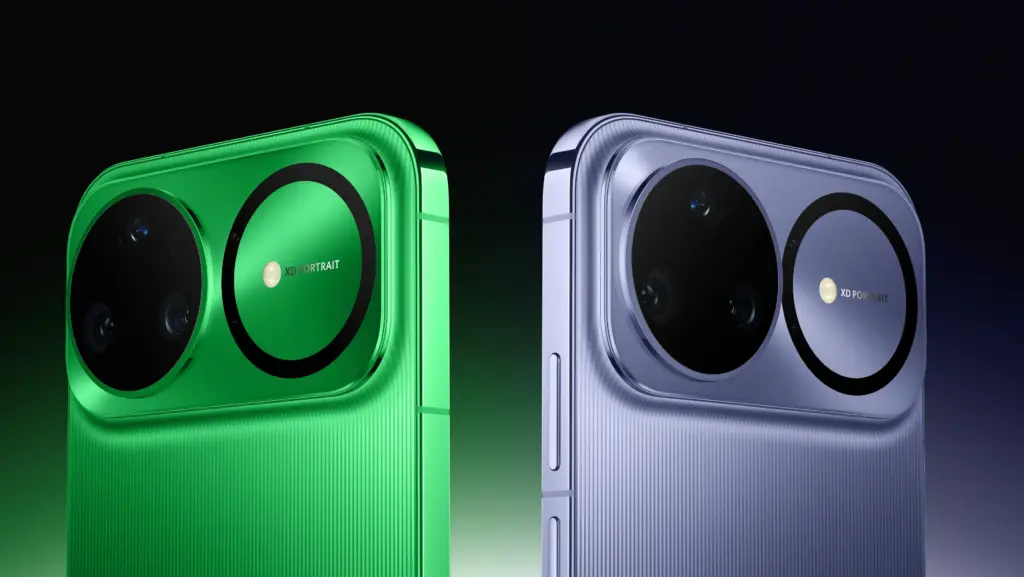
iQOO announced the iQOO Z11 smartphone in March. Two months later, we are hearing news of the iQOO Z11 Lite. The smartphone has now surfaced on Geekbench, giving an early look at some of its hardware.
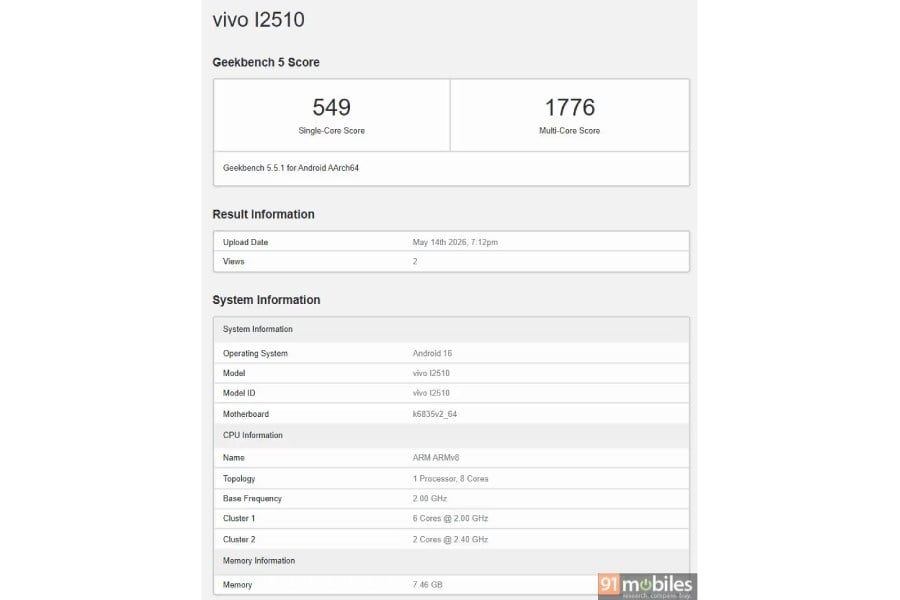
iQOO Z11 Lite Geekbench run
The phone is listed with the model number I2510 and has managed 549 points in the single-core test and 1,776 points in the multi-core test. These are not flagship-level numbers, which is no surprise, since the Z Lite series usually targets the budget and lower mid-range segment.
The benchmark listing also reveals that the device is powered by an octa-core chip. Two of the cores are clocked at 2.40GHz, while the other six run at 2.00GHz. Geekbench also mentions the Mali-G57 MC2 GPU, which hints that the processor in question is the MediaTek Dimensity 6300 chipset.
Interestingly, its predecessor, the iQOO Z10 Lite 5G, also uses the same SoC. Another detail shown in the listing is 8GB of RAM, and the phone is also said to run on Android 16.
This is not the first time the phone has appeared in the leak cycle. Earlier, the same model was spotted on the Bluetooth SIG database, where its name and 44W wired fast charging support were confirmed. It was also seen on the BIS certification site in India, which confirms that the phone is meant for the Indian market.
The Z10 Lite launched at a starting price of Rs 9,999, so we expect its successor to launch in a similar ballpark. Especially given that both share the same chipset. We will keep you in the loop if we get any new updates.
For more daily updates, please visit our News Section.
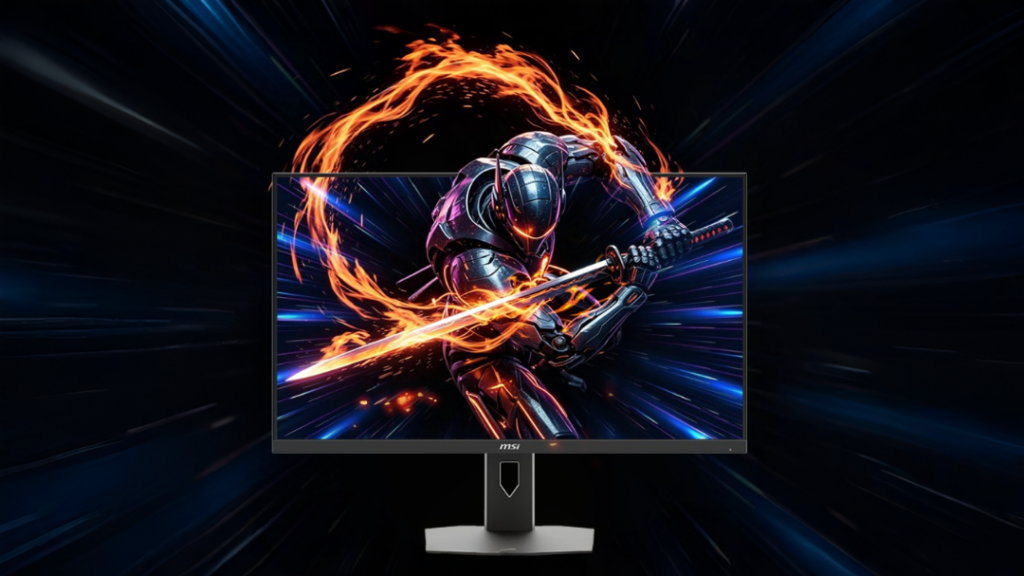
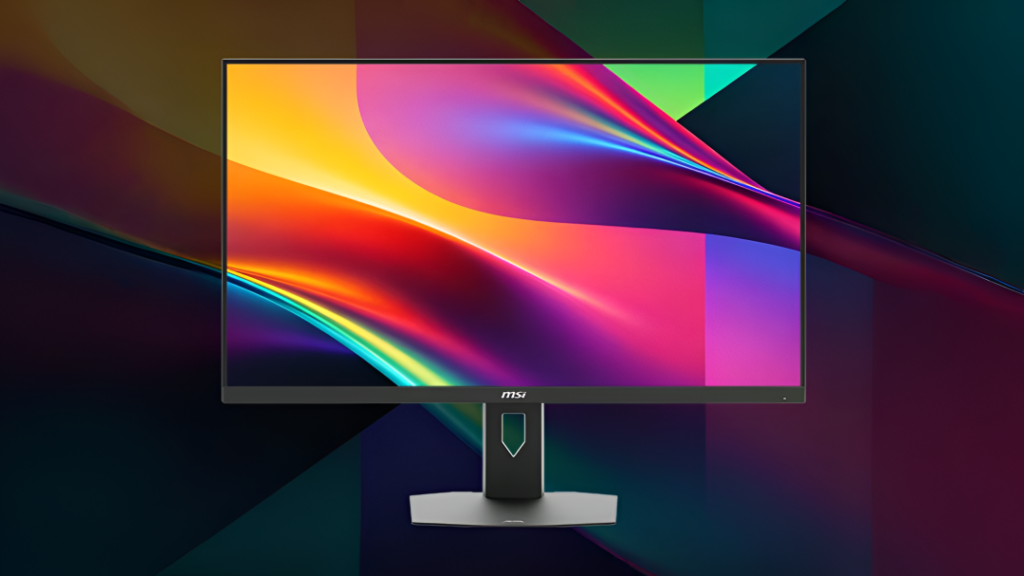
MSI has launched a new gaming monitor called MAG 276QP42 in China. It is priced at 2,199 yuan ($322) and is now available on JD.com.
MSI MAG 276QP42 Specifications
The monitor features a 27-inch Fast IPS panel with a 2560 x 1440 resolution and an overclocked refresh rate of 425Hz. To go along with the high refresh rate, MSI lists a 0.5ms gray-to-gray response time. It also includes Adaptive-Sync support and is compatible with both Nvidia G-Sync and AMD FreeSync to help prevent screen tearing during gameplay.
On the color side, the specifications are standard for a modern IPS display in this price range. The panel covers 98.1% of the DCI-P3 color gamut, 94.3% of Adobe RGB, and 127.5% of sRGB.
It uses an 8-bit + FRC configuration to provide 10-bit color depth. For brightness, the monitor reaches 400 nits in SDR mode and carries a VESA DisplayHDR 400 certification.
MSI has included several software features designed specifically for gaming. There is an AI Vision tool that lifts shadows in darker areas of a game without overexposing the rest of the image. It also includes a smart crosshair feature that automatically changes the reticle’s color based on the background, making it easier to track targets.
Additionally, the monitor has a virtual screen size setting that can shrink the display area to 24.5 inches. This is a practical inclusion for competitive players who often prefer a smaller field of view to keep the entire game within their central vision. It also offers a built-in zoom function and a low motion blur setting to keep moving objects looking clear.
For daily use, the screen has an anti-glare matte coating, DC dimming, and TÜV Rheinland-certified low blue light technology to reduce eye strain. The included stand is fully adjustable, providing options to change the height, tilt, swivel, and pivot the screen. It also supports standard 100 x 100mm VESA mounts if you prefer to use a third-party monitor arm.
Port selection includes two HDMI 2.1 inputs, one DisplayPort 1.4a, and a 3.5mm audio jack. It supports HDMI CEC as well as picture-in-picture and picture-by-picture modes for connecting multiple devices at the same time.
For more daily updates, please visit our News Section.
Xiaomi is preparing to launch the Xiaomi 17 Max later this month, and a steady stream of official teasers has given us a clear idea of what to expect.
Rather than just releasing a slightly larger version of the standard Xiaomi 17, the company is focusing heavily on battery endurance, display efficiency, and camera hardware.
According to Xiaomi executive Lu Weibing, the 17 Max is intended to be a fully upgraded model in the lineup. Here is a look at what we know so far.
Perhaps the most significant upgrade in the Xiaomi 17 Max is its battery. The company has confirmed that the device will pack an 8,000mAh cell. Looking at the rest of the series, this is a clear step up from the 7,000mAh battery found in the standard Xiaomi 17 and the 7,500mAh battery in the 17 Pro Max.
Fitting an 8,000mAh battery into a smartphone naturally raises questions about weight and thickness. To address this, Xiaomi is using its newer silicon-carbon battery technology, which allows for higher energy density in a smaller physical footprint. For charging, leaks indicate the device will support 100W wired charging and 50W wireless charging with PPS compatibility.
2. Display and Design
The device will include a 6.9-inch flat screen with slim bezels, drawing design inspiration from the earlier Xiaomi 15 series. Xiaomi calls this a Super Pixel display, which incorporates a new RGB sub-pixel layout and red luminous materials. According to the company, this combination provides the clarity of a 2K screen but uses less energy than a typical 1.5K OLED panel.
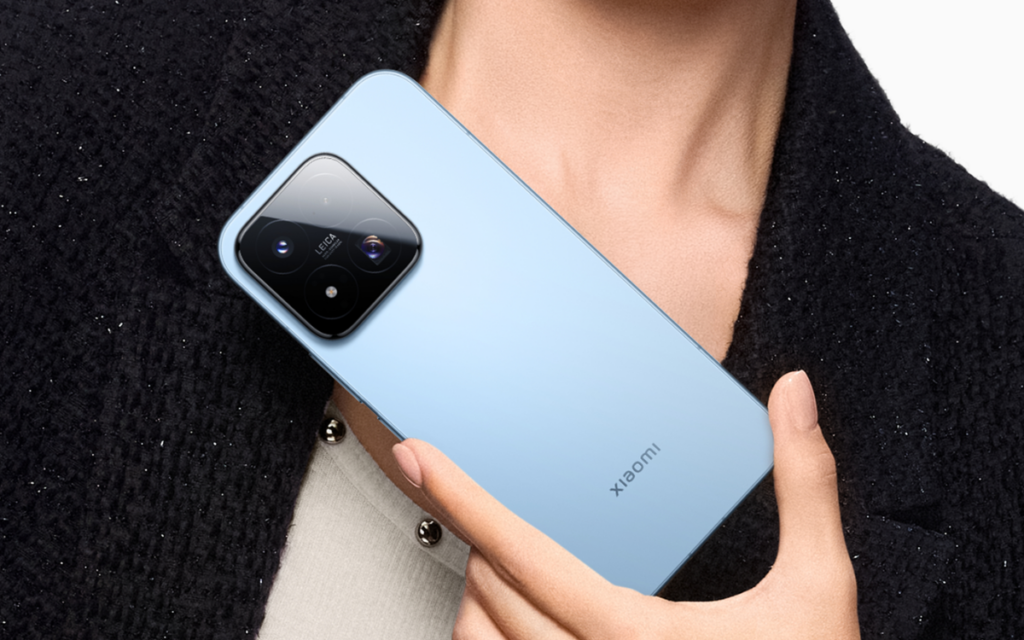
Reports also point to a 120Hz LTPO refresh rate, an ultrasonic in-display fingerprint scanner, and symmetrical dual speakers. The phone is expected to be available in Sky Blue, White, and Pixel Black, with some variants possibly featuring a ceramic or carbon fiber-style finish on the back panel.
3. Camera
On the back, the Xiaomi 17 Max features a rounded square camera module that blends into the rear panel. Xiaomi has confirmed that it will be the brand’s first phone to use a Leica-backed 200-megapixel primary camera with a 1/1.4-inch sensor. This higher resolution is intended to help retain detail when zooming in digitally.
Alongside the main sensor, the phone is expected to include a 50-megapixel periscope telephoto lens with 3x optical zoom and a 50-megapixel ultrawide camera for broader shots.
4. Performance
Under the hood, the Xiaomi 17 Max will be powered by Qualcomm’s top-tier Snapdragon 8 Elite Gen 5 chipset, paired with LPDDR5X RAM and UFS 4.1 storage.
Xiaomi has teased a completely redesigned internal layout for the device, which should drastically improve heat management during heavy multitasking and long gaming sessions.
5. When can you get it?
The Xiaomi 17 Max is currently available for pre-order in China, with the official launch expected on May 21. We are not sure yet if it’s gonna make it to the global market or not. However, Xiaomi is launching Xiaomi 17T and 17T Pro globally on 28th May.
For more daily updates, please visit our News Section.
Huawei’s next Nova phones may not be far away. According to a new leak from Weibo tipster Fixed Focus Digital, the upcoming Huawei Nova 16 series could launch on June 1st. Huawei, however, has not officially confirmed the date yet.
Huawei Nova 15 Pro
Another leak from a separate Weibo tipster reveals the Nova 16 Pro Max’s camera specs. According to the post, the device may feature a 200-megapixel main camera with a large 1/1.28-inch sensor. The tipster even teased followers, asking whether they could guess which sensor Huawei is using this time.
Huawei Nova 16 family: What we know so far?
According to previous reports, the Nova 16 family will include three members: Nova 16, Nova 16 Pro, and Nova 16 Pro Max. There’s reportedly no Ultra this time around.
The standard Nova 16 and Nova 16 Pro are expected to arrive in black, white, blue, and a gradient finish. The top-end version, however, may skip the gradient look entirely and stick to black, white, and blue.
The Pro Max is also rumored to feature a 6.84-inch 1.5K LTPO display alongside a Kirin 9000-series chipset. Backing this could be a 7000mAh cell.
The Nova 16 Pro Max’s camera hardware may also include a periscope telephoto lens and a multispectral sensor, while wireless charging is expected to be included as well.
For reference, the previous Huawei Nova 15 series launched late last year with Kirin 8020 and 9010S processors. The lineup started at 2699 yuan, while the Ultra variant mainly focused on a redesigned appearance instead of major hardware upgrades.
As always with early leaks, details could change before launch. So take everything with a pinch of salt.
For more daily updates, please visit our News Section.
Motorola is set to launch the Moto Buds 2 in India on May 19, alongside the Moto G37 and Moto G37 Power. Following the Moto Buds 2 Plus, these earbuds come with a long list of audio, battery, and noise-cancelling features. The Moto Buds 2 made their global debut in March.
Moto Buds 2 features
The Moto Buds 2 use an 11mm dynamic driver and a 6mm micro planar magnetic driver. They also support LHDC, or Low-Latency High-Definition Audio Codec, for higher-quality Bluetooth audio on supported devices. Spatial Audio is included too, with a 360-degree sound effect for supported content.
Motorola is also adding dynamic active noise cancellation of up to 55dB. The feature adjusts noise blocking based on the surroundings. Smart Transparency Mode is included to let outside sound in when needed.
For calls, the earbuds use a six-mic setup with Environmental Noise Cancellation and high signal-to-noise ratio support. This is meant to improve voice clarity in noisy or windy places. The earbuds also include a low-latency gaming mode for gaming and video playback.
Battery life details are slightly different across the shared information. The detailed spec sheet lists up to 11 hours of playback on a single charge and up to 48 hours with the case. The launch data mentions up to 10 hours per charge and up to 53 hours in total. Fast charging is confirmed, with 10 minutes of charging giving up to 3 hours of playback.
The Moto Buds 2 support Bluetooth 6.0 and dual connection, so users can move between two devices. Other features include wear detection, user-adjustable controls, customizable EQ with Bass Boost, Ring My Buds, voice assistant trigger, Audio Share, and moto ai support. The earbuds have an IP54 rating for dust and splash resistance. Each earbud has a 62mAh battery, while the case has a 520mAh battery.
Expected pricing
In the UK, the Moto Buds 2 are priced at £70, which converts to roughly Rs. 9,000. However, the Moto Buds 2 Plus are priced at Rs. 5,999 in India, so the regular Buds 2 should launch at a lower price.
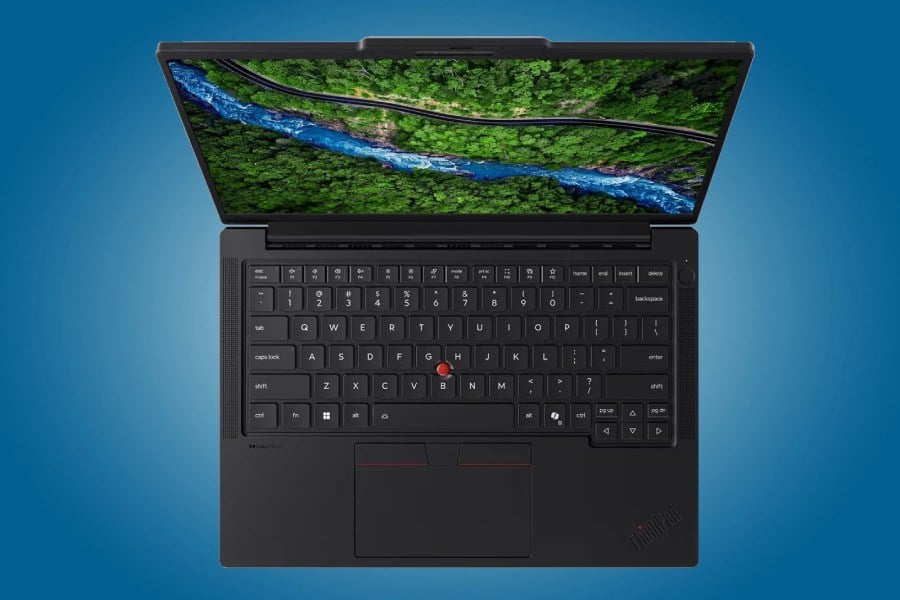
Lenovo has launched the new Lenovo ThinkPad P14s Gen 7 in the Eurozone, updating its compact workstation laptop with AMD’s latest Ryzen AI Pro processors, a high-refresh OLED display option, and memory configurations that go all the way up to 96GB.
Lenovo ThinkPad P14s Gen 7 Specifications
The new 14-inch ThinkPad is based on AMD’s Gorgon Point platform and is for professionals who need workstation-level hardware in a relatively portable form factor. Lenovo is offering the machine with two processor options at launch: the AMD Ryzen AI 5 Pro 440 and the more powerful Ryzen AI 9 HX Pro 470.
Memory-wise, Lenovo is offering a wide range of DDR5-5600 configurations, starting at 16GB and scaling up through multiple options, including 24GB, 32GB, 48GB, 64GB, and topping out at 96GB.
Storage options include PCIe 4.0 and PCIe 5.0 SSDs with capacities reaching 2TB. Lenovo is also giving buyers several display choices depending on how they plan to use the machine.
The base models use 14-inch WUXGA IPS panels, while higher-end versions add brighter 500-nit screens with full sRGB coverage, touch support, and low blue light certification. The standout option is a 14-inch 2.8K OLED display with a 120Hz variable refresh rate, 500 nits of brightness, and 100 percent DCI-P3 color coverage. It also supports DisplayHDR True Black 500.
The ThinkPad P14s Gen 7 offers at least a 60Wh battery, though Lenovo also offers an optional 75Wh battery for users who want longer runtime. As for connectivity, the workstation can be configured with a Qualcomm Snapdragon X61 sub-6GHz 5G module and includes ports such as USB-A, Thunderbolt 4, HDMI, RJ-45 Ethernet, a headphone jack, Nano-SIM support, and even a smart card reader.
Pricing and Availability
The ThinkPad P14s starts at 1,990 euros in the UK for the Ryzen AI 5 Pro 440 model with 16GB RAM. In Australia, the laptop starts at AUD 2,979. Lenovo has not yet announced wider regional availability.
Xiaomi President Lu Weibing has revealed that the company was much closer than expected to releasing an ultra-thin smartphone similar to Apple’s iPhone Air. Speaking during an ongoing livestream, Lu said Xiaomi had already completed planning, early research, and was even nearing mass production before the company decided to cancel the project at the last minute.
According to Lu, the decision came down to user experience. Xiaomi found that creating an extremely thin and lightweight phone required too many compromises in areas like battery life and performance. While the design looked appealing, the company felt the final product would not meet the standard experience Xiaomi wanted to deliver to users.
XIaomi 17 Air Rumored Design
Lu explained that the thinner the device becomes, the harder it is to include large batteries, proper cooling systems, and high-performance hardware without affecting daily usability. Instead of launching a product that looked impressive but made sacrifices in real-world use, Xiaomi decided to abandon the idea entirely.
No Air, But Max
The comments also help explain why Xiaomi is focusing more heavily on larger “Max” devices in its upcoming lineup. Lu said the Xiaomi 17 Max is not being branded as a “Plus” model because the company sees the two categories differently. Traditionally, Plus phones mainly offer a larger display compared to the standard version. In Xiaomi’s case, however, the Max branding represents more than screen size alone.
Lu said the Max series is expected to include upgrades in areas such as imaging, performance, and battery life alongside the larger display.
The livestream comments arrive at a time when many smartphone brands are experimenting with thinner and lighter devices. However, Xiaomi’s decision suggests the company believes consumers still prioritize battery endurance and consistent performance over ultra-slim designs.
It also aligns with Xiaomi’s recent messaging around flagship devices, where the company has emphasized larger batteries, advanced camera systems, and higher-end hardware rather than chasing the thinnest possible form factor.
Headphone designs usually stick to familiar templates, but Edifier is trying a different approach with its latest release in China. The company has launched the Auro Ace, a pair of over-ear headphones that integrate a dot-matrix display into the side of the earcup. Priced at 279 yuan (roughly $40), the headset is positioned as a budget-friendly option that leans heavily into visual customization.
Edifier Auro Ace Specifications
The most distinct hardware feature is the screen itself. Built directly into the earcup, the animated dot-matrix panel can display real-time song lyrics and audio spectrum animations while connected via Bluetooth. Through the companion app, users can also set up custom text, pixel art, and graphics. Edifier includes a selection of built-in themes designed to match different outfits or preferences, treating the headphones as much as a visual accessory as a standard audio device.
As for the physical build, the Auro Ace is light, weighing in at 130 grams. This lower weight is intended to reduce pressure on the head during longer listening sessions. The design includes an adjustable hidden headband, a swing-joint structure to accommodate different head shapes, and soft ear cushions. It is available in three colors: Silver, Black, and Gold.
Inside, the headphones rely on 32mm dynamic drivers paired with a rear acoustic cavity design. On the connectivity side, the Auro Ace supports Bluetooth 6.0, which brings multipoint support so you can stay connected to a phone and a laptop at the same time. If you prefer a wired connection, the headphones also support plug-and-play USB audio.
Battery life is rated at up to 62 hours, though that metric comes with a caveat: it requires the dot-matrix display to be turned off and the volume set to 50%. The headset supports fast charging, providing about 11 hours of playback from a 15-minute charge.
Edifier also included AI noise reduction for phone calls and a shortcut that lets users double-press the power button to trigger their smartphone’s camera shutter.
In related news, Honor Choice Headphones 2 recently launched with 57dB ANC and 70-hour battery life.
For more daily updates, please visit our News Section.
Xiaomi President Lu Weibing has hinted that flagship smartphone prices may be heading into uncomfortable territory over the next couple of years. Speaking during a recent livestream, Lu suggested that some traditional high-end “candybar” phones in China could eventually cross the 10,000 yuan mark, especially toward the end of 2026.
To put that into perspective, the Xiaomi 17 Ultra started at 6,999 yuan (around $980) in China for the 12GB + 512GB version when it launched last December.
According to Lu, one of the biggest reasons is memory pricing. DRAM and NAND flash costs have been climbing sharply, and Xiaomi says those increases are becoming harder for smartphone makers to absorb. Lu mentioned that pricing for upcoming devices, including phones like the Xiaomi 17 Max, is still being discussed internally because component costs remain volatile.
He also pointed out that supply is not something manufacturers can quickly fix. Building a new memory factory can take several years from start to mass production, while demand continues to rise rapidly, especially because of AI servers and high-performance computing hardware. Lu believes the pressure on memory pricing may continue through 2027, and possibly even into 2028.
That context makes Xiaomi’s upcoming 17 Max launch particularly interesting. The phone has already been teased in China ahead of a May release and is expected to sit near the top of Xiaomi’s lineup. Leaks and teasers point to a large 6.9-inch display, Snapdragon 8 Elite Gen 5 chip, Leica-tuned 200MP main camera, and a massive 8,000mAh battery.
Xiaomi is not the only brand dealing with rising costs either. Companies like Oppo, Vivo, and Honor are all facing similar pressure as component pricing continues to climb across the industry.
Still, Lu tried to reassure users that Xiaomi intends to keep focusing on value where possible, even if prices rise overall. Whether consumers are willing to accept flagship phones crossing the 10,000 yuan barrier is another question entirely.
If it happens, it could mark a pretty major shift for the Chinese smartphone market, where aggressive pricing has long been one of the biggest selling points.
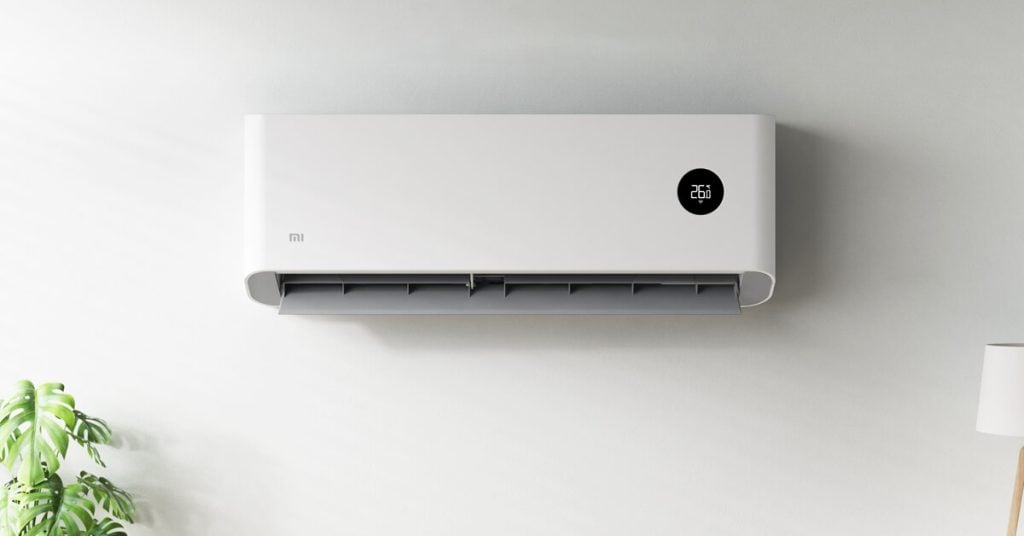
Xiaomi has expanded its home appliance lineup with the release of the Mijia Air Conditioner Powerful Wind Pro. Following the launch of the standard model last month, this upgraded version is now available on Xiaomi Mall in China for an introductory price of 3,299 yuan ($484), compared to its retail price of 4,899 yuan ($719).
Mijia Powerful Wind Pro AC Specifications
While technically a 1.5HP+ wall-mounted air conditioner, Xiaomi claims it delivers the output of a bulkier 2HP floor-standing model. Under the hood, it pairs a 13cc dual-cylinder compressor with dual-row pure copper condensers and evaporators. This hardware combination achieves a peak cooling capacity of 6500W and a heating capacity of 8800W, allowing the system to start pushing cold air in 15 seconds or warm air in 30 seconds.
Internally, Xiaomi reworked the thermal exchange system to double the condenser’s surface area for heat exchange, which also helps slightly lower the unit’s operating noise. To handle harsh weather, it uses a dynamic refrigerant control system that keeps the air conditioner running steadily in outdoor temperatures ranging from -20°C to 55°C.
The system relies on a 118mm cross-flow fan to distribute up to 1,000 cubic meters of air per hour. Rather than blowing air directly at people, it uses targeted airflow modes to improve comfort in the room. During cooling, the unit pushes cold air toward the ceiling to let it naturally drop, and during heating, it directs warm air down toward the floor.
For energy efficiency, it holds a Level 1 energy efficiency rating with an Annual Performance Factor (APF) of 6.30. By utilizing built-in energy management algorithms, Xiaomi estimates the unit uses about 404kWh less electricity per year than a standard Level 3 model.
As expected from a Mijia appliance, the unit ties directly into Xiaomi’s broader smart home ecosystem. It runs on HyperOS and uses a dedicated AI module to handle local processing. You can adjust settings using the companion app, XiaoAI voice controls, or even the dashboard of a connected Xiaomi car before you get home.
Beyond the smart integrations, the system includes standard utility options like self-cleaning for both the indoor and outdoor units, anti-mildew drying, and a child lock.
For more daily updates, please visit our News Section.
Oppo’s latest flagship phone, the Find X9 Ultra, is running into an unexpected camera issue just weeks after launch. Some users are reporting that white objects in videos sometimes end up looking pink or magenta, especially when using certain camera modes.
The issue started gaining attention on Chinese social platforms during the May Day holiday. Some users noticed white clouds appearing pink in recorded footage, while others showed examples where buildings, tiles, or clothing suddenly shifted color after switching zoom levels.
One clip circulating online shows the phone displaying a white building normally in the live preview, only for parts of it to turn noticeably pink when moving to 2x zoom. According to users, the problem seems to happen more often on the main and ultra-wide cameras. Switching to the telephoto lens apparently reduces or completely removes the tint in some situations.
People have also tried restarting the phone, but the issue keeps coming back, which points more toward image processing than hardware failure.
Oppo customer service has since acknowledged the problem and confirmed it is a known software bug affecting the Find X9 Ultra. The company says they have already identified the cause, and a fix is planned through an OTA update expected later this month.
The timing is not ideal for Oppo, especially since the Find X9 Ultra was marketed heavily around camera quality and Hasselblad color tuning. The phone launched with a strong focus on professional imaging features, so users spotting obvious color problems this early has naturally raised some concerns online.
To Oppo’s credit, the company seems to have responded fairly quickly. While there is still no broader public statement, customer support is already telling affected users that a software update is on the way.
Software bugs around camera tuning are not exactly rare on new flagship phones, particularly ones using aggressive computational photography.
Coming home to a warm house and waiting for the air conditioner to catch up is a familiar routine. According to Xiaomi president Lu Weibing, that delay usually isn’t a hardware flaw; it is simply a software limitation. Traditional air conditioners operate on fixed cooling curves, meaning they deliver the same level of cooling regardless of the room’s actual conditions or how long you have been inside. To change this, Xiaomi is introducing new appliances that use on-device AI to manage their own settings.
The first product in this updated lineup is the Mijia Air Conditioner Strong Wind Pro. Instead of relying solely on a manual temperature input, the unit uses a built-in AI chip paired with a cloud-based model to learn a household’s specific environment and usage patterns.
The practical application here is a balance of energy efficiency and comfort. For instance, the system is designed to recognize when you first arrive home and temporarily increase its cooling power to bring the temperature down quickly. Later, when it is time for sleep, it can automatically lower its output to run more quietly and use less electricity. The goal is to create an appliance that adjusts itself based on context, rather than waiting for manual remote commands.
Xiaomi is applying a similar concept to floor cleaning with the new Mijia Robot Vacuum Mop 6 Max. While basic obstacle avoidance is standard on most modern robot vacuums, they can still struggle with complex room layouts, which often leads to missed spots.
These hardware updates tie into a broader corporate strategy. Earlier this year, Xiaomi committed to investing over $9 billion into AI research over the next three years. While much of the tech industry’s recent focus has been on generative text and chatbots, Xiaomi is trying to integrate AI into standard household hardware.
It is a more grounded approach to the current AI trend. Rather than simply adding a conversational voice assistant to every appliance, the company is using machine learning to handle basic, behind-the-scenes adjustments, such as making sure the living room is cool when you walk in and not wasting power when you are asleep.
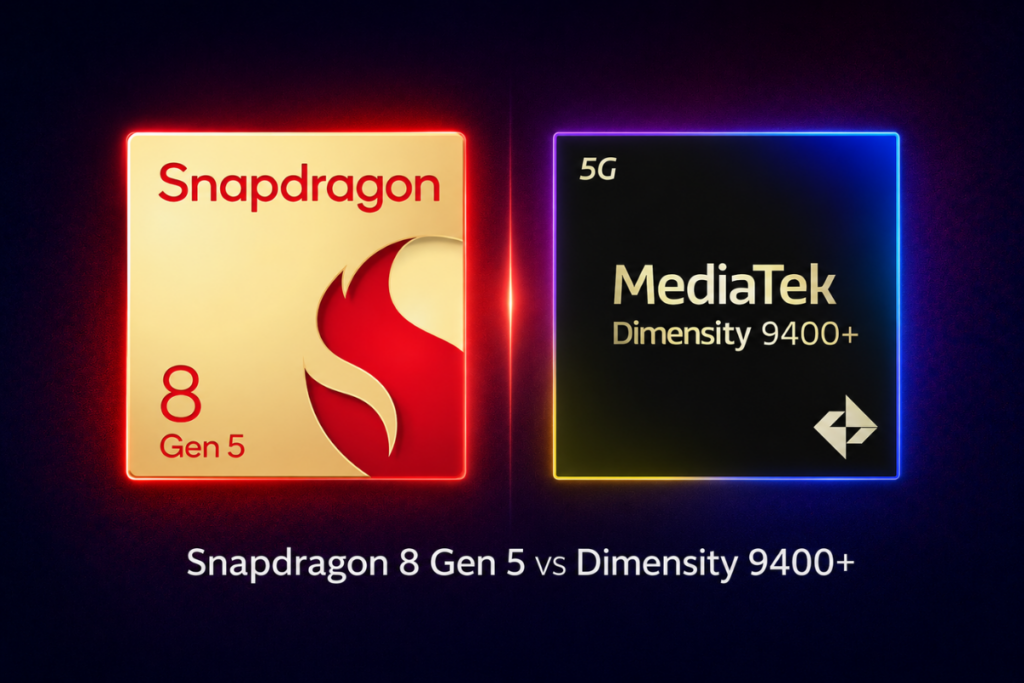
The Snapdragon 8 Gen 5 is one of the most popular high-end smartphone chipsets right now. It’s packs a custom-designed Oryon CPU, a capable GPU that offers excellent gaming performance and stability, and modern connectivity features. Many of the camera capabilities have been borrowed from the top-tier 8 Elite Gen 5 SoC, which is also a big plus for the 8 Gen 5.
The Dimensity 9400 Plus, on the other hand, is a top-tier flagship chipset, but the fact that it’s priced around the same as Snapdragon 8 Gen 5 phones makes the battle more interesting. Let’s look at the benchmark scores, spec sheet, and crucial differences to figure out how these two flagship chips fare against each other.
Quick verdict: – Choose Snapdragon 8 Gen 5 if you prioritize CPU performance, robust connectivity with higher 5G download speed and mmWave bands, and a premium ISP pipeline. – Choose Dimensity 9400 Plus if you prioritize sustained gaming performance, faster Wi-Fi speeds, and longer phone-to-phone Bluetooth connections.
Snapdragon 8 Gen 5 vs Dimensity 9400 Plus: Spec sheet
Snapdragon 8 Gen 5
Dimensity 9400 Plus
Announced
November 2025
April 2025
Process node
3 nm (TSMC)
3 nm (TSMC)
CPU
2 × 3.8 GHz (Oryon Gen 3 – Prime) 6 × 3.32 GHz (Oryon Gen 3 – Performance)
Adreno 829 ray tracing support Snapdragon Elite Gaming features
Arm Immortalis-G925 MP12 ray tracing support MediaTek HyperEngine Adaptive Gaming Technology
NPU
Qualcomm Hexagon NPU Agentic AI support
MediaTek NPU 890 Agentic AI support
Memory
LPDDR5x, up to 4.8 GHz
LPDDR5x, up to 5.3 GHz
Storage
UFS 4.1
UFS 4 + MCQ
Camera
Qualcomm Spectra triple AI ISP (20-bit) up to 320MP single camera up to 108MP single camera with zero shutter lag, 30fps up to 48MP triple cameras with zero shutter lag, 30fps up to 4K/120fps video recording real-time semantic segmentation (limitless)
MediaTek Imagiq 1090 ISP Up to 320MP single camera Up to 8K/60fps video recording real-time semantic segmentation Full range HDR zoom Gen-AI Telephoto
Connectivity
Snapdragon X80 5G modem download speed: up to 10 Gbps upload speed: up to 3.5 Gbps Wi-Fi 7 (peak speed: 5.8 Gbps) Bluetooth 6.0
3GPP Release-17 5G modem download speed: up to 7 Gbps Wi-Fi 7 (peak speed: 7.3 Gbps) Bluetooth 6.0
Snapdragon 8 Gen 5 vs Dimensity 9400 Plus: Benchmark score
Geekbench score
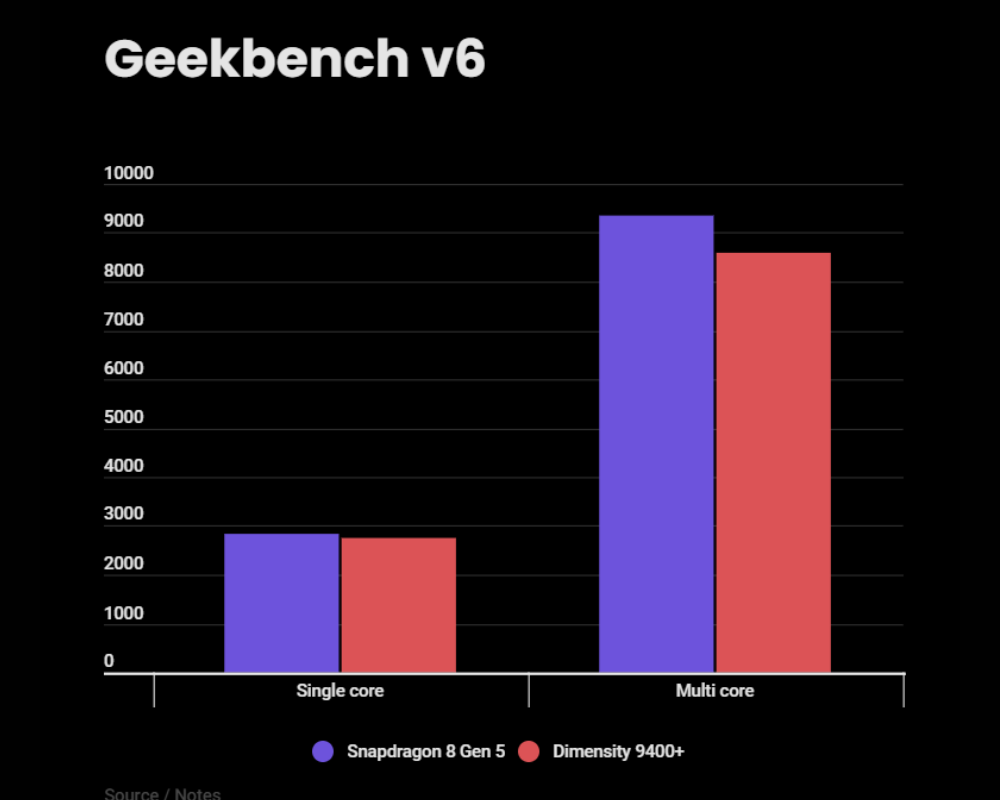
On Geekbench 6, the Snapdragon 8 Gen 5 pulls ahead in both single-core and multi-core tests, although the differences aren’t huge. The single-core score is up by 3%, and the multi-core score is 8% higher than that of the Dimensity 9400 Plus.
Snapdragon 8 Gen 5
Dimensity 9400 Plus
Single core
2,837
2,753
Multi core
9,352
8,590
AnTuTu score
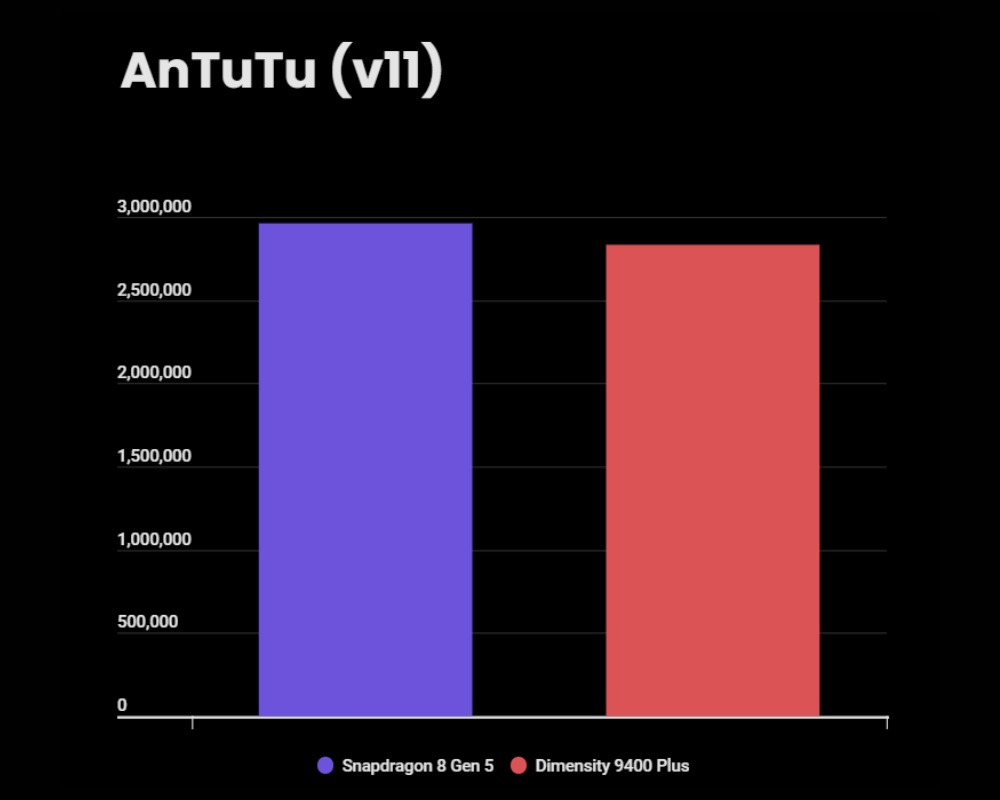
The Snapdragon 8 Gen 5 achieves about a 4% higher AnTuTu score than the Dimensity 9400 Plus. But this doesn’t offer much clarity unless you look at the breakdown of the total AnTuTu score.
Snapdragon 8 Gen 5
Dimensity 9400 Plus
AnTuTu score
2,961,236
2,832,547
CPU
914,878
853,898
GPU
974,402
1,012,010
Memory
382,729
377,443
UX
689,228
589,197
The Snapdragon chip still maintain an edge over the Dimensity 9400+ in CPU performance with a 7% higher score, but the GPU score favors the Dimensity chip, which gets about a 4% higher score.
Looking at the benchmark scores, the Snapdragon 8 Gen 5 feels like a more performance-friendly option, but that alone doesn’t tell the complete picture. One should also consider other key metrics, such as camera capabilities and connectivity upgrades, to make an informed decision.
Snapdragon 8 Gen 5 vs Dimensity 9400 Plus: Key differences
CPU, GPU, & NPU
Both chipsets feature an all-big-core CPU design, but differ notably in CPU clusters and peak performance. The Snapdragon 8 Gen 5 utilizes Qualcomm’s custom-designed Oryon CPU, featuring a ‘2+6’ configuration. This includes two prime cores and six performance cores.
The Dimensity 9400 Plus features a tiered ‘1+3+4’ CPU configuration, consisting of one Cortex-X925 prime core, three Cortex-X4 performance cores, and four Cortex-A720 performance cores. The CPU has a peak frequency of 3.73 GHz, while the Snapdragon 8 Gen 5 reaches 3.8 GHz. The latter also excels in higher speeds on secondary scores.
For gaming and other graphics-intensive tasks, the Snapdragon 8 Gen 5 features an Adreno 829 GPU with a full suite of Snapdragon Elite Gaming features, including Snapdragon Adaptive Performance Engine 4.0 and Qualcomm FPS 3.0, further optimizing game performance and power efficiency.
The Dimensity 9400 Plus uses a 12-core Arm Immortalis-G925 GPU, paired with many game-related features, including MediaTek Frame Rate Converter 2.0+ and MediaTek Adaptive Gaming Technology (MAGT) 3.0, to deliver excellent gaming performance and stability. MediaTek says the chip delivers PC-grade ray tracing capabilities.
Turning to AI capabilities, the Snapdragon 8 Gen 5 features an upgraded Hexagon NPU that delivers 46% faster performance than its predecessor (8 Gen 3). This is the first Qualcomm chip to embed hardware matrix acceleration into the Oryon CPU, enabling the CPU to execute matrix-intensive AI subtasks without offloading everything to the NPU. The 8 Gen 5 also supports contextually-aware agentic AI that can learn and adapt to offer personalized assistance.
The Dimensity chip features the MediaTek NPU 890, which supports new generative and agentic AI models. Specifically, it has full support for the DeepSeek-R1-Distill (1.5B/7B/8B) model with on-device processing.
Camera
The Snapdragon 8 Gen 5 inherits many of the camera capabilities from the top-tier 8 Elite Gen 5 chip. It includes a 20-bit Triple AI ISP, up to 320MP camera support, and 4K video recording at 120fps. On top of a robust ISP pipeline, the chip uses AI to process data frame by frame in real time for accurate optimizations. The chip also supports real-time tone control, Night Vision 3.0 for low-light environments, and Snapdragon Audio Sense for HDR audio recording without noise.
In contrast, the Dimensity 9400 Plus features an Imagiq 1090 ISP that promises to offer “DSLR-like experience.” It also supports up to 320MP camera resolution and 4K video recording at 120fps, and adds features such as Full-range HDR zoom, Gen-AI Telephoto, and Lightning Snapshot Camera.
Connectivity
While both chipsets offer cutting-edge connectivity features, there are several key differences worth paying attention to. The Snapdragon 8 Gen 5 supports both sub-6GHz and mmWave bands, but the Dimensity 9400 Plus focuses primarily on sub-6GHz. The official product page doesn’t mention mmWave support.
The Snapdragon chip also has an edge in peak download speed, supporting up to 10Gbps, while the Dimensity 9400 Plus can reach up to 7Gbps on a 5G connection. On Wi-Fi connection, though, the Dimensity chip offer a higher peak speed of 7.3Gbps (vs. 5.8Gbps on the 8 Gen 5).
The Snapdragon 8 Gen 5 natively integrates Ultra Wideband (UWB) along with AI-powered proximity solutions to help you find lost items. It also integrates many features to improve the connectivity stability and power efficiency. The Dimensity chip also includes many connectivity enhancements, including Triple Band Triple Concurrency and phone-to-phone Bluetooth connections up to 10km.
Sony’s newly launched Xperia 1 VIII was supposed to highlight the company’s continued focus on creators and mobile photography. Instead, much of the conversation online this week has ended up revolving around a few badly received demo images.
The Xperia 1 VIII launched on May 13 with flagship hardware, including the Snapdragon 8 Elite Gen 5 chip, ZEISS-branded cameras, expandable storage, and even a headphone jack — features Sony continues to keep around while most brands have moved on. But shortly after launch, Sony’s official Xperia account on X posted a set of “before and after” images to showcase the phone’s new AI Camera Assistant feature, and things quickly went sideways.
Rather than looking improved, the AI-processed shots appeared massively overexposed. Highlights were blown out, colors looked washed, and in some examples, details nearly disappeared entirely. One portrait sample in particular drew attention because the subject’s face looked almost faded away after processing.
The reaction online was immediate. Nothing CEO Carl Pei reposted the images with the comment, “This must be engagement farming??” Other creators joined in as well, and before long, social media had turned the whole thing into a meme. Users started posting exaggerated “AI enhanced” edits of their own, some reduced to completely white images with sarcastic captions thanking Sony for the upgrade.
Sony later clarified that the AI Camera Assistant is not meant to automatically edit photos after capture. The feature instead suggests different shooting styles and settings based on the scene, including exposure, color tone, lens effects, and bokeh adjustments. Users can then pick one of those styles or ignore them entirely.
The company also shared additional examples afterward that looked considerably more reasonable than the originals.
Whether it was simply a poor marketing example or indeed an engagement farming, the situation ended up overshadowing part of the Xperia 1 VIII launch. Ironically, the phone itself is still receiving fairly positive reactions for its hardware and camera-focused approach.
Xiaomi has launched a new smart refrigerator in China under its Mijia lineup. The new model is called the Mijia Refrigerator French 400L Automatic Ice Maker, and it is now open for reservations in China.
The biggest highlight is probably the automatic ice-making system. Xiaomi says the fridge can produce ice in about 60 minutes, which should be useful for households that regularly go through a lot of cold drinks or entertain guests often.
There is also a strong focus on hygiene. Xiaomi claims an antibacterial rate of over 99.9%, along with full-area ion purification to help reduce odors and keep food fresher for longer.
Inside, the refrigerator includes a 50L variable temperature compartment that can be adjusted between -1°C and 5°C. That gives a bit more flexibility depending on what you are storing, whether it is seafood, meat, vegetables, or drinks.
The total storage capacity is split into 216L for refrigeration, 50L for the adjustable zone, and 134L for the freezer section. Xiaomi says the layout is designed for families of around four to five people.
The fridge also supports Xiaomi’s HyperOS ecosystem, allowing remote controls and smart home integration. Other details include a quiet 35dB operating noise level and a 10-year compressor warranty.
Design-wise, Xiaomi is going with a softer look this time. The refrigerator comes in an apricot finish and uses a relatively slim body design that should fit more easily into compact kitchens. Xiaomi says it takes up around 0.4 square meters of floor space.
Pricing:
The refrigerator is priced at 2,999 yuan, though China’s national subsidy brings the effective price down to around 2,549 yuan, which puts it in a fairly competitive spot for a feature-heavy mid-range model.
With products like this, Xiaomi continues to push deeper into the smart appliance market beyond phones, wearables, and EVs.
If your iPhone battery is running low by lunchtime, or you are the kind of person who forgets to charge, you are not alone. Heavy app use, always-on displays, and the demands of 5G connectivity mean that even the latest iPhones can struggle through a full day.
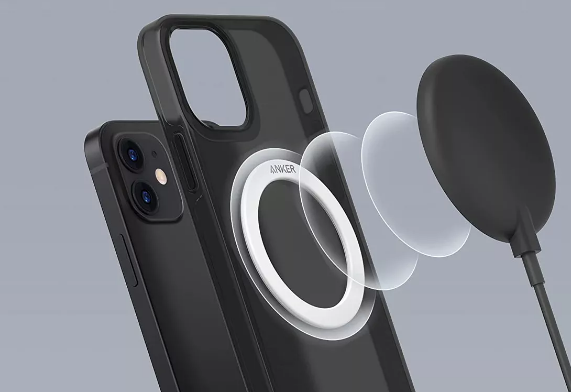
A MagSafe power bank is one of the smartest accessories you can have for this problem. It snaps onto the back of your iPhone magnetically, charges it wirelessly, and lets you keep using the phone normally while it tops up.
But the market is crowded. Walk into any electronics store or scroll through Amazon, and you will find dozens of options. So to make your decision easy, we are listing out the best MagSafe power banks for iPhone in 2026 from three of the most reliable brands: Anker, Belkin, and Ugreen.
Before jumping into the products, let’s quickly understand the terminology.
MagSafe is Apple’s magnetic charging system, built into every iPhone from the iPhone 12 onwards. It uses a ring of magnets to snap accessories, including power banks, perfectly into place on the back of the phone.
Meanwhile, Qi2 is an open standard based on MagSafe, developed by the Wireless Power Consortium. It brings the same magnetic alignment and 15W fast wireless charging to non-Apple devices and accessories. In 2026, Qi2 is the standard to look for on any magnetic power bank, because it guarantees genuine fast charging rather than the slower 7.5W you get from basic wireless chargers.
The newest generation, Qi2.2, pushes speeds even further to 25W, and two of the brands below now sell it.
2. Anker MagGo Power Bank
Anker has been the world’s number one mobile charging brand by retail sales for five consecutive years, and its MagSafe lineup reflects years of refinement.
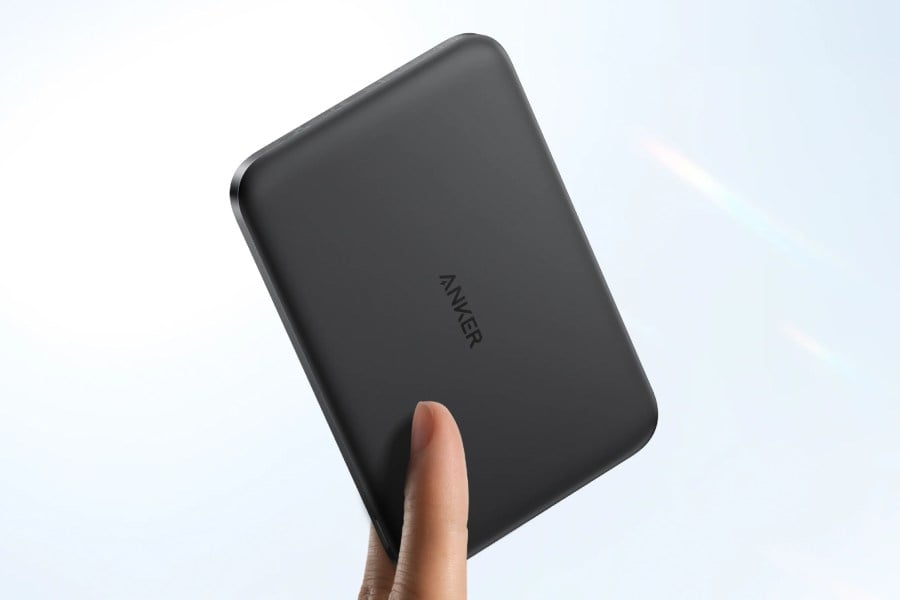
Anker MagGo Power Bank (10K Slim)
The Anker MagGo Power Bank (10K Slim) is designed for people who want maximum power without adding bulk. At just 0.58 × 2.78 × 4.09 inches, this 10,000mAh power bank delivers exceptional portability without compromising on power.
It is Qi2-certified, meaning it delivers 15W wireless charging with fast, secure, and efficient power boosts. With 27W USB-C fast charging, an iPhone 15 can reach 60% in just 30 minutes while the power bank itself recharges simultaneously.
One of Anker’s biggest selling points is safety. The MagGo Power Bank is built with an ActiveShield safety system that continuously monitors temperatures over 3 million times daily, maintaining operating temperatures below 104°F. The industry standard, in comparison, is 118.4°F.
The power bank also has a smart display showing battery percentage and estimated charging times, plus a built-in kickstand for hands-free viewing.
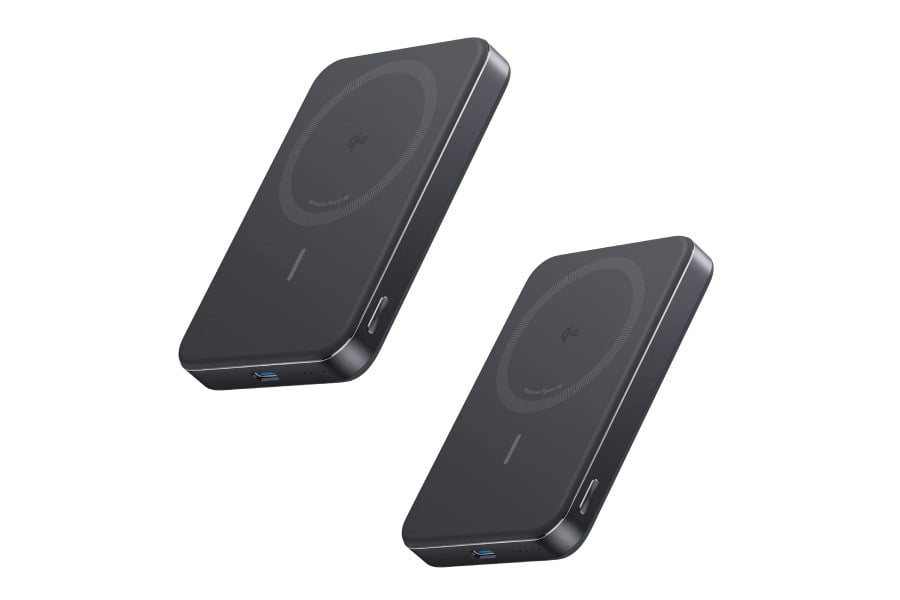
For those who want something even lighter, the Anker Nano Power Bank could be the one for you. It’s just 0.34 inches thick, weighs 4.3 ounces, and charges iPhones with 15W MagSafe-compatible wireless charging and supports 20W USB-C wired charging. The device recharges itself in under two hours and can charge an iPhone 16 Pro to 25% in 42 minutes.
As for the build, the power bank has a metal frame alongside a skin-friendly back panel. It also sports a USB-C port at the bottom, using which you can get up to 20W charging speeds over a wired connection, and it comes with a USB-C cable in the box.
Belkin is known for premium build quality and its tight relationship with the Apple ecosystem. Its BoostCharge Pro line is MFi-certified, meaning Apple has approved it to work with iPhones, and every model comes with Belkin’s impressive Connected Equipment Warranty.
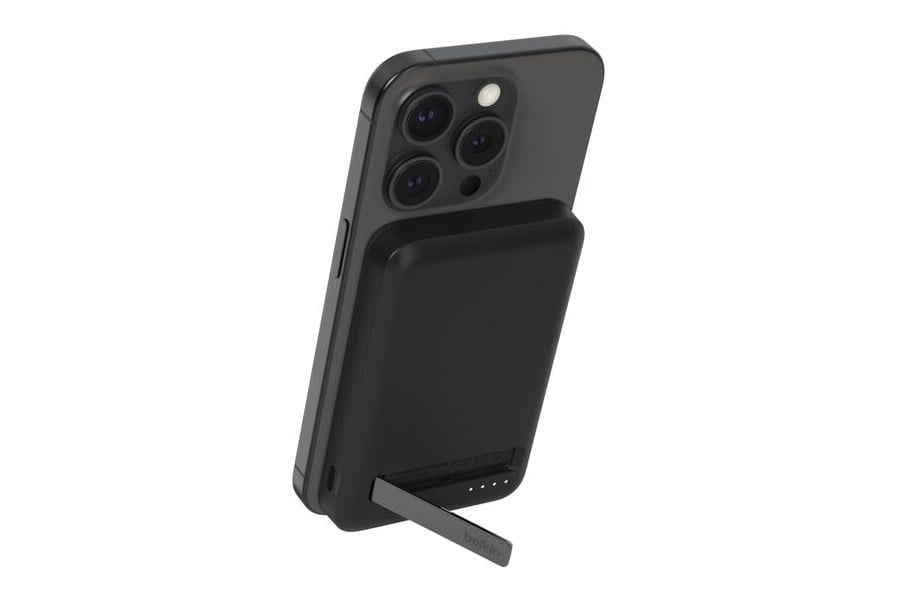
Belkin BoostCharge Pro Magnetic Power Bank with Qi2 (5K and 10K)
Belkin offers the BoostCharge Pro with up to 15W of wireless charging, making it easy to attach to any iPhone with MagSafe support. The 10,000mAh model promises up to 35 hours of additional battery life for smartphones, and the company also offers thinner options with 8,000mAh and 5,000mAh, depending on your needs.
The built-in foldable kickstand lets users switch between pad and stand modes, making it convenient for FaceTime calls, streaming, or multitasking while charging. Weighing 5.3 ounces, the BoostCharge Pro is compact and travel-friendly. Belkin offers the device in multiple colors: Deep Purple, Teal, Pink, and Black, to suit different tastes.
In independent head-to-head recharge testing, the Belkin BoostCharge Pro Power Bank 5K + Stand won in recharging tests, recharging a faded iPhone 16 Pro by 79%, beating the 5K EcoFlow RAPID (70%) and the Ugreen 5,000mAh model (68%).
Every Belkin purchase also comes with a 2-year warranty and a $2,500 Connected Equipment Warranty. Belkin will repair or replace electronic devices damaged by an electrical charge while properly connected to this charger. This level of protection is almost unheard of among power bank manufacturers, making Belkin an easy recommendation for anyone who owns expensive devices.
The BoostCharge Pro is sustainably made with post-consumer recycled materials and comes in 100% plastic-free packaging.
Belkin has also caught up on speed. In late June it launched the UltraCharge Slim 10K, a 10,000mAh model with 25W Qi2.2 wireless charging and a 30W USB-C port. Belkin says it takes an iPhone 17 Pro from 0 to 50% in 39 minutes. It debuted at £69.99, and it removes the one advantage Ugreen had held alone.
Ugreen might be less of a household name than Anker or Belkin, but the company has been a reliable choice for anyone looking for charging accessories, including those of iPhones.
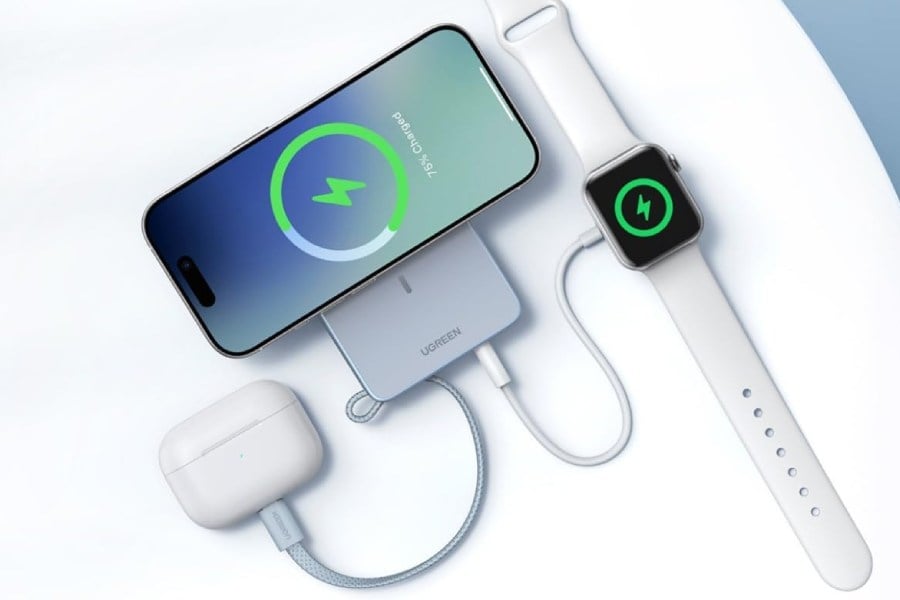
Ugreen MagFlow (10,000mAh, Qi2.2)
The Ugreen MagFlow was the world’s first Qi2.2-certified power bank, and it delivers wireless charging speeds up to 25W.
During real-world testing, the MagFlow was able to charge an iPhone from 20% to 80% twice using Qi2 wireless charging, drawing on its 10,000mAh capacity.
The MagFlow also features 30W USB-C fast charging with a built-in USB-C cable and a lanyard that helps carry the power bank around. In total, this power bank offers two USB-C wired connections, the built-in cable, and a separate port, in addition to wireless charging. With that, you can charge an iPhone 17 Pro Max, AirPods Pro 3, and Apple Watch Ultra on the go with just one extra cable.
It also has a real-time LED display that shows battery levels, and a 13-layer safety system protects against overheating and overcharging. The built-in cable also doubles as a strap.
The main trade-off with the Ugreen MagFlow is price. It sits at approximately a 20% premium over most alternatives, with a price tag of around $90.
If the big three feel expensive, or you simply want the thinnest option available, the Baseus Picogo Air AM71 went global in July at $69.99 with a 60W USB-C cable included in the box.
The 5,000mAh pack measures just 0.27 inches thick and weighs 3.7 ounces, which makes it the slimmest magnetic power bank on this page. You get 15W magnetic wireless charging and 22.5W wired output. There is no stand and no display, and that is the trade-off for the size.
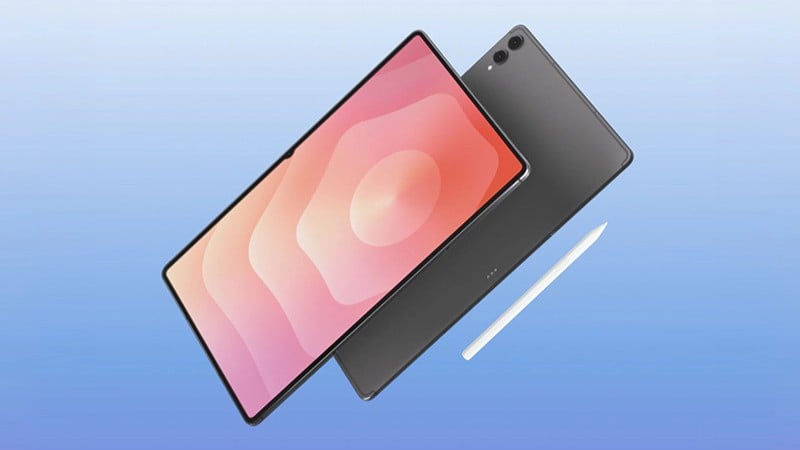
Samsung may once again rely on MediaTek for its next flagship tablets. A new report from Android Authority claims references to the Dimensity 9500 have been spotted inside Samsung’s AI Core application, hinting at what could power the upcoming Galaxy Tab S12 lineup.
The chipset appears in the code under model number MT6993, which corresponds to MediaTek’s flagship Dimensity 9500 platform. The code itself does not directly mention the Galaxy Tab S12 series, but based on Samsung’s recent tablet strategy, it is the most likely candidate.
Samsung already shifted away from Qualcomm for some of its premium tablets in recent years. The Galaxy Tab S10 and Tab S11 series used high-end Dimensity chips instead of Snapdragon processors, so the move would not be surprising this time either.
The Dimensity 9500 is built on TSMC’s 3nm process and focuses heavily on AI and power efficiency. It uses an all-big-core CPU setup along with MediaTek’s latest Mali GPU, which should help with gaming and multitasking on larger-screen devices like tablets.
Interestingly, the leak comes from Samsung’s own AI software. The AI Core app reportedly references several on-device AI features expected for the Tab S12 lineup, including AI-generated wallpapers, generative image editing, image expansion, and something called Image Harmonization. That last feature is said to intelligently adjust lighting and colors when placing subjects into different backgrounds, making edits look more natural.
The broader pattern here is Samsung pushing more AI processing directly onto the device instead of relying entirely on cloud servers. That usually means faster performance, lower latency, and fewer privacy concerns since some tasks no longer need internet access.
The Galaxy Tab S12 series is expected to launch later this year, likely around the usual September timeframe. Models like the Tab S12+ and Tab S12 Ultra are expected to return, though full specs are still mostly under wraps.
If this leak turns out to be accurate, Samsung’s next flagship tablets could end up focusing just as much on AI performance as raw hardware power.
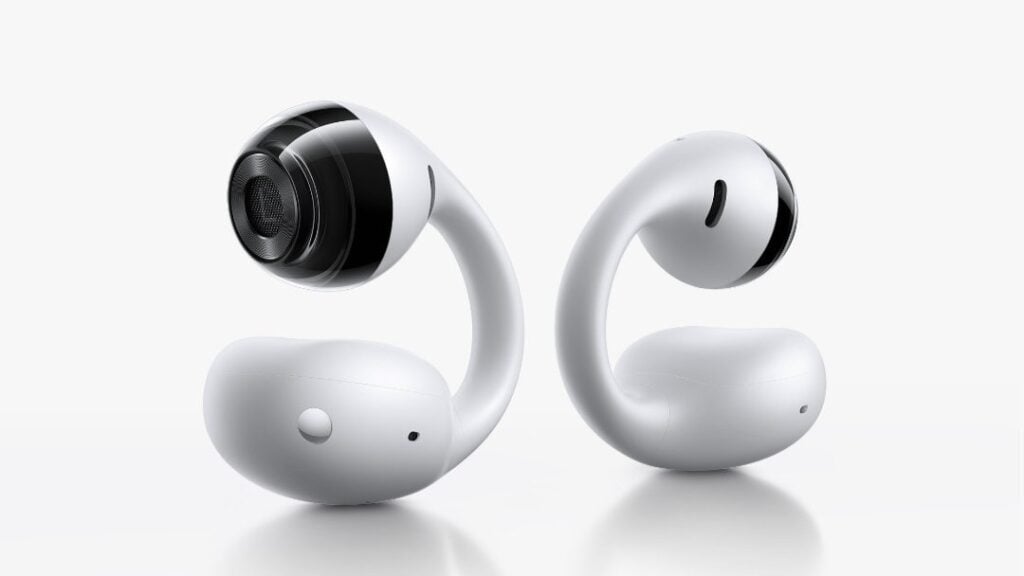
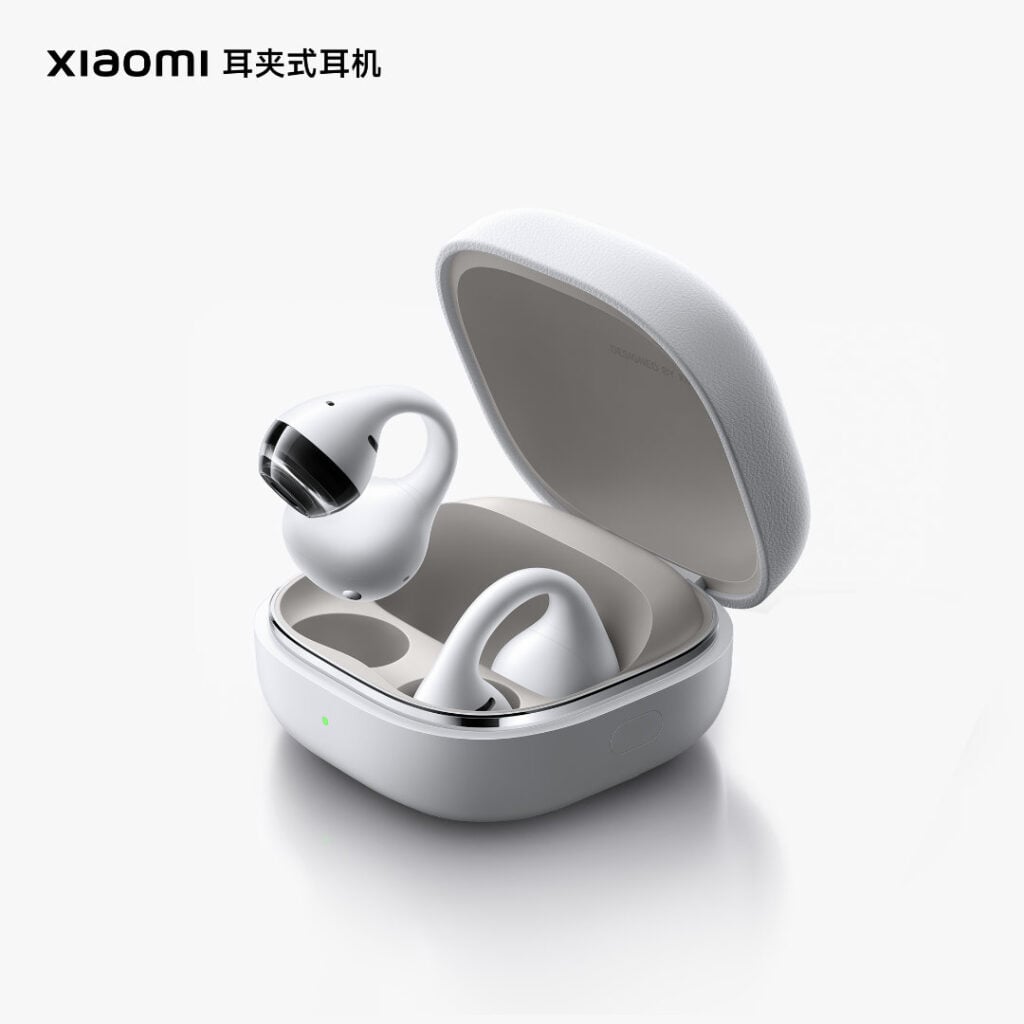
Xiaomi is getting ready to enter the growing open-ear audio segment with its first pair of clip-on wireless earbuds. The company has now officially shared early details ahead of the launch later this month, and the focus seems to be on comfort, lightweight design, and smart features tied into Xiaomi’s ecosystem.
Each side weighs around 5.5 grams, which should make them fairly easy to wear for longer periods without the usual pressure inside the ear canal. Xiaomi says the structure uses memory titanium wire with a biomimetic curved shape to help keep the fit secure while staying comfortable.
Design is clearly a big part of the pitch here. The earbuds feature a glossy finish with what Xiaomi describes as a transparent sound-emitting sphere design and metallic textures around the outer shell. So far, the company has shown Satin Gold and Pearl White color options.
On the audio side, Xiaomi is using an 11mm driver with a metal-coated diaphragm. The earbuds also support LHDC 5.0 and Hi-Res audio certification, which should help with higher-quality wireless playback on supported devices.
Call quality seems to be another area Xiaomi is pushing. The earbuds include a three-microphone setup along with a VPU sensor and AI-based noise reduction. There is also a “reverse sound wave technology” meant to reduce audio leakage, which is usually one of the bigger issues with open-ear designs.
Xiaomi is also adding several AI-focused features, including real-time translation across 21 languages, voice recording, and automatic summaries. Some of those features will likely depend heavily on Xiaomi’s own ecosystem and Xiao AI support.
The company has not confirmed battery life or pricing yet, but the launch is expected sometime later this month. There is also a good chance these earbuds arrive alongside other Xiaomi products, including the Mi Band 10 Pro and Xiaomi 17 Max.
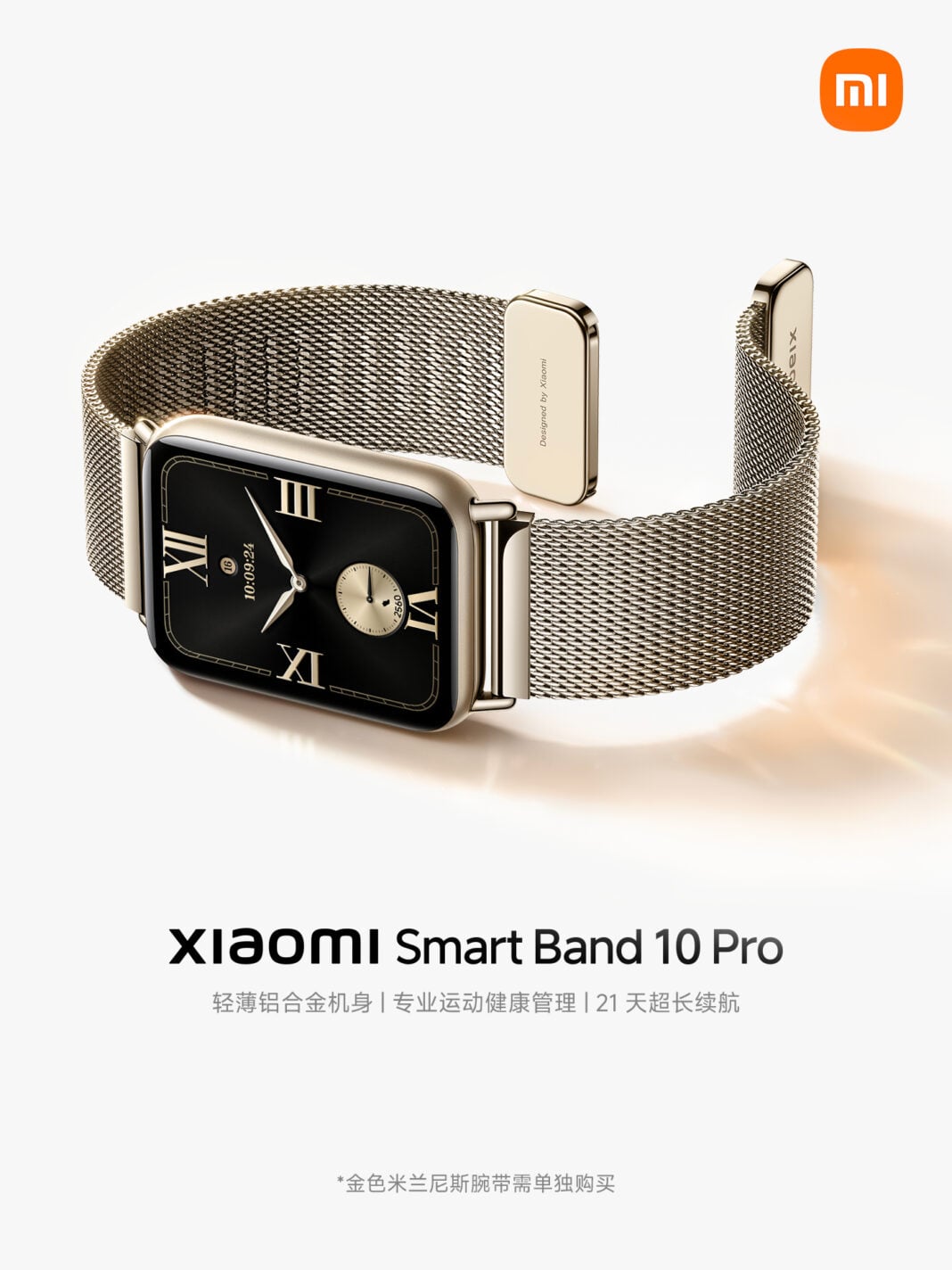
Xiaomi is preparing to launch its new wearable, the Xiaomi Smart Band 10 Pro, in China this month. And the company today confirmed that the tracker will have deeper integration with the Apple ecosystem.
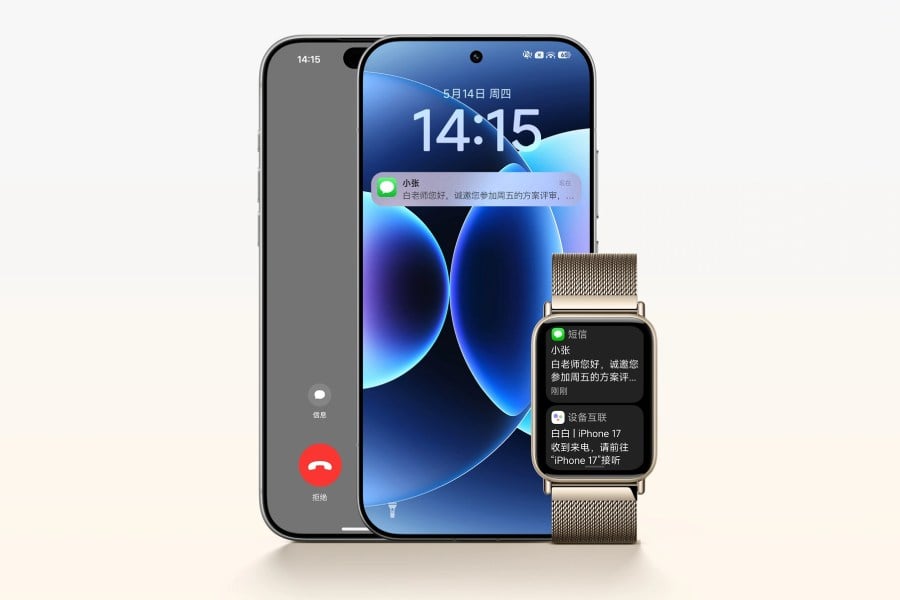
According to official information, the Smart Band 10 Pro will be compatible with both Apple Inc. devices and Xiaomi phones at the same time. This means users can wear the band while using an iPhone and still get real-time syncing of notifications for calls, text messages, and even WeChat. It also supports quick actions through iPhone shortcuts, including activating Do Not Disturb mode and enabling outdoor cycling tracking.
The device goes beyond basic notification support. It can remotely control an iPhone for taking photos, managing music playback, and even helping users locate their phone. Health and fitness data, such as activity tracking, sleep patterns, and heart rate, can also be automatically synced to Apple Health.
Apart from this, the band will have integration with Xiaomi Auto to offer driving reminders, fatigue alerts, and navigation warnings if a route is missed. It also supports Xiaomi’s Home automation system, allowing users to control smart home devices directly from the wrist. NFC support is included as well, enabling transport cards, access cards, campus cards, and car key simulation, along with offline payments and Alipay “Tap to Pay” functionality.
Xiaomi Smart Band 10 Pro Specifications
In terms of design, the Smart Band 10 Pro is very lightweight at just 21.6 grams and only 9.7mm thick. It features an aluminum alloy body with a curved display and supports an optional Milanese strap. The device also offers up to 21 days of battery life, depending on usage.
According to previous reports, the Smart Band 10 Pro is said to feature a 1.74-inch AMOLED display and a 380mAh battery, which may last up to 25 days in light use conditions. The wearable has already been spotted in multiple color options, including black, silver, pink, and possibly white, orange, and a ceramic variant. In Brazil, pricing is expected to fall between $150 and $170.
The Smart Band 10 Pro will sit above the standard Smart Band 10 as Xiaomi’s more premium fitness band offering.
For more daily updates, please visit our News Section.
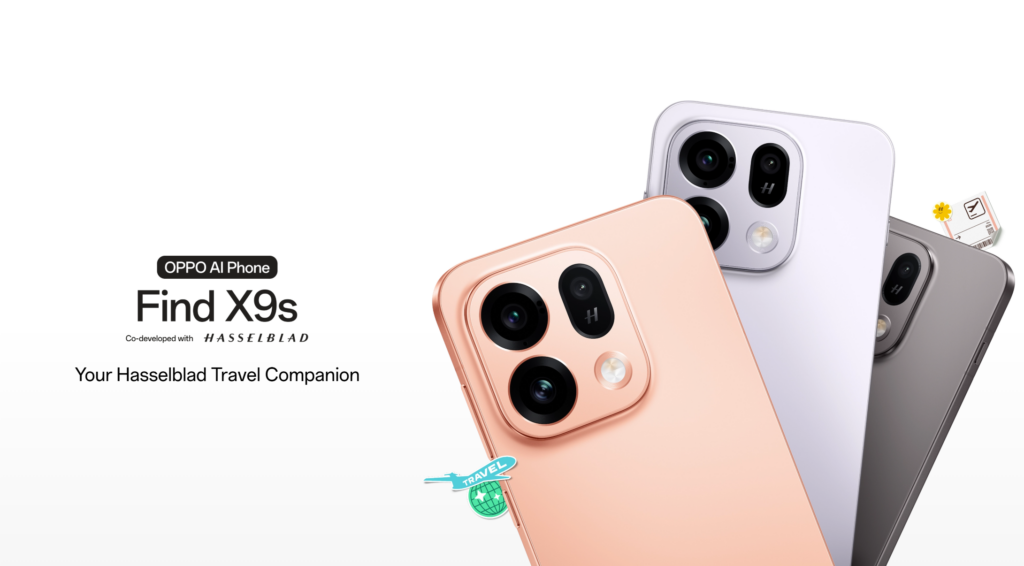
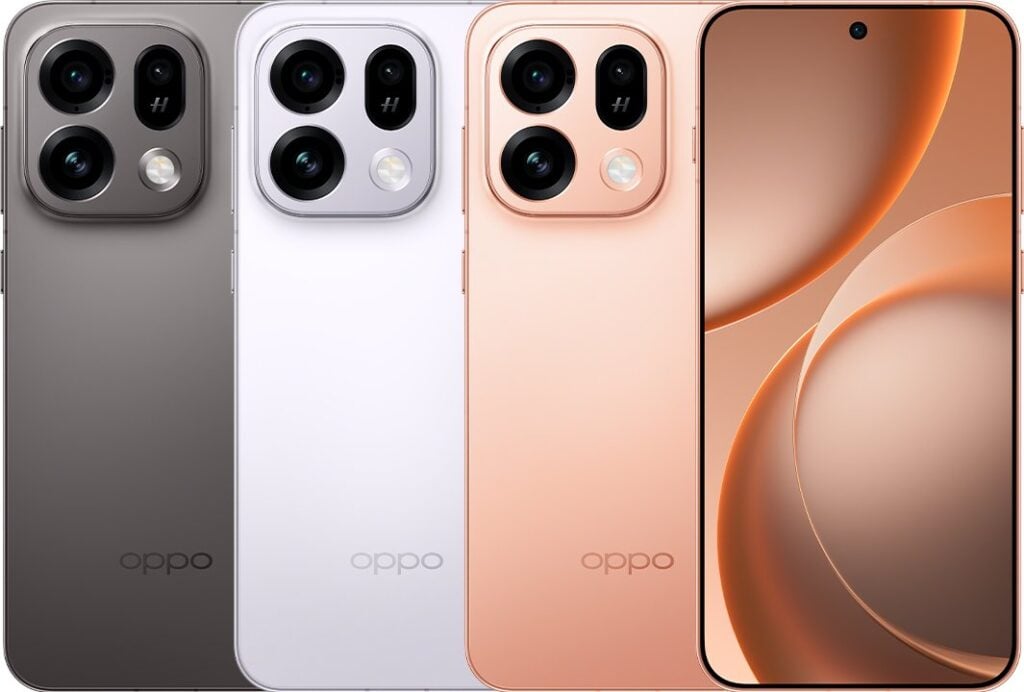
Oppo Find X9s is soon making its way to the Indian market, and a new leak has now revealed both the expected launch date and pricing details of the phone. Oppo announced the device in China back in April, and the company later confirmed that the device would also arrive in India.
Now, tipster Abhishek Yadav claims that the Oppo Find X9s will launch in India on 21 May 2026 with a price tag of Rs 79,999. The price is for the 12/256GB variant.
Surprisingly, the standard Find X9 with almost similar hardware and a better processor is available in India for Rs 74,999. Know the difference between the two.
Oppo Find X9s Specifications
For the price, the Oppo Find X9s will bring a 6.59-inch FHD+ OLED display with a 120Hz refresh rate. The panel is also supports up to 1,800 nits of high brightness mode and comes protected by Gorilla Glass 7i. All of this fits in a slim 7.99mm body while weighing around 202 grams.
Under the hood, the smartphone runs on MediaTek’s Dimensity 9500s chipset paired with LPDDR5X RAM and UFS 4.1 storage. For graphics, the device includes the Immortalis-G925 MC12 GPU clocked at 1,612 MHz. The Find X9s is also expected to ship with Android 16 out of the box.
In the camera department, Oppo equips the phone with a triple 50MP rear camera setup. The primary sensor comes with OIS support and is paired with an ultrawide camera and a 3x periscope telephoto lens. On the front, the device features a 32MP selfie shooter.
Moreover, the Oppo Find X9s packs a large 7,025mAh battery with support for 80W wired fast charging.
Other expected features include an in-display fingerprint scanner, dual stereo speakers, NFC support, an X-axis linear motor, Bluetooth 6.1, and Wi-Fi 7 compatibility. The smartphone is also tipped to carry IP68 and IP69 ratings for dust and water resistance.
For more daily updates, please visit our News Section.
We use cookies on our website to give you the most relevant experience by remembering your preferences and repeat visits. By clicking “Accept”, you consent to the use of ALL the cookies.
This website uses cookies to improve your experience while you navigate through the website. Out of these, the cookies that are categorized as necessary are stored on your browser as they are essential for the working of basic functionalities of the website. We also use third-party cookies that help us analyze and understand how you use this website. These cookies will be stored in your browser only with your consent. You also have the option to opt-out of these cookies. But opting out of some of these cookies may affect your browsing experience.
Necessary cookies are absolutely essential for the website to function properly. This category only includes cookies that ensures basic functionalities and security features of the website. These cookies do not store any personal information.
Any cookies that may not be particularly necessary for the website to function and is used specifically to collect user personal data via analytics, ads, other embedded contents are termed as non-necessary cookies. It is mandatory to procure user consent prior to running these cookies on your website.