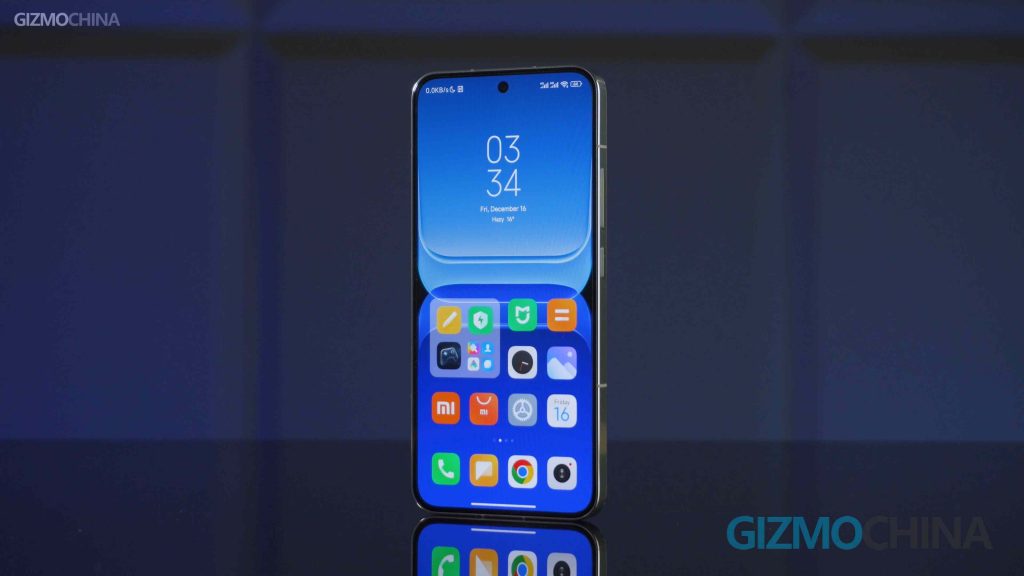
The Redmi K60E is the most affordable model in the Redmi K60 family. It was launched alongside the Redmi K60 and Redmi K60 Pro in December.
Back in March, the smartphone was heavily discounted for the first time. Now, five months later, it is being offered at an even more affordable price in China.
The latest deal brings the price of the device to its lowest. Let’s go through the details.
The 12GB + 512GB variant of Redmi K60E was introduced at ¥2,599 (~$355). This price tag is still affordable for the feature set the product offers.
Thanks to the new discount offered by JD, this version of the phone can be purchased at just ¥1,649 (~$225). That’s about 36% less than the original price.
For just $225, you get a whole lot of a smartphone. The Redmi K60E comes with a 120Hz QHD+ Dolby Vision-enabled OLED display, a MediaTek Dimensity 8200 chip, and 67W charging.
These specs make it a flagship-killer phone. On top of these features, you also get 12GB RAM and 512GB storage.
This is probably the best deal we came across this year. But unfortunately, it is limited to China.
Also, the Redmi K60E is not sold in global markets. So the only way to get it is by importing. In case you are interested in this product, you can check it out at GizTop.
Sony Imaging has stirred up anticipation in the photography community with its recent announcement: a brand-new camera reveal scheduled for August 29th at 10 PM. While Sony remains tight-lipped about specific models, leaks paint a vivid picture of what enthusiasts might expect.
Sony Alpha 7C II and Sony Alpha 7C R cameras expected
Among the potential unveils, two models stand out – the Sony Alpha 7C II and the Sony Alpha 7C R. The Alpha 7C II, regarded as the successor to the popular Alpha 7C, boasts potential enhancements that promise to captivate photographers. This includes an impressive 33-megapixel full-frame sensor, along with 4K 60P video capabilities. The camera is also expected to come with sharper autofocus, a single SD card slot, and a micro HDMI port, all packaged in a compact design that made its predecessor a favorite.
In parallel, the Sony Alpha 7C R is speculated to be a heavyweight, offering a 61-megapixel full-frame sensor. Accompanying its high-resolution capacity, it’s poised to support 4K 60P video recordings. Further sweetening the deal, the camera may feature groundbreaking AI integrations, promising smarter captures and an enriched photography experience. Essential features, such as a single SD card slot, a micro HDMI, and an enhanced display, are also on the table.
Additionally, lens enthusiasts might be in for a treat. A potential addition to Sony’s line-up could be the 16-35mm f/2.8GM II lens, expanding creative possibilities for photographers.
As for pricing, preliminary leaks hint at a price tag of around €2,300 ($2,485) for the Sony Alpha 7C II and the mentioned lens.

Apple has been rumored to replace the physical buttons on the iPhone 15 Pro models with an Action Button. New code found in the latest iOS 17 beta adds weight to these rumors. According to the findings from9to5Mac, iOS 17 beta 7 update includes new haptic feedback patterns for the rumored “Action Button”.
The new haptic feedback patterns make the iPhone vibrate more prominently when the user switches between silent and normal modes. This is especially useful for new phones with an Action Button, as it makes it easier to know which mode the phone is in.
More importantly, these patterns are triggered not only when the user activates the silent mode but also when it’s deactivated. In the earlier iOS version, there was only a brief haptic feedback when the iPhone was set to silent mode, but no feedback when it was taken off silent mode.
Interestingly, the 9to5Mac team was also able to replicate the haptic feedback for disabling silent mode, even though it’s not yet functional on existing iPhone models. They say it feels like a “single firm tap.”
Moreover, according to MacRumors, the new button that replaces the mute switch can also be assigned to a variety of actions, such as enabling or disabling Silent Mode, opening the Camera app, turning on the flashlight, triggering a Focus Mode, or recording a Voice Memo. Users can also create their own Siri Shortcuts to assign to the button.
It is also possible that there will be a new button in the Control Center for Silent Mode on the new iPhones. Additionally, Apple may add an indicator in the Status Bar to show when the phone is silenced.
Infinix is gearing up to launch the Infinix Zero 30 5G smartphone in India. The launch is said to take place around the end of this month. The brand has now released new specification information about the device along with its pre-order date.
According to the most recent teaser, the Infinix Zero 30 5G will open for pre-orders on Flipkart starting from September 2nd. The brand has also unveiled that this device will feature an impressive 50MP front camera, catering to selfie enthusiasts. This camera will bring eye-tracking autofocus and, notably, 4K 60fps video recording, which we reported on earlier.
Infinix Zero 30 5G specs
The teaser has also revealed that the smartphone will feature a 6.78-inch curved AMOLED 10-bit display with 144Hz refresh rate, 360Hz touch sampling rate, up to 950 nits peak brightness, and 2160Hz PWM dimming. The panel will also be TUV Rheinland certified for low blue light emission and it will feature Gorilla Glass 5 protection.
The brand has also claimed that the Zero 30 5G will debut as the slimmest smartphone in the segment measuring just 7.9mm thick. The two color options will be called Golden Hour and Rome Green (vegan leather). Details about the rear cameras will be revealed on August 28, and we can expect the confirmation on the processor on August 30.
That being said, leaks have revealed that the device will be powered by a MediaTek Dimensity 8020 SoC, which is a variant of the Dimensity 1100 chipset. It will come with 8GB of RAM and 256GB of storage. Lastly, the primary camera is expected to have a 108MP sensor.
There are a lot of Apple Watch Ultra and even the Watch Series-like clones in the Indian market from various brands like Pebble, Fire-Boltt, and more. Now, iTel is the latest brand to join the bandwagon as it has launched the Smartwatch 2 Ultra which looks identical to Apple’s premium offering. The company has also expanded its range of smartwatches with the latest device. It packs all the necessary features. Read on to know what the wearable device offers out of the box.
iTel Smartwatch 2 Ultra specifications and features
The iTel Smartwatch 2 Ultra has a ditto Apple Watch Ultra-like design. There is a rotating crown and a physical button on the right side. The dial color is also the same as Apple’s offering and the device has an Orange-colored loop strap. The smartwatch is IP68-certified water-resistant. It features a 2-inch IPS display with a resolution of 240 x 296 pixels and multiple watch faces for customization.
In terms of health, the iTel Smartwatch 2 Ultra is equipped with a heart-rate monitor and SpO2 sensor that is commonly found on most wearable devices. It also tracks the sleeping pattern of the user. The device packs support for 100 sports modes.
The iTel Smartwatch 2 Ultra comes with a built-in microphone and a speaker that lets users access Bluetooth calling directly from the wrist. It offers other convenient features like camera and music control, notification display, Find my phone, and more. The smartwatch draws its power from a 600mAh battery unit that is touted to deliver 12 days of usage on a single charge.
The iTel Smartwatch 2 Ultra is priced at Rs 2,099. It is available for purchase starting today from the brand’s websites and retail stores across the country.
The Redmi A2 Plus made its debut in India alongside the Redmi A2 in May. The device was introduced in a single 4GB + 64GB memory configuration.
Now, three months later, Xiaomi has released a new memory variant for this handset. The new version offers more storage but the same amount of RAM.
The Redmi A2 Plus can be now availed in a 4GB + 128GB memory configuration in India. This variant of the smartphone comes in all three colors, namely Aqua Blue, Classic Black, and Sea Green.
It is priced at ₹8,499 (~$100) in the region. For the unaware, this is the same price the base 4GB + 64GB model debuted for. The original version’s price has been now slashed by ₹500, and therefore, it presently costs ₹7,999 (~$95).
Talking about specs, the Redmi A2 Plus is built around a 6.52-inch HD+ display with a dewdrop notch. It is powered by a MediaTek Helio G36 chip and boots Android 13 Go Edition.
The phone comes with an 8MP primary camera paired with a depth sensor. On the front, it has a 5MP snapper for selfies and video calls.
It arrives with all the essential features, such as a rear-mounted fingerprint sensor, a 3.5mm headphone jack, and a MicroSD card slot. On the connectivity front, it offers dual SIM, single-band WiFi, Bluetooth 5.0, and MicroUSB port.
Last but not least, the smartphone is backed by a 5,000mAh battery with support for standard 10W charging.
OnePlus is gearing up to launch what might be the brand’s first-ever foldable smartphone. The phone will be called the OnePlus Open, and our earlier reports suggest that the company will introduce it in the third quarter of this year. Ahead of its launch, a few leaks have been revealed, suggesting the phone might come in two color variants.
OnePlus Open CAD render
According to a recent post by MaxJmb, OnePlus Open might be a competitor to Samsung’s newly launched Galaxy Z Fold 5. For those unaware, the Galaxy Z Fold 5 is Samsung’s latest foldable smartphone, having a Snapdragon 8 Gen 2 processor and 12GB of RAM. As per Max Jambor, OnePlus Open will be available in Voyage Black and Emerald Eclipse color variants. This will surely give the device an appealing look. Those wondering what this device might offer can check the phone’s specifications below.
OnePlus Open Key specs
The smartphone is said to be powered by Snapdragon 8 Gen 2 SoC accompanied by 16GB RAM. The device is speculated to feature a 6.3-inch AMOLED panel with a 120Hz refresh rate, and the interior foldable screen might feature a large 7.8-inch AMOLED display having a 2K resolution. The device will have 256GB of storage backed by a 4800mAh battery unit with 67W fast charging support.
In related news, OnePlus has recently launched another “flagship killer,” the OnePlus Ace 2 Pro, a full smartphone review can be found by clicking on this link. Stay tuned for more details on the OnePlus Open.
In June, Asus introduced its Zenfone 10 compact flagship smartphone, receiving significant praise from the tech industry. Now, after a two-month anticipation, the brand has initiated pre-orders, starting with the United States.
Asus Zenfone 10 pre-order details
The Asus Zenfone 10 is offered in the same attractive array of colors in the U.S., including Midnight Black, Comet White, Eclipse Red, Aurora Green, and Starry Blue. The 8GB + 128GB model, exclusively available in Black, is priced at USD 699.99. The 8GB + 256GB variant, which is available in all five colors, it’s priced at USD 749.99. The top-tier 16GB + 512GB model, costing USD 799.99, is available in both Black and Green.
You can now place your orders through ASUS eShop, Amazon, and Mobile Advance. Additionally, those who pre-order the phone before September 30th will receive a complimentary set of ROG Cetra Bluetooth earbuds valued at USD 99.99.
Asus Zenfone 10 specs
The ASUS Zenfone 10 features a 5.9-inch Full HD+ AMOLED display with a 144Hz refresh rate and up to 1100 nits peak brightness. It covers 151.9% of the sRGB color space and 112% of the DCI-P3 color gamut, supporting HDR10+ and protected by Corning Gorilla Glass Victus.
Under the hood, it’s powered by a Snapdragon 8 Gen 2 Octa Core processor (up to 3.2GHz) with an Adreno 740 GPU. It comes in two variants: 8GB RAM with 128GB/256GB storage and 16GB RAM with 512GB storage. It’s powered by a 4300mAh battery with 30W fast charging and 15W wireless charging.
The phone runs Android 13 with ASUS ZenUI and supports dual SIM cards. It has a 50MP primary camera with Sony IMX766 sensor, a 13MP ultra-wide camera, and a 32MP front camera. Audio features include a 3.5mm audio jack, stereo speakers, and noise-reduction technology. It’s water and dust resistant with an IP68 rating and has a side-mounted fingerprint scanner.
Connectivity options include 5G, Dual 4G VoLTE, Wi-Fi 802.11be 7, Bluetooth 5.3, GNSS for accurate GPS, USB Type-C, and NFC.
Nokia, the global technology giant, is on the verge of achieving a significant milestone. It is set to become the first technology supplier to fully align with the “Buy American” standards detailed in Section 1640 of the U.S. economic stimulus plan. This move particularly pertains to the “Broadband Equity Access and Deployment” (BEAD) program, which seeks to enhance broadband access throughout the country.
Embracing the “Buy American” Standards
According to the official press release, Nokia has made significant advancements in its domestic manufacturing endeavors, ensuring that its fiber broadband network products and optical modules fall squarely within the “Buy American” guidelines set forth by the U.S. Department of Commerce. This means Nokia’s products would qualify for the BEAD initiative’s stipulations that funds be directed towards American-made equipment. It’s noteworthy that the BEAD initiative has dedicated a massive $4.45 billion to uplift underserved and unserved communities’ connectivity.
Nokia’s commitment to strengthening American broadband infrastructure became evident earlier this month when they declared their aim to manufacture broadband network products for the BEAD initiative. Collaborating with Sanmina Corporation, a renowned contract manufacturing services firm, the production will take place at Sanmina’s Kenosha County facility in Wisconsin. This initiative alone is forecasted to generate approximately 200 new jobs, reinforcing Nokia’s contribution to the American economy.
Furthermore, Nokia has taken a pioneering step in the telecommunications sector by becoming the first to domestically produce fiber broadband optical modules in the U.S. In this endeavor, Nokia is joining hands with Fabrinet, a leading global precision optical product manufacturer. The production is slated to kick off in 2024 at Fabrinet’s facility located in Santa Clara, California, further enhancing high-tech employment prospects in the region.
With the domestic production of these critical optical modules, Nokia is fortifying its position in the American market. By broadening its product range and solutions, the company is strategically positioning itself to cater to the surging demand from states and infrastructure players keen on broadband development. Through these significant steps, Nokia not only solidifies its commitment to the U.S. market but also reaffirms its position as a leading technology supplier on a global scale.
Microsoft Edge browser has been found flagging ChromeSetup.exe, the installation file for Google Chrome, as potentially harmful. This error has been observed in one out of five Microsoft Edge 116 stable installations. Edge’s built-in security feature is designed to protect users from harmful files, but it appears to have incorrectly identified ChromeSetup.exe as a threat.
Microsoft flags Chrome as malware
As shown in the screenshot above, when downloading Chrome using Microsoft Edge, a warning message may appear: “ChromeSetup.exe could harm your device. Do you want to keep it anyway?” The user can then choose to “Keep” or “Delete” the downloaded file.
Microsoft is always seen promoting Edge to Windows users. To keep users on its own browser, the company has tried different methods. For instance, when users try to access Chrome through Edge and use Microsoft’s Bing search engine, they are presented with several prompts discouraging them from downloading Chrome.
Like when searching for Chrome on Bing, Microsoft Edge prompts users to keep using Edge instead. The prompt reads, “There’s no need to download a new web browser. Microsoft recommends using Microsoft Edge for a fast, secure, and modern web experience that can help you save time and money. Try it now.”
If you skip this prompt, another one appears, explaining that “Microsoft Edge runs on the same technology as Chrome, with the added trust of Microsoft. Browse securely now.”
Regardless, in this case, Microsoft has not made any official statement about why it is flagging Chrome Setup (ChromeSetup.exe) as potentially harmful. The warning is not widespread, and it is possible that Microsoft has already fixed the issue.
Samsung unveiled the ViewFinity S9 5K monitor back at CES 2023, and its US pricing was disclosed in July. Now, the monitor is finally available to pre-order in the US. Check out the details below.
Samsung ViewFinity S9 pre-order details
An earlier report mentioned that the ViewFinity S9 monitors will be launching in the US around the end of August. Now, the official Amazon listing of the product is up and is accepting pre-orders. You can expect Samsung to start selling the monitors from August 28.
Samsung ViewFinity S9 specs
The Samsung ViewFinity S9 is a 27-inch monitor designed for professionals like photographers and graphic designers. It has a 5K resolution, specifically 5,120 x 2,880, and a wide color gamut of 99 percent DCI P3. This ensures detailed visuals and precise colors, with an average Delta E color accuracy of ≦21.
The monitor includes a built-in Color Calibration Engine, ensuring accurate screen colors and brightness. Users can fine-tune settings like white balance, Gamma, and RGB color balance using the Samsung Smart Calibration application on their smartphones. The matte display minimizes reflections and glare for a comfortable work environment.
For connectivity, the ViewFinity S9 has USB Type C and Thunderbolt 4 ports, making it easy to connect cameras and other devices. This allows for smooth file transfers and high-resolution video sharing between storage devices and PCs. Additionally, it comes with a 4K SlimFit camera that supports native video conferencing through apps like Google Meet, adding to its versatility.
While Google has canned its development plans for its own AR headset (Augmented Reality), it appears that it hasn’t completely turned away from such headsets in general. The company is now working with Samsung to build an XR headset (Extended Reality).
Samsung and Google’s XR headset: Project Moohan
According to a new report, the Search Engine giant is partnering up with the South Korean company for the development of a new XR headset. The new Samsung-branded headset is being internally referred to as Project Moohan, and the latest report has revealed some additional details. Apparently, Google is building the Android XR software for the upcoming headset.
It seems like the work is being carried out in strict secrecy since Samsung was concerned that other AR teams within Google would build a product that could compete with Project Moohan. For those unaware, Google is currently working on a “Micro XR” software platform for 3rd party manufacturers. In other words, a leak could be potentially harmful to Samsung’s new XR headset.
Another report hinted at Samsung postponing the launch of its own headset due to the launch of Apple’s Vision Pro. Basically, they were afraid that the former wouldn’t match up to the iPhone maker’s offering. Based on what we know so far, Project Moohan is expected to launch around the summer of next year.
Although, a source from within Google stated that the year-long period doesn’t feel adequate for developing a product that will capture the market’s attention in a manner similar to the Vision Pro. So it is possible that Samsung and Google could release a half-baked product in the market due to rushed development. But this is still just speculation, so take this report with a pinch of salt for now.
Apple’s AirPods Max was released in December 2020. These wireless headphones came with a noise cancellation feature and a sturdy metal build. The company will most likely launch its successor in the future. Earlier, we reported that according to posts by various AirPods Max users, the device seems to have been suffering from condensation, which may be damaging their device.
Upon removing the headphones’ earcups, users notice water building inside them, raising the question of whether it will damage the headsets. The company has not yet publicly acknowledged the issue.
As per the report by 404media, a class-action lawsuit regarding this issue has been filed in California, and affected consumers have been talking to the brand about a settlement. Several people are facing this problem and have reported that their headsets are losing their noise cancellation feature, and that they hear a buzzing noise.
The plaintiff has been engaged in negotiations with Apple for several months in an attempt to reach a settlement. Apple’s legal representatives are not contesting the presence of condensation within the AirPods. However, they note, “Unlike other over-ear headphones, these headphones are magnetic and removable, making any moisture retained from body heat around the ear more noticeable to users when they remove the ear cups.”
Consumers are still concerned about buying AirPods Max (which retail for over $500 worldwide!) and whether they will face a similar issue with condensation. We will have to wait for Apple to make an official statement regarding the issue, clarifying what caused these people’s headphones to malfunction.
Xiaomi continues to expand its product lineup with new devices, but the company’s future plans aren’t solely focused on hardware. In fact, they are planning their financial future around software. We recently told you that the Xiaomi expects to make just 1% profit from its electric vehicle sales and aims to make the real money from software services that come with the vehicle.
However, it appears that the plans of this Chinese tech giant go even further. According to the latest reports, Xiaomi is developing its own operating system that is compatible with AOSP (Android Open Source Project). This suggests that the new operating system could be used on a variety of devices, including smartphones, tablets, and wearables.
Xiaomi Developing Own Operating System Compatible with Android
China is one of the most important smartphone markets in the world. The country’s large population, increasstrengthening economy, and interest in technology are some of the key reasons for this. However, China stands apart from the rest of the world in one significant aspect. Due to government regulations, the operating systems, app stores, and the apps within those stores differ from those in other countries. As a result, it’s common for companies to offer different user UI in their global versions. Now, Xiaomi takes this a step further.
According to the Digital Chat Station, Xiaomi is working on creating its own operating system that will be compatible with a range of devices, such as smartphones, tablets, and wearable technology. Importantly, this new operating system will be fully compatible with the Android Open Source Project. This suggests that the operating system could be expanded beyond smartphones and may even be adapted for vehicles and other products.
However Xiaomi isn’t the only Chinese phone company making its own operating system. Huawei already released HarmonyOS a few years ago, and it’s doing really well in China. People are saying that Xiaomi will first launch its own system in China and that Huawei will be its first big competitor. Making their own system is a big deal for Xiaomi because it means they won’t have to rely on Google as much. But there’s a big problem they have to deal with.
Google currently provides the Android operating system for Xiaomi’s smartphones. Although Android is an open-source operating system, it’s virtually useless without Google’s services, and the company does not open up these services to competing operating systems. This isn’t a significant issue in China, but globally, people generally do not respond well to Android phones without Google services.
Speaking from personal experience, I briefly used a Huawei Mate 30 Pro and stopped using this excellent phone due to the lack of Google services. Unfortunately, if such an issue were to arise between Xiaomi and Google, it could seriously impact Xiaomi’s market share. However, I’m sure the executives at this tech giant have considered this and planned accordingly.
There are also rumors that Xiaomi’s custom operating system could cause upcoming MIUI 15 to be renamed to “miOS”. However, there is no exact information. It is still unclear when Xiaomi’s self-made operating system will be released. However, the company has said that it is committed to developing the new OS and that it will be compatible with a wide range of devices.
Samsung is almost done with its 2023 smartphone lineup. There won’t be many new handset launches from the company in the next few months.
The firm is working on multiple new devices for the next year. One of them is Galaxy A25.
Samsung Galaxy A25 5G renders by GizNext / OnLeaks
The design of this product leaked in late June via 3D CAD renders. Nearly two months later, the camera specs of this phone have emerged.
The new details regarding the upcoming Galaxy A25 come from GalaxyClub. The publication has revealed the rear and front cameras of the device.
As per the source, the Galaxy A25 will sport a 50MP main camera on the back. Whereas, on the front, it will be equipped with a 13MP shooter.
This means the handset will have the same primary and selfie cameras as the Galaxy A24. Unfortunately, there’s no info on the secondary sensors.
Currently, there’s only a single version of Galaxy A25 in development with model number SM-A256E. Therefore, the source suggests that this device could be a 5G version of the Galaxy A24 despite carrying a different name.
Perhaps, more versions are in the pipeline but we have no details on them so far. Anyways, like any other Samsung smartphone, this one should also pop on multiple certification agencies and retailers revealing almost everything about it before its official announcement.
Earlier today (23rd August 2023), Meizu unveiled a unique new audio product. But these aren’t your typical pair of truly wireless earbuds or headphones, rather, these use bone conduction for audio output. The device is dubbed the Meizu Lifeme W51 Bone Conduction headphones, which have just been launched in China.
Meizu Lifeme W51 Bone Conduction Sports Headphones Specs
The Meizu Lifeme W51 is a wireless Bone Conduction Sports headphone. It is built using soft and skin-friendly silicon along with titanium alloy metal. The company’s latest headphones feature bone conduction and air conduction fusion technology. This enables it to offer two ways of use, which include open or immersive. Meizu’s W51 also features built-in 16mm bone conduction drivers.
Furthermore, the new wireless headphones can last for up to 11 hours on a single full charge. Powering up the device for just 10 minutes will offer up to 2 hours of audio playback. Other notable features include Bluetooth 5.3, dual device connection, 50ms low latency mode, IPX5 waterproof rating, call noise reduction, and more.
The wireless headphones are currently listed for a price tag of 399 Yuan (roughly 56 US Dollars). Meizu’s Lifeme W51 Bone Conduction Sports headphones are likely geared toward fitness enthusiasts like runners. The open audio output would help them be more aware of their surroundings. These headphones are available for purchase on JD.com, a popular Chinese e-commerce platform.
Python programming language support is now extending to Microsoft Excel. After closed beta testing, the Public Preview is now going live for the developers. It is a boon for developers, statistical engineers, data analysts, and other roles using Python. The Beta for Python in Excel was already there for some time, but with the Public Preview, it is made available to a wider user base.
The Python code will be executable in Excel using the =PY function without any requirement for additional software. It is accessible via Microsoft 365 which is based on Microsoft Cloud with enterprise-level security. In other words, the code is executed in a secure environment on Azure Container Instances that isolates the code fully from other services. Such a Modus Operandi surely improves security and the structure acts as a firewall to the systems.
“Now you can do advanced data analysis in the familiar Excel environment by accessing Python directly from the Excel ribbon,” Stefan Kinnestrand, the GM for Modern Work at Microsoft, explains. “No set up or installation is required. Using Excel’s built-in connectors and Power Query, you can easily bring external data into Python in Excel workflows.”
Interested users can enjoy the Python integration on Microsoft 365 Insiders Beta Channel. The feature will be available only on the desktop version of Excel. Some useful functions such as xl() and =Py() can be used to authorize operations and ensure data security.
The company is using Anaconda Python on Azure systems to compile the programs using different libraries such as seaborn, pandas, Matplotlib, NumPy, etc. However, some capabilities will be behind the paywall and the details about those will be made shared once the product will be ready for public stable rollout.
At today’s launch event, Realme has launched its new earbuds alongside the Realme 11 5G & 11x 5G smartphones. These new earbuds called the Realme Buds Air 5 and Air 5 Pro come with flagship features like LDAC codec, high levels of noise cancellation, and spatial audio.
Realme Buds Air 5 Pro specs
The Realme Buds Air 5 Pro is equipped with a potent 11mm bass driver and a 6mm tweeter, delivering exceptional audio quality. These earbuds incorporate 50dB active noise cancellation for a distraction-free listening experience and environmental noise cancellation for clear calls, thanks to the trio of microphones on each earpiece. Additionally, they support Spatial audio and the LDAC codec for an enhanced audio experience.
When it comes to battery life, the Realme Buds Air 5 Pro impresses with a combined total of 40 hours of usage when considering both the case and earbuds. Individually, each earbud can last up to 10 hours without ANC on and up to 7 hours with ANC turned on. Plus, these earbuds boast a quick 10-minute charge for a generous 7 hours of playback and feature a super low latency of 40ms. They are thoughtfully designed to be IPX5 water-resistant, ensuring they can withstand workouts and unexpected rain. The Dual-device Connection 2.0 adds to their versatility, making them a practical choice for various scenarios.
Realme Buds Air 5 specs
The Realme Buds Air 5 earbuds come with 50dB active noise cancellation. They have a 12.4mm titanized driver for powerful sound. They use Bluetooth 5.3 for strong wireless connections and support AAC and SBC audio codecs for good audio quality. You can easily control them with touch gestures.
For clear calls, these earbuds have six microphones and AI ENC noise reduction. Gamers will like the 45ms super low latency gaming mode. You can customize settings using the realme Link app, such as turning on noise cancellation and getting updates. These earbuds can connect to two devices at once.
They are also water-resistant with an IPX5 rating, making them suitable for exercise and outdoor use. In terms of battery life, you get up to 7 hours of playback without active noise cancellation (in AAC format) or 4.5 hours with it on. With the charging case, you can enjoy up to 38 hours of playback. Plus, a quick 10-minute charge gives you up to 7 hours of playback for both the earbuds and case.
Pricing & availability
The realme Buds Air 5 can be found in two attractive color options: Deep Sea Blue and Arctic White, and they are priced at Rs. 3,699. These earbuds will be up for purchase starting August 26th on realme.com, Flipkart, and in physical stores. During the initial sale, they will be offered at a discounted rate of Rs. 3,499.
On the other hand, the realme Buds Air 5 Pro is available in Astral Black and Sunrise Beige colors, with a price tag of Rs. 4,999. Starting from August 29th, you can buy them on realme.com, Amazon.in, Flipkart, and in brick-and-mortar outlets. During the first sale, they will be available at a reduced price of Rs. 4,499.
The Realme 11 5G series has finally been announced in India. The lineup consists of the Realme 11 5G and the Realme 11x 5G model. These are the company’s latest mid-range smartphones, so let’s have a look at their specs, pricing, and more.
Realme 11 5G
The Realme 11 5G was recently unveiled in Taiwan and is finally making its way to the Indian market. It will sport a tall 6.72-inch AMOLED display that offers Full HD+ resolution and 120Hz refresh rate and a peak brightness level of 550 nits. Under the hood, the device will be equipped with the MediaTek Dimensity 6100+ SoC that is paired with up to 8GB of LPDDR4X RAM and 256GB of UFS 2.2 internal storage. The memory can be further expanded via a microSD card slot.
The rear features a 108-megapixel primary camera that is paired with a 2-megapixel depth sensor. On the other hand, the front houses a 16-megapixel selfie shooter. A large 5,00mAh battery pack powers this smartphone, which supports 67W fast charging support. Other notable features include Android 13 OS-based Realme UI 4 out of the box, 180Hz touch sampling rate, and a side-mounted fingerprint scanner.
Realme 11x 5G
The Realme 11x 5G is basically a slightly cut-down version of the base 11 5G model. It also features a 6.72-inch display, although, it only sports an IPS LCD panel and not an AMOLED screen. The screen supports a 120Hz refresh rate, 680 nits of peak brightness, and Full HD+ resolution. Similar to the Realme 11 5G model, the Realme 11x 5G is equipped with the Dimensity 6100+ SoC that is paired with up to 8GB of LPDDR4X RAM and 128GB of UFS 2.2 internal storage.
On the rear, the handset only features a 64-megapixel primary camera. Meanwhile, the front houses an 8-megapixel selfie shooter. The Realme 11x 5G is powered by a large 5,000mAh battery pack as well. However, it only supports up to 33W fast charging. This smartphone runs on Android 13 OS-based Realme UI 4 out of the box, features a side-mounted fingerprint scanner, and also offers a microSD card slot for memory expansion.
Pricing & Availability
The Realme 11 5G and the Realme 11x 5G have finally been launched in India. Pre-orders for the two smartphones have kicked off on Flipkart, a popular e-commerce platform in India. The Realme 11 5G comes in Glory Gold and Glory Black, while the 11x 5G model will be available in Midnight Black and Purple Dawn variants. Looking at their pricing:
Realme 11 5G
8GB + 128GB – 18,999 INR
8GB + 256GB – 19,999 INR
Realme 11x 5G
6GB + 128GB – 14,999 INR
8GB + 128GB – 15,999 INR
The base 11 5G will go on sale starting on August 29 from the company’s official website, Flipkart, and other retail channels, while the first sale of the 11x starts on August 30. Notably, the Chinese smartphone maker is also offering a discount of 1,500 INR on the Realme 11 5G and a 1,000 INR discount on the 11x 5G. The early bird sale for the Realme 11 will start at 1:30 PM today, while the 11x early bird sale will kick off at 6 PM.
Apple is about to unveil the iPhone 15 lineup within just a month. The new phones are expected to start shipping in the next week of the announcement. However, there might be a potential delay for the highest-end model, the iPhone 15 Pro Max.
The reason for the delay is that Sony, the supplier of camera components, may not be able to produce the image sensor required for the Pro Max in time. This is according to a source who spoke to 9to5Mac. This setback could result in the top-end Pro Max model not being available for shipment alongside the other newly introduced iPhone models.
The iPhone 15 Pro Max is expected to get the biggest camera upgrade, with a periscope lens system that will offer greater optical zoom than the current 3x limit. The smaller iPhone 15 Pro will not get this upgrade, but and the iPhone 15 and iPhone 15 Plus will only have ultra-wide and wide cameras.
Apple is expected to announce the new iPhones on September 12 and pre-orders will likely start on September 15, and deliveries of the iPhone 15 and iPhone 15 Plus will start on September 22. However, the iPhone 15 Pro Max may be delayed by 3 to 4 weeks, and deliveries could start between October 6 and October 13.
This is not the first time Apple has delayed iPhone shipments, and it is likely not the last. For example, the iPhone XR shipped after the iPhone XS, the iPhone 14 Plus shipped after the iPhone 14, and the iPhone 12 mini and iPhone 12 Pro Max both shipped weeks after the iPhone 12 and iPhone 12 Pro.
Besides a major camera upgrade for the top-tier model, iPhone 15 lineup is expected to have a number of significant changes, including a switch from Lightning to USB-C, and a new Dynamic Island design for the standard models. The Pro models are also expected to have a titanium frame and a programmable button instead of the standard mute switch.
We use cookies on our website to give you the most relevant experience by remembering your preferences and repeat visits. By clicking “Accept”, you consent to the use of ALL the cookies.
This website uses cookies to improve your experience while you navigate through the website. Out of these, the cookies that are categorized as necessary are stored on your browser as they are essential for the working of basic functionalities of the website. We also use third-party cookies that help us analyze and understand how you use this website. These cookies will be stored in your browser only with your consent. You also have the option to opt-out of these cookies. But opting out of some of these cookies may affect your browsing experience.
Necessary cookies are absolutely essential for the website to function properly. This category only includes cookies that ensures basic functionalities and security features of the website. These cookies do not store any personal information.
Any cookies that may not be particularly necessary for the website to function and is used specifically to collect user personal data via analytics, ads, other embedded contents are termed as non-necessary cookies. It is mandatory to procure user consent prior to running these cookies on your website.