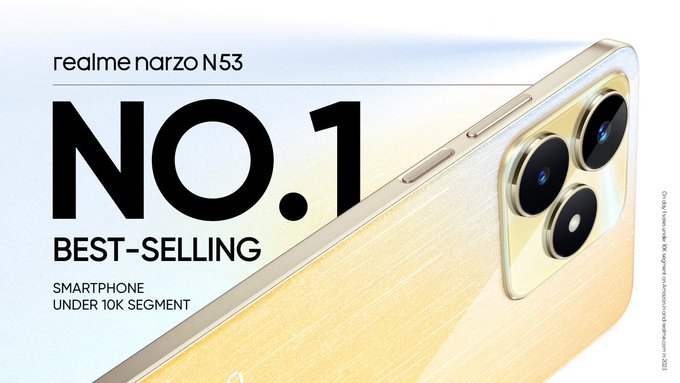
The Realme Narzo N53 was launched in India back in May. This smartphone was one of the latest budget-friendly devices from the company and it appears that it has been a massive success in the region. Earlier today (6th September 2023), Realme announced that this was the leading smartphone in the entry-level category.
In a tweet, the Chinese smartphone maker has announced that the Narzo N53 has become the country’s number 1 best selling smartphone under the 10,000 INR segment. For those unaware, the device was launched in the country for a starting price tag of 8,999 INR for the 4GB + 64GB storage configuration. Meanwhile, the 6GB + 128GB version cost 10,999 INR.
Realme Narzo N53 Specs
The Realme Narzo N53 sports a tall 6.74-inch IPS LCD panel that offers HD+ resolution and a 90Hz refresh rate. The screen outputs 450 nits of peak brightness and 180Hz touch sampling rate. Under the hood, the device is equipped with the Unisoc T612 SoC and the smartphone also supports virtual RAM expansion. The device is powered by a large 5,000mAh battery pack that supports 33W fast charging.
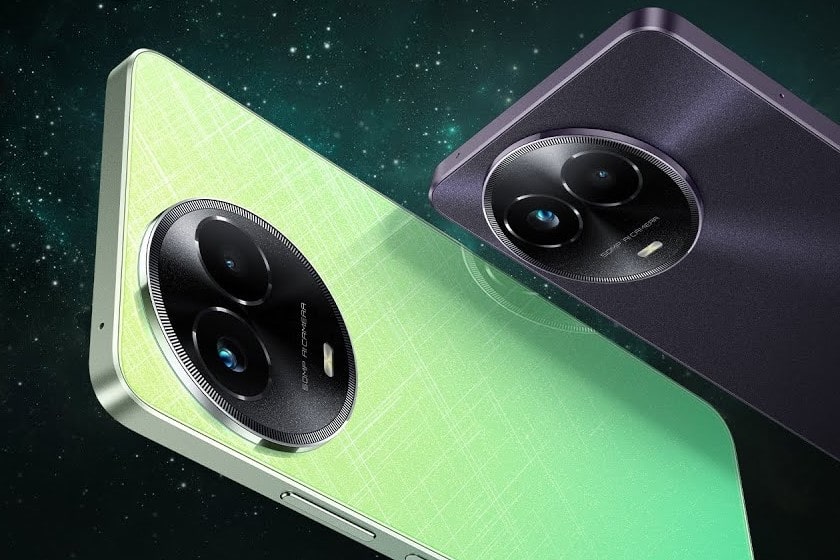
The Narzo N53 runs on the Android 13 OS based Realme UI 4.0 out of the box. On the rear, it features a 50-megapixel primary camera, while the front houses an 8-megapixel selfie shooter. This model also arrives in two color variants, namely a Feather Gold and Feather Black option.
Logitech has introduced the Pebble 2 wireless keyboard and mouse combo, priced at $59.99 and available via stores like Amazon, approximately 438 yuan.
The Pebble 2 comes in appealing colors like Graphite, Pearl White, Rose Pink, Sand Brown, and Blue, showcasing a strong focus on design and aesthetics.
Logitech Pebble 2 combo set key features:
The combo features a Pebble Keys 2 K380 wireless keyboard and a Pebble Mouse 2 M350. The keyboard measures 16 x 279 x 124 mm and weighs 415 grams, while the mouse has dimensions of 26.2 x 58.7 x 106.7 mm and a weight of 76 grams.
However, what really sets it apart is its dedication to the environment. Both the keyboard and the mouse are constructed with a minimum of 49% recycled plastic. This eco-friendly approach represents a significant step forward in the tech industry’s efforts toward sustainability.
Logitech also offers a specialized Pebble 2 Combo for Mac, featuring the Pebble Keys 2 K380s for Mac keyboard and the Pebble Mouse 2 M350s for Mac mouse.
The mouse offers a significant 90% reduction in click noise, ideal for quiet office environments. Additionally, the keyboard provides a comfortable, laptop-like typing experience, promoting user comfort during extended work sessions.
The mouse also features a customizable middle button, allowing users to assign various functions such as sending emojis or opening favorite apps. The Keys 2 K380 keyboard offers similar shortcut capabilities.
The Pebble 2 keyboard and mouse offer Bluetooth support, allowing easy connection to three Apple wireless devices simultaneously. With the Easy-Switch button, users can toggle between devices seamlessly. This Combo kit boasts versatility, being compatible with Mac, PC, tablets, and smartphones, supporting up to three devices at once.
The Apple iPhone 15 series launch is just around the corner. The new lineup will include the iPhone 15, iPhone 15 Plus, iPhone 15 Pro, and the iPhone 15 Pro Max, which is rumored to be called the iPhone 15 Ultra. But while this still isn’t confirmed, Apple is expected to be working on a new iPhone Ultra model. But prior to any official announcements, a new report has hinted that this model will support recording Vision Pro headset’s spatial photos and videos.
Apple iPhone 15 Ultra may support spatial photos and video recording
The news arrives from Weibo (a Chinese microblogging website). Apparently, the Cupertino based giant’s upcoming flagship iPhone Ultra model may support spatial photos and videos for the Vision Pro headset. This model is expected to arrive after the Vision Pro launch, which is set for early 2024. Now, the latest rumor hints that the spatial videos and photos can be recorded directly from the iPhone Ultra model.
Reportedly, the iPhone Ultra will “lead the market to rethink what kind of photos and videos a mobile phone should take.” Although, it is still unclear what exact features this top-end iPhone will offer. But we can expect to see improvements in the camera sensors to enable spatial photos and videos recording. For those unaware, the Vision Pro uses Apple’s three-dimensional camera to capture there spatial videos and photos.
The feature was made to make capturing moments with more life in them. So, the iPhone Ultra model will likely feature new sensors and upgraded cameras to support direct recording. Keep in mind that this is still just an unconfirmed report, so take this news with a pinch of salt for now and stick around for more updates.
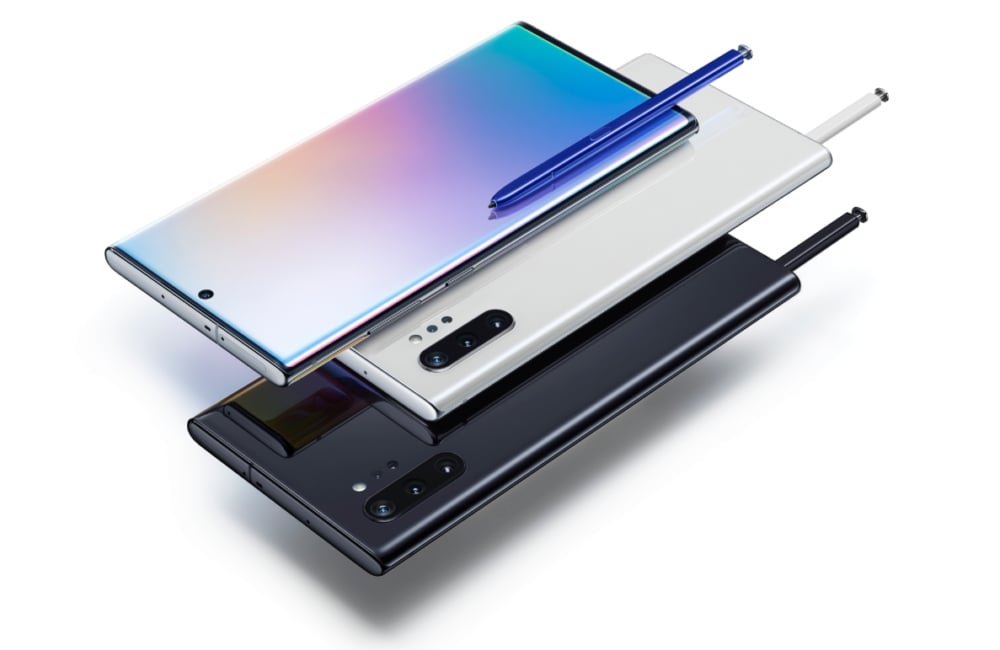
Samsung typically supports its smartphones for 5 years, but the Galaxy Note 10 series launched in 2019 only received 3 major OS updates and 4 years of security updates. As of today, the Galaxy Note 10 series has reached the end of its software support. This means that these phones will no longer receive new operating system updates or security patches.
Samsung previously moved the Galaxy Note 10 and Note 10 Plus to quarterly updates, meaning they were getting security matches every 3 months. Now, the Korean company has put an end to Note series software support altogether (via Sammobile). The two phones were launched in 2019 running Android 9 out of the box. Samsung later updated them to Android 10 in early 2020. The Android 11 update made its way to the phones in late 2021, and the Android 12 update in late 2022.
While this may be disappointing to some users, it is important to note that the Galaxy Note 10 and Note 10 Plus are still capable phones. They will continue to work as they did before, but they may be more vulnerable to security risks without the latest security updates. If you are concerned about security, you may want to consider upgrading to a newer phone that is still under software support.
Notably, the Galaxy Note 10 Lite will continue to receive quarterly security updates as it was launched later in 2020. Other models in the Note series, such as the Note 20 Ultra and Note 20, will receive updates until 2024, although no major Android releases are expected.
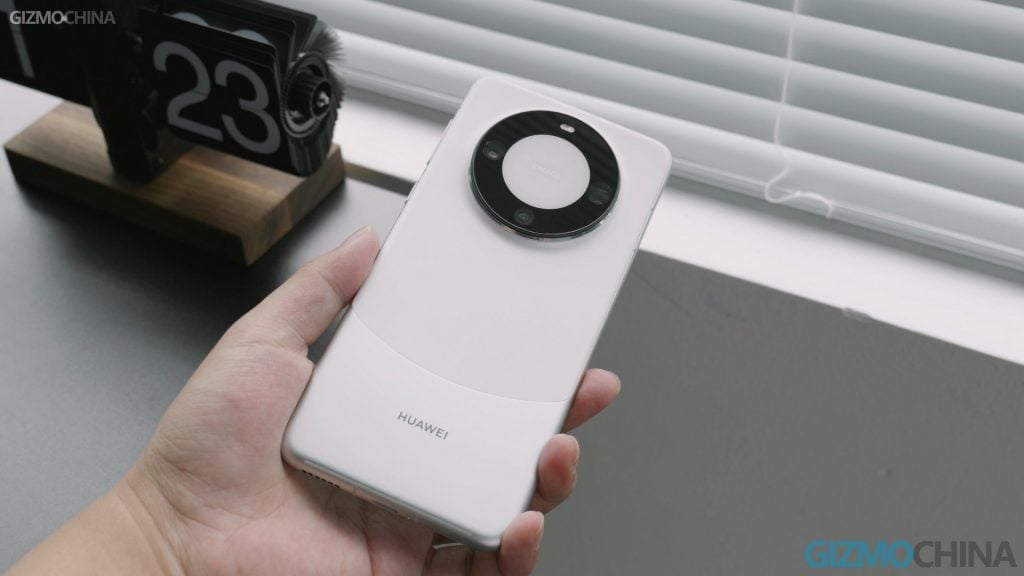
On August 29th, Huawei, seemingly out of nowhere, announced the Mate 60 Pro. The company did not hold any sort of launch event.
The device was simply listed on its official website and first-party online store, VMall. This is unlike Huawei, as the telecom giant is known for extravagant events, especially for its premium products.
It was even more shocking to learn that the device supports 5G connectivity. However, the company makes no mention of 5G support and the name of the chipset found inside the phone.
It has been a week since the phone became official, and Huawei has already sold over a million units of the Mate 60 Pro. The smartphone is expected to ship at least 12 million units.
Multiple videos and articles (including ours) regarding the product have emerged on the internet over the last few days. Based on the information available, we have compiled a single article that answers the key questions about the chip powering the Huawei Mate 60 Pro.
Which chip powers the Huawei Mate 60 Pro?
The Huawei Mate 60 Pro houses a HiSilicon Kirin 9000s chip. It is Huawei’s first new mobile chipset in three years.
Most importantly, the SoC enables 5G connectivity. Thus, the Mate 60 Pro is also the first Huawei 5G phone in a long time since the limited-run Mate 40 series from late 2020.
Who manufactures the Huawei Mate 60 Pro’s HiSilicon Kirin 9000s chip?
Historically, TSMC manufactured HiSilicon chipsets for Huawei. However, due to US sanctions, the telecom giant could not continue its business with the world’s most advanced chip manufacturer.
As a result, China’s SMIC produces the new Kirin 9000s SoC. As per findings by TechInsights, the chipset is fabricated on SMIC’s 7nm (N+2) process.
The Kirin 9000s measures 107 mm², which makes it 2% larger than the 5nm-based TSMC-manufactured Kirin 9000 chip (105 mm²). Interestingly, the latest chipset even has larger critical dimensions (CDs) than its predecessor, despite being based on a less advanced fabrication process.
This is a significant accomplishment for a Chinese chip manufacturer. But for some reason, SMIC has not published papers on its latest innovation in the public space.
What is the architecture of the Huawei Mate 60 Pro’s HiSilicon Kirin 9000s chip?
Like every other mobile chip on the market, the HiSilicon Kirin 9000s is ARM-based. But instead of completely relying on the off-the-shelf default ARM cores, Huawei has opted for custom cores like Samsung’s Mongoose.
The Kirin 9000s features an octa-core CPU. Some benchmarks by users / reviews revealed 12 cores since the CPU supports hyper-threading (up to 12 threads). This makes the Kirin 9000s the first ARM chip on the market to support CPU hyper-threading.
Out of the eight CPU cores, the prime core is the custom Taishan core, clocked at 2.62 GHz. Further, the median cores are again a cluster of three custom Taishan cores clocked at 2.15 GHz. Finally, the efficiency cores are a cluster of four stock ARM Cortex-A510 cores.
The graphics are handled by the Maliang 910 GPU, clocked at 750 MHz. The SoC also comprises newer versions of the DaVinci NPU, ISP, and Baron modem.
How powerful is the Huawei Mate 60 Pro’s HiSilicon Kirin 9000s chip?
Based on benchmark tests (AnTuTu and Geekbench), the HiSilicon Kirin 9000s chipset falls behind the current-gen Android champion, the Qualcomm Snapdragon 8 Gen 2.
The SoC is capable of scoring around 7,00,000 points on AnTuTu. Whereas on Geekbench, it can attain about 1,300 and 3,300 points in single-core and multi-core tests, respectively.
These scores put the performance of Kirin 9000s in the ballpark of the Snapdragon 888. In other words, the chip is two generations behind in the Android space.
Does the Huawei Mate 60 Pro’s HiSilicon Kirin 9000s chip support 5G?
As mentioned at the beginning, the Huawei Mate 60 Pro is the first Huawei 5G smartphone in nearly three years. HiSilicom Kirin 9000s’ newly developed Baron modem enables support for fifth-generation mobile communication technology on the phone.
Unfortunately, not much is known about this mysterious modem. Anyway, in addition to 5G, the device also supports satellite connectivity.
In fact, the Huawei Mate 60 Pro is the world’s first commercial smartphone to support satellite calling. The Mate 50 Pro was limited to texts, like the iPhone 14 lineup.
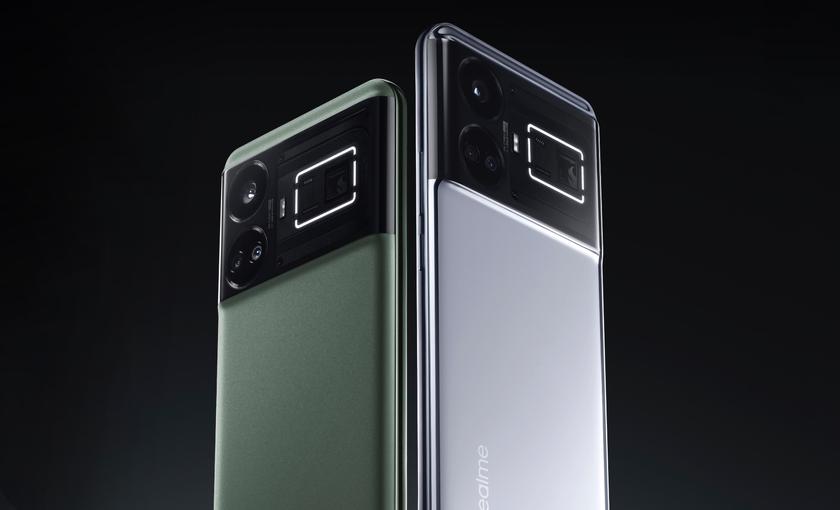
Realme recently launched the Realme GT 5 in China. The top-of-the-line variant of the phone, which is priced at 3,799 yuan (~$519), offers 24 GB of RAM, 1 TB of storage, and 240W fast charging. Reports suggest that the brand is now working on the Pro version of the GT 5. It is currently unclear whether it will launch in late 2023 or in the first quarter of 2024. However, tipster Digital Chat Station has revealed some details about the Realme GT 5 Pro. In the latest leak, the tipster reiterated some of the previously mentioned specs as well as some new details.
Reports have revealed that the Realme GT 5 Pro and the OnePlus 12 are likely to have nearly identical specifications. It goes without saying that both phones will have different rear designs. Internally, there could be only a few differences.
Realme GT 5
Realme GT 5 Pro key specifications (rumored)
According to DCS, the Realme GT 5 Pro will be equipped with an OLED panel with curved edges. While the exact screen size is not known, it is expected to support a 2K resolution, ultra-high frequency dimming, and at least a 120Hz refresh rate. As far as build is concerned, the device is expected to feature a metal middle frame for better durability. It is also said to be a dust- and water-resistant device.
The Realme GT 5 Pro will arrive with the Snapdragon 8 Gen 3 chipset, 24 GB of RAM, 1 TB of storage, and a 5,400mAh battery. The device is expected to support 100W wired and 50W wireless charging.
The rear camera setup of the device will have an OmniVision OV64B 64-megapixel main camera with 3x optical zoom. It is said to be paired with a Sony IMX9-series primary camera and an ultra-wide lens. The new leak also states that the GT 5 Pro has an X-axis linear motor and a massive vapor chamber heat dissipation unit measuring 10,000mm2 in surface area. A recent leak claimed that the device will be priced in the 4K Yuan segment in China.
Back in August, at the Pova 5 series launch event, Tecno showcased its first-ever laptop (MegaBook T1) in India. This computer was originally unveiled at IFA 2022 and has been on sale in some countries for months.
Today, the brand has revealed that the notebook will be soon available for purchase in India. Unfortunately, it hasn’t disclosed the sale date yet. But hints at what consumers can expect.
The Tecno MegaBook T1 heading to India will be the same as the one sold in other regions. We already knew it, thanks to the presentation of the product at the World Of TECNOlogy event last month.
The MegaBook T1 sports an aluminum alloy body like most premium laptops on the market. It has a thickness of about 14.8mm and weighs around 1.56kg.
The device flaunts a 15.6-inch LCD screen with an FHD resolution, DC dimming, and 350 nits peak brightness level. On the connectivity front, it comes with WiFi 6, 2 x USB 3.0 ports, 1 x USB 3.1 port, 2 x USB Type-C ports, an HDMI port, and a 3.5mm jack.
Under the hood, it houses 11th Gen Intel Core processors and a 70Wh battery. It will be offered with Core i3, Core i5, and even Core i7 chipsets.
In fact, at the event, the company revealed the exact configurations that will be sold in India. The computer will be available in the following variants.
11th Gen Intel Core i3, 8GB + 512GB
11th Gen Intel Core i5, 16GB + 512GB
11th Gen Intel Core i7, 16GB + 1TB
Other features of the notebook include a backlit keyboard, a fingerprint sensor, a 2MP webcam, a TF card reader, a safety lock, dual speakers, and 65W charging.
Tecno says that its first laptop in India will be soon available via early bird sale with exciting launch offers.
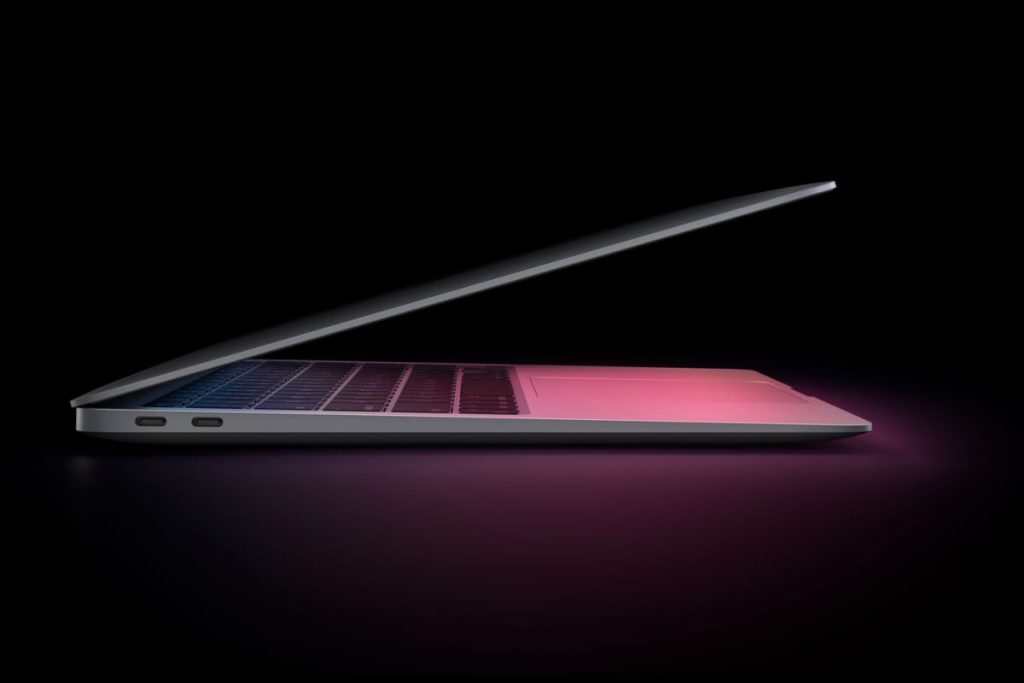
With the massive success of Chromebooks in the market, it appears that Apple might be planning on rivaling this segment as well. A new report hints that the brand could be working on more affordable MacBook models that will rival the Chromebooks. So here are all the details.
Apple MacBooks might soon be more affordable
As of right now, the Cupertino based giant’s MacBook Air is its cheapest laptop offering. But it appears that another entry-level lineup of notebooks might be in the works. According to a DigiTimes report, industry sources close to the matter have claimed that Apple is planning on releasing low-cost MacBooks. These will arrive with an affordable price tag, which could help make them better compete against the Chromebooks.
For those unaware, Chromebooks have seen massive growth in recent years, especially due to their applications in the education segment. The lower pricing and functionalities make them the perfect fit for students and others who do not require beefy specs on their laptops. While the MacBook is a popular notebook series, it isn’t as accessible as the cheaper Chromebooks.
But the company might be working on changing this soon with its new affordable MacBooks. The report claims that the upcoming lineup will be distinct from the MacBook Air and MacBook Pro series. Although, the iPhone maker will continue to feature its iconic metal build design on the new MacBook series. At the moment, Apple is expected to launch its M3-powered Macbook Pro and MacBook Air in October.
Xiaomi announced the Xiaomi 13 and 13 Pro in December 2022. There have been reports that the Xiaomi 14 lineup will debut earlier than the Xiaomi 13 series. A new leak by reliable tipster Digital Chat Station suggests that the Xiaomi 14 and Xiaomi 14 Pro may break by early November in China.
Xiaomi 14 series tipped to launch in November
Xiaomi 13
According to the tipster, it appears that Xiaomi intends to launch the Xiaomi 14 series before the Double Eleven sales event. For those who don’t know, the Double Eleven shopping event in China, also known as Singles’ Day, is a massive annual online shopping festival that takes place on November 11 each year, featuring extensive discounts and promotions on various products. It has become one of the world’s largest online shopping events. Hence, it seems that the Xiaomi 14 series may go official in the first or second week of November.
This early launch timeline is primarily a response to the unexpectedly strong sales of the Xiaomi 13 series, according to the tipster. Typically, the sales cycle of Xiaomi’s numbered series of phones, such as the Xiaomi 12 series and the Xiaomi 11 series, is just over a year. In other words, there is usually a little over a year between the launch of one model in the series and the launch of its successor. However, this time around, the Xiaomi 13 series has managed to meet its sales targets within just nine months, with the Pro model even going out of stock across all platforms.
The Xiaomi 14 lineup also includes the more powerful Xiaomi 14 Pro. Predecessor Ultra models have launched in the second quarter of each year. However, reports surrounding the Xiaomi 14 Ultra have claimed that it may break cover in the first quarter of 2024.
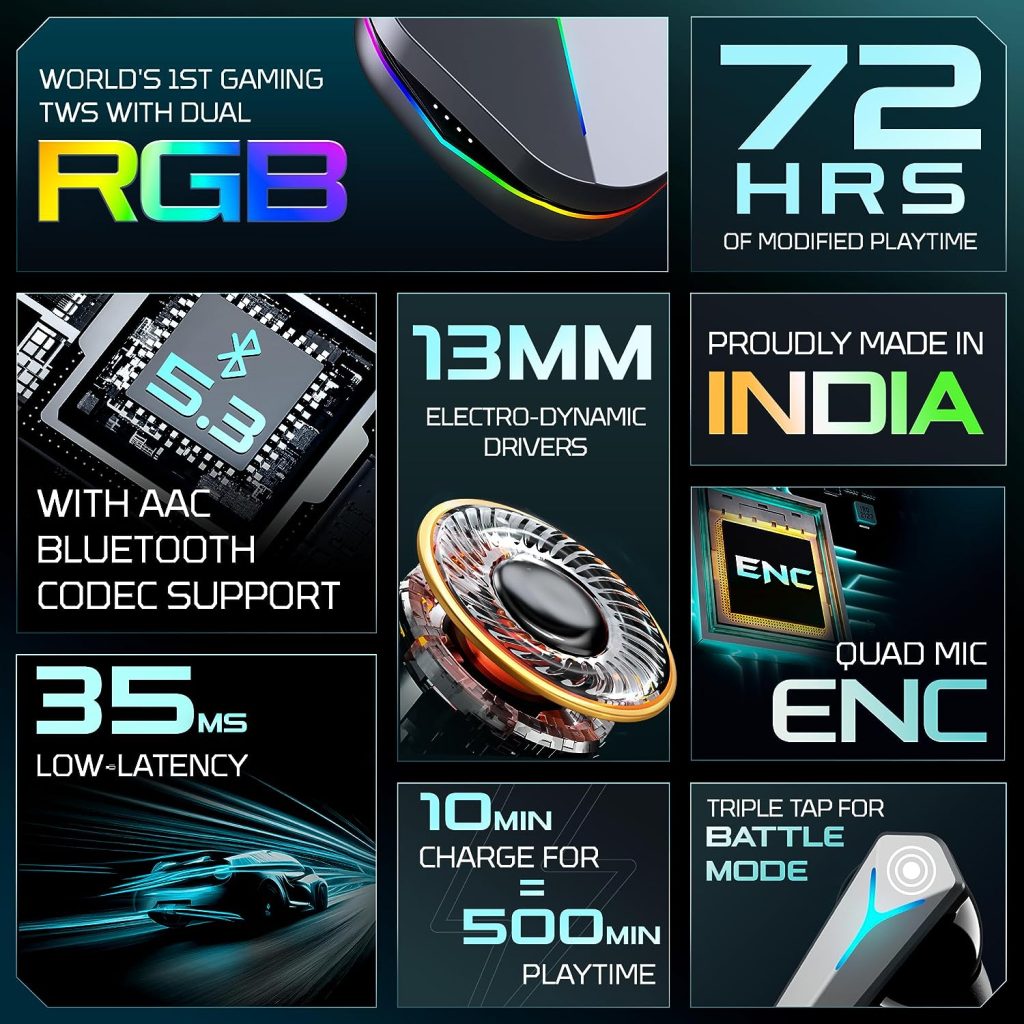
Earlier this month, Mivi launched affordable DuoPods A250 TWS earbuds with 13mm drivers onboard. The brand has now unveiled another TWS earbuds in the market called the Mivi Commando Q9 Gaming Earbuds. As the name suggests, these earbuds feature a lot of features you would expect from gaming earbuds like a super low latency mode and of course, RGB.
Mivi Commando Q9 Gaming Earbuds specs
The Mivi Commando Q9 Gaming Earbuds come equipped with 13mm Electro-Dynamic drivers for powerful sound. These earbuds also feature a Quad Mic AI-ENC Chip with AI Environmental Noise Cancellation and HDCalls Technology, which means your calls will sound crystal clear even in noisy environments.
For gamers, these earbuds offer a low latency gaming mode with a super-fast 35ms response time. They use Bluetooth 5.3 for a stable wireless connection.
One standout feature is the Dual RGB lighting with 7 lighting effects, including static, breathing, waves, cycle, quick fade, and flicker, adding a touch of style to your gaming setup. In terms of battery life, these earbuds are impressive, offering a total of 72 hours of usage, with 8.5 hours of playtime on the earbuds themselves. Plus, they support Swift Charge Technology, where just a 10-minute charge gives you a whopping 500 minutes of playtime.
Pricing & availability
The Mivi Commando Q9 is priced at Rs. 1,999 and is available in White, Black, Grey, and Red colors for purchase on Amazon.in.
Xiaomi is planning on launching the new Redmi Note 13 series soon. But before the rumored October launch, the higher-end Redmi Note 13 Pro has just been spotted on a new certification website, which reveals some of its specifications.
Redmi Note 13 Pro surfaces on 3C
The Chinese tech giant’s upcoming Note 13 Pro model surfaced on 3C, a Chinese certification platform. This device carries the 2312DRA50C model number, which is the same model number as the one that had surfaced previously on TENAA. While this listing doesn’t reveal finer details regarding the smartphone, it does confirm that the Redmi Note 13 Pro will support 67W fast charging.
In other words, the brand won’t be bringing any upgrades to the fast charging over the previous generation, since the Redmi Note 12 Pro also offered 67W fast charging. Unfortunately, the 3C certification did not reveal any other notable features of the 13 Pro model, but it does hint at the imminent launch of the smartphone. For those unaware, the Redmi Note 13 series is rumored to launch in China in October with the global release expected to follow soon after.
Based on what we know so far, the device will sport a 6.67-inch OLED display that has a 2712×1220 resolution. It will arrive in multiple storage configurations, which include 6GB + 128GB, 8GB + 256GB, 12GB + 512GB, and 16GB + 1TB options. A large 5,020mAh battery pack is expected to power this smartphone. The Note 13 Pro will likely feature a 200-megapixel triple camera setup on the rear.
The budget TWS is priced at just ₹2,199 (~$25) for a limited time. It will be available from 12 PM IST on September 12.
The product will be sold via Amazon and Realme.com. There’s no official word on the actual price following the launch offer.
The Realme Buds T300 looks like the Apple AirPods Pro. It arrives in white color with gray accent and black color with gold accent.
The buds house 12.4mm drivers and connect via Bluetooth 5.3. They are IP55-rated (dust and water resistance) and offer touch gesture controls.
The buds support standard SBC and AAC audio codecs. They even support Active Noise Cancellation (up to 30dB), 360° spatial audio, and 50ms low latency mode.
The earbuds can be configured via the Realme Link app, which is available on both Google Play Store and Apple App Store. Users can fiddle with equalizer, noise control, gestures, and more.
As for battery life, the buds are rated to last for up to 8 hours without ANC and up to 40 hours with the charging case. When noise cancellation is enabled, these numbers drop to 6 hours and 30 hours, respectively.
Realme unveiled the Narzo 60x 5G in India today. As expected, the device is nothing but a rebranded Realme 11x 5G.
However, there are three differences other than the name. The Narzo model comes in different colors, has a 50MP rear camera instead of a 64MP snapper, and will be sold via Amazon rather than Flipkart.
The main highlight of the product is that it is the most affordable 5G smartphone from Realme. It has a large high refresh rate display, a MediaTek chip, and a huge battery.
Let’s check out everything this handset has to offer along with its pricing and availability.
Realme Narzo 60x 5G Specifications
The Realme Narzo 60x 5G is built around a 6.72-inch centered punch-hole display (LCD) with a resolution of 2400 x 1080 pixels (FHD+) and a 120Hz refresh rate. The panel supports a 180Hz touch sampling rate and 680 nits peak brightness level.
Under the hood, the phone houses a MediaTek Dimensity 6100 Plus chipset and a 5,000mAh battery with support for 33W SuperVOOC charging. On the software front, it boos Realme UI 4.0 based on Android 13.
There’s a dual camera setup on the back comprising a 50MP primary sensor and a 2MP depth sensor. Whereas, the front side is equipped with an 8MP shooter.
The connectivity options on the device include dual SIM, 5G, dual-band WiFi, Bluetooth 5.2, GNSS, and USB Type-C. It also arrives with a side-mounted fingerprint sensor, a dedicated MicroSD card slot, and a 3,5mm headphone jack.
Realme Narzo 60x 5G Price
The Realme Narzo 60x 5G carries the following price tags in India.
4GB + 128GB – ₹12,999 (~$150)
6GB + 128GB – ₹14,499 (~$175)
The handset can be availed in either Stellar Green or Nebula Purple color options. It will be sold via Amazon and Realme.com.
The first sale is scheduled for at 12 PM IST on September 12.
Motorola recently launched the new Moto G54 in the Chinese market. Now, the smartphone model has also been announced in India, although, these are not identical devices. So let’s have a look at this Indian variant’s price, specs, and more.
Moto G54: Design & Display
The Moto G54 has a design that is similar to the Chinese variant but with one key difference. Unlike the faux leather panel on the Chinese model, the Indian version features a 3D Acrylic Glass design. Meanwhile, the front still sports a 6.5-inch IPS LCD panel that has an FHD+ resolution, a 20:9 aspect ratio, and a 120Hz refresh rate. This screen also houses a center-aligned punch-hole cutout for the selfie camera.
Moto G54 5G
Moto G54: Specs
Under the hood, the smartphone is equipped with the MediaTek Dimensity 720 SoC that is paired with up to 12GB of RAM and 256GB of internal storage. This is notable since it’s the first 5G device to offer such storage configurations in this price segment. A massive 6,000mAh battery pack powers the G54, which also supports 30W fast charging. The rear features a 50-megapixel primary camera that is paired with an 8-megapixel ultra wide angle lens. Meanwhile, the front houses a 16-megapixel selfie shooter.
The device runs on Android 13 OS based MyUX custom skin out of the box. The company has also guaranteed the upgrade to Android 14 with three years of security updates. Other notable features include side mounted fingerprint scanner, dual speakers that support Dolby Atmos and Moto Spatial Sound, a 3.5mm headphone jack, Bluetooth 5.3, NFC, a USB Type-C port, and dual SIM support.
Moto G54: Pricing & Availability
Motorola has just announced the Moto G54 model in multiple color options. This includes Mint Green, Pearl Blue, and Midnight Blue. It is also sold in two storage configurations, namely 8GB+128GB and 12GB+256GB option. The former has a price tag of 14,999 INR, while the latter will sell for 18,999 INR. Notably, the smartphone will go on sale via Flipkart, the company’s official website, and offline retailers on 13th September 2023.
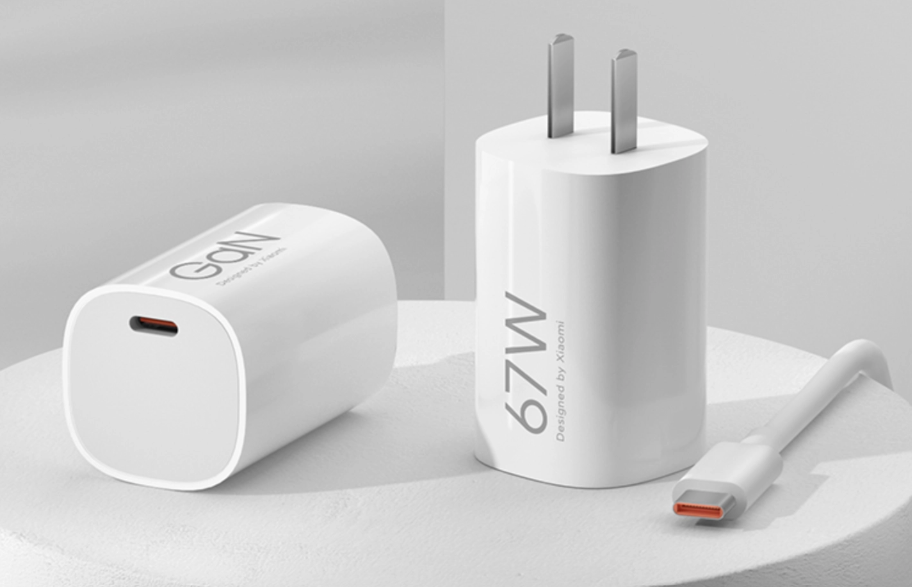
Xiaomi has a vast portfolio of electronic products. Primarily known for its smartphones, the Chinese company manufactures nearly every imaginable consumer electronic device, from refrigerators, air conditioners, and TVs to vacuum cleaners, juicers, door locks, and tire inflators. Xiaomi has it all. The focus of this post is the brand’s newly launched 67W GaN charger set that supports UFSC-integrated fast charging.
The new Xiaomi 67W GaN charger has a white, rounded shell that measures 32.2 x 32.2 x 50.3 mm. The 67W label on the shell indicates the charger’s power output. It has a single USB-C output port and a fixed plug. The charger supports five fixed output voltage settings: 5V3A, 9V3A, 12V2.25A, 15V3A, and 20V3.25A.
It also supports a PPS voltage setting of 11V6.1A and Xiaomi’s proprietary 67W fast charging. Additionally, the new 67W GaN charger supports the UFCS 1.0 fusion fast charging protocol, which can provide fast charging for other non-Xiomi phones. The package also includes a 1.5-meter, 6A fast charging cable with a C-to-C connector
The new Xiaomi 67W GaN charger is available for purchase in China through Xiaomi Mall. The charger set is priced at 169 Yuan ($23). In addition, you can grab the charging cable alone from Xiaomi’s website for 69 yuan ($9.4).
In related news, Xiaomi recently launched the Mijia Electric Kettle N1 for just $9. It has a capacity of 1.5 liters. The kettle comes with an inner and outer double-layer body design, with the inner tank made of 304 food-contact grade stainless steel.
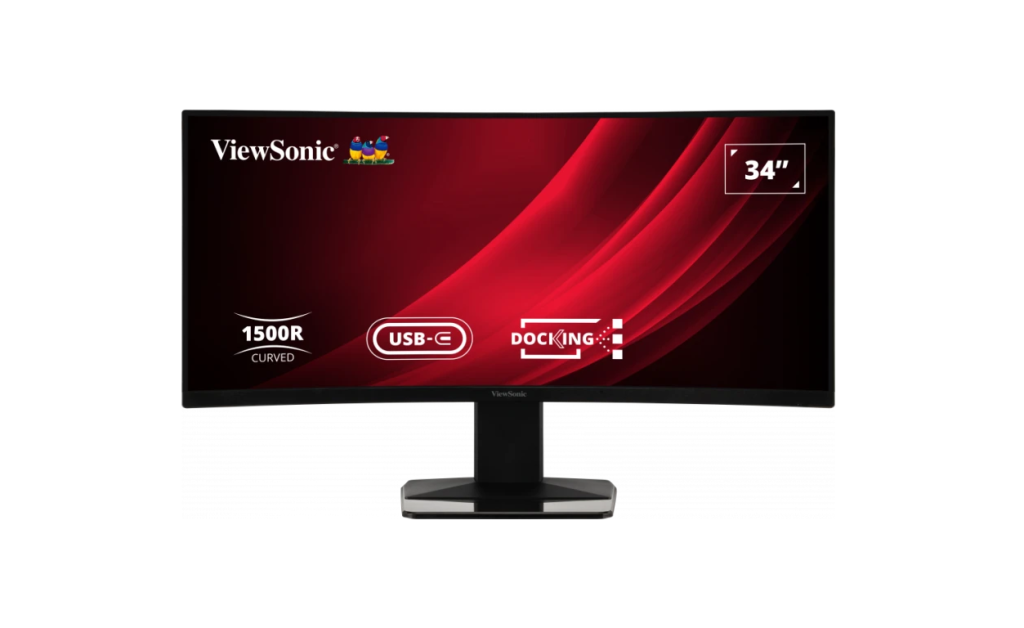
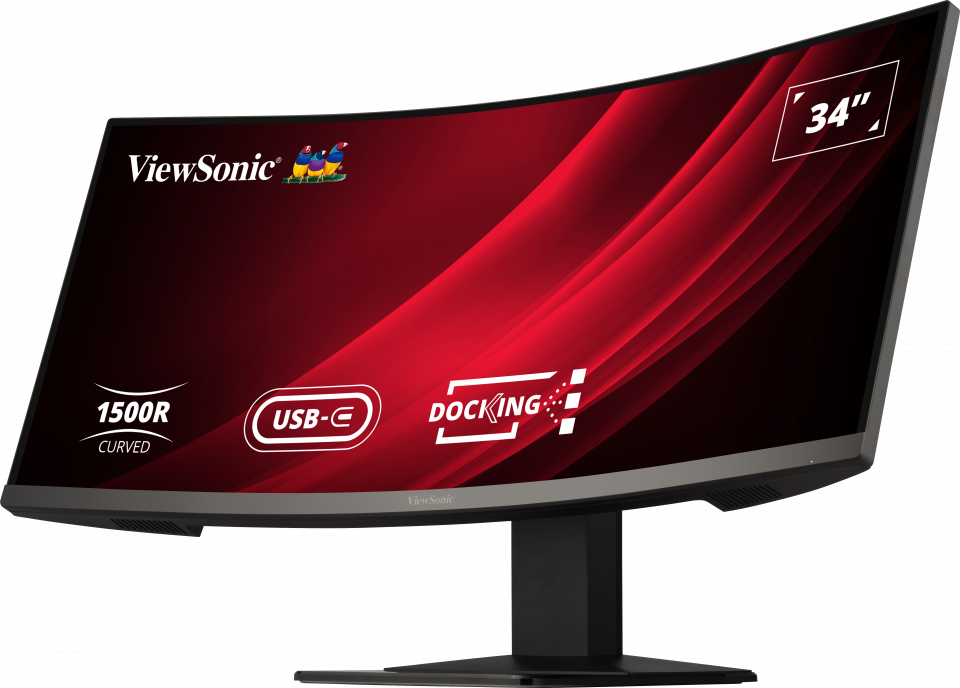
After recently unveiling a 24-inch FHD touchscreen monitor, ViewSonic has now unveiled a new 34-inch curved VA panel monitor called the ViewSonic VG3419C. Check out the details below.
ViewSonic VG3419C monitor specs
The ViewSonic VG3419C is a 34-inch monitor with a high-quality VA panel that offers a sharp and wide display at a resolution of 3440 x 1440. It has a static contrast ratio of 3,000:1 and a dynamic contrast ratio of 80 million to 1, providing excellent picture quality. This monitor uses LED technology for its backlighting and has a typical brightness of 300 cd/m². It can display 16.7 million colors with 8-bit true color support and covers 86% of the NTSC color space and 121% of the sRGB color space.
The VG3419C has a wide 21:9 aspect ratio, making it great for immersive gaming and multimedia experiences. It has a reasonable response time of 3.5ms, and it also offers a Motion Picture Response Time (MPRT) of 0.4ms for smoother motion in fast-paced content. With a 1500R curvature, the display wraps around your field of vision for added immersion.
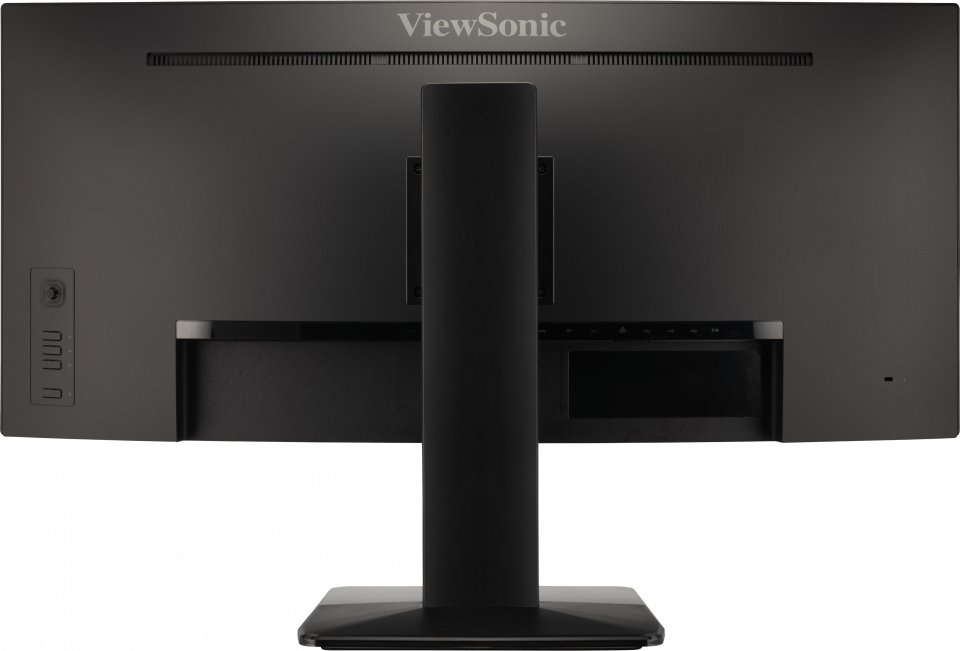
This monitor features a 120Hz refresh rate and supports FreeSync Premium technology for smoother gameplay with compatible graphics cards. It includes features like a blue light filter and flicker-free technology to reduce eye strain during long hours of use. Additionally, it has a variety of connectivity options, including USB ports, HDMI, DisplayPort, and a USB Type-C port with DisplayPort Alt mode and 65W power charging capabilities. It also has a KVM switch for easy device switching. Unfortunately, pricing and availability details are still under wraps.
In the world of off-road exploration, where adrenaline and rugged terrain collide, the INMOTION Adventure Unicycle stands as an embodiment of innovation and relentless power. Designed to conquer the most challenging landscapes, it represents the pinnacle of engineering excellence. So let’s check out the remarkable features that make the Adventure Unicycle the ultimate choice for adventurers seeking uncompromised performance.
Harnessing Unprecedented Power
At the core of the Adventure Unicycle is the formidable C40 magnetic steel motor, a marvel of engineering boasting a peak power output of an astounding 9000W, with a max power limit of 12000W. This powerhouse effortlessly generates a remarkable 850N of wheel tractive force, enabling you to effortlessly ascend gradients as steep as 50 degrees. Whether you’re navigating rocky trails, ascending rugged hills, or conquering challenging inclines, the Adventure Unicycle ensures you remain in complete control of your off-road journey.
Advanced Electric Control System
The Adventure Unicycle is equipped with an INMOTION-developed Raptor controller, a cutting-edge masterpiece comprising 42 high-voltage tolerant MOSFETs operating at 200V. This design not only enhances the voltage margin by an impressive 40% but also incorporates a double-layered structured aluminum substrate for robust heat dissipation. The result is a system that maintains optimal performance even under the most demanding conditions, ensuring a smooth and reliable ride on every adventure.
Lightning-Fast Responsiveness
The Adventure Unicycle delivers an unparalleled power response with a remarkable response time of just 1ms. This rapid acceleration is achieved through a high-performance off-road motor and proprietary algorithms for vector control, posture detection, and motion control. Paired with high-traction off-road tires and wide anti-slip pedals, acceleration and deceleration become intuitive, allowing you to adapt swiftly to the ever-changing terrain.
Industry-Leading Progressive Suspension
Built for the most demanding off-road adventures, the Adventure Unicycle features an expertly engineered suspension system. It incorporates high-end, fatigue-resistant, and stress-relaxation-resistant alloy springs, which are typically found in premium off-road motorcycles and automobiles. The front section boasts a stiffness rating of 600 lbs/in, ensuring a smoother and more comfortable ride on mild uneven surfaces, while the rear section boasts an impressive 970 lbs/in rating, guaranteeing exceptional rebound performance on challenging off-road segments. With 17 levels of compression damping, 8 levels of rebound damping, and a spring pre-load adjustment knob, you can fine-tune your ride to perfection.
Rapid Charging, Extended Lifespan
The Adventure Unicycle is powered by upgraded Samsung 50GB battery cells, offering a fast-charging feature that supports a maximum charging current of 16A, enabling an 80% charge in just one hour. The Smart Battery Management System continuously monitors real-time data from each cell, ensuring your safety throughout your journey and mitigating potential risks arising from battery voltage discrepancies.
IPX6 Waterproof for All-Weather Riding
Designed to withstand the elements, the entire wheel of the Adventure Unicycle boasts an IPX6 waterproof rating, while the battery holds an IPX7 waterproof rating. Regardless of the weather conditions, you can ride worry-free, knowing that your equipment remains protected from the elements, even in the pouring rain.
Illuminating Your Path
Safety is paramount, especially during nighttime excursions. The Adventure Unicycle is equipped with an adjustable angle headlight that emits a brilliant 1500 lumens of light. This powerful headlight, combined with automotive-grade taillights, allows you to customize the light angle according to your needs, ensuring clear visibility during your night rides.
Two Riding Modes for Versatility
Choose between Sports Mode for an exhilarating 47% increase in acceleration response, ideal for conquering steep slopes, ramps, and challenging off-road scenarios, or opt for Comfort Mode, which provides a smoother and more stable power response for a relaxed and controlled ride.
Double Suspension System
Tailored explicitly for off-road exploration, the Adventure Unicycle features a dual suspension system, with suspension sliders on the sides and coil suspension on the rear. This design ensures a smooth and controlled ride, even over the roughest terrain.
With a top speed of 110km/h, an astonishing 50-degree climbing capacity, and a sleek and powerful headlight, the INMOTION Adventure Unicycle redefines the realm of off-road adventures. It’s not just a mode of transportation; it’s an invitation to explore the world like never before. Experience the Adventure Unicycle, where power, control, and rugged design converge to transform your off-road journeys into unforgettable adventures.
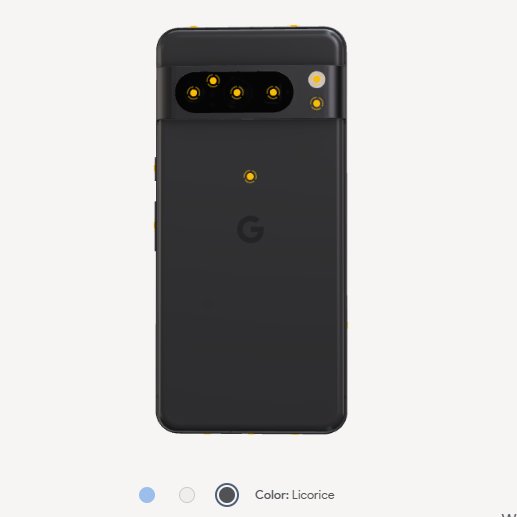
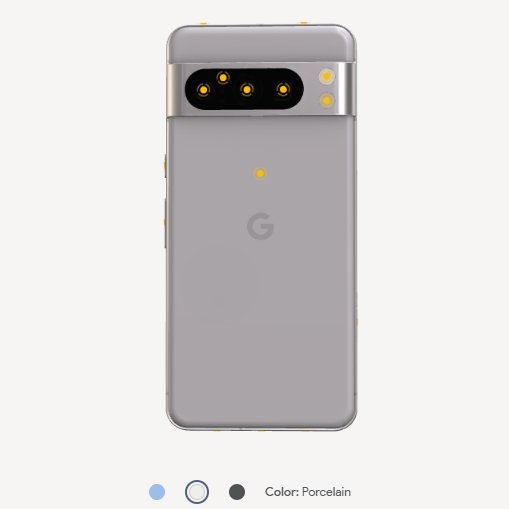
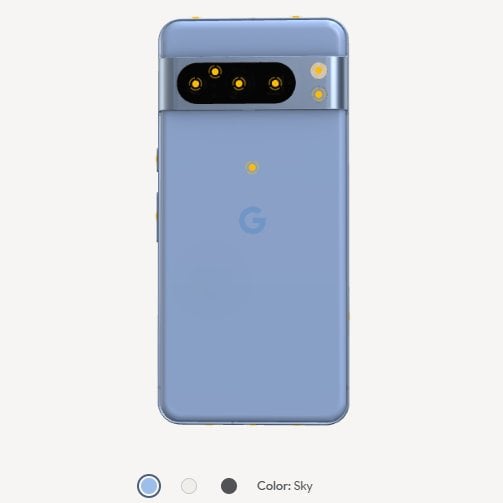
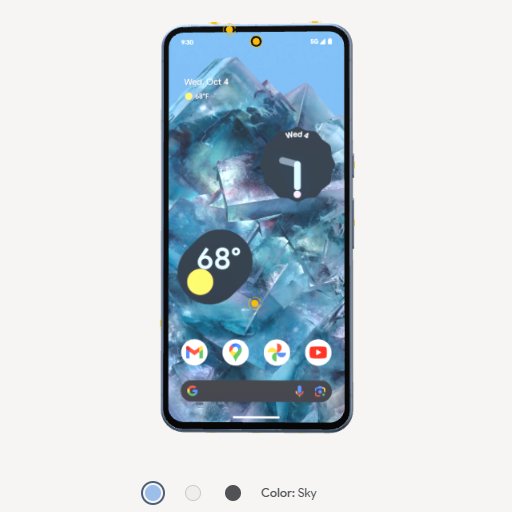
Google has recently added official 3D renders of the Pixel 8 Pro to its newly launched Pixel Simulator website. These renders confirm the design and several components of the phone, including the SIM card tray, body temperature sensor, and color options for the Pixel 8 Pro. As is known, the Pixel 8 and Pixel 8 Pro are scheduled to launch globally on Oct. 4.
Google Pixel 8 Pro’s official 3D renders
The Pixel Simulator page of the Pixel 8 Pro, which has been taken down, revealed that it will arrive in three colors: Licorice, Porcelain, and Sky. As previously seen in leaked renders, the Pixel 8 Pro has a flat display with a centred punch-hole and its rear panel has a raised camera bar, which houses a triple camera unit, an LED flash, a microphone, and a body temperature sensor.
The triple camera unit comprises a main snapper, an ultra-wide lens, and a telephoto camera that supports 5x zoom. The bottom side of the phone features a speaker, a microphone, and a USB-C port. On the top, it has a microphone and another speaker. The phone is equipped with NFC connectivity and a SIM card slot on the left edge.
Google Pixel 8 Pro specifications
Reports have revealed that the Pixel 8 Pro will be equipped with a 6.7-inch OLED LTPO panel that offers a Quad HD+ resolution of 1344 x 2992 pixels and a 120Hz refresh rate. It will come preloaded with Android 14 and pack a 4,950mAh battery with 27W wired and 23W wireless charging support. The Tensor G3-powered device will arrive with 12 GB of RAM and up to 512 GB of storage.
The Pixel 8 Pro will feature an 11-megapixel front-facing camera. Its rear camera setup will comprise a 50-megapixel Samsung GN2 primary camera with OIS support, a 64-megapixel ultra-wide lens, and a 48-megapixel telephoto camera. For security, it will have an under-display fingerprint scanner. As per a recent report, the base variant of the Pixel 8 Pro will cost €1,235.72 (inclusive of VAT) in Europe.
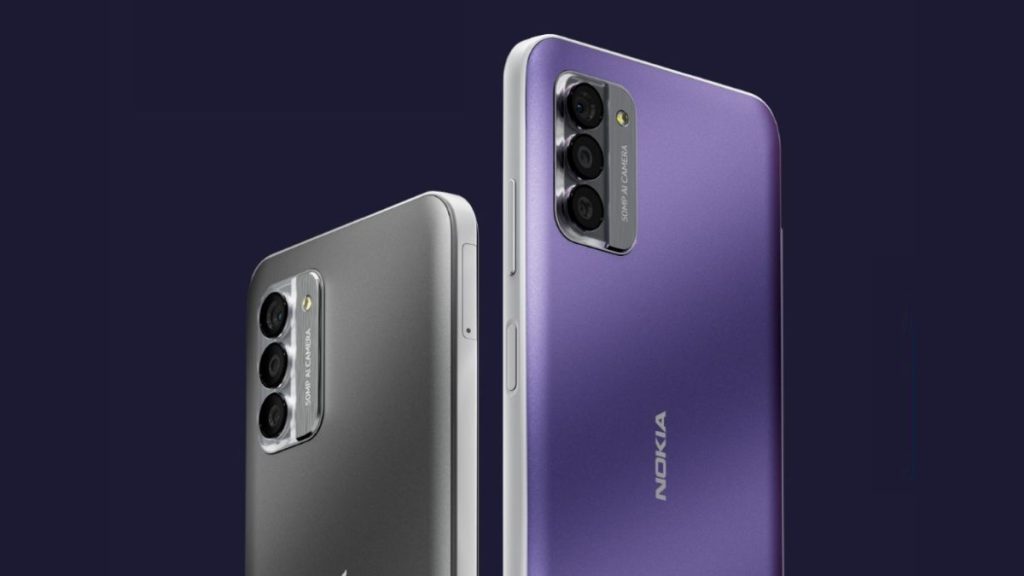
Nokia has been teasing the arrival of a new 5G phone for the Indian market for the past few days. Since then, the rumor mill has been speculating that the brand may unveil the Nokia G42 in the country. Today, the company officially confirmed that it announce the Nokia G42 on Sept. 11 in the country. The G42’s microsite is now live on Amazon.
While the Nokia G42 5G is a new smartphone for India, it has already launched in Europe. After the Nokia X30 5G, which debuted earlier this year, the G42 will be the company’s second 5G-enabled phone to debut in India. The microsite for the phone is now live on Amazon, which states that it will be launching soon.
Nokia G42 specifications
Nokia G42 5G
The microsite states that the Nokia G42 5G has a 6.56-inch waterdrop notch display that offers HD+ resolution and a 90Hz refresh rate. It is equipped with an OZO Playback-powered loudspeaker.
It has an 8-megapixel camera on the front and a 50-megapixel primary camera on the back. The main snapper is accompanied by a macro camera and a depth sensor. Under the hood, the device features the Snapdragon 480 Plus chipset and up to 11 GB of RAM (including virtual RAM).
The Nokia G42 5G is officially confirmed to receive two years of Android OS upgrades and three years of security updates. The device will be available in Purple and So Grey color variants.
While it is not mentioned on the Amazon page, it is already known that the Nokia G42 5G has 128 GB of internal storage and a 5,000mAh battery that supports 20W wired charging. It features a side-facing fingerprint scanner for security. At present, there is no word on the price of the device.
Microsoft is doubling down on creating a more respectful online gaming community. The tech giant announced that its September update for Xbox Series X/S and Xbox One will include a much-awaited abusive-voice reporting feature. Limited initially to select English-speaking markets like the US, UK, and Australia, this feature aims to make reporting abusive language easier while ensuring minimal interruption to the gaming experience.
The update will also have a toggle feature for the Console’s Variable Refresh Rate (VRR)
Imagine being in the middle of an intense multiplayer match and someone decides to hurl a few inappropriate remarks your way. Instead of letting it slide, you can now capture a 60-second audio clip right on your console. Importantly, these clips are for moderation purposes only and cannot be downloaded or shared. You’ve got 24 hours to officially report it, and Microsoft assures that no audio is saved unless you choose to report. As a nudge, Xbox will even remind you to submit the clip before the 24-hour window closes.
But that’s not all for the September update. You can now also quickly stream your gameplay to Discord. Just link your Discord account, and you’ll be able to hop into voice channels straight from your console. And for those who are particular about their display settings, the update brings a toggle feature for the console’s variable refresh rate (VRR), offering more customization for your viewing pleasure.
All these updates are more than just software tweaks. They signal Microsoft’s commitment to fostering a more inclusive and adaptable gaming ecosystem. The abusive-voice reporting feature, in particular, adds a much-needed layer of accountability in the virtual world, making it clear that toxic behavior is a game nobody wins.
We use cookies on our website to give you the most relevant experience by remembering your preferences and repeat visits. By clicking “Accept”, you consent to the use of ALL the cookies.
This website uses cookies to improve your experience while you navigate through the website. Out of these, the cookies that are categorized as necessary are stored on your browser as they are essential for the working of basic functionalities of the website. We also use third-party cookies that help us analyze and understand how you use this website. These cookies will be stored in your browser only with your consent. You also have the option to opt-out of these cookies. But opting out of some of these cookies may affect your browsing experience.
Necessary cookies are absolutely essential for the website to function properly. This category only includes cookies that ensures basic functionalities and security features of the website. These cookies do not store any personal information.
Any cookies that may not be particularly necessary for the website to function and is used specifically to collect user personal data via analytics, ads, other embedded contents are termed as non-necessary cookies. It is mandatory to procure user consent prior to running these cookies on your website.