OnePlus is pushing new firmware updates for the OnePlus 8T and OnePlus 10T featuring the latest security patch. The updates are rolling out in India and may take some time for the global rollout. It is aimed to improve the overall device’s security and integrate the fixes for some severe bugs.
OnePlus 10T is receiving CPH2413_13.1.0.584(EX01) firmware, and the OnePlus 8T is getting CPH2413_13.1.0.584(EX01) firmware updates. It is now live and may reach your unit in the next few hours or a few days.
The users can manually check for the update by heading to Settings > About > Check for updates. Here’s the official changelog for both updates:
Changelog
System
• Integrates the August 2023 Android security patch to enhance system security.
OnePlus recently change the format of the OTA version number for OxygenOS 13.1. So, the users may find the firmware version bit different.
If any issue or bug is found after updating, the users in India can submit their feedback by dialing *#800#.
Additionally, the users are awaiting OxygenOS 14, but the Closed Beta Program is limited to some devices. The OnePlus 10T users have to wait for some time before the Beta Program goes live.
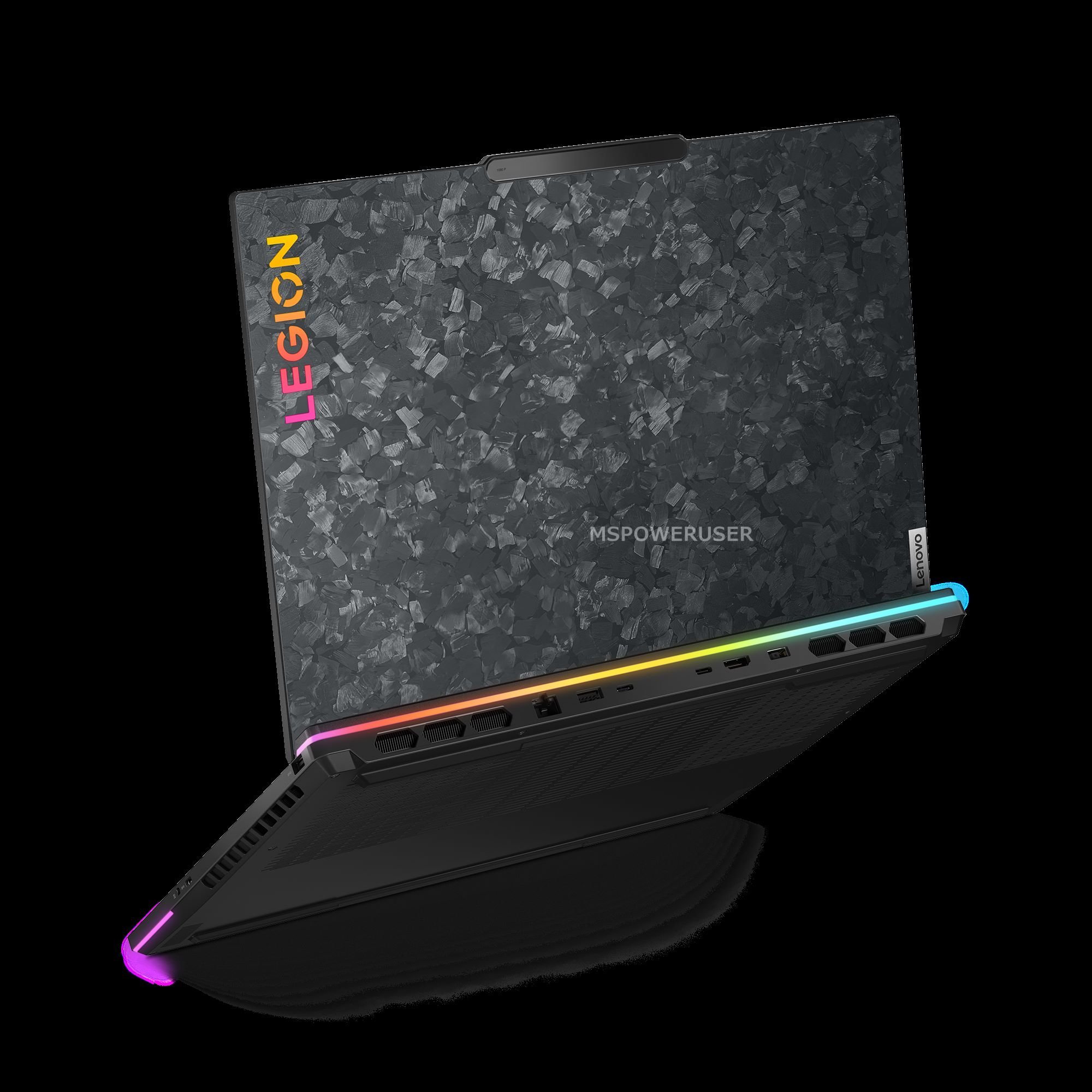
With the IFA 2023 launch event on the horizon, global brands are gearing up to unveil their state-of-the-art products. Lenovo has already offered a sneak peek of one of its key highlights at a Chinese press event, and MSPowerUser has shared images of this device, known as the Lenovo Legion 9i gaming laptop.
Image via r/GamingLaptops
Redditors at r/GamingLaptops have pointed out that the upcoming Legion 9i laptop has surfaced in images captured at a briefing event. Redditors have also shared a leaked spec sheet of the Legion 9i laptop which can be found below.
Lenovo Legion 9i laptop specs (leaked)
Leaked details about the Lenovo Legion 9i laptop point to the machine being equipped with an Intel Core i9-13980HX processor and a robust GeForce RTX 4090 16GB graphics card, positioning it among the top gaming laptops.
Image via MSpoweruserImage via MSpoweruser
Notably, it’s rumored to boast the world’s thinnest water cooling system with three fans, ensuring efficient cooling even during intense gaming. Storage-wise, it’s expected to offer two M.2 2280 SSDs, providing ample space for games and files. The inclusion of two DDR5 DIMM slots allows for flexible memory upgrades.
For extended gaming sessions, the laptop is said to pack a 4-cell 99.9 Wh battery, promising long-lasting performance. The display should be impressive, with a 16.3-inch 2K IPS Mini Led screen featuring a variable refresh rate of up to 165 Hz for smooth gaming.
In terms of design, it may sport a distinctive carbon material cover, adding to its appeal. Additionally, it’s anticipated to provide comprehensive connectivity with various ports, including 2 x USB Type A, 1 x USB Type C, 2 x Thunderbolt 4, RJ45 Ethernet, HDMI 2.1, Audio Jack, and an SD Card Reader 3.0.
KTC is a display maker based in China. You’ve probably never heard of the brand before but it does launch some neat gaming monitors every now and then. Recently, KTC launched a monitor with 4K Mini LED display, and that too at a reasonable price. Now, the company has launched a new gaming monitor with a 47.5-inch OLED panel. KTC G48P5S supports 4K resolution and offers a 138Hz refresh rate. Here’s what you should know.
KTC G48P5S features a sleek build and you’d notice very thin bezels on the display. This monitor is equipped with an original LG-made panel that measures 47.5 inches and has a 4K resolution (3840 x 2160 pixels) and a 138Hz refresh rate. It covers 98% of the DCI-P3 color gamut and has a 0.1ms GtG response time. The brightness is 450 nits (APL 25%), which is bright enough for most indoor use cases.
The KTC monitor uses a WBE OLED panel, a type of panel that produces better image quality than traditional LCD panels. It also has an HDMI 2.1 port, supporting the latest gaming features such as variable refresh rate (VRR) and Auto Low Latency Mode (ALLM). The audio uses South Korea’s Naf digital power amplifier technology for better sound quality than traditional speakers.
In other respects, this monitor is equipped with a full-featured USB-C interface that supports a 90W reverse power supply. This means that you can use the monitor to charge your laptop or other devices. The speakers on the monitor are 15W x 2 and have 6 sound units. KTC G48P5S has been launched in China with a price tag of 6,899 Yuan ($945). It is currently not available outside China.
Anker has announced the Soundcore Space One active noise-canceling over-ear headphones. These headphones feature a distinctive design and improved noise-canceling technology. They also boast an impressive battery life of up to 55 hours. Let’s check out the detailed specs of these headphones.
Anker Soundcore Space One specifications:
The Soundcore Space One headphones come with dual 40mm dynamic drivers for strong sound output. They are Anker’s top-tier model and include features like HearID customization based on user preferences. The headphones support LDAC and Hi-Res audio in wired and wireless modes, offering versatility.
The standout feature of the Soundcore Space One headphones is their upgraded active noise-canceling (ANC) technology, which effectively reduces ambient sounds, including voices, for an immersive listening experience. The headphones offer up to 55 hours of playback time, with 40 hours when noise-canceling is on. A brief five-minute charge provides four hours of use.
Anker has improved the design of the Soundcore Space One headphones, offering a more stylish appearance than the previous Space Q45 model. The headphones come in three elegant color options: Ink Black, Latte Cream, and Sky Blue.
Anker’s Soundcore Space One headphones will be available for purchase at the end of the month for a competitive price of $99.99.
Keychron keyboards offer reliable performance and a stylish look. The company frequently introduces new options. Recently, it announced the Q14 Pro dual-mode customized mechanical keyboard in China. Now, the brand has launched a new Alice-style keyboard called the Keychron Q8 Pro. The device is compatible with Windows and macOS devices and offers many customization options.
If you’re not familiar, an Alice-style keyboard has a layout that is very different from your standard keyboard. The keys are split into two halves and are slightly angled to provide a more ergonomic typing experience. Even with this design, the keyboard frame itself remains a single, unified piece. The angled keys separated by an inverted V allow you to naturally rest your wrists and type more ergonomically.
The Keychron Q8 Pro is a dual-mode customized mechanical keyboard that can be connected via Bluetooth or USB cable. It supports QMK/VIA open-source firmware for easy key remapping and customization.
The keyboard is compatible with both Mac and Windows systems. It features a gasket structure for improved typing feel and sound, as well as a PC positioning board for stability. The keycaps are made of KSA height PBT two-color injection keycaps, and the keyboard is equipped with Keychron’s self-developed K Pro switches. The keyboard is available in black, white, and silver.
Keychron Q8 Pro is available for purchase in China with a price tag of 898 Yuan ($123). It will go on sale in the country starting today. The keyboard is currently not available for purchase in the global market. However, you have a decent alternative available, called Keychron K11 Pro.
Diving into its specs, the Redmi 12 5G boasts a 6.79-inch LCD FHD+ display, ensuring crisp visuals. Powered by the Qualcomm Snapdragon 4 Gen 2 chip, the phone promises smooth performance, further amplified by 6GB/8GB LPDDR4x RAM options and storage capacities ranging from 128GB to 256GB UFS2.2.
For photography enthusiasts, the 50 MP dual-rear cameras guarantee high-quality captures, while the 5 MP front camera is perfect for those social media selfies and video calls.
Ensuring you stay powered throughout the day, the Redmi 12 5G houses a 5000mAh battery with an 18W Fast Charge feature. Running on MIUI 14 based on the latest Android 13 OS, you’re in for a modern and user-friendly interface.
Don’t miss out on this stellar deal for the Redmi 12 5G at just $199 on Giztop.
For more exciting tech deals and updates, stay tuned to our deals hub.
Philips has launched a new 4K OLED TV in the EU ranging from 48-inches to 65-inches. Other than the regular perks that come with an OLED panel like vibrant colors, this TV uses the P5 Picture Engine with AI to intelligently enhance the picture even further. Check out the details below.
Philips 4K Ambilight TV specs
The Philips 4K Ambilight OLED708 TV has a 4K Ultra HD OLED display, boasting a resolution of 3840 x 2160 pixels. This means you can expect sharp and vibrant visuals, with deep blacks and rich colors. Design-wise, the TV sports a sleek metal bezel frame and satin chrome sticks, giving it a modern and stylish look.
One standout feature is its native refresh rate of 120Hz, which ensures smooth and fluid motion, making it an ideal choice for gaming enthusiasts and anyone who enjoys action-packed movies or sports. The inclusion of the P5 AI Perfect Picture Engine elevates picture quality further by employing advanced image processing algorithms. Additionally, it supports a range of HDR formats, including Dolby Vision, HDR10+, and HLG, ensuring that you get the most from your HDR content.
The TV runs on the Google TV operating system and comes pre-loaded with popular apps like YouTube, Netflix, Amazon Prime Video, and Disney+. In terms of audio, it features a 2.0 channel audio system with an output power of 40W, delivering clear and immersive sound. Connectivity options are ample with 4 HDMI ports, 3 USB ports, and support for Wi-Fi and Bluetooth. A Quad Core processor ensures snappy performance.
Pricing & availability
The Philips 4K Ambilight OLED708 TV can now be bought on Amazon in the UK and many EU regions. As reported by Notebookcheck, In Germany, you can get a discount on the 48-inch model, reducing the price from €1,499 to €1,279, which is 15% off. The 55-inch model in Germany is also discounted, going from €1,799 to €1,444, a 20% reduction. The 55-inch model will soon be available in the UK. In the UK, the 65-inch model costs £1,607, and in Germany, it’s €1,898. It’s not clear when this TV will be available in other places.
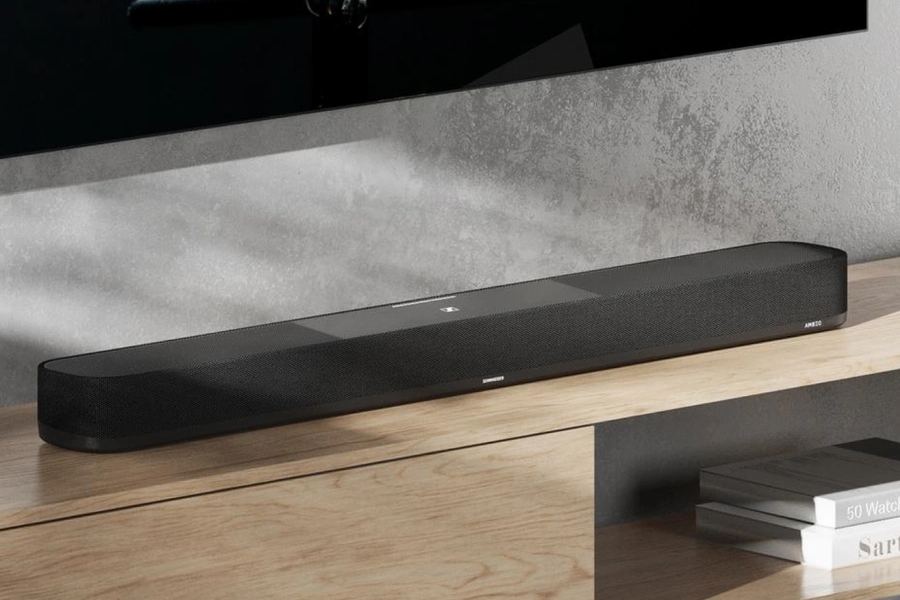
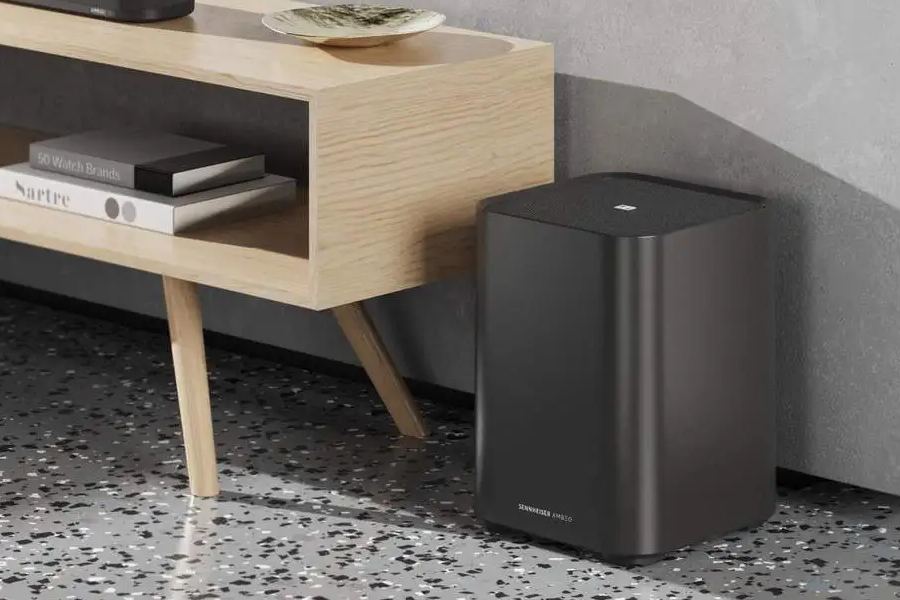
Sennheiser has expanded its Ambeo Soundbar lineup in India with the new Ambeo Soundbar Plus and Ambeo Sub. The Ambeo Soundbar Plus is the world’s first 7.1.4 standalone soundbar which delivers an immersive cinematic experience. While the Ambeo Sub is a wireless subwoofer that adds deep, powerful bass to the soundbar. Here are all the details about the Sennheiser Ambeo Soundbar Plus and Ambeo Sub along with its price.
Sennheiser Ambeo Soundbar Plus
The Ambeo Soundbar Plus is a compact soundbar from Sennheiser that measures just 7 centimeters tall. It has a total of nine drivers: two 4-inch woofers and seven full-range aluminum drivers. Two of these drivers are upward-firing, two fire sideways, and three fire forwards. This allows the soundbar to create the impression of a 7.1.4 surround sound system.
Likewise, the Ambeo Soundbar Plus uses virtualization technology to create a 3D surround sound experience. This means it can create a surround sound field without the need for any additional speakers. In fact, it doesn’t even support the pairing of additional speakers.
Besides, it automatically adjusts its sound to match the content being played. You can also use customizable presets, an equalizer, and more via the Smart Control App. The soundbar also supports Apple AirPlay 2, Chromecast built-in, and Spotify Connect, making it easy to stream music and other audio content from your devices.
Sennheiser Ambeo Sub
The new Ambeo Sub is a powerful subwoofer that delivers extremely deep bass. Powered by Ambeo virtualization technology and an 8″ high-end proprietary woofer, the Ambeo Sub can reach frequencies down to 27Hz, ensuring audiophile-grade bass quality.
The Sub’s closed enclosure helps to further improve bass quality, while the multi-sub array technology allows users to connect up to four subwoofers for even more powerful bass. The subwoofer can also be calibrated individually for optimal sound, and its wireless connection makes setup and use a breeze.
In addition, the AMBEO Sub’s advanced self-calibration and built-in far-field microphone allow it to precisely learn the acoustics of your room and adjust to every environment. This ensures that you always get the best possible sound experience, no matter where you place the subwoofer.
Pricing and Availability
The Sennheiser Ambeo Soundbar Plus and Ambeo Sub are now available for purchase in India. The Soundbar Plus is priced at ₹139,990, and the Sub is priced at ₹69,990. Both devices are available on the Sennheiser e-store, Amazon.in, and other leading electronic outlets.
Mercedes keeps investing in electric vehicle technology, which is the future. However, this technology is still not good enough for many people today. Also, there aren’t enough charging stations, except for a few examples in China, the U.S., and Europe. That’s where hybrid models come in. The company knows this and continues to work on this technology. Most recently, one of these hybrids, the Mercedes-AMG E53, has been seen in both sedan and wagon shapes. Here are the details…
2024 Mercedes-AMG E53 Plug-In Hybrid To Get New Looks, Hybrid Powertrain
Mercedes is working on a new version of the E53 sedan and wagon, and it will be a plug-in hybrid. Spy photographers have caught the cars testing in Germany, and they show that the E53 will get a number of styling changes over the current model. According to the latest reports by the CarScoops, the most obvious change is the new Panamericana grille, which is now standard on all AMG models.
İmage Source: CarScoops
The front bumper is also more aggressive, with larger intakes. The rear end gets a new diffuser and quad exhaust pipes. The E53 plug-in hybrid is expected to use the same powertrain as the S580e, which consists of a 3.0-liter turbocharged inline-six engine and an electric motor. The combined output is 510 horsepower and 516 pound-feet of torque.
İmage Source: CarScoops
The E53 will also get a 13.5-kWh battery pack, which will give it an electric range of up to 30 miles. The Mercedes-AMG E53 plug-in hybrid is expected to be released in 2024. It will compete with the BMW M550e and the Audi S6 Avant e-tron. In addition to the styling changes, the spy photos also show that the E53 will get a number of performance upgrades.
The brakes are larger, and the suspension is stiffer. The interior will also get some changes, including sport seats and a flat-bottom steering wheel. However, we have no choice but to wait for the launch date for definitive information.
Redmi K60 Ultra debuted earlier this month and it is by far the most premium smartphone from the Xiaomi sub-brand. It brings a powerful processor, an immersive display, and is even IP68-rated for dust and water resistance. Not just hardware, Xiaomi has also made sure to give the device top-notch software support. Redmi K60 Ultra will receive 5 years of updates and 4 major OS releases.
Xiaomi is not typically known for its long software support, but the company is stepping up its game with the new Redmi K60 Ultra. The phone will be the first in Xiaomi’s lineup to receive four major Android updates and five years of security patches. The Redmi K60 Ultra has also been added to the first batch of devices eligible for the MIUI 15 update, meaning it will be one of the first Xiaomi phones to receive the latest software.
The Redmi K60 Ultra is currently only available in China, and the software update promise is also limited to the country. However, the phone is rumored to be launched globally as the Xiaomi 13T Pro. If this is true, the company could extend the update promise to the international market as well.
Longer software support is always appreciated and we give Xiaomi a thumbs up for taking this step. However, we also hope that the company will improve its update delivery pace. After all, what good is a long software support promise if users have to wait months or even years to receive updates?
The Redmi K60 Ultra is a smartphone that punches well above its weight. As we noted in our hands-on, it is not the best phone out there, but it is unbeatable at its price point.
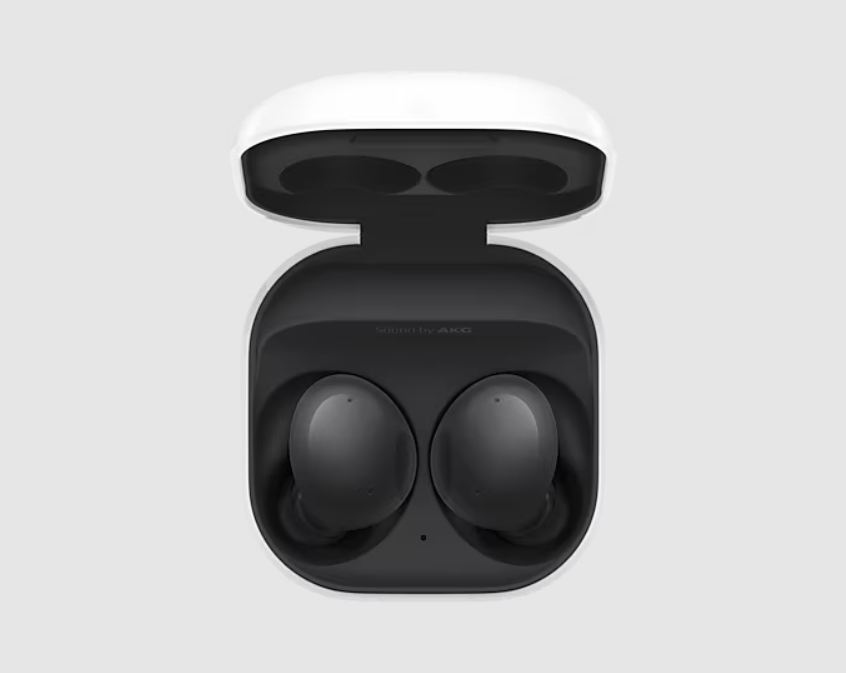
Samsung launched its first Bluetooth earbuds, also known as Galaxy Buds, back in March 2019. They have come a long way since the company introduced more earbuds like Galaxy Buds 2 and Galaxy Buds 2 Pro. The latest models differed from the original earbuds as they introduced new features like Active noise cancelling (ANC) and advanced sound quality. According to recent reports, we have received new information about new Galaxy Buds, currently in development.
The Dutch Publication GalaxyClub noticed that Samsung is developing a new Bluetooth earphone with the model number SM-R400N. With the help of this model number, we can assume that this will not be a Pro version of earbuds. If we look at the earlier version of earbuds, for example, the Galaxy Buds 2 Pro, the model number starts with SM-R510, meaning this can be a standard Galaxy Buds 3 version or an FE (Fan Edition).
We all know that the Galaxy Buds 2 was released in 2021, and the Pro version was launched in 2022. It has been nearly two years since the company announced a non-Pro Galaxy Buds variant. The upcoming Galaxy Buds can be a successor to the Galaxy Buds 2.
Additionally, the new Buds can launch in the same timeline as the Galaxy S23 FE, which was recently spotted on BIS with the model number SM-S711B/DS. The full report can be found by clicking on this link.
The Boat Rockerz 245 V2 Pro earphones feature 10mm drivers that deliver powerful bass and clear treble. These earphones offer Bluetooth v5.2 connectivity and are equipped with Boat’s Signature Sound for quality audio.
Control of playback and calls is easy with button controls, and the earphones support dual pairing for added convenience. The ENx Technology incorporated into these earphones enhances call quality with noise cancellation algorithms.
When it comes to battery life, the Rockerz 245 V2 Pro offers up to 30 hours of total playback time. What’s particularly impressive is the ASAP fast charging support with a Type-C connector, which provides 10 hours of playback with just a 10-minute charge. For gaming and watching videos, there’s a BEAST Mode with a low latency of 60ms, minimizing delays. These earphones also come with an IPX5 rating, making them resistant to sweat and splashes.
Price & availability
Priced at an introductory Rs. 999, the boAt Rockerz 245 V2 Pro is offered in Active Black, Teal Green, and Cool Blue color options. You can purchase these earphones starting from August 25th at 12 A.M. They will be available on both the boAt Website and Amazon.in.
Activision is gearing up to launch its most anticipated title this year, Call of Duty Modern Warfare 3. The game, which will be a sequel to its previous title, Modern Warfare II, will be released this year on November 10th (Friday) globally. You can check out the reveal trailer below.
Campaign with Open Combat Missions
This sequel will be in continuation of the events that took place in Modern Warfare II, where Captain Price and Task Force 141 will face off against the ultimate threat (We all know who). The game is expanding to include Open Combat Missions, where your role extends beyond cinematic quests. Here, your decision-making and strategy will be put to the test. Imagine you’re going on a rescue mission. In this scenario, packing night vision goggles and suppressed firearms in your gear becomes essential, as the game permits the option to execute a more covert and stealthy approach.
In the game, you’ll find vehicles to travel around, and you can choose different ways to reach your objectives. You’re free to play as you like, and the Open Combat Missions will back up your choices.
Image by Activision
Multiplayer maps and gameplay
The game will celebrate its 20th anniversary by bringing one of the greatest collections of Modern Warfare maps into the multiplayer mode. Maps like Afghan, Favela, Invasion, Rust, and my personal favourite, Terminal, might be playable again in the game. Apart from its usual game modes, the game will now introduce a new playable mode called Cutthroat (a 3v3v3 competitive experience).
Zombies with Open World
The game will allow you to team up with other squads and fight massive hordes of the undead, which is said to be the most extensive COD map. This time COD Zombies will be an Open-World PVE extraction survival experience.
OnePlus and Realme, two prominent Chinese smartphone brands, are set to exclusively incorporate QualcommSnapdragonchipsets into their upcoming devices, as per revelations by the known Chinese tipster, Digital Chat Station, on Weibo.
According to the tip, the forthcoming OnePlus 12 will feature the Snapdragon 8 Gen 3 chipset, while the OnePlus 12R and the Nord 4 or Nord 5 are expected to incorporate the Snapdragon 8 Gen 2 and Snapdragon 7 Gen 3 chipsets, respectively.
Snapdragon Chipsets: Powering the Next Generation of OnePlus Devices
Historically, OnePlus has demonstrated a trend towards using Snapdragon over MediaTek chipsets. For instance, its flagship smartphones, OnePlus 11 and Ace 2, both utilize Snapdragon processors. However, a few recent releases, such as the Nord 3 and Ace 2V, as well as OnePlus’s debut tablet – the OnePlus Pad, featured MediaTek chipsets.
The OnePlus 12, set to possibly be the debut phone with the Snapdragon 8 Gen 3 chip, is rumored to launch as early as November this year. Anticipated features include a 2K resolution OLED display with a 120Hz refresh rate, a maximum of 1TB UFS 4.0 storage, and robust camera specifications. Furthermore, the device is expected to support rapid charging capacities, both wired and wireless.
However, concerns have been raised regarding the potential cost increase of the Snapdragon 8 Gen 3 chipset, primarily due to its shift to the TSMC’s 4nm N4P process. This move might push some manufacturers towards MediaTek’sDimensity range, but major players may still opt for Snapdragon for their flagship phones, prioritizing performance over cost concerns.
Electric vehicles are becoming increasingly popular. As this trend continues, competition is also rising at a similar rate. For now, Tesla and BYD are leading the market, but the number of brands in the sector is quickly increasing. Although most newcomers don’t make a significant impact and only capture a small market share, Xiaomi could be the brand that changes all. Recently, new informations has emerged about the long-anticipated vehicle. Here are the details…
Xiaomi Electric Vehicle to Be Priced Competitively, Thanks to Software-Driven Approach
It’s been known for some time that Xiaomi plans to enter the electric vehicle market. In addition to the company’s announcements, a lot of information has already been revealed about this. For example, we know that the upcoming vehiclewillsupport800Vfastcharging, and thankstospyphotos, we also have some idea about its design. New information has now emerged, suggesting that Xiaomi plans to make money through software, rather than from vehicle sales.
As you may know, the automobile industry is not very open to new players. If you want to enter the market, you need to make a substantial investment. For this reason, especially small and new manufacturers struggle to outperform their competitors with competitive pricing. To avoid similar challenges, Xiaomi wants to take a different approach for their electric vehicle. According to the latest reports, they won’t make much money from the hardware, or the physical parts of the vehicle.
They plan to make about 1% profit from that. But they will try to make more money from the software, or the programs that run the vehicle. Actually, this isn’t a new strategy for the company. When Xiaomi was a new player in the global smartphone market, they kept their profit margins low. Thanks to the price-to-performance ratio of their products, they won the hearts of millions of tech enthusiasts worldwide. This is also how companies like Tesla make money.
Xiaomi’s Battery Suppliers Revealed
Another key revelation is Xiaomi has chosen Zhongchuang Xinhang and CATL to be their main battery suppliers for RV’s. At first, Xiaomi was thinking about using both CATL and BYD. But now, various sources say that BYD is not part of the plan. Before, there were rumors that Xiaomi wanted two kinds of batteries, one from CATL and another from BYD. But new information says they’ve decided to go with Zhongchuang Xinhang and CATL, especially after some legal problems happened between them.
Battery costs are a significant aspect of electric vehicle manufacturing. As Xiaomi is still in the initial stages, its bargaining power is not strong. According to insiders, the cost of a single battery pack starts at around $10.000, making it nearly 50% of the total car cost. With such high upfront costs, Xiaomi has begun readjusting its supply chain to mitigate the expense.
When all these factors are considered, we get the impression that even a 1% profit margin for the company may not be enough to keep the car’s price low. However, it is certain that it will not be more expensive than its competitors in the same market segment. Xiaomi’s entry into the automotive industry is still in its early stages, but the company has made significant progress in a short period of time. How successful the car, expected to be released in 2024, will be remains a topic of speculation for now.
Realme is gearing up to conduct an event in India tomorrow at 12 noon. The brand is set to announce the Realme 11 series smartphones and the Bud Air 5 TWS earphones. Realme has already teased key specifications and features about the upcoming devices. Now the brand has revealed the availability detail of the Realme 11x 5G. Read on to know more below.
Realme 11x 5G early bird sale announced
Realme will conduct an early-bird sale of the Realme 11x 5G tomorrow i.e August 23 between 6 pm to 8 pm IST. It will be available for purchase from the brand’s official website and Flipkart. This will give interested customers a chance to purchase the device on the day of launch instead of waiting till the open sale date.
Customers who purchase the Realme 11x 5G during the early-bird sale can avail of Rs 1,000 off which includes a Rs 500 bank offer and a Rs 500 coupon. The bank offer is valid for cardholders for HDFC and SBI customers on both Realme’s website and Flipkart. Additionally, ICICI customers will also be eligible for the offer but only on the company’s website. Those purchasing the smartphone from Flipkart can avail no-cost EMI facility for 3 months and 6 months on the 6GB and 8GB RAM variants of the Realme 11x 5G.
As for the core specifications, the Realme 11x 5G is confirmed to feature a circular camera module housing a 64MP main sensor with 2x in-sensor zoom. It will have a side-mounted fingerprint scanner embedded in the power button. The smartphone is confirmed to be powered by a Dimensity 6100+ chipset under the hood. It will pack up to 8GB RAM along with virtual RAM and 128GB native storage. The device will be backed by a 5,000mAh battery unit with support for 33W fast charging.
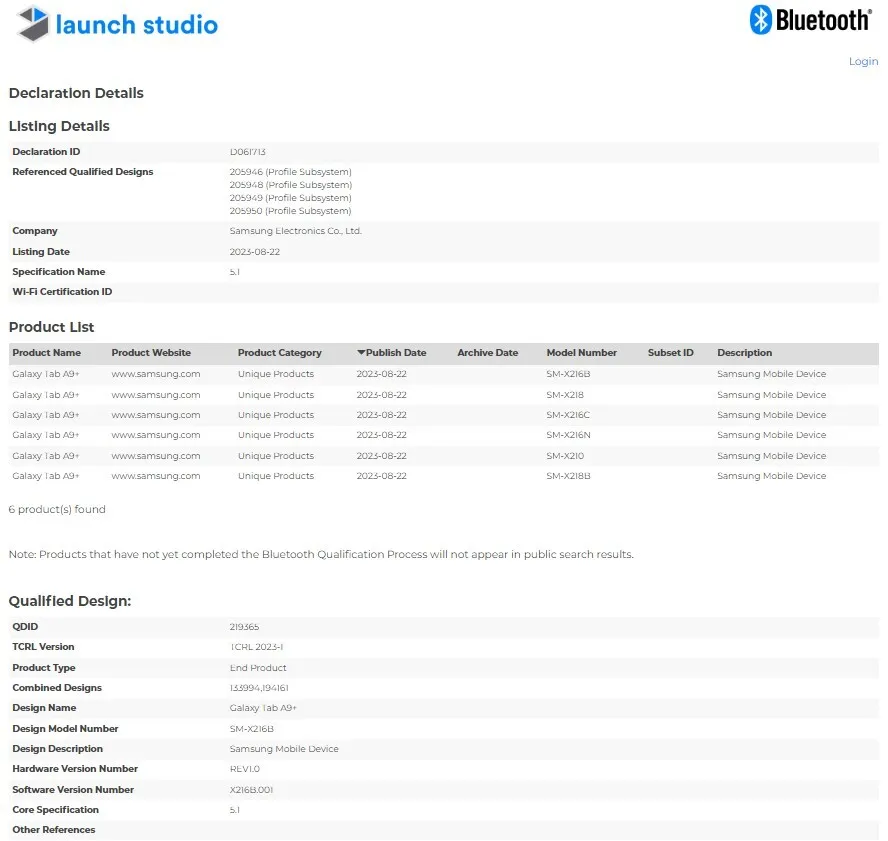
The Samsung Galaxy Tab A9 was spotted on FCC and WiFi Alliance certification websites earlier this month. Now, a new variant of the same tablet dubbed the A9+ has bagged multiple certifications. It has been listed on Bluetooth SIG, BIS, and the Geekbench benchmarking platform. The device has also appeared in a live image hinting at an imminent launch. Samsung’s Galaxy Tab A-series usually caters towards the budget segment.
The Samsung Galaxy Tab A9+ is listed on Bluetooth SIG, BIS, and Geekbench, with model number SM-X216b. On SafetyKorea certification, it has a model number SM-X115N. The Bluetooth SIG listing reveals support for Bluetooth 5.1 connectivity whereas the BIS certifications confirm the tablet’s launch in the Indian market.
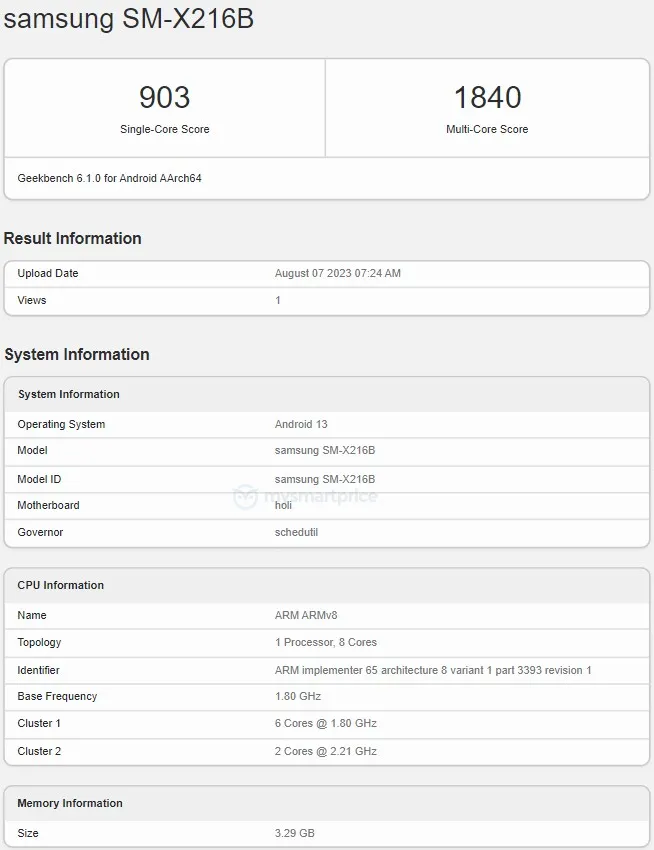
As per the Geekbench benchmarking platform, the Samsung Galaxy Tab A9+ is equipped with a motherboard codenamed holi comprising of six cores clocked at 1.80GHz and two cores ticking at 2.21GHz. It corresponds to the Snapdragon 695 SoC. The database also reveals 4GB RAM and Android 13 OS. It scores 903 and 1,840 points in Geekbench’s single-core and multi-core tests respectively.
Lastly, the SafetyKorea certification shows a live image revealing the front of the Tab A9+ with what appears to be a center-aligned punch-hole cutout for the front camera sensor.
Samsung last launched the Galaxy A-series tablet way back in 2021. The upcoming Tab A9 is expected to arrive as the successor to the Tab A8. We can expect the devices to debut in the coming weeks.
Infinix announced the INBook X3 Slim laptop in India today. The brand is confirmed to launch the Infinix Zero 30 5G smartphone by the end of this month. The company has also teased the upcoming offering’s design as well as key specifications ahead of its official launch. However, the exact launch date remains a mystery. The Infinix Zero 30 5G has already appeared on various certification sites including Geekbench, Bluetooth SIG, and Google Play Console. Now, it has appeared in leaked live images revealing more details.
Infinix Zero 30 5G spotted in live images
GSMArena has shared live images of the Infinix Zero 30 5G. The report reveals that the upcoming smartphone will feature a 50MP front-facing camera for selfies and it will be capable of shooting videos in 4K resolution at 60fps. The triple rear camera configuration remains unclear but the primary sensor is confirmed to feature OIS.
Under the hood, the Infinix Zero 30 5G will reportedly be equipped with 12GB RAM and feature 9GB virtual RAM technology which will reach a whopping 21GB that should deliver smooth performance. Additionally, the device will pack 256GB internal storage that should give ample space to store 4K recorded videos.
The leaked live images show the Infinix Zero 30 5G with a center-aligned punch-hole display with curved edges and thin bezels. The power and volume rocker buttons are located on the right side. The smartphone is tipped to be IP53-certified dust and water-resistant. It will be 2.18mm thin.
As per past teaser, the Infinix Zero 30 5G is confirmed to come with a 10-bit AMOLED display with 60-degree curvature. It will feature a rectangular rear camera module and arrive in Gold and Blue color options with gradient design.
boAt has just launched the latest pair of truly wireless earbuds that were designed specifically for gamers. The new hearables are called the Airdopes Immortal 161, which features a unique new design. So here are all the details.
boAt Airdopes Immortal 161 Specs
The company’s new Airdopes Immortal 161 is equipped with 13mm dynamic drivers that arrive with boAt’s Signature Sound technology that promises to offer powerful bass and an immersive audio experience. It also offers an improved calling experience from its Quad mic ENx technology. Talking about its most notable aspect, the boAt Airdopes Immortal 161 features transparent earbuds and RGB lighting on its angular charging case.
The RGB lighting helps in establishing its gaming aesthetic. On a single full charge, the earbuds offer up to 40 hours of audio playback on a single full charge. Its USB Type-C port also enables fast charging that lets you enjoy 180 minutes of music playback with just 10 minutes of charging. Other notable features include 40ms low latency mode, instant pairing, IPX4 water resistance, and 1-year warranty.
boAt Airdopes Immortal 161 Pricing & Availability
The new Airdopes Immortal 161 launch arrives just after the brand released the new Airdopes 141 TWS model in India. It is available in two color options, namely Black Sabre and White Sabre. The earbuds can be purchased from the company’s official website and Flipkart for an introductory price tag of 1,299 INR.
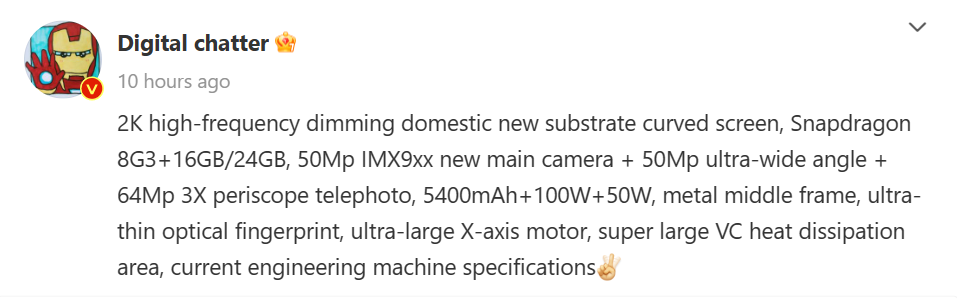
Popular tipster Digital Chat Station has recently given us some details about the engineering prototype of the OnePlus 12 series. According to the leakster he has seen the flagship engineering model in the manufacturing plant.
According to him, the device features a centered single-hole curved screen on the front and a large circular camera module with a metallic scale ring at the center of the back. The design highlights a quad-camera system covering various focal lengths, including substantial main and periscope lenses.
The prototype also showcases a metal middle frame, an advanced super-thin optical fingerprint scanner, an extra-large X-axis motor, and an effective VC heat dissipation area, ensuring that the device remains cool during intense tasks.
OnePlus 12 specifications (rumored)
Coming to the technical specs, the upcoming OnePlus phone will sport a 2K curved OLED screen with 120Hz refresh rate developed using a new domestic substrate. The device will be equipped with the Snapdragon 8 Gen 3 chipset and offer two RAM options: 16GB and 24GB.
The OnePlus 12’s rear camera setup is expected to feature a 50MP IMX9xx main sensor, a 50MP ultra-wide lens, and a 64MP 3X periscope telephoto lens. The use of Sony IMX9xx sensors in the camera system was previously confirmed by the tipster, reinforcing the authenticity of the leaked details.
On the battery front, the phone will house a robust 5400mAh unit, offering 100W wired fast charging capabilities. Those who prefer wireless charging won’t be disappointed either; the device promises 50W wireless fast charging.
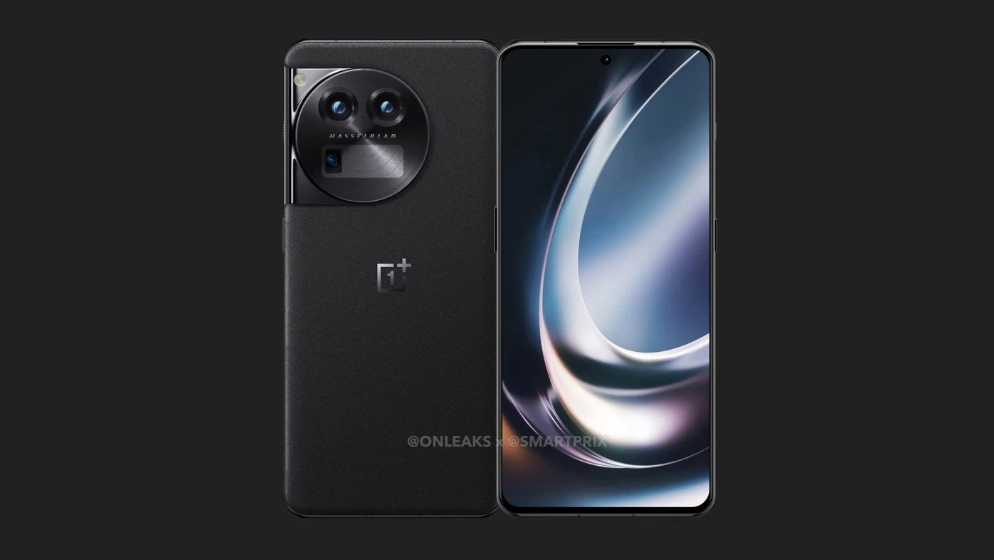
Previously OnLeaks revealed renders of the OnePlus 12, reportedly derived from actual test prototype images. The renders showcase a design continuity within the OnePlus family, maintaining the camera module’s position from the previous generation. The lens module is distinguished by the Hasselblad logo at its center, surrounded by a matte finish around the periscope lens.
We use cookies on our website to give you the most relevant experience by remembering your preferences and repeat visits. By clicking “Accept”, you consent to the use of ALL the cookies.
This website uses cookies to improve your experience while you navigate through the website. Out of these, the cookies that are categorized as necessary are stored on your browser as they are essential for the working of basic functionalities of the website. We also use third-party cookies that help us analyze and understand how you use this website. These cookies will be stored in your browser only with your consent. You also have the option to opt-out of these cookies. But opting out of some of these cookies may affect your browsing experience.
Necessary cookies are absolutely essential for the website to function properly. This category only includes cookies that ensures basic functionalities and security features of the website. These cookies do not store any personal information.
Any cookies that may not be particularly necessary for the website to function and is used specifically to collect user personal data via analytics, ads, other embedded contents are termed as non-necessary cookies. It is mandatory to procure user consent prior to running these cookies on your website.