Advertisement

Nuu B40 5G has a 1.6-inch rear AMOLED display for notifications, music controls, and more

Nuu Mobile has launched a new budget smartphone in the US, and it comes with a feature that is still pretty uncommon even on more expensive phones: a secondary rear display.

The new Nuu B40 5G includes a rectangular 1.6-inch AMOLED “Vista Display” built directly into the camera module on the back. It has a resolution of 460 x 228 pixels and can reach up to 500 nits of peak brightness, which should be decent enough for outdoor visibility. It can show things like the time, charging status, message notifications, music controls, and step tracking without needing to wake the main display.

It can also work as a viewfinder for the rear cameras, which should make selfies with the main camera a bit easier. That is something we usually only see on much pricier foldables or niche flagship phones.

The rest of the phone is fairly solid for the price too. On the front, the B40 5G features a 6.7-inch curved AMOLED display with a 120Hz refresh rate and Full HD+ resolution. Nuu says the panel can reach up to 1100 nits peak brightness, which should help a bit with outdoor visibility.

For cameras, the phone uses a 64MP main sensor alongside a smaller 2MP macro camera, while the front houses a 16MP selfie shooter.

Powering the device is the MediaTek Dimensity 7025 processor paired with 8GB RAM and 256GB storage. The phone also ships with Android 15 out of the box, which is still not something you always get in the budget segment.

Battery capacity comes in at 5000mAh, with support for 33W wired charging. Other features include an in-display fingerprint scanner, Bluetooth 5.2, dual-SIM support, and 5G connectivity.

The Nuu B40 5G is priced at $249.99 in the US (roughly ₹23,900 or 1,694 yuan at the current exchange rate), although some launch promotions reportedly bring it closer to the $199 mark.

At this price point, the phone is obviously not trying to compete with premium handsets in raw performance or camera quality. But the rear AMOLED display definitely gives it a bit more personality than most budget phones.

Don’t miss a thing! Join our Telegram community for instant updates and grab our free daily newsletter for the best tech stories!

For more daily updates, please visit our News Section.

(Nuu Mobile)

Apple brings two overdue health-monitoring features

Apple introduced sleep apnea detection on the Watch Series 10 in 2024. Meanwhile, the Cupertino-based tech giant also introduced a clinical-grade hearing test feature on the AirPods in the same year. Now, these features are now rolling out in India, expanding the company’s suite of health-monitoring tools.

Apple starts rolling out two health tracking features in India

Apple-health-sleep-apnoea-notifications-and-Hearing-Test_big.jpg.medium_2x

Sleep apnea currently works on the Apple Watch Series 9, Series 10, Watch SE (3rd Gen), Apple Watch Ultra 2, and Ultra 3. It is a sleep disorder where your breathing repeatedly stops and starts while you sleep. Compatible Apple Watch models utilize the accelerometer to monitor small wrist movements linked to irregular breathing patterns. It then analyses the data over 30 days and alerts users if it detects moderate to severe conditions. The data is logged in the iPhone’s Health App, and users can generate a PDF report of it.

Meanwhile, the hearing test feature is rolling out for the AirPods Pro 2 and AirPods Pro 3. It allows users to take a clinically validated hearing test using the earphones and a compatible iPhone or iPad. The feature provides a numerical representation of hearing loss and actionable insights. So you can do the hearing test at home instead of visiting a doctor or an audiologist.

Apple says that the assessment takes around five minutes and checks hearing ability across multiple audio frequencies. The Cupertino-based tech giant is also expected to release hearing aid functionality at a later stage in India.

With these additions in India, Apple continues to position the Apple Watch and AirPods as health-centric wearables as well.

For more daily updates, please visit our News Section.

Stay ahead in tech! Join our Telegram community and sign up for our daily newsletter of top stories! 💡

Honor Win 2 series could introduce Pro Max model in its three phone series

Honor Win 2 has been making headlines in the rumor mill for a while now. The device will succeed the original Honor Win and is expected to feature a 2nm Snapdragon 8 Elite Gen 6 alongside a big 10,000mAh battery

However, a new leak out of China suggests the rumored phone could actually be called Honor Win 2 Pro or Win 2 Pro Max. 

Honor Win 2 Pro or Honor Win 2 Pro Max?

According to tipster Digital Chat Station, the new Honor Win in works has a Snapdragon 8 Elite Gen 6 chip, a 10,000mAh+ battery, and an upgraded active cooling fan system. 

The device is also said to feature a 6.89-inch flat display with 2K resolution, an 185Hz refresh rate (likely using an LTPS panel), and upgrades in camera specs. 

Honor Win 2 Pro Max Leak

Interestingly, the tipster adds in the comments section that this upgraded model may not launch as the standard Honor Win 2. Since it reportedly has better imaging hardware alongside the newer Snapdragon chipset, the company could market it as the Honor Win 2 Pro or Win 2 Pro Max instead.

Honor Win 2 Pro Max moniker

At the same time, the leak also reveals multiple variants of the lineup. Apart from the rumored Pro model with the newer Snapdragon chip, there could also be a regular variant powered by the Snapdragon 8 Elite Gen 5 processor. Another lower-end version is reportedly in testing, featuring the Snapdragon 8 Elite chip and a 1.5K high-refresh-rate display.

So far, Honor has not officially confirmed the Win 2 series or its launch timeline. However, recent rumors claim the lineup could launch earlier than expected in China. 

Once official, the devices are expected to compete with flagship performance phones such as the OnePlus 16, iQOO 16, and the rumored Redmi K100 series.

For more daily updates, please visit our News Section.

Stay ahead in tech! Join our Telegram community and sign up for our daily newsletter of top stories! 💡

Samsung Galaxy S26 FE development appears to be underway as first firmware surfaces

Samsung’s next Fan Edition phone may still be months away, but early signs suggest development is already moving forward behind the scenes. A firmware build believed to belong to the Galaxy S26 FE has now appeared on Samsung’s internal OTA servers for the first time. The software carries build numbers like S741NKSU0AZE5 and related regional variants, which tipsters say strongly indicates active internal testing has started.

For Samsung devices, firmware surfacing this early is usually one of the clearer signs that a product is progressing toward release, even if the final hardware is not completely locked in yet.

The Galaxy S26 FE is expected to succeed the Galaxy S25 FE, which launched late last year as Samsung’s more affordable flagship-style option. Over the years, the FE lineup has built a fairly loyal following by offering many of the core Galaxy S features without climbing fully into Ultra-level pricing territory.

Earlier leaks already hinted that Samsung could use the Exynos 2500 chip inside the S26 FE, the same 3nm processor reportedly powering some newer foldables and regional Galaxy variants. Geekbench listings spotted last month also pointed toward Android 17 and 8GB RAM.

At this stage, though, most of the hardware details are still unclear. Samsung tends to launch its FE phones around September or October, so the timeline here lines up fairly closely with the company’s usual release cycle. The appearance of test firmware months ahead of launch is pretty normal for Samsung devices, especially when major One UI updates are involved.

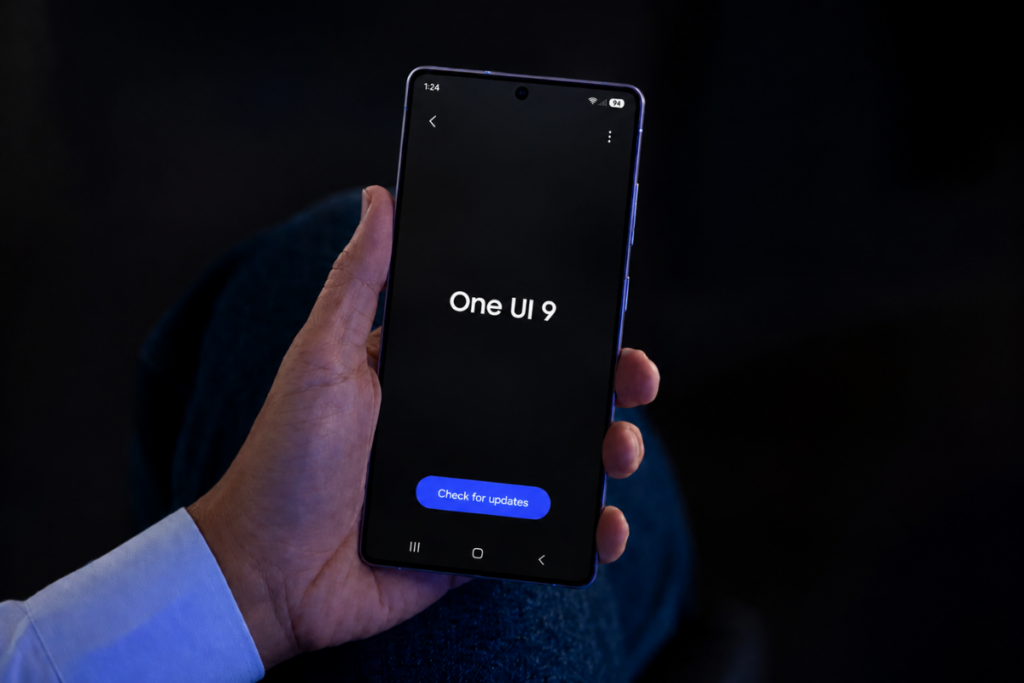
The software itself will likely ship with One UI 9 based on Android 17, which could bring several AI and ecosystem-focused improvements by the time the phone officially launches.

One thing that will probably matter quite a bit this year is pricing. The Fan Edition lineup exists largely because many users want flagship-level displays, cameras, and long-term software support without paying full Galaxy S Ultra prices. Maintaining that balance becomes harder as chipset and memory costs continue increasing across the industry.

Still, FE devices have historically been some of Samsung’s more sensible flagship alternatives, especially for users who care more about overall experience than having the absolute newest hardware in every category.

(Source: @tarunvats33)

Samsung patents two rollable phone designs; one hides soft display completely inside

Samsung may already dominate the foldable market, but the company clearly is not done experimenting with smartphone form factors yet. New patent filings suggest Samsung is now exploring rollable and sliding phone designs again, this time with concepts that look noticeably more practical than some of the futuristic prototypes we have seen over the past few years.

The patents, recently spotted by WearView, show multiple designs where a phone can physically expand into a larger screen through sliding or rolling mechanisms.

One of the concepts works somewhat like a normal smartphone at first glance. But instead of unfolding like a Galaxy Z Fold, the display extends outward horizontally when pulled, giving users a much wider screen for multitasking, gaming, or watching videos. It almost feels like Samsung trying to combine the portability of a standard phone with the larger canvas of a foldable.

The second concept is even more unusual.

In its compact form, the display is completely hidden inside the body of the device. Pulling on the sides causes the screen to slide outward and reveal a larger panel. Samsung describes this approach as a way to better protect the display from scratches and impacts when not in use, which honestly addresses one of the biggest concerns people still have about flexible screens.

The patent also mentions sensors capable of detecting how far the display has been extended and how quickly it moves. That information could allow the software interface to dynamically adapt depending on screen size and orientation.

Of course, this is still patent territory for now. Samsung files a huge number of concepts every year, and many never become real products. Rollable phones also come with their own engineering challenges involving durability, moving parts, battery space, and long-term reliability.

Still, Samsung has clearly been interested in this category for a while. Samsung Display has already shown rollable and slidable OLED prototypes publicly at trade shows like CES and MWC, so these ideas are not appearing completely out of nowhere.

And honestly, rollables may actually solve a few problems foldables still struggle with today. Some users still dislike visible creases or bulky hinges, while a rollable design could theoretically stay compact most of the time and only expand when needed.

Whether consumers are ready for yet another smartphone form factor is a different question entirely. Foldables are only now starting to become more mainstream after years of refinement.

(Source)

Honor Watch 6 Plus full specs revealed ahead of launch

Honor is preparing to launch a new smartwatch aimed at users who want to spend less time charging their wearables and more time tracking highly specific sports metrics. Ahead of its official May 25th debut in China alongside the new Honor 600 smartphone series, reservations for the Honor Watch 6 Plus have opened on JD.com, giving us a complete look at the device’s hardware and feature set.

Honor Watch 6 Plus

Honor Watch 6 Plus Specifications

The hardware detail that stands out most is the 1,000mAh battery. That is a relatively high capacity for a wrist wearable. Honor claims it can last around 17 days under normal daily use. There is also a low-power mode designed to push that to 35 days, while continuous standalone GPS tracking will drain it in about 42 hours. Even with that battery size, the watch body is 10.8mm thick and weighs 41 grams.

For the design, Honor went with a motorsport-inspired look, featuring angled bezel edges and textured straps. It will be available in colors like Speed Blue, Twilight Brown, Racing Gray, and Shadow Black, with fabric and leather band options. The display is a 1.46-inch AMOLED screen. It has a peak brightness of 3,000 nits to help with outdoor glare, and it includes wet-touch support so you can still navigate the MagicOS interface if the screen gets wet from rain or sweat.

Honor Watch 6 Plus

The software is heavily focused on fitness tracking. Alongside more than 120 standard workout modes, Honor includes specialized profiles: a badminton mode that tracks swing speed, rally counts, and forehand/backhand ratios; a football mode for logging sprint speeds and distance; and a running mode that offers posture analysis and pace guidance.

Location tracking is handled by a dual-frequency, six-satellite GNSS chip, which supports offline maps and route importing. For everyday health metrics, the watch monitors heart rate, sleep, and includes alerts for irregular heart rhythms and sleep apnea detection.

Honor Watch 6 Plus

Rounding out the device are standard smartwatch features like NFC, Alipay tap-to-pay, gesture controls, and music playback. The built-in YOYO voice assistant also features DeepSeek AI integration, and the watch supports dual phone connectivity for Honor smartphone users.

Pricing for the Honor Watch 6 Plus has not been announced yet. It will be revealed on the 25th May.

For more daily updates, please visit our News Section.

Stay ahead in tech! Join our Telegram community and sign up for our daily newsletter of top stories! 💡

(JD)

Android 17’s new Continue On feature wants to make switching devices feel less annoying

Anyone who regularly moves between an Android phone and tablet probably knows the feeling: you open something on one device, pick up the other a few minutes later, and suddenly have to search for the same tab, document, or app all over again. Google wants to make that process much smoother with a new Android 17 feature called “Continue On,” announced during Google I/O 2026.

The feature is essentially Android’s answer to Apple’s Handoff system. It allows users to start something on one Android device and continue it on another without losing progress or context along the way.

For example, if you are editing a document in Google Docs on your phone, your tablet can surface a shortcut suggesting you continue the same session there. Tap it, and the document opens in the exact same state, including scroll position and ongoing edits.

The same idea works for web browsing as well. Chrome pages can move across devices, and Google is also introducing fallback web support for apps that may not exist on the receiving device. So if an app is unavailable on the tablet, Android can instead continue the task inside a browser window.

Google says the system is designed around the idea of “continuing the user journey” between Android devices signed into the same Google account.

At launch, the feature mainly focuses on phone-to-tablet transitions, though the framework itself appears broader. Google is giving developers dedicated APIs so apps can support handoffs more cleanly, and there is already speculation that ChromeOS devices could eventually join the experience too.

To be fair, Samsung users already have access to some similar continuity features through One UI. Samsung Notes, Samsung Internet, clipboard syncing, and Galaxy Book integration have made the Galaxy ecosystem feel fairly connected for a while now. But Google’s approach seems more ambitious because it aims to bring that continuity to third-party apps across Android more generally.

And honestly, this has been one of Android’s bigger weak points for years. The ecosystem has always offered flexibility and hardware variety, but moving between devices rarely felt as seamless as it does on Apple hardware.

Continue On may not sound revolutionary on paper, but features like this tend to become surprisingly useful once they are integrated properly into daily workflows. If developers adopt it widely, switching between Android devices could start feeling much less fragmented than it does today.

The feature is expected to arrive alongside Android 17 later in 2026, with testing beginning through release candidate builds first.

(Source)

Broken Google Pixel 8 gets turned into a surprisingly capable retro gaming console

Most phones with failing displays usually end up sitting in a drawer, traded in, or eventually recycled. But one Pixel 8 owner decided to do something much more interesting after his phone developed the now-infamous vertical pink line issue.

Instead of throwing the device away, the Reddit user repurposed the Pixel 8 into a compact retro gaming console connected directly to a TV, complete with wired controllers, active cooling, and a proper console-style interface.

According to the post, the phone itself was still fully functional apart from the damaged display. The owner reportedly approached Google for a repair, but the request was declined. Since the hardware was otherwise perfectly usable, he decided to give it a second life instead.

The setup itself is surprisingly clean. A basic powered USB hub connects the Pixel 8 to external controllers, a mouse, HDMI output, and even a small 50mm cooling fan mounted behind the phone. The fan continuously pushes air onto the rear panel to keep temperatures under control during gaming sessions.

That cooling solution actually matters quite a bit here. Google’s Tensor G3 chip is powerful enough for retro emulation, but it is also known for running relatively warm under sustained workloads. Active cooling helps reduce thermal throttling and keeps performance more stable over longer play sessions.

For the software side, the user installed EmulationStation Desktop Edition (ES-DE), which gives the whole setup a much more console-like feel. Games are organized with cover art, metadata, and menus that resemble a dedicated retro gaming machine rather than a phone running emulators.

The Pixel 8 reportedly handles classic systems comfortably, including older 16-bit and 32-bit platforms, while also managing some more demanding emulators depending on the title and settings used.

One of the more interesting parts of the project is how naturally modern smartphones fit into this kind of role now. With USB-C video output support finally enabled on Pixel devices, a phone with a damaged screen can still function almost like a tiny gaming PC when connected to external peripherals.

Honestly, the setup looks far more polished than most people would expect from what started as a partially broken smartphone. And in a way, it also highlights how much processing power modern flagship phones still retain even after they stop being practical as daily drivers.

Don’t miss a thing! Join our Telegram community for instant updates and grab our free daily newsletter for the best tech stories!

For more daily updates, please visit our News Section.

(Source)

Rogbid launches GeoX2 smartwatch with dual-band GPS, military-grade durability & 15-day battery

Rogbid has released a new outdoor smartwatch, the GeoX2, which aims to provide features typically found on more expensive devices at a sub-$100 price point.

Rogbid GeoX2 smartwatch

Rogbid GeoX2 Specifications

The watch is built with a stainless steel casing and features a 1.43-inch AMOLED screen. The display reaches 1,000 nits of peak brightness, which should make it readable in direct sunlight, and uses Corning Gorilla Glass 3 for scratch resistance. Rogbid states the GeoX2 meets MIL-STD-810H standards for durability against temperature changes, shock, and dust.

It also carries a 5ATM water resistance rating. While the company includes a dedicated freediving mode to track depth and speed underwater, it is worth keeping in mind that a standard 5ATM rating is generally recommended for surface swimming rather than deep-water diving.

For navigation, the GeoX2 uses L1 and L5 dual-frequency GPS, connecting to six global satellite systems (including GPS, GLONASS, GALILEO, and BDS). You can download offline maps directly to the watch, allowing for route tracking without a cellular connection. It also includes a trackback feature to help you return to your starting point, alongside an altimeter, a barometer, and a compass for outdoor orientation. Another practical hardware addition is a built-in LED flashlight on the side of the case, a utility feature that has been showing up more frequently on outdoor-focused wearables.

On the software side, the watch tracks standard health metrics like continuous heart rate, blood oxygen (SpO2) levels, and sleep stages. It supports over 100 workout modes with basic algorithmic performance analysis. It also features Bluetooth 5.3, allowing users to pair wireless earbuds directly to the watch to listen to audio or take calls without needing to carry a paired smartphone.

The device is powered by a 500mAh battery. According to Rogbid, this capacity provides about 15 days of battery life with regular use, or up to 21 hours of continuous GPS tracking.

Pricing and Availability

The GeoX2 in two colors: Tech Black and Energy Orange. It is now available at the Rogbid Official Store at a launch price of $89.99.

In related news, Rogbid has recently introduced the SpinX smartwatch, which features an optical scroll wheel, a massive 1100mAh battery, and a built-in flashlight.

For more daily updates, please visit our News Section.

Stay ahead in tech! Join our Telegram community and sign up for our daily newsletter of top stories! 💡

(Rogbid)

First Impressions: A Week with the Oppo Find X9s

After using the Oppo Find X9s as my primary device for the past week, I’m ready to share my thoughts on how this hardware holds up in daily use.

The immediate talking point is the form factor. The device integrates a substantial 7,025mAh battery into a slim 7.99mm frame without the usual ergonomic or weight penalties. Living with the Sunset Orange version, the frosted, velvety glass features a pink-orange gradient. It manages to resist fingerprint smudges well and feels secure in the hand thanks to flat edges paired with subtle contours along the frame. At 202 grams, it feels well-balanced given the sheer capacity inside. 

5Final Thoughts

To sum up, after a full week of testing, the Oppo Find X9s proves to be a highly practical flagship that pairs incredible endurance with a versatile imaging setup, packing a massive 7,025mAh battery and a consistent 50MP Hasselblad triple camera system into a remarkably slim 7.99mm frame. Oppo also bundles a matching orange case in the box, which complements the Sunset Orange finish beautifully while adding extra grip and protection.

The Find X9s is now available for pre-orders in India and is set to go on sale from May 28. The 12GB+256GB and 12GB+512GB variants of the device are priced at Rs 79,999 (~$830) and Rs 89,999 (~$940), respectively.

For more daily updates, please visit our News Section.

Stay ahead in tech! Join our Telegram community and sign up for our daily newsletter of top stories! 💡

Next

OnePlus quietly raises Nord 6 pricing in India soon after launch

OnePlus has quietly increased the price of the Nord 6 in India barely a month after launch, and the jump is large enough to raise a few eyebrows in the mid-range segment.

When the phone debuted in April, the 8GB + 256GB variant was priced at ₹38,999, while the 12GB + 256GB version came in at ₹41,999. Now, updated listings on Amazon India and OnePlus’ own website show the prices climbing to ₹41,999 and ₹46,999 respectively.

That means the base model alone has gone up by ₹3,000, while the higher-end variant has seen a much steeper ₹5,000 increase.

Several smartphone brands have been dealing with rising memory and storage costs over the past few months. Samsung, Xiaomi, Vivo, and other manufacturers have also adjusted pricing recently across different categories.

The Nord 6 itself is fairly loaded on paper. It comes with Qualcomm’s Snapdragon 8s Gen 4 chipset, a huge 9,000mAh battery, a 165Hz AMOLED display, and hardware that pushes it closer to affordable flagship territory than a traditional Nord device.

At its original pricing, the phone felt competitive. At nearly ₹47,000 for the top configuration, however, the conversation changes a bit. Buyers in that range start comparing it directly against more premium offerings.

The OnePlus 15R, for instance, offers a more capable chipset, larger main sensor, more advanced image processing, a metal frame, a glass back, and more importantly, that flagship tag for just a bit of extra cash, if you can stretch your budget.

To soften the blow slightly, OnePlus is still offering bank discounts of up to ₹2,000 through select cards and EMI transactions. But even after those offers, the effective pricing is still noticeably higher than what early buyers paid at launch.

This also marks a bit of a milestone for the Nord lineup itself. The Nord series traditionally sat comfortably below the flagship category, focusing heavily on value. Crossing the ₹41,000 mark for the base variant changes that perception somewhat.

Whether buyers continue to see the Nord 6 as good value after the increase will probably depend on how aggressively OnePlus handles discounts and seasonal offers over the next few months.

Don’t miss a thing! Join our Telegram community for instant updates and grab our free daily newsletter for the best tech stories!

For more daily updates, please visit our News Section.

Xiaomi launches Smart Band 10 Pro with HRV monitoring, 2000 nits brightness & gaming mode

Xiaomi has announced the Smart Band 10 Pro during its recent ecosystem event in China. The new fitness tracker brings a few updates to the company’s wearable lineup, including a brighter screen, closer integration with Apple devices, and a dedicated gaming mode.

Xiaomi Smart Band 10 Pro

Xiaomi Smart Band 10 Pro Specifications

The design of the Band 10 Pro looks more like a standard smartwatch than a traditional fitness tracker. It features a rectangular 1.74-inch AMOLED display with narrow symmetrical bezels and a 60Hz refresh rate. Xiaomi says the screen can reach a peak brightness of 2,000 nits, which should help with outdoor visibility.

Xiaomi Smart Band 10 Pro

The device is relatively thin at 9.7mm and weighs 21.6 grams without a strap attached. The standard casing is made of aluminum, but Xiaomi is also offering a white ceramic version for a slightly higher price, along with various strap options like silicone, leather, and Milanese.

Xiaomi Smart Band 10 Pro

For health tracking, the band uses a new dual-light, dual-PD heart rate sensor. It handles the standard metrics, continuous heart rate, blood oxygen, and sleep tracking, but now includes heart rate variability (HRV) monitoring. This allows the software to offer fatigue and recovery analysis, a feature usually found on more expensive wearables. It also includes built-in GNSS for tracking outdoor runs or rides without needing to carry a phone, and it supports over 150 different sports modes.

The software runs on Xiaomi’s HyperOS 3. While it connects with Xiaomi’s own phones and smart home devices, the company has added specific features for iOS users. The band supports Apple Health syncing, dual-device notifications, and quick commands similar to Siri Shortcuts.

There is also a new gaming mode. When activated, the band tracks your heart rate and stress levels while you play, displays game progress, and vibrates when your character is about to respawn. It then generates a summary report of your physical stats during the match.

Xiaomi Smart Band 10 Pro

Xiaomi estimates the battery will last up to 21 days on a single charge under standard use, or about eight days if the always-on display is active. The device is 5ATM water-resistant and includes NFC for transit cards and offline payments.

Pricing and Availability

The standard aluminum model is currently available in China for 399 yuan ($58), while the ceramic model is priced at 479 yuan ($70). The leather strap version costs 469 yuan ($68).

At the same event, Xiaomi also unveiled its first clip-on earbuds featuring 11mm drivers, an IP57 rating, and up to 38 hours of battery life.

For more daily updates, please visit our News Section.

Stay ahead in tech! Join our Telegram community and sign up for our daily newsletter of top stories! 💡

(Xiaomi)

Capabilities of Honor 600’s magnetic mini display showcased ahead of May 25 launch

Honor is adding an unusual accessory to its upcoming Honor 600 series, and it is probably one of the more interesting smartphone add-ons the company has shown in a while. Ahead of the May 25 launch event, Honor officially teased a small magnetic secondary display called the Magic Mini “Yao” Screen, designed to attach to the back of the phone.

At first glance, it looks a bit like a tiny smart badge mixed with a camera accessory.

The small circular display can function as a rear preview monitor, allowing users to frame selfies or group shots using the main rear cameras instead of the front camera. Honor is also including a four-level fill light system, which should help in darker environments or indoor shooting situations.

The accessory goes beyond photography too. According to the company, it can also work as a remote control for the phone, supporting functions like remote shooting and even scrolling through apps such as Douyin without directly touching the handset.

But Honor clearly is leaning into the lifestyle angle here as well. The display can show animated wallpapers, custom images, and decorative visuals, essentially turning the accessory into a small electronic badge or fashion accessory attached to the back of the phone. Promotional material heavily targets younger users with playful designs and decorative charms.

As for the phones themselves, the Honor 600 series is shaping up to be fairly ambitious for the segment. The standard Honor 600 is expected to feature a 1.5K flat display, Snapdragon 7 Gen 4 chipset, large 8,600mAh battery, and a 200MP main camera. The Pro version reportedly upgrades to a Dimensity 8550 processor and adds a dedicated telephoto camera alongside wireless charging support.

Honor is also pushing heavily into AI-enhanced photography and what it calls full-focal-length 4K live shooting.

Smartphone hardware has become fairly predictable lately, so unusual add-ons like this help brands stand out. The Honor 600 series and the new magnetic mini display accessory are both expected to launch officially on May 25.

Don’t miss a thing! Join our Telegram community for instant updates and grab our free daily newsletter for the best tech stories!

For more daily updates, please visit our News Section.

(Sources: 1, 2)

Xiaomi launches its first clip-on earbuds with 11mm drivers, IP57 rating & 38h battery life

Open-ear audio has quietly become one of the most crowded spaces in consumer tech, and Xiaomi is the latest company to release its own take on the form factor. At a recent hardware event in China, the company announced its first clip-on earbuds. They are priced at 849 yuan (roughly $124), with a brief launch discount bringing them down to 799 yuan ($117).

Xiaomi clip-on earbuds

Xiaomi Clip-On Earbuds Specifications

Like other cuff-style earbuds we’ve seen recently, Xiaomi’s new buds are designed to clip onto the side of your ear rather than sitting inside the ear canal. It’s a design meant for people who find traditional silicone tips uncomfortable or who just want to hear their surroundings while working or commuting.

Xiaomi kept the weight down to 5.5 grams per earbud and used a memory titanium wire bridge to hold them in place. The company says the clamping distance is tuned to 3.4mm, which is supposed to keep them secure without pinching your cartilage after a few hours of wear.

Inside, the earbuds use an 11mm dynamic driver. They support LHDC 5.0 for high-resolution audio, though the real challenge with any open-ear design is managing sound leakage.

To address this, Xiaomi is using directional sound transmission and reverse sound waves, a common approach in this category to keep your music or phone calls relatively private. For voice pickup, there is a triple-microphone array paired with a bone conduction mic to help filter out background noise.

The hardware itself has a glossy, partially transparent finish, while the charging case is coated in a soft-touch, leather-like material. They come in four colors: black, white, gold, and purple. As for durability, an IP57 rating means they are protected against dust and water, so they should easily survive a rainy commute or a sweaty run. Battery life is rated at nine hours on the buds themselves, stretching to 38 hours with the case.

Xiaomi clip-on earbuds

On the software side, they integrate with Xiaomi’s HyperOS for audio sharing, while iOS users also get support for Apple’s Find My network. It’s a practical addition that makes them a bit more versatile if you aren’t fully locked into Xiaomi’s hardware ecosystem.

Xiaomi clip-on earbuds

Naturally, Xiaomi has also included a suite of AI features, including real-time translation for 21 languages, live transcription, and AI-generated summaries via its XiaoAI assistant. It’s standard practice to pack new gadgets with AI tools right now, though how useful they actually are in everyday life usually depends on the execution.

For more daily updates, please visit our News Section.

Stay ahead in tech! Join our Telegram community and sign up for our daily newsletter of top stories! 💡

(Xiaomi)

Redmi Note 17 gets first official listing, earlier launch possible

The upcoming Redmi Note 17 has surfaced in the GSMA IMEI database. The listing confirms that the company is already working on its next Note-series smartphone, and is now expected to launch sooner than usual.

The GSMA entry reveals three variants of the Note 17 carrying the model codes 26012RN62L, 26012RN62Y, and 26012RN62A. These registrations confirm that the smartphone is in development for global and Latin American markets.

Redmi Note 17 IMEI

However, there is currently no sign of versions specifically intended for China or India. Both are major markets for the Redmi Note lineup.

Why not Redmi Note 16?

The device’s appearance in the GSMA is also notable in terms of timing. Redmi Note smartphones are usually introduced later in the yearly cycle, but this early registration suggests that the Redmi Note 17 series could launch earlier than previous generations.

Word on the street is also that Xiaomi may be changing its naming strategy across product lines. According to reports, the company could be trying to align numbering across its smartphone families, which explains the Redmi Note 17 branding instead of “Note 16”.

Redmi Note 15 series Chinese New Year Edition
Redmi Note 15 & Redmi Note 15 Pro in Cherry Red, Redmi Note 15 Pro+ in Mocha Brown

At the moment, hardware details are still limited. However, the vanilla Note 17 will be the affordable model in the line and could be a 4G-oriented device rather than a high-end 5G model. 

A previous leak related to the Redmi Note 17 Pro Max suggests the device may feature a large 7-inch display, a massive battery close to 10,000mAh, support for up to 100W fast charging, and even a 200-megapixel main camera on certain variants. 

The details are not confirmed — of course — but they suggest that Xiaomi may be testing different ideas for the lineup.

With the GSMA listing now live, more details about the Redmi Note 17 series are likely to emerge in the coming months.

For more daily updates, please visit our News Section.

Stay ahead in tech! Join our Telegram community and sign up for our daily newsletter of top stories! 💡

(Source)

Xiaomi 17 Max launches as Xiaomi’s biggest battery flagship phone

Xiaomi is hosting a grand product launch event today, where the star of the show is Xiaomi 17 Max. It is the biggest battery phone in Xiaomi’s main flagship lineup so far, packing a massive 8,000mAh battery, which Xiaomi says uses its Jinshajiang battery technology with up to 16% silicon content and an energy density of 894Wh/L.

Xiaomi 17 Max teaser
Xiaomi 17 Max

The phone supports 100W wired fast charging and 50W wireless charging. It is also compatible with the 100W PPS charging protocol. Xiaomi has included its Surge P3 fast charging chip and Surge G2 battery management chip for better charging and battery efficiency.

The rest of the Xiaomi 17 Max specs are big as well. 

Xiaomi 17 Max Specifications

On the front, the Xiaomi 17 Max features a large 6.9-inch flat OLED display with ultra-thin 1.28mm bezels and rounded corners. Xiaomi says the panel uses its SuperPixel technology, which delivers 2K resolution while consuming less power than a standard 1.5K panel.

The screen supports a 1Hz to 120Hz LTPO refresh rate and reaches a peak brightness of 3,500 nits. It is protected by third-generation Dragon Crystal Glass, which Xiaomi claims improves drop resistance by up to 20 times. Users can also switch between DC-like dimming and 2160Hz PWM dimming modes.

Xiaomi 17 Max

Powering the phone is Qualcomm’s latest Qualcomm Snapdragon 8 Elite Gen 5 chipset, paired with LPDDR5X RAM and UFS 4.1 storage. The device further uses a 5,500mm² vapor chamber cooling system and can run games like Genshin Impact at maximum settings while maintaining stable frame rates for long sessions.

For photography, the Xiaomi 17 Max comes with a Leica-branded triple camera setup. The main sensor is a 200-megapixel HP9 camera with a large 1/1.4-inch sensor and Xiaomi’s ultra-high transmittance pyramid coating.

The phone also includes a 50-megapixel ultra-wide camera and a 50-megapixel periscope telephoto camera with 3x optical zoom, 6x optical lossless zoom, and macro support from as close as 15cm. On the front, there is a 32-megapixel selfie camera. Xiaomi also highlighted support for high-definition 4K live streaming directly from the device.

Other features include stereo dual speakers, a 3D ultrasonic fingerprint sensor, Wi-Fi 7, Bluetooth 5.4, NFC, USB 3.2 Gen 1, reverse wireless charging, and an IP69 rating for dust and water resistance.

Xiaomi 17 Max Launch Specs Price

The Xiaomi 17 Max runs Android 16 with HyperOS 3.0 and is available in white, sky blue, and pixel black color options. The device measures 8.15mm thick in black and 8.2mm in the blue and white variants, with weights ranging from 219g to 225g.

Pricing and Availability

The Xiaomi 17 Max starts at 4,299 yuan (around Rs 60,800 or $630) for the 12GB RAM and 256GB storage variant. The 16GB + 256GB model is priced at 4,599 yuan (around Rs 65,300 or $675). 

Those who want even more storage can opt for the 12GB + 512GB version at 4,899 yuan (around Rs 69,500 or $720), while the top-end 16GB + 512GB variant costs 5,299 yuan (around Rs 75,200 or $780).

For more daily updates, please visit our News Section.

Stay ahead in tech! Join our Telegram community and sign up for our daily newsletter of top stories! 💡

Portronics launches a pocket-sized tire inflator that can save your bike rides

Portronics just released a new portable tire inflator called the Vayu Nano, and its main appeal is simply how small it is. If you commute on a bicycle or a motorcycle, you already know that carrying a standard air pump isn’t really an option, and even most portable electric inflators take up too much space in a backpack. The Vayu Nano is designed to get around that exact problem.

Portronics Vayu Nano Tire Inflator

Portronics Vayu Nano Specifications

Weighing 185 grams, which is roughly the same weight as an average smartphone, the inflator is small enough to fit in a jacket pocket, a small bag, or a scooter’s storage compartment. It has a basic matte-black finish and comes with a short 7.5cm air hose. It’s clearly not meant for inflating car tires from scratch, but for two-wheelers and minor top-ups, it covers the basics.

Internally, the Vayu Nano can push up to 120 PSI. Portronics says that’s enough to handle motorcycles (which usually need around 45 PSI), bicycles (around 35 PSI), and standard sports balls. As for speed, the company says it can fill a tire from 0 to 35 PSI in just under five minutes. It’s not exceptionally fast compared to a garage compressor, but for a roadside fix when your tire is looking a little flat, it gets the job done.

The interface is pretty straightforward. There’s a digital display that shows your current tire pressure in either PSI or BAR, along with a battery indicator. It includes a few preset modes for different types of inflatables, plus a manual custom setting. It also features an auto shut-off function, meaning you can dial in your target pressure, turn it on, and it will stop automatically once it hits that number, so you don’t over-inflate anything.

The inflator runs on a dual 600mAh battery setup and charges via USB-C, so you can just use your existing phone charger or a power bank to top it up. There’s also a built-in LED light with an SOS mode, which is a standard but necessary feature if you ever need to find a valve stem in the dark.

Pricing and Availability

The Vayu Nano has an official MRP of ₹4,999, but Portronics is currently selling it at a launch price of ₹2,999. It comes with a 12-month warranty and is available now on the company’s website, as well as Amazon India, Flipkart, and standard offline stores.

In related news, Portronics recently introduced a new laptop stand with a built-in 6-in-1 USB hub and mobile holder, alongside the Strings smart speaker that also works as an alarm clock and wireless charger.

For more daily updates, please visit our News Section.

Stay ahead in tech! Join our Telegram community and sign up for our daily newsletter of top stories! 💡

HMD launches Vibe 2 5G in India with 6,000mAh battery & 120Hz display

HMD has introduced its latest budget smartphone in India, the Vibe 2 5G. Priced starting at Rs. 10,999, it replaces last year’s Vibe 5G and focuses on two main hardware areas: battery life and screen refresh rate.

HMD Vibe 2 5G

HMD Vibe 2 5G Specifications

The phone is built around a 6.745-inch LCD panel. HMD opted for a 120Hz refresh rate, which generally makes scrolling and navigating the interface feel a bit smoother. However, the resolution is capped at HD+ (720 x 1600). This is a common trade-off in the entry-level market; you get a faster screen, but it won’t be as sharp as a 1080p display when watching videos or reading small text.

Inside, the Vibe 2 5G is powered by a 6,000mAh battery. That capacity is on the larger side for modern smartphones and should reliably get most people through a day or two of regular use. The downside to a battery this size is the charging speed. The phone supports 18W charging, which means it will take a couple of hours to fully recharge from zero. HMD does include the 18W charging brick in the box, along with a basic case and screen protector.

HMD Vibe 2 5G

For performance, the device relies on a 6nm Unisoc T8200 5G processor. You can choose between 4GB or 6GB of RAM, and 64GB or 128GB of internal storage. If you need more space, there is a microSD card slot that supports up to 1TB. The phone ships with Android 16 and includes a localized software feature called Indus AI, which supports 22 Indian languages. HMD has promised two years of quarterly security updates, though there is no explicit mention of major OS upgrades.

The camera system is fairly standard for the price bracket. There is a 50MP primary rear camera, a secondary sensor, and an 8MP front-facing camera for video calls.

The Vibe 2 5G weighs in at 210g, which is expected given the battery size. It carries an IP64 rating for basic dust and splash resistance, retains the 3.5mm headphone jack, and features a side-mounted fingerprint sensor built into the power button.

Pricing and Availability

The HMD Vibe 2 5G will be available on Flipkart starting May 26th. It comes in three colors: Cosmic Lavender, Nordic Blue, and Peach Pink. The base 4GB / 64GB model is priced at Rs. 10,999, while the 4GB / 128GB variant will cost Rs. 11,999.

For more daily updates, please visit our News Section.

Stay ahead in tech! Join our Telegram community and sign up for our daily newsletter of top stories! 💡

(HMD)

One UI 8.5 global rollout has begun for these Galaxy devices

One UI 8.5 global update device list

Samsung began the stable One UI 8.5 rollout in the first week of May, and as anyone would expect, South Korea was the first region to get it. A week later, the update started rolling out globally, with premium models like the Galaxy S25, Galaxy Z Fold 6, and Galaxy Z Flip 6 being the first devices to receive it.

The company is wasting no time in expanding the update beyond its absolute newest hardware. The OTA builds are already hitting previous-generation flagships like the Galaxy S24 and Galaxy S23 series. The mid-range segment has also entered the mix, led by the Galaxy A56.

To help you track the rollout, we’ve compiled a list of Galaxy devices that are receiving the stable One UI 8.5 update globally.

Samsung devices receiving the One UI 8.5 update globally

  • Galaxy S25
  • Galaxy S25+
  • Galaxy S25 Ultra
  • Galaxy S25 Edge
  • Galaxy S25 FE
  • Galaxy S24
  • Galaxy S24+
  • Galaxy S24 Ultra
  • Galaxy S24 FE
  • Galaxy S23
  • Galaxy S23+
  • Galaxy S23 Ultra
  • Galaxy Z TriFold
  • Galaxy Z Fold 7
  • Galaxy Z Flip 7
  • Galaxy Z Flip 7 FE
  • Galaxy Z Fold 6
  • Galaxy Z Flip 6
  • Galaxy A56

The list should continue to grow as more Galaxy devices receive the update in the coming days. To check whether the update is available on your Samsung device, go to Settings > Software updates, then tap Download and install.

Also read: One UI 8.5 vs One UI 8.0: 5 major upgrades you can’t ignore

Unlike previous mid-cycle One UI updates, which were generally limited to high-end devices, this one will expand to a much larger user base, covering the last few generations of Galaxy flagships and mid-range phones. Samsung hasn’t released the full list of eligible devices, so we’ve prepared one based on our calculate guess. You can take a look at it by clicking here.

While the One UI 8.5 rollout is still in progress, Samsung is already preparing for the next major software release. The company launched the One UI 9 beta program recently for the Galaxy S26 series, with the stable version expected to debut on the upcoming Galaxy foldables around July 2026. You can read more about One UI 9 here.

We’ll keep you posted with the latest information in our Samsung section. Remember to visit the page regularly for fresh details or join our Telegram channel to receive instant alerts.

The Best Gaming Phones in May 2026

Gaming phones have become more specialized in 2026. Brands are now focusing on larger batteries, dedicated gaming chips, high-refresh-rate displays, advanced cooling systems, and software features that improve frame rates, touch response, and streaming. In May 2026, Red Magic, iQOO, and OnePlus have some of the strongest options for mobile gamers.

The current list includes purpose-built gaming phones such as the Red Magic 11s Pro and Red Magic 11 Pro, performance flagships such as the OnePlus 15, and value-focused gaming devices such as the iQOO 15R and OnePlus 15R. Here are the best gaming phones to consider in May 2026.

1. Red Magic 11S Pro

Red-Magic-11S-Pro

The Red Magic 11S Pro is one of the most powerful gaming phones available in China. The phone uses the Snapdragon 8 Elite Gen 5 Leading Edition, which reaches a CPU clock speed of up to 4.74GHz. Red Magic also includes its self-developed Redcore R4 gaming chip. This chip improves touch controls, rendering, lighting effects, super-resolution, and super-frame performance.

The phone has a 6.85-inch 1.5K BOE X10 OLED display with a 144Hz refresh rate. The display supports 10-bit color, 100 percent DCI-P3 color gamut, up to 2000 nits peak brightness, DC dimming, and 2592Hz PWM dimming. The under-display 16MP front camera gives the device a clean full-screen design without a notch or punch-hole.

For cooling, the Red Magic 11S Pro uses a combined air and liquid cooling system. The active fan runs at up to 24,000rpm, and the liquid cooling system uses fluorinated liquid with a piezoelectric micro-pump. The phone also has an IPX8 rating.

The standard Red Magic 11S Pro has an 8000mAh battery with 80W fast charging. The Pro+ version has a 7500mAh battery, 120W wired charging, and 80W wireless charging. This model is the best choice for users who want the most aggressive gaming hardware.

2. iQOO 15T

iQOO 15T

The iQOO 15T focuses on high-end gaming performance and long battery life. The phone uses the MediaTek Dimensity 9500 Monster Edition chipset with LPDDR5X Ultra RAM and UFS 4.1 storage. It also has iQOO’s Q3 esports co-processor, which handles super-resolution, frame interpolation, and ray tracing features.

The phone supports 2K resolution scaling in selected games and 144fps super-frame support across many popular mobile titles. It also supports advanced gaming features for FPS titles, including higher frame rates and improved rendering.

The iQOO 15T has a 6.82-inch 2K BOE Q10+ LTPO AMOLED display with a 3186×1440 pixel resolution. The screen supports an adaptive 1Hz to 144Hz refresh rate, up to 4500 nits peak brightness, 2592Hz PWM dimming, and DC-like dimming. The phone also uses a dedicated touch chip with up to 4000Hz instantaneous touch sampling.

The device packs an 8000mAh Blue Ocean battery with 100W fast charging. It also has a 200MP main camera with OIS and a 50MP ultra-wide camera. The iQOO 15T is a strong option for users who want gaming performance, a sharp display, and flagship-grade battery capacity.

3. OnePlus 15

OnePlus 15

The OnePlus 15 is a mainstream flagship with strong gaming features. The phone uses the Snapdragon 8 Elite Gen 5 chipset, up to 16GB LPDDR5X Ultra+ RAM, and up to 1TB UFS 4.1 storage. It runs OxygenOS 16 based on Android 16, and OnePlus promises four major Android updates and six years of security patches.

The phone has a 6.78-inch 1.5K AMOLED LTPO display. The panel supports normal adaptive refresh rates and up to 165Hz refresh rate for gaming. OnePlus says supported games include titles such as Call of Duty: Mobile, Brawl Stars, and Clash of Clans. The phone also has a dedicated touch response chip with 3200Hz touch sampling.

The OnePlus 15 uses a 360-degree Cryo-Velocity Cooling System. The system includes a 5731mm² 3D vapor chamber, an aerogel insulation layer, and a graphite back cover for heat distribution.

The phone has a 7300mAh Silicon NanoStack battery with 120W wired charging and 50W wireless charging. It also has IP66, IP68, IP69, and IP69K ratings. The triple rear camera system includes three 50MP cameras, which makes the OnePlus 15 a more balanced phone than most gaming-first models.

4. OnePlus Ace 6 Ultra

OnePlus Strix Gaming Controller

The OnePlus Ace 6 Ultra fits into this list as the brand’s more gaming-focused alternative to the OnePlus 15. It is currently aimed at the Chinese market, but its hardware makes it one of the strongest esports phones in OnePlus’ lineup.

The phone uses the MediaTek Dimensity 9500 chipset, up to 16GB LPDDR5X Ultra RAM, and up to 1TB UFS 4.1 storage. It has a 6.78-inch 1.5K BOE AMOLED display with up to a 165Hz refresh rate. The Lingxi Touch Core raises instantaneous touch sampling to 4000Hz, which gives the phone a stronger focus on fast input response than the standard OnePlus 15.

OnePlus has also tuned the Ace 6 Ultra for sustained gaming. The phone uses the company’s Wind Chaser Gaming Kernel and next-generation Glacier Cooling System. OnePlus says it can average 164.7fps in Delta Force at the highest graphics settings. The software also includes shooting-game tools such as display enhancement, footstep sound enhancement, and an assist crosshair.

The phone’s biggest advantage is battery life. It packs an 8600mAh dual-cell battery with 120W SuperVOOC charging, which gives it the largest battery on this list. It also has IP66, IP68, IP69, and IP69K ratings. The optional Gunfire Gaming Controller adds mechanical triggers, a 1.8ms response time, an esports chip, and support for magnetic heat-sink expansion.

5. Red Magic 11 Air

Red Magic 11 Air

The Red Magic 11 Air is a slimmer gaming phone that still keeps many gaming-focused features. The phone measures 7.85mm thick and weighs 207g, which makes it lighter than the Red Magic 11 Pro models.

The phone has a 6.85-inch 1.5K OLED display with a 144Hz refresh rate. The screen supports 2592Hz PWM dimming, DC dimming, and a 95.1 percent screen-to-body ratio. It also uses a 16MP under-display camera, so users get a full-screen design.

The Red Magic 11 Air runs on the Snapdragon 8 Elite chipset. It also includes the Redcore R4 gaming chip, up to 16GB LPDDR5X RAM, and up to 512GB UFS 4.1 storage. The phone has shoulder triggers with a 520Hz touch response rate.

The cooling system includes an aerospace-grade aluminum air-cooling bracket, a Turbo Fan 4.0 active fan, a VC cooling system, and graphene copper foil. The phone has a 7000mAh battery with 120W fast charging and bypass charging support.

The Red Magic 11 Air is a good choice for gamers who want a thinner phone without giving up an active fan and dedicated gaming controls.

6. iQOO 15R

iQOO 15R

The iQOO 15R offers strong gaming hardware at a more accessible price point. The phone uses the Snapdragon 8 Gen 5 processor with up to 12GB LPDDR5X Ultra RAM and up to 512GB UFS 4.1 storage. It also has the Q2 gaming chip, which supports 1.5K gaming quality and 144fps gaming at the same time.

The phone has a 6.59-inch 1.5K AMOLED display with a 144Hz refresh rate. The display supports up to 5000 nits peak brightness, HDR10+, 4320Hz PWM dimming, DC dimming, and Schott Shield glass protection. The device also supports 3200Hz instantaneous touch sampling.

iQOO has included a large thermal system with a 6500mm² IceCore VC, dual-layer graphite, and a wide heat-conductive area. The company says the system can reduce temperature quickly during gaming sessions.

The iQOO 15R has a 7600mAh battery with 100W fast charging. It also has a 50MP Sony LYT-700V main camera with OIS, an 8MP ultra-wide camera, and a 32MP front camera. The phone is one of the strongest value-focused gaming options in India.

7. OnePlus 15R

OnePlus 15R

The OnePlus 15R is another strong gaming-focused flagship for India. The phone uses the Snapdragon 8 Gen 5 chipset with 12GB LPDDR5X Ultra RAM and up to 512GB UFS 4.1 storage. It runs OxygenOS 16 based on Android 16, and OnePlus promises four major OS updates and six years of security patches.

The phone has a 6.83-inch 1.5K AMOLED display with refresh-rate options up to 165Hz. The display supports 3840Hz PWM dimming, DC dimming, and Gorilla Glass 7i protection. A dedicated touch chip provides 3200Hz touch sampling.

The OnePlus 15R uses a 5704mm² vapor chamber, aerogel insulation, and graphite heat distribution. It also has a dedicated Wi-Fi chip. OnePlus says it worked with TP-Link in India to reduce Wi-Fi congestion and lower gaming lag on busy networks.

The phone has a 7400mAh battery with 80W SUPERVOOC fast charging. It also has IP66, IP68, IP69, and IP69K ratings. The camera setup includes a 50MP Sony IMX906 main camera with OIS, an 8MP ultra-wide camera, and a 32MP autofocus front camera.

The OnePlus 15R is a practical choice for users who want strong gaming performance, long battery life, durable build quality, and clean software.

8. Red Magic 11 Pro

Red Magic 11 Pro

The Red Magic 11 Pro is still one of the most gaming-focused phones in this group. The phone uses the Snapdragon 8 Elite Gen 5 chipset, up to 24GB LPDDR5T RAM, and up to 1TB UFS 4.1 Pro storage. Red Magic says the phone reaches 4.35 million points on AnTuTu 11.

The device has a 6.85-inch 1.5K BOE X10 OLED display with a 144Hz refresh rate, up to 2000 nits peak brightness, DC dimming, and 2592Hz PWM dimming. It also has a full-screen design with a 16MP under-display front camera.

The phone includes the RedCore R4 gaming chip, 520Hz shoulder triggers, and a Synaptics touch chip with 3000Hz instantaneous touch sampling. These features make the phone well-suited for competitive gaming.

The cooling system is one of its biggest selling points. The Red Magic 11 Pro uses both liquid cooling and active air cooling. It has AI-server-grade fluorinated liquid, a waterproof 24,000rpm Turbo Fan 4.0, a 4D Cooler VC system, and Liquid Metal 3.0. The phone also has a visible liquid-cooling mechanism on the back.

The Red Magic 11 Pro has an 8000mAh battery with 80W charging. The Pro+ model has a 7500mAh battery, 120W wired charging, and 80W wireless charging. This phone is best for users who want a bold gaming design and maximum thermal hardware.

For more daily updates, please visit our News Section.

Stay ahead in tech! Join our Telegram community and sign up for our daily newsletter of top stories! 💡