While Xiaomi is gearing up to unveil a new Redmi Note 15 in the Indian market, the brand is also planning on releasing another affordable phone from its POCO sub-brand. A fresh teaser for the POCO M8 has just been shared, confirming some of its key specs and features. So here’s what we know.
POCO M8 Specifications
In a fresh Flipkart landing page, the Chinese tech giant confirmed some of the internal hardware of the POCO M8. The upcoming budget phone is equipped with the Qualcomm Snapdragon 6 Gen 3, which will be coupled with 8GB of RAM. Although, you can hit 16GB with 8GB of virtual RAM expansion. POCO shared the AnTuTu benchmark scores as well, with the device achieving more than 825,000 points.
Apart from this, the company also confirmed that this model will run on the Android 15 OS based HyperOS 2 custom skin out of the box. Unfortunately, this device doesn’t get the latest HyperOS 3 (Android 16) software, but the brand does promise 4 years of OS updates along with 6 years of security patches. So we can expect the POCO M8 to get the HyperOS 3 update soon after the Indian release.
Based on what we know so far, the POCO M8 sports a tall 6.77-inch curved AMOLED display with an FHD+ resolution and a 120Hz refresh rate. A large 5,520mAh battery pack could power this model, which may support 45W wired fast charging. For optics, the rear has a 50MP dual camera setup, while the front houses a 20MP selfie shooter. Other notable features include an IP68 or IP65 rating for water and dust resistance, a slim 7.35mm body, and a dual tone design.
For more daily updates, please visit our News Section.
LG has announced its 2026 Gram laptop lineup ahead of CES, and the company is once again doubling down on what the series is best known for: extremely light designs. This time, though, LG is also putting more emphasis on durability and AI-powered features.
A key change comes in the form of Aerominum, a new magnesium-aluminum alloy developed using aerospace-inspired techniques. According to LG, the material “reduces the laptop’s weight while reinforcing its structural strength”. Scratch resistance is said to be improved, and several models have reportedly cleared military-grade durability tests.
AI plays a larger role across the 2026 lineup. Select models qualify as Microsoft Copilot+ PCs and feature what LG describes as a “dual AI” approach. This combines on-device AI processing with cloud-based features. LG’s own gram chat runs on the EXAONE 3.5 small language model (sLLM) and is designed to work even without an internet connection, focusing on everyday productivity and creative tasks.
LG has also refreshed gram Link, improving connectivity between Gram laptops and other devices. The feature now supports easier file sharing and screen mirroring across Android and iOS phones, as well as LG’s webOS products such as TVs and monitors.
The lineup includes multiple options, including the LG gram Pro AI in 17-inch and 16-inch sizes, the 16-inch gram Pro 360 AI, gram AI models in 14-inch and 15-inch sizes, and the gram Book AI.
One of the more notable models is the North America-exclusive LG gram Pro AI 17 (17Z90UR). LG claims it is the lightest 17-inch laptop with discrete graphics, featuring an NVIDIA GeForce RTX 5050 and a 2560×1600 LCD display in a body closer to a 16-inch machine. The 16-inch gram Pro AI is also impressive, weighing just 1,199g while packing a 77Wh battery and a 2880×1800 OLED panel.
LG will showcase the new Gram series at CES 2026 starting January 6, with wider availability expected shortly after.
Moto G57 Power and POCO X7 5G appeal to buyers who want strong value at the mid-range price point, but with very different priorities in mind. One phone attracts users who prioritize long battery life and everyday durability, while the other draws those who want a more premium experience for entertainment and performance. Comparing them is important because both target the same budget-conscious audience, yet serve distinctly different usage styles and expectations.
Moto G57 Power leans toward durability and practicality with its IP64 rating, drop resistance, eco-leather back, and slightly heavier 7000 mAh build. It feels purpose-built for long-term everyday use, especially for users who value rugged assurance over sleek finesse. POCO X7 5G, meanwhile, delivers a more premium vibe with Gorilla Glass Victus 2, a slimmer profile, a lighter frame, and higher IP68/69 protection. Its design appears more refined and lifestyle-oriented, appealing to users seeking a modern, polished look.
Display Quality
Moto G57 Power offers a large 6.72-inch IPS LCD 120Hz panel with strong brightness for casual gaming and outdoor use. It feels functional and balanced for media and reading. POCO X7 5G elevates the experience with a 1.5K AMOLED, HDR10+, Dolby Vision, and significantly higher peak brightness, making movies, social content, and gaming look richer and more immersive.
Verdict
Moto G57 Power favors strength and utility, while POCO X7 5G stands out as the more premium and visually engaging option.
2. Specifications
Performance
Moto G57 Power runs on Snapdragon 6s Gen 4, delivering dependable mid-range performance suited for day-to-day multitasking and efficient battery-friendly usage. It feels tuned for stability rather than speed. POCO X7 5G, powered by the Dimensity 7300 Ultra, comes across as the more performance-focused device, offering stronger processing headroom and smoother handling of gaming, camera processing, and heavy apps.
Battery and Charging
Moto G57 Power takes a commanding lead in endurance with its massive 7000 mAh battery and 30–33W charging, making it ideal for long outdoor or travel-heavy usage. It feels like a phone built for users who hate frequent charging. POCO X7 5G counters with a 5110–5500 mAh battery (market-dependent) and faster 45W charging, offering a balance of speed and practicality.
Verdict
Moto G57 Power wins on sheer battery longevity, while POCO X7 5G feels more performance-oriented and efficiency-balanced for active multimedia users.
3. Camera
Main and Secondary Lenses
Moto G57 Power features a 50 MP main camera with ultrawide support, tuned for natural daylight shots and consistent color tones. It feels reliable for social photography and everyday usage, though video tops out at 1440p. POCO X7 5G steps ahead with its 50 MP OIS-enabled main camera, 4K recording, ultrawide lens, and macro support. The stabilization and sharper recording give it a more polished imaging character, especially for content creation and travel photography.
Selfie Camera
Moto G57 Power offers an 8 MP selfie camera focused on balanced skin tones and simple video calling. POCO X7 5G delivers a sharper 20 MP selfie camera with higher-quality recording and better detail, making it more appealing for users who share photos and reels frequently.
Verdict
Moto G57 Power keeps things practical and consistent, while POCO X7 5G emerges as the stronger option for creators and camera-centric users.
4. Pricing
Both smartphones sit around the $300 price point, making this a value-centric matchup where priorities decide the better buy. Moto G57 Power offers massive battery life, rugged build assurance, stereo audio with a headphone jack, and a clean Android with a planned Android 17 upgrade. The value feels centered around endurance, utility, and long-term usability.
POCO X7 5G, at the same approximate price, delivers a noticeably more premium experience, brighter AMOLED display, stronger chipset, higher-grade water resistance, in-display fingerprint sensor, and a more capable camera system with OIS and 4K video. The package feels performance-driven and multimedia-focused.
At equal pricing, Moto G57 Power appeals more to users prioritizing extreme battery backup and durability, while POCO X7 5G feels like the better all-rounder for performance, display quality, and camera capabilities.
Disclaimer: Prices are approximate and may vary based on country, region, and applicable taxes.
5. Conclusion
Moto G57 Power stands out with its 7000 mAh battery, drop-resistant design, stereo audio with Hi-Res support, and practical everyday durability. It feels ideal for travelers, outdoor users, heavy media consumers, and those who prefer charging as little as possible. POCO X7 5G distinguishes itself with premium AMOLED display quality, higher protection rating, stronger chipset, in-display fingerprint sensor, and OIS-enabled camera performance.
Verdict
For most users, POCO X7 5G makes more sense; it delivers a better display, stronger performance, more capable cameras, and a more premium overall experience at the same price point. Moto G57 Power excels in battery life and ruggedness, but POCO X7 5G offers a more balanced and future-ready phone overall.
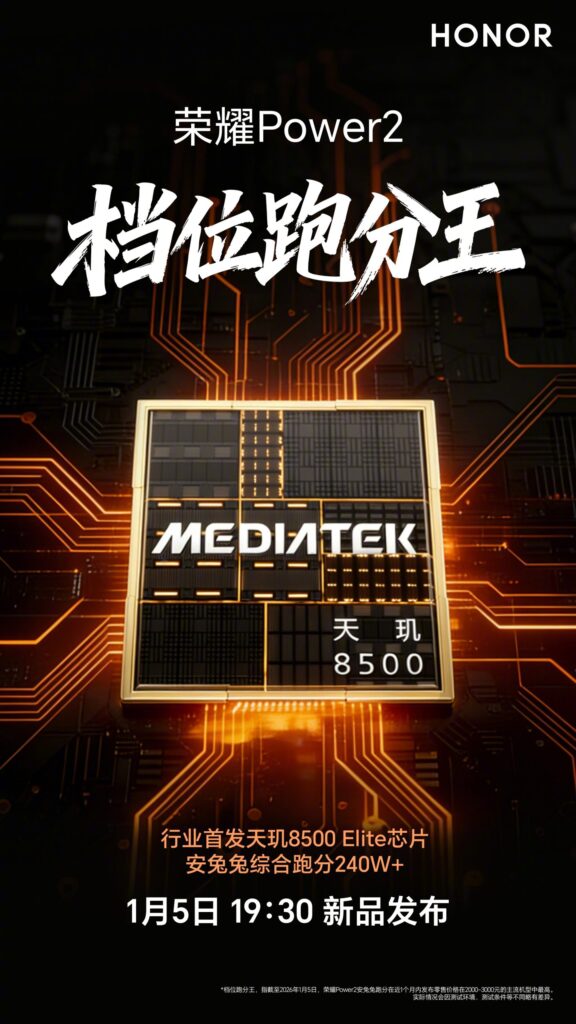
Honor has been dropping teasers for its upcoming Power 2 smartphone ahead of its 5th January 2026 debut. The brand confirmed that the handset will be powered by a new MediaTek Dimensity chipset and has even revealed its AnTuTu benchmark scores. So let’s check it out.
Honor Power 2 Performance
In a fresh teaser, the Chinese brand has confirmed that the Power 2 will be equipped with the Dimensity 8500 Elite SoC. With this chip, the upcoming smartphone managed to achieve an AnTuTU score of over 2.4 million points, which likely puts it near the top end of the performance charts for its class. This is in line with a previous GeekBench sighting. Honor also confirmed that the Power 2 will arrive with a Snowman Airbag Stand, which attaches to the back of the phone as a part of a limited winter edition accessory.
Recent teasers have confirmed that the device will pack an IP68 + IP69 + IP69K rating for water and dust resistance and a massive 10,080mAh battery pack that likely supports 80W wired fast charging. But based on the leaks, the Honor Power 2 sport a tall 6.79-inch LTPS OLED screen that offers a 1.5K resolution, a 120Hz refresh rate, 16MP selfie camera, and 8,000 nits of HDR brightness. For optics, the rear may pack a 50MP (Main) + 5MP (Ultra Wide) dual camera setup.
Honor Power 2
Official image posters have also revealed that the Power 2 will arrive in three color options, namely Snow White, Midnight Black, and Sunrise Orange. Other notable features include 12GB of RAM and up to 512GB of internal storage, along with 12GB of virtual RAM expansion. This is all the information we have at the moment, so stick around for more.
For more daily updates, please visit our News Section.
Oppo India has confirmed the India launch of the Reno 15 series on Jan.8. The new lineup centres, which includes the Reno 15, Reno 15 Pro, and Reno 15 Pro Mini, on AI-assisted photography and video, targeting users who frequently shoot portraits, travel scenes and social content on the go.
Oppo Reno 15 series’ camera details confirmed
Oppo Reno 15 series India launch date
The Oppo Reno 15 Pro 5G and Reno 15 Pro Mini 5G are built around a 200-megapixel ultra-clear main camera, aimed at capturing high detail across varied environments. Oppo’s PureTone Technology plays a key role here, balancing the subject with surrounding light and colour instead of aggressively isolating faces. The idea is to keep images clean and vivid without making them look artificial, even when lighting conditions change.
Supporting the main sensor is a 50-megapixel 3.5x telephoto portrait camera, close to the classic 85mm focal length. This lens helps maintain natural facial proportions while adding gentle background compression, making it suitable for both portraits and distant subjects. A 50-megapixel ultra-wide camera with a 100-degree field of view completes the setup, handling landscapes, architecture and group shots while keeping colour and exposure consistent across the frame. Group photos also benefit from face-aware processing that sharpens each subject individually.
Beyond still photography, the Reno 15 Pro models support 4K HDR video recording at up to 60fps across all cameras, including telephoto and front-facing units. This allows creators to switch focal lengths mid-shot without visible jumps in colour or exposure. Features such as enhanced stabilisation, dual-view recording and multi-output capture are designed to make handheld shooting more reliable.
The Reno 15 series also introduces AI Editor 3.0, which includes tools like AI Portrait Glow and motion-based editing features that help refine photos after capture. Creative options such as Popout add depth-driven effects without relying on third-party apps. The standard Reno 15 5G carries several of these AI features forward, making the overall experience more accessible across the lineup.
For more daily updates, please visit our News Section.
Xiaomi has kicked off the 2026 season with a fresh rollout of Chinese New Year Edition models in its popular Redmi Note 15 lineup. The company’s popular budget lineup is now on sale in China with new festive color options and look. The special edition colorways are available for the standard Note 15 as well as the higher end Note 15 Pro and Note 15 Pro+ options.
Redmi Note 15 Series Chinese New Year Edition Pricing
The Chinese tech giant just announced the new Chinese New Year Edition for the Redmi Note 15 lineup. So now, the Redmi Note 15 and Redmi Note 15 Pro are available in China in the new Cherry Red colorway, while the Redmi Note 15 Pro+ model is available in Mocha Brown. These hues bring a more elegant look to the affordable smartphones.
Redmi Note 15 & Redmi Note 15 Pro in Cherry Red, Redmi Note 15 Pro+ in Mocha Brown
So here are the pricing details:
Redmi Note 15 Cherry Red
8GB + 128GB- 999 Yuan
8GB + 256GB- 1,199 Yuan
12GB + 256GB- 1,399 Yuan
Redmi Note 15 Pro Cherry Red
8GB + 256GB – 1,349 Yuan
12GB + 256GB – 1,599 Yuan
12GB + 512GB – 1,799 Yuan
Redmi Note 15 Pro+ Mocha Brown
12GB + 256GB – 1,799 Yuan
12GB + 512GB – 2,099 Yuan
16GB + 512GB – 2,199 Yuan
16GB + 512GB Satellite Messaging Edition- 2,199 Yuan (Special Discount During Chinese New Year)
The limited edition Note 15 lineup is arriving with leather rear panels and golden side panels, and camera modules. In related news, the brand has started teasing the Redmi Note 15 in the Indian market, with its launch set for 6th January 2026.
For more daily updates, please visit our News Section.
Xiaomi‘s latest flagships could be arriving in India soon. The company’s Xiaomi 17 and Xiaomi 17 Ultra just had their Indian release timeline revealed, while another new model is reportedly in the works. So here’s everything we know so far.
Xiaomi 17 and Xiaomi 17 Ultra India Launch Timeframe
The Chinese tech giant’s latest premium devices are apparently launching in the same timeline as last year’s Xiaomi 15 and Xiaomi 15 Ultra. According to Abhishek Yadav on X (formerly Twitter), Xiaomi may unveil the Xiaomi 17 and Xiaomi 17 Ultra model in March 2026. So despite the Xiaomi 17 Ultra making its debut a couple of months earlier, the global release is still a while away.
Xiaomi 17 Ultra
In the tweet, the known tipster further added that a new Xiaomi 17T model is also arriving soon. Just recently, rumors surfaced of another Xiaomi 17 series phone, which features the Snapdragon 8 Elite Gen 5. While the details are still at large, the Xiaomi 17T could be this new model. Abhishek Yadav stated that his sources believe this device could arrive in India in April 2026. Although, the tipster did state that this is still unconfirmed, so take this report with a pinch of salt as well.
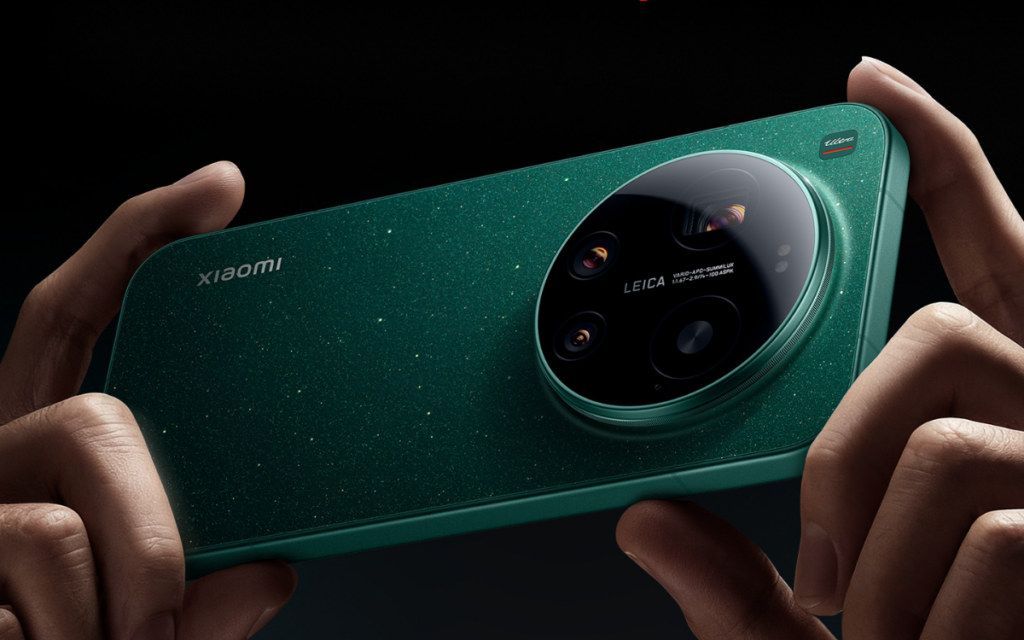
Based on what we know so far, the Xiaomi 17 is confirmed for an Indian release. Xiaomi’s new flagship just surfaced on the BIS certification database. In related news, Xiaomi 17 Ultra Leica Edition buyers are complaining of the zoom ring feeling loose and making a sound. You can also click hereto check out our unboxing and hands-on for this device.
For more daily updates, please visit our News Section.
We’ve already covered plenty of Lenovo products set to be unveiled at CES 2026. A few of them are concepts, while some products are set to debut later in 2026. There’s a new product to add to that growing pile: the Lenovo AI Glasses Concept.
Publication Windows Latest has revealed the first look at the new AI glasses, along with details on what they are capable of.
The idea behind these concept glasses is to make an everyday wearable work as a personal AI headset. And on paper, Lenovo has a few interesting features to make that vision feel plausible.
Lenovo AI Glasses Concept Overview
According to the report, the Lenovo AI Glasses Concept has a built-in teleprompter for presentations or speaking engagements. It’s the kind of feature that could be genuinely useful for presenters, streamers, or anyone who spends a good chunk of their day talking to a camera.
The glasses also have basic features like touch and voice controls built into the frame. They can handle calls, control music, or access information as a standalone device.
Lenovo is also bundling the glasses with Lenovo Qira, its AI assistant. Interestingly, Qira doesn’t run directly on the glasses. Instead, it relies on the processing power of a connected smartphone or computer.
That offloaded approach means the glasses themselves don’t need to handle heavy AI workloads—but it also means you’ll need to keep a paired device nearby to use the assistant. When connected, Qira is said to support sub-millisecond real-time live translation and image recognition. There’s also a camera mounted on the front of the frame to enable those features.
AI also powers another feature called Catch Me Up, which summarises notifications across multiple devices at the start of the day.
Last but not least, the Lenovo AI Glasses Concept reportedly weighs around 45 grams and promises up to eight hours of battery life.
For more daily updates, please visit our News Section.
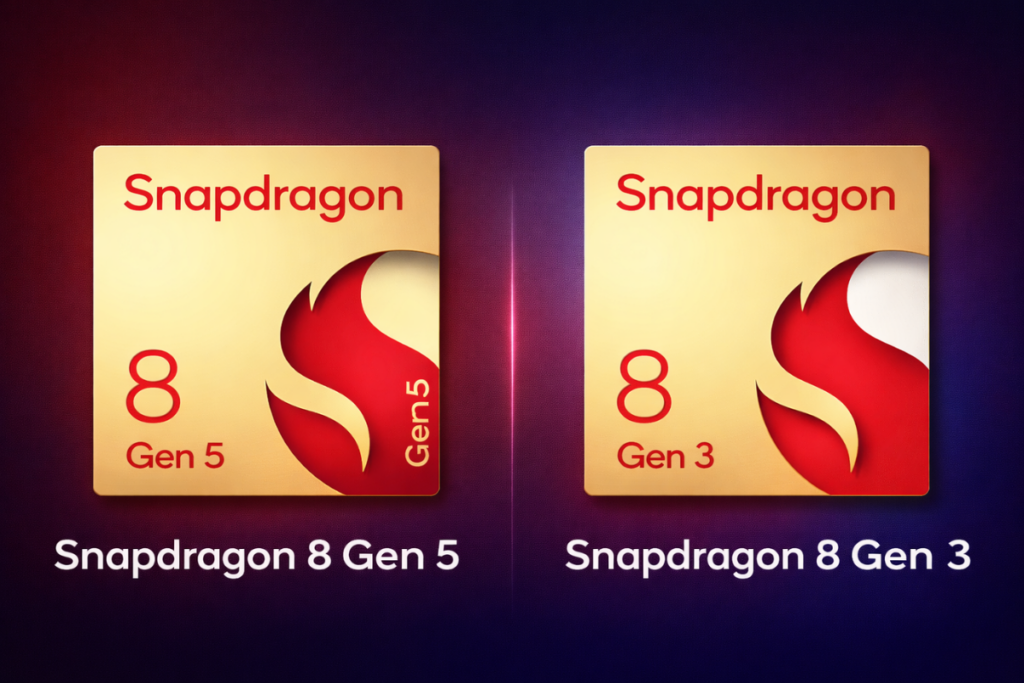
The Snapdragon 8 Gen 5, announced in November, features powerful and power-efficient Oryon cores for the first time in a non-Elite chipset. It borrows more features from the flagship 8 Elite Gen 5 chipset, including the Adreno 840 GPU with sliced architecture, agentic AI, and a 20-bit triple ISP. It’s indeed a powerful smartphone chipset with flagship capabilities.
On the other hand, the Snapdragon 8 Gen 3 was announced two years ago, but it’s still a capable chipset that offers smooth performance and flagship-grade specs. From the name itself, it’s clear that the 8 Gen 5 has better capabilities, but the real question is: how significant an upgrade is the 8 Gen 5 over the 8 Gen 3? Let’s dive into benchmarks and real-world differences to find out.
Snapdragon 8 Gen 5
Snapdragon 8 Gen 3
Announced
November 2025
October 2023
Process node
TSMC’s 3nm (N3P)
TSMC’s 4nm (N4P)
CPU
2 x 3.8GHz — Oryon (3rd gen) 6 x 3.32GHz — Oryon (3rd gen)
1 x 3.3 GHz — Cortex-X4 3 x 3.15 GHz — Cortex-A720 2 x 2.96 GHz — Cortex-A720 2 x 2.27 GHz — Cortex-A520
GPU
Qualcomm Adreno 840 GPU ray tracing support Snapdragon Elite Gaming features
Adreno 750 ray tacing support Snapdragon Elite Gaming features
NPU
Qualcomm Hexagon NPU agentic AI support
Qualcomm Hexagon NPU
Memory
LPDDR5x, up to 4.8GHz
LPDDR5x, up to 4.8GHz
Storage
UFS 4.1
UFS 4.0
Camera
Qualcomm Spectra triple AI ISP (20-bit) up to 320MP single camera up to 108MP single camera with zero shutter lag up to 48MP triple cameras with zero shutter lag real-time semantic segmentation (limitless) 4K/120fps video recording 1080p/480fps slow-mo video recording
Quacomm Spectra triple AI ISP (18-bit) up to 200MP single camera up to 108MP single camera with zero shutter lag up to 36MP triple cameras with zero shutter lag real-time semantic segmentation (up to 12 layers) 8K/30fps or 4K/120fps video recording 720p/960fps slow-mo video recording
Note: The benchmark tests were performed on the OnePlus 15R (powered by the Snapdragon 8 Gen 5) and the OnePlus 13R (powered by the Snapdragon 8 Gen 3).
Geekbench score
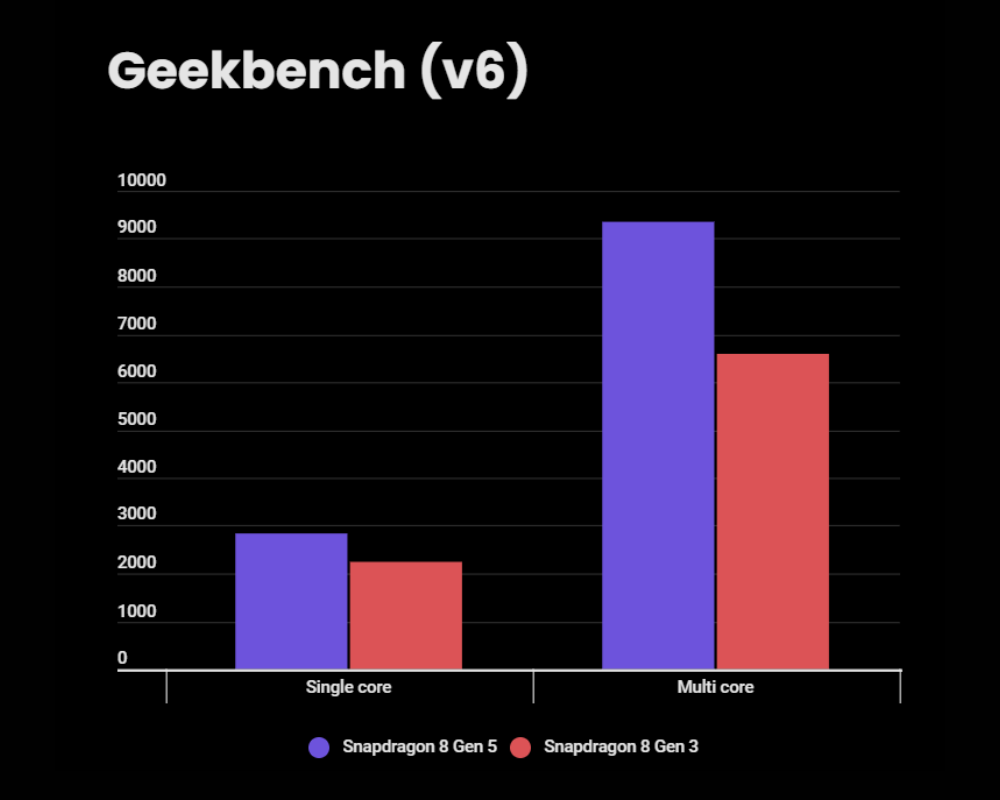
Thanks to powerful third-gen Oryon cores, the Snapdragon 8 Gen 5 is able to pull off much higher Geekbench scores than the 8 Gen 5. In the single-core test, it achieves 2,837 points, whereas the 8 Gen 3 touches 2,243. That’s a 26% uplift for the newer chip. The difference only widens in multi-core performance.
The 8 Gen 5 achieves 9,352 multi-core points, while the 8 Gen 3 gets 6,591 points, resulting in a 42% performance boost for the former chip in tasks that require multiple cores to work together, such as multitasking, video editing, and other demanding workloads.
Snapdragon 8 Gen 5
Snapdragon 8 Gen 3
Single core
2,837
2,243
Multi core
9,352
6,591
AnTuTu score
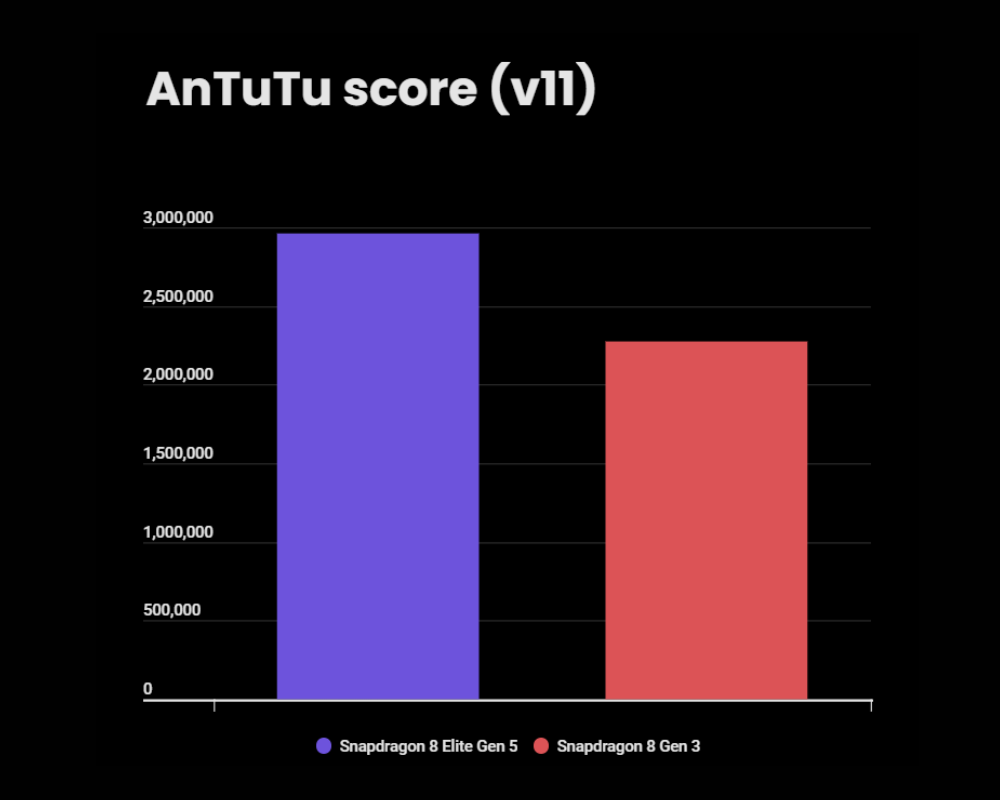
On the AnTuTu v11 platform, the Snapdragon 8 Gen 5 achieves nearly 3 million points, whereas the 8 Gen 3 only reaches 2.27 million points. That’s a 30% boost for the newer chip.
The breakdown reveals a 50% higher CPU score and a 22% increase in the GPU score for the 8 Gen 5. It also gains higher scores in memory and UX tests.
Snapdragon 8 Gen 5
Snapdragon 8 Gen 3
AnTuTu score
2,961,236
2,274,520
CPU
914,878
607,409
GPU
974,402
796,782
Memory
382,729
353,279
UX
689,228
517,050
In short, the Snapdragon 8 Gen 5 strongly outperforms the 8 Gen 3 on benchmarks. However, there’s more to consider than just benchmark scores to get the complete picture, such as connectivity and camera quality. (more on that below)
Snapdragon 8 Gen 5 vs 8 Gen 3: Major differences
The 8 Gen 5 uses an advanced TSMC’s 4nm (N3P) process node, which offers better performance and power efficiency over the 8 Gen 3’s 4nm (N4P) node. Furthermore, the chip benefits from Qualcomm’s latest Oryon cores (third-generation), the same cores found in the flagship 8 Elite Gen 5 chip.
On the other hand, the 8 Gen 3 features ARM cores: 1 x Cortex-X4, five Cortex-A720, and two Cortex-A520. Qualcomm claims a 36% performance boost for the 8 Gen 5 compared to 8 Gen 3. Further, the 8 Gen 5 features an upgraded Hexagon NPU that delivers 46% faster performance.
The 8 Gen 5 features an Adreno 840 GPU (with sliced architecture) that offers greater capabilities than the Adreno 750 inside the 8 Gen 3. It uses the new GPU architecture with dedicated memory per slice. The 8 Gen 5’s Adreno 840 GPU promises 11% faster graphics rendering and a 13% improvement in power efficiency. Additionally, it also offers improved ray tracing and Snapdragon Elite Gaming features.
The camera also receives notable upgrades. The Gen 5 chip uses a 20-bit Spectra Triple ISP with AI capabilities. It offers features like real-time tone control and Night Vision 3.0. Additionally, it features Snapdragon Audio Sense, which can record HDR audio while eliminating background wind noise.
Both chips offer the same peak download/upload speed over 5G and Wi-Fi connections, but the underlying hardware has been upgraded. The newer X80 5G modem, part of the 8 Gen 5 upgrades, enhances the Sub-6GHz configuration to 4×6 MIMO, improving speed and reliability compared to the 4×4 MIMO in the Gen 3’s X75 modem.
The newer chip also offers AI-assisted beam management, Bluetooth 6.0 (vs 5.4), and a newer FastConnect 7900 connectivity suite (vs FastConnect 7800).
Snapdragon 8 Gen 5 vs 8 Gen 3: Which one should you choose?
The Snapdragon 8 Gen 5 offers clear advantages over the 8 Gen 3 in almost every aspect. It’s got a faster CPU, a reliable GPU with higher rendering and battery efficiency, an improved ISP with AI-assisted features, and enhanced connectivity features.
Between the two, the choice isn’t difficult: the Snapdragon 8 Gen 5 does everything better, and therefore is an easy pick. But the 8 Gen 3 still delivers excellent performance and power efficiency. You’ll hardly notice any performance difference in day-to-day usage. It also offers excellent gaming performance, but for longer sessions, you may want a more powerful chip. If you can find a Snapdragon 8 Gen 3 phone that’s significantly cheaper than the 8 Gen 5 phone, the deal would be hard to ignore.
HMD may be preparing to expand its product lineup beyond phones with what looks like a very budget Bluetooth speaker. A new leak suggests that the company is working on a portable speaker called the HMD Boom E1, which is a basic sound piece.
The leak comes from a known HMD tipster on X who goes by the name HMD_MEME’S, who shared both the specifications and images of the upcoming speaker.
HMD Boom E1 Specifications (Rumored)
According to the information, the HMD Boom E1 uses a 4-ohm horn paired with a 52mm driver. It is capable of delivering a maximum output of 5W. That’s modest power by today’s standards, but fairly typical for compact speakers.
One notable feature is its IPX7 waterproof rating, so the speaker should be good to survive splashes, rain, and even brief submersion in water. This makes it suitable for outdoor use, whether that’s at the beach, near a pool, or during a short hike.
Connectivity options appear simple but practical, with Bluetooth 5.0 for wireless audio and an AUX line-in for wired playback. There’s also a built-in microphone, which could allow the speaker to double as a basic speakerphone.
Moreover, the Boom E1 is said to pack an 800mAh battery and charges via a USB Type-C port.
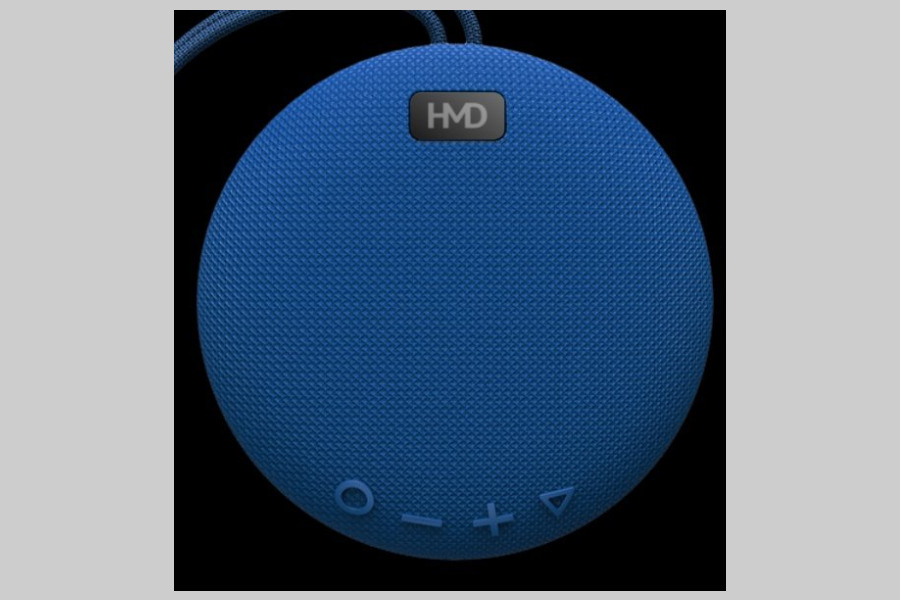
The leaked images show a fully blue, circular design. The front is covered by a fabric mesh, while the top carries the “HMD” logo. We can also spot physical controls — including power, volume up and down, and play buttons — on the bottom. There’s also a lanyard on the side to add a bit of portability.
Unfortunately, there’s no word yet on pricing or launch timing. Based on specs, the HMD Boom E1 looks like a no-frills speaker aimed at the budget segment.
Motorola’s upcoming premium phone, the Motorola Signature, has appeared in a leaked promotional image ahead of its India launch on January 7. The device was previously linked to the Edge 70 Ultra name, but the new material suggests Motorola may be positioning it a bit differently.
The image, shared by YTECHB, shows the phone in a green color option, reportedly called Martini Olive. What stands out most is a stylus placed next to the device, hinting that Motorola could finally bring pen support to its flagship lineup. So far, stylus features have mostly been limited to the G Stylus series. In some regions, including China, the phone is expected to launch as the Moto X70 Air Pro.
The same promotional poster also includes several other Motorola products, including a smartwatch, a tracking device (possibly the rumored Moto Tag 2), a speaker, and a special Edge 70 Swarovski Crystal Edition. This suggests Motorola may use the event to highlight its wider product ecosystem rather than focusing only on the phone itself.
On the performance side, a Geekbench listing spotted earlier indicate the Motorola Signature could run on Qualcomm’s Snapdragon 8 Gen 5 chipset, paired with up to 16GB of RAM. The CPU configuration shown in Geekbench aligns with what’s expected from a 2026 flagship from Motorola. Separately, leaker Evan Blass has shared wallpapers believed to be made for the device, adding to the growing list of pre-launch details.
Other specifications, including camera hardware, display details, and battery size, haven’t been revealed yet. However, stylus support alone could help the Motorola Signature stand out in a crowded premium segment. With the official launch just around the corner, more concrete details should surface soon.
In January, several new smartphones are expected to enter the Chinese market, and the Redmi Turbo 5 series is shaping up to be one of the most talked-about launches. A fresh leak has now offered clearer insight into the chipsets likely to power the Redmi Turbo 5 and Turbo 5 Pro, setting the stage for what could be a major performance refresh.
Redmi Turbo 5 series chipset details leak online
Redmi Turbo 5 series chipset details leaked
According to a Weibo tipster, the Redmi Turbo 5 will be powered by the MediaTek Dimensity 8500 processor, while the higher-end Turbo 5 Pro is expected to feature the Dimensity 9500e chipset. Both processors are yet to be officially announced, but they are believed to debut in the next few days. To recall, the Redmi Turbo 4 and Turbo 4 Pro were powered by the Dimensity 8400 and Snapdragon 8s Gen 4 chipsets, respectively.
The Dimensity 8500 is tipped to be manufactured using TSMC’s 4nm process and could reach clock speeds of up to 3.4GHz. Meanwhile, the Dimensity 9500e is said to be built on a more advanced 3nm process, with a higher peak frequency of around 3.73GHz and an upgraded GPU.
Beyond performance upgrades, both phones are expected to feature 1.5K LTPS OLED displays and a premium metal frame design. Reports suggest that the two models may also arrive with ultrasonic fingerprint scanners, further positioning them above their predecessors in terms of build and security features.
Battery capacity appears to be a major focus for the Redmi Turbo 5 lineup. The Turbo 5 Pro is widely rumoured to house a 9,000mAh battery paired with 100W fast charging. The standard Turbo 5 could feature a slightly smaller 8,000mAh battery while retaining the same charging speed. Both models have reportedly cleared China’s 3C certification, pointing to an imminent launch.
Redmi is expected to introduce the Redmi Turbo 5 series in China either in January or early February, possibly alongside the Xiaomi 17 Ultra. Globally, these devices are likely to be rebranded under the Poco lineup, continuing Xiaomi’s established strategy for international markets.
For more daily updates, please visit our News Section.
The upcoming OnePlus Nord 6 has reached a significant milestone in its journey toward a global release. The device has recently received certification from TDRA authority in the UAE. This follows a previous appearance on Malaysia’s SIRIM certification database in December 2025. These recurring appearances across multiple regulatory bodies strongly suggest that OnePlus is preparing for an imminent launch, with the Nord 6 likely to debut in the first quarter of 2026.
OnePlus Nod 6 TDRA certified
The TDRA listing has officially associated the OnePlus Nord 6 moniker with the model number CPH2795. This is notably the same model number that was revealed through the SIRIM listing last month. While these certifications are essential for legal sale in their respective regions, they are typically limited in the hardware details they provide.
OnePlus Nord 6 TDRA listing
Beyond confirming the model number and the product name, no specific internal hardware or design features have been disclosed by these regulatory filings.
OnePlus Nord 6 specifications (rumored)
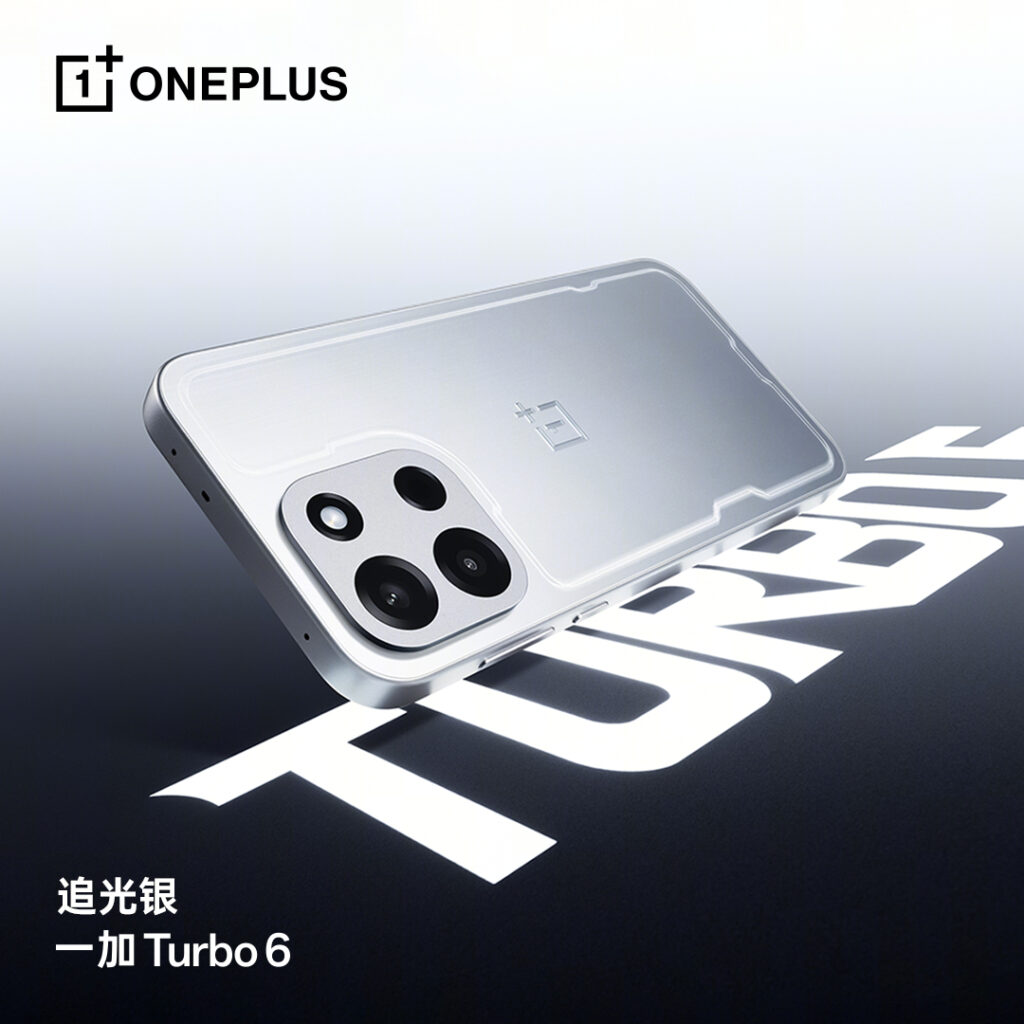
While official specifications for the OnePlus Nord 6 remain under wraps, recent rumors suggest it will be a rebranded or slightly tweaked version of the OnePlus Turbo 6, which is scheduled to launch in China on Jan. 8, 2026. Based on the Turbo 6, the Nord 6 is expected to feature a 6.78-inch 1.5K resolution OLED display with a smooth 165Hz refresh rate.
The Turbo 6 will likely be powered by the Qualcomm Snapdragon 8s Gen 4 chipset, paired with up to 16GB of LPDDR5X RAM and 512GB of UFS 4.1 storage.
The Turbo 6 is confirmed to pack a massive 9,000mAh battery with support for 80W wired fast charging and 27W reverse charging. For photography, it may carry a 50-megapixel primary rear camera and an 8-megapixel ultra-wide lens, along with a 32-megapixel front-facing camera.
It is expected to run on Android 16 with ColorOS 16 (for the China model) or OxygenOS 16 (globally). Other anticipated features include an in-display fingerprint sensor, a durable plastic frame, and high-level water resistance with IP68, IP69, and IP69K ratings.
For more daily updates, please visit our News Section.
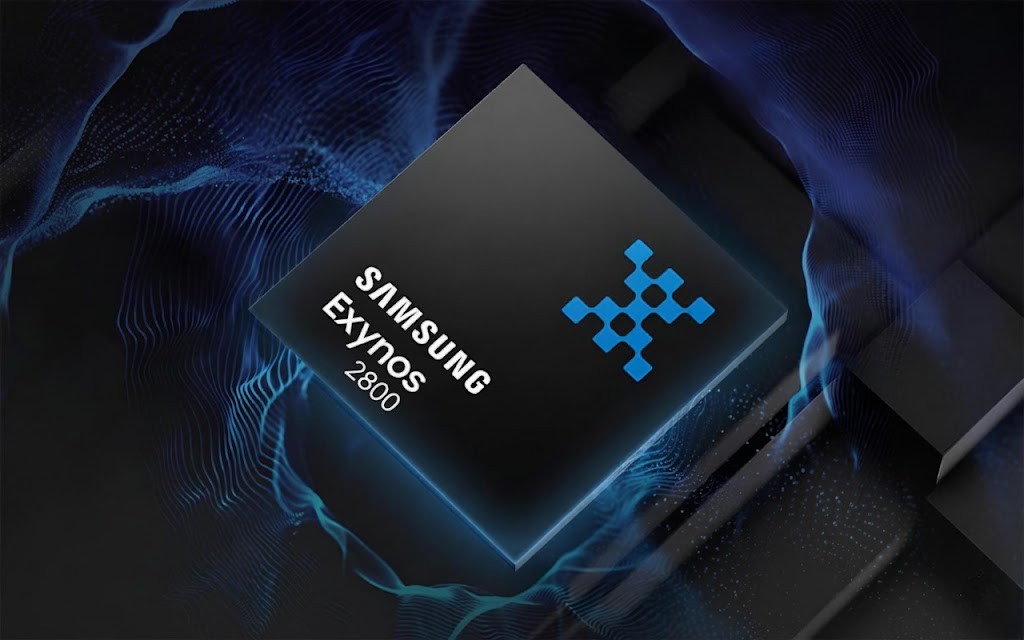
Samsung could be preparing a major shift in its chip strategy with a future Exynos processor. According to recent leaks, the company is exploring fully custom CPU and GPU designs for the Exynos 2800, marking a possible return to in-house core development after several years of relying on external partners.
The information comes from Weibo tipster Smart Chip Guide. If accurate, the Exynos 2800 would move away from standard ARM CPU cores and also end Samsung’s use of AMD’s RDNA-based GPUs, which have powered flagship Exynos chips since 2022.
This wouldn’t be Samsung’s first attempt at custom CPUs. Between 2016 and 2020, the company developed its own “Mongoose” cores, designed by its Austin-based team. While those chips showed strong peak performance, they struggled with efficiency and heat management, often falling behind Qualcomm’s Snapdragon chips in real-world use. Samsung eventually shut down the project and returned to off-the-shelf ARM designs.
The new effort suggests Samsung believes the timing is better this time. Advances in manufacturing, including its upcoming 2nm Gate-All-Around (GAA) process, could help address earlier efficiency issues. Developing a custom GPU could also give Samsung more control over AI processing and system-level optimizations across Galaxy devices.
The Exynos 2800 is rumored to debut in the Galaxy S28 series in 2028, leaving Samsung several years to refine the architecture. Before that, the Exynos 2600—expected in the Galaxy S26 lineup—may be the final Exynos chip to use AMD’s RDNA graphics, even though Samsung reportedly handles most of the GPU implementation itself.
If this plan moves forward, it would signal Samsung’s intent to compete more directly with Apple’s tightly integrated silicon strategy. Whether it succeeds, however, remains an open question—especially given the mixed legacy of its earlier custom designs.
Samsung’s upcoming Galaxy S26 series may indeed include an AI-powered screen privacy option, according to a recent leak tied to One UI 8.5.
While examining early One UI 8.5 firmware, leakers spotted references to a feature called Privacy Display. As per the source, it appears to limit how clearly the screen can be viewed from the sides, while keeping it readable when looked at straight on. The goal seems to be reducing unwanted glances in public places like buses, trains, or cafes.
The feature doesn’t appear to be always on. Mentions in the software discovered so far suggest it can be enabled manually through Settings or added as a toggle in the Quick Panel. There are also signs that it can be automated, possibly through Samsung’s Modes and Routines system, allowing it to turn on when certain conditions are met — such as leaving home or connecting to mobile data.
Samsung’s Privacy Display feature is reportedly linked to display hardware rather than camera-based detection. Last year, Samsung Display showcased Flex Magic Pixel OLED technology, which can adjust viewing angles by controlling how pixels emit light. The Galaxy S26 series could be the first to use this technology in a consumer device, although that hasn’t been confirmed.
While Samsung’s Privacy Display appears to change how on-screen content is viewed—likely relying on new display hardware—the idea of dealing with prying eyes isn’t entirely new. Huawei’s Pura 80 Ultra, for example, uses eye-tracking and facial recognition to detect when someone is looking at the screen and alerts the user in real time through a Dynamic Island-style notification. It will be interesting to see how Samsung’s panel-based approach compares when the Galaxy S26 series launches in February 2026.
Oppo has officially expanded its Reno portfolio with the global launch of the Reno 15 Pro Max and Reno 15 Pro. The new smartphones bring improvements in display quality, flagship-level camera hardware, a powerful MediaTek chipset, and large batteries, setting the stage for a refreshed premium mid-range lineup. The series also includes the Reno 15 and Reno 15F, which are covered in a dedicated post.
Oppo Reno 15 Pro Max, Reno 15 Pro specifications and features
Oppo Reno 15 Pro Max
The Oppo Reno 15 Pro Max features a 6.78-inch AMOLED display with full-HD+ resolution and a 120Hz refresh rate. The Reno 15 Pro offers a more compact form factor with a 6.32-inch AMOLED panel while retaining the same refresh rate. Both phones run ColorOS 16 based on Android 16 and carry an IP68/IP69 rating for dust and water resistance.
Powering both devices is the MediaTek Dimensity 8450 chipset paired with 12GB RAM. The Reno 15 Pro Max is offered in a single 12GB+512GB configuration, while the Reno 15 Pro comes in a 12GB+256GB variant. Both phones come with LPDDR5x RAM and UFS 3.1 storage.
On the camera front, both phones feature a 200-megapixel main sensor with autofocus and optical image stabilisation, a 50-megapixel periscope telephoto camera with autofocus, optical image stabilisation and 3.5x optical zoom, and a 50-megapixel ultra-wide camera with autofocus. For selfies, both models use a 50-megapixel front camera with autofocus support.
Oppo Reno 15 Pro
The Reno 15 Pro Max packs a 6,500mAh battery with 80W wired and 50W wireless fast charging, while the Reno 15 Pro houses a 6,200mAh battery with 80W wired charging. Connectivity features include Wi-Fi 6E, Bluetooth 5.4, NFC, USB Type-C, dual SIM support and an in-display fingerprint sensor.
To sum up, the Reno 15 Pro Max and Reno 15 Pro are rebranded versions of China’s Reno 15 Pro and Reno 15.
Oppo Reno 15 Pro Max, Reno 15 Pro price and availability
The Oppo Reno 15 Pro Max is priced at NTD 24,990, which converts to approximately $800, for the 12GB+512GB variant. It is available in Twilight Gold and Desert Brown colour options. The Reno 15 Pro costs NTD 20,990, or around $670, for the 12GB+256GB variant and is offered in Aurora Blue and Desert Blue shades. Both models are currently available in Taiwan, with wider global availability expected soon.
For more daily updates, please visit our News Section.
Alongside the Pro models, Oppo has also introduced the Reno 15 and Reno 15F globally. These devices cater to users looking for balanced performance, capable cameras and long battery life, while offering multiple configuration choices. Here’s a look at all the details about the Reno 15 and Reno 15F.
Oppo Reno 15 and Reno 15F specifications and features
Oppo Reno 15 5G
The Oppo Reno 15 features a 6.59-inch AMOLED display with full-HD+ resolution and a 120Hz refresh rate, while the Reno 15F comes with a 6.57-inch AMOLED panel offering similar visual characteristics. Both phones run ColorOS 16 based on Android 16 and include an in-display fingerprint scanner.
The Reno 15 is powered by the Snapdragon 7 Gen 4 chipset and is offered in 12GB+256GB and 12GB+512GB variants. The Reno 15F runs on the Snapdragon 6 Gen 1 processor and comes in multiple configurations including 8GB+128GB, 8GB+256GB, 12GB+256GB and 12GB+512GB. Storage on both phones uses UFS 3.1 technology. While the Reno 15 has LPDDR5x RAM, the Reno 15F features LPDDR4x type.
In terms of cameras, the Reno 15 features a triple rear setup comprising a 50-megapixel main camera with autofocus and optical image stabilization, a 50-megapixel periscope telephoto camera with autofocus and a 3.5x optical zoom, and an 8-megapixel ultra-wide camera with autofocus.
Oppo Reno 15F 5G
The Reno 15F includes a 50-megapixel main camera with autofocus and optical image stabilization, an 8-megapixel ultra-wide camera with autofocus and a 2-megapixel macro sensor. Both phones are equipped with a 50-megapixel front camera with autofocus for selfies and video calls.
Battery capacity stands at 6,500mAh on both models, with support for 80W wired fast charging. Connectivity options include Wi-Fi, Bluetooth, NFC, USB Type-C, dual SIM support and dual speakers.
While the Oppo Reno 15F 5G is a completely new device, the Reno 15 is a rebranded version of China’s Reno 15c.
Oppo Reno 15 and Reno 15F price and availability
The Oppo Reno 15 is priced at NTD 17,990 for the 12GB+256GB variant, which is roughly $575, while the 12GB+512GB version costs NTD 19,990, or about $640. It is available in Aurora White and Sky Blue color options. Oppo has not yet announced official pricing for the Reno 15F, which is offered in Afterglow Pink, Twilight Blue and Aurora Blue color variants.
For more daily updates, please visit our News Section.
Motorola has been teasing the Moto X70 Air Pro in China for the past few days. Ahead of the impending launch, China’s TENAA certification authority has approved a new Motorola smartphone, which is believed to be the upcoming Moto X70 Air Pro with model number XT2603-1. The listing has revealed the phone’s complete hardware specifications ahead of its official launch, giving a clear idea of what to expect from this premium offering.
Moto X70 Air Pro specifications (rumored)
Moto X70 Air Pro teaser
According to the TENAA certification details, the Moto X70 Air Pro will feature a large 6.78-inch OLED display with a 1.5K resolution of 1264 x 2780 pixels. This suggests a sharp and immersive viewing experience, likely aimed at users who prioritise media consumption and gaming. The device is said to be powered by an octa-core processor, identified here as the Snapdragon 8 Gen 5, positioning it firmly in the flagship category.
In terms of memory and storage, the Moto X70 Air Pro is listed with multiple configurations. Buyers can expect RAM options of 8GB, 12GB, and 16GB, paired with internal storage variants of 256GB, 512GB, and up to 1TB. There is no mention of expandable storage support in the TENAA listing.
The camera setup appears to be one of the key highlights. On the front, the phone is expected to feature a 50-megapixel selfie camera. At the back, it is listed with a triple-camera system comprising three 50-megapixel sensors. One of these cameras appearsto be a periscope telephoto camera with 3x optical zoom.
The TENAA database also reveals that the Moto X70 Air Pro will pack a battery with a rated capacity of 5,100mAh. This device has been previously spotted with a 90W charger at the 3C certification platform. It is also rumored to support wireless charging. On the software side, the device is expected to run Android 16 with Motorola’s Hello UX layered on top.
Dimension-wise, the handset measures 162.1 x 76.4 x 7mm and weighs around 187 grams, pointing to a relatively slim and lightweight build for a phone of this size. An in-screen fingerprint sensor is also confirmed for biometric authentication.
The TENAA listing does not include any images of the device. As a result, the final design and aesthetic details of the Moto X70 Air Pro remain unknown for now. This appears to be the same Motorola Signature device, which is being teased for the global market, including India. Both devices are expected to launch this month. These devices were previously speculated to carry monikers the Moto X70 Ultra in China and Motorola Edge 70 Ultra globally.
For more daily updates, please visit our News Section.
Huawei has quietly added a new smart home accessory to its HarmonyOS lineup in China.
The company has introduced the HarmonyOS Smart Home Bluetooth Gateway Lite, a compact plug-in hub designed to connect and manage Bluetooth-based smart devices. It’s already listed on Huawei Mall with a price tag of 129 yuan, which is equivalent to $18.
The gateway plugs directly into a wall socket and does not require any additional cables. It measures 60 × 40 × 54mm and effectively turns a regular power outlet into a small smart home hub.
In terms of connectivity, the device supports Bluetooth, Bluetooth Mesh, and both 2.4GHz and 5GHz Wi-Fi bands. Huawei says it can manage up to six standard Bluetooth devices at once, or up to 16 devices using Bluetooth Mesh. Supported products include items such as smart lights, light strips, curtain motors, spotlights, and temperature sensors.
The gateway is designed to work closely with Huawei routers. When paired with compatible models, it can automatically optimize frequency bands to reduce interference and improve stability across connected devices.
Other details are fairly standard. The gateway weighs around 65 grams and is rated to operate in temperatures between 0°C and 40°C, with storage support down to -40°C. It also supports humidity levels of up to 95 percent, as long as there is no condensation.
Huawei is offering the device with a one-year warranty and standard after-sales support in China. The retail box includes the gateway, a user manual, and a Bluetooth mesh networking guide.
With this launch, Huawei continues to expand its HarmonyOS smart home ecosystem, focusing on simple and affordable accessories. For users already invested in Huawei’s platform, the new Gateway Lite offers a straightforward way to bring Bluetooth devices online without adding much cost.
Qualcomm’s upcoming Snapdragon 8 Elite Gen 6 series is expected to adopt a dual-chip strategy for the 2026 flagship smartphone cycle. According to a report by Wccftech, the company will launch a standard version and a Pro variant. The Pro model is tipped to cost over $300, making it the most expensive mobile chip Qualcomm has ever produced.
The Pro variant will likely support LPDDR6 memory and feature the new Oryon CPU architecture. It is also expected to become Qualcomm’s first mass-produced chip built on TSMC’s 2nm process. Industry data indicates that each 2nm wafer could cost as much as $30,000, significantly raising the production cost of the chip. For smartphone brands, the chip alone could account for nearly one-third of a premium phone’s total manufacturing budget.
Although tipster Smart Chip Insider on Weibo disagrees with the $300 pricing narrative, he points out that Wccftech estimates the Snapdragon 8 Elite Gen 5 at around $280 per chip, a figure he believes is overstated by more than $80. Based on this assessment, early claims that the Snapdragon 8 Elite Gen 6 could surpass $300 next year should be treated with caution.
Anyway, due to the high cost, the Snapdragon 8 Elite Gen 6 Pro might only appear in Ultra flagships. Mainstream flagship devices are expected to adopt the standard Snapdragon 8 Elite Gen 6 instead. This version will feature a 2+3+3 CPU cluster, retain support for LPDDR5X RAM, and offer a more power-efficient GPU. It will not support LPDDR6 memory but is expected to deliver stable high-end performance.
The ongoing DRAM pricing crisis is also influencing chipset choices. Rising memory costs are increasing the overall bill of materials for smartphones. To keep retail prices in check, many manufacturers may avoid the Pro chip and opt for the standard version to maintain a better balance between performance and cost.
High-end chips have faced criticism for overheating and poor battery efficiency. The standard Snapdragon 8 Elite Gen 6 may provide better sustained performance and thermal management, making it a more practical solution for mass-market flagship phones in 2026.
For more daily updates, please visit ourNews Section.
We use cookies on our website to give you the most relevant experience by remembering your preferences and repeat visits. By clicking “Accept”, you consent to the use of ALL the cookies.
This website uses cookies to improve your experience while you navigate through the website. Out of these, the cookies that are categorized as necessary are stored on your browser as they are essential for the working of basic functionalities of the website. We also use third-party cookies that help us analyze and understand how you use this website. These cookies will be stored in your browser only with your consent. You also have the option to opt-out of these cookies. But opting out of some of these cookies may affect your browsing experience.
Necessary cookies are absolutely essential for the website to function properly. This category only includes cookies that ensures basic functionalities and security features of the website. These cookies do not store any personal information.
Any cookies that may not be particularly necessary for the website to function and is used specifically to collect user personal data via analytics, ads, other embedded contents are termed as non-necessary cookies. It is mandatory to procure user consent prior to running these cookies on your website.