Xiaomi has launched an incredibly affordable smartphone under its sub-brand Redmi. The device in question is called the Redmi 12C and it doesn’t stray far from the brand’s effective budget formula, which is all about offering good specs at a low price. The handset arrives with a large 6.71-inch display, a massive 5000mAh battery, and a capable MediaTek Helio G85 SoC under the hood. Continue reading to learn more about its specs, pricing, and availability.
The Redmi 12C looks somewhat similar to the Redmi A1 series smartphones that were launched earlier this year. It has a squircle camera island that features two cameras, an LED flash, and a fingerprint sensor. The device has a curved back with a textured design. On the front, there’s a flat display with thin bezels and a V-shaped notch.
Moving to the specifications, the smartphone packs a 6.71-inch display that offers high resolution. The screen is likely an LCD. Redmi 12C is equipped with a MediaTek Helio G85 processor, supplemented by LPDDR4X RAM and eMMC 5.1 flash memory. The smartphone weighs around 192g and has a thickness of around 8.77mm.
For photography, the handset has a duar-rear camera unit on the back with a 50MP main sensor. There’s a 5MP snapper on the front for selfies and video calls. The 4G smartphone is fueled by a 5000mAh battery and supports 10W charging. It has the usual connectivity options like Bluetooth, WiFi, and even a 3.5mm headphone jack.
Talking about the price, the Redmi 12C starts at 699 Yuan ($101) with 4GB RAM+ 64GB storage. It is also offered in 4GB + 128GB and 6GB + 128GB storage variants, which are priced at 799 Yuan ($115) and 899 Yuan ($130), respectively. The handset is only available for purchase in Mainland China as of now.
Honor closed 2022 with a brand new flagship killer perfect for gamers and power users: the Honor 80 GT. It is a device with an amazing level of performance offered at an affordable price. Just like the Realme GT 2 Explorer Master Edition released earlier this year with flagship-class hardware. Here is a comparison between the main specifications of the Realme GT 2 Explorer Master Edition and the Honor 80 GT. We decided to compare the new Honor flagship killer with the old Realme one for an important reason: despite Honor releasing the flagship at the end of this year, it still ships with Android 12 out of the box instead of Android 13. That is the reason why it is a perfect rival of the GT 2 Explorer Master Edition.
Realme GT 2 Explorer Master Edition vs Honor 80 GT
Realme GT 2 Explorer Master Edition
Honor 80 GT
DIMENSIONS AND WEIGHT
161.3 x 74.3 x 8.2 mm,
195 g
162.5 x 75.3 x 7.9 mm,
187 g
DISPLAY
6.7 inches, 1080 x 2400 pixels (Full HD+), OLED
6.67 inches, 1080 x 2400 pixels (Full HD+), AMOLED
PROCESSOR
Qualcomm Snapdragon 8+ Gen 1, octa-core 3.19 GHz
Qualcomm Snapdragon 8+ Gen 1, octa-core 3 GHz
MEMORY
12 GB RAM, 256 GB – 8 GB RAM, 256 GB
12 GB RAM, 256 GB – 16 GB RAM, 256 GB
SOFTWARE
Android 12, Realme UI
Android 12, Magic UI
CONNECTIVITY
Wi-Fi 802.11 a/b/g/n/ac/6, Bluetooth 5.2, GPS
CAMERA
Triple 50 + 50 + 3 MP, f/1.9 + f/2.2 + f/3.3
16 MP f/2.5 front camera
Triple 54 + 8 + 2 MP, f/1.9 + f/2.2 + f/2.4
16 MP f/2.4 front camera
BATTERY
5000 mAh, fast charging 100W
4800 mAh, Fast Charging 66W
ADDITIONAL FEATURES
5G, dual SIM
5G, dual SIM, reverse charging 5W
Design
The Realme GT 2 Explorer Master Edition has a very original design and it wins the design comparison. Its aesthetics are reminiscent of a travel trunk and the phone is built with premium materials: you can choose between a ceramic back or an eco leather back, alongside an aluminum frame. It is one of the most original phones released this year and also one of the phones with the highest screen to body ratio. The Honor 80 GT still comes with an original design, but there is no way for it to compete if we talk about aesthetics in general, so you should definitely go for the Realme GT 2 Explorer Master Edition if you are looking for the most beautiful phone.
Display
The displays of these two phones are very similar to each other, but it looks like the Realme GT 2 Explorer Master Edition has a slightly better panel. It is an OLED display able to show images with up to one billion colors, a diagonal of 6.7 inches, a Full HD+ resolution of 1080 x 2400 pixels, a 120 Hz refresh rate, and HDR10+ certification, as well as an in-display fingerprint reader. Honor GT has an AMOLED display with one billion colors, a diagonal of 6.67 inches, a Full HD+ resolution of 1080 x 2400 pixels, a 120 Hz refresh rate, HDR10 certification, and an in-display fingerprint scanner. Note that the Realme GT 2 Explorer Master Edition is also the only phone of the duo with stereo speakers.
Specs & Software
The Honor 80 GT is the phone featuring the best hardware here. Both phones are powered by the best chipset: the Snapdragon 8+ Gen 1 by Qualcomm. But on the Realme GT 2 Explorer Master Edition, the SoC has a higher clock frequency: 3.2 GHz, because the Snapdragon 8+ Gen 1 is underclocked at just 3 GHz on the Honor 80 GT. On the other hand, with the Honor 80 GT, you can actually get a higher amount of RAM: up to 16 GB, as well as 256 GB of native storage. Talking about the software, the Realme GT Master Explorer Edition ships with Android 12 and Realme UI 3.0, while the Honor 80 GT runs Android 12 with Magic UI 7 on top. We consider the Realme UI 3.0 as a more advanced user interface, for now.
Camera
The Realme GT 2 Explorer Master Edition offers better camera hardware. It has a triple rear camera including a 50 MP Sony IMX766 main sensor with OIS, a 50 MP ultrawide shooter, and a 3 MP microlens with 40x magnification. With the Honor 80 GT, you actually get a 54 MP main sensor without optical stabilization, an 8 MP ultrawide lens, and a 2 MP macro camera.
Last but not least, is the battery. On the Realme GT Explorer Master Edition, the battery is bigger, with a capacity of 5000 mAh instead of just 4800 mAh. This means that the battery life will be longer on a single charge. It is also able to charge quicker with 100W fast charging.
Price
The starting price of the Realme GT 2 Master Explorer Edition in China is roughly $509/€476, while the Honor 80 GT starts from about $482/€450 in the Chinese market. None of these phones went global.
Following the EU’s lead, the Indian government has now passed a regulation that will mandate the use of USB-C chargers for all mobile devices. Technology companies in the country will have to adopt USB Type-C as the standard charging port for all electronic products by March 2025.
Indian government-run Bureau of Indian Standards (BIS) made the announcement on Tuesday after consulting with industry stakeholders about standards, global supply chain constraints, and product availability. “BIS has notified standards for type C chargers and the government will come up with two common types of charging ports for mobiles and wearable electronic devices,” Rohit Kumar Singh, secretary of the Indian ministry of consumer affairs, said in an interview with Business Standard.
“There is a broad consensus among the industry and government that the use of USB type C charging ports can be made mandatory after six months of the European Union’s rolling out of standards for USB charging ports in 2024 as electronic manufacturers have a global integrated supply chain,” Singh added.
All smartphone manufacturers and technology companies in the country will have to adopt USB Type-C as the standard charging port for electronic products by March 2025, not six months but three months after the deadline in the EU. However, some devices that have no practical use for a USB-type C will be excluded from the mandate.
The objective behind the new law is to reduce the number of chargers per household, thereby minimizing the amount of e-waste generated, said the Consumer Affairs ministry. In addition, this is said to be a step toward Prime Minister Modi’s LiFE (Lifestyle for Environment) initiative, which aims to motivate people all over the world to do “mindful and deliberate usage” instead of “mindful and wasteful consumption.”
Samsung has updated nearly all the devices in its portfolio to the latest version of Android at an impressive pace. Only a handful of smartphones haven’t received the update and it’s only a matter of time before they get the software treat in the form of One UI 5. The latest and probably one of the last Samsung devices to get the Android 13-based update is the budget Galaxy A04s.
Galaxy A04s is one of the cheapest Samsung-made smartphones and it was launched only a few months ago with Android 12. Now, the device has started receiving the latest Android 13 update with a firmware version labeled A047MUBU1BVK5. The update is currently being seeded in Panama, however, it should extend to other regions in the coming days.
As the A04s is a budget model, it gets the One UI Core 5.0 instead of the normal version. It’s basically the same as the regular One UI 5 with a few omissions. Basically, some of the new Android 13 features are not supported on the device because it lacks the required hardware.
The update also brings November 2022 security patch with itself. The handset is listed on Samsung’s quarterly update schedule, which means it will get the next security patch in Q1 2023.
As usual, Samsung is rolling out the latest update in a staged fashion, so it will take some time to reach every unit. If you have a Galaxy A04s and live in Panama, you can update your device to Android 13 by going to Settings, tapping on the Software update menu, and selecting Download and install.
Samsung will be refreshing its mid-range Galaxy A series in 2023. The Korean giant may soon launch the new Galaxy A34, Galaxy A54, and other affordable smartphones. Earlier today, a report released press renders and color options of the A34. And now, AndroidHeadlines has leaked detailed images of the Galaxy A54, showcasing the design of the smartphone in four colors.
Samsung Galaxy A54 is expected to arrive in the first quarter of 2023 with a bunch of other A series smartphones, including Galaxy A14, Galaxy A24, and Galaxy A34. Reports suggest there won’t be a Galaxy A74 this year, so the Galaxy A54 might debut as the most premium model in the series.
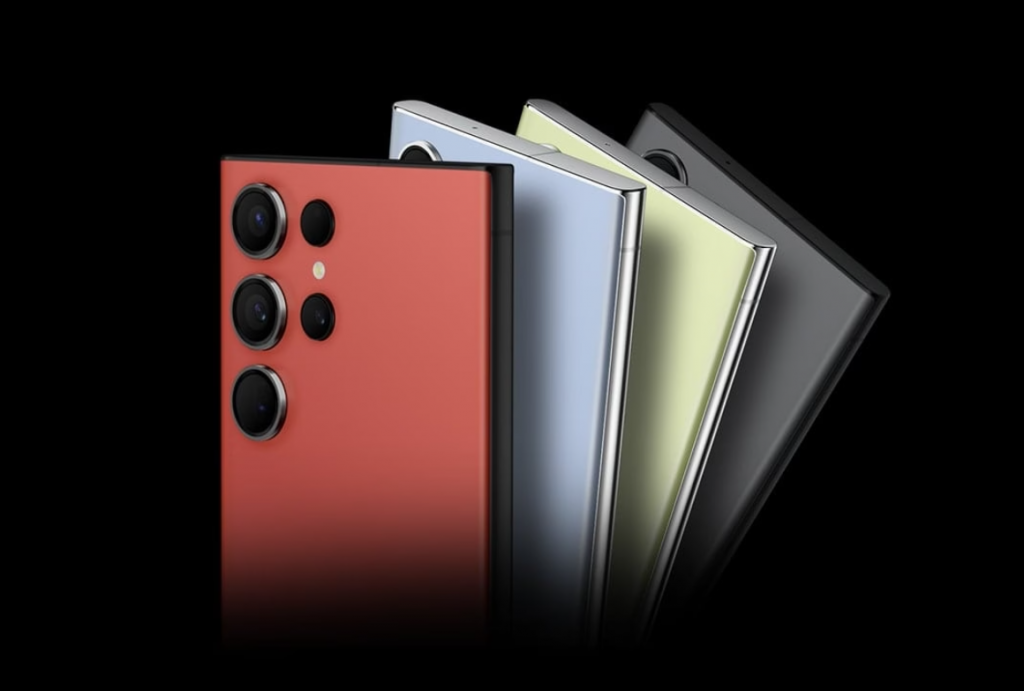
The handset has been pictured with a flagship-like design that resembles the leaked renders of the Galaxy S23. The most visible change in the appearance of the smartphone is its camera module. Just like the S23 series, the Galaxy A54 may not feature the plate and each lens could appear as an individual bump.
As can be seen in the images, the smartphone has a flat display with curved corners. The bezels around the display look thin and the selfie camera is embedded in a punch-hole cutout in the center. Renders reveal the Galaxy A54 will be offered in at least four colors: Black, Lime, Purple, and White.
Reports suggest the upcoming handset will have a 6.5-inch Full HD+ Super AMOLED display with a 120Hz refresh rate. It will be powered by the Exynos 1380 chipset and pack a 5,100mAh battery. The phone could feature a 32MP selfie camera on the front. There might be a 50MP primary camera with OIS, a 12MP ultrawide camera, and a 5MP macro camera on the rear.
Xiaomi has today announced a new smartphone accessory for the Redmi K60 smartphone – an official thermal cooling case. Well, you maybe have heard about this for the very first time and so are we. We have come across many cooling accessories for the smartphone but the cooling case seems something new and Redmi launched it today. The new cooling case for the Redmi K60 claims to lower the temperature of the device by as much as 4 degrees Celsius.
According to rumours, Redmi used the same-segment heat technology of the flagship phone for the first time to enhance the phone’s outer cover. The temperature of the new phase composite material is changed from solid to liquid dual state, and actual long-acting heat is diffused while the heat is conveyed quickly.
According to the theory, as soon as the mobile phone’s temperature increases, the composite material quickly absorbs the heat and melts, bringing down the phone’s peak temperature. In order to help mobile phones cool down rapidly, maintain high energy output, and be more comfortable with high-loading scenes like games and videos, officials highlighted that efficient solid-liquid distributes heat in dissipation. This is similar to summoning a “bonus patch” for mobile phones.
The back of the Redmi mobile phone’s fuselage cools by 4°C after an hour of testing thanks to its ice-sensing heat protection cover, and it actually cooled down quickly. The price of the ice-sensing heat protection case in Xiaomi Mall is CNY 79, or around $11.
Lenovo recently unveiled multiple new devices ahead of CES 2023. The event will take place in Las Vegas starting January 5th, and all of the recently unveiled laptops and gadgets are expected to be showcased there.
However, the brand has more gadgets still tucked behind the curtain which will likely debut at CES 2023. Press renders of one such device, dubbed the Lenovo YogaBook 9i 13 have been leaked by known tipster Evan Blass.
The Lenovo Yoga 9i 13, is a dual 13-inch laptop with a design like the ThinkPad X1 Fold and a free-floating keyboard that can be wedged between the two screens when the laptop is folded. The Yoga 9i has two independent displays as opposed to the ThinkPad’s single foldable panel.
Looking at the renders, it is clear that the device can be used in multiple orientations like – a traditional laptop, in a dual-screen orientation, and in a folded tablet-like orientation. One of the renders confirms that the laptop will come with a matching stylus. Lastly, the notch on the device will slightly protrude from the bezel. Other than housing the camera and face unlock hardware, it will also act as a gripping point to open the laptop.
There are currently no specs available on the device, however, it looks like a USB Type-C port and a 3.5mm audio jack will be present. Lastly, the render features the laptop in a beautiful and eye-catching dark turquoise color. We can expect the device to come in other vibrant colors.
Software updates have been deemed a weak point for Chinese OEMs for a long time. However, that changed to some extent in 2022, at least for Oppo. The BBK-owned company has already updated a good number of smartphones in both China and overseas market. Now, as we are preparing to enter 2023, the brand has announced the ColorOS 13 update plan for the first quarter of the year. Let’s look at the details.
In Q1 2023, Oppo will be rolling out stable and beta builds of Android 13-based ColorOS 13 to a vast number of smartphones. The devices that will receive the beta update include the OPPO Reno7 5G, Oppo K9s, and Oppo Reno5. The update timeline is for the Chinese region and the brand should announce the global update plan in a day or two.
ColorOS 13 China Update Timeline Q1 2023
Beta Update
From January 11, 2023
Oppo Reno 7 5G
Oppo Reno 7 New Year Edition
Oppo K10 Vitality 5G
Oppo K9s
From February, 2023
Oppo Reno 5 K 5G
Oppo Reno K9
From March, 2023
Oppo K9 Pro 5G
Oppo K9x 5G
Oppo A55 5G
Stable Update
From January 12, 2023
Oppo Find X2 Pro
Oppo Ace 2
Oppo Find X2
Oppo Ace 2 Eva limited edition
Oppo X2 Pro Lamborghini edition
From January 13, 2023
Oppo K10x 5G
Oppo K10 Pro 5G
From January 31, 2023
Oppo Pad
Oppo Pad Artist limited edition
As usual, the update will be rolled out in a staged fashion and will reach every unit in a few days. We’ll keep you posted as each of these devices receives a stable or beta update. You might want to check out our ColorOS 13 review to learn more about the latest update.
Google has introduced the Material You theming back in the Android 12 operating system. This enables the whole UI to adopt the colour from the wallpaper and change the accent colour, theming, and icons according to that. The brand later further pushed the support of Material You theming to different parts of the UI. Many other brands such as Vivo and OPPO also adopted the wallpaper-based theming engine in the UI. Well, Google has now reportedly did some changes in the Material You theming for the Nearby Share on Android.
Google recently pushed out the latest December patch for the Google Play System Update. Google is reportedly revamping the visuals and motion design for the Nearby Share Android app. Obviously, this means that the Material You theming engine will also get some minor tweaks here and there. The known publication 9To5Google claims that they had spotted the change in Material You for Nearby Share back in the month of November, and this is probably what Google is referring to as “revamping the visuals” in the patch notes of the latest update.
Regarding the improvements, when you start Nearby Shares, a tab slides up to begin “Looking for nearby devices.” Google employed a left-to-right wave in the past to indicate that this was happening. The point was conveyed by a subtle element. Utilizing different Material You forms that expand and then fade out behind your profile avatar, a little Nearby Share redesign will be implemented.
The Nearby Share icon is now visible at the top of this panel, and the text has been made somewhat larger and more central. The share previews have also been improved by Google, which has made them larger and placed them on a card with symbols so that it is easier to see what is being shared. This minor upgrade to Nearby Share that we enabled has not yet been released, but it is intended to do so after a server-side update with the most recent Google Play services.
Redmi just finished launching its latest flagship K60 series in China and it may enter 2023 with a new Note 11 series smartphone. The device in question is called the Redmi Note 11 Pro 2023 and it has been making rounds on various certification sites recently. In the latest development, the handset has bagged TKDN certification, hinting at a nearby launch. Here are the details.
The Note 11 Pro 2023 has been spotted on Indonesia’s TKDN website with the model number 2209116AG. As usual, the listing did not reveal any specifications of the device. However, it hints at an imminent launch in Indonesia as well as in other global markets. The smartphone could debut early in 2023 but there’s no official confirmation from the brand yet.
Previous reports suggest the Redmi Note 11 Pro 2023 will debut as a mid-range smartphone with decent specifications. A recent Geekbench listing of the handset reveals it could arrive with an octa-core Qualcomm Snapdragon 732G chipset, which is a fast mid-range SoC manufactured in the modern 8 nm process.
It comes with two ARM Cortex-A76 cores clocked at up to 2.3 GHz and six small ARM Cortex-A55 cores at up to 1.8 GHz. Notably, the device was spotted on the Google Play console with a 3-year-old Snapdragon 712 chip. So, we can’t say for sure which SoC will power the smartphone. However, it should be noted that the information provided by Geekbench is seldom incorrect.
The smartphone visited the benchmarking site with Android 11 and 8GB RAM. We hope Redmi will ship the Note 11 Pro 2023 with at least Android 12. Other specifications of the smartphone are yet to be known. Stick around for the latest updates.
Google had previously added support for WiFi and Cellular network switching in their voice call screen. It was for sure a beneficial step taken by the brand for many of the users out there. Now, the tech giant has reportedly did another change to the Google voice call screen. The screen will now be able to display the “Suspected Spam Caller” warning. This will help the users to prevent spam calls or obviously, any further scams, if involved in the call.
The caller screen will display the “suspected spam call” both underneath the caller number and the displayed avatar. The caller history will further display the tag for that particular number or caller. If there are some errors or the user is able to recognize the number, they are provided with an option to mark the labelled caller as “not spam” after which the suspected spam label will be never displayed for that number again.
If the user marks the suspected number as “spam,” any further calls from that number will be diverted to voicemail, and the call history will be automatically saved to the device’s spam folder. The user can also entirely disable the filter spam call feature, which means that Google will no longer designate any caller as “suspected spam” or whatever. To disable the feature, go to the dialer’s Settings, then Security, and finally Filter Spam Calls. Users can disable it directly from this page.
The tech giant has begun rolling out the feature to all users, and all users will receive an update that will enable the feature to work in a few days. Google claims to use artificial intelligence to discern between spam and legitimate calls, and that any suspected call is subsequently marked as spam. They also claim that the AI detects billions of spam calls per month across Google’s calling ecosystem.
Samsung has been surely working on a bunch of its upcoming products, whether it be Samsung Galaxy S23 series, the OneUI 5.1 or the Galaxy Book 3 series. All the devices are expected to launch in the same event, and the event is said to go live on February 1st, 2023. Well, we do not have any official confirmation regarding the device’s official launch date yet. Anyway, going back to the main headline, the promotional images of the upcoming Galaxy Book 3 Ultra has been leaked online now.
The promotional photographs for the new Samsung Galaxy S23+ and S23 Ultra smartphones were previously released. The photographs show the device as its whole. The latest photos of the forthcoming Galaxy Book 3 Ultra highlight the device’s front view. The device is shown in the leaked image in grey, with a design that is remarkably similar to its predecessor. The bezels around the display appear to be excellent and thin, with the front camera positioned in the centre of the upper bezel. Samsung logo can be seen centrally on the bottom bezel, which is somewhat thicker than the other three sides.
As stated previously, the devices might be available in February 2023. Furthermore, the forthcoming laptop was previously certified by the Bluetooth SIG. The Book 3 Ultra could be the company’s premium model in the Book 3 series. The laptop was available in four different configurations: NT960XFH, NT961XFH, NT960XFS, and NT960XFHZ.
The Galaxy laptop will have Bluetooth 5.1, according to the listing. It will also be powered by an Intel CPU and will run Windows 11. Bluetooth SIG, on the other hand, did not reveal the exact processor. We anticipate an Intel i7 CPU. The device will also support Wi-Fi 6E. Let’s wait until the formal launch or any official teaser is released before we learn any additional information about the device’s specifications.
The latest Redmi K60 Series is now available for purchase on Giztop. Redmi K60 smartphone can be bought for a starting price of $459 and the Redmi K60 Pro variant is available for pre-order at $599 only. Please note that the prices mentioned are applicable to the base variant only.
Redmi K60 features a 6.67-inch AMOLED display with a 120Hz refresh rate. Powered by the Snapdragon 8+ Gen 1 chipset the phone comes with 8GB /12GB/ 16GB LPDDR5 RAM options and 128GB /256GB/ 512GB UFS 3.1 internal storage options.
Redmi K60 has a triple rear camera setup with a 64MP main camera and 8MP + 2MP secondary sensors. For your selfies, you have a 16MP sensor in the front. Fueled by a 5500mAh battery it supports a 67W fast charge and runs on Android 13 OS-based MIUI 14.
Available in White and Black colors, you can now buy the Redmi K60 smartphone for $459 only at Giztop.
Redmi K60 Pro features a 6.67-inch AMOLED display with a 120Hz refresh rate similar to the K60 version. However, the Pro version comes with the latest Snapdragon 8 Gen 2 chipset. You have multiple memory options viz. 8GB /12GB/ 16GB LPDDR5 RAM options and 128GB /256GB/ 512GB UFS 3.1 internal storage.
Redmi K60 Pro has a triple rear camera setup with a 50MP(Sony IMX800) main camera and 8MP + 2MP secondary sensors. For your selfies, you have a 16MP sensor in the front. Fueled by a 5000mAh battery it supports a 120W fast flash charge and runs on Android 13 OS-based MIUI 14.
Available in White, Black, and Green colors, you can now pre-order the Redmi K60 Pro smartphone for $599 only at Giztop. Please note that this is a pre-order only and the delivery will begin from January 2023.
For more information on such exciting deals and offers check out our deals hub.
Huawei, the Chinese tech giant, has now filed a new patent for a forthcoming technology that can identify respiratory infections by measuring blood oxygen or Sp02 levels. Based on blood oxygen levels, the technique can detect the existence of respiratory system infection. According to the relevant patent summary, this application implementation case provides a detection method and related equipment that is used with the first electronic equipment in order to work properly.
Many distinct testing operations are included in the testing method. This approach consists of the following steps: testing the first operation, responding to the first operation, and sending to the second electronic equipment. based on the first information, receive physiological parameter information given by the second electronic device; When the physiological parameter information is determined to meet the preset conditions, get audio information; determine the first physiological information based on the physiological parameter information and audio information; and display the first physiological information.
Blood oxygen saturation, respiratory frequency, body temperature, heart rate, and other physiological parameters are examples of data. This programme enables users to quickly detect the risk of infection in the respiratory system while ensuring the accuracy of the test findings and the equipment’s low power consumption. There are already various smartwatches on the market that use sensors to test the blood oxygen level. They are, however, not the ones on whom we can rely. We currently have adequate medical equipment for this purpose.
It will be interesting to watch how the technology works once it hits the market. Will it be able to deliver reliable information, or will we see the tag “Do not utilise the information for medical purposes!” once more? We are quite eager to put the new technology to the test. Let’s see if they can get the product to market or if it will be just another unsuccessful patent since there are already thousands of patents by various brands, but not all of them debut in the real market.
Last month, it was uncovered that Qualcomm, the leading mobile chipset manufacturer, is readying a powerful desktop CPU. Codenamed “Hamoa”, the chipset may debut in 2024 with 12 CPU cores in an 8+4 configuration. The chip is rumored to support discrete GPUs as well. Even though we are still more than a year away from its launch, a new report is here with some more details about the upcoming desktop processor.
The report reaffirms the fact that the CPU will have 12 cores. However, the configuration is still anyone’s guess. An earlier report by developer Kuba Wojciechowski revealed the cores will be in an 8+4 configuration, with 8 performance cores and 4 energy-efficient cores.
In the latest development, it has been reported that Qualcomm is testing the Hamoa chip in the form of two variants, with the internal model numbers SC8380X and SC8380XP. It is clear by the designations that these are the successors to the Snapdragon 8cx Gen 3, which has the model number SC8280.
Further, the test platform is also reported to have a Qualcomm Snapdragon X65 5G modem. This suggests, the Chipmaker wants to combine its new desktop CPU with an integrated 5G modem, although whether the modem will be included in all chips remains unclear.
In addition, the upcoming CPU will use the new UFS 4.0 standard for connecting the flash memory. This will result in increased transmission rates, which should translate to further advantages in terms of performance.
From what is known so far, we can say that the forthcoming chipset will be designed more like a modern mobile processor than a desktop CPU. It remains to be seen whether this new chipset will be on par with other PC chips out there.
OnePlus is gearing up to launch the OnePlus 11 and Buds Pro 2 in China next week. Now ahead of the launch, the OnePlus 11R has surfaced in live images. The smartphone has been subject to leaks and rumours in the past. The new leaked images shared by publication GadgetGang give us an entire look at the OnePlus 11R from all angles.
The OnePlus 11R is seen in a secured back case so the colour variant of the device remains a mystery. The case has a rectangular island with cutouts for three camera sensors and an LED flash. However, it remains to be seen if the phone also has a rectangular camera module. The OnePlus 10R had a different camera module design. The alert slider which was missing on the predecessor model makes a comeback on the OnePlus 11R as it is seen positioned on the right side. There is a power button below the alert slider. The left edge has volume rocker keys.
The OnePlus 11R has a USB-C port, SIM tray, and a speaker grille at the bottom edge. The top edge has an IR Blaster and a secondary microphone cutout. The upcoming offering will be the first from OnePlus to feature IR Blaster.
Coming to the front, the OnePlus 11R has a centre-aligned punch-hole cutout for the selfie camera. A closer look shows that the device has curved edges. This indicates that it will be the first R-series device from the brand to come with a curved display panel.
There have been many rumours surrounding the next-generation iPhone 15 lineup. Earlier this month, it was reported that the iPhone 15 Ultra may see the biggest single-generational price jump in iPhone history. Now a new report by Naver suggests that Apple may adopt a new pricing and marketing strategy for the iPhone 15 series.
Apple’s current non-Pro iPhone 14 i.e. the iPhone 14 and 14 Plus have not performed well in terms of sales. This is because the company deviated from its usual strategy of equipping the entire iPhone 14 lineup with the same specifications albeit with a few differences. The non-Pro iPhone 14 models retained the same core specifications as their predecessor whereas the Pro variants packed significant upgrades.
The Cupertino-based tech giant’s expectations of the iPhone 14 sales were quite different and it is now re-evaluating strategies for 2023 as per the latest report. The company might consider catering the iPhone 15 lineup to different people.
The report by Naver highlights three strategies that Apple might adopt. The first one is that the brand could reduce the differences between the non-Pro and Pro models. This correlates with past rumours that the entire iPhone 15 lineup will come with Dynamic Island. The second option is that Apple might consider pricing the iPhone 15 Plus lower than the current generation model. The company aims to widen the gap between the Plus and Pro variants. Currently, the iPhone 14 Plus starts at $899 with the same specs as the iPhone 13 compared to the iPhone 14 Pro starting at $1,099. This raises the question of why someone would choose a device with no new changes.
The last strategy Apple could adopt is creating differences between the iPhone 15 Plus and the Pro variant. The brand could offer different features and materials. Previously, reliable analyst Ming-Chi Kuo had revealed that the company would increase differences between the Pro and non-Pro models as well as the Pro and the Max variant.
With the new strategy, Apple seems to be aiming for stable sales of all iPhone models next year.
India is expected to see 5G smartphone shipments surpass 4G smartphone shipments by the end of 2023, according to Counterpoint’s IndiaMarket Outlook. The report predicts that cumulative 5G smartphone shipments in India will reach the 100 million mark in Q2 2023.
5G Smartphone Shipments in India on Expect to Exceed 4G Shipments by End of 2023
Driving this growth is the expanding presence of 5G smartphones in lower price bands, as well as the rollout of 5G networks in the latter half of 2022. In fact, the share of 5G smartphones in lower price bands is expected to increase from 4% in 2021 to 14% in 2022, and reach 30% in 2023. The availability of cheaper 5G chipsets from Qualcomm and MediaTek has enabled original equipment manufacturers (OEMs) to launch more 5G devices in the lower price segment, while the commercial rollout of 5G services has also increased demand.
However, the growth of 5G in India has been limited by component supply shortages, inflation, geopolitical conflicts, and other macroeconomic issues, which have delayed 5G device launches in the budget segment. OEMs have responded by dropping or downgrading certain features, such as display quality or fast charging, in order to keep the cost of 5G devices low. This has had an impact on consumer demand for 5G within this price tier. In addition, the limited availability of 5G networks has also affected demand.
Despite these challenges, the outlook for 5G in India is positive. These constraints are expected to ease by the end of 2023, leading to the mass adoption of 5G. The better availability of 5G networks in major areas is also expected to drive growth in 5G smartphone shipments, which are estimated to increase by 62% year-on-year in 2023.
A new report has revealed that Sony is apparently not worried about the Xbox Game Pass from Microsoft. The company reportedly doesn’t even view the Xbox Game Pass as competition in the market.
According to sources close to the matter, Jim Ryan, the CEO of Sony Interactive Entertainment, has expressed views that hint at the company not viewing the Xbox Game Pass as a rival. On the other hand, the Japanese tech giant has implied concern over Microsoft’s recent acquisition of the Activision Blizzard gaming studio. As per one source, the senior executive has expressed his views during an employee Q&A session that was held earlier this month where Ryan talked about market competition.
When asked about the Xbox Game Pass, Jim Ryan reportedly stated that “When we consider Game Pass, it seems to be getting lower [Game Pass numbers]. When we consider Game Pass, we’ve sold more PS5’s in two years than they have gathered subscribers and they’ve been doing that for 6-7 years.” He further added that “We’re just shy of 50 million subscribers and they are in the low 20s, but there’s more work to do to grow that number.”
Interestingly enough, Ryan’s supposed internal statement seems slightly contradicting considering the company is battling Microsoft’s proposed plans on acquiring Activision Blizzard, which is a known name in the gaming industry. The Sony official had told Reuters that the move is “bad for competition, bad for the gaming industry, and bad for gamers themselves” despite Microsoft claiming that “This deal will benefit gamers, developers, and the industry as we seek to bring more games to more people.”
Noise has expanded its range of neckband earphones in India. The latest offering is dubbed the Noise Bravo. The audio device falls under the Rs 1,000 price bracket and competes against the likes of the Wings Phantom 210, Portronics Harmonics Z5, Lava Probuds N11, and more in the market. Read on to know what it offers out of the box.
The Noise Bravo has a basic neckband-styled design with silicone ear tips and buttons for music controls on the right side. They are IPX5 certified sweat and water-resistant.
On the audio front, the Noise Bravo are equipped with a 10mm dynamic driver for immersive sound. There is an environmental noise cancellation that suppresses external noise and offers clear quality on calls. The audio device features Bluetooth 5.2 connectivity and can be connected to two devices simultaneously and up to 10m range.
The Noise Bravo Bluetooth neckband earphones are claimed to deliver 35 hours of music playback on a single charge. They support fast charging and a 10 minute of charge is said to offer 10 hours of usage.
The Noise Bravo Bluetooth neckband earphones are available for purchase at Rs 899 on Amazon. On the brand’s official website, it costs Rs 1,199. The audio device is offered in Cyan Blue and Jet Black colours.
We use cookies on our website to give you the most relevant experience by remembering your preferences and repeat visits. By clicking “Accept”, you consent to the use of ALL the cookies.
This website uses cookies to improve your experience while you navigate through the website. Out of these, the cookies that are categorized as necessary are stored on your browser as they are essential for the working of basic functionalities of the website. We also use third-party cookies that help us analyze and understand how you use this website. These cookies will be stored in your browser only with your consent. You also have the option to opt-out of these cookies. But opting out of some of these cookies may affect your browsing experience.
Necessary cookies are absolutely essential for the website to function properly. This category only includes cookies that ensures basic functionalities and security features of the website. These cookies do not store any personal information.
Any cookies that may not be particularly necessary for the website to function and is used specifically to collect user personal data via analytics, ads, other embedded contents are termed as non-necessary cookies. It is mandatory to procure user consent prior to running these cookies on your website.