Advertisement

YouTube Will Now Send a Warning To Comment Spammer Whenever They Violate the Rules

The fake and annoying comments that are posted under the comments section of other creators’ videos have come to the notice of many people. By using a YouTube video’s comment section, some people also attempt to spam others. After receiving so much attention from the creators, the brand is now finally implementing security steps to prevent these spam comments. In case a comment spammer is found to be breaking any guidelines, YouTube has stated that they would start issuing warnings to them.

YouTube

If the user continues to publish inappropriate comments, YouTube may prohibit them from posting for up to 24 hours, according to a post made at TeamYouTube and signed “Rob.” According to Rob’s post, “Our testing has shown that these warnings/timeouts lower the risk that people would leave violative comments again.” Currently, the notice is only accessible for English comments, but Rob says they plan to expand it to additional languages soon. Additionally, the business has enhanced its capacity to recognise bots in live chats and spam in comments.

This year, a number of creators, including Jacksepticeye, MKBHD, and Linus Tech Tips, have all produced videos about comment spam. Although spam can take many different forms, you might encounter waves of copied-and-pasted remarks, remarks that impersonate well-known producers, or scams involving products like Robux. YouTube has responded by introducing a method to make comment moderation more stringent and is eliminating techniques that allow people to mimic creators. Now, it is also adding a notice for spammers. We really hope these steps would lower the spam rates.

Related

Vivo S16 With Key Specifications Spotted on Geekbench

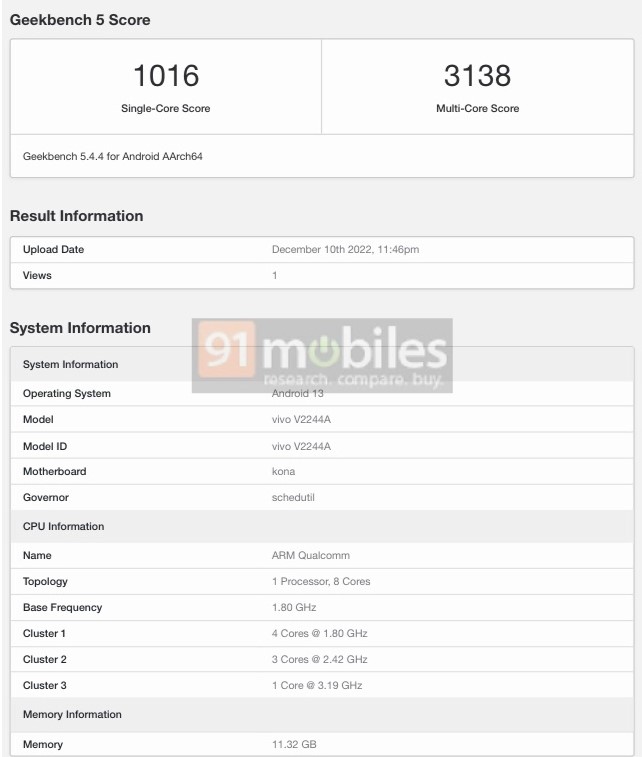
Yesterday Vivo S16 was spotted in leaked renders. Today, the standard Vivo S16 has appeared on the Geekbench database. It is listed with model number V2244A and the benchmarking platform reveals key specifications of the device. Rumours suggest that the Vivo S16 series will debut in China by the end of this month. The smartphones will arrive as the successor to the S15 series that was announced earlier this year. 

As per the Geekbench database, the Vivo S16 is listed with a motherboard codenamed ‘kona’. It corresponds to the Qualcomm Snapdragon 870 SoC. The chipset comprises four cores at 1.80GHz, three cores at 2.42GHz, and a prime core at 3.19GHz. The device will pack 12GB RAM and we can expect more options at launch. The benchmark listing reveals that the smartphone will run on Android 13 OS out of the box. The Vivo S16 scores 1,016 and 3,138 points in Geekbench’s single and multi-core tests. 

Apart from the aforementioned details, the rest of the specifications of the Vivo S16 remain a mystery. The smartphone appeared on 3C certification with the same model number last month. It revealed that the device will come with support for 80W charging. The upcoming offering is tipped to come in Black, Blue, and Purple colours. The Vivo S16 is speculated to come with a high-refresh-rate display and triple rear cameras as its predecessor. On the other hand, the Vivo S16 Pro is rumoured to be powered by a Dimensity 8200 SoC. 

We expect more details about the Vivo S16 to surface online in the coming weeks. 

Related:

Via

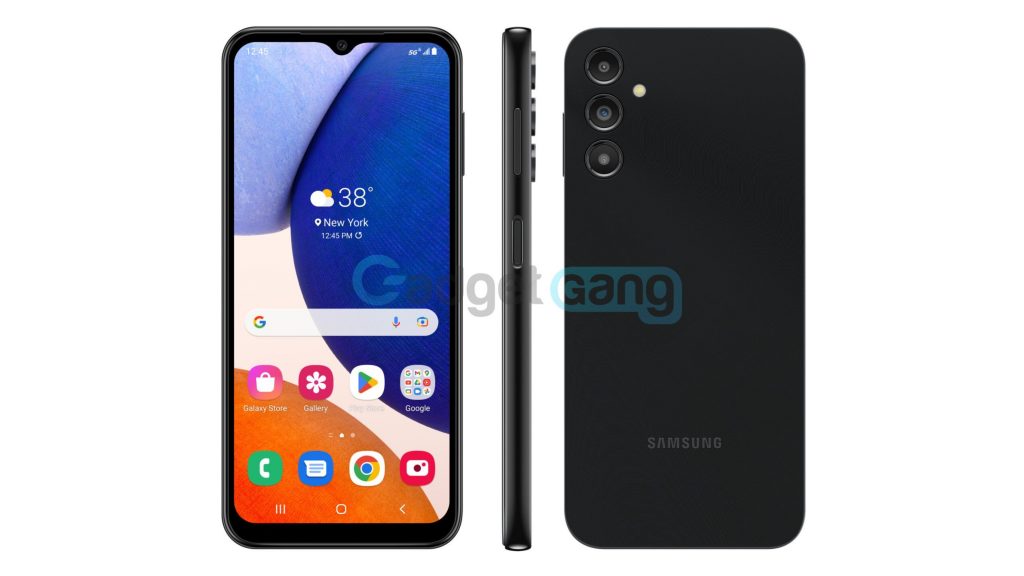
Samsung Galaxy A14 4G Variant Arriving Soon

Samsung is gearing up to release multiple smartphones in the coming days. They range from entry-level devices to flagship models.

One of these handsets is Galaxy A14 5G. Now, according to new findings, there will also be a 4G variant of this phone. Let’s take a look at all the known details.

Samsung Galaxy A14 5G

The upcoming Galaxy A14 (4G variant) has been spotted on multiple certification agencies, such as FCC, TÜV Rheinland, and UL Demko. According to the listings, the smartphone bears model number SM-A145.

These listings also reveal certain features of the phone. For instance, the device will measure 167.7 X 78.8 X 11.8mm in dimensions.

It will ship with a charger bearing model number EP-T1510. For the unaware, this is the standard Samsung 15W adapter.

Further, it will house a vertically aligned camera setup on the rear. In some markets, it will also arrive with NFC for contactless payments.

Last but not least, it will come with dual-band WiFi and will draw energy from a 5,000mAh battery.

It’s not known when this handset will be made official. Like most Galaxy A series phones, this one will be likely announced via press release. 

On the other hand, the Galaxy A14 5G with model number SM-A146  is expected to arrive with either a Mediatek Dimensity 700 chipset or an unknown Exynos chip, 4GB RAM, 64GB storage, and Android 13.

RELATED:

Xiaomi shows that using toothpaste on cracked smartphone screen is actually harmful

There have been various tales of tricks or hacks that seemingly help smartphone users after their devices are damaged. A notable example of putting it in rice after it got submerged in water. However, Xiaomi has come out to disprove one such ancient myth. So let’s have a look.

The Chinese tech giant took to YouTube to share a video on the new Shorts format to disprove that the myth of using toothpaste to fix your scratch or cracked display. The old rumors used to claim that using toothpaste basically fills in the gaps in the screen and polish the convex part of the display to make it smooth and almost good as new again. But in the video, we can clearly see that there was no difference or improvement in the scratches in the smartphone that was tested on.

Xiaomi

Rather, Xiaomi added that this age old tip actually does more harm than good. The company stated that the toothpaste is at times a polishing agent, however, the micro particles in the paste can not effectively repair the cracks in the screen. Furthermore, toothpaste is actually an alkaline substance, which might destroy the acidic resistance of the oleophobic coating on top of the smartphone’s display overtime. This layer is basically applied on smartphones display to help keep dust and fingerprint smudges away thanks to oils secreted by the human body. The brand also recommended that one should rather go to Xiaomi’s official customer care to deal with such problems.

RELATED:

(Source)

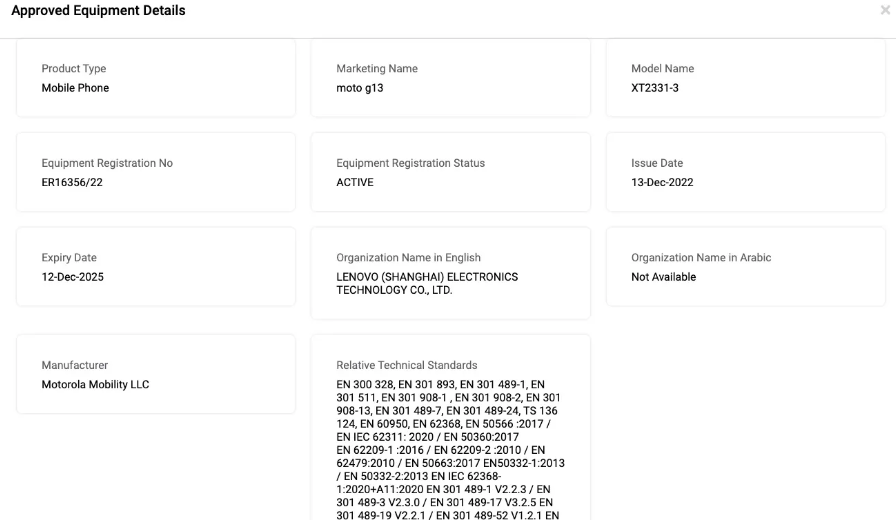
Upcoming Moto G13 and Moto G23 Listed on TDRA Certification; Hints at an Imminent Launch

Motorola is probably working on two of its upcoming smartphones – the Moto G13 and the Moto G23. Both smartphones were previously listed on Thailand’s NBTC and FCC certification. Now, both smartphones have been listed on the TDRA certification, hinting at an imminent launch. The devices may launch in the market very soon. We may get to see some official teasers or announcements regarding the launch of the device in the upcoming days.

Anyhow, the Moto G13 With the model number XT2331-3 and Moto G23 with the model number XT2333-5 has been spotted on the TDRA listings. For those who don’t know, the Moto G13’s codename is Penang, while the Moto G23’s codename is Penang Plus. A prior sighting of the Penang Plus (Moto G23) was made on the FCC certification website. Only the model numbers, which were previously mentioned, are revealed in the TDRA listing for the Moto G13 and Moto G23. The TDRA listing contains no additional information about future devices.

Moto

A 5000mAh battery will power the Moto G13, according to the FCC certification filing. Additionally, the smartphone will feature 20W quick charging. The forthcoming G-series smartphone will include a dual-rear camera configuration and an LED flash, according to the device’s leaked render. A display panel with a centred punch-hole notch will be available on the Moto G13.

Additionally, the Moto G23 was spotted on the FCC certification page, where it was discovered to support 33W fast charging. Other than that, little is known about the technical characteristics of the Moto G13 and Moto G23. However, as the Moto G13 and Moto G23 start to show up on additional certification websites, we may expect to learn more about them in the upcoming weeks.

Related

Source/Via

Realme GT Neo 5 Leaked Renders Give Us A First Look At The Smartphone

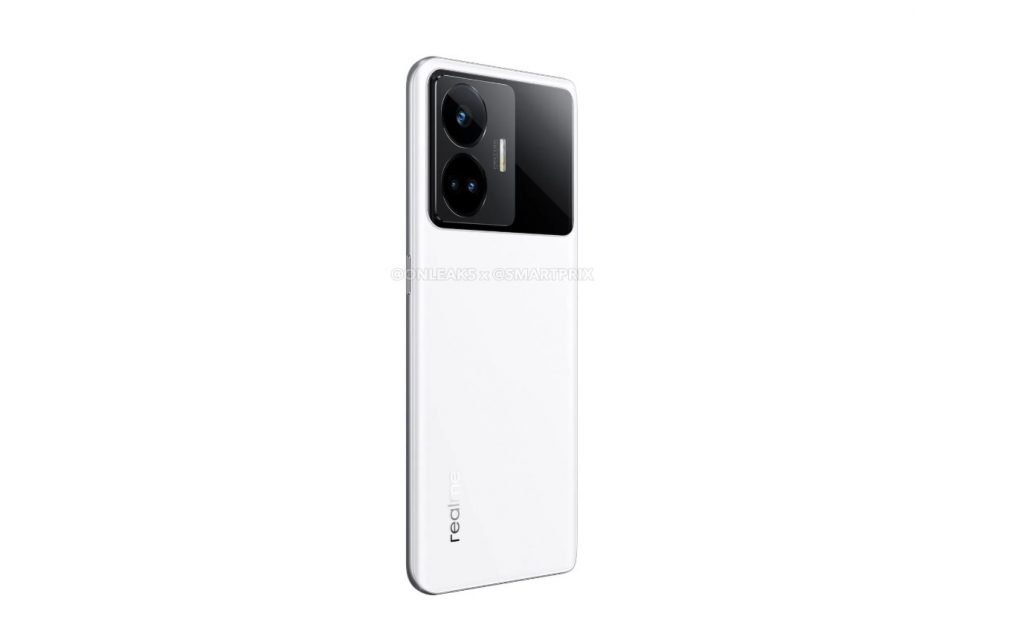
Realme GT Neo 5 has appeared in leaked renders. Reliable tipster Steve Hemmerstoffer aka Onleaks in collaboration with publication SmartPrix have shared images of the device. The renders give us a first look at the smartphone. The Realme GT Neo 5 is expected to arrive as the successor to the Realme GT Neo 3 that debuted earlier in March this year. The brand is expected to skip the GT Neo 4 moniker since the number ‘4’ is considered unlucky in China. 

As seen in the renders, the Realme GT Neo 5 will come with a new design language compared to its predecessor. The back panel has a dual-toned design with the camera module in Black colour and the rest in the White paint job. It has an elongated rectangular island that also houses another vertical rectangular module. The latter is slightly protruding and accommodates two rings. The first one has a primary sensor whereas two lenses are seen in the second circle. There is an LED flash unit beside the cameras. We can also spot Matrix AI text but it’s unclear what that means. 

The Realme GT Neo 5 has a power button on the right side of the device. We assume the volume rocker keys are on the left edge. The renders reveal the device with a slim form factor and curved edges on the back panel. The smartphone is seen in White colour option but we can expect more at launch. 

Apart from the design, the report does not reveal any additional details of the Realme GT Neo 5. Past leaks suggest that the device will come in two battery and charging speed options i.e. 5,000mAh with 150W and 4,600mAh with 240W charging. The smartphone is rumoured to come with a Sony IMX890 main camera with OIS support. 

Related:

Via

Smart Speaker Ownership Nearly Doubles During Pandemic

Smart speaker ownership nearly doubled during the pandemic, increasing from 22% of households in 2020 to 39% earlier this year, according to recent data. But why do people buy them, and why do others choose not to?

Why people are buying smart speakers and what non-owners think

A study of 100 smart speaker owners and 15 non-owners who tested one found that people mainly use their smart speakers to listen to music, radio, news, and weather updates. Many people said they listened to the radio more than they had before, and that their smart speaker allowed them to listen to a wider range of stations. Some disabled people said a smart speaker had had a significant impact on their lives, giving them greater independence and helping them manage their conditions and abilities.

Amazon Echo 2nd Gen
Amazon Echo 2nd Gen

People who don’t have a smart speaker either don’t see the point or see it as a luxury rather than a necessity. A few were concerned about being listened to, and a few mentioned that they had heard of other technology being hacked. Most people used their speakers with little concern and did not think about risks on a day-to-day basis.

A large proportion of participants anthropomorphized their smart speakers, referring to them as “he” or “she”. Some people also asked questions in a conversational manner and even read “intent” or “personality” in responses and mistakes.

Ofcom’s latest data shows that 27% of smart speaker owners get their news from their device. Most of our research participants saw their smart speaker news as an addition to more in-depth news coverage, using it for instant headlines but returning to TV, print, or online news for more detail if needed. There was a mix of views as to the extent that people liked their speakers to personalize or tailor their content. Some appreciated the improved user experience they felt this gave them, while others found it unsettling and disliked relinquishing too much control.

RELATED:

(source)

Oppo unveils AndesBrain smart cloud service with cross platform integration

During the Oppo INNO Day 2022, the company launched a number of new products and unveiled its latest innovations in consumer technology. Among the new announcements, the AndesBrain was unveiled as well, so let’s have a look.

Oppo

Earlier today (14th December 2022), the Chinese smartphone maker released devices like the OHealth H1 family monitor, Air Glass 2, and more. Apart from physical products, the brand even announced a new smart cloud service as well, which is dubbed the AndesBrain. The name of this cloud based technology was based on the real world Andes, which is the longest mountain range on the planet. The Andes Smart Cloud is a cross platform service and is aimed towards not just individuals, but entire families and developers as well.

The AndesBrain basically offers online data storage and smart computing services thanks to the cloud platform. It also comes with cross integration that helps users use the service across, smartphones, tablets, and PCs as well. However, this doesn’t end just end there as the integration support will include truly wireless earbuds, smartwatches, cameras, or even smart cars. Furthermore, the service is being offered by self built data centers as well.

Oppo

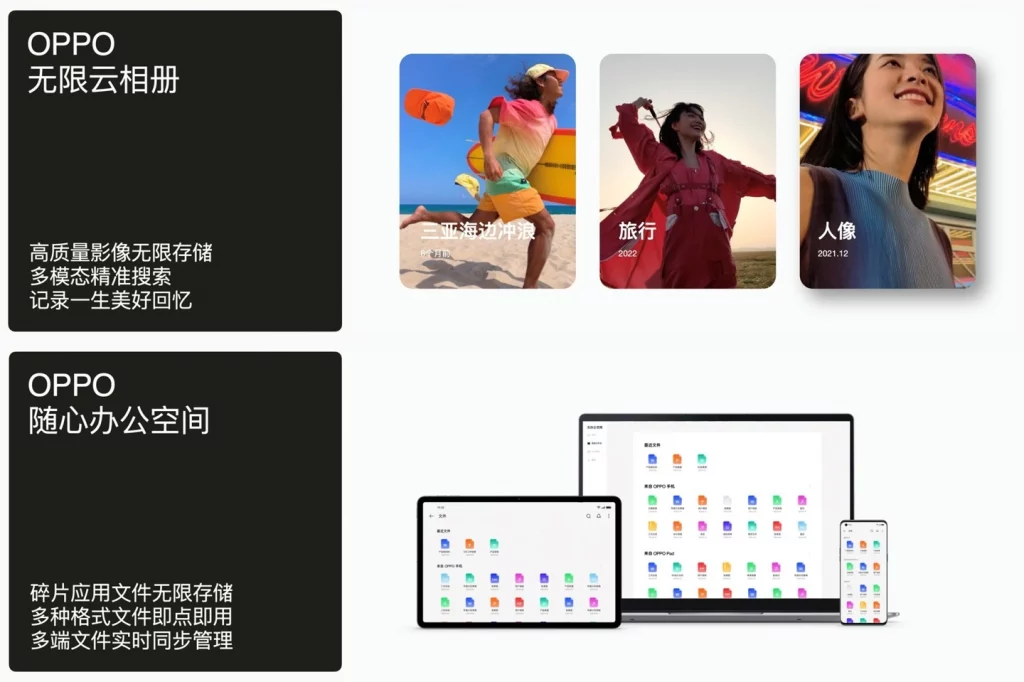
The AndesBrain will also offer unlimited cloud albums, Xpress Office Space, Xiaobu Painting, comes with Xiaobu home robot support, and much more. Notably, the company is also planning on offering infinite storage on CubeFS for Android since it integrates cloud systems into its operating system’s layers. For those unaware, CubeFS is China’s first open source cloud native project. When paired with the AndesBrain, one can simply switch devices on the CubeFS platform, without having to migrate any of your data or data backup.

RELATED:

Oppo’s MariSilicon Y chip brings high-quality audio to Bluetooth devices

Oppo has released its MariSilicon Y chip, a Bluetooth SoC that uses advanced N6RF processing technology and offers a Pro Bluetooth Package that increases Bluetooth bandwidth by 50%. The chip has a dedicated NPU and can transmit lossless audio at 24 bits/192kHz. It also has dynamic code rate adaptive technology for stable audio.

Oppo introduces advanced Bluetooth SoC with MariSilicon Y chip

Oppo, has announced the release of its second in-house chip, the MariSilicon Y Bluetooth SoC (Stereo Optic Compressor), following the release of its first custom imaging NPU, the MariSilicon X. The MariSilicon Y is one of the first SoCs to use the advanced N6RF processing technology, offering users a brand new Pro Bluetooth Package that increases the Bluetooth bandwidth by an impressive 50% compared to other advanced Bluetooth SoC products on the market.

Oppo marisilicon y

The solution is equipped with a special URLC codec technology and a dedicated NPU with up to 590 GOPS of computational power on the device. Through Bluetooth, the MariSilicon Y can transmit ultra-clear lossless audio at a quality of 24 bits/192kHz, providing users with the same audio quality as a wired connection with the added benefits of a wireless connection. This allows users to enjoy the highest digital audio quality with wireless Bluetooth earbuds and headphones.

The MariSilicon Y chip also adopts the N6RF process, which is two generations ahead of the 16nm process used by most RF chips, increasing the energy efficiency of RF transistors by 66% and reducing their size by 33%. The dedicated NPU on the end-side of the chip offers 590 billion calculations per second, providing users with the first sound separation technology on the earphone end-side, similar to spatial audio.

Additionally, the MariSilicon Y supports dynamic code rate adaptive technology, which can automatically and flexibly adjust the codec rate in a range of 80Kbps-10Mbps, providing stable and interference-free audio in crowded environments or quiet study rooms. This ensures that users always experience high-quality audio.

RELATED:

Oppo Find N2 Flip Global Launch Confirmed

The 2-day Oppo Inno Day 2022 conference kickstarted today. The company announced a bunch of products on the first day, such as OHealth H1, Air Glass 2, MariSilicon Y Bluetooth audio SoC, and AndesBran smart cloud.

At the end of the keynote, the firm teased the Oppo Fin N2 series foldable smartphones that are scheduled to go official tomorrow. Interestingly, it also revealed the availability of these phones even before unveiling them.

Oppo Find N2 Series

The original Oppo Find N that went official last December is exclusively sold in China. Unfortunately, the same will be the case for its successor Oppo Find N2.

The company cites app compatibility as the reason for this decision. Large screen foldables that turn into tablets rely on apps that scale dynamically. 

The Android app ecosystem for tablets has been poor for years. However, with the popularity of Samsung’s foldables, the situation is changing gradually. 

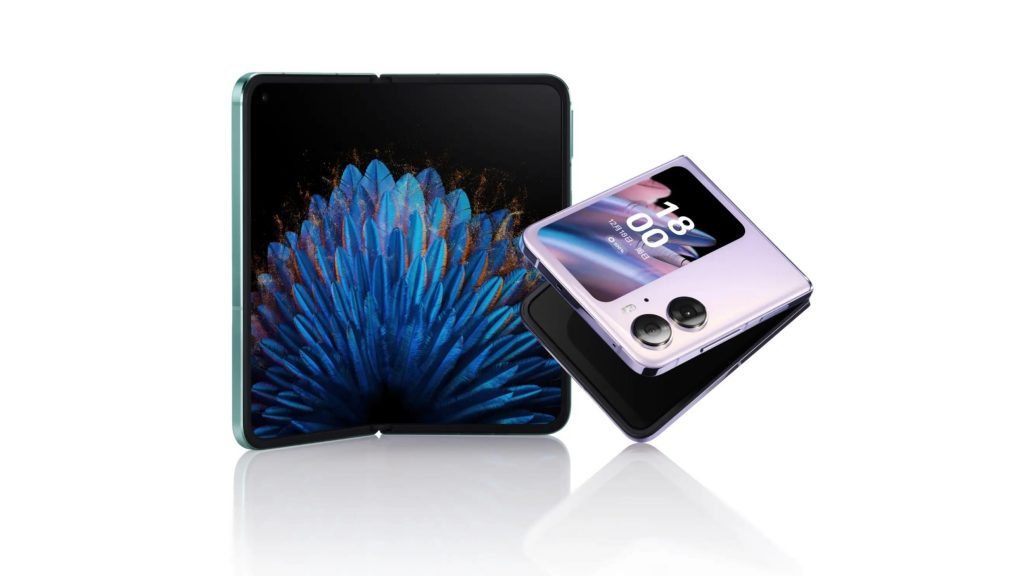
Anyway, the good news is that the Oppo Find N2 series includes two handsets. The second model is officially called Oppo Find N2 Flip and it will be released in global markets.

As the name suggests, it is a clamshell foldable smartphone. It is also Oppo’s first such foldable device. The firm is yet to reveal the exact international markets it will be sold in.

According to leaks, the Oppo Find N2 Flip will arrive with a 6.8-inch foldable display, a 3.26-inch cover screen, a MediaTek Dimensity 9000 Plus SoC, a 50MP (wide) + 8MP (ultra-wide) dual camera system, a 32MP front-facing camera, ColorOS 13, a 4,300mAh battery, and 44W fast wired charging support.

RELATED:

Canon PowerShot ZOOM Mini Telescopic Camera Gets a Black Limited Edition

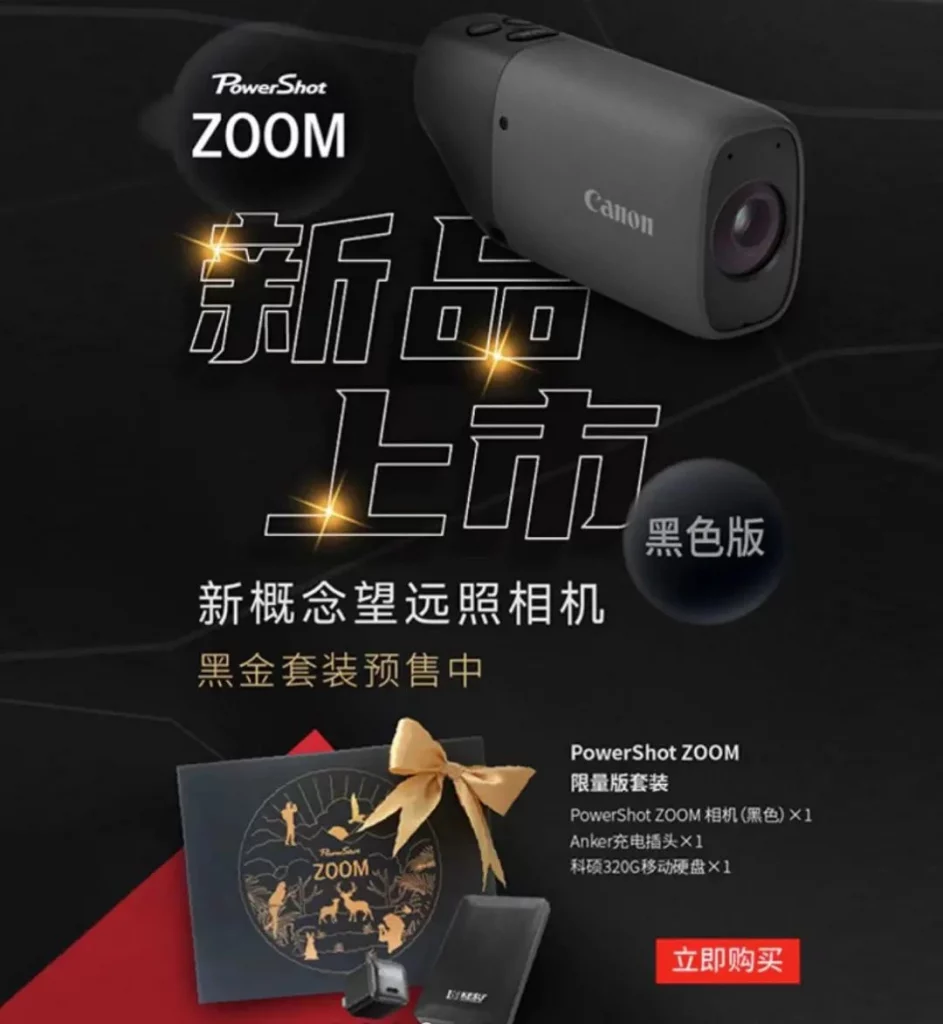
Japanese company Canon has released a black limited edition of its popular PowerShot ZOOM Mini Telescopic camera. The product also comes with a special black gold gift box.

Just as the name suggests, the black limited edition PowerShot ZOOM camera adopts a black body with a frosted exterior design that looks stylish and cool.

The Canon PowerShot Zoom camera was first launched in 2020 and was well-received. The Black Limited edition shares the same specification as the initial model which adopts a white body. As a reminder, the 145g Canon Powershot Zoom micro telescopic camera can be handled in one hand and is only slightly heavier than a cell phone. It resembles the conventional monocular telescope in appearance. There is an electronic viewfinder in the eyepiece. There are physical buttons to change the focus and start shooting on top and bottom of the camera. A scene from a football game is shown in Canon’s official marketing video. Through Powershot Zoom, spectators can observe the leg motions of players who are standing a distance away.

It also allows for real-time focus adjustment and photo capture while recording a video. It has two optical focal lengths of 100mm and 400mm, as well as a digital focal length of 800mm. Smooth zoom does not appear to be available based on the promotional video.

canon powershot zoom black limited edition

The camera includes a 12.1 megapixel 1/3 inch sensor. In comparison to the contemporary mobile phone lens, this sensor is quite small. The lens size should be proportional to the body size and cost. In terms of shooting specifications, the Powershot Zoom offers continuous shooting at 10 frames per second, video recording at 1080p/30fps, and facial recognition.

The camera is also waterproof, dustproof, and drop-proof, making it ideal for use during outdoor sports.

The PowerShot ZOOM black limited edition is available exclusively on Canon’s official online store and Canon’s self-operated Tmall flagship store in China. The price is unknown at this time.

RELATED:

OPPO OHealth H1 announced with 6 built in health data monitoring features for the whole family

Oppo just held a new conference to “Empower a Better Future” during its Oppo INNO Day 2022 event. This is a major event from the company and it is also where it reveals its latest innovation in consumer technologies and more.

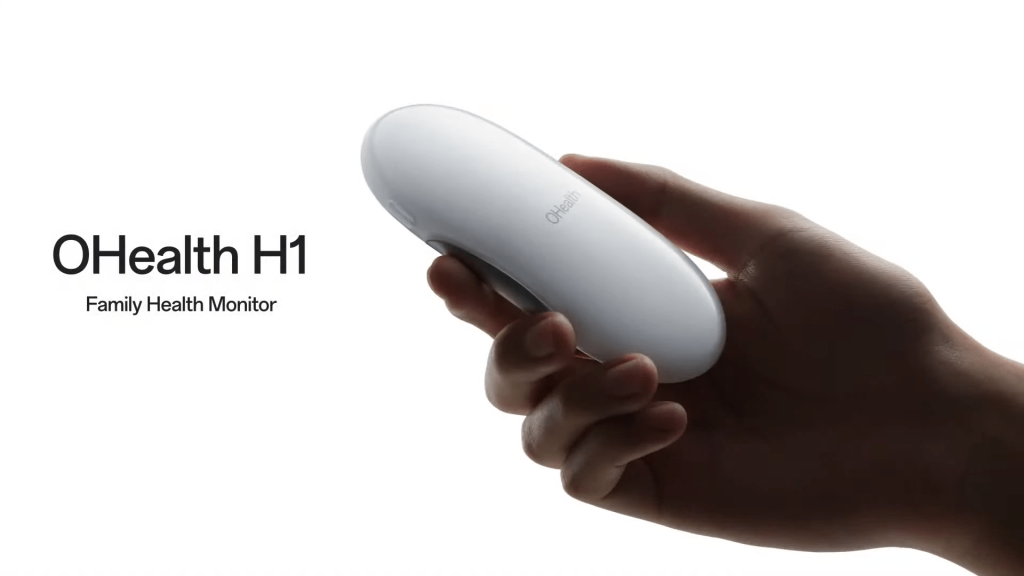
One such devices that was launched was built to improve living standards through smart and better living and is dubbed the OHealth H1. As per official notes, the OHealth H1 is a smart family health monitoring device and is the first product from the company’s OHealth sub brand series. This gadget was made by the OPPO Health Lab, which was established last year and was a part of its initiative to help users build healthy lifestyles.

Oppo

The OHealth H1 is family health monitor that offers six built in health data monitoring functions that is made for an entire family. This device is equipped with numerous bio monitoring including blood oxygen mapping, ECG, heart and lung auscultation, heart rate tracking, body temperature monitoring, and even sleep mapping as well. The Chinese smartphone maker is offering these functions on the OHealth H1 thanks to its high precision sensors and algorithms for whole families.

All of these features and sensors are housed in a super light device that weighs just 95 grams. The Oppo OHealth H1 comes with rounded edges with an overall concentric oval design. Thanks to its light weight, the smart family health monitoring device is easy to carry around as users go about their daily routines.

RELATED:

Oppo Air Glass 2: Lightweight and Durable Smart Glasses with Enhanced Features

Oppo has held its annual technology event, Oppo Inno Day 2022, with an online broadcast. The event, titled ‘Empowering a Better Future’, featured the unveiling of new technologies developed as part of Oppo’s Four Smart Initiatives, which include smart entertainment, smart productivity, smart health, and smart learning. One of the technologies introduced at the event was Oppo Air Glass 2.

New technologies unveiled at Oppo Inno Day 2022 including Oppo Air Glass 2

Oppo has unveiled the Oppo Air Glass 2 at its annual technology event, Oppo Inno Day 2022. The Air Glass 2 is a lightweight and durable augmented reality (AR) product, weighing approximately 38 grams. The glasses support image correction and personalisation features, and are almost indistinguishable from regular glasses.

Oppo Air Glass 2

The Air Glass 2 allows users to make phone calls and perform real-time translations, and can also be used with location-based navigation services. It can also be used by those with hearing impairments to convert sounds into text.

The Air Glass 2 follows the launch of the Oppo Air Glass in December last year. The first generation of the Air Glass adopted a monocular split solution, with a customisable frame that can be adapted to various optical lenses. The main body weighs less than 30 grams and the lens thickness is only 1.3 mm.

The lens uses thin and light diffractive waveguide technology, achieving an average eye-catching brightness of 1,400 nits. It also uses a silicon-based Micro LED display with a single pixel of only 4 microns, with a maximum brightness of 3 million nits.

The Air Glass is equipped with the Snapdragon 4100 wearable device platform, and with the portable charging base, the battery life can reach 10.5 hours. In terms of specific functions, the Air Glass supports weather reminders, schedule reminders, speech inscriptions, real-time translation, and walking and cycling navigation.


RELATED:

Instagram Rolls Out New Features to Improve Communication With Friends

Instagram has introduced a number of new features designed to make it easier for users to keep up with their real-world friends. The new features include Instagram Notes, which allows users to update their friends using just text and emoji, adding a different format for social updates beyond the images and videos that the platform is best known for.

Instagram introduces new sharing features, including Notes and Group Profiles

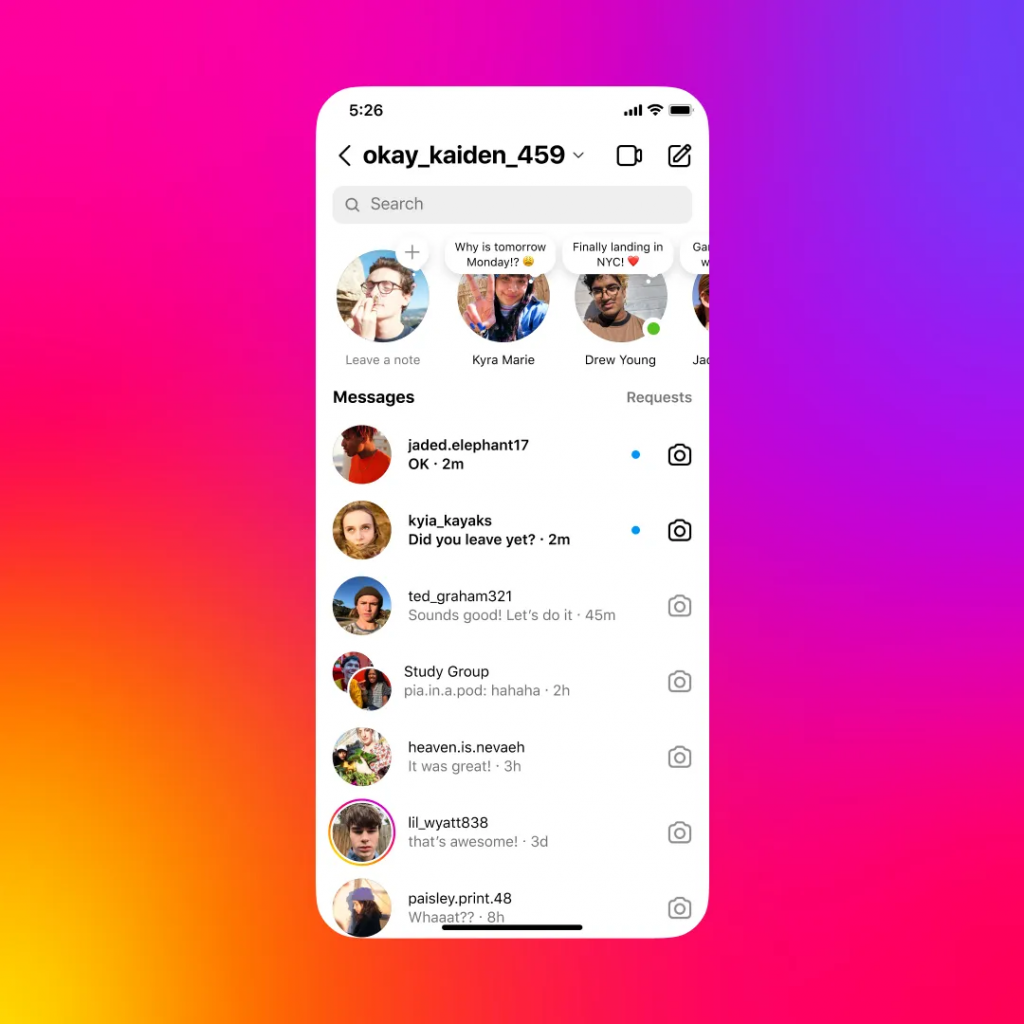
Instagram Notes is a new way to share thoughts and see what friends are up to. Notes are short posts of up to 60 characters using just text and emojis. To leave a note, users go to the top of their inbox, select followers they follow back or people on their Close Friends list, and the note will appear at the top of their inbox for 24 hours. Replies to notes will arrive as DMs in the inbox.

Instagram Notes feature

Other new features are also rolling out to Stories and will introduce new ways to share with groups. Add Yours nominations allow users to invite friends to participate in a prompt by tapping “pass it on” when they see a prompt that reminds them of that friend. Candid Stories is a new way for users and their friends to capture and share what they’re doing right now in a story that’s only visible to those who also share their own.

Group Profiles allow people to create and join this new type of profile to share posts and stories in a dedicated, shared profile with friends. Whenever content is shared to a Group Profile, that content will only be shared to group members instead of the user’s followers, and will be posted on the Group Profile instead of the user’s own.

Collaborative Collections is a new way for users to connect with friends over their shared interests by saving posts to a collaborative collection in group or 1:1 DMs. Users can start or add to a collaborative collection by saving a post directly from feed or sharing a post to a friend via DM and saving it from there.

Related:

(Source)

Samsung Galaxy S23 launch imminent, spotted on NBTC certification

Samsung is gearing up to launch the Galaxy S23 series of smartphones. But ahead of the launch, the new flagship smartphones were recently spotted on certain certification websites, and now, the S23 has passed through another certification database.

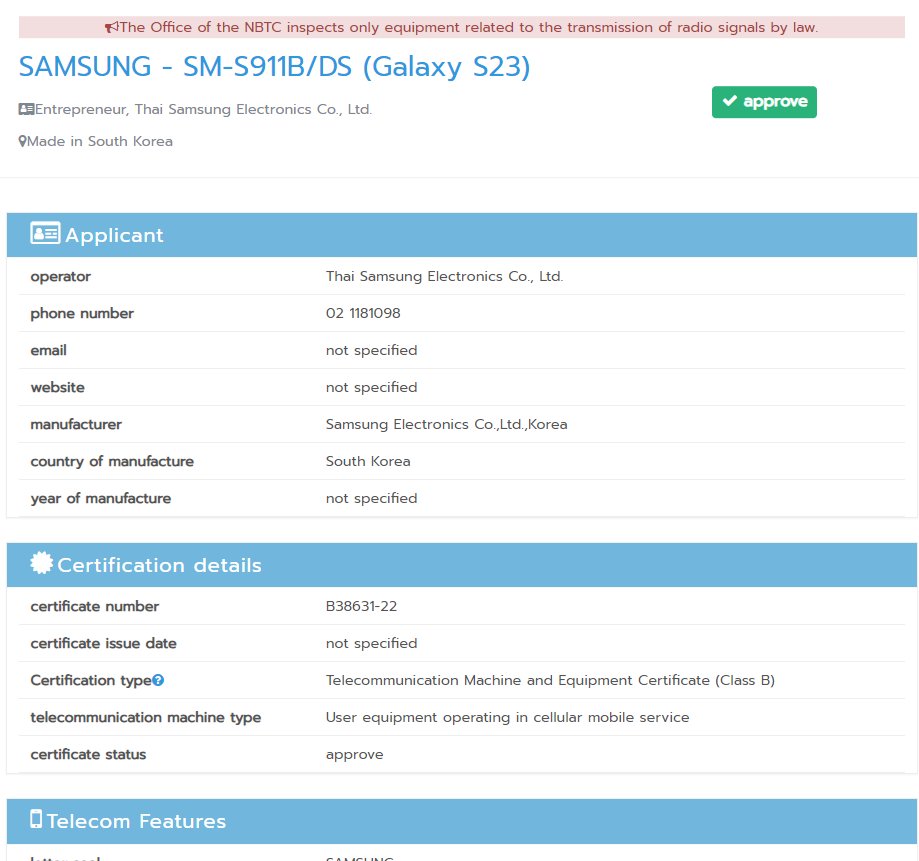
The South Korean tech giant’s Galaxy S23 was previously spotted on the BIS certification website, and around the same time, the upcoming handset had also surfaced on the NBTC platform. This basically hints that its launch is just around the corner, since we are nearing the beginning of a new year. Looking at this online listing, we can see that the brand’s next gen flagship phone Galaxy S23 will have the SM-S911B/DS model number.

Samsung

Unfortunately, this is all the details revealed on the certification database, with the listing first being spotted by Mukul Sharma. The known tipster had shared screenshots of the certification listing as well in a tweet. Based on what we know so far, Samsung will launch the Galaxy S23 will reportedly launch with a 6.1 inch AMOLED display that has a 120Hz refresh rate and a Full HD+ resolution.On the rear, the device is expected to feature a 50 megapixel triple camera setup, while the front may house a 12 megapixel selfie shooter.

Under the hood, the device is expected to be equipped with a Qualcomm Snapdragon 8 Gen 2 SoC or an Exynos 2300 chipset. The devices will run on Android 13 OS based One UI 5 out of the box and are believe to offer up to 25W fast charging. So stick around for more, as we will be providing updates when additional information is available regarding this matter.

RELATED:

(Via)

Here’s how to watch the Oppo Find N2 series launch event

Oppo is gearing up for its Oppo INNO Day 2022 event, where it will launch two new foldable smartphones called the Oppo Find N2 series. The series will consist of two smartphones, namely the Oppo Find N2 and the Oppo Find N2 Flip. As the name suggests, one is a traditional folding smartphone that unfolds into a tablet-like form factor, while the other is a clamshell flip phone.

OPPO-Find-N2

Both of these devices will debut tomorrow (December 15) at 4 PM China Standard Time (CST). As the launch is currently exclusive to China, it won’t be streamed on YouTube or Twitter. However, you can still watch the launch event by heading to this link, which will guide you to the company’s live stream on the Chinese microblogging website Weibo. Alternatively, you can also watch the live stream on the Oppo China website. As for what to expect from the launch, you can check out all the information available so far on the two smartphones below.

Oppo Find N2 specs (rumored)

Oppo hasn’t yet made many details of the upcoming foldable phone official. Thanks to leaks and rumors, we can still create a solid picture of its specifications. Despite the arrival of its replacement, the Snapdragon 8 Gen 2, the device’s Geekbench listing shows it will be powered by a Snapdragon 8+ Gen 1 processor.

OPPO-Find-N2-series-image
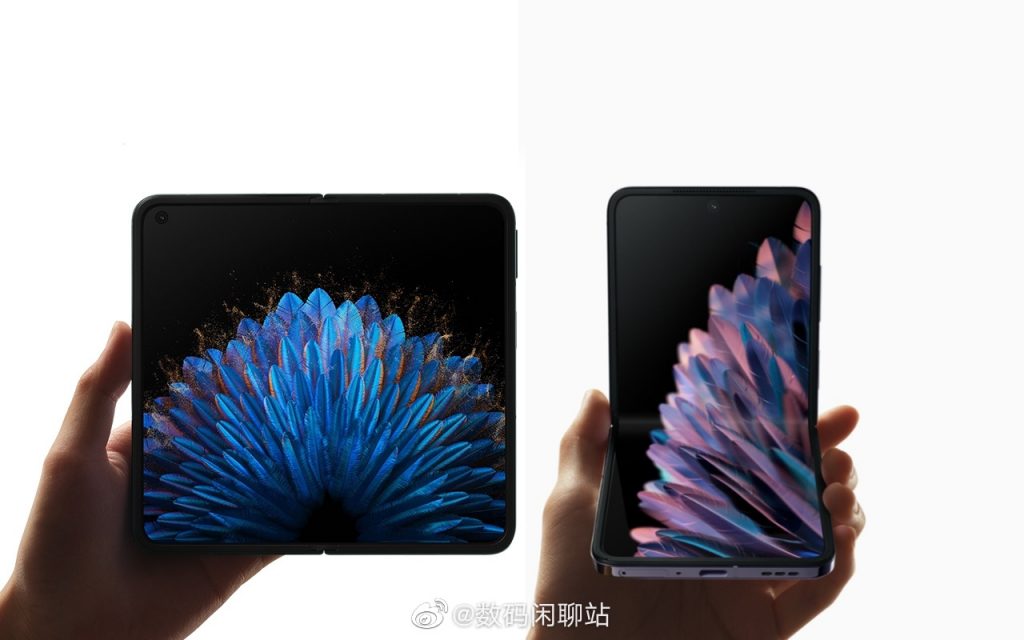
Oppo Find N2 on the left

The Find N2 will boast a 7.1-inch E6 AMOLED internal display with a refresh rate of 120Hz. This and the Oppo Find N are identical. The gadget will have a smaller 5.54-inch E6 AMOLED cover display, nevertheless, with a refresh rate of 120Hz. As a point of comparison, its forerunner has a 5.9-inch cover display.

Each panel of the Oppo foldable will include a 32MP selfie camera. A 50MP Sony IMX800 (1.56′′) main camera will be part of a triple camera arrangement on the back of the device. Additionally, it will contain a 32MP 2x telephoto unit and a 48MP IMX581 114-degree ultrawide sensor. For improved AI features and processing, the smartphone will include a Hasselblad tuning and a bespoke MariSilicon X image chip.

The side-mounted button on the smartphone will contain a fingerprint sensor for security. A 4520mAh battery with 67W fast charging capabilities will be included. According to rumors, Oppo may cover the foldable’s rear in faux leather. Another variation can have a glass back.

Oppo Find N2 Flip specs (rumored)

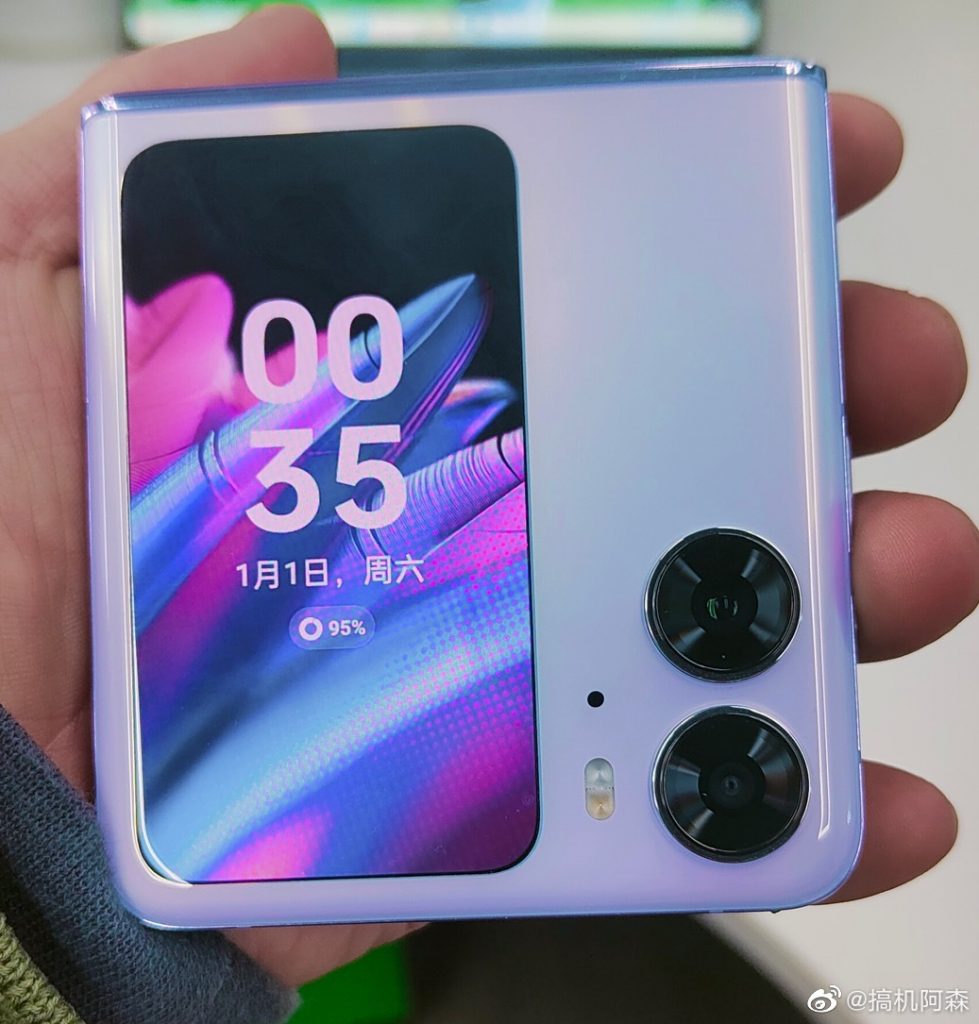
The Find N2 Flip will have a 3.26-inch cover display that will show notifications and will have a viewfinder for shooting selfies using the rear cameras. The Inner display of the smartphone is said to feature a 6.8-inch foldable E6 AMOLED screen with a Full HD+ resolution of 2520 x 1080 pixels and a refresh rate of 120Hz. A 32-megapixel Sony iMX709 front-facing camera is reportedly included.

OPPO Find N2 Flip live shot
Oppo Find N2 Flip live shot

A 50-megapixel Sony IMX890 primary camera with OIS capability and an 8-megapixel Sony IMX355 ultra-wide camera is most likely included in the Find N2 Flip’s dual-camera system. It will be powered by Android 13 and run ColorOS 13, and it will have a side-facing fingerprint scanner.

The Find N2 Flip is probably powered by the Dimensity 9000+ chip. It may include a 4,300mAh battery with 44W rapid charging, up to 12 GB of RAM, and up to 512 GB of storage. It may also come in black and white in addition to purple.

RELATED:

Samsung transfers 5G patents to Huawei in ongoing cross-licensing agreement

Samsung has transferred 98 patents it has in the United States to Huawei, adding to the 81 patents it handed over to the Chinese company in 2019. The two companies had signed a cross-licensing agreement in 2019 to end their patent disputes. The patents transferred range from those related to telecommunications, charging, camera, display, and others. Family patents to those in the US that are registered in South Korea have also been transferred.

Samsung 98 patents to Huawei because a cross-licensing agreement

In cross-licensing agreements, sometimes one party pays more licensing fees compared to the other due to their difference in the number and quality of patents. In 2016, Xiaomi and Microsoft signed a similar cross-licensing agreement, with Xiaomi likely paying more as it has fewer patents.

Samsung and Huawei’s patent dispute involved those related to telecommunications, an area in which the Chinese company has more patents. The transfer of patents is likely related to the cross-licensing agreement, which mostly involves 5G patents, and Samsung has fewer of these patents than Huawei.

Since the US sanctions and the split of its Honor smartphone brand, Huawei has been increasing its patent licensing revenues. The three-year period from the last patent transfer is likely related to the renewal of the agreement.

This is not the first time Huawei has entered into a cross-licensing agreement. In fact, the company recently entered into a similar agreement with Chinese firm Oppo. The new agreement covers cellular communications standards, including 5G communications. Both companies have stated that the agreement is a win-win for both parties, as it allows them to leverage each other’s strengths for maximum business impact.

The new agreement advocates for the settling of intellectual property licensing issues through friendly consultations and mutual respect for patent value. Huawei has several patent packages that include 5G, Wi-Fi, audio, and video, and the new agreement is expected to promote innovation and rapidity of research globally. It will also provide more competitive products and services for consumers.

Both companies will hope that the new cross-licensing agreement signals the beginning of a period of rapid growth and development. The agreement will be especially beneficial for Huawei following the US clampdown on its operations. Prior to the clampdown, Huawei was the global leader in research on 5G and 6G, and had secured a number of infrastructure contracts across multiple jurisdictions. The specific details of the agreement are not currently known, but it is expected that both companies will make full use of its provisions.

Related

(via)

Vivo X Flip to launch with Snapdragon 8+ Gen 1: Tipster

Vivo is apparently gearing up to launch a new foldable smartphone model. This device could be called the Vivo X Flip, and now, a new leak has hinted that it might feature last gen high end processor from Qualcomm.

Vivo

The news arrives from known tipster Digital Chat Station that shared the information on Weibo (a Chinese microblogging website). In the online post, the leak claimed that the Chinese smartphone maker is working on a new “Flip” model. For those unaware, the company already has a foldable smartphone which is the X Fold. This device is similar to the Samsung Galaxy Z Fold 4 and has a horizontal folding display on a vertical hinge.

It also has a secondary display that is housed on the outside, while the primary display folds inward like a notebook and is not visible when in its compact form. On the other hand, the South Korean tech giant also has a Galaxy Z Flip 4 model as well, which features a clamshell folding screen on a horizontal hinge. This model also has an external display, but it is much smaller and is mostly used to display time and notifications.

Vivo

In other words, the Vivo X Flip might also have a similar design that also resembles the newer Moto Razr models as well. According to Digital Chat Station, the company will also launch the device with the Qualcomm Snapdragon 8 + Gen 1 SoC, which is the 2022 flagship processor from Qualcomm. That is all the information we have at the moment, so stick around for more updates regarding this matter.

RELATED:

OnePlus Teases Mysterious Product Launch, OnePlus 11 Series Expected

Coming up on its ninth anniversary, OnePlus has scheduled a conference for December 17 in China to mark the event. The brand has yet to explicitly state what we can expect from the event. However, it is hinted at 9th-anniversary products.

OnePlus

While many might jump to the conclusion that this is possibly the event where the brand could launch the OnePlus 11 (OnePlus 10 Pro successor), however, OnePlus has yet to even acknowledge the existence of this smartphone in any official manner. Considering how much hype the brand usually generates before launching its annual flagship smartphone, it is highly unlikely that it will launch the OnePlus 11 with just three days remaining till the event.

It is possible that we might see a special edition of an existing smartphone by the brand, most likely the OnePlus 10 Pro. However, this is just an assumption at this point, and it is better to wait for official word from the brand. On the off chance that OnePlus actually ends up launching the OnePlus 11 on December 17, here are the specs that it is rumored to debut with:

OnePlus 11 specs (rumored)

So far, leaks regarding the device state that it will be powered by the recently unveiled Snapdragon 8 Gen 2 CPU. It has 256GB of internal memory and up to 16GB of RAM. The device is said to have a 5,000mAh battery with 100W charging capability.

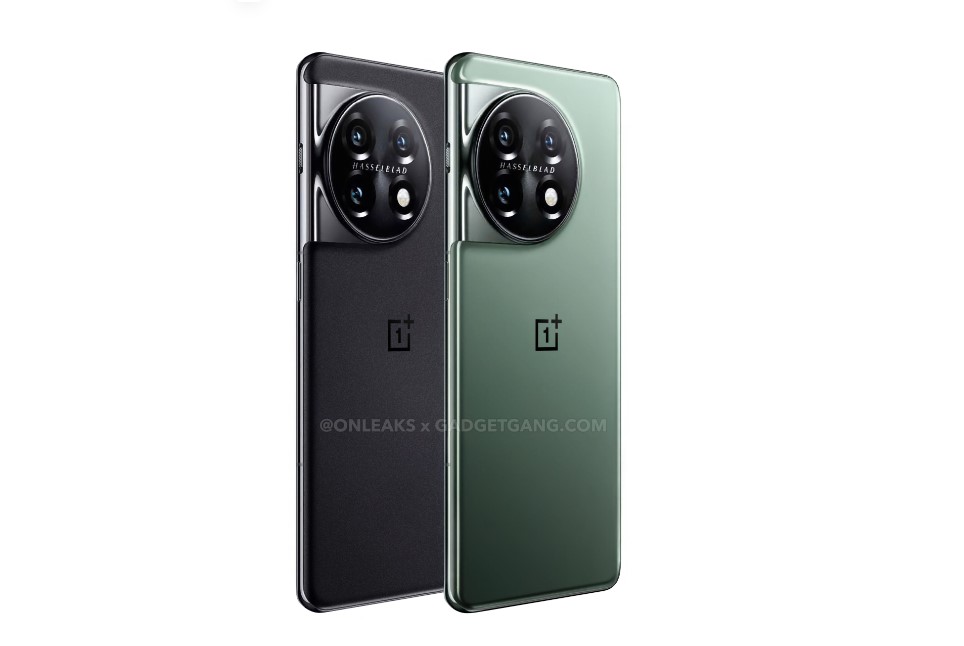
OnePlus 11 render

A 6.7-inch AMOLED screen with a 2K resolution, a refresh rate of 120Hz, and an in-screen fingerprint scanner are anticipated for the forthcoming flagship. A 48MP ultra-wide-angle lens, a 32MP telephoto lens, and a 50MP Sony IMX890 sensor could make up the OnePlus 11’s triple-rear camera system.

RELATED:

(Source)

Sony Rolls Out Android 13 Update to Xperia 1 III, 5 III, and Pro-I

The professional-level camera capabilities of Sony Xperia smartphones have gained considerable popularity. Since it’s obviously coming from a well-known photography expert’s home, the smartphone’s professionalism in this area is nothing new. Well, according to the latest news, the most recent Android 13 update has finally begun to roll out to three of the tech giant’s Xperia smartphones.

The Sony Xperia 1 III, Xperia 5 III and Xperia Pro-I have started receiving the Android 13 update. The Xperia 1 III and 5 III were launched with the Android 11-based operating system right out of the box. They later grabbed the support for Android 12 through an OTA update later this year. The Xperia Pro-I was also launched with Android 11 out of the box. The Android 13 is the second major update for all three devices.

Sony Xperia

As of right now, the brand has not made clear which regions will receive the update; it is still being rolled out in a gradual manner. So, if you still haven’t received the most recent update for your smartphone, we advise you to wait a few more days. If you still do not receive the OTA update notification, you can manually check the settings and software update area to see if it has been released. In the next few days, the OTA will be accessible to a larger audience.

Regarding the time frame for software support for these devices, there are no official statements. We expect Sony to release at least three major Android updates for its smartphones, with Android 13 arriving as the second major update for these devices. Many other OEMs, including Samsung and OnePlus, have already begun to provide 5 years of security updates and 4 significant Android upgrades. However, this comparison is meaningless because both of these companies are primarily focused on their flagship products, whereas Sony is designed for camera enthusiasts who may be less concerned with the most latest software.

Related