Xiaomi 13 series has been on shelves in China for quite some time now and it will be making its way to the global market on February 26. The lineup should include the Xiaomi 13 and Xiaomi 13 Pro. However, the company might also unveil a more affordable Xiaomi 13 Lite smartphone on the same day. While we wait, the handset has been listed on the German retail store Cyberport with its full specifications. Let’s look at the details.
Xiaomi 13 Lite has been in the news for about a month now and we know it’s nothing but the Xiaomi Civi 2 with a different name. You might be aware that Xiaomi’s Civi series smartphones are designed with a focus on the front-facing camera, particularly for taking high-quality selfies. They are currently available only in the Chinese market.
According to the listing on Cyberport, the Xiaomi 13 Lite will arrive with a 6.55-inch AMOLED display offering a Full HD+ (1080 × 2400 pixel) resolution, 402ppi pixel density, and 120Hz refresh rate. It will draw power from the Qualcomm Snapdragon 7 Gen 1 processor and 8GB of RAM and at least 128GB of storage. The device is listed to run Android 12 out of the box but that seems anomalous.
The handset could feature a 50MP primary cam, an 8MP Ultrawide sensor, and a 2MP macro shooter on the back. On the front, there will likely be a 32MP main and a 32MP wide-angle camera for taking selfies. The Xiaomi smartphone is listed to sport a 4500mAh battery unit with 67W fast charging support.
As per the Cyberport listing, the Xiaomi 13 Lite will be priced at € 499.90 (approx Rs 44,100/ $533) in Germany for the sole 8GB + 128GB trim.
The trend of foldable phones continues at full speed, with many brands launching their own flexible display models. Recently, OnePlus announced that it will introduce its own foldable model. Finally, the release date of the OnePlus V Fold, which will feature a 2K screen, has been revealed. Here are the details…
OnePlus V Fold just tipped for September launch with 2K display
Rumors are swirling about the upcoming release of the OnePlus V Fold. According to leakster Digital Chat Station, the device is set to be released in the third quarter of 2023, likely between July and September. This release window coincides with the anticipated release of the Samsung Galaxy Z Fold 5, which could be its main rival.
Based on DCS’s leaks, the OnePlus V Fold is expected to feature a larger, squatter form factor, in contrast to the taller and slimmer design of the Galaxy Z Fold series. The device is reportedly based on the Oppo Find N2, (You can watch our review of that phone below.) which is another foldable phone from OnePlus‘ parent company. However, the OnePlus V Fold will allegedly have a higher resolution 2K display compared to the Find N2’s FHD and QHD screens.
While the OnePlus V Fold‘s exact specs are still unconfirmed, it is expected to have some noteworthy features. The phone is likely to have a sturdy but unobtrusive hinge design, as well as Hasselblad-tuned cameras. The device will also have a faster charging feature, which is a staple of OnePlus phones. However, it remains to be seen if the V Fold will feature the latest Snapdragon 8 Gen 2 chip or last year’s Snapdragon 8 Plus Gen 1.
If the rumors are accurate, the OnePlus V Fold could prove to be a solid rival to the Galaxy Z Fold 5. While the Galaxy Z Fold 5 is rumored to have a less obvious display crease, a 108MP main camera, and an S Pen stylus, the OnePlus V Fold’s smaller and wider form factor could make it more comfortable to use and carry around. The Google Pixel Fold is another rumored foldable phone set to launch in the spring, so the market for foldable phones is becoming increasingly competitive.
China recently launched an AI chatbot called MOSS for public testing. MOSS which is floated as a potential rival to the US-made ChatGPT is now open for public testing on the mainland.
MOSS is developed by the Natural Language Processing Lab at Fudan University. Fudan based in Shanghai is a member of the prestigious C9 league (a group of 9 universities selected by the Chinese government for the progress and development of higher education) and a double first-class university identified by the ministry of education.
MOSS is a conversational chatbot or language model similar to ChatGPT that can perform various functions like giving answers, generating dialogues, writing codes, and more. Though the Chinese chatbot is not as smart or advanced as ChatGPT, it can still perform language-based tasks.
Dr. Xipeng Qiu, a Computer Science Professor from Fudan University, said that MOSS can be considered a low-end version of ChatGPT. They are both proficient at language-based multitasking, but the number of parameters of MOSS is significantly less, which is around one order of magnitude less than ChatGPT.
He further added that “Although there is lots of room for improvement, the advent of MOSS proves that Chinese research teams have the ability to overcome technical challenges in developing ChatGPT-like products,”
Unlike the name ChatGPT which is an abbreviation for Chat Generative Pre-trained Transformer, MOSS is not a short form for any terminology. The name MOSS is most likely inspired by the Chinese Sci-fi movie Wandering Earth series, in which a super-intelligent quantum computer is called MOSS.
MOSS First Public Testing
Fudan University opened MOSS for public testing via this link. Many users have been invited to test out the app by using a special invitation code. If a user does not have an invitation code, he can choose to be on the waiting list by submitting his or her phone number.
On February 20, the MOSS server crashed, and the app significantly slowed down due to an incredibly high number of visitors. Apparently, the Fusan team was not prepared for the overwhelming response and interest shown to the indigenous Chatbot.
MOSS Vs ChatGPT
The basic steps involved in developing both ChatGPT and MOSS are similar. Both systems are trained in natural language processing and understanding human intention. However, the training methodology differs in both cases.
To train ChatGPT in natural language processing, the developers at OpenAI, first compiled a database of thousands of questions and queries which were then sent to experts from all walks of life. These experts and data annotators then send replies to the questions which are used by the chatbot to understand various human prompts. However, the team at Fudan university used a more direct approach by allowing MOSS to communicate and interact with humans and other AI models from day one. These interactions formed a strong database for the Chatbot, which then progressed quickly with an increased rate of learning. The direct interaction method, helped MOSS to complete its natural language training in a significantly smaller amount of time than ChatGPT.
MOSS which is considered one of the best bets against ChatGPT in China, has a major language weakness though. The Chatbot is designed to primarily communicate in English and not Chinese. MOSS has a database of more than 300 billion English words but knows only 30 billion Chinese words. This is a major disadvantage for the Chinese app, which hopes to capture the market in the local language.
The developers at Fudan Language Lab are now working on improving the chatbot’s Chinese language proficiency and ability to follow instructions. The MOSS project recently received the backing of the Shanghai Artificial Intelligence Lab.
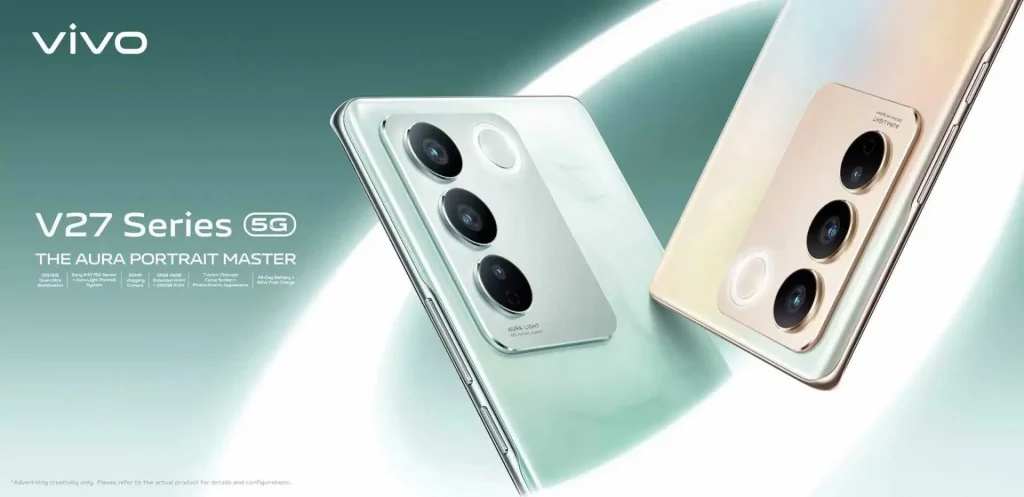
While it may seem early, Vivo is ready to launch the V27 series in India on March 1. It was recently confirmed that alongside the Vivo V27 and Vivo 27 Pro, the company will also unveil a more affordable Vivo V27e smartphone. The handset’s design and several key features have already been confirmed by the brand. And today, a tipster shared the complete specs sheet of the upcoming device. Let’s have a look.
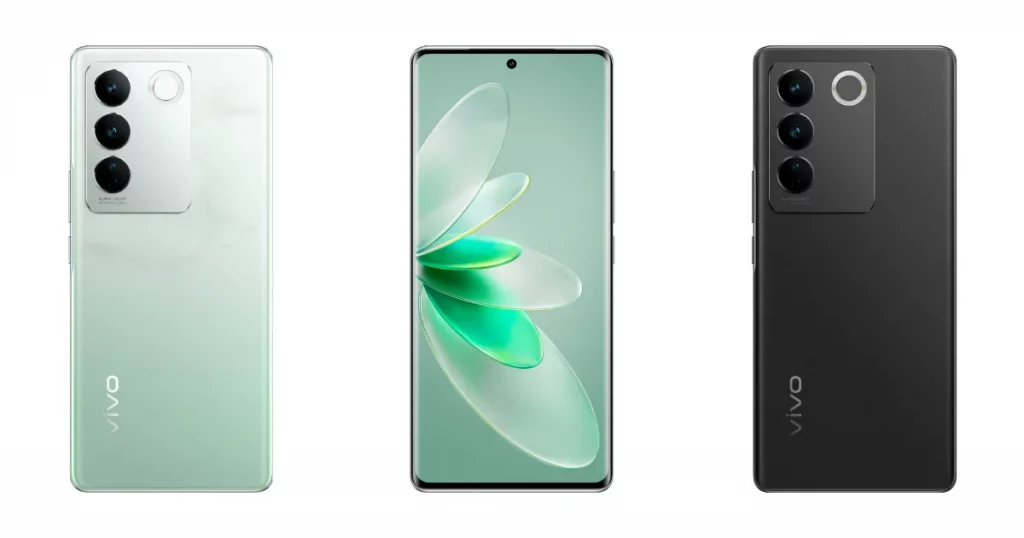
Recently, the Vivo V27e went live on the company’s Malaysia website with its high-resolution images and key specs. From what we can see, the handset looks quite stylish and will certainly give a premium feel. It seems to have a flat back with some nature-inspired design on it. There’s a rectangular camera module that houses three camera rings and an LED flash. However, it’s no ordinary flash. The company says it has included an LED unit that comprises three light bulbs capable of detecting ambient lighting and adjusting brightness in low-light conditions.
According to recent details shared by tipster Sudhanshu Ambhore, the Vivo V27e will arrive with a 6.62-inch E4 AMOLED display that will offer 2400×1080 pixels resolution, 120Hz refresh rate, and DCI-P3 color gamut. Under the hood, the device could be powered by the Helio G99. It is said to arrive with a RAM extension feature and sport a hybrid MicroSD card slot. Fueled by a 4600mAh battery, the handset could feature 66W fast charging and an under-display fingerprint scanner. It should run Android 13 out of the box and have an IP54 rating.
The Vivo V27e is confirmed to flaunt an OIS-enabled 64-megapixel primary camera. The main cam is said to be accompanied by a 2MP Bokeh lens and 2MP macro shooter. On the front, the handset may feature a 32MP selfie shooter, enclosed in a hole punch cutout. The handset is reported to measure 162.51 × 75.81 × 7.70/7.80 mm and weigh around 186 g. It is likely to arrive with Bluetooth 5.2, Wi-Fi 5GHz, USB Type-C port, and NFC.
The Vivo V27 Pro 5G is set to launch on March 3 in India. The device will be a rebranded version of the Vivo S16 Pro that launched in China last year. Almost all the details regarding the phone have already leaked including the expected price. From the price leaks, it looks like the smartphone will cost south of ₹40,000, where it will likely be facing off against devices like the Samsung Galaxy S21 FE, Realme GT Neo 3, and iQOO 9 SE.
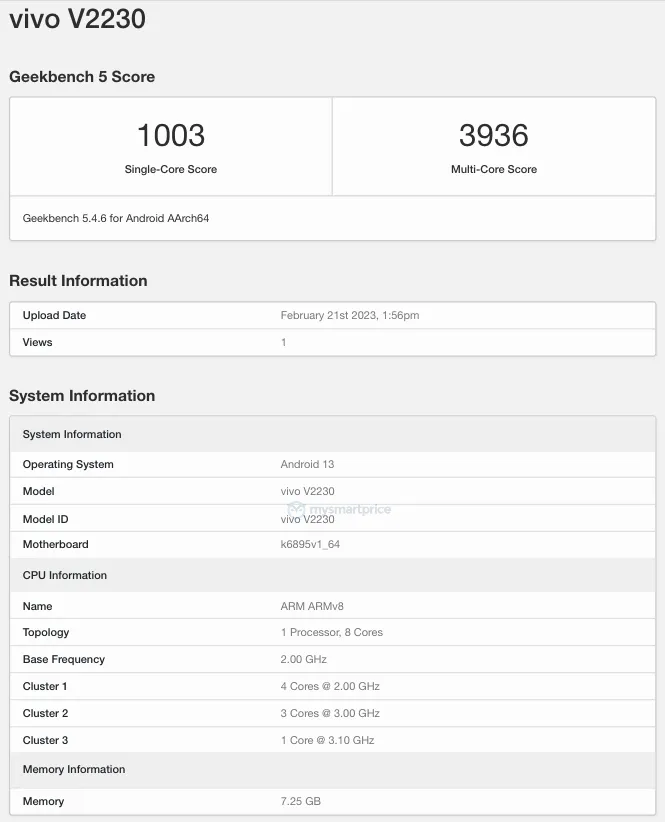
Ahead of the launch, the smartphone has made an appearance on Geekbench showcasing its performance. The device bears the model number V2230 and is powered by the MediaTek Dimensity 8200 SoC. This premium-midrange chipset has eight cores, a peak clock speed of 3.1GHz, and a base clock speed of 2.0GHz.
It is bundled with 12GB of RAM and an Android 13-based operating system. According to the Geekbench 5 listing, the phone obtained a single-core score of 1003 and a multi-core score of 3936.
Vivo V27 Pro specs
The Vivo V27 Pro is expected to feature a 6.78-inch curved AMOLED display with a resolution of 2400 x 1800 pixels and a 120Hz refresh rate. The display is expected to include a 360Hz touch sampling rate and an in-display fingerprint sensor for added convenience.
Under the hood, the phone is expected to be powered by a MediaTek Dimensity 8200 SoC, offering up to 12GB of LPDDR5 RAM and 256GB of UFS 3.1 storage. A 4600mAh battery with 66W fast charging is also expected to be included for extended usage.
The Vivo V27 Pro is also rumored to have a triple camera system, which will include a 50MP primary camera, an 8MP ultra-wide camera, and a 2MP macro lens. For those who love to take selfies, the phone will also feature a 50MP front-facing camera. The phone’s dimensions are expected to be 164 x 74.8 x 7.4mm, and it will weigh approximately 183 grams. You can choose from two color options: Magic Blue and Noble Black.
Ergonomics are one of the most important factors in smartphones. Grip comfort, the feel of the material, and weight affect user satisfaction a lot. When it comes to foldable phones, these rules don’t change, even if they stretch a little. However, a recent rumor suggests that the Pixel Fold could be surprisingly heavy compared to its competitors. Here are the details…
Google’s Pixel Fold could be surprisingly heavy compared to other foldables
As foldable phones continue to gain traction in the market, manufacturers are constantly pushing the boundaries with their designs, features, and capabilities. One of the most anticipated foldables of 2022 is the Google Pixel Fold, which is expected to compete with other popular foldable devices like the Samsung Galaxy Z Fold 4 and the Oppo Find N2.
However, a recent rumor suggests that the Pixel Fold could be surprisingly heavy compared to its competitors. According to a source familiar with the subject, the Pixel Fold may weigh more than the Galaxy Z Fold 4, which is already a relatively heavy device. This has raised concerns among potential buyers who may be looking for a lightweight and portable device.
One possible reason for the Pixel Fold’s weight is its battery size. The rumor suggests that the Google Pixel Fold may have the largest battery of any foldable device on the market, with a capacity close to 5,000mAh. This is significantly larger than the 4,400mAh battery found in the Galaxy Z Fold 4 and the 4,520mAh battery in the Oppo Find N2. A larger battery is certainly desirable, as it allows for longer usage times, but it does come at the cost of added weight.
Leaked renders of the Pixel Fold give us a good idea of what to expect in terms of its dimensions. The device is expected to be around 140mm in height and close to 80mm in width, which puts it in line with the Oppo Find N2. However, the Pixel Fold’s inner screen will be closer in form factor to a traditional tablet, rather than a square like the Galaxy Z Fold 4. This will optimize the device for UI elements meant for tablets, but it will also make the device heavier.
So, what does this mean for potential buyers of the Pixel Fold? While a heavier device may be a concern for some, the added weight could be worth it for the larger battery and optimized UI elements. Additionally, the Pixel Fold’s design is likely to be sleek and stylish, which could make up for its added weight. It remains to be seen whether the Pixel Fold’s weight will be a major issue for consumers. However, with its larger battery and optimized UI, it could still be a highly desirable foldable device.
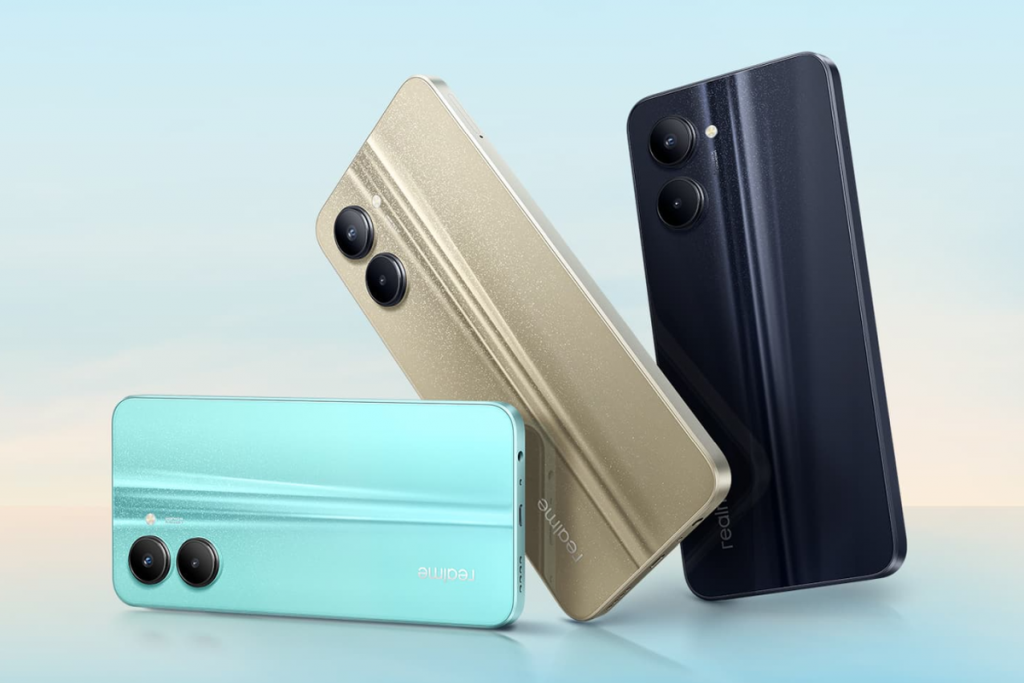
While the upcoming global launch of the flagship Realme GT 3 may be the brand’s current focus, it will soon release a couple of budget smartphones as well. Recently, several Realme C series handsets have been making rounds on certification sites. And today, a new report revealed the Chinese OEM is gearing up to soon launch the Realme C55 and Realme C33 2023 in India.
According to an Appauls report, Realme will soon introduce two new budget smartphones in the Indian market. One will be the long-rumored Realme C55 and the other will be Realme C33 2023. The latter is expected to be a refreshed version of 2022’s Realme C33. Judging by the moniker, the C55 will likely be more premium among the two devices.
Realme C33
The report claims Realme C33 2023 will be offered in Aqua Blue, Night Sea, and Sandy Gold colors and 4GB+64GB and 4GB+128GB storage configurations. Whereas, the Realme C55 may be available in Rainforest, Rainy Night, and Sunshower colors. If these names sound too fancy, you’re not alone. We expect these will be Green, black, and orange colors. The handset could be available in 4GB+64GB, 4GB+128GB, and 8GB+128GB storage models.
Currently, we don’t know much about the two phones’ specifications. To recall, the Realme C33 was launched in India back in September 2022 with a 6.6-inch LCD panel that offers 60Hz refresh rate and 400 nits of maximum brightness. Powered by a Unisoc T612 processor, the handset runs Realme UI S Edition, based on Android 12 out of the box.
In the photography department, the device features a 50MP main sensor and a 2MP macro sensor at the rear while the front gets a 5MP shooter. The phone is backed by a 5000mAh battery with 10W charging support over a Micro USB port.
Recently, there have been reports that Apple has reduced its order size with TSMC. The company is the sole supplier of Apple chips, and the reduction in orders is a reflection of the overall weakness of the global economy. It is important to note that the canceled orders were for chips that would be made using TSMC’s N7, N5, N4, and even some N3 nodes. Here are the details…
Apple has sharply reduced the size of the order it has with TSMC
TSMC is the leading company in the chip-making industry and is currently the only company that is mass-producing chips using their respective 3nm process nodes. Samsung is the only other company currently producing 3nm chips but uses a different type of transistor. TSMC’s N3 (3nm) process node is expected to be used for the production of the A17 Bionic, which will be found in the iPhone 15 Pro and iPhone 15 Ultra, as well as Apple’s M2 Ultra and M3 chips.
Despite TSMC’s continued use of FinFET transistors for its 3nm node, it has still been able to beat out Samsung Foundry when it comes to signing up customers, with big names like Qualcomm, MediaTek, and Nvidia reserving production capacity for 2023 and 2024. In order to give Apple most of the 3nm production capacity later this year, Intel agreed to change its roadmap and delay receipt of its 3nm orders. TSMC’s enhanced 3nm process node (N3E) could be launched this year even though there might not be a big rush for orders considering the cost. It is worth noting that wafer prices have risen sharply over the years. In 2004, 90nm wafers sold for about $2,000, while in 2016, 10nm wafers cost $6,000, and in 2020, the price hit $16,000 for 5nm wafers. Wafer prices for 3nm chips are currently priced in the $20,000 area.
Intel has also announced that it will take process leadership from TSMC and Samsung by 2025, thanks to two developments. It will use RibbonFET transistors, which is another term for the Gate-All-Around (GAA) transistors already employed by Samsung, and it will use a feature known as PowerVia or backside power delivery. This will allow transistors to obtain power from one side of a chip while using the other side to connect to data communication links.
The reduction in orders from Apple with TSMC is a reflection of the overall weakness of the global economy and the hangover from last year’s chip shortage. Despite this, TSMC remains the leading company in the chip-making industry, and its enhanced 3nm process node (N3E) could be launched this year. Additionally, Intel is set to take process leadership from TSMC and Samsung by 2025, thanks to the use of RibbonFET transistors and the PowerVia feature. The chip-making industry is constantly evolving, and it will be interesting to see how these developments will affect the industry in the future.
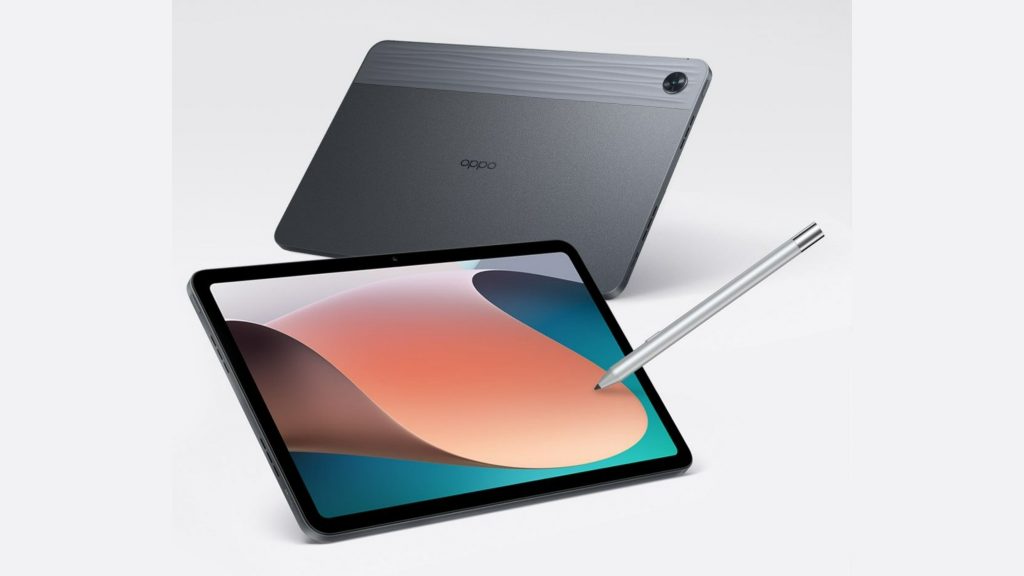
The Oppo Pad Air is the brand’s second tablet. Unlike the original Oppo Pad, it is a budget model.
The device debuted with ColorOS 12 based on Android 12. It got access to the Android 13-based ColorOS 13 beta in early December.
Now, more than two months later, the tablet finally gets the ColorOS 13 stable update.
The Android 13 stable update for the Oppo Pad Air is currently live in China. It is only available for a select few users as part of the batched rollout.
It should reach all users in the coming days in the brand’s home country. Unfortunately, we don’t have any info on global rollout since the device is not even listed in the Q1 2023 rollout plan. Therefore, the beta release outside mainland China may begin in April at the earliest.
Officially, Oppo hasn’t revealed the software update policy for the Oppo Pad Air. But we believe that the tablet will likely receive at least one more Android update.
The Oppo Pad Air is an inexpensive Android tablet powered by a Qualcomm Snapdragon 680 chipset. It is built around a 10.36-inch display (LCD) with a resolution of 2000 x 1200 pixels, 10-bit color depth, and stylus input support.
The product comes with an 8MP rear camera, a 5MP front-facing camera, quad speakers, dual-band WiFi, Bluetooth 5.1, a 7,100mAh battery, and 18W wired charging support.
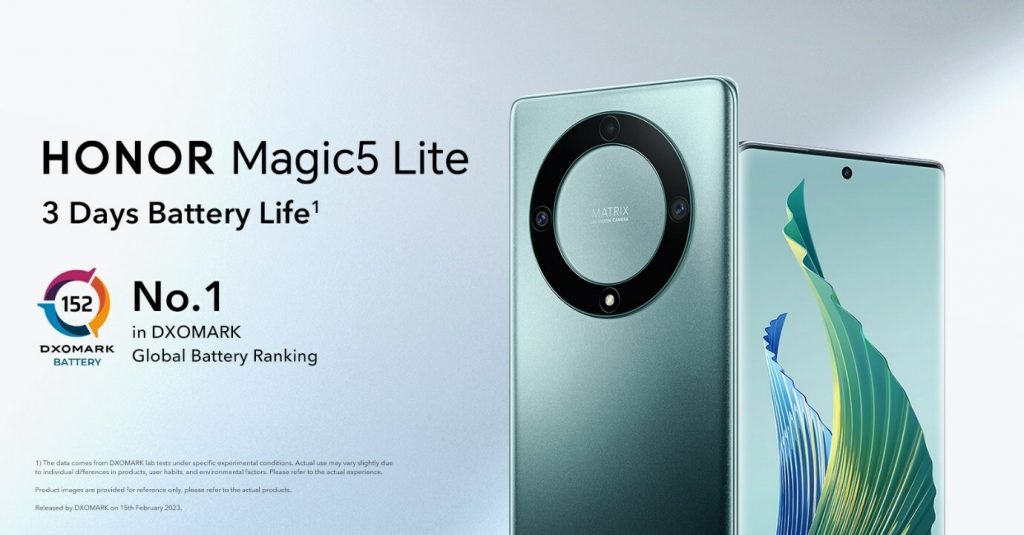
HONOR recently launched the HONOR Magic5 Lite in the European market, a versatile smartphone from the HONOR Magic series that features a 120Hz OLED display, 5G capabilities, and strong performance, all at an affordable price. However, what truly sets the HONOR Magic5 Lite apart from its competitors is its exceptional battery performance, which has earned it the top spot in the DXOMARK global battery ranking with a score of 152.
According to DXOMARK‘s review, the HONOR Magic5 Lite excelled in all areas of battery performance, including autonomy, charging, and efficiency. Its autonomy was particularly impressive, lasting over 3 days with moderate use, and nearly 2 full days with intense usage, making it one of the best-performing smartphones in terms of battery life. In addition, the HONOR Magic5 Lite’s efficiency and discharge currents were consistently low across different use cases, showcasing the device’s optimization and power-saving capabilities.
The HONOR Magic5 Lite’s ultra-large 5100mAh battery enables up to 24 hours of YouTube streaming, 19 hours of TikTok browsing, or 11 hours of gaming on a single charge. Additionally, the HONOR Magic5 Lite’s 40W HONOR SuperCharge technology allows for a 12.5-hour video streaming time with just 30 minutes of charging, providing users with peace of mind and convenience on-the-go.
It’s important to note DXOMARK doesn’t test every single smartphone that hits the market. As a result, the top spot on their rankings may not necessarily reflect the absolute best battery performance currently available. In fact, the first-place ranking may simply be because many of the latest smartphones have not yet been tested by DXOMARK. Nevertheless, their rankings remain a valuable resource for consumers looking for a quick and reliable reference to compare different devices.
HONOR Magic5 Lite boasts a 6.67-inch FHD+ OLED screen with a 120Hz refresh rate and 1920Hz PWM dimming. It is powered by the Snapdragon 695 Mobile Platform and comes with 6GB of RAM and 128GB of storage. The phone features a triple camera setup with a 64MP main camera, a 5MP ultra-wide camera, and a 2MP macro camera. It also has a 16MP front-facing camera and an in-display fingerprint sensor. The Magic5 Lite runs on Android 12 with Magic UI 6.1 and is powered by a 5100mAh battery with 40W fast charging.
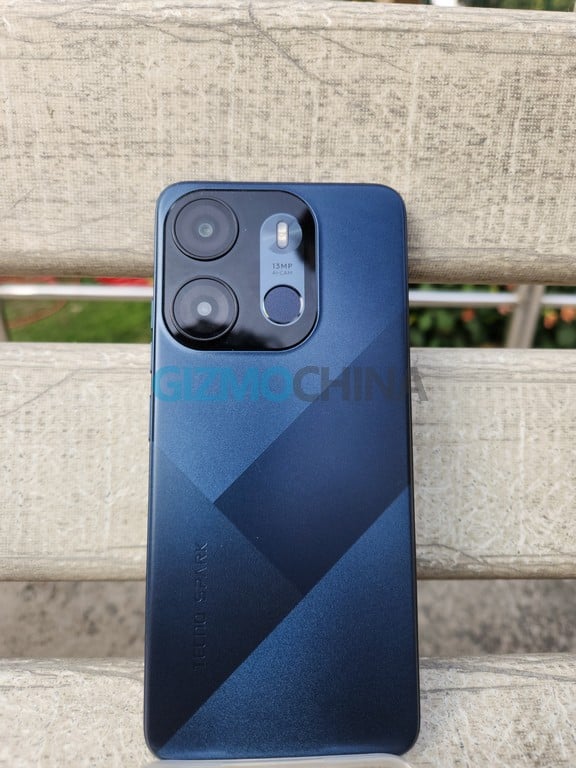
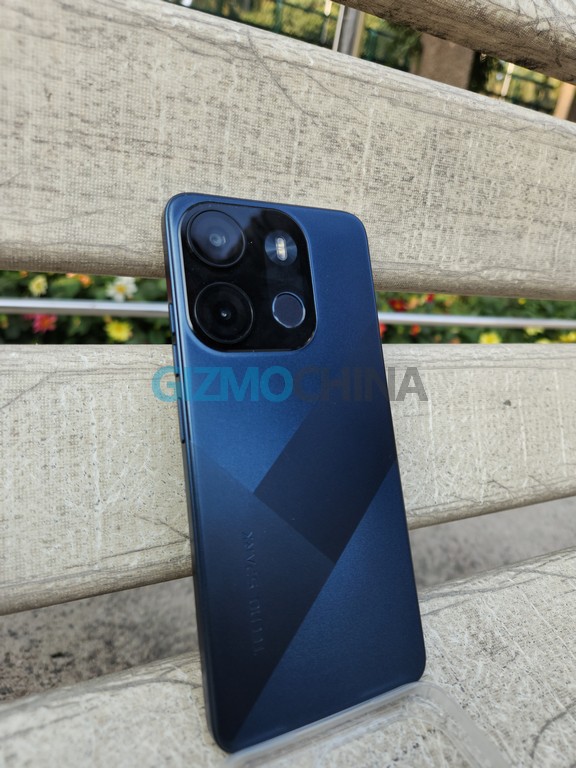
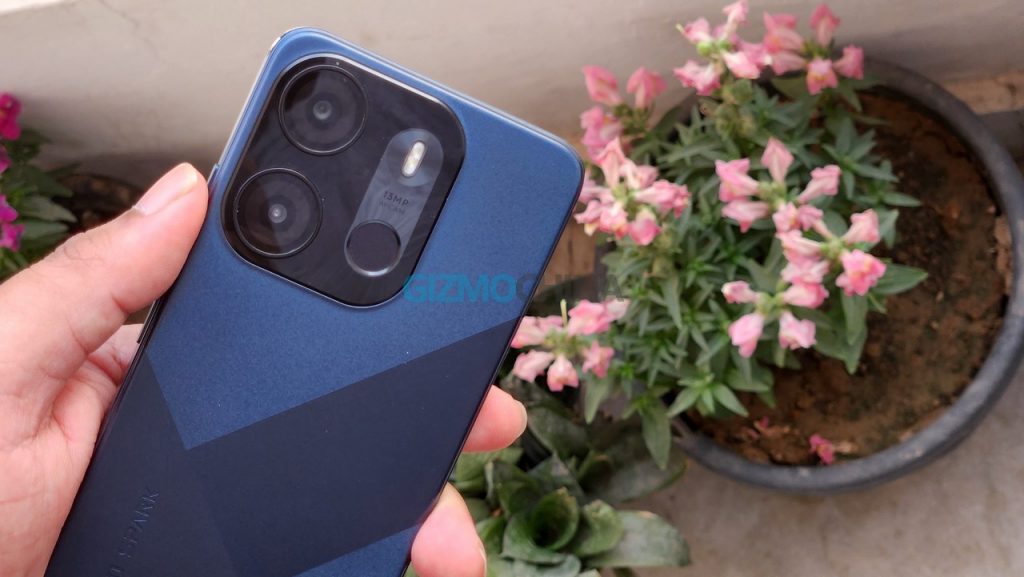
Tecno recently refreshed its budget-range Spark Go series in India with the new model named Tecno Spark Go 2023. The smartphone features a sharp-looking back panel with a textured design and a large camera module. The in-fashion flat edges are also present, along with a notched IPS LCD display.
Under the hood, the phone features a MediaTek Helio A22 chipset backed by a big 5,000mAh battery. Optics are covered by a 13MP dual camera setup and a 5MP selfie cam. What truly sets this device apart from most of its competition is the presence of a fingerprint sensor. The spec sheet looks quite impressive for a phone that starts at just ₹7,000 ($85). To find out if this device was actually impressive or not, I used it as my daily driver for nearly two weeks. Here’s my review of the Tecno Spark Go 2023.
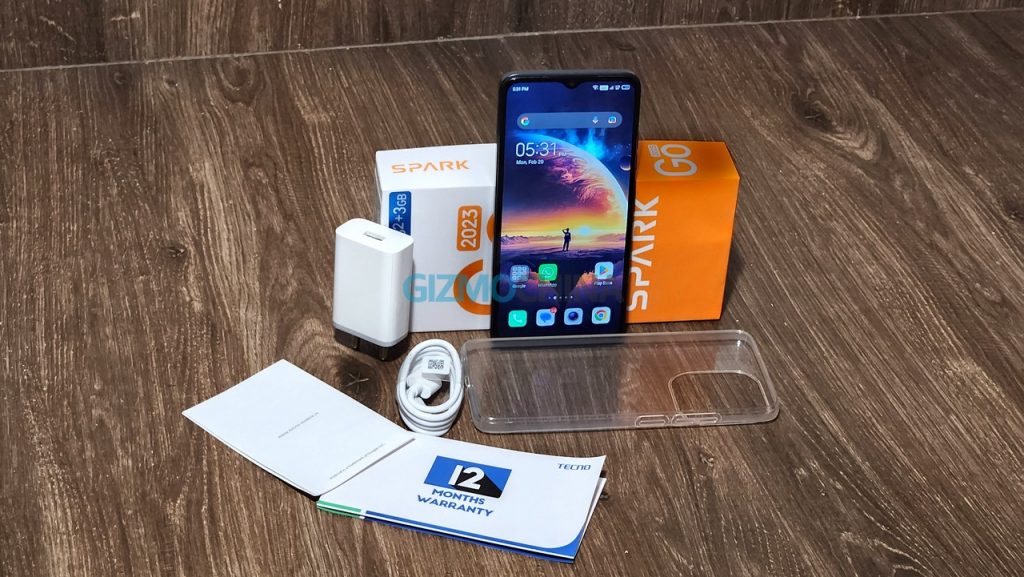
Tecno Spark Go 2023 Box Contents
The smartphone has the following items inside the box:
Phone
Type-C cable
10W Adaptor
Transparent TPU case
SIM card ejector
Documentation
Design & Display
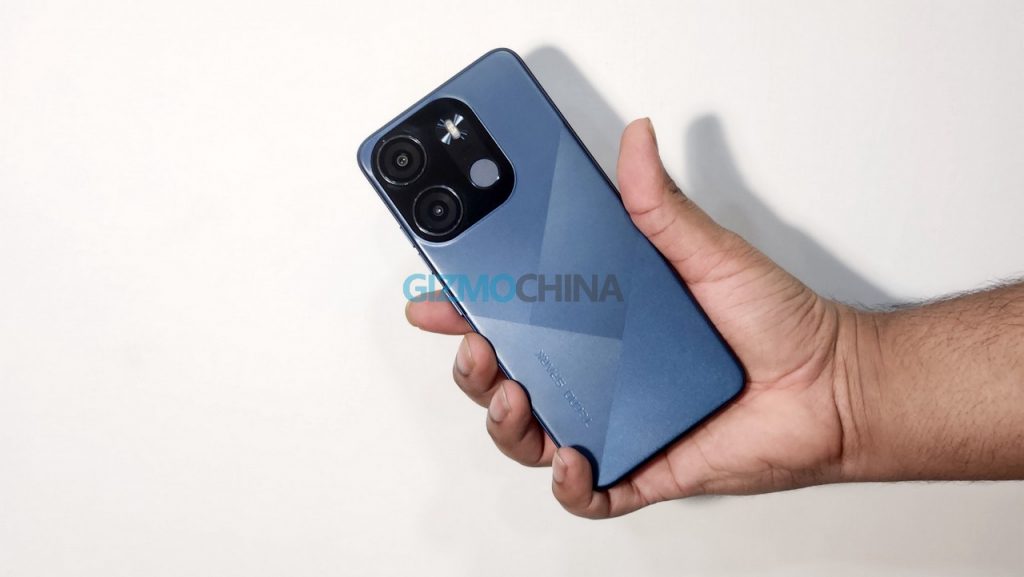
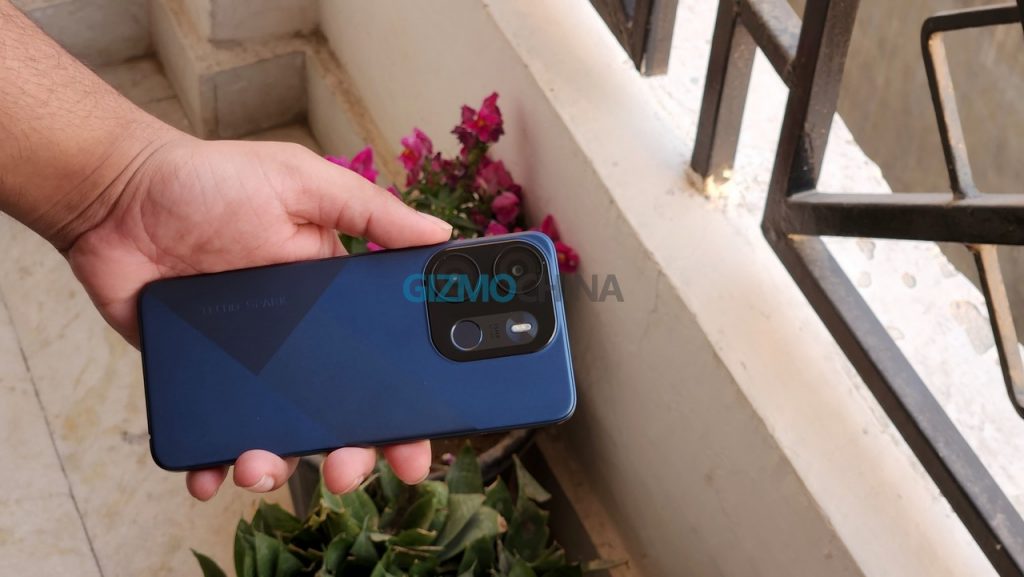
The Tecno Spark Go 2023 has a plastic build with an eye-catching design. Its textured back and flat frame make the device quite grip-able and comfortable to hold. The weight of the device also feels light and well-distributed. Thanks to its textured back, you don’t have to worry about fingerprint stains, either. The fingerprint sensor, which is placed on the camera module does take a bit to get used to, however, it is quite easy to reach with either hand as it’s placed above the center line.
The phone is 8.9mm thick but doesn’t feel too bulky in the hand. However, I used the device with the included clear case provided in the box, and the thickness became much more apparent. The flat power button and volume rockers on the right are side very responsive. The left side has the SIM card slot while the bottom houses the type-C port, loudspeaker, 3.5mm audio jack, and mic.
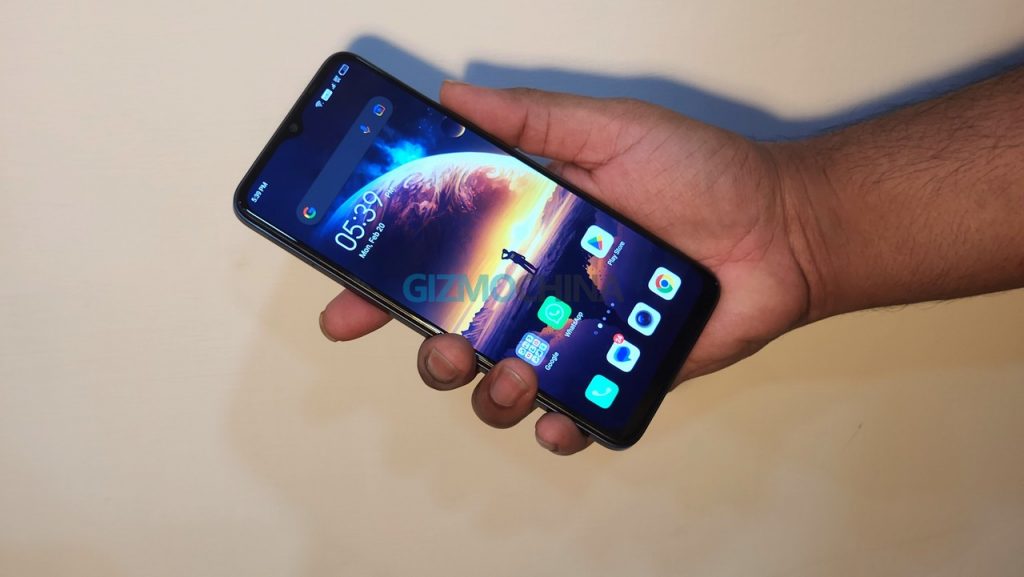
Coming to the display, the Spark Go 2023 offers a 6.56-inch IPS LCD panel with a 60Hz refresh rate and 480 nits peak brightness. The display produces good colors and is overall alright for consuming video content. Since it’s an IPS display, the viewing angles are quite good. At 480 nits, the brightness is enough for indoor viewing, however, it struggles in outdoor settings.
For example, when taking pictures in the sun, the display was not good enough to show that my finger was partially blocking the camera, thereby ruining some shots. So basically, you will be able to clearly see who’s texting /calling you when you are outdoors, but don’t expect to make out details in a video if you are under direct sunlight.
While talking about the display, let’s also talk about the audio performance. The phone comes with a single speaker unit located at the bottom. It actually has better quality than what I’d expected from a device at this price, however, it falls short in the loudness and fullness of the sound department.
Performance & Software
Inside the Tecno Spark Go 2023 is a MediaTek Helio A22 chipset, and the device comes in three different configurations – 3GB + 32GB, 3GB + 64GB, and 4GB + 64GB. The unit I’m reviewing has 3GB RAM and 32GB storage. Despite the processor being a bit aged, it never gave me any issues while executing day-to-day tasks like texting on WhatsApp, watching YouTube videos, listening to music on Spotify, and carrying out transactions using UPI and banking apps.
The connectivity is also quite good as calls were clear and the device was getting strong signals outdoors. It is also worth mentioning that the calling experience over Wi-Fi was better than what I was expecting, as I never dropped a call even on zero bars (my room is a cave).
The performance is not always spotless, as I did encounter some touch input delays and lag here and there. Games like PUBG and COD do lag, even on low settings. I got around 20 FPS on the lowest settings while playing PUBG, as well as in Call of Duty: Mobile sessions.
Lighter games like Subway Surfers, Candy Crush & Clash of Clans run without any hiccups. I also ran the device through a couple of benchmarks to give you a better idea of what to expect in terms of performance.
[envira-gallery id=’517066′]
Overall, this is an acceptable performance for a device in this price range. Now, let’s talk about the operating system. The device runs Android 12-based HiOS V12 skin. It is a letdown that the brand doesn’t bundle the device with the latest Android software, however, it is worth mentioning that this is a full-fledged custom Android 12 build and doesn’t skimp on any features. This means that users get features like dual apps, a smart panel, game mode, and more.
The UI is overall simple and clean. The part I didn’t like was the amount of bloatware. The smartphone is full of pre-installed apps. It took me around 10 minutes to get rid of most of them. And I say most, as I wasn’t able to uninstall some, and had to settle at disabling them.
Camera
The Spark Go 2023 features a 13MP main camera and a 2MP secondary sensor. As for the front, it has a 5MP selfie snapper. The camera quality on the device is pretty basic, with the primary camera struggling to capture details in indoor environments. In outdoor settings, the camera tends to overexpose quite a lot on a regular basis. I constantly found myself tapping on the subjects or manually adjusting the brightness to compensate for the overbearing exposure.
[envira-gallery id=’516393′]
Given enough light and time to focus, I did manage to click some good pictures with the primary camera.
[envira-gallery id=’516400′]
The bokeh shots were also a hit-or-miss with the viewfinder having trouble detecting edges. You can see this in the first picture below where my cheeks, ears, shoulders, and hair are quite blurry. However, in the second image, it managed to capture me perfectly.
[envira-gallery id=’516404′]
The selfies on the other hand turned out quite well with the smartphone capturing a good amount of detail in daylight conditions. I also tried on the AI beauty filter (image on the right) which was quite good and did not overdo the smoothing.
[envira-gallery id=’516407′]
Overall, the camera system is justified for the price range and takes good selfies in well-lit-up environments. The same goes for the video quality, however, due to no stabilization onboard (a given for this price range), the videos do tend to be shaky.
Battery
The smartphone has a large 5,000mAh battery that easily got me through the day. Even with moderate use, it lasted around a day and a half. I was constantly getting around 6–7 hours of screen on time, which is quite good even for heavy use cases. It is worth pointing out that these results were obtained in daily day-to-day use cases of light apps. If you try playing demanding games on it, your mileage may vary.
The 10W charging is quite slow and fills up the battery from 0 to 100 percent in around 2 hours. However, it is to be expected with a budget device such as this.
Verdict
The Tecno Spark Go 2023 is a decent offering at the asking price of ₹7,000 ($85). Regular apps like WhatsApp, YouTube, etc. operate without any hiccups. The camera is capable of clicking some nice shots given enough light, and the battery is big enough to last more than a day. The textured back and overall aesthetics of the phone add style points that much of the competition lacks. So if you are looking for a budget phone to access daily-use apps, and taking selfies under the sun, the Spark Go 2023 might be the phone for you.
Disclaimer: The opinions expressed in this Tecno Spark Go 2023 review are solely mine based on my experience, and there has been no editorial input from Tecno.
Apple is growing its laptop market withApple continues its growth in the laptop market with M series processors and setting new performance standards. However, MacBooks have weaknesses. Traditional processors outperform M-series silicon in terms of software support. Nevertheless, Apple is quickly catching up with its competitors. Lastly, the release of the Linux 6.2 kernel brought a significant milestone for new Mac users. Here are the details…
Linux 6.2: The First Mainstream Linux Kernel for Apple M1 Chips Arrives
The release of the Linux 6.2 kernel brought with it a significant milestone for Apple Mac users. With upstream support for the Apple M1 Pro, M1 Max, and M1 Ultra chips, users with newer Macs can now run Linux on their machines. This is particularly exciting news for tech enthusiasts who have been eagerly waiting for Linux to run on the M1-powered machines.
The release of the Linux 6.2 kernel brought with it a significant milestone for Mac users. With upstream support for the Apple M1 Pro, M1 Max, and M1 Ultra chips, users with newer Macs can now run Linux on their machines. This is particularly exciting news for tech enthusiasts who have been eagerly waiting for Linux to run on the M1-powered machines.
Fortunately, the Asahi Linux team, led by software engineer Alyssa Rosenzweig, was up to the challenge. By July 2022, Linux on ARM and the M1 became a reality. Today, this support is finally ready for mainline Linux users. The inclusion of M1 support in the Linux 6.2 kernel is expected to be a game-changer for Linux Mac users. While the support is still experimental at this point, it is expected to become the default kernel for Ubuntu 23.04 and to be included in Fedora 38 before the late April release of Linux 6.3.
However, M1 support is not the only notable addition to the Linux 6.2 kernel. Contributions from companies such as Intel, AMD, Google, and Red Hat have resulted in numerous features being added to the kernel. For example, the kernel now includes stable support for Intel Arc Graphics and initial support for Nvidia GeForce RTX 30 series “Ampere” accelerated graphics with Nouveau open-source code.
Updated drivers have also been included, such as support for Sony DualShock 4 gamepads, sensors, and fans in the OneXPlayer gaming handheld, Habana Labs’ Gaudi2 AI accelerator, and Asus motherboards. Moreover, the Linux 6.2 kernel includes Call Depth Tracking to help improve performance on older Intel Skylake-era PCs, along with various file-system driver enhancements and security improvements. The NTFS3 file kernel driver has also been improved and updated with new mount options. Overall, the Linux 6.2 kernel provides significant new hardware enablement and features for Linux users.
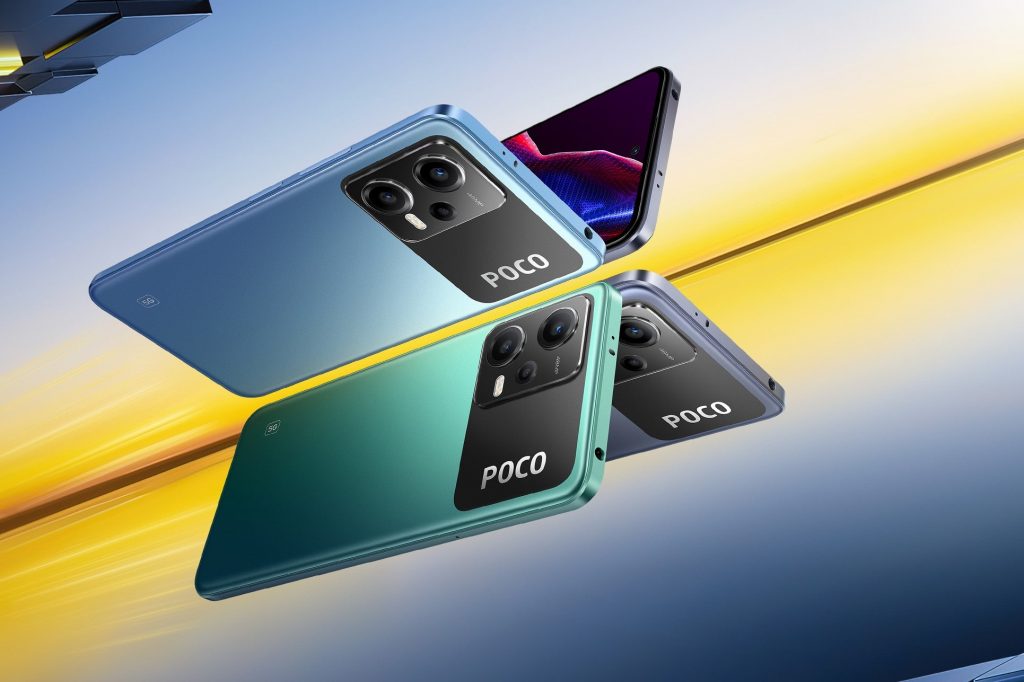
Earlier this month, Poco unveiled the Poco X5 series. The lineup consists of two models, namely Poco X5 and Poco X5 Pro. Only the latter device was made available in most markets soon after the announcement.
On the other hand, the vanilla variant is being rolled out gradually. The smartphone just went official in Indonesia. Let’s take a look at its price and availability.
The Poco X5 arrives in two memory configurations in Indonesia. It is priced at IDR 3,399,000 (~$225) and IDR 3,899,000 (~2$60) for 6GB + 128GB and 8GB + 256GB variants, respectively.
The handset can be availed in either black, green, or blue color options. It can be purchased from Poco Indonesia’s official website, Shopee, and Erafone.
Talking about features, the Poco X5 is almost the same as the Redmi Note 12. The only difference is that is powered by a Snapdragon 695 chipset instead of a Snapdragon 4 Gen 1 SoC.
The phone sports a 6.67-inch centered punch-hole 120Hz AMOLED display with a resolution of 2400 x 1080 pixels (FHD+) and up to 1200 nits peak brightness. It boots MIUI 13 for Poco based on Android 12 and comes with LPDDR4x RAM and UFS 2.2 storage.
The device houses a triple-camera system on the rear consisting of a 48MP primary sensor, an 8MP ultra-wide unit, and a 2MP macro snapper. On the front, it has a 13MP shooter for selfies and video calls.
The smartphone offers multiple connectivity options, such as dual-SIM, 5G, dual-band WiFi, Bluetooth 5.1, GNSS, and USB Type-C. Other features include a 3.5mm headphone jack, a shared MicroSD card slot, and a side-mounted fingerprint sensor.
The Poco X5 draws energy from a 5,000mAh battery. Finally, it carries support for 33W fast wired charging.
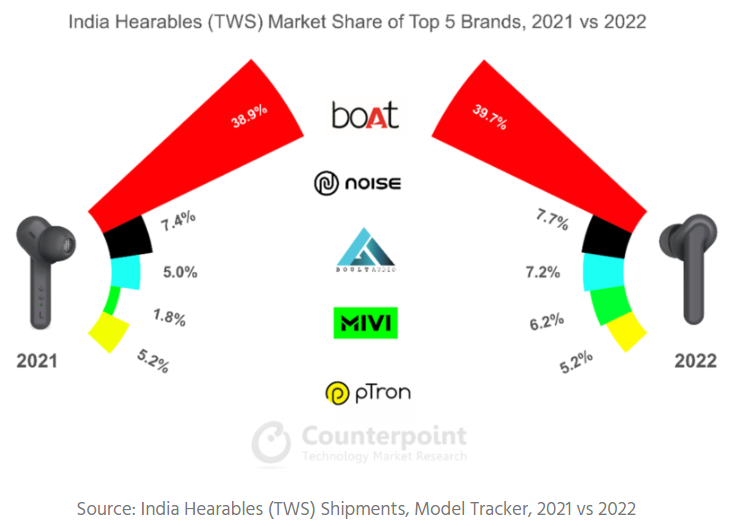
Counterpoint Research has released a new report on the truly wireless stereo earphones segment in India for the year 2022. The segment recorded a whopping 85 percent year-on-year growth. As per the research firm, the growth is cited to local manufacturing, attractive sale events, frequent affordable offerings, and new players in the market.
As per Counterpoint’s IoT Service data, Indian brands dominated the TWS segment in 2022. This was led by boAt, Boult Audio, Mivi, pTron, and Noise. They accounted for two/thirds of the total shipments and captured 80 percent of the market share. Chinese brands had a decreased market share with 13 percent last year. This was supported by the OnePlus Nord Buds, Buds CE, as well as, OPPO and Realme. Global brands led by Apple, JBL, and Samsung took a 8 percent share in the TWS segment.
As for the brand statistics, boAt led the TWS segment in India for the third consecutive year with a 89 percent year-on-year growth. The Airdopes 131 was the top-selling model for the second straight year. Noise rose to the second spot with 2x YoY. Boult Audio came in third with a 7 percent share. Mivi took the fourth position whereas the pTron bagged the fifth spot with a 5 percent share.
India’s TWS shipments saw a 44 percent YoY growth in the fourth quarter of 2022. The Rs 1,000 – Rs 2,000 price band had a 75 percent share during the period with boAt leading with a 45 percent share. The premium TWS segment captured 4 percent during the quarter driven by Samsung followed by Apple and JBL.
Honor recently confirmed the launch of the Honor Magic 5 smartphone for the global market. The brand will launch the smartphone via MWC Barcelona 2023 event. The devices will be unveiled on February 27th, 2023. Anyway, the smartphone has now been listed on the Geekbench certification website, ahead of the official launch. The certification confirms that the smartphone will be powered by the Qualcomm Snapdragon 8 Gen2 SoC.
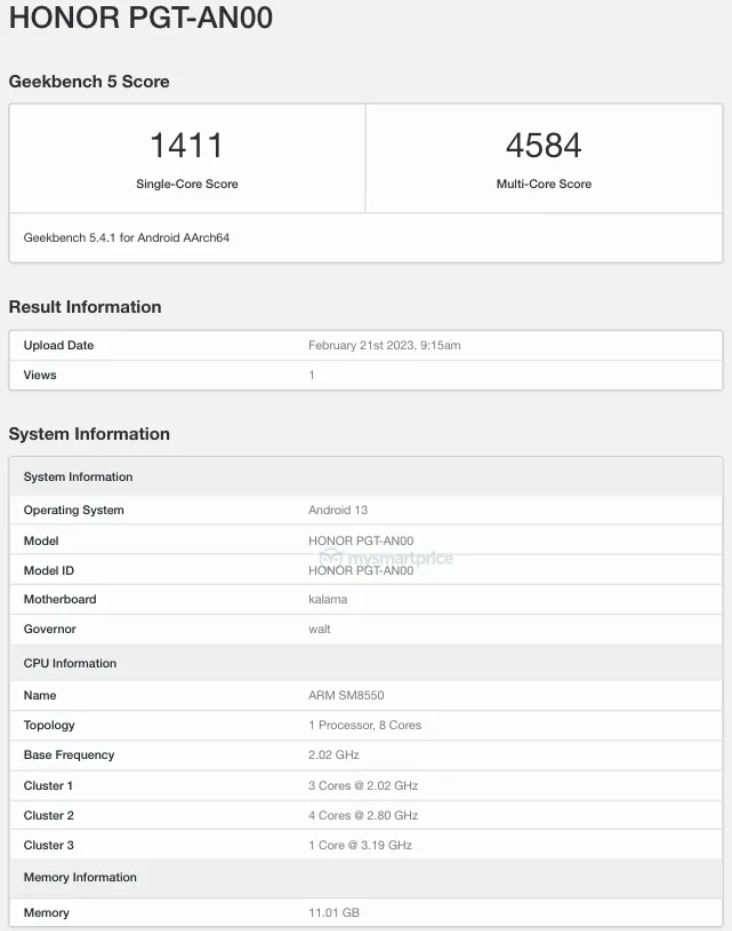
The Honor Magic 5 has been confirmed as PGT-AN00 on the Geekbench website. The listing reveals that the forthcoming Honor flagship, set to debut at MWC 2023, would be powered by a Qualcomm Snapdragon 8 Gen 2 Chipset. The Kalama (codename) chipset contains a primary CPU core clocked at 3.19GHz. It also includes four 2.8GHz performance cores and three 2.02GHz efficiency cores. The Magic 5 model featured on Geekbench has 12GB of RAM. However, there could be other RAM variants as well.
The phone will come pre-installed with Android 13. According to the listing, the phone scored 1411 on the single-core test and 4584 points on the multi-core test on Geekbench, which are some of the highest scores we have seen from a smartphone. This suggests that the Honor Magic 5 will be a powerful and fast smartphone that should be able to handle even the most demanding apps and games with ease.
While the Geekbench listing for the Honor Magic 5 has provided us with some insight into the phone’s performance, we still do not know much about its other features. The Honor Magic 5 may include a 6.8-inch OLED LPTO panel with a refresh rate of 1Hz-120Hz, 2160Hz PWM dimming, 480Hz touch sampling rate, HDR10+, and up to 1100 units of brightness. The Honor Magic 5’s previously leaked renders confirm that the gadget will continue to use the centre-aligned circular camera module with three camera sensors positioned in a triangle configuration. A periscope telephoto lens is one of the sensors in the arrangement, and the module also includes an LED flash.
Microsoft has just announced that it is entering into an agreement with Nintendo. Thanks to this new deal, we can soon expect to see the latter’s gaming devices to run Xbox titles like the massively popular franchise, the Call of Duty. So here are all of the details.
As per the official announcement, the American tech giant signed a binding 10 year legal agreement to bring Call of Duty to Nintendo players. For those unaware, the latter is a Japanese giant for both its gaming hardware like the Switch and software like the Mario and Legend of Zelda series. The announcement also added that “We are committed to providing long term equal access to Call of Duty to other gaming platforms.”
Microsoft had also offered a similar deal to Sony in the recent past. Now, the company is signing a new deal with the Switch handheld console maker. So now, Activision Blizzard’s Call of Duty franchise will be making its way Nintendo consoles soon. Notably, the new deal with the Japanese company could also be to ease regulators of its acquisition of Activision Blizzard.
Following the acquisition, Microsoft had faced a lot of opposition after buying the gaming studio behind the COD. This lead to the company facing backlash from its rivals like Sony, since it reportedly posed a threat to the industry.
The electric vehicle market is growing, leading to the emergence of new models across different segments. Recently, the world’s largest EV manufacturer BYD unveiled its latest luxury offering at a press conference, U8. Lastly, the company showcased its new million-level supercar, the U9. This new vehicle is the latest addition to BYD’s high-end vehicle lineup, and it has already garnered significant attention. Here are the details…
BYDU9 Boasts 0-100km/h in 2 Seconds and Blade Battery
The U9 is designed using BYD’s signature “Gate of Time and Space” design language, which takes inspiration from outer space. The vehicle features unique headlights and a front light group, including a special-shaped dot matrix light strip that looks surprisingly harmonious, thanks to the camouflage stickers that are currently covering it. The U9 is positioned as a supercar, with a low profile, a large “aspect ratio,” and several notable features, including frameless windows, butterfly doors, through-type tail lights, electric lift spoilers, and an exaggerated shape diffuser. It is clear that the designers have focused on creating a visually striking and distinctive car that stands out from the crowd.
In terms of performance, the U9 is equipped with Yisifang technology, which is based on four independent motor drives and has innovated the power structure of the car. According to BYD, this technology is 100% independently developed and is suitable for pure electric and hybrid platforms, covering off-road vehicles, supercars, and more.
The U9 features a four-wheel four-motor configuration and can reach an impressive 0-100km/h acceleration time of just 2 seconds. It is also equipped with a blade battery, which provides an excellent balance of power and range. Despite limited information currently available about the U9, it is clear that BYD has worked hard to create an impressive luxury vehicle that will appeal to car enthusiasts and collectors. With its striking design and impressive performance, the U9 is poised to make a significant impact in the high-end car market.
The recent release of road test spy photos has only increased anticipation for the official launch of the U9. Car enthusiasts and industry experts alike are eagerly awaiting more information about this exciting new vehicle, and it will be interesting to see how it performs in the competitive supercar market. For now, it seems that the U9 is well-positioned to become one of BYD’s most popular and coveted vehicles.
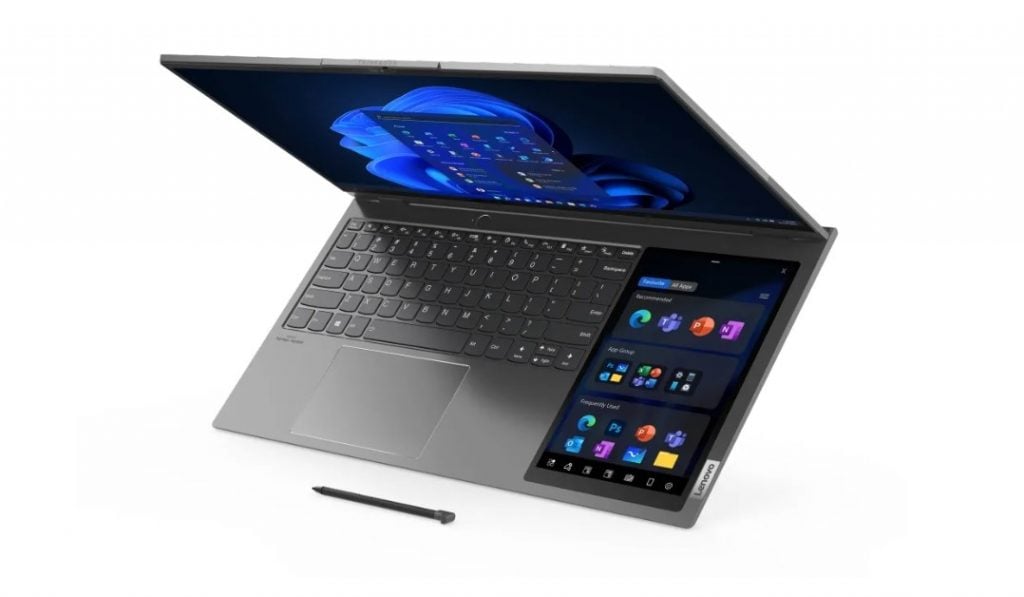
Lenovo launched the ThinkBook Plus Gen 3 at the Consumer Electronics Show (CES) last year. Now, the brand has brought the device to the Indian market. It is a high-end laptop aimed at creative and enterprise users. The machine comes with a secondary display making it similar to ASUS’s ZenBook Duo lineup of dual-screen laptops. Read on to know what it offers out of the box.
The Lenovo ThinkBook Plus Gen 3 is an industry-first laptop featuring a 17.3-inch display with a 21:10 ultra-wide ratio. It offers a 3K resolution, a 120Hz refresh rate, 99 percent DCI-P3, and 400 nits brightness. The device also supports touch input and Dolby Vision. Additionally, the ThinkBook Plus Gen 3 has a secondary screen on the right side of the keyboard which looks like an embedded tablet within the laptop base. The secondary display measures 8-inches in size bearing an HD+ resolution, a 60Hz refresh rate, 350 nits peak brightness, 60 percent NTSC colour gamut, and touch support. It can be used for productivity apps, phone syncing, content mirroring, and more.
On the audio front, the Lenovo ThinkBook Plus Gen 3 is equipped with dual 2W Harman Kardon-powered stereo speakers with support for Dolby Atmos. There is a backlit keyboard and an FHD infrared webcam with shutter privacy,
Under the hood, the Lenovo ThinkBook Plus Gen 3 is equipped with a 12th-generation Intel Core i7 processor. It is coupled with integrated Iris Xe graphics onboard. The machine packs 16GB LPDDR5 RAM and 1TB SSD storage, with both having the option to upgrade up to 32GB and 2TB respectively. The laptop is backed by a 70Wh battery with support for 100W rapid charging.
The Lenovo ThinkBook Plus Gen 3 comes with connectivity options like USB-C Thunderbolt 4 port, a USB-C port, a USB-A port, an HDMI port, a 3.5mm jack, Wi-Fi 6E and Bluetooth version 5.2. The laptop runs on Windows 11 Pro OS out of the box.
The Lenovo ThinkBook Plus Gen 3 starts at Rs 1,94,990 and can be brought via the company’s website and retail outlets across the country.
Samsung appears to be switching things up with its upcoming Galaxy Z Fold5. Although the gadget is likely to include a number of remarkable features, it will not include built-in S Pen functionality. The forthcoming foldable smartphone will soon be available thanks to the Korean tech giant. The device will be released as a successor to the Samsung Galaxy Z Fold5.
Some fans were dissatisfied with this choice because they expected the same level of stylus support as on prior versions. The pen input feature was implemented starting with the Galaxy Z Fold3 which was released in 2021. It was not built-in like the Galaxy Note, but instead required the purchase and use of a separate S-pen. It is convenient to write or draw on the screen with a pen, but because you must carry it separately, requests for a built-in device have been persistent.
The technical barriers are said to be still high. The built-in is feasible, but when the pen is inserted, the foldable smartphone becomes thicker. That clashes with the need for a foldable phone to be slim when folded. There is also a method for making the pen thinner, which lessens the writing sensation. The cost burden, such as the rise in product pricing, was recognised to be significant when the pen was built in. These are the primary reasons why Samsung has dropped the plan to introduce a built-in S Pen to the upcoming Samsung Z Fold5.
Samsung Electronics is working on a solution that increases writing comfort while also making the pen slimmer. As the demand for S-Pens embedded inside foldable smartphones grows, the business intends to further develop and release the technology. According to an industry source familiar with the situation, “the hinge structure of the new foldable device has evolved, as has the internal space structure, making mounting the S Pen difficult.”
So that was all we had to cover up regarding the recent news of the Samsung Galaxy Z Fold5. What are your thoughts on this? Do let us know by dropping a comment in your words down below. Thanks a lot for reading the post till the end.
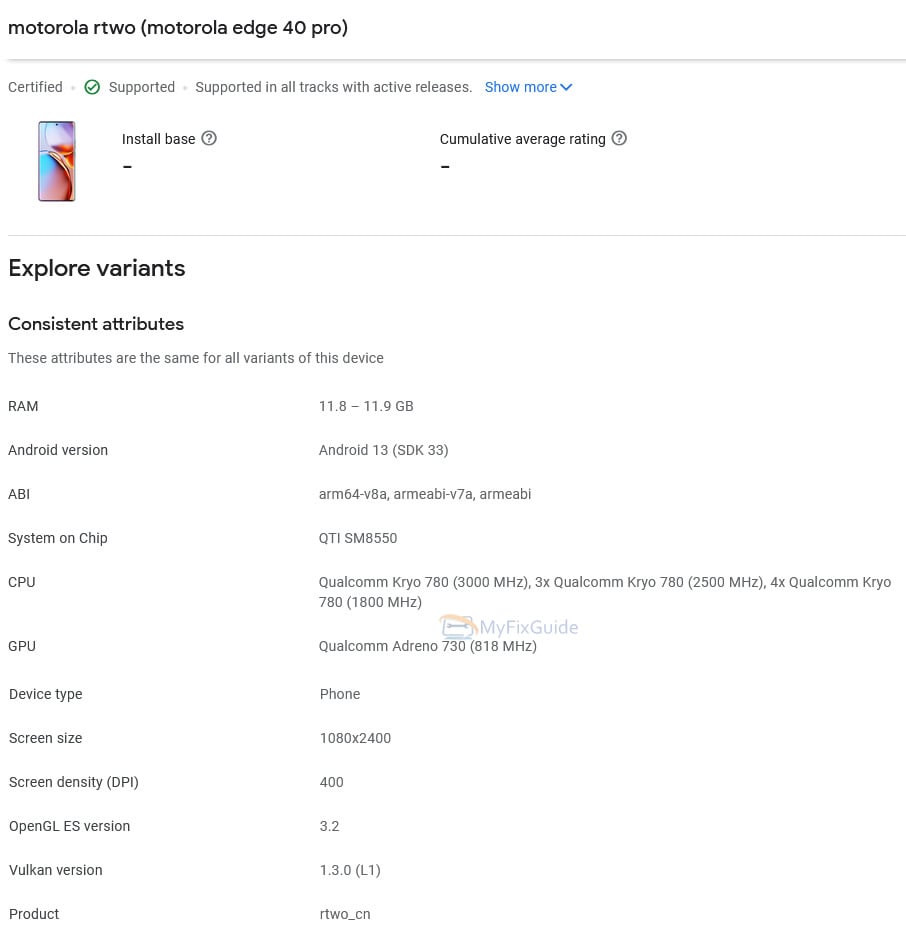
Earlier this month, the Moto Edge 40 Pro appeared on the Geekbench database. Now it has been spotted on Google Play Console. The recent listings suggest that the smartphone may launch soon in the near future. The Play Console listing reveals the same specifications as the Geekbench database. The Edge 40 Pro is expected to debut as the rebranded version of the X40 in the Chinese market.
The rendered image of the Moto Edge 40 Pro on the Google Play Console listing reveals a curved display with a centre-aligned punch-hole cutout and very thin bezels. The device bears a resolution of 1,080 x 2,400 pixels and a 400 DPI screen density.
As per the listing, the Moto Edge 40 Pro will be equipped with a Qualcomm SM8550 processor that corresponds to the Snapdragon 8 Gen 2. It will be paired with Adreno 730 GPU onboard. The upcoming offering will pack 12GB RAM and ship with Android 13 OS out of the box.
Apart from the aforementioned information, there are no additional details about the Moto Edge 40 Pro. We expect to learn more about the smartphone in the coming weeks.
Since the Moto Edge 40 Pro is expected to be the rebadged version of the X40, we can expect the device to feature a 6.6-inch curved OLED display bearing an FHD+ resolution and a 165Hz refresh rate. It will be backed by a 4,600mAh battery unit with support for 125W fast charging and 15W wireless charging. The smartphone has a 50MP OIS-enabled primary camera paired with a 50MP ultra-wide-angle unit and a 12MP telephoto lens. There is a 60MP selfie snapper.
We use cookies on our website to give you the most relevant experience by remembering your preferences and repeat visits. By clicking “Accept”, you consent to the use of ALL the cookies.
This website uses cookies to improve your experience while you navigate through the website. Out of these, the cookies that are categorized as necessary are stored on your browser as they are essential for the working of basic functionalities of the website. We also use third-party cookies that help us analyze and understand how you use this website. These cookies will be stored in your browser only with your consent. You also have the option to opt-out of these cookies. But opting out of some of these cookies may affect your browsing experience.
Necessary cookies are absolutely essential for the website to function properly. This category only includes cookies that ensures basic functionalities and security features of the website. These cookies do not store any personal information.
Any cookies that may not be particularly necessary for the website to function and is used specifically to collect user personal data via analytics, ads, other embedded contents are termed as non-necessary cookies. It is mandatory to procure user consent prior to running these cookies on your website.