Advertisement

Google Pixel 7 vs iPhone 14: Specs Comparison

All those people who wanted a compact iPhone this year were left disappointed because, with the new series, Apple ditched the Mini variant. Instead of it, Apple launched the Plus version which is essentially the opposite: an extra-large non-Pro iPhone. So, all of those people who still want a last-generation compact phone by Apple must now opt for the vanilla iPhone 14. Instead, in the Android world, there are still several compact phones out there, even though almost every device has similar dimensions to the vanilla iPhone from the 14 series. Among the latest compact phones in the Android world, there is the Google Pixel 7, equipped with a stock Android version. A lot of people are currently wondering which one to go for, given the similar dimensions. This is a comparison between the main specifications of the Google Pixel 7 and the Apple iPhone 14.

Google Pixel 7 vs Apple iPhone 14

Google Pixel 7 Apple iPhone 14
DIMENSIONS AND WEIGHT 155.6 x 73.2 x 8.7 mm,
197 g
146.7 x 71.5 x 7.8 mm,
172 g
DISPLAY 6.3 inches, 1080 x 2400 pixels (Full HD+), AMOLED 6.1 inches, 1170 x 2532p (Full HD+), Super Retina XDR OLED
PROCESSOR Google Tensor G2, octa-core 2.85 GHz Apple A15 Bionic hexa-core 3.22 GHz
MEMORY 8 GB RAM, 128 GB – 8 GB RAM, 256 GB 6 GB RAM, 512 GB – 6 GB RAM, 128 GB – 6 GB RAM, 256 GB
SOFTWARE Android 13 iOS 16
CONNECTIVITY Wi-Fi 802.11 a/b/g/n/ac/6e, Bluetooth 5.2, GPS Wi-Fi 802.11 a/b/g/n/ac/ax, Bluetooth 5.3, GPS
CAMERA Dual 50 + 12 MP, f/1.9 + f/2.2
Single 10.8 MP f/2.2
Dual 12 + 12 MP scanner, f/1.5 + f/2.4
Dual 12 MP + SL 3D f/2.2
BATTERY 4355 mAh, Fast charging 30W, and Qi fast wireless charging 20W Fast Charging 50% in 30 minutes and Qi wireless charging 15W
ADDITIONAL FEATURES 5G, dual SIM, IP68 waterproof, reverse wireless charging 5G, optional dual SIM, optional eSIM, MagSafe 15W, IP68 waterproof

Design

If you want a phone with a good design, these phones are good options for you without any doubt. The Google Pixel 7 has a very original design including a horizontal camera module, a glass back protected by Gorilla Glass Victus, an aluminum frame, and very interesting color options. It is also waterproof with the IP68 certification. The Apple iPhone 14 has a very iconic design with flat borders and a more compact size. It also comes with a better build quality including a glass back protected by Ceramic Shield, an aluminum frame, and better water resistance thanks to the IP68 certification allowing it to go underwater for up to 6 meters deep for 30 minutes. However, the iPhone has that ugly notch that not everyone likes out there. Do you prefer the original design of the Pixel or the famous notched design by Apple?


Display

The displays of these two phones have similar specifications. The Google Pixel 7 is equipped with a 6.3-inch panel (wider than the one found on its rival) showing images with a Full HD+ resolution of 1080 x 2400 pixels, a 90 Hz refresh rate, the HDR10+ certification, and a peak brightness of 1,400 nits. It includes an in-display fingerprint scanner, as well as stereo speakers for an improved audio experience. The iPhone 14 has a Super Retina XDR OLED display with a smaller 6.1-inch diagonal, a Full HD+ resolution of 1170 x 2532 pixels, HDR10 certification, Dolby Vision support, and 3D facial recognition for authentication, thanks to Face ID, as well as stereo speakers. It looks like the iPhone provides higher image quality, but the Pixel has a higher refresh rate and a wider display, better features for gamers.


Specs & Software

The Google Pixel 7 and the Apple iPhone 14 are equipped with flagship-class hardware, so you will get a great performance level with these devices. The Google Pixel 7 has a Google Tensor G2 mobile platform built with a 5 nm production process and sports an octa-core architecture including two Cortex X1 CPUs running at a max frequency of 2.85 GHz, six Cortex A78 CPUs running at 1.8 GHz, and a Mali G710 MC10 GPU. Alongside the Tensor G2, there are 8 GB of RAM and either 128 GB or 256 GB of UFS 3.1 internal storage depending on the chosen variant. The iPhone 14 has an Apple A15 Bionic chipset built with the same production process and with an octa-core architecture including two Avalanche performance cores running at 3.23 GHz, four Blizzard energy cores running at 1.82 GHz, and an Apple proprietary GPU with 5-cores. Alongside the SoC, there are 6 GB of RAM and 128, 256, or 512 GB of native storage. The operating system installed is the latest versions of Android and iOS: Android 13 and iOS 16, respectively. These phones will get very long software support, so they are the best if you are looking for a durable device to keep for many years.


Camera

The camera hardware of the Google Pixel 7 is actually better than the one found on the iPhone 14 and it should be able of shooting better photos. It has a dual camera setup including a 50 MP main sensor with laser autofocus and OIS, as well as a 12 MP ultrawide camera. The iPhone has two sensors with 12 MP resolution: the main camera and the ultrawide camera.


Battery

Now, let’s talk about the battery. The battery found on the Google Pixel 7 is much bigger than the one found on the iPhone 14, with a capacity of 4355 mAh against just 3279 mAh found on the Pixel. However, the iPhone guarantees a comparable battery life thanks to the higher optimization level provided by the iOS operating system. Both phones feature fast charging and wireless charging, but the Apple one adds the MagSafe technology (it allows connecting external accessories such as battery packs to the rear cover).


Price

The Google Pixel 7 is available with a starting price of €649 in the European market and $599 in the U.S. market, while the iPhone 14 starts from €999 in the European market and $750 in the U.S. market. Which one would you pick?


Google Pixel 7 vs Apple iPhone 14: PRO and CONS

Google Pixel 7

PRO

  • More affordable
  • Wider display
  • Bigger battery
  • Potentially better camera

CONS

  • Inferior build quality


Apple iPhone 14

PRO

  • Better performance
  • Better water resistance
  • Face ID
  • MagSafe

CONS

  • Higher price

RELATED

Check the latest videos from our YouTube channel and subscribe:


OnePlus 9RT gets OxygenOS 13 open beta based on Android 13

A couple of months ago, OnePlus commenced the Android 13-based OxygenOS 13 testing for the OnePlus 9RT via the closed beta program. This program had a limited number of participants who could opt-in to try out the new software.

OnePlus 9RT Cameras Hands on 02

Now, the company has finally launched the open beta program for the device which will any willing owner of the OnePlus 9RT to try out Android 13 on their devices. The update is currently seeding in India and will soon be made available for other regions.

Make sure your 9RT is running the most recent OxygenOS 12 version (C.07) before applying the update if you want to give it a try. It should also have 5.5GB of free storage and a battery capacity of at least 30%. Beta builds are generally not as reliable as the official builds and frequently have bugs that degrade the user experience, so it is advised to avoid using them on primary devices.

Some of the known bugs on the OnePlus 9RT include the Eye Comfort Mode not activating in specific scenarios, and after switching the system dynamic wallpaper, the time on the lock screen isn’t displayed properly. You can check out the detailed changelog of the beta build below.

Changelog:

Aquamorphic Design

 • Adds Aquamorphic Design theme colors for enhanced visual comfort.

 • Applies the Aquamorphic Design philosophy to animations to make them natural and vivid.

 • Upgrades to Quantum Animation Engine 4.0, with a new behavior recognition feature, which recognizes complex gestures and provides optimized interactions.

 • Optimizes UI layers for a clearer and neater visual experience.

 • Applies real-world physical motions to animations to make them look more natural and intuitive.

 • Adapts responsive layouts to accommodate different screen sizes to improve readability.

 • Optimizes fonts for better readability.

 • Enriches and optimizes illustrations for features by incorporating multicultural and inclusive elements.

Efficiency

 • Adds Meeting Assistant to enhance the meeting connecting and note-taking experience and introduces an option to make notifications more subtle and less distracting.

 • Adds large folders to the Home screen. You can now open an app in an enlarged folder with just one tap and turn pages in the folder with a swipe.

 • Adds a new type of Always-On Display that shows live information about music, ride-hailing, and food delivery. (Supports only some apps).

 • Adds media playback control, and optimizes the Quick Settings experience.

 • Adds more markup tools for screenshot editing.

 • Optimizes Shelf. Swiping down on the Home screen will bring up Shelf by default. You can search content online and on your device.

Seamless interconnection

 • Optimizes Screencast, with cast content automatically adapting to the target screen.

 • Optimizes earphone connectivity to deliver a more seamless experience. 

Personalization

 • Optimizes Bitmoji to offer more Always-On Display animations.

 • Optimizes Insight Always-On Display, with more personalized Always-On Display settings available.

 • Optimizes Canvas Always-On Display, with more drawing tools and line colors available.

Security & privacy

 • Adds an automatic pixelation feature for chat screenshots. The system can identify and automatically pixelate profile pictures and display names in a chat screenshot to protect your privacy.

 • Adds regular clearing of clipboard data for privacy protection.

 • Optimizes Private Safe. The Advanced Encryption Standard (AES) is used to encrypt all files for enhanced security of private files.

Health & Digital wellbeing

 • Adds Kid Space, providing screen time limit, ambient light reminders, and Eye-protecting display features.

You download the beta build or find out more about the program, you can check out the official community post by OnePlus.

RELATED:

Moto E22s with 90Hz display confirmed to launch in India on October 17th

Moto E22s launch date in India has been announced. It is set to debut in the country on October 17th. The Lenovo-owned brand has put up a microsite of the upcoming offering on its official website revealing key specifications. Earlier this month, Motorola had also announced the E32s in India. The E22s is expected to be positioned below the E32s. 

As per the microsite, the Moto E22s will come with a 6.5-inch display bearing an HD+ resolution, a centre-aligned punch-hole cutout, and a thick chin at the bottom. The device has a side-mounted fingerprint scanner and two camera rings on the back panel. It is said to have an IP52 water-repellent design. 

The Moto E22s will feature a 16MP primary sensor paired with a 2MP depth lens and an LED flash unit. There will be an 8MP front-facing selfie snapper. The device will pack a host of camera-related features and modes. 

Internally, the Moto E22s is confirmed to be powered by a MediaTek Helio G37 processor. It will pack 4GB RAM and 64GB native storage expandable via a microSD card slot. The smartphone is teased to be backed by a 5,000mAh battery unit with support for 10W fast charging. 

Connectivity options on the Moto E22s include WiFi, Bluetooth, 4G LTE, a USB-C port, and a 3.5mm headphone jack. The smartphone will be available in Arctic Blue and Eco Black colours in India. We will learn more about its pricing and availability details on Monday, 

Related:


MIUI 14 internal testing reportedly commences for the Xiaomi 13 & 13 Pro

The Xiaomi 13 series made up of the 13 and 13 Pro is expected to enter the market this November. The next-gen Xiaomi flagships have been the subject of speculations and leaks. There are indications that the Xiaomi 13 and Xiaomi 13 Pro are undergoing internal MIUI tests before their November release.Xiaomi 13

The Xiaomi 13 and 13 Pro will have the MIUI 14 interface and the beta version is being tested internally on these models and others. The MIUI 14 is based on Android 13, hence the models will ship with the Android 13 OS. The stable version of the MIUI 14 is also underway for the Xiaomi 13 series. The MIUI 14 offers some changes in its design language and significant improvements all around.

The Xiaomi 13 flagships come with some premium features and components. The Xiaomi 13 Pro, as per images released, sports the same screen design as the Xiaomi 12 lineup although its camera specs are not known. Both models have a single-hole camera on the front and have a similar screen design as the Xiaomi 12 series.

It is rumored that the Xiaomi 13 series could debut the Snapdragon 8 Gen 2 chipset. Qualcomm has not provided any details yet on the upcoming chip but we could expect a powerful and performance-oriented chipset. Xiaomi continues to surge across all aspects of its global business with lots of tech offerings. There are no pricing or specific release details yet for the two Xiaomi flagships.

RELATED:


(source)


Logitech G502 X gaming mouse launched in China for 499 yuan ($69)

The Logitech G502 X gaming mouse has been launched in China. The G502 X comes with a Hero 25K sensor and Lightforce optical micro-motion. The product was unveiled last month in India. The Logitech G502 X gaming mouse uses thin-walled exoskeletons and very light scroll wheels which makes its use less stressful. The new gaming mouse hardly shifts the scales at a weight of 89g.Logitech G502 X gaming mouse

The built-in Hero 25K high-precision gaming sensor offers zero smoothing, filtering, and up to five choices of sensitivity using the G Hub software. The new Lightforce optical micro-motion and the Lightspeed wireless connection technology are also featured in the gaming mouse.Logitech G502 X gaming mouse

Lightforce is a microswitch technology that is a hybrid of optical and mechanical switches. It combines the best of both switches to provide a high-octane gaming experience. The Lightsync streamer delivers dazzling lighting to rev up the gaming experience. The G502 X has PTFE mouse feet which enable the gamer to have a pretty frictionless experience when using the device.Logitech G502 X gaming mouse

The Logitech G502 X gaming mouse is sold in China starting at 499 yuan (~$69). As stated earlier, the same model was launched in India in September. In India, it retails for Rs. 7,995 ($97) which is slightly higher than the price in China.

RELATED:


Amazfit Falcon smartwatch with AI-based training coach, GPS navigation & 14-day battery launched

Last week, the Amazfit Falcon smartwatch leaked, revealing its smart training algorithm called the Zepp Coach. Now, the brand has officially debuted the Amazfit Falcon in multiple global markets. So, let’s take a detailed look at all its features and specifications.

Amazfit Falcon specs & features

The smartwatch has been made with durability in mind as it gets a titanium unibody and sapphire crystal glass screen. The display of the device is a 1.28-inch AMOLED panel with a 416 x 416 pixels resolution and up to 1,000 nits brightness. The 20 ATM waterproofing makes it a good companion for swimming.

As mentioned above, the smartwatch comes with a smart training algorithm called the Zepp Coach. This offers AI-based workout recommendations based on your physique and experience, aiming to improve your performance and identify overtraining. There are 150 sports modes and workouts that may be logged, and the Falcon can be Bluetooth-connected to additional fitness accessories like a heart rate belt.

Amazfit Falcon

When you are in sports mode, the display is always on, so you don’t need to wake the watch to monitor your workout stats. You can connect wireless headphones to your device to use the broadcast sports mode to receive data or to play locally stored music (4GB local storage). With several satellite positioning systems supported and dual-band GPS tracking, you can move correctly and get directions when exercising outside.

Additionally, you can connect your workout data with programs like Adidas Running, Apple Health, and Strava. Sleep, heart rate, blood oxygen, and stress level monitoring are all included in the wearable’s health features. According to Amazfit, with regular use, the 500 mAh battery can last up to 14 days on a single charge.

Pricing & availability

Amazfit has made the Falcon available in the US for $499.99. In regions of Europe like the UK, France, Germany, Italy, and Spain, it costs €499.99. The smartwatch can be purchased from Amazfit Stores and Amazon. BrazilMexico, and other countries will soon be able to purchase it on AliExpress.

RELATED:

iPhone 14 Plus vs Google Pixel 7 Pro: Specs Comparison

The Google Pixel 7 Pro has finally hitten the shelves in the global market and its specifications are simply amazing. It comes with flagship-class hardware, a top-tier display, one of the best camera departments ever, and even a big battery. Last but not least, it gets supported directly by Google, so it will get one of the longest software supports ever. A few days ago, another long-lasting phone in terms of software support made its debut: the iPhone 14 Plus. It is not a Pro variant of the 14 series, but it is still an advanced flagship and it replaces the Mini variant in the iPhone flagship lineup for the first time. Given that its price is closer to the Pixel than the ones of the Pro iPhones from the latest series, a lot of people are wondering which device they should go for. Here is a comparison between the main specifications of the iPhone 14 Plus and the Google Pixel 7 Pro which will answer this question in the best way possible.

Apple iPhone 14 Plus vs Google Pixel 7 Pro

Apple iPhone 14 Plus Google Pixel 7 Pro
DIMENSIONS AND WEIGHT 160.8 x 78.1 x 7.8 mm,
203 g
162.9 x 76.6 x 8.9 mm,
212 g
DISPLAY 6.7 inches, 1284 x 2778 pixels (Full HD+), Super Retina XDR OLED 6.7 inches, 1440 x 3120p (Quad HD+), AMOLED
PROCESSOR Apple A15 Bionic hexa-core 3.23 GHz Google Tensor G2 octa-core 2.85 GHz
MEMORY 6 GB RAM, 512 GB – 6 GB RAM, 128 GB – 6 GB RAM, 256 GB 12 GB RAM, 512 GB – 12 GB RAM, 128 GB – 12 GB RAM, 256 GB
SOFTWARE iOS 16 Android 13
CONNECTIVITY Wi-Fi 802.11 a/b/g/n/ac/ax, Bluetooth 5.3, GPS Wi-Fi 802.11 a/b/g/n/ac/6e, Bluetooth 5.2, GPS
CAMERA Dual 12 + 12 MP, f/1.5 + f/2.4
Dual 12 MP + SL 3D f/1.9 front camera
Triple 50 + 48 + 12 MP, f/1.9 + f/3.5 + f/2.2
Single 10.8 MP f/2.2 front camera
BATTERY 4323 mAh with Fast charging 50% in 30 minutes and Qi wireless charging 15W 5000 mAh, Fast Charging 30W and Qi wireless charging 23W
ADDITIONAL FEATURES 5G, optional dual SIM, optional eSIM, MagSafe 15W, IP68 waterproof 5G, optional eSIM, IP68 waterproof

Design

The Google Pixel 7 Pro has definitely a more original design. It is one of the few flagships in the market with a horizontal camera module. The phone is made of premium materials including glass for the back and aluminum for the frame, and it is waterproof with the IP68 certification. The iPhone 14 Plus has a similar design to the iPhone 12 and 13 lineups, with a notch and a square-shaped camera module, but it comes with the better build quality. Its rear side is made with Ceramic Shield, the frame is made of aluminum, and the phone offers better water resistance with the IP68 certification allowing you to put it underwater up to 6 meters deep for a max time of 30 minutes. Do you prefer the original design of the Pixel or the iconic one of the latest Apple iPhone?


Display

Both handsets come with stunning displays. With the Google Pixel 7 Pro, you get an AMOLED panel with a diagonal of 6.7 inches, a higher Quad HD+ resolution of 1440 x 3120 pixels, the LTPO technology enabling an adaptive refresh rate from 1 to 120 Hz, the HDR10+ certification, and a peak brightness of 1,500 nits. The iPhone 14 Plus has a Super Retina XDR OLED with a diagonal of 6.7 inches, a Full HD+ resolution of 1284 x 2778 pixels, HDR10 certification, and Dolby Vision support. What makes me go for the Pixel is the presence of a high refresh rate, while the iPhone 14 Plus, even though it is a 2022 flagship, still comes with 60 Hz. Note that the Google flagship has an in-display fingerprint reader to unlock the phone, while the iPhone relies on Face ID for authentication, which is 3D facial recognition.


Specs & Software

These two handsets are not so different in terms of hardware and performance. The Google Pixel 7 Pro sports the new Google Tensor G2 chipset built with a 5 nm production process and sporting an octa-core architecture including two Cortex X2 CPUs running at a max frequency of 2.85 GHz, two Cortex A78 CPUs running at 2.35 GHz, three Cortex A55 CPUs running at 1.8 GHz, and a Mali G710 MC10 GPU. The chipset is paired with 12 GB of RAM and up to 512 GB of UFS 3.1 internal storage. The iPhone 14 Plus has a proprietary Apple A15 Bionic chipset built with the same production process and with the same octa-core architecture, but sporting two Avalance CPUs running at a max frequency of 3.23 GHz, four Blizzard CPUs running at 1.82 GHz, and an Apple 5-core GPU. This SoC is paired with 6 GB of RAM and up to 512 GB of native storage. Given that the Pixel runs Android 13 and iPhone 14 Plus runs iOS 16, the latter has better software optimization, so having just 6 GB of RAM is not a disadvantage.


Camera

The Google Pixel 7 Pro beats the iPhone 14 Plus when it comes to the cameras. On the rear side, it has three sensors: a 50 MP main camera with OIS, a 48 MP telephoto lens with 5x optical zoom, and a 12 MP ultrawide camera. The iPhone 14 Plus has just two 12 MP sensors: the main camera and an ultrawide lens, and it lacks a telephoto camera. There is definitely no challenge.


Battery

The Google Pixel 7 Pro has a bigger 5000 mAh battery on board, but despite that, the iPhone 14 Plus is able to last more in a lot of scenarios thanks to the better optimization of the iOS operating system.


Price

The Google Pixel 7 Pro carries a starting price tag of €899 in Europe and $799 in the U.S. while the iPhone 14 Plus starts from €1,150 in several European zones and from $899 in the U.S. The Google Pixel 7 Pro wins this comparison thanks to its better cameras and high refresh rate, but several people may prefer the iPhone due to iOS, better build quality, and long battery life.


Apple iPhone 14 Plus vs Google Pixel 7 Pro: PRO and CONS

Apple iPhone 14 Plus

PRO

  • Great build quality and design
  • Superior chipset
  • Face ID
  • Up to 1 TB of storage

CONS

  • Smaller battery


Google Pixel 7 Pro

PRO

  • Amazing rear cameras
  • Bigger battery
  • More affordable
  • Better zoom capabilities

CONS

  • Inferior chipset
  • Dimensions

RELATED

Check the latest videos from our YouTube channel and subscribe:


Pixel 7 Pro’s display severely drains its battery when used at full brightness: Report
Google recently launched the Pixel 7 and 7 Pro globally, and it looks like they are selling pretty well this year. The devices pack some solid upgrades in terms of display, camera, and software. The search giant also promised battery life improvements with the new Pixel smartphones, but a new report suggests otherwise.

According to XDA Developers, the Pixel 7 Pro’s display adversely affects its total battery life. While testing the device, they noticed that its display consumes a lot of power as the brightness increases to maximum. It was found that the battery of the phone dropped by 10% after just fifteen minutes of screen time.

Google Pixel 7

The report states that the power consumption of the Pixel 7 Pro is between 3.5 and 4 watts at 600 nits of brightness. But at the maximum brightness of 1500 nits, it goes up to a massive 6W, resulting in a significant battery drain.
For comparison, the publication says the Samsung Galaxy S22 Ultra uses 4W at 1000 nits of brightness, whereas the Pixel 6 Pro consumes 4W of power at around 800 nits of brightness. This indicates that the problem is only with the Pixel 7 Pro. There doesn’t seem to be a similar issue with the vanilla Pixel 7.

It is worth mentioning that using the phone indoors and at a low brightness will likely not cause such battery drain, and users may only notice it while using the device at a higher brightness for a longer time. Google can easily fix this problem with an update if it is a software issue. However, it will not be possible to make the panel more efficient if the problem lies in the hardware of the device.

RELATED:

Sony’s ZV-1F vlogging camera targeted at content creators launched for $500

Sony has released the ZV-1F camera and it comes with an affordable price tag. It is a great tool for content creators and is a few notches better than a mobile phone in that regard.Sony's ZV-1F vlogging camera

The Sony ZV-1F is the third in Sony’s lineup of vlogging cameras. The device is equipped with a 20.1MP sensor, 4K video, and a user-friendly setup.

It also has a Type-1 sensor as its predecessor, the ZV-1 but with a wide-angle, 20mm zoom. prime lens. The device’s fully articulated display and its extra view make the ZV-1F to be great for taking self-shots. Its affordability means the ZV-1F is not great for shooting products and other people.

The camera has a directional microphone with a forward bias to isolate your voice. There is also a removable deadcat that removes wind noise while shooting. The ZV-1F has an ISO range of 125-12800 and a front-facing tally light for recording.

Although the camera has a 2x 1080p digital zoom and 1.5x in 4K, it lacks built-in stabilization. The choice of electronic stabilization allows only a 1.23x crop. The ZV-1F has frame rates of 30fps and 120fps for 4K and 1080p videos respectively. Its slow and quick setting supports 60x hyperlapse capture in HD but it uses contrast-detect-only autofocus. Some other highlights of Sony’s ZV-1F include a bokeh switch and Shot Mark. The Shot Mark feature helps you to make a short clip (under 60 seconds) and send it to a smartphone through Sony’s app.

The Sony ZV-1F vlogging camera is priced at $500 and will go on sale from October 24.

RELATED:


Google Pixel Fold’s display specifications leaked well before launch

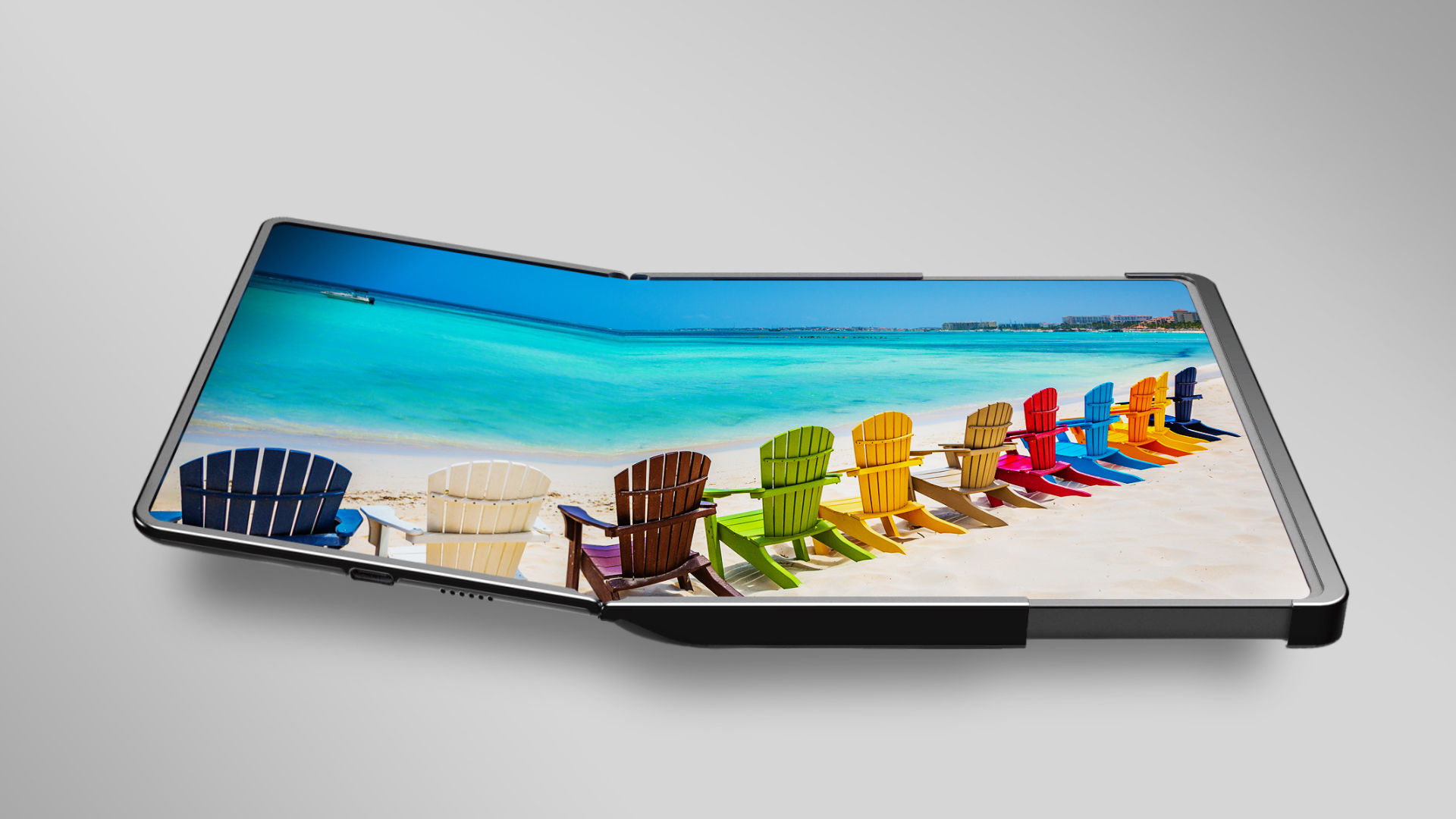
Rumors suggest Google has a foldable smartphone planned for 2023. It will reportedly be called the Pixel Fold. As per the leaks, the device will have a design similar to OPPO’s Find N and will be powered by a Tensor chipset. Now, a new report is here with the display specifications of the upcoming Google foldable. Here are the details.

91Mobiles, citing developer Kuba Wojciechowski, claims that both the inner and outer screens of the upcoming Google Pixel Fold will be equipped with Samsung-made displays. The large screen on the inside will support a resolution of 1840×2208 and measure 123mm x 148mm. The display is claimed to attain a peak brightness of up to 1200 nits, with an average brightness of 800 nits.

Google Pixel Foldable Smartphone Render
Google Pixel Fold Render

Further, the report suggests the Pixel Fold’s internal display will support a high refresh rate. It may go up to 120Hz. The publication did not reveal any details about the other hardware specs of the device.

A recent leak revealed the Pixel Fold may have triple cameras on the back, comprising a 64MP IMX787 primary sensor, a 12MP IMX386 ultrawide unit, and a 10.8MP S5K3J1 telephoto sensor. The inner camera of the device is said to use an 8MP IMX355 sensor, while the outer camera on the front may sport an S5K3J1 sensor.

The foldable will likely be powered by a Tensor chipset. According to the Android 12 beta source code, it uses the same hardware as the Pixel 6. It is also possible that the Pixel Fold will come equipped with the third unannounced Tensor chip, due out in 2023.

Reports suggest the Pixel Fold will arrive by March 2023 rather than this year. The foldable has not yet been officially confirmed by Google. We hope to learn more details in the near future.

RELATED:

Brazil Court Fines Apple $19 million for shipping iPhones without chargers

Last month, the Justice Ministry in Brazil fined Apple $2.34 million for selling iPhones without chargers and also ordered the company to stop selling any iPhone that does not come with a charger in the box. Today, the Cupertino company was again slapped with a huge fine for the very same thing.

As per a Reuters report, Brazil’s Sao Paulo civil court on Thursday fined Apple 100 million reais ($19 million) and ordered that new iPhones sold in the country must come with battery chargers.

In his ruling, Judge Caramuru Afonso Francisco also ordered Apple to provide chargers to all consumers in Brazil who purchased iPhone 12 or iPhone 13 devices in the past two years. However, it is not a final decision and can be appealed further.“It is evident that, under the justification of a ‘green initiative,’ the defendant imposes on the consumer a required purchase of charger adaptors that were previously supplied along with the product,” said the court’s decision.

Apple was previously fined nearly $2.5 million by Brazil’s justice ministry over the same issue, and it was barred from selling the iPhone 12 and 13 without chargers. In response to this, the tech giant said that not including a power adapter with the ‌iPhone‌ has environmental benefits and cuts down on waste.

With the 2020 launch of the iPhone 12 lineup, Apple ceased to provide chargers with its phones. Other manufacturers like Samsung and Google also followed the lead and stopped including power adaptors with their premium devices.

In related news, EU legislators recently approved a new directive requiring manufacturers to offer USB-C as a common charging port across a wide range of devices by 2024. This will force Apple to switch over to USB-C chargers for its upcoming iPhones.

RELATED: 

Paris Rhône 4K UHD Ultra Short Throw Laser Projector is now available for Pre-Order

The Paris Rhône Laser Projector is a 4K UHD Ultra Short Throw Lazer projector that can transform any space into a movie theater. The brand Paris Rhône is known for its innovative and smart gadgets. Even before the advent of the 21st century smart home products, Paris Rhône made advanced smart technology devices that helped in bettering the life of the average man. And now with their latest Laser Projector, they have designed a smart device that takes your entertainment and work quotient to the next level.

Paris Rhône Laser Projector

This advanced laser projector comes with ultra-short-throw technology that projects 80″ to 150″ large screens at a close distance of 5.4″ to 18.8″ from the wall. This means you don’t have to worry about finding the perfect spot for your projector as any and every wall space can be used to project your favorite video and images. The device features 4K resolution with 8.3million pixels and HDR 10, which gives you crisp images with rich details. It adopts a 100% Rec.709 color gamut to completely display rich and vivid colors and thanks to its wide color gamut, you can optimize your 4K viewing experience with accurate color expressions.

PS: Here is a promotion for this laser projector on the official website:

Link: Paris Rhône Laser Projector

Promotion price: $2399
Page coupon: $200
Code: PETV400 ($200 off)
Final price: $1999
Valid time: October 31st(PST)

Paris Rhône Laser Projector Paris Rhône Laser Projector can easily replace your TV. The device comes with 2000 ANSI lumens brightness that enhances image quality when streaming all your movies, even during the daytime thereby giving you an unmatched visual experience. It features a high contrast of 3000:1, which clearly projects more details in deep shadows and bright highlights. Equipped with two 25W powerful drivers that support Dolby audio and DTS decoding, the Paris Rhône Laser projector brings you cinematic stereo sound that compliments its amazing 4K visuals.

Paris Rhône Laser Projector

The projector comes with Motion Smoothing Technology that gives you a higher frame rate and makes your videos fluid by reducing laggy and blurry images. Thus with Paris Rhône Laser Projector, you can enjoy your favorite sports live without worrying about delays and lags. The device features a 60Hz refresh rate that provides highly responsive gameplay with low latency.  So enjoy an indoor games night with your friends with this projector. 

Paris Rhône Laser Projector

Paris Rhône Laser Projector has a long lamp life of 25,000 hours, which is 10 times longer than other common bulbs. Thus on average, you can enjoy more than 12,000 movies with this projector. However even though you have an extraordinarily strong and powerful lamp, you don’t have to ever worry about your vision and eye health as the device comes with two built-in intelligent PIR motion sensors that automatically reduce brightness when you approach the projector.

For more information on the product, and specifications check out the official Paris Rhône website. The projector is now available for pre-order for $2,399 only. 

Update: here is a coupon code to get this projector at $1999: PETV400.

Paris Rhône Brand Story:

Established in the 1915s the Paris-Rhône Industrial Company was created in Villeurbanne, France. The brand which was always ahead of its time launched its first vacuum cleaner in 1925.  Paris-Rhône VPR, the first electric tricycle developed by Paris Rhône, was launched in 1941 followed by the construction of a large building of 5,000 square meters of 2 floors for their home appliance sector. The brand’s main product line includes household and industrial vacuum cleaners, polishers, and coffee grinders. By 1970-80, they introduced electric knives, dishwashers, stick vacuum cleaners, cooking utensils, etc. 

Paris Rhône Laser Projector

In the 21st century, Paris Rhône began to implement a brand globalization strategy, taking Paris, France as its design and R&D center, and China as its main production base, and started to sell products both online and offline. After decades of continuous efforts, Paris Rhône has formed a household appliance brand with Europe as the starting point of its brand strategy and North America as the core of its sales. Now, Paris Rhône products are sold in more than 30 countries in Europe, North America, the Middle East, and the Asia Pacific. 

Samsung Galaxy A14 5G could launch soon, spotted on Wi-Fi Alliance site

Samsung is expected to launch several budget smartphones very soon. The company is already reported to be working on the Galaxy A04e and Galaxy M04. And today the Samsung Galaxy A14 5G has been spotted on the Wi-Fi Alliance certification site, hinting that the launch of the handset might just be around the corner. Previous reports suggest the A14 5G will debut as the company’s cheapest 5G smartphone and will feature a large LCD display.

Samsung Galaxy A14 5G has been spotted on the Wi-Fi Alliance certification website, with model number SM-A146P (Via MySmartPrice). The listing does not reveal much information about the smartphone. However, it does mention that the upcoming device will support 2.4GHz and 5GHz Wi-Fi. Furthermore, the certification also mentions that the A14 5G will run Android 13 out of the box. The OS will likely have One UI 5.0 skin on top.

Samsung Galaxy A14 5G wifi alliance

Earlier this month, a report report shared some renders of the smartphone, which revealed its design as well as a few key specifications. As can be seen in the image, the Galaxy A14 has a waterdrop notch and thick bezels on the bottom. It has the volume rocker and power button on the right side, while the left remains empty. On the bottom, the device features a USB-C port, a 3.5mm headphone jack, and a speaker grille. The smartphone has a triple camera setup on the back. They are styled as three separate raised rings.

Galaxy A14

Details about the upcoming Samsung smartphone are still pretty short. Rumors suggest the device will debut as the firm’s most affordable 5G smartphone. We should be learning more about it in the coming days. While you’re here, check out our OnePlus smartphone buying guide.

RELATED:

Upcoming OnePlus Smartphones: OnePlus 11 Pro, OnePlus 11R, & More

Gone are the days when OnePlus used to only release flagship killer smartphones. The brand is now known for phones spread across multiple price segments.

The Oppo-owned brand is expected to launch new handsets in the coming months. Not only the names but also the specs of these devices have leaked recently.

Therefore, we already know a few details about these forthcoming OnePlus phones. The company is anticipated to debut not only a premium model but also a flagship killer, a mid-ranger, as well as a budget model.

Without any further ado, let’s take a look at these handsets one by one.


Upcoming OnePlus Smartphones


1. OnePlus Nord N300

OnePlus Nord N200 5G Featured A
OnePlus Nord N200

The OnePlus Nord N300 has been confirmed by the company to launch in the US in November. The brand has also revealed the device’s key features.

It is said to arrive with a MediaTek chipset and a 90Hz refresh rate display. Also, it will carry support for 33W fast wired charging.

The handset could be the recently certified OnePlus-branded smartphone with model number CPH2389. As per FCC and Bluetooth SIG, this phone will come with dual-band WiFi, Bluetooth 5.3, NFC, and multiple 5G bands (n2, n25,  n41,  n66,  n71,  n77).

It is expected to share some or even most of its specs with its predecessor OnePlus Nor N200 from last year.


2. OnePlus 11 Pro

OnePlus 11 Pro 5G
OnePlus 11 Pro | Source: @OnLeaks via Smartprix

The OnePlus 11 Pro is tipped to go official by the end of 2022. Unsurprisingly, it is said to house the yet-to-be-announced Qualcomm Snapdragon 8 Gen 2 chipset.

Further, the device’s design has also leaked via 3D CAD renders. According to these images, OnePlus’ next flagship smartphone will feature a new design sporting a circular camera island.

The same source has also disclosed the specs of the handset. It is said to arrive with a 6.7-inch 120Hz QHD+ AMOLED display, up to 16GB RAM, 50MP primary camera, 48MP ultra-wide camera, 32MP 2x telephoto camera, and 16MP selfie camera.

Last but not least, it is said to come with an in-screen fingerprint sensor, a 5,000mAh battery, and 100W fast-wired charging support.


3. OnePlus 11R

Oneplus Ace / Oneplus 10R
OnePlus 10R

OnePlus is tipped to continue the R lineup of smartphones with the upcoming OnePlus 11R. In fact, the key features of this phone have also leaked.

It is said to arrive with a Qualcomm Snapdragon 8 Plus Gen 1 SoC, up to 16GB RAM, a 6.7-inch 120Hz FHD+ AMOLED display, a 5,000mAh battery, and 100W fast-wired charging support.

It is tipped to house a triple camera system comprising a 50MP primary shooter, an 8MP ultra-wide unit, and a 2MP macro snapper. On the front, it is expected to sport a 16MP camera.

Unfortunately, the release timeline of this device is a mystery, just like its design.


4. OnePlus Nord 3

OnePlus Nord 2T 5G
OnePlus Nord 2T

We last heard about the OnePlus Nord 3 in August. However, the launch timeline of the handset is still not known and so is its design.


The phone is tipped to come with a 6.7-inch 120Hz FHD+ AMOLED display, MediaTek Dimensity 8100 chip, and up to 12GB RAM. It is said to offer a 16MP front-facing camera and a triple camera system consisting of a 50MP Sony IMX766 primary sensor, an 8MP ultra ultra-wide unit, and a 2MP tertiary sensor.

Finally, a 4,500mAh battery is said to fuel the device with support for 150W fast wired charging.


RELATED:


Xiaomi launches the MIJIA Smart Foldable Foot bath with massage & heating functions

Xiaomi’s MIJIA brand has over time proven to be a silent cash cow for the company. Most of the products released under the smart ecosystem product segment are often very popular. Thus, it beats our imagination as to why Xiaomi is yet to prioritize the segment by releasing most of its products outside China. The Chinese brand has launched yet another product that will likely receive wide patronage if it finds its way outside China. The product is dubbed MIJIA Smart Foldable Foot bath.

MIJIA Smart Foldable Foot bath

The MIJIA Smart Foldable Foot bath is different from the traditional manual foldable foot bath in that it is equipped with an electric double screw rod that can be smoothly lifted and lowered by an electric driver, without the need to manually unfold and fold it.

The foldable foot bath has a built-in automatic massage movement, which can be used to achieve 3 massage areas and 3 massage techniques. It is very convenient to relax and decompress when you get home from work.MIJIA Smart Foldable Foot bath

It also supports three-segment massage and DPS hydroelectric separation heating technology. Specifically, the three-segment massage can achieve point-to-point coverage of the soles of the feet, arches, and heels, which is officially said to be equivalent to a three-handed massage at the same time.

Furthermore, it is equipped with a foot bath soft rubber massage pad, which can prevent the soles of the feet from directly contacting the massage disc. This also prevents the massage head from wearing the skin on the soles of the feet.MIJIA Smart Foldable Foot bath

More importantly, the MIJIA Smart Foldable Foot bath does not require frequent hot water changes. It comes with a DPS heating system and an all-cast aluminum heat-conducting layer for faster heating. It also features a built-in water temperature detector and butterfly thermostat. There is also support for 35-48°C temperature adjustment as well as auto timing between 5 and 60 minutes.MIJIA Smart Foldable Foot bath

Just like most MIJIA products, this foot bath is a smart home gadget as it can be controlled using a voice prompt and via the MIJIA app. It can even be remotely operated through the MIJIA app even if you are away from home. You can get it running while on your way home, set a time for it to start running, and adjust the temperature.MIJIA Smart Foldable Foot bath

In terms of design, the MIJIA Smart Foldable Foot bath has a height of 35cm in its unfolded state and a height of 18cm when folded. It covers an area of ​​about 0.16m². At the same time, it has a 55cm telescopic handle and a universal wheel, which can be dragged like a suitcase.

Finally, the MIJIA Foot bath supports one-button drainage and leakage protection. It is also equipped with a double-sided foldable thermal insulation cover and a detachable filter.

The product was initially priced at 699 yuan (~$97) but is currently available on TMall for 799 yuan (~$111) in China.

Related:


Pixel 7 Pro camera bags top score in DxO Mark’s camera ranking results

Google launched its flagship Pixel 7 series last week. The lineup included a regular and Pro variant. Now the Pixel 7 Pro has bagged the top overall score in camera ranking according to benchmarking platform DxO Mark. The smartphone scored 147 points globally and the Honor Magic4 Ultimate also matched the same score. This means that both Pixel 7 Pro and Honor Magic4 Ultimate are tied at the number one spot. Last month’s iPhone 14 Pro Max came second in the last by just a point short. 

Google Pixel 7 Pro

Google’s Pixel phones are known for photography prowess. The Pixel 7 Pro managed to score 147 and 143 points in the photo and video categories respectively. As per DxO Mark, the smartphone packs significant improvements over the last year’s Pixel 6 Pro. The latest generation features software tuning that is said to contribute to better zoom and video quality. The device holds the top score in the benchmark platform’s Friends and Family use case with strong contrast preservation, skin tone reproduction, and better exposure. The smartphone delivered a consistent camera experience across all usage cases and features. 

DxO Mark also states that the Pixel 7 Pro offers fast and accurate autofocus capabilities along with face tracking. The zoom performance has also been improved with good details at all zoom distances. Apart from the upsides on the Pixel 7 Pro’s camera performance, there are a few downsides as well. Video performance tends to be underexposed in low light with the main camera. There’s also a slight loss of detail and image noise at close-range zoom. The front camera also produced out-of-focus images when shooting at close range. 

To recall the camera specifications, the Pixel 7 Pro sports triple rear cameras. The setup comprises a 50MP main snapper with OIS, a 12MP ultra-wide-angle lens, and a 48MP telephoto unit with 30x zoom. There is an 11.1MP selfie snapper. 

Related:


Nokia C31 with a UNISOC SC9863A1 chip launched in China, starts at ¥799 (~$111)

HMD Global had at the start of September this year announced the Nokia C31 alongside the Nokia G60 5G and X30 5G for the global market. The Finnish company has now announced the affordable Nokia C31 in China.Nokia C31

The China version of the Nokia C31 is available in two memory configurations – 4GB RAM + 64GB storage and 4GB RAM + 128GB storage options. The base model is priced at 799 yuan (~$111) as against $129 on the global turf while the higher variant will be sold in China for 869 yuan (~$121). The two variants will go on sale from 10 am on October 15.Nokia C31 China

In terms of design and specifications, the Nokia C31 packs a 6.74-inch LD display with a resolution of 1600 x 720 pixels and support for a 60Hz refresh rate. The display has a waterdrop notch design which is home to a 5MP selfie shooter. At the rear, it adopts a 3D water ripple design to prevent fingerprint marks. The device packs a rear-mounted fingerprint sensor and a triple camera setup nested at the upper left corner of the panel. The cameras are stacked in a vertical orientation and consist of a 13MP primary camera, a 2MP depth, and a 2MP macro lens.Nokia C31

The C31 is powered by a UNISOC SC9863A1 processor paired with the PowerVR GE8322, which can basically meet various daily routine use. The device also supports up to 512GB of memory expansion.

Under the hood, the Nokia C31 crams a built-in 5050mAh battery. The device supports 10W charging and has its own “power-saving” and “super power-saving” modes. In a low battery state, the phone will save power by adjusting the visual display effect and restricting background applications to ensure that the use of key functions of the device is not affected.Nokia C31

Furthermore, the Nokia C31 supports IP52 level water and dust protection, 4G dual SIM/ dual standby, Bluetooth 4.2, and Wi-Fi 4. It also comes with the legendary 3.5mm headphone jack and charges over a micro-USB interface.

The budget smartphone is available in three color options – advanced gray, Nordic blue, and mint green.

RELATED:


Nothing Head (1) over-the-ear headphones concept renders surface online, could launch in future

Nothing’s next product is reportedly expected to be headphones. Founder Carl Pei shared a concept render of the audio device on Twitter. The renders have been made by the folks at Yanko Design, an online magazine that covers international product designs. Pei’s tweet was quote tweeted by Nothing asking its followers if they should make a headphone. This majorly suggests that the company may go ahead and launch over-the-ear headphones in the future. The upcoming offering may be called Nothing Head (1). 

The renders reveal the Nothing Head (1) in Black and White colour variants. The audio device is seen with a transparent design similar to the Phone (1) and Ear (1). You can see LED strips like the Glyph interface on the earcups surrounding the wireless charging coils. The audio driver is said to be housed underneath the coil. The headphones are said to respond to touch gestures and there is also a wheel at the bottom that could work as a volume control. 

Additionally, alongside the headphones, Yanko Design also shared a concept render of the charging stand. It sports an angled design that lets users dock the audio device. The wireless coils built into the sides align with the coils on the headphones. There is also a horizontal charging surface on the back of the stand that can be used to charge smartphones and earbuds. Lastly, the Head (1) also comes with foldable earcups that be stored away in a transparent case 

Related:

Via

Google Pixel 7 Pro vs Pixel 6 Pro – Specs Comparison

Now that the new Pixel smartphones are officially available for purchase, users who had the Pixel 6 Pro might be itching to upgrade to the new model. The Pixel 7 Pro brings a number of significant upgrades over its predecessor, the biggest one being in the processing department, with the inclusion of the second-gen Google Tensor G2 processor. The phone also promises longer software support than the Pixel 6 Pro model, with support going on till 2025 instead of 2024 on the Pixel 6 Pro. 

There are a few more differences in terms of the overall dimensions and design, display brightness, and camera features. But overall, except for the fingerprint display bug on the Google Pixel 6 Pro, it was a good phone, especially in the camera department. 

So today, let’s take a closer look at how the Pixel 7 Pro compares to the older model from 2021 in this Pixel 7 Pro vs Pixel 6 Pro comparison. 

Pixel 7 Pro vs Pixel 6 Pro

Google Pixel 6 Pro vs Pixel 7 Pro

  Google Pixel 6 Pro Google Pixel 7 Pro
DIMENSIONS AND WEIGHT 163.9 x 75.9 x 8.9, 210 grams 162.9 x 76.6 x 8.9 mm, 212 grams
DISPLAY 6.7 inches,1440 x 3120p, AMOLED display – 90Hz, HDR10+ 6.7 inches,1440 x 3120p, AMOLED display – 90Hz, HDR10+, 1500 nits (peak)
PROCESSOR Google Tensor 5nm clocked at 2.8GHz Google Tensor G2 5nm clocked at 2.85GHz
MEMORY 8 GB RAM, 128 GB – 8 GB RAM, 256 GB 12 GB RAM, 128 GB – 12 GB RAM, 256 GB – 12 GB RAM, 512 GB
SOFTWARE Android 13, 3 years support till 2024 Android 13, 3 years support till 2025
CONNECTIVITY Wi-Fi 802.11 b/g/6e, Bluetooth 5.2, GPS Wi-Fi 802.11 b/g/6e, Bluetooth 5.2, GPS
CAMERA Triple 50 MP OIS + 48 MP telephoto OIS + 12 MP ultra wide

11.1 MP front camera

Triple 50 MP OIS + 48 MP telephoto OIS + 12 MP ultra wide

10.8 MP front camera

BATTERY 5000 mAh, 30W 5000 mAh, 30W
ADDITIONAL FEATURES Dual SIM slot, nano + eSIM Dual SIM slot, nano + eSIM


DESIGN

The Pixel 7 Pro and the Pixel 6 Pro might look quite similar to each other. But there are some differences that set the new device apart from its predecessor. 

The basic design of the Pixel 7 Pro is still inspired by the Pixel 6 Pro’s horizontal camera bar. But this time around, Google decided to upgrade the camera bar to polished aluminum. To recall, the horizontal camera bar on the Pixel 6 Pro was made out of glass, which made it more prone to scratches. So this is a welcome change for most users and gives the Pixel 7 Pro a more premium look. 

The back and front get Corning’s Gorilla Glass Victus protection on both devices. The Pixel 7 Pro comes in Obsidian, Snow, and Hazel color options. On the other hand, the Pixel 6 Pro offered Sorta Sunny, Cloudy White, and Stormy Black color options last year. Both the devices are IP68 certified, so they are dust and water-resistant. 

Coming to the dimensions, the Pixel 7 Pro at 162.9 x 76.6 x 8.9 mm is slightly narrower than the Pixel 6 Pro but is a few millimeters taller. They weigh around the same figure, with the Pixel 7 Pro weighing 212 grams vs 210 grams on the Pixel 6 Pro model. 

Clearly, if you look at the design alone, the Pixel 7 Pro looks a bit more refined and premium than its predecessor. But for many users, this difference might not be very significant and it’ll depend upon an individual’s preference to decide which phone is the better-looking model.  


DISPLAY

The Pixel 7 Pro comes with a large 6.7-inch pOLEd panel with QHD+ resolution and a high 120Hz refresh rate. The Pixel 6 Pro has an identical display, but there’s one major difference. Google has increased the peak brightness on the Pixel 7 Pro to up 25% when compared to its predecessor and now boasts up to 1500 nits. Like its predecessors, the Pixel 7 Pro also comes with an Always On Display.

One of the biggest upgrades this year is the use of a new under-display fingerprint sensor on the Pixel 7 Pro. To recall, Pixel 6 Pro’s fingerprint sensor had a lot of complaints, which the new model will not suffer from. 

Overall, both the displays are very good for their price, and you can’t really go wrong with either one of them. 


SPECS

Hardware is one area where the two phones differ significantly. This is because the Pixel 7 Pro comes with the latest Google Tensor G2 chip inside with Titan M2 security chip, bringing better performance over the first-generation model, especially in AI and ML tasks. The Tensor G2 comes with 2 x Cortex-X1 cores, 2 x Cortex-A78 cores, and 4 x Cortex-A55 cores. It may not be the fastest chip in the market, but it’s powerful enough to handle intensive apps with ease.  

In comparison, the Pixel 6 Pro comes with the first-generation Tensor chipset, which is also good but lacks support for some of the newer features found on the latest Pixel 7 series. 

When it comes to the RAM configuration, the Pixel 7 Pro maxes out at 12GB of RAM, with up to 512GB of UFS 3.1 storage on board. This is identical to what was offered on the Pixel 6 Pro last year. 

The Pixel 7 Pro runs on the latest Google Android 13 OS. While being a year-old device, the Pixel 6 Pro can also be upgraded to the new Android 13 version. Also, since Google has promised at least three OS updates and 5 years of security updates on both devices, the Pixel 7 Pro should get Android version updates till 2025 while the Pixel 6 Pro’s major Android updates should last until 2024.


CONNECTIVITY

In terms of connectivity, both phones come with Wi-Fi 6e support, Bluetooth 5.2, aptX HD codecs support, NFC, and a USB-C 3.2 port at the bottom. They also feature dual SIM via nano and eSIM. 

You also get an under-display fingerprint sensor along with other sensors like gyro, proximity, compass, and barometer.


CAMERAS

The Pixel 7 Pro comes with a similar camera setup as its predecessor. It still features a triple-camera module with a 50MP primary shooter, with 12MP ultra-wide camera, and a 48MP telephoto camera. While on paper the Pixel 6 Pro has very similar specs, the new model brings a wider ultra-wide camera (125-degree FoV vs 114-degree FoV), and a better telephoto lens with support for up to 5X optical zoom (vs 4X on the Pixel 6 Pro) and 30X Super Res Zoom. 

The Tensor G2 chip also enables some new features on the Pixel 7 Pro like Macro Focus, Photo Unblur, and even Cinematic Blur. Other camera features common to the two devices include Magic Eraser, Real Tone, and Face Unblur. 

Another big change is in the video recording department as the Pixel 7 Pro can now record videos in 4K 60fps using all three sensors on board. It also adds a 10-bit HDR mode. 

As for the front camera, you get a 10.8MP sensor on the Pixel 7 Pro, while the 6 Pro had an 11.8MP shooter. 


BATTERY

The Pixel 7 Pro comes with a large 5000mAh battery with 30W wired and 23W wireless charging. This is the same capacity and charging speed as the Pixel 6 Pro. 

Note that in most regions, Google doesn’t ship a charger inside the box. 


PRICE

The Pixel 7 Pro starts at $899 in the USA. This price is similar to the starting price of the Pixel 6 Pro but being a year-old device, its available for a much cheaper price now around $649.

In India, the Pixel 7 Pro will cost you INR 84,999, but the Pixel 6 Pro is already available on Amazon for less than INR 60,000 pricing. 


Google Pixel 7 Pro vs Pixel 6 Pro – VERDICT

The Pixel 7 Pro brings considerable upgrades in the processing and camera departments, so it makes sense to pay a few hundred dollars more to get the latest model over its predecessor. However, if you already have the Pixel 6 Pro, the upgrades may not be significant enough to purchase the new device.


RELATED:


*Please Note: When you buy something using the links in our articles, we may earn a small commission at no cost to you.


Best Premium Smartphones in India

While we have already shared our views on some of the best smartphones under varying  budgets, today we bring you a list of some of the best premium smartphones in India. So let’s have a look.

Apple iPhone 14 series

The Apple iPhone 14 series is currently one of the latest flagship series of smartphones that were released in the global market. With the 2022 iPhone lineup, the company brought a number of major changes in some models while others saw barely any difference. Starting with the higher end models, the iPhone 14 Pro and iPhone 14 Pro Max are easily one of the top contenders for a true premium smartphone experience in the market.

iPhone 14 Pro & Pro Max

One can expect top notch performance and optimizations from Apple, while also getting the first iPhone that drops the notch in favor of the Dynamic Island, which is basically refers to the new punch hole cutouts and even the number of functionality and features that comes along with it. On the other hand, the iPhone 14 sees no substantial upgrades over the previous generation iPhone 13, except for a slightly refreshed chipset.

Apple
iPhone 14 & iPhone 14 Plus

The only change in the series overall is the iPhone 14 Plus, which replaces the iPhone mini model. But since the lower end models do not bring a substantial change to warrant an upgrade for iPhone 13 users. So we can even recommend the iPhone 13 lineup as well, which has recently been seeing sizeable discounts in India thanks to the ongoing festive season sales. Keep in mind that the 2021 model will still offer a premium flagship experience. The based iPhone 14 goes for 79,900 INR in India, while the iPhone 14 Plus costs 89,900 INR. The iPhone 14 Pro has a price tag of 1,39,900 INR and the iPhone 14 Pro Max has a price tag of 1,49,900 INR.

WHERE TO BUY

Buy iPhone 14 Pro Max @AmazonIN @Walmart @AmazonUK

Buy iPhone 14 Plus @AmazonIN or @Walmart @AmazonUK

Buy iPhone 14 @AmazonIN @Walmart @AmazonUK

Buy iPhone 14 Pro @AmazonIN or @Walmart @AmazonUK


Samsung Galaxy S22 series

We can’t have a flagship list without including Samsung‘s flagship smartphones. With the Galaxy S22 series, the South Korean brand is basically offering a premium handset experience that may fit the needs of different people. Talking about the specs first, the entire lineup features either the Exynos 2200 (Europe) or the Qualcomm Snapdragon 8 Gen 1 SoC (ROW). The Galaxy S22 series, includes the Galaxy S22, Galaxy S22+, and the Galaxy S22 Ultra.

Best Premium Smartphones
Samsung Galaxy S22

The primary difference between the three models are the sizes, with the base variant having a 6.1 inch panel, while the Plus model having a 6.6 inch screen, and the Ultra model sporting a 6.8 inch display. Since Samsung is known for its AMOLED panels, the series offers some of the best smartphone display in the market. Notably, the Galaxy S22+ and Galaxy S22 Ultra even offer one of the highest brightness on a smartphone’s screen (with 1750 nits of peak brightness).

Best Premium Smartphones
Samsung Galaxy S22 Ultra

For those looking to buy a premium handset that isn’t too large, the Galaxy S22 is one of the best compact smartphones in the market. But for those looking for a larger flagship device, the Galaxy S22+ is a worthy consideration. There is even an option for the Galaxy Note devices, with the Galaxy S22 Ultra being offered along with a stylus for the productivity-oriented users. The base model starts from 75,999 INR, while the Plus model is priced at 88,999 INR. The top-end Ultra model costs INR and one can find the entire series on Amazon India.

WHERE TO BUY

Galaxy S22 Ultra @AmazonIN @AmazonUS @AmazonUK

Galaxy S22 @AmazonIN or @AmazonUS @AmazonUK


Google Pixel 7 series

Following the iPhone 14 release, Google soon followed up with its own flagship smartphone release. This year, it announced the Pixel 7 and Pixel 7 Pro, which aimed to once again showcase what a true Google phone or an Android phone with top notch software is like. The Pixel 6 series was the first generation of Pixel to feature the company’s proprietary chipset and the Pixel 7 lineup retains this, with a second gen Tensor G2 SoC. While this doesn’t bring a large performance bump in terms of raw power, it helps boost the more AI powered features that these phones offer, which is also what it is known for.

Best Premium Smartphones
Pixel 7 & Pixel 7 Pro

Furthermore, it also arrives with new and improved cameras, with the Pixel 7 Pro topping the DxOMark by tieing with the Honor Magic 4 Ultimate. So, we can safely assume that this is one of the best smartphone cameras. If this alone isn’t attractive enough, you get a number of exclusive Google features like speech recognition, Direct My call, and even some exclusive camera features like Photo Unblur, which lets you basically unblur any photo on your Pixel 7. This joins the likes of existing features like Magic Eraser. Both models also come with IP68 water and dust resistance rating. The Pixel 7 starts from 59,999 INR, while the Pixel 7 Pro goes for 84,999 INR.


Vivo X80 Pro

The Vivo X80 Pro is the top flagship offering from the Chinese brand. With the X80 series (excluding the X80 Pro+ in India), the company has offered premium handsets that feature top notch specs. The X80 Pro model features the Snapdragon 8 Gen 1 SoC, Quad HD AMOLED Display, and 80W fast charging support. The 6.78 inch panel also supports 120Hz refresh rate, HDR10+, and an impressive peak brightness of 1500 nits.

Best Premium Smartphones
Vivo X80 Pro

Although, despite all of these robust features, its unique selling point is undoubtedly its camera setup. It has a quad camera setup with 50 megapixel primary sensor, 48-megapixel ultra wide angle lens, 12-megapixel telephoto lens, and an 8 megapixel periscope zoom lens as well. The camera module also features Zeiss optics and Zeiss T* lens coating, with its camera performance being praised across the board. The smartphone is currently listed on Flipkart and is priced at 79,999 INR.

WHERE TO BUY

Vivo X80 Pro @Flipkart @AmazonUK


Samsung Galaxy Z Fold 4 & Galaxy Z Flip 4

Since we’re talking about premium phones that offer a flagship experience, the Galaxy Z Fold 4 and Galaxy Z Flip 4 are a pair of two true ultra premium foldable phones. Both of these features various improvements over their predecessors, which comes in the form of upgraded cameras, larger batteries, and even Android 12L, which is an Android OS made specifically for devices with large screens.

Samsung galaxy z fold 4
Galaxy Z Fold 4

Apart from having a unique form factor than the other models in this list, these also offer a premium and durable design with its Armor Aluminum frames and hinge, which is also complimented by the exclusive Corning Gorilla Glass Victus+ for the front and rear glass panels. The Galaxy Z Fold 4 is the more expensive model of the two and features a notebook-like horizontally folding panel.

Samsung Galaxy Z Flip 4
Galaxy Z Flip 4

Both its out and inner displays are also made from Samsung’s top notch AMOLED 2X panels and offer 120Hz high refresh rate. Meanwhile, the Galaxy Z Flip 4 model has a clamshell vertically folding display that also features the same display specs, but is paired with a smaller outer panel that serves interesting features and functions of its own. Both devices are powered by Qualcomm’s latest and greatest Snapdragon 8+ Gen 1 chipset and offer IPX8 water resistance. The Galaxy Z Fold 4 starts from 1,54,999 INR in India, while the Galaxy Z Flip 4 starts from 89,999 INR.

WHERE TO BUY

Galaxy Z Fold 4 @AmazonIN @AmazonUS @AmazonUK

Galaxy Z Flip 4 @AmazonIN or @AmazonUS @AmazonUK


RELATED:


*Please Note: When you buy something using the links in our articles, we may earn a small commission at no cost to you.