Advertisement

BenQ launches Mac-focused 32-inch monitor with 120Hz refresh rate, Thunderbolt 4

BenQ has introduced the MA320UG in India, expanding its Mac-focused monitor lineup with a display aimed at creators and professionals. Designed for users who spend hours editing videos, creating graphics, and managing multiple applications, the new monitor combines a large screen, high refresh rate, and Mac-centric software features to create a more seamless workspace.

BenQ MA320UG specifications and features

BenQ MA320UG
BenQ MA320UG

The BenQ MA320UG features a 32-inch 4K UHD display with support for a 120Hz refresh rate, making it suitable for video editing, animation work, motion graphics, and everyday productivity. The larger screen provides extra room for timelines, editing tools, reference windows, and multitasking without feeling cramped.

For colour-sensitive work, the monitor covers 98 per cent of the DCI-P3 colour gamut and offers a 2000:1 contrast ratio. BenQ has also equipped it with its Nano Gloss Panel technology, which is designed to improve visual depth and colour reproduction while helping reduce unwanted reflections. The display is specifically tuned to match the visual characteristics of macOS, helping maintain colour consistency between Mac devices and the external monitor.
The monitor supports Thunderbolt 4 connectivity with up to 96W power delivery, allowing compatible MacBooks to charge, transfer data, and connect to the display through a single cable. It also supports daisy-chaining for multi-monitor setups.

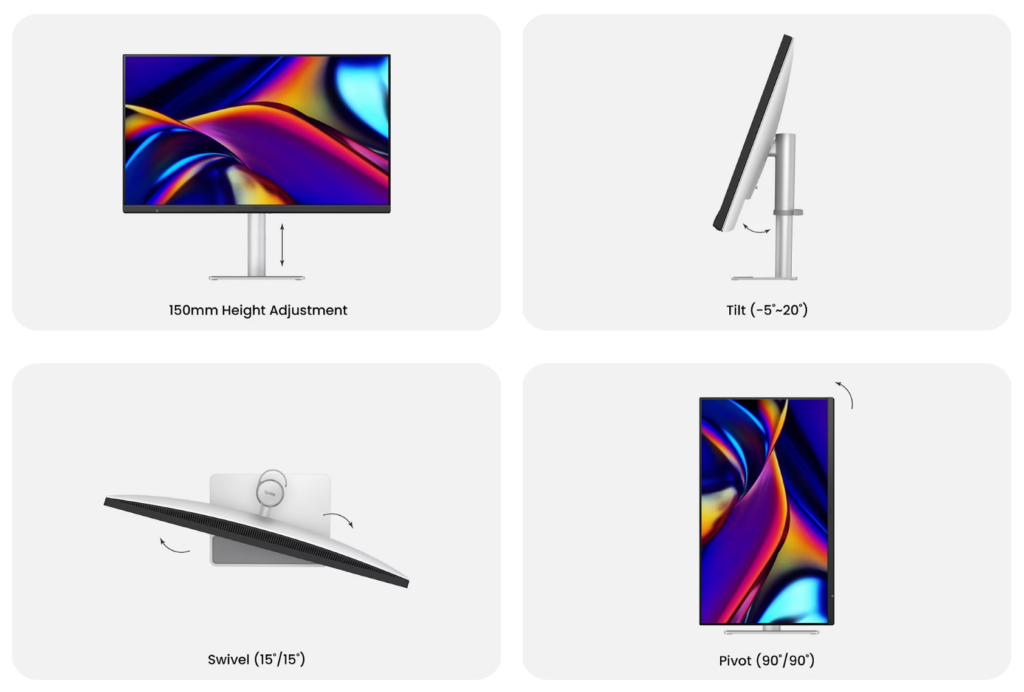
Another notable feature is Smart KVM, which enables users to control two connected systems with a single keyboard and mouse while transferring text, files, and images between devices. BenQ has also included a height-adjustable stand with 150mm of travel and support for Display Pilot 2 software for workspace management and Mac-specific controls.

BenQ MA320UG price and availability

The BenQ MA320UG is now available across India through authorised retailers, BenQ partners, and online platforms. The monitor carries a special launch price of Rs 84,998 (~$900).

For more daily updates, please visit our News Section.

Stay ahead in tech! Join our Telegram community and sign up for our daily newsletter of top stories! 💡
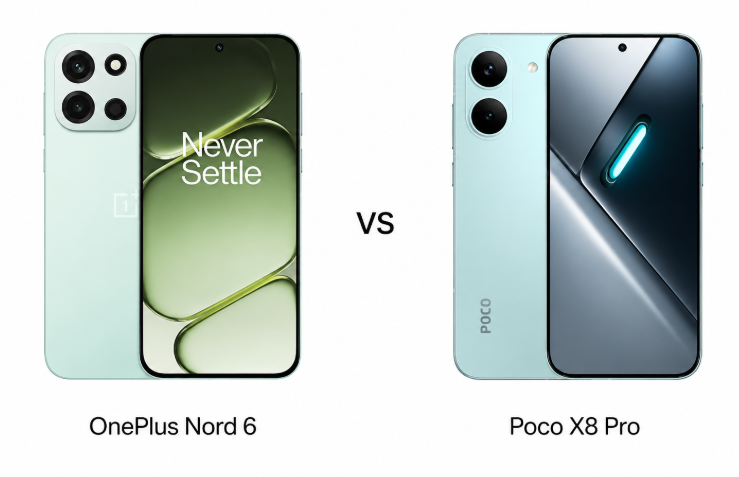
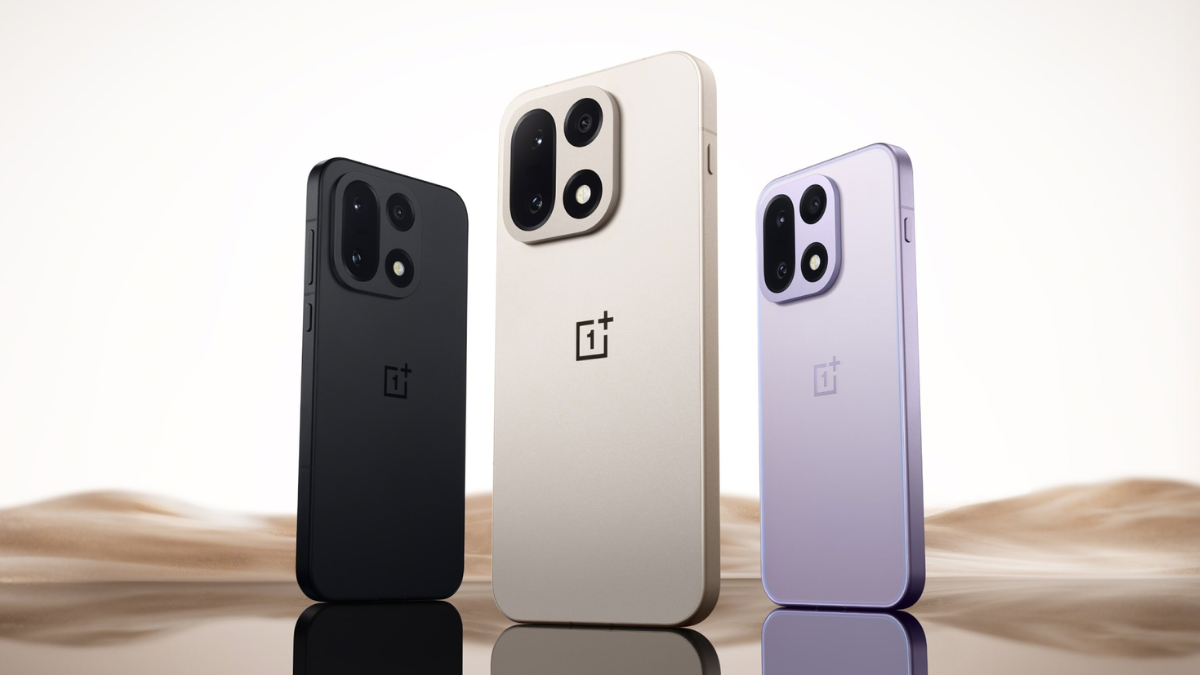
OnePlus Nord 6 vs Poco X8 Pro: Which Mid-Range Phone Should You Buy in 2026?

OnePlus Nord 6 and Poco X8 Pro bring flagship-inspired features to the upper mid-range segment. From powerful processors and AMOLED displays to massive batteries and fast charging, both phones offer plenty for their price. This comparison breaks down their design, performance, cameras, battery life, and value to find out which one comes out on top. 

Major Features:

CategoryOnePlus Nord 6Poco X8 ProWinner
Design & BuildPlastic frame, plastic back, Crystal Guard protection, IP68/IP69KAluminum frame, Gorilla Glass 7i, IP68/IP69KPoco – More premium frame
Display6.78-inch AMOLED, 165Hz, HDR10+, 3600 nits peak6.59-inch AMOLED, 120Hz, Dolby Vision, 3500 nits peakOnePlus – Higher refresh rate
Screen ProtectionCrystal Guard, Mohs Level 8Gorilla Glass 7i, Mohs Level 5OnePlus – Better scratch resistance
ProcessorSnapdragon 8s Gen 4Dimensity 8500 UltraOnePlus – More powerful chipset
GPUAdreno 825Mali-G720 MC8OnePlus – Stronger gaming performance
RAM & StorageUp to 12GB RAM, 512GB UFS 4.1Up to 12GB RAM, 512GB UFS 4.1Tie – Similar configuration
Rear Camera50MP OIS + 8MP Ultrawide50MP OIS + 8MP UltrawideTie – Similar hardware
Selfie Camera32MP AF, 4K video20MP, 1080p videoOnePlus – Better selfies and video
Video Recording4K 60fps rear, 4K selfie4K 60fps rear, 1080p selfieOnePlus – Superior front video
Battery7,500mAh Global / 9,000mAh India6,500mAhOnePlus – Massive capacity
Charging80W wired100W wiredPoco – Faster charging
Reverse ChargingUp to 27W (India model)27WTie – Similar capability
ConnectivityWi-Fi 7, Bluetooth 6.0Wi-Fi 6, Bluetooth 6.0OnePlus – Wi-Fi 7 support
AudioStereo speakersStereo speakers, Dolby Atmos, Hi-Res AudioPoco – Better audio features
DurabilityIP68/IP69K, MIL-STD-810HIP68/IP69KOnePlus – Additional certification
SoftwareAndroid 16, OxygenOS 16Android 16, HyperOS 3OnePlus – Cleaner software experience
Price/ValuePriced around $460 / ₹39,000Priced around $375 / ₹35,000Poco – Better value
OverallFlagship-level performance, huge battery, excellent selfie cameraPremium build, fast charging, strong valueOnePlus – More complete package
Disclaimer: Specs are based on available data. Actual performance may vary. Verify details from official sources before buying.

1. Design and Display

Build and Feel

The OnePlus Nord 6 and Poco X8 Pro both offer premium-looking designs backed by flagship-grade durability. Each device carries IP68/IP69K certification, providing strong protection against dust and water. The key difference lies in the materials. The Nord 6 uses a plastic frame and rear panel, while the Poco X8 Pro features an aluminum frame that gives it a more premium feel during everyday use. OnePlus counters with stronger display protection through its Crystal Guard glass, which is rated at Mohs level 8 and should provide better scratch resistance over time.

Display Quality

Both smartphones feature excellent AMOLED panels, but they focus on different strengths. The Nord 6 comes with a 165Hz refresh rate, making animations and gaming feel exceptionally smooth. The Poco X8 Pro offers Dolby Vision support, higher color depth, and stronger high-brightness performance, which benefits video streaming and outdoor visibility. Both displays are sharp and vibrant, making them excellent choices for media consumption.

Verdict

The Poco X8 Pro feels more premium thanks to its aluminum frame and multimedia-focused display features. The OnePlus Nord 6, however, offers stronger screen protection and a class-leading 165Hz refresh rate. Users focused on gaming may prefer the Nord 6, while entertainment enthusiasts may lean toward the Poco X8 Pro.

2. Specifications Including Battery

Performance

Performance is one of the biggest advantages of the OnePlus Nord 6. Powered by the Snapdragon 8s Gen 4 chipset and paired with UFS 4.1 storage, it delivers flagship-level speed for gaming, multitasking, and demanding applications. The chipset also benefits from strong optimization support across many popular games. The Poco X8 Pro’s Dimensity 8500 Ultra is a capable processor that handles daily tasks with ease, but it sits a step below the Snapdragon chip in overall power and graphics performance.

Battery and Charging

Battery life is a major strength for both devices. The global Nord 6 features a massive 7,500mAh battery, while the Indian model increases capacity to an impressive 9,000mAh. This gives it a significant endurance advantage. The Poco X8 Pro uses a 6,500mAh battery, which remains excellent for everyday use. Charging speed favors the Poco thanks to its 100W wired charging support, allowing users to get back to full power more quickly than the Nord 6’s 80W solution.

Verdict

The OnePlus Nord 6 offers stronger processing power and exceptional battery endurance, making it the better choice for heavy users. The Poco X8 Pro responds with faster charging, but the overall hardware package feels more powerful and future-ready on the OnePlus device.

3. Camera

Main and Secondary Lenses

On paper, both smartphones use a similar camera setup consisting of a 50MP primary sensor with OIS and an 8MP ultrawide camera. The Poco X8 Pro gains a slight hardware advantage through its brighter f/1.5 aperture, which can help capture more light in darker environments. The OnePlus Nord 6, however, is likely to appeal to users who prefer balanced color reproduction and consistent image processing. Both devices support 4K video recording at up to 60fps, making them suitable for casual content creation.

Selfie Camera

The OnePlus Nord 6 holds a clear lead in the selfie department. Its 32MP front camera includes autofocus support and can record 4K video, making it more versatile for video calls and social media content. The Poco X8 Pro relies on a 20MP camera limited to 1080p video recording. While sufficient for everyday selfies, it lacks the flexibility offered by the OnePlus solution.

Verdict

The rear camera battle is relatively close, with each device offering strong image quality. The superior selfie camera, autofocus support, and 4K front video recording give the OnePlus Nord 6 the overall camera advantage.

4. Pricing

The OnePlus Nord 6 is priced around $460 (₹39,000), placing it in the premium end of the upper mid-range segment. The Poco X8 Pro is priced around $375 (₹35,000), making it the more affordable option. The price difference is noticeable and positions the Poco as a strong value-focused competitor.

The Nord 6 justifies its higher price through its Snapdragon 8s Gen 4 processor, larger battery, faster display refresh rate, and superior selfie camera. These upgrades target enthusiasts who prioritize long-term performance and endurance. The Poco X8 Pro focuses on delivering a balanced experience with premium build materials, Dolby Vision support, and faster charging while maintaining a lower price point.

Verdict

The Poco X8 Pro delivers stronger value for buyers seeking maximum features at a lower cost. The OnePlus Nord 6 commands a higher price but backs it up with meaningful upgrades that many power users will appreciate.

Disclaimer:
Prices are approximate and may vary based on country, region, launch timing, and applicable taxes. Always check whether the listed price is for a China unit or a global/international variant when purchasing.

5. Conclusion

The OnePlus Nord 6 stands out with its Snapdragon 8s Gen 4 chipset, massive battery capacity, 165Hz AMOLED display, stronger screen protection, and 4K autofocus selfie camera. These features make it particularly attractive for gamers, heavy users, and buyers looking for a phone that remains competitive for years.

The Poco X8 Pro differentiates itself through its aluminum frame, Dolby Vision display support, 100W fast charging, and more aggressive pricing. It offers many flagship-like features while maintaining a lower entry cost, making it appealing to value-conscious buyers.

Verdict

OnePlus Nord 6 is the better smartphone overall thanks to its stronger performance, larger battery, smoother display experience, and superior selfie camera. The Poco X8 Pro remains an excellent alternative for buyers prioritizing value, premium materials, and faster charging. Those seeking the most complete package should choose the OnePlus Nord 6, while budget-focused users will find the Poco X8 Pro difficult to ignore.

Disclaimer: This comparison is based on the specifications provided and is intended for general informational purposes. Actual performance, camera results, battery life, and overall experience may vary depending on real-world usage, software updates, and individual preferences.

Read More:

Top 5 Alternatives to the iPhone 17 Pro: More Value for the Same Price

Apple’s iPhone 17 Pro is a highly capable device. The transition to an aerospace-grade aluminum unibody makes it lighter, the A19 Pro chip delivers reliable performance, and the new 48MP telephoto lens is a practical upgrade for mobile photographers. But as we move through 2026, the smartphone market is broader than just iOS.

If you are planning to spend around $1,000 on a new phone, it is worth looking at what the rest of the industry is doing. Android manufacturers have spent the last few years rethinking battery chemistry, expanding camera focal lengths, and improving display technology. Today, several alternatives offer larger batteries, faster charging, and more versatile camera systems for the same price, or even less.

Here is a look at five of the most compelling alternatives to the iPhone 17 Pro available right now.

1. Samsung Galaxy S26 Ultra

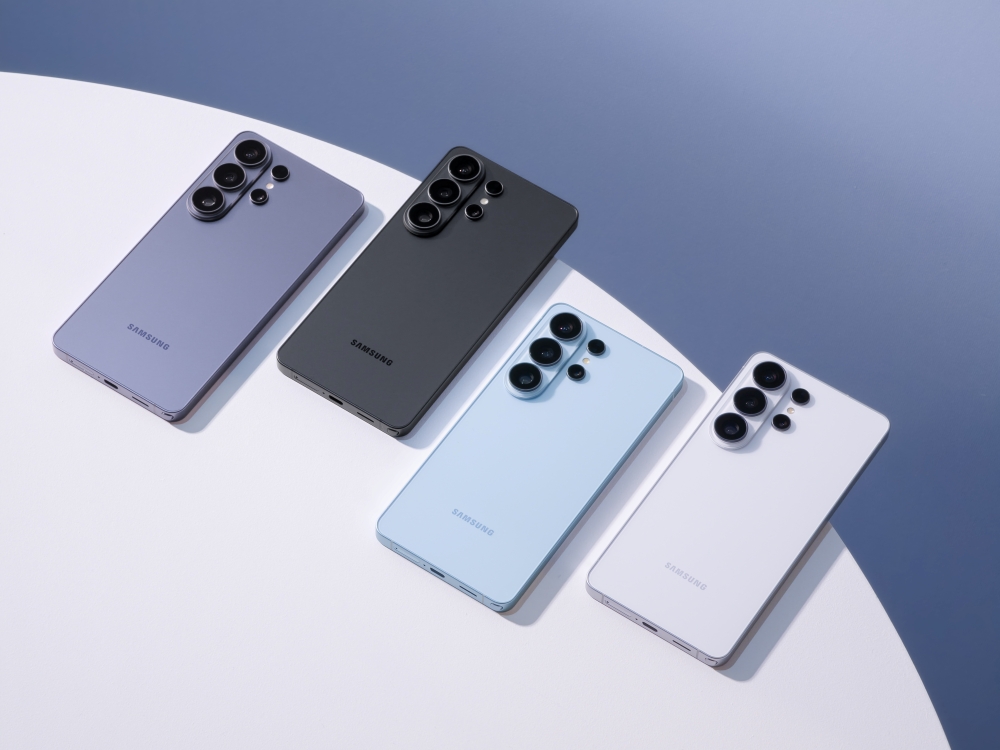
Galaxy-S26-Ultra

Priced similarly to Apple’s top-tier models, the Samsung Galaxy S26 Ultra remains the most direct competitor to the iPhone Pro and Pro Max. This year, Samsung has slimmed the device down to 7.9mm while introducing a few practical hardware innovations. The most unique is the built-in Privacy Display, which restricts viewing angles to keep your screen hidden from people sitting next to you on a train or in a cafe.

On the software side, Samsung is focusing on what it calls Agentic AI. Instead of just answering questions, the updated Bixby assistant can navigate phone settings and complete tasks based on conversational requests.

The camera system remains comprehensive, featuring a 200MP main sensor and a 50MP periscope lens with 5x optical zoom. Paired with seven years of guaranteed OS updates, the S26 Ultra is a long-term investment that matches the iPhone on longevity while offering a very different software approach.

2. Oppo Find X9 Ultra

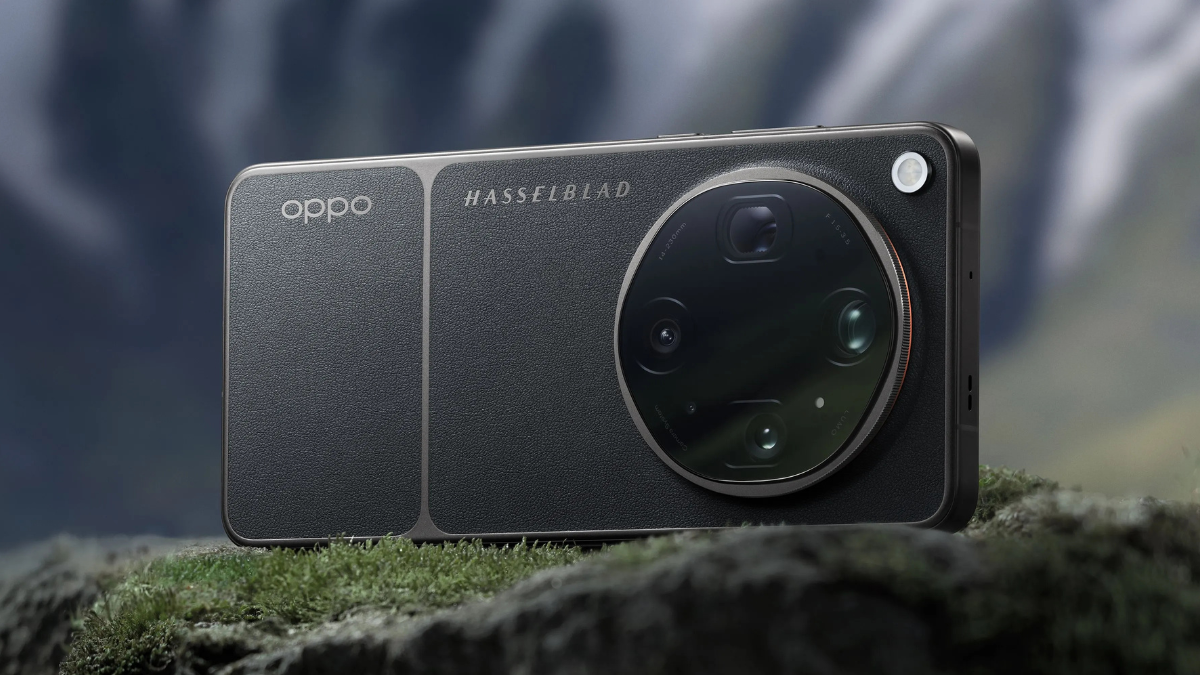
Oppo Find X9 Ultra

Oppo has positioned the Find X9 Ultra as a camera-first device, heavily leaning into its partnership with Hasselblad. The phone features an eco-leather back inspired by the Hasselblad X2D 100C Earth Explorer, giving it a distinct, tactile feel compared to the standard glass and metal slabs on the market.

Oppo has included a 7,050mAh Glacier Battery, utilizing a new silicon-carbon anode material. This allows for a significantly larger battery capacity without making the phone overly thick. It also supports 100W wired charging, which is a noticeable step up from the iPhone 17 Pro’s 40W limit.

The camera array includes six lenses, highlighted by a 10x optical zoom Hasselblad telephoto and a 200MP main sensor. You can zoom even further with the Hasselblad Professional Imaging Accessory Kit.

The device also supports dual-satellite communication for areas without cellular service. For roughly the same price as the base iPhone 17 Pro, the Find X9 Ultra offers a hardware package that prioritizes battery endurance and photographic flexibility.

3. Xiaomi 17 Ultra

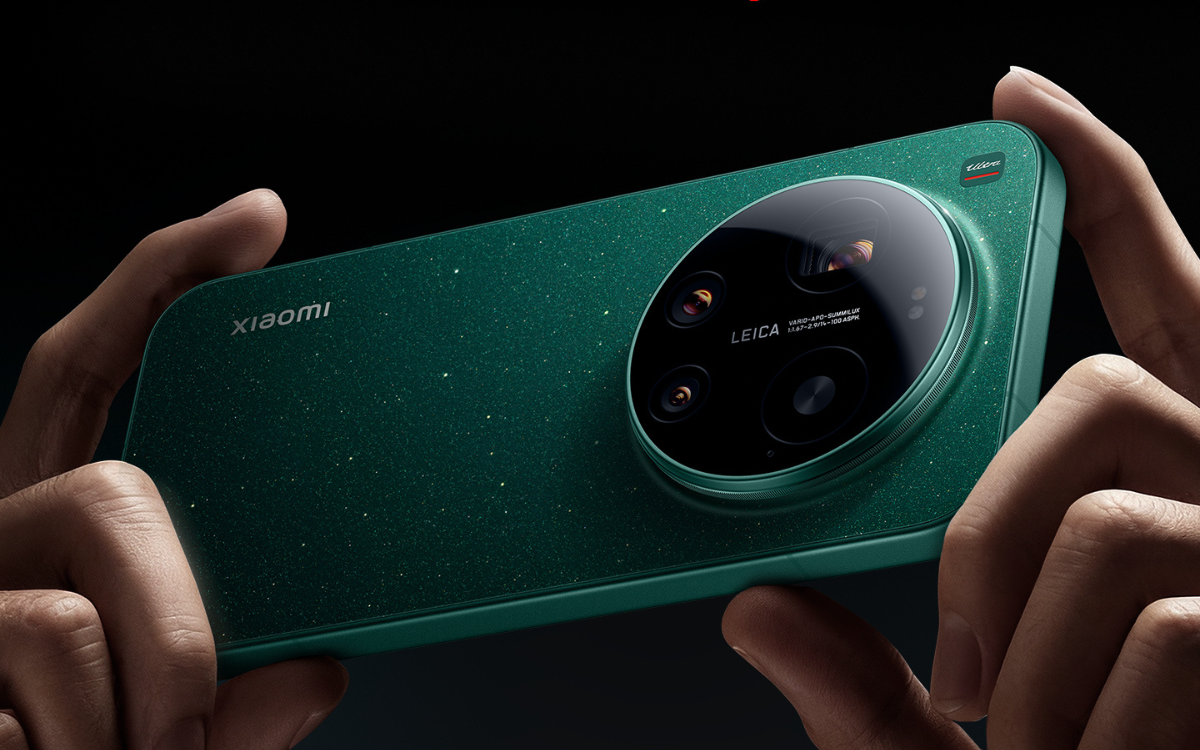
Xiaomi’s ongoing collaboration with Leica has resulted in some of the most interesting camera phones of the last few years, and the Xiaomi 17 Ultra continues that trend. At 8.29mm thick, it features a 6.9-inch flat OLED LTPO display that can reach a peak brightness of 3500 nits.

The camera system is built around a 1-inch Light Fusion 1050L sensor and a Leica 200MP optical zoom telephoto. Because the system uses the full 1/1.4-inch sensor across its 75mm-100mm equivalent range, it can capture native 200MP images without relying on digital cropping.

For users who want a more traditional photography experience, Xiaomi offers an optional Photography Kit Pro. This grip attachment adds a two-stage shutter button, a zoom lever, and an additional 2000mAh battery. It is a niche accessory, but it shows Xiaomi’s commitment to users who view their phone primarily as a camera.

4. Vivo X300 Ultra

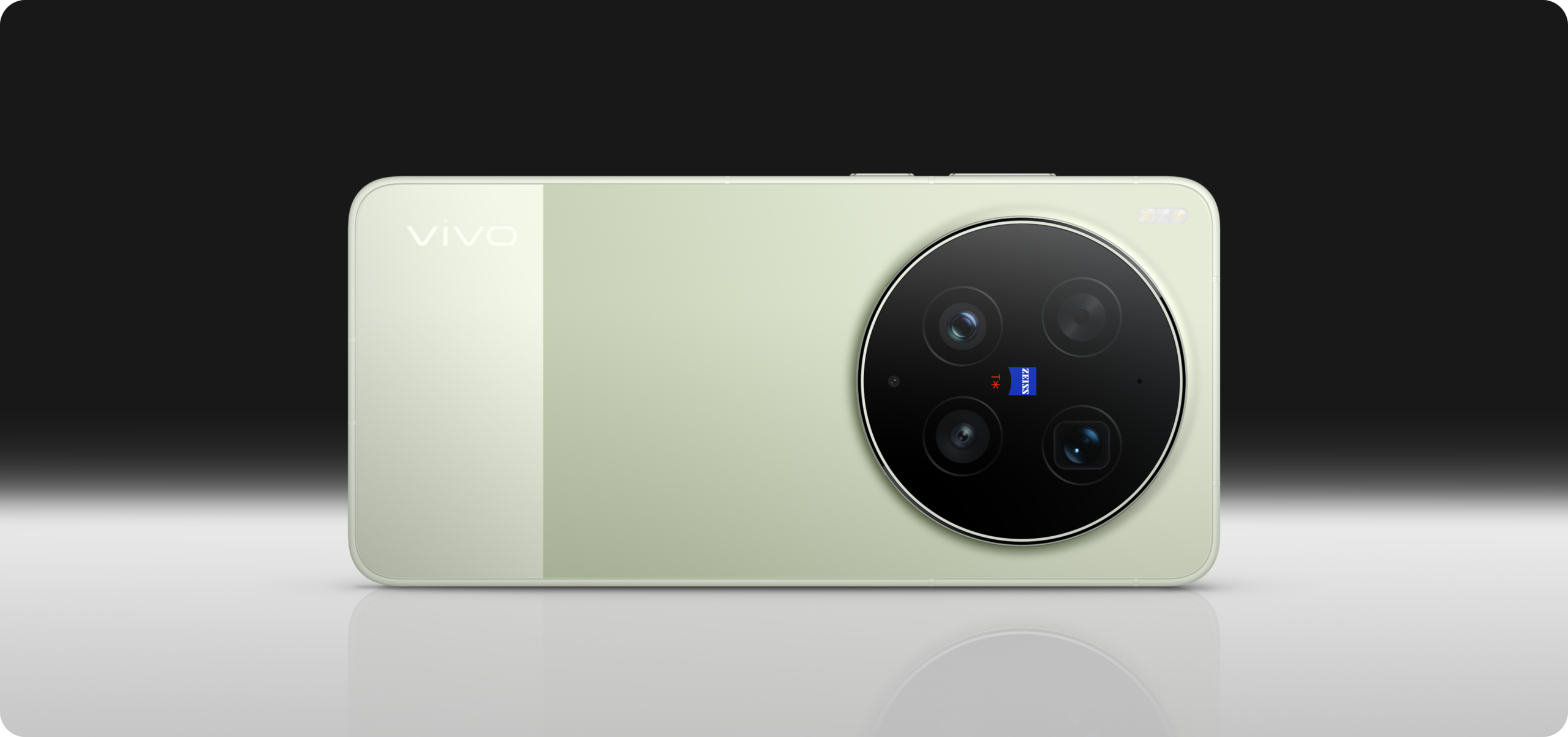
Vivo’s X Series has built a quiet reputation for excellent color science and portrait photography, and the X300 Ultra refines that formula. Co-engineered with ZEISS, the phone is designed to handle complex lighting and varied focal lengths with consistency.

The standout component is the 200MP 85mm APO Telephoto camera. Built to ZEISS APO standards to reduce chromatic aberration, it includes a specialized OIS system that helps stabilize shots in low light or at long distances. Vivo also included a multi-spectral sensor with 12 color channels to ensure accurate color reproduction across different environments.

Just like the Xiaomi 17 Ultra and Find X9 Ultra, Vivo offers an optional X300 Ultra Photography Kit for users who want a more dedicated shooting experience. This kit includes an imaging grip and physical lens attachments, specifically, 200mm and 400mm equivalent vivo ZEISS Telephoto Extenders, allowing you to push the phone’s optical zoom capabilities even further.

Powered by the Snapdragon 8 Elite Gen 5 and a 6,600mAh battery, the X300 Ultra is well-equipped to handle demanding tasks like 4K 120fps video recording. If your main priority is taking photos of people or shooting at a distance, the X300 Ultra offers a highly specialized toolset that directly rivals Apple’s computational photography.

5. OnePlus 15

OnePlus 15

While the other phones on this list sit firmly in the $1,000+ premium tier, the OnePlus 15 takes a different approach. At $799, it undercuts the iPhone 17 Pro by a significant margin while still providing high-end specifications.

OnePlus 15 comes with a huge 7,300mAh Silicon NanoStack battery. It is currently one of the largest batteries available in a mainstream smartphone, and with 120W wired charging, it requires very little time plugged into a wall. The display is a 6.78-inch 1.5K AMOLED panel with a 165Hz refresh rate, which will appeal to mobile gamers.

It runs on the same Snapdragon 8 Elite Gen 5 chip as the more expensive Android models on this list. While its camera system, a 50MP main, 50MP ultrawide, and 50MP 3.5x periscope, may lack the Leica or Hasselblad co-branding of its competitors, it remains a very capable setup for daily use. For buyers who want premium performance without crossing the four-figure price threshold, the OnePlus 15 is a highly practical option.

For more daily updates, please visit our News Section.

Stay ahead in tech! Join our Telegram community and sign up for our daily newsletter of top stories!

Nothing announces the Phone (4b) launch on July 7

London-based smartphone maker Nothing has confirmed the Nothing Phone (4b) will launch on July 7th. Announced on X, “b” is a new line of affordable phones that might focus on doing the basics brilliantly. 

The company subtly teased the design yesterday, hinting at a single rear camera, which explains its budget nature. However, being a part of the Nothing family (and not CMF), it will inherit the transparent aesthetic that has become synonymous with the brand’s identity.

The company shared the announcement today with the caption “kept sketching the Phone (4a) series and accidentally made a new phone.” Nothing is still keeping the official looks under wraps, though, and much like the design, there’s no word yet on the specs. 

Nothing Phone (b) series positioning 

Nothing’s co-founder and India President, Akis Evangelidis, shared some context on the vision and placement of the B series. He said, “The B Series builds on the success of the A Series by expanding into a new segment, while maintaining a clear product hierarchy.”

Nothing Phone (4b) launch announcement

He further added, “The A Series has been our best-selling smartphone line, bringing the best of Nothing’s design innovation while focusing on the features that matter most. The A Series remains our most premium line below our flagship products, which don’t carry a letter designation. This avoids overusing suffixes and provides a clearer naming structure as the portfolio expands. Hope this is clear.”

As for pricing, the Nothing (4a) currently starts at Rs 37,999 in India, but that’s after a Rs 6,000 increase due to climbing memory prices. We expect the Nothing Phone (4b) to target a sub-25k segment in the country. 

A microsite has gone live on Flipkart, with more details expected ahead of the July 7th launch.

For more daily updates, please visit our News Section.

Stay ahead in tech! Join our Telegram community and sign up for our daily newsletter of top stories!

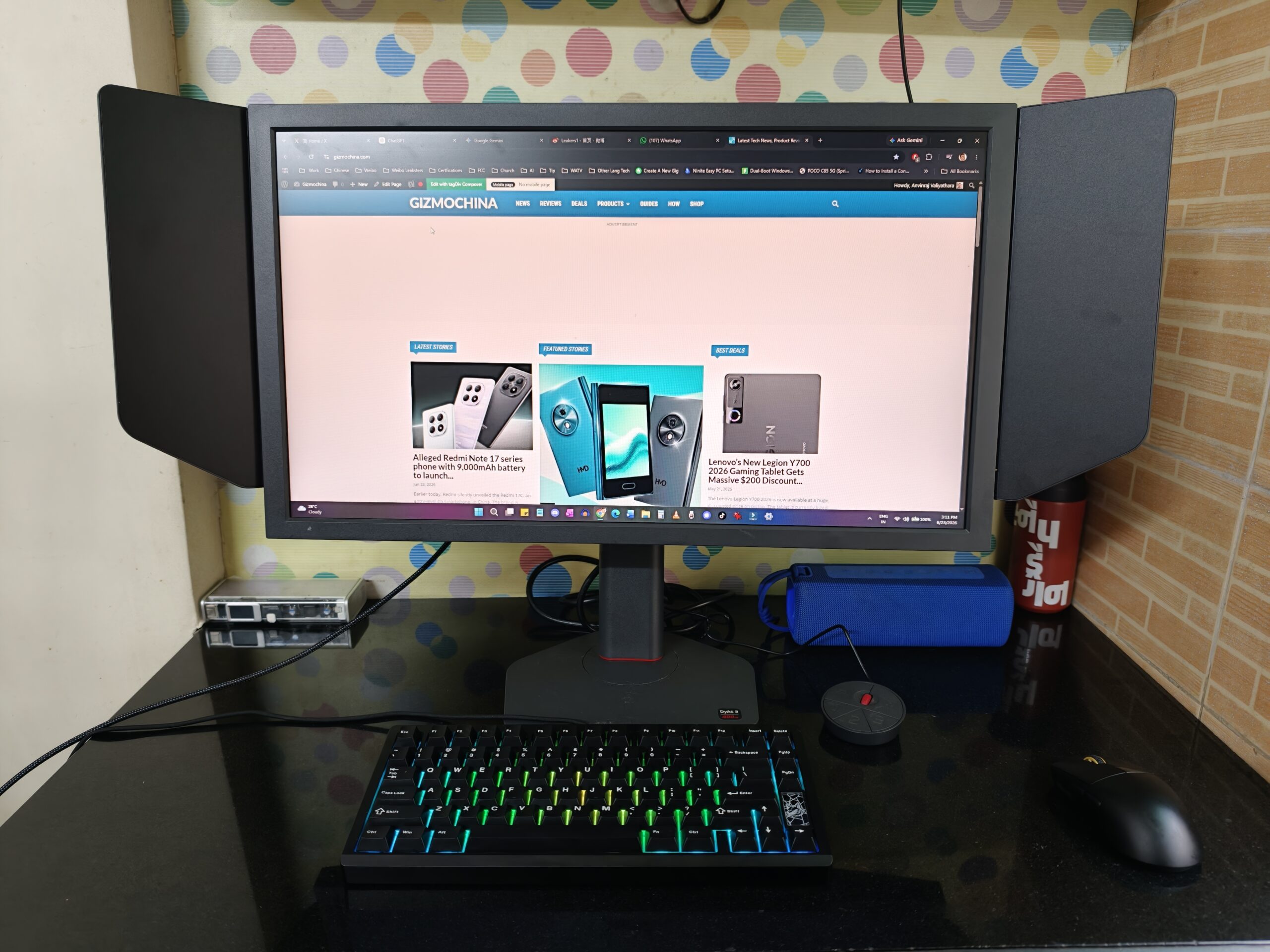
BenQ ZOWIE XL2566X+ Review: Built for Competitive Gaming

The BenQ ZOWIE XL2566X+ is a monitor designed with a very specific audience in mind. Unlike many premium gaming displays that attempt to balance gaming, content creation, and entertainment, this monitor focuses almost entirely on competitive esports performance. With a 400Hz refresh rate, Fast TN panel, and the latest DyAc 2 motion clarity technology, it aims to provide professional and aspiring esports players with every possible advantage.

After spending time with the monitor in fast-paced shooters such as Counter-Strike 2, it becomes clear why ZOWIE displays remain a common sight at major esports tournaments around the world.

7Verdict

BenQ ZOWIE XL2566X+
BenQ ZOWIE XL2566X+

The BenQ ZOWIE XL2566X+ is not designed to be an all-purpose monitor. Its Full HD resolution and TN panel technology mean it will not appeal to users prioritising content creation, media consumption, or cinematic gaming experiences. However, I did not face any issue for using it work for my work, which is mostly about writing posts and adding them to WordPress.

I feel that it excels for its intended audience. The combination of a 400Hz refresh rate, outstanding motion clarity through DyAc 2, ultra-responsive performance, and esports-focused ergonomics makes it one of the best competitive gaming monitors currently available.

If your primary focus is competitive FPS gaming and you want a display built specifically to maximize performance rather than visual flair, the XL2566X+ is an easy recommendation.

For more daily updates, please visit our News Section.

Stay ahead in tech! Join our Telegram community and sign up for our daily newsletter of top stories!

Next

Alleged Redmi Note 17 series phone with 9,000mAh battery to launch next month

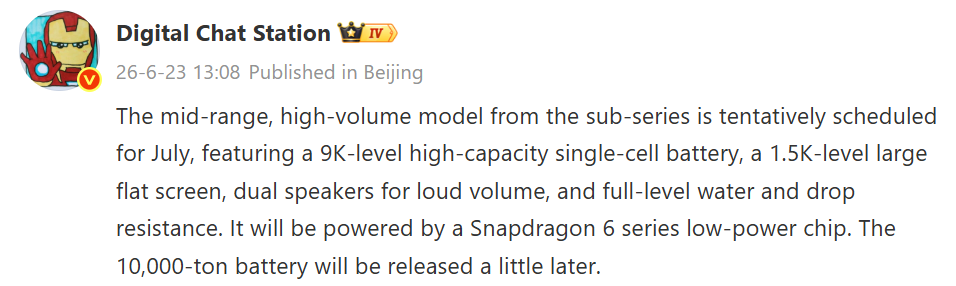
Earlier today, Redmi silently unveiled the Redmi 17C, an entry-level 4G smartphone, in China. The brand is expected to unveil a couple of Note series mid-range offerings before it introduces the Redmi K100 series in September or October. A fresh leak reveals that a Redmi Note 17 series phone with a massive battery may launch in July.

Redmi Note 17 series phone’s key details emerge

According to the tipster, an upcoming mid-range Redmi model is said to focus on practicality, featuring a large-capacity battery in the 9,000mAh range, a 1.5K flat display, high-volume dual speakers, and enhanced durability with flagship-level water and drop resistance.

The tipster also claims that the device will be powered by a power-efficient Snapdragon 6-series chipset. While he did not specify the exact chip, it could be the Snapdragon 6 Gen 5. To recall, when the chip was announced in May, it was confirmed that a Redmi phone would be one of the first adopters of this chipset. Hence, there is a possibility that this could be a Redmi Note 17 series phone.

While Redmi appears set to push battery capacity further in its budget and mid-range lineup, the rumored 10,000mAh battery phone, which seems to be the Redmi Note 17 Pro Max, is reportedly planned for a later release. It may debut in China in August or September.

At present, the brand also appears to be working on the launch of another Redmi K90 series phone. Expected to launch later this month, the Redmi K90 Ultra is rumored to arrive with key specifications such as a Snapdragon 8 Elite chipset, an 8,500mAh battery with 100W charging support, and a built-in air-cooling fan system.

For more daily updates, please visit our News Section.

Stay ahead in tech! Join our Telegram community and sign up for our daily newsletter of top stories!

Vivo X500 Pro Mini specs leak again, 85mm periscope lens and Dimensity 9600 Pro in cards

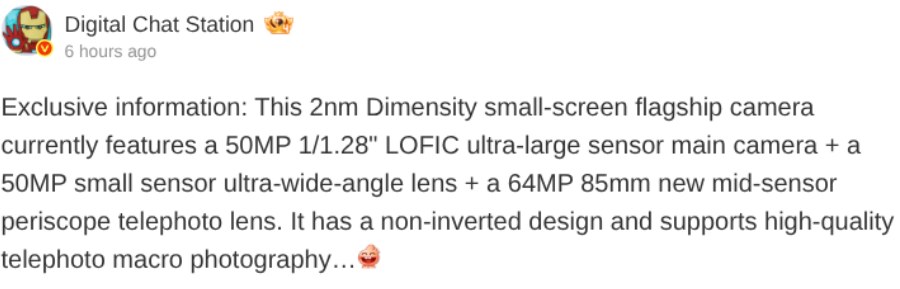
A fresh leak adds new detail to the Vivo X500 Pro, one of four models tipped for the upcoming X500 series. According to tipster Digital Chat Station on Weibo, the device will be powered by the 2nm Dimensity 9600 Pro chip and feature a 6.37-inch display.

Vivo X500 Pro mini specs camera leak

On the camera front, the X500 Pro is said to carry a 50MP main lens with a 1/1.28-inch size and LOFIC support, paired with a 50MP ultra-wide-angle lens with a comparatively small sensor. Meanwhile, portraits could use a 64MP, 85mm sensor. DCS adds that the periscope lens also supports macro photography. This lines up with a previous report suggesting a similar setup for the rear camera.

Vivo X500 Pro (Mini) is likely to get an 85mm periscope

In a separate comment, Digital Chat Station added that all Vivo X500 Pro series phones feature 85mm periscope lenses, which effectively confirms this model’s place in the Pro lineup. Whether it launches as the X500 Pro or X500 Pro Mini remains the only open question now. 

Vivo X300
Vivo X300

As for the rest of the lineup, the vanilla X500 is expected to feature a 6.59-inch display running on the 3nm Dimensity 9500, the same chip as its predecessor. The X500 Pro Max, meanwhile, is tipped to house a 6.85-inch OLED 2K LTPO panel alongside the Dimensity 9600 Pro.

Worth noting is the contrast with the Vivo X300 series. While the X300 and X300 Pro had the same flagship processor, Vivo is shuffling the successors — making the base X500 a more accessible entry point and leaving the premium side to the Pro and Pro Max. 

The X500 series is expected to launch in late 2026, before the end of October. The X500 Ultra will join as the ultimate flagship only in early 2027.

For more daily updates, please visit our News Section.

Stay ahead in tech! Join our Telegram community and sign up for our daily newsletter of top stories!

(Source)

Samsung Galaxy M47 5G is launching next week, read all the key specs here

Samsung has confirmed the arrival of the Galaxy M47 5G in India, with the smartphone set to launch on June 29. The launch date has been revealed through the device’s Amazon microsite, which has also shed light on several hardware and software features ahead of the official unveiling. Here’s a look at the key specifications of the device.

Samsung Galaxy M47 5G key specifications confirmed

The Amazon listing reveals that the Galaxy M47 5G will be powered by a Snapdragon processor paired with LPDDR5X RAM and UFS 3.1 storage. Samsung is positioning the device as a capable option for gaming and multitasking, while also promising six generations of Android OS upgrades and six years of security updates.

The Galaxy M47 5G will feature a 6.7-inch Super AMOLED display with a 120Hz refresh rate. Samsung says the panel is designed to deliver sharp visuals and smooth scrolling while remaining visible even under bright outdoor conditions. It is equipped with Corning Gorilla Glass Victus+ protection, which claims up to four times better scratch resistance compared to conventional protective glass

The device will support 45W fast charging and include bypass charging, a feature that can route power directly to the phone during gaming sessions to help reduce heat generation and battery strain. Samsung is yet to confirm the battery size of the device.

Samsung Galaxy M47 5G

On the camera front, Samsung has confirmed a 50-megapixel main camera with OIS, a 5-megapixel ultra-wide camera, a 2-megapixel macro sensor and a 12-megapixel front camera. The phone will also support 4K video recording using both the front and rear cameras.

The Galaxy M47 5G will be available in Rogue Red and Blaze Blue color options. At present, there is no information about its pricing.

For more daily updates, please visit our News Section.

Stay ahead in tech! Join our Telegram community and sign up for our daily newsletter of top stories!

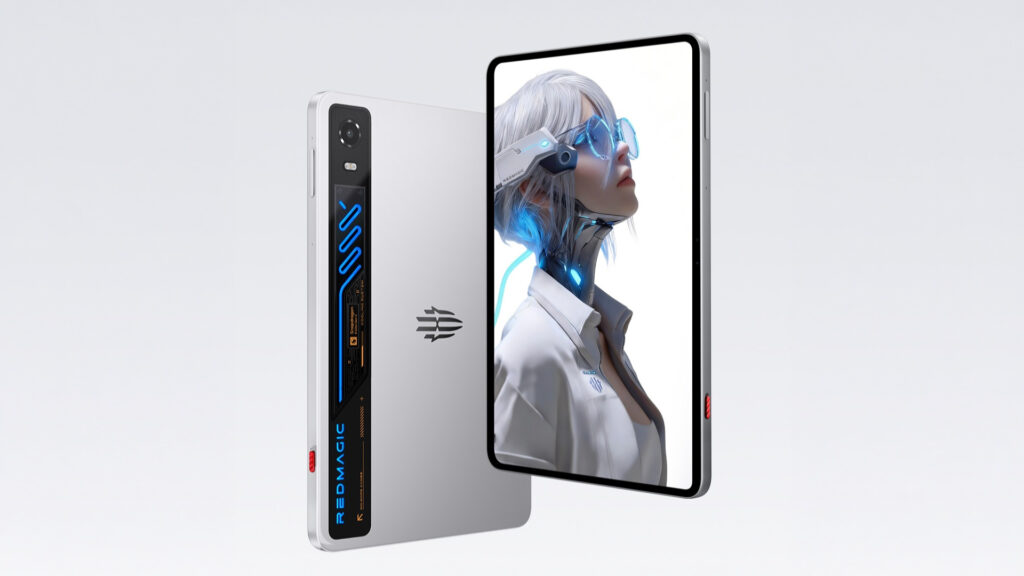
Red Magic Gaming Tablet 5 Pro teaser confirms 185Hz refresh rate, higher than Tablet 3 Pro

Gaming tablets have come a long way from niche gadgets to legit portable powerhouses, and Red Magic is stepping up the game once again. The company just teased its newest flagship, the Red Magic Gaming Tablet 5 Pro, and it’s packing an insane 185Hz ultra-high refresh rate display that should make everything look buttery smooth for mobile gaming and more.

They’re planning to officially launch it on June 30 at 15:00 local time in China. From what we’ve seen so far, this tablet mixes serious performance hardware with that bold, gamer-focused aesthetic Red Magic is known for.

Apart from its upgraded 9-inch 185Hz OLED screen, a step up from last year’s 165Hz panel on the Tablet 3 Pro, it also features a striking semi-transparent back with vibrant RGB lighting integrated into the water-cooling system.

Red Magic says they used custom light-guiding materials that boost lighting uniformity by 200%. It’ll come in two cool color options: Deuterium Blade Transparent Silver Wing and Deuterium Blade Transparent Dark Night. The back is completely flat, and the company calls it a “golden size” that’s comfortable to hold in one hand for long gaming sessions.

Inside, it’s running Qualcomm’s Snapdragon 8 Elite Gen 5 processor, with up to 24GB of RAM and a massive 1TB of storage. Heat management is a big deal here: the new Magic Cooling system includes a piezoelectric micro-pump, RGB lighting effects, and what looks like extra fan support to keep things stable under heavy load. Battery-wise, there’s an 8,300mAh cell (up from 8,200mAh of its predecessor) with fast charging, which should give it decent staying power.

Last year’s Red Magic Gaming Tablet 3 Pro (known globally as the Red Magic Astra) used the Snapdragon 8 Elite and started around 3,999 yuan, which translates to roughly €517 at the current exchange rate. The 5 Pro feels like a solid evolution: higher refresh rate, better cooling, and a more premium transparent look that shows off the internal liquid cooling pipes.

Red Magic has built a strong name for itself by going all-in on aggressive cooling and gamer-centric features, and the Gaming Tablet 5 Pro clearly continues that tradition. The 185Hz OLED should feel fantastic in high-frame-rate games, and the see-through design with customizable RGB adds some real personality that sets it apart from regular tablets.

Don’t miss a thing! Join our Telegram community for instant updates and grab our free daily newsletter for the best tech stories!

For more daily updates, please visit our News Section.

(Source: Red Magic on Weibo)

Vivo X Fold 6 price leak reveals a major jump in cost

Vivo is all set to announce the Vivo X Fold 6 foldable phone on June 26 in China. The official pre-order listings of the device have revealed that it will be available in multiple configurations. A leaked image that is now doing the rounds on Chinese social media platforms has revealed that the X Fold 6 will arrive with a major jump in cost.

Vivo X Fold 6 price leaked

In China, the Vivo X Fold 6 will be available in four options: 12GB+256GB, 12GB+512GB, 16GB+512GB, and 16GB+1TB. As can be seen above, the leaked image reveals that these variants will be priced at 9,999 Yuan (~$1,475), 10,999 Yuan (~$1,625), 11,499 Yuan (~$1,700), and 12,499 Yuan (~$1,845), respectively.

This is a major jump, as the Vivo X Fold 5 with the same respective configurations was priced at 6,999 Yuan (~$1,030), 7,999 Yuan (~$1,180), 8,499 Yuan (~$1,250), and 9,499 Yuan (~$1,400), respectively. The leaked pricing suggests the Vivo X Fold 6 could be nearly 40 percent more expensive than the X Fold 5 across comparable storage variants.

While the price hike seems quite high, it is in line with competitors. To recall, the Honor Magic V6 and Oppo Find N6 base models with 12GB+256GB configurations are priced at 8,999 Yuan (~$1,330) and 9,999 Yuan (~$1,475), respectively. As with all leaks, it is advisable to take the X Fold 6 pricing with a pinch of salt, as its authenticity could not be confirmed.

While competing foldable phones feature the Snapdragon 8 Elite Gen 5 chip, the Vivo X Fold 6 will reportedly use the Dimensity 9500 Super Edition. Apart from the chipset, the foldable phone is confirmed to feature an 8.02-inch foldable OLED screen, a 200-megapixel triple camera setup that includes a 50-megapixel periscope telephoto camera, OriginOS 6 Fold UI, and a 7,000mAh battery. It will also feature a side-facing fingerprint sensor and have support for telepha oto extender accessory.  

For more daily updates, please visit our News Section.

Stay ahead in tech! Join our Telegram community and sign up for our daily newsletter of top stories!

(via)

Motorola Edge 70 Max leak reveals renders, Snapdragon 8 Gen 5, magnetic wireless charging

Motorola’s Edge 70 series could soon gain another member. Leaked renders and details of the Motorola Edge 70 Max have surfaced online, offering an early look at what appears to be a new high-end addition to the lineup. The images reveal the device’s design and hint at several premium features ahead of its official announcement.

Motorola Edge 70 Max design and key features

Based on the leaked renders, the Edge 70 Max follows Motorola’s familiar design language with a flat frame, slim display bezels, and a centred punch-hole cutout for the selfie camera. The device is shown in Onyx Black, Sage Green, and Glacier Blue color options, giving users a choice of understated as well as vibrant finishes.

The rear panel houses a square camera module that includes a 50-megapixel primary camera based on a Sony Lytia sensor with optical image stabilization. Alongside the main camera, the setup appears to feature an additional camera and a third sensor. While details about the remaining cameras have not surfaced, the leak suggests Motorola is targeting users who want a capable photography experience without stepping into ultra-premium territory.

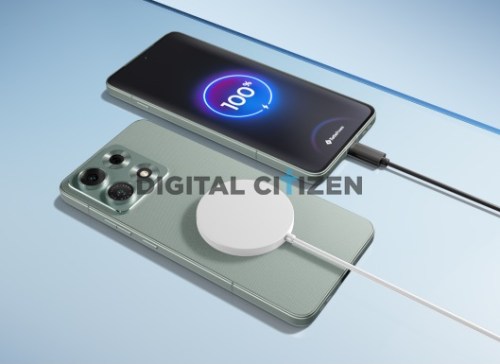
Another notable detail is the presence of MIL-STD-810H certification, indicating a focus on durability. The images also show a dedicated button on the left side of the frame, although its functionality remains unknown. One render additionally depicts the phone attached to a puck-shaped wireless charger, hinting at support for magnetic Qi2 accessories and wireless charging.

Motorola Edge 70 Max

The Edge 70 Max is said to be powered by Qualcomm’s Snapdragon 8 Gen 5 chipset, which also powers the more premium Motorola Signature phone. Several specifications remain under wraps, including battery capacity, charging speeds, display details, and pricing. It is also unclear whether the Edge 70 Max is the same device that previously appeared in rumours as the Motorola Edge 70 Ultra. Motorola has yet to confirm any details, but the leaked renders suggest the launch may not be far away.

For more daily updates, please visit our News Section.

Stay ahead in tech! Join our Telegram community and sign up for our daily newsletter of top stories!

(source)

Redmi brings back 4/64GB configuration with the new Redmi 17C

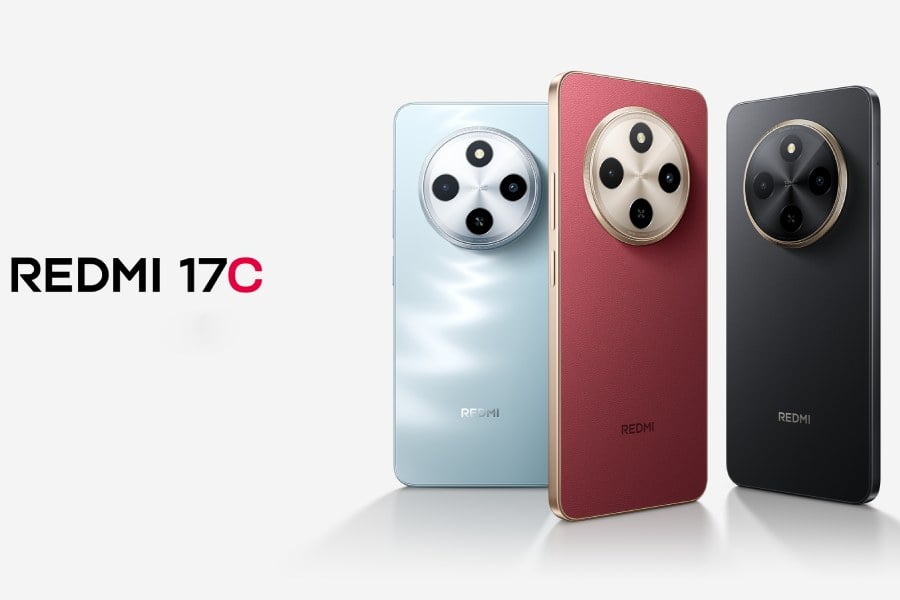
Xiaomi has launched the Redmi 17C in China, and the timing says a lot about where budget smartphones are heading. The phone succeeds the Redmi 15C, skipping a generation entirely, and arrives with a RAM configuration that would have seemed like a regression just two years ago.

The Redmi 17C ships with just 4GB of RAM, consistent with what industry reports had predicted as the new floor for budget Android phones. That’s half the 8GB ceiling its predecessor offered just nine months ago. 

Redmi 17C launch specs price

Xiaomi pairs it with either 64GB or 128GB of storage, with the base variant priced at 799 yuan (approximately $110) and the 128GB model at 899 yuan (approximately $132).

A familiar design with a camera trick

The Redmi 17C runs on a MediaTek Helio G81 Ultra chipset clocked at 2GHz and runs HyperOS 3 out of the box. The front houses a 6.88-inch LCD with a 120Hz refresh rate, 240Hz touch sampling, DC Dimming, and TÜV Rheinland eye protection certification. A side-mounted fingerprint scanner handles biometric unlock.

Redmi 17C Camera and Design

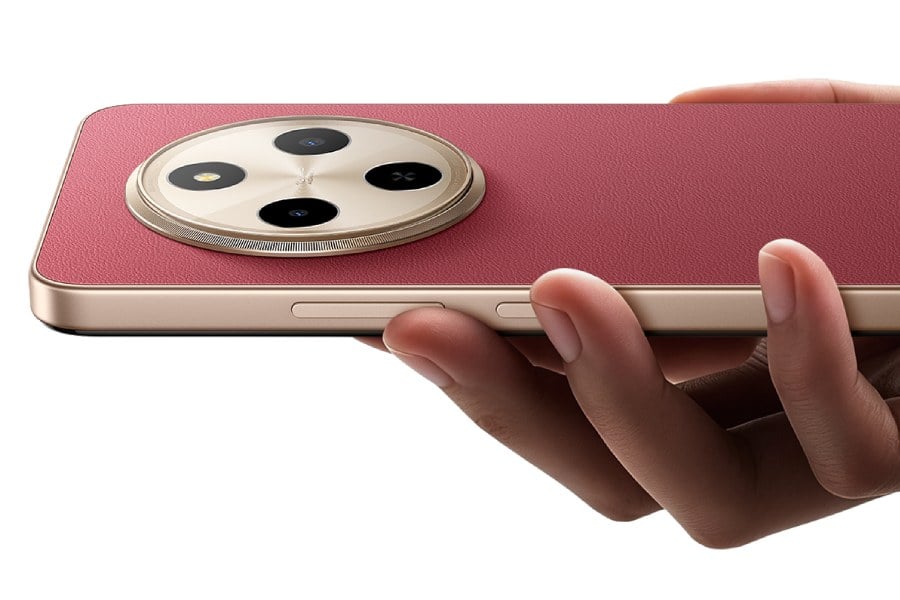
At the back, the circular decoration may trick you into believing it’s a quad-camera setup, but it houses a single 13MP lens and an LED flash. The other two rings are just decorative. Meanwhile, the front camera is a 5MP shooter. It is a design choice that prioritizes aesthetics over hardware, consistent with the phone’s budget positioning.

A 5,160mAh battery with 18W wired charging keeps the device running. The Redmi 17C is available in three finishes: Red with a faux leather texture, and Black and White with a glossy finish. A 3.5mm headphone jack is also included.

There’s no word yet on when and where Xiaomi will launch the Redmi 17C in international markets.

For more daily updates, please visit our News Section.

Stay ahead in tech! Join our Telegram community and sign up for our daily newsletter of top stories!

(Source)

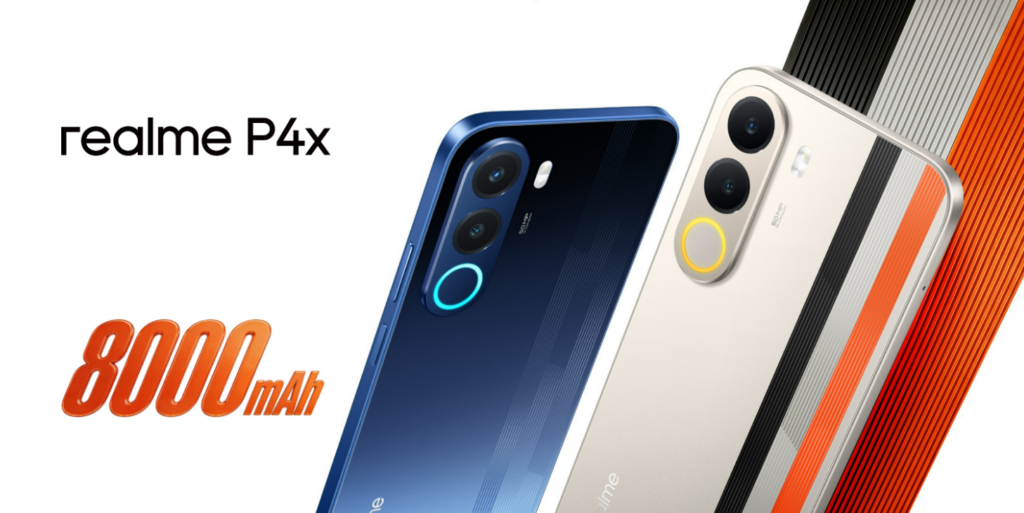
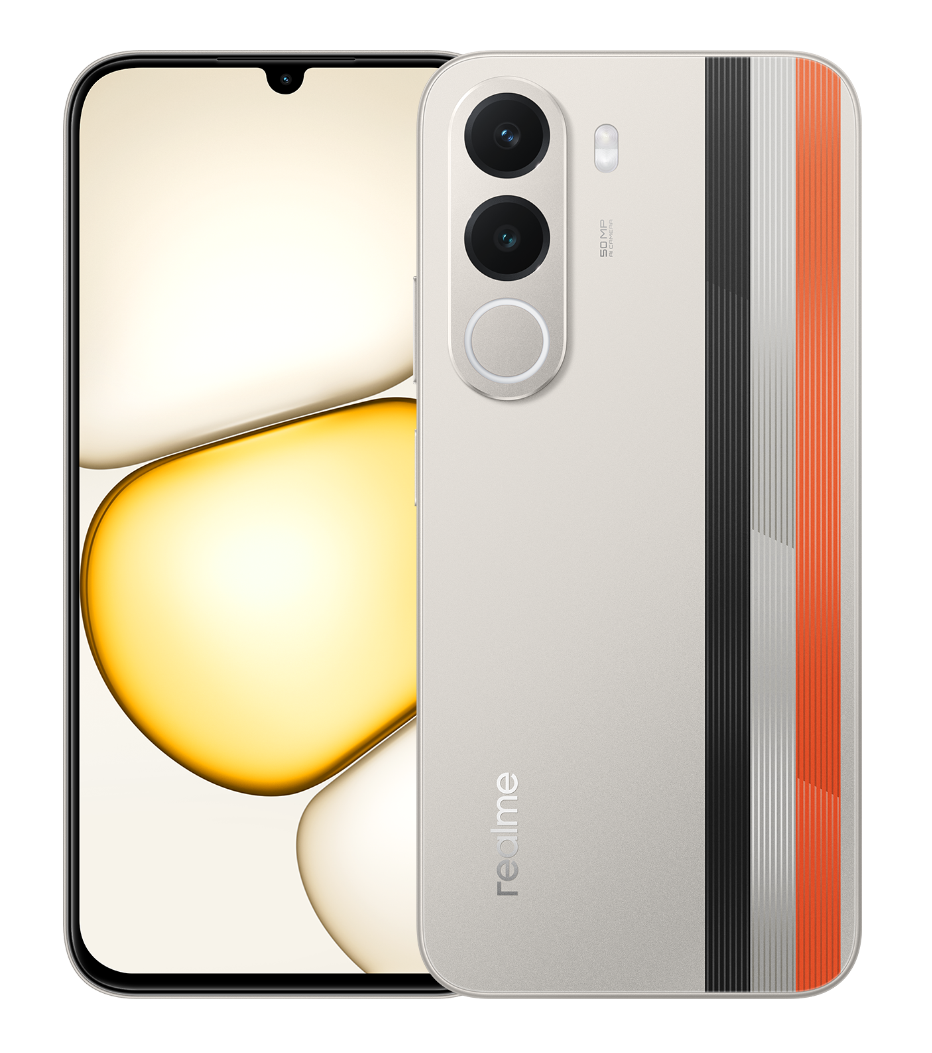
Realme P4x’s new variant launches with 8,000mAh battery, attractive design

Realme already offers the Realme P4x 5G in select markets with a large 7,000mAh battery. The company has now introduced a new 4G variant of the smartphone, trading 5G connectivity for an even bigger 8,000mAh battery. However, battery capacity is not the only highlight, as the device also brings a large display, gaming-focused features, and Android 16 out of the box. Here’s everything you need to know about the latest Realme P4x (4G).

Realme P4x (4G) specifications and features

Realme P4x (4G)
Realme P4x (4G)

The Realme P4x features a 6.8-inch LCD waterdrop notch with HD+ resolution, a 120Hz refresh rate, and up to 900 nits of brightness in high-brightness mode. It is powered by the T7250 octa-core chipset paired with LPDDR4X RAM and eMMC 5.1 storage. Depending on the market, the phone is available in multiple memory configurations and also supports expandable storage through a microSD card slot.

One of the key highlights is its 8,000mAh battery, which supports 45W SuperVOOC charging. Realme claims the battery can deliver close to 10 hours of continuous gaming in supported titles. The device also supports reverse charging, allowing it to power compatible accessories and smartphones. To help manage heat during long gaming sessions, the phone includes an 11,124mm² cooling system.

For photography, the handset is equipped with a 50-megapixel rear camera and a 5-megapixel front-facing camera. It runs Realme UI based on Android 16 and includes Google Gemini integration, which can be launched through the power button.

Other notable features include a customizable notification LED, a side-mounted fingerprint scanner, dual SIM support, Wi-Fi 5, Bluetooth 5.2, a 3.5mm headphone jack, IP64-rated dust and water resistance, and military-grade shock resistance.

Realme P4x (4G) price and availability

In Malaysia, the Realme P4x’s 4GB + 256GB variant is priced at MYR 799 (~$195). It is available in Rally White and Phantom Blue color options.

For more daily updates, please visit our News Section.

Stay ahead in tech! Join our Telegram community and sign up for our daily newsletter of top stories!

Galaxy Watch Ultra 2’s latest leak reveals design changes

Samsung’s next-generation smartwatches are once again in the spotlight ahead of their expected debut next month. Leaked renders and details related to the Galaxy Watch Ultra 2 and Galaxy Watch 9 have surfaced online, giving an early look at Samsung’s design direction and some of the upgrades that may be in store.

Galaxy Watch Ultra 2 may focus on refinement

As per a leak by tipster Galaxy Techie, Samsung appears to be retaining the overall design language of the original Galaxy Watch Ultra. The leaked sketches show a familiar squircle-shaped chassis instead of a traditional circular case, suggesting the company is sticking with the look introduced last year.

While the overall appearance remains largely unchanged, a few refinements are said to be on the way. The Galaxy Watch Ultra 2 could feature slimmer bezels around the display, potentially allowing for a more immersive viewing experience. The side button area is also expected to receive adjustments, while the signature orange Quick Button may adopt a subtler design with an orange outline instead of being fully coloured.

The renders currently circulating online appear to be software illustrations rather than actual photographs of the smartwatch. As a result, some design elements could differ from the final retail version that Samsung eventually unveils.

The same leak also sheds light on Samsung’s upcoming Galaxy Watch 9. Unlike previous generations, the standard model is tipped to feature a boxier design. Samsung is reportedly skipping a Classic variant this year, leaving the Galaxy Watch 9 and Galaxy Watch Ultra 2 as the main smartwatch offerings.

The Galaxy Watch 9 is expected to arrive in beige, black and silver colour options paired with new band designs. Both watches could ship with updated watch faces and new features as part of One UI 9 Watch, which is based on Wear OS 7.

Battery details have also emerged, with the Galaxy Watch Ultra 2 rumoured to include an 800mAh battery, while the Galaxy Watch 9 may feature a 400mAh cell. Samsung is expected to unveil the new wearables alongside its next foldable smartphones at a Galaxy Unpacked event scheduled for July 22 in London.

What are your thoughts on the Galaxy Watch Ultra 2’s leaked design? Do the slimmer bezels and refined buttons sound like meaningful upgrades to you?

For more daily updates, please visit our News Section.

Stay ahead in tech! Join our Telegram community and sign up for our daily newsletter of top stories!

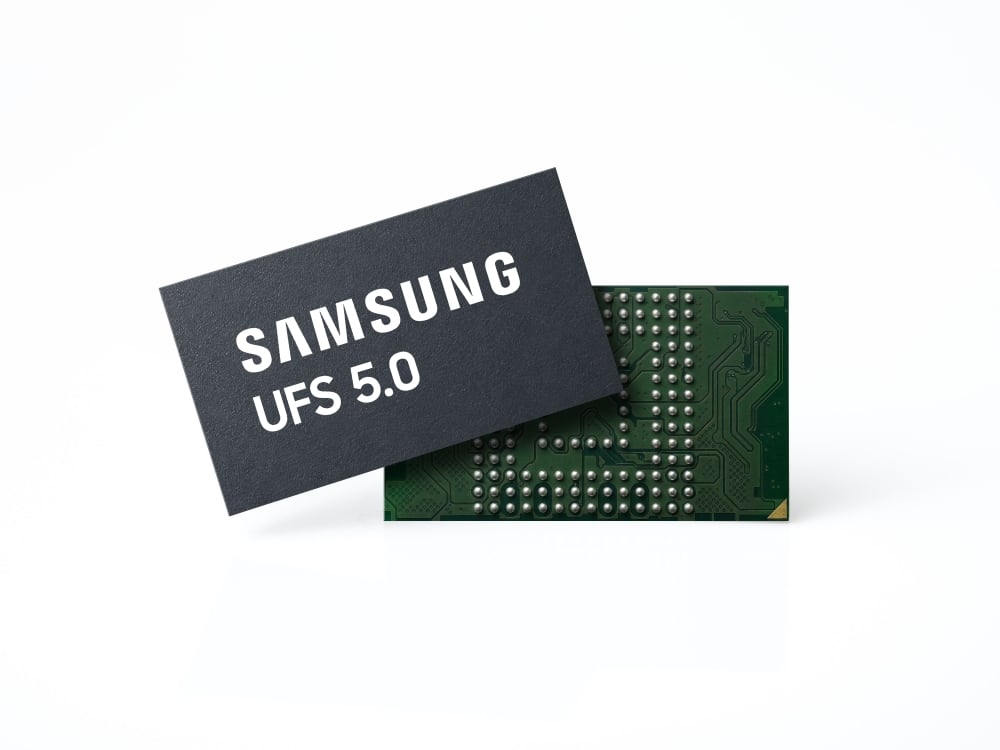
Faster AI, quicker apps: Samsung reveals its first UFS 5.0 storage solution

Samsung has unveiled its next-generation UFS 5.0 storage technology, marking a major step forward for mobile memory. The new solution is designed with future AI-powered devices in mind and aims to improve how smartphones, wearables and other connected products handle large amounts of data locally.

UFS 5.0 pushes storage performance to a new level

Samsung UFS 5.0
Samsung unveils UFS 5.0

According to Samsung, the new UFS 5.0 standard delivers significantly higher performance than the current generation. The company claims sequential read speeds of up to 10.8GB/s and write speeds of up to 9.5GB/s, making it the fastest UFS solution announced so far. These figures are more than twice as fast as those offered by Samsung’s UFS 4.1 technology.

The faster storage speeds are expected to benefit on-device AI tasks, particularly those involving large language models and generative AI features. As more AI processing shifts from cloud servers to smartphones and other devices, storage performance is becoming increasingly important for reducing delays and improving responsiveness.

Samsung says the new solution is based on the latest embedded memory interface specifications defined by JEDEC. The higher bandwidth allows devices to move and process large datasets much faster, which could translate into quicker AI responses and smoother multitasking experiences.

Beyond performance gains, Samsung has also focused on efficiency. The company says UFS 5.0 improves power efficiency by over 40 percent compared to its UFS 4.1 solution. This has been achieved through technologies such as clock gating and multi-voltage operation, helping devices transfer data while consuming less power.

The storage package itself measures 7.5mm x 13mm x 0.9mm, making it around 16.7 percent smaller than the previous generation. The compact footprint can free up internal space for other components and could prove useful in products such as smartphones, XR headsets and AI-focused wearables.

Samsung plans to begin mass production of UFS 5.0 in the fourth quarter of 2026, with capacities reaching up to 1TB. The company expects the technology to be adopted across a range of next-generation devices as demand for advanced on-device AI capabilities continues to grow.

For more daily updates, please visit our News Section.

Stay ahead in tech! Join our Telegram community and sign up for our daily newsletter of top stories!

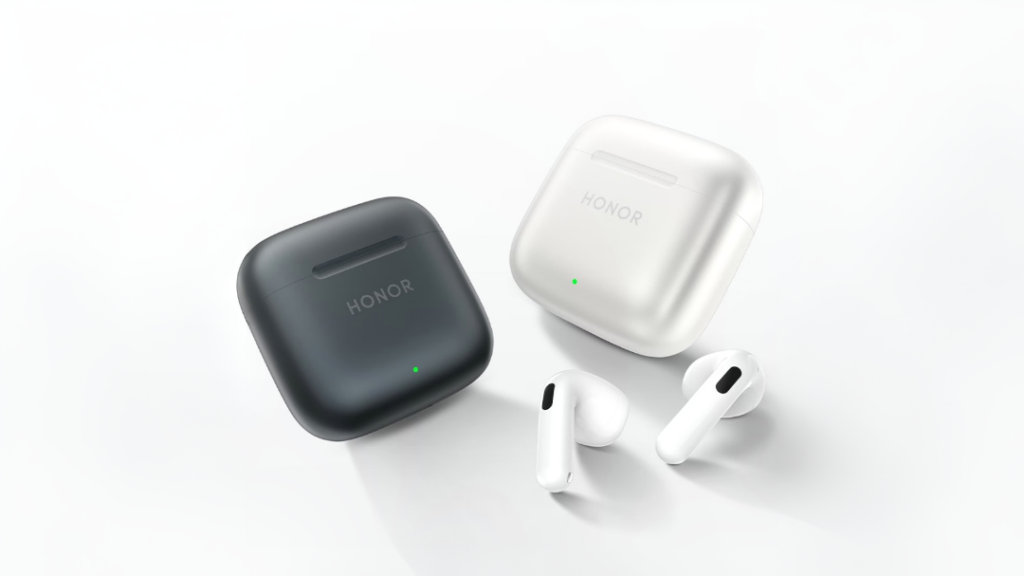
Honor launches Earbuds 5e with adaptive 52dB ANC, LHDC 5.0, AI features & 45h battery life

Honor announced the Earbuds 5e in China today, launching the new audio hardware alongside its X80 Pro Max smartphone.

Honor Earbuds 5e

Honor Earbuds 5e Specifications

The earbuds use a standard semi-in-ear design with a stem. They weigh 4 grams each and have an IP54 rating for basic dust and water resistance. Inside, Honor is using a 12mm dynamic driver with a diamond-like carbon diaphragm. This material is more rigid than standard titanium or gold coatings, which is intended to limit audio distortion. For audio quality, they support the LHDC 5.0 codec and are Hi-Res Audio certified, allowing for 24-bit audio transmission.

The earbuds feature adaptive active noise cancellation that automatically adjusts to your surrounding environment. The system can reduce noise by up to 52dB at its peak, with an average reduction of 28dB across the frequency range. For phone calls, each earbud includes three microphones that use AI algorithms to filter out background noise, alongside wind suppression for speeds of up to 6m/s.

In terms of battery life, the earbuds provide up to nine hours of playback with ANC turned off, and the 550mAh USB-C charging case brings the total up to 45 hours. If you leave ANC on, playback drops to 5.5 hours for the buds and 28 hours total. It also features fast charging and a 10-minute charge adds about three hours of listening time.

Honor Earbuds 5e

Honor included several software features, though the more advanced ones require a compatible Honor smartphone. These include an AI translation tool that works with 15 languages and a meeting assistant that can transcribe and translate recordings. Otherwise, the earbuds offer standard touch and swipe controls, wear detection to auto-pause music, and dual-device connectivity to link a phone and a computer simultaneously.

Pricing and Availability

The Earbuds 5e come in Moonlight White and Midnight Black. They are available for pre-order in China now, with regular sales starting June 26th. Early buyers can get them for an introductory price of 299 yuan ($44) before the cost returns to the regular 349 yuan ($52).

In related news, Lenovo has recently introduced its Yoga Earbuds with up to 40dB active noise cancellation and up to 36 hours of total battery life, while Edifier has unveiled the FitBuds Turbo, featuring LDAC audio support, up to 49dB ANC, and up to 40 hours of battery life.

For more daily updates, please visit our News Section.

Stay ahead in tech! Join our Telegram community and sign up for our daily newsletter of top stories!

(Honor)

Gmktec launches Evo-X3 Mini PC with Ryzen AI Max+ 395, 128GB LPDDR5X RAM & OCuLink

Gmktec has released the Evo-X3 in China, a new mini PC that focuses heavily on local AI processing and high-capacity memory. The system is also scheduled for a global release on July 6th, pushed back slightly from an initially planned June 29th date.

Gmktec Evo-X3 Mini PC

Gmktec Evo-X3 Specifications

The Evo-X3 is powered by AMD’s Ryzen AI Max+ 395, a 4nm processor featuring 16 cores and 32 threads. It includes AMD Radeon 8060S integrated graphics and an XDNA2-based NPU that provides 50 TOPS of dedicated performance. Altogether, the system is rated for up to 126 TOPS of total AI compute.

The Evo-X3 comes equipped with 128GB of LPDDR5X RAM running at 8000MT/s. Because local AI models require significant video memory, Gmktec allows users to allocate up to 96GB of this system memory directly as VRAM. The company claims this setup enables the machine to run large local models, such as Qwen3 235B, and states that its performance in LM Studio can surpass a desktop RTX 4090 in specific workloads.

To support these hardware capabilities, the computer ships with Gmktec’s Claw AI software pre-installed. The platform is optimized for AMD’s ROCm ecosystem and is intended to make deploying large language models locally more straightforward, minimizing the usual manual setup requirements.

Physically, the Evo-X3 uses a CNC-machined metal chassis. To manage the heat generated by sustained workloads, the cooling system relies on three copper heat pipes and three active fans, with standard selectable power profiles for silent, balanced, and performance modes. Storage is handled by dual PCIe 4.0 x4 M.2 slots, supporting a maximum capacity of 16TB.

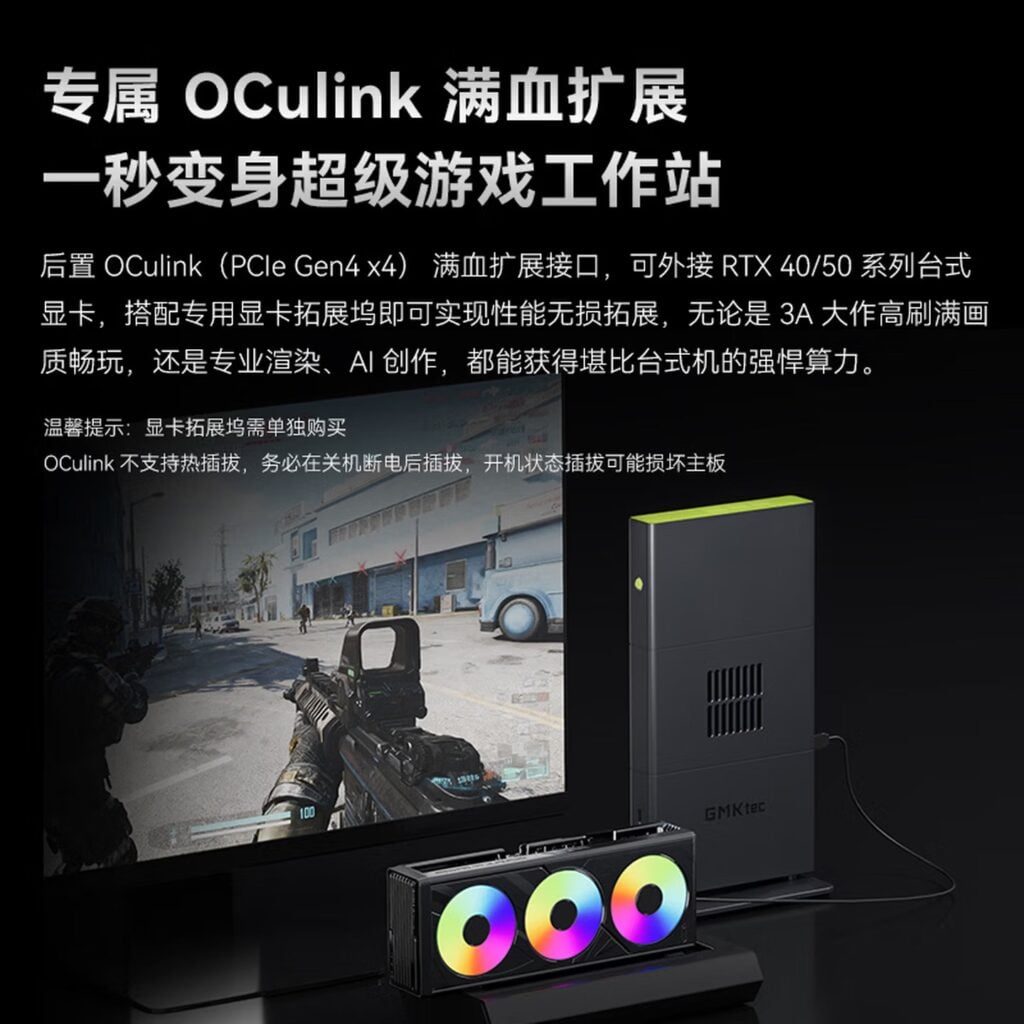
For connectivity, the system includes a native OCuLink port, allowing users to attach external desktop graphics cards, including Nvidia’s RTX 40-series and 50-series, if the integrated GPU isn’t sufficient for their specific needs. It also features USB4, Wi-Fi 7, a 2.5G Ethernet port, and supports dual 8K display outputs.

Pricing and Availability

The EVO-X3 is priced at 21,699 yuan ($3,205) for the model with 128GB of RAM and a 1TB SSD. The version with a 4TB SSD is available for 25,699 yuan ($3,796).

In related news, Peladn has recently launched the HO5 Mini PC featuring AMD’s Ryzen AI 9 HX 470 processor, an OCuLink port, and support for external GPU expansion.

For more daily updates, please visit our News Section.

Stay ahead in tech! Join our Telegram community and sign up for our daily newsletter of top stories!

(JD)

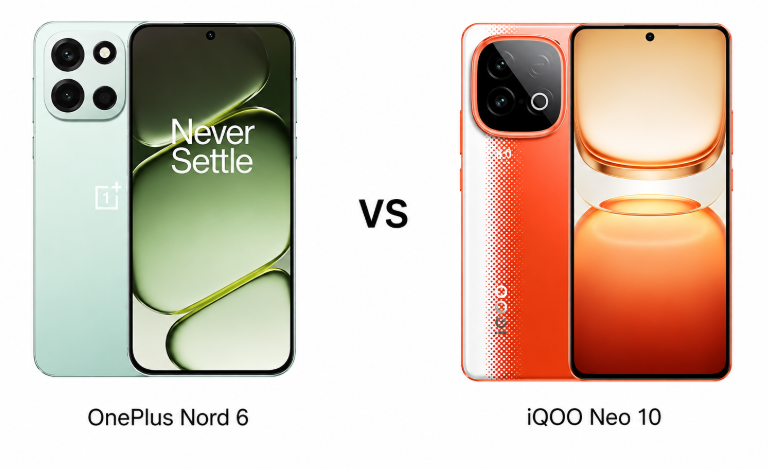
OnePlus Nord 6 vs iQOO Neo 10: Which Snapdragon 8s Gen 4 Phone Should You Buy?

OnePlus Nord 6 and iQOO Neo 10 bring flagship-level performance to the upper mid-range segment, but they take different approaches. While the Nord 6 focuses on battery life, durability, and software refinement, the Neo 10 aims to deliver maximum value with faster charging and aggressive pricing. Here’s how they compare across the areas that matter most.


Major Features:

CategoryOnePlus Nord 6iQOO Neo 10Winner
Display6.78-inch AMOLED, 165Hz, 3,600 nits peak, Ultra HDR6.78-inch AMOLED, 144Hz, 4,400 nits peak, 4,320Hz PWMiQOO – Brighter panel
Build & DurabilityIP68/IP69K, Crystal Guard protection, MIL-STD-810HIP65, Shield Glass, MIL-STD-810HOnePlus – Much better protection
ProcessorSnapdragon 8s Gen 4Snapdragon 8s Gen 4Tie – Same chipset
GPUAdreno 825Adreno 825Tie – Identical graphics
SoftwareAndroid 16, OxygenOS 16Android 15, Funtouch OS 15OnePlus – Newer software
StorageUp to 512GB UFS 4.1Up to 512GB UFS 4.1Tie – Similar storage options
Rear Camera50MP OIS + 8MP ultrawide, Color Spectrum Sensor, Ultra HDR50MP OIS + 8MP ultrawideOnePlus – Better imaging features
Selfie Camera32MP with PDAF autofocus, 4K 30fps32MP, 4K 60fpsOnePlus – Autofocus advantage
Video RecordingRear: 4K 60fps, Front: 4K 30fpsRear: 4K 60fps, Front: 4K 60fpsiQOO – Better selfie video
Battery7,500mAh Global / 9,000mAh India7,000mAhOnePlus – Massive capacity
Charging80W wired120W wirediQOO – Much faster charging
Reverse Charging6.5W Global / 27W IndiaReverse wired chargingOnePlus – Stronger implementation
ConnectivityWi-Fi 7, Bluetooth 6.0, NFC, IR BlasterWi-Fi 7, Bluetooth 5.4, NFC, IR BlasterOnePlus – Newer Bluetooth
AudioStereo speakersStereo speakersTie – Similar setup
PriceAround $460 / ₹39,000Around $400 / ₹32,000iQOO – Better value
Overall ValueBetter durability, battery, softwareBetter pricing, charging, brightnessOnePlus – More complete package

1. Design and Display

Build and Feel

The OnePlus Nord 6 puts a greater focus on durability and long-term reliability. It comes with IP68 and IP69K dust and water resistance, making it one of the better-protected devices in its segment. The iQOO Neo 10 offers IP65 protection, which is sufficient for everyday splashes and dust exposure, but it does not provide the same level of confidence as the Nord 6. Both devices feature a glass front paired with a plastic frame and plastic back, while MIL-STD-810H certification is present on both phones. For users who frequently travel or spend time outdoors, the Nord 6 offers a more reassuring package.

Display Quality

Both smartphones feature high-quality AMOLED panels with support for over a billion colors and excellent sharpness. The Nord 6 uses a 165Hz refresh rate panel, delivering exceptionally smooth scrolling and gaming performance. The Neo 10 counters with a brighter display, reaching up to 4,400 nits peak brightness compared to the Nord 6’s 3,600 nits. It also offers higher 4,320Hz PWM dimming, which may improve viewing comfort during prolonged use in darker environments. The Nord 6 supports Ultra HDR and delivers vibrant visuals that look premium in everyday usage.

Verdict

The OnePlus Nord 6 has the advantage in durability and protection, while the iQOO Neo 10 offers a brighter display. Buyers who prioritize reliability may prefer the Nord 6, while display enthusiasts may appreciate the Neo 10’s brighter panel and higher PWM dimming.

2. Specifications Including Battery

Performance

Performance is nearly identical because both smartphones are powered by Qualcomm’s Snapdragon 8s Gen 4 processor paired with the Adreno 825 GPU. Daily multitasking, intensive gaming, and productivity workloads are handled effortlessly on both devices. UFS 4.1 storage is available on higher-capacity variants, ensuring quick app launches and smooth system responsiveness. In practical usage, neither phone has a meaningful performance advantage, making software optimization a key differentiator.

The Nord 6 ships with Android 16 and OxygenOS 16, providing a newer software foundation. OxygenOS continues to be appreciated for its clean interface and smooth navigation. The Neo 10 runs Android 15 with Funtouch OS 15, which offers extensive customization but can feel slightly more feature-heavy. Both devices are excellent for gaming, but the cleaner software experience may appeal to some users.

Battery and Charging

Battery capacity is where the Nord 6 stands out. The global variant packs a 7,500mAh battery, while the India version increases capacity to an enormous 9,000mAh. The Neo 10 features a 7,000mAh battery, which remains impressive but cannot match the Nord 6’s endurance potential. However, iQOO responds with significantly faster 120W charging, reaching full capacity in around 36 minutes. The Nord 6 supports 80W charging, which is still very fast for daily use.

Verdict

The iQOO Neo 10 wins in charging speed, but the OnePlus Nord 6 delivers superior battery endurance. Users who value longer runtime between charges are likely to find the Nord 6 more attractive overall.

3. Camera

Main and Secondary Lenses

Both smartphones use a similar camera setup consisting of a 50MP primary sensor with optical image stabilization and an 8MP ultrawide camera. This results in very similar photography capabilities on paper. Daylight images should deliver strong detail, balanced colors, and reliable dynamic range, while OIS helps maintain stability during both photography and video recording. Each device supports 4K video recording at up to 60fps, making them capable options for casual content creators.

The Nord 6 gains a small edge thanks to the inclusion of a color spectrum sensor and Ultra HDR support. These additions can contribute to more accurate color reproduction and improved image presentation on supported displays. While the Neo 10 remains highly capable, the Nord 6 appears slightly more refined in its overall imaging approach.

Selfie Camera

Both devices feature 32MP front-facing cameras capable of recording 4K video. The Nord 6 includes PDAF autofocus, which can help maintain sharper focus during selfies and video calls. The Neo 10 supports 4K recording at up to 60fps from the front camera, offering additional flexibility for vloggers and content creators.

Verdict

The OnePlus Nord 6 takes a narrow victory in the camera department. The difference is not dramatic, but autofocus support and additional imaging enhancements give it a slight advantage for photography-focused users.

4. Pricing

The OnePlus Nord 6 is priced around $460 / ₹39,000, while the iQOO Neo 10 is priced around $400 / ₹32,000. This creates a gap of roughly $60 / ₹7,000, making the Neo 10 the more affordable option. For buyers focused on performance, the Neo 10 offers tremendous value because it delivers the same Snapdragon 8s Gen 4 processor, a premium AMOLED display, and ultra-fast 120W charging at a lower cost.

The Nord 6 justifies its higher price through stronger water resistance, a newer Android version, larger battery options, and a slightly more polished camera and software experience. These improvements may not be immediately obvious on a specification sheet, but they contribute to a more premium ownership experience over time.

Verdict

The iQOO Neo 10 offers better value for money, while the OnePlus Nord 6 provides more premium features. Buyers seeking maximum specifications per rupee should lean toward the Neo 10, while those prioritizing durability and battery life may find the Nord 6 worth the extra investment.

5. Conclusion

OnePlus Nord 6 differentiates itself with IP68/IP69K certification, Android 16 out of the box, OxygenOS 16, Crystal Guard protection, and a massive battery that reaches up to 9,000mAh in the India variant. These features make it particularly attractive for users seeking exceptional battery life and stronger durability.

iQOO Neo 10 focuses on delivering flagship-grade performance at a lower price. Its highlights include 120W fast charging, a brighter AMOLED display, higher PWM dimming, and a highly competitive price point. Despite costing less, it still delivers the same Snapdragon 8s Gen 4 chipset and a premium user experience.

Verdict

Choose the OnePlus Nord 6 if battery life, durability, software polish, and camera refinements are the top priorities. Choose the iQOO Neo 10 if faster charging and stronger value for money matter most. 

Overall, the Nord 6 is the more complete all-around package, while the Neo 10 stands out as one of the strongest performance-focused smartphones in its price segment.

Read More:

Mechrevo launches new compact desktop with Intel Core i5-13420H, 16GB RAM & 512GB SSD

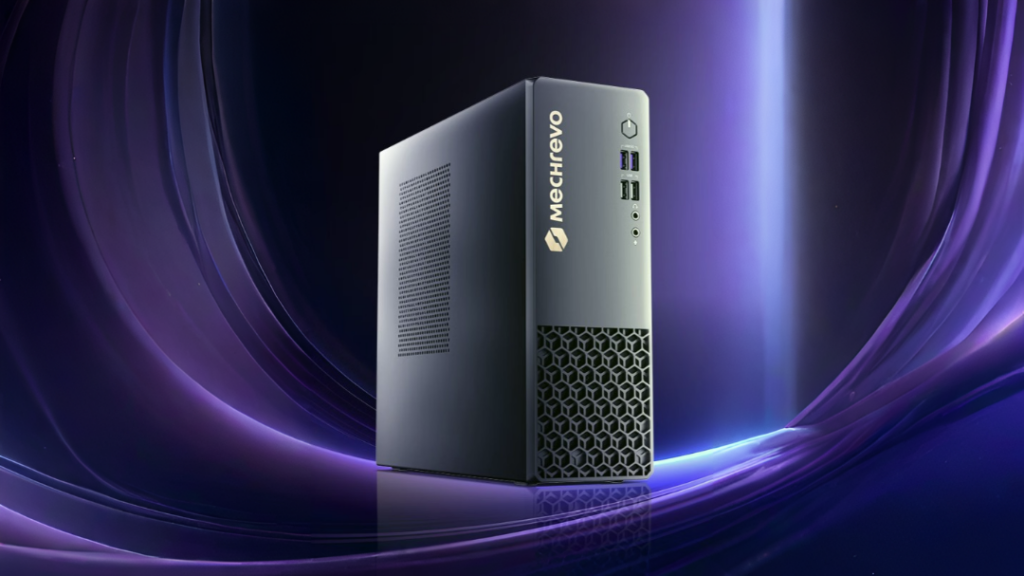
Mechrevo has launched a new compact desktop PC, the WuJie S500e, in China. The computer is built around Intel’s Core i5-13420H processor and carries a standard retail price of 3,699 yuan (about $546). For its initial release on June 25, the company is offering a discounted launch price of 3,499 yuan ($516).

Mechrevo WuJie S500e

Mechrevo WuJie S500e Specifications

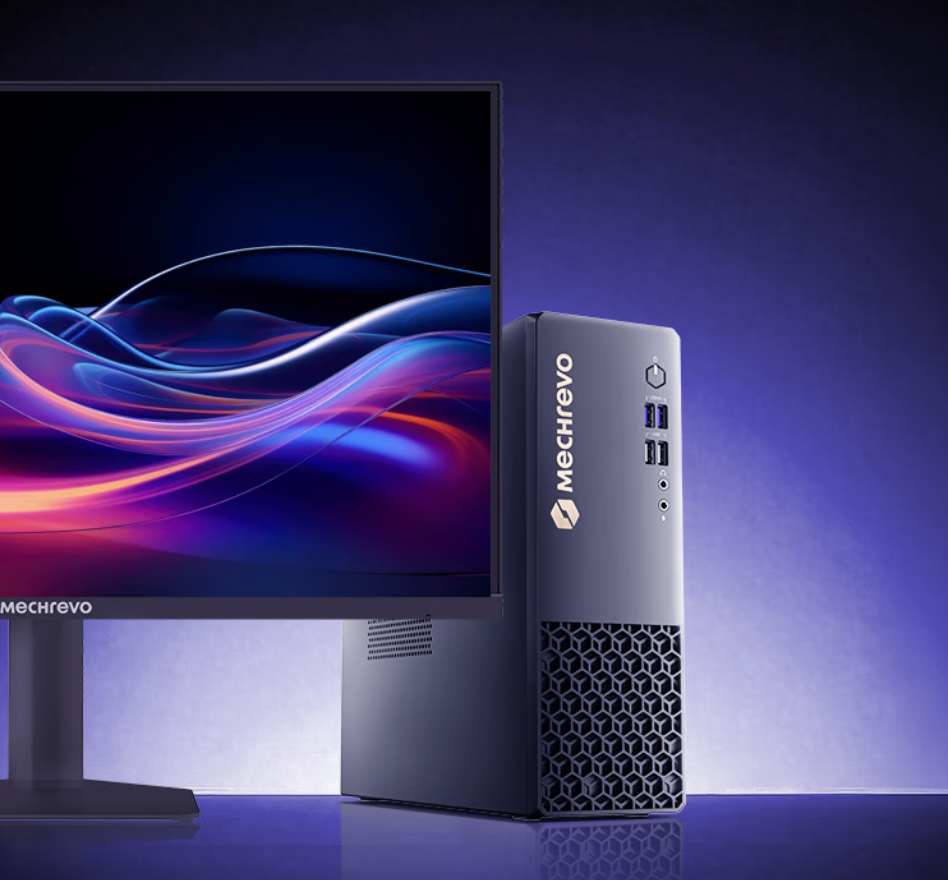
The WuJie S500e is housed in a 7-liter chassis made from SGCC steel. It is designed to take up minimal space on a desk and can be placed in either a vertical or horizontal orientation depending on your setup. The lower front panel features a diamond-pattern grille to allow for airflow, and the case uses a tool-free mechanism so users can open it easily for basic maintenance or hardware upgrades.

Inside, the system runs on the Intel Core i5-13420H, which is a mobile processor typically found in laptops. It features 8 cores and 12 threads, 12MB of cache, and a maximum clock speed of 4.6GHz. Because it relies on Intel’s integrated UHD Graphics, this computer is intended for standard office tasks, web browsing, and media playback rather than gaming or heavy video rendering. The processor is paired with 16GB of dual-channel memory and a 512GB solid-state drive for storage.

To cool the laptop-grade processor inside a desktop case, Mechrevo included a heatsink with three copper heat pipes. The cooling system generates about 38 decibels of noise during regular use and reaches 40 decibels when the system is under full load.

For connectivity, the computer has a total of eight USB ports. The front panel includes two USB-A 3.2 Gen 1 ports, two USB-A 2.0 ports, and standard 3.5mm audio jacks. On the back, there are two more USB-A 3.2 Gen 1 ports, two additional USB-A 2.0 ports, an RJ45 Ethernet jack, an HDMI port, and a DisplayPort. The inclusion of the two display outputs allows users to connect two monitors at once.

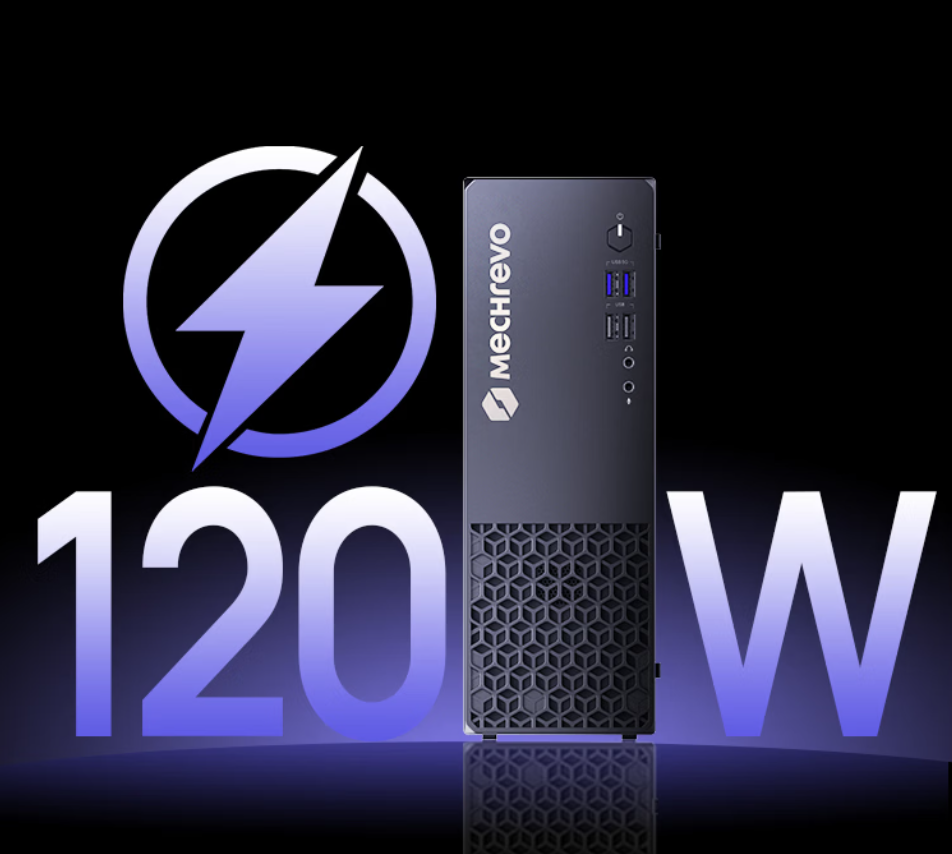
The PC includes a built-in 120W power supply, which means there is no external power brick to manage. The system also supports Wi-Fi 6E and Bluetooth 5.4 for wireless connections, and it ships with Windows 11 pre-installed.

In related news, Lenovo has recently unveiled a new gaming desktop configurable with Intel or AMD processors and Nvidia RTX 50-series graphics, while Asus has introduced the ExpertCenter P200 AiO PC powered by Ryzen processors.

For more daily updates, please visit our News Section.

Stay ahead in tech! Join our Telegram community and sign up for our daily newsletter of top stories!

(JD)

Keychron unveils V6 Ultra HE keyboard with support for both mechanical & TMR magnetic switches

Keychron has listed a new full-size keyboard on its website, the V6 Ultra HE, ahead of a Kickstarter campaign planned for July 22nd. The board is designed to support both traditional mechanical switches and newer TMR magnetic switches on the exact same circuit board.

Keychron V6 Ultra HE

Keychron V6 Ultra HE Specifications

To do this, the keyboard uses a hybrid design Keychron calls the Nova Socket. The practical application here is that you can mix and match switch types based on what you are doing.

For example, you can place magnetic switches in gaming-heavy areas like the WASD cluster to use their adjustable actuation, while keeping standard mechanical switches on the rest of the board for a standard typing feel. Out of the box, the V6 Ultra HE comes pre-installed with a mix of Keychron’s Ultra Fast Lime magnetic switches and Apex mechanical switches.

Keychron V6 Ultra HE

The magnetic switches rely on TMR sensing technology. This allows users to set custom actuation points, use rapid trigger for faster key resets, and configure SOCD behavior. Rather than requiring you to install a dedicated desktop app, Keychron handles these hardware adjustments, as well as basic keymapping and macros, through a QMK-powered open-source web launcher.

The connectivity options are fairly standard for current keyboards. It includes an 8,000Hz polling rate when plugged in via USB, a 2.4GHz wireless mode for lower latency, and Bluetooth 5.3 for connecting to multiple devices. There is also built-in support for both macOS and Windows layouts.

Keychron V6 Ultra HE

The physical build includes a gasket-mounted structure and multiple layers of sound-dampening materials to manage typing noise. The keycaps are made of double-shot PBT plastic in Keychron’s OSA profile.

The keyboard also features a detachable battery module. This makes the battery easier to replace down the line, which aligns with upcoming European Union regulations regarding user-replaceable batteries in electronics.

Pricing and Availability

The exact retail price isn’t public yet. Keychron is currently taking $5 deposits on its website, which grants backers an early-bird price listed as “$1?9” when the Kickstarter goes live. This indicates the promotional price will fall somewhere between $109 and $199.

In related news, Lenovo has launched an affordable tri-mode mechanical keyboard with hot-swappable switches, while Logitech has unveiled the G316 X 98 gaming keyboard featuring an 8,000Hz polling rate and hot-swappable switch support.

For more daily updates, please visit our News Section.

Stay ahead in tech! Join our Telegram community and sign up for our daily newsletter of top stories!

(Keychron)