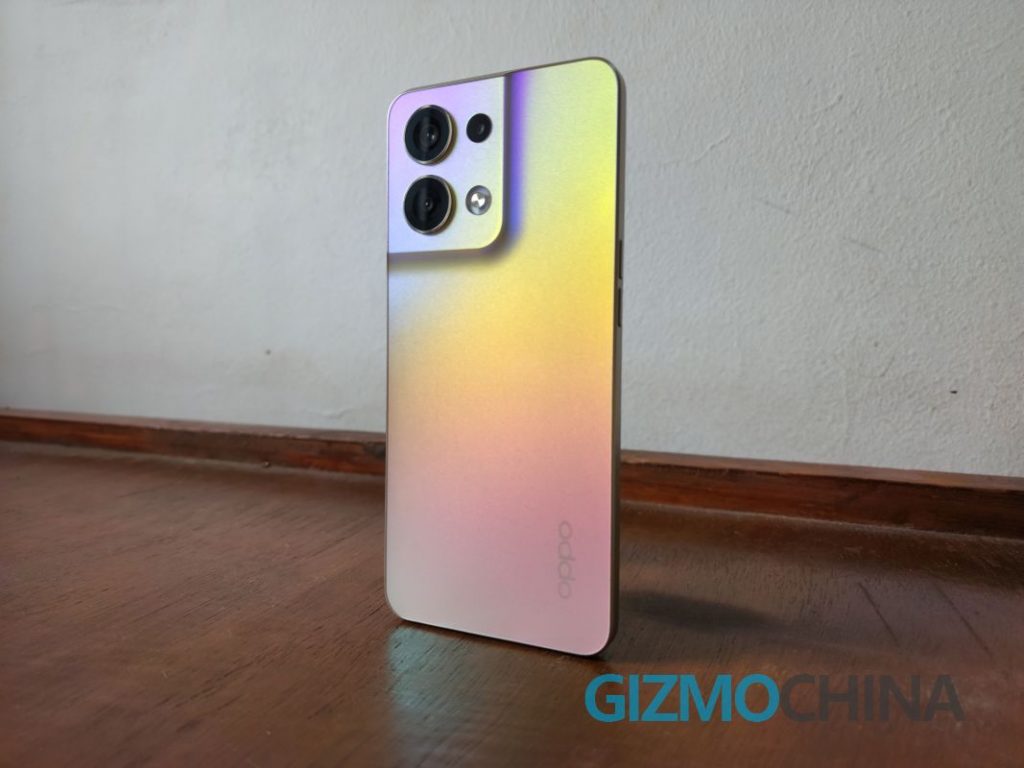
Oppo is running ColorOS 13 beta program for multiple devices worldwide. The Oppo Reno 8 and the Oppo K10 5G, which also goes by Oppo A77 5G and Oppo A57 5G, joined the initiative in October.
A month later, these smartphones have now started receiving the stable update. The Android 13-based software for these two phones is being rolled out in India, China, and the UAE.
As per the November schedule, the Oppo Reno 8 and Oppo K10 5G were supposed to get the Android 13-based ColorOS 13 stable update on November 18. But in usual Oppo fashion, the phones started receiving them earlier.
Oppo began to push the update for the Oppo K10 5G, Oppo A77 5G, and Oppo A57 5G on November 16 (2 days earlier). As mentioned earlier, the three are basically the same phones with different names. The update is available in India for the K10 5G, the UAE for the A77 5G, and China for the A57 5G.
Similarly, the update rollout for the Oppo Reno 8 5G started on November 17 (a day earlier). For this handset, the update is only available in India and China.
The Android 13 stable update for the aforementioned smartphones is being rolled out in batches. Hence, it will take time to reach every user.
Either way, if you own any of these handsets in the mentioned countries, then head over to Settings to check whether your unit has received the software update.
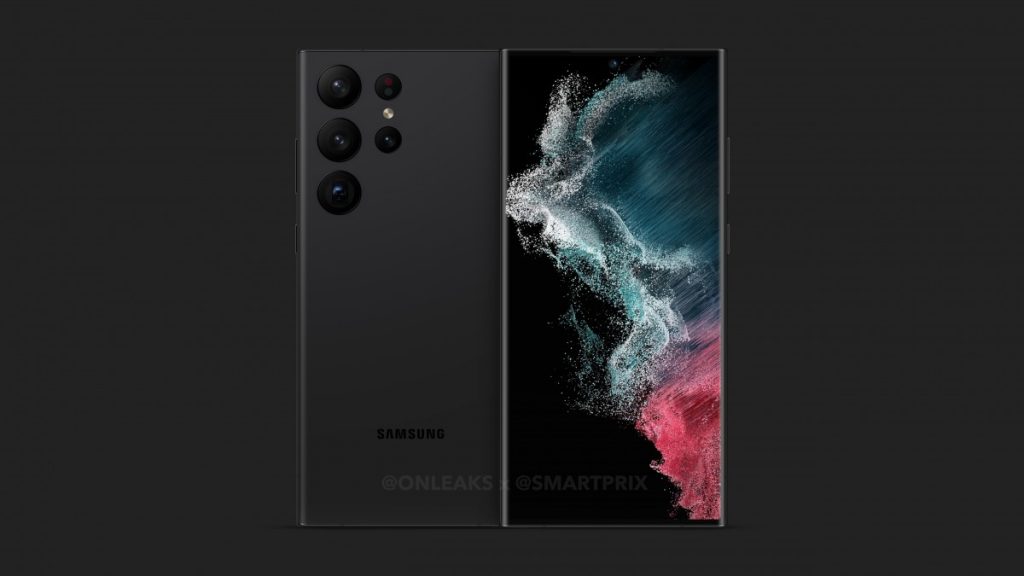
A recent Geekbench listing for the upcoming Samsung Galaxy S23 Ultra revealed that the device will come with a Snapdragon 8 Gen 2 chipset, featuring an overclocked CPU. Known leaker Ice Universe claimed that these are “exclusive high frequency version” of the Snapdragon 8 Gen 2.
For context, the CPU frequencies of the Samsung-exclusive Snapdragon 8 Gen 2 chips are 3.36GHz for the prime core, 2.80GHz for the performance cores, and 2.02GHz for the efficiency cores. In contrast, the official frequency for the Snapdragon 8 Gen 2 prime core announced by Qualcomm is 3.1872GHz.
Samsung’s special edition Snapdragon 8 Gen 2 (we don’t know its official name yet) CPU 3.2GHz→3.36GHz. Surprisingly, the GPU is also increased from 680MHz to 719MHz
Now, the leaker has come back with more news regarding the Samsung-exclusive chipset, saying that not only the CPU on the SoC will be overclocked, but the same will be the case for the GPU. According to Ice, the Adreno 740 GPU on the Galaxy S23 devices will be clocked at 719 MHz compared to the 680 MHz unit on the regular variant. It is currently unknown if there will be a change in the naming scheme for these higher frequency chips or if they will simply be called Snapdragon 8 Gen 2.
Talking about generational improvements, Qualcomm claims that the Snapdragon 8 Gen 2’s CPU is 35% faster than its 8 Gen 1 counterpart, and the GPU is 25% faster. Additionally, the GPU also has hardware-backed ray tracing capabilities. This new chip version ought to be significantly quicker given the overclock to both. However, it is difficult to determine how much faster it will be in real-world scenarios.
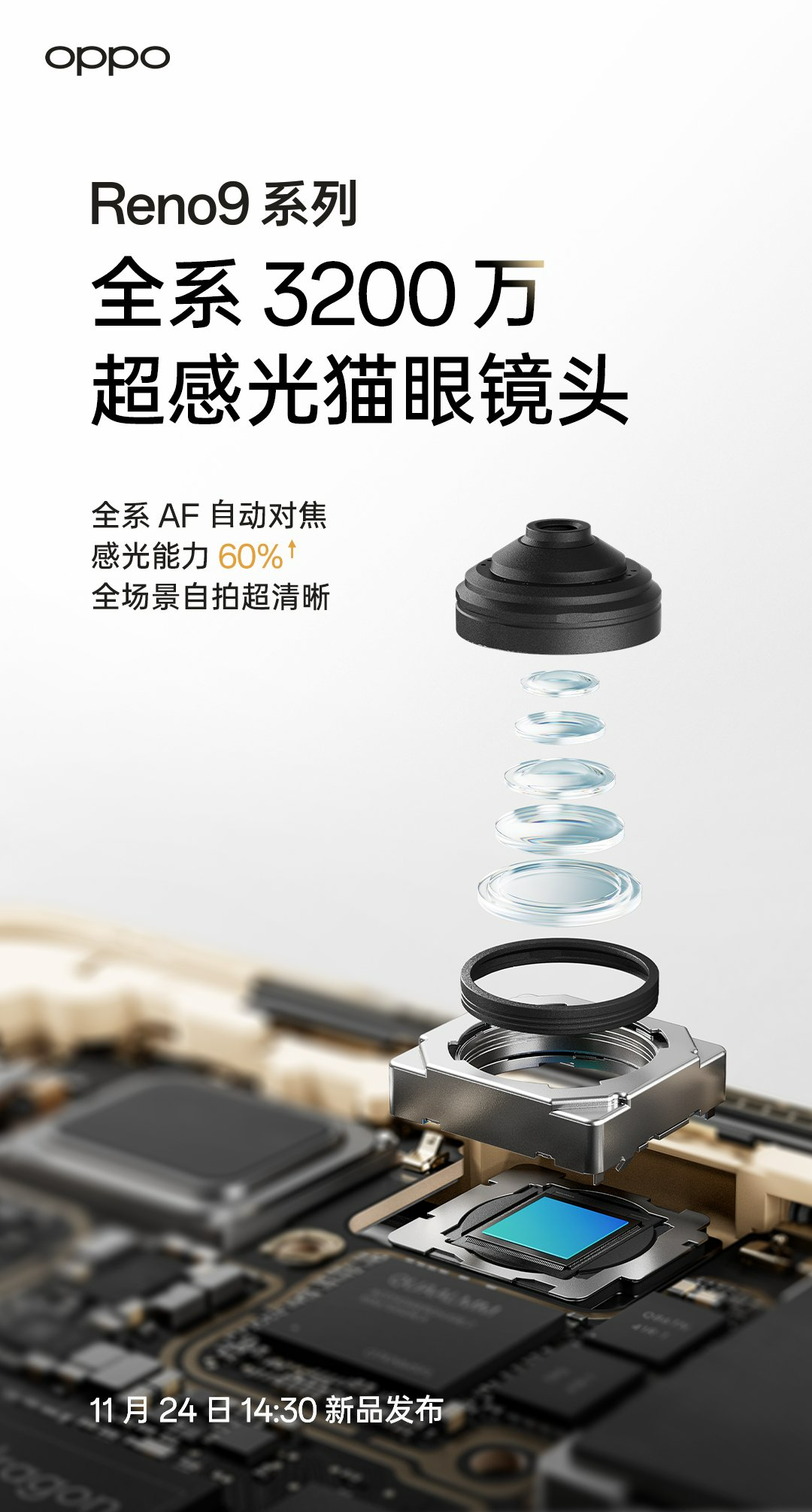
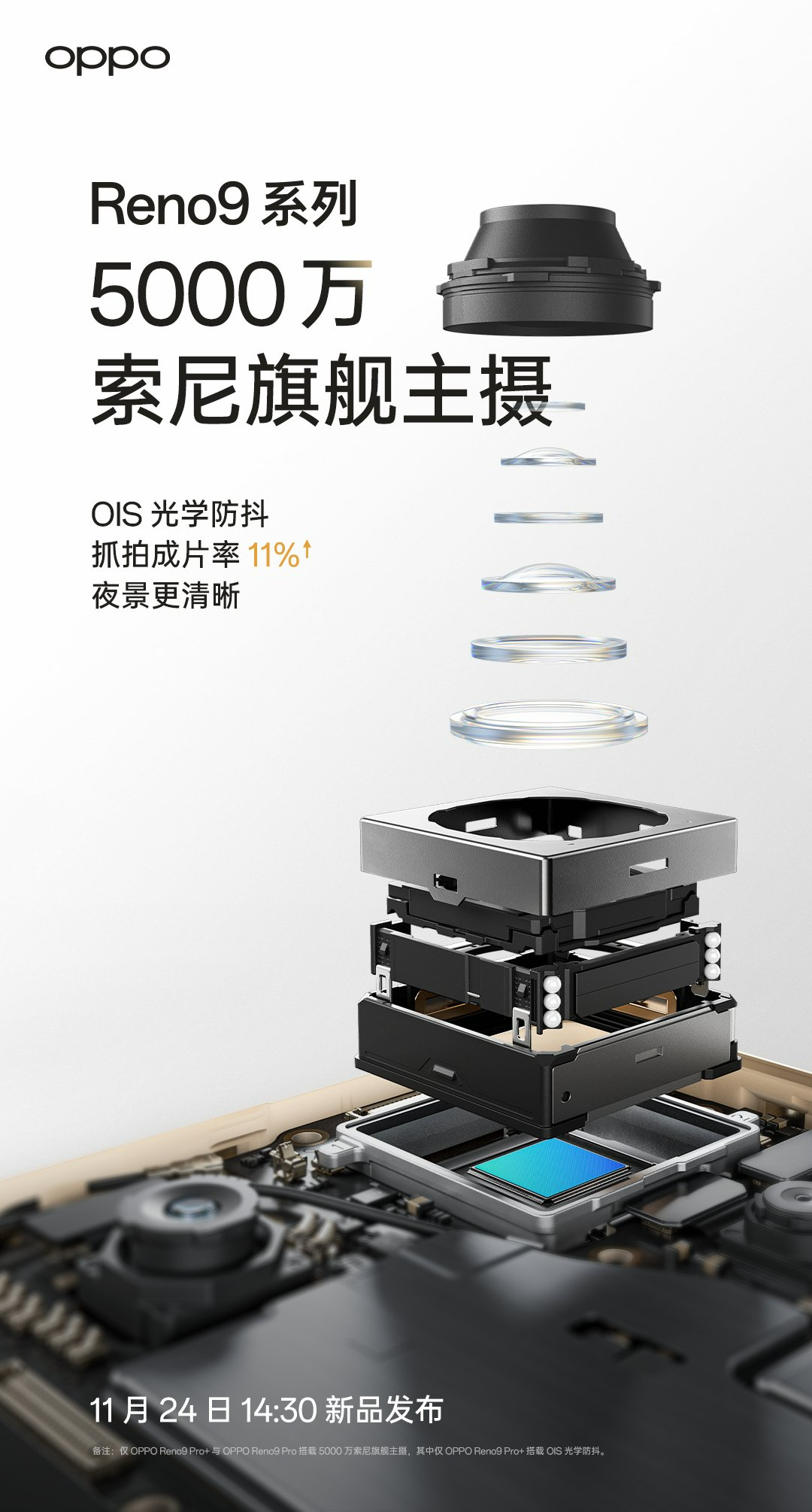
Oppo Reno 9 series is all scheduled to debut on Nov. 24 in China. With only a few days remaining for the launch, the company is now busy confirming some of the key features of the Reno 9 series. Today, OPPO confirmed the camera capabilities of the Reno 9 lineup.
The below shown posters confirm that the Oppo Reno 9 series will have an autofocus-enabled 32-megapixel ultra-sensitive cat-eye lens for selfies. A 50-megapixel Sony flagship camera will be onboard for clearer photos in low-light conditions. It will support optical image stabilization (OIS). The Reno 9 series will also be equipped with a dual-core portrait computing engine dubbed the MariSilicon chip for enhanced photography.
The official renders of the Reno 9 series that surfaced last week revealed that only the Reno 9 Pro+ will have a triple camera unit. The Reno 9 and Reno 9 Pro are equipped with dual rear cameras. Also, the MariSilicon chip will only be available on the Pro variants.
Reports have revealed that the Oppo Reno 9 will have a 64-megapixel primary camera and a 2-megapixel secondary lens. The Reno 9 Pro is expected to feature a 50-megapixel Sony IM890 main camera and an 8-megapixel ultra-wide lens.
The Reno 9 Pro is likely to feature an OIS-enabled 50-megapixel Sony IMX890. It could be accompanied by an 8-megapixel telephoto camera and a 2-megapixel auxiliary lens.
Reports have revealed that the Reno 9 will have the Snapdragon 778G Plus chip, while the Reno 9 Pro will be driven by the Dimensity 8100-Max. The Reno 9 Pro+ will be powered by the Snapdragon 8 Plus Gen 1 chipset.
The Reno 9 and 9 Pro are likely to house a 4,500mAh battery with 67W charging. The Reno 9 Pro+ is likely to support 80W charging. All three phones are expected to house a 6.7-inch FHD+ 120Hz display with curved edges and an under-display fingerprint scanner.
Motorola is expected to soon announce the Moto X40 in China. It will be one of the first phones to come equipped with the Snapdragon 8 Gen 2 mobile platform. The same device is expected to debut early next year with the Motorola Edge 40 Pro moniker in the global market. Chen Jin, Lenovo Group General Manager for Mobile Division, revealed the X40’s AnTuTu benchmark score before the launch.
The Snapdragon 8 Gen 2 chip will be rivaled by MediaTek’s Dimensity 9200. A recent report revealed that the D9200 scored 1,266,1012 on AnTuTu. Now, the screenshot that Chen Jin shared shows that the upcoming Moto X40, which has the Snapdragon 8 Gen 2 chip, has gotten a higher score of 1,312,901. It appears that the SD8G2 may offer slightly better performance over the D9200 chip since there is no vast difference between the benchmark scores of both chips.
Moto X40 AnTuTu
The Vivo X90 Pro+, the Xiaomi 13 series, the iQOO 11 lineup, and the OnePlus 11 are all expected to come out this year. They are all flagship phones with Snapdragon 8 Gen 2 chips. These devices are also expected to record a similar score on AnTuTu. The SD8G2 is a 4nm chip featuring a 3.2GHz Cortex-X3 prime core, 2.8GHz 2 x Kryo Cortex-A715 performance cores, 2.8GHz 2 x Kryo Cortex-A510 performance cores, and 2.0GHz Kryo efficiency cores.
Moto X40 specifications (rumored)
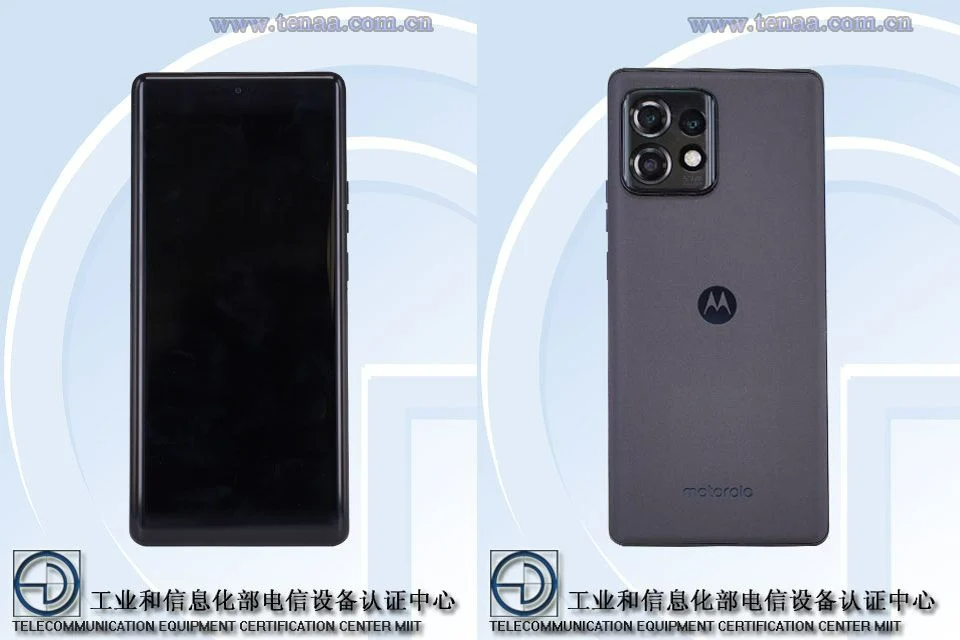
The Moto X40 was recently spotted at TENAA with all its major specifications. The device will arrive with a 6.67-inch OLED with curved edges on all four sides. It will support an FHD+ resolution, 10-bit colors, and an under-display fingerprint scanner. The device will run on the MY UI 5.0-based Android 13 OS.
Moto X40
The Snapdragon 8 Gen 2-powered device is expected to arrive with up to 18 GB of LPDDR5x RAM and up to 512 GB of internal storage. It may house a 5,000mAh battery with 68W fast charging. It will have a 60-megapixel selfie camera on the front and a 50-megapixel (main) + 50-megapixel (ultra-wide) + 12-megapixel (telephoto) triple camera unit on the back.
The OnePlus Nord CE 2 Lite OxygenOS 13 Open Beta program has been made public by OnePlus in India. To recall, the OnePlus Nord CE 2 Lite 5G was released in the country in April and is the most affordable smartphone offered by the brand. OnePlus has announced the Nord CE 2 Lite 5G Android 13 Open Beta program on the OnePlus Community forum.
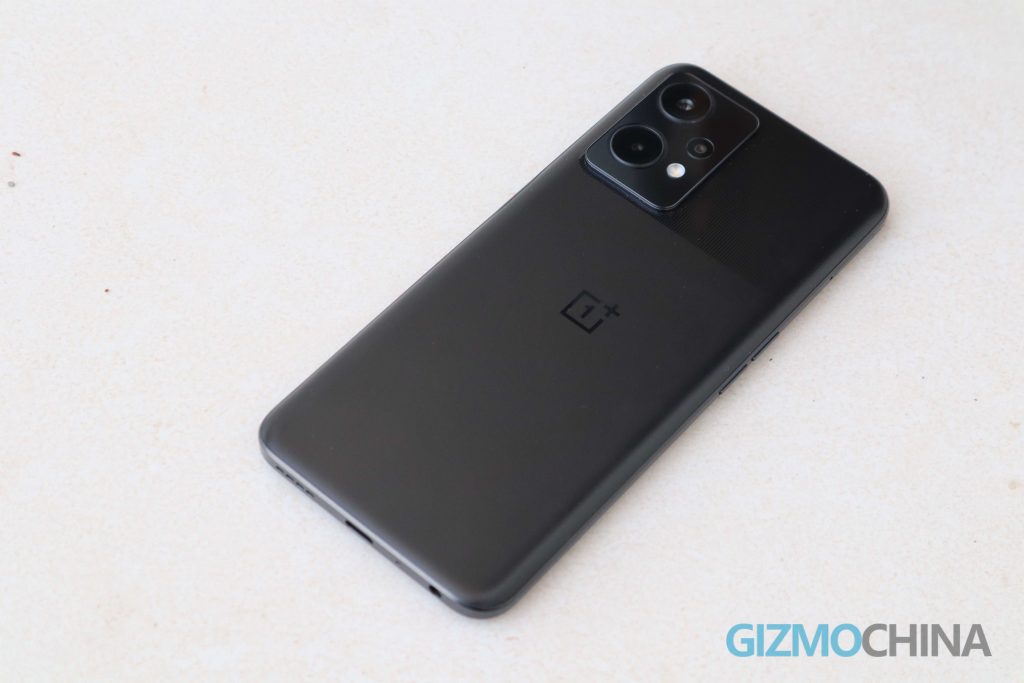
Oneplus Nord CE 2 Lite 5G
What’s weird about this Open Beta program is that it isn’t actually open, and OnePlus is looking to recruit 1000 OnePlus Nord CE 2 Lite 5G users from India to participate in the program. Let’s examine the application process and changelogs for the OnePlus Nord CE 2 Lite OxygenOS 13 Open Beta program in more detail.
Users of the OnePlus Nord CE 2 Lite 5G running firmware version CPH2381 11.A.13 in India are eligible to apply for the OxygenOS 13 Open Beta program. Those who meet the requirements can go to Settings > About device > Tap up to date > Tap icon on top right > Beta program> Beta > Fill in your details > If interested, apply now for the OnePlus Nord CE 2 Lite Android 13 Open Beta program.
The new OnePlus OxygenOS 13 includes a slew of new features and changes, including the all-new Aquamorphic design. The fonts have also been optimized by the brand to improve visual comfort and readability. You can take at the detailed changelog below to find out more about the changes coming with OxygenOS 13.
Changelog
Aquamorphic Design • Adds Aquamorphic Design theme colors for enhanced visual comfort. • Adds Shadow-Reflective Clock, with shadow simulating the orientation of the sun and moon. • Adds a Home screen world clock widget to show the time in different time zones. • Upgrades to Quantum Animation Engine 4.0, with a new behavior recognition feature, which recognizes complex gestures and provides optimized interactions. • Optimizes UI layers for a clearer and neater visual experience. • Applies real-world physical motions to animations to make them look more natural and intuitive. • Optimizes the widget design to make information easier and quicker to find. • Optimizes fonts for better readability. • Optimizes system icons by using the latest color scheme to make the icons easier to recognize. • Enriches and optimizes illustrations for features by incorporating multicultural and inclusive elements.
Efficiency • Adds large folders to the Home screen. You can now open an app in an enlarged folder with just one tap and turn pages in the folder with a swipe. • Adds media playback control, and optimizes the Quick Settings experience. • Adds more markup tools for screenshot editing. • Adds support for adding widgets to the Home screen, making information display more personalized. • Adds Sidebar Toolbox. You can open floating windows inside apps for smooth operation. • Upgrades Doodle in Notes. You can now draw on graphics to take notes more efficiently. • Optimizes Shelf. Swiping down on the Home screen will bring up Shelf by default. You can search content online and on your device.
Security & Privacy • Adds an automatic pixelation feature for chat screenshots. The system can identify and automatically pixelate profile pictures and display names in a chat screenshot to protect your privacy. • Adds regular clearing of clipboard data for privacy protection. • Optimizes Private Safe. The Advanced Encryption Standard (AES) is used to encrypt all files for enhanced security of private files.
Health & Digital Wellbeing • Adds distance-from-phone, ambient light, and sitting posture reminders in Kid Space. • Adds Eye comfort in Kid Space to protect children’s vision.
Performance Optimization • Adds Dynamic Computing Engine to improve the system speed, stability, battery life, and app experience.
Gaming Experience • Upgrades to HyperBoost GPA 4.0 to stabilize the frame rate and balance the performance and power consumption in key scenarios.
About a month ago, leaks of the next-gen Sont Xperia Ace lineup device called the Xperia Ace 4 appeared online. The leak revealed an upgraded display and a new-generation Snapdragon chip will be on-board the device along with other minor improvements.
Now, a new leak has revealed the specifications of another upcoming mid-range smartphone from Sony called the Xperia 10 V. The smartphone will be the successor of the Sony Xperia 10 IV, which launched in Q1 2022.
Sony Xperia 10 IV
According to a report by SumahoDigest, the smartphone will apparently support a Snapdragon 6 Gen 1 chipset. The new chipset is based on a 4nm node, offers superior efficiency, improved Wi-Fi speed support, and can handle LPDDR5 memory at 3,200 MHz when compared to the previous-generation Snapdragon 695.
The display department will see a slight size upgrade, going from a 6-inch OLED panel on the Xperia 10 IV to a 6.1-inch OLED panel on the Xperia 10 V. The resolution of 1080 x 2520 (FHD+) and 21:9 aspect ratio will remain unchanged. It will be interesting to see if Sony decides to keep up with the competition and finally offer a higher refresh rate panel instead of the current 60Hz that it offers on the Xperia 10 IV.
Sony Xperia 10 IV
The memory and storage configuration sees only minor adjustments, with the 6 GB + 128 GB combo returning. On the current-generation gadget, LPDDR5 RAM might be available in place of LPDDR4x RAM. A slight bump in battery capacity is also coming, as the upcoming device will now reportedly offer a 5,150 mAh vs the 5,000 mAh on the current iteration. Fast charging speeds, on the other hand, will remain the same at 30W.
It is unclear if the camera details will change if Sony will decide to roll with the same 12MP + 8MP + 8MP setup as the current gen. That being said, the Xperia 10 V is not expected to make its debut until Q2 2023.
iQOO recently unveiled the iQOO Neo 7 in China, featuring the Dimensity 9000+ chipset. Rumors are rife that the brand is gearing up to launch two new phones from the series: the iQOO Neo 7s and the iQOO Neo 7 SE. The 7s is expected to feature the Snapdragon 8 Plus Gen 1 chipset. Recent reports have claimed that the Neo 7 SE will feature a new chipset. A leaked poster of the device has surfaced on Weibo (via.TechGoing) . It reveals that its design will be similar to the Neo 7 SE.
A leaked photo that emerged last week revealed that the screen of the iQOO Neo 7 SE will have a centrally positioned punch-hole. It will be an OLED panel with an under-display fingerprint scanner. The leaked poster that has appeared now shows that the rear camera module of the Neo 7 SE is likely to be similar to the Neo 7. As can be seen, the device may come in orange, light blue, or black colors.
The above poster reveals that the iQOO Neo 7 SE will have an E5 AMOLED display. Under the hood, it will have the upcoming Dimensity 8200 chipset. The device will pack a 5,000mAh battery with 120W charging support.
The primary lens onboard will have support for optical image stabilization (OIS). In a recent Weibo post, reliable tipster Digital Chat Stataion claimed that there is a high probability that it does not have the Sony IMX766 primary camera, which is available on the Neo 7.
According to a recent leak, the iQOO Neo 7 SE may come in as many as four configurations, such as 8 GB RAM + 256 GB storage, 12 GB RAM + 256 GB storage, 12 GB RAM + 512 GB storage, and 16 GB RAM + 512 GB storage.
As far as the launch date of the iQOO Neo 7 SE is concerned, it appears that it may launch soon since it has been approved by the 3C and TENAA authorities of China. In a recent leak, reliable tipster Digital Chat Station mentioned that the Neo 7 SE may launch earlier than the Neo 7s. For those who are unaware, the SE model is expected to launch by mid-December.
Redmi has recently launched the Redmi Note 12 series of smartphones in China. The Chinese manufacturer is now expected to launch one of the Redmi K60 series phones in the Chinese market before the end of this year. A concept render of the K60 has now appeared online, revealing that it will sport a renewed rear design as compared to the Redmi K50 series.
Before reading ahead, readers should know that the authenticity of the Redmi K60’s concept render could not be confirmed. Hence, it is unclear whether it is a fan-made render or something that is based on the actual device.
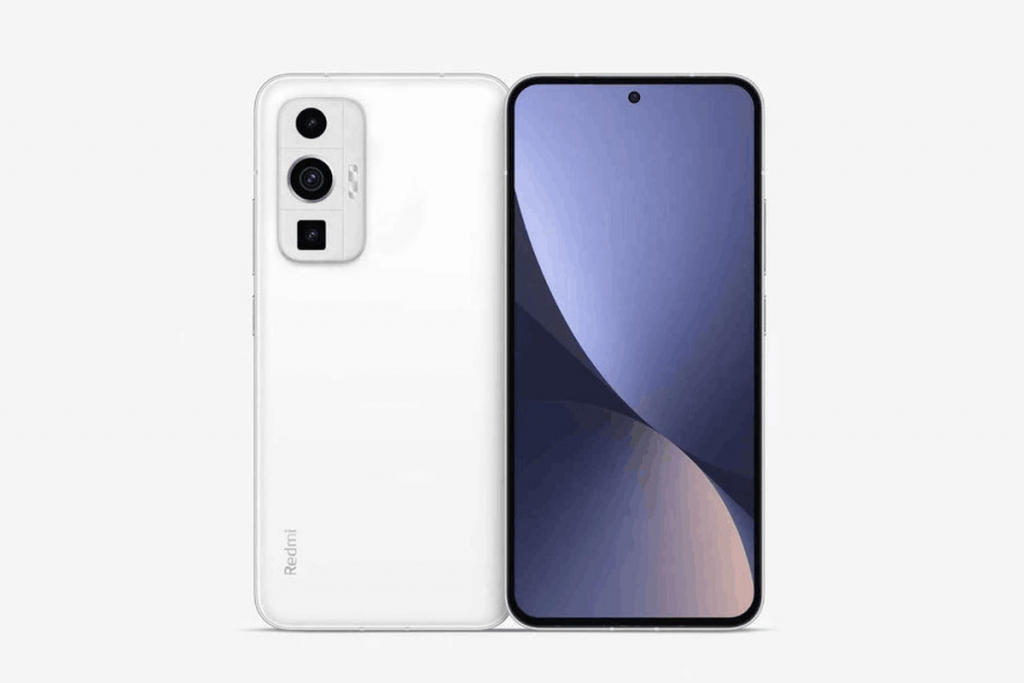
The Redmi K60 has a flat display with a punch-hole in the center on the front. The bezels are slightly thicker than expected for a phone in this price range.
Redmi K60 render
The right edge of the device has a volume rocker and a power button, which appears to be integrated with a fingerprint scanner. On the back, it has a rectangle-shaped camera module with rounded edges. The first camera is followed by a larger lens and a square-shaped camera.
According to reports, the Redmi K60 will have a 6.67-inch AMOLED 120Hz display and will be powered by the Dimensity 8200 chipset. It may house a 5,500mAh battery that supports 67W fast charging. On the back, the Redmi K60 will have a 64-megapixel Sony IMX686 primary camera with OIS support.
The leaked specifications of the Redmi K60 may rival the iQOO Neo 7 SE, which may come equipped with the Dimensity 8200 chipset. The K60 series is expected to include other models, such as the K60 Pro and the K60 Gaming. These devices are likely to feature the Snapdragon 8 Plus Gen 1 and Snapdragon 8 Gen 2 chipsets, respectively.
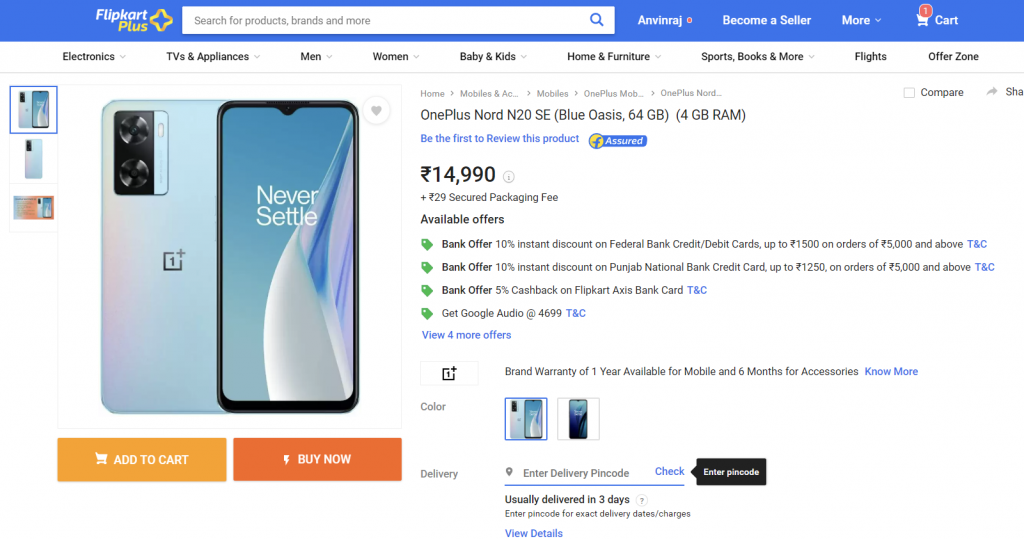
OnePlus Nord 20 SE was announced for the global market in August this year as the company’s most affordable smartphone. Without any official announcement, the Nord 20 SE is now listed for purchase on Amazon India and Flipkart. Here is a look at its variants and price.
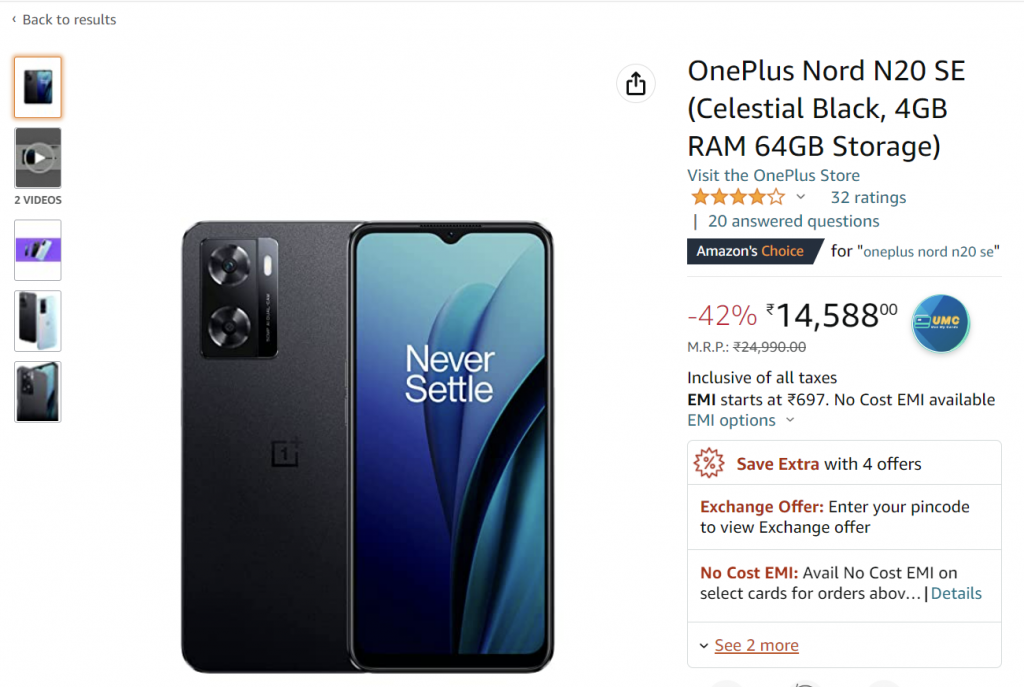
OnePlus Nord 20 SE listed on Amazon
Both retailers have listed the OnePlus Nord 20 SE with slightly different price tags. On Amazon, its variant offering 4 GB of RAM and 64 GB of storage is listed for Rs 14,588 (~$179), and the price keeps changing from time to time. It is only available in Celestial Black on Amazon.
Flipkart has listed the Nord 20 SE in Celestial Black and Oasis Blue color variants. Its 4 GB RAM + 64 GB storage edition is listed at Rs 14,799 (~$181).
OnePlus Nord 20 SE listed on Flipkart
We await official confirmation from OnePlus to know whether these are legitimate listings. Since there is no official announcement from OnePlus yet on the Nord 20 SE’s release in India, we advise our readers not to purchase it. Readers who are interested can check out the OPPO A77 4G, which is nothing but the same phone with different branding.
The OnePlus Nord 20 SE has a 6.5-inch IPS LCD display that offers an HD+ resolution of 720 x 1612 pixels. On the front, it has an 8-megapixel selfie camera. The device’s back panel has a 50-megapixel primary camera, a 2-megapixel macro lens, and an LED flash. It runs on OxygenOS 12.1-based Android 12 OS.
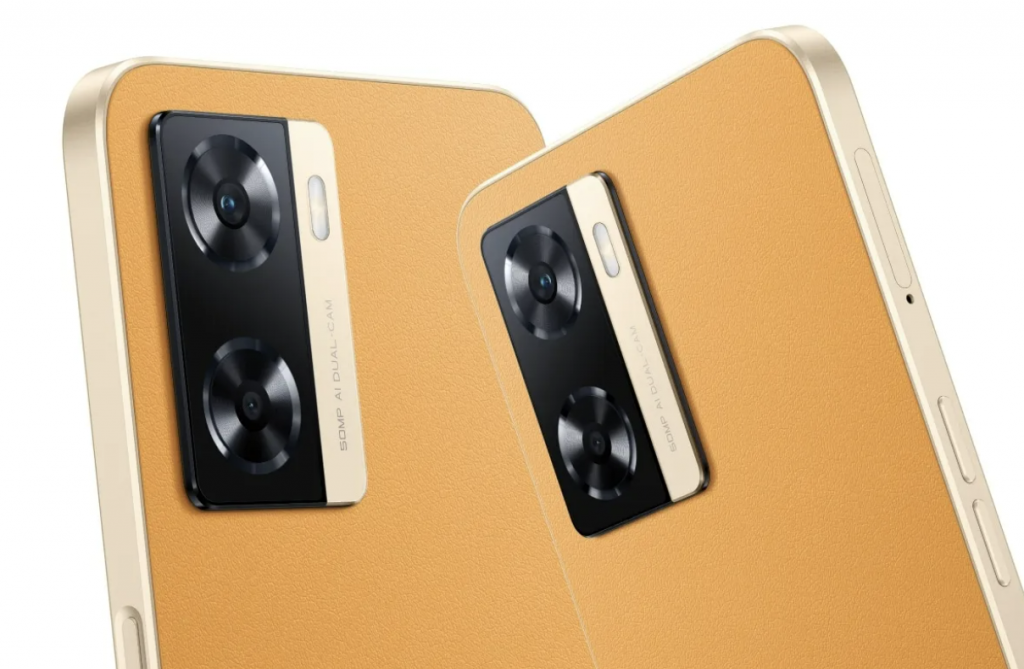
OPPO A77 4G
The device is equipped with an Helio G35 chipset, 4 GB of RAM, 64 GB of storage, and a microSD card slot for additional storage. It houses a 5,000mAh battery with 33W fast charging support.
As far as the A77 is concerned, it is available in two variants, such as the 4 GB RAM + 64 GB storage for Rs 15,499 (~$190) and 4 GB RAM + 128 GB storage for Rs 15,999 (~$196). It comes in Sky Blue and Sunset Orange colors.
There have been tons of stories detailing the life-saving credentials of the Apple Watch in the past couple of years. The spread of these remarkable survival stories is not limited to one country but to several regions. The latest story comes from India where the Apple Watch has helped to save an Indian teen who fell down a 150-ft valley. The teenager’s Apple Watch Series 7 was used to contact his family and friends when stranded in the valley.
The Indian teenager, Smit Metha reportedly slipped into the valley and could not locate his iPhone but his Apple Watch came to the rescue. The teenager, after coming out of the ordeal, sent an email to Apple CEO, Tim Cook, that Apple Watch came to his rescue. The youngster is from the Maharashtra State and visited Lonavala, 50 miles (~80km) from Mumbai. He was out hiking on a rainy day with three of his friends. The incident happened on their way back when he slipped into a valley. He was saved by a tree and stone but suffered a fracture on his ankles. He was in a lot of pain and only had his Apple Watch with him.
Mertha was eventually rescued by his friends and others around the scene. The teenager was hospitalized and went through a rehabilitation process that sees him still using a walking stick. Apple CEO Tim Cook, in an email response, praised Mertha for sharing his story.
Lenovo is rolling the drums to mark the 30th anniversary of the ThinkPad laptop with the unveiling of the ThinkPad X1 Carbon Gen 10. The units of this commemorative laptop are limited and each unit has a commemorative serial number. The new product comes as part of celebrating the very successful ThinkPad series since it debuted in 1992.
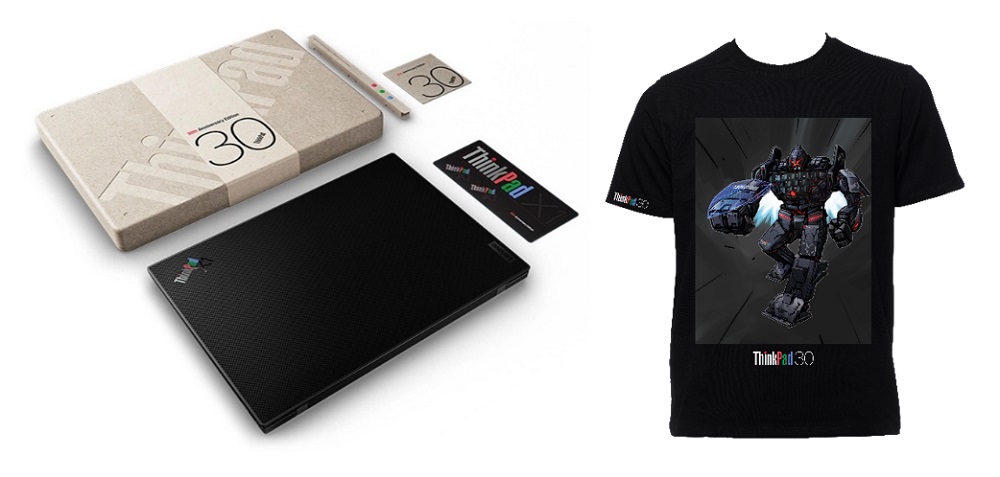
The ThinkPad X1 Carbon Gen 10 30th Anniversary Edition is powered by the 12th Gen Intel Core vPro processors with excellent capabilities and features. The product itself comes with etchings and exquisite designs highlighting the history of the ThinkPad. It features smarter technology than its predecessors, as well as comes with recyclable packaging. The laptop has a woven carbon fiber top cover with a special retro-style logo and commemorative lettering. There are stickers, retro TrackPoint caps, and a collector’s booklet.
The packaging of the limited-edition ThinkPad X1 Carbon Gen 10 has 100% compostable packaging with bamboo and sugarcane fiber. The whole package is wrapped with a paper band having inscriptions of the history and trajectory of the ThinkPad since its inception.
As per performance and build, the ThinkPad X1 Carbon Gen 10 has better airflow than previous iterations. It also has redesigned keys and improved exhaust ventilation. It has a redesigned camera setup in form of a Communications Bar. It is a perfect machine for business professionals and students who need a solid device on the go. The ThinkPad has had a remarkable three decades of existence. Over 200 million units of the ThinkPad have been sold since its entry into the market in 1992.
The limited-edition commemorative ThinkPad X1 Carbon Gen 10 can be pre-ordered in Singapore for S$3,688 (~$2,680) up to November 30. The package comes with a sleeve cover for the machine, an X1 mouse, a T-shirt, as well as free registration for Lenovo Pro.
Mobvoi has unveiled its latest smart treadmill which comes with an incline function, a full-color touchscreen, and a robust build. The Mobvoi Home Treadmill Incline joins a growing list of Mobvoi treadmills since the first models debuted in 2020. It is however the first with an incline function that can reproduce a gradual slope up to 15º for more demanding workouts. Mobvoi says the incline function makes the workout to be more fulfilling and realistic.
The Home Treadmill Incline comes with a full-color touchscreen to monitor and modulate the workout regimen. The screen can be synchronized with the user’s compatible smartwatch to display different health and fitness metrics like heart rate, steps taken, calories burned, etc. The smartwatch must also have the Mobvoi Treadmill app. The incline feature allows the deck to incrementally increase as the workout progresses at rolling speeds up to 0.13 miles per minute (7.8 mph). The treadmill has a 2.2 horsepower motor which outputs noise levels up to 74dB which is a bit high.
The Mobvoi Home Treadmill Incline can connect workout data to the smartwatch and a smartphone. The treadmill is made with strong and resilient materials making it highly durable. It also has a safety clip that cuts out operation automatically if a user falls and has it detached from the clothes.
The Mobvoi Home Treadmill Incline can be easily folded when not in use and retails for $599.99 directly from Mobvoi’s website. Availability of the treadmill will spread to other platforms like Amazon subsequently.
Honor is holding a major launch event for its highly anticipated Honor 80 series of affordable flagship smartphones in China on November 23th (Wednesday). These premium devices are successors to the Honor 70 series released earlier this year, and are leaked to consist of 3 models: the Honor 80 Pro, the Honor 80 SE and the standard Honor 80.
Source: Honor
Here at Gizmochina, our writers have rounded up all the official teasers and rumours in this simple article that you should know about the upcoming Honor 80 series.
Honor 80 Pro
The Honor 80 Pro Plus will be the company’s first flagship to feature Qualcomm’s highly regarded Snapdragon 8+ Gen 1 mobile SoC. Built on TSMC 4nm fabrication process, the chipset promises up to 30% better performance, and up to 30% better power efficiency than the Snapdragon 8 Gen 1 on Samsung 4nm node last year. The SoC also brings support for 5G, WiFi 6E, as well as a stunning ISP for those amazing stills and videos.
Besides the fast SoC, the device is also said to support fast charging via a 100W wired connection, alongside a 5000 mAh battery. The device will also flaunt the industry’s first 160MP primary sensor among its flagship triple camera setup. The camera island will feature a prominent ‘8’ around the sides to signify that the device is Honor’s 8th generation of its flagship killer series.
Source: Honor
Meanwhile, the front of Honor 80 Pro is a curved 120Hz AMOLED screen with a resolution of 1.5K for better power efficiency, and a centred pill-shaped cutout at the top of the screen, featuring a set dual front-facing 50MP selfie cameras.
The device will launch with Honor’s latest MagicOS user interface, with up to 12GB of RAM, and 512GB of internal storage. It is expected to launch from under 4500 RMB (632 USD) onwards.
Honor 80
The standard Honor 80 meanwhile will also sport the same curved 120Hz AMOLED screen design as its more premium sibling, with more midrange internals inside the device.
Source: Digital Chat Station
The Honor 80 will instead sport Qualcomm’s Snapdragon 782G SoC, with support for only 66W fast wired charging. It is rumoured to be available with up to 12GB of RAM and 512GB of internal storage, and a rear Sony flagship primary sensor instead of the 160MP Samsung sensor found on the Pro. The front camera setup remains unknown, but it is expected to feature the same 50MP dual selfie lens like its Pro sibling.
The pricing of the Honor 80 is expected to start under 3000 RMB (422 USD) onwards.
Honor 80 SE The most affordable bunch of the Honor 80 series is the Honor 80 SE. It will feature the recently announced Dimensity 1080 SoC found on other competing mid-rangers such as the Redmi Note 12 Pro and Realme 10 Pro+.
The device will come with up to 12GB of RAM and 256GB of internal storage, alongside support for 66W wired fast charging. The front display will be flat a 120Hz AMOLED display, but its front camera specifications and rear camera setup are yet to be known. The design also not been teased nor announced by Honor at the time of writing this article.
The pricing of the Honor 80 SE is expected to start from 1700 RMB (239 USD) onwards.
For more details regarding the launch of the upcoming Honor 80 series, stay tuned to our coverage of the launch event here at Gizmochina on November 23rd this Wednesday!
Although smartwatches make our lives easier, they may not suit everyone. Many people prefer a stylish watch instead of carrying a screen that constantly receives notifications. CIGA Design, on the other hand, designs special watches for people with such a preference. The company attracts users’ attention with award-winning special models such as Blue Planet.
Now you can have these award-winning watches with up to 25% discount, exclusive to Black Friday. The discount period, which will start on November 18, will end on December 4, 23:59. You can browse the company’s website to have beautiful CIGA Design smartwatches at great discounts. The model that will attract the most attention during the discount period will undoubtedly be Blue Design.
CIGA Design wins the Grand Prix d’Horlogerie de Genève
CIGA Design’s models managed to receive many awards in the international arena. The company is the first Chinese brand to win the “Grand Prix d’Horlogerie de Genève” (GPHG) award, and Blue Planet is permanently hosted by the Musée D’Art Et D’Histoire (MAH) in Geneva. CIGA Design is also the Chinese watch brand with the most international design awards (17). These successes brought popularity; in 2020, the CIGA Design Z series broke a new crowdfunding record in the Indiegogo category, selling 10,845 units on the crowdfunding platform Indiegogo with a sales amount of $26.5 million.
Blue Planet watch, the first Chinese award winner at the Grand Prix d’Horlogerie de Genève, is the Oscars of the watch world. The dial of the CIGA Design Blue Planet offers a display that is as artful as it is unique, and time originates from the earth’s rotation. A circle of the earth rotation represents a day in our lives, just like the earth’s engravement inside the dial, rotating hour by hour until the day past. It uses Micro-carving tech to rebuild the landform of our Earth. You can feel the greatness of the mountains, the ocean and other natural elements through this little earth on your wrist.
Some of the key highlights of the Blue Planet Watch:
The original non-synchronous tracking technology movement to achieve the watch time revolutionary innovation
The world has a long history of watches, and after 800 years of evolution, the appearance and technology of watches have changed a lot, but the only constant is that traditional watches have always been presented with three hands: hours, minutes and seconds. The U Series Blue Planet, however, is an original non-synchronous follow-up movement that overturns the traditional gear ratio of the movement, allowing the hour hand to turn 30° and the minute hand to turn 390°, changing the conventional way of telling the time in a traditional watch.
Simulating the rotation of the earth, unlocking a new way to read the time
The original static clock dial and dynamic minute dial simulate the rotation of the earth, realizing the function of indicating hours and minutes at one point, achieving innovative time reading and giving the wearer a new watch experience pleasure.
Fine sculpted micro-landscape dial, nautical marker hands to create innovative time reading without hands.
With micro-engraving technology to restore the real ratio of the earth’s land and sea, presenting mountains, oceans and other terrain altitude, the time reading hands in the form of nautical markers cleverly integrated into the ocean map “hands-free” watch inspiration presentation, artistic micro-vision, so that the vast planet treasures on the wrist.
You can browse the company’s website to have beautiful CIGA Design smartwatches at great discounts.
OnePlus 10 Pro has received a price cut in India. The smartphone was launched in the country earlier in March this year and it is available in two RAM and storage configurations. The OnePlus 10 Pro is now cheaper by Rs 5,000 on the brand’s official website, Amazon, and across the company’s partner retail stores. It’s unclear whether the price drop is permanent or for a limited time. However, it comes at a time when OnePlus is hyping up its successor i.e. the OnePlus 11.
The OnePlus 10 Pro was launched at Rs 66,999 for the base 8GB + 128GB variant whereas the 12GB + 256GB option carried a price tag of Rs 71,999. Both configurations have received a price cut of Rs 5,000 making them available for Rs 61,999 and Rs 66,999 respectively. Interested customers purchasing from Amazon and OnePlus website will be eligible for exchange offer on old smartphones making the device cheaper. Additionally, OnePlus is also offering the Buds Z2 at Rs 2,299 and Buds Pro at Rs 5,499 compared to their original prices if purchased from the company’s website.
The OnePlus 10 Pro sports a 6.78-inch QHD+ curved AMOLED display with LTPO 2.0 technology and a 120Hz refresh rate. Under the hood, it is powered by a Snapdragon 8 Gen 1 processor coupled with up to 12GB RAM and 256GB storage. The device is backed by a 5,000mAh battery with support for 80W wired and 50W wireless charging. On the imaging front, the smartphone has a triple rear camera setup of a 48MP primary sensor, a 50MP ultra-wide lens, and an 8MP telephoto lens.
Vivo’s X80 series debuted earlier this year and built quite a following, with the Vivo X80 Pro gaining critical acclaim from both users and reviewers. Now, the Vivo X90 series is also around the corner, and it definitely has some big shoes to fill.
The upcoming lineup will include the Vivo X90, X90 Pro, and X90 Pro+ and is due for launch in a few days. However, there’s not much left to the imagination as various leaks and teasers have already revealed most details about the Vivo’s next flagships. And to make it easier for you, we have compiled everything known about the Vivo X90 series in this article. Let’s dive in.
Vivo X90 Series Launch Date
Vivo recently confirmed through a Weibo post that the X90 series will launch in China on November 2022. The smartphones will be unveiled at an event held at 7 PM GMT+8. The company will live-stream the event on popular Chinese video streaming and social media platforms like Weibo.
Vivo X90 Series Design
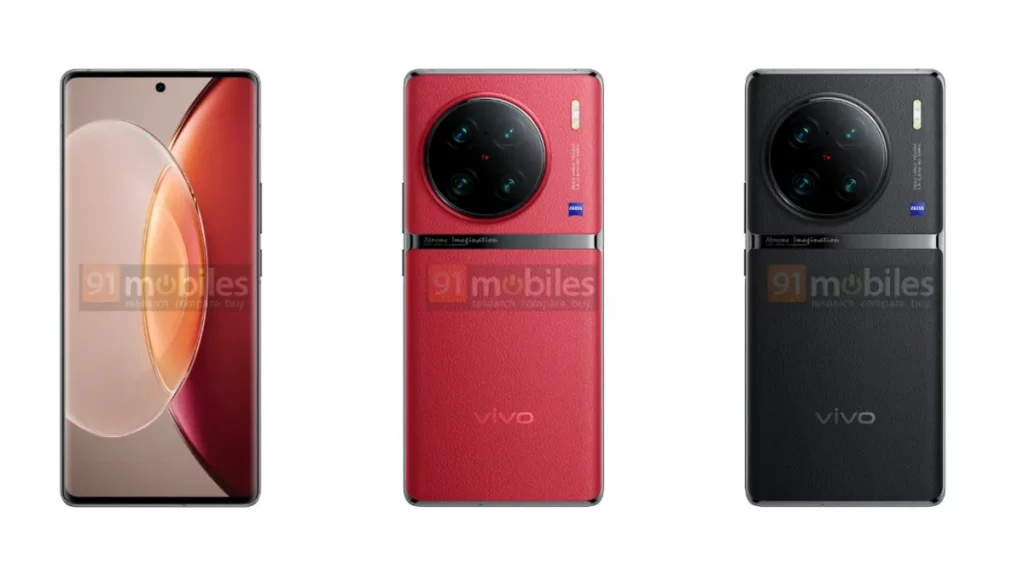
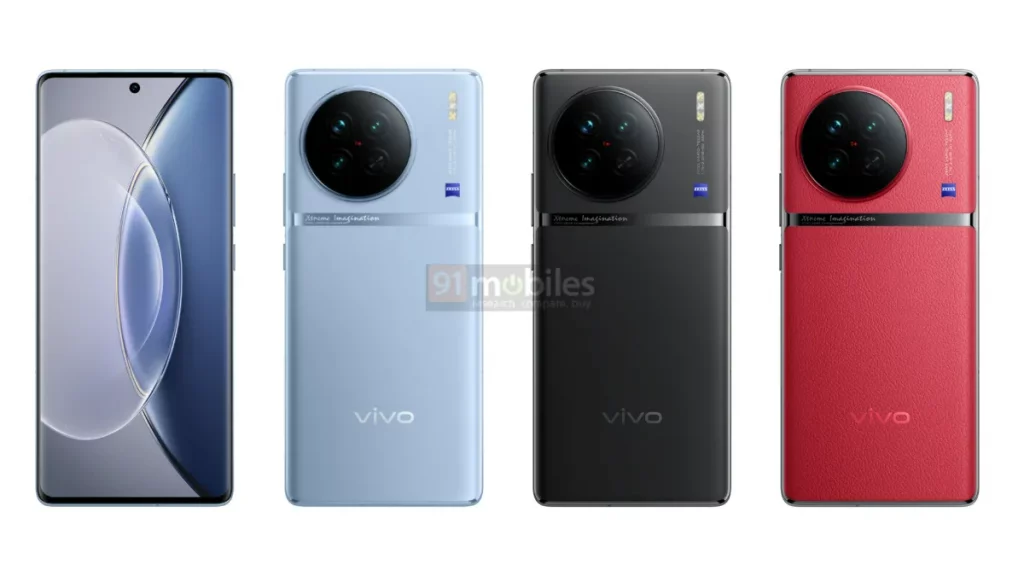
Design-wise, all three models look quite similar. On the front, the smartphones will feature an OLED displays with curved edges and a centrally positioned punch-hole. The back of the handsets has a circular camera module along with a blue Zeiss logo. All three phones are almost identical except for the camera module, which is smaller on the standard model.
Vivo X90 Pro Plus
There’s also a fancy strip across the whole panel promising “Xtreme Imagination.” The right side of the trio will have a power button and a volume rocker. The series will come in a special red color, similar to the X Fold+, which will have a leathery finish and look quite premium. The handsets will also be offered in black and blue color options.
Vivo X90
Vivo X90 Series Specifications
Vivo’s new series is rumored to pack some cutting-edge specs. The higher-end Vivo X90 Pro+ will have a 6.7-inch 1260p AMOLED panel that will offer a 120 Hz and 300 Hz touch sampling rate.
It will be the only one in the lineup to feature the recently announced Qualcomm Snapdragon 8 Gen 2 processor, paired with LPDDR5X RAM and UFS 4.0 storage. The smartphone will draw power from a 4,700 mAh battery that supports 80W wired charging and 50W wireless charging.
The Vivo X90 Pro is expected to come with the same display as the Plus model. It will be equipped with the MediaTek Dimensity 9200 chipset and pack a larger 4,800 mAh battery. Now here’s the confusing part: the standard Pro phone could support wired charging at 120 watts and wireless charging at 50 watts.
Moving to the standard Vivo X90, it will sport a 6.78-inch AMOLED display with a 120Hz refresh rate and 300Hz touch sampling rate. The screen will produce a 2800×1260 pixel resolution. Just like the pro model, it will also be powered by a Dimensity 9200 chipset paired with LPDDR5 RAM and UFS 4.0 storage. The device will be backed by an even larger 4,810mAh battery and support 120W fast charging.
Vivo X90 Series Cameras
The Vivo X90 series is expected to push the envelope in terms of photography. With its camera capabilities, the top-of-the-line Vivo X90 Pro+ will easily give the Galaxy S23 Ultra a run for its money.
The handset will come with a quad camera setup on the back, featuring a 1-inch, 50MP Sony IMX989V primary sensor accompanied by a 64 MP OmniVision OV64A telephoto lens. There’s also a 48 MP Sony IMX598 ultra-wide-angle lens and a 50 MP Sony IMX578 portrait lens. For selfies and video calls, the device has a 32 MP shooter on the front.
Vivo X90 Pro, on the contrary, will feature a triple rear camera setup, consisting of a new 50 MP Sony IMX866 camera sensor, an older 50MP portrait lens, and a 12MP Ultrawide sensor. It will include a 32 MP selfie sensor. The vanilla model’s rear camera module retains the 50MP Sony IMX866 sensor and 12MP ultra-wide-angle lens. However, the portrait lens is substituted with a 12 MP telephoto sensor.
Vivo X90 Series Price
While the official pricing of the upcoming devices has yet to be revealed, we can expect it to be similar to that of the previous models. The lineup is expected to debut in the South Asian market sometime next year. Some models will also debut in the old continent.
Vivo X90 Series could be priced at:
Vivo X90- About $800
Vivo X90 Pro- $1,200
Vivo X90 Pro+- $1,400
Please note the prices listed above are indicative, we don’t have any official confirmation yet. We are bound to know it all on November 22, so stick around.
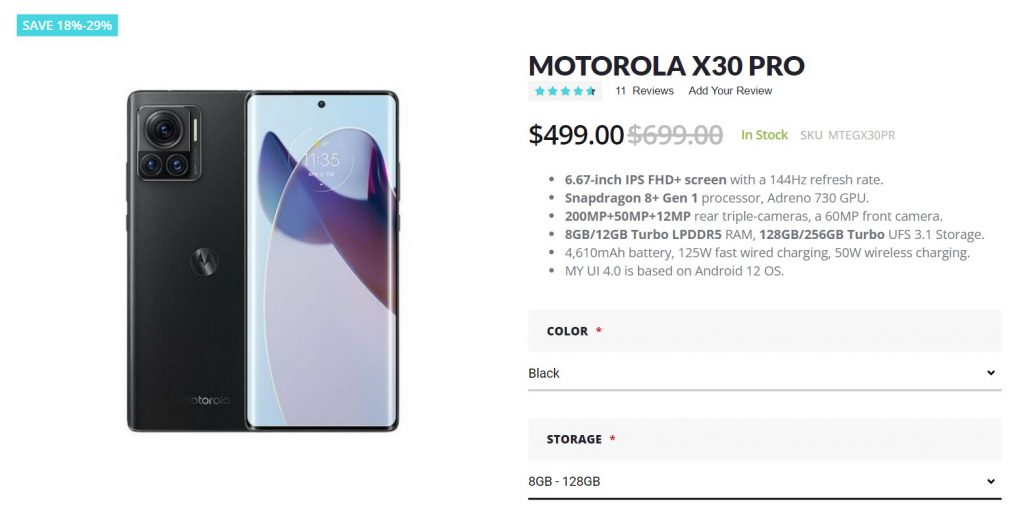
Giztop is giving a whopping $200 discount on the Motorola X30 Pro smartphone. The phone which generally retails for $699 is now available at a discounted price of $499 only. Please note that this price is applicable to the base variant.
Motorola X30 Pro features a 6.67” IPS FHD+ display and 144Hz refresh rate. The smartphone is powered by Snapdragon 8+ Gen 1 processor and comes with Adreno 730 GPU. Available in multiple memory variants viz. 8GB/ 12GB Turbo LPDDR5 RAM and 128GB / 256GB storage the smartphone comes in Black and White color variants.
The smartphone comes with a triple rear camera setup with a Samsung ISOCELL HP1 200MP primary camera which is 1/1.22″ in size, a 50MP secondary sensor, and a 12MP 121° ultrawide angle sensor that also doubles as a macro camera. For your selfies, you have a 60MP sensor in the front. Fueled with a 4610mAh battery Motorola X30 Pro supports 125W wired fast charging and 50W wireless charging.
You can now buy Motorola X30 Pro for starting price of $499 only on Giztop. Please note that this is a limited-time offer.
For more information on such exciting deals and offers check out our deals hub.
ALLDOCUBE is launching its latest tablet the iPlay 50 globally on Lazada. The brand is giving a huge discount, limited-time free gifts, and other offers on the tablet. The tablet which comes with an original price tag of $279 is now available at a massively discounted price of $149 only. Please note that this deal ends on November 21, 2022. So make sure to place your order before the sale expires.
ALLDOCUBE iPlay 50 Tablet
This tablet features a 10.4” 2K IPS display with 2000 x 1200p resolution and a full viewing angle that gives you an immersive visual experience. The tablet comes with a metal back that gives it a classy look. It is powered by a UNISOC T618 processor and comes with 4GB LPDDR4x RAM and 64GB storage expandable up to 2TB.
Fueled with a 6000mAh battery, it gives you up to 7 hours of online streaming and 10 hours of video playback. The tablet comes with an 8MP rear camera and 5MP selfie camera and runs the Android 12 OS. Other interesting features include Dual Smart PA Box speakers, DUal 4G LTE, Wi-Fi, Bluetooth v5.0, GPS, etc.
ALLDOCUBE iPlay 50 Tablet is available at a heavily discounted price of $149 only on Lazada. This is a limited-time offer. So place your order before the deal expires.
Thai Consumers can buy the tablet at a discounted price here.
Phillippines Consumers can buy the tablet at a discounted price here.
Malaysian Consumers can buy the tablet at a discounted price here.
Singapore Consumers can buy the tablet at a discounted price here.
Vietnam Consumers can buy the tablet at a discounted price here.
For more information on such exciting deals and offers check out our deals hub.
This Black Friday Longer3D is showering discounts on almost all of their products. The brand is known for its high quality and advanced 3D printers, laser engravers, and other related accessories and is giving up to 50% discount on its products, under the Black Friday Sale. Moreover, additional discount coupons and combo deals are also available on the official longer3d website. So be sure to check out their website for more information about the sale.
Original Price: $489.99 Discounted Price: $409.99 (lowest price ever)
Free Gift: Get DIY engraving material Free with every purchase (limited to 77 pieces)
Flash Deal: Get the Ray5 5W lazer engraver for half price $199.99(limited to 50 pieces)
The Ray5 10W Laser Engraver is a powerful cutter and engraver that can be used on wood, acrylic, stainless steel, leather, silver, and more. It is one of the most cost-effective engravers available in the market.
The laser comes with dual beam technology and has a 10W intense laser that easily cuts through hard materials like wood. It can easily cut a 0.8”/20mm thick wood board and 1.2”/30mm acrylic material. The device can also be used for engraving at a max of 10000mm/min engraving speed.
Ray 5 can be used for beautiful and delicate engraving art, as it features the latest compressed laser technology that generates an ultra-fine laser spot which is two times thinner than ordinary lasers available in the market. This means the device gives you ultra-fine cutting and engraving which is precise, consistent, and crystal clear with thinner lines and delicate texture.
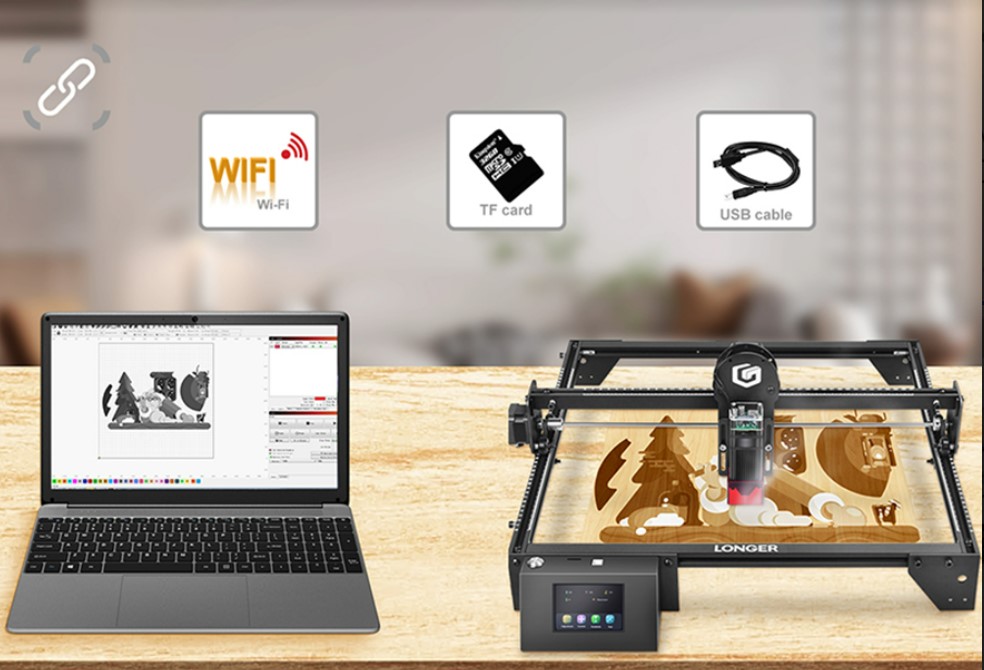
The Ray 5 comes with a thermal sensor that detects accidental flames and automatically stops the laser and starts a buzzing alarm to inform you of the same. Moreover for your safety, the device comes with a flame-resistant acrylic laser protective cover. Other interesting features include a 3.5” touch screen, multiple data transfer options, multiple machine control options, wide software compatibility, etc.
Original Price: $329.99 Discounted Price: $289.99 (lowest price this year)
Longer’s latest product is the LK5 Pro FDM 3D printer. It is one of the cheapest 3D printers in its category, available in the market. The printer can be used for building large models and features a building size of 300x300x400mm. It comes with an all-metal integrated design and is fitted with dual inclined rods to hold the Z axis with a more stable structure and reduce vibration which results in a better output.
The 3D printer comes with 3kits of TMC2208 chipsets to drive X / Y / Z Axis stepper for quiet printing. This means you get less noise and distraction during the actual printing process. Also, to ensure a consistent and standard quality of printing, the device comes with a new Teflon tube that can stand high temperatures.
LK5 Pro FDM 3D Printer features an upgraded ceramic coated glass bed which is perfectly flat and stable and comes with better adhesion which makes it easy to peel off the finished model. The printer is designed to be user-friendly and comes with a 4.3-inch smart touch screen which makes it easy to operate and preview the printing process. The device is 90% pre-assembled in the factory and takes just 4 easy steps to set up and start operating.
Original Price: $399.99 Discounted Price: $235.99 (lowest price ever)
Orange 4K is an ultrafine LCD 3D printer that brings your ideas and pictures to life. The printer features 6480*3840 resolution and 10.5/31.5µm of subpixel, which gives a very high-quality output with delicate and intricate details printed out with precision. The 4K resolution allows you to print tiny details like fine lines of artwork with high accuracy and precision as compared to a 2K printer.
This LCD 3D Printer is able to print by 1.5s/layer on the exposure time and provides super-fast printing as compared to other ordinary printers. However, unlike other generic printers that substitute speed for quality, Orange 4K compromises neither on quality nor on speed as it is configurated with parallel UV LED for uniform and intense illumination, which provides better performance on printing quality.
Longer Orange 4K 3D printer is equipped with dual Z-axis linear guides for more steady printing and comes with a full metal body that keeps the whole printing procedure stable providing reliable and quality output every single time.
For more information on such exciting deals and offers check out our deals hub.
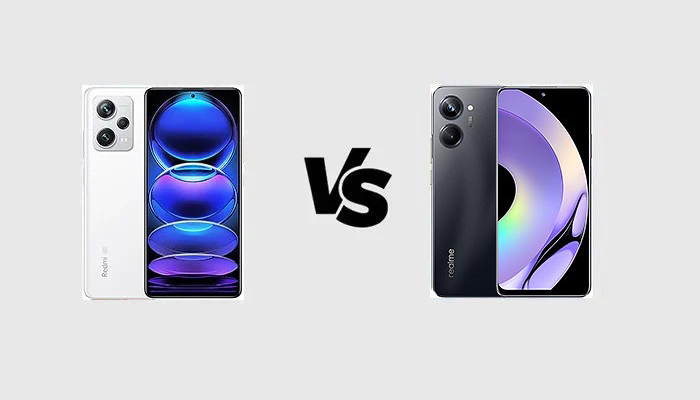
Realme 10 Pro and Pro Plus officially debuted in the Chinese market not only with amazing specifications but with very good prices as well. The Realme 10 Pro is definitely a perfect competitor of the Redmi Note 12 Pro, one of the potential best-seller of the next months. With Black Friday incoming, a lot of people are looking for a new phone with amazing value for money, and choosing between these two devices is not easy if we consider both their specifications and their prices. Here is a comparison between the main specifications of the Redmi Note 12 Pro and the Realme 10 Pro that will tell you which device suit your needs the most, according to your actual needs.
Xiaomi Redmi Note 12 Pro vs Realme 10 Pro
Xiaomi Redmi Note 12 Pro
Realme 10 Pro
DIMENSIONS AND WEIGHT
162.9 x 76 x 9 mm,
187 g
163.7 x 74.2 x 8.1 mm,
190 g
DISPLAY
6.67 inches, 1080 x 2400 pixels (Full HD+), OLED
6.72 inches, 1080 x 2400 pixels (Full HD+), AMOLED
Triple 50 + 8 + 2 MP, f/1.9 + f/1.9 + f/2.4
16 MP front camera
Dual 108 + 2 MP, f/1.8 + f/2.4
16 MP f/2.5 front camera
BATTERY
5000 mAh, fast charging 67W
5000 mAh, fast charging 33W
ADDITIONAL FEATURES
dual SIM slot, 5G, IP53 certification
dual SIM slot, 5G
Design
I like the design of the Realme 10 Pro very much due to its minimalistic look. It does not have a camera island, but it replaces it with two small and circular camera modules placed directly in the rear cover and with a flash LED on the right. Given that there are only two cameras on the rear side, it looks very elegant and minimalistic. Further, it has flat borders just like the devices from the latest iPhone lineups. However, the Redmi Note 12 Pro is still a beautiful phone, especially if we consider its original color options such as the violet one. Further, it is splash resistant and dust resistant with the IP53 certification, so it is interesting even in terms of build quality.
Display
If you want the most advanced display, you must choose the Redmi Note 12 Pro without thinking twice. In this duo, it is the only one with an OLED display, and this is already enough to let you prefer this device instead of the Realme 10 Pro. But besides that, it is also a great panel when it comes to the rest of the specifications. It is a display with a diagonal of 6.67 inches, a Full HD+ resolution of 1080 x 2400 pixels, one billion colors, a 120 Hz refresh rate, HDR10+ certification, a peak brightness of 900 nits, and an under-display fingerprint reader. Unfortunately, the Realme 10 Pro has an inferior IPS panel. It is a display with a diagonal of 6.72 inches, a Full HD+ resolution of 1080 x 2400 pixels, a 120 Hz refresh rate, and a peak brightness of 680 nits.
Specs & Software
The most powerful hardware department belongs to the Redmi Note 12 Pro. It has a better Dimensity 1080 chipset by Mediatek, built with a 6 nm production process and sporting an octa-core architecture. The SoC is composed of two Cortex A78 performance cores running at a maximum frequency of 2.6 GHz, six Cortex A55 efficiency cores running at 2 GHz, and a Mali G68 MC4 GPU. The phone offers up to 12 GB of RAM and up to 256 GB of native storage. The Realme 10 Pro has an inferior Snapdragon 695 5G chipset by Qualcomm running at a max frequency of 2.2 GHz alongside up to 12 GB of RAM and up to 256 GB of native storage. But the Realme 10 Pro has two important advantages: the presence of a micro SD slot and Android 13 out of the box instead of Android 12.
Camera
The Redmi Note 12 Pro sports a superior camera setup: it is composed of a 50 MP main camera with OIS, an 8 MP ultrawide shooter, and a 2 MP macro lens. The Realme 10 Pro has just two cameras on the rear side: a 108 MP main sensor without OIS and a 2 MP macro lens.
The battery capacities of these two handsets are exactly the same: 5000 mAh. But the Redmi Note 12 Pro provides a longer battery life thanks to the presence of more efficient components, especially the OLED display. Further, it charges quicker thanks to 67W fast charging. The 5000 mAh battery of the Realme 10 Pro supports 33W fast charging.
Price
The starting price of the Redmi Note 12 Pro roughly translates into $269 or €269, while the Realme 10 Pro starts from €220 or $220. The Redmi wins the comparison due to its better display, cameras, and faster charging.
Xiaomi Redmi Note 12 Pro vs Realme 10 Pro: PRO and CONS
We use cookies on our website to give you the most relevant experience by remembering your preferences and repeat visits. By clicking “Accept”, you consent to the use of ALL the cookies.
This website uses cookies to improve your experience while you navigate through the website. Out of these, the cookies that are categorized as necessary are stored on your browser as they are essential for the working of basic functionalities of the website. We also use third-party cookies that help us analyze and understand how you use this website. These cookies will be stored in your browser only with your consent. You also have the option to opt-out of these cookies. But opting out of some of these cookies may affect your browsing experience.
Necessary cookies are absolutely essential for the website to function properly. This category only includes cookies that ensures basic functionalities and security features of the website. These cookies do not store any personal information.
Any cookies that may not be particularly necessary for the website to function and is used specifically to collect user personal data via analytics, ads, other embedded contents are termed as non-necessary cookies. It is mandatory to procure user consent prior to running these cookies on your website.